


Abstract
Given the increasing demand for low-phosphorus molten iron in high-value-added steel production and the rising phosphorus content in raw materials caused by the use of high-phosphorus ores in blast furnaces, the traditional converter single-slag process faces challenges such as high dephosphorization pressure, high slag consumption, and unstable endpoint control. This study systematically investigates the process principles and key influencing factors of the converter double-slag method (MURC process) as an efficient pretreatment technology for molten iron. Through thermodynamic analysis combined with industrial tests, the core process parameters affecting dephosphorization efficiency were identified, including temperature, slag basicity (R), iron oxide (T.Fe) content, and bottom-blowing stirring intensity. The results show that the optimal temperature during the dephosphorization stage is 1350–1400 °C, with slag alkalinity controlled at 1.6–2.0 and T.Fe content maintained at 19–23%. During the decarburization stage, the optimal temperature is 1620–1640 °C, and the final slag alkalinity should be increased to above 3.5. After applying the optimized “low-high-low” oxygen supply pattern and enhanced bottom-blowing stirring (0.04–0.20 Nm3/(t·min)), significant improvements were achieved in industrial practice on 180-t and 60-t converters. Lime consumption was reduced by more than 30%, the average endpoint phosphorus content decreased by approximately 0.005%, the phosphorus removal rate remained stable at above 90%, and the oxygen content in molten steel at the endpoint decreased by 50–100 ppm. This study provides a systematic theoretical basis and practical guidance for efficient and stable dephosphorization using the converter double-slag process.
1. Introduction
Phosphorus is a detrimental element in most steel grades. Its strong segregation tendency in steel can significantly deteriorate plasticity and toughness, particularly causing cold brittleness at low temperatures, which seriously limits steel performance. In the conventional converter steelmaking process, dephosphorization is one of the core refining tasks and a key control step in the production of clean steel. The efficiency of dephosphorization directly affects steelmaking cost, production efficiency, molten steel cleanliness, and process stability [1,2,3]. With the continuous increase in performance requirements for steel in downstream industries and the intensifying competition in the steel market, increasingly stringent control standards have been imposed on the phosphorus content of molten steel at the converter endpoint, which is often required to be lower than 0.015% or even below 0.010%.
Meanwhile, under increasing cost pressure, steel enterprises have gradually begun to charge low-cost high-phosphorus ores into blast furnaces. This practice significantly increases the phosphorus content in hot metal and further raises the dephosphorization load of converters [4]. Therefore, the development and optimization of an efficient and stable converter dephosphorization process have become crucial for resolving this contradiction.
Traditional converter dephosphorization mainly relies on the “single-slag method”, characterized by large slag volume, high basicity, and high oxygen potential. In 2001, Ogawa et al. [5] reported the MURC (Multi-Refining Converter) steelmaking process developed by Nippon Steel and its industrial trials on an 8-t converter. In recent years, Nippon Steel has successively reported the application results of the MURC process in multiple steel plants [6,7,8,9,10,11,12,13,14]. This process can significantly reduce lime consumption (by more than 40%); however, key technical details such as slag solidification behavior, slag basicity control during the dephosphorization stage, oxygen supply parameters, and slag dumping timing have not been fully disclosed.
Numerous studies have been carried out on the converter double-slag process in recent years. Previous work has shown that the dephosphorization efficiency is highly dependent on the temperature window during the first stage of blowing, and that appropriate control of the turndown temperature is essential for balancing phosphorus removal and carbon retention [15,16]. Process control studies have further demonstrated that the coordinated regulation of oxygen supply, lance height, coolant addition, and slag discharge strongly affects slagging behavior, bath temperature, and dephosphorization stability [17,18,19,20,21,22]. Research on slagging pathways has indicated that the dissolution and slag-forming behavior of lime, limestone, and dolomite play an important role in establishing a suitable low-basicity and high-oxidation slag system for early dephosphorization [23,24,25,26,27,28,29,30,31]. Other studies have also examined manganese ore reduction, high-carbon tapping, slag recycling, and process modeling, showing that the double-slag process has clear potential for reducing slag consumption, lowering flux addition, and improving process efficiency [32,33,34,35,36,37,38]. However, despite these advances, the reported industrial results still vary considerably, and a systematic process control framework for achieving efficient and stable dephosphorization has not yet been fully established.
Based on previous work [39], this study further investigates the influencing factors of dephosphorization in the converter double-slag process through a more comprehensive analysis combined with industrial experiments. The objective is to provide a reliable theoretical basis and practical guidance for the refined control and industrial application of this process.
2. Phosphorus Removal Mechanism and Process Control Theory
The dephosphorization reaction in a converter is essentially an interfacial reaction, and its efficiency is governed by both thermodynamic equilibrium and kinetic conditions. Efficient dephosphorization requires the slag to possess a high phosphorus capacity (Cp) and a high phosphorus distribution ratio (Lp), as well as favorable kinetic conditions to facilitate mass transfer.
2.1. Thermodynamic Factors Affecting Dephosphorization
According to the dephosphorization reaction shown in Equation (1) and the thermodynamic relationship given in Equation (2), Equation (2) is a classical empirical relationship used to describe the phosphorus distribution ratio between slag and metal. Although originally proposed in earlier studies, it is still widely used for trend analysis of dephosphorization behavior in BOF and double-slag steelmaking. Recent studies have likewise confirmed that temperature, slag basicity, and T.Fe content are the key factors governing phosphorus distribution and dephosphorization efficiency. Therefore, from a thermodynamic perspective, low temperature, high basicity, and high oxygen potential are favorable for shifting the dephosphorization reaction toward phosphate formation in slag.
2[P] + 5(FeO) + 4(CaO) = (4CaO·P2O5) + 5[Fe]
In Equation (2), (%P) is the phosphorus content in slag; [%P] is the phosphorus content in metal; T is the temperature; and %T.Fe and %CaO are the total iron content and calcium oxide content in slag, respectively.
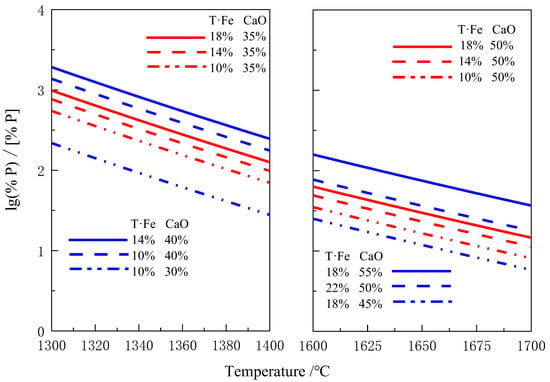
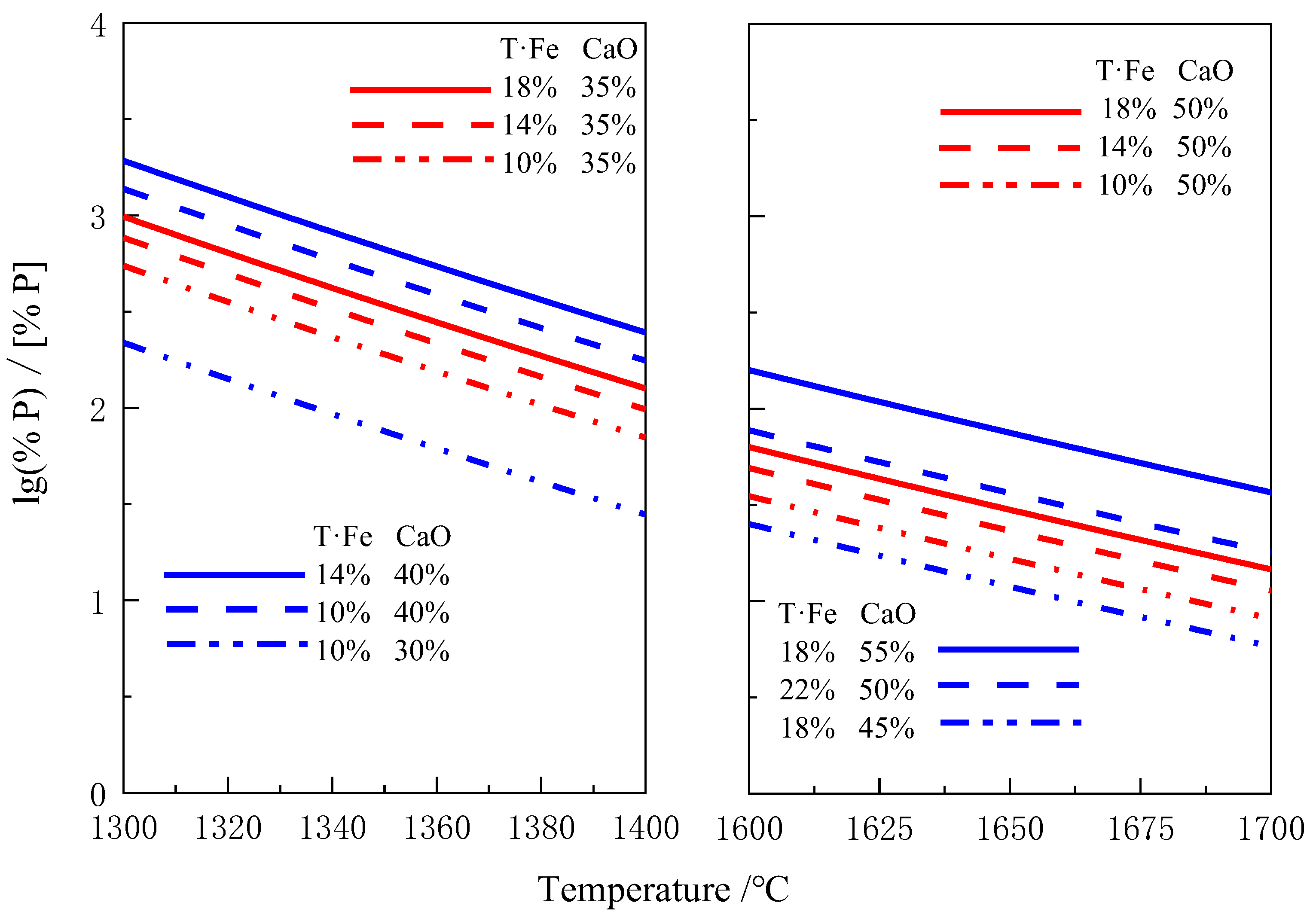
Figure 1 presents the calculated phosphorus distribution ratio (Lp) based on Equation (2) [40,41,42,43] under different slag compositions during the early stage of the converter process (i.e., the dephosphorization stage in the MURC process, with w(CaO) = 30–40% and w(T.Fe) = 10–18%) and the later stage (i.e., the decarburization stage in the MURC process, with w(CaO) = 40–45% and w(T.Fe) = 10–22%).
Figure 1.
Trend lines of influencing factors make on Lg((%P)/[%P]).
The comparison results indicate that, due to the lower temperature in the early stage of the converter process, favorable thermodynamic conditions for dephosphorization can be achieved even under relatively low basicity and low oxidation conditions, enabling efficient phosphorus removal.
2.2. Kinetic Factors Affecting Dephosphorization
The slag–steel interface is a crucial reaction region for dephosphorization in the converter. The efficiency of mass transfer at this interface determines whether the dephosphorization reaction can proceed continuously, stably, and efficiently. Maintaining moderate stirring at the slag–steel interface and effectively controlling the temperature in this key dephosphorization zone are essential for maximizing the dephosphorization capacity of the converter. The stirring energies of top blowing and bottom blowing are calculated according to Equations (3) and (4) [44].
In Equations (3) and (4), εT and εB represent the stirring energy generated by top blowing and bottom blowing, respectively, in W/t; and are the top-blowing oxygen flow rate and bottom-blowing gas flow rate, respectively, in Nm3/(t·min); d is the nozzle throat diameter, in m; u0 is the gas velocity at the nozzle outlet, in m/s; W is the molten steel mass, in t; x is the lance height, in m; ξ is the nozzle inclination angle, in degree; T is the absolute temperature, in K; and L0 is the bath depth, in m.
For converters with capacities ranging from 120 to 300 t, the lance height x typically ranges from 1.2 to 3.0 m, with a representative value of 2.0 m. The nozzle diameter d ranges from approximately 0.05 to 0.15 m, with a typical value of 0.10 m. The oxygen lance nozzle angle ξ is generally within the range of 10–16°, with a typical value of 14°. The molten bath depth is approximately 1.5–2.0 m, with a representative value of 1.7 m. The Mach number at the nozzle exit ranges from about 1.98 to 2.05, and the gas velocity at the nozzle outlet is taken as 490 m/s.
For practical comparison, Equations (3) and (4) were simplified under representative converter operating conditions. In this simplification, the nozzle throat diameter d, nozzle inclination angle ξ, nozzle exit Mach number, nozzle exit velocity u0, bath depth L0, molten steel mass W, and bath temperature T were treated as approximately constant within the normal operating range of industrial converters. Accordingly, the terms containing these parameters were combined into constant coefficients, and Equations (3) and (4) were reduced to the simplified forms of Equations (5) and (6). Therefore, Equations (5) and (6) are simplified expressions applicable to the representative converter geometry and blowing conditions specified above, and are mainly used for comparative analysis of the effects of top- and bottom-blowing flow rates on stirring energy.
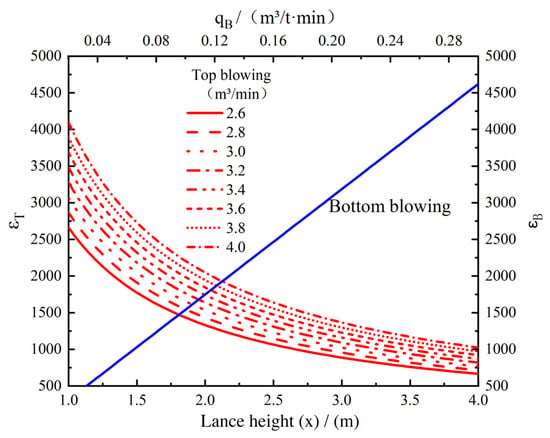
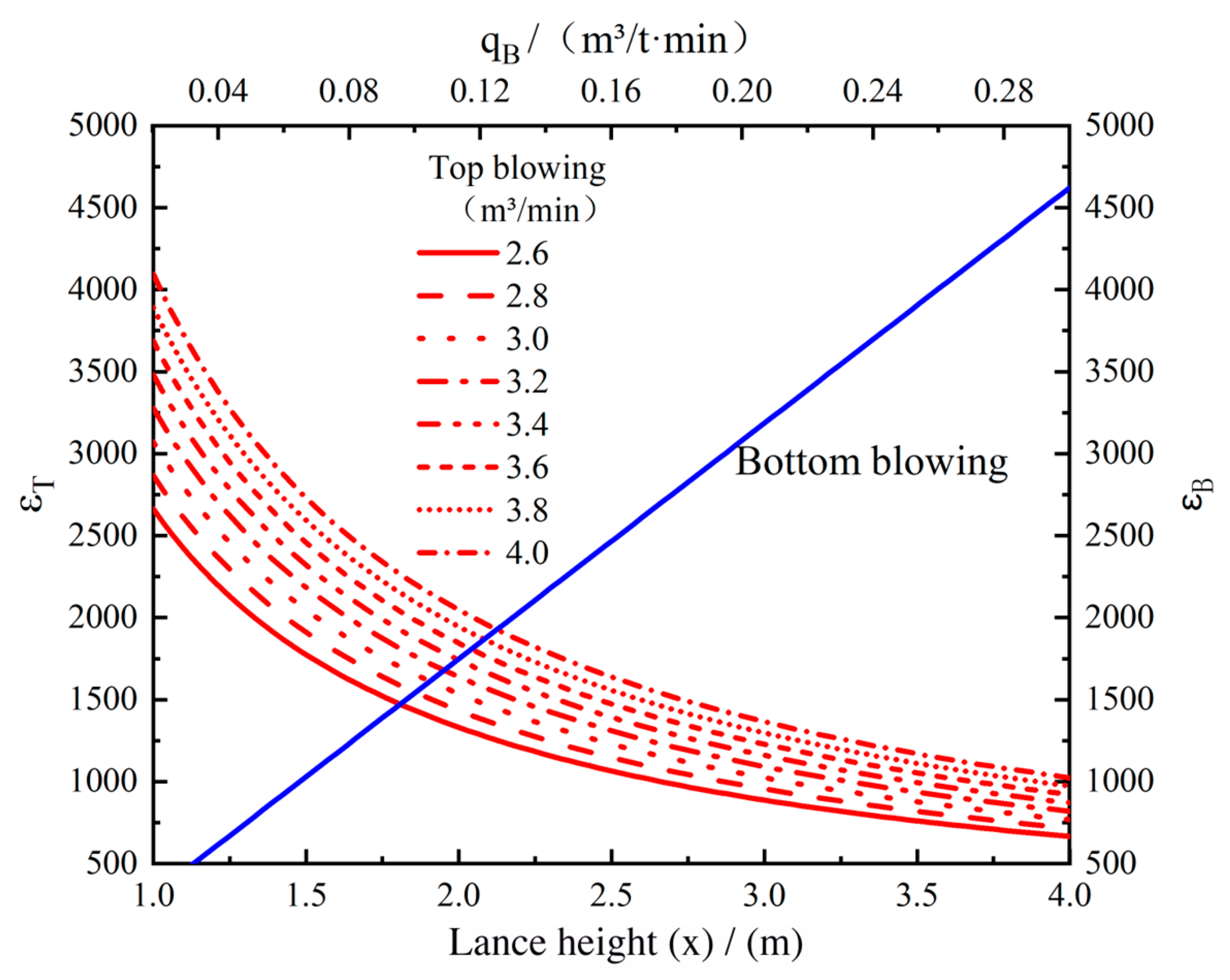
Under these conditions, the stirring energy per ton of steel expressed in Equations (3) and (4) can be simplified into the forms shown in Equations (5) and (6), as illustrated in Figure 2. By introducing a small amount of bottom-blowing gas, the stirring energy generated by bottom blowing can exceed that produced by top blowing. Moreover, the oxygen jet impinging on the molten bath creates a trade-off between bath stirring (including agitation at the slag–metal interface) and the suppression of rapid temperature rise. By applying an appropriate bottom-blowing gas flow, it is possible to balance moderate stirring at the slag–metal interface with temperature control, thereby optimizing the dephosphorization effect [4]. Appropriately reducing the oxygen supply intensity while increasing the bottom-blowing intensity is therefore an effective approach to improving dephosphorization efficiency in the early stage of the smelting process [40].
Figure 2.
Influence of top- and bottom-blowing flow rates on stirring energy.
2.3. Process Control of the Double-Slag Method
In the early stage of smelting, the key objective is to efficiently transfer phosphorus into the slag during the low-temperature dephosphorization stage and achieve phosphorus–iron separation through intermediate slag discharge. The main task is to strictly control the temperature of the molten bath within a short period, enabling efficient dephosphorization while suppressing excessive decarburization. Therefore, suitable conditions must be established for low-temperature dephosphorization, including relatively low temperature, moderate slag basicity, moderate oxidation potential, and sufficient bottom-blowing stirring. Appropriately reducing the oxygen supply intensity while increasing the bottom-blowing intensity is an effective approach to improving dephosphorization efficiency in the early stage of smelting [45].
- (1)
- Dephosphorization temperature selection
References [15] proposed the concept of the carbon–phosphorus selective oxidation transition temperature in the molten bath during the initial stage of converter blowing. Reference [16] suggested that the transfer temperature after the first blowing stage should consider the melting temperature of the dephosphorization slag. Based on the studies of Wang X.H. et al. [17,18,19,20,21,22] and the authors’ previous work [39], the temperature can be effectively controlled by adding coolants (such as iron ore and mill scale) and adjusting the oxygen supply intensity. Maintaining the bath temperature within 1350–1400 °C during the dephosphorization stage can significantly enhance phosphorus removal from molten iron.
- (2)
- Control of slag composition
Based on previous studies and industrial practice [17,18,19,20,21,22,39,45], the appropriate slag composition is as follows: during the dephosphorization stage, the slag basicity (R) should be controlled within 1.6–2.0 and w(T.Fe) within 19–23%. During the subsequent decarburization stage, the basicity should be increased to 3.3–3.6. Meanwhile, controlling w(MgO) = 4.0–10% and w(Al2O3) = 1.5–3.0% helps stabilize the slag system.
- (3)
- Gas supply intensity control
The oxygen jet impinging on the molten bath creates a trade-off between bath stirring (including agitation at the slag–metal interface) and the suppression of rapid temperature rise. By introducing an appropriate bottom-blowing gas flow, moderate stirring of the slag–metal interface and effective temperature control can be achieved simultaneously, thereby improving the dephosphorization performance [4]. Appropriately reducing the oxygen supply intensity while increasing the bottom-blowing intensity is an effective approach to enhancing dephosphorization efficiency in the early stage of smelting [40,45].
During the dephosphorization stage, a “low-flow-rate, long-duration” soft blowing mode is adopted, with a top-blowing oxygen flow rate of 1.5–3.0 Nm3/(t·min), ensuring sufficient oxidation potential of the slag while avoiding excessive splashing. During the decarburization stage, the blowing mode is switched to a high-flow mode (3.0–3.5 Nm3/(t·min)) to intensify decarburization. The bottom-blowing intensity is adjusted accordingly: 0.10–0.20 Nm3/(t·min) during the dephosphorization stage to promote slag removal, and 0.04–0.20 Nm3/(t·min) during the decarburization stage to enhance bath stirring.
- (4)
- Recycling of decarburization slag and removal of dephosphorization slag
Using the final decarburization slag (rich in CaO and FeO) as part of the slagging material for the subsequent heat can reduce lime consumption by 5–10 kg/t and stabilize the final slag basicity, thereby achieving a higher phosphorus distribution ratio and improved dephosphorization efficiency.
In continuous production, deviations in process control in a given heat—such as insufficient dephosphorization in the previous heat, inadequate intermediate slag discharge, low slag basicity during the decarburization stage, or high P2O5 content in the final slag—can be gradually compensated through parameter adjustments in subsequent heats [46]. According to Ogawa et al. [5,39,47], the intermediate slag discharge rate should be ≥60%, the number of recycling cycles should be ≤5, and the recycled slag should be maintained at a sufficiently high temperature.
3. Test and Result Analysis
3.1. Test Procedure
During the industrial trials, samples of hot metal, semi-steel, and endpoint steel were collected at the corresponding process stages for chemical analysis. Hot metal samples were taken after charging and before oxygen blowing, semi-steel samples were taken after the dephosphorization stage and intermediate slag removal, and endpoint steel samples were taken before tapping. The metal samples were prepared according to standard metallurgical sampling procedures. The contents of C, Si, Mn, and P in the metal samples were analyzed by routine chemical analysis methods used in the steel plant laboratory. In addition, the dissolved oxygen content at the endpoint was measured using a sub-lance or corresponding oxygen determination method for the 180 t converter. The analytical instruments and procedures followed the standard operating practices of the plant laboratory to ensure the reliability of the results.
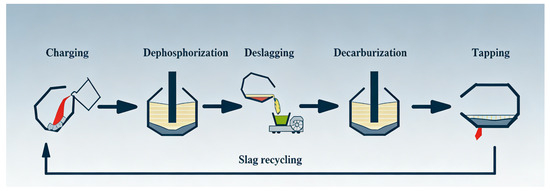
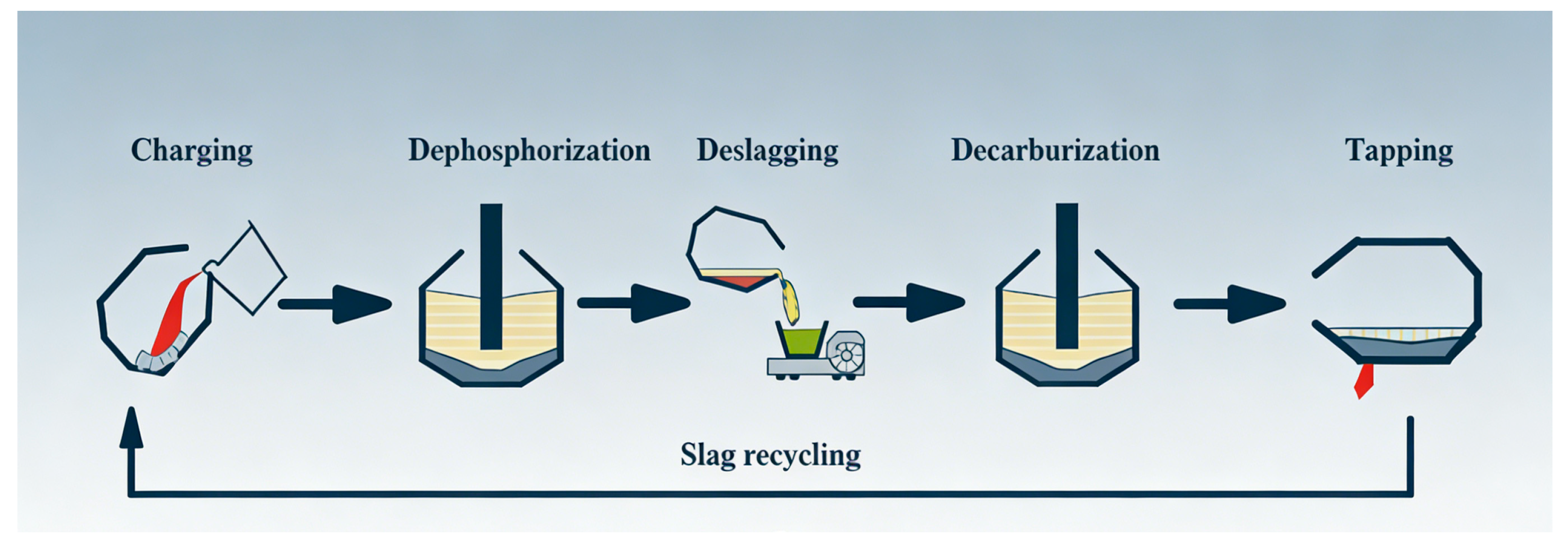
Industrial trials were conducted on a 180 t combined-blowing converter and a 60 t top-blowing converter. The hot metal conditions and equipment parameters are shown in Table 1 and Table 2, respectively. As illustrated in Figure 3, the process route is as follows: hot metal charging → dephosphorization stage → intermediate slag removal → decarburization stage → tapping. Here, hot metal refers to the molten iron charged into the converter from the blast furnace before oxygen blowing, and semi-steel refers to the intermediate molten metal obtained after the dephosphorization stage and intermediate slag removal, prior to the final decarburization stage.
Table 1.
Raw material conditions of the trial experiments.
Table 2.
Equipment conditions of Tianjin iron company.
Figure 3.
Schematic diagram of the test process flow.
3.2. Experimental Conditions
The main chemical compositions of the hot metal used in the present study included C, Si, Mn, P, and S. In addition, the representative compositions of the semi-steel and endpoint steel, including C, Mn, P, and S, were also analyzed to evaluate the refining behavior during different stages of the double-slag process.
The experimental hot metal conditions and the experimental equipment conditions are shown in Table 1 and Table 2, respectively.
To achieve dephosphorization with carbon retention, the lance height during the dephosphorization stage is controlled using a “low-high-low” pattern. A relatively high bottom-blowing gas flow rate is employed to enhance bath stirring. Slag-forming materials (fluxes) and iron-bearing materials are added in batches to promote rapid slag formation.
3.3. Test Results
- (1)
- Slagging material consumption and slag composition
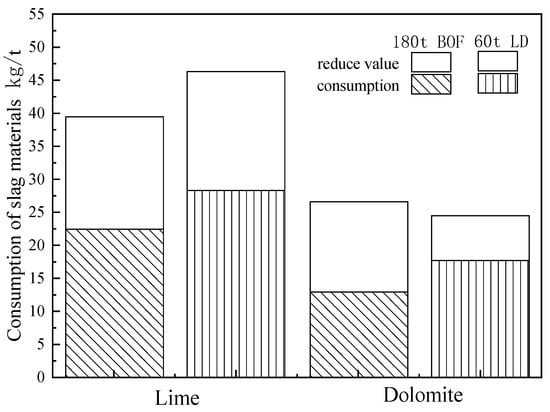
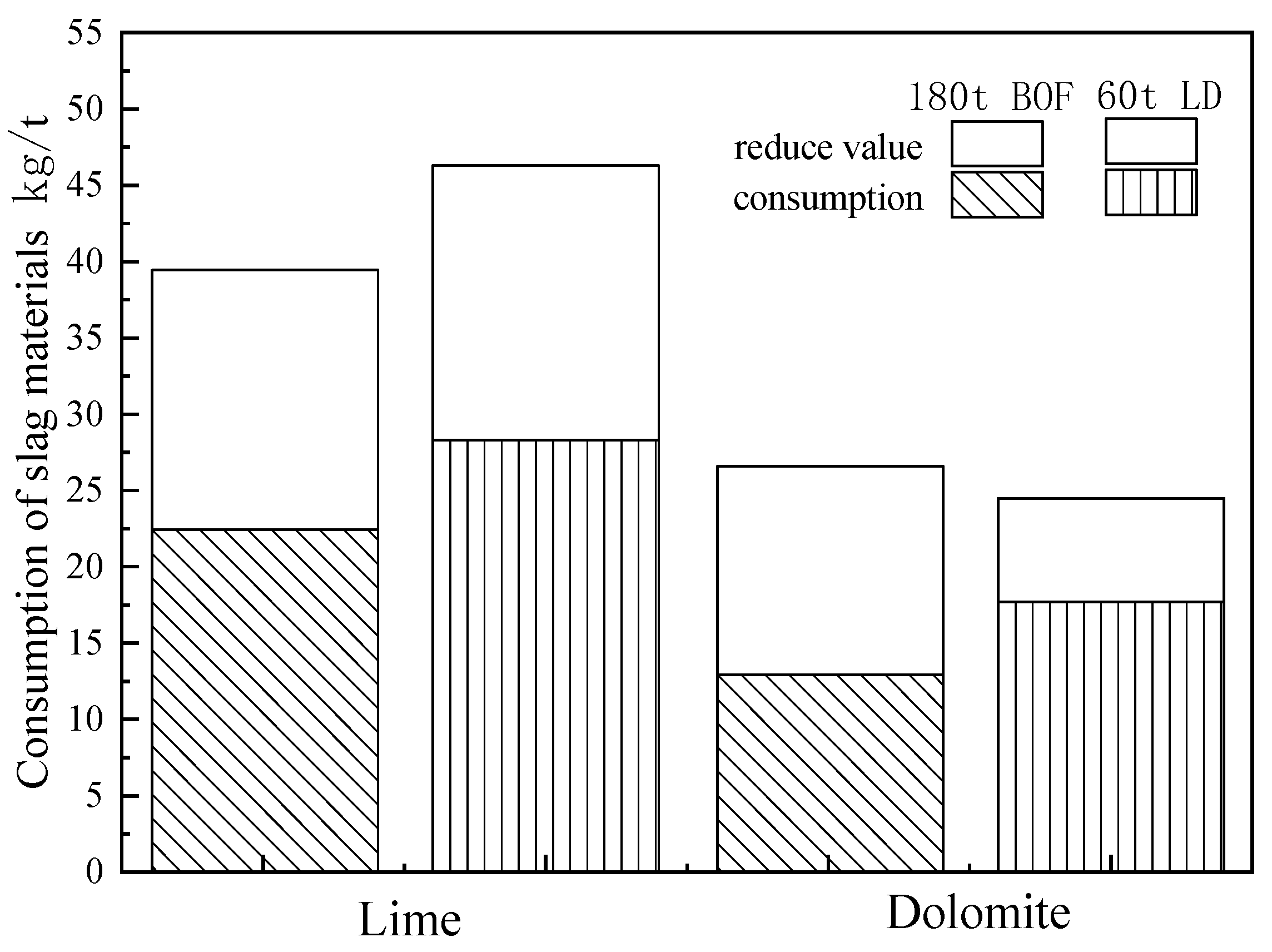
After the optimization, the slagging materials consumption of both converters was significantly reduced (Figure 4). The lime consumption decreased by more than 30%, for the 180 t BOF dropped from 39.5 k to 22.5 kg/t, and for the 60 t LD dropped from 46.3 kg/t to 28.3 kg/t. The consumption of dolomite has decreased by more than 25%, for the 180 t BOF dropped from 26.6 k to 13.0 kg/t, and for the 60 t LD dropped from 24.4 kg/t to 17.7 kg/t.
Figure 4.
Slag material consumption comparison of different processes.
The results of slag composition control (Table 3) show that for the 180 tons BOF and the 60 tons LD, the average slag basicity (R = CaO/SiO2) of dephosphorization slag is 1.91 and 1.84 respectively, and the average w(T.Fe) content is 17.72% and 19.90% respectively. The average R of the decarbonization slag was 3.05 and 3.90 respectively, the average w(T.Fe) was 16.82% and 20.92% respectively, and the average w(P2O5) content in the slag (2.58%, 2.50%) was lower than that in the dephosphorization slag (2.93%, 3.81%), indicating that the decarbonization slag has the ability to continue to absorb phosphorus and is suitable for recycling.
Table 3.
Controlling results of slag composition of experiment heats (average).
- (2)
- The phosphorus content changes
The phosphorus removal efficiency of the test furnace was significantly improved. The phosphorus removal efficiency during the dephosphorization stage was calculated as follows:
where [P]0 is the initial phosphorus content of the hot metal before blowing, and [P]e is the phosphorus content of the semi-steel after the dephosphorization stage.
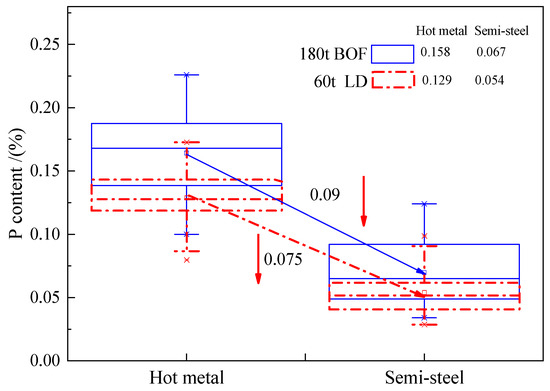
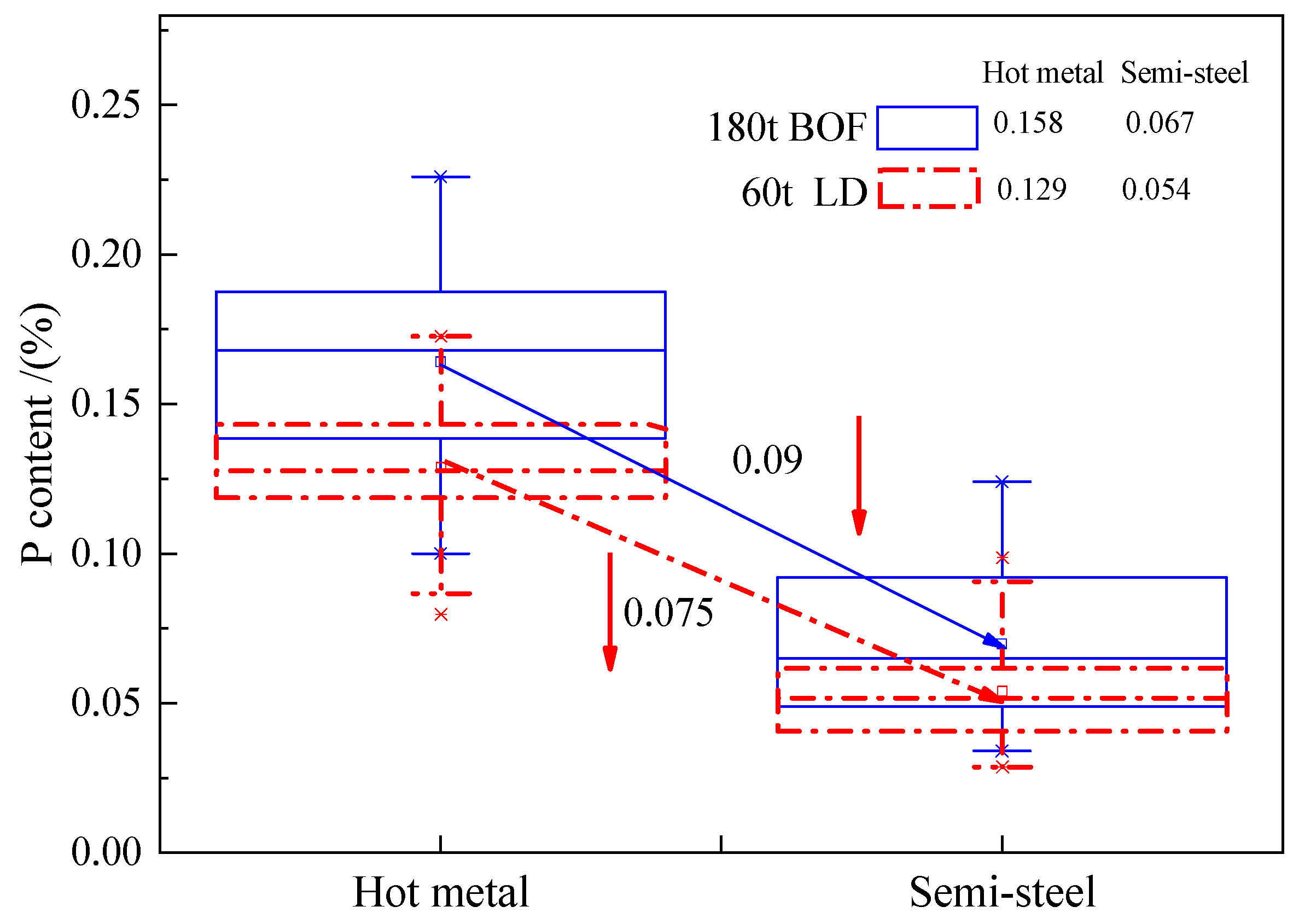
As shown in Figure 5, the average phosphorus removal rates of the 180-ton BOF and 60-ton LD converters during the dephosphorization period reached 56.96% and 58.14% respectively. More than half of the phosphorus was successfully removed and discharged with the deslagging, greatly reducing the phosphorus removal pressure in the later decarbonization period.
Figure 5.
Changes in phosphorus content in the initial period of the double-slag process.
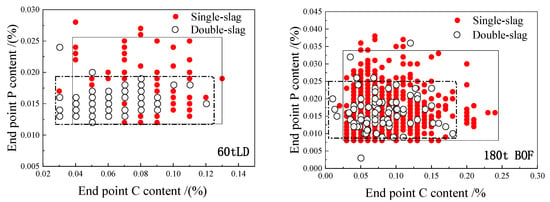
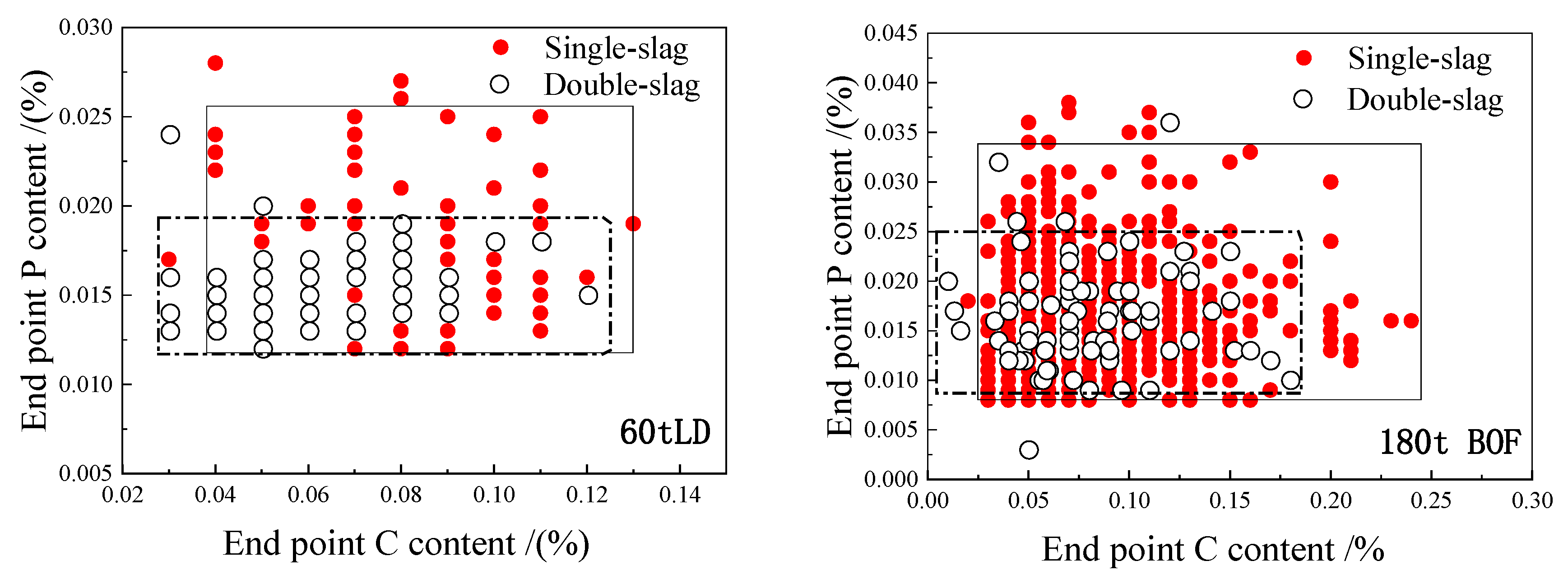
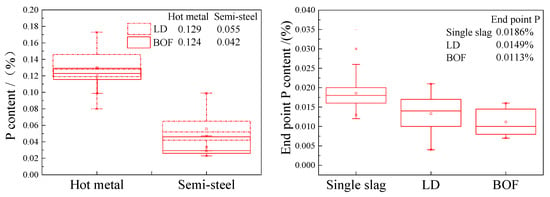
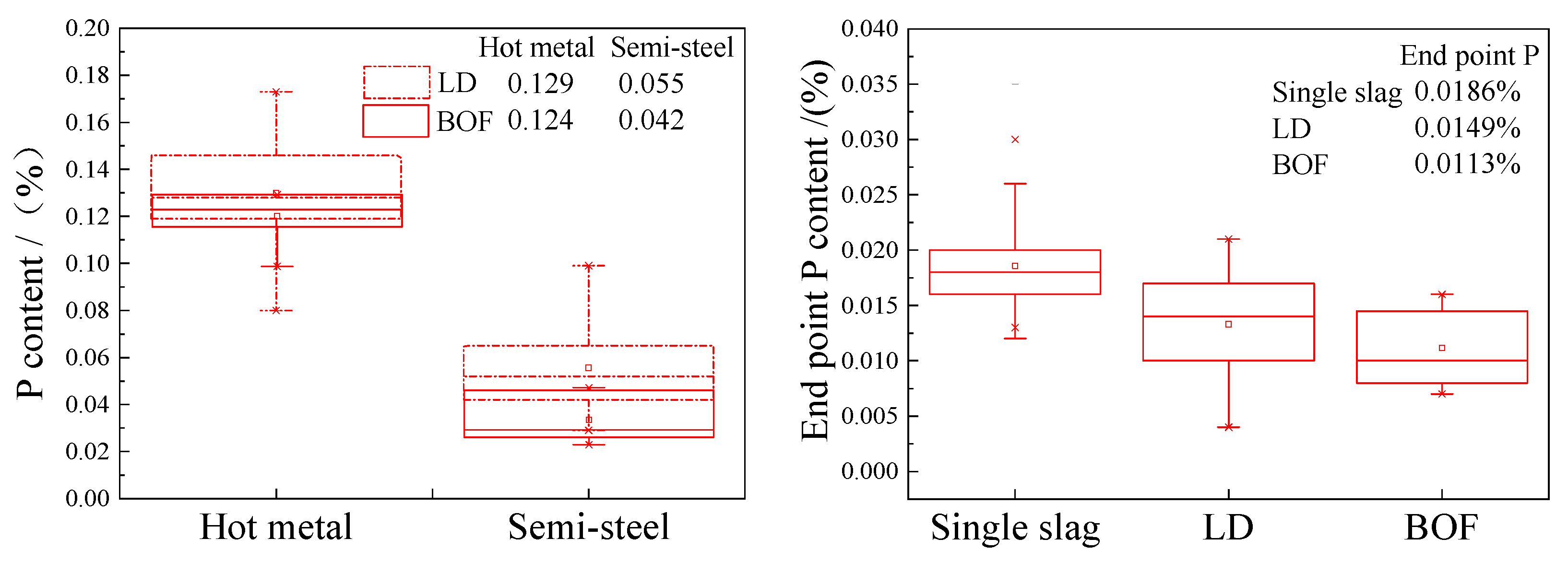
As shown in Figure 6, compared with the single-slag process, under the condition of the same end carbon content, the fluctuation range of the end phosphorus content after adopting the double-slag process is smaller, the control is more stable, the average phosphorus content is reduced by approximately 0.005%, and the overall phosphorus removal rate is increased to over 90%.
Figure 6.
Comparison of endpoint phosphorus content for different furnace capacities and different processes.
- (3)
- The endpoint [O] content
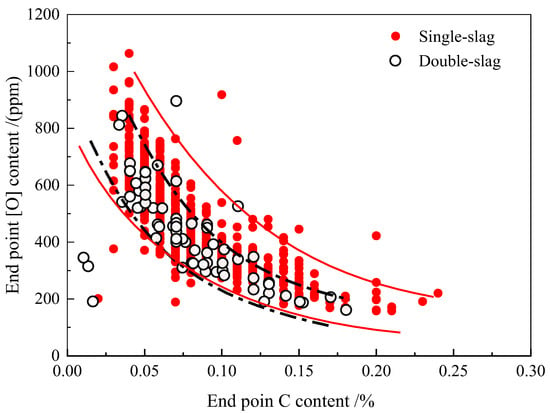
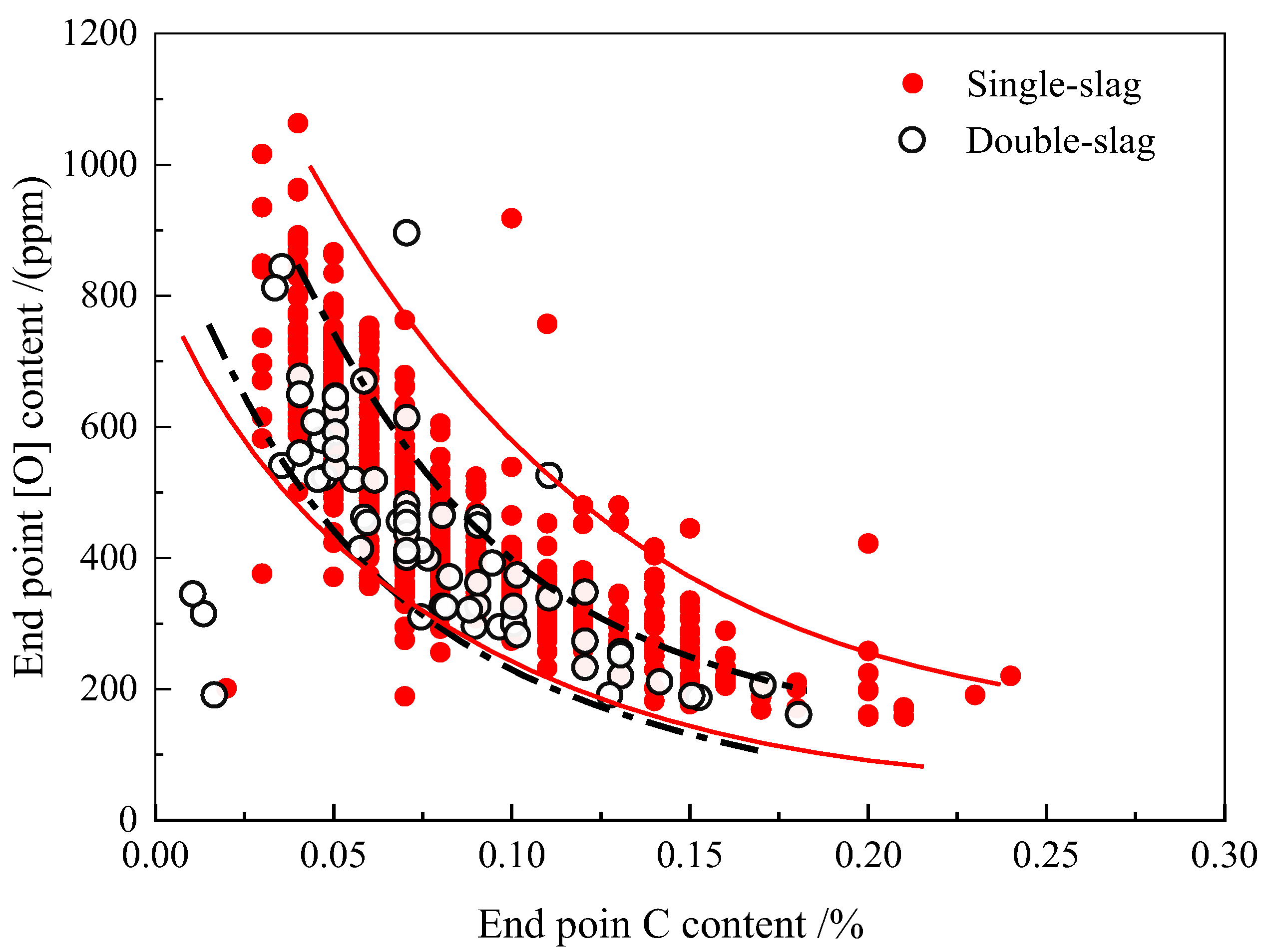
Due to the dephosphorus task in the early stage, the peroxidation of molten steel was alleviated. As shown in Figure 7, the dissolved oxygen content at the end of the 180-ton BOF converter decreased by an average of 50–100 ppm compared with the single-slag process under the same endpoint carbon content, and the average carbon oxygen product decreased from 0.0033% to 0.0028%. Lower oxygen content is conducive to improving alloy yield and molten steel cleanliness. Because the 60 t LD converter is not equipped with a sub-lance device, there is no data on the endpoint oxygen.
Figure 7.
Comparison of endpoint oxygen content between different processes.
4. Key Influencing Factors
4.1. Influencing Factors of Dephosphorization Period
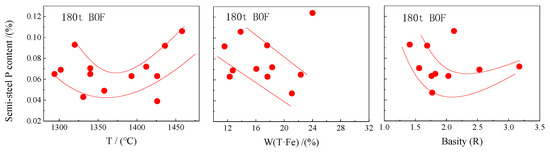
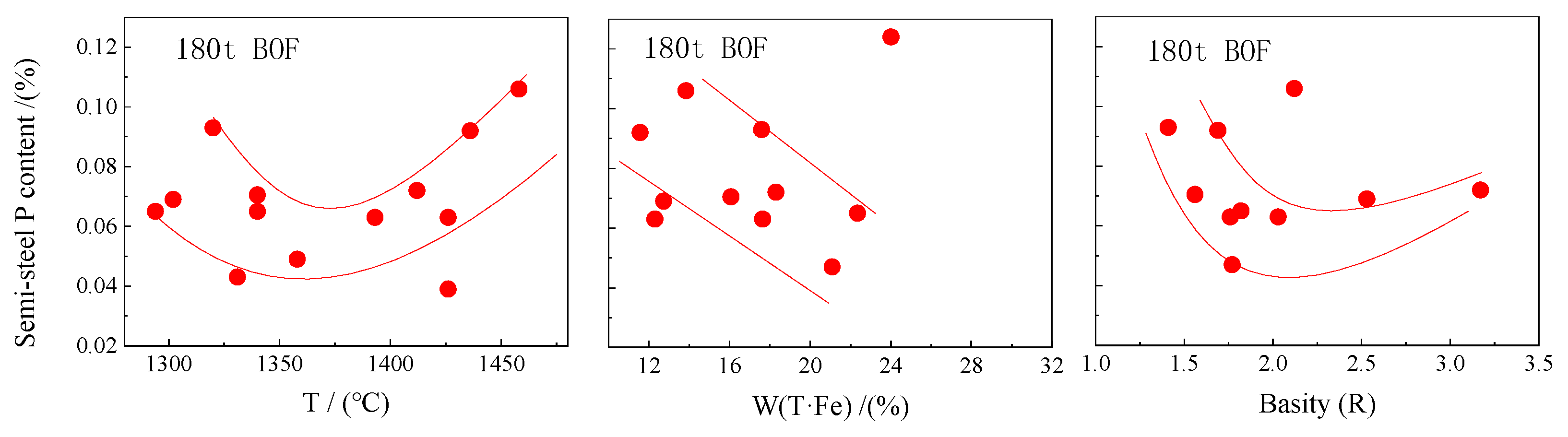
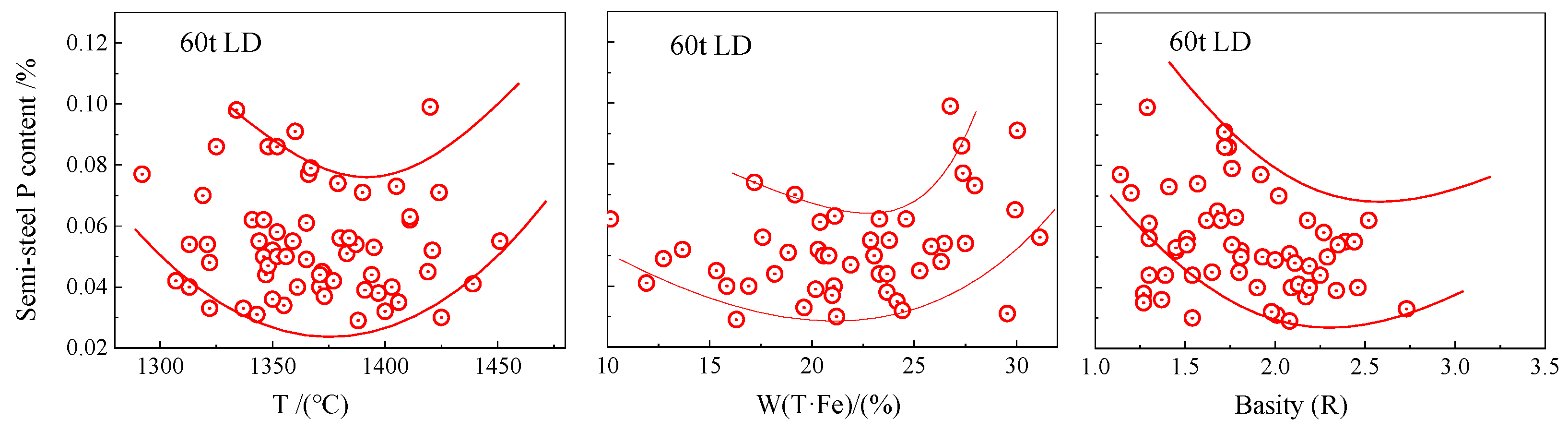
As shown in Figure 8, the phosphorus content in the semi-steel, i.e., the intermediate melt after dephosphorization and deslagging, first decreases and then increases with increasing temperature and slag basicity during the dephosphorization period.
Figure 8.
Analysis of influencing factors on semi-steel phosphorus content in the initial period.
Temperature: The optimal temperature range for phosphorus removal is 1350–1400 °C. If the temperature is too low, it is difficult to dislodge slag; if it is too high, it is thermodynamically unfavorable.
Basicity: The optimal R for a 180-ton converter is 1.5–2.0, and for a 60-ton converter, it is 2.0–2.5. The difference stems from the fact that the 60-ton converter, in order to enhance the stirring of the molten pool (without bottom blowing), adopted a lower lance height and added more cold material temperature control, resulting in higher R and oxidizability.
w(T.Fe): For a 180-ton converter, the phosphorus content in semi-steel generally decreases with increasing w(T.Fe), although a slight fluctuation is observed at around w(T.Fe) = 24%. For a 60-ton converter, [P] first decreases and then increases as w(T.Fe) rises, with the optimal range being 20–25%. Excessively high w(T.Fe) will lead to excessive foaming of the slag and deteriorate the slag–metal interface reaction.
4.2. Influencing Factors of Decarburization Period (End Point)
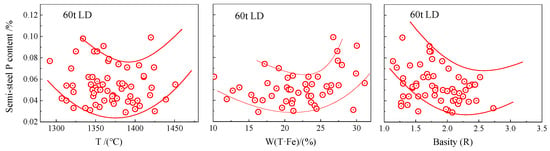
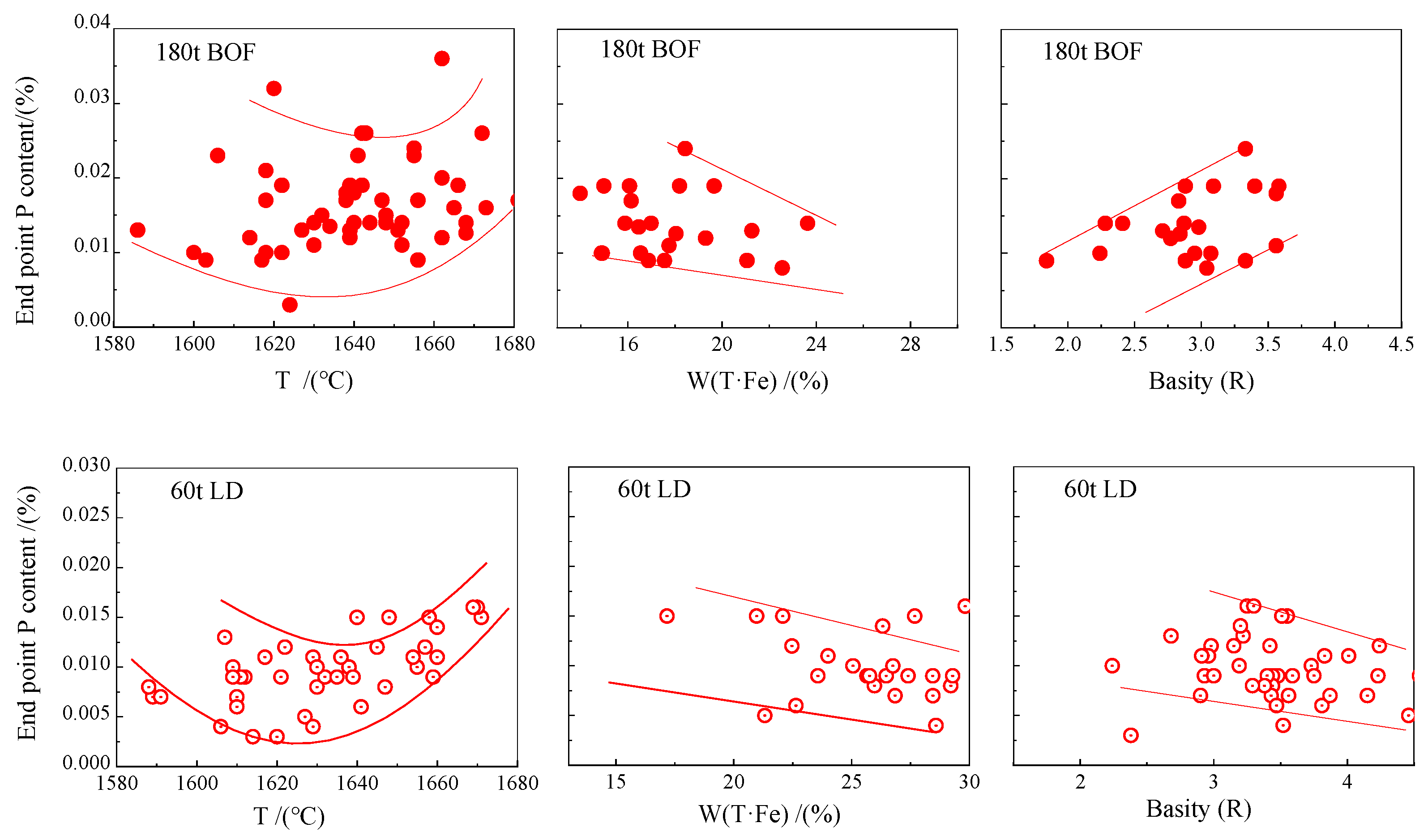
As shown in Figure 9, the phosphorus content at the endpoint also shows a trend of first decreasing and then increasing with the rise in steel tapping temperature.
Figure 9.
Analysis of influencing factors on endpoint phosphorus content.
Temperature: The optimal endpoint temperature range is 1620–1640 °C.
Decarburization slag w(T.Fe) and Basicity: For the 180 t BOF converter with an average lower final slag w(T.Fe) (16.82%), the endpoint [P] decreased as w(T.Fe) increased. Low w(T.Fe) may cause the slag to “re-dry”. At this point, increasing the basicity is actually unfavorable. Therefore, the final slag basicity is controlled at an average of 3.05. For the 60 t LD converter with an average high final slag w(T.Fe) (20.92%), the endpoint [P] decreases with the increase in w(T.Fe) and basicity. Therefore, the final slag basicity is controlled at an average of 3.90.
4.3. The Influence of Bottom-Blowing Stirring
By comparing Figure 8 and Figure 9, the influence of temperature tends to be consistent in the top-blown and combined-blown converters. Figure 10 clearly shows that after the 60-ton LD converter undergoes bottom-blowing modification (LD → BOF), the introduction of bottom-blowing significantly promotes the dephosphorization and reduces the terminal phosphorus content without changing the slag system and top lance operation. Due to its superior stirring kinetics of the molten pool, the combined blown converter can achieve efficient phosphorus removal at a lower level of slag oxidizability and basicity, which is more conducive to realizing “less slag smelting”.
Figure 10.
Analysis of phosphorus content influenced by bottom stirring.
5. Discussion
5.1. Rapid Slagging Optimization
At the beginning of this study, due to the low temperature of molten iron (<1250 °C), there is a process of warming up first and then slagging. Slagging is late, and the dephosphorization rate is only 40–50%. Through process optimization (Table 4), the average slagging time is more than 50 s in advance, and the dephosphorization rate is increased by 10–20% in the early stage, and the carbon content of semi-steel is increased from an average of 2.89% to 3.07%, and the effect of “dephosphorization and carbon protection” is optimized. Adoption of top blowing and weak oxygen supply “soft blowing mode” is intended to improve the accurate control of the molten pool temperature, inhibit its rapid warming, to ensure that the low-temperature conditions to obtain a relatively high slag–steel phosphorus distribution coefficient, and to avoid the rapid increase in the molten pool temperature caused by “hard blowing”, Induced by “hard blowing” rapid increase in the molten pool temperature, inducing carbon–oxygen reaction in advance excessive occurrence, triggering the rapid generation of foam slag, affecting the intermediate pouring slag operation [46].
Table 4.
Smelting process changes comparison before and after optimization of double-slag process.
5.2. Control of Dephosphorylated Slag Foaming
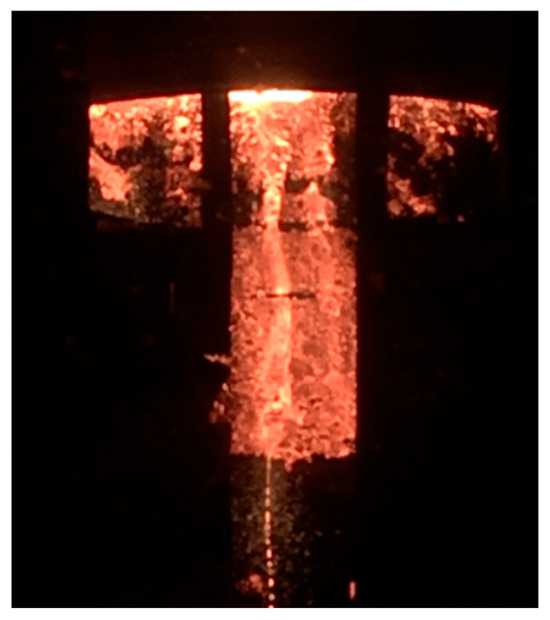
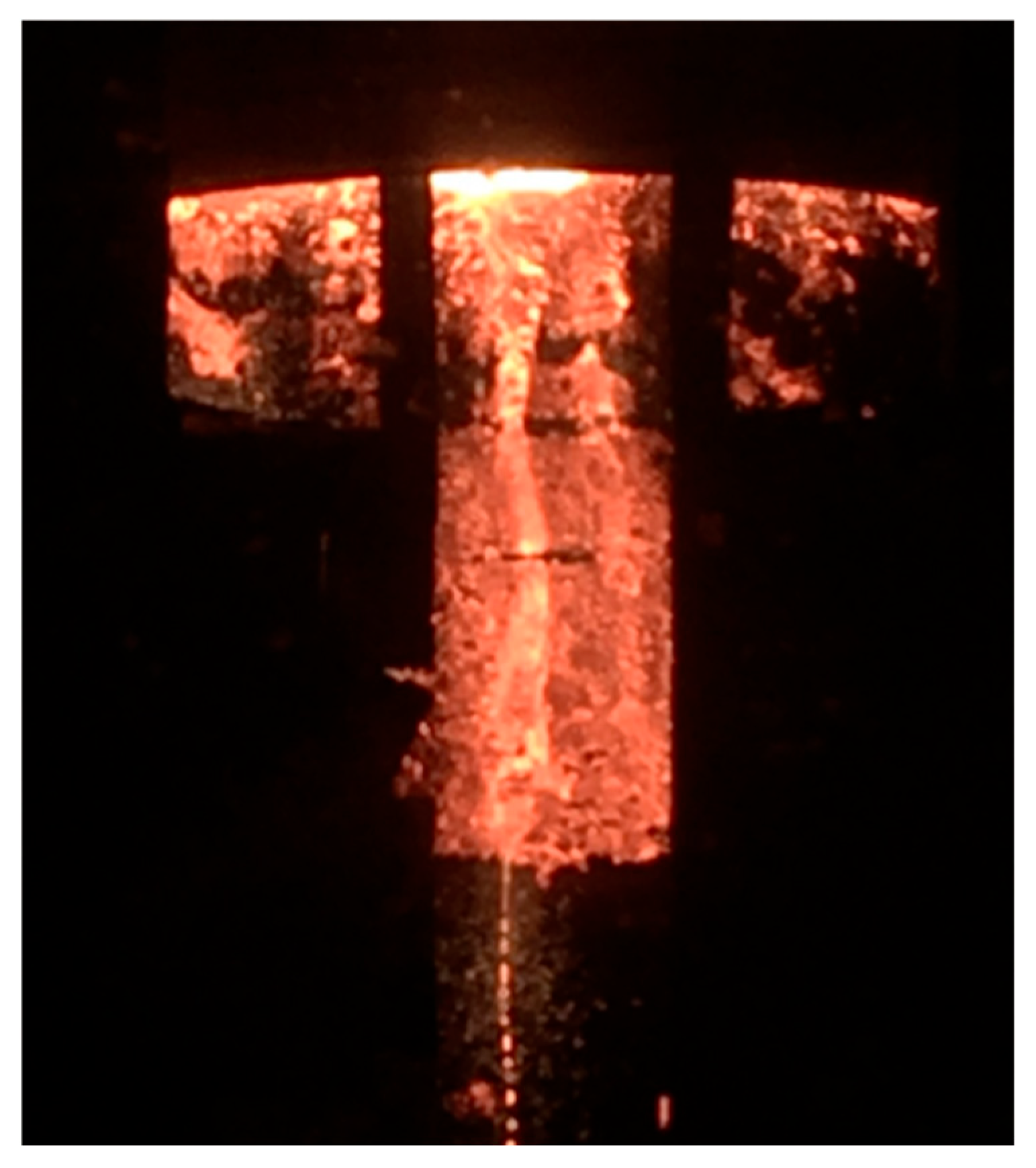
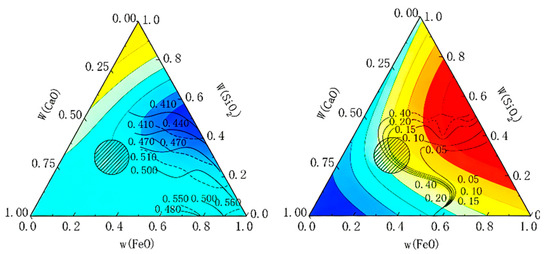
Moderate foaming can increase the reaction interface, which is conducive to dephosphorization. However, excessive foaming will lead to slag volume expansion, and in severe cases, overflow will occur, reducing the amount of effective reactive slag, and making slag pouring operation difficult. However, excessive foaming will lead to slag volume expansion, and in severe cases, slag overflow will occur, reducing the amount of effective reactive slag and making slag pouring operation difficult, as shown in Figure 11. Figure 12 [47,48] shows the CaO-SiO2-FeO ternary slag system slag surface tension and viscosity curves. The color scale indicates the relative magnitude of the calculated surface tension or viscosity in different composition regions of the CaO–SiO2–FeO ternary slag system. From the circle shown in the converter dephosphorization slag ternary system composition of the region can be seen. In terms of the physical properties of the slag, the circle region of the slag surface tension fluctuations is smaller, the slag viscosity fluctuations are larger, and the viscosity is a major influence on the slag foam. Viscosity is the main factor affecting slag foaming [49,50]. On the basis of the slag characteristics of the target slag system shown in the circle, the control of slag foaming gas factors such as temperature and decarburization rate during the dephosphorization period has become the key to the control of foaming slag during the dephosphorization period [51]. By appropriately reducing the intensity of oxygen supply, increasing the intensity of bottom blowing and other top/bottom blowing to control the foam slag in a reasonable range, the temperature of the molten pool can be strictly controlled in a short period of time, to achieve high efficiency of dephosphorization while suppressing the rate of decarburization. In addition, industrial tests have found that the increase in dephosphorization slag level due to slag foaming has a great negative impact on the efficient pouring out of dephosphorization slag, and will further increase the content of metal iron particles in the dephosphorization slag (according to the industrial test, the content of metal iron particles in the foaming slag is as high as 20~40%), which will deteriorate the metal yield of the double-slag smelting process.
Figure 11.
Photos of slag overflow during dephosphorization period.
Figure 12.
Graph of surface tension and viscosity under phase diagram of CaO–SiO2–FeO ternary system.
5.3. Stabilization Control of the Process
According to a certain proportion of dephosphorization slag partially poured out, the smelting process slag volume is reduced under the conditions that a decarbonization period is more likely to occur “re-dry”, and increase the difficulty of stability control of dry dedusting. According to the test furnace statistics, “re-dry” time of double slag was 40–60 s longer than the single-slag process, which will inevitably affect the decarburization period of phosphorus further removal. Only through the optimization of the decarburization period of oxygen supply and slagging process can the decarburization period be realized with rapid decarburization and warming, so as to reduce the consumption of auxiliary materials and the amount of converter slag under the premise of stable access to higher cleanliness of the steel. Compared with the single-slag method, the stable removal of molten iron phosphorus, the stable pouring out of dephosphorized slag and the stable control of the decarburization period have increased the difficulty of the stable control of the double-slag smelting process.
5.4. Converter Smelting Cycle and CO Recovery
The dephosphorization slag deslagging of this process takes about 3–6 min, which is an additional operational burden and can prolong the smelting cycle by 4–6 min [22,46]. This is an undeniable impact on the fast-paced converter operation. In addition, in order to control the temperature during the dephosphorization period within the target range, measures such as top blowing oxygen supply, soft blowing, and cooling material temperature control were taken to oxidize about 1% to 1.5% of the carbon in the molten iron, which cannot be ignored in terms of its impact on gas recovery.
6. Conclusions
The converter double-slag process significantly reduces the final slag amount and the dephosphorization burden at the endpoint by shifting the dephosphorization task to the early stage of smelting at relatively low temperature and implementing intermediate slag removal. It is therefore an effective approach for achieving efficient and low-cost dephosphorization.
The optimal control ranges of key process parameters at different stages were clarified. During the dephosphorization stage, the temperature should be controlled at 1350–1400 °C, the slag basicity at 1.6–2.0, and the T.Fe content at 19–23%. During the decarburization stage, the endpoint temperature should be 1620–1640 °C, and the final slag basicity should be increased to above 3.5.
Bottom stirring plays a critical role in enhancing dephosphorization kinetics and enabling efficient phosphorus removal under conditions of low oxidizing potential and relatively low slag basicity. Compared with top-blown converters, combined-blown converters achieve better dephosphorization performance and lower slag-forming material consumption under the same conditions.
By optimizing the charging practice (adding slag-forming materials before coolants) and adjusting the lance height to 1.7–2.0 m to promote rapid slag formation, the early-stage dephosphorization rate can be increased by 10–20%, while improving the effect of “dephosphorization with carbon retention”.
Industrial practice shows that the optimized double-slag process can reduce lime consumption by more than 30%, decrease the average endpoint phosphorus content by approximately 0.005%, and maintain the dephosphorization rate above 90%. Meanwhile, the dissolved oxygen content in the endpoint steel is reduced by 50–100 ppm, creating favorable conditions for the production of clean steel.
Author Contributions
Validation, S.Q.; Investigation, J.Z.; Resources, L.Y. and Y.Y.; Data curation, Y.Y.; Writing—original draft, J.W.; Writing—review & editing, J.W.; Supervision, L.Y., J.Z. and S.Q. All authors have read and agreed to the published version of the manuscript.
Funding
This work was supported by the Advanced Materials National Science and Technology Major Project (Grant Nos. 2025ZD0611201 and 2025ZD0611200).
Data Availability Statement
The original contributions presented in this study are included in the article. Further inquiries can be directed to the corresponding author.
Conflicts of Interest
Authors Jie Wang, Libin Yang, Jiaqing Zeng, Shengtao Qiu and Yong Yang were employed by the company Central Iron and Steel Research Institute. The authors declare that the research was conducted in the absence of any commercial or financial relationships that could be construed as a potential conflict of interest.
References
- Xu, K. Several fundamental issues of clean steel. Acta Metall. Sin. 2009, 45, 264. [Google Scholar]
- Yin, R. Discussion on high-efficiency and low-cost clean steel production platform: One of the key technologies for the steel industry in the 21st century. China Metall. 2010, 20, 1. [Google Scholar]
- Liu, L. Proposal for establishing a high-efficiency and low-cost clean steel production platform. Iron Steel 2010, 45, 1. [Google Scholar]
- Zeng, J.; Yang, L.; Wang, J.; Liu, X.; Yao, T.; Dai, S. Effect of bottom blowing stirring on dephosphorization process in combined-blown converter. Iron Steel 2017, 52, 40–44+51. [Google Scholar]
- Ogawa, Y.; Yano, M.; Kitamura, S.; Hirata, H. Development of the continuous dephosphorization and decarburization process using BOF. Tetsu Hagané 2001, 87, 21–28. [Google Scholar] [CrossRef] [Scilit]
- Matsumiya, T.; Ichida, M. Recent progress and topics in iron and steelmaking technology in Japan. In Proceedings of the 10th Japan-China Symposium on Science and Technology of Iron and Steel, Chiba, Japan, 18 November 2004. [Google Scholar]
- Morita, K.; Kumakura, M.; Washizu, T. Efficiency promotion of refining process in Nippon Steel Corporation. In Proceedings of the 4th International Congress on the Science and Technology of Steelmaking, Gifu, Japan, 6–8 October 2008. [Google Scholar]
- Ueshima, Y.; Saito, K. Recent advances and topics of iron and steelmaking technology in Japan. In Proceedings of the 12th Japan-China Symposium on Science and Technology of Iron and Steel, Nagoya, Japan, 18–19 October 2010. [Google Scholar]
- Iwasaki, M.; Matsuo, M. Change and development of steelmaking technology. Nippon Steel Tech. Rep. 2011, 391, 88–93. [Google Scholar]
- Kumakura, M. Advances in refining technology and future prospects. Nippon Steel Tech. Rep. 2013, 104, 5–12. [Google Scholar]
- Sasaki, N.; Ogawa, Y.; Mukawa, S.; Miyamoto, K. Improvement of hot metal dephosphorization technique. Nippon Steel Tech. Rep. 2012, 394, 26–32. [Google Scholar]
- Hashimoto, T.; Iiboshi, H.; Kume, K. Improvement in production capacity at Oita Works. Nippon Steel Tech. Rep. 2012, 394, 84–90. [Google Scholar]
- Kobayashi, M.; Isobe, K.; Arai, M. Technical progress in steelmaking and casting for special bar and wire steel at Muroran Works. Nippon Steel Tech. Rep. 2012, 394, 119–124. [Google Scholar]
- Turkdogan, E.T. Assessment of P2O5 activity coefficients in molten slags. ISIJ Int. 2000, 40, 964. [Google Scholar] [CrossRef] [Scilit]
- Wang, J.; Zeng, J.; Yang, L. Optimal selection of first turndown temperature in BOF double-slag dephosphorization process. Steelmaking 2015, 31, 34–37. [Google Scholar]
- Wang, C.; Yang, L.; Lin, T.; Wang, J.; Zeng, J. Temperature control model for dephosphorization window in combined-blown converter. Spec. Steel 2017, 38, 1–5. [Google Scholar]
- Zhou, C.; Li, J.; Wu, H.; Cai, K.S.; Wu, G.P.; Cao, Y.L. Study on first deslagging temperature in converter double-slag dephosphorization. Iron Steel 2014, 49, 24–28. [Google Scholar]
- Sun, H.; Yang, J.; Lu, X.; Liu, W.; Ye, G.; Zhang, R.; Yang, W. Dephosphorization in double slag converter steelmaking process at different temperatures. Metals 2021, 11, 1030. [Google Scholar] [CrossRef] [Scilit]
- Yang, W.; Yang, J.; Shi, Y.; Yang, Z.; Gao, F.; Zhang, R.; Ye, G. Effect of temperature on dephosphorization of hot metal in double-slag converter steelmaking process. Steel Res. Int. 2020, 92, 2000438. [Google Scholar] [CrossRef] [Scilit]
- Zhang, R.; Yang, J.; Yang, W.; Sun, H. Kinetics of dephosphorization in double slag converter steelmaking process. Metall. Mater. Trans. B 2022, 53, 3013–3024. [Google Scholar] [CrossRef] [Scilit]
- Wan, X.F.; Cao, D.; Li, D.G.; Liao, X.W.; Wang, L.J.; Chang, G.H. Technical study and practice on deep dephosphorization with double slags in converter. Iron Steel 2012, 47, 32–36. [Google Scholar]
- Wang, J.; Liu, J.; Lin, T.; He, J.; Yang, L.; Xu, Z. Low-temperature low-slag dephosphorization process of 180 t BOF. China Metall. 2016, 26, 47–50. [Google Scholar]
- Wang, X.; Zhu, G.; Li, H.; Lü, Y. Slag-retaining double-slag BOF steelmaking technology. China Metall. 2013, 23, 40–46. [Google Scholar]
- Li, X. Fundamental Research on Slag Removal and Dephosphorization in Converter Double-Slag Process; University of Science and Technology Beijing: Beijing, China, 2016. [Google Scholar]
- Li, X.; Bao, Y.; Wang, M.; Lin, L. Slag formation route in dephosphorization stage during converter double-slag process. Steelmaking 2016, 32, 6–11. [Google Scholar]
- Du, Y.; Dong, D.; Zhu, R.; Yang, W.H. Study and practice on dephosphorization by limestone steelmaking. J. Eng. Sci. 2016, 38, 169–174. [Google Scholar]
- Tian, Y.; Liu, Y.; Li, G.; Li, Y.; Zhang, Z.; Tan, C. Dissolution behavior of partially calcined limestone in converter slag. J. Mater. Res. Technol. 2022, 17, 2108–2117. [Google Scholar] [CrossRef] [Scilit]
- Deng, H.; Wang, N.; Chen, M.; Zhang, G. Dissolution behaviour of limestone in converter slag. Ironmak. Steelmak. 2020, 47, 417–423. [Google Scholar] [CrossRef] [Scilit]
- Chen, M.; Deng, H.; Wang, N.; Zhang, G. Limestone dissolution in converter slag. ISIJ Int. 2018, 58, 2271–2279. [Google Scholar] [CrossRef] [Scilit]
- Zhao, W. Study on Slag Formation Using Raw Dolomite in Converter Smelting; Wuhan University of Science and Technology: Wuhan, China, 2016. [Google Scholar]
- Zhang, H.; Zhao, W.; Li, H.; Kong, Y. Dissolution behavior of raw dolomite in converter slag. Steelmaking 2016, 32, 15–18. [Google Scholar]
- Yang, Z. Study on direct reduction and alloying of manganese ore in converter double-slag process. Steelmaking 2013, 29, 37–40. [Google Scholar]
- Dai, S.; Wu, W.; Zhang, X.; Liu, Y.; Wang, H. Analysis of manganese distribution between slag and steel at BOF endpoint. China Metall. 2017, 27, 12–18. [Google Scholar]
- Kumar, S.D.; Sah, R.; Sekhar, V.R.; Vishwanath, S.C. Development of blowing process for high manganese hot metal in BOF steelmaking. Trans. Indian Inst. Met. 2016, 69, 775–782. [Google Scholar] [CrossRef] [Scilit]
- Liu, Y.; Liu, L.; Tong, P.; Wang, X. Dephosphorization control during high-carbon tapping stage. Steelmaking 2006, 22, 27–29. [Google Scholar]
- Liang, X.; Wang, X.; He, X. Mineral phase analysis and recycling utilization of converter slag. J. Iron Steel Res. 2014, 26, 15–20. [Google Scholar]
- Zhu, Z.; Zhang, H.; Zhao, G. Slag composition prediction model for BOF double-slag process. In Proceedings of the China Iron and Steel Annual Conference, Shanghai, China, 21 October 2015. [Google Scholar]
- Han, X. Research on Low-Cost Steelmaking Technology and Model Development for Converter. Ph.D. Thesis, University of Science and Technology Beijing, Beijing, China, 2017. [Google Scholar]
- Wang, J.; Zeng, J.; Yang, L.; Wang, C.; Lin, T. Analysis of low-slag dephosphorization process in combined-blown converter. Steelmaking 2015, 31, 31–35. [Google Scholar]
- Yang, L.; Zeng, J.; Deng, Y.; Xu, X.; Wu, L. Combined blowing technology in large converter. Iron Steel 2020, 55, 45–52. [Google Scholar]
- Qu, Y. Principles of Steelmaking; Metallurgical Industry Press: Beijing, China, 1980. [Google Scholar]
- Chen, J. Metallurgy of Iron and Steel; Metallurgical Industry Press: Beijing, China, 1990. [Google Scholar]
- Healy, G.W. A new look at phosphorus distribution. J. Met. 1968, 20, A49. [Google Scholar]
- Nozaki, T. Bottom-Blown Converter Process; Metallurgical Industry Press: Beijing, China, 2008. [Google Scholar]
- Yang, L.; Liu, L.; Jiao, X. Study on dephosphorization in 300 t combined-blown converter. Steelmaking 2012, 28, 43–46. [Google Scholar]
- Zeng, J.; Pan, Y.; Wang, L. Theory and practice of clean steel production in combined-blown converter. Iron Steel 2014, 49, 1–6. [Google Scholar]
- Zhang, Z.; Zhao, J.; Wang, Z. Matching of slag composition and temperature in converter double-slag process. Iron Steel 2024, 59, 57–65. [Google Scholar]
- Huang, X. Principles of Iron and Steel Metallurgy; Metallurgical Industry Press: Beijing, China, 2010. [Google Scholar]
- Wang, J.; Zeng, J.; Yang, L. Research progress on slag foaming in steelmaking process. China Metall. 2016, 26, 1–5. [Google Scholar]
- Ito, K.; Fruehan, R.J. Study on foaming of CaO–SiO2–FeO slags. Metall. Trans. B 1989, 20, 515. [Google Scholar] [CrossRef] [Scilit]
- Kim, H.S.; Min, D.J.; Park, J.H. Foaming behavior of CaO–SiO2–FeO–MgO slags at high temperatures. ISIJ Int. 2001, 41, 317. [Google Scholar] [CrossRef] [Scilit]

Disclaimer/Publisher’s Note: The statements, opinions and data contained in all publications are solely those of the individual author(s) and contributor(s) and not of MDPI and/or the editor(s). MDPI and/or the editor(s) disclaim responsibility for any injury to people or property resulting from any ideas, methods, instructions or products referred to in the content. |
© 2026 by the authors. Licensee MDPI, Basel, Switzerland. This article is an open access article distributed under the terms and conditions of the Creative Commons Attribution (CC BY) license.