


Abstract
Mine tailings represent large secondary inventories of rare-earth elements (REEs). However, their potential cannot be assessed from total concentration alone. Mining worldwide generates 9–14 Gt of tailings annually across approximately 8500 facilities, meaning that grades of only tens of mg/kg may represent substantial inventories. Their valorization depends on tonnage; the distribution of Nd, Pr, Dy, Tb, Sc, Y, and other REEs; host mineralogy; liberation; particle size; prior mass reduction; chemical selectivity; and the quality of the pregnant leach solution (PLS). Published cases include Fe-REE-Nb, carbonatite, phosphate, uranium-bearing, Pb-Zn, gold, and copper-bearing tailings, confirming that no universal flowsheet exists. The most robust routes integrate geometallurgical characterization, preconcentration, activation of refractory phases, selective leaching, PLS purification, and recovery by solvent extraction, ion exchange, membranes, adsorption, or precipitation. Major environmental challenges include Th and U mobilization, acid drainage, Fe-Al-Ca-Mg-P co-dissolution, water and reagent consumption, salt generation, and the reactivity of post-extraction residues. Circular economy opportunities increase when co-products, rehabilitation, reagent recycling, and the safe reuse of mineral residues are integrated. A decision framework is proposed that distinguishes geochemical inventory, potential resource, and recoverable inventory, prioritizing value per unit mass treated, PLS quality, and reductions in environmental liabilities. The value per tonne depends particularly on the proportions of Nd, Pr, Dy, and Tb and may range from approximately one dollar to more than a thousand. The transition to continuous circuits, comprehensive balances, and techno-economic and life cycle assessments will determine which tailings can become competitive secondary sources of REEs.
1. Introduction
Rare-earth elements (REEs) comprise the lanthanides, together with Sc and Y, and are essential inputs for permanent magnets, advanced electronics, catalysts, alloys, optical systems, and numerous decarbonization technologies. Their criticality stems not from uniform geological scarcity but from the combined effects of geographically concentrated extraction and refining, complex separation processes, long lead times for developing new operations, and substantial differences in the value of individual REEs. The demand associated with Nd-Fe-B magnets places particular importance on Nd, Pr, Dy, and Tb, whereas Sc and Y may determine the economic attractiveness of certain secondary materials [1,2,3,4,5,6,7,8].
Wind power deployment scenarios project an increasing and geographically concentrated demand for Nd and Pr toward 2040, and international renewable energy agencies identify magnet rare earths as one of the critical material groups most exposed to supply bottlenecks during the energy transition [9,10].
Supply security has acquired an additional dimension during 2025–2026. The International Energy Agency projects sustained growth in the demand for magnet rare earths through 2040 and warns that concentration is particularly high in refining and magnet manufacturing. Although mining capacity outside the leading producer is expanding, the development of separation, metallization, and magnet manufacturing capacity is progressing more slowly. This asymmetry makes secondary sources strategically important where they can be incorporated into regional processing circuits, provided their recovery does not entail disproportionate environmental impacts [11,12].
At the same time, mining has accumulated enormous volumes of tailings generated by comminution, concentration, and separation of valuable minerals. These deposits contain material that has already been extracted, transported, and, in many cases, finely ground, and are therefore often described as “pre-mined” resources. This advantage is real, yet only partial. Tailings are not automatically preconcentrated ore: they may contain REEs in refractory phases, ultrafine particles, complex associations with Fe oxides, silicates, phosphates, or carbonates, spatial heterogeneity, secondary oxidation, and an unfavorable ratio of mass to be treated to recoverable value [13]. Recent reviews on circular economy and critical material recovery from tailings recognize their potential while emphasizing the need to integrate processing with the ultimate residue disposition [14,15,16,17,18,19,20,21,22].
The scale of the inventory justifies the interest while demanding care in the calculations. Global annual tailings generation has been estimated between 8.85 and 14.4 Gt, and the most comprehensive inventory of disclosed facilities includes 1743 deposits containing approximately 44.5 × 10⁹ m3, within an estimated total of approximately 8500 active, inactive, and closed facilities [23,24]. At an annual generation rate of 10 Gt and total REE grades of 50–300 mg/kg, the geochemical content incorporated into new deposits each year would be 0.5–3 Mt, equivalent to one to eight times the global primary rare-earth oxide production [12]. This comparison is useful as an indication of scale but misleading as a conclusion: it describes content rather than a resource because the actual recoverable fraction is the product of four successive yields, and only a minority of facilities combine grade, mineralogy, tonnage, and accessibility in ways compatible with a viable project.
The literature specifically addressing REEs in tailings has grown rapidly. Documented cases include carbonatite tailings with REE grades of several percent, iron tailings from Bayan Obo containing monazite and bastnaesite, phosphate residues dominated by apatite, uranium tailings with a water-soluble REE fraction, gold tailings in which recovery improves after Fe removal, and copper porphyry tailings with grades on the order of tens of mg kg−1. The diversity of these matrices demonstrates that a universal technological route does not exist [25,26,27,28,29,30,31].
The central scientific challenge is shifting the question from “What quantity of REEs do the tailings contain?” to “In which phases and particle sizes do they occur, what fraction can be concentrated before leaching, how much of that value can be selectively dissolved, what composition will the pregnant leach solution (PLS) have, and what will happen to the remaining residue?” Under this approach, recoverability is an emergent property of the mineralogy–process system, rather than a direct consequence of grade. The same total concentration can yield radically different outcomes depending on whether REEs are adsorbed onto surfaces, hosted in apatite, encapsulated in submicron monazite, or incorporated into other phases by isomorphous substitution.
Rigorous comparisons require four concepts to be distinguished. Geochemical content corresponds to the total mass of REEs present; potential inventory combines dry tonnage and grade; a technical resource requires sufficient spatial, mineralogical, and metallurgical information; and recoverable inventory accounts for losses during preconcentration, leaching, separation, and final production. In simplified terms, the recoverable inventory can be expressed as the product of dry tonnage, grade, and four stage recoveries:
where RI is the recoverable inventory (t of REEs), T is the dry tonnage of tailings (t), G is the total REE grade expressed as a mass fraction, and Rpre, Rleach, Rsep, and Rprod are the fractional recoveries of preconcentration, leaching, separation, and final production, respectively. This distinction prevents transforming results from isolated samples into resource estimates and allows the comparison of deposits with markedly different tonnages, grades, and mineralogies.
Available reviews of tailings valorization and critical material recovery describe technologies and case studies in detail, but they rarely connect within a single framework the scale of inventory, the quality of evidence supporting each published claim, and the economic threshold that each tonne treated must meet [14,17,18,19,20]. This paper integrates these three dimensions: it organizes global cases by deposit family and level of evidence, translates grade and elemental distribution into value per tonne under explicit assumptions, and structures decision-making around a stage-gate sequence at which studies can be discontinued before investing in chemical optimization.
2. Global REE Resources in Mine Tailings
2.1. Tailings as Secondary Inventories and the Limits of the Resource Concept
The conceptual advantage of tailings over primary ore is that the rock has already been extracted, transported, and comminuted. Therefore, a portion of the energy and capital associated with initial mining has already been expended. However, tailings also concentrate the losses from historical processing: minerals that did not respond to separation, particles that were too fine, complex mineral associations, and elements that lacked value at the time of operation. Technological advances and market price shifts may transform these losses into opportunities, but the presence of a surface deposit does not eliminate the costs associated with rehandling, dewatering, classification, rehabilitation, permitting, or risk management [14,15,16,19].
There is no homogeneous global inventory of REEs contained in tailings that is comparable to primary mine production statistics. Tailings databases mainly describe location, volume, stability, or the main commodity, whereas total rare-earth element (TREE) content, total rare-earth oxide (TREO) content, and individual REE distributions are rarely reported consistently. Moreover, legacy deposits often lack three-dimensional models and sampling programs designed according to geometallurgical criteria. Consequently, a responsible global assessment must rely on archetypes and representative case studies rather than an aggregate tonnage estimate lacking quantified uncertainty [14,32].
Defining the limits of this concept also requires distinguishing actual mine tailings from other secondary industrial residues containing significant REE concentrations. Bauxite residue (red mud) from alumina production and phosphogypsum from the phosphoric acid and fertilizer industries share with tailings the characteristics of having already been processed, occurring in large volumes, and being surface-available. However, they originate from chemical transformations subsequent to mineral beneficiation and are subject to alkalinity or acidity balances and regulatory frameworks of their respective industries [33,34]. They therefore fall outside the strict category of mine tailings, although their shared metallurgical and environmental challenges allow leaching and purification routes to be compared.
This distinction can also be expressed through a standardized classification. The United Nations Framework Classification for Resources categorizes any project along three axes: social and economic viability, project maturity, and confidence in the estimate and explicitly includes anthropogenic resources, allowing tailings deposits to be classified using the same terminology as primary deposits (United Nations Economic Commission for Europe, 2020). Regulation (EU) 2024/1252 adopted this terminology by requiring Member States to establish databases of closed extractive waste facilities and classify them according to this framework where possible [35]. Adopting a recognized classification prevents the average of a handful of samples from being presented as a resource and enables comparisons between deposits assessed by different teams with varying sampling densities and levels of metallurgical testing.
2.2. Mineralogy, Value Basket, and Global Typologies
Process mineralogy must precede lixiviant selection. Monazite, xenotime, bastnaesite, florencite, apatite, and Sc-bearing phases respond differently to metallurgical treatment. Monazite may require alkaline or sulfuric acid (H2SO4) activation to break its phosphate structure; bastnaesite combines carbonate and fluoride and may cause fluoride-related problems; apatite can serve simultaneously as a source of P and REEs; and florencite commonly occurs in altered, ultrafine systems. Mineralogical characterization must resolve not only major phases by XRD, but also REE distribution using SEM-EDS, EPMA, QEMSCAN/MLA, or microanalytical techniques where host phases are scarce [36,37,38,39,40,41,42,43,44].
Total REE concentrations must be accompanied by individual elemental distributions. Tailings enriched in Ce and La may have a different economic rationale from those with lower TREE content but higher proportions of Nd-Pr or heavy rare-earth elements (HREEs). Similarly, Sc may constitute a high-value co-product even at low concentrations. Assessments should report individual element contents, equivalent oxide contents, and potential value subject to recovery, avoiding the conversion of spot prices into “in situ value” without accounting for process losses, purity, and separation costs. The presence of Th and U requires dedicated mass balances because their mobilization during roasting, leaching, or extraction can alter the radiological classification of concentrates and residues [45,46,47,48,49].
The most promising mine tailings can be grouped into six families. The first comprises tailings generated by operations that already process REE minerals or REE-rich polymetallic systems, where residual grades may remain significant (Bayan Obo and certain carbonatites). The second includes tailings from other commodities in which REEs were unrecovered co-products, such as phosphates, uranium, Fe, and some base metals. The third encompasses low-grade, large-tonnage tailings, including certain porphyry coppers, where economics depend on exceptional selectivity or integration with another reprocessing objective. The fourth consists of legacy deposits where recovery is combined with environmental rehabilitation and the economic benefits must account for avoided closure and remediation costs [15,21,26,28]. The fifth gathers coal-derived residues (fine tailings, coarse refuse, fly ash, and calcination products), in which REEs are associated with clays, Fe oxides, and secondary phases generated by combustion or roasting, and where the annual scale of generation is comparable to or greater than that of many metal mine tailings [50,51,52,53,54,55].
The sixth family groups heavy mineral tailings, particularly residues from tin mining, where monazite and xenotime were discarded together with zircon and ilmenite during gravity, magnetic, and electrostatic separation of cassiterite. These materials are atypical because their grades may reach a variety of percentages: in tailings from Bangka Island (Indonesia), REE contents of 3.7–20.3% have been measured depending on particle size fraction, with a published district range of 0.6–15.5%. Fractions above 75 µm can yield concentrates containing 40 to 68% TREO through conventional physical beneficiation [56]. This advantage has two limitations: the material’s radioactivity requires radiological controls starting at the laboratory scale, and the fraction below 75 µm contains concentrated ultrafine monazite that conventional magnetic separation cannot recover.
The dominant mineralogy of each family largely reflects the primary deposit type from which the tailings originate. Carbonatite systems and alkaline igneous rocks contribute bastnaesite, monazite, and accessory minerals enriched in light rare-earth elements (LREEs); iron-phosphorus deposits and granitic pegmatites contribute apatite and xenotime; and placer and heavy mineral sand provinces add monazite, xenotime, and resistate minerals to the tailings mineralogical assemblage [57,58,59]. This correspondence between primary geology and residual mineralogy makes it possible to anticipate which family of recovery pathways is most likely to succeed, even before detailed characterization is complete.
2.3. Representative Case Studies Worldwide
Bayan Obo, China, is the archetype of polymetallic tailings with high strategic value. Decades of prioritizing Fe and partial REE recovery left tailings containing REEs, Nb, F, Sc, Th, and other components. Their complexity lies not only in grade but also in the intergrowth of bastnaesite and monazite with Fe minerals, fluorite, and gangue. The literature spanning 2017–2026 shows a transition from direct leaching toward mineral reconstruction, magnetic separation, flotation, and activation routes, while a recent review emphasizes the need for integrated Fe-REE-F-Nb-Sc-Th recovery, rather than optimization for a single metal [60,61,62,63,64].
Carbonatite systems illustrate a distinct contrast. Sarker et al. [31] characterized tailings with high REE and Fe concentrations, in which more than 70% of both the mass and the REEs resided below 63 µm, and the host minerals were closely associated with goethite. In Finland, Hajdu-Rahkama et al. [30] observed a strong dependence on particle size and significant REE losses during separation based on density and magnetic properties. These findings demonstrate that an attractive grade does not guarantee a physical concentrate, particularly when the valuable fraction is ultrafine.
Uraniferous tailings introduce an additional dimension: a fraction of the REEs may occur in secondary or soluble phases formed during processing and environmental weathering. Levett et al. [28] demonstrated water leaching recovery and estimated a potential inventory exceeding 10,000 t of REEs for the target deposit, shifting the processing rationale from destroying a refractory mineral lattice to recovering species that have already been mobilized. Concurrently, the coexistence of U and Th requires radiological balances and mobility controls starting from initial deposit characterization.
In abandoned Pb-Zn tailings in Spain, total REE concentrations are significantly lower, but combining recovery and remediation creates another source of value. Medina-Díaz et al. [22] evaluated electrokinetically assisted phytoextraction, while Muñoz-Morales et al. [21] integrated resource inventorying, life cycle assessment, and cost analysis. This case demonstrates that a process may deliver modest metallurgical performance yet remain relevant as part of restoration; it also shows that the economics of recovering low-grade REEs are challenging when assessed solely against the value of the oxides obtained.
Porphyry copper tailings represent the large-tonnage, low-grade extreme. Santana et al. [26] reported 61.74 mg/kg LREEs and 6.8 mg/kg HREEs in Chilean tailings and evaluated deep eutectic solvents, achieving a maximum overall recovery of approximately 44% with choline chloride–p-toluenesulfonic acid (ChCl-pTSA), while ChCl–lactic acid exhibited higher relative affinity for some HREEs. This outcome is significant as it proves leachability in a real matrix, but it also illustrates the need to concentrate value or integrate REE recovery into a larger reprocessing flowsheet. Likewise, a study conducted at Arturo Prat University in Chile reported 83.16 mg/kg LREE and 12.99 mg/kg HREE in Chilean porphyry copper tailings and that froth flotation successfully concentrated light and heavy rare-earth elements contained in these tailings, outperforming gravity separation processes using JIG and a Knelson Concentrator. Results are especially attractive for some heavy rare-earth elements like Dy, Gd and Tb, because they showed an increase in concentration in an RE-enriched concentrate of 60, 52.5 and 50%, respectively.
Coal-derived residues constitute the fifth major family of secondary REE sources and, unlike metal mine tailings, originate from coal mining and preparation. In the United States, studies of coarse refuse from coal preparation plants document integrated flowsheets combining flotation, activation, and leaching, together with fractional precipitation of REE from the PLS [54,55]. Following calcination, the same type of material allowed REEs to be recovered alongside Co, Cr, Li, Mn, Sr, and V [53], while Th and U separation from a stripping solution generated from coarse refuse demonstrated that these residues require the same radiological oversight as monazite-bearing metal mine tailings [52]. In coal preparation fines, an organic lixiviant extracted a substantial amount of REE [65]. More recent studies on calcination followed by acid leaching and selective grinding combined with alkali roasting of carbonaceous gangue show additional gains when thermal pretreatment is optimized, consistent with findings for calcined coarse refuse [51,66,67]. For fly ash, sequential leaching via chemical roasting, water washing, and acid leaching, as well as deep eutectic solvents as lixiviants followed by oxalate or fluoride precipitation, offer alternative pathways with lower consumption of concentrated mineral acids [50,68]. Collectively, this family demonstrates that the generation scale of coal waste and the solids-handling infrastructure available in active coal basins may offset moderate REE grades.
Heavy mineral tailings lie at the opposite extreme from porphyry coppers. Park et al. [56] studied Bangka tin tailings containing 3.4% TREO in the fraction below 75 µm, with a dose rate on the order of 0.1 µSv/h, demonstrating that the primary constraint is particle size rather than grade: monazite with a D50 of 3 µm failed to respond to conventional magnetic separation. This case shows that, for this family, the processing challenge shifts from selective dissolution to the physical capture of ultrafines and thorium management, and that a single deposit may be both the richest and the most constrained by regulation.
Table 1 summarizes these representative case studies, indicating for each one the resource characteristics, the mineralogy or condition of the tailings, and the main implications for REE recovery. Taken together, the cases show that the governing constraint changes from one family to another: ultrafine particle size in carbonatite and tin tailings, radiological control in uranium-bearing and heavy mineral tailings, and high selectivity or integration with reprocessing and remediation in low-grade porphyry copper and Pb-Zn tailings.
Table 1.
Representative global case studies of REEs in mine tailings and their primary processing implications.
2.4. Heterogeneity, Aging, and Resource Estimation
Tailings deposits are not homogeneous bodies. Historical changes in ore, mineralogy, reagents, grind size, and primary recovery create chemical and particle size stratification. Sulfide oxidation, Fe/Mn redistribution, carbonation, salt precipitation, and weathering modify REE speciation and mobility over time. Consequently, inventories must be established through three-dimensional sampling programs and geometallurgical domains rather than isolated composite samples. Studies on ion-adsorption clay tailings reveal REE redistribution and Ce oxidation states associated with fine matrices and secondary oxides, reinforcing the need to incorporate post-depositional processes [70,71,72,73].
Sampling must be designed as a resource assessment program rather than an isolated metallurgical sampling exercise. Domains must capture changes in feed ore, decades of operation, particle size, reagent types, discharge zones, hydraulic segregation, oxidation, and saturation. In historical deposits, uncertainty in volume may be comparable to uncertainty in grade. Photogrammetry, near-surface geophysics, sonic or low-disturbance drilling, depth-resolved analyses, and geostatistical models enable domains to be constructed and subsequently linked to metallurgical responses. Without this step, an average TREE value may conceal zones with markedly different economics [21,74].
2.5. Global Scale and Content Calculations
The discussion of tailings as an REE source becomes more precise when grade is translated into the mass that must be handled. Recovering one tonne of REEs requires moving, treating, washing, and disposing of a quantity of solids inversely proportional to grade and overall recovery. This quantity, rather than concentration, determines reagent, water, and energy consumption; thickener and filter sizes; and final residue volume.
Table 2 applies this calculation to the reference grades of the described families, assuming an overall recovery of 40%, which corresponds to a realistic product of four stages (preconcentration, leaching, separation, and final production). The resulting range spans almost three orders of magnitude, from tens to tens of thousands of tonnes of tailings per tonne of REE recovered.
Table 2.
Mass of tailings requiring treatment per tonne of REE recovered, according to the reference grade of each family.
Two immediate consequences follow. First, no route treating the entire bulk mass can be sustained at the low-grade extreme: at 70 mg/kg, each tonne of product requires processing approximately 36,000 t of tailings, multiplying any specific acid, water, or energy consumption by that factor. Second, preconcentration does not compete with leaching, but it dictates its viability, as rejecting 70% of the mass while retaining 80% of the value reduces the mass flow entering the chemical stage by more than a factor of three. In higher-grade families, this relationship reverses, and the bottleneck shifts to selectivity, Th and U oversight, and product specifications.
The chain linking geochemical content to recoverable inventory admits a direct graphical representation. Figure 1 shows how, for a feed of 1 Mt at a reference grade, the contained tonnage decreases successively during preconcentration, leaching, separation, and final product recovery, and how each stage diverts mass into residue streams that must also be characterized. The stage yields adopted in Figure 1 (Rpre = 0.80, Rleach = 0.75, Rsep = 0.85, and Rprod = 0.80) are illustrative values within the ranges reported for real tailings and tailings-derived solutions. Carrier-assisted magnetic preconcentration of tin tailings recovered 80% of TREO [56], whereas density-based and magnetic separation of carbonatite tailings incurred substantial size-dependent REE losses [30]. Leaching yields on authentic tailings range from approximately 44% with deep eutectic solvents to approximately 95% after alkaline pretreatment, the latter accompanied by the dissolution of most of the solid mass [26,31]. Downstream, Fe co-extraction penalizes solvent extraction from tailings leachates [25], and staged precipitation from a coal refuse leachate recovered more than 80% of the dissolved REEs [54]. The resulting overall recovery of approximately 40% should therefore be regarded as a mid-range scenario rather than an optimistic one.
Figure 1.
Inventory waterfall diagram: From geochemical content to recoverable inventory, showing losses at each stage and the associated residue streams. Stage yields are illustrative values consistent with published results [25,26,30,31,54,56].
2.6. Levels of Evidence for Published Claims
Claims regarding REEs in tailings are not directly comparable because they rest on markedly different amounts of evidence. Content measured in three surface samples and recovery measured with a closed-balance circuit occupy the same space in a summary table; yet they support decisions at substantially different magnitudes. A scale of evidence levels makes this difference explicit without dismissing exploratory studies, which remain the legitimate starting point for any resource evaluation.
Table 3 defines five ascending levels, ranging from the geochemistry of isolated samples to verified continuous operation, and assigns representative case studies from recent literature to each. The scale describes what is known, while the gate framework defines what to decide on that basis, making the two complementary.
Table 3.
Levels of evidence for published claims about REEs in mine tailings.
The distribution of the literature across this scale explains the gap between expectations and industrial reality. Most research falls within E2 and E3, few studies reach E4, and virtually none attain E5 outside the multi-product circuits of Bayan Obo, where REE recovery relies on an existing iron operation. This concentration does not invalidate the findings: it indicates that decisions are being made on intermediate-level evidence, and that the highest research return lies in advancing a select number of well-characterized cases from E3 to E4 and E5 rather than adding new materials at E1.
2.7. Position Relative to Other Secondary Sources of REEs
Tailings compete for attention, capital allocation, and separation capacity with other secondary streams targeting the same elements. Comparisons are frequently framed in terms of grade; however, this variable alone invariably favors end-of-life magnets and conceals the differences that ultimately determine project viability. A useful comparison requires at least five dimensions: grade, annual generation volume, the proportion of value contained in magnet elements, the demonstrated maturity of the route, and the dominant scale-up obstacle in each case.
Table 4 synthesizes these dimensions for the five streams most extensively covered in the literature: end-of-life magnets, bauxite residue, phosphogypsum, coal ash, and mine tailings. The figures indicate orders of magnitude rather than project-specific metrics, as each family exhibits substantial internal variability.
Table 4.
Comparison of secondary REE sources: Grade, volume, fraction of magnet elements, readiness, and governing bottleneck.
Taken together, these data show that no stream dominates across all five dimensions, and that the options are not mutually exclusive. End-of-life magnets offer the highest grades and most favorable compositions, since their REE content consists almost entirely of magnet elements. However, their volume is constrained by collection and the one-to-two-decade lag between equipment sale and retirement, so they cannot meet demand growth alone. Bauxite residue, phosphogypsum, and coal ash provide volume and concentrations comparable to those of many mine tailings, yet they share two limitations: their value lies in Sc, Y, and LREEs rather than magnet elements, and each faces a distinct barrier that is difficult to circumvent, whether acid consumption and dissolved iron, radiological regulation due to radium, or encapsulation in aluminosilicate glass.
Mine tailings occupy a distinct position due to three reasons. First, their grade range spans four orders of magnitude, encompassing deposits as lean as porphyry copper tailings and as rich as heavy mineral sand tailings. Second, their mineralogy may include monazite, xenotime, and bastnaesite carriers enriched in Nd, Pr, Dy, and Tb, precisely the fraction that other high-volume streams do not provide. Third, their environmental balance differs: recovery from other sources adds a process to a stable or already managed waste stream, whereas recovery from tailings may reduce an existing liability, allowing avoided closure costs to be included in the assessment. These advantages do not mean that tailings can be valorized without further processing. Tailings were discarded precisely because their REE content was uneconomic or could not be recovered with the original flowsheet, so any recovery requires additional or different treatment (regrinding, preconcentration, activation, or selective leaching) that incurs costs, consumes reagents, water, and energy, and generates new residues. The credit for avoided closure costs is valid only where reprocessing demonstrably reduces the liability of the deposit rather than transferring it to a new residue stream, and the position of tailings relative to other secondary sources must be assessed on this net basis.
The comparison also has a downstream implication that is seldom discussed. The intermediate product of all these routes is a mixed REE carbonate or oxalate competing for the same separation capacity. For a separation facility, the relevant question is therefore not the original waste source, but which impurity profile it carries: Fe and Al from red mud, Ra and sulfate from phosphogypsum, Si and Al from coal ash, and Th, U, and phosphates from mine tailings. This profile, rather than origin, determines the number of purification stages and the cost per kilogram of separated oxide.
3. Process Mineralogy, Characterization, and Preconcentration
Figure 2 outlines the integrated conceptual route for REE valorization from mine tailings, from geometallurgical characterization and physical preconcentration to activation, leaching, PLS purification, and product recovery, with REE mass balances at key stages and with residue management and circular economy opportunities considered throughout the flowsheet rather than only at its end. Process mineralogy and mass reduction form the first part of this route and determine the feasibility of all subsequent chemical stages.
Figure 2.
Integrated conceptual route for REE valorization from mine tailings, from characterization to product, with residue management and the circular economy integrated throughout.
3.1. Host Minerals and Accessibility
Mineralogical characterization must lead to a processing hypothesis. The decisive question is not only which minerals contain REEs, but rather what fraction of each element is exposed, liberated, or encapsulated; which association governs the leaching response; and which impurities will accompany dissolution. The same TREE may correspond to a relatively accessible material dominated by coatings or secondary phases, or to a refractory inventory hosted in monazite, xenotime, allanite, or to other phosphates or silicates. Mineral and size-specific deportment, combined with diagnostic leaching assays, therefore provides the link between descriptive mineralogy and flowsheet design [29,80,81].
Speciation is as important as phase identification. REEs adsorbed onto or associated with Fe-Mn coatings may respond to mild conditions, whereas structurally bound REEs in phosphates and silicates require lattice breakdown. In weathered tailings, secondary precipitation can redistribute REEs from primary host minerals onto surfaces or amorphous phases. Techniques such as MLA/QEMSCAN, SEM-EDS, micro-XRF, LA-ICP-MS, and absorption spectroscopy can establish where the value occurs and which impurities will accompany it into the PLS [29,31].
3.2. Liberation, Particle Size, and Ultrafine Particles
Particle size exerts a dual influence. Historical grinding increases specific surface area and may improve kinetics; however, slime generation reduces flotation selectivity and increases hydraulic entrainment, reagent consumption, and thickening operations. Recent studies on ultrafine tailings demonstrate REE enrichment in fractions below 10 µm, governed by phosphates such as florencite/monazite, precisely where conventional physical concentration technologies are least efficient [29,36,38,40,42,43,44]. Consequently, a grade–recovery curve for each particle size fraction is more informative than a single bulk grade.
Studies published in 2026 reinforce that the ultrafine challenge is not merely operational. Offei Adu et al. [29] demonstrated REE enrichment in ultrafine fractions of flotation tailings and linked low beneficiation efficiency to ultrafine phosphate hosts. Hajdu-Rahkama et al. [30] observed a similar response in Finnish carbonatite tailings. Under these conditions, additional grinding may deteriorate thickening, filtration, and entrainment losses; the relevant question becomes whether to accept a fine-grained chemical feed or develop highly precise selective classification.
3.3. Minimum Geometallurgical Characterization Program
A robust program must combine the following: (i) spatial and depth-resolved sampling; (ii) ICP-MS/ICP-OES analysis of individual REEs, Th, and U; (iii) quantitative mineralogy; (iv) size-by-size deportment; (v) liberation and association analysis; (vi) diagnostic leaching tests; and (vii) physical properties relevant to separation. XRD alone is often insufficient when REE hosts are minor constituents. SEM-EDS, EPMA, MLA/QEMSCAN, µ-XRF, and synchrotron-based methods can identify REE hosts in fine particles, oxidation states, and associations with Fe/Mn, phosphates, or organic matter [36,37,38,39,44,70,72,73].
Chemical characterization must also include the elements that govern reagent consumption and purification: Fe, Al, Ca, Mg, P, F, Si, Mn, and S. Tailings containing 500 mg/kg TREE with low acid demand may be more attractive than tailings containing 3000 mg/kg TREE hosted in a matrix that consumes hundreds of kilograms of acid per tonne. Therefore, initial tests should report metrics more closely aligned with industrial requirements, such as “dissolved REE per kilogram of reagent” and “REE in PLS per kilogram of total dissolved mass”.
To compare sampling programs, the analytical dataset should report TREE, TREO, and individual concentrations, together with Fe, Al, Ca, Mg, Mn, P, F, S, As, Th, and U. Metallurgical performance must be linked to particle size fractions and deposit domains rather than only to a single composite sample. Characterization must include acid generation potential, neutralization capacity, and residue leachability tests prior to and following reprocessing, so that REE recovery and liability reduction can be assessed on a unified basis.
3.4. Physical Separation and Mass Reduction
Preconcentration is advantageous when REEs are partitioned into a size or density fraction and liberation is sufficient. Classification/desliming can separate an enriched stream, though they may also lose REEs when hosts are predominantly ultrafine. Magnetic separation is useful when the matrix contains magnetite/hematite or when host phases exhibit a paramagnetic susceptibility; gravity and electrostatic separation are more effective for heavy minerals at relatively coarse sizes. Monazite and bastnaesite flotation has evolved from oleates toward hydroxamates and more selective collectors, although Ca-bearing minerals and slimes remain critical interferences [41,42,43,82]. Sequential combinations of physical methods (gravity, magnetic, and electrostatic separation) have also concentrated REEs from iron mine tailings without chemical reagents, confirming that physical separation circuit configuration can be as important as the individual techniques [83].
Collector selection must reflect actual surface chemistry rather than that of pure minerals. Studies on bastnaesite with hydroxamates, separation from calcite and barite, and monazite flotation from kaolinite show that pH, dissolved ions, and gangue mineralogy alter adsorption and selectivity [36,37,38,39,40,42,43]. In tailings, surfaces have also been conditioned by historical reagents and oxidation, so microflotation tests must be validated on authentic bulk samples. The aim of preconcentration is not necessarily to maximize recovery; accepting a moderate REE yield loss may be optimal if the mass entering roasting or leaching is substantially reduced.
The most useful preconcentration metric is not REE recovery alone, but the ratio of value retained to rejected mass. A circuit retaining 80% of REEs while rejecting 70% of the bulk mass may be more favorable than one recovering 95% while rejecting only 10%, particularly if the subsequent stage involves acid baking or leaching with concentrated acid. Preconcentration can also remove acid-consuming minerals, magnetic Fe, or carbonate phases before they enter the hydrometallurgical circuit.
Table 5 summarizes the main REE host minerals and modes of occurrence in tailings, together with their dominant REEs, primary processing constraint, and most favorable pretreatment or route. The host mineral, rather than the tailings family, largely determines whether physical preconcentration, thermal or alkaline activation, or mild lixiviants should be prioritized.
Table 5.
Common REE host minerals and their implications for flowsheet design.
4. REE Recovery Technologies for Mine Tailings
4.1. Physical Beneficiation as the First Stage
Physical technologies (classification, gravity, magnetic and electrostatic separation, and flotation) impose the lowest chemical burden and are therefore preferable as the first decision gate. Their success hinges on liberation and contrasts in physical properties. At Bayan Obo, Wu et al. [62] combined preconcentration and flotation to increase REO grade substantially, whereas carbonatite cases demonstrate declining efficiency when ultrafine particles predominate. Flotation using hydroxamates and carboxylic collectors remains central for bastnaesite and monazite, although actual tailings surfaces may be altered by oxidation and historical reagents [36,37,42,43,80].
Carrier-assisted magnetic separation shows how far physical beneficiation can be extended for ultrafine feeds. By rendering monazite and magnetite hydrophobic with sodium oleate and employing emulsified kerosene as a bridging liquid, monazite particles with a D50 of 3 µm unresponsive to magnetic separation attached to 106–180 µm carriers. A rougher–scavenger–cleaner circuit recovered 80% of TREO and increased the grade from 3.4% to 9.0%, reaching 23.2% after carrier removal [56]. This result directly addresses the governing bottleneck in carbonatite and flotation tailings, although carrier recycling and performance in real slurries containing clays and residual reagents require further verification.
4.2. Thermal, Reductive, Alkaline, and Mechanochemical Activation
Alkaline roasting with NaOH/KOH breaks down phosphates and silicates and may be particularly effective for monazite, xenotime, and clay-rich materials. Flowsheets at Bayan Obo also show that reduction and mineral reconstruction can segregate Fe prior to REE recovery [61,63,64,84,85,86]. Mechanochemical activation introduces defects and amorphization, reducing the required temperature or lixiviant concentration [87,88,89,90]. Its viability must be weighed against grinding energy costs, particularly when the tailings are already ultrafine. Microwave or ultrasound intensification may accelerate transport and remove passivating layers, but energy efficiency must be demonstrated under continuous operation [48,88,91].
Bayan Obo provides the broadest evidence for activation. Zheng et al. [64] demonstrated bastnaesite and monazite decomposition during roasting with coal, Ca(OH)2, and NaOH; Zhou et al. [84] integrated magnetizing roasting, magnetic separation, (NH4)2SO4 activation, and water leaching; and Zhang et al. [63] developed a NaCl-Ca(OH)2-coal route targeting Sc, REEs, and Nb. In these flowsheets, thermal energy is justified only when it induces a transformation that substantially reduces chemical severity or enables multi-product recovery.
Mechanochemical activation is attractive for tailings because grinding can simultaneously perform physical and chemical activation. Defect generation, amorphization, and increased specific surface area may accelerate leaching in refractory phases. Nevertheless, energy costs per tonne and fines behavior must be benchmarked against thermal routes. Intensive grinding is not automatically “green” if metallurgical gains are marginal or filtration burdens and water losses increase [19,92].
4.3. Acid Leaching and Acid Baking
Hydrochloric acid (HCl), H2SO4, or nitric acid (HNO3) remain the benchmark reagents due to their widespread availability and kinetics; however, selection must account for host minerals, matrix anion balance, and downstream processing. HCl may favor dissolution of activated phosphates and simplify specific extraction steps; H2SO4 offers low cost and compatibility with acid baking, although it may generate double sulfates or high ionic strength; HNO3 facilitates flowsheets where Ca is removed as nitrate, but cost and recovery constraints are decisive. The fundamentals of monazite, bastnaesite, apatite, and allanite leaching are well established [87,92,93,94,95,96,97].
H2SO4 baking converts refractory minerals into more soluble sulfates and may be more efficient than direct agitation leaching. Its main risk lies in replacing a liberation problem with one of acid consumption, energy demand, and neutralization. In coal tailings, acid baking followed by water leaching improved extraction relative to acid leaching, with H2SO4 dosage as the governing variable [98]. In REE concentrates, apatite modifies baking behavior and may increase acid demand, while Fe phases may act as reaction sinks or modifiers [92,99,100].
Selectivity must be quantified as REE mass transferred per unit of acid and per unit of total dissolved mass. High extraction accompanied by extensive Fe, Al, or Ca dissolution may yield an REE-dilute PLS that is costly to purify. This is decisive for low-grade mine tailings: the cost of gangue acid consumption may substantially exceed the value of recovered metals. Design must integrate solution recycling, acid recovery where feasible, selective neutralization, and valorization of secondary sulfates, chlorides, or phosphates.
4.4. Alkaline Activation and Routes for Refractory Phosphates
NaOH, KOH, and alkaline salts break down the phosphate structures of monazite and xenotime and convert P into separable species. Their advantage is high mineralogical conversion; their disadvantages include alkaline consumption, salt washing, and management of streams containing P, F, and Na/K. This route is particularly relevant when value is concentrated within a mineralogical fraction that can be preconcentrated before activation. For bulk low-grade tailings, reagent costs may be prohibitive [45,96].
Combining alkaline roasting with acid leaching has performed efficiently even in unconventional matrices, such as REE-rich black sands, reinforcing the broader applicability of this route beyond pure monazite and xenotime [60].
4.5. Biohydrometallurgy and Biomining
Biohydrometallurgy may exploit microbial production of organic/inorganic acids, Fe/S oxidation, complexation, and phosphate solubilization. Studies using Acidithiobacillus, Gluconobacter, Aspergillus, and phosphate-solubilizing bacteria demonstrate extraction from monazite, uranium tailings, coal, and gold tailings [49,75,95,101,102,103,104,105,106,107,108,109,110,111]. Its principal strength is the use of less severe chemical conditions. Limitations include kinetics, solids tolerance, metal inhibition, nutrient management, and the large solution volumes required at low grades.
Integrating pretreatment with bioleaching is more promising than bioleaching alone. In gold tailings, oxalic acid pretreatment removed Fe and increased bioaccessibility, improving Pr, Ce, and Eu recovery [75]. In uranium tailings, S- and Fe-oxidizing consortia solubilized REEs alongside U/Th, requiring a subsequent ion exchange stage [49]. Future research must shift from batch flasks to continuous reactors or heaps, incorporate solution recycling, and express productivity as the REE mass recovered per reactor volume and time rather than only as a final percentage.
Biomining has evolved from nonspecific organic acid production tests toward metabolic control and consortium selection. Li et al. [112] compared single- and two-stage acid bioleaching on REE-rich tailings, proving that functional consortia can mobilize bastnaesite minerals. Schmitz et al. [103] demonstrated that engineering of Gluconobacter oxydans enhances biolixiviant secretion and recovery. These routes are particularly interesting for low-grade streams, but volumetric productivity, relative sterility, carbon recycling, and scalability must be demonstrated in continuous reactors [113].
4.6. Deep Eutectic Solvents, Ionic Liquids, and Solvometallurgy
Deep eutectic solvents (DESs) and ionic liquids (ILs) are attractive because their acidity, coordination, and selectivity can be tailored. However, “green” must not be assumed as an intrinsic property: component toxicity, viscosity, thermal demands, wash water, solvent losses, and regeneration must be quantified. In Chilean copper tailings, ChCl-pTSA achieved approximately 44% average recovery, while ChCl–lactic acid exhibited higher affinity for specific HREEs [26]. In Fe-rich tailings pretreated with KOH, ChCl-pTSA achieved TREE recoveries near 95% but with ~94% bulk mass dissolution. This outcome illustrates how very high recovery may represent poor metallurgical performance when selectivity is low [31]. Advances in functionalized ILs, DESs, and extraction systems provide powerful tools but require solvent mass balances and recycling trials [94,114,115,116,117,118,119,120,121].
DESs and ionic liquids allow fine-tuning of acidity, complexation, and polarity, potentially improving selectivity relative to conventional matrices. The study of Chilean copper tailings demonstrates that these solvents are already being evaluated on authentic, very low-grade feeds [26]. Nevertheless, environmental comparisons must encompass solvent synthesis, viscosity, thermal requirements, entrainment losses, toxicity, bleed treatment, and the actual number of cycles. An “alternative” solvent represents an advancement only if it reduces impact per kilogram of product recovered. Scalability imposes a further constraint relative to conventional mineral acids. DESs are considerably more viscous than dilute aqueous H2SO4 or HCl, which slows mass transfer, limits the solid-to-liquid ratio, and hinders solid–liquid separation and washing of fine tailings [121]. In addition, whereas mineral acids are low-cost bulk commodities consumed in a single pass, DESs and ILs must be synthesized, recovered, and recycled with very low losses to remain competitive, a requirement that has so far prevented their industrial adoption in extractive metallurgy [122]. For high-tonnage, low-grade tailings, these solvents are therefore more realistic for treating preconcentrates or small, high-value streams than for processing the bulk mass.
4.7. Intensification, Sequential Leaching, and Integration of Operations
Sequential strategies may increase PLS concentration before separation. Kang et al. [76] developed a flowsheet combining sequential leaching with solvent extraction (SX) for low-concentration tailings, doubling the aqueous REE concentration relative to single-stage leaching and yielding high-purity LREE and HREE fractions after extraction and precipitation. This finding has broader relevance: in low-grade tailings, circuit configuration may be more decisive than maximizing extraction in a single stage.
Table 6 compares the main technologies for REE recovery from mine tailings in terms of principal advantage, critical limitation, most suitable feed, and the indicators that should be reported to allow comparisons between studies. No technology is superior under all criteria; each is suited to a specific combination of mineralogy, grade, and impurity load, which is why physical, thermal, and hydrometallurgical stages are usually combined in sequence.
Table 6.
Comparison of technologies for REE recovery from mine tailings.
4.8. Quantitative Comparison of Published Performance
Qualitative comparisons between technologies obscure the fact that published results derive from feeds whose grades differ by two to three orders of magnitude. Presenting numerical data in a single table requires explicit identification of what parameters were measured, on which material, and at what scale, and quickly reveals which variables remain unreported.
Table 7 compiles the most frequently cited quantitative results for tailings from the past decade, organized by matrix and primary route. Qualitative entries correspond to variables not reported in the original studies; that absence is itself a finding.
Table 7.
Published quantitative results for REE recovery from tailings, by matrix and primary route.
Three reporting omissions recur. Almost no study reports reagent consumption per kilogram of REEs recovered, very few close the Th and U mass balance between product and residue, and virtually none report the number of organic-phase or resin cycles using real solutions. Until these three variables are published systematically, comparisons across routes will remain comparisons between experimental conditions rather than processing alternatives.
The same information can be displayed graphically to permit closer comparison than a table. Figure 3 plots each case by feed grade and overall recovery, with symbol size proportional to dissolved mass or rejected mass. Consequently, a high-recovery, low-selectivity outcome is visually distinguished from a moderate-recovery result with low bulk mass dissolution.
Figure 3.
Grade, recovery, and selectivity mapping of published case studies on REE recovery from mine tailings [22,26,28,30,31,55,56,62,69,75,76].
5. From PLS to REE Product
5.1. PLS Quality and Impurity Removal
The REE concentration in the PLS determines the size of the purification circuit. In low-grade mine tailings, a high extraction percentage may still yield solutions with REE concentrations on the order of mg/L and Fe, Al, Ca, Mg, or P concentrations on the order of g/L. This increases the number of stages, extractant consumption, organic-phase losses, and unwanted precipitation. The leaching objective must therefore be framed as maximizing a value function combining recovery, concentration, and selectivity rather than maximizing bulk dissolution.
The sequential leaching developed by Kang et al. for a simulated tailings concentrate containing 2.4% TREE illustrates this principle: pH control approximately doubled REE concentration and reduced impurities to about half those obtained by single-stage leaching. Cyanex 572, TBP, and D2EHPA subsequently separated HREEs, Fe, and LREEs, and oxalate precipitation yielded solids grading ~92% HREEs and ~92.8% LREEs [76]. Although the feed was simulated and richer than many actual tailings, the study demonstrates that PLS engineering can be as important as initial extraction.
PLS quality must be defined before selecting the leaching route. A technically attractive PLS concentrates REEs within a limited volume, maintains a low Fe + Al + Ca + Mg + P/REE ratio, and suppresses problematic F, Th, and U concentrations. For low-grade tailings, solutions containing only a few mg/L of REEs may be unsuitable for conventional SX without a concentration step. Countercurrent leaching, solution recycling, selective adsorption, or membranes may turn modest extraction into a more efficient circuit.
5.2. Solvent Extraction, Ion Exchange, Membranes, and Adsorption
Solvent extraction remains the benchmark technology for large-scale REE separation. Organophosphorus extractants such as D2EHPA, Cyanex 272/572, and solvating systems can separate REE groups and remove impurities, although the chemical similarities among lanthanides require multiple stages and strict acidity control [25,114,115,116,124]. ILs may act as diluents or functional extractants and modify selectivity, but stability and losses to the aqueous phase must be incorporated in the balance [94,114,115,120,121].
Ion exchange (IX) is particularly attractive for dilute solutions or as a polishing stage. Chelating resins, solvent-impregnated resins, and functional materials can concentrate REEs from sulfate and chloride matrices [81,125,126,127,128,129,130]. Supported liquid membranes, polymer inclusion membranes, and nanofiltration offer process intensification and lower organic-phase inventories, but stability, fouling, and carrier losses remain limitations [128,131,132,133,134]. Adsorption using functionalized carbons, silica, zeolites, MOFs/COFs, and biomolecules is emerging as an alternative for dilute streams; industrial deployment will hinge on selectivity in authentic process matrices and regeneration over multiple cycles [81,125,126].
Membrane technologies are advancing from general concentration toward ligand-assisted separations, nanofiltration, and hybrid processes. The recent literature highlights their value as preconcentration or polishing stages rather than universal replacements for SX [134]. For every technology, tests with synthetic solutions must be complemented by trials using authentic PLS to assess fouling, ionic competition, sulfate/chloride accumulation, and stability over multiple cycles.
5.3. Precipitation, Calcination, and Product Specifications
Oxalate, carbonate, and hydroxide precipitation are common routes for recovering REEs from purified solutions. Oxalate precipitation followed by calcination can yield mixed oxides at high recovery; however, Ca, Th, or U co-precipitation and filterability must be controlled [47,48,61,75,135,136,137]. When the aim is to sell a mixed carbonate or oxide, individual lanthanide separation may be outsourced; conversely, if value resides in Nd-Pr or HREEs, the plant must accommodate greater complexity. Recent reviews on dysprosium highlight how many separation stages may be required when targeting a high-value HREE from secondary sources [138]. This commercial decision must be established prior to flowsheet selection, as it dictates purity, SX/IX stages, and impurity tolerance.
Oxalate precipitation remains a robust route for mixed REE concentrates and can be integrated with calcination to REOs. Nevertheless, required purity is governed by the market: a mixed carbonate or oxalate may be saleable to a refinery, whereas a magnet supply chain requires individual separation, metallization, and much stricter specifications. The intended final product must therefore be defined in relation to regional refining infrastructure rather than solely on the mineralogy of the tailings [11,139].
Table 8 summarizes the downstream operations applicable to solutions derived from tailings, including their function, the typical interferences in these matrices, and the performance criteria used to evaluate them. Because Fe, Al, Ca, Mg, Th, and U are the dominant interferences across these operations, the performance of each downstream stage depends largely on the selectivity achieved upstream.
Table 8.
Downstream operations and critical variables for solutions derived from tailings.
6. Environmental Challenges in Reprocessing REE-Bearing Tailings
6.1. The Dual Nature of Tailings as Resources and Liabilities
Tailings deposits are both mineral inventories and liabilities that pose risks. Reprocessing may reduce volume, remove sulfides or mobile metals, and facilitate better-engineered closure; it may also reactivate surfaces, increase oxidation, generate saline solutions, and alter the physical stability of the deposit. The Global Industry Standard on Tailings Management mandates an integrated knowledge base and management throughout the entire life cycle. Consequently, any remining proposal must be integrated into the safety management of the deposit rather than evaluated as an isolated metallurgical plant [140].
6.2. Acid Drainage, Metals, and REE Mobility
Exposure of residual sulfides during excavation and reprocessing may accelerate acid drainage and mobilize metals. pH strongly controls REE retention in oxides, clays, and secondary material, so a circuit that acidifies the material may alter environmental mobility even if metallurgical recovery is incomplete. The process flowsheet must include acid–base accounting, kinetic tests where applicable, and characterization of leachates from the final residue. Such evaluation is particularly important for historical polymetallic tailings containing coexisting As, Pb, Zn, Cu, or U [32,46].
6.3. Thorium, Uranium, and Radiological Risk
REE recovery may concentrate Th/U in a solid stream, mobilize them into the PLS, or redistribute them among residues. The safest option depends on local regulation and the product. For monazite, early Th/U separation may be required before producing a commercial concentrate; for uranium tailings, recovery of U as a co-product may benefit the project, but radiological control must be demonstrated for effluents and residues [28,45,49]. Reporting REEs alone without radionuclide balances is insufficient to assess actual sustainability.
The benchmark regulatory criterion is numerical and should be incorporated from the flowsheet design stage. International basic safety standards treat any process material as a planned exposure situation if the activity concentration of a radionuclide in the uranium or thorium decay chains exceeds 1 Bq/g, or that of 40K exceeds 10 Bq/g [141]. Tailings may fall below this threshold yet generate streams that exceed it, because concentrating monazite into a small product increases specific activity even as volume decreases. Th and U balances must therefore be expressed as activity per stream (feed, preconcentrate, PLS, product, and residue) rather than solely as percentage removal. Consequently, radiological classification must precede route selection rather than follow from it [56].
Recovering monazite and other phosphates may concentrate Th in a small solid fraction, which may be advantageous in volume terms but increases specific activity and regulatory requirements. At Bayan Obo, U mobility in groundwater downstream of tailings remains a subject of recent research [142]. The appropriate strategy is not to dilute radionuclides into new streams, but to define destinations through the mass balance, product, stabilized residue, or a dedicated management stream.
6.4. Reagents, Water, Energy, and Secondary Salts
An environmental advantage from reprocessing tailings cannot be assumed. The material has already been mined but may still require pumping, excavation, dewatering, re-grinding, roasting, and massive reagent volumes. Life cycle assessments of REE production identify mineralogy, thermal energy, acid, neutralization, and residue disposal as recurring environmental hotspots [140,143,144,145,146,147]. A tailings project may avoid some primary mining impacts but introduces an additional burden associated with disturbing a legacy deposit and managing pore water, acid drainage, or contaminants.
The environmental burden depends on the total mass subjected to chemical processing. This relationship explains why moderate preconcentration may reduce impacts more than replacing an acid with an alternative solvent. Energy demand dominates acid baking and roasting; reagent and neutralizing-agent consumption dominate direct leaching; DES and IL impacts may arise mainly from solvent synthesis and losses; and bioleaching reduces chemical severity but requires time, aeration, and a carbon source. Comparisons must be expressed per kilogram of marketable REO or REEs, not solely per tonne of tailings [143,144].
6.5. Post-Extraction Residues and Risk Transfer
REE extraction modifies and alters mineralogy and specific surface area. Partially degraded silicates, gypsum, soluble salts, Fe-Al hydroxides, and radionuclide-bearing precipitates may alter filterability, geotechnical stability, and leachability. A route can be deemed environmentally favorable only if the final stream is characterized as rigorously as the feed. Leach testing, secondary mineralogy, acid potential, strength, and durability must be assessed before proposing reuse as construction material or backfill [16,19].
Table 9 summarizes the main environmental challenges of reprocessing REE-bearing tailings, together with the corresponding risk mechanism, the indicators required to quantify each risk, and the design measures that can mitigate it. Most of these risks are introduced or amplified by the selected flowsheet and are not intrinsic to the deposit; they must therefore be addressed during process design rather than after it.
Table 9.
Environmental challenges and required controls in reprocessing REE-bearing tailings.
7. Circular Economy Opportunities
7.1. Remining and Rehabilitation as a Single Project
The circular economy in tailings involves more than extracting an additional metal. Its greatest potential value arises when remining removes material from a high-risk facility, recovers multiple components, and reconstructs the deposit or site with safer geometry and mineralogy. REE revenue may subsidize part of closure, while avoided rehabilitation costs may improve project economics. This approach is particularly relevant for abandoned deposits and facilities where reprocessing reduces volume or removes acid-generating phases [74,146].
7.2. Co-Products and Multielement Recovery
Recovering Fe at Bayan Obo, P from apatite tailings, or U from uranium tailings shows that product sequencing changes process chemistry [63,75,85,148,149,150,151,152,153]. By contrast, deliberately dissolving the entire matrix and then restoring selectivity through SX is generally inefficient at low REE grades. A useful design rule is to minimize “non-target mass dissolved per unit mass of REEs recovered.” This parameter integrates mineralogy, selectivity, and downstream burden, and can be compared across routes even when initial grades differ.
Co-recovery redefines the effective REE cut-off grade. Fe, Nb, Sc, P, F, Cu, Zn, or even construction materials may contribute value, while removing some of these components simultaneously reduces consumption and risk. Bayan Obo is the clearest example of this multi-product rationale, but the principle is general: tailings must be modeled as a system of value-bearing streams and penalties rather than as a single-metal ore [60].
7.3. Reuse of Mineral Residues
After REEs and co-products are recovered, the bulk fraction generally remains silicate-, aluminosilicate-, iron-, or carbonate-rich. Geopolymers, aggregates, ceramics, cemented backfill, and cover materials are potential options, but only where residues meet mechanical and environmental performance standards. The literature on integrated tailings utilization emphasizes that residue valorization may be as important as metal recovery for achieving high rates of mass utilization [16].
The sequence matters. If the residue is intended for alkaline activation as a geopolymer, prior leaching may remove interfering species or, conversely, consume Al and modify reactivity. Similarly, acid baking may generate sulfates that restrict construction applications. The reuse route must therefore be evaluated alongside REE extraction rather than post-flowsheet finalization.
7.4. Reagent Recycling and Shared Infrastructure
Internal process circularity requires recovery of water, acid, extractants, resins, and precipitation reagents where feasible. In active mining districts, existing infrastructure (power, thickeners, laboratories, roads, water plants, and smelters/refineries) may reduce capital barriers. Industrial symbiosis also offers potential: acids or bases from other operations, CO2 for carbonation, waste heat for drying, and cementitious matrices to stabilize the final fraction. These opportunities must be verified through actual balances rather than assumed as theoretical environmental credits.
Table 10 summarizes the circular economy opportunities associated with REE recovery from tailings, the value generated by each, the technical condition required to realize it, and the main risk of overestimating its benefit. In every case, the benefit becomes credible only when it is supported by measured balances, a demonstrated market, or verifiable avoided costs.
Table 10.
Circular economy opportunities associated with REE recovery from tailings.
8. Techno-Economic and Environmental Assessment and Decision Framework
8.1. From Percentage Recovery to Net Value per Tonne
Tailings economics differ structurally from primary mining. Reprocessing may bypass exploration, primary crushing, and some mine development, but requires handling fine, potentially saturated and heterogeneous material. Dredging/excavation, thickening, internal transport, reagent, disposal, and rehabilitation costs are site-specific. Analysis of legacy tailings treated by phytoextraction shows that a technically feasible route may remain economically weak if metal productivity is low [21,22]. Conversely, high-grade tailings or those yielding co-products may support more complex circuits.
Project economics can be expressed through a chain of recovery factors. Gross in situ value is calculated from individual grades and prices; metallurgically recoverable value accounts for losses; operating margin deducts mining/re-excavation, preparation, reagents, energy, water, separation, and disposal costs; and integrated value incorporates co-products and avoided rehabilitation costs. Particular attention must be given to price sensitivity for Nd-Pr-Dy-Tb and Sc, as minor variations in their proportions can alter the economic contribution of otherwise similar TREE grades.
8.2. LCA and System Boundaries
Life cycle assessment (LCA) must avoid granting automatic credits for treating “waste.” System boundaries must include tailings rehandling, drying or pumping, additional comminution, reagents, thermal energy, neutralization, solvents, water treatment, and final management of the residue. Rare-earth LCA studies reveal that waste management and radioactivity have historically been underrepresented, so secondary systems must explicitly document these streams [143,144].
The study of abandoned tailings by Muñoz-Morales et al. [21] shows that a route may be unprofitable when only the value of recovered REEs is considered, yet remain relevant within a remediation strategy. Comparing projects requires at least two scenarios: recovery as a stand-alone mining project and recovery integrated into a mandatory or closure program.
8.3. Gate-Based Prioritization Framework
Prioritization can be organized around eight gates. Progression requires a minimum level of evidence at each gate, allowing studies with a low probability of success to be discontinued early. This approach avoids investment in leaching optimization before a deposit has a reliable inventory or when mineralogy indicates that value is encapsulated in a fraction that cannot reasonably be concentrated. Figure 4 represents this sequence as a funnel in which the minimum evidence required increases from one gate to the next and in which any gate may lead to terminating or reformulating the study.
Figure 4.
Gate-based prioritization funnel: Progression from one gate to the next requires increasing minimum evidence, and any gate may lead to terminating or reformulating the study before investment in the next stage.
Table 11 specifies, for each of the eight gates, the progression question that must be answered and the minimum evidence required to advance to the next stage.
Table 11.
Decision framework for prioritizing tailings with REE potential.
8.4. Economic Threshold: Contained Value per Tonne Treated
A central question in assessing tailings economics is: What is the maximum value of the tonne to be treated? Gross in situ value is the sum of individual grades multiplied by their oxide prices, and its magnitude depends much more on the proportions of Nd, Pr, Dy, and Tb than on total REEs, given that La and Ce oxides trade at prices two orders of magnitude below those of magnet-related oxides.
Table 12 applies this calculation to the same reference grades using two contrasting compositions: an LREE-dominated mixture containing 75% La and Ce, 20% Nd and Pr, and 0.5% Dy and Tb, and a mixture enriched in magnet elements containing 55% La and Ce, 35% Nd and Pr, and 2% Dy and Tb. Market pricing corresponds to September 2026 (approximately US$1 and US$3 per kilogram for La and Ce oxides, US$100 for Nd-Pr oxide, US$230 for Dy oxide, and US$1100 for Tb oxide) and is extremely volatile. The exercise should therefore be read as an indication of orders of magnitude and updated using prices prevailing at the time of each assessment.
Table 12.
Gross in situ value of one tonne of tailings by grade and elemental composition, and realizable value at a combined recovery and payability factor of 20%.
This exercise establishes priorities more clearly than qualitative discussion alone. Below approximately US$20 per tonne of realizable value, a complete hydrometallurgical circuit applied to the entire mass is unlikely to be viable independently, since rehandling, dewatering, reagents, neutralization, and residue disposal incur costs of that order. Copper porphyry and abandoned Pb-Zn tailings fall within this range, where projects are justified only when REEs are recovered as co-products of other reprocessing operations or as components of closure programs that account for avoided costs. Between US$20 and US$100 per tonne, viability depends on mass reduction: if preconcentration captures value in a small fraction, the chemical stage treats a feed equivalent to medium-grade ore. Above this range, the challenge shifts from contained value to selectivity, product specifications, and Th and U management. Sensitivity to the Nd-Pr oxide price dominates across all ranges: a 30% change in that price affects the value per tonne more than doubling La and Ce grades.
The result can be modeled as a continuous relationship that is more informative than a five-row table. Figure 5 plots realizable value per tonne against REE grade on a logarithmic scale, with a band between the two elemental mixtures and a horizontal band indicating the treatment cost range. Their intersection graphically defines the cut-off grade for each family. The treatment cost band (approximately US$10–100 per tonne treated) includes only indicative operating costs (OPEX) for rehandling, dewatering, reagents, neutralization, and residue disposal; it excludes capital cost recovery (CAPEX) and long-term closure or rehabilitation costs, whose inclusion would raise the band and shift the cut-off grade upward, and it does not credit avoided closure costs.
Figure 5.
Realizable value per tonne of tailings versus REE grade, incorporating elemental composition and treatment cost bands. The treatment cost band represents indicative operating costs (OPEX) only; capital (CAPEX) and closure costs are excluded.
8.5. Recommended Reporting Checklist for E3–E5 Studies
The reporting omissions revealed by Table 7 (reagent consumption per kilogram of REEs recovered, Th and U mass balances, and the number of separation cycles completed with real solutions) prevent published results from being compared on a common basis. Table 13 proposes a minimum reporting checklist organized according to the evidence levels defined in Table 3, specifying the information that becomes mandatory once a study claims to reach E3, E4, or E5. The checklist is cumulative: a study claiming E4 must also report all E3 items, and a study claiming E5 must report all E3 and E4 items. Its systematic adoption would allow cases to be compared on the basis of recoverable value and liability reduction rather than experimental conditions, and would supply the evidence required at each gate of Table 11.
Table 13.
Recommended minimum reporting checklist for studies on REE recovery from mine tailings, by evidence level.
9. Conclusions
Mine tailings are a globally distributed secondary REE source, yet they do not constitute a uniform resource class. Their potential ranges from polymetallic streams with high residual grades to very-low-concentration deposits where value emerges only through large tonnage, co-products, or rehabilitation. Evaluation must distinguish geochemical content, potential inventory, technical resource, and recoverable inventory.
Mineralogy and mass reduction dominate technology selection. When REEs are liberated or partitioned by size, physical separation can transform the economics of chemical stages. When they are encapsulated in monazite, bastnaesite, xenotime, or silicates, thermal, alkaline, or mechanochemical activation may be required. In low-grade tailings, selectivity and PLS concentration are more important than maximizing percentage extraction.
Recovery does not end with leaching. Fe, Al, Ca, Mg, P, F, Th, and U determine purification costs, environmental stability, and product specifications. SX, IX, membranes, adsorption, and precipitation must be evaluated using real solutions over multiple cycles. Studies from 2024 to 2026 show advances in sequential leaching, ultrafine preconcentration, DESs, and biomining; however, most systems still require validation in continuous pilot-scale operation.
The strongest circular economy opportunity arises when REE recovery is combined with co-products, reduced tailings volume, water and reagent recycling, safe residue reuse, and rehabilitation. A flowsheet should not be classified as circular merely due to the secondary origin of its feed; rather, it must demonstrate enhancement in resource recovery and reductions in the system’s total liability. The gate framework helps prioritize deposits for which the inventory, mineralogy, selectivity, product, environmental performance, and closure plan are compatible under conservative economic assumptions.
Mass and value calculations define the problem more clearly than any list of technologies. Recovering one tonne of REEs requires treating approximately 74 t of tin tailings, 390 t of phosphate residue, 2500 t of low-grade tailings, or 36,000 t of copper porphyry tailings at 40% overall recovery. Realizable value per tonne treated varies correspondingly from less than one dollar to several hundred. These extremes represent differences in the nature of the project rather than simply differences in degree: at the low-grade end, REE recovery exists only as a co-product or closure component, while at the high-grade end, the challenge shifts to selectivity, radiological control, and commercial specifications.
Evidence quality remains the dominant limitation. Most of the literature concerns mineralogical characterization and batch metallurgical tests; integrated circuits with closed mass balances remain scarce, and no verified continuous operations exist outside iron-associated multi-product schemes. Three measurements would change the current ranking more substantially than any new reagent: size-specific grade–recovery curves with Nd, Pr, Dy, and Tb deportment in real samples; closed balances reporting Th and U activity by stream alongside reagent consumption per kilogram of product; and continuous campaigns sustaining tens of separation-stage cycles with real solutions. Reporting obligations taking effect in Europe in 2026–2027 will generate, for the first time, a comparable dataset on extractive waste. The rigor of their analytical requirements will determine whether the next decade focuses on recoverable inventories rather than geochemical contents.
Author Contributions
Conceptualization, M.S.-C. and E.G.; methodology, M.S.-C., E.G., J.T. and N.T.; formal analysis, M.S.-C., J.T. and W.L.; investigation, E.G., J.T., W.L. and M.S.-C.; data curation, J.T., W.L. and E.G.; writing—original draft preparation, N.T., M.S.-C. and E.G.; writing—review and editing, M.S.-C., E.G., J.T., W.L. and N.T.; supervision, N.T. and M.S.-C.; project administration, N.T. and E.G. All authors have read and agreed to the published version of the manuscript.
Funding
This research was supported by the support of ANID-Chile through the research projects FONDECYT 1240182.
Data Availability Statement
No new data were created or analyzed in this study. Data sharing is not applicable to this article.
Conflicts of Interest
The authors declare no conflicts of interest.
References
- Dushyantha, N.; Batapola, N.; Ilankoon, I.M.S.K.; Rohitha, S.; Premasiri, R.; Abeysinghe, B.; Ratnayake, N.; Dissanayake, K. The Story of Rare Earth Elements (REEs): Occurrences, Global Distribution, Genesis, Geology, Mineralogy and Global Production. Ore Geol. Rev. 2020, 122, 103521. [Google Scholar] [CrossRef] [Scilit]
- Jordens, A.; Cheng, Y.P.; Waters, K.E. A Review of the Beneficiation of Rare Earth Element Bearing Minerals. Miner. Eng. 2013, 41, 97–114. [Google Scholar] [CrossRef] [Scilit]
- Binnemans, K.; Jones, P.T.; Blanpain, B.; Van Gerven, T.; Yang, Y.; Walton, A.; Buchert, M. Recycling of Rare Earths: A Critical Review. J. Clean. Prod. 2013, 51, 1–22. [Google Scholar] [CrossRef] [Scilit]
- Balaram, V. Rare Earth Elements: A Review of Applications, Occurrence, Exploration, Analysis, Recycling, and Environmental Impact. Geosci. Front. 2019, 10, 1285–1303. [Google Scholar] [CrossRef] [Scilit]
- Nassar, N.T.; Lederer, G.W.; Padilla, A.J.; Gambogi, J.; Cordier, D.J.; Brainard, J.L.; Lessard, J.D.; Charab, R. Rock-to-Metal Ratios of the Rare Earth Elements. J. Clean. Prod. 2023, 405, 136958. [Google Scholar] [CrossRef] [Scilit]
- Gaustad, G.; Williams, E.; Leader, A. Rare Earth Metals from Secondary Sources: Review of Potential Supply from Waste and Byproducts. Resour. Conserv. Recycl. 2021, 167, 105213. [Google Scholar] [CrossRef] [Scilit]
- Rezaei, M.; Sanchez-Lecuona, G.; Abdolazimi, O. A Cross-Disciplinary Review of Rare Earth Elements: Deposit Types, Mineralogy, Machine Learning, Environmental Impact, and Recycling. Minerals 2025, 15, 720. [Google Scholar] [CrossRef] [Scilit]
- Golev, A.; Scott, M.; Erskine, P.D.; Ali, S.H.; Ballantyne, G.R. Rare Earths Supply Chains: Current Status, Constraints and Opportunities. Resour. Policy 2014, 41, 52–59. [Google Scholar] [CrossRef] [Scilit]
- Deng, X.; Ge, J. Global Wind Power Development Leads to High Demand for Neodymium Praseodymium (NdPr): A Scenario Analysis Based on Market and Technology Development from 2019 to 2040. J. Clean. Prod. 2020, 277, 123299. [Google Scholar] [CrossRef] [Scilit]
- Li, J.; Peng, K.; Wang, P.; Zhang, N.; Feng, K.; Guan, D.; Meng, J.; Wei, W.; Yang, Q. Critical Rare-Earth Elements Mismatch Global Wind-Power Ambitions. One Earth 2020, 3, 116–125. [Google Scholar] [CrossRef] [Scilit]
- International Energy Agency. Rare Earth Elements; International Energy Agency: Paris, France, 2026. [Google Scholar]
- USGS. Mineral Commodity Summaries 2026: Rare Earths; USGS: Reston, VA, USA, 2026. [Google Scholar]
- Toro, N.; Soliz, A.; Salazar, I.; Galleguillos-Madrid, F.M.; Leiva, W.; Mura, M.; Saldana, M.; Salinas-Rodríguez, E.; Navarra, A. Rare Earth Elements in Chile: A Critical Review of Primary, Secondary and Marine Resources, Metallurgical Recoverability and Future Supply Chain Opportunities. Metals 2026, 16, 1066. [Google Scholar] [CrossRef] [Scilit]
- Hajdu-Rahkama, R.; Kinnunen, P. Tailings Valorisation: Opportunities to Secure Rare Earth Supply and Make Mining Environmentally More Sustainable. J. Clean. Prod. 2025, 520, 146147. [Google Scholar] [CrossRef] [Scilit]
- Araya, N.; Kraslawski, A.; Cisternas, L.A. Towards Mine Tailings Valorization: Recovery of Critical Materials from Chilean Mine Tailings. J. Clean. Prod. 2020, 263, 121555. [Google Scholar] [CrossRef] [Scilit]
- Kinnunen, P.; Karhu, M.; Yli-Rantala, E.; Kivikytö-Reponen, P.; Mäkinen, J. A Review of Circular Economy Strategies for Mine Tailings. Clean. Eng. Technol. 2022, 8, 100499. [Google Scholar] [CrossRef] [Scilit]
- Kursunoglu, S. A Review on the Recovery of Critical Metals from Mine and Mineral Processing Tailings: Recent Advances. J. Sustain. Metall. 2025, 11, 2023–2050. [Google Scholar] [CrossRef] [Scilit]
- Chowdhury, M.O.S.; Talan, D. From Waste to Wealth: A Circular Economy Approach to the Sustainable Recovery of Rare Earth Elements and Battery Metals from Mine Tailings. Separations 2025, 12, 52. [Google Scholar] [CrossRef] [Scilit]
- Abbadi, A.; Mucsi, G. A Review on Complex Utilization of Mine Tailings: Recovery of Rare Earth Elements and Residue Valorization. J. Environ. Chem. Eng. 2024, 12, 113118. [Google Scholar] [CrossRef] [Scilit]
- Peelman, S.; Kooijman, D.; Sietsma, J.; Yang, Y. Hydrometallurgical Recovery of Rare Earth Elements from Mine Tailings and WEEE. J. Sustain. Metall. 2018, 4, 367–377. [Google Scholar] [CrossRef] [Scilit]
- Muñoz-Morales, M.; Sanchez-Ramos, D.; Medina-Díaz, H.L.; López-Bellido, F.J.; Alonso-Azcárate, J.; Fernández-Morales, F.J.; Rodríguez, L. Are Abandoned Mine Tailings a Valuable Resource for Recovering Rare Earth Elements? Life Cycle Assessment and Cost Analysis. J. Clean. Prod. 2025, 518, 145828. [Google Scholar] [CrossRef] [Scilit]
- Medina-Díaz, H.L.; López-Bellido, F.J.; Alonso-Azcárate, J.; Fernández-Morales, F.J.; Rodríguez, L. Can Rare Earth Elements Be Recovered from Abandoned Mine Tailings by Means of Electrokinetic-Assisted Phytoextraction? Environ. Sci. Pollut. Res. 2024, 31, 26747–26759. [Google Scholar] [CrossRef] [Scilit] [PubMed]
- Oberle, B.; Brereton, D.; Mihaylova, A. Towards Zero Harm: A Compendium of Papers Prepared for the Global Tailings Review; Global Tailings Review: London, UK, 2020. [Google Scholar]
- Franks, D.M.; Stringer, M.; Torres-Cruz, L.A.; Baker, E.; Valenta, R.; Thygesen, K.; Matthews, A.; Howchin, J.; Barrie, S. Tailings Facility Disclosures Reveal Stability Risks. Sci. Rep. 2021, 11, 5353. [Google Scholar] [CrossRef] [Scilit] [PubMed]
- Tunsu, C.; Menard, Y.; Eriksen, D.Ø.; Ekberg, C.; Petranikova, M. Recovery of Critical Materials from Mine Tailings: A Comparative Study of the Solvent Extraction of Rare Earths Using Acidic, Solvating and Mixed Extractant Systems. J. Clean. Prod. 2019, 218, 425–437. [Google Scholar] [CrossRef] [Scilit]
- Santana, M.; Barrueto, Y.; Ibáñez, J.; Veliz, M.; Ojeda, J. Recovery of Rare Earth Elements from Chilean Copper Porphyry Tailings Using Deep Eutectic Solvents. Miner. Eng. 2026, 245, 110352. [Google Scholar] [CrossRef] [Scilit]
- Echeverry-Vargas, L.; Ocampo-Carmona, L.M. Recovery of Rare Earth Elements from Mining Tailings: A Case Study for Generating Wealth from Waste. Minerals 2022, 12, 948. [Google Scholar] [CrossRef] [Scilit]
- Levett, A.; van der Ent, A.; Ray Jones, T.; Bolouri, K.; Kelly, K.; Vaughan, J.; Edraki, M.; Erskine, P.; Southam, G. Water-Soluble Rare Earth Elements (REEs) Recovered from Uranium Tailings. Miner. Eng. 2024, 210, 108675. [Google Scholar] [CrossRef] [Scilit]
- Adu, P.C.O.; Dadzie, R.A.; Morrissey, L.; Zanin, M.; Skinner, W.; Abaka-Wood, G.B. Mineralogical Constraints and Beneficiation Perspectives for Ultrafine Rare Earth Elements in Flotation Tailings. Powder Technol. 2026, 479, 122570. [Google Scholar] [CrossRef] [Scilit]
- Hajdu-Rahkama, R.; Mäkelä, T.; Bachér, J.; Korolev, I.; Kinnunen, P. Characterization of Finnish Carbonatite-Type Mine Tailings and Preconcentration of Rare Earth Elements. J. Sustain. Metall. 2026, 12, 4154–4169. [Google Scholar] [CrossRef] [Scilit]
- Sarker, S.K.; Bruckard, W.; Haque, N.; Roychand, R.; Bhuiyan, M.; Pramanik, B.K. Characterization of a Carbonatite-Derived Mining Tailing for the Assessment of Rare Earth Potential. Process Saf. Environ. Prot. 2023, 173, 154–162. [Google Scholar] [CrossRef] [Scilit]
- Hudson-Edwards, K.A.; Jamieson, H.E.; Lottermoser, B.G. Mine Wastes: Past, Present, Future. Elements 2011, 7, 375–380. [Google Scholar] [CrossRef] [Scilit]
- Li, W.; Li, Z.; Wang, N.; Gu, H. Selective Extraction of Rare Earth Elements from Red Mud Using Oxalic and Sulfuric Acids. J. Environ. Chem. Eng. 2022, 10, 108650. [Google Scholar] [CrossRef] [Scilit]
- Davris, P.; Balomenos, E.; Panias, D.; Paspaliaris, I. Selective Leaching of Rare Earth Elements from Bauxite Residue (Red Mud), Using a Functionalized Hydrophobic Ionic Liquid. Hydrometallurgy 2016, 164, 125–135. [Google Scholar] [CrossRef] [Scilit]
- European Union Regulation (EU) 2024/1252 of the European Parliament and of the Council of 11 April 2024 Establishing a Framework for Ensuring a Secure and Sustainable Supply of Critical Raw Materials. Official Journal of the European Union, L 2024/1252. Available online: http://data.europa.eu/eli/reg/2024/1252/oj (accessed on 29 October 2026).
- Abaka-Wood, G.B.; Addai-Mensah, J.; Skinner, W. A Study of Selective Flotation Recovery of Rare Earth Oxides from Hematite and Quartz Using Hydroxamic Acid as a Collector. Adv. Powder Technol. 2018, 29, 1886–1899. [Google Scholar] [CrossRef] [Scilit]
- Abaka-Wood, G.B.; Zanin, M.; Addai-Mensah, J.; Skinner, W. The Upgrading of Rare Earth Oxides from Iron-Oxide Silicate Rich Tailings: Flotation Performance Using Sodium Oleate and Hydroxamic Acid as Collectors. Adv. Powder Technol. 2018, 29, 3163–3172. [Google Scholar] [CrossRef] [Scilit]
- Abaka-Wood, G.B.; Xu, S.; Ayedzi, L.D.; Addai-Mensah, J.; Skinner, W. Flotation Recovery of Monazite from Kaolinite Using Sodium Oleate Collector: Understanding Mineral–Collector Interaction. Miner. Eng. 2024, 209, 108605. [Google Scholar] [CrossRef] [Scilit]
- Wang, W.; Li, E.; Li, Z.; Zhu, W.; Wang, Y. Recovery of Xenotime and Florencite from Silicate Minerals Using a Combined Technique of Magnetic Separation and Flotation. Minerals 2024, 14, 1073. [Google Scholar] [CrossRef] [Scilit]
- Xiong, W.; Deng, J.; Chen, B.; Deng, S.; Wei, D. Flotation-Magnetic Separation for the Beneficiation of Rare Earth Ores. Miner. Eng. 2018, 119, 49–56. [Google Scholar] [CrossRef] [Scilit]
- Boulanger, J.-F.; Bazin, C.; Turgeon, K. Effect of Depressants and Temperature on Bastnaesite and Monazite Flotation Separation from a Canadian Rare Earth Element (REE) Ore. Minerals 2019, 9, 225. [Google Scholar] [CrossRef] [Scilit]
- Duan, H.; Liu, W.; Wang, X.; Zhao, L.; Fang, P.; Gu, X. Preparation of a Novel Bis Hydroxamic Collector and Its Impact on Bastnaesite Flotation. Miner. Eng. 2020, 156, 106496. [Google Scholar] [CrossRef] [Scilit]
- Duan, H.; Liu, W.; Wang, X.; Liu, W.; Zhang, N.; Zhou, S. Flotation Separation of Bastnaesite from Calcite Using Novel Octylmalon Dihydroxamic Acid as Collector. J. Mol. Liq. 2020, 312, 113484. [Google Scholar] [CrossRef] [Scilit]
- Ren, J.; Lu, S.; Song, S.; Niu, J. A New Collector for Rare Earth Mineral Flotation. Miner. Eng. 1997, 10, 1395–1404. [Google Scholar] [CrossRef] [Scilit]
- Kursunoglu, S.; Hussaini, S.; Top, S.; Ichlas, Z.T.; Gokcen, H.S.; Ozsarac, S.; Kaya, M. Production of Mixed Rare Earth Oxide Powder from a Thorium Containing Complex Bastnasite Ore. Powder Technol. 2021, 379, 641–654. [Google Scholar] [CrossRef] [Scilit]
- Patel, K.S.; Sharma, S.; Maity, J.P.; Martín-Ramos, P.; Fiket, Ž.; Bhattacharya, P.; Zhu, Y. Occurrence of Uranium, Thorium and Rare Earth Elements in the Environment: A Review. Front. Environ. Sci. 2023, 10, 1058053. [Google Scholar] [CrossRef] [Scilit]
- Abreu, R.D.; Morais, C.A. Purification of Rare Earth Elements from Monazite Sulphuric Acid Leach Liquor and the Production of High-Purity Ceric Oxide. Miner. Eng. 2010, 23, 536–540. [Google Scholar] [CrossRef] [Scilit]
- Zeng, J.; Liu, C.; Ma, Y.; Li, M.; Luo, X.; Sun, X.; Wang, X.; Sun, Z.; Ma, Z. Ultrasound-Enhanced Co-Leaching of Uranium and Associated Rare Earth Elements from Coarse-Grained Uranium Tailings Using Fe2(SO4)3–H2SO4. Miner. Eng. 2026, 244, 110277. [Google Scholar] [CrossRef] [Scilit]
- Reynier, N.; Gagné-Turcotte, R.; Coudert, L.; Costis, S.; Cameron, R.; Blais, J.-F. Bioleaching of Uranium Tailings as Secondary Sources for Rare Earth Elements Production. Minerals 2021, 11, 302. [Google Scholar] [CrossRef] [Scilit]
- Pan, J.; Hassas, B.V.; Rezaee, M.; Zhou, C.; Pisupati, S.V. Recovery of Rare Earth Elements from Coal Fly Ash through Sequential Chemical Roasting, Water Leaching, and Acid Leaching Processes. J. Clean. Prod. 2021, 284, 124725. [Google Scholar] [CrossRef] [Scilit]
- Pan, J.; Nie, T.; Zhou, C.; Yang, F.; Jia, R.; Zhang, L.; Liu, H. The Effect of Calcination on the Occurrence and Leaching of Rare Earth Elements in Coal Refuse. J. Environ. Chem. Eng. 2022, 10, 108355. [Google Scholar] [CrossRef] [Scilit]
- Talan, D.; Huang, Q. Separation of Thorium, Uranium, and Rare Earths from a Strip Solution Generated from Coarse Coal Refuse. Hydrometallurgy 2020, 197, 105446. [Google Scholar] [CrossRef] [Scilit]
- Zhang, W.; Honaker, R. Characterization and Recovery of Rare Earth Elements and Other Critical Metals (Co, Cr, Li, Mn, Sr, and V) from the Calcination Products of a Coal Refuse Sample. Fuel 2020, 267, 117236. [Google Scholar] [CrossRef] [Scilit]
- Zhang, W.; Honaker, R.Q. Rare Earth Elements Recovery Using Staged Precipitation from a Leachate Generated from Coarse Coal Refuse. Int. J. Coal Geol. 2018, 195, 189–199. [Google Scholar] [CrossRef] [Scilit]
- Honaker, R.Q.; Zhang, W.; Yang, X.; Rezaee, M. Conception of an Integrated Flowsheet for Rare Earth Elements Recovery from Coal Coarse Refuse. Miner. Eng. 2018, 122, 233–240. [Google Scholar] [CrossRef] [Scilit]
- Park, I.; Gumilang, T.S.; Pratama, R.Y.; Jeon, S.; Tabelin, C.B.; Phengsaart, T.; Bilal, M.; Kawamura, Y.; Ito, M. Recovery of Fine Rare Earth Minerals from Simulated Tin Tailings by Carrier Magnetic Separation: Selective Heterogeneous Agglomeration with Coarse Magnetite Particles. Minerals 2025, 15, 757. [Google Scholar] [CrossRef] [Scilit]
- Xie, Y.; Hou, Z.; Goldfarb, R.J.; Guo, X.; Wang, L. Rare Earth Element Deposits in China. In Rare Earth and Critical Elements in Ore Deposits; Society of Economic Geologists: Littleton, CO, USA, 2016; pp. 115–136. [Google Scholar]
- Dostal, J. Rare Earth Element Deposits of Alkaline Igneous Rocks. Resources 2017, 6, 34. [Google Scholar] [CrossRef] [Scilit]
- Long, K.R.; Van Gosen, B.S.; Foley, N.K.; Cordier, D. The Principal Rare Earth Elements Deposits of the United States: A Summary of Domestic Deposits and a Global Perspective; USGS: Reston, VA, USA, 2010. [Google Scholar]
- Zhang, Q.; Sun, Y.; Han, Y.; Li, Y.; Gao, P. Comprehensive Utilization of Bayan Obo Polymetallic Ore: A Review. Miner. Eng. 2026, 235, 109850. [Google Scholar] [CrossRef] [Scilit]
- Li, J.; Zhou, Y.; Bu, E.; He, X.; Yan, H.; Du, H.; Wei, Y.; Xue, X. Supergravity Enrichment Coupled with HCl Leaching and Oxalic Acid Precipitation for Efficient Rare Earth Extraction from Bayan Obo Tailings. Miner. Eng. 2026, 248, 110616. [Google Scholar] [CrossRef] [Scilit]
- Wu, X.; Jin, Y.; Jia, Y.; Liu, Y.; Wei, Y.; Dou, C. Preconcentration and Flotation Recovery of Rare-Earth Minerals from Iron Beneficiation Tailings of the Bayan Obo West Mine. Minerals 2026, 16, 879. [Google Scholar] [CrossRef] [Scilit]
- Zhang, B.; Xue, X.; Yang, H. A Novel Process for Recovery of Scandium, Rare Earth and Niobium from Bayan Obo Tailings: NaCl-Ca(OH)2-Coal Roasting and Acid Leaching. Miner. Eng. 2022, 178, 107401. [Google Scholar] [CrossRef] [Scilit]
- Zheng, Q.; Wu, W.; Bian, X. Investigations on Mineralogical Characteristics of Rare Earth Minerals in Bayan Obo Tailings during the Roasting Process. J. Rare Earths 2017, 35, 300–308. [Google Scholar] [CrossRef] [Scilit]
- Yang, J.; Montross, S.; Verba, C. Assessing the Extractability of Rare Earth Elements from Coal Preparation Fines Refuse Using an Organic Acid Lixiviant. Min. Metall. Explor. 2021, 38, 1701–1709. [Google Scholar] [CrossRef] [Scilit]
- Chen, H.; Zhang, L.; Pan, J.; Long, X.; He, X.; Shi, S.; Yang, Y.; Zhang, H.; Zhou, C. Study on the Leaching Behavior Differences of Rare Earth Elements from Coal Gangue through Calcination-Acid Leaching. Sep. Purif. Technol. 2024, 344, 127222. [Google Scholar] [CrossRef] [Scilit]
- Wang, X.; Cheng, W.; Yang, R.; Zang, J. Characterization and Acid Leaching of Rare Earth Elements in Coal Gangue Using Pretreatment of Selective Grinding, Tailings Discarding and Alkali Roasting. J. Rare Earths 2025, 43, 384–396. [Google Scholar] [CrossRef] [Scilit]
- Karan, R.; Sreenivas, T.; Kumar, M.A.; Singh, D.K. Recovery of Rare Earth Elements from Coal Flyash Using Deep Eutectic Solvents as Leachants and Precipitating as Oxalate or Fluoride. Hydrometallurgy 2022, 214, 105952. [Google Scholar] [CrossRef] [Scilit]
- Hammache, Z.; Berbar, Y.; Bensaadi, S.; Trari, M.; Amara, M. Recovery of Light Rare Earth Elements by Leaching and Extraction from Phosphate Mining Waste (Fluorapatite and Carbonate-Fluorapatite). J. Afr. Earth Sci. 2020, 171, 103937. [Google Scholar] [CrossRef] [Scilit]
- Reyes, F.A.R.; Cortés, S.P.; Labra, E.G. Geochemical Profile Characterization of Mine Tailings by Exploited Element as Input for Receptor Models: Case of Chilean Tailings (Cu-Au-Ag-Mo-Fe-Zn-Pb-Kaolin-CaCO3). Minerals 2025, 16, 5. [Google Scholar] [CrossRef] [Scilit]
- Habibi, Z.; Cook, N.J.; Ehrig, K.; Ciobanu, C.L. Distribution and Mineralogical Characterization of Rare Earth and Uranium Minerals in Copper Flotation Tailings from Prominent Hill, South Australia. Minerals 2026, 16, 671. [Google Scholar] [CrossRef] [Scilit]
- Janot, N.; Huot, H.; Rivard, C.; Perrin, M.; Noirault, A.; Tang, Y.-T.; Watteau, F.; Montargès-Pelletier, E. Localization and Speciation of Rare Earth Elements in Mine Tailings from Ion-Adsorption Clay Deposits, Southern China: Insights from Microfocused X-Ray Fluorescence Spectroscopy. J. Hazard. Mater. Adv. 2025, 17, 100609. [Google Scholar] [CrossRef] [Scilit]
- Luo, Y.; Zhang, Z.; Lin, J.; Owens, G.; Chen, Z.; Chen, Z. Rare Earth Elements Redistribution in Mine Tailings Soil: A Comparative Study of Sunlit and Shady Slopes after in-Situ Leaching. J. Hazard. Mater. 2024, 476, 135095. [Google Scholar] [CrossRef] [Scilit] [PubMed]
- Araya, N.; Ramírez, Y.; Kraslawski, A.; Cisternas, L.A. Feasibility of Re-Processing Mine Tailings to Obtain Critical Raw Materials Using Real Options Analysis. J. Environ. Manag. 2021, 284, 112060. [Google Scholar] [CrossRef] [Scilit] [PubMed]
- Fereydouni, H.; Naseri, T.; Mousavi, S.M. Synergistic Recovery of Pr, Eu, and Ce from Gold Mine Tailings Using Bioleaching and Oxalic Acid Pretreatment. Sci. Rep. 2025, 15, 4478. [Google Scholar] [CrossRef] [Scilit] [PubMed]
- Kang, D.A.; Trusty, B.; Dangwal, S.; Manard, B.T.; Stanberry, J.S.; Paranthaman, M.P.; Bhave, R.R.; Islam, S.Z. Process Design for Recovering Rare-Earth Elements from Mine Tailings with Low Rare-Earth Concentrations via Sequential Leaching and Solvent Extraction. Sep. Purif. Technol. 2026, 392, 137161. [Google Scholar] [CrossRef] [Scilit]
- Srivastava, A.; Singh, A.K.; Meshram, A. Underlying Advances in Rare Earth Elements Recovery from Waste: A Comprehensive Review. J. Environ. Chem. Eng. 2026, 14, 120957. [Google Scholar] [CrossRef] [Scilit]
- Borra, C.R.; Blanpain, B.; Pontikes, Y.; Binnemans, K.; Van Gerven, T. Recovery of Rare Earths and Other Valuable Metals From Bauxite Residue (Red Mud): A Review. J. Sustain. Metall. 2016, 2, 365–386. [Google Scholar] [CrossRef] [Scilit]
- Cánovas, C.R.; Chapron, S.; Arrachart, G.; Pellet-Rostaing, S. Leaching of Rare Earth Elements (REEs) and Impurities from Phosphogypsum: A Preliminary Insight for Further Recovery of Critical Raw Materials. J. Clean. Prod. 2019, 219, 225–235. [Google Scholar] [CrossRef] [Scilit]
- Shuai, Z.; Zhu, Y.; Gao, P.; Han, Y. Rare Earth Elements Resources and Beneficiation: A Review. Miner. Eng. 2024, 218, 109011. [Google Scholar] [CrossRef] [Scilit]
- Borst, A.M.; Smith, M.P.; Finch, A.A.; Estrade, G.; Villanova-de-Benavent, C.; Nason, P.; Marquis, E.; Horsburgh, N.J.; Goodenough, K.M.; Xu, C.; et al. Adsorption of Rare Earth Elements in Regolith-Hosted Clay Deposits. Nat. Commun. 2020, 11, 4386. [Google Scholar] [CrossRef] [Scilit] [PubMed]
- Gajendra, N.; Yilmaz, D.; Vila, M.C.; de Lurdes Dinis, M.; Levei, E.A.; Török, A.I.; Avsar, D.; Kladis, A.; Preveniou, A.; Hansen, A.M.; et al. Towards a European Sustainable Beneficiation of Rare Earth Elements Bearing Minerals: A Review. Sci. Total Environ. 2025, 980, 179386. [Google Scholar] [CrossRef] [Scilit] [PubMed]
- Moghise, M.; Pourrahim, M.; Rezai, B.; Gharabaghi, M. Concentration and Recycling of Rare Earth Elements (REEs) from Iron Mine Waste Using a Combination of Physical Separation Methods. J. Min. Environ. 2016, 7, 195–203. [Google Scholar] [CrossRef] [Scilit]
- Zhou, Y.; Yang, H.; Xue, X.; Yuan, S. Separation and Recovery of Iron and Rare Earth from Bayan Obo Tailings by Magnetizing Roasting and (NH4)2SO4 Activation Roasting. Metals 2017, 7, 195. [Google Scholar] [CrossRef] [Scilit]
- Zhou, Y.; Xue, X.; Yang, H.; Song, S.; Huang, X. Novel Harmless Utilization of Bayan Obo Tailings: Separation and Recovery of Iron and Rare Earth. Ind. Eng. Chem. Res. 2020, 59, 13682–13695. [Google Scholar] [CrossRef] [Scilit]
- Zhao, N.; Zhang, Q.; Ma, H.; Sun, Y.; Gao, P.; Cao, Z.; Zhang, Z. Advancing the Recovery of Iron and Rare Earth Elements from the Solid Waste at Bayan Obo. Int. J. Min. Sci. Technol. 2025, 35, 295–306. [Google Scholar] [CrossRef] [Scilit]
- Liu, W.; Xiao, Z.; Das, S.; Zhang, W. Mechanism and Kinetic Study of Rare Earth Extraction from Allanite by Direct Acid Leaching. Miner. Eng. 2024, 205, 108489. [Google Scholar] [CrossRef] [Scilit]
- Liu, J.; Dou, Z.; Zhang, T. Leaching of Rare Earths from Mechanochemically Decomposed Bastnaesite. Miner. Eng. 2020, 145, 106052. [Google Scholar] [CrossRef] [Scilit]
- Feng, X.; Long, Z.; Cui, D.; Wang, L.; Huang, X.; Zhang, G. Kinetics of Rare Earth Leaching from Roasted Ore of Bastnaesite with Sulfuric Acid. Trans. Nonferrous Met. Soc. China 2013, 23, 849–854. [Google Scholar] [CrossRef] [Scilit]
- Yörükoğlu, A.; Obut, A.; Girgin, İ. Effect of Thiourea on Sulphuric Acid Leaching of Bastnaesite. Hydrometallurgy 2003, 68, 195–202. [Google Scholar] [CrossRef] [Scilit]
- Ajayi, L.O.; Lejeune, B.; Struppe, J.; Guo, J.; Daramola, D.A. Alkali Treatment Implications for Microwave-Assisted Rare Earth Elements Extraction from Coal Mine Tailings. Environ. Sci. Technol. 2025, 59, 25044–25055. [Google Scholar] [CrossRef] [Scilit] [PubMed]
- Demol, J.; Ho, E.; Soldenhoff, K.; Senanayake, G. The Sulfuric Acid Bake and Leach Route for Processing of Rare Earth Ores and Concentrates: A Review. Hydrometallurgy 2019, 188, 123–139. [Google Scholar] [CrossRef] [Scilit]
- Demol, J.; Ho, E.; Senanayake, G. Sulfuric Acid Baking and Leaching of Rare Earth Elements, Thorium and Phosphate from a Monazite Concentrate: Effect of Bake Temperature from 200 to 800 °C. Hydrometallurgy 2018, 179, 254–267. [Google Scholar] [CrossRef] [Scilit]
- Huang, Y.; Wang, D.; Duan, Z.; Liu, J.; Cao, Y.; Peng, W. A Novel Dissolution and Synchronous Extraction of Rare Earth Elements from Bastnaesite by a Functionalized Ionic Liquid [Hbet][Tf2N]. Minerals 2022, 12, 1592. [Google Scholar] [CrossRef] [Scilit]
- Liu, W.; Liu, J.; Owusu-Fordjour, E.Y.; Yang, X. Process Evaluation for the Recovery of Rare Earth from Bastnaesite Using Ferric Sulfate Bio Acid. Resour. Conserv. Recycl. 2025, 215, 108115. [Google Scholar] [CrossRef] [Scilit]
- Alves, R.C.; Nascimento, M.; Paulino, J.F.; Afonso, J.C. Selection of a Hydrometallurgical Process for Rare Earths Extraction from a Brazilian Monazite. Hydrometallurgy 2021, 200, 105556. [Google Scholar] [CrossRef] [Scilit]
- Kaplan, S.S.; Kurtulan, C.C.; Gurmen, S.; Orhan, G.; Sonmez, M.S. Influence of Calcination Conditions on Deep Eutectic Solvents (DES) Leaching Efficiency of Light Rare Earth Elements in Bastnasite Ore. Miner. Eng. 2025, 220, 109087. [Google Scholar] [CrossRef] [Scilit]
- Kuppusamy, V.K.; Holuszko, M. Sulfuric Acid Baking and Water Leaching of Rare Earth Elements from Coal Tailings. Fuel 2022, 319, 123738. [Google Scholar] [CrossRef] [Scilit]
- Demol, J.; Ho, E.; Soldenhoff, K.; Senanayake, G. The Impact of Apatite on Sulfuric Acid Baking of a Monazite Concentrate and the Benefit of Goethite Addition on Rare Earth Leaching. Hydrometallurgy 2024, 226, 106296. [Google Scholar] [CrossRef] [Scilit]
- Chen, S.; Feng, Z.; Wang, M.; Zhao, L.; Yu, Z.; Xia, C.; Huang, X. Leaching Kinetic Study of Sulfuric Acid Roasted Mixed-Type Rare Earth Concentrate for Reducing the Solid-Waste Production and Chemical Consumption. J. Clean. Prod. 2020, 260, 120989. [Google Scholar] [CrossRef] [Scilit]
- Castro, L.; Blázquez, M.L.; González, F.; Muñoz, J.A. Bioleaching of Phosphate Minerals Using Aspergillus Niger: Recovery of Copper and Rare Earth Elements. Metals 2020, 10, 978. [Google Scholar] [CrossRef] [Scilit]
- Owusu-Fordjour, E.Y.; Yang, X. Bioleaching of Rare Earth Elements Challenges and Opportunities: A Critical Review. J. Environ. Chem. Eng. 2023, 11, 110413. [Google Scholar] [CrossRef] [Scilit]
- Schmitz, A.M.; Pian, B.; Marecos, S.; Wu, M.; Holycross, M.; Gazel, E.; Reid, M.C.; Barstow, B. High Efficiency Rare Earth Element Bioleaching with Systems Biology Guided Engineering of Gluconobacter Oxydans. Commun. Biol. 2025, 8, 815. [Google Scholar] [CrossRef] [Scilit] [PubMed]
- Amoh, P.O.; Schroer, H.W. Effect of Pre-Treatment and Direct Contact on Rare Earth Element Bioleaching from Former Pea Ridge Mine Tailings by Phosphate-Solubilizing Microbes. Bioresour. Technol. 2026, 461, 135446. [Google Scholar] [CrossRef] [Scilit] [PubMed]
- Barnett, M.J.; Palumbo-Roe, B.; Gregory, S.P. Comparison of Heterotrophic Bioleaching and Ammonium Sulfate Ion Exchange Leaching of Rare Earth Elements from a Madagascan Ion-Adsorption Clay. Minerals 2018, 8, 236. [Google Scholar] [CrossRef] [Scilit]
- Brisson, V.L.; Zhuang, W.; Alvarez-Cohen, L. Bioleaching of Rare Earth Elements from Monazite Sand. Biotechnol. Bioeng. 2016, 113, 339–348. [Google Scholar] [CrossRef] [Scilit] [PubMed]
- Shin, D.; Kim, J.; Kim, B.; Jeong, J.; Lee, J. Use of Phosphate Solubilizing Bacteria to Leach Rare Earth Elements from Monazite-Bearing Ore. Minerals 2015, 5, 189–202. [Google Scholar] [CrossRef] [Scilit]
- Barmettler, F.; Castelberg, C.; Fabbri, C.; Brandl, H. Microbial Mobilization of Rare Earth Elements (REE) from Mineral Solids—A Mini Review. AIMS Microbiol. 2016, 2, 190–204. [Google Scholar] [CrossRef] [Scilit]
- Zhang, Z.; Allen, L.; Podder, P.; Free, M.L.; Sarswat, P.K. Recovery and Enhanced Upgrading of Rare Earth Elements from Coal-Based Resources: Bioleaching and Precipitation. Minerals 2021, 11, 484. [Google Scholar] [CrossRef] [Scilit]
- Liu, W.; Honaker, R.; Yang, X. Recovery of Rare Earth Elements and Critical Metals from Thermally Activated Coal Refuse Using Ferric Sulfate Bio Acid. J. Rare Earths 2026, 44, 910–920. [Google Scholar] [CrossRef] [Scilit]
- Sarswat, P.K.; Leake, M.; Allen, L.; Free, M.L.; Hu, X.; Kim, D.; Noble, A.; Luttrell, G.H. Efficient Recovery of Rare Earth Elements from Coal Based Resources: A Bioleaching Approach. Mater. Today Chem. 2020, 16, 100246. [Google Scholar] [CrossRef] [Scilit]
- Li, Z.; Gao, P.; Zhao, X.; Dong, Z. Potential and Characteristics of Rare-Earth Metals Acid Bioleaching from the Rare-Earth-Rich Tailings with the Enriched Functional Bacterial Consortium: Comparison between One-Step and Two-Step Processes. Chem. Eng. J. 2024, 495, 153492. [Google Scholar] [CrossRef] [Scilit]
- Vo, P.H.N.; Danaee, S.; Hai, H.T.N.; Huy, L.N.; Nguyen, T.A.H.; Nguyen, H.T.M.; Kuzhiumparambil, U.; Kim, M.; Nghiem, L.D.; Ralph, P.J. Biomining for Sustainable Recovery of Rare Earth Elements from Mining Waste: A Comprehensive Review. Sci. Total Environ. 2024, 908, 168210. [Google Scholar] [CrossRef] [Scilit] [PubMed]
- Okamura, H.; Hirayama, N. Recent Progress in Ionic Liquid Extraction for the Separation of Rare Earth Elements. Anal. Sci. 2021, 37, 119–130. [Google Scholar] [CrossRef] [Scilit] [PubMed]
- Quijada-Maldonado, E.; Romero, J. Solvent Extraction of Rare-Earth Elements with Ionic Liquids: Toward a Selective and Sustainable Extraction of These Valuable Elements. Curr. Opin. Green Sustain. Chem. 2021, 27, 100428. [Google Scholar] [CrossRef] [Scilit]
- Do-Thanh, C.-L.; Luo, H.; Dai, S. A Perspective on Task-Specific Ionic Liquids for the Separation of Rare Earth Elements. RSC Sustain. 2023, 1, 1168–1176. [Google Scholar] [CrossRef] [Scilit]
- Ortiz-Castillo, J.E.; Dreisinger, D.; Liu, W. Rare Earth Elements in the 21st Century: A Critical Review of Novel Chemical Extraction Pathways from Conventional Hydrometallurgy to Emerging Greener Methodologies. Coord. Chem. Rev. 2026, 562, 217969. [Google Scholar] [CrossRef] [Scilit]
- Ng, L.Y.; Choo, E.H.; Chiang, A.K.M.; Ng, C.Y. Recovery of Rare Earth Elements: A Comprehensive Review from the Perspective of Secondary Sources and Potentially Greener Leachants. Sep. Purif. Technol. 2026, 382, 135752. [Google Scholar] [CrossRef] [Scilit]
- Da Rocha Pereira, B.; Petraglia, F.F.N.; Espinosa, D.C.R.; Tenório, J.A.S. Hydrometallurgical Innovations for Recovery of Rare Earth Elements from Secondary Sources: A Comparative Review. J. Rare Earths 2026, 44, 1–14. [Google Scholar] [CrossRef] [Scilit]
- Karan, R.; Sreenivas, T. Recovery of Rare Earth Values from Micro-Granite Type Hard Rocks Using Deep Eutectic Solvents. Trans. Indian Inst. Met. 2024, 77, 4321–4331. [Google Scholar] [CrossRef] [Scilit]
- Yamini, K.; Dyer, L.G.; Tadesse, B.; Alorro, R.D. Toward Expanding the Utilisation of Deep Eutectic Solvents: Rare Earth Recovery from Primary Ores and Process Tailings. Clean Technol. 2025, 7, 111. [Google Scholar] [CrossRef] [Scilit]
- Binnemans, K.; Jones, P.T. Ionic Liquids and Deep-Eutectic Solvents in Extractive Metallurgy: Mismatch Between Academic Research and Industrial Applicability. J. Sustain. Metall. 2023, 9, 423–438. [Google Scholar] [CrossRef] [Scilit]
- Gupta, T.; Nawab, A.; Honaker, R. Optimizing Calcination of Coal By-Products for Maximizing REE Leaching Recovery and Minimizing Al, Ca, and Fe Contamination. J. Rare Earths 2024, 42, 1354–1365. [Google Scholar] [CrossRef] [Scilit]
- Xie, F.; Zhang, T.A.; Dreisinger, D.; Doyle, F. A Critical Review on Solvent Extraction of Rare Earths from Aqueous Solutions. Miner. Eng. 2014, 56, 10–28. [Google Scholar] [CrossRef] [Scilit]
- El Ouardi, Y.; Virolainen, S.; Massima Mouele, E.S.; Laatikainen, M.; Repo, E.; Laatikainen, K. The Recent Progress of Ion Exchange for the Separation of Rare Earths from Secondary Resources—A Review. Hydrometallurgy 2023, 218, 106047. [Google Scholar] [CrossRef] [Scilit]
- Feng, Y.; Shi, H.; Liu, L.; Zhang, X.; Liu, D. Functional Materials for Rare-Earth Element Recovery from Secondary Sources: A Mini Review of Adsorption-Based Strategies. Ind. Eng. Chem. Res. 2025, 64, 23795–23809. [Google Scholar] [CrossRef] [Scilit]
- Larochelle, T.; Noble, A.; Strickland, K.; Ahn, A.; Ziemkiewicz, P.; Constant, J.; Hoffman, D.; Glascock, C. Recovery of Rare Earth Element from Acid Mine Drainage Using Organo-Phosphorus Extractants and Ionic Liquids. Minerals 2022, 12, 1337. [Google Scholar] [CrossRef] [Scilit]
- Middleton, A.; Hedin, B.C.; Hsu-Kim, H. Recovery of Rare Earth Elements from Acid Mine Drainage with Supported Liquid Membranes: Impacts of Feedstock Composition for Extraction Performance. Environ. Sci. Technol. 2024, 58, 2998–3006. [Google Scholar] [CrossRef] [Scilit] [PubMed]
- Vass, C.R.; Noble, A.; Ziemkiewicz, P.F. The Occurrence and Concentration of Rare Earth Elements in Acid Mine Drainage and Treatment By-Products: Part 1—Initial Survey of the Northern Appalachian Coal Basin. Min. Metall. Explor. 2019, 36, 903–916. [Google Scholar] [CrossRef] [Scilit]
- Moldoveanu, G.A.; Papangelakis, V.G. An Overview of Rare-Earth Recovery by Ion-Exchange Leaching from Ion-Adsorption Clays of Various Origins. Mineral. Mag. 2016, 80, 63–76. [Google Scholar] [CrossRef] [Scilit]
- Kujawa, J.; Al Gharabli, S.; Szymczyk, A.; Terzyk, A.P.; Boncel, S.; Knozowska, K.; Li, G.; Kujawski, W. On Membrane-Based Approaches for Rare Earths Separation and Extraction—Recent Developments. Coord. Chem. Rev. 2023, 493, 215340. [Google Scholar] [CrossRef] [Scilit]
- Chen, L.; Wu, Y.; Dong, H.; Meng, M.; Li, C.; Yan, Y.; Chen, J. An Overview on Membrane Strategies for Rare Earths Extraction and Separation. Sep. Purif. Technol. 2018, 197, 70–85. [Google Scholar] [CrossRef] [Scilit]
- Ben-Elijah, A.T.; Lutz-Rechtin, T.M.; Wickramasinghe, S.R.; Wang, X. Membrane Separation for Rare Earth Elements (A Review). Membranes 2026, 16, 69. [Google Scholar] [CrossRef] [Scilit] [PubMed]
- Jun, B.-M.; Kim, S.; Choi, I.; Ahn, S.-H.; Jeong, C.; Kim, S.H.; Rho, H.; Yoo, C.; Yoon, Y. Recent Advances in Rare Earth Elements Recovery: A Comprehensive Review of Membrane-Based Pressure-Driven Processes and Selective Chemical Precipitation. Chem. Eng. J. 2026, 531, 173905. [Google Scholar] [CrossRef] [Scilit]
- McNeice, J.; Kim, R.; Ghahreman, A. Oxidative Precipitation of Cerium in Acidic Chloride Solutions: Part II—Oxidation in a Mixed REE System. Hydrometallurgy 2020, 194, 105331. [Google Scholar] [CrossRef] [Scilit]
- McNeice, J.; Kim, R.; Ghahreman, A. Oxidative Precipitation of Cerium in Acidic Chloride Solutions: Part I—Fundamentals and Thermodynamics. Hydrometallurgy 2019, 184, 140–150. [Google Scholar] [CrossRef] [Scilit]
- Vaziri Hassas, B.; Rezaee, M.; Pisupati, S.V. Precipitation of Rare Earth Elements from Acid Mine Drainage by CO2 Mineralization Process. Chem. Eng. J. 2020, 399, 125716. [Google Scholar] [CrossRef] [Scilit]
- Rudnik, E. Advances in Dysprosium Recovery from Secondary Sources: A Review of Hydrometallurgical, Biohydrometallurgical and Solvometallurgical Approaches. Molecules 2026, 31, 176. [Google Scholar] [CrossRef] [Scilit] [PubMed]
- International Energy Agency. Global EV Outlook 2026; International Energy Agency: Paris, France, 2026. [Google Scholar]
- Edraki, M.; Baumgartl, T.; Manlapig, E.; Bradshaw, D.; Franks, D.M.; Moran, C.J. Designing Mine Tailings for Better Environmental, Social and Economic Outcomes: A Review of Alternative Approaches. J. Clean. Prod. 2014, 84, 411–420. [Google Scholar] [CrossRef] [Scilit]
- International Atomic Energy Agency. Radiation Protection and Safety of Radiation Sources: International Basic Safety Standards (IAEA Safety Standards Series No. GSR Part 3); International Atomic Energy Agency: Vienna, Austria, 2014. [Google Scholar]
- Huang, T.-Y.; Kulkarni, S.; Zhao, F. Dynamic Life Cycle Assessment of NdFeB Magnet Production—Case for Carbon Emission Intensity. Front. Energy Res. 2026, 13, 1713982. [Google Scholar] [CrossRef] [Scilit]
- Schreiber, A.; Marx, J.; Zapp, P. Life Cycle Assessment Studies of Rare Earths Production—Findings from a Systematic Review. Sci. Total Environ. 2021, 791, 148257. [Google Scholar] [CrossRef] [Scilit] [PubMed]
- Zaimes, G.G.; Hubler, B.J.; Wang, S.; Khanna, V. Environmental Life Cycle Perspective on Rare Earth Oxide Production. ACS Sustain. Chem. Eng. 2015, 3, 237–244. [Google Scholar] [CrossRef] [Scilit]
- Haque, N.; Hughes, A.; Lim, S.; Vernon, C. Rare Earth Elements: Overview of Mining, Mineralogy, Uses, Sustainability and Environmental Impact. Resources 2014, 3, 614–635. [Google Scholar] [CrossRef] [Scilit]
- Lottermoser, B.G. Recycling, Reuse and Rehabilitation of Mine Wastes. Elements 2011, 7, 405–410. [Google Scholar] [CrossRef] [Scilit]
- Du, X.; Liu, D.; Ren, P.; Jin, Y.; Shao, N.; Dong, Z.; Lou, X.-Y.; Zhuo, Q. Towards Sustainable Mining: A Comprehensive Review of Resource Recovery from Iron Ore Tailings. Miner. Eng. 2026, 244, 110309. [Google Scholar] [CrossRef] [Scilit]
- Soukeur, A.; Szymczyk, A.; Berbar, Y.; Amara, M. Extraction of Rare Earth Elements from Waste Products of Phosphate Industry. Sep. Purif. Technol. 2021, 256, 117857. [Google Scholar] [CrossRef] [Scilit]
- Soltani, F.; Abdollahy, M.; Petersen, J.; Ram, R.; Javad Koleini, S.M.; Moradkhani, D. Leaching and Recovery of Phosphate and Rare Earth Elements from an Iron-Rich Fluorapatite Concentrate: Part II: Selective Leaching of Calcium and Phosphate and Acid Baking of the Residue. Hydrometallurgy 2019, 184, 29–38. [Google Scholar] [CrossRef] [Scilit]
- Battsengel, A.; Batnasan, A.; Narankhuu, A.; Haga, K.; Watanabe, Y.; Shibayama, A. Recovery of Light and Heavy Rare Earth Elements from Apatite Ore Using Sulphuric Acid Leaching, Solvent Extraction and Precipitation. Hydrometallurgy 2018, 179, 100–109. [Google Scholar] [CrossRef] [Scilit]
- Ji, B.; Li, Q.; Huang, Q.; Zhang, W. Enhanced Leaching Recovery of Rare Earth Elements from a Phosphatic Waste Clay through Calcination Pretreatment. J. Clean. Prod. 2021, 319, 128654. [Google Scholar] [CrossRef] [Scilit]
- Kim, R.; Cho, H.; Han, K.; Kim, K.; Mun, M. Optimization of Acid Leaching of Rare-Earth Elements from Mongolian Apatite-Based Ore. Minerals 2016, 6, 63. [Google Scholar] [CrossRef] [Scilit]
- Li, Z.; Xie, Z.; Deng, J.; He, D.; Zhao, H.; Liang, H. Leaching Kinetics of Rare Earth Elements in Phosphoric Acid from Phosphate Rock. Metals 2021, 11, 239. [Google Scholar] [CrossRef] [Scilit]
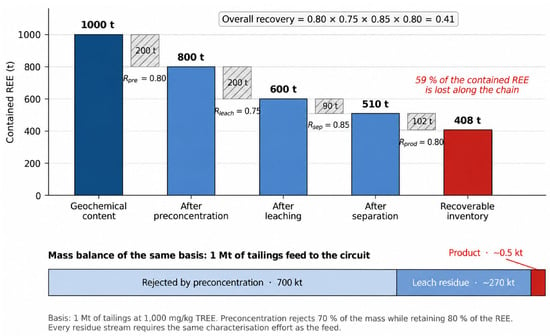
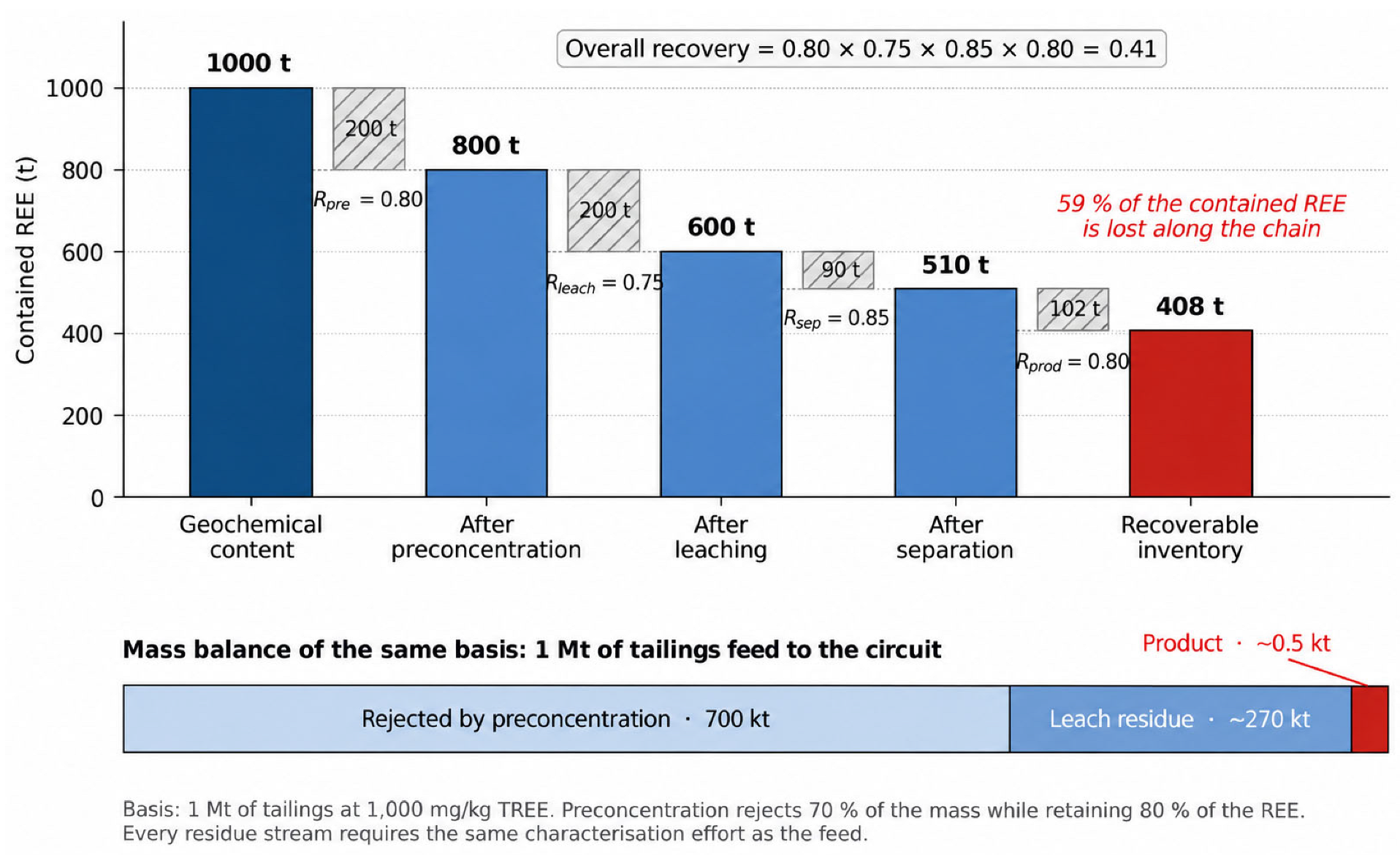
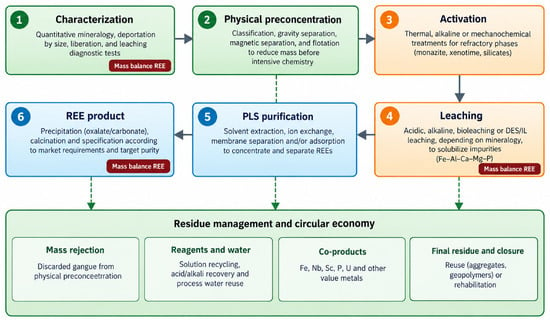
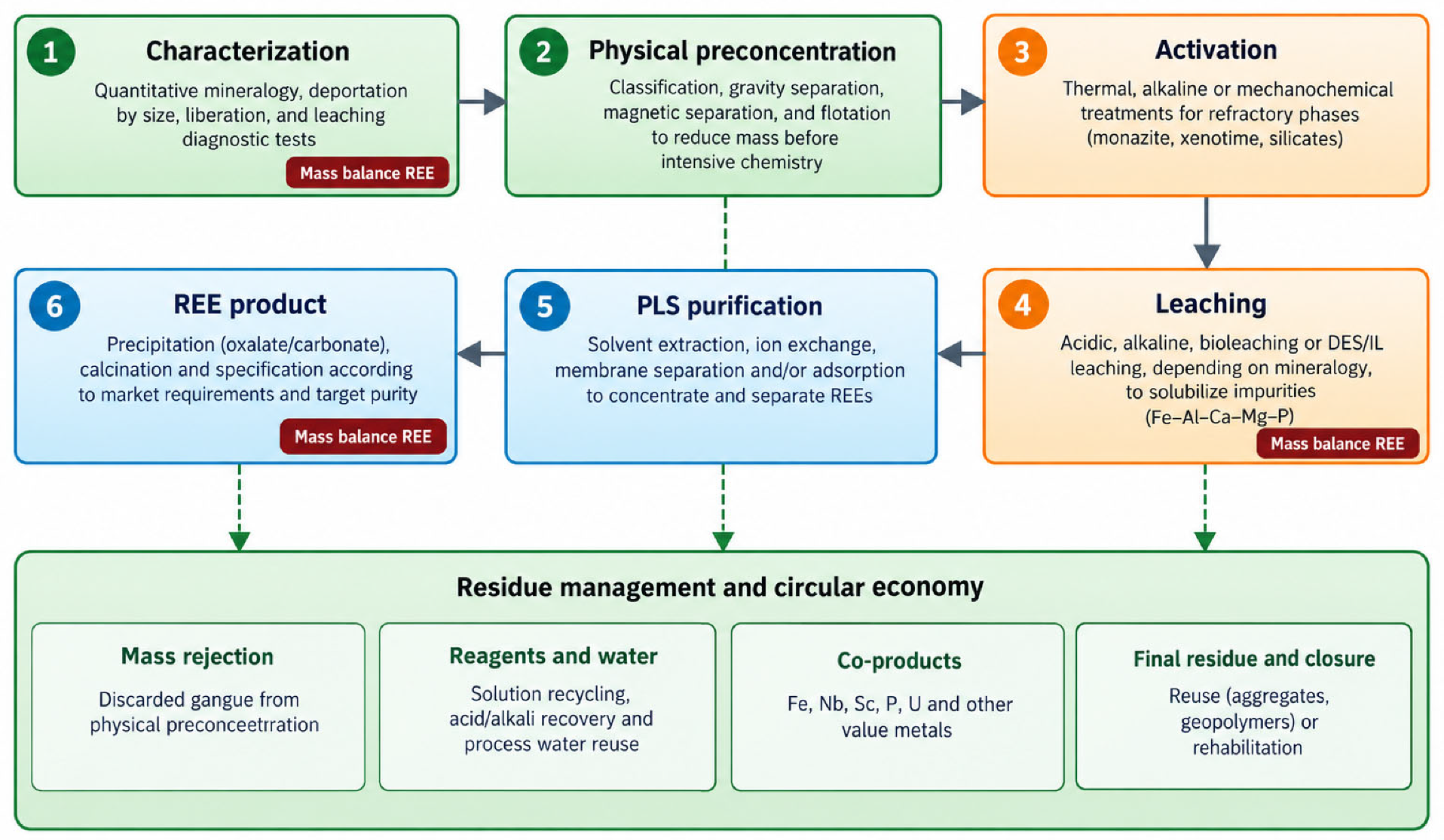
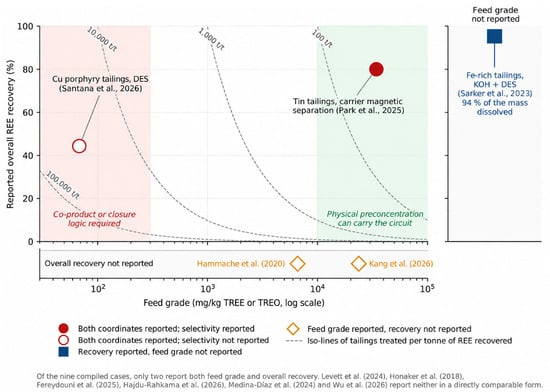
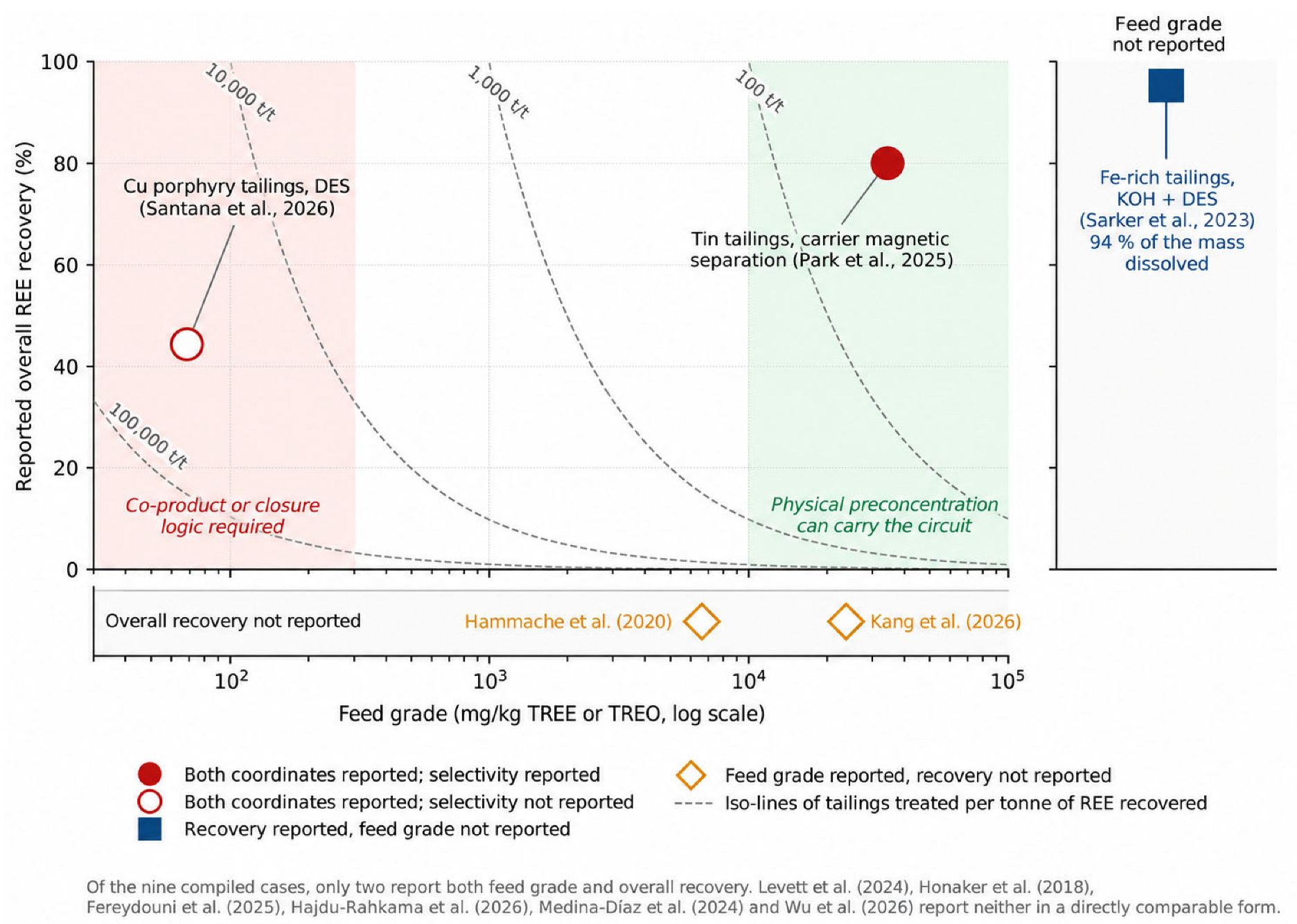
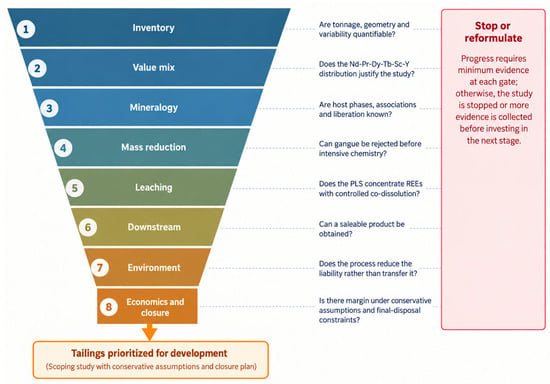
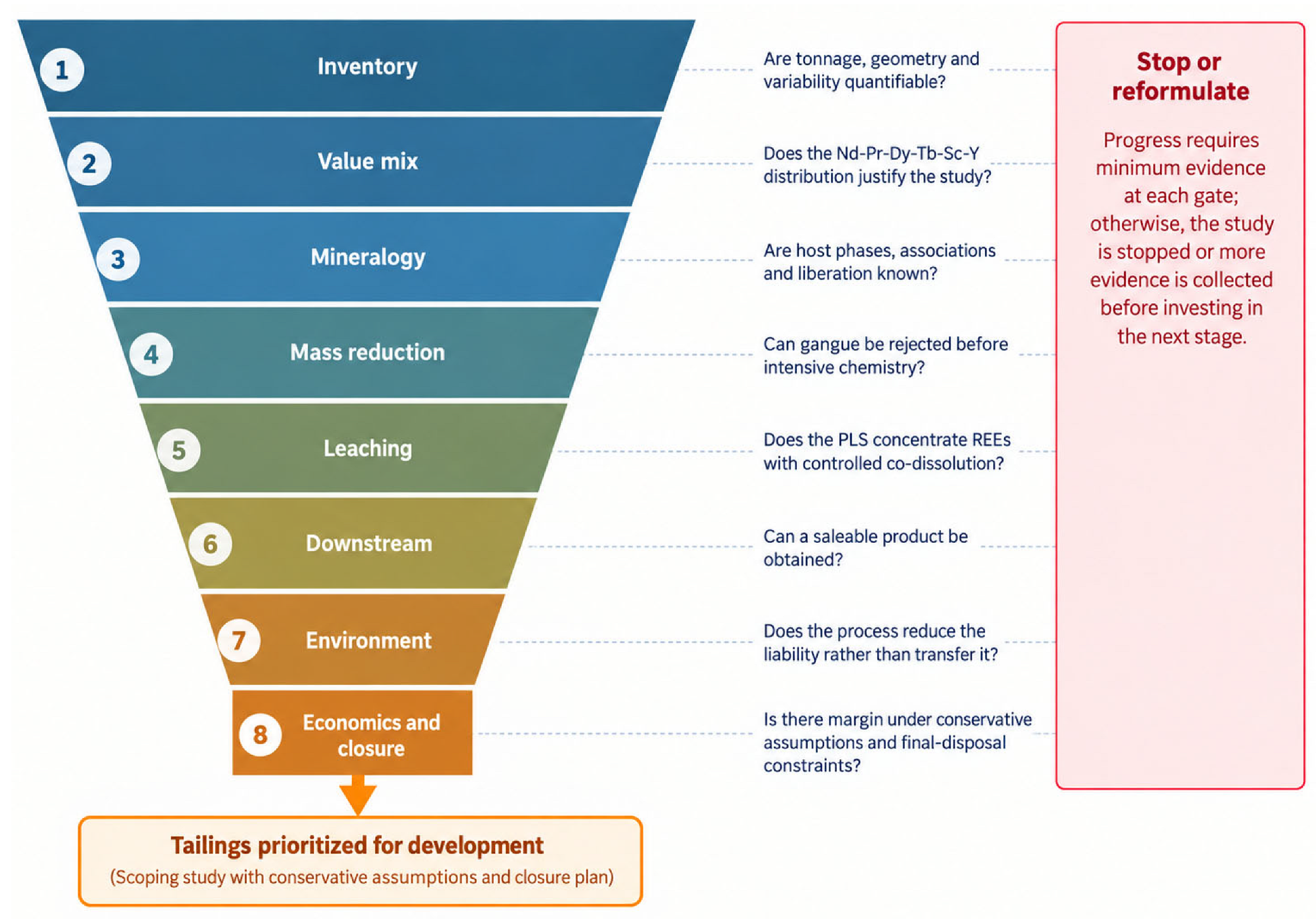
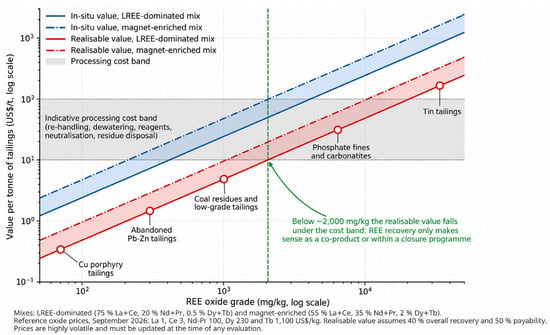
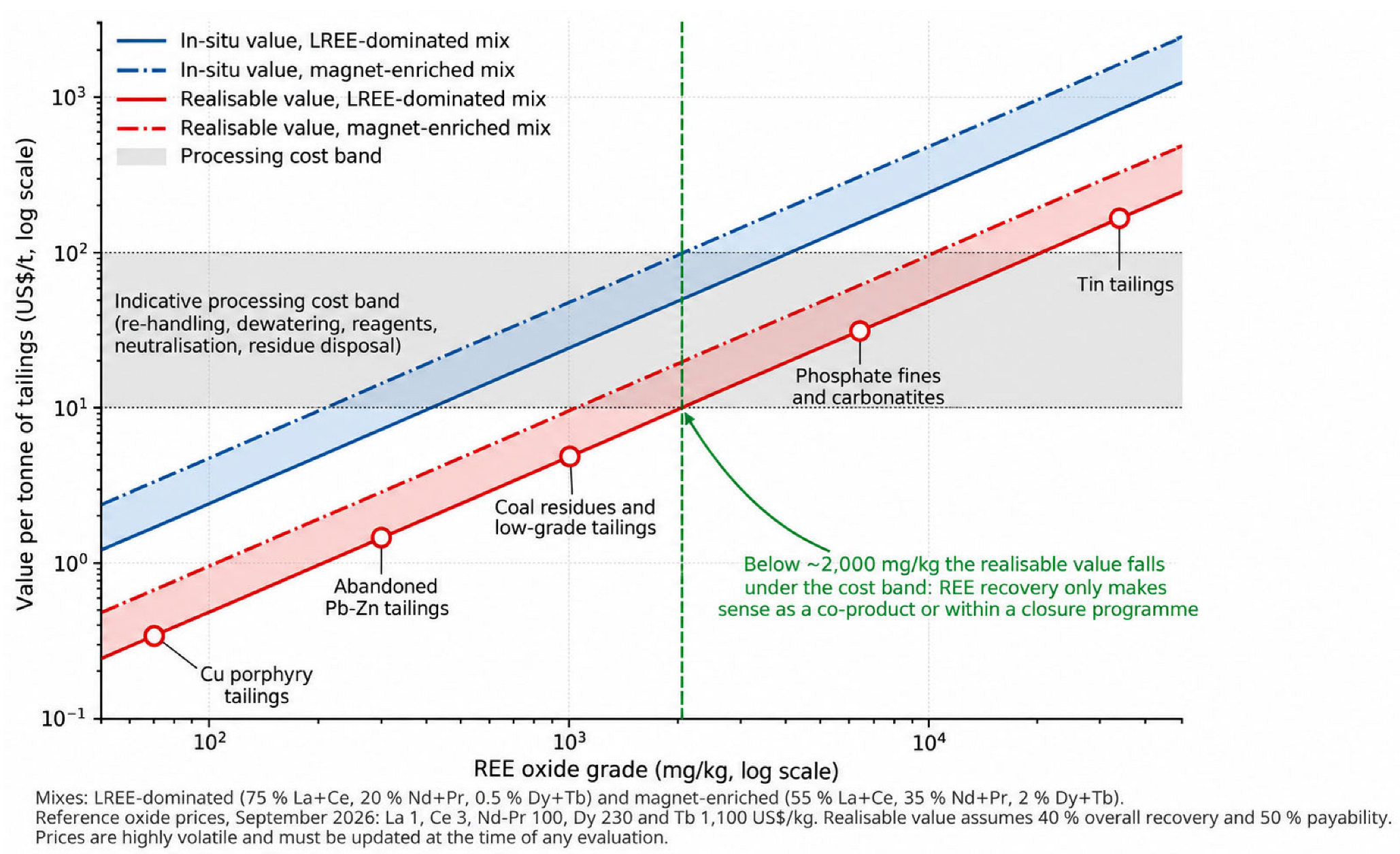

Disclaimer/Publisher’s Note: The statements, opinions and data contained in all publications are solely those of the individual author(s) and contributor(s) and not of MDPI and/or the editor(s). MDPI and/or the editor(s) disclaim responsibility for any injury to people or property resulting from any ideas, methods, instructions or products referred to in the content. |
© 2026 by the authors. Licensee MDPI, Basel, Switzerland. This article is an open access article distributed under the terms and conditions of the Creative Commons Attribution (CC BY) license.