


Abstract
Manganese sulfide (MnS)inclusions can markedly influence the mechanical properties, corrosion resistance, and processing behavior of stainless steels, making their control during solidification an important issue for improving steel quality. In this work, electropulsing was applied to low-sulfur 304 austenitic stainless steel at two characteristic stages, corresponding to the onset of MnS precipitation and the post-solidification stage. A positive square-wave pulsed current was applied from 1550 °C to either 1405 °C or 1350 °C, and the evolution of MnS, oxide inclusions, and oxy-sulfide composite inclusions was characterized by SEM/EDS, quantitative image analysis, and thermodynamic calculations. At 1405 °C, MnS remained predominantly spherical or near-spherical, while the mean equivalent circular diameter of the inclusions decreased from 2.64 to 1.76 μm as the current density increased from 0 to 25.48 A·cm−2. When electropulsing was continued to 1350 °C, the mean inclusion size decreased from about 4.39 to 2.86 μm, and oxide-core/MnS-shell composite inclusions exhibited progressively thinner MnS layers with increasing current density. At the initial precipitation stage, electropulsing may modify the transport of Mn and S and thereby influence MnS nucleation and inclusion refinement. At the later stage, local current redistribution around low-conductivity inclusions and the associated electrical free-energy contribution may influence subsequent inclusion growth and the development of MnS-rich peripheral regions. These results indicate that electropulsing can influence the precipitation, growth, and composite evolution of MnS during the late solidification process of 304 stainless steel.
1. Introduction
Among the non-metallic inclusions present in austenitic stainless steels, manganese sulfide (MnS) is particularly important because its size, morphology, and spatial distribution can markedly influence mechanical behavior, corrosion resistance, and processing performance [1,2]. Large, elongated, or locally clustered MnS inclusions may disrupt matrix continuity and introduce pronounced chemical and microstructural heterogeneities, whereas finer and more uniformly distributed sulfides are generally less detrimental to material performance [3,4,5]. Consequently, controlling the precipitation, growth, and distribution of MnS during solidification is important for improving inclusion characteristics and the overall quality of stainless steels [6,7].
The precipitation of MnS is intrinsically coupled with solute segregation during solidification. Sulfur has a strong tendency to partition into the liquid phase, and Mn also exhibits a certain degree of enrichment in the residual liquid as the solid fraction increases [8,9]. Therefore, MnS does not precipitate extensively during the early stages of solidification but forms mainly when Mn and S become sufficiently enriched in the interdendritic residual liquid to satisfy the thermodynamic conditions for sulfide precipitation [10,11]. At this stage, the residual liquid has already been progressively partitioned by the growing dendrites into narrow liquid films and isolated liquid pools, resulting in pronounced local enrichment of Mn and S [12,13]. Consequently, MnS inclusions tend to exhibit a non-uniform spatial distribution. The final morphology and size of MnS are therefore governed not only by sulfur content and the Mn/S ratio but also by oxygen content, cooling rate, and solute segregation [14,15]. In addition, oxide inclusions generally form before extensive MnS precipitation and may be pushed or entrapped into interdendritic regions during solidification [16]. Because these regions are also enriched in Mn and S, MnS is frequently observed in close association with oxides [17,18]. A mechanistic understanding of MnS evolution therefore requires consideration of both terminal solidification segregation and the interaction between MnS and pre-existing oxide inclusions.
Conventional approaches for controlling MnS inclusions include compositional adjustment, deoxidation practice, Ca or rare-earth treatment, and optimization of cooling and solidification conditions [19,20]. Although these approaches can modify MnS morphology and distribution, their effectiveness depends strongly on steel composition and process conditions. For example, Ca treatment requires precise control of calcium addition because its low and unstable yield may lead to inconsistent inclusion modification, whereas excessive calcium addition can promote undesirable CaS formation [21]. Rare-earth treatment may also introduce solid rare-earth-containing inclusions, posing additional challenges for castability [22]. Meanwhile, adjusting alloy composition and cooling conditions influences MnS precipitation through changes in melt chemistry and the solidification path, making precise control of inclusion evolution at specific stages challenging. These limitations motivate the exploration of complementary approaches that can regulate inclusion evolution during precipitation and growth without relying solely on changes in bulk steel composition.
Electropulsing treatment (EPT), a non-equilibrium processing technique, has attracted increasing attention in materials science and engineering because of its potential to regulate microstructural evolution and phase transformations [23,24,25]. The effects of applied current have been associated with several physical phenomena, including electromigration, electroplasticity, Joule heating, and the skin effect. Depending on the material properties and electrical parameters, these effects may influence atomic transport, precipitation, recrystallization, grain growth, and phase transformation [25,26,27]. Accordingly, EPT has been explored for various applications, including microstructural refinement, recrystallization control, crack healing, and electroplastic deformation.
In steelmaking, electropulsing has attracted increasing attention as a potential method for controlling non-metallic inclusions. Zhang [28] developed an electropulsing-based approach for removing MnS inclusions from molten steel by exploiting the differences in electrical properties between inclusions and the metallic melt. Dai [29] subsequently reported the refinement of sulfide inclusions in molten steel and interpreted the observed changes using an electrical free-energy framework. Yang [30] investigated alumina inclusions in molten steel and found that pulse-current treatment altered their size distribution and spatial distribution, with a greater proportion of fine inclusions observed after treatment. The authors attributed these changes to modifications in interfacial free energy that could promote nucleation and inhibit particle aggregation. In stainless steels, Jia [31] investigated MnS evolution in SUS303 at different treatment stages and demonstrated that the effects of electropulsing on inclusion size and morphology depended on the stage at which the current was applied. Jia [32] further showed that electropulsing refined inclusions in 304 stainless steel and improved pitting corrosion resistance, with more pronounced effects at higher current densities.
Despite these advances, previous studies have primarily focused on inclusion migration and removal, sulfide refinement, or the associated changes in corrosion resistance [33,34]. The coupled evolution of MnS and oxide–MnS composite inclusions under electropulsing remains insufficiently understood, particularly in low-sulfur 304 stainless steel. Specifically, how the treatment endpoint during solidification affects MnS refinement and the morphological evolution of MnS-rich regions surrounding oxide inclusions has not been systematically investigated.
Accordingly, in the present study, electropulsing with different current densities was applied to the initial precipitation stage of MnS and the stage after complete solidification of low-sulfur 304 austenitic stainless steel. The morphology, size, and composition of MnS, oxide inclusions, and oxide–MnS composite inclusions were systematically characterized. Their evolution was further analyzed by combining Scheil solidification calculations, classical nucleation theory, electromigration, and local current redistribution, with the aim of elucidating how the dominant effect of electropulsing changes between the initial precipitation and subsequent growth stages of MnS.
2. Materials and Methods
2.1. Material
The material used in this study was a commercial 304 austenitic stainless steel bar with a diameter of 10 mm. Its chemical composition is listed in Table 1. The major alloying elements were determined by X-ray fluorescence spectroscopy (XRF), and C, S, and O were determined using dedicated chemical-analysis methods.
Table 1.
Chemical composition of the 304 stainless steel (wt.%).
2.2. Thermodynamic Calculations and Selection of Treatment Temperatures
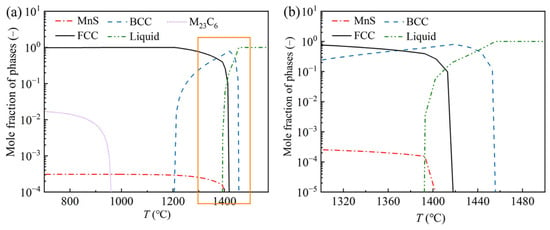
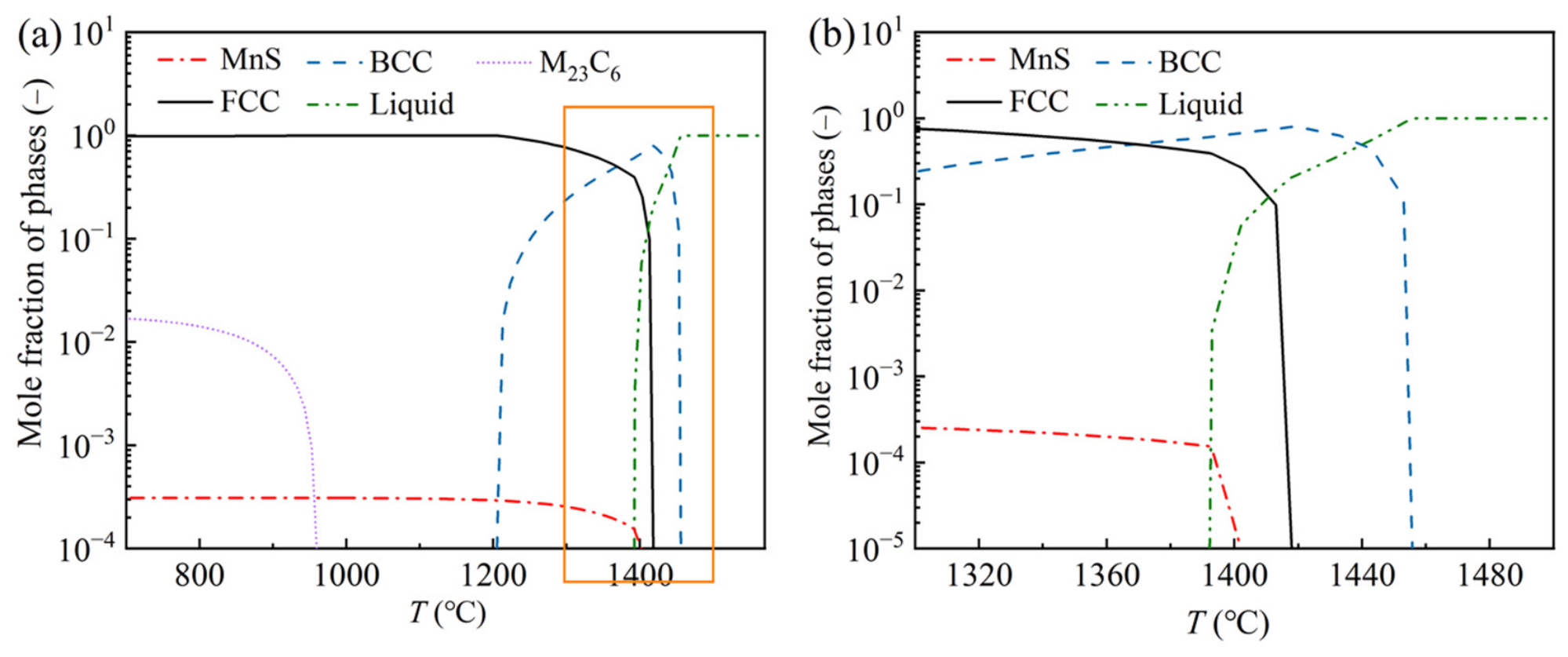
Equilibrium solidification calculations were performed using Thermo-Calc (2023a) with the TCFE7 database. The measured chemical composition listed in Table 1 was used as the input composition. Equilibrium calculations were first conducted to determine the temperature-dependent phase evolution. As shown in Figure 1, BCC δ-ferrite begins to form at approximately 1450 °C, followed by the formation of FCC austenite at approximately 1432 °C. MnS becomes thermodynamically stable at approximately 1405 °C. Accordingly, 1405 °C was selected as the treatment endpoint representative of the initial MnS precipitation stage. A second endpoint of 1350 °C, well below the calculated solidus temperature, was selected to examine the overall evolution of MnS through final solidification and the subsequent high-temperature solid-state stage.
Figure 1.
Equilibrium phase composition diagram of 304 stainless steel: (a) overall diagram; (b) enlarged view of the region highlighted by the orange box in (a).
In addition to equilibrium calculations, non-equilibrium solidification calculations were performed using the Scheil-Gulliver model in Thermo-Calc [35,36] with the TCFE7 database and the measured chemical composition listed in Table 1. The model assumes complete mixing in the liquid, negligible diffusion in the solid phases, and local thermodynamic equilibrium at the solid–liquid interface. The calculations were used to predict the evolution of the solid fraction, the mass fraction of MnS, and the solute concentrations in the residual liquid during solidification. These results were used to analyze solute enrichment and the precipitation behavior of MnS during the later stages of solidification.
2.3. Electropulsing Treatment and Solidification Schedule
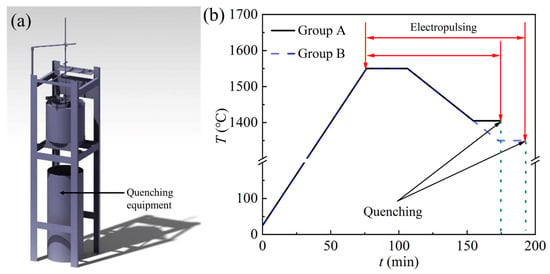
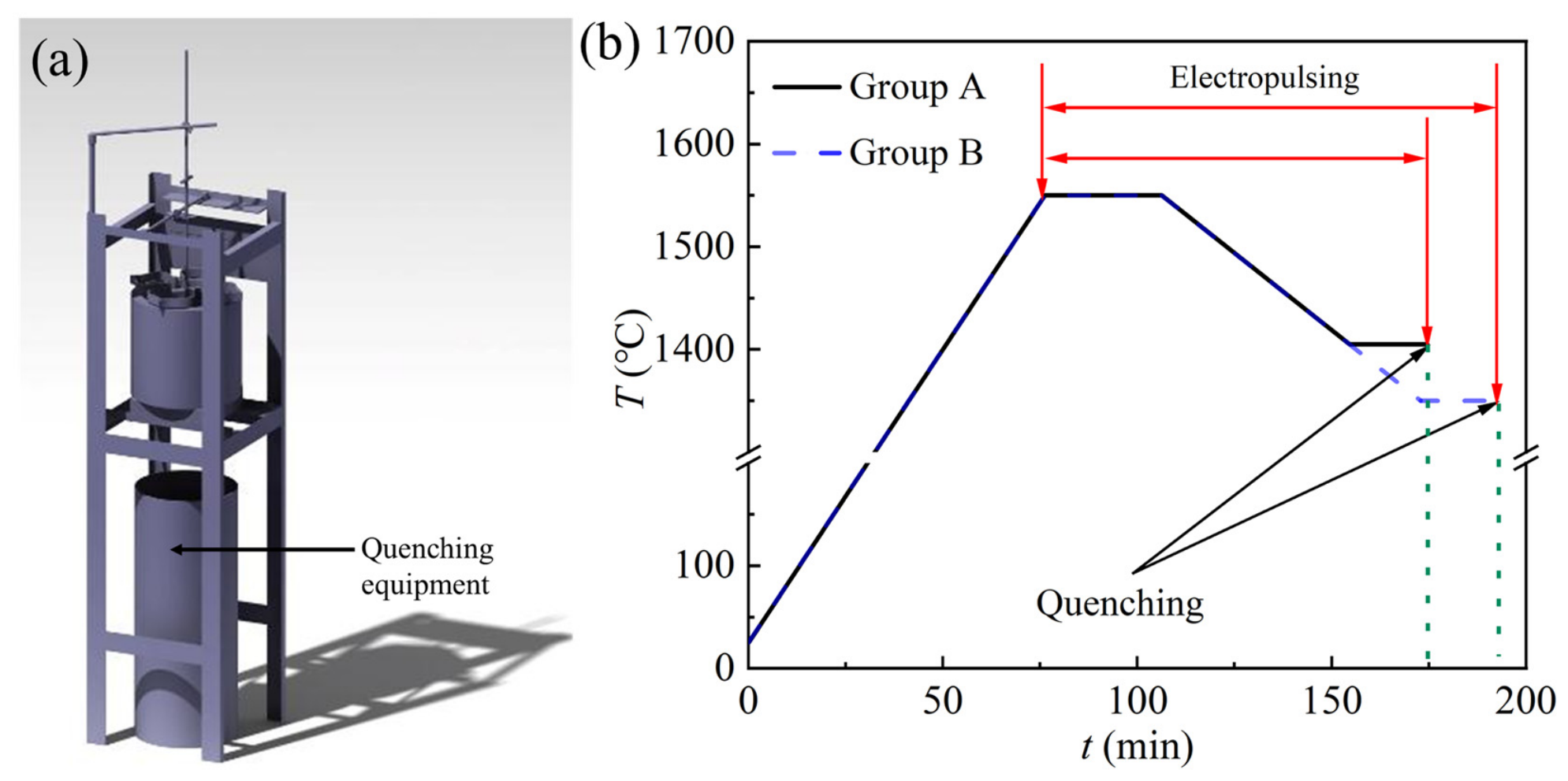
The experimental setup and thermal schedule are schematically illustrated in Figure 2. Each specimen was placed in an alumina tube and heated to 1550 °C in a MoSi2 resistance furnace (Zhengzhou Kejia Furnace Co., Ltd., Zhengzhou, China) under a flowing Ar atmosphere. After holding at 1550 °C for 30 min to ensure complete melting and compositional homogenization, the melt was cooled at a constant rate of 3 °C·min−1.
Figure 2.
Schematic diagram of equipment (a) and electrifying modes (b) of the experiment.
When the temperature reached 1550 °C, a 20 kHz unipolar square-wave pulsed current was applied through electrodes connected to the specimen. The nominal current densities were 0, 1.27, 12.74, and 25.48 A·cm−2, respectively.
For Group A, electropulsing was applied continuously from 1550 to 1405 °C, after which the specimens were immediately quenched in water. For Group B, the current was maintained from 1550 to 1350 °C before quenching under the same conditions. Samples without applied current were subjected to the same thermal histories and served as the corresponding reference specimens. The detailed experimental conditions are summarized in Table 2.
Table 2.
Experimental parameters of different samples.
2.4. SEM/EDS Characterization
After electropulsing treatment, specimens approximately 10 mm × 10 mm × 3 mm in size were sectioned by wire electrical discharge machining. The observation surfaces were sequentially ground using SiC abrasive papers from 120 to 2000 grit, polished with 1 μm diamond suspension, and ultrasonically cleaned in ethanol. The morphology and chemical composition of non-metallic inclusions were examined using a field-emission scanning electron microscope (FE-SEM; ZEISS Ultra Plus, Carl Zeiss Microscopy GmbH, Jena, Germany) equipped with an energy-dispersive X-ray spectroscopy (EDS) system. For quantitative inclusion analysis, 20 fields were randomly selected from each specimen under identical image-acquisition conditions. The inclusion boundaries were identified using Image Pro Plus 6.0, and the equivalent circular diameter was used to characterize inclusion size.
3. Results
3.1. MnS and Oxide Inclusions in Samples Quenched at 1405 °C
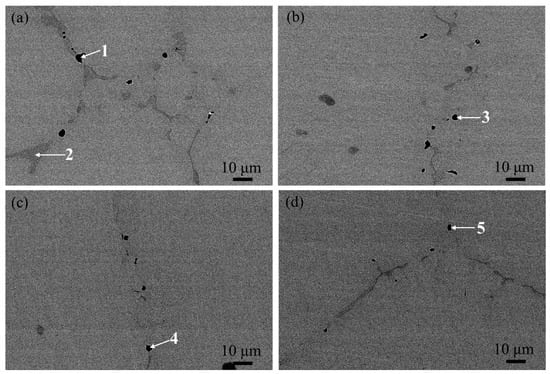
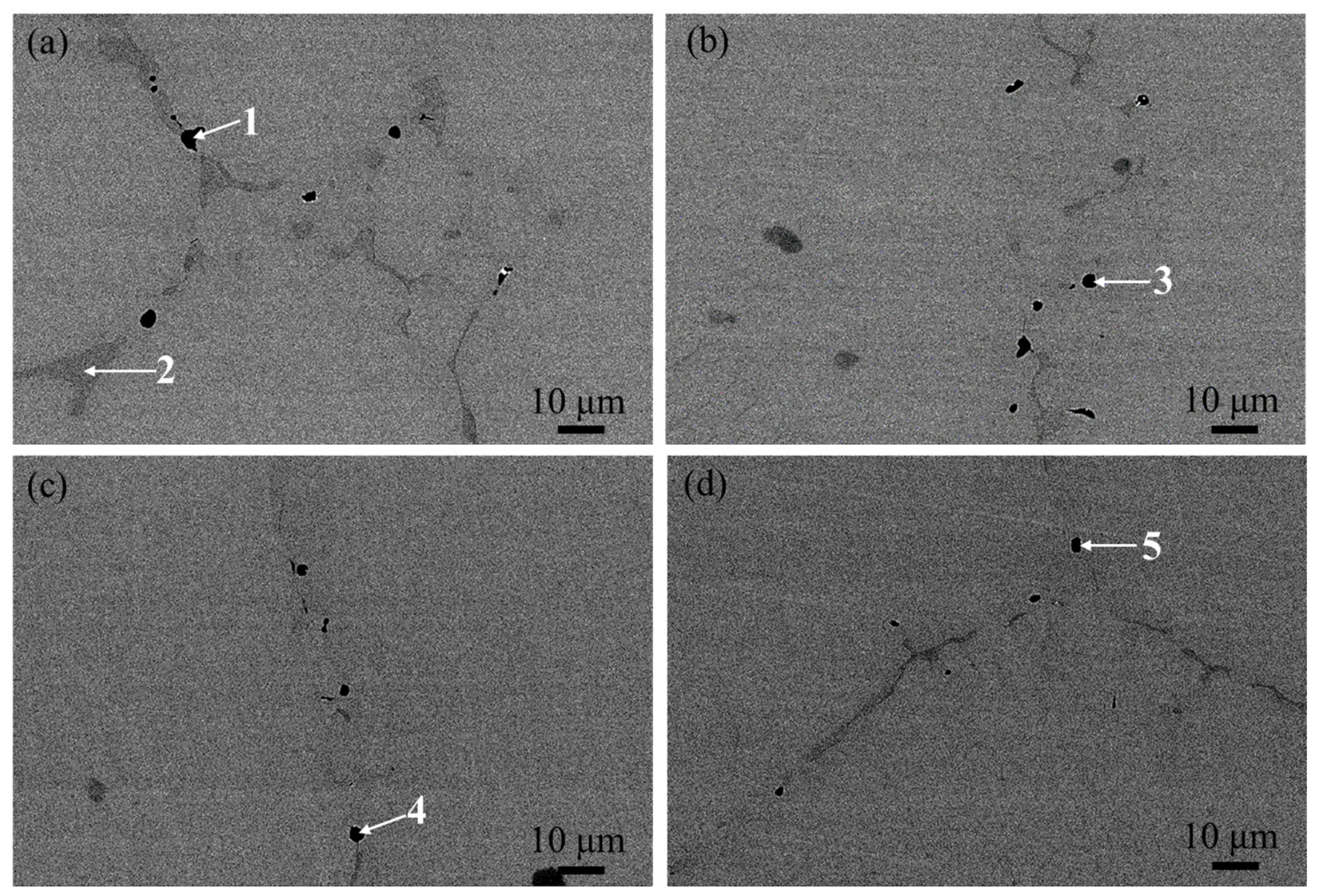
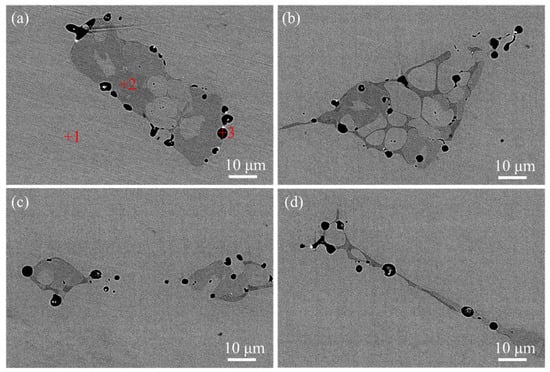
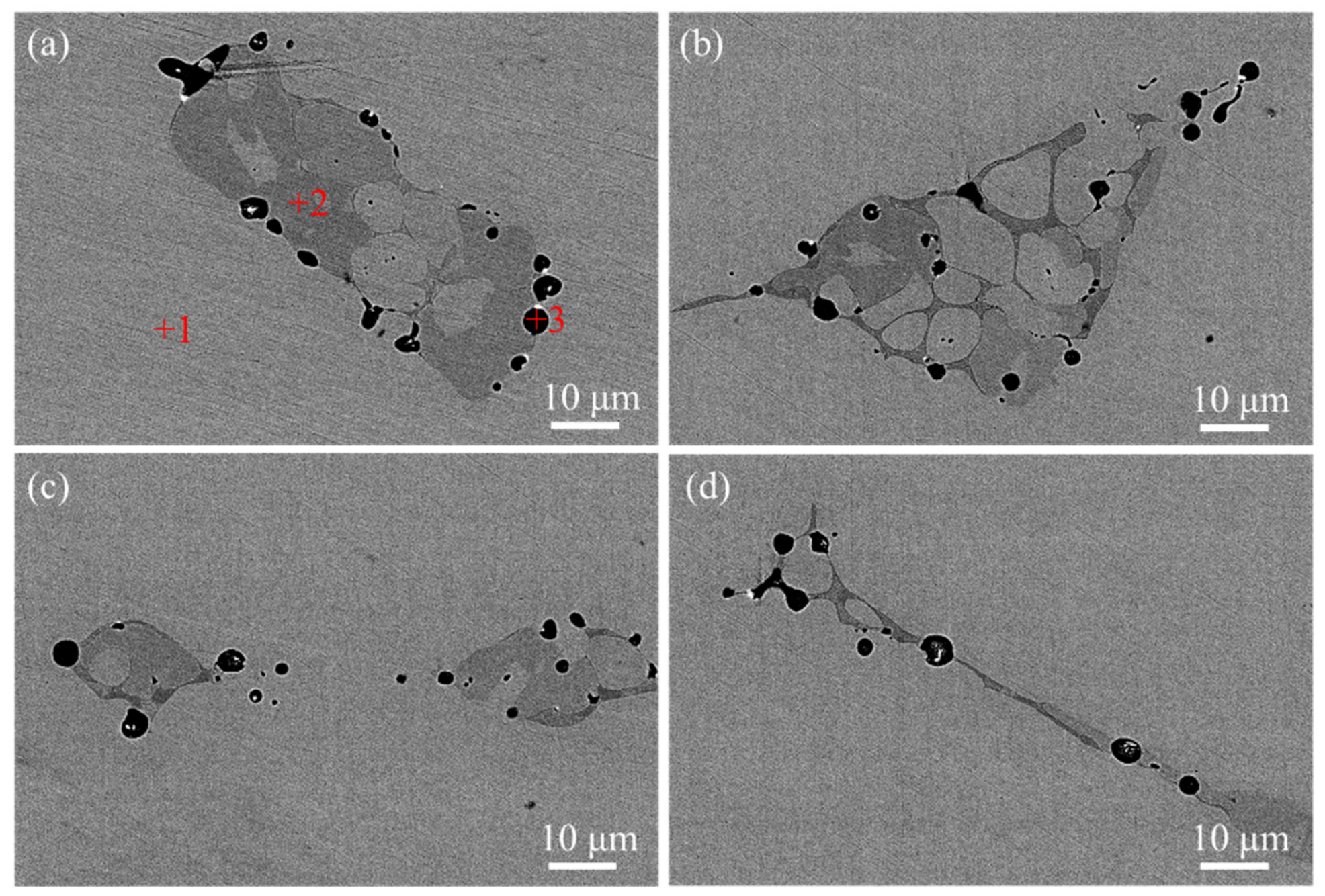
Figure 3 shows the morphology of sulfide inclusions in the Group A samples quenched at 1405 °C. In all four samples, the sulfides were predominantly spherical or near-spherical and exhibited slight local clustering. Strip-like P-enriched regions were also observed in the same regions, and MnS inclusions were frequently located nearby. No systematic change in sulfide morphology was observed with increasing current density, whereas the particle size visibly decreased. EDS analyses showed that the sulfide particles were primarily enriched in Mn and S, with detectable amounts of Cr and O (Table 3).
Figure 3.
SEM morphologies of MnS in Group A samples: (a) A1-0 A·cm−2; (b) A2-1.27 A·cm−2; (c) A3-12.74 A·cm−2; (d) A4-25.48 A·cm−2. The numbers indicate the EDS analysis points, with the corresponding elemental compositions listed in Table 3.
Table 3.
Representative EDS compositions of MnS inclusions in Group A (wt.%).
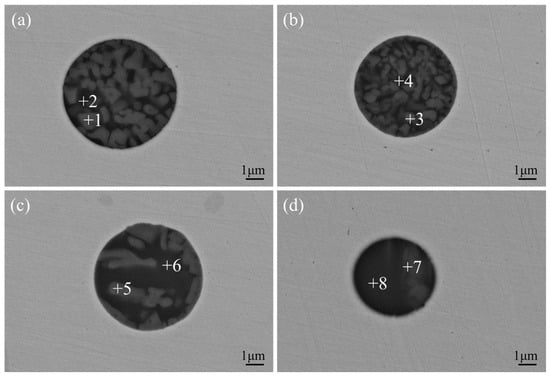
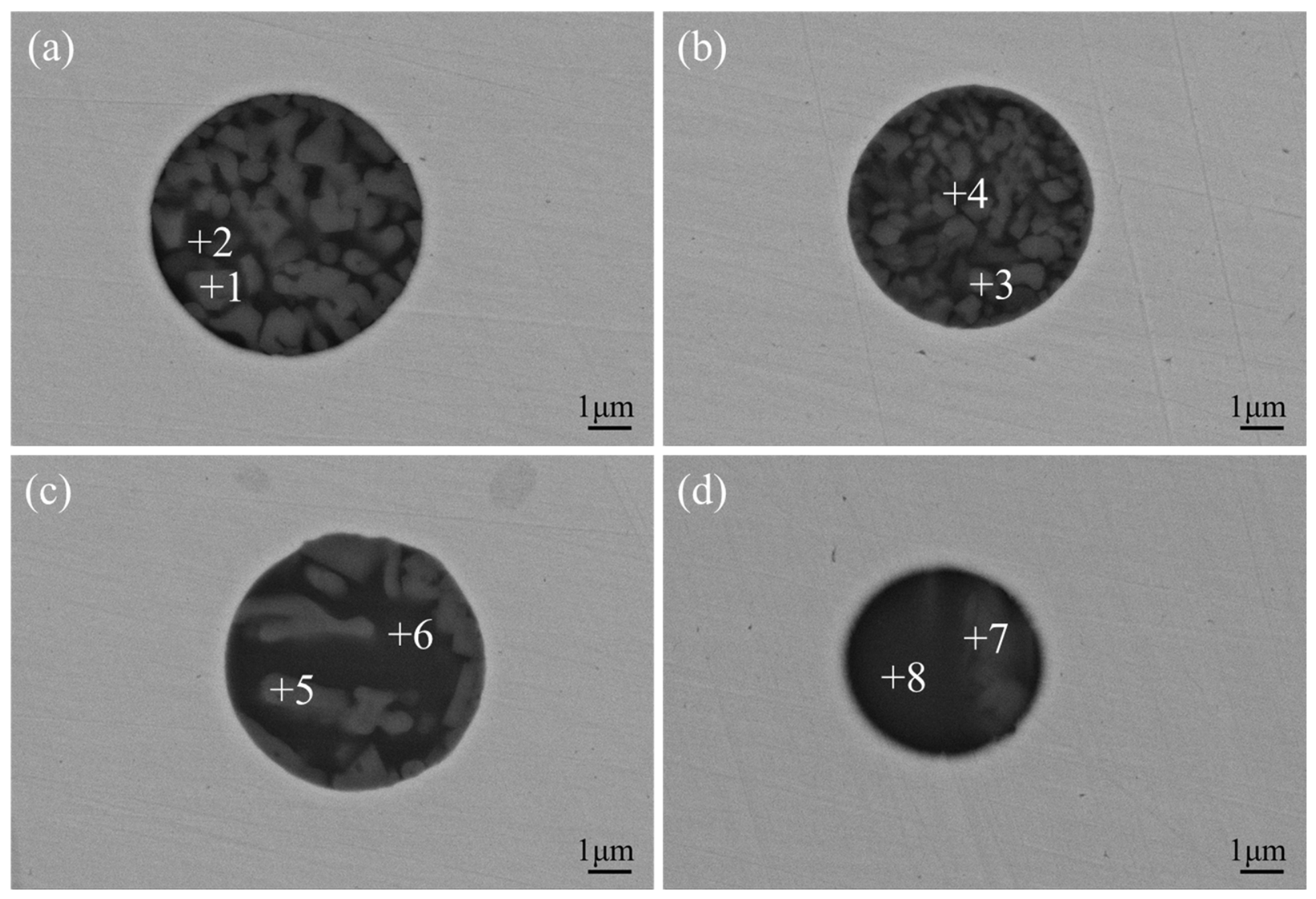
Oxide inclusions with a distinct internal multiphase morphology were also observed in Group A (Figure 4). In the backscattered-electron images, the darker regions were enriched in O, Al, Si, Mn, and Ti, whereas the brighter internal regions contained relatively higher levels of Cr and Ti (Table 4). The overall morphology and compositional characteristics of the oxides remained similar among A1–A4. However, the relative amount of the brighter internal phase in the representative inclusions appeared to decrease at higher current densities.
Figure 4.
SEM/EDS characteristics of oxide inclusions in Group A samples: (a) A1-0 A·cm−2; (b) A2-1.27 A·cm−2; (c) A3-12.74 A·cm−2; (d) A4-25.48 A·cm−2. The numbers indicate the EDS analysis points, with the corresponding elemental compositions listed in Table 4.
Table 4.
Representative EDS compositions of oxide inclusions in Group A (wt%).
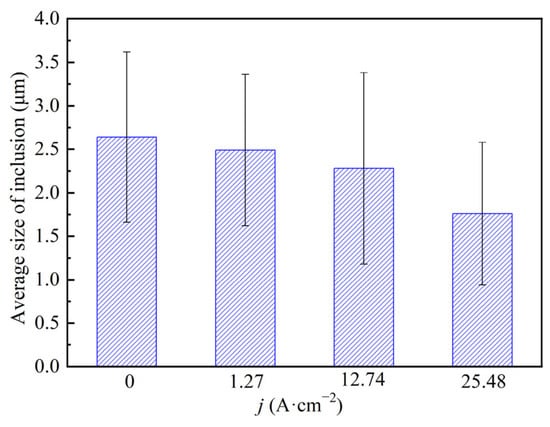
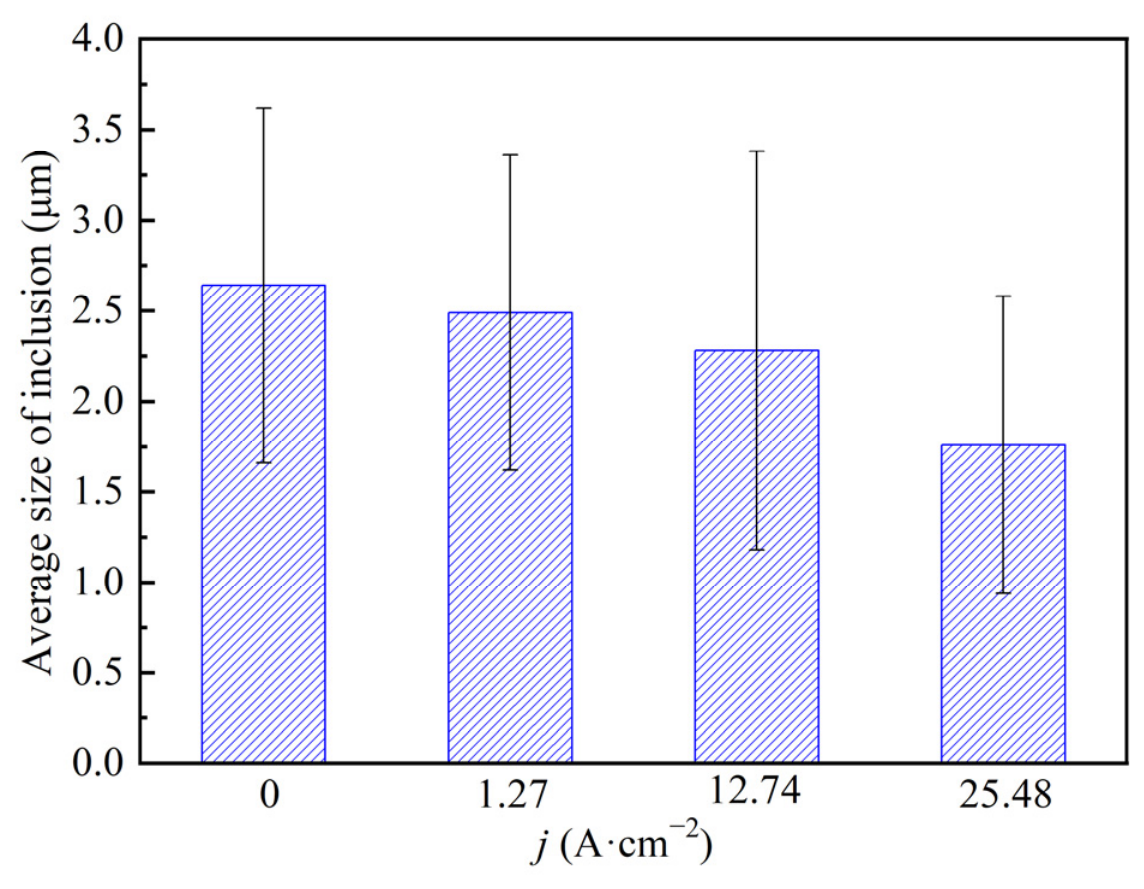
Quantitative measurements from 20 randomly selected SEM fields for each sample are summarized in Figure 5 and Figure 6. The average equivalent circular diameter decreased progressively with increasing current density, from 2.64 μm in A1 to approximately 2.49 μm in A2 and 1.76 μm in A4. The corresponding SEM fields also showed a progressive shift toward finer inclusions with increasing current density.
Figure 5.
Representative SEM fields used for size statistics of Group A samples: (a–c) A1-0 A·cm−2, (d–f) A2-1.27 A·cm−2, (g–i) A3-12.74 A·cm−2, (j–l) A4-25.48 A·cm−2.
Figure 6.
Variation in the average equivalent circular diameter of inclusions with current density in Group A.
3.2. MnS and Oxy-Sulfide Composite Inclusions in Samples Quenched at 1350 °C
Figure 7 shows the sulfide inclusions in the Group B samples quenched at 1350 °C. Similar to those observed in Group A at 1405 °C, the MnS inclusions were predominantly spherical or near-spherical, and strip-like P-enriched regions with comparable morphological characteristics were also present. However, compared with the 1405 °C samples, the MnS particles in Group B exhibited a more pronounced clustered distribution and were more concentrated in the vicinity of the P-enriched regions. No obvious transition in the morphology of MnS was observed with increasing current density, whereas the particle size progressively decreased. Representative EDS analyses confirmed that the sulfide particles were enriched in Mn and S (Table 5).
Figure 7.
SEM morphologies of MnS in Group B samples: (a) B1-0 A·cm−2, (b) B2-1.27 A·cm−2, (c) B3-12.74 A·cm−2, (d) B4-25.48 A·cm−2. The numbers indicate the EDS analysis points, with the corresponding elemental compositions listed in Table 5.
Table 5.
Representative chemical compositions of inclusions in Group B (wt%).
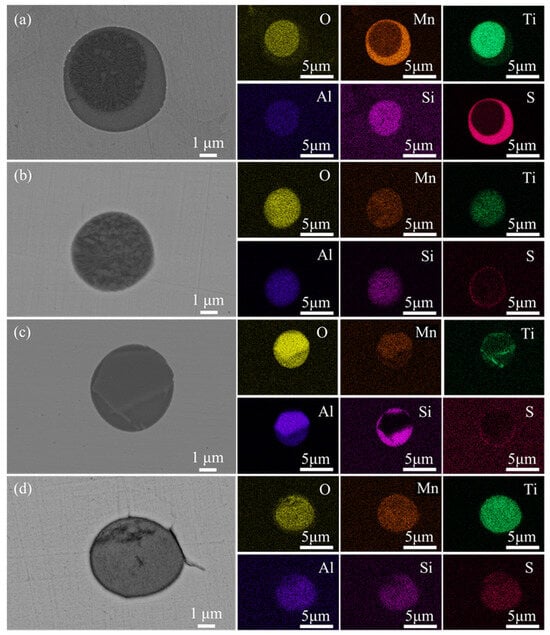
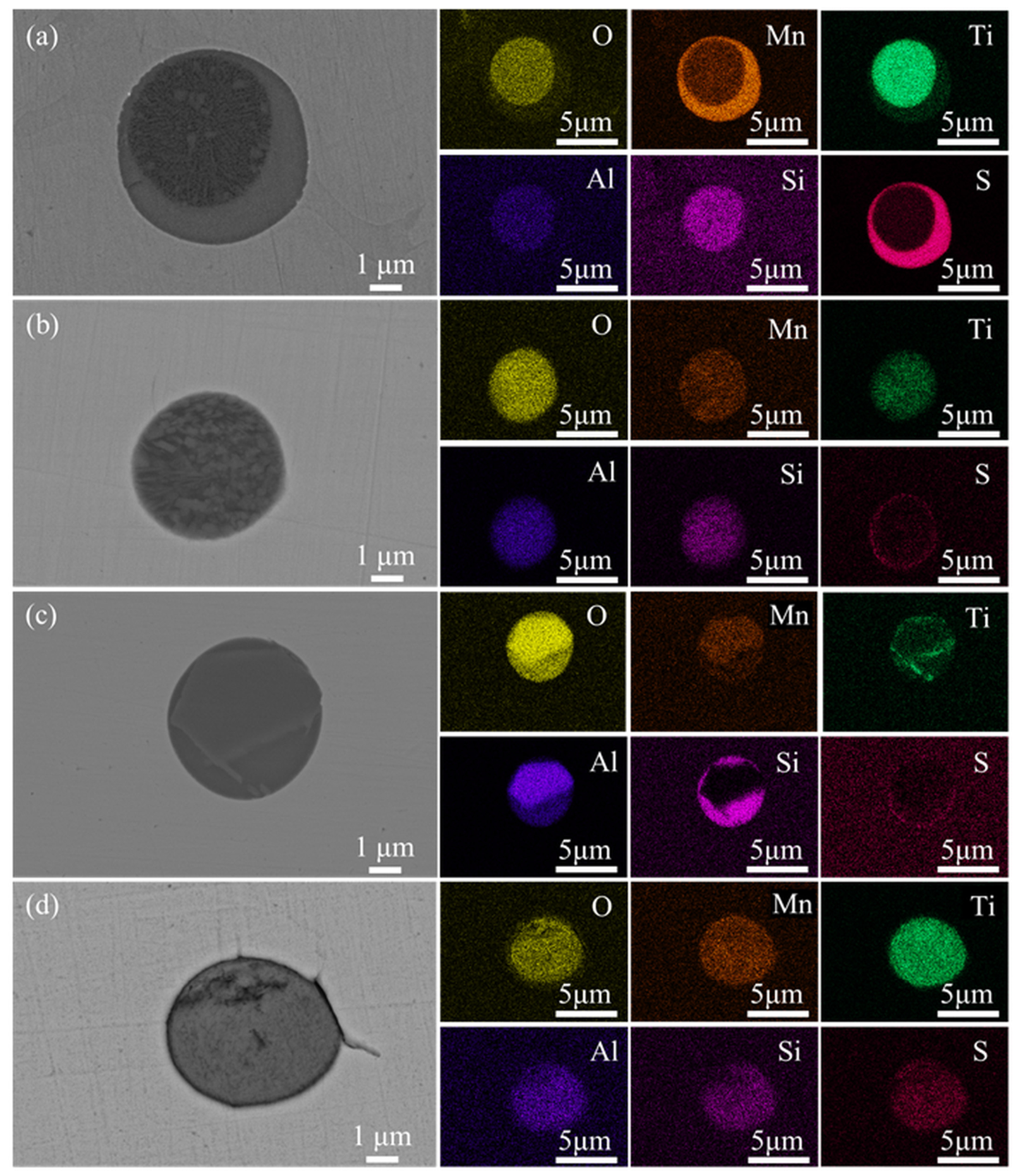
In addition to isolated MnS particles, oxide–MnS composite inclusions were observed in Group B (Figure 8). Elemental mapping revealed a core–shell-like distribution that the outer region was enriched in Mn and S, whereas the core contained O, Al, Si, Mn, and Ti. With increasing current density, the MnS-rich outer region appeared less extensive in representative composite inclusions. In the high-current-density sample, a weak and spatially dispersed S signal was also detected within the oxide-rich region.
Figure 8.
SEM morphology and elemental mapping of oxide-MnS composite inclusions in Group B: (a) B1-0 A·cm−2, (b) B2-1.27 A·cm−2, (c) B3-12.74 A·cm−2, (d) B4-25.48 A·cm−2.
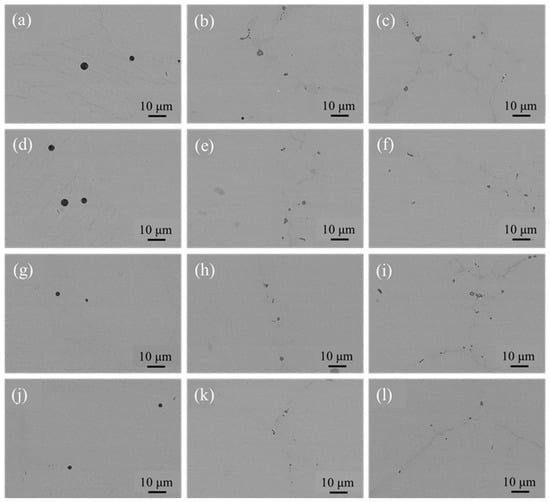
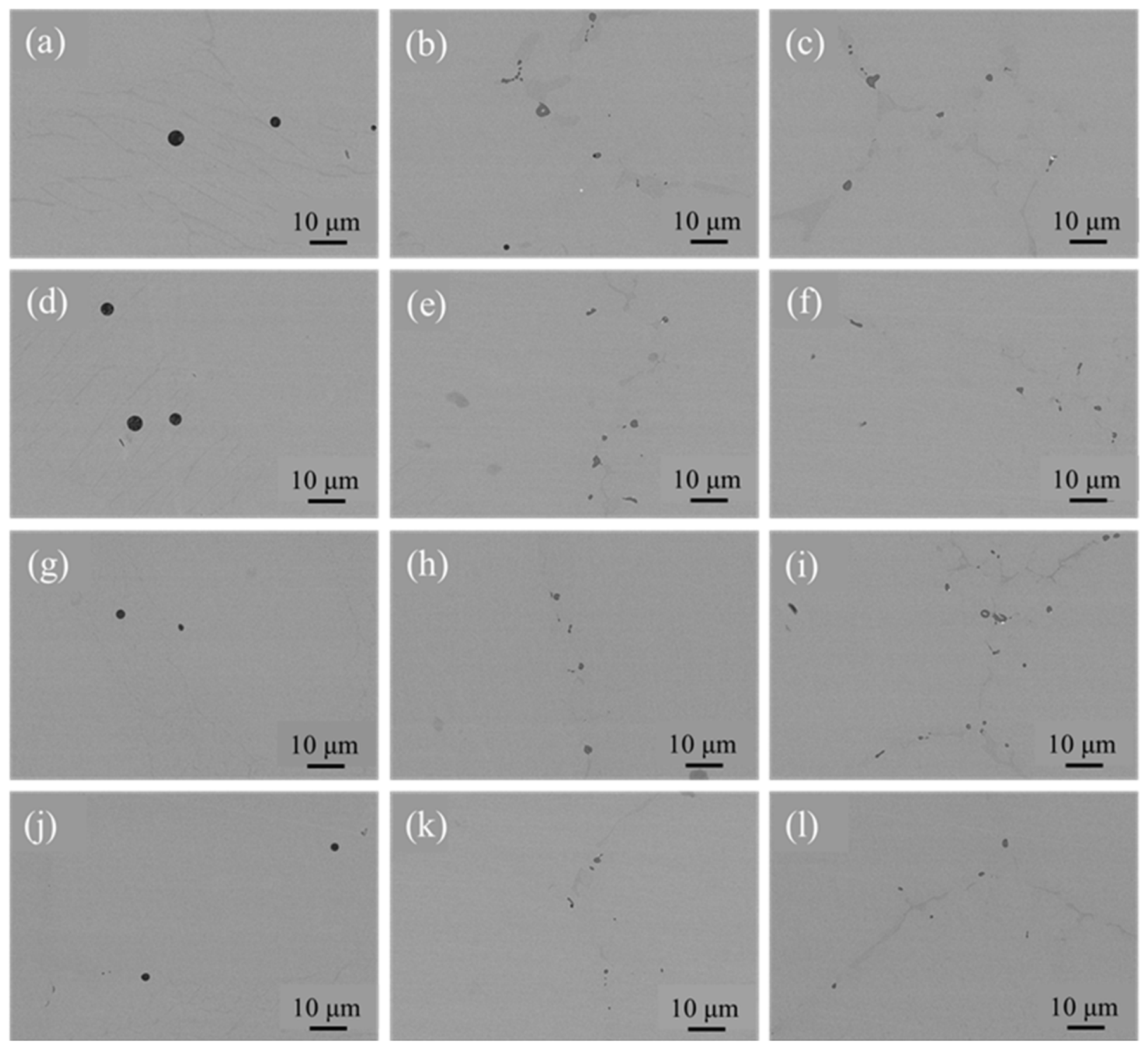
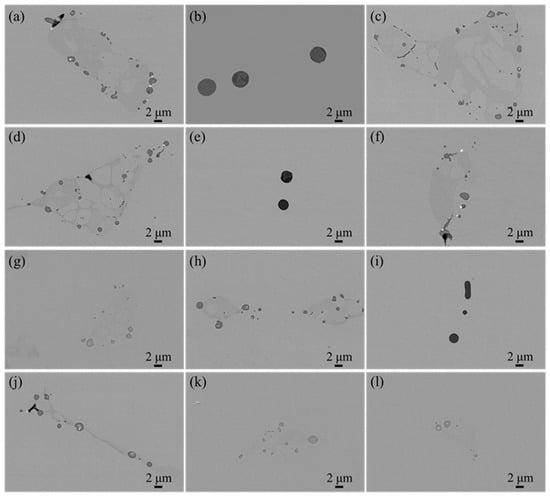
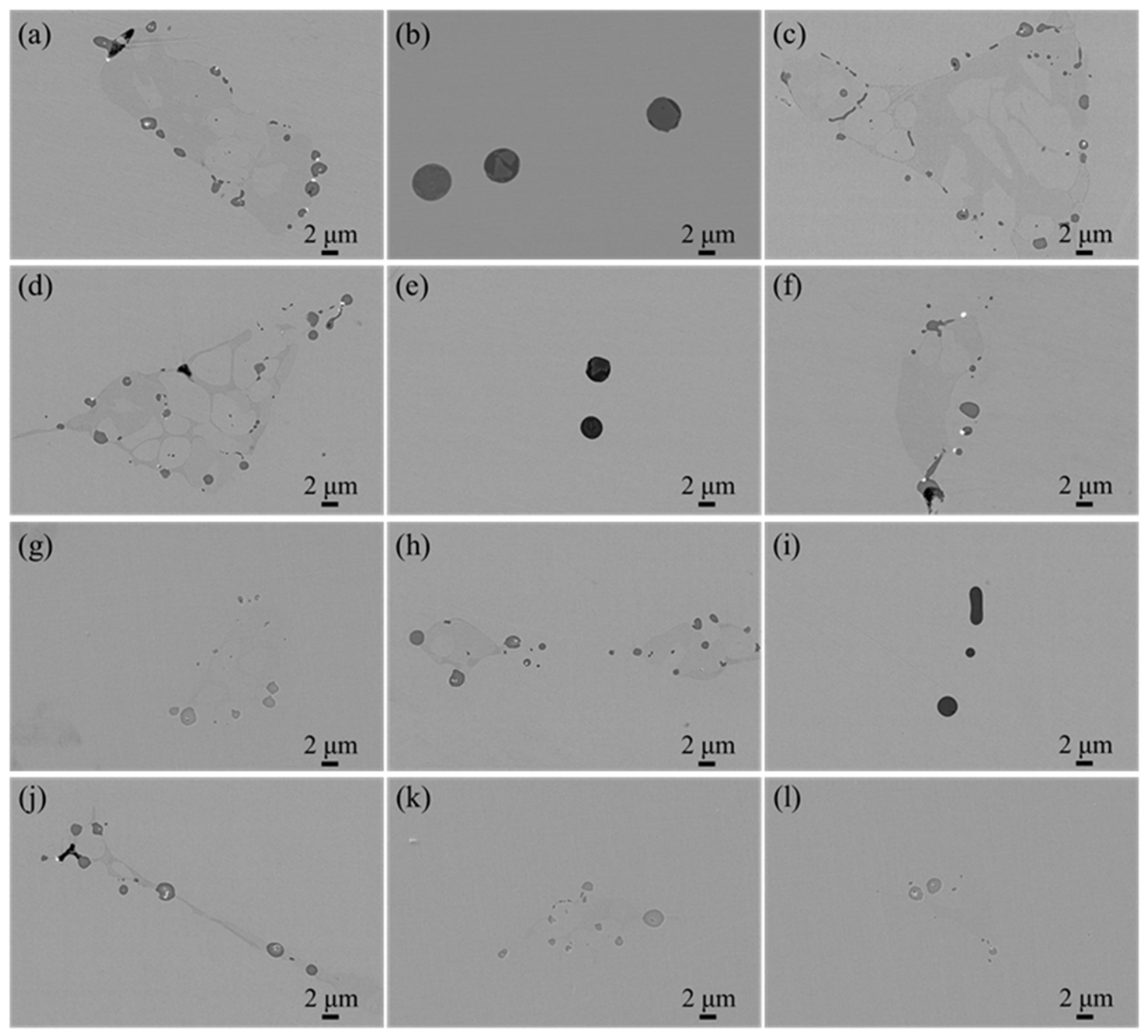
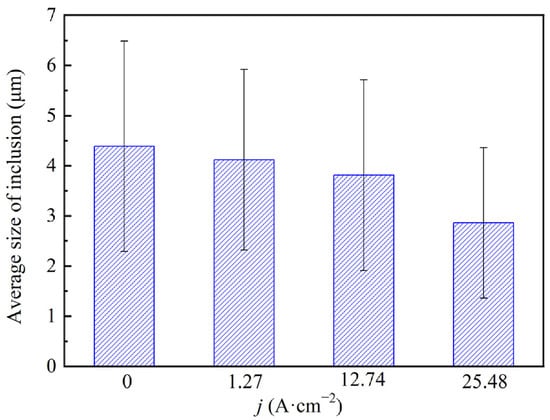
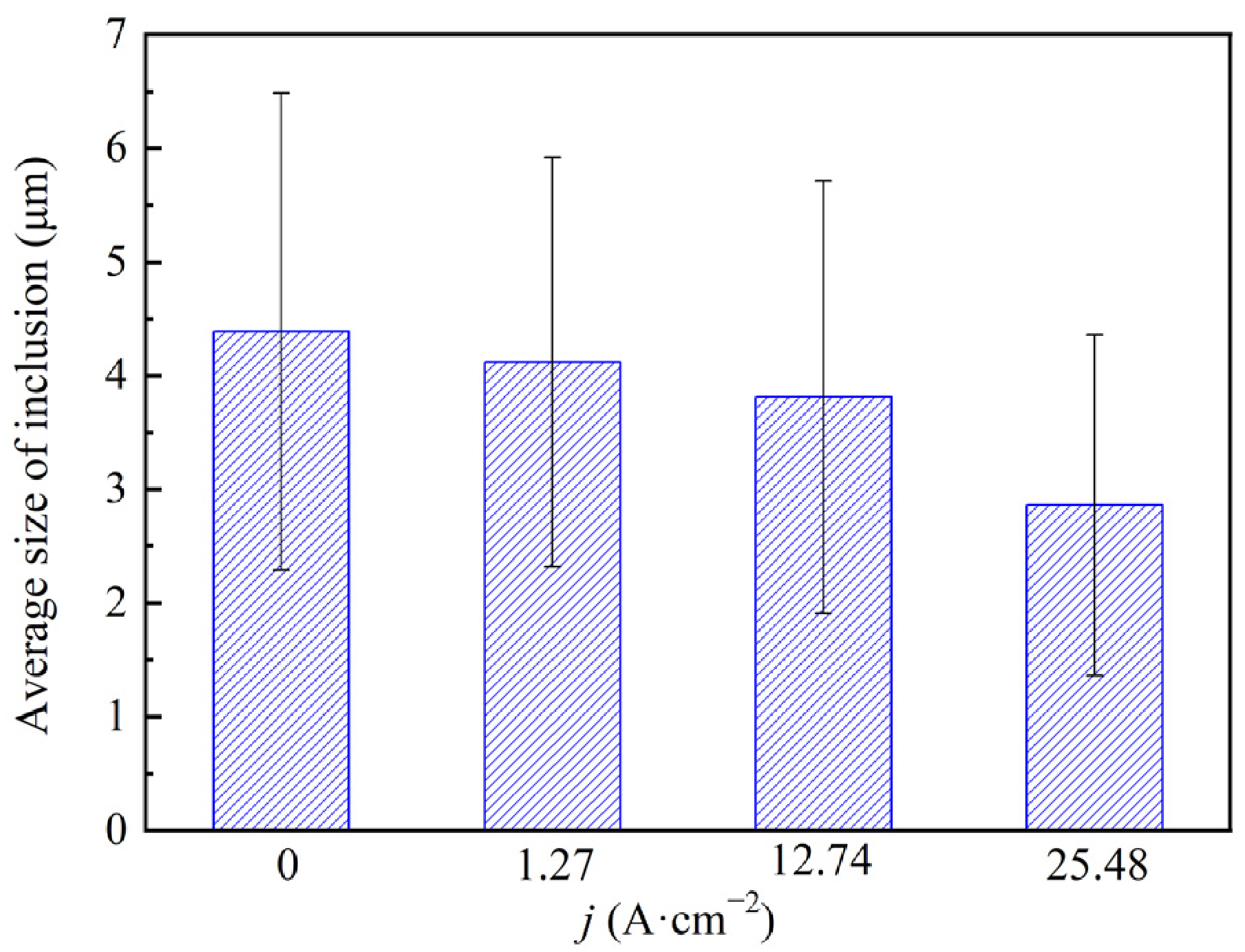
Quantitative analysis of the low-magnification SEM images is shown in Figure 9 and Figure 10. The average equivalent circular diameter decreased progressively with increasing current density, from approximately 4.39 μm in B1 to 2.86 μm in B4, while B2 and B3 exhibited intermediate values. Compared with the untreated A1 sample quenched at 1405 °C, the untreated B1 sample quenched at 1350 °C exhibited a larger average inclusion size.
Figure 9.
Representative SEM fields used for size statistics of Group B samples: (a–c) B1-0 A·cm−2, (d–f) B2-1.27 A·cm−2, (g–i) B3-12.74 A·cm−2, (j–l) B4-25.48 A·cm−2.
Figure 10.
Variation in the average equivalent circular diameter of inclusions with current density in Group B.
4. Discussion
4.1. Formation of MnS and Oxy-Sulfide Composite Inclusions at Different Solidification Stages
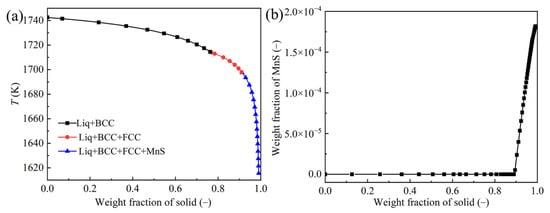
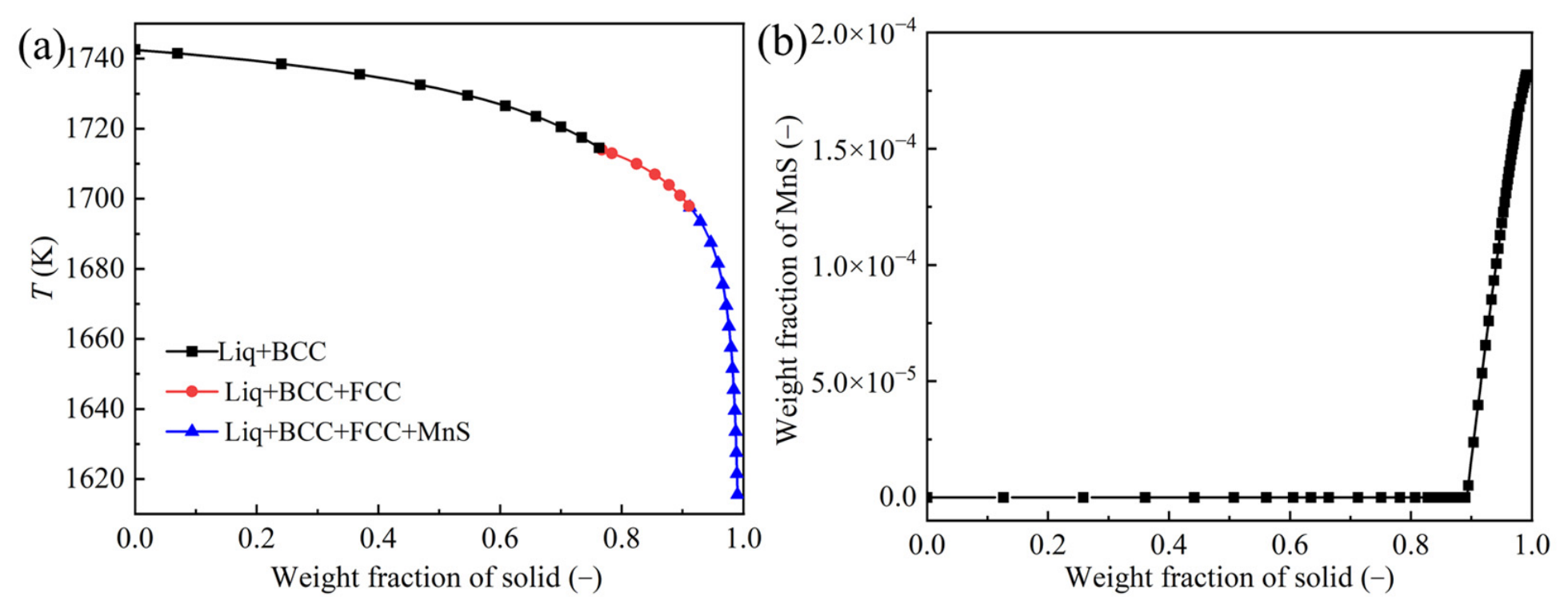
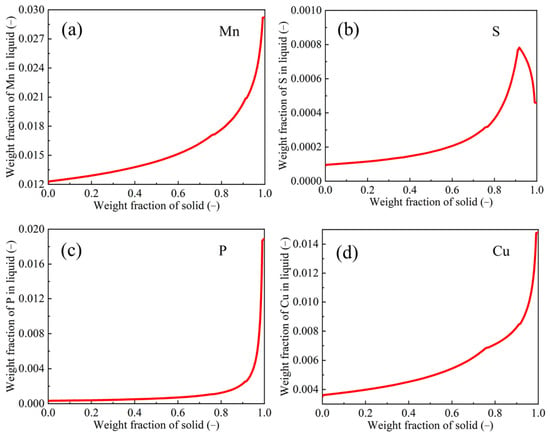
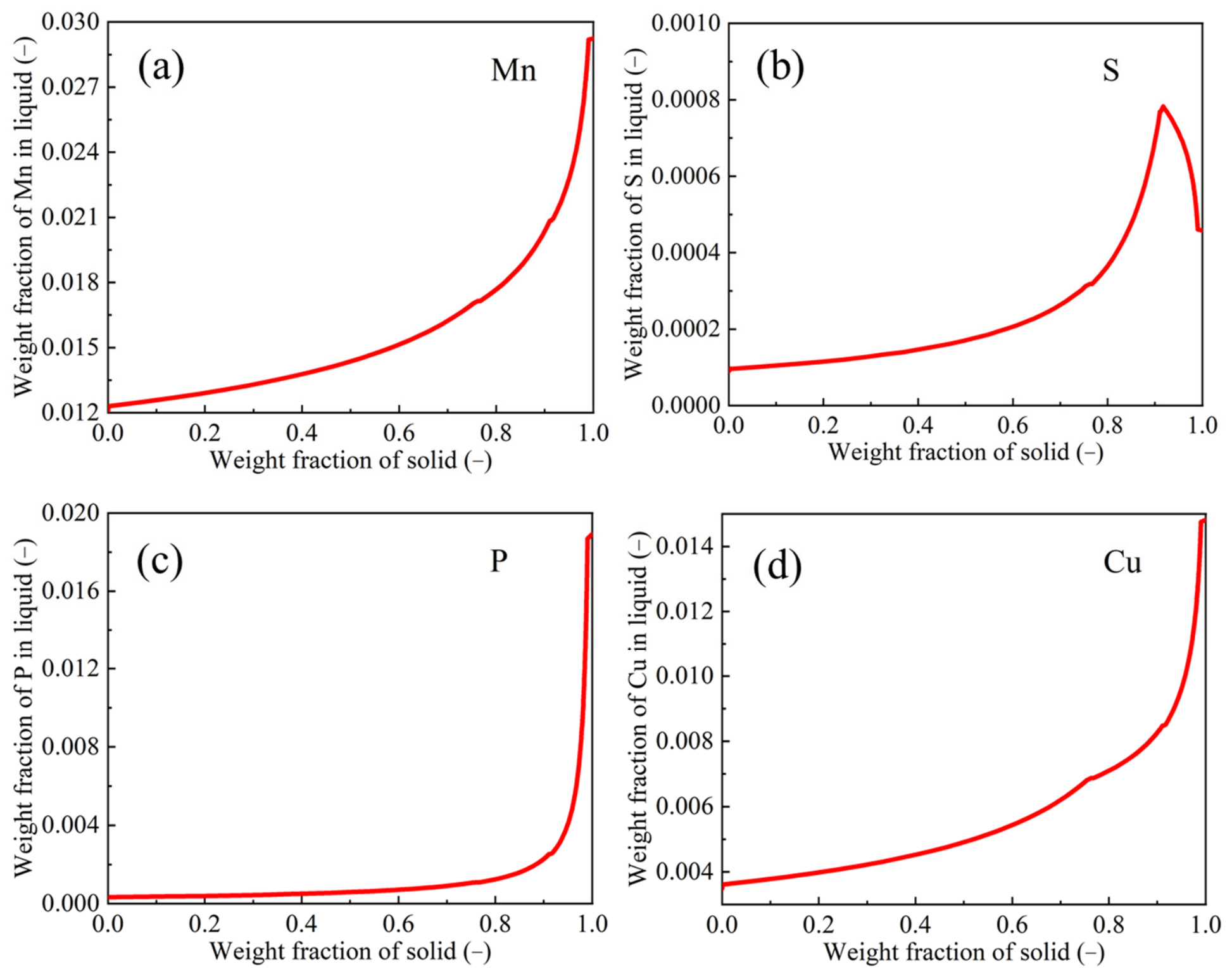
The formation and spatial distribution of MnS are closely associated with solute segregation and the evolution of the residual liquid during terminal solidification. The Scheil–Gulliver calculations [36] indicate that little MnS forms during the early stages of solidification (Figure 11). As the solid fraction increases, S is strongly rejected into the remaining liquid, while Mn also becomes progressively enriched. Consequently, the local Mn and S concentrations in the residual liquid increase continuously until the thermodynamic condition for MnS precipitation is reached near the end of solidification (Figure 12). At the same time, the initially continuous liquid is gradually confined by the growing dendrites into narrow interdendritic films and isolated liquid pools. The strong local enrichment of Mn and S within these restricted liquid regions provides a reasonable explanation for the locally clustered distribution of MnS observed in the quenched samples.
Figure 11.
Scheil solidification path of 304 stainless steel (a) and variation in the mass fraction of MnS with solid fraction (b).
Figure 12.
Variation in the liquid-phase solute contents with solid fraction during solidification: (a) Mn, (b) S, (c) P, (d) Cu.
The difference between A1 and B1 further reflects the evolution of inclusions during this terminal solidification interval. The mean inclusion size increased from 2.64 μm at 1405 °C to approximately 4.39 μm at 1350 °C in the absence of electropulsing. At 1405 °C, MnS had only recently entered its stable precipitation range, whereas the sample quenched at 1350 °C had subsequently experienced the remaining solidification interval and further high-temperature cooling. The longer time available for solute redistribution, precipitation, and particle growth is therefore consistent with the larger inclusion size observed at 1350 °C. After disappearance of the residual liquid, additional diffusion-controlled growth or coarsening may also occur during cooling from the solidus to 1350 °C.
The spatial association between MnS and the strip-like P-enriched regions can also be understood in the context of terminal segregation. Phosphorus, similar to sulfur, has a strong tendency to segregate during solidification, and P enrichment can occur during the final stages of solidification. Thus, the frequent occurrence of MnS adjacent to the P-enriched regions is consistent with their common localization in solute-enriched terminal solidification zones. The more pronounced clustering observed in the samples quenched at 1350 °C further suggests that continued solidification progressively concentrates these precipitates within increasingly restricted interdendritic regions.
Oxide inclusions are expected to exist before extensive MnS precipitation and may be retained in or transported toward interdendritic regions during solidification. When the Mn and S-enriched residual liquid subsequently reaches the MnS precipitation condition, sulfides can preferentially form and grow in regions surrounding these pre-existing oxide particles. This provides a plausible route for the development of the oxide-core/MnS-shell structures observed by SEM/EDS.
4.2. Refinement of MnS During the Initial Precipitation Stage Under Electropulsing
At 1405 °C, MnS had just entered its initial precipitation interval. As shown in Figure 12a,b, Mn and S were strongly enriched in the residual interdendritic liquid at this stage, and MnS began to precipitate once the local thermodynamic condition for sulfide formation was satisfied. In Group A, increasing the current density did not produce an obvious change in the spherical or near-spherical morphology of MnS, whereas the average inclusion size decreased continuously from 2.64 to 1.76 μm. This suggests that electropulsing primarily modified the precipitation kinetics of MnS during its initial formation stage rather than altering its basic morphology.
According to classical nucleation theory, the nucleation rate contains both thermodynamic and kinetic contributions. For a diffusion-controlled nucleation process, the dependence of the nucleation rate on atomic diffusivity can be expressed in a simplified form as [37,38]:
where I is the nucleation rate (m−3·s−1), D is the diffusion coefficient of the solute species (m2·s−1), ΔG is the critical nucleation energy barrier (J), kB is the Boltzmann constant, and T is the absolute temperature (K). At a given temperature and under comparable thermodynamic conditions, an increase in atomic mobility enhances the kinetic contribution to nucleation and therefore favors the formation of stable nuclei.
When an electric current passes through a conducting melt, momentum transfer from moving electrons to solute atoms gives rise to the electron-wind force and electromigration. This additional driving force increases the directional migration velocity of solute atoms and thereby enhances their effective transport. The flux of a solute species under an applied current may be expressed schematically as [39]:
where ∅ is the atomic flux, ci is the atomic density, D0 is the pre-exponential diffusion constant, Qi is the activation energy, k is the Boltzmann constant, T is the absolute temperature, and e is the electron charge, j is the current density, ρ is the resistivity of the liquid, and Z* is the effective charge of the metal ions.
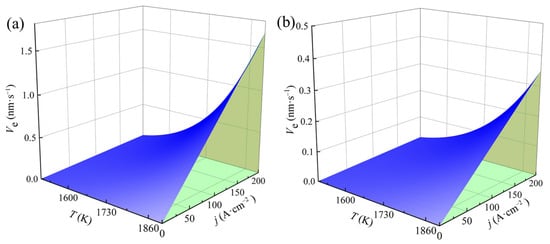
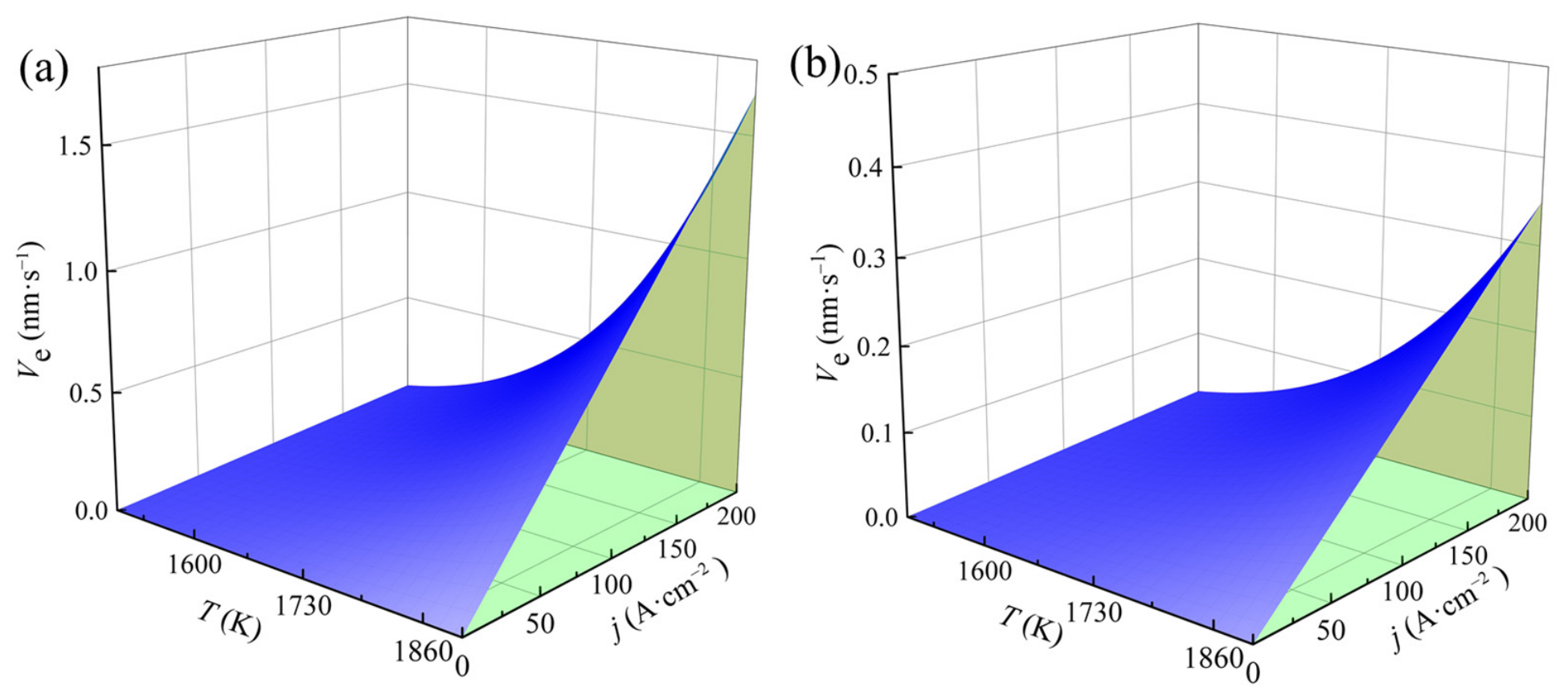
Calculations for Mn and S showed that their electromigration velocities increased markedly with increasing current density, and the same tendency was obtained over the temperature range considered in the present study (Figure 13). Consequently, near the MnS precipitation temperature, Mn and S can be transported more rapidly through the residual liquid toward locally supersaturated regions and incipient MnS nuclei.
Figure 13.
Calculated additional migration velocities of S (a) and Mn (b) as functions of temperature and current density.
Enhanced transport of Mn and S may increase the supply of solute to newly forming MnS nuclei and thereby affect the kinetic contribution to nucleation. This could allow a larger number of MnS nuclei to form within the limited precipitation interval. Because the total amount of Mn and S available for MnS formation is limited, the available solute is distributed among a larger population of particles, reducing the amount available for the growth of each individual inclusion. This provides a possible explanation for the progressive decrease in the average inclusion size with increasing current density observed in Group A.
4.3. Evolution of Inclusions Under Electropulsing in the Late Stage of Solidification
When electropulsing was continued to 1350 °C, the average inclusion size decreased from approximately 4.39 μm without current to 2.86 μm at 25.48 A·cm−2. Unlike Group A, the Group B treatment interval extended beyond the onset of MnS precipitation and included final solidification as well as subsequent cooling in the fully solid state. Thus, in addition to its possible influence on solute transport and nucleation, electropulsing may also affect already formed MnS and oxide inclusions during subsequent growth.
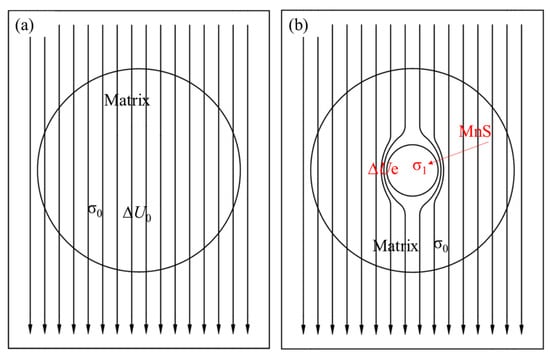
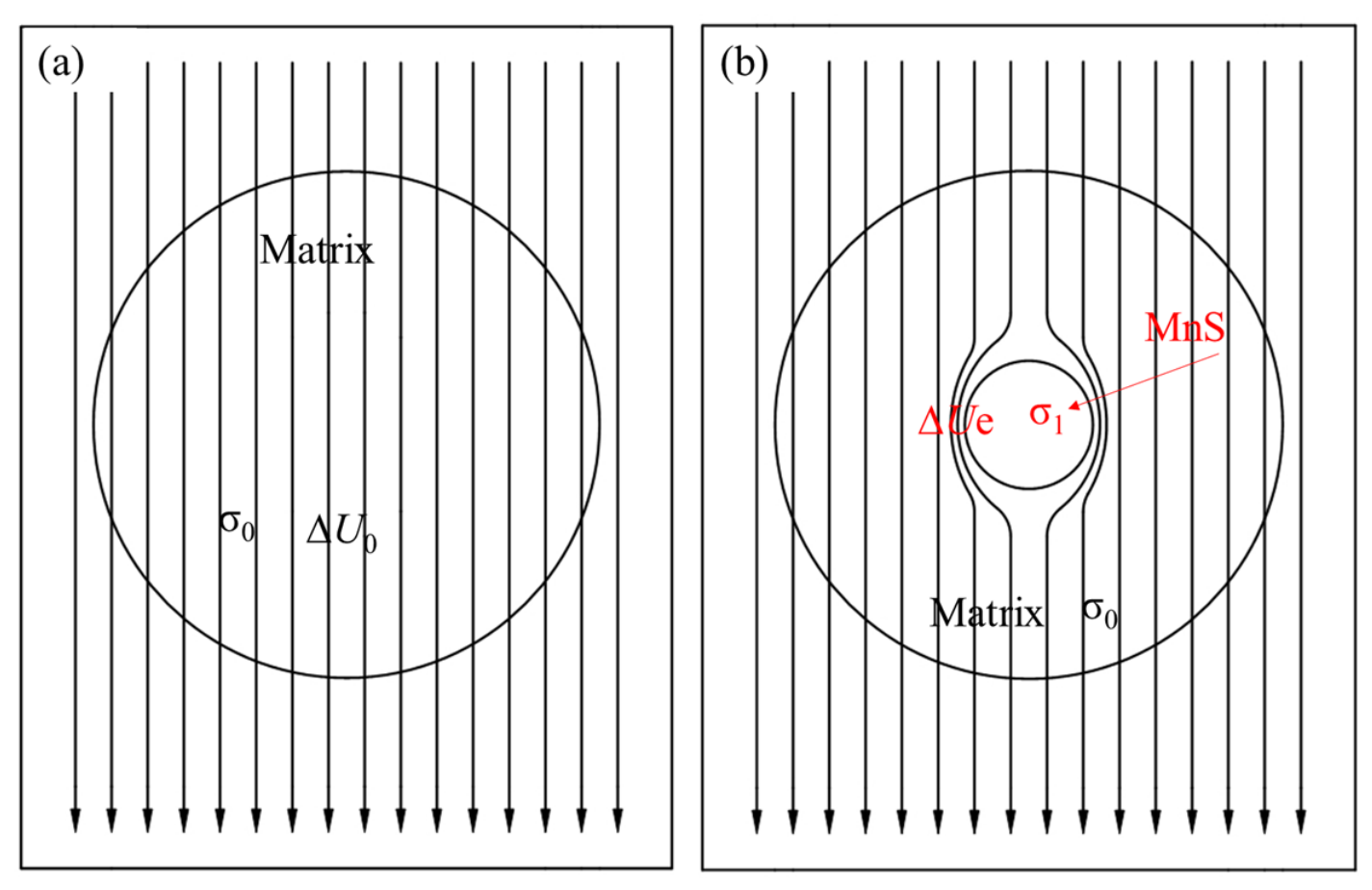
During the final liquid and semisolid stages, the large difference in electrical conductivity between the metallic phase and non-metallic inclusions causes the applied current to redistribute around the inclusions. Current lines preferentially bypass a low-conductivity particle, generating a locally non-uniform current field, as illustrated schematically in Figure 14. Within the electrical free-energy framework proposed for electropulsing-assisted inclusion control, the additional energy associated with such current redistribution depends on the applied current density, particle volume, and conductivity contrast between the inclusion and the surrounding metallic phase. This contribution may be expressed qualitatively as [29,36]:
where K1 is a positive coefficient associated with the geometry and electromagnetic characteristics of the current-carrying system (J·m·A−2); j is the current density (A·m−2), V is the inclusion volume (m3), and σ0 and σ1 are the electrical conductivities of the metallic matrix and inclusion (S·m−1), respectively. Because σ0 > σ1 for a metallic matrix and a poorly conducting inclusion, ξ > 0 and ΔUe > 0 under the adopted model.
∆Ue = K1j2Vξ(σ0, σ1)
ξ(σ0, σ1) = (σ0−σ1)/(2σ0+σ1)
Figure 14.
Schematic illustration of current-line redistribution in the metallic phase in the absence (a) and presence of MnS inclusions (b).
Within the adopted model, the additional energy contribution increases with particle volume and may make continued growth of larger low-conductivity inclusions less fa-vorable under an applied current. This provides a possible thermodynamic interpretation of the decreasing average inclusion size observed in Group B.
The oxide–MnS composite inclusions exhibited an additional response to electropulsing. SEM/EDS showed that MnS formed an outer layer around the oxide-rich core and that this MnS-rich layer became thinner in representative inclusions with increasing current density. Because the oxide particles were already present before MnS precipitation, MnS formation around these particles occurred mainly during the subsequent Mn and S-enriched terminal solidification stage. Electropulsing can influence this process through two concurrent effects. Electromigration alters the supply of Mn and S to the oxide/inclusion vicinity, whereas current redistribution around the low-conductivity oxide–MnS composite increases the energetic penalty associated with continued enlargement of the composite particle. The combined effects are consistent with the observed reduction in overall inclusion size and the thinner MnS-rich outer layers at higher current densities.
Taken together, the results indicate that the dominant influence of electropulsing on MnS evolves with the solidification stage. Near the onset of MnS precipitation, electromigration-assisted transport of Mn and S primarily affects the kinetic conditions for nucleation, favoring a larger number of stable particles and therefore a finer inclusion population. As solidification proceeds and non-metallic particles are already present, their interaction with the applied current field becomes increasingly important, and current redistribution together with electrical free-energy effects tends to suppress continued particle growth and the thickening of MnS around oxide cores. The decrease in average inclusion size from 2.64 to 1.76 μm in Group A and from 4.39 to 2.86 μm in Group B is consistent with this stage-dependent mechanism.
5. Conclusions
This study shows that electropulsing is associated with refinement of inclusions and changes in the morphology of oxide–MnS composite inclusions in low-sulfur 304 stain-less steel, with the observed effects depending on the treatment endpoint.
- (1)
- When electropulsing was applied to the initial MnS precipitation stage and terminated at 1405 °C, the MnS inclusions remained predominantly spherical or near-spherical, whereas the average equivalent circular diameter decreased from 2.64 to 1.76 μm as the current density increased from 0 to 25.48 A·cm−2. This refinement is consistent with a possible contribution from electromigration-assisted transport of Mn and S; however, the nucleation rate was not measured directly.
- (2)
- When electropulsing was continued to 1350 °C, the average inclusion size decreased from approximately 4.39 to 2.86 μm. Oxide-core/MnS-shell composite inclusions were also observed, and the MnS-rich outer layer of representative composite inclusions became thinner with increasing current density. These observations suggest that electropulsing may influence inclusion evolution during the later part of the treatment, although the local growth process was not measured directly.
- (3)
- The effect of electropulsing on MnS is strongly dependent on the solidification stage. Near the onset of MnS precipitation, electromigration-assisted solute transport may affect MnS nucleation and inclusion refinement. As solidification proceeds and MnS and oxide particles are already present, local current redistribution and the associated electrical free-energy contribution may influence further inclusion growth and coarsening. The oxide–MnS composite structures are associated with the spatial coupling between pre-existing oxide particles and Mn- and S-enriched residual liquid during terminal solidification.
Author Contributions
Conceptualization, D.J., S.A. and M.L.; methodology, D.J., W.C., X.S., C.H. and X.L.; formal analysis, X.S., C.H. and X.L.; investigation, W.C. and S.A.; data curation, X.S. and C.H.; writing—original draft preparation, D.J., W.C., X.L., C.H. and X.S.; writing—review and editing, D.J., S.A. and M.L.; validation, D.J., W.C. and X.S.; funding acquisition, D.J. and S.A. All authors have read and agreed to the published version of the manuscript.
Funding
This research was funded by National Natural Science Foundation of China, grant number 52504357, the Postdoctoral Innovative Talent Support Program, grant number BX20240448, the Postdoctoral Fellowship Program of CPSF, Grant Number GZC20252388, and the Natural Science Foundation of Chongqing, grant number CSTB2025NSCQ-GPX0749.
Data Availability Statement
The original contributions presented in this study are included in the article. Further inquiries can be directed to the corresponding authors.
Conflicts of Interest
The authors declare no conflicts of interest.
References
- Song, Y.; Zhang, H.; Ren, L. A review of research on MnS inclusions in high-quality steel. Eng. Rep. 2024, 6, e12892. [Google Scholar] [CrossRef] [Scilit]
- Sun, Y.; Tan, X.; Lan, R.; Ran, G.; Li, J.; Jiang, Y. Mechanisms of inclusion-induced pitting of stainless steels: A review. J. Mater. Sci. Technol. 2024, 168, 143–156. [Google Scholar] [CrossRef] [Scilit]
- Eguchi, K. Statistical Analysis of Nonmetallic Inclusions as Initiation Sites of Pitting Corrosion for Stainless Steel by All-surface Survey. Corros. Eng. 2022, 71, 46–56. [Google Scholar] [CrossRef] [Scilit]
- Liu, Z.; Ren, Q.; Zhang, L. Pitting Initiated by MnO·Cr2O3–MnS and MnS Inclusions in a Si-/Mn-Killed Stainless Steel. Steel Res. Int. 2024, 95, 240014. [Google Scholar] [CrossRef] [Scilit]
- Li, D.; Hao, H.; Wang, Z.; Nyakilla, E.E. Evolution of the Corrosion Products around MnS Embedded in AISI 304 Stainless Steel in NaCl Solution. Materials 2024, 17, 4050. [Google Scholar] [CrossRef] [Scilit] [PubMed]
- Ryan, M.P.; Williams, D.E.; Chater, R.J.; Hutton, B.M.; McPhail, D.S. Why stainless steel corrodes. Nature 2002, 415, 770–774. [Google Scholar] [CrossRef] [Scilit] [PubMed]
- Zheng, S.J.; Wang, Y.J.; Zhang, B.; Zhu, Y.L.; Liu, C.; Hu, P.; Ma, X.L. Identification of MnCr2O4 nano-octahedron in catalysing pitting corrosion of austenitic stainless steels. Acta Mater. 2010, 58, 5070–5085. [Google Scholar] [CrossRef] [Scilit]
- Liu, N.; Li, Y.; Cheng, J.; Fu, J. Numerical understanding of MnS precipitation influence on solute micro-segregation during solidification. Metall. Res. Technol. 2024, 121, 508. [Google Scholar] [CrossRef] [Scilit]
- Chu, J.; Zhang, L.; Yang, J.; Bao, Y.; Ali, N.; Zhang, C. Characterization of precipitation, evolution, and growth of MnS inclusions in medium/high manganese steel during solidification process. Mater. Charact. 2022, 194, 112367. [Google Scholar] [CrossRef] [Scilit]
- Oikawa, K.; Ohtani, H.; Ishida, K.; Nishizawa, T. The control of the morphology of MnS inclusions in steel during solidification. ISIJ Int. 1995, 35, 402–408. [Google Scholar] [CrossRef] [Scilit]
- Fukumoto, S.; Iwasaki, Y.; Hikasa, Y. Selection of Sulfide Morphology in SUS303 during Solidification. ISIJ Int. 2016, 56, 1023–1030. [Google Scholar] [CrossRef] [Scilit]
- Suzuki, M.; Yamaguchi, R.; Murakami, K.; Nakada, M. Inclusion particle growth during solidification of stainless steel. ISIJ Int. 2001, 41, 247–256. [Google Scholar] [CrossRef] [Scilit]
- Tian, Q.; Liu, N.; Shen, W.; Xu, X.; Fu, J. Morphological differences of MnS inclusions in medium-carbon steel with different manganese and sulfur contents. Steel Res. Int. 2023, 94, 2300074. [Google Scholar] [CrossRef] [Scilit]
- Yang, H.; Ren, Y.; Wang, J.; Zhang, L. In-situ observation of precipitation and growth of MnS inclusions during solidification of a high sulfur steel. ISIJ Int. 2024, 64, 2020–2030. [Google Scholar] [CrossRef] [Scilit]
- Takada, H.; Bessho, I.; Ito, T. Effect of sulfur content and solidification variables on morphology and distribution of sulfide in steel ingots. Trans. Iron Steel Inst. Jpn. 1978, 18, 564–573. [Google Scholar] [CrossRef] [Scilit]
- Choi, J.Y.; Kim, S.K.; Kang, Y.B.; Lee, H.G. Compositional evolution of oxide inclusions in austenitic stainless steel during continuous casting. Steel Res. Int. 2015, 86, 284–292. [Google Scholar] [CrossRef] [Scilit]
- Liu, W.; Li, M.; Yang, S.; Xu, Z.; Huang, C.; Liu, T.; Li, J. Diffusion and precipitation of MnS at interface between Mn–Al–Si oxides and steel during solidification. J. Mater. Res. Technol. 2022, 18, 990–997. [Google Scholar] [CrossRef] [Scilit]
- Yang, H.; Ren, Y.; Wang, J.; Zhang, L. First-principles calculation and in situ observation on the precipitation of inclusions during solidification of a high sulfur steel. Steel Res. Int. 2024, 95, 2400465. [Google Scholar] [CrossRef] [Scilit]
- Zhang, H.; Xiao, X.; Wang, Y.; Liu, C.; Ni, H. Effect of sulfur content on precipitation behaviour of MnS-containing inclusions in X70 pipeline steel. J. Mater. Res. Technol. 2023, 27, 5868–5880. [Google Scholar] [CrossRef] [Scilit]
- Tanaka, Y.; Pahlevani, F.; Moon, S.C.; Dippenaar, R.; Sahajwalla, V. In situ characterisation of MnS precipitation in high carbon steel. Sci. Rep. 2019, 9, 10096. [Google Scholar] [CrossRef] [Scilit] [PubMed]
- Qiu, G.X.; Du, Q.; Lu, F.; Miao, D.J.; Yang, Y.K.; Li, X.M. Review on regulation of MnS in non-quenched and tempered steel. J. Iron Steel Res. Int. 2024, 31, 779–789. [Google Scholar] [CrossRef] [Scilit]
- Liu, P.; Cai, Z.; Zhu, M. Effect of La content on sulfur-containing inclusions, microstructure evolution and pitting corrosion resistance of sulfur-containing peritectic steel. Ironmak. Steelmak. 2025, 52, 1351–1361. [Google Scholar] [CrossRef] [Scilit]
- Jia, D.B.; Dai, W.B.; Tang, G.P.; Xu, C.Z.; Tian, X.Z.; Yu, J.K. Improvement of pitting corrosion resistance of stainless steel by electric current pulse. Mater. Sci. Technol. 2017, 33, 1417–1420. [Google Scholar] [CrossRef] [Scilit]
- Yao, K.F.; Wang, J.; Zheng, M.; Yu, P.; Zhang, H.T. A research on electroplastic effects in wire-drawing process of an austenitic stainless steel. Scr. Mater. 2001, 45, 533–539. [Google Scholar] [CrossRef] [Scilit]
- Barnak, J.P.; Sprecher, A.F.; Conrad, H. Colony (grain) size reduction in eutectic Pb-Sn castings by electroplusing. Scr. Metall. Mater. 1995, 32, 879–884. [Google Scholar] [CrossRef] [Scilit]
- Ho, P.S.; Kwok, T. Electromigration in metals. Rep. Prog. Phys. 1989, 52, 301–348. [Google Scholar] [CrossRef] [Scilit]
- Conrad, H. Effects of electric current on solid state phase transformations in metals. Mater. Sci. Eng. A 2000, 287, 227–237. [Google Scholar] [CrossRef] [Scilit]
- Zhang, X.F.; Lu, W.J.; Qin, R.S. Removal of MnS inclusions in molten steel using electropulsing. Scr. Mater. 2013, 69, 453–456. [Google Scholar] [CrossRef] [Scilit]
- Dai, W.B.; Yu, J.K.; Du, C.M.; Zhang, L.; Wang, X.L. Refinement of inclusions in molten steel by electric current pulse. Mater. Sci. Technol. 2015, 31, 1555–1559. [Google Scholar] [CrossRef] [Scilit]
- Yang, X.; Zhang, L.; Cao, D.; Han, X.; Zhang, Y.; He, Z. Influence of pulse current on inclusion properties of alumina in molten steel. Metals 2022, 12, 1742. [Google Scholar] [CrossRef] [Scilit]
- Jia, D.; Zhong, L.; Yu, J.; Liu, Z.; Yuan, L.; Tian, C.; Dai, W. Effect of electropulsing treatment on the formation of MnS inclusions in SUS303. Metall. Mater. Trans. B 2021, 52, 3756–3766. [Google Scholar] [CrossRef] [Scilit]
- Jia, D.; Zhong, L.; Yu, J.; Zhou, Y.; Liu, Z.; Tian, C.; Wang, J.; Dai, W. Effects of electropulsing on inclusion size and corrosion-resistance of 304 stainless steel. Mater. Sci. Technol. 2020, 36, 1263–1271. [Google Scholar] [CrossRef] [Scilit]
- Yu, W.W.; Qi, J.G.; Cui, H. Pulsed electric current treatment: From regulating non-metallic inclusions to inhibiting submerged entry nozzle clogging. J. Iron Steel Res. Int. 2025, 32, 833–848. [Google Scholar] [CrossRef] [Scilit]
- Ma, H.; Geng, Z.; Ma, R.; Zhou, M.; Wang, Z.; Zhang, X. Controlling the morphology of MnS inclusions in steel by electropulsing. Steel Res. Int. 2026, e70629. [Google Scholar] [CrossRef] [Scilit]
- Andersson, J.O.; Helander, T.; Höglund, L.; Shi, P.; Sundman, B. Thermo-Calc & DICTRA, computational tools for materials sci-ence. Calphad 2002, 26, 273–312. [Google Scholar] [CrossRef] [Scilit]
- You, D.; Michelic, S.K.; Presoly, P.; Liu, J.; Bernhard, C. Modeling inclusion formation during solidification of steel: A review. Metals 2017, 7, 460. [Google Scholar] [CrossRef] [Scilit]
- Wang, Y. Systematic approach to microstructure design of Ni-base alloys using classical nucleation and growth relations coupled with phase field modeling. Metall. Mater. Trans. A 2008, 39, 984–993. [Google Scholar] [CrossRef] [Scilit]
- Turnbull, D.; Fisher, J.C. Rate of nucleation in condensed systems. J. Chem. Phys. 1949, 17, 71–73, Correction in J. Chem. Phys. 1949, 17, 429. [Google Scholar] [CrossRef] [Scilit]
- Liu, M.S.; Wang, X.L.; Zhao, X. Effect of high-density electric current pulses on precipitation and mechanical properties of a Cu–Zn alloy. Mater. Sci. Technol. 2017, 33, 1411–1416. [Google Scholar] [CrossRef] [Scilit]

Disclaimer/Publisher’s Note: The statements, opinions and data contained in all publications are solely those of the individual author(s) and contributor(s) and not of MDPI and/or the editor(s). MDPI and/or the editor(s) disclaim responsibility for any injury to people or property resulting from any ideas, methods, instructions or products referred to in the content. |
© 2026 by the authors. Licensee MDPI, Basel, Switzerland. This article is an open access article distributed under the terms and conditions of the Creative Commons Attribution (CC BY) license.