


Abstract
Aluminum production is energy-intensive and generates large quantities of dross. Aluminum dross, which forms on the melt surface during the melting and refining stages, consists primarily of aluminum oxides and nitrides. Meanwhile, aluminum dust captured in emission control systems contains additional phases, including carbides. Dross containing <20 wt% metallic aluminum is mostly landfilled, releasing ammonia and flammable gases upon contact with water. The oxidation reaction of metallic aluminum contained in aluminum by-products recovered during the recycling process generates a significant amount of heat, thereby lowering the need for external energy. In addition, recycling these by-products lessens the burden on landfills. Quantifying the metallic aluminum content is therefore essential for assessing the true recycling value of the by-products. In this study, the metallic aluminum content of aluminum dross and dust was estimated using selective dilute-acid leaching. Synthetic oxide reference samples were prepared, and the Al, Si, and Mg concentrations in dilute hydrochloric acid (1.16 mol·kg−1) were compared between the references and by-products. The dissolved Al concentration reached ≈29 wt% for the dross within 6 h, with an additional AlN-derived contribution of ≤4 wt% upon prolonged leaching and ≈25 wt% for the dust, independent of the leaching time; the oxide references showed negligible dissolution. Hence, single-step dilute-acid leaching can serve as a rapid method for classifying aluminum by-products between landfill and remelting routes.
1. Introduction
Aluminum is the third most abundant element in the Earth’s crust. However, owing to its high affinity for oxygen, it occurs naturally only in combined forms. During melting and casting, a substantial quantity of dross is generated as a by-product. Within the melting furnace, molten aluminum reacts with atmospheric oxygen to form an oxide film, which becomes entangled with impurities on the melt surface or with the added flux, thereby producing dross [1]. During melting, dross, equivalent to approximately 1–5% of the melt, is generated; as global aluminum production expands, the quantity of such by-products increases steadily. From 2013 to 2023, global primary aluminum production increased from 47.6 to 70.0 million tons [2].
Aluminum dross is broadly classified into white and black dross based on its metallic aluminum content [1]. White dross, generated mainly during primary smelting, has a relatively high metallic aluminum content of 15–80 wt% and contains few salt components; therefore, it retains a high recycling value. By contrast, black dross is generated during secondary smelting. The metallic aluminum content is low, and large quantities of aluminum oxide (Al2O3), magnesium spinel (MgAl2O4), periclase (MgO), and quartz (SiO2) are present, together with chloride- and fluoride-based salts that have been added to enhance the process efficiency [3]. Residues with a metallic aluminum content of less than ~20 wt% are difficult to recycle and are therefore mostly disposed of in landfills [4]. However, landfill disposal can cause serious environmental problems. When aluminum dross is landfilled, ammonia (NH3), chloride (Cl−), and soluble aluminum are generated. Upon contact with water, flammable gases such as acetylene (C2H2) may also be released, potentially causing explosions [5,6].
The fine particles captured in the baghouse, which is a flue gas control device, are referred to as baghouse dust. Owing to its high aluminum content, this material is also called aluminum dust [7]. Dross forms on the molten metal surface, whereas aluminum dust is a powder with a very fine particle size distribution. The U.S. Environmental Protection Agency [8] indicates that this material contains a substantial amount of metallic aluminum that is not recovered during processing. The generation of aluminum dust is influenced by the type and quality of scrap charged, process conditions, and pollution control technology. Data from the Aluminum Association indicate that approximately 1.95 kg of dust is generated per ton of aluminum produced in North America [9,10]. Dust-containing metallic aluminum also reacts rapidly and exothermically with moisture and releases hydrogen and ammonia gases [8].
The oxidation of aluminum dross and dust is strongly exothermic, making these materials potential supplementary energy sources that can partially substitute conventional fossil fuels. In particular, aluminum recycling is estimated to save approximately 95% of the energy required for smelting bauxite ore and reduce greenhouse gas emissions to approximately 5% of that of primary smelting [11,12]. Consequently, reductions in CO2 emissions, landfill burdens, and industrial waste management costs are expected. Therefore, the development of recycling and waste management technologies for the large volumes of dross generated is essential for sustainable industries. The precise characterization and content analysis of each by-product are necessary for the effective recovery and utilization of the metallic aluminum present in the waste.
However, it remains difficult to quantify the metallic aluminum content in aluminum by-products using existing analytical methods. Although standard inductively coupled plasma emission spectroscopy and the hydrogen gas evolution method are used after decomposition with strong acids or strong alkalis, both methods have their own limitations. The strong acid decomposition method dissolves the entire mineral, making it difficult to distinguish between metallic aluminum and aluminum oxide [13]. The hydrogen gas analysis method can detect the presence of hydrogen gas generated by reactions with acids or alkalis. However, side-reaction gases such as methane and ammonia, which are produced by carbides and nitrides present in the by-products, limit the selective quantification of metallic aluminum [13,14].
In a previous study [15], water leaching and roasting methods were used to characterize aluminum dross. In the water-leaching experiments, the salt components were removed from the dross. Because the complete dissolution of the Na and K components was difficult, additional analysis was performed by adjusting the pH to 6 with HCl. In the roasting experiments, metallic aluminum and magnesium were converted into oxides, after which a 10% sodium hydroxide (NaOH) aqueous solution was used to separate and reprecipitate the metallic aluminum for analysis. A reprecipitation process is necessary to accurately distinguish between metallic aluminum and aluminum oxide concentrations using the water leaching method. In addition, a method for leaching aluminum dross with an NaOH solution has been reported [16]. Leaching was conducted using a concentrated (>5 M) NaOH solution at high temperature (368 K). Alumina (Al2O3) and silica (SiO2) were effectively dissolved, whereas MgO remained undissolved and required additional post-treatment. Similarly, the alkaline leaching method was applied to aluminum dust. Aluminum dust was extracted by dissolving the metallic aluminum into a water-soluble sodium aluminate form using a solution of sodium hydroxide or sodium carbonate. However, as the leaching time increased, explosive hydrogen gas was generated during the reaction, making separate control measures essential [17].
In this context, the high-concentration acid leaching method has the advantage of a high hydrogen ion activity, which results in a fast initial dissolution rate. However, if moisture is insufficient or the acid concentration is too high, the resulting aluminum salts rapidly precipitate and coat the particle surfaces, blocking additional hydrogen ions from penetrating into the interior of the particles [18,19]. This limitation can be avoided by diluted acid leaching. The leaching process using diluted acid maintains an optimal balance between acidity and moisture content, thereby preventing incipient salt precipitation and enabling efficient mass transfer [18]. Accordingly, a single-step dilute-acid method that selectively dissolves metallic aluminum would provide a rapid and low-cost route for characterizing aluminum by-products.
In this study, a simplified wet chemical procedure using dilute acid was developed to estimate the metallic aluminum content and evaluate the recycling potential, harnessing the low solubility of Al2O3 oxides under acidic conditions. For this purpose, the phase characteristics of the aluminum by-products were analyzed, and oxide reference samples were fabricated to compare the dissolution behavior under the same acid treatment conditions.
2. Materials and Methods
2.1. Oxide Sample Preparation
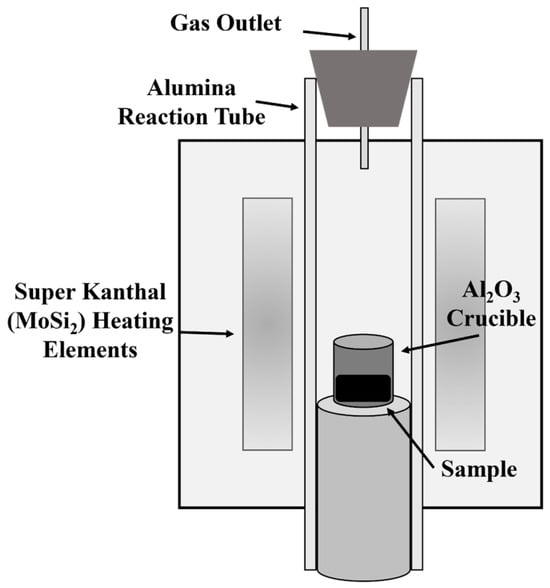
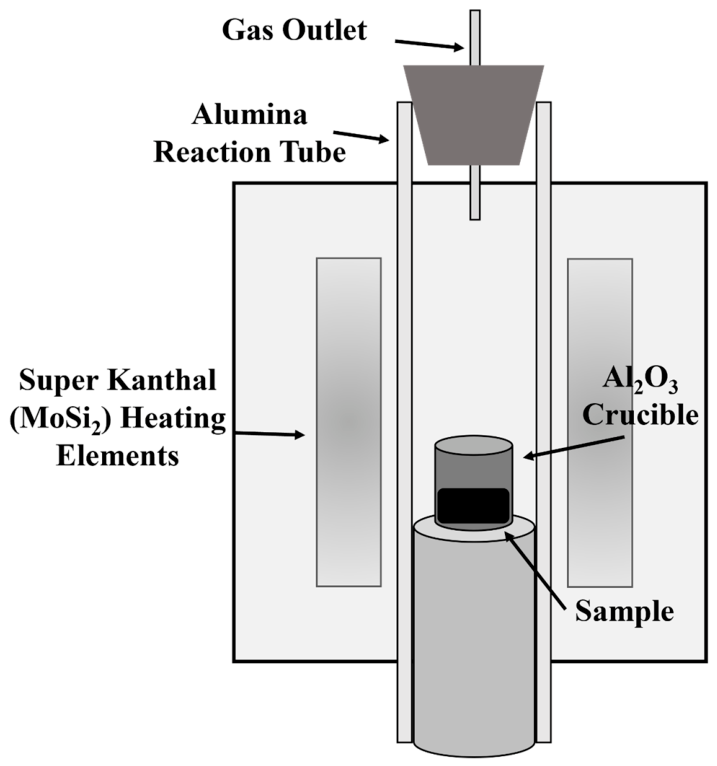
The metallic aluminum content in the aluminum by-product samples was determined via acid leaching. Two types of aluminum by-products collected from industrial operations were analyzed: black dross from Company A (KRT Co., Ltd., Pohang, Republic of Korea) and dust from Company B (POONGJEON NONFERROUS METAL CO., LTD., Incheon, Republic of Korea). To understand the behavior of metallic aluminum in the by-products, synthetic oxide samples with oxide compositions similar to those of the dross from Company A were fabricated, and comparative acid leaching experiments were conducted. Synthetic oxide samples were prepared in a resistance furnace under an air atmosphere. A schematic of the furnace is presented in Figure 1. Oxides A and B were prepared with the compositions listed in Table 1. Oxide A was designed with Al2O3 at 87 wt%, SiO2 at 7 wt%, and 6 wt% MgO to form the spinel and Al2O3 phases. Oxide B was prepared with Al2O3 at 85 wt%, SiO2 at 10 wt%, and 5 wt% MgO to include the spinel, mullite, and Al2O3 phases. The furnace was heated to the target temperature of 1873 K, after which alumina crucibles containing the prepared mixtures were charged. This temperature was maintained for 2 h to ensure complete melting, after which the samples were quenched and recovered. The compositions and phases of the recovered synthetic oxide samples were analyzed using X-ray fluorescence (XRF, ARL PERFORM’X, Thermo Fisher Scientific, Ecublens, Switzerland) and X-ray diffraction (XRD, Empyrean, PANalytical, Almelo, The Netherlands). The XRF software (OXSAS X-Ray Analytical Software, version 2.7.3.45a) reports oxide compositions normalized to 100%. For the aluminum by-products, which contain metallic Al and AlN, the XRF results were converted to an elemental basis and corrected for the oxide normalization using the ICP-OES results. XRD analysis was performed using Cu Kα radiation, and the data were collected over a 2θ range of 5–90° with a step size of 0.026° at a scan speed of 5.67°/min. In addition, Field emission scanning electron microscope (S-4800, US-8600, Hitachi, Tokyo, Japan) and inductively coupled plasma optical emission spectroscopy (ICP-OES) analyses (Optima 5300 DV, Perkin Elmer Ltd., Waltham, MA, USA) were used to investigate the content and characteristics of the aluminum by-products. The samples were sputter-coated with Pt prior to SEM observation.
Figure 1.
Schematic of the resistance furnace.
Table 1.
Compositions of Oxides A and B.
2.2. Leaching Experiments
Acid-leaching experiments were conducted to determine the metallic aluminum content in the aluminum by-products. A 35 wt% hydrochloric acid solution was diluted 10 times with distilled water to obtain a 1.16 mol·kg−1 HCl solution. One gram of the sample was then added to 50 mL of this solution (0.0489 kg of water and 0.057 mol of HCl) in a Teflon beaker (Sampling Systems Ltd, Coleshill, UK) covered with a lid to allow continuous internal reflux. The reaction was conducted on a hot plate set to maintain the solution at vigorous boiling (hot plate set at 373 K). The samples included aluminum by-products (Al dross and Al dust), synthetic oxides, and AlN (purity 99.8%, Sigma-Aldrich, St. Louis, MO, USA). The synthetic oxides were pulverized using a mortar and pestle and sieved through a 150 μm mesh. The powder passing the mesh (<150 μm) was used in the leaching experiments. To investigate the dissolution behavior of the samples, individual leaching experiments were independently conducted for reaction times of 6, 12, 24, and 48 h. Upon completion of the reaction, the suspension was filtered through a filter paper (CHMLAB F1004, Terrassa, retention range: 12–15 μm) with a diameter of 110 mm, and the filtrate was diluted 10 times and analyzed by ICP-OES. The residue collected on the filter was dried and analyzed using XRD.
The standard Gibbs energies of the dissolution reactions of the phases in the samples (metallic Al, AlN, α-Al2O3, MgAl2O4, and SiO2) were computed from the standard Gibbs energies of formation compiled in the NBS tables [20]. The temperature dependence over 298–383 K was evaluated assuming ΔCp ≈ 0. The closed-system equilibrium dissolution extents were then obtained by combining the equilibrium constants with the H+ mass balance of the leaching system (1 g of sample, 0.0489 kg of water, and 0.057 mol of HCl), considering the solid phases at unit activity.
3. Results
3.1. Composition and Microstructural Characteristics of the Aluminum By-Products
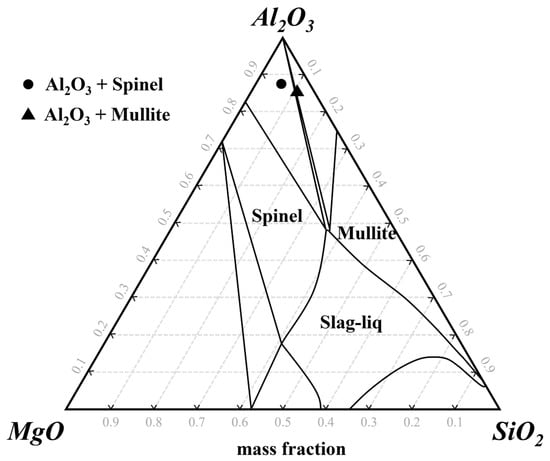
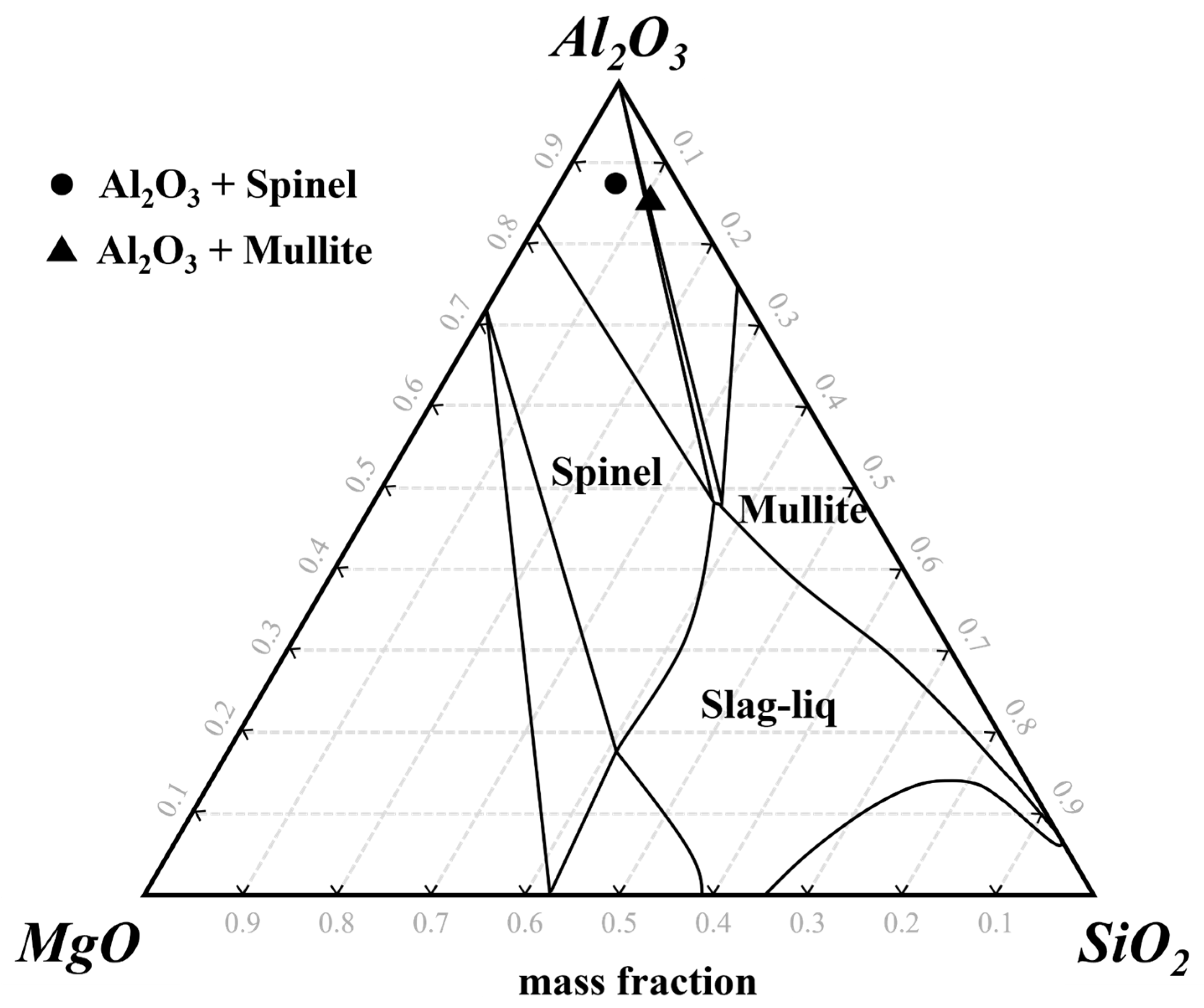
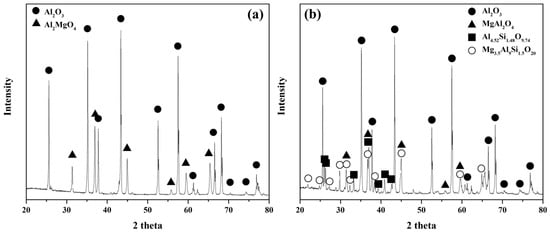
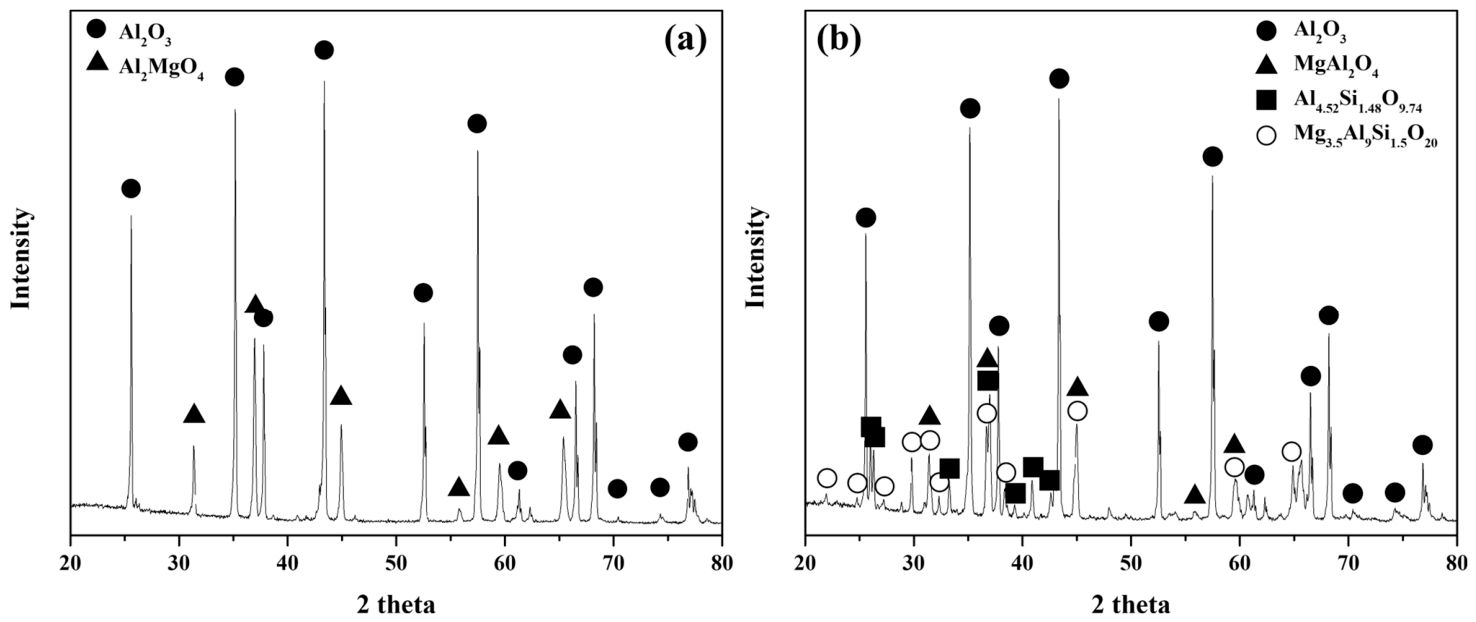
Oxide samples with compositions similar to those of the aluminum by-products were designed and fabricated with reference to the Al2O3-MgO-SiO2 phase diagram calculated using FactSage (Figure 2), such that the spinel and mullite phases would form; XRF analysis confirmed that the measured compositions of both samples were close to the designed values (Table 2). Table 2 presents the compositional results of fabricated oxide samples A and B. The phase analysis results for the oxide samples A and B are shown in Figure 3. The identified crystalline phases differed according to the composition of the synthetic oxides. In Figure 3b, the mullite-type and Mg–Al–Si oxide phases identified in Oxide B are consistent with the SiO2 content of Oxide B, which is higher than that of Oxide A. The weak reflections near 55–62° 2θ are indexed to higher-order reflections of the identified corundum, spinel, and mullite-type phases.
Figure 2.
Al2O3-MgO-SiO2 ternary phase diagram.
Table 2.
XRF analysis results for Oxides A and B.
Figure 3.
XRD patterns and mineralogical phases of (a) Oxide A and (b) Oxide B samples.
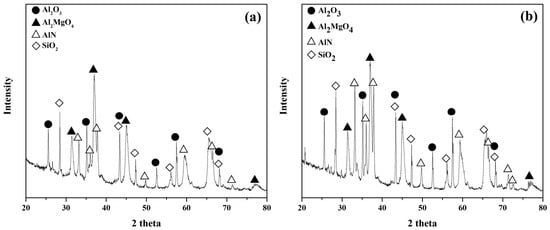
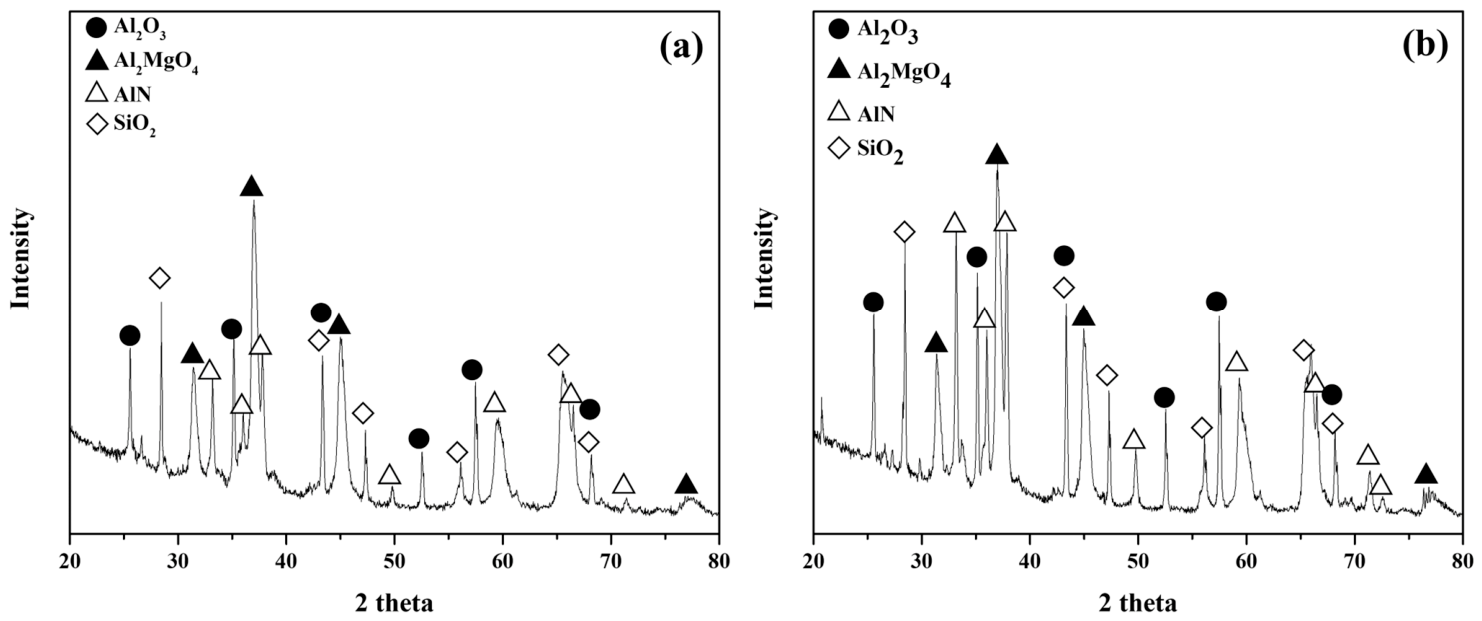
Table 3 presents the overall composition of the aluminum by-products, and Figure 4a,b present the phase analysis results for the aluminum by-products from Company A and Company B, respectively. Table 3 confirms that small amounts of Na2O and CaO are present, in addition to Al2O3, MgO, and SiO2 in the dross from Company A. When the compositions of the aluminum dross and dust in Table 3 were renormalized to the Al2O3–MgO–SiO2 ternary system, the contents of Al2O3, MgO and SiO2 composition of Oxide A (Table 2) is similar to that of aluminum dross and dust. The phase analysis revealed that both aluminum by-products contain Al2O3 and MgO·Al2O3 spinel phases. A metallic aluminum phase was also observed in both by-products. The metallic particles in the dust contain minor silicon (10.6 wt% by EDS). A comparison of the phase and compositional analyses shows that the dross and dust have similar distributions based on Al2O3 and MgO·Al2O3 spinel phases. Leaching experiments using Oxide A allowed the dissolution behavior of Al, Si, and Mg from the oxide phases to be compared directly with that of the by-products.
Table 3.
Elemental compositions of the aluminum by-products using XRF analysis (wt.%).
Figure 4.
Phase analysis of (a) Al dross and (b) Al dust using XRD.
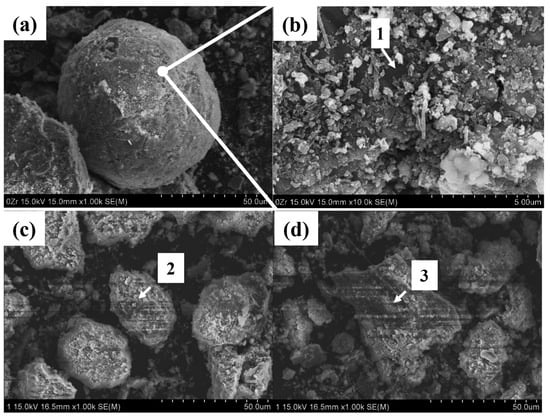
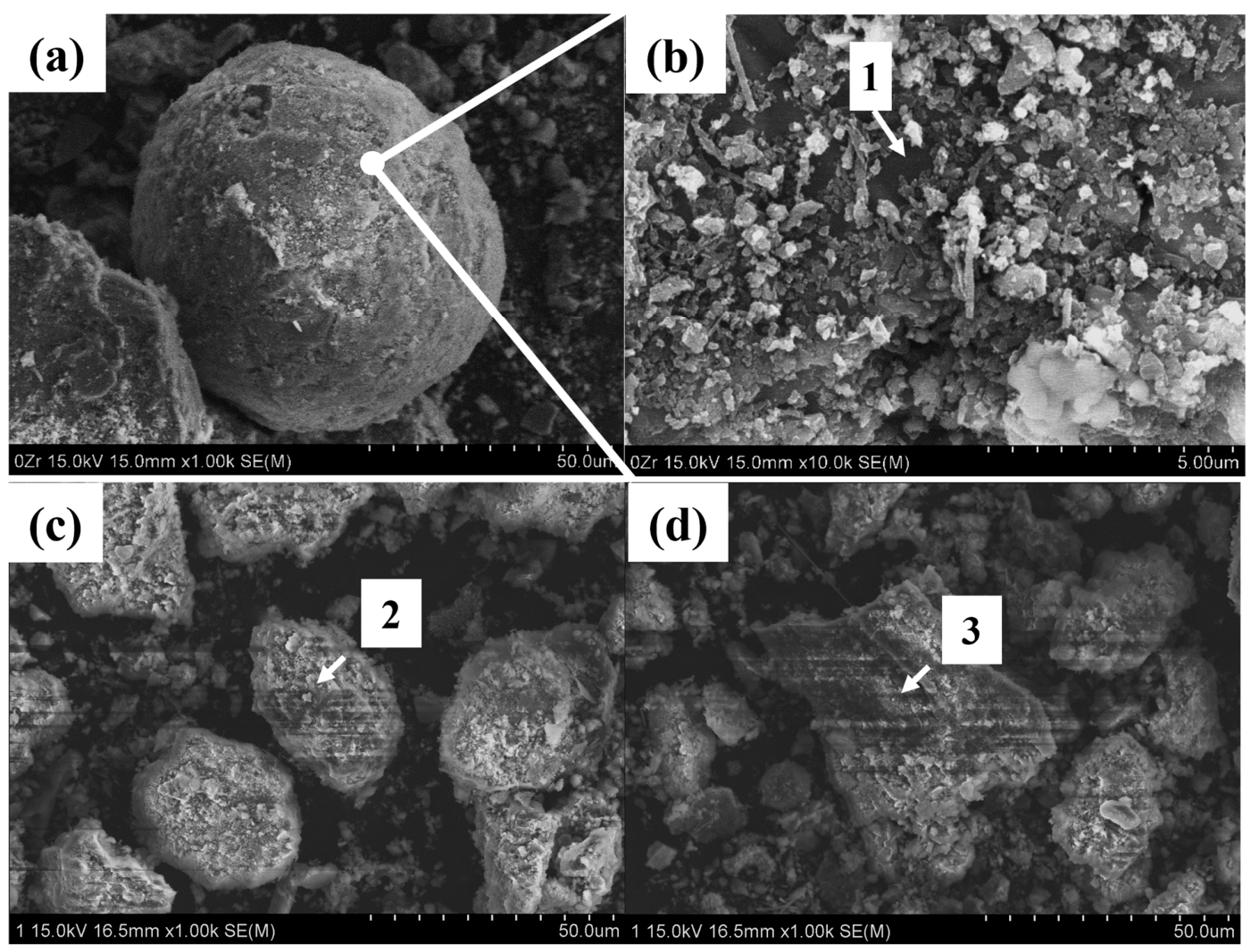
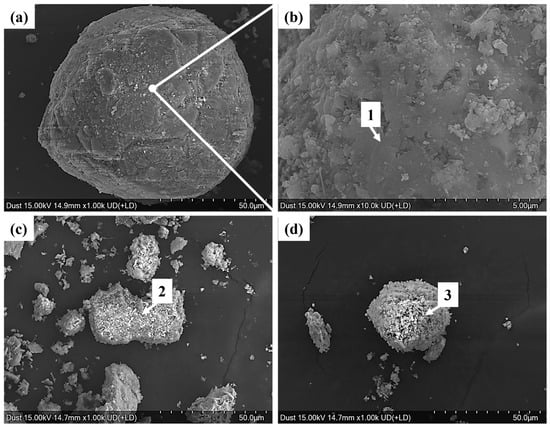
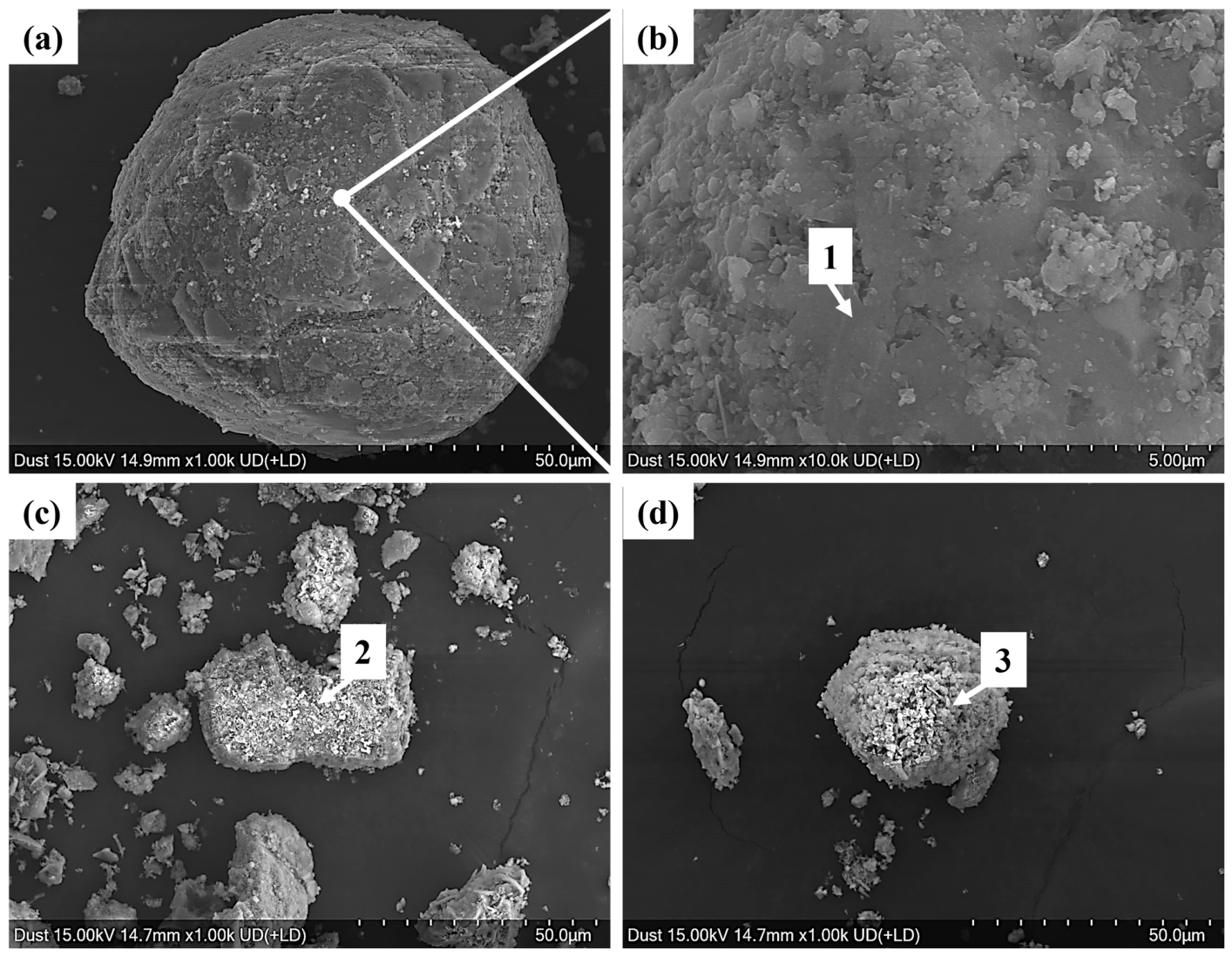
Figure 5, Table 4, and Figure 6, Table 5 present the phase characteristics and compositional analyses of each phase within the aluminum dross from Company A and aluminum dust from Company B, respectively. The analysis results revealed distinct compositional differences depending on the particle morphology. The spherical particles noticeable in Figure 5a were identified as a metallic aluminum phase based on their high aluminum content of 91.1 wt%. The spherical particles in Figure 6a are silicon-containing metallic aluminum, with 10.6 wt% silicon detected in addition to 76.1 wt% aluminum. The irregularly shaped particles in Figure 5c,d were identified as alumina-based oxide phases containing elements such as nitrogen, magnesium, and sodium. In contrast to the aluminum dross, carbon was detected in irregular particles shown in Figure 6c,d. The carbon detected in the aluminum dust originated primarily from organic contaminants, such as paint and plastic coatings present in the scrap. These organic compounds pyrolyze during high-temperature melting, leaving behind carbonaceous residues. The finely dispersed carbon particles react with molten aluminum to form the Al4C3 phase [1].
Figure 5.
Microstructural images of sample A (Al dross) using SEM: (a) metallic Al phase (×1.0k), (b) metallic Al phase (×10.0k), (c,d) oxide phases in Al dross. The numbered arrows indicate the positions of the EDS point analyses listed in Table 4.
Table 4.
Compositions of phases in Al dross analyzed by SEM-EDS (unit: wt%).
Figure 6.
Microstructural images of sample B (Al dust) using SEM: (a) metallic Al phase (×1.0k), (b) metallic Al phase (×10.0k), (c,d) oxide phases in Al dust. The numbered arrows indicate the positions of the EDS point analyses listed in Table 5.
Table 5.
Compositions of phases in Al dust analyzed by SEM-EDS (unit: wt%).
During the SEM-EDS analysis, charging occurred due to incomplete Pt coating of the sample. Therefore, the quantitative EDS results may have been partially distorted. However, in this study, SEM-EDS analysis was conducted primarily to identify the major phases and examine the particle morphology. The accurate elemental and phase compositions of the by-products were verified through XRF and ICP-OES analyses.
3.2. Results of Leaching Experiment Analysis
In this study, oxide samples containing no metallic aluminum were prepared and leached under the same conditions to analyze the behavior of metallic aluminum in the aluminum by-products. The undissolved residue was characterized by phase analysis.
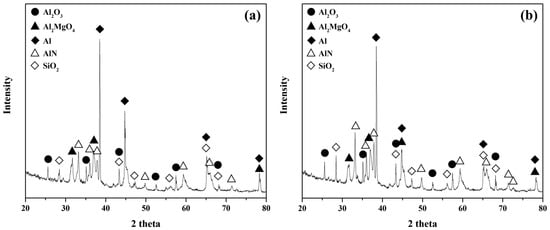
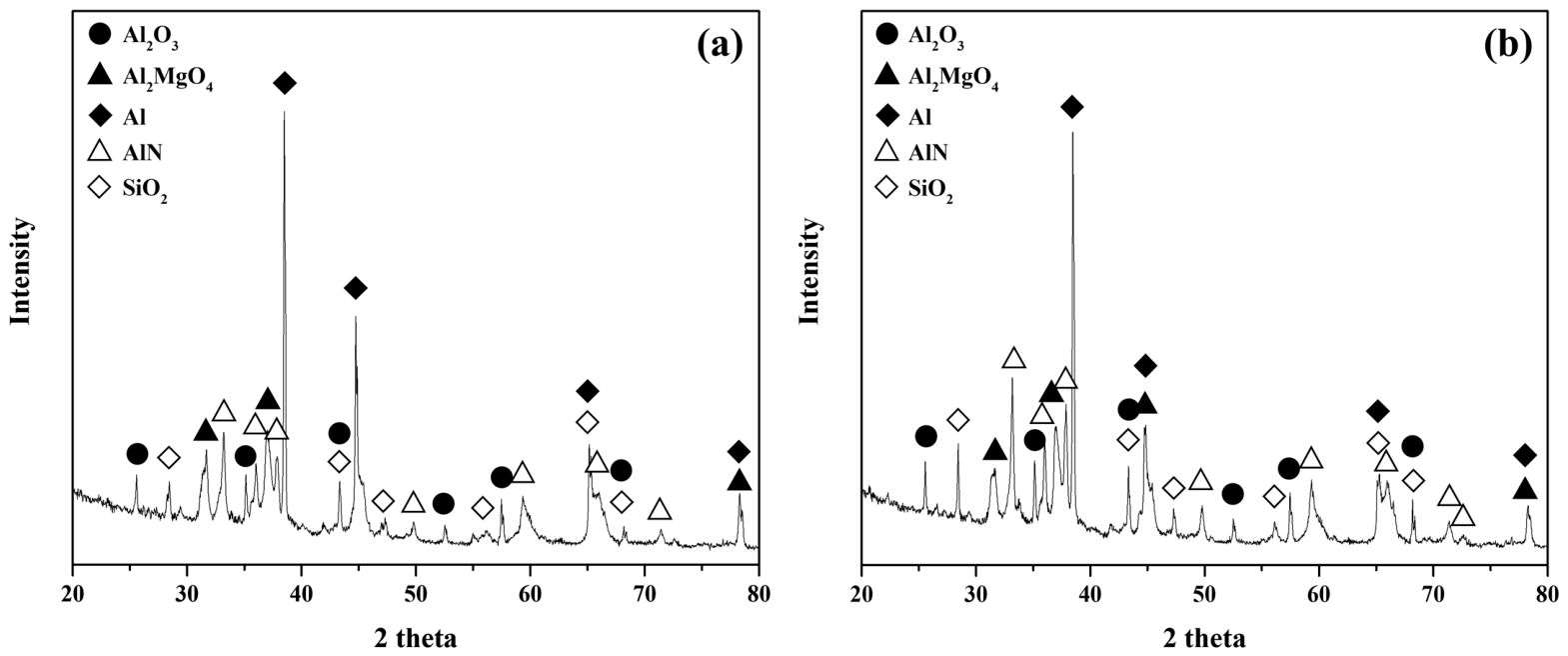
Figure 7a,b present the phase analysis results of the residue after leaching the aluminum by-products from Company A and Company B, respectively. In both the aluminum dross and dust, Al2O3 and MgO·Al2O3 (spinel) oxide phases as well as a crystalline SiO2 phase were commonly observed. By contrast, the metallic aluminum phases in the dross and dust that had been observed before leaching were no longer detected in the residue. This indicates that the metallic aluminum dissolved, whereas SiO2 and the oxide phases remained undissolved in the residue. Notably, AlN peaks were still detected in the residues after 48 h of leaching (Figure 7), indicating that AlN hydrolysis proceeded slowly and remained incomplete within the experimental time window. This observation directly supports the two-component interpretation presented below: The dissolution of metallic aluminum is essentially complete within 6 h, whereas AlN contributes only to a slow and partial release of aluminum thereafter.
Figure 7.
Phase analysis of the residues after leaching; (a) Sample A (Al dross), (b) Sample B (Al dust).
The solution obtained from the leaching experiments was analyzed using wet chemistry to determine the dissolved aluminum content. In addition, the leaching behaviors of the synthetic oxides and reagent AlN were compared to identify the source of the dissolved aluminum.
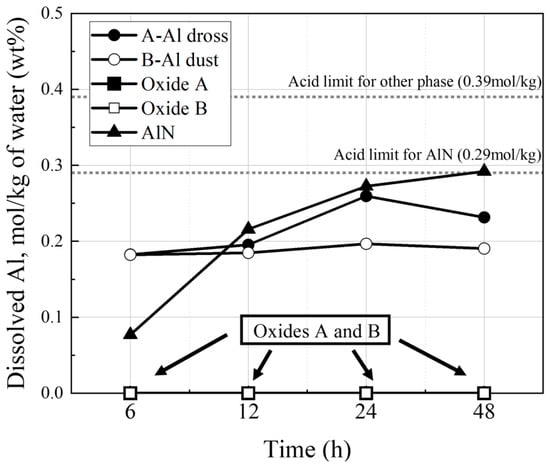
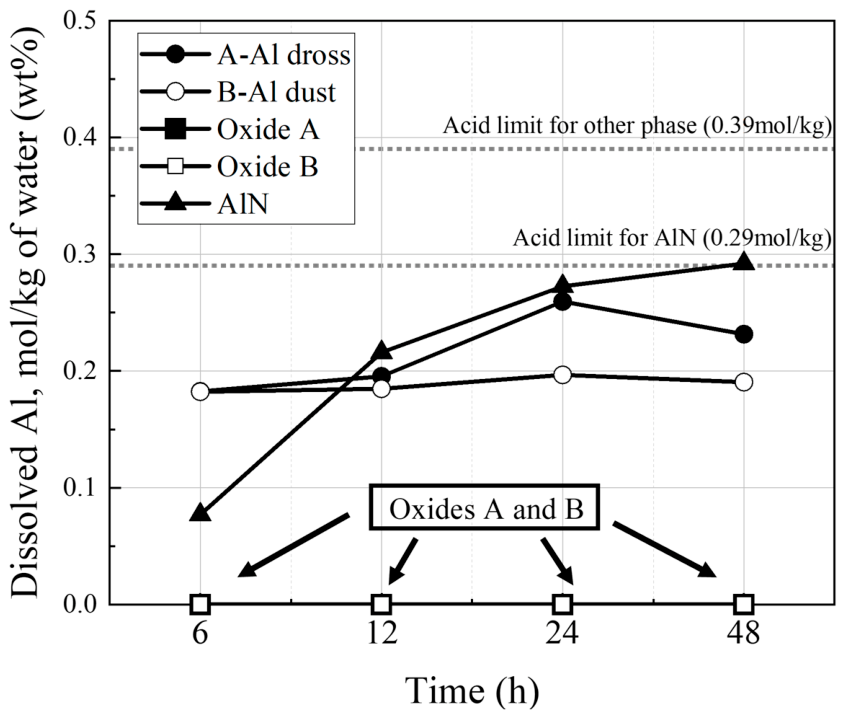
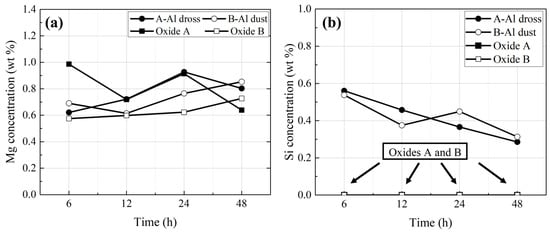
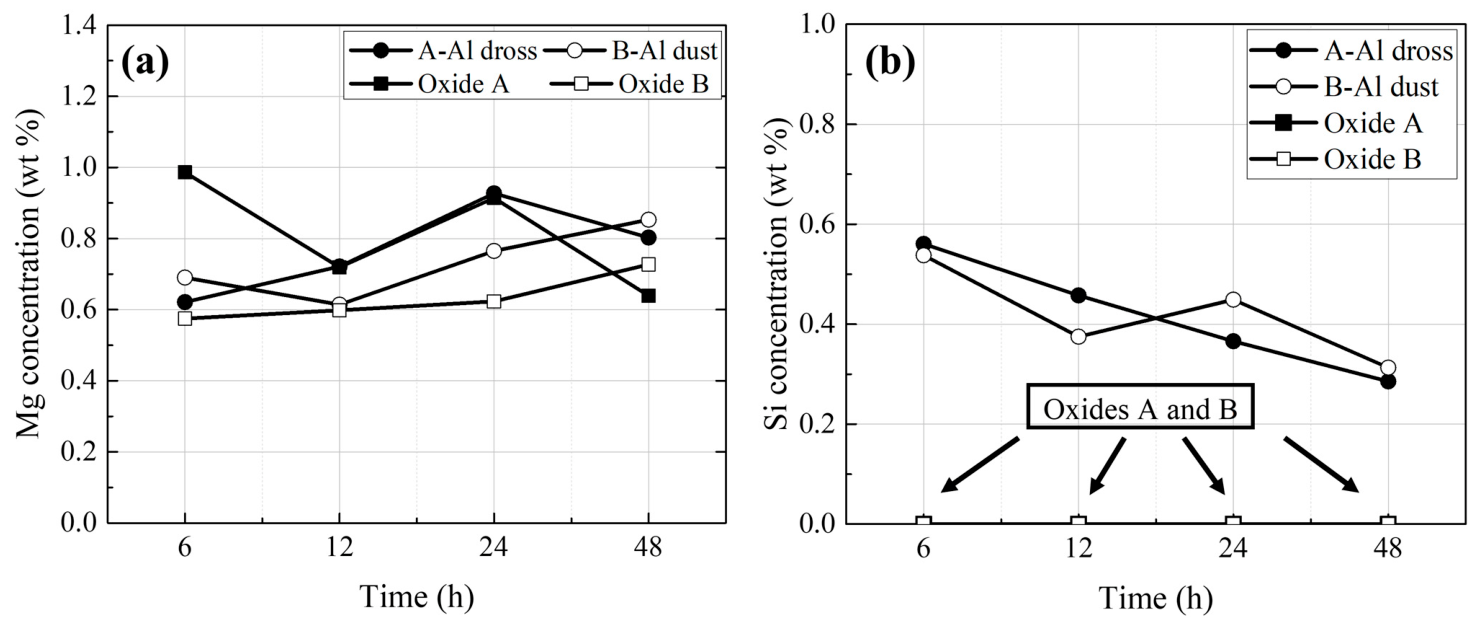
Figure 8 compares the dissolved aluminum concentration (wt%) for each sample, and Figure 9a,b show the magnesium and silicon concentrations (wt%) in the leachate, respectively. As shown in Figure 8, the dissolved aluminum concentration from the dross reached approximately 29 wt% within 6 h and increased gradually to 33 wt% after 48 h, whereas that from the dust remained nearly constant at approximately 25 wt%, regardless of the reaction time. On a molality basis, these values are 0.22, 0.25, and 0.19 mol of dissolved aluminum per kg of water. The 6 h dross value consumes 55.6% of the acid charge, and the plateau after 6 h, therefore, reflects exhaustion of the metallic aluminum in the sample rather than that of the acid. Metallic aluminum reacts rapidly with hydrochloric acid (Equation (1)), whereas AlN dissolves slowly through hydrolysis (Equations (2) and (3)); therefore, the 6 h value was taken as the closest estimate of the metallic aluminum content; the additional dissolution of approximately 4 wt% between 6 and 48 h was attributed to the slow hydrolysis of AlN, providing an upper bound for the AlN-derived contribution. Consistent with this, the metallic aluminum content was evaluated to be approximately 29 wt% for the dross, with an AlN-derived contribution of up to 4 wt% upon prolonged leaching, and approximately 25 wt% for the dust, for which no time-dependent contribution was observed. In the AlN leaching experiments, the aluminum content in the leachate increased with reaction time and approached the acid-limited level after 48 h, in contrast to the time-independent behavior of the by-products. In the leaching experiments with Oxides A and B, however, the aluminum concentration was nearly zero, indicating that no dissolution occurred in the 1.16 mol·kg−1 hydrochloric acid solution. Therefore, a comparison with the dissolution behavior of the synthetic oxides confirms that the measured aluminum originated from the dissolution of metallic aluminum contained in the aluminum by-products.
Figure 8.
Dissolved Al, in mol per kg of water, for the aluminum by-products, AlN, and Oxides A and B leached in 50 mL of 1.16 mol·kg−1 HCl at approximately 373 K. The horizontal lines mark the acid limits: 0.39 mol per kg of water for phases that consume three H+ per aluminum and 0.29 mol per kg of water for AlN.
Figure 9.
Dissolved content of each element in the aluminum by-product, AlN, and Oxides A and B leached from 50 mL of a 1.16 mol·kg−1 HCl solution at approximately 373 K: (a) magnesium content, (b) silicon content.
The contrasting time dependence of the two by-products is consistent with the nitride content of the two materials. The SEM-EDS analyses (Table 3 and Table 4) reveal nitrogen contents of up to 14.7 wt% in the irregular oxide particles of the dross, but at most 5.9 wt% in those of the dust. The larger AlN fraction in the dross explains the gradual increase in the dissolved aluminum with leaching time, whereas the small AlN fraction in the dust negates the contribution of slow hydrolysis, resulting in a nearly time-invariant dissolved aluminum concentration. Thus, the dissolution behaviors of the four sample groups can be classified into three types: rapid and complete dissolution of metallic aluminum (dross and dust within 6 h), slow and partial dissolution of AlN (reagent AlN and the time-dependent increment of the dross), and negligible dissolution of the oxides (synthetic Oxides A and B).
Figure 9a compares the magnesium concentrations of the aluminum by-products and synthetic oxides. Under the same acidic conditions, the magnesium concentration in the by-products increased slightly with reaction time but remained below 1 wt% overall. Figure 9b presents a comparison of the silicon concentrations. No dissolution occurred from the synthetic oxides, and the concentration of silicon dissolved from the by-products decreased with time, remaining below 0.6 wt%. Together with the oxide phases retained in the residue, these results confirmed that the dissolution of the oxides was negligible.
As an internal consistency check, the aluminum balance was evaluated on an elemental basis (Table 6). The total aluminum contents corrected for the XRF oxide normalization are approximately 52.9 wt% for the dross and 47.3 wt% for the dust as shown in Table 3. The dissolved aluminum represents ≈55% (metallic, 6 h) and ≈8% (AlN-derived, 6–48 h) of the total aluminum in the dross and ≈53% in the dust, with the remainder attributable to the acid-resistant oxide phases (Al2O3 and MgAl2O4) identified in the residues. Because the corrected totals carry an uncertainty of several weight percent, mainly from the oxide-matrix assumption of the fundamental-parameter XRF correction, the ICP-OES values (29.0, 4.2, and 25.0 wt%) remain the primary quantities.
Table 6.
Elemental aluminum balance of the aluminum by-products as a consistency check (wt.%; values in parentheses are fractions of the total Al).
4. Discussion
The differences in the dissolution behavior described above arise from the chemical form and stability of aluminum in each sample. Oxide samples A and B are composed of a thermodynamically stable α–Al2O3 phase and are therefore not soluble in hydrochloric acid [20]. By contrast, a substantial portion of the aluminum in the dross and dust existed in the form of metallic aluminum and aluminum nitride. Metallic aluminum acts as an active metal in acidic solutions, as shown in Equation (1), and reacts readily with hydrochloric acid to generate hydrogen gas and aqueous aluminum chloride. However, AlN is unstable under acidic aqueous conditions. As shown in Equation (2), AlN hydrolyzes upon contact with moisture to form aluminum hydroxide and ammonia. The generated aluminum hydroxide then reacts with hydrochloric acid, as shown in Equation (3), in the form of aluminum chloride.
2Al(s) + 6HCl(aq) = 2AlCl3(aq) + 3H2(g)
AlN(s) + H2O(l) = Al(OH)3(s) + NH3(g)
Al(OH)3(s) + 3HCl(aq) = AlCl3(aq) + 3H2O(l)
In the aluminum by-product samples, magnesium dissolved at concentrations below 1 wt% and silicon below 0.8 wt%, indicating that these two components react negligibly under the hydrochloric acid conditions used in this study. In particular, silicon in the by-product samples was present predominantly in the form of SiO2 and therefore remained as a precipitate without dissolving in the hydrochloric acid. Thus, in 1.16 mol·kg−1 hydrochloric acid, metallic aluminum can be selectively estimated while the dissolution of the oxides is minimized.
The corresponding dissolution reactions of the acid-resistant phases can be expressed in ionic form, as shown in Equations (4) and (5) for the oxides and overall dissolution of AlN, obtained as the sum of Equations (2) and (3) with ammonia converted into NH4+, as shown in Equation (6):
Al2O3(s) + 6H+(aq) = 2Al3+(aq) + 3H2O(l)
MgAl2O4(s) + 8H+(aq) = Mg2+(aq) + 2Al3+(aq) + 4H2O(l)
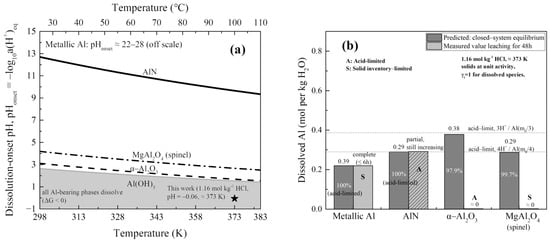
To examine the origin of the observed selectivity (thermodynamic or kinetic control), the dissolution equilibria of the phases in the samples (Equations (1)–(6)) were evaluated under the leaching conditions (1.16 mol·kg−1 HCl, ≈373 K). The standard Gibbs energies of dissolution are negative for all Al-bearing phases, decreasing in the order of metallic Al (−474 kJ per mol Al at 373 K) ≫ AlN (−260) > MgAl2O4 (−64) > α-Al2O3 (−31) [21]. Taking the oxides at unit activity and solving the equilibrium together with the H+ mass balance of the closed leaching system indicates that, at equilibrium, α-Al2O3 alone would consume approximately 98% of the available acid and sustain a dissolved aluminum level of approximately 0.38 mol per kg of water, and the spinel would behave similarly. These values serve as indicators of the thermodynamic driving force rather than the concentrations reached in practice. Conversely, the dissolution of the synthetic oxide references was negligible after 48 h (Figure 8). Therefore, the oxide phases remaining in the residue could not be attributed to thermodynamic protection. Instead, the retention arises from the kinetic passivity of the dense α-Al2O3 and spinel lattices in dilute acid [22,23], consistent with the severe conditions reported for oxide leaching from secondary aluminum dross, where even γ-Al2O3 required 3.91 M HCl (apparent activation energy of 11.2 kJ/mol), and AlN dissolution was surface-reaction controlled with a much higher activation energy of 40.9 kJ/mol than the diffusion-controlled dissolution of metallic aluminum (6.9 kJ/mol) [20].
For the metallic aluminum and AlN, the equilibrium constants in Equations (1)–(3) are sufficiently large (log10 K ≈ 66 and 36 at 373 K, respectively) that complete dissolution is predicted for any physically reasonable choice of dissolved-species activities, with the endpoint set by the metallic aluminum inventory of the sample for metallic Al and by the available acid for AlN. The rapid and complete dissolution of metallic aluminum within 6 h and the slow and continuous dissolution of AlN were governed by kinetics alone, in agreement with the two types of dissolution behaviors shown in Figure 8. Conversely, the dissolution of quartz (SiO2 + 2H2O = H4SiO4(aq), ΔG° = +23 kJ/mol [21]) is nonspontaneous and independent of H+, which explains the retention of SiO2 in the residue regardless of acid strength. Heating provides no thermodynamic benefits. Because the reaction entropies are negative, dominated by the large negative partial molar entropy of Al3+(aq) (S° = −321.7 J mol−1 K−1 [21]) the driving forces decrease slightly between 298 and 373 K, and the role of the high leaching temperature is kinetic. Activity-coefficient corrections would reinforce rather than weaken these conclusions, because the low activity coefficient of the trivalent Al3+ ion at the working ionic strength (γ ≈ 0.1–0.4 by the Davies approximation [24], with γ±(HCl) = 0.81 at 1 m [25]) further increases the dissolution driving force relative to the unit-activity approximation.
For these estimates, the activities of the dissolved species were approximated using the molalities given in Equation (7), with the activity coefficient γi taken as unity on the molality scale referenced to the hypothetical ideal one-molal standard state [21], following common practice in the construction of aqueous equilibrium diagrams [26,27]:
The acidity at which the dissolution of each phase becomes thermodynamically favorable is given by Equation (8), where nH is the number of H+ ions consumed per mole of aluminum and K(T) is the equilibrium constant of the corresponding dissolution reaction (for MgAl2O4, the Mg2+ activity term is also included).
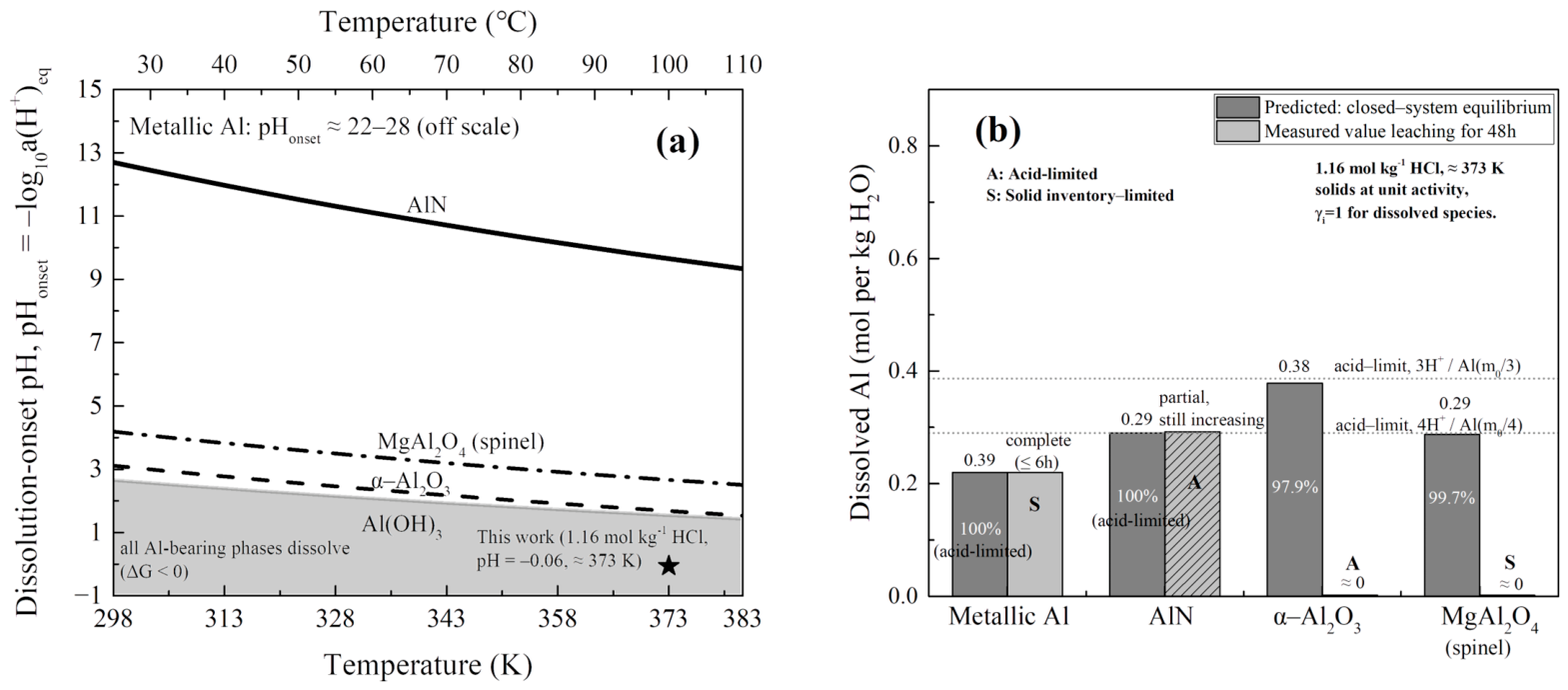
Figure 10a compares the dissolution-onset pH values calculated using Equation (8) with (Al3+) = 0.22, which corresponds to the complete dissolution of metallic aluminum in the dross. Because each dissolution reaction consumes three–four moles of H+ per mole of Al, the calculated onset pH depends on log10 a(Al3+) with a slope of only 1/nH. Even an error of an order of magnitude in the assumed Al3+ activity displaces the boundaries by less than 0.35 pH units. The experimental acidity (pH ≈ −0.06) lies 1.5–2.7 pH units below even the mildest boundary; further, even at the mildest acidity at which α-Al2O3 reaches equilibrium (a(H+) ≈ 0.025, pH ≈ 1.6 at 373 K), the dissolution of metallic Al and AlN remains overwhelmingly favored (ΔG ≈ −444 and −230 kJ per mol Al, respectively). Figure 10b shows the comparison of the closed-system equilibrium prediction with the dissolution observed after 48 h of leaching: although the oxides are predicted to consume nearly all of the available acid at equilibrium, they dissolved to a negligible extent, whereas metallic Al dissolved completely within 6 h, at the level set by the metallic Al inventory of the dross rather than by the available acid, and AlN approached the acid-limited value of 0.29 mol per kg of water only after 48 h, in accordance with the kinetic interpretation given above.
Figure 10.
Thermodynamic assessment of the dissolution selectivity in 1.16 mol·kg−1 HCl: (a) dissolution-onset pH of the Al-bearing phases as a function of temperature, calculated from Equation (8) with a(Al3+) = 0.22 (the star marks the experimental condition, pH ≈ −0.06 at approximately 373 K); (b) dissolved Al predicted from the closed-system equilibrium, capped by the solid inventory of each test (1 g of sample in 0.0489 kg of water), compared with the level observed after 48 h of leaching.
5. Conclusions
In this study, characterization and leaching experiments were conducted to quantitatively evaluate the metallic aluminum content in aluminum by-products generated during industrial operations. The selective acid leaching behavior using 1.16 mol·kg−1 hydrochloric acid solution was investigated to examine differences in dissolution characteristics among component compounds such as AlN and Al2O3. Based on these findings, the metallic aluminum content was determined.
- (1)
- The aluminum by-products consisted of various phases depending on the process conditions, and their composition differed with particle morphology. A metallic aluminum phase was present in both samples. In contrast to dross, carbon was detected in the aluminum dust samples. This indicates that the type and content of impurities varied with the generation process, including the dust collection equipment used.
- (2)
- For Oxides A and B, which contained no metallic aluminum, no aluminum was detected after leaching in 1.16 mol·kg−1 hydrochloric acid solution. This is because these samples are composed of a chemically stable α–Al2O3 phase that remains undissolved in acid. By contrast, aluminum by-products contain metallic aluminum and aluminum nitride phases with high acid reactivity, which dissolved as aluminum chloride under the same conditions.
- (3)
- Under 1.16 mol·kg−1 hydrochloric acid solution conditions, magnesium and silicon impurities were detected in trace amounts. In particular, silicon was present as a stable oxide that did not dissolve in acid and remained as a precipitate, thereby maintaining a low concentration in the leachate. Thus, the 1.16 mol·kg−1 hydrochloric acid leaching conditions established in this study suppress the dissolution of the oxides contained in aluminum-based by-products, enabling the selective estimation of the metallic aluminum content.
This study has three limitations. First, the results were based on a single leaching batch per by-product at four reaction times without repeated runs. Therefore, the reported contents should be regarded as representative values instead of statistically qualified ones. Second, the AlN-derived contribution was bound using reagent-grade AlN, the dissolution kinetics of which may differ from those of AlN embedded in the by-products. Third, this method was not cross-validated using independent quantification techniques. Repeated leaching experiments and recovery tests with known additions of metallic aluminum are planned in future work to establish the precision and accuracy of this method. In addition, leaching was conducted in a Teflon beaker covered with a lid to allow internal condensation and reflux during boiling. Minor HCl volatilization may have occurred over 48 h, whereas the 6 h values used for quantification remained unaffected.
Because residues containing less than approximately 20 wt% metallic aluminum are currently landfilled, the proposed single-step dilute-acid method may provide a rapid basis for classifying aluminum by-products between landfilling and remelting routes, although its application to samples near the 20 wt% boundary requires the verification described above.
Author Contributions
Conceptualization, Y.-H.K. and S.-J.K.; methodology, Y.-H.K. and S.-J.K.; investigation, Y.-H.K.; formal analysis, Y.-H.K.; writing—original draft preparation, Y.-H.K.; writing—review and editing, Y.-H.K. and S.-J.K.; supervision, S.-J.K. All authors have read and agreed to the published version of the manuscript.
Funding
This research was mainly supported by the Technology Innovation Program (grant number: 20016885) funded by the Ministry of Trade, Industry & Energy (MOTIE, Korea), and partially supported by the Korea Institute for Advancement of Technology (KIAT) grant funded by the Korea Government (MOTIE) (grant number: RS-2026-25527905, HRD Program for Industrial Innovation).
Data Availability Statement
The original contributions presented in this study are included in the article. Further inquiries can be directed to the corresponding author.
Acknowledgments
During the preparation of this manuscript, the authors used Claude (Anthropic; Opus 4.8) for English language editing. The authors have reviewed and edited the output and take full responsibility for the content of this publication.
Conflicts of Interest
The authors declare no conflict of interest.
Abbreviations
The following abbreviations are used in this manuscript:
| ICP-OES | inductively coupled plasma optical emission spectroscopy |
| SEM-EDS | scanning electron microscopy–energy dispersive spectroscopy |
| XRD | X-ray diffraction |
| XRF | X-ray fluorescence |
References
- Tsakiridis, P.E. Aluminium salt slag characterization and utilization—A review. J. Hazard. Mater. 2012, 217–218, 1–10. [Google Scholar] [CrossRef] [Scilit] [PubMed]
- U.S. Geological Survey. Aluminum. In Mineral Commodity Summaries; U.S. Geological Survey: Reston, VA, USA, 2024. [Google Scholar] [CrossRef]
- Meshram, A.; Singh, K.K. Recovery of valuable products from hazardous aluminum dross: A review. Resour. Conserv. Recycl. 2018, 130, 95–108. [Google Scholar] [CrossRef] [Scilit]
- Nakajima, K.; Osuga, H.; Yokoyama, K.; Nagasaka, T. Material flow analysis of aluminum dross and environmental assessment for its recycling process. Mater. Trans. 2007, 48, 2219–2224. [Google Scholar] [CrossRef] [Scilit]
- Zhang, Y.; Guo, Z.H.; Han, Z.Y.; Xiao, X.Y.; Peng, C. Feasibility of aluminum recovery and MgAl2O4 spinel synthesis from secondary aluminum dross. Int. J. Miner. Metall. Mater. 2019, 26, 309–318. [Google Scholar] [CrossRef] [Scilit]
- Abdulkadir, A.; Ajayi, A.; Hassan, M.I. Evaluating the chemical composition and the molar heat capacities of a white aluminum dross. Energy Procedia 2015, 75, 2099–2105. [Google Scholar] [CrossRef] [Scilit]
- López, F.A.; Medina, J.; Gutiérrez, A.; Tayibi, H.; Peña, C.; López-Delgado, A. Tratamiento del polvo de aluminio mediante disolución acuosa. Rev. Metal. 2004, 40, 389–394. (In Spanish) [Google Scholar] [CrossRef] [Scilit]
- U.S. Environmental Protection Agency. Secondary Aluminum Processing Waste: Baghouse Dust Characterization and Reactivity; EPA/600/R-15/203; U.S. EPA: Washington, DC, USA, 2015.
- Huang, X.-L.; El Badawy, A.M.; Arambewela, M.; Adkins, R.; Tolaymat, T. Mineral phases and metals in baghouse dust from secondary aluminum production. Chemosphere 2015, 134, 25–30. [Google Scholar] [CrossRef] [Scilit] [PubMed]
- Aluminum Association. The Environmental Footprint of Semi-Finished Aluminum Products in North America: A Life Cycle Assessment Report; Aluminum Association: Arlington, VA, USA, 2013; pp. 1–123. [Google Scholar]
- Green, J.A.S. (Ed.) Aluminum Recycling and Processing for Energy Conservation and Sustainability; ASM International: Materials Park, OH, USA, 2007; pp. 1–271. [Google Scholar]
- International Aluminium Institute. Global Aluminium Recycling: A Cornerstone of Sustainable Development; International Aluminium Institute: London, UK, 2009; Available online: https://international-aluminium.org/wp-content/uploads/2009/06/Global-aluminium-recycling.pdf (accessed on 21 August 2026).
- Bruckard, W.J.; Woodcock, J.T. Recovery of valuable materials from aluminium salt cakes. Int. J. Miner. Process. 2009, 93, 1–5. [Google Scholar] [CrossRef] [Scilit]
- Graczyk, D.G.; Essling, A.M.; Huff, E.A.; Smith, F.P.; Snyder, C.T. Analytical chemistry of aluminum salt cake. In Light Metals 1997, Proceedings of the 126th Annual Meeting of the Minerals, Metals, and Materials Society, Symposium on Aluminum Dross and Salt Cake Processing, Orlando, FL, USA, 9–13 February 1997; Huglen, R., Ed.; The Minerals, Metals, & Materials Society: Warrendale, PA, USA, 1997. [Google Scholar]
- Park, H.K.; Lee, H.I.; Kim, J.S.; Yoon, E.P. Pretreatment for recycling of domestic aluminum dross. J. Korean Inst. Resour. Recycl. 1996, 5, 14–20. [Google Scholar]
- Xing, W.D.; Ahn, B.D.; Lee, M.S. Treatment of black dross with water and NaOH solution. J. Korean Inst. Resour. Recycl. 2017, 26, 53. [Google Scholar] [CrossRef]
- Jung, M.; Mishra, B. Kinetic and thermodynamic study of aluminum recovery from the aluminum smelter baghouse dust. J. Sustain. Metall. 2016, 2, 257–264. [Google Scholar] [CrossRef] [Scilit]
- Dash, B.; Das, B.R.; Tripathy, B.C.; Bhattacharya, I.N.; Das, S.C. Acid dissolution of alumina from waste aluminium dross. Hydrometallurgy 2008, 92, 48–53. [Google Scholar] [CrossRef] [Scilit]
- Sarker, M.S.R.; Alam, M.Z.; Qadir, M.R.; Gafur, M.A.; Moniruzzaman, M. Extraction and characterization of alumina nanopowders from aluminum dross by acid dissolution process. Int. J. Miner. Metall. Mater. 2015, 22, 429–436. [Google Scholar] [CrossRef] [Scilit]
- Yang, Q.; Li, Q.; Zhang, G.; Shi, Q.; Feng, H. Investigation of leaching kinetics of aluminum extraction from secondary aluminum dross with use of hydrochloric acid. Hydrometallurgy 2019, 187, 158–167. [Google Scholar] [CrossRef] [Scilit]
- Wagman, D.D.; Evans, W.H.; Parker, V.B.; Schumm, R.H.; Halow, I.; Bailey, S.M.; Churney, K.L.; Nuttall, R.L. The NBS tables of chemical thermodynamic properties: Selected values for inorganic and C1 and C2 organic substances in SI units. J. Phys. Chem. Ref. Data 1982, 11. [Google Scholar] [CrossRef]
- Ćurković, L.; Fudurić Jelača, M. Dissolution of alumina ceramics in HCl aqueous solution. Ceram. Int. 2009, 35, 2041–2045. [Google Scholar] [CrossRef] [Scilit]
- Carroll-Webb, S.A.; Walther, J.V. A surface complex reaction model for the pH-dependence of corundum and kaolinite dissolution rates. Geochim. Cosmochim. Acta 1988, 52, 2609–2623. [Google Scholar] [CrossRef] [Scilit]
- Davies, C.W. Ion Association; Butterworths: London, UK, 1962; pp. 37–53. [Google Scholar]
- Robinson, R.A.; Stokes, R.H. Electrolyte Solutions, 2nd ed.; Dover Publications: Mineola, NY, USA, 2002; pp. 1–571. [Google Scholar]
- Pourbaix, M. Atlas of Electrochemical Equilibria in Aqueous Solutions, 2nd ed.; NACE: Houston, TX, USA, 1974; pp. 1–644. [Google Scholar]
- Verink, E.D., Jr. Simplified procedure for constructing Pourbaix diagrams. In Uhlig’s Corrosion Handbook, 2nd ed.; Revie, R.W., Ed.; John Wiley & Sons: New York, NY, USA, 2000; pp. 111–124. [Google Scholar]

Disclaimer/Publisher’s Note: The statements, opinions and data contained in all publications are solely those of the individual author(s) and contributor(s) and not of MDPI and/or the editor(s). MDPI and/or the editor(s) disclaim responsibility for any injury to people or property resulting from any ideas, methods, instructions or products referred to in the content. |
© 2026 by the authors. Licensee MDPI, Basel, Switzerland. This article is an open access article distributed under the terms and conditions of the Creative Commons Attribution (CC BY) license.