


Abstract
The increasing volumes of mining and mineral processing tailings and the declining quality of natural manganese ores have intensified interest in the recovery of valuable components from previously accumulated processing wastes. In this study, the efficiency of dry high-intensity magnetic separation for manganese concentration from manganese ore processing tailings generated during the processing of manganese ores in the Ulytau Region of the Republic of Kazakhstan was investigated. According to chemical analysis, the initial sample contained 9.81% Mn, 3.01% Fe, and 60.57% SiO2. A representative sample was characterized using X-ray diffraction (XRD), scanning electron microscopy coupled with energy-dispersive X-ray spectroscopy (SEM-EDS), and atomic absorption spectrometry (AAS). Dry magnetic separation tests were performed using a PC-B 12/10-12.018–2012 belt magnetic separator at magnetic field intensities ranging from 0.33 to 0.90 T. It was established that manganese in the initial material was predominantly associated with weakly magnetic minerals, which accounts for the effectiveness of high-intensity magnetic separation. As a result, a magnetic concentrate was obtained with a yield of 27.60%, a Mn content of 25.89%, and a Mn recovery of 72.84%. According to the chemical analysis, the manganese content increased from 9.81% in the initial material to 25.89% in the magnetic product, corresponding to an enrichment ratio of approximately 2.64. At the same time, the SiO2 content decreased from 60.57% to 34.02%, indicating effective separation of the silicate gangue. The results confirm the potential of dry high-intensity magnetic separation for processing manganese ore processing tailings and producing a marketable concentrate with minimal water consumption.
1. Introduction
In recent years, manganese ore processing tailings have been regarded as one of the most promising sources of secondary mineral raw materials, with the potential to partially compensate for the depletion of natural mineral resources [1,2,3,4,5,6,7]. The growing interest in manganese beneficiation tailings processing is driven by the declining quality of mined ores, the increasing volumes of accumulated mining and processing wastes, and the need for more efficient utilization of mineral resources within the framework of the circular economy. Unlike primary raw materials, manganese beneficiation tailings have already been extracted from the subsurface, deposited at the surface, and subjected to crushing and grinding operations. As a result, valuable minerals may be partially liberated, creating necessary conditions for reducing the costs associated with their reprocessing.
Particular interest is focused on manganese ore processing tailings generated during the mining and processing of manganese ores [8,9,10,11]. Despite the application of modern beneficiation technologies, a significant proportion of manganese-bearing minerals is transferred to beneficiation tailings due to fine intergrowths, complex mineralogical composition, and incomplete mineral liberation [12,13,14,15,16]. Consequently, tailings material may retain manganese concentrations of potential industrial interest, allowing them to be considered a promising secondary source of manganese-bearing raw materials.
The most common methods for processing manganese-bearing tailings material include gravity, magnetic, and flotation beneficiation, as well as their combinations with hydrometallurgical processes [17,18,19,20,21,22]. Among these methods, high-intensity magnetic separation is of particular interest because of its ability to effectively concentrate weakly magnetic manganese minerals, reduce the silica content, and produce products suitable for subsequent metallurgical or hydrometallurgical processing. However, the efficiency of magnetic separation depends on the mineralogical composition of the material, the degree of mineral liberation, and the selected process parameters, necessitating an individual investigation for each type of tailings material.
Despite numerous studies devoted to the processing of manganese-bearing technogenic materials, high-intensity magnetic separation of tailings materials characterized by a high quartz content and a low iron content remains insufficiently studied. In addition, only a limited number of studies have investigated the effect of magnetic field intensity on concentrate quality and manganese recovery during the processing of such materials.
The aim of this study was to investigate manganese recovery from manganese ore processing tailings using high-intensity magnetic separation and to determine suitable process parameters for the production of a manganese concentrate.
2. Materials and Methods
2.1. Characterization of the Study Material
The study material consisted of aged beneficiation tailings accumulated at the tailings storage facility of the Zhezdy Concentration Plant in the Ulytau Region of the Republic of Kazakhstan. The tailings were generated during the processing of manganese ores from the Zhezdy and Promezhutochnoye deposits between 1965 and 1995 using a combined gravity–flotation beneficiation scheme. Since 1995, the tailings have been generated mainly from the processing of manganese ores from the Tur deposit, with a partial contribution from the Ushkatyn III deposit.
For the present study, samples of aged beneficiation tailings were collected in September 2023 from different areas of the Zhezdy Concentration Plant tailings storage facility. Sampling was performed according to a systematic scheme in order to account for the spatial heterogeneity of the deposited material. Point samples collected from different areas of the tailings storage facility were combined into a composite sample. The resulting material was homogenized and reduced to obtain a representative laboratory sample, which was subsequently used for chemical and mineralogical characterization and magnetic separation experiments.
According to chemical analysis, the contents of the major components were as follows, wt.%: Mn—9.81, Fe—3.01, and SiO2—60.57. The moisture content of the material was 5.0%, and the bulk density was 1.52 g/cm3.
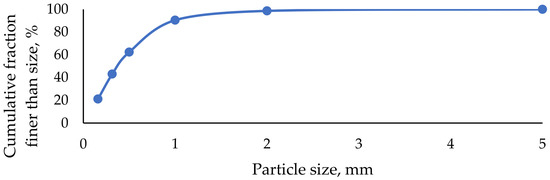
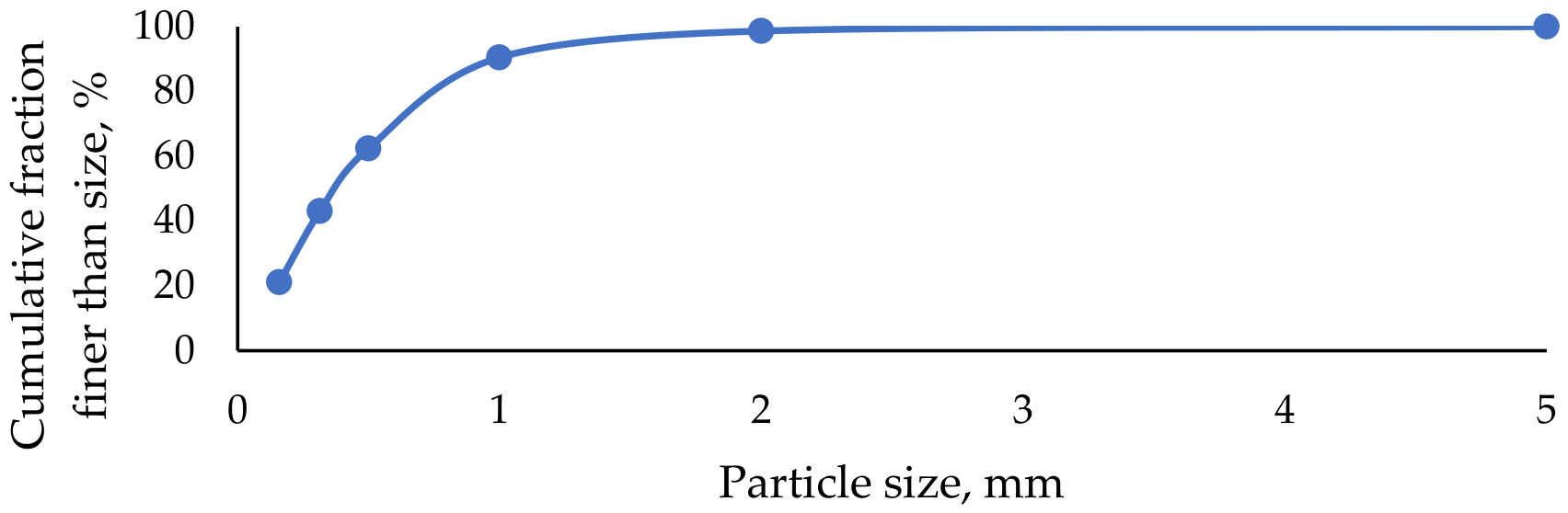
The particle size distribution of the sample is shown as a cumulative particle-size distribution curve in Figure 1. The material was relatively coarse: approximately 43.09% of the sample was finer than 0.315 mm, while 62.38% was finer than 0.5 mm. The relatively coarse particle-size distribution may limit the degree of liberation of manganese-bearing minerals from quartz and silicate gangue.
Figure 1.
Cumulative particle-size distribution of the initial manganese ore processing tailings sample.
Preliminary microscopic observations indicated that the manganese-bearing minerals occurred in close association and intergrowths with quartz and other silicate gangue minerals. These observations suggested that the degree of mineral liberation could be an important factor affecting the efficiency of subsequent magnetic separation.
2.2. Chemical Analysis (AAS)
The chemical compositions of the initial sample, magnetic product, and non-magnetic product were determined by atomic absorption spectrometry (AAS) using an AA2928 atomic absorption spectrometer (PEAK inst., Shanghai, China). Analytical data acquisition and processing were performed using RGWIN AAS software (v 1.1e).
For Mn and Fe determination, the samples were dissolved in acid. For SiO2 determination, the samples were decomposed by treatment with a mixture of hydrofluoric and nitric acids. After complete dissolution, boric acid was added to complex excess fluoride ions, and the resulting solution was analyzed by AAS using a nitrous oxide–acetylene flame.
The analyses were conducted to determine the contents of the major components of the studied material (Mn, Fe, and SiO2). The obtained results were used to calculate the main quantitative and qualitative indicators of the magnetic separation process, including product yield, component contents, and recoveries.
2.3. X-Ray Diffraction Analysis of the Initial Sample (XRD)
The mineralogical composition of the initial sample was investigated by X-ray diffraction (XRD). The analyses were performed using a Rigaku MiniFlex X-ray diffractometer (Rigaku, Akishima, Japan) with Cu Kα radiation (λ = 1.5406 Å) at 40 kV and 30 mA. X-ray diffraction analysis was performed in θ/2θ geometry at 40 kV and 15 mA with a scan step of 0.01°. The initial sample was scanned over 5–100° 2θ at 10°/min, the magnetic product over 5–100° 2θ at 4°/min, and the non-magnetic product over 5–120° 2θ at 10°/min. Diffraction patterns were processed using SmartLab Studio II software (version 5.2.264.0). Crystalline phases were identified using the Powder Diffraction File (PDF)-5+ database (ICDD, International Centre for Diffraction Data). The quantitative phase composition was determined by whole-profile refinement using the Whole Powder Pattern Fitting (WPPF) method based on the Rietveld approach [23,24,25,26]. The quality of the refinement for the initial sample was characterized by Rwp = 13.39%, Rp = 9.90%, S = 1.75, and χ2 = 3.07, indicating satisfactory agreement between the observed and calculated diffraction patterns.
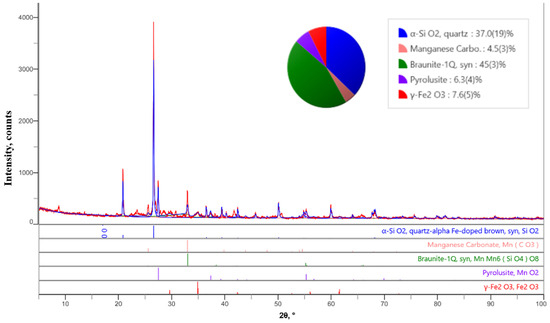
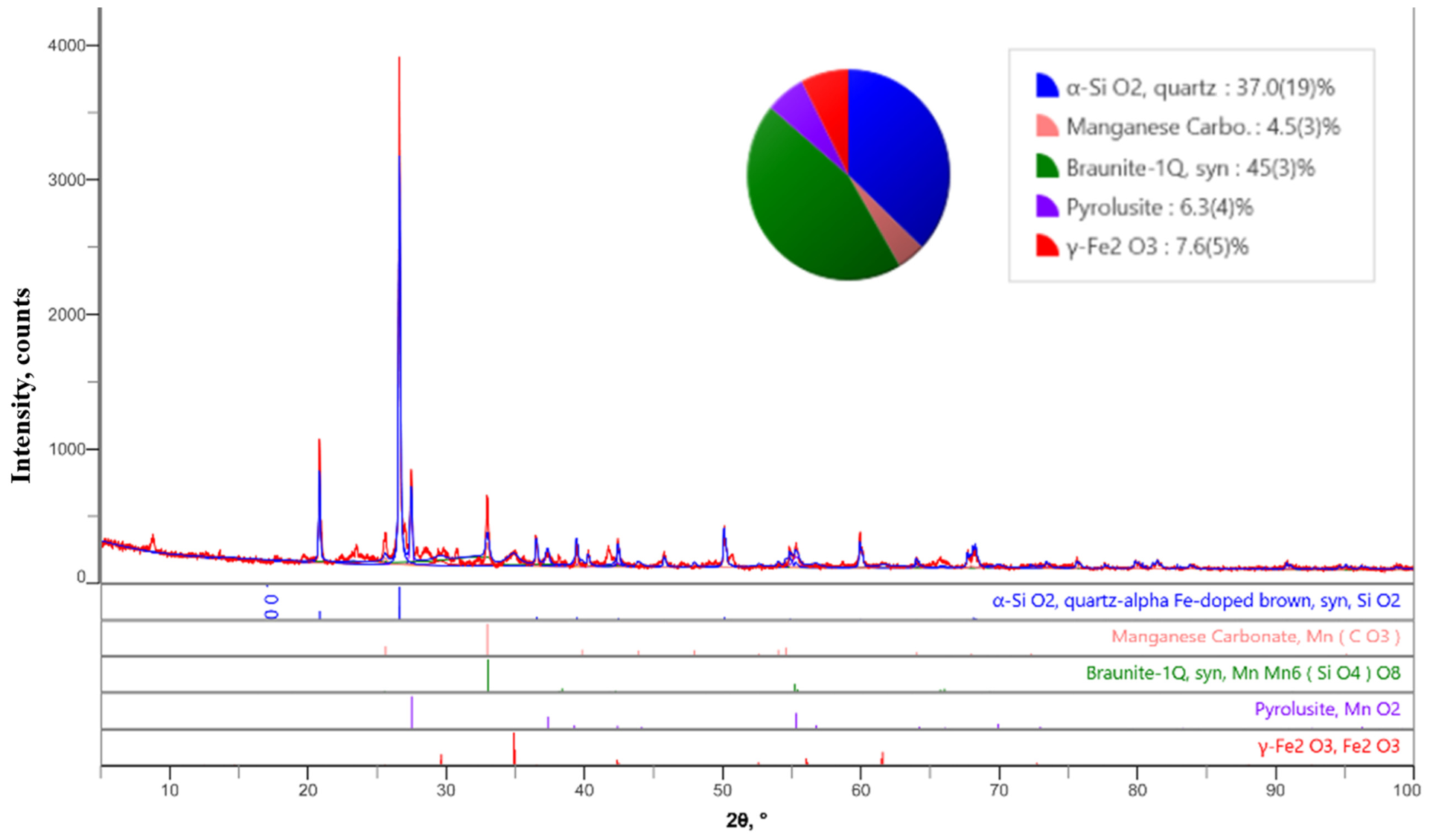
The XRD pattern of the initial sample and the results of the quantitative phase analysis are presented in Figure 2 and Table 1, respectively.
Figure 2.
Rietveld refinement of the XRD pattern of the initial manganese ore processing tailings sample. The observed diffraction data are shown together with the calculated pattern obtained by the WPPF method; vertical bars below the pattern indicate the calculated Bragg positions of the identified phases (braunite Mn7SiO12, quartz SiO2, maghemite γ-Fe2O3, pyrolusite MnO2, and manganese carbonate MnCO3). The inset shows the quantitative phase composition determined by the WPPF method. Refinement quality parameters: Rwp = 13.39%, Rp = 9.90%, S = 1.75, χ2 = 3.07.
Table 1.
Quantitative phase composition of the initial sample and distribution of manganese among the identified minerals.
The WPPF analysis showed that the initial sample was dominated by braunite (Mn7SiO12) (approximately 45 wt.%) and quartz (SiO2) (approximately 37 wt.%). In addition, maghemite (γ-Fe2O3) (~7.6 wt.%), pyrolusite (MnO2) (~6.3 wt.%), and manganese carbonate (MnCO3) (~4.5 wt.%) were identified. The calculated distribution of manganese among the mineral phases showed that the majority of Mn was concentrated in braunite (82.36% of the total Mn content), whereas pyrolusite and manganese carbonate accounted for 11.46% and 6.18%, respectively. Quartz was the predominant gangue-forming phase and did not contain manganese. The identification of braunite was supported by the presence of its characteristic XRD reflections at approximately 2.72 Å, 2.35 Å, and 1.65 Å, which are diagnostic for this phase and are clearly resolved in the diffraction pattern of the initial sample (Figure 2).
These results indicate that manganese in the studied material was predominantly associated with weakly magnetic manganese-bearing minerals, providing a basis for the application of high-intensity magnetic separation. At the same time, the close association of manganese-bearing phases with quartz and other silicate gangue indicates that the degree of mineral liberation is an important factor controlling the efficiency and selectivity of magnetic separation. Therefore, the magnetic properties of the manganese-bearing minerals determine the applicability of magnetic separation, whereas insufficient liberation may limit the achievable concentrate quality and manganese recovery.
2.4. Scanning Electron Microscopy with Energy-Dispersive X-Ray Spectroscopy (SEM–EDS)
The microstructure of the studied material and the distribution of the major elements were investigated using scanning electron microscopy coupled with energy-dispersive X-ray spectroscopy (SEM–EDS). The analyses were performed using a ZEM 20 scanning electron microscope (Zeptools, Tongling, China) in backscattered electron (BSE) imaging mode, equipped with an Oxford Instruments energy-dispersive spectrometer (Oxford, Abingdon, UK).
SEM–EDS analyses were used primarily to characterize mineral morphology, elemental localization, and the association of manganese-bearing grains with silicate gangue. Because SEM–EDS provides local elemental compositions rather than bulk chemical compositions or phase-specific information, the SEM–EDS data were used as complementary evidence for mineralogical interpretation and elemental redistribution, whereas bulk chemical analyses were used for the quantitative evaluation of magnetic separation performance. Therefore, the identification of manganese-bearing mineral phases was based on quantitative XRD/WPPF analysis, while SEM–EDS was used to confirm the spatial distribution of manganese and its association with silicate gangue minerals.
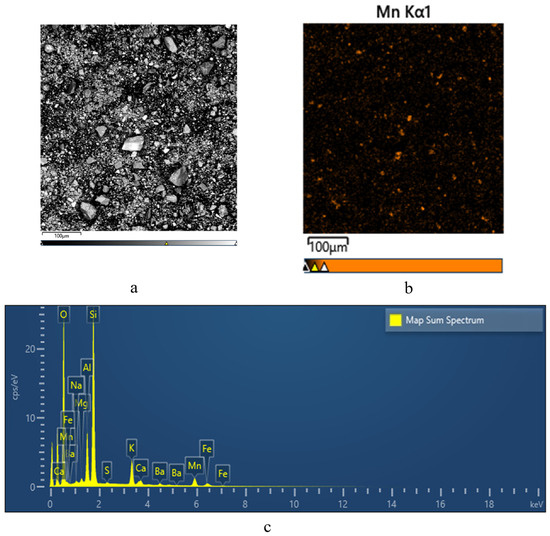
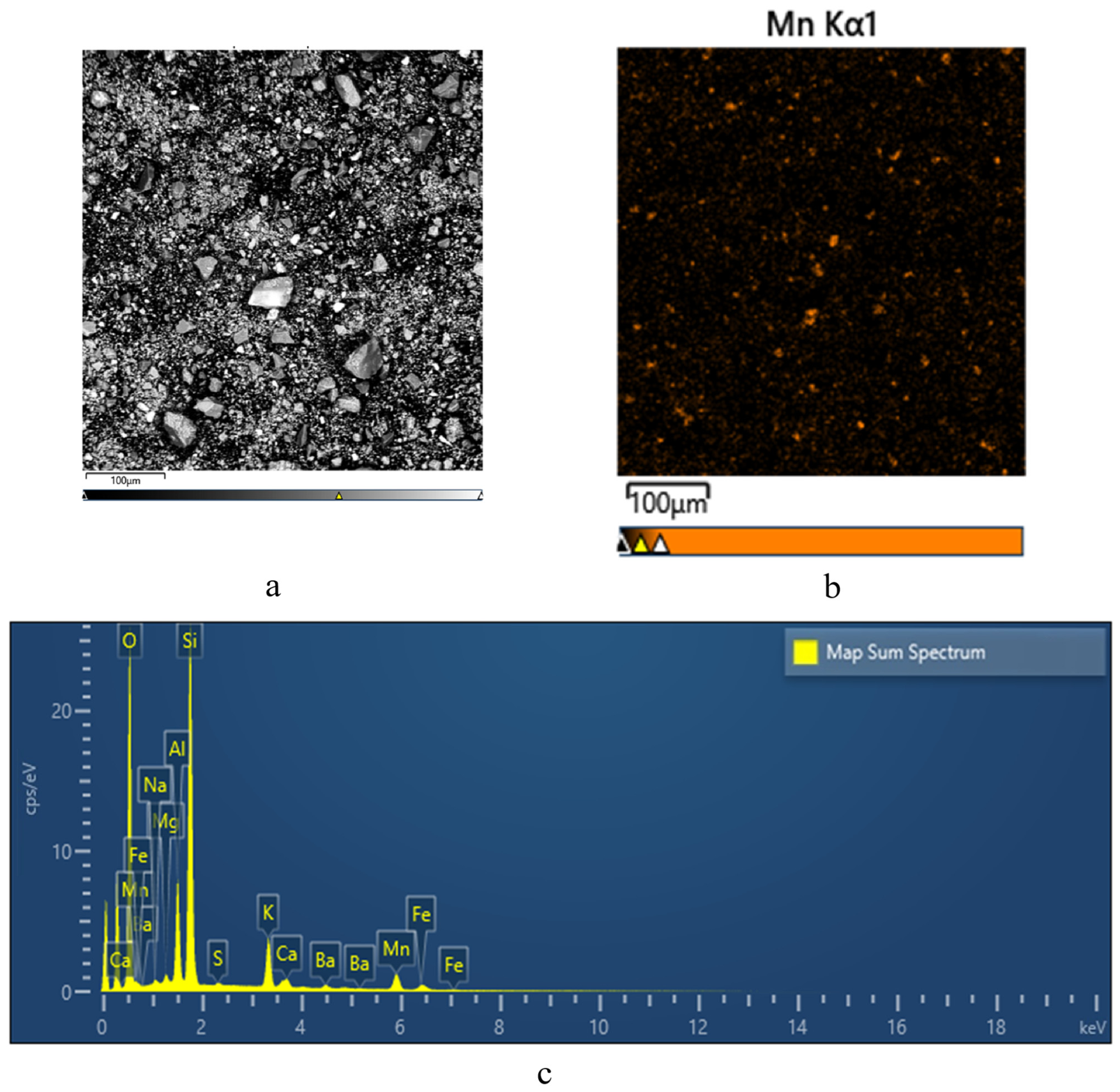
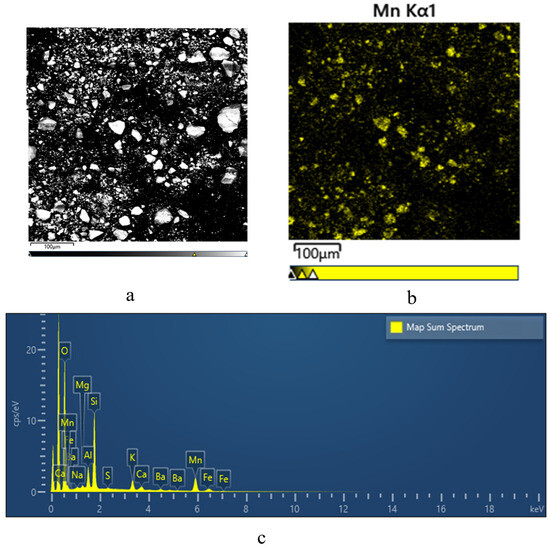
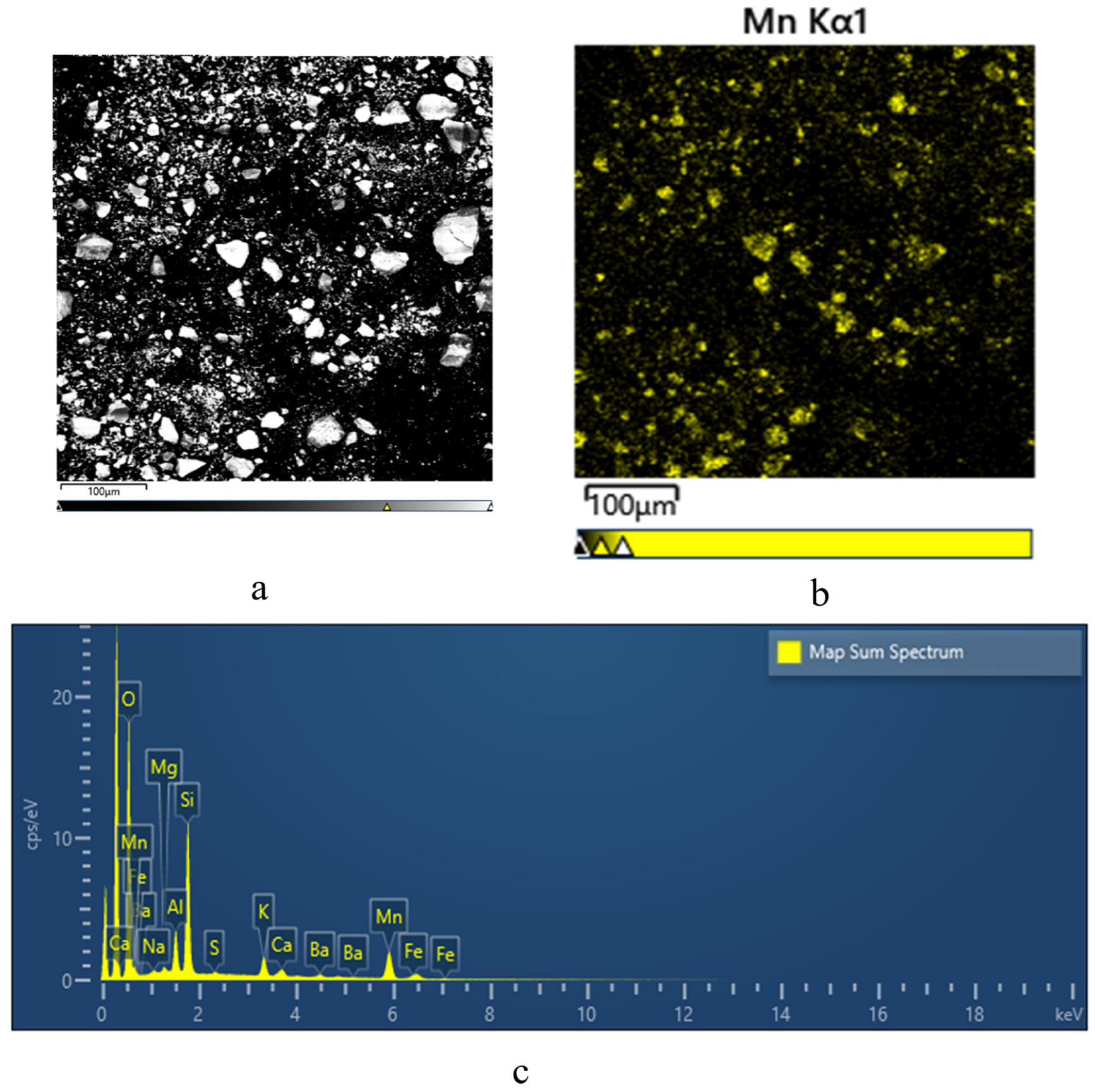
The SEM images of the initial sample, the manganese elemental distribution map, and the overall EDS spectrum are presented in Figure 3, while the quantitative contents of the major elements determined by SEM–EDS are given in Table 2.
Figure 3.
SEM image of the initial sample: (a) BSE image; (b) Mn elemental distribution map; (c) overall EDS spectrum.
Table 2.
Contents of the major elements in the initial sample determined by SEM–EDS.
Analysis of the SEM images showed that the studied material was characterized by a heterogeneous distribution of manganese-bearing minerals, which occurred in close intergrowths with quartz and other silicate phases. The elemental distribution maps confirmed that manganese was predominantly localized in individual mineral grains, whereas silicon was distributed throughout the main mass of the gangue-forming component. Therefore, SEM–EDS was used only as a complementary method to characterize mineral morphology and elemental localization, whereas all quantitative performance indicators were based on AAS. These observations are consistent with the XRD data and indicate that the efficiency of magnetic separation is determined not only by the magnetic properties of the minerals but also by their degree of liberation.
2.5. Magnetic Separation Procedure
Experimental studies were conducted using dry high-intensity magnetic separation on a PC-B 12/10-12.018–2012 belt magnetic separator (Ukrprommagnet, Rodno, Ukraine). The initial sample was subjected to separation at different magnetic induction values in the range of 0.33–0.90 T to evaluate the effect of magnetic field intensity on the qualitative and quantitative performance of the beneficiation process [27,28,29].
For each magnetic separation condition, the yields of the magnetic and non-magnetic products were determined. The contents of the major components (Mn, Fe, and SiO2) were determined by atomic absorption spectrometry [30,31], and the process performance indicators, including product yield, component content, and recovery, were calculated.
Based on the relationships between manganese content, magnetic product yield, and manganese recovery and the magnetic induction, an appropriate magnetic separation regime was selected. For the selected regime, additional characterization of the magnetic and non-magnetic products was performed using X-ray diffraction (XRD) and scanning electron microscopy coupled with energy-dispersive X-ray spectroscopy (SEM–EDS) to evaluate changes in their phase and elemental compositions after separation.
3. Results
3.1. Effect of Magnetic Induction on Magnetic Separation Efficiency
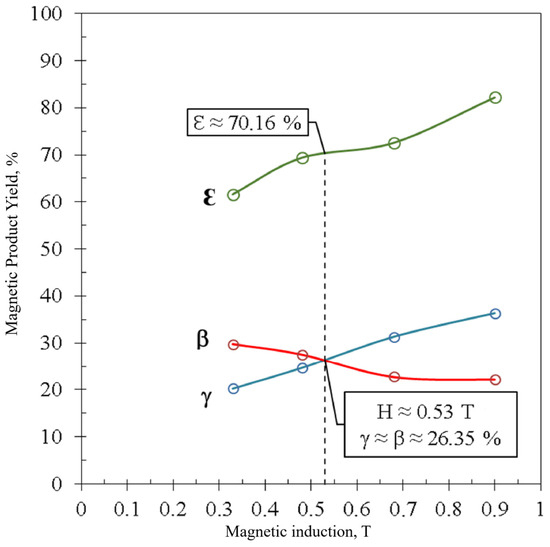
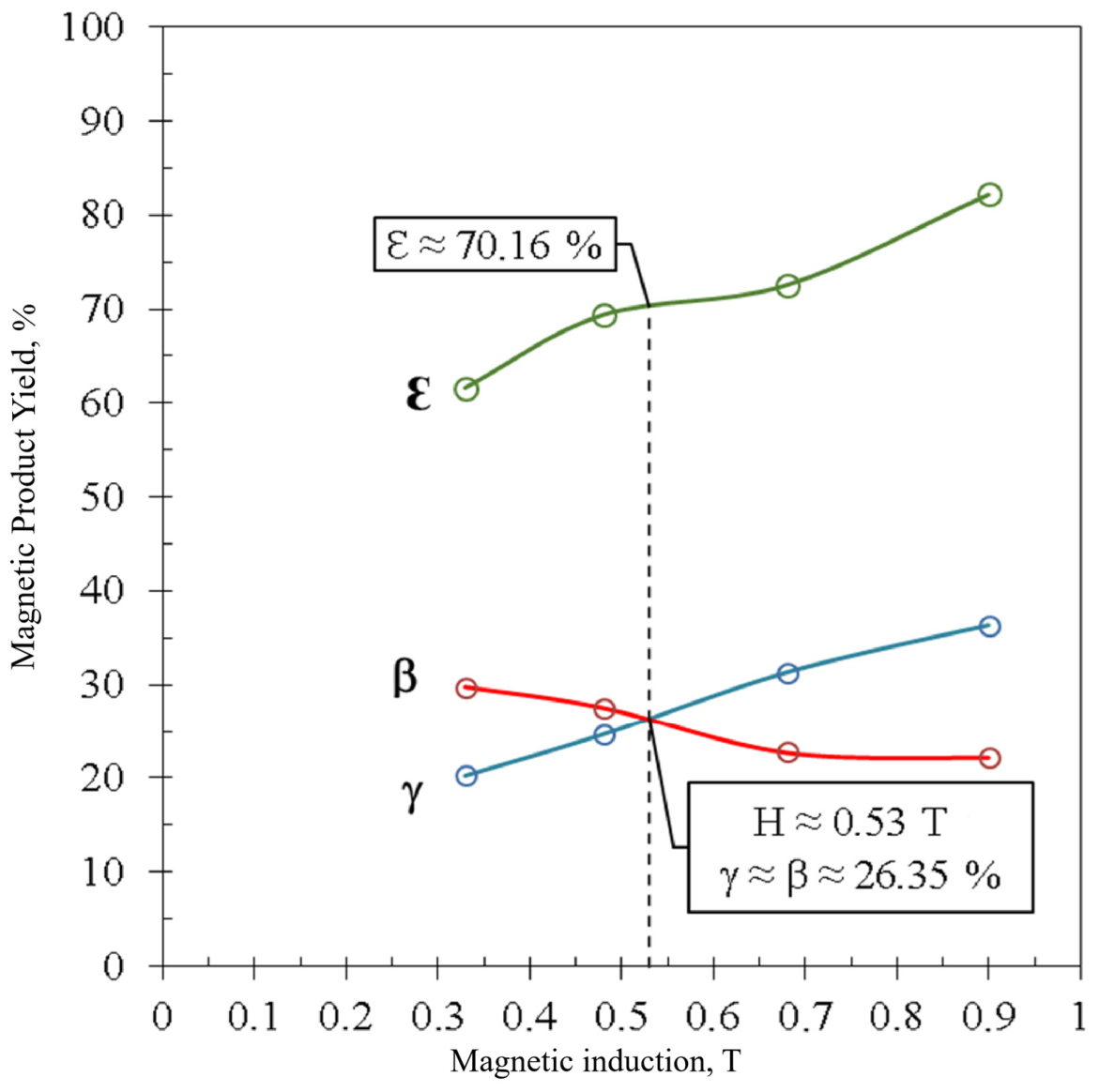
To evaluate the effect of magnetic induction on the efficiency of manganese recovery, a series of dry high-intensity magnetic separation experiments was conducted at magnetic induction values of 0.33, 0.48, 0.68, and 0.90 T. The results for product yields, contents of the major components, and their recoveries are presented in Table 3, while the relationships between the main process performance indicators and magnetic induction are shown in Figure 4.
Table 3.
Results of dry high-intensity magnetic separation at different magnetic induction values. Contents of Mn, Fe, and SiO2 were determined by AAS.
Figure 4.
Effect of magnetic induction on the qualitative and quantitative performance of dry high-intensity magnetic separation of tailings materials: β—Mn content in the magnetic product; γ—magnetic product yield; ε—Mn recovery.
Analysis of the obtained data showed that increasing the magnetic induction resulted in a consistent increase in the magnetic product yield from 20.30% to 36.30% and an increase in manganese recovery from 61.60% to 82.20%. At the same time, the manganese content in the magnetic product decreased from 29.77% to 22.22%. This decrease was attributed to the increasing entrainment of weakly magnetic and partially non-magnetic minerals containing silicate gangue into the magnetic fraction.
Along with the increase in manganese recovery, the recoveries of iron and silicon dioxide also increased, indicating a decrease in process selectivity at higher magnetic induction values. Thus, Fe recovery increased from 31.70% to 65.50%, while SiO2 recovery increased from 10.73% to 22.75%, resulting in a decrease in the quality of the manganese concentrate obtained.
As shown in Figure 4, the manganese content in the magnetic product (β) decreased with increasing magnetic induction, whereas the magnetic product yield (γ) and manganese recovery (ε) increased. The intersection of the magnetic product content and yield curves was observed at a magnetic induction of approximately 0.53 T, corresponding to the most favorable balance between concentrate quality and manganese recovery.
Considering the obtained relationships, a magnetic separation regime at H = 0.53 T was selected for further investigation, providing an optimal balance between the manganese content in the concentrate and its recovery. The results obtained under the selected conditions are presented in the following section.
3.2. Selection of the Optimal Magnetic Separation Regime (H = 0.53 T)
Based on the analysis of the relationships between the qualitative and quantitative process indicators and magnetic induction, a magnetic separation regime at H = 0.53 T was selected as optimal. This regime provides the most favorable balance between the manganese content in the magnetic product and its recovery, which is of critical importance for the processing of tailings materials [32,33].
The results of magnetic separation under the selected conditions are presented in Table 4. The magnetic product yield was 27.60%, while the manganese content increased from 9.81% in the initial sample to 25.89%, corresponding to an enrichment ratio of approximately 2.6. Manganese recovery into the magnetic product reached 72.84%, whereas the SiO2 content decreased from 60.57% to 34.02%, indicating effective removal of a significant proportion of the silicate gangue.
Table 4.
Contents of Mn, Fe, and SiO2 determined by AAS in the initial sample, magnetic product, and non-magnetic product obtained at the optimal magnetic induction of 0.53 T, and the corresponding recoveries.
At the same time, an increase in the iron content of the magnetic product from 3.01% to 5.03% was observed, which was attributed to the simultaneous recovery of iron-bearing minerals with magnetic properties. Despite the moderate increase in iron content, the obtained results indicate a high selectivity of the process toward manganese-bearing minerals.
The non-magnetic product was characterized by a low manganese content (3.68%) and a high SiO2 content (70.69%), confirming the preferential concentration of manganese in the magnetic fraction. At the same time, the non-magnetic product contained 84.50% of the total SiO2, whereas manganese losses amounted to only 27.16%.
The obtained results confirm that dry high-intensity magnetic separation at a magnetic induction of 0.53 T enables efficient recovery of manganese from tailings materials while simultaneously reducing the content of siliceous gangue in the concentrate. The selected regime was subsequently used for mineralogical characterization of the magnetic and non-magnetic products by X-ray diffraction and SEM–EDS.
3.3. X-Ray Diffraction Analysis of Magnetic Separation Products
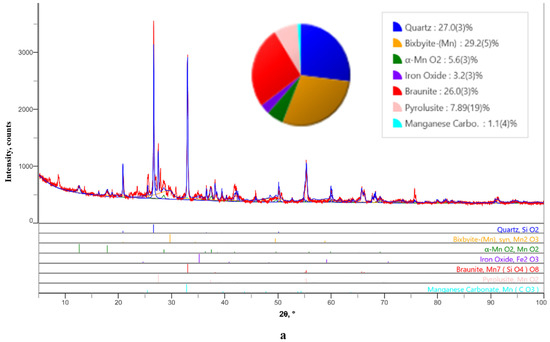
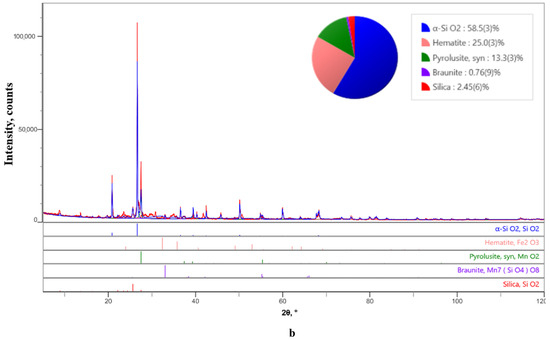
To evaluate the effect of magnetic separation on the mineralogical composition of the products, X-ray diffraction analysis was performed on the magnetic and non-magnetic fractions obtained at the optimal magnetic induction of 0.53 T. The XRD patterns of the investigated samples are presented in Figure 5, while the results of quantitative phase analysis performed by whole-profile Rietveld refinement (WPPF) are given in Table 5. The refinement quality parameters were Rwp = 7.57%, Rp = 5.49%, S = 1.65, and χ2 = 2.71 for the magnetic product, and Rwp = 16.89%, Rp = 12.40%, S = 2.11, and χ2 = 4.43 for the non-magnetic product. These values indicate acceptable agreement between the observed and calculated patterns for both separation products. The slightly higher Rwp value for the non-magnetic product is attributed to the high quartz content and the possible presence of a minor amorphous or poorly crystalline component, which complicates whole-profile fitting.
Figure 5.
Rietveld refinement of the XRD patterns of the magnetic (a) and non-magnetic (b) products obtained at a magnetic induction of 0.53 T. The observed diffraction data are shown together with the calculated patterns obtained by the WPPF method; vertical bars below each pattern indicate the calculated Bragg positions of the identified phases. The insets show the quantitative phase composition of each product determined by the WPPF method. Refinement quality parameters: magnetic product—Rwp = 7.57%, Rp = 5.49%, S = 1.65, χ2 = 2.71; non-magnetic product—Rwp = 16.89%, Rp = 12.40%, S = 2.11, χ2 = 4.43.
Table 5.
Quantitative phase composition of the initial sample, magnetic product, and non-magnetic product determined by X-ray diffraction analysis using the Rietveld method.
Analysis of the XRD patterns showed that magnetic separation resulted in a substantial redistribution of mineral phases between the separation products [34,35,36,37]. The magnetic product exhibited an increased content of manganese-bearing minerals, primarily braunite, which represents the main mineralogical form of manganese in the studied material. At the same time, the content of iron-bearing phases increased, which is consistent with the higher iron content in the magnetic product determined by chemical analysis.
It should be noted that, in addition to braunite, the WPPF analysis of the magnetic product identified a Bixbyite-(Mn) phase that was not distinguished in the analysis of the initial sample. Since magnetic separation was performed without thermal or chemical treatment, the occurrence of this phase cannot be attributed to its formation during the separation process. Most likely, its identification resulted from the concentration of manganese-bearing minerals in the magnetic fraction, reduced overlap of diffraction maxima, and improved quality of whole-pattern fitting. Consequently, the Rietveld algorithm selected a separate structural model from the PDF-5 database. Thus, the differences in phase composition between the initial sample and the magnetic product reflect the characteristics of quantitative XRD analysis rather than the formation of new mineral phases.
The non-magnetic product was characterized by the predominant accumulation of quartz and other weakly magnetic silicate minerals. The decreased content of braunite and other manganese-bearing phases in this fraction confirms their preferential recovery into the magnetic product under the selected magnetic separation conditions.
In contrast to the magnetic product, manganese carbonate was not identified in the non-magnetic fraction, while the iron-bearing phase was represented predominantly by hematite. These differences are attributed to the redistribution of mineral phases between the separation products, changes in their quantitative proportions, and the specific features of whole-profile Rietveld refinement. As the content of manganese-bearing minerals decreases, the intensity of their diffraction maxima also decreases, and individual phases may therefore no longer be distinguished by the WPPF algorithm as independent structural components.
The quantitative phase analysis showed that the distribution of minerals between the products was consistent with the results of chemical analysis. The concentration of braunite in the magnetic fraction was accompanied by an increase in the manganese content to 25.89%, whereas the manganese content in the non-magnetic product decreased to 3.68%. At the same time, the proportion of quartz increased in the non-magnetic fraction, accounting for the increase in the SiO2 content to 70.69%.
The obtained results indicate that the main mechanism responsible for improving the quality of the manganese concentrate is the selective recovery of braunite and associated magnetically susceptible minerals, accompanied by the removal of a significant proportion of the quartz gangue. This finding is in good agreement with the SEM–EDS results and confirms the effectiveness of dry high-intensity magnetic separation for processing the studied tailings materials.
3.4. SEM–EDS Analysis of Magnetic Separation Products
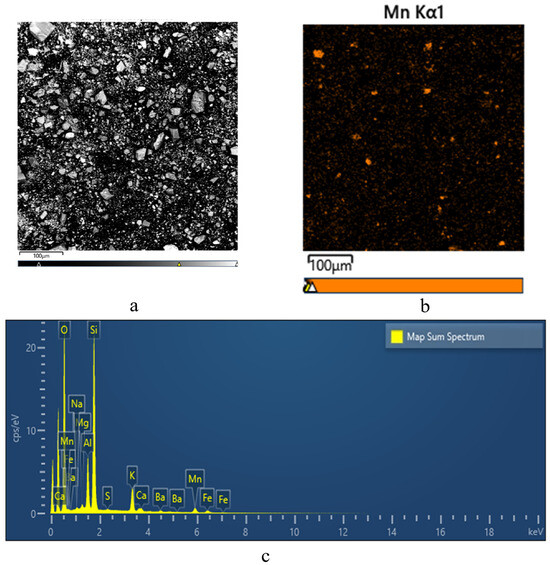
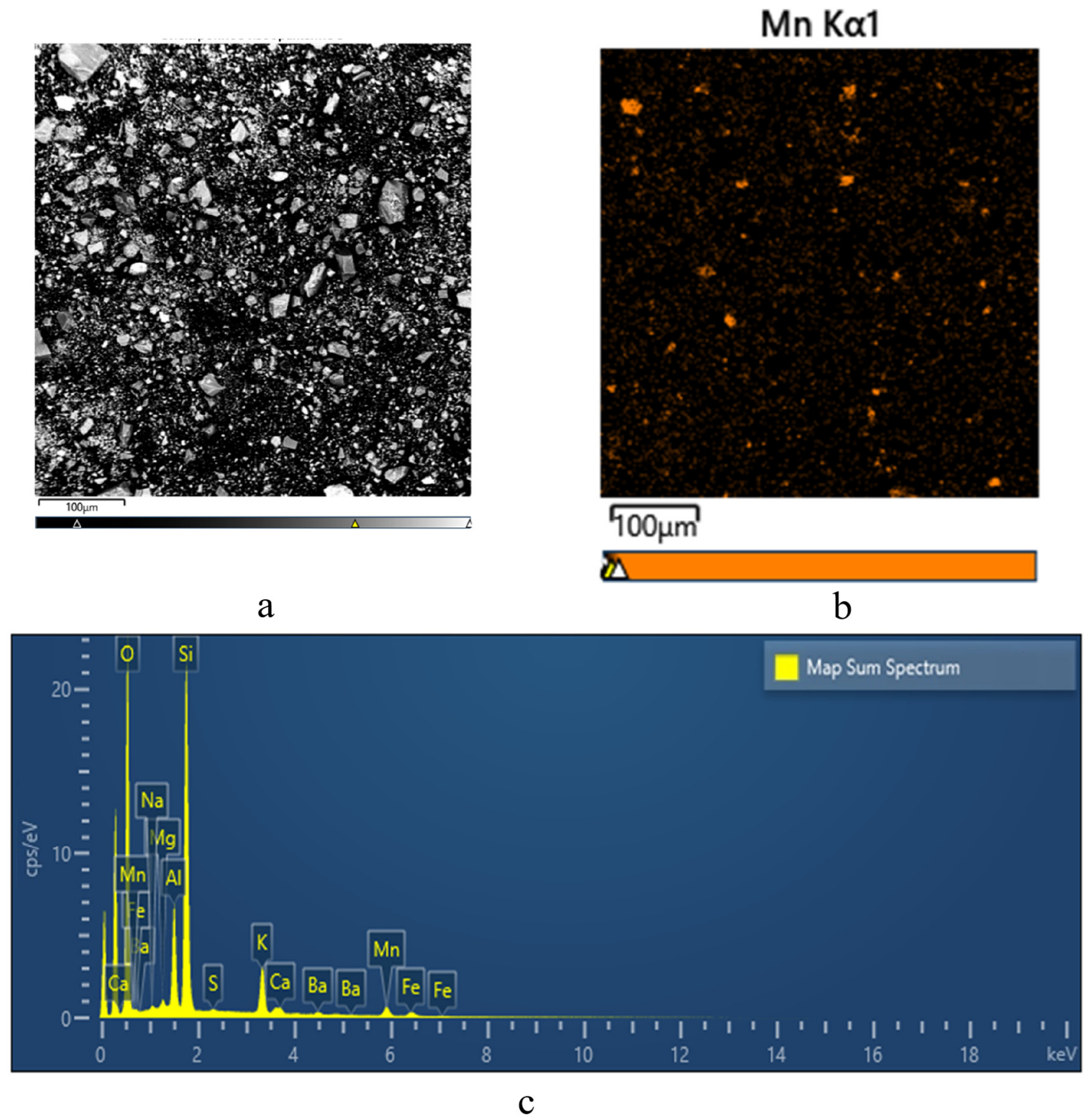
To confirm the X-ray diffraction results and evaluate the distribution of the major elements, the magnetic and non-magnetic products were examined by scanning electron microscopy coupled with energy-dispersive X-ray spectroscopy (SEM–EDS) [38]. SEM images, elemental distribution maps, and overall EDS spectra are presented in Figure 6 and Figure 7, while the results of the quantitative elemental analysis are given in Table 6.
Figure 6.
SEM–EDS characterization of the magnetic product after dry high-intensity magnetic separation: (a) BSE image; (b) Mn elemental distribution map; (c) overall EDS spectrum.
Figure 7.
SEM–EDS characterization of the non-magnetic product after dry high-intensity magnetic separation: (a) BSE image; (b) Mn elemental distribution map; (c) overall EDS spectrum.
Table 6.
Contents of the major elements in the magnetic and non-magnetic products of dry high-intensity magnetic separation at the optimal magnetic induction of 0.53 T, as determined by SEM–EDS.
SEM analysis showed a distinct redistribution of manganese-bearing minerals between the separation products after magnetic separation. The magnetic product was characterized by a predominance of grains with high manganese contents, whereas the non-magnetic fraction consisted predominantly of quartz and other silicate minerals. Elemental distribution maps confirmed the concentration of manganese in the magnetic product and its substantial depletion in the non-magnetic fraction [39]. It should be noted that phase identification in the separation products was based on XRD/WPPF analysis (Section 3.3), whereas SEM–EDS was used to characterize the local elemental distribution and morphology of the products.
According to the EDS results, the Mn content in the magnetic fraction increased from 6.67 to 17.72 wt.%, whereas in the non-magnetic product it decreased to 3.84 wt.%. At the same time, the silicon content decreased from 24.02 to 16.69 wt.% in the magnetic product and increased to 24.16 wt.% in the non-magnetic fraction. These results indicate the preferential recovery of manganese-bearing minerals into the magnetic fraction and the concentration of silicate gangue in the non-magnetic product.
It should be noted that SEM–EDS data characterize the local elemental composition of the analyzed surface areas, whereas chemical analysis provides the average composition of the entire sample volume. Despite differences in the absolute values, both methods demonstrate the same trend in the redistribution of elements after magnetic separation.
The combined results of chemical analysis, X-ray diffraction, and SEM–EDS demonstrate that dry high-intensity magnetic separation effectively concentrates manganese-bearing minerals in the magnetic product while simultaneously removing a substantial proportion of the quartz gangue into the non-magnetic fraction.
4. Discussion
The combined results of chemical analysis, X-ray diffraction, and SEM–EDS demonstrate that the efficiency of dry high-intensity magnetic separation of the studied manganese ore processing tailings is primarily determined by their material composition. The initial sample was characterized by a high silica content (60.57% SiO2) and a relatively low manganese content (9.81%). According to the WPPF analysis, the major phases were braunite and quartz, accounting for approximately 45 and 37 wt.%, respectively. Therefore, the beneficiation objective was to preferentially recover weakly magnetic manganese-bearing minerals while maximizing the removal of quartz gangue.
The obtained relationships demonstrate the characteristic balance between concentrate quality and the completeness of valuable-component recovery in magnetic beneficiation [17,27,28]. As the magnetic induction increased from 0.33 to 0.897 T, the magnetic product yield increased from 20.30% to 36.30%, while manganese recovery increased from 61.60% to 82.20%. At the same time, the Mn content in the magnetic product decreased from 29.77% to 22.22%. This trend can be explained by the fact that increasing magnetic induction promotes the recovery not only of the most magnetically susceptible manganese-bearing grains but also of less susceptible particles and mineral intergrowths with quartz and other silicate phases. Consequently, manganese recovery increases, but separation selectivity decreases, resulting in dilution of the magnetic product with gangue material [27,28,29].
This behavior is further confirmed by the distribution of iron and silica. Over the investigated range of magnetic induction, Fe recovery increased from 31.70% to 65.50%, whereas SiO2 recovery increased from 10.73% to 22.75%. The increase in iron recovery is associated with the transfer of iron oxide phases into the magnetic product, as these phases exhibit higher magnetic susceptibility than most manganese minerals. In contrast, the increase in SiO2 recovery with increasing magnetic induction indicates the entrainment of quartz particles and the recovery of quartz intergrowths with manganese- and iron-bearing minerals [22,29]. Thus, excessive increases in magnetic induction improve Mn recovery but are accompanied by deterioration in concentrate quality.
Based on the established relationships, a magnetic induction of B = 0.53 T was selected as the appropriate operating condition. Under this regime, the magnetic product yield was 27.60%, the Mn content was 25.89%, and manganese recovery was 72.84%. The manganese enrichment ratio relative to the initial sample was approximately 2.64. At the same time, the SiO2 content decreased from 60.57% to 34.02%, with only 15.50% of the total silica reporting to the magnetic product, whereas 84.50% of the SiO2 was concentrated in the non-magnetic fraction. The ratio of Mn recovery to SiO2 recovery was approximately 4.70, indicating pronounced selectivity of the selected regime toward manganese-bearing minerals.
Nevertheless, 27.16% of the total manganese remained in the non-magnetic product, which contained 3.68% Mn. Manganese losses may be attributed to several factors, including the presence of weakly magnetic varieties of manganese minerals, insufficient grain liberation, fine intergrowths, and the persistence of intergrowths between manganese-bearing phases and quartz. SEM images of the initial material indeed showed a heterogeneous distribution of manganese and close intergrowths of ore minerals with the siliceous component. Therefore, further improvement of process efficiency may involve not only adjustment of magnetic induction but also preliminary particle-size classification, additional grinding of insufficiently liberated size fractions, and cleaning of the magnetic product [13,14].
The relatively modest manganese recovery and concentrate grade obtained in the present study should therefore be considered in the context of the incomplete liberation of the manganese-bearing minerals. Since the present experiments were conducted without an additional grinding stage, further liberation of the manganese-bearing phases prior to magnetic separation may provide an opportunity to improve both manganese recovery and concentrate quality. In particular, additional grinding of selected insufficiently liberated size fractions, followed by appropriate classification and magnetic cleaning, should be investigated in future work. Such an approach may reduce the entrainment of quartz-bearing intergrowths into the magnetic product and improve the selectivity of manganese recovery.
The XRD results confirmed the preferential redistribution of minerals between the separation products. The magnetic product was enriched in manganese-bearing phases, whereas quartz and other silica-bearing components were predominantly concentrated in the non-magnetic fraction. The Bixbyite-(Mn) phase, which was absent from the refinement results for the initial sample, was additionally identified in the magnetic product. Since the separation process was conducted without thermal or chemical treatment, this difference should not be interpreted as the formation of a new phase. More likely, the concentration of the manganese-bearing minerals increased the intensity of their diffraction maxima, reduced the overlap of individual reflections, and enabled the WPPF algorithm to identify an additional structural model. Similarly, differences in the identification of iron oxide phases between the initial sample and the separation products may be associated with the selection of reference database entries and the characteristics of whole-profile refinement rather than with phase transformations [23,24,25,26].
The SEM–EDS results were consistent with the chemical and XRD analyses. The Mn content in the analyzed area of the magnetic product was 17.72 wt.%, whereas that in the non-magnetic product was 3.84 wt.%. At the same time, the Si content in the magnetic fraction was lower than that in the non-magnetic fraction (16.69 vs. 24.16 wt.%). These results confirm the concentration of manganese-bearing grains in the magnetic product and the preferential transfer of the silica-bearing component into the non-magnetic fraction. However, the absolute Mn contents determined by SEM–EDS and bulk chemical analysis differed, being 17.72% and 25.89%, respectively. This difference is explained by the fact that SEM–EDS characterizes the local composition of a selected surface area, whereas chemical analysis reflects the average composition of a representative sample aliquot [38,39]. Therefore, bulk chemical analysis should be given priority when calculating process performance indicators, while SEM–EDS should be regarded as a complementary method for confirming morphology, elemental localization, and redistribution trends. It should also be emphasized that SEM–EDS is not a quantitative method for bulk chemical analysis; therefore, AAS was used as the primary method for calculating all process performance indicators. Further independent confirmation of the bulk chemical composition by complementary techniques such as X-ray fluorescence (XRF) or XPS, as well as of manganese speciation by electron probe microanalysis (EPMA) or Raman spectroscopy, is recommended for future work.
Despite the differences in absolute values, both methods yielded nearly identical enrichment factors for manganese. According to chemical analysis, the Mn content increased by 2.64-fold, from 9.81% to 25.89%, whereas according to SEM–EDS, it increased by approximately 2.66-fold, from 6.67 to 17.72 wt.%. The agreement between these relative values increases the reliability of the observed trend and confirms that manganese enrichment of the magnetic product is not merely a consequence of local heterogeneity in an individual analyzed area.
Thus, dry high-intensity magnetic separation provides effective preliminary concentration of manganese from high-silica manganese ore processing tailings. The advantages of the investigated process include the absence of process-water consumption, relatively simple equipment configuration, and the ability to remove a substantial proportion of quartz gangue without thermal or chemical pretreatment of the feed material. However, the obtained product containing 25.89% Mn should primarily be regarded as an enriched intermediate product suitable for subsequent cleaning or metallurgical or hydrometallurgical processing. Further process optimization should include investigation of the effects of particle size, degree of mineral liberation, feed rate, layer thickness, number of separation stages, and magnetic product cleaning, as well as confirmation of the reproducibility of the B = 0.53 T operating condition through a series of replicate experiments.
5. Conclusions
- (1)
- The investigated material is characterized by a high silica content of 60.57% SiO2 and a Mn content of 9.81%, with braunite and quartz being the major mineral phases. The predominant occurrence of manganese in weakly magnetic minerals, together with their close intergrowth with quartz, provides a basis for the application of high-intensity magnetic separation.
- (2)
- A magnetic induction of B = 0.53 T was identified as the appropriate operating condition. Under this regime, the magnetic product yield was 27.60%, the Mn content reached 25.89%, and manganese recovery was 72.84%. Compared with the Mn content in the initial material, an enrichment ratio of approximately 2.64 was achieved, demonstrating substantial manganese enrichment of the magnetic fraction.
- (3)
- Under the selected conditions, the SiO2 content in the magnetic product decreased from 60.57% to 34.02%, with only 15.50% of the total SiO2 reporting to the magnetic fraction, whereas 84.50% of the SiO2 was transferred to the non-magnetic product. The ratio of Mn recovery to SiO2 recovery was approximately 4.70, confirming the preferential recovery of manganese-bearing minerals accompanied by the removal of a substantial proportion of the quartz gangue.
- (4)
- The SEM–EDS data were consistent with the bulk chemical analysis and confirmed the redistribution of Mn and Si between the separation products. The local Mn content in the magnetic product was 17.72 wt.%, compared with 3.84 wt.% in the non-magnetic product, while the corresponding Si contents were 16.69 and 24.16 wt.%, respectively. Although the absolute values obtained by SEM–EDS differ from those determined by bulk chemical analysis because SEM–EDS characterizes the local surface composition, both methods yielded similar relative enrichment of manganese, confirming the preferential recovery of manganese-bearing minerals into the magnetic product.
- (5)
- The XRD/WPPF results demonstrated the concentration of manganese-bearing phases in the magnetic product and the preferential accumulation of quartz in the non-magnetic fraction. The additional identification of Bixbyite-(Mn) in the magnetic product was most likely associated with its increased concentration and improved resolution of the diffraction maxima rather than with the formation of a new phase. The dry separation process does not require process water and offers a relatively simple equipment configuration; however, the presence of mineral intergrowths and incomplete grain liberation limits the quality of the obtained product. Therefore, further liberation by grinding of insufficiently liberated fractions, followed by appropriate classification and magnetic cleaning, represents an important direction for improving manganese recovery and concentrate quality in future studies.
Author Contributions
Conceptualization, A.M. (Aidarkhan Mukhtar); methodology, G.K. and S.G.; investigation, S.G., Z.D., A.K., M.A., S.N., and B.K.; formal analysis, A.M. (Ardak Makashev), S.G., A.K., and M.A.; data curation, A.M. (Ardak Makashev), G.K., Z.D., A.O., A.K., M.A., S.N., and B.K.; visualization, S.N., A.O., and B.K.; writing—original draft, G.K.; writing—review and editing, G.K., A.M. (Aidarkhan Mukhtar), and S.G.; validation, S.G., Z.D., A.O., A.K., M.A., S.N., and B.K. All authors have read and agreed to the published version of the manuscript.
Funding
This research is funded by the Committee of Industry of the Ministry of Industry and Construction of the Republic of Kazakhstan under program-targeted funding for scientific research for 2024–2026, BR23991563: Creation of Innovative Resource-Saving Technologies for Mining and Integrated Processing of Mineral and Technogenic Raw Materials.
Data Availability Statement
The original contributions presented in this study are included in the article. Further inquiries can be directed to the corresponding author Gulnara Katkeeva.
Acknowledgments
The authors gratefully acknowledge the Chemical-Metallurgical Institute named after Zh. Abishev for providing the laboratory facilities and research infrastructure necessary for conducting this study. The authors also gratefully acknowledge the Zhezdy Concentration Plant for providing access to the tailings storage facility and permission to collect the tailings samples used in this research.
Conflicts of Interest
The authors declare no conflicts of interest.
References
- Singh, V.; Chakraborty, T.; Tripathy, S.K. A Review of Low Grade Manganese Ore Upgradation Processes. Miner. Process. Extr. Metall. Rev. 2020, 41, 417–438. [Google Scholar] [CrossRef] [Scilit]
- Elliott, R.; Barati, M. A Review of the Beneficiation of Low-Grade Manganese Ores by Magnetic Separation. Can. Metall. Q. 2020, 59, 1–16. [Google Scholar] [CrossRef] [Scilit]
- Liu, B.; Zhang, Y.; Lu, M.; Su, Z.; Li, G.; Jiang, T. Extraction and Separation of Manganese and Iron from Ferruginous Manganese Ores: A Review. Miner. Eng. 2019, 131, 286–303. [Google Scholar] [CrossRef] [Scilit]
- Sinha, M.K.; Purcell, W. Reducing Agents in the Leaching of Manganese Ores: A Comprehensive Review. Hydrometallurgy 2019, 187, 168–186. [Google Scholar] [CrossRef] [Scilit]
- Bhoja, S.K.; Tripathy, S.K.; Murthy, Y.R.; Ghosh, T.K.; Kumar, C.R.; Chakraborty, D.P. Influence of Mineralogy on the Dry Magnetic Separation of Ferruginous Manganese Ore—A Comparative Study. Minerals 2021, 11, 150. [Google Scholar] [CrossRef] [Scilit]
- Xiao, J.; Zou, K.; Chen, T.; Xiong, W.; Deng, B. Extraction of Manganese and Iron from a Refractory Coarse Manganese Concentrate. Metals 2021, 11, 563. [Google Scholar] [CrossRef] [Scilit]
- Tastanova, A.; Temirova, S.; Sukurov, B.; Biryukova, A.; Abdykirova, G. Experimental Manufacturing of Ferromanganese Alloy from Man-Made Manganese-Containing Wastes. Processes 2023, 11, 3328. [Google Scholar] [CrossRef] [Scilit]
- Wen, J.; Liu, X.; Yuan, S.; Yu, T.; Zhang, L.; Jiang, T.; Li, J. New Insight into a Green Process for Iron Manganese Ore Utilization: Efficient Separation of Manganese and Iron Based on Phase Reconstruction by Vanadium Recycle. Materials 2025, 18, 844. [Google Scholar] [CrossRef] [Scilit] [PubMed]
- Yu, D.; Cui, F.; Cong, Y.; Zhang, C.; Tian, Q.; Guo, X. Simultaneous Selective Chlorination and Carbothermic Reduction of High-Iron Manganese Ore for the Recovery of Manganese Chloride and Metallic Iron. Metals 2019, 9, 1124. [Google Scholar] [CrossRef] [Scilit]
- Wang, Y.; Jin, S.; Lv, Y.; Zhang, Y.; Su, H. Hydrometallurgical Process and Kinetics of Leaching Manganese from Semi-Oxidized Manganese Ores with Sucrose. Minerals 2017, 7, 27. [Google Scholar] [CrossRef] [Scilit]
- Singh, V.; Biswas, A. Physicochemical Processing of Low Grade Ferruginous Manganese Ores. Int. J. Miner. Process. 2017, 158, 35–44. [Google Scholar] [CrossRef] [Scilit]
- Singh, V.; Ghosh, T.K.; Ramamurthy, Y.; Tathavadkar, V. Beneficiation and Agglomeration Process to Utilize Low-Grade Ferruginous Manganese Ore Fines. Int. J. Miner. Process. 2011, 99, 84–86. [Google Scholar] [CrossRef] [Scilit]
- Tripathy, S.K.; Banerjee, P.K.; Suresh, N. Effect of Desliming on the Magnetic Separation of Low-Grade Ferruginous Manganese Ore. Int. J. Miner. Metall. Mater. 2015, 22, 661–673. [Google Scholar] [CrossRef] [Scilit]
- Mehdilo, A.; Irannajad, M.; Hojjati-Rad, M.R. Characterization and Beneficiation of Iranian Low-Grade Manganese Ore. Physicochem. Probl. Miner. Process. 2013, 49, 725–741. [Google Scholar] [CrossRef] [Scilit]
- Kim, C.W.; Kim, B.S.; Suk, H.G.; Cho, K.H. Upgrading Natural Low-Grade Manganese Ore by Iron Oxide Elimination Using a Magnetic Separation Process. Sci. Adv. Mater. 2017, 9, 1151–1156. [Google Scholar] [CrossRef] [Scilit]
- Mpho, M.; Bada, S.; Afolabi, A. Evaluation of Reduction Roasting and Magnetic Separation for Upgrading Mn/Fe Ratio of Fine Ferromanganese. Int. J. Min. Sci. Technol. 2013, 23, 537–541. [Google Scholar] [CrossRef] [Scilit]
- Peterson, M.J.; Karadkal, R.; Nunna, V.; Hapugoda, S.; Austin, P. Demonstration of Dry Magnetic Separation to Upgrade the Mn:Fe Ratio of a Ferromanganese Ore Sample. Miner. Process. Extr. Metall. 2023, 132, 156–171. [Google Scholar] [CrossRef] [Scilit]
- Yuan, S.; Zhou, W.; Han, Y.; Li, Y. An Innovative Technology for Full Component Recovery of Iron and Manganese from Low-Grade Iron-Bearing Manganese Ore. Powder Technol. 2020, 373, 73–81. [Google Scholar] [CrossRef] [Scilit]
- Yuan, S.; Zhou, W.; Han, Y.; Li, Y. Separation of Manganese and Iron for Low-Grade Ferromanganese Ore via Fluidization Magnetization Roasting and Magnetic Separation Technology. Miner. Eng. 2020, 152, 106359. [Google Scholar] [CrossRef] [Scilit]
- Sinha, M.K.; Purcell, W.; Van der Westhuizen, W.A. Recovery of Manganese from Ferruginous Manganese Ore Using Ascorbic Acid as Reducing Agent. Miner. Eng. 2020, 154, 106406. [Google Scholar] [CrossRef] [Scilit]
- Eghbali, R.; Khanmohammadi Hazaveh, P.; Rashchi, F.; Ataie, A. Recovery of Manganese from a Low-Grade Waste and Valorization via the Synthesis of a Nanostructured Magnetic Manganese Ferrite. Mater. Sci. Eng. B 2021, 269, 115177. [Google Scholar] [CrossRef] [Scilit]
- Zheng, X.; Cheng, W.; Cheng, J.; Shuwak, S.; Yue, X.; Li, B.; Wang, X.; Zhou, S.; Lu, D.; Wang, Y. Enhancing the Separation of Refractory Weakly Magnetic Minerals with Magnetic Fluid in High Gradient Magnetic Separation: Conversion of Competing Capture to Mechanical Entrainment. Sep. Purif. Technol. 2024, 335, 126273. [Google Scholar] [CrossRef] [Scilit]
- Rietveld, H.M. A Profile Refinement Method for Nuclear and Magnetic Structures. J. Appl. Crystallogr. 1969, 2, 65–71. [Google Scholar] [CrossRef] [Scilit]
- Hill, R.J.; Howard, C.J. Quantitative Phase Analysis from Neutron Powder Diffraction Data Using the Rietveld Method. J. Appl. Crystallogr. 1987, 20, 467–474. [Google Scholar] [CrossRef] [Scilit]
- Bish, D.L.; Howard, S.A. Quantitative Phase Analysis Using the Rietveld Method. J. Appl. Crystallogr. 1988, 21, 86–91. [Google Scholar] [CrossRef] [Scilit]
- Scarlett, N.V.Y.; Madsen, I.C. Quantification of Phases with Partial or No Known Crystal Structures. Powder Diffr. 2006, 21, 278–284. [Google Scholar] [CrossRef] [Scilit]
- Oberteuffer, J. Magnetic Separation: A Review of Principles, Devices, and Applications. IEEE Trans. Magn. 1974, 10, 223–238. [Google Scholar] [CrossRef] [Scilit]
- Svoboda, J.; Fujita, T. Recent Developments in Magnetic Methods of Material Separation. Miner. Eng. 2003, 16, 785–792. [Google Scholar] [CrossRef] [Scilit]
- Singh, V.; Nag, S.; Tripathy, S.K. Particle Flow Modeling of Dry Induced Roll Magnetic Separator. Powder Technol. 2013, 244, 85–92. [Google Scholar] [CrossRef] [Scilit]
- Walsh, A. The Application of Atomic Absorption Spectra to Chemical Analysis. Spectrochim. Acta 1955, 7, 108–117. [Google Scholar] [CrossRef] [Scilit]
- Slavin, W. Atomic-Absorption Spectroscopy—A Critical Review. Appl. Spectrosc. 1966, 20, 281–288. [Google Scholar] [CrossRef] [Scilit]
- Mustakhimov, A.; Zeynullin, A. Scaled-Up Laboratory Research into Dry Magnetic Separation of the Zhezdinsky Concentrating Mill Tailings in Kazakhstan. Min. Miner. Depos. 2020, 14, 71–77. [Google Scholar] [CrossRef] [Scilit]
- Dyussenova, S.; Lukhmenov, A.; Imekeshova, M.; Akimzhanov, Z. Investigation of the Beneficiation of Refractory Ferromanganese Ores “Zhomart” Deposits. Complex Use Miner. Resour. 2024, 329, 34–42. [Google Scholar] [CrossRef] [Scilit]
- Buchmann, M.; Schach, E.; Tolosana-Delgado, R.; Leißner, T.; Astoveza, J.; Kern, M.; Möckel, R.; Ebert, D.; Rudolph, M.; Van den Boogaart, K.G.; et al. Evaluation of Magnetic Separation Efficiency on a Cassiterite-Bearing Skarn Ore by Means of Integrative SEM-Based Image and XRF–XRD Data Analysis. Minerals 2018, 8, 390. [Google Scholar] [CrossRef] [Scilit]
- König, U.; Verryn, S.M.C. Heavy Mineral Sands Mining and Downstream Processing: Value of Mineralogical Monitoring Using XRD. Minerals 2021, 11, 1253. [Google Scholar] [CrossRef] [Scilit]
- Park, I.; Kanazawa, Y.; Sato, N.; Galtchandmani, P.; Jha, M.K.; Tabelin, C.B.; Jeon, S.; Ito, M.; Hiroyoshi, N. Beneficiation of Low-Grade Rare Earth Ore from Khalzan Buregtei Deposit (Mongolia) by Magnetic Separation. Minerals 2021, 11, 1432. [Google Scholar] [CrossRef] [Scilit]
- Shibaeva, D.N.; Kompanchenko, A.A.; Tereschenko, S.V. Analysis of the Effect of Dry Magnetic Separation on the Process of Ferruginous Quartzites Disintegration. Minerals 2021, 11, 797. [Google Scholar] [CrossRef] [Scilit]
- Newbury, D.E.; Ritchie, N.W.M. Is Scanning Electron Microscopy/Energy Dispersive X-ray Spectrometry (SEM/EDS) Quantitative? Scanning 2013, 35, 141–168. [Google Scholar] [CrossRef] [Scilit] [PubMed]
- Newbury, D.E.; Ritchie, N.W.M. Elemental Mapping of Microstructures by Scanning Electron Microscopy–Energy Dispersive X-ray Spectrometry: Extraordinary Advances with the Silicon Drift Detector. J. Anal. At. Spectrom. 2013, 28, 973–988. [Google Scholar] [CrossRef] [Scilit]

Disclaimer/Publisher’s Note: The statements, opinions and data contained in all publications are solely those of the individual author(s) and contributor(s) and not of MDPI and/or the editor(s). MDPI and/or the editor(s) disclaim responsibility for any injury to people or property resulting from any ideas, methods, instructions or products referred to in the content. |
© 2026 by the authors. Licensee MDPI, Basel, Switzerland. This article is an open access article distributed under the terms and conditions of the Creative Commons Attribution (CC BY) license.