The molten salt reactor is one of six Generation IV reactor types, which adopts molten salt as fuel and has many unique characteristics compared to solid fuel reactors. The study on two-fluid molten salt reactor can be traced back to 1966, when a two-fluid molten salt breeder reactor (MSBR) was designed at Oak Ridge National Laboratory (ORNL) [
1]. The load-following capability of this MSBR system was studied for various ramp rates of the power demand [
2]. Later a fast breeder reactor of about 2 GW thermal output using molten chlorides both as fuel and coolant was proposed [
3].
A new design of the two-fluid MSBR called the Dual Fluid Reactor (DFR), which employs liquid lead instead of molten salt for the secondary circuit as coolant, was proposed by the researchers at the Institute for Solid-State Nuclear Physics (IFK) [
4]. Differing from Taube’s design, the high volumetric heat capacity of the liquid lead enables a significant heat removal capability and, thus, allows operation with a much higher power density than that of conventional reactors. A series of studies covering the neutronic characteristics, sensitivity performance, coupled calculations, emergency drain tank estimation, depletion as well as hydraulic simulations can be found in references [
5,
6,
7,
8,
9,
10]. It has to be noticed that previous studies on the DFR focused mainly on a large type of reactor design with a thermal power of 3 GW. Yet, a smaller type of less than 0.3 GW would be more flexible and could be applied to a wider range of industrial processes, such as hydrogen production, water desalination, etc.
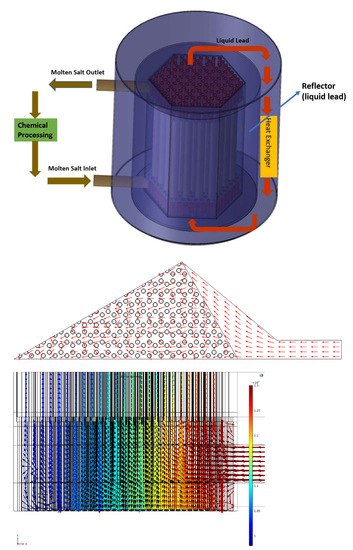
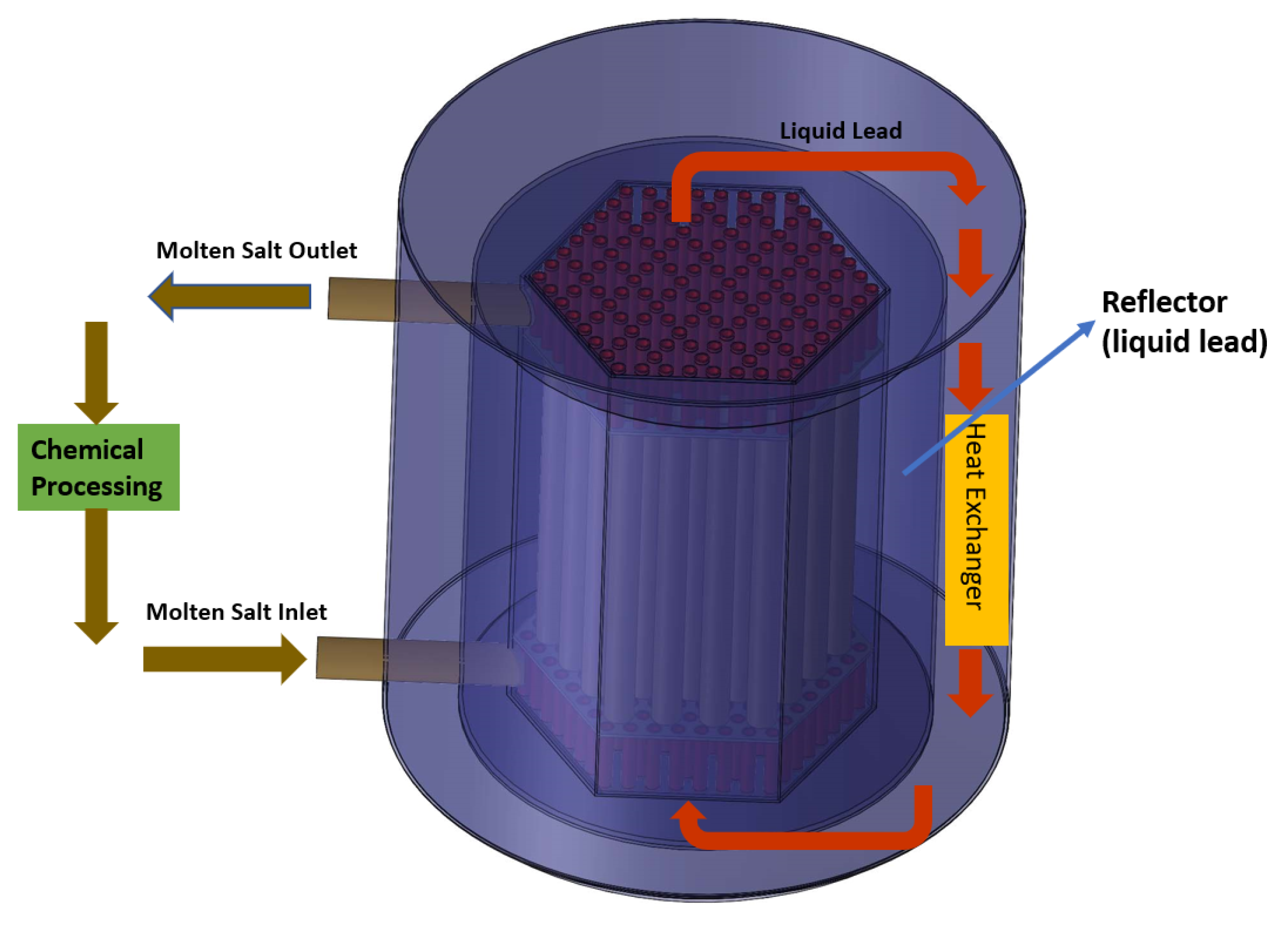
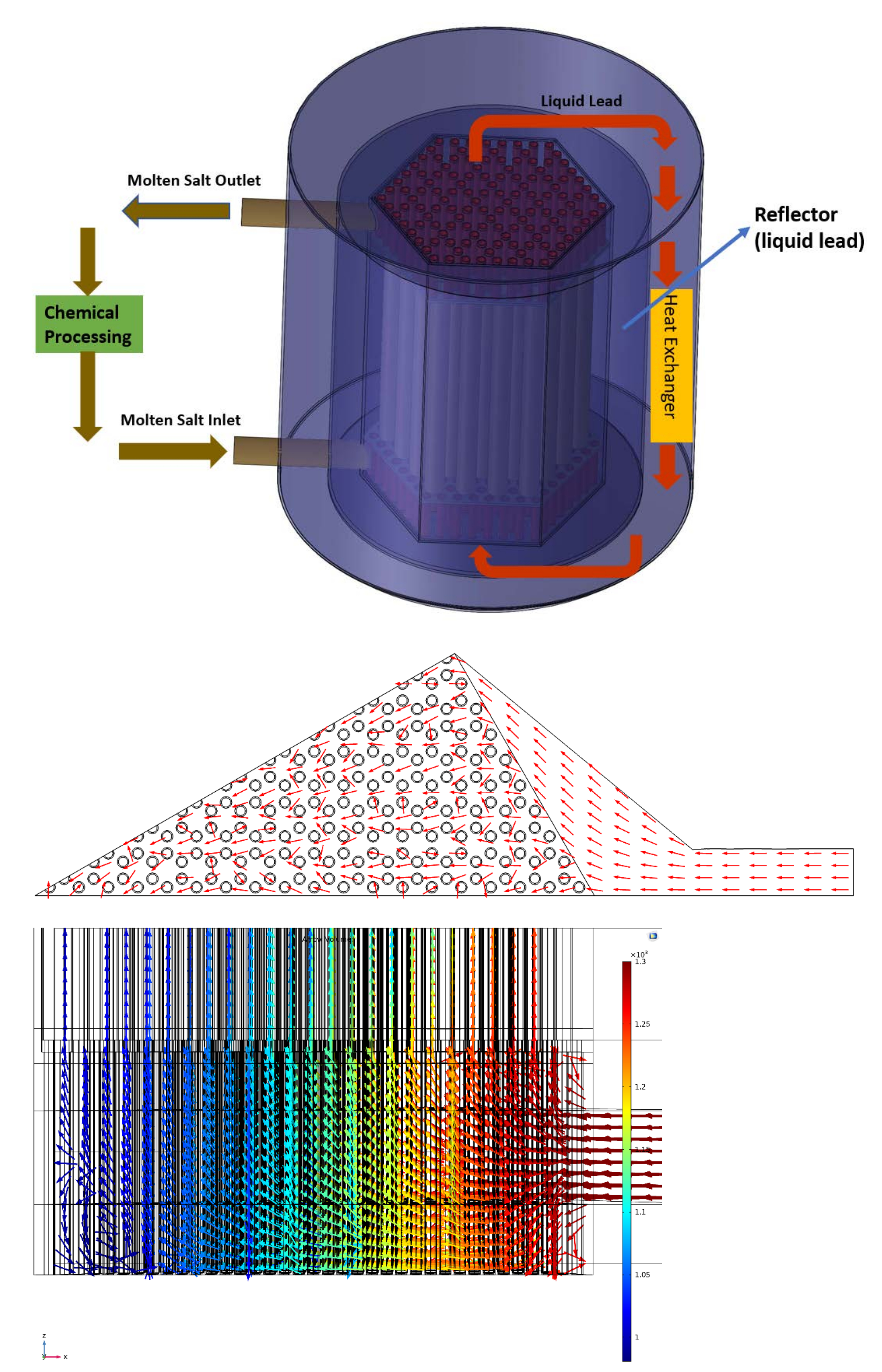
In this work a Small Modular Dual Fluid Reactor (SMDFR) is proposed with a nominal thermal power of 0.1 GW (100 MWt). The scheme is shown in
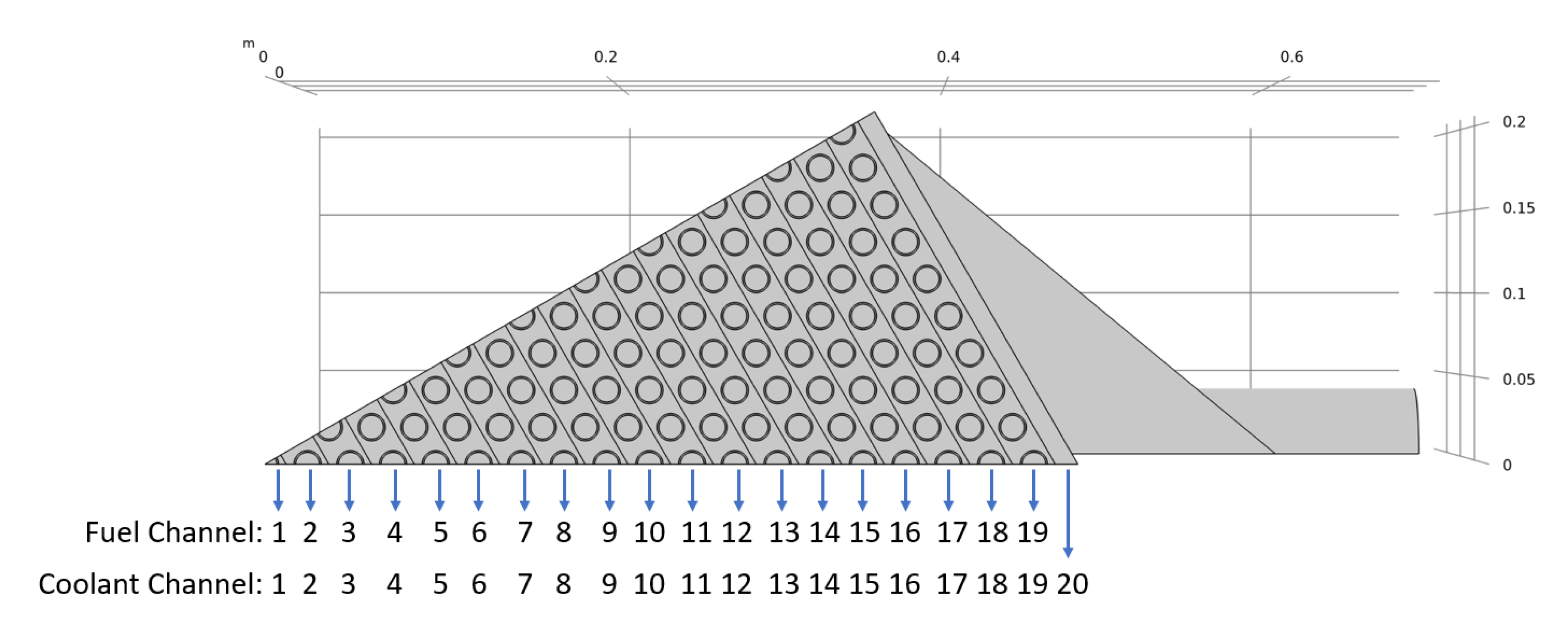
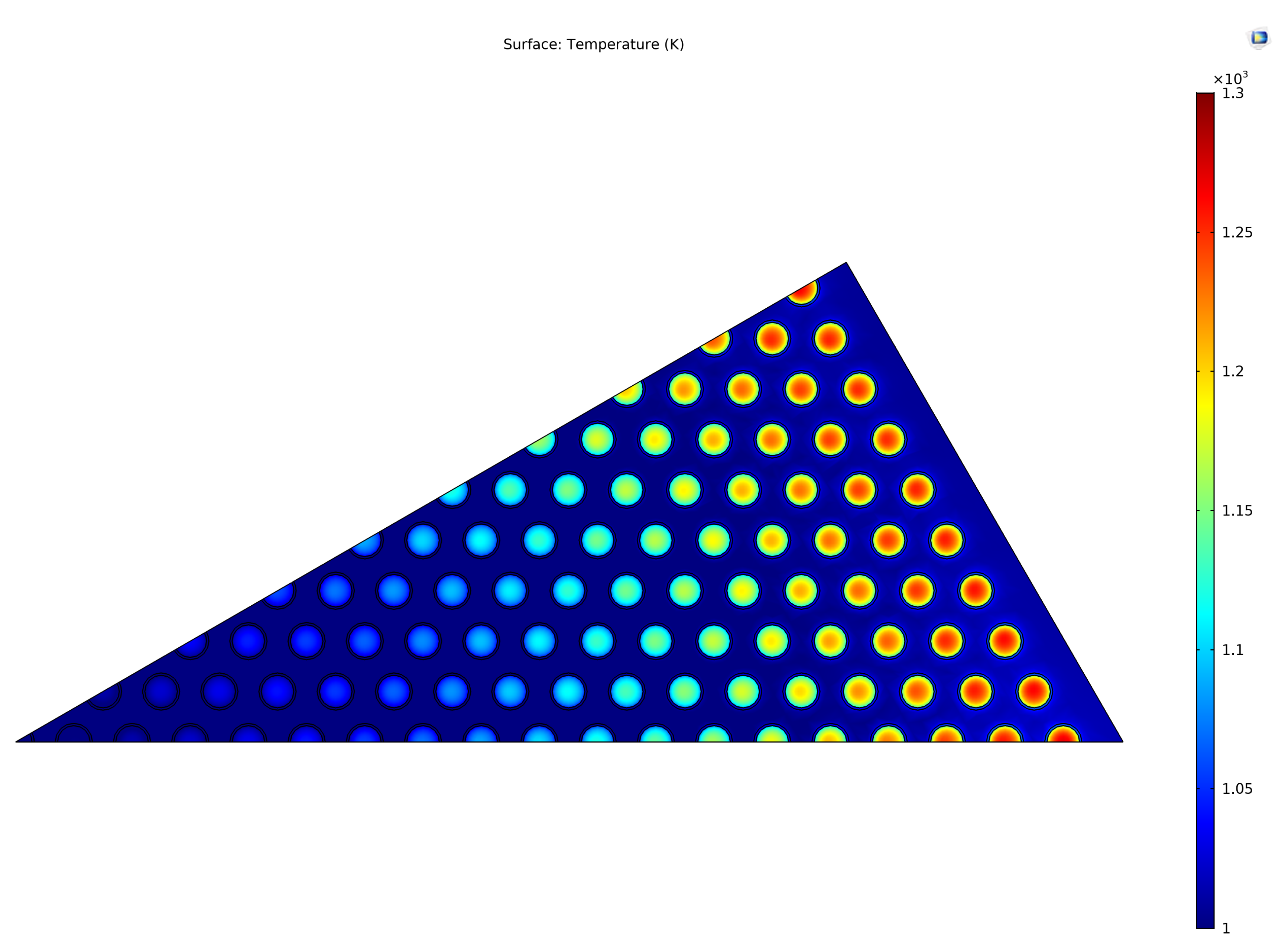
Figure 1. The reactor core of the SMDFR, formed by hexagonally-arranged fuel tubes and surrounded by the reflector zone, is immersed at the center of a lead pool inside a cylindrical tank. As shown in
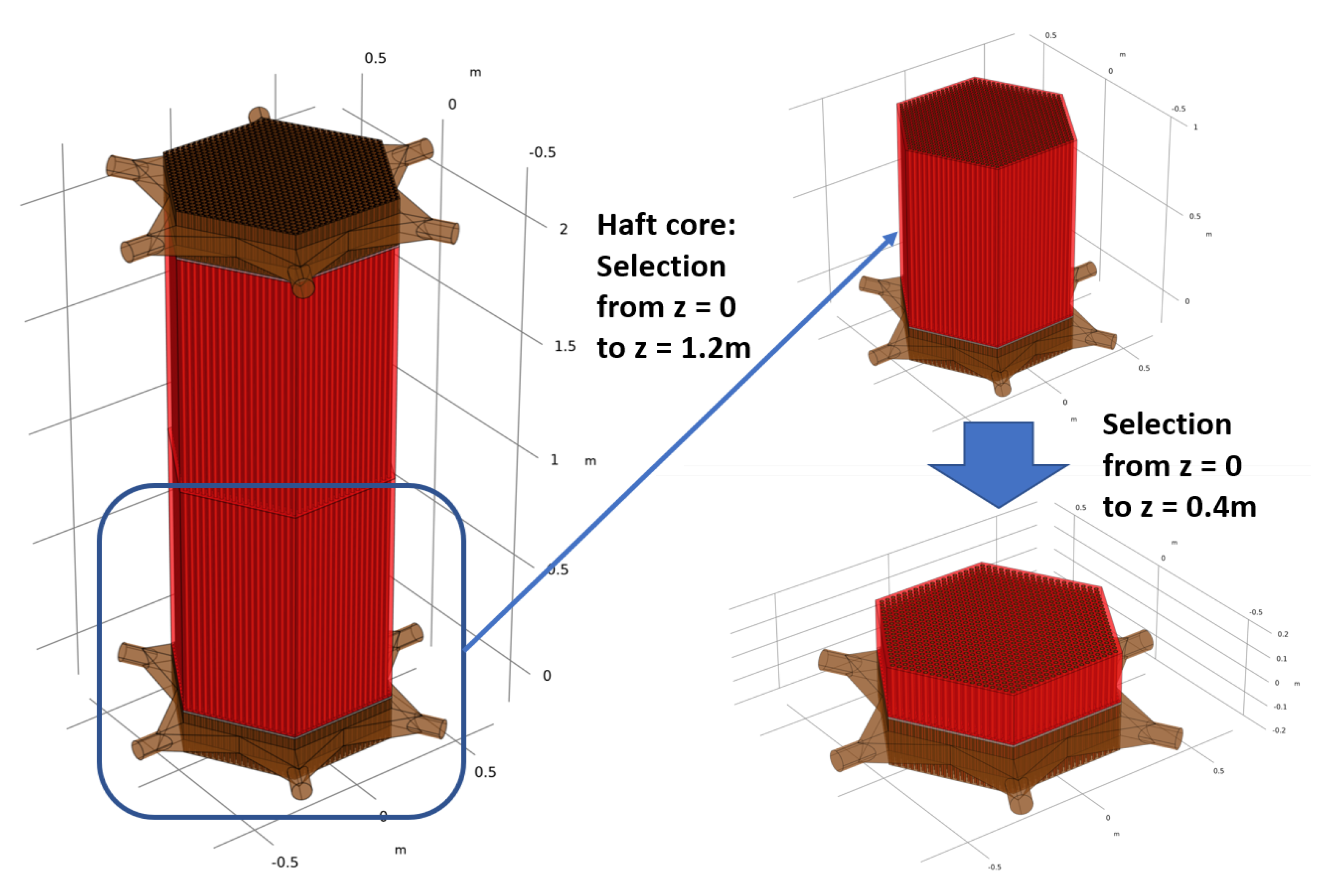
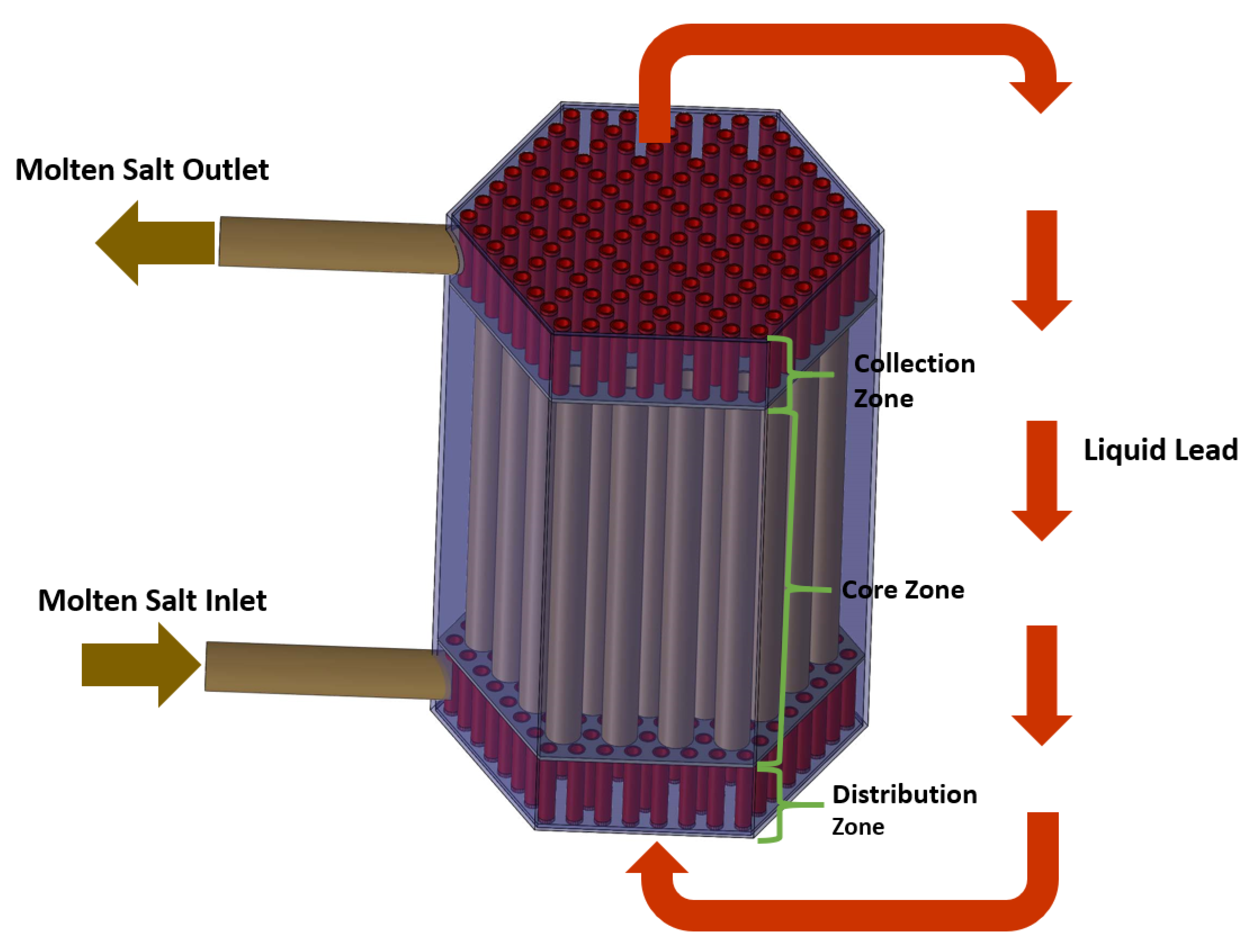
Figure 2, the bottom and top of the core zone (from z = 0.2 m to z = 2.2 m) are joined by a distribution zone (from bottom, z = 0 m, to z = 0.2 m) and a collection zone (from z = 2.2 m to z = 2.4 m, symmetric with respect to the distribution zone), in order to distribute and collect the molten salt before and after flowing through the core region. Starting from the bottom part of the core region (
Figure 2), the molten salt (depicted in golden color) goes into the distribution zone being distributed in the gaps between the hexagonally arranged coolant tubes (depicted in red) and then flows upwards inside the fuel tubes (depicted in golden color) through a plate with holes. After reaching the upper core part, it flows into the collection zone and then leaves the core region towards a chemical processing plant, which is employed for the online processing of the molten salt. During the operation, the salt coming from the collection zone is continuously passed to the chemical processing plant, in which the fission products are removed, and nuclear fuel components can be removed or added to maintain the optimal fuel composition. After being processed, it is pumped back into the bottom part for the next flow cycle through the core region. The liquid lead (
Figure 2), acting as coolant in the secondary circuit, flows from the bottom center to the top center to cool down the core, which is heated by the nuclear fission reactions occurring in the molten salt. Upon leaving the core region, it is pumped to the heat exchanger located in the peripheral region of the tank and then transfers the heat to the tertiary circuit for utilization. Compared to the original design, the SMDFR is scaled down to 0.1 GW (100 MW), which makes it particularly suitable for providing energy for production facilities (e.g., water desalination [
11], hydrogen production, or mines) in remote locations and more flexible, since it does not necessarily need to be hooked into a large power grid, and is able to be attached to other modules to provide increased power supplies if necessary. In addition, it also has changed from a pipe-type to a pool-type reactor in order to ensure the capability of establishing natural circulation during reactor transients or accidents. The hexagonal arrangement of fuel and coolant tubes realizes a dense lattice in the core and a high power density.
The technical data of the SMDFR are listed in
Table 1. In this work a mixture of uranium tetrachloride and plutonium tetrachloride is chosen as fuel salt and the liquid lead is chosen as coolant. For the pipe walls silicon carbide is employed. The thermo-physical properties of these materials are listed in
Table 2 according to [
12,
13,
14,
15]. The formulas in the reference are applied for each 100 K interval from 800 K to 1600 K (below the boiling point of molten salt: 1950 K [
15]), which includes the operational temperature range. The corresponding interpolated values based on these temperature points are applied for the calculations.