


Abstract
Communities in Miami face persistent disparities in HIV prevention, including low uptake of pre-exposure prophylaxis (PrEP) and gaps in routine HIV testing. These inequities are shaped by co-occurring structural conditions, such as food insecurity, housing instability, discrimination, transportation barriers, and broader barriers to care. Understanding how these conditions interconnect may inform approaches to sustained engagement in HIV prevention. We examined how structural and sociodemographic conditions and food insecurity were interconnected and reflective of overall structural vulnerability. We conducted a cross-sectional network analysis using data from 2755 surveys collected during Phases 1 and 2 of the Five Point Initiative (FPI), a community-engaged, place-based sexual health implementation strategy in Miami. Partial correlation networks were estimated using the EBICglasso algorithm across key structural barriers to HIV prevention. We calculated network centrality metrics (strength, betweenness, closeness) to characterize the relative connectivity and positioning of conditions within the network. Secondarily, we used traditional mixed correlations to characterize bivariate associations among structural and sociodemographic factors. Multiple regression also examined associations of barriers to care, discrimination, ethnicity, education, housing instability, and income with food insecurity. Additional models examined whether these differed by race. Food insecurity emerged as having the highest strength, closeness, and betweenness centrality within the network and showed the strongest association with barriers to care. Greater food insecurity was also associated with higher discrimination, lower income, unstable housing, and Latino ethnicity. Additional significant connections among variables were also found. Similarly, in secondary bivariate analyses, food insecurity was positively correlated with barriers to care (r = 0.331), discrimination (r = 0.251), ethnicity (r = 0.141), and housing instability (r = 0.125), and negatively correlated with income (r = −0.150) and education (r = −0.079). The multivariable regression model predicting food insecurity was statistically significant, F(6, 2612) = 65.8, p < 0.001, with association directions generally consistent with the network findings. Race did not significantly moderate most individual associations with food insecurity. Race by housing interaction was significant (p = 0.03), indicating that participants who identified as Black or African American with insecure housing were more likely to experience food insecurity. Overall, the findings indicate that food insecurity occupies a prominent position within an interconnected system of social and structural constraints around HIV prevention. Structural barriers to HIV prevention operate as a mutually reinforcing system rather than isolated challenges. Addressing highly connected constraints, particularly food insecurity, housing instability, and barriers to care, through place-based, community-engaged strategies may yield compounded benefits across the prevention continuum. These findings highlight potential priorities for structural intervention in Ending the HIV Epidemic (EHE) priority jurisdictions.
1. Background
Miami remains one of the highest HIV-incidence metropolitan areas in the United States and is designated as a priority jurisdiction under the Ending the HIV Epidemic (EHE) initiative [1,2,3,4]. Despite advances in biomedical prevention, including pre-exposure prophylaxis (PrEP), disparities in HIV testing and PrEP uptake persist across HIV high-impact neighborhoods in the U.S. South [5,6,7,8]. These inequities are spatially concentrated rather than randomly distributed, reflecting neighborhood-level structural disadvantage that shapes access to prevention resources [9,10,11]. Understanding how multiple structural conditions accumulate and intersect within local contexts is therefore important for identifying the environments in which HIV prevention services are delivered and the conditions that may constrain their reach and sustained use.
Health inequities accumulate over time in communities [12]. Shaw et al. [13] described how temporal, social, and spatial processes interact to produce concentrated health disadvantage within neighborhoods. Contemporary area-based deprivation indices, such as the ADI-3 [3,11,14], operationalize this accumulation by quantifying neighborhood-level risk across domains including income, housing, employment, and education. Increasingly, health systems leverage these indices to guide targeted resource allocation strategies [3,15,16], recognizing that place is a structural determinant of health [14,17,18,19]. In HIV high-impact communities, accumulated neighborhood disadvantage may shape both disease burden and the feasibility of sustained engagement in prevention services [9,17,20,21].
Within these settings, a structural vulnerability framework provides a theoretical basis for understanding the presence of individual barriers and why multiple forms of disadvantage may become concentrated and interconnected within particular social and geographic contexts [8,11,21,22]. Structural vulnerability emphasizes how individuals’ health opportunities are patterned by their position within economic, institutional, and social hierarchies that constrain access to material resources and protective infrastructures [11,23]. From this perspective, vulnerability is not conceptualized primarily as an individual or community characteristic but as produced through relationships to broader social, economic, and institutional arrangements [24,25]. Housing instability, food insecurity, discrimination, transportation barriers, and limited access to trusted healthcare institutions rarely occur in isolation [23,26]. Instead, they cluster within neighborhoods shaped by racialized poverty and uneven investment [24,26]. These overlapping conditions may undermine the capacity to consistently engage in HIV testing and PrEP care, even when services are available [3,27,28]. Examining these conditions relationally may thus reveal dimensions of structural vulnerability that are concealed when determinants are modeled separately or as independent exposures.
Food insecurity represents a particularly salient structural constraint within HIV prevention contexts [22,29]. Defined as limited or uncertain access to adequate food [2,30], food insecurity reflects broader economic instability and chronic stress exposure [30]. In high-burden urban neighborhoods, food insecurity frequently co-occurs with housing precarity and barriers to healthcare access [31,32], potentially diverting attention and resources away from preventive health behaviors [2,33]. Housing instability represents another structural constraint within HIV contexts. With no standard definition, it is associated with several challenges, including difficulty paying rent, moving frequently, staying with friends or relatives without paying rent, overcrowding, or spending most of the income on housing [17]. A result of unmet need for affordable housing contributes to well-documented health consequences and adversities [17,19,20,27]. Discrimination and other barriers to care may further compound these material constraints by shaping experiences with healthcare institutions and access to prevention resources [34,35]. Yet many studies have examined these determinants independently, limiting the understanding of how they operate collectively within neighborhood systems [9].
Network modeling provides one approach for examining this interconnected structure. Traditional social network analysis typically represents social actors, such as individuals or organizations as nodes, and relationships among them as edges [36]. In contrast, variable-based network models can represent measured conditions as nodes and statistical associations among them as edges [37,38]. In the present study, nodes represent measured structural and sociodemographic conditions, while edges represent conditional associations estimated via partial correlations [37]. Rather than modeling structural determinants as independent predictors, network methods estimate partial correlations among co-occurring constraints, thereby identifying highly central and bridging factors within a broader system [37]. Network position is therefore interpreted here as a description of interconnectedness rather than evidence of causal influence. Within HIV research, network modeling has been used to examine psychosocial and socioeconomic influences on treatment outcomes [28,39]. However, fewer studies have applied network approaches to understand the interrelationships among structural and neighborhood-level conditions shaping HIV prevention engagement [19,22].
The present study applies network modeling to survey data collected during Phases 1 and 2 of the Five Point Initiative (FPI), a community-engaged bundled implementation strategy designed to improve HIV testing and PrEP linkage within HIV high-impact Miami neighborhoods [39]. FPI embeds prevention services within trusted community venues through partnerships with local businesses, community consultants, and healthcare organizations [39]. Guided by structural vulnerability, this paper examines the interrelationships among food insecurity, housing instability, discrimination, barriers to care, and sociodemographic conditions among participants reached through FPI in HIV high-impact Miami communities. It complements network modeling with conventional correlational and multivariable analyses to further elucidate these relationships using multiple analytic approaches. Specifically, we ask: (1) How are key structural and sociodemographic conditions associated with food insecurity and one another? (2) Which conditions occupy relatively central positions within the estimated network? (3) Do the associations between food insecurity and structural and sociodemographic conditions differ by race? By examining these interconnected conditions, this study aims to inform targeted, place-based implementation strategies for HIV prevention, aligned with Ending the HIV Epidemic priorities [1,4,40].
2. Methods
2.1. Study Design
2.1.1. Overview of the Five Point Initiative—Phase 1
The Five Point Initiative (FPI) pilot study (1) partnered with five types of businesses that Black individuals patronize (i.e., corner/grocery stores, laundromats, salon and beauty supplies stores, barbershops, and car service providers), (2) worked closely with community health organizations with mobile capacity to offer HIV testing and prevention services, (3) collaborated with community consultants bringing lived expertise about the neighborhoods and businesses, and (4) organized community events in which individuals in the designated zip codes consented and completed an approximately 15–20 min electronic survey for a $15 to $25 voucher (depending on services/goods offered by the business). Additionally, individuals were offered condoms, PrEP information, and voluntary HIV/STI testing and counseling from the mobile health units. The FPI pilot was carried out over the course of one year (2019–2020) and across five Miami zip codes with the highest concentration of Black individuals living with HIV.
2.1.2. Overview of the Five Point Initiative—Phase 2
While FPI 1 spanned five zip codes, FPI 2 was conducted for 2 years (October 2020 to June 2023) and expanded to twelve zip codes in Miami-Dade County with the highest concentration of Black individuals living with HIV. Similar to FPI 1, community members completed a brief survey, were educated about PrEP and linked to PrEP services if indicated, and received a $25 voucher applicable to items and services from the five categories of businesses. However, in FPI 2, HIV testing was required in order to receive the voucher unless someone was living with HIV. Finally, during the COVID-19 pandemic, when community members faced barriers to COVID testing, and later to newly available COVID vaccines, mobile units also offered COVID testing and vaccination services.
2.1.3. Socio-Demographics
Participants’ age, country of birth, employment, household income, education level, housing, gender identity (e.g., cisgender male, cisgender female, transgender man, transgender female), sex assigned at birth (e.g., male, female), relationship status, sexual orientation (e.g., heterosexual, gay, lesbian), racial identity, and ethnic identity were all covered in twelve socio-demographic questions.
2.1.4. Education
Participants were asked information regarding their education level. Individuals were asked to indicate what their highest or current education level was. The participants had nine different options to choose from including: (1) eighth grade, (2) some high school, (3) high school graduate or GED, (4) some college, (5) college graduate, (6) some graduate school, (7) graduate school degree, and 8) I chose not to answer. Individuals who reported that they did not wish to answer were excluded from network data analysis. This was coded as a categorical variable, signifying that a higher quantity was meant to represent a higher level of education.
2.1.5. Income
Participants were asked to report their total household income within the past 12 months before tax deductions. Participants had nine choices to choose from: (1) less than $5000, (2) $5000 to $11,999, (3) $12,000 to $15,999, (4) $16,000 to $24,999, (5) $25,000 to $34,999, (6) $35,000 to $49,999, (7) $50,000 and greater, (8) don’t know, and (9) refuse to answer. Participants who reported that they did not know or refused to answer were excluded from analyses. This variable was coded as a categorical variable in which individuals with a higher number symbolized a higher income.
2.1.6. Race and Ethnicity
Participants were asked to check as many options as possible that applied to their ethnic identity. The participants were provided with a multitude of options to choose from: (1) Haitian/Haitian American, (2) Afro-Caribbean Black (not Haitian), (3) Hispanic or Latino, (4) Not Hispanic, Latino, Haitian, or Afro-Caribbean Black. This was recoded into a binary variable in which individuals who were Hispanic or Latino individuals were coded as 1, whereas all other participants were coded as 0. For racial identity, participants were asked to select their race with the following options to choose from: (1) Black or African American, (2) Asian, (3) White (including White Hispanic/Latino) (4) Native Hawaiian or other Pacific Islander, (5) Native American, (6) Multi-racial/Mixed, (7) Different Racial identity. This was recoded to a binary variable in which individuals who were Black or African American were coded as 1, whereas all other participants were coded as 0.
2.1.7. Discrimination
Participants’ day-to-day discrimination was assessed using five different items from the Everyday Discrimination Scale [34]. These items included questions on whether individuals were treated with less courtesy/respect, poorer service from people at restaurants/stores, people assuming they are unintelligent, people acting afraid of them, and feeling threatened or harassed. Individuals were questioned on how often these experiences occurred from 5 = Almost every day, 4 = At least once a week, 3 = A few times a month, 2 = A few times a year, 1 = less than once a year, and 0 = Never. These questions were then summed together, and z-scores were calculated for overall discrimination.
2.1.8. Barriers to Care
Barriers to care were assessed using eight items adapted from the Barriers to Care Scale (BACS), a measure that was developed to assess service-related, stigma-related, geographic, and resource barriers to care among people living with HIV [41]. The barriers included an inability to receive needed healthcare services due to long distances, lack of transportation, providers who did not speak their language, providers who were inadequately trained, a shortage of mental health providers to assist with mental health problems, lack of financial resources, lack of housing, and HIV-related stigma from community members. These questions were coded as Yes = 1 and No = 0, all eight questions were summed, and then z-scores were used to determine the overall barrier to care.
2.1.9. Housing Instability
One question asked community members to best describe their current housing arrangement such as renting, residential drug program, temporary/transitional housing, or unhoused.
2.1.10. Food Insecurity
Food insecurity was assessed using one item adapted from the United States of Agriculture’s 18-item scale [30,42]. To assess food insecurity, the item asked, “In the past 12 months I have been worried about whether our food would run out before we got money to buy more”.
2.1.11. Statistical Analysis
We conducted descriptive, correlational, network, and regression analyses in R Core Team 2025 and RStudio version 4, 2024 [43,44]. Analyses proceeded in three stages. First, network models were estimated to characterize conditional associations and relative connectivity among these variables. Second, we examined mixed correlations to characterize traditional bivariate associations among the structural and sociodemographic variables. Third, regression analyses examined associations between structural and sociodemographic factors and food insecurity and assessed whether these associations differed by race. Missing responses were coded as NA and excluded from analyses as appropriate.
2.1.12. Network Analysis
As a statistical method, network analysis assesses complex relationships between specific variables and their association with one another [36,38,45]. In network analysis, these relationships are represented as nodes and edges [36,38]. Nodes are represented as circles, representing structural and sociodemographic conditions, and edges represent conditional associations among nodes after accounting for the other variables in the network [37,38]. The final network included education, housing instability, income, food insecurity, barriers to care, and ethnicity. We estimated the network models using the EBICglasso method with the qgraph and glasso packages in R [43,46,47].
The relationships between nodes are characterized through centrality indices, including closeness, strength, and betweenness, which were calculated to identify the relative position and connectivity of variables in the network [38,45]. By considering the indirect connections from that node, the closeness index indicates a short average distance between one node to every other node in the network. A high closeness index denotes a short average distance between a particular node and all other nodes [48].
In terms of betweenness centrality, a node’s position in the pathway between other pairs of nodes is indicated by the betweenness index. Betweenness centrality reflects the extent to which a node is positioned along the shortest paths connecting other nodes [45]. Strength centrality characterizes a node’s direct connections by summing the weights of all direct connections [48]. To assess the stability and accuracy of edge weights, bootstrap analyses were conducted using the bootnet package, with confidence intervals estimated [43,44].
2.1.13. Correlation Analysis
To complement the network analyses, we estimated traditional mixed correlations among education, housing instability, income, ethnicity, barriers to care, discrimination, and food insecurity using the psych package in R [43,49]. Mixed correlations were used to characterize the direction and magnitude of bivariate associations among variables measured using a combination of categorical, binary, and continuous variables. The resulting correlation matrix was examined alongside the network models to provide a conventional representation of associations among the structural and sociodemographic conditions included in the analysis.
2.2. Regression Analyses
To accompany the correlation and network analysis, we conducted multiple linear regression to examine associations between structural and sociodemographic factors and worry about food insecurity. The outcome was the food insecurity item assessing how often participants worried about food running out, coded as 0 = never, 1 = sometimes, and 2 = often. Barriers to care, discrimination, ethnicity, education, housing instability, and income were entered simultaneously as predictors.
To examine these relationships further, individual regression models were conducted between each structural or sociodemographic variable, race, and food insecurity. For these regression models, race was transformed into a binary variable (1 = Black or African American, 0 = not Black or African American). Separate models examined barriers to care, discrimination, ethnicity, education, housing instability, and income. Each model included one of the variables of interest (e.g., discrimination), race, and an interaction between the variable of interest and race (e.g., race x discrimination). These interaction terms were used to assess whether associations with food insecurity differed by race.
3. Results
3.1. Sociodemographic Characteristics
A total of 2755 participants were included in the analyses from FPI 1 and 2. Table 1 represents the sociodemographic characteristics of the total sample (N = 2755). The majority of participants identified as Black or African American (80.7%), which reflects the initiative’s focus on predominantly Black communities in Miami. Most participants were born in the United States (81.3%), with 18.7% reporting being foreign born. English was a spoken language for 92.8% of the participants, followed by Haitian Creole (5.9%) and Spanish (15.3%). Participants reported diverse Black ethnic identities, including Haitian or Haitian American (9.1%) and Latino (16.2%).
Table 1.
Participants’ socio-demographic characteristics (total N = 2755).
The sample included 54.2% participants identifying as male, 44.7% as female, and 1% as gender expansive. Most participants identified as heterosexual (87.8%), with about 9% identifying as lesbian, gay, bisexual, queer, pansexual, or asexual. Nearly half reported being single (43.2%). Housing instability was common, with 17.7% reporting unstable housing conditions. More than one-quarter of participants reported an annual income below $5000 (28.7%).
3.2. Network Analysis Results
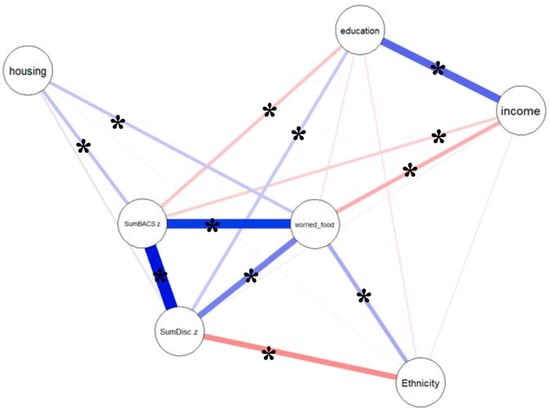
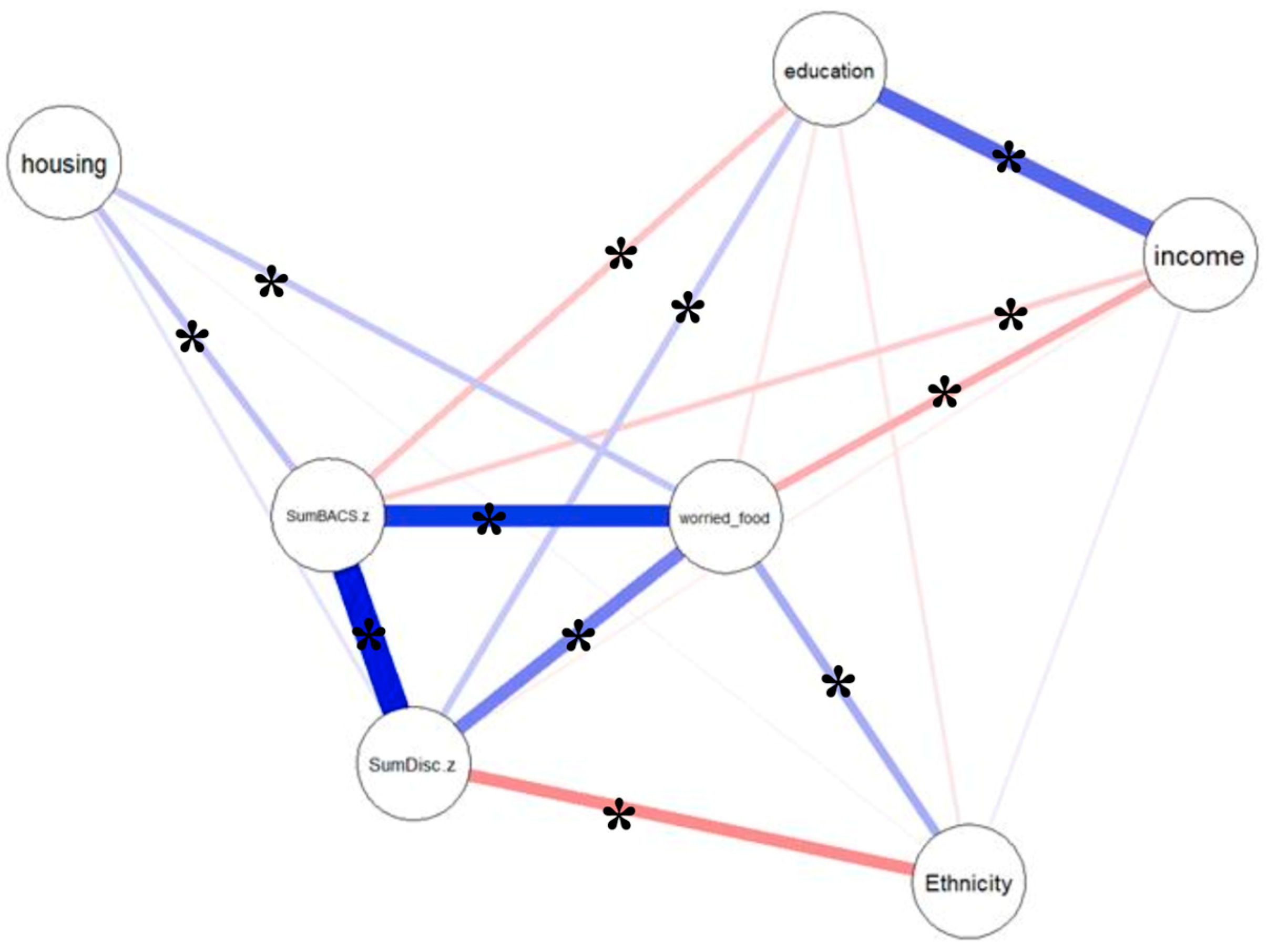
Figure 1 Network of Structural Constraints, Discrimination, and Barriers to Care.
Figure 1.
Network Analysis of Education, Income, Ethnicity, Food Insecurity, Housing Insecurity, Discrimination, and Barriers to Care. Note: Circles represent variables, lines/edges represent relationships between variables. A blue line indicates a positive relationship. A red line indicates a negative relationship. Opacity and thickness of an edge represents the strength of the relationship (i.e., thicker and more opaque is a stronger relationship). A star indicates that the edge weight/relationship between two variables was significant, based on confidence interval. The following are descriptions of each variable: housing = categorical housing type; education = categorical highest education level; income = categorical income bracket; SumBacs.z = z-scored Barriers to Care Scale score; worried_food = food insecurity; SumDisc.z = z-scored Everyday Discrimination score; Ethnicity = categorical ethnicity.
The structural constraints, discrimination, and barriers-to-care network model examines correlations among seven variables: education, income, ethnicity, food insecurity, housing insecurity, discrimination, and barriers to care (see Figure 1). The model highlights the strongest connection between food insecurity and barriers to care [CI 0.21, 0.30].
Ethnicity was significantly related to food insecurity [CI 0.10, 0.24], such that Latino individuals were more likely to indicate experiencing food insecurity and experience discrimination less often.
Housing type was associated with food insecurity [CI 0.02, 0.11], such that those who indicated that they had stable housing also tended to report experiencing food insecurity less often. Housing type was also related to barriers to care [CI 0.03, 0.10], such that those experiencing housing insecurity were more likely to report greater barriers to care. Income was negatively associated with food insecurity [CI −0.15, −0.06] and barriers to care [CI −0.08, −0.01]. Education was related to barriers to care [CI −0.10, −0.01], such that community members who reported a higher level of education also tended to indicate experiencing fewer barriers to care.
In terms of network centrality, food insecurity was the most central node with the highest strength (0.78), closeness (0.018), and betweenness (14) (see Table 2).
Table 2.
Centrality measures of variables in the network analysis.
3.3. Mixed Correlation Analysis Results
Table 3 presents mixed correlations among structural and sociodemographic conditions. Similar to the above network analysis findings, food insecurity was positively correlated with barriers to care (r = 0.332), discrimination (r = 0.251), ethnicity (r = 0.141), and housing instability (r = 0.125), and negatively correlated with income (r = −0.150) and education (r = −0.079). Barriers to care and discrimination were also positively correlated (r = 0.331), while education and income were positively correlated (r = 0.188), and discrimination and ethnicity were negatively correlated (r = −0.188). Other correlations were comparatively small.
Table 3.
Mixed correlation matrix among structural and sociodemographic conditions and food insecurity.
3.4. Results for Regression Analyses
The overall multiple regression model was statistically significant, F(6, 2612) = 65.80, p < 0.001, explaining approximately 13% of the variance in food insecurity (R2 = 0.131; adjusted R2 = 0.129) (see Table 4). Greater barriers to care (B = 0.171, p < 0.001), greater discrimination (B = 0.119, p < 0.001), Hispanic/Latino ethnicity (B = 0.230, p < 0.001), and greater housing instability (B = 0.025, p < 0.001) were associated with higher food insecurity. Higher income was associated with lower food insecurity (B = −0.026, p < 0.001). Education was marginally associated with food insecurity (B = −0.018, p = 0.077), with lower education corresponding to higher food insecurity.
Table 4.
Regression findings of race x variable interactions predicting food insecurity.
Additional regression models examined each structural or sociodemographic factor in interaction with race. In the model including barriers to care and race, greater barriers to care (B = 0.23, p < 0.001) and not being Black or African American (B = −0.14, p < 0.001) were associated with higher food insecurity, but the interaction between barriers to care and race was not significant (p = 0.92). Similarly, greater discrimination (B = 0.18, p < 0.001) and not being Black or African American (B = −0.21, p < 0.001) were associated with higher food insecurity, but the interaction between discrimination and race was not significant (p = 0.95).
In the ethnicity model, the association between ethnicity and food insecurity was marginal (B = 0.13, p = 0.08), such that Hispanic/Latino ethnicity was associated with higher food insecurity; the interaction between ethnicity and race was not significant (p = 0.77). In the model including education, the education-by-race interaction was also not significant (p = 0.46). However, education alone (B = −0.05, p < 0.05) and race alone (B = −0.22, p < 0.05) were both significantly related to food insecurity such that lower levels of education and not identifying as Black/African American were associated with higher levels of food insecurity.
In the housing model, housing alone was not significantly associated with food insecurity (B = 0.01, p = 0.34), while the interaction between housing instability and race was statistically significant (B = 0.03, p = 0.03), indicating that the association between housing instability and food insecurity depended on race. Specifically, participants who identified as Black or African American with insecure housing were more likely to experience food insecurity. In the income model, higher income was associated with lower food insecurity (B = −0.02, p < 0.05), and not being Black or African American was associated with higher food insecurity (B = −0.14, p < 0.05); the income-by-race interaction was not significant (p = 0.18).
4. Discussion
Our network analysis findings suggest that barriers to HIV prevention operate not as isolated challenges but as interconnected social and structural constraints that shape opportunities for engagement in HIV testing and PrEP. Complementary traditional analyses further highlighted that food insecurity demonstrated the most prominent relationship with multiple structural and sociodemographic conditions. In the correlation analysis, food insecurity was positively associated with barriers to care, discrimination, housing instability, and ethnicity and inversely associated with income and education. These patterns were further supported by the multivariate analysis, in which barriers to care, discrimination, Hispanic/Latino ethnicity, housing instability, and income remained associated with food insecurity after accounting for the other factors in the model. These findings suggest that unmet basic needs are embedded within a broader constellation of material and social constraints that may collectively influence access to HIV prevention resources. Rather than functioning independently, these barriers appear to cluster within HIV high-impact communities, potentially compounding challenges to prevention engagement.
These findings align with a structural vulnerability framework, which emphasizes how health opportunities are patterned by individuals’ positions within economic, social, and institutional arrangements [23,24]. From this perspective, food insecurity, housing instability, discrimination, and barriers to healthcare are not understood solely as individual-level disadvantages, but as conditions that may reflect broader distributions of material resources, institutional access, and social opportunity. Their interrelationships in the present study therefore provide empirical support for examining structural conditions relationally rather than treating each as an independent barrier to HIV prevention [35,50].
Across the network analysis, food insecurity emerged as having the highest strength, closeness, and betweenness centrality, and exhibited the strongest association with barriers to care. The complementary correlation and regression analyses similarly demonstrated relationships between food insecurity and various social, material, and access-related conditions. These patterns suggest that food insecurity may function as a central manifestation of structural vulnerability within communities experiencing disproportionate HIV burden. Rather than representing an isolated material hardship, food insecurity appears embedded within other forms of social and economic disadvantage that collectively shape opportunities for HIV prevention engagement.
Importantly, food insecurity may affect HIV prevention through several plausible pathways. When households face uncertainty about meeting their basic food needs, limited financial resources, time, and attention may be directed toward immediate necessities rather than preventive healthcare. Food insecurity may also coincide with transportation constraints, unstable housing, and difficulties accessing healthcare, making routine HIV testing, PrEP initiation, and continued engagement with prevention services more difficult, even when such services are available. These findings align with prior research showing that unmet basic needs may compete with preventive healthcare priorities and reduce sustained engagement in HIV prevention services [8,14,28,51].
Housing instability was also associated with food insecurity, including in the correlational and multivariable analyses. This finding suggests that housing precarity may coincide with challenges in meeting basic needs and accessing healthcare services. Consistent with prior HIV and housing research, unstable housing may reduce the feasibility of maintaining preventive healthcare engagement by increasing competing demands on time, resources, and service access. Housing instability may also complicate continuity of contact with healthcare systems, transportation planning, medication storage and routines, and the ability to prioritize preventive service engagement amid more pressing housing needs [26,31].
The complementary analyses also identified discrimination as an important correlate of material hardship and access to healthcare. Discrimination was positively correlated with food insecurity in the multivariable model. This pattern suggests that material hardship and experiences of unfair treatment may co-occur within HIV high-impact communities. Experiences of discrimination may shape trust in institutions, willingness to seek services, and access to economic opportunities, reinforcing broader patterns of structural disadvantage documented in HIV prevention research. Within HIV prevention systems and healthcare, the findings reinforce the importance of addressing not only the availability of services, but also whether services are accessible, trusted, and responsive to the lived experiences of the communities they are intended to reach.
Interpreting the results through a structural vulnerability lens highlights how individuals’ capacity to engage in HIV prevention is shaped by their position within systems of economic precarity, spatial inequality, and institutional access [23,25,32,40,52]. Structural vulnerability emphasizes that exposure to risk is systematically produced, and that material conditions such as food insecurity are embedded within broader configurations of disadvantage. In this study, food insecurity emerged as a central node within the estimated network, and with associations across the correlation and regression analyses. These findings suggest that it may serve as a key point through which multiple forms of instability converge, amplifying broader structural vulnerability experienced by some participants. Its network position should not be interpreted as showing that food insecurity causally produces other structural conditions or that solely intervening or addressing food insecurity would necessarily change the broader structural barriers in the healthcare system and HIV prevention efforts.
Latino ethnicity was positively associated with food insecurity in the correlation and multivariable analyses. Although this study was not designed to identify causal mechanisms, the finding is consistent with the literature demonstrating that migration experiences, language access challenges, and unequal access to economic resources may contribute to disparities in food security among Latino individuals [24,31].
4.1. Limitations and Strengths
Several limitations should be considered when interpreting these findings. First, network edges and centrality measures represent statistical relationships within the observed data. They should not be interpreted as causal pathways or evidence that changing a central node alone would produce changes elsewhere in the network. Second, reliance on self-reported measures may introduce reporting bias or misclassification. Third, the measures included in the network reflect the variables available from FPI surveys and therefore do not capture the full range of structural conditions that may shape HIV prevention. Food insecurity was operationalized using one USDA item, and the additional regression analyses should be interpreted considering this operationalization. The sample included participants from diverse racial and ethnic backgrounds, and therefore, the findings should not be interpreted as exclusive to any single population. Race was dichotomized for the exploratory interaction analysis as Black or African American versus not Black or African American, which obscures heterogeneity within these categories and should not be interpreted as representing homogeneous racialized experiences. Finally, the study was implemented within selected HIV high-impact Miami neighborhoods, but the present analyses did not directly model neighborhood-level or spatial variation.
Nonetheless, this study offers several meaningful strengths. It contributes methodologically by extending applications of network analysis in HIV research. Prior work has largely focused on psychosocial and individual-level determinants; in contrast, our approach uses network modeling to characterize interrelationships among measured structural and sociodemographic conditions [29,32,53]. By modeling relationships among co-occurring barriers, network analysis captures the relational construction of disadvantage that is not captured by examining bivariate or adjusted associations alone. Correlations characterize bivariate relationships, and regressions estimate associations with food insecurity while accounting for other operationalized factors, thus providing complementary analyses with different perspectives on structural vulnerability. These analyses can help explain why interventions targeting individual behaviors alone often yield limited impact in high-burden settings.
This study identified patterns that are consistent with scholarship on structural racism and neighborhood disadvantage, which demonstrates how health inequities are spatially concentrated and produced through overlapping systems of disinvestment and exclusion [19,20,28,52]. In HIV high-impact urban settings such as Miami, structural conditions, including economic deprivation, housing instability, and limited access to healthcare infrastructure, are patterned across places, shaping both disease prevalence and access to prevention resources [54,55]. Our findings extend this literature by empirically illustrating how these conditions cluster and reinforce one another within community contexts, rather than operating independently.
4.2. Future Directions
In the regression analyses, while race did not significantly modify the associations of food insecurity with barriers to care, discrimination, ethnicity, education, or income, the association between housing instability and food insecurity differed by race, indicating that the participants who identified as Black or African- American and lived in insecure housing were more likely to experience food insecurity more often. Given the exploratory nature of these analyses and the broad binary categorization of race used in the interaction models, future work should investigate the heterogeneity in structural conditions across racialized groups.
Network centrality alone cannot establish causal pathways or identify effective intervention targets. Future longitudinal, spatial, and intervention studies are needed to determine how these structural conditions change over time, vary across neighborhoods, and whether addressing highly connected conditions improves engagement in HIV prevention. Community-engaged research can further assess whether statistically central conditions align with priorities identified by residents and community organizations.
As a result of the study specifically targeting HIV high-impact Miami neighborhoods, with no direct model for neighborhood-level or spatial variation, future multilevel and spatial analyses are needed before concluding differences in these relationships across neighborhoods.
5. Conclusions
This study, using network analysis, demonstrates that barriers to HIV prevention are embedded within interconnected systems of structural constraint rather than operating as independent factors. Food insecurity, housing instability, and access-related barriers emerged as highly connected conditions central to this network, highlighting the importance of targeting dimensions and conditions of structural vulnerability rather than individual barriers in isolation.
For HIV prevention efforts within Ending the HIV Epidemic (EHE) priority jurisdictions, these results underscore the need for place-based, community-engaged strategies that extend beyond individual-level interventions. Approaches such as the Five Point Initiative (FPI), which embed prevention services within trusted community settings and partnerships, may be well-positioned to respond to the relational and interconnected nature of structural barriers. Integrating supports such as food access resources, transportation assistance, and linkage to social services may strengthen HIV prevention engagement across the prevention continuum.
Future longitudinal, spatial, and intervention research should examine how these structural conditions change over time and whether addressing highly connected conditions improves HIV prevention engagement. Advancing equity in HIV prevention will require sustained investment in strategies that address interconnected systems of disadvantage, rather than focusing solely on individual behavior change.
Author Contributions
Conceptualization, F.O.C. and S.K.D.; Methodology, S.K.D.; Formal analysis, F.O.C., M.W., V.P. and S.K.D.; Investigation, K.E., K.L., S.S., G.G. (George Gibson), K.N., R.B., G.G. (Gena Grant), A.T., R.R., N.G., C.W., A.P. and S.K.D.; Resources, S.K.D.; Data curation, V.P.; Writing—original draft, F.O.C. and M.W.; Writing—review & editing, F.O.C., M.W., J.O., K.E., K.L., S.S., G.G. (George Gibson), K.N., R.B., G.G. (Gena Grant), A.T., R.R., N.G., C.W., A.P., V.P. and S.K.D.; Supervision, S.K.D.; Project administration, K.E., K.L., S.S., G.G. (George Gibson), K.N., R.B., G.G. (Gena Grant), A.T., R.R., N.G., C.W., A.P. and S.K.D.; Funding acquisition, S.K.D. All authors have read and agreed to the published version of the manuscript.
Funding
The research reported in this publication, the principal investigator (Dr. Sannisha Dale), and several study team members were funded by the National Institute of Mental Health via an Administrative Supplement to Strategic Partnerships to End the HIV Epidemic in America’s Racial and Ethnic Minority Populations and administered through the Center for HIV and Research in Mental Health (P30 MH116867) at the University of Miami. Some team members were also supported by institutional funds (Dr. Sannisha Dale’s startup) from the University of Miami. The first author (Dr. Felicia O. Casanova) was also supported by the University of Miami Center for HIV and Research in Mental Health (CHARM; P30MH116867 and P30MH133399, funded by the National Institute of Mental Health). Dr. Felicia O. Casanova was additionally supported by the National Institute on Minority Health and Health Disparities under award K01MD019639 and by the National Institute of Mental Health through a postdoctoral training fellowship (T32MH126772). The manuscript content is solely the responsibility of the authors and does not necessarily represent the official views of the National Institutes of Health.
Institutional Review Board Statement
The study was conducted in accordance with the Declaration of Helsinki, and approved by the Institutional Review Board at the University of Miami (Approval Code: 20190791 & 20200878; Approval Dates: 16 September 2019 and 18 July 2020).
Informed Consent Statement
Informed consent was obtained from all subjects involved in the study.
Data Availability Statement
Please submit queries to the corresponding author. Data are not publicly available due to privacy and ethical considerations.
Acknowledgments
We have an immense amount of gratitude for all who contributed to this project—community residents/participants, community consultants, community businesses, community health partners, and all members of our study team. Businesses included NeNe Health, Ashraf Halal Meat and Grocery, Vision Hair Salon, Discount Beauty Supply, Ewash, Stoned2DaTee, Nubian, Joe’s Market, CC&S Caribbean Market, An Image Barber Shop/Salon, Inner City Barber and Beauty, Quick Stop, and Kingston Cuts, Pineapple Express and Chevron Gas Station, My Little Kitchen, Strawberry Grocery, Coin Laundry, Stop Mufflers tires and Rim/Lemon Pepper, Martin Tires, Beauty Exchange, Express Beauty Supply, Captain Fish+ Chips, Midway Supermarket, Caribbean Kitchen 305, Bahamian Pot, Royce Tires, Quick Stop, Hawt Gurl Summit, Joe’s Market, Happy Supermarket/Polo tires, Classy Lady Beauty Supply, Frank’s Unisex Barber Shop, Kwik Stop, 46 St Super Market, Super Beauty Discount, Food Plus Food Store, Fwuego Cuts, Psalm 23 Bill payments, Adi’s Kitchen, Caraf Oil food center, Miami Stadium Supermarket, Stop-n-save Food store, Quick stop, The Meat Store, Dollar$Claire, The Queen Laundry Service, Classy Lady Beauty Supply, MJ Delight, O and M Supermarket, Super stop food store, 54th street market, Horace Market, Kenneth David Apparel, Top Food Market, Raceway Gas Station, Rite Stop Grocery Store, 305 Elite Cutz Barber Shop, Express Stop Food store, Chavez Distributions, Sunco Gas Station, Laundry Station 24/7, MADD Cutler Unisex Salon, Express Beauty Supply Store, Waisted by Margo, Nubian Vibes, Moon Flower, Martiza Market, Just Right Barbershop, Volero Gas Station & U Gas, Shell Gas Station, BAWA, 5th Ave Food Market, Food Stores, and Brotherhood. Health organizations included the AIDS Healthcare Foundation, Empower “U” Inc., Borinquen Health Care Center, Florida Department of Health, Care Resource Community Health Centers Inc., Care4U Inc., and IDEA Syringe Exchange.
Conflicts of Interest
Unrelated to data in this manuscript, Dr. Dale was a co-investigator on a Merck & Co. funded project on “A Qualitative Study to Explore Biomedical HIV Prevention Preferences, Challenges and Facilitators among Diverse At-Risk Women Living in the United States” and has previously served as a workgroup consultant on engaging people living with HIV for Gilead Sciences, Inc. Authors Sherkila Shaw, George Gibson, Kalenthia Nunnally, Roxana Bolden, Gena Grant and Alecia Tramel found, led, or held leadership roles in the organizations Positive People Network, Inc, Flashlight of Hope, Inc., Blessing Hands Outreach, Inc. and Sister with a Testimony, Inc. The remaining authors declare that the research was conducted in the absence of any commercial or financial relationships that could be construed as a potential conflict of interest.
References
- HIV.gov. What Is Ending the HIV Epidemic in the U.S.? Available online: https://www.hiv.gov/federal-response/ending-the-hiv-epidemic/overview (accessed on 20 May 2026).
- De Marchis, E.H.; Torres, J.M.; Benesch, T.; Fichtenberg, C.; Allen, I.E.; Whitaker, E.M.; Gottlieb, L.M. Interventions Addressing Food Insecurity in Health Care Settings: A Systematic Review. Ann. Fam. Med. 2019, 17, 436–447. [Google Scholar] [CrossRef] [Scilit] [PubMed]
- Dow, D. Mapping Health Disparities: Leveraging Area-Based Deprivation Indices for Targeted Chronic Disease Intervention. Del. J. Public Health 2024, 10, 106–110. [Google Scholar] [CrossRef] [Scilit] [PubMed]
- Guilamo-Ramos, V.; Thimm-Kaiser, M.; Benzekri, A. Is the USA on Track to End the HIV Epidemic? Lancet HIV 2023, 10, e552–e556. [Google Scholar] [CrossRef] [Scilit] [PubMed]
- AIDSVu. HIV Prevalence in Miami-Dade County, Florida. Available online: https://aidsvu.org/local-data/united-states/south/florida/miami-dade-county/ (accessed on 12 January 2026).
- AIDSVu. AIDSVu Releases 2025 PrEP Data Showing Record High PrEP Use, Though Persistent Gaps in HIV Prevention Access and Uptake Remain. Available online: https://aidsvu.org/news-updates/aidsvu-releases-2025-prep-data/ (accessed on 6 September 2026).
- Butts, S.A.; Young, B.; Blackmon, J.; Doblecki-Lewis, S. Addressing Disparities in Pre-Exposure Prophylaxis (PrEP) Access: Implementing a Community-Centered Mobile PrEP Program in South Florida. BMC Health Serv. Res. 2023, 23, 1311. [Google Scholar] [CrossRef] [Scilit] [PubMed]
- Ojikutu, B.O.; Bogart, L.M.; Higgins-Biddle, M.; Dale, S.K.; Allen, W.; Dominique, T.; Mayer, K.H. Facilitators and Barriers to Pre-Exposure Prophylaxis (PrEP) Use Among Black Individuals in the United States: Results from the National Survey on HIV in the Black Community (NSHBC). AIDS Behav. 2018, 22, 3576–3587. [Google Scholar] [CrossRef] [Scilit] [PubMed]
- Kerr, J.; Smith, A.; Nzama, N.; Bullock, N.A.A.; Chandler, C.; Osezua, V.; Johnson, K.; Rozema, I.; Metzger, I.W.; Harris, L.M.; et al. Systematic Review of Neighborhood Factors Impacting HIV Care Continuum Participation in the United States. J. Urban Health 2024, 101, 31–63. [Google Scholar] [CrossRef] [Scilit] [PubMed]
- Kimaru, L.J.; Habila, M.A.; Mantina, N.M.; Madhivanan, P.; Connick, E.; Ernst, K.; Ehiri, J. Neighborhood Characteristics and HIV Treatment Outcomes: A Scoping Review. PLoS Glob. Public Health 2024, 4, e0002870. [Google Scholar] [CrossRef] [Scilit] [PubMed]
- Massey, D.S.; Wagner, B.; Donnelly, L.; McLanahan, S.; Brooks-Gunn, J.; Garfinkel, I.; Mitchell, C.; Notterman, D.A. Neighborhood Disadvantage and Telomere Length: Results from the Fragile Families Study. RSF Russell Sage Found. J. Soc. Sci. 2018, 4, 28–42. [Google Scholar] [CrossRef] [Scilit] [PubMed]
- Communities in Action: Pathways to Health Equity; The National Academies Press: Washington, DC, USA, 2017; ISBN 978-0-309-45296-0.
- Shaw, M.; Dorling, D.; Gordon, D.; Smith, G.D. Putting Time, Person and Place Together: The Temporal, Social and Spatial Accumulation of Health Inequality. Crit. Public Health 2001, 11, 289–304. [Google Scholar] [CrossRef] [Scilit]
- Berg, K.A.; Dalton, J.E.; Gunzler, D.D.; Coulton, C.J.; Freedman, D.A.; Krieger, N.I.; Dawson, N.V.; Perzynski, A.T. The ADI-3: A Revised Neighborhood Risk Index of the Social Determinants of Health over Time and Place. Health Serv. Outcomes Res. Methodol. 2021, 21, 486–509. [Google Scholar] [CrossRef] [Scilit]
- Brown, A.F.; Ma, G.X.; Miranda, J.; Eng, E.; Castille, D.; Brockie, T.; Jones, P.; Airhihenbuwa, C.O.; Farhat, T.; Zhu, L.; et al. Structural Interventions to Reduce and Eliminate Health Disparities. Am. J. Public Health 2019, 109, S72–S78. [Google Scholar] [CrossRef] [Scilit] [PubMed]
- Jonnalagadda, P.; Swoboda, C.M.; Fareed, N. Using Area-Level Measures of Social Determinants of Health to Deliver Improved and Effective Health Care. J. Hosp. Manag. Health Policy 2020, 4, 38. [Google Scholar] [CrossRef] [Scilit]
- Bailey, Z.D.; Krieger, N.; Agénor, M.; Graves, J.; Linos, N.; Bassett, M.T. Structural Racism and Health Inequities in the USA: Evidence and Interventions. Lancet 2017, 389, 1453–1463. [Google Scholar] [CrossRef] [Scilit] [PubMed]
- Krieger, N. Ecosocial Theory, Embodied Truths, and the People’s Health; Oxford University Press: New York, NY, USA, 2021; ISBN 978-0-19-751072-8. [Google Scholar]
- Riley, A.R. Neighborhood Disadvantage, Residential Segregation, and Beyond—Lessons for Studying Structural Racism and Health. J. Racial Ethn. Health Disparities 2018, 5, 357–365. [Google Scholar] [CrossRef] [Scilit] [PubMed]
- Brawner, B.M.; Kerr, J.; Castle, B.F.; Bannon, J.A.; Bonett, S.; Stevens, R.; James, R.; Bowleg, L. A Systematic Review of Neighborhood-Level Influences on HIV Vulnerability. AIDS Behav. 2022, 26, 874–934. [Google Scholar] [CrossRef] [Scilit] [PubMed]
- Kaalund, K.; Thoumi, A.; Bhavsar, N.A.; Labrador, A.; Cholera, R. Assessment of Population-Level Disadvantage Indices to Inform Equitable Health Policy. Milbank Q. 2022, 100, 1028–1075. [Google Scholar] [CrossRef] [Scilit] [PubMed]
- Duncan, D.T.; Hickson, D.A.; Goedel, W.C.; Callander, D.; Brooks, B.; Chen, Y.-T.; Hanson, H.; Eavou, R.; Khanna, A.S.; Chaix, B.; et al. The Social Context of HIV Prevention and Care among Black Men Who Have Sex with Men in Three U.S. Cities: The Neighborhoods and Networks (N2) Cohort Study. Int. J. Environ. Res. Public Health 2019, 16, 1922. [Google Scholar] [CrossRef] [Scilit] [PubMed]
- Singer, M.; Rylko-Bauer, B. Syndemics and Structural Violence. In The SAGE Handbook of Social Studies in Health and Medicine; Scrimshaw, S.C., Lane, S.D., Rubinstein, R.A., Fisher, J., Eds.; SAGE Publications Ltd.: London, UK, 2022; pp. 544–561. ISBN 978-1-5264-4066-2. [Google Scholar]
- Quesada, J.; Hart, L.K.; Bourgois, P. Structural Vulnerability and Health: Latino Migrant Laborers in the United States. Med. Anthropol. 2011, 30, 339–362. [Google Scholar] [CrossRef] [Scilit] [PubMed]
- Ratevosian, J.; Beyrer, C. Fundamental PEPFAR Reform Risks a Period of Structural Vulnerability in the HIV Response. Lancet 2026, 407, 1035–1038. [Google Scholar] [CrossRef] [Scilit] [PubMed]
- Blankenship, K.M.; Rosenberg, A.; Schlesinger, P.; Groves, A.K.; Keene, D.E. Structural Racism, the Social Determination of Health, and Health Inequities: The Intersecting Impacts of Housing and Mass Incarceration. Am. J. Public Health 2023, 113, S58–S64. [Google Scholar] [CrossRef] [Scilit] [PubMed]
- Kimmel, A.D.; Masiano, S.P.; Bono, R.S.; Martin, E.G.; Belgrave, F.Z.; Adimora, A.A.; Dahman, B.; Galadima, H.; Sabik, L.M. Structural Barriers to Comprehensive, Coordinated HIV Care: Geographic Accessibility in the US South. AIDS Care 2018, 30, 1459–1468. [Google Scholar] [CrossRef] [Scilit] [PubMed]
- Rimmler, S.; Golin, C.; Coleman, J.; Welgus, H.; Shaughnessy, S.; Taraskiewicz, L.; Lightfoot, A.F.; Randolph, S.D.; Riggins, L. Structural Barriers to HIV Prevention and Services: Perspectives of African American Women in Low-Income Communities. Health Educ. Behav. 2022, 49, 1022–1032. [Google Scholar] [CrossRef] [Scilit] [PubMed]
- Sharma, R.; Dale, S.K. Using Network Analysis to Assess the Effects of Trauma, Psychosocial, and Socioeconomic Factors on Health Outcomes Among Black Women Living with HIV. AIDS Behav. 2023, 27, 400–415. [Google Scholar] [CrossRef] [Scilit] [PubMed]
- United States Department of Agriculture—Economic Research Service. Food Security in the U.S. Available online: https://www.ers.usda.gov/topics/food-nutrition-assistance/food-security-in-the-u-s/ (accessed on 12 January 2026).
- Charkhchi, P.; Fazeli Dehkordy, S.; Carlos, R.C. Housing and Food Insecurity, Care Access, and Health Status Among the Chronically Ill: An Analysis of the Behavioral Risk Factor Surveillance System. J. Gen. Intern. Med. 2018, 33, 644–650. [Google Scholar] [CrossRef] [Scilit] [PubMed]
- Willen, S.S.; Knipper, M.; Abadía-Barrero, C.E.; Davidovitch, N. Syndemic Vulnerability and the Right to Health. Lancet 2017, 389, 964–977. [Google Scholar] [CrossRef] [Scilit] [PubMed]
- Jeffries, N.; Zaslavsky, A.M.; Diez Roux, A.V.; Creswell, J.W.; Palmer, R.C.; Gregorich, S.E.; Reschovsky, J.D.; Graubard, B.I.; Choi, K.; Pfeiffer, R.M.; et al. Methodological Approaches to Understanding Causes of Health Disparities. Am. J. Public Health 2019, 109, S28–S33. [Google Scholar] [CrossRef] [Scilit] [PubMed]
- Williams, D.R.; Yu, Y.; Jackson, J.S.; Anderson, N.B. Racial Differences in Physical and Mental Health: Socio-Economic Status, Stress and Discrimination. J. Health Psychol. 1997, 2, 335–351. [Google Scholar] [CrossRef] [Scilit] [PubMed]
- Dale, S.K.; Ayala, G.; Logie, C.H.; Bowleg, L. Addressing HIV-Related Intersectional Stigma and Discrimination to Improve Public Health Outcomes: An AJPH Supplement. Am. J. Public Health 2022, 112, S335–S337. [Google Scholar] [CrossRef] [Scilit] [PubMed]
- Luke, D.A.; Harris, J.K. Network Analysis in Public Health: History, Methods, and Applications. Annu. Rev. Public Health 2007, 28, 69–93. [Google Scholar] [CrossRef] [Scilit] [PubMed]
- Epskamp, S.; Borsboom, D.; Fried, E.I. Estimating Psychological Networks and Their Accuracy: A Tutorial Paper. Behav. Res. Methods 2018, 50, 195–212. [Google Scholar] [CrossRef] [Scilit] [PubMed]
- Hevey, D. Network Analysis: A Brief Overview and Tutorial. Health Psychol. Behav. Med. 2018, 6, 301–328. [Google Scholar] [CrossRef] [Scilit] [PubMed]
- Dale, S.K.; Etienne, K.; Hall, S.; Lazarus, K.; Nunnally, K.; Gibson, G.; Bolden, R.; Gardner, N.; Sanders, J.; Reid, R.; et al. Five Point Initiative: A Community-Informed Bundled Implementation Strategy to Address HIV in Black Communities. BMC Public Health 2023, 23, 1625. [Google Scholar] [CrossRef] [Scilit] [PubMed]
- Giroir, B.P. The Time Is Now to End the HIV Epidemic. Am. J. Public Health 2020, 110, 22–24. [Google Scholar] [CrossRef] [Scilit] [PubMed]
- Heckman, T.G.; Somlai, A.M.; Peters, J.; Walker, J.; Otto-Salaj, L.; Galdabini, C.A.; Kelly, J.A. Barriers to Care among Persons Living with HIV/AIDS in Urban and Rural Areas. AIDS Care 1998, 10, 365–375. [Google Scholar] [CrossRef] [Scilit] [PubMed]
- Bickel, G.; Nord, M.; Price, C.; Hamilton, W.; Cook, J. Guide to Measuring Household Food Security, Revised 2000; U.S. Department of Agriculture, Food and Nutrition Service: Alexandria, VA, USA, 2000.
- R Core Team. R: A Language and Environment for Statistical Computing. 2021. Available online: https://www.scirp.org/reference/referencespapers?referenceid=3131254 (accessed on 6 September 2026).
- Posit Team. RStudio: Integrated Development Environment for R. 2024. Available online: https://www.scirp.org/reference/referencespapers?referenceid=3810421 (accessed on 6 September 2026).
- Bozzo, E.; Franceschet, M. Resistance Distance, Closeness, and Betweenness. Soc. Netw. 2013, 35, 460–469. [Google Scholar] [CrossRef] [Scilit]
- Epskamp, S.; Cramer, A.O.J.; Waldorp, L.J.; Schmittmann, V.D.; Borsboom, D. Qgraph: Network Visualizations of Relationships in Psychometric Data. J. Stat. Softw. 2012, 48, 1–18. [Google Scholar] [CrossRef] [Scilit]
- Friedman, J.; Hastie, T.; Tibshirani, R. Glasso: Graphical Lasso: Estimation of Gaussian Graphical Models. 2019. Available online: https://cran.r-project.org/web/packages/glasso/index.html (accessed on 6 September 2026).
- Shi, J.-J.; Wang, Y.-L.; He, D.-R. An Investigation into Node Strength Connectivity Correlation. Chin. Phys. Lett. 2009, 26, 078902. [Google Scholar] [CrossRef] [Scilit]
- Revelle, W. Psych: Procedures for Psychological, Psychometric, and Personality Research. 2012. Available online: https://rdrr.io/cran/psych/ (accessed on 6 September 2026).
- Bowleg, L. The Problem With the Phrase Women and Minorities: Intersectionality—an Important Theoretical Framework for Public Health. Am. J. Public Health 2012, 102, 1267–1273. [Google Scholar] [CrossRef] [Scilit] [PubMed]
- Gupta, G.R.; Parkhurst, J.O.; Ogden, J.A.; Aggleton, P.; Mahal, A. Structural Approaches to HIV Prevention. Lancet 2008, 372, 764–775. [Google Scholar] [CrossRef] [Scilit] [PubMed]
- Pleuhs, B.; Quinn, K.G.; Walsh, J.L.; Petroll, A.E.; John, S.A. Health Care Provider Barriers to HIV Pre-Exposure Prophylaxis in the United States: A Systematic Review. AIDS Patient Care STDs 2020, 34, 111–123. [Google Scholar] [CrossRef] [Scilit] [PubMed]
- Boga, D.J.; Juste, R.S.; Etienne, K.; Dale, S.K. Using Network Analysis to Elucidate the Relationships among Support Systems, Trauma and Depressive Symptoms, Self-Silencing, and Risk of HIV Viral Non-Suppression among Black Women Living with HIV. J. Behav. Med. 2025, 48, 268–279. [Google Scholar] [CrossRef] [Scilit] [PubMed]
- Peprah, E.; Caler, E.; Snyder, A.; Ketema, F. Deconstructing Syndemics: The Many Layers of Clustering Multi-Comorbidities in People Living with HIV. Int. J. Environ. Res. Public Health 2020, 17, 4704. [Google Scholar] [CrossRef] [Scilit] [PubMed]
- Weiser, S.D.; Young, S.L.; Cohen, C.R.; Kushel, M.B.; Tsai, A.C.; Tien, P.C.; Hatcher, A.M.; Frongillo, E.A.; Bangsberg, D.R. Conceptual Framework for Understanding the Bidirectional Links between Food Insecurity and HIV/AIDS. Am. J. Clin. Nutr. 2011, 94, 1729S–1739S. [Google Scholar] [CrossRef] [Scilit] [PubMed]

Disclaimer/Publisher’s Note: The statements, opinions and data contained in all publications are solely those of the individual author(s) and contributor(s) and not of MDPI and/or the editor(s). MDPI and/or the editor(s) disclaim responsibility for any injury to people or property resulting from any ideas, methods, instructions or products referred to in the content. |
© 2026 by the authors. Licensee MDPI, Basel, Switzerland. This article is an open access article distributed under the terms and conditions of the Creative Commons Attribution (CC BY) license.