


Abstract
Background: Cholera remains a persistent and deadly global public health challenge. Recent resurgences have caused large-scale outbreaks. Due to gaps in public health risk awareness, effective risk communication using the HBM is now critical for cholera control and prevention. During the 2024 cholera outbreak, Lagos Island residents mainly relied on social media peers to exchange risk information. This study examined cholera risk perception among residents in the hotspot areas, established how the six HBM constructs were used in the cholera-related social media peer interactions, identified dominant cues to action in social media peer interactions, and established the association between exposure to peer-generated cholera messages and risk perception and the adoption of preventive behaviours. Methods: This is a cross-sectional study that combined a survey of social media users on Lagos Island and a quantitative content analysis of Facebook and X posts during the outbreak. A total of 350 Lagos Island residents were surveyed using a multi-stage cluster sampling strategy; 540 Facebook posts and 894 X tweets were content-analysed from a large corpus of data scraped from the platforms. Results: Findings showed high exposure to peer-generated cholera messages and cues to action on X and Facebook. HBM constructs appeared in varying proportions across platforms. ANOVA results and Games–Howell post-hoc comparisons showed a statistically significant difference in average engagement across the HBM constructs [p < 0.05]. Chi-square tests indicated a significant association between exposure to peer-generated cues to action and the adoption of cholera health behaviours [p < 0.05]. Conclusions: The study concluded that social media peer communication was significantly associated with residents’ understanding and perception of cholera risk during the outbreak. Health agencies should identify influential local voices on X and Facebook and assimilate them into public health communication strategies to strengthen the relevance, resonance, and effectiveness of digital health messages in outbreak contexts.
1. Theoretical Framework and Epistemological Foundation
1.1. Introduction and State of the Art
Cholera remains a persistent and deadly global public health challenge, evidenced by the recent resurgence of large-scale outbreaks, especially in resource-limited and conflict-affected regions [1]. Despite ongoing efforts in prevention and treatment, recurrent global outbreaks in recent years have resulted in significant mortality and morbidity among vulnerable populations in more than one-third of the world’s countries [2]. Reports estimate about 2.6 million cases per year, resulting in approximately 95,000 deaths in endemic 69 countries [2]. Between January and May 2026, 68,749 cholera cases, including 944 deaths, were reported worldwide [3]. These persistent outbreaks have been compounded by population displacement, poor sanitation, rapid urbanisation, climate-related disasters, especially in populations with limited access to clean water and medical treatment, and gaps in public health risk awareness [1,4,5,6].
Therefore, effective risk communication has become a critical element of cholera control and prevention efforts alongside biomedical interventions [7,8,9] as individuals’ perceptions of their susceptibility to and the severity of the disease have been found to influence their adoption of preventive health behaviours [10]. Research has also shown that during outbreaks, information and cues to action shared through various communication channels are critical to shaping the public understanding of health risks and inspiring preventive actions [11,12,13]. At a time when digital technologies are increasingly mediating health information exchange, social media has become a primary information ecosystem where individuals obtain, discuss, and share outbreak-related information, making it relevant to examining risk communication and public responses to cholera outbreaks such as the 2024 outbreak in Nigeria.
Cholera has been endemic in Nigeria since it first appeared in 1972 [14,15], and it remains a significant public health concern, especially in communities with inadequate water treatment, poor sanitation, and poor hygiene practices [16]. The most recent cholera outbreak was in 2024, when Nigeria recorded 19,452 suspected cases and 711 deaths, with a case fatality rate of 3.7% [14,17]. During the outbreak, Lagos State recorded the highest number of suspected cases in Nigeria. With 4667 cases, the state accounted for 43 per cent of the 10,837 suspected cases recorded in 35 states and the Federal Capital Territory [FCT] as of 29 September. Lagos Island local government area (LGA) (596 cases) was a major epicentre for the 2024 cholera outbreak in Nigeria, contributing significantly to the high number of cases in Lagos and accounting for 5% of all suspected cases reported in the country [18]. These have led to urgent calls for cholera prevention by increasing risk awareness and facilitating better public health action against cholera in Nigeria [14,19].
The Nigerian government and key stakeholders in the healthcare sector have used various communication methods to convey cholera risks and prevention protocols [14,20,21]. During the 2024 cholera outbreak, the Federal Government of Nigeria, through the instrumentality of the Nigeria Centre for Disease Control (NCDC), used mainstream and social media to communicate to Nigerians about cholera risk and prevention strategies to help control the spread of cholera. However, residents largely turned to their social media networks for enlightenment, practical guidance, and assurances [22] for two vital reasons: official updates and response capacity from health authorities do not keep pace with the rapid spread of cholera and public anxiety around it [23], and Nigerian health journalists lack the knowledge necessary to accurately and effectively disseminate health information [24]. Moreover, the 2024 cholera outbreak in Lagos, Nigeria, happened within an increasingly digital communication environment where social media platforms have become primary channels for public discourse, information seeking, and peer health communication.
Peer health communication is the exchange of health-related information between individuals of similar age, status, community, or health concerns. Given their ability to enable users to connect and exchange information with peers [25], social media platforms allow users to access health-related content published by peers and interact with them for health information or support [26,27]. Recent studies have noted a rise in the peer-to-peer sharing of health information on social media and other online settings, largely attributable to increased media literacy [28] and the emergence and the widespread societal impacts of COVID-19 [16]. Members of online communities may now find it more acceptable to receive health information and advice from peers [29,30].
While there is abundant empirical evidence that social media has become a crucial tool for disseminating health information [31,32,33] and that social media are utilised for peer communication during a particular disaster [34], what remains unclear, however, is whether and how peer-generated cholera-related contents on social media functioned as a cue to action and social influence in shaping people’s risk perception and preventive behaviours during the 2024 cholera outbreak, particularly in hotspot communities in Lagos, Nigeria. This was examined in this study using the Health Belief Model (HBM), which posits that individual’s health behaviours are associated with their perceptions of susceptibility of a health threat, beliefs about the likelihood of getting a disease or condition; the severity of its consequences, beliefs about the seriousness of contracting a diseases or condition, including the consequences; the benefits of taking action, beliefs about the positive aspects of adopting a health behaviour (e.g., efficacy of the behaviour for reducing risk or serious consequences); the barriers to doing so, beliefs about the obstacles to performing a behaviour and the negative aspects (both tangible and psychological costs) of adopting a health behaviour; cues to action, internal and external stimuli that could trigger the health behaviour; and self-efficacy, beliefs that one can perform the recommended health behaviour [31,35,36]. This framework is significant in examining cholera risk perception and prevention in peer interactions because research has shown that people adopt and sustain health-related habits through social influence and peer modelling [37,38].
The classical way to apply the HBM is through surveys, examining the relationship between people’s beliefs and their health behaviours [39], but critics have stated that with social media becoming an extremely important space for health promotion, only using the survey method to study HBM would lose valuable and rich information on social media [40]. Moreover, surveys could be influenced by social desirability bias, and participants could answer questions in a socially desirable way [40]. As a result of these limitations, Mao et al. [40] situated their study on social media and content-analysed HBM constructs in COVID-19-related tweets on X, arguing that people’s engagement on social media could more realistically reflect their true attitudes and interests due to anonymity. However, the lack of integration of the two methods in a single study means that little is known about the association between self-reported individual cholera risk perceptions during an outbreak and the social contexts in which those perceptions emerge. Therefore, unlike previous studies that examined the audience and social media separately, this study collected concurrent data from the audience and social media. Data from a survey of residents in Lagos Island, a cholera hotspot during the outbreak, were used to examine how individuals’ self-assessment of their susceptibility to cholera, the severity of cholera, benefits of a prevention protocol in preventing cholera, barriers related to the adoption of suggested prevention protocols, self-efficacy of successfully implementing the recommended health behaviour, and cues to action towards adopting prevention protocols is associated with their decision to adopt or disregard cholera prevention protocols. This was followed by scraping data from social media to help the researchers gain insights into how the six HBM constructs were used in the cholera-related posts and how peer interactions during the outbreak are linked to cholera-related health behaviour.
Of particular interest in this study are X (formerly Twitter) and Facebook, as research has identified them as two of the most popular and preferred social media platforms in Nigeria [41,42]. These platforms are a vibrant source of peer-to-peer communication that enables users to access health-related content, interact with others for information, and share experiences or seek social support [26]. Moreover, as platforms for macro-level storytelling that elicit immediate feedback and support [43], X and Facebook have proven to be major tools for communication during emergencies and disasters [44,45]. Understanding how peer-driven social media exchanges on X and Facebook served as cues to action is therefore crucial for explaining patterns of risk perception and social influences on the adoption of cholera prevention protocols during the outbreak and for strengthening the application of the Health Belief Model to contemporary public health crises in urban Nigerian settings.
Therefore, the objectives of this research include to assess patterns of peer communication on social media during the outbreak; examine cholera risk perception—including perceived susceptibility, severity, benefits, barriers, and self-efficacy—among residents in hotspot areas; establish how the six HBM constructs were used in the cholera-related social media peer interactions during the outbreak; identify dominant cues to action in social media peer interactions during the outbreak; and know if peer-generated cholera messages are associated with risk perception and preventive behaviours.
1.2. Theoretical Framework
This study is underpinned by the Health Belief Model (HBM), developed in the 1950s by Hochbaum, Rosenstock, and Kegeles to provide insights into why people make certain health-related decisions and how various factors influence their motivations. It is relevant in studying whether social media peer-generated cholera posts and interactions can become a cue to action and a social influence in shaping people’s risk awareness and their perception of the urgency of adopting preventive behaviours in an acute pandemic context. The model has become a fundamental framework for health communication.
Research has demonstrated that health communication is central to disease prevention by enabling individuals and communities to obtain, understand, and use information about health risks [7,8]. This is particularly important during health emergencies because of the need for the timely exchange of information, advice, and opinions among key stakeholders and affected populations to enable informed decision-making and facilitate appropriate changes in behaviour [22]. The Crisis and Emergency Risk Communication (CREC) framework, developed by the US Center for Disease Control and Prevention in 2002, provides a foundation for understanding communication in emergency contexts by emphasising the need for communication that responds to changing needs across all phases of a public health crisis [46], thereby complementing Quarantelli’s sociological understanding of disasters, which illustrates that people do not respond to emergencies only as isolated individuals but also through social, community, and communication processes [47,48].
These emergency response processes have been expanded by the emergence of digital platforms, which allow individuals to search for, interpret, produce, and share real-time health information with their peers. In the digital environment, individuals can negotiate risks, interpret information, exchange experiences, and influence how their peers respond to health threats. This perspective aligns with Norman and Skinner’s eHealth literacy framework, which highlights the skills to seek, find, understand, and evaluate health information from electronic sources and apply the knowledge gained to address or solve a health problem [49,50]. Thus, in an outbreak context, social media users may function concurrently as recipients, interpreters, and producers of health risk information.
However, the snag with the social media environment is that it presents a vital tension between trust and risk. While there is evidence that peer-generated information may be seen as more relatable, immediate, and trustworthy because they are produced by existing social networks [22,23,51], they are also known to facilitate the rapid spread of rumours, disinformation, and misinformation and to generate mistrust, confusion, and risk-taking behaviours during outbreaks [52]. Research in a Global South country has confirmed the risk of social media in propagating erroneous and imprecise information, anti-vaccine propaganda, and conspiracy theories [53]. Therefore, social media peer-generated interactions can either reinforce appropriate risk perceptions and preventive actions, or they can undermine them.
1.3. Hypotheses
H1.
The average user engagement on social media does not vary significantly based on the Health Belief Model (HBM) constructs featured in cholera posts.
H2.
Exposure to peer-generated cues to action on social media is not significantly associated with the adoption of cholera health behaviour.
2. Materials and Methods
2.1. Research Design
A cross-sectional research design that combined a questionnaire survey with a quantitative content analysis was adopted in this study. It is cross-sectional as it collected both datasets at a single specific point in time to demonstrate patterns of peer communication and risk perception during the outbreak. The survey investigated respondents’ risk perception and health behaviour, while the content analysis examined cholera-related peer communications in the social media environment. X and Facebook were chosen for the social media phase because they are two of the most popular and preferred social media platforms in Nigeria [41,42] and are vibrant sources of peer-to-peer communication during health emergencies [26,44,45]. Moreover, both platforms are heavily adopted by millennial users, who make up over 70% of the study population.
2.2. Research Method
The two parallel methods used in this cross-sectional study included a quantitative content analysis of cholera-related posts on Facebook and X and a structured survey of residents of Lagos Island. The two datasets were gathered concurrently, and each was used independently to meet distinct research objectives. They helped the researchers to understand the association between social media peer communication and cholera risk perception during the 2024 outbreak in Lagos, Nigeria, at both population and platform levels, and strengthen the rigour of the study.
Cholera-related posts and tweets were scraped from Facebook using the Meta Content Library and API and X using Octoparse Version 10.2.0, which enabled the researchers to easily collect data from various web sources without complex coding. On Octoparse, the data were collected in relation to the Twitter Advanced Search Scraper’s applicable terms and data access policies: the researchers scraped only conversation-level public tweets and comments that are accessible. The Meta Content Library and API provided comprehensive access to only public content archives from Facebook pages, events, and profiles that meet specific follower or verification thresholds.
The search targeted posts/tweets, usernames and engagement metrics. The keywords used included “cholera,” “outbreak,” “Lagos Island cholera,” “Eti-Osa cholera,” “Ikoyi cholera,” “Victoria Island cholera,” “2024 cholera,” “Lagos cholera response,” “cholera epidemic,” and “cholera outbreak”. Boolean operators (AND, OR) were used to combine some keywords. The time frame scraped was between 9 June and 31 December 2024 (the period of the outbreak). After scraping the data from X and Facebook, they were cleaned to remove redundancies, personally identifiable information, and broken entries. The information was structured and stored in MongoDB and fed into SPSS Version 23, where they were analysed. The structure included grouping the coded data according to the following: platform (Facebook or X), user engagement (likes, retweets, quotes, replies, and bookmarks for X; reactions, shares, and comments for Facebook; volume and frequency for X and Facebook), cues to action (warnings, testimonials on family or personal experiences, advice, and community alerts/call to action), and other HBM constructs (susceptibility, severity, benefits, barriers, and self-efficacy).
A post-scraping categorisation was done using Fabi.ai (Fabi 2.0 platform architecture), a web-based AI-powered data analysis platform. The CSV of all the data scraped from Facebook and X was uploaded into the AI tool and instructed to categorise them into the HBM constructs that they matched, such as susceptibility, severity, benefits, barriers, self-efficacy, and cues to action. To validate the automated classification, two independent coders, blinded to the AI results, randomly coded a subset (20%) of the classified data. A percentage assessment to compare the AI classification with their human coding yielded a 97% agreement, indicating a high level of agreement. The prompts used are contained in Table 1.
A structured questionnaire was administered by three co-authors of this article over eight days to eligible residents of Lagos Island who lived on the Island during the 2024 cholera outbreak and who have used X or Facebook for at least two years. The administration of the instrument started on 23 January 2025 and ended on 30 January 2025. This was at the turn of the new year to avoid any recall bias that might affect the collection of factual data from the respondents. The instrument assessed exposure levels; peer communication frequency; exposure to peer-generated cues; self-reports of HBM constructs, including perceived susceptibility, severity, benefits, barriers, and self-efficacy; the relationship between social media exposure and risk perception; the association between social media messages and peers on preventive behaviours; and demographic and contextual factors that shaped exposure to peer communication, message interpretation, and risk perception and behaviour.
2.3. Operationalisation of HBM Constructs
Table 1 shows how the HBM constructs were operationalised in this study. It also includes the prompts that were used to categorise the scraped data into the HBM constructs that they matched on Fabi.ai.
Table 1.
Operationalisation and categorisation of the HBM constructs.
2.4. Population
The survey population included adult users of X and Facebook residing in Lagos Island. In the absence of official statistics on platform-specific users at the local level, the 2022 Lagos Island population estimate of 314,900 [54] was used as the accessible population frame.
The population for the content analysis included all cholera-related tweets and posts generated within the study period (9 June–31 December 2024). The scraping yielded a corpus of 1911 tweets from X and 1172 from Facebook. These formed the sampling frame for content analysis.
2.5. Sample Size
For the survey, using the Krejcie and Morgan [55] table for sample size determination for a known population, a sample of 384 respondents was deemed appropriate for a population of 314,900.
For the content analysis, a 50% systematic sample of posts and tweets was selected from each platform as follows: 956 tweets (50% of 1911) and 586 Facebook posts (50% of 1172). This proportion exceeds the suggested sample size in quantitative content analysis for large datasets [56,57] because of the need to include more posts and tweets that will facilitate a robust analysis and to increase the rigour of this study.
2.6. Sampling Technique
For the survey, a multi-stage cluster sampling strategy was combined with purposive selection to ensure representative and targeted coverage: firstly, 19 streets [10%] were randomly selected from the 185 streets identified in Lagos Island; secondly, houses on each selected street were sampled systematically using a skip interval of 5; and lastly, one eligible respondent per household was selected, but where multiple households existed, one was chosen at random. The inclusion criteria were that only active users of X or Facebook for a minimum of 2 years were purposively included to ensure platform familiarity, and only those who lived on Lagos Island during the 2024 cholera outbreak in Nigeria were included to ensure that informed insights were obtained.
For the content analysis, systematic sampling with a skip interval of 2 was used to select tweets and Facebook posts sequentially from the scraped dataset.
2.7. Research Instruments and Reliability
A structured questionnaire made up of closed-ended questions was developed for the survey, while the code sheet was used to record data from the content analysis. For the questionnaire, a pilot test was conducted using repeated administration of the questionnaire to the same group of respondents (in Landmark University, Nigeria) within a one-week interval. Reliability tests for the six HBM subscales using SPSS demonstrated acceptable internal consistency, with Cronbach’s Alpha coefficient ranging from 0.76 to 0.82 (perceived susceptibility, α = 0.78; perceived severity, α = 0.81; perceived benefits, α = 0.80; perceived barriers, α = 0.76; cues to action, α = 0.82; and perceived self-efficacy, α = 0.77).
For the content analysis, two graduate students of Political Science and Mass Communication, both fluent in pidgin and standard English, coded all the scraped files. The inter-coder reliability of the two coders was calculated by double-coding a random subsample of 59 (5%) Facebook posts. Krippendorff’s alpha was used to assess inter-coder reliability of the six HBM variables (susceptibility, severity, benefits, barriers, cues to action, and self-efficacy), and the coefficient ranged from 0.80 to 1.0, indicating moderate to perfect agreement [58], confirming the reliability of the coding protocol.
2.8. Data Collection and Analysis
Out of the 384 copies of the survey questionnaire that were administered and retrieved, 34 (8.9%) were not usable because 18 respondents selected multiple answers for single-choice questions, 16 handed back their copies without answering most of the critical questions, and 350 (91.1%) copies were usable. For the content analysis, a total of 586 (50%) Facebook posts and 956 (50%) tweets from X were systematically selected (using a skip interval of 2) from the large corpus of scraped data and analysed for various content patterns. However, 46 Facebook posts and 62 X tweets were removed because they contained more than one HBM construct. The researchers needed to ensure that each post belonged exclusively to one construct in order to maintain the independence assumption of the one-way ANOVA. Therefore, 540 Facebook posts and 894 tweets from X were analysed.
Descriptive statistics, including frequencies, percentages, means, and standard deviations, were used to summarise survey responses and digital content data. Post-level mean engagement and standard deviations were calculated separately for Facebook and X due to the differences in the engagement structures and metrics of the two platforms. Similarly, one-way ANOVA was used separately for Facebook and X to examine the differences in post-level user engagement across the Health Belief Model (HBM) constructs. Games–Howell post-hoc comparisons were subsequently conducted to identify the specific HBM constructs that differed significantly in mean engagement. Eta squared (η2) was used to estimate the effect size of the ANOVA.
In the one-way ANOVA, a case was defined as an individual cholera-related post on Facebook and X during the study period. Each post represented a unit of analysis and was assigned an HBM construct based on its coded content; its corresponding user engagement score was recorded as the dependent variable.
Chi-square tests of independence were conducted to examine associations between exposure to peer-generated cues to action and participants’ reported change in cholera health behaviour. Cramer’s V was used to test the strength of the association.
All statistical tests were evaluated at the 0.05 level of significance.
2.9. Ethical Considerations
Informed consent was obtained from respondents by administering a signed consent form attached to the questionnaire that explained the study’s purpose and contained ethical principles, a consent statement, and a signature/date. For the content analysis, consent was not required because only publicly accessible social-media information was scraped and did not involve interaction with users or access to restricted content [59]. The researchers acknowledged that information provided on social media that is intentionally public is considered in the public domain and usable, but the identity of the users should be protected [59]. Therefore, public accessibility was not considered automatic consent; the researchers also considered the intended public nature of the posts/tweets, potential identifiability and sensitivity, and potential risks to users. Also, the data collected were limited to information necessary for the content analysis. All direct identifiers were expunged from the datasets before analysis.
3. Results
3.1. Quantitative Survey Results
3.1.1. Respondents’ Demographic Characteristics
The distribution of the respondents’ demographic characteristics in Table 2 shows that most of the respondents for this study were male, married, millennials, and civil/public servants and had a tertiary education. The majority have lived in the study area for between 5 and 7 years and considered themselves highly competent in the use of social media. This confirms that Lagos is an increasingly digital communication environment and that the respondents were educated enough to understand the dynamics of peer communication, message interpretation, and risk perception and behaviour.
Table 2.
Distribution of respondents’ demographic data.
3.1.2. Social Media Peer Communication During the Outbreak
Table 3 shows a high level of exposure to cholera-related messages shared by peers on X and Facebook. A majority of respondents (60%) reported exposure to a large extent, while 24% experienced exposure to an average extent. The findings suggest that the cholera outbreak generated an intensely active and highly penetrative peer communication environment, providing participants with abundant informational context for understanding risk and responding appropriately.
Table 3.
Extent of exposure to cholera messages by peers on X/Facebook.
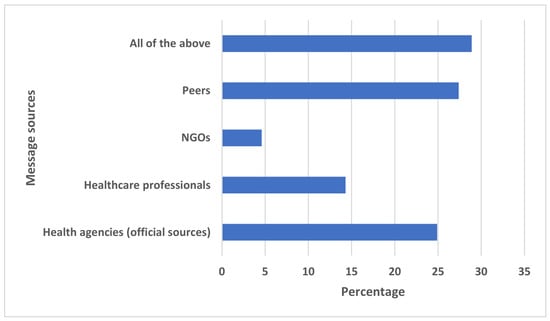
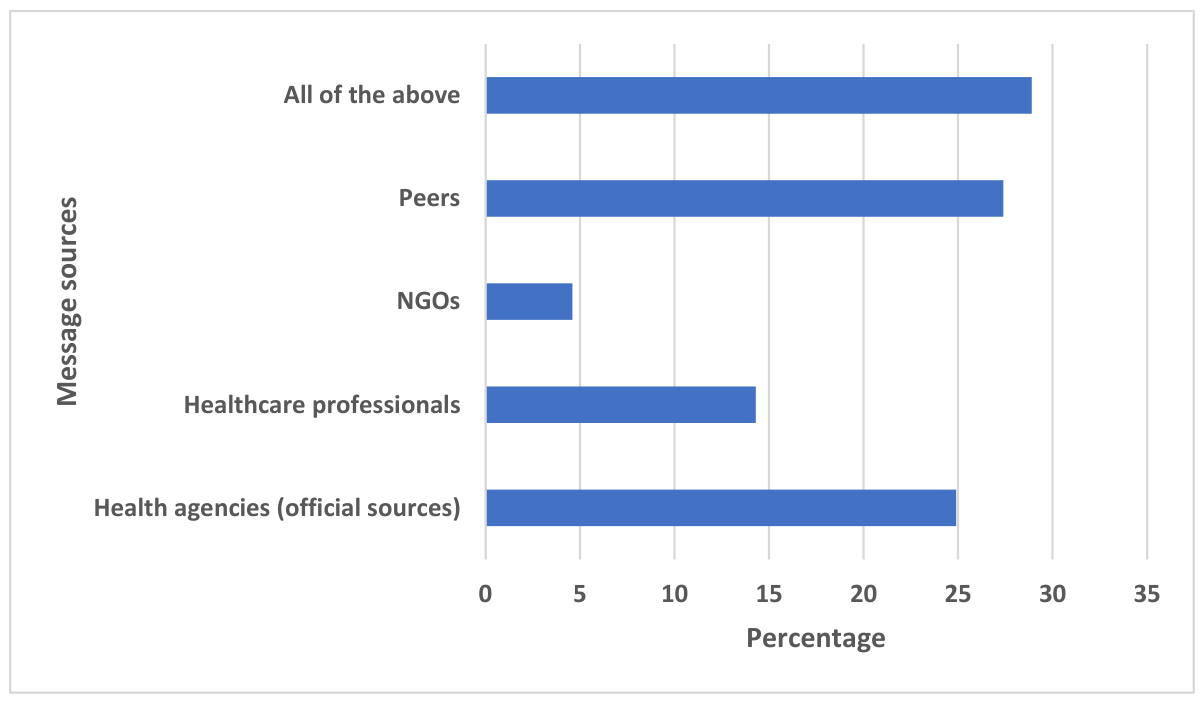
Figure 1 indicates that cholera risk communication during the outbreak on Lagos Island was multisourced, meaning that no single actor dominated the information landscape. Although the data show that institutional actors such as health agencies and healthcare professionals remained highly influential, peer communication appeared as a major conduit for health information.
Figure 1.
Leading sources of messages about cholera risk and prevention strategies.
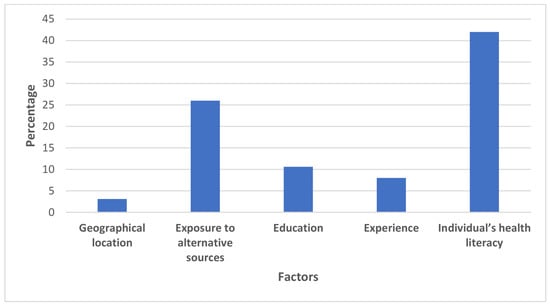
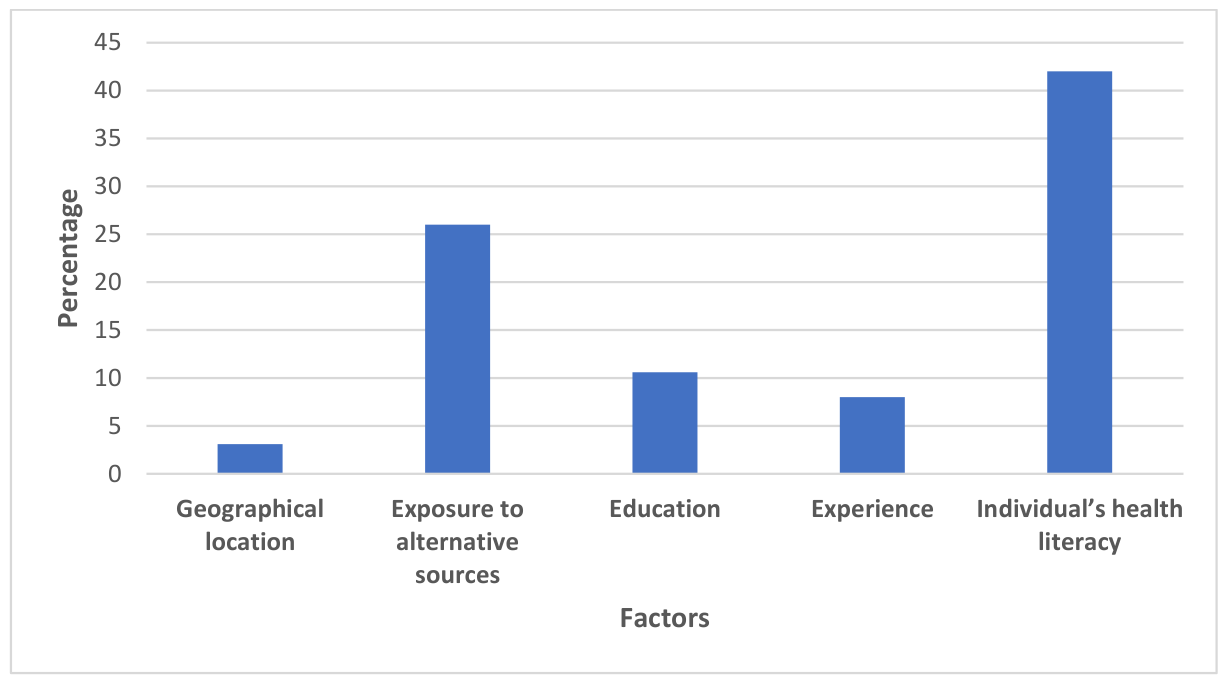
Figure 2 shows that several factors potentially shape participants’ perception of the credibility of cholera-related messages shared by peers on social media, but individual health literacy emerged as the most dominant factor. This was followed by exposure to alternative sources, including official health agencies, expert posts, or news outlets. The implication is that the majority of the participants depended on internal cognitive capacities (internal literacy) and external points of comparison (alternative sources) instead of contextual or demographic factors to assess peer-generated cholera information.
Figure 2.
Factors that influenced the credibility of social media peer messages.
3.1.3. Self-Reported HBM Constructs Reflected in the Social Media Posts
Table 4 shows that the majority (84.6%) of the respondents were exposed to peer-generated cues to action on X/Facebook, indicating the prevalence of stimuli that initiated the decision-making process to embrace cholera health behaviour.
Table 4.
Exposure to peer-generated cues to action.
The mean scores in Table 5 were above 3.51, showing that peer-generated cues to action were reasonably frequently seen by the participants. However, peer warnings, peer alerts about symptoms, peer calls for preventive actions, and peer appeals for adherence to prevention protocols (all > 3.51, the mean of means) were the most frequently seen peer-driven cues to action. Low standard deviations (between 1.12 and 1.20) show there was a moderate spread of responses, which reveals that the participants’ experiences varied but trended upward towards frequent exposure.
Table 5.
Level of exposure to various peer-generated cues to action.
Table 6 shows that the respondents reported moderate to high levels of cholera risk perception across the HBM constructs due to their exposure to social media peer interactions, with perceived benefits (m = 4.07, SD = 0.94) being the strongest and perceived barriers (m = 3.39, SD = 1.19) the weakest. This suggests that the respondents generally agreed that the cholera prevention measures mentioned in the peer interactions were perceived as beneficial. This is especially significant with three benefit items: “I believed that handwashing helped me prevent infection,” “I believed that treating drinking water reduced my cholera risk,” and “I believed that following cholera guidelines protected me”. Meanwhile, the low mean for perceived barriers (m = 3.39, SD = 1.19) suggests that the respondents perceived some obstacles to adopting recommended preventive behaviours.
Table 6.
Descriptive analysis of cholera risk perception using the HBM constructs.
Perceived severity (m = 3.97, SD = 1.01) was also high, showing that the respondents generally perceived cholera as a serious threat, especially with one severity item: “I believed that cholera can cause death”. Perceived susceptibility (m = 3.58, SD = 1.15) and perceived self-efficacy (m = 3.57, SD = 1.13) were moderately high, suggesting that the respondents moderately perceived themselves, their families, and their communities as being at risk of contracting cholera, and there was a moderately high level of confidence in the respondents’ ability to perform the recommended health behaviour.
3.1.4. Adoption of Cholera Health Behaviour
Table 7 shows that the majority (86%) of the respondents changed their cholera health behaviour and adhered to the prevention protocols during the outbreak, suggesting that there were sufficient stimuli in the online environment that are connected with their adoption of recommended cholera-health behaviour.
Table 7.
Participants’ change of cholera health behaviour during the outbreak.
Table 8 shows that the respondents demonstrated a generally high level of engagement in preventive behaviours. However, the intensity of the engagement varied according to the preventive behaviour. Washing hands frequently with soap ( = 4.42) recorded the highest mean score, suggesting that it was the most widely practised preventive behaviour among the respondents. This was followed by the treatment of drinking water ( = 4.18) and avoidance of unsafe food/water sources ( = 4.05), indicating a wide understanding that cholera is water-borne. However, there was moderate-to-high engagement in thorough preparation of food ( = 3.62), signifying that the respondents were willing to cook or have their food cooked thoroughly. The safe disposal of all human wastes recorded the lowest mean score ( = 3.21), suggesting that while the respondents were generally actively engaged in other preventive behaviours, fewer actively engaged in safe disposal of human waste, suggesting the existence of a possible barrier to engagement.
Table 8.
Preventive health behaviours adopted during the outbreak.
3.2. Content Analysis of Social Media Posts
3.2.1. Posts and Engagement Metrics
Using a quartile-based grouping, data in Table 9 show that perceived severity (32%) dominated engagement on Facebook during the outbreak, followed by perceived benefits (27%), perceived susceptibility (19.6%), perceived barriers (18%), and self-efficacy (2.1%), and cues to action (1.8%) received the least engagement, suggesting minimal user interaction with peer-driven calls to action, warnings, alerts, and prompts. The overall implication is that the Facebook users had higher engagement with posts about risks and solutions but less with posts about behavioural reinforcement (cues to action and self-efficacy).
Table 9.
Distribution of Facebook posts and engagement metrics across the HBM constructs.
Using a quartile-based grouping, data in Table 10 show that perceived severity (30%) dominated engagement on X during the outbreak, followed by perceived benefits (25.2%), perceived susceptibility (21%), perceived barriers (12%), self-efficacy (7%), and cues to action (4.8%). Similar to engagement with HBM constructs on Facebook, X users had higher engagement with posts about risks and solutions but less with posts about behavioural reinforcement (cues to action and self-efficacy).
Table 10.
Distribution of X posts and engagement metrics across the HBM constructs.
3.2.2. Peer-Generated Cues to Action
At the post-level engagements, 87 (16.1%) Facebook posts and 110 (12.3%) X tweets featured cues to action. However, some of those individual posts contained multiple cue types, accounting for a total frequency higher than the post-level engagements.
Table 11 showed that preventive-action advice/reminders were the dominant peer-generated cues to action on both platforms, followed by education on the transmission mode, symptom information, and treatment advice/early care-seeking, although their relative prominence differed between Facebook and X. This suggests that the cues in peer communication relied heavily on practical prevention and disease awareness, with relatively little reliance on personal testimonials, official alerts, and general education on cholera, during the 2024 cholera outbreak.
Table 11.
Dominant peer-generated cues to action in the Facebook posts and X tweets.
3.3. Hypotheses Testing
Decision Rule: p < 0.05
H1.
The average user engagement on social media does not vary significantly based on the Health Belief Model (HBM) constructs featured in cholera posts.
To test this hypothesis, one-way ANOVA was used separately for Facebook and X to examine the differences in post-level user engagement across the Health Belief Model (HBM) constructs.
Data in Table 12 show considerable variation in Facebook post engagement across the HBM constructs. Perceived severity generated the highest mean engagement (M = 46.32, SD = 50.14), followed by perceived benefits (M = 42.01, SD = 24.86). The Table also shows that perceived susceptibility (M = 27.53, SD = 18.123) and perceived barriers (M = 26.64, SD = 21.857) recorded comparable levels of post engagement, while self-efficacy (M = 5.05, SD = 2.88) and cues to action (M = 2.31, SD = 1.12) generated substantially lower engagement.
Table 12.
Descriptive statistics of Facebook post engagement by HBM constructs.
A one-way ANOVA result in Table 13 shows a statistically significant difference in mean Facebook post engagement across HBM constructs, F (5, 534) = 38.652, p < 0.001, η2 = 0.265. This indicates that engagement on Facebook varies depending on the type of HBM construct in cholera posts. The effect size (η2 = 0.265) indicates that the HBM construct accounted for approximately 26.5% of the variance in post engagement, representing a relatively large effect.
Table 13.
One-way ANOVA of differences in mean Facebook post engagement across HBM constructs.
Games–Howell post hoc comparisons in Table 14 showed that Facebook post engagement differed significantly between most HBM constructs. There was no statistically significant difference between perceived susceptibility and perceived barriers (MD = 0.891, p = 1.000) and between perceived severity and perceived benefits (MD = 4.309, p = 0.973). All other pairwise comparisons were statistically significant at p < 0.05.
Table 14.
Games–Howell post-hoc comparison of post engagement on Facebook by HBM constructs.
Data in Table 15 show substantial variation in X post engagement across the HBM constructs. Perceived severity generated the highest mean engagement (M = 227.10, SD = 85.996), followed by perceived benefits (M = 183.82, SD = 62.0). The Table also shows that perceived susceptibility (M = 109.46, SD = 34.944), perceived barriers (M = 102.60, SD = 34.498), self-efficacy (M = 85.76, SD = 25.583), and cues to action (M = 51.75, SD = 18.684) recorded comparable levels of post-engagement.
Table 15.
Descriptive statistics of X post engagement by HBM constructs.
A one-way ANOVA result in Table 16 shows a statistically significant difference in mean X post engagement across HBM constructs, F (5, 888) = 230.414, p < 0.001, η2 = 0.564. This indicates that engagement in X varies depending on the type of HBM construct in cholera posts. The effect size (η2 = 0.564) indicates that the HBM construct accounted for approximately 56.4% of the variance in post engagement, representing a relatively large effect.
Table 16.
One-way ANOVA of differences in mean X post engagement across HBM constructs.
Games–Howell post hoc comparisons in Table 17 showed that X post engagement differed significantly between most HBM constructs. There was no statistically significant difference between perceived susceptibility and perceived barriers (MD = 6.861, p = 0.442). All other pairwise comparisons were statistically significant at p < 0.05.
Table 17.
Games–Howell post-hoc comparison of post engagement on X by HBM constructs.
H2.
Exposure to peer-generated cues to action on social media is not significantly associated with the adoption of cholera health behaviour.
A chi-square test of independence in Table 18 and Table 19 showed a statistically significant association between exposure to peer-generated cues to action on social media and the adoption of cholera health behaviour, χ2(4, N = 350) = 375.354, p = 0.00, with a strong association (Cramer’s V = 0.732). Therefore, the null hypothesis is rejected. Thus, respondents’ exposure to peer-generated cues to action on social media is significantly associated with the adoption of cholera health behaviour.
Table 18.
Chi-square tests showing association between exposure to peer-generated cues to action on social media and adoption of cholera health behaviour.
Table 19.
Effect size of the association between exposure to peer-generated cues to action on social media and adoption of cholera health behaviour.
4. Discussion
This study conducted a Health Belief Model analysis of cholera risk perception during Nigeria’s 2024 outbreak, examining peer-driven social media exchanges on X and Facebook in Lagos, Nigeria and their association with people’s risk behaviour and perception of the disease. Findings from the survey demonstrated a high level of exposure to cholera messages on X and Facebook, indicating that digital platforms served as rapid-response communication channels response during the health emergency. This mirrors global evidence that social media has been widely used in health contexts by various users as a primary source of information, allowing the rapid dissemination of situational reports, risk updates, and preventive guidelines and ultimately impacting and reflecting the course of the outbreak [60,61,62]. This was also accentuated by the high digital media literacy in Lagos. This supports Aleshinloye and Mogbogu’s [63] findings about the rapid diffusion of new media platforms that are instrumental to how young people access and circulate health information in Lagos State. As a result, the state has become a progressively digital communication environment where social media platforms are channels for public discourse, information seeking, and peer health communication.
The research showed a high level of peer communication about cholera on social media during the outbreak, with respondents reporting widespread exposure to cholera-related messages shared by their peers on X and Facebook. This widespread exposure supports the World Health Organisation’s [64] position that social media has significant potential to facilitate peer-to-peer communication and strengthen the local-level response during public health emergencies. This finding provides a new perspective on health risk communication. While previous studies have explored the role of peer communication in disaster communication and the crisis response [65,66], there has been limited scholarly attention to its role in health risk communication during outbreaks. Existing research, such as Ade-Johnson’s [22], has examined social media’s role in health risk emergencies from a top-down perspective, focusing on how local and international health organisations and professionals use platforms to communicate cholera risks. In contrast, the present research found that peer groups were major conduits for cholera risk information, complementing the efforts of institutional actors such as health agencies and healthcare professionals.
A key finding of this study is that participants were regularly exposed to peer-generated cues to action, suggesting that social media peer networks are associated with the level of awareness and response to cholera risks. The most prevalent self-reported cues included peer warnings, peer alerts about symptoms, peer calls for preventive actions, and peer appeals for adherence to prevention protocols. The findings of this study partly corroborate Vincenzo et al.’s [67] study about the abundance of peer- (and family-) generated cues to action in health emergencies. However, their study found that cues to action can also be delivered by physicians, pharmacists, and insurance companies using various modes, including print, audiovisual, online, and reminder formats. Meanwhile, there is evidence that cues to action are less explored in research than other HBM constructs [68].
For other HBM constructs, the survey results demonstrated a relatively high level of perceived susceptibility to cholera risk at personal, family, community, and wider societal levels; a generally high perception of cholera as a severe health threat during the outbreak; a high recognition of the benefits of adopting recommended cholera health behaviour; a reasonable perception of several obstacles to performing recommended cholera preventive behaviours—notably, there was an indication that the complexity of the cholera health messages and other practical challenges such as cost and availability of enabling resources may have hindered compliance; and a moderate-to-high perception of self-efficacy, indicating that while the majority of the respondents demonstrated a high sense of self-efficacy to perform cholera prevention behaviours during the outbreak, a reasonable proportion showed a lack of commitment and consistency in doing so. This finding differs from Tweneboah-Koduah et al.’s [69] report, which shows that the most significant constructs in cholera risk communication are perceived susceptibility, perceived barriers, cues to action, and self-efficacy. On the other hand, Gondwe [70] found that the dominant constructs are perceived severity of cholera, perceived threats, perceived barriers, and perceived benefits. Overall, these differences corroborate Williams et al.’s [71] finding that risk perceptions vary over time, across cognition and context, among other factors.
The platform-specific analyses showed similar engagement patterns on both X and Facebook. Both platforms showed higher engagement with posts addressing risks and solution-oriented HBM constructs (perceived severity, perceived benefits, perceived susceptibility, and perceived barriers) than posts on behavioural reinforcement (cues to action and self-efficacy). This demonstrates the users’ responsiveness to messages that highlighted the dangers of cholera and the perceived benefits of preventive behaviour, rather than to messages that emphasised sustained behavioural change. However, a notable difference between the platforms is that Facebook recorded slightly higher engagement with a perceived severity message (32%) than X (30%), which could be attributed to Facebook’s UI architecture, which encourages longer posts and closed-loop personal networks. This supports the assertions of Dupuis et al. [72], who found that, unlike X, Facebook seems to cater to a more agreeable and temperate environment.
Relatedly, the content analyses of cues to action showed that preventive-action advice/reminders were the dominant peer-generated cues to action on both platforms, followed by education on the transmission mode, symptom information, and treatment advice/early care-seeking, although their relative prominence differed between Facebook and X. This demonstrates that the cues to action in the peer-generated messages were largely action-oriented, with users on both platforms focusing on practical measures for the prevention of cholera, reinforced by information about cholera transmission and symptoms. It also supports the findings of Mao [40] that the most promoted health measures in Twitter HBM engagement are cues to action that emphasise practical measures such as cues on personal measures and on physical and social distancing measures.
The engagement scores across the six HBM constructs were compared, and the findings revealed that engagement varies by the type of HBM messages in cholera posts. Due to the differences in the engagement structures and metrics of Facebook and X, a separate one-way ANOVA found that engagement in Facebook varies depending on the type of HBM constructs in cholera posts [F (5, 534) = 38.652, p < 0.001, η2 = 0.265], and a statistically significant difference in the mean was also found with X post engagement across HBM constructs [F (5, 888) = 230.414, p < 0.001, η2 = 0.564]. More so, Games–Howell post-hoc comparisons showed that Facebook and X post engagements differed significantly between most HBM constructs, except between perceived susceptibility and perceived barriers (MD = 0.891, p = 1.000), and between perceived severity and perceived benefits (MD = 4.309, p = 0.973) on Facebook and between perceived susceptibility and perceived barriers (MD = 6.861, p = 0.442) on X. All of these differences suggest that users do not respond equally to all types of health messages. This differential user responsiveness to the six HBM constructs supports Jia et al.’s [31] assertions that the level of engagement depends on the topics, salience to the audience, and the persons who posted them. The significance of this finding is that some message types are more effective than others at capturing public attention during public health emergencies.
Another critical insight gained from this study is that the majority of the respondents who were exposed to cholera-related peer communication on social media adopted preventive health behaviours during the outbreak, suggesting that there were sufficient cues to action in the online environment that are linked to a behavioural change. This was highlighted by a chi-square test of independence that showed a statistically significant association between exposure to peer-generated cues to action on social media and the adoption of cholera health behaviour, χ2(4, N = 350) = 375.354, p = 0.00, with a strong association (Cramer’s V = 0.732). This corroborates the findings of Tweneboah-Koduah et al. [69], who concluded that cues to action are a significant factor that could influence behaviour changes towards cholera prevention and the greater the cues to action, the greater the likelihood of indulging in cholera preventive behaviour. This study suggests that media literacy (42%) largely moderates the association between exposure to peer-generated cues to action on social media and the adoption of cholera health behaviour, as more health-conscious residents find social media peer messages credible and are more likely to seek peer content and adopt preventive measures.
However, while there was a reasonable level of adoption of preventive behaviours, the intensity of adoption varied according to particular preventive behaviours. For instance, preventive health behaviour was strongly adopted at most personal hygiene levels, including washing hands frequently with soap, the treatment of drinking water, and the avoidance of unsafe food/water sources, but it was moderate for thorough preparation of food and poor for safe disposal of waste. Poor adoption of some preventive behaviours could be a result of perceived barriers. For example, the poor adoption of the safe disposal of waste could have been impeded by external barriers to sustainable household waste management in Lagos [73].
5. Conclusions
This study established that social media peer communication was significantly associated with residents’ understanding and perception of cholera risk during the 2024 outbreak on Lagos Island, Nigeria. Those peer-generated interactions provided adequate cues to action that are closely connected with the adoption of recommended preventive health behaviour. Moreover, engagement on social media peer interactions varied significantly by the HBM constructs in those cholera posts, demonstrating that some message types were more compelling than others at capturing public attention during the public health emergency.
The study concludes that peer communication is a critical component of the contemporary health risk communication landscape. These peer networks determine risk perception, interpretation, and behavioural decision-making and fill critical communication gaps in environments where formal communication channels are slow or constrained by providing accessible, relatable, and socially validated cues to action.
Therefore, public health agencies should identify influential local voices on X and Facebook and collaborate with them to disseminate verified information on cholera risk and prevention strategies. Assimilating the peer networks into coordinated public health communication strategies can strengthen the relevance, resonance, and effectiveness of digital health messages in outbreak contexts. Moreover, health agencies should also guard against misinformation and disinformation by implementing regular sponsored social media messages that combine disease prevention information with basic media-literacy guidance during early-warning periods and during outbreaks. Those targeted messages should teach the public how to verify sources, double-check health information, recognise misleading health claims, and avoid distributing unsubstantiated content.
6. Limitations
The use of digitally scraped data presents ethical and methodological limitations. Automated data collection through Octoparse and Meta tools was affected by platform restrictions, access limitations, changes in platform interfaces, and other technical factors, meaning that retrieved posts may not completely represent all publicly accessible content.
Also, the engagement figures reported in this study represent a snapshot of engagement at the time of data collection and not the present values. Given that the data were collected shortly after the outbreak, it could have impacted the engagement scores.
Moreover, research has demonstrated that even when programmatically collected, social media engagement can have reliability problems due to the difficulties in mapping post/URLs to objects on the platform and retrieving the correct engagement counts. Therefore, if particular posts or engagement fields are not completely captured, it could underestimate engagement.
Furthermore, the survey was based on self-reports, which may have influenced respondents to provide answers that they considered socially desirable. Similarly, given that the data were collected three weeks after the outbreak, there may have been a recall bias, as some of the respondents may not have remembered everything they believed and saw on social media during the outbreak.
Supplementary Materials
The following supporting information can be downloaded at: https://www.mdpi.com/article/10.3390/soc16090287/s1, Table S1: Exposure to perceived susceptibility to cholera risk; Table S2: Exposure to perceived severity of cholera risk; Table S3: Exposure to perceived benefits of adhering to cholera prevention protocol; Table S4: Exposure to perceived barriers to adopting cholera health behaviour; Table S5: Exposure to self-belief (self-efficacy) of performing the recommended health behaviour; Table S6: Posthoc comparisons; Table S7: Chi-square tests.
Author Contributions
Conceptualization, A.A.E.; Methodology, A.A.E., U.C.O. and O.R.O.; Software, A.A.E., U.C.O. and S.V.O.; Validation, C.C.E.; Formal analysis, A.A.E., C.I., I.M.N. and O.C.O.; Investigation, A.O.I., C.C.E., G.D.S.-O. and I.G.O.; Resources, A.A.E. and O.R.O.; Data curation, C.I., S.V.O. and O.C.O.; Writing—original draft, A.A.E., U.C.O., O.A.A. and S.V.O.; Writing—review & editing, O.R.O., O.A.A., C.C.E., I.E.O. and I.G.O.; Visualization, S.V.O.; Supervision, A.O.I. and O.A.A.; Project administration, A.O.I., G.D.S.-O., I.M.N. and I.E.O. All authors have read and agreed to the published version of the manuscript.
Funding
This research received no external funding.
Institutional Review Board Statement
The survey was conducted in accordance with the Helsinki Declaration and was approved by the Ethical and Legal Committee (ELRC) of Federal University, Oye-Ekiti, (ELRC/MC/2025/011) on 8 December 2025. For the content analysis, the study adhered to established principles for internet-mediated research: only publicly accessible social media posts available in the public domain were scraped; no personally identifiable information was disclosed in the report; and data were stored securely during the research process.
Informed Consent Statement
Informed consent was obtained from all subjects involved in the survey before administration of the instrument.
Data Availability Statement
The data are contained within the Supplementary Material.
Conflicts of Interest
The authors declare no conflicts of interest.
References
- Mohamed, M.G.; Ahmed Dabou, E.A.; Abdelsamad, S.; Elsalous, S.H. Cholera outbreaks: Public health implications, economic burden, and preventive strategies. AIMS Public Health 2025, 12, 767. [Google Scholar] [CrossRef] [Scilit] [PubMed]
- Stop Cholera. An Updated Estimate on the Burden of Cholera in Endemic Countries. 2024. Available online: https://publichealth.jhu.edu/sites/default/files/2025-01/An-Updated-Estimate-on-the-Burden-of-Cholera-in-Endemic-Countries-December-2024.pdf (accessed on 22 December 2025).
- European Centre for Disease Prevention and Control. An Agency of the European Union. 2026. Available online: https://www.ecdc.europa.eu/en/all-topics-z/cholera/surveillance-and-disease-data/cholera-monthly (accessed on 15 June 2026).
- Oweibia, M.; Egberipou, T.; Wilson, T.R.; Timighe, G.C.; Ogbe, D.P.D. Factors associated with the propagation of cholera in epidemics across the geopolitical zones of Nigeria: A systematic review. medRxiv 2025. [Google Scholar] [CrossRef] [Scilit]
- Onuoha, S.C. The health research–public awareness gap: Why scientific progress is failing to reach communities. J. Glob. Health Econ. Policy 2025, 5, e2025053. [Google Scholar] [CrossRef] [Scilit]
- Ngobeni, F.C.; Kekana, M.P. Community health risk awareness and knowledge of air pollution in Annadale, Polokwane Local Municipality, Limpopo Province, South Africa. Environ. Health Insights 2024, 18, 11786302241226775. [Google Scholar] [CrossRef] [Scilit] [PubMed]
- Adera, N.G.; Ketema, B.; Girma, E. Effectiveness and quality of risk communication process in Ethiopia: The case of risk communication during cholera outbreak in Addis Ababa, Ethiopia. PLoS ONE 2022, 17, e0265203. [Google Scholar] [CrossRef] [Scilit] [PubMed]
- Ben-Enukora, C.A.; Oyero, O.; Okorie, N.; Ejem, A.A.; Omowale, T.O. Perceived public alarm and comprehension of risk communication messages about Lassa fever in Nigeria: A gauge of the risk communication model. Front. Commun. 2023, 8, 1052397. [Google Scholar] [CrossRef] [Scilit]
- Nayyar, A.; Privor-Dumm, L. Cholera control and prevention: Role of evidence-based advocacy and communications. Vaccine 2020, 38, A178–A180. [Google Scholar] [CrossRef] [Scilit] [PubMed]
- Rayani, M.; Rayani, S.; Najafi-Sharjabad, F. COVID-19-related knowledge, risk perception, information seeking, and adherence to preventive behaviors among undergraduate students, southern Iran. Environ. Sci. Pollut. Res. 2021, 28, 59953–59962. [Google Scholar] [CrossRef] [Scilit] [PubMed]
- Guo, Y.; Liu, J.; Lian, C. Promote citizen engagement with warnings―An empirical examination of government social media accounts during public health crises. BMC Public Health 2025, 25, 1508. [Google Scholar] [CrossRef] [Scilit] [PubMed]
- Oranezi, O. Beyond Emergency Response: Strengthening Nigeria’s Health Communication Infrastructure. 2026. Available online: https://nigeriahealthwatch.com/articles/thought-leadership/beyond-emergency-response-strengthening-nigerias-health-communication-infrastructure/ (accessed on 13 June 2026).
- Holroyd, T.A.; Oloko, O.K.; Salmon, D.A.; Omer, S.B.; Limaye, R.J. Communicating recommendations in public health emergencies: The role of public health authorities. Health Secur. 2020, 18, 21–28. [Google Scholar] [CrossRef] [Scilit] [PubMed]
- Eneh, S.; Onukansi, F.; Anokwuru, C.; Ikhuoria, O.; Edeh, G.; Obiekwe, S.; Dauda, Z.U.; Praise-God, A.; Okpara, C. Cholera outbreak trends in Nigeria: Policy recommendations and innovative approaches to prevention and treatment. Front. Public Health 2024, 12, 1464361. [Google Scholar] [CrossRef] [Scilit] [PubMed]
- Gulumbe, B.H.; Aminu, U.; Yusuf, Z.M.; Liman, U.U.; Faggo, A.A.; Abubakar, J.; Abdulrahim, A.; Usman, N.I. Cholera Outbreaks in Conflict-Hit Regions of Northern Nigeria: An Overview. Afro-Egypt. J. Infect. Endem. Dis. 2023, 13, 134–142. [Google Scholar] [CrossRef] [Scilit]
- Lawless, M.T.; Archibald, M.; de Plaza, M.A.P.; Drioli-Phillips, P.; Kitson, A. Peer-to-peer health communication in older adults’ online communities: Protocol for a qualitative netnographic study and co-design approach. JMIR Res. Protoc. 2020, 9, e19834. [Google Scholar] [CrossRef] [Scilit] [PubMed]
- Ogunniyi, T.J.; Muoneke, A.P.; Nimo, F.; Yisa, S.S.; Olorunfemi, O.A. Cholera in Nigeria: A five-decade review of outbreak dynamics and health system responses. J. Health Popul. Nutr. 2025, 44, 329. [Google Scholar] [CrossRef] [Scilit] [PubMed]
- Nigeria Centre for Disease Control and Prevention. Cholera Situation Report. Monthly Epidemiological Report 22. 2024. Available online: https://ncdc.gov.ng/themes/common/files/sitreps/1ac97f89c12c6fa3e2600a90d4ce6dc8.pdf (accessed on 9 July 2025).
- Abdulrahim, A.; Ibrahim, M.N.; Gulumbe, B.H. Cholera emergency in Nigeria: Urgent need for better vaccine access and public health action. Bull. Natl. Res. Cent. 2024, 48, 86. [Google Scholar] [CrossRef] [Scilit]
- Ngwa, M.C.; Wondimagegnehu, A.; Okudo, I.; Owili, C.; Ugochukwu, U.; Clement, P.; Devaux, I.; Pezzoli, L.; Ihekweazu, C.; Jimme, M.A.; et al. The multi-sectorial emergency response to a cholera outbreak in internally displaced persons camps in Borno state, Nigeria, 2017. BMJ Glob. Health 2020, 5, e002000. [Google Scholar] [CrossRef] [Scilit] [PubMed]
- Challa, J.M.; Getachew, T.; Debella, A.; Merid, M.; Atnafe, G.; Eyeberu, A.; Birhanu, A.; Regassa, L.D. Inadequate hand washing, and lack of clean drinking water and latrines as major determinants of the cholera outbreak in Somali region, Ethiopia in 2019. Front. Public Health 2022, 10, 845057. [Google Scholar] [CrossRef] [Scilit] [PubMed]
- Ade-Johnson, C.S. Social Media and Participatory Health Communication: A Study of the 2024 Cholera Outbreak in Lagos State, Nigeria. Afr. J. Hum. Kinet. Recreat. Health Stud. 2025, 3, 5–25. [Google Scholar] [CrossRef] [Scilit]
- Médecins Sans Frontieres. NIGERIA: Rapid Surge in Suspected Cholera Cases in Borno State Places Health Facilities Under Severe Strain. 2026. Available online: https://reliefweb.int/report/nigeria/nigeria-rapid-surge-suspected-cholera-cases-borno-state-places-health-facilities-under-severe-strain (accessed on 13 June 2026).
- Akande, O.W.; Disu, Y.; Kaduru, C.; Anueyiagu, C.; Oguanuo, E.; Ojumu, T.; Akomolafe, O.; Eziechina, S.O.; Ejibe, U.; Ihekweazu, V.; et al. Risk communication during health emergencies in Nigeria: What are its challenges? J. Public Health Afr. 2023, 14, 1943. [Google Scholar] [CrossRef] [Scilit] [PubMed]
- Winstone, L.; Mars, B.; Haworth, C.M.; Kidger, J. Social media use and social connectedness among adolescents in the United Kingdom: A qualitative exploration of displacement and stimulation. BMC Public Health 2021, 21, 1736. [Google Scholar] [CrossRef] [Scilit] [PubMed]
- Litchman, M.L.; Rothwell, E.; Edelman, L.S. The diabetes online community: Older adults supporting self-care through peer health. Patient Educ. Couns. 2018, 101, 518–523. [Google Scholar] [CrossRef] [Scilit] [PubMed]
- Eysenbach, G.; Powell, J.; Englesakis, M.; Rizo, C.; Stern, A. Health related virtual communities and electronic support groups: Systematic review of the effects of online peer to peer interactions. Br. Med. J. 2004, 328, 1166. [Google Scholar] [CrossRef] [Scilit] [PubMed]
- Peterson, E.B.; Chou, W.S.; Rising, C.; Gaysynsky, A. The Role and Impact of Health Literacy on Peer-to-Peer Health Communication. Stud. Health Technol. Inform. 2020, 269, 497–510. [Google Scholar] [CrossRef] [Scilit] [PubMed]
- Ziebland, S.; Wyke, S. Health and illness in a connected world: How might sharing experiences on the internet affect people’s health? Milbank Q. 2012, 90, 219–224. [Google Scholar] [CrossRef] [Scilit] [PubMed]
- Kazmer, M.M.; Lustria, M.L.; Cortese, J.; Burnett, G.; Kim, J.; Ma, J.; Frost, J. Distributed knowledge in an online patient support community: Authority and discovery. J. Assoc. Inf. Sci. Technol. 2014, 65, 1319–1334. [Google Scholar] [CrossRef] [Scilit]
- Jia, X.; Ahn, S.; Seelig, M.I.; Morgan, S.E. The Role of Health Belief Model Constructs and Content Creator Characteristics in Social Media Engagement: Insights from COVID-19 Vaccine Tweets. Healthcare 2024, 12, 1845. [Google Scholar] [CrossRef] [Scilit] [PubMed]
- Puri, N.; Coomes, E.A.; Haghbayan, H.; Gunaratne, K. Social media and vaccine hesitancy: New updates for the era of COVID-19 and globalized infectious diseases. Hum. Vaccines Immunother. 2020, 16, 2586–2593. [Google Scholar] [CrossRef] [Scilit] [PubMed]
- Paul, B.; Headley-Johnson, S.A. The Impact of Social Media on Health Behaviors, a Systematic Review. Healthcare 2025, 13, 2763. [Google Scholar] [CrossRef] [Scilit] [PubMed]
- Eckert, S.; Sopory, P.; Day, A.; Wilkins, L.; Padgett, D.; Novak, J.; Noyes, J.; Allen, T.; Alexander, N.; Vanderford, M.; et al. Health-related disaster communication and social media: Mixed-method systematic review. Health Commun. 2018, 33, 1389–1400. [Google Scholar] [CrossRef] [Scilit] [PubMed]
- Glanz, K.; Rimer, B.K.; Viswanath, K. (Eds.) Health Behavior: Theory, Research, and Practice; John Wiley & Sons: Hoboken, NJ, USA, 2015. [Google Scholar]
- Glanz, K.; Rimer, B.K.; Viswanath, K. Health Behavior and Health Education: Theory, Research, and Practice; Jossey-Bass: Hoboken, NJ, USA, 2008. [Google Scholar]
- Urbanovich, T.; Bevan, J.L. Promoting environmental behaviors: Applying the health belief model to diet change. Environ. Commun. 2020, 14, 657–671. [Google Scholar] [CrossRef] [Scilit]
- Xiang, B.; Wong, H.M.; McGrath, C.P. The efficacy of peer-led oral health programs based on social cognitive theory and health belief model among Hong Kong adolescents: A cluster-randomized controlled trial. Transl. Behav. Med. 2022, 12, 423–432. [Google Scholar] [CrossRef] [Scilit] [PubMed]
- Janz, N.K.; Becker, M.H. The health belief model: A decade later. Health Educ. Q. 1984, 11, 1–47. [Google Scholar] [CrossRef] [Scilit] [PubMed]
- Mao, Z.; Wang, D.; Zheng, S. Health belief model and social media engagement: A cross-national study of health promotion strategies against COVID-19 in 2020. Front. Public Health 2023, 11, 1093648. [Google Scholar] [CrossRef] [Scilit] [PubMed]
- Abdullahi, G.A.; Sada, M.B.; Abubakar, A. Investigating the Factors Leading to Utilization of Facebook and Twitter (X) Sites by Youths at Elections Eve in Nigeria (A Case Study of 2023 General Elections). Int. J. Innov. Inf. Syst. Technol. Res. 2023, 12, 25–36. [Google Scholar]
- Chiamogu, A.P.; Obikeze, O.S.A.; Chiamogu, U.P.; Odikpo, E. Social media and group consciousness in Nigeria: Appraising the prevalence of socio-political protests. Open J. Political Sci. 2021, 11, 682–696. [Google Scholar] [CrossRef]
- Luo, X.; Lu, J.; Apuke, O.D. Understanding the impact of computer-based technology storytelling for help seeking and help receiving among victims’ of flood disaster. Comput. Hum. Behav. 2024, 153, 108101. [Google Scholar] [CrossRef] [Scilit]
- Seddighi, H.; Salmani, I.; Seddighi, S. Saving lives and changing minds with Twitter in disasters and pandemics: A literature review. J. Media 2020, 1, 59–77. [Google Scholar] [CrossRef] [Scilit]
- Ejem, A.A.; Okeke, S.V.; Ojeka-John, R.O.; Adekeye, E.T. Social media and climate-related disaster management in Africa: A Force-field analysis. Jamba J. Disaster Risk Stud. 2025, 17, a1753. [Google Scholar] [CrossRef] [Scilit] [PubMed]
- Hyvärinen, J.; Vos, M. Developing a Conceptual Framework for Investigating Communication Supporting Community Resilience. Societies 2015, 5, 583–597. [Google Scholar] [CrossRef] [Scilit]
- Quarantelli, E.L. Disaster studies: The consequences of the historical use of a sociological approach in the development of research. Int. J. Mass Emerg. Disasters 1994, 12, 25–49. [Google Scholar] [CrossRef] [Scilit]
- Quarantelli, E.L. What should we study? Questions and suggestions for researchers about the concept of disasters. Int. J. Mass Emerg. Disasters 1987, 5, 7–32. [Google Scholar] [CrossRef] [Scilit]
- Milanti, A.; Norman, C.; Sheung Chan, D.N.; Wei So, W.K.; Skinner, H. EHealth Literacy 3.0: Updating the Norman and Skinner 2006 Model. J. Med. Internet Res. 2025, 27, e70112. [Google Scholar] [CrossRef] [Scilit] [PubMed]
- Norman, C.D.; Skinner, H.A. eHealth literacy: Essential skills for consumer health in a networked world. J. Med. Internet Res. 2006, 8, e506. [Google Scholar] [CrossRef] [Scilit] [PubMed]
- Ahmad, S. A User-Generated Content as a Driver of Trust: A Psychological Perspective on Peer Influence in Social Media. Preprints 2026, 2026020127. [Google Scholar] [CrossRef] [Scilit]
- World Health Organization. Impact of the COVID-19 Infodemic on Frontline Workers and Health Systems: Analysis of Story-Telling Approach for Infodemic Management; World Health Organization: Geneva, Switzerland, 2025. [Google Scholar]
- Jin, Q.; Raza, S.H.; Yousaf, M.; Munawar, R.; Shah, A.A.; Hassan, S.; Ogadimma, E.C. Ingraining polio vaccine acceptance through public service advertisements in the digital era: The moderating role of misinformation, disinformation, fake news, and religious fatalism. Vaccines 2022, 10, 1733. [Google Scholar] [CrossRef] [Scilit] [PubMed]
- City Population. Lagos. 2022. Available online: https://www.citypopulation.de/en/nigeria/admin/NGA025__lagos/t (accessed on 16 August 2025).
- Krejcie, R.V.; Morgan, D.W. Determining Sample Size for Research Activities. Educ. Psychol. Meas. 1970, 30, 607–610. [Google Scholar] [CrossRef] [Scilit]
- Papacharissi, Z.; de Fatima Oliveira, M. Affective news and networked publics: The rhythms of news storytelling on# Egypt. J. Commun. 2012, 62, 266–282. [Google Scholar] [CrossRef] [Scilit]
- Bruns, A.; Burgess, J. Researching news discussion on Twitter: New methodologies. J. Stud. 2012, 13, 801–814. [Google Scholar] [CrossRef] [Scilit]
- Marzi, G.; Balzano, M.; Marchiori, D. K-Alpha Calculator–Krippendorff’s Alpha Calculator: A user-friendly tool for computing Krippendorff’s Alpha inter-rater reliability coefficient. MethodsX 2024, 12, 102545. [Google Scholar] [CrossRef] [Scilit] [PubMed]
- Economic and Social Research Council. Internet Mediated Research. 2025. Available online: https://www.ukri.org/councils/esrc/guidance-for-applicants/research-ethics-guidance/internet-mediated-research/?utm_source=chatgpt.com (accessed on 10 August 2026).
- Tang, L.; Bie, B.; Park, S.E.; Zhi, D. Social media and outbreaks of emerging infectious diseases: A systematic review of literature. Am. J. Infect. Control 2018, 46, 962–972. [Google Scholar] [CrossRef] [Scilit] [PubMed]
- Shan, S.; Yan, Q.; Wei, Y. Infectious or recovered? Optimizing the infectious disease detection process for epidemic control and prevention based on social media. Int. J. Environ. Res. Public Health 2020, 17, 6853. [Google Scholar] [CrossRef] [Scilit] [PubMed]
- Terry, K.; Yang, F.; Yao, Q.; Liu, C. The role of social media in public health crises caused by infectious disease: A scoping review. BMJ Glob. Health 2023, 8, e013515. [Google Scholar] [CrossRef] [Scilit] [PubMed]
- Aleshinloye, O.; Mogbogu, J. Determinants of Seeking and Altruistic Sharing of Medical Health Tips on New Media Platforms Among Young People in Lagos State. Am. J. Health Res. 2026, 14, 111–123. [Google Scholar] [CrossRef] [Scilit]
- World Health Organisation. Communicating Risk in Public Health Emergencies; World Health Organization: Geneva, Switzerland, 2017; Available online: https://iris.who.int/bitstream/handle/10665/259807/9789241550208-eng.pdf?sequence=2&utm_medium=email&utm_source=transaction (accessed on 16 August 2025).
- Linardi, S. Peer coordination and communication following disaster warnings: An experimental framework. Saf. Sci. 2016, 90, 24–32. [Google Scholar] [CrossRef] [Scilit]
- Arora, S.; Barton, J.; Judd, B.; Wang, D. Peer-3-Peer: Disaster Proof Offline Messaging; Integration Lab at University of Pennsylvania: Philadelphia, PA, USA, 2019; pp. 1–9. [Google Scholar]
- Vincenzo, J.L.; Patton, S.K.; Lefler, L.L.; McElfish, P.A.; Wei, J.; Curran, G. A Qualitative Study of Older Adults’ Facilitators, Barriers, and Cues to Action to Engage in Falls Prevention using Health Belief Model Constructs. Arch. Gerontol. Geriatr. 2021, 99, 104610. [Google Scholar] [CrossRef] [Scilit] [PubMed]
- Alyafei, A.; Easton-Carr, R. The health belief model of behavior change. In StatPearls; StatPearls Publishing: Treasure Island, FL, USA, 2024. [Google Scholar]
- Tweneboah-Koduah, E.Y.; Atsu, N.; Odoom, R. Using the health belief model in social marketing for cholera prevention. Int. J. Behav. Healthc. Res. 2018, 6, 183–199. [Google Scholar] [CrossRef] [Scilit]
- Gondwe, T.S. Women’s Knowledge, Perception and Practice of Cholera Prevention Messages in Phalombe District, Malawi, in 2014. Master’s Thesis, Faculty of Health Sciences, The University of the Witwatersrand, Johannesburg, South Africa, 2016. [Google Scholar]
- Williams, L.; Collins, A.E.; Bauaze, A.; Edgeworth, R. The role of risk perception in reducing cholera vulnerability. Risk Manag. 2010, 12, 163–184. [Google Scholar] [CrossRef] [Scilit]
- Dupuis, M.J.; Pham, S.; Weiss, M. Facebook vs. Twitter: An Examination of Differences in Behavior Type and Substance Based on Psychological Factors. In 2019 IEEE SmartWorld, Ubiquitous Intelligence & Computing, Advanced & Trusted Computing, Scalable Computing & Communications, Cloud & Big Data Computing, Internet of People and Smart City Innovation (SmartWorld/SCALCOM/UIC/ATC/CBDCom/IOP/SCI); IEEE: Wilmington, MA, USA, 2019; pp. 1834–1840. [Google Scholar]
- World Bank. Barriers and Solutions for Sustainable Household Waste Management in Lagos, Nigeria; World Bank: Washington, DC, USA, 2025; Available online: https://openknowledge.worldbank.org/entities/publication/5e4020ac-3d85-4e84-8873-144d88d22376 (accessed on 11 January 2026).

Disclaimer/Publisher’s Note: The statements, opinions and data contained in all publications are solely those of the individual author(s) and contributor(s) and not of MDPI and/or the editor(s). MDPI and/or the editor(s) disclaim responsibility for any injury to people or property resulting from any ideas, methods, instructions or products referred to in the content. |
© 2026 by the authors. Licensee MDPI, Basel, Switzerland. This article is an open access article distributed under the terms and conditions of the Creative Commons Attribution (CC BY) license.