


Abstract
Research on the informal economy has traditionally emphasized its measurement and macroeconomic effects, focusing on structural and institutional determinants. Individual psychological factors that may help explain social tolerance toward informal practices have received far less attention. This exploratory study addresses this gap by examining how Big Five personality traits and dimensions of competitiveness are associated with two components of tolerance: the acceptance of informal behaviors, and justificatory beliefs. To this end, an ad hoc questionnaire was developed, and a cross-sectional design was implemented using a stratified sample of 339 students enrolled in Business Administration programs at a Spanish university. Multivariable models estimated these associations while adjusting for gender. The results indicate that conscientiousness and extraversion are negatively associated with both acceptance and justificatory beliefs, whereas competitive affectivity exhibits a positive and consistent association with both dimensions. Within the study sample, tolerance scores were higher among male respondents. These findings raise a hypothesis for future research: awareness campaigns may achieve greater precision when they account for psychological heterogeneity. This implication should be tested in broader and more diverse populations. Drawing on this exploratory evidence, we propose a preliminary analytical model that articulates the relationships between dispositional traits and competitiveness dimensions in relation to the two components of tolerance, providing a basis for future research. From a theoretical perspective, the proposed model offers a structured basis for longitudinal testing and future experimental designs aimed at deepening the understanding of the microfoundational mechanisms underlying the informal economy.
1. Introduction
Spain ranks among the European economies with the highest incidence of the informal economy [1,2]. The most recent estimates place the average size of undeclared activity at around 24% of Gross Domestic Product, positioning the country among the highest levels, surpassed only by Greece (36%) and Italy (31%), and far from European economies with lower rates, such as Estonia (8%), Sweden (6%), or Belgium (5%). This high proportion of unregistered economic activity, among other negative effects, distorts competitive conditions [3,4,5], reduces tax revenue [6,7], and hinders the development of policies based on complete information about productive activity [8,9]. Despite the intensification of administrative control instruments, including tax reforms, restrictions on the use of cash, and increased inspection activity, the informal economy continues to represent a significant share of the country’s economic activity [10,11].
The economic literature has identified numerous factors associated with the development of these practices [9,12]. Among the most studied are tax pressure, labor market regulation, institutional quality, and fluctuations in economic cycles [13,14,15]. These elements help explain part of the differences observed across territories and historical periods, but they share an implicit assumption: individuals respond relatively homogeneously to similar economic incentives or control mechanisms [1,9,14]. However, existing evidence shows that populations exposed to comparable institutional contexts may develop very different attitudes toward compliance with tax regulations and the acceptance of informal activities [16,17,18].
This contrast has led to growing attention toward behavioral elements of economic behavior [19,20,21,22]. From this perspective, individual psychological dispositions may influence how people interpret economic rules, assess their legitimacy, or justify their potential non-compliance [20,23,24]. Among these, personality traits have received increasing attention in recent academic and institutional research [25,26,27]. The Big Five model describes five main dimensions of human personality [25,28], reflecting relatively stable patterns of thought, emotion, and behavior that influence processes such as risk perception, the evaluation of social norms, and decision-making under uncertainty [29,30,31]. Several studies have shown associations between these traits and different economic behaviors, including tax compliance and the propensity to justify evasion practices [25,27,31]. Alongside personality traits, individual competitiveness may also shape attitudes toward the informal economy [3,4,5,32]. This construct has been widely studied in the socio-psychological literature and is commonly used to describe the tendency to evaluate one’s own performance in relation to that of others or to certain standards of achievement [4,32]. Competitiveness has a multidimensional nature. In particular, Newby & Klein [32] identified four main facets: general competitiveness, dominant competitiveness, competitive affectivity, and self-improvement-oriented competitiveness. These dimensions have been analyzed in areas such as academic performance [33], sports, and organizational behavior [34,35]. However, their potential relationship with attitudes toward the informal economy has not yet been explored.
This association is theoretically plausible because in contexts where the attainment of relative advantages becomes central, certain competitive orientations may favor an instrumental interpretation of economic rules and increase the willingness to accept informal practices when these are perceived as functional for individual achievement [3,5,34]. In this context, it is useful to consider the concept of tolerance toward the informal economy, understood as the willingness to accept or justify economic practices operating outside the regulatory framework established by the State [19,21,36,37]. This tolerance does not necessarily imply direct participation in informal activities, but rather reflects attitudes that contribute to their social legitimization. From an analytical perspective, two main components can be distinguished: the acceptance of informal behaviors, which expresses the degree to which such practices are considered socially acceptable, and justificatory beliefs, which include perceptions used to legitimize their existence, such as perceptions of tax unfairness or distrust toward public institutions [19,21,36,37]. However, despite growing interest in understanding the determinants underlying tolerance toward these behaviors, existing analyses present two limitations. First, most studies have focused on tax compliance or tax evasion, while the attitudes that legitimize the informal economy have received considerably less attention. Second, individual competitiveness has been systematically overlooked in relation to these attitudes, despite its potential influence on achievement-oriented decisions and the pursuit of relative advantages.
To address this gap, the present research examines how personality traits from the Big Five model and dimensions of competitiveness are related to tolerance toward the informal economy. The study is based on a questionnaire specifically designed for this purpose and is tested using a cross-sectional design with a sample of Business Administration students. This group is suitable for a preliminary exploratory study of tolerance, as future graduates will directly participate in economic and organizational decision-making processes in which compliance with tax and regulatory norms constitutes a central element. However, because the empirical design is based on a student sample from Business Administration-related programs at a single Spanish public university, the study should be understood as an exploratory test of theoretically grounded associations rather than as a basis for population-level generalization.
2. Materials and Methods
2.1. Theoretical Model
2.1.1. Personality Traits and Informal Economic Behavior
Personality traits have become a relatively stable analytical tool for understanding consistent patterns of individual behavior [28,29,31]. One of the most established theoretical–conceptual frameworks is the so-called Big Five personality traits model, which describes personality in terms of five main dimensions: openness to experience, conscientiousness, extraversion, agreeableness, and emotional stability [28,38,39]. These dimensions reflect relatively stable dispositions that influence how individuals perceive their social environment, process information, and make decisions under conditions of uncertainty [26,30,40].
The literature has shown that these traits are related to a wide range of economic behaviors [41,42]. Several studies have found associations between personality and attitudes toward risk, social cooperation, and compliance with institutional norms [25,29,30,41]. For example, conscientiousness is often linked to greater self-discipline and a stronger orientation toward compliance with social norms, while agreeableness is associated with prosocial behavior and cooperative attitudes [43]. In the specific domain of informal economic behavior, some studies have begun to explore the relationship between personality traits and tax compliance [25,26,31]. These studies suggest that certain individual characteristics may influence how individuals perceive the legitimacy of tax rules or evaluate the costs associated with non-compliance [27]. In this sense, the analysis of personality traits allows for the incorporation of a psychological dimension into the study of the informal economy, helping to explain why individuals exposed to similar institutional incentives develop different attitudes toward compliance with economic norms.
2.1.2. Facets of Competitiveness and Economic Behavior
The Psychological literature has identified different facets of competitiveness that reflect distinct motivations and behavioral orientations [32,35]. Among the most commonly used dimensions are general competitiveness, dominant competitiveness or hypercompetitiveness, competitive affectivity, and self-improvement-oriented competitiveness [32]. General competitiveness refers to the enjoyment of participating in competitive situations and the desire for self-improvement in contexts where comparison with others is present. General competitiveness reflects intrinsic motivation for challenge and achievement in situations involving social comparison [32].
Dominant competitiveness, also referred to as hypercompetitiveness, describes an orientation characterized by the need to outperform others in order to maintain or reinforce self-esteem. This competitive style typically involves a strong focus on social comparison and the attainment of relative advantages over other individuals [32]. Competitive affectivity refers to the emotional responses associated with competitive situations. This dimension reflects the intensity with which individuals experience emotions such as enthusiasm, anxiety, or satisfaction in competitive contexts [32]. Finally, self-improvement-oriented competitiveness describes a motivation focused on individual development and the achievement of personal goals. In this case, competition primarily functions as a mechanism for self-evaluation and personal progress [32].
From an economic perspective, this orientation toward relative achievement may be particularly relevant in contexts where individuals perceive that gaining competitive advantages depends on how institutional or regulatory constraints are managed. In such situations, certain forms of competitiveness may foster an instrumental interpretation of economic rules, in which regulations are perceived as strategic constraints that can be questioned or reinterpreted depending on their impact on individual performance [3,32,34,35].
2.1.3. Tolerance Toward the Informal Economy: Concept and Dimensions
In this study, tolerance toward the informal economy is conceptualized as the willingness of individuals to accept, justify, or normalize economic practices that operate outside the established fiscal and regulatory framework. The construct is conceptualized as multidimensional, integrating attitudinal and cognitive components [44]. The literature most closely related to this approach originates from the field of tax morale, understood as the intrinsic motivation to comply with tax obligations beyond the mere calculation of penalties and benefits [17,27,45,46]. This framework has shown that compliance depends not only on deterrence mechanisms, but also on perceptions of fairness, reciprocity, institutional trust, and shared social norms [47].
However, tolerance toward the informal economy, as conceptualized here, does not coincide with tax morale. While the latter focuses on the motivation to comply, tolerance specifically refers to the social and cognitive acceptance of non-compliance. Tax morale concerns motivation to comply with tax obligations. Tolerance toward the informal economy concerns the attitudinal and cognitive processes through which non-compliance becomes acceptable or justifiable [16,19,46,47]. For this reason, this construct provides a useful avenue for studying the attitudinal microfoundations of economic informality.
In this study, two complementary dimensions of tolerance are distinguished: acceptance and beliefs. The first captures the extent to which certain undeclared economic behaviors are considered socially or personally acceptable, expressing a normative evaluation of the legitimacy of such practices [17]. The second refers to the cognitive framework through which the informal economy is interpreted as understandable or inevitable, including perceptions of injustice, institutional distrust, or the idea that informality constitutes a rational response to certain economic conditions [16,44,45,47]. This definition shifts the focus of analysis from actual participation in informal activities to the prior level of attitudes and interpretative frameworks that contribute to their social legitimization. Consequently, tolerance refers to the subjective assessment of the admissibility of these practices and to the beliefs that allow them to be perceived as understandable, reasonable, or inevitable [19,21,36,37]. This conceptual delimitation is theoretically justified insofar as it captures a level of analysis distinct from observable economic behavior. The persistence of the informal economy depends not only on individual decisions to engage in non-compliance, but also on processes of social legitimization that reduce the disapproval of certain practices [44].
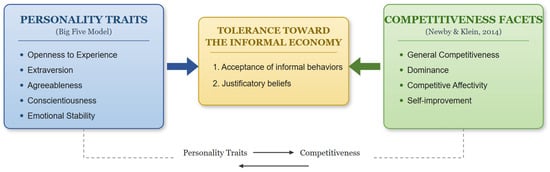
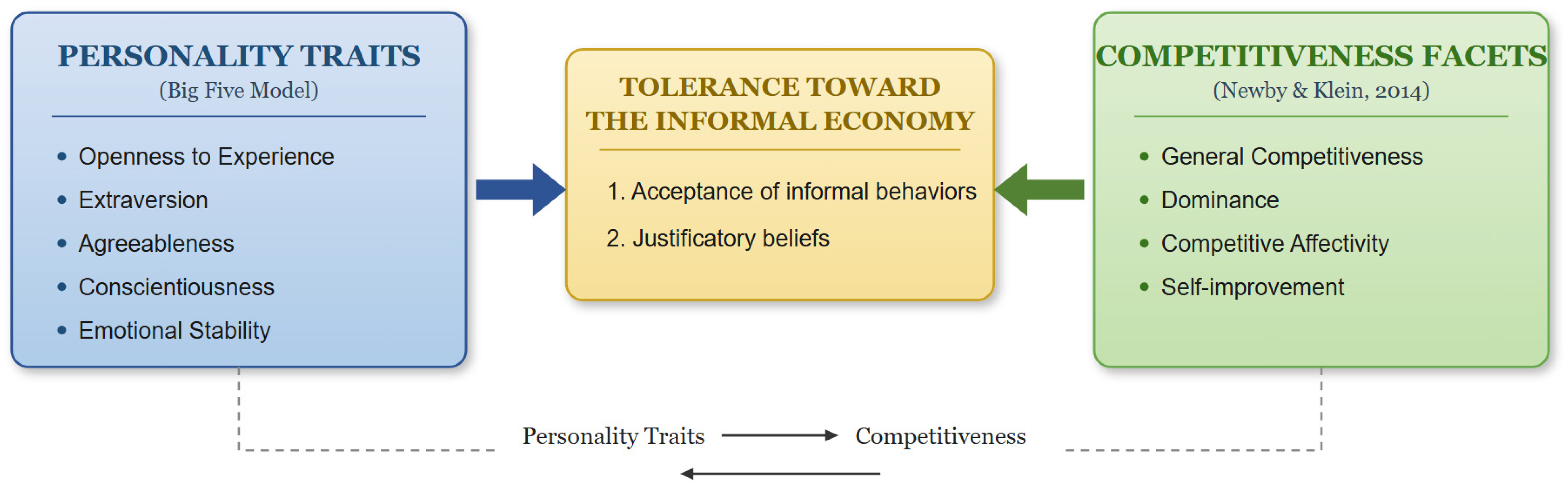
Figure 1 summarizes the theoretical framework.
Figure 1.
The theoretical framework [32].
2.1.4. Directional Expectations and Exploratory Hypotheses
The theoretical framework developed above supports a limited set of directional expectations. We formulate these expectations as theory-informed exploratory hypotheses in order to clarify the rationale for the analyses and to facilitate interpretation of the results. Their robustness should be assessed through independent confirmatory research using broader and more heterogeneous samples. Regarding personality traits, H1 proposes that conscientiousness is negatively associated with tolerance toward the informal economy, including both acceptance of informal behaviors and justificatory beliefs. This expectation follows from the established links between conscientiousness, self-discipline, norm adherence, and compliance-oriented behavior. H2 proposes that agreeableness is negatively associated with tolerance toward the informal economy. Individuals with higher agreeableness tend to display more cooperative and prosocial orientations, which may reduce the likelihood of legitimizing practices that violate fiscal and regulatory norms. For extraversion, emotional stability, and openness to experience, the available literature does not provide sufficiently consistent grounds for directional predictions in the context of tolerance toward the informal economy. Their associations are therefore examined on an exploratory and non-directional basis. Regarding competitiveness, H3 proposes that higher scores on general competitiveness, dominance, competitive affectivity, and self-improvement are positively associated with tolerance toward the informal economy. This expectation is based on the argument that orientations toward relative advantage, achievement, and competitive comparison may encourage a more instrumental interpretation of economic rules. Gender was included as a control variable in the multivariable models. Any observed gender differences are treated as exploratory findings rather than as tests of a formal hypothesis. These hypotheses operationalize the broad theoretical relationships represented in Figure 1.
2.2. Methodology
To examine the relationship between personality traits, dimensions of competitiveness, and tolerance toward the informal economy, the study adopts an exploratory cross-sectional design based on data obtained through a structured questionnaire [48]. This exploratory cross-sectional design was appropriate because prior research has examined personality primarily in relation to tax compliance and informal behavior, whereas evidence on competitiveness facets remains limited [48,49].
2.2.1. Sample and Data Collection
The questionnaire was administered to university students enrolled in Business Administration-related programs at a Spanish public university. The population was restricted to three-degree programs that include training in business management: Bachelor’s Degree in Business Administration (BA), Double Degree in Law and Business Administration, and Double Degree in Civil Engineering and Business Administration. Restricting the sampling frame to these programs yielded a clearly defined and relatively homogeneous population in terms of academic background. According to the institution’s administrative records, the population as of March 2025 consisted of 1266 students, distributed as follows: 626 in the Business Administration program, 578 in the Double Degree in Law and Business Administration, and 62 in the Double Degree in Civil Engineering and Business Administration. To preserve this population structure and avoid the overrepresentation of certain academic profiles, a proportionate stratified sampling procedure by degree program was applied.
The minimum sample size was estimated using Cochran’s formula for finite populations, assuming a 95% confidence level, a 5% margin of error, and maximum population variability (p = 0.5). After applying the corresponding finite population correction, the minimum required sample size was set at 295 participants. A total of 339 valid questionnaires were ultimately obtained, exceeding the minimum threshold and maintaining the proportions established in the sampling design. The questionnaire was administered online using the SurveyMonkey platform. To facilitate participation, a web link and a QR code were generated and distributed through the forums of the Moodle educational platform used in the courses associated with the selected degree programs. Data collection took place between February and March 2025. Before conducting the analyses, the responses were screened following predefined data-cleaning criteria. Only questionnaires completed by students enrolled in the three target degree programs and submitted within the established data-collection period were retained; responses recorded outside this period were excluded. The questionnaires retained for analysis (n = 339) were complete on all study variables (36 Likert items and the sociodemographic variables) so a complete-case approach was adopted, and no imputation was applied to the analyzed data. Reverse-worded items were recoded so that higher scores consistently reflected higher levels of each construct, and all responses were verified to lie on the intended 1–7 scale. Although the sampling procedure preserved the proportional structure of the target student population by degree program, participation was voluntary, and the sample should not be interpreted as representative of the broader population of taxpayers, workers, or entrepreneurs. Accordingly, the sample is appropriate for an exploratory analysis of theoretically grounded associations within a relevant student population, but not for making population-level estimates about tolerance toward the informal economy.
Prior to administering the instrument, three researchers with experience in quantitative analyses of human behavior reviewed the content of the scales and the results of a pilot pretest. Following [50,51,52], the tolerance scale described in the following section was developed specifically for this study through a phased scale-construction procedure: item generation based on prior literature, assessment of content validity, cognitive pretesting, and psychometric evaluation using the main sample. Illustratively, the acceptance dimension includes items such as “I consider it acceptable to try to avoid paying taxes,” whereas the beliefs dimension includes items such as “Excessive taxes force people to resort to the informal economy” (the full set of items is reported in Table 1). The pretest was conducted with a sample of university students (n = 25) and was used to assess the comprehension, clarity, and adequacy of the item response formats, allowing the wording to be refined before final implementation. In line with [53], the psychometric properties of the scale were subsequently evaluated using the full analytical sample through confirmatory factor analysis and indicators of reliability and convergent validity. Since the purpose of the pretest was to detect potential comprehension problems in the items, it was conceived as a preliminary refinement stage rather than as a full validation of the scale. This process allowed for the identification of ambiguities in certain items and the refinement of the instrument before its final implementation. After data collection, the dataset was cleaned by removing questionnaires with inconsistent response patterns or indications of random answering, following statistical criteria. The fieldwork was conducted in accordance with standard ethical principles for research involving human participants. Before starting the survey, participants were informed about the objectives of the study and provided voluntary informed consent. Anonymity of responses and confidentiality of the collected data were ensured, in line with the recommendations of the university’s research integrity committee.
To enhance transparency in the research process, the study design, objectives, and analytical strategies were preregistered prior to analysis on the AsPredicted platform (registration #277,542) under the title “Big Five Personality, Competitiveness, and Tolerance Toward the Informal Economy.”
2.2.2. Measurement Instrument
The instrument was structured into three blocks aligned with the proposed theoretical model (Figure 1). Following recent applications in research on behavior and decision-making (e.g., Nikčević et al. [40]), personality traits were measured using the abbreviated version of the Big Five Inventory (BFI-10) proposed by Rammstedt and John [39], which is widely used when a concise assessment of the five dimensions of the Big Five model is required. The questionnaire included items corresponding to extraversion, agreeableness, conscientiousness, emotional stability, and openness to experience. Each dimension was measured using two indicators (one positively worded and one reverse-coded), which were subsequently recoded to ensure a consistent interpretative direction. The choice of the abbreviated instrument reflected the need to limit respondent burden in a questionnaire covering several substantive domains. The instrument comprised several blocks of variables, including personality traits, competitiveness dimensions, tolerance toward the informal economy, and sociodemographic information. Therefore, a short measure of personality was selected to reduce respondent burden, minimize fatigue, and increase completion quality in a student survey context. The BFI-10 was considered appropriate because the aim of the study was to obtain broad domain-level indicators of the Big Five traits rather than detailed facet-level personality profiles. Nevertheless, the use of the BFI-10 involves relevant psychometric trade-offs. Because each personality trait is measured with only two items, the instrument provides limited content coverage, may produce lower internal consistency than longer Big Five inventories, and can increase measurement error [54]. Consequently, personality variables should be interpreted as broad dispositional indicators rather than as highly precise latent constructs. To partially mitigate these limitations, each trait was measured with one positively worded item and one reverse-coded item; both items were recoded to ensure a consistent interpretative direction, and the resulting personality scores were used as composite indices in the relational analyses rather than as latent variables in the confirmatory factor analysis.
Individual competitiveness was operationalized based on the typology proposed by Newby and Klein [32]. Each dimension was measured using four items, resulting in a total of sixteen indicators for this block. The study’s focal outcome, tolerance toward the informal economy, was operationalized through a two-dimensional construct developed specifically for this research, given the limited availability of instruments that directly measure this phenomenon from an attitudinal perspective. In line with the literature on tax evasion, economic informality, and tax morale, the construct was structured into two dimensions: acceptance and beliefs. Its development was informed by previous research on the informal economy and tax compliance. Each dimension was measured using five items, yielding a total of ten indicators for this construct [19,21,36,37].
All items were measured using seven-point Likert-type scales. Additionally, the questionnaire included a fourth block containing sociodemographic variables aimed at verifying compliance with the sampling criteria. Gender was measured with a single self-identification item offering three response options: male, female, and non-binary. Table 1 presents the complete wording of the items for the eleven latent dimensions (36 items in total), including the content of the acceptance and beliefs subscales.
Table 1.
Scales Used.
2.2.3. Data Analysis
The empirical analysis was conducted sequentially with the aim of evaluating the validity of the constructs included in the study and examining the relationships among the theoretically proposed variables. First, univariate descriptive analyses were performed to examine the behavior of the variables and to empirically characterize the sample. Subsequently, a confirmatory factor analysis (CFA) was estimated to assess the quality of the measurement model corresponding to the constructs of competitiveness and tolerance toward the informal economy.
As a preliminary step, variance inflation factors (VIFs) were calculated to assess potential multicollinearity among the predictors included in the regression models. Model fit was evaluated using the CFI, TLI, SRMR, and RMSEA indices [58,59], along with indicators of internal reliability and convergent validity, specifically Cronbach’s alpha, composite reliability (CR), and average variance extracted (AVE) [60]. These psychometric indicators were calculated for the competitiveness and tolerance constructs, which were measured with four or more indicators per dimension. Personality traits were not included in the CFA because the dimensions of the Big Five model were measured using the abbreviated BFI-10 version [38], which includes only two indicators per trait. Short scales present limitations for the estimation of full confirmatory factor models [61]; therefore, these dimensions were incorporated into subsequent analyses using composite indices calculated as the mean of their items [61,62]. In two-item scales, Cronbach’s alpha is highly constrained by the inter-item correlation and may provide a limited and potentially unstable estimate of internal consistency. For this reason, and in line with the exploratory purpose of the study, the five personality traits were treated as observed composite indices rather than as latent constructs. Because the aim was to obtain broad domain-level indicators rather than facet-level profiles, a short inventory was appropriate; such measures are useful when questionnaire length and respondent burden are relevant constraints, although they trade efficiency against psychometric precision [63]. This decision avoids overstating the precision of the BFI-10 while retaining the personality traits as theoretically relevant predictors in the correlational and regression analyses. Once the adequacy of the instrument was verified, composite indices for each dimension were constructed as the arithmetic mean of their respective indicators. This approach simplifies the relational analyses by summarizing each construct in a single composite measure [61,62,64]. In the regression models, gender was included as a control variable using a binary coding (male = 1; female and non-binary = 0). Given the very small number of respondents who identified as non-binary (n = 5; 1.47%), insufficient to constitute a separate category with adequate statistical power, these cases were included in the reference category. Accordingly, the gender coefficient should be interpreted as the difference between men and the rest of the sample, which is composed predominantly of women.
Next, bivariate correlational analyses were conducted using Pearson’s correlation coefficient in order to examine the relationships among personality traits, dimensions of competitiveness, and the variables of tolerance toward the informal economy. Finally, two multiple linear regression models were estimated: one for the acceptance dimension and another for the beliefs dimension of tolerance toward the informal economy. In both models, the five personality traits, the four dimensions of competitiveness, and gender (as a control variable) were included as explanatory variables. This stage identified the predictors showing the strongest adjusted associations with tolerance toward the informal economy and informed the specification of a more parsimonious exploratory model. All statistical analyses were conducted using R software (version 4.3.2) [65]. The following section presents the results derived from each stage of the analysis.
3. Results
3.1. Sociodemographic Profile and Univariate Descriptives
The sample, composed of 339 valid questionnaires, exceeded the minimum size established in the methodological design. The gender distribution was relatively balanced, with 54.28% women and 44.25% men, and 1.47% (n = 5) non-binary. Regarding household income, the highest concentration was observed in the intermediate ranges: 33.92% of participants reported monthly income between €1001 and €2000, and 28.02% between €2001 and €3000. With respect to the remaining variables, and in order to maintain consistency between the descriptive phase and subsequent relational analyses, results are presented at the level of composite variables, calculated as the arithmetic mean of the corresponding indicators. The univariate descriptive statistics of the eleven included dimensions showed sufficient variability across the main constructs of the study.
As shown in Table 2, the highest mean scores were observed for Conscientiousness (M = 5.391) and Self-improvement (M = 5.282), followed by Competitive Affectivity (M = 5.088) and General Competitiveness (M = 4.987), whereas Dominance showed the lowest mean among the competitiveness facets (M = 4.374). This suggests that competitiveness in the sample is oriented more toward individual improvement and emotional engagement than toward hierarchical or dominance-based forms. At the opposite end of the overall distribution, the lowest means corresponded to the Acceptance dimension of the informal economy (M = 3.988), Beliefs (M = 4.103), and Agreeableness (M = 4.283). Both tolerance dimensions displayed moderate levels with high dispersion, indicating observable heterogeneity in participants’ attitudes, with Beliefs slightly higher than Acceptance.
Table 2.
Descriptive Statistics of the Analyzed Constructs.
3.2. Evaluation of the Theoretical Model
The model was evaluated for the dimensions of competitiveness and tolerance toward the informal economy using confirmatory factor analysis (CFA). Personality traits were not included in this stage, as they were measured using the BFI-10, a previously validated short scale for assessing the Big Five dimensions [39]. In addition, the use of only two indicators per dimension reduces the suitability of their inclusion in a joint confirmatory factor model. Consequently, the CFA was restricted to the six constructs with a sufficient number of indicators [61].
The CFA showed acceptable overall fit (see Table 3). Specifically, the CFI value was 0.907 and the TLI was 0.894, while the error indices were within ranges consistent with satisfactory model fit (SRMR = 0.058; RMSEA = 0.075) [61]. Furthermore, the 90% confidence interval for the RMSEA (0.069–0.081) remained within limits considered acceptable in the methodological literature [58,61]. Overall, the results support the viability of the proposed structure. Regarding the quality of the measurement model (Table 4), the results also showed adequate levels of internal reliability across the six constructs. Composite reliability (CR) ranged from 0.745 for Competitive Affectivity to 0.928 for General Competitiveness, while Cronbach’s alpha varied between 0.722 and 0.926.
Table 3.
Overall Fit Indices of the CFA.
Table 4.
Internal Reliability and Convergent Validity.
With respect to convergent validity, AVE values were satisfactory for General Competitiveness (0.762), Dominance (0.730), Self-improvement (0.608), and Acceptance (0.590). In contrast, Competitive Affectivity (0.430) and Beliefs (0.475) fell slightly below the reference threshold of 0.50, suggesting some interpretative caution, although not calling into question the analytical relevance of these constructs [61,62]. Additionally, factor loadings were statistically significant in all cases (p < 0.001) and, in general, exhibited high magnitudes. The only exception was item CAf3 (Competitive Affectivity), whose standardized loading (0.453) was lower than those of the other indicators of the construct. Although deleting CAf3 increased the AVE for Competitive Affectivity from 0.430 to 0.460, it remained below the 0.50 threshold because a second indicator also showed a moderate loading. Given the acceptable composite reliability (CR = 0.745) and the reduced content coverage associated with removing an item from the established four-item scale proposed by [32], the original operationalization was retained, while the wording of CAf3 is flagged for revision in future applications. For the newly developed Beliefs dimension, reliability was strong (Cronbach’s alpha = 0.82; CR = 0.82), whereas AVE was 0.475; its significant item loadings (0.59 to 0.80) indicate an acceptable, though still improvable, measure that warrants further refinement and independent validation [64,66].
Personality traits are not included in this table because they were measured using the BFI-10, with only two items per trait. Given this format, Cronbach’s alpha was not used as the primary reliability criterion for these variables, and the traits were incorporated into the analyses as observed composite indices. Because the five personality traits were measured with two items and were not included in the CFA, their reliability was assessed using inter-item correlations and Spearman–Brown coefficients [65]. Reliability was modest for Extraversion (0.53), Conscientiousness (0.54), Emotional Stability (0.56), and Openness (0.35). Agreeableness showed negligible internal consistency (r = −0.04; Spearman-Brown coefficient = −0.07), consistent with prior evidence on this BFI-10 subscale [56]. Accordingly, findings involving agreeableness should be interpreted with particular caution.
3.3. Analysis of Relationships Between Variables
Once the adequacy of the model was verified and composite indices were constructed for each dimension, bivariate relationships between personality traits, competitiveness orientations, and tolerance toward the informal economy were examined using Pearson correlations. For transparency, all theoretically relevant associations are reported, including non-significant coefficients. The interpretation focuses primarily on statistically significant and theoretically meaningful relationships.
3.3.1. Personality Traits and Competitiveness Dimensions
The correlation patterns varied across personality traits (Table 5). Agreeableness showed significant negative associations with all four competitiveness dimensions. This pattern must, however, be interpreted with strong caution: as reported in Section 3.2, the two-item Agreeableness scale showed negligible internal consistency in this sample (inter-item r = −0.04; Spearman–Brown = −0.07), so the composite may not coherently represent the construct, and any associations involving it (including these bivariate correlations) are necessarily tentative. Extraversion also showed negative relationships with general competitiveness, dominance, and self-improvement, although with a more moderate magnitude. In contrast, Openness to Experience showed positive associations with competitive affectivity and self-improvement. These results suggest that more cooperative profiles tend to distance themselves from competitive logic, while cognitive openness appears linked to forms of competitiveness closer to exploration and individual development.
Table 5.
Correlations Between Personality Traits and Competitiveness Dimensions.
3.3.2. Personality Traits and Tolerance Toward the Informal Economy
The relationships between personality and tolerance toward the informal economy exhibited an even clearer pattern (Table 6), as all significant associations were negative. This implies that higher levels of certain traits are associated with lower levels of acceptance of informal economic practices and/or weaker adherence to beliefs that contribute to legitimizing them. The trait showing the strongest association was Conscientiousness, especially with the Beliefs dimension. Extraversion was also negatively associated with both facets of tolerance, whereas Agreeableness and Emotional Stability only showed weak but still significant associations with the Beliefs dimension. Overall, these relationships indicate that traits linked to self-control, discipline, and normative regulation are associated with lower permissiveness toward the informal economy.
Table 6.
Correlations Between Personality Traits and Tolerance Toward the Informal Economy.
3.3.3. Dimensions of Competitiveness and Tolerance Toward the Informal Economy
The bivariate associations between competitiveness and tolerance were the most consistent in the analysis.
All four competitive dimensions are positively and significantly associated with both facets of tolerance (Table 7). The interpretation of the sign indicates that higher levels of competitiveness correspond to higher levels of acceptance of informal practices and stronger beliefs that justify or normalize them. The strongest association is observed between Competitive Affectivity and Acceptance, followed by General Competitiveness–Acceptance and Self-improvement–Acceptance. From an analytical perspective, this pattern reinforces the centrality of competitiveness within the model, as all its dimensions converge in the same direction with moderate magnitudes.
Table 7.
Correlations Between Competitiveness Dimensions and Tolerance Toward the Informal Economy.
3.3.4. Gender Differences and Multivariate Analysis
Gender differences were examined using Welch’s t tests, which do not assume equal variances (Table 8). The results revealed a consistent pattern. In the personality block, women scored significantly higher in Extraversion, Agreeableness, and Conscientiousness, whereas men scored significantly higher in Emotional Stability. In contrast, Openness to Experience showed no statistically significant differences between groups. In the competitiveness dimensions, men consistently scored higher across all four facets analyzed, with particularly marked differences in General Competitiveness and Dominance. This same pattern was observed in tolerance toward the informal economy: men exhibited significantly higher levels in both Acceptance and Beliefs, suggesting greater permissiveness toward these types of economic practices (within the study sample).
Table 8.
Gender Differences in the Constructs Analyzed.
3.3.5. Multiple Linear Regression Models
To evaluate the simultaneous association of personality traits, competitiveness dimensions, and gender on tolerance toward the informal economy, two multiple linear regression models were estimated: one for Acceptance and another for Beliefs (Table 9). The overall F tests were statistically significant for both models. The Acceptance model explained 24.8% of the observed variance (R2 = 0.248; F(10,328) = 10.82; p < 0.001), while the Beliefs model explained 25.6% (R2 = 0.256; F(10,328) = 11.26; p < 0.001). Although these values indicate moderate explanatory power that is reasonable for exploratory research on individual dispositions, they also imply that approximately three quarters of the variance in tolerance toward the informal economy (about 75% in both models) remained unexplained. This substantial residual variance leaves considerable room for structural, institutional, and contextual determinants (such as the perceived quality of public institutions, tax enforcement, social norms, or local economic conditions) that were beyond the scope of the present dispositional model and that future, multilevel research could incorporate [46]. Prior to interpreting the coefficients, multicollinearity among the predictors was assessed. VIF values did not exceed 2.67, corresponding to the Dominance dimension, and tolerance statistics exceeded 0.37. These results fall well below the conventional thresholds for problematic multicollinearity (VIF = 5 or 10; [61,66], indicating that the moderate interrelations among the competitiveness dimensions do not undermine coefficient stability.
Table 9.
Multiple Linear Regression Models for Tolerance Toward the Informal Economy.
The two regression models showed broadly consistent patterns. Conscientiousness was negatively associated with both Acceptance and Beliefs, while Extraversion displayed smaller negative associations. Emotional Stability was negatively associated with Beliefs only. Within the competitiveness dimensions, Competitive Affectivity showed the strongest positive association with both outcomes. Self-improvement displayed a positive coefficient in the Acceptance model that approached, but did not reach, conventional levels of significance (b = 0.170; p = 0.053). Finally, male gender maintained a positive and significant association in both models, indicating that, within this student sample, men reported higher tolerance toward the informal economy even when personality and competitiveness were simultaneously controlled for. The 95% confidence intervals confirm this pattern: they excluded zero for the significant predictors (Extraversion, Conscientiousness, Competitive Affectivity, and gender in both models, and Emotional Stability in the Beliefs model) and included zero for the remaining predictors.
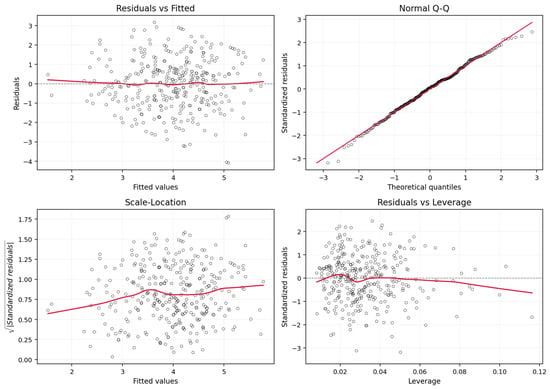
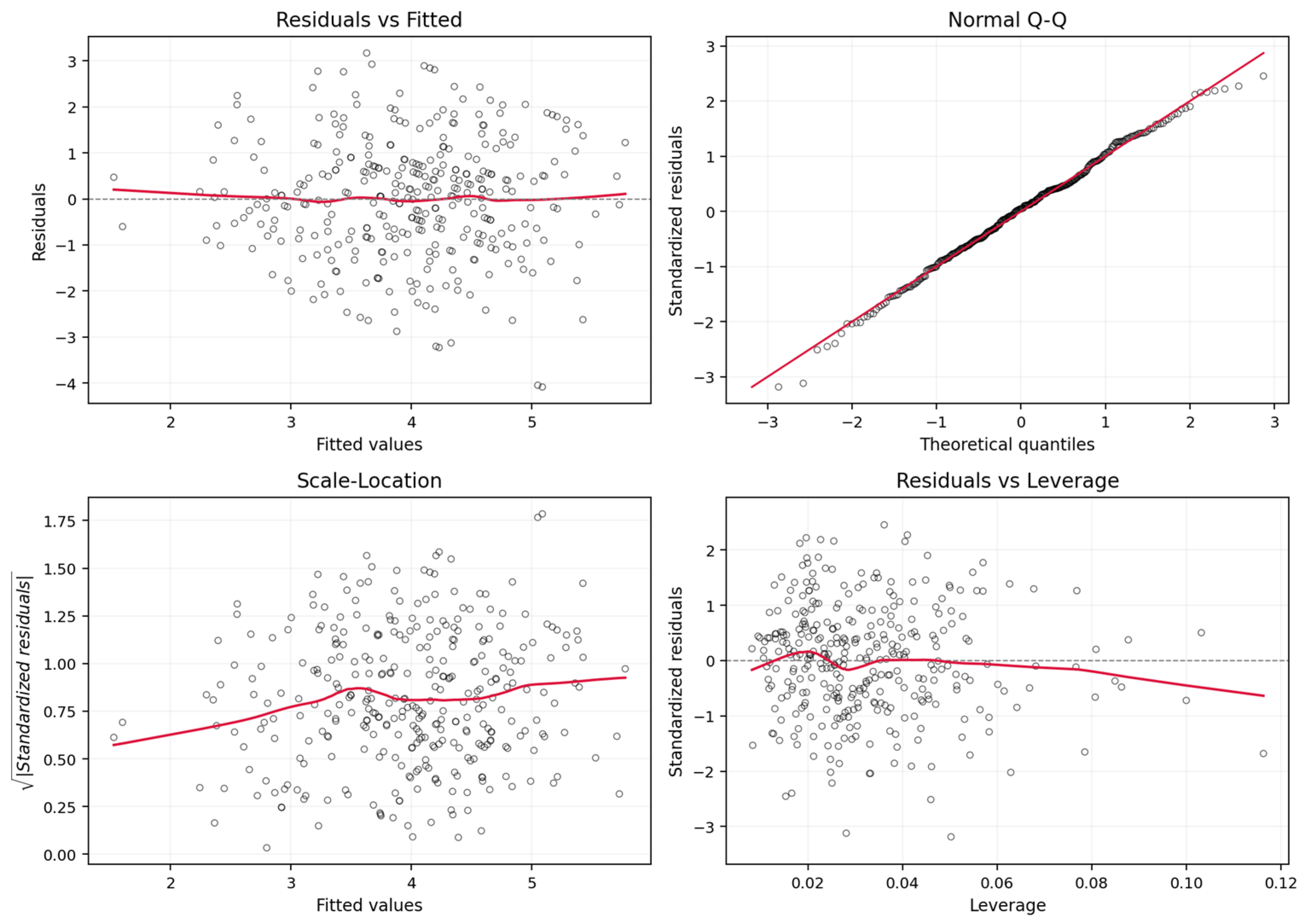
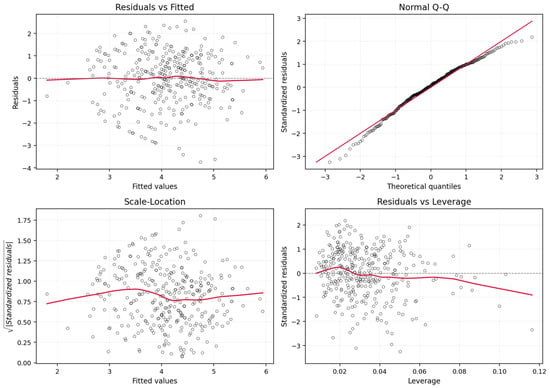
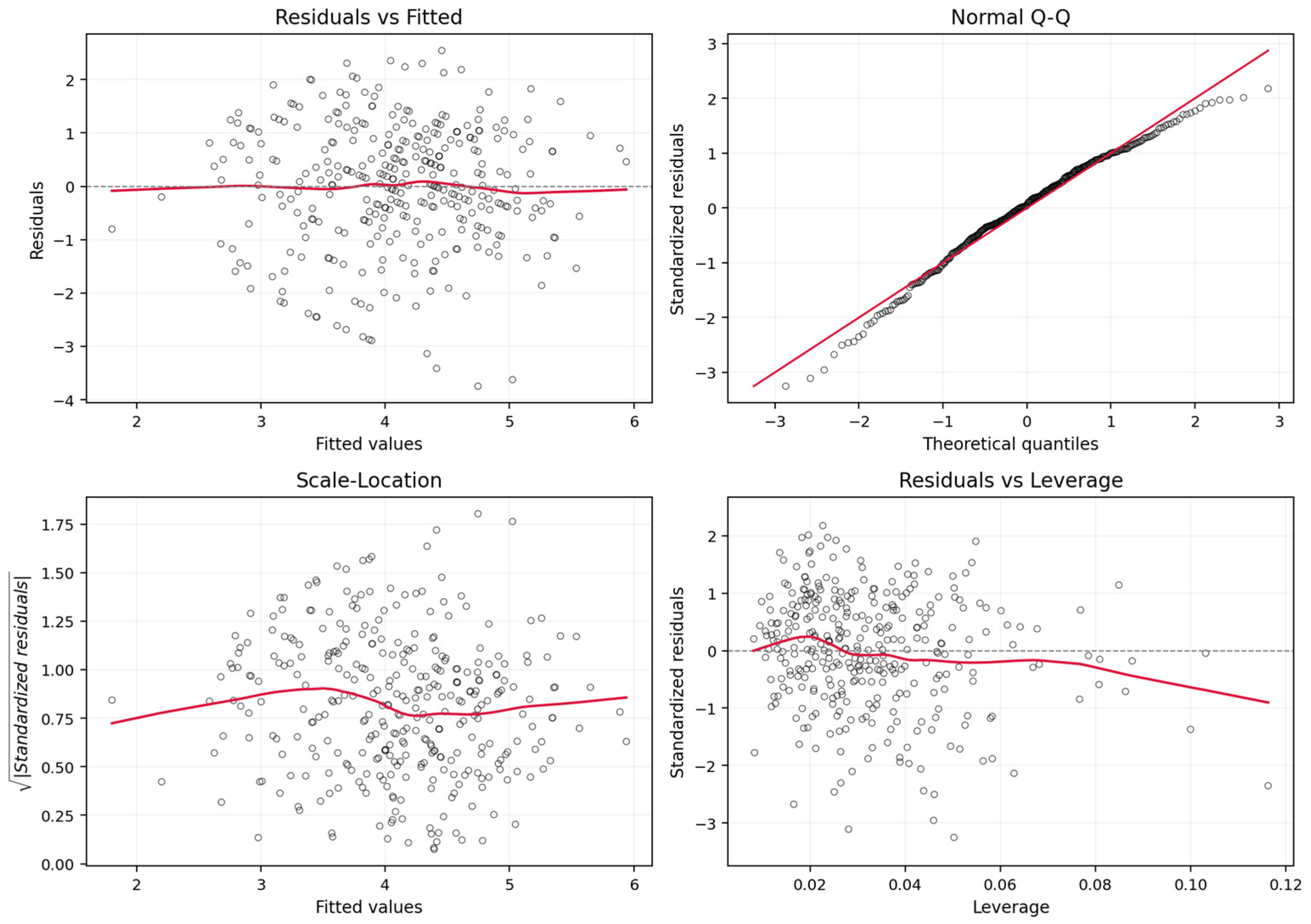
In contrast, Agreeableness, Openness to Experience, General Competitiveness, Dominance, and Self-improvement did not show statistically significant effects in either model. This pattern suggests that not all bivariate relationships remain when estimating the net effects of predictors in a multivariate context. Overall, the results indicate that tolerance toward the informal economy appears more closely linked to a combination of low Conscientiousness, lower Extraversion, higher Competitive Affectivity, and male gender, while other personal and competitive dispositions lose explanatory power once considered together in a theoretical model. Diagnostic checks indicated no material departures from the main assumptions of ordinary least squares regression. Residuals were approximately normally distributed in both models (Shapiro–Wilk W = 0.995 for acceptance and W = 0.983 for beliefs), with only mild negative skewness (−0.50) in the beliefs model that, given the sample size, does not compromise the estimates. Breusch–Pagan tests did not indicate heteroscedasticity (acceptance: p = 0.35; beliefs: p = 0.68), and all Cook’s distances were well below 1 (maximum = 0.05 for acceptance and 0.07 for beliefs), indicating no unduly influential observations. These patterns are illustrated in Figure 2 and Figure 3.
Figure 2.
Diagnostic plots for the Acceptance model.
Figure 3.
Diagnostic plots for the Beliefs model.
4. Discussion
The findings provide preliminary support for the analytical framework at three levels. However, given the exploratory nature of the study, the observed associations should be interpreted as context-specific and cannot be generalized to the broader population of taxpayers, employees, or entrepreneurs. First, the CFA confirmed an acceptable factorial structure for the competitiveness and tolerance dimensions, although the somewhat weaker convergent validity of Competitive Affectivity and Beliefs warrants cautious interpretation and suggests room for refinement in the specification of both constructs. Second, the correlations revealed a consistent pattern: Conscientiousness and Extraversion were negatively associated with tolerance toward the informal economy, aligning with literature linking these traits to higher normative self-control and lower justification of unethical or noncompliant behaviors [25,27,43], whereas all four competitiveness dimensions were positively related to both facets of tolerance. Third, when estimating net effects, the model was empirically refined around a core set of predictors: Conscientiousness and Extraversion retained robust negative associations, Competitive Affectivity showed the most stable positive association, Self-improvement was not a significant net predictor in either model, and male gender remained positively associated with both dimensions.
Consistent with H1, conscientiousness retained a robust negative adjusted association with both acceptance and justificatory beliefs. Support for H2 was limited, as agreeableness was negatively associated with justificatory beliefs only at the bivariate level and showed no statistically significant adjusted association with either outcome. Interpretation of this result requires caution because the two-item agreeableness scale showed negligible reliability in the present sample (Spearman–Brown coefficient = −0.07). H3 received partial support, as competitive affectivity retained positive adjusted associations with both tolerance dimensions, whereas general competitiveness, dominance, and self-improvement did not remain statistically significant once the full set of predictors was considered. Extraversion and emotional stability yielded additional exploratory findings that were not specified in directional hypotheses.
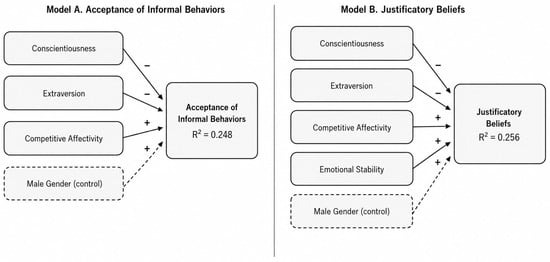
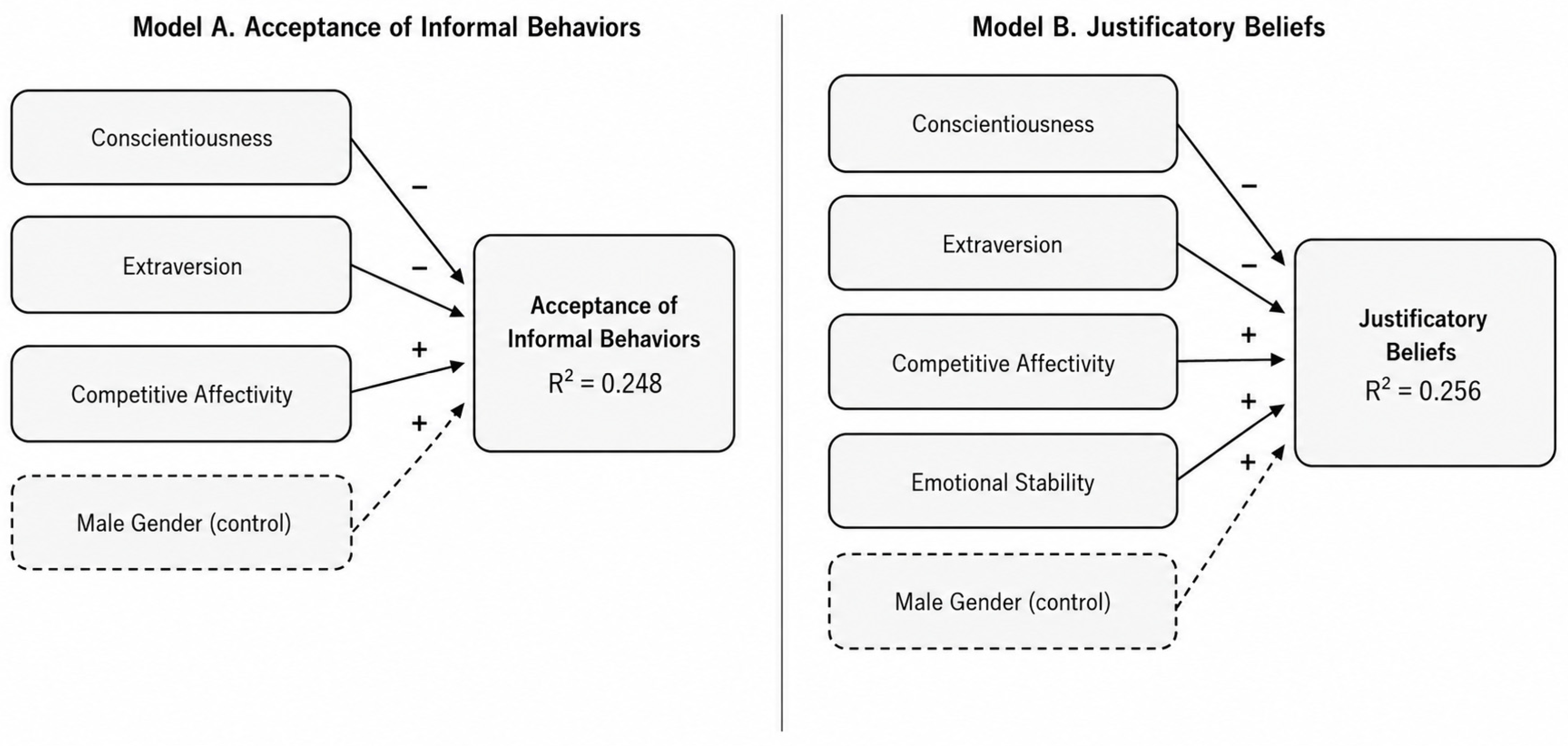
From a theoretical and exploratory standpoint, these findings raise the possibility that strategies aimed at reducing social tolerance toward the informal economy might benefit from incorporating individuals’ psychological heterogeneity, complementing traditional policies focused exclusively on control or sanction mechanisms. Given the exploratory, cross-sectional, and student-based nature of the present study, however, this should be framed not as an actionable policy recommendation but as a hypothesis for future research: namely, that public communication interventions reinforcing social-compliance norms and emphasizing the collective consequences of informal economic activities could be particularly effective for individuals with a stronger competitive orientation. Testing this hypothesis would require experimental or longitudinal designs in broader and more representative populations before any practical implication can be drawn. Building on these results, Figure 4 presents the refined exploratory analytical model derived from the empirical evidence. Whereas Figure 1 depicted the broad a priori theoretical framework that guided the study, Figure 4 retains only the predictors that showed statistically significant adjusted associations in each regression model. For acceptance of informal behaviors (Model A), Conscientiousness and Extraversion were negatively associated with tolerance, whereas Competitive Affectivity and male gender were positively associated with it. For justificatory beliefs (Model B), the same pattern held, with the additional negative contribution of Emotional Stability. Non-significant predictors were omitted from the model. This parsimonious structure is offered as a preliminary, exploratory model (summarizing adjusted associations rather than causal effects) intended to guide, and to be formally tested in, future confirmatory research.
Figure 4.
Refined exploratory analytical model of tolerance toward the informal economy. Note: signs indicate the direction of statistically significant adjusted associations (p < 0.05) from two separate OLS regression models (Model A: acceptance; Model B: justificatory beliefs). Solid arrows denote significant predictors; the dashed box and arrow identify gender, included as a control variable. Non-significant predictors are omitted. R2 values refer to each model. The figure summarizes associations and does not imply causal effects.
However, the results should be interpreted in light of several limitations: the study’s cross-sectional design prevents establishing causal relationships among the variables analyzed. Additionally, the use of a sample composed of university students restricts the generalizability of the findings to other population groups with different occupational trajectories and tax experiences. Although Business Administration students are a theoretically relevant group for a preliminary exploratory analysis because they are future economic and organizational decision-makers, they do not represent the broader population of taxpayers, workers, entrepreneurs, or business owners. Their age, educational background, limited labor-market experience, and relatively homogeneous institutional context may shape both their attitudes toward informal economic practices and their responses to personality and competitiveness measures. Consequently, the findings should be interpreted as exploratory and require replication in more heterogeneous and economically active samples.
In addition, although the tolerance scale was developed through a phased procedure and its psychometric properties were evaluated using the full sample, the pretest was qualitative in nature and based on a small sample; therefore, low-prevalence wording issues may still persist. Future applications should rely on larger pretests and independent validation samples [53]. Another limitation concerns the use of the BFI-10 to measure personality traits. Although this instrument was appropriate for reducing respondent burden and obtaining broad domain-level personality indicators, its abbreviated structure limits the psychometric depth of the measurement. Specifically, the use of only two items per trait restricts content coverage, prevents the assessment of lower-order personality facets, and may increase measurement error compared with longer Big Five inventories. Because lower measurement reliability attenuates observed associations, the regression coefficients for the personality traits are likely conservative and may underestimate the true strength of these associations [54,64]. Consequently, the findings involving personality traits should be interpreted cautiously and understood as exploratory evidence based on broad dispositional indicators. Future studies should replicate the analysis using longer personality inventories, such as the full BFI or BFI-2, and examine whether the observed relationships remain stable when personality is measured with more extensive and psychometrically robust scales. Finally, gender was operationalized in binary terms for reasons of statistical power, which prevents capturing the experience of individuals with non-binary gender identities; future research with larger samples should model gender in a more inclusive way. Future research could address these limitations through structural, longitudinal, or experimental designs, as well as replicate the analysis in more heterogeneous samples including workers, entrepreneurs, or active taxpayers.
This study makes three contributions to the literature on the informal economy. First, it shifts the focus from traditionally analyzed structural determinants toward the psychological micro foundations that are associated with social acceptance of economic informality. Second, it integrates within a single analytical framework two sets of individual dispositions, personality traits and competitiveness facets, that have previously been studied separately in the literature, examining their relationship with attitudes toward the informal economy. Finally, it proposes a theoretical structure that distinguishes between acceptance of informal behaviors and justificatory beliefs, enabling a more precise analysis of the personality mechanisms that may contribute to the persistence of these practices.
5. Conclusions
This exploratory study provides preliminary empirical evidence that tolerance toward the informal economy is associated with individual psychological dispositions alongside structural and institutional factors. By integrating personality traits and competitiveness dimensions within a single analytical framework, the findings highlight the relevance of micro-level determinants in understanding attitudes toward informal economic practices. Within this student sample, the results consistently indicate that Conscientiousness and Extraversion are negatively related to tolerance, with higher levels of self-regulation and social engagement being associated with lower acceptance and justification of informal behaviors. In contrast, Competitive Affectivity emerges as a key positive correlate, suggesting a link between emotionally oriented competitiveness and more permissive attitudes. Additionally, gender differences persisted in this sample even after controlling for other variables, with men displaying higher levels of tolerance across both acceptance and justificatory beliefs. Importantly, the multivariate analysis shows that not all bivariate relationships remain significant when considered jointly, underscoring the need for comprehensive models that account for the interplay between different psychological factors. These conclusions are necessarily provisional. Because the evidence derives from a cross-sectional, self-reported survey of students at a single Spanish university, the associations reported here describe this specific group and should not be generalized to taxpayers, workers, or entrepreneurs; replication in larger and more heterogeneous samples is required before drawing broader inferences. Overall, the explanatory power of the models, while moderate, suggests the relevance of combining personality and competitiveness constructs to better understand social tolerance toward informality in exploratory research contexts.
From a broader perspective, and strictly as a direction for future inquiry rather than as established guidance, these exploratory findings are consistent with the idea that approaches to reducing the social acceptance of the informal economy might be enriched by complementing regulatory instruments with behavioral and psychological insights. Whether interventions that strengthen social-compliance norms or address individual-level motivations are actually effective remains an open empirical question that the present study cannot answer; it would need to be tested directly in broader and more representative samples using experimental or longitudinal designs. Accordingly, we refrain from deriving concrete policy prescriptions from the current evidence and instead frame these considerations as hypotheses to be examined in future confirmatory research, which could contribute to a more comprehensive understanding of the mechanisms underlying tolerance toward the informal economy.
Author Contributions
Conceptualization, J.A.L.C. and M.M.C.; methodology, J.A.L.C. and M.M.C.; software, J.A.L.C. and M.M.C.; validation, J.A.L.C., M.M.C., I.R.D. and M.D.-O.; formal analysis, J.A.L.C. and M.M.C.; investigation, J.A.L.C. and M.M.C.; resources, J.A.L.C. and M.M.C.; data curation, J.A.L.C. and M.M.C.; writing—original draft preparation, J.A.L.C. and M.M.C.; writing—review and editing, I.R.D. and M.D.-O.; visualization, J.A.L.C., M.M.C., I.R.D. and M.D.-O.; supervision, J.A.L.C., M.M.C., I.R.D. and M.D.-O.; project administration, J.A.L.C. and M.M.C. All authors have read and agreed to the published version of the manuscript.
Funding
This research received no external funding.
Institutional Review Board Statement
Ethical review and approval were waived for this study due to this study was conducted in accordance with the Declaration of Helsinki and in line with the University of Córdoba’s Code of Responsible Practices and Integrity in Research (Announcement No. 2015/00559, 19 December 2015) (available at: https://www.uco.es/investigacion/portal/comite-de-bioetica-y-bioseguridad#ceih), following institutional guidelines on responsible research conduct and research integrity. According to these regulations, ethical approval is mandatory in the following cases: when any type of biological sample is used; ·when the study is interventional or involves even minimal risk to participants; ·when the research involves medicines or medical devices; ·when the research entails access to clinical data, whether through interviews, questionnaires, or access to medical records. For research involving any of the above conditions, only accredited Research Ethics Committees (RECs) are competent to assess and authorize such studies. After evaluation, it is confirmed that formal ethical authorization is not required for this specific study involving human participants conducted at the University of Córdoba, because informed consent was obtained from all participants prior to their involvement; participation was voluntary and anonymous; compliance with data protection regulations was ensured; participants did not belong to vulnerable or particularly sensitive populations; and no personal data that could compromise their privacy or integrity were collected.
Informed Consent Statement
Informed consent was obtained from all subjects involved in the study.
Data Availability Statement
The datasets generated and/or analyzed during the current study are available from the corresponding author on reasonable request. Public access to the data is restricted due to their use within an ongoing research project.
Acknowledgments
During the preparation of this manuscript/study, the author(s) used ChatGPT-4 to improve the clarity, readability, and linguistic quality of the manuscript Following the use of this tool, the authors have reviewed and edited the output and take full responsibility for the content of this publication.
Conflicts of Interest
The authors declare no conflicts of interest.
References
- Forbes. España Se Sitúa Como Tercer País Europeo Con Mayor Peso De Economía Sumergida, Con El 24% Del PIB, Según CEPR; Forbes España: Madrid, Spain, 2026; Available online: https://forbes.es/economia/663030/espana-se-situa-como-tercer-pais-europeo-con-mayor-peso-de-economia-sumergida-con-el-24-del-pib-segun-cepr/ (accessed on 7 March 2026).
- Pappadà, F.; Rogoff, K. Mining Insights from the Underground Economy; CEPR: London, UK, 2026; Available online: https://cepr.org/voxeu/columns/mining-insights-underground-economy (accessed on 7 March 2026).
- Amin, M. How does competition from informal firms impact research and development by formal manufacturing small and medium enterprises in the developing and emerging economies? Kyklos 2025, 78, 45–73. [Google Scholar] [CrossRef] [Scilit]
- Mathias, B.D.; Lux, S.; Crook, T.R.; Autry, C.; Zaretzki, Y.R. Competing Against the Unknown: The Impact of Enabling and Constraining Institutions on the Informal Economy. J. Bus. Ethics 2015, 127, 251–264. [Google Scholar] [CrossRef] [Scilit]
- Piperopoulos, P.; Kafouros, M.; Aliyev, M.; Liu, E.Y.; Au, Y.A. How does informal entrepreneurship influence the performance of small formal firms? A cross-country institutional perspective. Entrep. Reg. Dev. 2021, 33, 668–687. [Google Scholar] [CrossRef] [Scilit]
- Blackburn, K.; Bose, N.; Capasso, Y.S. Tax evasion, the underground economy and financial development. J. Econ. Behav. Organ. 2012, 83, 243–253. [Google Scholar] [CrossRef] [Scilit]
- Nguyen, C.P.; Doan, N.; Doan, H.; Nguyen, C.T.; Nguyen, Y.B.Q. Environmental taxes and the economy: New evidence of the shadow economy. Ann. Public Coop. Econ. 2026, 97, 1–26. [Google Scholar] [CrossRef] [Scilit]
- Anjarwi, A.W.; Alfandia, N.S. A Systematic Literature Review on the Evolving Landscape of the Shadow Economy and Tax Evasion: Global Challenges in the Digital Age. Deviant Behav. 2025, 1–24. [Google Scholar] [CrossRef] [Scilit]
- Asllani, A.; Schneider, F. A review of the driving forces of the informal economy and policy measures for mitigation: An analysis of six EU countries. Int. Tax Public Financ. 2025, 32, 310–344. [Google Scholar] [CrossRef] [Scilit]
- Banco de España. Límite a Los Pagos en Efectivo—Cliente Bancario; Banco de España: Madrid, Spain, 2026; Available online: https://clientebancario.bde.es/pcb/es/blog/limite-a-los-pagos-en-efectivo.html (accessed on 9 March 2026).
- MECE. El Afloramiento de Empleo Sumergido Y Las Reformas Estructurales Permiten Mejorar Las Finanzas Públicas Y Reducir El Déficit Estructural Siete Décimas Del Pib. 2026. Available online: https://portal.mineco.gob.es/ca-es/comunicacion/Pagines/dbp.aspx (accessed on 9 March 2026).
- Achim, M.A.; Mare, C. Factors influencing the shadow economy: An international analysis. J. Risk Financ. 2025, 26, 677–693. [Google Scholar] [CrossRef] [Scilit]
- Baklouti, N.; Boujelbene, Y. Shadow Economy, Corruption, and Economic Growth: An Empirical Analysis. Rev. Black Polit. Econ. 2020, 47, 276–294. [Google Scholar] [CrossRef] [Scilit]
- Schneider, F.; Asllani, A. A Review of the Informal Economy Driving Forces and Policy Measures against it: An Analysis of Six EU Countries. Int. Tax Public Financ. 2023; preprint. [CrossRef] [Scilit] [PubMed]
- Williams, C.; Ardiana, G. Formal Institutional Failings and Informal Employment: Evidence from the Western Balkans. South East Eur. J. Econ. Bus. 2022, 17, 83–95. [Google Scholar] [CrossRef] [Scilit]
- Alm, J.; Torgler, B. Culture differences and tax morale in the United States and in Europe. J. Econ. Psychol. 2006, 27, 224–246. [Google Scholar] [CrossRef] [Scilit]
- Arezzo, M.F.; Williams, C.C.; Horodnic, I.A.; Guagnano, Y.G. Revisiting tax morale: Evaluating the acceptability of business- and individual-level non-compliance on participation in undeclared work. Int. J. Manpow. 2023, 44, 952–966. [Google Scholar] [CrossRef] [Scilit]
- Guerra, A.; Harrington, B. Regional variation in tax compliance and the role of culture. Econ. Polit. 2023, 40, 139–152. [Google Scholar] [CrossRef] [Scilit]
- Kumar, J.; Rani, G.; Rani, M.; Rani, Y.V. What factors influence the individual’s behavior in engaging in income tax evasion? An investigation using SEM and fsQCA. Asian Rev. Account. 2025, 33, 609–628. [Google Scholar] [CrossRef] [Scilit]
- Nimer, K.; Bani-Mustafa, A.; AlQudah, A.; Alameen, M.; Hassanein, Y.A. Public perceptions of governance and tax evasion: Insights from developed and developing economies. J. Financ. Report. Account. 2022, 23, 855–875. [Google Scholar] [CrossRef] [Scilit]
- Pickhardt, M.; Prinz, A. Behavioral dynamics of tax evasion—A survey. J. Econ. Psychol. 2014, 40, 1–19. [Google Scholar] [CrossRef] [Scilit]
- Younus, M.; Manaf, H.A.; Nurmandi, A.; Mutiarin, D.; Sohsan, I.; Rehman, A.; Rosa, M.; Minhas, R. The Role of E-Government in Mitigating Tax Evasion Through Behavioral Profiling of Non-Compliant Taxpayers. In Modeling and Profiling Taxpayer Behavior and Compliance; IGI Global Scientific Publishing: Hershey, PA, USA, 2025; pp. 271–304. [Google Scholar] [CrossRef] [Scilit]
- Deb, R.; Chakraborty, S. Tax Perception and Tax Evasion. IIM Kozhikode Soc. Manag. Rev. 2017, 6, 174–185. [Google Scholar] [CrossRef] [Scilit]
- Falsetta, D.; Spilker, B.C. Psychological Reactance Theory and Tax Evasion Intentions. J. Bus. Ethics 2026, 203, 593–610. [Google Scholar] [CrossRef] [Scilit]
- Jassem, S.; Al-Rawi, Y.A.; Hussein Ali, Y.A. Impact of Big Five personality traits on tax non-compliance intentions: Mediation effect of perceived tax-fairness. J. Public Aff. 2022, 22, e2777. [Google Scholar] [CrossRef] [Scilit]
- Lukovszki, L.; Sipos, N.; Rideg, A.; Vörös, Y.Z. Personality aspects of tax compliance. Eur. J. Law Econ. 2025, 59, 457–490. [Google Scholar] [CrossRef] [Scilit]
- Owusu, G.M.Y.; Bart-Plange, M.-A.; Koomson, T.A.A.; Arthur, Y.M. The effect of personality traits and tax morale on tax evasion intention. J. Financ. Crime 2021, 29, 272–292. [Google Scholar] [CrossRef] [Scilit]
- Barrick, M.R.; Mount, M.K. The Big Five Personality Dimensions and Job Performance: A Meta-Analysis. Pers. Psychol. 1991, 44, 1–26. [Google Scholar] [CrossRef] [Scilit]
- Oshio, A.; Taku, K.; Hirano, M.; Saeed, Y.G. Resilience and Big Five personality traits: A meta-analysis. Personal. Individ. Differ. 2018, 127, 54–60. [Google Scholar] [CrossRef] [Scilit]
- Rodrigues, C.G.; Gopalakrishna, B.V. Financial risk tolerance of individuals from the lens of big five personality traits–a multigenerational perspective. Stud. Econ. Financ. 2023, 41, 88–101. [Google Scholar] [CrossRef] [Scilit]
- Sacchi, L.; Dan-Glauser, E. Understanding the Relationship Between the Big Five Personality Traits and the Cognitive Appraisals Leading to Emotions: An Integrative Narrative Review. Emot. Rev. 2026, 18, 15–41. [Google Scholar] [CrossRef] [Scilit] [PubMed]
- Newby, J.L.; Klein, R.G. Competitiveness Reconceptualized: Psychometric Development of the Competitiveness Orientation Measure as a Unified Measure of Trait Competitiveness. Psychol. Rec. 2014, 64, 879–895. [Google Scholar] [CrossRef] [Scilit]
- Krägeloh, C.U.; Medvedev, O.N.; Hill, E.M.; Webster, C.S.; Booth, R.J.; Henning, Y.M.A. Improving Measurement of Trait Competitiveness: A Rasch Analysis of the Revised Competitiveness Index with Samples from New Zealand and US University Students. Psychol. Rep. 2019, 122, 689–708. [Google Scholar] [CrossRef] [Scilit] [PubMed]
- Huml, M.R.; Kim, M.; Black, W.L.; Taylor, Y.E.A. Effect of toxicity and competitive psychological climate on team orientation and turnover intentions within sport employees. Eur. Sport Manag. Q. 2025, 25, 928–946. [Google Scholar] [CrossRef] [Scilit]
- Neneh, B.N. From entrepreneurial alertness to entrepreneurial behavior: The role of trait competitiveness and proactive personality. Personal. Individ. Differ. 2019, 138, 273–279. [Google Scholar] [CrossRef] [Scilit]
- Levenko, N.; Staehr, K. Self-reported tax compliance in post-transition Estonia. Econ. Syst. 2023, 47, 101047. [Google Scholar] [CrossRef] [Scilit]
- Marè, M.; Motroni, A.; Porcelli, Y.F. How family ties affect trust, tax morale and underground economy. J. Econ. Behav. Organ. 2020, 174, 235–252. [Google Scholar] [CrossRef] [Scilit]
- Arterberry, B.J.; Martens, M.P.; Cadigan, J.M.; Rohrer, Y.D. Application of Generalizability Theory to the Big Five Inventory. Personal. Individ. Differ. 2014, 69, 98–103. [Google Scholar] [CrossRef] [Scilit] [PubMed]
- Rammstedt, B.; John, O.P. Measuring personality in one minute or less: A 10-item short version of the Big Five Inventory in English and German. J. Res. Personal. 2007, 41, 203–212. [Google Scholar] [CrossRef] [Scilit]
- Nikčević, A.V.; Marino, C.; Kolubinski, D.C.; Leach, D.; Spada, Y.M.M. Modelling the contribution of the Big Five personality traits, health anxiety, and COVID-19 psychological distress to generalised anxiety and depressive symptoms during the COVID-19 pandemic. J. Affect. Disord. 2021, 279, 578–584. [Google Scholar] [CrossRef] [Scilit] [PubMed]
- Tauni, M.Z.; Rao, Z.-R.; Fang, H.; Mirza, S.S.; Memon, Z.A.; Jebran, Y.K. Do investor’s Big Five personality traits influence the association between information acquisition and stock trading behavior? China Financ. Rev. Int. 2017, 7, 450–477. [Google Scholar] [CrossRef] [Scilit]
- Vella, M. The relationship between the Big Five personality traits and earnings: Evidence from a meta-analysis. Bull. Econ. Res. 2024, 76, 685–712. [Google Scholar] [CrossRef] [Scilit]
- Simha, A.; Parboteeah, K.P. The Big 5 Personality Traits and Willingness to Justify Unethical Behavior—A Cross-National Examination. J. Bus. Ethics 2020, 167, 451–471. [Google Scholar] [CrossRef] [Scilit]
- Bruns, C.; Fochmann, M.; Mohr, P.N.C.; Torgler, Y.B. Multidimensional tax compliance attitude. J. Econ. Psychol. 2025, 110, 102848. [Google Scholar] [CrossRef] [Scilit]
- Peral, E.B.; Dülmer, H.; Coromina, L. ¿Por qué justificamos la evasión fiscal? Evidencia empírica a partir de una encuesta factorial en España. CIRIEC-Esp. Rev. Econ. Pública Soc. Coop. 2024, 112, 135–168. [Google Scholar] [CrossRef] [Scilit]
- Torgler, B. Speaking to Theorists and Searching for Facts: Tax Morale and Tax Compliance in Experiments. J. Econ. Surv. 2002, 16, 657–683. [Google Scholar] [CrossRef] [Scilit]
- Horodnic, I.A. Tax morale and institutional theory: A systematic review. Int. J. Sociol. Soc. Policy 2018, 38, 868–886. [Google Scholar] [CrossRef] [Scilit]
- Hunziker, S.; Blankenagel, M. Cross-Sectional Research Design. In Research Design in Business and Management: A Practical Guide for Students and Researchers; Hunziker, S., Blankenagel, M., Eds.; Springer Fachmedien: Wiesbaden, Germany, 2024; pp. 187–199. [Google Scholar] [CrossRef] [Scilit]
- Spector, P.E. Do Not Cross Me: Optimizing the Use of Cross-Sectional Designs. J. Bus. Psychol. 2019, 34, 125–137. [Google Scholar] [CrossRef] [Scilit]
- Boateng, G.O.; Neilands, T.B.; Frongillo, E.A.; Melgar-Quiñonez, H.R.; Young, S.L. Best Practices for Developing and Validating Scales for Health, Social, and Behavioral Research: A Primer. Front. Public Health 2018, 6, 149. [Google Scholar] [CrossRef] [Scilit] [PubMed]
- Churchill, G.A., Jr. A Paradigm for Developing Better Measures of Marketing Constructs. J. Mark. Res. 1979, 16, 64–73. [Google Scholar] [CrossRef] [Scilit]
- Hinkin, T.R. A Brief Tutorial on the Development of Measures for Use in Survey Questionnaires. Organ. Res. Methods 1998, 1, 104–121. [Google Scholar] [CrossRef] [Scilit]
- Perneger, T.V.; Courvoisier, D.S.; Hudelson, P.M.; Gayet-Ageron, Y.A. Sample size for pre-tests of questionnaires. Qual. Life Res. 2015, 24, 147–151. [Google Scholar] [CrossRef] [Scilit] [PubMed]
- Credé, M.; Harms, P.; Niehorster, S.; Gaye-Valentine, A. An evaluation of the consequences of using short measures of the Big Five personality traits. J. Personal. Soc. Psychol. 2012, 102, 874. [Google Scholar] [CrossRef] [Scilit] [PubMed]
- Backhaus, K.; Erichson, B.; Gensler, S.; Weiber, R.; Weiber, Y.T. Multivariate Analysis: An Application-Oriented Introduction; Springer Fachmedien: Wiesbaden, Germany, 2021. [Google Scholar] [CrossRef] [Scilit]
- Hu, L.; Bentler, P.M. Cutoff criteria for fit indexes in covariance structure analysis: Conventional criteria versus new alternatives. Struct. Equ. Model. Multidiscip. J. 1999, 6, 1–55. [Google Scholar] [CrossRef] [Scilit]
- Bagozzi, R.P. Evaluating Structural Equation Models with Unobservable Variables and Measurement Error: A Comment. J. Mark. Res. 1981, 18, 375–381. [Google Scholar] [CrossRef] [Scilit]
- Hair, J.F.; Babin, B.J.; Anderson, R.E.; Black, W.C. Multivariate Data Analysis; Cengage Learning: Boston, MA, USA, 2022. [Google Scholar]
- Bollen, K.A. Structural Equations with Latent Variables; John Wiley & Sons: Hoboken, NJ, USA, 1989. [Google Scholar]
- Soto, C.J.; John, O.P. Short and extra-short forms of the Big Five Inventory–2: The BFI-2-S and BFI-2-XS. J. Res. Personal. 2017, 68, 69–81. [Google Scholar] [CrossRef] [Scilit]
- Nunnally, J.C.; Bernstein, I.H. Psychometric Theory; McGraw-Hill Companies Incorporated: Columbus, OH, USA, 1994. [Google Scholar]
- Lafaye De Micheaux, P.; Drouilhet, R.; Liquet, Y.B. The R Software: Fundamentals of Programming and Statistical Analysis. In Statistics and Computing; Springer: New York, NY, USA, 2013; Volume 40. [Google Scholar] [CrossRef] [Scilit]
- Fornell, C.; Larcker, D.F. Evaluating Structural Equation Models with Unobservable Variables and Measurement Error. J. Mark. Res. 1981, 18, 39–50. [Google Scholar] [CrossRef] [Scilit]
- Lam, L.W. Impact of competitiveness on salespeople’s commitment and performance. J. Bus. Res. 2012, 65, 1328–1334. [Google Scholar] [CrossRef] [Scilit]
- Eisinga, R.; Te Grotenhuis, M.; Pelzer, Y.B. The reliability of a two-item scale: Pearson, Cronbach, or Spearman-Brown? Int. J. Public Health 2013, 58, 637–642. [Google Scholar] [CrossRef] [Scilit] [PubMed]
- O’brien, R.M. A Caution Regarding Rules of Thumb for Variance Inflation Factors. Qual. Quant. 2007, 41, 673–690. [Google Scholar] [CrossRef] [Scilit]

Disclaimer/Publisher’s Note: The statements, opinions and data contained in all publications are solely those of the individual author(s) and contributor(s) and not of MDPI and/or the editor(s). MDPI and/or the editor(s) disclaim responsibility for any injury to people or property resulting from any ideas, methods, instructions or products referred to in the content. |
© 2026 by the authors. Licensee MDPI, Basel, Switzerland. This article is an open access article distributed under the terms and conditions of the Creative Commons Attribution (CC BY) license.