Article

Side Hustles and the Psychological Drivers of Intention to Start a Small Business

by
Ali Saleh Alshebami
Applied College, King Faisal University, Al-Ahsa 31982, Saudi Arabia
Societies 2026, 16(7), 207; https://doi.org/10.3390/soc16070207
Submission received: 9 June 2026 / Revised: 29 June 2026 / Accepted: 30 June 2026 / Published: 30 June 2026

Abstract

Side hustles have become an important means of empowering individuals, particularly potential entrepreneurs such as students. This research explores the interaction among the perceived benefits of side hustles, entrepreneurial identity, perceived autonomy, and the intention to start a small business among students. A total of 286 responses were collected from different universities in Saudi Arabia. The collected data were analyzed using partial least squares structural equation modeling (PLS-SEM) and revealed interesting findings. The results confirmed that the perceived benefits of side hustles have a positive and significant relationship with both entrepreneurial identity and perceived autonomy. However, there was no direct relationship between the perceived benefits of side hustles and the intention to start a small business. The results also confirmed that entrepreneurial identity and perceived autonomy mediate the relationship between the perceived benefits of side hustles and the intention to start a small business. Unlike previous studies focusing on actual side-hustle participation or general entrepreneurial intentions, this study examines the perceived benefits of side hustles and reveals that their association with students’ intention to start a small business operates entirely through entrepreneurial identity and perceived autonomy. This research offers meaningful insights, suggestions, and practical implications for policymakers and stakeholders in the context of the study.

1. Introduction

Entrepreneurship and small enterprises have garnered considerable attention in the recent literature because of their critical role in creating new job opportunities, addressing emerging market needs, and enhancing people’s standards of living and quality of life [1,2,3,4,5]. Side hustles and gig work, which are forms of informal activities and paths, are thought to play a key role in enhancing individuals’ skills, experience, and knowledge [6]. They also prepare them for entrepreneurial activities and the small-business sector. A side hustle can be any activity, ranging from driving a taxi or delivering pizzas to selling handcrafted products or freelancing [7]. It is defined as a small business activity undertaken by an individual to earn extra income [8]. Not only do side hustles support individuals financially, but they are also believed to contribute to innovation and economic growth, aligning with the Sustainable Development Goals (SDGs) [9].
Students, viewed as potential future entrepreneurs, can benefit from gig work and side hustles. Through observation, discussion, and the perceived benefits of engagement in such activities, they gain practical experience and entrepreneurial knowledge related to business activities that can help them in their future careers [10]. Even when students are not engaged in side-hustle activities, their perceptions of the potential benefits of such activities may still be significant. Specifically, these perceived benefits may be linked to their entrepreneurial mindset and future career intentions. The concept of ‘side hustle’ has received more attention recently in social media, books, and podcasts [11,12], especially with the rise in the number of people looking for flexible work to supplement their primary jobs [13,14]. This growing visibility highlights the need to understand how perceptions of side hustles’ benefits interact with other phenomena and with different perspectives, including the perspective of students [6,15].
According to Lincoln and Raftery [16], alternative work arrangements, such as contract work, freelancing, side hustles, and gig work, have received considerable scholarly attention in recent years. The rapid expansion of flexible work arrangements has continued beyond the COVID-19 pandemic. Recent estimates indicate that 39% of working Americans report having a side hustle, representing approximately 80 million people and highlighting the growing role of supplementary income-generating activities in today’s labor market. Furthermore, 50% of millennials have been found to have a side hustle, reflecting the increasing popularity of alternative work arrangements among younger generations [17]. This confirms the importance of this sector and suggests a possible link to entrepreneurial intention and starting businesses [18]. These changing statistics confirm the shift from traditional employment to alternative work arrangements. From an individual perspective, Spreitzer et al. [19] emphasized the importance of understanding how individuals manage, experience, and navigate their work in alternative contexts, such as freelance, gig, remote, or contract work arrangements [20].
While the previous literature has acknowledged the significance of side hustles, there remains a limited understanding of the key factors that facilitate the transition from side hustles (PBSH) to full-time entrepreneurship [13]. In particular, the mechanisms through which PBSH may be associated with psychological drivers such as identity formation and perceived autonomy remain underexplored. This gap is confirmed in previous studies, emphasizing the need to further investigate the key drivers of hybrid entrepreneurship (side hustle) toward full-time entrepreneurship activity [15,21]. At the same time, we should recognize that the journey to full-time entrepreneurship is often hindered by obstacles, such as low levels of education, insufficient skills, and negative perceptions of entrepreneurship [13]. It is also important to note that even though side hustles play a significant role in creating jobs, they should not be viewed as the only solution for unemployment; alternative solutions are necessary [22].
Despite these challenges, side hustles remain valuable for many individuals because they provide them with a sense of autonomy, allow them to design their own work schedules, work on their own terms, and balance their small-business activities with their lives [22]. In addition to offering people psychological empowerment, such as autonomy, competence, and determination [11], side hustles allow them to understand their work preferences, gain market validation, and gain experience in running a business independently [8]. Furthermore, side hustles as well as gig work help individuals to build a brand and work identity and connect them to other meaningful ways [23]. Additionally, the exercises provided within the side-hustle activities assist individuals, especially students, in developing an entrepreneurial mindset and identity through engaging in real-world business activities. This exposure leads ultimately to a greater level of confidence, encouraging them to start their own business in the future [10]. Side hustles also act as useful mechanisms to meet economic uncertainty and build new skills. Recent statistics indicate that 44 million people worldwide engage in some form of side hustles [24]. This highlights the significant role that side hustles play in enhancing students’ autonomy and identity during the process of developing business establishment intentions.
Saudi Arabia, a developing nation with high ambitions toward enhancing the entrepreneurship and small business sector, uses side hustles for improve its entrepreneurship and small enterprises sector, maximize job opportunities, and diversify its economy [6]. This approach is especially viable within the Saudi socio-economic transformation under Vision 2030, which calls for cultivating an entrepreneurial generation, increasing self-employment, and enabling youth participation in diversified economic sectors [6,10,25]. In Saudi Arabia, the 2030 vision reforms, digital change, and the evolving workforce expectations have contributed greatly to the development of the gig economy. Several platforms, such as freelance.sa, bahr, and mostagl, have been established to help individuals, particularly students, to use their skills and expertise and maintain autonomy [26]. This shift in Saudi Arabia’s gig economy and digital uptake allows entrepreneurs to explore side hustles, gain autonomy, and build confidence, resulting finally in a stronger intention to start a small business. Understanding how students perceive these opportunities and how their perceptions relate to their entrepreneurial identity and autonomy is therefore important in the Saudi context. The importance of side hustles in supporting the creation of jobs necessitates further investigation of their interactions with other concepts, especially among the students in the Gulf region and Saudi Arabia in particular [6,10].
This gap exists because most of the previous literature appears to have focused only on working adults. Little attention has been paid to students’ perceived benefits of side hustles and the relationship between these perceptions and identity, autonomy, and intention to start a business.
Accordingly, this study attempts to address this gap. More specifically, it seeks to understand how university students’ perceived benefits of side-hustle activities relate to their entrepreneurial identity (EI), perceived autonomy (PA), and intention to start a small business (ISSB). This research is a response to the call from different researchers, such as Ashford et al. [23], who emphasized the need to continue investigating the role of resilience, identity, and flexibility in the gig economy. This study also fills the available research gap proposed by Lim et al. [9], whose study suggested that future researchers need to explore how entrepreneurs transition from part-time entrepreneurial activities to full-time business to satisfy their higher-level needs. Moreover, this research contributes to a growing body of research that seeks to investigate how informal entrepreneurial experiences may shape the entrepreneurial pipeline in rapidly transforming economies. Consequently, this research is anticipated to provide policymakers and other stakeholders with essential empirical evidence on the role of PBSH in supporting entrepreneurship and the small-business sector.
This research is divided into different sections. After the introduction section, the theoretical background, hypotheses development, and research methodology are presented. The analysis of data and interpretation, discussion, and conclusion then follow.

2. Theoretical Background

This research is based on the Self-Determination Theory (SDT). The SDT was established in the early seventies and was further developed by Deci and Ryan [27,28]. This theory argues that the behavior of an individual becomes more sustainable and motivated when three basic psychological needs are fulfilled: autonomy, competence, and relatedness. Autonomy refers to the ability to make decisions freely. Competence denotes the ability to succeed, whereas relatedness involves having good relationships with others.
According to SDT, people may engage in new tasks, such as side hustles, if they feel that these activities reinforce their sense of capability and personal choice. This internal motivation is expected to aid individuals in establishing EI and pursuing long-term entrepreneurial actions, such as starting a small business. Whilst SDT assumes autonomy, competence, and relatedness as the three main psychological needs [27], the current study concentrates primarily on PA and EI as the psychological mechanisms through which PBSH may be connected to the entrepreneurial intentions of students. Consequently, SDT acts here as a motivational lens that describes how students’ perceptions of side-hustle activities’ benefits may strengthen their sense of independence and entrepreneurial self-concept. It also explains how these factors may eventually shape their ISSB. Additionally, from the perspective of SDT, individuals are likely to develop stronger behavioral intentions when external experiences are internalized into personal motivations [27]. In this study, PBSH reflects students’ perceptions of the potential benefits of side hustles, which may strengthen their sense of autonomy. This perception may also contribute to the formation of an entrepreneurial identity. PA reflects the extent to which individuals feel that their actions are self-directed and freely chosen. EI captures their internalization of entrepreneurial values and self-concept. Through these psychological processes, PBSH may become an internalized motivation that relates to individuals’ intention to start a small business.
Furthermore, the purpose of using SDT in this study is to explain the complex connections between PBSH, EI, PA, and ISSB. More specifically, PBSH reflects students’ perceptions of the potential benefits of side hustles, which may strengthen their sense of autonomy by highlighting opportunities for independence, self-direction, and personal growth. In turn, these perceptions may also contribute to the development of an entrepreneurial identity, ultimately fostering students’ intention to start a small business. Additionally, students who perceive side-hustle activities to be beneficial are assumed to cultivate a sense of being autonomous and capable of managing their own tasks, time, and decisions. They may envision that they would also solve their problems, accomplish small achievements, and develop their competence by enhancing their skills. When the aforementioned needs of students are met, such students can then develop a stronger entrepreneurial identity and become more capable of making independent career decisions. Ultimately, fulfilling these needs is thought to increase their intention to start a small business. The findings of this research support the assumption that the relationship between PBSH and entrepreneurship intention is fully supported by PA and EI. This result aligns well with the basic principles of the SDT.

3. Hypotheses Development

3.1. PBSH, EI and ISSB

A side hustle is an activity that someone undertakes in addition to their primary work or studies to earn extra income, acquire experience, or pursue personal interests [29]. Side-hustle and gig work activities are considered to be valuable as they enable individuals to create personalized, multi-dimensional careers. In addition to creating opportunities for meaningful connections, side hustles provide autonomy and the opportunity to craft unique professional identities and brands [23]. Empirical studies have emphasized the positive connection between EI, entrepreneurship, and side-hustle culture. For example, the study by Walsh and Stephens [30] found that side hustles contribute to improving entrepreneurial identity by keeping people engaged in entrepreneurial activities while they remain in their original jobs. Side-hustle exercises also keep individuals linked to the start-up ecosystem and entrepreneurial community. Additionally, Forster-holt [8] highlighted that the exercises embedded in side-hustle activities enable students to develop an entrepreneurial mindset and identity through engaging them in real-world business activities. In many cases, students may not participate directly in side-hustle activities. Instead, they develop perceptions about the value, feasibility, and potential benefits of side-hustle engagement. This process is argued to increase their confidence in their ability to start a new business in the future [10].
In this respect, Farrugia et al. [22], in a study of 1497 young hustlers, researchers found that about 15% of respondents started side hustles because of their passion, financial concerns, and positive perception about side hustles. However, the same study by Farrugia et al. [22] noted that side hustles cannot be taken to be a complete solution for unemployment. The authors argued that other effective strategies need to be developed to ensure secure employment and enhance the establishment of a formal business. In a research involving 65 independent workers, Petriglieri et al. [31] further showed that independent work, such as side hustles, enabled individuals to personalize their work. Independent workers who perceived side hustles positively also used such experiences to express themselves and develop their work identity.
In the same vein, Lincoln and Raftery [16] emphasized that independent work strengthens EI through the provision of flexibility, freedom, and opportunities to develop business skills, gain more experience, and effectively monitor one’s career. In addition, the study of Ferreira [21] highlighted that hybrid entrepreneurship is an important tool for individual learning. It also assists in the development of entrepreneurial competencies and the minimization of fear of failure and risk. This, in turn, strengthens individuals’ self-efficacy and confidence in their entrepreneurial abilities and leads to better entrepreneurial intentions [32,33]. Adding another dimension, a recent study of 623 side hustlers by Zhang et al. [15] showed that side hustles can reduce financial stigma and help individuals to affirm their self-worth and regain a sense of control. In the Italian context, Ceresia and Mendola [34] found among 153 participants that self-identity plays a key role in developing entrepreneurial intentions. This finding suggests that those who have higher entrepreneurial features can have greater opportunities to develop the ISSB. This result also supports the study by Fauchart and Gruber [35], which confirmed among 49 firm founders that an entity, whether missionary, communitarian, or Darwinian, shaped participants’ motivation and decision to run a business. The study of Murnieks et al. [36] also highlighted that entrepreneurs may prioritize their EI as central to their self-concept. This feeling can assist them in developing a better, harmonious passion, fueled by autonomous and voluntary engagement in business activities. Relatedly, Navis et al. [37] argued that self-identity is significant as it enables individuals to obtain legitimacy, which is an essential condition for gaining trust and resources from stakeholders and investors. Finally, the study of Newbery et al. [38] demonstrated that EI promotes entrepreneurial behavior.
From the above discussion, we argue that PBSH is an important factor that plays a paramount role in developing entrepreneurial identity among students. Positive perceptions of side-hustle activities may provide students with the belief that such experiences equip them with the essential skills, experience, and knowledge needed to develop their entrepreneurial brand and identity as successful entrepreneurs. Perceiving the benefits of side hustles positively may also make them see themselves as capable entrepreneurs. In short, PBSH can be assumed to facilitate the internalization of entrepreneurial actions as part of students’ self-concept. Therefore, we assume the following hypotheses:
H1. 
PBSH is positively associated with EI.
H2. 
EI is positively associated with ISSB.
H3. 
EI mediates the relationship between PBSH and ISSB.

3.2. PBSH, PA, and ISSB

Autonomy is an individual’s ability to live a meaningful life in alignment with their authentic values and desires while effectively pursuing goals in social and external contexts [39]. It also refers to people’s belief that their acts are self-endorsed, volitional, and free from external pressure or control [27,39]. Side-hustle activities and positive perception of their benefits are recognized as key drivers of autonomy. That is, they allow individuals to decide when, how, where, and what type of work to select [30]. They have also been found to have provided individuals with a sense of autonomy and enabled them to design their own work schedules, engage in activities they enjoy, and work on their own terms [22]. Supporting this view, the study of Evans [8] highlighted that side hustles enabled students to understand and identify their work, gain market validation, and enjoy a great deal of independence in running a business [23]. Empirically, in a study of 337 employees, Sessions et al. [11] found that side hustles contributed to promoting self-determination, autonomy, and competence.
Additionally, the study of Hackman and Oldham [40] reported that task autonomy as well as task significance are essential elements for developing perceived autonomy and internal work motivation. Theoretically, based on the family-work theory, side hustles can also be seen to be extensions of the work role in that they provide resources, such as autonomy and confidence, to strengthen family life [41]. Support from family can, in turn, lead to success in side hustles. This family support includes, for example, engagement and emotional resources, all of which can enhance an individual’s ability to succeed in their side hustles, resulting ultimately in a better entrepreneurial intention.
Empirical research has also shown that PA leads to better entrepreneurial behavior. For example, Al-Jubari et al. [42] found among a sample of 622 students that PA positively influenced their ISSB indirectly through its proximal attitude towards entrepreneurship, subjective norms, and perceived behavioral control. In the studies by Carter et al. [20] and Shane et al. [43], it was reported that autonomy acts as a key central motivator for entrepreneurship, self-employment, and ISSB. In other words, through business development, an individual obtains self-employment, pursues independence, and escapes from external control. Block and Landgraf [44] also conducted a study among 481 participants in Germany and found that self-socialization and independence motivated entrepreneurs to transition from part-time to full-time entrepreneurship. Moreover, learning during hybrid entrepreneurship was found to have developed individuals’ skills and knowledge and reduced perceived risks and fear of failure, resulting in higher intentions to shift to full-time entrepreneurship [21].
Furthermore, Croson and Minniti [45] demonstrated through a utility-based model that autonomy acts as a “psychic bonus”, which motivates people to leave their traditional work earlier, even at the cost of long-term financial wealth. Thus, based on the above discussion, it can be argued that when students perceive and imagine side-hustle experiences to have benefits for them, it is most likely that they would also anticipate developing greater flexibility, autonomy, and better work experience, all of which may be associated with enhancing their intention to start a potential business [31].We, therefore, propose the following hypotheses:
H4. 
PBSH is positively associated with PA.
H5. 
PA is positively associated with ISSB.
H6. 
PA mediates the relationship between PBSH and ISSB.

3.3. PBSH and ISSB

Intention is generally considered a key antecedent of behavior [46]. Within the entrepreneurial process, the intention to start a small business precedes the actual behavior of establishing a business [47,48]. In this regard, side hustle activities may serve as a predictor for intention, as they are temporary activities. As a small-scale independent activity, a side hustle supports an individual’s income informally [22] and exposes him/her to self-employment practices or work carried out outside traditional employment [49]. Through these experiences or positive perceptions about their potential benefits, side hustles are thought to contribute to improving the intention to start a small business and developing entrepreneurial intention in general.
Previous studies have examined the interaction between a side hustle and entrepreneurship from different aspects. For example, the study of Farrugia et al. [22] highlighted that several motivational factors guide individuals to practice side hustles: passion, enjoyment, financial issues, and the connection between a future career and a side hustle. Their findings suggest that side hustles support people in developing certain entrepreneurial skills, such as the diversification of available opportunities, managing potential risks, and adapting to market changes. Additionally, the study of Forster-Holt [8] confirmed that participants who were exposed to side-hustle exercises developed better scalable business ideas and realities. Such exposure was found to have increased their confidence level, leading ultimately to a higher intention to start a business. In another empirical research conducted by Asfahani et al. [6], it was found that human resource practices on gig platforms significantly provided gig workers with experiences that prepared them for shouldering long-term responsibilities.
In reality, independent workers can manage their emotional challenges by developing a system encompassing physical place, connection to routines, significant people, and a broad purpose. These factors result in a better entrepreneurial identity and more confidence in their ability to sustain work [31]. This strengthened identity ultimately results in higher intention to start a business. Furthermore, according to Lincoln and Raftery [16], a free-agent lifestyle, flexibility in the options of work, the freedom to select rewards at work, greater independence and control, and entrepreneurial empowerment can be considered to act as key motivators for independent work. Qualitatively, the study of Chetty and Fourie [13] conducted on 20 side hustlers in South Africa reported that mentorship, trusted networks, and opportunities are essential social-capital aspects that influence the transition from side hustles to full-time entrepreneurship.
While side hustles are linked to early-stage entrepreneurship, in which individuals remain employed, they require more support to transition to full entrepreneurship [13,30]. Hence, side-hustle activities were assumed to strengthen self-efficacy, entrepreneurial identity, confidence, and the ability to evaluate risks [13].
Another piece of empirical evidence was provided by Walsh and Stephens [30], who conducted a study among 15 transient employees and found that side hustles act as stepping stones to move to full-time entrepreneurship. Block and Landgraf [44] likewise noted that side hustles allow individuals to gain knowledge about the market and products before becoming formal entrepreneurs [44].
Therefore, based on the above review, one may conclude that PBSH is an initial step taken by an individual to gain practical knowledge, build competent skills, and get prepared for full entrepreneurship. Positive perceptions of the side hustle’s benefits may be associated with enabling individuals, such as students, to turn their creativity, talents, or hobbies into income-generation activities. Consequently, we form this hypothesis:
H7. 
PBSH is positively associated with ISSB.

3.4. Model of the Study

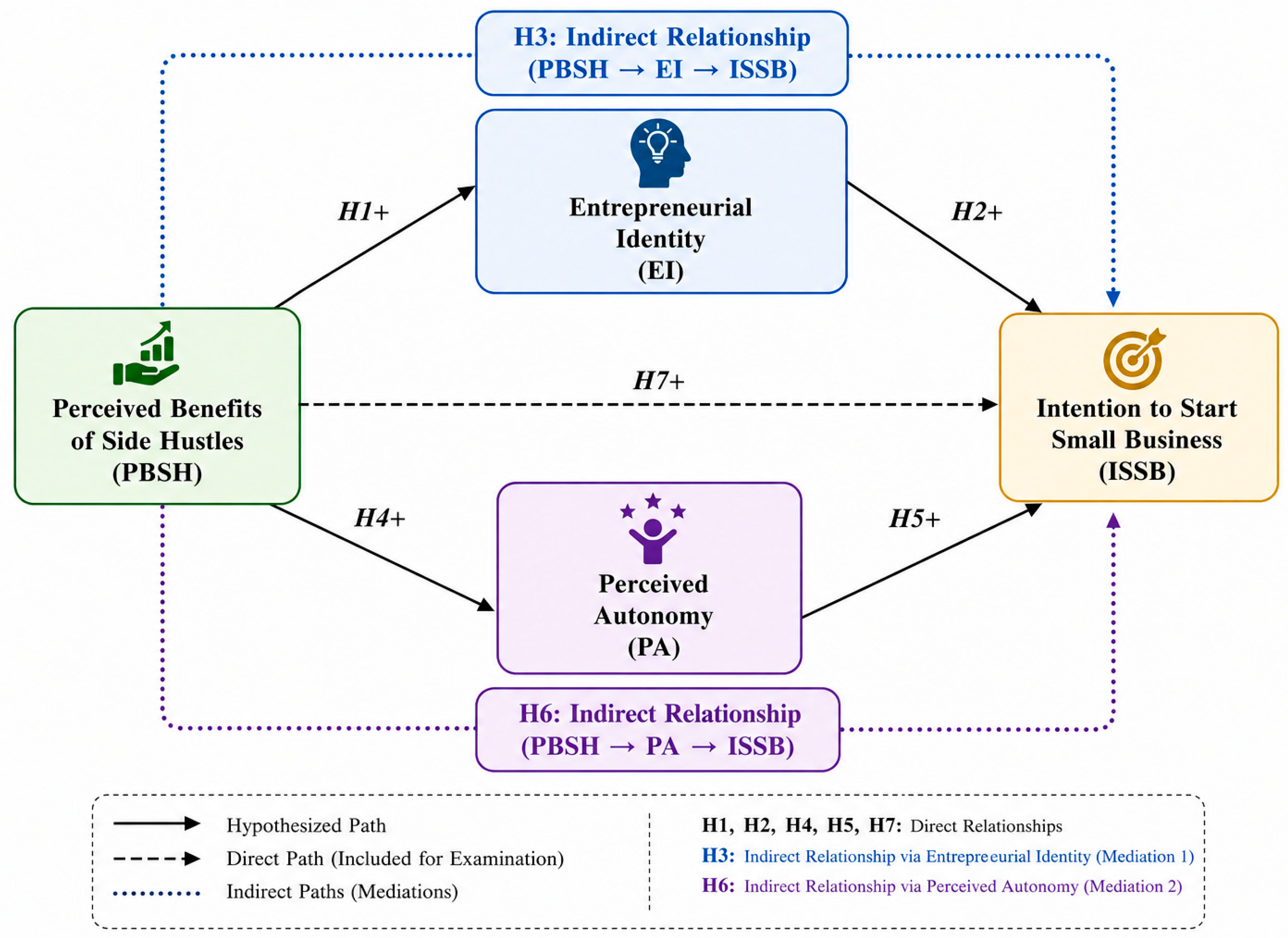
The proposed model is presented in Figure 1. As shown in the figure below, PBSH is an independent variable, whereas EI and PA act as mediators, followed by ISSB as a dependent variable. This model was developed after a careful review of the extant literature.

3.5. Operational Definitions for the Concepts of the Study

Table 1 shows the operational definitions of the constructs used in this study.

4. Research Methodology

4.1. Research Design and Sample of the Study

This study adopted an exploratory quantitative research design with a deductive approach. A cross-sectional survey was conducted to understand how PBSH interacts with PA and EI, all of which ultimately result in developing the university students’ intention to start small businesses. To achieve this, a structured questionnaire was employed for data collection. This approach ensured consistency and enabled statistical analysis using Statistical Package for the Social Sciences (SPSS 26) and PLS-SEM. The final sample comprised 286 respondents from different universities in Saudi Arabia, comprising both male and female students.
The collected sample was obtained via a Google Form, with greater emphasis on students who wished to report their perceptions of side hustles and their intentions to start a small business. The data were collected via convenience sampling, and the questionnaire was distributed to university students who were accessible to the researchers. Participation was voluntary, and no incentives were provided. To encourage greater participation, respondents were also encouraged to share the questionnaire with other students. This introduced a limited snowball sampling element.
The minimum sample size was initially evaluated using the 10-times rule, which suggests a minimum of 30 observations based on the maximum number of structural paths directed at a single endogenous construct. The final sample of the study involved 286 respondents, substantially exceeding this threshold and satisfying more conservative recommendations based on statistical power considerations. This provides adequate power for the PLS-SEM analysis [51,52]. The variables of this research were measured using multi-item Likert-type scales adapted from prior literature. These items were used to capture respondents’ perceptions of the study’s concepts. More importantly, the equal distribution of male and female respondents in the sample occurred naturally during data collection. No quota sampling or gender-based control was applied in choosing participants.
University students were selected for this research for several reasons. First, these students are generally regarded as potential entrepreneurs. Second, they have potential exposure to entrepreneurial concepts and evolving labor market dynamics. Furthermore, university students, especially those under the age of 27, represent one of the most active groups in relation to side hustles. Most significantly, studying this group is anticipated to assist in providing fresh and accurate insights into early-stage entrepreneurial behavior. That is, understanding the interaction between students’ PBSH and the other constructs introduced above is useful for developing necessary strategies and practical policies that can improve entrepreneurship and the small-business industry in developing countries, such as Saudi Arabia.
It is crucial to note that this study focuses on understanding perceptions and attitudinal beliefs toward side hustling, rather than on actual participation at the stage of being a student. Therefore, this research adopts a perception-based approach to explore how respondents view side-hustle culture. Specifically, it examines how these perceptions may relate to PA, EI, and ISSB.
This research is also in line with Saudi Vision 2030, which introduced different programs to encourage and empower youth, including the Human Capability Development Program and the National Transformation Program. These initiatives are intended to empower young people to acquire entrepreneurial skills and facilitate their market entry via digital platforms and freelance solutions. Consequently, Saudi Arabian students represent a population that is highly exposed to these initiatives and enablers. This makes them an appropriate and methodologically justified sample for this research.
The questions used in the questionnaire of the study were originally in English. The author first adapted and modified them to suit the concepts of the study and then translated them into Arabic to suit the respondents. They were carefully reviewed by professionals to check their suitability for capturing the intended meaning. All items adapted from prior studies were slightly reworded to ensure contextual suitability and clarity for the study setting. The initial PBSH items were developed by adapting concepts from the existing literature and tailoring them to the objectives of the study. To establish face and content validity, the items were reviewed by academic experts in entrepreneurship and research methodology. A pilot study was subsequently conducted to ensure clarity and comprehensibility before the main survey was administered. Minor corrections and adjustments were incorporated based on the obtained feedback. The final questionnaire was then distributed online and kept open for one month in 2025.

4.2. Measures of the Study

To measure the concepts of this research model, validated measures from previous literature were reviewed, refined, and adapted by the researchers. This study comprised four concepts: PBSH, EI, PA, and ISSB. The questions used to measure the first concept, namely PBSH, were inspired by both Zhang et al. and Jepsen et al. [15,49]. A sample of the measures of PBSH included: “Side hustles provide a great opportunity to gain financial independence and explore creativity.” The measures for the second concept, EI, were adapted from the study of Farmer et al. [50]. An example of these measures was : “I frequently imagine myself as an entrepreneur.” The measures for assessing the third concept of PA were inspired and adapted from Deci and Ryan, Bergamin et al., and Al-Jubari et al. [27,39,42]. A sample of these measures included: “I feel free to decide how to handle my tasks.” Finally, the concept of ISSB adapted its measures from the research of Liñán and Chen [48] and a sample of its measures included: “I am determined to create a small business in the future.” It is important to note that these items aimed to assess respondents’ perceived attitudes and beliefs about PBSH and its psychological impact (e.g., autonomy, identity). They do not focus strictly on actual engagement in such activities. For transparency and reproducibility, the full questionnaire used in the survey is provided in Table A1 of Appendix A.
Given that the PBSH scale was developed and adapted to suit the objectives and context of the present study, an exploratory factor analysis (EFA) was conducted to assess its dimensionality before proceeding with the main analysis. The results confirmed the suitability of the data for factor analysis, with a Kaiser–Meyer–Olkin (KMO) value of 0.881 and a significant Bartlett’s test of sphericity (χ2 = 788.853, df = 15, p < 0.001). The analysis extracted a single factor with an eigenvalue of 3.728, explaining 54.71% of the total variance. Factor loadings ranged from 0.676 to 0.805, exceeding the recommended threshold of 0.50. These findings provide evidence of the unidimensionality and adequacy of the PBSH construct for subsequent analyses. Following a final conceptual review, PBSH3 was excluded from the final measurement model because it reflected social influence and inspiration rather than the perceived benefits of side hustles, thereby improving the conceptual coherence and content validity of the construct.

5. Analysis and Interpretation

5.1. Demographic Analysis

According to the results summarized in Table 2, a total of 286 respondents participated in this study, with an equal distribution of male and female students, and with 90.9% of them being single. Concerning age, about 97.2% of respondents were between 18 and 27 years old. Regarding education level, those holding a diploma were the highest with a percentage of 68.2%, followed by those with a bachelor’s degree of 31.8%. Finally, with regard to the participants’ university affiliation, 64.7% of the respondents were affiliated with King Faisal University, 15.4% were affiliated with Tabuk University, followed by Hail University with 9.1%, Al-Fayhaa University with 6.3%, and Jazan University with 4.3%, and finally King Abdulaziz University with 0.3%.

5.2. Data Analysis

The research followed the standard steps of PLS-SEM in analyzing the data and testing the developed hypotheses. The PLS-SEM was employed because the study is primarily prediction-oriented and seeks to examine multiple direct and indirect relationships among latent constructs simultaneously [53,54]. Furthermore, the developed model includes a newly adapted construct, namely PBSH. This makes PLS-SEM especially suitable for exploratory research and theoretical expansion. Besides enabling the simultaneous assessment of the measurement and structural models, PLS-SEM also accounts for measurement error and mediation effects evaluation, providing a comprehensive analytical framework for the objectives of the present study.
The first step in PLS-SEM is to conduct an assessment for the measurement model, and then the second step examines the structural model [53]. What follows is a detailed description of these assessments.

5.2.1. Assessment of the Measurement Model

In this step, we checked the reliability of the constructs used in this research using three tests: Cronbach’s alpha (CA), Composite Reliability (CR), and Average Variance Extracted (AVE). According to Hair et al. [53], the recommended threshold for both CA and CR is 0.70 to indicate good reliability of the variables and should not exceed 0.95. The CA and CR values in Table 3 meet these criteria and are in line with the threshold, indicating good reliability for these variables. They further indicate that there is a strong internal consistency among the measures of the study representing the variables. The next test was to examine average variance extracted (AVE). The threshold of AVE is 0.50, which is in line with the results reported in Table 3. The AVE result confirms the presence of good convergent validity among the constructs of the study.
Another requirement for the measurement model was the evaluation of the loadings of the indicators used for represent the constructs of the study. In this regard, Hair et al. [53] recommended that a 0.70 score is the suggested threshold, while they noted that a 0.60 score is also accepted in exploratory research [54,55]. The higher the value is, the better the representation of the measures for the constructs, indicating better validity of the indicators. The results in Table 4 highlight that the indicators have good validity and they adequately represent the variables. All indicators measuring the study’s concepts were retained, except PA2, which had factor loadings below the recommended threshold. PA2 was therefore removed. This procedure follows the common guidelines of PLS-SEM, suggesting that indicators with loadings below the recommended level of 0.60 should be excluded to improve construct validity [53]. Items with outer loadings below 0.60 were considered for removal to improve the reliability and convergent validity of the measurement model. PBSH3 was also excluded from the analysis because it captured social influence rather than the perceived benefits of side hustles. The goal was to improve the conceptual consistency of the construct.
It is also recommended to evaluate the discriminant validity among the exogenous variables to understand the level of uniqueness among them and to ensure that every construct only represents and measures itself, and not others. Here, we used the test of Heterotrait-Monotrait Ratio (HTMT) to check the discriminant validity. HTMT Values less than 0.85 indicate better discriminant validity. Table 5 reveals the presence of good discriminant validity among the exogenous variables, as HTMT values meet the threshold indicated by Hair et al. [51]. It should be noted here that the HTMT matrix is presented in its original SmartPLS format. Only the lower-triangular values are reported because the matrix is symmetric, and the diagonal elements are not applicable.
The correlations among the variables of the study were also checked. The findings in Table 6 reveal that the correlation between EI and ISSB is the strongest one (R = 0.607). This indicates that higher EI might lead to a higher intention to start a small business. The weakest correlation is, however, between PA and EI (R = 0.473).

5.2.2. Structural Model

In this section, the structural model was analyzed, the developed hypotheses were tested, and their findings are reported in Table 7 below. The bootstrapping method was used for the evaluation of the hypothesis results. A significance level of 0.05 was considered when reporting the results shown below in Table 7.
Table 7 demonstrates that all assumed hypotheses were approved except H7. In other words, Table 7 confirms that PBSH was positively associated with EI and, at the same time, EI was positively associated with ISSB. Also, PBSH can positively improve PA among the respondents, and simultaneously, PA can enhance ISSB. PBSH did not reveal a positive direct relationship with ISSB, confirming that PA and EI can fully mediate the relationships assumed earlier. Further details about these results are reported in the discussion section.
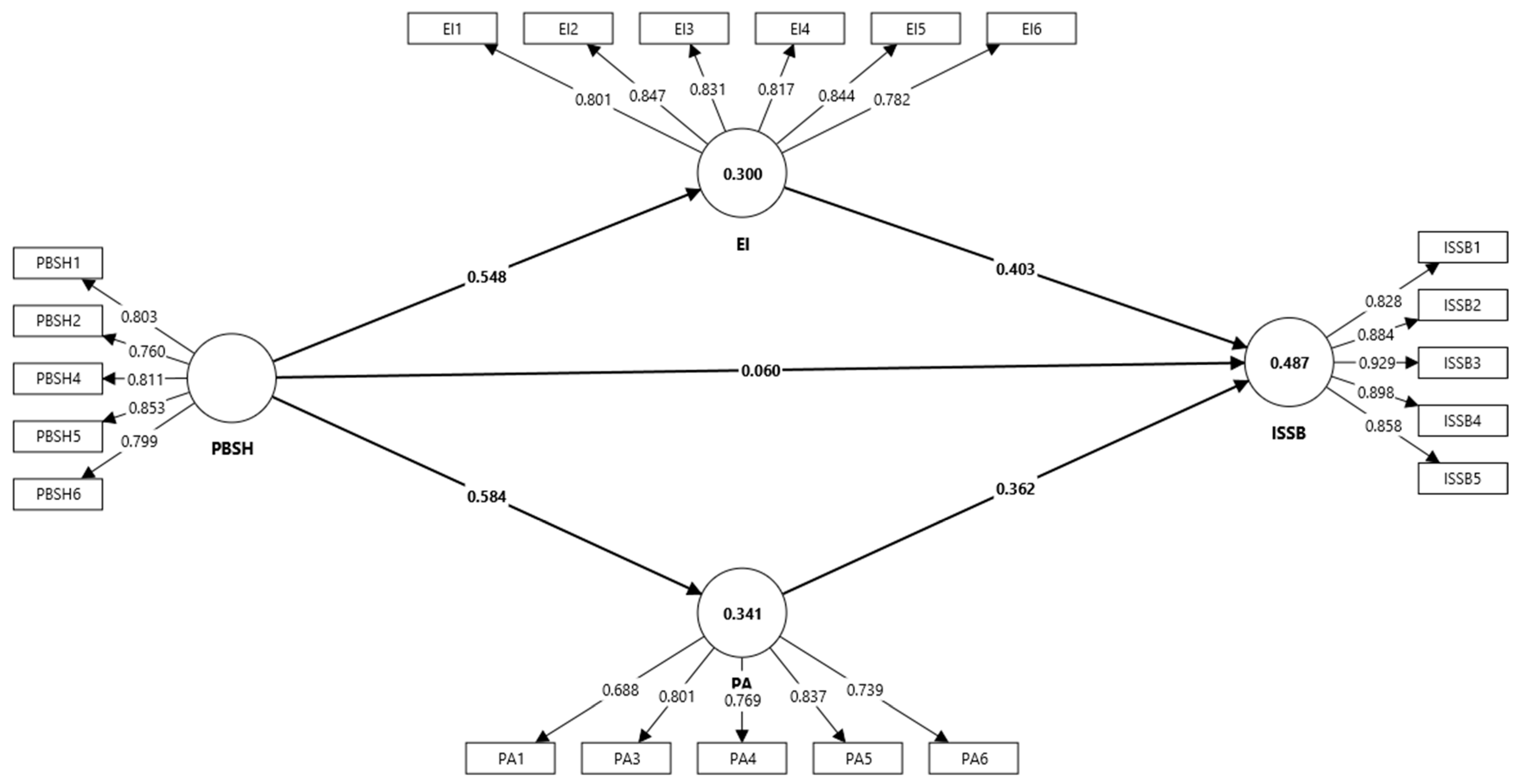
Figure 2 shows the result of the structural path analysis of the study model.
Table 8 reveals that PBSH predicts about 30% of the variance in EI, 34.1% in PA, and 48.7% in ISSB. According to Cohen [56] guidelines, all of these values reflect a meaningful proportion of the variance. Regarding the effect size, the relationship between PBSH → EI and between PBSH → PA reported a large effect size for both (f = 0.429) and (f = 0.518), respectively. It revealed a medium effect size for EI and ISSB as (f = 0.211), and also for PA and ISSB as (f = 0.160), respectively [56]. The effect size for the connection between PBSH and ISSB was reported as (f = 0.004), which is considered a small or minor effect as per the guidelines of Cohen [56].
To assess multicollinearity, all VIF values were below the recommended threshold of 3.3, indicating the absence of multicollinearity among the predictor constructs [53]. Concerning Q2, the findings in the table above indicate that EI, PA, and ISSB show good predictive relevance.
Regarding the evaluation of Common Method Bias (CMB), the results of Harman’s single-factor test showed a value of 41.9% that is less than 50%. This highlights that there is no major CMB problem detected [57]. In addition to statistical tests conducted to test CMB, several procedural remedies were implemented during data collection to reduce potential CMB. For example, the researcher assured the anonymity and confidentiality of the respondents’ responses to minimize evaluation apprehension. Furthermore, the developed questionnaire was carefully designed to ensure clarity of item wording and reduce ambiguity. Also, the survey indicators used to measure the predictor and outcome constructs were organized into separate sections. This reduced the likelihood that respondents would make artificial connections between variables.
Finally, the PLSpredict results in Table 9 indicate that the proposed model demonstrates strong out-of-sample predictive power, as all Q2 predict values are positive and the PLS-SEM model yields lower prediction errors than the linear benchmark model for the vast majority of indicators [53].

6. Discussion

6.1. Interpretation of Findings

This exploratory research sought to understand how PBSH is associated with ISSB among potential entrepreneurs, namely, students. The study also explores the key psychological mechanisms that may underlie this relationship. Key findings of this research revealed that PBSH is not directly associated with ISSB. Instead, the association occurs indirectly via two motivational factors: PA and EI. The absence of a significant result for the direct relationship between PBSH and ISSB confirms that PBSH is not the only source to enhance the entrepreneurial intention among students. Other factors, such as identity and autonomy, are also important. In other words, the perceived benefits of side hustles become meaningful when they strengthen entrepreneurial identity and perceived autonomy, which in turn foster the intention to start a small business.
The findings of this research align well with the principles of the SDT, which proposes that an individual’s behavior is shaped by autonomy, competence, and relatedness. When these three basic psychological needs are satisfied, the behavior of an individual becomes more sustainable and motivated toward a certain direction. In this regard, it was argued in past studies that individuals can strengthen their sense of capability and personal choice by engaging in new tasks and activities [27]. In the context of this study, PBSH seems to reflect students’ belief that side-hustle activities would provide them with various opportunities, such as building confidence in their abilities, gaining real-world experience, and making independent decisions. All of these anticipated experiences are more likely to support their needs for autonomy and competence. This process may lead university students to perceive themselves as more autonomous and in a better position to make decisions and manage their own tasks and time. Students perceiving side hustles to be beneficial may anticipate that they would feel competent because they would develop skills, solve problems, and achieve small accomplishments. These perceived benefits may be associated with an increasing level of confidence and self-efficacy among the students, all of which result in better intention to start a small business.
In this research, out of the seven developed hypotheses, a total of six hypotheses were approved; only H7, measuring the direct relationship between PBSH and ISSB, was rejected. More specifically, the assumption that PBSH is positively associated with EI (H1) among students was approved (β = 0.548, p < 0.05). This finding confirms that positive views of the benefits of side-hustle activities are essential, as students believe that such experiences expose them to roles, real tasks, and responsibilities that enhance their self-perceptions as entrepreneurial individuals. Such a result also aligns with [5,27]. In the second hypothesis, EI proved to be positively associated with the development of students’ intention to start a small business (β = 0.403, p < 0.05). This relationship highlights that when students have strong self-perceptions of being entrepreneurial individuals, they are more likely to feel competent in starting their small business or developing business intentions. That is to say, when students internalize EI, they start viewing entrepreneurship and small businesses as part of who they are.
Students with a stronger entrepreneurial identity tend to report a higher level of motivation to pursue entrepreneurial careers. This view is also supported by the SDT, which argues that internalized identities strengthen intentional behavior, explaining the strong ISSB outcomes in this study. H3 confirmed that EI fully mediates the relationship between PBSH and ISSB (β = 0.221, p < 0.05). This full mediation indicates that PBSH does not directly encourage students to start their own small enterprises or develop their own intentions. It can strengthen intention through the enhancement of their EI. This finding is also supported by principles of SDT, which argues that the perceived practical experiences and benefits that may be obtained from side hustles improve competence and autonomy, leading finally to a clearer entrepreneurial self-view, and this enhanced self-view drives future intentions [27]. The findings of H1, H2, and H3 align with the previous studies emphasizing the role of side hustles in enhancing entrepreneurial identity and entrepreneurial intention [8,16,31,34,38].
The fourth hypothesis (H4) indicated that PBSH reported an increase in the level of PA among students (β = 0.584, p < 0.05). This result suggests that students who perceive greater benefits in side hustles are more likely to view them as opportunities for independence, self-direction, and personal growth, thereby strengthening their sense of autonomy. SDT supports this perspective by proposing that autonomy is a fundamental psychological need that enhances intrinsic motivation and encourages individuals to pursue self-directed goals, such as starting a small business. This explains why students with positive perceptions of side hustles reported higher autonomy in this study.
The H5 proposed in this research was also approved, confirming that PA is essential for enhancing intention to start a small business among students (β = 0.362, p < 0.05). If students are autonomous, they may feel more empowered to begin personally meaningful actions, including entrepreneurial ventures. This type of autonomy is one of the central needs introduced in the SDT, and fulfilling this need is important for other actions and behaviors to take place [27].
The sixth hypothesis reported full mediation of PA on the relationship between PBSH and ISSB. This confirms that PBSH alone cannot strengthen the ISSB directly (β = 0.209, p < 0.05). There is a need to first create a sense of autonomy among the students. That is, PBSH first needs to go through PA, and then ISSB is developed. Finally, the hypothesis (H7) measuring the direct relationship between PBSH and ISSB was rejected (β = 0.060, p > 0.05). The results of H4, H5, and H6 align with the findings of previous research [8,11,22,31,42].
The rejection of H7 indicates that motivational factors (PA and EI) are associated with the intention of students to start their own business. Furthermore, PBSH needs to first activate these internal motivational processes before strengthening entrepreneurial intentions. For that, more attention should be directed toward developing these factors. Notably, the results of this research do not confirm that students are actively practicing side hustles. Instead, they reflect students’ perception that engaging in side-hustle activities would have some benefits, such as enhancing their autonomy and EI. This ultimately results in a higher level of intention to start a small business. Overall, the findings of this study suggest that perceived exposure to entrepreneurial activities becomes meaningful only when it is internalized psychologically. This supports the view that internal motivation plays a central role in entrepreneurial intention formation.

6.2. Theoretical Implications

This research is one of the few studies globally and particularly in Saudi Arabia to discuss a comprehensive model incorporating PBSH, PA, EI, and ISSB among a sample of potential entrepreneurs. Hence, it contributes greatly to the entrepreneurship and small business literature by emphasizing the positive role of perceived benefits of side hustles in enhancing identity, autonomy, and intention. The study findings align with the principles of SDT, suggesting that students who perceive greater opportunities for autonomy are more likely to develop self-directed motivation that supports their intention to start a small business. The results of the current research indicate that PBSH provides students with a meaningful psychological context in which they perceive greater opportunities for independence, self-direction, and personal growth, thereby strengthening their sense of autonomy and supporting the development of an entrepreneurial identity.
The findings of this research also emphasize that EI is an important mediator in the relationship between PBSH and ISSB. The same is true about PA, which has the same mediating strength. This indicates that internal psychological needs act as the primary motivational drivers behind long-term behavioral intentions. As a whole, the findings of the present study confirm that positive perceptions about potential engagement in side-hustle activities lead to greater self-autonomy as well as higher EI, which in turn result in a more positive attitude and intention toward starting a business.
Most significantly, the finding that PBSH does not directly translate into ISSB is a major contribution of this research. Instead, the findings show that perceived benefits of side hustles operate through internal psychological mechanisms, particularly EI and PA. This result suggests that simply perceiving the benefits of side hustles is not sufficient to strengthen students’ intention to start a small business. Rather, these perceived benefits become influential when they are internalized by fostering stronger EI and a greater sense of autonomy.
In this way, the study contributes to research on small business intention formation by highlighting the role of psychological internalization processes in transforming students’ PBSH into entrepreneurial motivation. More specifically, the non-significant direct relationship suggests that merely perceiving the benefits of side hustles may not be sufficient to encourage students to start a small business. Although students may recognize the financial, professional, and personal advantages associated with side hustles, these perceptions appear to translate into entrepreneurial intention only when they are internalized psychologically. Specifically, perceiving the benefits of side hustles may strengthen students’ entrepreneurial identity and enhance their sense of autonomy, which subsequently relates to a stronger intention to pursue entrepreneurship. This finding highlights that ISSB is shaped not simply by recognizing opportunities but by integrating those perceived benefits into one’s self-concept and motivation. The findings also provide new insight into the literature of EI via recommending that developing an individual’s identity does not only stem from formal entrepreneurial activities such as incubators or competitions. It may also be supported by students’ perceptions of the potential benefits associated with side hustles. This suggests that EI can develop gradually through the internalization of perceived entrepreneurial opportunities and their potential value.

6.3. Practical Implications

In terms of practice, the results of this research provide significant implications for different stakeholders, including youth development programs in Saudi Arabia, entrepreneurship centers, universities, and policymakers. The findings clearly indicated that PBSH acts as a key pillar in the development of the PA and EI of students. These are the two important psychological factors contributing to shaping the intention of students to start their small businesses. These findings implicated the need to develop basic programs that enable the students to obtain hands-on, low-risk exposure to real market environments, such as micro-internships, freelance projects, and university-supported gig platforms. These programs are likely to foster positive attitudes among students toward side hustles and strengthen their PA and EI.
Accordingly, higher education institutions are advised to integrate side-hustle opportunities into career-development pathways to help students in practicing entrepreneurial roles, obtaining confidence in decision-making, and building competence. Educational institutions may also collaborate with the private sector to offer students possible structured side-hustle experiences that align with Vision 2030 goals, particularly in the digital, service, and creative sectors. Furthermore, universities and entrepreneurship educators should design learning experiences that help students internalize the perceived benefits of side hustles by strengthening their EI and PA. For example, entrepreneurship courses can incorporate side-hustle simulations, micro-venture projects, and reflective activities that encourage students to see themselves as future business owners while developing confidence in making independent decisions. Such initiatives may be more effective at fostering small business creation than simply promoting side-hustle opportunities.
The findings of this study have also indicated the need to enhance internal motivations instead of focusing only on the provision of monetary support or training. Entrepreneurship agencies should develop the needed programs to enhance students’ level of autonomy. Such programs can offer mentorship and flexible learning tracks. Workshops are also required for competence skill-building. The aim of these programs is to indirectly strengthen the readiness and willingness of the students to start small businesses. Policymakers in the country also need to provide youth with an adequate ecosystem of side hustles and encourage them to engage in side-hustle culture. This encouragement will support Vision 2030, which aims to diversify income, increase self-employment, and strengthen youth participation in the entrepreneurial sector.
Moreover, universities and educational institutions can support the development of entrepreneurial identity and autonomy among students in different ways. For example, they can incorporate side-hustle simulations or small micro-venture projects into entrepreneurship courses. Furthermore, they can establish campus-based platforms to allow students to experiment with small-business ideas in a low-risk environment. Educational institutions and universities can also offer mentorship programs focused on identity-building and autonomy-supportive learning. Such programs will encourage students to view entrepreneurship as a viable career path [58,59].

7. Conclusions

This research attempted to understand the interactions among PBSH and other concepts, namely EI, PA, and ISSB. The sample included 286 students from different universities in Saudi Arabia who were anticipated to be potential entrepreneurs. The study analyzed the developed hypotheses using PLS-SEM and reported that PBSH is positively associated with both EI and PA. These two factors, in turn, revealed their ability to foster ISSB. There was no evidence of a direct relationship between PBSH and ISSB. The study was in line with the principles of SDT, emphasizing the need to enhance three components to achieve better behavior: autonomy, relatedness, and competence.
Although the study provides interesting findings, it also has some limitations. For example, despite being adequate according to the 10-times rule, the sample size of this research remains small. Future studies should enlarge the sample size to include more respondents from different universities. The use of convenience and snowball sampling in this research may have some bias. Therefore, future research needs to consider collecting a random sample so that the findings allow greater generalization. Additionally, future studies may consider incorporating some control variables to check their strength in the proposed model. Also, it is recommended to use a longitudinal research design when collecting data instead of relying on a cross-sectional research design. Future researchers are advised to include cultural aspects and institutional support in the new proposed model to check how they interact with side hustles. There might be a need to use different tools of analysis other than PLS-SEM to confirm the results of the study.
Moreover, one of the limitations is that this research applies an exploratory approach to explore the perception of the students toward side-hustle engagement and its association with autonomy, identity, and the intention to start a small business. Accordingly, as the respondents were not current side-hustle practitioners, the results reflect their attitudes and expectations rather than actual behaviors. In addition, this research is based on students’ perceptions rather than actual side-hustle engagement, which may limit the direct interpretation of behavioral outcomes. Consequently, the findings of this research should be interpreted with caution as they represent perceived, not experienced, outcomes.

Funding

This research work was supported by the Deanship of Scientific Research, Vice President for Graduate Studies and Scientific Research, King Faisal University, Saudi Arabia [KFU263564].

Institutional Review Board Statement

The study was conducted in accordance with the institutional ethics guidelines and local regulations and was approved by King Faisal University (KFU-REC-2025-NOV–ETHICS3709).

Informed Consent Statement

Informed consent was obtained from all subjects involved in the study.

Data Availability Statement

The data are available from the authors upon request.:

Acknowledgments

The author acknowledges the use of language editing services, including Grammarly and a professional proofreading agency, solely for the purpose of correcting grammatical errors and enhancing clarity. These tools were not used for generative content creation, and no artificial intelligence tools were employed in the substantive development of the manuscript.

Conflicts of Interest

The authors declare no conflicts of interest.

Appendix A

Table A1. Questionnaire.
ItemsSource
Perceived Benefits of Side Hustles
Side hustles provide a great opportunity to gain financial independence and explore creativity.Jepsen et al., and Zhang et al., [15,49]
Starting a side hustle is a motivating way to supplement income and gain control over time.
Social media and success stories inspire the idea of pursuing side hustles.
Balancing a side hustle with academic responsibilities helps develop time management skills.
Side hustle culture encourages hard work and entrepreneurial thinking.
Side hustles offer valuable experiences that can enhance future career opportunities.
Entrepreneurial Identity
I often think about becoming an entrepreneur.Farmer et al., [50]
I aspire to see myself as an entrepreneur.
Becoming an entrepreneur is an important part of how I see myself.
I feel that the term “entrepreneur” fits me well.
I frequently imagine myself as an entrepreneur.
Expressing my entrepreneurial aspirations is important to me.
Perceived Autonomy
I make choices because I truly want to.Deci and Ryan, Bergamin et al., Al-Jubari et al.,
[27,39,42]
What I do usually reflects my values and interests.
I set my own goals and pursue them steadily.
I feel free to decide how to handle my tasks.
My daily actions match who I really am.
People around me respect and support my choices.
Intention to Start Small Business
I am ready to do anything to start a small business.Farmer et al., [48]
My professional goal is to become a small business owner.
I will make every effort to start and run my own small business.
I am determined to create a small business in the future.
I have the firm intention to start a small business someday.

References

  1. Alshebami, A. Purpose-Driven Resilience: A Blueprint for Sustainable Growth in Micro- and Small Enterprises in Turbulent Contexts. Sustainability 2025, 17, 2308. [Google Scholar] [CrossRef] [Scilit]
  2. Suresh, R.; C, C.M.; Alshebami, A.; Al Marri, S. Transforming lives: The power of entrepreneurial motivation, bricolage, and mobile payments in strengthening livelihoods for micro-entrepreneurs. Discov. Sustain. 2025, 6, 154. [Google Scholar] [CrossRef] [Scilit]
  3. Adomako, S.; Yaw, S.; Ahsan, M.; Cowden, B.; Phong, N. Entrepreneurial curiosity and firm innovation: Exploring the mediating role of information search in new technology ventures. J. Bus. Res. 2024, 182, 114787. [Google Scholar] [CrossRef] [Scilit]
  4. Vera, K.J.C.; Velita, J.J.A.; And, T.A.M.; Ferrer, R.M. Determinant Factors of Entrepreneurial Culture in University Students: An Analysis from the Theory of Planned Behavior at a Peruvian University. Sustainability 2024, 16, 10693. [Google Scholar] [CrossRef] [Scilit]
  5. Liem, T.N.; Hoang, D.M.; Huy, T.H.; Thu, D.T. Determinants of entrepreneurial intentions among university students in Vietnam: Integrating personality traits, education, and planned behavior. Cogent Educ. 2025, 12, 2477376. [Google Scholar] [CrossRef] [Scilit]
  6. Asfahani, A.M.; Alsobahi, G.; Dahlan, D.A. Navigating the Saudi Gig Economy: The Role of Human Resource Practices in Enhancing Job Satisfaction and Career Sustainability. Sustainability 2023, 15, 16406. [Google Scholar] [CrossRef] [Scilit]
  7. Evans, M. A Golden Age of Entrepreneurialism: The Rise of the Side Hustle. Forbes Business Council. 2022. Available online: https://www.forbes.com/councils/forbesbusinesscouncil/2022/12/27/a-golden-age-of-entrepreneurialism-the-rise-of-the-side-hustle/ (accessed on 8 December 2025).
  8. Forster-Holt, N. Stimulation Versus Simulation: The Student Side Hustle as a Learning Innovation. Entrep. Educ. Pedagog. 2021, 4, 808–829. [Google Scholar] [CrossRef] [Scilit]
  9. Lim, W.M.; Bansal, S.; Kumar, S.; Singh, S.; Nangia, P. Necessity entrepreneurship: A journey from unemployment to self-employment. Glob. Bus. Organ. Excell. 2024, 43, 41–58. [Google Scholar] [CrossRef] [Scilit]
  10. Alshebami, A.; Fazal, S.A.; Amin, M.B.; Seraj, A.H.A.; Sobaih, A.E.E.; Ol’ah, J. Ripple effect of gig work: How hands-on experience and networks shape future female entrepreneurs. Sustain. Technol. Entrep. 2025, 5, 100118. [Google Scholar] [CrossRef] [Scilit]
  11. Sessions, H.; Nahrgang, J.D.; Vaulont, M.J.; Williams, R.; Bartels, A.L. Do the Hustle! Empowerment from Side-Hustles and Its Effects on Full-Time Work Performance. Acad. Manag. J. 2021, 64, 235–264. [Google Scholar] [CrossRef] [Scilit]
  12. Guillebeau, C. Side Hustle: From Idea to Income in 27 Days, Standard ed.; Crown Currency: New York, NY, USA, 2017; Available online: https://www.amazon.sa/-/en/Side-Hustle-Idea-Income-Days/dp/1524758841 (accessed on 2 February 2026).
  13. Chetty, S.; Fourie, A. The Entrepreneurial Leap: Social Capital’s Role in Moving Beyond Side-Hustle Entrepreneurship in South Africa. Int. Soc. Sci. J. 2025, 75, 625–639. [Google Scholar] [CrossRef] [Scilit]
  14. Bates, L.K. Gigs, Side Hustles, Freelance: What Work Means in the Platform Economy City. Plan. Theory Pract. 2019, 20, 423–446. [Google Scholar] [CrossRef] [Scilit]
  15. Zhang, G.; Jiang, L.; Xing, L.; Hung, W.; Cheung, G. Financial Insecurity among Side-Hustlers: The Roles of Sense of Control, Perceived Financial Stigma, and Side-Hustle Security. J. Bus. Psychol. 2025, 1–21. [Google Scholar] [CrossRef] [Scilit]
  16. Lincoln, J.; Raftery, M.M. Free Agents: How “Knowledge Works” Are Redefining the Workplace; Kelly Services, Inc.: Seven Hills, NSW, Australia, 2011; pp. 1–25. [Google Scholar]
  17. Nick Loper 2026 Side Hustle Statistics and Survey Results: Income Levels, the Most Popular Gigs, and Common Struggles. 2026. Available online: https://www.sidehustlenation.com/ (accessed on 23 June 2026).
  18. Katz, L.F.; Krueger, A.B. The rise and nature of alternative work arrangements in the united states, 1995–2015. ILR Rev. 2019, 72, 382–416. [Google Scholar] [CrossRef] [Scilit]
  19. Spreitzer, G.M.; Cameron, L.; Garrett, L. Alternative Work Arrangements: Two Images of the New World of Work. Annu. Rev. Organ. Psychol. Organ. Behav. 2017, 4, 473–499. [Google Scholar] [CrossRef] [Scilit]
  20. Carter, N.M.; Gartner, W.B.; Shaver, K.G.; Gatewood, E.J. The career reasons of nascent entrepreneurs. J. Bus. Ventur. 2003, 18, 13–39. [Google Scholar] [CrossRef] [Scilit]
  21. Ferreira, C.C. Experiential learning theory and hybrid entrepreneurship: Factors influencing the transition to full-time entrepreneurship. Int. J. Entrep. Behav. Res. 2020, 26, 1845–1863. [Google Scholar] [CrossRef] [Scilit]
  22. Farrugia, D.; Churchil, B.; Patouras, S.; Allen, K. Side-Hustles: How Young People Are Redefining Work. Findings from Year 1 of The Youth Side-Hustles Project; University of Melbourne: Melbourne, VIC, Australia, 2025. [Google Scholar] [CrossRef]
  23. Ashford, S.J.; Caza, B.B.; Reid, E.M. From surviving to thriving in the gig economy: A research agenda for individuals in the new world of work. Res. Organ. Behav. 2018, 38, 23–41. [Google Scholar] [CrossRef] [Scilit]
  24. Clark, D. How to Figure Out What Your Side Hustle Should Be. Harvard Business Review. 2025. Available online: https://hbr.org/2018/01/how-to-figure-out-what-your-side-hustle-should-be (accessed on 9 December 2025).
  25. Allmnakrah, A.; Evers, C. The need for a fundamental shift in the Saudi education system: Implementing the Saudi Arabian economic vision. Res. Educ. 2019, 106, 22–40. [Google Scholar] [CrossRef] [Scilit]
  26. Alharbi, S. Saudi Arabia’s Workforce Revolution: How the Gig Economy Is Reshaping Business Growth. 2025. Available online: https://tascoutsourcing.sa/en/insights/saudi-arabia-s-workforce-revolution-how-the-gig-economy-is-reshaping-business-growth (accessed on 2 March 2026).
  27. Deci, E.; Ryan, R. The “What” and “Why” of Goal Pursuits: Of Behavior Human Needs and the Self-Determination. Psychol. Inq. 2000, 11, 227–268. [Google Scholar]
  28. Deci, E.; Ryan, R. Intrinsic motivation and self-determination in human behavior. Contemp. Sociol. 1988, 17, 253. [Google Scholar] [CrossRef] [Scilit]
  29. Mukherjee, A.P.; Jain, A.; Mohan, C.; D, S. The Rise of Hustle Culture in Bangalore College Students: Navigating Ambition and Academic Balance. J. Emerg. Technol. Innov. Res. 2024, 11, d298–d306. [Google Scholar]
  30. Walsh, K.; Stephens, S. The Side-Hustle: An Emergent Typology of Entrepreneurs as Employees. Int. Rev. Entrep. 2022, 20, 227–248. [Google Scholar]
  31. Petriglieri, G.; Ashford, S.J.; Wrzesniewski, A. Agony and Ecstasy in the Gig Economy: Cultivating Holding Environments for Precarious and Personalized Work Identities. Adm. Sci. Q. 2019, 64, 124–170. [Google Scholar] [CrossRef] [Scilit]
  32. Donaldson, C.; Signes, Á.P.; Villagrasa, J. Is the road to high growth paved with intrapreneurial intention? The role of entrepreneurial self-efficacy and digital skills on entrepreneurship intention types. Int. J. Manag. Educ. 2025, 23, 101174. [Google Scholar] [CrossRef] [Scilit]
  33. Ghouse, S.M.; Barber, D.; Alipour, K. Shaping the future Entrepreneurs: Influence of human capital and self-efficacy on entrepreneurial intentions of rural students. Int. J. Manag. Educ. 2024, 22, 101035. [Google Scholar] [CrossRef] [Scilit]
  34. Ceresia, F.; Mendola, C. Am I an entrepreneur? Entrepreneurial self-identity as an antecedent of entrepreneurial intention. Adm. Sci. 2020, 10, 46. [Google Scholar] [CrossRef] [Scilit]
  35. Fauchart, E.; Gruber, M. Darwinians, communitarians, and missionaries: The role of founder identity in entrepreneurship. Acad. Manag. J. 2011, 54, 935–957. [Google Scholar] [CrossRef] [Scilit]
  36. Murnieks, C.Y.; Cardon, M.S.; Haynie, J.M. Fueling the fire: Examining identity centrality, affective interpersonal commitment and gender as drivers of entrepreneurial passion. J. Bus. Ventur. 2018, 35, 105909. [Google Scholar] [CrossRef] [Scilit]
  37. Navis, C.; Glynn, M.A.N.N. Legitimate Distinctiveness and The Entrepreneurial Identity: Influence on Investor Judgments of New Venture Plausibility. Acad. Manag. Rev. 2011, 36, 479–499. [Google Scholar] [CrossRef] [Scilit]
  38. Newbery, R.; Lean, J.; Moizer, J.; Haddoud, M. Entrepreneurial identity formation during the initial entrepreneurial experience: The in fl uence of simulation feedback and existing identity. J. Bus. Res. 2018, 85, 51–59. [Google Scholar] [CrossRef] [Scilit]
  39. Bergamin, J.; Hoven, M.; Van Holst, R.J.; Bockting, C.L.; Denys, D.; Nevicka, B.; Luigjes, J. Development and validation of the Autonomy Scale Amsterdam. Compr. Psychiatry 2024, 131, 152466. [Google Scholar] [CrossRef] [Scilit] [PubMed]
  40. Hackman, J.; Oldham, G. Motivation through the Design of Work: Test of a Theory. Organ. Behav. Hum. Perform. 1976, 16, 250–279. [Google Scholar] [CrossRef] [Scilit]
  41. Greenhaus, J.; Powell, G. When Work And Family Are Allies: A Theory of Work-Family Enrichment. Acad. Manag. Rev. 2006, 31, 72–92. [Google Scholar] [CrossRef] [Scilit]
  42. Al-Jubari, I.; Hassan, A.; Hashim, J. The role of autonomy as a predictor of entrepreneurial intention among university students in Yemen. Int. J. Entrep. Small Bus. 2017, 30, 325–340. [Google Scholar] [CrossRef] [Scilit]
  43. Shane, S.; Locke, E.A.; Collins, C.J. Entrepreneurial motivation. Hum. Resour. Manag. Rev. 2003, 13, 257–279. [Google Scholar] [CrossRef] [Scilit]
  44. Block, J.H.; Landgraf, A. Transition from part-time entrepreneurship to full-time entrepreneurship: The role of financial and non-financial motives. Int. Entrep. Manag. J. 2014, 12, 259–282. [Google Scholar] [CrossRef] [Scilit]
  45. Croson, D.C.; Minniti, M. Slipping the surly bonds: The value of autonomy in self-employment. J. Econ. Psychol. 2012, 33, 355–365. [Google Scholar] [CrossRef] [Scilit]
  46. Ghouse, S.M.; Harris, M.L.; Gibson, S.G. Role of gender and exposure on entrepreneurial attitudes of Omani university students. J. Int. Bus. Entrep. Dev. 2021, 13, 1–21. [Google Scholar] [CrossRef] [Scilit]
  47. Ajzen, I. The theory of planned behavior. Organ. Behav. Hum. Decis. Process. 1991, 50, 179–211. [Google Scholar] [CrossRef] [Scilit]
  48. Liñán, F.; Chen, Y.-W. Development and Cross-Cultural Application of a Specific Instrument to Measure Entrepreneurial Intentions. Entrep. Theory Pract. 2009, 33, 593–617. [Google Scholar]
  49. Jepsen, N.C.; Eaton, L.; Jepsen, N.C.; Eaton, L. Hustle: A conceptual exploration of work at the margins. Manag. Organ. Hist. 2025, 20, 314–335. [Google Scholar] [CrossRef] [Scilit]
  50. Farmer, S.M.; Yao, X.; Kung-Mcintyre, K. The Behavioral Impact of Entrepreneur Identity Aspiration and Prior Entrepreneurial Experience. Entrep. Theory Pract. 2011, 35, 245–273. [Google Scholar] [CrossRef] [Scilit]
  51. Hair, J.F.; Hult, G.T.M.; Ringle, C.M.; Sarstedt, M. A Primer on Partial Least Squares Structural Equation Modeling (PLS-SEM), 2nd ed.; SAGE Publications Ltd.: Thousand Oaks, CA, USA, 2017. [Google Scholar]
  52. Kock, N.; Hadaya, P. Minimum sample size estimation in PLS-SEM: The inverse square root and gamma-exponential methods. Inf. Syst. J. 2016, 28, 227–261. [Google Scholar] [CrossRef] [Scilit]
  53. Hair, J.F.; Risher, J.J.; Sarstedt, M.; Ringle, C.M. When to use and how to report the results of PLS-SEM. Eur. Bus. Rev. 2019, 31, 2–24. [Google Scholar] [CrossRef] [Scilit]
  54. Hair, J.F.; Ringle, C.M.; Sarstedt, M. PLS-SEM: Indeed a silver bullet. J. Mark. Theory Pract. 2011, 19, 139–152. [Google Scholar] [CrossRef] [Scilit]
  55. Knekta, E.; Runyon, C.; Eddy, S. One Size Doesn’t Fit All: Using Factor Analysis to Gather Validity Evidence When Using Surveys in Your Research. CBE—Life Sci. Educ. 2019, 18, rm1. [Google Scholar] [CrossRef] [Scilit] [PubMed]
  56. Cohen, J. Statistical Power Analysis for the Behavioral Sciences, 2nd ed.; Lawrence Erlbaum Associates: Mahwah, NJ, USA, 1988. [Google Scholar]
  57. Podsakoff, P.M.; MacKenzie, S.B.; Lee, J.Y.; Podsakoff, N.P. Common Method Biases in Behavioral Research: A Critical Review of the Literature and Recommended Remedies. J. Appl. Psychol. 2003, 88, 879–903. [Google Scholar] [CrossRef] [Scilit] [PubMed]
  58. Duong, C.D.; Vu, T.N. Entrepreneurial education and higher education students’ e-entrepreneurial intention: A moderated mediation model of generative AI incorporation and e-entrepreneurial self-efficacy. High. Educ. Ski. Work. Learn. 2025, 15, 1024–1048. [Google Scholar] [CrossRef] [Scilit]
  59. Khetarpal, R.; Jain, D.; Mitra, B. The role of entrepreneurship education, entrepreneurial motivation, and entrepreneurial readiness in mapping entrepreneurial intention of youth. Int. J. Manag. Educ. 2025, 23, 101272. [Google Scholar] [CrossRef] [Scilit]
Figure 1. Model of the research. Source: Author elaboration.
Societies 16 00207 g001
Figure 2. Results of the structural model assessment. Source: System development.
Societies 16 00207 g002
Table 1. Description of the concepts of the study.
ConceptDefinitionSource
Perceived Benefits of Side Hustles (PBSH)PBSH refers to an individual’s beliefs regarding the potential advantages or benefits that he/she may get out of engaging in side-hustle activities, including financial independence, skill development, creativity, career advancement, and entrepreneurial growth.Forster-holt [8]
Entrepreneurial Identity (EI)It is the perception that an individual has of themselves about the possession of certain characteristics that distinguish them as potential entrepreneurs from others. It also includes the desire to see oneself as or aspire to become an entrepreneur. Farmer et al., [50]
Perceived Autonomy (PA)It refers to the people’s feeling that their actions are self-endorsed and free from external pressure.Deci and Ryan, Bergamin et al., [27,39]
Intention to Start a Small Business (ISSB)It is defined as the individuals’ determination and commitment to establish and manage small enterprises in the future.Liñán and Chen [48]
Source: author’s elaboration.
Table 2. Findings related to demographic information.
VariableCategoryFrequencyPercentage (%)Total Sample
(N = 286)
GenderMale14350.0286
Female14350.0
Marital StatusSingle26090.9
Married165.6
Other103.5
Age18–27 years27897.2
28–37 years82.8
Educational LevelDiploma19568.2
Bachelor’s Degree9131.8
UniversityKing Faisal University18564.7
Tabuk University4415.4
Hail University269.1
Al-Fayhaa186.3
Jazan University124.2
King Abdulaziz University10.3
Source: Primary data.
Table 3. Construct reliability and validity.
Cronbach’s Alpha
(CA)
Composite Reliability
(CR)
Average Variance Extracted
(AVE)
EI0.9030.9250.673
ISSB0.9270.9450.775
PA0.8250.8780.591
PBSH0.8650.9020.649
Source: Primary data.
Table 4. Indicators’ outer loadings result.
EIISSBPAPBSH
EI10.801
EI20.847
EI30.831
EI40.817
EI50.844
EI60.782
ISSB10.828
ISSB20.884
ISSB30.929
ISSB40.898
ISSB50.858
PA10.688
PA30.801
PA40.769
PA50.837
PA60.739
PBSH10.803
PBSH20.760
PBSH40.811
PBSH50.853
PBSH60.799
Source: Primary data.
Table 5. Discriminant validity scores.
EIISSBPAPBSH
EI
ISSB0.663
PA0.5510.668
PBSH0.6130.5460.691
Source: Primary data.
Table 6. Correlations.
EIISSBPAPBSH
EI1.0000.6070.4730.548
ISSB0.6071.0000.5880.492
PA0.4730.5881.0000.584
PBSH0.5480.4920.5841.000
Source: Primary data.
Table 7. Results of hypothesis testing.
HypothesisPathβT-Valuep-ValueDecision
H1PBSH → EI0.54811.695p < 0.05Approved
H2EI → ISSB0.4035.187p < 0.05Approved
H3PBSH → EI → ISSB0.2214.710p < 0.05Full Mediation
H4PBSH → PA0.5849.517p < 0.05Approved
H5PA → ISSB0.3624.821p < 0.05Approved
H6PBSH → PA → ISSB0.2124.289p < 0.05Full Mediation
H7PBSH → ISSB0.0600.835p > 0.05Not Supported
Note: β = standardized path coefficient. Source: Primary data.
Table 8. Results of key metrics of the model.
Path/ConstructR2f2VIFQ2
Entrepreneurial Identity (EI)0.300PBSH → EI = 0.429PBSH → EI = 1.0000.198
Perceived Autonomy (PA)0.341PBSH → PA = 0.518PBSH → PA = 1.0000.198
Intention to Start Small Business (ISSB)0.487EI → ISSB = 0.211
PA → ISSB = 0.160
PBSH → ISSB = 0.004
EI → ISSB = 1.505
PA → ISSB = 1.599
PBSH → ISSB = 1.773
0.370
Perceived Benefits of Side Hustles (PBSH)0.000
Source: Primary data.
Table 9. Predictive Assessment.
ModelPLSpredict Result
Entrepreneurial IdentityPositive Q2 prediction; PLS RMSE lower than LM for 5 of 6 indicators.
Perceived AutonomyPositive Q2 prediction; PLS RMSE lower than LM for all 5 indicators.
Intention to Start Small BusinessPositive Q2 prediction; PLS RMSE lower than LM for all 5 indicators.
Source: primary data.
Disclaimer/Publisher’s Note: The statements, opinions and data contained in all publications are solely those of the individual author(s) and contributor(s) and not of MDPI and/or the editor(s). MDPI and/or the editor(s) disclaim responsibility for any injury to people or property resulting from any ideas, methods, instructions or products referred to in the content.