


Abstract
This study examines how pre-service teachers construct pedagogical knowledge to promote equity in school settings through reflection and research from an intersectional gender perspective. Situated within current debates on gender, interculturality, and social justice in teacher education, the study explores how pre-service teachers develop critical awareness of inequality and envision transformative practices. Using a qualitative design, three reflective workshops were conducted with students from Early Childhood and Elementary Education programs in Chilean universities. Thematic analysis identified nine principal codes, which were later organized into four analytical domains: knowledge construction, interculturality and inclusion, gender practices, and intersectional meanings. Results show that participants conceive teaching as a political and ethical practice linked to community engagement, democratic coexistence, and affective responsibility. They also challenge traditional gender roles by proposing co-care and collective well-being as foundations for equitable education. Furthermore, intercultural and situated pedagogies emerge as key strategies for connecting theory with practice and validating diversity within the classroom. Participants demonstrate emerging forms of intersectional and gender awareness, questioning the feminization of teaching and proposing notions of co-care and collective well-being that transcend binary gender norms. They also value intercultural and contextual pedagogies, emphasizing empathy, recognition of diversity, and the validation of students’ origins and trajectories.
1. Introduction
Since the mid-20th century and the beginning of the 21st century, various initiatives and regulatory frameworks have been implemented to safeguard an education with a gender perspective [1,2,3,4,5]. However, the cultural codes that permeate educational practices still reveal gender gaps, stemming from a system that defines men and women through a binary, dichotomous, antagonistic, and hierarchical logic [6], which generates educational inequity and impacts students’ learning and educational trajectories [7,8]. A visible aspect of this issue is related to the practices carried out by teachers in their professional work, which can either mitigate or perpetuate these inequalities [9].
Accordingly, teacher education must move beyond the transmission of disciplinary and pedagogical knowledge to foster the development of critical capacities that enable educators to recognize, question, and challenge inequalities in their practice [10]. In Chile, the enactment of Law No. 20903 [11] formalized the reform of the Teacher Professional Development System, establishing new standards for both initial and continuous teacher education. This framework is complemented by Law No. 20845 on School Inclusion [3] and the General Education Law No. 20370 [2], which together aim to promote equity, inclusion, and quality in education by addressing structural inequalities that affect teachers’ work and students’ learning opportunities.
Equity and social justice in education have increasingly become central concerns in contemporary debates on teacher education [12,13]. Schools are not neutral spaces; they are embedded within broader social, cultural, and political contexts that reproduce inequalities along the lines of gender, class, race, and other intersecting categories [14]. The dynamics of diversity and inclusion sincerely mark educational institutions, and addressing these complexities requires teachers to engage with intersectional understandings of gender and culture to design equitable learning environments [15]. Recognizing schools as non-neutral spaces highlights teachers’ responsibility to critically examine how educational practices can reproduce or challenge structural inequalities related to gender, class, race, and other intersecting categories.
Gender, understood as a social, sociocultural, political, symbolic, and situated construct [16], refers to the dynamic set of norms, practices, discourses, and power relations that shape how femininities, masculinities, and other gender identities are perceived, experienced, and regulated in specific historical and cultural contexts. It is not a fixed attribute of individuals but rather a relational and intersectional category that interacts with class, race, ethnicity, sexuality, and other axes of identity, influencing opportunities, social roles, and forms of inclusion or exclusion [17,18,19]. Reflecting on gender in this way has important implications for education, particularly for teacher education, as it calls on educators to critically examine how gendered assumptions are embedded in curricula, pedagogical practices, and everyday classroom interactions, often in subtle and normalized ways. Such a reflection moves beyond binary or essentialist understandings of gender and opens space for more inclusive pedagogies that recognize diverse identities and experiences. Ultimately, conceiving gender as an intersectional and situated category positions education as a potential site of transformation, where dominant norms can be questioned and more equitable forms of recognition and participation can be actively constructed.
Regarding asymmetric relationships in education, a relevant aspect to explore is the feminization of teacher identity. According to several authors, this feminization is evident in both the discursive constructions that female teachers produce about the profession and in the broader social imaginaries surrounding teaching. From these perspectives, the teaching profession—and vocation—has been associated with characteristics such as gentleness, affection, and the care of children, and thus linked to an extension of maternal duties and the image of the mother [20,21]. Consequently, it has been proposed that teacher identity should be studied from a gender perspective, which makes it possible to critically examine the feminization of the teaching role by understanding gender as the result of a socio-discursive framework (economic, political, cultural, and historical) that produces and reproduces forms and expressions of masculinity and femininity for men and women, respectively [22], and which has historically been marked by androcentrism to the detriment of what is considered feminine [23]. Research on teaching and teacher identity from a gender perspective allows for placing at the center a formative and educational project that includes gender equity as a right and that helps to dismantle—or at least question—the reproduction of gender-regulatory pedagogical discourses, understood as those that promote social order and control [24], and that manifest in pedagogical practices with gender biases and stereotypes [25,26].
Building on this understanding, intersectionality provides a critical perspective for analyzing how overlapping systems of oppression—such as sexism, racism, and classism—shape the lived experiences of individuals [27]. The concept highlights that social categories do not operate in isolation but interact to create unique forms of subordination and privilege. Crenshaw’s [28] seminal work revealed how legal and political frameworks that treated race and gender separately failed to capture the realities of Black women, thereby reinforcing systemic exclusions. In educational contexts, an intersectional approach highlights how structural inequalities manifest in school practices, policies, and expectations, profoundly shaping unequal educational trajectories [29].
Within teacher education, intersectionality is particularly valuable for analyzing how gender, social origin, and cultural identities influence vocational choices, professional expectations, and how teachers understand their roles [30]. Recent scholarship has expanded this lens by introducing the concept of intersectional consciousness, which refers to the awareness that individuals—whether students, teachers, or community members—develop about how intersecting systems of inequality impact their educational experiences [31]. For pre-service teachers, cultivating such consciousness enables them to identify and challenge exclusionary practices, while also positioning themselves as actors capable of promoting social transformation.
Reflective practice has emerged as a vital component of this process. By engaging in critical reflection, pre-service teachers can interrogate their assumptions, incorporate diverse perspectives, and envision pedagogical strategies that are responsive to equity and justice [32,33]. Reflection thus becomes more than a methodological tool; it acts as a catalyst for developing transformative pedagogies grounded in intersectionality, interculturality, and gender equity.
This article examines how pre-service teachers construct knowledge to promote equity in school settings through research and reflection. It explores how participants in reflective workshops develop critical and transformative understandings of teaching practice, linking research, interculturality, and gender awareness as central components of professional identity and social justice–oriented education. The findings reveal that pre-service teachers conceive teaching as a political, ethical, and transformative practice grounded in reflection and community engagement. Research is understood as a sociopolitical tool that challenges traditional hierarchies of knowledge and legitimizes teachers as producers of situated knowledge.
Participants demonstrate emerging forms of intersectional and gender awareness, questioning the feminization of teaching and proposing notions of co-care and collective well-being that transcend binary gender norms. They also value intercultural and contextual pedagogies, emphasizing empathy, recognition of diversity, and the validation of students’ origins and trajectories. Ultimately, the participants’ reflections reveal that implementing an intersectional pedagogy requires comprehensive institutional support and curricular reform that explicitly embeds gender and intersectionality within teacher education frameworks and policies.
2. Materials and Methods
This article presents a qualitative analysis of the knowledge and experiences of pre-service teachers regarding gender equity in education. This study was carried out as part of a research project in 2023. The Anillo ATE220025 project aimed to co-construct a methodological proposal that fosters the empowerment and self-determination of individuals, from their bodies to their territories, within the framework of a Chile characterized by gender equality and plurinationality. Specifically, the project seeks to engage with research practices in Initial Teacher Education for Early Childhood, Primary, and Secondary Education—particularly in the areas of Language and Communication—intending to generate transformative changes in knowledge production and its implications for teaching practice.
Given the project’s methodological approach, we designed workshops rather than focus groups, which we understood as instruments primarily aimed at gathering opinions and feedback. In contrast, the workshops functioned as participatory and formative spaces, where teachers carried out practical tasks, reflected on cases, analyzed materials, and engaged in dialogue around guiding questions.
The workshops, which lasted approximately 90 min, were designed as a guided, practical, and participatory session consisting of three consecutive and distinct activities that fostered dialogue and reflection on teaching practice and research in pedagogy from an intersectional gender perspective. The first activity, designed to last approximately 30 min, focused on creating a symbolic representation of the image of teachers, highlighting their main characteristics and accessories. This activity was conducted in groups, and each group was asked to share its explanation of the drawing in a plenary session. A second activity, implemented in 30 min, focused on reflection based on a video of a classroom teaching exercise and potential approaches. The video presents a group teaching activity in which a neurodivergent student does not participate, nor are alternatives offered for them to do so. A third activity, lasting approximately 20 min, fostered dialogue through trigger questions that focused on promoting democratic relationships in the classroom, incorporating students’ own cultures and contexts into the classroom, and the meaning of educational research.
Participants consisted of teacher education students who attended three workshops conducted at two universities located in the cities of Valdivia and Santiago. The participants were enrolled in Early Childhood Education and Elementary Education at two universities in Chile. The groups were diverse in terms of gender, age, level of progress in their studies, and educational trajectories. We aimed to have diverse groups of students, as we invited the entire group of enrolled students in each program to participate.
The first workshop took place in the city of Valdivia. This workshop involved 30 students, all of whom were women, mainly from the Early Childhood Education program, although a few participants were from the History Education program. The participants’ ages ranged between 19 and 25 years old. The second workshop group was conducted in Santiago. It included three female students from the Early Childhood Education program. Two of them were in their second year, and one was in her fifth year of study. Their ages ranged between 20 and 22 years old. The third workshop was also held in Santiago and included 18 students from the Elementary Education program. This group consisted of 12 women and six men, including students from the first to fifth year of the program. The participants’ ages ranged between 19 and 28 years old. Table 1 presents a summary of the participants’ characteristics.
Table 1.
Participants’ summary.
The variation in the number of participants across groups reflects differences in students’ availability, institutional scheduling constraints, and the voluntary nature of participation, which varied by the university’s context.
Thematic analysis [34] was employed as the primary methodological approach, enabling the identification of recurrent patterns, tensions, and emerging insights across the coded data. The analysis comprised an initial phase of mixed content coding to identify emerging codes. The qualitative analysis of the sample aimed to identify discursive elements that were representative of or associated with the set of thematic axes proposed for the workshop. The analysis was conducted through the transcription of the participants’ discourse and its subsequent entry into a coding matrix.
Coding involves the creation of categories assigned to specific fragments of information that are considered relevant insofar as they relate to the research question [28]. Accordingly, the categories presented below stem from the researchers’ reflections as well as from the participants’ discursive expressions. In this case, the coding strategy was carried out across two levels of analysis, based on the theoretical developments proposed by the Noticing Thinking Coding (NTC) model [35]. The first level of analysis was descriptive, involving a review of the data to create codes that indicate relevant aspects. Descriptive analysis was conducted using a mixed-methods strategy that addressed the research project’s axes through theoretical–methodological discussions, the research question, and the study objectives, while also allowing for the emergence of new codes integrated by the participants and meaningfully related to the research focus and objectives. The following codes emerged from the analysis, organized according to the frequency of their occurrence in the data: gender in the construction of the teaching role (f. 27), symbolic representations of the teaching role (f. 24), strategies for knowledge construction (f. 21), situated learning and teacher education (f. 17), interculturality in the classroom (f. 17), perceived challenges in teaching practice (f. 16), political-pedagogical awareness (f. 16), personal historical development in teaching practice (f. 4) and gender and school socialization (f. 2).
Subsequently, in the second level, these codes were related and interpreted. The second level of analysis involved creating relationships based on the participants’ perceptions of the data. The process involved iterative reading, grouping of codes by semantic affinity, and the selection of illustrative examples that highlight the complexity and richness of the participants’ discourses. This analytic strategy enabled us to construct a situated understanding of how pre-service teachers position themselves as future educators committed to gender equity, and how biographical trajectories, institutional contexts, and pedagogical challenges shape their reflections.
3. Results
This section presents the main findings derived from the interpretative analysis of the workshops conducted with pre-service teachers from Early Childhood and Elementary Education programs. To organize the results, the initial codes were grouped into four overarching analytical dimensions, each corresponding to a central analytical dimension of the study.
The first dimension, knowledge construction (integrating strategies for knowledge construction and political-pedagogical awareness), examines how participants connect pedagogical practice, social awareness, and research understood as collective and transformative processes. The second dimension, interculturality and inclusion (integrating situated learning and teacher education, interculturality in the classroom, perceived challenges in historical teaching practice, and personal historical development in teaching practice), explores how pre-service teachers conceptualise diversity, situated learning, and the challenges of teaching within heterogeneous educational contexts. The third dimension, gender practices (integrating gender in the construction of the teaching role and gender and school socialization), addresses how gender relations are constructed, reproduced, and questioned in educational settings. Finally, the fourth dimension, intersectional meanings to shape pedagogical reflections from a gender perspective (linked to symbolic representations of the teaching role), analyzes how participants construct teacher identities through drawings and reflections that integrate biographical, institutional, and sociocultural dimensions.
3.1. Knowledge Construction
This section presents the results of the interpretative analysis of the following codes: political–pedagogical consciousness and knowledge-construction strategies. The study reveals how pre-service teachers conceptualize the relationship between pedagogical practice, social awareness, and the construction of knowledge as a collective and transformative process.
Participants in the workshops articulated a vision of knowledge construction and research that is closely linked to their political-pedagogical consciousness. Rather than viewing research as a neutral or external academic activity, many participants emphasized its role as a situated, ethical, and transformative process within educational practice. One participant expressed the belief that research is not separate from teaching, but is embedded in the everyday work and reflections of educators:
“Even that point is very important as a teacher, because one builds their knowledge and practice from what they do every day, not only from what they read.”
This perspective challenges hierarchical distinctions between theory and practice, situating teachers as legitimate producers of knowledge. For this participant, the act of teaching is inseparable from processes of inquiry and knowledge generation.
The political dimension of research also emerged strongly. One participant from early childhood education emphasized the ethical responsibility involved in representing others through research:
“I feel that research, from an ethical standpoint, has to do with how one represents the other—from where one represents them… and also from where you speak, because you are also positioning yourself from a certain place”(Santiago, Early Childhood Education Workshop, Participant 1F)3
Here, the act of research is portrayed as deeply entangled with one’s political and ethical stance. The participant underscores that knowledge is not produced from a neutral standpoint, but from specific positionalities that must be acknowledged and critically examined. This positioning grants visibility to the voices participating in the act of knowing. In this way, the participant recognises, from an ethical standpoint, the legitimacy of otherness and highlights the interlocutors’ place of enunciation within the dialogic research process.
Another participant made an explicit connection between research and the devaluation of the teaching profession, arguing that teachers’ capacity to produce knowledge is often overlooked:
“I feel there is a devaluation of the teacher’s role in knowledge production… as if doing research were something external, distant, and not something that emerges from the questions one formulates together with their students.”(Santiago, Early Childhood Education Workshop, Participant 3F)4
In the quotation, it is evident that the professional devaluation of teachers occurs because the understanding of the research process, as a form of knowledge production, is disconnected from teachers’ own inquiry-based practice. This practice occurs within the context of classroom interaction, where research questions arise from the dialogic exchange with students.
This observation aligns with a critical pedagogy framework, which calls for recognising teachers not just as implementers of curricula, but as intellectuals engaged in a constant process of questioning and transformation [36].
Across these reflections, research is understood not as an isolated task but as a political-pedagogical practice. Participants advocate for an epistemology grounded in experience, reflexivity, and ethical responsibility—one that confronts dominant structures of knowledge production and affirms the value of educational practice as a site of inquiry and resistance.
3.2. Interculturality and Inclusion
This section presents results of the interpretative analysis of the following codes: Interculturality and diversity in the classroom, Historical development, Situated learning and teacher education, and Challenges of teaching practice.
The analysis of the quotes about interculturality and diversity in the classroom reveals a critical reflection carried out by pre-service teachers on this topic. It highlights the importance they place on moving away from homogeneous teaching approaches to enable adaptive and contextualized learning processes. This is because diversity—whether cultural, cognitive, emotional, or physical—demands such flexibility and openness from teachers in their pedagogical practice, as shown in the following example:
“I think they are connected because childhood is not something homogeneous—children are very different, and above all, generations keep changing, and new terms also keep emerging. For example, the issue of neurodivergence is something I feel is quite recent. So, I believe the educator’s role must be in constant change and engaged in research work, not only from the academic sphere but also through getting to know their students”.(Valdivia, Early Childhood Education Workshop, Participant 7F)5
This quotation illustrates that the research process is closely tied to continuous inquiry and innovation in pedagogical practice, emphasizing the recognition of student diversity. From this perspective, and within an inclusive framework, it advocates a deconstructive stance toward the homogenizing model traditionally designed for work with children, proposing instead an approach that attends to new educational spaces, such as the recognition and valuing of neurodiversity. In a cross-cutting manner, situated research is valued as a fundamental tool when the goal is to understand the specificities, contexts, and trajectories of each student, and to respond to them pedagogically. This requires an empathetic approach on the part of teachers, which is essential for recognizing and validating the diverse ways students learn, express themselves, and interact with one another in the classroom.
“I would incorporate [culture] through activities that show that all children’s cultures and contexts are valid, so that they understand that we all have roots, we all have a kind of ‘back history,’ and so on. But it makes me curious how we could bring in those existing biases that come from contexts and culture, and shift them toward what would be equity in the classroom”(Santiago, Early Childhood Education Workshop, Participant 1F)6
In the case of Participant 1F’s statements, although they reflect that her teaching practice is linked to the implementation of pedagogical activities that incorporate the historicity of childhoods through their cultural elements, this position is also problematized by the inclusion of biases that could affect the implementation of an inclusive pedagogy grounded in equity. This tension reveals her concern with fostering processes of critical reflection that consider the development of an intercultural and situated praxis.
In practical terms, pre-service teachers propose concrete strategies to foster learning in increasingly diverse pedagogical contexts. Among these are the use of varied materials, the adaptation of learning spaces, and the flexibilization of activities according to each student’s interests, motivations, and abilities. They emphasize the need to create spaces for genuine interculturality, aimed at promoting dialogue between the school, students, their families, and communities, to foster equity and mutual respect.
“And if we are part of a specific community, to be able to bring that community into the classroom, and for the classroom to also go out to the community—to make it more dialogical (…). And to move away from the logic of just doing, I do not know, a ‘diverse food fair,’ because that also creates hierarchies among different cultures; instead, it is about presenting them in ways that allow other children to also value their classmates’ cultures”(Santiago, Early Childhood Education Workshop, Participant 3F)7
In the case of this quotation, interculturality and inclusion gain meaning through dialogism and the articulation between school and community, shifting the educational process from the classroom to the community and back to the classroom, based on democratic and participatory relationships grounded in the cultural backgrounds of students and their families.
Finally, some voices incorporate reflection on teacher identity, noting that personal experiences and trajectories also influence how an inclusive pedagogical practice is understood and enacted, as these experiences shape the way diversity is taught and interpreted:
“When I was in kindergarten, I was quite restless, and I remember something that really stuck with me—we were going to go out to the playground (…) and the teacher said that everyone had to be calm. So she left me alone in the classroom, all by myself, while everyone else went out (…). And I think that helps me understand those children who are treated as ‘problem kids.”(Valdivia, Early Childhood Education Workshop, Participant 8F)8
Participant 8F recognizes, through her personal experience, the professional skills that enable addressing children who fall outside the norm of desirable behaviour in the classroom from an empathetic perspective and with affective responsibility—in this case, those children who are labelled as “problematic”. The analyzed quotes related to this code reveal how pre-service teachers’ vocational decisions are influenced by their personal, family, and social trajectories.
Regarding personal trajectories, it is worth noting that the choice of this profession does not arise solely from a technical interest but is deeply connected to meaningful emotional and affective experiences.
When addressing the family aspects that influence this decision-making process, the emergence of family models that are respectful of childhood can be observed, as well as the presence of teacher figures who shaped their learning and professional trajectories. The idea of childhood as an emotional and ethical space also stands out—one in which pre-service teachers, at an early age, had to assume caregiving roles within their families or witnessed affective inequalities that now motivate their professional development.
Finally, regarding social trajectories, a tension emerges between the teaching vocation and a social discourse that devalues education as a meaningful professional development option, generating identity conflicts—around the construction of a teacher identity—among those who choose this profession: “Sometimes the only maternal figure children have is the teacher. That is why I would like them to see me that way—for me to be their maternal figure”. (Valdivia, Early Childhood Education Workshop, Participant 9F)9.
“My mom is an elementary school teacher, and when I was in high school, I always wanted to study early childhood education, but the comment was, ‘You are going to starve, you will not like it, you will have to work really hard, you will have to work until you are 70.’ (…) I feel that really reflects the mindset of society and of some teachers as well”(Valdivia, Early Childhood Education Workshop, Participant 10F)10
The statements of Participants 9F and 10F, both students in Early Childhood Education programs at the same institution, reveal two socially constructed positions regarding the teaching profession in early childhood. One position refers to the extension of motherhood and domestic caregiving functions into the educational sphere, understood as a role ascribed to the professional development of early childhood educators. The second position reflects the social devaluation of Early Childhood Education, which is associated with its low economic status and lack of professional recognition (both aspects are discussed in greater depth in Section 3.4). The quotes demonstrate how the voices collected reflect a historical and professional development intertwined with personal experiences, diverse cultural mandates, and affective relationships that shape teachers’ identities in their connection with childhood.
The analysed narratives reveal a conception of situated learning as a central element in initial teacher education. They recognize that it is through direct experience—within pedagogical practice—that theoretical and academic knowledge gains meaning, becoming connected to context and applied in concrete ways. Practice, as the experiential dimension of teacher knowledge, allows for the development of professional skills such as empathy, self-regulation, adaptability, and methodological innovation.
“As for the topic of space, at least I remember we covered it in early stimulation, which was one of the subjects, but it is also something you really learn live during practicum (…). So, for me, going to practicum has been very helpful because that is where everything is experienced.”(Valdivia, Early Childhood Education Workshop, Participant 11F)11
According to the quotation presented, the experiences that emerge within practicum processes throughout the progression of the training program (for example, in courses such as Early Stimulation) constitute a learning space for the development of professional teaching practice. Research on one’s own pedagogical practice and the analysis of the educational context are valued as fundamental tools for responding to student diversity and the challenges of an inclusive yet socially committed education. In this sense, teacher education is understood not only as the acquisition of knowledge but as a reflective and critical process, guided by a professional ethic that promotes social justice and democratic coexistence:
“That point is very important—researching our own practice and context is also about social justice and preparing critical lessons and all that (…). So, researching the context is a way of bringing the issue of social justice everywhere, because we cannot detach ourselves from reality.”(Santiago, Elementary Education Workshop, Participant 6F)12
Finally, the need is highlighted for a type of teacher education that meaningfully connects theoretical and formative aspects with teaching practice. In this regard, pre-service teachers indicate that the appropriation of pedagogical knowledge occurs when it can be questioned and reinterpreted within concrete classroom situations. This underscores the central role of situated learning in the construction of a committed and contextualized teacher identity—one that is ultimately placed in the service of the students themselves.
“For example, when we look at the curricular guidelines, they do not tell us what to do, but they do tell us how things should be, and from there we start generating our own strategies—like, ‘it could be done this way.’ Sometimes the Ministry or the Undersecretariat also releases manuals or guidelines for certain practices, and that is where we start making connections.”(Valdivia, Early Childhood Education Workshop, Participant 12F)13
In this example, a theoretical–practical positioning can be observed that frames teaching practice as both reflective and proactive. This positioning makes it possible to recognize that curricular adjustments are an integral part of teaching practice, in accordance with the implementation of instructional designs that are relevant to students’ educational profiles. This action constitutes part of the reflective nature of teaching practice as a marker of situated inquiry processes.
Regarding an analysis of the challenges within teaching practice, it can be stated that these challenges mainly lie beyond the strictly pedagogical domain; in general terms, they are found within emotional, structural, cultural, and social dimensions—reflecting the complexity of each student.
One of the first challenges that emerges in teaching practice is the difficulty of classroom management, as evidenced by the struggle to establish an environment conducive to learning and positive school coexistence. Within this context, punitive or reward-based management practices tend to arise; however, these practices are increasingly being questioned. Another challenge concerns the use of time in the classroom. This is because students’ behaviour is not always conducive to the fulfilment of teachers’ lesson plans, resulting in an unequal distribution of classroom time. One of the accounts, in this regard, points out gender differences in this issue, with male students being those who most frequently generate disruptions in class:
“I have also found myself in those situations where the kids are yelling, or I have heard classmates tell me, like, ‘hey, the class was totally out of control,’ and usually what works is yelling ‘be quiet!’ or ‘give me your phone,’ but that kind of interaction in the classroom is not really the idea either”.(Santiago, Elementary Education Workshop, Participant 4F)14
Participant 4F acknowledges a lack of appropriate strategies for organizing the class group during moments of behavioural dysregulation. In the face of weak self-regulation on the part of the teacher, conditioning practices aimed at modelling behaviour become part of the strategies used to manage the classroom climate. These involve authoritarian and disciplinary approaches that are dismissive and that fail to recognize students’ emotional and cultural knowledge.
Recognizing and integrating the cultural and emotional diversity of students also presents a challenge in teaching practice. This becomes particularly significant when teachers express that they lack sufficient tools and knowledge to work with students with special needs, such as those on the autism spectrum or with neurodivergent profiles. In these cases, a lack of strategies for emotional support and environmental adaptation becomes evident, highlighting the need for improved approaches to serve these students better:
“The child who was hitting himself (…), because if he was doing it during a playful moment that was supposedly meant to be fun—since they were singing—I imagine he must do it all the time, meaning he is constantly showing self-harming behaviours. And if no one paid attention to him even while they were recording, it means they probably do not pay attention to him in everyday situations either”.(Valdivia, Early Childhood Education Workshop, Participant 13F)15
This quotation corresponds to the response of Participant 13F, given based on her observation of an emerging situation in an early childhood education classroom (a segment of the applied instrument). The pre-service teacher recognizes the need for educators to respond to students’ needs for regulation and self-regulation in situations of emotional stress that may lead to self-directed harm or to violent behaviors projected toward others.
Another relevant element is the presence of gender disparities in teacher education. Discouraging remarks and the persistent negative perception of “being a teacher” are frequently voiced, highlighting the precariousness of working conditions as well as structural factors that discourage men from pursuing the profession. These elements ultimately hinder the free and autonomous exercise of teaching.
3.3. Gender Practices
The participants’ reflections reveal nuanced understandings of how gender relations are both shaped and reproduced within educational spaces. Three participants explicitly addressed how gendered expectations influence classroom dynamics, particularly in the ways teachers interact with students and regulate emotional expression. One participant emphasized the emotional restrictions placed on boys due to traditional gender norms: “It is generally more difficult for men to show affection or be physically expressive with their students because it can be misinterpreted” (Santiago, Elementary Education Workshop, Participant 7M)16.
This observation underscores the heightened scrutiny that male teachers face, potentially reinforcing rigid notions of masculinity and limiting the emotional support they can provide.
Another participant highlighted how teachers may unconsciously replicate gender stereotypes in classroom management: “I also see that we reproduce the same thing: the girls are neat and affectionate… and the boys are a mess.” (Santiago, Elementary Education Workshop, Participant 4F)17.
This quote reflects how disciplinary expectations are often filtered through gendered assumptions, with femininity associated with order and care, and masculinity with disorder and disruption.
Therefore, in the case of Participants 7M and 4F, both of whom are enrolled in Elementary Education programs, their discursive expressions clearly reveal socially constructed biases regarding the stereotyping of identities. These biases attribute feminized characteristics—such as behavioral order, care, and expressions of affection—to women, while assigning masculinized characteristics of behavioral dysregulation and the invisibilization of affective expressions to men.
In early childhood education contexts, participants discussed the perceived alignment of pedagogical care with femininity:
“But more than anything, I do not think it has to do with men being incapable, but rather with a cultural construction… in early childhood education, we are associated with being caring and affectionate—qualities that have historically been linked to women.”(Santiago, Early Childhood Education Workshop, Participant 2F)18
Such perceptions reinforce the feminization of certain educational levels and roles, potentially discouraging male participation and perpetuating occupational gender segregation. This is evident in the experience shared by a participant, who reflected on the case of a male peer who abandoned his studies in early childhood education due to societal and familial pressures that equated caregiving roles with femininity: “he dropped out […] because of his family—because, since he was a man, he couldn’t take on what society thinks of as a ‘female role,’ which is caring for children.” (Santiago, Early Childhood Education Workshop, Participant 4F)19.
These testimonies collectively indicate that gender is not just a background variable but a structuring force in everyday school practices. Teachers are aware of these dynamics and, in some cases, critically reflect on how they might challenge them, suggesting a fertile ground for pedagogical interventions grounded in gender equity.
3.4. Intersectional Meanings to Shape Pedagogical Reflections from a Gender Perspective
This section presents the intersectional meanings constructed by the study’s participants to make sense—both representatively and symbolically (through drawings and verbal expression)—of the development of pedagogical knowledge from a gender perspective. Their reflections are grounded in their biographical trajectories, the institutional contexts to which they belong, their academic formation, and their experiences of situated and contextualized teaching practice, among other factors.
Thus, the meanings identified construct both traditional and conventional positions of the profession—associated with emotional sensitivity in the teacher–child relationship, caregiving roles, and diligence—and others that resist and reframe these views from a critical, political, and transformative stance centered on research, social awareness, and affective responsibility. The analysis also reveals the impact of the teacher education process on how participants perceive and characterise teaching work, as reflected in the differences observed between second- and fifth-year students, particularly among those who have undertaken pedagogical practice in educational settings.
This section is organized into three subsections that reflect the group reflections developed by students of Early Childhood Education and Elementary Education, based on the pre-service teacher workshop. In this workshop, students represented—through drawing, verbal expression, and shared, dialogic discussion—their pedagogical knowledge constructed from their teaching identity and its relationship to research processes.
3.4.1. Symbolic Representation of the Teacher from Early Childhood Education
This section presents the symbolic representations identified by second-year Early Childhood Education students regarding early childhood education, highlighting the roles and functions they envision as specialists in early childhood education.
The symbolic representations displayed in the participants’ graphic expressions (second-year students) reveal their perspectives on Early Childhood Education through the verbal and reflective discussion evident in each group’s interpretation of their drawings. In this case, the roles performed by the Early Childhood Teacher are related, in the first dimension, to tasks associated with assistance, care, and protection. In a second dimension, projections of early childhood education are recognized in a teacher who, grounded in the principles of autonomy, play, and diversity, defines teaching professionalization as a creative, inclusive practice centered on the development of childhoods, as illustrated in the following examples:
In the examples, we can observe, on the one hand, patterns that reflect conventional representations of the feminization of Early Childhood Education [37,38], associated with caregiving work, bodily uniformity, and emotional sensitivity. These aspects are evident in the use of the green uniform, the central/maternal position of the educator holding a baby in her arms (Figure 1), a core area drawn inside a red heart (Figure 2), and a smile linked to “affection and joy,” all of which characterize feminine roles associated with teachers’ affective disposition.
Figure 1.
Symbolic Representation of Teaching from Early Childhood Education. Valdivia. Students explained this representation as “We also used the resource of the ‘magic pocket,’ because it’s like anything can come out of it, and we divided the teacher’s space into a green area and the classroom—something that must be taken into consideration when creating an environment.”20.
Figure 2.
Symbolic Representation of Teaching from Early Childhood Education. Valdivia. The image includes the following phrases: Alto en empoderamiento (High in empowerment); Alto en respeto (High in respect), Alto en inclusion (High in inclusion); Alto en valores (High in moral values), Alto en cariño (High in affection) and Alto en interculturalidad (High on interculturality). Students explained this representation as: “We prefer to use several colors because, really, it’s a way to represent childhood. Colors bring joy and diversity. […] What it says (on the tree) is ‘high in affection, in values, in interculturality, inclusion, respect, and in friendship and play.’ […] It’s also about representing diversity within the classroom, especially since it’s perhaps not a topic that’s talked about much in childhood or within schools.”21.
On the other hand, in a parallel section of Figure 2, there is a tree with phrases on the left side that introduces a different symbolic layer to the representation. These students used these terms as a deliberate reference to Chilean food labeling legislation, which classifies products using warning labels such as “Alto en” (“High in”) to indicate high levels of certain nutrients. By appropriating this familiar regulatory language, the students symbolically recontextualized it to describe ethical, relational, and pedagogical qualities—such as empowerment, respect, inclusion, moral values, affection, and interculturality—thus drawing on a widely recognized legal framework in Chile to convey their educational ideals. In this part, we can identify words whose meanings deconstruct the traditional welfare and protectionist views that have historically shaped Early Childhood Education, positioning instead a constructivist stance grounded in the principles of critical pedagogy—specifically, “interculturality, inclusion, respect, and play” as guiding principles of teaching practice and the development of educational activities.
Likewise, Figure 1 verbally describes a pocket on the early childhood teacher’s uniform, identified as a “magic pocket resource, because it’s like anything can come out of there.” In this way, it can be interpreted that the creators of this drawing value the didactic strategies used by early childhood educators as a space of possibilities that gives meaning to the learning process and, moreover, enables multiple pathways for the construction of knowledge.
Finally, it is important to highlight the new spaces in the educational setting where the classroom is expanded to include contact with nature, embracing the colors of the rainbow that propose diversity as a challenge for working with children.
3.4.2. Symbolic Representation of the Teacher from a Community and Collective Agency
This section focuses on the representation of teaching as a form of community and collective agency, as expressed by fifth-year Early Childhood Education students.
In the following example, Figure 3, it is possible to identify the meanings constructed by an Early Childhood Education student from Santiago regarding her pedagogical knowledge from her teaching identity. She is engaged in a teaching practicum in an educational setting she describes as “popular” and “different.” Figure 3 presents an image in an open environment connected to the outdoors, where the figure of the teacher conveys confidence—evident in her central position within the image, her awareness of the surroundings, and her satisfaction with the task she is performing. This visual representation aligns with the descriptive analysis she expressed verbally during the group discussion, in which collective, participatory, and community-based work gives meaning to her professional development, as illustrated below in Figure 3:
Figure 3.
Symbolic Representation of Teaching from Early Childhood Education. Santiago. Students’ explanation of representation is the following: “I drew myself in the educational space where I am now, which is also a popular, different kind of space. […] These characteristics, for me, are always tied to community—being outside, thinking of the classroom as something beyond a closed space. […] For me, that means […] building pedagogically together with the community itself, in this broader sense. […] This kind of alliance or collaborative work among teachers and other professionals allows us to coexist with others. […] I drew myself with my tattoos because I feel we need to move away a bit from the stereotype of what teachers are like, and also bring in more personal experiences that should permeate the classroom as well.”22.
This example reveals a transition from the institutional classroom to the territory and the community, which symbolizes the space where the educational act takes place—coded as a popular space. In Figure 3 the teacher is no longer wearing the green uniform, which signifies reclaiming bodily uniformity while highlighting the enactment of a liberating action—one that is not constrained by the vertical structure that often characterizes the teaching and learning process, and that, in relation to fieldwork, is grounded in the construction of less hierarchical relationships.
Her pedagogical interaction with the environment is broader and more transversal. What becomes evident is a practice centered on collective work with a strong sense of community, collaborative teaching, and the embrace of a personal and cultural identity that permeates the classroom. These key aspects are constitutive elements of critical didactics [39] and of a critical social pedagogy grounded in political agency [40,41,42,43,44]. In this way, the educational practice is centered on a research process primarily linked to community participation—an aspect that becomes particularly evident in the situated practicum the student is currently undertaking.
According to the participant’s descriptions of her teaching practice, a critically oriented didactic approach grounded in the principles of social pedagogy emphasizes participatory research methods, in which the community and the collective are key actors in identifying and addressing problems arising from local needs. This approach is intertwined with the planning of actions aimed at responding to these needs through dialogic discussion, joint decision-making, and the delineation of shared goals and projections. In this sense, research emerges as a space of agency that makes it possible to recognize and validate participants’ voices, define actions, and construct collaborative knowledge through the articulation of diverse forms of knowing. This process grants political meaning to the decisions made for community development, guided by social awareness, where teamwork plays a fundamental role in organizing educational practice and steering the management of the research process centered on teaching practice. The student strongly emphasizes this aspect in her account of her pedagogical experience.
3.4.3. Symbolic Representation of Teaching Through Critical Reflection and Political Agency
This section addresses the political agency and critical reflection articulated, through their reflective processes and symbolic representations, by fifth-year students in the Elementary Education program.
In this case, it is essential to identify how the situated practicum is valued by the students as a meaningful formative experience that has contributed to their professional development, allowing them to envision their vocation of service and to recognize the pedagogical work carried out by educators. For these students, research within the teaching field is interwoven with pedagogical practice at both reflective and critical levels. Thus, engaging in research implies performing the teaching role with social and class consciousness, as well as with sociopolitical agency—enabling educational actions that move toward a transformative pedagogy with the potential for change. Such a pedagogy centers on notions of rights, mutual care, affective responsibility, democratic relationships, active participation, diversity, and inclusion for social justice. These dimensions are illustrated in two examples drawn from the reflective discussions developed with this group of students, presented below.
In Figure 4, the presence of the uniform once again appears as a distinctive marker of the teacher, who is positioned at the centre of the drawing. However, the symbols surrounding her figure highlight key dimensions of a critical pedagogy grounded in reflective inquiry, which are made visible through the affective and respectful appreciation of the teaching profession. It also encompasses the teaching and learning process, which is not solely based on content knowledge (as in an instructional or behaviorist model), but rather opens up possibilities for the development of students’ skills and attitudes. This approach brings to light the knowing how and knowing being within the circular process of knowledge construction, creating space for personal and cultural development that recognises and values the affective, cognitive, and social experiences of children and youth.
Figure 4.
Symbolic Representation of Teaching from Elementary Education. Santiago. The image includes the following phrases: Autoregulación (Self-regulation), Foco en el Desarrollo de habilidades y actitudes (Focus on the development of skills and attitudes), Cariño y respeto por Nuestro trabajo (Affection and respect for our work), Perspectiva crítica y reflexive (Critical and reflective perspective), Justicia social (Social justice), Compromiso (Commitment), Investigador (Researcher), Práctica (Profesional practice) and Contexto (Context). Students’ explanation of this representation is the following: “We are partners in the teaching practicum at a public school. I feel that this same school has helped shape us throughout this past year […] We drew a heart because we believe in showing care and respect for our work. […] We depicted a woman teacher not as a symbol of the feminization of teaching, but rather as a powerful labor force. Because teaching has often been dismissed as a maternal role, almost exclusively linked to caregiving, and we believe we embody an incredible and deeply political labor force. […] We approach this from a critical and reflective perspective […] a real kind of critique—one that allows us to envision and build something new, something that doesn’t yet exist. […] We think research into our own practice and context is really important—not only for social justice, but also for planning critical lessons. And self-regulation too, which we believe is crucial for becoming aware of our own emotions”23.
This work is described as “an incredible and deeply political labor force,” reflecting a reflexive stance that seeks to re-signify the traditional maternalist view of teaching. In this case, public education is valued, along with teacher innovation across diverse educational and cultural contexts, educational creativity, and emotional self-regulation centered on the educator.
This latter aspect, unlike the affective sensitivity expected of teachers in attending to students, reveals affective responsibility as a mechanism that fosters mutual care and collective well-being. These two dimensions are fundamental components of a pedagogy with a gender perspective.
This final example, Figure 5, highlights the elements that give meaning to pedagogical practice from a research-oriented perspective aimed at social transformation. Such a perspective is validated through the articulation of disciplinary/academic knowledge with social/cultural knowledge constructed within the political sphere.
Figure 5.
Symbolic Representation of Teaching from Elementary Education. Santiago. The image includes the following phrases: Matemática (Maths), Historia (History), Ciencia (Science), Lenguaje (Language), Tecnología (Technology), Artes (Arts). The image of the teacher includes the following phrases: siempre reforzar para observer críticamente (Always observe in order to reflect critically); Saber esccuchar (Know how to listen); Decir lo que corresponde en eL momento correcto o necesario (Saying what is appropriate at the right or necessary time). In the upper right corner, the design incorporates the following concepts: Inclusión (inclusion), Diversidad (diversity), Justicia social (social justice), Neurodiversidad (neurodiversity), Empatía (empathy) and Adaptación (adaptation). The larger text in the image reads: Educar es un acto político (educating is a political act). Students’ explanation of this figure is mentioned as follows: “On one hand, there is the more content-focused aspect of reflection, which includes hard knowledge such as subject-specific content […] But on the other hand—and this is by no means less important, in fact quite the opposite—there are deeply political dimensions to our profession […] for example, inclusion, diversity, social awareness, class consciousness, social justice. […] The focus of this research also highlights inclusion not only in terms of diversity, but also regarding disability—both physical and neurodiversity. […] To educate is a political act, because we are constantly making political decisions.”24.
What emerges is a profession grounded in social and class consciousness—one that takes responsibility for diversity, inclusion, and social justice: “To educate is a political act, because we are constantly making political decisions”, as mentioned at the end of the students’ explanation.
4. Discussion
The discussion is structured around key axes or domains that emerged from the knowledge shared by the study participants. These domains form the foundation for developing research grounded in teaching practice from an intersectional gender perspective: Research as Sociopolitical Practice, Interculturality and Diversity, Teacher Identity and Gender.
4.1. Research as Sociopolitical Practice
According to the results presented in Section 3.1 Knowledge Construction, Section 3.4.2 Symbolic Representation of the Teacher from a Community and Collective Agency, and Section 3.4.3 Symbolic Representation of Teaching through Critical Reflection and Political Agency, teachers’ discourses value research as an inseparable component of their educational work, validating it through situated, reflective, and critical pedagogical practice. Likewise, these discourses describe and characterize research as an ethical and transformative tool that responds to equity and social justice.
From a research standpoint, the results reveal various positions regarding how research is recognized within teaching practice. In this case, among pre-service teachers, four different ways of conceiving knowledge construction processes in education can be distinguished. The first reflects the delegitimization of research that emerges from the articulation of knowledge between teachers and students, due to the social devaluation of the teaching profession in knowledge production. A second approach acknowledges collaborative methodologies rooted in community and collective development. Third, the discourses emphasize critical reflection on pedagogical practice and the teaching role. The fourth perspective identifies a bidirectional relationship between pedagogical practice and research as a means for driving social transformation.
It is also noteworthy that, in the cases studied, a comprehensive and dialogical dimension of teacher research emerges, in which the participants’ social, ideological, or political positioning imbues the research process with ethical meaning. Thus, the inclusion of diverse voices in research represents a space that advances the democratization of knowledge, where otherness acquires significant value and intertwines with the position of the teacher-researcher, as seen in this example: “I feel that research, from an ethical standpoint, has to do with how one represents the other—from where one represents them… and also from where you speak, because you are also positioning yourself from a certain place” (Section 3.1, Santiago, Early Childhood Education Workshop, Participant 1F).
In this communicative process, the community plays a fundamental role, as it is perceived by participants as a direct interlocutor that engages with the pedagogical process taking place in the classroom: “And if we are part of a specific community, to be able to bring that community into the classroom, and for the classroom to also go out to the community—to make it more dialogical (…)” (Section 3.2, Santiago, Early Childhood Education Workshop, Participant 3F). Thus, educational practice gains meaning through work with the community, expanding the structural boundaries of the classroom. This practice includes collaborative and team-based work established within the collective and places special emphasis on spaces of coexistence designed to articulate differences, adopting an inclusive, participatory, and democratic perspective.
Additionally, pre-service teachers conceptualize educational practice from a transformative and reflective standpoint. This approach integrates disciplinary, cultural, and social knowledge to develop processes that enhance the role of actors involved in pedagogical work, grounded in affective responsibility, class consciousness, validation of origins and territories, and attention to diversity within the complex social and historical geography that transcends educational boundaries.
In light of the above, this domain of research, as a sociopolitical practice, aligns with the perspectives, models, and approaches of critical didactics. Medina and Salvador [32] discuss critical didactics as rooted in intercultural and sociopolitical theoretical perspectives, as well as in active, situated, and collaborative models of knowledge. From this standpoint, research in teacher education can focus on critical didactics and educational work with a clear social and political purpose.
Closely connected to critical didactics, the concept of political consciousness—rooted in traditions of critical pedagogy [45]—becomes central, underscoring the need for teachers to recognize the inherently political nature of education and the unequal power relations embedded within it. From a gender perspective, political consciousness involves questioning how gendered expectations intersect with class, race, and other categories to shape both professional identity and pedagogical practices. Together, intersectionality and political consciousness provide a framework for preparing teachers who not only understand the structural nature of inequities but also commit to fostering inclusive and socially just classrooms.
In the context of this study, the meanings expressed in the discourses on teaching practice as a process of knowledge construction reflect a projection of the teaching role across multiple dimensions (as discussed in Section 3): relationships with students, community engagement, openness to diversity, and the understanding of education as a political act, among others. This pedagogical model, grounded in an intersectional gender perspective, can function as a system of resistance that addresses community needs centered on affection, mutual support, and collaboration—sustaining networks of organization that oppose all forms of discrimination and violence based on gender, origin, territory, ability, or background. These are traces of systemic oppression inherited from colonial, capitalist, and patriarchal systems [46,47,48].
Likewise, educational practices that transcend the boundaries of traditional pedagogy emerge as an effort to challenge the adult-centred view of the teaching profession, particularly in relation to children, which has long been marginalised to a secondary, care-oriented role. This perpetuates social representations that associate teaching with protection and emotional containment, thereby invisibilizing both teachers’ intellectual and political agency and children’s participation as cultural agents endowed with decision-making capacity and autonomy.
In conclusion, the reflections in this domain reveal that research is conceived as a political-pedagogical practice, challenging the isolated tasks traditionally associated with teaching. Participants position themselves within an epistemology grounded in experience, reflexivity, and affective, ethical, and social responsibility—one that questions dominant structures of knowledge production and reaffirms the value of educational practice as a site of inquiry and resistance.
4.2. Interculturality and Diversity
This domain addresses the discussion of results emerging from discourses that construct meanings associated with the codes Interculturality and diversity in the classroom, Historical development, Situated learning and teacher education, and Challenges of teaching practice, as presented in Section 3.2 Interculturality and Inclusion of this article.
These results highlight the importance of developing situated teaching and learning processes that respond to diverse contexts, valuing biographical and collective memories, origins, territories, cultural dimensions, and the life trajectories of students.
Within this framework, the findings reveal a strong appreciation for diversity and interculturality as experienced through pedagogical practices. They highlight the transformative processes that teachers must sustain in their educational practices by incorporating methodologies that respond to difference, as well as the recognition and validation of students in relation to categories such as origin, lineage, and territorial belonging. The latter aspect has been widely discussed by Latin American intersectional feminisms, which argue that Western, patriarchal, and colonial systems of oppression and repression have operated through the dispossession of origin, culture, and territory of Indigenous peoples—via extractivism of land and nature, religious indoctrination, and the imposition of a monocultural educational model that has long rendered ancestral cultural processes invisible and illegitimate [49,50].
Pre-service teachers position themselves at a border space that reclaims contemporary educational challenges, adopting a political stance aimed at granting agency and recognition to the personal histories and trajectories of students involved in the educational process. This stance challenges the hegemonic logics that permeate educational systems, characterized by social inequity and a monocultural, identity-neutral curriculum.
Thus, particular attention is given to validating students’ personal histories and origins as a key element to be developed through the learning process. One particularly interesting aspect appears in the verbal expression from one participant, who articulates a desire to foster awareness of both students’ and teachers’ subjectivities, grounded in their lineage and territory: “and for the children to understand that we all have roots, we all have like a ‘back history’” (Section 3.2, Santiago, Early Childhood Education Workshop, Participant 1F)—a statement that underscores a fundamental axis for developing pedagogical work from an intercultural perspective.
Similarly, the results reveal a perceived need to design and develop intercultural pedagogical tools that enable an inclusive educational approach, capable of addressing socially constructed biases and stereotypes. This is expressed as a curiosity among pre-service teachers: “I would be curious to see how we could bring in those biases that exist in the contexts and cultures, and shift them towards what would be equity in the classroom” (Section 3.2, Santiago, Early Childhood Education Workshop, Participant 1F).
Consequently, the domain analyzed here constitutes an integral part of research as sociopolitical practice (the domain discussed in the previous section), since both interculturality and inclusion represent key dimensions of a situated and counter-hegemonic practice that resists the normalizing, conditioning, and monocultural logics of traditional education. These logics are legacies of adult-centred, colonial, and Eurocentric visions of child development, care, and protection, particularly prevalent in Latin American contexts [51].
4.3. Teacher Identity
Teacher identity emerges as a domain derived from the analysis presented across the four sections of this study (Section 3.1, Section 3.2, Section 3.3 and Section 3.4), as it transversally connects the construction of meanings surrounding pedagogical knowledge and research within teaching practice. In this sense, this domain highlights how participants understand the identity of Early Childhood and Primary Education teachers—through their role identification within the educational field, their positioning as social agents, and their reflections on professionalization.
In relation to the above, it is evident that the choice of the teaching profession is often linked to personal, familial, and emotional experiences, frequently marked by the feminization of the profession, inequality, or social invisibility. The social valuation of the teaching career is exemplified, for instance, through the inclusion in discourse of a mother’s voice—herself a teacher—representing the voices of a broader teaching collective. This polyphonic position within the discourse reveals a tension between the recognition of teaching work and its professional status: while participants acknowledge discourses that devalue the profession from an economic perspective, they nonetheless express a sustained interest in continuing within the educational field.
A second aspect to consider is the feminization of Early Childhood Education and its relation to the extension of motherhood associated with care roles socially attributed to women [36]. A wide theoretical tradition in the professionalization of Early Childhood Education underscores that this feminization is a social and cultural construct derived from “the historical discourse inherited from welfare and maternal beneficence” [37] (p. 2), directly linked to the provision of family care. Within this framework, the feminisation of the teaching profession—particularly in early childhood education—has shaped a specific understanding of teacher identity, the role of early childhood educators, and the characterization of their professional profile in Chile [37,52].
Accordingly, Early Childhood Education stands as the most feminized teaching career, a phenomenon that aligns with the findings of Sau [51], Huggins [52], and Bosch et al. [53], who demonstrate that the selection of specific academic fields and professional disciplines responds to culturally constructed gender roles originating within the household and reproduced through the educational system.
Some pre-service teachers acknowledge maternal and caregiving roles as intrinsic to their pedagogical processes and as meaningful components of their professional identity. These are often expressed through values such as social and emotional responsibility, empathy, collaborative work, team-based engagement, and stable, nurturing relationships with children. However, in other cases, these same expressions of teaching practice operate as forms of affective and political resistance, embodying the power with which gendered identities are constructed and re-signified within the educational field.
Finally, as with the previous domain, teacher identity is defined through meanings that encode conceptions, values, and recognition, shaping pre-service teachers’ subjectivities regarding their own identity.
4.4. Gender
The analysis of participants’ reflections reveals that gender continues to operate as a structuring force in the configuration of teacher identity and pedagogical practice. The persistence of gendered expectations—such as associating care, emotional sensitivity, and organization with femininity—reflects the historical feminization of the teaching profession, particularly in early childhood education [35,36].
At the same time, the reflections indicate a growing awareness of the socio-cultural construction of these gender roles. Some critically question the notion that caregiving is an inherently feminine attribute, identifying it instead as a professional and ethical disposition that should be shared across genders. This reflection aligns with current feminist pedagogical perspectives that advocate for re-signifying care as a political and relational practice, grounded in reciprocity and mutual well-being [54,55,56,57]. From this perspective, the notion of co-care—that is, the shared responsibility for affective and pedagogical work—emerges as an avenue toward more equitable educational relationships.
The data also highlight how gender norms restrict men’s participation in certain educational levels. The stigmatization of male teachers in early childhood education—viewed with suspicion or as deviating from gender norms—illustrates how cultural scripts of masculinity continue to constrain professional choice and emotional expression. This aligns with recent findings that document the “moral surveillance” of male teachers, particularly in contexts where care and intimacy are central to pedagogical work [58]. The exclusion of men from these domains not only reinforces binary divisions of labour but also limits children’s opportunities to experience diverse models of affective and relational care.
From an intersectional perspective [27,28], it becomes evident that gender cannot be understood in isolation from other social markers such as class, ethnicity, and age. Although the participants’ reflections reveal that their professional trajectories are shaped by intersecting experiences of inequality, including the social devaluation of teaching as a “low-status” profession and the gendered expectations placed on women to assume nurturing roles, the students’ efforts failed. The students’ trajectories and origins are also part of their approaches to overcoming the challenges they faced. These results support the argument that educational systems continue to perpetuate structural inequalities by normalizing the association between care, femininity, and the social undervaluation of teaching work [29].
However, participants also demonstrate agency by reframing these inherited norms. Through their engagement in reflective and critical pedagogical practices, they begin to articulate a transformative understanding of teaching as a political act—“to educate is a political act, because we are constantly making political decisions,” as one participant stated. This articulation resonates with the principles of critical pedagogy (45; 36) and the more recent feminist interpretations of it [59,60], which emphasize the importance of recognizing power relations in everyday classroom practices and reclaiming teaching as a site of resistance and emancipation.
In this sense, the results suggest that teacher education programs must go beyond gender awareness training to foster intersectional reflexivity—that is, the capacity to analyse how power operates across multiple axes of identity and social positioning. Such reflexivity enables future teachers to question not only their personal biases but also the institutional arrangements and curricular discourses that perpetuate gendered and racialized hierarchies in education [56,61].
Ultimately, the participants’ reflections indicate that adopting an intersectional pedagogy requires institutional support and curricular reform, particularly through the systematic inclusion of gender and intersectionality in teacher education. Without such structural transformation—integrating these topics into educational frameworks and policies—individual efforts risk remaining fragmented or merely symbolic. The integration of an intersectional gender perspective into teacher education is therefore not only an ethical imperative but also a political necessity to advance equity, diversity, and justice within educational systems [15,62,63].
5. Conclusions
The findings reveal a precise and significant pedagogical positioning among pre-service teachers who demonstrate strong political awareness and commitment to social transformation. However, it remains essential to advance toward the visibility and internalization of an intersectional consciousness, since participants’ reflections still reveal emerging and partial understandings of how gender and other social dimensions intersect in pedagogical practice.
Through their reflections, they begin to reimagine teaching as a transformative act grounded in equity, diversity, and care. Their pedagogical knowledge, shaped by lived experience, political awareness, and critical reflection, underscores the potential of teacher education to move beyond disciplinary instruction toward the construction of schools that are inclusive, participatory, and socially just. In this sense, the study highlights that research is directly related to transforming the school, and this transformation is inseparable from transforming how teachers are formed—through intersectional, reflective, and community-oriented pedagogies that challenge systemic inequities and reaffirm education as a collective act of social transformation.
The study concludes that preparing teachers with gender and intersectional awareness requires: (a) linking theory and practice throughout initial teacher education; (b) promoting situated research as both an ethical and political strategy; (c) recognizing teacher identity as a biographical, social, and affective construction; and (d) fostering critical reflection as the foundation of transformative pedagogies that advance equity and social justice.
It is therefore imperative to project, at academic, regulatory, and institutional levels—both nationally and locally—a formative process that integrates mechanisms to embed political and intersectional awareness within initial and continuing teacher education. Such an approach is crucial for addressing educational needs that transcend the boundaries of inequality, vulnerability, exclusion, invisibility, dispossession, and social injustice. The results obtained enable future projections that could be pursued to address an educational task responsive to the current challenges of inclusive education, grounded in critical awareness and social responsibility. This involves strengthening both initial teacher education and ongoing professional development, at both academic and normative and institutional levels. Such a formative process should integrate mechanisms that embed political and intersectional awareness within initial and continuing teacher education. This approach is crucial for addressing educational needs that go beyond the boundaries of inequality, vulnerability, exclusion, and social injustice.
Author Contributions
Conceptualization, M.C. and E.M.; methodology, M.C. and E.M.; formal analysis, M.C. and E.M.; investigation, M.C. and E.M.; writing—original draft preparation, M.C. and E.M.; writing—review and editing, M.C. and E.M. All authors have read and agreed to the published version of the manuscript.
Funding
This work was supported by the Agencia Nacional de Investigación y Desarrollo (ANID, Chile) under the grant project de Investigación Asociativa: Depatriarchalize and decolonize from the south of Chile: gender and research in initial teacher training “Anillo ATE 220025”.
Institutional Review Board Statement
The study was conducted in accordance with the Declaration of Helsinki and approved by the Ethics and Bioethics Committee of Universidad Austral de Chile (approval date: 26 January 2023) for studies involving humans.
Informed Consent Statement
Informed consent was obtained from all subjects involved in the study.
Data Availability Statement
The data supporting the findings of this study are stored on the secure platform of the funding agency that supported the Project (Agencia Nacional de Investigación y Desarrollo, ANID). However, the data are not publicly available because they contain sensitive information, and access is therefore restricted to protect participants’ privacy and confidentiality.
Conflicts of Interest
The authors declare no conflicts of interest.
Notes
| 1 | When quoting the interviews originally in Spanish, we provide our own translations. The original quotes are provided in notes. Original: Incluso ese punto es súper importante como docente, porque uno va construyendo su conocimiento, su práctica, desde lo que hace día a día, no solamente desde lo que lee. |
| 2 | The participant ID indicated whether they are female (F) or male (M). |
| 3 | Original: Yo siento que la investigación desde el sentido ético tiene que ver con cómo uno representa al otro, desde dónde lo representa… desde donde tú hablas también, porque uno también se está posicionando desde un lugar. |
| 4 | Original: Siento que hay una desvalorización del rol docente en la producción de conocimiento… como si investigar fuera algo externo, lejano y no algo que se hace desde las preguntas que uno se formula con sus estudiantes. |
| 5 | Original: Yo creo que están conectadas porque las infancias no son algo homogéneo; los niños son muy distintos y, sobre todo, van cambiando las generaciones y también van surgiendo términos nuevos. Por ejemplo, el tema de las neurodivergencias igual yo siento que es algo reciente, entonces creo que el rol del educador tiene que estar en constante cambio y trabajo en investigación, y no solamente como desde el área académica, sino que también conociendo a sus estudiantes. |
| 6 | Original: es que la incorporaría [la cultura] así como con actividades, hacer como que todas las culturas y todos los contextos de los niños son válidos, y para que los niños entiendan que todos tenemos raíces, todos tenemos como una “back history” y eso. Pero me causaría como curiosidad, cómo podríamos meter eso de los sesgos que tienen ya los contextos y la cultura, y moverlos a lo que sería la equidad en el aula. |
| 7 | Original: Y si estamos insertos como en una comunidad en específico, poder traer también esa comunidad a la propia aula, y el aula también ir a la comunidad; como que sea más como dialógico (…). Y salir de la lógica de solo vamos hacer, no sé, una feria de comida diversa; porque ahí también se pone en jerarquía las diversas culturas entre unas y otras, sino como presentarlas (…) que la demás niñes también valoricen la cultura de los compañeres (…). |
| 8 | Original: cuando yo estaba en kínder era bien revoltosa, entonces me acuerdo siempre que me quedó marcado que iban a salir al patio (…) y la profe dijo que todos teníamos que estar tranquilos. Entonces me dejó sola en la sala, sola y todos salieron (…) y creo que eso me ayuda a comprender a esos niños que los tratan como niños problema. |
| 9 | A veces, la única figura materna que tienen los niños es la educadora. Por eso a mí me gustaría que me vean así, yo ser su figura materna. |
| 10 | Original: Mi mamá es profesora de básica, y yo, cuando estaba en educación media, siempre quise estudiar educación parvularia, y el comentario era “te vas a morir de hambre, no te va a gustar, vas a tener que esforzarte, vas a tener que trabajar hasta que tengas 70 años”. (…) siento que eso igual representa mucho el pensamiento de la sociedad y de algunos profesores. |
| 11 | Original: Lo del espacio, por lo menos yo, recuerdo que lo veíamos en estimulación temprana, que era uno de los tamos, pero también como uno lo aprende en vivo en las prácticas (…) entonces ahí me como que me ha servido bastante ir a las prácticas porque es donde se vivencia todo. |
| 12 | Original: Incluso ese punto es súper importante, como de la investigación de nuestra propia práctica y contexto, como también para la justicia social y como para preparar clases críticas y todo (…) entonces investigar el contexto es como saber llevar este tema de la justicia social por todos lados, porque no podemos desentendernos de la realidad. |
| 13 | Original: Por ejemplo, nosotras viendo las bases curriculares no nos dice qué hacer, pero sí nos dice cómo debiese ser, y ahí uno va generando estrategias propias de ‘podría ser así’, o igual a veces el ministerio o la subsecretaría saca manuales de orientaciones para ciertas prácticas y uno ahí va conectando. |
| 14 | Original: Yo también me he visto en esas situaciones de que los chiquillos están gritando o he escuchado compañeros que me han contado como ‘oye, estaba el curso totalmente descontrolado’, y generalmente funciona como el gritar ‘cállate’ o ‘pásame el celular’, pero tampoco es la idea como este tipo de relaciones en el aula. |
| 15 | Original: El niño que se estaba pegando (…) porque si es que lo estaba haciendo en un momento lúdico en donde entre comillas debiese ser como entretenido, porque estaban cantando, me imagino que debe hacerlo siempre, o sea que debe estar constantemente teniendo actitudes como de autoagresión. Y si no lo pescas ni siquiera cuando lo estaban grabando, significa que tampoco lo deben pescar en la cotidianeidad. |
| 16 | Original: Generalmente es màs dificil para los hombres mostrar afecto o ser expresivos fisicamente con sus estudianes porque puede mal interptretarse. |
| 17 | Original: Yo también veo que reproducimos lo mismo: las niñas ordenaditas, cariñosas… y los niños un desastre. |
| 18 | Original: Pero más que nada, yo no encuentro que tenga que ver con que los hombres no sean capaces, sino con una construcción cultural… en párvulos se nos asocia con ser cariñosas, afectuosas… y esas son cualidades históricamente ligadas a las mujeres. |
| 19 | Original: el año pasado había un niño que estaba estudiando pedagogía en educación parvularia y se fue. Y yo después me di cuenta que era por la familia, porque era el tema de que como era un hombre, no podía ejercer el rol femenino que la sociedad piensa que es cuidar a los niños. |
| 20 | Original: igual el recurso del bolsillo mágico porque es como que cualquier cosa puede salir de ahí y dividimos a la educadora en un lugar de zonas verdes y el aula, que hay que tener en consideración a la hora de crear un entorno. |
| 21 | Original: Preferimos utilizar como varios colores porque en realidad es una forma de representar la infancia. Los colores te dan alegría, diversidad. Lo que dice (en el árbol) es alto en cariño, en valores, en interculturalidad, inclusión, respeto y en juego de amigos. También representar la diversidad dentro del aula, además que quizás no es un tema que se habla mucho en las infancias o dentro de los jardines. |
| 22 | Original: Me dibujé en el espacio de educación donde estoy ahora que es un espacio también popular, distinto. […] Estas características para mí siempre están como con la comunidad, estar afuera, como pensar como el aula más allá de como el espacio cerrado. Para mí eso significa como […] estar construyendo pedagógicamente con la propia comunidad, en este sentido como más ampliado […] esta como alianza o trabajo colaborativo entre docentes y entre otros profesionales, podemos convivir con otres. Me dibujé con mis tatuajes porque siento que hay que salir un poco como con este estereotipo de cómo somos las educadoras y también tener como experiencia como más personal que también tiene que permear el aula. |
| 23 | Original: Somos compañeros de práctica en una escuela pública. Esta misma escuela siento yo que nos ha ayudado a formarnos durante este último año […] Pusimos un corazón porque decimos que cariño y respeto por nuestro trabajo. Pusimos como una profe mujer no como la feminización de la pedagogía, sino como una fuerza de trabajo súper importante. Porque finalmente la pedagogía siempre que ha quedado como renegado como un rol maternal, casi como muy de labores de cuidado y creemos que tenemos una fuerza de trabajo increíble muy política. perspectiva crítica y reflexiva […] crítica real como para proyectarse y construir algo nuevo que no existe es súper importante la investigación de nuestra propia práctica y contexto, como también para la justicia social y como para preparar clases críticas […] Y la autorregulación, que creemos que es muy relevante para nosotros mismos tener conciencia de nuestras emociones. |
| 24 | Por un lado, tenemos el aspecto más contenidista de la reflexión, como son los conocimientos duros como las asignaturas […] Y por el otro lado, que también no menos importante, de hecho todo lo contrario, hay aspectos más políticos en nuestra profesión […] por ejemplo, de la inclusión, de la diversidad, de la conciencia social, de la conciencia de clase, de la justicia social, de la inclusión tanto de las diversidades, como en la investigación presente está ese foco puesto, también de las discapacidades o de tanto física como de la neurodiversidad. Educar es un acto político, porque constantemente estamos en decisiones políticas. |
References
- Gallardo López, J.A.; Gallardo Vázquez, P. Coeducación e igualdad de género. In Experiencias Pedagógicas e Innovación Educativa: Aportaciones Desde la Praxis Docente e Investigadora; López-Meneses, E., Cobos-Sanchiz, D., Martín-Padilla, A., Molina-García, L., Jaén-Martí, A., Eds.; Editorial Octaedro: Sevilla, Spain, 2018; pp. 3397–3409. [Google Scholar]
- Ley N.º 20.370. Establece la Ley General de Educación. Diario Oficial de la República de Chile, 12 September 2009.
- Ley N.º 20.845. De inclusión escolar que regula la admisión de los y las estudiantes, elimina el financiamiento compartido y prohíbe el lucro en establecimientos educacionales que reciben aportes del Estado. Diario Oficial de la República de Chile, 8 June 2015.
- Ministerio de Educación de Chile. Política Nacional de Convivencia Escolar (Actualizada en 2025); Mineduc: Santiago, Chile, 2019.
- United Nations. Transforming Our World: The 2030 Agenda for Sustainable Development; United Nations: New York, NY, USA, 2015. [Google Scholar]
- Lugones, M. Colonialidad y Género: Hacia un Feminismo Descolonial. In Género y Descolonialidad; Mignolo, W., Ed.; Ediciones del Signo: Madrid, Spain, 2008; pp. 13–54. [Google Scholar]
- Ministerio de Educación de Chile. Decreto Exento N.º 83: Diversificación de la Enseñanza Para Atender a la Diversidad de Necesidades Educativas de los Estudiantes; Mineduc: Santiago, Chile, 2015.
- McCormick, M.P.; O’Connor, E.E. Teacher–child relationship quality and academic achievement in elementary school: Does gender matter? J. Educ. Psychol. 2015, 107, 502. [Google Scholar] [CrossRef] [Scilit]
- Auwarter, A.E.; Aruguete, M.S. Effects of student gender and socioeconomic status on teacher perceptions. J. Educ. Res. 2008, 101, 242–246. [Google Scholar] [CrossRef] [Scilit]
- Bukko, D.; Liu, K. Developing preservice teachers’ equity consciousness and equity literacy. Front. Educ. 2021, 6, 586708. [Google Scholar] [CrossRef] [Scilit]
- Ley N.º 20.903. Crea el Sistema de Desarrollo Profesional Docente y modifica otras normas. Diario Oficial de la República de Chile, 1 April 2016.
- Hosseini, N.; Leijgraaf, M.; Gaikhorst, L.; Volman, M. Practices of social justice-oriented teacher education: A review of the literature. Front. Educ. 2024, 9, 1432617. [Google Scholar] [CrossRef] [Scilit]
- Liao, W.; Wang, C.; Zhou, J.; Cui, Z.; Sun, X.; Bo, Y.; Xu, M. Effects of equity-oriented teacher education on preservice teachers: A systematic review. Teach. Teach. Educ. 2022, 119, 103844. [Google Scholar] [CrossRef] [Scilit]
- Lynch, K. Inequality in education: What educators can and cannot change. In The Sage Handbook of Sochool Organization; Connolly, M., Eddy-Spicer, D.H., James, C., Kruse, S.D., Eds.; SAGE Publications: Thousand Oaks, CA, USA, 2018. [Google Scholar]
- Essomba, M.À. The right to education of children and youngsters from refugee families in Europe. In Refugees, Interculturalism and Education; Routledge: London, UK, 2020; pp. 100–112. [Google Scholar]
- Kim, N.K. When does women’s political power matter? Women’s representation and legal gender equality of economic opportunity across contexts. Eur. Political Sci. Rev. 2022, 14, 192–210. [Google Scholar] [CrossRef] [Scilit]
- Butler, J. Undoing Gender; Routledge: New York, NY, USA, 2004. [Google Scholar]
- Crenshaw, K. Mapping the margins: Intersectionality, identity politics, and violence against women of color. Stanf. Law Rev. 1991, 43, 1241–1299. [Google Scholar] [CrossRef] [Scilit]
- Connell, R. The Good University: What Universities Actually Do and Why It’s Time for Radical Change; Bloomsbury Publishing: London, UK, 2019. [Google Scholar]
- Arnot, M. Reproducing Gender? Essays on Educational Theory and Feminist Politics; Routledge: London, UK, 2002. [Google Scholar]
- Acker, J. Hierarchies, Jobs, Bodies: A Theory of Gendered Organizations; SAGE publications: Thousand Oaks, CA, USA, 1990. [Google Scholar]
- Butler, J. Gender Trouble; Routledge: London, UK, 1990. [Google Scholar]
- Fraser, N. Justice Interruptus: Critical Reflections on the “Postsocialist” Condition; Routledge: London, UK, 1997. [Google Scholar]
- Bernstein, B. La Estructura del Discurso Pedagógico; Morata: Madrid, Spain, 1990. [Google Scholar]
- Middleton, S. Educating Feminists: Life Histories and Pedagogy; Teachers College Press: New York, NY, USA, 1993. [Google Scholar]
- Arnot, M. Gender and Education; Basil Blackwell: Oxford, UK, 1987. [Google Scholar]
- Cho, S.; Crenshaw, K.; McCall, L. Toward a field of intersectionality studies. Signs J. Women Cult. Soc. 2013, 38, 785–810. [Google Scholar] [CrossRef] [Scilit]
- Crenshaw, K. Demarginalizing the Intersection of Race and Sex: A Black Feminist Critique of Antidiscrimination Doctrine, Feminist Theory and Antiracist Politics. Univ. Chic. Leg. Forum 1989, 1989, 139–167. [Google Scholar]
- Gillborn, D. Intersectionality, critical race theory, and the primacy of racism. Qual. Inq. 2015, 21, 277–287. [Google Scholar] [CrossRef] [Scilit]
- Pedraja-Rejas, L.; Rodriguez-Ponce, E.; Cerna, C.; Fleet, N. Gender and intersectionalities in initial teacher training in chile. Chungara 2023, 55, 611–627. [Google Scholar]
- Collins, P.H. Intersectionality’s definitional dilemmas. Annu. Rev. Sociol. 2015, 41, 1–20. [Google Scholar] [CrossRef] [Scilit]
- Rosen, S.M.; Jacobs, C.E.; Whitelaw, J.; Mallikaarjun, V.R.; Rust, F. Justice Centered Reflective Practice in Teacher Education: Pedagogy as a Process of Imaginative and Hopeful Invention. Educ. Sci. 2024, 14, 376. [Google Scholar] [CrossRef] [Scilit]
- Nduagbo, K.; Casale, C. Preservice teachers’ reflective practices, self efficacy, and professional growth. Exp. Learn. Teach. High. Educ. 2023, 6, 56–66. [Google Scholar] [CrossRef] [Scilit]
- Braun, V.; Clarke, V. Using thematic analysis in psychology. Qual. Res. Psychol. 2006, 3, 77–101. [Google Scholar] [CrossRef] [Scilit]
- Friese, S. Qualitative Data Analysis with ATLAS.ti; SAGE: Thousand Oaks, CA, USA, 2012. [Google Scholar]
- Giroux, H.A. On Critical Pedagogy, 2nd ed.; Bloomsbury Academic: New York, NY, USA, 2020. [Google Scholar]
- González, C.; Torres, B. Identidad profesional de estudiantes de educación parvularia pertenecientes a una universidad pública regional chilena a través de sus autobiografías. Rev. Educ. 2022, 46, 1–13. [Google Scholar] [CrossRef] [Scilit]
- Martínez, E.; Uribe, P. Profesionalización docente en Educación Parvularia: Análisis de mecanismos discursivos que construyen representaciones de feminidad v/s masculinidad en el perfil de educadoras/es de párvulos. Rev. Latinoam. Estud. Discurso 2023, 23, 94–114. [Google Scholar] [CrossRef] [Scilit]
- Rivilla, A.M.; Mata, F.S. Didáctica General, 2nd ed.; Pearson Educación: Madrid, Spain, 2009. [Google Scholar]
- Ghiso, A.M. Profesionalización de pedagogos sociales en latinoamerica. Otra lectura a los tránsitos entre la educación popular y la pedagogía social. Ágora USB 2016, 16, 63. [Google Scholar] [CrossRef] [Scilit]
- Úcar, X. La pedagogía social frente a las desigualdades y vulnerabilidades en la sociedad. Zona Próxima 2018, 29, 52–69. [Google Scholar]
- Arpal, E. La educación social en la escuela desde el punto de vista de los profesionales de la Educación Social. Rev. D’intervenció Socioeducativa 2019, 71, 181–203. [Google Scholar]
- Bonilla, M.; Fernández, J.; Vásquez, M. Diagnóstico del trabajo colaborativo en un centro escolar como indicador de inclusión. Rev. Iberoam. Investig. Desarro. Educ. 2019, 48, 1–65. [Google Scholar] [CrossRef] [Scilit]
- Yilorm, Y.; Martínez, E. Ludicidad y Aprendizaje del Inglés: Voces de Niñas y Niños Socialmente Vulnerados en M Romero; Tenorio, S., Ed.; Educación y nueva constitución; Repensar lo educativo; CLACSO: Santiago, Chile, 2022; pp. 271–276. [Google Scholar]
- Freire, P. Pedagogy of the Oppressed; Continuum: London, UK, 1970. [Google Scholar]
- Davis, K. Intersectionality as buzzword. A sociology of science perspective on what makes a feminist theory successful. Fem. Theory 2008, 9, 67–85. [Google Scholar]
- Viveros Vigoya, M. La interseccionalidad: Una aproximación situada a la dominación. Debate Fem. 2016, 52, 1–17. [Google Scholar] [CrossRef] [Scilit]
- Segato, R. Contra-Pedagogías de la Crueldad; Prometeo: Buenos Aires, Argentina, 2018. [Google Scholar]
- Martínez, E.; Uribe, P.; Contreras Oyarzo, M. (Eds.) Infancias, Género y Ruralidad. (De)construcción de Saberes Pedagógicos Para un Agenciamiento Sociopolítico Desde el sur; Editorial Cuarto Propio: Santiago, Chile, 2025. [Google Scholar]
- Ospina-García, A. Nuevas masculinidades y cambio familiar: Repensando el género, los hombres y el cuidado infantil. Rev. Latinoam. Estud. Fam. 2020, 12, 165–185. [Google Scholar] [CrossRef] [Scilit]
- Sau, V. Diccionario Ideológico Feminista; Icaria: Barcelona, Spain, 2000. [Google Scholar]
- Huggins, M. El enfoque de género. Plan Estratégico Social Componente Transversalidad de Enfoques; MSDS: Caracas, Venezuela, 2005. [Google Scholar]
- Bosch, E.; Ferrer y Aina Alzamora, V.A. El Laberinto Patriarcal. Reflexiones Teórico Prácticas Sobre la Violencia Contra las Mujeres; Libros de la Revista Anthropos: Barcelona, Spain, 2006. [Google Scholar]
- Acker, S. Carrying the Burden of Femininity: The Impact of Gender on Teachers’ Work; Teachers College Press: New York, NY, USA, 1995. [Google Scholar]
- Tronto, J. Caring Democracy: Markets, Equality, and Justice; NYU Press: New York, NY, USA, 2017. [Google Scholar]
- Puig de la Bellacasa, M. Matters of Care: Speculative Ethics in More Than Human Worlds; University of Minnesota Press: Minneapolis, MN, USA, 2012. [Google Scholar]
- Keenan, H.B. Keep Yourself Alive: Welcoming the Next Generation of Queer and Trans Educators. Occas. Pap. Ser. 2021, 2021, 12. [Google Scholar] [CrossRef] [Scilit]
- Connell, R. Gender and Power: Society, the Person and Sexual Politics; Polity: Cambridge, UK, 2020. [Google Scholar]
- Taguchi, H.L. Rethinking pedagogical practices in early childhood education: A multidimensional approach to learning and inclusion. In Contemporary Perspectives Early Childhood Education; Yelland, N., Ed.; Open University Press: Berkshire, UK, 2010; Volume 14, pp. 14–32. [Google Scholar]
- Hooks, B. Teaching to Transgress: Education as the Practice of Freedom; Routledge: London, UK, 1994. [Google Scholar]
- Salem, S. Intersectionality and its discontents. Sociol. Rev. 2018, 66, 56–74. [Google Scholar]
- Butler, J. The Force of Nonviolence: An Ethico-Political Bind; Verso: London, UK, 2021. [Google Scholar]
- Keenan, H.B. Learning without subjects?: Considering trans pedagogies in practice. Int. J. Qual. Stud. Educ. 2024, 37, 2223–2235. [Google Scholar] [CrossRef] [Scilit]
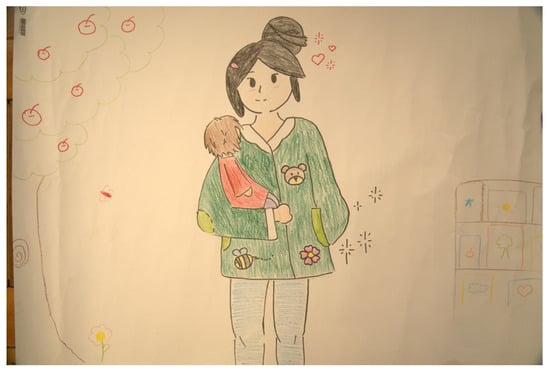
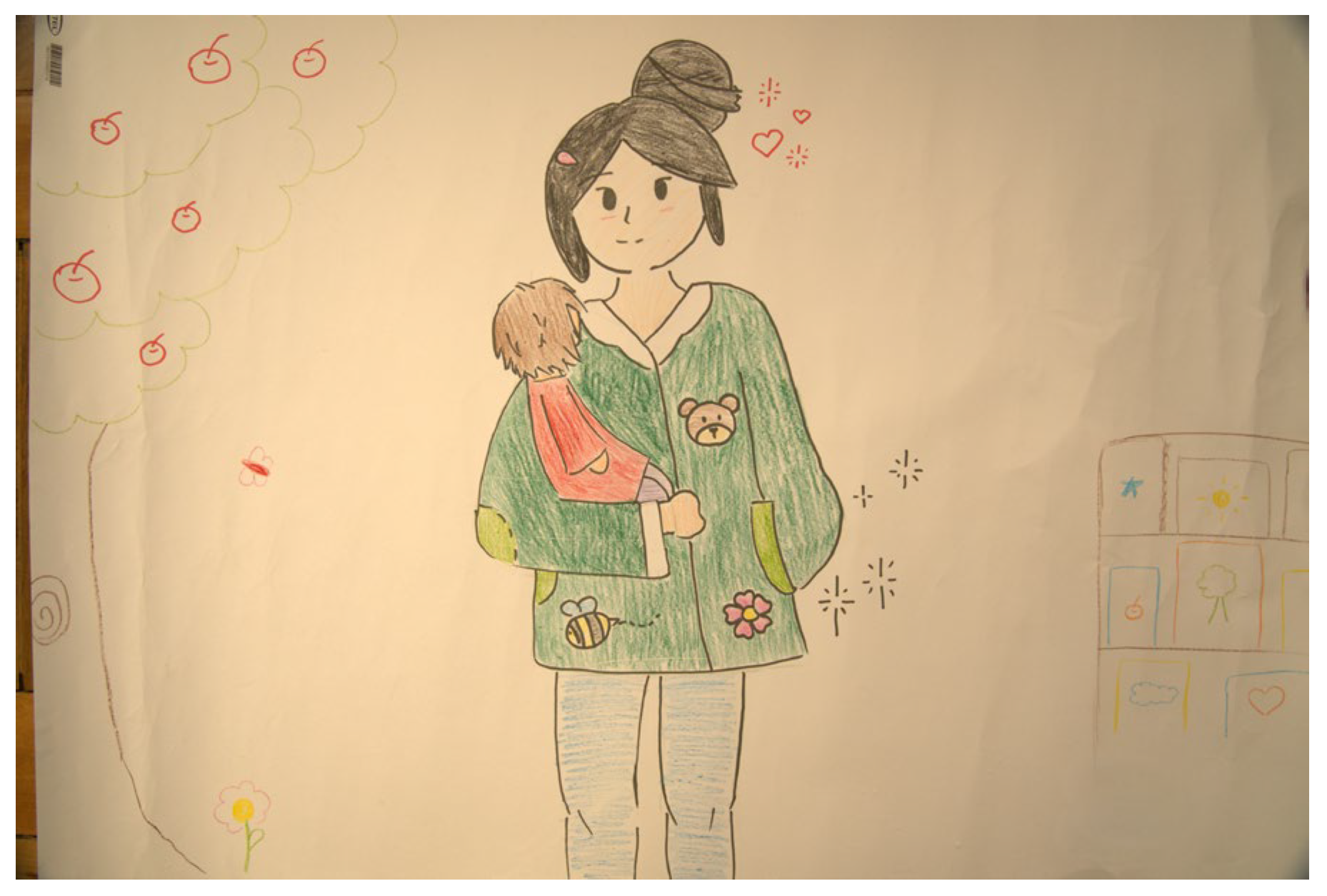
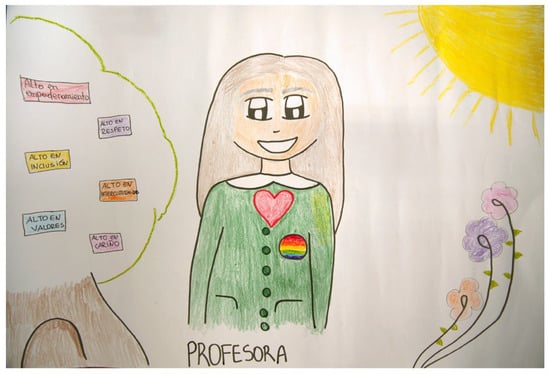
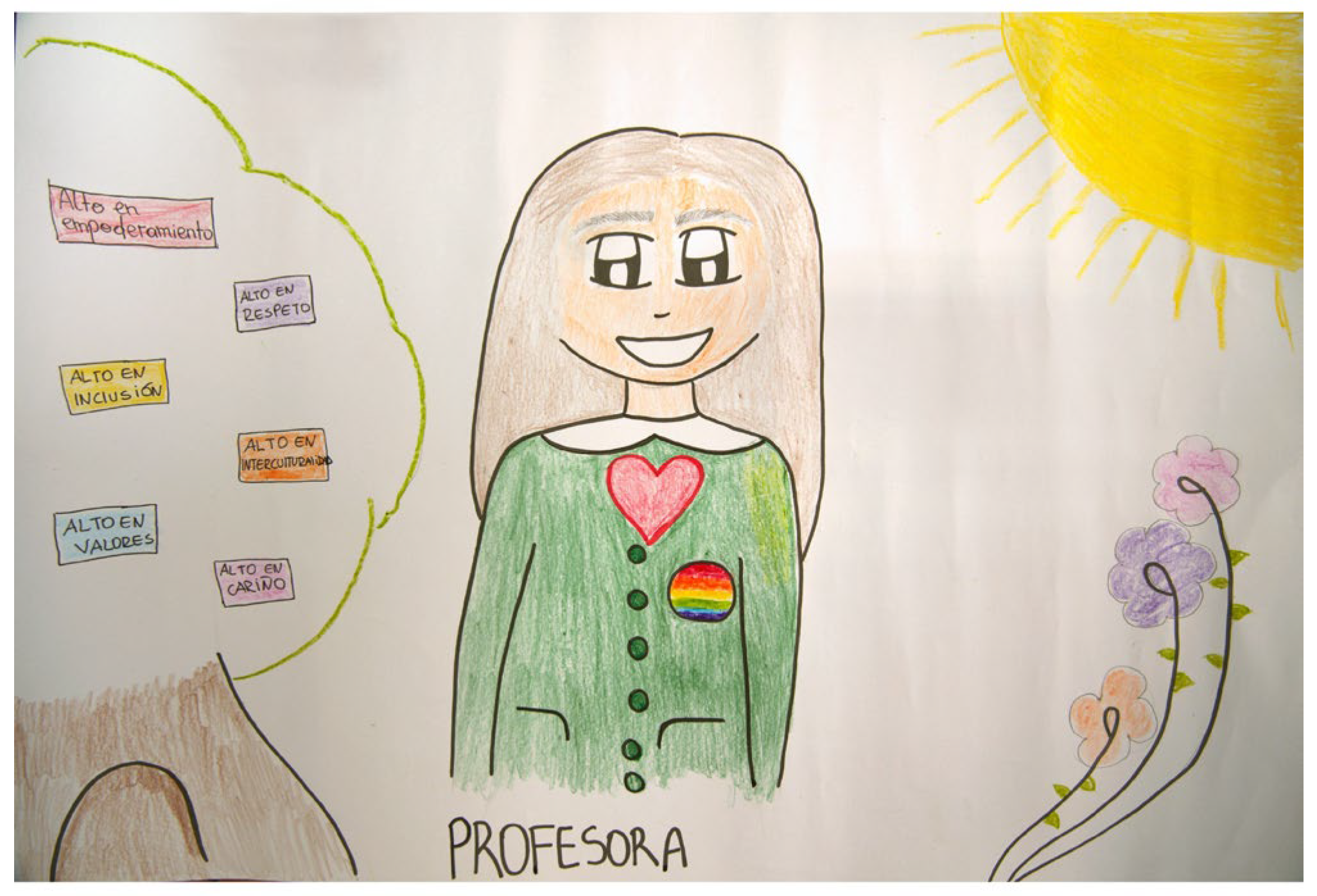
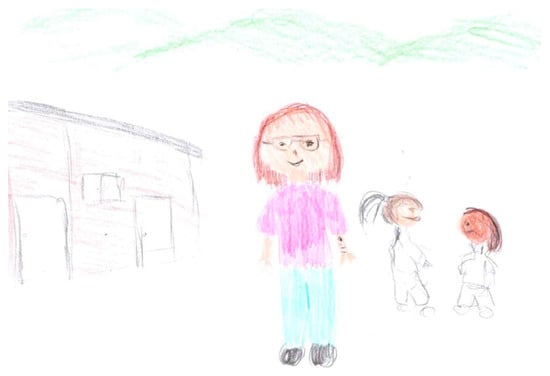
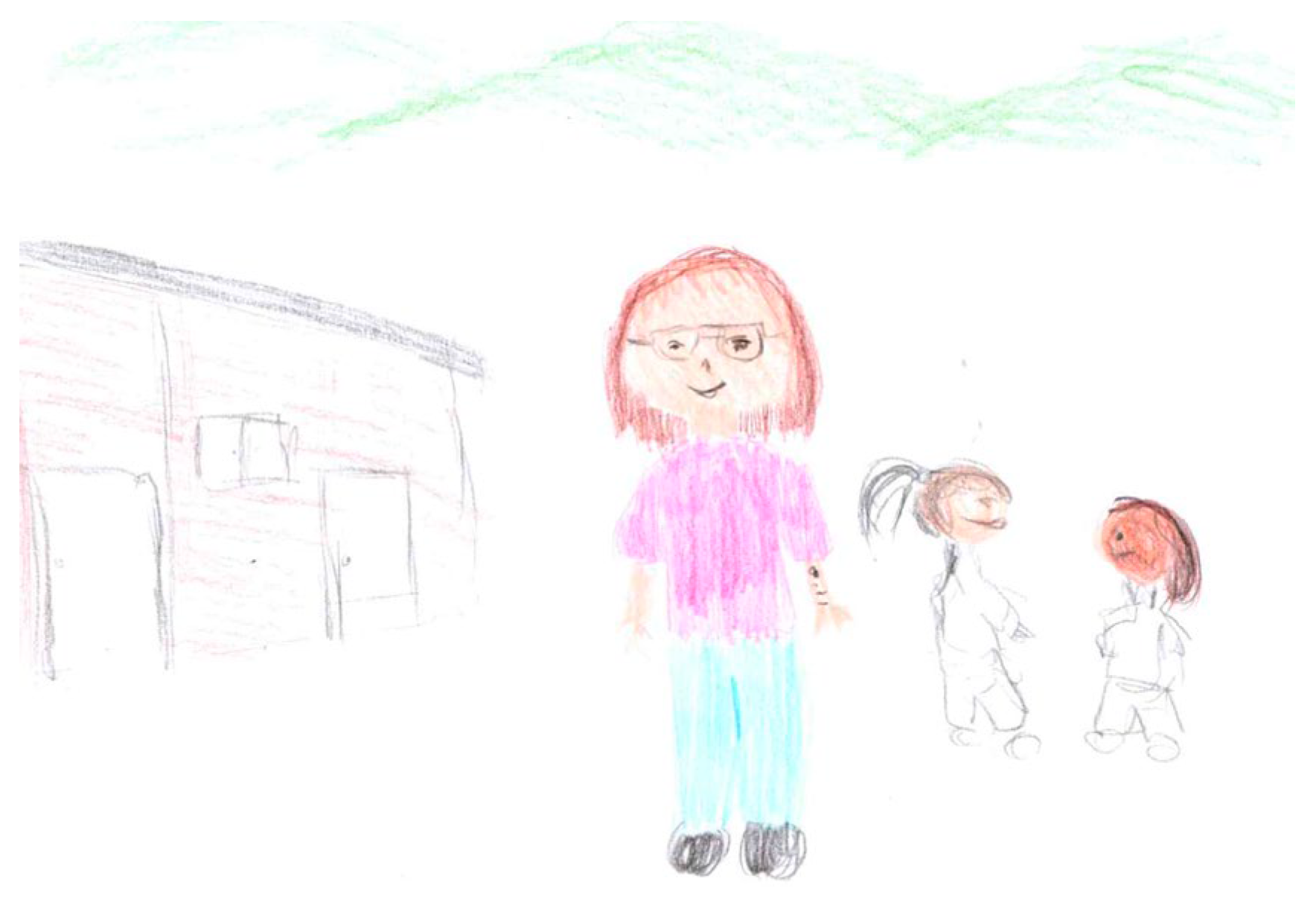
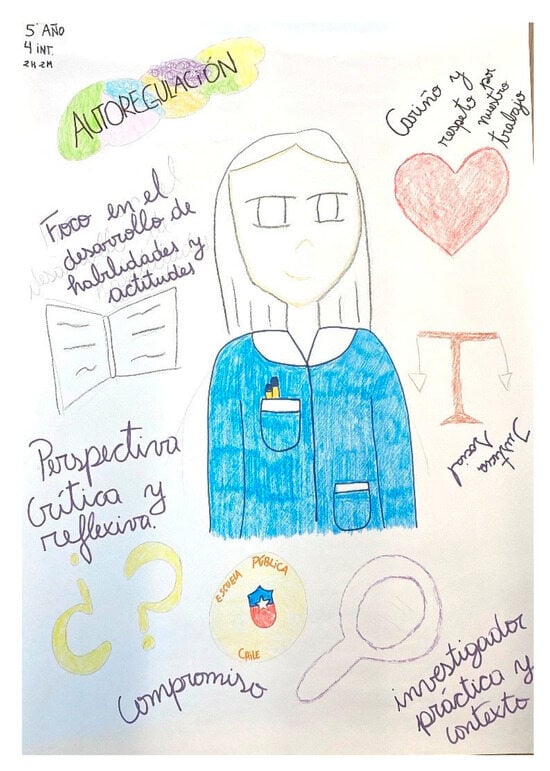
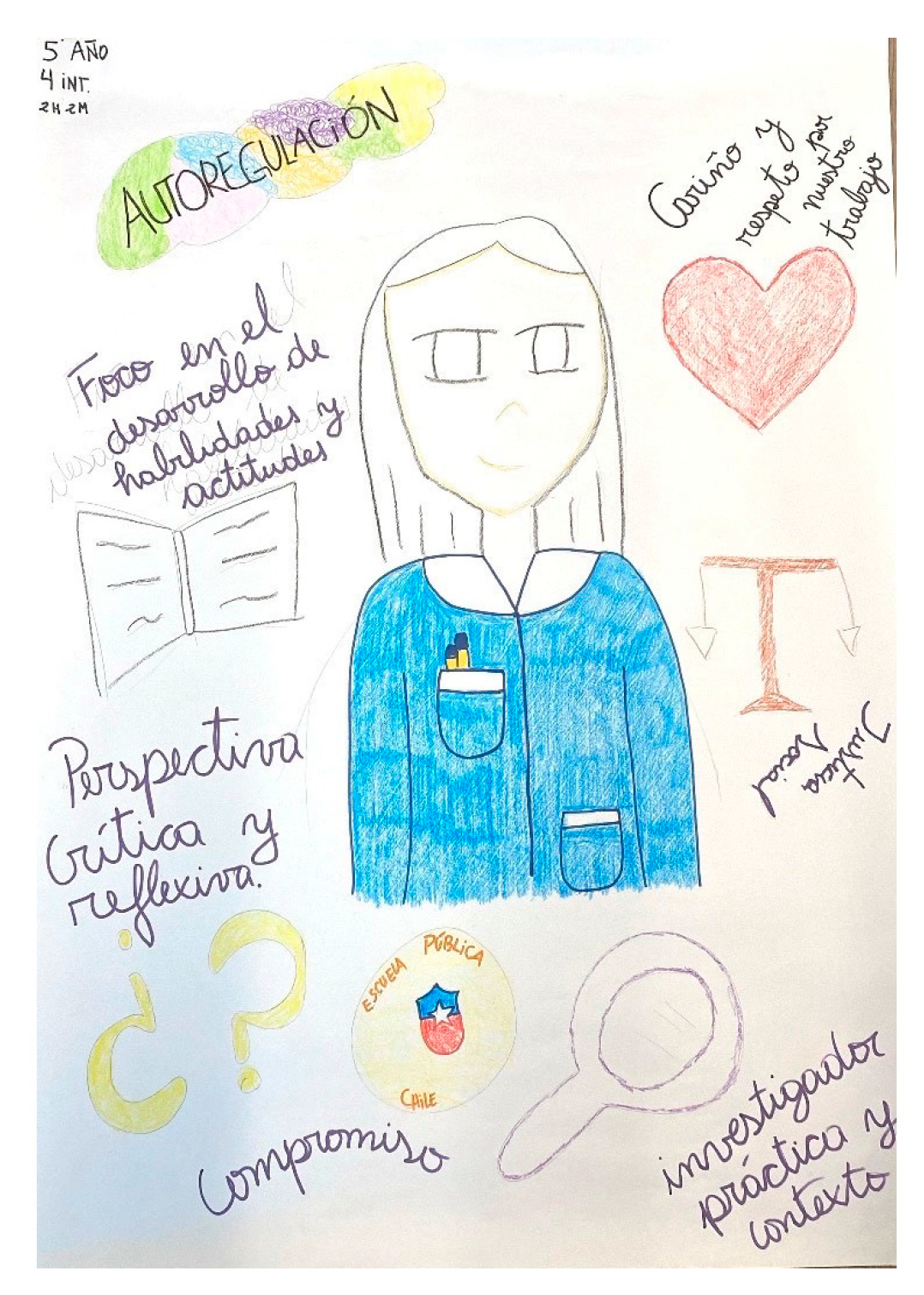
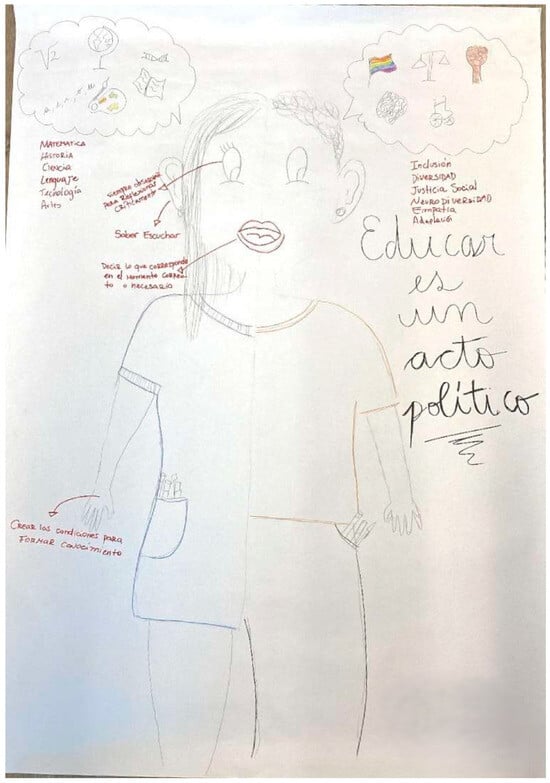

Disclaimer/Publisher’s Note: The statements, opinions and data contained in all publications are solely those of the individual author(s) and contributor(s) and not of MDPI and/or the editor(s). MDPI and/or the editor(s) disclaim responsibility for any injury to people or property resulting from any ideas, methods, instructions or products referred to in the content. |
© 2026 by the authors. Licensee MDPI, Basel, Switzerland. This article is an open access article distributed under the terms and conditions of the Creative Commons Attribution (CC BY) license.