


Abstract
Artificial intelligence increasingly mediates how citizens access information, making digital media literacy a condition for informed participation. This exploratory study conceptualizes a comfort–competence gap, whereby students report confidence and ease in using AI tools but a weaker capacity to evaluate what those tools produce, and examines it among 300 university students in the United Arab Emirates. The gap is advanced provisionally, and all measures are self-reported perceptions rather than demonstrated performance. Cross-sectional questionnaire data (twelve four-point ordinal items) were analyzed with ordinal-appropriate methods. Students generally reported greater confidence and comfort in using AI than capacity to evaluate it critically. Every operational item mean (2.51–2.55) exceeded every critical item mean (2.39–2.44), and the within-person contrast between the composite indices was small but statistically significant (difference = 0.12, p = 0.027, dz = 0.13), a pattern shown by 44.7% of individuals. No item-level contrast reached significance and 36.0% showed the reverse pattern, so the difference is read as an exploratory tendency rather than evidence of a general gap. The contrast is also sensitive to the composition of the operational index: with comfort removed, it retains its direction, but not conventional significance (p = 0.056). Digital confidence was the only correlate of comfort in AI-mediated communication (ρ = 0.131; OR = 1.29), a weak association in a model with minimal explanatory power (McFadden pseudo-R2 = 0.012); communication competence and demographic characteristics showed no detectable associations, and parallel analysis retained no factors. Interpreted cautiously, the pattern bears on responsible AI use, since comfort unmatched by evaluative capacity is a weak basis for human oversight. The study’s clearest contribution is methodological: single-item self-report batteries can profile levels and detect aggregate differences, but they cannot show whether AI literacy is one capacity or several, cannot separate real capability from what respondents are willing to claim, and cannot support strong conclusions from null results. It therefore specifies the multi-item and performance-based measurement agenda a confirmatory test would require.
1. Introduction
Digital technologies have transformed how individuals communicate, learn, and access information, and this transformation has accelerated with the diffusion of artificial intelligence (AI). AI-based systems are now embedded in everyday digital platforms, including search engines, social media, learning-management systems, and communication applications [1]. Adoption has been exceptionally rapid: survey evidence indicates that a majority of university students already use AI-based applications for learning and communication, and that digital literacy increasingly mediates the relationship between these tools and academic outcomes [2]. The diffusion of AI has been especially visible in the media and communication sector, where it is embedded across the production chain from newsgathering and fact-checking to content generation and distribution [3]. In higher education, the routine use of generative and recommender systems positions AI not as a peripheral tool but as an active mediator of communication [4].
This technological shift is also a social one. As AI becomes more pervasive, digital literacy, the capacity to access, evaluate, and use digital tools to communicate and produce information, grows in importance as a resource for social participation, and its uneven distribution becomes a potential axis of inequality [5]. Effective participation in algorithmically mediated environments depends not only on technical access, but also on the ability to interpret AI outputs, construct effective prompts, and critically assess automatically generated content. Scholars increasingly argue that contemporary algorithms function less as passive tools than as participants in communication, producing outputs that users treat as socially meaningful [6], and that the very notion of literacy is being rewritten as AI systems co-produce text and mediate meaning [7]. At the institutional level, organizations deploy AI-assisted multimedia strategically to shape audience engagement [8], heightening the asymmetry between sophisticated AI-driven production and the comparatively limited critical literacy of everyday users.
Despite rapid adoption, not all users are sufficiently literate to engage productively with AI-driven communication. Many interact with AI-mediated platforms without understanding how algorithms filter, rank, and recommend information, raising concerns about information assessment and the safe, responsible use of AI [9]. These concerns are amplified by documented risks of bias, opacity, and threats to data privacy in AI-supported media systems [3,10]. Prior research has tended to examine digital literacy and AI adoption separately, and comparatively little empirical work has investigated how digital literacy relates to individuals’ interactions with AI-based communication systems [11]. The joint role of digital-literacy capacity and communication competence in shaping AI interaction remains underexplored, and evidence from the Gulf region is limited [12]. Ali et al. [13] compared the AI literacy of mass communication students in the UAE and Pakistan at the level of overall literacy; the present study extends that line of work by looking inside AI literacy, contrasting its operational and critical components within the same respondents.
The regional context sharpens these questions. Arab youth are among the most intensively connected digital publics in the world, yet recent evidence shows that their engagement with socially consequential content remains largely passive: a 2026 multi-country survey of Arab youth found that social media is their leading source of information about the Sustainable Development Goals, while interaction stays confined to viewing, liking, and resharing, a persistent gap between awareness and active participation [14]. Parallel analyses of institutional campaigns document the growing sophistication of AI-assisted sustainability communication directed at the same audiences [8]. Read together, these findings describe an asymmetric communicative field in which production-side capability accelerates while user-side engagement remains shallow. The comfort–competence gap investigated here belongs to this family of surface-engagement gaps, but it moves the diagnosis one level deeper: from what users do with digital content to what they can critically know about the systems that deliver it.
These questions belong to the wider agenda of responsible and human-centered AI. Transparency, accountability, and meaningful human oversight are widely accepted as conditions for trustworthy AI, yet each contains a user-side premise: oversight requires the ability to recognize when an output is wrong, explanation requires the ability to interpret and interrogate it, and informed use requires the capacity to identify bias, error, or manipulation in generated content. Where algorithmic outputs acquire social authority regardless of users’ capacity to scrutinize them [6], such principles may be formally satisfied while remaining practically inert, a gap visible both in the wide sectoral variation among organizational responsible-AI policies [15] and in the acknowledged difficulty of translating principles into operational practice [16]. The same dependency is visible inside professional practice, where AI is already reshaping professional identity, routines, and ethical judgment in Arab media organizations [17], that is, in the workplaces that receive today’s graduates.
The study pursues two goals. Substantively, it tests whether students’ operational ease with AI outruns their critical capacity to evaluate it: the comfort–competence gap. Sociologically, this gap matters because it describes a population at ease inside algorithmically curated environments, yet poorly equipped to contest them: a configuration with direct consequences for misinformation, trust in institutions, and digital citizenship. Methodologically, the study examines, with full transparency, how far single-item ordinal indicators can support inferences about AI literacy, and it derives from this examination a concrete measurement agenda. Consistent with this exploratory design, the study is organised around research questions rather than confirmatory hypotheses, and observed relationships are interpreted as indicative:
- RQ1. What levels of operational and critical AI-related literacy do UAE university students report?
- RQ2. Is there a within-person gap between operational comfort and critical competence, and how prevalent is it at the individual level?
- RQ3. How are digital literacy and communication competence associated with comfort in AI-mediated communication?
- RQ4. Are demographic and educational characteristics associated with operational literacy, critical literacy, or the gap between them?
- RQ5. Do single-item indicators of AI-related literacy exhibit a latent structure consistent with a unified construct, or do they behave as distinct formative indicators?
Two clarifications frame these questions. First, every construct is measured as a self-reported perception of capability rather than as demonstrated performance; the study therefore speaks throughout to perceived operational and critical literacy, and the term competence is used in that restricted sense. Second, the comfort–competence gap is advanced as a provisional organizing construct, formulated so that it can be tested, rather than as an established finding. The analyses reported below are correspondingly exploratory, and the strength of each claim is calibrated to the evidence that supports it.
2. Literature Review and Theoretical Framework
2.1. Digital Literacy and Technology Adoption
Digital literacy is widely conceptualized as a multidimensional competence encompassing access, comprehension, evaluation, and communicative use of digital information [5,18]. A growing body of evidence positions digital literacy as a determinant of AI-based learning adoption: digitally literate users perceive AI systems as easier to use and more useful, which raises adoption and engagement [19,20]. Community-led, scaffolded training has emerged as a promising delivery model for building these competences equitably [21]. Yet population-level evidence indicates that basic digital skills remain unevenly distributed: only about 55% of EU adults possessed at least basic digital skills in 2023 [22], roughly 40% of internet users across OECD countries lack them [23], and the World Economic Forum estimates that 44% of workers’ core skills will be disrupted before 2027 [24]. Such figures suggest that a substantial share of users operates at an essentially operational level, a pattern the present study interrogates at the item level.
These distributional patterns have long been theorized as successive digital divides. Once physical access becomes near-universal, inequality migrates to skills and usage, the second-level digital divide [25], and subsequently to the differential outcomes users derive from equivalent connectivity [26]. AI-mediated communication plausibly extends this sequence: when generative systems become as accessible as search engines were two decades ago, the stratifying variable is no longer who can use them but who can evaluate them. The comfort–competence gap examined in this study operationalizes that conjecture at the individual level, asking whether ease of use and evaluative capacity have decoupled within the same users.
2.2. Communication Competence and AI Interaction
Communication competence, the capacity to express intentions clearly, interpret responses, and adapt messages, is increasingly central to effective AI interaction. Generative AI requires users to acquire new skills in formulating prompts, interpreting outputs, and refining exchanges [27], and AI literacy embedded in blended-learning models depends on students’ ability to communicate with AI systems [28]. Quantitative work links communication-skills education directly to AI literacy among university students [29]. Lewis [30] argues that competent communication with technology requires attention to the medium itself, not only to message content: users who attend to messages but not to the medium’s generative logic risk becoming efficient consumers of AI output and inefficient critics of it.
Empirical work on how these competences develop points consistently toward structured intervention rather than incidental accumulation. Communication-skills instruction predicts AI literacy directly [29]; blended-learning designs that embed AI interaction in assessed tasks outperform unstructured exposure [28]; and community-based scaffolded training builds durable competence in populations that intensive tool access alone leaves behind [21]. The recurring mechanism is externalization: learners are required to articulate, justify, and revise their interactions with the system, converting tacit habit into inspectable skill. Where that requirement is absent, use remains fluent but unreflective, the configuration the present study measures directly.
2.3. Critical, Ethical, and Explainable AI Literacy
A recurring theme is the gap between operational fluency and critical, evaluative competence. Tiernan et al. [31] argue that AI is reshaping information and media literacy faster than educational systems can respond, and Stieglitz et al. [32] document that basic digital skills are widespread while advanced, critical AI literacy remains scarce. Competence frameworks increasingly distinguish technical proficiency from critical and ethical dimensions [33,34], and scholarship on media literacy in the AI era foregrounds digital citizenship and ethical decision-making [35]. Esposito’s account of “artificial communication” suggests that algorithmic outputs acquire social authority regardless of users’ ability to scrutinize them, making critical literacy a prerequisite rather than an optional refinement [6,7]. What remains scarce, however, is within-person evidence directly contrasting operational and critical capacities in the same respondents, the contribution attempted here.
This distinction directly connects to the responsible AI agenda. Frameworks that specify transparency, accountability, and human oversight presuppose that users are capable of exercising these qualities, and explanation-based transparency presupposes that recipients can interpret what an explanation conveys. Consequently, competence frameworks separate technical competence from the critical and ethical judgment necessary to evaluate algorithmic output [33,34], and recent evidence from higher education links AI competence directly to responsible AI adoption and ethical awareness among students [36], while research on media literacy in the age of AI treats such judgment as a condition of digital citizenship rather than an advanced option [35]. In other words, critical AI literacy is the user-side requirement upon which explainability, human oversight, and responsible use ultimately depend, and it is this requirement that the present study measures.
Sociological accounts of algorithmic power reinforce the stakes of this distinction. Algorithms do not merely process information; they exercise a distinctive social power, ordering visibility, shaping anticipation, and configuring what counts as relevant knowledge [37]. Esposito’s analysis of artificial communication extends the argument: because algorithmic outputs are treated as communicative contributions, they acquire social authority independently of any user’s capacity to audit them [6]. In such an environment, critical AI literacy functions as a counter-power: the individual-level capacity that determines whether algorithmic authority is negotiated or simply absorbed. Where that capacity is missing, operational fluency may even deepen dependence, because fluent users encounter more algorithmic output, more often, with less friction [7].
Detection of synthetic content deserves separate emphasis within the critical repertoire. Verification of claims and comprehension of algorithms are continuous with older news-literacy skills, but recognizing machine-generated text, imagery, and audio is a genuinely new demand, and it is the fastest-moving target: generative quality improves continuously while human detection of well-crafted output remains unreliable [31,34]. Frameworks that fold detection into a generic literacy construct risk obscuring this asymmetry. The present study therefore measures detection as a distinct capacity, and the results show its mean among the lowest of the battery, supporting treating it as a priority skill rather than a derivative one.
2.4. Trust, Culture, and the Regional Context
Trust and cultural context condition how individuals engage with digital and AI-mediated communication. Trust functions as a pivotal moderator of social-media relationships [38], and communication skills interact with cultural restraint to shape platform use in Arab settings [39]. Regional evidence on AI acceptance highlights the role of perceived ease of use, usefulness, and anxiety [12,40], and digital media literacy shapes attitudes toward generative-AI acceptance [41]. The UAE combines exceptionally high digital penetration in higher education with a national AI strategy, making it a theoretically informative site: if intensive shared exposure were sufficient to produce critical literacy, the gap examined here should be small or absent in this population.
Recent Arab evidence gives this regional framing empirical teeth. A multi-country survey of 370 Arab youth found that visually oriented platforms dominate their information environment and that awareness of sustainability issues, although strongly correlated with engagement (r = 0.705), rarely converts into participation; the authors formalize this blockage as an Engagement Choice Point at which most users default to passive consumption [14]. Complementary work shows that Arab users’ platform relationships are trust-mediated rather than skill-mediated [38], and that communication skills interact with cultural restraint in shaping expression [39]. Recent evidence from Arab university students also shows that platform trust, information sharing, and privacy concerns form an interrelated group that is only weakly linked to evaluative ability [42]. Drawn from different samples and settings, these studies jointly suggest, as a working expectation rather than an established regional generalization, that in Arab digital publics the binding constraint on meaningful digital participation is not access or ease but the conversion of exposure into evaluative and participatory depth, precisely the conversion the present study tests in the AI-literacy domain.
The UAE case carries particular analytical weight within this regional picture. The country pairs one of the world’s highest social-media penetration rates with an explicit national AI strategy that promotes adoption across government, education, and services; university students therefore experience AI not as an optional novelty but as institutional infrastructure [12]. Regional acceptance studies confirm that ease of use and anxiety, rather than formal attainment, drive engagement in these settings [40]. For the theoretical question posed here, this environment is theoretically informative rather than decisive: if ambient, state-supported digital intensity were sufficient to generate critical capacity as a by-product, a gap would be least expected here. Given the small magnitude of the difference actually observed, this reasoning is offered as an interpretive consideration and not as a strong test of the proposition.
2.5. Theoretical Framework
Three perspectives frame the study. Diffusion of Innovations theory [43] explains adoption through perceived benefits, compatibility, and observability, clarifying why digitally literate users engage more readily with AI. Social Cognitive Theory [44] foregrounds observation and self-efficacy, relevant to how repeated exposure builds confidence independently of analytical mastery. The Technology Acceptance Model [45] specifies perceived ease of use and usefulness as proximal drivers of acceptance, mapping directly onto comfort in AI-mediated communication. Integrating these perspectives, the study conceptualizes AI-related digital literacy as comprising two analytically distinct components: functional (operational confidence, access, tool use) and critical (verification, algorithmic awareness, detection of AI-generated content), and asks whether comfort tracks the former, the latter, or both. Communication competence and demographic characteristics are treated as candidate correlates whose associations, including a formal interaction test, are examined empirically rather than assumed. Figure 1 summarizes this conceptual framework.
Figure 1.
Conceptual framework of the study. Digital literacy is treated as a formative independent variable comprising operational/functional and critical components; comfort in AI-mediated communication is the outcome. Communication competence (candidate moderator, RQ3) and demographic and educational factors (candidate covariates, RQ4) were tested empirically and found non-significant (n.s.); only digital confidence was associated with comfort (ρ = 0.131; OR = 1.29).
The integrated framework also specifies why decoupling, rather than convergence, should be expected. In the Technology Acceptance Model, acceptance is driven by perceived ease and usefulness, judgments that require no understanding of underlying mechanisms [45]. In Social Cognitive Theory, self-efficacy grows through enactive mastery and vicarious experience; daily successful use of AI tools therefore builds confidence even when the user never once verifies an output [44]. Diffusion theory adds that observability and trialability accelerate the adoption of visible functionality, while critical capacities, invisible, effortful, and rarely modeled by peers, diffuse slowly if at all [43]. All three perspectives thus converge on a testable expectation: operational comfort should accumulate with exposure, critical competence should not, and the two should correlate weakly at the individual level. The results reported below are consistent with each element of this expectation. These perspectives are used heuristically, to motivate the expectation of decoupling and to guide interpretation, rather than as competing models tested against one another. The cross-sectional design cannot adjudicate the developmental claims each of them makes, and no such test is attempted: RQ1 to RQ5 are answered descriptively, and theoretical vocabulary is confined to the interpretive sections.
3. Materials and Methods
3.1. Research Design
The study adopted a cross-sectional quantitative survey design. It is descriptive and correlational rather than causal, profiling how students perceive, use, and interact with AI-mediated communication at a single point in time. Because each construct was operationalized with a single ordinal item, the study is explicitly exploratory: it aims to map patterns and generate hypotheses rather than to confirm them, and statistical significance is treated as indicative rather than conclusive. Two design decisions follow from this stance. First, all inferential analyses use procedures appropriate to ordinal single-item data (Spearman correlations, polychoric-based factor analysis, rank-based group tests, and ordinal logistic regression). Second, data quality and dimensionality are examined and reported before any substantive inference, so that the evidential weight of each result can be judged transparently. With N = 300, the paired design provides 80% power (α = 0.05, two-tailed) to detect within-person effects of dz ≥ 0.16; smaller effects are detectable only at reduced power, a constraint made explicit here because the central contrast was expected to be small.
3.2. Participants and Sampling
The target population comprised adults enrolled in UAE higher-education institutions, referred to throughout in that broad institutional sense as university students, who are active users of digital platforms and AI tools. A total of 300 valid responses were obtained through non-probability convenience sampling with informal quotas across age bands, levels of educational attainment, and fields of study; because no sampling frame or probability-based selection was employed, the findings are interpreted as context-specific evidence rather than generalizable estimates. Respondents spanned four age bands (18–24 years: 27.7%; 25–34: 24.3%; 35–44: 24.0%; 45 and above: 24.0%) and reported their highest completed level of education (secondary: 21.3%; undergraduate degree: 28.7%; postgraduate degree: 22.0%; doctorate: 28.0%); fields of study or work covered technology (27.0%), business (22.7%), media and communication (15.0%), and other areas (35.3%). Two features of this composition require explicit statement. First, the education variable records the highest level already completed, so respondents range from school-leavers in their first degree to holders of postgraduate and doctoral qualifications enrolled in further, professional, or continuing programs. Second, because quotas deliberately spanned age and attainment, the sample includes substantial shares of mature and part-time learners alongside traditional undergraduates, a composition consistent with the strong presence of lifelong learners in Emirati higher education. The findings therefore describe the university-enrolled adult population in the UAE rather than school-leaver cohorts only, and subgroup analyses (Section 4.4) test directly whether age or attainment differentiates the outcomes. Because the sample is a convenience sample drawn from a single national context and spans a wide range of ages and attainment levels, the results describe the participating population only. They should not be read as representative of UAE university students in general, and still less of university students elsewhere.
3.3. Instruments
Data were collected through a structured online questionnaire comprising fifteen closed-ended items: three demographic questions and twelve substantive items on four-point ordinal scales, organised into four blocks: (a) digital literacy (confidence with digital tools; verification of online information; comprehension of AI recommendation algorithms; detection of AI-generated content); (b) AI in communication (engagement with AI-based tools; primary purpose of AI use; comfort with AI-powered communication); (c) communication competence (expression through AI tools; comprehension of AI responses; refinement of communication with AI); and (d) critical analysis and impact (confidence in critically assessing AI-generated information; perceived contribution of digital literacy to AI communication). Content validity was supported by aligning items with the research questions and prior literature, and the instrument was refined after piloting. The four-point response format was chosen deliberately: omitting a neutral midpoint forces directional self-assessment and reduces central-tendency responding, at the cost of coarser measurement, and item wording was kept concrete and behavioral rather than abstract, the condition under which single-item self-reports perform best [46].
All twelve substantive items elicit self-assessments. They therefore measure perceived capability, that is, respondents’ beliefs about what they are able to do, rather than demonstrated performance on verification, algorithmic reasoning, or detection tasks. The distinction matters for interpretation: self-assessments of evaluative skill depend on self-efficacy beliefs formed through repeated successful use [44], and respondents cannot readily report competences they lack the means to appraise. Throughout the manuscript, operational literacy, critical literacy, and the gap between them accordingly denote self-reported perceptions, and competence is used in this restricted sense. Table 1 sets out how each term is defined and operationalized in the study.
Table 1.
Terms used in the study: definitions and operationalization.
Each construct was operationalized with a single four-point item rather than a multi-item scale. Single-item measures can attain predictive validity comparable to multi-item scales for concrete, unambiguous constructs [46,47], but they preclude internal-consistency estimation at the item level and increase measurement error, attenuating observed associations toward zero. Where the six core items are combined into two composite indices, operational AI literacy (confidence with digital tools; engagement with AI tools; comfort with AI-mediated communication) and critical AI literacy (verification of online information; comprehension of AI algorithms; detection of AI-generated content), these are treated as formative composite indices that summarize distinct, non-interchangeable sub-capacities. For formative indices, internal-consistency coefficients are conceptually inappropriate as a quality criterion; index adequacy is judged instead by content coverage and by the directional consistency of the constituent items [48,49]. Formative status is a theoretical commitment about the relation between indicators and construct, not an empirical result. Verification, comprehension of algorithms, and detection of AI-generated content are treated as constituents that jointly define critical literacy rather than as interchangeable expressions of a latent trait, and the same reasoning governs the operational index. The dimensionality analysis reported in Section 4.5 is consistent with this treatment but does not establish it, since no factor-analytic outcome could. Rather than assuming this structure, the study tests it directly (RQ5) through polychoric-based exploratory factor analysis with parallel analysis [50].
Two features of the composites require comment. First, comfort with AI-mediated communication is included in the operational index, while comfort also names the phenomenon the gap describes. The index is defined by the experiential and functional character of its constituents rather than by the outcome against which it is later contrasted, and the two roles are kept analytically separate: the composite is used only for the within-person contrast in RQ2, whereas RQ3 treats comfort as a single-item outcome and does not use the composite. Second, and more directly, the item-level contrasts do not involve the composite at all. They compare the comfort item separately against each of the three critical items, and none of these three contrasts is statistically significant. Readers who consider the composite construction problematic can therefore assess the central claim against the disaggregated results. A sensitivity analysis recomputing the contrast with comfort removed from the operational index is reported in Section 4.2.
3.4. Data Quality Screening
Because single-item ordinal batteries are vulnerable to careless responding, responses were screened before analysis. All 300 cases were complete, with no missing values on the fifteen coded variables. Straight-line analysis across the twelve substantive items identified one respondent (0.3%) who gave an identical answer on more than 80% of items; this case was flagged, and the central gap test was re-estimated with it excluded as a sensitivity analysis. The platform export did not record completion time, so a speed-based exclusion criterion could not be applied; this is acknowledged as a limitation. The final analytic sample was N = 300, with the sensitivity sample at N = 299.
3.5. Procedure and Ethical Considerations
Participation was voluntary, and respondents were informed of the academic purpose before consenting. Anonymity and confidentiality were maintained; no personally identifying information was collected, and participants could decline any item. The study involved no experimental manipulation, deception, or clinical assessment and posed no foreseeable more-than-minimal risk. The research was reviewed by the AAU Research Ethical Committee and granted exemption from full ethical review (Category 4, decision dated 1 September 2025).
3.6. Data Analysis
Analyses proceeded in five steps aligned with the research questions. First, descriptive statistics and full response distributions were computed for all items (RQ1). Second, the operational–critical contrast was tested within persons using a paired-samples t-test on the two composite indices, corroborated by a Wilcoxon signed-rank test, pairwise item-level contrasts, and the individual-level prevalence of each gap pattern (RQ2). The paired-samples t-test was retained as the primary test of the composite contrast because the quantity compared is not a single ordinal response but the mean of three items, which is bounded, finely graded, and approximately symmetric at N = 300; under these conditions the t-test on within-person difference scores is robust, and it yields both a standardized effect size (dz) and a confidence interval on the raw difference, neither of which a rank test provides. The Wilcoxon signed-rank test is therefore reported alongside it as a distribution-free check rather than as a subordinate analysis, and the pairwise item-level contrasts, which are computed on the ordinal items themselves, are reported under both procedures. The two agree throughout. Third, associations with comfort in AI-mediated communication were estimated using Spearman rank correlations and an ordinal logistic regression with comfort (four categories) as the outcome and the digital-literacy items, a communication-competence composite, and demographic variables as predictors; a separate ordinal model tested the interaction between (centered) digital confidence and communication competence (RQ3). Fourth, group differences across age, education, and field of study were tested with Kruskal–Wallis tests (effect size ε2) and comfort-group contrasts with Mann–Whitney tests (effect size r) (RQ4). Fifth, the dimensionality of the six core items was examined via a polychoric correlation matrix, factorability diagnostics (KMO; Bartlett’s test), parallel analysis, and an exploratory two-factor solution (RQ5). Consistent with the exploratory aim, exact p-values and effect sizes with 95% confidence intervals are reported throughout, and non-significant results are interpreted as “no detectable effect under these single-item measures” rather than as evidence of no relationship.
3.7. Use of Generative Artificial Intelligence
Grammarly was used for language editing and proofreading, while ChatGPT (OpenAI, GPT-5.2) was used to assist in producing the graphical layouts of Figure 1, Figure 2, Figure 3 and Figure 4 based on the authors’ data and specifications.
Figure 2.
Mean ratings of the six core items (N = 300; whiskers show +1 SD). Operational items sit at or above the scale midpoint; critical items fall below it.
Figure 3.
The comfort–competence gap at the composite level (N = 300). Operational literacy (M = 2.53, SD = 0.67) exceeds critical literacy (M = 2.42, SD = 0.63); mean within-person difference = 0.12, 95% CI [0.01, 0.22], t(299) = 2.23, p = 0.027, dz = 0.13.
Figure 4.
Spearman correlations between the five digital-literacy and engagement items and comfort with AI-powered communication (N = 300). Only confidence with digital tools is significant (ρ = 0.131, p = 0.023); all other coefficients are non-significant. Green indicates the statistically significant association; gray indicates non-significant associations.
4. Results
The results are reported in the order of the research questions. Exact p-values accompany effect sizes with 95% confidence intervals throughout, and non-significant results are stated as bounded claims relative to the measures used.
4.1. Sample Profile and Item-Level Descriptives (RQ1)
Table 2 reports the distribution of the twelve substantive items. Means were moderate and tightly clustered (2.38–2.56 on the four-point scale), with large standard deviations (1.07–1.16) and dispersed, platykurtic distributions. The three operational items, confidence with digital tools (M = 2.54), engagement with AI tools (M = 2.51), and comfort with AI-powered communication (M = 2.55), sat at or slightly above the scale midpoint of 2.5, whereas the three critical items, verification of online information (M = 2.39), comprehension of AI algorithms (M = 2.44), and detection of AI-generated content (M = 2.42), fell below it (Figure 2). Communication-competence items were likewise moderate (expression M = 2.56; comprehension of AI responses M = 2.40; refinement M = 2.48).
Table 2.
Response distributions and descriptive statistics for the twelve substantive items (N = 300; four-point scale).
Beyond the means, the shape of the distributions is informative. Every item shows substantial mass in all four categories, with standard deviations of roughly one scale point and flat, platykurtic profiles: the student population is not clustered around a shared competence level but dispersed across the full range. This dispersion has two consequences. Substantively, it implies that aggregate means conceal large subgroups at both extremes; roughly a quarter of respondents place themselves in the lowest category on verification and algorithmic comprehension, while a comparable share claims the highest levels. Methodologically, near-uniform distributions restrict the covariance available to correlation-based analyses, which must be kept in view when interpreting the weak associations reported below.
4.2. The Comfort–Competence Gap (RQ2)
The central contrast was tested within persons on the two composite indices (Table 3; Figure 3). Operational AI literacy (M = 2.53, SD = 0.67) exceeded critical AI literacy (M = 2.42, SD = 0.63); the mean within-person difference was 0.12 points on the four-point metric, 95% CI [0.01, 0.22], t(299) = 2.23, p = 0.027, Cohen’s dz = 0.13, corroborated by a Wilcoxon signed-rank test (W = 12,334, p = 0.030). The result was unchanged when the flagged straight-line case was excluded (N = 299: difference = 0.12, t(298) = 2.21, p = 0.028; Wilcoxon p = 0.031). The effect is small but directionally consistent: every operational item mean exceeded every critical item mean. Because the observed composite effect (dz = 0.13) falls slightly below the dz = 0.16 threshold for which the design provides 80% power, the contrast was detected with somewhat reduced power; its replication in larger samples is accordingly treated as a priority of the research agenda rather than assumed.
Table 3.
The comfort–competence gap: composite-level within-person tests.
Two further analyses qualify the gap’s granularity. First, none of the nine pairwise operational-versus-critical item contrasts was individually significant (mean differences 0.07–0.16; all p ≥ 0.078; Table 4); the gap is thus detectable at the aggregated composite level rather than between any single pair of items. Second, at the individual level, 44.7% of respondents scored higher on the operational than on the critical index, 19.3% scored equally, and 36.0% showed the reverse pattern. The comfort–competence gap is therefore a modest population-level tendency with substantial individual heterogeneity, not a uniform deficit, an important caution for interventions that assume all students overrate their critical capacities. Three features of the result therefore bound what it can support: the composite difference is small, no individual item contrast reaches significance, and a substantial minority of respondents shows the opposite pattern. Taken together they indicate an exploratory tendency in self-reported capacities rather than evidence of a general comfort–competence gap in this population. A further consideration, developed in Section 5.5, is that the item types differ in how readily they can be endorsed, so part of the observed difference may reflect differential claimability rather than a difference between the underlying capacities. A further sensitivity analysis addresses the composition of the operational index directly. Recomputing the contrast with comfort removed, so that the operational index comprises confidence with digital tools and engagement with AI tools only, leaves the direction and magnitude of the difference almost unchanged (0.11 rather than 0.12; dz = 0.11 rather than 0.13) but moves it above the conventional significance threshold (t(299) = 1.92, p = 0.056, 95% CI [−0.003, 0.223]; Wilcoxon p = 0.076), and the same holds when each operational item is contrasted with the critical index separately (all p ≥ 0.079). The composite-level significance of the gap is therefore not robust to the composition of the index, which reinforces rather than qualifies the reading adopted here: the difference is an exploratory tendency of stable direction but uncertain significance, and it should not be treated as an established effect. Full results are reported in Table 3 and in the Supplementary Materials.
Table 4.
Pairwise operational-versus-critical item contrasts (N = 300).
The individual-level heterogeneity deserves emphasis because it reframes what the gap is. A composite difference of 0.12 points could, in principle, describe a population in which nearly everyone is slightly more comfortable than critical. The prevalence figures show otherwise: the gap is carried by a 44.7% plurality whose operational scores exceed their critical scores, partially offset by a 36.0% minority with the reverse profile. The comfort–competence gap is thus best understood as the net balance of two sizeable, opposed subpopulations rather than a uniform individual trait, a distinction with direct consequences for intervention design, taken up in Section 5.6.
4.3. Correlates of Comfort in AI-Mediated Communication (RQ3)
Spearman correlations among the six core items were uniformly weak (Table 5; Figure 4). The only association with comfort in AI-powered communication that reached significance was confidence with digital tools (ρ = 0.131, p = 0.023); verification (ρ = −0.065), comprehension of AI algorithms (ρ = 0.018), detection of AI-generated content (ρ = 0.042), and engagement with AI tools (ρ = −0.001) were all non-significant. Across the full 12 × 12 matrix (66 unique coefficients), only four other coefficients fell below p = 0.05 (|ρ| = 0.12–0.15), approximately the number expected by chance at that threshold; none survive any correction for multiple comparisons, and they are not interpreted.
Table 5.
Spearman correlations among the six core items (N = 300).
An ordinal logistic regression predicting comfort (four categories) from the digital-literacy items, the communication-competence composite, and demographic variables showed weak overall fit (McFadden pseudo-R2 = 0.012; Table 6). Confidence with digital tools was the only significant predictor (B = 0.25, OR = 1.29, 95% CI [1.06, 1.57], p = 0.011): a one-category increase in digital confidence was associated with 29% higher odds of reporting a higher comfort category. No other predictor approached significance. A separate ordinal model tested whether communication competence moderates the confidence–comfort association; the interaction was effectively zero (B = −0.01, OR = 0.99, 95% CI [0.75, 1.30], p = 0.930). Communication competence therefore neither predicts comfort directly nor conditions the role of digital confidence, and it is not retained as a moderator in the concluding conceptualization.
Table 6.
Ordinal logistic regression predicting comfort with AI-powered communication (N = 300).
Two features of these regression results merit comment. First, the isolated significance of digital confidence is unlikely to be a multiple-testing artifact: it is the only predictor significant in both the bivariate and multivariate analyses, its confidence interval excludes unity by a clear margin, and it survives the inclusion of nine covariates. Second, the direction of the verification coefficient, negative though non-significant (B = −0.139), is theoretically suggestive: students who verify more report, if anything, less comfort with AI-mediated communication, a pattern consistent with the interpretation that critical scrutiny and frictionless comfort pull in opposite directions. Under single-item measurement, this can only be flagged as a hypothesis for better-instrumented designs, not a finding.
4.4. Demographic and Educational Differences (RQ4)
Kruskal–Wallis tests examined differences in operational literacy, critical literacy, the individual gap score, comfort, and communication competence across age bands, education levels, and fields of study (Table 7). None of the fifteen tests was significant (all p ≥ 0.083), and all effect sizes were negligible (ε2 ≤ 0.012). Mann–Whitney contrasts between lower-comfort (categories 1–2, n = 135) and higher-comfort (categories 3–4, n = 165) groups likewise showed no detectable differences in overall digital literacy (p = 0.818, r = 0.01), communication competence (p = 0.242, r = 0.07), or critical assessment of AI-generated information (p = 0.750, r = 0.02). Comfort is thus an unreliable proxy for analytical competence: students who report ease with AI-mediated communication are not measurably better at evaluating it.
Table 7.
Kruskal–Wallis tests by age, education, and field of study (N = 300).
The comfort-group contrast sharpens this conclusion. If comfort were even a noisy signal of underlying competence, the 165 students in the higher-comfort group should outscore the 135 in the lower-comfort group on at least one evaluative measure; across digital literacy, communication competence, and critical assessment, the largest observed effect was r = 0.07. Self-selected ease with AI-mediated communication carries essentially no information about evaluative capacity, a null with practical bite, because comfort is a cue that instructors, employers, and students themselves may readily rely on when judging who needs AI-literacy training, although the present data do not establish how such judgements are made in practice.
4.5. Dimensionality of the Single-Item Battery (RQ5)
The final analysis asked whether the six core items behave as reflective indicators of one or more latent constructs. Factorability diagnostics on the polychoric correlation matrix were weak (KMO = 0.447; Bartlett’s χ2(15) = 24.59, p = 0.056), and parallel analysis [50] retained zero factors: no observed polychoric eigenvalue (largest = 1.20) exceeded its 95th-percentile random counterpart (1.27). An exploratory two-factor solution, extracted for completeness, produced loadings that did not reproduce the operational–critical partition and is not interpreted. Substantively, these results show that the six items do not behave as reflective indicators of a single latent trait. This is consistent with the formative treatment adopted here, but it does not demonstrate it: the absence of a factor structure is equally compatible with unreliable single-item measurement, and formative status is justified on theoretical grounds (Section 3.3) rather than inferred from these diagnostics. What the analysis does establish is the negative point that single-item ordinal indicators cannot, by themselves, support the two-factor structure that competence frameworks propose [34]. Establishing that structure requires validated multi-item scales, a requirement taken up in the research agenda below.
A complementary reading of the dimensionality results deserves note. One reading of the absence of latent structure is substantive: had operational and critical skills been acquired through a common developmental process, correlated individual differences might have produced at least one dominant factor, and their absence would then be consistent with the piecemeal acquisition account discussed in Section 5.2. This reading is offered as an interpretation rather than a finding, since measurement error in single items provides an equally plausible account of the same result, and the two cannot be separated with these data.
5. Discussion
This study examined how digital literacy and communication competence relate to AI-mediated communication among UAE university students, using analyses matched to the ordinal, single-item character of the data. The findings converge on one theoretically consequential pattern: students are comfortable using AI for communication and reasonably confident with digital tools, yet their verification, algorithmic comprehension, and detection capacities are weaker and, critically, largely disconnected from that comfort. What students feel able to do with AI outruns what they can critically do with it. Three features of the evidence discipline the interpretation. The gap is small (dz = 0.13) and detectable only at the composite level; it characterizes a plurality (44.7%) rather than a majority of individuals; and the single-item battery shows no latent structure. The contribution is accordingly framed not as the confirmation of a robust individual difference but as a transparent empirical benchmark that reframes AI literacy as two loosely coupled capacities and specifies how the question should be measured next. To keep inference proportionate to the design, the discussion separates three levels of claim: findings the data support directly, interpretations consistent with the data but not established by them, and propositions for future research. Statements of the second and third kind are identified as such. No causal or developmental claim is intended: cross-sectional self-report data cannot show that use produces comfort, that comfort suppresses verification, or that critical capacity fails to accumulate with exposure. The discussion proceeds in four registers, psychological (Section 5.1), pedagogical (Section 5.2), structural (Section 5.3), and regional-comparative (Section 5.4), before drawing out measurement (Section 5.5) and practical (Section 5.6) consequences.
5.1. Comfort Fosters Trust, Not Criticism: Calibrating Trust and Human Oversight
The only association that survived scrutiny, between general digital confidence and comfort in AI-mediated communication (ρ = 0.131; OR = 1.29), indicates that affective self-assurance, rather than algorithmic understanding or content-evaluation skill, is what travels with comfortable engagement. This is consistent with the Technology Acceptance Model’s emphasis on perceived ease of use as the proximal driver of acceptance [40,45] and with Social Cognitive Theory’s account of how repeated exposure builds self-efficacy independently of analytical mastery [44]. The isolation of the effect is precisely the point: among all cognitive-evaluative candidates, only affective confidence reached significance, while verification was, if anything, negatively (non-significantly) related to comfort (ρ = −0.065). Combined with the argument that algorithmic outputs acquire social authority regardless of users’ capacity to scrutinize them [6], this pattern points to a trust-calibration problem rather than a simple skills deficit: comfort may lower the felt need to verify [38]. The asymmetry becomes more consequential when read against the production side of the same ecosystem, where institutions deploy increasingly sophisticated AI-assisted engagement strategies [3,8]: the supply of algorithmically produced content grows more advanced precisely as demand-side critical capacity stagnates at an operational level [30]. For societies undergoing rapid AI adoption, this configuration—confident, comfortable users with limited evaluative capacity—may create conditions conducive to misinformation and to the uncontested normalization of algorithmic authority, a possibility consistent with these data but not tested by them.
Three consequences for responsible AI follow. First, reliance anchored in fluency rather than in evidence of reliability is miscalibrated by definition: the 44.7% of respondents whose operational scores exceed their critical scores are the group most exposed to overreliance. In comparison, the 36.0% with the reverse profile may underuse systems they could employ well. Second, explanation-based transparency assumes an interpretive capacity that this sample does not report understanding of how algorithms filter and recommend content, which sat below the scale midpoint (M = 2.44), so explanations would reach many users without the conceptual means to evaluate them, raising confidence rather than accuracy. Third, the two weakest capacities measured here, verification (M = 2.39) and detection of AI-generated content (M = 2.42), are precisely those that operationalize human oversight in everyday use: they are what allow a user to no-tice a fabricated citation, a systematically skewed recommendation, or content whose provenance is machine rather than human [3,10]; discrimination in AI outputs, moreover, is increasingly understood as a dynamic process unfolding across the system lifecycle rather than a static property detectable at a single point, which places a continuing demand on human attention [51]. Responsible AI is usually framed as an obligation of designers and regulators; these results suggest that part of its practical burden falls on ordinary users, whose evaluative capacities in this sample were self-reported as limited.
This reading gains sociological depth when comfort is treated not as an individual attribute but as the subjective face of algorithmic power. If algorithms order visibility and shape what presents itself as relevant [37], then a user’s comfort is partly an achievement of the system, interfaces engineered to minimize friction, rather than evidence of the user’s mastery over it. The near-zero correlation between comfort and every evaluative capacity measured here is consistent with this account, though a cross-sectional association cannot confirm it: on this reading, a system can manufacture ease without transferring understanding. Confidence, on this view, circulates on the demand side as trust in outputs [38], while comprehension remains scarce; and because comfortable users experience no friction that would prompt verification, the equilibrium may be self-stabilizing, a mechanism the present design cannot test. Breaking it requires an exogenous input, instruction, assessment, or design friction, rather than more exposure.
Trust calibration offers the most productive framing for future intervention. The problem revealed here is not that students trust AI too much in the abstract, meaning that they hover near the midpoint, but that their trust is unanchored: it correlates with felt ease rather than with any capacity to check. Calibrated trust, by contrast, tracks verifiable performance. The educational objective that follows is not skepticism, which would simply lower engagement, but the coupling of confidence to demonstrated verification: teaching students to know when they know. That objective differs fundamentally from tool training, and its absence from most AI-adoption programs may explain why intensive exposure leaves the evaluative deficit intact [31,32].
The misinformation implications, while not directly tested here, are worth stating. Users who cannot detect AI-generated content but feel comfortable inside AI-mediated flows are exposed twice over: they are more likely to encounter synthetic material, because comfort travels with engagement, and less likely to interrogate it. The weakest capacities in this sample are precisely the defensive ones: verification (M = 2.39) and detection (M = 2.42). In an information environment where generative systems can produce persuasive text, images, and audio at negligible cost, a population profile of high comfort and low self-reported verification plausibly describes demand-side conditions under which synthetic persuasion scales [3,10]. This is a collective vulnerability rather than an aggregation of individual ones: the credibility of shared communicative spaces depends on a critical mass of users capable of contesting fabricated content [35].
5.2. Competence Is Taught, Not Absorbed
Communication-competence behaviors (expression, interpretation, refinement) were moderate in level but negligibly intercorrelated, unrelated to comfort, and in the formal interaction test did not moderate the confidence–comfort association (p = 0.930). Two readings follow. First, competence as measured here behaves as a set of loosely related habits rather than an integrated skill set, consistent with accounts that treat prompt formulation, output interpretation, and iterative refinement as distinct emerging literacies [27,28]. Second, comfort is not a proxy for competence: feeling at ease with AI did not coincide with stronger expressive, interpretive, or evaluative skill, echoing evidence that AI literacy is built through explicit instruction rather than absorbed through use [29,31]. In these cross-sectional data, comfort and critique are not associated, which sits uneasily with the developmental assumption, implicit in much digital-literacy discourse, that intensive use eventually yields critical evaluation [7].
The pedagogical implication is sharpened by the null moderation result. If communication competence amplified the confidence–comfort link, training expressive skills might indirectly build critical ones; the flat interaction (p = 0.930) suggests instead that expressive fluency and critical evaluation develop along separate tracks. Curricula that teach students to prompt more effectively, the dominant current response of universities to generative AI, may therefore deepen operational comfort while leaving the evaluative deficit untouched. What the data support is the reverse sequencing: verification and algorithmic-awareness tasks first, embedded in assessed coursework, with expressive fluency treated as the already-present foundation rather than the goal [29,34].
5.3. The Leveling Context of UAE Higher Education
The absence of any detectable demographic or educational differences, fifteen non-significant Kruskal–Wallis tests with negligible effect sizes, contrasts with population-level evidence linking digital skills to education and age [22,23,32]. The most plausible explanation is contextual: UAE universities provide intensive, shared digital exposure, ubiquitous smartphones, learning-management systems, and institutionally promoted AI tools that may compress attainment-based gaps, so that respondents across educational levels converge on similar operational comfort. Regional evidence that AI acceptance turns on perceived ease of use and anxiety rather than formal attainment supports this reading [12,40], as does evidence that cultural context shapes communication behavior in Arab settings independently of skill [39]. The leveling, however, applies to operational comfort, not to critical capacity, which remained below the scale midpoint across all groups. Read sociologically, shared digital infrastructure appears to equalize access and ease of use without equalizing the analytically demanding capacities on which digital citizenship depends, a second-level digital divide reproduced inside an otherwise highly connected society.
Placed in the digital-divide literature, this pattern suggests that the UAE case compresses the first and second levels of the divide while exposing a third. Access is effectively universal; basic usage skills are leveled across age, education, and field [25,26]; and yet the outcome-relevant capacity, critical evaluation of algorithmic content, remains uniformly scarce, sitting below the scale midpoint in every subgroup. Inequality has not disappeared; it has migrated upward, from differences between groups to a population-wide deficit relative to the demands of the environment. This is a distinctive configuration: in most societies the critical-literacy deficit is stratified by education and age [22,23], whereas here a state-led digitalization project appears to have universalized operational inclusion without universalizing evaluative capacity. For policy, the implication is that the UAE cannot rely on generational turnover or rising attainment to close the gap through the standard mechanisms by which skill deficits erode, because neither variable is associated with critical literacy in these data.
5.4. Convergent Surface-Engagement Gaps in Arab Digital Publics
The comfort–competence gap documented here does not stand alone. A companion line of research on Arab youth engagement with sustainability content reports a structurally similar pattern at the level of participation: social media are the primary source of information about the Sustainable Development Goals, awareness is broad, and yet engagement remains confined to viewing, liking, and resharing an awareness–action gap in which exposure fails to convert into advocacy [14]. That study formalizes the blockage as an Engagement Choice Point: the juncture at which most users, though cognitively activated, default to passive consumption. The present findings locate an analogous choice point one layer deeper in the communication process. Where the sustainability data show awareness failing to convert into participation, the AI-literacy data show operational fluency failing to convert into evaluation; in both cases, the deficit is not exposure, access, or ease all abundant but conversion.
Reading the two gaps together suggests a proposition that reaches beyond what the present data can establish and is offered as interpretation rather than as a finding of this study. It concerns Arab digital publics, and possibly intensively digitalized societies more broadly: digital abundance produces engagement that is wide but shallow, and the transitions that require effort from awareness to action, from use to critique do not occur spontaneously at any layer of the communication process. The staged-conversion logic of the Digital Awareness–Engagement Conversion Model [14] and the taught-not-absorbed conclusion of the present study are two formulations of the same underlying claim: each transition demands a structured, institutionally supported pathway, because the ambient environment optimises for the frictionless stages and systematically under-produces the effortful ones. The production side compounds the problem: institutional actors deploy increasingly sophisticated AI-assisted campaigns [8], so the content that reaches these publics is progressively better engineered for frictionless consumption. Evidence from the Emirati media environment itself is consistent with this asymmetry: a content analysis of three national newspaper websites found that images accounted for 1272 of 1632 multimedia items (77.9%), while infographics, the format best suited to explanation and comparison, accounted for 2.7% [52]. Surface engagement is thus not a youth failing, but an equilibrium outcome of an attention economy meeting an unstructured learning environment, and it defines a common agenda for media education and digital-governance policy in the region.
5.5. Measurement Implications: What Single Items Can and Cannot Show
The dimensionality results carry a methodological lesson that extends beyond this sample. Zero factors retained under parallel analysis, weak factorability, and near-zero inter-item correlations demonstrate that single-item ordinal indicators of AI-related capacities do not cohere as reflective scales even when item content is face-valid and derived from established frameworks. Three implications follow. First, formative treatment of such items [48,49] is not a stylistic preference but the interpretation these data best support. It is not, however, established by them: the absence of a factor structure is equally compatible with the measurement limitations of single-item indicators, so formative treatment is adopted here as a defensible working commitment rather than as a demonstrated property of the constructs. What the analysis does establish is negative, namely that claims about “AI literacy” as a unified trait cannot be grounded in batteries of this kind. Second, attenuation from single-item measurement error, compounded by the near-uniform response distributions observed here, biases associations toward zero; the null results in Table 5, Table 6 and Table 7 are therefore bounded claims of “no detectable effect under these measures rather than evidence of absence. Third, and constructively, the pattern specifies exactly what confirmatory work requires: validated multi-item scales for functional and critical AI literacy with demonstrated discriminant validity, against which the two-capacity conceptualization advanced here becomes a falsifiable hypothesis rather than an interpretive frame.
These lessons generalize beyond AI literacy. Survey research on emerging technology routinely reaches for short self-report batteries because the phenomena move faster than instrument development; the present analysis shows what such batteries can and cannot deliver. They can profile levels, detect composite-scale contrasts, and flag candidate correlates; they cannot adjudicate factor structure, estimate reliability, or support strong null claims. Reporting practices should follow dimensionality diagnostics before substantive modeling, formative rather than reflective interpretation by default, and explicit attenuation caveats on every null [47].
One alternative explanation deserves equal standing with the substantive one. The operational and critical items are not equally easy to endorse. Reporting that one feels confident with digital tools, or comfortable communicating through AI, requires no comparison with an external standard, whereas reporting that one verifies information, understands recommendation algorithms, or detects machine-generated content implies a judgment about accuracy that respondents may be unwilling, or unable, to make. On this reading, the observed difference is partly an artifact of differential claimability across item types rather than a difference between capacities. Nothing in the present design separates the two accounts: both predict higher operational than critical scores, and both are consistent with the absence of latent structure. Only performance-based measurement, in which verification and detection are scored against ground truth rather than self-assessed, can distinguish them. Until such evidence is available, the substantive interpretation offered here should be treated as one of two live explanations rather than the established one.
5.6. Practical Implications: Responsible AI Literacy for Study and Work
Because comfort does not ensure critical competence, there is a case for higher-education institutions to treat critical and ethical AI literacy as an explicit, assessed curriculum outcome rather than as a by-product of use. The item-level profile indicates where development is most needed: verification of online information was the weakest capacity (M = 2.39), followed by detection of AI-generated content (M = 2.42) and algorithmic comprehension (M = 2.44). These three items define the order of curricular priority, and no further weighting is implied. Programmes can sequence learning from the operational base students already possess toward critical depth: algorithmic-awareness modules that make filtering, ranking, and generation visible; verification workflows requiring source-checking and provenance analysis of AI outputs; critical prompt construction and output-evaluation tasks; and ethical-communication scenarios addressing bias, privacy, and attribution [21,34]. Because comfort is an unreliable indicator of competence, assessment may be better grounded in demonstrated verification and justified ethical judgment than in self-report or participation [35]. The individual-level heterogeneity documented here (36% of students showed the reverse pattern) argues for diagnostic placement rather than one-size-fits-all remediation.
Beyond the curriculum, the findings speak to institutional and policy actors. For universities, the demonstrated unreliability of self-reported comfort argues for AI-literacy audits built on performance tasks verifying a claim, tracing a recommendation, and identifying synthetic content rather than self-assessment surveys, with results feeding diagnostic placement. For regulators and national AI strategies, the UAE data illustrate that adoption-oriented policy succeeds on its own terms: operational comfort is high and evenly distributed. The unfinished business is evaluative capacity, which appears to call for a different instrument mix: curricular mandates, teacher development, public verification infrastructure, and provenance standards for AI-generated content rather than further adoption incentives. For platform and campaign designers, the convergent evidence from the sustainability domain [14] indicates that participatory formats which embed calls to evaluate, not merely to view, are a promising design lever for moving users across the conversion points that exposure alone leaves uncrossed, although the present study did not test design interventions. In all three arenas, the guiding principle is the same: treat ease as the starting point of literacy policy, not as its evidence of success.
These measures also bear on what universities can contribute to the workplaces their graduates will enter. AI-assisted writing, decision support, and content generation are already routine in media and communications practice, where they reshape professional identity and ethical judgment at work [17] and where AI-driven strategies are implemented to expand reach and operational efficiency [52,53]. Graduates who cannot distinguish a plausible AI outcome from a justified one may occupy supervisory roles nominally rather than substantially. Responsible AI literacy could usefully be specified as a graduate attribute with observable criteria, such as verifying an AI-generated claim with primary sources, thus tracing why a system produced a particular recommendation and identifying biases or failure modes in an outcome [34]. Since comfort is an unreliable indicator of competence, assessment may be better based on audit-type tasks in which students evaluate and document AI outcomes rather than self-reports [35], and ethical reasoning may be more effective when integrated into disciplinary workflows than when taught as a standalone module [21,33], an approach that students themselves endorse when asked what responsible AI education should provide [54]. Evidence from practice points in the same direction: a study of AI applications in news work reports that media professionals favour human-supervised tools, preferring systems that keep editorial judgement and the confidentiality of sources in human hands [55].
5.7. Limitations and Future Research
Several limitations bound these conclusions. The sample was a non-probability convenience sample of UAE university students, limiting generalizability. All constructs were measured with single four-point self-report items; the resulting measurement error attenuates associations, and self-assessment is vulnerable to social-desirability bias, particularly salient when comfort and competence diverge, since respondents may overestimate skills they feel at ease using. Response distributions were flat and platykurtic across items, which restricts variance, further attenuates correlations, and may itself partly reflect the coarseness of four-point single items; completion-time data were unavailable, so speed-based careless-responding checks could not be applied beyond straight-line screening. The cross-sectional design precludes causal or developmental inference. Trust, identified as a theoretically central construct, was not directly measured. Finally, the two composite indices are descriptive formative summaries, not validated subscales, and the parallel-analysis results show that no latent structure can be claimed from these data. A further competing interpretation must also be acknowledged: because all constructs are self-reported, operational items may simply be easier to endorse than critical items, since claiming comfort with a tool commits the respondent to less than claiming to understand its algorithms; part of the observed gap could therefore reflect differential claimability of the two item sets rather than a genuine difference in the underlying capacities. The concrete, behavioral wording of the items mitigates this concern but cannot eliminate it; only performance-based measures of verification and detection, scored against ground truth, can separate the two accounts. A related limitation is that the composite-level significance of the gap depends on the composition of the operational index, as the sensitivity analysis reported in Section 4.2 shows.
These constraints define the research agenda. Future work should move from documenting the gap to explaining and closing it, guided by four testable propositions. P1: With validated multi-item scales and a less range-restricted sample, functional and critical AI literacy will emerge as distinct, reliable factors [33,34]. P2: Trust in AI will moderate the comfort–verification relationship, such that higher comfort predicts lower verification mainly among high-trust users [6,38]. P3: Explicit critical-AI-literacy instruction will raise evaluation and verification without requiring prior gains in comfort, demonstrating that critique is taught rather than absorbed [29,31]. P4: The comfort–competence gap will widen with exposure to more capable generative systems unless instruction intervenes. Longitudinal, mixed-method, and comparative Gulf–international designs incorporating trust, cultural restraint, and motivation as measured moderators [39] would test these propositions and clarify the mechanisms behind the gap. Comparative designs would be especially informative: administering the present instrument alongside engagement-focused measures of the kind used in the Arab-youth sustainability survey [14] would allow direct estimation of whether the awareness–action and comfort–competence gaps co-occur within the same individuals, and whether a common conversion disposition underlies both.
6. Conclusions
This exploratory study examined how digital media literacy and communication competence relate to AI-mediated communication among 300 university students in the United Arab Emirates using ordinal-appropriate analyses and transparent data-quality and dimensionality checks. A single coherent pattern emerged. Students reported moderate operational engagement with AI confidence, use, and comfort at or above the scale midpoint, while every critical capacity (verification, algorithmic comprehension, detection of AI-generated content) fell below it. The within-person comfort–competence gap was statistically significant at the composite level though small (dz = 0.13) and is best read as a population-level tendency awaiting confirmatory replication; it characterized 44.7% of individuals and was accompanied by an equally telling set of null results: comfort was associated with general digital confidence (OR = 1.29) but with no cognitive-evaluative capacity; communication competence neither predicted comfort nor moderated it; and no demographic or educational variable made a detectable difference. These conclusions hold for the participating sample and for the self-report measures used; they are not offered as population estimates, and the gap they describe awaits confirmation with instruments capable of testing it.
The study’s contribution is threefold. Its most secure element is methodological: the analysis documents what single-item self-report batteries can and cannot establish in this construct domain, showing that they can profile levels and detect aggregate contrasts but cannot demonstrate construct structure, separate genuine capacity differences from differential claimability, or support strong null claims. Conceptually, and more tentatively, the study proposes that AI literacy be examined as two loosely coupled capacities, functional and critical, whose divergence rather than sum is the object of educational concern. Empirically, it provides a transparent benchmark from an under-represented Gulf population, including individual-level prevalence estimates that reveal substantial heterogeneity behind the average gap. Methodologically, it demonstrates the limits of single-item batteries for this construct domain and converts those limits into a specific, falsifiable agenda for scale development and confirmatory testing. For societies negotiating rapid AI adoption, the implication is immediate even at this exploratory stage: because comfort is an unreliable indicator of competence, there is a strong case for teaching critical and ethical AI literacy explicitly and assessing it directly rather than assuming that it accompanies use; otherwise, algorithmically mediated communication will continue to be consumed with confidence but evaluated without competence. The convergence of this pattern with the awareness–action gap documented among Arab youth in the sustainability domain [14] is suggestive rather than conclusive, and the reading that follows is offered as interpretation rather than as a result of the present study: intensively digitalised societies may be producing publics fluent in traversing algorithmic environments yet structurally unsupported in evaluating them. Converting that fluency into competence is a task that falls to universities, regulators, and platform designers alike, and the benchmark provided here offers a measure against which progress can be judged.
Within the framework of the responsible AI agenda, these results identify a user-side condition upon which the requirements for transparency, explanation, and human oversight depend: where operational comfort outpaces critical competence, such safeguards may be formally satisfied while eroding in practice. The perceived comfort–competence gap is therefore proposed, provisionally, as a candidate diagnostic indicator of readiness for responsible AI, subject to validation with multi-item and performance-based measures, and higher education is identified as the institution best positioned to develop the capacity it describes.
For the sociology of digital societies, finally, the findings carry a general lesson: measures of adoption, use, and satisfaction—the indicators on which digital-transformation success is routinely judged—can be entirely disconnected from the capacities that make digital participation autonomous and accountable. A society can score highly on every adoption metric while its members remain unequipped to evaluate the systems they depend on. Distinguishing these two layers, and measuring them separately, is a precondition for honest assessment of digital progress.
Supplementary Materials
The following supporting information can be downloaded at https://www.mdpi.com/article/10.3390/soc16100331/s1. File S1: Raw anonymized labelled responses; File S2: Anonymized numerically coded dataset; File S3: Full statistical output tables; File S4: Python reproduction script for the central analyses; File S5: Reproduction output corresponding to the Python script.
Author Contributions
Conceptualization, F.S. and L.H.; methodology, F.S.; formal analysis, B.S.A.; investigation, F.S., L.H. and B.S.A.; data curation, L.H. and B.S.A.; writing original draft preparation, F.S. and L.H.; writing review and editing, B.S.A. and R.A.-Q.A.; visualization, F.S.; supervision, R.A.-Q.A.; project administration, R.A.-Q.A. All authors have read and agreed to the published version of the manuscript.
Funding
This research received no external funding.
Institutional Review Board Statement
The study was conducted in accordance with the Declaration of Helsinki, reviewed by the AAU Research Ethical Committee, and granted exemption from full ethical review (Category 4, decision dated 1 September 2025).
Informed Consent Statement
Informed consent was obtained from all subjects involved in the study.
Data Availability Statement
The anonymized dataset and the analysis outputs supporting all reported results are provided as Supplementary Materials accompanying this article, so that the analyses can be independently reproduced.
Acknowledgments
During the preparation of this manuscript, the authors used Grammarly for language editing and proofreading and ChatGPT (OpenAI, GPT-5.2), version accessed in 2026) to assist in producing the graphical layouts of Figure 1, Figure 2, Figure 3 and Figure 4. The authors reviewed and edited all outputs and take full responsibility for the publication’s content.
Conflicts of Interest
The authors declare no conflicts of interest.
References
- Ateeq, A.; Almuraqab, N.A.S.; Alfiras, M.; Elastal, M.; BinSaeed, R.H. The impact of adaptive and interactive AI tools on student learning: From digital literacy to advanced skills. Int. J. Innov. Res. Sci. Stud. 2025, 8, 961–973. [Google Scholar] [CrossRef] [Scilit]
- Joseph, G.V.; Athira, P.; Thomas, M.A.; Jose, D.; Roy, T.V.; Prasad, M. Impact of digital literacy, use of AI tools and peer collaboration on AI-assisted learning: Perceptions of the university students. Digit. Educ. Rev. 2024, 45, 43–49. [Google Scholar] [CrossRef] [Scilit]
- Aissani, R.; Abdallah, R.A.-Q.; Taha, S.; Al Adwan, M.N. Artificial intelligence tools in media and journalism: Roles and concerns. In Proceedings of the 2023 International Conference on Multimedia Computing, Networking and Applications (MCNA), Valencia, Spain, 19–22 June 2023; IEEE: Piscataway, NJ, USA, 2023; pp. 19–26. [Google Scholar] [CrossRef] [Scilit]
- Wohn, D.Y.; Almoqbel, M. AI-integrated communication: Conceptualization and a critical review. In Research Handbook on Artificial Intelligence and Communication; Edward Elgar: Cheltenham, UK, 2023; pp. 29–43. [Google Scholar] [CrossRef] [Scilit]
- Martzoukou, K.; Luders, E.S.; Mair, J.; Kostagiolas, P.; Johnson, N.; Work, F.; Fulton, C. A cross-sectional study of discipline-based self-perceived digital literacy competencies of nursing students. J. Adv. Nurs. 2024, 80, 656–672. [Google Scholar] [CrossRef] [Scilit] [PubMed]
- Esposito, E. Artificial Communication: How Algorithms Produce Social Intelligence; MIT Press: Cambridge, MA, USA, 2022. [Google Scholar] [CrossRef] [Scilit]
- Kalantzis, M.; Cope, B. Literacy in the time of artificial intelligence. Read. Res. Q. 2025, 60, e591. [Google Scholar] [CrossRef] [Scilit]
- Abdallah, R.A.-Q.; Saboune, F. Platforms, multimedia, and AI-mediated engagement in institutional climate communication: Evidence from COP28 digital campaigns. Online J. Commun. Media Technol. 2026, 16, e202630. [Google Scholar] [CrossRef] [Scilit]
- Utami, D.N.; Luhuringbudi, T.; Kuliyatun, K.; Al Rumayh, S.H.; Luhur, M.B. Artificial intelligence and the paradigm of Islamic communication transformation in the digital age. AFHAMUNA J. Islam. Thought 2026, 1, 1–18. [Google Scholar] [CrossRef] [Scilit]
- Dencik, L. Towards data justice unionism? A labour perspective on AI governance. In AI for Everyone? Critical Perspectives; Verdegem, P., Ed.; University of Westminster Press: London, UK, 2021; pp. 267–284. [Google Scholar] [CrossRef] [Scilit]
- Lakna, J. AI-powered digital communication: Trends, challenges, and opportunities in education. Probl. Postmod. 2025, 15, 40–60. [Google Scholar] [CrossRef] [Scilit]
- Shwedeh, F.; Salloum, S.S.; Aburayya, A.; Fatin, B.; Elbadawi, M.A.; Al Ghurabli, Z.; Muhammad, D.; Alnuaimi, A.; Akkass, M.A. The impact of educating managers in adopting AI applications on decision making development: A case study in the UAE. In Artificial Intelligence in Education; Springer Nature: Cham, Switzerland, 2024; pp. 591–603. [Google Scholar] [CrossRef] [Scilit]
- Ali, S.; Hassan, D.; Hegazy, A.; Selim, N.; Khadragy, S. AI literacy in media education: A comparative study of mass communication students in the UAE and Pakistan. Online J. Commun. Media Technol. 2026, 16, e202601. [Google Scholar] [CrossRef] [Scilit]
- Aissani, R.A.; Abdallah, R.; Kaba, A.; El Refae, G.A. The role of social media in enhancing awareness of Sustainable Development Goals among Arab youth. Societies 2026, 16, 233. [Google Scholar] [CrossRef] [Scilit]
- Guy, H.; Cox, A.; Bhalla, N.; Miltner, K.; Newman-Griffis, D. The fragmentation of responsible AI: Sector variation in organisational AI policies and statements of principle. AI Soc. 2026. [Google Scholar] [CrossRef] [Scilit]
- Hassan, M.; Sardar, B.; Islam, S.; Imani, M.; Hakiri, A. From principles to practice: Engineering responsible AI for geospatial intelligence. SN Comput. Sci. 2026, 7, 692. [Google Scholar] [CrossRef] [Scilit] [PubMed]
- Abdallah, R.A.-Q.; Taha, S.; Aissani, R. Artificial intelligence and media labour transformation in Arab journalism: Professional identity, behavioural change, and ethical challenges. Front. Commun. 2026, 11, 1841854. [Google Scholar] [CrossRef] [Scilit]
- Spires, H.A. Critical perspectives on digital literacies: Creating a path forward. Media Commun. 2019, 7, 1–3. [Google Scholar] [CrossRef] [Scilit]
- Pu, L.; Liang, J.; Wang, J.; Zhang, N.; Zhong, W. Impact of AI-based learning, digital literacy, information stewardship on learning outcomes. Prof. Inf. 2024, 33, e330515. [Google Scholar] [CrossRef] [Scilit]
- Tan, P.H.P.; Wijaya, S.; Rahardja, U.; Henry, B.N.; Anjani, A. Modeling the impact of digital literacy on AI based learning adoption through perceived usefulness and ease of use. Sundara Adv. Res. Artif. Intell. 2025, 1, 56–64. [Google Scholar] [CrossRef] [Scilit]
- Detlor, B.; Julien, H.; La Rose, T.; Serenko, A. Community-led digital literacy training: Toward a conceptual framework. J. Assoc. Inf. Sci. Technol. 2022, 73, 1387–1400. [Google Scholar] [CrossRef] [Scilit]
- Eurostat. Digital Skills in 2023: Impact of Education and Age. Available online: https://ec.europa.eu/eurostat (accessed on 25 July 2026).
- OECD. Digital Skills and Digital Inclusion; Briefing Note; OECD: Paris, France, 2023; Available online: https://www.oecd.org (accessed on 25 July 2026).
- World Economic Forum. The Future of Jobs Report 2023. Available online: https://www.weforum.org/publications/the-future-of-jobs-report-2023/ (accessed on 25 July 2026).
- Hargittai, E. Second-level digital divide: Differences in people’s online skills. First Monday 2002, 7. [Google Scholar] [CrossRef] [Scilit]
- van Deursen, A.J.A.M.; van Dijk, J.A.G.M. The digital divide shifts to differences in usage. New Media Soc. 2014, 16, 507–526. [Google Scholar] [CrossRef] [Scilit]
- Wu, D.; Zhang, J. Generative artificial intelligence in secondary education: Applications and effects on students’ innovation skills and digital literacy. PLoS ONE 2025, 20, e0323349. [Google Scholar] [CrossRef] [Scilit] [PubMed]
- Fathahillah, F.; Fakhri, M.M.; Ahmar, A.S. Analysis of artificial intelligence literacy in the blended learning model in higher education. EduLine J. Educ. Learn. Innov. 2023, 3, 566–575. [Google Scholar] [CrossRef] [Scilit]
- Kızıltoprak, A.A.T. Communication skills education and artificial intelligence literacy: A quantitative study on university students. Anemon Muş Alparslan Üniv. Sos. Bilim. Derg. 2025, 13, 1904–1952. [Google Scholar] [CrossRef] [Scilit]
- Lewis, R.S. Technology, Media Literacy, and the Human Subject: A Posthuman Approach; Open Book Publishers: Cambridge, UK, 2021. [Google Scholar] [CrossRef] [Scilit]
- Tiernan, P.; Costello, E.; Donlon, E.; Parysz, M.; Scriney, M. Information and media literacy in the age of AI: Options for the future. Educ. Sci. 2023, 13, 906. [Google Scholar] [CrossRef] [Scilit]
- Stieglitz, S.; Zerfaß, A.; Wloka, M.; Clausen, S. Communications Trend Radar 2024: Information Inflation, AI Literacy, Workforce Shift, Content Integrity and Decoding Humans; Communication Insights No. 20; Academic Society for Management & Communication: Leipzig, Germany, 2024. [Google Scholar]
- Mikeladze, T.; Meijer, P.C.; Verhoeff, R.P. A comprehensive exploration of artificial intelligence competence frameworks for educators: A critical review. Eur. J. Educ. 2024, 59, e12663. [Google Scholar] [CrossRef] [Scilit]
- Mills, K.; Ruiz, P.; Lee, K.W.; Coenraad, M.; Fusco, J.; Roschelle, J.; Weisgrau, J. AI Literacy: A Framework to Understand, Evaluate, and Use Emerging Technology; Digital Promise: Washington, DC, USA, 2024. [Google Scholar]
- Hristovska, A. Fostering media literacy in the age of AI: Examining the impact on digital citizenship and ethical decision-making. KAIROS Media Commun. Rev. 2023, 2, 39–59. [Google Scholar] [CrossRef] [Scilit]
- Salem, M.A.; Khalil, Z.A. Intergenerational differences in generative AI adoption: A model explaining the roles of AI competency, responsible AI adoption, and ethical awareness in higher education. Educ. Sci. 2026, 16, 1173. [Google Scholar] [CrossRef] [Scilit]
- Beer, D. The social power of algorithms. Inf. Commun. Soc. 2017, 20, 1–13. [Google Scholar] [CrossRef] [Scilit]
- Hatamleh, I.H.M.; Safori, A.O.; Habes, M.; Tahat, O.; Ahmad, A.K.; Abdallah, R.A.-Q.; Aissani, R. Trust in social media: Enhancing social relationships. Soc. Sci. 2023, 12, 416. [Google Scholar] [CrossRef] [Scilit]
- Abdallah, R.A.-Q.; Hatamleh, I.H.M.; Abu Eid, Y.S.N.; Mahroum, M. Communication in the digital age: The impact of communication skills and cultural restraint on the use of social media platforms in the case of Jordan. J. Media 2024, 5, 1244–1258. [Google Scholar] [CrossRef] [Scilit]
- Mohamed, M.G.; Goktas, P.; Khalaf, S.A.; Kucukkaya, A.; Al-Faouri, I.; Seleem, E.A.E.S.; Ibraheem, A.; Abdelhafez, A.M.; Abdullah, S.O.; Zaki, H.N.; et al. Generative artificial intelligence acceptance, anxiety, and behavioral intention in the Middle East: A TAM-based structural equation modelling approach. BMC Nurs. 2025, 24, 703. [Google Scholar] [CrossRef] [Scilit] [PubMed]
- Sergeeva, O.V.; Masalimova, A.R.; Zheltukhina, M.R.; Chikileva, L.S.; Lutskovskaia, L.Y.; Luzin, A. Impact of digital media literacy on attitude toward generative AI acceptance in higher education. Front. Educ. 2025, 10, 1563148. [Google Scholar] [CrossRef] [Scilit]
- Saboune, F.; Halawani, L.; Abdelsamad, N.; Alzyoud, B.; Abdallah, R.A.-Q. Trust, re-sharing, and privacy concerns among Arab university students on social media. Stud. Media Commun. 2026, 14, 202–216. [Google Scholar] [CrossRef] [Scilit]
- Rogers, E.M. Diffusion of Innovations, 5th ed.; Free Press: New York, NY, USA, 2003. [Google Scholar]
- Bandura, A. Social Foundations of Thought and Action: A Social Cognitive Theory; Prentice-Hall: Englewood Cliffs, NJ, USA, 1986. [Google Scholar]
- Davis, F.D. Perceived usefulness, perceived ease of use, and user acceptance of information technology. MIS Q. 1989, 13, 319–340. [Google Scholar] [CrossRef] [Scilit] [PubMed]
- Bergkvist, L.; Rossiter, J.R. The predictive validity of multiple-item versus single-item measures of the same constructs. J. Mark. Res. 2007, 44, 175–184. [Google Scholar] [CrossRef] [Scilit]
- Allen, M.S.; Iliescu, D.; Greiff, S. Single-item measures in psychological science: A call to action. Eur. J. Psychol. Assess. 2022, 38, 1–5. [Google Scholar] [CrossRef] [Scilit]
- Bollen, K.; Lennox, R. Conventional wisdom on measurement: A structural equation perspective. Psychol. Bull. 1991, 110, 305–314. [Google Scholar] [CrossRef]
- Diamantopoulos, A.; Winklhofer, H.M. Index construction with formative indicators: An alternative to scale development. J. Mark. Res. 2001, 38, 269–277. [Google Scholar] [CrossRef] [Scilit]
- Horn, J.L. A rationale and test for the number of factors in factor analysis. Psychometrika 1965, 30, 179–185. [Google Scholar] [CrossRef] [Scilit] [PubMed]
- Wyer, S. Discrimination DRIFT: A practical framework for responsible AI. AI Ethics 2026, 6, 362. [Google Scholar] [CrossRef] [Scilit]
- Abdallah, R.A.-Q.; Abokhoza, R.; Aissani, R. The use of multimedia in newspapers: A study on the websites of Emirati newspapers. Stud. Media Commun. 2024, 12, 241–252. [Google Scholar] [CrossRef] [Scilit]
- Saboune, F. AI-driven marketing strategies: Unlocking growth potential and operational efficiency in the digital communication landscape. In Proceedings of the 2024 International Conference on Intelligent Computing, Communication, Networking and Services (ICCNS), Dubrovnik, Croatia, 24–27 September 2024; IEEE: Piscataway, NJ, USA, 2024; pp. 295–301. [Google Scholar] [CrossRef] [Scilit]
- Mirsch, M.; Moreno, S.G.; Schultz, B.; Leicht-Scholten, C. Responsible engineering in the age of AI: The value of responsible AI education from engineering students’ perspectives. SEFI J. Eng. Educ. Adv. 2026, 3, 6–51. [Google Scholar] [CrossRef] [Scilit]
- Taha, S.; Aissani, R.; Abdallah, R.A.-Q. AI applications for news. In Proceedings of the 2024 International Conference on Intelligent Computing, Communication, Networking and Services (ICCNS), Dubrovnik, Croatia, 24–27 September 2024; IEEE: Piscataway, NJ, USA, 2024; pp. 220–227. [Google Scholar] [CrossRef] [Scilit]
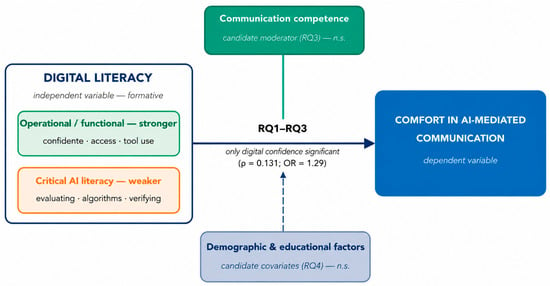
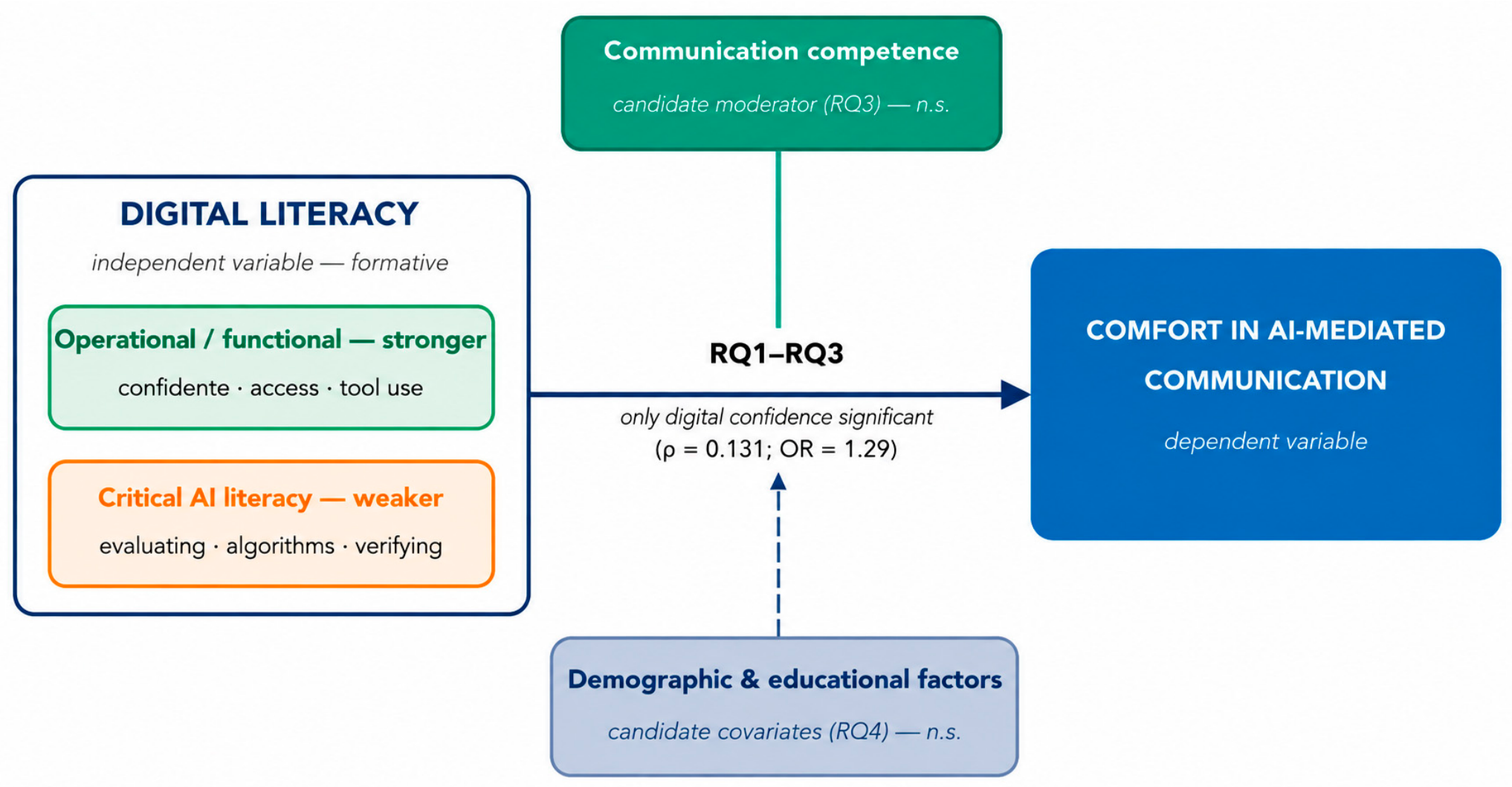
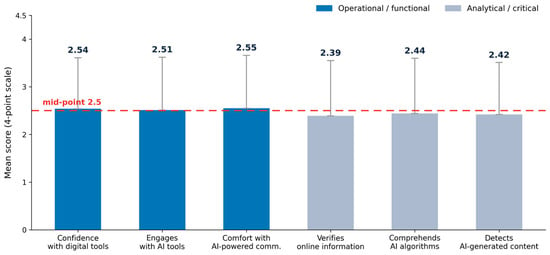
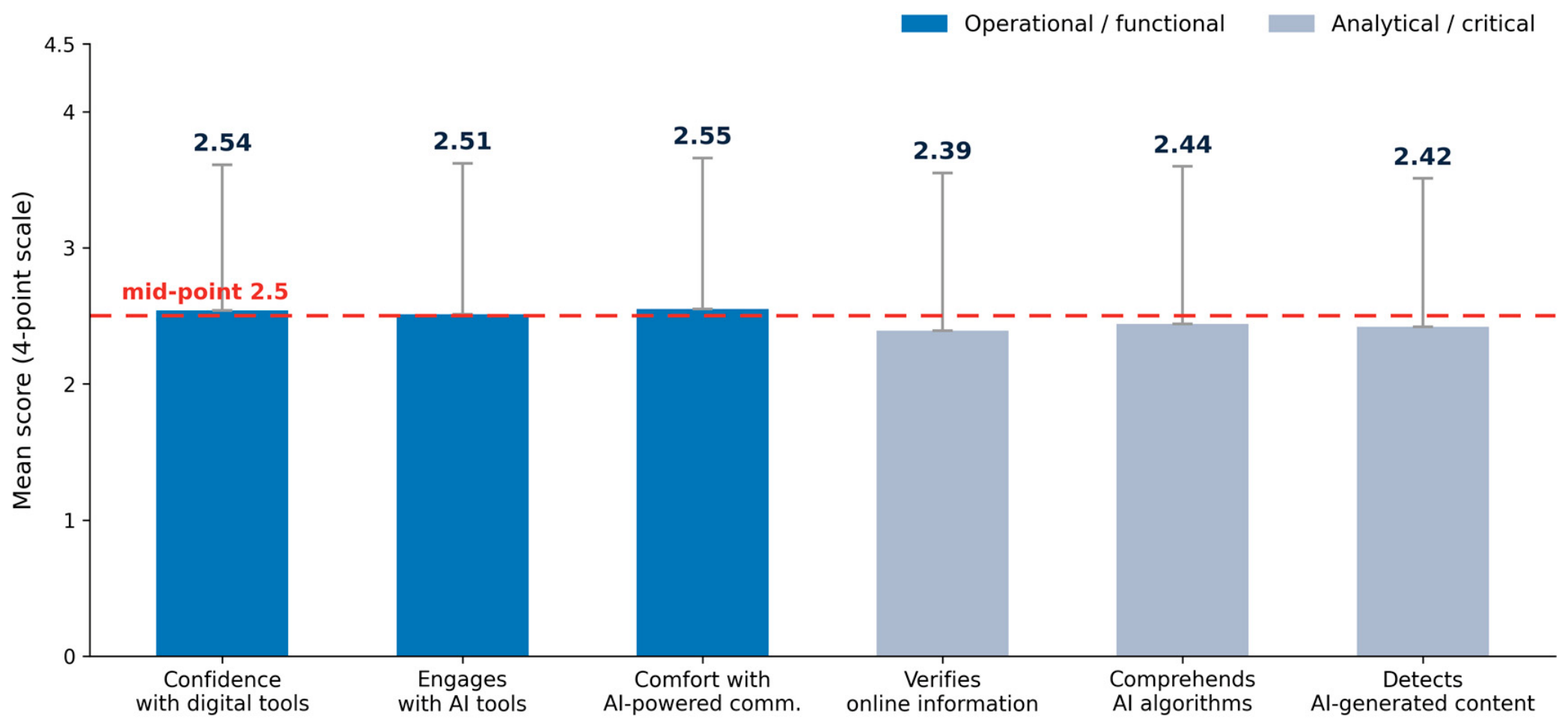
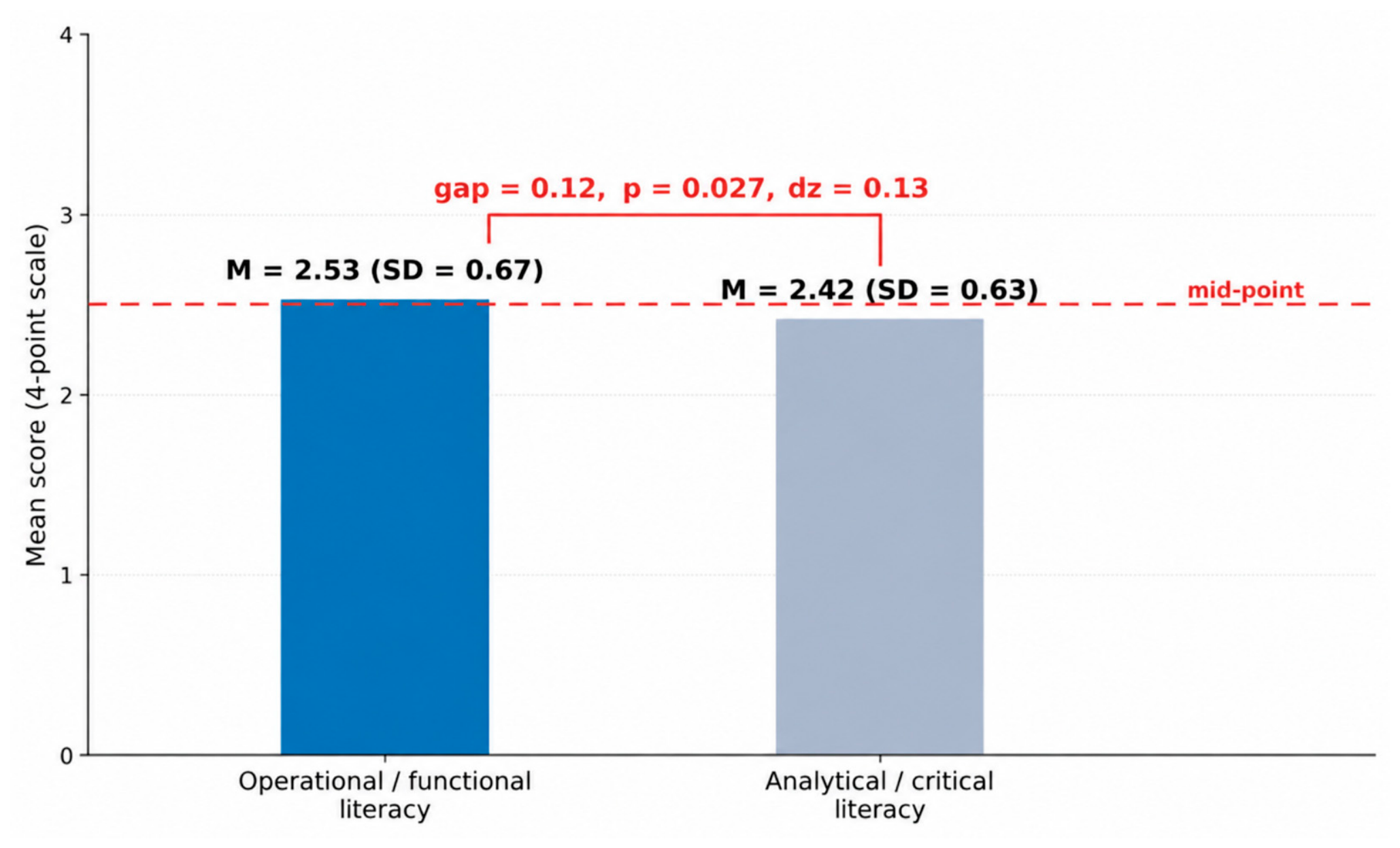
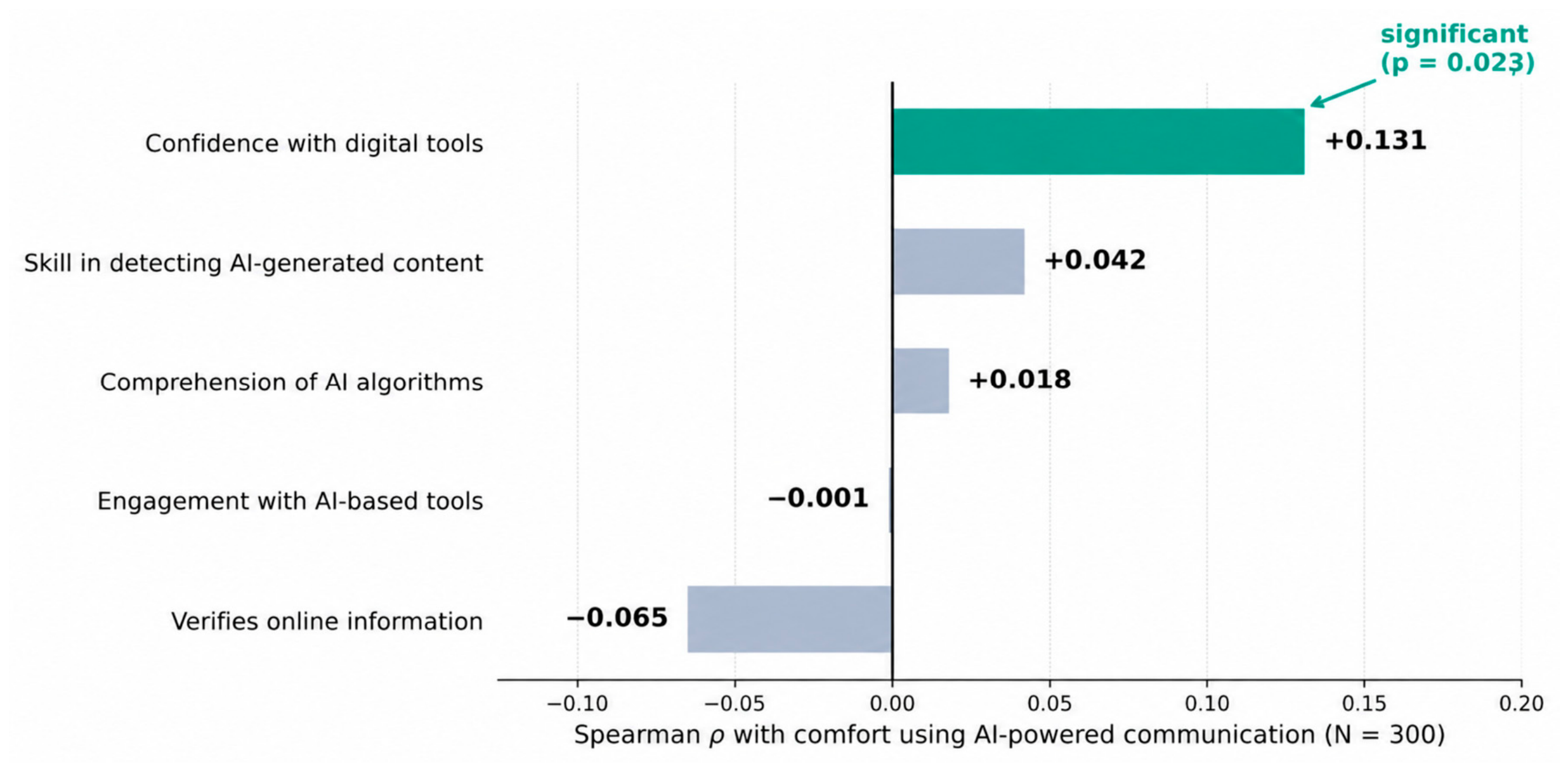

Disclaimer/Publisher’s Note: The statements, opinions and data contained in all publications are solely those of the individual author(s) and contributor(s) and not of MDPI and/or the editor(s). MDPI and/or the editor(s) disclaim responsibility for any injury to people or property resulting from any ideas, methods, instructions or products referred to in the content. |
© 2026 by the authors. Licensee MDPI, Basel, Switzerland. This article is an open access article distributed under the terms and conditions of the Creative Commons Attribution (CC BY) license.