


Abstract
This study examines the relationships among halal destination attribution, destination sustainability awareness, perceived destination trust, perceived usefulness of artificial intelligence (AI), and among Muslim tourists’ visit intention by developing and empirically testing an integrated behavioral model in the context of sustainable plateau tourism. Despite the ecological sensitivity and cultural uniqueness of plateau destinations, this context has received limited scholarly attention. Accordingly, the objective of this study is to investigate how halal destination attribution, destination sustainability awareness, perceived destination trust, and perceived usefulness of AI influence tourists’ visit intention in the Dieng Highlands, Indonesia. A quantitative approach was employed by collecting data from 256 eligible Muslim tourists through a self-selected survey, and the proposed model was analyzed using structural equation modeling. The results indicate that halal destination attribution significantly influences both destination sustainability awareness and perceived destination trust, confirming its dual role as a religious and ethical destination attribute. Furthermore, destination sustainability awareness and perceived usefulness of AI significantly enhance tourists’ intention to visit. In contrast, perceived destination trust positively influences the perceived usefulness of AI, highlighting the importance of trust in technology-enabled tourism services. These findings demonstrate that religious values, sustainability awareness, destination trust, and AI-related perceptions jointly shape Muslim tourists’ visit intention toward the Dieng Highlands. This study contributes to the tourism literature by providing an integrated understanding of tourist behavior in environmentally sensitive destinations. Practically, the findings suggest that destination managers should integrate sustainability initiatives, halal-friendly services, and AI-enabled tourism technologies to strengthen destination competitiveness and encourage tourists’ intention to visit.
1. Introduction
Sustainable tourism has become an increasingly important development paradigm because it seeks to balance environmental conservation, socio-cultural preservation, and long-term economic prosperity, particularly in ecologically fragile destinations [1]. Highland and plateau destinations represent complex socio-ecological systems where environmental integrity, local livelihoods, and visitor experiences are closely interconnected [2]. At the same time, tourists are increasingly expected to consider environmental responsibility and cultural authenticity when selecting destinations, making sustainability-oriented destination management more relevant than ever [3]. However, the increasing popularity of plateau destinations also intensifies pressures associated with land-use change, biodiversity degradation, and tourism management, creating challenges for maintaining destination sustainability [4].
The Dieng Highlands in Central Java, Indonesia, represent an appropriate context for examining these challenges because they combine volcanic landscapes, geoheritage resources, cultural traditions, and religious values within a geographically limited and environmentally sensitive plateau destination [5]. Besides its geological attractions, Dieng is recognized for its cultural heritage, including sacred sites and traditional ceremonies that contribute to destination identity [6,7,8]. The destination has also been increasingly considered for halal tourism development by integrating Muslim-friendly services with sustainability-oriented destination management [9]. Nevertheless, increasing tourism demand has generated concerns regarding infrastructure development, environmental sustainability, and destination governance, while the relationships among these issues and tourists’ behavioral responses remain insufficiently understood [10,11].
Existing studies have examined several relevant aspects independently. Previous tourism research has investigated ecological vulnerability, destination governance, cultural sustainability, and the growing role of digital technologies in destination management [12,13]. Similarly, halal tourism literature has primarily focused on Muslim-friendly services, religious fulfilment, destination satisfaction, and loyalty [14,15]. Sustainability studies have mainly examined tourists’ environmental awareness and responsible behavior [16,17,18,19], whereas destination trust has largely been discussed in relation to perceived safety, satisfaction, and risk reduction [20,21,22]. In parallel, artificial intelligence has been investigated primarily from the perspective of technology adoption, user experience, and service efficiency in tourism [23]. Although these streams have advanced tourism knowledge, they have generally developed independently, providing only limited understanding of how these factors jointly influence tourists’ behavioral intentions in environmentally sensitive plateau destinations [24].
Within this context, halal destination attribution should be viewed as tourists’ perceptions of destination attributes that accommodate Islamic values, including halal-certified food, prayer facilities, modest environments, and Muslim-friendly services [25]. Previous studies suggest that these attributes may function not only as functional service characteristics but also as signals of ethical values, cultural compatibility, and destination quality that influence tourists’ evaluations [23,26]. However, evidence regarding how halal destination attribution relates simultaneously to sustainability awareness, destination trust, and perceptions of artificial intelligence remains limited, particularly in plateau tourism settings characterized by ecological sensitivity and cultural complexity [24].
Accordingly, this study addresses the existing research gap by developing and empirically testing an integrated behavioral framework that connects halal destination attribution, destination sustainability awareness, perceived destination trust, perceived usefulness of artificial intelligence, and visit intention within the context of the Dieng Highlands. The proposed framework was developed by synthesizing established findings from halal tourism, sustainable tourism, destination trust, and tourism technology literature, which have previously been investigated largely as separate research streams [17,23]. By integrating these constructs into a single model, this study seeks to examine the proposed relationships and provide a more comprehensive understanding of tourists’ behavioral intentions in sustainable tourism within this study context. Beyond AI, the tourism sector has widely adopted digital technologies such as online payment systems, automated booking platforms, and service robots to enhance visitor experience. The findings are expected to contribute to the academic development of integrated tourism behavior models while providing practical implications for destination managers seeking to align sustainability initiatives, halal-friendly destination development, and AI-enabled tourism services [12,13,21].
The remainder of this paper is organized as follows. The next section reviews the relevant literature and develops the research hypotheses. Subsequently, the research methodology, empirical findings, and discussion are presented, followed by the conclusions, theoretical implications, practical implications, limitations, and recommendations for future research.
2. Literature Review
2.1. Halal Destination Attribution
Halal destination attribution refers to tourists’ perceptions that a destination provides attributes consistent with Islamic principles, including halal food, prayer facilities, modest environments, and culturally appropriate services. Rather than functioning solely as religious facilities, these attributes have increasingly been considered indicators of destination quality, ethical management, and cultural compatibility in tourism settings. Recent evidence suggests that tourists evaluate halal attributes not only based on their compliance with Islamic requirements but also through broader perceptions of destination credibility and service quality. Consequently, halal destination attribution has evolved from a purely religious construct into a multidimensional destination attribute that may influence tourists’ cognitive and behavioral evaluations [27,28,29].
Previous studies generally agree that halal destination attributes positively influence tourist evaluations, although the mechanisms through which these effects occur differ across studies. Basendwah et al. [30] demonstrated that previous research has primarily associated Islamic destination attributes with tourist satisfaction, whereas Grigoriadis et al. [14]. argued that Muslim-friendly characteristics should be regarded as integral components of destination image rather than merely supplementary services. Similarly, Suryawardani et al. [31] associated Islamic attributes with destination image and tourist satisfaction, while Jumani et al. [32] reported that halal-friendly attributes significantly influenced visit intention in non-Islamic destinations, with gender differences moderating tourists’ responses. Extending this perspective, Gaffar et al. [33] found that halal destination attributes strengthened revisit intention through digital halal literacy, indicating that the influence of halal attributes has expanded into digitally mediated tourism environments. Collectively, these studies consistently support the importance of halal attributes but differ regarding their primary outcomes, including destination image, satisfaction, trust, revisit intention, and behavioral intention.
2.1.1. Halal Destination Attribution and Destination Sustainability Awareness
Previous studies provide converging evidence that halal-related attributes may reflect broader ethical and responsible destination management, although the relationship with sustainability awareness has rarely been examined directly. Sodawan and Hsu [34] found that halal-friendly attributes significantly enhanced perceived value and destination trust among Muslim tourists visiting non-Islamic destinations, suggesting that halal attributes function as indicators of quality and responsible destination management rather than merely religious facilities. Likewise, Soonsan and Jumani [35] reported that halal-friendly characteristics significantly increased tourists’ visit intention because Muslim travelers perceived them as signals of destination appropriateness and responsible service provision.
Nevertheless, previous findings also indicate important contextual differences. Gaffar et al. [33] demonstrated that halal destination attributes strengthened revisit intention through digital halal literacy, but their study focused primarily on behavioral outcomes rather than sustainability awareness. Similarly, Suhartanto et al. [36] showed that environmental responsibility and religious values jointly influenced young Muslim tourists’ attitudes in mangrove ecotourism, whereas Arissaputra et al. [37] found that memorable tourism experiences, place attachment, and environmental concern encouraged environmental responsibility among Muslim tourists. Although these studies consistently associate Islamic values with responsible tourism behavior, they operationalize sustainability using different constructs, including environmental concern, responsibility, and attitudes, rather than destination sustainability awareness itself.
Overall, the existing literature suggests that halal destination attributes may encourage tourists to perceive destinations as ethically managed and environmentally responsible. However, empirical evidence directly examining whether halal destination attribution enhances destination sustainability awareness remains limited, particularly within this study context, destinations characterized by ecological vulnerability and strong cultural identities such as the Dieng Highlands. Examining this relationship therefore extends previous findings by integrating religious destination attributes with sustainability perceptions within a single behavioral framework.
H 1.
Halal destination attribution positively influences destination sustainability awareness.
2.1.2. Halal Destination Attribution and Perceived Destination Trust
The relationship between halal destination attribution and perceived destination trust has received more empirical support than its relationship with sustainability awareness. Existing studies generally agree that halal attributes reduce uncertainty by signaling service quality, religious compliance, and destination reliability, thereby strengthening tourists’ trust in destinations. Han et al. [38] demonstrated that halal destination attributes significantly enhanced destination trust through perceptions of safety and service reliability, while Chang and Amalina [39] similarly reported that halal-friendly services increased trust and satisfaction by reducing uncertainty among Muslim travelers. Likewise, Jeaheng et al. [40] found that halal service quality substantially improved trust and loyalty within hospitality settings, reinforcing the role of halal attributes as indicators of reliable service quality.
Despite this overall consistency, previous studies have examined destination trust from different perspectives. Yong et al. [41] highlighted the joint influence of halal attributes and perceived risk in explaining destination trust, whereas Mursid et al. [27] demonstrated that halal destination image enhanced trust and revisit intention within Indonesian tourism destinations. These findings consistently confirm the positive association between halal attributes and trust but differ regarding the mechanisms through which trust is formed, including perceived safety, service quality, destination image, and risk reduction. Furthermore, most previous studies focus primarily on hospitality or general halal tourism contexts without incorporating sustainability considerations or digital technologies into the same behavioral model.
Accordingly, although previous literature consistently supports the role of halal destination attributes in strengthening destination trust, limited research has investigated this relationship within environmentally sensitive plateau destinations where ecological sustainability, cultural heritage, and technological transformation simultaneously influence tourists’ destination evaluations. Examining this relationship in the Dieng Highlands therefore contributes to extending destination trust literature by situating halal destination attribution within a broader sustainability-oriented tourism context.
H 2.
Halal destination attribution positively influences perceived destination trust.
2.2. Destination Sustainability Awareness
Destination sustainability awareness refers to tourists’ recognition and evaluation of a destination’s environmental stewardship, socio-cultural responsibility, and long-term sustainability. Rather than representing environmental concern alone, this construct reflects tourists’ cognitive understanding that destinations should balance environmental protection, community well-being, and tourism development. Recent tourism research increasingly considers sustainability awareness as an important cognitive antecedent of behavioral responses because tourists are more likely to support destinations perceived as environmentally and socially responsible. Previous studies consistently suggest that sustainability awareness contributes positively to tourists’ behavioral responses, although different studies emphasize different outcome variables. Hansen et al. [42], through a meta-analysis, concluded that sustainability-related beliefs and norms consistently predict sustainable behavioral intentions, demonstrating that sustainability awareness functions as a fundamental cognitive determinant of tourist behavior. Likewise, Kusumah [43] found that tourists’ perceptions of destination sustainability improved satisfaction and destination loyalty. In contrast, Torres-Moraga et al. [44] reported that sustainability-oriented destination environments strengthened destination identity and trust, ultimately encouraging revisit intention. Similarly, Nguyen et al. [45] showed that destination sustainability positively influenced tourist behavior in river tourism by encouraging favorable evaluations of sustainable destinations. Collectively, these studies consistently indicate that tourists increasingly incorporate sustainability considerations into their destination evaluations, although the behavioral outcomes examined vary across studies.
Despite this general agreement, previous research has operationalized sustainability awareness through different behavioral outcomes. Some studies emphasize destination loyalty [43], others focus on destination identity and trust [44], while Alzghoul et al. [46] demonstrated that awareness of environmental issues primarily encourages environmentally responsible behavior rather than destination choice itself. These differences suggest that sustainability awareness may influence tourist behavior through multiple psychological pathways depending on destination characteristics and research context. Furthermore, most previous studies have investigated sustainability independently of religious destination attributes, destination trust, or digital technologies, resulting in a fragmented understanding of tourist decision-making.
The relevance of destination sustainability awareness may be particularly important in plateau tourism destinations such as the Dieng Highlands, where tourism activities directly interact with environmentally sensitive ecosystems and culturally significant landscapes. In these destinations, tourists’ awareness of sustainable destination management is expected to become an important consideration when deciding whether to visit. Nevertheless, empirical evidence examining the direct influence of destination sustainability awareness on visit intention within an integrated behavioral framework that also incorporates halal destination attribution, destination trust, and perceived usefulness of artificial intelligence remains limited. Addressing this relationship therefore contributes to extending previous sustainability research within the context of environmentally vulnerable within this study.
Destination Sustainability Awareness and Visit Intention
The relationship between destination sustainability awareness and visit intention has received increasing empirical support as tourists become more concerned about environmental responsibility in destination selection. Previous studies generally agree that tourists who perceive destinations as environmentally sustainable are more likely to develop favourable behavioural intentions because sustainability enhances destination value, environmental responsibility, and long-term attractiveness. Yuliviona et al. [47] demonstrated that sustainability beliefs consistently predict behavioral intention across tourism contexts, while Hadiwijaya et al. [48] found that perceptions of destination sustainability positively influenced tourist behavior in environmentally sensitive tourism destinations; likewise, Khakwani et al. [49] reported that sustainability perceptions strengthened destination loyalty, suggesting that sustainability contributes not only to post-visit evaluations but also to tourists’ willingness to engage with destinations.
Although previous findings consistently support the positive role of sustainability awareness, differences remain regarding the behavioral outcomes investigated. Existing studies have primarily focused on loyalty, trust, environmentally responsible behavior, or revisit intention rather than initial visit intention, particularly within destinations characterized by ecological vulnerability. Consequently, empirical evidence directly linking destination sustainability awareness to visit intention remains comparatively limited. This limitation is especially relevant in plateau tourism destinations, where tourists’ environmental awareness may play a greater role because tourism activities occur within fragile ecosystems requiring sustainable management [50].
Accordingly, this study proposes that greater awareness of destination sustainability will encourage stronger intentions to visit the Dieng Highlands by strengthening tourists’ positive evaluations of environmentally responsible destination management. Examining this relationship extends previous sustainability literature by positioning destination sustainability awareness as a direct antecedent of visit intention within an integrated behavioral model that simultaneously considers halal destination attribution, destination trust, and perceived usefulness of artificial intelligence.
H 3.
Destination sustainability awareness positively influences visit intention.
2.3. Perceived Destination Trust
Perceived destination trust refers to tourists’ confidence that a destination is reliable, safe, and capable of delivering experiences consistent with their expectations. In tourism, trust has become an increasingly important psychological construct because travel decisions are often made under conditions of uncertainty, particularly before tourists have direct experience with a destination. Consequently, tourists frequently rely on destination credibility, service reliability, and information transparency when evaluating whether a destination deserves their confidence. Previous studies consistently recognize destination trust as an important determinant of favorable tourist behavior, although they differ in how trust is established. Mayasari et al. [51] demonstrated that destination trust directly strengthened revisit intention by increasing tourists’ emotional confidence and perceived credibility. Similarly, Japutra and Keni [52] identified destination trust as a psychological mechanism linking destination image with behavioral intention, emphasizing its mediating role between tourists’ cognitive evaluations and behavioral responses. In contrast, Sodawan and Hsu [34] argued that trust is primarily formed through credible online information and user-generated content during the pre-visit stage, while Carvalho [53] highlighted the importance of perceived safety and crisis management in building destination trust, particularly in the post-pandemic tourism environment. Although these studies consistently support the importance of destination trust, they emphasize different antecedents depending on the tourism context.
Recent tourism research has further expanded the concept by incorporating digital transformation into destination trust. Viên et al. [54] suggested that technology-enabled tourism services increasingly influence trust through perceptions of transparency and service reliability. Compared with earlier studies that primarily focused on destination image or perceived safety, this perspective recognizes that tourists increasingly evaluate destinations through digital interactions before traveling. Nevertheless, previous studies have generally investigated destination trust separately from sustainability awareness, halal destination attributes, and technology acceptance, resulting in limited understanding of how these constructs jointly influence tourists’ behavioral decisions.
This limitation is particularly relevant for environmentally sensitive plateau destinations such as the Dieng Highlands. Because tourists often rely on digital information before visiting remote mountain destinations, trust becomes essential not only for evaluating destination safety and service quality but also for shaping confidence in destination-related technologies. Accordingly, examining destination trust within an integrated behavioral framework contributes to extending previous tourism literature by positioning trust as an important psychological mechanism connecting destination characteristics with technology-related perceptions in a sustainable within this study context.
Perceived Destination Trust and Perceived Usefulness of Artificial Intelligence
The relationship between perceived destination trust and the perceived usefulness of artificial intelligence has attracted increasing scholarly attention as AI-enabled tourism services become more widely adopted. Existing studies generally suggest that tourists who trust a destination are more likely to perceive its technology-based services as useful because trust reduces uncertainty associated with digital interactions. Dwivedi et al. [55] demonstrated that trust substantially enhances both the perceived usefulness and acceptance of artificial intelligence across service industries, including tourism, thereby extending conventional technology acceptance frameworks. Likewise, Pillai et al. [56] found that trust in AI systems significantly improved perceived usefulness and behavioral intention, indicating that confidence precedes evaluations of technological performance.
Although previous findings consistently support a positive relationship between trust and perceived usefulness, differences remain regarding the contexts in which this relationship has been examined. Vafaei-Zadeh et al. [57] investigated smart tourism technologies and found that trust enhanced perceived usefulness and user satisfaction within smart city environments, whereas Ferst et al. [58] demonstrated similar relationships for intelligent service systems without explicitly considering destination characteristics. Meanwhile, Singh [59] reported that trust in digital tourism platforms increased tourists’ evaluations of AI-driven recommendations, although the study focused primarily on online travel platforms rather than destination-specific technologies. These studies collectively indicate that trust consistently promotes favorable evaluations of AI, but the operational settings vary considerably across tourism contexts.
Despite these advances, empirical evidence remains limited regarding whether tourists’ trust in destinations enhances the perceived usefulness of AI within environmentally sensitive tourism destinations. Most previous studies have examined technology adoption independently of destination sustainability and destination characteristics. At the same time, little attention has been given to destinations where ecological conservation, cultural heritage, and digital transformation simultaneously shape tourist experiences. This limitation is particularly evident in plateau destinations such as the Dieng Highlands, where tourists increasingly rely on AI-assisted information to navigate geographically complex and environmentally fragile attractions. Examining this relationship therefore extends existing tourism and technology literature by integrating destination trust and AI perceptions within a single behavioral framework.
H 4.
Perceived destination trust positively influences perceived usefulness of artificial intelligence.
2.4. Perceived Usefulness of Artificial Intelligence
Within this broader technological landscape, AI is distinct in its capacity for personalization, adaptive learning, and predictive decision support, capabilities largely absent from transactional systems such as booking or payment platforms. Perceived usefulness of artificial intelligence refers to tourists’ beliefs that AI-enabled technologies enhance the effectiveness, efficiency, and quality of their travel planning and decision-making processes. Within tourism, AI applications such as recommendation systems, intelligent travel assistants, predictive analytics, and personalized information services have increasingly become important tools for reducing information search costs and improving travel experiences. Consequently, perceived usefulness has emerged as one of the principal determinants explaining tourists’ acceptance of AI-assisted services and their subsequent behavioral responses. Previous studies consistently demonstrate that the perceived usefulness of AI positively influences tourists’ evaluations of digital tourism services, although different studies emphasize different functional benefits. Lalicic and Weismayer [60] conceptualized AI usefulness as a mechanism that improves travel performance through decision support and value co-creation. In contrast, Yörük et al. [61] highlighted operational efficiency by demonstrating that service robots provide speed, accuracy, and consistency during service delivery. Likewise, Chi et al. [62] argued that tourists’ evaluations of AI usefulness depend largely on system usability and responsiveness, while Koo et al. [63] extended this perspective by positioning AI within smart tourism ecosystems that facilitate real-time information exchange and personalized travel experiences. Collectively, these studies consistently indicate that AI is valued because it improves tourists’ ability to access relevant information and make travel decisions more efficiently.
Despite this broad agreement, previous studies operationalize AI usefulness from different perspectives. Some emphasize functional efficiency, others focus on decision support, system performance, or smart tourism ecosystems [60,61,63]. More recently, Lacaci et al. [64] suggested that AI usefulness also contributes to tourists’ perceived value and overall travel experiences by incorporating emotional and experiential dimensions. These variations indicate that although perceived usefulness consistently predicts favorable tourist responses, its conceptualization depends on the technological context and the tourism services being investigated.
Nevertheless, existing literature has predominantly examined perceived usefulness from technology adoption or smart tourism perspectives, with limited attention to destinations characterized by ecological sensitivity and cultural complexity. Comparatively little research has investigated how AI usefulness operates alongside halal destination attributes, destination sustainability awareness, and destination trust within an integrated behavioral framework. This limitation is particularly relevant for plateau destinations such as the Dieng Highlands, where tourists increasingly depend on AI-enabled information to navigate dispersed attractions while simultaneously considering environmental sustainability and culturally appropriate tourism experiences. Accordingly, integrating perceived usefulness of AI into the present model contributes to extending existing tourism technology literature beyond conventional technology acceptance contexts.
Perceived Usefulness of Artificial Intelligence and Visit Intention
Previous empirical studies consistently suggest that tourists who perceive AI technologies as useful are more likely to develop favourable behavioural intentions because AI improves travel planning efficiency, information accessibility, and decision quality. Lalicic and Weismayer [60] demonstrated that perceived usefulness significantly increased tourists’ willingness to use AI-enabled travel services, thereby influencing travel-related decisions. Likewise, Webster and Ivanov [65] found that AI applications enhanced perceived service efficiency, which subsequently strengthened behavioral intention within hospitality settings. Similarly, Li et al. [25] reported that AI-enabled tourism services positively affected behavioral intention through perceived usefulness and perceived value, highlighting the importance of AI in supporting tourists’ decision-making processes.
Although previous studies consistently support the positive influence of perceived usefulness, differences remain regarding the behavioral outcomes investigated. Gursoy et al. [66] primarily examined tourists’ willingness to interact with AI service robots rather than destination visit intention, while Sun et al. [67] focused on AI-powered recommendation systems that enhanced travel intention through personalized information services. These findings indicate that AI usefulness consistently contributes to favorable behavioral responses. However, previous studies have investigated diverse AI applications across different tourism contexts rather than destination selection itself; furthermore, Li et al. [25] have recently examined AI adoption independently of destination sustainability, religious destination attributes, and destination trust. Therefore, limited evidence exists regarding whether tourists’ perceptions of AI usefulness directly encourage visit intention in environmentally vulnerable destinations where information quality, sustainability, and cultural considerations are simultaneously important. This limitation is particularly evident in plateau tourism destinations such as the Dieng Highlands, where AI-supported information may help tourists make more informed travel decisions while promoting sustainable and culturally appropriate tourism experiences. Examining this relationship therefore extends previous AI tourism research by positioning perceived usefulness of artificial intelligence as a direct antecedent of visit intention within an integrated behavioral framework.
H 5.
Perceived usefulness of artificial intelligence positively influences visit intention.
Based on the preceding literature review, this study develops an integrated conceptual model to explain tourists’ visit intention toward the Dieng Highlands by incorporating four complementary perspectives in tourism research. Specifically, halal destination attribution represents destination-specific religious and service-related attributes, destination sustainability awareness reflects tourists’ evaluations of environmental and socio-cultural responsibility, perceived destination trust captures tourists’ confidence in destination reliability, and perceived usefulness of artificial intelligence represents tourists’ evaluations of AI-enabled tourism information and decision-support technologies. Integrating these constructs provides a more comprehensive understanding of tourist decision-making than examining each determinant independently.
The proposed research model is developed by synthesizing previous findings from halal tourism, sustainable tourism, destination trust, and smart tourism literature. Although prior studies consistently report positive relationships among these constructs, most have examined them separately within different tourism contexts. Comparatively limited research has investigated their combined relationships in environmentally sensitive plateau destinations, where tourists simultaneously evaluate sustainability, destination credibility, religious compatibility, and digital information before making travel decisions. Accordingly, the present study extends previous tourism literature by integrating these complementary perspectives into a unified behavioral framework for the Dieng Highlands.
Based on these theoretical arguments and empirical findings, this study proposes five hypotheses describing the relationships among halal destination attribution, destination sustainability awareness, perceived destination trust, perceived usefulness of artificial intelligence, and visit intention. The proposed conceptual framework is illustrated in Figure 1.
Figure 1.
The Research Model. Source: Authors.
3. Research Methods
3.1. Research Design
This study employed a quantitative research design to examine the proposed relationships among halal destination attribution, destination sustainability awareness, perceived destination trust, perceived usefulness of artificial intelligence, and visit intention. The research model was developed from a synthesis of previous literature and the hypotheses formulated in the preceding section.
This study targeted tourists who had visited the Dieng Highlands, Central Java, Indonesia. A structured questionnaire was developed using measurement items adapted from previous studies. All constructs were measured using a five-point Likert scale ranging from 1 (“strongly disagree”) to 5 (“strongly agree”). Data were analysed using Structural Equation Modeling (SEM) to evaluate both the measurement model and the structural relationships among the proposed constructs.
3.2. Sampling
The sampling method employed a self-selection strategy, in which respondents voluntarily opted to participate in the survey after it was advertised through a professional survey distribution company’s platform over two days. This approach was adopted because the study targeted individuals with specific characteristics, namely active tourists who were familiar with the Dieng Highlands and had prior experience with artificial intelligence. Self-selection therefore enabled the efficient recruitment of respondents who satisfied the predefined eligibility criteria while facilitating voluntary participation in the online survey. To increase participation, an incentive mechanism was implemented in which five respondents were randomly selected to receive monetary awards. Participants were required to be at least 17 years old, be familiar with the Dieng Highlands, have prior experience with artificial intelligence, and have traveled outside their city within the previous six months, thereby confirming them as active tourists. A total of 370 individuals participated in the survey. Following the data screening process, 256 respondents met all predefined inclusion criteria and were retained for the final analysis. Approximately 30.81% of the initial responses were excluded because they did not satisfy one or more eligibility requirements established before data collection. Although this screening process reduced the final sample size, it enhanced data quality by ensuring that only respondents relevant to the research objectives were included in the Structural Equation Modeling (SEM) analysis. Furthermore, the final sample size satisfies commonly accepted methodological recommendations for SEM and is therefore considered adequate for estimating the proposed research model. Because eligibility required familiarity with halal-oriented tourism and the survey was conducted through channels reaching predominantly Muslim respondents, the final sample consisted entirely of Muslim tourists. As a result, religion could not be entered as a control variable in this study because it does not vary within the sample; this is addressed further in the Limitations section.
3.3. Measurements
All variables in this study were operationalized through measuring items, ensuring both a solid theoretical basis and empirical validity for each construct [68,69]. Each indicator was evaluated using a six-point Likert scale, from 1 (strongly disagree) to 6 (strongly agree), which enhances response sensitivity and reduces central tendency bias by encouraging more detailed responses [70,71]. Halal destination attribution was measured with indicators based on recent research on halal tourism attributes and Muslim traveler behavior [15,72], while destination sustainability awareness was assessed through indicators reflecting environmental concern and responsible tourism practices [19]. Destination trust was evaluated using items related to reliability, safety, and credibility, grounded in the current literature [20,73]. Additionally, perceived usefulness of artificial intelligence was measured via metrics on efficiency, usefulness, and decision support, aligned with recent studies on AI in tourism [17,60]. Finally, visit intention was gauged through indicators of willingness, planning, and preference, based on prominent research on tourists’ behavioral intentions [47,50]. This methodical approach ensures each construct is rooted in recent empirical evidence while remaining relevant within this study context. This study measured perceptions of AI specifically rather than tourism technology broadly; therefore, findings should not be generalized to other technological tools such as payment or booking systems without further empirical testing.
3.4. Data Analysis Methods
The data were analysed using IBM SPSS Statistics version 31 and IBM SPSS AMOS version 31. Exploratory Factor Analysis (EFA) was first conducted in SPSS to examine the underlying factor structure and confirm that the adapted measurement items were appropriate for the present research context. Although all measurement scales were adopted from previously validated studies, EFA was performed because the instruments were integrated from multiple sources and applied to a different tourism setting, namely sustainable within this study context in the Dieng Highlands. Following the recommendation of Hair et al. [74], each indicator was required to achieve a minimum factor loading of 0.40 to demonstrate acceptable construct representation. Internal consistency reliability was initially evaluated using Cronbach’s alpha, with values of at least 0.70 considered acceptable [75].
Confirmatory Factor Analysis (CFA) was subsequently performed in AMOS version 31 to validate the measurement model before testing the structural relationships. Convergent validity was assessed using standardized factor loadings and the Average Variance Extracted (AVE), with AVE values greater than 0.50 indicating adequate convergent validity [76]. Internal consistency was further evaluated using Composite Reliability (CR), with values exceeding 0.70 indicating satisfactory construct reliability. The calculated Composite Reliability values were 0.883 for Perceived Usefulness of AI, 0.916 for Halal Destination Attribution, 0.929 for Destination Sustainability Awareness, 0.892 for Perceived Destination Trust, and 0.894 for Visit Intention, confirming satisfactory reliability across all constructs. After establishing the adequacy of the measurement model, hypothesis testing was conducted using Structural Equation Modeling (SEM) in AMOS version 31. Structural relationships were evaluated using the Critical Ratio (C.R.), with values greater than 1.96 indicating statistical significance at the 0.05 level [68].
Model fit was evaluated using several widely accepted goodness-of-fit indices. Following recommendations by Byrne [77] and Hu and Bentler [78], model adequacy was assessed using the chi-square divided by degrees of freedom (χ2/df), Comparative Fit Index (CFI), Tucker–Lewis Index (TLI), Root Mean Square Error of Approximation (RMSEA), and Standardized Root Mean Square Residual (SRMR). A χ2/df value below 3.00, CFI and TLI values of 0.90 or higher, RMSEA below 0.08, and SRMR below 0.08 were considered indicative of acceptable model fit. These indices were selected because they collectively evaluate absolute, incremental, and residual model fit while avoiding unnecessary redundancy among fit statistics [77,78,79,80].
4. Results
4.1. Participants
Table 1 delineates the demographic characteristics of the study participants, revealing a predominantly balanced sample with a slight female majority, with 56.3% female and 43.8% male responses. The age distribution of the sample generally consists of young people, with the largest segment in the 21–25 age group (25.8%), followed by 26–29 (18.0%) and 30–34 (15.6%), indicating that the respondents are primarily within the productive and digitally engaged demographic. The educational background predominantly comprises undergraduates (50.0%), followed by high school graduates (35.9%), suggesting a sample with an educational background that is capable of understanding survey content and technology concepts. Most respondents are employed (57.0%), with the remainder classified as unemployed (23.4%), self-employed (18.4%), or retired (1.2%), indicating varied economic statuses. The marital status distribution was relatively balanced, with 50.4% of respondents being unmarried and 48.4% married, indicating representation from individuals with different marital backgrounds. A majority of respondents (61.7%) have prior experience visiting the Dieng Plateau; however, 38.3% do not, indicating that the sample encompasses both seasoned and prospective tourists. All 256 respondents identified as Muslim, consistent with the study’s focus on halal destination attributes. The participant profile represents a diverse yet pertinent sample for analyzing behavioral intention in the realm of plateau tourism.
Table 1.
Profile of Participants.
4.2. Data Validity, AVE, and Reliability Tests
Table 2 displays the findings of the measurement model evaluation, indicating that all constructs satisfy the predetermined standards for validity and reliability. All indicator factor loadings exceed the recommended threshold of 0.40, ranging from 0.724 to 0.878, indicating robust item convergence with their corresponding latent structures. Convergent validity is further corroborated by the average variance extracted (AVE) values, which exceed the acceptable threshold of 0.50, ranging from 0.602 to 0.725, indicating that each concept accounts for a significant share of variance in its indicators. Cronbach’s alpha values for internal consistency range from 0.831 to 0.905, surpassing the minimum threshold of 0.70 and indicating a high degree of reliability across all constructs. Destination sustainability knowledge demonstrates the greatest dependability (α = 0.905), followed by halal destination attribution (α = 0.882), visit intention (α = 0.852), perceived destination trust (α = 0.847), and perceived usefulness of AI (α = 0.831). The results demonstrate that the measurement model is robust, exhibiting good levels of construct validity and reliability, thereby establishing a solid foundation for subsequent structural analysis.
Table 2.
Results of Data Validity, AVE, and Reliability Tests.
4.3. Hypothesis Tests
Figure 2 depicts the structural model for hypothesis testing and shows that the proposed model achieves a high level of goodness-of-fit, indicating its effectiveness in elucidating tourists’ behavioral intentions within the framework of sustainable plateau tourism. The model fit indices indicate that the chi-square value relative to degrees of freedom (CMIN/DF = 1.109) is well below the suggested threshold of 3.0, implying an adequate model fit. Furthermore, absolute fit indices, including the Goodness-of-Fit Index (GFI = 0.956) and the Adjusted Goodness-of-Fit Index (AGFI = 0.937), are above the well-recognized threshold of 0.90, thereby affirming adequate model representation. The Root Mean Square Error of Approximation (RMSEA = 0.021) is well below the 0.08 threshold, accompanied by a high PCLOSE value (0.994), indicating a strong fit between the model and the observed data. Incremental fit indices substantiate this result, with the Comparative Fit Index (CFI = 0.995), Tucker–Lewis Index (TLI = 0.993), and Incremental Fit Index (IFI = 0.995) all exceeding the required threshold of 0.90, indicating an exceptional fit relative to the independent model. Furthermore, parsimony-adjusted metrics such as PNFI (0.769) and PCFI (0.805) indicate that the model strikes a balance between explanatory power and simplicity.
Figure 2.
The Structural Model of the Hypothesis Tests. Source: Authors.
Table 3 presents the results of the structural model analysis. The estimated path coefficients indicate that each hypothesized relationship is statistically significant at the specified significance level. All critical ratio (C.R.) values exceed the recommended threshold of 1.96, providing empirical evidence consistent with the proposed hypotheses. The critical ratio (C.R.) values for all pathways exceed the recommended threshold of 1.96, thereby affirming the robustness and significance of the linkages. Halal destination attribution significantly enhances both destination sustainability awareness (C.R. = 9.359) and perceived destination trust (C.R. = 9.512), underscoring its essential influence on cognitive and relational judgments of the destination. Moreover, awareness of destination sustainability markedly affects the intention to visit (C.R. = 3.153; p = 0.002), indicating that sustainability factors are a substantial predictor of tourists’ behavioral intentions in plateau tourism contexts. Moreover, perceived destination trust substantially increases the perceived usefulness of artificial intelligence (C.R. = 8.136), suggesting that trust promotes the uptake of AI-driven services. The perceived usefulness of AI significantly influences visit intention (C.R. = 4.263), thereby affirming its mediating role in translating perceptions of technology into behavioral outcomes. Overall, the statistical results indicate that the proposed structural relationships are consistent with the conceptual model and provide empirical support for examining the associations among halal destination attribution, destination sustainability awareness, perceived destination trust, perceived usefulness of artificial intelligence, and visit intention.
Table 3.
Results of the Hypotheses Tests.
5. Discussion
Hypothesis 1 was supported: halal destination attribution was positively related to destination sustainability awareness (C.R. = 9.359, p < 0.001). The results indicate that, among the Muslim tourists surveyed, halal destination qualities are positively associated with greater awareness of destination sustainability. The inherent congruence between halal norms and sustainability values can elucidate the endorsement of this theory. Halal characteristics, such as cleanliness, ethical consumption, and responsible service delivery, inherently reflect environmental and social accountability. Consequently, travelers may see halal-compliant sites as more committed to sustainability initiatives, thereby enhancing their understanding of environmental and ethical issues. This discovery aligns with the research of Sodawan and Hsu [34], which indicates that halal-friendly characteristics augment perceived value and trust, implying that these features serve as comprehensive indicators of quality and responsibility rather than solely functional benefits. Likewise, Soonsan and Jumani [35] found that halal qualities substantially enhance visit intention, suggesting that tourists regard these attributes as markers of destination attentiveness and appropriateness. Moreover, Gaffar et al. [33] found that halal destination characteristics enhance the desire to revisit in digitally mediated environments, supporting the notion that halal indicators provide a comprehensive assessment of destination quality, potentially encompassing sustainability consciousness.
The findings validate Hypothesis 2, demonstrating a strong positive correlation between halal destination attribution and perceived destination trust. The statistical result indicates a critical ratio (C.R.) of 9.512, well above the minimum criterion of 1.96, indicating a robust effect. Furthermore, the p-value is indicated as *** (p < 0.001), signifying substantial statistical significance. Because the sample consisted exclusively of Muslim tourists, this finding indicates that halal destination qualities are positively associated with destination trust among Muslim travelers; it should not be interpreted as a universal effect of halal attributes on trust across tourists of all religious backgrounds.
This hypothesis is supported by the signaling role of halal features in reducing ambiguity and enhancing perceived trustworthiness. Halal-compliant attributes, such as guaranteed food standards, ethical practices, and culturally appropriate services, provide clear and reliable indicators that the destination meets established criteria, thereby enhancing travelers’ confidence. This interpretation aligns with Han et al. [38], who found that halal features substantially bolster destination trust through perceived safety and service reliability, thereby establishing trust as a crucial mechanism linking attributes to behavioral outcomes. Chang and Amalina [39] showed that halal-friendly services enhance trust and satisfaction, indicating that adherence to Islamic values diminishes perceived uncertainty in travel decision-making. Mursid and Anoraga [81] demonstrated that the halal destination image substantially enhances trust and the intention to revisit within the Indonesian context, underscoring the importance of halal attributes as essential elements of destination credibility and branding.
The findings demonstrate that Hypothesis 3 is statistically validated, establishing a substantial positive correlation between awareness of destination sustainability and intention to visit. The statistical output reveals a critical ratio (C.R.) of 3.153, exceeding the suggested threshold of 1.96, indicating a statistically significant effect. The p-value of 0.002 is below the 0.05 significance threshold, indicating that the link is statistically significant. The findings indicate that increased tourist awareness of a destination’s sustainability correlates with a heightened propensity to visit.
This notion is supported by tourists’ growing inclination to integrate environmental and ethical factors into their travel choices. Awareness of sustainability increases the perceived value and appeal of a location, especially in ecologically vulnerable areas like plateau tourism. Tourists who identify a destination as environmentally sustainable are more inclined to cultivate favorable attitudes and behavioral intentions. This discovery aligns with Yuliviona et al. [47], who demonstrated that halal destination qualities affect visit intention via perceived value, suggesting that value-based assessments are crucial in influencing intention. Similarly, Hadiwijaya et al. [48] showed that Islamic qualities enhance destination competitiveness and increase visit intention, suggesting that value-based attributes may directly influence travel decisions. Furthermore, Ratnasari et al. [50] found that halal qualities substantially influence visit intention and word-of-mouth intention in Indonesia, underscoring the importance of perceived value and favorable assessments for behavioral outcomes.
Hypothesis 4 was supported: perceived destination trust was positively related to perceived usefulness of AI (C.R. = 8.136, p < 0.001). The findings indicate that tourists who have confidence in a destination are more likely to view AI-based services there as advantageous and valuable.
This endorsement can be explained by trust’s role in reducing uncertainty and increasing confidence in technology-mediated interactions. When tourists regard a site as trustworthy and reputable, they are more inclined to interact with its digital infrastructure, including AI-powered services such as recommendation systems, information portals, and personalized help. This interpretation is consistent with Dwivedi et al. [55], who found that trust significantly enhances perceived usefulness and acceptance of AI technologies, highlighting trust as a foundational element in technology adoption frameworks. Pillai et al. [56] similarly showed that confidence in AI systems positively affects perceived usefulness and behavioral intention, indicating that trust precedes the assessment of technological advantages. Vafaei-Zadeh et al. [57] showed that confidence in smart tourism technologies markedly enhances perceived usefulness and user satisfaction, suggesting that trust mitigates perceived complexity and risk associated with technology utilization.
The findings demonstrate that Hypothesis 5 is statistically validated, establishing a substantial positive correlation between the perceived usefulness of AI and the intention to visit. The statistical output reveals a critical ratio (C.R.) of 4.263, exceeding the suggested threshold of 1.96, indicating a significant and reliable effect. The p-value is indicated as *** (p < 0.001), signifying a substantial degree of statistical significance. The findings indicate that when tourists regard AI-based services as useful, efficient, and advantageous, they are more inclined to form a heightened intention to visit the destination.
The significance of perceived usefulness supports the endorsement of this hypothesis as a fundamental factor influencing behavioral intention in technology acceptance models. AI technologies, including personalized recommendations, real-time information, and intelligent assistance, may enhance tourists’ perceptions of the usefulness of destination-related services, which is consistent with the positive relationship observed between perceived usefulness of AI and visit intention in this study. Consequently, tourists typically prefer areas where technology support is regarded as enhancing value. This discovery aligns with Lalicic and Weismayer [60], who demonstrated that perceived usefulness greatly enhances travelers’ propensity to utilize AI-driven services, consequently affecting travel-related decisions. Webster and Ivanov [65] found that AI applications improve service efficiency, thereby favorably influencing behavioral intention, underscoring AI’s value-enhancing function in tourism encounters. Moreover, Sun et al. [67] showed that AI-driven recommendation systems enhance perceived usefulness and, in turn, elevate travel intention, underscoring the significance of personalized and relevant information.
6. Conclusions
This research seeks to formulate and empirically evaluate a comprehensive model that connects halal destination attributes, awareness of destination sustainability, perceived trust in the destination, perceived usefulness of artificial intelligence, and intention to visit, specifically within the context of the Dieng Plateau. The empirical results validate that all proposed hypotheses are statistically significant, demonstrating that, within this sample of Muslim tourists, halal destination attributes are fundamental in influencing both sustainability awareness and trust, while sustainability awareness and the perceived usefulness of artificial intelligence significantly enhance visit intention. The findings indicate that tourists’ behavioral intentions in this study context are influenced not only by environmental factors but also by religious affiliation and technological support. The elevated critical ratio values across all paths indicate that the relationships are substantial, underscoring the importance of incorporating several variables of tourist perception. The results demonstrate that the interplay between trust and technology is crucial, as trust amplifies the perceived usefulness of AI, which in turn affects visit intention. The study affirms that tourist decision-making in the Dieng Highlands is influenced by a complex interplay of ethical, environmental, psychological, and technological factors, underscoring the need for a comprehensive approach to understanding sustainable behavior within this study context.
This study enhances tourism literature by proposing and validating a cohesive framework that connects previously disjointed research areas. This research on halal tourism illustrates that halal destination attribution serves both as a means of religious conformity and as an indicator of sustainability and trust among Muslim tourists, thereby expanding its conceptual framework. The study advances the sustainability literature by identifying sustainability consciousness as a fundamental cognitive driver that interacts with religious and technical elements rather than functioning independently. The incorporation of perceived destination trust and the perceived usefulness of artificial intelligence establishes a new connection between psychological and technological constructs in tourism behavior models. This contribution is especially pertinent within this study context, where environmental vulnerability and cultural intricacy necessitate a multidimensional examination. Recent research on sustainable practices and customer relationship quality underscores the need to integrate sustainability programs with stakeholder perceptions to improve long-term engagement [82]. Likewise, recent research on the adoption of artificial intelligence underscores its pivotal influence on behavioral responses and decision-making processes inside digital contexts [83]. Thus, the research provides a more thorough theoretical elucidation of how several constructs jointly influence visit intention.
From a managerial standpoint, the findings have significant implications for destination managers and governments seeking to enhance the appeal and sustainability of sites within this study context, such as the Dieng Highlands. Enhancing halal destination qualities, such as the availability of halal-certified cuisine, prayer facilities, and culturally relevant services, can bolster environmental awareness and foster trust among Muslim travelers. Second, the findings underscore the need to clearly communicate sustainability practices, since tourists who view a destination as ecologically responsible are more inclined to form stronger intentions to visit. Third, establishing destination confidence through open government, dependable services, and uniform quality standards is crucial, especially in growing locations where uncertainty may be elevated. The findings underscore the strategic significance of artificial intelligence in tourism development, indicating that investments in AI-driven technologies, as one component of a broader digital tourism ecosystem that also includes booking and payment systems, can augment perceived usefulness and affect behavioral intention. Recent evidence corroborates that digital marketing and AI-driven systems markedly enhance customer satisfaction and engagement in service contexts [64]. Consequently, destination administrators ought to implement a cohesive plan that amalgamates religious, environmental, and technical components to cultivate a competitive and sustainable tourism experience.
As noted in the Sampling and Discussion sections, this characteristic of the sample means the reported associations reflect Muslim travelers’ perceptions specifically. This study has several limitations that should be considered when interpreting the findings. First, the respondents consisted exclusively of Muslim domestic tourists, reflecting the study’s focus on halal tourism in the Dieng Plateau. Consequently, the findings should be interpreted within this specific context and may not be directly generalized to non-Muslim tourists or international visitors with different cultural and religious backgrounds. Future research is therefore encouraged to validate the proposed model across more diverse tourist populations, including international visitors and individuals from different religious and cultural backgrounds, to enhance the generalizability of the findings.
Second, this study employed covariance-based Structural Equation Modelling (CB-SEM) as the primary analytical approach because the objective was to empirically validate the proposed theoretical model and simultaneously examine the structural relationships among multiple latent constructs. While CB-SEM is well suited for confirmatory model testing and produced consistently significant path coefficients with strong model fit indices, this study did not conduct an additional robustness check using alternative estimation approaches such as binary logistic or probit regression. Furthermore, because all respondents in the final sample identified as Muslim, religion did not vary within the dataset and could not be included as a control or moderating variable in this or any regression-based analysis. Future research is encouraged to incorporate complementary analytical approaches, such as logistic/probit regression, hierarchical regression, or multi-group analysis, using a more religiously diverse sample, to further verify the stability of the proposed relationships and to formally examine the role of religion as a covariate.
Finally, the present study focused on visit intention as a single behavioural outcome, even though 61.7% of respondents had previously visited the Dieng Plateau and 38.3% had not (Table 1). Intent to visit for the first time and intent to revisit may be conceptually distinct and driven by different antecedents; however, a separate multi-group analysis comparing these two subsamples was not conducted in the present study. Future studies are strongly encouraged to employ multi-group SEM or comparative modelling approaches to examine whether the proposed relationships differ between first-time and repeat visitors, providing a more nuanced understanding of behavioural intention formation in sustainable tourism within this study context.
Future research should also employ longitudinal designs to monitor changes in visitor behavior over time and enhance causal inference. Comparative analyses among various destination types, including coastal, urban, and rural tourism environments, would yield significant insights into the generalizability of the proposed approach. Furthermore, subsequent research ought to integrate additional dimensions, such as perceived risk, emotional attachment, and tourist experience, to develop a more comprehensive understanding of visit intention. Incorporating moderating variables, such as demographic traits and digital literacy, may enhance the model’s explanatory capacity [84]. Future studies must investigate the influence of sustainability and destination credibility on behavioral intention, as evidenced by recent studies on volcano and geopark tourism [85,86,87]. Furthermore, integrating destination image, perceived value, and visitor experience has been shown to substantially influence visit intention across diverse tourism contexts, such as coffee tourism and royal tourism [88,89]. Furthermore, recent studies emphasize the influence of AI, sustainability practices, and digital transformation on consumer behavior and involvement, highlighting novel pathways for integrating technology and ethical considerations into sustainable tourism research [9,90,91]. These guidelines will enhance a more sophisticated, contextually aware understanding of sustainable, technology-influenced tourism behavior.
Author Contributions
Conceptualization, U.S., D.S.S. and M.A. (Mamoon Allan); data curation, U.S. and W.C.H.; methodology, M.A. (Mamoon Allan) and D.S.S.; investigation, J.R.-Z., S.A. and M.A. (Muaz Azinuddin); formal analysis, U.S. and D.S.S.; resources, U.S., M.A. (Mamoon Allan), W.C.H., J.R.-Z. and S.A.; software, D.S.S.; validation, U.S., D.S.S. and M.A. (Muaz Azinuddin); Visualization, D.S.S., M.A. (Mamoon Allan) and J.R.-Z.; writing, original draft preparation, U.S., D.S.S. and M.A. (Mamoon Allan); writing, review and editing, W.C.H., J.R.-Z. and S.A.; project administration, U.S.; supervision, S.A. All authors have read and agreed to the published version of the manuscript.
Funding
This research is funded by the Indonesian Endowment Fund for Education (LPDP) on behalf of the Indonesian Ministry of Higher Education, Science and Technology and managed under the EQUITY Program (Contract No: 4308/B3/DT.03.08/2025 and No: B/284/UN39/HK.07.00/2025).
Institutional Review Board Statement
Authors confirm that the study was conducted in line with the ethical standards of the Declaration of Helsinki, and all participants took part voluntarily after being informed about the purpose of the research, their right to withdraw, and the confidentiality measures in place. No identifying details have been included in the manuscript. The authors further declared that the study complied with ethical guidelines set forth by the Institutional Review Board of the human research ethics committee of Universitas Negeri Jakarta. (No.1682/UN39.14/PT.01.05/XI/2025, Approval date 20 November 2025).
Informed Consent Statement
Informed consent was obtained from all subjects involved in the study. The data collection platform handled this.
Data Availability Statement
The dataset of the study is available from the authors upon reasonable request.
Acknowledgments
The authors are deeply grateful to all the tourists who generously shared their time for this research. Their contributions have been instrumental in the success of this study. Additionally, Jintanee Ru-Zhue is the co-corresponding author of this article.
Conflicts of Interest
The authors declare no conflicts of interest.
References
- Dobre, C.; Linca, A.-C.; Toma, E.; Iorga, A. Sustainable development of rural mountain tourism: Insights from consumer behavior and profiles. Sustainability 2024, 16, 9449. [Google Scholar] [CrossRef] [Scilit]
- Sgroi, F.; Modica, F. Digital technologies for the development of sustainable tourism in mountain areas. Smart Agric. Technol. 2024, 8, 100475. [Google Scholar] [CrossRef] [Scilit]
- Krittayaruangroj, K.; Suriyankietkaew, S.; Hallinger, P. Research on sustainability in community-based tourism: A bibliometric review and future directions. Asia Pac. J. Tour. Res. 2023, 28, 1031–1051. [Google Scholar] [CrossRef] [Scilit]
- Tsamos, G.; Vlami, A.; Sarantakou, E.; Christidou, A. Heritage Hospitality and Sustainable Tourism in Mountain Cultural Landscapes: The Case of Zagori Within the UNESCO Framework. Heritage 2025, 8, 523. [Google Scholar] [CrossRef] [Scilit]
- Sihotang, D.S.; Suhud, U.; Handaru, A.W. Encouraging Visits to Geoparks through Sustainable Marketing: A Conceptual Study on Geopark Dieng. J. Bus. Soc. Sci. 2025, 2025. [Google Scholar] [CrossRef] [Scilit]
- Candeloro, G.; Tartari, M. Heritage-led sustainable development in rural areas: The case of Vivi Calascio community-based cooperative. Cities 2025, 161, 105920. [Google Scholar] [CrossRef] [Scilit]
- Haryanto, A.; Shandy, I.R.; Setyawan, Q.A. Analysis of the Dieng Culture Festival from the Perspective of Sustainable Tourism. KnE Soc. Sci. 2023, 542–551. [Google Scholar] [CrossRef] [Scilit]
- Suhartanto, D.; Amalia, F.A.; Sumarjan, N.; Lu, C.Y.; Nova, M. The art of inclusivity: How sense of community shapes Muslim journeys across Islamic and non-Islamic destinations. J. Islam. Mark. 2025, 16, 2276–2293. [Google Scholar] [CrossRef] [Scilit]
- Nurhayati, E.C.; Mutamimah; Hartono, S.; Lusianti, D.; Sundari, P. Halal Tourism Strategy: Evidence from Dieng Plateau Sunrise View Point Indonesia. In Achieving Sustainable Business Through AI, Technology Education and Computer Science: Volume 1: Computer Science, Business Sustainability, and Competitive Advantage; Springer: Cham, Switzerland, 2024; pp. 667–680. [Google Scholar]
- Prayasta, I.G.H.; Lestari, N.G.P.A.S.; Sweta, I.N. Tourism Intelligence: Analisis Data Geospasial Pembangunan Pariwisata Terintegrasi di Kawasan Dieng Plateau. J. Din. Ekon. Pembang. 2026, 8, 41–59. [Google Scholar]
- Shabrina, Y.; Octavanny, V.; Nasir, S.Z.; Ferentya, M.D. Implementasi Sustainable Tourism Di Kawasan Wisata Alam Bukit Sikunir, Dieng. Kepariwisataan J. Ilm. 2024, 18, 239–249. [Google Scholar] [CrossRef] [Scilit]
- Abror, A.; Patrisia, D.; Engriani, Y.; Al Hafizh, M.; Gaffar, V.; Qoriah, Q.; Achmad, N.; Wusqa, U.; Abdullah, M.S. Antecedents of tourist citizenship behavior: The role of digital halal literacy and religiosity. J. Islam. Mark. 2024, 16, 65–81. [Google Scholar] [CrossRef] [Scilit]
- Permana, I.M.; Adam, F. Impact of Islamic attributes and destination image on tourist satisfaction and revisit intentions in halal tourism: A study in Banda Aceh. Int. J. Adv. Appl. Sci. 2024, 11, 118–127. [Google Scholar] [CrossRef] [Scilit]
- Grigoriadis, P.; Salepaki, A.; Angelou, I.; Kourkouridis, D. Risk and resilience in tourism: How political instability and social conditions influence destination choices. Tour. Hosp. 2025, 6, 83. [Google Scholar] [CrossRef] [Scilit]
- Han, H.; Al-Ansi, A.; Chua, B.-L.; Tariq, B.; Radic, A.; Park, S. The post-coronavirus world in the international tourism industry: Application of the theory of planned behavior to safer destination choices in the case of US outbound tourism. Int. J. Environ. Res. Public Health 2020, 17, 6485. [Google Scholar] [CrossRef] [Scilit] [PubMed]
- Font, X.; McCabe, S. Sustainability and marketing in tourism: Its contexts, paradoxes, approaches, challenges and potential. J. Sustain. Tour. 2017, 25, 869–883. [Google Scholar] [CrossRef] [Scilit]
- Pratama, I.W.A.; Nyoman, D.M.S.; Putu, K.S. Analysis of sustainable tourism management, tourist education, and environmental awareness on visit intention in Ubud, Bali. J. Pariwisata Berkelanjutan 2024, 2, 1155–1165. [Google Scholar] [CrossRef] [Scilit]
- Sah, A.K.; Hong, Y.-M.; Huang, K.-C. Enhancing brand value through circular economy service quality: The mediating roles of customer satisfaction, brand image, and customer loyalty. Sustainability 2025, 17, 1332. [Google Scholar] [CrossRef] [Scilit]
- Su, L.; Huang, S.S.; Pearce, J. How does destination social responsibility contribute to environmentally responsible behaviour? A destination resident perspective. J. Bus. Res. 2018, 86, 179–189. [Google Scholar] [CrossRef] [Scilit]
- Abubakar, A.M.; Ilkan, M.; Al-Tal, R.M.; Eluwole, K.K. eWOM, revisit intention, destination trust and gender. J. Hosp. Tour. Manag. 2017, 31, 220–227. [Google Scholar] [CrossRef] [Scilit]
- Elbaz, A.M.; Abou Kamar, M.S.; Onjewu, A.-K.E.; Soliman, M. Evaluating the Antecedents of Health Destination Loyalty: The Moderating Role of Destination Trust and Tourists’ Emotions. Int. J. Hosp. Tour. Adm. 2021, 24, 1–28. [Google Scholar] [CrossRef] [Scilit]
- Gomez-Suarez, M.; Veloso, M. Enhancing social media engagement by the hospitality industry: The power of customer experience dimensions. J. Vacat. Mark. 2024, 30, 311–326. [Google Scholar] [CrossRef] [Scilit]
- Alsharif, A.; Isa, S.M.; Alqudah, M.N. Smart tourism, hospitality, and destination: A systematic review and future directions. J. Tour. Serv. 2024, 15, 72–110. [Google Scholar] [CrossRef] [Scilit]
- Gretzel, U.; Sigala, M.; Xiang, Z.; Koo, C. Smart tourism: Foundations and developments. Electron. Mark. 2015, 25, 179–188. [Google Scholar] [CrossRef] [Scilit]
- Li, Y.; Hu, C.; Huang, C.; Duan, L. The concept of smart tourism in the context of tourism information services. Tour. Manag. 2017, 58, 293–300. [Google Scholar] [CrossRef] [Scilit]
- Lu, L.; Cai, R.; Gursoy, D. Developing and validating a service robot integration willingness scale. Int. J. Hosp. Manag. 2019, 80, 36–51. [Google Scholar] [CrossRef] [Scilit]
- Mursid, A. Examining revisit intention from the basic foundation of Islam: The role of halal destination attributes and perceived value. J. Islam. Mark. 2023, 14, 1325–1345. [Google Scholar] [CrossRef] [Scilit]
- Su, L.; Lian, Q.; Huang, Y. How do tourists’ attribution of destination social responsibility motives impact trust and intention to visit? The moderating role of destination reputation. Tour. Manag. 2020, 77, 103970. [Google Scholar] [CrossRef] [Scilit]
- Suhud, U.; Nair, S.; Chee Hoo, W.; Sihotang, D.S.; Gaffar, V.; Abror, A.; Shahril, A.M.; Nupueng, S.; Aujirapongpan, S. Destination Inclusivity in Sustainable Heritage Tourism: The Roles of AI Literacy, Halal Literacy, and Information Quality: Evidence from Tana Toraja. Sustainability 2026, 18, 7081. [Google Scholar] [CrossRef] [Scilit]
- Basendwah, M.; Rahman, S.; Al-Sakkaf, M.A. Tourists’ satisfaction with Islamic attributes of destination: A systematic mapping study. J. Islam. Mark. 2024, 15, 1414–1438. [Google Scholar] [CrossRef] [Scilit]
- Suryawardani, B.; Wulandari, A.; Marcelino, D.; Millanyani, H. Islamic destination to millennials in Bandung: Islamic attributes and destination image on tourist satisfaction with visiting decision as mediator. J. Islam. Mark. 2024, 15, 2122–2143. [Google Scholar] [CrossRef] [Scilit]
- Jumani, Z.A. Halal–friendly attributes: A comparative study of different Muslim genders’ intentions to visit non–Islamic destinations. J. Islam. Mark. 2024, 15, 3515–3542. [Google Scholar] [CrossRef] [Scilit]
- Gaffar, V.; Christiyanto, W.W.; Arissaputra, R.; Abror, A.; Achmad, N.; Hidayat, E.F.F.; Siregar, Q.A.; Shahril, A. Digital halal literacy and halal destination attribute as the antecedents of revisit intention. Int. J. Tour. Cities 2025, 11, 301–317. [Google Scholar] [CrossRef] [Scilit]
- Sodawan, A.; Hsu, R.L.W. Halal-Friendly Attributes and Muslims’ Visit Intention: Exploring the Roles of Perceived Value and Destination Trust. Sustainability 2022, 14, 12002. [Google Scholar] [CrossRef] [Scilit]
- Soonsan, N.; Jumani, Z.A. Perceptions of Halal-friendly attributes: A quantitative study of tourists’ intention to travel non-Islamic destination. J. Islam. Mark. 2024, 15, 1441–1460. [Google Scholar] [CrossRef] [Scilit]
- Suhartanto, D.; Dean, D.; Amin, H.; Seperi, Y. Faith, ecology and leisure: Understanding young Muslim tourists’ attitudes towards mangrove ecotourism. J. Islam. Mark. 2025, 16, 3240–3256. [Google Scholar] [CrossRef] [Scilit]
- Arissaputra, R.; Gaffar, V.; Sultan, M.A.; Andriana, D.; Abror, A.; Sentika, S.; Christiyanto, W.W. Muslim tourists as role models for environmental responsibility: Key factors in memorable nature-based tourism, place attachment, and environmental concern. J. Islam. Mark. 2025, 16, 3657–3681. [Google Scholar] [CrossRef] [Scilit]
- Han, H.; Al-Ansi, A.; Olya, H.G.T.; Kim, W. Exploring halal-friendly destination attributes in South Korea: Perceptions and behaviors of Muslim travelers toward a non-Muslim destination. Tour. Manag. 2019, 71, 151–164. [Google Scholar] [CrossRef] [Scilit]
- Chang, Y.C.; Amalina, N.S.S. Halal travel intention of Muslim tourists toward a non-Islamic destination: An integrated framework in Taiwan. J. Islam. Mark. 2025, 17, 1604–1633. [Google Scholar] [CrossRef] [Scilit]
- Jeaheng, Y.; Al-Ansi, A.; Han, H. Impacts of Halal-friendly services, facilities, and food and Beverages on Muslim travelers’ perceptions of service quality attributes, perceived price, satisfaction, trust, and loyalty. J. Hosp. Mark. Manag. 2020, 29, 787–811. [Google Scholar] [CrossRef] [Scilit]
- Yong, R.Y.M.; Chua, B.-L.; Han, H.; Fakfare, P. Advancing service automation technology in tourism for sustainable development goals: A review and agenda for theories, contexts, methodologies and actions. J. Travel Tour. Mark. 2025, 42, 381–414. [Google Scholar] [CrossRef] [Scilit]
- Hansen, T.; Olk, S.; Thomsen, T.U. A meta-analysis of sustainable tourist behavioral intention and the moderating effects of national culture. J. Sustain. Tour. 2024, 32, 883–903. [Google Scholar] [CrossRef] [Scilit]
- Kusumah, E.P. Sustainable tourism concept: Tourist satisfaction and destination loyalty. Int. J. Tour. Cities 2024, 10, 166–184. [Google Scholar] [CrossRef] [Scilit]
- Torres-Moraga, E.I.; Alonso-Dos-Santos, M.; Arboleda, D.Q.; Carvajal-Trujillo, E. The role of experience and trustworthiness on perception sustainable touristic destinations. J. Hosp. Tour. Manag. 2021, 49, 471–480. [Google Scholar] [CrossRef] [Scilit]
- Nguyen, D.T.; Dao, H.D.; Pham, H.D. Destination sustainability and tourist behavior in river tourism: The role of satisfaction and nationality differences. Int. J. Tour. Cities 2026, 12, 156–173. [Google Scholar] [CrossRef] [Scilit]
- Alzghoul, Y.A.; Jamaliah, M.M.; Alazaizeh, M.M.; Mgonja, J.T.; Al-Daoud, Z.J. Tour guides’ interpretation and tourists’ pro-environmental behavior: Differences across cultural and natural world heritage sites. J. Ecotourism 2024, 23, 366–394. [Google Scholar] [CrossRef] [Scilit]
- Yuliviona, R.; Alias, Z.; Abdullah, M.; Azliyanti, E. The relationship of halal tourism, Islamic attributes, experiential value, satisfaction and Muslim revisit intention in framework: A systematic literature review. Int. J. Tour. Hosp. Rev. 2019, 6, 50–57. [Google Scholar] [CrossRef] [Scilit]
- Hadiwijaya, H.; Yustini, T.; Annisa, M.L. Effect of destination image, amenities on revisit intention with visitor satisfaction. J. Sustain. Tour. Entrep. 2025, 6, 281–293. [Google Scholar] [CrossRef] [Scilit]
- Khakwani, H.K.; Hassaan, M.; Naheed, K. An investigation into dynamics of “Halal tourism”: Factors influencing Muslim pilgrims’ visit intentions to Mecca and Madinah. J. Tour. Futures 2026, 1–22. [Google Scholar] [CrossRef] [Scilit]
- Ratnasari, D.; Mahdi, S.; Purwani, S.; Herawati, T.; Budiono, R.; Subartini, B.; Putra, F.I.F.S.; Laksito, G.S. Tourist-interest analysis in visiting halal tourism post COVID-19 in West Java, Indonesia using SEM. Int. J. Prof. Bus. Rev. 2023, 8, e01755. [Google Scholar] [CrossRef] [Scilit]
- Mayasari, I.; Haryanto, H.C.; Risza, H.; Premananto, G. Investigating the role of brand love on brand advocacy in the local eco hijab fashion industry. J. Islam. Mark. 2024, 16, 713–735. [Google Scholar] [CrossRef] [Scilit]
- Japutra, A.; Keni, K. Signal, need fulfilment and tourists’ intention to revisit. Anatolia 2020, 31, 605–619. [Google Scholar] [CrossRef] [Scilit]
- Carvalho, M.A.M. Factors affecting future travel intentions: Awareness, image, past visitation and risk perception. Int. J. Tour. Cities 2022, 8, 761–778. [Google Scholar] [CrossRef] [Scilit]
- Viên, T.T.X.; Giao, H.N.K.; Thành, T.V. Analyzing the Impact of Smart Tourism Application, Destination Image, and Satisfaction on Tourist Intention to Return to the Tourist Destination of Nha Trang; Center for Open Science: Charlottesville, VA, USA, 2024. [Google Scholar]
- Dwivedi, Y.K.; Hughes, L.; Ismagilova, E.; Aarts, G.; Coombs, C.; Crick, T.; Duan, Y.; Dwivedi, R.; Edwards, J.; Eirug, A. Artificial Intelligence (AI): Multidisciplinary perspectives on emerging challenges, opportunities, and agenda for research, practice and policy. Int. J. Inf. Manag. 2021, 57, 101994. [Google Scholar] [CrossRef] [Scilit]
- Pillai, R.; Sivathanu, B.; Metri, B.; Kaushik, N. Students’ adoption of AI-based teacher-bots (T-bots) for learning in higher education. Inf. Technol. People 2024, 37, 328–355. [Google Scholar] [CrossRef] [Scilit]
- Vafaei-Zadeh, A.; Ong, J.Y.; Hanifah, H.; Nikbin, D. Investigating factors influencing mobility-as-a-service (MaaS) adoption: An integrated technology acceptance model (TAM)-task-technology fit (TTF) perspective. Int. J. Urban Sci. 2026, 1–30. [Google Scholar] [CrossRef] [Scilit]
- Ferst, M.d.C.; dos Anjos, S.J.G.; Kuhn, V.R. Valuing Accessibility in Hospitality and the Loyalty of Tourists with Disabilities. Tur. Visão Ação 2023, 25, 243–262. [Google Scholar] [CrossRef] [Scilit]
- Singh, A. Hospitality Sector: Ethical Challenges and Solutions. In Responsible Implementations of Generative AI for Multidisciplinary Use; IGI Global: Hershey, PA, USA, 2024; Volume 367. [Google Scholar]
- Lalicic, L.; Weismayer, C. Consumers’ reasons and perceived value co-creation of using artificial intelligence-enabled travel service agents. J. Bus. Res. 2021, 129, 891–901. [Google Scholar] [CrossRef] [Scilit]
- Yörük, T.; Akar, N.; Özmen, N.V. Research trends on guest experience with service robots in the hospitality industry: A bibliometric analysis. Eur. J. Innov. Manag. 2024, 27, 2015–2041. [Google Scholar] [CrossRef] [Scilit]
- Chi, O.H.; Denton, G.; Gursoy, D. Artificially intelligent device use in service delivery: A systematic review, synthesis, and research agenda. J. Hosp. Mark. Manag. 2020, 29, 757–786. [Google Scholar] [CrossRef] [Scilit]
- Koo, C.; Park, J.; Lee, J.N. Smart tourism: Traveler, business, and organizational perspectives. Inf. Manag. 2017, 54, 683–686. [Google Scholar] [CrossRef] [Scilit]
- Lacaci, N.R.; Menéndez, A.R.; Belmonte, A.V. Understanding tourism consumer behavior using biometric technologies: Bibliographic review and research agenda. Tour. Manag. Stud. 2024, 20, 15–32. [Google Scholar] [CrossRef] [Scilit]
- Webster, C.; Ivanov, S. Robots, artificial intelligence and service automation in tourism and quality of life. In Handbook of Tourism and Quality-of-Life Research II: Enhancing the Lives of Tourists, Residents of Host Communities and Service Providers; Springer: Cham, Switzerland, 2023; pp. 533–544. [Google Scholar]
- Gursoy, D.; Chi, O.H.; Lu, L.; Nunkoo, R. Consumers acceptance of artificially intelligent (AI) device use in service delivery. Int. J. Inf. Manag. 2019, 49, 157–169. [Google Scholar] [CrossRef] [Scilit]
- Sun, R.; Qin, S.; Lv, D.; Zhu, Q.; Zuo, J.; Tang, W. Impact of task type and explanation of failure reasons on users’ willingness to forgive in generative artificial intelligence: Cognitive neural mechanisms. J. Serv. Manag. 2026, 37, 296–319. [Google Scholar] [CrossRef] [Scilit]
- Kline, R.B. Principles and Practice of Structural Equation Modeling; Guilford Publications: New York, NY, USA, 2023. [Google Scholar]
- Leguina, A. A Primer on Partial Least Squares Structural Equation Modeling (PLS-SEM); Taylor & Francis: Abingdon, UK, 2015. [Google Scholar]
- Joshi, A.; Kale, S.; Chandel, S.; Pal, D.K. Likert scale: Explored and explained. Br. J. Appl. Sci. Technol. 2015, 7, 396–403. [Google Scholar] [CrossRef] [Scilit]
- Taherdoost, H. What is the best response scale for survey and questionnaire design; review of different lengths of rating scale/attitude scale/Likert scale. Int. J. Acad. Res. Manag. (IJARM) 2019, 8, 1–10. [Google Scholar]
- Kumar, N. Moving Target(s): One Health at Changing Human-Livestock-Wildlife Interfaces in Tropical Ecosystems. EcoEvoRxiv 2025. [Google Scholar] [CrossRef] [Scilit]
- Lee, T.J.; Pai, C.K.; Chen, T.; Kim, D.K. Tourists’ Perception of Destination, Destination Trust, Protection Effectiveness and Travel Intentions. Int. J. Tour. Res. 2025, 27, e70018. [Google Scholar] [CrossRef] [Scilit]
- Hair, J.F.; Black, W.C.; Babin, B.J.; Anderson, R.E. Multivariate Data Analysis, 8th ed.; Cengage Learning: Hampshire, UK, 2019. [Google Scholar]
- Taber, K.S. The use of Cronbach’s alpha when developing and reporting research instruments in science education. Res. Sci. Educ. 2018, 48, 1273–1296. [Google Scholar] [CrossRef] [Scilit]
- Fornell, C.; Larcker, D.F. Evaluating structural equation models with unobservable variables and measurement error. J. Mark. Res. 1981, 18, 39–50. [Google Scholar] [CrossRef] [Scilit]
- Byrne, B.M. Structural Equation Modeling with Mplus: Basic Concepts, Applications, and Programming; Routledge: London, UK, 2013. [Google Scholar]
- Hu, L.; Bentler, P.M. Cutoff criteria for fit indexes in covariance structure analysis: Conventional criteria versus new alternatives. Struct. Equ. Model. Multidiscip. J. 1999, 6, 1–55. [Google Scholar] [CrossRef] [Scilit]
- Sarstedt, M.; Ringle, C.M.; Hair, J.F. Partial least squares structural equation modeling. In Handbook of Market Research; Springer: Cham, Switzerland, 2021; pp. 587–632. [Google Scholar]
- Schumacker, R.E.; Lomax, R.G. A Beginner’s Guide to Structural Equation Modeling; Psychology Press: Hove, UK, 2004. [Google Scholar]
- Mursid, A.; Anoraga, P. Halal destination attributes and revisits intention: The role of destination attractiveness and perceived value. Int. J. Tour. Cities 2022, 8, 513–528. [Google Scholar] [CrossRef] [Scilit]
- Ramli, S.; Mus, A.R.; Damis, H.; Mahmud, A. The Intervening of Purchase Decision Between Marketing Mix, Consumer Behaviour and Brand Image on Costumer Statisfaction. J. Manaj. Bisnis 2021, 8, 382–396. [Google Scholar] [CrossRef] [Scilit]
- Amin, M.R.M.; Ismail, I.; Sivakumaran, V.M. Revolutionizing education with artificial intelligence (AI)? Challenges, and implications for open and distance learning (ODL). Soc. Sci. Humanit. Open 2025, 11, 101308. [Google Scholar] [CrossRef] [Scilit]
- Suhud, U.; Allan, M.; Chee, W.; Azinuddin, M.; Madhavedi, S. Digitally literate, habitually engaged: Unpacking sustainable urge to travel in coffee tourism. Int. J. Data Netw. Sci. 2026, 10, 925–938. [Google Scholar] [CrossRef] [Scilit]
- Suhud, U.; Allan, M.; Hoo, W.C. Volcano Tourism: How Do Destination Awareness and Credibility Develop Visit Intention for Mount Bromo in Indonesia. Geo J. Tour. Geosites 2024, 54, 906–914. [Google Scholar] [CrossRef] [Scilit]
- Suhud, U.; Allan, M.; Wong Chee, H.O.O. Destination sustainability of Ijen Geopark as perceived by tourists: How far its impact on visit intention? Geoj. Tour. Geosites 2025, 58, 146–160. [Google Scholar] [CrossRef] [Scilit]
- Suhud, U.; Wolor, C.W.; Sulistyowati, R.; Allan, M.; Hoo, W.C.; Azinuddin, M.; Sihotang, D.S. GEOPARK TOURISM: THE INFLUENCE OF DESTINATION PERSONALITY, REPUTATION, AND PREFERENCE ON TOURIST VISIT INTENTIONS TO IJEN GEOPARK. Sci. Cult. 2025, 11, 1061–1079. [Google Scholar]
- Allan, M.; Suhud, U.; Dewi, M.A. Revisiting Royal Tourism: Tourists’ Intention to Revisit the Yogyakarta Palace in Indonesia. Acad. Tur.-Tour. Innov. J. 2022, 15, 307–321. [Google Scholar] [CrossRef] [Scilit]
- Suhud, U.; Allan, M.; Gaffar, V. Antecedents of Tourists’ Intentions to Visit in the Context of Coffee Tourism. J. Environ. Manag. Tour. 2022, 13, 324–337. [Google Scholar] [CrossRef] [Scilit]
- Shah, S.K.; Yuan, J.; Tajeddini, K.; Gamage, T.C.; Oláh, J.; Acevedo-Duque, Á. Exploring the intention–behavior gap in food delivery applications: A digital transformation perspective in smart tourism. Br. Food J. 2025, 128, 3510–3529. [Google Scholar] [CrossRef] [Scilit]
- Senathirajah, A.R.S.; Haque, R.; Abbas, S.; Isa, A.M.M.; Udang, L.N.; Ramasamy, G.; Krishnasamy, H.N. A quantitative analysis of global scientific literature on tourism and the digital economy: Moving towards sustainable tourism. Int. J. Oper. Quant. Manag. 2023, 29, 129–142. [Google Scholar]
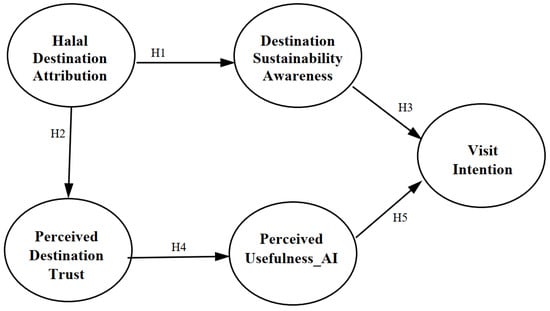
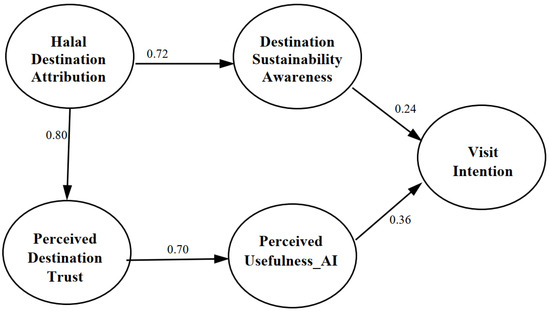

Disclaimer/Publisher’s Note: The statements, opinions and data contained in all publications are solely those of the individual author(s) and contributor(s) and not of MDPI and/or the editor(s). MDPI and/or the editor(s) disclaim responsibility for any injury to people or property resulting from any ideas, methods, instructions or products referred to in the content. |
© 2026 by the authors. Licensee MDPI, Basel, Switzerland. This article is an open access article distributed under the terms and conditions of the Creative Commons Attribution (CC BY) license.