


Simple Summary
Tuta absoluta (Meyrick) is one of the most destructive insect pests which infests solanaceous plants, posing a substantial threat to tomatoes (Solanum lycopersicum) through the devastation of their yields. The larvae of T. absoluta attack during all the life stages of tomato plants, leading to leaf discoloration and holes in fruits. Currently, most farmers manage T. absoluta using tank-mixed synthetic insecticides, which subsequently pose risks to the environment and biodiversity. Integrated pest management approaches using biological, cultural, physical and low-toxicity chemical methods have been recently promoted. However, companion plants used in the management of T. absoluta are scarce and documentation is limited. Therefore, this study screened fourteen potential companion plants in the lab followed by trial confirmation in insect-proof mesh cages and a pest exclusion screenhouse. The results indicated that Allium schoenoprasum and Aeollanthus fruticosus successfully managed T. absoluta by repelling it, leading to low oviposition and leaf damage, both in cage and screenhouse experiments. These results indicate the potential of A. schoenoprasum and A. fruticosus for the integrated, ecological management of T. absoluta. However, an empirical investigation under an open-field environment in diverse agroecological zones is warranted. Likewise, further studies are essential to check their compatibility with natural enemies and entomopathogens.
Abstract
Tuta absoluta is an invasive species that has managed to expand beyond its native geographical area and causes severe yield losses in tomato. Despite the application of synthetic insecticides in getting rid of the pest, farmers have reported reduced efficacy over the course of time due to resistance. With regard to ecological pest management approaches, studies regarding the use of companion plants in the management of T. absoluta are scarce. Therefore, we screened fourteen potential companion plants for repellency using a Y-tube olfactometer followed by cage and screenhouse experiments. Data were analyzed using R software (version 4.6.0; R Core Team, 2026). The screening results showed that Allium schoenoprasum and Aeollanthus fruticosus significantly repelled T. absoluta compared to other potential companion plants at p < 0.001. In a dual-choice cage experiment, tomato plants placed with A. schoenopraum and A. fruticosus were recorded to have lower leaf damage percentages of 47.27% and 33.94%, respectively, compared to the negative control (66.34%). Similarly, tomato plants intercropped with A. schoenopraum and A. fruticosus showed lower leaf damage percentages of 13.92% and 25.00%, respectively, compared to the negative control (63.38%) under the screenhouse experiment. Therefore, A. schoenopraum and A. fruticosus exhibit significant potential in the management of T. absoluta in tomato.
1. Introduction
Tomato Leaf Miner (Tuta absoluta (Meyrick) Lepidoptera: Gelechiidae) is a highly destructive insect pest that significantly threatens food security and livelihoods across various continents including Europe, Asia and Africa [1]. T. absoluta originated in Peru and managed to spread to various continents like Europe, Asia, the Mediterranean coastline, and, most recently, Africa [2]. The pest has been documented to infest several solanaceous plants like potato (Solanum tuberosum L.), pepper (Capsicum annum L.) and eggplant (Solanum melongena L.), with the highest damage recorded from the vegetative to reproductive growth stages of tomato (Solanum lycopersicum L.) [3,4].
Currently, most farmers use synthetic insecticides repetitively to control T. absoluta as their first option [5,6]. However, synthetic insecticides have been reported to be ineffective in the management of T. absoluta due to the feeding nature of larvae [7]. This has forced farmers to over-spray and has subsequently led to the development of insecticide resistance and the accumulation of insecticide residues in the environment, which in turn affects biodiversity [8,9]. This drives a need for the development of eco-friendly and integrative approaches to tackle the above-mentioned problems [10].
The most effective and commonly known environmentally friendly approach is biological control through the use of natural enemies like predators and parasitoids, sex pheromones as well as bio-pesticides [11,12]. For example, Biondi et al. [1] and Silva et al. [13] reported about the high effectiveness of Mirid bugs such as Macrolophus basicornis Stål, Engytatus varians Distant and Dicyphus spp. Fieber in preying on the eggs and young larvae of T. absoluta. Likewise, several native populations of parasitoid Bracon nigricans Szépligeti have been documented to effectively control T. absoluta in Tunisia and Kenya [11,14].
Also, Parolin et al. [15] reported about the good performance of pheromone-based mass trapping and mating disruption in managing T. absoluta. However, the integrated pest management strategy using eco-friendly methods with minimal application of synthetic insecticides ensures the sustainable management of T. absoluta [12]. For example, Mansour et al. [11] reported that the combination of natural enemies and entomopathogens significantly controlled T. absoluta compared to when the two approaches were used as stand-alone treatment.
Several success stories have been documented regarding the effectiveness of companion plants integrated with primary crops in the management of various insect pests [15,16]. For example, Sun et al. [17] reported about the potential of Rosmarinus officinalis L. in the management of T. absoluta by reducing egg-laying and hatching rates in microscopic, cage and greenhouse experiments. Likewise, Li et al. [18] reported about the reduction in egg laying and settling of female moth Frankliniella occidentalis Pergande on the target host integrated with Rosmarinus officinalis.
Also, Beck et al. [19] reported that the companion plants work by releasing volatile organic compounds (semio-chemicals), which confuse insect pests and subsequently protect the primary crop. On the other side, a laboratory study conducted by Dardour et al. [20] revealed that the volatile organic compounds released by marigold (Tagetes patula L.) and basil (Ocimum basilicum L.) significantly repelled green peach aphid (Myzus persicae Sulzer) on green pepper (Capsicum annum L.). Likewise, Conboy et al. [21] revealed the significant reduction in greenhouse whitefly (Trialeurodes vaporariorum Westwood) population when tomato crop was intercropped with marigold (Tagetes minuta) due to the high concentration of monoterpene limonene.
Moreover, companion plants can be used as attractants through trapping natural enemies, which subsequently reduce damage to the main crop under a specific planting pattern [22]. For instance, Duraimurug et al. [23] revealed the attraction behaviours of okra (Abelmoschus esculentus L.) and maize (Zea mays L.) to Helicoverpa armigera Hübner adults, which significantly protect the primary crops from being infested.
Furthermore, Plectranthus amboinicus L. significantly repelled Bemisia tabaci and minimized leaf damage on the tomato crop [24]. Likewise, Tang et al. [25] and Wang et al. [26] reported about the attraction properties of companion plants to natural enemies, which significantly reduced damage in host plants compared to mono-cropping.
The increasing awareness of the application of eco-friendly methods has resulted in exploration into how effective companion plants manage insect pests. For example, the previous investigations documented the potentials of R. officinalis, Tagetes erecta, and Allium cepa L. in the management of T. absoluta, Spodoptera litura Fabricius and Plutella xylostella L., respectively [17,27,28]. Plant diversification is among the most promising methods in pest management through repelling insect pests and/or attracting natural enemies [26,29]. However, there are limited studies regarding the use of companion plants in the management of T. absoluta in tomato.
The primary objective of this study was to evaluate potential companion plants for the ecological management of T. absoluta in tomato. To achieve this, we first screened 14 potential companion plants in the lab using a Y-tube olfactometer. Two screened companion plants (Allium schoenoprasum L. and Aeollanthus fruticosus Gürke) were evaluated under exclusion cage experiments followed by protective screenhouse experiments.
2. Materials and Methods
2.1. Study Area
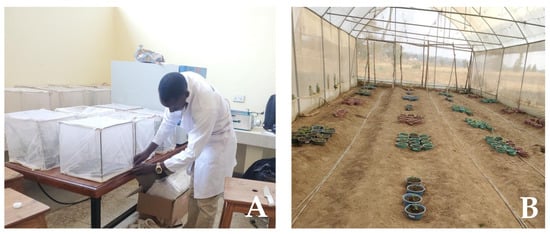
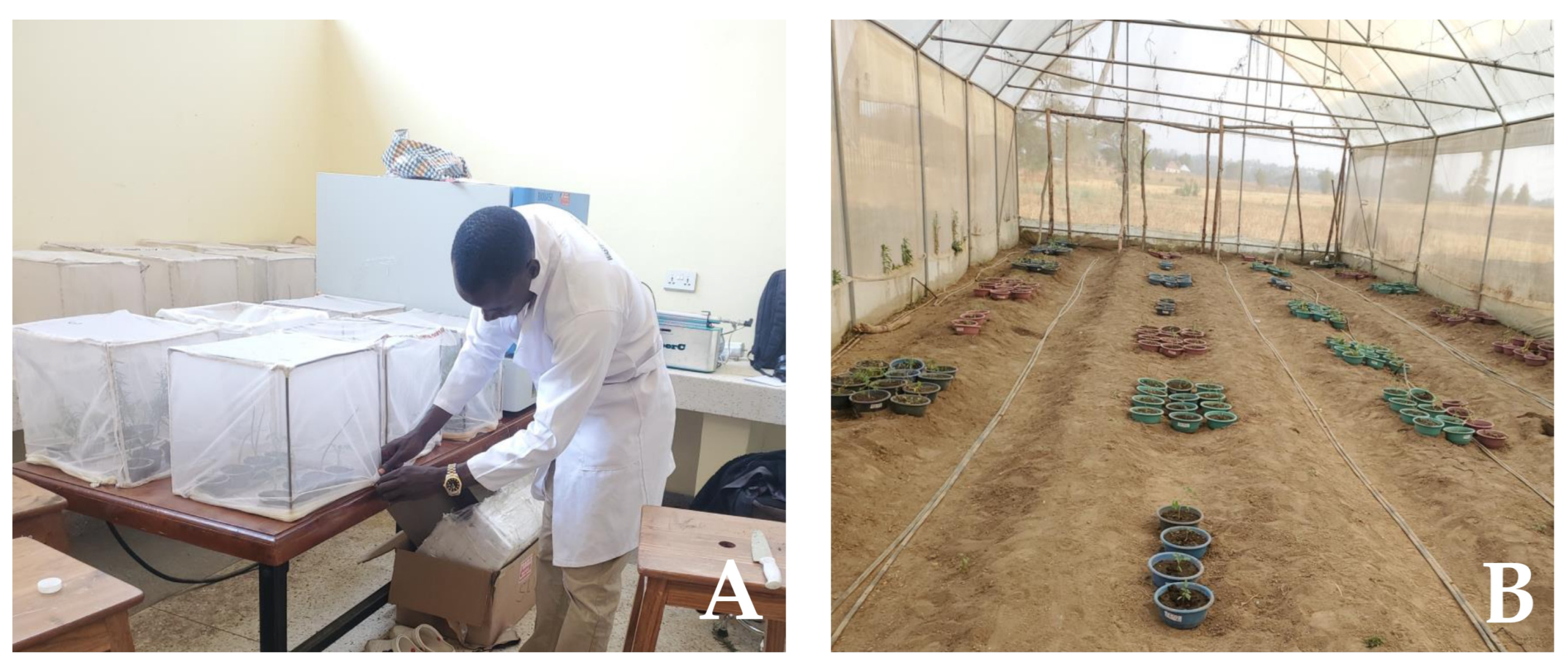
This study was conducted in Mbeya Region (8°54′33.84″ S, 33°27′38.88″ E), Tanzania (Figure 1). The screening and cage trials were conducted at Mbeya University of Science and Technology (MUST) laboratories, and screenhouse experiment was conducted at MUST demonstration farm located in Mbeya Urban district.
Figure 1.
A picture showing (A) MUST laboratory experiments and (B) MUST screenhouse experiments.
2.2. Collection and Rearing of Tuta absoluta
The population of T. absoluta was collected from infested tomato field (l8°95′13.7″ S, 33°42′64.9″ E) in Mbeya Urban district. A minimum of 50 leaves attacked by T. absoluta were randomly sampled using the standardized protocol of two leaves per plant, whereby one leaf was taken from the upper canopy and another one from the lower canopy of the tomato plant. This sample size was chosen to optimize statistical power while reducing the intra-plant spatial autocorrelation and sampling bias. Samples were put in polyethene plastic bags and then sent to MUST laboratory. To ensure only T. absoluta was taken, leaves were carefully checked using a binocular stereo microscope (VisiScope® SBT150; VWR International, Radnor, PA, USA).
For colony establishment, larvae of T. absoluta on infested tomato plants were incubated in ventilated plastic container. The pupae were housed in 45 cm × 45 cm × 45 cm fine nylon mesh cage (160 μm mesh aperture, 150 mesh/inch2; BugDorm, MegaView Science, Taiwan, China) containing whole potted tomato plants for maintenance of the colony. The rearing cages were maintained within a bioclimatic growth chamber under a standardized environmental condition of 25 ± 1 °C, 65 ± 5% RH, and 12:12 h (L:D) photoperiods. The adult insects received a 10% aqueous sucrose solution to provide baseline energetic requirement for mating and oviposition.
2.3. Preparation of Potential Companion Plants
The potential companion plants were selected based on local availability, economic value and climatic adaptability in the Southern Highland region of Tanzania. About 14 common reported potential companion plants obtained from an extensive literature review and farmer survey study (data were not included in this study) were subjected to screening using a Y-tube olfactometer assay choice.
All selected potential companion plants that are reported to possess insecticidal properties against various insect pests are presented as follows: Spear Mint (Mentha spicata) [30,31], Oregano (Origanum vulgare) [32,33,34], Rosemary (Rosmarinus officinalis) [17,35], Chives (Allium schoenoprasum) [36,37], leek (Allium ampeloprasum L.) [38,39], Lemon grass (Cymbopogon citratus L.) [40,41,42], Mexican marigold (Tagetes erecta) [27,43,44], Pyrethrum (Tanacetum cinerariifolium L.) [45,46], African catmint (Aeollanthus fruticosus) [47], Rape (Brassica napus L.) [48], Common onion (Allium sativum L.) [49,50], Garlic (Allium cepa) [28,50,51], Peppermint (Mentha piperita L.) [52,53,54], Lemon thyme (Thymus citriodorus L.) [55], and Cardamom (Ellettaria cardamomum L.) [56,57,58] against tomato (DHAHABU F1 variety).
R. officinalis was included in this trial as a positive control because it was confirmed by Sun et al. [17] to be effective against T. absoluta in tomato crop under a Y-tube olfactometer assay choice and cage experiments.
The potential companion plant seedlings were purchased from the JJ seedling company, Morogoro, Tanzania, and used in experiment at 6 weeks old. The potential companion plants were used strictly to vegetative growth stage. Flowering individuals were excluded to prevent variations in olfactory cues that could influence insect behaviour. Tomato seedlings were initiated from seeds at MUST demonstration farm and used at 21 days old from sowing.
2.4. Behavioral Responses of T. absoluta to Selected Potential Companion Plants
The responses of adult T. absoluta to selected potential companion plant volatiles were examined in a Y-tube olfactometer (arm = 10 cm, stem = 14 cm, diameter = 3 cm). Charcoal-purified and humidified air was passed into the two arms of the olfactometer, each at a flow rate of 350 mL/min. An electric-powered air-free vacuum pump (Model: DAA-V174-EB, GAST manufacturing company, Benton Harbor, MI, United States) with modification was used to suck air out of the Y-tube at a flow rate of 700 mL/min.
Because T. absoluta is nocturnal, a night condition was simulated by placing a red fluorescent bulb about 2 m above the olfactometer, which emits about 1000 Lux illuminations of red light. The response of T. absoluta adults to volatiles from host and non-host plants was tested in assays. The host and no-host-plant headspace volatiles were offered into the two arms of the Y-tube olfactometer from the roasting bags containing the plants. To ensure that only headspace plant volatiles were released into the roasting bags, the whole pot containing the soil and the plant was covered with aluminum foil to the base of the plant.
Sixty adults within three days of emergence (male-to-female ratio, 1:1) were evaluated across six true biological replicates (n = 10 insects per biological replicate). To eliminate lingering chemical cues and avoid confounding environmental biases, a fresh plant was introduced at the beginning of each biological replicate (after every 10 insects). Individual insects were tested completely independently and used only once. Each insect was given 10 min to make a choice. An insect was considered to have made a choice when it walked at least 5 cm into one of the arms and stayed for two or more minutes. The Y-tube was cleaned after every 5 insects tested, and the arms were then switched. The individual choice behaviour of an insect was defined as primary observational unit, while biological replicate was integrated into the analysis to account for potential batch effects and prevent pseudo-replication. All the bioassays were conducted under controlled laboratory conditions (27 ± 1 °C and 70 ± 5% RH).
2.5. Effect of Allium schoenoprasum and Aeollanthus fruticosus on T. absoluta in Cage Experiments
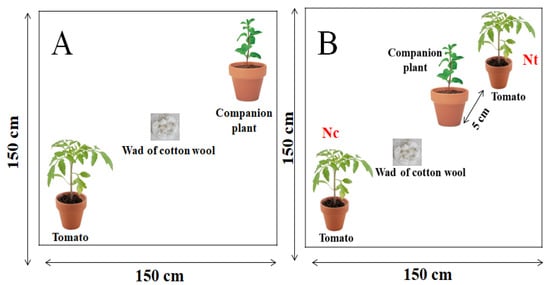
The dual-choice and multiple-choice tests were conducted following the method described in [59], with some modifications. In each cage experiment, 6-week-old seedlings were used, in which the dual-choice test was conducted using two potted plants (one potted tomato seedling and one potted companion plant), and the multiple-choice test was carried out using three potted plants (two potted tomato seedlings and one potted companion plant).
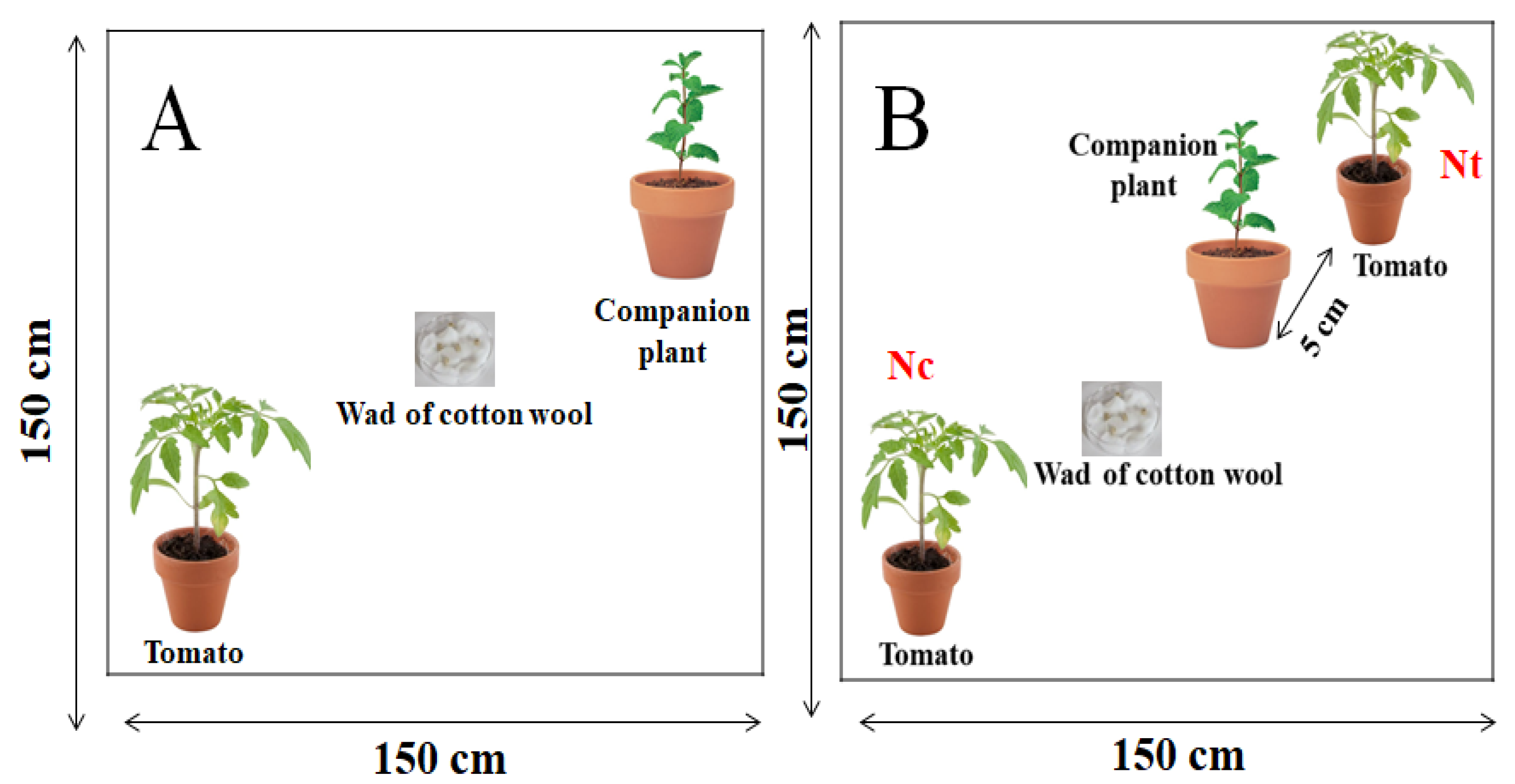
Both dual-choice and multiple-choice tests involved three plant combinations placed in opposite corners of an oviposition cage (150 cm × 150 cm × 150 cm), covered with fine-wire mesh netting. For the host plant (tomato) + companion plant treatment, the companion plant was behind the host plant with a distance of 5 cm (Figure 2).
Figure 2.
Cage experimental layout for (A) dual-choice test and (B) multiple-choice test. Nc means control tomato group and Nt means treated tomato group.
Ten gravid T. absoluta females (2–3 days) were released into the cage to oviposit overnight, and a cotton ball saturated with 10% honey solution in a Petri dish (90 mm × 15 mm) was placed in the middle of the cage to serve as food source for the adult moths. On the following day, the eggs and egg batches on each plant were collected and counted using a stereo microscope (Leica EZ4HD, Leica Microsystems, and Schweiz, Switzerland) for about 3 days. The percentages of leaf damage caused by T. absoluta larvae were recorded after 4 days up to the 10th day.
Two screened plants (A. fruticosus and A. schoenoprasum) were selected based on the screening results, and R. officinalis was included as a positive control. Treatments used in the cage trials were T1: tomato alone (negative control); T2: tomato + A. fruticosus, T3: tomato + A. schoenoprasum, T4: tomato + Rosmarinus officinalis (positive control). The experiment consisted of ten biological replicates.
2.6. Calculations Involved Multiple-Choice Cage Experiment for Oviposition
2.7. Effect of A. schoenoprasum and A. fruticosus on T. absoluta in Screenhouse Experiments
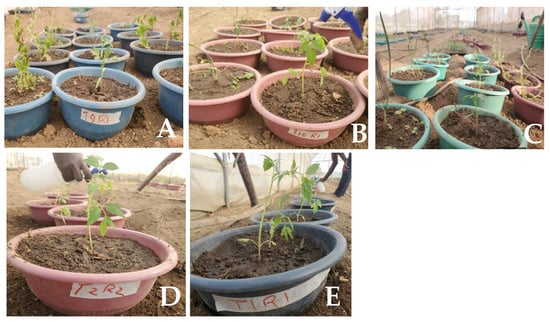
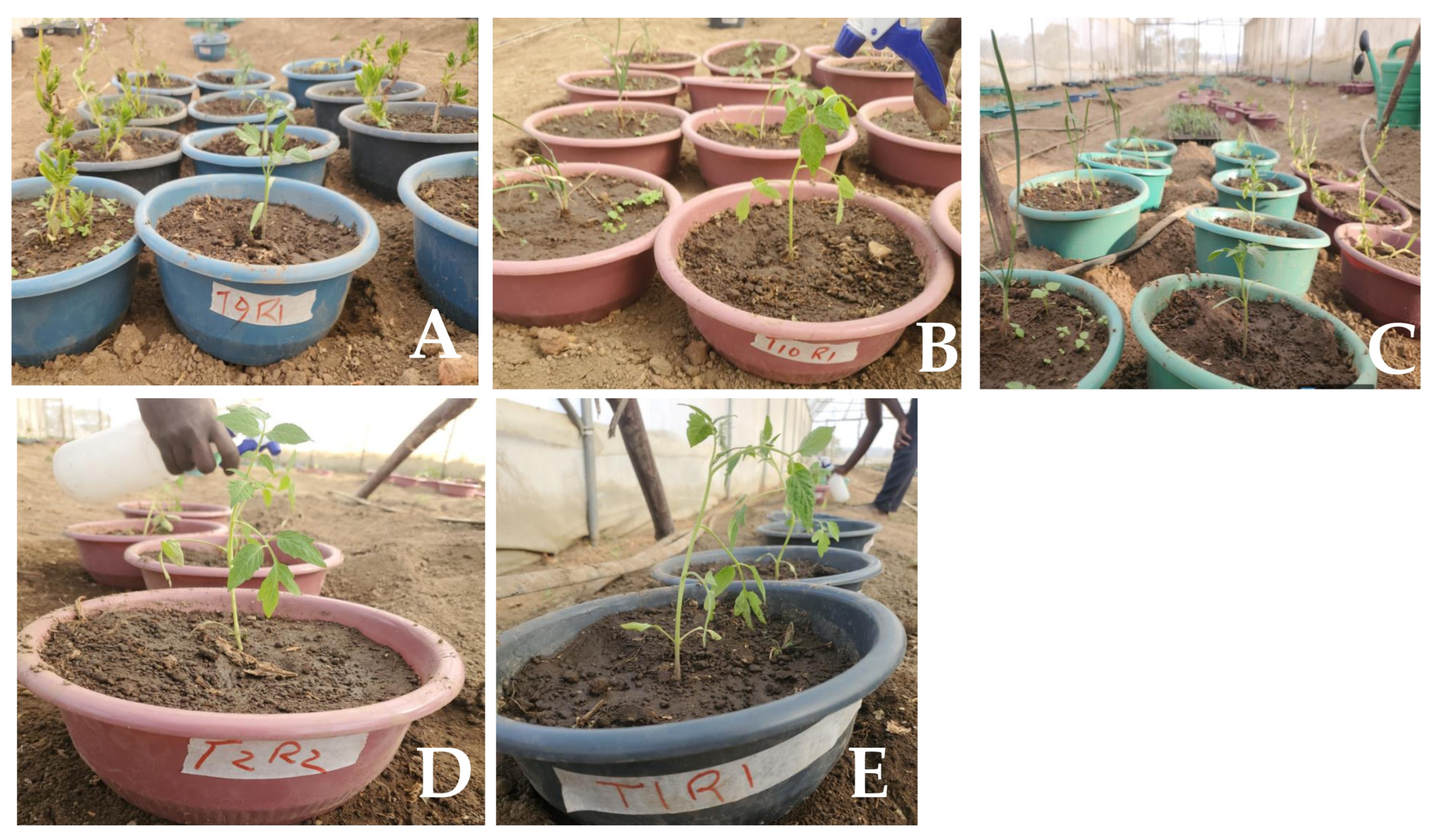
A randomized complete block design (RCBD) consisting of four distinct blocks to account for microclimatic gradients (light and ventilation) was used to assess the effects of different treatments on oviposition and leaf damage caused by T. absoluta. The tomato crop (DHAHABU F1) was used at 4 weeks old from sowing, while A. schoenoprasum and A. fruticosus plants were used at 6 weeks from cutting. The experiment was set to a 240 m2 screenhouse on 25th September, 2025. Similar to cage experiment, the two screened plants (A. fruticosus and A. schoenoprasum) were selected based on screening results. The experiment involved five treatments, which were T1: tomato + water sprayer (negative control); T2: tomato + SNOW TIGER (positive control); T3: tomato + A. fruticosus; T4: tomato + A. schoenoprasum; and T5: combined companion plants (tomato + A. fruticosus + A. schoenoprasum) with seven biological replicates (Figure 3).
Figure 3.
Screenhouse experimental layout for (A) tomato + A. fruticosus, (B) tomato + A. schoenoprasum, (C) tomato + A. fruticosus + A. schoenoprasum, (D) tomato + SNOW TIGER (positive control) and (E) tomato + water sprayer (negative control).
The control treatments consisted of tomato alone sprayed with water (negative control) and tomato alone sprayed with synthetic pesticide SNOW TIGER (Chlorfenapyr 100 g/L) (positive control) at a concentration of 15 mL per 16 L of water using a knapsack sprayer once per week. In treatments consisting of companion plants, tomato plants were placed in the middle, surrounded by companion plants in 1:1:1 ratio [21] with modification. The distance between treatments within block was 1.25 m and between blocks was 1.5 m. Approximately 1000 gravid females of T. absoluta were introduced in the screenhouse from the laboratory culture. The number of eggs in each potted tomato was determined by visual inspection and with the aid of stereo microscope each day for about 3 days, and the number of leaves damaged by T. absoluta was recorded after 5 days. The number of eggs and damaged leaves on each tomato plant from the control group and intercropping group was counted individually.
2.8. Statistical Analysis
Data analyses were conducted using R software (version 4.6.0; R Core Team, 2026). Behavioral choice data from the Y-tube olfactometer bioassays were evaluated using Pearson chi-square Test of Independence (χ2) to analyze the overall association between treatment categories and insect directional responses (df = 14). Following the primary omnibus test, individual plant-to-control comparisons were isolated and evaluated using separate pairwise Chi-square goodness-of-fit tests against an expected null distribution of equal choice (50:50). To control for the inflation of Type I errors resulting from multiple simultaneous individual comparisons, all downstream p-values were adjusted using the Bonferroni correction method within R. Non-responding T. absoluta insects were not included in the analysis.
The oviposition and leaf damage percentages were fitted to Generalized Linear Mixed Models (GLMMs) by using glmmTMB package. Egg counts were analyzed using a negative binomial distribution (nbinom2 family, log link) to accommodate significant overdispersion in the raw counts. The response variable for leaf damage percentage was structured as a two-column binomial matrix consisting of the numerator (number of damaged leaves) and the corresponding denominator (total leaves evaluated per sampling unit) modeled using binomial distribution with a logit link function. The host treatments were treated as primary fixed effect in all models. In cage experiment, the cage ID was specified as a random effect, while the block ID and pot ID were specified as nested random intercepts in screenhouse experiment [60].
Model adequacy, overdispersion parameters, and residual homogeneity were verified using simulated residual diagnostics within the DHARMa package environment. Type III Wald chi-square tests were used to assess the fixed effect significance, and pairwise post hoc comparisons among treatments were conducted using Tukey’s honestly significant difference (HSD) test via the emmeans package. All the analyses were conducted at 5% probability level (p ≤ 0.05).
3. Results
3.1. Behavioral Responses of T. absoluta in Y-Tube Olfactometer Experiment
3.1.1. Control Experiments
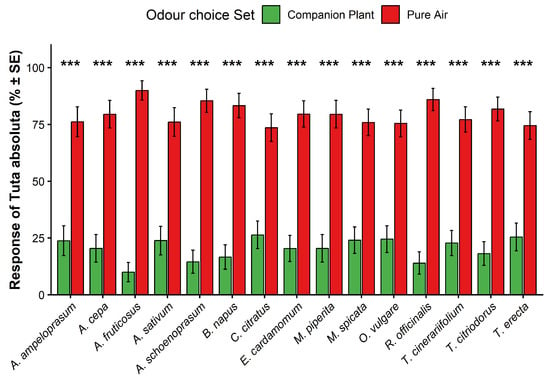
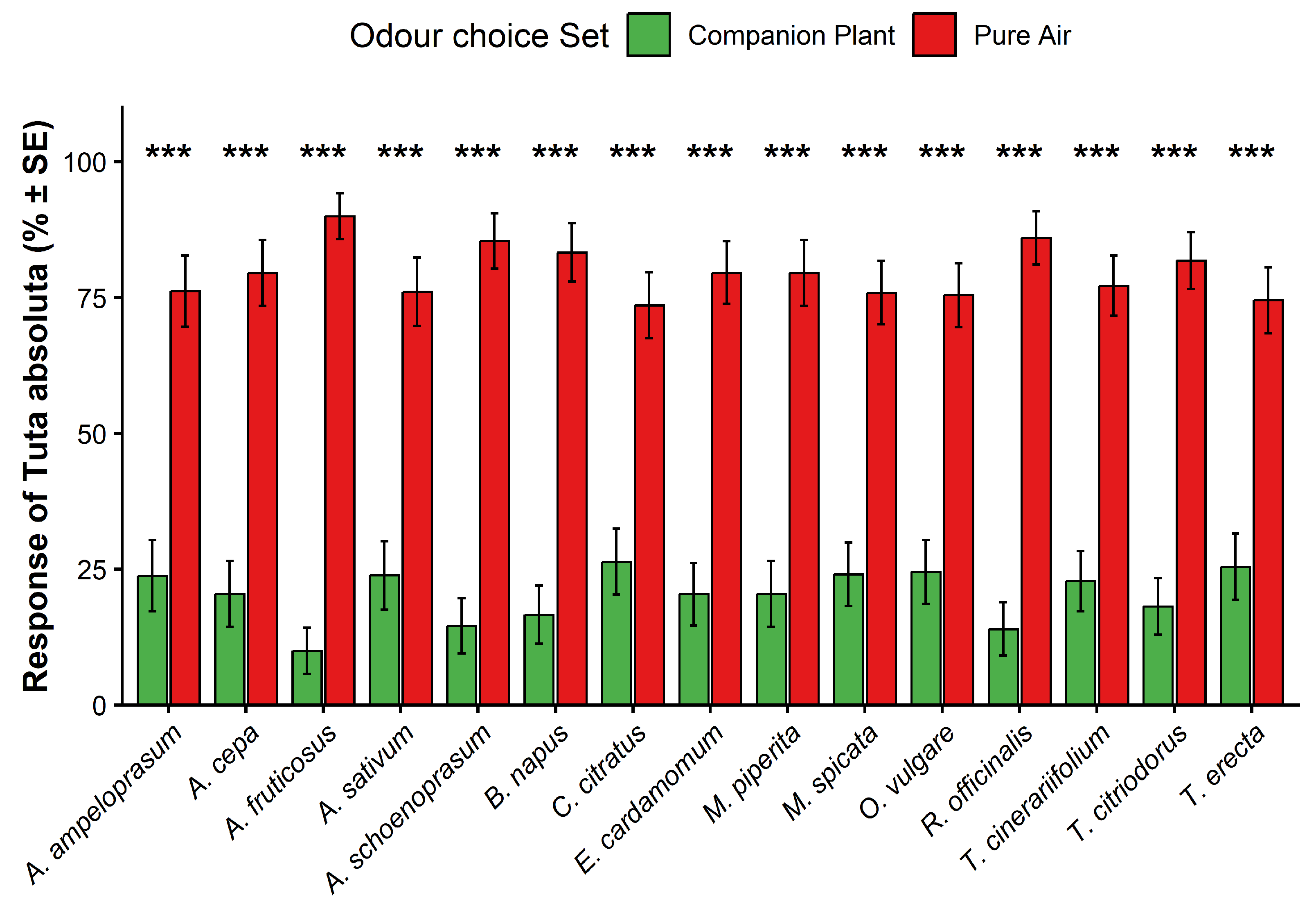
Control experiment 1 involved fourteen potential companion plants, with the air source (empty odor source) showing a significant difference at p ≤ 0.001, where most of the T. absoluta adults chose the empty odor source (Figure 4). Likewise, results from control experiment 2 involving two empty odor sources of Y-tube showed that the choice of T. absoluta adults in two arms did not significantly differ from one another, with responses of 47% and 53% at p > 0.05.
Figure 4.
Responses (%) of adult T. absoluta to pure air and odors of companion plants. Asterisks indicate statistical significance levels: *** p < 0.001.
On the other side, control experiment 3 involving an empty odor source and tomato odor source differed significantly at p < 0.001, where the majority of T. absoluta adults (93.75%) preferred the tomato odor source, while a few (6.25%) chose the empty odor source. These results indicated that the modified Y-tube olfactometer instrument was effective for bioassay choice experiments involving potential companion plants versus tomato plants.
3.1.2. Y-Tube Bioassay Choice Test for Treatments
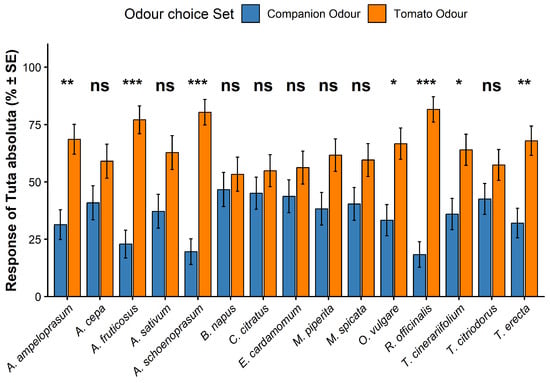
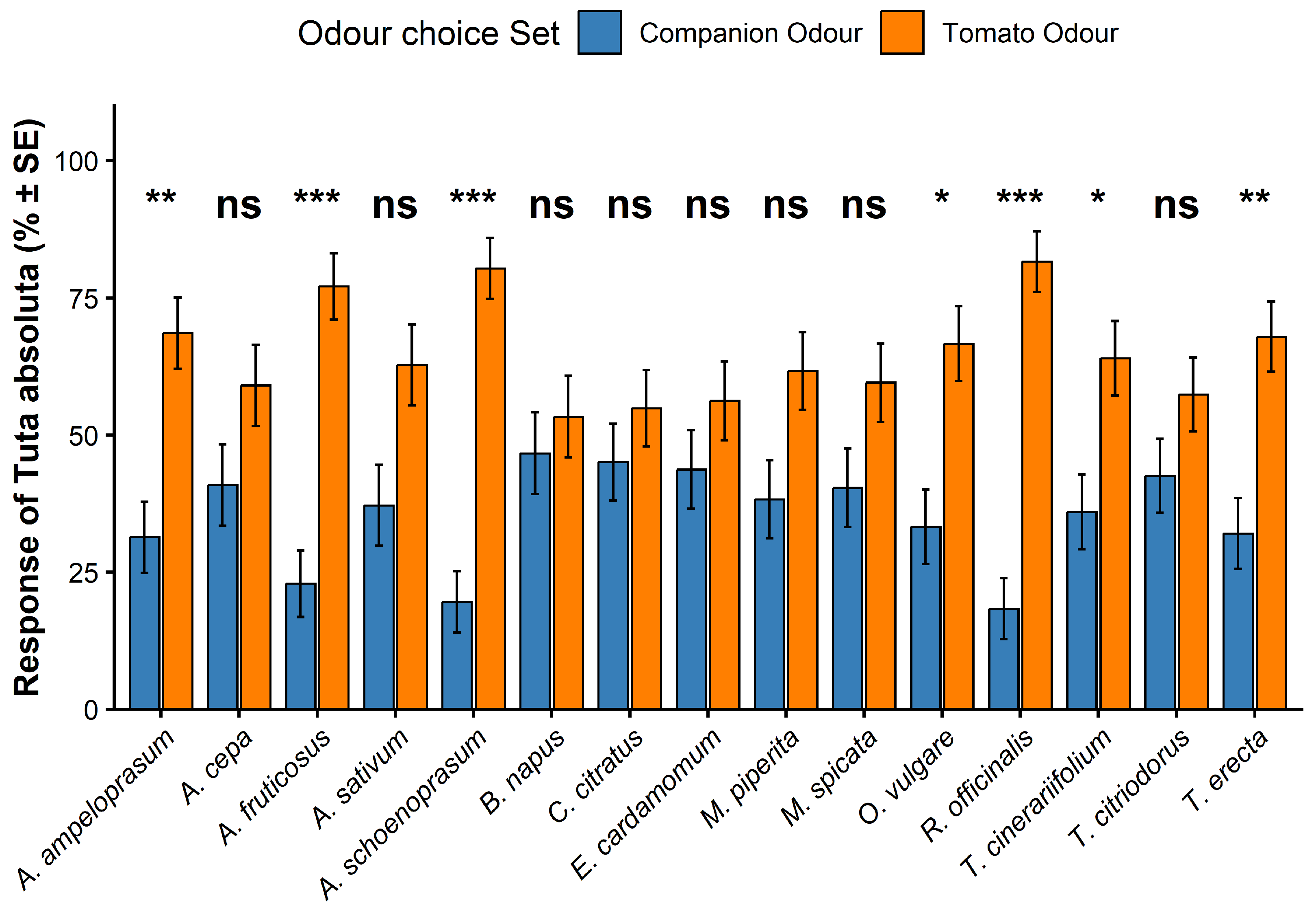
The experiment involving screening of fourteen potential companion plants was tested using Pearson chi-square to examine the relationship between choice of insect and volatile organic compounds among the treatments. The results indicated a statistically significant association between choice of insect and odor of plant, χ2 (df = 14, N = 729) = 24.45, p = 0.04. The following potential companion plants significantly repelled T. absoluta adults: Origanum vulgare (p = 0.02), Aeollanthus fruticosus (p < 0.001), Rosmarinus officinalis (p < 0.001), Allium schoenoprasum (p < 0.001), Allium ampeloprasum (p = 0.008), and Tagetes erecta (p = 0.009). The rest of the potential companion plants did not significantly differ from the tomato odor source, which indicated low repellency effects (Figure 5).
Figure 5.
Responses (%) of adult T. absoluta to tomato and odors of companion plants. Asterisks indicate statistical significance levels: * p < 0.05, ** p < 0.01, *** p < 0.001 and ns indicates not significant.
3.2. Effects of Allium schoenoprasum and Aeollanthus fruticosus on Development of T. absoluta Under Cage Experiments
3.2.1. Dual-Choice Experiment
There were significant effects of treatments in egg counts at χ2 (3) = 90.579, p < 0.0001 under the dual-choice experiment (Table 1). The post hoc pairwise comparison showed that the tomato plants placed with R. officinalis resulted in the lowest egg counts of 39.80 ± 2.21, which was significantly lower than the tomato alone with 73.30 ± 3.22 (z = 8.627, p < 0.0001) and tomato plants placed with A. fruticosus (50.30 ± 2.54) (z = 3.119, p = 0.0098). However, the tomato + A. schoenoprasum treatment (45.50 ± 2.39) showed an intermediary effect and did not differ significantly from tomato + R. officinalis (z = 1.751, p = 0.2974). Likewise, tomato plants placed with A. fruticosus and A. schoenoprasum had lower egg counts of 50.30 ± 2.54 and 45.50 ± 2.39 compared to tomato alone (73.30 ± 3.22) at z = 5.622, p < 0.0001 and z = 6.959, p < 0.0001, respectively.
Table 1.
Oviposition and leaf damage percentage under dual-choice experiment.
On the other side, significant effects of treatments in leaf damage percentage across the experiment were observed at χ2 (3) = 45.625, p < 0.0001 (Table 1). The post hoc pairwise comparison revealed that both screened companion plants significantly reduced leaf damage percentage (47.27% ± 4.76% for A. schoenoprasum and 33.94% ± 4.54% for A. fruticosus) compared to the negative control (66.34% ± 4.70%) at z = 4.603, p < 0.0001 and z = 6.418, p < 0.0001, respectively. Also, tomato plant placed with R. officinalis recorded the lowest mean leaf damage percentage of 21.05% ± 3.82% compared to tomato alone (66.34% ± 4.70%) and tomato + A. fruticosus (33.94% ± 4.54%) at z = 6.418, p < 0.0001 and z = 4.059, p = 0.0003, respectively. However, A. schoenoprasum and A. fruticosus did not significantly differ in leaf damage percentage, with 47.27% ± 4.76% and 33.94% ± 4.54%, respectively, at z = 2.001, p = 0.187. Likewise, there was no significant difference in leaf damage percentages between the positive control (21.05% ± 3.82%) and tomato plants treated with A. fruticosus (33.94% ± 4.54%) at z = 2.143, p = 0.1396.
3.2.2. Multiple-Choice Experiments
Results showed significant effects of treatments in egg counts at χ2 (3) = 44.8134, p < 0.0001 under the multiple-choice experiment (Table 2). The post hoc pairwise comparison revealed that the tomato plant placed near to A. schoenoprasum and A. fruticosus showed low egg counts of 9.98 ± 1.02 and 13.97 ± 1.22, respectively, with no significant difference between them at z = 2.508, p = 0.1920. However, despite the fact that the tomato plant placed near R. officinalis recorded the lowest egg count (6.89 ± 0.84), there was no significance difference from the tomato plant placed with A. schoenoprasum (9.98 ± 1.02) at z = 2.330, p = 0.2769. Also, tomato plants placed far from the companion plants (Nc) displayed higher egg counts compared to tomato plants placed near companion plants (Nt) (Table 2). However, tomato plants placed far from companion plants recorded significantly lower egg counts of 31.03 ± 1.88 for R. officinalis, 34.63 ± 1.99 for A. schoenoprasum and 39.02 ± 2.13 for A. fruticosus compared to the negative control (50.48 ± 2.48) at z = 6.169, p < 0.0001, z = 4.900, p < 0.0001 and z = 3.421, p = 0.0144, respectively.
Table 2.
Oviposition and leaf damage percentage under multiple-choice experiments.
Likewise, the results indicate significant effects of treatments in leaf damage percentage at χ2 (3) = 25.8862, p < 0.0001 (Table 2). The post hoc pairwise comparison revealed that all three companion plants placed near to tomato plants showed significantly low leaf damage percentages of 2.47% ± 1.72% for R. officinalis, 6.17% ± 2.67% for A. schoenoprasum and 11.11% ± 3.70% for A. fruticosus compared to tomato alone (51.16% ± 5.39%) at z = 15.082, p < 0.0001, z = 14.247, p < 0.0001 and z = 12.790, p < 0.0001, respectively (Figure 6). Unlike the oviposition results, tomato plants placed near to A. schoenoprasum had low leaf damage percentage (6.17% ± 2.67%), with no significant difference from tomato plants placed near R. officinalis (2.47% ± 1.72%) at z = 2.330, p = 0.2769.
Figure 6.
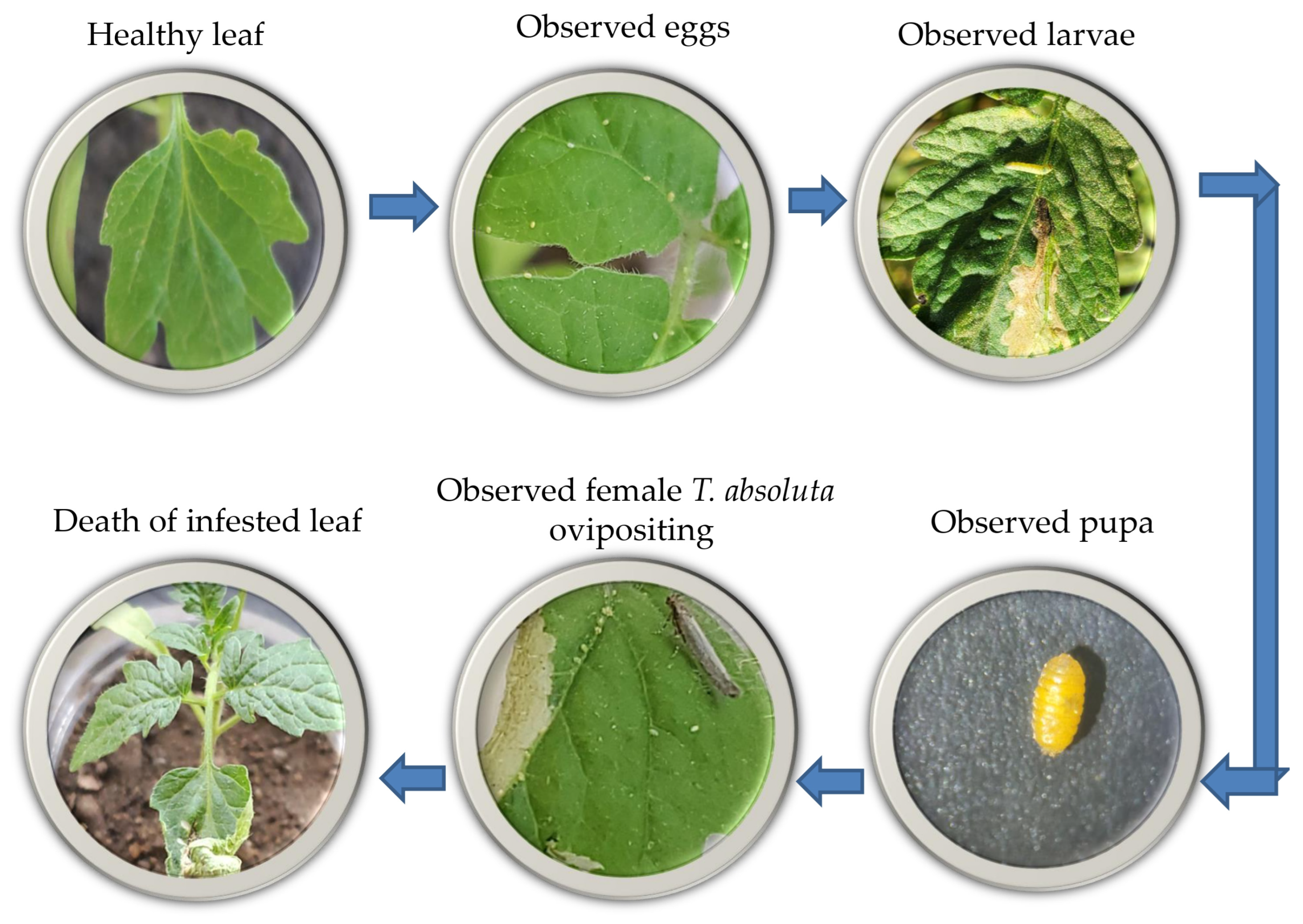
Observed changes in cage experiment consisting of tomato plants and adult female T. absoluta.
Further analysis indicated that tomato plants placed with R. officinalis (positive control) showed the lowest Oviposition Activity Index (−0.64), indicating its high Oviposition Deterrence Index (64%) for the oviposition of female T. absoluta. Likewise, tomato plants placed with A. schoenoprasum showed intermediary performance over R. officinalis and A. fruticosus, with 55.26% of ODI and effective repellency of 70.09%. Likewise, the percent effective repellency (77. 57%) recorded in tomato plants placed with R. officinalis was significantly higher than tomato placed with A. fruticosus and A. schoenoprasum (Table 3).
Table 3.
Oviposition parameters under multiple-choice experiments.
3.3. Effects of A. schoenoprasum and A. fruticosus Plant on the Development of T. absoluta in Screenhouse Experiment
The results indicated significant effects of treatments in egg counts at χ2 (4) = 189.4, p < 0.0001 under the screenhouse experiment (Table 4). The post hoc pairwise comparison revealed that the SNOW TIGER spray (positive control) recorded lower egg counts of 3.71 ± 0.73 compared to the negative control at z = 10.322, p < 0.0001. Also, tomato plants placed with A. schoenoprasum had lower egg counts of 7.29 ± 1.02, which significantly differed from tomato plants placed with A. fruticosus (12.14 ± 1.32) at z = 2.884, p = 0.0321. This shows the strong repellency effects of A. schoenoprasum under a screenhouse environment. However, both A. schoenoprasum and A. fruticosus performed significantly better, with lower egg counts compared to the negative control involving tomato alone with water spray (31.57 ± 2.12) at z = 9.439, p < 0.0001 and z = 7.487, p < 0.0001.
Table 4.
Oviposition and leaf damage percentage under screenhouse experiment.
Likewise, a significant effect of treatments in leaf damage percentage was observed at χ2 (4) = 51.9156, p < 0.0001 (Table 4). The post hoc pairwise comparison revealed that there was no significant difference in leaf damage percentage observed in the positive control (synthetic pesticide) with 9.62% ± 4.09% and tomato plants placed with A. schoenoprasum (13.92 ± 3.90) at z = 0.733, p = 0.9488. Among the two screened companion plants, A. schoenoprasum and A. fruticosus did not differ significantly in leaf damage percentages, with 13.92% ± 3.90% and 25.00% ± 4.84%, respectively, at z = 1.742, p = 0.4081. However, the integration of A. fruticosus and A. schoenoprasum did not significantly differ from A. fruticosus alone, with leaf damages of 39.44% ± 5.80% and 25.00% ± 4.84%, respectively, at z = 1.889, p = 0.3231.
3.4. Oviposition Rates Across Treatments
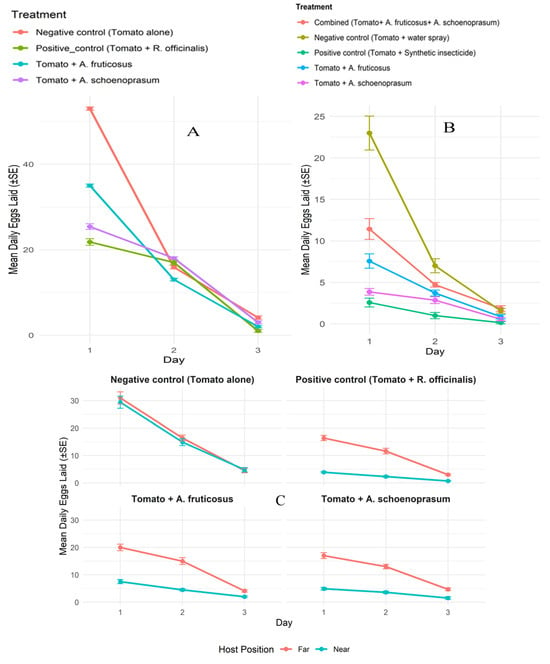
The oviposition rates in all experiments exhibited a downward trend, with peak egg counts on day one followed by dropping on days two and three (Figure 6). However, the normal trend of a sharp drop was observed in negative controls, with 53 eggs laid on day one to 4 eggs on day three for the dual-choice trial (Figure 7A), 30 eggs laid on day one to 5 eggs laid on day three for the multiple-choice trial (Figure 7C) and 23 eggs laid on day one to 2 eggs on day three for the screenhouse trial (Figure 7B).
Figure 7.
Oviposition rates of adult T. absoluta under (A) dual-choice, (B) screenhouse and (C) multiple-choice experiments.
On the other side, the positive control consisting of tomato plants placed with R. officinalis recorded the slowest rate, with a slight drop in eggs laid from day one to day three (22 eggs to 1 egg in dual-choice trial) (Figure 7A) as well as 4 eggs to 1 egg when placed near to R. officinalis and 16 eggs to 3 eggs when placed far from R. officinalis in the multiple-choice trial (Figure 7C). Likewise, the positive control containing the synthetic insecticide SNOW TIGER in the screenhouse trial recorded the lowest oviposition rate, with a gradual drop in eggs laid, from 3 eggs on day one to 0 eggs on day three compared to a sharp drop observed in the negative control, with 23 eggs on day one to 2 eggs on day three (Figure 7B).
However, in all trials, A. schoenoprasum displayed good performances, followed by A. fruticosus, in lowering the oviposition rate of T. absoluta on tomato plants compared to negative controls. Therefore, A. schoenoprasum and A. fruticosus showed potential for being incorporated in tomato fields for the management of T. absoluta.
3.5. Correlation Between Oviposition and Leaf Damage Percentage
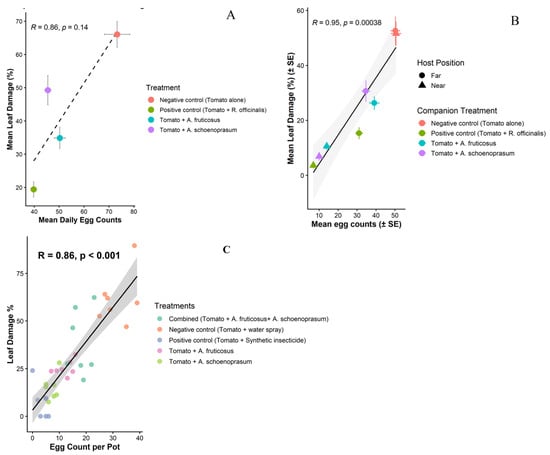
The results indicated a positive correlation between oviposition and leaf damage percentage in dual-choice, multiple-choice and screenhouse experiments (Figure 8). There was a strong positive correlation between mean egg counts and mean leaf damage percentage at r = 0.86, p = 0.14 and n = 10 in the dual-choice experiment. However, there was no significant difference in correlation between treatments. Likewise, the multiple-choice trial showed a strong positive correlation at r = 0.95, p = 0.00038 and n = 10, with a significant difference among treatments. However, the screenhouse experiment exhibited a strong positive correlation at r = 0.86, p < 0.001 and n = 7 (Figure 8C).
Figure 8.
Correlation between mean egg counts and mean leaf damage percentage under (A) dual-choice, (B) multiple-choice and (C) screenhouse experiment.
4. Discussion
Our study screened fourteen potential companion plants obtained through an extensive literature review and farmer survey study for the ecological management of T. absoluta using a Y-tube olfactometer. The two screened companion plants (A. fruticosus and A. schoenoprasum) were subjected to cage and screenhouse experiments.
The results from the screening experiment indicated that A. fruticosus and A. schoenoprasum significantly repelled adult T. absoluta at p < 0.001 (Figure 5). Their performances showed no significant differences from the positive control containing R. officinalis. Our findings align with the results reported by Amarawardana et al. [49], who revealed that A. schoenoprasum significantly repelled Myzus persicae in a Y-tube olfactometer experiment compared to the host plant (Capsicum annum). The choices in screening experiment were guided by volatiles emitted from tested plants, indicating the presence of olfactory cues in A. schoenoprasum and A. fruticosus that subsequently repelled T. absoluta adults [61,62].
Also, results from the cage experiment indicated that the tomato plants placed with A. fruticosus and A. schoenoprasum significantly reduced egg counts compared to tomato alone (Table 1 and Table 2). However, there was no significance difference in egg counts to tomato plants placed with A. fruticosus and A. schoenoprasum. Similar findings were reported by Åsman et al. [63], who revealed that A. schoenoprasum minimized egg counts of Acrolepiopsis assectella Zeller on leeks under a cage experiment due to the disruption of host-seeking behaviour. Conversely, results reported by Lai et al. [64] showed that A. schoenoprasum attracted Phytomyza gymnostoma Loew in cage experiments, indicating the possession of attractive visual and chemical cues. However, the variation in results might be caused by neural-response differences of different insect species to similar olfactory cues [65].
Similarly, our findings showed that the tomato plants intercropped with A. fruticosus and A. schoenoprasum had lower egg counts and leaf damage percentages compared to the sole tomato plants with no spraying under the screenhouse experiment (Table 4). Compared to the cage experiment, the tomato plants intercropped with A. schoenoprasum recorded lower egg counts than tomato plants intercropped with A. fruticosus. The differences might be caused by the high content of sulfur compounds emitted from A. schoenoprasum [40] that spread to a wider area than the volatiles from A. fruticosus. The reduced oviposition in tomato plants intercropped with A. schoenoprasum and A. fruticosus was possibly caused by the disruption of host-finding mechanisms of T. absoluta that subsequently led to reduced leaf damage percentage [66,67,68].
Also, comparable outcomes were noted by Hata et al. [69], showing a reduction in egg counts and leaf damage percentages caused by Tetranychus urticae Koch when A. schoenoprasum was intercropped with host plants (Solanum lycopersicum and Fragaria ananassa L.) under a screenhouse environment. The reduction in egg counts on tomato plants intercropped with A. schoenoprasum and A. fruticosus plays a primary role in lowering the insect pest population [70]. Conversely, the study reported by Held et al. [71] observed no significant effects in the population of Popillia japonica Newman on Rosa × hybrida hort when integrated with A. schoenoprasum and when planted alone (mono-cropping). Similarly, this might be due to variation in the response mechanism of different insect species to similar volatile organic compounds, leading to attractant and repellent effects [65].
Currently, there is no specific study documenting the efficacy of A. fruticosus in the management of insect pests under cage, screenhouse and/or field experiments. However, other species of the genus Aeollanthus have been studied, with the vast majority of studies relying on laboratory trials focusing on crude essential oils and nano emulsions [72]. The lab-based experiments of the genus Aeollanthus limit peer-reviewed articles on its effectiveness in insect pest management when intercropped with other crops. As a member of the Lamiaceae family, A. fruticosus has shown potential in repelling T. absoluta due to the possession of volatile organic compounds that disrupt the host-finding olfactory mechanism [73].
For example, the volatile profiles of Aeollanthus pubescens Benth indicated high composition of fenchone and linacool, which significantly reduced egg counts of Hypothenemus hampei Ferrari [74] and lowered the population of public health vectors [75]. Also, recent characterization of the specialized isoppimarane and abietane diterpene space in Aeollanthus buchnerianus Briq shows the potential of the genus to produce antifeedant compounds [76].
The succulent nature and adaptability of genus Aeollanthus in tropical and subtropical regions give it the potential to be integrated with various crops in diverse agroecological zones [77]. Consequently, future studies should prioritize evaluating the field efficacy of A. fruticosus, taking into consideration the volatile organic compound profiles. Therefore, integrating tomato with companion plants plays a key role in promoting ecological balances while suppressing Tuta absoluta [78,79]. The limitation of our study is that we did not analyze the volatile organic compounds found in A. fruticosus. Therefore, further studies on the analysis and quantification of volatiles from A. fruticosus are warranted. Generally, our study demonstrated that A. fruticosus and A. schoenoprasum are promising repellent plants, indicating their integrated potential and/or ecological management of Tuta absoluta in tomato.
5. Conclusions
In our study, A. fruticosus and A. schoenoprasum displayed potential to be used as repellent plants in the management of T. absoluta. However, A. schoenoprasum displayed the highest performances and was regarded as the most effective companion plant, followed by A. fruticosus. Therefore, A. schoenoprasum and A. fruticosus can be considered potential companion plants for the ecological management of T. absoluta.
However, further studies should be conducted to evaluate their effectiveness in the management of T. absoluta under field experiments. Also, trials should be performed to assess the integrative performances of A. fruticosus and A. schoenoprasum with other eco-friendly methods in the management of T. absoluta. Likewise, the analysis of chemical compounds from the leaves of A. fruticosus should be performed to explore its constituencies and their concentrations.
Author Contributions
Article conceptualization, A.M. and T.C.; methodology, A.M.; formal analysis, M.M.; investigation, A.M.; writing—original draft preparation, A.M.; writing—review and editing, T.C., M.M. and L.S.; visualization, L.S. and T.C.; supervision, T.C., L.S. and M.M. All authors have read and agreed to the published version of the manuscript.
Funding
This work was supported by the Center of Excellency in Agri-food Systems and Nutrition (CE-AFSN) of Eduardo Mondlane University, Maputo, Mozambique, through the World Bank (grant number E089-MZ).
Institutional Review Board Statement
The survey data were obtained from the preliminary study of an anonymized dataset collected as a separate study where informed consent was originally obtained during the primary data collection. The survey study was conducted in accordance with the Declaration of Helsinki and approved by the Research and Ethics Committee of Mbeya University of Science and Technology, Mbeya, Tanzania (AB.7/622/01A/147), on 29 May 2025. Participation of farmers was voluntary, and verbal informed consent was obtained from each participating farm household before involvement and publishing. Verbal consent was chosen due to the preferences of participants and literacy levels, with strict adherence to ethical guidelines and assurance of confidentiality.
Data Availability Statement
All data obtained from the study are available in the manuscript and from the authors upon reasonable request.
Acknowledgments
The author would like to express gratitude towards tomato growers for allowing the entry into their farms to collect samples, and for volunteering their time to help the team. Gratitude is extended to the Department of Natural Science at Mbeya University of Science and Technology (MUST) for granting permission to use laboratory for conducting screening and cage experiments. Many thanks to the Department of Crop Science and Horticulture, Mbeya University of Science and Technology (MUST), for allowing access to screenhouses for experimental trials.
Conflicts of Interest
The authors declare that there are no conflicts of interest.
Abbreviations
The following abbreviations are used in this manuscript:
| VOC | Volatile organic compound |
| MUST | Mbeya University of Science and Technology |
| ODI | Oviposition Deterrent Index |
| RH | Relative humidity |
References
- Biondi, A.; Guedes, R.N.C.; Wan, F.-H.; Desneux, N. Ecology, Worldwide Spread, and Management of the Invasive South American Tomato Pinworm, Tuta absoluta: Past, Present, and Future. Annu. Rev. Entomol. 2018, 63, 239–258. [Google Scholar] [CrossRef] [Scilit] [PubMed]
- Zekeya, N.; Chacha, M.; Ndakidemi, P.; Materu, C.; Chidege, M.; Mbega, E. Tomato Leafminer (Tuta absoluta Meyrick 1917): A Threat to Tomato Production in Africa. J. Agric. Ecol. Res. Int. 2017, 10, 1–10. [Google Scholar] [CrossRef] [Scilit]
- Mutamiswa, R.; Machekano, H.; Nyamukondiwa, C. First Report of Tomato Leaf Miner, Tuta absoluta (Meyrick) (Lepidoptera: Gelechiidae), in Botswana. Agric. Food Secur. 2017, 6, 49. [Google Scholar] [CrossRef] [Scilit]
- Mkonyi, L.; Rubanga, D.; Richard, M.; Zekeya, N.; Sawahiko, S.; Maiseli, B.; Machuve, D. Early Identification of Tuta absoluta in Tomato Plants Using Deep Learning. Sci. Afr. 2020, 10, e00590. [Google Scholar] [CrossRef] [Scilit]
- Han, P.; Zhang, Y.; Lu, Z.; Wang, S.; Ma, D.; Biondi, A.; Desneux, N. Are We Ready for the Invasion of Tuta absoluta? Unanswered Key Questions for Elaborating an Integrated Pest Management Package in Xinjiang, China. Entomol. Gen. 2018, 38, 113–125. [Google Scholar] [CrossRef] [Scilit]
- Machekano, H.; Mvumi, B.M.; Chinwada, P.; Kageler, S.J.; Rwafa, R. Evaluation of Alternatives to Synthetic Pesticides under Small-Scale Farmer-Managed Grain Storage Conditions. Crop Prot. 2019, 126, 104941. [Google Scholar] [CrossRef] [Scilit]
- Guedes, R.N.C.; Roditakis, E.; Campos, M.R.; Haddi, K.; Bielza, P.; Siqueira, H.A.A.; Tsagkarakou, A.; Vontas, J.; Nauen, R. Insecticide Resistance in the Tomato Pinworm Tuta absoluta: Patterns, Spread, Mechanisms, Management and Outlook. J. Pest Sci. 2019, 92, 1329–1342. [Google Scholar] [CrossRef] [Scilit]
- Han, P.; Bayram, Y.; Shaltiel-Harpaz, L.; Sohrabi, F.; Saji, A.; Esenali, U.T.; Jalilov, A.; Ali, A.; Shashank, P.R.; Ismoilov, K.; et al. Tuta absoluta Continues to Disperse in Asia: Damage, Ongoing Management and Future Challenges. J. Pest Sci. 2019, 92, 1317–1327. [Google Scholar] [CrossRef] [Scilit]
- Langa, T.P.; Dantas, K.C.T.; Pereira, D.L.; De Oliveira, M.; Ribeiro, L.M.S.; Siqueira, H.A.A. Basis and Monitoring of Methoxyfenozide Resistance in the South American Tomato Pinworm Tuta absoluta. J. Pest Sci. 2022, 95, 351–364. [Google Scholar] [CrossRef] [Scilit]
- Barathi, S.; Sabapathi, N.; Kandasamy, S.; Lee, J. Present Status of Insecticide Impacts and Eco-Friendly Approaches for Remediation-a Review. Environ. Res. 2024, 240, 117432. [Google Scholar] [CrossRef] [Scilit] [PubMed]
- Mansour, R.; Brévault, T.; Chailleux, A.; Cherif, A.; Lebdi, K.; Haddi, K.; Mohamed, S.; Oke, A.; Sylla, E.; Tonnang, H.; et al. Occurrence, Biology, Natural Enemies and Management of Tuta absoluta in Africa. Entomol. Gen. 2018, 38, 83–112. [Google Scholar] [CrossRef] [Scilit]
- Desneux, N.; Han, P.; Mansour, R.; Arnó, J.; Brévault, T.; Ribeiro de Campos, M.; Chailleux, A.; Guedes, R.N.; Karimi, J.; Konan, K.; et al. Integrated Pest Management of Tuta absoluta: Practical Implementations across Different World Regions. J. Pest Sci. 2022, 95, 17–39. [Google Scholar] [CrossRef] [Scilit]
- Silva, T.B.M.; Silva, W.M.; Campos, M.R.; Silva, J.E.; Ribeiro, L.M.S.; Siqueira, H.A.A. Susceptibility Levels of Tuta absoluta (Meyrick) (Lepidoptera: Gelechiidae) to Minor Classes of Insecticides in Brazil. Crop Prot. 2016, 79, 80–86. [Google Scholar] [CrossRef] [Scilit]
- Mama Sambo, S.; Ndlela, S.; Du Plessis, H.; Obala, F.; Mohamed, S.A. Identification, Microhabitat, and Ecological Niche Prediction of Two Promising Native Parasitoids of Tuta absoluta in Kenya. Insects 2022, 13, 496. [Google Scholar] [CrossRef] [Scilit] [PubMed]
- Parolin, P.; Bresch, C.; Poncet, C.; Desneux, N. Functional Characteristics of Secondary Plants for Increased Pest Management. Int. J. Pest Manag. 2012, 58, 369–377. [Google Scholar] [CrossRef] [Scilit]
- Liu, H.; Cheng, Y.; Wang, Q.; Liu, X.; Fu, Y.; Zhang, Y.; Chen, J. Push–Pull Plants in Wheat Intercropping System to Manage Spodoptera frugiperda. J. Pest Sci. 2023, 96, 1579–1593. [Google Scholar] [CrossRef] [Scilit]
- Sun, Z.-X.; Ma, R.-X.; Hu, J.; Chen, Y.-P.; Peng, C.; Li, D.-G.; Zhang, J.-T.; Shen, M.-L.; Gui, F.-R. Repellent and Insecticidal Effects of Rosmarinus officinalis and Its Volatiles on Tuta absoluta. Entomol. Gen. 2024, 44, 297–306. [Google Scholar] [CrossRef] [Scilit]
- Li, X.-W.; Zhang, Z.-J.; Hafeez, M.; Huang, J.; Zhang, J.-M.; Wang, L.-K.; Lu, Y.-B. Rosmarinus officinialis L. (Lamiales: Lamiaceae), a Promising Repellent Plant for Thrips Management. J. Econ. Entomol. 2021, 114, 131–141. [Google Scholar] [CrossRef] [Scilit] [PubMed]
- Beck, J.J.; Torto, B.; Vannette, R.L. Eavesdropping on Plant–Insect–Microbe Chemical Communications in Agricultural Ecology: A Virtual Issue on Semiochemicals. J. Agric. Food Chem. 2017, 65, 5101–5103. [Google Scholar] [CrossRef] [Scilit] [PubMed]
- Dardouri, T.; Gomez, L.; Ameline, A.; Costagliola, G.; Schoeny, A.; Gautier, H. Non-host Volatiles Disturb the Feeding Behavior and Reduce the Fecundity of the Green Peach Aphid, Myzus persicae. Pest Manag. Sci. 2021, 77, 1705–1713. [Google Scholar] [CrossRef] [Scilit] [PubMed]
- Conboy, N.J.A.; McDaniel, T.; Ormerod, A.; George, D.; Gatehouse, A.M.R.; Wharton, E.; Donohoe, P.; Curtis, R.; Tosh, C.R. Companion Planting with French Marigolds Protects Tomato Plants from Glasshouse Whiteflies through the Emission of Airborne Limonene. PLoS ONE 2019, 14, e0213071. [Google Scholar] [CrossRef] [Scilit] [PubMed]
- Shelton, A.M.; Zhao, J.-Z.; Nault, B.A.; Plate, J.; Musser, F.R.; Larentzaki, E. Patterns of Insecticide Resistance in Onion Thrips (Thysanoptera: Thripidae) in Onion Fields in New York. J. Econ. Entomol. 2006, 99, 1798–1804. [Google Scholar] [CrossRef]
- Duraimurug, P.; Regupathy, A. Push-Pull Strategy with Trap Crops, Neem and Nuclear Polyhedrosis Virus for Insecticide Resistance Management in Helicoverpa armigera (Hubner) in Cotton. Am. J. Appl. Sci. 2005, 2, 1042–1048. [Google Scholar] [CrossRef] [Scilit]
- Pouët, C.; Deletre, E.; Rhino, B. Repellency of Wild Oregano Plant Volatiles, Plectranthus amboinicus, and Their Essential Oils to the Silverleaf Whitefly, Bemisia tabaci, on Tomato. Neotrop. Entomol. 2022, 51, 133–142. [Google Scholar] [CrossRef] [Scilit] [PubMed]
- Tang, G.B.; Song, B.Z.; Zhao, L.L.; Sang, X.S.; Wan, H.H.; Zhang, J.; Yao, Y.C. Repellent and Attractive Effects of Herbs on Insects in Pear Orchards Intercropped with Aromatic Plants. Agrofor. Syst. 2013, 87, 273–285. [Google Scholar] [CrossRef] [Scilit]
- Wang, J.; Xu, Q.; Hatt, S.; Li, S.; Di, N.; Jin, L.; Yang, H.; Desneux, N.; Wang, S. Optimizing Conservation Biological Control through Spatial Arrangement of Companion Plants in Agroecosystems. Entomol. Gen. 2026, 46, 39–47. [Google Scholar] [CrossRef] [Scilit]
- Nimantha, H.H.P.; Rankoth, L.M.; Samita, S.; Ranil, R.H.G.; Jayasinghe, W.H.; De Silva, S.H.N.P.; Suriyagoda, L.D.B. Efficacy of African Marigold (Tagetes erecta L.) in Managing Cabbage Insect Pests in Tropical Vegetable Farming Systems. Contemp. Agric. 2025, 74, 154–163. [Google Scholar] [CrossRef] [Scilit]
- Debra, K.R.; Misheck, D. Onion (Allium cepa) and Garlic (Allium sativum) as Pest Control Intercrops in Cabbage Based Intercrop Systems in Zimbabwe. IOSR J. Agric. Vet. Sci. 2014, 7, 13–17. [Google Scholar] [CrossRef] [Scilit]
- Cortez-Madrigal, H. Exploiting Plant–Natural Enemy Interactions: Selection and Evaluation of Plants for the Improvement of Biological Control. Insects 2025, 16, 138. [Google Scholar] [CrossRef] [Scilit] [PubMed]
- Kéita, S.M.; Vincent, C.; Schmit, J.-P.; Ramaswamy, S.; Bélanger, A. Effect of Various Essential Oils on Callosobruchus maculatus (F.) (Coleoptera: Bruchidae). J. Stored Prod. Res. 2000, 36, 355–364. [Google Scholar] [CrossRef] [Scilit] [PubMed]
- Kumar, P.; Mishra, S.; Malik, A.; Satya, S. Insecticidal Properties of Mentha Species: A Review. Ind. Crops Prod. 2011, 34, 802–817. [Google Scholar] [CrossRef] [Scilit]
- Wang, H.; Guo, W.-F.; Zhang, P.-J.; Wu, Z.-Y.; Liu, S.-S. Experience-Induced Habituation and Preference Towards Non-Host Plant Odors in Ovipositing Females of a Moth. J. Chem. Ecol. 2008, 34, 330–338. [Google Scholar] [CrossRef] [Scilit] [PubMed]
- Pelosi, P.; Iovinella, I.; Zhu, J.; Wang, G.; Dani, F.R. Beyond Chemoreception: Diverse Tasks of Soluble Olfactory Proteins in Insects. Biol. Rev. 2018, 93, 184–200. [Google Scholar] [CrossRef] [Scilit] [PubMed]
- Cao, J. Feeding Deterrents from the Tubers of Boschniakia himalaica against the Red Flour Beetle, Tribolium castaneum. J. Med. Plants Res. 2012, 6, 3506–3511. [Google Scholar] [CrossRef] [Scilit]
- Koschier, E.H.; Sedy, K.A.; Novak, J. Influence of Plant Volatiles on Feeding Damage Caused by the Onion Thrips Thrips tabaci. Crop Prot. 2002, 21, 419–425. [Google Scholar] [CrossRef] [Scilit]
- Duchamp-Viret, P.; Duchamp, A.; Chaput, M.A. Single Olfactory Sensory Neurons Simultaneously Integrate the Components of an Odour Mixture. Eur. J. Neurosci. 2003, 18, 2690–2696. [Google Scholar] [CrossRef] [Scilit] [PubMed]
- Mnayer, D.; Fabiano-Tixier, A.-S.; Petitcolas, E.; Hamieh, T.; Nehme, N.; Ferrant, C.; Fernandez, X.; Chemat, F. Chemical Composition, Antibacterial and Antioxidant Activities of Six Essentials Oils from the Alliaceae Family. Molecules 2014, 19, 20034–20053. [Google Scholar] [CrossRef] [Scilit] [PubMed]
- Štajner, D.; Čanadanović-Brunet, J.; Pavlović, A. Allium schoenoprasum L., as a Natural Antioxidant. Phytother. Res. 2004, 18, 522–524. [Google Scholar] [CrossRef] [Scilit] [PubMed]
- Chen, H. Chives. In Handbook of Herbs and Spices; Elsevier: Amsterdam, The Netherlands, 2006; pp. 337–346. ISBN 978-1-84569-017-5. [Google Scholar]
- Sanei-Dehkordi, A.; Soleimani-Ahmadi, M.; Abadi, Y.; Paksa, A. Wild Chive Oil Is an Extremely Effective Larvicide against Malaria Mosquito Vector Anopheles stephensi. Asian Pac. J. Trop. Med. 2019, 12, 170. [Google Scholar] [CrossRef] [Scilit]
- Rattray, R.D.; Van Wyk, B.-E. The Botanical, Chemical and Ethnobotanical Diversity of Southern African Lamiaceae. Molecules 2021, 26, 3712. [Google Scholar] [CrossRef] [Scilit] [PubMed]
- Reddy, S.G.E.; Dolma, S.K. Acaricidal Activities of Essential Oils against Two-Spotted Spider Mite, Tetranychus urticae Koch. Toxin Rev. 2018, 37, 62–66. [Google Scholar] [CrossRef] [Scilit]
- Togashi, K.; Goto, M.; Rim, H.; Hattori, S.; Ozawa, R.; Arimura, G. Mint Companion Plants Attract the Predatory Mite Phytoseiulus persimilis. Sci. Rep. 2019, 9, 1704. [Google Scholar] [CrossRef] [Scilit] [PubMed]
- Ben Issa, R.; Gautier, H.; Costagliola, G.; Gomez, L. Which Companion Plants Affect the Performance of Green Peach Aphid on Host Plants? Testing of 12 Candidate Plants under Laboratory Conditions. Entomol. Exp. Appl. 2016, 160, 164–178. [Google Scholar] [CrossRef] [Scilit]
- Baldwin, I.T.; Kessler, A.; Halitschke, R. Volatile Signaling in Plant–Plant–Herbivore Interactions: What Is Real? Curr. Opin. Plant Biol. 2002, 5, 351–354. [Google Scholar] [CrossRef] [Scilit] [PubMed]
- Arimura, G.; Ozawa, R.; Shimoda, T.; Nishioka, T.; Boland, W.; Takabayashi, J. Herbivory-Induced Volatiles Elicit Defence Genes in Lima Bean Leaves. Nature 2000, 406, 512–515. [Google Scholar] [CrossRef] [Scilit] [PubMed]
- Haas, R.A.; Crișan, I.; Vârban, D.; Vârban, R. Aerobiology of the Family Lamiaceae: Novel Perspectives with Special Reference to Volatiles Emission. Plants 2024, 13, 1687. [Google Scholar] [CrossRef] [Scilit] [PubMed]
- Cook, S.M.; Smart, L.E.; Martin, J.L.; Murray, D.A.; Watts, N.P.; Williams, I.H. Exploitation of Host Plant Preferences in Pest Management Strategies for Oilseed Rape (Brassica napus). Entomol. Exp. Appl. 2006, 119, 221–229. [Google Scholar] [CrossRef] [Scilit]
- Amarawardana, L.; Bandara, P.; Kumar, V.; Pettersson, J.; Ninkovic, V.; Glinwood, R. Olfactory Response of Myzus persicae (Homoptera: Aphididae) to Volatiles from Leek and Chive: Potential for Intercropping with Sweet Pepper. Acta Agric. Scand. Sect. B—Soil Plant Sci. 2007, 57, 87–91. [Google Scholar] [CrossRef] [Scilit]
- Cook, S.M.; Khan, Z.R.; Pickett, J.A. The Use of Push-Pull Strategies in Integrated Pest Management. Annu. Rev. Entomol. 2007, 52, 375–400. [Google Scholar] [CrossRef] [Scilit] [PubMed]
- Yan, H.; Zeng, J.; Zhong, G. The Push–Pull Strategy for Citrus psyllid Control. Pest Manag. Sci. 2015, 71, 893–896. [Google Scholar] [CrossRef] [Scilit] [PubMed]
- Babaousmail, M. Essential Oils vs. Synthetic Insecticides: Evaluating Field Performance, Profitability, and Environmental Impact in Tuta absoluta (Lepidoptera: Gelechiidae) Management. Res. Sq. 2025. [Google Scholar] [CrossRef] [Scilit] [PubMed]
- Ben Abdallah, S.; Riahi, C.; Vacas, S.; Navarro-Llopis, V.; Urbaneja, A.; Pérez-Hedo, M. The Dual Benefit of Plant Essential Oils against Tuta absoluta. Plants 2023, 12, 985. [Google Scholar] [CrossRef] [Scilit] [PubMed]
- Gospodarek, J.; Krajewska, A.; Paśmionka, I.B. Contact and Gastric Effect of Peppermint Oil on Selected Pests and Aphid Predator Harmonia axyridis Pallas. Molecules 2023, 28, 4647. [Google Scholar] [CrossRef] [Scilit] [PubMed]
- Aljameeli, M.M.; Alfuhaid, N.A.; El-Rokh, A.R.; El-Salam, S.A.; Elhefni, M.A.; El-Rahman, A.S.; Hussein, E.M.; Mahyoub, J.A.; Elshazly, H.; Alyahya, H.S.; et al. Phytochemical and Insecticidal Activity of Some Thyme Plants’ Essential Oils Against Cryptoblabes gnidiella and Scirtothrips mangiferae on Mango Inflorescences. Insects 2025, 16, 922. [Google Scholar] [CrossRef] [Scilit] [PubMed]
- Wanna, R.; Khaengkhan, P.; Bozdoğan, H. Chemical Compositions and Fumigation Effects of Essential Oils Derived from Cardamom, Elettaria cardamomum (L.) Maton, and Galangal, Alpinia galanga (L.) Willd, against Red Flour Beetle, Tribolium castaneum (Herbst) (Coleoptera: Tenebrionidae). Plants 2024, 13, 1845. [Google Scholar] [CrossRef] [Scilit] [PubMed]
- Al Dawsari Mona, M. Insecticidal Potential of Cardamom and Clove Extracts on Adult Red Palm Weevil Rhynchophorus ferrugineus. Saudi J. Biol. Sci. 2020, 27, 195–201. [Google Scholar] [CrossRef] [Scilit] [PubMed]
- Goudarzvand Chegini, S.; Abbasipour, H. Chemical Composition and Insecticidal Effects of the Essential Oil of Cardamom, Elettaria cardamomum on the Tomato Leaf Miner, Tuta absoluta. Toxin Rev. 2017, 36, 12–17. [Google Scholar] [CrossRef] [Scilit]
- Khan, Z.R.; Midega, C.A.O.; Wadhams, L.J.; Pickett, J.A.; Mumuni, A. Evaluation of Napier Grass (Pennisetum purpureum) Varieties for Use as Trap Plants for the Management of African Stemborer (Busseola fusca) in a Push–Pull Strategy. Entomol. Exp. Appl. 2007, 124, 201–211. [Google Scholar] [CrossRef] [Scilit]
- Mollie, E.B.; Kristensen, K.; Koen, J.; Magnusson, A.; Casper, W.B.; Nielsen, A.; Hans, J.S.; Mächler, M.; Benjamin, M.B. glmmTMB Balances Speed and Flexibility Among Packages for Zero-Inflated Generalized Linear Mixed Modeling. R J. 2017, 9, 378. [Google Scholar] [CrossRef] [Scilit]
- Subramani, V.; Pagadala Damodaram, K.J.; Goravale Krishnegowda, R.; Parepally, S.K.; Kempraj, V.; Thimmappa, R.; Kodthalu Seetharamaiah, S.; Vaddi, S.; Hookunda Boregowda, L. Volatile Chemical Signals Underlying the Host Plant Preferences of Tuta absoluta. Entomol. Exp. Appl. 2021, 169, 997–1007. [Google Scholar] [CrossRef] [Scilit]
- Gargiulo, S.; Ruocco, M.; Loreto, F.; Faino, L.; Monti, M.M. Volatile Organic Compounds in Solanum lycopersicum Leaves and Their Roles in Plant Protection. Hortic. Res. 2025, 12, uhaf181. [Google Scholar] [CrossRef] [Scilit] [PubMed]
- Åsman, K.; Ekbom, B.; RÄmert, B. Effect of Intercropping on Oviposition and Emigration Behavior of the Leek Moth (Lepidoptera: Acrolepiidae) and the Diamondback Moth (Lepidoptera: Plutellidae). Environ. Entomol. 2001, 30, 288–294. [Google Scholar] [CrossRef] [Scilit]
- Lai, P.-C.; Sandhi, R.K.; Nault, B.A. Allium Leafminer (Diptera: Agromyzidae) Host Preference: Implications for Developing a Trap Cropping Strategy. Front. Insect Sci. 2023, 3, 1233130. [Google Scholar] [CrossRef] [Scilit] [PubMed]
- Del Mármol, J.; Yedlin, M.A.; Ruta, V. The Structural Basis of Odorant Recognition in Insect Olfactory Receptors. Nature 2021, 597, 126–131. [Google Scholar] [CrossRef] [Scilit] [PubMed]
- Finch, S.; Collier, R.H. Host-plant Selection by Insects—A Theory Based on ‘Appropriate/Inappropriate Landings’ by Pest Insects of Cruciferous Plants. Entomol. Exp. Appl. 2000, 96, 91–102. [Google Scholar] [CrossRef] [Scilit]
- Ben-Issa, R.; Gomez, L.; Gautier, H. Companion Plants for Aphid Pest Management. Insects 2017, 8, 112. [Google Scholar] [CrossRef] [Scilit] [PubMed]
- Zarei, E.; Fathi, S.A.A.; Hassanpour, M.; Golizadeh, A. Assessment of Intercropping Tomato and Sainfoin for the Control of Tuta absoluta (Meyrick). Crop Prot. 2019, 120, 125–133. [Google Scholar] [CrossRef] [Scilit]
- Hata, F.T.; Béga, V.L.; Ventura, M.U.; Grosso, F.D.S.; Silva, J.E.P.D.; Machado, R.R.; Sousa, V. Plant Acceptance for Oviposition of Tetranychus urticae on Strawberry Leaves Is Influenced by Aromatic Plants in Laboratory and Greenhouse Intercropping Experiments. Agronomy 2020, 10, 193. [Google Scholar] [CrossRef] [Scilit]
- Li, S.-Q.; Fang, Y.-L.; Zhang, Z.-N. Effects of Volatiles of Non-Host Plants and Other Chemicals on Oviposition of Monochamus alternatus (Coleoptera: Cerambycidae). J. Pest Sci. 2007, 80, 119–123. [Google Scholar] [CrossRef] [Scilit]
- Held, D.W.; Gonsiska, P.; Potter, D.A. Evaluating Companion Planting and Non-Host Masking Odors for Protecting Roses from the Japanese Beetle (Coleoptera: Scarabaeidae). J. Econ. Entomol. 2003, 96, 81–87. [Google Scholar] [CrossRef] [PubMed]
- Lopes Martins, R.; Bruno Lobato Rodrigues, A.; De Menezes Rabelo, É.; Lima Santos, L.; Barreto Brandão, L.; Gomes Faustino, C.; Luzia Ferreira Farias, A.; Maria Da Cunha Sá, D.; De Castro Cantuária, P.; Kardec Ribeiro Galardo, A.; et al. Development of Larvicide Nanoemulsion from the Essential Oil of Aeollanthus suaveolens Mart. Ex Spreng against Aedes aegypti, and Its Toxicity in Non-Target Organism. Arab. J. Chem. 2021, 14, 103148. [Google Scholar] [CrossRef] [Scilit]
- Ebadollahi, A.; Ziaee, M.; Palla, F. Essential Oils Extracted from Different Species of the Lamiaceae Plant Family as Prospective Bioagents against Several Detrimental Pests. Molecules 2020, 25, 1556. [Google Scholar] [CrossRef] [Scilit] [PubMed]
- Mawussi, G.; Vilarem, G.; Raynaud, C.; Merlina, G.; Gbongli, A.K.; Wegbe, K.; Sanda, K. Chemical Composition and Insecticidal Activity of Aeollanthus pubescens Essential Oil Against Coffee Berry Borer (Hypothenemus hampei Ferrari) (Coleoptera: Scolytidae). J. Essent. Oil Bear. Plants 2009, 12, 327–332. [Google Scholar] [CrossRef] [Scilit]
- Bohounton, R.B.; Djogbénou, L.S.; Djihinto, O.Y.; Dedome, O.S.-L.; Sovegnon, P.M.; Barea, B.; Adomou, A.; Villeneuve, P.; Tchobo, F.P. Chemical Composition and the Insecticidal Activity of Aeollanthus pubescens Leaf Essential Oil against Anopheles gambiae Sensu Stricto. Parasit. Vectors 2021, 14, 518. [Google Scholar] [CrossRef] [Scilit] [PubMed]
- Bitchagno, G.T.M.; Reynolds, N.; Simmonds, M.S.J. Diterpene Chemical Space of Aeollanthus buchnerianus Briq. Aerial Part. Nat. Prod. Bioprospecting 2025, 15, 6. [Google Scholar] [CrossRef] [Scilit] [PubMed]
- Seidemann, J. World Spice Plants; Springer: Berlin/Heidelberg, Germany, 2005. [Google Scholar]
- Mangrio, G.Q.; Gilal, A.A.; Rajput, L.B.; Hajano, J.-U.-D.; Gabol, A.H.; Rind, S.H. Pull-Push Strategy for the Management of Tuta absoluta (Lepidoptera: Gelechiidae) in Tomatoes. Pak. J. Zool. 2025, 57, 2788. [Google Scholar] [CrossRef] [Scilit]
- Pandey, M.; Bhattarai, N.; Pandey, P.; Chaudhary, P.; Katuwal, D.R.; Khanal, D. A Review on Biology and Possible Management Strategies of Tomato Leaf Miner, Tuta absoluta (Meyrick), Lepidoptera: Gelechiidae in Nepal. Heliyon 2023, 9, e16474. [Google Scholar] [CrossRef] [Scilit] [PubMed]

Disclaimer/Publisher’s Note: The statements, opinions and data contained in all publications are solely those of the individual author(s) and contributor(s) and not of MDPI and/or the editor(s). MDPI and/or the editor(s) disclaim responsibility for any injury to people or property resulting from any ideas, methods, instructions or products referred to in the content. |
© 2026 by the authors. Licensee MDPI, Basel, Switzerland. This article is an open access article distributed under the terms and conditions of the Creative Commons Attribution (CC BY) license.