


Simple Summary
Short-term high temperature is an important environmental factor affecting the population dynamics of invasive insect pests. Kr-h1 is a key gene involved in insect reproduction and development. Here, we investigated the role of ZcKr-h1 in female melon flies under normal and short-term heat conditions. We found that ZcKr-h1 plays an important role in female reproduction and survival under both conditions. When we silenced this gene, egg production dropped sharply, the egg-laying period was shortened, ovarian development was delayed, and adult lifespan was significantly reduced. These findings demonstrate that although ZcKr-h1 plays a critical role in regulating female reproduction and survival, additional factors may mediate the effects of short-term heat stress on Vg3 expression.
Abstract
Short-term high temperature is a critical environmental factor affecting the population dynamics of invasive insect pests. Krüppel-homolog 1 (Kr-h1) is a key transcription factor involved in insect reproduction. In this study, we investigated the role of ZcKr-h1 in female reproduction and lifespan under normal and short-term high-temperature conditions in the melon fly, Zeugodacus cucurbitae (Coquillett). RNA interference (RNAi)-mediated knockdown of ZcKr-h1 markedly reduced female fecundity, shortened the oviposition period, delayed ovarian development, and decreased adult lifespan. Moreover, ZcVgR (vitellogenin receptor) expression was consistently suppressed following ZcKr-h1 knockdown at both 25 °C and 45 °C, while ZcVg3 expression was upregulated at 25 °C but showed no significant change at 45 °C. These findings demonstrate that ZcKr-h1 is essential for female reproduction and survival under both normal and short-term high-temperature conditions, and that VgR is the primary downstream effector mediating its reproductive functions. This study provides a potential molecular target for environmentally friendly pest management during hot seasons.
1. Introduction
Temperature is known to be the most important environmental factor that affects the development, survival, reproduction, distribution, abundance, and population dynamics of insects [1]. In recent years, with the increase in the intensity and frequency of summer heatwaves, the non-lethal effects of short-term extreme high temperatures on insects have received growing attention [2,3]. Unlike constant high temperature, short-term high temperature can have specific and profound effects on insect reproduction, lifespan and population fitness [3]. These effects include reduced oviposition, shortened lifespan and impaired egg maturation [4,5]. Moreover, such adverse effects can be transmitted across generations, influencing offspring development and fitness [6]. However, at present, the understanding of the molecular mechanism of reproductive decline induced by short-term high temperature, especially the role of key transcription factors in this process, remains very limited.
Krüppel-homolog 1 (Kr-h1) is a transcription factor containing C2H2 zinc-finger domains. It was originally identified as a core downstream component of the juvenile hormone (JH) signaling pathway and plays a critical role in insect metamorphosis [7,8,9]. Recent studies have revealed that Kr-h1 functions beyond metamorphosis. It also regulates ovarian development and vitellogenesis in the adult stage [10,11,12]. In Nilaparvata lugens, Locusta migratoria, Bactrocera dorsalis and several beetle species, silencing Kr-h1 leads to marked downregulation of vitellogenin (Vg) and its receptor (VgR), arrested oocyte maturation, and a sharp decrease in oviposition [13,14,15]. Similar reproductive defects have also been reported in Chilo suppressalis, Sogatella furcifera, Liposcelsis entomophila, and Coccinella septempunctata [16,17,18,19]. Additional evidence indicates that Kr-h1 is not only an executor of the JH signaling pathway but can also respond to external environmental signals. Additionally, in Tribolium castaneum, nutritional signals can regulate the expression of Kr-h1, thereby influencing yolk production [20]. In Coccinella septempunctata, low temperature and short light exposure can induce a decrease in JH titer accompanied by a significant downregulation of Kr-h1 [21]. In Colaphellus bowringi, the environmental photoperiodic signal also regulates the switching between reproduction and diapause through the JH-MEt-Kr-h1 axis [22]. Given that low-temperature stress has been shown to downregulate Kr-h1 expression, it is worth investigating whether short-term high temperatures, another form of extreme temperature stress, also influence reproductive output via Kr-h1. However, the effects of short-term high temperatures on reproduction through Kr-h1 have not been experimentally validated in tephritid fruit flies (Diptera: Tephritidae).
The melon fly, Zeugodacus cucurbitae (Coquillett), is a globally invasive pest with a wide host range and high fecundity. It severely threatens cucurbit vegetable production [23,24,25]. Its adult emergence and oviposition peaks coincide with the hot, rainy summer season. Field populations are thus frequently exposed to short-term high temperature stress. After short-term high temperature treatment, adult survival declines, female oviposition decreases, and lifespan shortens. These negative effects can be transmitted to the next generation, reducing egg hatchability and pupation rate [26,27]. These heat-induced reproductive defects are consistent with phenotypes observed after Kr-h1 silencing in other insects, suggesting that Kr-h1 may act as a downstream executor of environmentally sensitive hormonal pathways. This suggests that short-term high temperature may impair reproductive output of Z. cucurbitae by affecting the normal expression or function of ZcKr-h1. Currently, control of Z. cucurbitae still relies on chemical pesticides, leading to increasing resistance and environmental concerns [24,25]. There is an urgent need to develop novel, environmentally friendly control strategies based on molecular targets. RNA interference (RNAi) can specifically suppress target gene expression at the post-transcriptional level and has been widely applied in functional studies and pest control target screening in many insects [28,29,30]. RNAi targeting Kr-h1 has already shown reproductive suppression potential in B. dorsalis and other insects [13,15,16,17,18,19,22].
Based on the above analysis, this study investigated the function of ZcKr-h1 in female reproduction and lifespan under normal and short-term high-temperature conditions. To verify this hypothesis, this study silenced ZcKr-h1 using RNAi under normal temperature (25 °C) and short-term high-temperature simulated field heat wave (45 °C, 1 h) conditions. The system detected parameters such as the egg-laying quantity, egg-laying days, ovarian development and lifespan of female insects. In Z. cucurbitae, multiple vitellogenin genes have been identified [31]. Among them, ZcVg3 was selected for analysis based on our previous studies, in which interfering with ZcVgR significantly affected ZcKr-h1 and ZcVg3 expression, while no significant effects were observed for the other Vg genes [32,33]. By analyzing the expression changes in ZcVg3 and ZcVgR, it clarified the reproductive regulation pathway of ZcKr-h1 and its response to high temperature at the molecular level. This study aims to clarify how short-term high temperatures regulate the reproduction and survival of female fruit flies through ZcKr-h1, providing new insights into the regulation of insect reproduction under temperature stress and offering a theoretical basis for the RNAi control of fruit flies implemented as an auxiliary measure during the high-temperature season.
2. Materials and Methods
2.1. Insect Rearing
A laboratory population of Z. cucurbitae was established from adults collected from a bitter gourd field in Danzhou, Hainan Province (109°29′ E, 19°30′ N) and maintained in the laboratory for multiple generations before experiments. Larvae were reared on an artificial diet containing pumpkin, corn flour and yeast powder [26]. Adults were fed a 1:1 mixture of sucrose and yeast powder. Rearing conditions were 25 ± 1 °C, 70 ± 5% relative humidity, and a 14:10 h light:dark photoperiod. Newly emerged female adults were used for experiments.
2.2. Short-Term High Temperature Treatment
Based on field high-temperature conditions [34], newly emerged adults were subjected to a 1-h heat treatment at 25 °C (control) or 45 °C in a climate chamber (Hangzhou Qianjiang Instrument Equipment Co., Ltd., Hangzhou, China). No food was provided during the 1-h exposure, but a water dish was included to maintain humidity. After treatment, adults were returned to standard rearing conditions for subsequent experiments [34].
2.3. Design and Preparation of dsRNA
Double-stranded RNA (dsRNA) targeting ZcKr-h1 was synthesized based on the sequence deposited in GenBank under accession number XM_011195543.3. Based on this sequence, primers for dsRNA synthesis were designed. The sense strand primer was 5′-taatacgactcactatagggGCGTATATGGAGCTGCGTTA-3′. The antisense strand primer was 5′-taatacgactcactatagggCACACTTGTACGGTCGTTCT-3′. T7 promoter sequences were added to the 5′ ends. The primers were used to amplify a 498-bp target region. The PCR amplification product was verified by agarose gel electrophoresis (Figure S1). The purified PCR product was used as the template for in vitro transcription using a T7 RNA Transcription Kit Plus (SJ001V2, Bolang Bio, Shanghai, China). The transcription reaction was carried out at 37 °C, followed by annealing at 72 °C for 10 min and cooling at room temperature for 20 min to form dsRNA. The dsRNA product was verified by 1% agarose gel electrophoresis and quantified by Nanodrop spectrophotometry (Thermo Fisher Scientific, Waltham, MA, USA; A260/A280 = 2.15).
2.4. Injection of dsRNA
Only female adults were injected. Newly emerged adults were placed in climate chambers and subjected to one of two temperature treatments: 25 °C (control) or 45 °C. Both treatments lasted 1 h. After treatment, adults were transferred to normal rearing conditions and provided with artificial diet until 6 days of age. Before injection, dsRNA was diluted with Tris-EDTA (TE) buffer (Phygene, Fuzhou Feijing Biotechnology Co., Ltd., Fuzhou, China) to 10 µg/µL. Using a stereomicroscope (Olympus SZX7, Tokyo, Japan), we identified the injection site as the inter-segmental membrane between the second and third abdominal tergites of the female. A microinjection needle loaded with the diluted dsRNA was mounted on an IM-11-2 manual microinjection pump (Narishige, Tokyo, Japan). A volume of 1.5 µL dsRNA solution was slowly injected into each female. Corresponding control groups were established: a blank control group (CK, without injection) and a negative control group (NC, injected with Tris-EDTA (TE) buffer). Each treatment had three biological replicates, with 10 females and 10 males per replicate.
2.5. qRT-PCR Analysis
The GenBank accession numbers for the target and reference genes are as follows: ZcVg3, XM_011186836.3; ZcVgR, XM_011179026.3; ZcSDHA, XM_011193311.3. Total RNA was extracted using an Animal Tissue/Cell Total RNA Extraction Kit (TSP413, Tsingke, China). For each replicate, two 6-day-old females were pooled for each replicate, at 24 h post-injection (i.e., 7 days post-eclosion). Three replicates were set. After concentration normalization, 12 µL (500 ng–2 µg) of total RNA was used for reverse transcription.
cDNA was synthesized using Goldenstar RT6 cDNA Synthesis Mix (TSK314S). First, 12 µL RNA was mixed with 4 µL 4× gDNA wiper Mix in a nuclease-free microcentrifuge tube. The mixture was incubated at 42 °C for 2 min to remove genomic DNA. Then, 16 µL of the DNA-removed reaction solution and 4 µL 5× qRT Super Mix II were added. Reverse transcription was performed at 50 °C for 15 min, followed by 85 °C for 2 min to terminate the reaction. The resulting cDNA was diluted with 80 µL ddH2O and mixed thoroughly.
The qPCR reaction mixture (10 µL) contained 5 µL 2× qPCR mix (SYBR Green I) (Tsingke Biotechnology Co., Ltd., Beijing, China; Cat. No. TSE202), 0.25 µL forward primer (10 pmol/µL), 0.25 µL reverse primer (10 pmol/µL), 2 µL cDNA template, and 2.5 µL ddH2O. qRT-PCR was performed on a QuantStudio™ 5 Real-Time PCR System (Applied Biosystems, Foster City, CA, USA). The thermal cycling program was 95 °C for 30 s; 40 cycles of 95 °C for 10 s and 60 °C for 60 s; followed by 95 °C for 15 s. A post-amplification melt curve analysis was performed, and a single peak was observed for each sample, confirming the specificity of amplification (Figures S2 and S3). The primers used are listed in Table 1. Three technical replicates were performed for each cDNA sample. Succinate dehydrogenase flavoprotein (SDHA) served as the reference gene [35]. Relative gene expression was calculated using the 2−ΔΔCt method.
Table 1.
Primer sequence information of target gene and reference gene.
2.6. Effect of Silencing ZcKr-h1 on Reproduction and Lifespan of Z. cucurbitae (Coquillett)
After microinjection, adults from all groups were maintained under standard indoor conditions. Previous studies have shown that eggs laid by female Z. cucurbitae within the first 90 days of life account for more than 70% of their total lifetime egg production. Therefore, for each treatment group we recorded the number of eggs laid within the first 90 days, the number of egg-laying days during that period, ovarian diameter, and female lifespan. Female lifespan was defined as the number of days from eclosion to natural death and was recorded daily until all individuals had died. The 90-day period was used only as the egg-counting endpoint; survival was followed until death. For dsRNA-treated groups, which had significantly shorter lifespans (63–82 days), the 90 day count captures their entire lifetime fecundity. For control groups, the 90 day count represents >70% of expected lifetime output. Even under a conservative assumption that control groups could have laid 30% more eggs after day 90, the observed differences between treatments are of such magnitude that the incomplete observation window does not qualitatively affect the conclusions.
2.7. Statistics
Data were analyzed using Excel 2020 (Microsoft, Redmond, WA, USA) and SPSS 20.0 (IBM, Armonk, NY, USA). One-way ANOVA followed by Tukey’s HSD multiple comparison test and Student’s t-test were used for statistical analysis. Data are presented as mean ± standard error (SEM). Statistical significance thresholds are indicated in the corresponding figure legends.
3. Results
3.1. Effects of ZcKr-h1 Silencing on ZcVgR and ZcVg3
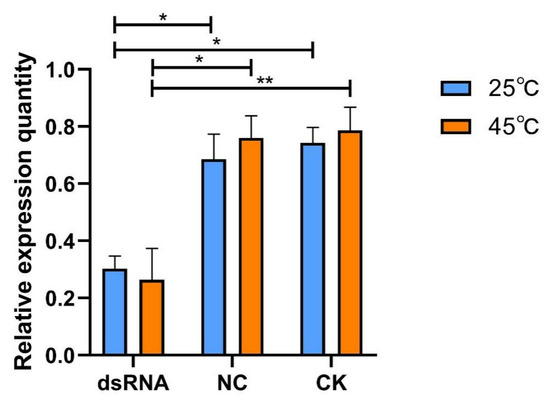
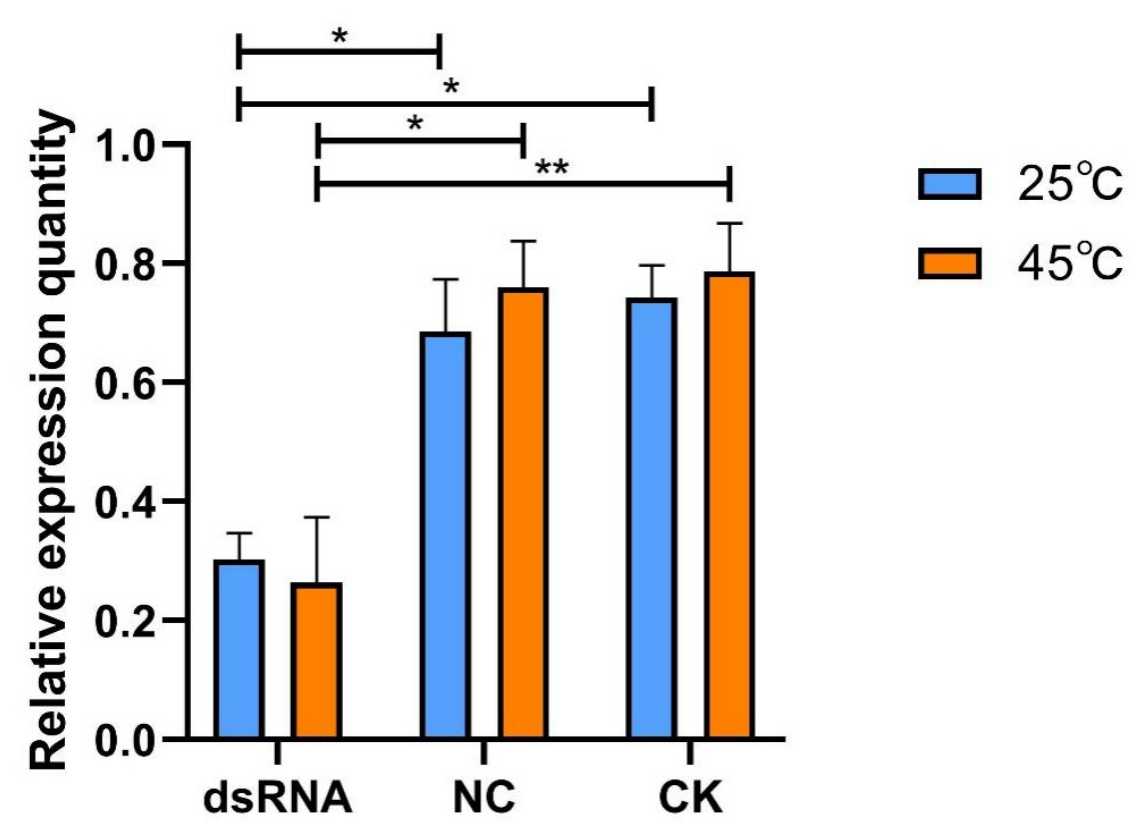
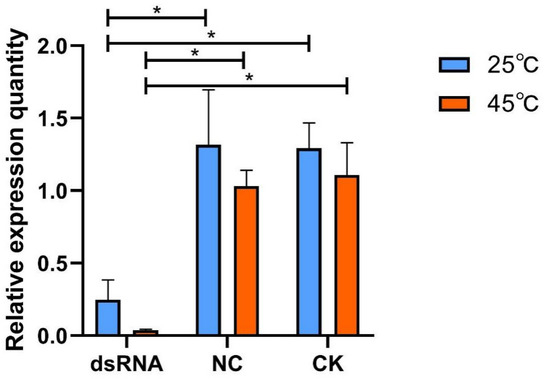
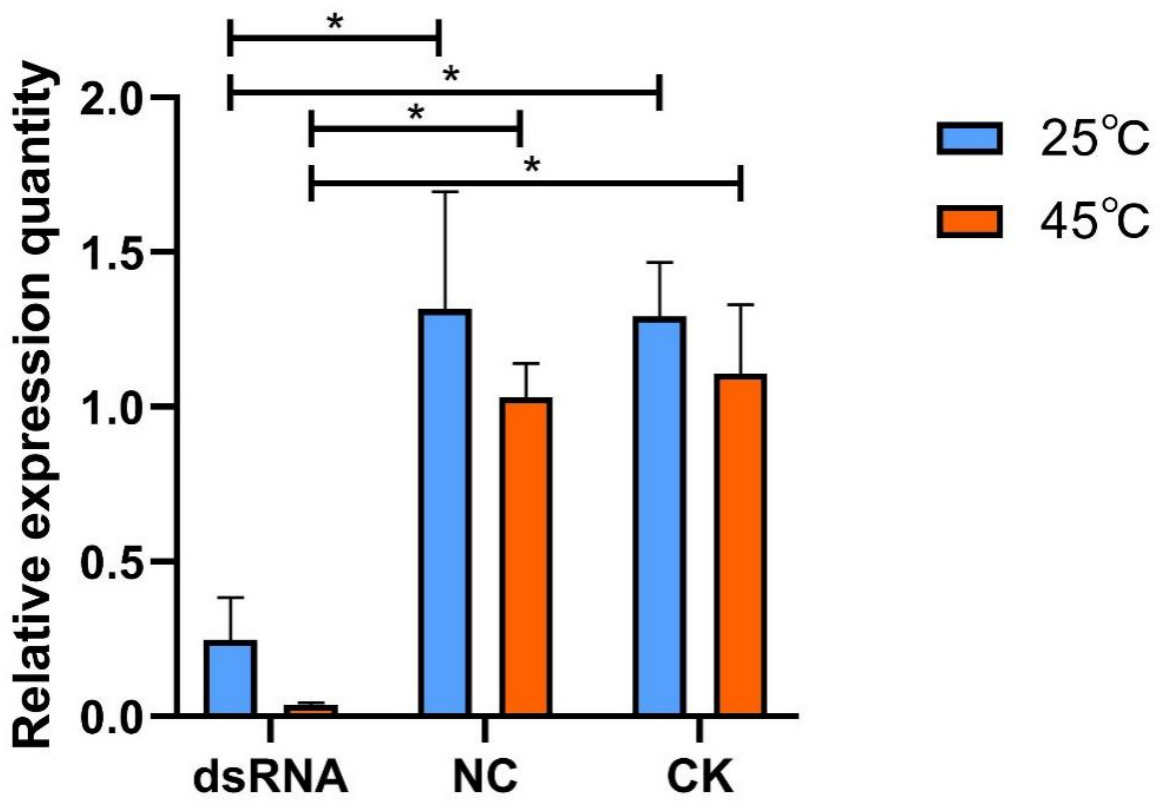
After the injection of ds ZcKr-h1, the expression level of the target gene decreased significantly (Figure 1). Under the condition of 25 °C, the expression level of the dsRNA group was 55.9% and 59.2% lower than that of NC and CK respectively. Under the condition of 45 °C, it decreased by 65.4% and 66.6% respectively, indicating that effective silencing was achieved at different temperatures.
Figure 1.
Knockdown efficiency of ZcKr-h1. Asterisks above bars indicate significant differences between groups (* p < 0.05, ** p < 0.01, Student’s t-test). Error bars represent SEM.
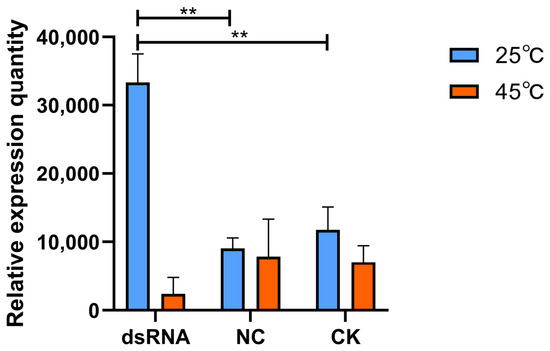
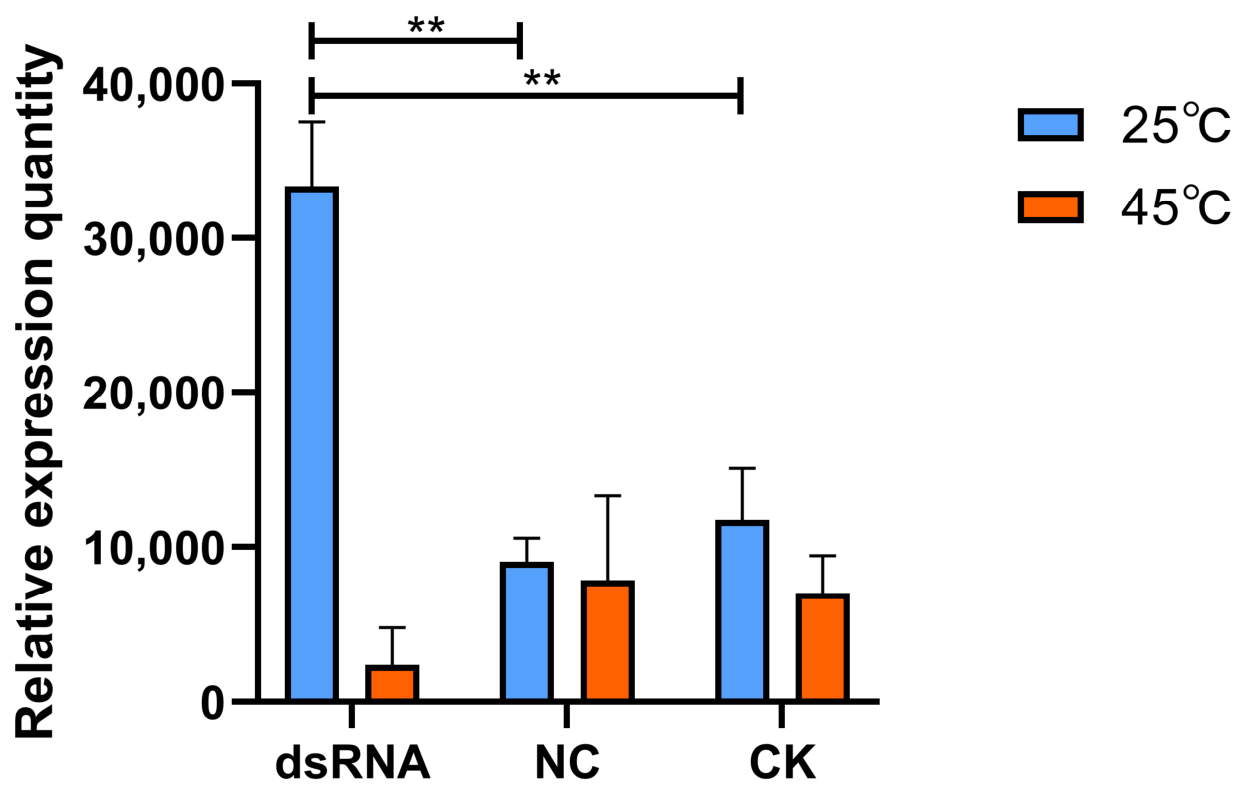
The effect of ZcKr-h1 knockdown on ZcVg3 expression was temperature-dependent (Figure 2). At 25 °C, ZcVg3 transcript levels in the dsRNA group were approximately 269% and 184% higher than those in the NC and CK groups, respectively, suggesting that ZcKr-h1 exerts a negative or indirect suppressive effect on ZcVg3 under normal temperature. In contrast, after the 45 °C treatment, ZcVg3 expression did not differ significantly among the three groups, indicating that heat stress overrides ZcKr-h1-mediated regulation and that ZcVg3 expression may be governed by other pathways under thermal stress.
Figure 2.
Effect of ZcKr-h1 knockdown on ZcVg3 expression. Asterisks above bars indicate significant differences between groups (** p < 0.01; Student’s t-test). Error bars represent SEM.
Unlike ZcVg3, ZcVgR expression was significantly suppressed by ZcKr-h1 knockdown at both temperatures (Figure 3). At 25 °C, ZcVgR transcript levels in the dsRNA group were reduced by more than 80% relative to NC and CK; at 45 °C, the reduction exceeded 96%, demonstrating that ZcKr-h1 functions as an essential positive regulator of ZcVgR and that this regulation is maintained under heat stress.
Figure 3.
Effect of ZcKr-h1 knockdown on ZcVgR expression. Asterisks above bars indicate significant differences between groups (* p < 0.05; Student’s t-test). Error bars represent SEM.
3.2. Effects of ZcKr-h1 Silencing on Reproduction and Lifespan
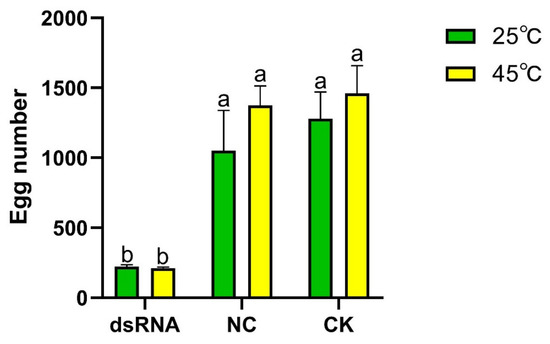
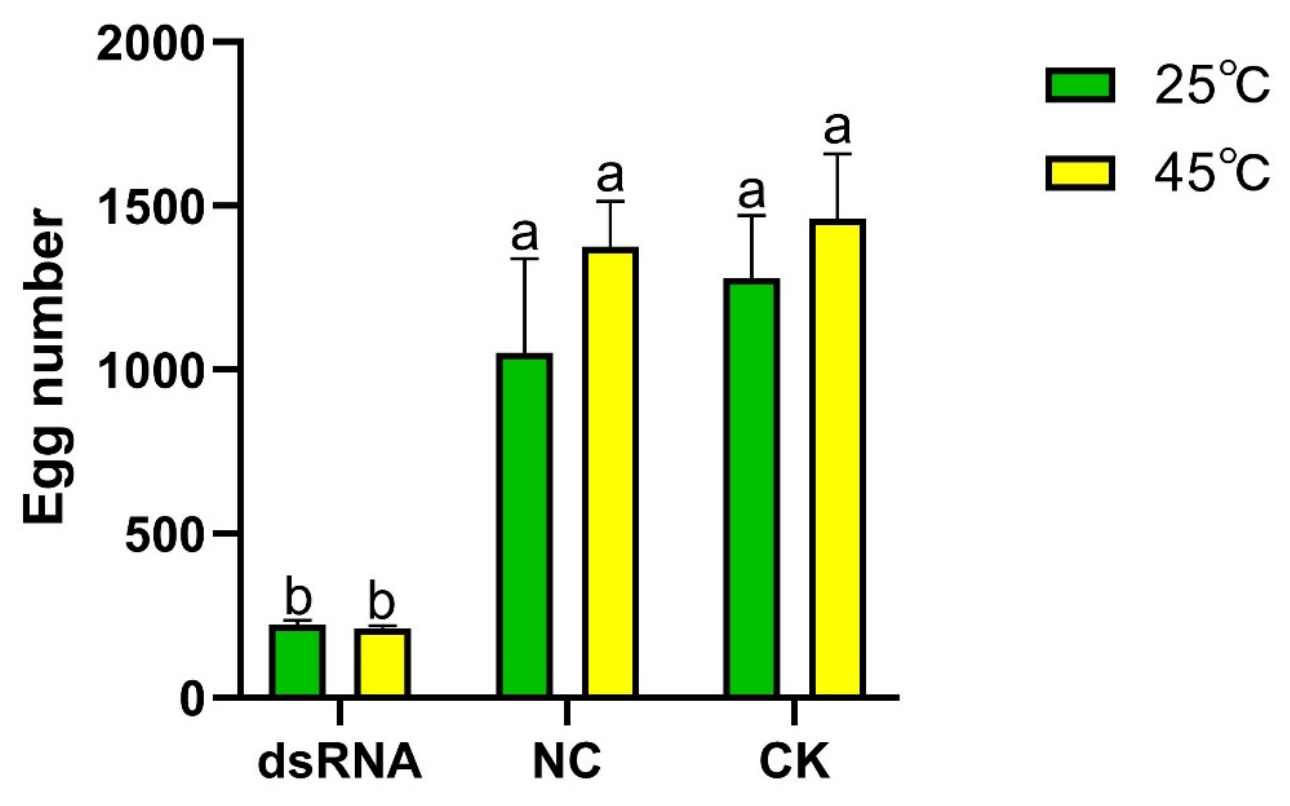
ZcKr-h1 knockdown substantially reduced the fecundity of Z. cucurbitae females (Figure 4). At 25 °C, dsRNA-treated females laid an average of 222.7 eggs, corresponding to 21.2% and 17.4% of the egg production recorded in the NC (1052.7) and CK (1281.0) groups. A similar pattern was observed at 45 °C, with dsRNA females laying only 212.7 eggs.
Figure 4.
Effect of ZcKr-h1 knockdown on fecundity. Different lowercase letters above bars indicate significant differences among treatment groups within each temperature (one-way ANOVA, Tukey’s HSD, p < 0.05). Error bars represent SEM.
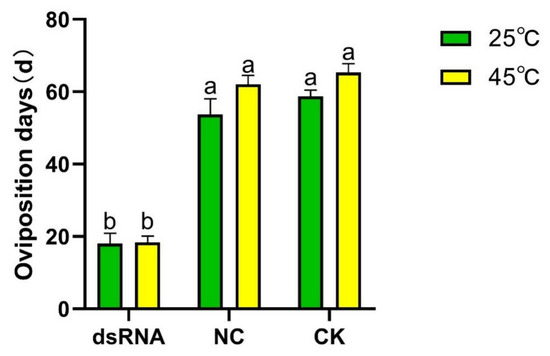
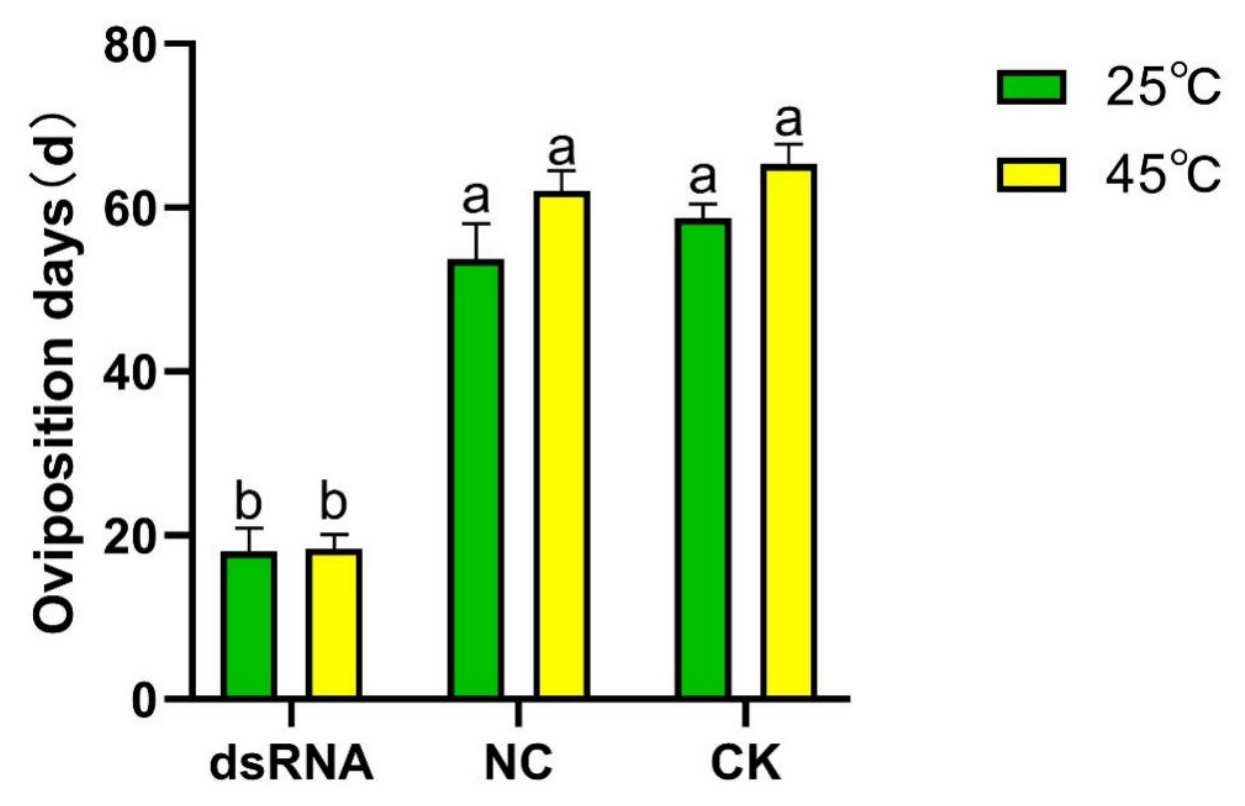
The oviposition period was also markedly shortened (Figure 5). At both 25 °C and 45 °C, dsRNA-treated Z. cucurbitae females laid eggs for only approximately 18 days, compared with 53–65 days in the control groups, indicating that loss of ZcKr-h1 function severely truncates the reproductive window.
Figure 5.
Effect of ZcKr-h1 knockdown on oviposition days. Different lowercase letters above bars indicate significant differences among treatment groups within each temperature (one-way ANOVA, Tukey’s HSD, p < 0.05). Error bars represent SEM.
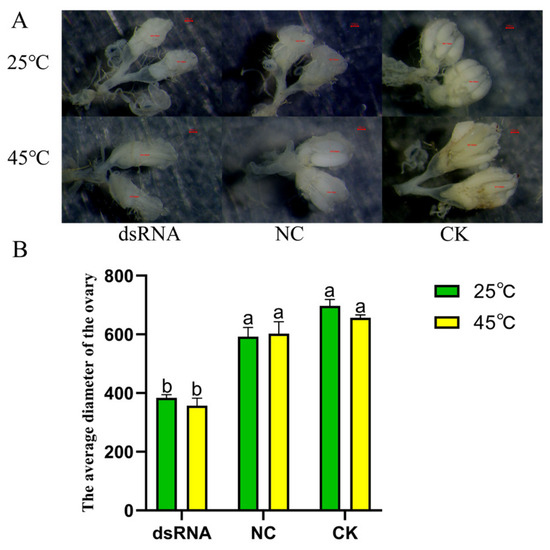
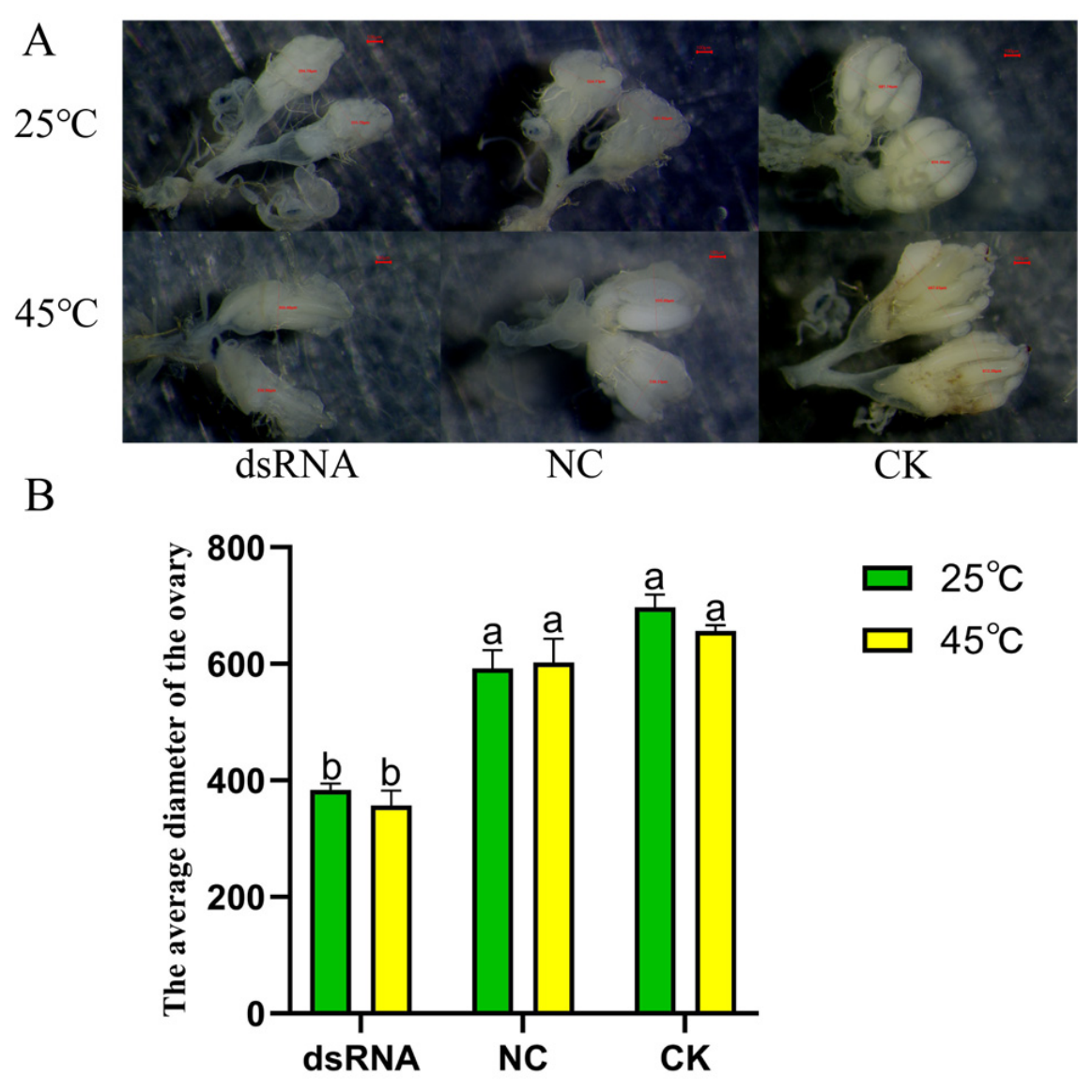
Ovarian development of Z. cucurbitae females was severely impaired by ZcKr-h1 knockdown (Figure 6). The mean ovarian diameter of dsRNA-treated females (357–384 μm) was approximately half that of the controls (593–697 μm). The reduced ovary diameter indicates that ZcKr-h1 silencing markedly slows ovarian development and further suppresses reproduction in female Z. cucurbitae.
Figure 6.
Effect of ZcKr-h1 knockdown on ovary development. (A) Representative images of ovaries; red scale bar = 100 μm. (B) Average ovary diameter. Different lowercase letters above bars indicate significant differences among treatment groups within each temperature (one-way ANOVA, Tukey’s HSD, p < 0.05). Error bars represent SEM.
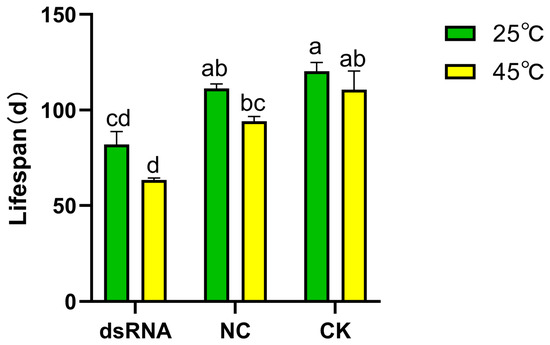
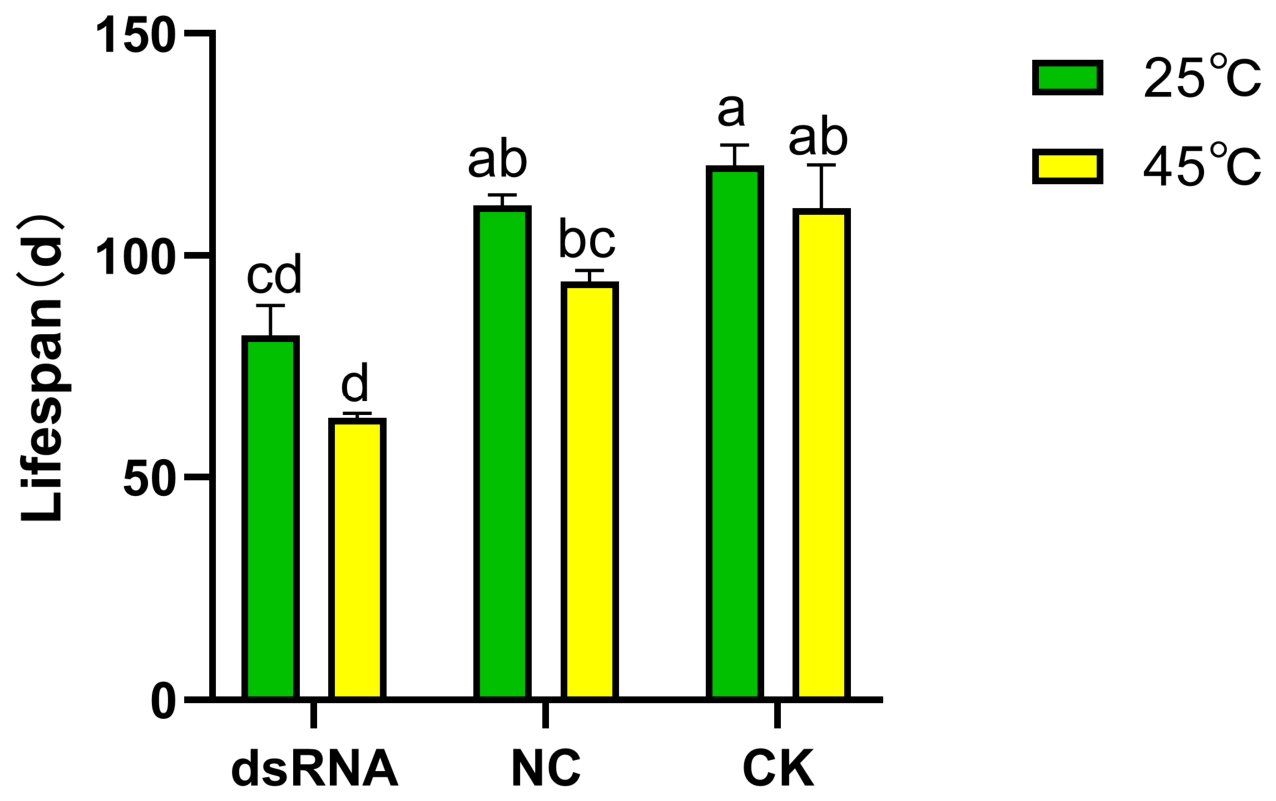
ZcKr-h1 knockdown also significantly reduced the lifespan of Z. cucurbitae females (Figure 7). At 25 °C, dsRNA-treated females lived an average of 82.0 days, compared with 63.3 days at 45 °C; both values were significantly lower than those of the respective controls. The additive effect of heat stress and ZcKr-h1 knockdown on longevity suggests that ZcKr-h1 contributes not only to reproductive regulation but also to adult somatic maintenance and survival.
Figure 7.
Effect of ZcKr-h1 knockdown on lifespan. Different lowercase letters above bars indicate significant differences among treatment groups within each temperature (one-way ANOVA, Tukey’s HSD, p < 0.05). Error bars represent SEM.
4. Discussion
Insects in natural environments are more frequently exposed to short-term heat extremes than to sustained warming [3]. In this study, although the mean fecundity of control females exposed to 45 °C was numerically slightly higher than that of the 25 °C controls, this difference was not statistically significant (Figure 4). This numerical trend is in the same direction as some previous observations suggesting that short-term high temperature can stimulate oviposition in Z. cucurbitae [27,34]; however, under our experimental conditions, this effect did not reach statistical significance.
Kr-h1 is a key transcription factor in the juvenile hormone signaling pathway and has a conserved role in insect growth, development, and reproduction [12]. In this study, we used RNA interference to silence ZcKr-h1, an approach previously applied in Spodoptera exigua [36], Diabrotica virgifera [29], B. dorsalis [30], and Z. cucurbitae [35]. Our results show that under the 45 °C short-term high-temperature condition, silencing ZcKr-h1 was highly effective and led to a significant decrease in female oviposition and oviposition days. This directly confirms the critical role of ZcKr-h1 in the reproductive regulation of Z. cucurbitae and is highly consistent with findings on Kr-h1 in other insects. For example, silencing BdKr-h1 in B. dorsalis obstructed ovarian development and drastically reduced reproductive capacity [13]; in Liposcelis entomophila, RNAi-mediated silencing of Kr-h1 significantly prolonged the pre-oviposition period, severely impaired ovarian development, and reduced fecundity. These results therefore reinforce the functional conservation of Kr-h1 in female insect reproduction.
A novel finding of this study is the differential regulation of two downstream targets by ZcKr-h1. Under normal temperature, ZcKr-h1 knockdown unexpectedly upregulated ZcVg3 while suppressing ZcVgR, suggesting that VgR is likely the primary downstream effector mediating the reproductive functions of ZcKr-h1, while Vg3 may be regulated through additional compensatory mechanisms. The loss of ZcVg3 differential expression under heat stress suggests that the regulatory effect of Kr-h1 on Vg3 is temperature-dependent and may be overridden by heat-activated pathways. In particular, exogenous JH treatment in a ZcKr-h1-silenced background should be performed in future studies to directly test whether JH regulates ZcVg3 through Kr-h1 or through alternative pathways. Under normal temperature, ZcKr-h1 knockdown upregulated ZcVg3 by approximately 2.7-fold while suppressing ZcVgR by over 80%; under heat stress, the ZcVg3 difference among groups disappeared, yet ZcVgR remained consistently and profoundly downregulated regardless of temperature. Such differential regulation is rarely reported in existing Kr-h1 functional studies. Since VgR is the sole receptor mediating vitellogenin uptake from the hemolymph into developing oocytes, its downregulation directly blocks yolk accumulation, whereas the upregulation of ZcVg3—even if it increases Vg precursor synthesis—cannot compensate for the uptake defect. A similar phenotype of deficient yolk deposition in oocytes has been observed in two Henosepilachna species following Kr-h1 RNAi [14]. These results suggest that the critical reproductive output of Kr-h1 is likely VgR rather than Vg—an important finding of the present study.
In addition to reproductive impairment, ZcKr-h1 knockdown significantly shortened female lifespan, with heat stress and gene silencing exerting additive effects. This indicates that ZcKr-h1 also contributes to adult survival. As a core transcription factor in the JH pathway, Kr-h1 not only regulates metamorphosis and reproduction but may also modulate metabolic rate, immune function and stress responses. The significant lifespan reduction after silencing ZcKr-h1 suggests that this gene has broader biological functions beyond reproductive control. In female insects, many studies have demonstrated that Kr-h1 is required for vitellogenin expression; silencing Kr-h1 by RNAi markedly reduces Vg transcript levels [15]. Furthermore, Kr-h1 triggers polyploidization of fat body cells to meet the high protein synthesis demands during reproduction [10,13]. When ZcKr-h1 expression is suppressed, yolk protein synthesis is blocked and fat body polyploidization is likely disrupted, compromising the overall physiological state and energy reserves of the adult and ultimately shortening lifespan. Therefore, targeting ZcKr-h1 via RNAi offers a novel strategy for Z. cucurbitae management by simultaneously impairing reproductive capacity and adult survival. This finding provides a new molecular target and theoretical basis for developing environmentally friendly RNAi-based control methods for Z. cucurbitae.
A limitation of this study is the absence of a non-targeting dsRNA control such as dsGFP, which is generally recommended to exclude sequence-independent effects [37]. Although the blank control (CK) and Tris-EDTA (TE) buffer-injected negative control (NC) are still widely used as basic injection controls in insect RNAi studies [38], they cannot completely rule out sequence-independent off-target effects. Nevertheless, dsGFP itself may induce non-specific transcriptional responses in some insects, and its suitability can vary among species [39,40]. Therefore, future studies should include a species-appropriate non-targeting dsRNA control to further validate the specificity of the RNAi phenotype.
5. Conclusions
This study reveals that RNAi-mediated knockdown of ZcKr-h1 markedly reduces fecundity, shortens the oviposition period, delays ovarian development, and decreases adult lifespan in Zeugodacus cucurbitae females. These phenotypic defects are accompanied by consistent suppression of ZcVgR transcription and, under normal temperature, upregulation of ZcVg3, indicating that VgR is the primary downstream effector mediating the reproductive functions of ZcKr-h1. Notably, heat stress and ZcKr-h1 silencing exerted additive effects on lifespan reduction. Collectively, these findings establish ZcKr-h1 as a key transcriptional regulator that couples thermal stress to reproductive output and somatic survival in a tephritid species. Targeting ZcKr-h1 via RNAi therefore represents a promising strategy for the environmentally sustainable management of Z. cucurbitae, with potentially enhanced efficacy during high-temperature seasons.
Supplementary Materials
The following supporting information can be downloaded at: https://www.mdpi.com/article/10.3390/insects17090920/s1, Figure S1: Verification of the PCR amplification product used for dsRNA synthesis. Lane 1 DNA marker; Lane 2 PCR amplification product; Figure S2: qRT-PCR amplification curves. (a) ZcKr-h1, (b) ZcVg3, (c) ZcVgR, (d) Succinate dehydrogenase flavoprotein (SDHA). All samples showed successful amplification; Figure S3: qRT-PCR melt curve analysis. (a) ZcKr-h1, (b) ZcVg3, (c) ZcVgR, (d) Succinate dehydrogenase flavoprotein (SDHA). A single peak was observed for each primer pair, confirming primer specificity.
Author Contributions
Data curation, Z.Q.; writing—original draft preparation, Z.Q.; writing—review and editing, S.Y.; visualization, W.X.; supervision, J.Z.; formal analysis, Y.L. and L.W.; project administration, W.Z.; funding acquisition, S.Z. All authors have read and agreed to the published version of the manuscript.
Funding
This research was supported by Sanya Yazhou Bay Science and Technology City Administration, Grant No. SKJC-GJHZ-2025-03; Hainan Provincial Science and Technology Correspondent Program, Grant No. KJTP202530; Hainan Institute of National Park (Survey of Rare Butterfly Species), Grant No. RH2300006341; and Innovative Research Projects for Postgraduates in Hainan Province, Grant Nos. Hys2025-268 and Hys2025-02.
Data Availability Statement
The original contributions presented in the study are included in the article; further inquiries can be directed to the corresponding authors.
Acknowledgments
This paper has not used AI-assisted writing or experimental data processing, nor any other AI tools for content generation or analysis. The authors sincerely thank the editor and the anonymous reviewers for their careful review, constructive comments, and valuable suggestions. We greatly appreciate the time and effort they generously dedicated to the review process, which has substantially improved the quality of this manuscript.
Conflicts of Interest
The authors declare no conflicts of interest.
References
- Mohamed, S.A.; Azrag, A.G.A.; Obala, F.; Ndlela, S. Estimating the Demographic Parameters of Tuta absoluta (Lepidoptera: Gelechiidae) Using Temperature-Dependent Development Models and Their Validation under Fluctuating Temperature. Biology 2022, 11, 181. [Google Scholar] [CrossRef] [Scilit] [PubMed]
- Hoffmann, A.A.; Sgrò, C.M. Climate Change and Evolutionary Adaptation. Nature 2011, 470, 479–485. [Google Scholar] [CrossRef] [Scilit] [PubMed]
- Ma, C.-S.; Ma, G.; Pincebourde, S. Survive a Warming Climate: Insect Responses to Extreme High Temperatures. Annu. Rev. Entomol. 2021, 66, 163–184. [Google Scholar] [CrossRef] [Scilit] [PubMed]
- Harvey, J.A.; Heinen, R.; Gols, R.; Thakur, M.P. Climate Change-mediated Temperature Extremes and Insects: From Outbreaks to Breakdowns. Glob. Change Biol. 2020, 26, 6685–6701. [Google Scholar] [CrossRef] [Scilit] [PubMed]
- Zhang, W.; Chang, X.-Q.; Hoffmann, A.A.; Zhang, S.; Ma, C.-S. Impact of Hot Events at Different Developmental Stages of a Moth: The Closer to Adult Stage, the Less Reproductive Output. Sci. Rep. 2015, 5, 10436. [Google Scholar] [CrossRef] [Scilit] [PubMed]
- Roux, O.; Lann, C.L.; van Alphen, J.J.M.; van Baaren, J. How Does Heat Shock Affect the Life History Traits of Adults and Progeny of the Aphid Parasitoid Aphidius avenae (Hymenoptera: Aphidiidae)? Bull. Entomol. Res. 2010, 100, 543–549. [Google Scholar] [CrossRef] [Scilit] [PubMed]
- Schuh, R.; Aicher, W.; Gaul, U.; Côte, S.; Preiss, A.; Maier, D.; Seifert, E.; Nauber, U.; Schröder, C.; Kemler, R. A Conserved Family of Nuclear Proteins Containing Structural Elements of the Finger Protein Encoded by Krüppel, a Drosophila Segmentation Gene. Cell 1986, 47, 1025–1032. [Google Scholar] [CrossRef] [Scilit] [PubMed]
- Belles, X.; Santos, C.G. The MEKRE93 (Methoprene Tolerant-Krüppel Homolog 1-E93) Pathway in the Regulation of Insect Metamorphosis, and the Homology of the Pupal Stage. Insect Biochem. Mol. Biol. 2014, 52, 60–68. [Google Scholar] [CrossRef] [Scilit] [PubMed]
- Kayukawa, T.; Minakuchi, C.; Namiki, T.; Togawa, T.; Yoshiyama, M.; Kamimura, M.; Mita, K.; Imanishi, S.; Kiuchi, M.; Ishikawa, Y.; et al. Transcriptional Regulation of Juvenile Hormone-Mediated Induction of Krüppel Homolog 1, a Repressor of Insect Metamorphosis. Proc. Natl. Acad. Sci. USA 2012, 109, 11729–11734. [Google Scholar] [CrossRef] [Scilit] [PubMed]
- Santos, C.G.; Humann, F.C.; Hartfelder, K. Juvenile Hormone Signaling in Insect Oogenesis. Curr. Opin. Insect Sci. 2019, 31, 43–48. [Google Scholar] [CrossRef] [Scilit] [PubMed]
- Lin, X.; Yao, Y.; Wang, B. Methoprene-Tolerant (Met) and Krüpple-Homologue 1 (Kr-H1) Are Required for Ovariole Development and Egg Maturation in the Brown Plant Hopper. Sci. Rep. 2015, 5, 18064. [Google Scholar] [CrossRef] [Scilit] [PubMed]
- Mao, Y.; Li, Y.; Gao, H.; Lin, X. The Direct Interaction Between E93 and Kr-H1 Mediated Their Antagonistic Effect on Ovary Development of the Brown Planthopper. Int. J. Mol. Sci. 2019, 20, 2431. [Google Scholar] [CrossRef] [Scilit] [PubMed]
- Yue, Y.; Yang, R.-L.; Wang, W.-P.; Zhou, Q.-H.; Chen, E.-H.; Yuan, G.-R.; Wang, J.-J.; Dou, W. Involvement of Met and Kr-H1 in JH-Mediated Reproduction of Female Bactrocera dorsalis (Hendel). Front. Physiol. 2018, 9, 482. [Google Scholar] [CrossRef] [Scilit] [PubMed]
- Liu, H.-H.; Zhang, X.-Q.; Yu, J.-Q.; Jin, L.; Li, G.-Q. Kr-H1 Is Vital for Vitellogenesis in Two Ladybird Beetle Species. Insect Mol. Biol. 2026, 35, 177–186. [Google Scholar] [CrossRef] [Scilit] [PubMed]
- Song, J.; Wu, Z.; Wang, Z.; Deng, S.; Zhou, S. Krüppel-Homolog 1 Mediates Juvenile Hormone Action to Promote Vitellogenesis and Oocyte Maturation in the Migratory Locust. Insect Biochem. Mol. Biol. 2014, 52, 94–101. [Google Scholar] [CrossRef] [Scilit] [PubMed]
- Tang, Y.; He, H.; Qu, X.; Cai, Y.; Ding, W.; Qiu, L.; Li, Y. RNA Interference-Mediated Knockdown of the Transcription Factor Krüppel homologue 1 Suppresses Vitellogenesis in Chilo suppressalis. Insect Mol. Biol. 2020, 29, 183–192. [Google Scholar] [CrossRef] [Scilit] [PubMed]
- Hu, K.; Tian, P.; Yang, L.; Tang, Y.; Qiu, L.; He, H.; Ding, W.; Li, Y. Molecular Characterization of the Krüppel-Homolog 1 and Its Role in Ovarian Development in Sogatella furcifera (Hemiptera: Delphacidae). Mol. Biol. Rep. 2020, 47, 1099–1106. [Google Scholar] [CrossRef] [Scilit] [PubMed]
- Yang, B.-B.; Miao, S.-Y.; Lu, Y.-J.; Wang, S.-S.; Wang, Z.-Y.; Zhao, Y.-R. Involvement of Methoprene-Tolerant and Krüppel Homolog 1 in Juvenile Hormone-Mediated Vitellogenesis of Female Liposcelis entomophila (End.) (Psocoptera: Liposcelididae). Arch. Insect Biochem. Physiol. 2023, 112, e21973. [Google Scholar] [CrossRef] [Scilit] [PubMed]
- Cheng, Y.; Zhou, Y.; Li, C. Kr-H1 Encoding Juvenile Hormone Transcription Factor Impacts Reproductive Functions in Coccinella septempunctata. Insects 2026, 17, 577. [Google Scholar] [CrossRef] [Scilit] [PubMed]
- Parthasarathy, R.; Palli, S.R. Molecular Analysis of Nutritional and Hormonal Regulation of Female Reproduction in the Red Flour Beetle, Tribolium castaneum. Insect Biochem. Mol. Biol. 2011, 41, 294–305. [Google Scholar] [CrossRef] [Scilit] [PubMed]
- Li, Y.-Y.; Chen, J.-J.; Liu, M.-Y.; He, W.-W.; Reynolds, J.A.; Wang, Y.-N.; Wang, M.-Q.; Zhang, L.-S. Enhanced Degradation of Juvenile Hormone Promotes Reproductive Diapause in the Predatory Ladybeetle Coccinella septempunctata. Front. Physiol. 2022, 13, 877153. [Google Scholar] [CrossRef] [Scilit] [PubMed]
- Guo, S.; Wu, Q.-W.; Tian, Z.; Zhu, L.; King-Jones, K.; Zhu, F.; Wang, X.-P.; Liu, W. Krüppel Homolog 1 Regulates Photoperiodic Reproductive Plasticity in the Cabbage Beetle Colaphellus bowringi. Insect Biochem. Mol. Biol. 2021, 134, 103582. [Google Scholar] [CrossRef] [Scilit] [PubMed]
- Sajan, J.V.; Subramanian, S.; Sharma, K. Attractancy Potential of Bacterial Volatiles from Symbiotic Bacteria of Wild Population of Zeugodacus cucurbitae Coquillett (Diptera:Tephritidae). Phytoparasitica 2022, 50, 411–421. [Google Scholar] [CrossRef] [Scilit]
- Dhillon, M.K.; Singh, R.; Naresh, J.S.; Sharma, H.C. The Melon Fruit Fly, Bactrocera cucurbitae: A Review of Its Biology and Management. J. Insect Sci. 2005, 5, 40. [Google Scholar] [CrossRef] [Scilit] [PubMed]
- Murtaza, G.; Naeem, M.; Manzoor, S.; Khan, H.; Eed, E.; Majeed, W.; Makki, H.; Ramzan, U.; Ummara, U. Biological Control Potential of Entomopathogenic Fungal Strains against Peach Fruit Fly, Bactrocera zonata (Saunders) (Diptera: Tephritidae). PeerJ 2022, 10, e13316. [Google Scholar] [CrossRef] [Scilit] [PubMed]
- Zeng, B.; Lian, Y.; Jia, J.; Liu, Y.; Wang, A.; Yang, H.; Li, J.; Yang, S.; Peng, S.; Zhou, S. Multigenerational Effects of Short-Term High Temperature on the Development and Reproduction of the Zeugodacus cucurbitae (Coquillett, 1899). Agriculture 2022, 12, 954. [Google Scholar] [CrossRef] [Scilit]
- Zhou, S.; Li, L.; Zeng, B.; Fu, Y. Effects of Short-Term High-Temperature Conditions on Oviposition and Differential Gene Expression of Bactrocera cucurbitae (Coquillett) (Diptera: Tephritidae). Int. J. Pest Manag. 2019, 66, 332–340. [Google Scholar] [CrossRef] [Scilit]
- Nandety, R.S.; Kuo, Y.-W.; Nouri, S.; Falk, B.W. Emerging Strategies for RNA Interference (RNAi) Applications in Insects. Bioengineered 2015, 6, 8–19. [Google Scholar] [CrossRef] [Scilit] [PubMed]
- Baum, J.A.; Bogaert, T.; Clinton, W.; Heck, G.R.; Feldmann, P.; Ilagan, O.; Johnson, S.; Plaetinck, G.; Munyikwa, T.; Pleau, M.; et al. Control of Coleopteran Insect Pests through RNA Interference. Nat. Biotechnol. 2007, 25, 1322–1326. [Google Scholar] [CrossRef] [Scilit] [PubMed]
- Sun, Z.; Liu, J.; Chen, Y.; Zhang, J.; Zhong, G. RNAi-Mediated Knockdown of α-Spectrin Depresses Reproductive Performance in Female Bactrocera dorsalis. Pestic. Biochem. Physiol. 2023, 196, 105611. [Google Scholar] [CrossRef] [Scilit] [PubMed]
- Chen, D.; Han, H.-L.; Li, W.-J.; Wang, J.-J.; Wei, D. Expression and Role of Vitellogenin Genes in Ovarian Development of Zeugodacus cucurbitae. Insects 2022, 13, 452. [Google Scholar] [CrossRef] [Scilit] [PubMed]
- Lian, Y.; Peng, S.; Yang, X.; Jia, J.; Li, J.; Wang, A.; Yang, S.; Zheng, R.; Zhou, S. The Vitellogenin Receptor Gene Is Involved in Lifespan Regulation of Zeugodacus cucurbitae (Coquillett) after Short-Term High-Temperature Treatment. Front. Physiol. 2022, 13, 1090348. [Google Scholar] [CrossRef] [Scilit] [PubMed]
- Lian, Y.; Peng, S.; Jia, J.; Li, J.; Wang, A.; Yang, S.; Zheng, R.; Yang, X.; Zhou, S. Function of Vitellogenin Receptor Gene in Reproductive Regulation of Zeugodacus cucurbitae (Coquillett) after Short-Term High-Temperature Treatment. Front. Physiol. 2022, 13, 995004. [Google Scholar] [CrossRef] [Scilit] [PubMed]
- Zeng, B.; Zhu, W.; Fu, Y.; Zhou, S. Influence of High-Temperature Exposure on the Mating, Oviposition and Thermotaxis of Bactrocera cucurbitae (Coquillet) (Diptera:Tephritidae). PLoS ONE 2018, 13, e0204065. [Google Scholar] [CrossRef] [Scilit] [PubMed]
- Yang, S.; Peng, S.; Wang, A.; Jia, J.; Wu, Q.; Yang, X.; Zhou, S. The ZcVg3 Gene Regulates the Reproduction and Lifespan of Female Zeugodacus cucurbitae (Coquillett) Mediated by Short-Term High Temperatures. Insects 2024, 15, 499. [Google Scholar] [CrossRef] [Scilit] [PubMed]
- Surakasi, V.P.; Mohamed, A.A.M.; Kim, Y. RNA Interference of Β1 Integrin Subunit Impairs Development and Immune Responses of the Beet Armyworm, Spodoptera exigua. J. Insect Physiol. 2011, 57, 1537–1544. [Google Scholar] [CrossRef] [Scilit] [PubMed]
- Mehlhorn, S.; Hunnekuhl, V.S.; Geibel, S.; Nauen, R.; Bucher, G. Establishing RNAi for Basic Research and Pest Control and Identification of the Most Efficient Target Genes for Pest Control: A Brief Guide. Front. Zool. 2021, 18, 60. [Google Scholar] [CrossRef] [Scilit] [PubMed]
- Zhang, X.; Fan, Z.; Wang, Q.; Kong, X.; Liu, F.; Fang, J.; Zhang, S.; Zhang, Z. RNAi Efficiency through dsRNA Injection Is Enhanced by Knockdown of dsRNA Nucleases in the Fall Webworm, Hyphantria cunea (Lepidoptera: Arctiidae). Int. J. Mol. Sci. 2022, 23, 6182. [Google Scholar] [CrossRef] [Scilit] [PubMed]
- Rougeot, J.; Wang, Y.; Verhulst, E.C.; Nevels, M. Effect of Using Green Fluorescent Protein Double-Stranded RNA as Non-Target Negative Control in Nasonia vitripennis RNA Interference Assays. Exp. Results 2021, 2, e11. [Google Scholar] [CrossRef] [Scilit]
- Arora, A.K.; Chung, S.H.; Douglas, A.E. Non-Target Effects of dsRNA Molecules in Hemipteran Insects. Genes 2021, 12, 407. [Google Scholar] [CrossRef] [Scilit] [PubMed]

Disclaimer/Publisher’s Note: The statements, opinions and data contained in all publications are solely those of the individual author(s) and contributor(s) and not of MDPI and/or the editor(s). MDPI and/or the editor(s) disclaim responsibility for any injury to people or property resulting from any ideas, methods, instructions or products referred to in the content. |
© 2026 by the authors. Licensee MDPI, Basel, Switzerland. This article is an open access article distributed under the terms and conditions of the Creative Commons Attribution (CC BY) license.