


Simple Summary
Aphids are important agricultural pests that can damage crops and transmit plant diseases. Their survival and adaptation are closely associated with bacteria that live within or on their bodies. Some bacteria are essential for aphid nutrition and survival, whereas others may influence their ability to cope with environmental stress or interact with other organisms. This study investigated whether bacteria associated with aphids show evolutionary patterns related to those of their hosts. We identified aphid species using morphological characteristics and genetic information and compared their evolutionary relationships with those of their obligate bacterial symbiont, Buchnera aphidicola. We also screened aphid specimens for three other bacterial taxa, Wolbachia, Pantoea, and Arsenophonus. Aphid and Buchnera phylogenies showed closely matching evolutionary patterns, supporting their long-term association and predominantly vertical transmission from mother to offspring. In contrast, the other bacteria showed more variable distributions among aphid species. Pantoea was detected across a relatively broad range of sampled aphids, whereas Wolbachia and Arsenophonus were detected less consistently. These findings demonstrate that different bacteria associated with aphids can exhibit distinct evolutionary patterns and provide useful insights into aphid–bacteria interactions.
Abstract
Aphids are important agricultural pests that interact with diverse bacterial taxa living within or associated with their bodies. Some bacteria, such as the obligate symbiont Buchnera aphidicola, provide essential nutritional functions and are predominantly inherited vertically, whereas other aphid-associated bacteria may have more variable distributions and ecological roles. In this study, we investigated patterns of association between aphid evolutionary relationships and selected bacterial taxa. Aphids were identified using morphological characteristics and mitochondrial cytochrome c oxidase subunit I (COI) sequences, and host phylogenetic relationships were reconstructed using mitochondrial DNA data. We then compared the host phylogeny with that of the obligate symbiont Buchnera aphidicola based on 16S rRNA sequences and screened aphid specimens for selected aphid-associated bacteria (Wolbachia, Pantoea, and Arsenophonus) using diagnostic PCR assays. The host and Buchnera phylogenies showed significant global congruence, consistent with a strong long-term host-associated evolutionary relationship and predominantly vertical inheritance of Buchnera. In contrast, the selected aphid-associated bacteria showed heterogeneous detection patterns across the sampled aphid taxa. Pantoea was detected relatively frequently and across a broad range of sampled hosts, whereas Wolbachia and Arsenophonus showed more variable and restricted detection patterns. Given the small and uneven sample sizes among aphid species, these findings are interpreted as descriptive screening patterns rather than species-level prevalence estimates. Overall, the results highlight contrasting patterns of host-associated evolution between Buchnera and other aphid-associated bacteria and provide a basis for further investigation of the ecological and evolutionary processes underlying these associations.
1. Introduction
Aphids (Hemiptera: Aphididae) are among the most economically significant agricultural pests worldwide, causing substantial crop losses through direct phloem feeding and the transmission of numerous plant [1,2,3,4,5]. A key factor underlying their ecological success is their association with bacterial symbionts, which play central roles in nutrition, stress tolerance, and ecological adaptation [6,7,8].
All aphids harbor the obligate endosymbiont Buchnera aphidicola, which provides essential amino acids lacking in plant phloem sap, thereby enabling host survival and reproduction [6,9]. This mutualistic association is characterized by strict vertical transmission and long-term evolutionary stability, resulting in strong phylogenetic congruence between aphids and Buchnera lineages [10,11]. Over evolutionary time, this relationship has led to extensive genome reduction in Buchnera, reflecting its specialization as an intracellular symbiont [9,12]. Variation among Buchnera strains has been shown to influence host adaptation, including thermal tolerance and host plant specialization [9,10,11,12,13].
In addition to Buchnera, aphids commonly harbor facultative symbionts such as Hamiltonella defensa, Serratia symbiotica, and Arsenophonus, which can confer ecologically relevant benefits including parasitoid resistance and thermal tolerance [14,15]. Other bacteria, including Wolbachia and environmental taxa such as Pantoea, have also been detected in aphids; however, their functional roles appear to be more context-dependent and remain less well resolved [15,16,17]. Facultative symbionts are known to meditate a wide range of phenotypic effects, including resistance to natural enemies, tolerance to environmental stress, and expansion of host plant range [18,19,20]. Previous studies suggest that facultative symbionts may contribute to nutritional complementation under variable environmental conditions [14,21].
Despite extensive characterization of aphid symbionts, it remains unresolved whether obligate and facultative symbionts are structured by similar phylogenetic constraints or reflect fundamentally different ecological processes [9,14]. Resolving this distinction is critical for understanding how symbiont diversity contributes to host adaptation and evolutionary trajectories. Unlike the obligate symbiont Buchnera, facultative symbionts exhibit more dynamic transmission modes, including horizontal transfer between host lineages, resulting in highly variable and often heterogeneous distribution patterns across aphid species and populations [14,20]. This contrast points to fundamentally different evolutionary patterns, with obligate symbionts tightly linked to host lineage history and facultative taxa shaped by ecological context, horizontal transmission, and selective pressures.
Characterizing how these symbionts are distributed across hosts and how they co-occur remains essential for elucidating their ecological roles and evolutionary dynamics. Yet, it remains unclear whether symbiont distribution patterns are shaped by host phylogeny or by ecological factors. This uncertainty is particularly evident when obligate and facultative symbionts are examined within a unified framework. Previous research has demonstrated that symbiont associations within hosts may be structured, with both synergistic and antagonistic interactions shaping symbiont community structure [22,23]. However, detecting such patterns remains challenging due to limited sample sizes; uneven species representation; and the complex interplay between host phylogeny, symbiont transmission, and environmental factors.
Although aphid–symbiont systems have been widely studied, integrative approaches remain relatively limited. Few studies have combined host phylogeny, obligate symbiont phylogeny, and quantitative analyses of facultative symbiont prevalence across multiple species, especially at regional scales [14,24]. In many systems, the relationship between phylogenetic structure and symbiont distribution has not been explicitly evaluated within a unified analytical framework [9,14].
Here, we integrate host phylogenetic reconstruction with targeted symbiont screening to investigate how different components of the aphid-associated bacterial community are distributed across host lineages. Specifically, we aimed to (i) reconstruct aphid phylogenetic relationships using mitochondrial COI sequences; (ii) examine phylogenetic patterns of the obligate symbiont Buchnera aphidicola based on 16S rRNA sequences; and (iii) characterize the distribution and prevalence of selected symbiont taxa across aphid hosts within a phylogenetic framework.
2. Materials and Methods
2.1. Sample Collection and Species Identification
Aphid specimens were collected from multiple host plant species across different locations in Ankara/Türkiye (Table 1) between May and August 2017. Sampling was carried out in regions where fruit cultivation areas are dense. Individual samples were preserved in 96% ethanol immediately after collection and stored at −20 °C prior to molecular analyses. Species identification was initially performed based on morphological diagnostic characteristics under a stereomicroscope [1,5,25] and subsequently validated using mitochondrial cytochrome oxidase I (COI) barcoding to confirm species identity. A total of 40 individual aphid specimens representing multiple species were included in downstream analyses.
Table 1.
Collection details of aphid specimens used in this study, including aphid species identification, host plant species, sampling locations, collection dates, geographic coordinates, and number of individuals analyzed.
2.2. DNA Extraction, PCR Amplification, and Sequencing
Genomic DNA was isolated from individual aphid specimens using the High Pure PCR Template Preparation Kit (Roche, Mannheim, Germany) following the manufacturer’s instructions with minor modifications to improve DNA yield from small-bodied specimens. DNA integrity was verified by electrophoresis on 1% agarose gels, and concentration and purity were assessed using a Nanodrop 2000 spectrophotometer (Thermo Scientific, Wilmington, DE, USA). A 658 bp fragment of the mitochondrial cytochrome c oxidase subunit I (COI) gene was amplified using the universal primer pair LCO1490 and HCO2198 [26]. PCR reactions were performed in a final volume of 50 µL containing 1 µL of DNA template, 1× GoTaq Flexi reaction buffer (Promega Corporation, Madison, WI, USA), 2.5 mM MgCl2, 0.2 mM of each dNTP, 0.5 µM of each primer, and 1.25 U of GoTaq DNA polymerase. Nuclease-free water was added to obtain a final volume of 50 µL. The thermal cycling profile consisted of initial denaturation at 94 °C for 2 min and 35 cycles of 94 °C for 30 s, 50 °C for 45 s, and 72 °C for 2 min, followed by final extension at 72 °C for 10 min.
In addition to host COI amplification, sequence characterization of the obligate endosymbiont Buchnera aphidicola was amplified by a fragment of the bacterial 16S rRNA gene. Multiple B. aphidicola 16S rRNA sequences representing diverse aphid-associated lineages were retrieved from the NCBI database and aligned using MAFFT [27] to identify conserved regions suitable for primer design. Since this study aimed to investigate whether Buchnera phylogenetic patterns correspond with those of different aphid lineages, a new primer pair was designed to enable consistent amplification across multiple aphid taxa included in this study. Primer design was performed using Primer 3 based on conserved regions of the aligned sequences, with parameters including a melting temperature (Tm) range of 55–60 °C and GC content between 40 and 60%.
The designed primer pair BA-F (5′-AGCGTTAATCAGAATTACTGGG-3′) and BA-R (5′-GTTTATAACCGGCAGTCTCC-3′) amplifies an approximately 700 bp fragment of the Buchnera 16S rRNA gene. Primer specificity was evaluated in silico using Primer-BLAST (National Center for Biotechnology Information, Bethesda, MD, USA)against the NCBI database, confirming specific matches with B. aphidicola sequences. PCR reactions were performed under conditions similar to those described above, with minor adjustments to the annealing temperature when required.
All PCR amplicons (COI and Buchnera 16S rRNA) were visualized on 2% agarose gels and purified using the Wizard SV Gel and PCR Clean-Up System (Promega). Bidirectional sequencing was performed using the DTCS Quick Start Kit (Beckman Coulter). Sequencing reactions were purified with the Agencourt CleanSeq system (Agencourt Bioscience Corporation, Beverly, MA, USA) and analyzed on a GenomeLab GeXP Genetic Analysis System (Beckman Coulter, Inc., Fullerton, CA, USA). Chromatograms were assembled, inspected, and edited manually in Geneious R9 (Biomatters Ltd., Auckland, New Zealand), and consensus sequences were aligned using MAFFT v7 [27].
2.3. Sequence Processing and Phylogenetic Analyses
Forward and reverse chromatograms were manually inspected and edited in Geneious R9. Consensus sequences were aligned using MAFFT v7 [27], and poorly aligned or ambiguous regions were removed using TrimAl version 1.5.1 (Barcelona, Spain) [28]. The final datasets consisted of 57 COI sequences (402 bp) and 52 Buchnera aphidicola 16S rRNA sequences (577 bp), including reference sequences retrieved from GenBank (NCBI). Phylogenetic analyses were conducted using IQ-TREE v1.6.12 [29] under a maximum likelihood framework. The best-fit nucleotide substitution models were selected using ModelFinder version 3.1.3 [30] based on the Bayesian Information Criterion (BIC), with TIM2+F+I+G4 selected for the COI dataset and TPM3u+F+I selected for the 16S dataset. Branch support was assessed using ultrafast bootstrap approximation (1000 replicates) and SH-aLRT tests (1000 replicates). The sequence of Adelges tsugae (KR0372787.1), retrieved from GenBank, was used as the outgroup to root the COI-based aphid phylogeny, whereas the sequence of Escherichia coli (J01859.1) was used as the outgroup to root the 16S rRNA-based Buchnera aphidicola phylogeny. The mitochondrial COI sequences generated from the aphid specimens were deposited in GenBank under accession numbers PZ830616-PZ830655, while the 16S rRNA sequences generated from Buchnera specimens were deposited in GenBank under accession numbers PZ836554-PZ836592. The GenBank accession numbers are provided in Table 1.
2.4. Cophylogenetic Analysis
Cophylogenetic analyses were performed using the maximum likelihood (ML) phylogenetic trees reconstructed for aphid hosts based on mitochondrial COI sequences and their corresponding Buchnera aphidicola 16S rRNA sequences. ML trees generated in IQ-TREE were imported into R version 4.5.2 [31] for subsequent analyses. The R packages ape v5.8-1 [32], phytools v2.5-2 [33], and paco v0.5-0 [34] were used for phylogenetic data manipulation, visualization, and cophylogenetic analyses.
Prior to statistical analyses, outgroup taxa were removed from both host and symbiont phylogenies to prevent their influence on the estimation of host–symbiont congruence. Outgroups were retained only for graphical representation to preserve the original rooting of the phylogenetic trees. A one-to-one host–symbiont association matrix was constructed by matching each aphid specimen with the corresponding B. aphidicola sequence obtained from the same individual.
Global cophylogenetic congruence between host and symbiont phylogenies was evaluated using the Procrustean Approach to Cophylogeny (PACo) implemented in the paco package in R. Patristic distance matrices derived from the ML phylogenies were calculated using ape, and principal coordinate analysis with Cailliez correction was applied before Procrustes superimposition. Statistical significance was assessed using 9999 permutations. Individual host–symbiont associations were further evaluated using jackknife residual values.
For visualization, host and symbiont phylogenies were displayed as tanglegrams using the cophylo function implemented in the phytools package. The final figure was refined using Adobe Illustrator 30.6 (Adobe Inc., San Jose, CA, USA).
2.5. Detection of Aphid-Associated Bacteria
The detection of selected aphid-associated bacteria (Wolbachia, Pantoea, and Arsenophonus) was assessed in 33 aphid specimens using diagnostic PCR assays with the taxon-specific primers and annealing temperatures listed in Table 2, following the general PCR conditions described above. Although 40 aphid specimens were included in the COI-based identification and phylogenetic analyses, seven specimens were not included in the bacterial screening: Aphis pomi specimens 52 and 53, Myzus persicae specimens 54 and 62, Myzus cerasi specimen 55, Aphis spiraecola specimen 57, and Hyalopterus amygdali specimen 60. These seven specimens were therefore excluded from the bacterial screening dataset.
Table 2.
Primer sequences used for detection of aphid-associated bacteria.
The bacterial taxa were selected because diagnostic PCR primers for their detection were already available in our laboratory and had been successfully used in previous studies. Therefore, the screening was designed as a targeted assessment of selected aphid-associated bacteria rather than a comprehensive survey of the aphid-associated bacterial community. These assays were used to determine the detection status of each bacterial taxon based on PCR amplification. Each reaction included positive and negative controls to verify amplification specificity and minimize the possibility of contamination. Detection results were recorded as binary data (1 = detected; 0 = not detected) for each individual aphid specimen included in the bacterial-screening analysis.
2.6. Detection and Distribution Patterns of Aphid-Associated Bacteria
The detection frequency of aphid-associated bacteria was calculated as the proportion of PCR-positive individuals relative to the total number of 33 aphid specimens included in the bacterial-screening analysis. Given the small and uneven sample sizes across aphid species, the results were interpreted as descriptive screening patterns rather than species-level prevalence estimates. Exact 95% binomial confidence intervals were calculated using the Clopper–Pearson method to describe the uncertainty associated with the observed detection frequencies. Overall detection frequencies were visualized using bar plots with error bars, whereas species-level detection patterns were presented using point-range plots with sample sizes (n) indicated for each species. Species represented by small sample sizes (n ≤ 3) were visually highlighted to indicate greater uncertainty, and no direct comparisons were made among these groups. To illustrate the distribution patterns of detected bacterial taxa across aphid hosts, a heatmap of raw detection frequencies (%) was generated without clustering, with species ordered taxonomically to facilitate biological interpretation.
2.7. Association Analyses Among Detected Aphid-Associated Bacteria
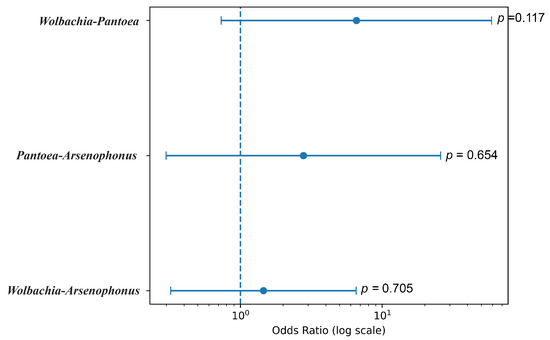
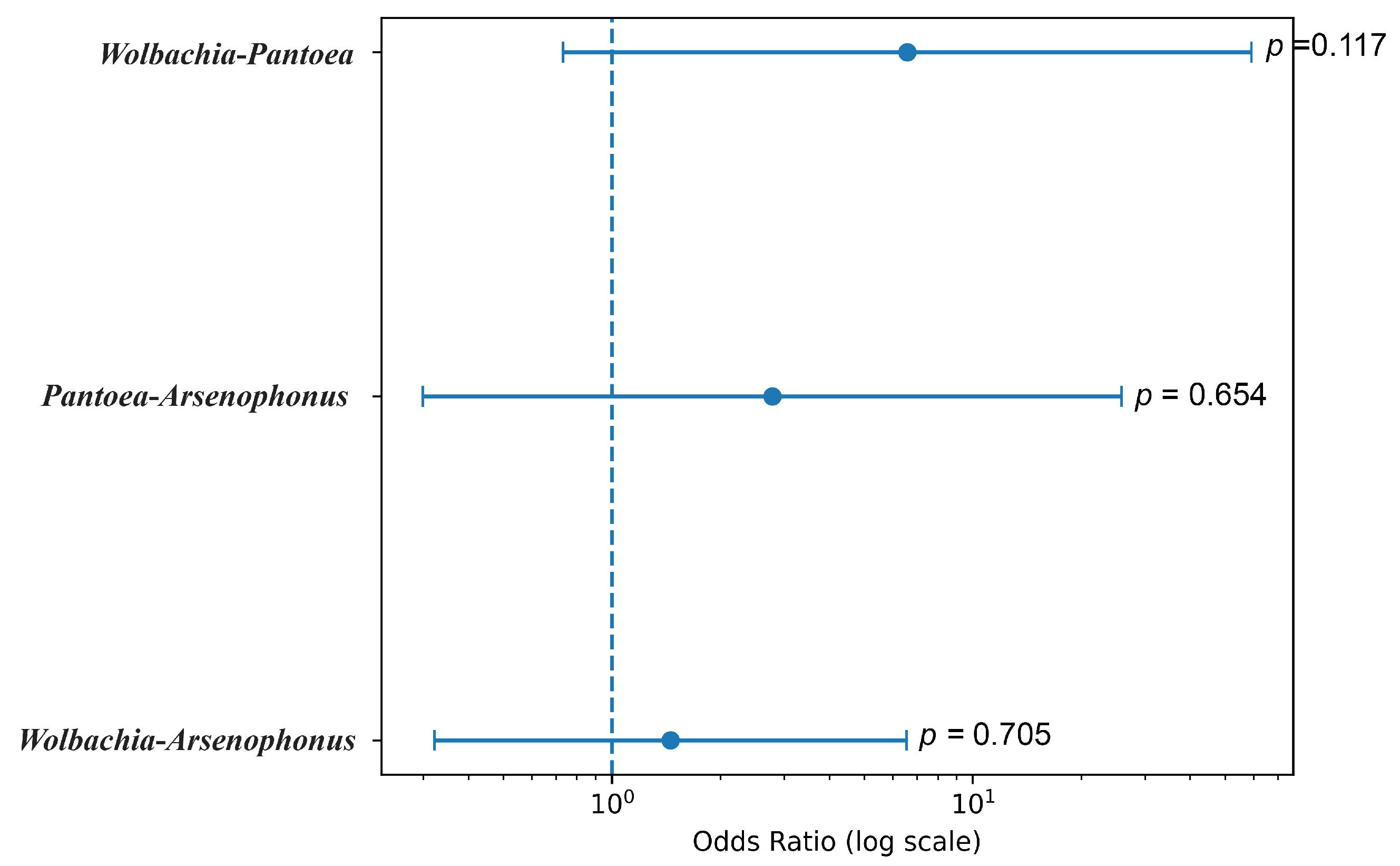
Pairwise associations among detected aphid-associated bacteria (Wolbachia, Pantoea, and Arsenophonus) were evaluated using Fisher’s exact test because of the sparse contingency data from 33 aphid specimens included in the bacterial screening analysis. For each bacterial taxon pair, 2 × 2 contingency tables were constructed, and odds ratios (ORs) were calculated to quantify the direction and strength of co-detection patterns. When zero counts occurred, a Haldane–Anscombe correction of 0.5 was applied. Confidence intervals for ORs were estimated on the log scale and backtransformed to the original scale. Results were visualized using forest plots on a logarithmic scale, with OR = 1 representing the null expectation. Statistical significance was assessed at α = 0.05, and p-values were reported for each comparison.
3. Results
3.1. Aphid Species Composition and Host Plant Associations
A total of 40 aphid specimens representing multiple species and host plant associations were included in the analysis (Table 1). The sampled individuals comprised a taxonomically diverse set of aphid taxa collected from various host plants, with most specimens associated with Prunus, Malus, and Pyrus, and additional records from Juglans, Cydonia, Punica, Corylus, and Populus. Several aphid species were represented by multiple individuals, including Aphis gossypii Glover, Hyalopterus amygdali (Blanchard), Aphis spiraecola Patch, and Hyalopterus arundiniformis Ghulamullah, whereas other taxa were represented by limited sample sizes (n ≤ 3).
Host plant associations showed apparent patterns among aphid genera. Hyalopterus species were predominantly associated with Prunus hosts, with occasional records from secondary hosts such as Populus, whereas Aphis species were recorded from multiple plant genera. In contrast, some taxa showed more restricted host associations, including Panaphis juglandis (Goeze) associated with Juglans regia L. and Myzocallis coryli (Goeze) associated with Corylus avellana (Table 1).
3.2. Molecular Identification and Phylogenetic Analysis
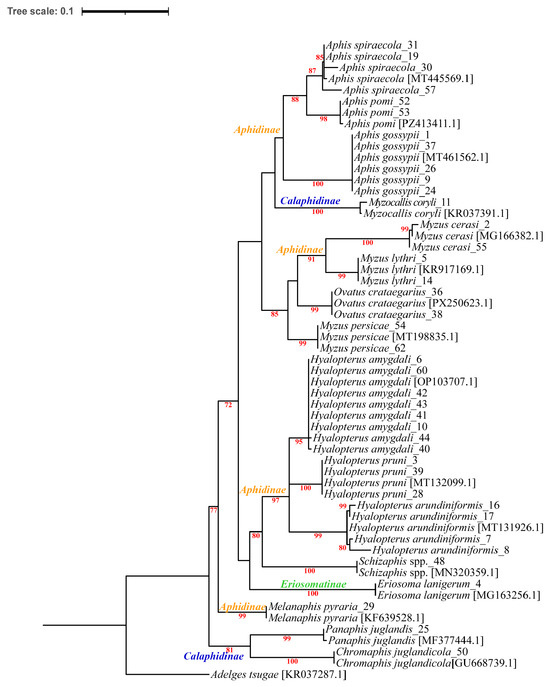
Phylogenetic relationships among the analyzed aphid specimens were reconstructed based on mitochondrial COI sequences (Figure 1). The maximum likelihood (ML) tree showed clear clustering of individuals according to their morphological species identifications. Specimens assigned to the same species based on morphological characteristics generally grouped into distinct clades, with moderate to high bootstrap support values, particularly at terminal nodes (bootstrap support ranging from 72 to 100). Major aphid lineages, including Hyalopterus, Aphis, and Myzus, formed distinct clusters corresponding to their expected taxonomic relationships. Within the Hyalopterus lineage, specimens morphologically identified as H. amygdali (Blanchard), H. pruni (Geoffroy), and H. arundiniformis Ghulamullah were resolved into closely related but distinguishable subclades. Similarly, morphologically identified Aphis species, including A. gossypii Glover, A. spiraecola Patch, and A. pomi De Geer, formed coherent clusters, whereas Myzus species were recovered as a separate lineage. Representative species of the subfamilies Aphidinae, Calaphidinae, and Eriosomatinae recovered across distinct clades reflecting their taxonomic placements. Reference sequences obtained from public databases clustered with the corresponding study specimens, further supporting the consistency between morphological identification and COI-based phylogenetic placement. The phylogeny was rooted using Adelges tsugae (KR037287.1) as the outgroup (Figure 1).
Figure 1.
Maximum likelihood phylogenetic tree based on mitochondrial COI sequences. Phylogenetic relationships among aphid species were inferred using maximum likelihood analysis of COI sequences. Newly generated sequences are shown alongside reference sequences obtained from GenBank (accession numbers indicated). Bootstrap support values (%) are provided at nodes, with only values ≥70% displayed. Adelges tsugae (KR0372787.1) was used as an outgroup. Branch lengths correspond to nucleotide substitutions per site, and the scale bar indicates evolutionary distance.
3.3. Buchnera aphidicola Phylogenetic Analysis
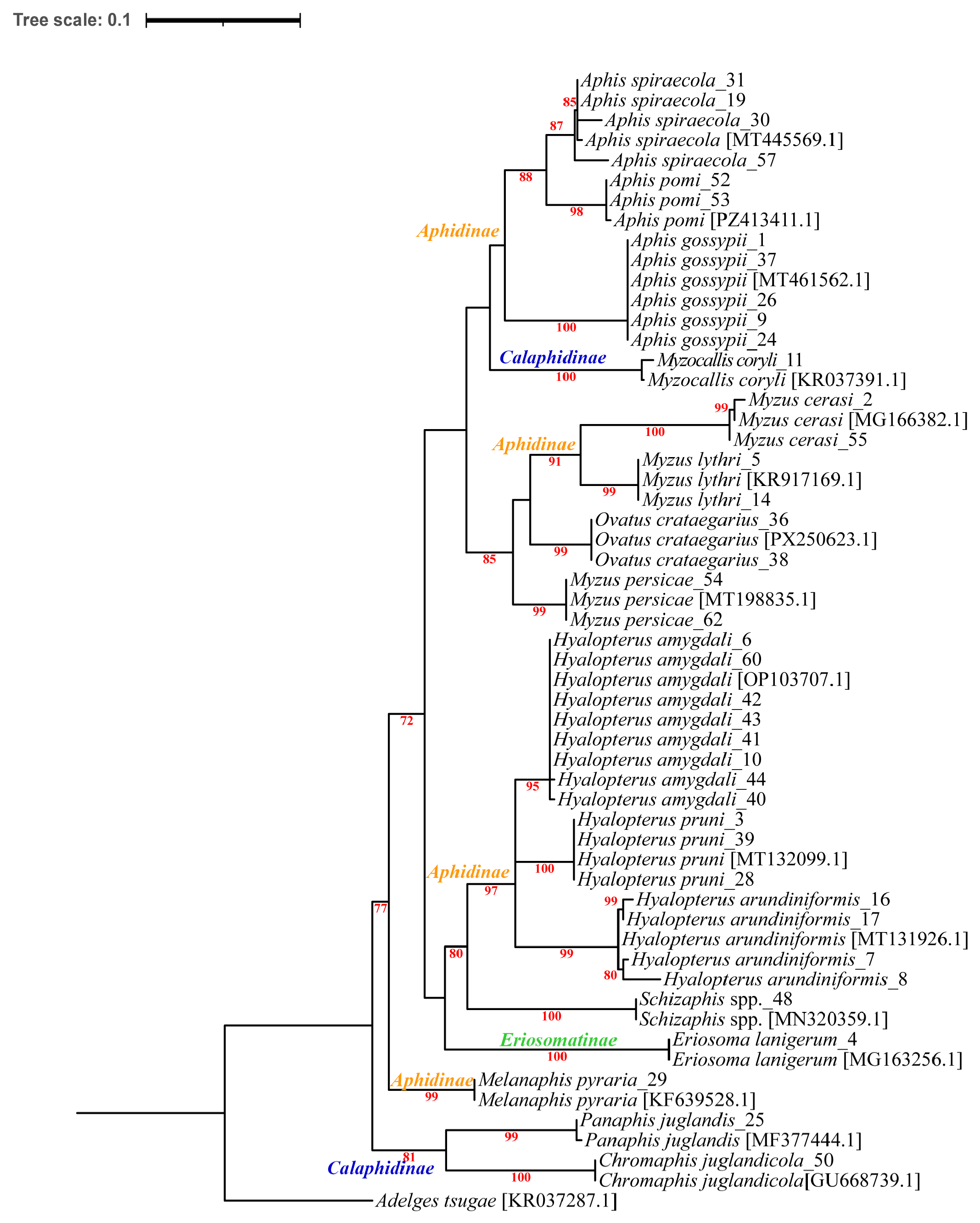
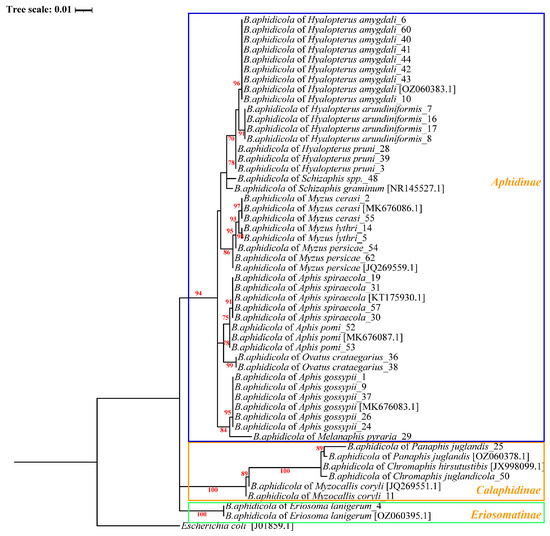
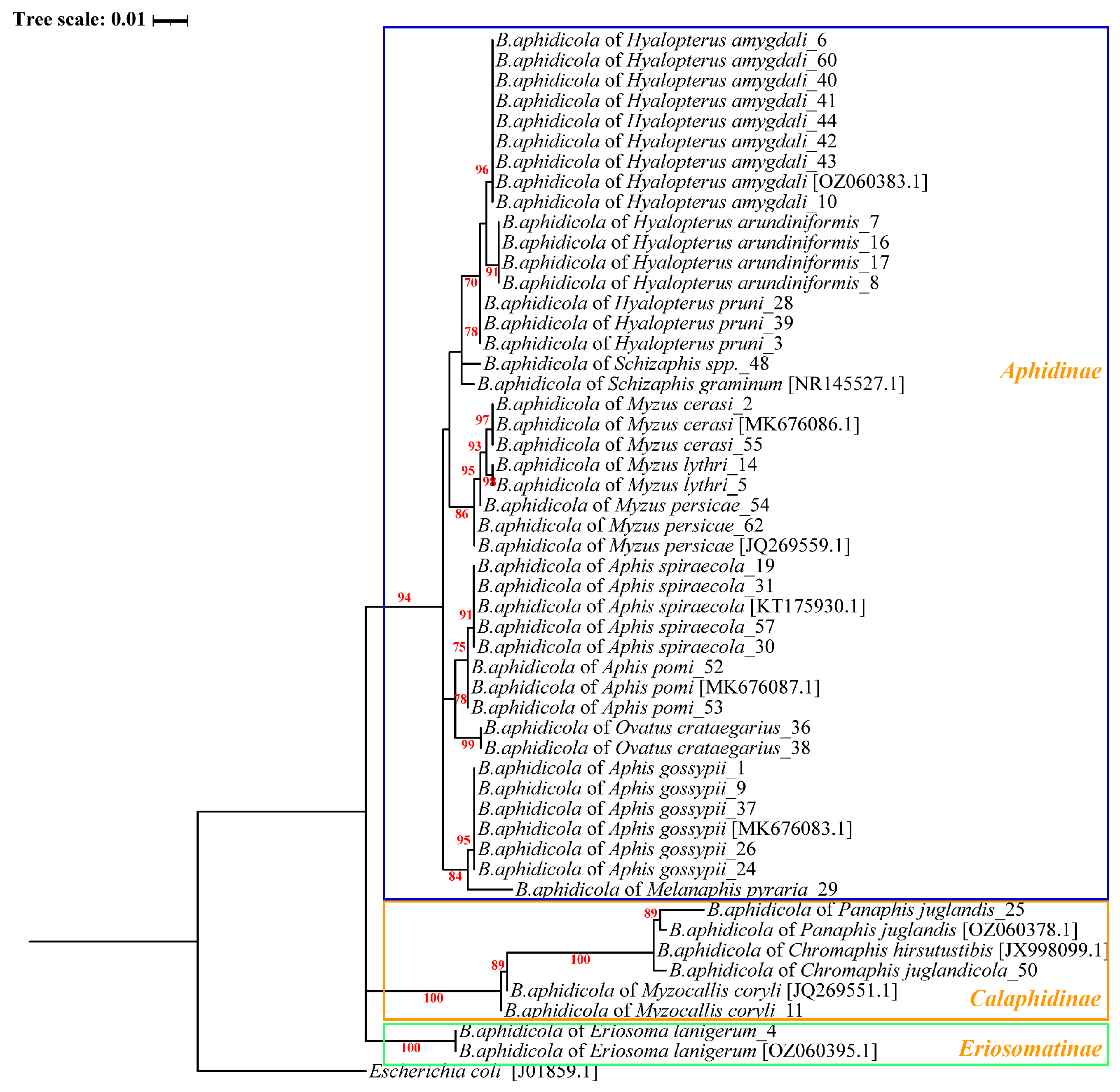
Phylogenetic relationships of the obligate endosymbiont Buchnera aphidicola were reconstructed based on partial 16S rRNA gene sequences (Figure 2). The maximum likelihood tree showed a general pattern of clustering among Buchnera sequences according to their aphid host lineages, recovering three distinct major clades corresponding to the subfamilies Aphidinae, Calaphidinae, and Eriosomatinae. Sequences associated with Hyalopterus species, including H. amygdali and H. pruni, formed distinct clusters, whereas Buchnera sequences associated with Aphis, Myzus, and related aphid taxa grouped with corresponding reference sequences retrieved from public databases within the Aphidinae clade. Most terminal clades received moderate to high bootstrap support (bootstrap values ranging from 70 to 100), whereas deeper internal nodes showed comparatively lower support. Although the overall topology indicated host-associated structuring of Buchnera lineages reflecting major host subfamilies, some localized inconsistencies were observed among specific host–symbiont associations. The phylogeny was rooted using Escherichia coli (J01859.1) as the outgroup (Figure 2).
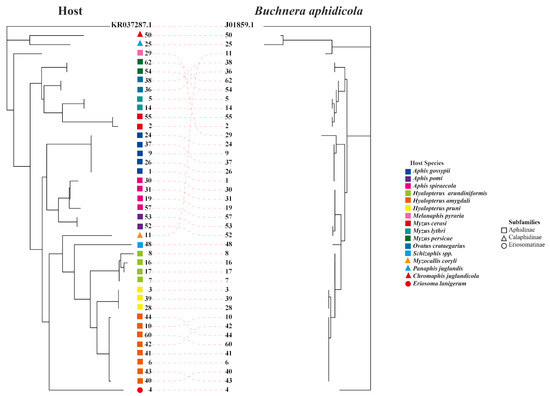
Figure 2.
Maximum likelihood phylogenetic reconstruction of Buchnera aphidicola based on 16S rRNA sequences. Buchnera sequences generated from aphid samples were analyzed together with reference sequences from GenBank (accession numbers provided). Sequences are labeled according to host species and sample identifiers. Bootstrap support values (%) are shown at nodes (only ≥70% displayed). Branch lengths correspond to substitutions per site, as indicated by the scale bar. The resulting topology shows broad clustering of Buchnera sequences by host-associated groups. Because the inference is based on partial 16S rRNA data, the tree should be interpreted as a low-resolution view of symbiont phylogenetic structure.
3.4. Cophylogenetic Relationship Between Aphid Hosts and Buchnera aphidicola
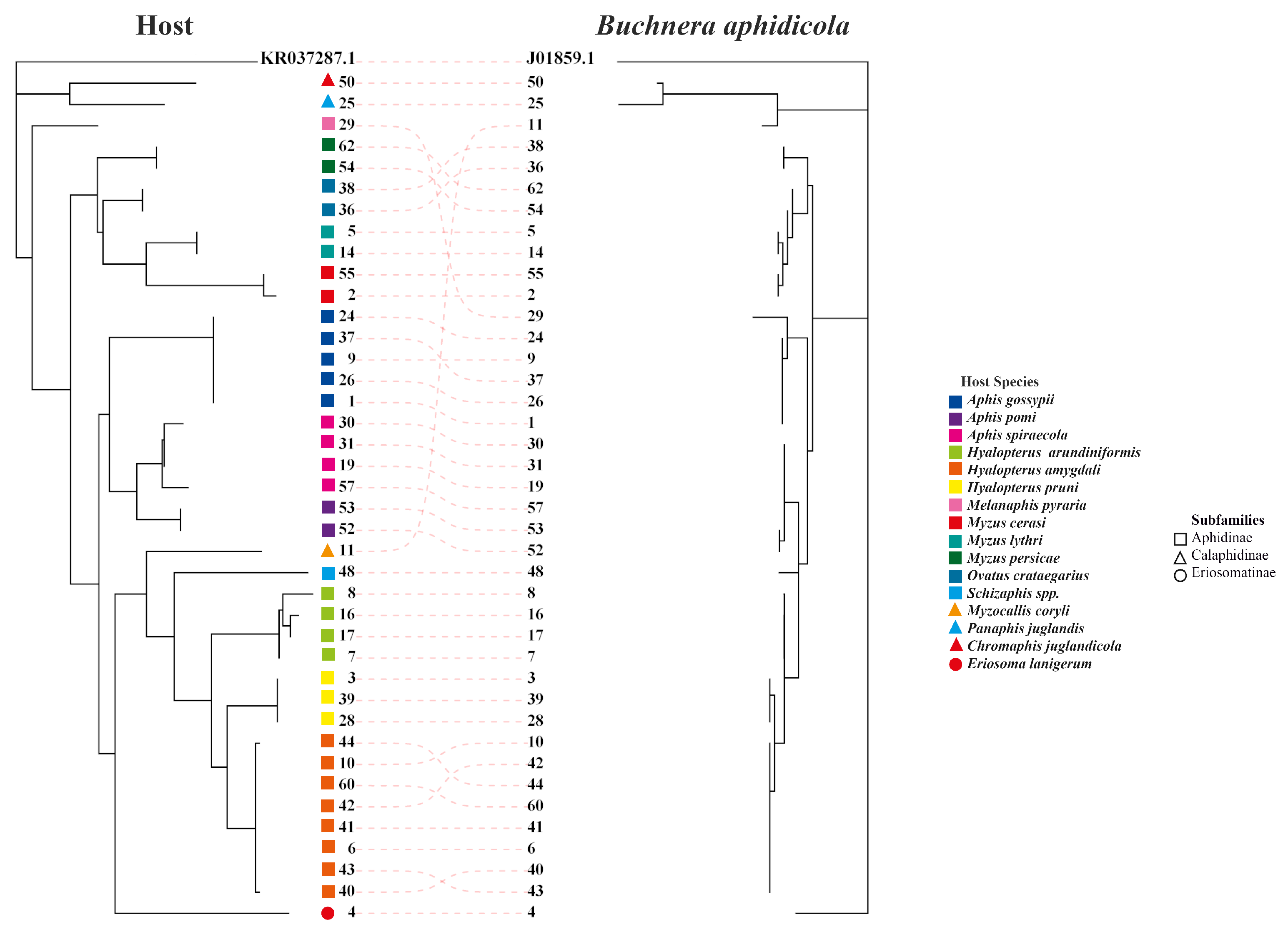
The cophylogenetic relationship between aphid hosts and their associated Buchnera aphidicola lineages was evaluated using the Procrustean Approach to Cophylogeny (PACo). The analysis revealed significant global congruence between host and symbiont phylogenies (SS = 0.617, 9999 permutations, p < 0.0001), indicating that the observed host–symbiont associations were significantly more congruent than expected by chance. This significant congruence is consistent with a strong long-term host-associated evolutionary relationship between aphids and Buchnera, which is compatible with the predominantly vertical inheritance of Buchnera. The analysis showed that most host–symbiont associations contributed positively to the overall congruence, although several individual associations exhibited higher jackknife residual values, indicating localized phylogenetic mismatches. These deviations suggest that, while the general host–symbiont pattern is congruent, some specific associations do not fully follow the overall phylogenetic structure. Jackknife residual values for individual host–symbiont associations are provided in Supplementary Table S1. A qualitative comparison of aphid COI and Buchnera 16S rRNA phylogenies is shown in Figure 3. The tanglegram revealed a broadly congruent pattern between host and symbiont phylogenies, with several lineages showing correspondence between host clustering and Buchnera relationships. Consistent patterns were observed within Hyalopterus and Aphis gossypii lineages, where host groupings were largely associated with similar Buchnera clustering patterns. In contrast, several small sample lineages showed apparent topological mismatches, although these patterns should be interpreted cautiously given the limited replication. These observations represent qualitative comparisons of phylogenetic topology based on tanglegram visualization.
Figure 3.
Tanglegram comparing the phylogenetic trees of aphid hosts (based on mitochondrial COI sequences, left) and their obligate endosymbiont Buchnera aphidicola (based on 16S rRNA sequences, right). Connecting dashed lines illustrate the topological congruence and incongruence between host and symbiont lineages. Numbered leaf nodes correspond to individual sample IDs specified in the text, with symbol shapes and colors representing host species and subfamilies as indicated in the legend.
3.5. Overall Detection Patterns of Aphid-Associated Bacteria
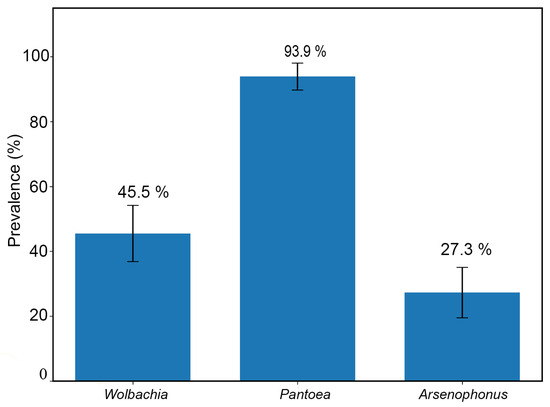
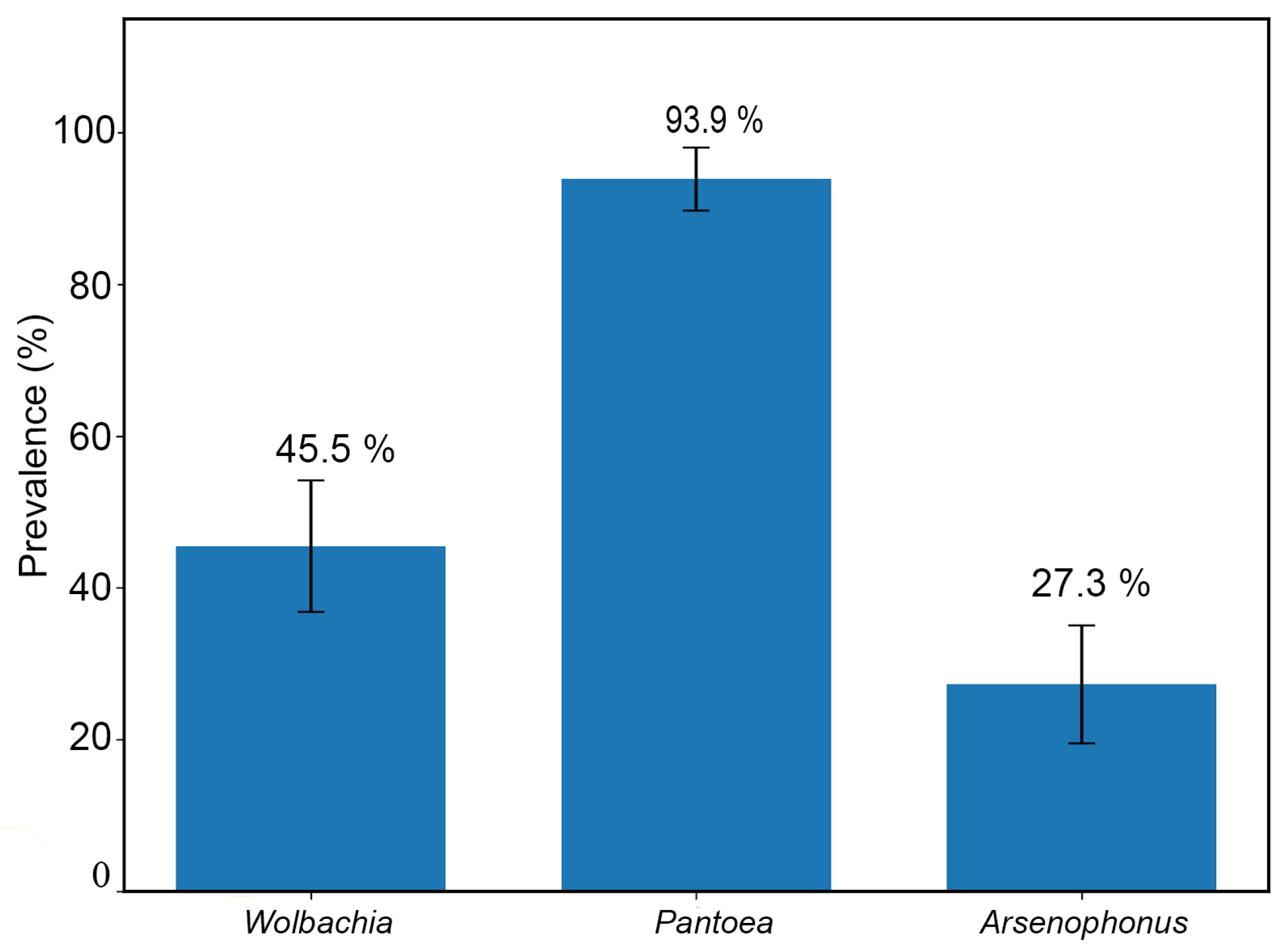
The prevalence of aphid-associated bacteria is shown in Figure 4. Among the 33 screened aphid individuals, Pantoea was detected in 93.9% (31/33) of the samples (95% CI: 79.8–99.3), followed by Wolbachia (45.5%, 15/33; 95% CI: 28.1–63.6) and Arsenophonus (27.3%, 9/33; 95% CI: 13.3–45.5).
Figure 4.
Overall detection patterns of aphid-associated bacteria in aphid samples. Bars represent the proportion of PCR-positive individuals (%, n = 33) for each bacterial taxon (Wolbachia, Pantoea, and Arsenophonus). Error bars indicate 95% exact binomial confidence intervals (Clopper–Pearson method).
3.6. Species-Level Distribution Patterns of Detected Bacterial Taxa
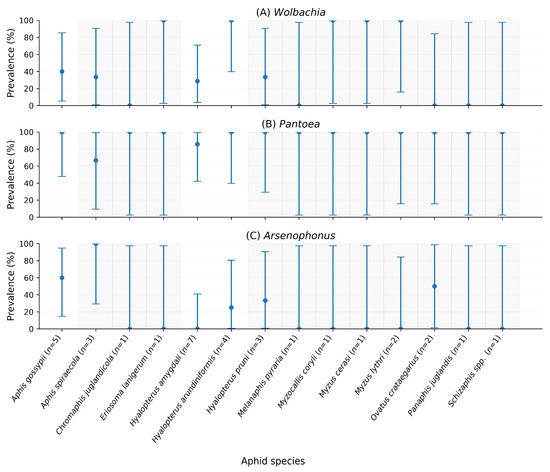
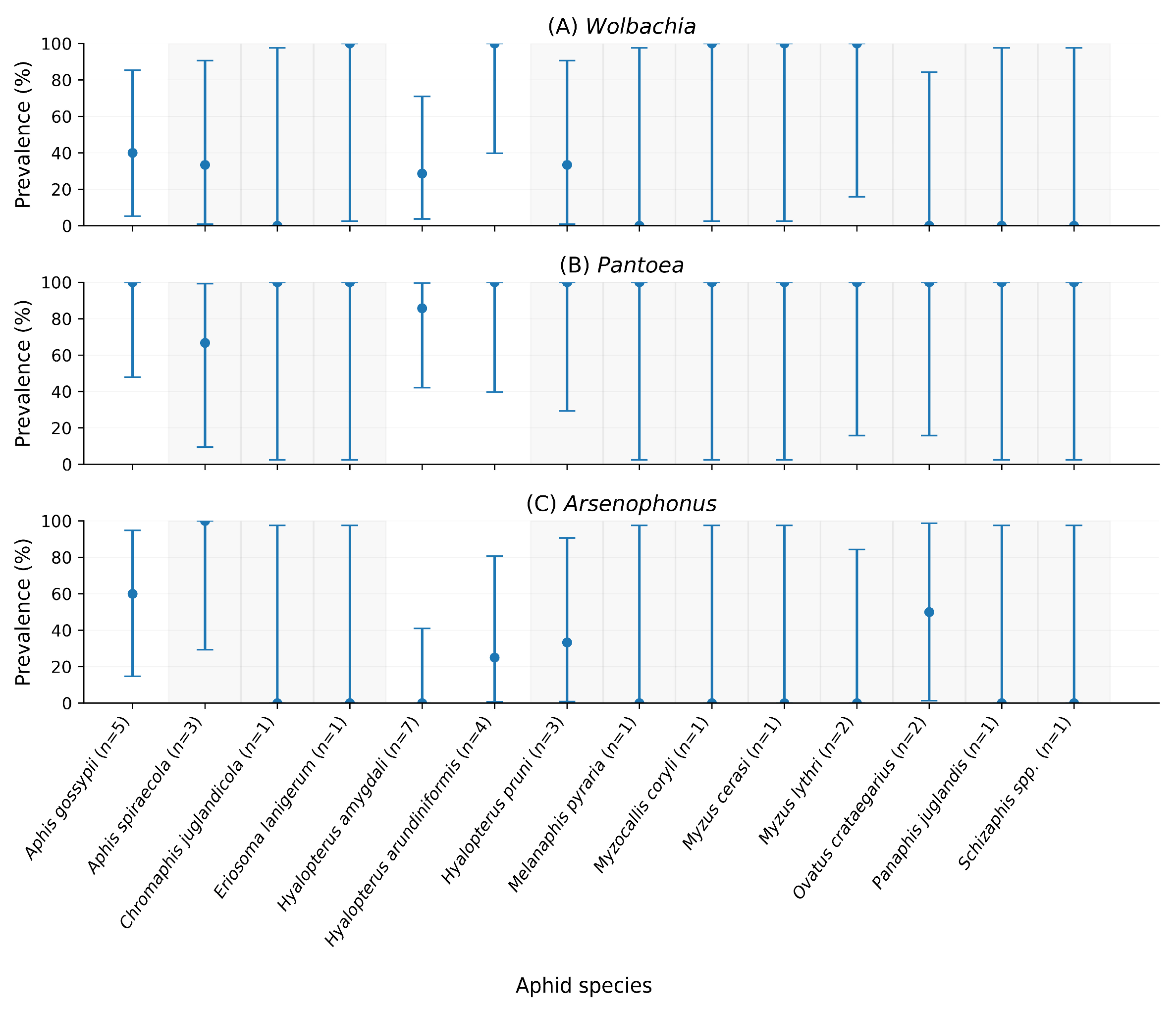
Species-level detection frequencies are shown in Figure 5. Given the uneven sample sizes among aphid species, these values should be interpreted as descriptive patterns rather than precise species-level prevalence estimates. Wolbachia showed variable detection patterns across aphid taxa, with detection observed in some species and not detected in others. Pantoea showed a broad distribution across the sampled host species, whereas Arsenophonus exhibited a more restricted and heterogeneous detection pattern. Species represented by small sample sizes (n ≤ 3) were interpreted cautiously because of the greater uncertainty associated with these observations.
Figure 5.
Species-level detection patterns of aphid-associated bacteria. Points indicate prevalence (%) for each aphid species; error bars represent 95% exact binomial confidence intervals (Clopper–Pearson method). Sample sizes (n) are shown for each species. Panels correspond to (A) Wolbachia, (B) Pantoea, and (C) Arsenophonus. Shaded areas denote species with n ≤ 3.
3.7. Distribution Patterns of Detected Bacterial Taxa Across Aphid Species
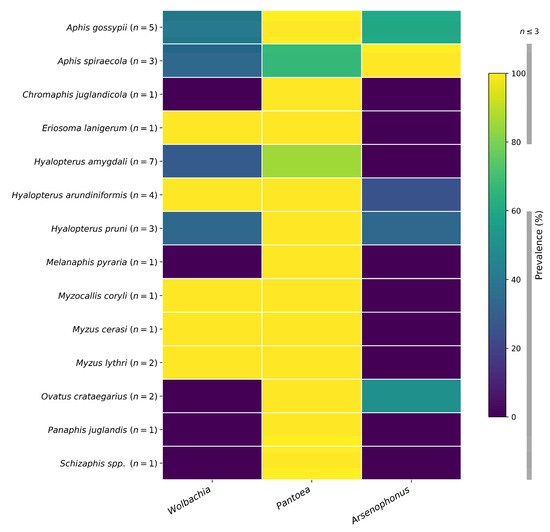
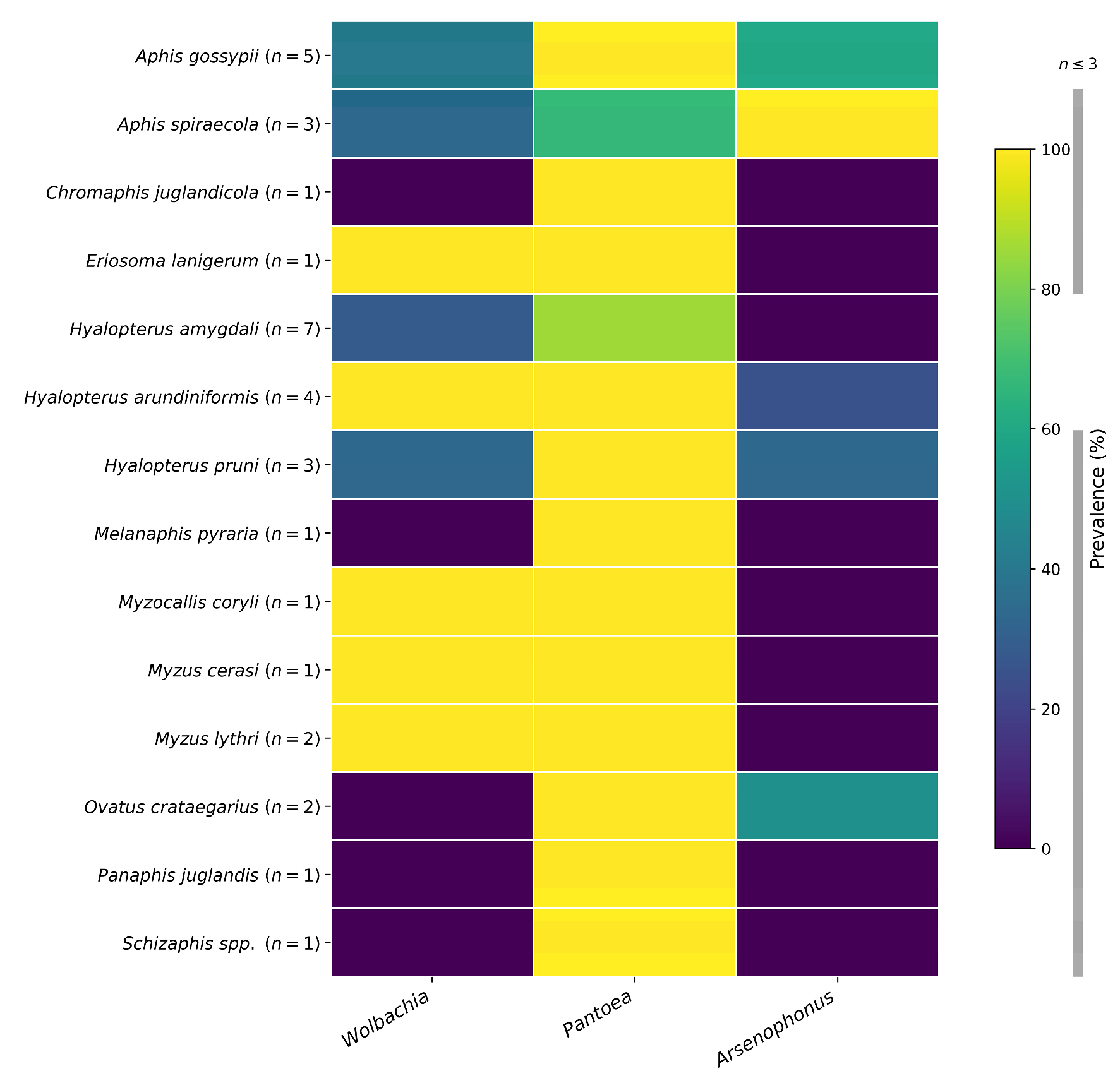
The distribution patterns of detected aphid-associated bacteria taxa across host species are illustrated in Figure 6. The heatmap shows variation in bacterial detection patterns among aphid hosts. Pantoea was detected across most sampled host species, whereas Wolbachia showed a more variable detection pattern. Arsenophonus displayed a more restricted distribution, with detection limited to a subset of host taxa. Overall, these results indicate variation in the detection of aphid-associated bacteria across the sampled aphid hosts.
Figure 6.
Distribution of aphid-associated bacteria across aphid species. Color intensity represents detection frequency (%) of each bacterial taxon within host species. Species with small sample sizes (n ≤ 3) are indicated with an asterisk and should be interpreted with caution.
3.8. Pairwise Associations Among Detected Aphid-Associated Bacteria
Pairwise co-detection associations among aphid-associated bacteria are shown in Figure 7. Fisher’s exact tests did not detect statistically significant associations among the examined taxa (all p > 0.05). Estimated odds ratios were associated with wide confidence intervals overlapping the null expectation (OR = 1), indicating high uncertainty in the direction and strength of pairwise associations. The association between Wolbachia and Pantoea showed an odds ratio greater than one, suggesting a positive trend; however, this association was not statistically significant (p = 0.117). Similarly, no significant associations were detected between Pantoea and Arsenophonus (p = 0.654) or between Wolbachia and Arsenophonus (p = 0.705). Overall, no statistically supported pairwise codetection associations were detected among the examined aphid-associated bacteria.
Figure 7.
Pairwise associations among aphid-associated bacteria. Odds ratios (ORs) and 95% confidence intervals derived from Fisher’s exact tests are shown. The dashed vertical line indicates OR = 1. No statistically significant associations were detected (all p > 0.05).
4. Discussion
This study integrates host phylogenetic reconstruction with targeted screening of aphid-associated bacteria l taxa to examine patterns of bacterial detection across aphid lineages. The results reveal a clear contrast between the phylogenetically structured pattern observed for the obligate symbiont Buchnera aphidicola and the more heterogeneous detection patterns observed among other aphid-associated bacteria. The correspondence between host and Buchnera phylogenies indicates a strong long-term host-associated evolutionary relationship, which is compatible with predominantly vertical inheritance of Buchnera. In contrast, the variable detection patterns of other aphid-associated bacteria suggest that their distributions cannot be explained solely by host phylogenetic relationships and may also reflect ecological, environmental, or transmission-related processes. Given the small and uneven sample sizes among aphid species, these findings should be interpreted as descriptive screening patterns rather than species-level prevalence estimates. Rather than providing a comprehensive characterization of aphid-associated microbial communities, our targeted marker-based approach was designed to assess the occurrence and distribution of selected bacterial taxa across the sampled aphid hosts.
The composition of the sampled aphid community reflects ecological variation among aphid taxa, including species associated with Rosaceae hosts as well as taxa with relatively broad or restricted host associations. Such ecological differences may be relevant to bacterial acquisition and persistence, as host range and plant use have been suggested to influence aphid–bacteria associations [38,39]. The uneven sample sizes among species likely reflect differences in field occurrence and population abundance during sampling, but these differences also limit the extent to which species-level patterns can be compared. Therefore, the observed variation in bacterial detection should be interpreted primarily as descriptive screening patterns rather than evidence of host-species effects. This ecological heterogeneity provides important context for interpreting the distribution of aphid-associated bacteria across the sampled hosts.
Molecular analyses further supported the consistency of species identification, with COI-based phylogeny showing overall concordance with morphological assignments. This finding is consistent with the established utility of COI as a DNA barcode marker for aphids, particularly for species-level discrimination and shallow taxonomic comparisons [40,41]. However, the reduced resolution observed at deeper nodes reflects known limitations of mitochondrial markers for resolving higher-level evolutionary relationships, emphasizing the value of multilocus approaches in aphid phylogenetic studies [17,41]. Together, these results provide a useful host phylogenetic framework for interpreting the observed patterns of bacterial detection in an evolutionary context.
Similarly, the phylogeny of Buchnera revealed a general pattern of host-associated clustering, consistent with the expected influence of long-term host association on the evolutionary history of aphid obligate symbionts [10,42]. This pattern supports the view that obligate symbiont lineages are strongly structured by host evolutionary history rather than solely by short-term ecological processes. The overall correspondence between host and symbiont phylogenies was further supported by the cophylogenetic analysis, which revealed significant global congruence between aphid hosts and Buchnera aphidicola lineages. This significant congruence is consistent with a strong long-term host-associated evolutionary relationship, which is compatible with predominantly vertical inheritance of Buchnera but does not by itself demonstrate a particular transmission mode. However, the observed congruence was not complete, as several host–symbiont associations showed localized incongruences. These mismatches may reflect a combination of biological processes, such as differences in evolutionary rates or incomplete lineage sorting, as well as limitations associated with single-marker datasets. Therefore, the observed pattern supports broad host–symbiont correspondence rather than strict one to one cospeciation.
In contrast to the structured pattern observed for Buchnera, the aphid-associated bacteria l taxa examined here showed heterogeneous detection patterns across aphid host species. Wolbachia and Arsenophonus displayed considerable variation in detection frequencies among host taxa, whereas Pantoea showed a broader distribution across the analyzed aphid species. This pattern is consistent with previous studies indicating that aphid-associated bacteria l taxa can vary in distribution according to host identity, ecological conditions, and transmission dynamics [14,23]. Unlike obligate symbionts, some aphid-associated bacteria may be less tightly constrained by host phylogenetic history and may be influenced by processes such as horizontal transmission and ecological interactions. However, the present screening design does not allow the relative contributions of host identity, ecological conditions, or transmission processes to be independently evaluated. Therefore, the heterogeneous detection patterns observed in this study should be interpreted as descriptive patterns that may reflect multiple ecological and evolutionary processes rather than as evidence for specific transmission mechanisms.
A distinct pattern was observed for Pantoea, which was frequently detected across a broad range of aphid host taxa [43]. This widespread detection pattern differs from that commonly reported for several well-characterized facultative symbionts, which often show more restricted host distributions [14,44]. The high detection frequency of Pantoea may reflect environmental acquisition, transient association, or repeated exposure through host plant surfaces or shared environmental reservoirs. However, the present study was based on presence–absence PCR data without localization or quantitative measurements, and therefore, the biological nature, persistence, and mode of acquisition of the detected Pantoea cannot be conclusively determined. Accordingly, Pantoea is referred to here as an aphid-associated bacterium rather than a confirmed facultative endosymbiont. The observed pattern highlights that frequent PCR detection does not necessarily demonstrate a stable or functionally established symbiotic association and emphasizes the importance of distinguishing between stable host-associated bacteria and environmentally mediated bacterial associations in aphids.
Although differences in detection frequencies were observed among the screened bacterial taxa, pairwise analyses did not provide statistical support for nonrandom co-detection patterns among taxa. Given the wide confidence intervals and sparse contingency tables, these results should be interpreted cautiously and may partly reflect limited statistical power associated with the small sample size. Previous studies have shown that aphid-associated bacterial communities can involve complex ecological relationships, including potential synergistic and antagonistic interactions among bacterial taxa [14,23]. Therefore, the absence of statistically supported codetection patterns in the present dataset should not be interpreted as evidence that biological interactions are absent. Instead, potential associations may depend on ecological context, spatial variation, host background, or environmental conditions that were not independently evaluated in this study. Given the descriptive nature of the screening and the uneven sampling among aphid species, further studies with larger and independently replicated samples will be necessary to evaluate these potential associations more robustly.
Several limitations should be considered when interpreting these findings. First, the dataset was based on a relatively small number of individuals, and species-level representation was uneven, limiting the robustness of interspecific comparisons. Accordingly, the observed species-level patterns should be considered descriptive rather than as estimates of true prevalence. Second, bacterial screening was restricted to a targeted subset of aphid-associated taxa and therefore does not capture the complete diversity of bacteria associated with aphids. Third, the sampling design was not independently replicated across aphid species, host plants, geographic locations, or environmental conditions; therefore, the present dataset does not permit independent evaluation of host species, host plant, geographic, or environmental effects on bacterial detection patterns. Fourth, host–symbiont evolutionary comparisons were based on partial 16S rRNA data for Buchnera, which may limit phylogenetic resolution and the interpretation of deeper evolutionary relationships. Finally, reliance on PCR-based presence/absence data, particularly for broadly detected taxa such as Pantoea, limits the ability to distinguish between stable host-associated relationships, transient occurrence, and environmentally acquired bacterial associations.
Taken together, these findings indicate that obligate and other aphid-associated bacteria exhibit contrasting patterns of evolutionary and ecological association. The strong host-associated pattern observed for Buchnera contrasts with the more variable detection patterns of other aphid-associated bacterial taxa, suggesting that their distributions cannot be explained solely by host phylogenetic relationships. These patterns may also reflect ecological, environmental, or transmission-related processes, although the present study does not allow these factors to be evaluated independently. Future studies incorporating broader geographic sampling, larger and more balanced sample sizes, quantitative approaches, and localization-based methods will help clarify the processes underlying these bacterial associations and determine the functional significance of frequently detected bacterial taxa in aphid biology.
Supplementary Materials
The following supporting information can be downloaded at: https://www.mdpi.com/article/10.3390/insects17080875/s1, Table S1: Jackknife residuals for each aphid host-Buchnera aphidicola association obtained from the Procrustean Approach to Cophylogeny (PACo) analysis. Lower residual values indicate stronger phylogenetic congruence between host and bacterial lineages.
Author Contributions
Conceptualization: I.Ö. and NG; data curation: I.Ö., N.S.Ç. and N.G.; formal analysis: I.Ö., N.S.Ç. and N.G.; funding acquisition: I.Ö.; investigation: I.Ö., N.S.Ç. and N.G.; methodology: I.Ö., N.S.Ç. and N.G.; project administration: I.Ö.; resources: I.Ö.; supervision: N.G.; roles/writing—original draft: I.Ö., N.S.Ç. and N.G.; writing—review and editing: I.Ö., N.S.Ç. and N.G. All authors have read and agreed to the published version of the manuscript.
Funding
This study was supported by project number TAGEM-BS-15/08-04/01-10 of the General Directorate of Agricultural Research and Policies of the Republic of Türkiye Ministry of Agriculture and Forestry.
Data Availability Statement
The data supporting the findings of this study are available from the corresponding author upon reasonable request.
Acknowledgments
We thank Kocaeli University for the diagnoses made with the help of a microscope obtained with the Entomology Laboratory infrastructure project (BAP, FBA-2023-3437).
Conflicts of Interest
The authors declare that they have no known competing financial interests or personal relationships that could have influenced the work reported in this study.
References
- Blackman, R.L.; Eastop, V.F. Aphids on the World’s Crops: An Identification and Information Guide; John Wiley & Sons: Chichester, UK, 2000; 476p. [Google Scholar]
- Dedryver, C.A.; Ralec, A.L.; Fabre, F. The conflicting relationships between aphids and men: A review of aphid damage and control strategies. C. R. Biol. 2010, 333, 539–553. [Google Scholar] [CrossRef] [Scilit] [PubMed]
- Van Emden, H.F.; Harrington, R. Aphids as Crop Pests; CABI: Oxfordshire, UK, 2017. [Google Scholar] [CrossRef] [Scilit]
- Blackman, R.L.; Eastop, V.F. Aphids of the World’s Plants: An Online Identification and Information Guide. 2026. Available online: http://www.aphidsonworldsplants.info (accessed on 22 March 2026).
- Favret, C. Aphid Species File. Version 5.0/5.0. 2026. Available online: http://aphid.speciesfile.org (accessed on 22 March 2026).
- Douglas, A.E. Nutritional interactions in insect-microbial symbioses: Aphids and their symbiotic bacteria Buchnera. Annu. Rev. Entomol. 1998, 43, 17–37. [Google Scholar] [CrossRef] [Scilit] [PubMed]
- Baumann, P. Biology of bacteriocyte-associated endosymbionts of plant sap-sucking insects. Annu. Rev. Microbiol. 2005, 59, 155–189. [Google Scholar] [CrossRef] [Scilit] [PubMed]
- Hansen, A.K.; Moran, N.A. Aphid genome expression reveals the evolutionary basis of obligate symbiosis. Proc. Natl. Acad. Sci. USA 2011, 108, 2849–2854. [Google Scholar] [CrossRef] [Scilit] [PubMed]
- Moran, N.A.; McCutcheon, J.P.; Nakabachi, A. Genomics and evolution of heritable bacterial symbionts. Annu. Rev. Genet. 2008, 42, 165–190. [Google Scholar] [CrossRef] [Scilit] [PubMed]
- Moran, N.A.; Munson, M.A.; Baumann, P.; Ishikawa, H. A molecular clock in endosymbiotic bacteria is calibrated using the insect hosts. Proc. R. Soc. B Biol. Sci. 1993, 253, 167–171. [Google Scholar] [CrossRef] [Scilit]
- Funk, D.J.; Helbling, L.; Wernegreen, J.J.; Moran, N.A. Intraspecific phylogenetic congruence among multiple symbiont genomes. Proc. R. Soc. B Biol. Sci. 2000, 267, 2517–2521. [Google Scholar] [CrossRef] [Scilit] [PubMed]
- Shigenobu, S.; Watanabe, H.; Hattori, M.; Sakaki, Y.; Ishikawa, H. Genome sequence of the endocellular bacterial symbiont of aphids Buchnera sp. Nature 2004, 407, 81–86. [Google Scholar] [CrossRef] [Scilit] [PubMed]
- Csorba, A.B.; Dinescu, S.; Pircalabioru, G.G.; Fora, C.G.; Bálint, J.; Loxdale, H.D.; Balog, A. Aphid adaptation in a changing environment through their bacterial endosymbionts: An overview, including a new major cereal pest (Rhopalosiphum maidis (Fitch)) scenario. Symbiosis 2024, 93, 139–152. [Google Scholar] [CrossRef] [Scilit]
- Oliver, K.M.; Degnan, P.H.; Burke, G.R.; Moran, N.A. Facultative symbionts in aphids and the horizontal transfer of ecologically important traits. Annu. Rev. Entomol. 2010, 55, 247–266. [Google Scholar] [CrossRef] [Scilit] [PubMed]
- Ferrari, J.; Vavre, F. Bacterial symbionts in insects or the story of communities affecting communities. Philos. Trans. R. Soc. B Biol. Sci. 2011, 366, 1389–1400. [Google Scholar] [CrossRef] [Scilit] [PubMed]
- Augustinos, A.A.; Santos-Garcia, D.; Dionyssopoulou, E.; Moreira, M.; Papapanagiotou, A.; Scarvelakis, M.; Doudoumis, V.; Ramos, S.; Aguiar, A.F.; Borges, P.A.V.; et al. Detection and characterization of Wolbachia infections in natural populations of aphids: Is the hidden diversity fully unraveled? PLoS ONE 2011, 6, e28695. [Google Scholar] [CrossRef] [Scilit] [PubMed]
- Galtier, N.; Nabholz, B.; Glémin, S.; Hurst, G.D.D. Mitochondrial DNA as a marker of molecular diversity: A reappraisal. Mol. Ecol. 2009, 18, 4541–4550. [Google Scholar] [CrossRef] [Scilit]
- Oliver, K.M.; Russell, J.A.; Moran, N.A.; Hunter, M.S. Facultative bacterial symbionts in aphids confer resistance to parasitic wasps. Proc. Natl. Acad. Sci. USA 2003, 100, 1803–1807. [Google Scholar] [CrossRef] [Scilit] [PubMed]
- Russell, J.A.; Moran, N.A. Costs and benefits of symbiont infection in aphids. Proc. R. Soc. B Biol. Sci. 2006, 273, 603–610. [Google Scholar] [CrossRef] [Scilit] [PubMed]
- Łukasik, P.; Guo, H.; Van Asch, M.; Henry, L.M.; Godfray, H.C.J.; Ferrari, J. Horizontal transfer of facultative endosymbionts is limited by host relatedness. Evolution 2015, 69, 2757–2766. [Google Scholar] [CrossRef] [Scilit] [PubMed]
- Bayram, S.; Özdemir, İ. Physiological effects of endosymbiotic bacteria on aphids. In Proceedings of the V. Balkan Agricultural Congress, Edirne, Turkey, 20–23 September 2023; p. 142. [Google Scholar]
- Oliver, K.M.; Moran, N.A.; Hunter, M.S. Costs and benefits of a superinfection of facultative symbionts in aphids. Proc. R. Soc. B Biol. Sci. 2006, 273, 1273–1280. [Google Scholar] [CrossRef] [Scilit] [PubMed]
- Ferrari, J.; West, J.A.; Via, S.; Godfray, H.C.J. Population genetic structure and secondary symbionts in host-associated populations of the pea aphid complex. Evolution 2012, 66, 375–390. [Google Scholar] [CrossRef] [Scilit] [PubMed]
- Jousselin, E.; Desdevises, Y.; Coeur d’Acier, A. Fine-scale cospeciation between Brachycaudus and Buchnera aphidicola: Bacterial genome helps define species and evolutionary relationships in aphids. Proc. R. Soc. B Biol. Sci. 2009, 276, 187–196. [Google Scholar] [CrossRef] [Scilit] [PubMed]
- Özdemir, I.; Özdem, A. Classical morphological identification keys for Aphididae (Hemiptera) species in fruit orchards. Plant Prot. Bull. 2026, 66, 115–127. [Google Scholar] [CrossRef] [Scilit]
- Folmer, O.; Black, M.; Hoeh, W.; Lutz, R.; Vrijenhoek, R. DNA primers for amplification of mitochondrial cytochrome c oxidase subunit I from diverse metazoan invertebrates. Mol. Mar. Biol. Biotechnol. 1994, 3, 294–299. [Google Scholar] [PubMed]
- Katoh, K.; Standley, D.M. MAFFT multiple sequence alignment software version 7: Improvements in performance and usability. Mol. Biol. Evol. 2013, 30, 772–780. [Google Scholar] [CrossRef] [Scilit] [PubMed]
- Capella-Gutiérrez, S.; Silla-Martínez, J.M.; Gabaldón, T. trimAl: A tool for automated alignment trimming in large-scale phylogenetic analyses. Bioinformatics 2009, 25, 1972–1973. [Google Scholar] [CrossRef] [Scilit] [PubMed]
- Minh, B.Q.; Nguyen, M.A.T.; Von Haeseler, A. Ultrafast approximation for phylogenetic bootstrap. Mol. Biol. Evol. 2013, 30, 1188–1195. [Google Scholar] [CrossRef] [Scilit] [PubMed]
- Kalyaanamoorthy, S.; Minh, B.Q.; Wong, T.K.F.; Von Haeseler, A.; Jermiin, L.S. ModelFinder: Fast model selection for accurate phylogenetic estimates. Nat. Methods 2017, 14, 587–589. [Google Scholar] [CrossRef] [Scilit] [PubMed]
- R Core Team. R: A Language and Environment for Statistical Computing; R Foundation for Statistical Computing: Vienna, Austria, 2025; Available online: https://www.R-project.org/ (accessed on 22 March 2026).
- Paradis, E.; Claude, J.; Strimmer, K. APE: Analyses of phylogenetics and evolution in R language. Bioinformatics 2004, 20, 289–290. [Google Scholar] [CrossRef] [Scilit] [PubMed]
- Revell, L.J. Phytools: An R package for phylogenetic comparative biology (and other things). Methods Ecol. Evol. 2012, 3, 217–223. [Google Scholar] [CrossRef] [Scilit]
- Balbuena, J.A.; Míguez-Lozano, R.; Blasco-Costa, I. PACo: A novel Procrustes application to cophylogenetic analysis. PLoS ONE 2013, 8, e61048. [Google Scholar] [CrossRef] [Scilit] [PubMed]
- Thao, M.L.; Baumann, P. Evolutionary relationships of primary prokaryotic endosymbionts of whiteflies and their hosts. Appl. Environ. Microbiol. 2004, 70, 3401–3406. [Google Scholar] [CrossRef] [Scilit] [PubMed]
- Braig, H.R.; Zhou, W.; Dobson, S.L.; O’Neill, S.L. Cloning and characterization of a gene encoding the major surface protein of the bacterial endosymbiont Wolbachia pipientis. J. Bacteriol. 1998, 180, 2373–2378. [Google Scholar] [CrossRef] [Scilit] [PubMed]
- Guz, N.; Arshad, M.; Çağatay, N.S.; Dağeri, A. High prevalence of Pantoea in Diaphorina citri (Hemiptera: Liviidae): Vector of citrus Huanglongbing disease. Curr. Microbiol. 2020, 77, 1525–1531. [Google Scholar] [CrossRef] [Scilit] [PubMed]
- Dixon, A.F.G. Aphid Ecology: An Optimization Approach, 2nd ed.; Chapman & Hall: London, UK, 1998. [Google Scholar]
- Zytynska, S.E.; Weisser, W.W. The natural occurrence of secondary bacterial symbionts in aphids. Ecol. Entomol. 2016, 41, 13–26. [Google Scholar] [CrossRef] [Scilit]
- Hebert, P.D.N.; Cywinska, A.; Ball, S.L.; De Waard, J.R. Biological identifications through DNA barcodes. Proc. R. Soc. B Biol. Sci. 2003, 270, 313–321. [Google Scholar] [CrossRef] [Scilit] [PubMed]
- Foottit, R.G.; Maw, H.E.L.; von Dohlen, C.D.; Hebert, P.D.N. Species identification of aphids using DNA barcodes. Mol. Ecol. Resour. 2008, 8, 1189–1201. [Google Scholar] [CrossRef] [Scilit] [PubMed]
- McCutcheon, J.P.; Moran, N.A. Extreme genome reduction in symbiotic bacteria. Nat. Rev. Microbiol. 2011, 10, 13–26. [Google Scholar] [CrossRef] [Scilit] [PubMed]
- Gauthier, J.P.; Outreman, Y.; Mieuzet, L.; Simon, J.C. Bacterial communities associated with host-adapted populations of pea aphids revealed by deep sequencing of 16S ribosomal DNA. PLoS ONE 2015, 10, e0120664. [Google Scholar] [CrossRef] [Scilit] [PubMed]
- Guo, J.; Hatt, S.; He, K.; Chen, J.; Francis, F.; Wang, Z. Nine facultative endosymbionts in aphids. A review. J. Asia-Pac. Entomol. 2017, 20, 794–801. [Google Scholar] [CrossRef] [Scilit]

Disclaimer/Publisher’s Note: The statements, opinions and data contained in all publications are solely those of the individual author(s) and contributor(s) and not of MDPI and/or the editor(s). MDPI and/or the editor(s) disclaim responsibility for any injury to people or property resulting from any ideas, methods, instructions or products referred to in the content. |
© 2026 by the authors. Licensee MDPI, Basel, Switzerland. This article is an open access article distributed under the terms and conditions of the Creative Commons Attribution (CC BY) license.