


Simple Summary
The growing demand for sustainable sources of food and animal feed has increased interest in edible insects, which can convert low-value organic materials into nutritious biomass. However, their nutritional composition can vary depending on what they eat and how they are reared, making it difficult to consistently produce insects with desired nutritional properties. This review examines how diet and the communities of microorganisms living in the insect gut work together to influence growth, nutrient use, fats, proteins, and other valuable compounds. The available evidence shows that diets containing agricultural by-products, food residues, seaweeds, and other nutrient-rich materials can change the nutritional composition and quality of edible insects. The review also shows that gut microorganisms contribute to digestion, nutrient transformation, adaptation to different diets, and the conversion of organic materials into useful biomass. However, important gaps remain because the mechanisms behind these interactions are not yet fully understood and production methods are not sufficiently standardized. Combining improved feeding strategies, knowledge of gut microorganisms, biological analysis, and automated production could help produce insects with more predictable nutritional properties. This approach could support sustainable food and feed production, reduce organic waste, and strengthen circular and resource-efficient agricultural systems.
Abstract
The growing demand for sustainable and nutritionally optimized protein sources has positioned edible insects as promising platforms for next-generation food and feed systems. Although insect composition varies with diet, the deliberate engineering of their nutritional profiles through controlled dietary and microbiome modulation remains insufficiently characterized. This review proposes an integrative framework in which edible insects are conceptualized as programmable biological systems whose biochemical composition can be tailored through diet–microbiome interactions. Current evidence is critically synthesized to elucidate how dietary inputs, including agro-industrial by-products and algal biomass, reshape gut microbial communities and metabolic pathways in key species such as Hermetia illucens, Tenebrio molitor, and Acheta domesticus. Emphasis is placed on engineering lipid metabolism and fatty acid composition because of their relevance to human nutrition, animal nutrition, and the development of functional food and feed products. By integrating insights from insect physiology, microbiology, and nutritional biochemistry, this work outlines strategies for precision feeding and microbiome-guided interventions aimed at optimizing insect-derived biomass. Key knowledge gaps and technical limitations are also identified, highlighting the need to transition from empirical approaches toward predictive, systems-based nutritional engineering. Collectively, this review highlights the transition from empirical feeding strategies toward predictive, systems-based approaches for designing customized insect biomass within sustainable circular bioeconomy frameworks.
1. Introduction
The increasing global demand for protein-rich foods is placing considerable pressure on conventional livestock systems, which are associated with high greenhouse gas emissions, extensive land use, and significant freshwater consumption [1]. Consequently, sustainable dietary strategies capable of balancing nutritional requirements with environmental sustainability have become a global priority [2]. Although insects have been consumed traditionally in many regions of the world for centuries, their scientific recognition as a sustainable food resource was first highlighted by [3], who proposed edible insects as a potential solution to global food shortages. Since then, edible insects have attracted increasing scientific and industrial attention as additional sources of proteins, lipids, vitamins, minerals, and bioactive compounds that can contribute to more sustainable food and feed systems while reducing pressure on conventional livestock production [2,3]. Among the approximately 2000 edible insect species reported worldwide, Hermetia illucens, Tenebrio molitor, and Acheta domesticus have emerged as the principal species for industrial production because of their high feed conversion efficiency, rapid growth, and capacity to convert low-value organic substrates into nutrient-rich biomass [4,5,6,7,8,9]. Beyond their nutritional value, these insects represent efficient biological platforms for the valorization of agricultural by-products and organic waste streams, supporting resource recovery and circular bioeconomy strategies [5,8]. Their favorable protein and lipid composition, combined with relatively low environmental impacts compared with conventional livestock, has stimulated increasing interest in their application in both food and animal feed systems [6,7,9].
A distinctive characteristic of edible insects is their remarkable nutritional plasticity. Their biochemical composition is influenced by multiple interacting factors, including species, developmental stage, diet composition, processing methods, and rearing conditions. Consequently, dietary interventions have become one of the most promising approaches for tailoring insect biomass. Feeding strategies based on omega-3-rich ingredients, agro-industrial by-products, seaweeds, olive pomace, and former foodstuffs have demonstrated their capacity to modify protein content, lipid accumulation, fatty acid (FA) profiles, growth performance, antioxidant status, and the concentration of bioactive compounds [6,10,11]. Previous reviews have emphasized that insect nutritional quality results from the interaction of biological and environmental factors rather than diet alone [12]. Likewise, nutrient composition, chitin content, and overall nutritional quality vary according to developmental stage and species, with several edible insects exhibiting nutrient profiles comparable to conventional animal-derived foods [13,14]. In parallel with dietary manipulation, the insect gut microbiome has emerged as a key regulator of nutrient digestion, metabolic homeostasis, and adaptation to diverse feeding substrates. In H. illucens, gut microbial communities are strongly influenced by diet composition, developmental stage, gut compartment, and rearing conditions, directly affecting nutrient transformation, substrate utilization efficiency, and biomass quality [15,16,17,18,19,20,21,22]. These findings highlight the importance of microbiome-mediated processes in precision nutritional engineering. These interacting determinants have been comprehensively reviewed by Meyer-Rochow et al. [23], who highlighted that species, developmental stage, sex, diet, environmental conditions, and processing methods collectively shape the nutritional quality and chemical composition of edible insects.
Despite the rapid expansion of edible insect research, important knowledge gaps remain. Most studies investigated nutritional composition, dietary substrates, gut microbiota, or bioconversion efficiency independently, whereas integrated analyses linking diet, microbiome dynamics, metabolic regulation, and biomass quality remain scarce [24]. Furthermore, methodological heterogeneity limits direct comparisons among studies and hinders the establishment of predictive nutritional strategies. Additional challenges include industrial scalability, substrate safety, regulatory frameworks, consumer acceptance and the limited understanding of nutrient bioavailability, long-term safety, and anti-nutritional compounds [4,25]. Addressing these limitations will be essential for advancing edible insects from promising biological resources to predictable and customizable production platforms.
Against this background, the present review provides a comprehensive and critical synthesis of current knowledge on diet–microbiome interactions and their role in shaping the nutritional composition of edible insects. Particular emphasis is placed on understanding how dietary interventions regulate gut microbial communities, metabolic pathways, lipid metabolism, and biomass quality in economically relevant species. Beyond summarizing the current evidence, this review identifies major technological, regulatory, and scientific challenges and proposes a systems-based framework for precision feeding and microbiome-guided biomass engineering. A conceptual framework illustrating the integration of diet formulation, gut microbiome restructuring, metabolic regulation, and engineered insect biomass production is presented in Figure 1.
2. Nutritional Plasticity and Biomass Engineering in Edible Insects
2.1. Nutritional Composition and Metabolic Flexibility Across Edible Insect Species
The nutritional composition of edible insects varies considerably among species and is influenced by multiple interacting factors, including developmental stage, diet composition, environmental conditions, rearing practices, and processing methods [26]. Although this variability complicates direct comparisons among studies, it also highlights the remarkable metabolic flexibility of edible insects and their potential as customizable sources of nutrients for sustainable food and feed systems. Comparative studies show that several edible insect species contain high-quality proteins, favorable FA profiles, and significant amounts of vitamins, minerals, and bioactive compounds [27].
Beyond their nutritional value, edible insects provide bioactive peptides, chitin, and antioxidant compounds, while processing technologies such as drying, fermentation, extrusion, and protein extraction influence nutrient stability, digestibility, techno-functional properties, sensory quality, and shelf life [28]. Likewise, protein-rich powders produced from edible crickets have demonstrated high nutritional density together with diverse peptide profiles, reinforcing their potential as ingredients for functional foods and alternative protein formulations [29]. Nevertheless, processing conditions may also contribute to variations in protein functionality and nutrient bioavailability, emphasizing the importance of standardized processing protocols for industrial applications.
Edible insects exhibit substantial variability in macronutrient composition, particularly regarding proteins, lipids, and carbohydrates, reflecting their remarkable physiological adaptability [30]. Protein represents one of the major nutritional components of edible insects, with several species presenting balanced amino acid profiles comparable to those of conventional livestock. Lipid composition, however, is considerably more dynamic and responds rapidly to dietary manipulation, providing opportunities to tailor FA profiles and improve nutritional quality through targeted feeding strategies [31]. In addition to their nutritional role, insect-derived proteins possess valuable techno-functional properties, including emulsifying capacity, foaming ability, water-holding capacity, and gel formation, which support their incorporation into diverse food formulations [32]. Despite these advantages, variability in species, developmental stage, substrates, rearing conditions, and processing methods limits direct comparisons among studies, emphasizing the need for standardized analytical methodologies and harmonized reporting criteria. Table 1 illustrates the considerable variability in nutritional composition of edible insects, highlighting species-specific differences in proteins, lipids, and micronutrients.
Table 1.
Nutritional composition across selected edible insect species.
2.2. Dietary Modulation of Nutritional Profiles
Diet composition is one of the principal determinants of the nutritional quality of edible insects, directly influencing growth performance, nutrient utilization, and the accumulation of proteins, lipids (FAs), and bioactive compounds [40]. Dietary manipulation using agro-industrial by-products, vegetable residues, former foodstuffs, and marine biomass consistently improves insect nutritional quality while supporting waste valorization. The magnitude of these responses varies among insect species and substrates due to differences in digestive physiology, nutrient availability, and rearing conditions. For example, H. illucens larvae reared on fish offal and seaweed mixtures accumulated higher levels of nutritionally valuable polyunsaturated fatty acids (PUFAs) [41]. Overall, current evidence supports dietary engineering as an effective strategy for tailoring insect biomass, although direct comparisons among studies remain constrained by differences in experimental design and analytical methodologies.
2.3. Engineering Lipid Metabolism and FA Profiles
As summarized in Table 2, dietary interventions consistently modify fatty acid composition across edible insect species. Although marine-derived substrates generally increase PUFA accumulation, plant-based substrates mainly influence total lipid content and specific fatty acid classes, illustrating the diversity of nutritional responses observed under different feeding strategies. Lipid metabolism has attracted increasing attention due to its relevance for nutritional quality and functional food applications. Black soldier fly larvae (H. illucens) exhibit remarkable metabolic flexibility, allowing the modulation of FA composition through dietary interventions and substrate formulation [35]. However, diet is only one of several factors regulating lipid metabolism, which is also influenced by species, developmental stage, sex, environmental conditions, and processing methods [23].
Beyond compositional changes, engineering insect lipid metabolism has important implications for food and feed applications. Improved FA profiles can enhance the nutritional quality of insect-derived ingredients and influence the fatty acid composition of animal products when enriched insects are incorporated into aquaculture diets [42].
Precision nutritional engineering therefore provides an effective framework for tailoring insect lipid composition through targeted substrate formulation [43]. Although dietary manipulation successfully modifies nutrient composition [34,44], current approaches remain largely empirical because the molecular mechanisms regulating lipid metabolism are still poorly understood. Recent studies using alternative substrates such as Rugulopteryx okamurae [45], with advances in transcriptomics, metabolomics, lipidomics, and functional genomics [46,47,48,49], are beginning to reveal these mechanisms and may support the development of predictive nutritional engineering strategies.
Table 2.
Dietary interventions and FA modulation in edible insects.
2.4. Precision Nutritional Engineering Strategies
Precision nutritional engineering integrates dietary formulation with insect physiology to produce biomass tailored for specific food and feed applications [43].
Beyond improving nutrient composition, these strategies contribute to the development of sustainable production systems by enhancing nutrient conversion efficiency and expanding the use of edible insects as alternative protein sources for animal nutrition [52,53]. Overall, precision nutritional engineering provides an effective framework for developing sustainable food and feed systems.
3. Gut Microbiome and Metabolic Regulation
3.1. Diversity and Structure of Insect Gut Microbiota
The gut microbiota plays a central role in digestion, nutrient transformation, metabolic regulation and adaptation to different dietary substrates in edible insects. In H. illucens, intestinal microbial communities exhibit considerable diversity and are strongly influenced by diet composition, suggesting close interactions between feeding substrates and microbial structure [16]. Moreover, microbial composition varies among different gut regions, indicating the presence of specialized microbial functions within the digestive tract.
Current investigations have demonstrated that the microbiota of H. illucens is dynamically structured according to gut compartment, developmental stage and diet [15]. These microbial communities contribute to the degradation of complex organic materials and nutrient bioconversion processes, thereby enhancing substrate utilization efficiency and insect growth performance [22]. These findings emphasize the contribution of gut microbiota to nutrient utilization and metabolic performance in edible insects.
Variations in microbiota composition have been observed in H. illucens larvae reared on different organic waste streams and at different production scales, emphasizing the impact of substrate characteristics and environmental factors on microbial ecology [21]. Furthermore, investigations into edible insects commercialized in the European Union have revealed diverse microbial communities associated with different insect species and processing conditions [54]. However, the functional roles of many microbial taxa and their direct contribution to host metabolism remain only partially understood.
3.2. Functional Roles of Gut Microbiota
The gut microbiota plays essential roles in insect physiology by supporting nutrient digestion, metabolic regulation, immune function, and adaptation to different diets and environments [55]. In H. illucens, microbial community dynamics influence larval development and substrate conversion efficiency, while metagenomic analyses have identified genes involved in carbohydrate metabolism, amino acid biosynthesis, lipid transformation, and the degradation of complex substrates [17,56].
Beyond its physiological functions, the gut microbiome represents a promising target for microbiome-based strategies aimed at improving insect health, substrate utilization, and sustainable production systems [57]. The identification of a relatively stable core microbiome in H. illucens suggests that conserved microbial taxa may play key roles in insect metabolism, although their specific functions still require experimental validation [58].
3.3. Diet-Induced Microbiome Restructuring
Diet composition is one of the main factors driving gut microbiome restructuring in edible insects. In H. illucens larvae, intestinal microbial communities are strongly influenced by feeding substrates and vary across different gut regions, indicating dynamic interactions between diet composition and microbial ecology [16].
Vegetable and fruit by-products have been successfully evaluated as rearing substrates for H. illucens larvae, demonstrating the adaptability of the insect microbiome to diverse nutritional environments [59]. Similarly, substrate composition has been shown to influence growth efficiency, waste reduction capacity, and the chemical composition of H. illucens larvae [40].
Recent studies have demonstrated that nutrient formulation strategies based on protein and carbohydrate content can improve biowaste conversion efficiency and larval performance during H. illucens cultivation [60]. Notably, post-harvest treatments such as starvation and rinsing can modify the microbiome composition and reduce spoilage-associated bacteria in H. illucens larvae, highlighting the dynamic nature of insect-associated microbial communities even after rearing [37].
3.4. Microbiome-Mediated Metabolic Fluxes
Figure 2 illustrates how dietary composition influences gut microbial communities, which in turn regulate nutrient metabolism, growth performance, and biomass quality. The figure also highlights the reciprocal interactions between host physiology and microbial functions that collectively determine the efficiency of nutritional engineering strategies. The gut microbiome of edible insects plays a central role in metabolic regulation by contributing to nutrient transformation, biodegradation processes, detoxification mechanisms, and substrate utilization efficiency. In H. illucens larvae, intestinal microbial communities are closely associated with metabolic pathways involved in the degradation of complex organic compounds and nutrient recycling [22]. These microbial interactions contribute significantly to larval growth performance and bioconversion capacity.
Figure 2.
Host–diet–microbiome interaction networks regulating functional biomass engineering in edible insects. The conceptual framework is based on the experimental evidence discussed in the corresponding section of the manuscript [15,16,17,55,56,57,58].
Newly available omics data have demonstrated that gut-associated microorganisms actively enhance food waste biodegradation by strengthening metabolic functions related to organic matter decomposition and nutrient assimilation [61]. Similarly, co-conversion systems integrating H. illucens larvae and functional bacteria have shown improved efficiency in transforming biowaste into protein-rich feed and organic fertilizers, highlighting the synergistic relationship between insect hosts and associated microbiota [62]. The microbiome also plays an important role in detoxification and environmental adaptation. For example, intestinal microbial communities have been associated with the degradation of aflatoxin B1 in H. illucens larvae, suggesting that microbiome-mediated detoxification pathways contribute to insect resilience under contaminated feeding conditions [63]. Importantly, recent investigations into transgenerational microbiome dynamics have shown that gut microbial composition can be influenced by novel substrates across successive generations, indicating long-term microbial adaptation and inheritance patterns in H. illucens [24].
3.5. Multi-Omics and Systems Biology Approaches
Genomic analyses of H. illucens have identified genes associated with nutrient conversion, metabolic regulation, and waste biodegradation, supporting its potential as a sustainable bioconversion organism [64]. Similarly, transcriptomic and metabolomic studies revealed that different food waste substrates can induce adaptive metabolic and physiological responses in H. illucens larvae [65].
Omics-based approaches have also been applied to evaluate the nutritional and functional properties of insect-derived products. T. molitor flour subjected to in vitro digestion showed potential interactions with the human gut microbiota, suggesting possible microbiome-modulating effects of edible insects [66]. Furthermore, processing methods can significantly affect the nutritional quality and bioavailability of nutrients in H. illucens larvae [67]. The increasing development of edible insect farming further highlights the potential of insects as sustainable bioconversion systems and emerging sources of food and feed [68].
Nevertheless, despite these advances, integrated multi-omics analyses linking microbiome composition with host metabolic pathways remain limited, restricting the development of predictive nutritional engineering strategies. The main microbial taxa, metabolic functions, and diet-related microbiome responses reported across selected edible insect species are summarized in Table 3.
Table 3.
Gut microbiome composition and metabolic functions in edible insects.
4. Diet–Microbiome Interactions as Biomass Engineering Tools
4.1. Host–Diet–Microbiome Axis
The host–diet–microbiome axis influences nutrient utilization in edible insects, however, the metabolic mechanisms underlying these interactions remain poorly resolved. In H. illucens, gut microbial communities are strongly influenced by diet composition, gut region, and developmental stage, demonstrating the dynamic nature of insect-associated microbiota [15,16]. Despite these advances, most studies remain descriptive, while the mechanistic relationships linking dietary substrates, microbial dynamics, and host metabolism are still poorly understood.
Recent investigations suggest that H. illucens larvae can actively modify both gut and substrate microbiota depending on substrate composition and larval density [71]. These microbial communities contribute to the degradation of complex organic substrates through specialized enzymatic activities [72]. While metagenomic analyses have identified functional traits associated with nutrient conversion and larval performance [56]; however, establishing direct links between microbiome function, host metabolism, and nutritional outcomes remains a major challenge for developing predictive nutritional engineering strategies.
4.2. Metabolic Engineering Through Precision Feeding
Dietary enrichment with omega-3-rich substrates increases the accumulation of beneficial PUFAs in edible insects, whereas nutrient composition also influences growth performance and biomass quality [14,62].
Alternative substrates, including olive pomace and former foodstuffs, further modify growth, antioxidant status, and biochemical composition, demonstrating the versatility of precision feeding strategies [10,11,40]. Although these approaches effectively modify biomass composition, the metabolic mechanisms linking dietary inputs, microbiome dynamics, and nutrient assimilation remain incompletely understood. Figure 3 illustrates the main pathways through which dietary substrates influence fatty acid biosynthesis and lipid accumulation. It also highlights the contribution of gut microbiota and molecular regulation to nutritional engineering strategies.
Figure 3.
Metabolic engineering framework linking precision feeding to tailored functional biomass production in edible insects. The conceptual framework is based on the experimental evidence discussed in the corresponding section of the manuscript [14,35,43,44,45,46,47,48,49,62,64,65].
4.3. Microbiome-Guided Biomass Optimization
Studies on H. illucens larvae have identified relatively stable core gut microbial communities associated with nutrient metabolism and substrate utilization, suggesting that specific microbial taxa may contribute to optimized larval performance [58]. Moreover, microbial community dynamics during insect rearing can directly influence production efficiency and biomass quality [17]. Recent evidence indicates that microbial interactions and metabolic pathways play important roles in regulating nutrient assimilation and bioconversion efficiency in edible insects [71]. Furthermore, microbial-driven biowaste valorization systems integrating insects and beneficial microorganisms have demonstrated considerable potential for scalable and sustainable biomass production [73].
Microbiome modulation may also influence animal performance and gut health when insect-derived products are incorporated into feed systems. For example, housefly larvae meal affected growth performance, metabolic energy, gut health, and microbiota composition in broilers [74]. However, functional evidence linking microbial communities with biomass optimization remains limited, highlighting the need for integrated analyses of microbiome activity, host metabolism, and nutritional performance.
4.4. Engineering Functional Lipids and Bioactive Compounds
In H. illucens, lipid metabolism is strongly influenced by dietary substrates, allowing the modulation of FA profiles and the accumulation of functional lipids through nutritional strategies [36]. Comparative studies have also shown substantial variability in FA composition among edible insect species, highlighting their metabolic flexibility and nutritional potential [39].
In addition to functional lipids, edible insects contain antimicrobial peptides, phenolic compounds, and other bioactive metabolites with potential health-promoting properties [75]. Novel antimicrobial peptide genes identified in H. illucens demonstrate promising applications in biotechnology and antimicrobial development [76]. Likewise, H. illucens has been recognized as a sustainable source of proteins, lipids, and bioactive compounds with considerable industrial relevance [35]. Despite growing interest in engineering insect-derived bioactive compounds, the metabolic pathways regulating lipid biosynthesis, bioactive compound accumulation, and microbiome-mediated processes remain incompletely understood, limiting the development of predictive engineering strategies.
4.5. Systems-Based Optimization and Predictive Modeling
Systems-based optimization integrates genomic, metabolic, and microbiome information to improve substrate utilization, production efficiency and biomass quality in edible insects [64,65,77]. These approaches provide the basis for predictive models capable of supporting industrial-scale production and sustainable bioconversion [68,78]. Future research should integrate omics technologies, microbiome analyses, and computational modeling to develop predictive frameworks capable of optimizing insect production, nutritional quality, and industrial scalability.
5. Precision Feeding and Bioprocess Engineering
5.1. Precision Feeding Strategies
Precision feeding strategies are increasingly used to optimize growth performance, nutrient composition, and functional quality in edible insects through targeted substrate formulation. Dietary manipulation effectively modifies lipid metabolism and fatty acid (FA) composition, particularly when omega-3-rich ingredients are incorporated into insect diets [14]. Similarly, nutrient levels in feeding substrates significantly influence larval growth and biochemical composition in H. illucens larvae [62].
Likewise, substrate formulation plays a key role in determining growth performance, nutrient accumulation, and waste conversion efficiency in Hermetia illucens [40]. Supplementation with fish offal and seaweed mixtures further improves FA profiles by increasing beneficial PUFAs [41], while olive pomace supplementation enhances growth performance and nutritional quality in Tenebrio molitor [11]. Despite these advances, most studies remain focused on compositional outcomes rather than the metabolic and microbiome-related mechanisms underlying dietary responses. Furthermore, differences in insect species, substrate composition, and rearing conditions limit direct comparisons among studies. Future research should therefore prioritize standardized experimental protocols and mechanistic approaches to improve the predictability and scalability of precision feeding strategies for edible insect production.
5.2. Agro-Industrial Waste Valorization
H. illucens larvae efficiently convert agro-industrial residues into high-value biomass, supporting circular bioeconomy strategies and the production of sustainable feed ingredients, lipids, and biofuels [5,79].
A wide range of agro-industrial substrates, including vegetable and fruit by-products, support efficient larval development and produce nutritionally valuable biomass [34,59]. Optimizing substrate composition, particularly protein and carbohydrate levels, further improves waste conversion efficiency and insect productivity [60].
Nevertheless, variability in substrate composition, microbial safety, and the lack of standardized rearing protocols continue to limit industrial implementation, emphasizing the need for more robust production systems.
5.3. Algal Biomass Applications
Algal biomass represents a promising sustainable substrate for edible insect production because it provides renewable nutrients while supporting circular bioeconomy strategies. Beyond improving insect nutrition, algae can be incorporated into waste valorization systems that enhance resource efficiency and reduce dependence on conventional feed ingredients [18]. Recent studies using food waste and algal-based substrates have demonstrated improvements in larval growth, nutrient conversion, and bioconversion efficiency [80]. However, the industrial implementation of algal biomass remains constrained by economic feasibility, substrate availability, and limited knowledge of microbiome-mediated responses under large-scale production conditions.
5.4. Bioprocess Engineering and Industrial Scalability
Bioprocess engineering plays a key role in improving the sustainability and industrial scalability of edible insect production. Recent technological advances have focused on optimizing rearing systems, environmental control, and processing efficiency to increase biomass yield, substrate conversion, and production stability under industrial conditions [8,35,81]. However, large-scale implementation remains constrained by process standardization, automation, microbial safety, and economic feasibility, while regulatory and operational variability continue to limit broader industrial adoption [7,68].
5.5. Circular Bioeconomy Integration
Edible insects contribute to circular bioeconomy systems by converting low-value organic substrates into nutrient-rich biomass with high resource-use efficiency [4]. Their integration into sustainable production systems is further strengthened by advances in processing technologies, omics tools, and the recovery of high-value bioactive compounds [25,28,82].
Yet, large-scale implementation remains constrained by regulatory frameworks, substrate safety, economic feasibility, and production standardization, limiting the development of robust and predictive circular production systems [9]. In addition, inconsistencies in substrate composition and metabolic responses continue to limit predictive scalability across industrial production systems. Future research should prioritize standardized methodologies, integrated multi-omics analyses, regulatory harmonization, and industrial validation to enable predictive biomass engineering.
6. Industrial and Functional Applications of Engineered Insect Biomass
6.1. Food Systems and Functional Foods
Edible insects are increasingly recognized as sustainable ingredients for food systems because they provide high-quality proteins, lipids, vitamins, minerals, and bioactive compounds with a lower environmental impact than conventional animal proteins [27,30].
Beyond their nutritional composition, edible insects exhibit important techno-functional properties relevant to food formulation. Variability in techno-functional properties among insect proteins still limits formulation reproducibility and processing stability across industrial food systems. Insect-derived proteins exhibit characteristics such as emulsifying capacity, gel formation, and water-holding ability, which may support their incorporation into processed foods and functional formulations [32]. Processing technologies, including drying, extraction and fermentation, also influence nutritional quality, digestibility, sensory attributes, and the shelf stability of insect-based products [28]. Furthermore, sensory acceptance and consumer perception remain important factors affecting the integration of edible insects into mainstream food systems [33].
Despite growing interest in insect-based functional foods, challenges related to standardization, allergenicity, consumer acceptance, and regulatory approval continue to limit their commercial adoption. In addition, interactions between insect-derived proteins, lipid fractions, and food matrices remain insufficiently characterized under industrial processing conditions, restricting the development of standardized functional food formulations.
6.2. Animal Feed Applications
Edible insects are increasingly incorporated into animal feed systems due to their efficient nutrient conversion, adaptable biochemical composition, and lower environmental impact compared with conventional protein sources [34]. Among them, Hermetia illucens is particularly relevant due to its rapid biomass production and balanced protein and lipid composition [9]. Insect-derived ingredients have demonstrated the capacity to partially replace fishmeal and soybean meal in poultry, livestock, and aquaculture diets while maintaining feed efficiency and animal performance [82], and their bioactive compounds may contribute to gut health, metabolic regulation, and overall nutritional quality [52,53].
Nevertheless, substrate-dependent compositional variability and species-specific metabolic responses continue to limit feed standardization, while evidence linking nutritional composition with microbiome-mediated mechanisms and long-term industrial performance remains limited [9].
6.3. Nutraceutical and Pharmaceutical Potential
Edible insects have emerged as relevant sources of nutraceutical and pharmaceutical compounds due to their high content of proteins, peptides, lipids, vitamins, minerals and other bioactive molecules [83]. These biological activities are likely associated with microbiome-mediated metabolite production, peptide release pathways and lipid-derived signaling molecules. Several insect-derived compounds exhibit antioxidant, antimicrobial, anti-inflammatory, and immunomodulatory properties, supporting their potential application in functional foods and health-related products [84].
In H. illucens larvae, antimicrobial peptide genes have been identified and functionally characterized, demonstrating potential relevance for pharmaceutical and antimicrobial applications [76]. In addition, H. illucens is considered a sustainable source of proteins, lipids, and bioactive compounds with industrial and biomedical potential [35]. The growing scientific interest in edible insects has also stimulated research into processing technologies and extraction methods aimed at improving the recovery and functionality of insect-derived bioactive compounds [31].
However, despite the documented bioactive potential, several limitations remain regarding safety, allergenicity, bioavailability and regulatory approval. Most current evidence is based on compositional screening and in vitro assays rather than mechanistic studies, bioavailability assessments, or clinical validation. Future multidisciplinary research should integrate mechanistic, preclinical, and clinical studies to clarify the therapeutic potential, long-term safety, and functional efficacy of insect-derived nutraceutical and pharmaceutical compounds.
6.4. Functional Ingredients and High-Value Biomolecules
Edible insects are increasingly explored as sources of functional ingredients and high-value biomolecules for food and biotechnological applications. Insect-derived proteins possess important techno-functional properties, including emulsifying capacity, foaming ability, and water-holding properties, supporting their incorporation into functional food formulations [32].
Bioactive peptides generated through protein digestion have demonstrated antioxidant and anti-inflammatory activities, suggesting potential nutraceutical applications of insect-derived compounds [83]. Furthermore, enzymatic hydrolysis has been shown to improve the techno-functional properties of insect proteins, enhancing their applicability in food processing systems [38]. Table 3 highlights that most microbiome studies focus on H. illucens, whereas evidence for other edible insect species remains comparatively limited. The table also illustrates the predominance of sequencing-based approaches over functional validation studies, emphasizing an important research gap.
However, despite promising functional properties, current research remains limited regarding large-scale extraction, purification efficiency, and the stability of insect-derived biomolecules. Moreover, variability among insect species and processing methods continues to affect product consistency and industrial applicability. Future studies should integrate technological optimization, mechanistic investigations, and scalable processing strategies to improve the production and functional utilization of high-value biomolecules from edible insects. Engineering strategies linking nutritional, microbiome, metabolic, and process-level interventions with targeted industrial applications are summarized in Table 4.
Table 4.
Engineering strategies and industrial applications of edible insect biomass.
6.5. Safety, Stability, and Quality Control
Safety and quality control remain critical challenges for the industrial development of edible insect-based products. Microbial dynamics during insect production can significantly influence product safety, shelf stability, and processing quality. The industrial-scale production of lesser mealworms has demonstrated substantial changes in microbial communities throughout the rearing and processing stages, highlighting the importance of microbiological monitoring systems [37]. Similar microbial shifts have also been observed during H. illucens larval production, potentially affecting production efficiency and product stability [17].
Processing and formulation strategies also influence the microbiological quality of insect-derived foods. Bread enriched with A. domesticus powder showed acceptable nutritional and technological properties, although microbial stability and processing conditions remained important considerations for product safety [85]. Moreover, high-throughput sequencing analyses revealed diverse microbial communities in processed edible insects commercialized for human consumption, emphasizing the need for standardized hygiene and quality control procedures [69].
Despite increasing regulatory attention, several uncertainties remain regarding allergenicity, pathogenic microorganisms, substrate contamination, and long-term food safety. Potential biological hazards associated with edible insects also include parasites and other food safety risks that may arise when insects are harvested from uncontrolled environments or produced under inadequate hygienic conditions. These risks have been comprehensively reviewed by Grabowski et al. [86]. The European Food Safety Authority (EFSA) highlighted the necessity of risk assessment and standardized production practices for edible insect systems [87]. Although edible insects are generally considered safe when produced under controlled conditions, isolated cases of species-specific toxicological effects have been reported. For example, consumption of the African silkworm Anaphe venata has been associated with seasonal ataxia under particular nutritional conditions (Adamolekun et al. [88]), whereas the edible bug Aspongopus nepalensis contains unusual biochemical constituents that warrant species-specific safety assessments (Chakravorty et al. [89]). These reports highlight the importance of appropriate species selection, substrate control, and food safety monitoring. Therefore, further research is required to improve microbial safety, stability, traceability, and regulatory harmonization in edible insect production chains.
7. Current Challenges and Critical Limitations
7.1. Lack of Standardization
The lack of standardization remains one of the major limitations affecting the development of edible insect production systems. Considerable variability exists among studies regarding insect species, feeding substrates, rearing conditions, processing technologies, and analytical methodologies, making comparisons and reproducibility difficult [4]. This variability directly affects nutritional composition, microbial stability, and the functional properties of insect-derived products.
Processing technologies and production systems also differ substantially across industrial and experimental studies. Traditional and innovative processing methods can significantly influence nutrient quality, bioavailability and product safety, yet standardized protocols are still limited [28]. Moreover, current production technologies for insect proteins remain heterogeneous, affecting scalability and the consistency of functional properties [90].
Although edible insects are increasingly recognized as promising alternatives for food and feed systems, the absence of harmonized regulatory frameworks and quality control procedures continues to limit industrial implementation [53]. Therefore, future research should prioritize standardized rearing, processing, and analytical protocols to improve reproducibility, safety, and the large-scale commercialization of edible insect products.
7.2. Species-Specific Variability
Species-specific variability represents a major challenge in edible insect research and industrial application. Nutrient allocation, growth performance, lipid profiles, and bioactive compound accumulation can differ substantially among insect species, limiting the generalization of experimental findings [91]. Such variability complicates the development of standardized nutritional and processing strategies for large-scale production systems.
Comparative analyses have shown significant differences between edible insects and conventional animal proteins regarding protein quality, FA composition, and micronutrient content [27]. Importantly, lipid profiles vary considerably among insect taxa, even under similar rearing conditions, reflecting strong species-dependent metabolic characteristics [39]. For instance, H. illucens larvae, for example, exhibit distinct nutritional and metabolic properties that support their suitability for animal feed applications [39].
However, most current studies focus on a limited number of commercially relevant species, particularly H. illucens and T. molitor. Consequently, knowledge regarding less-studied edible insects remains fragmented. Further comparative and mechanistic investigations are therefore required to better understand species-specific metabolic responses and improve the predictability and standardization of edible insect production systems.
7.3. Limited Mechanistic Understanding
Despite increasing research on edible insect systems, mechanistic understanding of host–diet–microbiome interactions remains limited. Most studies have demonstrated that gut microbiota composition is influenced by diet, gut region, and developmental stage in H. illucens larvae [15,16]. However, the causal relationships linking microbial dynamics with nutrient metabolism, growth performance, and bioconversion efficiency are still poorly characterized.
Recent investigations have highlighted the potential importance of insect-associated microorganisms in agricultural sustainability and metabolic regulation [92]. Furthermore, microorganisms associated with mass-reared edible insects may contribute to nutrient transformation, pathogen control, and substrate degradation, although their functional roles remain insufficiently understood [93]. Genomic studies of H. illucens larvae have also provided valuable insights into metabolic adaptation and waste bioconversion pathways [64].
Nevertheless, most available evidence remains descriptive and fragmented, with limited integration of microbiome, metabolomic, and host physiological data. Therefore, further mechanistic and multi-omics investigations are required to better understand microbial functions and support precision nutritional engineering in edible insect production systems.
7.4. Reproducibility and Scalability Constraints
Despite the growing interest in edible insect production systems, reproducibility and scalability remain significant challenges for industrial implementation. Variability in substrates, rearing conditions, environmental parameters, and processing technologies often leads to inconsistent nutrient assimilation and bioconversion efficiency, limiting reproducibility across studies and production systems [5]. Life cycle assessments have demonstrated the sustainability potential of H. illucens biomass production; however, large-scale implementation still faces operational and economic limitations [8]. Likewise, edible insect farming systems differ substantially across regions and production scales, particularly in emerging markets where infrastructure, technical expertise, and regulatory support remain limited [68].
Current evidence also suggests that the sustainable integration of insects into food and feed systems requires more standardized and scalable production models [7]. Nevertheless, challenges related to consumer acceptance, market development, and industrial consistency continue to affect commercialization potential [9]. Therefore, future research should prioritize harmonized production protocols, scalable bioprocess technologies, and integrated sustainability assessments to improve reproducibility and industrial feasibility in edible insect systems.
7.5. Regulatory and Ethical Challenges
Regulatory and ethical challenges remain major barriers to the large-scale commercialization of edible insects for food and feed applications. Current regulations differ considerably among countries, while standardized guidelines regarding production, processing, labeling, and safety assessment are still limited. The European Food Safety Authority (EFSA) has highlighted important concerns related to allergenicity, microbial contamination, substrate safety, and chemical hazards in edible insect systems [87].
Experimental data have demonstrated substantial microbial variability in commercially available edible insects and processed insect-based products [54,69]. In addition, microbial dynamics during industrial-scale production may affect product safety and shelf stability, emphasizing the importance of strict hygiene and quality control procedures [37]. Processing technologies can also influence microbiological safety, nutritional quality, and consumer acceptance of insect-derived foods [28].Consumer perception and ethical acceptance continue to represent additional limitations for market expansion. Cultural attitudes, food neophobia, and concerns regarding safety and processing remain important obstacles to the wider adoption of insect-based products [31]. Moreover, although edible insects contain promising bioactive compounds with potential health benefits, their biological activity, long-term safety, and regulatory classification remain insufficiently understood [94].
Future efforts should prioritize harmonized regulatory frameworks, standardized safety protocols, transparent labeling, and consumer education to facilitate the safe, ethical, and sustainable integration of edible insects into food and feed systems.
8. Future Perspectives and Emerging Engineering Approaches
Current limitations and future engineering priorities in edible insect biomass systems are summarized in Table 5.
Table 5.
Current knowledge gaps and future engineering priorities in edible insect biomass systems.
8.1. Predictive Nutritional Engineering
Predictive nutritional engineering is emerging as a promising strategy for optimizing edible insect production through the integration of microbiome dynamics, dietary modulation, and processing technologies. Recent evidence suggests that insect-associated microbiota play central roles in regulating physiology, metabolism, and nutrient utilization, supporting the development of microbiome-guided production approaches [95]. In H. illucens, gut microbial communities respond dynamically to diet, gut region, and developmental stage, highlighting the complexity of host–microbiome interactions [15].
Insect-derived bioactive compounds are also attracting increasing attention for their potential functional and health-promoting applications. Chitin-derived prebiotics and bioactive peptides from H. illucens larvae may contribute to gut health modulation and nutraceutical development [96]. In parallel, advances in insect processing technologies are improving protein recovery, sustainability, and production efficiency, supporting the transition toward more optimized and scalable insect-based systems [97].
Nevertheless, predictive nutritional engineering remains limited by insufficient mechanistic understanding and the lack of integrated computational models linking microbiome composition, metabolic pathways, and production outcomes. Therefore, future research should combine omics technologies, precision feeding, and predictive modeling approaches to improve nutritional optimization and sustainability in edible insect systems.
8.2. Artificial Intelligence-Assisted Precision Feeding
Artificial intelligence (AI)-assisted precision feeding is emerging as a promising approach for optimizing edible insect production systems through data-driven nutritional and metabolic management. Advances in genomics and the genetic analysis of H. illucens have provided valuable datasets for understanding nutrient utilization, metabolic adaptation, and waste bioconversion pathways, creating opportunities for predictive feeding models and automated production optimization [64].
Recent metatranscriptomic studies have revealed key lignocellulolytic enzymes and functional microbial pathways involved in substrate degradation within H. illucens larvae gut microbiomes [98]. Such omics-derived information may support AI-based strategies capable of predicting substrate performance, microbiome responses, and nutrient conversion efficiency under different rearing conditions.
The growing expansion of edible insect farming, particularly in emerging regions, also increases the need for scalable and automated production systems [68]. Importantly, sustainability assessments have demonstrated the importance of optimizing feed conversion and resource utilization to improve environmental performance in industrial insect farming [8]. Despite their potential, current AI applications in edible insect systems remain limited because of the lack of standardized datasets and the limited integration of microbiome, metabolic, and production parameters. Future research should integrate artificial intelligence, omics technologies, precision feeding, and systems biology to develop robust predictive models for industrial-scale edible insect production.
8.3. Synthetic Microbiomes and Microbiome Engineering
Synthetic microbiomes and microbiome engineering are emerging as innovative approaches for improving nutrient conversion, metabolic efficiency, and health stability in edible insect systems. Recent studies suggest that insect gut microbiota are dynamically regulated by environmental conditions, host physiology, and dietary substrates, highlighting the ecological complexity of insect–microbe interactions [99]. In H. illucens, gut microbial communities vary according to gut region, developmental stage, and diet composition [15].
Core microbial taxa associated with H. illucens larvae have also been identified under controlled rearing conditions, suggesting the existence of relatively stable microbiome structures linked to nutrient metabolism and substrate degradation [58]. Furthermore, microbial community dynamics during larval rearing may directly influence exploitation potential, growth performance, and bioconversion efficiency [17]. These findings support the possibility of designing targeted microbial consortia for improving industrial insect production systems.
Despite growing interest in microbiome engineering, current knowledge regarding functional microbial interactions and host regulatory mechanisms remains limited. Recent reviews have emphasized the complexity of H. illucens microbiome interactions and the need for more mechanistic and integrative investigations [100]. Therefore, future research should focus on synthetic microbiome design, functional validation, and microbiome-guided precision feeding strategies to improve sustainability and predictability in edible insect production systems.
8.4. Metabolomics, Multi-Omics and Systems Biology
An integrated systems-oriented engineering roadmap for programmable insect biofactories is proposed in Figure 4. Metabolomics and multi-omics approaches are increasingly advancing the understanding of complex host–diet–microbiome interactions in edible insect systems. Recent studies integrating gut microbiome analysis with transcriptional profiling have demonstrated that dietary substrates significantly influence microbial communities and gene expression patterns in H. illucens larvae [101]. These findings highlight the importance of systems level analyses for understanding metabolic adaptation and nutrient conversion mechanisms.
Figure 4.
Integrated systems engineering roadmap for programmable insect biofactories.
Genomic investigations of H. illucens have also provided valuable insights into genes associated with waste biodegradation, nutrient metabolism, and physiological regulation [64]. In addition, microbiome-associated metabolic functions were shown to enhance food waste biodegradation efficiency in H. illucens larvae, reinforcing the role of gut microorganisms in substrate conversion processes [61]. Functional bacteria combined with H. illucens larvae further improved biowaste conversion into protein-rich biomass and organic fertilizer products [62].
Despite these advances, integration of metabolomics, transcriptomics, microbiomics, and physiological data remains limited in edible insect research. Current studies are often fragmented and lack standardized analytical frameworks. Recent evaluations have emphasized that microorganism contributions to mass-reared edible insects remain insufficiently characterized at functional and systems-biology levels [93]. Therefore, future research should prioritize integrated multi-omics and systems biology approaches to improve predictive modeling, microbiome engineering, and precision nutritional optimization in edible insect production systems.
8.5. Programmable Insect Biofactories
Programmable insect biofactories are emerging as promising systems for converting organic waste into high-value proteins, lipids, and bioactive compounds. H. illucens is particularly relevant due to its high bioconversion efficiency and adaptability to diverse waste substrates [35,79]. H. illucens larvae can efficiently degrade complex organic materials, supporting sustainable circular bioeconomy applications [5].
Beyond biomass production, edible insects represent valuable sources of bioactive compounds with nutraceutical and industrial application [84]. However, current insect biofactory systems remain largely empirical and poorly standardized. Important limitations persist regarding metabolic regulation, microbiome control, scalability, and biosafety. Therefore, future progress will require integrated approaches combining precision nutrition, microbiome engineering, multi-omics, and artificial intelligence to develop more controllable and scalable insect bioproduction systems.
8.6. Smart Insect Farming and Automated Bioprocessing
Smart insect farming and automated bioprocessing are increasingly viewed as essential for improving the efficiency, sustainability, and scalability of edible insect production systems. Recent technological advances in insect rearing and processing have focused on automation, environmental monitoring, and optimized biomass conversion to support industrial-scale production [102]. Edible insect farming is rapidly expanding as a sustainable enterprise, particularly in emerging regions where insects may contribute to food security, waste valorization, and circular bioeconomy strategies [68]. In addition, life cycle assessments have demonstrated that H. illucens biomass production can reduce environmental impacts compared with conventional protein systems [8].
Yet, important limitations remain regarding process standardization, automation costs, operational reproducibility, and biosafety control. Current systems are still highly dependent on variable substrates and environmental conditions, limiting industrial consistency. Future smart farming platforms should integrate automation, artificial intelligence, sensor technologies, digital monitoring, and precision bioprocessing to improve productivity, process reproducibility, and sustainability in edible insect production systems.
9. Conclusions
Edible insects are increasingly recognized as advanced biological platforms with significant potential for sustainable food production, waste valorization, and circular bioeconomy systems. Current research demonstrates that diet composition, gut microbiota, and metabolic regulation strongly influence nutrient conversion, lipid metabolism, growth performance, and bioactive compound accumulation.
Nevertheless, despite substantial progress, major limitations still restrict the transition from experimental insect systems to scalable industrial bioprocesses. Current studies remain largely descriptive, while the mechanistic understanding of host–diet–microbiome interactions, metabolic pathways, and microbial functionality is still incomplete. Importantly, the absence of standardized rearing protocols, predictive models, automated processing systems, and harmonized regulatory frameworks continues to limit reproducibility, biosafety, and industrial scalability.
Future development of edible insect biotechnology will therefore require a stronger integration of metabolic engineering, microbiome engineering, precision feeding, systems biology, and smart bioprocess engineering. The integration of artificial intelligence, multi-omics, and automated bioprocessing will facilitate the development of programmable insect biofactories. Consequently, edible insects should be considered not only as additional protein sources, but also as engineerable biological systems with substantial potential for next-generation sustainable biomanufacturing and industrial biotechnology.
Author Contributions
Conceptualization, M.E., T.C.C., E.-H.B., and J.L.G.-G.; Methodology, M.E., E.-H.B., and J.L.G.-G.; Software, M.E. and T.C.C.; Validation, E.-H.B. and J.L.G.-G.; Formal analysis, M.E.; Investigation, M.E. and J.L.G.-G.; Resources, J.L.G.-G.; Data curation, M.E. and J.L.G.-G.; Writing—original draft preparation, M.E., E.-H.B., and J.L.G.-G.; Writing—review and editing, M.E., E.-H.B., and J.L.G.-G.; Visualization, J.L.G.-G.; Supervision, J.L.G.-G.; Project administration, J.L.G.-G. All authors have read and agreed to the published version of the manuscript.
Funding
This research received no external funding.
Data Availability Statement
No new data were created or analyzed in this study. Data sharing is not applicable to this article.
Conflicts of Interest
The authors declare no conflicts of interest.
References
- Poore, J.; Nemecek, T. Reducing food’s environmental impacts through producers and consumers. Science 2018, 360, 987–992. [Google Scholar] [CrossRef] [Scilit] [PubMed]
- Willett, W.; Rockström, J.; Loken, B.; Springmann, M.; Lang, T.; Vermeulen, S.; Garnett, T.; Tilman, D.; DeClerck, F.; Wood, A.; et al. Food in the Anthropocene: The EAT–Lancet Commission on healthy diets from sustainable food systems. Lancet 2019, 393, 447–492. [Google Scholar] [CrossRef] [Scilit]
- Meyer-Rochow, V.B. Can insects help to ease the problem of world food shortage. Search 1975, 6, 261–262. [Google Scholar]
- van Huis, A. Insects as food and feed, a new emerging agricultural sector: A review. J. Insects Food Feed 2020, 6, 27–44. [Google Scholar] [CrossRef] [Scilit]
- Gold, M.; Tomberlin, J.K.; Diener, S.; Zurbrügg, C.; Mathys, A. Decomposition of biowaste macronutrients, microbes, and chemicals in black soldier fly larval treatment: A review. Waste Manag. 2018, 82, 302–318. [Google Scholar] [CrossRef] [Scilit] [PubMed]
- Oonincx, D.G.A.B.; de Boer, I.J.M. Environmental Impact of the Production of Mealworms as a Protein Source for Humans—A Life Cycle Assessment. PLoS ONE 2012, 7, e51145. [Google Scholar] [CrossRef] [Scilit] [PubMed]
- Parodi, A.; Leip, A.; De Boer, I.J.M.; Slegers, P.M.; Ziegler, F.; Temme, E.H.M.; Herrero, M.; Tuomisto, H.; Valin, H.; Van Middelaar, C.E.; et al. The potential of future foods for sustainable and healthy diets. Nat. Sustain. 2018, 1, 782–789. [Google Scholar] [CrossRef] [Scilit]
- Smetana, S.; Schmitt, E.; Mathys, A. Sustainable use of Hermetia illucens insect biomass for feed and food: Attributional and consequential life cycle assessment. Resour. Conserv. Recycl. 2019, 144, 285–296. [Google Scholar] [CrossRef] [Scilit]
- Sogari, G.; Amato, M.; Biasato, I.; Chiesa, S.; Gasco, L. The Potential Role of Insects as Feed: A Multi-Perspective Review. Animals 2019, 9, 119. [Google Scholar] [CrossRef] [Scilit] [PubMed]
- Mancini, S.; Fratini, F.; Turchi, B.; Mattioli, S.; Dal Bosco, A.; Tuccinardi, T.; Nozic, S.; Paci, G. Former Foodstuff Products in Tenebrio Molitor Rearing: Effects on Growth, Chemical Composition, Microbiological Load, and Antioxidant Status. Animals 2019, 9, 484. [Google Scholar] [CrossRef] [Scilit] [PubMed]
- Ruschioni, S.; Loreto, N.; Foligni, R.; Mannozzi, C.; Raffaelli, N.; Zamporlini, F.; Pasquini, M.; Roncolini, A.; Cardinali, F.; Osimani, A.; et al. Addition of Olive Pomace to Feeding Substrate Affects Growth Performance and Nutritional Value of Mealworm (Tenebrio molitor L.) Larvae. Foods 2020, 9, 317. [Google Scholar] [CrossRef] [Scilit] [PubMed]
- Meyer-Rochow, V.B. Can Molecularly Engineered Plant Galls Help to Ease the Problem of World Food Shortage (and Our Dependence on Pollinating Insects)? Foods 2022, 11, 4014. [Google Scholar] [CrossRef] [Scilit] [PubMed]
- Kipkoech, C.; Kinyuru, J.N.; Imathiu, S.; Roos, N. Use of house cricket to address food security in Kenya: Nutrient and chitin composition of farmed crickets as influenced by age. Afr. J. Agric. Res. 2017, 12, 3189–3197. [Google Scholar] [CrossRef] [Scilit]
- Oonincx, D.G.A.B.; Laurent, S.; Veenenbos, M.E.; van Loon, J.J.A. Dietary enrichment of edible insects with omega 3 fatty acids. Insect Sci. 2020, 27, 500–509. [Google Scholar] [CrossRef] [Scilit] [PubMed]
- Auger, L.; Deschamps, M.H.; Vandenberg, G.; Derome, N. Microbiota is structured by gut regions, life stage, and diet in the Black Soldier Fly (Hermetia illucens). Front. Microbiol. 2023, 14, 1221728. [Google Scholar] [CrossRef] [Scilit] [PubMed]
- Bruno, D.; Bonelli, M.; De Filippis, F.; Di Lelio, I.; Tettamanti, G.; Casartelli, M.; Ercolini, D.; Caccia, S. The Intestinal Microbiota of Hermetia illucens Larvae Is Affected by Diet and Shows a Diverse Composition in the Different Midgut Regions. Appl. Environ. Microbiol. 2019, 85, e01864-18. [Google Scholar] [CrossRef] [Scilit] [PubMed]
- De Smet, J.; Wynants, E.; Cos, P.; Van Campenhout, L. Microbial Community Dynamics during Rearing of Black Soldier Fly Larvae (Hermetia illucens) and Impact on Exploitation Potential. Appl. Environ. Microbiol. 2018, 84, e02722-17. [Google Scholar] [CrossRef] [Scilit] [PubMed]
- Liland, N.S.; Biancarosa, I.; Araujo, P.; Biemans, D.; Bruckner, C.G.; Waagbø, R.; Torstensen, B.E.; Lock, E.-J. Modulation of nutrient composition of black soldier fly (Hermetia illucens) larvae by feeding seaweed-enriched media. PLoS ONE 2017, 12, e0183188. [Google Scholar] [CrossRef] [Scilit] [PubMed]
- Shanmugam, S.R.; Farahmanzdad, N.; Drabold, E.T.; Rudar, M.; Bourassa, D.; Higgins, B. Upcycling nutrients from poultry slaughterhouse solid waste into value-added bioproducts using black soldier fly larvae cultivation. J. Environ. Manag. 2025, 379, 124856. [Google Scholar] [CrossRef] [Scilit] [PubMed]
- Spranghers, T.; Ottoboni, M.; Klootwijk, C.; Ovyn, A.; Deboosere, S.; De Meulenaer, B.; Michiels, J.; Eeckhout, M.; De Clercq, P.; De Smet, S. Nutritional composition of black soldier fly (Hermetia illucens) prepupae reared on different organic waste substrates. J. Sci. Food Agric. 2017, 97, 2594–2600. [Google Scholar] [CrossRef] [Scilit] [PubMed]
- Wynants, E.; Frooninckx, L.; Crauwels, S.; Verreth, C.; De Smet, J.; Sandrock, C.; Wohlfahrt, J.; Van Schelt, J.; Depraetere, S.; Lievens, B.; et al. Assessing the Microbiota of Black Soldier Fly Larvae (Hermetia illucens) Reared on Organic Waste Streams on Four Different Locations at Laboratory and Large Scale. Microb. Ecol. 2019, 77, 913–930. [Google Scholar] [CrossRef] [Scilit] [PubMed]
- Zhineng, Y.; Ying, M.; Bingjie, T.; Rouxian, Z.; Qiang, Z. Intestinal microbiota and functional characteristics of black soldier fly larvae (Hermetia illucens). Ann. Microbiol. 2021, 71, 13. [Google Scholar] [CrossRef] [Scilit]
- Meyer-Rochow, V.B.; Gahukar, R.T.; Ghosh, S.; Jung, C. Chemical Composition, Nutrient Quality and Acceptability of Edible Insects Are Affected by Species, Developmental Stage, Gender, Diet, and Processing Method. Foods 2021, 10, 1036. [Google Scholar] [CrossRef] [Scilit] [PubMed]
- Silvaraju, S.; Han Amber Lim, C.; Yong Jen, T.; Kittelmann, S.; Puniamoorthy, N. Transgenerational dynamics of gut microbiota in black soldier fly larvae (Hermetia illucens) reared on a novel substrate. Microbiol. Spectr. 2026, 14, e01903-25. [Google Scholar] [CrossRef] [Scilit] [PubMed]
- Aiello, D.; Barbera, M.; Bongiorno, D.; Cammarata, M.; Censi, V.; Indelicato, S.; Mazzotti, F.; Napoli, A.; Piazzese, D.; Saiano, F. Edible Insects an Alternative Nutritional Source of Bioactive Compounds: A Review. Molecules 2023, 28, 699. [Google Scholar] [CrossRef] [Scilit] [PubMed]
- Salgado-Ramos, M.; Castagnini, J.M.; Dar, B.N.; Gharibzahedi, S.M.T.; Phimolsiripol, Y.; Rimac-Brnčić, S.; Martínez-Culebras, P.V.; Altintas, Z.; Barba, F.J. Edible Insects as Sustainable and Nutrient-Rich Food Sources: Exploring Innovations and Advancements for Future Food Practices—A Comprehensive Review. Food Rev. Int. 2024, 40, 3103–3128. [Google Scholar] [CrossRef] [Scilit]
- Orkusz, A. Edible Insects versus Meat—Nutritional Comparison: Knowledge of Their Composition Is the Key to Good Health. Nutrients 2021, 13, 1207. [Google Scholar] [CrossRef] [Scilit] [PubMed]
- Melgar-Lalanne, G.; Hernández-Álvarez, A.-J.; Salinas-Castro, A. Edible Insects Processing: Traditional and Innovative Technologies. Compr. Rev. Food Sci. Food Saf. 2019, 18, 1166–1191. [Google Scholar] [CrossRef] [Scilit] [PubMed]
- Montowska, M.; Kowalczewski, P.Ł.; Rybicka, I.; Fornal, E. Nutritional value, protein and peptide composition of edible cricket powders. Food Chem. 2019, 289, 130–138. [Google Scholar] [CrossRef] [Scilit] [PubMed]
- Li, M.; Mao, C.; Li, X.; Jiang, L.; Zhang, W.; Li, M.; Liu, H.; Fang, Y.; Liu, S.; Yang, G.; et al. Edible Insects: A New Sustainable Nutritional Resource Worth Promoting. Foods 2023, 12, 4073. [Google Scholar] [CrossRef] [Scilit] [PubMed]
- Kim, T.-K.; Yong, H.I.; Kim, Y.-B.; Kim, H.-W.; Choi, Y.-S. Edible Insects as a Protein Source: A Review of Public Perception, Processing Technology, and Research Trends. Food Sci. Anim. Resour. 2019, 39, 521–540. [Google Scholar] [CrossRef] [Scilit] [PubMed]
- Gravel, A.; Doyen, A. The use of edible insect proteins in food: Challenges and issues related to their functional properties. Innov. Food Sci. Emerg. Technol. 2020, 59, 102272. [Google Scholar] [CrossRef] [Scilit]
- Elhassan, M.; Wendin, K.; Olsson, V.; Langton, M. Quality Aspects of Insects as Food—Nutritional, Sensory, and Related Concepts. Foods 2019, 8, 95. [Google Scholar] [CrossRef] [Scilit] [PubMed]
- Barragan-Fonseca, K.B.; Dicke, M.; van Loon, J.J.A. Nutritional value of the black soldier fly (Hermetia illucens L.) and its suitability as animal feed—A review. J. Insects Food Feed 2017, 3, 105–120. [Google Scholar] [CrossRef] [Scilit]
- Müller, A.; Wolf, D.; Gutzeit, H.O. The black soldier fly, Hermetia illucens—A promising source for sustainable production of proteins, lipids and bioactive substances. Z. Naturforschung C 2017, 72, 351–363. [Google Scholar] [CrossRef] [Scilit] [PubMed]
- Hoc, B.; Genva, M.; Fauconnier, M.L.; Lognay, G.; Francis, F.; Caparros Megido, R. About lipid metabolism in Hermetia illucens (L. 1758): On the origin of fatty acids in prepupae. Sci. Rep. 2020, 10, 11916. [Google Scholar] [CrossRef] [Scilit] [PubMed]
- Wynants, E.; Crauwels, S.; Verreth, C.; Gianotten, N.; Lievens, B.; Claes, J.; Van Campenhout, L. Microbial dynamics during production of lesser mealworms (Alphitobius diaperinus) for human consumption at industrial scale. Food Microbiol. 2018, 70, 181–191. [Google Scholar] [CrossRef] [Scilit] [PubMed]
- Purschke, B.; Meinlschmidt, P.; Horn, C.; Rieder, O.; Jäger, H. Improvement of techno-functional properties of edible insect protein from migratory locust by enzymatic hydrolysis. Eur. Food Res. Technol. 2018, 244, 999–1013. [Google Scholar] [CrossRef] [Scilit]
- Paul, A.; Frederich, M.; Megido, R.C.; Alabi, T.; Malik, P.; Uyttenbroeck, R.; Francis, F.; Blecker, C.; Haubruge, E.; Lognay, G.; et al. Insect fatty acids: A comparison of lipids from three Orthopterans and Tenebrio molitor L. larvae. J. Asia-Pac. Entomol. 2017, 20, 337–340. [Google Scholar] [CrossRef] [Scilit]
- Meneguz, M.; Schiavone, A.; Gai, F.; Dama, A.; Lussiana, C.; Renna, M.; Gasco, L. Effect of rearing substrate on growth performance, waste reduction efficiency and chemical composition of black soldier fly (Hermetia illucens) larvae. J. Sci. Food Agric. 2018, 98, 5776–5784. [Google Scholar] [CrossRef] [PubMed]
- Ewald, N.; Vidakovic, A.; Langeland, M.; Kiessling, A.; Sampels, S.; Lalander, C. Fatty acid composition of black soldier fly larvae (Hermetia illucens)—Possibilities and limitations for modification through diet. Waste Manag. 2020, 102, 40–47. [Google Scholar] [CrossRef] [Scilit] [PubMed]
- Sealey, W.M.; Gaylord, T.G.; Barrows, F.T.; Tomberlin, J.K.; McGuire, M.A.; Ross, C.; St-Hilaire, S. Sensory Analysis of Rainbow Trout, Oncorhynchus mykiss, Fed Enriched Black Soldier Fly Prepupae, Hermetia illucens. J. World Aquac. Soc. 2011, 42, 34–45. [Google Scholar] [CrossRef] [Scilit]
- Fitriana, E.L.; Laconi, E.B.; Jayanegara, A. Influence of various organic wastes on growth performance and nutrient composition of black soldier fly larvae (Hermetia illucens): A meta-analysis. IOP Conf. Ser. Earth Environ. Sci. 2021, 788, 012051. [Google Scholar] [CrossRef] [Scilit]
- Riekkinen, K.; Väkeväinen, K.; Korhonen, J. The Effect of Substrate on the Nutrient Content and Fatty Acid Composition of Edible Insects. Insects 2022, 13, 590. [Google Scholar] [CrossRef] [Scilit] [PubMed]
- Ezzaitouni, M.; Chileh-Chelh, T.; Rincón-Cervera, M.A.n.; Guil-Guerrero, J.L. Fatty acids and growth performance of Rugulopteryx okamurae-fed Tenebrio molitor and Acheta domesticus. J. Insects Food Feed 2025, 12, 703–717. [Google Scholar] [CrossRef] [Scilit]
- Huang, G.; Zhang, Y.; Liu, F.; Xiao, J.; Huang, D. Fatty acid profile of insect oil and regulation mechanism as nutritious and functional oil: An integrative review. J. Food Compos. Anal. 2025, 137, 106809. [Google Scholar] [CrossRef] [Scilit]
- Rodrigues, D.P.; Ameixa, O.M.C.C.; Vázquez, J.A.; Calado, R. Improving the Lipid Profile of Black Soldier Fly (Hermetia illucens) Larvae for Marine Aquafeeds: Current State of Knowledge. Sustainability 2022, 14, 6472. [Google Scholar] [CrossRef] [Scilit]
- Sukmak, R.; Suttinun, C.; Kovitvadhi, U.; Kovitvadhi, A.; Vongsangnak, W. Uncovering nutrients and energy related gene functions of black soldier fly Hermetia illucens strain KUP. Gene 2024, 896, 148045. [Google Scholar] [CrossRef] [Scilit] [PubMed]
- Wang, Y.; Yu, Z.; Cao, Q.; Liu, C.; Qin, Y.; Wang, T.; Wang, C. A new approach to biotransformation and value of kitchen waste oil driven by gut microorganisms in Hermetia illucens. J. Environ. Manag. 2024, 370, 123046. [Google Scholar] [CrossRef] [Scilit] [PubMed]
- Beniers, J.J.A.; Graham, R.I. Effect of protein and carbohydrate feed concentrations on the growth and composition of black soldier fly (Hermetia illucens) larvae. J. Insects Food Feed 2019, 5, 193–200. [Google Scholar] [CrossRef] [Scilit]
- Biancarosa, I.; Liland, N.S.; Biemans, D.; Araujo, P.; Bruckner, C.G.; Waagbø, R.; Torstensen, B.E.; Lock, E.-J.; Amlund, H. Uptake of heavy metals and arsenic in black soldier fly (Hermetia illucens) larvae grown on seaweed-enriched media. J. Sci. Food Agric. 2018, 98, 2176–2183. [Google Scholar] [CrossRef] [Scilit] [PubMed]
- Khan, S.H. Recent advances in role of insects as alternative protein source in poultry nutrition. J. Appl. Anim. Res. 2018, 46, 1144–1157. [Google Scholar] [CrossRef] [Scilit]
- Hawkey, K.J.; Lopez-Viso, C.; Brameld, J.M.; Parr, T.; Salter, A.M. Insects: A Potential Source of Protein and Other Nutrients for Feed and Food. Annu. Rev. Anim. Biosci. 2021, 9, 333–354. [Google Scholar] [CrossRef] [Scilit] [PubMed]
- Osimani, A.; Garofalo, C.; Milanović, V.; Taccari, M.; Cardinali, F.; Aquilanti, L.; Pasquini, M.; Mozzon, M.; Raffaelli, N.; Ruschioni, S.; et al. Insight into the proximate composition and microbial diversity of edible insects marketed in the European Union. Eur. Food Res. Technol. 2017, 243, 1157–1171. [Google Scholar] [CrossRef] [Scilit]
- Engel, P.; Moran, N.A. The gut microbiota of insects—Diversity in structure and function. FEMS Microbiol. Rev. 2013, 37, 699–735. [Google Scholar] [CrossRef] [Scilit] [PubMed]
- Ijdema, F.; Arias-Giraldo, L.M.; Vervoort, E.; Struyf, T.; Van den Ende, W.; Raaijmakers, J.M.; Lievens, B.; De Smet, J. Metagenome-based identification of functional traits of the black soldier fly gut microbiome associated with larval performance. BMC Microbiol. 2025, 25, 612. [Google Scholar] [CrossRef] [Scilit] [PubMed]
- Qadri, M.; Short, S.; Gast, K.; Hernandez, J.; Wong, A.C.-N. Microbiome Innovation in Agriculture: Development of Microbial Based Tools for Insect Pest Management. Front. Sustain. Food Syst. 2020, 4, 547751. [Google Scholar] [CrossRef] [Scilit]
- Klammsteiner, T.; Walter, A.; Bogataj, T.; Heussler, C.D.; Stres, B.; Steiner, F.M.; Schlick-Steiner, B.C.; Arthofer, W.; Insam, H. The Core Gut Microbiome of Black Soldier Fly (Hermetia illucens) Larvae Raised on Low-Bioburden Diets. Front. Microbiol. 2020, 11, 993. [Google Scholar] [CrossRef] [Scilit] [PubMed]
- Jucker, C.; Erba, D.; Leonardi, M.G.; Lupi, D.; Savoldelli, S. Assessment of Vegetable and Fruit Substrates as Potential Rearing Media for Hermetia illucens (Diptera: Stratiomyidae) Larvae. Environ. Entomol. 2017, 46, 1415–1423. [Google Scholar] [CrossRef] [Scilit] [PubMed]
- Gold, M.; Cassar, C.M.; Zurbrügg, C.; Kreuzer, M.; Boulos, S.; Diener, S.; Mathys, A. Biowaste treatment with black soldier fly larvae: Increasing performance through the formulation of biowastes based on protein and carbohydrates. Waste Manag. 2020, 102, 319–329. [Google Scholar] [CrossRef] [Scilit] [PubMed]
- Jiang, C.-L.; Jin, W.-Z.; Tao, X.-H.; Zhang, Q.; Zhu, J.; Feng, S.-Y.; Xu, X.-H.; Li, H.-Y.; Wang, Z.-H.; Zhang, Z.-J. Black soldier fly larvae (Hermetia illucens) strengthen the metabolic function of food waste biodegradation by gut microbiome. Microb. Biotechnol. 2019, 12, 528–543. [Google Scholar] [CrossRef] [Scilit] [PubMed]
- Xiao, X.; Mazza, L.; Yu, Y.; Cai, M.; Zheng, L.; Tomberlin, J.K.; Yu, J.; van Huis, A.; Yu, Z.; Fasulo, S.; et al. Efficient co-conversion process of chicken manure into protein feed and organic fertilizer by Hermetia illucens L. (Diptera: Stratiomyidae) larvae and functional bacteria. J. Environ. Manag. 2018, 217, 668–676. [Google Scholar] [CrossRef] [Scilit] [PubMed]
- Yuan, Q.; Xia, J.; Ge, C.; Yao, H. Intestinal Microecological Mechanisms of Aflatoxin B1 Degradation by Black Soldier Fly Larvae (Hermetia illucens): A Review. Animals 2025, 15, 3351. [Google Scholar] [CrossRef] [Scilit] [PubMed]
- Zhan, S.; Fang, G.; Cai, M.; Kou, Z.; Xu, J.; Cao, Y.; Bai, L.; Zhang, Y.; Jiang, Y.; Luo, X.; et al. Genomic landscape and genetic manipulation of the black soldier fly Hermetia illucens, a natural waste recycler. Cell Res. 2020, 30, 50–60. [Google Scholar] [CrossRef] [Scilit] [PubMed]
- Zhang, B.; Yang, R.; Yuan, Z.; Su, H.; Shi, J.; He, S.; Dai, S.; Sun, D.; Zhao, Z.; Hu, Q.; et al. Transcriptomic and Metabolomic Mechanisms Underlying Adaptive Differentiation of Black Soldier Fly Larvae Induced by Regional Food Waste Domestication. Biology 2025, 14, 1584. [Google Scholar] [CrossRef] [Scilit] [PubMed]
- de Carvalho, N.M.; Walton, G.E.; Poveda, C.G.; Silva, S.N.; Amorim, M.; Madureira, A.R.; Pintado, M.E.; Gibson, G.R.; Jauregi, P. Study of in vitro digestion of Tenebrio molitor flour for evaluation of its impact on the human gut microbiota. J. Funct. Foods 2019, 59, 101–109. [Google Scholar] [CrossRef] [Scilit]
- Zulkifli, N.F.N.M.; Seok-Kian, A.Y.; Seng, L.L.; Mustafa, S.; Kim, Y.-S.; Shapawi, R. Nutritional value of black soldier fly (Hermetia illucens) larvae processed by different methods. PLoS ONE 2022, 17, e0263924. [Google Scholar] [CrossRef] [Scilit] [PubMed]
- Tanga, C.M.; Egonyu, J.P.; Beesigamukama, D.; Niassy, S.; Emily, K.; Magara, H.J.O.; Omuse, E.R.; Subramanian, S.; Ekesi, S. Edible insect farming as an emerging and profitable enterprise in East Africa. Curr. Opin. Insect Sci. 2021, 48, 64–71. [Google Scholar] [CrossRef] [Scilit] [PubMed]
- Garofalo, C.; Milanović, V.; Cardinali, F.; Aquilanti, L.; Clementi, F.; Osimani, A. Current knowledge on the microbiota of edible insects intended for human consumption: A state-of-the-art review. Food Res. Int. 2019, 125, 108527. [Google Scholar] [CrossRef] [Scilit] [PubMed]
- Fernandez-Cassi, X.; Supeanu, A.; Vaga, M.; Jansson, A.; Boqvist, S.; Vagsholm, I. The house cricket (Acheta domesticus) as a novel food: A risk profile. J. Insects Food Feed 2019, 5, 137–158. [Google Scholar] [CrossRef] [Scilit]
- Schreven Stijn, J.J.; de Vries, H.; Hermes Gerben, D.A.; Zeni, G.; Smidt, H.; Dicke, M.; van Loon Joop, J.A. Black Soldier Fly Larvae Influence Internal and Substrate Bacterial Community Composition Depending on Substrate Type and Larval Density. Appl. Environ. Microbiol. 2022, 88, e00084-22. [Google Scholar] [CrossRef] [Scilit] [PubMed]
- Banerjee, S.; Maiti, T.K.; Roy, R.N. Enzyme producing insect gut microbes: An unexplored biotechnological aspect. Crit. Rev. Biotechnol. 2022, 42, 384–402. [Google Scholar] [CrossRef] [Scilit] [PubMed]
- Luttenschlager, H.; Noel, G.; Alabi, T.; Carpentier, J.; Francis, F.; Megido, R.C. Microbial drivers of Black Soldier Fly biowaste valorization: From microbiome functions to scalable insect–microbe systems. AIMS Microbiol. 2026, 12, 126–149. [Google Scholar] [CrossRef] [Scilit] [PubMed]
- Kawasaki, K.; Zhao, J.; Sharma, B.; Khatun, A.; Sultana, S.; Kawasaki, T.; Ishikawa, M.; Ban, T.; Yano, K. Nutritional Evaluation of Housefly Larvae Meal in Broilers: Growth Performance, Gut Health, Metabolic Energy, and Microbiota Composition. Animals 2026, 16, 386. [Google Scholar] [CrossRef] [Scilit] [PubMed]
- Rivas-Navia, D.M.; Dueñas-Rivadeneira, A.A.; Dueñas-Rivadeneira, J.P.; Aransiola, S.A.; Maddela, N.R.; Prasad, R. Bioactive compounds of insects for food use: Potentialities and risks. J. Agric. Food Res. 2023, 14, 100807. [Google Scholar] [CrossRef] [Scilit]
- Elhag, O.; Zhou, D.; Song, Q.; Soomro, A.A.; Cai, M.; Zheng, L.; Yu, Z.; Zhang, J. Screening, Expression, Purification and Functional Characterization of Novel Antimicrobial Peptide Genes from Hermetia illucens (L.). PLoS ONE 2017, 12, e0169582. [Google Scholar] [CrossRef] [Scilit] [PubMed]
- Ao, Y.; Yang, C.; Wang, S.; Hu, Q.; Yi, L.; Zhang, J.; Yu, Z.; Cai, M.; Yu, C. Characteristics and nutrient function of intestinal bacterial communities in black soldier fly (Hermetia illucens L.) larvae in livestock manure conversion. Microb. Biotechnol. 2021, 14, 886–896. [Google Scholar] [CrossRef] [Scilit] [PubMed]
- Smetana, S.; Spykman, R.; Heinz, V. Environmental aspects of insect mass production. J. Insects Food Feed 2021, 7, 553–572. [Google Scholar] [CrossRef] [Scilit]
- Surendra, K.C.; Olivier, R.; Tomberlin, J.K.; Jha, R.; Khanal, S.K. Bioconversion of organic wastes into biodiesel and animal feed via insect farming. Renew. Energy 2016, 98, 197–202. [Google Scholar] [CrossRef] [Scilit]
- Taufek, N.M.; Mohamad Zulkifli, N.F.N.; Hamizah, A.N. Upcycling of food waste generated from the fresh market by utilising black soldier fly larvae: Influence on growth, bioconversion, and nutritional composition. J. Environ. Manag. 2024, 349, 119467. [Google Scholar] [CrossRef] [Scilit] [PubMed]
- Kim, W.; Kim, S.-Y.; Ji, S.; Chang, G.-D.; Song, J.-H. Current status and future perspective of industrial insects use in South Korea. Korean J. Appl. Entomol. 2022, 61, 221–227. [Google Scholar] [CrossRef]
- Gasco, L.; Acuti, G.; Bani, P.; Dalle Zotte, A.; Danieli, P.P.; De Angelis, A.; Fortina, R.; Marino, R.; Parisi, G.; Piccolo, G.; et al. Insect and fish by-products as sustainable alternatives to conventional animal proteins in animal nutrition. Ital. J. Anim. Sci. 2020, 19, 360–372. [Google Scholar] [CrossRef] [Scilit]
- Zielińska, E.; Baraniak, B.; Karaś, M. Identification of antioxidant and anti-inflammatory peptides obtained by simulated gastrointestinal digestion of three edible insects species (Gryllodes sigillatus, Tenebrio molitor, Schistocerca gragaria). Int. J. Food Sci. Technol. 2018, 53, 2542–2551. [Google Scholar] [CrossRef] [Scilit]
- Alejandro Ruiz, F.E.; Ortega Jácome, J.F.; Tejera, E.; Alvarez-Suarez, J.M. Edible insects as functional foods: Bioactive compounds, health benefits, safety concerns, allergenicity, and regulatory considerations. Front. Nutr. 2025, 12, 1571084. [Google Scholar] [CrossRef] [Scilit] [PubMed]
- Osimani, A.; Milanović, V.; Cardinali, F.; Roncolini, A.; Garofalo, C.; Clementi, F.; Pasquini, M.; Mozzon, M.; Foligni, R.; Raffaelli, N.; et al. Bread enriched with cricket powder (Acheta domesticus): A technological, microbiological and nutritional evaluation. Innov. Food Sci. Emerg. Technol. 2018, 48, 150–163. [Google Scholar] [CrossRef] [Scilit]
- Grabowski, N.T.; Abdulmawjood, A.; Acheuk, F.; Barragán Fonseca, K.; Chhay, T.; Costa Neto, E.M.; Ferri, M.; Franco Olivas, J.; González Aguilar, D.G.; Keo, S.; et al. Review: Insects—A Source of Safe and Sustainable Food?—“Jein” (Yes and No). Front. Sustain. Food Syst. 2022, 5, 701797. [Google Scholar] [CrossRef] [Scilit]
- Efsa Panel on Nutrition, N.F.; Food, A.; Turck, D.; Castenmiller, J.; De Henauw, S.; Hirsch-Ernst, K.I.; Kearney, J.; Maciuk, A.; Mangelsdorf, I.; McArdle, H.J.; et al. Safety of dried yellow mealworm (Tenebrio molitor larva) as a novel food pursuant to Regulation (EU) 2015/2283. EFSA J. 2021, 19, e06343. [Google Scholar] [CrossRef] [Scilit] [PubMed]
- Adamolekun, B.; McCandless, D.W.; Butterworth, R.F. Epidemic of Seasonal Ataxia in Nigeria Following Ingestion of the African Silkworm Anaphe Venata: Role of Thiamine Deficiency? Metab. Brain Dis. 1997, 12, 251–258. [Google Scholar] [CrossRef] [Scilit]
- Chakravorty, J.; Ghosh, S.; Meyer-Rochow, V.B. Chemical composition of Aspongopus nepalensis Westwood 1837 (Hemiptera; Pentatomidae), a common food insect of tribal people in Arunachal Pradesh (India). Int. J. Vitam. Nutr. Res. 2011, 81, 49–56. [Google Scholar] [CrossRef] [Scilit] [PubMed]
- Sharma, B.; Yadav, D.K.; Malakar, S.; Singh, S.; Sharma, M.; Suri, S.; Sridhar, K. Insect proteins—Production technologies, bio-functional, and food applications: A perspective. Food Biosci. 2024, 61, 104560. [Google Scholar] [CrossRef] [Scilit]
- Lange, K.W.; Nakamura, Y. Edible insects as future food: Chances and challenges. J. Future Foods 2021, 1, 38–46. [Google Scholar] [CrossRef] [Scilit]
- Sai Charan, D.; Vidya Madhuri, E.; Rupali, J.S.; Hariharan, S.; Verma, S.; Aravind, K.; Paschapur, A.; Singh, D.P.; Kumar, A.; Prabha, R. Harnessing insect gut microbiota: Approaches and applications for next-generation crop management and agricultural sustainability. Discov. Agric. 2025, 3, 281. [Google Scholar] [CrossRef] [Scilit]
- Carpentier, J.; Abenaim, L.; Luttenschlager, H.; Dessauvages, K.; Liu, Y.; Samoah, P.; Francis, F.; Caparros Megido, R. Microorganism Contribution to Mass-Reared Edible Insects: Opportunities and Challenges. Insects 2024, 15, 611. [Google Scholar] [CrossRef] [Scilit] [PubMed]
- Sánchez-Estrada, M.d.l.L.; Aguirre-Becerra, H.; Feregrino-Pérez, A.A. Bioactive compounds and biological activity in edible insects: A review. Heliyon 2024, 10, e24045. [Google Scholar] [CrossRef] [Scilit] [PubMed]
- Al Darwish, H.; Tariq, M.; Salama, S.; Hart, T.; Sun, J.S. The Microbiome as a Driver of Insect Physiology, Behavior, and Control Strategies. Appl. Microbiol. 2025, 5, 90. [Google Scholar] [CrossRef] [Scilit]
- Alhasyani, T.; Ebeid, T.; Ghonimy, M.; Alharbi, S.; Hassan, M.F.Y.; Jarallah, A.; Alkhurayji, M.; Abdellatif, A.A.H.; Barakat, H. Harnessing Edible Insect Bioactives for Gut Health: A Comprehensive Review on Chitin-Derived Prebiotics and Peptidomic Insights from the Black Soldier Fly. Foods 2025, 14, 3654. [Google Scholar] [CrossRef] [Scilit] [PubMed]
- Cámara-Ruiz, M.; Sánchez-Venegas, A.; Blasco-Lavilla, N.; Hernández, M.D.; Sánchez-Liarte, F.; Fernández-Gutiérrez, D.; Lara-Guillén, A.J. Comparative Assessment of Insect Processing Technologies for Sustainable Insect Protein Production. Sustainability 2023, 15, 13735. [Google Scholar] [CrossRef] [Scilit]
- Kariuki, E.G.; Kibet, C.; Paredes, J.C.; Mboowa, G.; Mwaura, O.; Njogu, J.; Masiga, D.; Bugg, T.D.H.; Tanga, C.M. Metatranscriptomic analysis of the gut microbiome of black soldier fly larvae reared on lignocellulose-rich fiber diets unveils key lignocellulolytic enzymes. Front. Microbiol. 2023, 14, 1120224. [Google Scholar] [CrossRef] [Scilit] [PubMed]
- Wang, Y.; Tang, J.; Chen, Y.; Chen, S.; Chen, S.; Yu, X.; Wan, C.; Xiang, G.; Chen, Y.; Li, Q. The Ecological-Evolutionary Game of the Insect Gut Microbiome: Environmental Drivers, Host Regulation, and Prospects for Cross-Cutting Applications. Vet. Sci. 2025, 12, 866. [Google Scholar] [CrossRef] [Scilit] [PubMed]
- Lin, S.-W.; Shelomi, M. Black Soldier Fly (Hermetia illucens) Microbiome and Microbe Interactions: A Scoping Review. Animals 2024, 14, 3183. [Google Scholar] [CrossRef] [Scilit] [PubMed]
- Memon, F.U.; Zhu, Y.; Cui, Y.; Feng, X.; Ahmad, S.; Zeng, P.; Nabi, F.; Hao, D.; Huang, Z.; Tettamanti, G.; et al. Gut microbial communities and transcriptional profiles of black soldier fly (Hermitia illucens) larvae fed on fermented sericulture waste. Waste Manag. 2025, 194, 158–168. [Google Scholar] [CrossRef] [Scilit] [PubMed]
- Ma, Z.; Mondor, M.; Goycoolea Valencia, F.; Hernández-Álvarez, A.J. Current state of insect proteins: Extraction technologies, bioactive peptides and allergenicity of edible insect proteins. Food Funct. 2023, 14, 8129–8156. [Google Scholar] [CrossRef] [Scilit] [PubMed]
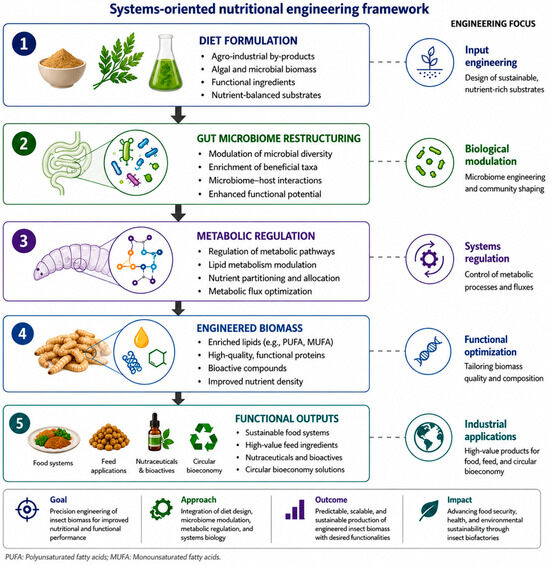
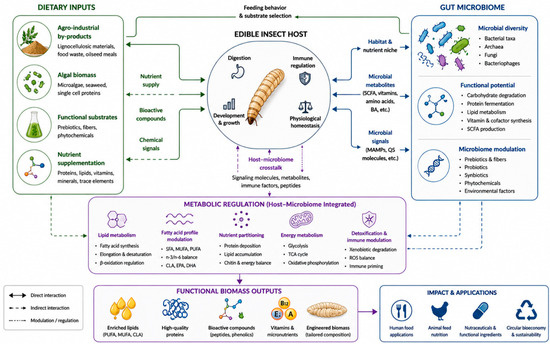
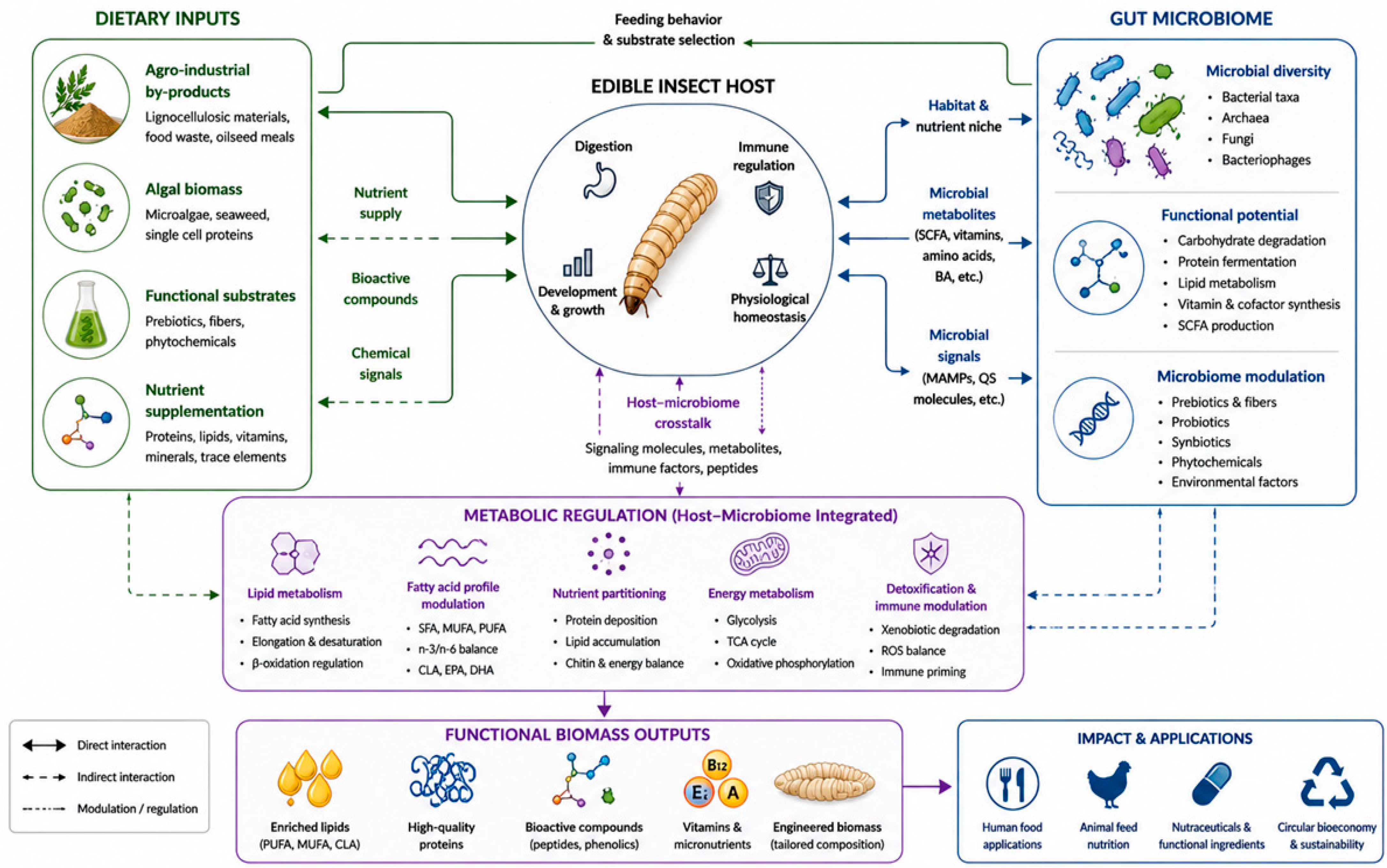
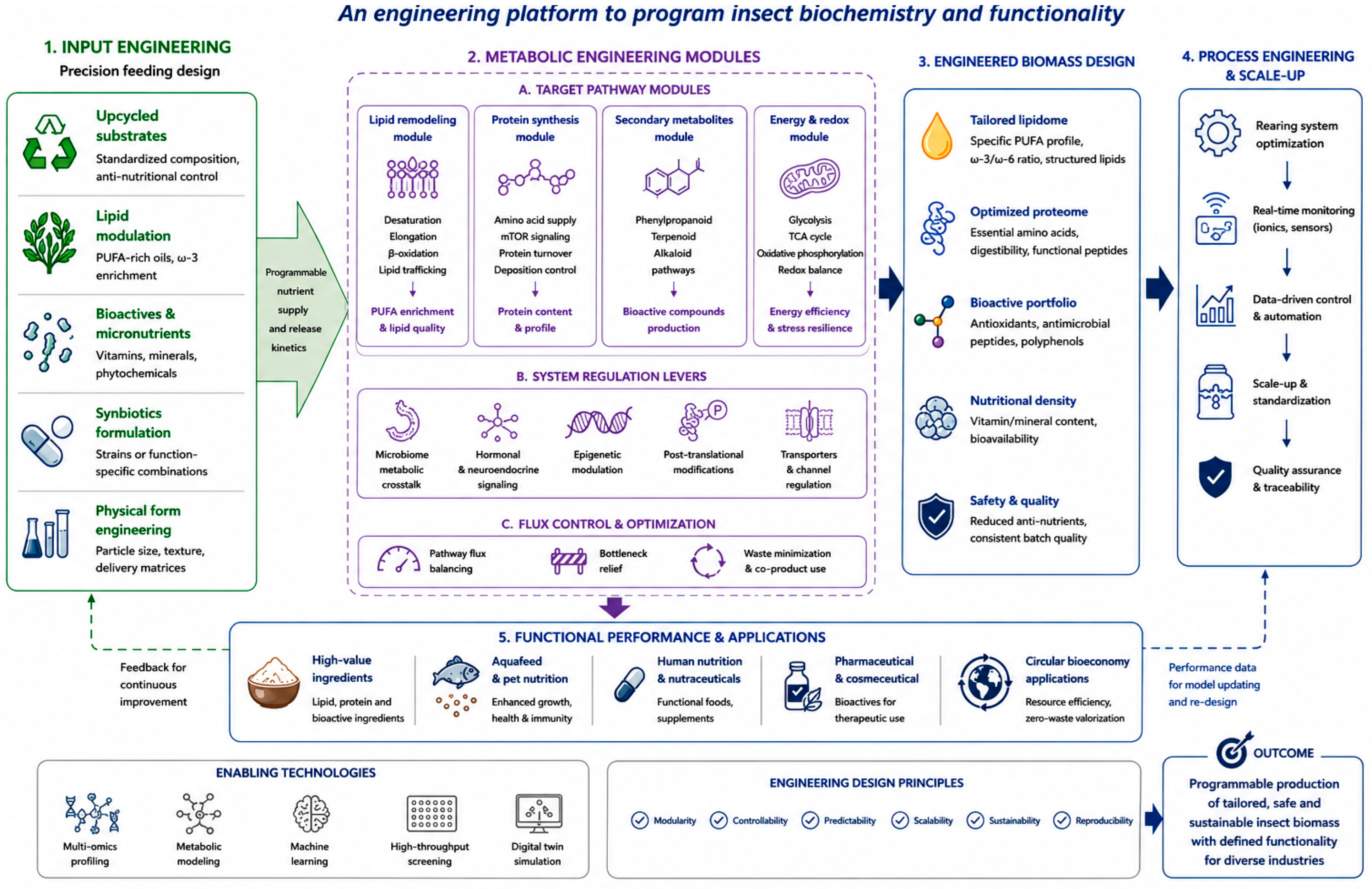
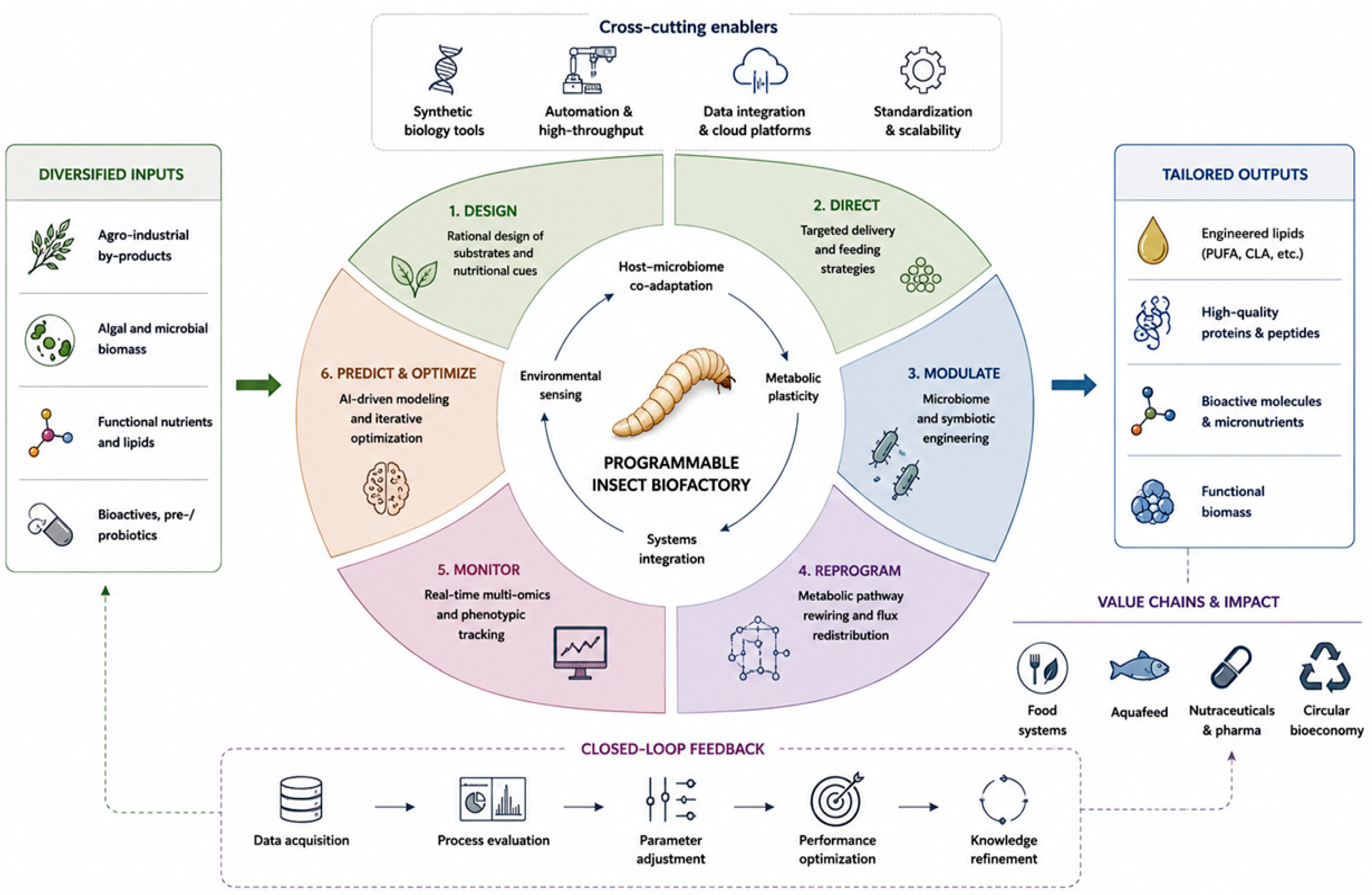

Disclaimer/Publisher’s Note: The statements, opinions and data contained in all publications are solely those of the individual author(s) and contributor(s) and not of MDPI and/or the editor(s). MDPI and/or the editor(s) disclaim responsibility for any injury to people or property resulting from any ideas, methods, instructions or products referred to in the content. |
© 2026 by the authors. Licensee MDPI, Basel, Switzerland. This article is an open access article distributed under the terms and conditions of the Creative Commons Attribution (CC BY) license.