Article

Diversity and Faunal Composition of Coleoptera in the Gansu Heihe Provincial Nature Reserve, China

1
Biocontrol Engineering Laboratory of Crop Diseases and Pests of Gansu Province, College of Plant Protection, Gansu Agricultural University, Lanzhou 730070, China
2
School of Environmental Engineering, Gansu Forestry Voctech University, Tianshui 741000, China
3
Gansu Heihe Provincial Nature Reserve Administration, Tianshui 741020, China
4
Department of Phytotoxicity Research, Central Agricultural Pesticide Laboratory, Agricultural Research Center, 7 Nadi El-Seid Street, Dokki, Giza 12618, Egypt
*
Authors to whom correspondence should be addressed.
Insects 2026, 17(7), 700; https://doi.org/10.3390/insects17070700
Submission received: 3 May 2026 / Revised: 22 June 2026 / Accepted: 30 June 2026 / Published: 6 July 2026

Simple Summary

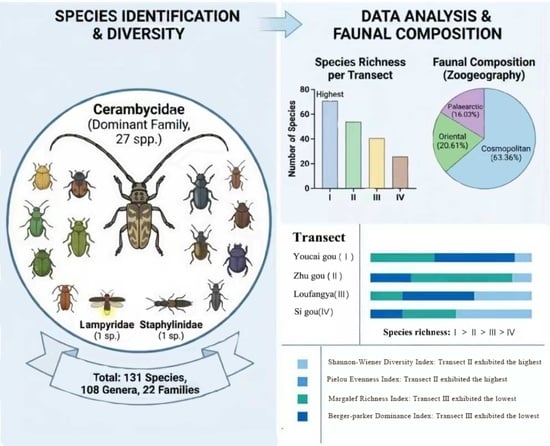
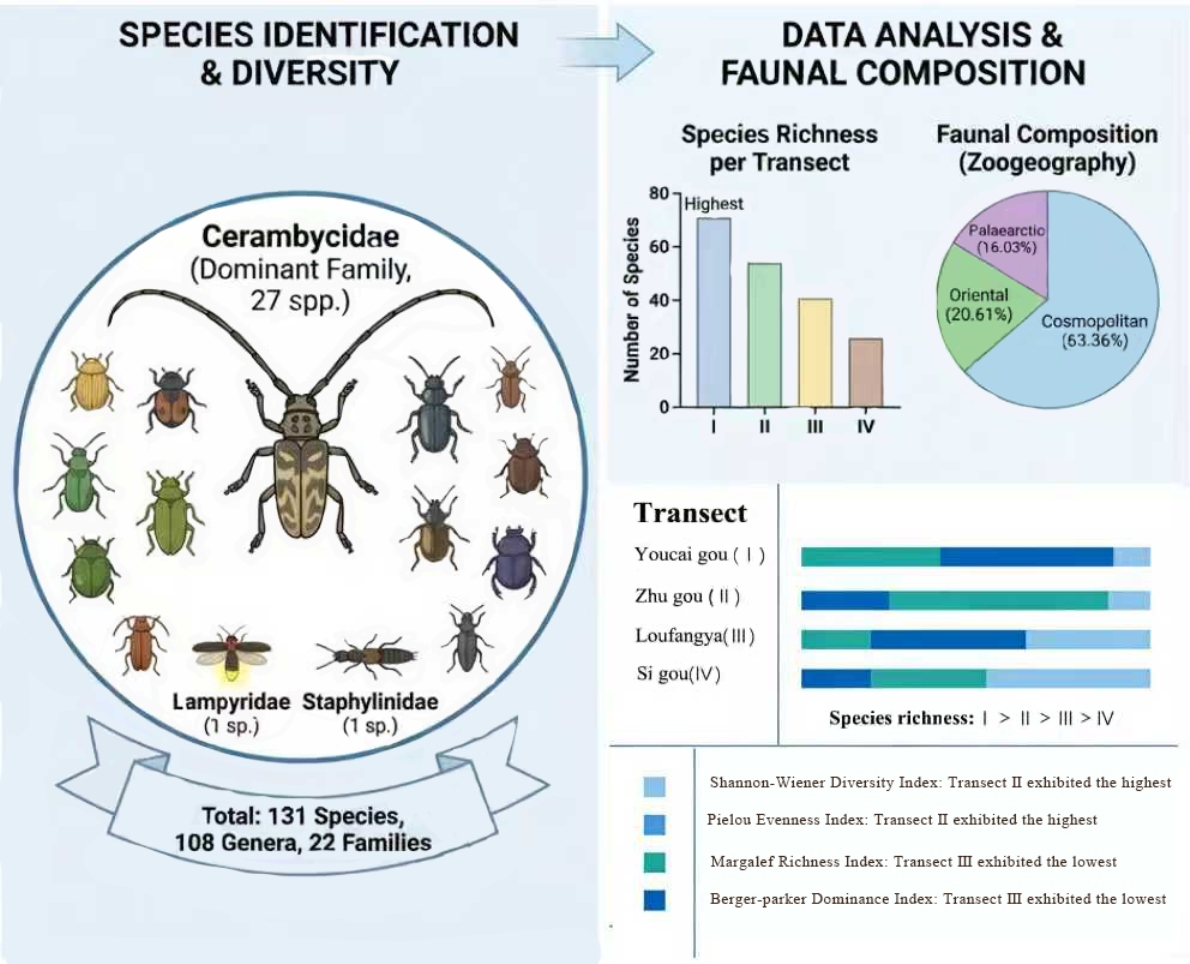
Beetles (Coleoptera) are highly diverse and ecologically important, yet the beetle fauna of the Gansu Heihe Provincial Nature Reserve in northwestern China has not been studied. We conducted the first systematic survey, sampling four habitat transects monthly over one season using multiple collection methods. We recorded 131 species from 108 genera and 22 families, with longhorn beetles (Cerambycidae) being the most species-rich group. Diversity was highest where vegetation cover was good and human disturbance was low. Most species were widely distributed across China, reflecting the reserve’s position at a major biogeographic transition zone. This preliminary inventory provides baseline data for future surveys and conservation planning.

Abstract

Background: The Gansu Heihe Provincial Nature Reserve harbors rich plant and animal resources, yet its coleopteran fauna has remained taxonomically and ecologically uncharacterized. To address this gap, we conducted the first systematic survey of beetle diversity across four representative transects—Youcaigou (I), Zhugou (II), Loufangya (III), and Sigou (IV)—and assessed variation in community structure using the Shannon–Wiener diversity index, Margalef richness index, Berger–Parker dominance index, Pielou evenness index, and Jaccard similarity coefficient. Results: A total of 131 species belonging to 108 genera and 22 families were identified, establishing a comprehensive baseline of beetle diversity for the reserve. Cerambycidae was the most species-rich family (27 species), while Lampyridae, Staphylinidae, and Anobiidae were each represented by only a single species, reflecting marked unevenness in family-level composition. Diversity and community structure differed substantially among transects: Transect II showed the highest Shannon–Wiener diversity index and Pielou evenness, Transect III the lowest diversity, and Transect IV the greatest dominance by a few species, while species richness declined in the order I > II > III > IV. Zoogeographic analysis revealed that widely distributed (Cosmopolitan) species predominated (83 species; 63.36%), with Palaearctic (21 species; 16.03%) and Oriental (27 species; 20.61%) elements also well represented, underscoring the reserve’s position at a key biogeographic transition zone. Within China, North China faunal elements were most prevalent (75.94%), with the North China–Northeast China distribution group alone accounting for 54.20% of species, whereas nationally widespread species comprised only 9.16%. Conclusions: This study provides the first systematic record of coleopteran diversity in the Gansu Heihe Provincial Nature Reserve, enriching the region’s biodiversity inventory and offering reference data for future insect monitoring and forest conservation. Further multi-seasonal, method-diversified surveys are needed to achieve a complete faunal inventory.

Graphical Abstract

1. Introduction

As one of the most species-rich and ecologically diverse groups within Insecta, Coleoptera plays a vital role in terrestrial ecosystems and has attracted substantial scientific interest [1,2,3]. Beetles hold significant theoretical and applied value in biodiversity conservation [4], beneficial insect utilization [5], faunal surveys [6], zoo geography [7,8], and agricultural pest management [9,10,11]. Their diversity extends beyond species richness to genetic, trait, and functional dimensions [12,13,14]. Because beetles are highly sensitive to environmental change [15], they serve as effective bioindicators [16,17,18], with shifts in abundance and composition reflecting ecosystem health [19]. Consequently [20], patterns of coleopteran diversity and distribution have become central to biodiversity research [21,22].
The Heihe Nature Reserve, Gansu Province, lies in the western Qinling Mountains, bordering Tongtianhe National Forest Park (Shaanxi) to the northeast and forest farms of the Xiaolongshan Forestry Protection Center to the northwest and southwest, placing it at the junction of major forest systems with notable geographical significance. As a forest-ecosystem-type reserve, it protects natural secondary forests, subtropical landscapes, and habitats of rare and endangered species, playing a key role in regional ecological stability. Its hydrological network includes first-order tributaries of the Jialing River, with the Heihe River (~200 km; drainage area ~5000 km2) serving as the main stream, supplying water, regulating climate, and supporting diverse organisms, with waterfalls and streams further enhancing local biodiversity [23,24].
Insect distribution is strongly shaped by regional ecological conditions [25], and vegetation type profoundly influences habitat selection and reproduction [26]. Situated at the transition between subtropical and warm-temperate climates, the reserve hosts forest ecosystems of exceptional representativeness [27,28], with vegetation spanning coniferous forests, broadleaf forests, shrublands, and grasslands. To date, 994 vascular plant species (111 families, 461 genera) have been recorded, including 40 fern, 11 gymnosperm, and 943 angiosperm species [29]. Encompassing nearly the full vegetation spectrum of the Qinling region with well-preserved primary vegetation, the reserve provides an invaluable platform for in situ conservation and biogeographical research [30].
Coevolution between insects and plants has produced intricate mutualisms [31]: insects feed on and pollinate plants, while plants provide habitat and resources in return [32]. As key components of food webs, insects contribute to energy flow, nutrient cycling, and soil fertility [33], making insect diversity a sensitive indicator of ecosystem health [34,35]. With its rich biodiversity and intact ecological structure, the Heihe Nature Reserve functions as an ecological security barrier in the western Qinling Mountains, supporting water conservation, soil protection, and climate regulation, an ecological asset of considerable importance to northwestern China.
Despite this significance, insect biodiversity in the reserve remains poorly characterized, and no published study has examined coleopteran community structure in relation to habitat variation here. We therefore established four sampling transects for systematic field survey, employing a combination of sweep-netting, hand-collecting, knockdown sampling, Malaise trapping, pitfall trapping, and light trapping. However, no single combination of methods can fully capture the diversity of a hyperdiverse order such as Coleoptera; cryptic or soil-dwelling families—notably Staphylinidae, one of the largest beetle families worldwide (~65,000 species globally, >6000 in China)—are likely underrepresented by these methods. This limitation should be considered when interpreting family- and genus-level patterns reported here.
Accordingly, rather than addressing broader questions of faunal origin or long-term conservation strategy, this study aims to characterize the taxonomic composition of coleopteran assemblages across the reserve’s major habitats and document species distribution patterns among transects, providing baseline data to support future ecological monitoring and conservation planning.

2. Materials and Methods

2.1. Study Area

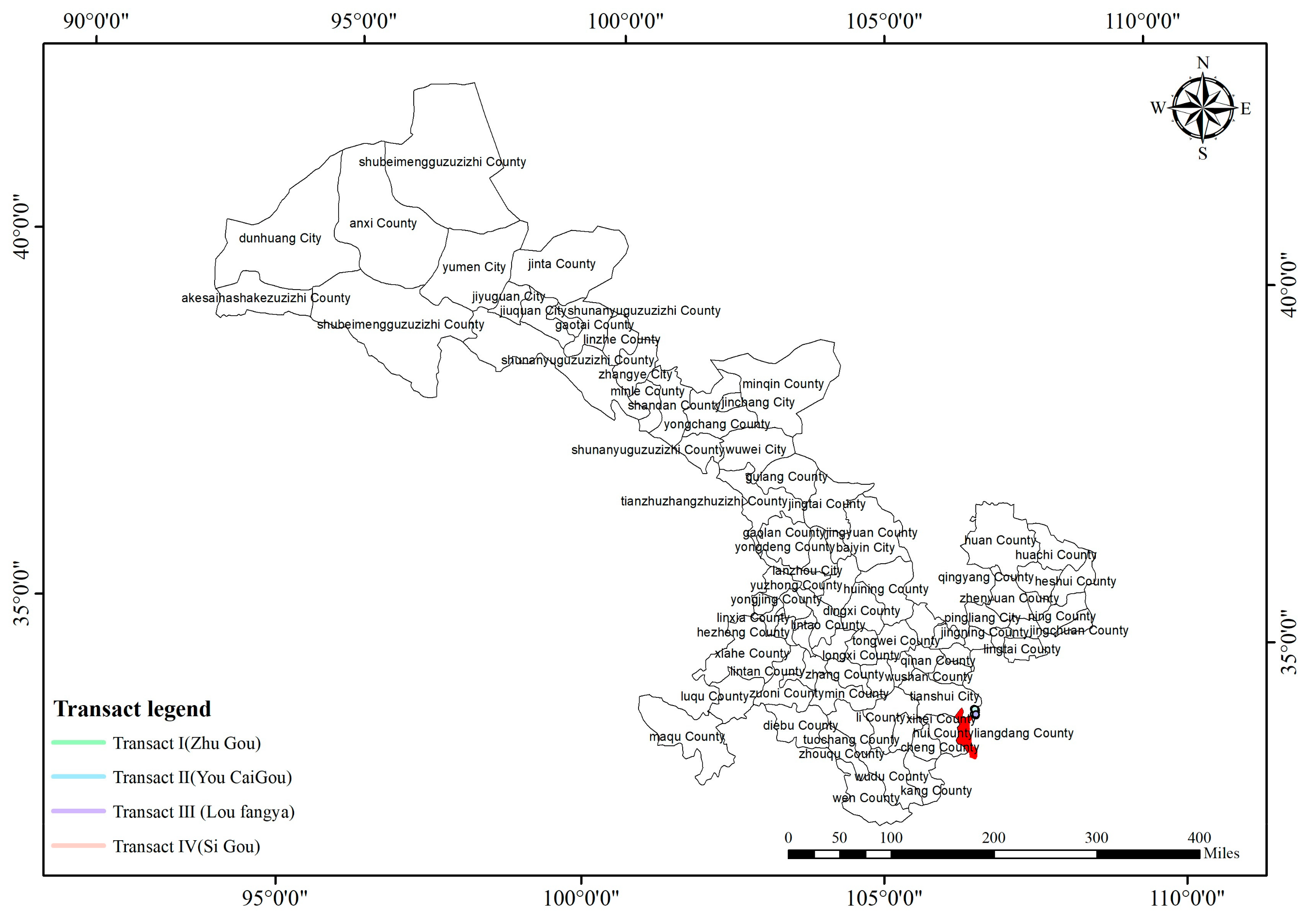
The Heihe Provincial Nature Reserve is located in southeastern Gansu Province, within the western Qinling Mountains, in the upper reaches of the Jialing River. The reserve lies between 106°30′11″–106°34′25″ E and 34°8′39″–34°15′25″ N. This region constitutes a major biogeographical transition zone between the Palaearctic and Oriental realms, lending the reserve considerable zoogeographical significance. The terrain is topographically complex, characterized by pronounced variation in elevation and relief. Combined with a mild climate and relatively abundant rainfall, this topographic heterogeneity has shaped a distinctive landscape that provides ecologically diverse habitats supporting Coleoptera and a wide range of other organisms.

2.2. Survey and Specimen Collection

All coleopteran specimens were collected from the Gansu Heihe Provincial Nature Reserve between June and September 2024. Surveys were conducted monthly, each lasting 5–7 days, and covering all sample transects. Fieldwork was carried out on sunny days between 10:00 and 17:00, with specimens collected within a 2 m belt on either side of each transect line. Given the ecological characteristics of the reserve and the behavioral diversity of beetles, multiple complementary collection methods were employed, including sweep-netting, hand-collecting, knockdown sampling, Malaise trapping, pitfall trapping, and light trapping.
For beetles inhabiting foliage or branches, the knockdown method was used. A white plastic sheet or cloth was spread beneath the canopy of trees, shrubs, or tall-stemmed plants, and branches were gently tapped with a bamboo pole. Taking advantage of the beetles’ thanatosis (death-feigning behavior), individuals that fell onto the sheet were collected using forceps or an aspirator.
Light trapping was used to target phototactic beetles. On clear nights, light traps were set up in open areas or at forest edges, operated from 20:00 to 06:00 using a 450 W high-pressure mercury lamp paired with an insect-trapping tent.
Pitfall traps were used to capture ground-active beetles and consisted of disposable 500 mL plastic cups buried flush with the soil surface, each filled with a sugar-vinegar attractant solution (brown sugar: white vinegar: 75% ethanol: water = 1:4:1:16). Ten pitfall traps were deployed per sample transect, evenly spaced at approximately 50 m intervals along the transect line. Traps were set on the first day of each monthly survey and retrieved on the final day (5–7 days later), with the attractant solution replenished every 48 h. This baited pitfall design was chosen to enhance capture efficiency for ground-active Coleoptera; however, we acknowledge that a single array of ten traps per transect may underestimate true ground-beetle diversity, and future surveys should incorporate a greater number of traps distributed across the different biotope types present along each transect.
Following preliminary field sorting, all specimens were preserved in 75% ethanol and subsequently prepared as pinned specimens for laboratory-based species identification, following standard entomological preparation protocols (Egorov et al., 2024) [13].
The climate factor data, including temperature, humidity, total solar radiation, total rainfall, etc., used in this study were provided by government agencies, and can be found at the following URL (accessed on 26 January 2026): https://meteo.agrodigits.com/home/index [36].

2.3. Sample Line Design

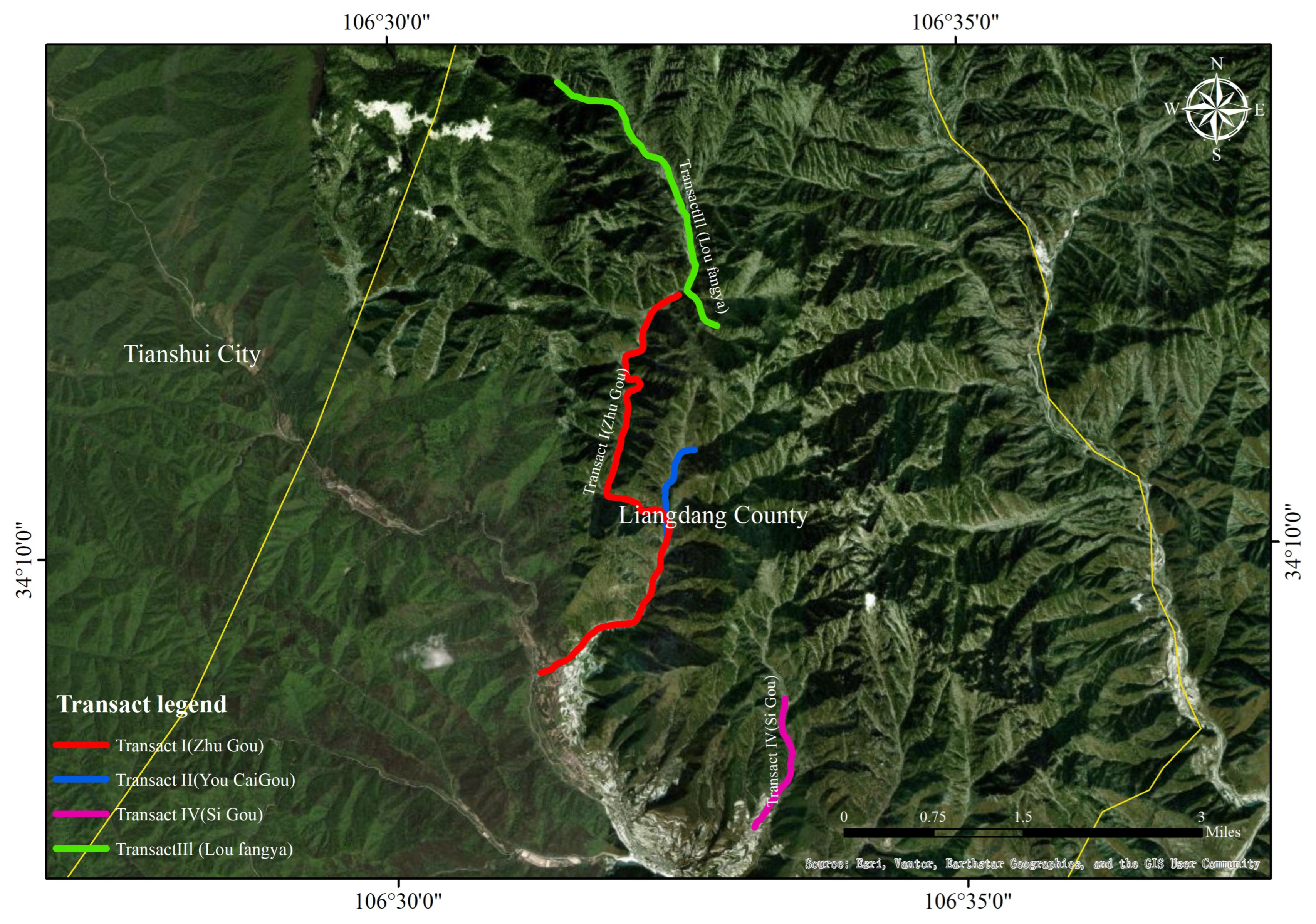
Based on dominant vegetation types and geographical features within the Gansu Heihe Provincial Nature Reserve, four sample transects were established (Figure 1 and Figure 2). Detailed information for each sample transect is provided in Table 1.

2.4. Data Analysis

To analyze the community structure across different sampling transects, α-diversity indices were calculated as described below [37].
The Shannon–Wiener diversity index (H′) was used to quantify species diversity, incorporating both species richness and relative abundance [38].
The Berger–Parker dominance index (D) was applied to determine the dominance of the most abundant species in the community [39].
The Pielou evenness index (J) measured the equitability of individuals across species [40,41].
The Margalef richness index (R) assessed species richness relative to the total number of individuals [42].
Shannon–Wiener diversity index (H′):
P i = N i / N ; H = P i ln P i
where (pi) is the proportion of individuals belonging to the i-th species, (Ni) is the number of individuals of the i-th species, and (N) is the total number of individuals of all species.
Berger–Parker Dominance Index (D):
D = N m a x / N t
where (Nmax) is the number of individuals of the most abundant species, and (Nt) is the total number of individuals.
Pielou Evenness Index (J):
J = H ( G S ) / ln S
where H′ is the Shannon–Wiener diversity index, and S is the total number of species.
Margalef richness index (R)
R = ( S 1 ) / ln N
where S in the number of species, and N is the total number of individuals.
Jaccard similarity coefficient was employed to evaluate species similarity between pairs of transects as follows [43]:
I = c / ( a + b + c )
where (a) and (b) are the number of species in transects A and B, respectively, and (c) is the number of species common to both transects. According to Jaccard’s principle, values close to 0 indicate extremely dissimilar communities, values between 0.25 and 0.50 indicate moderately dissimilar communities, values between 0.50 and 0.75 indicate moderately similar communities, and values above 0.75 indicate extremely similar communities.

3. Results

3.1. Community Composition of Coleoptera

A total of 1265 coleopteran specimens were collected from the four sampling transects in the Heihe Provincial Nature Reserve, Gansu Province in 2024 (see summary in Table 2). Specimens were identified using authoritative taxonomic literature, including Fauna Sinica, Economic Insect Fauna of China, Insect Fauna of the Qinling Mountains, supplemented by online resources such as the China Animal Subject Database and the National Animal Specimen Resource Database. The identification process classified the specimens into 131 species, 108 genera, and 22 families. Cerambycidae and Coccinellidae were the most species-rich. In contrast, Lampyridae, Staphylinidae, and Anobiidae were each represented by only a single species. The geographical affinities (fauna composition) of all specimens were determined using regional references such as Coleoptera Fauna of Ningxia, Insects of the Helan Mountains in Ningxia, and Insect Fauna of the Qinling Mountains.
At the genus level, Lagria contained the highest number of species (four). The genera Holotrichia, Protaetia, Themus, and Harpalus each included three species. Eleven genera comprised two species each: Monochamus, Callidium, Melolontha, Lycostomus, Coccinella, Calvia, Cymindis, Diabrotica, Aulacophora, Cryptocephalus, and Agrilus. The remaining 86 genera were monospecific, accounting for 84.31% of the total.
At the species level, Epilachna plicata was the most abundant, with 60 individuals, constituting the dominant species. Other abundant species included Lagria nigricollis, Themus imperialis, Necrophorus halensis, Harmonia axyridis, and Aulacophora lewisii, each represented by 40–50 specimens. Forty-six species, such as Trichoferus campestris, Ischnostrangalis kubani, and Polyphylla laticollis, were represented by a single individual and were classified as rare.

3.2. Faunal Distribution of Coleoptera

3.2.1. Regional Characteristics in the World’s Zoogeographical Regions

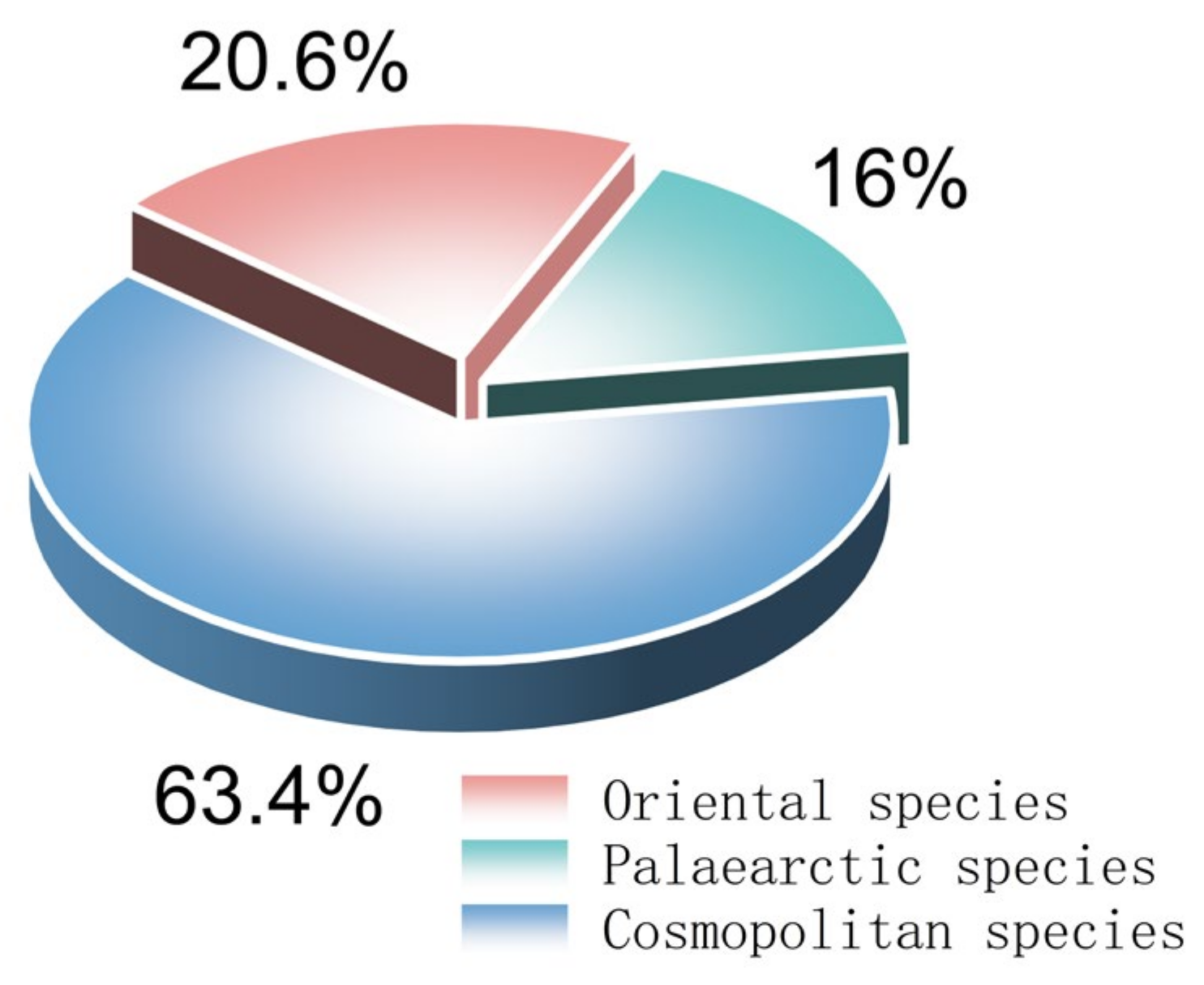
The global zoogeographical affinities of the 131 coleopteran species are shown in Figure 3. The fauna of the reserve comprises Cosmopolitan, Oriental, and Palaearctic elements. Cosmopolitan species were the most abundant, accounting for 63.4% of the total species and predominating in both richness and overall community composition.

3.2.2. Regional Characteristics in the Chinese Zoogeographical Regions

Following Chinese zoogeographical divisions, the Palaearctic realm is subdivided into the Northeast, North China, Qinghai-Tibet, and Inner Mongolia-Xinjiang Regions, while the Oriental realm includes the Central China, Southwest China, and South China regions. The Heihe Provincial Nature Reserve is situated within the North China Region of the Palaearctic realm.
A total of 41 distinct distribution patterns were identified among the collected species (Table 3). Within these, 99 species (75.57%) occur in the North China Region. The combined North China-Northeast China distribution pattern contained the largest number of species, with 71 species (54.20%). Species with a nationwide distribution accounted for only 9.16% of the total.

3.3. Occurrence Dynamics of Coleoptera

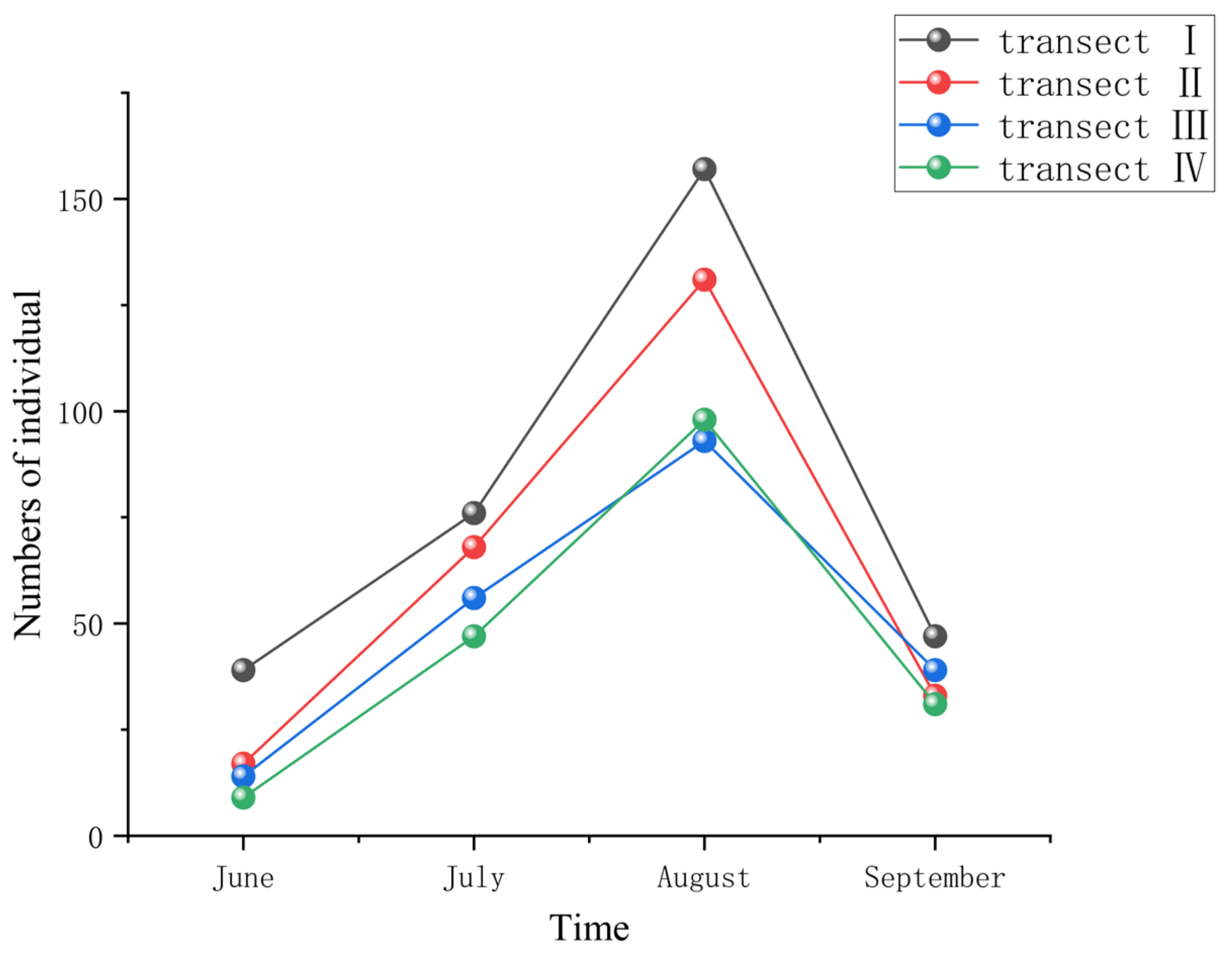
The abundance of coleopteran individuals across the four transects generally increased to a peak before declining over the sampling period, as shown in Figure 4. In June, Transect I recorded the highest species count, with 39 species. The overall peak in abundance across all transects occurred in August, with 157 individuals in Transect I, 131 in II, 93 in III, and 98 in IV, totaling 479 individuals. In August, collection represented 50% of the annual total, indicating that the primary activity period for Coleoptera in the reserve occurs during the summer months (June–August), with August being the peak.

3.4. Effects of Environmental Factors on Coleoptera Insect Diversity

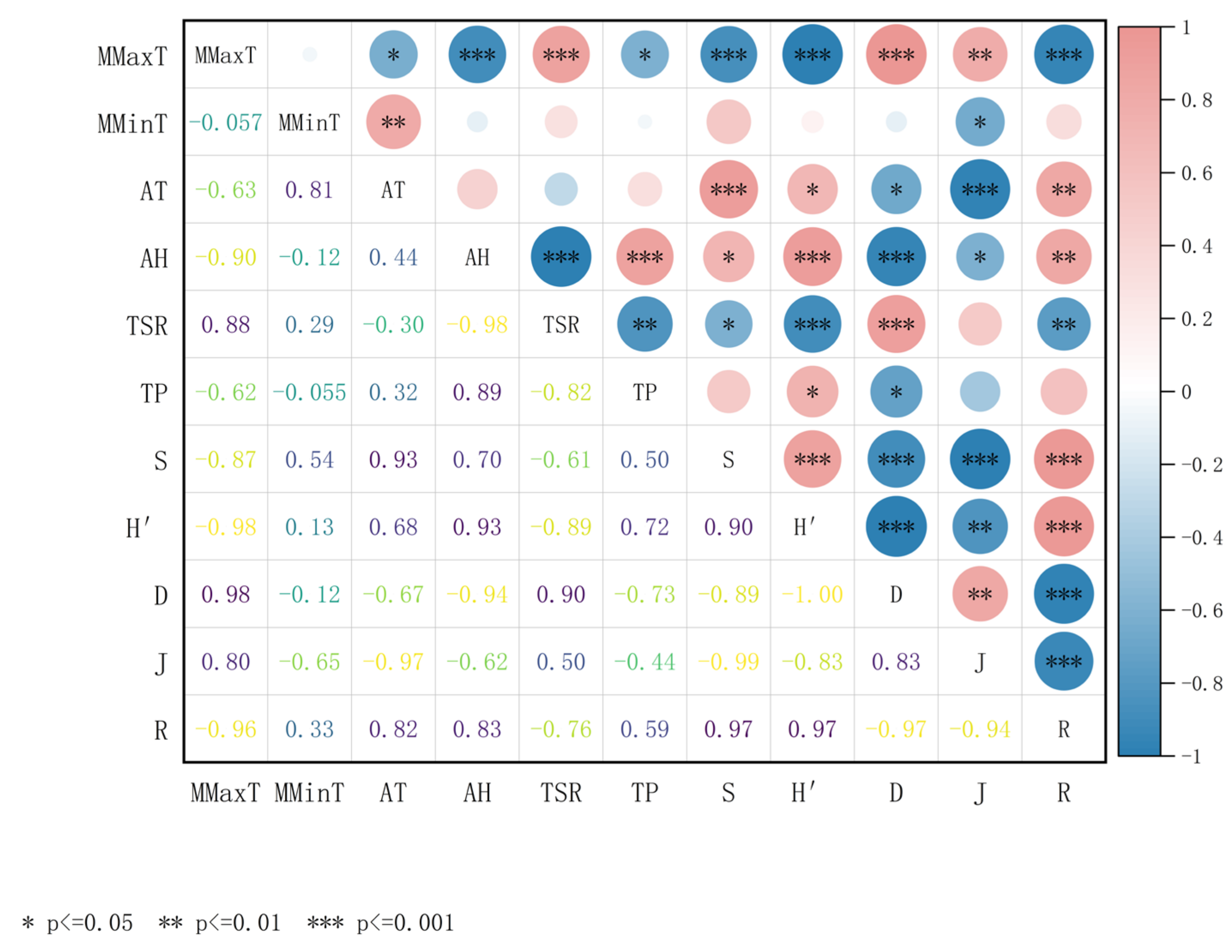
In this study, average temperature, average humidity, total solar radiation, total precipitation, monthly maximum temperature, and monthly minimum temperature were selected as environmental factors. The correlations between the Shannon–Wiener diversity index, Berger–Parker dominance index, Pielou evenness index, and Margalef abundance index and key environmental factors were analyzed. The results are shown in Figure 5.
Species richness exhibited a highly significant positive correlation with average temperature (r = 0.93), and also showed positive correlations with average humidity (r = 0.70) and monthly minimum temperature (r = 0.54), indicating that improved temperature conditions significantly promote species abundance. A weak positive correlation was observed with total precipitation (r = 0.32), suggesting that precipitation exerts a relatively limited stimulatory effect on species richness. Conversely, negative correlations were found with total solar radiation (r = −0.61) and monthly maximum temperature (r = −0.87), with the monthly maximum temperature exhibiting a particularly pronounced negative influence. This indicated that excessively high extreme temperatures may exert a suppressive effect on species richness.
The diversity index exhibited a highly significant positive correlation with average humidity (r = 0.93), and positive correlations with average temperature (r = 0.68) and total precipitation (r = 0.72), indicating that mild, humid thermohygric conditions contributes to enhancing community diversity. It exhibited a highly significant negative correlation with total solar radiation (r = −0.89) and monthly maximum temperature (r = −0.98), indicating that intense solar radiation and extremely high temperatures significantly reduce community diversity levels. The correlation with monthly minimum temperature approached zero (r = −0.13), indicating that low temperatures exert a relatively weak influence on the diversity index.
The species richness index exhibited a strong positive correlation with average temperature (r = 0.82) and average humidity (r = 0.83), indicating that synergistic improvements in thermal and hydrological conditions effectively enhance community species richness. It showed a weak positive correlation with monthly minimum temperature (r = 0.33) and an extremely weak positive correlation with total precipitation (r = 0.59), suggesting that these factors exert relatively limited promotional effects on species richness. It exhibited negative correlations with total solar radiation (r = −0.76) and monthly maximum temperature (r = −0.96), with the negative effect of monthly maximum temperature being particularly pronounced. This indicated that extreme heat is one of the key factors suppressing species richness.
The dominance index exhibited a highly significant positive correlation with total solar radiation (r = 0.90) and monthly maximum temperature (r = 0.98), indicating that environments characterized by intense radiation and high temperatures are more conducive to the most abundant species occupying ecological niches, thereby enhancing community dominance. It exhibited weak negative correlations with average temperature (r = −0.67) and total precipitation (r = −0.73), alongside a highly significant negative correlation with average humidity (r = −0.94), indicating that high-humidity environments significantly inhibit the competitive advantage of dominant species. The correlation with monthly minimum temperature approached zero (r = 0.12), suggesting negligible influence of low temperatures on dominance.
The evenness index exhibited a highly significant negative correlation with average temperature (r = −0.97) and a significant negative correlation with monthly minimum temperature (r = −0.65), indicating that rising temperatures significantly reduce species evenness within communities. Weak negative correlations were observed with mean humidity (r = −0.62) and total precipitation (r = −0.44), suggesting that these factors exert relatively limited effects on evenness. It exhibited an extremely weak positive correlation with total solar radiation (r = 0.50) and a positive correlation with monthly maximum temperature (r = 0.80), with the positive effect of monthly maximum temperature being particularly pronounced. This suggested that extreme high temperatures may, to a certain extent, promote the species abundance distribution.
Based on the above analysis, the comprehensive impact strength of various environmental factors on the diversity characteristics of Coleoptera insect communities, ranked from highest to lowest, is as follows: monthly maximum temperature (absolute range of correlation coefficients: 0.80–0.98) > average humidity (0.63–0.97) > average temperature (0.63–0.97) > total solar radiation (0.50–0.90) > total precipitation (0.32–0.73) > monthly minimum temperature (0.12–0.65). This finding indicates that monthly maximum temperature and average humidity are the key environmental factors regulating Coleoptera community diversity in this reserve, with excessively high temperatures or unsuitable humidity levels reducing community diversity, while appropriate temperature and humidity conditions help maintain and enhance community stability and complexity.

3.5. α-Diversity Across Transects

The α-diversity indices for the coleopteran communities in the four transect are presented in Table 4. The Shannon–Wiener diversity index was highest in Transect II (10.2239) and lowest in Transect III (10.0291). The Berger–Parker dominance index was highest in Transect IV (0.0865), with the dominance ranking order being IV > I > III > II. The Pielou evenness index was also highest in Transect II (0.8987). The Margalef richness index followed the order: Transect I > II > III > IV.
Overall, the patterns of species number, individual abundance, diversity, and richness were generally consistent. Transect II exhibited relatively higher diversity and evenness, suggesting greater vegetation variety and a more stable, favorable environment for Coleoptera.

3.6. Community Similarity Between Transects

The Jaccard similarity coefficients between transect pairs are shown in Table 5. The coefficients for Transects I–III and II–IV ranged from 0.25 to 0.50, indicating moderate dissimilarity. All other pairwise comparisons yielded coefficients between 0.50 and 0.75, indicating moderate similarity.

4. Discussion

This study provides the first systematic investigation of coleopteran fauna and diversity in the Heihe Provincial Nature Reserve, Gansu Province, recording a total of 131 species belonging to 108 genera and 22 families. At the genus level, monospecific genera were markedly predominant, comprising 86 of 108 genera (84.31%) represented by a single species each. While such a high proportion of monospecific genera might be interpreted as evidence of a faunal assemblage with complex biogeographic origins shaped by the reserve’s distinctive climate, vegetation, and topography, this interpretation warrants caution: the pattern may equally reflect inherent limitations of the sampling methods employed rather than a genuine biological signal. As a clear illustration, the family Staphylinidae—one of the most species-rich beetle families in China, with more than 6000 described species (Catalogue of Chinese Coleoptera, 2018) [44]—was represented by only a single specimen in this survey, underscoring the extent to which ground-dwelling and cryptic taxa remain underrepresented by the collection methods used here. Sampling effort was inevitably weighted towards manually accessible, canopy-associated, and wood-boring forms—reflected in the strong dominance of Cerambycidae—while sap-feeding, soil-dwelling, and nocturnal taxa were comparatively undersampled. The results presented here should therefore be regarded as a preliminary, methodologically constrained inventory rather than a complete characterization of the reserve’s coleopteran fauna. Future surveys incorporating window traps, canopy interception traps, rearing from woody substrates, and year-round pitfall arrays will be essential to more fully capture the beetle diversity of the reserve [45].
At the family level, Cerambycidae was the most species-rich group, comprising 27 species, whereas Lampyridae, Staphylinidae, and Anobiidae were each represented by only a single species—a disparity that, as noted above, likely reflects sampling bias toward visually conspicuous, diurnal, and wood-associated taxa rather than true differences in underlying family-level richness.
Considered jointly, species diversity and evenness were highest in Transect II, which was dominated by oak-broadleaf mixed forest across sunny slopes, the lower sections of semi-sunny slopes, and flat ridges. The relatively even abundance of species across taxonomic groups in this transect suggests a more balanced community structure compared to the other transects. This pattern is consistent with findings from studies on Xinglongshan white butterfly diversity [46] and Coleoptera diversity in central Inner Mongolia [47], both of which similarly link favorable vegetation conditions and moderate disturbance levels to elevated biodiversity.
Analysis of the Margalef richness index identified Transect I as having the highest species richness (14.9171), while Transect IV recorded the lowest (13.6006). Transect IV borders the Zhangjia Forest Farm and lies adjacent to village collective forests, and is consequently subject to frequent human activity and substantial disturbance [48,49]. This disturbance regime appears to have driven increased community dominance alongside reduced species richness, a pattern potentially attributable to vegetation homogenization, localized habitat degradation, or habitat fragmentation resulting from human activity [50,51,52]. More broadly, anthropogenic pressures such as excessive development, pollution, and habitat destruction are known to degrade beetle habitats, with corresponding declines in regional species diversity and abundance [15]. These findings underscore the importance of mitigating human disturbance to support the recovery of species diversity in Transect IV and comparably impacted areas of the reserve.
From a broader zoogeographic perspective, widespread species dominate the beetle fauna of the Heihe Nature Reserve, a pattern closely tied to the reserve’s distinctive geographical position. Located in the western Qinling Mountains along the boundary between the Palaearctic and Oriental realms, the reserve forms a classic biogeographic transition zone that facilitates the interpenetration of beetle taxa from both realms, producing a fauna characterized by mixed and intertwined biogeographic components. This pattern parallels the pronounced faunal overlap documented for Coleoptera in the Helan Mountains of Inner Mongolia [53], although the two regions differ meaningfully in habitat structure and climate: the Helan Mountains fauna reflects adaptation to a temperate, semi-arid environment, whereas the convergence of subtropical and temperate climatic influences in the Heihe Reserve appears to permit deeper penetration and overlap between beetle faunas of different biogeographic origin.
The Gansu Heihe Provincial Nature Reserve falls within the North China biogeographic region as defined in the Biogeographic Rregions of China. As a major geo-climatic boundary in eastern China, the Qinling Mountains constitute the core transitional zone separating the North China, Central China, and Mongolian regions, providing the biogeographical foundation for the reserve’s faunal diversity. Consistent with this transitional position, the geographical distribution patterns of coleopteran species recorded in this study were dominated by trans-regional distribution types, with composite categories such as North China + Northeast China, North China + Southwest China, and North China + Central China each accounting for over 50% of the total fauna. This distribution pattern—centered on the North China region but permeated by multiple adjoining biogeographic components—reflects both the reserve’s transitional status within China’s insect geographical zonation and the broader exchange between neighboring biogeographic regions. This finding is consistent with analyses of the beetle fauna of the Xiaolong Mountains, Gansu Province [54], reinforcing the general pattern of transitional faunal convergence characteristic of Coleoptera across the western Qinling Mountains.

5. Conclusions

This study provides the first systematic inventory of Coleoptera in the Heihe Provincial Nature Reserve, Gansu Province, recording 131 species from 108 genera and 22 families. A high proportion of monospecific genera, together with the low representation of Lampyridae, Staphylinidae, and Ptinidae alongside the dominance of Cerambycidae, most likely reflects limitations of the sampling methods used—which favored manually accessible, canopy-associated, and wood-boring taxa—rather than the reserve’s true family-level diversity. Diversity and evenness were highest in Transect II (oak-dominated mixed forest, low disturbance) and lowest in Transect IV (high human disturbance), suggesting that disturbance negatively affects community structure. Widely distributed species predominated, consistent with the reserve’s position at a Palaearctic–Oriental transition zone in the western Qinling Mountains. As a preliminary, methodologically constrained inventory, this study offers baseline data to guide future, more comprehensive surveys incorporating complementary trapping methods, multi-season sampling, and DNA barcoding, and to inform ongoing conservation monitoring in the reserve.

Author Contributions

J.Q., X.C. and S.S. jointly conceived the research plan and designed the experiment. X.C. and S.S. confirmed the species identification. J.Q., K.C., M.L. and L.L. were responsible for collecting the experimental materials and conducting the experiments. J.Q., J.W. and M.L. summarized and analyzed the data. J.Q. wrote the manuscript. S.S. and Y.D. reviewed and revised the manuscript. All authors have read and agreed to the published version of the manuscript.

Funding

This work was supported by Technical services for insect survey in the comprehensive scientific investigation project of the Gansu region of the Giant Panda National Park (GSAU-JSFW-2025-140); National Key Research and Development Program: Inter-Governmental Science and Technology Innovation Program (No. 2022YFE0115200); Insect Resources Investigation of Heihe Provincial Nature Reserve of Gansu Province (GSAU-JSFW-2024-29); The Scientific research Start-up Funds for Openly Recruited Doctors of Gansu Agricultural University, grant number GAU-KYQD-2021-26.

Data Availability Statement

All data generated or analyzed during this study are all included in this published article. All of the raw data can be obtained publicly.

Acknowledgments

We thank the administration and staff of the Gansu Heihe Provincial Nature Reserve for their support and assistance during specimen collection.

Conflicts of Interest

The authors declare that this study was conducted in the absence of any commercial or financial relationships that could be construed as a potential conflict of interest.

References

  1. Muñoz-López, N.Z.; Andrés-Hernández, A.R.; Carrillo-Ruiz, H.; Rivas-Arancibia, S.P. Coleoptera Associated with Decaying Wood in a Tropical Deciduous Forest. Neotrop. Entomol. 2016, 45, 341–350. [Google Scholar] [CrossRef] [PubMed]
  2. Zhang, L.J.; Ruan, Y.Y.; Li, Z.Q.; Yang, X.K.; Chen, Y.; Liu, Y. International, and local, trends in research on coleopteran taxonomy. Chin. J. Appl. Entomol. 2023, 60, 1000–1015. [Google Scholar] [CrossRef]
  3. Noriega, J.A.; Hortal, J.; Azcárate, F.M.; Berg, M.P.; Bonada, N.; Briones, M.J.I.; Toro, I.D.; Goulson, D.; Ibanez, S.; Landis, D.A.; et al. Research trends in ecosystem services provided by insects. Basic Appl. Ecol. 2018, 26, 8–23. [Google Scholar] [CrossRef]
  4. He, X.Y.; Wei, H.B. Biodiversity conservation and ecological value of protected areas: A review of current situation and future prospects. Front. Ecol. Evol. 2023, 11, 1261265. [Google Scholar] [CrossRef]
  5. Blubaugh, C.K.; Chesnut, R.; Hagan, K.L. Organic compost belowground and floral diversity aboveground interactively shape beneficial insects in urban gardens. J. Appl. Ecol. 2024, 61, 1334–1345. [Google Scholar] [CrossRef]
  6. Xu, S.C.; Wang, L.J. Edge effects of Coleoptera insect communities in Ziwuling National Nature Reserve, Shaanxi. Ecol. Sci. 2017, 36, 204–210. [Google Scholar] [CrossRef]
  7. Gandjaeva, L.; Abdullaev, I.; Iskandarov, A.; Allabergenova, K.; Yusupova, S.; Narimanova, G.; Yusupboev, E.; Ibragimova, S.; Begliev, S.; Bobojonova, K. A zoogeographical analysis of true bugs (Insecta, Heteroptera) from Uzbekistan. ZooKeys 2023, 1163, 121–142. [Google Scholar] [CrossRef] [PubMed]
  8. Lu, J.X.; Zhu, L.D.Z.; Ai, S.; Yi, L.; Wu, J.M.; Hu, H.Y. The Coleopteran Insect Fauna in the Altun Mountain Natural Reserve. Arid Zone Res. 2015, 32, 1207–1211. [Google Scholar] [CrossRef]
  9. Cividanes, F.J. Carabid beetles (Coleoptera: Carabidae) and biological control of agricultural pests in Latin America. Ann. Entomol. Soc. Am. 2021, 114, 175–191. [Google Scholar] [CrossRef]
  10. Samways, M.J. Insect conservation and the disturbance landscape, Agriculture. Ecosyst. Environ. 1989, 27, 183–194. [Google Scholar] [CrossRef]
  11. Smaili, M.C.; Boutaleb-Joutei, A.; Blenzar, A. Beneficial insect community of Moroccan citrus groves: Assessment of their potential to enhance biocontrol services. Egypt. J. Biol. Pest Control 2020, 30, 47. [Google Scholar] [CrossRef]
  12. Kundrata, R. Systematics, Evolution, and Diversity of Elateroid beetles (Insecta: Coleoptera). Annu. Rev. Entomol. 2025, 71, 107–127. [Google Scholar] [CrossRef] [PubMed]
  13. Ruchin, A.; Alekseev, S.; Egorov, E.; Artaev, O.; Semishin, G.; Esin, M. Ground beetle fauna (Coleoptera, Carabidae) of Mordovia State Nature Reserve (Russia). Biodivers. Data J. 2021, 9, e69807. [Google Scholar] [CrossRef] [PubMed]
  14. Li, W.B.; Liu, N.Y.; Wu, Y.H.; Zhang, Y.C.; Qin, X.; Jun, C.; Wang, S.Y.; Jie, F. Community composition and diversity of ground beetles (Coleoptera: Carabidae) in Yaoluoping National Nature Reserve. J. Insect Sci. 2017, 17, 114. [Google Scholar] [CrossRef]
  15. Cosmo, L.G.; Acquaviva, J.N.; Guimarães, P.R., Jr.; Pires, M.M. Coevolutionary hotspots favour dispersal and fuel biodiversity in mutualistic landscapes under environmental changes. Philos. Trans. R. Soc. B Biol. Sci. 2024, 379, 20230133. [Google Scholar] [CrossRef] [PubMed]
  16. Ferrer-Paris, J.R.; Lozano, C.; Cardozo-Urdaneta, A.; Cabianca, A.T. Indicative response of Oxysternon festivum Linné (Coleoptera: Scarabaidae) to vegetation condition in the basin of the Orinoco river, Venezuela. J. Insect Conserv. 2016, 20, 527–538. [Google Scholar] [CrossRef]
  17. Allegro, G.; Sciaky, R. Assessing the potential role of ground beetles (Coleoptera: Carabidac) as bioindicators in poplar stands, with a newly proposed ecological index (FAI). For. Ecol. Manag. 2003, 175, 275–284. [Google Scholar] [CrossRef]
  18. Ghannem, S.; Touaylia, S.; Boumaiza, M. Beetles (Insecta: Coleoptera) as bioindicators of the assessment of environmental pollution. Hum. Ecol. Risk Assess. 2017, 24, 456–464. [Google Scholar] [CrossRef]
  19. Alencar, J.B.R.; Baccaro, F.B.; Benetti, C.J.; da Costa-Silva, V.; Hamada, N. Where watermeets rock: Ecological niches and diversity hotspots of hygropetric beetles in the Neotropics. Ecol. Entomol. 2025, 51, 502–516. [Google Scholar] [CrossRef]
  20. Köthe, S.; Schneider, F.D.; Bakanov, N.; Brühl, C.A.; Eichler, L.; Fickel, T.; Gemeinholzer, B.; Hörren, T.; Lux, A.; Meinel, G.; et al. Improving insect conservation management through insect monitoring and stakeholder involvement. Biodivers. Conserv. 2023, 32, 691–713. [Google Scholar] [CrossRef]
  21. Sattler, T.; Duelli, P.; Obrist, M.K.; Arlettaz, R.; Moretti, M. Response of arthropod species richness and functional groups to urban habitat structure and management. Landsc. Ecol. 2010, 25, 941–954. [Google Scholar] [CrossRef]
  22. Threlfall, C.G.; Mata, L.; Mackie, J.A.; Hahs, A.K.; Stork, N.E.; Williams, N.S.G.; Livesley, S.J. Increasing biodiversity in urban green spaces through simple vegetation interventions. J. Appl. Ecol. 2017, 54, 1874–1883. [Google Scholar] [CrossRef]
  23. Leverington, F.; Costa, K.L.; Pavese, H.; Lisle, A.; Hockings, M. Aglobal analysis of protected area management effectiveness. Environ. Manag. 2010, 46, 685698. [Google Scholar] [CrossRef] [PubMed]
  24. McDonald, R.I.; Boucher, T.M. Global development and the future of the protected area strategy. Biol. Conserv. 2011, 144, 383–392. [Google Scholar] [CrossRef]
  25. Weibull, A.C.; Ostman, O. Species composition in agroecosystems: The effect of landscape, habitat, and farm management. Basic Appl. Ecol. 2003, 4, 349–361. [Google Scholar] [CrossRef]
  26. Magura, T.; Tóthmérész, B.; Elek, Z. Diversity and composition ofcarabids during a forestry cycle. Biodivers. Conserv. 2003, 12, 73–85. [Google Scholar] [CrossRef]
  27. Ding, J.N.; Yu, S.P.; Shi, C.Q. Community Structures and Temporal Dynamic of Coleoptera Beetles in Heilongjiang Dongfanghong International Wetland. J. Northeast For. Univ. 2022, 50, 111–116. [Google Scholar] [CrossRef]
  28. Tam, K.C.; Bonebrake, T.C. Butterfly diversity, habitat and vegetation usage in Hong Kong urban parks. Urban Ecosyst. 2016, 19, 721–733. [Google Scholar] [CrossRef]
  29. Liu, B.; Mao, R.K. Investigation on vascular plant diversity in Heihe Provincial Nature Reserve, Gansu Province. For. By-Prod. Spec. China 2021, 1, 75–77. [Google Scholar] [CrossRef]
  30. Evangelista, J.; Oliveira, C.M.; Frizzas, M.R. Open vegetation formations (grasslands and savannahs) support a higher diversity of Cetoniidae (Insecta: Coleoptera) than forest formations in the brazilian Cerrado. Biodivers. Conserv. 2022, 31, 2875–2892. [Google Scholar] [CrossRef]
  31. Srinivasan, R. Introduction: Host plant choice and feeding ecology of insects. Entomol. Exp. Appl. 2019, 167, 288–291. [Google Scholar] [CrossRef]
  32. Mata, L.; Threlfall, C.G.; Williams, N.S.G.; Hahs, A.K.; Malipatil, M.; Stork, N.E.; Livesley, S.J. Conserving herbivorous and predatory insects in urban green spaces. Sci. Rep. 2017, 7, 40970. [Google Scholar] [CrossRef] [PubMed]
  33. Woelber-Kastner, B.K.; Frey, S.D.; Howard, D.R.; Hall, C.L. Insect reproductive behaviors are important mediators of carrion nutrient release into soil. Sci. Rep. 2021, 11, 3616. [Google Scholar] [CrossRef] [PubMed]
  34. Yu, Y.L.; Ren, D.; Jin, J.H.; Pang, H. A brief review of fossil Buprestidae (Coleoptera). J. Environ. Entomol. 2017, 39, 291–301. [Google Scholar]
  35. Bhullar, S.; Majer, J. Arthropods on street trees: A food resource for Wildlife. Pac. Conserv. Biol. 2000, 6, 171–173. [Google Scholar] [CrossRef]
  36. Free Weather Data for Professional Weather Applications. Available online: https://meteo.agrodigits.com/home/index (accessed on 26 January 2026).
  37. Zou, Y.; Liu, J.W.; Li, L.K.; Xiao, Z.J.; Chen, F.J. Investigation and analysis of insect diversity in different habitats in Yanqing district of Beijing. Chin. J. Appl. Entomol. 2020, 57, 1161–1172. [Google Scholar]
  38. Shang, S.Q.; Wu, X.B.; Wang, Z.L.; Peng, H.N.; Zhou, H.L.; Zhang, H.Y.; Bai, Y.L. Butterfly community structure and species-abundance distribution in different habitats in the Xinglong Mountains National Nature Reserve. Biodivers. Sci. 2020, 28, 983–992. [Google Scholar] [CrossRef]
  39. Shang, S.Q.; Zhang, H.Y.; Tian, F.B.; Ru, Y.; Zhou, H.L. Diversity of butterfly fauna in Xinglongshan National Nature Reserve of Gansu Province. Pratacultural Sci. 2017, 34, 1314–1322. [Google Scholar] [CrossRef]
  40. Qi, D.M. Diversity of Coleoptera in the South of Mt. Gongga, Jiulong County. Chin. J. Wildl. 2012, 33, 37–41. [Google Scholar] [CrossRef]
  41. Wu, X.B.; Zhou, H.L.; Zhang, H.Y.; Peng, H.N.; Wang, Z.L.; Bai, Y.L.; Shang, S.Q. Monitoring and diversity analysis of butterflies in Xinglong Mountain National Nature Reserve of Gansu. J. Northwest A F Univ. (Nat. Sci. Ed.) 2020, 48, 67–74. [Google Scholar] [CrossRef]
  42. Wang, Z.L.; Li, X.G.; Mei, L.R.; Du, X.F.; Song, L.; Shi, Z.Q.; Shang, S.Q.; Li, X.S. Butterfly Diversity and Species-abundance Distribution in Liancheng National Nature Reserve of Gansu Province. Acta Agric. Boreali-Occident. Sin. 2024, 33, 329–340. [Google Scholar] [CrossRef]
  43. Xing, Y.F.; Yang, J.; Sun, C.L.; Sa, R.N.; Tian, Y.Z.; Liu, M.Y.; Wang, N.; Tan, Y. Effects of habitat heterogeneity on insect community diversity in Xilingol Grassland National Nature Reserve. Plant Prot. 2025, 51, 65–77+98. [Google Scholar] [CrossRef]
  44. Yang, X.K. Catalogue of Chinese Coleoptera; Science Press: Beijing, China, 2018; Volume 1–9. [Google Scholar]
  45. Maksimovich, K.Y.; Dudko, R.Y.; Shatalova, E.I.; Tsakalof, A.K.; Tsatsakis, A.M.; Golokhvast, K.S.; Novikov, E.A. Species composition and ecological structure of ground beetles (Coleoptera, Carabidae) communities as biological indicators of the agro-environmental sustainability. Environ. Res. 2023, 234, 116030. [Google Scholar] [CrossRef] [PubMed]
  46. Zhou, H.L.; Shang, S.Q.; Ru, Y.; Zhang, H.Y. Study on butterfly family Pieridae in national nature Reserve of Xinglong Mountain in Gansu Province. Grassl. Turf 2016, 36, 45–48+54. [Google Scholar] [CrossRef]
  47. Yue, H.R.; Liu, G.M.; Zhang, S.H.; Ta, F.Y.; Han, G.D.; Tang, K.Y.; Wang, N. Grassland Insect Diversity and Its Influencing Factors in Central Inner Mongolia. Chin. J. Grassl. 2024, 46, 124–132. [Google Scholar] [CrossRef]
  48. Novacek, M.J.; Cleland, E.E. The current biodiversity extinctionevent: Scenarios for mitigation and recovery. Proc. Natl. Acad. Sci. USA 2001, 98, 5466–5470. [Google Scholar] [CrossRef] [PubMed]
  49. Ojija, F.; Adam, L.S.; Nicholaus, R.; Mwakalapa, E.B. Insect-pollinators and their interactions with plants differ in disturbed and semi-natural areas: Tanzania’s Southern Highlands case study. Sci. Prog. 2023, 106, 00368504231184035. [Google Scholar] [CrossRef] [PubMed]
  50. Li, K.L.; Fang, L.C.; Ge, Z.Q. Community structure and diversity of insects in vineyards in Xinjiang’s Hami area. Chin. J. Appl. Entomol. 2025, 62, 1079–1090. [Google Scholar]
  51. Kunte, K.J. Seasonal patterns in butterfly abundance and species diversity in four tropical habitats in northern Western. J. Biosci. 1997, 22, 593–603. [Google Scholar] [CrossRef]
  52. Ramírez-Restrepo, L.; Halffter, G. Copro-necrophagous beetles (Coleoptera: Scarabaeinae) in urban areas: A global review. Urban Ecosyst. 2016, 19, 1179–1195. [Google Scholar] [CrossRef]
  53. Wang, J.; Yang, G.J.; Yue, Y.L.; Zhang, D.Z. Faunal composition and vertical distribution characteristics of Cerambycidae in Helan Mountain. J. Environ. Entomol. 2016, 38, 1154–1162. [Google Scholar]
  54. Zhao, Z.H.; Hui, G.Y.; Liu, W.Z.; Wang, H.X.; Zhang, G.Q.; Hu, Y.B. Stand structure characteristics of two Quercus aliena secondary forestson the Xiaolongshan Forest Area. J. Northwest A F Univ. (Nat. Sci. Ed.) 2019, 47, 75–82. [Google Scholar] [CrossRef]
Figure 1. Location of the research area in the Heihe Provincial Nature Reserve, Gansu Province, China.
Insects 17 00700 g001
Figure 2. Location of the four sampling transects within the Heihe Provincial Nature Reserve, Gansu Province, China.
Insects 17 00700 g002
Figure 3. Proportional representation of Coleoptera species from the Gansu Heihe Provincial Nature Reserve within the world’s major zoogeographical regions (Cosmopolitan, Palaearctic, Oriental).
Insects 17 00700 g003
Figure 4. Seasonal variation in coleopteran abundance across the four sampling transects (I–IV) in the Gansu Heihe Provincial Nature Reserve, based on monthly collections from June to September 2024.
Insects 17 00700 g004
Figure 5. Correlation analysis between key environmental factors (temperature, humidity, total solar radiation, precipitation) and coleopteran community diversity indices (Shannon–Wiener H′, Pielou J, Berger–Parker D, Margalef R) for the Gansu Heihe Provincial Nature Reserve.
Insects 17 00700 g005
Table 1. Characteristics of the four sampling transects in the Gansu Heihe Provincial Nature Reserve. Terrain features, dominant vegetation, and level of human disturbance are detailed for each transect.
Transect (Name)Terrain and HydrologyVegetation Overview (by Elevation)Level of Human Disturbance
I (Zhugou)This primary gully system traverses all three management zones (experimental, buffer, core). The Heihe River flows through it, with steep rock cliffs lining its slopes (avg. width ~500 m). A 7.5 km fire access road runs along both sides.1500–2000 m: Oak-coniferous and broad-leaved mixed forest, transitioning to broad-leaved mixed forest, and finally spruce coniferous forest at higher elevations.
Dominants: Quercus aliena var. acuteserrata, Fraxinus mandshurica, Picea crassifolia.
Shrubs: Spiraea spp. (Rosaceae).
Herbs: Aristolochiaceae species.
1500–1800 m: High disturbance (proximity to villages).
1800–2000 m: Low-to-moderate disturbance.
II (Youcai gou)A main tributary of the Main Gully system, originating in the experimental zone and ending at the buffer zone edge. Features a rocky streambed with steep slopes.500–1800 m: Oak-dominated broad-leaved mixed forests on sunny/semi-sunny slopes and ridges.
Dominants: Quercus wutaishanica, Quercus spinosa.
Shrubs: Lonicera spp.
Herbs: Graminoids.
High disturbance (proximity to villages and forest paths).
III (Loufangya)Located from the buffer to the core zone; a steep, straight gully system (“First Floor” to “Dripping Cliff”) with abundant water. It converges with the Tanbanban Gully and is a key water source for the Heihe River.2200–2600 m: Coniferous-broadleaved mixed forest transitioning to coniferous forest.
Dominants: Betula albo-sinensis, Betula platyphylla, Pinus tabuliformis.
Feature: Distinct bamboo understory.
Very low disturbance (remote area).
IV
(Sigou)
Characterized by gentle, sunny slopes with natural Pinus tabuliformis stands at lower elevations.1400–2100 m: Shallow mountain area. Pure plantations of Pinus tabuliformis and P. armandii on favorable sites; Fraxinus spp. in valleys.
Shrubs: Lespedeza spp.
Herbs: Graminoids.
Moderate disturbance (adjacent to Zhangjia Forest Farm and village collective forests).
Table 2. Inventory of Coleoptera collected from the Gansu Heihe Provincial Nature Reserve. The table lists species, family, total abundance per transect (I–IV), and global zoogeographical affinity.
FamilyGenusSpeciesQuantities of Coleoptera in Each Sample LineTotalFauna
IIIIIIIV
CerambycidaeBatoceraB. horsfieldi11 2W
TrichoferusT. campestris1 1W
ApatophysisA. sinica1 1 2W
IschnostrangalisI. kubani 1 1P
DibomaD. costata1 1O
CorymbiaC. succedanea 11W
TetropiumT. castaneumn 1 1W
EmbrikstrandiaE. unifasciata1 1W
AcaloleptaA. rusticatrix1 1O
AnoplophoraA. glabripennis532212W
PsacocothesP. hilari 1 1W
VesperusV. glandiforns1 1P
MonochamusM. galloprovincialis 1 1P
M. sutor1 12P
ObereaO. griseopennis21317W
StenocorusS. meridianus534214P
CallidiumC. aeneum 1 1O
C. violaceum 1 1O
ArhopalusA. rusticus1 12W
OlenecamptusO. formosanus1 1W
SaperdaS. perforata 1 1P
MacroclytusM. alni1 1P
AcanthocinusA. griseus 11W
MesosaM. myops 1 1W
PachytaP. quadrimaculata1 12W
AgapanthiaA. amurensis 1 12W
JudoliaJ. judia 1 1P
OedemeridaeOedemeroniaO. virescens1 113P
NacerdesN. melanura21115O
NacerdesN. waterhousei734418W
ChrysanthiaC. genicnlatachinensis 1 1W
LucanidaeProsopocoilusP. astacoides463518W
PrismognathusP. dauricus112 4P
LucanusL. hermani 112W
MelolonthidaeMelolonthaM. hippocastani 1 1W
M. melolontha22116P
AmphimallonA. solstitialis1286935P
HolotrichiaH. oblita1157831W
H. lata 11O
H. picea 1 1O
PolyphyllaP. laticollis426214W
ExolonthaE. serrulata1 1 2O
ScarabaeidaeStenocaraS. orientalis13712739W
CetoniidaeNeophaedimusN. auzouxi 11 2W
CetoniaC.aurata1 1O
ProtaetiaP. orientalis1 1O
P. brevitarsis1 1W
P. pryeri 11P
ClinteroceraC. mandarina1 1W
CosmiomorphaC. setulosa 11O
DicranocephalusD. adamsi 1 12W
RutelinaePhylloperthaP. horticola252211W
CallistethusC. plgiicollis311 5W
AdoretusA. sinicus 1113W
MimelaM. splendens352212W
GeotrupidaeEnoplotrupesE. sinensis 11O
SilphidaeNecrodesN. littoralis 1 12O
NicrophorusN. nepalensis11 2P
N. japonicus1 1W
CalathusC. halensis157131045W
CantharidaeThemusT. imperialis136111646W
T. stigmaticus12 3O
T. kaszabi32128O
LycocerusL. hamatus 1 1W
CantharisC. rufa5101117P
LampyridaePyrocoeliaP. rufa 1 1O
LycidaeLycostomusL. porphyrophorus21115O
L. similis111 3O
CoccinellidaeHarmoniaH. axyridis18165241W
AdaliaA. bipunctata11 2W
VibidiaV. duodecimguttata795223W
HalyziaH. sedecimguttata942318P
CoccinellaC. longifasciata 1 1W
C. transversoguttata353415W
OenopiaO. scalaris21216W
IlleisI. koebelei 11 2W
HalyziaH. hauseri 11W
LemniaL. saucia 11W
AiolocariaA. hexaspilota311 5W
CalviaC. quatuordecimpunctata 1 1W
C. championorum 11 2W
EpilachnaE. plicata2315121060W
CarabidaeAmaraA. brevicollis 11 2W
CatascopusC. smaragdulus12115W
HarpalusH. rufipes23139W
H. sinicus651113W
H. griseus 1 1W
ChlaeniusC. inops21 3W
CymindisC. daimio 224W
C. lacon1 1P
DolichusD. halensis21115W
AnisodactylusA.binotatus342312W
PlatynusP. magnus1 113W
PheropsophusP. jessoensis 1 1W
CurculionidaeCurculioC. dentipes563216W
HylobiusH. harotdi11114W
SphenophorusS. venatus1 113W
EucryptorrhynchusE. scrobiculatus1 12W
DermatoxenusD. caesicollis 21 3W
CyrtepistomusC. castaneus 11 2W
LixusL. ochreceus13 4W
SympiezomiasS. citri1 1O
AnthonomusA. quadrigibbus51 17P
CalomycterusC. obconicus12115O
ElateridaeAgriotesA. fuscicolis11 13W
TetrigusT. lewisi232310W
AgrypnusA. argillaceus 1 12W
TenebrionidaeLagriaL. hirta1235424W
L. nigricollis1712121556W
L. scutellaris6812531O
L. ventralis111 3O
ChrysomelidaeDiabroticaD. virgifera21317P
D. barberi334313O
AulacophoraA. lewisii18155442W
A. indica1 1W
PlagioderaP. versicolora11114W
ClytraC. quadripunctata2 1 3P
PyrrhaltaP. aenescens431210P
CryptocephalusC. hyacinthinus 1 1O
C. festivus Jacoby1 1O
GalerucellaG. grisescens22116W
ChrysolinaC. aurichalcea13 15W
AlticaA. birmanensis22228O
LemaL. decempunctata21 25W
MeloidaeEpicautaE. hirticornis 1 1W
LyttaL. stygica1 12W
BuprestidaeAgrilusA. planipennis21126W
A. pseudonarrowi 1 1W
ChrysobothrisC. affinis1 1W
StaphylinidaePaederusP. fuscipes 123O
AnobiidaeStegobiumS. paniceum1 1 2W
Note: P. Palaearctic species; O. Oriental species; W. Cosmopolitan species.
Table 3. Distribution of Coleoptera species across Chinese zoogeographical regions in the Gansu Heihe Provincial Nature Reserve. Patterns are listed with species counts and their corresponding percentage of the total fauna.
Serial NumberZoogeographical Distribution in ChinaNumber of SpeciesProportion
1North China Region9975.57%
2North China Region + Northeast Region7154.20%
3North China Region + Inner Mongolia − Xinjiang Region4332.82%
4North China Region + Qinghai − Tibet Region3728.24%
5North China Region + Southwest Region6851.91%
6North China Region + Central China Region6952.67%
7North China Region + South China Region5541.98%
8North China Region + Northeast Region + Inner Mongolia − Xinjiang Region3728.24%
9North China Region + Northeast Region + Qinghai − Tibet Region3123.66%
10North China Region + Northeast Region + Southwest Region4735.88%
11North China Region + Northeast Region + Central China Region5239.69%
12North China Region + Northeast Region + South China Region4131.30%
13North China Region + Inner Mongolia − Xinjiang Region + Qinghai − Tibet Region2519.08%
14North China Region + Inner Mongolia − Xinjiang Region + Southwest Region2922.14%
15North China Region + Inner Mongolia − Xinjiang Region + Central China Region2821.37%
16North China Region + Inner Mongolia − Xinjiang Region + South China Region2317.56%
17North China Region + Qinghai − Tibet Region + Southwest Region3022.90%
18North China Region + Qinghai − Tibet Region + Central China Region2619.85%
19North China Region + Qinghai − Tibet Region + South China Region2317.56%
20North China Region + Southwest Region + Central China Region5541.98%
21North China Region + Southwest Region + South China Region4735.88%
22North China Region + Northeast Region + Inner Mongolia − Xinjiang Region + Qinghai − Tibet Region2216.79%
23North China Region + Northeast Region + Inner Mongolia − Xinjiang Region + Southwest Region2418.32%
24North China Region + Northeast Region + Inner Mongolia − Xinjiang Region + Central China Region2720.61%
25North China Region + Northeast Region + Inner Mongolia − Xinjiang Region + South China Region2216.79%
26North China Region + Inner Mongolia − Xinjiang Region + Qinghai − Tibet Region + Southwest Region1914.50%
27North China Region + Inner Mongolia − Xinjiang Region + Qinghai − Tibet Region + Central China Region1511.45%
28North China Region + Inner Mongolia − Xinjiang Region + Qinghai − Tibet Region + South China Region139.92%
29North China Region + Qinghai − Tibet Region + Southwest Region + Central China Region2519.08%
30North China Region + Qinghai − Tibet Region + Southwest Region + South China Region2317.56%
31North China Region + Southwest Region + Central China Region + South China Region4635.11%
32North China Region + Northeast Region + Inner Mongolia − Xinjiang Region + Qinghai − Tibet Region + Southwest Region1612.21%
33North China Region + Northeast Region + Inner Mongolia − Xinjiang Region + Qinghai − Tibet Region + Central China Region1410.69%
34North China Region + Northeast Region + Inner Mongolia − Xinjiang Region + Qinghai − Tibet Region + South China Region129.16%
35North China Region + Inner Mongolia − Xinjiang Region + Qinghai − Tibet Region + Southwest Region + Central China Region1410.69%
36North China Region + Inner Mongolia − Xinjiang Region + Qinghai − Tibet Region + Southwest Region + South China Region139.92%
37North China Region + Qinghai − Tibet Region + Southwest Region + Central China Region + South China Region2317.56%
38North China Region + Northeast Region + Inner Mongolia − Xinjiang Region + Qinghai − Tibet Region + Southwest Region + Central China Region118.40%
39North China Region + Northeast Region + Inner Mongolia − Xinjiang Region + Qinghai − Tibet Region + Southwest Region + South China Region129.16%
40North China Region + Inner Mongolia − Xinjiang Region + Qinghai − Tibet Region + Southwest Region + Central China Region + South China Region139.92%
41North China Region + Northeast Region + Inner Mongolia − Xinjiang Region + Qinghai − Tibet Region + Southwest Region + Central China Region + South China Region129.16%
Table 4. α-Diversity indices of coleopteran communities across the four sampling transects (I–IV) in the Gansu Heihe Provincial Nature Reserve.
LineGenusSpeciesIndividualDiversity Indices(D) Dominance Index(J) Evenness Index(R) Species Richness
H′ (F)H′ (S)H′ (S)H′ (FGS)
Transect I 78873192.51833.71763.916610.15250.07210.877014.9171
Transect II71822492.50813.75563.960210.22390.06430.898714.6807
Transect III65752022.57213.60063.856410.02910.06440.893213.9405
Transect IV66721852.65783.63883.833310.12980.08650.896313.6006
Table 5. Similarity of coleopteran communities among the four sampling transects. Values above the diagonal indicate the number of shared species; values below the diagonal are Jaccard similarity coefficients.
TransectIIIIIIIV
I 595256
II0.52 5652
III0.460.55 51
IV0.530.500.53
Disclaimer/Publisher’s Note: The statements, opinions and data contained in all publications are solely those of the individual author(s) and contributor(s) and not of MDPI and/or the editor(s). MDPI and/or the editor(s) disclaim responsibility for any injury to people or property resulting from any ideas, methods, instructions or products referred to in the content.