


Simple Summary
Understanding biodiversity, along with rapid and accurate species identification, is essential for monitoring and surveillance of pest and vector species. Biting midges of the genus Culicoides are significant pests and vectors that transmit a wide range of pathogens, including viruses, bacteria, protozoa, and filarial nematodes, which cause diseases in humans and other animals. In this study, we explored Culicoides species diversity, applied DNA barcoding, and identified host blood sources from specimens collected across seven provinces of Laos. In total, 26 taxa (24 named and two unnamed species) were identified based on morphological characteristics complemented by DNA barcode data. Culicoides peregrinus, C. oxystoma, and C. arakawae/C. mahasarakhamense were among the most common species, together accounting for 68% of the collected specimens. Molecular identification of host blood sources revealed that these biting midges feed on chicken, domestic water buffalo, cattle, Muscovy duck, and another bird species, the scaly-breasted munia (Lonchura punctulata).
Abstract
Many biting midge species of the genus Culicoides Latreille are significant pests and vectors that transmit diverse parasites to humans and other animals. However, knowledge of these hematophagous insects in Laos remains limited, with the most recent information reported more than four decades ago. In this study, we investigated Culicoides species diversity, DNA barcoding and host blood sources using specimens collected across seven provinces in northern, central, and southern Laos. A total of 4592 specimens were collected, comprising 3095 females and 1497 males. Morphological identification, complemented by DNA barcode analysis, revealed 26 species (24 named and 2 unnamed), including five (three named and two unnamed) new country records. Culicoides peregrinus was the most abundant species, representing 25.7% (1179 individuals), followed by C. oxystoma at 23.8% (1093 individuals), and C. arakawae/C. mahasarakhamense, which together comprised 18.5% (849 individuals) of the total specimens. DNA barcode analysis demonstrated that this genetic marker is effective for species identification of Culicoides in Laos. Of the 115 COI sequences, 103 (89.6%) were successfully matched with conspecifics in the BOLD database. Cryptic genetic diversity was detected in three species, C. clavipalpis, C. palpifer, and C. huffi, with two, two, and three divergent lineages, respectively. Host blood meal analysis revealed that chickens and domestic water buffalo were the most common blood sources for the investigated Culicoides species. These findings provide important baseline information for future studies on the pest and vectorial roles of Culicoides in Laos.
1. Introduction
Biting midges of the genus Culicoides Latreille (Diptera: Ceratopogonidae) comprise 1347 species recorded worldwide [1]. These hematophagous insects are significant pests and vectors that transmit a wide range of parasites to humans and other animals. Culicoides species are known to transmit viruses, protozoa, and filarial nematodes that cause important diseases, including oropouche fever and mansonellosis in humans, bluetongue disease in ruminants, African horse sickness in equids, and leucocytozoonosis in poultry and wild birds [2]. Outbreaks of diseases such as bluetongue and African horse sickness can result in substantial economic losses due to their impact on economically important livestock [3,4].
Knowledge of vector biodiversity is essential for a comprehensive understanding of disease epidemiology [5]. However, research on Culicoides in Laos remains limited compared to neighboring countries such as Thailand [6,7,8,9] and the China–Laos border region (Yunnan Province) [10,11,12]. The most recent comprehensive study in Laos dates back to 1985, when Howarth [13] provided a species list, identification keys, morphological descriptions, and biological information for 66 species recorded in the country. Since then, there have been no further reports on Culicoides in Laos. This uneven geographic knowledge of medically important insect vectors may pose risks to both public health and the economy in Laos and neighboring countries [14].
In this study, we surveyed Culicoides diversity across seven provinces in Laos, covering northern, central, and southern regions. Species diversity was assessed using both morphological characteristics and molecular approaches based on mitochondrial cytochrome c oxidase subunit 1 (COI) barcoding sequences. Traditional morphological identification of Culicoides is challenging due to their small size (1.0–2.5 mm) [2] and the limited diagnostic characters available to distinguish closely related species [15,16,17]. Numerous studies have demonstrated that DNA barcoding is a valuable complementary tool for accurate species identification, thereby enhancing our understanding of Culicoides biodiversity [18,19,20,21]. Additionally, we employed molecular techniques to identify host blood sources of Culicoides in Laos. Knowledge of vertebrate host preferences in hematophagous insects is crucial for assessing their vectorial capacity and understanding disease transmission dynamics [22,23]. The findings of this study provide essential baseline data to support future research on the biodiversity and vector roles of Culicoides in Laos.
2. Materials and Methods
2.1. Specimen Collection and Identification
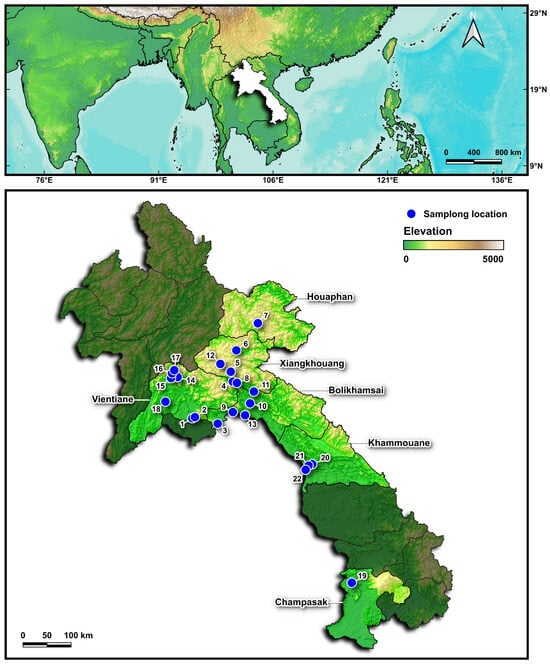
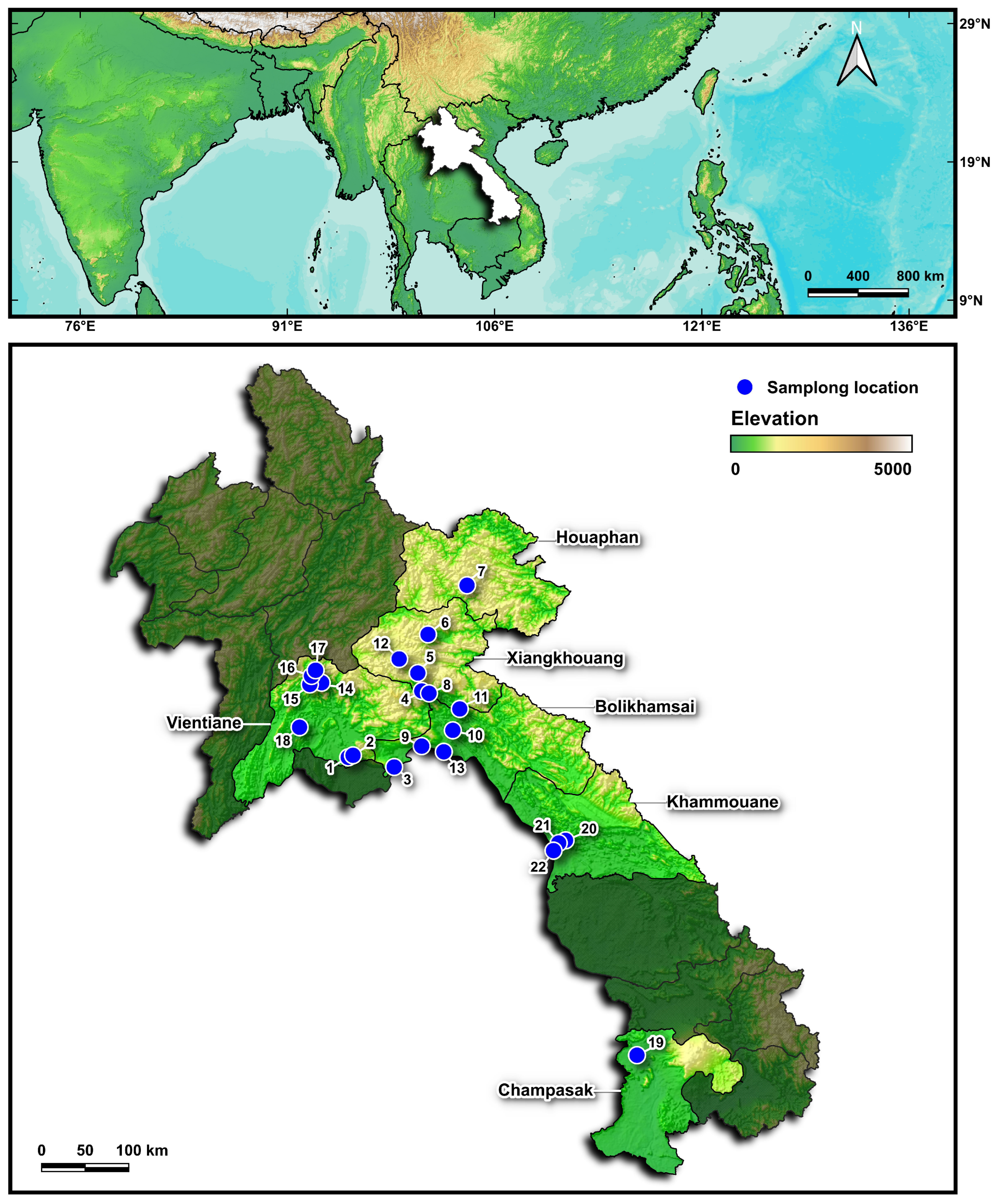
Biting midge specimens were collected during 30 sampling events at 22 locations across seven provinces of Laos between August 2024 and October 2025 (Table 1; Figure 1). All sampling locations were near animal pens within villages. The methods employed were as follows: (i) CDC light traps. Specimens were collected using six CDC-style traps: one BG-Pro (Biogents, Regensburg, Germany) trap and five ABC Basic Light Traps (Clarke, St. Charles, IL, USA). Each trap was equipped with a black light (12 V, 65 W) and a non-filter catch bag as the collection container. The traps were placed about 50 m apart and operated overnight. (ii) Sweep netting. Adult midges were collected by three people sweeping nets through the air around the sampling sites. The sweep net had a hoop diameter of 39 cm and a three-part telescopic handle with a total extended length of 120 cm. Sampling was conducted for approximately one hour at each site. Collections began early in the morning (06:00 a.m.), with about one hour spent collecting.
Table 1.
Sampling location and number of male, female and blood-fed females of Culicoides collected from 22 locations in Laos between August 2024 and October 2025.
Figure 1.
Map showing the geographical location of Laos (white area in the top panel) (retrieved from the Humanitarian Data Exchange (HDX) (https://data.humdata.org/dataset/cod-ab-lao) (accessed on 18 March 2026) and the study areas in seven provinces and sampling locations of Culicoides in Laos (bottom panel) (obtained from the EarthEnv project (https://www.earthenv.org/topography) (accessed on 18 March 2026). Detailed information for each sampling site is provided in Table 1.
Among the 22 sampling sites, 15 samples were taken using only sweep nets, and 5 were taken using only light traps. At one location, “Ban Na keo (2)” (Table 1), specimens were collected using both methods.
Collected specimens were preserved in 80% ethanol and stored at −20 °C until further analysis. Species identification was conducted based on morphological characteristics, using available taxonomic keys and descriptions for biting midges from Laos, Southeast Asia, and the Culicoides wing pictorial atlas [13,24,25].
2.2. Molecular Study
Representative specimens of each morphologically identified species were selected for DNA barcoding analysis. The head, wings and legs of specimen used for molecular analysis were removed and preserved in 80% ethanol and stored at −20 °C. The remaining body parts were used for DNA extraction using the GF-1 Nucleic Acid Extraction Kit (Vivantis Technologies Sdn. Bhd., Subang Jaya, Malaysia), following the manufacturer’s protocol. Extracted DNA was stored at −20 °C until further use. A fragment of approximately 650 bp of the mitochondrial cytochrome c oxidase subunit I (COI) gene was amplified using the primers LCO1490 and HCO2198 [26]. PCR conditions followed those described by Tangkawanit et al. [27]. PCR products were stained with Novel Juice (GeneDireX, Taoyuan, Taiwan, China) and visualized on 1% agarose gels. Successful amplicons were purified using the GF-1 AmbiClean (Gel & PCR) Kit (Vivantis Technologies Sdn. Bhd., Subang Jaya, Malaysia) and subsequently sequenced by ATCG Company Limited (Thailand Science Park, Pathum Thani, Thailand) using the same primers as for PCR amplification.
For host blood meal analysis, the mitochondrial cytochrome b (cyt b) gene was used as a genetic marker. Female specimens were examined under a stereomicroscope, and blood-fed individuals were selected for molecular identification of their host blood sources. DNA extraction was performed using the same protocol as described above. A fragment of approximately 300 bp of the cyt b gene was amplified using primers L14841 and H15149 [28]. PCR products were checked, purified, and sequenced following the same procedures as for COI analysis.
2.3. Data Analysis
COI sequences were checked and edited using the “Edit/View Sequence Files” function in MEGA X [29]. The COI sequences generated in this study (n = 115) were deposited in the NCBI GenBank database under accession numbers PZ319913-PZ320027. Species identification based on COI barcodes was performed using the “Identification Engine” in BOLD with the “Animal species-level library (Public + Private)” database and the “Rapid Species Search” option [30]. Identification was considered successful when sequences were assigned to the species level. Genetic relationships among COI sequences obtained in this study (n = 115) and those retrieved from the BOLD database (https://boldsystems.org/) for representative members of matched and nearest Barcode Index Numbers (BINs) (n = 135) were inferred using both neighbor-joining (NJ) and maximum likelihood (ML) methods. The NJ analysis was conducted in MEGA X with bootstrap support estimated from 1000 replications. The ML analysis was performed using the IQ-TREE web server [31,32]. The best-fit substitution model, selected based on the Bayesian Information Criterion, was GTR + F + I + G4. Branch support was assessed using ultrafast bootstrap with 1000 replications. Host blood meal identification was performed by comparing cyt b sequences from blood-fed specimens with sequences in the NCBI GenBank database using the Basic Local Alignment Search Tool (BLAST) (https://blast.ncbi.nlm.nih.gov/Blast.cgi) (accessed on 1 March 2026). Matches with ≥98% sequence similarity were considered to imply successful identification of host species.
3. Results
3.1. Species Diversity, Abundance and Occurrence
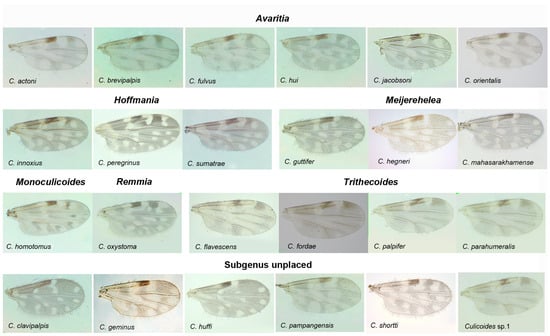
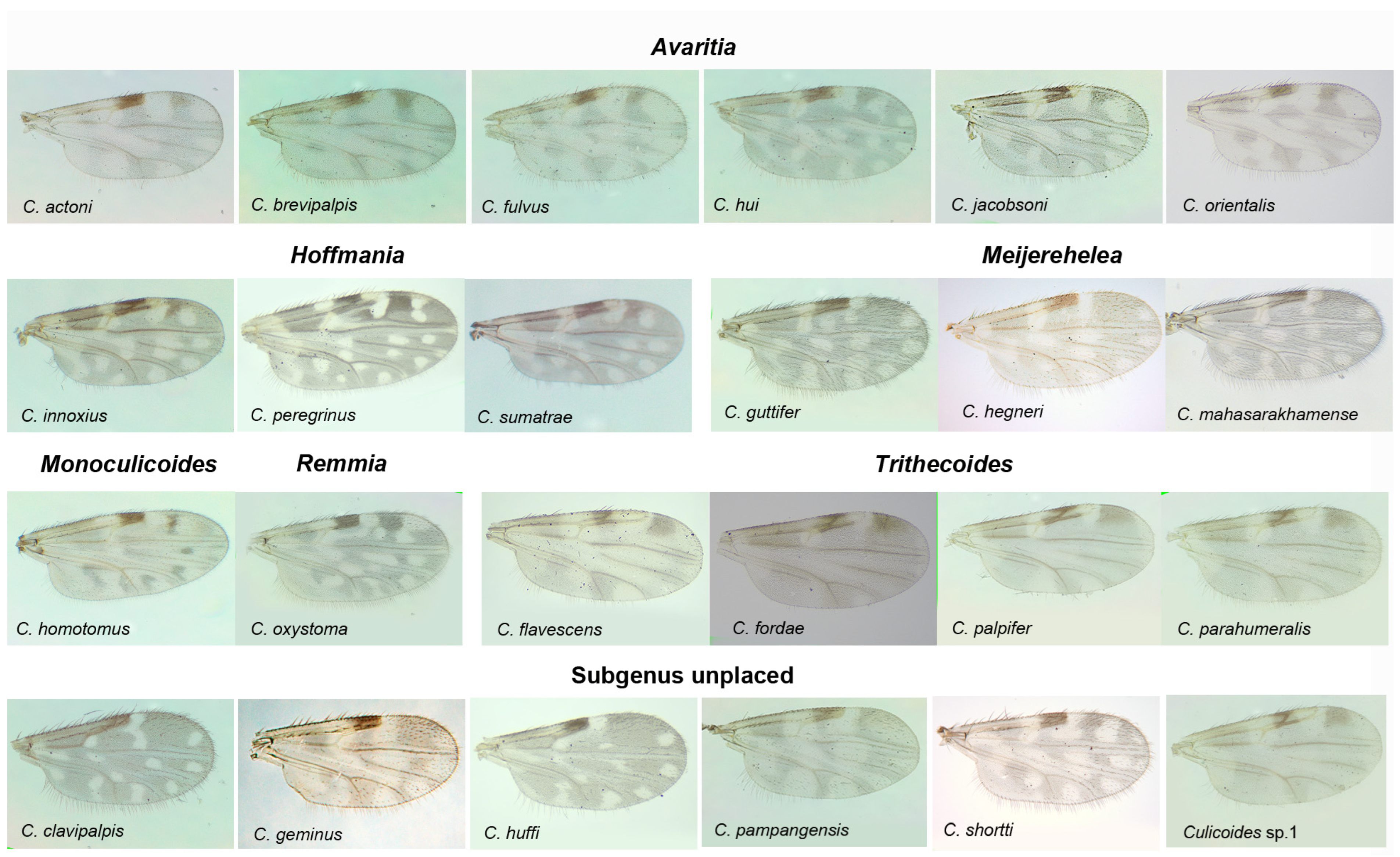
A total of 4592 specimens were collected from 22 locations across seven provinces of Laos between August 2024 and October 2025. Of these, 3095 were females (including 265 blood-fed individuals) and 1497 were males (Table 1). The majority of the collected specimens (4023 of 4592, or (87.6%)) were collected using the light trap method (Table 2). Morphological identification revealed 24 species, of which 18 were assigned to six subgenera, while six remained unplaced (Table 2; Figure 2). Among these species, 10 (C. hui, C. jacobsoni, C. orientalis, C. sumatrae, C. hegneri, C. flavescens, C. fordae, C. palpifer, C. pamangensis and Culicoides sp. 1) were only collected via the light trap method (Table 2).
Table 2.
Number of male, female and blood-fed females of Culicoides collected from Laos between August 2024 and October 2025.
Figure 2.
Photographs of female right wings of 24 species of Culicoides collected from seven provinces of Laos.
DNA barcode identification using COI sequences was congruent with morphological identification for 103 of 115 (89.6%) specimens (Table 3). Incongruence between morphology and DNA barcoding was observed due to the absence of reference sequences (e.g., C. jacobsoni) and ambiguous matches for specimens of following species: two specimens morphologically determined as C. innoxius were matched with a BIN comprising two species C. innoxius and C. sumatrae; five specimens of C. hegneri were matched with a BIN comprising C. hegneri/Culicoides sp. All of C. mahasarakhamense were matched with conspecifics except one that was identified as C. arakawae.
Table 3.
Number of specimens used for DNA barcode, intraspecific genetic divergence, identification results and nearest BIN in BOLD of biting midges from Laos.
Maximum intraspecific genetic divergence ranged from 0.16% in C. brevipalpis to 16.46% in C. palpifer. Most species exhibited low intraspecific divergence (<3%), although elevated divergence was also observed in C. clavipalpis (4.91%), C. mahasarakhamense (7.43%) and C. huffi (10.60%) (Table 3). Evidence of hidden diversity was detected, with 30 BINs identified among specimens representing 24 morphologically identified species. Five species were associated with multiple BINs, comprising C. palpifer (2 BINs), C. clavipalpis (2 BINs), C. mahasarakhamense (2 BINs), C. huffi (3 BINs), and Culicoides sp. 1 (2 BINs) (Table 3). One specimen morphologically identified as Culicoides sp. 1 was genetically highly different (>19%) from the others. Therefore, we treated this specimen as a separate species and refer to it here as Culicoides sp. 2. In C. palpifer, C. clavipalpis, and C. huffi, multiple BINs likely represent incomplete taxonomy (i.e., comprising multiple species that have not yet formally recognized). The two BINs associated with C. mahasarakhamense correspond to two closely related but distinct species (C. mahasarakhamense and C. asakawae). Integrating morphological and molecular data resulted in the recognition of a total of 26 species (Table 3).
Four species—C. peregrinus, C. oxystoma, C. arakawae/C. mahasarakhamense, and C. huffi—dominated the collections, accounting for 83.0% (3809 of 4591) of all specimens. The most abundant species was C. peregrinus (1179 specimens; 25.7%), followed by C. oxystoma (1093 specimens; 23.8%), C. arakawae/C. mahasarakhamense (849 specimens; 18.5%) and C. huffi (688 specimens; 15.0%) (Table 2). In terms of occurrence, C. oxystoma, C. actoni, and C. arakawae/C. mahasarakhamense were the most widespread species, being recorded in 17 (56.7%), 14 (46.7%), and 11 (36.7%) out of 30 collections, respectively. Most other species were found in fewer than 10 collections, and six species (C. innoxius, C. hui, C. orientalis, Culicoides sp. 1, C. subflavescens, and Culicoides sp. 2) were recorded only once (Table 1).
3.2. Phylogenetic Relationships
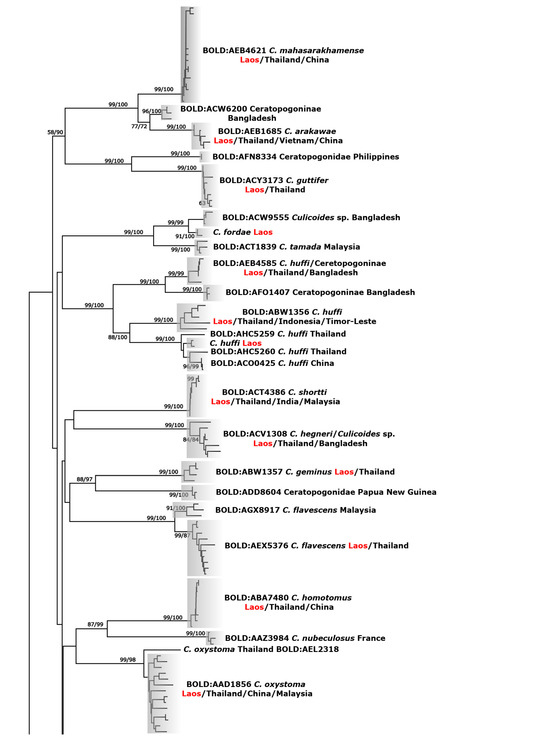
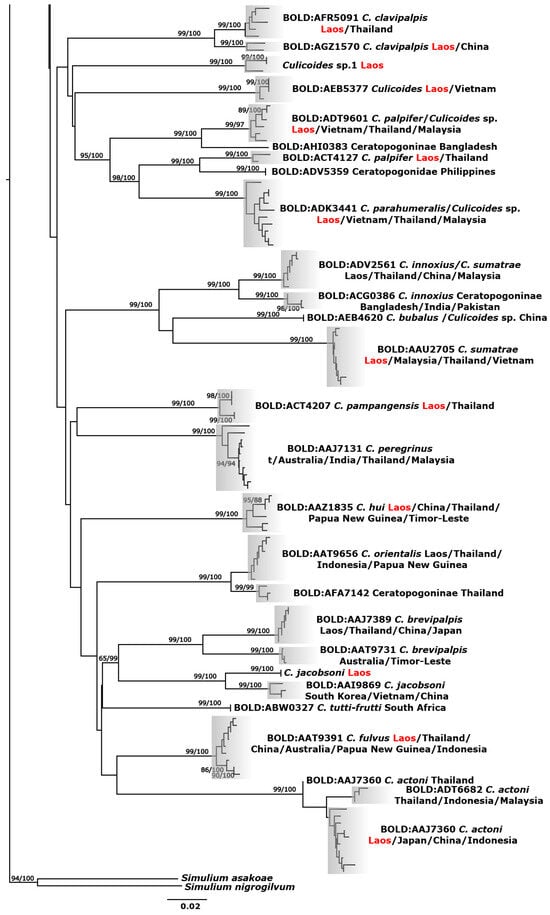
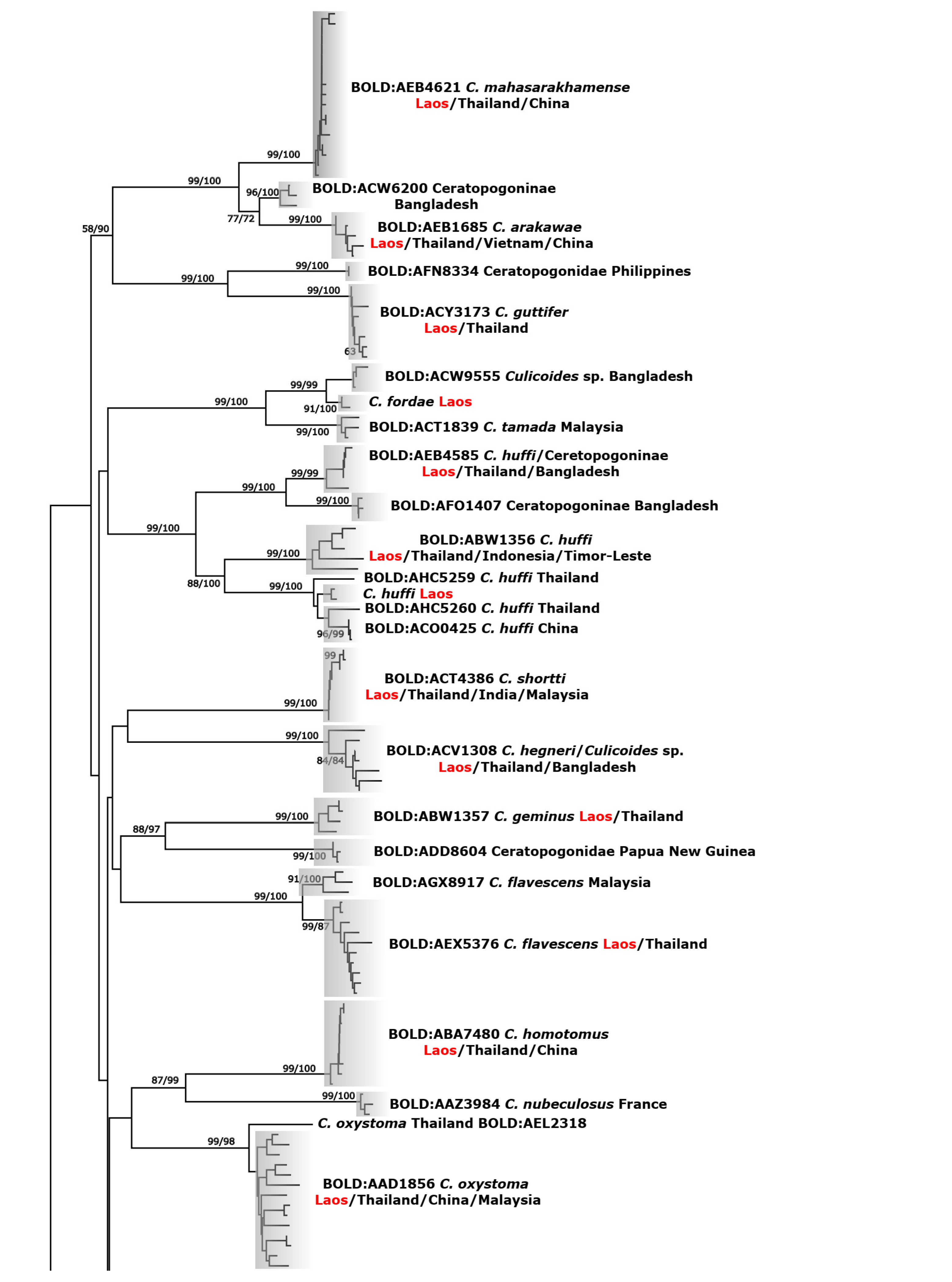
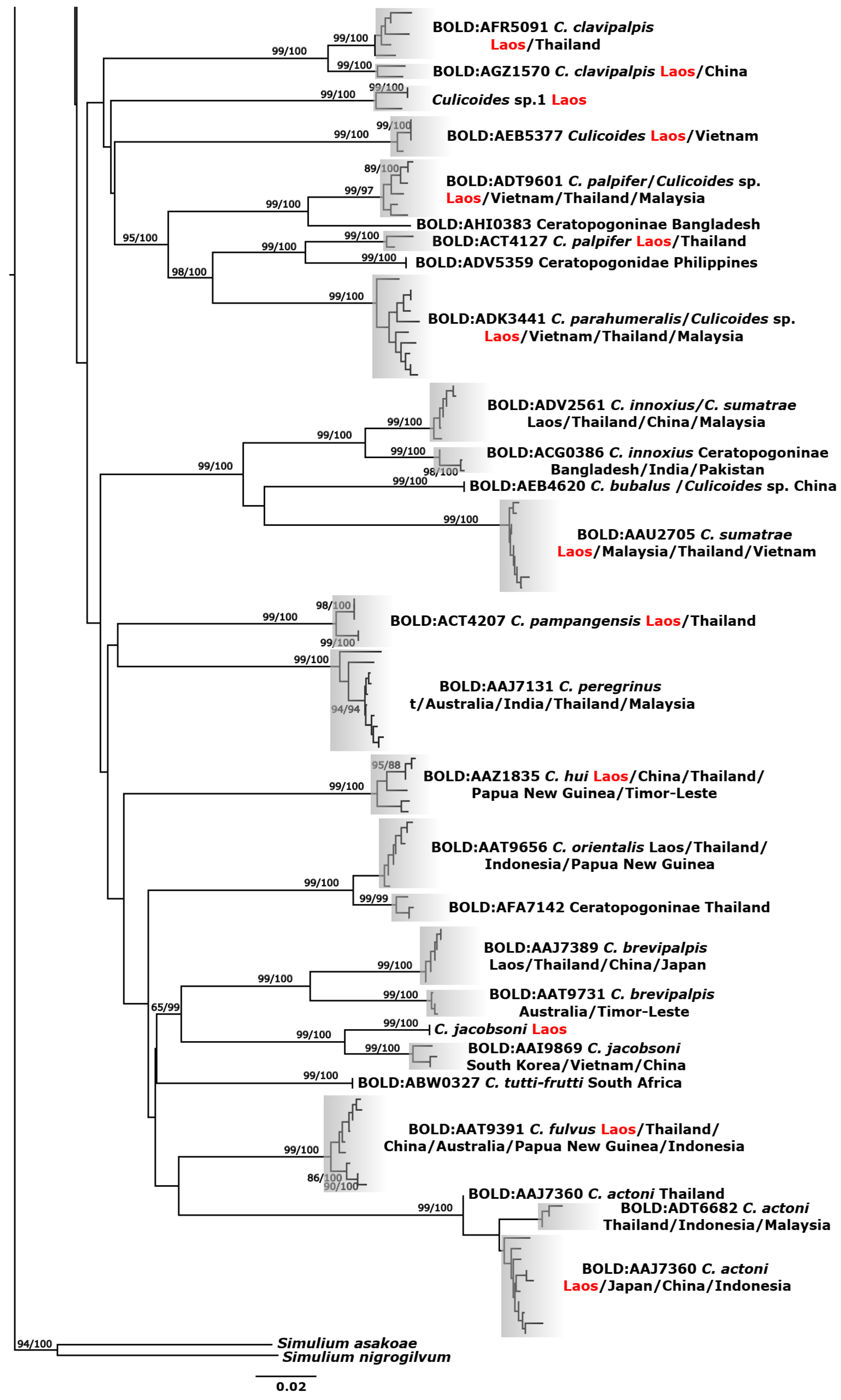
Phylogenetic analyses based on neighbor joining (NJ) and maximum likelihood (ML) methods showed similar tree topologies. Therefore, only the NJ tree is presented here (Figure 3). The NJ tree showed that specimens from Laos clustered with conspecific sequences from other Asian countries and formed well-supported monophyletic clades (bootstrap > 90%) (Figure 3). However, three species—C. clavipalpis, C. palpifer, and C. huffi—exhibited deeply divergent lineages within their clades, consistent with their high intraspecific genetic divergence. Specimens of C. clavipalpis were separated into two distinct clades corresponding to different BINs, one clustering with specimens from Thailand and the other with specimens from China. Similarly, C. palpifer specimens were divided into two divergent lineages (BOLD:ADT9601 and BOLD:ACT4127). Specimens of C. huffi were separated into three distinct lineages that comprised five BINs (BOLD:AEB4585, BOLD:ABW1356, BOLD:AHC5259, BOLD:ACO0425 and BOLD:AHC5260).
Figure 3.
Neighbor-joining tree of 26 Culicoides species from Laos (red), inferred from mitochondrial cytochrome oxidase I (COI) sequences, together with conspecific and nearest-neighbor sequences retrieved from BOLD. For each species, country of origin, and BIN assignment are provided. Bootstrap values for NJ and ML analyses are shown above or near the branches. Details for each sequence are given in a Supplementary Table (Table S1).
3.3. Host Blood Meal Source Identification
A total of 97 blood-fed specimens representing 15 Culicoides species were selected for host identification. Of these, only 32 specimens were successfully sequenced (Table 4). Chickens (Gallus gallus) were the most common host, accounting for 66% (21 of 32) of identified blood meals. Species feeding on chickens included C. clavipalpis, C. guttifer, C. mahasarakhamense, and C. huffi. Additional avian hosts included scaly-breasted munia (Lonchura punctulata) and Muscovy duck (Cairina moschata), each detected in a single specimen of C. huffi. The second most common host was domestic water buffalo (Bubalus bubalis), representing 22% (7/32) of blood meals. Species feeding on this host included C. actoni, C. hegneri, C. parahumeralis, C. oxystoma, and Culicoides sp. 2. Additionally, single specimens of C. innoxius and C. oxystoma were found to have fed on cattle (Bos indicus).
Table 4.
Host blood source identification based on the cyt b sequences obtained from Culicoides blood meal.
4. Discussion
The results presented in this study represent the first report of Culicoides from Laos in more than four decades. The most recent study of this insect group was conducted by [13], who reported 62 named and 4 unnamed Culicoides species in Laos. Based on specimen collections from seven provinces, combined with morphological identification and DNA barcode analysis, we identified 24 named and 2 unnamed species. Among these, 21 species had been previously recorded in Laos [13,24], whereas five (three named and two unnamed) are newly recorded for the country. The newly recorded species include C. homotomus, C. mahasarakhamense, C. pampangensis, and two unnamed species (Culicoides sp. 1 and sp. 2). Culicoides mahasarakhamense was described in 2021 from Thailand [21], subsequent to the old report of Culicoides spp. from Laos by Howarth [13]. The two unnamed species (Culicoides sp. 1 and sp. 2) are documented for the first time in the present study. Culicoides homotomus and C. pampangensis are widely distributed in Southeast Asia [24]; therefore, their absence in the 1985 report by Howarth [13] is likely due to insufficient sampling.
The majority of specimens collected were females (3095 of 4592). This female-biased pattern is attributable to the substantially higher number of females than males captured using light traps (2846 vs. 1177). In contrast, sweep netting yielded a slightly higher number of males than females (320 vs. 249). A female bias in collections obtained using light traps has been reported previously [33,34]. This difference is likely related to sex-specific variation in responses to light [35].
Among the Culicoides species identified in Laos in the present study, at least four (C. fulvus, C. guttifer, C. peregrinus, and C. oxystoma) are known vectors of pathogens [2]. Other species may also serve as potential vectors; as disease-causing agents have been detected in them. For example, in neighboring Thailand, several parasites, including protozoa of the genera Leucocytozoon, Plasmodium, and Trypanosoma, have been detected in C. huffi and C. mahasarakhamense [7,36,37,38]. Also in Thailand, Bluetongue virus has been detected in C. fulvus, C. orientalis, and C. oxystoma [39]. In addition, Leishmania martiniquensis and L. orientalis have been detected in multiple Culicoides species, including C. oxystoma, C. guttifer, C. orientalis, C. mahasarakhamense, C. innoxius, C. shortti, C. arakawae, C. sumatrae, C. jacobsoni, C. actoni, C. peregrinus, and C. fulvus [40,41,42]. The presence of these Culicoides species in Laos therefore indicates a potential risk of diseases transmitted by these hematophagous insects, particularly for abundant vector species such as C. peregrinus, C. mahasarakhamense and C. oxystoma. Further investigations on the presence of pathogens in biting midge species in Laos are therefore critically important.
DNA barcode analysis demonstrated the high effectiveness of the COI gene sequences for species identification of Culicoides. Among the 115 sequences representing 24 morphologically identified species, 103 from 21 were successfully identified in BOLD. The remaining cases of unsuccessful identification included no match (C. jacobsoni and Culicoides sp. 1), ambiguous matches (C. innoxius/C. sumatrae and C. hegneri/Culicoides sp.), and cryptic species (C. mahasarakhamense and C. arakawae). Specimens of C. jacobsoni from Laos were genetically closest to conspecific sequences in the BOLD database but showed only 94% similarity; therefore, the identification engine did not assign them to the species level. Phylogenetic analyses further indicated that the Laotian specimens are distinct from C. jacobsoni recorded in other countries, suggesting that they may represent morphologically similar but genetically distinct species. Further studies are required to test this hypothesis.
Two specimens of C. innoxius from Laos were assigned to BIN BOLD:ADV2561, which includes specimens from Thailand, China, and Malaysia. This BIN contains both C. innoxius and C. sumatrae, although the majority (74 of 75 specimens) belong to C. innoxius. This suggests that the occurrence of C. sumatrae in this BIN may be due to misidentification, and indeed, the two species are morphologically very similar [24]. Specimens of C. hegneri from Laos were assigned to BIN BOLD:ACV1308, which includes only two specimens: one from Thailand and one unidentified specimen from Bangladesh. Notably, four BINs have been reported for C. hegneri based on only six specimens from two countries (Thailand and India), suggesting potential hidden diversity within this species that requires further investigation.
Culicoides mahasarakhamense, originally described from Thailand [21], is morphologically very similar to C. arakawae, with reliable differentiation requiring examination of the male paramere [21]. However, COI sequences clearly distinguish these two species, showing >3.9% sequence divergence. Our results highlight the usefulness of DNA barcoding in distinguishing morphologically similar species such as C. mahasarakhamense and C. arakawae. Although only C. mahasarakhamense was identified morphologically, DNA barcode data indicated that C. arakawae also occurs in Laos.
Cryptic genetic diversity was detected in three Culicoides species in Laos: C. clavipalpis, C. palpifer, and C. huffi. Such cryptic diversity has been widely reported in DNA barcoding studies of Culicoides. The presence of genetically divergent lineages within these species has also been reported in Thailand [8,43,44] and Malaysia [45]. For example, six BINs are reported for C. clavipalpis in BOLD. Specimens from Laos (n = 3) were assigned to two BINs: two specimens to BOLD:AFR5091 (shared with Thailand) and one specimen to BOLD:AGZ1570 (previously recorded from China). These BINs differ by >3.96% sequence divergence, suggesting that they may represent putative cryptic species. Further investigation integrating morphological characteristics with additional genetic markers, such as ITS2 sequences or other nuclear genes, is desirable to test this hypothesis.
Specimens identified as C. palpifer from Laos exhibited extremely high genetic divergence (maximum 16.46% p-distance) and matched two out of 11 BINs reported for this species in BOLD. The taxonomy of C. palpifer is complex, with multiple studies reporting high genetic diversity within morphologically identified specimens [44,45,46,47]. Similarly, C. huffi specimens from Laos were assigned to three BINs among the 10 reported in BOLD, covering a wide geographic range from Timor-Leste to China and Bangladesh. Given this wide distribution and high genetic divergence (up to 10.60%), these lineages may represent distinct species. Further morphological and molecular analyses using additional genetic markers are necessary to test this hypothesis [18].
Identifying host blood sources in hematophagous insects, particularly vector species, is essential for understanding vectorial capacity and disease epidemiology [22,23]. In this study, we report for the first time the vertebrate host blood sources of Culicoides in Laos. Among 97 blood-fed specimens used for the molecular identification of host blood sources, cyt b amplification was successful in only 42. This high rate of unsuccessful amplification may be related to several factors, including time elapsed since feeding. A more digested blood meal can reduce the success rate of PCR amplification because the vertebrate DNA in the blood meal degrades gradually over time [48]. Most of our blood-fed specimens (198 of 265) were collected using light traps, which were operated overnight before the specimens were preserved in ethanol. This extended period likely allowed for digestion of the blood meals, thereby reducing the quantity and quality of viable DNA and contributing to unsuccessful amplification. The DNA was successfully amplified but failed in sequencing, possibly due to the presence of blood from multiple vertebrate species [48].
Analysis of 32 successfully sequenced blood-fed specimens representing 10 species revealed five vertebrate host species. Chicken was the most common host (21 of 32, 66%), consistent with previous findings in Thailand [43]. However, a later study in Thailand reported domestic water buffalo as the most common host [8], likely reflecting differences in the Culicoides species examined or differences in local abundances of the two hosts.
Preliminary evidence from limited samples suggests that there is a degree of host preference among Culicoides species. Among the 10 species analyzed, six (C. actoni, C. hegneri, C. parahumeralis, C. innoxius, C. oxystoma, and Culicoides sp. 2) were mammalophilic, while four (C. clavipalpis, C. huffi, C. mahasarakhamense, and C. guttifer) were ornithophilic. These findings are consistent with previous studies [43]. Braverman et al. [49] proposed that mammalophilic species possess fewer (4–6) flagellomeres bearing sensilla coeloconica, whereas ornithophilic species possess more (12–13). Our results partially support this hypothesis: mammalophilic species exhibited 4–6 such flagellomeres, while two ornithophilic species (C. mahasarakhamense and C. guttifer) had 12. However, exceptions were observed, as C. clavipalpis and C. huffi—which feed on birds—had fewer sensilla [21,24]. Similar feeding patterns have been reported in Thailand [8,42]. However, because our results are based on a limited number of samples, further investigation from larger sample sizes and a more diverse range of species collected from diverse habitats is required.
5. Conclusions
In conclusion, this study provides the first report on Culicoides in Laos in over four decades. Among the 26 species identified, six are newly recorded for the country. DNA barcoding revealed cryptic genetic diversity in three species (C. huffi, C. palpifer, and C. clavipalpis), suggesting the presence of additional undescribed species. Further integrative taxonomic studies combining detailed morphological analyses with additional molecular markers are needed to clarify species boundaries. Host blood meal identification revealed that chickens and domestic water buffalo are the most common blood sources for the most abundant species (e.g., C. oxystoma, C. huffi, and C. mahasarakhamense). These Culicoides species are known or are considered to be potential vectors of pathogens affecting both domestic and wild animals. These findings highlight the need for further research on pathogen diversity and transmission dynamics in Culicoides populations in Laos.
Supplementary Materials
The following supporting information can be downloaded at https://www.mdpi.com/article/10.3390/insects17060647/s1, Table S1: Barcode Index Numbers (BINs), GenBank accession numbers or BOLD sequence IDs, and countries of origin for Culicoides COI sequences retrieved from BOLD and those collected in Laos (highlighted in red) used in the phylogenetic analyses.
Author Contributions
Conceptualization, visualization, R.M., K.I. and P.P.; investigation, R.M., W.W., C.J., W.J., S.N., K.I. and I.T.; methodology, R.M., W.W., C.J., W.J., S.N. and I.T.; data curation, R.M., W.W., C.J., W.J., S.N. and K.I.; visualization, R.M., C.J. and P.P.; writing—original draft, R.M. and P.P.; writing—review and editing, W.W., C.J., S.N. and I.T.; supervision, K.I. and P.P.; project administration, P.P.; funding acquisition, P.P. All authors have read and agreed to the published version of the manuscript.
Funding
This study was funded by Mahasarakham University, grant number 6806008.
Institutional Review Board Statement
The animal study protocol was approved by the Institutional Animal Care and Use Committee, Mahasarakham University (approval number: IACUC-MSU-045-009/2025 on 26 May 2025) for studies involving animals.
Data Availability Statement
The sequences generated in this study were deposited in NCBI GenBank under accession numbers PZ319913–PZ320027. All other data and materials supporting this article are reported within the paper and its Supplementary Materials.
Acknowledgments
We would like to thank Adrian Plant for his valuable comments on a previous version of the manuscript.
Conflicts of Interest
The authors declare no conflicts of interest. The funders had no role in the design of the study; in the collection, analyses, or interpretation of data; in the writing of the manuscript; or in the decision to publish the results.
References
- Borkent, A.; Dominiak, P. Catalog of the biting midges of the world (Diptera: Ceratopogonidae). Zootaxa 2020, 4787, 1–377. [Google Scholar] [CrossRef] [Scilit] [PubMed]
- Mullen, G.R.; Murphree, C.S. Biting midges (Ceratopogonidae). In Medical and Veterinary Entomology, 3rd ed.; Mullen, G., Durden, L.A., Eds.; Elsevier: San Diego, CA, USA, 2019; pp. 213–236. [Google Scholar]
- Walker, P.J. Bluetongue virus is ‘on-the-move’. Microbiol. Aust. 2009, 30, 136–137. [Google Scholar] [CrossRef] [Scilit]
- Redmond, E.F.; Jones, D.; Rushton, J. Economic assessment of African horse sickness vaccine impact. Equine Vet. J. 2022, 54, 368–378. [Google Scholar] [PubMed]
- Power, A.; Flecker, A. The role of vector diversity in disease dynamics. In Infectious Disease Ecology: Effects of Ecosystems on Disease and of Disease on Ecosystems; Ostfeld, R., Keesing, F., Eviner, V., Eds.; Princeton University Press: Princeton, NJ, USA, 2008; pp. 30–47. [Google Scholar]
- Thepparat, A.; Bellis, G.; Ketavan, C.; Ruangsittichai, J.; Sumruayphol, S.; Apiwathnasorn, C. Ten species of Culicoides Latreille (Diptera: Ceratopogonidae) newly recorded from Thailand. Zootaxa 2015, 4033, 48–56. [Google Scholar] [CrossRef] [Scilit] [PubMed]
- Sunantaraporn, S.; Thepparat, A.; Phumee, A.; Sor-Suwan, S.; Boonserm, R.; Bellis, G.; Siriyasatien, P. Culicoides Latreille (Diptera: Ceratopogonidae) as potential vectors for Leishmania martiniquensis and Trypanosoma sp. in northern Thailand. PLoS Neglect. Trop. Dis. 2021, 15, e0010014. [Google Scholar] [CrossRef] [Scilit] [PubMed]
- Gomontean, B.; Vaisusuk, K.; Chatan, W.; Wongpakam, K.; Sankul, P.; Lachanthuek, L.; Mintara, R.; Thanee, I.; Pramual, P. Diversity, abundance and host blood meal analysis of Culicoides Latreille (Diptera: Ceratopogonidae) from cattle pens in different land use types from Thailand. Insects 2023, 14, 574. [Google Scholar] [CrossRef] [Scilit] [PubMed]
- Tepboonrueng, P.; Pataradool, T.; Boonserm, R.; Rimmer, L.W.; Preativatanyou, K.; Sunantaraporn, S.; Siriyasatien, P. DNA barcoding of Culicoides biting midges (Diptera: Ceratopogonidae) and detection of Leishmania and other trypanosomatids in southern Thailand. Parasit. Vectors 2025, 18, 194. [Google Scholar] [CrossRef] [Scilit] [PubMed]
- Men, J.; He, Y.; Liu, L.; Li, N.; Yang, S.; Wang, J. A New Fort Crockett Virus Strain Isolated from Culicoides in Yunnan Province, China, near the China–Laos–Vietnam Border. Vector Borne Zoonotic Dis. 2020, 20, 932–935. [Google Scholar] [CrossRef] [Scilit] [PubMed]
- Lei, W.; Guo, X.; Fu, S.; Feng, Y.; Nie, K.; Song, J.; Li, Y.; Ma, X.; Liang, G.; Zhou, H. Isolation of Tibet orbivirus, TIBOV, from Culicoides collected in Yunnan, China. PLoS ONE 2015, 10, e0136257. [Google Scholar] [CrossRef] [Scilit] [PubMed]
- Li, Z.H.; Wang, Y.N.; Deng, J.M.; Li, L.; Yang, L.J.; Chen, X.Q.; Wang, W.H.; Lu, F.Y.; Tang, Z.J.; Wang, D.M.; et al. Searching for potential Culicoides vectors of four orbiviruses in Yunnan Province, China. Parasit. Vectors 2025, 18, 73. [Google Scholar] [CrossRef] [Scilit] [PubMed]
- Howarth, F.G. Biosystematics of the Culicoides of Laos (Diptera: Ceratopogonidae). Int. J. Entomol. 1985, 27, 1–96. [Google Scholar]
- Adler, P.H.; Wannasingha, W.; Gomontean, B.; Jumpato, W.; Mintara, R.; Namtaku, S.; Thanee, I.; Wongpakam, K.; Jaroenchaiwattanachote, C.; Inkhavilay, K.; et al. Laos, a new frontier for investigating black flies (Diptera: Simuliidae). J. Med. Entomol. 2026, 63, tjaf174. [Google Scholar] [CrossRef] [Scilit] [PubMed]
- Pagès, N.; Muñoz-Muñoz, F.; Talavera, S.; Sarto, V.; Lorca, C.; Núñez, J.I. Identification of cryptic species of Culicoides (Diptera: Ceratopogonidae) in the subgenus Culicoides and development of species-specific PCR assays based on barcode regions. Vet. Parasitol. 2009, 165, 298–310. [Google Scholar] [CrossRef] [Scilit] [PubMed]
- Ander, M.; Troell, K.; Chirico, J. Barcoding of biting midges in the genus Culicoides: A tool for species determination. Med. Vet. Entomol. 2013, 27, 323–331. [Google Scholar] [PubMed]
- Harrup, L.E.; Laban, S.; Purse, B.V.; Reddy, Y.K.; Reddy, Y.N.; Byregowda, S.M.; Kumar, N.; Purushotham, M.; Kowali, S.; Prasad, M.; et al. DNA barcoding and surveillance sampling strategies for Culicoides biting midges (Diptera: Ceratopogonidae) in southern India. Parasit. Vectors 2016, 9, 461. [Google Scholar] [CrossRef] [Scilit] [PubMed]
- Gopurenko, D.; Bellis, G.A.; Yanase, T.; Wardhana, A.H.; Thepparat, A.; Wang, J.; Li, H.; Cai, D.; Mitchell, A. Integrative taxonomy to investigate species boundaries within Culicoides (Diptera, Ceratopogonidae): A case study using subgenus Avaritia from Australasia and Eastern Asia. Vet. Ital. 2015, 51, 345–378. [Google Scholar] [CrossRef] [Scilit] [PubMed]
- Harrup, L.E.; Bellis, G.A.; Balenghien, T.; Garros, C. Culicoides Latreille (Diptera: Ceratopogonidae) taxonomy: Current challenges and future directions. Infect. Genet. Evol. 2015, 30, 249–266. [Google Scholar] [CrossRef] [Scilit] [PubMed]
- Nielsen, S.A.; Kristensen, M. Delineation of Culicoides species by morphology and barcode exemplified by three new species of the subgenus Culicoides (Diptera: Ceratopogonidae) from Scandinavia. Parasit. Vectors 2015, 8, 151. [Google Scholar] [CrossRef] [Scilit] [PubMed]
- Pramual, P.; Jomkumsing, P.; Piraonapicha, K.; Jumpato, W. Integrative taxonomy uncovers a new Culicoides (Diptera: Ceratopogonidae) biting midge species from Thailand. Acta Trop. 2021, 220, 105941. [Google Scholar] [CrossRef] [Scilit] [PubMed]
- Lassen, S.B.; Nielsen, S.A.; Kristensen, M. Identity and diversity of blood meal hosts of biting midges (Diptera: Ceratopogonidae: Culicoides Latreille) in Denmark. Parasit. Vectors 2012, 5, 143. [Google Scholar] [CrossRef] [Scilit] [PubMed]
- Martínez-de la Puente, J.; Figuerola, J.; Soriguer, R. Fur or feather? Feeding preferences of species of Culicoides biting midges in Europe. Trends Parasitol. 2015, 31, 16–22. [Google Scholar] [CrossRef] [Scilit] [PubMed]
- Wirth, W.W.; Hubert, A.A. The Culicoides of Southeast Asia (Diptera: Ceratopogonidae). Mem. Am. Entomol. Inst. 1989, 44, 1–508. [Google Scholar]
- Dyce, A.L.; Bellis, G.A.; Muller, M.J. Pictorial Atlas of Australian Culicoides Wings (Diptera: Ceratopogonidae); Australian Biological Resources Study: Canberra, Australia, 2007.
- Folmer, O.; Hoeh, W.R.; Black, M.B.; Vrijenhoek, R.C. Conserved primers for PCR amplification of mitochondrial DNA from different invertebrate phyla. Mol. Mar. Biol. Biotechnol. 1994, 3, 294–299. [Google Scholar] [PubMed]
- Tangkawanit, U.; Wongpakam, K.; Pramual, P. A new black fly (Diptera: Simuliidae) species of the subgenus Asiosimulium Takaoka Choochote from Thailand. Zootaxa 2018, 4388, 111–122. [Google Scholar] [CrossRef] [Scilit] [PubMed]
- Kocher, T.D.; Thomas, W.K.; Meyer, A.; Edwards, S.V.; Pääbo, S.; Villablanca, F.X.; Wilson, A.C. Dynamics of mitochondrial DNA evolution in animals: Amplification and sequencing with conserved primers. Proc. Natl. Acad. Sci. USA 1989, 86, 6196–6200. [Google Scholar] [CrossRef] [Scilit] [PubMed]
- Kumar, S.; Stecher, G.; Li, M.; Knyaz, C.; Tamura, K. MEGA X: Molecular evolutionary genetics analysis across computing platforms. Mol. Biol. Evol. 2018, 35, 1547–1549. [Google Scholar] [CrossRef] [Scilit] [PubMed]
- Ratnasingham, S.; Hebert, P.D.N. A DNA-Based registry for all animal species: The Barcode Index Number (BIN) system. PLoS ONE 2013, 8, e66213. [Google Scholar] [CrossRef] [Scilit] [PubMed]
- Nguyen, L.T.; Schmidt, H.A.; Von Haeseler, A.; Minh, B.Q. IQ-TREE: A fast and effective stochastic algorithm for estimating maximum-likelihood phylogenies. Mol. Biol. Evol. 2015, 32, 268–274. [Google Scholar] [PubMed]
- Trifinopoulos, J.; Nguyen, L.T.; von Haeseler, A.; Minh, B.Q. W-IQ-TREE: A fast online phylogenetic tool for maximum likelihood analysis. Nucleic Acids Res. 2016, 44, W232–W235. [Google Scholar] [CrossRef] [Scilit] [PubMed]
- Viennet, E.; Garros, C.; Lancelot, R.; Allène, X.; Gardès, L.; Rakotoarivony, I.; Crochet, D.; Delécolle, J.C.; Moulia, C.; Baldet, T.; et al. Assessment of vector/host contact: Comparison of animal-baited traps and UV-light/suction trap for collecting Culicoides biting midges (Diptera: Ceratopogonidae), vectors of Orbiviruses. Parasit. Vectors 2011, 4, 119. [Google Scholar] [CrossRef] [Scilit] [PubMed]
- McDermott, E.G.; Mayo, C.E.; Gerry, A.C.; Mullens, B.A. Trap placement and attractant choice affect capture and create sex and parity biases in collections of the biting midge, Culicoides sonorensis. Med. Vet. Entomol. 2016, 30, 293–300. [Google Scholar] [CrossRef] [Scilit] [PubMed]
- McDermott, E.G.; Mullens, B.A. The dark side of light traps. J. Med. Entomol. 2018, 55, 251–261. [Google Scholar] [PubMed]
- Pramual, P.; Jomkumsing, P.; Jumpato, W.; Bunauea, S. Molecular detection of avian haemosporidian parasites in biting midges (Diptera: Ceratopogonidae) from Thailand. Acta Trop. 2021, 224, 106118. [Google Scholar] [CrossRef] [Scilit] [PubMed]
- Pramual, P.; Khamluea, S.; Butlun, P.; Promdungdee, A. Molecular detection of filarial nematode from Culicoides biting midges (Diptera: Ceratopogonidae) in northeastern Thailand. Trop. Biomed. 2023, 40, 188–193. [Google Scholar] [CrossRef] [Scilit] [PubMed]
- Songumpai, N.; Promrangsee, C.; Noopetch, P.; Siriyasatien, P.; Preativatanyou, K. First evidence of co-circulation of emerging Leishmania martiniquensis, Leishmania orientalis, and Crithidia sp. in Culicoides biting midges (Diptera: Ceratopogonidae), the putative vectors for autochthonous transmission in southern Thailand. Trop. Med. Infect. Dis. 2022, 7, 379. [Google Scholar] [CrossRef] [Scilit]
- Fujisawa, Y.; Homat, T.; Thepparat, A.; Changbunjong, T.; Sutummaporn, K.; Kornmatitsuk, S.; Kornmatitsuk, B. DNA barcode identification and molecular detection of bluetongue virus in Culicoides biting midges (Diptera: Ceratopogonidae) from western Thailand. Acta Trop. 2021, 224, 106147. [Google Scholar] [CrossRef] [Scilit] [PubMed]
- Kaewmee, S.; Mano, C.; Phanitchakun, T.; Ampol, R.; Yasanga, T.; Pattanawong, U.; Junkum, A.; Siriyasatien, P.; Bates, P.A.; Jariyapan, N. Natural infection with Leishmania (Mundinia) martiniquensis supports Culicoides peregrinus (Diptera: Ceratopogonidae) as a potential vector of leishmaniasis and characterization of a Crithidia sp. isolated from the midges. Front. Microbiol. 2023, 14, 1235254. [Google Scholar] [CrossRef] [Scilit] [PubMed]
- Ampol, R.; Somwang, P.; Khositharattanakool, P.; Promrangsee, C.; Pataradool, T.; Tepboonreung, P.; Siriyasatien, P.; Preativatanyou, K. Nanopore-based surveillance of Leishmania parasites in Culicoides Latrielle (Diptera: Ceratopogonidae) caught from the affected community and Tham Phra Cave in Chiang Rai province, the endemic area of Leishmaniasis in Northern Thailand. Insects 2024, 15, 327. [Google Scholar] [CrossRef] [Scilit] [PubMed]
- Promrangsee, C.; Sriswasdi, S.; Sunantaraporn, S.; Savigamin, C.; Pataradool, T.; Sricharoensuk, C.; Boonserm, R.; Ampol, R.; Pruenglampoo, P.; Mungthin, M.; et al. Seasonal dynamics, Leishmania diversity, and nanopore-based metabarcoding of blood meal origins in Culicoides spp. in the newly emerging focus of leishmaniasis in Northern Thailand. Parasit. Vectors 2024, 17, 400. [Google Scholar] [CrossRef] [Scilit] [PubMed]
- Jomkumsing, P.; Surapinit, A.; Saengpara, T.; Pramual, P. Genetic variation, DNA barcoding and blood meal identification of Culicoides Latreille biting midges (Diptera: Ceratopogonidae) in Thailand. Acta Trop. 2021, 217, 105866. [Google Scholar] [CrossRef] [Scilit]
- Gopurenko, D.; Bellis, G.; Pengsakul, T.; Siriyasatien, P.; Thepparat, A. DNA barcoding of Culicoides Latreille (Diptera: Ceratopogonidae) from Thailand reveals taxonomic inconsistencies and novel diversity among reported sequences. J. Med. Entomol. 2022, 59, 1960–1970. [Google Scholar] [CrossRef] [Scilit] [PubMed]
- Ya’cob, Z.; Mintara, R.; Belabut, D.M.; Halim, M.R.A.; Pramual, P. DNA barcoding and host blood meal identification of Culicoides Latreille (Diptera, Ceratopogonidae) from Malaysia. Acta Trop. 2025, 263, 107564. [Google Scholar] [CrossRef] [Scilit] [PubMed]
- Bellis, G.A.; Gopurenko, D.; Cookson, B.; Postle, A.C.; Halling, L.; Harris, N.; Yanase, T.; Mitchell, A. Identification of incursions of Culicoides Latreille species (Diptera: Ceratopogonidae) in Australasia using morphological techniques and DNA barcoding. Austral Entomol. 2015, 54, 332–338. [Google Scholar]
- Banerjee, N.; Mazumdar, S.M.; Bellis, G.; Mazumdar, A. New species, country records, DNA barcoding and host blood meal analysis of some Indian species of Culicoides Latreille subgenus Trithecoides Wirth and Hubert (Diptera: Ceratopogonidae). Acta Trop. 2025, 263, 107798. [Google Scholar] [CrossRef] [Scilit] [PubMed]
- Kent, R.J. Molecular methods for arthropod bloodmeal identification and applications to ecological and vector-borne disease studies. Mol. Ecol. Resour. 2009, 9, 4–18. [Google Scholar] [CrossRef] [Scilit] [PubMed]
- Braverman, Y.; Frish, K.; Reis, M.; Mumcuoglu, K.Y. Host preference of Culicoides spp. from Israel based on sensory organs and morphometry (Diptera: Ceratopogonidae). Entomol. Gen. 2012, 34, 97–110. [Google Scholar] [CrossRef] [Scilit]

Disclaimer/Publisher’s Note: The statements, opinions and data contained in all publications are solely those of the individual author(s) and contributor(s) and not of MDPI and/or the editor(s). MDPI and/or the editor(s) disclaim responsibility for any injury to people or property resulting from any ideas, methods, instructions or products referred to in the content. |
© 2026 by the authors. Licensee MDPI, Basel, Switzerland. This article is an open access article distributed under the terms and conditions of the Creative Commons Attribution (CC BY) license.