


Simple Summary
The recently identified single von Willebrand factor C (SVWC) protein family plays a central role in insect immunity. This review synthesizes the diversity and multifaceted functions of the SVWC family. The SVWC family comprises numerous subtypes; some act as signaling molecules to activate immune pathways, others function as pattern recognition receptors (PRRs) to detect bacteria and viruses, and some possess dual functionality. SVWC expression is regulated by both nuclear factor kappa B (NF-κB) and interferon regulatory factor (IRF) pathways, and these proteins activate the Janus kinase-signal transducer and activator of transcription (JAK-STAT) pathway via integrins, representing a unique signaling mechanism. As PRRs, SVWCs not only induce antimicrobial peptide production but also promote phagocytosis of pathogens by hemocytes. Based on these findings, we propose that SVWC constitutes a systematic complex immunoregulatory network. This perspective not only deepens our understanding of insect immunity but also provides new theoretical foundations and potential application targets for disease control in economically important animals such as honeybees, silkworms, and shrimp.
Abstract
The single von Willebrand factor C (SVWC) domain-containing protein family represents a crucial class of immune molecules recently identified in insects and crustaceans. Initially regarded as functional analogs of vertebrate interferons (IFNs) due to their virus-induced expression and activation of the Janus kinase-signal transducer and activator of the transcription (JAK-STAT) pathway, recent studies have revealed that SVWC proteins possess far more complex functions. Many SVWC members are themselves a novel class of pattern recognition receptors (PRRs) that can directly bind to viruses and bacteria. Importantly, SVWCs are not a single entity but a highly diverse family—multiple subtypes exist in Drosophila, Bombyx mori, and shrimp—a gene expansion that implies functional differentiation. This review systematically examines the multifunctionality of SVWC proteins in insects and crustaceans, with a particular focus on the functional specialization driven by subtype diversity. We delve into the complex regulatory networks governing SVWC expression, including the differential activation by nuclear factor kappa B (NF-κB) pathways (Dorsal, Rel-2, Relish) and interferon regulatory factor (IRF) pathways. We detail the unique signaling mechanism by which SVWCs activate the JAK-STAT pathway via integrins, rather than the canonical Domeless receptor. Furthermore, we extend the discussion to the emerging roles of SVWCs as PRRs in humoral immunity (activating Toll/IMD pathways to induce antimicrobial peptides) and cellular immunity (mediating hemocyte phagocytosis). Based on current evidence, We propose that diverse SVWC subtypes may recognize distinct pathogens, bind to different integrin receptors, and activate specific STAT variants via disparate upstream induction pathways, thereby establishing a systematic and hierarchical immunoregulatory network. This understanding positions the SVWC protein family as a central hub in the insect immune network and offers a novel perspective on the complexity and evolution of invertebrate immunity.
1. Introduction: A Diverse Family of Cytokine-like Proteins
Innate immunity is the ancient defense line of multicellular organisms. Invertebrates, including insects, rely entirely on this sophisticated system to distinguish “self” from “non-self,” with pattern recognition receptors (PRRs) recognizing pathogen-associated molecular patterns (PAMPs) at its core.
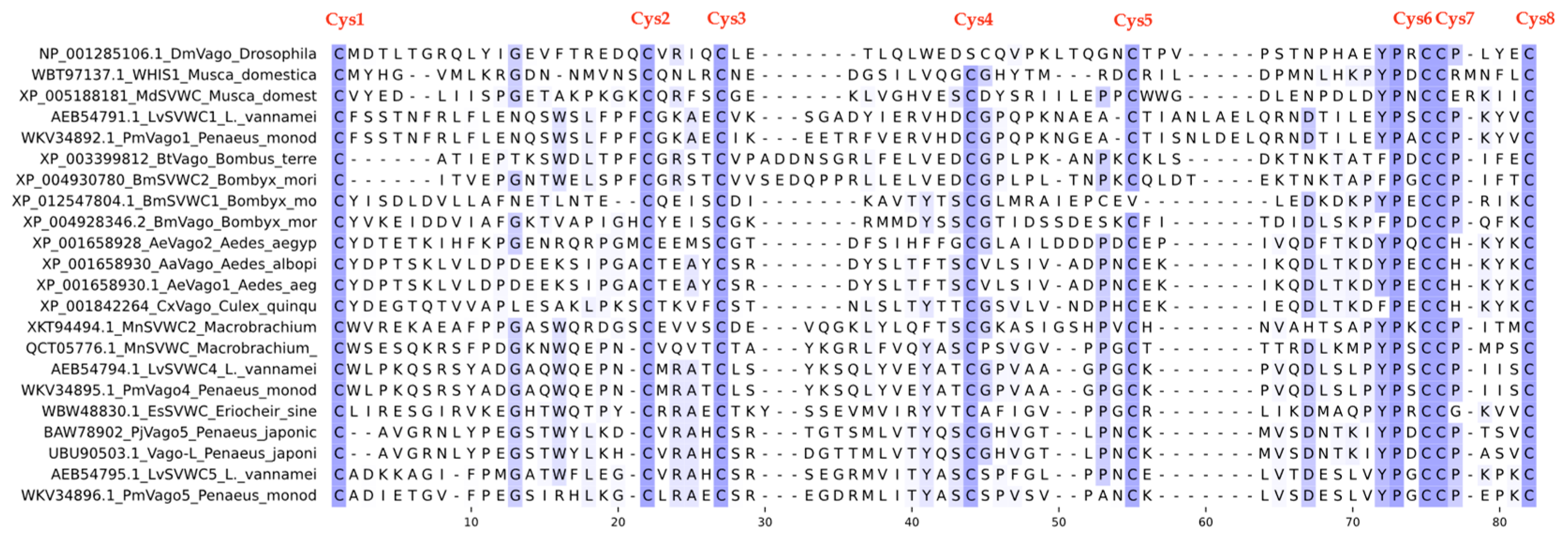
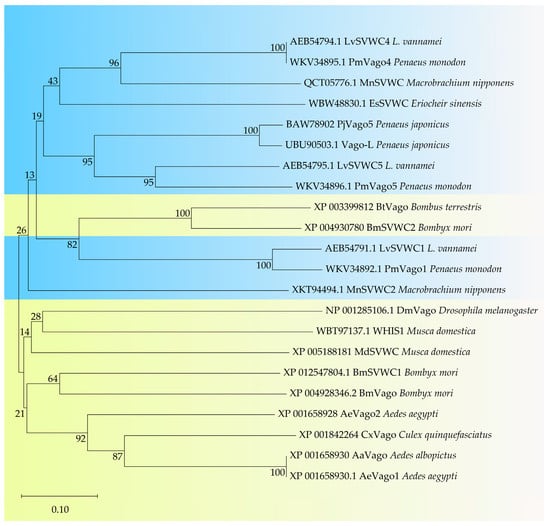
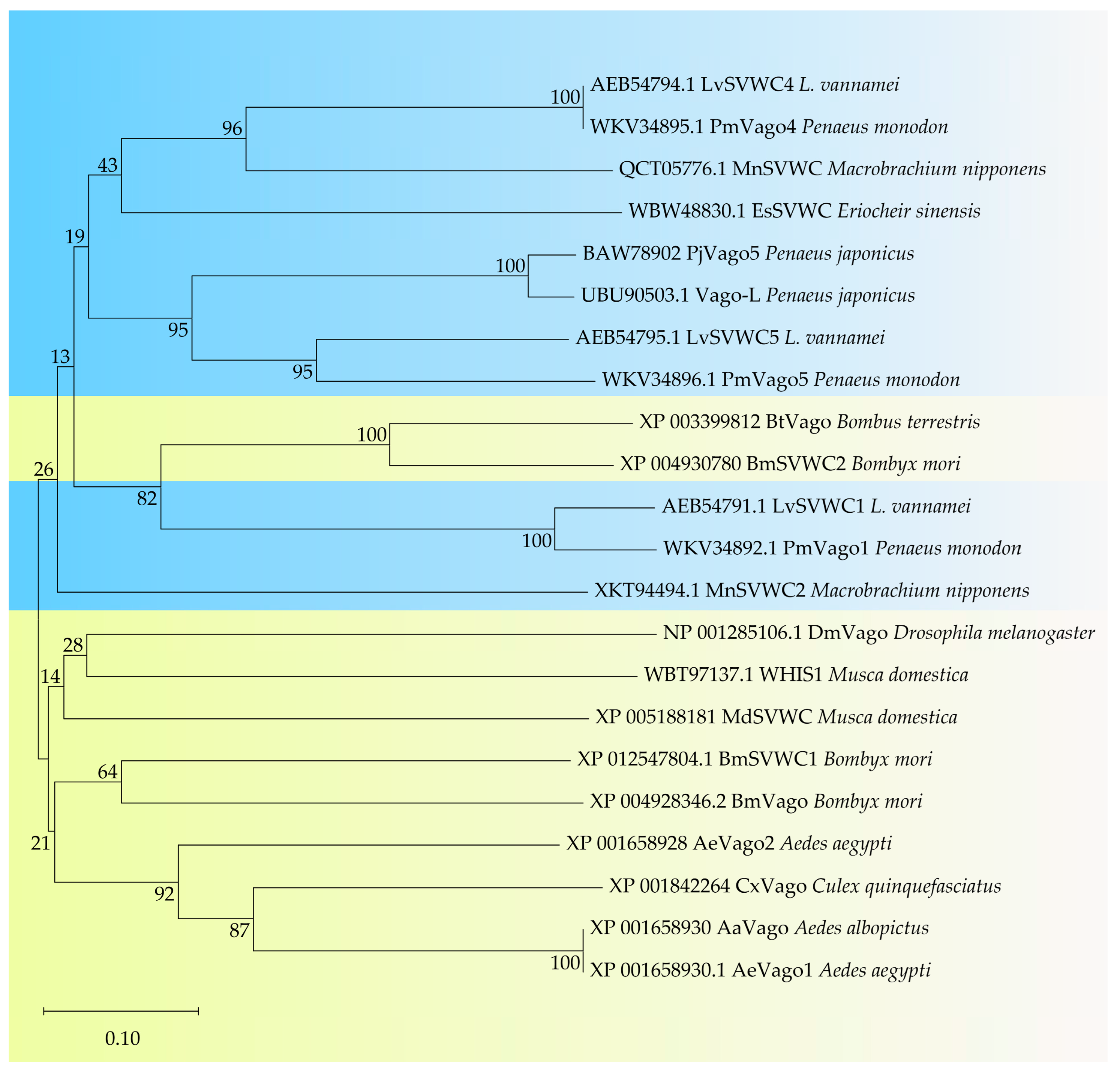
Within this framework, the discovery of the single von Willebrand factor C (SVWC) domain-containing protein family has opened a new window into our understanding of insect immunity. First identified in Drosophila in 2005 (Vago was initially used in Drosophila, and later referred to as SVWC in shrimp and silkworm, with a species prefix) [1], these proteins are characterized by a compact domain containing eight conserved cysteine residues that form four disulfide bonds essential for protein function [2,3]. Subsequently, members of this family have been widely identified in arthropods, including mosquitoes, silkworms, ticks, and shrimp [4,5,6]. Reported sequences of different SVWC subtypes are highly conserved, all containing eight cysteines (Figure 1). Previously, Labropoulou et al. had already discussed in detail the discovery and function of SVWC polypeptides from insects to crustaceans and chelicerates [7]. Gradually, a key fact has emerged: SVWC proteins are not a single entity but a highly diversified family. The Drosophila genome encodes multiple SVWC members; at least five LvSVWC subtypes have been identified in shrimp [5], and multiple homologs exist in Bombyx mori [8]. This gene expansion strongly suggests that distinct SVWC subtypes have evolved unique functional roles. Moreover, the SVWC domain homology tree reveals that the SVWC protein family in invertebrates splits into two principal clades—one comprising crustaceans and the other insects—with repeated gene duplication events within each group generating multiple subtypes that may have undergone functional specialization (Figure 2).
Figure 1.
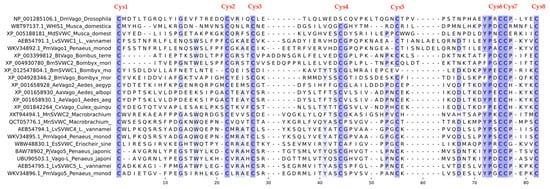
Sequence alignment of the SVWC domains from different isoforms reported in invertebrates to date. Alignment software: MEGA12; alignment method: Clustal. Highlighted residues indicate cysteine (Cys) residues. The alignment shows that the SVWC domain is highly conserved and consistently contains eight Cys residues.
Figure 2.
Phylogenetic tree analysis. The tree was constructed using the Neighbor-Joining method. Insects are indicated by a green background, and crustaceans by a blue background.
Initially, SVWC proteins were considered functional analogs of vertebrate interferons (IFNs) due to their significant induction upon viral infection and their ability to activate the Janus kinase-signal transducer and activator of transcription (JAK-STAT) pathway, a function exhibiting conservation—for instance, both AaVago and CxVago can suppress West Nile virus (WNV) replication in Culex mosquitoes [2,9,10]. Despite lacking any sequence homology, the convergent evolution of activating the JAK-STAT pathway is itself highly compelling. However, recent findings have refined this simplified view: many SVWC members are themselves a novel class of PRRs capable of directly binding viruses, bacteria, and fungi [8,11,12]. This suggests that SVWC proteins may possess a dual identity, functioning as both “sensor” and “signal transducer,” thereby positioning them as a central hub in the insect immune network.
More importantly, SVWC diversity implies a complex, hierarchical immunoregulatory network. Just as vertebrates possess multiple IFNs (IFN-α, IFN-β, IFN-γ) and interleukins (ILs) (e.g., IL-2, IL-6, IL-10) that activate different JAK-STAT combinations (JAK1/JAK2/TYK2 with STAT1/STAT2/STAT3, etc.) to regulate distinct immune responses, invertebrate SVWC subtypes may similarly play a “multi-instrument” role. They may be induced by different PRR pathways, recognize different pathogens, bind different receptors (including various integrin subtypes), activate different JAK and STAT variants, and ultimately initiate tailored transcriptional programs.
While research on insect antiviral immunity is relatively mature, recent discoveries have significantly enriched this field. These advances include the recognition of Bombyx mori nucleopolyhedrovirus (BmNPV) p53 protein by voltage-dependent anion channel 2 (VDAC2) [13] and antiviral responses mediated by uric acid metabolism [14], reactive oxygen species (ROS) [15], and pattern recognition receptors [16]. In contrast, the mechanisms by which insect SVWC proteins participate in antiviral defense have only recently garnered significant attention. This review aims to systematically synthesize and critically discuss the multifunctionality of insect SVWC proteins, specifically focusing on the functional differentiation arising from their subtype diversity. We will explore the intricate regulatory networks governing their expression, examine the unique mechanism by which they activate the JAK-STAT pathway, and extend the discussion to their emerging roles in antibacterial defense. By integrating research from model insects like Drosophila, mosquitoes, silkworms, and crustaceans like shrimp, we aim to depict a comprehensive portrait of SVWC proteins as central “multi-taskers” in the insect immune system and uncover their profound evolutionary and functional significance.
2. SVWC Subtype Diversity and Functional Differentiation
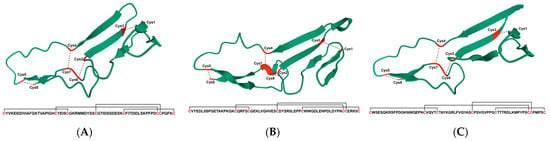
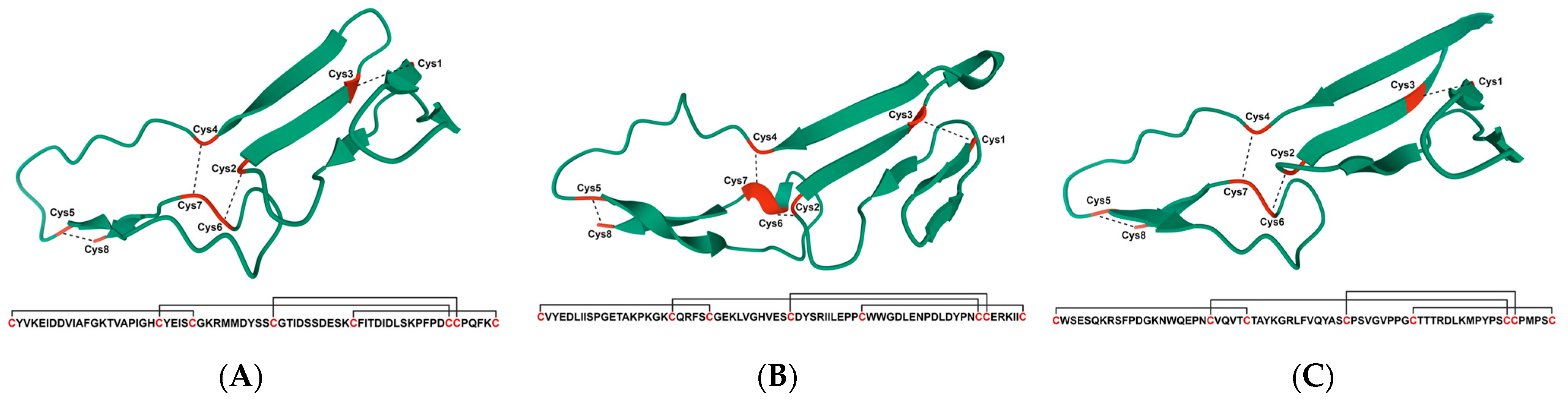
Currently reported SVWC subtypes exhibit specific inhibitory effects against distinct viruses and operate via different activation mechanisms (Table 1). However, recent findings have gradually unveiled a new possibility: SVWC proteins may possess functional duality. They can act both as cytokine-like signaling molecules and as PRRs, with some subtypes even embodying both identities simultaneously (Figure 3). This dual identity appears to have diverged among different subtypes. Although supporting evidence for this hypothesis remains limited at present—having been observed only in insects and crustaceans—it nevertheless provides a glimpse into the complex immunoregulatory network orchestrated by SVWC proteins.
Figure 3.
Three-dimensional structural diagrams of SVWC domains. (A) BmSVWC3 (functions solely as a signaling molecule). (B) MdSVWC (functions solely as a pattern recognition receptor). (C) MnSVWC (functions both as a signaling molecule and a pattern recognition receptor). The residues highlighted in red are cysteine (Cys), and the dashed lines represent disulfide bonds.
In the Macrobrachium nipponense, both MnSVWC and MnSVWC2 have been shown to possess PRR and signaling molecule functions, and notably, the same MnSVWC protein functions both as a signaling molecule for antiviral immunity and as a PRR for antimicrobial immunity [12,17,18]. In the silkworm Bombyx mori, BmSVWC also exhibits dual identity, but with a division of labor: BmVago (i.e., BmSVWC3) primarily acts as a signaling molecule for antiviral immunity [19], while BmSVWC2 functions primarily as a PRR for antimicrobial immunity [8]. Furthermore, in the Litopenaeus vannamei, the five LvSVWC subtypes (LvSVWC1-5) display distinct expression patterns and functional characteristics [5]; LvSVWC1/4/5 significantly activate the JAK/STAT pathway, acting as cytokines for antiviral immunity, whereas other subtypes show a muted response to viral infection. In the Penaeus monodon, PmVago1, PmVago4, and PmVago5 respond strongly to white spot syndrome virus (WSSV) infection. However, RNA interference (RNAi) studies reveal that only knockdown of PmVago1 and PmVago4 significantly accelerates mortality and increases viral load. Moreover, the promoter activities of PmVago1 and PmVago4 are differentially regulated by the IKK-NF-κB pathway [20]. Although research on the functional differentiation of SVWCs in insects is not yet comprehensive, this evidence strongly suggests a hypothesis: have distinct SVWC subtypes evolved specific “professional divisions”—some dedicated to PRR functions, others to signaling, and yet others performing dual roles?
The diversity of SVWCs may enable them, much like vertebrate cytokines, to activate different JAK-STAT pathway variants through distinct receptor combinations, thereby initiating customized immune responses. Invertebrate genomes, while possessing fewer STAT genes (typically 1–3 compared to vertebrates), can generate multiple STAT variants through alternative splicing [21]. For instance, Drosophila has a single STAT gene (STAT92E), which produces up to 11 variants. Bombyx mori possesses at least two variants, STAT-L and STAT-S [22]. The Aedes albopictus contains six variants, with two variants already studied [23]. We further hypothesize that different SVWC subtypes may selectively activate specific STAT variants, thereby regulating distinct sets of effector genes—some subtypes dominating antiviral responses, others anti-Gram-negative bacterial responses, and others antifungal defenses—forming a finely divided immunoregulatory network.
While this hypothesis is appealing, direct evidence remains scarce. Currently, little is known about the specific pairing between SVWC subtypes and particular JAK/STAT variants. When acting as signaling molecules, are different subtypes induced by different upstream PRR pathways? Do they bind different integrin subtypes? Upon activation, do they result in distinct STAT dimer compositions and differential transcriptional outputs? As PRRs, do different SVWC subtypes specifically recognize particular microbes and subsequently activate distinct hemocyte phagocytosis or NF-κB pathways? Answers to these questions will determine whether the SVWC system can truly be termed an “invertebrate cytokine network.”
Table 1.
Reported SVWC protein sequences from various invertebrates (The upper table is for insects, and the lower table is for crustaceans).
3. SVWC Activation and Signal Transduction: Multilayered Regulation of the JAK-STAT Pathway
Numerous SVWC subtypes exist, and reported protein sequences all contain NF-κB-like binding sites or IRF binding sites. SVWC protein activation is achieved through these conserved NF-κB binding sites in promoters or IRF binding sites in the 5′-untranslated region (5′-UTR). Some receptor proteins can even activate both pathways to induce expression of different SVWC subtypes [33].
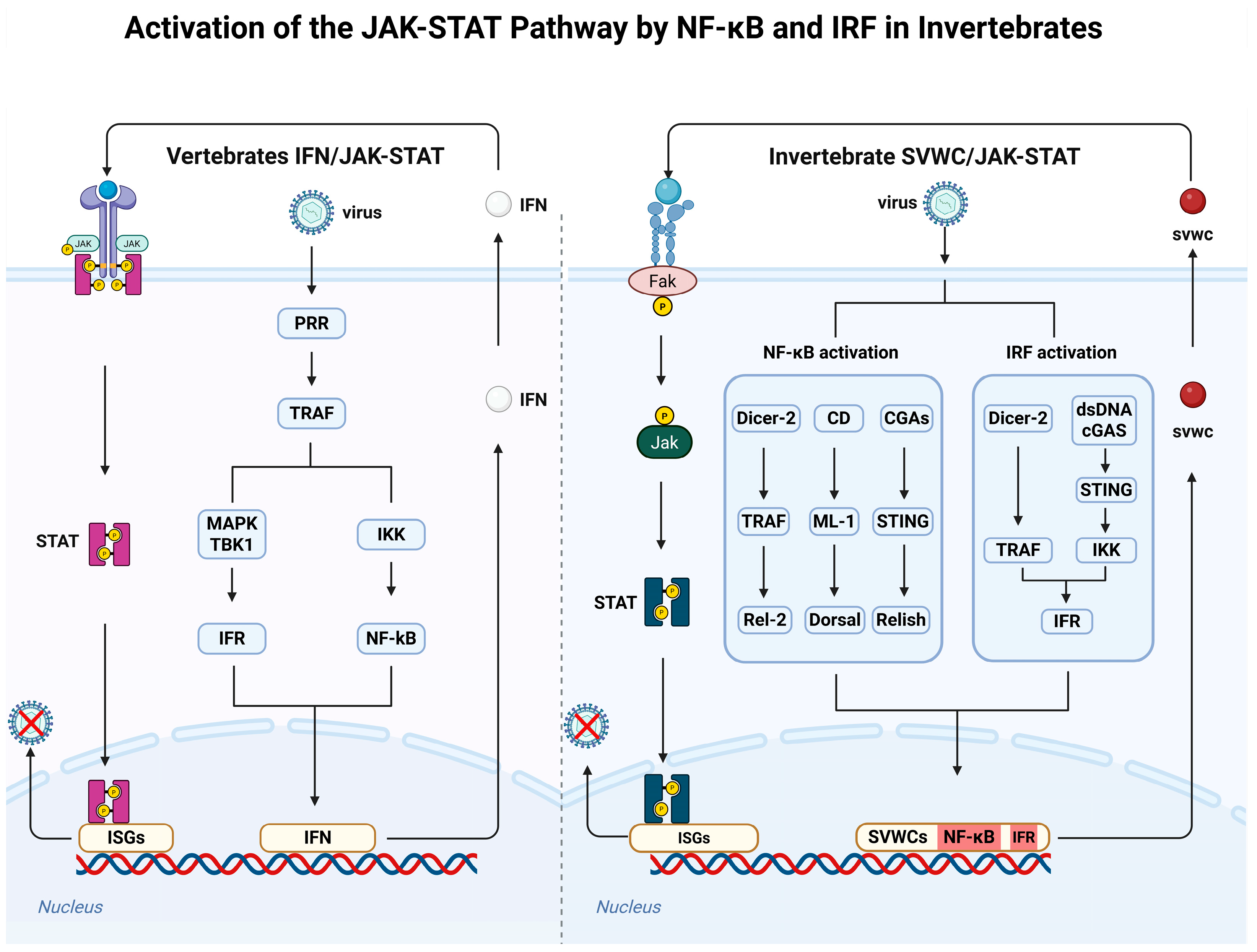
3.1. Canonical NF-κB Pathways: Involvement of Dorsal, Rel-2, and Relish (Figure 4)
In invertebrates, nuclear factor kappa B (NF-κB) family members including Dorsal, Rel-2, and Relish can activate different SVWC subtypes. All these proteins possess a Rel homology domain (RHD), suggesting an intrinsic link between RHD and SVWC activation.
Figure 4.
Invertebrate SVWC proteins can mediate antiviral immunity by activating the JAK/STAT pathway, exhibiting functional similarity to IFNs despite structural differences. SVWC activates the JAK/STAT pathway through both NF-κB (Dorsal, Rel-2, Relish) and IRF, forming a multi-pathway, precisely regulated network.
3.1.1. Activation of SVWC by Rel-2
Dicer-2-TRAF-Rel-2 Axis: In Culex mosquitoes, following West Nile virus (WNV) infection, Dicer-2 activates the NF-κB family member Rel-2 via tumor necrosis factor receptor-associated factor (TRAF). Rel-2 then binds to conserved NF-κB sites in the CxSVWC promoter to drive its expression [26]. Notably, Dicer-2-mediated activation of SVWC is highly conserved; Dicer-2 from Drosophila and Litopenaeus vannamei can mutually activate each other’s SVWC promoters [5].
3.1.2. Activation of SVWC by Dorsal
CD–ML1–Dorsal Axis: In the Marsupenaeus japonicus, the myeloid differentiation factor 2 (MD-2)-related lipid-recognition (ML) domain directly recognizes the envelope lipid component cholesta-3,5-diene (CD) of white spot syndrome virus (WSSV). This recognition induces nuclear translocation of Dorsal, leading to SVWC expression [34].
Furthermore, studies in Litopenaeus vannamei indicate that Dorsal activation is also associated with meiotic recombination 11 (MRE11), a cytosolic sensor of double-stranded DNA (dsDNA). MRE11 can activate Dorsal to regulate antiviral immunity, hinting at a potential MRE11-STING-IRF axis [33].
3.1.3. Activation of SVWC by Relish
cGAS-BmSTING-BmRelish Axis: Upon infection with Bombyx mori nucleopolyhedrovirus (BmNPV), the DNA sensor cyclic GMP-AMP synthase (cGAS) activates the stimulator of interferon genes (STING). STING subsequently activates Relish, inducing BmSVWC expression [19]. Additionally, in shrimp, STING can also act as a PRR directly binding viral dsDNA [35].
3.2. Activation of SVWC by IRF (Figure 4)
3.2.1. Dicer-2-TRAF-IRF Axis
In Litopenaeus vannamei, Dicer-2 activates LvIRF via TRAF3. LvIRF then binds to the 5’-UTR of LvVago4 and LvVago5 to activate their transcription [36]. Notably, the 5′-UTR of the LvIRF gene contains a simple sequence repeat (SSR). Shorter repeat lengths of (CT)n correlate with higher LvIRF expression and increased viral tolerance [37], implying that genetic polymorphisms may influence the induction efficiency of specific SVWC subtypes.
3.2.2. dsDNA/cGAS → STING → IKKε → IRF Axis
In Litopenaeus vannamei, the STING homolog can directly recognize cGAS or viral DNA, inducing LvVago4 expression and establishing an antiviral state and initiating an interferon-like antiviral response [35].
This pathway has also been validated in Penaeus monodon: overexpression of PmIKK activates the promoter activity of PmVago1 and PmVago4, and these two subtypes can further activate the promoters of Dorsal and Relish [20]. Additionally, meiotic recombination protein 11 (MRE11) in Litopenaeus vannamei can activate the STING-IRF axis, regulating IRF-mediated antiviral responses [33].
3.3. Unique Signal Transduction: SVWC Activates JAK-STAT via Integrins
The mechanism by which SVWCs, acting as cytokines, activate the JAK-STAT pathway has long been enigmatic. Mammalian JAK-STAT activation typically requires ligand binding to receptors and induction of receptor dimerization [38]. As Domeless (Dome) is the sole Jak/Stat transmembrane receptor in invertebrate genomes [39], it was initially hypothesized that Dome might be recognized by a ligand to activate the JAK/STAT pathway. However, studies in Culex mosquitoes [2] and kuruma shrimp [10] have shown that Dome knockdown does not affect Vago-mediated JAK-STAT activation, suggesting a non-canonical mechanism for SVWC-mediated JAK-STAT activation in invertebrates.
Crucial evidence comes from Bombyx mori: downstream of the BmSTING-BmRelish signaling pathway, BmSVWC directly interacts with Bmintegrin β1. Inhibition of integrin β1 blocks JAK-STAT activation [19]. Direct confirmation was provided in Marsupenaeus japonicus: MjVago-L directly interacts with the integrin β3 subunit, and an aspartic acid residue (Asp) in MjVago-L is essential for this interaction and its antiviral function. Furthermore, the key integrin signaling adaptor protein focal adhesion kinase (Fak) mediates MjVago-L activation of the Jak/Stat pathway, forming the MjVago-L–Integrin–Fak–Jak–Stat–Ficolin signaling axis [25].
Although the presence of integrin recognition motifs (e.g., Arg-Gly-Asp [RGD]/Lys-Gly-Asp [KGD]) in Drosophila and Culex Vago suggests that the Vago-L/Integrin/Jak/Stat signaling axis may be widespread in arthropod antiviral immunity [25], there is currently no evidence confirming whether the MjVago-L/integrin-mediated Jak/Stat pathway is conserved across arthropods.
This mechanism links cytokine signaling with the integrin pathway. Crucially, integrins themselves constitute a diverse receptor family—different α and β subunit combinations form various integrin heterodimers. This raises an intriguing hypothesis: different SVWC subtypes may selectively bind different integrin heterodimers, thereby activating distinct intracellular signaling pathways (such as different JAK variants) and ultimately initiating different transcriptional programs. The conservation of integrin recognition motifs in Drosophila and Culex Vago suggests this mechanism is conserved in insects. However, the “pairing rules” between SVWC subtypes and integrin subtypes remain an open question.
5. Conclusions and Perspectives: SVWC—Potentially Constructing a Diversified Cytokine Network in Invertebrate Immunity
Insects hold significant economic and nutritional value, encompassing well-known species like honeybees [41,42,43,44,45,46] and silkworms [47,48,49], as well as mealworms [50,51] and various edible insects [52]. SVWC proteins have high translational potential for enhancing disease resistance in economically important insects and crustaceans.
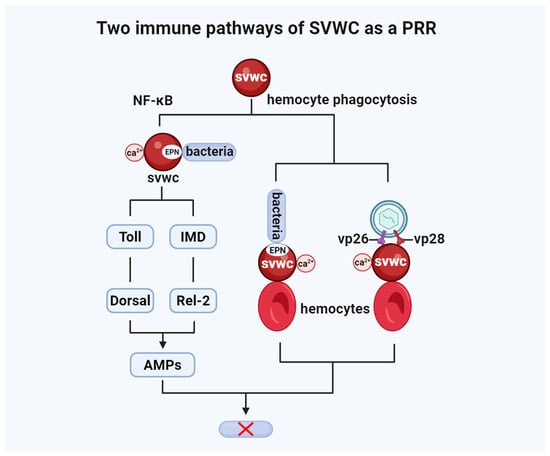
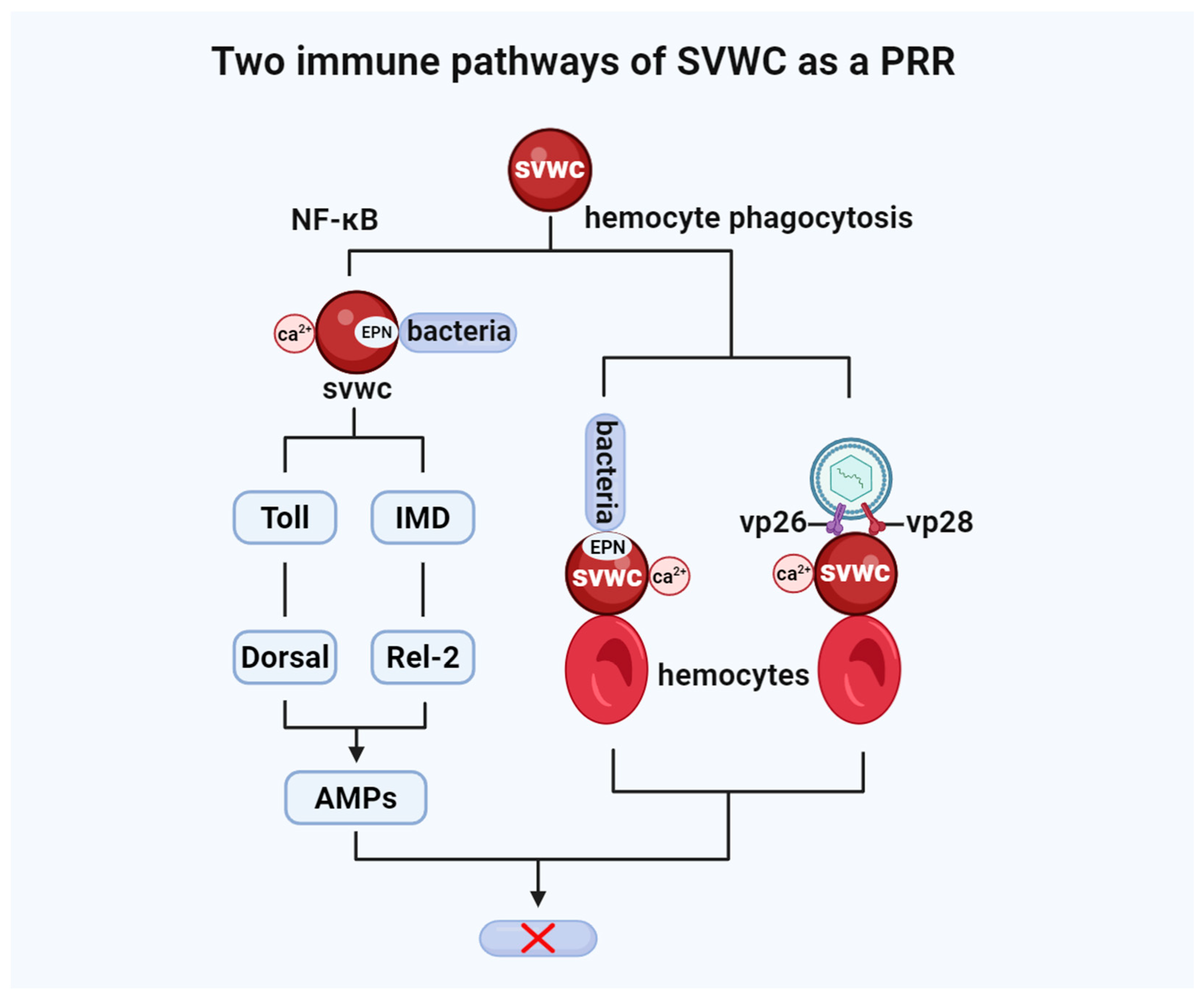
In-depth study of the SVWC protein family has reshaped our understanding of innate immunity in insects and crustaceans. Since the initial identification of Drosophila Vago in 2004, the functional perception of this protein has evolved from an “interferon analog” to a “multifunctional immune hub.” Current evidence indicates that SVWC is a highly diverse protein family, and its subtype diversity represents a strategy for functional specialization. Different SVWC subtypes exhibit distinct downstream activation targets and upstream induction pathways. Some act primarily as PRRs directly recognizing pathogens, others function as cytokine-like signaling molecules activating the JAK-STAT pathway, and some possess dual functionality. SVWC expression is under the precise control of both NF-κB (Dorsal, Rel-2, Relish) and IRF pathways. Different pathogen sensors (Dicer-2, cGAS-STING, MRE11, etc.) induce the expression of specific SVWC subtypes via particular transcription factors, establishing specific “pathogen type-induction pathway-SVWC subtype” pairings. Importantly, evidence reveals a unique mechanism by which SVWCs activate the JAK-STAT pathway via integrins rather than the canonical Domeless receptor, marking the first link between cytokine signaling and the integrin pathway. Given the indispensable importance of external microbes for insect environmental adaptation, the impact of SVWCs on insect microbial immunity is equally crucial [53]. As PRRs, SVWCs not only activate Toll and IMD pathways to induce AMP expression but also agglutinate pathogens and promote hemocyte phagocytosis, extending their function from antiviral to antibacterial immunity and from humoral to cellular immunity. Based on these findings, we propose that the SVWC family potentially constitutes a multilayered immunoregulatory network: diverse SVWC subtypes are induced by distinct upstream pathways, recognize different pathogens, bind different integrin receptors, activate different STAT variants, and ultimately initiate tailored transcriptional programs.
While the “diversified cytokine network” model for SVWC proteins is compelling, significant gaps remain. First, our understanding of all SVWC subtypes’ functions is incomplete. Current research is limited to a few insect and crustacean species and is fragmented across viral and microbial immunity studies. Evidence supporting the proposed pathway mechanisms is not yet abundant. Direct evidence for SVWC activating the JAK/STAT pathway via integrins, independent of the classical Domeless receptor, exists only in Bombyx mori and Marsupenaeus japonicus. Indirect evidence is limited to Marsupenaeus japonicus and Culex mosquitoes. Although integrin recognition motifs in Drosophila and Culex Vago suggest that integrin-mediated Jak/Stat activation might be widespread in arthropods, sufficient evidence confirming the conservation of this pathway across arthropods is currently lacking. Specifically, direct evidence supporting the hypothesis that different subtypes specifically activate corresponding downstream STATs is scarce. These shortcomings require further exploration over time.
Second, while current findings generally support the hypothesis of subtype-specific SVWC immunity against microbes and viruses, the observation that Wolbachia activates AeVago expression while indirectly inhibiting viral replication raises questions. Does this imply that SVWC-mediated immunity against viruses and microbes is compatible or can occur simultaneously? Furthermore, in Penaeus monodon, PmVago1, PmVago4, and PmVago5 all exhibit high responsiveness to WSSV infection, yet only the knockdown of PmVago1 and PmVago4 leads to increased viral load. In Wolbachia-infected Aedes aegypti, AeVago1 is upregulated while AeVago2 is downregulated. This prompts questions: Do synergistic or antagonistic relationships exist among different SVWC subtypes? These issues remain largely unexplored. Although the SVWC family has profoundly changed our understanding of cytokine-like signaling pathways in arthropods, significant knowledge gaps remain in this field. Addressing these questions will refine the theoretical foundation of invertebrate immunology.
In conclusion, ongoing research into the SVWC protein family is fundamentally reshaping our view of insect innate immunity. Their existence and diversification stand as vivid testament to life’s evolutionary arms race over billions of years—a process of continuous optimization, integration, and innovation of defense strategies. Invertebrates, it turns out, also possess a complex, sophisticated, and diversified “cytokine-like” immunoregulatory network.
Author Contributions
Original draft preparation, Y.C.; writing—review and editing, Y.C.; supervi sion, H.X.; Figure, G.X., C.Z. and J.W.; Revision, A.Y.A. All authors have read and agreed to the published version of the manuscript.
Funding
This work was supported by the National Natural Science Foundation of China (31372259), Natural Science Foundation for Universities of Jiangsu Province (No. 10KJB180001), and Start-Up Research Funding of Jiangsu University for Distinguished Scholars (No. 09JDG005).
Data Availability Statement
No new data were created or analyzed in this study. Data sharing is not applicable to this article.
Conflicts of Interest
The authors declare no conflicts of interest.
References
- Dostert, C.; Jouanguy, E.; Irving, P.; Troxler, L.; Galiana-Arnoux, D.; Hetru, C.; Hoffmann, J.A.; Imler, J.L. The Jak-STAT signaling pathway is required but not sufficient for the antiviral response of drosophila. Nat. Immunol. 2005, 6, 946–953. [Google Scholar] [CrossRef] [Scilit]
- Paradkar, P.N.; Trinidad, L.; Voysey, R.; Duchemin, J.B.; Walker, P.J. Secreted Vago restricts West Nile virus infection in Culex mosquito cells by activating the Jak-STAT pathway. Proc. Natl. Acad. Sci. USA 2012, 109, 18915–18920. [Google Scholar] [CrossRef] [Scilit]
- Nagao, J.; Miyashita, M.; Nakagawa, Y.; Miyagawa, H. Chemical synthesis of La1 isolated from the venom of the scorpion Liocheles australasiae and determination of its disulfide bonding pattern. J. Pept. Sci. 2015, 21, 636–643. [Google Scholar] [CrossRef] [Scilit]
- Sheldon, T.J.; Miguel-Aliaga, I.; Gould, A.P.; Taylor, W.R.; Conklin, D. A novel family of single VWC-domain proteins in invertebrates. FEBS Lett. 2007, 581, 5268–5274. [Google Scholar] [CrossRef] [Scilit]
- Chen, Y.H.; Jia, X.T.; Zhao, L.; Li, C.Z.; Zhang, S.; Chen, Y.G.; Weng, S.P.; He, J.G. Identification and functional characterization of Dicer2 and five single VWC domain proteins of Litopenaeus vannamei. Dev. Comp. Immunol. 2011, 35, 661–671. [Google Scholar] [CrossRef] [Scilit]
- Kamachi, S.; Nagao, J.; Miyashita, M.; Nakagawa, Y.; Miyagawa, H.; Tada, T. Crystallization and preliminary X-ray diffraction studies of La1 from Liocheles australasiae. Acta Crystallogr. Sect. F 2014, 70, 915–917. [Google Scholar] [CrossRef] [Scilit]
- Labropoulou, V.; Wang, L.; Magkrioti, C.; Smagghe, G.; Swevers, L. Single domain von Willebrand factor type C “cytokines” and the regulation of the stress/immune response in insects. Arch. Insect Biochem. Physiol. 2024, 115, e22071. [Google Scholar] [CrossRef] [Scilit]
- Ma, L.; Wang, H.; Liu, Y.; Sun, J.; Yan, X.; Lu, Z.; Hao, C.; Qie, X. Single von Willebrand factor C-domain protein-2 confers immune defense against bacterial infections in the silkworm, Bombyx mori. Int. J. Biol. Macromol. 2024, 279, 135241. [Google Scholar] [CrossRef] [Scilit]
- Li, C.; Li, H.; Chen, Y.; Chen, Y.; Wang, S.; Weng, S.P.; Xu, X.; He, J. Activation of Vago by interferon regulatory factor (IRF) suggests an interferon system-like antiviral mechanism in shrimp. Sci. Rep. 2015, 5, 15078. [Google Scholar] [CrossRef] [Scilit]
- Gao, J.; Zhao, B.R.; Zhang, H.; You, Y.L.; Li, F.; Wang, X.W. Interferon functional analog activates antiviral Jak/Stat signaling through integrin in an arthropod. Cell Rep. 2021, 36, 109761. [Google Scholar] [CrossRef] [Scilit]
- Limkul, S.; Phiwthong, T.; Massu, A.; Jaree, P.; Thawonsuwan, J.; Teaumroong, N.; Boonanuntanasarn, S.; Somboonwiwat, K.; Boonchuen, P. The interferon-like proteins, Vagos, in Fenneropenaeus merguiensis elicit antimicrobial responses against WSSV and VP(AHPND) infection. Fish Shellfish Immunol. 2022, 131, 718–728. [Google Scholar] [CrossRef] [Scilit]
- Qin, N.; Li, M.; Zhang, H.; Li, F.; Guo, X.; Wu, M.; Zhang, Q.; Tang, T.; Liu, F. Single von Willebrand factor C-domain protein confers host defense against white spot syndrome virus by functioning as a pattern recognition receptor in Macrobrachium nipponense. Int. J. Biol. Macromol. 2023, 241, 124520. [Google Scholar] [CrossRef] [Scilit]
- Zhu, L.B.; Zhu, H.D.; Huang, Z.H.; Cao, H.H.; Ayaz, S.; Yang, J.Y.; Chen, X.Y.; Zhang, Y.; Liu, S.H.; Xu, J.P. BmNPV p35 regulates apoptosis in Bombyx mori via a novel target of interaction with the BmVDAC2-BmRACK1 complex. Insect Biochem. Mol. Biol. 2024, 169, 104125. [Google Scholar] [CrossRef] [Scilit]
- Su, Z.H.; Lv, J.L.; Ou, Q.; Zhao, Z.Q.; Zheng, K.Y.; Zhang, X.Y.; Lai, W.Q.; Wang, X.Y.; Deng, M.J.; Li, M.W. Uric acid metabolism promotes apoptosis against Bombyx mori nucleopolyhedrovirus in silkworm, Bombyx mori. Insect Mol. Biol. 2023, 32, 558–574. [Google Scholar] [CrossRef] [Scilit]
- Zhu, L.B.; Huang, Z.H.; Ayaz, S.; Guo, Z.X.; Ling, B.; Chen, X.Y.; Liu, S.H.; Xu, J.P. Regulation of Bombyx mori ferritin heavy-chain homolog on ROS induces multiple effects on BmNPV replication. Int. J. Biol. Macromol. 2023, 253, 126414. [Google Scholar] [CrossRef] [Scilit]
- Wang, J.; Zhu, L.B.; Ma, Y.; Liu, Y.X.; Cao, H.H.; Wang, Y.L.; Kong, X.; Huang, Z.H.; Zhu, H.D.; Wang, Y.X.; et al. Bombyx mori β-1,3-Glucan Recognition Protein 4 (BmβGRP4) Could Inhibit the Proliferation of B. mori Nucleopolyhedrovirus through Promoting Apoptosis. Insects 2021, 12, 743. [Google Scholar] [CrossRef] [Scilit]
- Qin, N.; Sun, H.; Lu, M.; Wang, J.; Tang, T.; Liu, F. A single von Willebrand factor C-domain protein acts as an extracellular pattern-recognition receptor in the river prawn Macrobrachium nipponense. J. Biol. Chem. 2020, 295, 10468–10477. [Google Scholar] [CrossRef] [Scilit]
- Li, M.; Qin, N.; Yuan, B.; Guo, M.; Yang, L.; Tang, T.; Li, F.; Liu, F. Involvement of nerve cord-expressed SVWC2 in pathogen recognition and defense in Macrobrachium nipponense. Fish Shellfish Immunol. 2025, 162, 110329. [Google Scholar] [CrossRef] [Scilit]
- Wei, D.; Liu, J.; Hu, J.; Zhang, B.; Pan, Y.; Xia, Q.; Wang, F. An NF-κB-regulated cytokine enhances the antiviral resistance of silkworm, Bombyx mori. Insect Mol. Biol. 2025, 34, 426–439. [Google Scholar] [CrossRef] [Scilit]
- Nanakorn, Z.; Kawai, T.; Tassanakajon, A. Cytokine-like-Vago-mediated antiviral response in Penaeus monodon via IKK-NF-κB signaling pathway. iScience 2024, 27, 110161. [Google Scholar] [CrossRef] [Scilit]
- Rückert, C.; Bell-Sakyi, L.; Fazakerley, J.K.; Fragkoudis, R. Antiviral responses of arthropod vectors: An update on recent advances. Virusdisease 2014, 25, 249–260. [Google Scholar] [CrossRef] [Scilit]
- Liang, W.; Zhou, L.; Dang, Z.; Wang, S.; Zhao, P.; Xia, Q.; Lu, Z. Downregulation of BmSTAT transcription factor promoted nucleopolyhedrovirus replication in Bombyx mori. Front. Microbiol. 2024, 15, 1485951. [Google Scholar] [CrossRef] [Scilit] [PubMed]
- Lin, C.C.; Chou, C.M.; Hsu, Y.L.; Lien, J.C.; Wang, Y.M.; Chen, S.T.; Tsai, S.C.; Hsiao, P.W.; Huang, C.J. Characterization of two mosquito STATs, AaSTAT and CtSTAT. Differential regulation of tyrosine phosphorylation and DNA binding activity by lipopolysaccharide treatment and by Japanese encephalitis virus infection. J. Biol. Chem. 2004, 279, 3308–3317. [Google Scholar] [CrossRef] [Scilit] [PubMed]
- Leulier, F.; Parquet, C.; Pili-Floury, S.; Ryu, J.H.; Caroff, M.; Lee, W.J.; Mengin-Lecreulx, D.; Lemaitre, B. The Drosophila immune system detects bacteria through specific peptidoglycan recognition. Nat. Immunol. 2003, 4, 478–484. [Google Scholar] [CrossRef] [Scilit]
- Niu, J.; Meeus, I.; Smagghe, G. Differential expression pattern of Vago in bumblebee (Bombus terrestris), induced by virulent and avirulent virus infections. Sci. Rep. 2016, 6, 34200. [Google Scholar] [CrossRef] [Scilit]
- Paradkar, P.N.; Duchemin, J.B.; Voysey, R.; Walker, P.J. Dicer-2-dependent activation of Culex Vago occurs via the TRAF-Rel2 signaling pathway. PLoS Negl. Trop. Dis. 2014, 8, e2823. [Google Scholar] [CrossRef] [Scilit]
- Chen, M.; Huang, W.K.; Yao, Y.; Wu, S.M.; Yang, Y.X.; Liu, W.X.; Luo, G.; Wei, S.F.; Zhang, H.; Liu, H.M.; et al. Heterologous expression of the insect SVWC peptide WHIS1 inhibits Candida albicans invasion into A549 and HeLa epithelial cells. Front. Microbiol. 2024, 15, 1358752. [Google Scholar] [CrossRef] [Scilit] [PubMed]
- Tang, T.; Sun, S.; Wang, R.; Li, M.; Wang, Y.; Li, F.; Wang, Y.; Liu, F. MdSVWC1, a new pattern recognition receptor triggers multiple defense mechanisms against invading bacteria in Musca domestica. BMC Biol. 2024, 22, 242. [Google Scholar] [CrossRef] [Scilit]
- Asad, S.; Parry, R.; Asgari, S. Upregulation of Aedes aegypti Vago1 by Wolbachia and its effect on dengue virus replication. Insect Biochem. Mol. Biol. 2018, 92, 45–52. [Google Scholar] [CrossRef] [Scilit]
- Lau, M.J.; Dutra, H.L.C.; Jones, M.J.; McNulty, B.P.; Diaz, A.M.; Ware-Gilmore, F.; McGraw, E.A. Jamestown Canyon virus is transmissible by Aedes aegypti and is only moderately blocked by Wolbachia co-infection. PLoS Negl. Trop. Dis. 2023, 17, e0011616. [Google Scholar] [CrossRef] [Scilit]
- Han, F.; Lu, A.; Yuan, Y.; Huang, W.; Beerntsen, B.T.; Huang, J.; Ling, E. Characterization of an entomopathogenic fungi target integument protein, Bombyx mori single domain von Willebrand factor type C, in the silkworm, Bombyx mori. Insect Mol. Biol. 2017, 26, 308–316. [Google Scholar] [CrossRef] [Scilit] [PubMed]
- Qin, Y.; Luo, Z.; Zhao, K.; Nan, X.; Guo, Y.; Li, W.; Wang, Q. A new SVWC protein functions as a pattern recognition protein in antibacterial responses in Chinese mitten crab (Eriocheirsinensis). Fish Shellfish Immunol. 2022, 131, 1125–1135. [Google Scholar] [CrossRef] [Scilit]
- Zhu, P.; Yan, X.; Jiang, X.; Li, H.; Chen, R.; Wang, S.; Li, C. The MRE11 opposes white spot syndrome virus infection through the IRF and Dorsal mediated antiviral pathways in shrimp. Fish Shellfish Immunol. 2022, 126, 347–356. [Google Scholar] [CrossRef] [Scilit]
- Gao, J.; Wang, J.X.; Wang, X.W. MD-2 Homologue Recognizes the White Spot Syndrome Virus Lipid Component and Induces Antiviral Molecule Expression in Shrimp. J. Immunol. 2019, 203, 1131–1141. [Google Scholar] [CrossRef] [Scilit]
- Li, H.; Di, X.; Wang, S.; Li, Q.; Weng, S.; He, J.; Li, C. Nucleic Acid Sensing by STING Induces an IFN-like Antiviral Response in a Marine Invertebrate. J. Immunol. 2024, 212, 1945–1957. [Google Scholar] [CrossRef] [Scilit]
- Li, H.; Fu, Q.; Wang, S.; Chen, R.; Jiang, X.; Zhu, P.; He, J.; Li, C. TNF-Receptor-Associated Factor 3 in Litopenaeus vannamei Restricts White Spot Syndrome Virus Infection Through the IRF-Vago Antiviral Pathway. Front. Immunol. 2020, 11, 2110. [Google Scholar] [CrossRef] [Scilit]
- Yin, B.; Wang, H.; Zhu, P.; Weng, S.; He, J.; Li, C. A Polymorphic (CT)n-SSR Influences the Activity of the Litopenaeus vannamei IRF Gene Implicated in Viral Resistance. Front. Genet. 2019, 10, 1257. [Google Scholar] [CrossRef] [Scilit]
- Jatiani, S.S.; Baker, S.J.; Silverman, L.R.; Reddy, E.P. Jak/STAT pathways in cytokine signaling and myeloproliferative disorders: Approaches for targeted therapies. Genes Cancer 2010, 1, 979–993. [Google Scholar] [CrossRef] [Scilit] [PubMed]
- Brown, S.; Hu, N.; Hombría, J.C. Identification of the first invertebrate interleukin JAK/STAT receptor, the Drosophila gene domeless. Curr. Biol. 2001, 11, 1700–1705. [Google Scholar] [CrossRef] [Scilit] [PubMed]
- Krebs, C.J.; Boutin, S.; Boonstra, R. Population and community ecology: Past progress and future directions. Integr. Zool. 2025, 20, 2–14. [Google Scholar] [CrossRef] [Scilit]
- Afrin, S.; Haneefa, S.M.; Fernandez-Cabezudo, M.J.; Giampieri, F.; Al-Ramadi, B.K.; Battino, M. Therapeutic and preventive properties of honey and its bioactive compounds in cancer: An evidence-based review. Nutr. Res. Rev. 2020, 33, 50–76. [Google Scholar] [CrossRef] [Scilit]
- Navarro-Hortal, M.D.; Romero-Márquez, J.M.; Jiménez-Trigo, V.; Xiao, J.; Giampieri, F.; Forbes-Hernández, T.Y.; Grosso, G.; Battino, M.; Sánchez-González, C.; Quiles, J.L. Molecular bases for the use of functional foods in the management of healthy aging: Berries, curcumin, virgin olive oil and honey; three realities and a promise. Crit. Rev. Food Sci. Nutr. 2023, 63, 11967–11986. [Google Scholar] [CrossRef] [Scilit]
- Luo, Y.; Guo, Y.; Zhao, W.; Khalifa, S.A.M.; El-Seedi, H.R.; Su, X.; Wu, L. Total Lipid Extracts of Honeybee Drone Larvae Are Modulated by Extraction Temperature and Display Consistent Anti-Inflammatory Potential. Foods 2023, 12, 4058. [Google Scholar] [CrossRef] [Scilit] [PubMed]
- Khalifa, S.A.M.; Elashal, M.H.; Yosri, N.; Du, M.; Musharraf, S.G.; Nahar, L.; Sarker, S.D.; Guo, Z.; Cao, W.; Zou, X.; et al. Bee Pollen: Current Status and Therapeutic Potential. Nutrients 2021, 13, 1876. [Google Scholar] [CrossRef] [Scilit]
- Cianciosi, D.; Armas Diaz, Y.; Alvarez-Suarez, J.M.; Chen, X.; Zhang, D.; Martínez López, N.M.; Briones Urbano, M.; Quiles, J.L.; Amici, A.; Battino, M.; et al. Can the phenolic compounds of Manuka honey chemosensitize colon cancer stem cells? A deep insight into the effect on chemoresistance and self-renewal. Food Chem. 2023, 427, 136684. [Google Scholar] [CrossRef] [Scilit]
- Giampieri, F.; Quiles, J.L.; Cianciosi, D.; Forbes-Hernández, T.Y.; Orantes-Bermejo, F.J.; Alvarez-Suarez, J.M.; Battino, M. Bee Products: An Emblematic Example of Underutilized Sources of Bioactive Compounds. J. Agric. Food Chem. 2022, 70, 6833–6848. [Google Scholar] [CrossRef] [Scilit] [PubMed]
- Xin, X.; Jiang, X.; Thomas, A.; Niu, B.; Zhang, M.; Xu, X.; Zhang, R.; Li, H.; Gui, Z. Studies on 1-deoxynojirimycin biosynthesis in mulberry (Morus alba L.) seeds through comparative transcriptomics. Nat. Prod. Res. 2024, 38, 2585–2594. [Google Scholar] [CrossRef] [Scilit]
- Ayaz, S.; Kong, W.W.; Wang, J.; Liu, S.H.; Xu, J.P. Host Immunity Mechanisms Against Bacterial and Viral Infections in Bombyx mori. Insects 2025, 16, 1167. [Google Scholar] [CrossRef] [Scilit]
- Lv, J.L.; Lai, W.Q.; Gong, Y.Q.; Zheng, K.Y.; Zhang, X.Y.; Wang, X.Y.; Dai, L.S.; Li, M.W. Studying the role of Bombyx mori molybdenum cofactor sulfurase in Bombyx mori nucleopolyhedrovirus infection. Insect Mol. Biol. 2024, 33, 246–258. [Google Scholar] [CrossRef] [Scilit] [PubMed]
- Wu, R.A.; Ding, Q.; Yin, L.; Chi, X.; Sun, N.; He, R.; Luo, L.; Ma, H.; Li, Z. Comparison of the nutritional value of mysore thorn borer (Anoplophora chinensis) and mealworm larva (Tenebrio molitor): Amino acid, fatty acid, and element profiles. Food Chem. 2020, 323, 126818. [Google Scholar] [CrossRef] [Scilit]
- Ding, Q.; Wu, R.A.; Shi, T.; Yu, Y.; Yan, Y.; Sun, N.; Sheikh, A.R.; Luo, L.; He, R.; Ma, H. Antiproliferative effects of mealworm larvae (Tenebrio molitor) aqueous extract on human colorectal adenocarcinoma (Caco-2) and hepatocellular carcinoma (HepG2) cancer cell lines. J. Food Biochem. 2021, 45, e13778. [Google Scholar] [CrossRef] [Scilit] [PubMed]
- Pan, J.; Xu, H.; Cheng, Y.; Mintah, B.K.; Dabbour, M.; Yang, F.; Chen, W.; Zhang, Z.; Dai, C.; He, R.; et al. Recent Insight on Edible Insect Protein: Extraction, Functional Properties, Allergenicity, Bioactivity, and Applications. Foods 2022, 11, 2931. [Google Scholar] [CrossRef] [Scilit] [PubMed]
- Lou, Y.; Wang, G.; Zhang, W.; Xu, L. Adaptation strategies of insects to their environment by collecting and utilizing external microorganisms. Integr. Zool. 2025, 20, 208–212. [Google Scholar] [CrossRef] [Scilit] [PubMed]
Disclaimer/Publisher’s Note: The statements, opinions and data contained in all publications are solely those of the individual author(s) and contributor(s) and not of MDPI and/or the editor(s). MDPI and/or the editor(s) disclaim responsibility for any injury to people or property resulting from any ideas, methods, instructions or products referred to in the content. |
© 2026 by the authors. Licensee MDPI, Basel, Switzerland. This article is an open access article distributed under the terms and conditions of the Creative Commons Attribution (CC BY) license.