Consequences of Thermal Variation during Development and Transport on Flight and Low-Temperature Performance in False Codling Moth (Thaumatotibia leucotreta): Fine-Tuning Protocols for Improved Field Performance in a Sterile Insect Programme

Department of Conservation Ecology and Entomology, Stellenbosch University, Stellenbosch 7602, South Africa
*
Author to whom correspondence should be addressed.
Insects 2022, 13(4), 315; https://doi.org/10.3390/insects13040315
Submission received: 21 February 2022
/
Revised: 10 March 2022
/
Accepted: 11 March 2022
/
Published: 23 March 2022
(This article belongs to the Special Issue Improved Field Performance of Sterile Male Lepidoptera to Ensure Success in SIT Programmes)
Simple Summary
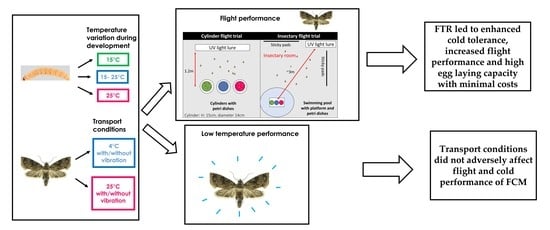
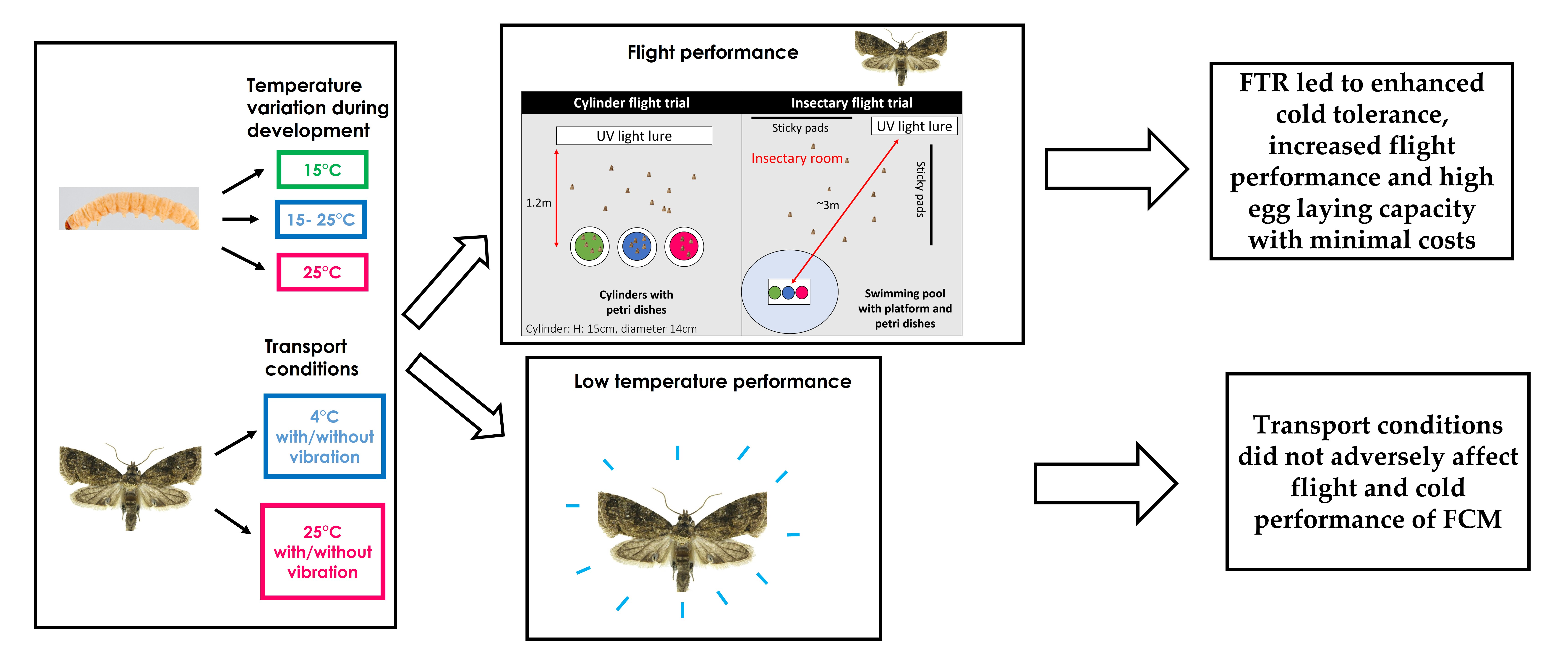
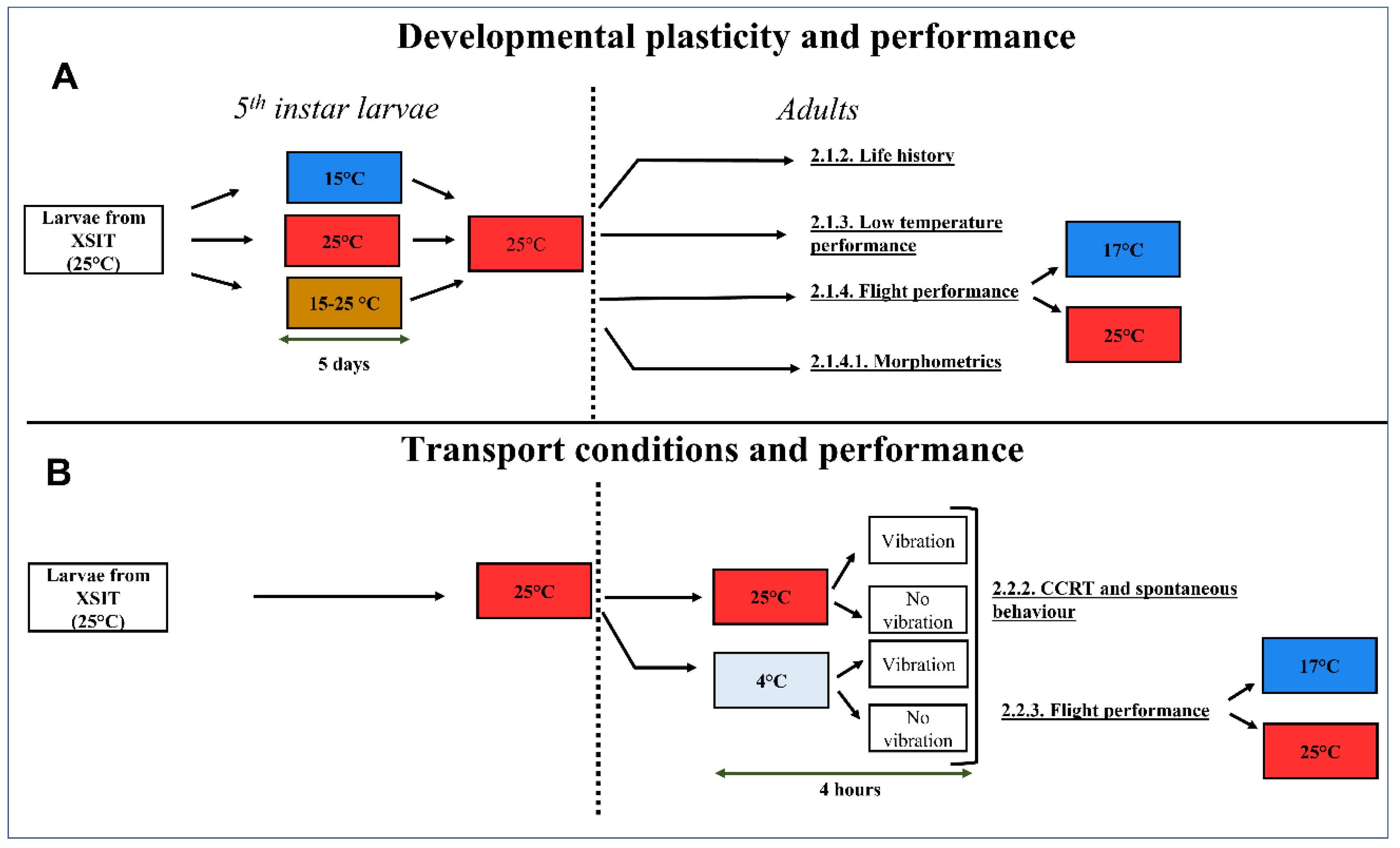
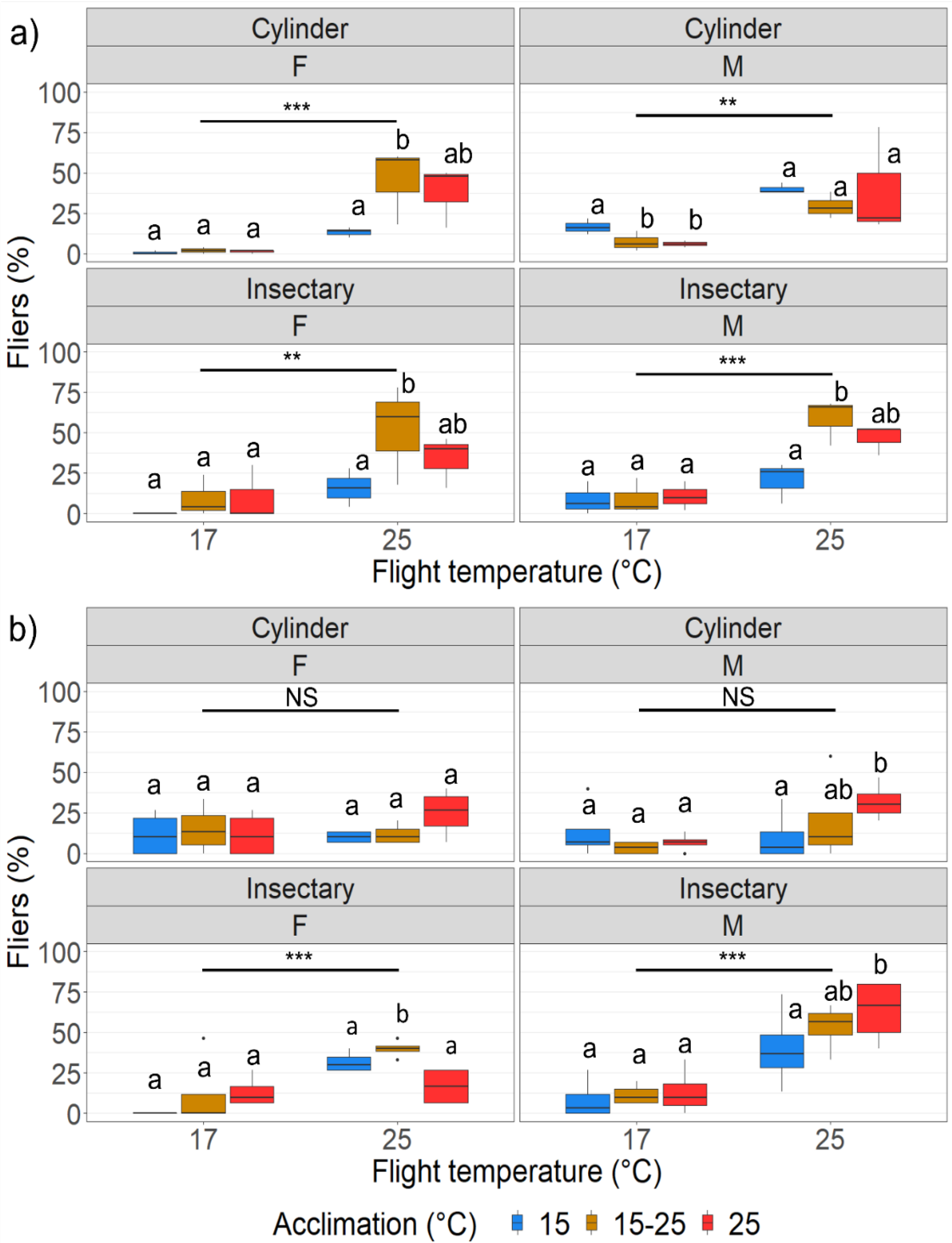
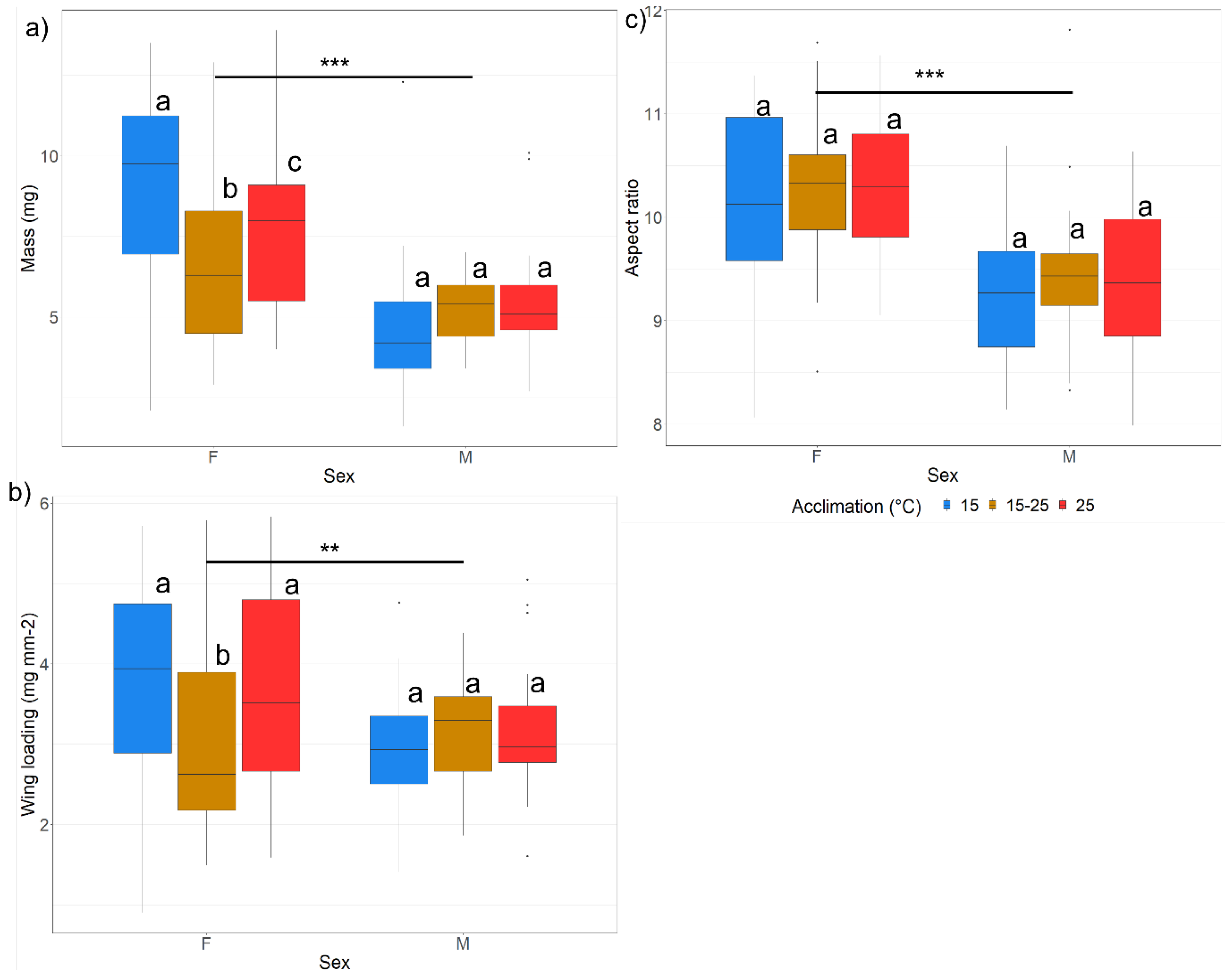
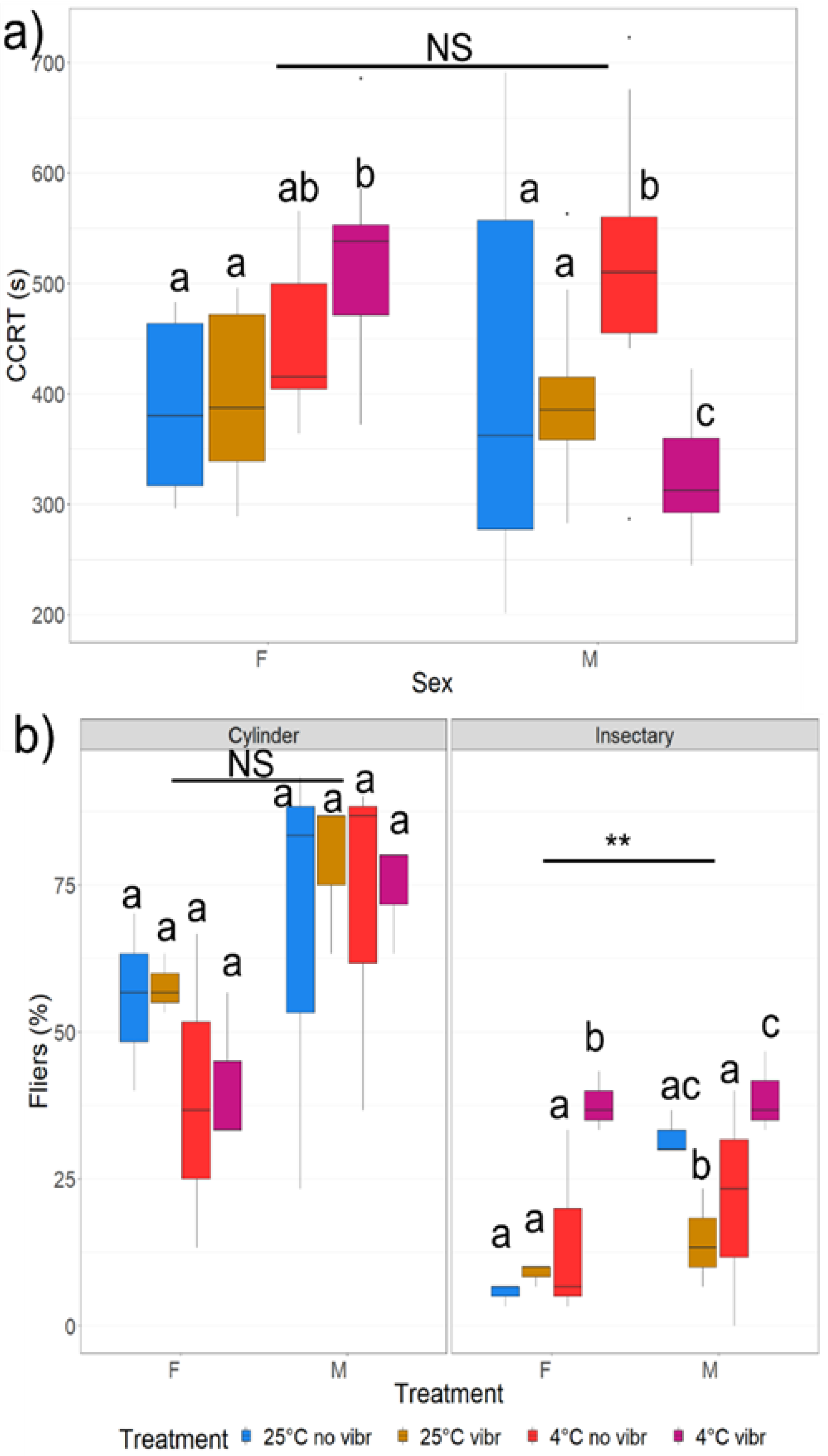
In two separate experiments, we examined how (1) developmental temperature and (2) transport conditions influenced the low-temperature performance and flight ability of false codling moth (FCM) adults. In experiment 1, larvae were exposed to a control (constant 25 °C), a cold treatment (constant 15 °C) or a fluctuating thermal regime (FTR) (25 °C for 12 h; 15 °C for 12 h) for 5 days, whereafter larvae were returned to 25 °C to pupate and emerge. After adult emergence, cold tolerance, life history traits and flight ability were scored. In experiment 2, adult FCM were exposed to 4 or 25 °C, with or without vibrations, whereupon flight ability, spontaneous behaviour (i.e., muscle coordination by monitoring whether the moth moved out of a defined circle or not) and cold tolerance were determined. The results of the first experiment showed that FTR led to enhanced cold tolerance, increased flight performance and high egg-laying capacity with minimal costs. The results of the second experiment showed that transport conditions currently in use did not appear to adversely affect flight and cold performance of FCM. These results are significant for refining conditions prior to and during release for maximum field efficacy in an SIT programme.
Abstract
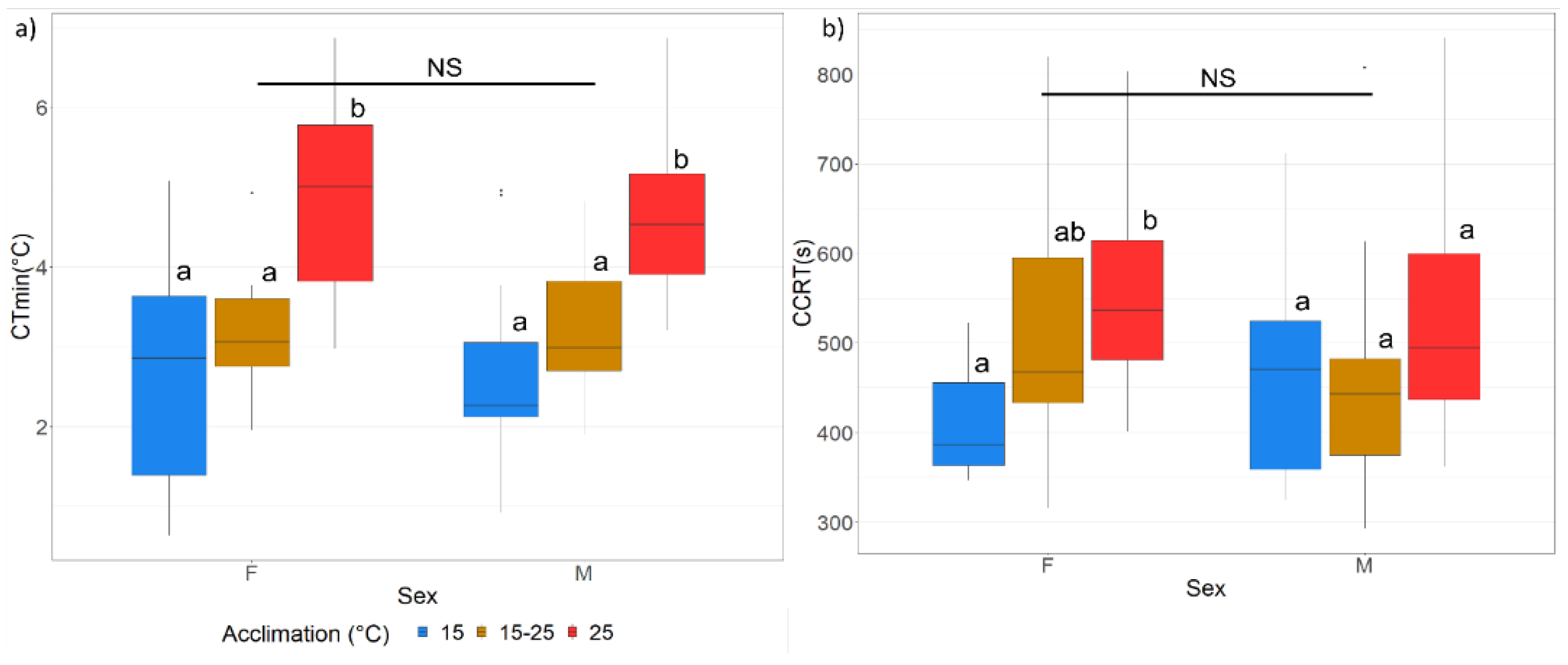
Here we aimed to assess whether variation in (1) developmental temperature and (2) transport conditions influenced the low-temperature performance and flight ability of false codling moth (FCM) adults in an SIT programme. To achieve the first aim, larvae were exposed to either a (control) (constant 25 °C), a cold treatment (constant 15 °C) or a fluctuating thermal regime (FTR) (25 °C for 12 h to 15 °C for 12 h) for 5 days, whereafter larvae were returned to 25 °C to pupate and emerge. After adult emergence, critical thermal minimum, chill coma recovery time, life history traits and laboratory flight ability were scored. For the second aim, adult FCM were exposed to 4 or 25 °C with or without vibrations to simulate road transportation. After the pre-treatments, flight ability, spontaneous behaviour (i.e., muscle coordination by monitoring whether the moth moved out of a defined circle or not) and chill coma recovery time were determined. The first experiment showed that FTR led to enhanced cold tolerance, increased flight performance and high egg-laying capacity with minimal costs. The second experiment showed that transport conditions currently in use did not appear to adversely affect flight and low-temperature performance of FCM. These results are important for refining conditions prior to and during release for maximum field efficacy in an SIT programme for FCM.