


Abstract
MARS (mineral–organic–aqueous reactor systems) theory is presented as a formal theory for planetary astrobiology, with Martian environments represented as coupled reactor–filter systems. Its central proposition holds that prebiotic synthesis, metabolic plausibility, and biosignature preservation are physically coupled, although their maxima may occur in different places, times, or mineral assemblages. Partial overlap is both allowed and expected; complete co-location is regarded as a restrictive scenario. Admissible states satisfy elemental and charge conservation, non-ideal activity relations, mineral-saturation constraints, reaction-affinity conditions, and cross-domain transport compatibility. Brines, reactive minerals, redox gradients, irradiation, burial, diagenetic overprint, impacts, volcanism, and hydrothermal alteration can therefore enhance one function while suppressing another. Time-dependent atmospheric and redox boundary conditions, cryo-thermal cycling, exogenous catalytic minerals, shock mineralogy, and post-impact hydrothermal circulation are incorporated as sign-variable controls. An illustrative reduced-state ensemble shows the internal logic of window displacement; it does not constitute a calibrated uncertainty analysis or a planet-wide simulation. The theory yields operational thresholds, observable tests, and falsifying outcomes for rover and returned-sample investigations without constituting evidence that life existed on Mars.
1. Introduction
Martian astrobiology lacks a single physically disciplined way to distinguish environments that could generate chemical complexity from those that could sustain exploitable redox disequilibria or preserve a durable molecular and mineral record. MARS theory—a mnemonic for mineral–organic–aqueous reactor systems—addresses that problem by representing each locality as a coupled reactor–filter trajectory instead of a static habitability label. The acronym refers to the analytical formulation developed in this study; it does not imply that Mars is a homogeneous planetary reactor. In simple terms, the theory asks whether the places that could generate chemical complexity are necessarily the same places that could sustain energetic opportunity and retain the resulting record. They are not necessarily the same. The three functions share matter, energy, minerals, and transport pathways, but the conditions that maximize them can be displaced in space and time.
This analytical separation does not fragment the natural system into independent compartments. Prebiotic synthesis, metabolic plausibility, and biosignature preservation are separated as inferential functions while remaining coupled through mass transfer, heat flow, brine migration, mineral transformation, burial, atmospheric forcing, and impulsive events. Partial overlap is therefore a central possibility, and complete co-location is neither prohibited nor assumed. Complete co-location represents a restrictive trajectory that requires simultaneous compatibility among constructive chemistry, energetic opportunity, and record survival.
The geological record of Mars motivates this distinction. Mawrth Vallis preserves a thick phyllosilicate-bearing stratigraphy that records changing aqueous conditions instead of a single stable state [1]. Gale crater preserves circumneutral lacustrine environments, high-frequency wet–dry cycling, organic-bearing mudstones, and later silica-poor brine alteration capable of destabilizing clays [2,3,4,5]. Jezero crater preserves diverse organic–mineral associations, sulfate- and carbonate-bearing assemblages, Fe–P–S reaction fronts, and serpentinization-related water–rock interaction [6,7,8]. These examples should not be regarded as interchangeable indicators of a single property. They record trajectories in which synthesis, energy, alteration, and preservation were differently weighted.
A purely lithological reading is consequently insufficient. Phyllosilicates, ferrihydrite, silica, sulfates, carbonates, phosphates, sulfides, salts, glasses, and amorphous phases possess different surface charges, hydration structures, redox states, kinetic stabilities, and diagenetic memories. Ferrihydrite has been proposed as a major ferric component of Martian dust, emphasizing the importance of metastable Fe phases [9]. Early-atmosphere photochemical calculations permit continuous carbonyl feedstock production under selected reducing conditions [10]; modern near-surface measurements instead show that relatively high water activity can occur mainly at temperatures too low for known cellular replication [11]. Ultraviolet (UV) irradiation, oxychlorines, ferric surfaces, radiolysis, and shallow oxidant transport can destroy organics even where transient water is present [12,13]. Water, mineral detections, and organic signals therefore provide distinct lines of evidence and cannot substitute for one another.
The theory must also account for downward transfer, planetary forcing, and episodic resetting. Serpentinization in the Máaz formation demonstrates the plausibility of localized reducing water–rock reactors and hydrogen production [8]. Volcanic degassing, ash and glass production, sulfur release, heat flow, and ice redistribution can modify atmospheric composition, cryospheric storage, surface reactivity, and hydrothermal circulation [14,15,16,17,18]. Impacts can deliver organics and catalytically active chondritic minerals, excavate shielded materials, produce breccias and glass, increase permeability, generate shock phases, and sustain post-impact hydrothermal systems; the same events can also melt, devolatilize, oxidize, or mechanically disperse an earlier record [19,20,21,22,23,24,25,26].
The present paper defines three net astrobiological windows: prebiotic synthesis, metabolic plausibility, and biosignature preservation. The theory does not require complete separation among them. It predicts partial, trajectory-dependent overlap and treats full co-location as a restrictive case. The objective is to define the physical state variables, thermodynamic admissibility conditions, transport couplings, forcing terms, observable mappings, and falsifying outcomes needed to keep the three functions analytically distinct before site-specific calibration is attempted. MARS theory is presented here as a formal theory for planetary astrobiology. It is neither a calibrated planet-wide simulation nor a biological occurrence model, and it does not constitute evidence that life existed on Mars.
2. Theory and Governing Equations
The equations below do not constitute a calibrated global model of Mars. They provide a formal bookkeeping scheme for MARS theory by identifying the local state, external forcing, constructive and destructive contributions to each window, and the mapping from hidden geochemical states to rover and sample-return observables.
Before introducing the formal notation, Table 1 summarizes the intended physical reading of the three windows. It is included to make clear that the mathematical objects below are opening scores for different functions, not three names for a single habitability axis.
Table 1.
Operational reading guide for the three mineral–organic–aqueous reactor systems (MARS) windows.
2.1. Scope, Claim Status, and Parameter Classes
The present contribution separates theoretical definition from calibration. Table 2 identifies which quantities are constrained by published observations or laboratory analogues, which require thermodynamic calculation, which remain free parameters, and which are expected to dominate sensitivity. This classification prevents analogue-derived values and illustrative closures from being interpreted as calibrated Martian constants.
Table 2.
Operational status of the principal parameter classes in MARS theory.
2.2. State-Space Closure
The architecture separates state variables, forcing, transport, and observation. For domain (atmosphere, exposed interface, cryogenic reservoir, porous subsurface, or hydrothermal system), the local state is
where is the water–brine–ice state, the mineralogical state, the organic inventory, the heteroatom and catalytic-element inventory, the redox and electrochemical state, and the history variables for burial, alteration, oxidant penetration, shock, and diagenesis. Atmospheric, volcanic, and radiative conditions are represented as external time-dependent forcing terms,
whereas impacts, discrete eruptions, and rapid climate excursions are impulsive operators.
The domains remain dynamically coupled. Their continuous evolution follows
where denotes mass, heat, redox-equivalent, or particulate transfer between domains. Downward brine infiltration, vapor exchange, fracture flow, burial, impact excavation, hydrothermal ascent, and cryospheric sequestration enter as explicit cross-domain couplings, so their histories remain dynamically linked. Equation (3) can describe transfer of chemical inventories and protected niches from surface to subsurface; it does not infer biological emergence or biological migration. A related continuum treatment of deep-gas transport in deformable porous–fractured media similarly distinguishes source generation, compressible storage, pressure propagation, advective–diffusive mass transfer, and the evolution of pathway permeability [27].
Observations remain outside the state vector. Instrument-specific operators map hidden geochemical states to measurements. This separation is necessary because an aqueous mineral, organic signal, or redox front is a filtered observable whose relation to habitability is non-unique.
2.3. Thermodynamic Accessibility and Atmospheric Source Terms
MARS variables are not independent abstract coordinates. Every admissible state is constrained by elemental conservation, electroneutrality, non-ideal activities, phase stability, reaction affinity, transport history, and the validity range of the selected thermodynamic model. The electrochemical potential of species i is
where makes activity dimensionless. The water chemical potential and water activity are
with the molality-based osmotic coefficient and the molar mass of water. The index s runs only over independent solutes, thereby avoiding double counting of dissociation products. At high ionic strength, and require a Pitzer-type or equivalent excess-Gibbs-energy model; ideal or dilute-solution approximations are not assumed.
Elemental and charge conservation impose
For mineral phase k, the saturation index is
Here, denotes the ion activity product for mineral phase k.
For reaction family j, thermodynamic opportunity is measured by
A positive affinity indicates a forward thermodynamic driving force; it does not demonstrate kinetic accessibility, ecological persistence, or biological use. Redox couples are not forced into one homogeneous global equilibrium. Spatially and temporally separated reservoirs retain disequilibrium, and reaction affinities are evaluated only when reactants can be connected by the transport terms in Equation (3).
The physically accessible state set is therefore
Here is the formal state space, denotes mineral-saturation admissibility, the environmental temperature–pressure domain, the validity domain of the non-ideal activity model, the connectivity required to bring reactants or inventories into contact, and the validity domain of the selected thermodynamic closure. The reduced diagrams and scores in this paper are projections of , not permission to combine arbitrary values of , pH, ionic strength, redox state, and mineral inventory. Appendix A develops the thermodynamic, irreversible-transport, and kinetic closure in detail. PHREEQC, FREZCHEM, SUPCRTBL, or equivalent tools can calculate site-specific subsets without turning the present contribution into a calibrated global simulation.
Atmospheric feedstock enters through the photochemical source operator
where is the absorption cross section, the quantum yield, and the spectral irradiance. Atmospheric composition, UV transparency, oxidant generation, volcanic degassing, and pressure evolve as time-dependent boundary conditions; none are assigned a fixed planetary value.
2.4. Interfacial Mineral Chemistry
The relevant mineralogical unit is the reactive state of a mineral, not merely its name. For Fe/Mg smectites, that state depends on layer charge, Fe/Mg/Al partitioning, interlayer cations, edge-site density, hydration state, interlayer spacing, and post-depositional alteration history. Interfacial protonation and deprotonation are represented by
together with a site-balance condition,
For an adsorbate i, the interfacial free energy takes the form
where is surface potential and is a hydration-confinement term depending on water activity, ionic strength, and interlayer spacing .
An adsorption occupancy relation of Langmuir form may then be introduced as a minimum closure,
with understood to be a function of pH, , ionic strength, surface charge, and mineral state. Montmorillonite remains the canonical terrestrial benchmark for clay-catalysed prebiotic oligomerization, but Martian clay systems are mineralogically more plausibly dominated by Fe/Mg smectites such as nontronite and saponite [28,29].
2.5. Organic-State Module
The organic inventory is not represented by a single scalar concentration. A compositional state vector is required,
where the components denote reduced small-carbon feedstock, carbonyls, nitriles, carboxylates, amino-precursor pools, nucleotide-related precursor pools, amphiphiles, aromatic or macromolecular carbon, organosulfur compounds, and organophosphorus compounds.
The organic-state vector evolves according to
2.6. Organic Destruction, Pathway Continuity, and Survival
Organic preservation emerges from competition among production, adsorption, entombment, transport, and class-specific loss. For organic class i,
where
The hydrolytic term includes water-, acid-, and base-catalyzed channels and can therefore exhibit non-monotonic pH dependence. The survival probability along a trajectory is
A pathway-continuity number compares constructive growth with aggregate interruption,
Values above unity indicate that a specified growth pathway can outpace loss under the stated closure; values below unity indicate net interruption. No universal numerical threshold is claimed across all molecular classes. Appendix B gives bond-resolved hydrolysis, oxidation, photolysis, and oligomer-interruption expressions. The compact formulation preserves readability and gives the preservation claim an explicit rate-based structure.
2.7. Metabolic Module
The chemolithotrophic window is defined by accessible free energy, not by enumerating taxa. For a reaction family j,
where is the reaction quotient. A gross redox power density is then defined as
with the effective flux associated with reaction family j. A normalized metabolic-driving variable is then introduced as
where is a reference redox power density used only for nondimensionalization. The admissible reaction families are therefore expressed through complete or schematic stoichiometric reactions, replacing isolated redox-pair labels (Table 3). The perchlorate and chlorate cases represent conditional energetic possibilities; in exposed or UV-irradiated settings, the same oxychlorine inventory contributes instead to the toxicity and destruction terms.
Table 3.
Representative reaction families used to interpret the metabolic-plausibility window. The table gives schematic end-member reactions; quantitative implementation requires activities, mineral phases, pH, temperature, and flux constraints.
2.8. Microbial Plausibility Bounds on the Metabolic Window
Microbiological considerations provide boundary conditions on the local metabolic score and do not predict specific taxa. The analysis asks whether a given geochemical state falls within the experimentally constrained envelope of microbial-style chemolithotrophy known on Earth; it does not attempt to identify organisms that may have inhabited Mars. That envelope is set jointly by temperature, water activity, ionic stress, oxidant burden, and radiative exposure. NaCl-saturated brines are not intrinsically close to the absolute biophysical limit: active Bacteria and Archaea occur in such systems at , and single-cell analyses indicate detectable anabolic activity in some hypersaline brines down to [30,31]. These bounds, however, cannot be transferred directly to Mars, because oxychlorine-rich, strongly oxidizing, or chaotropic brines impose additional penalties that are not captured by alone [12,30]. Present-day Jezero illustrates this decoupling clearly: intervals with higher near-surface water activity occur chiefly when surface temperatures fall below about 190 K, whereas warmer intervals correspond to substantially lower [11].
A microbial feasibility operator supplies a compact bound on the metabolic window,
where is an effective ultraviolet dose rate and the temperature and water-activity gate functions take the forms
For clarity, let denote the local thermodynamic metabolic score before microbial screening. The biologically filtered local metabolic score is then
This conservative representation neither assumes the prior existence of Martian microorganisms nor privileges Bacteria over Archaea. The temperature, water-activity, salinity, and toxicity bounds are Earth-anchored plausibility filters for known biology; they are not universal limits on all conceivable biochemistries. Even when free energy is available, the corresponding geochemical state may remain implausible for known microbial-style metabolism if temperature, hydration, oxidant loading, or ultraviolet stress force . The modern Jezero surface therefore supplies a conservative filter for exposed persistence; it does not establish an absolute life limit or serve as a direct analogue for earlier subsurface, hydrothermal, or impact-shielded domains.
2.9. Constructive, Destructive, and Sign-Variable Forcing
For any of the three windows , constructive and destructive contributions are first defined as local rates and with units of time−1. A dimensionless local opening score follows from
where is a reference timescale. All trajectory functionals below are integrated over physical time and nondimensionalized by . The net window functional along a trajectory then becomes
In this notation, denotes local opening of the window and local closure.
The continuous constructive rate is decomposed as
where atmospheric feedstock, mineral interfacial selection, brine-mediated concentration, redox disequilibria, hydrothermal reduction, and quasi-continuous volcanic background forcing contribute positively when favorable.
The continuous destructive rate takes the form
A single bookkeeping rule is imposed throughout the formalism: each physical process is assigned to one accounting class only—background forcing, impulsive event, constructive contribution, or destructive penalty—unless it is explicitly decomposed into mutually exclusive subterms. Impacts are therefore excluded from the continuous background terms and contribute only through the impulsive operators . Volcanism is split in the same way: continuous passive or long-lived degassing contributes through and , whereas discrete eruptive episodes contribute only through . Toxicity, mineral protection, thermal overprint, and acid–sulfate alteration are counted only once in any local score: if they appear in , , or , they are not reintroduced as independent penalties elsewhere. This convention avoids double counting when the same geochemical process has both constructive and destructive effects.
Mars must therefore be understood as a system governed by constructive, destructive, and sign-variable forcing; uniformly pro-habitability or anti-habitability descriptions are inadequate.
2.10. Impact Forcing, Shock Mineralogy, and High-Pressure Filters
Impact events operate as sign-variable reactor–filter perturbations and cannot be reduced to purely destructive episodes. The event operator is resolved as
where constructive terms denote delivery of organics, delivery of catalytically active chondritic minerals, fracture and permeability creation, excavation of shielded material, glass or melt entombment, post-impact hydrothermal circulation, and favorable atmospheric perturbation. Destructive terms denote shock damage, heating and devolatilization, oxidation, loss of textural or stratigraphic context, and adverse atmospheric loss or oxidation. Carbonaceous chondrites can act as both organic carriers and mineral catalysts; formamide–water experiments demonstrate mineral-dependent production of nucleobases, amino acids, and carboxylic acids in the presence of chondritic material [19]. Exogenous delivery therefore combines organic and mineral fluxes.
Complex impacts can generate melt-bearing breccias, fracture networks, impact glasses, crater-lake systems, and hydrothermal circulation that persists after the shock pulse [22,23]. Auki crater illustrates the type of hydrated mineral association and structural setting that can be evaluated as a possible post-impact hydrothermal system on Mars [24].
Shock-related high-pressure phases and diaplectic or impact glasses do not constitute biosignatures or generic preservation minerals. Maskelynite, high-pressure silica polymorphs, ringwoodite or ahrensite, majorite, tissintite, and related phases in Martian meteorites demonstrate that impact trajectories can create mineralogical states not represented by ordinary surface alteration [25,26]. Their astrobiological relevance is indirect: they constrain peak pressure–temperature history, local melting, porosity evolution, glass entombment, and subsequent fluid access. Appendix A formalizes the impact contribution through shock-energy and post-impact-cooling relations.
The net contribution to window q is
Hydrothermal circulation generated by an impact is counted only in the impact term and is not added again as independent background hydrothermal forcing. This preserves the bookkeeping rule introduced above.
2.11. Volcanic Forcing and Magmatic–Hydrothermal Coupling
Volcanism functions as a cross-domain forcing that couples atmospheric composition, volatile cycling, ash and glass production, mineral alteration, cryogenic water redistribution, and hydrothermal redox disequilibria. Passive degassing may deliver water vapour to the surface environment and generate local ice accumulations outside canonical cold traps; explosive volcanism may precipitate ice–ash aggregates and distribute hydrated ash over regional scales; and reduced sulfur degassing may alter atmospheric composition, sulfur cycling, and near-surface redox chemistry. Arabia Terra further records ancient supervolcanism, implying that pyroclastic dispersal and gas release were major components of early Martian surface forcing [14,15,16,17,18].
The forcing vector contains a volcanic component written as
where denotes volatile fluxes, the ash or pyroclast flux, the magmatic heat input, and a characteristic timescale of passive or sustained degassing.
Because passive degassing and eruptive activity are not dynamically equivalent, the governing evolution law is generalized as
where represents the m-th discrete eruptive event and the continuous component of volcanic forcing is contained within through Equation (36).
Volcanic gases couple directly to aqueous and mineral chemistry. The minimum set of gas–water reactions relevant to MARS theory includes
The shorthand symbol denotes oxidizing equivalents, not free molecular oxygen. This notation is deliberate: the geochemical role of volcanic sulfur on Mars depends on the effective oxidizing capacity of the local atmosphere–brine–mineral system, not on an Earth-like assumption of abundant atmospheric .
The volcanic contribution to each window is separated into a continuous background part and a discrete event part. The background contribution takes the form
Discrete eruptive episodes contribute separately as
This separation makes explicit that volcanic forcing is intrinsically sign-variable and bookkeeping dependent. Background degassing may raise the local prebiotic opening score by supplying feedstock and transient water or ice, raise the local metabolic opening score by maintaining hydrothermal and reduced redox states, and either raise or lower the local preservation score depending on whether rapid burial and mineral entombment dominate over thermal and acid-sulfate overprint. The highest-value volcanic targets are therefore volcanic–sedimentary and volcanic–hydrothermal interfaces, including ash-altered clay systems, hydrated ash provinces, passive-degassing ice traps, lava–ice interaction zones, hydrothermal silica or sulfate halos, and magmatically influenced redox fronts.
2.12. Time-Dependent Atmospheric, Redox, and Cryo-Thermal Boundary Conditions
MARS theory is not time independent. Atmospheric composition and surface redox forcing evolve as
where pressure, gas fugacities, UV transmission, and oxidant production act as time-dependent boundary conditions. Cryogenic evolution is represented by
so that freezing can concentrate solutes, precipitate hydrated salts, mechanically disrupt pore networks, immobilize organics, or preserve them by reduced mobility. Thawing or brine reactivation can reverse some of these effects. A single cryogenic term is therefore insufficient unless it is resolved into concentration, phase-change, stress, and reactivation subterms.
Table 4 summarizes broad temporal regimes. These are interpretive boundary classes, not homogeneous global states.
Table 4.
Broad temporal interpretation of Martian reactor states.
Surface-to-subsurface transfer can occur through burial, infiltration, fracture flow, vapor exchange, impact excavation, and cryospheric sequestration. Radar-bright south-polar basal reflectors motivate testable deep-brine scenarios, but their interpretation remains debated and does not provide evidence for extant habitats [32].
2.13. Global Thermodynamic–Geochemical Envelope Model
A single global equilibrium state for Mars is neither chemically nor physically appropriate, because the planet is an open, spatially heterogeneous, and time-dependent system in which redox disequilibria, episodic forcing, and localized water–rock interaction are central. The relevant objective is a global thermodynamic–geochemical envelope model, not a planet-wide equilibrium calculation in which planetary-scale reservoir budgets drive spatially distributed local equilibrium and quasi-equilibrium kernels. This envelope model serves as a computational implementation layer of MARS theory and does not constitute an independent theory. Within this formulation, global evolution constrains what is thermodynamically accessible, while local geochemical kernels determine speciation, mineral saturation, reaction affinities, and brine properties within that accessible domain. PHREEQC is suited to aqueous speciation, batch reaction, one-dimensional transport, and inverse calculations; FREZCHEM is suited to low-temperature concentrated brines and freezing pathways; and SUPCRTBL is suited to standard-state properties and reaction energetics in broader T–P mineral–fluid systems [33,34,35].
Let the planetary system be represented by a coupled set of reservoirs and fields. The reservoir vector is given by
where each component denotes the total mass of a chemically relevant planetary reservoir. The spatially distributed environmental field is given by
where denotes surface position or provincial index, T is temperature, P pressure, the ultraviolet field, and local ice and frost fractions, volcanic forcing, impact forcing, and a terrain-class indicator. The local geochemical state in each cell or province is then written as
where denotes mineral-state variables, the aqueous composition vector, and heteroatom and oxidant variables.
The planetary reservoir budgets evolve according to
Equations (50)–(53) define the time-dependent chemical envelope within which local Martian reactors operate; they do not resolve full climate evolution. They couple atmospheric escape, volcanic degassing, impact delivery, hydration sinks, carbonate formation, sulfur oxidation, and organic production–loss balances into a common global architecture.
The global budgets are then projected into spatial environmental fields. For each province or grid cell ,
where is a projection operator that maps planetary reservoir state into local temperature, pressure, ultraviolet forcing, volatile availability, frost probability, and volcanic or impact perturbation. In a first implementation, need not be a full general circulation model. A province-based mapping is sufficient, provided that it distinguishes at minimum among Noachian claylands, sedimentary basins, volcanic provinces, impact-dominated terrains, and cryospheric domains.
Local geochemical states are then computed by thermodynamic kernels conditioned on . For warm to moderate aqueous systems and multicomponent brines, PHREEQC with a PITZER database is used to compute speciation, activities, mineral saturation indices, and batch-reaction end states. For cryogenic and freezing brines, FREZCHEM is used to resolve speciation and phase behavior under low-temperature concentrated conditions. For hydrothermal and higher-T mineral–fluid systems, SUPCRTBL is used to compute standard-state thermodynamic properties and reaction free energies over broader T–P ranges [33,34,35].
Formally, the local kernel takes the form
where contains terrain-specific boundary conditions such as bulk lithology, mineral inventory, and permeability class, and contains user-defined forcing histories such as evaporation, freezing, gas flux, or fluid mixing. The output of must include at minimum
where are mineral saturation indices, reaction free energies for relevant redox couples, and activity coefficients.
The physically accessible Martian state space is not the full formal space of . For a province or grid cell, the canonical set in Equation (9) is restricted further by the local environmental and geological boundary conditions,
Equation (57) therefore inherits mass conservation, electroneutrality, mineral-saturation admissibility, temperature–pressure compatibility, activity-model validity, transport connectivity, and thermodynamic-model validity from Equation (9). It prevents the reduced phase-space geometry of MARS theory from being interpreted over combinations of , , pH, ionic strength, and mineral inventory that are chemically or dynamically inaccessible in real Martian systems.
The three windows are then evaluated locally over in terms of dimensionless opening scores. For each cell or province,
where is a reduced constitutive map from the physically accessible local state to a dimensionless prebiotic opening score. Here is a shallow accessibility–confinement proxy that weights near-surface pore and film environments available for concentration-driven synthesis; it is distinct from the depth-resolved burial kernel introduced later for preservation. In the present paper, is a schematic closure and not a calibrated constitutive law.
Equation (59) is the reduced implemented form of the biologically filtered score . In this expression, is an effective metabolic gain coefficient with units of time−1 that converts the normalized redox-power proxy into a local opening-rate contribution before multiplication by . Equation (60) uses a reduced bulk closure of the class-resolved preservation terms: is an effective bulk protection-rate coefficient and is a weighted-average mineral protection proxy aggregated over the locally relevant host assemblage. The prebiotic opening score in Equation (58) is written in reduced form because its constructive and destructive contributions depend on both interfacial concentration and pathway interruption, as formalized above.
Global integrals or probability maps can then be defined. A planetary average local opening score is
where is a dimensionless weighting function for exposure, preservation, or terrain relevance, normalized such that . More useful in practice is a threshold probability map,
which identifies where and when a given window is open above a defined geochemical threshold.
A global model of this type does not erase the local logic of MARS theory; it operationalizes it. The global budget equations define the evolving planetary envelope, the environmental projection defines terrain-conditioned forcing, the local thermodynamic kernels define chemically accessible states, and the window functionals convert those states into interpretable maps of prebiotic, metabolic, and preservational potential. In a first publishable implementation, the planet should be discretized into macro-provinces instead of fine grid cells. Five initial classes are sufficient: Noachian phyllosilicate terrains, lacustrine–mudstone basins, volcanic provinces, impact-modified terrains, and cryospheric provinces. This reduction keeps the model interpretable and avoids false precision while still producing a genuine planet-scale thermodynamic envelope.
2.14. Dimensionless Control Numbers
A reaction–transport Damköhler number is given by
where k is a characteristic reaction rate, L a transport length, and D an effective diffusivity.
To preserve dimensional consistency, the adsorption control number is defined in terms of normalized interfacial quantities,
and
where is a dimensionless effective affinity.
A wet–dry forcing number is given by
where is a characteristic wet-state duration and a characteristic reaction timescale.
A taphonomic control number is given by
An effective destructive power density is given by
where is a reference contribution from impulsive destructive forcing averaged over the time horizon of interest. A redox-destruction number is then defined as
These definitions ensure that all diagnostic control numbers are explicitly dimensionless by construction.
2.15. Central Proposition of MARS Theory
For each window , define the maximizing set over physically accessible trajectories,
The central proposition is
The proposition does not require the sets to be disjoint. Pairwise and three-way overlap are admissible and may be locally important. Complete co-location is regarded as a restrictive corridor requiring simultaneous thermodynamic, kinetic, transport, biological-plausibility, and preservation compatibility. The testable claim concerns the failure of a single undifferentiated habitability coordinate to predict all three functions across distinct Martian trajectories; universal strict separation is not required. The architecture is summarized schematically in Figure 1.
Figure 1.
Schematic architecture of mineral–organic–aqueous reactor systems (MARS) theory. Mars is represented as a coupled reactor–filter cascade linking atmospheric photochemistry, cryogenic exchange, exposed mineral–brine interfaces, porous subsurface transport, and hydrothermal redox systems. Blue arrows indicate sequential transfer through the coupled domains; the green box and arrow denote constructive forcing and supply, whereas the red box and arrow denote destructive filtering and erasure. Constructive and destructive forcing act through shared transport pathways, and the resulting prebiotic, metabolic, and preservation maximizing sets may overlap without being required to coincide. , , and denote the prebiotic, metabolic, and preservation scores, respectively.
2.16. Principal Symbols and Control Parameters
For clarity, the principal symbols used throughout MARS theory are summarized in Table 5. The table includes the variables most directly controlling the sign and magnitude of the three window functionals and distinguishes physical quantities from reduced normalized proxies; less influential symbols are omitted for concision.
Table 5.
Principal symbols, physical quantities, and reduced normalized proxies used in MARS theory.
3. Mineralogical and Organic-State Architecture of MARS Systems
3.1. Mineralogical Architecture as a Reactive-State Problem
The mineralogical field of a Martian reactor system cannot be reduced to a list of detected phases. It must be represented as a structured set of reactive states distributed across crystalline, poorly crystalline, and amorphous domains. Empirically, the minimum architecture is already constrained by three canonical boundary settings. At Mawrth Vallis, more than 200 m of Fe/Mg-rich phyllosilicate-bearing strata are overlain by Al-rich phyllosilicate-bearing strata, indicating prolonged and multiphase alteration from the Noachian into the early Hesperian [1]. In Gale crater, Glen Torridon and the adjacent clay–sulfate transition preserve Fe-rich smectite, carbonate, chlorides, oxidized organics, Fe/Mg sulfates, and later diagenetic overprint [3,5]. In Jezero crater, aqueous alteration has produced carbonate-bearing and sulfate-bearing assemblages, while the Bright Angel formation preserves low-temperature redox fronts enriched in iron-phosphate and iron-sulfide minerals within organic-carbon-bearing mudstones [7]. The mineralogical description required by MARS theory is therefore assemblage-based and cannot be reduced to single-mineral labels.
This structure is represented formally by partitioning the mineral field into crystalline and poorly crystalline sectors,
with
and
3.2. The Principal Smectite Field
Within , the principal field is the Fe/Mg-smectite field. The smectite field cannot be represented by “clay abundance” alone, but must be parameterized by crystallochemistry, surface accessibility, and diagenetic state. For each smectitic phase k, a reactive-state vector is given by
where is specific surface area, the site density, the surface potential, the interlayer spacing, the cation-exchange capacity (CEC), and a diagenetic transformation coordinate.
This parameterization is necessary because Fe-rich smectites do not uniquely encode reducing conditions. Nontronite can form rapidly from oxidized ferric solutions, and ultraviolet irradiation can photooxidize structurally bound Fe(II) in smectites. Simulated Martian fluid alteration experiments also show that acid and alkali treatment of nontronite analogues modifies both the interlayer state and the preservation behavior of glycine [29,36]. Mineral identity is therefore not thermodynamically or kinetically equivalent to mineral function.
The adsorption constant of species i on phase k is therefore written in effective form as
3.3. Poorly Crystalline and Amorphous Control Fields
A complete theory of Martian mineral reactivity must include the poorly crystalline and amorphous domain explicitly. Ferrihydrite is now interpreted as a dominant ferric phase in Martian dust, based on orbital, in situ, and laboratory spectral comparison [9]. X-ray amorphous materials also constitute a major fraction of Gale crater rocks and sediments, including silica-rich and sulfur-bearing amorphous components [37].
Hydrated silica belongs in the same sector. Opaline silica was identified in situ in Gale crater, and orbital observations showed hydrated silica in Jezero before landing [38,39]. Perseverance has also identified opal- or chalcedony-bearing materials together with quartz in Jezero, supporting interpretation as hydrothermal precipitates in at least some settings.
The accessible reactive area of the mineral assemblage is then defined as
where is an accessibility factor that incorporates burial, pore connectivity, grain coating, and surface blocking.
3.4. Salt, Carbonate, Phosphate, Sulfide, and Oxychlorine Subfields
The secondary mineral fields that regulate brine composition, water activity, pH, and redox structure must be considered separately from the smectite field. In Gale crater, the clay–sulfate transition records progressively drier depositional conditions and saline diagenetic fluids, and silica-poor brines have been invoked to explain widespread clay destabilization [5]. In Jezero, carbonate-rich altered igneous rocks, hydrated sulfates, sulfate–perchlorate mixtures, late sulfate precipitation, and low-temperature Fe-phosphate/Fe-sulfide reaction fronts collectively indicate that salt and redox mineralogy evolved in multiple discrete episodes through several distinct aqueous episodes [7,40].
This field is formalized by introducing a salt–redox vector
3.5. Organic-State Architecture
The Martian record requires that the organic field be represented compositionally, since a single concentration cannot capture its diversity. Gale crater preserves sulfur-bearing and oxidized organics as well as long-chain alkanes in ancient mudstone, while Jezero preserves mineral-specific organic associations detected by the Scanning Habitable Environments with Raman and Luminescence for Organics and Chemicals (SHERLOC) instrument [6,41].
The organic-state vector is therefore expanded operationally into a source-resolved and phase-resolved system. For species class i,
where the four terms denote freely dissolved or mobile species, mineral-bound species, entombed species in cements or precipitates, and refractory or macromolecular carbon. The adsorbed reservoir takes the form
3.6. Heteroatoms and Catalytic Trace Metals
A carbon-only theory would be chemically incomplete. Fixed nitrogen, phosphorus, sulfur, chlorine, boron, and catalytic trace metals define both the constructive and destructive capacity of Martian reactor systems. Nitrate has been detected in Gale crater sediments, establishing a reservoir of oxidized fixed nitrogen [42]. Boron has been detected in calcium-sulfate-filled fractures in Gale, indicating concentration by aqueous fluids [43]. In Jezero, Fe-phosphate-bearing nodules and fronts indicate localized phosphorus enrichment under low-temperature redox conditions [7].
The heteroatom field is therefore written as
where represents the activity vector of catalytically relevant trace metals.
3.7. Closure of the Mineral–Organic Architecture
To preserve dimensional consistency, mineral–organic coupling is separated into a dimensionless structural factor and a rate coefficient. A normalized coupling factor for species class i is given by
where and are normalized specific area and site-density factors. The corresponding effective protection rate is then
with a reference rate scale. The effective mineral contribution to preservational tendency is therefore written as
so that preservation becomes an emergent competition between mineral protection and destructive forcing on a common rate basis.
The resulting interpretation is more disciplined than a purely lithological reading. Large values of correspond to assemblages that strongly concentrate or protect species class i; small values correspond to mineralogically sparse, inaccessible, or diagenetically compromised states. The relevant Martian unit is therefore a mineral–organic–heteroatom assemblage occupying a specific reactive state and geochemical trajectory, not an undifferentiated clay deposit.
3.8. Geological Persistence of Interfaces and Reaction Fronts
Formation of an interface does not guarantee survival of its spatial or paragenetic information. For interface class h, the record-survival probability is
with
The effective terms are evaluated over a declared timescale; negative protective terms represent cementation, permeability reduction, or mineral entombment that slows later information loss. Clay–sulfate contacts and redox fronts are therefore high-value targets only when their formation–burial–reactivation histories preserve the spatial relationships needed for inference.
4. Reactor Domains, Trajectory Dependence, and Geochemical Phase-Space Structure
4.1. Domain Decomposition of the Martian Reactor Cascade
A Martian reactor system is represented as a set of coupled domains,
where denotes the atmospheric photochemical domain, the frost–ice–cryobrine domain, the exposed mineral–brine surface domain, and the porous subsurface domain. denotes the hydrothermal redox domain. Continuous volcanic forcing and eruptive events act as cross-domain operators alongside impacts.
The background evolution law is therefore written in operator form as
where is the domain operator associated with , and is the n-th impulsive forcing event.
4.2. Domain-Specific Window Functionals
For each geochemical window , the net contribution of domain along a trajectory is quantified by
so that
A compact matrix representation is
where each entry may be positive, negative, or sign-variable and records the contribution of a domain to one of the three trajectory-integrated windows.
4.3. Trajectory Dependence, Memory, and Hysteresis
Trajectory dependence is carried by the internal history variables . Their evolution is written generically as
A minimal non-Markovian representation is obtained by defining the window functional with an explicit memory kernel,
where weights the persistence of prior states.
4.4. Depth Structure and the Surface-Hostility Operator
A depth-dependent hostility operator is given by
where and are attenuation coefficients and is an effective oxidant penetration length.
The depth-integrated preservation tendency for species class i may be written as
where is a burial–accessibility weighting function and the product is explicitly dimensionless.
4.5. Reduced Geochemical Phase Space
Although the full state description is high-dimensional, a reduced phase space is sufficient to express the geometry of the three windows. Let
where and are normalized surface-area and redox-power variables used for reduced-state visualization only. These coordinates do not vary independently across the full state space. The physically accessible subset of the reduced state space is the projection of the canonical thermodynamic set,
where projects the full state onto the reduced coordinates shown above. Thus charge balance, mineral saturation, activity-model validity, transport connectivity, and the thermodynamic model domain are inherited from Equation (9); they are not redefined by a weaker reduced-space criterion. In real Martian brines, pH, redox state, ionic strength, mineral saturation, and water activity are not freely independent.
The three geochemical windows are then defined as superlevel sets on ,
and a destructive brine–oxidant regime. The corresponding destructive opening score is given by
The destructive region is then
Overlap is quantified by
A schematic projection of this reduced geometry is shown in Figure 2. The figure makes explicit the expectation that the three constructive windows may overlap without sharing a common optimum, while the destructive brine–oxidant regime cuts across the phase space and is not confined to a trivial edge case. The horizontal axis shows water activity directly, which avoids implying a calibrated logarithmic field measurement.
Figure 2.
Schematic projection of reduced Martian phase space. The prebiotic, metabolic, and preservation windows occupy displaced regions of the same accessible state space, while a destructive brine–oxidant regime transects part of that space. The figure is conceptual and does not represent a specific site. Its horizontal axis is water activity and the vertical axis is a relative redox coordinate. The purpose is to encode the geometric claim that overlap among the three constructive windows can be partial and trajectory dependent, without presenting a calibrated field map of Martian environments.
4.6. Domain Archetypes and Trajectory Classes
Four end-member trajectory classes are especially useful: a surface-concentration trajectory, a subsurface-preservation trajectory, a hydrothermal-redox trajectory, and an oxidant-overprint trajectory. These are dynamical classes, not site labels; a single locality may move through more than one class over time.
4.7. Impacts as Trajectory-Transfer Operators
Impacts can shift trajectories between domains and are not limited to destructive perturbations. For this reason, impacts are represented as trajectory-transfer operators,
where and are the pre-impact and post-impact trajectories.
4.8. Structural Consequence for Target Selection
The geochemically most valuable Martian targets are expected at interfaces and transitions, where process histories can be resolved more effectively than at homogeneous maxima of a single mineral abundance. Targets of highest theoretical value include clay–sulfate contacts, ferrihydrite-bearing redox fronts, Fe-phosphate–Fe-sulfide nodules and reaction bands, hydrated silica–carbonate transitions, ash-altered clay systems, volcanic–sedimentary and volcanic–hydrothermal interfaces, serpentinized ultramafic systems, and impact-exhumed subsurface materials.
5. Predictions, Falsifiability, and Observables
5.1. Illustrative Reduced-State Realization
A reduced-state ensemble is retained only to demonstrate the internal logic of the score architecture. It is not a calibrated Martian model, a thermodynamic validation, or a statistical uncertainty analysis. Four end-member reactor states are considered: (A) a surface smectite–moderate-brine system, (B) an oxidant-rich ferrihydrite–oxychlorine surface system, (C) a subsurface serpentinizing reactor, and (D) a silica–carbonate protected archive. The states are motivated by broad boundary conditions from Mawrth Vallis, Gale, Jezero, and modern surface geochemistry, but do not represent fitted reconstructions of individual outcrops [1,5,7,8,9,11].
The normalized input coordinates and closure equations are given in Appendix C. Supplementary Code S1 supplies the exact input table, fixed random seed, coordinate-wise truncated-normal sampling procedure, all 4000 draws per archetype, score summaries, win frequencies, and figure-generation script. The normalized coordinates are listed in Table 6, the corresponding window-maximizing frequencies are summarized in Table 7, and Figure 3 displays the resulting score distributions. The perturbations intentionally do not impose mass balance, charge balance, covariance, phase equilibrium, or lithologic admissibility. Consequently, the ensemble tests only structural stability of the illustrative ranking; it does not sample .
Table 6.
Dimensionless input vectors used in the illustrative reduced-state realization. Values are relative coordinates in , not measured field quantities.
Table 7.
Reproducible window-maximizing frequencies for the illustrative ensemble (fixed seed 4392559; 4000 draws per archetype; coordinate standard deviation 0.12). Frequencies are descriptive outputs of the declared normalized closure, not calibrated probabilities.
Figure 3.
Illustrative reduced-state realization. Bars show median bounded scores and 16–84% intervals. The unconstrained normalized ensemble is neither a thermodynamic nor a site-specific uncertainty analysis; Supplementary Code S1 reproduces all values.
The ranking remains asymmetric under the declared perturbation: A most often maximizes the prebiotic closure, C the metabolic closure, and D the preservation closure, while B remains unfavorable. This result demonstrates only that the chosen reduced closures do not collapse automatically onto one optimum. A physically predictive test requires thermodynamically constrained sampling, site-specific priors, covariance, and independent validation.
5.2. Predictive Structure of the Theory
The first structural prediction is that the three windows can occupy displaced regions of reduced Martian phase space and need not share one unique maximizer. Pairwise and three-way overlap remain admissible. The testable quantity is therefore the separation and overlap geometry of the maximizing sets, not a universal strict inequality among three points.
The prebiotic synthesis window is predicted to peak at intermediate water activity and moderate ionic strength, together with high effective reactive surface area and wet–dry forcing of order unity; neither maximum salinity nor maximum hydration is required:
The chemolithotrophic metabolic window is predicted to be biased toward reducing and dynamically replenished systems, especially those influenced by serpentinization, impact-induced hydrothermal circulation, or localized Fe/S/P redox fronts.
The preservation window is predicted to be displaced downward in depth and laterally toward mineral interfaces capable of shielding, entombment, or low-permeability sequestration.
5.3. Falsifiability Criteria
The theory would be weakened if thermodynamically admissible and independently resolved Martian datasets showed that prebiotic, energetic, and preservational proxies covary monotonically and are predicted as well by one bulk habitability coordinate after controlling for burial, host mineral, transport, and destructive overprint. Partial overlap does not falsify the theory. A stronger falsifier is systematic collapse of the three maximizing sets and absence of added information at interfaces, reaction fronts, or protected compartments.
A more operational summary is given in Table 8, which maps each window to rover-scale proxies, returned-sample tests, and falsifying outcomes. The purpose of this table is to make explicit which observations would challenge MARS theory in addition to those that would support it.
Table 8.
Operational links among the three windows, observable proxies, sample-return tests, and falsifying outcomes.
5.4. Observable Operators and Rover-Scale Tests
For instrument m,
where is the transfer operator from geochemical state to measured signal and is the instrument-dependent error or ambiguity term. SHERLOC, the Planetary Instrument for X-ray Lithochemistry (PIXL), SuperCam, and the Sample Analysis at Mars (SAM) suite define especially important projections of the hidden state vector into observables [44,45,46].
5.5. Observational Degeneracy and Abiotic Alternatives
No single organic, mineral, luminescent, or redox observation is considered diagnostic. Table 9 maps high-interest signals to competing origins and to observations needed for discrimination.
Table 9.
Observational degeneracy and discriminating measurements.
5.6. Hierarchical Validation Strategy
Validation must distinguish observations that are merely compatible with MARS theory from observations that weaken it. Table 10 defines a hierarchy from geological context to thermodynamic kernels.
Table 10.
Hierarchical support and falsification strategy.
5.7. Returned-Sample Observables and Isotopic Tests
Returned samples define the most stringent test of the theory because they extend the observable field beyond rover-scale proxies. The relevant forward map may be written as
where includes isotopic ratios, nanoscale textures, extractable and non-extractable organics, mineral-bound heteroatoms, and phase-specific trace-element inventories measured in terrestrial laboratories.
An isotopic consistency criterion may therefore be introduced:
where is the observed isotopic vector and is the trajectory-dependent isotopic prediction.
5.8. Identifiability and the Biotic–Abiotic Discrimination Problem
MARS theory does not equate signal richness with biology. Instead, it treats biosignature interpretation as an identifiability problem. The relevant quantity is a likelihood ratio,
where denotes rover-scale observables and returned-sample observables.
A practical discriminant can be written as a composite score,
where measures mineral–organic co-localization, the coherence of redox structure, textural organization across scales, isotopic consistency, and the strength of a plausible abiotic mimic model.
5.9. Consequence for Mission Strategy
Site selection, contact-science prioritization, and sample triage should prioritize the capacity to discriminate among competing geochemical trajectories, beyond simple maxima in clay abundance or organic fluorescence. On that criterion, the most valuable targets are expected to be interface-rich, redox-structured, mineralogically heterogeneous, and modestly shielded systems.
6. Discussion
6.1. From Habitability Indicators to Reactor–Filter Geochemistry
The principal consequence of MARS theory is a change in explanatory unit. The relevant Martian object is a coupled mineral–organic–aqueous reactor system that evolves through non-ideal geochemical state space, instead of an abstract aqueous environment or a clay-bearing deposit used as a passive proxy for past water. Within that reframing, the main result is that three geochemical tasks—complexification, metabolic sustainment, and record retention—are controlled by different subsets of the same state variables. The classical habitability logic assumed approximate covariance among these tasks; the contemporary Martian dataset instead argues for covariance failure.
6.2. The Martian Surface as Both Synthetic Engine and Hostility Filter
The theory assigns exposed near-surface environments neither uniform hostility nor default habitat status. Their primary role is better described as selective forcing. Atmospheric photochemistry on early Mars may have continuously supplied formaldehyde and related feedstock, while Gale provides evidence for high-frequency wet–dry cycling capable of amplifying concentration and episodic non-equilibrium chemistry [3,10].
The same surface, however, imposes severe penalties on persistence. At present-day Jezero, surface water activity may exceed 0.5 chiefly during nighttime intervals when temperatures fall below about 190 K, whereas temperatures above the terrestrial cell-replication threshold correspond to much lower [11]. Under Martian ultraviolet irradiation, perchlorates become strongly bactericidal, and photochemically generated gaseous can penetrate below the directly irradiated layer and destroy buried organics [12,13].
6.3. Subsurface, Hydrothermal, and Impact-Modified Domains as Metabolic Refugia
The metabolic implications of the theory differ from its prebiotic implications. Whereas the prebiotic window can plausibly open in intermittently hydrated surface systems, the chemolithotrophic metabolic window is expected to migrate toward domains in which redox disequilibria are replenished and destructive forcing is attenuated. Jezero provides direct support through both serpentinization in Máaz and low-temperature redox-driven mineral reorganization in Bright Angel [7,8]. Volcanism extends this logic across planetary scale. Passive degassing may redistribute water and ice, explosive volcanism may emplace reactive ash and glass over wide regions, and reduced sulfur degassing could reshape atmospheric chemistry, near-surface acidity, and sulfur redox cycling [14,15,16,17]. Arabia Terra, in particular, indicates that ancient supervolcanism and pyroclastic dispersal formed part of the environmental backdrop against which later aqueous alteration and mineralogical transformation occurred [18]. Volcanism therefore does not merely supply heat; it also perturbs the availability of feedstock, the position of cryogenic reservoirs, the mineral substrates available for adsorption and alteration, and the balance between hydrothermal construction and acid-sulfate overprint.
Impacts reinforce this displacement of the metabolic window. Asteroid and comet impacts can dominate exogenous organic delivery locally around crater centers, and post-impact systems can sustain hydrothermal circulation for geologically significant intervals [20,47].
6.4. Taphonomy as an Independent Geochemical Field
The theory identifies preservation as an independent geochemical field whose behavior cannot be inferred from mineral presence alone. In Gale crater, long-chain alkanes preserved in the Cumberland mudstone indicate that comparatively complex organics can survive over geologic time in sedimentary settings, yet the same broader crater record also preserves evidence for later silica-poor brines capable of destabilizing clays [5,41].
Laboratory work and rover observations point in the same direction. Hydrated magnesium sulfate can protect aromatic carboxylic acids under Martian ultraviolet irradiation, whereas reactive oxychlorine environments and ferric settings may favor oxidation or transformation of susceptible compounds [12,48].
6.5. Identifiability, Ambiguity, and the Necessity of Multi-Observable Inference
A central strength of the theory is its formulation of biosignature interpretation as an identifiability problem, extending beyond detection alone. The Jezero record already shows why this is necessary. SHERLOC has documented diverse luminescent and Raman-active organic–mineral associations, yet subsequent work has demonstrated that at least some luminescent materials can be explained by inorganic emitters once PIXL elemental context is taken into account [6,49]. No single instrument, signal class, or molecular family is therefore sufficient.
6.6. A Corridor Functional for Partial Window Overlap
Although the theory predicts decoupling of the three principal windows, complete separation is not required. A useful quantity is therefore the tri-window corridor functional,
where Heav is the Heaviside step function and are threshold values for the three windows.
6.7. Relation to Established Habitability Approaches
MARS theory does not replace water, ingredient, energy, or biological-limit approaches. It separates the functions that those approaches constrain. Table 11 summarizes the distinction.
Table 11.
Relation between MARS theory and common astrobiological assessment approaches.
6.8. Limits of the Present Theory
MARS theory is a formal geochemical architecture, not a calibrated global simulation. The thermodynamic closure specifies what a physically admissible implementation must satisfy, but the paper does not claim completed PHREEQC, FREZCHEM, SUPCRTBL, reactive-transport, climate, or Bayesian inversions. Multicomponent activity parameters for realistic chloride–sulfate–perchlorate brines, low-temperature adsorption and complexation constants for specific Fe/Mg smectites, amorphous-phase thermodynamics, mineral-specific organic-loss rates, oxidant penetration lengths, fracture-flow histories, and impact-cooling parameters remain incompletely constrained.
The illustrative ensemble samples normalized coordinates independently and is not a proxy for the covariance structure of Martian geochemistry. Its thresholds, weights, and perturbation scale are declared choices, not inferred planetary constants. The biological plausibility functions use conservative Earth-anchored limits and cannot exclude alternative biochemistries. The high-pressure phases discussed in the impact module diagnose shock history; no generic biosignature-preservation capacity is assigned to them. Radar-bright polar reflectors motivate subsurface scenarios but do not establish liquid water or extant habitats.
Predictive use requires site-specific compositions, thermodynamic databases valid over the relevant temperature–pressure–salinity range, kinetic and transport parameters, independent observational tests, and uncertainty propagation. These requirements belong to the next implementation stage and are not implicit results of the present paper.
7. Conclusions
MARS theory recasts the Martian astrobiology problem from static habitability to coupled, trajectory-dependent geochemical selection. The theory distinguishes prebiotic synthesis, metabolic plausibility, and biosignature preservation while retaining the mass, energy, transport, mineralogical, and chronological couplings among them. Their maximizing sets may overlap, yet no general requirement forces them to coincide. Partial overlap is expected; complete co-location is a restrictive trajectory that must be demonstrated and cannot be assumed.
The present formulation includes an explicit thermodynamic-accessibility layer. Local states are constrained by elemental and charge conservation, non-ideal activities, water activity, phase saturation, reaction affinity, transport connectivity, and model-domain validity. Redox opportunity is separated from biological plausibility, and preservation is expressed through survival and interface-persistence functionals. Atmospheric and redox forcing evolve through time; cryo-thermal cycling can alternately concentrate, immobilize, reactivate, or destroy inventories. Impacts deliver organics and catalytic minerals, generate fractures, glasses, shock phases, and hydrothermal circulation, and can also erase prior records. High-pressure minerals consequently record shock history and do not constitute biosignatures.
The observational consequence is that bulk clay abundance, liquid-water evidence, organic detection, or redox minerals cannot individually rank astrobiological value. The highest-information targets are interfaces, reaction fronts, protected compartments, and trajectory boundaries where independent observables can distinguish construction, energy, alteration, and survival. The theory is falsified or weakened if thermodynamically admissible, well-resolved Martian data show that all three functions covary monotonically and are predicted as well by a single bulk habitability axis.
The illustrative ensemble remains a reproducible demonstration of internal score behavior, not a planetary calibration. Future PHREEQC-, FREZCHEM-, SUPCRTBL-, reactive-transport-, and returned-sample implementations can test whether real Martian states occupy the displaced and partially overlapping windows proposed here.
Supplementary Materials
The following supporting information can be downloaded at https://www.mdpi.com/article/10.3390/galaxies14040075/s1: Supplementary Code S1: Reproducibility package for the illustrative reduced-state realization, including source code, inputs, outputs, and run metadata.
Funding
This research received no external funding.
Data Availability Statement
No new observational or field dataset was generated or analyzed. Supplementary Code S1 contains the exact Python script, pinned dependency lockfile, fixed seed, input table, all accepted ensemble draws, score summaries, win frequencies, and figure-generation output used for the illustrative reduced-state realization. All literature-based constraints are cited in the reference list.
Conflicts of Interest
The author declares no conflicts of interest.
Appendix A. Thermodynamic Accessibility, Reaction Affinity, and Preservation Kinetics
Appendix A.1. Local Thermodynamic State and Conservation
For domain , the local physicochemical state can be expanded as
Elemental inventories satisfy within a closed computational cell and change only through declared fluxes in an open cell. Electroneutrality requires . At equilibrium, the stable phase assemblage minimizes the total Gibbs energy subject to elemental constraints. A complementarity representation is
where contains conservation and equilibrium equations, for phases allowed to precipitate, and is phase amount. This form prevents simultaneous assignment of an absent phase and enforced saturation unless a kinetic or metastable rule is declared.
Appendix A.2. Non-Ideal Aqueous and Cryobrine Thermodynamics
The excess Gibbs energy of a concentrated electrolyte solution is written generically on a solvent-mass basis as
where is the mass of solvent in kilograms and the interaction coefficients carry the molality units required by the adopted Pitzer convention. Activity coefficients and the osmotic coefficient follow from thermodynamic derivatives of . This generic notation does not assert that all Mars-relevant binary and ternary parameters are presently available. Cryogenic evolution additionally satisfies a mole-based water and hydrated-salt balance,
where denotes moles of water and the hydration number of salt phase k. The cryogenic balance is written on a mole basis unless otherwise stated and can be advanced through a temperature sequence using equilibrium or kinetic precipitation rules. FREZCHEM or a validated PHREEQC–Pitzer freezing controller is required when freeze concentration, eutectic behavior, or hydrated salt transitions dominate.
Appendix A.3. Standard-State Properties and Pressure–Temperature Dependence
For a reaction with stoichiometric vector ,
Temperature and pressure derivatives obey
SUPCRTBL-, Helgeson–Kirkham–Flowers (HKF)-, or equivalent standard-state calculations are therefore required when hydrothermal or pressure-dependent equilibria extend beyond the validity range of a fixed-temperature database.
Appendix A.4. Phase Accessibility, Metastability, and Reaction Affinity
For reaction j, . Near equilibrium, a linear phenomenological flux is ; farther from equilibrium, a transition-state form can be used,
where is the reactive surface area per unit bulk volume. If is expressed per unit reactive area, is therefore a volumetric reaction rate. The local entropy-production rate is constrained by
This inequality supplies a consistency check for coupled chemical, diffusive, electrochemical, and thermal fluxes. It does not specify a unique kinetic law.
Appendix A.5. Reactive Transport and Cross-Domain Exchange
A component balance in a porous domain is
This advection–dispersion–reaction form is written in the electroneutral approximation, . Explicit electromigration can be restored through Nernst–Planck fluxes when charge separation or strong electric fields cannot be neglected. With Darcy velocity
Interface fluxes are continuous up to declared sources, sinks, phase change, or fracture storage. In cryogenic settings, a Stefan-type energy balance links moving freeze fronts to latent heat,
The Stefan relation is written in a one-density approximation, with the latent heat per unit mass and the normal front velocity. Density contrast, brine rejection, and mushy-zone transport require an extended formulation. These equations show why , ionic strength, pH, phase saturation, and redox state cannot be perturbed independently in a predictive implementation.
Appendix A.6. Surface Electrostatics and Organic Adsorption
Surface protonation, complexation, and electrostatic work enter through
A multi-site occupancy relation is
Terrestrial adsorption constants, dissolution rates, and surface areas are priors when Mars-specific measurements are unavailable. They are not calibrated Martian constants and require uncertainty ranges reflecting composition, oxidation state, grain size, amorphous content, coatings, hydration, and irradiation history.
Appendix A.7. Organic Survival and Preservation Hazard
The cumulative loss hazard is
A dimensionless preservation tendency can be written as
The numerator and denominator are effective rates over a stated time interval. The expression is a bookkeeping closure, not a universal kinetic law.
Appendix A.8. Shock Physics and Post-Impact Evolution
Across an idealized shock, conservation of mass, momentum, and energy gives the Rankine–Hugoniot relations
These relations apply in the shock frame, and E denotes specific internal energy. The idealized jump-condition closure does not replace an equation-of-state shock calculation. Peak pressure and temperature constrain melting, devolatilization, diaplectic glass formation, and high-pressure phases. The post-impact thermal field evolves approximately as
and couples to permeability and fluid circulation. Shock phases record the event but do not, by themselves, indicate habitability or preservation.
Appendix A.9. Operational Thresholds, Uncertainty, and Identifiability
A window is operationally open when , where
with instrument set , depth z, detection limit , observational uncertainty , and decision context . Thresholds are not universal constants. For parameter vector and data ,
where is the local Fisher-information matrix, the sensitivity matrix, and the data covariance. The Fisher-information criterion is used here only as a local practical-identifiability diagnostic under a linearized, approximately Gaussian observational model; it is not a proof of global structural identifiability. Rank deficiency or strong posterior covariance indicates that window scores or mechanistic parameters are not separately identifiable from the available observables. A related reduced integer–fractional treatment of hydrothermal observables likewise uses local sensitivity and Fisher-information concepts only as preliminary diagnostics of information content and explicitly avoids claims of global identifiability [50].
Appendix B. Bond-Resolved Organic Destruction and Pathway Interruption
Representative hydrolytic reactions include ester, peptide-like, and phosphodiester-like cleavage,
Oxidative and photolytic loss can be represented as
Here, denotes a generic organic substrate bearing an abstractable hydrogen atom.
For a growing molecular class ,
with
This closure allows U-shaped pH dependence and separates water-, acid-, and base-catalyzed interruption.
Appendix C. Illustrative Reduced-State Closure and Reproducibility
The illustrative normalized vector is
The raw closures are
Supplementary Code S1 uses fixed seed 4392559, 4000 accepted coordinate-wise truncated-normal draws per archetype, and coordinate standard deviation 0.12. The supplied comma-separated value (CSV) files contain all inputs, draws, summaries, and win frequencies. Reproduction does not require observational data.
References
- McNeil, J.D.; Fawdon, P.; Balme, M.R.; Coe, A.L.; Cuadros, J.; Turner, S.M.R. Dichotomy retreat and aqueous alteration on Noachian Mars recorded in highland remnants. Nat. Geosci. 2025, 18, 124–132. [Google Scholar] [CrossRef] [Scilit] [PubMed]
- Fukushi, K.; Sekine, Y.; Sakuma, H.; Morida, K.; Wordsworth, R. Semiarid climate and hyposaline lake on early Mars inferred from reconstructed water chemistry at Gale. Nat. Commun. 2019, 10, 4896. [Google Scholar] [CrossRef] [Scilit] [PubMed]
- Rapin, W.; Dromart, G.; Clark, B.C.; Schieber, J.; Kite, E.S.; Kah, L.C.; Thompson, L.M.; Gasnault, O.; Lasue, J.; Meslin, P.Y.; et al. Sustained wet-dry cycling on early Mars. Nature 2023, 620, 299–302. [Google Scholar] [CrossRef] [Scilit] [PubMed]
- Eigenbrode, J.L.; Summons, R.E.; Steele, A.; Freissinet, C.; Millan, M.; Navarro-González, R.; Sutter, B.; McAdam, A.C.; Franz, H.B.; Glavin, D.P.; et al. Organic Matter Preserved in 3-Billion-Year-Old Mudstones at Gale Crater, Mars. Science 2018, 360, 1096–1101. [Google Scholar] [CrossRef] [Scilit] [PubMed]
- Bristow, T.F.; Grotzinger, J.P.; Rampe, E.B.; Cuadros, J.; Chipera, S.J.; Downs, G.W.; Fedo, C.M.; Frydenvang, J.; McAdam, A.C.; Morris, R.V.; et al. Brine-driven destruction of clay minerals in Gale crater, Mars. Science 2021, 373, 198–204. [Google Scholar] [CrossRef] [Scilit] [PubMed]
- Sharma, S.; Roppel, R.D.; Murphy, A.E.; Beegle, L.W.; Bhartia, R.; Steele, A.; Hollis, J.R.; Siljeström, S.; McCubbin, F.M.; Asher, S.A.; et al. Diverse organic-mineral associations in Jezero crater, Mars. Nature 2023, 619, 724–732. [Google Scholar] [CrossRef] [Scilit] [PubMed]
- Hurowitz, J.A.; Tice, M.M.; Allwood, A.C.; Cable, M.L.; Hand, K.P.; Murphy, A.E.; Uckert, K.; Bell, J.F., III; Bosak, T.; Broz, A.P.; et al. Redox-driven mineral and organic associations in Jezero crater, Mars. Nature 2025, 645, 332–340. [Google Scholar] [CrossRef] [Scilit] [PubMed]
- Tosca, N.J.; Tice, M.M.; Hurowitz, J.A.; Pedersen, D.A.K.; Henneke, J.; Mandon, L.; McCubbin, F.M.; Ross, O.; Tung, P.Y.; Harrison, R.J.; et al. In situ evidence for serpentinization within the Máaz formation, Jezero crater, Mars. Sci. Adv. 2025, 11, eadr8793. [Google Scholar] [CrossRef] [Scilit] [PubMed]
- Valantinas, A.; Mustard, J.F.; Chevrier, V.; Mangold, N.; Bishop, J.L.; Pommerol, A.; Beck, P.; Poch, O.; Applin, D.M.; Cloutis, E.A.; et al. Detection of ferrihydrite in Martian red dust records ancient cold and wet conditions on Mars. Nat. Commun. 2025, 16, 1712. [Google Scholar] [CrossRef] [Scilit] [PubMed]
- Koyama, S.; Kamada, A.; Furukawa, Y.; Terada, N.; Nakamura, Y.; Yoshida, T.; Kuroda, T.; Vandaele, A.C. Atmospheric formaldehyde production on early Mars leading to a potential formation of bio-important molecules. Sci. Rep. 2024, 14, 2397. [Google Scholar] [CrossRef] [Scilit] [PubMed]
- Zorzano, M.P.; Martínez, G.; Polkko, J.; Tamppari, L.K.; Newman, C.; Savijärvi, H.; Goreva, Y.; Viúdez-Moreiras, D.; Bertrand, T.; Smith, M.; et al. Present-day thermal and water activity environment of the Mars Sample Return collection. Sci. Rep. 2024, 14, 7175. [Google Scholar] [CrossRef] [Scilit] [PubMed]
- Wadsworth, J.; Cockell, C.S. Perchlorates on Mars enhance the bactericidal effects of UV light. Sci. Rep. 2017, 7, 4662. [Google Scholar] [CrossRef] [Scilit] [PubMed]
- Newmark, J.; Kounaves, S.P. Permeation of photochemically-generated gaseous chlorine dioxide on Mars as a significant factor in destroying subsurface organic compounds. Sci. Rep. 2024, 14, 7682. [Google Scholar] [CrossRef] [Scilit] [PubMed]
- Hamid, S.S.; Kerber, L.; Clarke, A.B.; Forget, F. The delivery of water ice to the Martian surface by passive degassing. Icarus 2024, 416, 116084. [Google Scholar] [CrossRef] [Scilit]
- Hamid, S.S.; Kerber, L.; Clarke, A.B. Precipitation induced by explosive volcanism on Mars and its implications for unexpected equatorial ice. Nat. Commun. 2025, 16, 8923. [Google Scholar] [CrossRef] [Scilit] [PubMed]
- Paladino, T.G.; Nawotniak, S.K.; Millour, E.; Karunatillake, S.; Hood, D.R.; Bates, A. Ancient volcanism may have influenced patterns of hydrated regolith on Mars. Icarus 2024, 409, 115858. [Google Scholar] [CrossRef] [Scilit]
- Bellino, L.G.; Sun, C. Volcanic emission of reduced sulfur species shaped the climate of early Mars. Sci. Adv. 2025, 11, eadr9635. [Google Scholar] [CrossRef] [Scilit] [PubMed]
- Michalski, J.R.; Bleacher, J.E. Supervolcanoes within an ancient volcanic province in Arabia Terra, Mars. Nature 2013, 502, 47–52. [Google Scholar] [CrossRef] [Scilit] [PubMed]
- Rotelli, L.; Trigo-Rodríguez, J.M.; Moyano-Cambero, C.E.; Carota, E.; Botta, L.; Di Mauro, E.; Saladino, R. The Key Role of Meteorites in the Formation of Relevant Prebiotic Molecules in a Formamide/Water Environment. Sci. Rep. 2016, 6, 38888. [Google Scholar] [CrossRef] [Scilit] [PubMed]
- Frantseva, K.; Mueller, M.; ten Kate, I.L.; van der Tak, F.F.S.; Greenstreet, S. Delivery of organics to Mars through asteroid and comet impacts. Icarus 2018, 309, 125–133. [Google Scholar] [CrossRef] [Scilit]
- Burchell, M.J.; Bowden, S.A.; Cole, M.; Price, M.C.; Parnell, J. Survival of Organic Materials in Hypervelocity Impacts of Ice on Sand, Ice, and Water in the Laboratory. Astrobiology 2014, 14, 473–485. [Google Scholar] [CrossRef] [Scilit] [PubMed]
- Osinski, G.R.; Tornabene, L.L.; Banerjee, N.R.; Cockell, C.S.; Flemming, R.; Izawa, M.R.M.; McCutcheon, J.; Parnell, J.; Preston, L.J.; Pickersgill, A.E.; et al. Impact-Generated Hydrothermal Systems on Earth and Mars. Icarus 2013, 224, 347–363. [Google Scholar] [CrossRef] [Scilit]
- Schwenzer, S.P.; Kring, D.A. Alteration Minerals in Impact-Generated Hydrothermal Systems—Exploring Host Rock Variability. Icarus 2013, 226, 487–496. [Google Scholar] [CrossRef] [Scilit]
- Carrozzo, F.G.; Di Achille, G.; Salese, F.; Altieri, F.; Bellucci, G. Geology and Mineralogy of the Auki Crater, Tyrrhena Terra, Mars: A Possible Post Impact-Induced Hydrothermal System. Icarus 2017, 281, 228–239. [Google Scholar] [CrossRef] [Scilit]
- Baziotis, I.P.; Liu, Y.; DeCarli, P.S.; Melosh, H.J.; McSween, H.Y.; Bodnar, R.J.; Taylor, L.A. The Tissint Martian Meteorite as Evidence for the Largest Impact Excavation. Nat. Commun. 2013, 4, 1404. [Google Scholar] [CrossRef] [Scilit] [PubMed]
- Hu, S.; Li, Y.; Gu, L.; Tang, X.; Zhang, T.; Yamaguchi, A.; Lin, Y.; Changela, H. Discovery of Coesite from the Martian Shergottite Northwest Africa 8657. Geochim. Et Cosmochim. Acta 2020, 286, 404–417. [Google Scholar] [CrossRef] [Scilit]
- Spoto, S.E. Deep Gas Sources in Deformable Porous–Fractured Media: Volcanic and Tectonic Systems. Physics 2026, 8, 53. [Google Scholar] [CrossRef] [Scilit]
- Ferris, J.P. Montmorillonite-catalysed formation of RNA oligomers: The possible role of catalysis in the origins of life. Philos. Trans. R. Soc. B 2006, 361, 1777–1786. [Google Scholar] [CrossRef] [Scilit] [PubMed]
- Gainey, S.R.; Hausrath, E.M.; Adcock, C.T.; Tschauner, O.; Hurowitz, J.A.; Ehlmann, B.L.; Xiao, Y.; Bartlett, C.L. Clay mineral formation under oxidized conditions and implications for paleoenvironments and organic preservation on Mars. Nat. Commun. 2017, 8, 1230. [Google Scholar] [CrossRef] [Scilit] [PubMed]
- Lee, C.J.D.; McMullan, P.E.; O’Kane, C.J.; Stevenson, A.; Santos, I.C.; Roy, C.; Ghosh, W.; Mancinelli, R.L.; Mormile, M.R.; McMullan, G.; et al. NaCl-saturated brines are thermodynamically moderate, rather than extreme, microbial habitats. Fems Microbiol. Rev. 2018, 42, 672–693. [Google Scholar] [CrossRef] [Scilit] [PubMed]
- Paris, E.R.; Arandia-Gorostidi, N.; Klempay, B.; Bowman, J.S.; Pontefract, A.; Elbon, C.E.; Glass, J.B.; Ingall, E.D.; Doran, P.T.; Som, S.M.; et al. Single-cell analysis in hypersaline brines predicts a water-activity limit of microbial anabolic activity. Sci. Adv. 2023, 9, eadj3594. [Google Scholar] [CrossRef] [Scilit] [PubMed]
- Orosei, R.; Lauro, S.E.; Pettinelli, E.; Cicchetti, A.; Coradini, M.; Cosciotti, B.; Di Paolo, F.; Flamini, E.; Mattei, E.; Pajola, M.; et al. Radar Evidence of Subglacial Liquid Water on Mars. Science 2018, 361, 490–493. [Google Scholar] [CrossRef] [Scilit] [PubMed]
- Parkhurst, D.L.; Appelo, C.A.J. Description of Input and Examples for PHREEQC Version 3: A Computer Program for Speciation, Batch-Reaction, One-Dimensional Transport, and Inverse Geochemical Calculations; Technical Report; U.S. Geological Survey: Reston, VA, USA, 2013. [CrossRef] [Scilit]
- Marion, G.M.; Mironenko, M.V.; Roberts, M.W. FREZCHEM: A geochemical model for cold aqueous solutions. Comput. Geosci. 2010, 36, 10–15. [Google Scholar] [CrossRef] [Scilit]
- Zimmer, K.; Zhang, Y.; Lu, P.; Chen, Y.; Zhang, G.; Dalkilic, M.; Zhu, C. SUPCRTBL: A revised and extended thermodynamic dataset and software package of SUPCRT92. Comput. Geosci. 2016, 90, 97–111. [Google Scholar] [CrossRef] [Scilit]
- Gil-Lozano, C.; Fairén, A.G.; Muñoz-Iglesias, V.; Fernández-Sampedro, M.; Prieto-Ballesteros, O.; Gago-Duport, L.; Losa-Adams, E.; Carrizo, D.; Bishop, J.L.; Fornaro, T.; et al. Constraining the preservation of organic compounds in Mars analog nontronites after exposure to acid and alkaline fluids. Sci. Rep. 2020, 10, 15097. [Google Scholar] [CrossRef] [Scilit] [PubMed]
- Smith, R.J.; McLennan, S.M.; Achilles, C.N.; Dehouck, E.; Horgan, B.H.N.; Mangold, N.; Rampe, E.B.; Salvatore, M.; Siebach, K.L.; Sun, V. X-ray amorphous components in sedimentary rocks of Gale crater, Mars. J. Geophys. Res. Planets 2021, 126, e2020JE006782. [Google Scholar] [CrossRef] [Scilit]
- Rapin, W.; Chauviré, B.; Gabriel, T.S.J.; McAdam, A.C.; Ehlmann, B.L.; Hardgrove, C.; Meslin, P.Y.; Rondeau, B.; Dehouck, E.; Franz, H.B.; et al. In situ analysis of opal in Gale crater, Mars. J. Geophys. Res. Planets 2018, 123, 1955–1972. [Google Scholar] [CrossRef] [Scilit]
- Tarnas, J.D.; Mustard, J.F.; Lin, H.; Goudge, T.A.; Amador, E.S.; Bramble, M.S.; Kremer, C.H.; Zhang, X.; Itoh, Y.; Parente, M. Orbital identification of hydrated silica in Jezero crater, Mars. Geophys. Res. Lett. 2019, 46, 12771–12782. [Google Scholar] [CrossRef] [Scilit]
- Scheller, E.L.; Razzell Hollis, J.; Cardarelli, E.L.; Steele, A.; Beegle, L.W.; Bhartia, R.; Conrad, P.; Uckert, K.; Sharma, S.; Ehlmann, B.L.; et al. Aqueous alteration processes in Jezero crater, Mars. Science 2022, 378, 1105–1110. [Google Scholar] [CrossRef] [Scilit] [PubMed]
- Freissinet, C.; Glavin, D.P.; Archer, P.; Teinturier, S.; Buch, A.; Szopa, C.; Lewis, J.M.T.; Williams, A.J.; Navarro-González, R.; Dworkin, J.P.; et al. Long-chain alkanes preserved in a Martian mudstone. Proc. Natl. Acad. Sci. USA 2025, 122, e2420580122. [Google Scholar] [CrossRef] [Scilit] [PubMed]
- Stern, J.C.; Sutter, B.; Freissinet, C.; Navarro-Gonz’alez, R.; McKay, C.P.; Archer, P.D.; Buch, A.; Brunner, A.E.; Coll, P.; Eigenbrode, J.L.; et al. Evidence for indigenous nitrogen in sedimentary and aeolian deposits from Gale crater, Mars. Proc. Natl. Acad. Sci. USA 2015, 112, 4245–4250. [Google Scholar] [CrossRef] [Scilit] [PubMed]
- Gasda, P.J.; Haldeman, E.B.; Wiens, R.C.; Rapin, W.; Bristow, T.F.; Bridges, J.C.; Schwenzer, S.P.; Clark, B.C.; Herkenhoff, K.E.; Frydenvang, J.; et al. In situ detection of boron by ChemCam on Mars. Geophys. Res. Lett. 2017, 44, 8739–8748. [Google Scholar] [CrossRef] [Scilit]
- Bhartia, R.; Beegle, L.W.; DeFlores, L.; Abbey, W.J.; Razzell Hollis, J.; Uckert, K.; Monacelli, B.; Edgett, K.S.; Kennedy, M.R.; Sylvia, M.; et al. Perseverance’s Scanning Habitable Environments with Raman and Luminescence for Organics and Chemicals (SHERLOC) Investigation. Space Sci. Rev. 2021, 217, 58. [Google Scholar] [CrossRef] [Scilit]
- Allwood, A.C.; Wade, L.A.; Foote, M.C.; Elam, W.T.; Hurowitz, J.A.; Battel, S.; Dawson, D.E.; Denise, R.W.; Ek, E.M.; Gilbert, M.S.; et al. PIXL: Planetary Instrument for X-Ray Lithochemistry. Space Sci. Rev. 2020, 216, 134. [Google Scholar] [CrossRef] [Scilit]
- Maurice, S.; Wiens, R.C.; Bernardi, P.; Caïs, P.; Robinson, S.H.; Nelson, A.E.; Gasnault, O.; Reess, J.M.; Deleuze, M.; Rull Perez, F.; et al. The SuperCam instrument suite on the Mars 2020 rover: Science objectives and mast-unit description. Space Sci. Rev. 2021, 217, 47. [Google Scholar] [CrossRef] [Scilit]
- Abramov, O.; Kring, D.A. Impact-induced hydrothermal activity on early Mars. J. Geophys. Res. Planets 2005, 110, E12S09. [Google Scholar] [CrossRef] [Scilit]
- Alberini, A.; Fornaro, T.; Brucato, J.R. Investigating the stability of aromatic carboxylic acids in hydrated magnesium sulfate under UV irradiation to assist detection of organics on Mars. Sci. Rep. 2024, 14, 15945. [Google Scholar] [CrossRef] [Scilit] [PubMed]
- Scheller, E.L.; Bosak, T.; McCubbin, F.M.; Williford, K.; Siljeström, S.; Jakubek, R.S.; Eckley, S.A.; Morris, R.V.; Bykov, S.V.; Kizovski, T.; et al. Inorganic interpretation of luminescent materials encountered by the Perseverance rover on Mars. Sci. Adv. 2024, 10, eadm8241. [Google Scholar] [CrossRef] [Scilit] [PubMed]
- Spoto, S.E. Reduced Integer–Fractional Dynamics of Hydrothermal Memory in Volcanic Gas and Isotope Signals. Mathematics 2026, 14, 2139. [Google Scholar] [CrossRef] [Scilit]
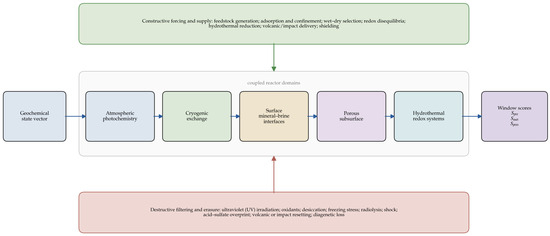
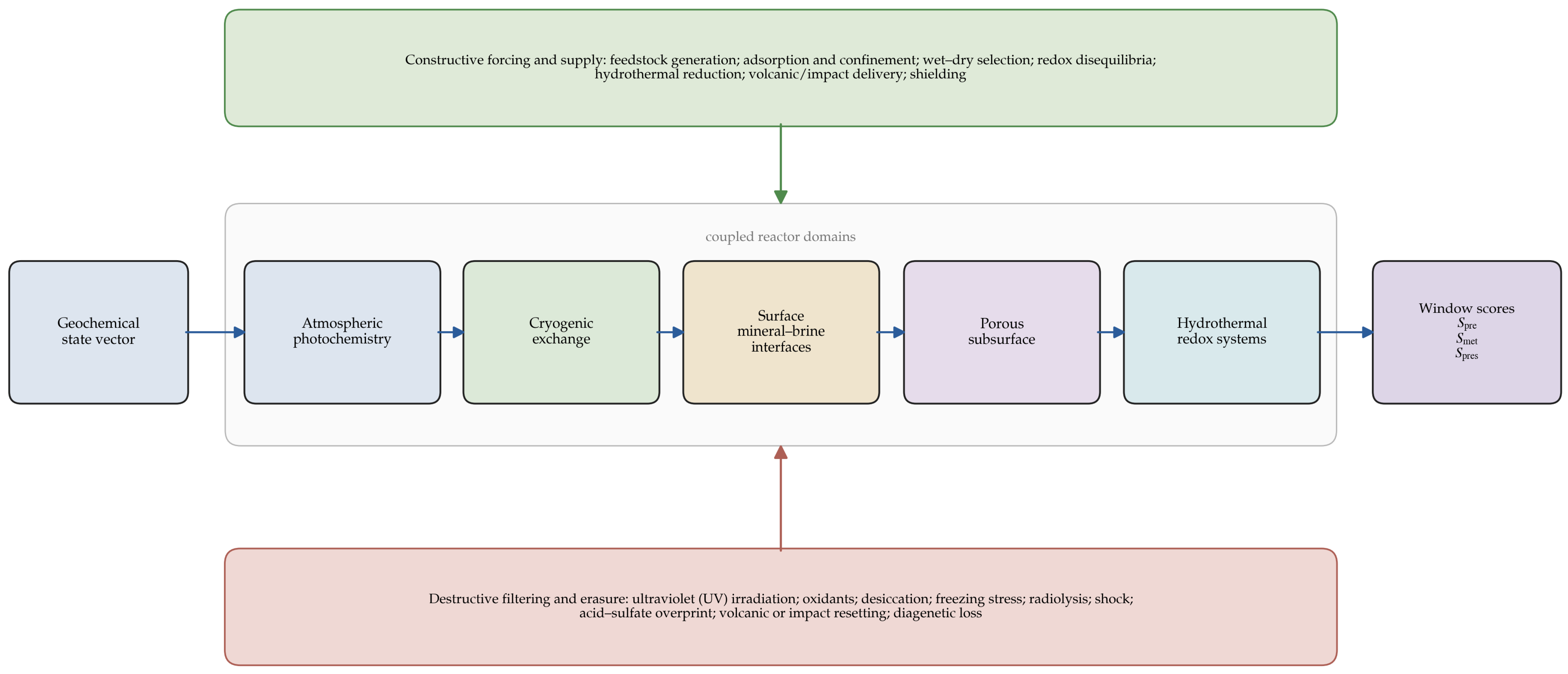
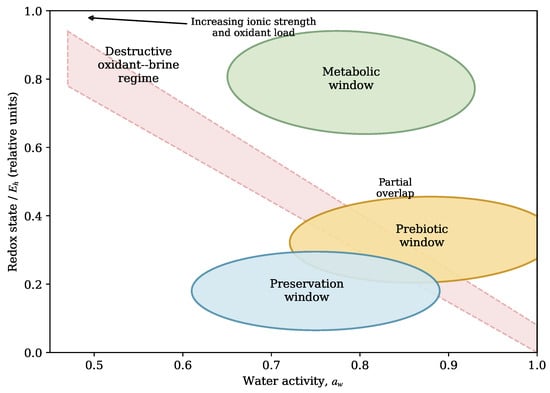
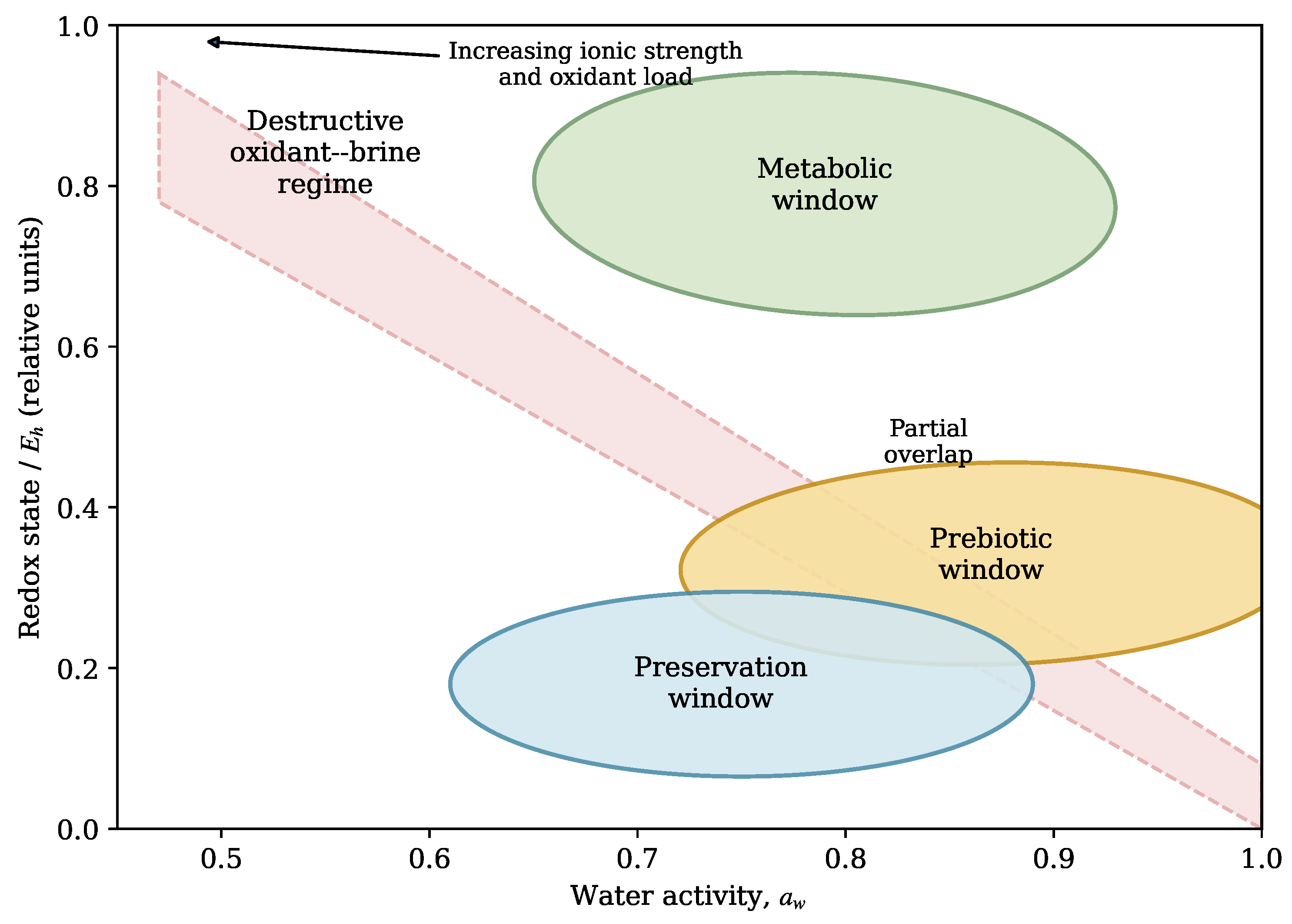
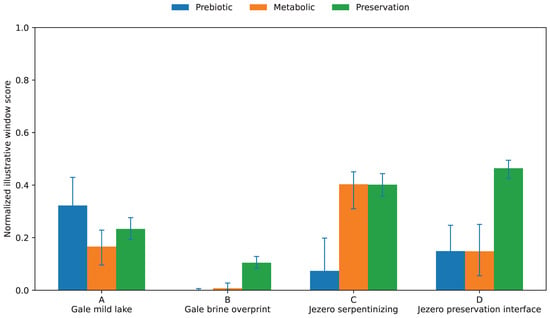
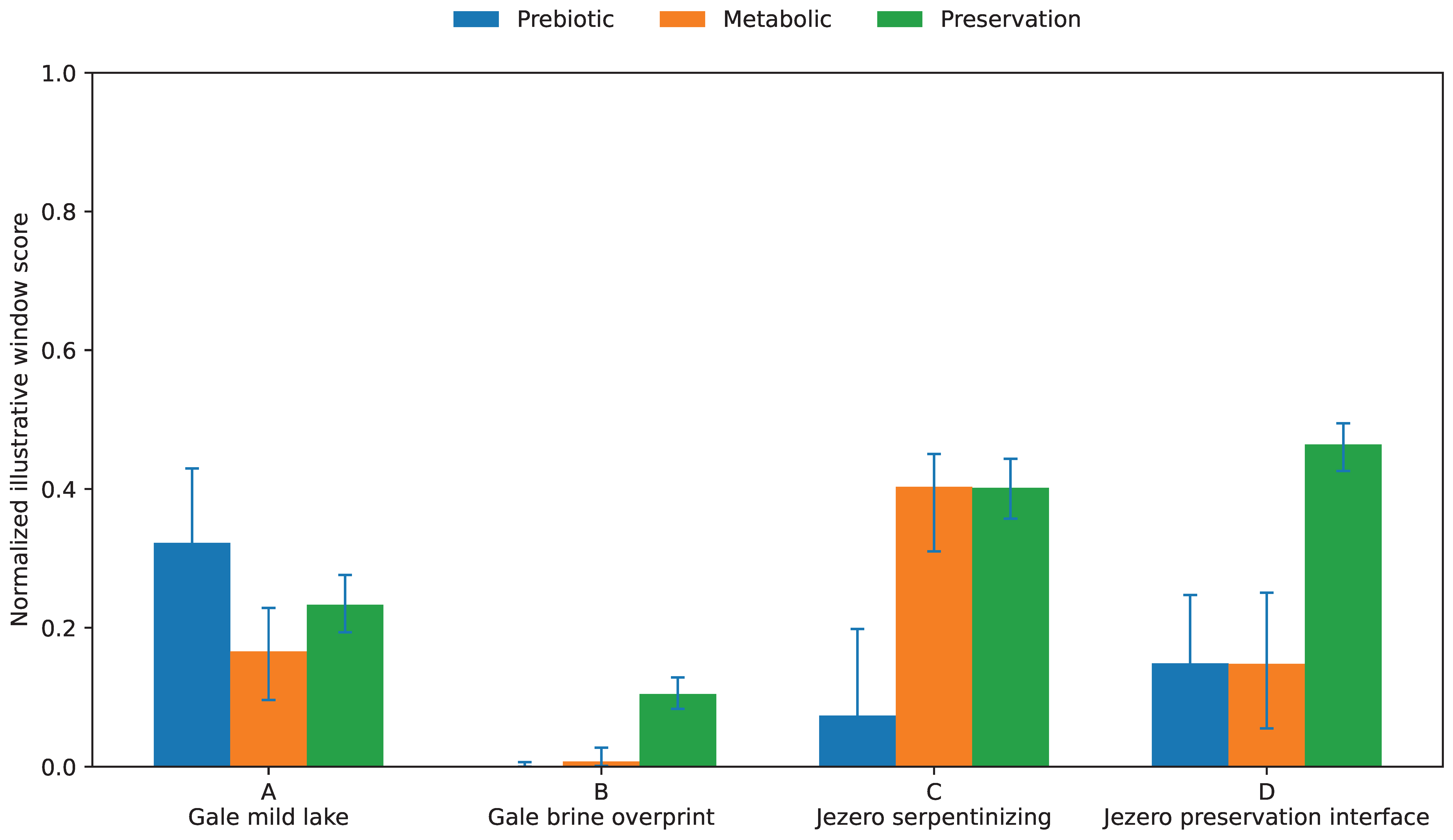

Disclaimer/Publisher’s Note: The statements, opinions and data contained in all publications are solely those of the individual author(s) and contributor(s) and not of MDPI and/or the editor(s). MDPI and/or the editor(s) disclaim responsibility for any injury to people or property resulting from any ideas, methods, instructions or products referred to in the content. |
© 2026 by the author. Licensee MDPI, Basel, Switzerland. This article is an open access article distributed under the terms and conditions of the Creative Commons Attribution (CC BY) license.