


Abstract
The COVID-19 pandemic has represented a new form of traumatic event, affecting the general population worldwide and causing severe disruption of daily routine. A new urgent concern is related to the burden associated with COVID-19 symptoms that persist beyond the onset of infection, the so-called long-COVID syndrome. The present paper aims to: (1) describe the most frequent psychiatric symptoms reported by patients affected by long-COVID syndrome; (2) evaluate methodological discrepancies among the available studies; (3) inform clinicians and policy-makers on the possible strategies to be promoted in order to manage the psychiatric consequences of long-COVID syndrome. Twenty-one papers have been included in the present review, mostly with a cross-sectional or cohort design. Significant heterogeneity of long-COVID syndrome definitions was found. The presence of psychiatric symptoms was evaluated with very different assessment tools. The most common psychiatric symptoms of the long-COVID syndrome included fatigue, cognitive disturbances/impairment, depression, and anxiety symptoms. The rate of fatigue varied from 93.2–82.3% to 11.5%, cognitive impairment/cognitive dysfunction from 61.4% to 23.5% and depressive-anxiety symptoms from 23.5%to 9.5%.
1. Introduction
The COVID-19 pandemic has represented a new form of traumatic event [1,2,3,4,5,6], being a completely unexpected event, affecting the whole population worldwide and causing severe disruption of daily life [7,8,9,10,11,12,13,14]. The pandemic and its related containment measures have had a serious negative impact on the mental health of the general population [15,16,17,18,19,20,21,22] and of special target groups [23,24,25,26,27,28,29,30,31,32]. The development and dissemination of vaccination campaigns have significantly reduced the mortality rates due to the virus worldwide [33,34,35], although the World Health Organization has not yet declared the end of the pandemic crisis [36,37].
A new urgent concern is related to the burden associated with COVID-19 symptoms persisting beyond the onset of the infection, called COVID-19 long haul symptoms or post-COVID-19 syndrome. This condition includes a wide range of new and returning health problems that people experience after the infection. The post-COVID-19 syndrome can be identified and diagnosed at least four weeks after the infection and can develop in anyone who has been infected [38,39,40,41].
The National Institute for Health and Care Excellence (NICE) guidelines define the post-COVID-19 syndrome as “signs and symptoms that develop during or after an infection consistent with COVID-19, continue for more than 12 weeks (3 months) and are not explained by an alternative diagnosis” [42]. However, the term “long COVID” is used to refer to the protracted illness, lasting from 4 [43] to 12 weeks [44] after the acute illness and during recovery. In fact, no universal consensus has been reached so far on the definition of this clinical condition, and other terms are used, such as synonyms, including “post-acute COVID-19”, “ongoing symptomatic COVID-19”, “chronic COVID-19”, “post COVID-19 syndrome” and “long-haul COVID-19”.
The long COVID syndrome can be due to several aetiopathogenetic factors, including the brain localization of the virus, the presence of stroke, hypoxia, hyperinflammation, the persistent presence of SARS-CoV-2, or hypoxia-induced mitochondrial dysfunction [45,46]. The COVID-19 disease is characterized as a cytokine release syndrome, with elevated serum concentrations of interleukin-6 and other inflammatory cytokines, which correlate in a dose–response manner with respiratory failure, adverse respiratory distress syndrome, and other clinical outcomes. It is likely that an immuno-inflammatory dysregulation significantly contributes to acute and post-acute psychiatric and cognitive symptoms in COVID-19 patients [47].
However, there are no laboratory tests to diagnose the post-COVID-19 condition, and the wide variety of symptoms ranging from respiratory difficulties to neuropsychiatric symptoms could derive from other health problems, making it difficult for healthcare professionals to recognize and appropriately manage the syndrome. Although several reviews and meta-analyses have already been published [48,49,50], the clinical picture of the post-COVID condition is still not clear.
This scoping review aims to: (1) describe the most frequent psychiatric symptoms presented by patients with the long-COVID syndrome; (2) evaluate methodological discrepancies among the available studies; (3) inform clinicians and policymakers on possible strategies in order to efficiently manage the psychiatric consequences of long-COVID syndrome.
2. Materials and Methods
This review was performed in five stages: the definition of the problem, the literature search, data evaluation, data analysis, and the presentation of findings.
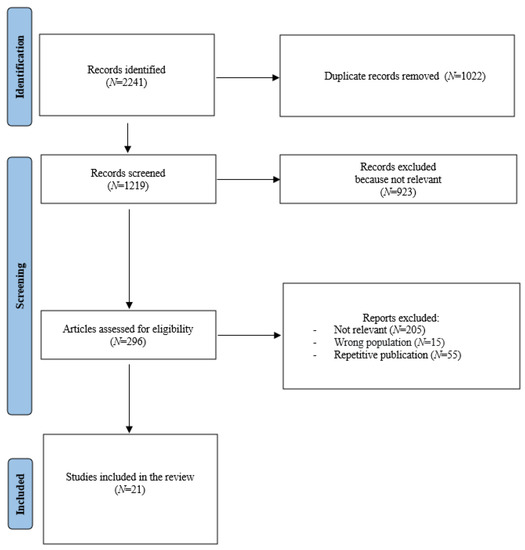
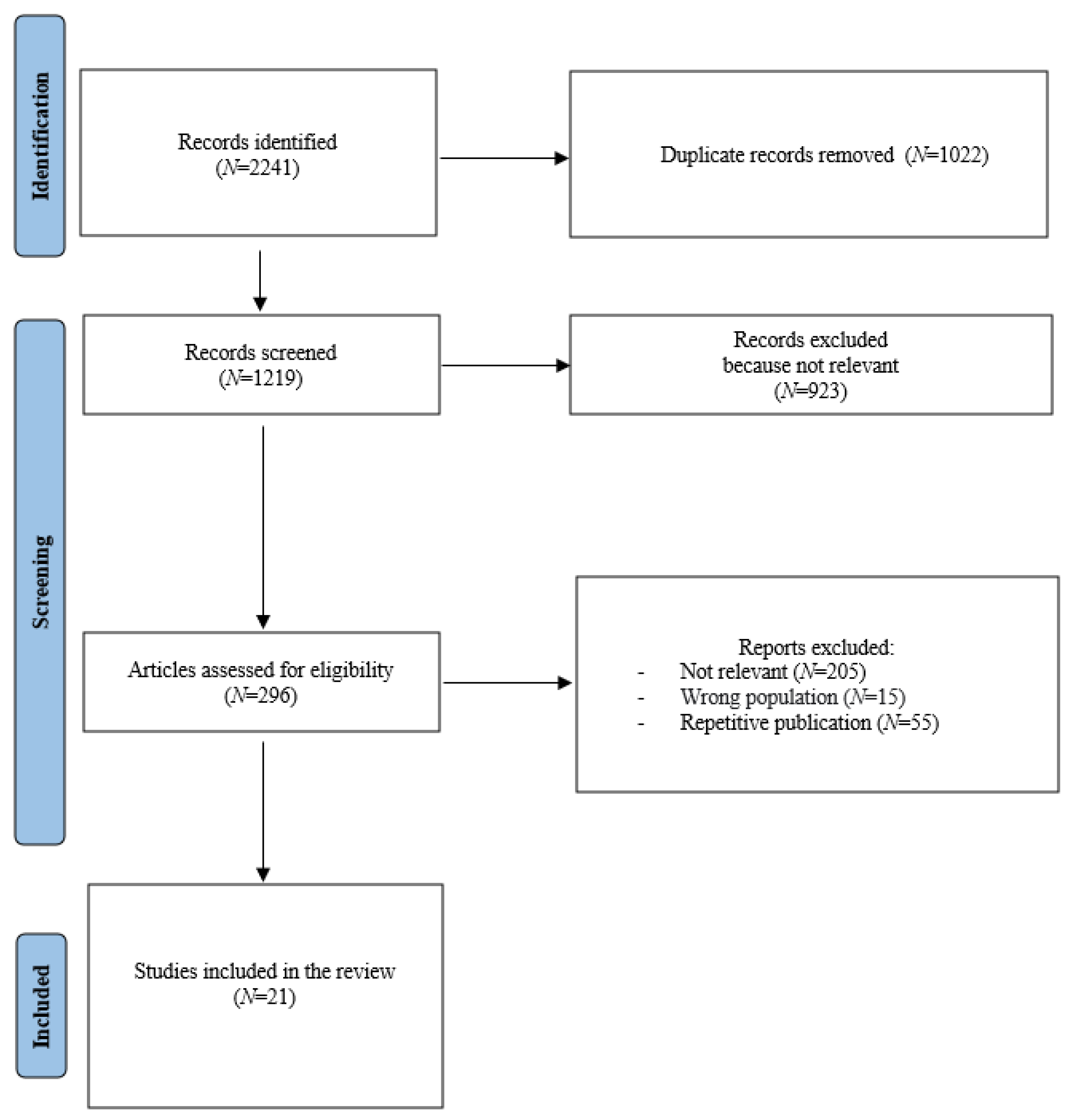
The search terms “long-term symptoms”, “long-COVID”, “psychiatry”, “mental disorders”, “post-COVID condition”, “depression”, and “anxiety”, were entered into ERIC, MEDLINE, PsycARTICLES, PsycINFO, SCOPUS, and PUBMED (Figure 1). Terms and databases were combined using the Boolean search technique, which consists of a logical information retrieval system (two or more terms combined to make searches more restrictive or detailed).
Figure 1.
PRISMA flow diagram of selection of studies for inclusion in the review.
In this scoping review, we have considered published case reports, observational, case–controls, cohorts, randomized control trials (RCT), as well as retrospective and prospective real-world experience studies of COVID-19 infection. Publications were identified by searching electronic databases and the reference lists of selected articles. The search was limited to studies published in English. The electronic database search was conducted starting from the publication of the systematic review and meta-analysis of Badenoch et al. [51], in December 2021. Only studies focused on adult populations (aged 18 or more) have been included. Studies on underaged children and/or adolescents were excluded since the available prevalence data of long COVID syndrome in such a population suffers from extreme heterogeneity [52,53], requiring a different management plan compared to the adult population [54]. Reviews were excluded from the analysis, but their reference lists were searched in order to identify relevant primary publications.
Study Selection and Data Extraction
Authors screened the articles identified by the searches and then performed a full-text review of those that appeared relevant to the research topic based on titles and abstracts. Only studies dealing with neuropsychiatric/psychiatric symptoms in patients infected by COVID-19 were included. The studies were then assessed independently by two reviewers (GS and MDV) to extract the main data. The kappa measure of agreement was 0.81, confirming an almost complete agreement.
Disagreements that arose between the reviewers were solved through discussion, and in the case of continued disagreement, with the assistance of a third senior researcher (AF). Data on study characteristics (author, year, country), study design and inclusion criteria, the definition of the post-COVID syndrome, assessment tools, and main findings were extracted.
3. Results
A total of 2241 studies were identified; of these, 1022 were duplicates and were thus excluded. Following the abstract screening, 296 full-text papers were evaluated, and 21 papers were included in the systematic review (Figure 1). Most studies had a cross-sectional or cohort design. Other studies were case–control (N = 3 studies), retrospective (N = 3) [55,56,57], case series (N = 1) [58], and case reports (N = 1) [59]. The majority of the studies were carried out in Europe (N = 16) (Table 1). The sample sizes of the studies varied from 30 [56] to 18,811 patients [57]. One study included only adult patients with subjective cognitive complaints following COVID-19 infection [60] (Table 2).
Table 1.
Country representation of the included studies (N = 21).
Table 2.
Main characteristics of the included studies (N = 21).
Almost all the studies included in the criterion contained laboratory-confirmed SARS-CoV-2 infections, as evidenced by a positive real-time reverse transcriptase polymerase chain reaction (PCR) among the selection criteria (Table 2). Alradini et al. [55] and Matsumoto et al. [70] collected data mainly by phone or on an online platform, and the presence of infection was self-declared by participants.
As regards the definition of “long-COVID syndrome”, we found significant heterogeneity among the studies. Ten studies lacked a clear, operational, and rigorous definition; in particular, Cacciatore et al. [61], Calabria et al. [60], Damanti et al. [64], De Las Penas et al. [65,66], Farooqui et al. [56], Stallmach et al. [72], and Voruz et al. [74] reported that recruited patients included those who had survived COVID-19 or who were discharged from a COVID-19 unit but did not provide a specific time frame for the evaluation of the presence of COVID-related symptoms. Additionally, Jozuka et al. [59], in their case report on the long-term consequences of COVID-19 infection, did not provide any temporal information.
The presence of psychiatric symptoms was evaluated with very different assessment tools; in particular, depression and anxiety symptoms were assessed with the Hospital Anxiety and Depression Scale (HADS) [61], the Patient Health Questionnaire (PHQ) [73], and the Generalized Anxiety Disorder-7 (GAD-7) [62]; cognitive impairment with the MoCA [56,61,62,68,72]; fatigue was evaluated with the Modified Fatigue Impact Scale [60] and Fatigue Severity Scale (FSS) [53]. Moreover, six studies out 21 (28.6%) [55,57,58,59,63,70] used ad hoc assessment tools or clinical interviews.
The most common psychiatric symptoms of the long-COVID syndrome included fatigue [55,58,59,62,66,68,69,72,73], cognitive disturbances/impairment [58,61,63,71,74], depression and anxiety symptoms [57,62,65,67,70,72,75]. The rate of fatigue varied from 93.2–82.3% [60,76] to 11.5% [55], cognitive impairment/cognitive dysfunction from 61.4% [61] to 23.5% [72], and depressive-anxiety symptoms from 23.5% [60] to 9.5% [67].
4. Discussion
This scoping review aims to provide an updated estimation of the most frequent psychiatric symptoms and manifestations in patients with the long-COVID syndrome.
Although precise estimations about the absolute risk are still difficult to provide, our findings confirm that the most prevalent psychiatric symptoms in the long-COVID syndrome include fatigue, cognitive impairment, and depression and anxiety symptoms [76,77].
Cognitive impairment, including difficulties with concentration, memory, receptive language, and/or executive functions, has been reported in several people who have had a symptomatic COVID-19 infection. Psychiatric symptoms and cognitive impairment can develop and persist months after the infection, and their development may partly be the result of somatic, functional, or psychosocial consequences of the disease. In particular, coronaviruses can induce cognitive, emotional, neurovegetative, and behavioral dysregulation due to direct neurological injuries through hypoxic damage and neuroinvasion [50]. In addition to this, the systemic immune activation seen in COVID-19 can significantly contribute to the mental health toll even months after the initial disease. Coronaviruses can also induce cognitive, emotional, neurovegetative, and behavioral dysregulation through a direct neurological injury characterized by hypoxic damage and neuroinvasion. Moreover, neuroinflammation might play a crucial role in the development of depressive and cognitive symptoms, as confirmed in longitudinal studies carried out with patients with high levels of inflammatory markers associated with long-term cognitive decline, including the deterioration of memory and executive functions [49,50].
However, the long-term symptoms reported by COVID-19 survivors are likely to be similar to those observed in survivors of SARS, where at least 30% of them reported a significant reduction in mental health one year later [78].
Memory impairment represents a common feature of the long-COVID syndrome, and the effect of SARS-CoV-2 on cognition may be related to the vulnerability of various CNS cells to the virus and its direct infiltration of the CNS. The viral attachment of host cells results from the binding of the S1 subunit of the S protein, one of four structural proteins of the SARS-CoV-2 virion, to the angiotensin-converting enzyme 2 (ACE2) receptor on cell surfaces, with a subsequent intracellular entry of the viral genome occurring after the fusion of the viral and host cell membranes [79]. The neurotropism of SARS-CoV-2 should be mediated by the retrograde axonal transport following the invasion of peripheral olfactory neurons and/or by the breach of the blood–brain barrier following infection.
Cognitive impairment represents only one of the possible clinical manifestations of neuro-COVID, while other forms include meningoencephalitis, acute disseminated encephalomyelitis, encephalopathies with behavioral disturbances, seizures, and cerebrovascular disease.
Although data are still limited and preliminary, one of the main pathways behind cognitive impairment might be represented by the invasion of SARS-CoV-2 in the peripheral olfactory neurons, but this clearly requires further investigation and confirmation.
The rate of fatigue, which varies from 93.2% to 11.5%, lasts months after the respiratory symptoms are resolved, suggesting that CNS symptoms persist long after the acute infection [80].
Another aspect to be investigated is the association between the COVID-19 infection and the risk of dementia [81]. In fact, symptoms that commonly present in COVID-19, such as anosmia, have been previously associated with the onset of dementia and neurodegeneration [82].
The second aim of the present scoping review is to evaluate methodological discrepancies among the available studies. In particular, we found a high rate of methodological heterogeneity in included studies, with the majority of the studies adopting different assessment instruments for the evaluation of symptoms (e.g., for anxiety symptoms, Hospital Anxiety and Depression Scale (HADS) [70], the Patient Health Questionnaire (PHQ) [73], and the Generalized Anxiety Disorder-7 (GAD-7) [62]), or for the definition of the long-COVID syndrome (i.e., [56,60,61,65,66,72,74]).
Furthermore, the definition of the long-COVID syndrome is quite heterogeneous among the different studies. However, the lack of a consensus on the long-COVID syndrome itself represents a significant obstacle to the conduction of rigorous and reliable experimental studies in this field.
Finally, the last aim of the present review is to inform clinicians and policymakers on possible strategies in order to efficiently manage the psychiatric consequences of long-COVID syndrome. It must be acknowledged that the high rate of methodological heterogeneity among the included studies limits the development of appropriate interventions for the management of long-COVID symptoms. Therefore, it appears mandatory for policymakers, researchers, and clinicians to find an appropriate clinical definition, with consistent symptoms and diagnostic criteria in order to produce sound results. Further studies—both in vivo and in vitro—are needed to clarify the mechanisms and prevalence of long-COVID syndrome.
However, on the basis of the available data, the long-term psychological or adverse mental health consequences of COVID-19 have been widely recognized [83,84,85,86,87,88,89]. If neurodegeneration and new neuropsychiatric disorders happen in long COVID, this can become a major public health burden [90], even higher than that associated with acute illness. In order to reduce the long-term detrimental consequences of long-COVID syndrome, there is a need for effective treatments. As early as May 2020, The Stanford Hall consensus statement for post-COVID-19 rehabilitation [91] released recommendations for psychological and neurological sequalae. In particular, cognitive behavioral therapy (CBT) and Internet-CBT have been shown to be cost-effective for many psychiatric conditions while adhering to public health guidelines [90,91,92,93]. Other useful approaches to be tested may include psychoeducational interventions or stress-management techniques in order to support people in managing depressive/anxiety symptoms.
The present study has some limitations, which should be acknowledged. In particular, only studies written in the English language were included, which could have led to the exclusion of some national case reports. Moreover, the selection of studies focusing only on the adult population can be useful for informing ordinary clinical practice where the separation between young and adult psychiatric care is marked. However, this approach has prevented the identification of similarities in the long-COVID syndrome across different phases of lifespan.
5. Conclusions
Our scoping review clearly shows that the most common psychiatric symptoms of the long-COVID syndrome included fatigue, cognitive disturbances/impairment, depression, and anxiety symptoms. The rate of fatigue varied from 93.2–82.3% to 11.5%, cognitive impairment/cognitive dysfunction from 61.4% to 23.5% and depressive-anxiety symptoms from 23.5% to 9.5%. Moreover, several methodological discrepancies among the available studies have been identified in terms of the type of assessment tools adopted, the definition of the long-COVID syndrome, and the type of inclusion criteria. The physiopathological mechanisms of brain invasion are still far from being elucidated, but new studies are coming with an in vivo exploration through fMRI and PET techniques. Therefore, it appears mandatory for policymakers, researchers, and clinicians to find an appropriate clinical definition, with consistent symptoms and diagnostic criteria in order to produce sound results. Further studies—both in vivo and in vitro—are needed to clarify the mechanisms and prevalence of long-COVID syndrome.
Author Contributions
Conceptualization, G.S. and A.F.; methodology, G.S., M.D.V., M.L., A.V. and F.P.; writing—original draft preparation, G.S., V.G. and V.D.V.; writing—review and editing, A.F. All authors have read and agreed to the published version of the manuscript.
Funding
This research received no external funding.
Institutional Review Board Statement
Not applicable.
Informed Consent Statement
Not applicable.
Data Availability Statement
Not applicable.
Conflicts of Interest
The authors declare no conflict of interest.
References
- Unützer, J.; Kimmel, R.J.; Snowden, M. Psychiatry in the age of COVID-19. World Psychiatry 2020, 19, 130–131. [Google Scholar] [CrossRef] [Scilit] [PubMed]
- Bridgland, V.M.E.; Moeck, E.K.; Green, D.M.; Swain, T.L.; Nayda, D.M.; Matson, L.A.; Hutchison, N.P.; Takarangi, M.K.T. Why the COVID-19 pandemic is a traumatic stressor. PLoS ONE 2021, 16, e0240146. [Google Scholar] [CrossRef] [Scilit] [PubMed]
- Horesh, D.; Brown, A.D. Traumatic stress in the age of COVID-19: A call to close critical gaps and adapt to new realities. Psychol. Trauma 2020, 12, 331–335. [Google Scholar] [CrossRef] [Scilit] [PubMed]
- Rooksby, M.; Furuhashi, T.; McLeod, H.J. Hikikomori: A hidden mental health need following the COVID-19 pandemic. World Psychiatry 2020, 19, 399–400. [Google Scholar] [CrossRef] [Scilit]
- Sampogna, G.; Pompili, M.; Fiorillo, A. Mental Health in the Time of COVID-19 Pandemic: A Worldwide Perspective. Int. J. Environ. Res. Public Health 2021, 19, 161. [Google Scholar] [CrossRef] [Scilit]
- Wasserman, D.; van der Gaag, R.; Wise, J. The term “physical distancing” is recommended rather than “social distancing” during the COVID-19 pandemic for reducing feelings of rejection among people with mental health problems. Eur. Psychiatry 2020, 63, e52. [Google Scholar] [CrossRef] [Scilit]
- Alonzi, S.; La Torre, A.; Silverstein, M.W. The psychological impact of preexisting mental and physical health conditions during the COVID-19 pandemic. Psychol. Trauma 2020, 12, S236–S238. [Google Scholar] [CrossRef] [Scilit]
- Duarte, C.S.; Monk, C.; Weissman, M.M.; Posner, J. Intergenerational psychiatry: A new look at a powerful perspective. World Psychiatry 2020, 19, 175–176. [Google Scholar] [CrossRef] [Scilit]
- Fiorillo, A.; Gorwood, P. The consequences of the COVID-19 pandemic on mental health and implications for clinical practice. Eur. Psychiatry 2020, 63, e32. [Google Scholar] [CrossRef] [Scilit]
- Gorwood, P.; Fiorillo, A. One year after the COVID-19: What have we learnt, what shall we do next? Eur. Psychiatry 2021, 64, e15. [Google Scholar] [CrossRef] [Scilit]
- Fiorillo, A.; Sampogna, G.; Giallonardo, V.; Del Vecchio, V.; Luciano, M.; Albert, U.; Carmassi, C.; Carrà, G.; Cirulli, F.; Dell’Osso, B.; et al. Effects of the lockdown on the mental health of the general population during the COVID-19 pandemic in Italy: Results from the COMET collaborative network. Eur. Psychiatry 2020, 63, e87. [Google Scholar] [CrossRef] [Scilit] [PubMed]
- Hodgkin, D.; Moscarelli, M.; Rupp, A.; Zuvekas, S.H. Mental health economics: Bridging research, practice and policy. World Psychiatry 2020, 19, 258–259. [Google Scholar] [CrossRef] [Scilit] [PubMed]
- Karatzias, T.; Shevlin, M.; Hyland, P.; Ben-Ezra, M.; Cloitre, M.; Owkzarek, M.; McElroy, E. The network structure of ICD-11 complex post-traumatic stress disorder across different traumatic life events. World Psychiatry 2020, 19, 400–401. [Google Scholar] [CrossRef] [Scilit] [PubMed]
- Tyrer, P. COVID-19 health anxiety. World Psychiatry 2020, 19, 307–308. [Google Scholar] [CrossRef] [Scilit] [PubMed]
- McCracken, L.M.; Badinlou, F.; Buhrman, M.; Brocki, K.C. Psychological impact of COVID-19 in the Swedish population: Depression, anxiety, and insomnia and their associations to risk and vulnerability factors. Eur. Psychiatry 2020, 63, e81. [Google Scholar] [CrossRef] [Scilit] [PubMed]
- Dell’Osso, B.; Viganò, C.; Conti, D.; Scarpa, C.; Casati, L.; Albert, U.; Carmassi, C.; Carrà, G.; Cirulli, F.; Nanni, M.G.; et al. Insomnia and related factors in patients with pre-existing psychiatric disorders compared to the general population during the COVID-19 lockdown: Findings from the multicentric COMET study. Compr. Psychiatry 2022, 118, 152345. [Google Scholar] [CrossRef] [Scilit]
- Pompili, M.; Innamorati, M.; Sampogna, G.; Albert, U.; Carmassi, C.; Carrà, G.; Cirulli, F.; Erbuto, D.; Luciano, M.; Nanni, M.G.; et al. The impact of Covid-19 on unemployment across Italy: Consequences for those affected by psychiatric conditions. J. Affect Disord. 2022, 296, 59–66. [Google Scholar] [CrossRef] [Scilit]
- Carrà, G.; Crocamo, C.; Bartoli, F.; Riboldi, I.; Sampogna, G.; Luciano, M.; Albert, U.; Carmassi, C.; Cirulli, F.; Dell’Osso, B.; et al. Were anxiety, depression and psychological distress associated with local mortality rates during COVID-19 outbreak in Italy? Findings from the COMET study. J. Psychiatr. Res. 2022, 152, 242–249. [Google Scholar] [CrossRef] [Scilit]
- Sampogna, G.; Del Vecchio, V.; Giallonardo, V.; Luciano, M.; Albert, U.; Carmassi, C.; Carrà, G.; Cirulli, F.; Dell’Osso, B.; Menculini, G.; et al. What Is the Role of Resilience and Coping Strategies on the Mental Health of the General Population during the COVID-19 Pandemic? Results from the Italian Multicentric COMET Study. Brain. Sci. 2021, 11, 1231. [Google Scholar] [CrossRef] [Scilit]
- Li, J.; Yang, Z.; Qiu, H.; Wang, Y.; Jian, L.; Ji, J.; Li, K. Anxiety and depression among general population in China at the peak of the COVID-19 epidemic. World Psychiatry 2020, 19, 249–250. [Google Scholar] [CrossRef] [Scilit]
- Qiu, D.; Li, Y.; Li, L.; He, J.; Ouyang, F.; Xiao, S. Prevalence of post-traumatic stress symptoms among people influenced by coronavirus disease 2019 outbreak: A meta-analysis. Eur. Psychiatry 2021, 64, e30. [Google Scholar] [CrossRef] [Scilit] [PubMed]
- McIntyre, R.S.; Lee, Y. Preventing suicide in the context of the COVID-19 pandemic. World Psychiatry 2020, 19, 250–251. [Google Scholar] [CrossRef] [Scilit] [PubMed]
- Alderdice, F. Supporting psychological well-being around the time of birth: What can we learn from maternity care? World Psychiatry 2020, 19, 332–333. [Google Scholar] [CrossRef] [Scilit] [PubMed]
- Brown, S. Perinatal mental health and the COVID-19 pandemic. World Psychiatry 2020, 19, 333–334. [Google Scholar] [CrossRef] [Scilit]
- Sampogna, G.; Giallonardo, V.; Del Vecchio, V.; Luciano, M.; Albert, U.; Carmassi, C.; Carrà, G.; Cirulli, F.; Dell’Osso, B.; Menculini, G.; et al. Loneliness in Young Adults During the First Wave of COVID-19 Lockdown: Results from the Multicentric COMET Study. Front. Psychiatry 2021, 12, 788139. [Google Scholar] [CrossRef] [Scilit] [PubMed]
- Chandra, P.S.; Nanjundaswamy, M.H. Pregnancy specific anxiety: An under-recognized problem. World Psychiatry 2020, 19, 336–337. [Google Scholar] [CrossRef] [Scilit]
- Chatterjee, S.S.; Barikar, C.M.; Mukherjee, A. Impact of COVID-19 pandemic on pre-existing mental health problems. Asian J. Psychiatr. 2020, 51, 102071. [Google Scholar] [CrossRef] [Scilit]
- Crocamo, C.; Viviani, M.; Famiglini, L.; Bartoli, F.; Pasi, G.; Carrà. Surveilling COVID-19 Emotional Contagion on Twitter by Sentiment Analysis. Eur. Psychiatry 2021, 64, e17. [Google Scholar] [CrossRef] [Scilit]
- Giallonardo, V.; Sampogna, G.; Del Vecchio, V.; Luciano, M.; Albert, U.; Carmassi, C.; Carrà, G.; Cirulli, F.; Dell’Osso, B.; Nanni, M.G.; et al. The Impact of Quarantine and Physical Distancing Following COVID-19 on Mental Health: Study Protocol of a Multicentric Italian Population Trial. Front. Psychiatry 2020, 11, 533. [Google Scholar] [CrossRef] [Scilit]
- Glover, V. Prenatal mental health and the effects of stress on the foetus and the child. Should psychiatrists look beyond mental disorders? World Psychiatry 2020, 19, 331–332. [Google Scholar] [CrossRef] [Scilit]
- Kato, T.A.; Kanba, S.; Teo, A.R. Defining pathological social withdrawal: Proposed diagnostic criteria for hikikomori. World Psychiatry 2020, 19, 116–117. [Google Scholar] [CrossRef] [Scilit] [PubMed]
- Squeglia, L.M. Alcohol and the developing adolescent brain. World Psychiatry 2020, 19, 393–394. [Google Scholar] [CrossRef] [Scilit]
- Wang, Q.; Xu, R.; Volkow, N.D. Increased risk of COVID-19 infection and mortality in people with mental disorders: Analysis from electronic health records in the United States. World Psychiatry 2021, 20, 124–130. [Google Scholar] [CrossRef] [Scilit] [PubMed]
- Wang, L.; Wang, Q.; Davis, P.B.; Volkow, N.D.; Xu, R. Increased risk for COVID-19 breakthrough infection in fully vaccinated patients with substance use disorders in the United States between December 2020 and August 2021. World Psychiatry 2022, 21, 124–132. [Google Scholar] [CrossRef] [Scilit] [PubMed]
- De Hert, M.; Mazereel, V.; Detraux, J.; Van Assche, K. Prioritizing COVID-19 vaccination for people with severe mental illness. World Psychiatry 2021, 20, 54–55. [Google Scholar] [CrossRef] [Scilit] [PubMed]
- Adhanom Ghebreyesus, T. Addressing mental health needs: An integral part of COVID-19 response. World Psychiatry 2020, 19, 129–130. [Google Scholar] [CrossRef] [Scilit] [PubMed]
- Marazziti, D.; Stahl, S.M. The relevance of COVID-19 pandemic to psychiatry. World Psychiatry 2020, 19, 261. [Google Scholar] [CrossRef] [Scilit]
- Alghamdi, H.Y.; Alrashed, A.M.; Jawhari, A.M.; Abdel-Moneim, A.S. Neuropsychiatric symptoms in post-COVID-19 long haulers. Acta Neuropsychiatr. 2022, 11, 1–12. [Google Scholar] [CrossRef] [Scilit]
- Feldman, R. What is resilience: An affiliative neuroscience approach. World Psychiatry 2020, 19, 132–150. [Google Scholar] [CrossRef] [Scilit]
- Kaufman, K.R.; Petkova, E.; Bhui, K.S.; Schulze, T.G. A global needs assessment in times of a global crisis: World psychiatry response to the COVID-19 pandemic. BJPsych Open 2020, 6, e48. [Google Scholar] [CrossRef] [Scilit]
- Menculini, G.; Albert, U.; Bianchini, V.; Carmassi, C.; Carrà, G.; Cirulli, F.; Dell’Osso, B.; Fabrazzo, M.; Perris, F.; Sampogna, G.; et al. Did we learn something positive out of the COVID-19 pandemic? Post-traumatic growth and mental health in the general population. Eur. Psychiatry 2022, 64, e79. [Google Scholar] [CrossRef] [Scilit] [PubMed]
- National Institute of Clinical Excellence (NICE). COVID-19 Rapid Guideline: Managing the Long-Term Effects of COVID-19; National Institute of Clinical Excellence: London, UK, 2022. [Google Scholar]
- Sisó-Almirall, A.; Brito-Zerón, P.; Conangla Ferrín, L.; Kostov, B.; Moragas Moreno, A.; Mestres, J.; Sellarès, J.; Galindo, G.; Morera, R.; Basora, J.; et al. Long Covid-19: Proposed Primary Care Clinical Guidelines for Diagnosis and Disease Management. Int. J. Environ. Res. Public Health 2021, 18, 4350. [Google Scholar] [CrossRef] [Scilit] [PubMed]
- Mohamed-Hussein, A.A.R.; Amin, M.T.; Makhlouf, H.A.; Makhlouf, N.A.; Galal, I.; Abd-Elaal, H.K.; Abdeltawab, D.; Kholief, K.M.S.; Hashem, M.K. Non-hospitalised COVID-19 patients have more frequent long COVID-19 symptoms. Int. J. Tuberc. Lung Dis. 2021, 25, 732–737. [Google Scholar] [CrossRef] [Scilit] [PubMed]
- Stefano, G.B.; Ptacek, R.; Ptackova, H.; Martin, A.; Kream, R.M. Selective Neuronal Mitochondrial Targeting in SARS-CoV-2 Infection Affects Cognitive Processes to Induce ‘Brain Fog’ and Results in Behavioral Changes that Favor Viral Survival. Med. Sci. Monit. 2021, 27, e930886. [Google Scholar] [CrossRef] [Scilit]
- Milton, D.C.; Ward, J.; Ward, E.; Lyall, D.M.; Strawbridge, R.J.; Smith, D.J.; Cullen, B. The association between C-reactive protein, mood disorder, and cognitive function in UK Biobank. Eur. Psychiatry 2021, 64, e14. [Google Scholar] [CrossRef] [Scilit]
- Penninx, B.W.J.H. Psychiatric symptoms and cognitive impairment in “Long COVID”: The relevance of immunopsychiatry. World Psychiatry 2021, 20, 357–358. [Google Scholar] [CrossRef] [Scilit]
- Efstathiou, V.; Stefanou, M.I.; Demetriou, M.; Siafakas, N.; Makris, M.; Tsivgoulis, G.; Zoumpourlis, V.; Kympouropoulos, S.P.; Tsoporis, J.N.; Spandidos, D.A.; et al. Long COVID and neuropsychiatric manifestations (Review). Exp. Ther. Med. 2022, 23, 363. [Google Scholar] [CrossRef] [Scilit]
- Premraj, L.; Kannapadi, N.V.; Briggs, J.; Seal, S.M.; Battaglini, D.; Fanning, J.; Suen, J.; Robba, C.; Fraser, J.; Cho, S.M. Mid and long-term neurological and neuropsychiatric manifestations of post-COVID-19 syndrome: A meta-analysis. J. Neurol. Sci. 2022, 434, 120162. [Google Scholar] [CrossRef] [Scilit]
- Tang, S.W.; Leonard, B.E.; Helmeste, D.M. Long COVID, neuropsychiatric disorders, psychotropics, present and future. Acta Neuropsychiatr. 2022, 34, 109–126. [Google Scholar] [CrossRef] [Scilit]
- Badenoch, J.B.; Rengasamy, E.R.; Watson, C.; Jansen, K.; Chakraborty, S.; Sundaram, R.D.; Hafeez, D.; Burchill, E.; Saini, A.; Thomas, L.; et al. Persistent neuropsychiatric symptoms after COVID-19: A systematic review and meta-analysis. Brain Commun. 2021, 4, fcab297. [Google Scholar] [CrossRef] [Scilit]
- Trapani, G.; Verlato, G.; Bertino, E.; Maiocco, G.; Vesentini, R.; Spadavecchia, A.; Dessì, A.; Fanos, V. Long COVID-19 in children: An Italian cohort study. Ital. J. Pediatr. 2022, 48, 83. [Google Scholar] [CrossRef] [Scilit] [PubMed]
- Lopez-Leon, S.; Wegman-Ostrosky, T.; Ayuzo Del Valle, N.C.; Perelman, C.; Sepulveda, R.; Rebolledo, P.A.; Cuapio, A.; Villapol, S. Long-COVID in children and adolescents: A systematic review and meta-analyses. Sci. Rep. 2022, 12, 9950. [Google Scholar] [CrossRef] [Scilit] [PubMed]
- Available online: https://www.aap.org/en/pages/2019-novel-coronavirus-covid-19-infections/clinical-guidance/post-covid-19-conditions-in-children-and-adolescents/ (accessed on 23 October 2022).
- AlRadini, F.A.; Alamri, F.; Aljahany, M.S.; Almuzaini, Y.; Alsofayan, Y.; Khan, A.; Albogami, N.; Abdulrahim, M.; Almogbil, A.; Alahmari, A. Post-acute COVID-19 condition in Saudi Arabia: A national representative study. J. Infect. Public Health 2022, 15, 526–532. [Google Scholar] [CrossRef] [Scilit] [PubMed]
- Farooqi, M.; Khan, A.; Jacobs, A.; D’Souza, V.; Consiglio, F.; Karmen, C.L.; Dornbush, R.; Hasnat, G.S.; Ferrando, S.J. Examining the Long-Term Sequelae of SARS-CoV2 Infection in Patients Seen in an Outpatient Psychiatric Department. Neuropsychiatr. Dis. Treat 2022, 18, 1259–1268. [Google Scholar] [CrossRef] [Scilit] [PubMed]
- Iosifescu, A.L.; Hoogenboom, W.S.; Buczek, A.J.; Fleysher, R.; Duong, T.Q. New-onset and persistent neurological and psychiatric sequelae of COVID-19 compared to influenza: A retrospective cohort study in a large New York City healthcare network. Int. J. Methods Psychiatr. Res. 2022, 31, e1914. [Google Scholar] [CrossRef] [Scilit]
- Ohira, M.; Sano, T.; Takao, M. Clinical features of patients who visited the outpatient clinic for long COVID in Japan. eNeurologicalSci 2022, 28, 100418. [Google Scholar] [CrossRef] [Scilit]
- Jozuka, R.; Kimura, H.; Uematsu, T.; Fujigaki, H.; Yamamoto, Y.; Kobayashi, M.; Kawabata, K.; Koike, H.; Inada, T.; Saito, K.; et al. Severe and long-lasting neuropsychiatric symptoms after mild respiratory symptoms caused by COVID-19: A case report. Neuropsychopharmacol. Rep. 2022, 42, 114–119. [Google Scholar] [CrossRef] [Scilit]
- Calabria, M.; García-Sánchez, C.; Grunden, N.; Pons, C.; Arroyo, J.A.; Gómez-Anson, B.; Estévez García, M.D.C.; Belvís, R.; Morollón, N.; Vera Igual, J.; et al. Post-COVID-19 fatigue: The contribution of cognitive and neuropsychiatric symptoms. J. Neurol. 2022, 269, 3990–3999. [Google Scholar] [CrossRef] [Scilit]
- Cacciatore, M.; Raggi, A.; Pilotto, A.; Cristillo, V.; Guastafierro, E.; Toppo, C.; Magnani, F.G.; Sattin, D.; Mariniello, A.; Silvaggi, F.; et al. Neurological and Mental Health Symptoms Associated with Post-COVID-19 Disability in a Sample of Patients Discharged from a COVID-19 Ward: A Secondary Analysis. Int. J. Environ. Res. Public Health 2022, 19, 4242. [Google Scholar] [CrossRef] [Scilit]
- Chen, A.K.; Wang, X.; McCluskey, L.P.; Morgan, J.C.; Switzer, J.A.; Mehta, R.; Tingen, M.; Su, S.; Harris, R.A.; Hess, D.C.; et al. Neuropsychiatric sequelae of long COVID-19: Pilot results from the COVID-19 neurological and molecular prospective cohort study in Georgia, USA. Brain Behav. Immun. Health 2022, 24, 100491. [Google Scholar] [CrossRef] [Scilit]
- Colizzi, M.; Peghin, M.; De Martino, M.; Bontempo, G.; Gerussi, V.; Palese, A.; Isola, M.; Tascini, C.; Balestrieri, M. Mental health symptoms one year after acute COVID-19 infection: Prevalence and risk factors. Rev. Psiquiatr. Salud. Ment. 2022. [Google Scholar] [CrossRef] [Scilit] [PubMed]
- Damanti, S.; Cilla, M.; Cilona, M.; Fici, A.; Merolla, A.; Pacioni, G.; De Lorenzo, R.; Martinenghi, S.; Vitali, G.; Magnaghi, C.; et al. Prevalence of Long COVID-19 Symptoms After Hospital Discharge in Frail and Robust Patients. Front. Med. 2022, 9, 834887. [Google Scholar] [CrossRef] [Scilit] [PubMed]
- Fernández-de-Las-Peñas, C.; Martín-Guerrero, J.D.; Cancela-Cilleruelo, I.; Moro-López-Menchero, P.; Rodríguez-Jiménez, J.; Pellicer-Valero, O.J. Trajectory curves of post-COVID anxiety/depressive symptoms and sleep quality in previously hospitalized COVID-19 survivors: The LONG-COVID-EXP-CM multicenter study. Psychol. Med. 2022, 10, 1–2. [Google Scholar] [CrossRef] [Scilit]
- Fernández-de-Las-Peñas, C.; Martín-Guerrero, J.D.; Pellicer-Valero, Ó.J.; Navarro-Pardo, E.; Gómez-Mayordomo, V.; Cuadrado, M.L.; Arias-Navalón, J.A.; Cigarán-Méndez, M.; Hernández-Barrera, V.; Arendt-Nielsen, L. Female Sex Is a Risk Factor Associated with Long-Term Post-COVID Related-Symptoms but Not with COVID-19 Symptoms: The LONG-COVID-EXP-CM Multicenter Study. J. Clin. Med. 2022, 11, 413. [Google Scholar] [CrossRef] [Scilit] [PubMed]
- Garout, M.A.; Saleh, S.A.K.; Adly, H.M.; Abdulkhaliq, A.A.; Khafagy, A.A.; Abdeltawab, M.R.; Rabaan, A.A.; Rodriguez-Morales, A.J.; Al-Tawfiq, J.A.; Alandiyjany, M.N. Post-COVID-19 syndrome: Assessment of short- and long-term post-recovery symptoms in recovered cases in Saudi Arabia. Infection 2022, 16, 1–9. [Google Scholar] [CrossRef] [Scilit] [PubMed]
- Gasnier, M.; Choucha, W.; Radiguer, F.; Faulet, T.; Chappell, K.; Bougarel, A.; Kondarjian, C.; Thorey, P.; Baldacci, A.; Ballerini, M.; et al. Comorbidity of long COVID and psychiatric disorders after a hospitalisation for COVID-19: A cross-sectional study. J. Neurol. Neurosurg. Psychiatry 2022, 93, 1091–1098. [Google Scholar] [CrossRef] [Scilit]
- Magdy, R.; Elmazny, A.; Soliman, S.H.; Elsebaie, E.H.; Ali, S.H.; Abdel Fattah, A.M.; Hassan, M.; Yassien, A.; Mahfouz, N.A.; Elsayed, R.M.; et al. Post-COVID-19 neuropsychiatric manifestations among COVID-19 survivors suffering from migraine: A case-control study. J. Headache Pain 2022, 23, 101. [Google Scholar] [CrossRef] [Scilit]
- Matsumoto, K.; Hamatani, S.; Shimizu, E.; Käll, A.; Andersson, G. Impact of post-COVID conditions on mental health: A cross-sectional study in Japan and Sweden. BMC Psychiatry 2022, 22, 237. [Google Scholar]
- Rivera-Izquierdo, M.; Láinez-Ramos-Bossini, A.J.; de Alba, I.G.; Ortiz-González-Serna, R.; Serrano-Ortiz, Á.; Fernández-Martínez, N.F.; Ruiz-Montero, R.; Cervilla, J.A. Long COVID 12 months after discharge: Persistent symptoms in patients hospitalised due to COVID-19 and patients hospitalised due to other causes-a multicentre cohort study. BMC Med. 2022, 20, 92. [Google Scholar] [CrossRef] [Scilit]
- Stallmach, A.; Kesselmeier, M.; Bauer, M.; Gramlich, J.; Finke, K.; Fischer, A.; Fleischmann-Struzek, C.; Heutelbeck, A.; Katzer, K.; Mutschke, S.; et al. Comparison of fatigue, cognitive dysfunction and psychological disorders in post-COVID patients and patients after sepsis: Is there a specific constellation? Infection 2022, 50, 661–669. [Google Scholar] [CrossRef] [Scilit]
- Strahm, C.; Seneghini, M.; Güsewell, S.; Egger, T.; Leal, O.; Brucher, A.; Lemmenmeier, E.; Kleeb, D.M.; Möller, J.C.; Rieder, P.; et al. Symptoms Compatible with Long Coronavirus Disease (COVID) in Healthcare Workers With and Without Severe Acute Respiratory Syndrome Coronavirus 2 (SARS-CoV-2) Infection—Results of a Prospective Multicenter Cohort. Clin. Infect. Dis. 2022, 75, e1011–e1019. [Google Scholar] [CrossRef] [Scilit] [PubMed]
- Voruz, P.; Cionca, A.; Jacot de Alcântara, I.; Nuber-Champier, A.; Allali, G.; Benzakour, L.; Thomasson, M.; Lalive, P.H.; Lövblad, K.O.; Braillard, O.; et al. Functional connectivity underlying cognitive and psychiatric symptoms in post-COVID-19 syndrome: Is anosognosia a key determinant? Brain Commun. 2022, 4, fcac057. [Google Scholar] [CrossRef] [Scilit] [PubMed]
- Gómez-Salgado, J.; Allande-Cussó, R.; Domínguez-Salas, S.; García-Iglesias, J.J.; Coronado-Vázquez, V.; Ruiz-Frutos, C. Design of Fear and Anxiety of COVID-19 Assessment Tool in Spanish Adult Population. Brain Sci. 2021, 11, 328. [Google Scholar] [CrossRef] [Scilit] [PubMed]
- Rudroff, T.; Workman, C.D.; Bryant, A.D. Potential Factors That Contribute to Post-COVID-19 Fatigue in Women. Brain Sci. 2022, 12, 556. [Google Scholar] [CrossRef] [Scilit]
- Ortelli, P.; Ferrazzoli, D.; Sebastianelli, L.; Maestri, R.; Dezi, S.; Spampinato, D.; Saltuari, L.; Alibardi, A.; Engl, M.; Kofler, M.; et al. Altered motor cortex physiology and dysexecutive syndrome in patients with fatigue and cognitive difficulties after mild COVID-19. Eur. J. Neurol. 2022, 29, 1652–1662. [Google Scholar] [CrossRef] [Scilit]
- Tansey, C.M.; Louie, M.; Loeb, M.; Gold, W.L.; Muller, M.P.; de Jager, J.; Cameron, J.I.; Tomlinson, G.; Mazzulli, T.; Walmsley, S.L.; et al. One-year outcomes and health care utilization in survivors of severe acute respiratory syndrome. Arch. Intern. Med. 2007, 167, 1312–1320. [Google Scholar] [CrossRef] [Scilit]
- Ritchie, K.; Chan, D. The emergence of cognitive COVID. World Psychiatry 2021, 20, 52–53. [Google Scholar] [CrossRef] [Scilit]
- Boldrini, M.; Canoll, P.D.; Klein, R.S. How COVID-19 Affects the Brain. JAMA Psychiatry 2021, 78, 682–683. [Google Scholar] [CrossRef] [Scilit]
- de Erausquin, G.A.; Snyder, H.; Brugha, T.S.; Seshadri, S.; Carrillo, M.; Sagar, R.; Huang, Y.; Newton, C.; Tartaglia, C.; Teunissen, C.; et al. Chronic neuropsychiatric sequelae of SARS-CoV-2: Protocol and methods from the Alzheimer’s Association Global Consortium. Alzheimer’s Dement 2022, 8, e12348. [Google Scholar] [CrossRef] [Scilit]
- Son, G.; Jahanshahi, A.; Yoo, S.J.; Boonstra, J.T.; Hopkins, D.A.; Steinbusch, H.W.M.; Moon, C. Olfactory neuropathology in Alzheimer’s disease: A sign of ongoing neurodegeneration. BMB Rep. 2021, 54, 295–304. [Google Scholar] [CrossRef] [Scilit]
- Knapp, M.; Wong, G. Economics and mental health: The current scenario. World Psychiatry 2020, 19, 3–14. [Google Scholar] [CrossRef] [Scilit]
- Kuzman, M.R.; Curkovic, M.; Wasserman, D. Principles of mental health care during the COVID-19 pandemic. Eur. Psychiatry 2020, 63, e45. [Google Scholar] [CrossRef] [Scilit]
- McDaid, D. Viewpoint: Investing in strategies to support mental health recovery from the COVID-19 pandemic. Eur. Psychiatry 2021, 64, e32. [Google Scholar] [CrossRef] [Scilit]
- Stewart, D.E.; Appelbaum, P.S. COVID-19 and psychiatrists’ responsibilities: A WPA position paper. World Psychiatry 2020, 19, 406–407. [Google Scholar] [CrossRef] [Scilit]
- Wasserman, D.; Iosue, M.; Wuestefeld, A.; Carli, V. Adaptation of evidence-based suicide prevention strategies during and after the COVID-19 pandemic. World Psychiatry 2020, 19, 294–306. [Google Scholar] [CrossRef] [Scilit]
- Menculini, G.; Tortorella, A.; Albert, U.; Carmassi, C.; Carrà, G.; Cirulli, F.; Dell’Osso, B.; Luciano, M.; Nanni, M.G.; Pompili, M.; et al. Access to Mental Health Care during the First Wave of the COVID-19 Pandemic in Italy: Results from the COMET Multicentric Study. Brain Sci. 2021, 11, 1413. [Google Scholar] [CrossRef] [Scilit]
- Volpe, U.; Fiorillo, A.; Luciano, M.; Del Vecchio, V.; Palumbo, C.; Calò, S.; Piras, S.; Signorelli, M.; Filippo, D.; Piselli, M.; et al. Pathways to mental health care in Italy: Results from a multicenter study. Int. J. Soc. Psychiatry 2014, 60, 508–513. [Google Scholar] [CrossRef] [Scilit]
- Serrano-Castro, P.J.; Estivill-Torrús, G.; Cabezudo-García, P.; Reyes-Bueno, J.A.; Ciano Petersen, N.; Aguilar-Castillo, M.J.; Suárez-Pérez, J.; Jiménez-Hernández, M.D.; Moya-Molina, M.Á.; Oliver-Martos, B.; et al. Impact of SARS-CoV-2 infection on neurodegenerative and neuropsychiatric diseases: A delayed pandemic? Neurologia 2020, 35, 245–251. [Google Scholar] [CrossRef] [Scilit]
- Barker-Davies, R.M.; O’Sullivan, O.; Senaratne, K.P.P.; Baker, P.; Cranley, M.; Dharm-Datta, S.; Ellis, H.; Goodall, D.; Gough, M.; Lewis, S.; et al. The Stanford Hall consensus statement for post-COVID-19 rehabilitation. Br. J. Sports Med. 2020, 54, 949–959. [Google Scholar] [CrossRef] [Scilit]
- Soh, H.L.; Ho, R.C.; Ho, C.S.; Tam, W.W. Efficacy of digital cognitive behavioural therapy for insomnia: A meta-analysis of randomised controlled trials. Sleep Med. 2020, 75, 315–325. [Google Scholar] [CrossRef] [Scilit]
- Reynolds, C.F. Optimizing personalized management of depression: The importance of real-world contexts and the need for a new convergence paradigm in mental health. World Psychiatry 2020, 19, 266–268. [Google Scholar] [CrossRef] [Scilit]

Publisher’s Note: MDPI stays neutral with regard to jurisdictional claims in published maps and institutional affiliations. |
© 2022 by the authors. Licensee MDPI, Basel, Switzerland. This article is an open access article distributed under the terms and conditions of the Creative Commons Attribution (CC BY) license (https://creativecommons.org/licenses/by/4.0/).