


Abstract
Background: Recurrence remains a major challenge in the management of Clostridioides difficile infection (CDI), with reported rates of 20–30% after an index episode. Identification of factors associated with recurrence is essential for improved risk stratification. Methods: This retrospective cohort study included 100 adult patients diagnosed with CDI. Factors associated with recurrent CDI were evaluated using univariable analyses, receiver operating characteristic analysis and backward stepwise logistic regression. Results: Eighteen patients (18%) developed recurrent CDI. Baseline demographic characteristics, comorbidity burden, clinical presentation and admission laboratory parameters were not significantly associated with recurrence. Previous hospitalization within the preceding 12 months, longer duration of antibiotic therapy and poor or partial response to initial treatment were independently associated with recurrence. Duration of antibiotic treatment showed the strongest discriminatory performance (AUC 0.712). Predictive models combining treatment response, antibiotic duration and prior hospitalization demonstrated incremental improvement in discrimination, achieving an AUC of 0.775. Associations with specific antibiotic classes did not persist after adjustment for healthcare exposure and treatment duration. Conclusions: Recurrent CDI was associated primarily with healthcare exposure and post-diagnosis treatment characteristics rather than baseline clinical or laboratory features. These findings support the relevance of integrating antibiotic burden and early treatment response into recurrence risk assessment. However, the relatively small number of recurrent cases warrants cautious interpretation of these findings.
1. Introduction
Clostridioides difficile is a Gram-positive, spore-forming, obligate anaerobic bacterium within the Firmicutes phylum [1]. Initially isolated in 1935 from the intestinal microbiota of healthy neonates, the organism was long regarded as non-pathogenic and was first designated Bacillus difficilis due to its demanding growth conditions before being reclassified under its current nomenclature [2,3]. The pathogenic relevance of the bacteria was not fully established until the late 1970s [4,5]. Primary infection is strongly linked to prior antibiotic exposure, which disrupts the normal anaerobic gut flora and creates a permissive environment for Clostridioides difficile colonization and expansion [6,7,8]. The pathogenicity of difficile is primarily mediated by toxins A and B, which inactivate Rho GTPases, disrupt epithelial signaling, and impair intestinal barrier integrity [9,10,11]. These toxins also induce a marked inflammatory response through neutrophil and mast cell recruitment and cytokine release [12]. In severe cases, systemic dissemination may occur, leading to toxemia and extraintestinal complications, although documented human cases remain rare [11,13,14,15]. Limited sensitivity of current assays for circulating toxins likely contributes to underrecognition of CDI-associated toxemia in clinical practice [13,14,15,16,17,18].
Clostridioides difficile infection (CDI) is one of the most prevalent healthcare-associated infections, with a notable rise in incidence and severity over the past decade [19]. With an estimated incidence of 110.2 cases per 100,000 individuals, CDI remains a major cause of infectious-diarrhea-related morbidity and mortality in the United States [20]. Although traditionally linked to hospital settings and classified among the top public health threats by the Centers for Disease Control and Prevention, recent population-based data indicate that up to 41% of cases are acquired in the community [21,22]. While community-onset CDI generally follows a milder course, its epidemiological relevance remains significant, highlighting the importance of early risk identification beyond hospital environments [23].
The disease develops following disruption of the normal colonic microbiota, which permits uncontrolled expansion of toxin-producing, Gram-positive, spore-forming anaerobic bacilli [24]. CDI risk is strongly influenced by antibiotic exposure, advanced age, hospitalization and immunosuppression. Older patients, particularly those with multiple comorbidities, face a substantially higher risk of complications and mortality [25]. Antibiotic use during hospitalization remains one of the most important and well-established modifiable risk factors for CDI development [26,27].
Antibiotic exposure, the principal predisposing factor for CDI, reduces protective anaerobic bacterial populations, thereby eliminating colonization resistance and facilitating C. difficile proliferation [28]. Disease severity is further influenced by impaired host immune responses, leading to inadequate bacterial clearance and exaggerated toxin-mediated inflammation [24,29,30,31]. Clinically, CDI typically presents with fever, leukocytosis, abdominal pain and watery diarrhea, while severe forms may progress to dehydration, electrolyte disturbances, acute kidney injury, pseudomembranous colitis or fulminant disease characterized by ileus, toxic megacolon or shock, necessitating urgent intensive treatment [32,33,34].
Once CDI is established, disease severity and recurrence history are key determinants of treatment strategy. In addition to standard antimicrobial therapy, bezlotoxumab may reduce the risk of recurrent CDI in high-risk patients, including older adults, immunocompromised individuals, and those with recent or severe disease [35,36,37]. Recurrence rates increase markedly after multiple episodes, partly due to further microbiota disruption caused by repeated antibiotic exposure [38]. Consequently, microbiota restoration therapies are increasingly considered. While fecal microbiota transplantation remains guideline-recommended, newly approved live biotherapeutic products offer standardized alternatives, with real-world data needed to clarify their role in clinical practice [39,40]. Although several risk factors for recurrent CDI have been identified, including advanced age, antibiotic exposure, and healthcare-associated infection, findings remain inconsistent across studies, particularly regarding the relative contribution of baseline clinical characteristics versus post-diagnosis factors such as treatment response and antibiotic burden. Moreover, most predictive models rely on heterogeneous variables and show variable performance across clinical settings.
The aim of this study was to identify factors associated with recurrent CDI, with particular focus on healthcare exposure and antibiotic treatment characteristics.
We hypothesized that post-diagnosis factors, particularly antibiotic treatment duration and early treatment response, may have a stronger predictive value for recurrence than baseline clinical or laboratory parameters.
2. Materials and Methods
We conducted a retrospective, single-center observational study at the County Clinical Emergency Hospital of Sibiu. The study population consisted of adult patients hospitalized with a diagnosis of CDI. A total of 100 consecutive patients admitted during the 6-year study (1 January 2020–1 January 2026) period were included in the analysis in order to reduce selection bias and maximize the use of the available dataset.
Eligibility criteria included age ≥18 years and a confirmed diagnosis of CDI, defined by the presence of compatible clinical symptoms and a positive stool test for C. difficile. (CDI diagnosis was established using an enzyme immunoassay (EIA) for toxin A/B detection, performed in the hospital laboratory; however, specific information regarding the assay manufacturer was not available due to the retrospective nature of the study.) Patients with incomplete clinical or laboratory data were excluded from the study. Only index CDI episodes were considered for inclusion. Given the retrospective nature of the study, the requirement for informed consent was waived.
The primary outcome of interest was recurrent CDI, defined as the reappearance of compatible clinical symptoms with laboratory confirmation of C. difficile following initial resolution of the index episode.
Clinical and laboratory data were collected retrospectively from the hospital’s electronic medical records. Extracted variables included demographic characteristics, healthcare exposure, and medication exposure prior to CDI. Antibiotic exposure was recorded both as overall exposure and by individual antibiotic classes, along with the number and duration of antibiotic treatments. Antibiotics were categorized by pharmacological class (e.g., penicillins, carbapenems, macrolides, fluoroquinolones), while cephalosporins were included within the broader beta-lactam category but were not analyzed separately due to limited frequency. Use of proton pump inhibitors, corticosteroids, chemotherapy, biological therapies, probiotics and nutritional support was also documented. Clinical predictors included demographic characteristics, comorbidities, prior healthcare exposure, medication use and clinical presentation variables recorded before or during the index CDI episode.
Recurrence was defined as a new episode of CDI occurring within 8 weeks after completion of treatment for the initial episode, in accordance with current clinical guidelines. Antibiotics were categorized by pharmacological class (penicillins, carbapenems, macrolides, fluoroquinolones, etc.), and agents with low frequency were not analyzed separately. Recurrence episodes were identified based on readmissions or documented follow-up visits within the same hospital electronic medical records. Episodes managed in other healthcare settings may not have been captured, representing a potential source of underestimation.
Comorbidity burden was assessed using the Charlson Comorbidity Index, and individual comorbid conditions were recorded. Clinical presentation, treatment regimens, treatment response (classified as good or poor/partial), complications, and length of hospitalization were analyzed. A good clinical response was defined as complete resolution of diarrhea (≤3 unformed stools per 24 h) and improvement of associated symptoms by the end of therapy, without the need for treatment modification. Poor or partial clinical response was defined as persistence or incomplete resolution of diarrhea and/or associated symptoms, or the need for treatment escalation or modification. Laboratory parameters obtained at admission included complete blood count, inflammatory markers (C-reactive protein and erythrocyte sedimentation rate), renal function, electrolytes, coagulation parameters, albumin, and lactate levels. No deaths were recorded during the 8-week follow-up period after the first CDI episode; therefore, all patients were evaluable for recurrence analysis. Both baseline (pre-CDI) and post-diagnosis variables were analyzed to assess their relative contribution to recurrence risk, as recurrence may be influenced not only by predisposing factors but also by treatment-related and disease-course characteristics.
Statistical analysis was performed using IBM SPSS Statistics, version 22 (IBM Corp., Armonk, NY, USA). Categorical variables were expressed as numbers and percentages and compared using the Chi-square or Fisher’s exact test as appropriate. Continuous variables were tested for normality and, due to non-normal distribution, were expressed as medians with interquartile ranges and compared using non-parametric tests. Receiver operating characteristic (ROC) curve analysis was used to evaluate the discriminatory ability of continuous variables associated with recurrence, with optimal cut-off values determined based on the area under the curve (AUC). Univariable and backward stepwise multivariable logistic regression analyses were performed to identify independent predictors of recurrent CDI. Odds ratios (ORs) and 95% confidence intervals (CIs) were reported. Model performance was assessed using ROC analysis of predicted probabilities. Variables with a p-value < 0.10 in univariable analysis were entered into the multivariable logistic regression model. Backward stepwise elimination was performed using a removal criterion of p > 0.05. Model calibration was assessed using the Hosmer–Lemeshow goodness-of-fit test, and internal validation was performed using bootstrap resampling techniques applied at the model level. Statistical significance was defined as p < 0.05.
This retrospective study was conducted using anonymized data collected from electronic medical records. According to national regulations and institutional policies, formal ethical approval was not required for this type of study. Patient confidentiality was maintained throughout the analysis.
3. Results
In this retrospective study, 100 patients with CDI were analyzed, of whom 18 (18%) developed recurrence. Demographic characteristics did not differ significantly between patients with and without recurrent CDI, including sex, age, body mass index, and area of residence (all p > 0.05).
Among healthcare-related factors, previous hospitalization within the last 12 months was significantly more frequent in patients with recurrent CDI (50.0% vs. 25.6%, p = 0.041). Recent hospitalization within 3 months, recent surgery, ICU admission, institutionalization, and prior nosocomial infections were not significantly associated with recurrence.
Overall, prior antibiotic exposure was not significantly associated with recurrent CDI. However, prior use of penicillins was significantly more frequent among patients with recurrence (38.9% vs. 13.4%, p = 0.018). No other antibiotic classes were individually associated with recurrence, although patients with recurrent CDI tended to have a higher number of antibiotic exposures prior to infection without reaching statistical significance (p = 0.131). Use of proton pump inhibitors, corticosteroids, chemotherapy, biological therapy, probiotics and nutritional support modalities was comparable between groups (Table 1).
Table 1.
General characteristics of the patient sample.
Comorbidity burden, assessed by the Charlson Comorbidity Index, did not differ between groups. Individual comorbidities, including cardiovascular disease, diabetes mellitus, chronic kidney disease, pulmonary disease, malignancies, autoimmune diseases, inflammatory bowel disease, liver cirrhosis, and dementia, were not significantly associated with CDI recurrence.
Among 100 patients with CDI, 18 (18%) experienced recurrence. Clinical symptoms were generally similar between groups, with abdominal pain (38–39%) and fever (18–33%) being the most common. Severe forms and confusion were rare, and no symptom was significantly associated with recurrence (all p > 0.05).
Oral vancomycin was the most frequently used treatment (83–89%), followed by metronidazole. Partial treatment response was more common in recurrent cases (38.9% vs. 18.3%) but did not reach statistical significance.
Complications, including ICU transfer, sepsis and acute kidney injury, occurred more frequently in recurrent cases but were overall uncommon. Hygiene levels and prior antibiotic exposures, including fluoroquinolones, cephalosporins and multidrug-resistant pathogens, did not differ between groups. Overall, no baseline clinical feature or complication was significantly associated with recurrence; however, treatment response was significantly associated with recurrent CDI (Table 2). Table 2 summarizes the clinical presentation and outcomes of the index CDI episode stratified according to recurrence status.
Table 2.
Clinical characteristics and outcomes of the initial CDI episode.
Laboratory parameters at admission were similar between patients with and without recurrent CDI (Table 3). Median leukocyte counts, neutrophil percentages, hemoglobin and platelet levels did not differ significantly between groups. Inflammatory markers, including CRP and ESR, were comparable, as were renal function parameters (creatinine, urea) and electrolytes (Na, K). Coagulation parameters (INR, PT) and albumin levels were also similar. Lactate values were within normal ranges in both groups. Overall, no laboratory parameter at admission was significantly associated with CDI recurrence (all p > 0.05), indicating that routine blood work did not distinguish patients at risk for recurrence in this cohort.
Table 3.
Blood work upon admission.
Receiver operating characteristic (ROC) analysis identified duration of antibiotic treatment and hospitalization length as factors moderately associated with CDI recurrence (Table 4). Duration of antibiotic therapy showed the strongest discriminatory ability, with an AUC of 0.712 (95% CI, 0.585–0.839; p = 0.012), suggesting that longer antibiotic courses may increase the risk of recurrence. Hospitalization length was a weaker predictor, with an AUC of 0.603 (95% CI, 0.446–0.760; p = 0.048). These findings suggest that, among the variables analyzed, prolonged antibiotic exposure may represent a clinically relevant factor in identifying patients at higher risk for recurrent CDI (Table 4).
Table 4.
AUC of correlated variables with CDI recurrence.
Backward stepwise logistic regression identified several factors associated with CDI recurrence (Table 5). In the initial model (Step 1), previous hospitalizations within the last 12 months and treatment response were significantly associated with recurrence. Patients with prior hospitalizations had a more than fourfold increased risk of recurrence (OR 4.41, 95% CI 1.30–14.98; p = 0.018), while poor or partial treatment response was also strongly associated with recurrence (OR 4.36, 95% CI 1.34–14.19; p = 0.014).
Table 5.
Backward logistic regression analysis for predictors of CDI recurrence.
Although prior penicillin use and duration of antibiotic treatment showed positive associations with recurrence in Step 1, these did not reach statistical significance, suggesting potential confounding by healthcare exposure.
After backward elimination (Step 2), previous hospitalizations, duration of antibiotic treatment, and treatment response remained independently associated with recurrence. Each additional day of antibiotic treatment increased the odds of recurrence by 13.5% (OR 1.135, 95% CI 1.03–1.25; p = 0.011). Previous hospitalizations remained a strong predictor (OR 4.42, 95% CI 1.33–14.72; p = 0.015).
Predictive Performance of Models
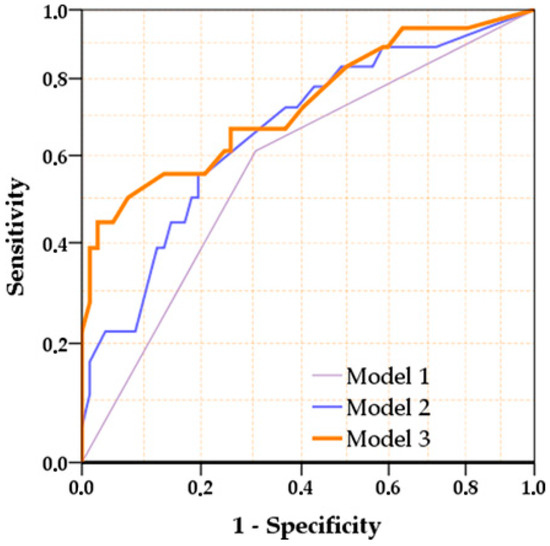
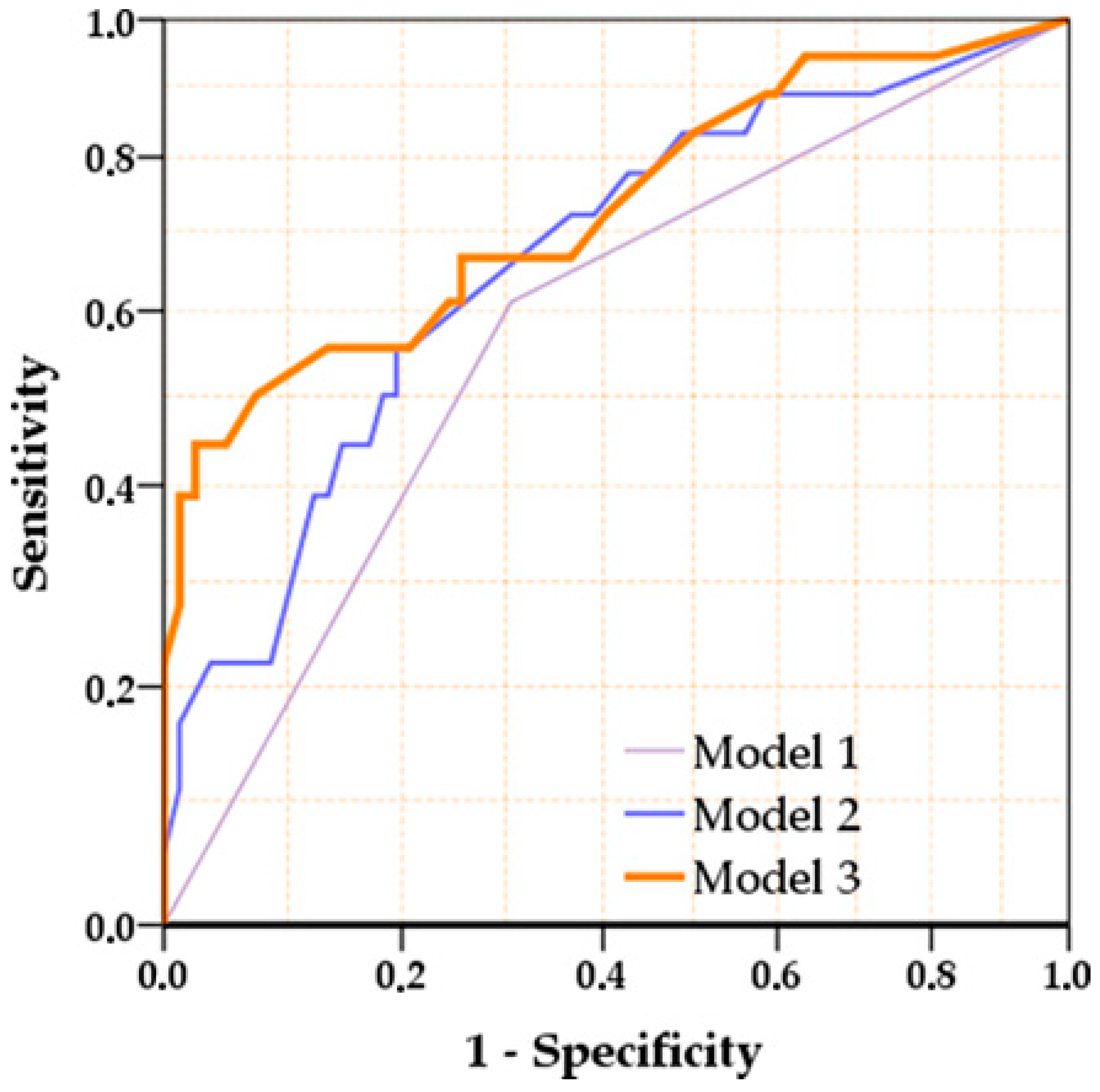
ROC curve analysis of the predicted probabilities derived from successive logistic regression models was performed to evaluate the incremental predictive value of the included variables (Table 6). Model 1, including treatment response alone, showed modest discrimination (AUC 0.653). The addition of duration of antibiotic treatment in Model 2 significantly improved predictive performance (AUC 0.728), indicating a meaningful contribution of antibiotic exposure to recurrence risk. Incorporation of previous hospitalizations within the last 12 months further enhanced discrimination in Model 3 (AUC 0.775), yielding the highest predictive accuracy (Figure 1).
Table 6.
Predictive performance of multivariable models.
Figure 1.
Receiver operating characteristic (ROC) curves of the stepwise predictive models for Clostridioides difficile infection recurrence. Model 1 includes treatment response alone, Model 2 incorporates treatment response and duration of antibiotic treatment and Model 3 additionally includes previous hospitalizations within the last 12 months. Progressive improvement in discriminatory performance is observed with the sequential inclusion of variables.
The Hosmer–Lemeshow goodness-of-fit test confirmed adequate model calibration (χ2 = 7.534, df = 8, p = 0.480), indicating no significant difference between observed and predicted values.
The inclusion of prior penicillin use in Model 4 did not result in additional improvement in AUC, which remained unchanged (AUC 0.775). This may suggest that the univariable association of penicillin exposure with recurrence could be partly explained by variables reflecting broader healthcare exposure and antimicrobial burden (e.g., prior hospitalization and antibiotic-treatment duration); however, given the limited number of recurrence events, the multivariable model may have been underpowered to detect independent class-specific effects. A post hoc power assessment based on the observed proportions for penicillin exposure (13% vs. 39%; two-sided α = 0.05; n = 82 vs. n = 18) indicated an achieved power of approximately ~63%, suggesting moderate power for detecting this large univariable difference but limited robustness for class-specific effects after multivariable adjustment with only 18 recurrence events. Therefore, although penicillin use was associated with recurrence in univariable and regression analyses, it did not provide independent incremental predictive value beyond the variables already included in the model.
4. Discussions
Within our dataset, recurrence was primarily associated with markers of healthcare exposure and antibiotic burden, previous hospitalization within 12 months, longer antibiotic treatment duration and poor/partial treatment response, rather than baseline demographics, comorbidity score or admission laboratory profiles. The literature shows that recurrence occurred in 18% of cases, a proportion broadly consistent with the commonly reported recurrence range after an index episode, often between 20 and 30% [41].
Previous hospitalization within the last 12 months was significantly more frequent in patients with recurrent CDI and remained independently associated with recurrence in multivariable models. This finding is concordant with systematic evidence identifying prior hospitalization and healthcare-associated CDI as important prognostic factors for recurrence, likely reflecting repeated exposure to spores, repeated antibiotic exposure, and persistent microbiome disruption [42,43]. Conceptually, prior hospitalization may also act as a proxy for unmeasured vulnerability (frailty, repeated healthcare contacts, underlying disease instability), which is frequently captured in recurrence prediction frameworks even when individual comorbidities are not independently significant [44,45].
Although “any prior antibiotic exposure” did not significantly differ between groups, the duration of antibiotic treatment showed the strongest discrimination for recurrence and remained independently associated with recurrent CDI after adjustment. This aligns with contemporary work emphasizing that recurrence risk tracks not only antibiotic exposure per se, but also with cumulative antimicrobial pressure, which plausibly delays restoration of colonization resistance [46]. Importantly, antibiotic utilization remains the strongest modifiable determinant in CDI epidemiology and outcomes, supporting stewardship as a central lever for both primary prevention and recurrence mitigation [47].
From a mechanistic perspective, prolonged antibiotic exposure likely delays the recovery of the gut microbiome and prolongs the disruption of colonization resistance. This sustained ecological imbalance may facilitate persistence of C. difficile spores and increase susceptibility to relapse following apparent clinical resolution.
A higher prevalence of prior penicillin use among patients with recurrence in univariable analyses was observed, but this effect did not improve model performance once healthcare exposure and treatment duration were included. This pattern is compatible with the broader literature: comparative risk varies by antibiotic class and agent, yet class-level associations can be attenuated when cumulative exposure and healthcare-related confounding are accounted for [47]. Therefore, in practical terms, antibiotic “type” may be less informative than antibiotic “load” (duration/intensity) and the broader exposure context, particularly in small-to-moderate cohorts [43,46].
Poor/partial treatment response was independently associated with recurrence and meaningfully contributed to prediction. Clinically, this is plausible because early nonresponse may indicate persistent toxin activity, ongoing dysbiosis, inadequate host recovery or continued antibiotic exposures, all of which have been incorporated (directly or indirectly) into recurrence prediction approaches [44,45]. From a management standpoint, guidelines emphasize that treatment choices (including fidaxomicin and bezlotoxumab) should be tailored to episode type and risk of recurrence, supporting a risk-stratified approach when early clinical response is suboptimal [48].
In this cohort, admission clinical features and baseline laboratory values, including inflammatory markers, leukocyte counts, albumin, renal function, and electrolytes, were not significantly associated with recurrence. This is consistent with the notion that recurrence is often driven more by post-diagnosis exposures and microbiome trajectory than by single-time-point “snapshot” biomarkers, which have shown variable performance across settings and risk tools [49]. Moreover, meta-analytic evidence suggests that recurrence risk is influenced by factors such as age, prior hospitalization, healthcare-associated CDI and exposures occurring during/after the initial episode, highlighting the importance of longitudinal exposure measurement [42,50].
Although several meta-analyses have linked acid-suppressive therapy, particularly PPIs, to increased risk of recurrent CDI, especially when used during or after CDI, no significant association was observed [50,51]. This discrepancy may reflect limited power, differences in exposure timing (pre-CDI vs. during/after CDI), residual confounding, or local prescribing patterns [52].
Similarly, while older age and multiple comorbidities are repeatedly reported as adverse prognostic factors in broader datasets, our Charlson index and individual comorbidities were not significantly associated with recurrence, likely due to sample size constraints and collinearity with healthcare exposure markers. As no deaths occurred during the predefined 8-week follow-up period, the risk of survivorship bias related to early mortality was not present in our cohort.
These findings suggest a pragmatic risk-oriented approach in which patients with substantial healthcare exposure, prolonged antibiotic courses, and poor or partial early treatment response may represent a higher-risk subgroup. However, given the limitations of the study design and sample size, these observations should be interpreted with caution and considered hypothesis-generating rather than definitive [53,54]. This aligns with the focused update emphasizing fidaxomicin and the role of bezlotoxumab in selected patients to reduce recurrence risk [48].
In parallel, microbiota restoration is increasingly relevant in recurrent CDI management [55]. While FMT has been widely used, the therapeutic landscape now includes FDA-approved microbiota products aimed at recurrence prevention [56]. These standardized formulations may address practical limitations of conventional FMT (availability, standardization, and regulatory oversight), but continued real-world evidence is needed to define optimal sequencing and patient selection relative to antibiotics and adjunctive biologics [57,58].
Prior studies have consistently identified advanced age, antibiotic exposure, gastric acid suppression and infection with hypervirulent strains as major risk factors for recurrent CDI. In a large, hospitalized cohort, Abdelfatah et al. reported associations between recurrence and glucocorticoid use, proton pump inhibitor therapy and end-stage renal disease [59]. More recently, a nationwide study evaluating recurrence and in-hospital mortality also emphasized the role of healthcare-related factors and comorbidity burden in predicting adverse outcomes [60]. Our findings are broadly consistent with this literature in that recurrence was associated with markers of greater healthcare exposure and disease course, including prior hospitalization within 12 months, longer hospitalization duration, longer duration of antibiotic treatment, and poorer/partial clinical response during the index episode. In contrast, several commonly reported predictors (e.g., PPI use or corticosteroid therapy) were not statistically significant in our cohort, which may reflect limited statistical power given the small number of recurrent cases and the hospitalized-only study population. We therefore interpret these results as exploratory and hypothesis-generating [61].
Several limitations must be acknowledged. The retrospective design may have introduced information bias due to reliance on medical record documentation, and incomplete laboratory data cannot be excluded. Residual confounding from unmeasured variables is also possible. Selection bias may be present, as only hospitalized patients from a single center were included, potentially overrepresenting more severe cases and limiting generalizability. The relatively small number of recurrent cases, without a prior sample size calculation, may have reduced statistical power and increased the risk of model instability or overfitting. In addition, cumulative antibiotic exposure prior to CDI was not systematically quantified, and strain characteristics such as ribotype or toxin profile were not available. CDI diagnosis was based on enzyme immunoassay for toxin detection, which may have lower sensitivity compared to multistep diagnostic algorithms. Finally, although treatment response was defined based on documented clinical improvement, some degree of misclassification bias cannot be excluded. Overall, these findings should be interpreted as hypothesis-generating and require confirmation in larger, prospectively designed studies with standardized diagnostic approaches and validated predictive models.
5. Conclusions
In this retrospective cohort, recurrent CDI was primarily associated with healthcare exposure and treatment-related factors rather than baseline demographics, comorbidity burden, or admission laboratory parameters. Previous hospitalization, longer duration of antibiotic therapy, and poor or partial response to initial treatment remained independently associated with recurrence. These findings suggest that clinicians should prioritize careful antibiotic stewardship and close follow-up of patients with significant prior healthcare exposure or suboptimal early treatment response. However, the relatively small number of recurrent cases warrants cautious interpretation of these findings and limits the generalizability of the predictive model. Larger prospective studies are needed to validate these predictors and to refine recurrence risk stratification models.
Author Contributions
Conceptualization and design: S.B.T., A.B., M.T. and C.I.; methodology: P.A., O.S. and M.L.P.; formal analysis: S.B.T., A.B. and M.T.; investigation: P.A., O.S. and M.L.P.; resources: S.B.T., software and data analysis: S.B.T.; supervision: A.B.; validation: M.T., P.A. and M.L.P.; writing—original draft: A.B., C.I., P.A. and S.B.T. All authors have read and agreed to the published version of the manuscript.
Funding
This research received no external funding.
Institutional Review Board Statement
This study was retrospective and adhered to established protocols for surgical interventions. It did not involve experimental procedures that would require further approvals.
Informed Consent Statement
Patient consent was waived due to the retrospective design of this study.
Data Availability Statement
The datasets generated and analyzed during the current study are not publicly available due to institutional restrictions but are available from the corresponding authors upon reasonable request.
Conflicts of Interest
The authors have no conflicts of interest to declare.
References
- Vedantam, G.; Clark, A.; Chu, M.; McQuade, R.; Mallozzi, M.; Viswanathan, V.K. Clostridium difficile infection: Toxins and non-toxin virulence factors, and their contributions to disease establishment and host response. Gut Microbes 2012, 3, 121–134. [Google Scholar] [CrossRef] [Scilit]
- Markovska, R.; Dimitrov, G.; Gergova, R.; Boyanova, L. Clostridioides difficile, a New “Superbug”. Microorganisms 2023, 11, 845. [Google Scholar] [CrossRef] [Scilit]
- Hall, I.C. Intestinal Flora in New-Born Infants: With A Description of a New Pathogenic Anaerobe, Bacillus difficilis. Am. J. Dis. Child. 1935, 49, 390. [Google Scholar] [CrossRef] [Scilit]
- Tedesco, F.J.; Barton, R.W.; Alpers, D.H. Clindamycin-Associated Colitis: A Prospective Study. Ann. Intern. Med. 1974, 81, 429–433. [Google Scholar] [CrossRef] [Scilit]
- Mpakogiannis, K.; Fousekis, F.S.; Elemes, S.; Mantellos, E.; Christaki, E.; Katsanos, K.H. Extraintestinal Manifestations of Clostridioides difficile Infections: An Overview. Antibiotics 2025, 14, 670. [Google Scholar] [CrossRef] [Scilit] [PubMed]
- Brown, K.A.; Khanafer, N.; Daneman, N.; Fisman, D.N. Meta-Analysis of Antibiotics and the Risk of Community-Associated Clostridium difficile Infection. Antimicrob. Agents Chemother. 2013, 57, 2326–2332. [Google Scholar] [CrossRef] [Scilit]
- Seekatz, A.M.; Young, V.B. Clostridium difficile and the microbiota. J. Clin. Investig. 2014, 124, 4182–4189. [Google Scholar] [CrossRef] [Scilit]
- Rafey, A.; Jahan, S.; Farooq, U.; Akhtar, F.; Irshad, M.; Nizamuddin, S.; Parveen, A. Antibiotics Associated with Clostridium difficile Infection. Cureus 2023, 15, e39029. Available online: https://www.cureus.com/articles/155016-antibiotics-associated-with-clostridium-difficile-infection (accessed on 31 January 2026). [CrossRef] [Scilit] [PubMed]
- Rineh, A.; Kelso, M.J.; Vatansever, F.; Tegos, G.P.; Hamblin, M.R. Clostridium difficile infection: Molecular pathogenesis and novel therapeutics. Expert Rev. Anti-Infect. Ther. 2014, 12, 131–150. [Google Scholar] [CrossRef] [Scilit] [PubMed]
- Granata, G.; Mariotti, D.; Ascenzi, P.; Petrosillo, N.; Di Masi, A. High Serum Levels of Toxin A Correlate with Disease Severity in Patients with Clostridioides difficile Infection. Antibiotics 2021, 10, 1093. [Google Scholar] [CrossRef] [Scilit]
- Di Bella, S.; Ascenzi, P.; Siarakas, S.; Petrosillo, N.; Di Masi, A. Clostridium difficile Toxins A and B: Insights into Pathogenic Properties and Extraintestinal Effects. Toxins 2016, 8, 134. [Google Scholar] [CrossRef] [Scilit] [PubMed]
- Kelly, C.P. Can we identify patients at high risk of recurrent Clostridium difficile infection? Clin. Microbiol. Infect. 2012, 18, 21–27. [Google Scholar] [CrossRef] [Scilit] [PubMed]
- Steele, J.; Chen, K.; Sun, X.; Zhang, Y.; Wang, H.; Tzipori, S.; Feng, H. Systemic Dissemination of Clostridium difficile Toxins A and B Is Associated with Severe, Fatal Disease in Animal Models. J. Infect. Dis. 2012, 205, 384–391. [Google Scholar] [CrossRef] [Scilit]
- Yu, H.; Chen, K.; Wu, J.; Yang, Z.; Shi, L.; Barlow, L.L.; Aronoff, D.M.; Garey, K.W.; Savidge, T.C.; von Rosenvinge, E.C.; et al. Identification of Toxemia in Patients with Clostridium difficile Infection. PLoS ONE 2015, 10, e0124235. [Google Scholar] [CrossRef] [Scilit]
- Qualman, S.J.; Petric, M.; Karmali, M.A.; Smith, C.R.; Hamilton, S.R. Clostridium difficile Invasion and Toxin Circulation in Fatal Pediatric Pseudomembranous Colitis. Am. J. Clin. Pathol. 1990, 94, 410–416. [Google Scholar] [CrossRef] [Scilit] [PubMed]
- Guery, B.; Galperine, T.; Barbut, F. Clostridioides difficile: Diagnosis and treatments. BMJ 2019, 366, l4609. [Google Scholar] [CrossRef] [Scilit]
- Carey-Ann, B.D.; Carroll, K.C. Diagnosis of Clostridium difficile Infection: An Ongoing Conundrum for Clinicians and for Clinical Laboratories. Clin. Microbiol. Rev. 2013, 26, 604–630. [Google Scholar] [CrossRef] [Scilit]
- Sprague, R.; Warny, K.; Pollock, N.; Daugherty, K.; Lin, Q.; Xu, H.; Cuddemi, C.; Barrett, C.; Chen, X.; Banz, A.; et al. Absence of Toxemia in Clostridioides difficile Infection: Results from Ultrasensitive Toxin Assay of Serum. Dig. Dis. Sci. 2021, 66, 3303–3306. [Google Scholar] [CrossRef] [Scilit]
- Birlutiu, V.; Dobritoiu, E.S.; Lupu, C.D.; Herteliu, C.; Birlutiu, R.M.; Dragomirescu, D.; Vorovenci, A. Our experience with 80 cases of SARS-CoV-2-Clostridioides difficile co-infection: An observational study. Medicine 2022, 101, e29823. [Google Scholar] [CrossRef] [Scilit]
- Markantonis, J.E.; Fallon, J.T.; Madan, R.; Alam, M.Z. Clostridioides difficile Infection: Diagnosis and Treatment Challenges. Pathogens 2024, 13, 118. [Google Scholar] [CrossRef] [Scilit] [PubMed]
- Vintila, B.I.; Arseniu, A.M.; Morgovan, C.; Butuca, A.; Bîrluțiu, V.; Dobrea, C.M.; Liviu Rus, L.; Ghibu, S.; Bereanu, A.S.; Arseniu, R.; et al. A Real-World Study on the Clinical Characteristics, Outcomes, and Relationship between Antibiotic Exposure and Clostridioides difficile Infection. Antibiotics 2024, 13, 144. [Google Scholar] [CrossRef] [Scilit] [PubMed]
- Magill, S.S.; Edwards, J.R.; Bamberg, W.; Beldavs, Z.G.; Dumyati, G.; Kainer, M.A.; Lynfield, R.; Maloney, M.; McAllister-Hollod, L.; Nadle, J.; et al. Multistate Point-Prevalence Survey of Health Care–Associated Infections. N. Engl. J. Med. 2014, 370, 1198–1208. [Google Scholar] [CrossRef] [Scilit]
- Kim, G.; Zhu, N.A. Community-acquired Clostridium difficile infection. Can. Fam. Physician 2017, 63, 131–132. [Google Scholar]
- Smits, W.K.; Lyras, D.; Lacy, D.B.; Wilcox, M.H.; Kuijper, E.J. Clostridium difficile infection. Nat. Rev. Dis. Primers 2016, 2, 16020. [Google Scholar] [CrossRef] [Scilit]
- Boicean, A.; Neamtu, B.; Birsan, S.; Batar, F.; Tanasescu, C.; Dura, H.; Roman, M.D.; Hașegan, A.; Bratu, D.; Mihetiu, A.; et al. Fecal Microbiota Transplantation in Patients Co-Infected with SARS-CoV2 and Clostridioides difficile. Biomedicines 2022, 11, 7. [Google Scholar] [CrossRef] [Scilit]
- Perić, A.; Rančić, N.; Dragojević-Simić, V.; Milenković, B.; Ljubenović, N.; Rakonjac, B.; Begović-Kuprešanin, V.; Šuljagić, V. Association between Antibiotic Use and Hospital-Onset Clostridioides difficile Infection in University Tertiary Hospital in Serbia, 2011–2021: An Ecological Analysis. Antibiotics 2022, 11, 1178. [Google Scholar] [CrossRef] [Scilit] [PubMed]
- Slimings, C.; Riley, T.V. Antibiotics and healthcare facility-associated Clostridioides difficile infection: Systematic review and meta-analysis 2020 update. J. Antimicrob. Chemother. 2021, 76, 1676–1688. [Google Scholar] [CrossRef] [Scilit]
- Kesavelu, D.; Jog, P. Current understanding of antibiotic-associated dysbiosis and approaches for its management. Ther. Adv. Infect. 2023, 10, 20499361231154443. [Google Scholar] [CrossRef] [Scilit]
- Hernández Del Pino, R.E.; Barbero, A.M.; Español, L.Á.; Morro, L.S.; Pasquinelli, V. The adaptive immune response to Clostridioides difficile: A tricky balance between immunoprotection and immunopathogenesis. J. Leukoc. Biol. 2021, 109, 195–210. [Google Scholar] [CrossRef] [Scilit] [PubMed]
- Kelly, C.P.; Kyne, L. The host immune response to Clostridium difficile. J. Med. Microbiol. 2011, 60, 1070–1079. [Google Scholar] [CrossRef] [Scilit]
- Donlan, A.N.; Simpson, M.E.; Petri, W.A. Type 2 cytokines IL-4 and IL-5 reduce severe outcomes from Clostridiodes difficile infection. Anaerobe 2020, 66, 102275. [Google Scholar] [CrossRef] [Scilit]
- McDonald, L.C.; Gerding, D.N.; Johnson, S.; Bakken, J.S.; Carroll, K.C.; Coffin, S.E.; Dubberke, E.R.; Garey, K.W.; Gould, C.V.; Kelly, C.; et al. Clinical Practice Guidelines for Clostridium difficile Infection in Adults and Children: 2017 Update by the Infectious Diseases Society of America (IDSA) and Society for Healthcare Epidemiology of America (SHEA). Clin. Infect. Dis. 2018, 66, e1–e48. [Google Scholar] [CrossRef] [Scilit] [PubMed]
- Kelly, C.R.; Fischer, M.; Allegretti, J.R.; LaPlante, K.; Stewart, D.B.; Limketkai, B.N.; Stollman, N.H. ACG Clinical Guidelines: Prevention, Diagnosis, and Treatment of Clostridioides difficile Infections. Am. J. Gastroenterol. 2021, 116, 1124–1147. [Google Scholar] [CrossRef] [Scilit]
- Van Prehn, J.; Reigadas, E.; Vogelzang, E.H.; Bouza, E.; Hristea, A.; Guery, B.; Krutova, M.; Norén, T.; Allerberger, F.; Coia, J.E.; et al. European Society of Clinical Microbiology and Infectious Diseases: 2021 update on the treatment guidance document for Clostridioides difficile infection in adults. Clin. Microbiol. Infect. 2021, 27, S1–S21. [Google Scholar] [CrossRef] [Scilit]
- Wilcox, M.H.; Gerding, D.N.; Poxton, I.R.; Kelly, C.; Nathan, R.; Birch, T.; Cornely, O.A.; Rahav, G.; Bouza, E.; Lee, C.; et al. Bezlotoxumab for Prevention of Recurrent Clostridium difficile Infection. N. Engl. J. Med. 2017, 376, 305–317. [Google Scholar] [CrossRef] [Scilit]
- Gerding, D.N.; Kelly, C.P.; Rahav, G.; Lee, C.; Dubberke, E.R.; Kumar, P.N.; Yacyshyn, B.; Kao, D.; Eves, K.; Ellison, M.C.; et al. Bezlotoxumab for Prevention of Recurrent Clostridium difficile Infection in Patients at Increased Risk for Recurrence. Clin. Infect. Dis. 2018, 67, 649–656. [Google Scholar] [CrossRef] [Scilit]
- Birch, T.; Golan, Y.; Rizzardini, G.; Jensen, E.; Gabryelski, L.; Guris, D.; Dorr, B. Efficacy of bezlotoxumab based on timing of administration relative to start of antibacterial therapy for Clostridium difficile infection. J. Antimicrob. Chemother. 2018, 73, 2524–2528. [Google Scholar] [CrossRef] [Scilit]
- Morado, F.; Nanda, N. A Review of Therapies for Clostridioides difficile Infection. Antibiotics 2024, 14, 17. [Google Scholar] [CrossRef] [Scilit]
- Yadegar, A.; Pakpour, S.; Ibrahim, F.F.; Nabavi-Rad, A.; Cook, L.; Walter, J.; Seekatz, A.M.; Wong, K.; Monaghan, T.M.; Kao, D. Beneficial effects of fecal microbiota transplantation in recurrent Clostridioides difficile infection. Cell Host Microbe 2023, 31, 695–711. [Google Scholar] [CrossRef] [Scilit] [PubMed]
- Minkoff, N.Z.; Aslam, S.; Medina, M.; Tanner-Smith, E.E.; Zackular, J.P.; Acra, S.; Nicholson, M.R.; Imdad, A. Fecal microbiota transplantation for the treatment of recurrent Clostridioides difficile (Clostridium difficile). Cochrane Database Syst. Rev. 2023, 4, CD013871. [Google Scholar] [CrossRef] [Scilit] [PubMed]
- Ghosh, S.; Antunes, A.; Rinta-Kokko, H.; Chaparova, E.; Lay-Flurrie, S.; Tricotel, A.; Andersson, F.L. Clostridioides difficile infections, recurrences, and clinical outcomes in real-world settings from 2015 to 2019: The RECUR England study. Int. J. Infect. Dis. 2024, 140, 31–38. [Google Scholar] [CrossRef] [Scilit]
- Deshpande, A.; Pasupuleti, V.; Thota, P.; Pant, C.; Rolston, D.D.K.; Hernandez, A.V.; Donskey, C.J.; Fraser, T.G. Risk Factors for Recurrent Clostridium difficile Infection: A Systematic Review and Meta-Analysis. Infect. Control Hosp. Epidemiol. 2015, 36, 452–460. [Google Scholar] [CrossRef] [Scilit]
- Van Rossen, T.M.; Ooijevaar, R.E.; Vandenbroucke-Grauls, C.M.J.E.; Dekkers, O.M.; Kuijper, E.J.; Keller, J.J.; van Prehn, J. Prognostic factors for severe and recurrent Clostridioides difficile infection: A systematic review. Clin. Microbiol. Infect. 2022, 28, 321–331. [Google Scholar] [CrossRef] [Scilit]
- Mori, N.; Hirai, J.; Ohashi, W.; Asai, N.; Shibata, Y.; Mikamo, H. Derivation of clinical predictive factors (CHIEF) for first recurrent Clostridioides difficile infection. Am. J. Infect. Control 2024, 52, 419–423. [Google Scholar] [CrossRef] [Scilit]
- Boone, R.H.; Lee, E.; Petri, W.A.; Madden, G.R. Validation of clinical risk tools for recurrent Clostridioides difficile infection. Infect. Control Hosp. Epidemiol. 2024, 45, 1064–1072. [Google Scholar] [CrossRef] [Scilit]
- Nagaoka, H.; Morita, Y.; Ohya, T.; Takahashi, K.; Sato, J.; Miyata, M.; Iwashita, S.; Arai, Y.; Kiuchi, S.; Ozone, H.; et al. Predicting recurrent Clostridioides difficile infection by assessing antimicrobial treatment based on days of antibiotic spectrum coverage and ATLAS scores. J. Infect. Chemother. 2025, 31, 102603. [Google Scholar] [CrossRef] [Scilit]
- Liu, Y.; Dai, M.; Zhang, K.; Zhang, L.; Lin, B.; Chen, K.; Wang, H.; Gu, Z.; Yu, Y.; Wang, Y. Risk of Clostridioides difficile infection following different antibiotics: Insights from multi-source medical data. Int. J. Antimicrob. Agents 2024, 64, 107288. [Google Scholar] [CrossRef] [Scilit]
- Johnson, S.; Lavergne, V.; Skinner, A.M.; Gonzales-Luna, A.J.; Garey, K.W.; Kelly, C.P.; Wilcox, M.H. Clinical Practice Guideline by the Infectious Diseases Society of America (IDSA) and Society for Healthcare Epidemiology of America (SHEA): 2021 Focused Update Guidelines on Management of Clostridioides difficile Infection in Adults. Clin. Infect. Dis. 2021, 73, e1029–e1044. [Google Scholar] [CrossRef] [Scilit] [PubMed]
- Dawkins, J.J.; Allegretti, J.R.; Gibson, T.E.; McClure, E.; Delaney, M.; Bry, L.; Gerber, G.K. Gut metabolites predict Clostridioides difficile recurrence. Microbiome 2022, 10, 87. [Google Scholar] [CrossRef] [Scilit] [PubMed]
- D’Silva, K.M.; Mehta, R.; Mitchell, M.; Lee, T.C.; Singhal, V.; Wilson, M.G.; McDonald, E.G. Proton pump inhibitor use and risk for recurrent Clostridioides difficile infection: A systematic review and meta-analysis. Clin. Microbiol. Infect. 2021, 27, 697–703. [Google Scholar] [CrossRef] [Scilit] [PubMed]
- Mehta, P.; Nahass, R.G.; Brunetti, L. Acid Suppression Medications During Hospitalization as a Risk Factor for Recurrence of Clostridioides difficile Infection: Systematic Review and Meta-analysis. Clin. Infect. Dis. 2021, 73, e62–e68. [Google Scholar] [CrossRef] [Scilit]
- Eeuwijk, J.; Ferreira, G.; Yarzabal, J.P.; Robert-Du Ry Van Beest Holle, M. A Systematic Literature Review on Risk Factors for and Timing of Clostridioides difficile Infection in the United States. Infect. Dis. Ther. 2024, 13, 273–298. [Google Scholar] [CrossRef] [Scilit]
- Tsigrelis, C. Recurrent Clostridioides difficile infection: Recognition, management, prevention. CCJM 2020, 87, 347–359. [Google Scholar] [CrossRef] [Scilit]
- Berry, P.; Khanna, S. Recurrent Clostridioides difficile Infection: Current Clinical Management and Microbiome-Based Therapies. BioDrugs 2023, 37, 757–773. [Google Scholar] [CrossRef] [Scilit]
- Baillieu, V.; Delannoy, J.; Kapel, N.; Barbut, F.; Mosca, A.; Joly, A.C.; Waligora-Dupriet, A.-J.; Sintes, R. Evaluation of the efficacy of inactivated fecal transplants against Clostridioides difficile: An in vitro study. World J. Microbiol. Biotechnol. 2026, 42, 66. [Google Scholar] [CrossRef] [Scilit]
- Benech, N.; Barbut, F.; Fitzpatrick, F.; Krutova, M.; Davies, K.; Druart, C.; Cordaillat-Simmons, M.; Heritage, J.; Guery, B.; Kujiper, E.; et al. Update on microbiota-derived therapies for recurrent Clostridioides difficile infections. Clin. Microbiol. Infect. 2024, 30, 462–468. [Google Scholar] [CrossRef] [Scilit]
- Carlson, P.E. Regulatory Considerations for Fecal Microbiota Transplantation Products. Cell Host Microbe 2020, 27, 173–175. [Google Scholar] [CrossRef] [Scilit] [PubMed]
- Belotserkovsky, I.; Stabryla, L.M.; Hunter, M.; Allegretti, J.; Callahan, B.J.; Carlson, P.E.; Daschner, P.J.; Goudarzi, M.; Guyard, C.; Jackson, S.A.; et al. Standards for fecal microbiota transplant: Tools and therapeutic advances. Biologicals 2024, 86, 101758. [Google Scholar] [CrossRef] [Scilit]
- Abdelfatah, M.; Nayfe, R.; Nijim, A.; Kandil, H. Factors Predicting Recurrence of Clostridium difficile Infection (CDI) in Hospitalized Patients: Retrospective Study of More than 2000 Patients. J. Investig. Med. 2015, 63, 747–751. [Google Scholar] [CrossRef] [Scilit] [PubMed]
- Garcia-Carretero, R.; Vazquez-Gomez, O.; Rodriguez-Maya, B.; Gil-Prieto, R.; Gil-de-Miguel, A. Risk Factors for Recurrence and In-Hospital Mortality in Patients with Clostridioides difficile: A Nationwide Study. J. Clin. Med. 2025, 14, 4907. [Google Scholar] [CrossRef] [Scilit] [PubMed]
- Thabit, A.K.; Housman, S.T.; Burnham, C.D.; Nicolau, D.P. Association of healthcare exposure with acquisition of different Clostridium difficile strain types in patients with recurrent infection or colonization after clinical resolution of initial infection. J. Hosp. Infect. 2016, 92, 167–172. [Google Scholar] [CrossRef] [Scilit] [PubMed]

Disclaimer/Publisher’s Note: The statements, opinions and data contained in all publications are solely those of the individual author(s) and contributor(s) and not of MDPI and/or the editor(s). MDPI and/or the editor(s) disclaim responsibility for any injury to people or property resulting from any ideas, methods, instructions or products referred to in the content. |
© 2026 by the authors. Licensee MDPI, Basel, Switzerland. This article is an open access article distributed under the terms and conditions of the Creative Commons Attribution (CC BY) license.