


Abstract
Objectives: Pediatric obesity represents a significant public health challenge, requiring accurate and accessible tools for assessing body composition in pediatric populations. This systematic review (PROSPERO CRD42024592366) compares the methodological accuracy and clinical utility of bioelectrical impedance analysis (BIA) and dual x-ray absorptiometry (DXA) in evaluating obesity among children and adolescents. Methods: Utilizing a comprehensive search across PubMed, EMBASE, and Web of Science between 1 January 2014 and 31 December 2024, we identified 28 studies meeting our inclusion criteria. The studies included involved participants aged 2–17 years with obesity and compared BIA with DXA as the reference standard. The exclusion criteria were studies focusing on adults, those that assessed BC solely using anthropometry, and those that did not report primary outcomes relevant to the comparison of BIA vs. DXA. Results: The findings reveal that despite recent technological advances improving BIA’s precision, it consistently underestimates body fat percentage and fat mass, particularly in overweight and obese pediatric populations. DXA it is often used as a reference method in the evaluation of whole-body composition due to its higher accuracy and reliability. BIA offers significant practical advantages in accessibility, cost-effectiveness, and portability, but enhancements are needed to improve its accuracy for individual-level assessments. Conclusions: While BIA shows promise as a practical tool for body composition assessment in children, its accuracy varies significantly by device type. Multi-frequency segmental analyzers, such as InBody 720, demonstrate better agreement with DXA, whereas simpler models tend to underestimate fat mass. Therefore, conclusions regarding BIA performance should be device-specific and its clinical utility should be carefully weighed based on the technology used.
1. Introduction
Obesity is a complex and multifactorial condition that is increasingly prevalent worldwide, affecting both pediatric and adult populations. Its rising prevalence poses significant risks of comorbidity and carries substantial social and economic consequences. This disease in children can significantly affect their entire well-being, increasing the risk of major health issues such as cardio-metabolic diseases, as well as their psychological and overall physical health [1,2,3,4]. Body assessment methods at the moment are numerous and have been discussed in depth. Traditional metrics, such as body mass index (BMI), have limitations in distinguishing between fat mass (FM) and fat-free mass (FFM) [5], leading to an increased need for more precise body composition (BC) assessment tools.
Dual-energy X-ray absorptiometry (DXA) is considered the gold standard for the determination of bone density, but it is often used as a reference method in the evaluation of whole-body composition, because it provides accurate measures of body FM and lean mass [1,6,7]. However, this method is expensive, difficult to implement on a large scale [1,8], requires specialized training, and involves radiation exposure, making it less practical for routine clinical use and repeated assessments in pediatric populations. Additionally, there is a risk of irradiation if the patient undergoes repeated scans over time. When discussing the process of weight loss guided by health professionals, we also emphasize the need to reevaluate these children and their parameters at least once a month. Current pediatric guidelines recommend that children with obesity be followed by clinicians as early as possible until adulthood to prevent the occurrence of pathologies such as type 2 diabetes, cardiovascular diseases, and metabolic-dysfunction-associated steatotic liver disease [1].
Bioelectrical impedance analysis (BIA) has gained popularity as an accessible, non-invasive, low-cost alternative capable of assessing body composition efficiently in clinical and epidemiological settings [9,10,11,12]. Despite technological advances, the accuracy of BIA compared to DXA remains uncertain [13], particularly for pediatric obesity, in which variations in hydration and tissue composition can significantly impact accuracy [14,15]. There is a great variety of BIA devices which can be classified according to the frequency, electrode placement, device type, and output mode. By frequency, the types are as follows: single-frequency BIA (SF-BIA), multi-frequency BIA (MF-BIA), and bioelectrical impedance spectroscopy (BIS). The accuracy of older BIA models using a single frequency can be compromised by factors such as hydration status and food intake, because dehydration can slow the current’s movement through the body [5]. BIA devices that use multiple-frequency electrical currents can more accurately differentiate between intracellular and extracellular water compared to single-frequency devices. This improved differentiation enhances the accuracy of BC measurements [16].
In both methods, certain components are measured directly, such as impedance in BIA or X-ray attenuation in DXA, while others, like percent body fat (BF%), FFM, or skeletal muscle mass, are estimated using device-specific predictive algorithms. BIA can be useful for field studies and clinical screenings in children and adolescents because it is portable, affordable, and fast. Its accuracy, however, is affected by factors like age, genre, hydration status, body position, and the type of BIA technology used [5]. DXA offers greater accuracy at the individual level but is less practical for repeated or large-scale use in pediatric settings. In the current scientific literature, many articles on BIA and DXA present contradictory information regarding the evaluation of BC among pediatric populations. This systematic review aims to critically evaluate existing evidence comparing the methodological accuracy and clinical utility of BIA and DXA, providing health professionals and researchers with clear guidance for pediatric obesity assessment.
2. Materials and Methods
2.1. Protocol Registration and Reporting
This systematic review followed PRISMA (Preferred Reporting Items for Systematic Review and Meta-Analysis) guidelines [17]. In order to realize this systematic review, the authors formulated a search protocol regarding the assessment of BC registered at PROSPERO (CRD42024592366).
2.2. Search Strategy and Selection Process
The literature search was performed in PubMed, EMBASE, and Web of Science from 1 January 2014 to 31 December 2024, using the following keywords: ‘bioelectrical impedance’ AND ‘dual X-ray absorptiometry’ AND ‘obesity’ AND ‘child’ OR ‘children’ OR ‘adolescent*’ OR ‘pediatric’ OR ‘childhood’. The specific search strategies were tailored to the requirements of each database. Only English-language studies involving human pediatric populations were included. We used the PRISMA checklist and flowchart to ensure a high-quality search and to minimize bias. For the duplicate data set studies in all the databases, only one study from each set was included. Additionally, a cross-referencing search was performed for the full-text versions of the preliminarily included articles. Additionally, the references of the identified studies were manually searched to ensure that no study was missed.
All decisions regarding the inclusion or exclusion of papers were made according to a consensus, based on the predefined criteria by two authors. The inclusion criteria for the study were as follows: studies assessing BC in pediatric subjects aged between 2 and 17 years with obesity; studies directly comparing BIA and DXA; cross-sectional, longitudinal, observational, and randomized controlled trials; studies with full-text availability in English. Studies comparing interventions in pediatric patients with obesity to those without obesity were included. Exclusion criteria were as follows: studies focusing on adults; studies assessing BC solely using anthropometry; and studies that do not report primary outcomes relevant to the comparison of BIA vs. DXA.
2.3. Data Extraction
To achieve the research objectives, we conducted a systematic literature review and assessed intervention effects using the PICO (Population, Intervention, Comparison, Outcome) framework. The Population consisted of pediatric subjects aged 2–17 years with obesity. The Intervention involved DXA, recognized as the “gold standard” for BC assessment, alongside various BIA devices. The Comparison focused on evaluating obesity and BC assessment outcomes obtained through these two methods. The Outcome aimed to validate the accuracy of BIA devices and assess their clinical utility in pediatric obesity research.
Two independent researchers systematically reviewed the titles, abstracts, and full texts of relevant studies. Articles that met the predefined inclusion criteria were independently evaluated to ensure methodological rigor and data reliability.
Extracted data were systematically organized in a Microsoft Excel spreadsheet using a predefined checklist. Key variables included the following: author name, publication year, country of study, study design, sample size, intervention type, follow-up duration, assessment techniques (devices used), comparison details, methodological accuracy, primary outcomes, and clinical utility. The studies included in this review utilized a variety of BIA devices compared to DXA. Most BIA devices used manufacturer-specific predictive algorithms to estimate FM, FFM, and total body water. Also, they did not disclose the exact equations used; however, some studies noted the use of formulas developed and validated for pediatric populations by the manufacturers. The DXA devices analyzed BC using the manufacturers’ proprietary software, which applies internal algorithms to distinguish between bone mineral content, lean tissue, and FM. The studies included typically did not report customized or external estimation equations, relying on standard software outputs.
Due to variations in study design, participant characteristics, and measurement tools, a meta-analysis was not feasible. Instead, a comprehensive narrative synthesis was conducted to evaluate the validity of BIA compared to DXA for BC assessment in obese children and adolescents. Studies provided data on pediatric subjects, including age- and sex-based subgroups, as well as obesity assessments using BIA, DXA, or a combination of both methods.
In each study, data were analyzed by subgroup and assessment method to determine measurement precision and accuracy. In some cases, weight categories such as underweight, normal weight, overweight, and obesity were combined due to limited data, preventing meaningful stratification. All extracted data were synthesized manually to ensure a thorough and structured presentation of findings based on participant groups and study characteristics.
2.4. Quality Assessment
Two authors independently evaluated the risk of bias using the Quality Assessment of Diagnostic Accuracy Studies (QUADAS−2) tool [18]. This method is widely recommended for systematic reviews to assess the risk of bias and applicability of primary diagnostic accuracy studies. This tool assesses four domains: patient selection, index test, reference standard, and flow and timing. Each domain is rated based on a predefined set of criteria that consider methodological aspects. Consensus was reached between the reviewers for all assessments, with no need for a third reviewer to resolve discrepancies.
3. Results
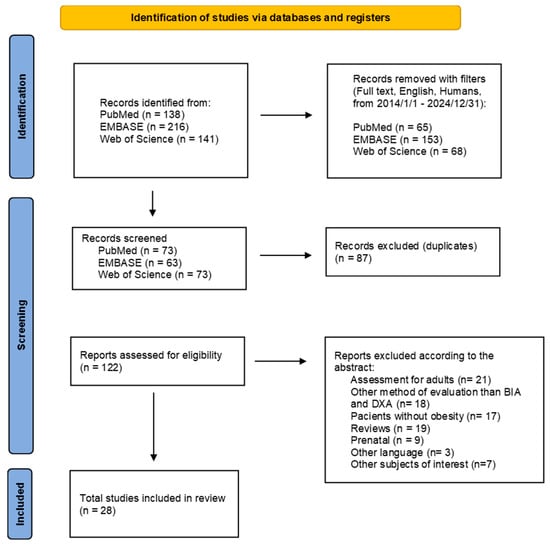
A total of 544 studies were initially identified through the literature search of studies published between 2014 and 2024. After scanning the titles, excluding non-relevant studies and duplicates, and conducting a full-text review, 28 articles met the inclusion criteria. The PRISMA flowchart (Figure 1) details the selection process. Table 1, Table 2, Table 3, Table 4 and Table 5 provide a structured summary of the included studies, grouped according to the specific BIA device manufacturer (Tanita, InBody, SECA, Bodystat, and Quantum). Each table includes study details such as country, sample size, intervention type (if any), the BIA and DXA devices used, key findings, and clinical applicability. This device-based organization system highlights the methodological variability and diagnostic performance differences across technologies, which is essential for interpreting the validity and clinical utility of BIA compared to DXA in pediatric populations.
Figure 1.
PRISMA flowchart, adapted after Page MJ at al. [17]. Abbreviations: BIA—bioelectrical impedance analysis; DXA—dual-energy X-ray absorptiometry.
Table 1.
BIA using Tanita devices.
Table 2.
BIA using InBody devices.
Table 3.
BIA using SECA devices.
Table 4.
BIA using Bodystat Quadscan 4000 device.
Table 5.
BIA using Quantum device.
Various types of articles are included in this review. The type of study design and the statistical significance analysis of the included articles can be seen in Table 6.
Table 6.
Study design and the statistical significance analysis of included articles.
Across the studies, BIA consistently underestimated FM and %BF compared to DXA, notably among overweight and obese individuals, while overestimating the FFM. The mean bias in FM ranged from −2.6 to −9.9%, with the correlation coefficients between these methods being generally high (r = 0.61–0.99), though clinically relevant biases remained.
Clinical utility varied significantly by device. Tanita MC-180MA and SECA devices provided adequate accuracy at a group level but showed limitations for individual assessments. Devices like Tanita BC-418, BC-532, InBody 720, and Quantum III demonstrated significant accuracy issues, particularly with increasing adiposity. Octopolar, multi-frequency devices like InBody 370 were comparatively more precise, particularly in severely obese children, providing clinically acceptable estimates for appendicular lean mass and total body FM. The SKF thicknesses and 4C model equations were determined by researchers or special technicians, and the other methods used built-in machine measurements.
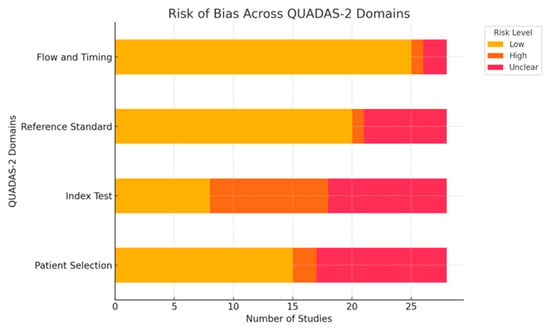
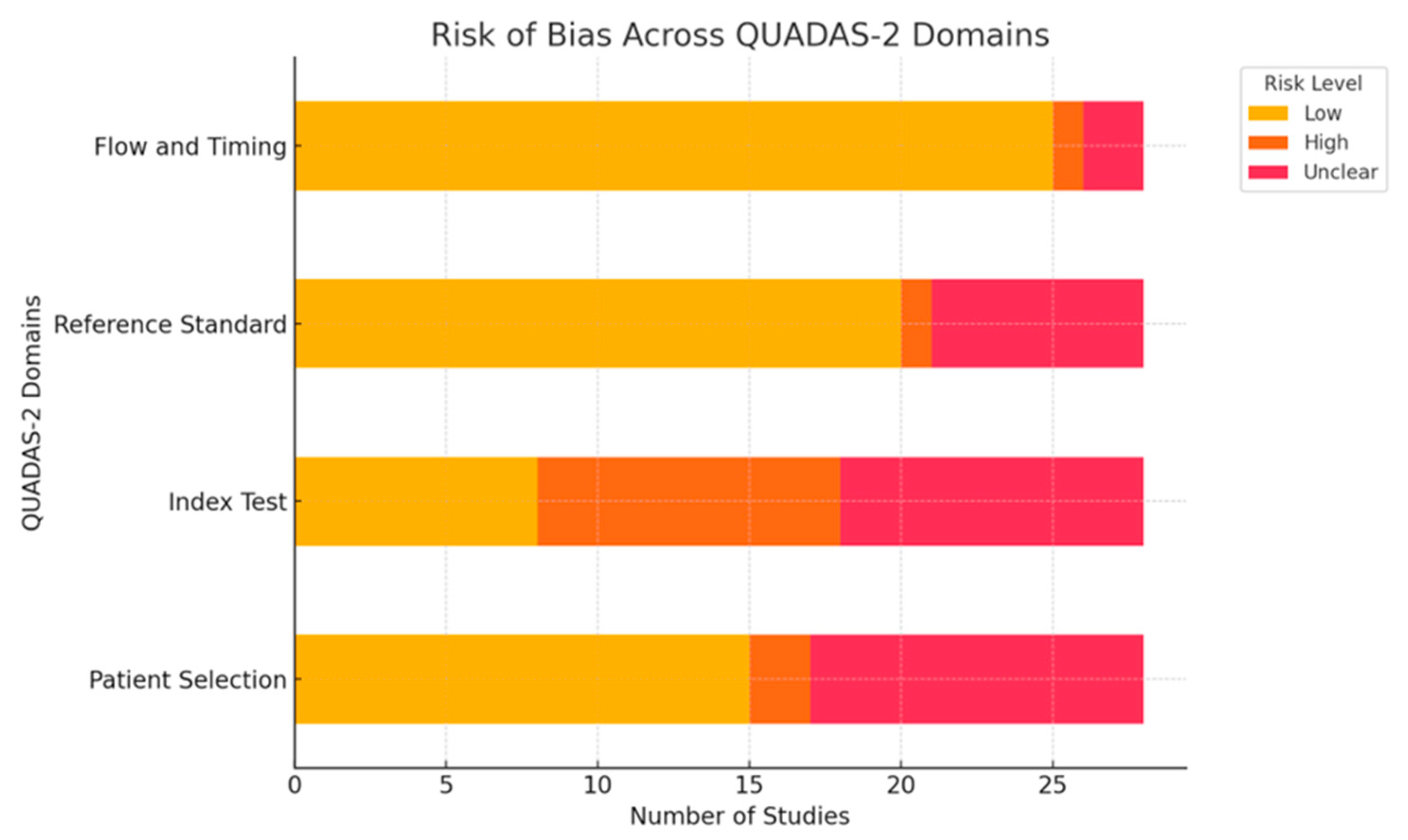
The risk of bias was assessed using the Quality Assessment of Diagnostic Accuracy Studies (QUADAS-2) tool [18]. This tool assessed the four domains for each study (Figure 2): patient selection, index test, reference standard, and flow and timing.
Figure 2.
Risk of bias summary using QUADAS-2.
BIA showed strong correlations with DXA in tracking changes over time, making it useful for longitudinal studies but less reliable for precise individual assessments. Multi-frequency BIA devices demonstrated an improved accuracy over single-frequency models, though hydration status remained a confounding factor.
In the clinical utility of methods, the authors draw attention to the accuracy of the BIA method. The Tanita TBF-310 [21], Tanita BC-418 [22,23,24,26,27,28], Tanita BC-532 [32], InBody 720 [37,38,39], InBody 770-BIA [5], and BIA Quantum [44] tetrapolar bioelectrical impedance analyser and Quantum III [45] devices are considered inaccurate or not valid for clinical or epidemiological use and must be applied with caution in the assessment of children and adolescents with obesity. The Tanita MC-180MA [19] is considered to be a valuable clinical tool to measure BC at the group level, but inaccurate for individual obese adolescents. The Tanita DC-430S MA device [30], BIA SECA mBCA514 (without the handrail method because it is a less accurate method) and SECA-525 [40], the Omron handheld single-frequency tetrapolar device, and InBody 370 [36] are described to be precise in estimating BF% and appendicular lean mass compared to DXA, which makes them very useful in clinics for evaluating BC in children with obesity.
Despite these BIA limitations, some authors consider Tanita SC-240A [20], Tanita BF-689 [9,33], and Bodystat Quadscan 4000 [42,43] as viable alternatives to DXA for measuring BC in obese children. When interpreting individual results, the validity of these methods may vary depending on sex and weight status. However, they can still be regarded as viable alternatives for monitoring changes in adiposity over time and have high specificity for classifying individuals of normal weight and those with obesity.
4. Discussion
In both clinical practice and research, there is a growing demand for practical, precise, and cost-effective tools to assess BC in overweight and obese children and adolescents. Given the high prevalence of childhood obesity worldwide, integrating nutritional medical guidance into screening programs could enhance early detection and preventive strategies [46].
Research indicates that both the BMI and DXA methods have notable drawbacks. DXA remains superior in accuracy, particularly for individual assessments, and is critical for clinical intervention and follow-up. However, due to its cost, limited accessibility, and radiation concerns [47], its routine or repeated use remains impractical in clinical and community settings. Conversely, BIA’s ease-of-use, affordability, and portability make it attractive, especially for large-scale or epidemiological purposes. It has the potential to serve as a valuable clinical tool for group-level assessments [19]. Yet, significant inaccuracies persist, especially among obese children, necessitating a cautious interpretation of BIA results in individual clinical contexts.
Establishing the accuracy of various BIA devices in obese individuals is crucial, as increased adiposity affects tissue hydration and FM determination. In the literature, there is a high correlation between BIA and DXA methods, but the precise estimates significantly vary across devices, BMI categories [37], sex and age groups, groups by hydration status and food intake [5], physical activity levels [31], and the sensitivity and specificity of the methods of assessment.
Kabiri et al. [9] and Butcher et al. [33] both evaluated the Tanita BF-689 device. While Kabiri et al. highlighted its reliability and classification accuracy for overweight/obese children, Butcher et al. specifically confirmed its effectiveness in tracking %BF changes in adolescents aged 12–17. The Tanita BF-689 device demonstrated a high accuracy in classifying adolescents based on %BF, correctly categorizing 79% of participants as healthy, making it a useful tool for both healthcare professionals and parents in monitoring the BC of children and adolescents.
In the majority of studies, DXA is considered the reference method for validating BIA measurements, because it is more sensitive to BC changes with built-in machine measurements [23]. BIA’s accuracy varies due to differences in built-in equations, which rely on impedance measurements that can be influenced by hydration levels, body fat distribution, and muscle mass. Seo et al. reported that as BMI and FM increase, muscle mass (which contains a large amount of water) decreases relatively, affecting the proportion of total body water. This, in turn, influences the accuracy of BIA because the built-in equations of the devices become less reliable [38].
Both the BIA and DXA methods provide valuable information about BC and BF%, which is essential for assessing obesity and monitoring changes in BC within special programs for losing weight and treatment [23,30,33]. They are even used as a screening tool for high-risk cardiometabolic comorbidities in the long term. However, it is crucial to consider the potential limitations and sources of error associated with each method, such as variations in hydration status affecting BIA measurements or radiation exposure with DXA [19,36]. Several studies indicate improvements in BIA accuracy through the development of population-specific predictive equations based on raw impedance data and anthropometric measures [48]. Future advancements should prioritize these customized equations and refine multi-frequency and segmental BIA technologies to improve clinical reliability [49].
A key limitation identified across the included studies is that most BIA devices use proprietary algorithms that are not publicly disclosed. As noted by Campa et al., these “black box” systems prevent users and researchers from knowing which prediction equations are used or whether they have been validated for specific populations, such as children and adolescents with obesity, metabolic syndrome, or dyslipidemia [50,51]. This lack of transparency restricts reproducibility and clinical relevance, particularly in pediatric populations that differ physiologically from adults. It also remains uncertain whether these devices account for pediatric and obesity data specifically in their algorithms, raising questions about how well their outputs apply to these groups. This methodological concern should be clearly acknowledged when comparing BIA and DXA results [36,51].
The limitations of our research include the high level of variability across study designs and the absence of standardized protocols for BIA. Differences in hydration, body composition equations, and device calibration also introduce measurement errors. Future studies should focus on standardizing protocols, developing and validating specific equations for different pediatric obesity subpopulations, and enhancing BIA technologies to improve accuracy and clinical relevance.
While BIA shows promise as a convenient and non-invasive method for obesity assessment, it may not yet be considered the new “standard method” compared to DXA. Although BIA is attractive due to its non-invasive, low-cost, and user-friendly nature, it remains an indirect method, as it estimates BC based on impedance, then interprets the result through assumptions built into its algorithms. Given this limitation, we do not propose BIA as a replacement for DXA. Instead, BIA may serve as a screening or monitoring tool in settings in which DXA is impractical, provided device-specific validation is performed and transparently reported. Healthcare providers should recognize BIA as a viable screening tool but reserve DXA for precise diagnostic evaluations, particularly in intervention studies or clinical settings demanding high accuracy. However, as BIA technology advances and validation studies continue to refine its accuracy, it may increasingly become a preferred method, particularly in settings in which access to DXA is limited. Further research and standardization efforts are needed to determine the role of BIA as a potential new standard method for obesity assessment.
5. Conclusions
Both bioelectrical impedance analysis and dual-energy x-ray absorptiometry have advanced significantly, with improved accuracy, speed, and clinical utility in assessing body composition in children and adolescents. However, their clinical applications differ based on factors such as precision, accessibility, and cost-effectiveness.
The findings of this systematic review suggest that while BIA can serve as a practical and non-invasive tool for estimating body composition in pediatric populations, its accuracy and agreement with DXA vary considerably depending on the specific device used. Therefore, BIA technology cannot be considered as a uniform method. Multi-frequency, segmental BIA devices (e.g., InBody 720 and SECA mBCA) demonstrated a higher level of concordance with DXA measurements compared to single-frequency or foot-to-foot analyzers, which showed greater variability and reduced precision.
Given this methodological heterogeneity, the clinical and research utility of BIA should be evaluated on a device-specific basis. Future research should avoid aggregating BIA data across devices and instead stratify analyses according to device type, frequency spectrum, and the inclusion of pediatric-specific prediction equations. Until cross-device standardization is established, BIA results should be interpreted with caution, guided by the technical characteristics of and validation evidence for the specific device used.
Author Contributions
Conceptualization, L.M.M., L.M.T., I.M. and G.G.; Methodology, L.M.T., I.M., G.G. and L.M.M.; Software, O.I. and L.O.B.; Validation, L.M.M., L.M.T., E.Ț., N.I. and N.R.; Formal analysis, O.I., L.O.B., M.A.D. and I.M.; Investigation, L.M.M. and I.M.; Resources, L.M.M., L.O.B., O.I. and M.A.D.; Data curation, L.M.M., I.M. and E.Ț.; Writing—original draft preparation, L.M.M. and I.M.; Writing—review and editing E.Ț., N.I., N.R. and L.M.T.; Visualization, G.G.; Supervision, E.Ț., N.I. and L.M.T.; Project administration, L.M.M., E.Ț. and L.M.T. All authors have read and agreed to the published version of the manuscript.
Funding
This article received no external funding.
Institutional Review Board Statement
Not applicable.
Informed Consent Statement
Not applicable.
Data Availability Statement
The data used in the study will be available from the corresponding authors upon request. The review does not have a protocol prepared.
Conflicts of Interest
The authors declare no conflicts of interest.
References
- Hampl, S.E.; Hassink, S.G.; Skinner, A.C.; Armstrong, S.C.; Barlow, S.E.; Bolling, C.F.; Avila Edwards, K.C.; Eneli, I.; Hamre, R.; Joseph, M.M.; et al. Clinical Practice Guideline for the Evaluation and Treatment of Children and Adolescents with Obesity. Pediatrics 2023, 151, e2022060640. [Google Scholar] [CrossRef] [PubMed]
- Simmonds, M.; Llewellyn, A.; Owen, C.G.; Woolacott, N. Predicting Adult Obesity from Childhood Obesity: A Systematic Review and Meta-Analysis. Obes. Rev. 2016, 17, 95–107. [Google Scholar] [CrossRef] [Scilit]
- Li, X.; Keown-Stoneman, C.D.G.; Lebovic, G.; Omand, J.A.; Adeli, K.; Hamilton, J.K.; Hanley, A.J.; Mamdani, M.; McCrindle, B.W.; Sievenpiper, J.L.; et al. The Association between Body Mass Index Trajectories and Cardiometabolic Risk in Young Children. Pediatr. Obes. 2020, 15, e12633. [Google Scholar] [CrossRef] [Scilit] [PubMed]
- Daniels, S.R.; Arnett, D.K.; Eckel, R.H.; Gidding, S.S.; Hayman, L.L.; Kumanyika, S.; Robinson, T.N.; Scott, B.J.; St Jeor, S.; Williams, C.L. Overweight in Children and Adolescents: Pathophysiology, Consequences, Prevention, and Treatment. Circulation 2005, 111, 1999–2012. [Google Scholar] [CrossRef] [Scilit]
- Howe, C.A.; Corrigan, R.J.; Djalali, M.; McManaway, C.; Grbcich, A.; Aidoo, G.S. Feasibility of Using Bioelectrical Impedance Analysis for Assessing Youth Weight and Health Status: Preliminary Findings. Int. J. Environ. Res. Public Health 2021, 18, 10094. [Google Scholar] [CrossRef] [Scilit] [PubMed]
- Genton, L.; Hans, D.; Kyle, U.G.; Pichard, C. Dual-Energy X-Ray Absorptiometry and Body Composition: Differences between Devices and Comparison with Reference Methods. Nutrition 2002, 18, 66–70. [Google Scholar] [CrossRef] [Scilit]
- Thibault, R.; Pichard, C. The Evaluation of Body Composition: A Useful Tool for Clinical Practice. Ann. Nutr. Metab. 2012, 60, 6–16. [Google Scholar] [CrossRef] [Scilit]
- Aandstad, A.; Holtberget, K.; Hageberg, R.; Holme, I.; Anderssen, S.A. Validity and Reliability of Bioelectrical Impedance Analysis and Skinfold Thickness in Predicting Body Fat in Military Personnel. Mil. Med. 2014, 179, 208–217. [Google Scholar] [CrossRef] [Scilit]
- Kabiri, L.S.; Hernandez, D.C.; Mitchell, K. Reliability, Validity, and Diagnostic Value of a Pediatric Bioelectrical Impedance Analysis Scale. Child. Obes. 2015, 11, 650–655. [Google Scholar] [CrossRef] [Scilit]
- Orsso, C.E.; Gonzalez, M.C.; Maisch, M.J.; Haqq, A.M.; Prado, C.M. Using Bioelectrical Impedance Analysis in Children and Adolescents: Pressing Issues. Eur. J. Clin. Nutr. 2022, 76, 659–665. [Google Scholar] [CrossRef] [Scilit]
- Verney, J.; Schwartz, C.; Amiche, S.; Pereira, B.; Thivel, D. Comparisons of a Multi-Frequency Bioelectrical Impedance Analysis to the Dual-Energy X-Ray Absorptiometry Scan in Healthy Young Adults Depending on Their Physical Activity Level. J. Hum. Kinet. 2015, 47, 73–80. [Google Scholar] [CrossRef] [Scilit] [PubMed]
- McLester, C.N.; Nickerson, B.S.; Kliszczewicz, B.M.; McLester, J.R. Reliability and Agreement of Various InBody Body Composition Analyzers as Compared to Dual-Energy X-Ray Absorptiometry in Healthy Men and Women. J. Clin. Densitom. 2020, 23, 443–450. [Google Scholar] [CrossRef] [Scilit] [PubMed]
- Ward, L.C. Bioelectrical Impedance Analysis for Body Composition Assessment: Reflections on Accuracy, Clinical Utility, and Standardisation. Eur. J. Clin. Nutr. 2019, 73, 194–199. [Google Scholar] [CrossRef] [Scilit] [PubMed]
- Leahy, S.; O’Neill, C.; Sohun, R.; Jakeman, P. A Comparison of Dual Energy X-Ray Absorptiometry and Bioelectrical Impedance Analysis to Measure Total and Segmental Body Composition in Healthy Young Adults. Eur. J. Appl. Physiol. 2012, 112, 589–595. [Google Scholar] [CrossRef] [Scilit]
- Moore, M.L.; Benavides, M.L.; Dellinger, J.R.; Adamson, B.T.; Tinsley, G.M. Segmental Body Composition Evaluation by Bioelectrical Impedance Analysis and Dual-Energy X-Ray Absorptiometry: Quantifying Agreement between Methods. Clin. Nutr. 2020, 39, 2802–2810. [Google Scholar] [CrossRef] [Scilit]
- Kyle, U.G.; Bosaeus, I.; De Lorenzo, A.D.; Deurenberg, P.; Elia, M.; Gómez, J.M.; Heitmann, B.L.; Kent-Smith, L.; Melchior, J.-C.; Pirlich, M.; et al. Bioelectrical Impedance Analysis—Part I: Review of Principles and Methods. Clin. Nutr. 2004, 23, 1226–1243. [Google Scholar] [CrossRef] [Scilit]
- Page, M.J.; McKenzie, J.E.; Bossuyt, P.M.; Boutron, I.; Hoffmann, T.C.; Mulrow, C.D.; Shamseer, L.; Tetzlaff, J.M.; Akl, E.A.; Brennan, S.E.; et al. The PRISMA 2020 Statement: An Updated Guideline for Reporting Systematic Reviews. BMJ 2021, 372, n71. [Google Scholar] [CrossRef] [Scilit]
- Whiting, P.F.; Rutjes, A.W.S.; Westwood, M.E.; Mallett, S.; Deeks, J.J.; Reitsma, J.B.; Leeflang, M.M.G.; Sterne, J.A.C.; Bossuyt, P.M.M.; QUADAS-2 Group. QUADAS-2: A Revised Tool for the Quality Assessment of Diagnostic Accuracy Studies. Ann. Intern. Med. 2011, 155, 529–536. [Google Scholar] [CrossRef] [Scilit]
- Wan, C.S.; Ward, L.C.; Halim, J.; Gow, M.L.; Ho, M.; Briody, J.N.; Leung, K.; Cowell, C.T.; Garnett, S.P. Bioelectrical Impedance Analysis to Estimate Body Composition, and Change in Adiposity, in Overweight and Obese Adolescents: Comparison with Dual-Energy x-Ray Absorptiometry. BMC Pediatr. 2014, 14, 249. [Google Scholar] [CrossRef] [Scilit]
- de Silva, M.H.A.D.; Hewawasam, R.P.; Lekamwasam, S. Concordance between Body Composition Indices Measured with Dual-Energy X-Ray Absorptiometry and Bioelectrical Impedance Analysis in Obese Children in Sri Lanka. Int. J. Pediatr. 2021, 2021, 6638057. [Google Scholar] [CrossRef] [Scilit]
- Kasvis, P.; Cohen, T.R.; Loiselle, S.-È.; Kim, N.; Hazell, T.J.; Vanstone, C.A.; Rodd, C.; Plourde, H.; Weiler, H.A. Foot-to-Foot Bioelectrical Impedance Accurately Tracks Direction of Adiposity Change in Overweight and Obese 7- to 13-Year-Old Children. Nutr. Res. 2015, 35, 206–213. [Google Scholar] [CrossRef] [Scilit] [PubMed]
- Gutiérrez-Marín, D.; Escribano, J.; Closa-Monasterolo, R.; Ferré, N.; Venables, M.; Singh, P.; Wells, J.C.; Muñoz-Hernando, J.; Zaragoza-Jordana, M.; Gispert-Llauradó, M.; et al. Validation of Bioelectrical Impedance Analysis for Body Composition Assessment in Children with Obesity Aged 8–14y. Clin. Nutr. 2021, 40, 4132–4139. [Google Scholar] [CrossRef] [Scilit] [PubMed]
- Martín-Matillas, M.; Mora-Gonzalez, J.; Migueles, J.H.; Ubago-Guisado, E.; Gracia-Marco, L.; Ortega, F.B. Validity of Slaughter Equations and Bioelectrical Impedance against Dual-Energy X-Ray Absorptiometry in Children. Obesity 2020, 28, 803–812. [Google Scholar] [CrossRef] [Scilit]
- Vásquez, F.; Salazar, G.; Díaz, E.; Lera, L.; Anziani, A.; Burrows, R. Comparison of Body Fat Calculations by Sex and Puberty Status in Obese Schoolchildren Using Two and Four Compartment Body Composition Models. Nutr. Hosp. 2016, 33, 575. [Google Scholar] [CrossRef] [Scilit]
- Wells, J.C.; Fuller, N.J.; Dewit, O.; Fewtrell, M.S.; Elia, M.; Cole, T.J. Four-Component Model of Body Composition in Children: Density and Hydration of Fat-Free Mass and Comparison with Simpler Models. Am. J. Clin. Nutr. 1999, 69, 904–912. [Google Scholar] [CrossRef] [Scilit] [PubMed]
- Meredith-Jones, K.A.; Williams, S.M.; Taylor, R.W. Bioelectrical Impedance as a Measure of Change in Body Composition in Young Children. Pediatr. Obes. 2015, 10, 252–259. [Google Scholar] [CrossRef] [Scilit]
- Luque, V.; Closa-Monasterolo, R.; Rubio-Torrents, C.; Zaragoza-Jordana, M.; Ferré, N.; Gispert-Llauradó, M.; Escribano, J. Bioimpedance in 7-Year-Old Children: Validation by Dual X-Ray Absorptiometry—Part 1: Assessment of Whole Body Composition. Ann. Nutr. Metab. 2014, 64, 113–121. [Google Scholar] [CrossRef] [Scilit]
- Luque, V.; Escribano, J.; Zaragoza-Jordana, M.; Rubio-Torrents, C.; Ferré, N.; Gispert-Llaurado, M.; Closa-Monasterolo, R. Bioimpedance in 7-Year-Old Children: Validation by Dual X-Ray Absorptiometry—Part 2: Assessment of Segmental Composition. Ann. Nutr. Metab. 2014, 64, 144–155. [Google Scholar] [CrossRef] [Scilit]
- Benjaminsen, C.R.; Jørgensen, R.M.; Vestergaard, E.T.; Bruun, J.M. Compared to Dual-Energy X-Ray Absorptiometry, Bioelectrical Impedance Effectively Monitors Longitudinal Changes in Body Composition in Children and Adolescents with Obesity during a Lifestyle Intervention. Nutr. Res. 2024, 133, 1–12. [Google Scholar] [CrossRef] [Scilit]
- Dettlaff-Dunowska, M.; Brzeziński, M.; Zagierska, A.; Borkowska, A.; Zagierski, M.; Szlagatys-Sidorkiewicz, A. Changes in Body Composition and Physical Performance in Children with Excessive Body Weight Participating in an Integrated Weight-Loss Programme. Nutrients 2022, 14, 3647. [Google Scholar] [CrossRef] [Scilit]
- Zembura, M.; Czepczor-Bernat, K.; Dolibog, P.; Dolibog, P.T.; Matusik, P. Skeletal Muscle Mass, Muscle Strength, and Physical Performance in Children and Adolescents with Obesity. Front. Endocrinol. 2023, 14, 1252853. [Google Scholar] [CrossRef] [Scilit] [PubMed]
- Samouda, H.; Langlet, J. Body Fat Assessment in Youth with Overweight or Obesity by an Automated Bioelectrical Impedance Analysis Device, in Comparison with the Dual-Energy x-Ray Absorptiometry: A Cross Sectional Study. BMC Endocr. Disord. 2022, 22, 195. [Google Scholar] [CrossRef] [Scilit] [PubMed]
- Butcher, A.; Kabiri, L.S.; Brewer, W.; Ortiz, A. Criterion Validity and Sensitivity to Change of a Pediatric Bioelectrical Impedance Analysis Scale in Adolescents. Child. Obes. 2019, 15, 142–148. [Google Scholar] [CrossRef] [Scilit] [PubMed]
- Thivel, D.; Verney, J.; Miguet, M.; Masurier, J.; Cardenoux, C.; Lambert, C.; Courteix, D.; Metz, L.; Pereira, B. The Accuracy of Bioelectrical Impedance to Track Body Composition Changes Depends on the Degree of Obesity in Adolescents with Obesity. Nutr. Res. 2018, 54, 60–68. [Google Scholar] [CrossRef] [Scilit]
- Verney, J.; Metz, L.; Chaplais, E.; Cardenoux, C.; Pereira, B.; Thivel, D. Bioelectrical Impedance Is an Accurate Method to Assess Body Composition in Obese but Not Severely Obese Adolescents. Nutr. Res. 2016, 36, 663–670. [Google Scholar] [CrossRef] [Scilit]
- Khan, S.; Xanthakos, S.A.; Hornung, L.; Arce-Clachar, C.; Siegel, R.; Kalkwarf, H.J. Relative Accuracy of Bioelectrical Impedance Analysis for Assessing Body Composition in Children with Severe Obesity. J. Pediatr. Gastroenterol. Nutr. 2020, 70, e129–e135. [Google Scholar] [CrossRef] [Scilit]
- Huang, Y.; Wang, X.; Cheng, H.; Dong, H.; Shan, X.; Zhao, X.; Wang, X.; Xie, X.; Mi, J. Differences in Air Displacement Plethysmography, Bioelectrical Impedance Analysis and Dual-Energy X-Ray Absorptiometry for Estimating Body Composition in Chinese Children and Adolescents. J. Paediatr. Child Health 2023, 59, 470–479. [Google Scholar] [CrossRef] [Scilit]
- Seo, Y.-G.; Kim, J.H.; Kim, Y.; Lim, H.; Ju, Y.-S.; Kang, M.J.; Lee, K.; Lee, H.-J.; Jang, H.B.; Park, S.I.; et al. Validation of Body Composition Using Bioelectrical Impedance Analysis in Children According to the Degree of Obesity. Scand. J. Med. Sci. Sports 2018, 28, 2207–2215. [Google Scholar] [CrossRef] [Scilit]
- Tompuri, T.T.; Jääskeläinen, J.; Lindi, V.; Laaksonen, D.E.; Eloranta, A.-M.; Viitasalo, A.; Laitinen, T.; Lakka, T.A. Adiposity Criteria in Assessing Increased Cardiometabolic Risk in Prepubertal Children. Front. Endocrinol. 2019, 10, 410. [Google Scholar] [CrossRef] [Scilit]
- Lopez-Gonzalez, D.; Wells, J.C.K.; Clark, P. Body Composition Assessment in Mexican Children and Adolescents. Part 2: Cross-Validation of Three Bio-Electrical Impedance Methods against Dual X-Ray Absorptiometry for Total-Body and Regional Body Composition. Nutrients 2022, 14, 965. [Google Scholar] [CrossRef] [Scilit]
- González-Ruíz, K.; Medrano, M.; Correa-Bautista, J.E.; García-Hermoso, A.; Prieto-Benavides, D.H.; Tordecilla-Sanders, A.; Agostinis-Sobrinho, C.; Correa-Rodríguez, M.; Schmidt Rio-Valle, J.; González-Jiménez, E.; et al. Comparison of Bioelectrical Impedance Analysis, Slaughter Skinfold-Thickness Equations, and Dual-Energy X-Ray Absorptiometry for Estimating Body Fat Percentage in Colombian Children and Adolescents with Excess of Adiposity. Nutrients 2018, 10, 1086. [Google Scholar] [CrossRef] [Scilit] [PubMed]
- Noradilah, M.J.; Ang, Y.N.; Kamaruddin, N.A.; Deurenberg, P.; Ismail, M.N.; Poh, B.K. Assessing Body Fat of Children by Skinfold Thickness, Bioelectrical Impedance Analysis, and Dual-Energy X-Ray Absorptiometry: A Validation Study among Malay Children Aged 7 to 11 Years. Asia. Pac. J. Public Health 2016, 28, 74S–84S. [Google Scholar] [CrossRef] [Scilit]
- Visuthranukul, C.; Sirimongkol, P.; Prachansuwan, A.; Pruksananonda, C.; Chomtho, S. Low-Glycemic Index Diet May Improve Insulin Sensitivity in Obese Children. Pediatr. Res. 2015, 78, 567–573. [Google Scholar] [CrossRef] [Scilit]
- Lyra, A.; Bonfitto, A.J.; Barbosa, V.L.P.; Bezerra, A.C.; Longui, C.A.; Monte, O.; Kochi, C. Comparison of Methods for the Measurement of Body Composition in Overweight and Obese Brazilian Children and Adolescents before and after a Lifestyle Modification Program. Ann. Nutr. Metab. 2015, 66, 26–30. [Google Scholar] [CrossRef] [Scilit] [PubMed]
- Ejlerskov, K.T.; Jensen, S.M.; Christensen, L.B.; Ritz, C.; Michaelsen, K.F.; Mølgaard, C. Prediction of Fat-Free Body Mass from Bioelectrical Impedance and Anthropometry among 3-Year-Old Children Using DXA. Sci. Rep. 2014, 4, 3889. [Google Scholar] [CrossRef] [Scilit]
- Trandafir, L.M.; Dodi, G.; Frasinariu, O.; Luca, A.C.; Butnariu, L.I.; Tarca, E.; Moisa, S.M. Tackling Dyslipidemia in Obesity from a Nanotechnology Perspective. Nutrients 2022, 14, 3774. [Google Scholar] [CrossRef] [Scilit]
- Clasey, J.L.; Easley, E.A.; Murphy, M.O.; Kiessling, S.G.; Stromberg, A.; Schadler, A.; Huang, H.; Bauer, J.A. Body Mass Index Percentiles versus Body Composition Assessments: Challenges for Disease Risk Classifications in Children. Front. Pediatr. 2023, 11, 1112920. [Google Scholar] [CrossRef] [Scilit] [PubMed]
- Silva, A.M.; Campa, F.; Stagi, S.; Gobbo, L.A.; Buffa, R.; Toselli, S.; Silva, D.A.S.; Gonçalves, E.M.; Langer, R.D.; Guerra-Júnior, G.; et al. The Bioelectrical Impedance Analysis (BIA) International Database: Aims, Scope, and Call for Data. Eur. J. Clin. Nutr. 2023, 77, 1143–1150. [Google Scholar] [CrossRef] [Scilit]
- Costa, R.F.d.; Masset, K.V.d.S.B.; Silva, A.M.; Cabral, B.G.d.A.T.; Dantas, P.M.S. Development and Cross-Validation of Predictive Equations for Fat-Free Mass and Lean Soft Tissue Mass by Bioelectrical Impedance in Brazilian Women. Eur. J. Clin. Nutr. 2022, 76, 288–296. [Google Scholar] [CrossRef] [Scilit]
- Butnariu, L.I.; Gorduza, E.V.; Țarcă, E.; Pânzaru, M.C.; Popa, S.; Stoleriu, S.; Lupu, V.V.; Lupu, A.; Cojocaru, E.; Trandafir, L.M.; et al. Current Data and New Insights into the Genetic Factors of Atherogenic Dyslipidemia Associated with Metabolic Syndrome. Diagnostics 2023, 13, 2348. [Google Scholar] [CrossRef] [Scilit] [PubMed] [PubMed Central]
- Campa, F.; Coratella, G.; Cerullo, G.; Noriega, Z.; Francisco, R.; Charrier, D.; Irurtia, A.; Lukaski, H.; Silva, A.M.; Paoli, A. High-Standard Predictive Equations for Estimating Body Composition Using Bioelectrical Impedance Analysis: A Systematic Review. J. Transl. Med. 2024, 22, 515. [Google Scholar] [CrossRef] [Scilit] [PubMed]

Disclaimer/Publisher’s Note: The statements, opinions and data contained in all publications are solely those of the individual author(s) and contributor(s) and not of MDPI and/or the editor(s). MDPI and/or the editor(s) disclaim responsibility for any injury to people or property resulting from any ideas, methods, instructions or products referred to in the content. |
© 2025 by the authors. Licensee MDPI, Basel, Switzerland. This article is an open access article distributed under the terms and conditions of the Creative Commons Attribution (CC BY) license (https://creativecommons.org/licenses/by/4.0/).