


Abstract
The Amaryllidaceae family is a rich source of structurally diverse alkaloids with recognized neuroactive and antiparasitic properties. This study provides the first phytochemical and biological characterization of Pyrolirion boliviense and wild Stenomesson miniatum from Bolivia. Alkaloid extracts from bulbs and leaves were analysed by GC–MS and evaluated for acetylcholinesterase (AChE), butyrylcholinesterase (BuChE), and Trypanosoma cruzi inhibitory activities. Thirty-two Amaryllidaceae alkaloids were identified, with P. boliviense exhibiting greater alkaloid diversity (25 compounds) and S. miniatum a higher total alkaloid content (227.86 vs. 138.92 μg Gal/100 mg DW). P. boliviense bulb extracts showed the strongest cholinesterase inhibition (AChE IC50 = 6.07 ± 0.47 μg·mL−1; BuChE IC50 = 30.93 ± 1.17 μg·mL−1), whereas S. miniatum extracts displayed weaker AChE inhibition and no detectable BuChE activity. In anti-T. cruzi assays, bulb extracts were the most active, with S. miniatum showing an IC50 of 0.90 ± 0.15 μg·mL−1 (SI = 20.12) and selective anti-amastigote activity (IC50 = 1.42 ± 0.66 μg·mL−1; SI = 12.77). These findings identify Bolivian Andean Amaryllidaceae as promising sources of bioactive alkaloids with potential applications for Alzheimer’s disease and Chagas disease drug discovery.
1. Introduction
Plant-derived bioactive compounds have historically played a central role in the discovery of novel pharmacologically active agents. More than 50% of the drugs approved in recent decades are derived directly or indirectly from natural products or inspired by natural-product scaffolds [1]. Among these, alkaloids stand out for their chemical diversity and their wide spectrum of biological activities: from analgesic and antiparasitic effects to modulators of the central nervous system, thereby providing a remarkable therapeutic potential [2,3,4,5].
The characteristic alkaloids of the subfamily Amaryllidoideae, known as Amaryllidaceae alkaloids (AAs), are particularly relevant due to their restricted distribution and the complexity and diversity of their chemical structures and variety of biological activities. More than 600 compounds have been identified [2].
Alzheimer’s disease (AD) is a multifactorial neurodegenerative disorder mainly characterized by changes in memory, judgement, behaviour, emotions, and abstract thinking that ultimately interferes with physical control over the body. It is currently affecting 37 million people, and the number is expected to rise to 51 million in 2030 and 90 million in 2050. It is the leading cause of dementia (60–70% of the cases), which constitutes the seventh most common death cause worldwide [6,7].
Galanthamine, a well-known Amaryllidaceae alkaloid, exemplifies the therapeutic potential of phytochemical research on this family and highlights its value as a source of therapeutically relevant natural products. Galanthamine is approved for the palliative treatment of AD since 2002, and it is clinically used in mild to moderate stages of the disorder, owing to its ability to inhibit acetylcholinesterase (AChE), and thereby maintain acetylcholine levels in the brain, which are markedly reduced in patients with AD [8,9,10].
Galanthamine has been isolated from several natural sources, including Galanthus nivalis L. and Leucojum aestivum L. in Bulgaria, Galanthus woronowii Losinsk. in Russia, Ungernia victoris Vved. in Uzbekistan, Lycoris radiata (L’Hérit.) Herb. in China, and daffodils in Central and Western Europe. However, limitations such as unsuccessful cultivation and slow plant regeneration hinder the ability of these sources to meet the growing pharmaceutical demand [11,12]. To reduce dependence on natural sources, galanthamine can also be produced through chemical synthesis, and more potent derivatives have been developed. Nevertheless, the overall yield of the total synthesis of this alkaloid remains too low to be economically viable [11]. Thus, there is a need for new sources of galanthamine, especially in the American continent [13].
Chagas disease (CD), also known as American trypanosomiasis, is an anthropozoonosis caused by the protozoan parasite Trypanosoma cruzi (T. cruzi). Classified as a neglected tropical disease, CD is a complex health condition shaped by social and environmental determinants. Delayed diagnosis and insufficient treatment may lead to severe, life-threatening complications. More than seven million people are estimated to be infected worldwide, with more than 100 million individuals at risk, primarily in endemic regions of the Americas [14]. However, increased migration and urbanization have expanded its global distribution, with cases reported in 44 countries [14]. The World Health Organization recognizes CD as a global public health concern [14,15]. Transmission occurs mainly through contact with feces of T. cruzi-infected triatomine vectors. Infection can also occur through organ transplantation, blood transfusion, or vertical transmission from mother to child, the latter being of increasing relevance, especially in countries where the triatomine vector is absent. The disease progresses through an acute phase, often characterized as asymptomatic or presenting mild nonspecific symptoms, followed by an indeterminate chronic phase that can last for decades. However, 30–40% of infected individuals will progress to a symptomatic chronic stage characterized by cardiac and/or digestive tissue alterations. Moreover, epidemiological evidence suggests that chronic Chagas disease may be associated with cognitive impairment [16]. Only two anti-T. cruzi drugs are currently approved: benznidazole (BNZ) and nifurtimox (NFX) [14]. Both have several limitations, including reduced efficacy during the chronic phase of infection and prolonged treatment regimens frequently associated with adverse events that often lead to treatment discontinuation. Consequently, there is an urgent need for safer and more effective therapeutic options for the management of chronic CD. In this context, natural products represent a promising source for the identification and development of novel lead compounds [17].
South America represents an important center of diversity for Amaryllidaceae, particularly in the Andean region, where numerous endemic and geographically restricted species occur. Phylogenomic studies have clarified evolutionary relationships within Amaryllidoideae and identified distinct Andean lineages with well-defined morphological and biogeographic patterns [18,19]. However, Bolivian Amaryllidaceae remain poorly studied from a phytochemical perspective [18]. Bolivia is recognized as an important center of diversity for the genus Hippeastrum, with 35 recorded species, of which 24 are endemic [20]. Rodriguez-Escobar and coworkers provided the first report on the phytochemical characterization and biological evaluation of Bolivian Amaryllidoideae species [21].
Within this framework, Pyrolirion and Stenomesson belong to distinct tribal lineages and exhibit clearly differentiated morphological characteristics. According to Plants of the World Online [22], Pyrolirion boliviense (Baker) Sealy is endemic and restricted to Bolivia. It has been reported from Andean environments in the Department of La Paz, typically occurring on rocky slopes between approximately 2800 and 3200 m above sea level. The species exhibits erect, actinomorphic flowers with a tubular perianth and a deeply trifid style, consistent with its taxonomic placement. In contrast, Stenomesson miniatum (Herb.) Ravenna is distributed in Peru and western Bolivia and occurs primarily in Andean habitats above 2000 m, reaching elevations near 3500 m [22]. The species is characterized by pendulous, urceolate flowers and exserted stamens, distinguishing it from closely related genera. In Peru, it has been categorized as Vulnerable (VU) under national legislation, reflecting conservation concerns within part of its distribution range.
Despite their botanical relevance, phytochemical investigations of P. boliviense and S. miniatum remain limited compared with those of extensively studied genera such as Hippeastrum. To the best of our knowledge, only two studies describing the phytochemical characterization and evaluation of biological activity within the genus Stenomesson have been reported, both focusing on Ecuadorian species, specifically Stenomesson aurantiacum [23,24]. Only one study has reported the phytochemical characterization and evaluation of the cytotoxic and antibacterial activities of S. miniatum bulbs. However, the bulbs analysed in that study were obtained from a nursery, where environmental conditions differ from those experienced by wild populations [25]. Regarding the genus Pyrolirion, only a single study has been found addressing the phytochemical composition of the species Pyrolirion albicans [26] and no phytochemical or biological studies have been reported for P. boliviense.
Therefore, the present study aims to provide a phytochemical characterization and biological evaluation of P. boliviense and S. miniatum, with the evaluation of the inhibition of AChE and BuChE, and the antiparasitic activity against T. cruzi, contributing to the chemotaxonomic understanding of Amaryllidaceae and to the identification of alkaloid-rich extracts with potential neuroactive and/or antiparasitic properties.
2. Materials and Methods
2.1. Plant Material
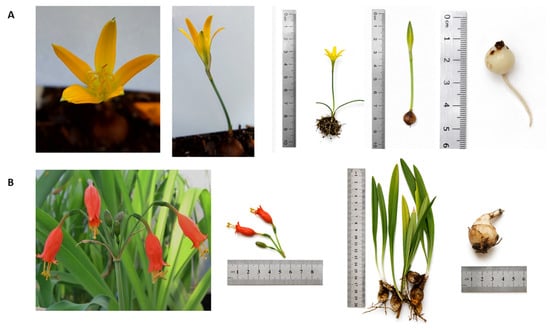
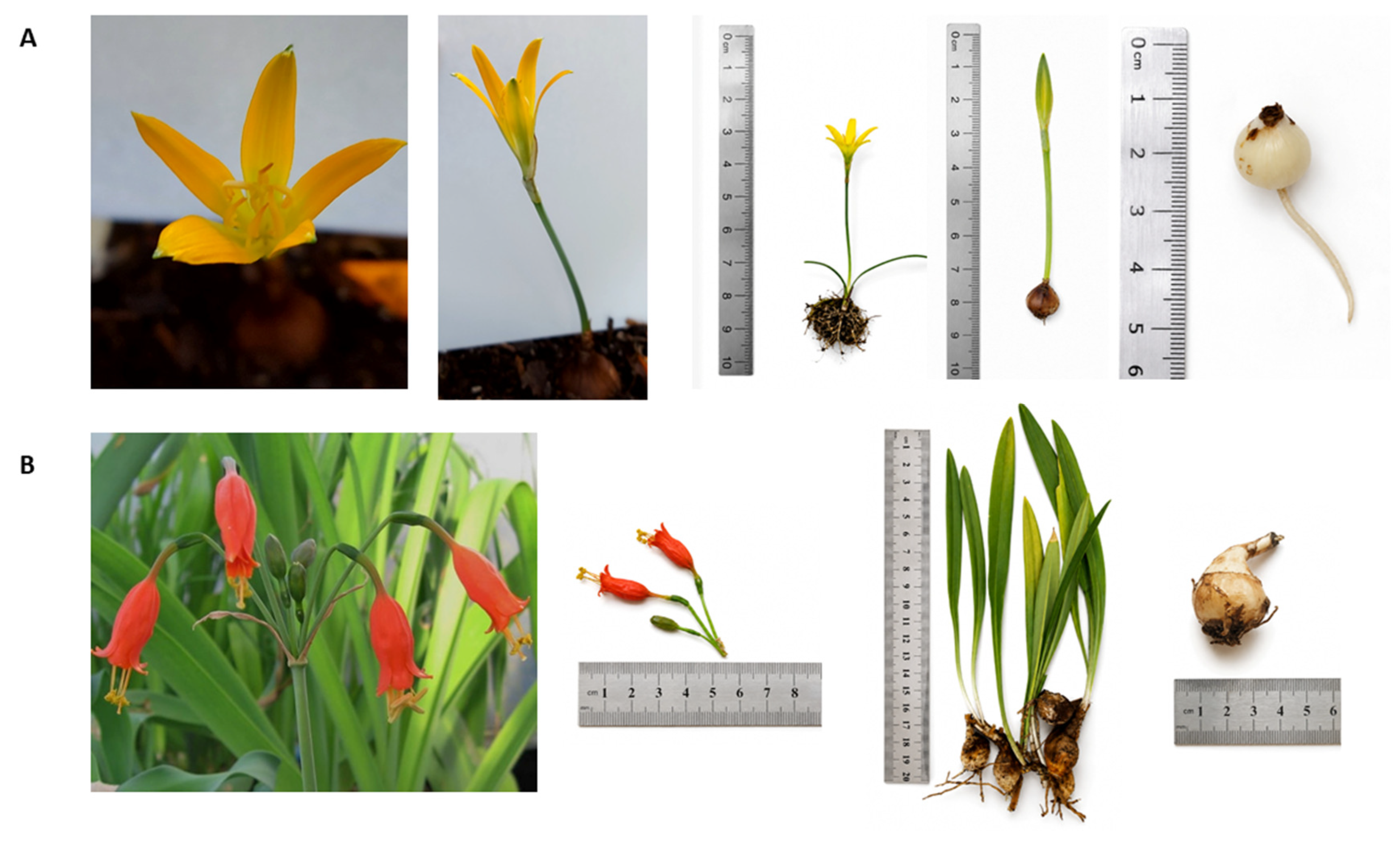
The plant material used in this study corresponded to two Andean species of the Amaryllidaceae family, S. miniatum (Herb.) Ravenna and P. boliviense (Baker) Sealy (Figure 1), collected during the flowering period (February–March 2023) in the region of La Paz, Bolivia, as detailed in Figure 2. Specimens were taxonomically identified and validated by Dr. Alfredo Fuentes (Herbario Nacional de Bolivia–LPB), following the naming standards of Tropicos® and Plants of the World Online (POWO). The reference specimens (vouchers) were deposited at the Herbario Nacional de Bolivia (LPB) as detailed in Table 1.
Figure 1.
Morphological characteristics of P. boliviense (A) and S. miniatum (B) collected in Bolivia. Photographs were taken by M.L. Rodríguez-Escobar.
Figure 2.
Geographic location of the sampling sites of P. boliviense (P) and S. miniatum (S). (A) shows Bolivia within South America. (B) shows the Department of La Paz. (C,D) show the sampling sites at Amor de Dios and Cota Cota.
Table 1.
Botanical and geographical characterization of P. boliviense and S. miniatum specimens collected in the Department of La Paz, Bolivia. The geographical locations correspond to Andean valleys in the Murillo Province (La Paz Department), characterized by temperate semi-humid climate and well-drained soils typical of inter-Andean vegetation zones. AF, Alfredo Fuentes; LPB, Herbario Nacional de Bolivia.
2.2. Alkaloid Extraction
The purified alkaloid extracts were prepared following the protocol reported by [21].
The fresh samples were cut and dried at 40 °C until constant weight, and then pulverized in a stainless-steel blade mill to a homogeneous powder. From each sample, 1 g of dry plant material (bulbs and leaves) was used, which was macerated in HPLC grade methanol (Fisher Scientific, Alcobendas, Spain) (50 mL) at 25 °C for three days, renewing the solvent every 24 h (50 mL/day) to optimize extractive efficiency.
During maceration, samples were subjected to ultrasonic bath treatment (20 min, four times a day) to promote the release of alkaloids. After each treatment, the mixture was filtered and the solvent was removed by evaporation at reduced pressure.
Each extract was acidified with 2% sulfuric acid (Carlo Erba, Rodano, Italy) (v/v; 50 mL) to adjust the pH to 2 and then treated with diethyl ether (Fisher Scientific, Alcobendas, Spain) (3 × 50 mL) to remove neutral compounds. The aqueous phase was alkalized at pH 9–10 with ammonium hydroxide (25%, v/v) (Carlo Erba, Rodano, Italy) and reextracted with ethyl acetate (Fisher Scientific, Alcobendas, Spain) (3 × 50 mL) to obtain the alkaloids.
After evaporation of the solvent, the dry alkaloid extract was used for chemical characterization and biological assays. Extraction yields are reported in Table 2.
Table 2.
Alkaloid extraction yield from bulb and leaf samples of P. boliviense and S. miniatum, calculated as the percentage of alkaloid extract obtained relative to the crude extract.
2.3. GC-MS Analysis
For chromatographic analysis, 2 mg of each alkaloid extract were dissolved in 1 mL of codeine-containing methanol (25 μg·mL−1) as an internal standard. One μL of the mixture was injected into an Agilent 6890N gas chromatograph coupled to an Agilent 5975 mass spectrometer, equipped with a Series 7683B automatic injector (Agilent Technologies, Santa Clara, CA, USA).
A TR-45232 Sapiens-X5MS column (30 m × 0.25 mm × 0.25 μm) was used in splitless mode, with electron impact ionization (70 eV). The temperature program consisted of starting at 100 °C for 12 min, increasing to 180 °C at 15 °C·min−1 (1 min of maintenance), increasing to 300 °C at 5 °C·min−1 and final maintenance for 10 min. The injector and detector temperatures were 250 °C and 280 °C, respectively; carrier gas flow (He): 1 mL·min−1.
2.4. Identification and Quantification of Alkaloids
The identification of the alkaloids in the alkaloid extracts was carried out by comparing the mass spectra and retention indices (RI) obtained with the reference values contained in the library of Amaryllidaceae alkaloids developed by the Natural Products Research Group of the Faculty of Pharmacy of the University of Barcelona, characterized by spectroscopic techniques (1H NMR, 13C NMR, CD, MS and IR) [27].
Chromatograms were processed and spectra deconvoluted using the AMDIS (Automated Mass spectral Deconvolution and Identification System, NIST) software, which allowed the identification of the peaks corresponding to the main and secondary alkaloids in each extract.
The relative quantification of alkaloids was determined using a galanthamine calibration curve (10, 20, 40, 60, 80, and 100 μg·mL−1) with codeine (25 μg·mL−1) as the internal standard. The area of the deconvoluted peaks was used for the relative quantification using Excel 2016 software. It should be noted that this quantification does not represent an absolute concentration values, but a comparative estimate of the relative content of alkaloids between different samples processed under identical experimental conditions, allowing the detection of variations in the chemical profile between plant species and organs to be analysed [21,28,29,30].
2.5. AChE and Butyrylcholinesterase (BuChE) Inhibition Assays
The evaluation of the inhibitory activity of alkaloid extracts on the enzymes AChE and butyrylcholinesterase (BuChE) was carried out following a colorimetric procedure based on the reaction of [31], adapted to microplate and optimized according to [21,32].
The assay is based on the formation of the yellow anion 5-thio-2-nitrobenzoate, generated by the reaction between 5,5′-dithiobis-(2-nitrobenzoic acid) (DTNB) and the hydrolysis product of acetylthiocholine or butyrylthiocholine, in the presence of the corresponding enzymes.
The enzymatic solutions were prepared from Electrophorus electricus AChE and equine serum BuChE (518 U·mL−1), stored at −20 °C until use. The reagents (DTNB, acetylthiocholine iodide (ATCI) and butyrylthiocholine iodide (BTCI) were acquired from Merck (Darmstadt, Germany).
In each assay, 50 μL of the enzyme solution (6.24 U·mL−1) were mixed with 50 μL of the alkaloid extract (PH, PB, SH or SB), previously dissolved in 8 mM phosphate buffer (pH 7.5, with 0.15 M NaCl). The mixture was incubated for 30 min at 25 °C. Subsequently, 100 μL of the substrate solution (DTNB 0.2 mM and ATCI or BTCI in phosphate buffer 0.1 M, pH 7.5) were added.
The formation of the colored complex was monitored at 405 nm using a Labsystem microplate reader (Helsinki, Finland). Residual enzyme activity was expressed as a percentage of the control without inhibitor.
Galanthamine was used as a reference inhibitor, evaluated at concentrations of 0.1–2.0 μg·mL−1 for AChE and 1–15 μg·mL−1 for BuChE, to determine the sensitivity of the assay.
Each sample was analyzed in independent triplicate. The dose-response curves were adjusted using the GraphPad Prism 9 software, obtaining the values of IC50 (mean inhibitory concentration). Results were expressed as mean ± standard deviation (SD). Statistical differences between treatments and positive control were assessed by one-way ANOVA, followed by Dunnett’s test (p < 0.05).
2.6. Host Cells and T. cruzi Cultures
Vero cells (green monkey kidney epithelial cells) and LLC-MK2 (rhesus monkey kidney epithelial cells) were maintained in DMEM (Fisher Scientific, Alcobendas, Spain) supplemented with 10% fetal bovine serum (FBS) (Biowest, Nuaillé, France) and 1% penicillin-streptomycin (Fisher Scientific, Alcobendas, Spain) as previously described [17]. T. cruzi parasites of the Tulahuen strain (DTU VI), genetically modified to express the β-galactosidase enzyme from Escherichia coli, were maintained in culture with LLC-MK2 cells as hosts in DMEM supplemented with 2% FBS and 1% penicillin-streptomycin-glutamine (Fisher Scientific, Alcobendas, Spain) as previously reported [17].
2.7. T. cruzi Growth Inhibition, Vero Cell Toxicity and Anti-Amastigote Assays
The evaluation of the antiparasitic and cytotoxic activity of the alkaloid extracts from P. boliviense and S. miniatum was performed as previously described by [17,33]. All the extracts were previously dissolved in dimethyl sulfoxide (DMSO) (Sigma-Aldrich, St. Louis, MO, USA) and later added to test plates at a starting concentration of 50, 125 or 250 μg·mL−1 and diluted following a ½ dose-response pattern. BNZ, the standard reference drug for CD treatment, was used as positive control of parasite growth inhibition, together with the corresponding positive and negative controls previously described [17].
For the anti-T. cruzi assay, Vero cells and trypomastigote solutions were each adjusted to a concentration of 1 × 10⁶ cells·mL−1 and combined at a 1:1 (v/v) ratio. Subsequently, 100 µL were added per well, yielding 5 × 10⁴ cells of each population (MOI = 1). After incubation for 96 h at 37 °C, chlorophenol red-β-D-galactopyranoside (CPRG) (Santa Cruz Biotechnology, Dallas, TX, USA) was added, and absorbance at 590 nm was measured to quantify β-galactosidase activity as a surrogate marker of parasite growth [17].
For the anti-amastigote assay, 5 × 10⁶ Vero cells were seeded into T-175 flasks and incubated for 24 h to allow monolayer formation. The cultures were subsequently washed with PBS, and purified trypomastigotes were added at 1 × 10⁷ parasites per flask (MOI = 1, considering a Vero cell duplication time of 24 h). After a 18 h incubation, the cell cultures were washed, detached and adjusted to a concentration of 5 × 10⁶ cells·mL−1. This solution was then used to seed 5 × 10⁴ cells per well in a 96-well plate already containing the extracts. These plates were then incubated at 37 °C for 72 h, after which CPRG was added for photometric readout [33].
For the Vero cell toxicity assay, the cells were diluted to 5 × 10⁵ cells·mL−1 and 100 µL were dispensed per well (5 × 10⁴ cells) in a 96-well plate containing the extracts. Following a 96 h incubation at 37 °C, cell viability was determined by quantifying fluorescence after the addition of a resazurin-based reagent (AlamarBlue) (Fisher Scientific, Alcobendas, Spain) [17].
Absorbance and fluorescence values were normalized to the positive growth controls. TC50 (half maximal toxicity concentration) and IC50 (half maximal inhibitory concentration for T. cruzi growth) values were determined as previously described [17]. The selectivity index (SI) was defined as the ratio between the TC50 and IC50, with a SI > 10 indicating selectivity towards the parasite over mammalian host cells.
All experiments were performed triplicate (n = 3), with variance expressed as mean ± standard deviation (SD).
3. Results and Discussion
3.1. Identification and Quantification of Bioactive Compounds
The alkaloids identified and quantified in P. boliviense and S. miniatum species are detailed in Table 3.
Table 3.
Alkaloid profile and individual alkaloid concentration values of P. boliviese and S. miniatum classified according to skeleton types proposed by [9]. Values are expressed in µg Gal/100 mg of dry weight (DW). PH, P. boliviense leaves; PB, P. boliviense bulbs; SH, S. miniatum leaves; SB, S. miniatum bulbs.
A total of 32 alkaloids were identified across the Bolivian species studied, with 25 detected in P. boliviense and 18 in S. miniatum, indicating a greater alkaloid diversity in P. boliviense. However, the total alkaloid content was higher in S. miniatum (227.86 µg Gal/100 mg DW) than in P. boliviense (138.92 µg Gal/100 mg DW), primarily due to the markedly elevated concentration of homolycorine in leaf samples (SH) (92.09 µg Gal/100 mg DW). The identified alkaloids were classified into different structural types according to [2]: lycorine-, homolycorine-, galanthindole-, crinine/haemanthamine-, narciclasine-, pretazettine-, montanine-, galanthamine-, and ismine-type alkaloids, as well as other alkaloid types.
The tissue-specific distribution of alkaloids differed between species. In P. boliviense, alkaloid accumulation was higher in bulbs (80.67 µg Gal/100 mg DW), whereas in S. miniatum, leaves exhibited the highest alkaloid content (159.50 µg Gal/100 mg DW).
S. miniatum is characterized by a markedly higher accumulation of homolycorine-type alkaloids compared to P. boliviense. The amount of homolycorine is high in leaves (SH) (92.09 µg Gal/100 mg DW), representing the most abundant structural group in the entire analysis. S. miniatum is also characterized by a notable amount of pretazettine-type alkaloids (42.57 µg Gal/100 mg DW), which are almost missing in P. boliviense. This group of alkaloids is dominated by a notable amount of tazettine in leaves (SH) (24.03 µg Gal/100 mg DW). S. miniatum also shows an important amount of crinine-haemanthamine-type alkaloids (38.55 µg Gal/100 mg DW) such as vittatine/crinine and haemanthamine with values ranging from 4.32 µg Gal/100 mg DW of haemanthamine to 5.69 µg Gal/100 mg DW of vittatine/crinine in SH. In this species, leaves (SH) also show the most diversity of crinine/haemanthamine-type alkaloids.
In contrast, P. boliviense shows comparatively lower values for these groups but exhibits a broader quantitative distribution across multiple structural types. The alkaloid profile of P. boliviense alkaloid is dominated by galanthamine-type alkaloids (34.63 µg Gal/100 mg DW), specially for the high amount of galanthamine (9.33 µg Gal/100 mg DW) in leaves (PH), and lycorine-type compounds (32.26 µg Gal/100 mg DW), with lycorine and 11,12-dehydroanhydrolycorine as the most abundant alkaloids (5.82 and 5.26 µg Gal/100 mg DW in PH, respectively). P. boliviense also contained appreciable amounts of alkaloids belonging to other structural types (24.03 µg Gal/100 mg DW), a group which is absent in S. miniatum, and basically represented by tyramine and demethylmesembrenol (5.64 and 5.31 µg Gal/100 mg DW in PH respectively). Finally, similarly to S. miniatum, P. boliviense also exhibited a diverse array of crinine/haemanthamine-type alkaloids with a total of 20.01 µg Gal/100 mg DW. This group was predominantly represented by 8-O-demethylmaritidine (5.27 µg Gal/100 mg DW in PH samples) and haemanthamine (5.24 µg Gal/100 mg DW in PH samples).
To date, only one other species of the genus Pyrolirion has been phytochemically investigated, Pyrolirion albicans from Peru [26]. Similar to P. albicans, P. boliviense shows a greater diversity of alkaloids in the bulb tissue. However, whereas P. boliviense is characterized by the presence of galanthamine-type alkaloids and a very low abundance of montanine-type compounds, P. albicans exhibits an alkaloid profile dominated by montanine-type alkaloids, particularly montanine and pancracine [26].
To our knowledge, only three phytochemical studies have been conducted on the genus Stenomesson. Two of them were focused on the same species, Stenomesson aurantiacum from Ecuador [23,24]. In the first study, samples were collected at Cuicocha Lake (Ecuador) [23], whereas in the second study samples were collected in Loja Province (Ecuador) [24]. The two studies reported different alkaloid profiles: [23] described a composition characterized by a particularly high abundance of haemanthamine, followed by tazettine, while Acosta [24] reported high levels of 11-hydroxyvittatine and galanthamine. The alkaloid profile of S. miniatum reported in the present study (Table 3) is characterized by a predominance of homolycorine, followed by tazettine. The relatively high abundance of tazettine is consistent with previous reports for S. aurantiacum [23]. Lianza [25] evaluated the alkaloid profile of bulb extracts from nursery-grown S. miniatum. In that study, several alkaloids were identified but not quantified. Among them, tazettine was detected, which is consistent with the results of the present study. However, homolycorine, found in high abundance in the present study, was not reported. These differences may be attributed to variations in analytical methodology, as well as to differences in the plant tissues analysed and in the origin of the plant material. For example, environmental conditions are known to play an important role in the synthesis and distribution of Amaryllidaceae alkaloids among plant tissues [34].
3.2. AChE and BuChE Inhibition Assays
The inhibitory activity of the alkaloid extracts from P. boliviense and S. miniatum is presented in Table 4.
Table 4.
AChE and BuChE inhibitory activity of Bolivian species alkaloid extracts. Activity is expressed as the average of the values of IC50 (μg·mL−1) with standard deviations (SD). “NA” indicates that there is no inhibitory activity for the specific enzyme in the corresponding species. Galantamine (GAL) was included as a positive control. PH, P. boliviense leaves; PB, P. boliviense bulbs; SH, S. miniatum leaves; SB, S. miniatum bulbs.
Samples of P. boliviense showed markedly stronger inhibitory activity against AChE and BuChE than those of S. miniatum, with AChE IC50 values ranging from 6.07 to 24.86 μg·mL−1 and from 32.93 to 49.46 μg·mL−1, respectively.
In addition, BuChE inhibitory activity was detected only in P. boliviense, with an IC50 value of 30.93 μg·mL−1. From a pharmacological perspective, this BuChE-selective activity observed in P. boliviense is particularly relevant. Selective inhibition of BuChE has been associated with improved efficacy in increasing ACh levels, as BuChE is responsible for 40–90% of ACh metabolism in the later stages of AD, whereas under normal conditions it accounts for approximately 20% [4,35].
Although both species showed AChE inhibitory activity, clear quantitative differences were observed between plant organs. Bulb extracts (PB and SB) exhibited stronger inhibition (AChE IC50 values of 6.07 and 32.97 μg·mL−1, respectively) than leaf extracts (PH and SH; AChE IC50 values of 24.86 and 49.46 μg·mL−1, respectively).
Bulb extracts of P. boliviense (PB) exhibited the strongest cholinesterase inhibitory activity, with IC50 values of 6.07 μg/mL for AChE and 30.93 μg/mL for BuChE, respectively. Inhibitory activity was considerably lower in the leaf extract (PH) (IC50 of 24.86 μg/mL) and in S. miniatum extracts (SH and SB) (IC50 of 49.46 and 32.93 μg/mL, respectively). The strong AChE and BuChE inhibitory activity of PB extract correlates with alkaloid composition. This extract contains several galanthamine-type alkaloids including galanthamine, N-demethylgalanthamine, narwedine and 3-O-acetylgalanthamine, which are almost absent in S. miniatum extracts. Interestingly, the total content of galanthamine-type alkaloids was higher in PH (20.34 µg Gal/100 mg) than in PB (14.29 µg Gal/100 mg). Both P. boliviense extracts contained galanthamine. However, PH, which exhibited weaker cholinesterase inhibitory activity, contained approximately twice the galanthamine content of PB. This observation may be explained by the fact that several other galanthamine-type alkaloids have been reported to exhibit cholinesterase inhibitory activity, in some cases even greater than that of galanthamine [13,32,36]. Notably, PB contains 3-O-acetylgalanthamine, a galanthamine-type alkaloid absent in PH. Although no reports describing its individual cholinesterase inhibitory activity have been found in the literature, molecular docking studies have identified it as a promising ligand for AChE, exhibiting strong binding affinities toward five different AChE binding sites, in some cases even exceeding those reported for galanthamine [29]. Furthermore, this alkaloid was reported exclusively in N. obsoletus extracts in a study assessing the AChE and BuChE inhibitory activity of ten Narcissus species, where N. obsoletus showed the strongest inhibition of both enzymes [37].
Lycorine-type alkaloids have also been reported to exhibit AChE inhibitory activity [32,38]. These alkaloids are particularly abundant in PB and are almost absent in PH and in S. miniatum extracts. Therefore, the high content of this group of compounds in PB may contribute to its elevated inhibitory activity. In addition, 1-O-acetyllycorine, detected only in PB, has been reported to inhibit AChE more strongly than galanthamine [38], which may further contribute to the high inhibitory activity observed for PB.
3.3. T. cruzi Growth Inhibition Activity
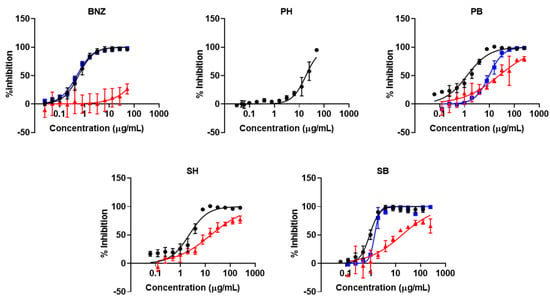
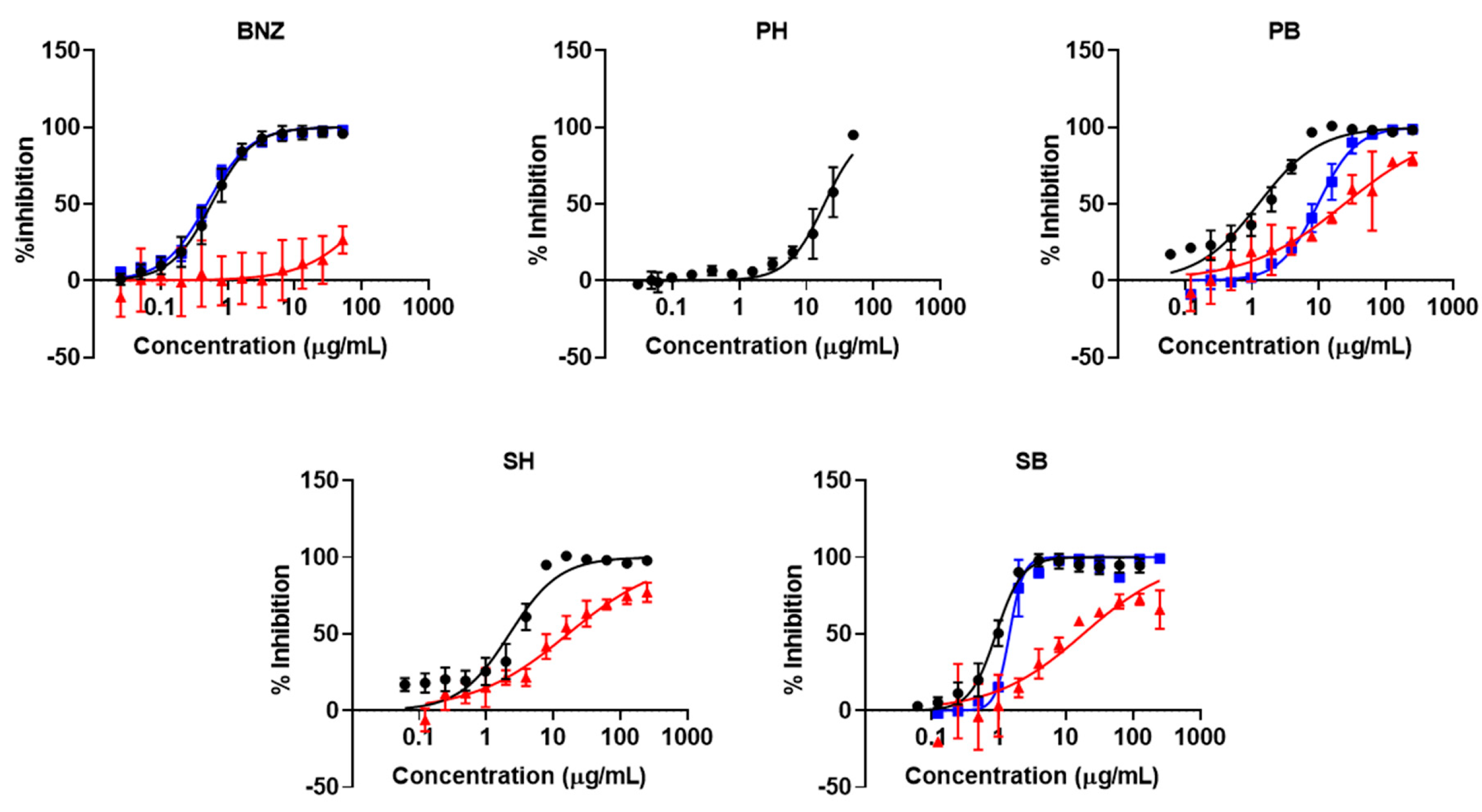
Results corresponding to the evaluation of the anti-T. cruzi activity of alkaloid extracts from P. boliviense and S. miniatum are summarised in Table 5. Dose-response curves of anti-T. cruzi activity, vero cell toxicity and anti-amastigote activity are shown in Figure 3.
Table 5.
In vitro anti-T. cruzi activity of alkaloid extracts from P. boliviense and S. miniatum against T. cruzi and cytotoxicity on Vero cells. PH, P. boliviense leaves; PB, P. boliviense bulbs; SH, S. miniatum leaves; SB, S. miniatum bulbs; NT, Not Tested. BNZ was used as a positive control. BNZ* values are expressed as µM.
Figure 3.
Dose-response curves of P. boliviense and S. miniatum extracts. Anti-T. cruzi activity is represented by black circles, Vero cell toxicity by red triangles and anti-amastigote activity by blue squares.
P. boliviense leaves (PH) were considered inactive due to having an IC50 value > 5 × BNZ IC50. Although S. miniatum leaves (SH) showed a low IC50 (2.22 ± 1.03 μg·mL−1), the SI was <10 indicating significant host cell toxicity and the lack of a specific anti-T. cruzi response. Therefore, leaf extracts (PH and SH) were discarded from further progression. In comparison, bulb extracts of both species (PB and SB) exhibited the highest anti-T. cruzi activity. S. miniatum (SB) showed an IC50 of 0.90 ± 0.15 μg·mL−1 with an SI of 20.12, while P. boliviense (PB) had an IC50 of 1.25 ± 0.51 μg·mL−1 and a SI of 19.11. Then, when evaluated against the replicative amastigote forms, only the SB extract exhibited selective activity, displaying an IC50 of 1.42 μg·mL−1 and a SI of 12.77.
With respect to the alkaloid composition of SB, several of the identified alkaloids (homolycorine, crinine, 8-O-demethylmaritidine, crinamine, haemanthamine, tazettine, epimacronine, and galanthamine) have previously been reported as inactive against T. cruzi [17,39]. Notably, among the alkaloids detected across the extracts, only haemanthidine (identified exclusively in Pyrolirium extracts) was reported to exhibit activity against the parasite [39].
Among the alkaloids that have not yet been evaluated against T. cruzi, particular attention should be given to incartine, 11,12-dehydroanhydrolycorine, nerinine, galanthindole, trisphaeridine, and O-methyltazettine. In order to rationalize the selective activity of SB against amastigote forms, comparison with the alkaloid profile of PB provides useful insight. This comparison reveals a relatively high abundance of nerinine, as well as the exclusive presence of incartine and O-methyltazettine in the SB extract.
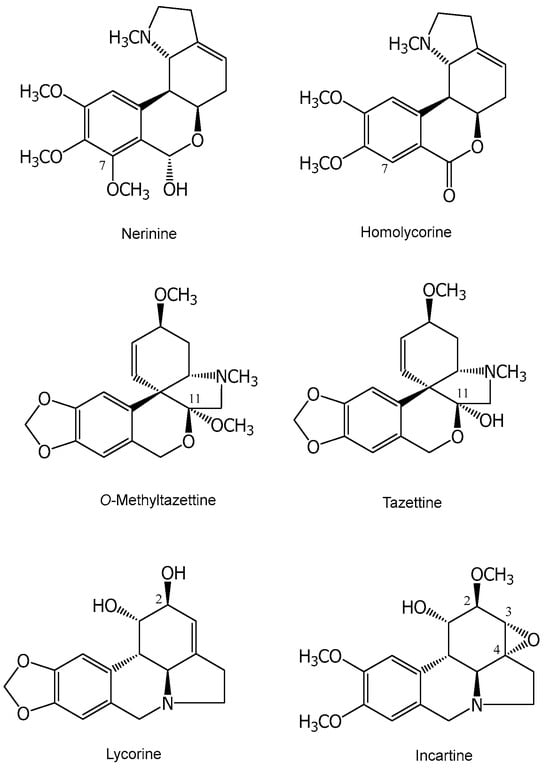
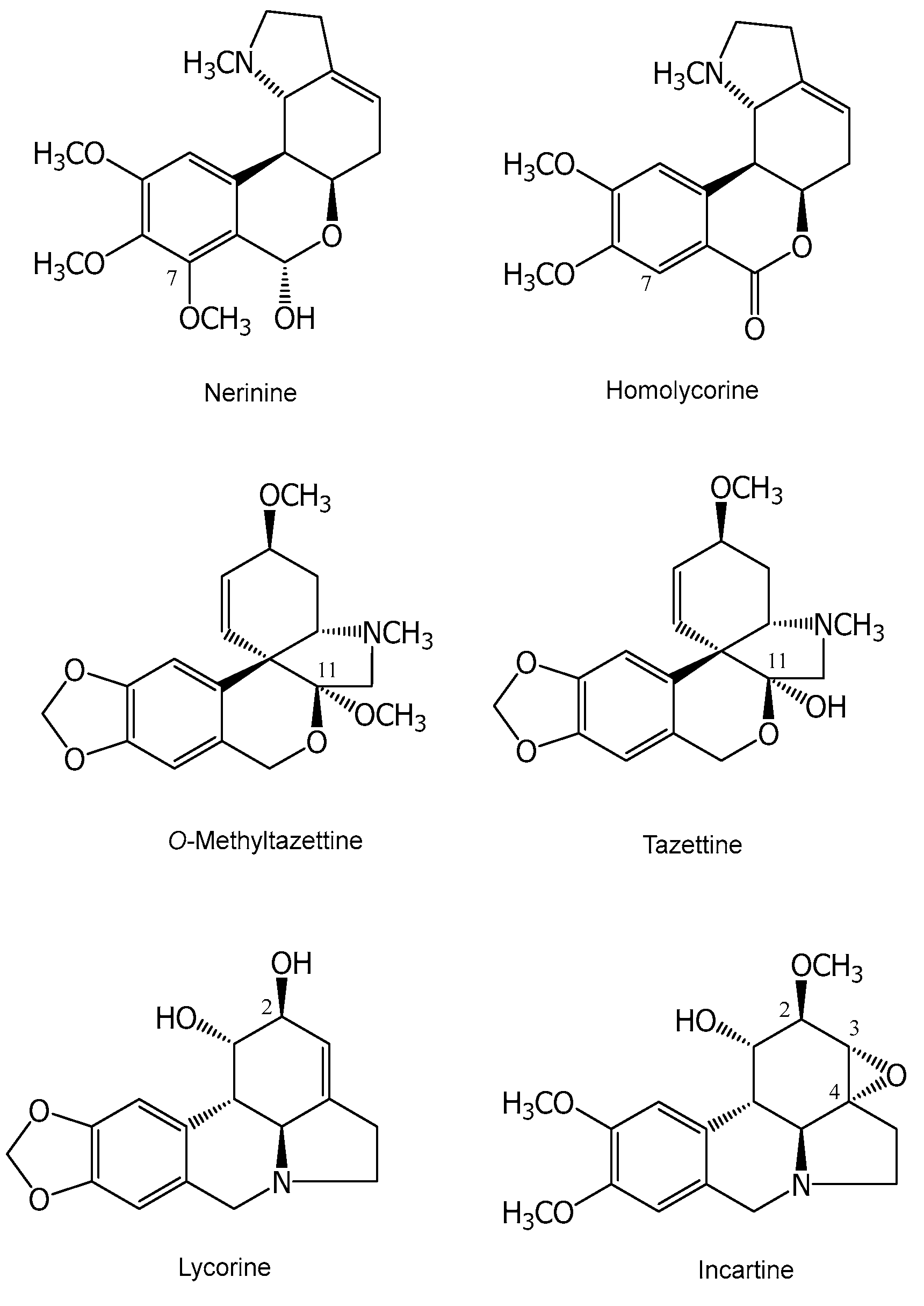
Nerinine, a homolycorine-type alkaloid present in extracts PB and SB, is structurally related to the previously reported inactive compound homolycorine [39], differing mainly by the presence of a methoxy group at the C7 position (Figure 4). It is noteworthy that candimine, another homolycorine-type alkaloid that also contains a methoxy group at C7, displayed selective activity against the amastigote stage [40]. Therefore, it would be interesting to investigate whether this substituent difference could explain the activity observed.
Figure 4.
Structures of nerinine, homolycorine, O-methyltazettine, tazettine, lycorine and incartine.
Similarly, O-methyltazettine which is present in active extract SB differs from tazettine in the addition of a methoxy group at C11 (Figure 4). Tazettine has been also previously reported as inactive against T. cruzi [17]. The contribution of methoxy substituents to the activity of several compounds against T. cruzi and other trypanosomatids, including T. brucei and Leishmania mexicana, has been documented [41,42]. Hence, the presence of this structural group could be contributing to binding to a hydrophobic active site of the target protein, while also improving steric complementarity and optimizing orientation.
Incartine, detected in the active extract SB, differs structurally from lycorine by the presence of a methoxy group at C-2 and an epoxy ring at C3–C4 and by the presence of methoxy groups at C-8 and C-9 instead of a methylenedioxy group. (Figure 4). While lycorine has been reported to exhibit potent antiparasitic activity (IC50 = 0.70 µM), its pronounced cytotoxicity toward Vero cells results in a low SI (SI = 7.44) in our assay [17]. Therefore, it would be interesting to assess whether these structural differences could reduce cytotoxicity towards Vero cells while maintaining or enhancing anti-T. cruzi activity. In any case, a possible synergistic effect between alkaloids should also be considered.
4. Conclusions
The present study provides the first phytochemical and biological characterization of P. boliviense and wild populations of S. miniatum from Bolivia. A total of 32 Amaryllidaceae alkaloids were identified by GC–MS analysis, revealing marked interspecific and tissue-specific differences in alkaloid composition and distribution.
Both species exhibited inhibitory activity against AChE. P. boliviense samples were more potent than S. miniatum extracts and furthermore demonstrated selective inhibition of BuChE, which is of special pharmacological interest considering the increasing role of BuChE in advanced stages of Alzheimer’s disease.
Although leaf samples of both species resulted inactive in T. cruzi inhibition, bulb extracts showed anti-T. cruzi activity and particularly S. miniatum bulbs demonstrated selective activity against the replicative amastigote forms. Regarding alkaloid structures of active extracts, nerinine, incartine and O-methyltazettine could be responsible for the anti-amastigote activity of SB extract.
These findings highlight the chemical diversity and pharmacological potential of Bolivian Amaryllidoideae species, underscoring their potential for drug discovery and the development of functional foods. Furthermore, this research provides innovative parasite management strategies, extending its relevance beyond basic science. In addition, these results expand current knowledge of Andean genera such as Hippeastrum, Clinanthus, and Rauhia, contribute to the chemotaxonomic understanding of the genera Stenomesson and Pyrolirion, and highlight their importance as natural sources of lead molecules for neurodegenerative and neglected tropical diseases.
Author Contributions
Conceptualization, L.T.-C., J.B., L.R.T. and. M.L.R.-E.; methodology, M.L.R.-E., L.R.T., A.F.F., C.M., V.S.R., J.C.G.-F. and N.M.-P.; software, M.L.R.-E., L.R.T. and L.T.-C.; validation, L.R.T. and L.T.-C.; formal analysis, M.L.R.-E., L.T.-C., V.S.R., J.C.G.-F. and N.M.-P.; research, M.L.R.-E., L.T.-C., V.S.R., J.C.G.-F., N.M.-P. and J.A.-P.; resources, M.L.R.-E., A.F.F., C.M. and J.A.-P.; data curation, M.L.R.-E., L.R.T. and L.T.-C.; drafting: preparation of the original draft, M.L.R.-E., L.R.T., L.T.-C.,V.S.R., J.C.G.-F., N.M.-P. and J.A.-P.; writing: revision and editing, M.L.R.-E., L.R.T. and L.T.-C.; visualization, M.L.R.-E., L.R.T. and L.T.-C.; supervision, L.R.T., L.T.-C., J.C.G.-F., N.M.-P. and J.A.-P.; project management, J.B.; Acquisition of funds, L.R.T., L.T.-C., J.B., and J.A.-P. Author J.B. passed away prior to the publication of this manuscript. All other authors have read and agreed to the published version of the manuscript.
Funding
Proyectos de Generación de Conocimiento 2024, Ministerio de Ciencia e Innovación, PID2024-161774OB-I00.
Institutional Review Board Statement
Not applicable.
Informed Consent Statement
Not applicable.
Data Availability Statement
The original contributions presented in this study are included in the article. Further inquiries can be directed to the corresponding authors.
Acknowledgments
Ibero-American Program of Science and Technology for Development (CYTED, 223RT0140). The authors are grateful for the support and provision of resources from the “National Herbarium of Bolivia (LPB)”. The authors L.R.T., J.B. and L.T.-C. (Natural Products and Plant Biotechnology Research Group 2021-SGR-00693 of the University of Barcelona) would like to thank the CCiTUB of the University of Barcelona for its technical support. The authors V.S.R., J.C.G.-F., N.M.-P. and J.A.-P. acknowledge the support from the Grant [CEX2023–0001290-S] funded by MCIN/AEI/10.13039/501100011033, and support from the Generalitat de Catalunya through the CERCA Program.
Conflicts of Interest
The authors declare no conflict of interest.
Abbreviations
The following abbreviations are used in this manuscript:
| AA | Amaryllidaceae alkaloids |
| AD | Alzheimer’s disease |
| AChE | Acetylcholinesterase |
| BuChE | Butyrylcholinesterase |
| AA | Alkaloids of Amaryllidaceae |
| CD | Chagas disease |
| FBS | Fetal bovine serum |
| DMSO | Dimethyl sulfoxide |
| MOI | Multiplicity of infection |
| CPRG | Chlorophenol red-β-D-galactopyranoside |
References
- Newman, D.J.; Cragg, G.M. Natural products as sources of new drugs over the nearly four decades from 01/1981 to 09/2019. J. Nat. Prod. 2020, 83, 770–803. [Google Scholar] [CrossRef] [Scilit] [PubMed]
- Berkov, S.; Osorio, E.; Viladomat, F.; Bastida, J. Chemodiversity, chemotaxonomy and chemoecology of Amaryllidaceae alkaloids. In The Alkaloids: Chemistry and Biology; Knölker, H.-J., Ed.; Elsevier: Amsterdam, The Netherlands, 2020; Volume 83, pp. 113–185. [Google Scholar] [CrossRef] [Scilit] [PubMed]
- Heinrich, M.; Mah, J.; Amirkia, V. Alkaloids used as medicines: Structural phytochemistry meets biodiversity—An update and forward look. Molecules 2021, 26, 1836. [Google Scholar] [CrossRef] [Scilit] [PubMed]
- Cahlíková, L.; Vrabec, R.; Pidaný, F.; Peřinová, R.; Maafi, N.; Mamun, A.A.; Ritomská, A.; Wijaya, V.; Blunden, G. Recent progress on biological activity of Amaryllidaceae and further isoquinoline alkaloids in connection with Alzheimer’s Disease. Molecules 2021, 26, 5240. [Google Scholar] [CrossRef] [Scilit] [PubMed]
- Lin, G.D.; Vishwakarma, P.; Smith, P.N.; Li, R.W. The occurrence and bioactivities of Amaryllidaceae alkaloids from plants: A taxonomy-guided genera-wide review. Plants 2025, 14, 1935. [Google Scholar] [CrossRef] [Scilit] [PubMed]
- Gauthier, S.; Rosa-Neto, P.; Morais, J.A.; Webster, C. World Alzheimer Report 2021: Journey Through the Diagnosis of Dementia; Alzheimer’s Disease International: London, UK, 2021. [Google Scholar]
- World Health Organization. Dementia. 2021. Available online: https://www.who.int/news-room/fact-sheets/detail/dementia (accessed on 20 February 2026).
- Hager, K.; Baseman, A.S.; Nye, J.S.; Brashear, H.R.; Han, J.; Sano, M.; Davis, B.; Richards, H.M. Effects of galantamine in a 2-year, randomized, placebo-controlled study in Alzheimer’s disease. Neuropsychiatr. Dis. Treat. 2014, 10, 391–401. [Google Scholar] [CrossRef] [Scilit] [PubMed]
- Jiang, D.; Yang, X.; Li, M.; Wang, Y.; Wang, Y. Efficacy and safety of galantamine treatment for patients with Alzheimer’s disease: A meta-analysis of randomized controlled trials. J. Neural. Transm. 2015, 122, 1157–1166. [Google Scholar] [CrossRef] [Scilit] [PubMed]
- Hampel, H.; Mesulam, M.M.; Cuello, A.C.; Farlow, M.R.; Giacobini, E.; Grossberg, G.T.; Khachaturian, A.S.; Vergallo, A.; Cavedo, E.; Snyder, P.J.; et al. The cholinergic system in the pathophysiology and treatment of Alzheimer’s disease. Brain 2018, 141, 1917–1933. [Google Scholar] [CrossRef] [Scilit] [PubMed]
- Moraes, R.M. Galanthamine production from Narcissus: Agronomic and related considerations. In Narcissus and Daffodil. The Genus Narcissus; Hanks, G.R., Ed.; Taylor & Francis: London, UK, 2002; pp. 273–285. [Google Scholar]
- Berkov, S.; Georgieva, L.; Kondakova, V.; Atanassov, A.; Viladomat, F.; Bastida, J.; Codina, C. Plant sources of galanthamine: Phytochemical and biotechnological aspects. Biotechnol. Biotechnol. Equip. 2009, 23, 1170–1176. [Google Scholar] [CrossRef] [Scilit]
- Torras-Claveria, L.; Berkov, S.; Codina, C.; Viladomat, F.; Bastida, J. Daffodils as potential crops of galanthamine. Assessment of more than 100 ornamental varieties for their alkaloid content and acetylcholinesterase inhibitory activity. Ind. Crops Prod. 2013, 43, 237–244. [Google Scholar] [CrossRef] [Scilit]
- World Health Organization. Chagas Disease (Also Known as American Trypanosomiasis). 2025. Available online: https://www.who.int/news-room/fact-sheets/detail/chagas-disease-(american-trypanosomiasis) (accessed on 24 February 2026).
- Lidani, K.C.F.; Andrade, F.A.; Bavia, L.; Damasceno, F.S.; Beltrame, M.H.; Messias-Reason, I.J.; Sandri, T.L. Chagas Disease: From Discovery to a Worldwide Health Problem. Front. Public Health 2019, 7, 166. [Google Scholar] [CrossRef] [Scilit] [PubMed]
- Lima-Costa, M.F.; Castro-Costa, E.; Uchôa, E.; Firmo, J.; Ribeiro, A.L.P.; Ferri, C.P.; Prince, M. A Population-based study of the association between Trypanosoma cruzi infection and cognitive impairment in old age (The Bambuí Study). Neuroepidemiology 2009, 32, 122–128. [Google Scholar] [CrossRef] [Scilit] [PubMed]
- Martínez-Peinado, N.; Cortes-Serra, N.; Torras-Claveria, L.; Pinazo, M.J.; Gascon, J.; Bastida, J.; Alonso-Padilla, J. Amaryllidaceae alkaloids with anti-Trypanosoma cruzi activity. Parasites Vectors 2020, 13, 299. [Google Scholar] [CrossRef] [Scilit] [PubMed]
- Meerow, A.W.; Gardner, E.M.; Nakamura, K. Phylogenomics of the Andean tetraploid clade of the American Amaryllidaceae (Subfamily Amaryllidoideae): Unlocking a polyploid generic radiation abetted by continental geodynamics. Front. Plant Sci. 2020, 11, 582422. [Google Scholar] [CrossRef] [Scilit] [PubMed]
- Evidente, A. Advances on the Amaryllidaceae alkaloids collected in South Africa, Andean South America and the Mediterranean basin. Molecules 2023, 28, 4055. [Google Scholar] [CrossRef] [Scilit] [PubMed]
- Meerow, A.W.; Snijman, D.A. Amaryllidaceae. In Flowering Plants: Monocotyledons; Kubitzki, K., Ed.; Springer: Berlin/Heidelberg, Germany, 1998; Volume 3, pp. 83–110. [Google Scholar]
- Rodríguez-Escobar, M.L.; Lara, R.F.; Atahuachi, M.; Fuentes, A.F.; Maldonado, C.; Bastida, J.; Tallini, L.R.; Torras-Claveria, L. Alkaloid profile characterisation and bioactivity evaluation of Bolivian Hippeastrum species (Amaryllidaceae) as cholinesterase inhibitors. Life 2025, 15, 719. [Google Scholar] [CrossRef] [Scilit] [PubMed]
- POWO (Plants of the World Online). Pyrolirion boliviense (Baker) Sealy; Stenomesson miniatum (Herb.) Ravenna. Royal Botanic Gardens, Kew. 2024. Available online: https://powo.science.kew.org/ (accessed on 28 April 2026).
- Acosta, K.; Pigni, N.; Oleas, N.; Bastida, J. Identification of the alkaloids of Stenomesson aurantiacum (kunth) Herb., an Amaryllidaceae species from the Ecuadorian Andes. PharmacologyOnLine 2014, 3, 178–183. [Google Scholar]
- Tallini, L.R.; Acosta León, K.; Chamorro, R.; Osorio, E.H.; Bastida, J.; Jost, L.; Oleas, N.H. Alkaloid Profiling and Anti-Cholinesterase Potential of Three Different Genera of Amaryllidaceae Collected in Ecuador: Urceolina Rchb., Clinanthus Herb. and Stenomesson Herb. Life 2024, 14, 924. [Google Scholar] [CrossRef] [Scilit] [PubMed]
- Lianza, M.; Fimognari, C.; Nuzillard, J.M.; Poli, F.; Renault, J.H.; Bonvicini, F.; Greco, G.; Turrini, E. Phytochemical characterization and biological activities of Stenomesson miniatum bulb extract, a medicinal plant of the Andes. Plant Biosyst. 2024, 158, 182–189. [Google Scholar] [CrossRef] [Scilit]
- Huaylla, H.; Llalla, O.; Torras-Claveria, L.; Bastida, J. Alkaloid profile in Pyrolirion albicans Herb. (Amaryllidaceae), a Peruvian endemic species. S. Afr. J. Bot. 2021, 136, 76–80. [Google Scholar] [CrossRef] [Scilit]
- Berkov, S.; Viladomat, F.; Codina, C.; Suárez, S.; Ravelo, A.; Bastida, J. GC-MS of amaryllidaceous galanthamine-type alkaloids. J. Mass Spectrom. 2012, 47, 1065–1073. [Google Scholar] [CrossRef] [Scilit] [PubMed]
- Torras-Claveria, L.; Berkov, S.; Codina, C.; Viladomat, F.; Bastida, J. Metabolomic analysis of bioactive Amaryllidaceae alkaloids of ornamental varieties of Narcissus by GC-MS combined with k-means cluster analysis. Ind. Crops Prod. 2014, 56, 211–222. [Google Scholar] [CrossRef] [Scilit]
- Tallini, R.L.; Osorio, E.H.; Berkov, S.; Torras-Claveria, L.; Rodríguez-Escobar, M.L.; Viladomat, F.; Bastida, J. Chemical survey of three species of the genus Rauhia Traub. (Amaryllidaceae). Plants 2022, 11, 3549. [Google Scholar] [CrossRef] [Scilit] [PubMed]
- Rodríguez-Escobar, M.L.; Tallini, L.R.; Lisa-Molina, J.; Berkov, S.; Viladomat, F.; Meerow, A.; Bastida, J.; Torras-Claveria, L. Chemical and Biological Aspects of Different Species of the Genus Clinanthus Herb. (Amaryllidaceae) from South America. Molecules 2023, 28, 5408. [Google Scholar] [CrossRef] [Scilit] [PubMed]
- Ellman, G.L.; Courtney, K.D.; Andres, V.; Featherstone, R.M. A new and rapid colorimetric determination of acetylcholinesterase activity. Biochem. Pharmacol. 1961, 7, 88–90. [Google Scholar] [CrossRef] [Scilit] [PubMed]
- López, S.; Bastida, J.; Viladomat, F.; Codina, C. Acetylcholinesterase inhibitory activity of some Amaryllidaceae alkaloids and Narcissus extracts. Life Sci. 2002, 71, 2521–2529. [Google Scholar] [CrossRef] [Scilit] [PubMed]
- Martinez-Peinado, N.; Martori, C.; Cortes-Serra, N.; Sherman, J.; Rodriguez, A.; Gascon, J.; Alberola, J.; Pinazo, M.J.; Rodriguez-Cortes, A.; Alonso-Padilla, J. Anti-Trypanosoma cruzi activity of metabolism modifier compounds. Int. J. Mol. Sci. 2021, 12, 688. [Google Scholar] [CrossRef] [Scilit] [PubMed]
- Bastida, J.; Lavilla, R.; Viladomat, F. Chemical and biological aspects of Narcissus alkaloids. In The Alkaloids: Chemistry and Biology; Cordell, G.A., Ed.; Elsevier: Amsterdam, The Netherlands, 2006; Volume 63, pp. 87–179. [Google Scholar] [CrossRef] [Scilit] [PubMed]
- Gambardella, M.D.; Wang, Y.; Pang, J. The selectivity of butyrylcholinesterase inhibitors revisited. Molecules 2025, 30, 4201. [Google Scholar] [CrossRef] [Scilit] [PubMed]
- Bores, G.M.; Huger, F.P.; Petko, W.; Mutlib, A.E.; Camacho, F.; Rush, D.K.; Selk, D.E.; Wolf, V.; Kosley, R.W.; Davis, L.; et al. Pharmacological evaluation of novel Alzheimer’s disease therapeutics: Acetylcholinesterase inhibitors related to galanthamine. J. Pharmacol. Exp. Ther. 1996, 277, 728–738. [Google Scholar] [CrossRef] [Scilit]
- Lisa-Molina, J.; Gómez-Murillo, P.; Arrelano-Martín, I.; Jiménez, C.; Rodríguez-Escobar, M.L.; Tallini, L.R.; Viladomat, F.; Torras-Claveria, L.; Bastida, J. Alkaloid profile in wild autumn-flowering daffodils and their acetylcholinesterase inhibitory activity. Molecules 2023, 28, 1239. [Google Scholar] [CrossRef] [Scilit] [PubMed]
- Elgorashi, E.E.; Malan, S.F.; Stafford, G.I.; van Staden, J. Quantitative structure–activity relationship studies on acetylcholinesterase enzyme inhibitory effects of Amaryllidaceae alkaloids. S. Afr. J. Bot. 2006, 72, 224–231. [Google Scholar] [CrossRef] [Scilit]
- Nair, J.J.; van Staden, J. Antiprotozoal alkaloid principles of the plant family Amaryllidaceae. Bioorg. Med. Chem. Lett. 2019, 15, 126642. [Google Scholar] [CrossRef] [Scilit] [PubMed]
- Ortiz, J.E.; Piñeiro, M.; Martinez-Peinado, N.; Barrera, P.; Sosa, M.; Bastida, J.; Alonso-Padilla, J.; Ferensin, G.E. Candimine from Hippeastrum escoipense (Amaryllidaceae): Anti-Trypanosoma cruzi activity and synergistic effect with benznidazole. Phytomedicine 2023, 114, 154788. [Google Scholar] [CrossRef] [Scilit] [PubMed]
- Izumi, E.; Ueda-Nakamura, T.; Dias Filho, B.P.; Veiga Júnior, V.F.; Nakamura, C.V. Natural products and Chagas’ disease: A review of plant compounds studied for activity against Trypanosoma cruzi. Nat. Prod. Rep. 2011, 28, 809–823. [Google Scholar] [CrossRef] [Scilit] [PubMed]
- Alotaibi, A.; Ebiloma, G.U.; Williams, R.; Alfayez, I.A.; Natto, M.J.; Alenezi, S.; Siheri, W.; AlQarni, M.; Igoli, J.O.; Fearnley, J.; et al. Activity of compounds from temperate propolis against Trypanosoma brucei and Leishmania mexicana. Molecules 2021, 26, 3912. [Google Scholar] [CrossRef] [Scilit] [PubMed]

Disclaimer/Publisher’s Note: The statements, opinions and data contained in all publications are solely those of the individual author(s) and contributor(s) and not of MDPI and/or the editor(s). MDPI and/or the editor(s) disclaim responsibility for any injury to people or property resulting from any ideas, methods, instructions or products referred to in the content. |
© 2026 by the authors. Licensee MDPI, Basel, Switzerland. This article is an open access article distributed under the terms and conditions of the Creative Commons Attribution (CC BY) license.