


Abstract
Psychiatric conditions, such as depression, anxiety, bipolar disorder, and schizophrenia, are increasingly recognized as significant risk factors for cardiovascular disease (CVD). This review systematically analyzes evidence from various databases to provide a comprehensive understanding of the impact of psychiatric illnesses on the incidence, management, and prognosis of CVD. Key findings suggest a bidirectional relationship between psychiatric disorders and CVD, indicating that mental health conditions can predispose individuals to CVD, while CVD can exacerbate or trigger psychiatric symptoms. The review explores the underlying mechanisms of these associations, including behavioral factors, stress responses, and medication side effects. It also examines the challenges in managing CVD patients with comorbid psychiatric conditions, emphasizing the importance for integrated care approaches. This review underscores the necessity of considering mental health as an integral component of cardiovascular care and calls for further research to develop tailored management strategies for these complex conditions, ultimately aiming to improve patient outcomes and quality of life. This comprehensive analysis provides valuable insights for future investigations and guides clinicians in optimizing care for patients with both psychiatric and cardiovascular conditions.
1. Introduction
Cardiovascular diseases (CVDs) are the main cause of death in the U.S. and worldwide, with coronary heart disease (CHD) being the most common type of CVD. Angina and myocardial infarction (MI) are two manifestations of CHD, and MI is the principal cause of death from CHD [1]. The main pathophysiological mechanism of CHD is the accumulation of a waxy substance, known as atheromatous plaque (or atheroma), in the heart’s arteries, which compromises coronary circulation. The presence of the plaque reduces blood flow and increases the probability of a clot forming, leading to artery blockage and resulting in myocardial infarction (MI). The development of CHD is a complex process influenced by various factors, including genetic predisposition, family history of CHD, smoking, sedentary lifestyle, stress, older age, male gender, diabetes, obesity, and dyslipidemia [2].
In this complex scenario, recent evidence has showed a strong correlation between CVD and mental illnesses, suggesting the need for additional research. Mental illness and psychological pain are significant contributors to the global burden of diseases, with over 300 million people worldwide suffering from depression, which is expected to become the leading cause of disability in 2030. According to Organization for Economic Co-operation and Development (OECD) data, at least 84 million people in the EU suffered from mental illnesses before the COVID-19 pandemic, with 1 in 6 people in the EU (17.3%) affected. Anxiety and depression were the most common mental illnesses, followed by disorders related to alcohol and drug use. A total of 25 million individuals experienced anxiety disorders (5.4% of the total EU population), 21 million people suffered from depressive disorders (4.5% of the total EU population), and 11 million individuals were affected by related disorders to the use of alcohol and drugs (2.4%) [3]. According to WHO estimates, this situation has worsened on a worldwide level. A Eurobarometer survey conducted in June 2023 revealed that almost 1 in 2 people (46% of the total EU population) had experienced emotional or psychosocial distress, such as symptoms of depression or anxiety, in the previous 12 months [4].
Given the distribution and prevalence of psychiatric disorders in the global population, their higher prevalence in CHD patients, and mental disease being a risk factor for CHD, recent investigations have placed greater emphasis on exploring the correlation between these two health conditions [2].
For example, acute coronary syndromes (ACS) and major depressive disorders are recognized as important factors in the development and worsening of each other’s clinical course [5]. Major Depressive Disorder (MDD) is one of the most common comorbidities among individuals with medical diseases, with a point prevalence of over 10% or even 20%, not to mention patients who have subclinical depressive symptoms, which may be even more. Treating depression, as well as other psychiatric diseases, alongside medical condition should be considered as a primary intervention, because of the reduced quality of life and poorer prognosis that result from the under-treatment of mental illnesses [6].
Indeed, clinical depression among patients with myocardial infarction has been associated with reduced adherence to prescribed lifestyle changes and decreased compliance with medical treatments [7]. Post-stroke depression can hide or delay patients’ progress in rehabilitation, extending hospital admissions, thereby adding to the economic burden of the disease. Despite this, depression is still under-recognized, undertreated, and often considered as a consequence of cardiovascular diseases, rather than a risk factor.
In 2008, the American Heart Association issued an advisory for screening for depression in patients with coronary heart disease, but early reports on proposed screening protocols showed poor implementation [8]. Nonetheless, identifying signs of depression in post-acute myocardial infarction (AMI) patients offers an opportunity to improve overall medical care and address a significant health concern. Studies such as SADHEART and ENRICHD suggest that selective serotonin-reuptake inhibitors are not only safe but also effective in treating depression in AMI patients [9,10]. In addition to drug treatment, patients post-ACS require cardiological rehabilitation in order to enhance physical performance and reduce the risk of future adverse cardiological events [11].
Schizophrenia is another psychiatric disorder associated with worsened outcomes when comorbid with acute coronary syndrome [12]. It is a psychiatric condition characterized by delusions, disorganized speech, hallucinations, and impaired executive functioning, affecting approximately 1% of the world’s population and ranking as one of the top 10 causes of global disability [13]. Individuals suffering from schizophrenia are at a higher risk of developing cardiovascular diseases (CVD) compared to those without mental health issues. This heightened risk is attributed to a higher prevalence of CVD risk factors such as obesity, metabolic disorders, diabetes, and smoking [11,13].
Patients affected by schizophrenia and acute myocardial infarction are at a higher risk of all-cause mortality compared to those without schizophrenia. Additionally, it has been observed that schizophrenic patients with AMI may have lower rates of revascularization procedures compared to those without schizophrenia. This suggests that individuals suffering from schizophrenia and AMI could face limited access to medical care, particularly procedures like percutaneous coronary intervention (PCI) or coronary artery bypass graft (CABG), which are recognized as the most effective methods for coronary revascularization in cases of blocked coronary arteries [14].
A consistent trend of higher mortality rates has been described in association with First-Generation Antipsychotics (FGAs) compared to Second-Generation Antipsychotics (SGAs). The differences in mortality rates may be partly attributed to occurrences such as stroke, hip fracture, acute myocardial infarction, and ventricular arrhythmia [15]. It is also well known that corrected QT interval (QTc) prolongation is one of the possible complications in patients with schizophrenia who are taking antipsychotics, which can lead to malignant cardiac arrhythmia [16]. Other drugs that can increase cardiovascular adverse events in older people are stimulants, which are commonly prescribed in the treatment of attention deficit hyperactivity disorder (ADHD). The mechanisms through which they contribute to this are increases in heart rate and blood pressure, vasospasms caused by circulating catecholamines, and by prolonging the QT interval [17].
Psychopathological mechanisms are related to the presence of cardiac risk factors and the development of cardiovascular diseases. The objective of this article is to explore the correlations between mental disorders and CHD with the aim of preventing and treating both effectively.
2. Materials and Methods
This work was designed as an umbrella review (i.e., overview of systematic reviews) following established recommendations for evidence synthesis [18]. Specifically, we looked for systematic reviews on the interplay between psychiatric and cardiovascular disease limiting our search to PubMed, using the following string: https://pubmed.ncbi.nlm.nih.gov/?term=%28psychiat*+OR+depress*+OR+schizophr*+OR+%28mood+AND+disord*%29%29+AND+myocardial+AND+infarction&filter=pubt.systematicreview&sort=date&size=200 (accessed on 1 September 2023). We restricted our search to studies published up to 1 September 2023. Citations were initially screened at the title/abstract level. Subsequently, full texts were obtained for potentially relevant articles. Salient features of the included reviews and corresponding original studies were extracted when applicable. Review quality was appraised using the Oxman–Guyatt index [18]. Quantitative data were summarized using the median (minimum–maximum) or count (%), as appropriate. Notably, given the design features of our umbrella review (i.e., the focus on aggregate data only), no study- or patient-level analysis was conducted.
3. Results
From a total of 156 screened titles, we eventually included 49 systematic reviews (Table 1 and Table 2). They were published between 2004 and 2023, including a total of 1221 studies (range: 5; 122) and a total of 48,842,606 patients (range: 280; 13,115,911). A meta-analysis was conducted in 22 (46%) of systematic reviews.
The main findings of these overviews are detailed in Table 3, and their main limitations in Table S1. First, there was a significant relationship between psychiatric disorders such as depression, anxiety, and schizophrenia and cardiovascular diseases, showing substantial patterns of comorbidity [19,20,21,22,23,24,25,26,27,28,29,30]. Most systematic reviews indicated that patients with depressive and anxiety disorders were at increased risk of myocardial infarction and stroke [19,22,26,31,32,33,34,35,36]. Similarly, schizophrenia was associated with higher post-acute coronary syndrome mortality and complications [28,35].
The effect of psychiatric medications on cardiovascular health varied significantly. For example, while antidepressants are generally considered safe, their impact on cardiovascular outcomes has shown mixed results [37,38,39,40,41]. Some studies suggested that there is no significant association between ADHD medications and cardiovascular events, while others have reported potential cardiovascular risks associated with the use of antipsychotic [23]. Psychological interventions, such as cognitive-behavioral therapy and psychoeducation, have shown promise in reducing symptoms of depression and potentially improving cardiovascular health [29,36,42,43,44,45,46,47,48,49,50,51,52,53,54,55,56,57,58,59,60,61,62,63,64,65,66,67]. Pharmacological treatments, such as antidepressants in post-acute coronary syndrome patients, have been found to reduce depressive symptoms without significantly impacting mortality but there have been favorable trends for reductions in hospital readmissions [31,32,34,37]. Furthermore, psychiatric conditions have been shown to meaningfully affect mortality and treatment outcomes in cardiovascular patients. Studies consistently have demonstrated that patients with severe mental illnesses received less aggressive treatment following cardiac events and had higher mortality rates as a result [66].
Socio-demographic factors such as marital status and a history of child abuse have clearly been shown to affect cardiovascular outcomes in psychiatric patients [21]. Specifically, married or partnered individuals reported better functional outcomes post-myocardial infarction, and a history of child abuse is associated with an increased risk of coronary heart disease in adulthood [20]. Therefore, it is important to identify and manage risk factors for cardiovascular disease in psychiatric patients to prevent adverse outcomes. Depression is a common issue following acute coronary syndrome and often remains undertreated, leading to higher morbidity and increased hospital readmissions. The cardiac rehabilitation and proactive management of depressive symptoms have clearly demonstrated to play significant roles in reducing these risks and improving patient outcomes. Psychosocial stressors, emotional and cognitive reactions to life events, and overall quality of life significantly impacted the cardiovascular health of individuals with psychiatric disorders. For instance, major cardiac event survivors appeared at significant risk of developing post-traumatic stress symptoms, which can affect their long-term recovery and quality of life [30,36].
Table 1.
Description of included studies with an explicit cardiovascular focus.
Table 2.
Description of included studies without an explicit cardiovascular focus.
Table 3.
Outcomes, main findings, and limitations of included studies.
4. Discussion
The brain–heart axis is an intra- and bidirectional connection between the central nervous system and cardiovascular system. The relationship between psychiatric disease and cardiovascular disease has been a topic of great interest in the medical community for many years. It is well established that individuals with psychiatric disorders, such as depression, anxiety, and bipolar disorder, are at increased risk of developing cardiovascular disease. This relationship is complex and multifaceted, involving a combination of biological, psychological, and social factors. Understanding the impact of psychiatric disease on the incidence, management, and outlook of cardiovascular disease is critical for improving patient outcomes and reducing healthcare costs.
The underlying mechanisms behind this association are not yet fully understood, but several theories have been proposed. One possible explanation is that psychiatric disorders and cardiovascular disease share common risk factors, such as smoking, sedentary lifestyle, and poor diet. Additionally, chronic stress and inflammation, which are often present in psychiatric disorders, have been linked to the development of cardiovascular disease. The presence of a psychiatric disorder can complicate the management of cardiovascular disease in several ways. For example, individuals with depression may be less likely to adhere to treatment regimens, engage in healthy behaviors, and follow up with healthcare providers. This can result in the suboptimal control of cardiovascular risk factors, such as high blood pressure and high cholesterol, leading to worsened outcomes. The detection and management of risk factors for cardiovascular disease in psychiatric patients result crucial for prevention.
This umbrella review contributes to demonstrating that the existing link between psychiatric disorders and CVDs deserves considerable attention [68]. The increased risk of cardiovascular disease associated with mental illness can be considered multifactorial and can be attributed to several and complex pathways, with the possible implication of biological, behavioral, psychological, and genetic mechanisms [2]. Our findings confirm the frequent comorbidity between psychiatric disorders such as depression, anxiety, schizophrenia and CVDs, with consequential increased risk of major adverse events, complications, and mortality. There is also evidence that depression, anxiety, and post-traumatic stress disorder (PTSD) can develop after cardiac events.
Mental health treatment has as a significant impact on outcomes in patients with CVDs, in terms of reduced hospitalizations, emergency department visits, and even improved survival [69,70], although there is some evidence for potential cardiovascular risks associated with psychotropic drugs, particularly antipsychotics (cardiac arrhythmias, tachycardia, and QT interval prolongation). Recent studies corroborate the attitude that selective-serotonin reuptake inhibitors (SSRIs) are well-tolerated agents, but research regarding the association between SSRIs and cardiovascular adverse events is still controversial [71,72]. These data suggest that clinicians should carefully consider the cardiovascular risk of psychotropic drugs, choose the appropriate type and dose of psychotropic drugs in patients with CVDs, and should constantly monitor the progress of treatment.
Psychosocial stressors, emotional and cognitive reactions to life events, and the overall quality of life are key factors in determining the cardiovascular health of individuals suffering from psychiatric disorders. Patients with mental health disorders are at greater risk of adopting behaviors such as smoking, inactive lifestyle, or failure to take prescribed medications, thus increasing the probability of experiencing a heart disease event. Unhealthy behaviors, social stress, and poor social support contribute both to worsening the progress of psychiatric diseases and to increasing the morbidity and mortality rates in patients with heart disease [73], creating a vitious circle that is detrimental to psychiatric and cardiologic outcomes and response to treatments.
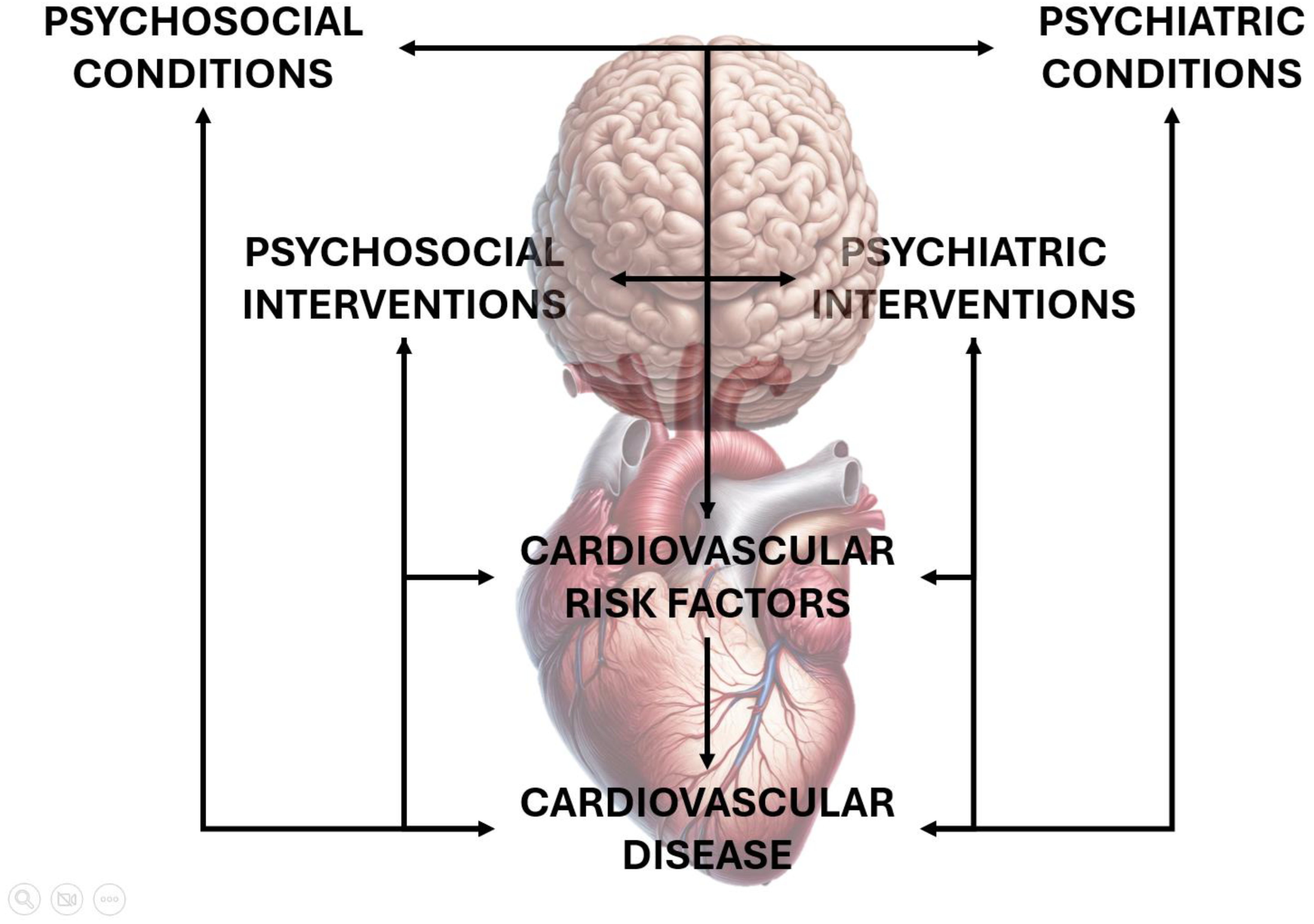
Heart disorders greatly alarm, even unconsciously, as the heart is an organ heavily invested with symbolic meanings. It is considered the guardian of emotions and, through its regular rhythm, gives a sense of health instilling the certainty of being alive. Many physical symptoms caused by anxiety can lead to even more anxiety, as they mimic other serious health issues and can be very alarming. For instance, experiencing sudden, unexpected tachycardia with no apparent cause can be terrifying. The rapid heartbeat is a common symptom of both panic attacks and tachycardia, and if there is no awareness that one has a “frozen” state of anxiety, the lack of a clear trigger for the attack can be very frightening. Every cardiac disorder causes concern, but this does not necessarily prompt individuals to obtain a check-up. In fact, due to a mechanism of avoidance and denial, not seeking a check-up wrongly leads to the belief that there is nothing wrong. This kind of unconscious dynamic exposes individuals to serious risks, as it results in neglecting preventive measures, avoiding necessary check-ups, and inaccurately following prescribed therapies or even forgetting to take them altogether. Unintentional forgetfulness, “missed acts” or “lapses of action”, occur when one intends to take a certain action but instead does another. In the case of medications, this can happen because taking them means becoming aware of having an illness and getting in touch with the distress this causes. In fact, they can be considered depressive equivalents, i.e., depressive symptoms in the form of “forgetfulness” [74]. In such perspective, psychosocial interventions, psychological therapies, and cardiac rehabilitation assume a pivotal role to improve compliance to pharmacological treatments, to promote health-related quality of life, to increase healthy behaviors, and to enhance resilience and self-efficacy (Figure 1). The psychological treatment helps to become aware of the even unconscious functioning that gives rise to mental illness. It allows individuals to observe their lifestyle, how they work, live, and interact socially. Additionally, it activates reflective capacity over time, enabling individuals to make sense of their lives and place them in the context of personal history. This intervention also helps restore the mind–body relationship that is crucial for maintaining or regaining good inner balance and physical well-being throughout life.
Figure 1.
Interplay between psychosocial, psychiatric, and cardiovascular conditions as well as treatments.
One of the key strengths of this umbrella review is a comprehensive literature search and rigorous screening process for selecting studies. Despite this, there are also some limitations that must be taken into account. One limitation refers to publication bias, as studies reporting statistically significant findings are more likely to be published, potentially impacting the evidence synthesis. Moreover, a further limitation is the uncertainty surrounding causality and directionality: while significant associations have been found between psychiatric disorders and cardiovascular disease in many studies, the exact causal mechanisms and directional influences are not fully understood. The studies included patients from a variety of demographics, with differences in age, gender, and clinical features, which could possibly complicate the analysis of the results. The review encompasses studies employing different designs and methodologies, potentially limiting the generalizability of the findings. Future studies should focus on overcoming the limitations aforementioned by employing longitudinal designs, integrating multiple approaches to investigate comprehensive mechanisms, and exploring different ways to cope with psychiatric disorders across different stages. Furthermore, translational studies are crucial for converting research findings into personalized interventions and therapeutic approaches for individuals affected by psychiatric disorders in comorbidity with cardiovascular disease.
The intricate connection between the brain and heart creates a dynamic relationship that can impact overall health. The impact of psychiatric disease on the incidence, management, and outlook of cardiovascular disease is a significant clinical and public health concern. Individuals with psychiatric disorders are at increased risk of developing cardiovascular disease, which can lead to worse outcomes and increased healthcare costs. Addressing this issue requires a coordinated effort between mental health and cardiovascular specialists, as well as a focus on prevention, early detection, and integrated care. It is crucial for healthcare providers to recognize and address the complex interplay between psychiatric disorders and cardiovascular diseases in order to improve outcomes for this vulnerable population [75].
This work has several limitations. First, while we considered adding other search engines for our bibliographic search, we preferred to limit this to PubMed to maximize yield and efficiency, while recognizing that any review of at least adequate quality would have been indexed there. Yet, included reviews searched many databases, including CENTRAL, CINAHL, Embase, Scopus, PsychInfo, and Web of Science, thus providing a veritable guarantee of comprehensiveness. Given the design of our work (i.e., an umbrella review), individual socio-demographic details could not be appropriately summarized, and the attentive reader should instead direct their attention to the primary studies pooled by the reviews we have included. In addition, it is important to acknowledge that recent or current research on the intersection of psychiatric and cardiovascular health appeared often limited by methodological challenges such as heterogeneity in study designs, small sample sizes, and varied assessment tools. These issues highlight the need for more rigorous, well-designed studies to provide clearer insights and more reliable data to inform clinical practices and health policies effectively. Indeed, our work, while comprehensive, leaves ample room for additional studies and evidence synthesis efforts, including a much-needed patient-level meta-analysis.
This umbrella review provides a comprehensive overview of the current evidence on the relationship between psychiatric disease and cardiovascular disease, highlighting the need for further research and interventions in this area. By better understanding the mechanisms underlying this association and implementing targeted strategies to improve outcomes, we can help reduce the burden of cardiovascular disease in individuals suffering from psychiatric disorders.
Given the pressing necessity to appropriately manage patients with mental illnesses and CVDs, by providing more tailored and effective interventions, further accurate research is warranted. Moreover, a careful and informed collaboration between cardiovascular experts and mental health professionals should be established to advance and to refine the care of patients suffering from psychiatric diseases and CVDs.
Supplementary Materials
The following supporting information can be downloaded at: https://www.mdpi.com/article/10.3390/life14080919/s1, Table S1: Appraisal of the quality of included reviews according to the Oxman and Guyatt index.
Author Contributions
Conceptualization: M.M., G.B.-Z. and G.M.; methodology: G.B.-Z. and E.R.; software: G.B.-Z.; formal analysis: M.M. and G.B.-Z.; resources: G.M., F.M.L., C.B., G.T., E.G., R.P., G.S. and S.R.; data curation: G.B.-Z., F.M.L., C.B., G.S., G.M., B.S., S.M. and M.C.; writing—original draft preparation: M.M. and G.B.-Z.; writing—review and editing: G.B.-Z., M.M., G.T., E.G., E.R., R.P. and G.M.; supervision: M.M., G.M., G.B.-Z., E.R. and M.C. All authors have read and agreed to the published version of the manuscript.
Funding
This research received no external funding.
Institutional Review Board Statement
The study was conducted according to the guidelines of the Declaration of Helsinki and approved by the Ethics Committee of Università Cattolica del Sacro Cuore (protocol code ID 3275), approval date: 29 May 2020.
Informed Consent Statement
Not applicable.
Data Availability Statement
The data presented in this study are available on request from the corresponding author.
Conflicts of Interest
The authors declare no conflicts of interest.
References
- US Preventive Services Task Force; Mangione, C.M.; Barry, M.J.; Nicholson, W.K.; Cabana, M.; Chelmow, D.; Coker, T.R.; Davis, E.M.; Donahue, K.E.; Jaén, C.R.; et al. Statin Use for the Primary Prevention of Cardiovascular Disease in Adults: US Preventive Services Task Force Recommendation Statement. JAMA 2022, 328, 746–753. [Google Scholar] [CrossRef] [Scilit] [PubMed]
- De Hert, M.; Detraux, J.; Vancampfort, D. The intriguing relationship between coronary heart disease and mental disorders. Dialogues Clin. Neurosci. 2018, 20, 31–40. [Google Scholar] [CrossRef] [Scilit] [PubMed]
- OECD/European Union. Health at a Glance: Europe 2022: State of Health in the EU Cycle; OECD Publishing: Paris, France, 2022. [Google Scholar] [CrossRef] [Scilit]
- Eurobarameter. European Commission October 2023. Available online: https://europa.eu/eurobarometer/surveys/detail/3032 (accessed on 1 September 2023).
- Regan, K.L. Depression treatment with selective serotonin reuptake inhibitors for the postacute coronary syndrome population: A literature review. J. Cardiovasc. Nurs. 2008, 23, 489–496. [Google Scholar] [CrossRef] [Scilit] [PubMed]
- Weir, R.A.; Rapaport, M.H. The Relationship between Major Depressive Disorder and Multiple Medical Conditions: A Call to Improve Integrated Care Services. J. Clin. Psychiatry 2022, 83, 22com14600. [Google Scholar] [CrossRef] [Scilit] [PubMed]
- Salari, N.; Morddarvanjoghi, F.; Abdolmaleki, A.; Rasoulpoor, S.; Khaleghi, A.A.; Hezarkhani, L.A.; Shohaimi, S.; Mohammadi, M. The global prevalence of myocardial infarction: A systematic review and meta-analysis. BMC Cardiovasc. Disord. 2023, 23, 206. [Google Scholar] [CrossRef] [Scilit] [PubMed]
- Bahit, M.C.; Korjian, S.; Daaboul, Y.; Baron, S.; Bhatt, D.L.; Kalayci, A.; Chi, G.; Nara, P.; Shaunik, A.; Gibson, C.M. Patient Adherence to Secondary Prevention Therapies After an Acute Coronary Syndrome: A Scoping Review. Clin. Ther. 2023, 45, 1119–1126. [Google Scholar] [CrossRef] [Scilit] [PubMed]
- O’Connor, C.M.; Jiang, W.; Kuchibhatla, M.; Silva, S.G.; Cuffe, M.S.; Callwood, D.D.; Zakhary, B.; Stough, W.G.; Arias, R.M.; Rivelli, S.K.; et al. Safety and efficacy of sertraline for depression in patients with heart failure: Results of the SADHART-CHF (Sertraline against Depression and Heart Disease in Chronic Heart Failure) trial. J. Am. Coll. Cardiol. 2010, 56, 692–699. [Google Scholar] [CrossRef] [Scilit] [PubMed]
- ENRICHD Investigators. Enhancing Recovery in Coronary Heart Disease (ENRICHD) study intervention: Rationale and design. Psychosom. Med. 2001, 63, 747–755. [Google Scholar] [PubMed]
- Reibis, R.; Salzwedel, A.; Abreu, A.; Corra, U.; Davos, C.; Doehner, W.; Doherty, P.; Frederix, I.; Hansen, D.; Christine Iliou, M.; et al. The importance of return to work: How to achieve optimal reintegration in ACS patients. Eur. J. Prev. Cardiol. 2019, 26, 1358–1369. [Google Scholar] [CrossRef] [Scilit] [PubMed]
- Tam To, B.; Roy, R.; Melikian, N.; Gaughran, F.P.; O’Gallagher, K. Coronary Artery Disease in Patients with Severe Mental Illness. Interv Cardiol. 2023, 18, e16. [Google Scholar] [CrossRef] [Scilit]
- Velligan, D.I.; Rao, S. The epidemiology and global burden of schizophrenia. J. Clin. Psychiatry 2023, 84, MS21078COM5. [Google Scholar] [CrossRef] [Scilit] [PubMed]
- Fleetwood, K.; Wild, S.H.; Smith, D.J.; Mercer, S.W.; Licence, K.; Sudlow, C.L.M.; Jackson, C.A. Association of severe mental illness with stroke outcomes and process-of-care quality indicators: Nationwide cohort study. Br. J. Psychiatry 2022, 221, 394–401. [Google Scholar] [CrossRef] [Scilit] [PubMed]
- Perreault, S.; Boivin Proulx, L.A.; Brouillette, J.; Jarry, S.; Dorais, M. Antipsychotics and Risks of Cardiovascular and Cerebrovascular Diseases and Mortality in Dwelling Community Older Adults. Pharmaceuticals 2024, 17, 178. [Google Scholar] [CrossRef] [Scilit] [PubMed]
- Du, W.; Ge, M.W.; Hu, F.H.; Jia, Y.J.; Zhao, D.Y.; Cheng, Y.J.; Chen, H.L. QTc prolongation in patients with schizophrenia taking antipsychotics: Prevalence and risk factors. J. Psychopharmacol. 2023, 37, 971–981. [Google Scholar] [CrossRef] [Scilit] [PubMed]
- Garcia-Argibay, M.; Bürkner, P.C.; Lichtenstein, P.; Zhang, L.; D’Onofrio, B.M.; Andell, P.; Chang, Z.; Cortese, S.; Larsson, H. Methylphenidate and Short-Term Cardiovascular Risk. JAMA Netw. Open 2024, 7, e241349. [Google Scholar] [CrossRef] [Scilit] [PubMed]
- Biondi-Zoccai, G. (Ed.) Umbrella Reviews: Evidence Synthesis with Overviews of Reviews and Meta-Epidemiologic Studies; Springer Nature: Cham, Switzerland, 2016. [Google Scholar]
- Köhler-Forsberg, O.; Stiglbauer, V.; Brasanac, J.; Chae, W.R.; Wagener, F.; Zimbalski, K.; Jefsen, O.H.; Liu, S.; Seals, M.R.; Gamradt, S.; et al. Efficacy and Safety of Antidepressants in Patients with Comorbid Depression and Medical Diseases: An Umbrella Systematic Review and Meta-Analysis. JAMA Psychiatry 2023, 80, 1196–1207. [Google Scholar] [CrossRef] [Scilit] [PubMed]
- Zhu, C.; Tran, P.M.; Leifheit, E.C.; Spatz, E.S.; Dreyer, R.P.; Nyhan, K.; Wang, S.Y.; Lichtman, J.H. Association of marital/partner status and patient-reported outcomes following myocardial infarction: A systematic review and meta-analysis. Eur. Heart J. Open 2023, 3, oead018. [Google Scholar] [CrossRef] [Scilit] [PubMed]
- Chen, Y.; Shan, Y.; Lin, K.; Wei, Y.; Kim, H.; Koenen, K.C.; Gelaye, B.; Papatheodorou, S.I. Association Between Child Abuse and Risk of Adult Coronary Heart Disease: A Systematic Review and Meta-Analysis. Am. J. Prev. Med. 2023, 65, 143–154. [Google Scholar] [CrossRef] [Scilit] [PubMed]
- Aw, P.Y.; Pang, X.Z.; Wee, C.F.; Tan, N.H.W.; Peck, E.W.; Teo, Y.N.; Teo, Y.H.; Syn, N.L.; Chan, M.Y.; Tan, B.Y.Q.; et al. Co-prevalence and incidence of myocardial infarction and/or stroke in patients with depression and/or anxiety: A systematic review and meta-analysis. J. Psychosom. Res. 2023, 165, 111141. [Google Scholar] [CrossRef] [Scilit] [PubMed]
- Zhang, L.; Yao, H.; Li, L.; Du Rietz, E.; Andell, P.; Garcia-Argibay, M.; D’Onofrio, B.M.; Cortese, S.; Larsson, H.; Chang, Z. Risk of Cardiovascular Diseases Associated with Medications Used in Attention-Deficit/Hyperactivity Disorder: A Systematic Review and Meta-analysis. JAMA Netw. Open 2022, 5, e2243597. [Google Scholar] [CrossRef] [Scilit]
- Chan, J.K.N.; Chu, R.S.T.; Hung, C.; Law, J.W.Y.; Wong, C.S.M.; Chang, W.C. Mortality, Revascularization, and Cardioprotective Pharmacotherapy after Acute Coronary Syndrome in Patients with Severe Mental Illness: A Systematic Review and Meta-analysis. Schizophr. Bull. 2022, 48, 981–998. [Google Scholar] [CrossRef] [Scilit] [PubMed]
- Jacquet-Smailovic, M.; Brennsthul, M.J.; Denis, I.; Kirche, A.; Tarquinio, C.; Tarquinio, C. Relationship between Post-traumatic Stress Disorder and subsequent myocardial infarction: A systematic review and meta-analysis. J. Affect. Disord. 2022, 297, 525–535. [Google Scholar] [CrossRef] [Scilit] [PubMed]
- Khan, Z.; Musa, K.; Abumedian, M.; Ibekwe, M. Prevalence of Depression in Patients with Post-Acute Coronary Syndrome and the Role of Cardiac Rehabilitation in Reducing the Risk of Depression: A Systematic Review. Cureus 2021, 13, e20851. [Google Scholar] [CrossRef] [Scilit] [PubMed]
- Tully, P.J.; Ang, S.Y.; Lee, E.J.; Bendig, E.; Bauereiß, N.; Bengel, J.; Baumeister, H. Psychological and pharmacological interventions for depression in patients with coronary artery disease. Cochrane Database Syst. Rev. 2021, 12, CD008012. [Google Scholar] [CrossRef] [Scilit] [PubMed]
- Hannoodee, H.; Al Khalili, M.; Theik, N.W.Y.; Raji, O.E.; Shenwai, P.; Shah, R.; Kalluri, S.R.; Bhutta, T.H.; Khan, S. The Outcomes of Acute Coronary Syndrome in Patients Suffering from Schizophrenia: A Systematic Review. Cureus 2021, 13, e16998. [Google Scholar] [CrossRef] [Scilit]
- Sancassiani, F.; Montisci, R.; Preti, A.; Paribello, P.; Meloni, L.; Romano, F.; Nardi, A.E.; Carta, M.G. Surviving to Acute Myocardial Infarction: The Role of Psychological Factors and Alexithymia in Delayed Time to Searching Care: A Systematic Review. J. Clin. Med. 2021, 10, 3813. [Google Scholar] [CrossRef] [Scilit] [PubMed]
- Cojocariu, S.A.; Maștaleru, A.; Sascău, R.A.; Stătescu, C.; Mitu, F.; Cojocaru, E.; Trandafir, L.M.; Leon-Constantin, M.M. Relationships between Psychoeducational Rehabilitation and Health Outcomes-A Systematic Review Focused on Acute Coronary Syndrome. J. Pers. Med. 2021, 11, 440. [Google Scholar] [CrossRef] [Scilit] [PubMed]
- Jacquet-Smailovic, M.; Tarquinio, C.; Alla, F.; Denis, I.; Kirche, A.; Tarquinio, C.; Brennstuhl, M.J. Posttraumatic Stress Disorder following Myocardial Infarction: A Systematic Review. J. Trauma. Stress. 2021, 34, 190–199. [Google Scholar] [CrossRef] [Scilit] [PubMed]
- Fernandes, N.; Prada, L.; Rosa, M.M.; Ferreira, J.J.; Costa, J.; Pinto, F.J.; Caldeira, D. The impact of SSRIs on mortality and cardiovascular events in patients with coronary artery disease and depression: Systematic review and meta-analysis. Clin. Res. Cardiol. 2021, 110, 183–193. [Google Scholar] [CrossRef] [Scilit]
- Sweda, R.; Siontis, G.C.M.; Nikolakopoulou, A.; Windecker, S.; Pilgrim, T. Antidepressant treatment in patients following acute coronary syndromes: A systematic review and Bayesian meta-analysis. ESC Heart Fail. 2020, 7, 3610–3620. [Google Scholar] [CrossRef] [Scilit]
- Park, K.; Kim, S.; Ko, Y.J.; Park, B.J. Duloxetine and cardiovascular adverse events: A systematic review and meta-analysis. J. Psychiatr. Res. 2020, 124, 109–114. [Google Scholar] [CrossRef] [Scilit] [PubMed]
- Shao, M.; Zhuo, C.; Gao, X.; Chen, C.; Xu, Y.; Tian, H.; Li, G.; Jiang, D.; Wang, W. Reduced rate of revascularization in schizophrenic patients with acute myocardial infarction: A systematic review and meta-analysis. Prog. Neuropsychopharmacol. Biol. Psychiatry 2020, 99, 109870. [Google Scholar] [CrossRef] [Scilit] [PubMed]
- Haerizadeh, M.; Sumner, J.A.; Birk, J.L.; Gonzalez, C.; Heyman-Kantor, R.; Falzon, L.; Gershengoren, L.; Shapiro, P.; Kronish, I.M. Interventions for posttraumatic stress disorder symptoms induced by medical events: A systematic review. J. Psychosom. Res. 2020, 129, 109908. [Google Scholar] [CrossRef] [Scilit] [PubMed]
- Papola, D.; Ostuzzi, G.; Gastaldon, C.; Morgano, G.P.; Dragioti, E.; Carvalho, A.F.; Fusar-Poli, P.; Correll, C.U.; Solmi, M.; Barbui, C. Antipsychotic use and risk of life-threatening medical events: Umbrella review of observational studies. Acta Psychiatr. Scand. 2019, 140, 227–243. [Google Scholar] [CrossRef] [Scilit] [PubMed]
- Zivkovic, S.; Koh, C.H.; Kaza, N.; Jackson, C.A. Antipsychotic drug use and risk of stroke and myocardial infarction: A systematic review and meta-analysis. BMC Psychiatry 2019, 19, 189. [Google Scholar] [CrossRef] [Scilit] [PubMed]
- Zheng, X.; Zheng, Y.; Ma, J.; Zhang, M.; Zhang, Y.; Liu, X.; Chen, L.; Yang, Q.; Sun, Y.; Wu, J.; et al. Effect of exercise-based cardiac rehabilitation on anxiety and depression in patients with myocardial infarction: A systematic review and meta-analysis. Heart Lung. 2019, 48, 1–7. [Google Scholar] [CrossRef] [Scilit] [PubMed]
- Benjenk, I.; Chen, J. Effective mental health interventions to reduce hospital readmission rates: A systematic review. J. Hosp. Manag. Health Policy 2018, 2, 45. [Google Scholar] [CrossRef] [Scilit]
- Ladwig, S.; Zhou, Z.; Xu, Y.; Wang, X.; Chow, C.K.; Werheid, K.; Hackett, M.L. Comparison of Treatment Rates of Depression After Stroke Versus Myocardial Infarction: A Systematic Review and Meta-Analysis of Observational Data. Psychosom. Med. 2018, 80, 754–763. [Google Scholar] [CrossRef] [Scilit] [PubMed]
- Eurelings, L.S.; van Dalen, J.W.; Ter Riet, G.; Moll van Charante, E.P.; Richard, E.; van Gool, W.A.; Almeida, O.P.; Alexandre, T.S.; Baune, B.T.; Bickel, H.; et al. Apathy and depressive symptoms in older people and incident myocardial infarction, stroke, and mortality: A systematic review and meta-analysis of individual participant data. Clin. Epidemiol. 2018, 10, 363–379. [Google Scholar] [CrossRef] [Scilit] [PubMed]
- Richards, S.H.; Anderson, L.; Jenkinson, C.E.; Whalley, B.; Rees, K.; Davies, P.; Bennett, P.; Liu, Z.; West, R.; Thompson, D.R.; et al. Psychological interventions for coronary heart disease: Cochrane systematic review and meta-analysis. Eur. J. Prev. Cardiol. 2018, 25, 247–259. [Google Scholar] [CrossRef] [Scilit]
- Richards, S.H.; Anderson, L.; Jenkinson, C.E.; Whalley, B.; Rees, K.; Davies, P.; Bennett, P.; Liu, Z.; West, R.; Thompson, D.R.; et al. Psychological interventions for coronary heart disease. Cochrane Database Syst. Rev. 2017, 4, CD002902. [Google Scholar] [CrossRef] [Scilit] [PubMed]
- Yu, Z.H.; Jiang, H.Y.; Shao, L.; Zhou, Y.Y.; Shi, H.Y.; Ruan, B. Use of antipsychotics and risk of myocardial infarction: A systematic review and meta-analysis. Br. J. Clin. Pharmacol. 2016, 82, 624–632. [Google Scholar] [CrossRef] [Scilit] [PubMed]
- Ski, C.F.; Jelinek, M.; Jackson, A.C.; Murphy, B.M.; Thompson, D.R. Psychosocial interventions for patients with coronary heart disease and depression: A systematic review and meta-analysis. Eur. J. Cardiovasc. Nurs. 2016, 15, 305–316. [Google Scholar] [CrossRef] [Scilit] [PubMed]
- Tully, P.J.; Turnbull, D.A.; Beltrame, J.; Horowitz, J.; Cosh, S.; Baumeister, H.; Wittert, G.A. Panic disorder and incident coronary heart disease: A systematic review and meta-regression in 1131612 persons and 58111 cardiac events. Psychol. Med. 2015, 45, 2909–2920. [Google Scholar] [CrossRef] [Scilit] [PubMed]
- Doyle, F.; McGee, H.; Conroy, R.; Conradi, H.J.; Meijer, A.; Steeds, R.; Sato, H.; Stewart, D.E.; Parakh, K.; Carney, R.; et al. Systematic review and individual patient data meta-analysis of sex differences in depression and prognosis in persons with myocardial infarction: A MINDMAPS Study. Psychosom. Med. 2015, 77, 419–428. [Google Scholar] [CrossRef] [Scilit] [PubMed]
- Janzon, E.; Abidi, T.; Bahtsevani, C. Can physical activity be used as a tool to reduce depression in patients after a cardiac event? What is the evidence? A systematic literature study. Scand. J. Psychol. 2015, 56, 175–181. [Google Scholar] [CrossRef] [Scilit]
- Jackson, J.W.; Schneeweiss, S.; VanderWeele, T.J.; Blacker, D. Quantifying the role of adverse events in the mortality difference between first and second-generation antipsychotics in older adults: Systematic review and meta-synthesis. PLoS ONE 2014, 9, e105376. [Google Scholar] [CrossRef] [Scilit] [PubMed]
- Prieto, M.L.; Cuéllar-Barboza, A.B.; Bobo, W.V.; Roger, V.L.; Bellivier, F.; Leboyer, M.; West, C.P.; Frye, M.A. Risk of myocardial infarction and stroke in bipolar disorder: A systematic review and exploratory meta-analysis. Acta Psychiatr. Scand. 2014, 130, 342–353. [Google Scholar] [CrossRef] [Scilit]
- Whalley, B.; Thompson, D.R.; Taylor, R.S. Psychological interventions for coronary heart disease: Cochrane systematic review and meta-analysis. Int. J. Behav. Med. 2014, 21, 109–121. [Google Scholar] [CrossRef] [Scilit]
- Bradt, J.; Dileo, C.; Potvin, N. Music for stress and anxiety reduction in coronary heart disease patients. Cochrane Database Syst. Rev. 2013, 2013, CD006577. [Google Scholar] [CrossRef] [Scilit]
- Health Quality Ontario. Screening and management of depression for adults with chronic diseases: An evidence-based analysis. Ont. Health Technol. Assess Ser. 2013, 13, 1–45. [Google Scholar]
- Foxwell, R.; Morley, C.; Frizelle, D. Illness perceptions, mood and quality of life: A systematic review of coronary heart disease patients. J. Psychosom. Res. 2013, 75, 211–222. [Google Scholar] [CrossRef] [Scilit] [PubMed]
- Thombs, B.D.; Roseman, M.; Coyne, J.C.; de Jonge, P.; Delisle, V.C.; Arthurs, E.; Levis, B.; Ziegelstein, R.C. Does evidence support the American Heart Association’s recommendation to screen patients for depression in cardiovascular care? An updated systematic review. PLoS ONE 2013, 8, e52654. [Google Scholar] [CrossRef] [Scilit] [PubMed]
- Westover, A.N.; Halm, E.A. Do prescription stimulants increase the risk of adverse cardiovascular events?: A systematic review. BMC Cardiovasc. Disord. 2012, 12, 41. [Google Scholar] [CrossRef] [Scilit] [PubMed]
- Prochaska, J.J.; Hilton, J.F. Risk of cardiovascular serious adverse events associated with varenicline use for tobacco cessation: Systematic review and meta-analysis. BMJ 2012, 344, e2856. [Google Scholar] [CrossRef] [Scilit] [PubMed]
- Whalley, B.; Rees, K.; Davies, P.; Bennett, P.; Ebrahim, S.; Liu, Z.; West, R.; Moxham, T.; Thompson, D.R.; Taylor, R.S. Psychological interventions for coronary heart disease. Cochrane Database Syst. Rev. 2011, 8, CD002902. [Google Scholar] [CrossRef]
- Zuidersma, M.; Thombs, B.D.; de Jonge, P. Onset and recurrence of depression as predictors of cardiovascular prognosis in depressed acute coronary syndrome patients: A systematic review. Psychother. Psychosom. 2011, 80, 227–237. [Google Scholar] [CrossRef] [Scilit] [PubMed]
- Thombs, B.D.; de Jonge, P.; Coyne, J.C.; Whooley, M.A.; Frasure-Smith, N.; Mitchell, A.J.; Zuidersma, M.; Eze-Nliam, C.; Lima, B.B.; Smith, C.G.; et al. Depression screening and patient outcomes in cardiovascular care: A systematic review. JAMA 2008, 300, 2161–2171. [Google Scholar] [CrossRef] [Scilit] [PubMed]
- Thombs, B.D.; Magyar-Russell, G.; Bass, E.B.; Stewart, K.J.; Tsilidis, K.K.; Bush, D.E.; Fauerbach, J.A.; McCann, U.D.; Ziegelstein, R.C. Performance characteristics of depression screening instruments in survivors of acute myocardial infarction: Review of the evidence. Psychosomatics 2007, 48, 185–194. [Google Scholar] [CrossRef] [Scilit]
- Van der Kooy, K.; van Hout, H.; Marwijk, H.; Marten, H.; Stehouwer, C.; Beekman, A. Depression and the risk for cardiovascular diseases: Systematic review and meta analysis. Int. J. Geriatr. Psychiatry 2007, 22, 613–626. [Google Scholar] [CrossRef] [Scilit]
- Swenson, J.R.; Doucette, S.; Fergusson, D. Adverse cardiovascular events in antidepressant trials involving high-risk patients: A systematic review of randomized trials. Can. J. Psychiatry 2006, 51, 923–929. [Google Scholar] [CrossRef] [Scilit] [PubMed]
- Frasure-Smith, N.; Lespérance, F. Reflections on depression as a cardiac risk factor. Psychosom. Med. 2005, 67 (Suppl. S1), S19–S25. [Google Scholar] [CrossRef] [Scilit] [PubMed]
- Sørensenf, C.; Friis-Hasché, E.; Haghfelt, T.; Bech, P. Postmyocardial infarction mortality in relation to depression: A systematic critical review. Psychother. Psychosom. 2005, 74, 69–80. [Google Scholar] [CrossRef] [Scilit] [PubMed]
- Rees, K.; Bennett, P.; West, R.; Davey, S.G.; Ebrahim, S. Psychological interventions for coronary heart disease. Cochrane Database Syst. Rev. 2004, 2, CD002902. [Google Scholar] [CrossRef] [Scilit]
- Momen, N.C.; Plana-Ripoll, O.; Agerbo, E.; Benros, M.E.; Børglum, A.D.; Christensen, M.K.; Dalsgaard, S.; Degenhardt, L.; de Jonge, P.; Debost, J.P.G.; et al. Association between Mental Disorders and Subsequent Medical Conditions. N. Engl. J. Med. 2020, 382, 1721–1731. [Google Scholar] [CrossRef] [Scilit] [PubMed]
- Carmin, C.N.; Ownby, R.L.; Fontanella, C.; Steelesmith, D.; Binkley, P.F. Impact of Mental Health Treatment on Outcomes in Patients with Heart Failure and Ischemic Heart Disease. J. Am. Heart Assoc. 2024, 13, e031117. [Google Scholar] [CrossRef] [Scilit] [PubMed]
- Mazza, M.; Lotrionte, M.; Biondi-Zoccai, G.; Abbate, A.; Sheiban, I.; Romagnoli, E. Selective serotonin reuptake inhibitors provide significant lower re-hospitalization rates in patients recovering from acute coronary syndromes: Evidence from a meta-analysis. J. Psychopharmacol. 2010, 24, 1785–1792. [Google Scholar] [CrossRef] [Scilit] [PubMed]
- Marano, G.; Traversi, G.; Romagnoli, E.; Catalano, V.; Lotrionte, M.; Abbate, A.; Biondi-Zoccai, G.; Mazza, M. Cardiologic side effects of psychotropic drugs. J. Geriatr. Cardiol. 2011, 8, 243–253. [Google Scholar] [CrossRef] [Scilit] [PubMed]
- Chen, Y.; Fan, Q.; Liu, Y.; Shi, Y.; Luo, H. Cardiovascular toxicity induced by SSRIs: Analysis of spontaneous reports submitted to FAERS. Psychiatry Res. 2023, 326, 115300. [Google Scholar] [CrossRef] [Scilit]
- Liu, X.; Lin, W.; Huang, J.; Cao, Z.; Wu, M.; Chen, Z.; Zhu, W.; Tan, Z.; Yu, P.; Ma, J.; et al. Depressive symptoms, anxiety and social stress are associated with diminished cardiovascular reactivity in a psychological treatment-naive population. J. Affect. Disord. 2023, 330, 346–354. [Google Scholar] [CrossRef] [Scilit]
- Marano, G.; Gaetani, E.; Sani, G.; Mazza, M. Body and Mind: Two Maps but One Territory. Mental Coaching in Support of Somatic Correlates in Times of COVID-19. Heart Mind 2021, 5, 161–162. [Google Scholar] [CrossRef] [Scilit]
- Mazza, M.; Marano, G.; Antonazzo, B.; Cavarretta, E.; Di Nicola, M.; Janiri, L.; Sani, G.; Frati, G.; Romagnoli, E. What about heart and mind in the COVID-19 era? Minerva. Cardiol. Angiol. 2021, 69, 222–226. [Google Scholar] [CrossRef] [Scilit] [PubMed]
Disclaimer/Publisher’s Note: The statements, opinions and data contained in all publications are solely those of the individual author(s) and contributor(s) and not of MDPI and/or the editor(s). MDPI and/or the editor(s) disclaim responsibility for any injury to people or property resulting from any ideas, methods, instructions or products referred to in the content. |
© 2024 by the authors. Licensee MDPI, Basel, Switzerland. This article is an open access article distributed under the terms and conditions of the Creative Commons Attribution (CC BY) license (https://creativecommons.org/licenses/by/4.0/).