1. Introduction
Assistive robotic manipulators have emerged as promising technologies for supporting ADLs among individuals with spinal cord injury and other upper-extremity impairments [
1,
2]. These robotic arms are typically mounted on wheelchairs or mobile platforms, with the core objective of restoring task-level autonomy in domains such as object manipulation, feeding, grooming, and environmental interaction [
3,
4]. While technical performance and reliability remain central design objectives, successful deployment in clinical and home environments depends equally on psychosocial, perceptual, and ethical dimensions of use [
5,
6].
Meeting these human-centered requirements presents several engineering challenges. From an engineering perspective, the design of assistive robotic manipulators for individuals with SCI involves addressing challenges in control allocation, safety-critical interaction, and adaptability to heterogeneous user capabilities. Wheelchair-mounted robotic arms aim to compensate for upper-limb motor impairments resulting from SCI, including reduced strength, limited dexterity, and partial or complete loss of voluntary arm and hand function, through combinations of teleoperation, shared autonomy, and semi-autonomous manipulation strategies [
7]. Technically, these systems must operate under strict constraints: limited user input bandwidth (e.g., joystick, sip-and-puff), variable motor precision, dynamic home environments, and the need for fail-safe operation in close physical proximity to the user. As a result, assistive manipulators integrate motion planning, compliant control, grasp stabilization, and human-in-the-loop supervision to ensure both safety and usability. While kinematic efficiency remains essential, the interaction interface represents a critical design layer, as the coupling between user input and robotic execution determines cognitive burden, perceived autonomy, and continued engagement with the system [
3].
In clinical practice, the implications of these interaction design choices are most visible through the work of rehabilitation professionals. Rehabilitation professionals play a central role in the adoption of assistive technologies, such as wheelchair-mounted robotic arms, for individuals with SCI [
8,
9,
10]. They are often the first to evaluate patients’ motor function, sensory integrity, activity limitation, participation restriction, and functional capacities to match these profiles with appropriate technologies that can restore independence in ADLs [
8,
9,
10]. In the context of robotic arms, rehabilitation professionals help determine whether a device can meaningfully improve arm and hand functions such as reaching, grasping, prehension, and manipulation. Rehabilitation professionals include graded training interventions that allow users to become proficient in the use of the robotic arm, so individuals can be efficient over time [
10]. Through repeated practice and feedback, therapists not only optimize technical use but also improve user confidence and long-term adherence, which are critical to preventing device abandonment [
10,
11]. As frontline clinicians, therapists act as gatekeepers and advocates in patients’ decisions to adopt technology, weighing evidence on effectiveness, efficiency, usability, safety, and sustainability when recommending robotic systems for routine clinical or home use [
8,
9,
10]. Surveys of rehabilitation professionals show positive attitudes toward rehabilitation robotics, but also show gaps in training on how to use assistive devices to integrate with existing practice models [
11,
12]. In multidisciplinary teams, physical therapists (PTs) collaborate with engineers, occupational therapists (OTs), patients, and caregivers to adapt device parameters and settings to the individual’s needs, ensuring that technology remains aligned with personal goals and overcoming environmental constraints [
11]. By simultaneously addressing functional outcomes and environmental barriers, rehabilitation professionals are critical in translating assistive robotic arms from promising prototypes into patient-centered solutions for ADL independence after SCI [
8,
9,
10].
The affective gap—the mismatch between how users experience assistive robots and how these systems are evaluated in research and clinical practice—remains a persistent challenge in assistive technology adoption. While prior work in rehabilitation robotics has emphasized usability, safety, and functional performance, affective constructs such as trust and perceived control are often reduced to single global scores derived from post hoc questionnaires. This limits insight into how users differentiate between key dimensions such as independence, safety, workload, and device intrusiveness [
13].
In clinical settings, where rehabilitation professionals play a central role in recommending and deploying assistive technologies, this lack of granularity can hinder appropriate device matching and long-term adherence. Both clinicians and patients consider not only functional outcomes but also concerns related to reliability, autonomy, and the potential reduction of human interaction [
11]. For individuals with SCI, robotic assistance is frequently framed in terms of independence and reduced caregiver burden—concepts that are not adequately captured by conventional evaluation metrics [
8,
10]. As a result, engineering advances in assistive robotics may outpace our ability to understand how users actually perceive and adopt these systems in everyday contexts.
Despite extensive work in human–robot interaction on shared autonomy and trust calibration [
14,
15], systematic approaches to modeling multidimensional affect in rehabilitation-specific settings remain limited. Most existing studies rely on scalar trust measures or survey-based evaluations [
5], which obscure how sentiment varies across design dimensions such as independence, safety, control, cost, and governance.
To address this limitation, this study applies aspect-based sentiment analysis (ABSA) to focus group transcripts collected from individuals with spinal cord injury [
16,
17]. ABSA enables the decomposition of user sentiment into structured thematic dimensions rather than collapsing affective responses into a single aggregate score. By combining computational sentiment modeling techniques [
18,
19] with domain-informed aspect routing, we quantify how user perceptions vary across independence, safety, control, functionality, cost, and governance considerations.
This approach provides a more detailed view of user acceptance, revealing conditional patterns that would remain hidden under traditional evaluation methods. In doing so, it bridges the gap between engineering performance metrics and lived user experience, supporting more informed design and deployment of assistive robotic systems.
The contributions of this paper are threefold:
We introduce an aspect-based sentiment analysis framework for assistive human–robot interaction that integrates both user and clinical (physical therapy) perspectives.
We demonstrate that acceptance of assistive robotic manipulators is structured and aspect-dependent, with independence functioning as a consistently strong positive factor and trust, safety, and control operating as conditional calibration variables.
We translate these findings into concrete design and rehabilitation implications, including governance considerations surrounding skill sharing, user override authority, and therapist-mediated deployment.
3. Methodology
This study adopts a structured process involving the design of a survey centered on five key questions aligned with core thematic areas. The process began with the design of focus group questions and the conduct of focus group sessions with individuals with spinal cord injuries (
Section 3.1). Transcripts derived from these sessions were subsequently processed and anonymized (
Section 3.2). Sentiment analysis was then performed using a thematic, aspect-based framework to capture affective responses across key design dimensions relevant to assistive human–robot interaction (
Section 3.3). Finally, statistical aggregation and comparative analyses (
Section 3.4) were applied to sentiment outputs to examine patterns across questions, aspects, and focus groups, complemented by qualitative synthesis of representative participant narratives (
Section 3.5).
3.1. Study Design and Data Collection
Data were collected through three focus group [
33] sessions involving individuals with spinal cord injury and related mobility impairments. The focus groups were selected to facilitate interactive discussion, allowing participants to articulate expectations and concerns related to assistive robotic systems.
The overall participant characteristics are shown in
Table 1 with 12 participants in total. The gender had 7 males and 5 females. The age of the participants ranged from 18–86 with a mean of 49.1 and median of 43.5, reflecting a broad age distribution. The time since the injury ranged from 7 months to 36 years with a mean of 15 years. The majority of injury level was at C5 (5 persons) with C3 (3 persons) and the other had injuries C4, C6 and L5, all with 1 person. Overall, the participants are weighted toward mid- to high-level cervical injuries, which are typically associated with significant upper-extremity impairment and therefore high relevance for assistive robotic support.
The sessions were guided by five key questions designed to elicit user perspectives on design-relevant dimensions of assistive human–robot interaction:
- 1.
Daily living tasks needing assistance (Functionality and independence): “What tasks would you want a robot to help with?”
- 2.
Desired helper robot features (Capabilities, control, safety): “What features would make a helper robot (e.g., a wheelchair-mounted robot or a robot moving on a separate base) most useful and safe for you?”
- 3.
Robot caregiver versus human support (Independence and control): “Would you prefer a robot caregiver over human assistance? Why or why not?”
- 4.
Willingness to pay (Cost considerations): “How much would you be willing to pay for a helper robot?”
- 5.
Skill and data sharing (Control and safety): “How do you feel about robots sharing skills or data with other robots or users?”
The sessions were audio-recorded and transcribed verbatim using an online meeting room. The identifying information was removed during transcription to ensure participant confidentiality and compliance with ethical research standards.
3.2. Audio/Text Preprocessing
The transcripts were preprocessed prior to sentiment analysis to improve analytical consistency. The preprocessing steps included text normalization (lowercasing and removal of extraneous punctuation), correction of obvious transcription artifacts, and segmentation of speech by speaker turn. Moderator prompts were excluded from quantitative sentiment analysis to ensure that computed sentiment reflected participant responses only. The semantic content was not altered during preprocessing.
3.3. Sentiment Analysis Framework
The sentiment analysis [
16,
32] was conducted using a hybrid approach combining lexicon-based sentiment scoring with aspect-based sentiment analysis. This approach was selected to balance interpretability with sensitivity to domain-specific language commonly used in rehabilitation and assistive technology discussions. To examine variation across design-relevant dimensions, an aspect-based sentiment analysis was performed [
17]. Aspects were defined a priori based on study objectives, focus group question structure, and prior literature in assistive robotics and human–robot interaction [
18]. The thematic aspects used for routing included
Independence,
Functionality,
Safety,
Control,
Cost, and
Value Trade-offs, including considerations related to privacy, access, and personalization. The utterances could be associated with multiple aspects when appropriate, reflecting the interconnected nature of user concerns in assistive human–robot interaction.
Table 2 presents the aspect categories and representative keywords used for mapping.
For each utterance
, an aspect assignment function
maps the utterance to one or more thematic aspects from the predefined aspect set
:
where
= Independence, Functionality, Safety, Control, Cost, Privacy, Trust, Value Trade-offs.
3.4. Aggregation and Comparative Analysis
The sentiment scores were aggregated at multiple levels to support both fine-grained and group-level analysis. First,
question–aspect mean scores were computed by averaging sentiment values for each combination of focus group question and thematic aspect, allowing examination of how specific prompts elicited affective responses within distinct design dimensions. Second,
group-level comparisons were conducted by aggregating aspect-level sentiment scores within each focus group, highlighting similarities and differences in priorities and concerns across the three groups. For each utterance
, a sentiment score
was computed. The compound sentiment score for an aspect
a is defined as:
where
is the number of utterances associated with aspect
a.
Speaker-level sentiment was computed as:
where
N is the number of utterances from a given speaker.
In addition to continuous sentiment scores, sentiment labels (positive, neutral, negative) were derived to compute label distributions for each question, expressed as proportions of utterances within each sentiment category. This categorical perspective complemented mean sentiment values by illustrating the balance of affective orientations expressed by participants. To assess the robustness of sentiment classification, a confidence analysis was performed by examining the consistency of sentiment labels within question–aspect pairs, providing an indication of reliability at the aggregate level.
To evaluate whether sentiment differed across thematic aspects, a Kruskal–Wallis H test was applied. This non-parametric test was selected due to the modest sample size and the absence of normality assumptions for sentiment score distributions. The Kruskal–Wallis statistic was computed as:
where
k is the number of groups,
is the number of observations in group
j,
is the sum of ranks in group
j,
N is the total number of observations.
3.5. Qualitative Synthesis
To contextualize quantitative sentiment trends, a qualitative synthesis was conducted through extraction of representative participant quotes for each key theme. These excerpts illustrate how users articulated concerns and expectations related to independence, safety, control, cost, and shared learning. Integrating qualitative quotations with quantitative sentiment patterns enabled interpretation of affective trends in relation to lived experience and supported triangulation between computational analysis and participant narratives.
3.6. Algorithm
The algorithm used for the analysis is shown in Algorithm 1. As a set of the transcripts, aspects of lexicon and transformer models are defined. As the first step the data is collected and transcribed using the Zoom transcription tool. The transcripts names of the persons are removed and a participant code is assigned. The moderator comments were also removed from the dataset. The text is normalized and segmented into utterances as shown in line 3. For each of the utterances an aspect is mapped, and the lexicon-based score computed as well as the transformer-based score. The aggregate sentiment scores are calculated by aspect, question, and the focus group. Additionally, the means are calculated for each statistic above. The Kruskal–Wallis test is used to assess the differences between the aspects. Lastly, the results are interpreted with the participant quotations.
| Algorithm 1 Hybrid Aspect-Based Sentiment Analysis Pipeline |
- Require:
Focus group transcripts , aspect lexicon , transformer sentiment model - Ensure:
Question-level, group-level, and aspect-level sentiment summaries - 1:
Collect and transcribe focus group sessions - 2:
Remove identifying information and moderator prompts - 3:
Normalize text and segment transcripts into utterances where N is the number of observations. - 4:
for each utterance do - 5:
Assign one or more aspects using lexicon-based routing: - 6:
Compute lexicon-based sentiment score - 7:
Compute transformer-based sentiment score using - 8:
Store utterance, aspect labels, question label, and sentiment scores - 9:
end for - 10:
Aggregate sentiment scores by aspect, question, and focus group - 11:
Compute aspect-level means , question–aspect means , and group–aspect means - 12:
Apply Kruskal–Wallis test to assess differences across aspects - 13:
Interpret results alongside representative participant quotations
|
4. Results
4.1. Aggregate Sentiment Findings
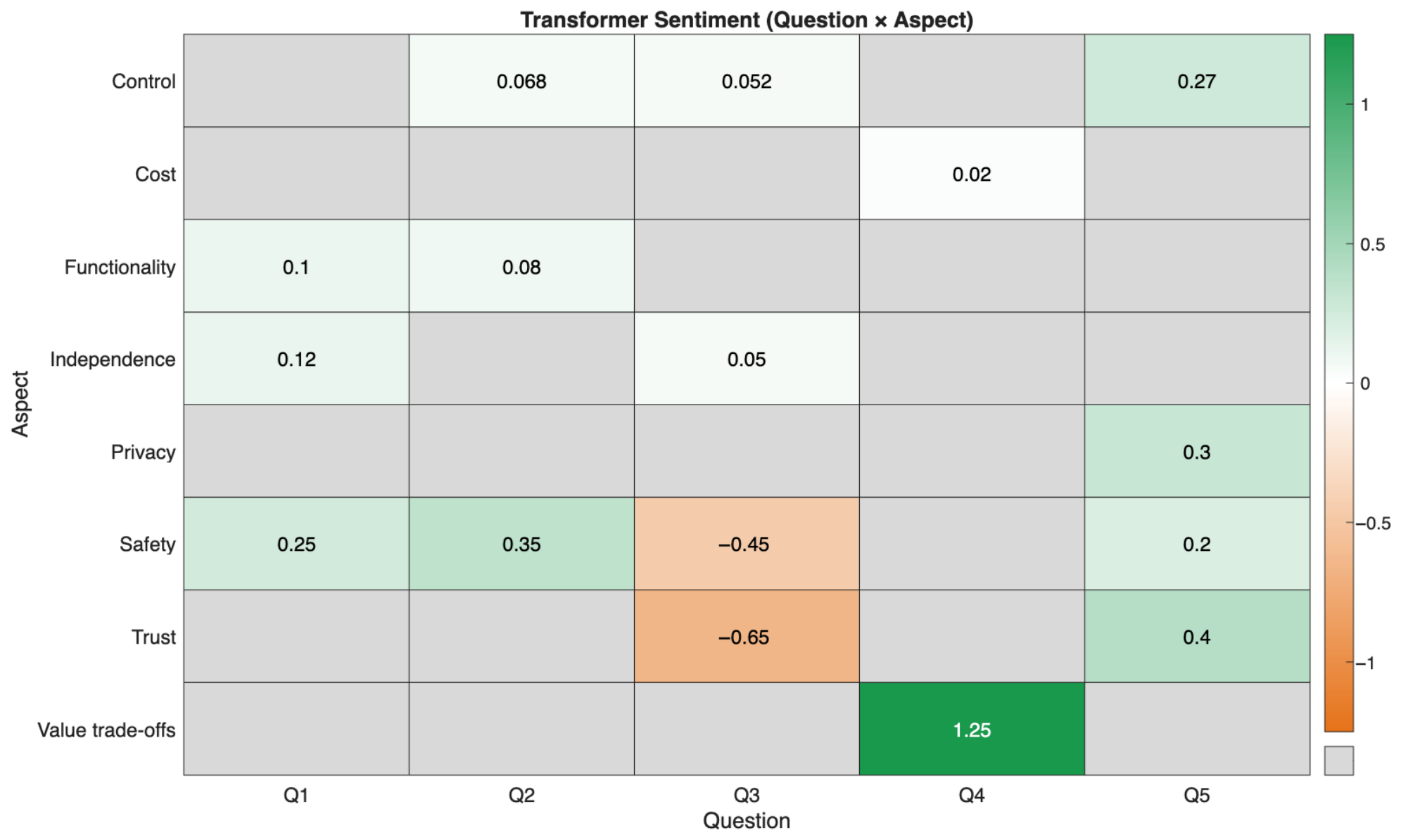
Figure 1 presents mean transformer-based sentiment scores across questions and thematic aspects. Overall sentiment remains predominantly positive but varies systematically by domain.
Sentiment related to independence and safety is positive across multiple questions, with particularly strong values for safety in Q1 (daily living activity) and Q2 (functionality required). This suggests that participants consistently associate assistive robotic systems with enhanced autonomy and improved safety, reinforcing these dimensions as foundational value drivers in assistive HRI. The decline in safety sentiment for Q3 (care giver vs robot) reflects context-specific concerns—likely related to the safety aspect of having a physical caregiver—rather than a general rejection of robotic assistance.
The sentiment toward control remains mildly positive across the earlier questions namely the daily functionality (Q2) and caregiver vs robot (Q3). The value trade-offs show the strongest positive sentiment in Q4 (cost), indicating that participants perceive substantial benefit when explicitly weighing robotic assistance against limitations or costs.
In the aggregated Q5 (skills sharing) condition, which reflects deployment, long-term use, and governance considerations, trust, safety and privacy demonstrate positive sentiment. This pattern indicates that acceptance is conditional on reliability, transparency, and user control. The control aspect also increases in Q5 relative to earlier questions, reinforcing the importance of shared-autonomy models in assistive robotics.
Sentiment related to cost is neutral to mildly positive, appearing primarily in Q4 (cost consideration), which aligns with discussions of affordability and access. Importantly, sentiment does not turn negative, reinforcing the interpretation that cost is framed as an external structural barrier (e.g., insurance, policy) rather than as a critique of the technology itself. Privacy sentiment is mixed but remains positive in later questions, suggesting that privacy concerns are acknowledged but not dominant in shaping overall acceptance.
Functionality exhibits modest positive sentiment in early questions (Q1–Q2), consistent with detailed, experience-informed evaluation of robotic capabilities. Rather than indicating dissatisfaction, this pattern reflects realistic expectations and participatory critique, common in rehabilitation-oriented focus groups where users are attentive to practical constraints such as dexterity, speed, and reliability.
Taken together, the heatmap demonstrates that user sentiment toward assistive robotic manipulators is structured and aspect-dependent. Independence and safety function as baseline enablers of acceptance, while control, trust, and value trade-offs shape conditional endorsement. Cost and privacy concerns are present but do not negate perceived benefits. These findings reinforce the importance of user-controlled, safety-assured, and value-transparent design in assistive robotics, and they highlight the utility of question-level, aspect-based sentiment analysis for uncovering nuanced acceptance dynamics in HRI studies.
4.2. Question × Aspect Sentiment by Focus Group
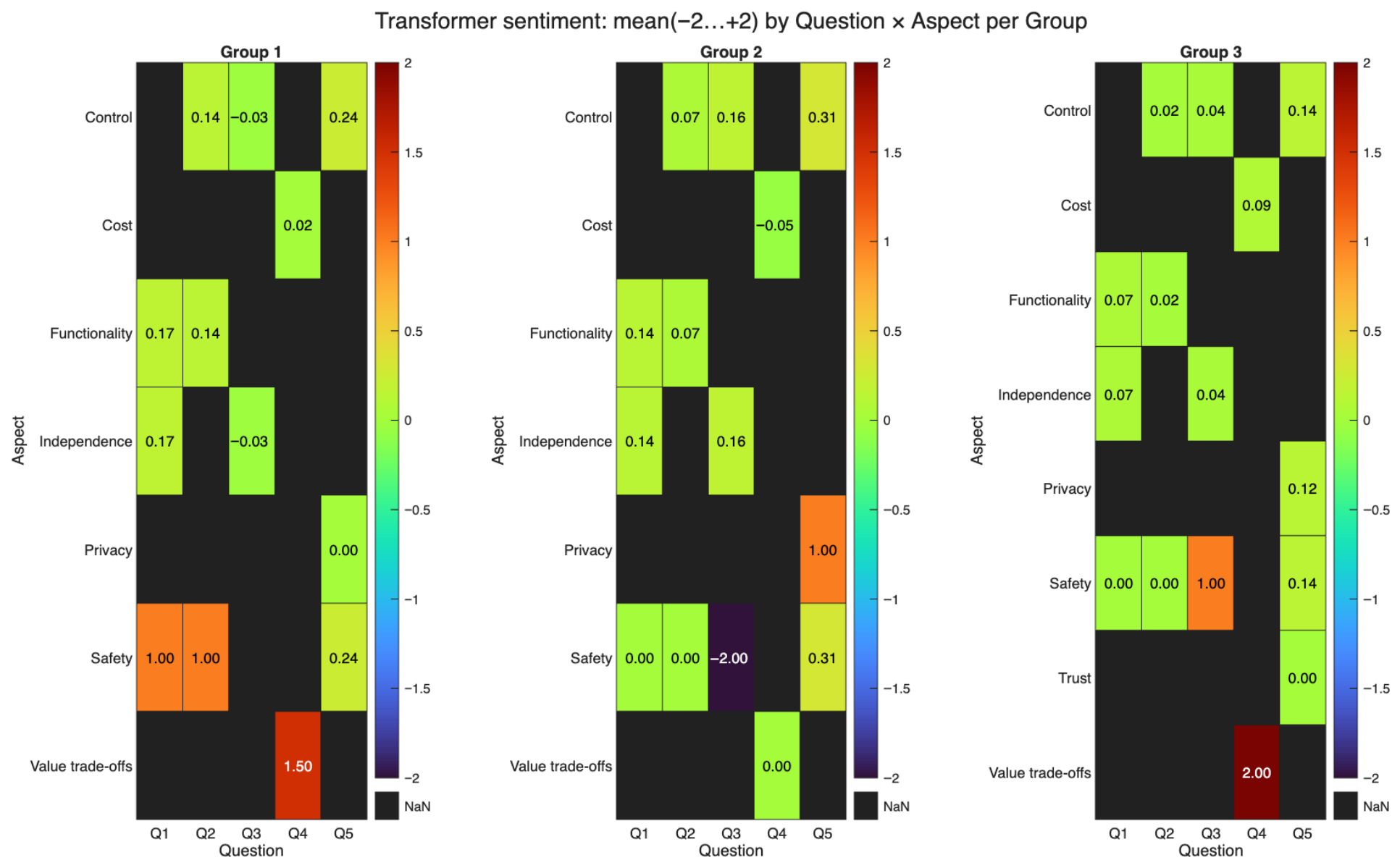
Figure 2 presents transformer-based mean sentiment scores (−2 to +2) across questions and thematic aspects, disaggregated by focus group. While overall sentiment remains predominantly positive, meaningful differences emerge across groups in the intensity and distribution of affective responses.
Group 1 demonstrates consistently positive sentiment across early task-oriented questions (Q1–Q2), particularly for safety and functionality. Safety sentiment is notably strong in these early discussions, suggesting that this group framed robotic assistance primarily through risk mitigation and physical reliability. The strongest positive score for Group 1 appears in value trade-offs during Q4, indicating high perceived benefit when explicitly weighing independence gains against cost or implementation constraints. Trust remains neutral-to-positive, and no strongly negative domains are observed. Overall, Group 1 reflects structured optimism grounded in safety and practical benefit.
Group 2 exhibits more variability across questions. While independence and control are positively evaluated in Q1–Q2, safety sentiment declines sharply in Q3, representing the most negative localized response across all groups. This suggests that when considering complex or edge-case scenarios, this group became more risk-sensitive. However, sentiment rebounds in later questions. In Q5, privacy and trust show strong positive values, indicating that acceptance becomes contingent on governance, reliability, and user authority. The presence of both pronounced negative and strong positive values suggests deliberative evaluation rather than uniform enthusiasm.
Group 3 shows moderate positive sentiment for independence and functionality in early questions, but displays a distinctive pattern in later-stage considerations. In Q3, trust sentiment is negative, indicating skepticism during deeper technical or operational discussion. However, sentiment shifts strongly positive for value trade-offs in Q4 and becomes positive again for trust and privacy in Q5. This pattern suggests an initial hesitation that is mitigated once system oversight and deployment considerations are clarified. Group 3 therefore appears particularly sensitive to transparency and governance structures, with trust functioning as a dynamic, context-dependent variable.
The trends across the groups show that independence remains uniformly positive which is a core value for assistive robotic system. The value trade-offs peak in Q4 across each group indicating that explicit evaluative framing strengthens perceived benefit. Trust and safety fluctuate more than independence, suggesting that these domains operate as conditional acceptance factors rather than intrinsic value drivers. Strong negative sentiment is isolated and context-specific (primarily Q3), rather than sustained across discussions.
These findings indicate that user acceptance of assistive robotic manipulators is not monolithic but shaped by group-level emphasis and contextual framing. While independence functions as a stable positive anchor, safety, and trust act as calibration variables that shift with scenario complexity and deployment considerations.
The group-level differentiation underscores the importance of participatory design and adaptive trust calibration models in assistive HRI. It also demonstrates the analytic value of combining aspect-based sentiment analysis with focus-group stratification, revealing heterogeneity that would be obscured in aggregate results.
4.3. Utterance-Level Mean Sentiment per Question
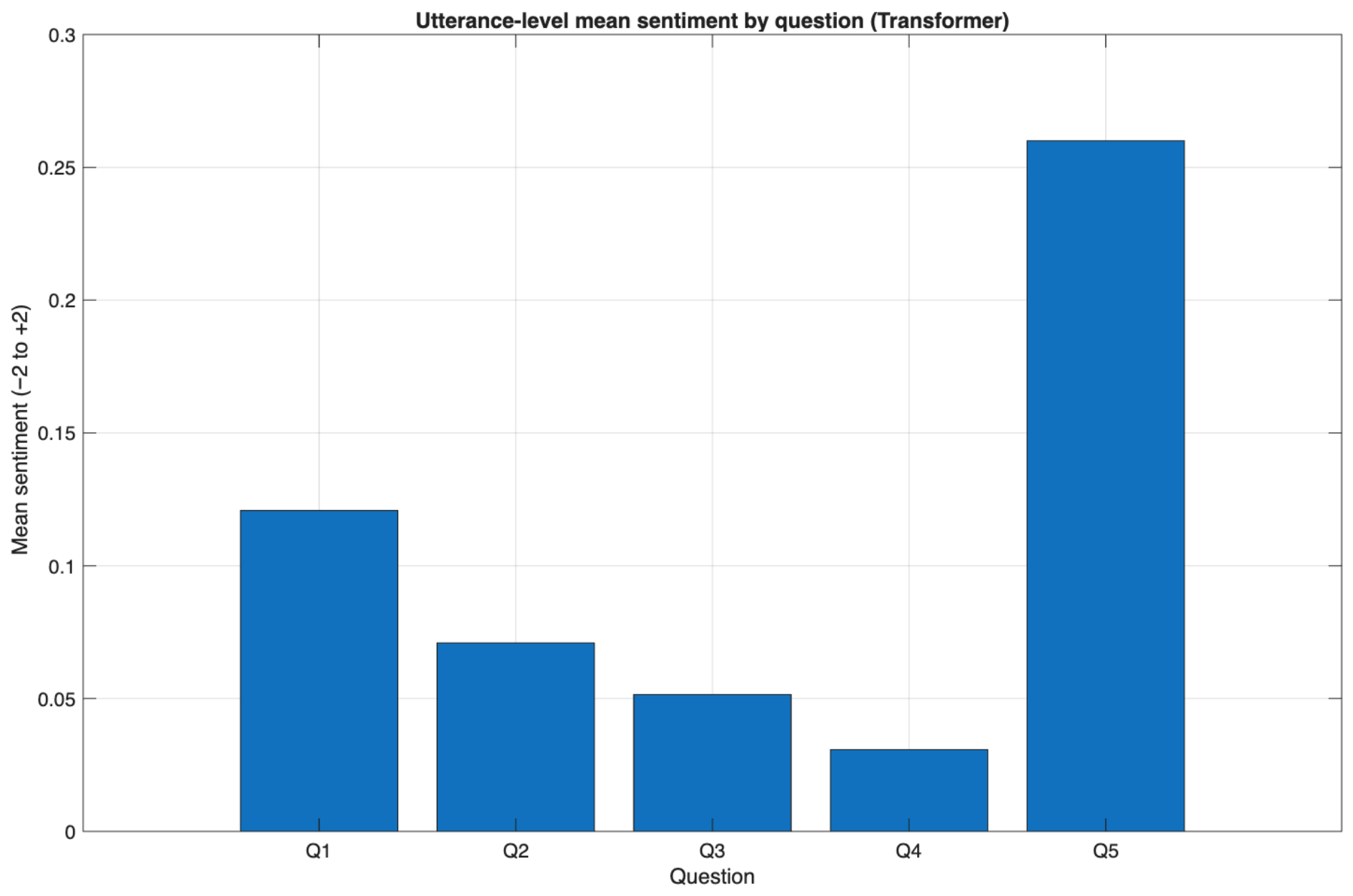
Figure 3 presents mean transformer-based sentiment scores aggregated at the utterance level for each discussion question. Overall sentiment remains positive across all questions, but a clear progression emerges over the course of the focus group.
Sentiment is moderately positive in Q1 (≈0.12) and decreases gradually through Q2 (≈0.07) and Q3 (≈0.05), reaching its lowest point in Q4 (≈0.03). This mid-session decline suggests increasing critical engagement as participants moved from initial impressions to more detailed considerations of feasibility, safety, and implementation constraints.
In contrast, sentiment rises sharply in Q5 (≈0.26), representing the highest positive mean across all questions. This rebound indicates that when discussion shifts toward long-term use, governance, and practical integration into daily life, participants express stronger positive affect. The elevated Q5 score suggests consolidation of cautious optimism once conditions for safety, control, and value are clarified.
Importantly, sentiment never becomes negative at the question level. Even during the more evaluative phases (Q3–Q4), mean scores remain above zero, indicating structured deliberation rather than rejection of assistive robotic technology.
These results suggest that there is a positive orientation toward the concept of robotic assistance. Increased scrutiny and scenario-based reasoning reduce affective intensity but do not reverse it for the critical evaluation phase (Q2–Q4). Additionally, there is conditional endorsement for Q5, as user control, and value trade-offs are explicitly considered.
4.4. Sentiment Distribution by Question
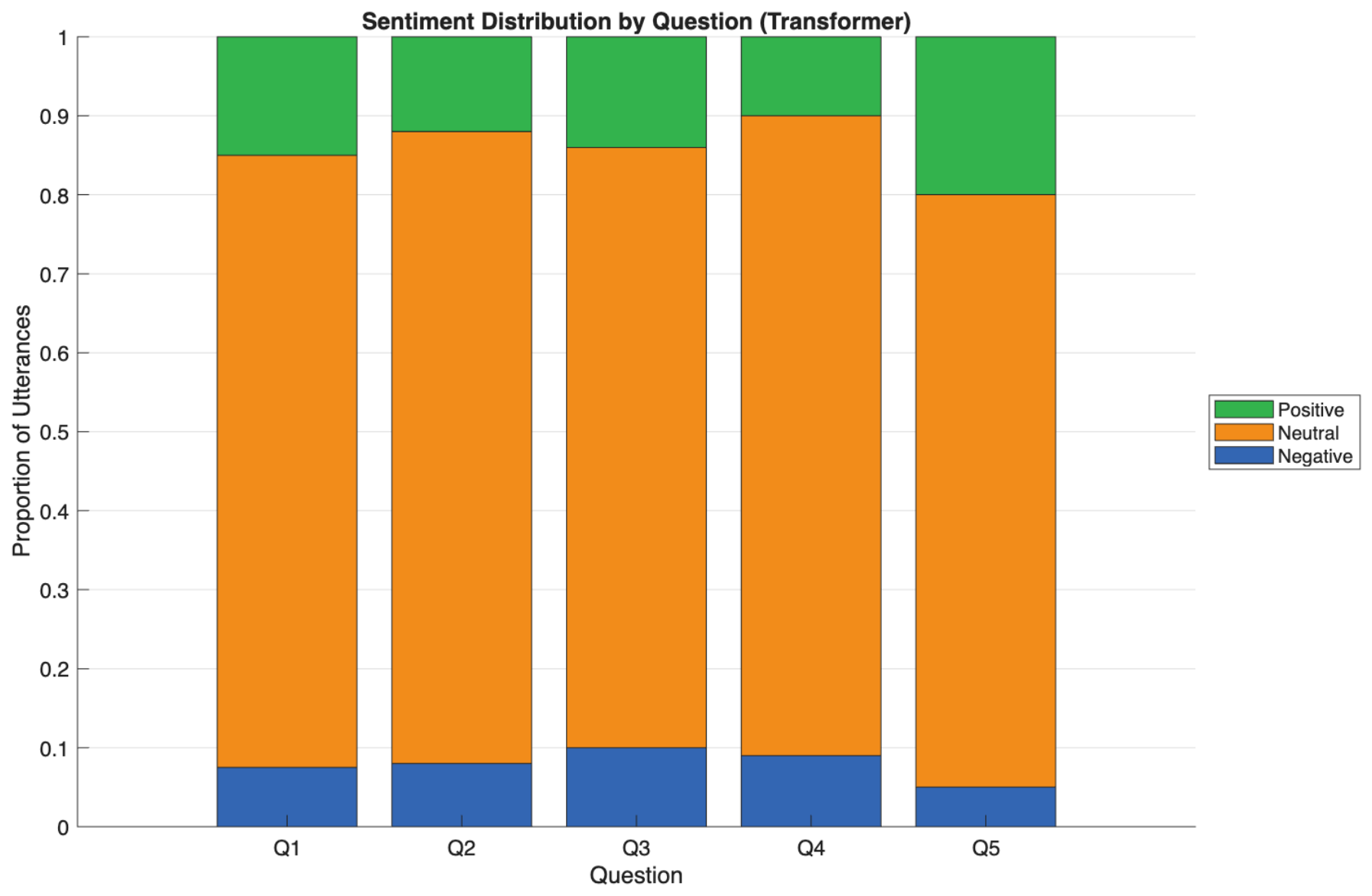
Figure 4 presents the proportion of negative, neutral, and positive utterances across discussion questions.
Across all questions, the majority of utterances are neutral, ranging approximately from 75% to 85%. This indicates that participants engaged in primarily descriptive, evaluative, and informational discussion rather than highly emotional expression. This is consistent with structured focus-group deliberation in rehabilitation contexts, where participants often reason through trade-offs rather than express strong affect.
Negative sentiment remains relatively low across all questions (approximately 5–10%), with a slight increase in Q3 and Q4. This supports the interpretation that critical engagement increases during mid-session evaluation phases, however skepticism does not dominate the discussion. Importantly, no question shows a majority negative orientation, reinforcing that concerns function as calibration factors rather than rejection signals.
4.5. Kruskal–Wallis Test
The descriptive analysis showed that Independence and Safety were associated with higher sentiment scores, while Functionality and Control exhibited comparatively lower values. The Kruskal–Wallis test revealed statistically significant differences in sentiment across aspects (, ), indicating that participants’ affective evaluations varied across design dimensions. This result confirms that sentiment is not uniform across aspects, supporting the use of an aspect-based analytical framework.
4.6. Derived Design Requirements from Focus Group Analysis
Qualitative analysis of focus group transcripts yielded a structured set of robot design requirements grounded directly in participant discourse (
Table 3). Nine primary requirements (R1–R9) emerged consistently across groups, reflecting conditional acceptance criteria rather than general enthusiasm for robotic assistance.
4.6.1. Independence as a Non-Negotiable Constraint (R1)
Across all groups, participants emphasized that robotic assistance must preserve user agency rather than replace it. Explicit rejection of systems that would “do things for me” was particularly strong in Groups 2 and 3, where independence-related language increased substantially. Independence therefore functions not merely as a desired feature, but as a boundary condition for acceptable design.
4.6.2. Immediate User Control and Override (R2)
Participants consistently stated that they would only accept the robot if they could immediately stop or override its actions. While Group 3 articulated this requirement explicitly, Groups 1 and 2 implied similar expectations. Immediate user control thus emerges as a prerequisite for trust calibration and adoption.
4.6.3. Core Functional Support for ADLs (R3)
Early discussion (Q1–Q2) centered on concrete task assistance, particularly object manipulation, carrying, reaching, and opening/closing tasks. These activities define the baseline utility expected from the system and form the highest-priority functional domain.
4.6.4. Safety as a Baseline Expectation (R4)
Safety was rarely emphasized unless concerns were raised, suggesting that safe and predictable operation is assumed rather than optional. Participants described safety failures as unacceptable, reinforcing safety as a foundational design constraint rather than a differentiating feature.
4.6.5. Cost–Benefit Trade-Offs and Tiered Configurations (R5)
Participants discussed willingness to pay and trade-offs between features and affordability, particularly in Group 3. Importantly, participants supported cost-tiered configurations provided that core functionality was not removed. Cost concerns were framed in terms of access and fairness rather than opposition to the technology itself.
4.6.6. Context-Aware but Conservative Adaptivity (R6)
Group 3 expressed positive sentiment toward context-aware assistance, while Group 2 supported adaptivity only when predictable and restrained. This indicates that adaptivity is desirable but must not compromise transparency or user authority.
4.6.7. Timing and Non-Intrusive Assistance (R7–R8)
Participants highlighted the importance of appropriate timing and minimized interaction friction. Mistimed assistance was described as disruptive, while optimized timing was viewed positively. Similarly, excessive interruption or cognitive burden reduced acceptability. These findings suggest that interaction quality strongly shapes perceived usability.
4.6.8. Trust, Governance, Data Control, and Skill Sharing (R9)
Later discussion (Q5) emphasized control over trust, data sharing, governance, and permissions. Participants expressed concerns about unrestricted sharing and required explicit approval mechanisms. Governance and personalization features therefore form part of the core design requirements. Participants were willing to share skills with other robots and download new skills; however, they wanted to be able to control the download and sharing configurations.
5. Discussion: Implications for ADLs
5.1. Implications for Assistive Robot Design
Sentiment signals provide useful information for adapting robot control, autonomy levels, and interaction strategies. Although adaptive behavior can improve user experience, inappropriate or opaque adaptation may undermine trust. We discuss design recommendations for wheelchair-mounted assistive robotic arms grounded in our findings.
To translate these findings into real-world systems, a multi-layered implementation framework is proposed. At the control level, user independence (R1) is preserved through interrupt-driven architectures with persistent manual overrides where the robot acts only on explicit user commands. Safety and responsiveness are handled by combining low-latency input polling (R2) with hardware-level emergency stops that operate independently of software states. Task accessibility (R3) is facilitated by pre-programming core ADLs such as grasping and lifting to activate with minimal input. Moreover, force/torque sensors provide the physical feedback necessary for collision detection and safe human–robot interaction (R4).
On the software side, economic scalability (R5) can be achieved through modular firmware or software licensing that separates baseline functionality from premium modules. In addition, contextual reliability (R6) can be achieved by combining camera and inertial sensor inputs so that the robot automatically slows down or disables autonomous actions when it becomes uncertain about its environment. Furthermore, to avoid unwanted interventions (R7), the system monitors user activity and withholds assistance unless the user is idle or has explicitly requested help. Interface usability (R8) is optimized by designing the interface with a minimal default view that shows only high-frequency controls, with secondary functions accessible through an expandable menu. Finally, governance and privacy (R9) are implemented through a local permission manager that blocks all skill and data transfers to external systems by default, releasing them only upon user confirmation and within a user-defined list of trusted devices.
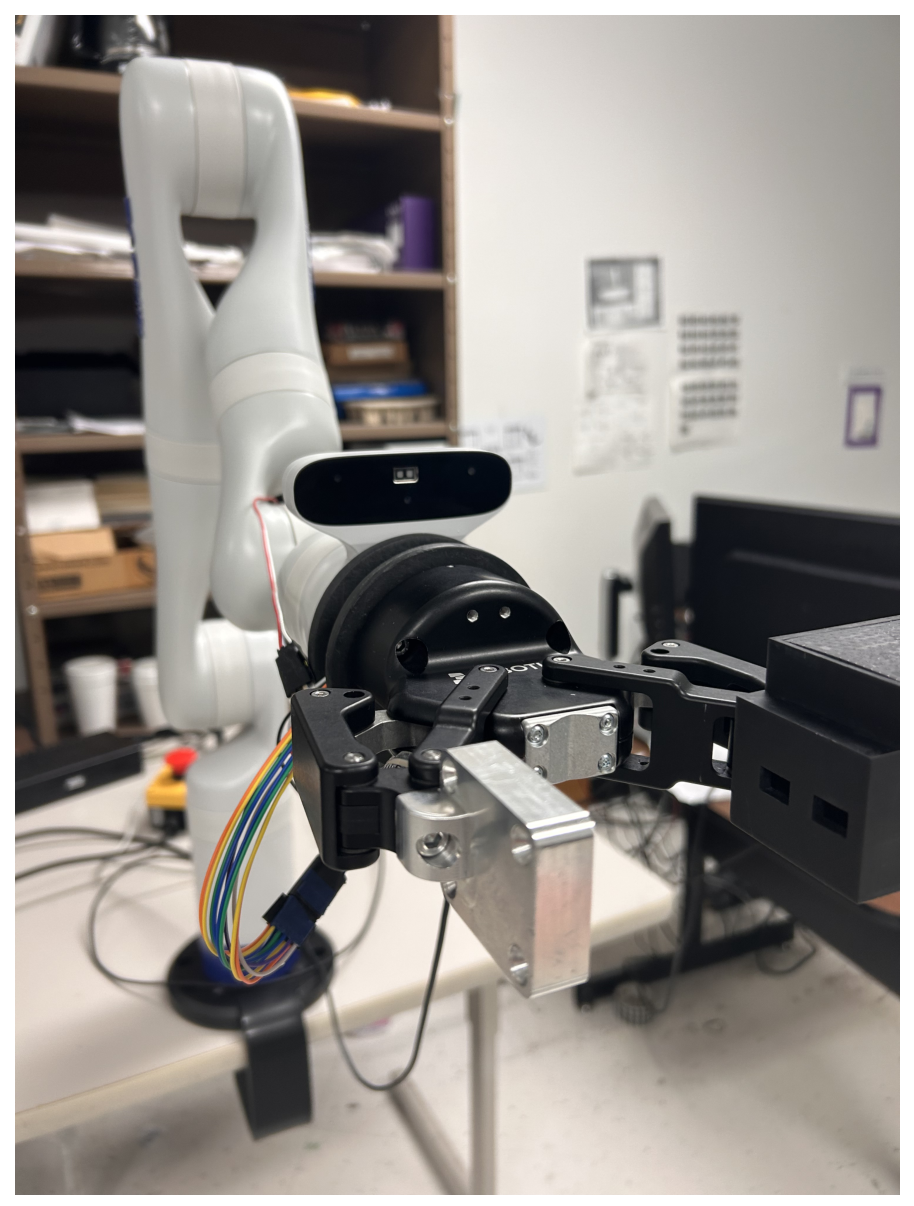
These engineering implications are examined in the context of an existing assistive robotic system to assess how well current designs align with the derived requirements. The system under evaluation is the current control interface of a Kinova Gen3 7DoF robotic arm (
Figure 5) in the Assistive Robotics Lab at University of Central Florida.
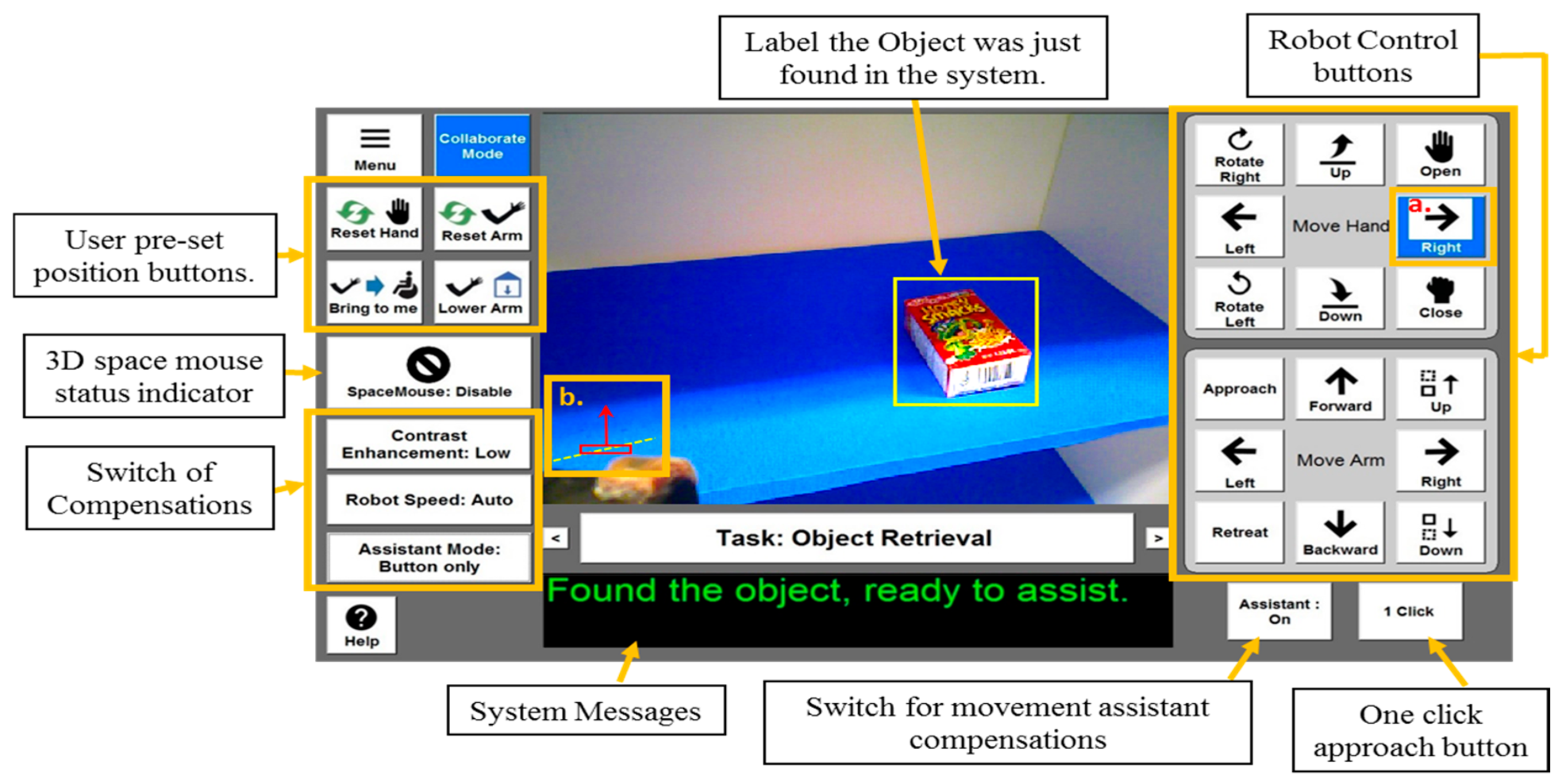
Figure 6 displays the user interface, including a live camera feed, a space mouse status indicator, compensation switch buttons (e.g., robot speed adjustment, assistant mode activation, and contrast enhancement), and directional movement panels for arm and hand, along with gripper open/close controls. System messages are displayed below the video to support transparency and feedback.
The user interface demonstrates strong alignment with the core design requirements. Preservation of user independence and immediate control (R1, R2) is supported through the compensation selection and explicit manual movement buttons that keep the user firmly in the loop. Moreover, support for core ADLs (R3) is evident in the commands for grasping, lifting, carrying, and retrieval, while safety and predictability (R4) benefit from the continuous visual feed, labeled object detections, reset options, and conservative compensations that avoid sudden movements. Accessibility features such as contrast enhancement and speed adjustment contribute to reducing interaction friction for users with limited dexterity (R8).
Nevertheless, systematic comparison against the design requirements reveals improvement areas. Two major areas remain unaddressed: the absence of a mechanism for cost-tiered configurations (R5) that preserves baseline functionality, and the lack of controls for managing skill-sharing permissions, data governance, or user-defined autonomy boundaries (R9). These omissions may limit long-term acceptability for users concerned with affordability, privacy, and governance. To address R9, user-controlled, context-independent skill sharing should be enabled to exchange high-level task representations. This process can be managed by a local permission registry that keeps sharing private by default and ensures that skills are only exchanged with devices the user has personally verified. Upon import, the recipient robot adjusts parameters to local objects using onboard perception and safety checks. Governance remains explicit by attaching per-skill permissions such as view, execute, adapt, and re-share.
5.2. Clinical and Rehabilitation Implications
The patient’s sentiment dynamics observed in this study have direct implications for long-term adherence and usage of assistive technology-robotic manipulators for individuals with SCI [
8,
34]. Positive baseline sentiment toward independence and safety suggests that rehabilitation professionals can frame robotic arms as tools that enhance patients’ autonomy and reduce caregiver burden. This aligns with the evidence that perceived functional benefit and increased independence are key reasons why assistive technology is utilized after SCI [
8,
34]. Context-sensitive fluctuations in trust and safety, especially in complex caregiver-versus-robot scenarios, indicate that adherence will depend on gradual introduction for patients to experience the technology in supervised therapy sessions rather than relying solely on technical assurances [
35,
36]. Long-term engagement with robots in rehabilitation and at home improves when users retain override authority and understand system behavior, as well as perceive that robot skill sharing is transparent and fair [
34,
36,
37]. For clinicians, a combination of factors such as independence, safety, control, and cost of the device can help rehabilitation professionals assist the patient in decision making. Therapists can tailor education and adjust task difficulty, providing time for transition from clinic-based to home-based use of assistive technology to match the patients’ affective readiness [
36]. Studies show that therapist supervision and endorsement enhance patient confidence and compliance with robotic therapy. On the other hand, unresolved clinician concerns about safety and loss of human touch can slow adoption of the assistive technology [
36]. Caregiver perspectives must also be integrated since caregivers often troubleshoot and supervise daily use of assistive technologies. The perceptions of safety and reliability will influence whether a robotic arm is consistently used or abandoned in the patient’s home environment [
8,
38].
5.3. Trust, Governance and Data Sharing
The results suggest that skill and data sharing were viewed as acceptable only when users retained clear control, understood what was being shared, and could override the system at any time. This points to a shift in how governance should be framed. Rather than treating privacy and data policies as static constraints, users appear to expect systems that allow them to adjust sharing behavior based on their level of comfort. In practice, this means moving away from binary models of “share” versus “do not share” toward more flexible configurations.
In rehabilitation settings, assistive robots often learn from user interaction and may benefit from sharing knowledge across devices. Within this context, several levels of sharing can be considered: (1) no sharing, where all learning remains local; (2) limited sharing, where specific skills or anonymized parameters are transferred with user consent; and (3) broader sharing, where validated capabilities contribute to a shared repository. These options reflect different levels of user trust and risk tolerance rather than purely technical distinctions.
Participants also made a clear distinction between receiving and contributing knowledge. Some were comfortable with downloading validated skills but hesitant to share their own data. This suggests that governance models should support both unidirectional and bidirectional sharing, with explicit consent and clear boundaries in each case. In particular, bidirectional systems require transparent approval mechanisms and fine-grained permission settings to remain acceptable.
From a design perspective, skill sharing offers clear benefits, including the ability to expand robot capabilities through validated task modules (e.g., grasp strategies or feeding assistance). However, these benefits depend on maintaining a clear sense of user ownership over both data and learned behaviors. Participants consistently emphasized the need to retain control over how their data is used, including the ability to grant, limit, or revoke access.
Overall, the findings suggest that trust, governance, and skill sharing cannot be treated as separate concerns. Instead, they form a tightly connected system in which user control, transparency, and adaptability are central. In rehabilitation contexts—where both patients and clinicians influence adoption—these factors are critical for ensuring that assistive robotic systems are not only functional, but also acceptable in long-term use.
6. Conclusions and Future Work
This study examined how individuals with spinal cord injury perceive assistive robotic systems using an aspect-based sentiment framework applied to focus group data. Rather than relying on single summary measures such as overall trust or usability, the analysis captured how participants evaluated different aspects of robot design, including independence, safety, control, cost, and data sharing.
The results show that user acceptance is not uniform across these dimensions. Participants expressed strong positive sentiment toward independence and functional support, while views on safety, control, and data sharing were more conditional. In particular, trust was not expressed as a fixed attitude, but as something that depends on transparency, user control, and the ability to override system behavior. These findings suggest that acceptance of assistive robots is shaped by how well systems balance autonomy with user authority, rather than by technical capability alone.
From a design perspective, this implies that assistive robotic systems should prioritize clear control interfaces, predictable behavior, and configurable data-sharing mechanisms. Features such as immediate override, transparent feedback, and user-defined autonomy levels are not simply usability enhancements—they are central to long-term acceptance. Similarly, governance mechanisms must be built into the system architecture in a way that allows users to adjust their preferences over time.
Methodologically, this study demonstrates the value of combining qualitative data collection with structured sentiment analysis. The use of aspect-based sentiment analysis made it possible to identify patterns that would be difficult to detect using traditional survey-based approaches. This is particularly important in rehabilitation settings, where decisions involve multiple stakeholders and where perceptions are often nuanced and context-dependent.
Several limitations should be noted namely the study is based on a relatively small number of focus groups, and the sentiment analysis relies on predefined aspects and lexicon-based routing, which may not capture all relevant nuances. In addition, while the hybrid sentiment approach improves robustness, it does not fully resolve challenges related to context interpretation in conversational data.
Future work should expand the dataset to include a broader range of participants and clinical contexts, and explore adaptive or learned aspect representations. Integrating longitudinal data could also provide insight into how trust and acceptance evolve with continued system use. Finally, closer integration between sentiment analysis outputs and system design could support real-time adaptation of assistive robots to user preferences.
Overall, the findings highlight that successful deployment of assistive robotic systems depends not only on technical performance, but also on how well these systems align with user expectations, preferences, and sense of control in everyday use.




 ,
,