


Abstract
Industry 5.0 redirects digitally enabled manufacturing toward human-centricity, sustainability, and resilience. This structured integrative review examines its operationalization in automotive manufacturing using 137 eligible studies from two search streams. Searches were conducted between 20 and 28 September 2026. Article full-text assessment was recorded for 75 studies (54.7%); 62 were assessed from abstracts and bibliographic or publisher information. The analytical framework links technology, manufacturing application, human role, pillar relevance, reported outcome, and deployment maturity. The corpus contains 102 direct automotive studies, 30 transferable manufacturing studies, and five supporting studies. Human-centricity is more prominent in the recorded pillar coding than sustainability or resilience. This ordering also occurs in the 54 full-text-verified direct automotive studies, although coding prominence does not establish measured effectiveness. Representative cases show that plant-level deployment can coexist with limited evidence of worker, environmental, or recovery outcomes. The review proposes testable operationalization conditions and a staged implementation pathway. Its findings support separate reporting of deployment maturity, pillar relevance, and outcome substantiation. Stronger lifecycle measurement, disturbance-based resilience testing, and longitudinal worker assessment are needed.
1. Introduction
Industry 5.0 has emerged as a human-centric, sustainable, and resilient extension of digitally enabled manufacturing. Rather than replacing the technological foundations established under Industry 4.0, it seeks to redirect their use toward broader industrial and societal objectives, including worker well-being, environmental responsibility, adaptability, and long-term value creation [1,2,3,4]. Human–machine collaboration therefore becomes a central element of this transition, combining human creativity, contextual judgment, and problem-solving capabilities with the precision, connectivity, and computational capacity of advanced digital technologies [2,3,4].
The automotive industry provides a particularly relevant environment for examining this transition. Automotive production is characterized by a high level of automation, extensive use of cyber–physical systems, complex supply chains, strict quality requirements, and continuous pressure toward customization, productivity, and environmental performance. At the same time, the sector increasingly relies on technologies such as artificial intelligence (AI), the Industrial Internet of Things (IIoT), digital twins, collaborative robotics, additive manufacturing, 5G connectivity, edge computing, and extended reality [2,3,4,5]. These technologies provide the digital foundation for more adaptive production systems, but their contribution to Industry 5.0 depends on how effectively they are integrated with human, environmental, and organizational objectives.
This distinction is important because most of the technologies associated with Industry 5.0 are not inherently new. AI, IoT, robotics, digital twins, additive manufacturing, and advanced communication systems were already central to Industry 4.0. What differentiates Industry 5.0 is primarily the way these technologies are positioned within a broader socio-technical framework emphasizing human-centricity, sustainability, and resilience [1,2,3,4,5]. Consequently, the transition from Industry 4.0 to Industry 5.0 should not be interpreted merely as the adoption of additional technologies, but rather as a shift in how technological capabilities are designed, evaluated, and integrated into industrial value creation.
This conceptual distinction is particularly relevant in automotive manufacturing, where many initiatives currently described as Industry 5.0 are technologically rooted in Industry 4.0. Examples include AI-assisted quality inspection, 5G-enabled production, digital-twin-supported planning, collaborative robotics, autonomous material handling, and data-driven predictive maintenance. The key question is therefore not only which technologies are being deployed, but how these technologies contribute to human-centric, sustainable, and resilient manufacturing outcomes.
Existing research has addressed Industry 5.0 from several complementary perspectives. The European Commission established the policy framing around human-centricity, sustainability, and resilience [1], while subsequent reviews have examined the broader conceptual development of Industry 5.0 [2], human-centric smart manufacturing [3,4], and sustainability-oriented manufacturing [5]. Collectively, these studies provide a substantial foundation for understanding the conceptual evolution of Industry 5.0, but they do not by themselves provide a unified assessment of how the concept is operationalized specifically in automotive manufacturing.
Existing reviews already establish that technology adoption alone does not constitute Industry 5.0 [2,3,4,5]. The contribution sought here is automotive-specific evidence linkage: for each implementation, which manufacturing task is supported, what authority or capability remains with people, which pillar is addressed, what outcome is documented, and at what deployment scale? The review therefore does not claim a new definition of Industry 5.0. It contributes a traceable comparison of implementation evidence and its limitations within an explicit manufacturing boundary.
Accordingly, this review aims to synthesize how Industry 5.0 enabling technologies are translated into automotive manufacturing practice. Particular attention is given to the relationship between technological implementation and the three principal dimensions of Industry 5.0—human-centricity, sustainability, and resilience. The review also examines representative industrial implementations and identifies technological, organizational, and methodological barriers that currently limit the transition from digitally advanced Industry 4.0 production toward genuinely Industry 5.0-oriented manufacturing.
The study is guided by the following research questions:
RQ1: Which enabling technologies are most relevant to Industry 5.0 in automotive manufacturing, and how do they contribute to human-centricity, sustainability, and resilience?
RQ2: How are Industry 5.0 principles currently implemented in automotive manufacturing, and what evidence exists regarding the maturity and outcomes of these implementations?
RQ3: What technological, organizational, and research gaps currently limit the transition from Industry 4.0 technologies to Industry 5.0-oriented automotive production?
The contribution comprises a six-field analytical framework, a study-level register of all 137 included records in Table S1, a comparison of representative automotive implementations, and a sensitivity analysis restricted to full-text-verified direct automotive evidence. Deployment maturity is evaluated separately from pillar relevance and outcome substantiation. The Discussion translates this distinction into testable propositions and implementation conditions; these are analytical proposals rather than a validated causal or maturity model.
2. Review Methodology
2.1. Review Design and Search Strategy
This study adopts a structured integrative review approach supplemented by a comparative analysis of industrial implementation cases. This approach was selected because the evidence relevant to Industry 5.0 in automotive manufacturing is heterogeneous and includes empirical studies, conceptual frameworks, review papers, technology-oriented studies, and documented industrial applications. Rather than focusing solely on the presence of individual technologies, the review examines how enabling technologies are translated into manufacturing applications and how these applications contribute to the human-centric, sustainable, and resilient dimensions of Industry 5.0.
The scientific literature search was conducted in Scopus and the Web of Science Core Collection between 20 and 28 September 2026. Eligibility was restricted to English-language journal articles, reviews and conference/proceedings papers published from 2020 through the search cutoff. The initial Scopus S2 query covered 2007–2026 and included conference-review records; the review limits were applied subsequently, as documented below. Earlier conceptual contributions are used as background outside the counted corpus. The 2020 cutoff targets recent implementation evidence and can omit precursor applications.
The primary search (S1) was designed to identify studies explicitly addressing Industry 5.0 in the context of automotive manufacturing. The following search expression was used in Scopus:
TITLE-ABS-KEY((“industry 5.0” OR “operator 5.0”) AND (automotiv* OR “vehicle manufactur*” OR “vehicle production” OR “car manufactur*” OR “automobile manufactur*”)).
The corresponding Web of Science topic expression, recovered from the original search discussion, was:
TS=((“industry 5.0” OR “operator 5.0”) AND (automotiv* OR “vehicle manufactur*” OR “vehicle production” OR “car manufactur*” OR “automobile manufactur*”)).
The retained S1 Scopus export contains 169 records. Removing 20 conference-review records and one repeated record leaves 148 unique eligible Scopus records. The complete WoS export contains 108 records, 100 overlapping with Scopus, yielding 156 unique records. The separate 50-record WoS spreadsheet is contained in that export. Table S6 reconciles the retained export files; earlier search-display totals are not added as additional records.
Preliminary mapping identified limited coverage of automotive 5G and edge computing without Industry 5.0 labels, motivating supplementary stream S2. Its Scopus export contains 316 records. Excluding 73 pre-2020 records and 14 conference reviews within 2020–2026 leaves 229. Two repeated reports with alternate DOIs were consolidated after matching titles, authors and abstracts, leaving 227. Combining these with 117 WoS records, 113 overlapping, gives 231 records. Removing one record already present in S1 yields 230 unique supplementary records.
The S2 Scopus expression and original query-level limits were:
TITLE-ABS-KEY((automotiv* OR “vehicle manufactur*” OR “car manufactur*” OR “automobile manufactur*”) AND (manufactur* OR production OR factory OR assembly) AND (“5G” OR “private 5G” OR “5G campus network” OR “edge computing” OR “multi-access edge computing” OR “mobile edge computing”)) AND (LIMIT-TO(LANGUAGE,”English”)) AND (LIMIT-TO(DOCTYPE,”cp”) OR LIMIT-TO(DOCTYPE,”ar”) OR LIMIT-TO(DOCTYPE,”cr”) OR LIMIT-TO(DOCTYPE,”re”)) AND PUBYEAR > 2006 AND PUBYEAR < 2027.
The S2 Web of Science topic expression was:
TS=((automotiv* OR “vehicle manufactur*” OR “car manufactur*” OR “automobile manufactur*”) AND (manufactur* OR production OR factory OR assembly) AND (“5G” OR “private 5G” OR “5G campus network” OR “edge computing” OR “multi-access edge computing” OR “mobile edge computing”)).
Web of Science filters were English; Article OR Proceedings Paper OR Review Article; publication years 2020–2026. Repeated identical document-type filters in the copied history were consolidated without changing the selection logic. The Search protocol sheet preserves all four expressions and distinguishes executed query limits from subsequent eligibility restrictions.
During revision, source exports and staged screening registers were reconciled by DOI and normalized title. Authors and abstracts were checked for the two alternate-DOI repeated reports. This reproducibility audit does not establish which software was used for the original deduplication.
The supplementary search was treated as a distinct evidence stream rather than retrospectively merged with the primary search because its purpose was specifically to address an underrepresented technological domain identified during the initial literature mapping.
The supplementary search addresses a domain-specific coverage gap. It cannot exclude systematic omissions in other technology domains, because label-independent searches for AI, HRC, XR, and circular manufacturing were not documented in the supplied protocol. Accordingly, the review does not claim exhaustive retrieval of all automotive manufacturing studies relevant to Industry 5.0.
2.2. Study Selection and Eligibility Criteria
The review process comprised four main stages: literature identification, title and abstract screening, eligibility assessment, and qualitative synthesis.
Eligibility required (i) a manufacturing application or an explicitly relevant manufacturing method, (ii) direct automotive evidence or an identifiable transfer mechanism to automotive production, and (iii) information on at least one analytical field: technology, human role, pillar relevance, outcome, barrier, or implementation maturity. Direct evidence denotes an automotive manufacturing setting, component-production case, or automotive-specific analysis; it does not imply an operational plant experiment. Simulations based on automotive cases remain simulations. Transferable evidence requires a comparable task, process, or infrastructure function; general claims of industrial relevance alone are insufficient.
Studies on vehicle use, autonomous road driving, intelligent transportation, V2X, charging infrastructure, consumer services, or other non-manufacturing activities were excluded from the implementation evidence. Studies with only incidental automotive mentions were also excluded. At title/abstract screening, uncertain records were forwarded to detailed eligibility assessment rather than immediately included or excluded. Supporting or boundary records were retained only to clarify infrastructure, methods, or conceptual boundaries and were distinguished from direct automotive evidence. Their presence does not substantiate automotive implementation outcomes.
For analytical purposes, the retained evidence was differentiated into three levels of relevance: direct automotive evidence, referring to studies explicitly conducted in automotive manufacturing environments; transferable manufacturing evidence, referring to studies from other industrial settings with a clearly applicable technological or methodological contribution; and supporting or boundary evidence, used selectively to clarify enabling infrastructures, methodological frameworks, or the distinction between Industry 4.0 and Industry 5.0.
The S1 title/abstract register contains 111 Include, 11 Uncertain and 34 Exclude decisions. Its 122 candidates yielded 105 included studies and 17 exclusions. Nine exclusions had initially been marked Include and eight Uncertain; three uncertain records were retained. The S2 register contains 32 Include, four Uncertain and 194 Exclude decisions. Its 36 candidates yielded 32 included studies and four eligibility exclusions. Together, 386 unique records were screened, 228 were excluded at title/abstract screening, and 158 proceeded to detailed assessment. The complete identification, screening, and eligibility workflow is summarized in Figure 1.
Figure 1.
Review search and study-selection workflow. S1 and S2 were screened separately. Blue boxes denote the primary search stream (S1) and, after convergence of the two streams, the combined assessment and final corpus stages; green boxes denote the supplementary search stream (S2). Grey boxes indicate records classified as uncertain at title/abstract screening, whereas pink boxes indicate exclusions. The darker blue box highlights the final set of eligible studies. Arrows indicate the direction of the selection process, progression between stages, and convergence of S1 and S2 into the combined eligibility assessment; lateral arrows indicate removal of excluded records. Only retained and uncertain records proceeded to detailed eligibility assessment; the 21 eligibility exclusions precede the 137-study corpus. Detailed assessment used available article full texts or abstract/source information. Counts and original decisions are documented in Tables S6–S8.
Table S7 links source-export rows, original S1/S2 title/abstract decisions, eligibility decisions and final corpus membership. Table S8 reproduces the 21 original eligibility exclusions: 17 S1 and four S2. The recorded categories comprise insufficient Industry 5.0/automotive relevance (n = 9), technology/application outside scope (n = 2), non-transferable sector-specific evidence (n = 2), insufficient empirical or analytical contribution (n = 4), and non-manufacturing automotive applications (n = 4). Record-level explanations and verification sources are retained. These are recovered original decisions rather than explanations inferred solely from absence in the final corpus.
The final corpus contains 137 studies: 105 S1 and 32 S2. Every included study links to at least one supplied database export. Table S1 provides stable study numbers, titles, years, sources, DOIs where available, stream, scope, analytical coding, outcomes, deployment maturity and verification status/source. The main bibliography cites individually discussed and background sources rather than all included records. Reconciliation of the analytical master and later access log records 75 article full-text assessments (54.7%) and 62 abstract/source assessments (45.3%). Targeted source checks during revision do not imply independent re-reading of the entire corpus.
Including the 62 abstract/source-assessed studies alongside the 75 studies with recorded full-text assessment broadens the evidence base of this integrative review. Abstracts and associated source information contribute concise accounts of enabling technologies, manufacturing applications, and reported findings, enriching the mapping of Industry 5.0 in automotive manufacturing. Table S1 records the source status for each study, while Tables S3 and S5 provide the focused outcome comparison and sensitivity analyses.
The analytical master recorded 74 full-text assessments. Batch15 adds a direct article assessment for S1 ID 124 (study 79), bringing the reconciled count to 75. Its other proposed upgrade, S1 ID 111 (study 70), relies on a related doctoral thesis without establishing complete access to the journal article; that record remains abstract/source assessed. The thesis is recorded as corroborating context and is not added as a separate study. Table S6 documents this access reconciliation.
Authors were responsible for the database searches, study selection, extraction and coding, and contributed to the research as specified in the Author Contributions statement. During manuscript revision, ChatGPT-6.1 Sol was used as a tool for organizing and checking consistency. The authors verified the corrections and retained responsibility for all research decisions. This assistance did not constitute independent duplicate assessment; no inter-rater agreement statistic was calculated.
2.3. Data Extraction and Analytical Framework
A common analytical framework was applied to the eligible studies. For each study, the following information was extracted: enabling technology, manufacturing application, role of the human operator or decision maker, contribution to the Industry 5.0 pillars, reported technological or organizational outcomes, implementation maturity, evidence type, and relevant implementation limitations or barriers.
The synthesis was structured according to the following analytical sequence:
Enabling technology → Manufacturing application → Human role → Industry 5.0 pillar(s) → Reported outcome → Implementation maturity.
This framework was selected to distinguish between the technical availability of an enabling technology and its actual contribution to Industry 5.0. Technologies commonly associated with Industry 4.0—including artificial intelligence, digital twins, IoT, collaborative robotics, 5G, edge computing, additive manufacturing, and extended reality—were therefore not classified as Industry 5.0 technologies solely on the basis of their technical characteristics. Their relevance was assessed according to how they were applied and whether their implementation contributed substantively to human-centricity, sustainability, resilience, or combinations of these dimensions.
Human-centric relevance requires an explicit link to a human task, capability, safety condition, workload, autonomy, skill, usability, participation, or work experience. The presence of an operator or a cobot alone is insufficient. A qualitative worker study can substantiate a human-related finding without demonstrating a beneficial effect; negative or mixed worker outcomes must also be retained. A measured benefit requires a separately identified outcome and evaluation design.
Sustainability relevance concerns energy, materials, water, waste, emissions, circularity, or lifecycle impact. A change in accuracy, OEE, or throughput alone is an operational outcome, not a measured environmental benefit. Resilience relevance concerns anticipation, absorption, adaptation, or recovery under disturbance. Predictive maintenance, connectivity, flexibility, and reconfigurability are treated as enabling capabilities or proxies unless continuity, loss, degradation, or recovery is evaluated against a defined disturbance and reference condition.
Implementation maturity was classified using evidence-based stages rather than subjective high–medium–low ratings. The following levels were distinguished:
- Conceptual/proposed solution, where the contribution was limited to a framework, architecture, methodology, or proposed system;
- Laboratory or simulation validation, where the solution was evaluated under controlled or computational conditions;
- Pilot or demonstrator, where the technology was demonstrated in a limited industrial or representative environment;
- Plant-level industrial deployment, where operational use within a manufacturing plant was documented;
- Broader operational or multi-site deployment, where implementation extended across multiple sites or a wider operational system.
For reviews, surveys, organizational studies, and maturity frameworks for which technological deployment maturity was not meaningful, implementation maturity was classified as not applicable.
The original register contains heterogeneous pillar labels: Strong/substantive, Moderate, Evidence present, Limited/indirect, and None/very limited. These are retained for traceability, rather than retrospectively relabelled as a validated measurement scale. Strong/substantive denotes prominent pillar-related content; Moderate, used for human-centricity, denotes an explicit but secondary contribution. Evidence present identifies relevance without a harmonized strength threshold; it is not pooled with Moderate. Limited/indirect denotes an enabling mechanism or proxy, while None/very limited denotes absent or insufficient documentation. These labels do not establish effect direction, causal attribution, or direct measurement. The coding guide in the supplementary workbook defines the distinction between these legacy codes and outcome substantiation. The codes are interpretive assignments under the authors’ responsibility; independent recoding and inter-rater reliability assessment were not performed.
For case-level interpretation, outcome substantiation is assessed separately: quantitative measurement or calculation, qualitative empirical finding, operational proxy, design intention, or insufficient information. A quantitative claim is accompanied by its verification status, baseline or comparator, unit and evaluation period where recorded. Missing information is reported as not available in the extraction register, rather than presumed absent from the source. Baseline improvements in quality or OEE are not reclassified as environmental or recovery outcomes.
The review protocol and analytical framework are summarized in Table 1. Tables S6–S8 add the source-export reconciliation and original selection records. The study-selection and coding procedures, coauthor contributions, and assistance during revision are described separately.
Table 1.
Review protocol and analytical framework.
2.4. Analysis of Industrial Implementation Cases
The comparative industrial case analysis was conducted as an analytical subset of the eligible literature corpus rather than as a separate evidence stream. Studies were selected for case-level comparison when they documented an identifiable automotive manufacturing implementation and provided sufficient information to assess the enabling technology, manufacturing application, human role, Industry 5.0 contribution, reported outcomes, and implementation maturity.
Peer-reviewed publications constituted the primary evidence base. Official documentation from automotive manufacturers or technology providers was used only as supplementary contextual or implementation-verification material where appropriate; such documentation was not treated as equivalent to peer-reviewed evidence for generalized performance claims.
Representative cases were analysed using the same framework as the full corpus: Technology → Manufacturing application → Human role → Human-centricity/Sustainability/Resilience → Reported outcome → Implementation maturity. This approach enables comparison between emerging technological potential, pilot validation, and operational industrial deployment without creating a separate case-study dataset.
3. Industry 5.0 Framework for Automotive Manufacturing
3.1. Human-Centricity
Human-centricity represents a defining dimension of Industry 5.0 and shifts the role of workers from passive operators of increasingly automated systems toward active participants in technologically augmented production environments. In this perspective, advanced technologies are expected not merely to replace human activities but to complement human capabilities, support decision making, reduce physical and cognitive burden, and improve workplace safety and ergonomics [1,3,4].
This principle is particularly relevant to automotive manufacturing, where highly automated production systems coexist with tasks requiring flexibility, contextual judgment, dexterity, and rapid adaptation to product variants. Collaborative robots, artificial intelligence, digital twins, machine vision, and extended-reality systems can support workers in assembly, inspection, maintenance, training, and production planning. Their contribution to Industry 5.0, however, depends on the way in which these technologies are integrated into the work system. A technically advanced solution cannot be considered human-centric solely because a human operator remains involved; its design should demonstrably support human capabilities, safety, autonomy, or well-being.
Human–machine collaboration therefore provides an important analytical lens for distinguishing conventional automation from Industry 5.0-oriented implementation. In automotive production, this includes not only physical collaboration with robots but also cognitive collaboration through AI-supported decision making, interactive digital twins, augmented work instructions, and adaptive production systems. The relevant question is consequently not whether humans and machines coexist, but how responsibilities, decisions, and capabilities are distributed between them.
3.2. Sustainability
Sustainability extends the objectives of Industry 5.0 beyond productivity and cost efficiency toward the environmental and societal consequences of industrial production. In automotive manufacturing, this dimension encompasses resource and energy efficiency, material utilization, waste reduction, circular production strategies, reduced environmental impact, and the development of production systems capable of supporting the transition toward more sustainable mobility [1,2,5].
Digital and advanced manufacturing technologies can contribute to these objectives through several mechanisms. Artificial intelligence and data analytics may improve resource utilization and process efficiency; digital twins can support optimization before physical changes are implemented; additive manufacturing can reduce material consumption in suitable applications and facilitate lightweight or customized components; and connected production systems can improve traceability and lifecycle management. Nevertheless, technological adoption should not automatically be interpreted as evidence of sustainability. The relevant assessment concerns whether measurable environmental or resource-related benefits are demonstrated and whether potential trade-offs, including energy consumption, infrastructure requirements, and lifecycle impacts, are considered.
Within the present review, sustainability is therefore treated as an outcome-oriented dimension. Technologies and industrial cases are examined according to the extent to which they contribute to identifiable improvements in resource efficiency, energy use, material flows, waste generation, circularity, or related environmental objectives.
3.3. Resilience
Resilience refers to the ability of production systems and value chains to anticipate, absorb, adapt to, and recover from disruptions while maintaining essential functions. Within Industry 5.0, resilience complements efficiency-oriented manufacturing by emphasizing adaptability, reconfigurability, redundancy, decentralized decision making, and the capacity to respond to technological, organizational, or supply-chain disturbances [1,2].
Automotive manufacturing provides a particularly relevant context because production systems depend on complex supplier networks, tightly coordinated logistics, high equipment availability, and rapidly changing product and market requirements. Technologies such as IoT-enabled monitoring, artificial intelligence, digital twins, edge computing, 5G communication, autonomous material handling, and advanced data infrastructures can support resilience by improving situational awareness, enabling faster responses, and increasing production flexibility.
However, digitalization can simultaneously introduce new vulnerabilities. Greater connectivity increases dependence on communication infrastructure, data availability, interoperability, and cybersecurity. Consequently, resilience within Industry 5.0 should not be assessed solely in terms of technological sophistication. It also depends on the ability of production systems to maintain safe and reliable operation under changing or disrupted conditions.
Resilience-related capabilities are therefore mapped separately from demonstrated resilience outcomes. Direct substantiation requires a specified disturbance or disruption scenario, a system boundary, and a continuity, degradation, loss, or recovery indicator. Flexibility, maintenance prediction, and secure connectivity without this evaluation remain proxy evidence.
3.4. From Industry 4.0 Technologies to Industry 5.0 Value Creation
The technological boundary between Industry 4.0 and Industry 5.0 is inherently blurred. AI, IoT, collaborative robotics, digital twins, additive manufacturing, cloud/edge computing, and extended reality were already developed within the Industry 4.0 paradigm. Industry 5.0 is therefore defined less by technology type than by how technological capabilities are integrated with human, environmental, and resilience objectives [1,2,3,4,5].
For automotive manufacturing, this distinction means that advanced connectivity, automation, or collaborative hardware should not be classified as Industry 5.0 solely by virtue of deployment. Their contribution depends on whether they improve human–machine collaboration, working conditions, lifecycle performance, adaptability, or other substantive Industry 5.0 outcomes.
Accordingly, the review evaluates implementations through the following sequence: Enabling technology → Manufacturing application → Human role → Industry 5.0 pillar(s) → Reported outcome → Implementation maturity. Figure 2 extends this framework by treating deployment maturity and the strength of Industry 5.0 evidence as related but analytically distinct dimensions.
Figure 2.
Analytical framework for evaluating Industry 5.0 operationalization in automotive manufacturing. Technologies are linked to manufacturing application, human role, pillar contribution, reported outcome and implementation maturity. The downward branching arrows indicate assessment of Industry 5.0 contribution across the three pillars of human-centricity, sustainability, and resilience, while the arrow-shaped bands indicate progression from left to right toward higher deployment maturity and stronger Industry 5.0 evidence. Deployment maturity and outcome substantiation are interpreted separately. The illustrative evidence bands are not the original pillar-coding scale in Table S1.
4. Enabling Technologies and Their Operationalization in Automotive Manufacturing
Within this corpus, the most frequent overlapping tags are quality/inspection (49 studies), AI/ML (32), human factors/ergonomics (32), digital twins (21), HRC/cobots (18), and 5G/private networks (17). These frequencies describe the selected records. They do not estimate field-wide technology adoption or research prevalence because S1 requires an Industry 5.0/Operator 5.0 label and S2 selectively expands connectivity-related coverage.
More importantly, technological prevalence does not necessarily correspond to implementation maturity or to demonstrated Industry 5.0 value. Some technologies have progressed to plant-level use while still providing limited evidence regarding human-centricity, sustainability, or resilience. Conversely, some explicitly human-centric frameworks remain at prototype or conceptual maturity. The following sections therefore analyse technologies according to their manufacturing role and implementation evidence rather than presenting them as an undifferentiated catalogue of Industry 5.0 technologies.
Table 2 reports overlapping domain counts recalculated from Table S1. Supplementary Table S4 separates direct automotive, transferable, and boundary evidence within each domain. Pilot+ includes pilot/demonstrator, plant-level, and multi-site deployment; Plant+ includes plant-level and multi-site deployment. Each study is counted at most once within a domain but may appear in several domains.
Table 2.
Domain frequencies, deployment maturity and original Industry 5.0 pillar coding.
4.1. Artificial Intelligence, Digital Twins, and Data-Driven Quality
This cluster combines AI/ML, digital twins, sensing, edge processing, and closed-loop quality control. Its overlapping domain frequencies are reported in Table 2. The following cases distinguish model or process performance from evaluated human, environmental, and resilience outcomes.
A central finding of the review is that AI-based quality assurance represents one of the clearest pathways from Industry 4.0 automation toward Industry 5.0 implementation, but only when the technology is integrated with human decision-making, explainability, adaptive control, or broader sustainability and resilience objectives. Automated defect classification alone therefore cannot be interpreted as evidence of Industry 5.0 [6,7,8,9].
This distinction is evident in studies of AI-enabled Zero-Defect Manufacturing. In heavy-duty automotive production, longitudinal investigation of several AI-driven ZDM applications showed that implementation challenges were not limited to model performance. Explainability, operator feedback, human-centered system design, organizational learning, and incremental implementation emerged as critical conditions for successful adoption. The study therefore illustrates the transition from AI as a stand-alone quality-control tool toward AI as part of a socio-technical production system [6].
A similar distinction can be observed in optical inspection. Data-driven closed-loop inspection systems combine machine vision, edge computing, machine learning, and digital-twin functionality to move beyond defect detection toward adaptive process optimization. In one automotive-component manufacturing implementation, an edge-based inspection architecture achieved 92.3% detection accuracy with an end-to-end latency of approximately 110 ms. When integrated with a digital-twin-enabled optimization loop, the reported defect rate decreased from 8.2% to 5.7%, accompanied by a 42% reduction in false positives. These results demonstrate that the principal contribution of the system lies not only in automated inspection but in closing the information loop between quality detection and process adjustment [7].
The defect change is 2.5 percentage points, or approximately 30.5% relative to the reported baseline. Detection accuracy and false-positive reduction describe different indicators and should not be combined into a common effect size. The observation duration and complete baseline conditions are not available in the extraction register; Table S3 identifies these reporting limits.
Other work demonstrates a similar progression from diagnosis toward corrective action. In an automotive hairpin-welding application based on real production data, a convolutional neural network achieved approximately 99% classification accuracy and was integrated into an edge/cloud architecture for automated defect diagnosis and rework selection. Importantly, uncertain classifications below a predefined confidence threshold were redirected to a human employee for verification. This architecture provides a particularly useful Industry 5.0 example because automation is combined with selective human oversight rather than being designed around complete removal of human expertise [8].
Generative and multimodal AI are extending this approach from classification toward interpretation. A recent quality-assurance framework for optical 3D inspection employs multiple vision agents to interpret CAD-to-mesh deviations, followed by an LLM that consolidates the outputs into a context-rich inspection report. The final report remains subject to expert human review and validation. The significance of such architectures lies less in replacing traditional inspectors than in reducing the cognitive effort required to interpret increasingly complex quality datasets while preserving expert responsibility for the final judgment [9].
Digital twins provide a complementary mechanism for integrating heterogeneous production data with analysis and decision support. Their automotive applications identified in the corpus range from dimensional inspection and production-system design to wiring-system validation, ergonomics, maintenance, and Industrial Metaverse architectures. However, the maturity of these applications varies considerably [10,11,12,13].
At Ford Almussafes, graph-based modelling of vehicle electrical systems integrates per-vehicle wiring information, validation, and interactive visualization. The implementation reports circuit-consistency improvements, but broader production KPIs remain unquantified. This is evidence of deployed manufacturing support, with limited evidence on worker benefit, lifecycle impact, or disruption recovery [10].
The same distinction applies to emerging Industrial Metaverse applications. Automotive implementations combining digital twins, extended reality, interoperable data structures, and collaborative engineering environments demonstrate that immersive digital environments can support production-system design and organizational learning. Yet most available evidence remains concentrated at demonstrator or limited implementation scale. Interoperability, data standardization, real-time synchronization, integration with legacy systems, and the scaling of virtual environments across production organizations remain important barriers [11,13].
The reviewed evidence also shows that the human-centric value of AI and digital twins is not automatic. Some applications explicitly improve operator decision-making, reduce cognitive burden, provide explainable recommendations, or incorporate human feedback. Others primarily enhance automation, inspection accuracy, or process control and offer little direct evidence regarding worker autonomy, well-being, or participation. The latter may constitute highly advanced Industry 4.0 systems without necessarily demonstrating the human-centric transition associated with Industry 5.0 [6,9,10].
This distinction is particularly important for maturity assessment. Across the reviewed AI-, digital-twin-, and quality-related studies, pilot and demonstrator implementations are considerably more common than broad operational deployments. The literature therefore provides substantial evidence of technical feasibility and localized industrial value, but considerably less evidence regarding long-term scalability, cross-site replication, organizational integration, and sustained human-centric outcomes.
Consequently, increasingly sophisticated AI models or more detailed digital twins should not be interpreted as evidence of Industry 5.0 by themselves. A stronger Industry 5.0 interpretation is warranted when these technologies form part of a socio-technical loop in which data are converted into actionable knowledge, humans retain meaningful oversight or decision authority, production systems can adapt to changing conditions, and relevant operational, environmental, or human outcomes are explicitly evaluated.
Additional full-text evidence reinforces this pattern. Automotive-focused studies span a systematic synthesis of AI for quality defects, quality-capability assessment for highly automated chained manufacturing equipment, multi-criteria selection of image-acquisition technologies for automatic optical inspection, and operator-assisted gap-and-flush metrology. Together, these studies show that data-driven quality is increasingly evaluated not only through model performance, but also through deployment feasibility, measurement robustness, and human-use considerations [14,15,16,17].
4.2. Human–Robot Collaboration and Human-Centric Production
Human–robot collaboration (HRC) represents one of the most explicit manifestations of the human-centric dimension of Industry 5.0. Eighteen studies in the reviewed corpus addressed HRC or collaborative robotics, with most providing direct automotive evidence or manufacturing evidence clearly transferable to automotive production. Compared with several other technology groups, HRC also exhibits relatively mature experimental evidence: a substantial proportion of the identified studies have progressed beyond conceptual development toward pilot or demonstrator implementation.
However, the reviewed literature also reveals an important conceptual distinction. The presence of a collaborative robot does not, by itself, make a production system human-centric. Human-centricity depends on how tasks, decision authority, safety, workload, skills, and interaction are distributed between the human worker and the robotic system. Several studies therefore focus not only on robot performance but also on ergonomic risk, operator safety, cognitive workload, task allocation, and the usability of interaction mechanisms [18,19].
One representative example is the development of a human-centric robotic solution for motor and gearbox assembly. The system combines collaborative industrial robots, autonomous mobile manipulators, and an operator-oriented interface and was validated in a real automotive industrial scenario. Its significance lies not only in automating individual assembly operations but also in improving reconfigurability and facilitating interaction between operators and a heterogeneous robotic cell. Such applications illustrate the shift from conventional robotization toward production systems in which automation is designed around the complementary capabilities of humans and machines [18].
The evidence nevertheless shows that this transition is not automatic. A simulation-assisted screwdriving system for automotive assembly, for example, uses a safety-rated collaborative robot and demonstrates high repeatability, stable torque control, and compliance with an industrial cycle-time constraint. Yet the experimental system is fully automated and does not involve actual human–robot collaboration. This case is analytically important because it demonstrates that the use of a cobot platform is insufficient to classify an application as human-centric Industry 5.0. The technological characteristics of the robot must be distinguished from the organizational and interaction principles under which it is deployed [19].
A second major research direction concerns the allocation and coordination of tasks between workers and robots. Risk-aware assembly-line balancing models increasingly account for worker skills, robot capabilities, production constraints, and potential disturbances. In automotive case studies, such approaches have been applied to multiskilled HRC environments in which both primary production risks and secondary risks generated by corrective actions are considered explicitly. This extends conventional optimization beyond cycle-time minimization by incorporating the robustness of human–robot task allocation under uncertain operating conditions [20,21].
Safety remains another central component of automotive HRC. Studies addressing collaborative work environments emphasize that conventional industrial safety frameworks were primarily developed for systems in which humans and robots were physically separated. Industry 5.0 environments increasingly require dynamic risk assessment because workers and robotic systems may share workspaces and tasks. Evidence from automotive-component manufacturers indicates that operator safety, dynamic risk-analysis methods, and compatibility of risk-management procedures with Industry 4.0/5.0 production environments are among the most important criteria for successful collaborative implementation. Existing standards provide a useful basis, but the literature consistently identifies limitations in their ability to capture dynamic human–robot interaction [22,23].
Human-centricity also extends beyond physical safety. Ergonomic studies increasingly combine wearable sensing, inertial measurement units, physiological monitoring, or digital models with production data to assess worker exposure and performance. Such systems can identify risky postures, physical strain, or operator-dependent process variability and provide a basis for adaptive work allocation. In this context, Industry 5.0 expands the traditional interpretation of automation efficiency by incorporating worker health and ergonomic quality as explicit production-system objectives [12,24,25].
Emerging physiological sensing approaches illustrate both the potential and limitations of this development. Photoplethysmography-based monitoring has been investigated for automotive connector assembly as a non-intrusive means of relating operator physiological signals to assembly quality. Within-participant classification produced relatively high accuracy, whereas performance deteriorated substantially when models were transferred to previously unseen workers. These findings indicate that individual physiological variability is not merely measurement noise but a fundamental challenge for human-centric manufacturing systems. Personalization, privacy, and generalization therefore become technological requirements rather than secondary implementation concerns [26].
Another rapidly developing direction is the integration of large language models and natural-language interfaces into HRC. Systems combining LLM-based task planning with robotic control allow operators to specify, modify, and clarify production tasks using natural-language dialogue rather than conventional robot programming. Factory demonstrations indicate that such approaches can substantially reduce the technical barrier between production workers and robotic systems. Similarly, combinations of LLMs with augmented-reality interfaces have been proposed to assist collaborative assembly by translating worker intentions into executable robotic tasks [27,28].
These technologies are particularly relevant to Industry 5.0 because they can redistribute technical expertise. Rather than requiring workers to adapt to robot-specific programming languages, the robotic system increasingly adapts its interface to forms of communication that are natural to the worker. Nevertheless, current evidence remains primarily at demonstrator or limited industrial-validation level, and important challenges remain regarding reliability, hallucination control, deterministic behavior, cybersecurity, and responsibility for AI-generated actions [27,28].
The reviewed studies also reveal that human-centric automation may produce trade-offs rather than uniformly positive outcomes. Evidence from robotized automotive production lines in Sweden and Türkiye shows that automation can simultaneously reduce physical strain and improve safety while narrowing job content, increasing monitoring, or creating uncertainty regarding future work. Workers may value automation when it removes physically demanding tasks but may also derive meaning, competence, and professional identity from solving production problems that highly automated systems progressively remove [29].
This finding is important for the interpretation of Industry 5.0. Human-centricity cannot be reduced to either worker presence or improved occupational safety. It encompasses the broader quality of human participation in production, including autonomy, competence, learning opportunities, meaningful work, transparency, and the ability to influence technological systems. Consequently, the evaluation of HRC should consider not only robot performance and productivity but also how the introduction of robotics changes the role of the worker.
Overall, the HRC evidence indicates that automotive manufacturing is moving from conventional separated automation toward more flexible forms of human–robot cooperation. However, the most convincing Industry 5.0 applications are not necessarily those with the highest level of automation. They are those in which the allocation of capabilities between humans and machines is explicitly designed to improve production performance while preserving or strengthening safety, ergonomics, expertise, adaptability, and meaningful human control.
Further full-text evidence broadens the human-centric picture. Automotive and manufacturing studies address robot-versus-cobot selection, workplace lighting and ergonomics, AI-enhanced collaborative robotics, worker well-being, human–robot collaborative scheduling, and job satisfaction under Industry 5.0 transformation. This evidence reinforces the view that human-centricity encompasses work design, safety, skills, well-being, and decision participation rather than the physical presence of a worker alone [30,31,32,33,34,35].
4.3. 5G, Edge Computing, and Distributed Industrial Intelligence
Reliable and low-latency connectivity forms an important infrastructural layer of increasingly distributed automotive manufacturing systems. In the reviewed corpus, 17 studies addressed 5G or private industrial networks and 13 addressed edge or multi-access edge computing. A substantial part of this evidence was identified through the supplementary search, confirming that relevant automotive manufacturing studies frequently discuss advanced connectivity without explicitly using the term Industry 5.0.
This observation is important conceptually. 5G connectivity should not be interpreted as an Industry 5.0 contribution in itself. Its relevance emerges when communication infrastructure enables functions associated with human-centricity, sustainability, or resilience, such as real-time decision support, flexible production reconfiguration, mobile robotics, distributed sensing, adaptive quality control, or low-latency human–machine interaction.
One of the recurring themes in the literature is the use of private industrial networks to provide predictable communication performance inside manufacturing environments. Compared with conventional public-network connectivity, private LTE and 5G systems can be configured around factory-specific requirements for latency, reliability, mobility, device density, and service isolation. Experimental factory-floor studies demonstrate that such networks can support industrial communication under controlled conditions, but they also show that performance remains sensitive to network configuration, radio propagation, interference, and application-specific quality-of-service requirements [36,37,38].
The importance of these constraints becomes more evident when connectivity is integrated with mobile or autonomous production systems. Automotive assembly environments increasingly rely on automated guided vehicles, autonomous mobile robots, and mobile production platforms that must maintain reliable communication while moving through dynamic factory layouts. Studies of self-navigating automotive production have examined the use of 5G to support automated movement of vehicles within assembly environments, illustrating how wireless connectivity can contribute to greater flexibility in production logistics and reduce dependence on fixed communication infrastructures [39].
Similar requirements arise in robotic control. Research on offloading robot control through 5G demonstrates the potential of relocating computationally demanding control or perception tasks from the robot to nearby edge infrastructure. Such architectures can reduce the computational burden on mobile systems while preserving responsive control. However, their industrial value depends critically on communication latency and reliability. Edge-enabled robot control therefore illustrates an important Industry 5.0 trade-off: distributed intelligence can increase flexibility and computational capability, but it also introduces new dependencies on network availability, cybersecurity, and deterministic communication behavior [40].
This relationship between connectivity and computation is particularly evident in edge-based quality control. In automotive production, edge architectures have been used to process machine-vision data close to the production process rather than transferring all data to centralized cloud infrastructure. The previously discussed hairpin-welding application provides a representative example. A convolutional neural network operating within an edge/cloud architecture achieved approximately 99% classification accuracy on real production data and supported automated diagnosis and rework selection. Low-confidence cases were transferred to human verification, illustrating how edge intelligence can support both rapid automated response and selective human oversight [8].
More recent work extends this principle toward closed-loop edge intelligence. Data-driven optical quality inspection systems integrate local inference, digital-twin functionality, and process optimization to reduce the delay between defect detection and corrective action. In one automotive-component manufacturing application, edge inference was performed with approximately 110 ms end-to-end latency, while the integration of inspection results with a digital-twin-enabled optimization loop reduced the reported defect rate from 8.2% to 5.7%. Such systems demonstrate that the principal contribution of edge computing is not merely faster data processing but the ability to support localized and adaptive decision loops [7].
The same distributed architecture is increasingly being explored for predictive maintenance, equipment monitoring, and process diagnostics. Edge-based sensing reduces the amount of raw industrial data that must be transmitted to centralized systems and enables local detection of anomalies or process deviations. This can be particularly important for high-frequency signals, machine vision, acoustic monitoring, and other data-intensive manufacturing applications. Automotive stud-welding monitoring, for example, has been investigated using IIoT-connected acoustic diagnostics, illustrating how localized signal processing can contribute to real-time defect detection [41].
5G and edge computing are also relevant to software-defined and reconfigurable manufacturing. Low-code industrial edge applications have been demonstrated on car-manufacturing lines to simplify deployment and reconfiguration of distributed applications. From an Industry 5.0 perspective, this capability is significant because it may reduce the technical effort required to adapt production systems to changing product variants, process requirements, or workforce needs. Nevertheless, the available evidence remains predominantly at prototype, pilot, or limited deployment level [42].
A related direction concerns network slicing and quality-of-service differentiation. Automotive manufacturing environments combine applications with substantially different communication requirements, ranging from monitoring and visualization to mobile robotics, machine control, positioning, and software updates. 5G network slicing enables these services to coexist within the same physical infrastructure while receiving different performance guarantees. Automotive-specific studies show that this approach can improve service coexistence and support heterogeneous industrial requirements. However, network slicing should again be interpreted as an enabling infrastructure rather than an Industry 5.0 outcome by itself [43,44].
The reviewed evidence also highlights important deployment barriers. Private industrial networks require dedicated spectrum access, infrastructure investment, integration with existing industrial communication systems, and specialized technical expertise. Spectrum harmonization and sharing mechanisms therefore represent important conditions for scaling private 5G across European manufacturing environments. Cybersecurity is equally critical because highly connected and distributed architectures increase the number of potential attack surfaces and dependencies within the production system [45].
These challenges underline a broader finding of the review: increasing connectivity can improve resilience while simultaneously creating new vulnerabilities. A wireless and edge-enabled production system may adapt more rapidly to changes in production configuration, equipment location, or computational demand, but its operational continuity becomes more dependent on communication infrastructure, distributed software, and cybersecurity mechanisms. Resilience should therefore be evaluated at the system level rather than inferred from connectivity performance alone.
Human-centricity is generally less explicit in the 5G and edge literature than in HRC or XR studies. In most cases, workers are indirect beneficiaries of faster information flows, mobile decision support, improved process visibility, or reduced dependence on fixed infrastructure. Only a smaller subset of applications integrates connectivity directly into human–machine collaboration or operator support. Consequently, advanced connectivity should primarily be regarded as a cross-cutting Industry 5.0 enabler rather than a human-centric technology category in its own right.
Overall, the evidence suggests that 5G and edge computing are most valuable when they enable distributed industrial intelligence: sensing, computation, communication, and decision-making are moved closer to the manufacturing process and can therefore respond more rapidly to local conditions. Their contribution to Industry 5.0 lies not in higher data rates alone, but in enabling adaptive production, mobile automation, real-time quality control, resilient decision loops, and flexible human–machine interaction.
Full-text automotive RTLS evidence also shows a progression from literature-based maturity assessment through empirical 5G positioning tests to comparative testing in production-like environments. These studies indicate that localization maturity depends on demonstrated accuracy, robustness, and integration under industrial conditions rather than on nominal network capability alone [46,47,48].
4.4. Additive Manufacturing, Remanufacturing, and Circular Production
Additive manufacturing (AM) and remanufacturing represent a smaller but conceptually important part of the reviewed Industry 5.0 literature. Seven studies in the current corpus address additive manufacturing directly, while additional contributions examine circular manufacturing cells, EV-component remanufacturing, digital-twin-supported repair, and broader lifecycle-oriented production strategies. Compared with AI, quality inspection, or human–robot collaboration, the evidence is generally less mature in terms of automotive industrial deployment. Its principal Industry 5.0 relevance lies in the sustainability dimension, particularly through material efficiency, component-life extension, repair, and circular production.
This relevance, however, requires an important distinction between the use of a nominally sustainable technology and the demonstration of an environmental benefit. Additive manufacturing should not be regarded as inherently sustainable. Its environmental performance depends on the material and process route, energy intensity, component geometry, production volume, post-processing requirements, and the conventional manufacturing route used for comparison. Consequently, the sustainability contribution of AM is more appropriately assessed through measured lifecycle or resource-efficiency outcomes than through the adoption of an additive process alone [49].
The strongest quantitative evidence in the reviewed corpus is provided by a comparative cradle-to-gate lifecycle assessment of an automotive brake-pedal design. Conventional Al 7075-T6 production was compared with topology-optimized powder-bed fusion using AlSi10Mg and material extrusion using a carbon-fibre-reinforced polymer. In the evaluated scenario, the polymer-based additive route showed approximately 50% lower global-warming potential than the conventional alternative and nearly eliminated mineral-depletion impacts. The metal additive route, in contrast, remained strongly affected by the energy demand of the manufacturing process. This comparison illustrates that environmental gains from AM are strongly technology- and application-dependent and cannot be inferred from additive manufacture itself [49].
A second group of studies provides process-level evidence that supports circular-manufacturing applications without directly quantifying lifecycle benefits. Laser metal deposition and related additive repair processes can restore worn surfaces or high-value components rather than requiring complete component replacement. Experimental work on high-rate laser metal deposition of WC–Fe composites, for example, identified a stable processing window producing dense deposits with low dilution and near-defect-free material. Such results establish the technical feasibility required for repair and service-life extension, but they do not themselves demonstrate reductions in lifecycle energy use, emissions, or virgin-material consumption. The environmental benefit therefore remains plausible but dependent on subsequent component-level and lifecycle validation [50].
The same distinction applies to hybrid additive–subtractive manufacturing. Reviewed studies identify material efficiency, reduced waste, integrated sensing, and adaptive process planning as important advantages of hybrid architectures, while digital twins are increasingly proposed to support monitoring, repair planning, process optimization, and post-repair quality assurance. In remanufacturing applications, this creates the possibility of linking component condition, repair strategy, processing parameters, and quality information within a common digital representation. The Industry 5.0 value of these approaches lies not only in manufacturing flexibility but also in supporting condition-based decisions on whether a component should be repaired, restored, reused, or replaced [51,52].
Remanufacturing provides a more explicit connection between advanced manufacturing technologies and circularity. In the reviewed literature, an Industry 5.0 framework for EV lithium-ion battery remanufacturing prioritizes technologies such as digital twins, the Internet of Everything, and blockchain to support remanufacturing decisions and information flows. However, the proposed technology priorities have not yet been validated in full-scale operational implementation. This illustrates a recurring characteristic of the evidence base: circularity is frequently a central design objective, whereas quantitative verification of the resulting environmental performance remains less common [53].
More integrated automotive evidence is provided by a circular manufacturing cell developed for an automotive microfactory and EV-part remanufacturing. The pilot combines digitally supported removal, joining, quality monitoring, and human-in-the-loop remanufacturing operations. Sustainability, human-centric job design, and resilience are treated as concurrent requirements rather than independent objectives. This type of implementation is particularly representative of the Industry 5.0 concept because circular production is embedded within a broader socio-technical system in which digital technologies support both resource efficiency and human participation [54].
These studies also reveal a distinction between product-level and production-system circularity. Repairing or additively restoring an individual component primarily extends product life and preserves material value. A circular manufacturing system requires a broader integration of reverse logistics, condition assessment, disassembly, repair or remanufacturing, requalification, information traceability, and reintegration into production. Industry 5.0 therefore shifts the sustainability discussion from isolated manufacturing processes toward production systems capable of retaining material and functional value over multiple lifecycle stages [52,53,54].
Human-centricity remains considerably less developed in this literature than sustainability. Most AM studies focus on materials, process parameters, energy demand, lifecycle impact, repair quality, or process integration. Where the human role is explicitly represented, it predominantly concerns expert decision-making, process supervision, repair planning, or digitally supported remanufacturing operations. This differs from HRC and XR applications, in which worker interaction, ergonomics, and operator support are primary research objectives. The circular manufacturing-cell example is therefore notable because human participation is incorporated directly into the implementation concept rather than treated as a secondary implication of the technology.
A similar qualification is necessary for resilience. Flexible or local manufacturing, repair capability, and reduced dependence on replacement components can plausibly improve production resilience, and several studies identify these effects conceptually. Nevertheless, direct empirical evidence connecting additive manufacturing or remanufacturing with measurable improvements in automotive production resilience remains limited. Resilience should therefore not be inferred solely from the technical ability to manufacture or repair components on demand.
Overall, additive manufacturing and remanufacturing are best interpreted as potential enablers of circular and resource-efficient manufacturing rather than as inherently Industry 5.0 technologies. Their strongest relevance emerges when process flexibility, lifecycle extension, digital decision support, resource efficiency, and human participation are integrated within a broader production system. The reviewed evidence indicates technological potential and emerging quantitative environmental assessment in selected applications, but mature automotive-scale deployment remains comparatively limited. In particular, future research should move beyond assumed sustainability benefits toward lifecycle-verified environmental outcomes and should more explicitly evaluate the human-centric and resilience effects of circular manufacturing implementations.
This cautious interpretation is consistent with a bibliometric synthesis of additive manufacturing within Industry 4.0/5.0 and with an automotive supply-chain case in which ERP-integrated routing was used to improve the preparation of transport data for lifecycle and carbon-footprint assessment [55,56].
4.5. Extended Reality and Operator 5.0
Extended reality (XR), including augmented reality (AR) and virtual reality (VR), occupies a comparatively small but distinctly human-centered segment of the reviewed literature. Ten studies in the corpus address XR-related technologies, eight of them in direct automotive contexts. Unlike many automation-oriented technologies, XR is typically positioned at the human–machine interface, where its principal function is not to replace the operator but to improve access to information, guidance, training, interaction, and decision support. This makes XR particularly relevant to the Operator 5.0 concept, in which digital technologies augment human capabilities while retaining human judgment and participation within the production system.
The reviewed applications can be grouped into three main functions: operator guidance during production, immersive or augmented training, and collaborative interaction with increasingly complex digital or robotic systems. Across these applications, human-centricity is the most consistently represented Industry 5.0 dimension. Safety, reduced cognitive or configuration burden, improved situational awareness, personalized assistance, and workforce adaptability are recurrent objectives. However, the maturity of the evidence varies considerably, and frequently stated advantages of XR should be distinguished from outcomes demonstrated through operator-level or production-level measurements.
The most direct quantitative evidence is provided by an AR-based operator guidance system evaluated in a Brazilian automotive company. The ARTechGuide application was demonstrated on a pneumatic insertion machine across five operational scenarios and assessed over a 15-day period. Reported setup time decreased from 8.9 to 3.8 min, assembly success increased from 73% to 98%, the number of help requests fell from four to one, and failure-identification time decreased from 3.5 to 1 min. The system was iteratively validated by four experienced experts. In this case, the human-centric contribution is therefore supported by operational measures rather than inferred solely from the availability of augmented instructions: the technology reduced dependence on external assistance while improving task execution and fault identification [57].
VR-based operator training offers a different form of augmentation. In the Volvo Cars case, production data and expert input support training-scene generation. Table 1 of the original chapter reports 106 min for manual preparation and 36 min using scripts for one 60 s station with 20 tasks, corresponding to approximately 66% less preparation time [58]. The 34 min figure in the earlier register came from the thesis discussion; the chapter table is used in this revision. The outcome concerns scene preparation, not demonstrated learning effectiveness or competence retention.
XR also acts as an interface for human–robot collaboration. One reviewed framework combines AR, a digital twin, ROS, and collaborative robotics to provide assembly guidance, robot control, tool interaction, safety information, failure awareness, and quality-related support. Validation through two demonstrator cases inspired by automotive and white-goods assembly shows how AR can transform the operator from a passive recipient of automated actions into an active controller of collaborative resources. The Industry 5.0 value therefore lies not merely in visualizing digital information but in redistributing information and control between the operator and the automated system [59].
A related direction combines augmented interfaces with natural-language interaction. An LLM-assisted collaborative assembly system uses natural language and AR to reduce the programming and configuration burden associated with human–robot collaboration, with experiments reported in automotive and machinery-manufacturing settings. Such approaches extend Operator 5.0 beyond visual assistance toward more intuitive multimodal interaction. Their human-centric potential is substantial because interaction can increasingly follow human communication practices rather than requiring operators to adapt to conventional robot-programming interfaces. Nevertheless, the evidence in the current corpus remains primarily at pilot or demonstrator level, and broader validation of usability, reliability, and sustained shop-floor performance is still required [27,28].
The reviewed literature also indicates an expansion from task-level XR applications toward immersive digital environments for production-system design. A digital-twin-enabled Industrial Metaverse architecture implemented in an automotive company integrates interoperable digital-twin and XR components to support collaborative and immersive production-system development. Here, the human role moves from executing or learning an individual manufacturing task to jointly designing and evaluating production systems within a shared digital environment. The implementation demonstrates technical feasibility and provides practical lessons for scale-up, while a related automotive Industrial Metaverse architecture grounded in Renault’s implementation highlights interoperability, real-time data integration, and effective exploitation of AR/VR as continuing deployment challenges [11,13].
These developments broaden the meaning of human-centricity beyond ergonomic assistance. Operator 5.0 increasingly encompasses the ability to interact with intelligent systems through natural language, augmented information, immersive environments, and physiological or contextual signals. An emerging example is the use of wearable sensing to enable embodied human–AI interaction in automotive assembly. In the reviewed study, physiological information acquired through photoplethysmography was investigated as an implicit input for adaptive worker support. A six-participant pilot achieved 85.30% within-participant classification accuracy but only 58.25% across participants. The difference is analytically important: it demonstrates the technical potential of personalized physiological interaction while simultaneously revealing limitations in generalization between workers. Human-centric adaptation therefore introduces new technical requirements for individual calibration, robustness, and responsible interpretation of worker data [26,60].
Across the XR literature, sustainability is considerably less prominent than human-centricity. Some reviews associate AR with reduced errors, improved work quality, lower training-resource requirements, or broader Industry 5.0 sustainability objectives, but direct environmental outcomes are rarely quantified. The potential reduction in physical training resources or manufacturing errors should therefore not be treated as demonstrated environmental performance unless supported by corresponding material, energy, waste, or lifecycle indicators. In this technological domain, sustainability remains predominantly an indirect consequence rather than a primary validated outcome.
Resilience is somewhat more visible, although again mostly through functional rather than directly measured evidence. AR-supported failure identification, locally deployable guidance, scalable VR training, natural-language robot reconfiguration, and immersive production-system design can all increase the ability of workers and production systems to respond to changing tasks or disruptions. Nevertheless, most reviewed studies measure task performance, technical feasibility, or system functionality rather than production resilience itself. The resilience contribution of XR should therefore be interpreted primarily through demonstrated adaptability and recovery capabilities rather than assumed from digitalization alone.
Overall, XR represents one of the clearest technological pathways through which the human-centric pillar of Industry 5.0 can be operationalized in automotive manufacturing. The strongest evidence concerns operator guidance, training support, collaborative control, and increasingly intuitive interaction with robotic and digital systems. Selected automotive implementations already provide measurable improvements in task execution and training-system preparation, while newer approaches extend augmentation toward Industrial Metaverse environments and physiological human–AI interaction. At the same time, the evidence base remains dominated by pilots and demonstrators, with limited longitudinal assessment of worker outcomes and comparatively little quantified sustainability or resilience evidence. The progression toward Operator 5.0 therefore depends not only on increasingly sophisticated interfaces, but also on demonstrating that these systems provide sustained improvements in worker capability, autonomy, safety, and adaptability under real manufacturing conditions.
4.6. Supporting Technologies and Cross-Cutting Enablers
Beyond the major technology domains discussed above, the reviewed literature contains a set of supporting technologies whose Industry 5.0 relevance arises primarily from their ability to connect, coordinate, secure, or contextualize other manufacturing capabilities. These include industrial IoT infrastructures, autonomous intralogistics, blockchain and traceability mechanisms, wearable sensing, cybersecurity architectures, and multi-agent or distributed coordination approaches. Their contribution is therefore often cross-cutting rather than application-specific: they provide the data continuity, mobility, interoperability, worker awareness, and trust required for more integrated human-centric, sustainable, and resilient production systems.
Industrial IoT is the most widespread of these supporting enablers. Fifteen studies in the corpus include IoT or IIoT technologies, nine of them in direct automotive contexts. In most cases, IIoT does not constitute the final manufacturing application but provides the sensing, communication, and information-management layer on which quality inspection, predictive maintenance, digital twins, edge intelligence, and human decision support depend. An automotive inspection architecture, for example, uses an IoT publish/subscribe structure to manage and visualize inspection evidence and provide operators with online information on process failures. Other studies employ IIoT for production-state monitoring, acoustic defect diagnosis, edge-enabled process qualification, or integration of automotive manufacturing data. These applications indicate that connectivity becomes Industry 5.0-relevant when it improves the availability and interpretability of manufacturing information for both automated systems and human decision-makers [41,61,62].
The reviewed evidence also shows that the value of IIoT increasingly depends on where data are processed and how information is distributed. Edge and cloud architectures, discussed in Section 4.3, are therefore closely intertwined with IIoT deployment. Their combined role is to enable local responsiveness while maintaining access to broader production information. This architecture is particularly relevant in legacy or heterogeneous manufacturing environments, where complete equipment replacement is often impractical. For example, an edge-enabled workshop-monitoring system demonstrated stable real-time monitoring during machining of an automotive component and provided operators and maintenance personnel with continuous equipment-state information. Such applications illustrate how cross-cutting digital infrastructures can extend the capabilities of existing production assets rather than requiring entirely new manufacturing systems [62].
Autonomous intralogistics provides a more physical form of cross-cutting support. Although only two studies in the corpus focus specifically on AMR or automated internal transport, both are directly automotive-related and show how material-flow automation can influence multiple Industry 5.0 dimensions simultaneously. A remanufacturing case study evaluates autonomous mobile robots as flexible intralogistics support and emphasizes their integration with human work and lean production practices. A separate plant-level case from a Polish automotive company documents the introduction of two AGVs and reports safer internal transport, greater process transparency, continuity of material supply, larger transported loads, and improved transport efficiency. The implementation also required layout redesign and redistribution of work, demonstrating that intralogistics automation changes organizational and human arrangements as well as material flow [63,64].
The human-centric contribution of automated intralogistics should nevertheless be interpreted carefully. Reduced exposure to transport-related hazards and the removal of repetitive logistics activities can directly support worker safety, but automation may also redistribute tasks and alter work organization. The relevant Industry 5.0 question is therefore not simply whether transport is automated, but how workers are incorporated into the redesigned logistics system and whether automation improves safety, accessibility, and operational flexibility without unnecessarily constraining human work.
Wearable and physiological sensing represents another cross-cutting enabler, particularly at the interface between human factors and adaptive manufacturing. The reviewed studies use technologies such as inertial measurement units, electroencephalography, heart-rate variability, galvanic skin response, electromyography, and photoplethysmography to characterize ergonomic risk, stress, worker state, or assembly quality. These technologies extend conventional manufacturing sensing from machines and products to the human operator. In Industry 5.0 terms, this creates the possibility of adapting tasks, assistance, or collaborative behavior to worker condition rather than treating human performance as a fixed production parameter [24,26,60].
However, this transition also introduces methodological and governance challenges. Physiological signals can be highly individual, context-dependent, and difficult to generalize across workers, as also indicated by the cross-participant limitations identified in the wearable human–AI studies discussed in Section 4.5. Furthermore, greater technical capability to monitor workers does not automatically imply greater human-centricity. The Industry 5.0 value of wearable sensing depends on whether data are used to improve worker safety, ergonomics, autonomy, and support rather than primarily to intensify monitoring or performance control.
Blockchain appears in only five studies and remains substantially less mature than IIoT, AI, or digital-twin technologies. Its proposed roles include traceability, trusted information exchange, remanufacturing data management, and support for distributed industrial architectures. In the EV-battery remanufacturing literature, blockchain is considered alongside digital twins and Internet-of-Everything technologies as a potential mechanism for maintaining information continuity across lifecycle stages. However, the reviewed corpus provides little evidence of mature automotive manufacturing deployment. Blockchain should therefore be regarded primarily as a prospective trust and traceability infrastructure rather than as an established Industry 5.0 manufacturing technology [53].
A related cross-cutting requirement is cybersecurity. As production systems become more distributed, connected, and dependent on real-time data exchange, resilience increasingly includes protection against digital disruption and unreliable information flows. One automotive-oriented study proposes a zero-trust architecture for sustainable and resilient supply chains and identifies cybersecurity, third-party dependencies, organizational capabilities, and operational resilience as interdependent factors. This evidence remains primarily conceptual, but it highlights an important point: digital connectivity can increase manufacturing flexibility while simultaneously creating new dependencies. Cybersecurity therefore functions as an enabling condition for resilient Industry 5.0 implementation rather than as an independent production objective [65].
Finally, several studies indicate a transition from isolated intelligent applications toward distributed and collaborative decision architectures. Multi-agent systems, federated learning, and related decentralized approaches enable manufacturing intelligence to be shared across machines, production units, or organizational boundaries without requiring all data and decision-making to be centralized. Their potential relevance to Industry 5.0 lies in improving adaptability, scalability, privacy, and coordination. Nevertheless, most evidence in the reviewed corpus remains conceptual, architectural, or pilot-based, and direct automotive validation is substantially more limited than for established quality, HRC, or connectivity applications [66,67].
Overall, supporting technologies contribute to Industry 5.0 primarily by creating the infrastructure through which the major enabling technologies become interoperable, context-aware, mobile, secure, and accessible to human actors. IIoT provides connectivity and data continuity; intralogistics technologies extend flexibility into material flow; wearable systems introduce human-state information; blockchain and cybersecurity address trust and traceability; and distributed intelligence supports decentralized adaptation. None of these technologies should be considered inherently Industry 5.0 in isolation. Their relevance emerges from how effectively they support human-centric, sustainable, and resilient manufacturing functions within an integrated production system.
Intralogistics evidence likewise extends beyond autonomous mobile robots. A full-text automotive-part warehouse study applied attention-aware deep reinforcement learning to dynamic multi-tour order picking while explicitly incorporating cart-capacity and operator-workload constraints, illustrating how AI-based optimization can remain embedded in human work-system requirements [68].
5. Comparative Analysis of Automotive Implementations
The technology-oriented synthesis in Section 4 demonstrates that Industry 5.0-related research in automotive manufacturing spans a broad range of digital, robotic, human-support, and circular-production technologies. However, technological diversity alone provides limited insight into the extent to which Industry 5.0 principles have progressed from conceptual frameworks to operational manufacturing practice. This section therefore shifts the unit of analysis from individual technology domains to automotive implementations and compares them according to the analytical framework adopted in this review: enabling technology, manufacturing application, human role, Industry 5.0 pillar contribution, reported outcome, and implementation maturity.
Table 3 summarizes representative automotive implementations selected to illustrate differences between technological deployment maturity and the strength of demonstrated Industry 5.0 outcomes.
Table 3.
Representative automotive manufacturing implementations and reported findings.
The corrected direct automotive subset contains 102 studies: 57 at pilot/demonstrator or higher and at plant level or higher. These counts include abstract/source-assessed records and describe reported deployment rather than independently verified adoption. In the full-text-verified direct subset (n = 54), the corresponding counts are 35 and 12. Evidence of operational use therefore exists, but this corpus cannot establish sector-wide prevalence or comparative effectiveness.
5.1. From Technology Demonstration to Operational Deployment
A first distinction across the reviewed implementations concerns the transition from technological feasibility to sustained manufacturing use. Pilot and demonstrator studies frequently achieve strong technical performance under industrially relevant conditions, but plant-level implementations provide additional evidence concerning integration with existing equipment, organizational processes, operators, and production constraints.
This difference is visible in AI-supported quality assurance. Several demonstrators report high classification or inspection performance using real automotive production data. For example, a closed-loop quality-control approach for electric-motor stator hairpin welding achieved approximately 99% classification accuracy and incorporated automated rework decisions while retaining human intervention for low-confidence cases. More recent multi-agent inspection approaches similarly combine automated interpretation with expert validation. These systems demonstrate increasingly sophisticated human–AI cooperation, but their evidence remains primarily at pilot or demonstrator level [8,9].
Plant-level cases provide a different form of evidence. At Ford Almussafes, a digital modelling and validation solution for vehicle electrical systems was integrated into manufacturing operations and reportedly eliminated eight domain violations and 52 circuit errors over three iterations, while achieving sub-second graph generation and complete path-finding accuracy in the evaluated implementation. Similarly, an industrial edge- and ML-enabled process-qualification system implemented at Farplas used production sensor data to support injection-moulding quality and manufacturing efficiency. These cases show that the principal challenge at higher maturity levels is not algorithmic performance alone, but the reliable incorporation of digital intelligence into established production workflows [10,69].
A human-in-the-loop maintenance deployment across three automotive production lines reports a mean OEE change of 19.65% during a three-year evolution [70]. Operator interaction and maintenance KPIs are documented, but the comparison remains case-specific and subject to baseline and product-mix effects. The authors report a mean OEE-related benefit–cost index of 1.64, MTTR −4.61% and MTBF +4.64% [70]. These support a bounded economic and maintenance interpretation; they are not equivalent to general plant resilience, transferable ROI or environmental improvement.
5.2. Human Participation as a Differentiating Implementation Dimension
The comparative analysis indicates that human involvement varies substantially even among implementations using similarly advanced technologies. Three broad patterns can be distinguished: human-out-of-the-loop automation, human-supervised automation, and explicitly human-centered augmentation or collaboration.
The first pattern remains visible in several high-performance manufacturing applications. AI, machine vision, digital twins, and edge intelligence are often introduced primarily to improve quality, throughput, or process stability, with the human role restricted to supervision or exception handling. Such implementations can contribute to resilience or sustainability, but their Industry 5.0 human-centricity is limited unless the technology demonstrably changes worker safety, autonomy, workload, competence, or decision-making capability.
The second pattern involves deliberate retention of human judgment within an increasingly automated process. The closed-loop welding inspection example illustrates this approach by allowing automated classification and rework selection while directing uncertain cases to human decision-makers. Likewise, an AI-enhanced optical 3D inspection demonstrator combines two vision agents and an LLM-based reporting layer with final expert review. In these systems, human participation acts as a mechanism for managing uncertainty, accountability, and contextual interpretation rather than simply compensating for incomplete automation [8,9].
The ARTechGuide case reports shorter setup times, higher assembly success, fewer help requests, and faster failure identification over a 15-day evaluation [57]. Human-centric robotic assembly, ergonomic monitoring, and natural-language interaction provide further examples of explicit worker-oriented design [12,18,27,28]. Such results substantiate task assistance within the reported setting; they do not by themselves establish long-term autonomy, skills retention, or well-being.
Evidence from operational HRC environments nevertheless shows that the presence of collaborative technologies does not automatically guarantee positive human outcomes. A comparative study of two automotive plants involving production workers, developers, and managers identified tensions associated with workflow, recognition, auditing, safety, and employment conditions. This observation is important for Industry 5.0 implementation: human-centricity cannot be inferred solely from proximity between humans and robots or from the use of collaborative technologies. It must be evaluated through the actual organization and experience of work [29].
5.3. Sustainability: Measured Outcomes Versus Design Intent
Sustainability is frequently associated with Industry 5.0 implementations, but the comparative evidence reveals substantial differences in the strength of environmental validation. In many technology-focused studies, sustainability is presented as an anticipated consequence of higher efficiency, reduced defects, predictive maintenance, or digital optimization. Direct environmental measurement is considerably less common.
One of the stronger plant-level examples is an automotive manufacturing case structured around organizational readiness and an Industry 5.0 transition pathway, which reported a 17% reduction in CO2 emissions, a 9.3% reduction in water consumption, and an increase in recycling from 93.3% to 98.1% over the evaluated period. These indicators provide direct sustainability outcomes at organizational scale and differ fundamentally from studies in which environmental benefits are inferred from technological capability [71].
These are source-reported plant indicators over a two-year transformation. Absolute baseline emissions and water use, production normalization, and counterfactual attribution are not available in the extraction register. The recycling change is 4.8 percentage points. The case supports a reported environmental association, not isolation of the effect of an individual enabling technology.
The Geely Xiangtan case describes integrated inspection, coating optimization, and model switching [72]. However, its record in Table S1 was assessed only at abstract/source level. Its numeric performance, energy, and cost claims are therefore excluded from the full-text-verified quantitative comparison and from the main evidential basis for environmental conclusions. The case is retained in Table 3 as an explicitly qualified illustration of reported integration.
By contrast, many circular-production, additive-manufacturing, and logistics studies provide evidence of technical feasibility or resource-efficiency potential without complete environmental accounting. The comparison therefore reinforces the distinction introduced in Section 4.4: environmental benefits should be classified according to whether they are directly measured, quantitatively inferred from process indicators, or merely proposed as an expected consequence of the technology.
5.4. Resilience as Adaptability Rather than a Single Performance Metric
Resilience-related claims are heterogeneous. The synthesis distinguishes disturbance-based continuity or recovery outcomes from operational proxies such as reconfiguration speed, prediction, and distributed decision-making. Proxy evidence can identify a plausible mechanism, but cannot establish improved resilience without a defined disturbance, reference condition, and system boundary.
Several implementations provide relevant operational proxies. Automated intralogistics in an automotive manufacturing company improved material-flow continuity and process transparency while requiring layout redesign and work redistribution. Flexible human–robot assembly systems demonstrate the ability to redistribute tasks between humans and robots, while 5G- and edge-enabled architectures support low-latency relocation of computational functions. Predictive-maintenance applications reduce exposure to unplanned equipment failure, and digital-twin architectures provide improved visibility of production-state changes [20,36,40,63,70].
A longitudinal automotive enterprise case reports organizational data integration and information-access improvements [73]. These findings indicate improved visibility and coordination, but do not constitute direct evidence of faster recovery from a specified disruption. The case is therefore interpreted as a potential organizational resilience mechanism.
Nevertheless, the reviewed evidence suggests that resilience is often attributed retrospectively to capabilities that improve flexibility or robustness. Few implementations establish a baseline resilience metric and subsequently quantify improvement. For comparative purposes, it is therefore more defensible to identify the specific adaptability or recovery mechanism demonstrated by an implementation than to label the entire system as resilient.
5.5. Integration of the Three Industry 5.0 Pillars
The comparative cases show that simultaneous and equally strong operationalization of human-centricity, sustainability, and resilience remains uncommon. Most implementations have one dominant objective and one or two secondary Industry 5.0 contributions.
Quality-control and AI applications are typically performance- and resilience-oriented, with human-centricity appearing through supervision, explainability, or decision support. HRC, AR/VR, ergonomic sensing, and operator-assistance systems provide the clearest human-centric evidence but seldom quantify environmental effects. Additive manufacturing, remanufacturing, and lifecycle-oriented approaches are predominantly sustainability-driven, while their human and resilience contributions are usually less directly evaluated. Connectivity, edge computing, and IIoT function primarily as enabling infrastructures whose contribution to the three pillars depends on the applications they support.
The cases illustrate different integration pathways, including human-in-the-loop maintenance, collaborative robotic assembly, and circular remanufacturing [18,54,70]. Explicit integration of several objectives is analytically useful, but it is not equivalent to demonstrated improvements across all three pillars. In particular, the circular-cell case documents a design and implementation approach without establishing a comparative lifecycle benefit or disturbance-recovery effect.
At the organizational level, this integration becomes even more evident. Evidence from Italian automotive companies shows broad adoption of Industry 4.0 technologies but uneven progress toward the broader Industry 5.0 objectives. Similarly, case-based studies of lean and Industry 5.0 integration reveal both positive and negative consequences of digital transformation. These findings suggest that Industry 5.0 maturity cannot be determined solely from technology penetration. Organizational practices, workforce involvement, environmental objectives, and the capacity to adapt production structures are equally important [74,75].
Organizational evidence complements the technology cases. Full-text studies on automotive Industry 5.0 priorities, readiness in Polish automotive firms, and managerial digital competencies in the Brazilian automotive sector indicate that adoption also depends on workforce skills, implementation costs, organizational preparedness, and role-specific managerial capabilities [76,77,78].
5.6. Emerging Implementation Pattern
The cases distinguish technology validation, pilot use, integration into plant workflows, and explicit evaluation of human, environmental, or disturbance-related outcomes. These are analytical aspects rather than a necessary sequence: outcome-oriented evaluation can occur in a pilot, and a plant deployment may omit it. Claims of progression apply to the reviewed examples, not to a longitudinally observed sector-wide transition.
This progression describes the observed implementation pattern rather than a normative maturity scale. A system may reach plant-level deployment while providing only limited evidence of human-centricity, sustainability, or resilience; conversely, a pilot may explicitly operationalize one or more Industry 5.0 principles. This empirical distinction provides the basis for the two-dimensional maturity interpretation developed in Section 6.2.
6. Cross-Domain Discussion
The preceding sections show that Industry 5.0 in automotive manufacturing is not emerging through a single technological trajectory. Instead, it develops through the convergence of technologies originally associated with Industry 4.0—AI, digital twins, collaborative robotics, industrial connectivity, edge computing, and advanced sensing—with a broader set of objectives concerning human participation, environmental sustainability, and production resilience. The reviewed evidence therefore supports an interpretation of Industry 5.0 primarily as a change in the logic of technology deployment rather than as a distinct generation of manufacturing technologies.
6.1. Industry 5.0 Is Defined More by Technology Use than by Technology Type
The conceptual premise that Industry 5.0 concerns the purpose and organization of technology use is established in earlier reviews [2,3,4,5]. The present review examines its automotive implementation implications: the same technology can serve different tasks, distribute human authority differently, and have different levels of outcome substantiation at the same deployment scale. Its added value lies in making these links and evidence limitations explicit.
The analytical distinction between enabling technology and Industry 5.0 outcome is therefore essential. Across the reviewed corpus, the same technology frequently contributes to different Industry 5.0 pillars depending on the manufacturing application, the retained human role, and the performance criteria used for evaluation. This finding cautions against classifying implementations as Industry 5.0 solely on the basis of their technological composition.
The evidence instead suggests a functional interpretation. Technologies become Industry 5.0 enablers when they contribute demonstrably to manufacturing objectives beyond automation and efficiency—for example, by improving worker capability or safety, reducing lifecycle resource use, increasing adaptability to disturbances, or allowing human judgment to remain meaningfully integrated into automated decision processes.
6.2. Technological Maturity and Industry 5.0 Maturity Are Distinct
Deployment maturity describes the setting and scale of implementation, from a proposed architecture to laboratory/simulation, pilot, plant, and multi-site use. Industry 5.0 maturity is used here only as shorthand for the documented incorporation and evaluation of its objectives; it is not a validated scalar index. More precisely, each implementation should be described by its deployment stage and a separate profile of HC, sustainability, and resilience relevance and substantiation. No composite score is calculated.
These dimensions need not progress together. A plant-level inspection system can demonstrate technical performance without evaluating worker or environmental outcomes; a pilot can explicitly investigate worker assistance. Across all 137 records, 46 are coded as pilot/demonstrator, 23 as plant-level, and one as multi-site; thus 70 are Pilot+ and 24 are Plant+. Counts remain conditional on the original relevance and maturity judgments.
Accordingly, deployment maturity and Industry 5.0 maturity should be reported separately, with the latter represented by pillar-specific evidence rather than technological scale. Figure 3 visualizes recorded corpus categories and is not a calibrated maturity assessment.
Figure 3.
Cross-domain profile of the reviewed corpus. Percentages use the number of studies in each row as denominator. Cell shading represents the percentage magnitude on a continuous scale, with darker blue indicating higher and lighter blue lower within-domain percentages; the colors do not represent separate qualitative categories. Pilot+ and Plant+ are nested categories. Pillar columns count Strong/substantive or Moderate codes, not demonstrated benefits; Evidence present is excluded. Categories overlap. Domains with fewer than seven studies are retained in Table 2; scope-specific counts are in Table S4.
6.3. Human-Centricity Is the Most Strongly Represented Industry 5.0 Dimension
Human-centricity is most prominent in the original pillar coding: 66 studies are labelled Strong/substantive and 21 Moderate, compared with 20 Strong/substantive sustainability and 14 Strong/substantive resilience records. The categories are not symmetric measurement scales: Moderate occurs only in HC, while Evidence present is widespread in the other fields. Comparisons based only on the common Strong/substantive category therefore provide the more cautious descriptive ordering. They do not show that 66 studies demonstrated positive worker outcomes.
This prominence reflects both the nature of automotive manufacturing and the evolution of Industry 5.0 research. Assembly, inspection, maintenance, logistics, and process supervision continue to involve human workers even in highly automated plants. Consequently, research increasingly examines how digital technologies can augment rather than simply substitute human capabilities.
The strongest evidence goes beyond the generic statement that a human remains “in the loop.” Meaningful human-centricity is observed when studies evaluate outcomes such as ergonomic exposure, workload, stress, usability, safety, task performance, training requirements, decision autonomy, or the ability to interact with automated systems. HRC task allocation, AR-assisted assembly, wearable sensing, human-supervised AI inspection, and natural-language robot interaction exemplify different forms of such augmentation [22,26,29,57,70].
At the same time, human involvement should not automatically be equated with human-centric design. Retaining operators primarily as exception handlers or final validators may be operationally necessary but does not by itself demonstrate improved work quality or worker agency. Similarly, worker-monitoring technologies can potentially improve ergonomics and safety while also increasing surveillance or performance pressure. The human-centric character of an implementation therefore depends on how technology changes the worker’s role and working conditions, not simply on whether a worker remains present.
6.4. Sustainability Evidence Remains Selective and Uneven
Twenty studies have a Strong/substantive sustainability code in the original register. This identifies substantive environmental or circularity content, not necessarily a measured environmental improvement. Explicit environmental outcomes occur in selected lifecycle and plant cases, while many efficiency-oriented studies provide only inferred or anticipated benefits.
A recurring issue is the difference between efficiency improvement and demonstrated environmental sustainability. Reduced cycle time, lower defect rates, predictive maintenance, optimized scheduling, or improved equipment utilization can plausibly reduce resource consumption, but these operational improvements do not automatically constitute environmental evidence. Direct sustainability claims are stronger when studies measure energy use, material consumption, waste, emissions, water use, recycling, lifecycle impact, or component-life extension.
The additive-manufacturing evidence illustrates this distinction particularly clearly. Lifecycle assessment shows that environmental performance depends on material, process route, energy intensity, and the conventional process used for comparison. Similarly, repair and remanufacturing technologies provide a credible pathway toward circularity, but technical feasibility alone does not quantify the resulting lifecycle benefit [49,54,71].
Future Industry 5.0 research should therefore move from sustainability-by-assumption toward sustainability-by-measurement. Environmental indicators should increasingly be incorporated alongside conventional manufacturing metrics during technology validation rather than introduced retrospectively as an inferred benefit.
6.5. Resilience Has the Least Directly Substantiated Evidence
Fourteen studies have an original Strong/substantive resilience code, but this must not be read as 14 studies with directly measured recovery outcomes. The register contains 121 additional Evidence present labels, many referring to predictive capability, flexibility, or connectivity. The contrast between broad relevance and limited disturbance-based measurement is therefore more defensible than a numeric estimate of demonstrated resilience benefits.
The difficulty is partly methodological. Human outcomes and environmental variables can often be measured through defined indicators, whereas resilience concerns a system’s ability to anticipate, absorb, adapt to, or recover from disturbance. Demonstrating resilience therefore requires either actual disturbances or appropriately designed scenarios and baseline measures.
In the reviewed automotive literature, resilience is most often represented indirectly through predictive maintenance, flexible HRC task allocation, reconfigurable production, decentralized edge intelligence, digital-twin-supported monitoring, autonomous intralogistics, or improved information availability. These capabilities can clearly contribute to resilience, but their existence should be distinguished from evidence that the overall production system recovers faster or maintains performance more effectively under disruption [36,39,63,70].
This creates an important research gap. Future studies should operationalize resilience through measurable indicators such as recovery time, production-loss avoidance, reconfiguration time, service continuity, robustness to resource failure, or performance degradation under disturbance. Without such measures, resilience risks becoming an attribution applied broadly to flexible or connected manufacturing systems rather than an empirically evaluated Industry 5.0 outcome.
6.6. Integration, Rather than Individual Technologies, Is Becoming the Critical Capability
Across technology domains, the most advanced implementations increasingly combine several enabling technologies rather than relying on isolated solutions. AI is integrated with machine vision and digital twins; collaborative robotics increasingly relies on sensing, AR, and intelligent task allocation; IIoT is combined with edge computing and private networks; remanufacturing links physical repair processes with digital condition information; and immersive environments integrate digital twins, production data, and human interaction [8,9,11,70].
This convergence suggests that the principal technological challenge of Industry 5.0 is shifting from individual technology performance toward system integration. Interoperability, data continuity, latency, cybersecurity, legacy-equipment integration, and semantic consistency become increasingly important as multiple digital and physical subsystems interact.
However, Industry 5.0 adds another integration requirement: the human actor must be included within these information and control architectures. This is particularly apparent in systems where AI recommendations are reviewed by experts, robots dynamically share tasks with operators, AR interfaces provide contextual process information, or physiological sensing modifies assistance according to worker state. The human role therefore becomes part of system architecture rather than an external organizational consideration.
The same principle applies to sustainability and resilience. Environmental and resilience objectives cannot remain separate assessment layers if they are intended to influence manufacturing decisions. Digital twins, lifecycle data structures, optimization algorithms, and decision-support systems provide potential mechanisms for incorporating such criteria directly into production planning and control.
6.7. From Industry 4.0 Optimization to Industry 5.0 Multi-Objective Manufacturing
Taken together, the reviewed evidence suggests that the transition from Industry 4.0 to Industry 5.0 can be interpreted as a shift from predominantly technology-centered optimization toward multi-objective socio-technical optimization [1,2,3,4,5].
Industry 4.0 technologies remain the technical foundation. The difference lies in the objective function applied to their deployment. Conventional manufacturing optimization typically prioritizes throughput, quality, cost, equipment utilization, and increasingly flexibility. Industry 5.0 retains these objectives but broadens the decision space to include worker well-being and capability, resource and lifecycle performance, and the ability to maintain or restore production under changing conditions.
This broader objective space inevitably creates trade-offs. Maximum automation may not maximize human autonomy; highly individualized production may increase manufacturing complexity and resource demand; redundancy can improve resilience but reduce short-term efficiency; and local edge processing can improve responsiveness while increasing infrastructure requirements. Industry 5.0 implementation therefore cannot be reduced to maximizing each pillar independently. The more relevant challenge is to determine acceptable and transparent compromises between manufacturing performance, human requirements, environmental impact, and resilience.
Automotive manufacturing provides a particularly suitable environment for this transition because it combines large-scale automation with substantial human involvement, stringent quality requirements, complex supply chains, rapid product transitions, and increasing pressure for lifecycle sustainability. The reviewed implementations indicate that the sector already possesses much of the required technological capability. The more difficult transition concerns how these capabilities are combined, governed, and evaluated.
6.8. Research Gaps and Priorities
The cross-domain synthesis identifies several priorities for future research. First, studies should more clearly separate technological performance from Industry 5.0 outcomes and specify which pillar is being evaluated and through which indicator. Second, greater emphasis is needed on plant-level and longitudinal validation, particularly for technologies currently dominated by demonstrators, such as adaptive human–AI interaction, Industrial Metaverse environments, and advanced circular-production architectures.
The principal cross-domain evidence limitations and corresponding research priorities are summarized in Table 4.
Table 4.
Cross-domain evidence profile, current limitations, and research priorities for Industry 5.0 in automotive manufacturing.
Third, sustainability and resilience require stronger quantitative operationalization. Sustainability claims should increasingly be supported through resource, energy, waste, emission, or lifecycle indicators, while resilience should be assessed through explicitly defined disturbance and recovery metrics. Fourth, human-centric research should progress beyond usability and short-term task performance toward longer-term effects on competence, autonomy, workload, ergonomics, acceptance, and work organization.
Fifth, more research is required on the interactions and potential trade-offs between the three Industry 5.0 pillars. Most current studies evaluate one pillar strongly and treat the others as secondary implications. Yet mature Industry 5.0 implementation will require decisions in which worker outcomes, environmental performance, resilience, and conventional manufacturing objectives are evaluated concurrently.
Finally, stronger methodological consistency would improve comparability across studies. Reporting the implementation environment, retained human role, baseline condition, outcome indicators, duration of evaluation, and deployment maturity would allow future reviews to distinguish more reliably between technological prototypes, industrial pilots, operational deployments, and genuinely integrated Industry 5.0 production systems.
The synthesis identifies examples of integrated technical and organizational implementation, but cannot establish a general temporal transition or comparative effectiveness. Its strongest conclusion is methodological: deployment scale, pillar relevance, and outcome substantiation answer different questions and should be reported separately. Human-centricity dominates the recorded Strong/substantive codes, while direct environmental and disturbance-recovery evidence requires case-specific scrutiny.
6.9. Review Limitations
The review is a structured integrative synthesis, not an exhaustive census. Its label-dependent S1 strategy can omit relevant automotive manufacturing studies indexed only under individual technologies or Industry 4.0. S2 reduces this problem for 5G/edge applications only; it does not demonstrate completeness for AI, HRC, XR, or circular manufacturing. The targeted S2 stream does not equalize retrieval coverage across technology domains. The 2020 cutoff can also omit precursor work. Domain frequencies therefore describe this corpus and cannot establish field-wide prevalence or technology rankings. A full assessment of search sensitivity would require technology-neutral supplementary searches across all domains.
Authors were responsible for the search, screening, eligibility assessment, extraction and coding; the coauthors’ contributions are specified in the Author Contributions statement. Independent duplicate screening or coding was not performed, and no inter-rater agreement statistic was calculated. This creates a risk of selection and classification bias. The revision audit improves traceability, while the interpretive assignments remain unvalidated by independent recoding. Study 108 was corrected from transferable to direct automotive because its database and publisher abstracts explicitly document automotive-component factory validation.
The corpus combines 75 studies with recorded article full-text assessment (54.7%) and 62 abstract/source-assessed studies (45.3%), supporting broad integrative mapping alongside focused analyses of the full-text subsets. Source status in Table S1 identifies the basis for interpreting each record. For abstract/source-assessed studies, unavailable methodological details, baselines, or evaluation periods can constrain the interpretation of reported effects. The full-text subsets provide a focused comparison of the recorded codes, although their composition may differ from that of the complete corpus.
Table S5 compares the complete corpus (n = 137), all studies with a recorded article full-text assessment (n = 75), the direct automotive subset (n = 102), and the intersection of recorded full-text assessment and direct automotive relevance (n = 54). In the complete corpus, Strong/substantive codes for human-centricity, sustainability, and resilience occurred in 66 (48.2%), 20 (14.6%), and 14 (10.2%) studies, respectively. In the 75 full-text-assessed studies, the corresponding counts were 40 (53.3%), 13 (17.3%), and six (8.0%).
In the restricted subset of 54 direct automotive studies with recorded full-text assessment, the corresponding counts were 30 (55.6%), seven (13.0%), and four (7.4%); 35 studies (64.8%) were Pilot+ and 12 (22.2%) Plant+. All percentages use the respective subset as denominator, and pillar categories are non-exclusive. The ordering human-centricity > sustainability > resilience persists under both full-text restrictions. This is a descriptive sensitivity analysis of the existing relevance codes, not a count of positive measured effects. It does not establish coding reliability, causal effects, or search completeness, and it is not an independent recoding of the source texts.
The numerical comparison does not validate all narrative conclusions. Table S3 retains only selected full-text-verified outcome examples and identifies the missing baselines or observation periods in the extraction register. Abstract-only Geely metrics are not used to establish environmental, quality, or economic effectiveness. No pooled effect size, cross-case performance ranking, or claim of proven three-pillar benefit is made. Relative changes are distinguished from percentage-point changes, and operational measurements, modelled economic results, and scenario-based lifecycle estimates are interpreted within their respective study designs.
6.10. Comparison with Existing Reviews and Testable Propositions
Leng et al. [2] provide a broad account of Industry 5.0 development and enabling capabilities; Zhang et al. [3] organize human-centric smart-manufacturing research; Alves et al. [4] examine the human-centred interpretation; and Narkhede et al. [5] review sustainability-oriented manufacturing. These perspectives establish the conceptual premises used here. Table S2 compares their stated focus with the present review across sector boundary, human role, pillar coverage, deployment setting, and outcome traceability. The comparison identifies the narrower purpose of this review without claiming that earlier reviews entirely omitted these dimensions.
Industry 5.0 predates the present search window; Nahavandi’s 2019 contribution [79] already sets out a human-centric perspective. The additional automotive analysis links tasks and human responsibilities to reported outcomes and deployment context, and makes verification status and transferable evidence visible. Its novelty is therefore an evidence-organization and operational-assessment contribution. The following propositions are derived from the synthesis as hypotheses for future testing; they have not been validated as causal relationships by this review.
Proposition 1. At comparable deployment stages, systems that give workers defined decision authority, training, and feedback channels will show stronger sustained autonomy, workload, or competence outcomes than systems retaining people solely for exception handling. A test should compare matched tasks over time and include both favourable and adverse worker effects.
Proposition 2. Reductions in defects, cycle time, or material input will correspond to net environmental improvement only when the functional unit and lifecycle boundary account for additional computing, equipment, energy, and displaced processes. A test should compare equivalent output using consistent lifecycle assumptions.
Proposition 3. Predictive or reconfigurable systems will improve resilience only insofar as their enabling capabilities reduce production loss, degradation, or recovery time under specified disturbances. A test should report the disturbance, baseline, recovery criterion, and any new communication or cyber dependencies.
Proposition 4. Scaling will depend on joint technical, workforce, and organizational readiness rather than deployment performance alone. A longitudinal test should assess interoperability, assigned responsibilities, training, total ownership cost, and pillar outcomes across pilot and plant operation.
6.11. Implementation Recommendations and Economic Viability
Practitioners can apply the framework as a sequence of evidence requirements. First, define a manufacturing problem, reference process, functional unit, and at least one explicit pillar outcome. Second, involve operators, engineering, maintenance, IT/security, and management in allocating tasks, decision rights, escalation routes, and training. Third, pilot the integrated system with documented interfaces and failure modes. Fourth, assess technical performance alongside worker indicators, environmental accounts, and a relevant disturbance scenario. Finally, decide whether to scale using sustained results, total ownership cost, operational support capacity, and a plan for re-evaluation. These recommendations are a synthesis, not a validated best-practice standard.
Three documented approaches are useful at different levels: the iterative AI-driven ZDM adoption approach [6] for operational learning and stakeholder feedback; the human-centred workstation-conversion methodology [23] for assessing collaborative work; and EFQM-based organizational assessment [71] for linking readiness, management, and environmental objectives. They are complementary options rather than competitors with demonstrated comparative superiority. Common barriers can be addressed through bounded pilots, interface and data governance, worker participation, staged integration with legacy systems, and explicit operational ownership.
Economic viability is necessary for sustained adoption because integration, training, downtime, networking, maintenance and cybersecurity create continuing costs. The 5G comparison [36] provides modelled infrastructure costs, whereas the maintenance case [70] reports a study-specific OEE-related benefit–cost index of 1.64. Neither establishes a transferable payback period. Scaling decisions should therefore assess total ownership cost and sensitivity to utilization, product mix and operating horizon, alongside worker and environmental outcomes.
6.12. Transferability Sustainability Measurement and Governance
Cross-sector evidence is treated as a transfer hypothesis unless automotive adaptation is documented. For example, the AR-assisted HRC framework [59] was demonstrated using automotive- and white-goods-inspired assembly cases; this supports adaptation at demonstrator level rather than proven plant-scale transfer. The NO-STRESS protocol [24] spans automotive and plastic-component settings, while the fuzzy readiness model in Table S1 from study 6 was evaluated in process industry. These examples motivate transfer of assessment methods, interfaces, and task principles, but not direct transfer of effect sizes. No verified electronics- or aerospace-to-automotive deployment is established by the supplied register.
Transfer should be evaluated against task similarity, takt time, safety requirements, product variability, data availability, workforce competence, and integration with existing controls. A transferable concept remains separate from direct automotive evidence until its target setting has been evaluated. This is especially important for distributed AI: road-traffic prediction and vehicle–road–cloud coordination do not themselves demonstrate automotive manufacturing implementation.
Sustainability measurement is constrained by inaccessible supplier and plant data, inconsistent functional units, allocation of shared equipment and energy, variable electricity mixes, incomplete lifecycle inventories, and short observation periods. It is also difficult to attribute a plant-level change to a single digital intervention when production mix or other improvement programmes change concurrently. ERP-supported data preparation [56], comparative LCA [49], and organizational environmental monitoring [71] address different parts of this problem. Lower computing latency, fewer defects, or repair feasibility should therefore be linked to environmental quantities through a transparent accounting model rather than treated as direct environmental measures.
Regulation provides implementation conditions rather than evidence of Industry 5.0 effectiveness. In the EU, worker-data processing requires attention to lawful purpose, transparency, minimisation, and security under the GDPR [80]. Machinery safety and conformity requirements affect collaborative and autonomous equipment; Regulation (EU) 2023/1230 is generally applicable from 20 January 2027 [81]. The Batteries Regulation requires passports for relevant batteries, including EV batteries, from 18 February 2027, which encourages lifecycle information continuity while introducing data-governance and interoperability obligations [82]. Requirements have distinct scopes and application dates; compliance does not by itself establish positive worker, environmental, or resilience outcomes. The review does not quantify regulatory effects on adoption.
7. Conclusions
This structured integrative review links technology, manufacturing application, human role, pillar relevance, reported outcome, and deployment maturity in automotive manufacturing. Its 137 records include 75 recorded article full-text assessments; 54 are both full-text-verified and directly automotive. The complete inclusion register is separate from the selectively cited main bibliography. Findings describe the reviewed evidence and do not quantify sector-wide adoption or causal effectiveness.
The reviewed cases support evaluating Industry 5.0 through the purposes, governance, and outcomes of technology use. This conceptual premise is established in earlier reviews; the present contribution is its implementation-level application within a traceable automotive evidence framework.
Deployment maturity and Industry 5.0 maturity should be reported separately. Operational deployment demonstrates technical and organizational integration, but does not establish improved worker outcomes, lifecycle performance, or disturbance recovery. The proposed pillar-specific evidence profile avoids treating technological scale as a composite Industry 5.0 score.
Human-centricity has the highest frequency of original Strong/substantive codes, followed by sustainability and resilience. The same ordering occurs within the full-text-verified direct automotive subset, but this is a sensitivity check of recorded coding, not independent validation of benefits. Worker-assistance cases, lifecycle analyses, and plant environmental indicators provide different forms of evidence; resilience remains commonly represented by proxies requiring explicit disturbance-based validation.
The cases also illustrate the role of integration across AI, digital twins, connectivity, sensing, robotics, and human interfaces. Their practical relevance depends on interoperability, human authority, cybersecurity, organizational capability, and the evaluation boundary. Integration is a proposed enabling condition rather than a demonstrated causal explanation of superior performance.
The proposed operationalization pathway begins with a manufacturing need, baseline, system boundary, and explicit pillar objective; assigns meaningful human responsibilities; validates technical performance and pillar outcomes; and permits scaling only after operational, organizational, and economic requirements are assessed. The testable propositions identify relationships for future validation rather than universal implementation laws.
Further research should strengthen technology-neutral search coverage, longitudinal worker assessment, lifecycle accounting, disruption-based resilience measures, and comparable reporting of baselines, durations, and deployment context. The review supports these research priorities and the separation of deployment from outcome evidence, while remaining limited by partial full-text access and interpretive coding.
Supplementary Materials
The following supporting information can be downloaded at https://www.mdpi.com/article/10.3390/machines14111282/s1: Workbook containing Tables S1–S8: Table S1, Complete study register with documented corrections and reconciled verification status; coding guide; Table S2, Review comparison; Table S3, Quantitative case outcomes and limitations; Table S4, Scope-stratified domain counts; Table S5, Sensitivity calculations; Table S6, Export and correction audit; Table S7, Source-row and screening reconciliation; Table S8, Original eligibility exclusions; search protocol and duplicate-report log.
Author Contributions
Conceptualization, T.K. and P.Š.; methodology, T.K., P.Š. and R.R.; formal analysis, T.K., R.R. and S.H.; investigation, T.K., P.Š., R.R. and S.H.; data curation, T.K. and R.R.; visualization, T.K. and S.H.; writing—original draft preparation, T.K.; writing—review and editing, T.K., P.Š., R.R. and S.H.; supervision, T.K.; project administration, T.K. All authors have read and agreed to the published version of the manuscript.
Funding
This work was funded by the Ministry of Education, Science, Research, and Sport of the Slovak Republic within projects VEGA 1/0834/25 and KEGA 046TUKE-4/2026. This work was also supported by European Union’s Horizon Europe research and innovation program under the Marie Skłodowska-Curie grant agreement No. 101086487, project SME 5.0, and by the EU NextGenerationEU through the Recovery and Resilience Plan for Slovakia under the project 09I03-03-V03-00075.
Institutional Review Board Statement
Not applicable.
Informed Consent Statement
Not applicable.
Data Availability Statement
Data are presented within the article and the accompanying Supplementary Workbook; further inquiries can be directed to the corresponding author.
Acknowledgments
During the preparation of this manuscript, the authors used ChatGPT (OpenAI, GPT-5.6 Sol) for language refinement, stylistic editing, and improvement of readability. During manuscript revision, ChatGPT-6.1 Sol was used as a tool for organizing and checking consistency. The authors have reviewed and edited the output and take full responsibility for the content of this publication.
Conflicts of Interest
The authors declare no conflicts of interest.
References
- European Commission. Industry 5.0—Towards a Sustainable, Human-Centric and Resilient European Industry; Publications Office of the European Union: Luxembourg, 2021; Available online: https://research-and-innovation.ec.europa.eu/knowledge-publications-tools-and-data/publications/all-publications/industry-50-towards-sustainable-human-centric-and-resilient-european-industry_en (accessed on 29 September 2026).
- Leng, J.; Sha, W.; Wang, B.; Zheng, P.; Zhuang, C.; Liu, Q.; Wuest, T.; Mourtzis, D.; Wang, L. Industry 5.0: Prospect and retrospect. J. Manuf. Syst. 2022, 65, 279–295. [Google Scholar] [CrossRef] [Scilit]
- Zhang, C.; Wang, Z.; Zhou, G.; Chang, F.; Ma, D.; Jing, Y.; Cheng, W.; Ding, K.; Zhao, D. Towards new-generation human-centric smart manufacturing in Industry 5.0: A systematic review. Adv. Eng. Inform. 2023, 57, 102121. [Google Scholar] [CrossRef] [Scilit]
- Alves, J.; Lima, T.M.; Gaspar, P.D. Is Industry 5.0 a Human-Centred Approach? A Systematic Review. Processes 2023, 11, 193. [Google Scholar] [CrossRef] [Scilit]
- Narkhede, G.; Pasi, B.; Rajhans, N.; Kulkarni, A. Industry 5.0 and the future of sustainable manufacturing: A systematic literature review. Bus. Strategy Dev. 2023, 6, 704–723. [Google Scholar] [CrossRef] [Scilit]
- Leberruyer, N.; Ahlskog, M.; Bruch, J. Addressing challenges when adopting AI-driven Zero Defect Manufacturing: Insights from industry. Procedia CIRP 2024, 130, 112–119. [Google Scholar] [CrossRef] [Scilit]
- Ghosh, T.; Dan, P.K. Data-driven optical quality inspection and optimization within automated manufacturing processes. Proc. Inst. Mech. Eng. Part B J. Eng. Manuf. 2026. Advance online publication. [Google Scholar] [CrossRef] [Scilit]
- Vater, J.; Kirschning, M.; Knoll, A. Closing the loop: Real-Time Error Detection and Correction in automotive production using Edge-/Cloud-Architecture and a CNN. In Proceedings of the 2020 International Conference on Omni-layer Intelligent Systems (COINS); IEEE: New York, NY, USA, 2020; pp. 1–7. [Google Scholar] [CrossRef] [Scilit]
- Muntean, M.H.; Bocanet, V.I.; Fratila, D. AI Enhanced Quality Assurance Reporting of Surface Deviation Data in Optical 3D Inspection. In Advances in Production Management Systems. In Cyber-Physical-Human Production Systems: Human-AI Collaboration and Beyond; Springer: Berlin/Heidelberg, Germany, 2025; pp. 188–201. [Google Scholar] [CrossRef] [Scilit]
- Bosch Serra, A.; Blanes Noguera, J.F.; Ruiz Matallana, L.; Álvarez Baldo, C.; Porcar Rodado, J. Advanced Vehicle Electrical System Modelling for Software Solutions on Manufacturing Plants: Proposal and Applications. Appl. Syst. Innov. 2025, 8, 134. [Google Scholar] [CrossRef] [Scilit]
- Palmitessa, E.; Cattaneo, L.; Elashry, M.S.; Polenghi, A.; Perricone, G.; Taisch, M. A digital twin-enabled Industrial Metaverse architecture for production system design: Evidence from an implementation in the automotive industry. Comput. Ind. 2026, 181, 104544. [Google Scholar] [CrossRef] [Scilit]
- Benazzouz, T.; Iman, A.O.; Saloua, M.; Samya, D. Digital twin-driven, human-centric ergonomic risk forecasting in automotive and industrial assembly: A collective case study. Ergonomics 2026, 1–12, Advance online publication. [Google Scholar] [CrossRef] [Scilit]
- Parant, A.; Chen, Y. Industrial Metaverse Architecture in the Automotive Sector. In Innovative Intelligent Industrial Production and Logistics; Communications in Computer and Information Science; Springer: Berlin/Heidelberg, Germany, 2026; Volume 2825, pp. 246–261. [Google Scholar] [CrossRef] [Scilit]
- Morales Matamoros, O.; Takeo Nava, J.G.; Moreno Escobar, J.J.; Ceballos Chávez, B.A. Artificial Intelligence for Quality Defects in the Automotive Industry: A Systemic Review. Sensors 2025, 25, 1288. [Google Scholar] [CrossRef] [Scilit]
- Olbrich, S. Securing the quality capability of manufacturing processes—An approach to release high-level automated and chained manufacturing equipment. Procedia CIRP 2023, 120, 673–677. [Google Scholar] [CrossRef] [Scilit]
- Ronchi, M.; Regattieri, A.; Gamberi, M.; Cafarella, C. Multi-criteria selection of image acquisition technologies for automatic optical inspection in assembly lines. Int. J. Adv. Manuf. Technol. 2025, 141, 5997–6016. [Google Scholar] [CrossRef] [Scilit]
- Paolini, G.G.; Casaccia, S.; Nisi, M.; Cristalli, C.; Paone, N. Evaluation of Gap and Flush Inspection Algorithms in a Portable Laser Line Triangulation System Through Measurement System Analysis (MSA). Instruments 2026, 10, 7. [Google Scholar] [CrossRef] [Scilit]
- Ibarguren, A.; Aivaliotis, S.; González Huarte, J.; Urquiza, A.; Baris, P.; Papavasileiou, A.; Michalos, G.; Makris, S. Human-Centric Robotic Solution for Motor and Gearbox Assembly: An Industry 5.0 Pilot Study. Robotics 2025, 14, 56. [Google Scholar] [CrossRef] [Scilit]
- Cunha, F.; Gonçalves, A.; Pereira, T.; Lopes, D.; Lopes, F.; Ferreira, J.P.; Coutinho, F.; Barreiros, J.; Durães, J.; Santos, P.; et al. Simulation-assisted development and experimental validation of a cobot screwdriving system for automotive assembly. Robot. Auton. Syst. 2026, 203, 105528. [Google Scholar] [CrossRef] [Scilit]
- Nourmohammadi, A.; Fathi, M.; Ng, A.H.C. Balancing and scheduling assembly lines with human-robot collaboration tasks. Comput. Oper. Res. 2022, 140, 105674. [Google Scholar] [CrossRef] [Scilit]
- Shahabi-Shahmiri, R.; Nazari, A.; Ghasemi, M.; Thiruvady, D. A Multiskilled Human–Robot Collaboration Assembly Line Balancing Problem With Consideration of Secondary Risks. IEEE Trans. Ind. Inform. 2026, 1–10, Advance online publication. [Google Scholar] [CrossRef] [Scilit]
- Bozkus, E.; Kaya, İ. A Fuzzy Risk Assessment Approach Based on Z-Numbers for Enhancing Safety and Human-Robot Collaboration in Automotive Sector. Adv. Intell. Syst. 2025, 7, 2500064. [Google Scholar] [CrossRef] [Scilit]
- Cardoso, A.; Colim, A.; Bicho, E.; Braga, A.C.; Arezes, P. A novel human-centered methodology for assessing manual-to-collaborative safe conversion of workstations. Saf. Sci. 2025, 181, 106685. [Google Scholar] [CrossRef] [Scilit]
- Apraiz, A.; Lasa, G.; Montagna, F.; Blandino, G.; Triviño-Tonato, E.; Dacal-Nieto, A. An Experimental Protocol for Human Stress Investigation in Manufacturing Contexts: Its Application in the NO-STRESS Project. Systems 2023, 11, 448. [Google Scholar] [CrossRef] [Scilit]
- Salem, N.; Baklouti, S.; Kammoun, M.A.; Rezgui, T.; Hajej, Z.; Bennour, S. Real-Time Ergonomic Risk Assessment Using Inertial Measurement Units: A Case Study in the Manufacturing Industry. In Proceedings of the IEEE International Conference on Industrial Engineering and Engineering Management (IEEM); IEEE: New York, NY, USA, 2024; pp. 800–804. [Google Scholar] [CrossRef] [Scilit]
- Zhou, Y.; Yao, X.; Xin, S.; Chen, C.-H.; Weng, M.-X. PPG-Based Assembly Quality Detection for Human-Centric Manufacturing: An Empirical Study of Cross-Participant Generalization. In Proceedings of the 2026 IEEE International Conference on Human-Machine Systems (ICHMS); IEEE: New York, NY, USA, 2026; pp. 536–541. [Google Scholar] [CrossRef] [Scilit]
- Gkournelos, C.; Konstantinou, C.; Angelakis, P.; Michalos, G.; Makris, S. Enabling Seamless Human-Robot Collaboration in Manufacturing Using LLMs. In Advances in Artificial Intelligence in Manufacturing; Springer: Berlin/Heidelberg, Germany, 2024; pp. 81–89. [Google Scholar] [CrossRef] [Scilit]
- Tsushima, Y.; Yamamoto, S.; Ravankar, A.A.; Luces, J.V.S.; Hirata, Y. Task Planning for a Factory Robot Using Large Language Model. IEEE Robot. Autom. Lett. 2025, 10, 2383–2390. [Google Scholar] [CrossRef] [Scilit]
- Frennert, S.; Fischer, B.; Alce, G. Paradoxes of meaningful work in human-robot automotive production lines: Flow versus repair, recognition versus audit, safety versus work precarity in Sweden and Türkiye. Technol. Soc. 2026, 87, 103381. [Google Scholar] [CrossRef] [Scilit]
- Mouhib, H.; Amar, S.; Elrhanimi, S.; El Abbadi, L. Maximizing efficiency and collaboration: Comparing Robots and Cobots in the Automotive Industry—A Multi-Criteria Evaluation Approach. Int. J. Ind. Eng. Manag. 2024, 15, 238–253. [Google Scholar] [CrossRef] [Scilit]
- Carlin, A.; Lo Verso, V.R.M. Is Lighting Based on Photopic Requirements in Assembly Workstations Also Optimal for Non-Visual Performance in a Human-Centric Perspective? A Case Study in the Automotive Sector. Int. J. Mech. Control 2025, 26, 185–211. [Google Scholar] [CrossRef]
- Shah, R.; Arockia Doss, A.S.A.; Lakshmaiya, N. Advancements in AI-enhanced collaborative robotics: Towards safer, smarter, and human-centric industrial automation. Results Eng. 2025, 27, 105704. [Google Scholar] [CrossRef] [Scilit]
- Chandad, A.; Benchekroun, M.A.; Abakouy, M. Determinants of Women’s Well-Being in Sustainable Operations Management: A Human-Centric, Industry 5.0 Perspective on the Moroccan Automotive Industry. Sustainability 2026, 18, 8055. [Google Scholar] [CrossRef] [Scilit]
- Zhang, W.; Zuo, C.; Kong, M.; Zhang, T.; Fathollahi-Fard, A.M.; Dulebenets, M.A. Human-Robot Collaborative Supply Chain Scheduling via Reinforcement Learning, Large Neighborhood Search, and Large Language Models. J. Ind. Inf. Integr. 2026, 52, 101152. [Google Scholar] [CrossRef] [Scilit]
- Gao, S.; Wang, Q.; Kang, K.; Chen, Y.; Kong, X.; Yu, X. Profiles of job satisfaction among industrial workers and its association with mental health under the background of Industry 5.0 transformation: A latent profile analysis. Front. Public Health 2026, 14, 1772767. [Google Scholar] [CrossRef] [Scilit]
- Ioannou, N.; Kokkinis, D.; Katsianis, D.; Varoutas, D. A comparative techno-economic analysis of 5G private network deployment vs RAN slicing for industry verticals. Telecommun. Policy 2026, 50, 103254. [Google Scholar] [CrossRef] [Scilit]
- Brochhaus, M.; Kehl, P.; Grunert, D.; König, N.; Schmitt, R.H.; Zöcklein, M.; Brell-Cokcan, S.; Nasreddine, J. Development and Application of a Vertical-Agnostic Methodological Assessment Framework for Evaluation of 5G-Based Use Cases. Electronics 2025, 14, 4771. [Google Scholar] [CrossRef] [Scilit]
- Rodriguez, I.; Mogensen, P.E.; Chaves, F. Analysis of the Impact of Antenna Height on Path Loss in Factory Scenarios at 3.5 GHz. In Proceedings of the 2024 IEEE 35th International Symposium on Personal, Indoor and Mobile Radio Communications (PIMRC); IEEE: New York, NY, USA, 2024; pp. 1–7. [Google Scholar] [CrossRef] [Scilit]
- Ambrosy, N.; Rainer, J.; Niebisch, M.; German, R.; Underberg, L. Self-Navigating Automotive Production: Using 5G for Automated Driving in Car Assembly. In Proceedings of the 2022 IEEE 18th International Conference on Factory Communication Systems (WFCS); IEEE: New York, NY, USA, 2022; pp. 1–4. [Google Scholar] [CrossRef] [Scilit]
- Sossalla, P.; Rischke, J.; Nguyen, G.T.; Fitzek, F.H.P. Offloading Robot Control with 5G. In Proceedings of the 2022 IEEE 19th Annual Consumer Communications & Networking Conference (CCNC); IEEE: New York, NY, USA, 2022; pp. 461–464. [Google Scholar] [CrossRef] [Scilit]
- Lu, L. Industrial IoT-Oriented Acoustic Monitoring and Defect Diagnosis for Stud Welding. In Proceedings of the 2026 8th International Conference on Internet of Things, Automation and Artificial Intelligence (IoTAAI); IEEE: New York, NY, USA, 2026; pp. 391–395. [Google Scholar] [CrossRef] [Scilit]
- Qu, D.; Zhang, Y.; Hu, X.; Dai, W. Contract-Based Design for Low-Code Development in Industrial Edge Applications. In Proceedings of the 2023 IEEE 32nd International Symposium on Industrial Electronics (ISIE); IEEE: New York, NY, USA, 2023; pp. 377–382. [Google Scholar] [CrossRef] [Scilit]
- Candal-Ventureira, D.; Rúa-Estévez, J.M.; Fondo-Ferreiro, P.; Gil-Castiñeira, F.; Fernández-Barciela, A.; González-Castaño, F.J.; Diéguez-Pazo, E.; Fernández-Ferreira, L. 5G Network Slicing as a Service Enabler for the Automotive Sector. Eng. Rep. 2025, 7, e13024. [Google Scholar] [CrossRef] [Scilit]
- Lüke, K.-H.; von Hugo, D.; Eichler, G. 5G Network Quality of Service Supporting Adequate Quality of Experience for Industrial Demands in Process Automation. In Innovations for Community Services; Communications in Computer and Information Science; Springer: Berlin/Heidelberg, Germany, 2021; pp. 201–222. [Google Scholar] [CrossRef] [Scilit]
- Pérez Guirao, M.D.; Rahartomo, A. Spectrum Sharing as a Key Enabler to scale Private industrial Networks Deployments. In Mobilkommunikation: Technologien und Anwendungen, 28. ITG-Fachtagung; VDE: Frankfurt am Main, Germany, 2024; pp. 179–184. [Google Scholar]
- Küpper, C.; Rösch, J.; Winkler, H. Use of real time localization systems (RTLS) in the automotive production and the prospects of 5G—A literature review. Prod. Manuf. Res. 2022, 10, 840–874. [Google Scholar] [CrossRef] [Scilit]
- Küpper, C.; Rösch, J.; Winkler, H. Empirical findings for the usage of 5G as a basis for real time locating systems (RTLS) in the automotive industry. Procedia CIRP 2022, 107, 1287–1292. [Google Scholar] [CrossRef] [Scilit]
- Krugh, M.; Waldherr, F.; Küpper, C.; Fürst, D.; Mears, L.M. Testing scenario for comparison of real-time locating system in automotive manufacturing. Manuf. Lett. 2024, 41, 1596–1606. [Google Scholar] [CrossRef] [Scilit]
- Dalpadulo, E.; Russo, M.; Apté MD, R.; Leali, F. Design-Driven Sustainability of Automotive Components: A Comparative LCA from Conventional to Metal and Composite Additive Manufacturing; SAE Technical Paper 2026-37-0037; SAE International: Washington, DC, USA, 2026. [Google Scholar] [CrossRef] [Scilit]
- Elgazzar, H.; Abdel-Sabour, H.; Abdel-Ghany, K. Optimizing high mass flow parameters for high rate laser metal deposition of dense tungsten carbide iron composites. Sci. Rep. 2026, 16, 17524. [Google Scholar] [CrossRef] [Scilit]
- Bekbolatov, S.; Rakishev, A.; Jamaludin, K.R. Recent Advances and Challenges in Hybrid Additive Manufacturing: Classification, Architectures, and Industrial Applications. J. Manuf. Mater. Process. 2026, 10, 223. [Google Scholar] [CrossRef] [Scilit]
- Nandi, S.; Mukherjee, M.; Das, S. Digital twin-empowered sustainable remanufacturing of high-value components: A review of intelligent repair strategies. Comput. Ind. Eng. 2026, 220, 112251. [Google Scholar] [CrossRef] [Scilit]
- Neri, A.; Butturi, M.A.; Da Silva, L.T.; Lolli, F.; Gamberini, R.; Sellitto, M.A. Exploring Industry 5.0 for Remanufacturing of Lithium-Ion Batteries in Electric Vehicles. In Advances in Remanufacturing; Lecture Notes in Mechanical Engineering; Springer: Berlin/Heidelberg, Germany, 2024; pp. 53–64. [Google Scholar] [CrossRef] [Scilit]
- Papacharalampopoulos, A.; Toupalis, M.; Lagios, P.; Karagianni, O.M. Acquiring feedback into the manufacturing process design from Industrial policies. Procedia CIRP 2024, 128, 579–584. [Google Scholar] [CrossRef] [Scilit]
- Dehghan, S.; Sattarpanah Karganroudi, S.; Echchakoui, S.; Barka, N. The Integration of Additive Manufacturing into Industry 4.0 and Industry 5.0: A Bibliometric Analysis (Trends, Opportunities, and Challenges). Machines 2025, 13, 62. [Google Scholar] [CrossRef] [Scilit]
- Felder, M.; Bataleblu, A.A.; Grünbacher, G.; Rauch, E. Development of an ERP-Integrated Direct Routing and Way-Point Routing for Increasing Automation of LCAs in Supply Chains. Procedia Comput. Sci. 2025, 253, 2674–2683. [Google Scholar] [CrossRef] [Scilit]
- Lopes, W.A.C.; Ruggero, S.M.; Vendrametto, O.; Okano, M.T. Augmented Reality in Industry 5.0: Customizing Production to Optimize Operational Processes and Technical Training of Operators. In Proceedings of the 2025 International Conference on Electrical, Communication and Computer Engineering (ICECCE); IEEE: New York, NY, USA, 2025. [Google Scholar] [CrossRef] [Scilit]
- Melzani, G.; Quach, T.; Söderlund, H.; Li, D.; Mugur, P.; Johansson, B. Training Operator in VR: A Scalable Solution for the Creation of VR Training Scenes. Commun. Comput. Inf. Sci. 2025, 2373, 332–342. [Google Scholar] [CrossRef] [Scilit]
- Aivaliotis, S.; Papavasileiou, A.; Konstantinou, C.; Anastasiou, T.; Gkournelos, C.; Koukas, S.; Makris, S. An interactive Augmented Reality based framework assisting operators in human-robot collaborative assembly operations. Procedia CIRP 2024, 126, 170–175. [Google Scholar] [CrossRef] [Scilit]
- Zhou, Y.; Chen, C.-H. Human–AI Integration Through Wearable Devices for Enhanced Automotive Assembly Line Production: An Embodied Interaction Framework. In Human-Centered Design, Operation and Evaluation of Mobile Communications; Lecture Notes in Computer Science; Springer: Berlin/Heidelberg, Germany, 2026; pp. 300–315. [Google Scholar] [CrossRef] [Scilit]
- Brasil, N.N.; Coch, V.; Oliveira, B.; Pinto, M.B.; Souza, G.; Lourenço, R.; Lopes, L.; Martins, A.A.; Duarte Filho, N.L.; Gonçalves, E.M.N.; et al. A Software Architecture for the Control and Management of Industrial Inspection Evidence. In Proceedings of the 2024 IEEE 22nd International Conference on Industrial Informatics (INDIN); IEEE: New York, NY, USA, 2024; pp. 1723–1728. [Google Scholar] [CrossRef] [Scilit]
- Xie, B.; Shao, T.; Wang, Y.; Fei, J.; Hong, L. Research and development of workshop equipment production information monitoring system based on edge computing. In Proceedings of the Fourth International Conference on Computer Technology, Information Engineering, and Electron Materials (CTIEEM 2024); SPIE Proceedings; SPIE: Bellingham, WA, USA, 2025. [Google Scholar] [CrossRef] [Scilit]
- Osieczko-Potoczna, K. Reasons, benefits and challenges on the road to automated internal transportation. Acta Logist. 2024, 11, 605–613. [Google Scholar] [CrossRef] [Scilit]
- Pizoń, J.; Wójcik, Ł.; Gola, A.; Kański, Ł.; Nielsen, I. Autonomous Mobile Robots in Automotive Remanufacturing: A Case Study for Intra-Logistics Support. Adv. Sci. Technol. Res. J. 2024, 18, 213–230. [Google Scholar] [CrossRef] [Scilit]
- Hmamed, H.; Cherrafi, A.; Garza-Reyes, J.A.; Hamani, N. Zero trust architecture for digital, sustainable, and resilient supply chains in the era of Industry 5.0/4.0. Supply Chain Manag. Int. J. 2026, 31, 253–274. [Google Scholar] [CrossRef] [Scilit]
- Doğruluk, E.; Açıkgöz, H. Edge-Centric Federated Learning for LLMs in Smart Manufacturing: Architectures, Challenges, and Opportunities. In Proceedings of the 2025 4th International Conference on Innovative Mechanisms for Industry Applications (ICIMIA); IEEE: New York, NY, USA, 2025. [Google Scholar] [CrossRef] [Scilit]
- Elnagar, S.; Thomas, M.A. Federated deep learning: A conceptual model and applied framework for industry 4.0. In Proceedings of the AMCIS 2020 Proceedings, Paper 24; AIS: Atlanta, GA, USA, 2020. [Google Scholar]
- Wang, X.; Zhang, L.; Wang, L.; Ruiz Zúñiga, E.; Wang, X.V.; Flores-García, E. Dynamic multi-tour order picking in an automotive-part warehouse based on attention-aware deep reinforcement learning. Robot. Comput.-Integr. Manuf. 2025, 94, 102959. [Google Scholar] [CrossRef] [Scilit]
- Lucantoni, L.; Ciarapica, F.E.; Bevilacqua, M. From predictive maintenance 4.0 to 5.0: Bringing humans back into the loop with a self-learning platform and implementation roadmap on automated production lines. J. Qual. Maint. Eng. 2026, 32, 58–75. [Google Scholar] [CrossRef] [Scilit]
- Martusewicz, J.; Suchorski, K.; Chomiak-Orsa, I.; Usyk, J.; Bednarowicz, Ł.; Łukaszewicz, M. From Organizational Readiness to Industry 5.0: An EFQM Model Pathway to Net Zero. Energies 2025, 18, 2722. [Google Scholar] [CrossRef] [Scilit]
- Wang, Z. Smart Manufacturing and Artificial Intelligence Enabling New Energy Vehicle Production. In Proceedings of the 2025 International Conference on Artificial Intelligence and Smart Manufacturing (ICAISM); IEEE: New York, NY, USA, 2025. [Google Scholar] [CrossRef] [Scilit]
- Silveira, D.; Bayrak, S.B.; Yağcı, Y.E.; Mayer, J. Smart Process Qualification in Injection Moulding: An Industrial Case Study. In Joint Proceedings of the I-ESA Workshops 2024; CEUR Workshop Proceedings; CEUR-WS: Aachen, Germany, 2024; Volume 4167. [Google Scholar]
- Kemrichard, P.; Ribiere, V.; Boehnlein, N.; Hjornered, J.; Vongsurakrai, S. A Strategic Competitive Advantage Driven by Knowledge and Evolving AI Innovation: An Empirical Case Study of Ethical Enterprise Leadership in Automobile Manufacturing Management and Supply Chain Intelligence in China. Bus. Ethics Leadersh. 2026, 10, 384–415. [Google Scholar] [CrossRef] [Scilit]
- Murmura, F.; Bravi, L.; Pierli, G. The New Industry 5.0 Paradigm: An Investigation in the Italian Automotive Sector. In The Future of Industry; Lecture Notes in Information Systems and Organisation; Springer: Berlin/Heidelberg, Germany, 2024; pp. 189–203. [Google Scholar] [CrossRef] [Scilit]
- Hines, P.; Magnani, F.; Mula, J.; Sanchis, R. Toward lean industry 5.0: A human-centered model for integrating lean and industry 4.0 in an automotive supplier. Int. J. Prod. Res. 2026, 64, 250–273. [Google Scholar] [CrossRef] [Scilit]
- Ionescu, A.-M.; Ionescu, A.-C. Exploring the Future of Manufacturing: An Analysis of Industry 5.0’s Priorities and Perspectives. Sustainability 2025, 17, 7842. [Google Scholar] [CrossRef] [Scilit]
- Żelazny, R.G.; Kocot, D.; Kocot, M. Facing the Challenges of Industry 5.0—The Case of the Automotive Sector in Poland. Transp. Probl. 2025, 20, 167–180. [Google Scholar] [CrossRef] [Scilit]
- Ribeiro, V.B.; Muniz, J., Jr.; Mosconi, E.; Nakano, D. Redefining digital competencies of managers in the Industry 5.0: Evidence from the Brazilian automotive sector. Int. J. Prod. Res. 2026, 64, 5630–5655. [Google Scholar] [CrossRef] [Scilit]
- Nahavandi, S. Industry 5.0—A Human-Centric Solution. Sustainability 2019, 11, 4371. [Google Scholar] [CrossRef] [Scilit]
- European Parliament and Council. Regulation (EU) 2016/679 on the protection of natural persons with regard to the processing of personal data and on the free movement of such data. Off. J. Eur. Union 2016, L 119, 1–88. [Google Scholar]
- European Parliament and Council. Regulation (EU) 2023/1230 on machinery. Off. J. Eur. Union 2023, L 165, 1–102. [Google Scholar]
- European Parliament and Council. Regulation (EU) 2023/1542 concerning batteries and waste batteries. Off. J. Eur. Union 2023, L 191, 1–117. [Google Scholar]
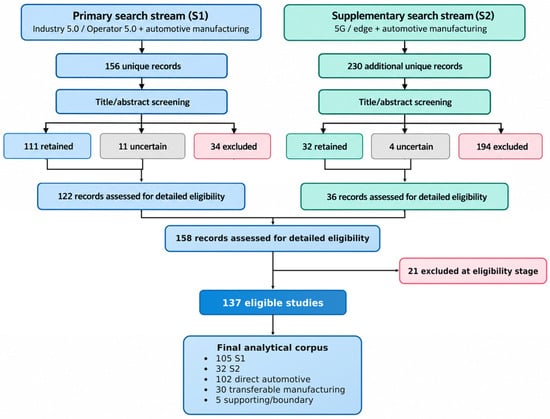
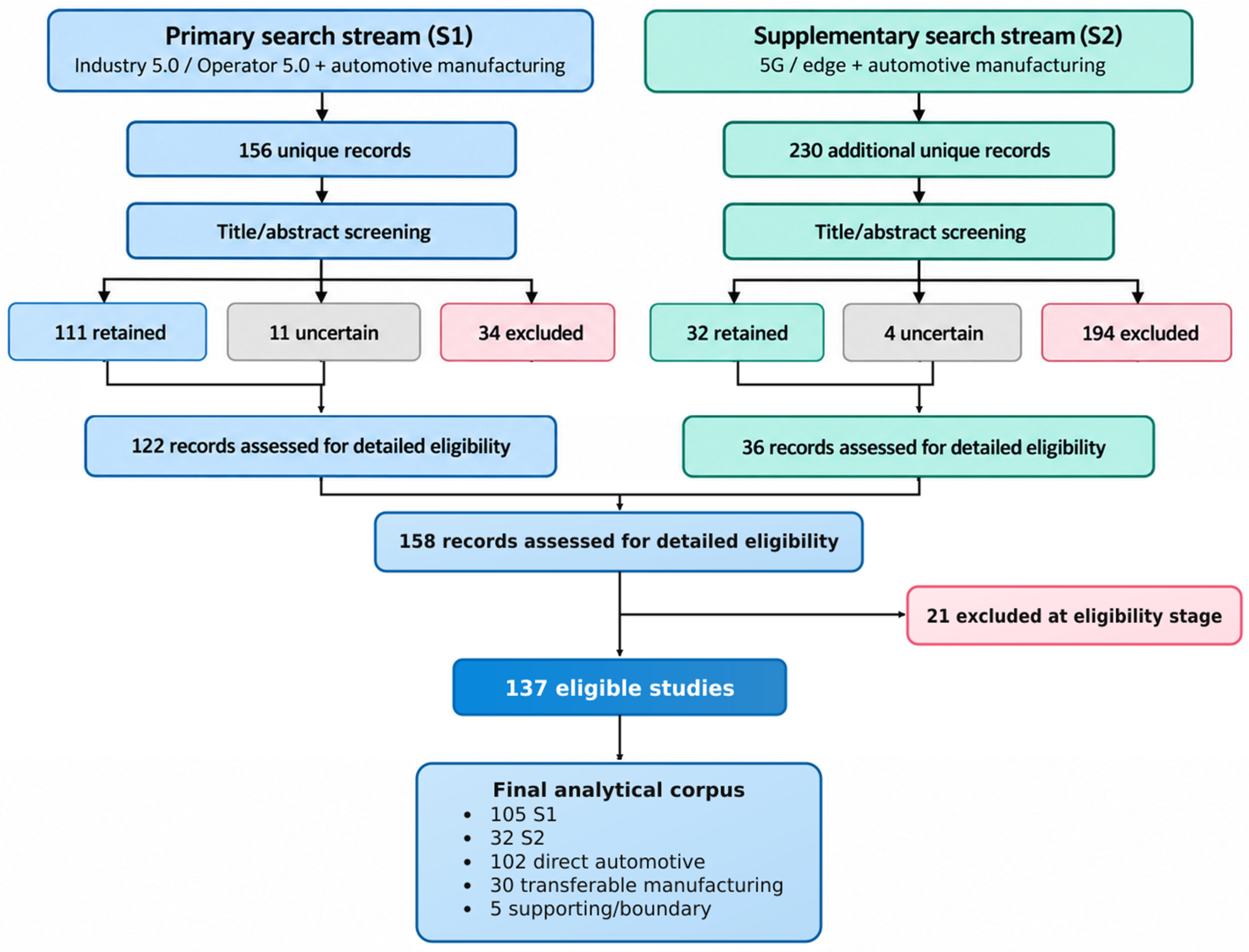
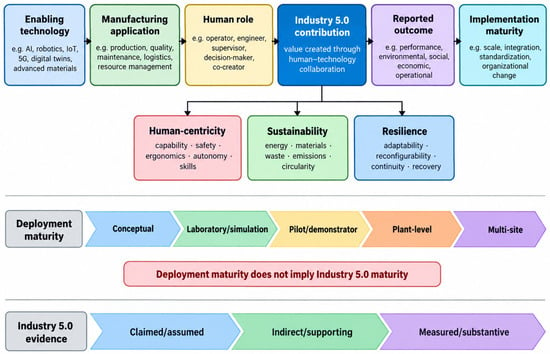
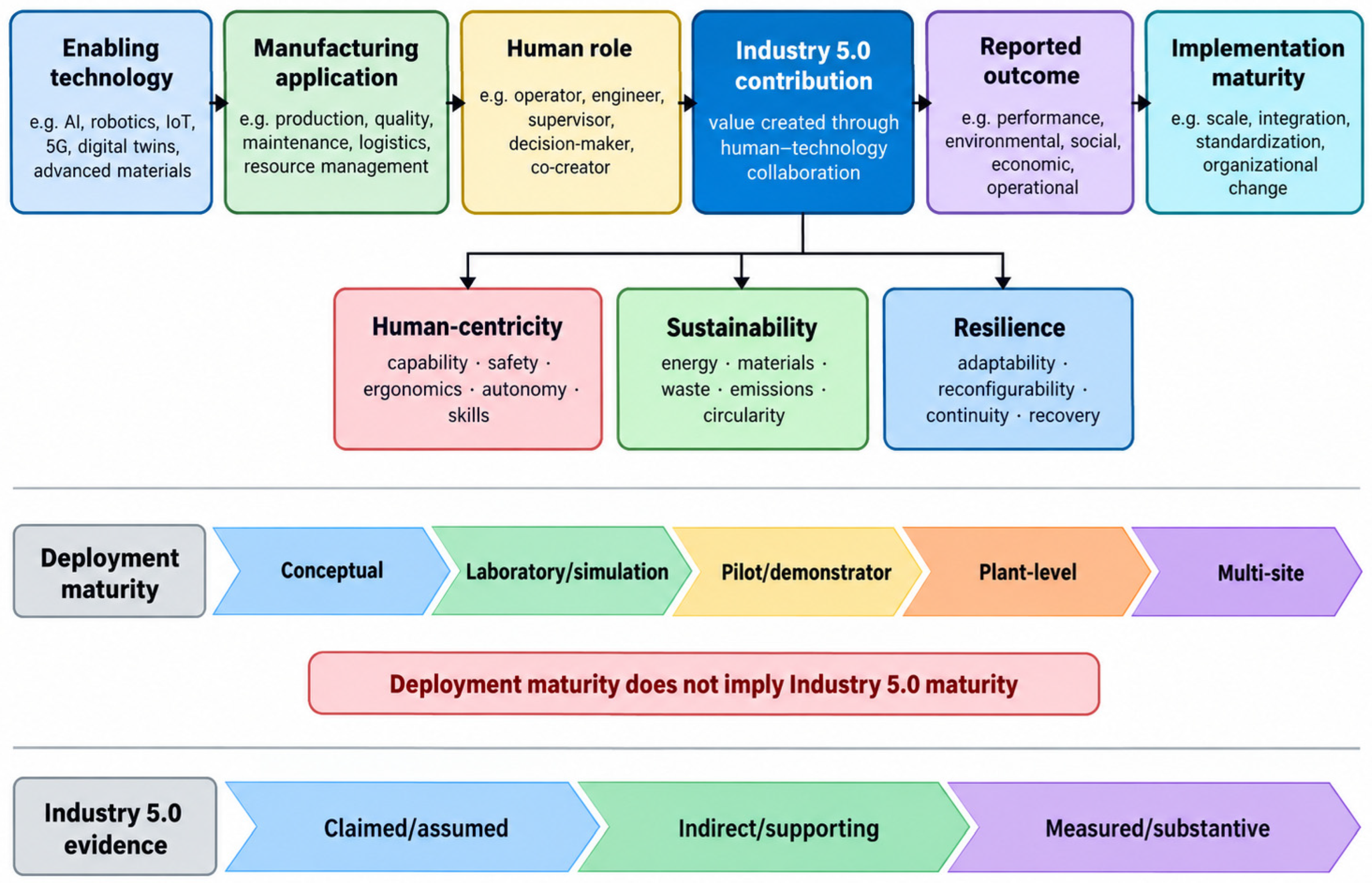
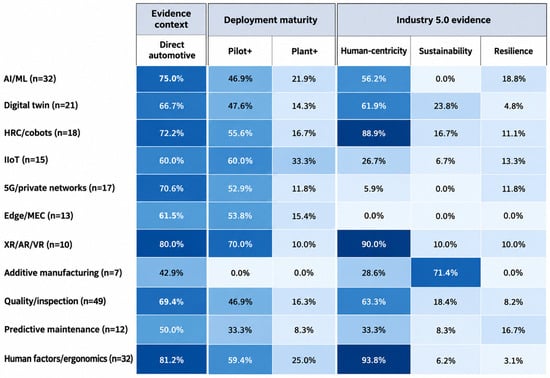
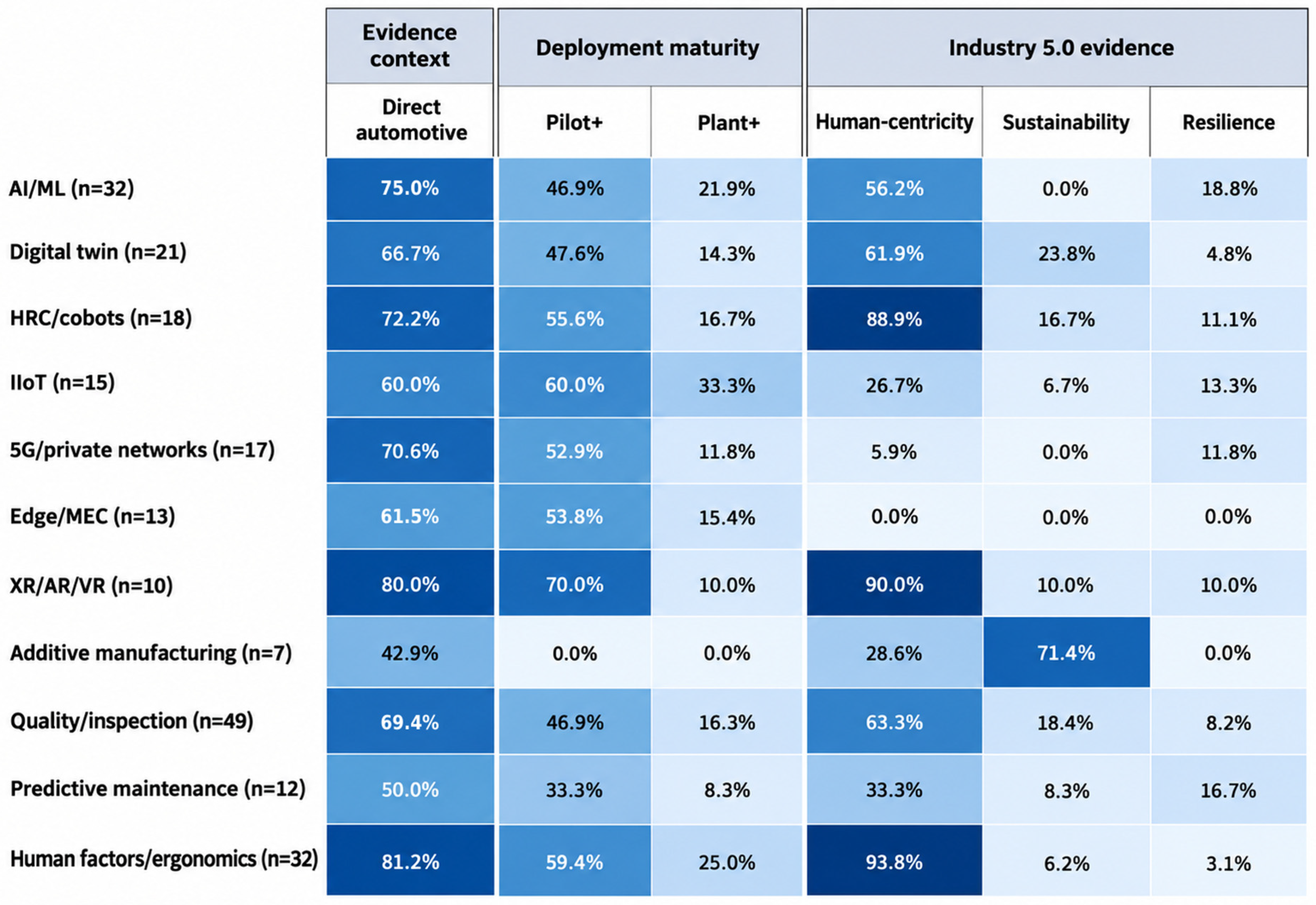

Disclaimer/Publisher’s Note: The statements, opinions and data contained in all publications are solely those of the individual author(s) and contributor(s) and not of MDPI and/or the editor(s). MDPI and/or the editor(s) disclaim responsibility for any injury to people or property resulting from any ideas, methods, instructions or products referred to in the content. |
© 2026 by the authors. Licensee MDPI, Basel, Switzerland. This article is an open access article distributed under the terms and conditions of the Creative Commons Attribution (CC BY) license.