


Abstract
Industrial zinc borate is commonly produced through a hydrothermal process using boric acid and zinc oxide as raw materials. In this study, zinc borate was synthesized by replacing boric acid with borax ore and fresh water with borax plant wastewater in order to improve resource efficiency and water sustainability within an industrial symbiosis framework. Due to side reactions originating from borax, the reaction medium exhibited high ionic strength, and the synthesis was completed at 90 °C in approximately 5 h, slightly longer than conventional industrial processes. An additional washing step was applied to reduce impurities, resulting in a final impurity level of 2966 mg/kg, comparable to that of commercial zinc borate. The use of borax plant wastewater significantly reduced fresh water consumption. However, the formation of a by-product stream containing approximately 16% Na2SO4 may limit direct industrial applicability. If this sodium sulfate stream is valorized within an industrial symbiosis framework, zinc borate production from borax and wastewater could represent a cost-effective and sustainable alternative to conventional processes.
1. Introduction
Metal borates, in which boron is only bonded to oxygen, have a wide range of industrial applications. These compounds can be classified into two categories: hydrated and anhydrous borates. Hydrated borates contain B–OH groups (hydroxyl-hydrated borates) in their structure and may also contain interstitial water. Zinc borate, an important member of metal borates, has been utilized in industry since the 1940s. It exists in eight distinct crystalline forms; however, the form with the composition 2ZnO·3B2O3·3.5H2O (or 2ZnO·3B2O3·3H2O) is considered the most significant among them [1].
Zinc borates are an inorganic additive widely employed in the rubber and plastic industry due to its heat resistance, flame retardant, smoke suppressant, and char promoting properties. They are also used in applications such as modifiers of electrical-optical properties, anti-arcing agents and protection of wood composites. It has even been utilized as a fertilizer in certain studies. 2ZnO·3B2O3·3.5H2O is particularly favored in industrial applications owing to its high thermal stability. This 3.5-mole hydrated zinc borate exhibits the unusual ability to retain its water of hydration at temperatures up to 290 °C, which makes it especially attractive as a flame retardant additive for plastics and rubbers that require high processing temperatures. Zinc borate can also be blended with metal oxides such as Al2O3, SiO2, Sb2O3, ZnO or ZrO2 [2,3,4,5,6,7].
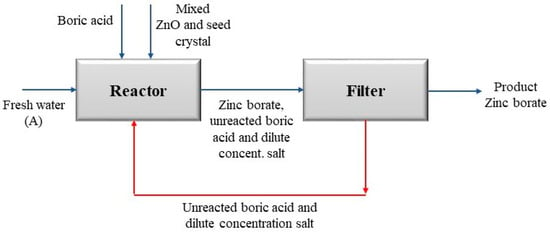
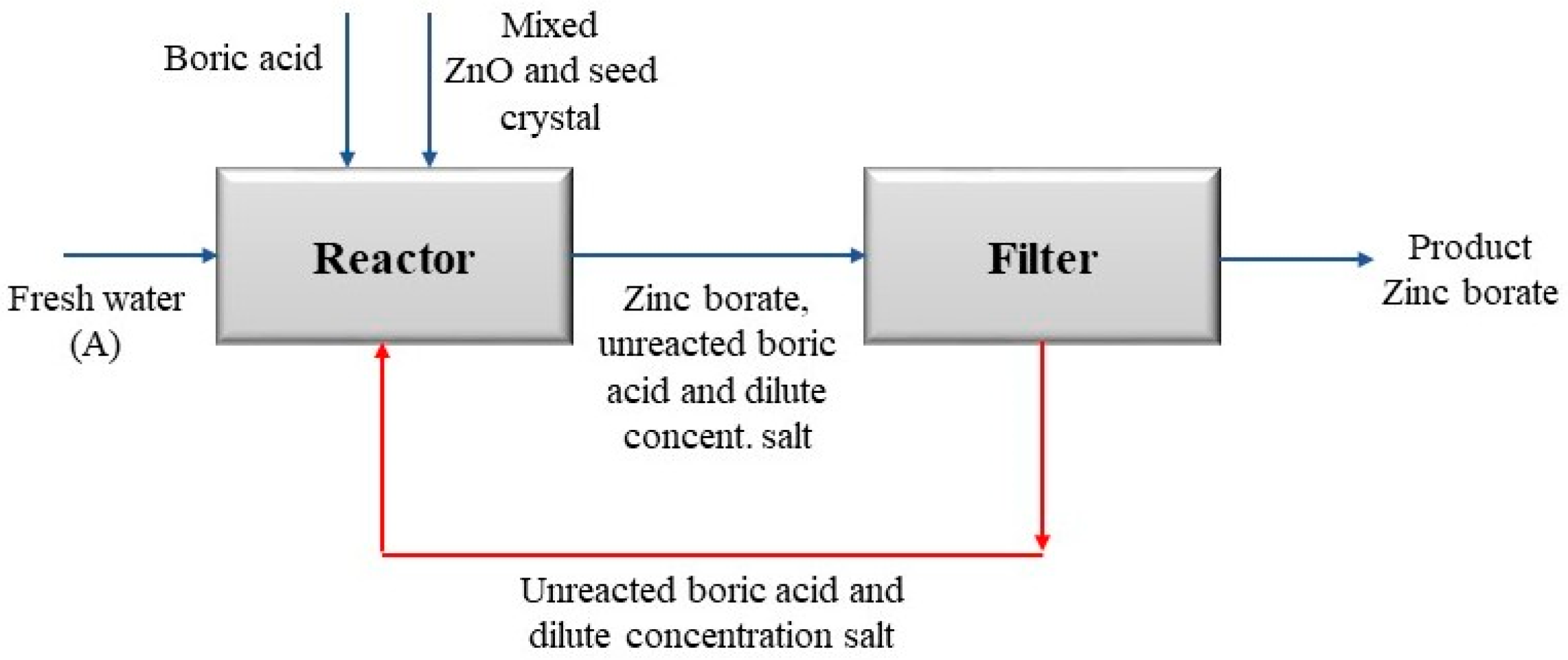
A number of studies in the literature have focused on the modification of zinc borate. During the production process, modifying agents such as oleic acid, PET (polyethylene terephthalate), and PVC (polyvinyl chloride) have been employed to enhance its flame retardancy, hydrophobicity, and morphological properties [8,9,10]. For example, Baran Acaralı et al. (2015) [11] demonstrated that the use of modifying agents such as oleic acid could transform zinc borate from hydrophilic to hydrophobic. This hydrophobic zinc borate has been suggested as a promising candidate for use in wood preservation [11]. Another significant part of the studies has focused on evaluating the effects of the production method and process parameters on product characteristics [12,13]. In this context, zinc oxide, zinc sulfate, or zinc chloride were commonly used as the zinc source, while boric acid (B2O3·3H2O), tincalconite (Na2B4O7·5H2O) or borax were employed as the boron source. The zinc borate synthesis reactions based on different zinc and boron sources are presented below [2,4,14,15]. Hydrothermal process is commonly preferred for the production of zinc borates. During the hydrothermal process, zinc and boron sources are dissolved in a liquid medium and undergo a chemical reaction as a result of elevated temperature [4]. In Türkiye, the industrial production of zinc borate is carried out through a hydrothermal process based on the reaction between zinc oxide with boric acid, as shown in Reaction (1) and Figure 1. As can be seen from this block diagram, seed crystals and ZnO are mixed and fed into the process.
6H3BO3 + 2ZnO → 2ZnO⸱3B2O3⸱3.5H2O + 5.5H2O
2ZnCl2 + 2Na2B4O7 + 6.5H2O → 2ZnO⸱3B2O3⸱3.5H2O + 4NaCl + 2H3BO3
Figure 1.
Flow diagram for industrial zinc borate production.
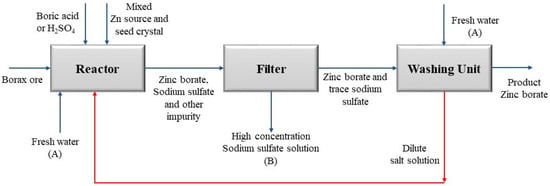
As seen from the above reactions, either boric acid or borax can be used as the boron source in zinc borate production. Borax (Na2B4O7⸱10H2O) is a boron ore, while boric acid is a semi-finished boron compound. Although boric acid is more expensive than borax, it provides a purer boron source. The reaction between boric acid and ZnO does not produce any by-products; therefore, additional operations such as washing or refining are not required in this process. On the other hand, the use of borax in zinc borate synthesis reduces raw material costs. However as seen in Figure 2, various by-products (such as sodium sulfate, sodium chloride, and other sodium compounds) are formed during the reaction. Removing these by-products from zinc borate requires additional washing steps and additional freshwater input. Moreover, new waste streams may also arise from washing and refining operations. When the flow diagrams in Figure 1 and Figure 2 are compared, a high concentration sodium sulfate side stream (stream C) is formed in the borax process and fresh water is input from two different points (stream A). All these factors may limit the use of borax, especially in terms of water sustainability and environmental sustainability.
Figure 2.
Conventional process for the production of zinc borate from borax.
As explained above, in a hydrothermal process both zinc and boron sources are dispersed and dissolved in a liquid medium. To make the use of borax more feasible, the wastewater obtained from borax plants can be used instead of fresh water in the reaction unit. Utilizing borax plant wastewater as the reaction medium allows the process to offset the freshwater demand associated with product washing. In other words, by feeding wastewater into the reactor, the freshwater consumption in the washing unit can be balanced. Furthermore, the boron content present in borax plant wastewater can also contribute to the overall boron supply in the reaction system. This study presents a preliminary assessment of the feasibility of utilizing borax and borax plant wastewater simultaneously in zinc borate synthesis and also evaluates the process in terms of sustainability and industrial symbiosis.
In recent years, the sustainable use of natural resources and the valorization of industrial waste streams have become critical issues in chemical process design. The integration of waste materials into value-added production processes is also known as industrial symbiosis, which not only reduces environmental impact but also provides economic benefits [16,17,18]. In this context, the use of borax plant wastewater in zinc borate synthesis offers a dual advantage: it minimizes waste discharge and simultaneously provides an alternative boron source for the reaction medium. Such an approach highlights the link between material synthesis, circular economy principles, and water sustainability. However, the incorporation of borax plant wastewater and borax ore introduces a highly ionic environment that may alter the mass transfer characteristics of the system. Therefore, understanding the reaction behavior of zinc borate formation under such sustainable but complex conditions is crucial for scaling up environmentally integrated processes.
This study provides a preliminary assessment of zinc borate production from borax and borax plant wastewater, focusing on process feasibility and reaction behavior under high ionic strength conditions. The first focuses on making zinc borate production from borax more feasible by incorporating borax plant wastewater into the process. By using this stream, the study supports industrial symbiosis and circular economy principles, while emphasizing the sustainable use of water resources. The second contribution involves examining the reaction behavior under high ionic strength conditions arising from both the borax and the wastewater. The purity of the synthesized zinc borate was analyzed and compared with that of commercial zinc borate. In this context, findings that are rather limited in the literature were obtained, since most previous studies did not evaluate the zinc borate production process in terms of product purity.
2. Materials and Methods
2.1. Raw Materials
In this study, zinc borate was synthesized via a hydrothermal process using zinc oxide (ZnO), seed crystals of zinc borate (2ZnO·3B2O3·3.5H2O), borax decahydrate (Na2B4O7·10H2O), and the borax plant wastewater as the reaction solution.
Zinc oxide was sourced from a local Turkish supplier. Borax ore, zinc borate seed crystals, and the borax plant wastewater, originating from a borax production facility, were provided by the Eti Mine General Directorate (Türkiye). The wastewater exhibited high ionic strength (approximately 30 mS/cm conductivity value) due to elevated levels of sodium sulfate and other process-related salts. Furthermore, it contained dissolved borax, indicating that it functioned not only as a solvent but also as an additional boron source in the synthesis process.
This approach not only transforms industrial waste into a useful reagent but also supports resource recovery and circular economy principles by minimizing environmental discharge and utilizing waste streams for value material synthesis.
2.2. Experimental Procedure
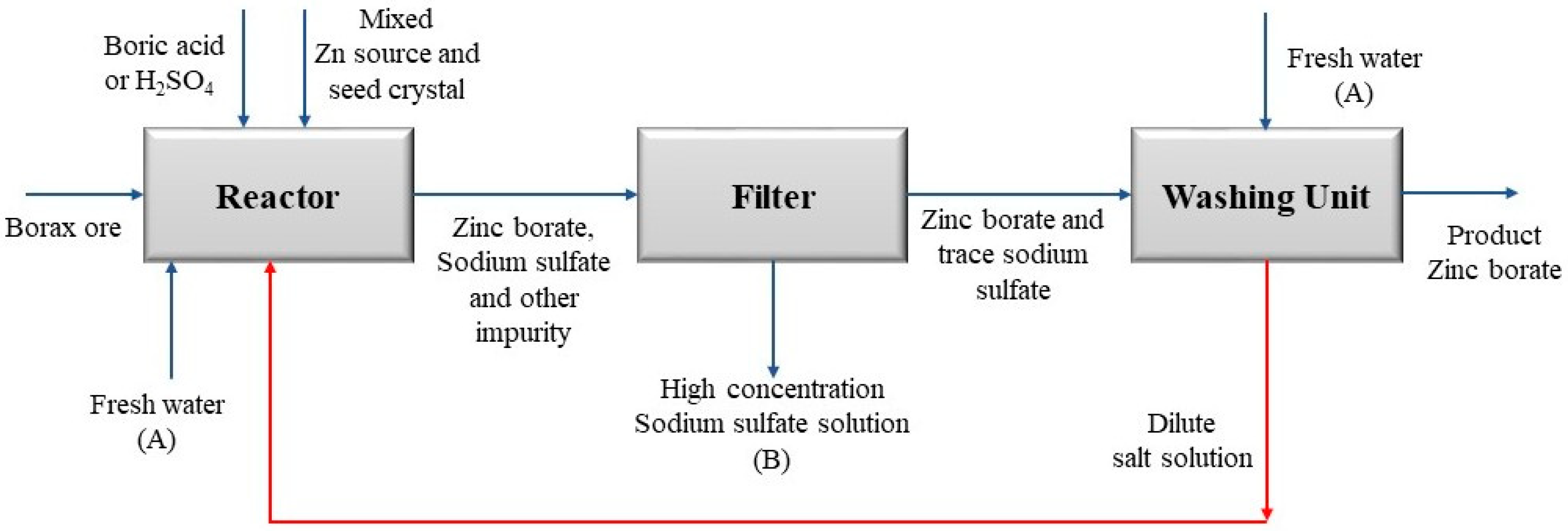
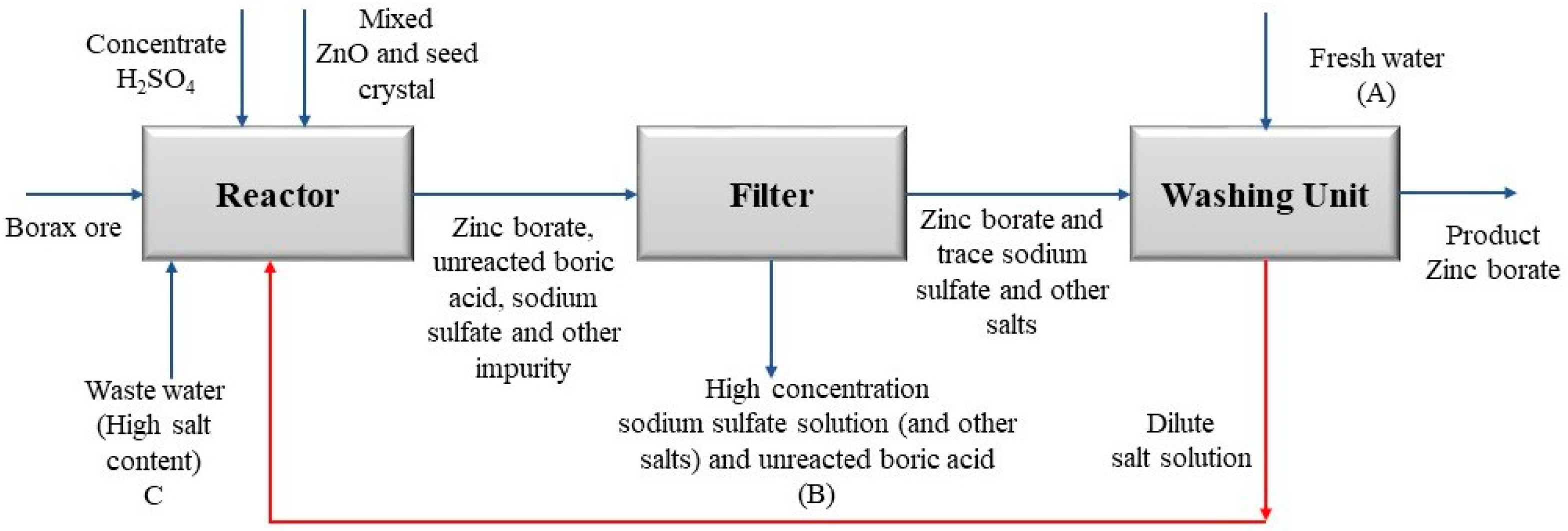
The experimental study was carried out in two main steps. In the first stage, boric acid was synthesized in situ by reacting borax ore with sulfuric acid in the wastewater medium. Subsequently, zinc oxide (ZnO) was added to the boric acid-containing solution to synthesize zinc borate. The schematic process flow for the synthesis steps is illustrated in Figure 3.
Figure 3.
Zinc borate production flow diagram proposed within the scope of the study.
The reactions proceeded as follows:
Na2B4O7⸱10H2O + H2SO4 → 4H3BO3 + Na2SO4 + 5H2O
6H3BO3 + 2ZnO → 2ZnO⸱3B2O3⸱3.5H2O + 5.5H2O
The experiments were conducted in a 500 mL jacketed glass reactor equipped with a water circulator for heating and a mechanical stirrer. Initially, 300 mL of borax plant wastewater (approximately 1.5% B2O3) with a pH of 10.2 was transferred into the reactor. Approximately 25 mL of concentrated sulfuric acid (98%, w/w) was added to the solution to decrease the pH below 1. The mixture was then heated to 92 °C. At this temperature, 120 g of borax ore (36 wt. % B2O3) was introduced into the reactor. Upon dissolution and reaction of borax, the pH increased to 4. This reaction step (Reaction (1)) was completed within a few minutes.
Following this, a premixed solid feed consisting of 35 g of ZnO and 1.2 g of seed crystals (2ZnO·3B2O3·3.5H2O) was added to the medium. After its addition, the pH stabilized around 5. The reaction was carried out under continuous stirring at 1200 rpm, and reaction times were fixed at 2 h, 3.5 h, and 5 h to evaluate the time-dependent effects on product formation.
At the end of the reaction, the suspension was filtered under vacuum using triple-layered filter paper. The solid product was washed thrice with hot distilled water (~90–95 °C) to remove soluble salts, especially Na2SO4, and then dried in an oven at 105 °C for 24 h. The mass of the dried solid product was recorded for further analysis. The samples obtained from the reactions conducted at 2, 3.5, and 5 h were coded as ATZB-1, ATZB-2, and ATZB-3, respectively, and were used in subsequent characterization studies. Experimental conditions and associated codes are given in Table 1. All experiments were conducted at least in duplicate to ensure reproducibility of the results.
Table 1.
Experimental conditions and codes.
The experimental method applied in this study shows strong similarities to the synthesis route described in Japanese Examined Patent Publication No. 20902/1971, where a mixture of borax and boric acid is reacted with zinc oxide under acidic aqueous conditions followed by seeding. However, since the process does not appear to involve any secondary or industrial waste streams, it is understood that the method does not present a sustainability-oriented or resource-recovery-based approach [5].
2.3. Product Characterization
The products obtained at different reaction durations (2, 3.5 and 5 h) were characterized to evaluate phase formation and product purity. X-ray diffraction (XRD) analysis was conducted to monitor the phase evolution and determine whether the transformation to the desired zinc borate structure was completed. The crystalline structure of the synthesized products was also confirmed by both XRD and thermogravimetric analysis (TGA). In particular, TGA data supported the identification of hydrate forms by revealing characteristic weight loss patterns corresponding to dehydration steps.
To evaluate the elemental purity and detect possible impurities, inductively coupled plasma optical emission spectrometry (ICP-OES) was employed. This analysis provided quantitative data on residual sodium and other elements originating from both the wastewater and side reaction.
3. Results and Discussion
In zinc borate production, many parameters affect both reaction conversion and product morphology. These include reaction temperature, reaction time, use of seed crystals, H3BO3/ZnO molar ratio, ZnO particle size, ZnO purity, as well as hydrodynamic factors such as the presence of baffles, stirring speed, and impeller type. Since the present study serves as an initial investigation and reaction time is also a critical parameter under industrial conditions, the effect of reaction time on conversion was considered in this work.
In industrial chemistry, producing value-added materials from complex raw material and waste streams is not just a process—it is a transformation challenge, and reaction time often plays a key role. In this study, the synthesis of zinc borate from borax plant wastewater and borax ore was evaluated under controlled experimental conditions to investigate the effect of reaction duration on reactant conversion and mineralogical structure. Additionally, macro and micro impurities in the product were examined.
3.1. Monitoring Reactant Conversion with XRD Analysis
Zinc borate synthesis represents an ideal example for solid–liquid heterogeneous phase reaction systems. In this system, both the reactant ZnO and the product zinc borate are insoluble in the reaction solution medium. The solid phase obtained after reaction may contain not only the desired zinc borate but also unreacted zinc oxide and various mineral phases. When the reaction conversion is high, zinc borate will make up nearly all of the solid phase. But, if various mineral phases (such as by-products or impurities) are formed depending on side reactions and borax ore composition, they will also be present in the solid phase. Thus, the solid phase formed as a result of the reaction may contain zinc borate, zinc oxide and various mineral phases, depending on the progress of the reaction. In order to monitor the progress of the reaction, it is necessary to analyze the mineralogical composition of the solid phase. Therefore, the reaction system was monitored using XRD analysis.
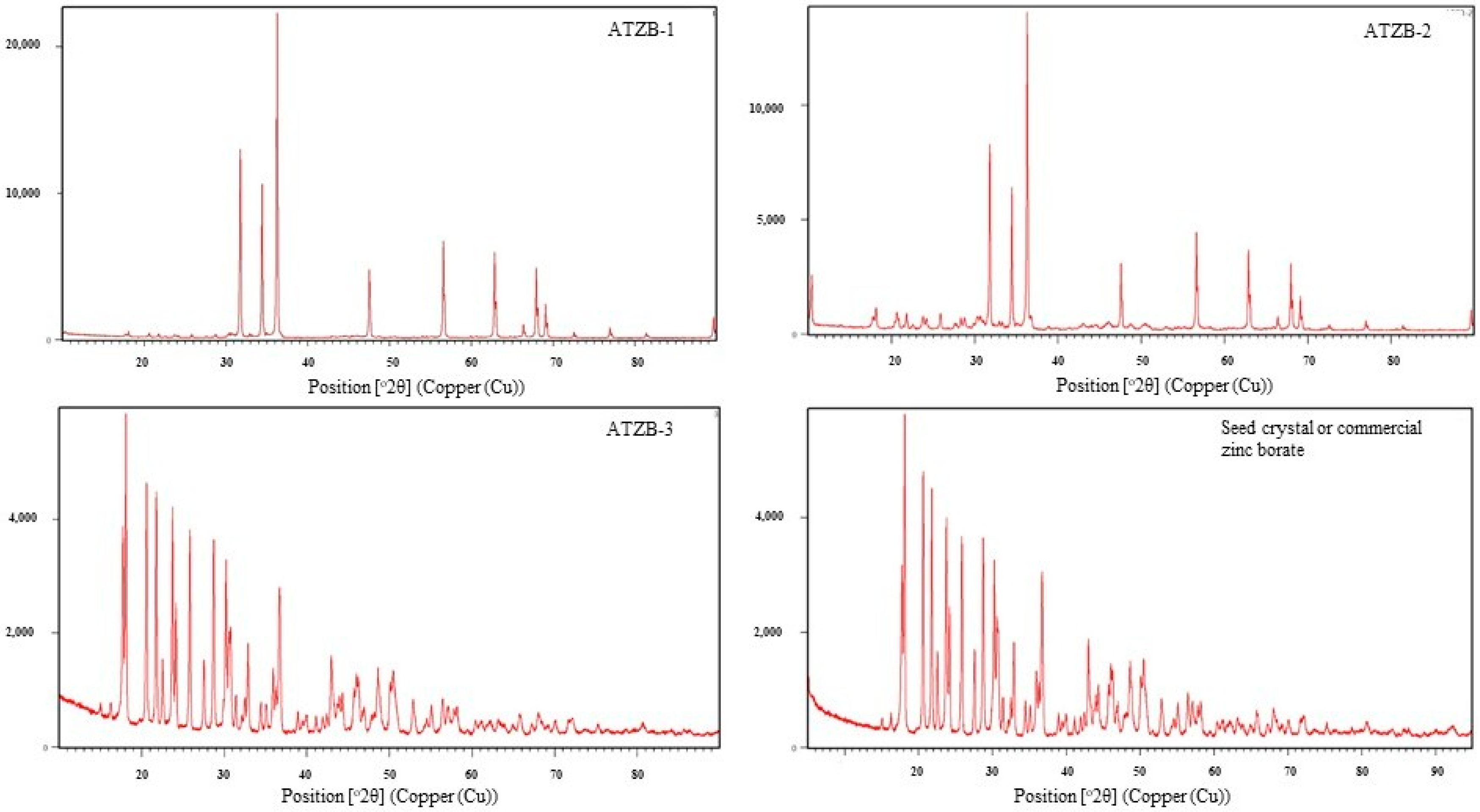
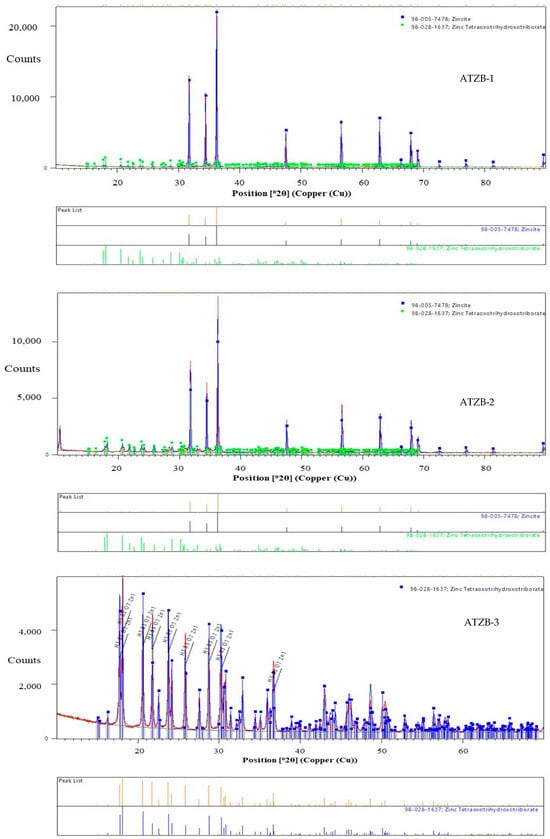
X-ray diffraction (XRD) analyses were performed using a PANalytical EMPYREAN diffractometer equipped with a Cu Kα radiation source (λ = 1.5406 Å). The measurements were conducted in continuous scan mode over a 2θ range of 10.00° to 90.00°. Phase identification was carried out by matching the experimental diffraction patterns with reference data from the International Centre for Diffraction Data (ICDD) Powder Diffraction File (PDF) database. XRD patterns of solid phases coded ATZB-1–2 and 3 obtained after reaction are given in Figure 4. Additionally, the XRD pattern of commercial zinc borate is also provided for comparison purposes.
Figure 4.
XRD pattern of commercial zinc borate with ATZB-1, 2 and 3 codes.
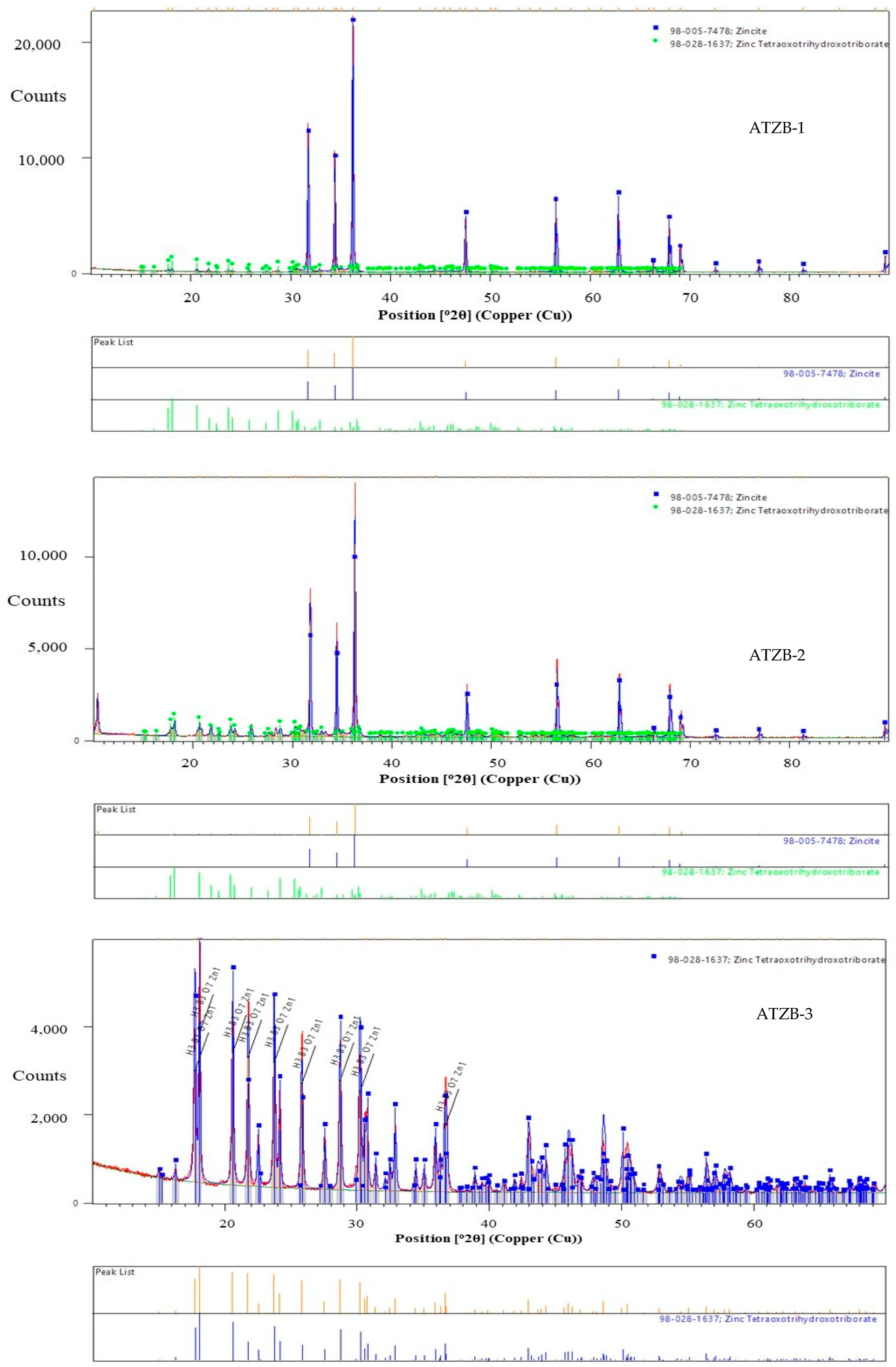
Phase analysis using PDF database (Figure 5) matching confirmed the existence of only two distinct crystalline phases in the ATZB-1 and ATZB-2 samples: zinc oxide (ZnO; ICDD references code 98-005-7478) and zinc borate (2ZnO⸱3B2O3⸱3H2O; ICDD references code 98-028-1637). The zinc oxide phase represents the unreacted portion of the starting material. In contrast, only the zinc borate phase was detected in the ATZB-3 sample, in the absence of any residual ZnO phase. The findings indicate that the conversion of ZnO was not yet complete after 3.5 h of reaction, and the synthesis of zinc borate was still proceeding.
Figure 5.
For XRD patterns, PDF comparison of products coded ATZB-1–2 and 3.
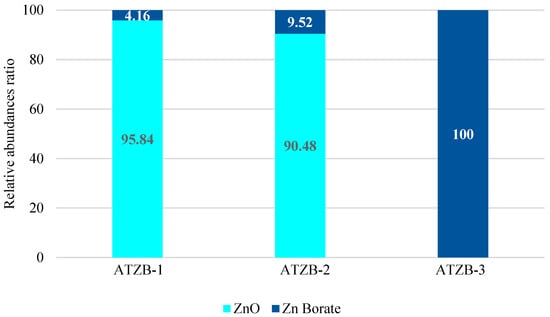
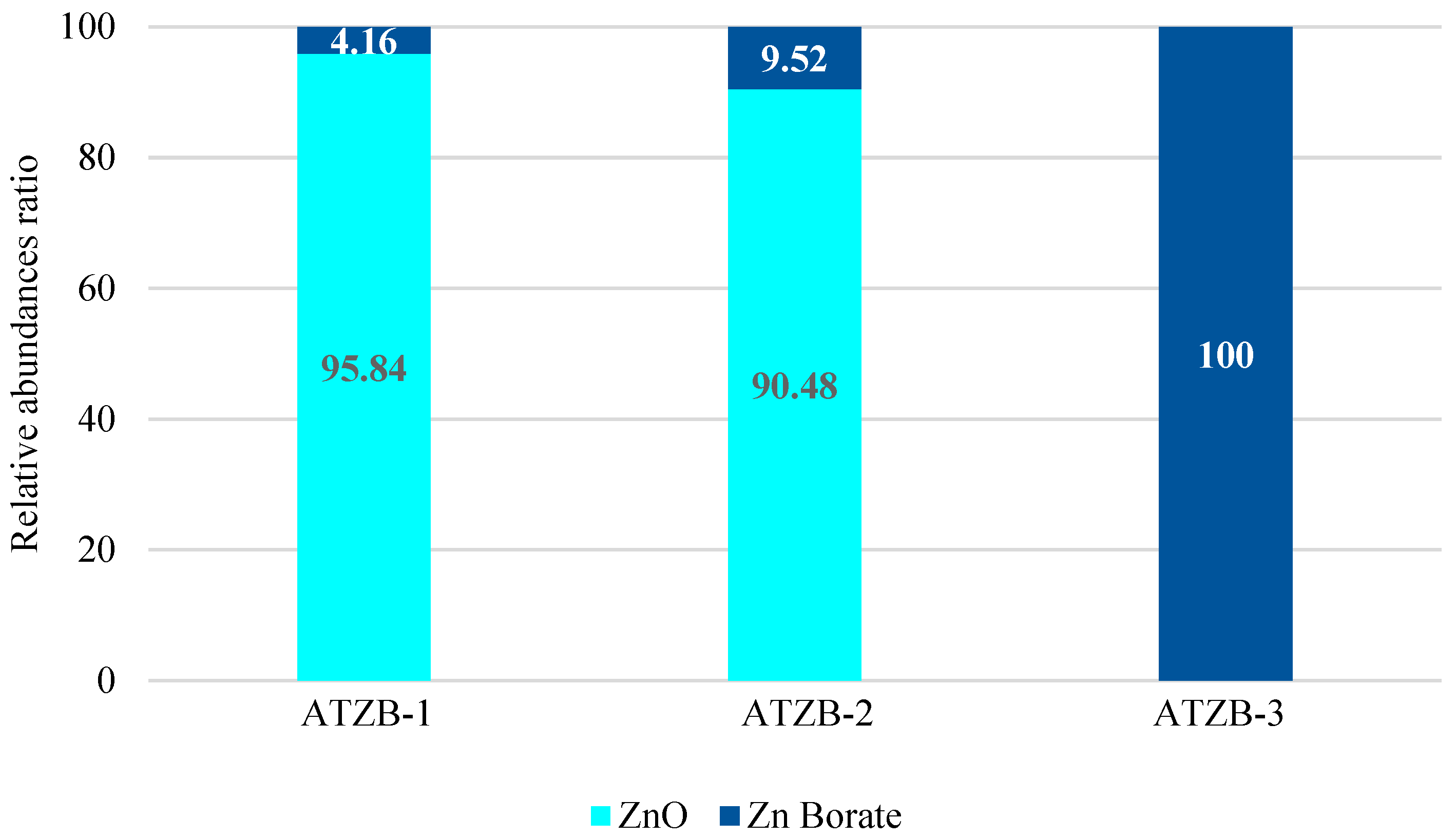
The relative abundance represents the proportion of each phase present in the XRD pattern and can be determined by Rietveld refinement analysis. Rietveld refinement optimizes the XRD data using a mathematical model and, as a result of this optimization, determines important parameters such as scale factors. Scale factor values are presented in XRD reports. In this context, the ratio of the scale factor of a given phase to the sum of the scale factors of all identified phases can be considered as its relative abundance. In this way, the mineralogical composition can be quantitatively estimated. The calculated phase abundances are presented in Figure 6.
Figure 6.
Relative abundances ratio for ATZB-1–2 and 3.
The evolution of phase formation as a function of reaction time was quantitatively evaluated using the calculated relative phase abundances. However, these quantitative values should be interpreted with caution, as XRD-based phase quantification relies on scale factors obtained through Rietveld refinement, which involves assumptions and model-dependent approximations. According to these data the solid phase formed after a 2 h reaction (ATZB-1) consisted of 4.16% zinc borate and 95.84% unreacted ZnO. When the reaction time was extended to 3.5 h (ATZB-2), the proportion of zinc borate in the solid phase increased to 9.52%. However, a significant conversion of the reactants had still not occurred, as approximately 90% of the ZnO remained unreacted. After 5 h of reaction (ATZB-3), a complete conversion was achieved, and the resulting solid phase was found to consist almost entirely of zinc borate. The data clearly show that increased reaction time leads to a significant improvement in ZnO conversion to zinc borate under the given experimental parameters.
According to the data obtained, the 3.5 h reaction duration was found to be insufficient for complete conversion of the reactants, and the optimum reaction time was determined to be close to 5 h. In this context, the proposed process is considered to require a relatively long reaction period. It is known that lower reaction times are required in zinc borate studies both in industrial conditions and in the literature. In a pilot-scale study using boric acid as the starting material, it was stated that zinc borate formation was not completed until 140 min, but was completed at 160th minutes [2]. On the other hand, there are studies stating that the reaction is completed in 4.5 h at 90 °C [3]. In a study where tincalconite was used as the boron source and zinc sulfate heptahydrate as the zinc source, complete conversion was reported to occur within 4 h [4].
Although the required time for the completion of the reaction is reported differently in various studies, this should not be considered a contradiction. This variation arises from the fact that the reaction time depends on process parameters such as stirring rate, impeller type, and the H3BO3/ZnO molar ratio. For example, although the study cited above stated that the reaction was completed in 160 min, the authors also reported that the reaction time could be increased to 320 min when the H3BO3:ZnO molar ratio was adjusted to 3.5:1 [2]. In the present study, boric acid was synthesized in situ from borax. Considering the amount and B2O3 content of borax used (36.47%), the calculated H3BO3:ZnO molar ratio was 3.23:1, as presented in Table 1. Therefore, the relatively low H3BO3:ZnO molar ratio may have a significant impact on the long reaction time observed in this work. There may be several other reasons for the long reaction time than those explained here. High ionic strength in the reaction medium (e.g., sodium sulfate) may trigger the rate-limiting effects of both external diffusion and surface reactions.
When zinc oxide and boric acid are used, the zinc borate synthesis mechanism is a surface reaction and the reaction proceeds on the surface of zinc oxide particles. The first step is the diffusion of borate ions in the solution medium to the zinc oxide surface. In the second step, zinc borate nucleation begins on the zinc oxide surface and in the final step, mature zinc borate nuclei precipitate [2]. In this context, some studies have reported that mass transfer is the rate-limiting step [1] whereas others have identified surface reaction as the rate-controlling step [3].
As shown in Reaction (3), a significant amount of sodium sulfate (Na2SO4) is produced in the medium. The concentration of sodium sulfate in the reaction solution is approximately 16% (w/v) and subsequently dissociates into Na+ and SO42− ions. In addition, the borax plant wastewater used in this study contains various ionic species and impurities as seen as Table 2 and Table 3. As a result, the ionic concentration of the reaction solution—particularly sodium and sulfate ions—is considerably high.
Table 2.
Some characteristics of borax plant wastewater.
Table 3.
Comparison of micro impurities (as mg/kg) contained in the product zinc borate (ATZB-3) with raw materials and commercial zinc borate.
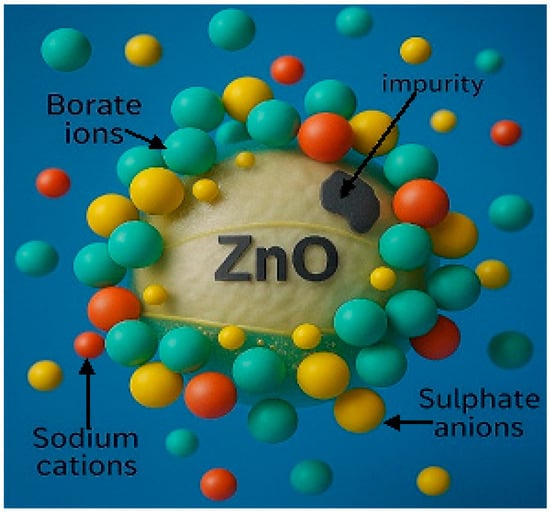
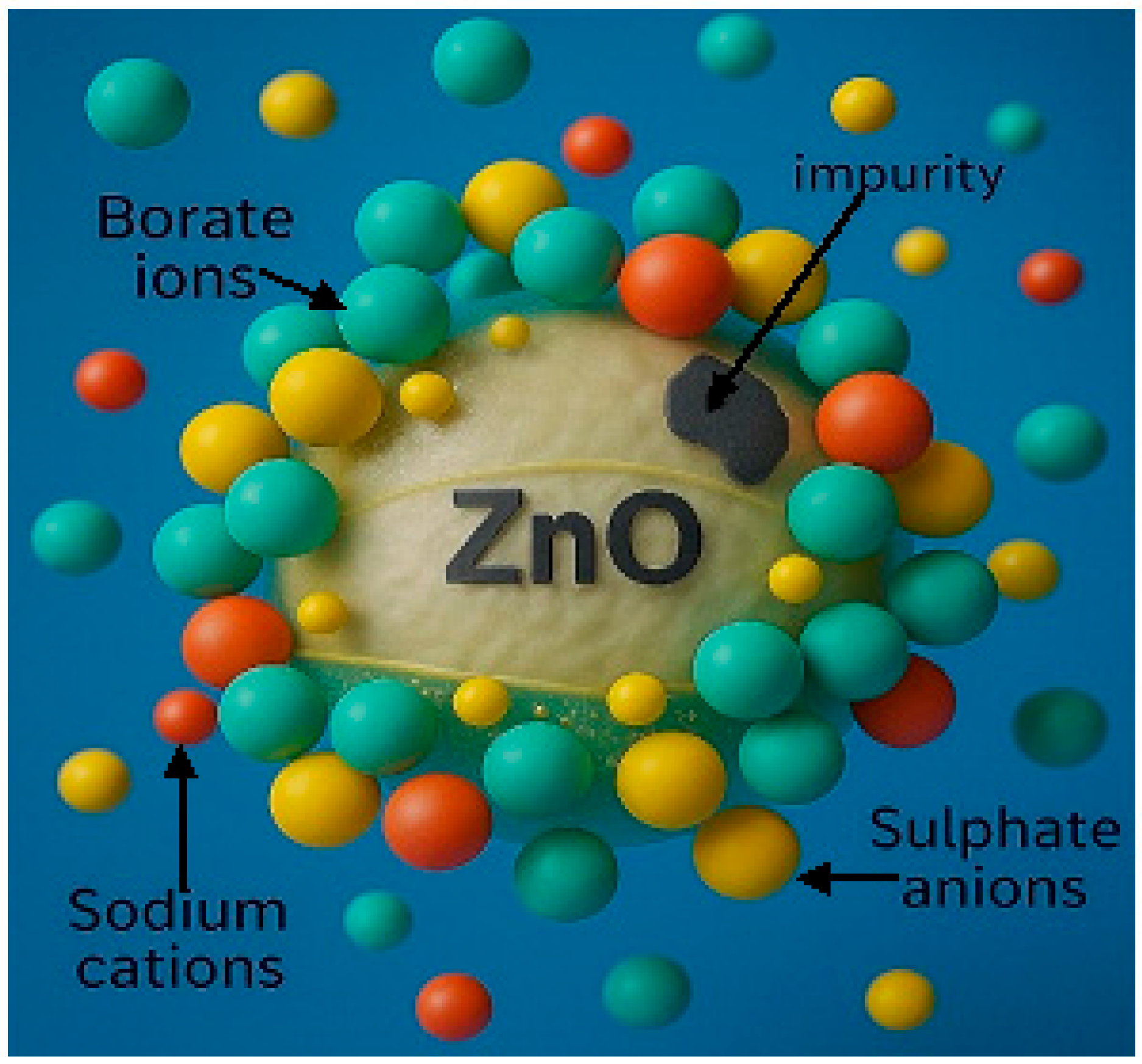
This elevated ionic load—or level of impurity—may restrict the diffusion of borate ions toward the ZnO surface, as conceptual schematically illustrated in Figure 7, thereby delaying the diffusion process. Consequently, the reaction completion time may be extended. Ionic strength is a significant parameter in processes conducted in solution medium. It has considerable effects on various processes such as solubility, nucleation, diffusion, and sorption. For instance, in a study investigating the impact of anionic impurity on the solubility of borax decahydrate, it was reported that increasing the ionic strength of the solution resulted in decreased borax solubility. Additionally, salts such as sodium sulfate and sodium chloride were found to exhibit a salting-out effect on borax. Furthermore, it was noted that the level of impurity could also influence the nucleation of borax [19].
Figure 7.
Impurity blockage and ion diffusion to ZnO surface (as a conceptual schematic).
Since the reaction takes place on the ZnO surface, impurities or blockage on this surface may also reduce the reaction rate and cause delays. In the study by Kılınç et al. (2010) [2], ZnO with different purity levels was used, and it was found that higher impurity levels led to slower reactions and longer reaction times. In the present study, zinc oxide with commercial grade was used, not analytical grade. Therefore, it is possible that some impurities on the ZnO particles delayed the surface reaction.
The reaction completion time is a significant factor determining production capacity in industrial processes. Within the scope of this study, it can be stated that the reaction completion time in the proposed process is relatively long. It is thought that there may be two main reasons. First, the low molar ratio of boric acid to zinc oxide in the medium. Second, the high ionic strength in the reaction solution due to side reactions and wastewater, which may cause delays in the diffusion process. It is believed that these issues can be overcome either by increasing the boric acid/ZnO molar ratio or by implementing an effective mixing process.
3.2. Characterization with Thermal Analysis
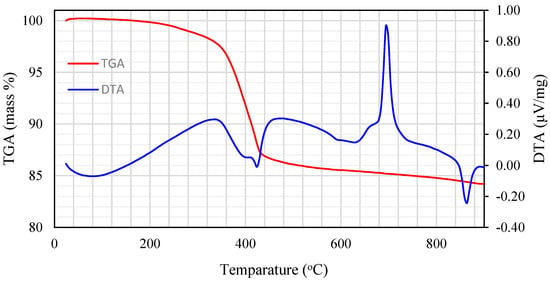
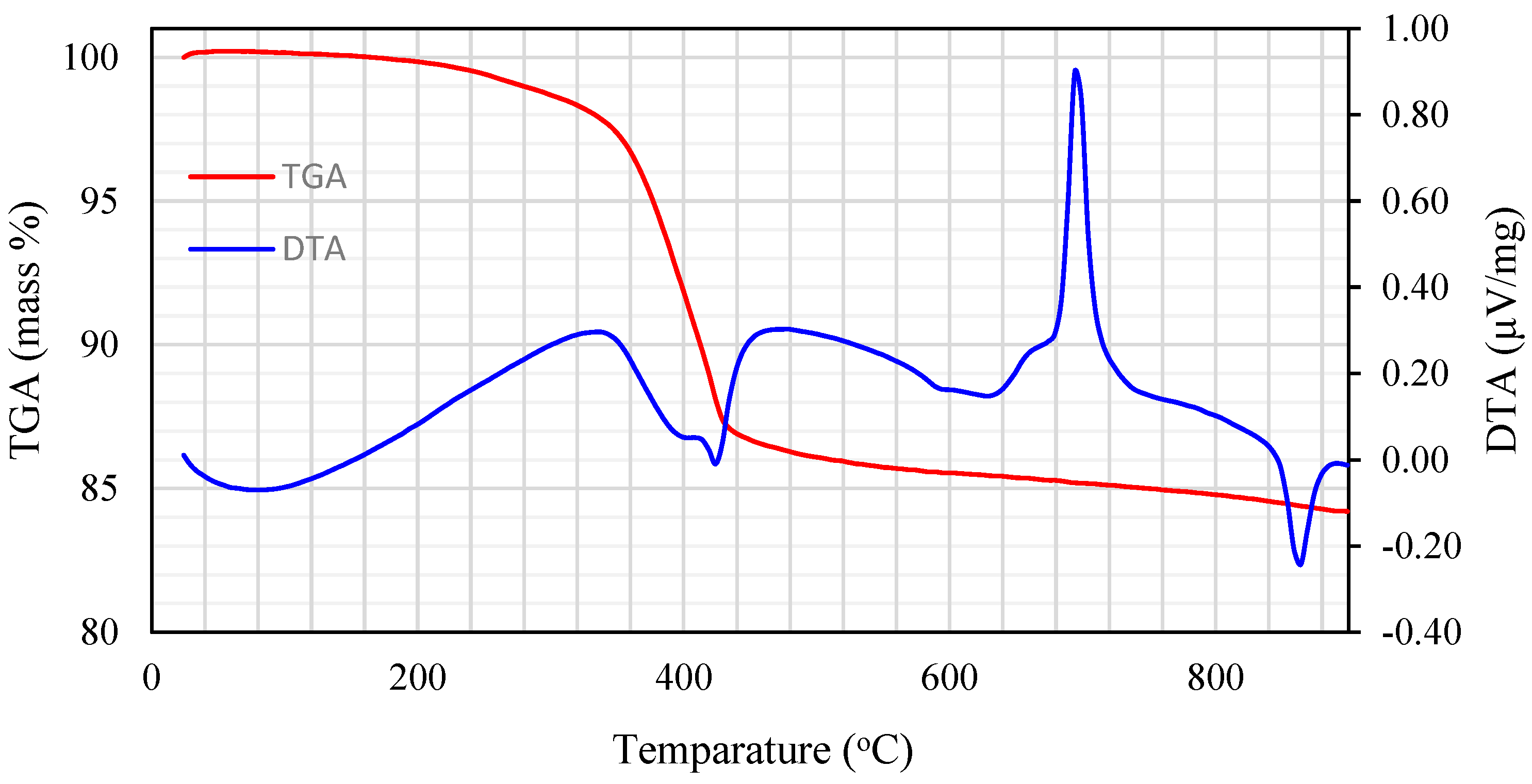
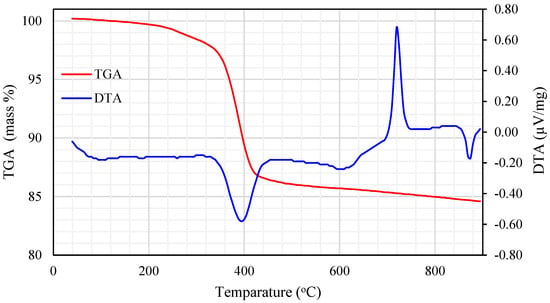
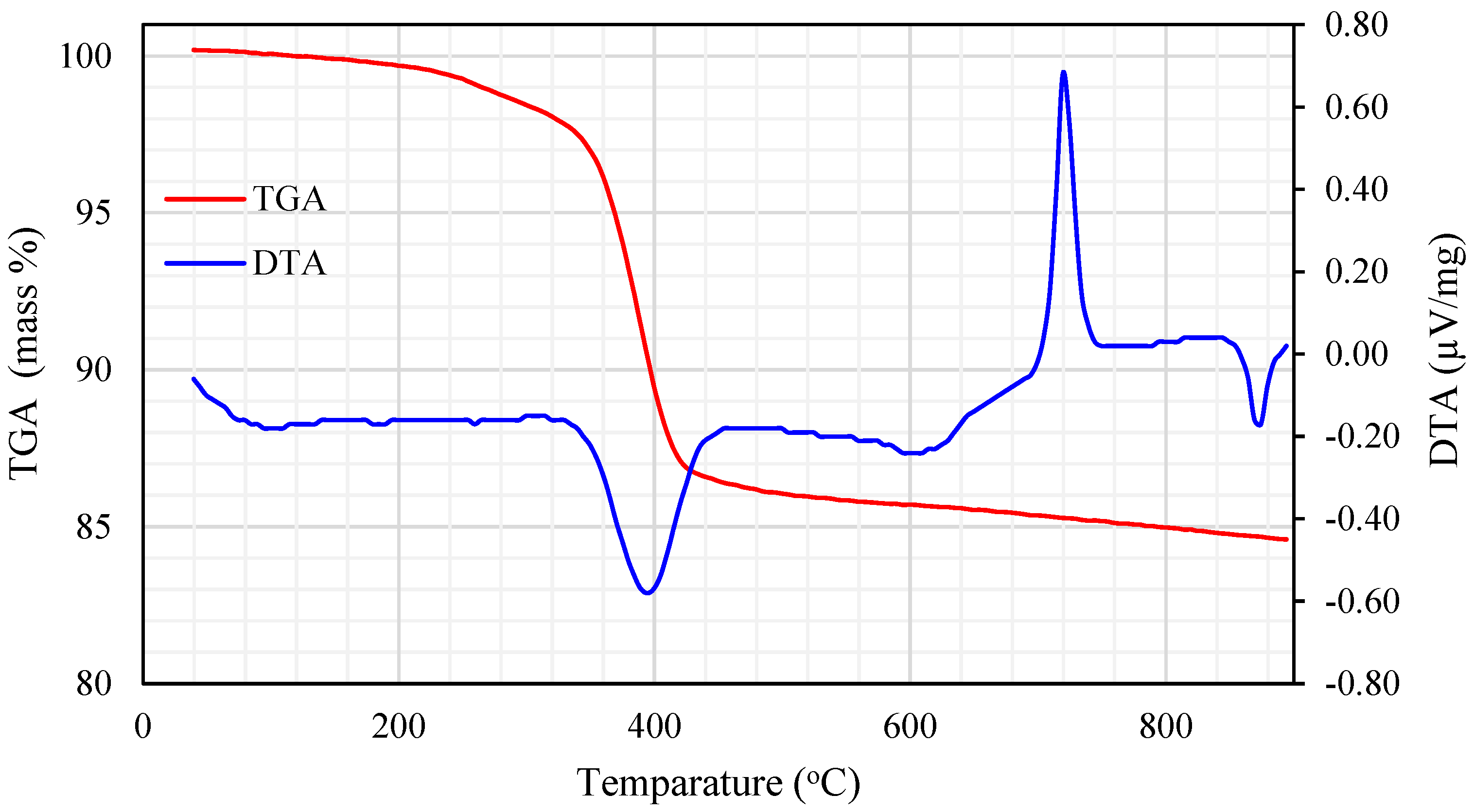
Thermal analysis is essential not only for evaluating the thermal stability of the product, but also for determining the amount of hydration water present in the crystal structure. According to XRD data, the synthesized zinc borate corresponds to the 2ZnO·3B2O3·3H2O crystal structure. However, both the seed crystal used and the reaction stoichiometry were based on the 2ZnO·3B2O3·3.5H2O formula. Similarly to literature studies [14,20,21], thermal behavior of the ATZB-3 sample was evaluated by simultaneous TGA-DTA analysis in Figure 8. For comparison, the TGA curve of the seed crystal representing commercial zinc borate is also given in Figure 9. A total mass loss of 15.05% was observed, which corresponds to the release of 3.5 moles of water per formula unit. This indicates that the empirical formula of the sample is 2ZnO·3B2O3·3.5H2O. In fact, there is no conflict between XRD and thermal analysis data. Because in their study [1], Schubert et al. (2003) suggested that the zinc borate structure may contain interstitial water or species loosely bound within the crystal structure, and therefore the crystal composition commonly described as 2ZnO·3B2O3·3.5H2O could in fact be revised to 2ZnO·3B2O3·3H2O (or Zn[B3O4(OH)3]).
Figure 8.
TGA-DTA curves of zinc borate obtained from the experiment coded ATZB-3.
Figure 9.
TGA-DTA curves of commercial zinc borate (or seed crystal).
The relatively high dehydration onset temperature of zinc borate enhances its thermal stability, making it particularly attractive for high-temperature polymer processing and fire-retardant applications [2,3].
Examination of the DTA curves shows that the Tonset temperatures of both the synthesized zinc borate and the commercial product are approximately 340 °C. The prominent endothermic peaks observed at 424 °C for the ATZB-3 sample and at 394 °C for the commercial zinc borate correspond to the temperatures at which the dehydration process reaches its maximum rate. These findings are consistent with previous reports in the literature [22,23]. In addition to this main dehydration event, the ATZB-3 sample displays an exothermic peak at around 336 °C. This feature may be associated with the exothermic transformation of a minor impurity phase or the crystallization of partially amorphous phases formed during synthesis. Therefore, although the overall dehydration temperature of the synthesized product is comparable to that of the commercial zinc borate, its thermal behavior exhibits partial deviations, likely due to structural heterogeneities and residual species originating from the synthesis environment.
3.3. Impurity Analysis of the Product
The number of studies in the literature that take into account the purity level of zinc borate is limited. Some research has focused on the production of zinc borate with low chlorine content, as the presence of chlorine can restrict its use in the manufacturing of printed circuit board (PCB) [24]. One of the principal objectives of this study is to evaluate the purity of zinc borate synthesized under high-ionic-strength conditions created by both borax ore and borax plant wastewater. This is because impurities in borax and in wastewater can pass into the zinc borate product and lower its purity. If the purity level of the synthesized product is similar to that of commercial zinc borate, this would represent one of the advantages of the proposed process. In this way, the limitations on the use of borax in zinc borate production would be minimized.
In this study, impurities were categorized into two main groups: macro and micro impurities. Macro impurities refer to insoluble species in the reaction medium that may be incorporated into the final product through crystallization or precipitation. These may exist in mineral form. For instance, side minerals present in the borax ore, different borate species potentially formed between ZnO and boric acid, or unreacted ZnO particles can be considered macro impurities. Micro impurities, on the other hand, represent chemical species that are soluble or ionizable in the reaction medium. Salts such as sodium sulfate formed via Reaction (3), as well as various ionic species present in the borax plant wastewater, fall into this category.
In the sample coded ATZB-3, where complete conversion was achieved, XRD was used to identify macro impurities, while ICP-OES was employed for the analysis of micro impurities.
XRD can detect crystalline phases present in a sample, allowing the identification of the main phases as well as impurity-related crystalline phases. However, it may not detect crystalline phases below its detection limit and cannot identify amorphous phases. The XRD pattern and report of the ATZB-3 sample (Figure 4 and Figure 5) indicated that zinc borate was the dominant crystalline phase in the structure. Based on these results, no significant crystalline impurities were detected within the detection limits of the XRD analysis. This suggests that neither the borax ore nor the borax plant wastewater led to the formation of undesired crystalline by-products. Accordingly, the integration of plant wastewater and borax into the synthesis does not appear to adversely affect the mineralogical purity of the product, although minor undetected phases cannot be fully excluded.
To analyze micro impurities, the ATZB-3 sample was subjected to ICP-OES analysis, and the results are presented in Table 3. To predict the possible sources of micro impurities in the zinc borate product and to evaluate them both qualitatively and quantitatively, the chemical compositions of the ATZB-3 product, zinc oxide, borax, seed crystals, and the Borax plant wastewater are presented together in Table 3. According to the data, trace amounts of Na, K, Ca, Mg, Al, Fe, and Si were detected in the zinc borate product. The total concentration of these micro impurities in the product was approximately 2966 mg/kg. Sodium and silicon were the dominant species. The residual sodium content can be attributed to two sources:
- (i)
- The sodium component of borax, which generates Na2SO4 as a major side product during Reaction (3), and
- (ii)
- The high sodium concentration of the borax plant wastewater, which contained 12,757 mg/L Na (Table 2).
Despite the extensive washing procedure, a portion of sodium ions likely remained adsorbed on particle surfaces or entrapped within fine pores.
If the final zinc borate product had not been subjected to the washing process, the measured sodium content would likely have been much higher. Some studies in the literature have emphasized the importance of sodium impurities in zinc borate. It has been reported that when zinc borate containing sodium compounds is added to plastic materials used in electrical and electronic devices, the insulating and dielectric properties of the material may deteriorate over time, especially under exposure to moisture [5]. Therefore, it is suggested that the zinc borate sample containing sodium (ATZB-3) should be washed more effectively.
The silicon content in the product is significant. The main source of this Si is clearly the ZnO used in the reaction. The seed crystal, used as an additive agent, also contains some Si. However, its amount in the reaction medium was very low. It is likely that commercial zinc borate was also produced using ZnO with high Si content. Therefore, ZnO can be considered the primary source of Si contamination. Similar comments can be made for Al and Fe.
The seed crystals were added to the reaction medium as an additive chemical. Additionally, the seed crystals also should be considered as commercial zinc borate because it is produced by Eti Mine. This allows for a direct comparison between the zinc borate synthesized in this study and the commercial zinc borate (or seed crystal). According to Table 3, the total micro impurity content in the synthesized zinc borate and the commercial zinc borate (i.e., the seed crystal) appears to be nearly equivalent. However, during the experimental procedure, the product zinc borate was washed in three successive steps with distilled water. In contrast, no washing step is applied in the production process of commercial zinc borate.
An important conclusion based on the experimental data is that the impurity contents of the washed zinc borate, commercial zinc borate, and the zinc oxide used as a reactant are nearly equivalent. This finding indicates that the impurity level of zinc oxide is a critical parameter that determines the purity of the final zinc borate product.
3.4. Evaluation of the Proposed Process in Terms of Sustainability
The limitations associated with producing zinc borate from borax have been described above. As shown in Figure 1 and Figure 2, the borax process requires a substantial amount of fresh water input (stream A), indicating high water consumption. Another constraint arises from Reaction (3), which generates side streams with high salt content (stream B). These limitations do not overlap with the principles of water sustainability and environmental sustainability. The rationale for using wastewater in the proposed process is to reduce the fresh water demand of the borax process and thus make it more attractive. Additionally, efforts have been made to both utilize and prevent the discharge of wastewater from the boron industry. Similarly, the literature [25] includes process development studies aimed at the sustainable treatment of boron industry wastewater containing high concentrations of boron (approximately 1000 mg/L).
As shown in Figure 3, wastewater obtained from borax plants (stream C) was supplied to the reactor unit instead of fresh water. No significant effect of the wastewater was observed on either the impurity concentration in the reaction medium or the impurity content of the final product within the scope of this study. However, minor effects cannot be completely excluded. The primary source of impurities appears to be the side reactions originating from borax. Due to Reaction (3), approximately 16% (w/v) sodium sulfate is formed in the reactor medium, which is considerably higher than the impurity concentration of the wastewater itself. Therefore, using wastewater instead of fresh water maintains the water balance of the process and reduces the fresh water demand of the borax process. In other words, there is a coherence between the water sustainability of the proposed process and its process efficiency (or product purity). Moreover, if the amount of water fed to the washing unit can also be optimized, the borax-based process may become even more favorable than the boric acid based process in terms of water sustainability.
In the borax process, stream B contains a high salt concentration (approximately 16% Na2SO4). Recycling this stream back into the reactors would increase the salt concentration in the reaction medium, which may prolong the reaction completion time. Therefore, the recirculation of stream B is not suitable in terms of process efficiency. However, discharging this stream directly to the environment is also not compatible with the principles of cleaner production. In other words, there may be contradiction between cleaner production principles and process efficiency in the proposed process. If stream B can be valorized through an appropriate technical method, the borax-based process could become industrially valuable.
4. Conclusions
Zinc borate with the formula 2ZnO·3B2O3·3.5H2O was produced using borax ore, boron mill wastewater, and zinc oxide. The time required for the reaction to be completed was determined to be 5 h. This time is considered relatively long based on industrial conditions and some literature studies. The thermal stability of the synthesized zinc borate and commercial zinc borate are consistent. Furthermore, the impurity content or minor components of the synthesized product are no different from commercial zinc borate.
The synthesis of zinc borate appears to involve surface-related processes, in which mass transfer may play a role in influencing the overall reaction rate. At higher stirring speeds, this limitation may be reduced, and the effect of external diffusion could become less significant. However, in the present study, the ionic concentration (or impurity level) in the solution is relatively high. Under such conditions, the increased ionic strength may contribute to mass transfer limitations, suggesting that diffusion-related effects could still play a role in the reaction behavior.
From a sustainability perspective, these results collectively show that the valorization of borax plant wastewater as the reaction medium is feasible without compromising product purity. The absence of macro impurities and the similarity between the impurity profiles of the synthesized and commercial zinc borate indicate that environmental resource recovery can be integrated into zinc borate production without sacrificing product quality. However, in terms of cleaner production principles, it also indicates that side streams should be evaluated with an appropriate technique.
Funding
This research was funded by Fırat University Scientific Research Projects grant number MF.26.18.
Data Availability Statement
Data are contained within the article.
Acknowledgments
The author gratefully acknowledges the National Boron Research Institute (BOREN) for providing laboratory facilities and technical support during the experimental studies carried out in this work. Additionally, the author also thanks Eti Maden Company for providing borax plant wastewater and Fırat University Scientific Research Projects (Project number: MF.26.18) Unit for APC support. During the preparation of this study, the English grammar structure was improved with the help of AI. AI was also used in the creation of Figure 7. The author has reviewed and edited the output and take full responsibility for the content of this publication. For privacy and ethical reasons, open access data will not be provided.
Conflicts of Interest
The author declares no conflict of interest.
References
- Schubert, D.M.; Alam, F.; Visi, M.Z.; Knobler, C.B. Structural Characterization and Chemistry of the Industrially Important Zinc Borate. Chem. Mater. 2003, 15, 866–871. [Google Scholar] [CrossRef] [Scilit]
- Kılınç, M.; Çakal, G.Ö.; Yeşil, S.; Bayram, G.; Eroğlu, İ.; Özkar, S. Scale-up Synthesis of Zinc Borate from the Reaction of Zinc Oxide and Boric Acid in Aqueous Medium. J. Cryst. Growth 2010, 312, 3361–3366. [Google Scholar] [CrossRef] [Scilit]
- Shete, A.V.; Sawant, S.B.; Pangarkar, V.G. Kinetics of Fluid-Solid Reaction with an Insoluble Product: Zinc Borate by the Reaction of Boric Acid and Zinc Oxide. J. Chem. Technol. Biotechnol. 2004, 79, 526–532. [Google Scholar] [CrossRef] [Scilit]
- Kipcak, A.S.; Senberber, F.T.; Yildirim, M.; Yuksel, S.A.; Derun, E.M.; Tugrul, N. Characterization and Physical Properties of Hydrated Zinc Borates Synthesized from Sodium Borates. Main Group Met. Chem. 2016, 39, 59–66. [Google Scholar] [CrossRef] [Scilit]
- Sawada, H.; Igarashi, H.; Tatebe, A.; Sakao, K. Zinc Borate, and Production Method and Use Thereof. EP1205439A1, 15 May 2002. [Google Scholar]
- Çakal, G.; Baltacı, B.; Bayram, G.; Özkar, S.; Eroglu, I. Synthesis of Zinc Borate Using Water Soluble Additives: Kinetics and Product Characterization. J. Cryst. Growth 2020, 533, 125461. [Google Scholar] [CrossRef] [Scilit]
- Zheng, B.; Kabiri, S.; Andelkovic, I.B.; Degryse, F.; Da Silva, R.; Baird, R.; Self, P.; McLaughlin, M.J. Mechanochemical Synthesis of Zinc Borate for Use as a Dual-Release B Fertilizer. ACS Sustain. Chem. Eng. 2021, 9, 15995–16004. [Google Scholar] [CrossRef] [Scilit]
- Baltaci, B.; Çakal, G.Ö.; Bayram, G.; Eroglu, I.; Özkar, S. Surfactant Modified Zinc Borate Synthesis and Its Effect on the Properties of PET. Powder Technol. 2013, 244, 38–44. [Google Scholar] [CrossRef] [Scilit]
- Mergen, A.; Ipek, Y.; Bölek, H.; Öksüz, M. Production of Nano Zinc Borate (4ZnO·B2O3·H2O) and Its Effect on PVC. J. Eur. Ceram. Soc. 2012, 32, 2001–2005. [Google Scholar] [CrossRef] [Scilit]
- Li, S.; Long, B.; Wang, Z.; Tian, Y.; Zheng, Y.; Zhang, Q. Synthesis of Hydrophobic Zinc Borate Nanoflakes and Its Effect on Flame Retardant Properties of Polyethylene. J. Solid State Chem. 2010, 183, 957–962. [Google Scholar] [CrossRef] [Scilit]
- Acarali, N.B.; Ozturk, E.; Bardakcı, M.; Piskin, M.B.; Tuğrul, N. Zinc Borate Production with Boron Mineral Source: Effect of Process Parameters on Yield and Hydrophobicity. Gospod. Surowcami Miner.—Miner. Resour. Manag. 2015, 31, 95–110. [Google Scholar] [CrossRef] [Scilit]
- Ayar, B.; Gürü, M.; Çakanyildirim, Ç. Solid Phase Synthesis of Anhydrous Zinc Borate from Zinc and Boron Oxide and Utilization as a Flame Retardant in Dye and Textile. Gazi Univ. J. Sci. 2014, 27, 987–991. [Google Scholar]
- Senberber Dumanlı, F.T.; Kipcak, A.S.; Vardar, D.S.; Tugrul, N. Ultrasonic-Assisted Synthesis of Zinc Borates: Effect of Boron Sources. Anal. Inorg. 2020, 42, 839. [Google Scholar]
- Gao, Y.H.; Liu, Z.H. Synthesis and Thermochemistry of Two Zinc Borates, Zn2B6O11·7H2O and Zn3B10O18·14H2O. Thermochim. Acta 2009, 484, 27–31. [Google Scholar] [CrossRef] [Scilit]
- Yünlü, K. Boron and Compounds: Synthesis Methods, Structural Features and Application Fields; National Boron Research Institute (BOREN): Istanbul, Turkey, 2016; ISBN 978-605-5310-93-6.
- Chertow, M.R. Industrial Symbiosis: Literature and Taxonomy. Annu. Rev. Environ. Resour. 2000, 25, 313–337. [Google Scholar] [CrossRef] [Scilit]
- Shi, X.; Li, X. A Symbiosis-Based Life Cycle Management Approach for Sustainable Resource Flows of Industrial Ecosystem. J. Clean. Prod. 2019, 226, 324–335. [Google Scholar] [CrossRef] [Scilit]
- Yazan, D.M.; Romano, V.A.; Albino, V. The Design of Industrial Symbiosis: An Input-Output Approach. J. Clean. Prod. 2016, 129, 537–547. [Google Scholar] [CrossRef] [Scilit]
- Chen, J.; Peng, J.; Wang, X.; Dong, Y.; Li, W. Effects of Anion Impurities on the Solubility and Nucleation of Borax Decahydrate Crystals in Carbonate-Type Brine. Crystals 2019, 9, 304. [Google Scholar] [CrossRef] [Scilit]
- Wang, J.; Zhang, A.Q.; Liu, Z.H. Thermodynamic Properties of Two Zinc Borates: 3ZnO·3B2O3·3.5H2O and 6ZnO·5B2O3·3H2O. J. Chem. Thermodyn. 2015, 82, 88–92. [Google Scholar] [CrossRef] [Scilit]
- Eltepe, H.E.; Balköse, D.; Ülkü, S. Effect of Temperature and Time on Zinc Borate Species Formed from Zinc Oxide and Boric Acid in Aqueous Medium. Ind. Eng. Chem. Res. 2007, 46, 2367–2371. [Google Scholar] [CrossRef] [Scilit]
- Gao, Y.H.; Liu, Z.H.; Wang, X.L. Hydrothermal Synthesis and Thermodynamic Properties of 2ZnO·3B2O3·3H2O. J. Chem. Thermodyn. 2009, 41, 775–778. [Google Scholar] [CrossRef] [Scilit]
- Çakal, G.Ö. Production of Fine Zinc Borate in Industrial Scale. Chem. Ind. Chem. Eng. Q. 2012, 18, 547–553. [Google Scholar] [CrossRef] [Scilit]
- Zhou, D.; Luo, Q.; Nie, G.; Dong, M.; Du, X.; Liu, H.; Wu, Z.; Li, J. Preparation of High-Quality Zinc Borate Flame Retardant: The Existence Mechanism and Synergistic Coupling Separation of Chloride Ions in Zinc Borate. Sep. Purif. Technol. 2024, 344, 127198. [Google Scholar] [CrossRef] [Scilit]
- Öcal, Z.B.; Öncel, M.S.; Keskinler, B.; Khataee, A.; Karagündüz, A. Sustainable Treatment of Boron Industry Wastewater with Precipitation-Adsorption Hybrid Process and Recovery of Boron Species. Process Saf. Environ. Prot. 2024, 182, 719–726. [Google Scholar] [CrossRef] [Scilit]

Disclaimer/Publisher’s Note: The statements, opinions and data contained in all publications are solely those of the individual author(s) and contributor(s) and not of MDPI and/or the editor(s). MDPI and/or the editor(s) disclaim responsibility for any injury to people or property resulting from any ideas, methods, instructions or products referred to in the content. |
© 2026 by the author. Licensee MDPI, Basel, Switzerland. This article is an open access article distributed under the terms and conditions of the Creative Commons Attribution (CC BY) license.