


Abstract
Niobium is a strategic critical mineral that supports emerging energy and high-end manufacturing. The geophysical parameters of carbonatite-alkaline rock-type niobium deposits constitute essential baseline data for regional geophysical exploration and prospecting target delineation. To clarify the geophysical response characteristics and exploration the significance of the Dagele niobium deposit in the Eastern Kunlun Region (western China). This study focuses on drill hole ZK3202. Samples from ore bodies, mineralized zones, and wall rocks of different lithologies were continuously measured. Combined with 1001.8 m of full-hole core digital logging data, statistical methods, including box plots, histograms, multi-parameter cross-plots, and correlation coefficient analysis, were applied to quantitatively investigate the physical property responses of lithologies such as calcite-biotite rock (ore body), calcite-bearing pyroxenite (mineralized zone) and amphibolite in the vertical profile. Lithological identification thresholds were established to divide the drill-hole into lithological and mineralized ore layers. The results show that the ore-bearing lithofacies exhibit a distinctive geophysical signature characterized by high density, strong magnetism, medium-low resistivity, high polarizability, and slightly elevated natural radioactivity, which clearly distinguishes them from surrounding from wall rocks. Based on five key parameters—density, magnetic susceptibility, resistivity, polarizability, and natural gamma—a lithological identification model for amphibolite and mineralized altered rock assemblages was established. This study also summarizes the multi-parameter coupling mechanism of ore-bearing lithofacies, which can effectively delineate favorable niobium-bearing horizons. This work fills a gap in the geophysical property characterization of carbonatite-alkaline complex-type niobium deposits in the Eastern Kunlun region and provides data support and regional reference for integrated gravity-magnetic-electrical-radioactive geophysical exploration, prospecting target delineation, and the exploration of similar niobium deposits in western China.
1. Introduction
Niobium is a strategic critical mineral, widely used in superconducting materials, high-grade alloy steels, semiconductor devices, and other advanced technologies [1]. Its exploration has therefore become an important component of China’s mineral resource security. Carbonatite-alkaline complexes represent the main metallogenic type of niobium deposits worldwide [2,3]. The geophysical parameters of these complexes provide essential baseline data for improving the efficiency of geophysical exploration efficiency and for establishing reliable prospecting models [4].
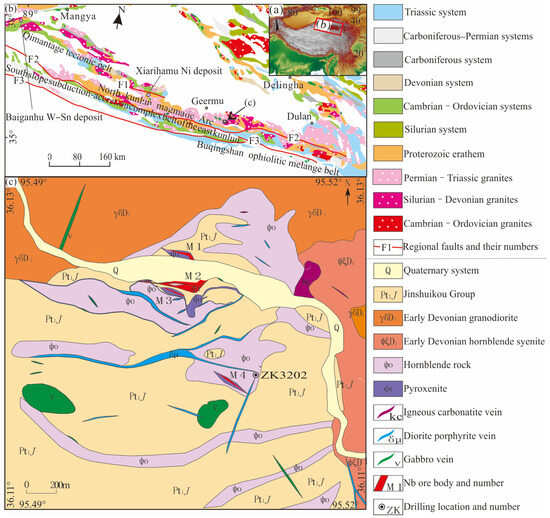
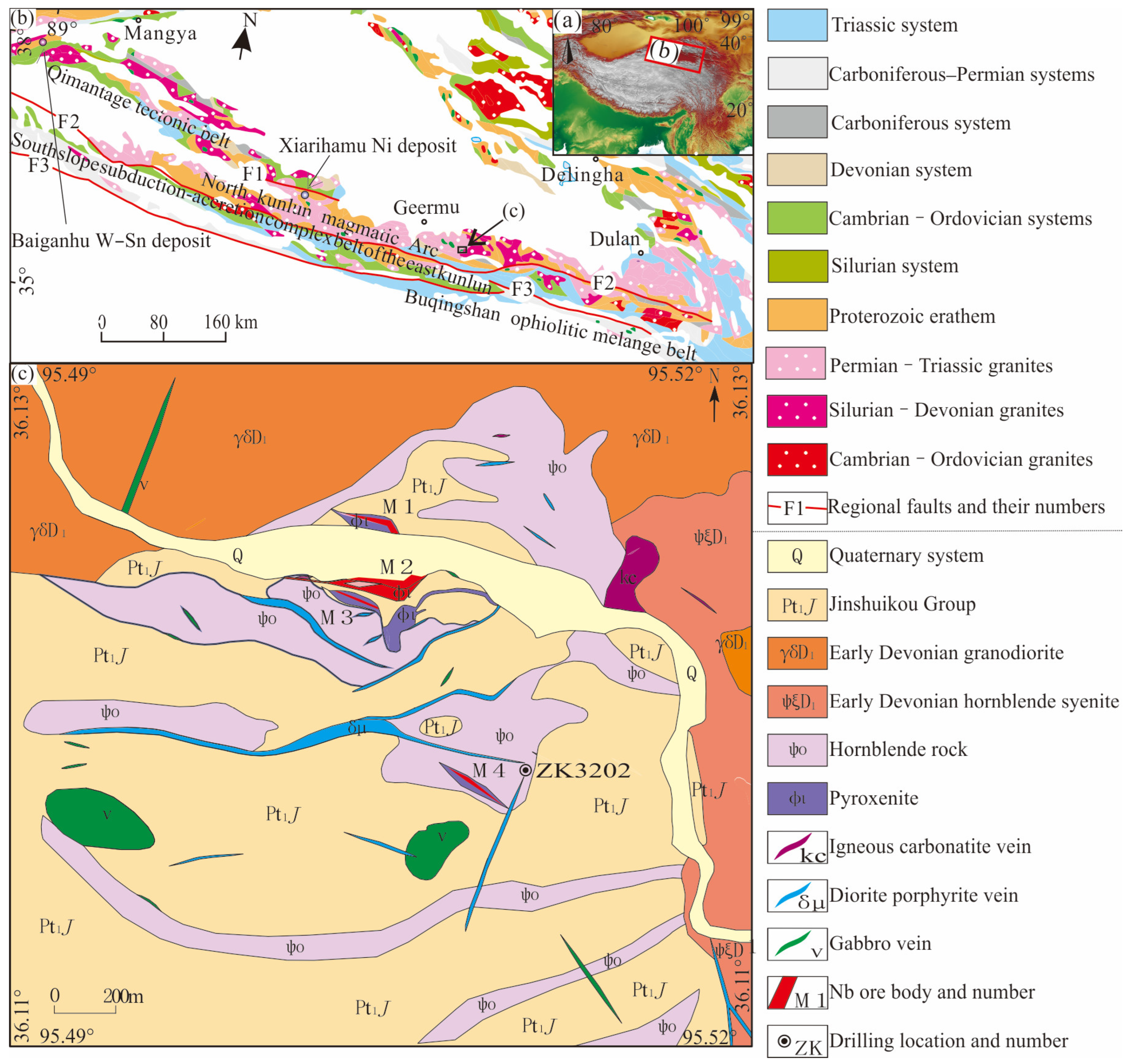
The Eastern Kunlun orogenic belt is an important polymetallic metallogenic belt in western China (Figure 1a). The recently discovered Dagele niobium deposit, a carbonatite-alkaline complex-type deposit in this region, fills a long-standing regional gap in carbonatite-hosted niobium mineralization, previously noted by [5,6,7], and exhibits significant exploration potential and scientific value. However, existing studies have mainly focused on geological genesis and metallogenic processes, while systematic measurements and analyses of geophysical parameters remain limited, resulting in insufficient baseline data to support regional geophysical exploration [8]. Moreover, the Eastern Kunlun region is characterized by complex geological structures, frequent magmatic activity, and diverse wall-rock lithologies. The often subtle physical property contrasts between rocks and ores further complicate exploration and constitute a major constraint on niobium prospecting in this area [9].
Figure 1.
(a) Geographic location of the Eastern Kunlun Orogen. (b) Geological sketch map of the Eastern Kunlun Orogen. (c) Geological sketch map of the Dagele Complex.
In this context, the Dagele niobium deposit is selected as the focus of this study. Based on geophysical measurements of ore-bearing lithofacies, mineralized zones, and surrounding wall rocks, key physical parameters, including density, magnetic and electrical properties, and radioactivity are systematically characterized. Their response patterns and contrasts are analyzed, and their implications for exploration are discussed. A multi-parameter lithological response framework is established, leading to the development of a lithological identification model and a synthesis of the coupling mechanisms of ore-bearing lithofacies.
The results aim to fill the gap in geophysical property studies of the Dagele niobium deposit, provide data support for integrated regional geophysical exploration, and enrich the physical property database of alkaline rock-type niobium deposits in western China [10]. This work defines clear research objectives and emphasizes its scientific novelty through the development of a multi-parameter geophysical prospecting model for carbonatite-alkaline niobium deposits. Such integrated, multidisciplinary geophysical frameworks are widely applied in major metallogenic belts worldwide, and the methodology adopted here aligns with current trends in international geophysics exploration.
2. Geological Setting
2.1. Geological Characteristics
Dagele is located in the northeastern Qinghai-Tibet Plateau and tectonically belongs to the North Kunlun magmatic arc of the Eastern Kunlun Orogenic Belt (Figure 1b), situated between the Middle Kunlun Fault Zone (F2) and the South Kunlun Fault Zone (F3) [11]. The regional tectonic framework is dominated by NWW- and NW-trending compressional and transpressional faults, which serve as both ore-controlling and ore-conducting structures [11]. Stratigraphic units from the Lower-Middle Proterozoic to the Jurassic are exposed in the region. Among them, the Lower-Middle Proterozoic felsic gneiss forms the metamorphic basement and is closely related to mineralization. Magmatic rocks form a large petrographic belt dominated by granites, with minor mafic-ultramafic rocks, emplaced from the Proterozoic to the Late Mesozoic; the principal rock types are Silurian-Devonian and Permian-Triassic granites. The carbonatite-alkaline complexes associated with niobium mineralization were emplaced at 418–382 Ma [12]. The Eastern Kunlun Orogenic Belt is an important enrichment zone for strategic minerals in China, where several large to super-large deposits, such as the Baiganhu W-Sn deposit and the Xarihamu Ni deposit, have been discovered in the surrounding areas.
The strata exposed in the Dagele niobium ore district are dominated by the Lower Proterozoic Jinshuikou Group (Figure 1c), an amphibolite-facies metamorphic assemblage composed mainly of gneiss, schist and marble [13]. These rocks constitute the main body of the study area and the wall rocks of the ore-bearing complex. Locally developed strong phlogopitization alteration zones are closely associated with niobium mineralization and can serve as prospecting indicators. Tectonic activity in the district is intense, with three sets of faults (NW-, NE- and nearly NS-trending) that provide pathways and space for magmatic activity and ore-fluid migration, thereby controlling the formation and distribution of niobium orebodies. The ore-bearing complex displays a zonal lithological distribution from margin to center: amphibolite → olivine pyroxenite (calcite-bearing pyroxenite) → calcite mica rock → carbonatite [14]. Olivine pyroxenite constitutes the main niobium-bearing mineralized lithofacies, whereas calcite mica rock and carbonatite host the most intensive niobium mineralization; overall, the complex exhibits pervasive niobium mineralization. Niobium in carbonatite is mainly hosted by columbite group minerals niocalite and pyrochlore. Columbite group minerals commonly occur with loparite, magnetite and apatite, typically as fine-grained aggregates replacing magnetite along fractures and margins. Niocalite and pyrochlore are associated with columbite-group minerals, magnetite, and apatite and locally occur along grain boundaries, intragranular cavities, or fractures of magnetite. Pyrrhotite commonly replaces magnetite and is subsequently altered by limonite [15,16]. A total of five niobium orebodies have been delineated in the district (including the concealed orebody M5). Their strike lengths range from 160 to 1280 m, thicknesses from 4.3 to 115.7 m, and average Nb2O5 grades from 0.092% to 0.156%. The inferred Nb2O5 resource exceeds 200,000 tons. The orebodies extend continuously along the strike and dip, indicating significant exploration potential.
2.2. Drill Hole Information and Physical Property Testing Methods
In this study, drill hole ZK3202, located in the southeastern part of the Dagele niobium ore district, was selected as the research object. The borehole intersects two niobium orebodies (M2 and M5) and has a final depth of 1001.8 m, with a dip angle of 90°, an azimuth of 30°, an opening diameter of 108 mm, and a final diameter of 75 mm. The main lithologies encountered include amphibolite, diorite porphyrite, calcite mica rock, calcite-bearing pyroxenite, diabase, aegirine syenite, and granitic gneiss. Wall-rock alteration is dominated by phlogopitization, aegirine syenitization, and carbonatization, with minor pyritization and magnetitization, mainly developed in the hanging wall.
Core samples were systematically collected from the collar to the bottom of the borehole, according to lithology, during drilling in 2025. The sampling interval ranges from 2.16 to 1001.6 m, yielding a total of 618 samples, which cover both the ore bearing complex and surrounding wall rocks and use the principles of representativeness and systematic sampling [17,18]. The physical property measurements were conducted as follows: (i) Density: The measurements were performed on 416 samples under fully saturated conditions using the water-displacement method with a high-precision electronic balance (Longbei Precision Electronic Weighing Instrument, Yongkang, China). The measurements followed standard laboratory procedures for the density determination of rock samples. (ii) Magnetic properties: Magnetic susceptibility was measured on 416 samples using an SM-30 magnetic susceptibility meter (origin: ZH Instruments, Brno, Czech Republic, sensitivity: 1 × 10⁻⁷ SI; operating frequency: 8 kHz). In addition, remanent magnetization was measured simultaneously in 202 samples using an ENVI PRO high-precision proton magnetometer (second Gaussian position; origin: Scintrex Ltd., Concord, ON, Canada; absolute accuracy: ±1 nT; sensitivity: 0.1 nT) to determine both magnetic susceptibility and remanent magnetization simultaneously, allowing for comprehensive magnetic property characterization [19]. (iii) Electrical properties: The measurements were conducted on 618 samples using a WDJD-4 multi-function digital DC IP instrument (origin: Chongqing Pentium Numerical Control Technology Research Institute, Chongqing, China; 24-bit A/D converter; voltage and current accuracy: ±0.4% ±1 LSB) with the four-electrode method (power supply time 12 s, turn-off delay 200 ms, 3 stackings) to improve signal quality and reduce measurement noise [20]. Samples were soaked in clean water for 24 h and air-dried for 1 h before measurement using the saturated copper sulfate paste method to ensure good electrode contact. (iv) Gamma-ray spectrometry: The measurements were conducted on 416 samples using an ARD handheld multi-channel γ spectrometer (origin: Hebei Hangyao Technology Co., Ltd., Shijiazhuang, China, equipped with a 75 × 75 mm NaI(Tl) detector, energy resolution: ≤7.5% @ 662 keV), with a counting time of 30 s and 4 stackings per sample, to obtain reliable values for 238U, 232Th, 40K, and total radioactivity [21].
2.3. Rock Types and Mineral Composition Analysis of Samples
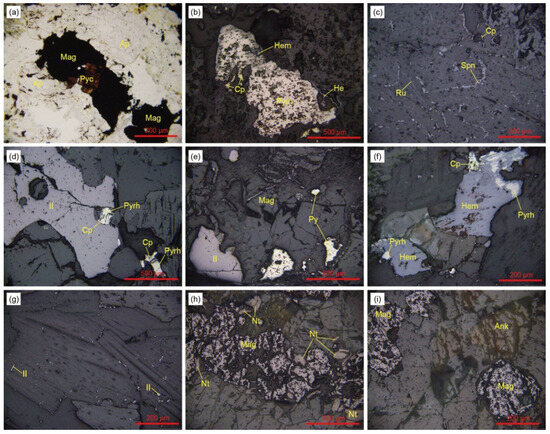
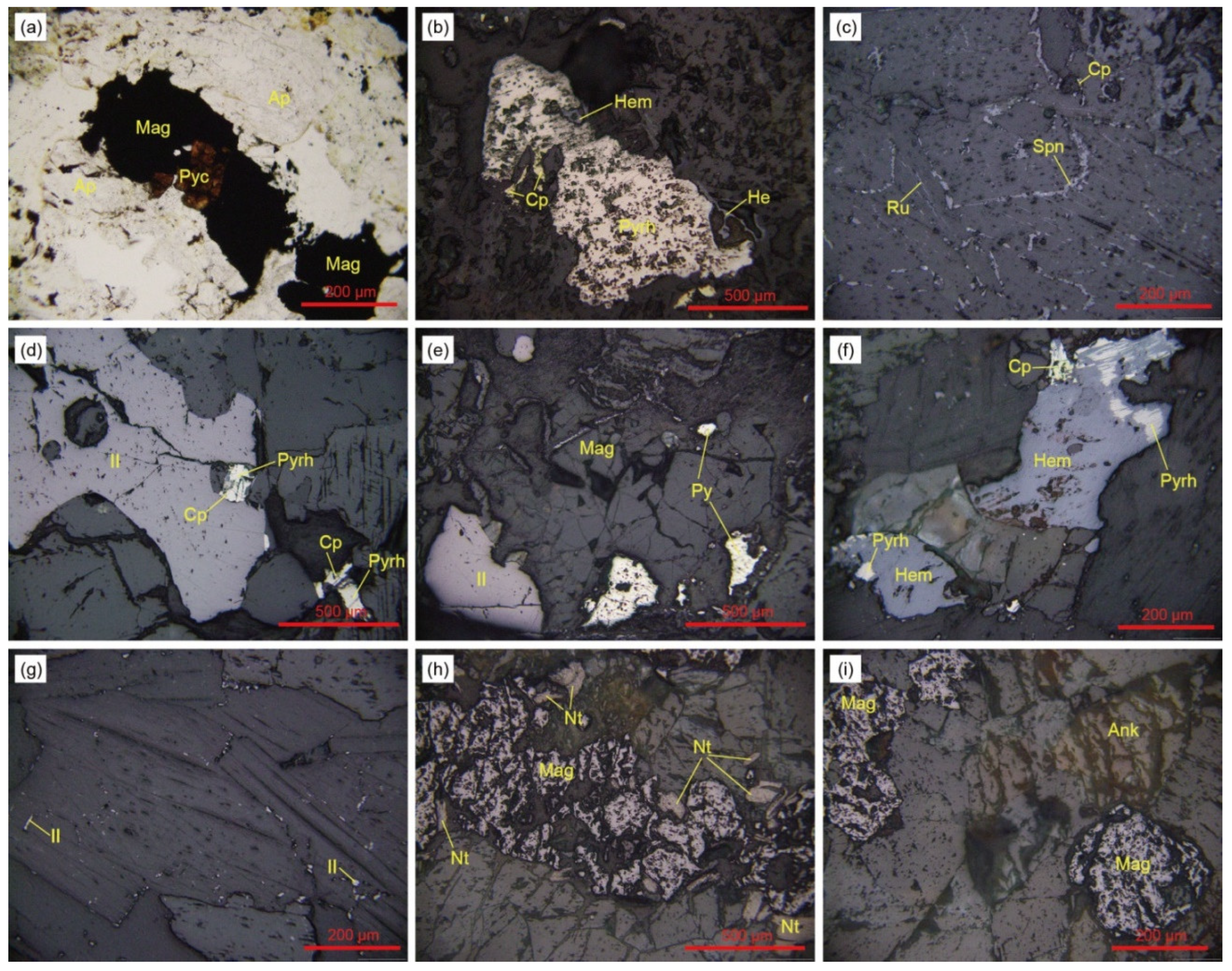
The samples were classified into three categories: complex rocks, intrusive dikes, and wall rocks. Their mineral compositions reflect multi-stage geological processes and exhibit significant spatial and temporal variations [22]. The complex rocks constitute the main lithology of the metallogenic belt and occur as small stock groups in the eastern Dashuigou area, forming in a ring shape distribution. The complex intrudes mainly into the gneiss of the Jinshuikou Group, while its northern part is intruded by Early Devonian granodiorite (Figure 2).
Figure 2.
(a) Peridotite (transmitted light, plane-polarized): pyrochlore inclusions in magnetite. (b,c) Pyroxenite (reflected light, plane-polarized): pyrrhotite intergrown with chalcopyrite, acicular rutile. (d,e) Gabbro (reflected light, plane-polarized): anhedral granular ilmenite and pyrrhotite intergrown with chalcopyrite. (f,g) Amphibolite (reflected light, plane-polarized): residual pyrrhotite after limonite alteration, with anhedral granular and acicular ilmenite. (h,i) Carbonatite (reflected light, plane-polarized): subhedral granular magnetite and tabular or flaky niobite. Abbreviations: Ank—ankerite; Cp—chalcopyrite; He, Hem—hematite; Il—ilmenite; Mag—magnetite; Nt—niobium-tantalum iron ore; Pyc—pyrochlore; Py—pyrite; Pyrh—pyrrhotite; Ru—rutile; Spn—sphene (titanite) (Modified from Li et al., 2022) [5].
Due to hydrothermal alteration and tectonic activity, the boundaries of the complex are irregular and locally indistinct. The complex comprises a heterogeneous assemblage of alkaline rock series, derived from mantle magma at different evolutionary stages [23]. The early stage is represented by barren mafic rocks (amphibolite and gabbro), whereas the late stage includes ore-bearing, magnetically enhanced ultrabasic rocks such as calcite-biotite rock, olivine pyroxenite, and igneous carbonatite. The core is dominated by calcite-biotite rock and dolomitic carbonatite, which intrude on the surrounding pyroxenite as layered and vein-like bodies. These lithologies commonly exhibit pervasive niobium and phosphorus mineralization and relatively strong magnetism. Calcite-biotite rock is the principal ore-bearing lithofacies, followed by pyroxenite and dolomitic carbonatite. The outer shell and upper part consist mainly of amphibolite, with minor gabbro, and are generally weakly magnetic. Mineralization is controlled by fractional crystallization, with the highest enrichment occurring in late-stage carbonatite. In apatite-bearing calcite-biotite rock, metallic minerals include ~3% subhedral granular titanomagnetite and ~1% disseminated anhedral pyrrhotite, commonly in contact with titanomagnetite. Apatite-bearing phlogopite-nepheline clinopyroxenite contains ~3% pyrrhotite, ~1% limonite, and minor chalcopyrite. Pyrrhotite typically occurs as subhedral grains, locally altered to pyrite and limonite along grain margins, whereas chalcopyrite forms irregular grains partly replaced by limonite. Amphibolite shows a clear intrusive contact with the gneiss of the Jinshuikou Group and is interpreted as metamorphosed gabbro. Its metallic minerals comprise ~2% pyrite, ~1% pyrrhotite, and trace chalcopyrite and ilmenite. The carbonatite-alkaline complex is the sole ore-bearing body for niobium mineralization in the area. Its complex mineral assemblages reflect prolonged, multi-stage mantle-derived magmatism, resulting in strong heterogeneity in rock physical properties [24].
Intrusive dikes are widespread and lithologically diverse. They are closely related to multi-stage magmatic activity and are structurally controlled, typically occurring along joints and bedding planes. The main types include alkaline, mafic, and intermediate dikes. Alkaline dikes are mainly represented by aegirine syenite, composed predominantly of nepheline and aegirine (or aegirine-augite), and occur discontinuously as bands and veins. Aegirine syenitization is the most common alkali metasomatic alteration in the hanging wall of the calcite-biotite niobium orebody. It reflects alkali-rich fluids exsolved from carbonatite magma and thus serves as an important indicator of deep concealed orebodies. Mafic dikes are dominated by diabase, which occurs in variable sizes and typically forms as nearly vertical. They are mainly composed of plagioclase, pyroxene, metallic minerals, apatite, and tourmaline. Intermediate dikes are represented by diorite porphyry, emplaced along bedding, schistosity (gneissosity), and joints. They display a porphyritic texture, with plagioclase and hornblende as the main phenocrysts.
Wall rocks are dominated by gneisses of the Jinshuikou Group, mainly biotite-plagioclase gneiss and biotite monzonitic gneiss, whereas the drill hole intersects only granitic gneiss. Metamorphic minerals include sillimanite, almandine, cordierite, andalusite, biotite, and hornblende, with minor K-feldspar and andesine. Variations in mineral composition among these rock types, combined with magmatic-hydrothermal activity and tectonic deformation, collectively result in significant heterogeneity in rock physical parameters in the Dagele area. The coupling between these properties and geological processes provide diagnostic information for deep resource exploration and offer key constraints for interpretating exploration data [25,26].
3. Results and Analysis
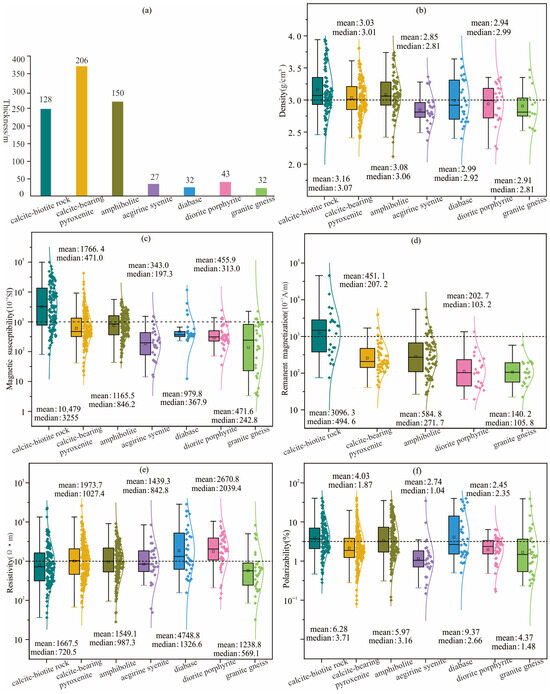
The Dagele area has undergone multi-stage magmatic–hydrothermal–tectonic superimposed mineralization, resulting in complex physical properties and pronounced spatial variability [27]. Based on the physical property dataset from drill cores, this study conducts a lithology-specific, multi-parameter collaborative analysis and summarizes the response characteristics of rock density, magnetic, electrical, and radioactive parameters (Table 1, Figure 3a).
Table 1.
Statistics of physical properties of main lithologies in hole ZK3202.
Figure 3.
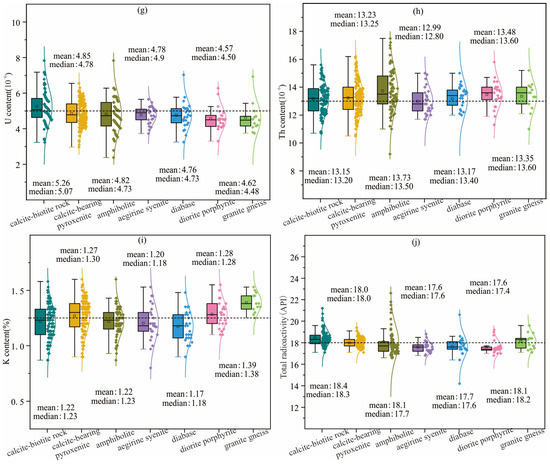
(a) Lithologic thickness histogram of drill hole ZK3202 (showing the number of sampling blocks). (b) Distribution of rock physical properties (density). (c) Magnet susceptibility. (d) Remanent magnetization. (e) Resistivity. (f) Polarizability. (g) U content. (h) Th content. (i) K content. (j) Total radioactivity.
3.1. Statistical Analysis of Physical Parameters Using Box Plots
Based on multi-parameter physical data from all drill cores, box plots combined with normal distribution curves were used to identify distribution patterns, anomalies, and statistical trends. This integrated approach helps clarify the geological controls on the observed properties. Density values (Figure 3b) range from 2.2 to 4.0 g/cm3, nearly doubling across the interval. High-density zones are concentrated in deep magnetite-pyrite association zones of the main orebody and in high-grade alkaline rock–carbonatite-type niobium orebodies. Low-density lithologies, such as granitic gneiss, aegirine syenite, and diorite porphyrite, form the regional background field. Pyrrhotite and ilmenite-bearing amphibolite, calcite-bearing pyroxenite, and some limonite-altered dikes also display relatively high densities, with the anomaly magnitude generally proportional to their scale.
Magnetic susceptibility values (Figure 3c) range from 0 to 40,000 × 10−6 SI, spanning four orders of magnitude. Magnetic properties are mainly controlled by the content, grain size, distribution, and oxidation state of ferromagnetic minerals, dominated by magnetite, followed by pyrrhotite and ilmenite. Magnetite susceptibility is positively correlated with an abundance of these minerals in ultramafic rocks. Magnetite is the primary factor responsible for high magnetic anomalies; strong magnetic responses are mainly associated with magnetite-rich orebodies and mineralized rocks, and susceptibility increases rapidly with increasing magnetite grade. Calcite-bearing pyroxenite and amphibolite exhibit moderate magnetic susceptibility, typically around 1000 × 10−6 SI, with some samples at 3000 × 10−6 SI. In contrast, unmineralized aegirine syenite, diabase, diorite porphyrite, and granitic gneiss display magnetic susceptibility values below 500 × 10−6 SI, forming the regional magnetic background field.
Remanent magnetization values (Figure 3d) range from 0 to 6000 × 10−3 A/m, spanning three orders of magnitude. Their intensity and stability depend on the type of ferromagnetic minerals and their formation environment [28]. Secondary magnetite and pyrrhotite formed during late-stage tectonic and hydrothermal processes are the primary contributors to the high remanent magnetization observed in calcite-biotite rocks, where values exceed 1000 × 10−3 A/m. In contrast, other lithologies generally show values below 500 × 10−3 A/m. According to the resistivity date (Figure 3e), rocks can be classified into four categories: low, medium-low, medium-high, and high resistivity. Unmineralized calcite-biotite rock, the host rock of niobium-magnetite mineralization, shows medium-low resistivity (mean 928.5 Ω·m; median 628.4 Ω·m). Calcite-bearing pyroxenite, amphibolite, and aegirine syenite show slightly higher values (typically 1000–1500 Ω·m). Diabase and diorite porphyrite exhibit high resistivity (2000–5000 Ω·m) but occur in limited volumes. Granitic gneiss shows low to medium-low resistivity, with a median of 566.0 Ω·m, the lowest in the study area.
Based on induced polarization (IP) intensity (Figure 3f), rocks can be grouped into low- and high-polarizability types. High polarizability is mainly associated with calcite-biotite rock, amphibolite, and diabase, reflecting the presence of sulfides such as pyrite. Other lithologies show low polarizability, generally below 5%. The average concentrations of K, U, and Th in the Dagele area are significantly higher than other regional backgrounds, indicating enrichment of radioactive elements in niobium-phosphorus ores and the influence of Devonian carbonatite intrusions and wall-rock alteration (second stage) [29].
The distribution of radioactive parameters (Figure 3g–j) indicates that aegirine syenite, intermediate-mafic intrusive rocks, and unmineralized calcite-bearing pyroxenite show no significant spectral anomalies, reflecting the absence of radioactive minerals; their K content mainly reflects the primary mineralogy. In contrast, pyrochlore-bearing calcite-biotite rock and amphibolite are affected by hydrothermal processes, resulting in enrichment in radioactive minerals and the corresponding spectral anomalies. Calcite-biotite rock is notably characterized by high uranium and low thorium and potassium contents. Granitic gneiss and some altered rocks display weak spectral anomalies, likely related to localized hydrothermal introduction of radioactive minerals.
3.2. Statistical Analysis of Physical Parameters for the Main Lithologies Using Histograms
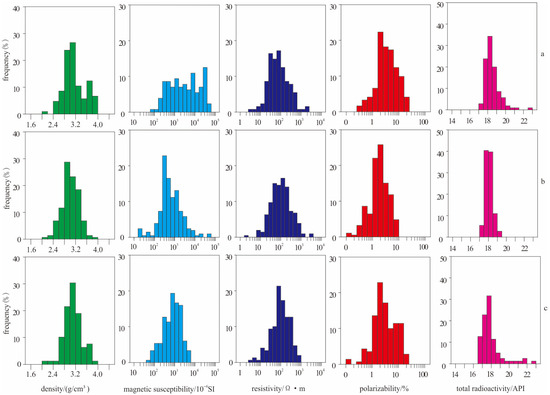
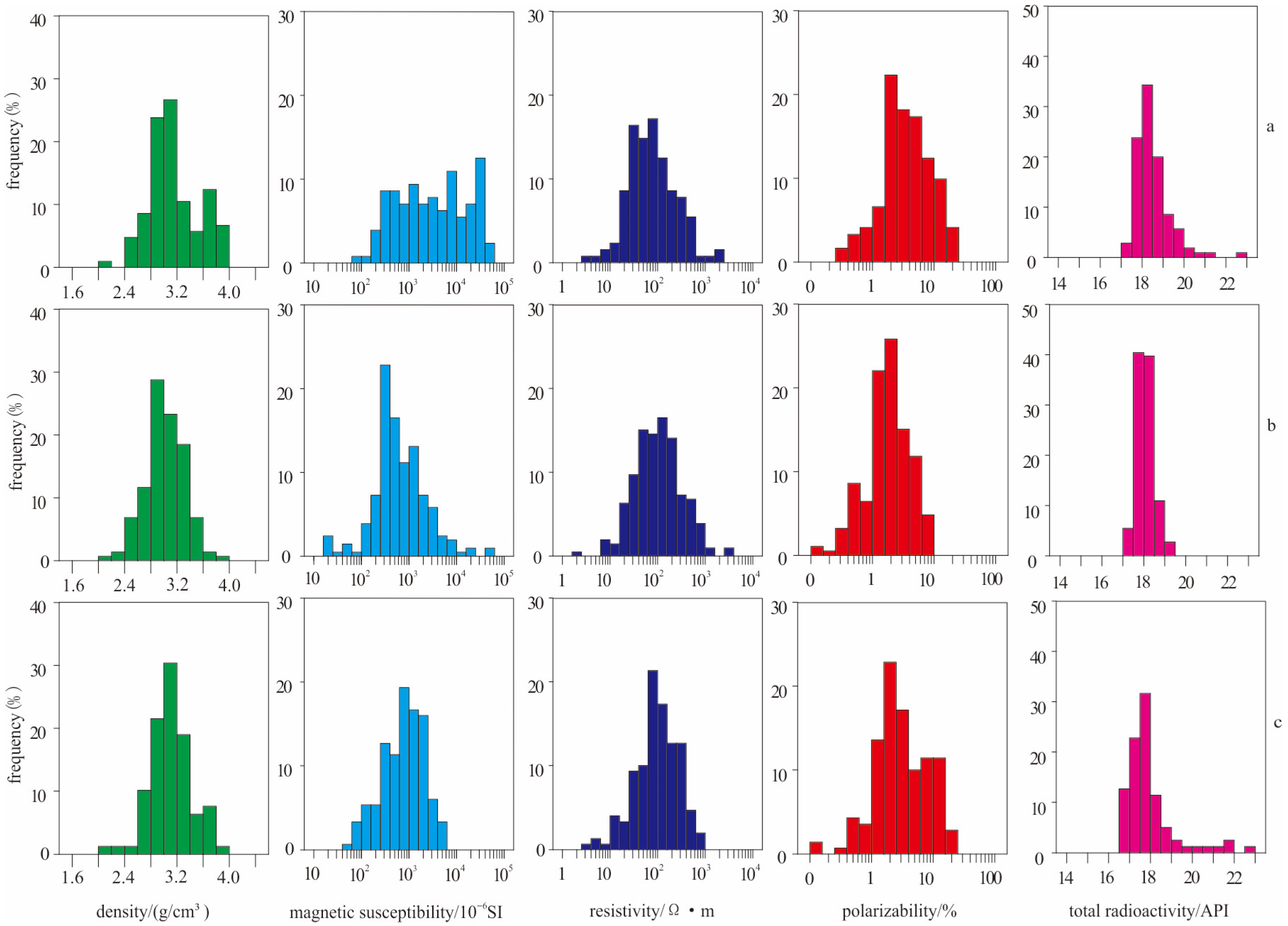
The lithologies intersected in drill hole ZK3202 are relatively simple. Calcite-biotite rock, calcite-bearing pyroxenite, and amphibolite account for more than 85% of the total thickness, whereas all other lithologies are thinner, at less than 40 m, and are non-representative. Therefore, histogram analysis of physical property responses was performed only for the main lithologies. Based on core logging, lithologic intervals with complete stratigraphy, thicknesses greater than 200 m (chosen to ensure representative and continuous sampling), and clear mineralization anomalies were selected. After removing extreme values, five parameters sensitive to lithology and metallic mineralization were chosen: density, magnetic susceptibility, resistivity, polarizability, and total natural gamma [30]. Statistical histograms were then used to characterize the physical property distributions of the complex (Figure 4), providing data support for lithologic identification, stratigraphic subdivision, and mineral exploration.
Figure 4.
(a) Statistical histograms of physical properties for calcite-biotite rock. (b) Statistical histograms of physical properties for calcite-bearing pyroxenite. (c) Statistical histograms of physical properties for amphibolite.
Physical property statistics show that density, magnetic susceptibility, resistivity, polarizability, and total natural gamma for calcite-biotite rock (Figure 4a), calcite-bearing pyroxenite (Figure 4b), and amphibolite (Figure 4c) all display varying degrees of dispersion. Density, magnetic susceptibility, and polarizability exhibit high-value anomalies, whereas resistivity shows low-value anomalies, and total natural gamma presents a relatively high background. These patterns indicate significant mineralization and alteration anomalies that cannot be fully identified through core observation alone [31].
Calcite-biotite rock shows the highest density and magnetic susceptibility among the three lithologies, with strong dispersion, wide ranges, and multimodal, strongly asymmetric distributions. Density peaks at 3.0–3.2 g/cm3, and magnetic susceptibility locally peaks at 20,000–30,000 × 10−6 SI, which are local anomalous maxima and distinct from the median value of 3255 × 10−6 SI shown in Table 1, clearly differing from the unimodal distributions of calcite-bearing pyroxenite and amphibolite. Resistivity, polarizability, and natural gamma are relatively concentrated and unimodal. A small number of low-resistivity anomalies occur on the left side of the resistivity peak, while a few extremely high-polarizability values appear on the right side of the polarizability peak, and a broad high anomaly occurs on the right side of the natural gamma peak. All three lithologies show pervasive niobium and phosphorus mineralization, with calcite-biotite rock being the most enriched and commonly associated with disseminated and stockwork titanomagnetite and pyrrhotite mineralization. It is therefore characterized by high density, strong magnetism, low resistivity, high polarizability, and elevated natural gamma (Figure 4a).
The physical parameters of calcite-bearing pyroxenite are relatively concentrated, with nearly symmetric unimodal histograms. A few high-value anomalies occur on the right side of the density and magnetic susceptibility peaks, and some low-value anomalies on the left side of the resistivity peak, reflecting widespread mineralization and alteration association with pyrrhotite and limonite. Its characteristic physical property assemblage includes moderate density, moderate magnetic susceptibility, medium-high resistivity, low polarizability, and low total natural gamma (Figure 4b).
For amphibolite, density, magnetic susceptibility, resistivity, and natural gamma are relatively concentrated, although a small number of scattered natural gamma values and several high-value anomalies occur on the right side of the histogram. Polarizability is distinctly asymmetric and highly variable, likely related to pyrite and pyrrhotite mineralization. Overall, amphibolite is characterized by medium-high density, weak magnetic susceptibility, medium-high resistivity, relatively high polarizability, and moderate total natural gamma (Figure 4c).
Overall, the physical properties of rocks in the Dagele area show strong heterogeneity. Their distribution patterns are closely related to lithology, mineralization intensity, and multi-stage geological processes, as reflected by wide ranges of density and magnetic susceptibility, diverse electrical characteristics, and relatively elevated radioactive anomalies.
3.3. Correlation Analysis of Physical Parameters
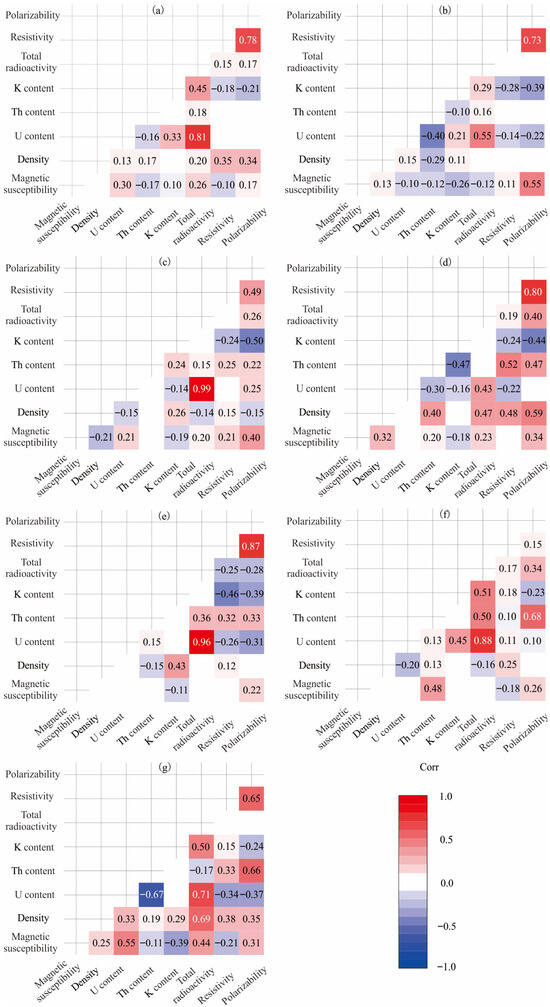
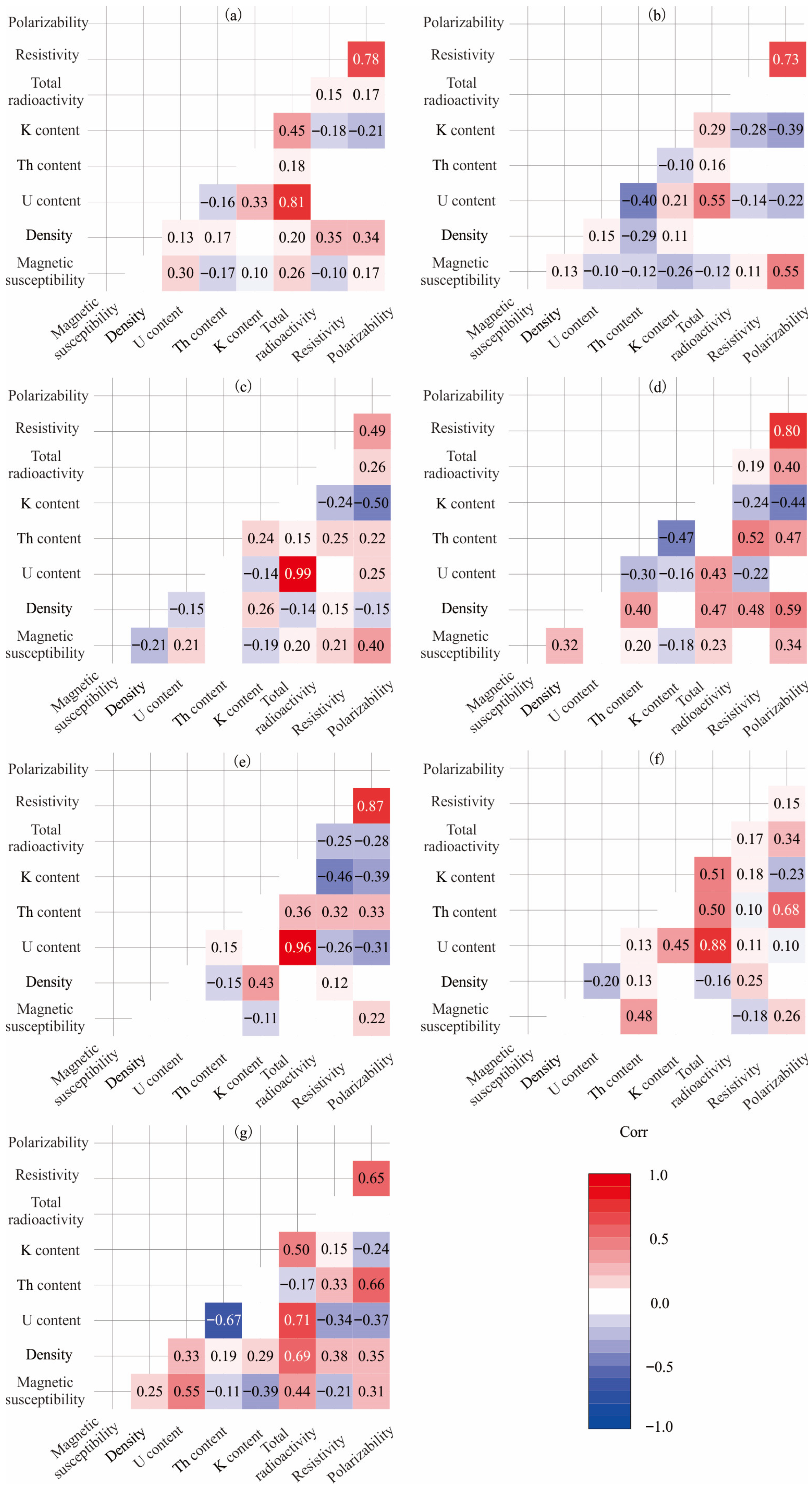
To quantitatively characterize the relationships among rock physical parameters, Pearson correlation coefficient analysis was applied to eight parameters, including density, magnetic susceptibility, and resistivity (Figure 5) [32]. A positive correlation indicates that two variables increase together, whereas a negative correlation reflects an inverse relationship. The Pearson correlation coefficient was used to quantify the strength and direction of linear relationships between parameter pairs. The results reveal strong correlations among the parameters. Total radioactivity shows a strong positive correlation with uranium radioactivity. Magnetic susceptibility, polarizability, and density in the main lithologies, particularly calcite-biotite rock, show moderate positive correlation. This relationship is attributed to the paragenesis of magnetite and niobium-bearing minerals, supporting an ore-forming model involving rare element coprecipitation associated with Early Paleozoic hydrothermal activity [33]. The widespread occurrence of pyrite in the study area contributes to the relatively high polarizability values. Resistivity and polarizability also show a positive correlation in the study area. This relationship differs from the typical inverse correlation observed in many sulfide assemblages. Here, the coexistence of sulfide mineralization and intense hydrothermal alteration can increase both resistivity and polarizability simultaneously. However, the statistical analyses do not consistently support a strong coupling between high resistivity and high polarizability. In addition, density shows a positive correlation with thorium radioactivity, suggesting synchronous enrichment of pyrochlore, rare element minerals, and radioactive elements. These internal correlations among physical parameters provide further insights into the multi-stage metallogenic processes of the Dagele deposit.
Figure 5.
Pearson correlation coefficient heat map: (a) calcite-biotite rock; (b) calcite-bearing pyroxenite; (c) amphibolite; (d) aegirine syenite; (e) diabase; (f) diorite porphyrite; (g) granite gneiss.
3.4. Cross-Plot Analysis of Physical Parameters for the Main Lithologies
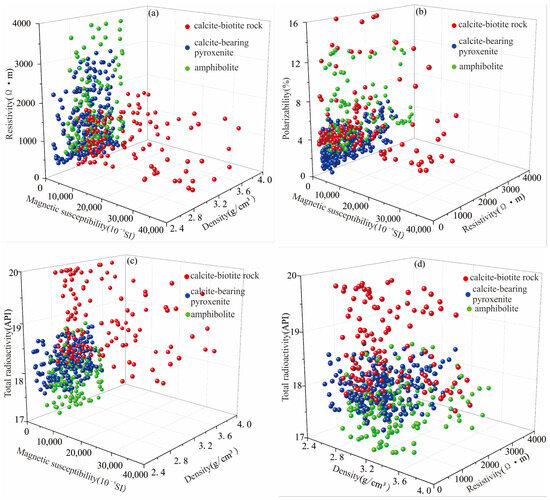
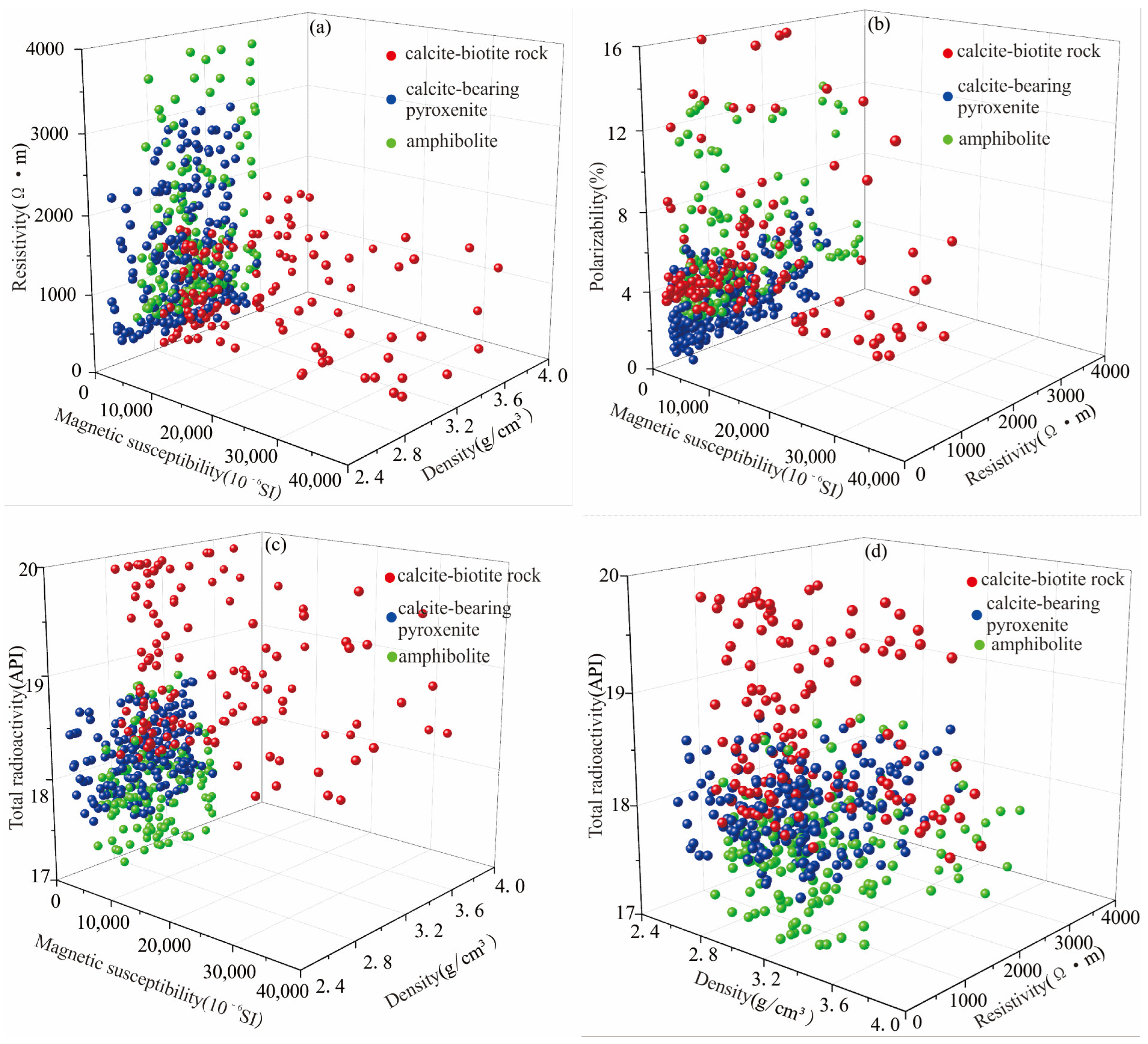
Based on the statistical analysis of physical properties, mean values were calculated to construct cross-plots of the main lithologies intersected by the drill hole (Figure 6). These cross-plots illustrate the distribution characteristics of the three lithologies [34]. Type 1 (red dots): high density, strong magnetic susceptibility, high polarizability, medium-low resistivity, and moderately high total radioactivity, corresponding to calcite-biotite rock. Type 2 (blue dots): medium-high density, moderate magnetic susceptibility, medium-high resistivity, low polarizability, and low total radioactivity, corresponding to calcite-bearing pyroxenite. Type 3 (green dots): moderately high density, low magnetic susceptibility, medium-high resistivity, moderately high polarizability, and moderate total radioactivity, corresponding to amphibolite. In Figure 6b, the red and green clusters partly overlap, indicating that polarizability alone has limited ability to distinguish between calcite-biotite rock and amphibolite, although it is effective for identifying calcite-bearing pyroxenite. However, the combined use of five parameters—density, magnetic susceptibility, resistivity, polarizability, and total radioactivity—allows reliable discrimination among the three lithologies.
Figure 6.
Cross plots for identifying the major lithologies of drill hole ZK3202: (a) magnetic susceptibility, density and resistivity; (b) magnetic susceptibility, resistivity and polarizability; (c) magnetic susceptibility, density, and total radioactivity; (d) density, resistivity and total radioactivity.
3.5. Physical Property Response Characteristics and Identification of Mineralized and Altered Zones
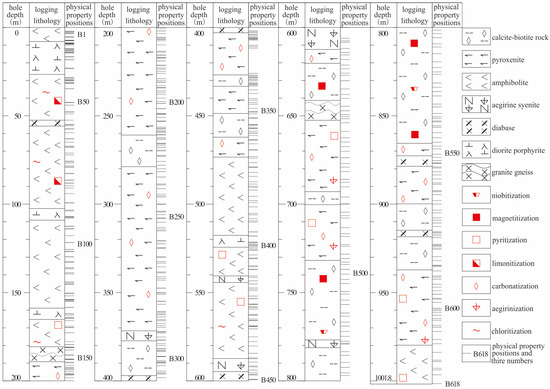
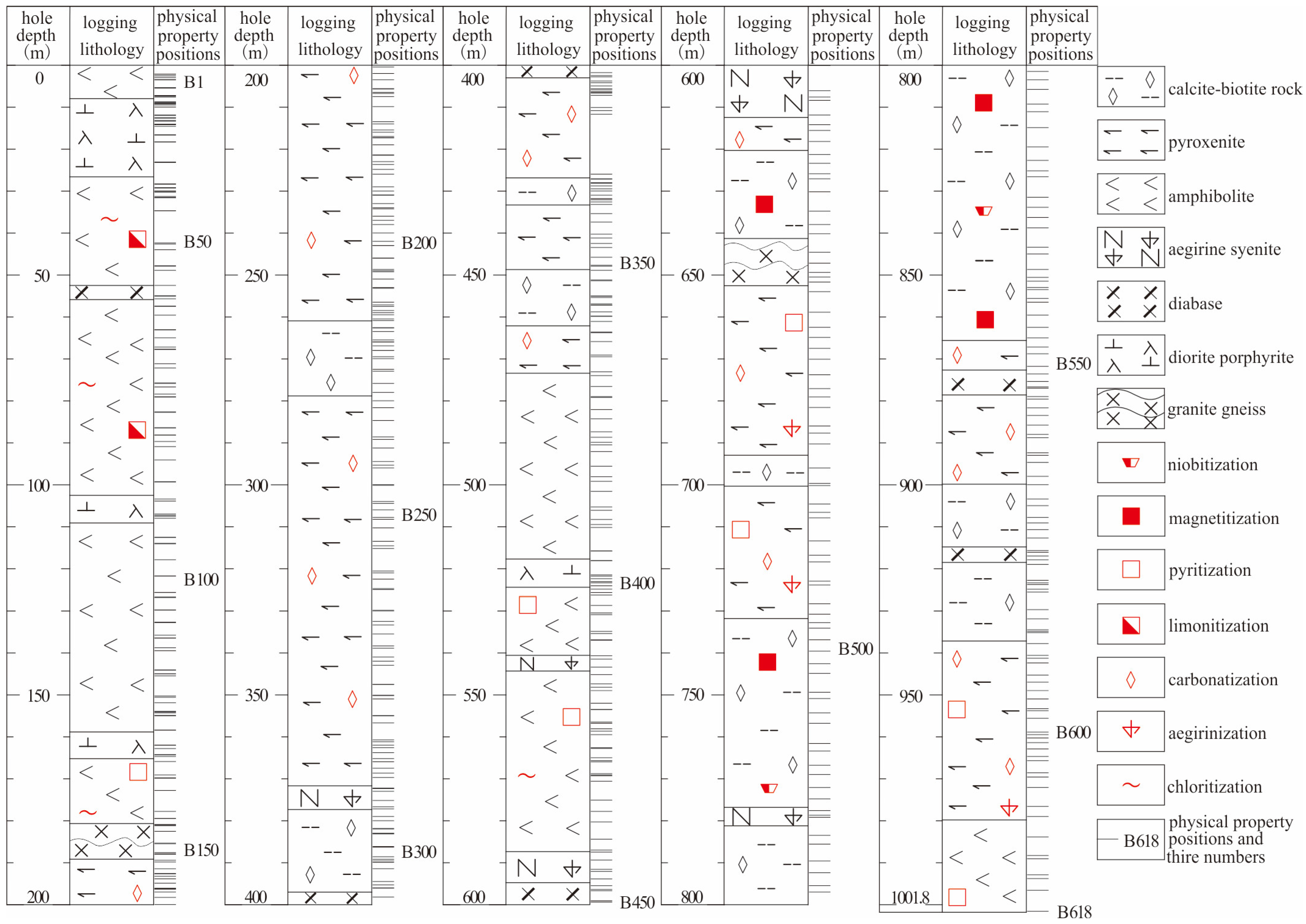
Based on lithophysical statistics and cross-plot interpretation, key parameters, including density, magnetic susceptibility, remanent magnetization, resistivity, polarizability, and total radioactivity (U, Th, K), were integrated with core logging data to construct a lithologic interpretation profile of physical parameters for drill hole ZK3202 (Figure 7). The profile also indicates the locations and numbers of physical property samples. The interpreted profile shows the lithologic distribution along the borehole: 0–190 m is dominated by amphibolite, interbedded with diorite porphyrite and diabase, with well-developed alteration zones; 190–470 m is dominated by calcite-bearing pyroxenite, associated with aegirine syenite, diabase, and multiple layers of calcite-biotite rock; 470–610 m consists mainly of amphibolite with veined diorite porphyrite and aegirine syenite; 610–980 m represents a transitional zone between calcite-biotite rock and calcite-bearing pyroxenite, locally cut by veins of aegirine syenite and diabase; from 980 m to the end of the borehole, amphibolite dominates, with progressively coarser grain size toward the bottom. This profile clarifies the stratigraphic framework, lithologic boundaries, and spatial distribution of mineralized and altered zones, providing key geological constraints for identifying and delineating mineralized intervals [35].
Figure 7.
Lithologic section of drill hole ZK3202, classified using physical parameters (showing the position of physical property samples).
Wall-rock alteration in the Dagele niobium deposit is mainly characterized by carbonatization and phlogopitization. Niobium mineralization occurs in disseminated and stockwork forms within altered rocks, and the ores contain abundant sulfides, ferromagnetic minerals, and radioactive minerals, such as those specified in [36]. Previous studies indicate that the core zone of carbonatization–phlogopitization coincides with the niobium enrichment zone. Metallic minerals increase density, hydrothermal magnetite enhances magnetic susceptibility, mineral compaction influences resistivity, sulfide alteration produces zoned polarizability, and pyrochlore and related minerals increase radioactivity. The co-enrichment of Fe-Ti-bearing magnetic niobium minerals strengthens magnetic anomalies and produces superimposed medium-low resistivity signatures [37]. Magnetitization, pyritization, and columbitization are the main mineralization types and are responsible for significant variations in physical parameters. Magnetitization is associated with high magnetic susceptibility and high remanent magnetization; pyritization corresponds to high polarizability; and columbitization corresponds to medium-low resistivity and high density, generally occurring together with the former two types of mineralization.
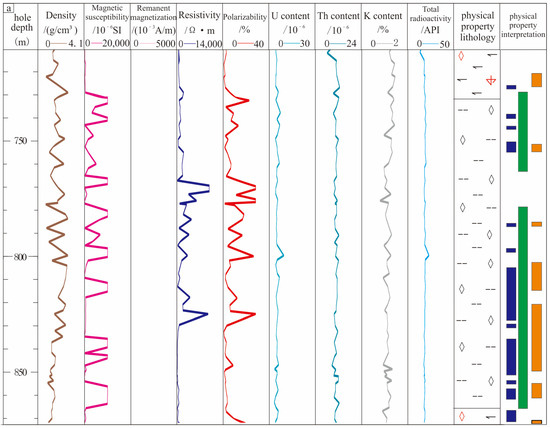
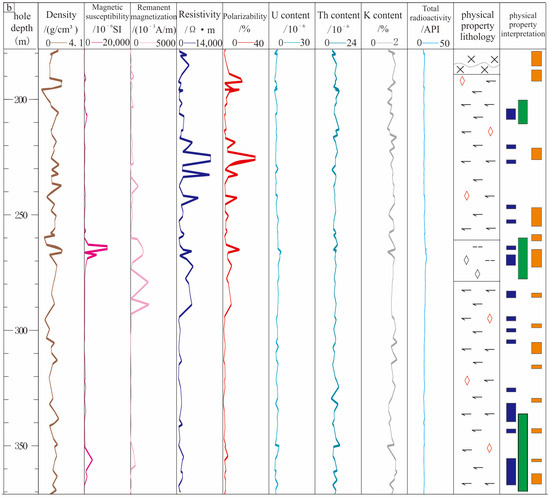
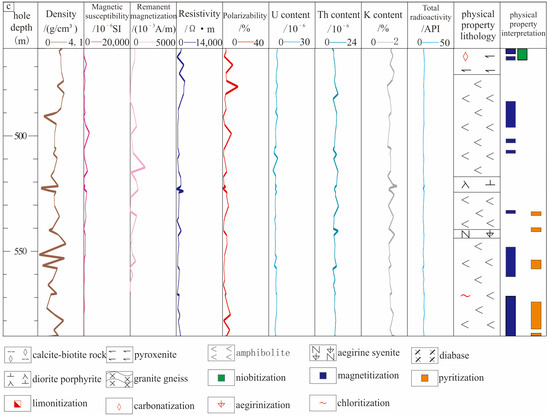
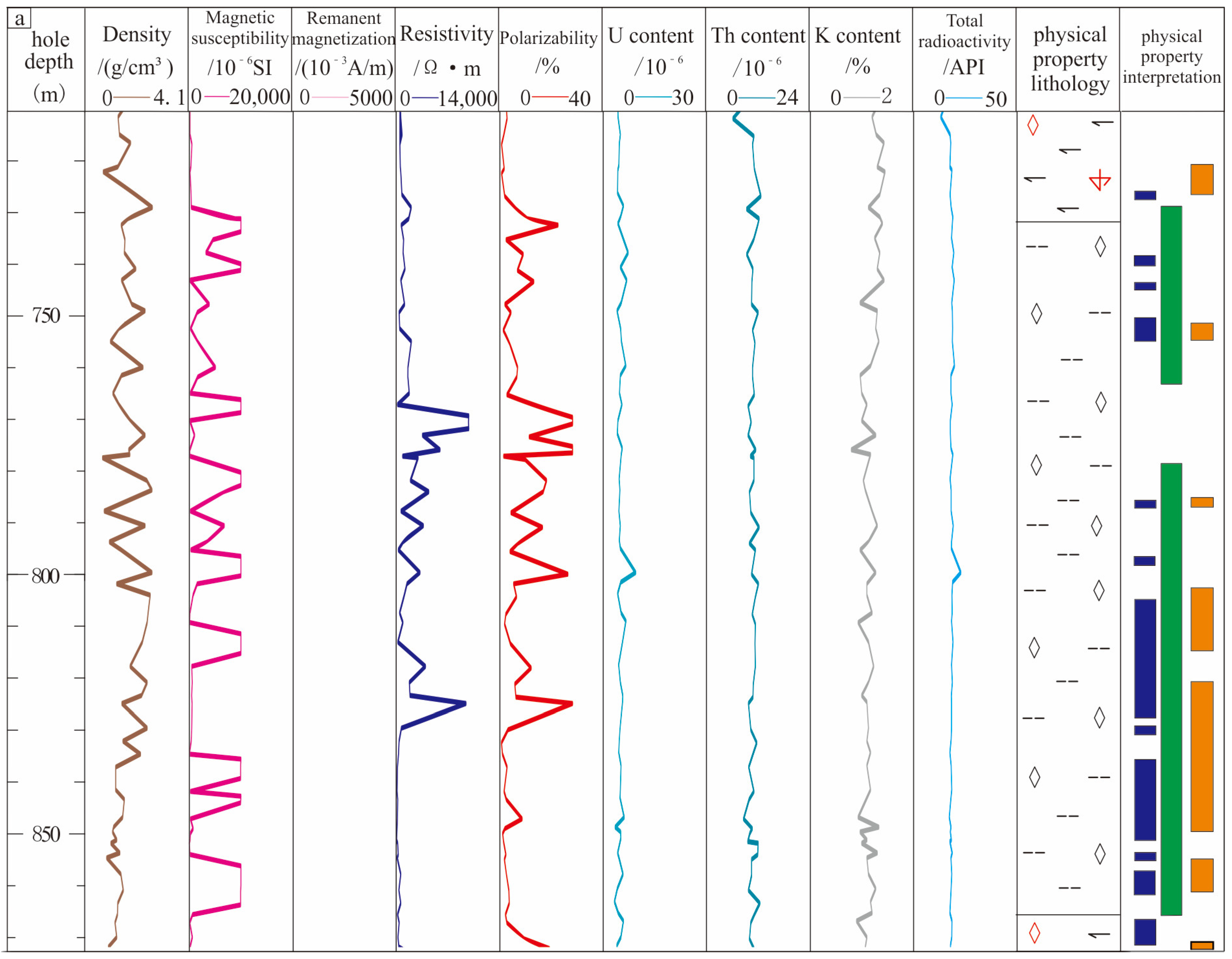
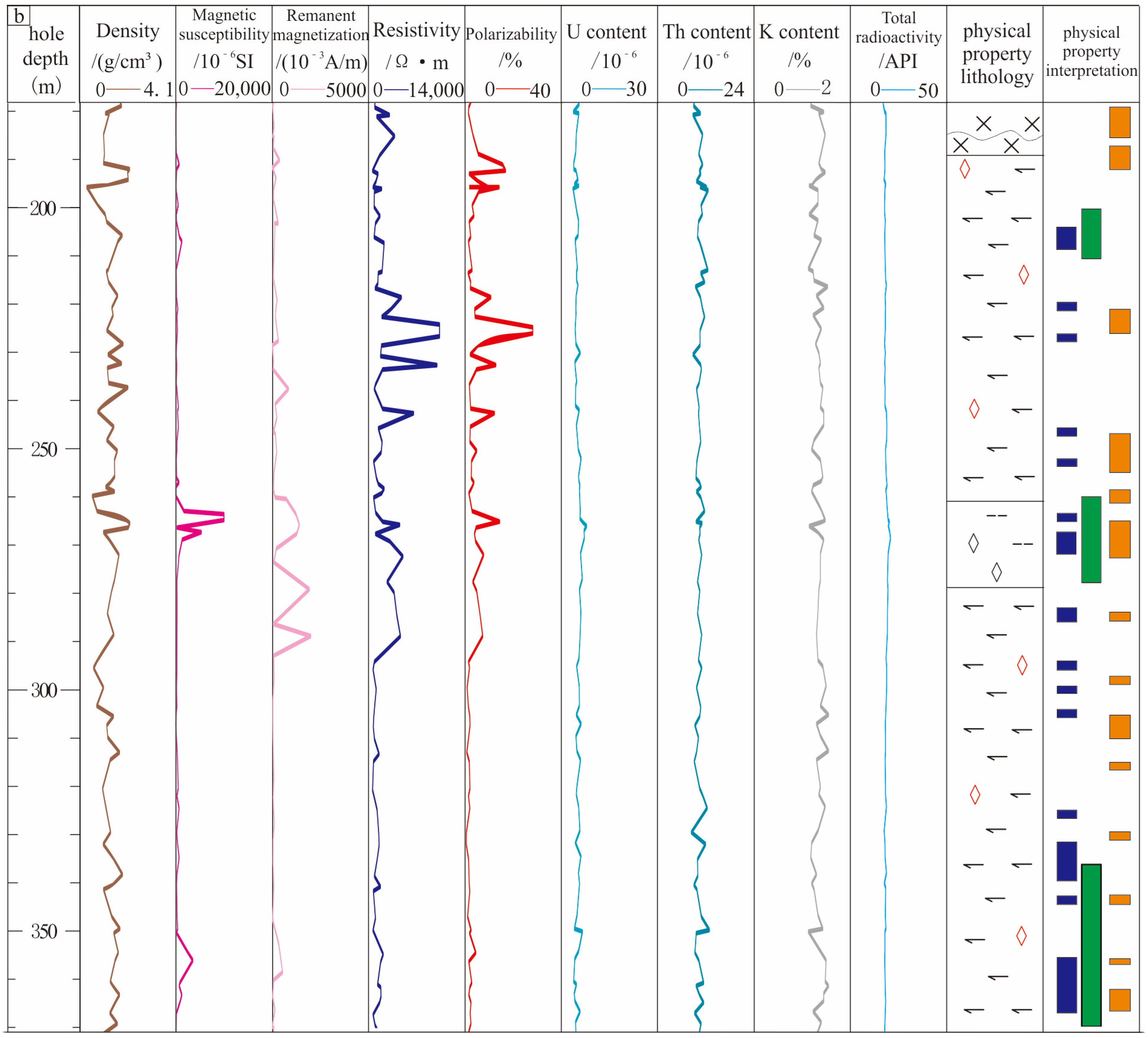
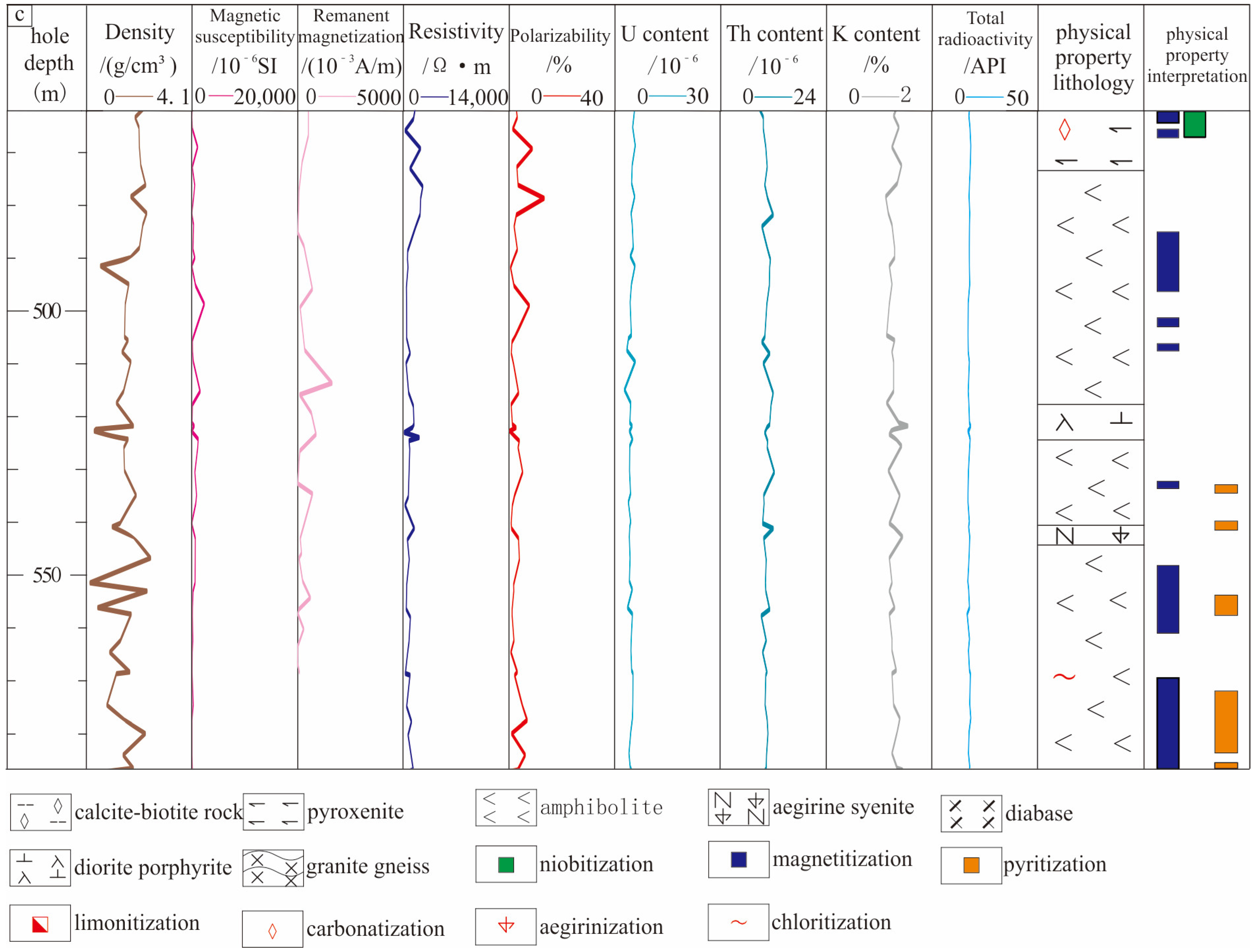
Based on mineralization and alteration features and their physical property responses, mineralized and altered zones were identified within the calcite-biotite rock, calcite-bearing pyroxenite, and amphibolite intervals of drill hole ZK3202 at depths of 710–870 m, 180–370 m, and 470–580 m, respectively (Figure 8; Table 2).
Figure 8.
Physical property response characteristics of typical mineralized and altered zones: (a) calcite-biotite rock; (b) calcite-bearing pyroxenite; (c) amphibolite.
Table 2.
Statistical table of typical mineralized alteration zones and their physical properties.
The high polarizability value (up to 26.19%) observed in calcite-biotite rock is related to disseminated sulfides and hydrothermal alteration and is supported by borehole measurements. Strongly mineralized intervals show high magnetic susceptibility, high polarizability, and medium-low resistivity (Figure 8a), locally accompanied by high density and elevated radioactivity. These features reflect high contents of magnetite, pyrite, and columbite, with local pyrochlore mineralization. Calcite-bearing pyroxenite exhibits medium-high resistivity (Figure 8b), with variable density and magnetic susceptibility. Magnetite–columbite intervals correspond to moderate magnetic susceptibility, whereas high pyrite contents are associated with elevated polarizability. Amphibolite intervals are characterized by low magnetic susceptibility, low polarizability, low radioactivity, and medium-high resistivity (Figure 8c). Overall, the physical parameters show strong correlations with mineralization and alteration processes [38,39].
4. Discussion
Niobium has extremely low abundance in the continental crust and rarely produces a distinct geophysical anomaly by itself. It mainly occurs as pentavalent oxides (Nb, Ta)2O5 in minerals such as columbite and pyrochlore, which exhibit characteristic physical properties [40]. Based on continuous multi-parameter physical measurements along drill hole ZK3202, combined with core logging, sample analyses (Table 3), and comprehensive geological investigations, this study establishes prospecting criteria for identifying favorable niobium mineralization intervals using multi-parameter geophysical methods [41,42] and summarizes the multi-parameter coupling mechanism of ore-bearing lithofacies [43].
Table 3.
The location and core test results of core samples of hole ZK3202.
4.1. High-Density, High-Magnetic Anomaly Zones as Indicators of Favorable Niobium Mineralization
This section integrates lithophysical characteristics and multi-parameter geophysical anomalies to establish prospecting criteria for niobium mineralization. Similar lithophysical approaches have been applied in the Zhezkazgan ore district (Central Kazakhstan), particularly for deep mineralization targeting, and are methodologically consistent with this study.
Geological evidence indicates that orebodies in the Dagele deposit are mainly located in the central part of the complex, with calcite-biotite rock as the dominant ore-bearing lithology, accompanied by minor pyroxenite, typical of alkaline rock–carbonatite-type niobium deposits. Core physical property data (Table 2) show that calcite-biotite rock in drill hole ZK3202 is characterized by high-density and high-magnetic susceptibility (and remanent magnetization), medium-low resistivity, and high polarizability, whereas other lithologies generally display lower or contrasting values.
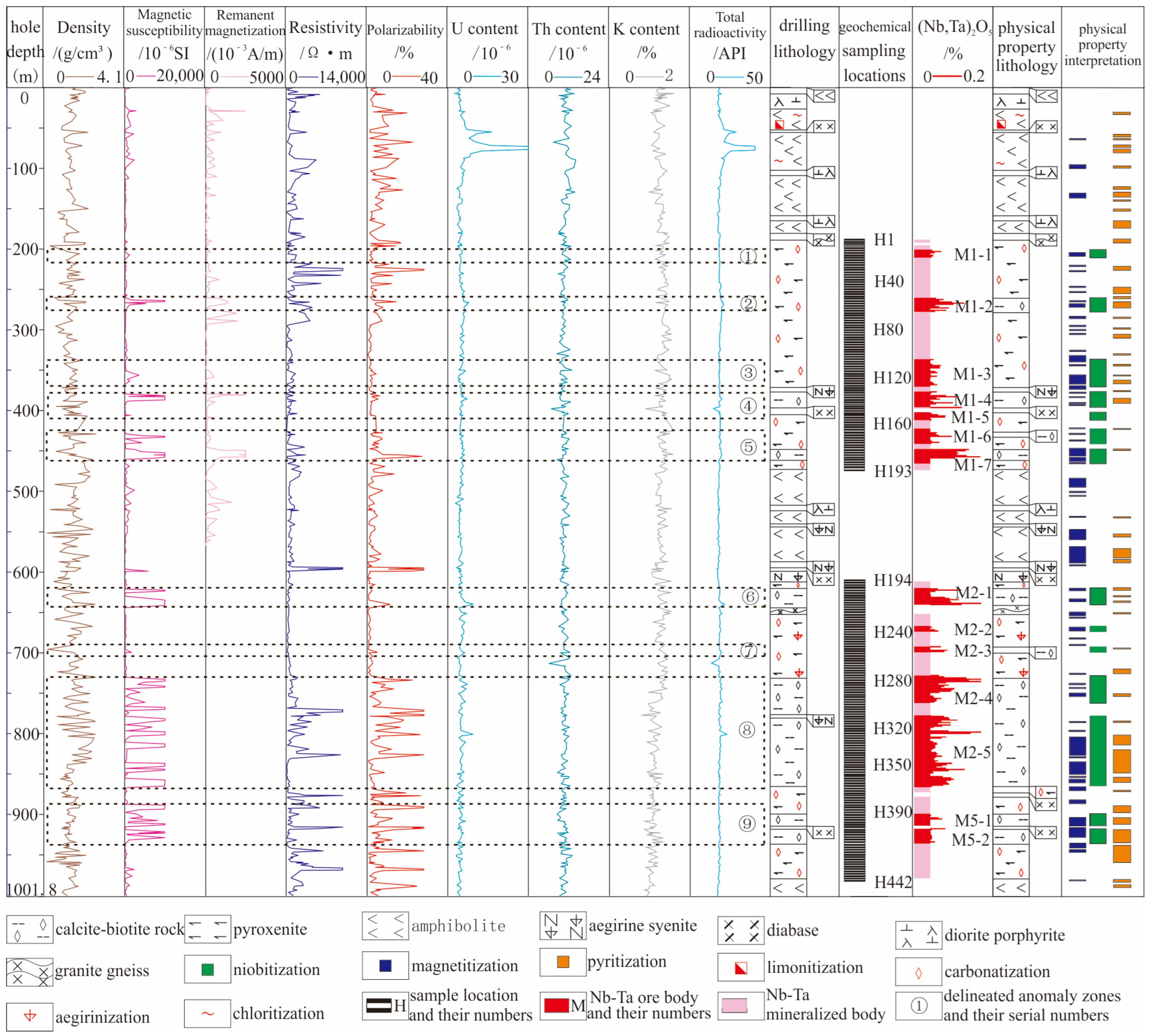
Nine anomaly zones are identified along the borehole (Figure 9), defined by high density, strong magnetism, medium-low resistivity, and high polarizability. Zones ①, ②, ③, and ⑦ represent high-density transitional zones with moderate magnetic anomalies and low to medium-high polarizability, corresponding to calcite-bearing pyroxenite with relatively low contents of magnetite, pyrite, and columbite. In contrast, zones ④, ⑤, ⑥, ⑧, and ⑨ exhibit high density, strong magnetic anomalies, medium-low resistivity, and high polarizability, corresponding to calcite-biotite rock enriched in magnetite, pyrite, and columbite. Among these, zones ②, ③, ⑥, ⑦, and ⑧ are additionally characterized by high uranium and total radioactivity, along with low thorium and potassium contents [44].
Figure 9.
Favorable niobium prospecting horizon map divided by physical parameters.
Combined with core analyses, Nb grades range from 0.014 to 0.142% and show a positive correlation with geophysical parameters (e.g., polarizability, resistivity, and magnetic susceptibility), supporting orebody delineation. Several orebodies (M1-1 to M5-2) were identified within zones ①–⑨. Transitional anomalies in density, magnetic susceptibility (including remanent magnetization), polarizability, resistivity, and natural gamma effectively delineate three main orebodies: M1, M2, and M5. Thus, in drill-hole exploration of the Dagele niobium deposit, lithological identification and recognition of transition zones using density–magnetic susceptibility–polarizability profiles can indirectly indicate favorable ore-hosting positions. Accordingly, anomalies in density, magnetic susceptibility, resistivity, and polarizability, locally supported by uranium and total radioactivity, constitute effective geophysical criteria for prospecting in this area.
4.2. Multi-Parameter Coupling Mechanism of Ore-Controlling Lithofacies and Its Exploration Significance
As the principal ore-hosting lithofacies, the physical properties of calcite-biotite rock are jointly controlled by mineral composition, texture and structure, as well as late-stage hydrothermal alteration [45], forming a coupling relationship in which “physical properties dominated are ferromagnetic minerals, while element distribution is controlled by fluid activity” [46]. Enrichment in heavy minerals such as columbite and pyrochlore leads to high density. High magnetic susceptibility and high remanent magnetization are mainly controlled by ferromagnetic minerals and are positively correlated with niobium-related hydrothermal activity, showing clear contrasts with surrounding wall rocks. The assemblage of medium-low resistivity and high polarizability is governed by the combined effects of conductive and insulating minerals as well as interfacial polarization and is positively correlated with the intensity of hydrothermal alteration, making it a typical indicator of mineralized and altered zones. The elemental assemblage characterized by medium-high U and total radioactivity, together with low Th and K, reflects the combined influence of protolith composition, metamorphic differentiation, and ore-forming fluid activity. Uranium enrichment is broadly synchronous with niobium mineralization and can therefore serve as an indirect indicator of niobium mineralization.
These physical property contrasts provide a reliable basis for geophysical exploration. High density serves as a direct indicator for gravity surveys; medium-low resistivity and high polarizability help delineate targets in resistivity and IP surveys, strong magnetic anomalies help distinguish mineralized bodies from magnetic igneous rocks, and radioactive anomalies indicate the degree of niobium mineralization. Integrated multi-parameter analysis thus significantly reduces the ambiguity of anomaly interpretation [47].
4.3. Physical Prospecting Criteria, Integrated Model and Regional Application Value
The physical property assemblage of calcite-biotite rock provides multi-parameter criteria for deep prospecting and target delineation of the Dagele niobium deposit [48]. Integrated anomaly zones characterized by high density (>3.0 g/cm3), high magnetic susceptibility (>1000 × 10−6 SI), high remanent magnetization (>1000 × 10−3 A/m), medium-low resistivity (102~103 Ω·m), and high polarizability (>5%) are identified as direct geophysical indicators of niobium mineralization. The elemental assemblage of medium-high uranium (>5 × 10⁻⁶), medium-high total radioactivity (>18 × 10−6), low thorium (<13 × 10−6), and low potassium (K2O < 1.25%) can be used to identify mineralized and altered rocks from non-mineralized wall rocks. Based on these features, a three-in-one prospecting model of “high density–strong magnetism–medium-low resistivity and high polarizability–uranium radioactivity anomaly” is established. This model is consistent with the physical property characteristics of ore-forming parent rocks in similar niobium deposits worldwide. It can therefore serve as an effective indirect prospecting criterion for carbonatite-alkaline rock-type niobium deposits in the Eastern Kunlun region and provides a geophysical basis for preliminary regional target delineation.
This study supplements the physical property database of niobium deposits in the Eastern Kunlun orogenic belt and addresses the previous lack of systematic physical property studies on the complex tectonic settings of western China. The results provide a useful reference for niobium exploration in similar metallogenic belts, such as those of the northern Qinghai-Tibet Plateau, and contribute to the development of geophysical prospecting models for alkaline rock-type niobium deposits in western China.
4.4. Limitations and Future Work
The samples analyzed in this study were mainly collected from a single drill hole, and systematic investigations of the physical properties of surface samples and mineralized bodies from multiple deep drill holes have not yet been conducted. In addition, the limited number of samples restricts the analysis of physical property variations associated with different stages and intensities of mineralization.
Future work will include additional physical property measurements on surface samples and deep samples from multiple drill holes, as well as detailed analyses of the relationships between mineralization intensity and physical parameters. Combined with comprehensive ground gravity, magnetic, electrical, and radioactive geophysical surveys as well as laboratory measurements will be integrated with field geophysical anomalies to develop a robust geophysical prospecting model for the Dagele niobium deposit, providing more accurate technical guidance for exploration deployment in the study area.
5. Conclusions
Based on geophysical property data from the Dagele niobium mining deposit in the Eastern Kunlun region, this study analyzes the physical property characteristics of wall rocks, mineralized zones, and orebodies. Combined with core logging, sample testing, and comprehensive geological analysis, multi-parameter prospecting criteria for favorable niobium mineralization intervals are established, the coupling mechanism of physical property in ore-hosting lithofacies is summarized, and its exploration significance is discussed. The main conclusions are as follows:
- Using box plots, lithological histograms, and correlation coefficient heatmaps, five parameters (density, magnetic susceptibility, resistivity, polarizability, and total natural gamma) are shown to effectively distinguish the three main lithologies. Geophysical properties therefore provide a reliable basis for reconstructing drill-core profiles in niobium exploration.
- Mineralized intervals are identified and classified using cross-plot techniques. The physical property distributions of different mineralized and altered zones are analyzed, and multi-parameter prospecting criteria for favorable niobium mineralization intervals are established. The multi-parameter anomaly zone defined by a density > 3.0 g/cm3, magnetic susceptibility > 1000 × 10−6 SI, remanent magnetization > 1000 × 10−3 A/m, resistivity of 102~103 Ω·m, polarizability > 5%, uranium > 5 × 10⁻⁶, total radioactivity > 18 × 10−6, thorium content < 13 × 10−6, and K2O < 1.25%, is identified as the primary target for niobium mineralization.
- The ore-hosting lithofacies, calcite-biotite rock, exhibits a characteristic physical signature of high density, strong magnetism, medium-low resistivity with high polarizability, and medium-high uranium radioactivity, clearly distinguishing it from the surrounding wall rocks. This provides a direct physical basis for integrated gravity-magnetic-electrical-radioactive geophysical exploration and accurate delineation of mineralization targets.
- The key geophysical physical parameters obtained in this study fill a gap in the physical database of carbonatite-alkaline rock-type niobium deposits in the Eastern Kunlun region. Similar lithophysical discrimination and multi-parameter prospecting frameworks have been successfully applied in other metallogenic provinces worldwide, indicating that the criteria established here are not only deposit-specific but also consistent with broader trends in exploration geophysics. They provide a reference for exploration and metallogenic prediction of similar niobium deposits in the Eastern Kunlun orogenic belt and western China, contributing to the improved efficiency of niobium exploration in the region.
Author Contributions
Conceptualization, S.B.; Methodology, S.C.; Software, Y.T.; Validation, Y.T.; Formal analysis, S.B., B.Y., M.L. and Y.O.; Investigation, S.B., M.L., Y.O., X.H., Y.Y. and Y.L.; Resources, B.Y., S.C., M.L., X.H., D.L., Y.Y. and Z.M.; Data curation, S.C. and Z.M.; Writing—original draft, J.D. and Y.O.; Writing—review & editing, S.B.; Visualization, J.D., B.Y., Y.T., F.W. and D.L.; Supervision, J.D., F.W. and Y.L.; Project administration, S.B.; Funding acquisition, S.B. All authors have read and agreed to the published version of the manuscript.
Funding
This study and the Article Processing Charge (APC) were funded by the West Light Young Scholar Training Program of the Chinese Academy of Sciences, the Applied Basic Research Program of the Qinghai Provincial Department of Science and Technology (2025-ZJ-702), and the Special Fund for Geological Exploration of Qinghai Province (2025003088kc066), which are consistent with the funding sources of this study and complies with the relevant funding management regulations of Qinghai Province.
Data Availability Statement
The original contributions presented in this study are included in the article. Further inquiries can be directed to the corresponding authors.
Acknowledgments
We thank the reviewers for their constructive comments and the editorial office for their strong support.
Conflicts of Interest
Author Shandong Bao, Bowu Yuan, Shengshun Cai, Yunhong Tan, Xiaolong Han, Fengfeng Wang, Deshun Li, Zhao Ma were employed by the company Qinghai Geological Survey Institute. Author Ji’en Dong was employed by the company Qinghai Geological Survey. The remaining authors declare that the research was conducted in the absence of any commercial or financial relationships that could be construed as a potential conflict of interest.
References
- Deng, P.; Chen, Y.; Ye, J.; Zhang, W. Study on the Resource Distribution and Industry Development of Global Niobium and Tantalum. China Min. Mag. 2019, 28, 63–68. [Google Scholar]
- Wang, T.; Li, W.; Wang, B.; Wang, T.; Li, J.; Xue, W.; Li, Y.; Lin, Y.; Wang, C.; Zhang, X.; et al. Geochemical Characteristics and Genesis of the Niob-Rich Carbonatite in the Dagele Area, East Kunlun. Geotecton. Metallog. 2024, 48, 97–113. [Google Scholar] [CrossRef]
- Mitchell, R.H. Primary and secondary niobium mineral deposits associated with carbonatites. Ore Geol. Rev. 2015, 64, 626–641. [Google Scholar] [CrossRef] [Scilit]
- Zago, M.M.; Fries, M. Exploring Copper Resources: A Geophysical and Geological Approach in the South Riogrande Shield, RS, Brazil. Geosciences 2025, 15, 38. [Google Scholar] [CrossRef] [Scilit]
- Li, W.F.; Wang, T.; Wang, B.Z.; Zhang, X.Y.; Tan, Y.H.; Yuan, B.W.; Wang, C.T.; Han, X.L.; Jin, T.T.; Zheng, Y.; et al. Discovery and Significance of Rare and Rare Earth Mineralized Alkaline Complexes in the Dagele Area, Eastern Kunlun. Geotecton. Metallog. 2024, 48, 38–49. [Google Scholar] [CrossRef]
- Simandl, G.J.; Paradis, S. Carbonatites: Related ore deposits, resources, footprint, and exploration methods. Appl. Earth Sci. 2018, 127, 123–152. [Google Scholar] [CrossRef] [Scilit]
- Drenth, B. Geophysical expression of a buried niobium and rare earth element deposit: The Elk Creek carbonatite, Nebraska, USA. Interpretation 2014, 2, SJ169–SJ179. [Google Scholar] [CrossRef] [Scilit]
- Crestel, B. Advanced Techniques for Multi-Source, Multi-Parameter, and Multi-Physics Inverse Problems; University of Texas at Austin: Austin, TX, USA, 2017. [Google Scholar]
- Cockett, R.; Kang, S.; Heagy, L.J.; Pidlisecky, A.; Oldenburg, D.W. SimPEG: An open source framework for simulation and gradient based parameter estimation in geophysical applications. Comput. Geosci. 2015, 85, 142–154. [Google Scholar] [CrossRef] [Scilit]
- Baibatsha, A.B.; Kembayev, M.K.; Rais, S.E.; Yan, W.; Amantayev, A.K.; Biyakyshev, Y.T. Geodynamics of the Shu-Ile ore zone: Integration of geophysical, geochemical and cosmogeological methods. Eng. J. Satbayev Univ. 2025, 147, 30–36. [Google Scholar] [CrossRef] [Scilit]
- Ma, C.; Li, B.; Li, J.; Wang, P.; Dong, J.E.; Cui, Z.; Yang, S. Characteristics and Deep Mineralization Prediction of the Langmuri Copper–Nickel Sulfide Deposit in the Eastern Kunlun Orogenic Belt, China. Minerals 2024, 14, 786. [Google Scholar] [CrossRef] [Scilit]
- Du, H.S.; Chen, H.P.; Wang, M.Q.; Zhou, C.F.; Zhang, T.E.; Wan, J.C. Geophysical Logging Response Characteristics and Prospecting Criteria of the Baoxinggou Gold Deposit. Acta Geosci. Sin. 2025, 46, 1–12. Available online: https://link.cnki.net/urlid/11.3474.p.20250821.1014.002 (accessed on 27 January 2026).
- Li, Z.; Xue, C.; Wang, X.; Tang, H.; Tu, Q.; Teng, J.; Li, R. Features of Reqional Mineralization and Analysis of the Exploration Development in the Eastern Kunlun Mountains. Geol. Rev. 2007, 53, 708–717. [Google Scholar]
- Cruz, C.; Noronha, F.; Sant’Ovaia, H. A Multi-Method Approach to Geophysical Imaging of a Composite Pluton in North Portugal. Minerals 2024, 14, 342. [Google Scholar] [CrossRef] [Scilit]
- Wang, T.; Wang, B.; Yuan, B.; Li, Y.; Li, J.; Zhai, G.; Ma, L.; Li, W.; Han, X.; Feng, J.; et al. Exploration Progress and Prospecting Potential of Alkaline Rock-Carbonatite Type Niobium Deposit in Dagele Area, East Kunlun. Geotecton. Metallog. 2024, 48, 50–60. [Google Scholar] [CrossRef]
- Torró, L.; Villanova, C.; Castillo, M.; Campeny, M.; Gonçalves, A.O.; Melgarejo, J.C. Niobium and rare earth minerals from the Virulundo carbonatite, Namibe, Angola. Mineral. Mag. 2018, 76, 393–409. [Google Scholar] [CrossRef] [Scilit]
- Queiroz, L.E.; Grana, D.; Fernandes, C.P.; Mukerji, T.; de Figueiredo, L.P.; Mantovani, I.F. Estimation of Equivalent Pore Aspect Ratio in Rock Physics Models and Validation Using Digital Rocks. Geosciences 2025, 15, 67. [Google Scholar] [CrossRef] [Scilit]
- Rodrigues, N.B.; Barbosa, T.R.; Pinheiro, H.S.K.; Mancini, M.; Read, Q.D.; Blackstock, J.; Winzeler, E.H.; Miller, D.; Owens, P.R.; Libohova, Z. Influences of Sampling Design and Model Selection on Predictions of Chemical Compounds in Petroferric Formations in the Brazilian Amazon. Remote Sens. 2025, 17, 1644. [Google Scholar] [CrossRef] [Scilit]
- Li, W.; Wang, X.; Sun, Q.; Kealy, A.N.; Greentree, A.D. Quantifying the Advantage of Vector over Scalar Magnetic Sensor Networks for Undersea Surveillance. Sensors 2026, 26, 1290. [Google Scholar] [CrossRef] [Scilit]
- Dharma, D.B.; Idroes, R.; Muksin, U.; Rizal, S.; Arifullah, A.; Widodo, L.E. Characterization of Fluid Flow and Heat Transfer Patterns in the Seulawah Agam Volcanic Geothermal System Using Integrated Geophysical and Geochemical Data. Earth 2026, 7, 30. [Google Scholar] [CrossRef] [Scilit]
- Bonetti, J.; Del Bianco, F.; Schippa, L.; Polonia, A.; Stanghellini, G.; Cenni, N.; Draghetti, S.; Marabini, F.; Gasperini, L. Anatomy of Anthropically Controlled Natural Lagoons Through Geophysical, Geological, and Remote Sensing Observations: The Valli Di Comacchio (NE Italy) Case Study. Remote Sens. 2022, 14, 987. [Google Scholar] [CrossRef] [Scilit]
- Peng, X.; Chun, S.; Su, B.; Chen, R.; Hou, S.; Xu, C.; Zhang, H. Design of Three-Dimensional Electrical Impedance Tomography System for Rock Samples. Appl. Sci. 2024, 14, 1671. [Google Scholar] [CrossRef] [Scilit]
- Yu, Y.; Li, Y.; Liu, Y.; Ling, X.-X.; Wu, L.-G.; Yang, L.; Yang, L.; Yang, B.; Zhao, Y.-G.; Li, X.-H. Three-stage niobium mineralization at Bayan Obo, China. Natl. Sci. Rev. 2024, 11, nwae063. [Google Scholar] [CrossRef] [Scilit] [PubMed]
- Huang, D.; Badro, J.; Siebert, J. The niobium and tantalum concentration in the mantle constrains the composition of Earth’s primordial magma ocean. Proc. Natl. Acad. Sci. USA 2020, 117, 27893–27898. [Google Scholar] [CrossRef] [Scilit]
- Blessington, M.J. A Niobium Deposit Hosted by a Magnetite–Dolomite Carbonatite, Elk Creek Carbonatite Complex, Nebraska, USA. Master’s Thesis, University of Nebraska-Lincoln, Lincoln, NE, USA, 2014. Available online: https://digitalcommons.unl.edu/geoscidiss/62 (accessed on 18 February 2026).
- Li, K.H. Geophysical Characterization of the Elk Creek Carbonatite Based on 3D Joint Inversion and Geology Differentiation. Master’s Thesis, Department of Earth and Atmospheric Sciences, University of Houston, Houston, TX, USA, May 2021. [Google Scholar]
- Sun, Q.; Tan, H.; Wan, W.; Hu, Q. Research on 3D Time-Lapse Electric Field Inversion Algorithm for Controlled Source Audio-Frequency Magnetotelluric Method. Appl. Sci. 2024, 14, 1560. [Google Scholar] [CrossRef] [Scilit]
- Yang, Z.; He, M.; Wu, S.; Yang, M.; Peng, B. Near-Infrared Spectroscopic Study of Biotite–Phlogopite (Mg# = 30~99): OH-Stretching Modes and Mg# Content Prediction Equation. Crystals 2024, 14, 336. [Google Scholar] [CrossRef] [Scilit]
- Chen, W.; Song, W.; Lv, P.; Shi, J.; Zhu, Y. Electrical Structure Between the Main and Eastern Deposits of the Bayan Obo Mine: Results from Time-Domain CSEM Methods. Minerals 2024, 14, 411. [Google Scholar] [CrossRef] [Scilit]
- Liu, D.; Liang, M.; Feng, J.; Ou, Y.; Yang, Y.; Zhai, J.; Lin, Z.; Gao, W. Geophysical Logging Response Characteristics and Prospecting Criteria of the Xiaotongjiapuzi Gold Deposit in Eastern Liaoning. Earth Sci. 2024, 49, 1066–1080. [Google Scholar]
- Boumehdi, M.; Khebbi, H.; Dchar, D.; Achkouch, L.; Tagzalt, A.A.; Berkat, N.E.; Magoua, M.; Hahou, Y.; Sadki, O. Subsurface Characterization of the Merija Anticline’s Rooting Using Integrated Geophysical Techniques: Implications for Copper Exploration. Geosciences 2025, 15, 305. [Google Scholar] [CrossRef] [Scilit]
- Sun, J.; Melo, A.T.; Kim, J.D.; Wei, X. Unveiling the 3D undercover structure of a Precambrian intrusive complex by integrating airborne magnetic and gravity gradient data into 3D quasi-geology model building. Interpretation 2020, 8, SS15–SS29. [Google Scholar] [CrossRef] [Scilit]
- Šumanovac, F.; Kapuralić, J.; Pavićić, I. Assessment of Near-Surface Geophysical Methods Used to Discover Karst Bauxite Deposits in the Dinarides Using the Example of Pošusje Area, Bosnia and Herzegovina. Minerals 2024, 14, 378. [Google Scholar] [CrossRef] [Scilit]
- Deidda, G.P.; Himi, M.; Barone, I.; Cassiani, G.; Casas Ponsati, A. Frequency-Domain Electromagnetic Mapping of an Abandoned Waste Disposal Site: A Case in Sardinia (Italy). Remote Sens. 2022, 14, 878. [Google Scholar] [CrossRef] [Scilit]
- Rashid, M.U.; Ahmed, W.; Waseem, M.; Zamin, B.; Ahmad, M.; Sabri, M.M.S. Metallic-Mineral Prospecting Using Integrated Geophysical and Geochemical Techniques: A Case Study from the Bela Ophiolitic Complex, Baluchistan, Pakistan. Minerals 2022, 12, 825. [Google Scholar] [CrossRef] [Scilit]
- Hu, J.; Zhou, J.; Tan, H.; Ni, Z.; Zhu, Z.; Niu, T.; Liu, Y. Geologic Characteristics and Age of Beryllium Mineralization in the Jiulong Area, the Southeast Edge of the Western Kunlun–Songpan–Ganzi Rare Metal Metallogenic Belt. Minerals 2025, 15, 253. [Google Scholar] [CrossRef] [Scilit]
- Dong, J.; Wang, P.; Li, H.; Zhang, H.; Zhao, M.; Tong, H.; Yu, X.; Li, J.; Zhang, B. Study of the Genesis Process and Deep Prospecting Breakthrough in the Gouli Ore Concentration of the East Kunlun Metallogenic Belt Using Audio Magnetotelluric Data. Minerals 2025, 15, 930. [Google Scholar] [CrossRef] [Scilit]
- Issayeva, L.; Amralinova, B.; Akbarov, E.; Ablessenova, Z.; Tolybayeva, D.; Yerkimbek, Y. Identification of prospective areas at the Northern Katpar deposit based on borehole geophysical surveys and spatial modeling. Min. Miner. Depos. 2025, 19, 32–42. [Google Scholar] [CrossRef] [Scilit]
- Yang, Y.; Wang, X.; Liang, M.; Jiang, Z.; Ou, Y.; Tang, X.; Li, X.; Qiu, L.; Liang, M.; Liu, D.; et al. Three-Dimensional Electromagnetic Imaging of Geothermal System in Gonghe Basin. Minerals 2023, 13, 883. [Google Scholar] [CrossRef] [Scilit]
- Xiong, F.-H.; Gong, X.-H.; Qiu, T.; Xu, X.-Z.; Gui, W.-B.; Yang, J.-S. Discussion on genesis of different types of minerals in the podiform chromitite deposit and constraint on the metallogenic process of the deposit. Bull. Mineral. Petrol. Geochem. 2025, 44, 992–1007. [Google Scholar] [CrossRef] [Scilit]
- Pham, L.T.; Oliveira, S.P.; Le, C.V.A. Editorial for the Special Issue “Application of Geophysical Data Interpretation in Geological and Mineral Potential Mapping”. Minerals 2024, 14, 63. [Google Scholar] [CrossRef] [Scilit]
- Slezak, P.; Spandler, C.; Border, A.; Whittock, K. Geology and ore genesis of the carbonatite-associated Yangibana REE district, Gascoyne Province, Western Australia. Miner. Depos. 2020, 56, 1007–1026. [Google Scholar] [CrossRef] [Scilit]
- Marangoni, Y.R.; Mantovani, M.S.M. Geophysical signatures of the alkaline intrusions bordering the Paraná Basin. J. S. Am. Earth Sci. 2013, 41, 83–98. [Google Scholar] [CrossRef] [Scilit]
- Istekova, S.; Aidarbekov, Z.; Togizov, K.; Saurykov, Z.; Sirazhev, A.; Tolybayeva, D.; Temirkhanova, R. Lithophysical characteristics of productive strata of cupriferous sandstone within Zhezkazgan ore district in the Central Kazakhstan. Min. Miner. Depos. 2024, 18, 9–17. [Google Scholar] [CrossRef] [Scilit]
- Gallardo, L.A.; Meju, M.A. Characterization of heterogeneous near-surface materials by joint 2D inversion of dc resistivity and seismic data. Geophys. Res. Lett. 2003, 30, 1658. [Google Scholar] [CrossRef] [Scilit]
- Li, K.; Wei, X.; Sun, J. Geophysical characterization of a buried niobium and rare earth element deposit using 3D joint inversion and geology differentiation: A case study on the Elk Creek carbonatite. In Proceedings of the First International Meeting for Applied Geoscience & Energy Expanded Abstracts, Denver, CO, USA, 26 September–1 October 2021; pp. 1256–1260. [Google Scholar]
- Mantovani, M.S.M.; Louro, V.H.A.; Ribeiro, V.B.; Requejo, H.S.; Santos, R.P.Z.d. Geophysical analysis of Catalão I alkaline-carbonatite complex in Goiás, Brazil. Geophys. Prospect. 2016, 64, 216–227. [Google Scholar] [CrossRef] [Scilit]
- Thomas, M.D.; Ford, K.L.; Keating, P. Review paper: Exploration geophysics for intrusion-hosted rare metals. Geophys. Prospect. 2016, 64, 1275–1304. [Google Scholar] [CrossRef] [Scilit]

Disclaimer/Publisher’s Note: The statements, opinions and data contained in all publications are solely those of the individual author(s) and contributor(s) and not of MDPI and/or the editor(s). MDPI and/or the editor(s) disclaim responsibility for any injury to people or property resulting from any ideas, methods, instructions or products referred to in the content. |
© 2026 by the authors. Licensee MDPI, Basel, Switzerland. This article is an open access article distributed under the terms and conditions of the Creative Commons Attribution (CC BY) license.