


Abstract
The growing volume of end-of-life lithium-ion batteries (LIBs) is necessitating the development of physical separation processes that recover electrode materials while reducing downstream recycling burdens. This systematic review and bibliometric analysis examined LIB flotation research published from 2016 to 2025. Scopus and Web of Science (WoS) databases were searched, and items were screened using predefined eligibility criteria following the PRISMA guidelines 2020, yielding 79 eligible publications. These studies were classified into (i) collector-free (n = 9), (ii) non-ionic (n = 62), (iii) ionic (n = 6), and (iv) unspecified-reagent systems (n = 2). Pretreatment has been reported as an essential step for improved liberation and surface accessibility, as well as better control of aggregation and aqueous chemistry. Collector-free flotation was effective when graphite retained sufficient hydrophobicity, but selectivity was constrained by residual binders, ultrafine entrainment, particle aggregation, and solution chemistry. Meanwhile, non-ionic hydrocarbon collectors dominated the literature, primarily enhancing graphite floatability rather than imparting intrinsic selectivity against cathode active materials. In addition, flotation performance depended strongly on pretreatment, collector dispersion, frother behavior, reagent sequence, hydrodynamics, and circuit configuration. In contrast, ionic collectors were less studied and were used mainly for copper–aluminum separation and differential flotation of blended cathode materials. Unspecified-reagent systems integrated flotation with direct recycling and graphite regeneration, but incomplete reporting limited comparison. Across all regimes, feed heterogeneity and surface condition strongly governed separation efficiency. Finally, a universally superior collector regime was not found because reagent selection strongly depended on feed characteristics and the intended separation objective, product requirements, and extent of process integration.
1. Introduction
The clean energy transition towards a low-carbon society has made lithium-ion batteries (LIBs) central to global energy, transport, and sustainable resource strategies, as well as the successful attainment of United Nations Sustainable Development Goals 7, 9, 12, and 13. Tabelin et al. [1] examined LIBs within the broader lithium supply chain, including primary resources, material flows, recycling, and circular-economy development. Since then, expanding utilization of electric vehicles (EVs) and stationary storage batteries has further accelerated LIB deployment [2]. Global battery demand exceeded 1.5 TWh in 2025 [3], while the global battery market is projected to reach ~4.2 TWh by 2030 and ~6.8 TWh by 2035 [4], generating increasing quantities of end-of-life LIBs requiring resource-efficient recycling.
A typical LIB contains cathode and anode active materials, conductive additives, polymeric binders, an organic electrolyte, a separator, and metallic current collectors. Major cathode chemistries include lithium cobalt oxide (LCO, LiCoO2), lithium nickel manganese cobalt oxide (NMC, LiNixMnyCozO2, where x + y + z = 1), lithium nickel cobalt aluminum oxide (NCA, LiNixCoyAlzO2, where x + y + z = 1), lithium manganese oxide (LMO, LiMn2O4), and lithium iron phosphate (LFP, LiFePO4), while graphite remains the predominant anode active material. The composite electrode architecture and lithium ion (Li+) transport during discharge are illustrated in Figure 1. This binder-bound structure is directly relevant to recycling because selective physical separation requires separation of the active materials not only from the current collectors but also from one another. These batteries contain lithium, cobalt, nickel, manganese, iron, phosphorus (P), graphite, copper, and aluminum, several of which face geographically concentrated supply, intensive processing requirements, and supply that is vulnerable to disruption [1,5,6].
Figure 1.
Schematic illustrations of (a) a composite electrode consisting of an active material, conductive additive, and polymeric binder coated on a metallic current collector, and (b) a lithium-ion battery with an LCO cathode and a graphite anode during discharge, showing Li+ and electron transport and the corresponding intercalation and deintercalation reactions at the crystallite level [7,8].
In 2025, Australia, China, and Chile collectively accounted for ~72% of reported lithium mine production excluding the United States, while Indonesia supplied ~67% of global nickel output, and the Democratic Republic of the Congo produced ~74% of cobalt. Meanwhile, South Africa and Gabon together accounted for ~63% of manganese production [9]. Recycling, therefore, complements primary production by recovering strategically important materials from concentrated and identifiable secondary resources such as end-of-life LIBs. It also reduces risks associated with electrolyte leakage, fire, hazardous substances, and improper disposal of hazardous end-of-life LIBs [10,11].
LIB recycling typically employs pyrometallurgical, hydrometallurgical, or direct-recycling routes, with mechanical and physical separation serving as upstream preparation or direct component recovery [1,12,13,14]. Pyrometallurgical processing can tolerate heterogeneous feeds but consumes substantial energy and may result in the loss of graphite and lithium to the slag. Hydrometallurgical routes can achieve high metal recoveries and purities but require considerable chemical inputs and effluent management. Direct recycling seeks to preserve and regenerate active electrode materials, potentially reducing energy and chemical consumption, but requires comparatively clean and well-separated feeds. These routes are often integrated rather than applied independently. The effectiveness of upstream liberation and separation, therefore, influences both downstream recovery efficiency and the feasibility of preserving electrode materials for direct reuse [15,16].
Mechanical processing typically includes dismantling, shredding, crushing or milling, sieving, and classification, supplemented where appropriate by pneumatic, magnetic, density, or eddy-current separation. These operations separate coarse casing, separator, and current-collector materials from the fine electrode material-rich fraction generally referred to as black mass [12,17]. Black mass is not a standardized material but a heterogeneous mixture of graphite, cathode active materials (CAMs), conductive carbon, polymeric binders, electrolyte-derived compounds, and fine metallic particles. Its composition, particle size distribution, liberation, surface condition, and residual copper, aluminum, and iron contents depend on battery chemistry, aging history, and the processing route used to generate it. Black mass should therefore be regarded as a feed- and process-dependent product instead of a standardized recycling material [13,18,19].
Upgrading black mass before downstream treatment can reduce hydrometallurgical solids and reagent demands, control the carbon balance during pyrometallurgical processing, and produce cleaner cathode fractions for direct regeneration. Recovering graphite separately may also enable its purification and reuse in battery or non-battery applications [12,13,14]. For this purpose, froth flotation is promising because it exploits differences in particle surface wettability. Graphite is inherently more hydrophobic because of its non-polar basal planes and can preferentially attach to air bubbles, whereas many CAMs are generally more hydrophilic, enabling graphite recovery in the froth and CAM retention in the non-floated product (conventionally referred to as tailings).
Flotation performance is controlled not only by particle–bubble collision, attachment, and transport through the pulp and froth, but also by the flotation reagent regime (the combination of collectors, frothers, and modifiers such as an activator or depressant). Collectors enhance or modify particle hydrophobicity, frothers regulate bubble formation and froth stability, and depressants activate or inhibit selected components.
Collector addition may be unnecessary when the inherent hydrophobicity of graphite is retained or when pretreatment restores a large graphite–CAM wettability contrast [12,13,20]. Flotation has also been applied to recover polymeric or conductive carbon fractions, separate copper from aluminum current collectors, distinguish blended cathode chemistries, and control the amount of graphite retained for downstream thermal processing.
Spent electrode materials, nevertheless, behave differently from clean and fully liberated graphite–CAM mixtures. Polymeric binders, conductive carbon, residual electrolyte, solid electrolyte interphase (SEI) species, and aging-derived products can decrease graphite hydrophobicity, render CAM surfaces partially hydrophobic, and promote heterogeneous aggregation. Fine CAM particles may also enter the froth through direct attachment, water entrainment, or entrapment within graphite-rich aggregates. This makes separation unpredictable when evaluated solely using the intrinsic wettability of pristine electrode materials. Moreover, collector requirements are governed by the process-generated surface state of the feed rather than by nominal battery chemistry alone [12,13,21,22].
To control the surface state of the feed, pretreatment is integral to flotation. Grinding, attrition, ultrasonication, washing, chemical oxidation, plasma treatment, roasting, and pyrolysis can improve liberation, remove or modify binders and surface films, and restore wettability differences. However, they may also generate ultrafine particles, pyrolytic carbon deposits, surface oxidation, phase transformations, residual reaction products, or new particle aggregates. Pretreatment therefore establishes the physical, interfacial, and aqueous feed states that govern baseline floatability, reagent response, particle–bubble attachment, and non-selective transport [13,22,23,24].
Previous reviews have examined LIB flotation from several complementary perspectives. Traore and Kelebek [12] discussed spent-battery characteristics and their implications for flotation recovery, while Efendi et al. [22] focused on electrode surface properties. Nazari et al. [13], Ma et al. [14], and Sun et al. [24] provided broader discussions of pretreatment and flotation reagents, with additional emphasis on environmental considerations, operating parameters, and flotation challenges, respectively. Rinne et al. [25] further examined flotation selectivity in LiCoO2–graphite systems, while Ji et al. [26], Kar et al. [27], and Zeng et al. [28] addressed electrode material recovery, e-waste flotation, and broader physical processing approaches, respectively. These studies provide substantial coverage of the factors governing flotation performance. Building on this foundation, the present review organizes the evidence jointly by collector regime and intended separation objective. This framework distinguishes systems relying on inherent or restored hydrophobicity from those using non-ionic collectors, ionic collectors, or incompletely specified reagents, while retaining pretreatment and surface properties as essential contexts for interpretation.
Reported outcomes are further affected by feed composition, liberation, surface condition, reagent dispersion, aggregation, water chemistry, hydrodynamics, equipment, and circuit configuration. Separation objectives also vary; that is, most publications targeted graphite–CAM separation, whereas others recovered carbonaceous and cathode materials together, removed conductive or polymeric fractions, separated copper from aluminum, distinguished cathode chemistries, or retained controlled quantities of carbon for downstream reduction. A froth product cannot therefore be classified as successful or unsuccessful without considering its intended role in the recycling flowsheet. Moreover, successive publications from the same research lineage can provide additional experimental evidence, while validation across different research groups and feed sources remains important for establishing the generalizability of the findings.
This study presents a systematic review and bibliometric analysis of LIB flotation research published from 2016 to 2025. Papers retrieved from the Scopus and Web of Science (WoS) databases were screened using predefined eligibility criteria, with selection reported in accordance with Preferred Reporting Items for Systematic Reviews and Meta-Analyses (PRISMA) 2020 [29]. The 79 eligible publications were consistently assigned to four mutually exclusive collector regimes: collector-free systems, non-ionic collectors, ionic collectors, and systems using unspecified flotation reagents. Bibliometric analysis of the same dataset characterized publication growth, geographical and institutional contributions, collaboration patterns, and research themes, linking the technical synthesis to the distribution of research activity across groups and research lineages.
The collector regime was used as an analytical framework rather than as the sole determinant of flotation performance. Each regime was evaluated together with feed preparation, surface condition, liberation, particle size, aggregation, entrainment, auxiliary reagents, water chemistry, hydrodynamics, circuit configuration, and downstream objectives. This combined analysis interprets the role of flotation chemistry within the wider process context and identifies the principal gaps limiting selective, reproducible, scalable, and resource-efficient flotation of end-of-life LIB materials.
2. Materials and Methods
2.1. Systematic Review
This systematic review addressed the following research question: “How did LIB flotation research develop and progress from 2016 to 2025?” Study selection was reported in accordance with the Preferred Reporting Items for Systematic Reviews and Meta-Analyses (PRISMA) 2020 guidelines [29]. This review was retrospectively registered with the Open Science Framework after the search and synthesis had been completed (https://doi.org/10.17605/OSF.IO/8KEAS).
Paper selection was conducted in accordance with PRISMA 2020 guidelines [29]. Scopus and WoS were searched using the keywords “battery” AND “flotation”. The predefined period covered publications from 2016 to 2025. Eligibility covered final journal publication years from 2016 to 2025; early-access articles without final publication details and papers assigned to 2026 issues were excluded. The query may have missed studies using alternative terminology. Records were merged and manually checked to remove duplicates. Screening was conducted in two stages: (i) title, abstract, and keyword screening, and (ii) full-text assessment.
Eligible publications were English-language, peer-reviewed original research articles on flotation of solid LIB-related materials. Reports whose full texts could not be obtained were recorded as not retrieved. Articles were excluded if they were not written in English or peer-reviewed, if they were not original research articles, or if they fell outside the scope of flotation of solid LIB-related materials. Studies on metallurgical slag flotation, ion flotation of dissolved metals, and non-LIB battery systems were also excluded. Each publication excluded during the full-text assessment was assigned one primary reason for exclusion. Each eligible publication was then assigned to one mutually exclusive primary collector regime: (i) collector-free, (ii) non-ionic, (iii) ionic, or (iv) unspecified reagent.
2.2. Bibliometric Analysis
The final dataset was analyzed using Bibliometrix version 4.5.1 and Biblioshiny (web interface) [30]. Journal titles, countries, and institutional affiliations were manually standardized, and first-listed affiliations were used for first- and corresponding-author distributions. The analysis covered annual publication output, publication outlets, geographic and institutional patterns, international collaboration, reagent-oriented research lineages, and author-keyword frequencies and co-occurrence. Keyword variants were standardized for capitalization, punctuation, and spelling, while technically distinct terms were retained separately. Finally, network structure was interpreted using betweenness, closeness, and PageRank.
3. Systematic Review and Bibliometric Results
3.1. Systematic Review Results
Figure 2 presents the PRISMA 2020 publication-selection process. Database searches identified 412 records, comprising 239 from Scopus and 173 from WoS. After removing 110 duplicates, 302 articles were screened by title, abstract, and keywords, of which 115 were excluded. Of the 187 reports sought for retrieval, seven could not be obtained. The remaining 180 reports were assessed for eligibility, and 101 were excluded because they were not peer-reviewed, were not published in English, were review articles or other non-full research papers, or fell outside the scope of flotation involving solid LIB-derived materials.
Figure 2.
PRISMA 2020 flow diagram for the identification and selection of the 79 publications included in the systematic review and bibliometric analysis.
A total of 79 eligible publications were included in the systematic review and bibliometric analysis. They were assigned to four mutually exclusive collector regimes: (i) collector-free (n = 9), (ii) non-ionic (n = 62), (iii) ionic (n = 6), and (iv) unspecified flotation reagent (n = 2). These records represented publications rather than necessarily independent experimental systems because some related publications used overlapping feeds, conditions, or datasets.
3.2. Bibliometric Results
3.2.1. Publication Growth and Sources
The bibliometric analysis comprised 79 eligible publications. No eligible publications were identified in 2016, and the first publications appeared in 2017. Annual output remained limited during the early years but increased markedly from 2022 onward, reaching a maximum of 19 publications in 2025 (Figure 3). Papers using non-ionic collectors dominated throughout the review period, accounting for 62 publications, whereas collector-free systems became increasingly represented during 2023–2025. Ionic collectors remained comparatively uncommon, with six publications, and only two publications used an unspecified flotation reagent.
Figure 3.
Annual distribution of LIB flotation publications by collector regime between 2016 and 2025.
The 79 eligible articles appeared in 35 journals, with the 10 most frequent journals accounting for 62.0% of the dataset. The most productive journals were Separation and Purification Technology and Waste Management, with ten and eight publications, respectively, followed by ACS Sustainable Chemistry & Engineering and MDPI Minerals, with five publications each. This distribution reflected the interdisciplinary position of LIB flotation across mineral processing, waste management, materials recovery, and battery recycling.
3.2.2. Geographical, Institutional, and Collaboration Patterns
The geographic distribution of authorship was highly concentrated. First authors were affiliated with 15 countries, whereas corresponding authors represented 16 countries. China led both distributions with thirty-four publications (43.0%), followed by Germany with eleven (13.9%), the United States with eight (10.1%), and Finland with seven (8.9%). Together, these four countries accounted for 75.9% of the dataset. Their identical rankings and paper counts across first- and corresponding-author affiliations indicate that the principal geographic centers of publication output also retained prominent authorship roles. China contributed in every year with eligible publications from 2017 onward and reached eight publications in 2025, while Germany showed its largest annual contribution in 2022, with five publications. Differences between the two authorship distributions were otherwise confined mainly to countries contributing one or two publications.
International co-authorship involved 21 countries and 30 bilateral country pairs. The strongest collaboration was between Germany and Finland, represented by four publications, followed by Australia–Chile and China–Iran, with three publications each. China, Australia, Iran, and Canada each collaborated with five partner countries, indicating relatively broad international connectivity. Nevertheless, 22 of the 30 country pairs appeared in only one publication, suggesting that most collaborations remained project-specific rather than forming sustained and densely connected research networks.
Based on normalized first-listed affiliations, institutional contributions were concentrated among a small group of organizations. China University of Mining and Technology was the leading institution in both the first-author and corresponding-author distributions, with 19 and 18 papers, respectively. Aalto University and Central South University each accounted for seven publications in both distributions, while Michigan Technological University contributed six in each. China University of Mining and Technology (Beijing) accounted for five first-author and six corresponding-author publications. The similarity between the two distributions indicates that the principal publication-producing institutions also frequently retained corresponding-author roles, although the wider evidence base was dispersed across numerous institutions contributing only one publication.
3.2.3. Reagent-Oriented Research Lineages
Several distinct research lineages shaped the development of LIB flotation. Several Chinese research groups collectively expanded the field from early kerosene-based graphite recovery to n-dodecane systems integrated with thermal treatment, grinding, depressants, hierarchical flotation, and micro–nanobubble-assisted flotation. German and Finnish research lineages emphasized industrial black mass, Escaid™ 110, attrition, reagent addition sequence, particle aggregation, entrainment, and collector-free approaches. A separate research lineage at Clausthal University of Technology examined EF 452 for controlling residual carbon before pyrometallurgical treatment and salt-assisted flotation.
Australian-led studies contributed mainly to mechanistic interpretation using model mixtures and spent-electrode materials, including the distinction among true flotation, entrainment, and entrapment, and the effects of process water. Smaller or more isolated research lines addressed differential flotation of NMC111 and LMO using Atrac 922 and copper–aluminum separation using xanthates or Aerophine™ 3418A. The prominence of particular reagent systems reflected concentrated research activities within a limited number of groups rather than broad independent validation.
3.2.4. Keyword Structure and Thematic Organization
Figure 4 presents the distribution of author keywords across the 79 eligible publications. “Flotation” and “recycling” were the most frequently used terms, each appearing 28 times, followed by “lithium-ion battery” (25), “froth flotation” (23), and “spent lithium-ion battery” (23). Other prominent keywords included “electrode material” and “graphite” (nine each), as well as “black mass”, “direct recycling”, and “pyrolysis” (seven each). The keyword distribution suggests that the literature was primarily centered on flotation-based separation and recycling of LIB electrode materials, while also extending toward pretreatment, black-mass processing, direct recycling, circular economy, and downstream material recovery. Related keyword variants were retained as originally reported by the authors and therefore appeared separately in the word cloud.
Figure 4.
Word cloud of author keywords in the 79 eligible LIB flotation publications. Word size is proportional to keyword frequency.
Keyword co-occurrence analysis identified two major thematic clusters and one smaller peripheral cluster (Figure 5). The first was centered on “flotation”, “spent lithium-ion battery”, and “electrode material”, linking these terms with pyrolysis, thermal treatment, roasting, leaching, surface modification, and surface analysis. This cluster represented research focused on pretreatment-controlled liberation and interfacial modification. The second and broader cluster was organized around recycling, lithium-ion batteries, froth flotation, and black mass, and extended to direct recycling, circular economy, mineral processing, automated mineralogy, entrainment, selective flocculation, and spheroidized graphite. A smaller third cluster connected graphite and battery recycling with pyrometallurgy, reflecting the integration of graphite-rich products with downstream thermal processing. “Recycling” and “flotation” exhibited the highest betweenness and PageRank values, indicating that they served as the principal conceptual bridges within the evidence base. The node-degree distribution declined steeply after the leading terms, indicating that the network was organized around a limited number of highly connected concepts and a long tail of specialized research topics.
Figure 5.
Keyword co-occurrence network of the 79 eligible LIB flotation publications. Node colors indicate thematic clusters, node size represents occurrence frequency/PageRank, and edge thickness represents co-occurrence strength/link weight.
4. Overview of Pretreatment Strategies Prior to Lithium-Ion Battery Flotation
The wettability contrast between inherently hydrophobic graphite and commonly hydrophilic cathode active materials (CAMs) is often obscured in end-of-life LIB feeds by incomplete liberation, binders, aging-derived surface films, metallic fragments, mixed-particle associations, and ultrafine particles [13,22,31,32,33]. Pretreatment should be regarded as feed-state engineering that determines the physical, interfacial, and aqueous conditions presented to the flotation stage. Because of this, pretreatment and pre-flotation conditioning were grouped by their principal functions [34,35]: mechanical and physical preparation, thermal treatment, chemical and physicochemical surface conditioning, and aqueous conditioning. These categories overlapped because many flowsheets combined several operations. Publications without distinct pretreatment are discussed primarily according to collector regime in Section 5.
4.1. Mechanical and Physical Feed Preparation
Mechanical preparation determines the particle-size distribution, morphology, liberation, association state, and metallic contamination of the flotation feed [33,35]. Dismantling, crushing, screening, and classification can separate coarse casing, separator, and current-collector materials from the finer electrode-rich fraction. Removal of coarse copper and aluminum before flotation reduced non-target mass and limited contamination of graphite- and CAM-rich products. Pneumatic separation, for example, was used to recover coarse current-collector particles before flotation of an LFP–graphite fraction [36]. Automated mineralogy analysis further showed that mechanical processing could delaminate active materials from the current collectors while preserving binder-bound laminated aggregates, so foil separation did not necessarily translate into liberation of individual active particles or high flotation selectivity [37].
Grinding can improve separation by breaking electrode composites, exposing graphite and CAM surfaces, and weakening binder-mediated associations. Dry grinding altered graphite morphology through exfoliation and bending fracture while abrading contaminated LiCoO2 surfaces, thereby increasing the wettability difference between the two materials [31,38]. Cryogenic grinding further promoted binder embrittlement and particle liberation without requiring thermal decomposition [39]. In an LFP–graphite system, brief ball milling after heat treatment further exposed the contrasting surfaces of the two electrode materials, highlighting the complementary roles of thermal binder removal and mechanical surface renewal [40]. These benefits depended on treatment severity; that is, insufficient grinding left poorly liberated composites, whereas prolonged grinding damaged graphite and generated ultrafine CAM particles that were more susceptible to entrainment.
Attrition, high-shear agitation, and ultrasonication primarily improved dispersion by disrupting graphite–CAM agglomerates and removing loosely attached surface residues. Attrition increased the selectivity of industrial black-mass flotation by separating CAM fines from graphite-rich aggregates, although collector addition during attrition promoted renewed mixed-particle association and increased CAM transfer to the froth [18]. High-shear treatment and ultrasonication similarly enhanced surface exposure and dispersion, but excessive intensity generated additional fines, damaged metallic foils, or altered subsequent reagent demand [41,42]. Based on these previous works, treatment sequence is likely of similar importance as treatment intensity.
Extensive size reduction was also widely reported as not universally beneficial. Coarser electrode flakes retained useful differences in density, shape, and particle–bubble attachment stability that can be exploited without complete comminution [43]. This implies that mechanical preparation should be designed to achieve sufficient liberation and dispersion while preserving graphite integrity and minimizing ultrafine generation. The primary contribution of size reduction is to establish a physical feed state in which differences in surface wettability can be translated into selective flotation.
4.2. Thermal Pretreatment and Control of Electrode Surface State
Thermal pretreatment removes or transforms binder-, electrolyte-, and aging-derived surface films that obscure the wettability contrast between graphite and cathode active materials (CAMs). It was also reported to weaken particle associations and improve electrode material liberation [13,33,34]. However, heating may generate secondary carbonaceous residues, oxidize graphite, transform CAM phases, or redistribute fluorine among solid, aqueous, and gaseous streams. These previous results suggest that thermal treatment should be evaluated according to the flotation feed state and the downstream product it produces rather than the extent of organic removal alone. The two principal routes are pyrolysis under inert or oxygen-limited atmospheres and oxidative roasting in air [22,34,44].
4.2.1. Pyrolysis Under Inert or Oxygen-Limited Atmospheres
By restricting oxygen during binder and electrolyte decomposition, pyrolysis generally preserves graphite more effectively than treatment in air [13,34]. In LCO–graphite systems, treatment near 500–550 °C promoted liberation and increased the difference in particle–bubble attachment behavior. Zhang and coworkers reported that pyrolysis increased the induction time of LiCoO2 while decreasing that of graphite, confirming that thermal treatment modified interfacial attachment in addition to physical liberation [45,46,47,48]. At the process route scale, automated mineralogy analysis illustrated that vacuum pyrolysis preferentially liberated spheroidized graphite, whereas cathode laminates could remain incompletely liberated and thermally embrittled aluminum could subsequently report across the black-mass size fractions [37].
Binder decomposition alone did not necessarily produce flotation-ready surfaces. Pyrolytic oils, carbonaceous deposits, and adhering fines could remain on CAM particles and promote their association with graphite or transfer to the froth. To remove secondary coatings and disperse treated particles, post-pyrolysis grinding, ultrasonic cleaning, or attrition have been used [18,47,48]. A recent graphite recovery study similarly found that pyrolysis at 350 °C for 15 min increased the wettability contrast, but residual organic material and hydrophobic pyrolysis oil still promoted CAM transfer to the froth, and subsequent ultrasonic cleaning further improved surface differentiation [49]. These results indicate that pyrolysis may replace the original polymeric film with a different interfacial barrier requiring further cleaning or deagglomeration.
Cathode chemistry also governs the response to pyrolysis. In LFP-containing feeds, conductive carbon coatings, ultrafine particles, and persistent graphite–LFP associations remained important after binder decomposition, while greater thermal severity altered the phosphate phase [50,51,52]. In another LFP–graphite system, heat treatment near the binder decomposition range removed adhesive surface layers and dispersed aggregated particles, while subsequent brief ball milling exposed fresh graphite surfaces and further increased the wettability contrast [40]. For NMC-containing feeds, lower temperatures could limit phase alteration and fixed-carbon loss, although longer residence times or downstream purification were sometimes required to obtain reusable products [53,54]. Mixed LFP–NMC feeds showed further differences in dispersion, lithium dissolution, and fluorine partitioning, which demonstrated that a single pyrolysis condition cannot be transferred directly across cathode chemistries [55].
Pyrolysis can weaken organic coatings while limiting direct graphite combustion, but it may also generate carbonaceous residues, reduced CAM phases, and poorly dispersed aggregates. Its preferred severity depends on whether the objective is graphite recovery, CAM enrichment, phase-preserving direct recycling, or preparation for subsequent metallurgical processing.
4.2.2. Oxidative Roasting in Air
Oxidative roasting generally removes organic films more rapidly than pyrolysis because oxygen participates in binder degradation. Its operating window is, nevertheless, constrained by the overlap between surface cleaning, graphite oxidation, and CAM reactions [13,22,34]. Short or moderate roasting increased the wettability contrast between graphite and LiCoO2, whereas longer or hotter treatment caused graphite mass loss and surface oxidation [56]. This means that effective roasting requires sufficient removal or modification of hydrophobic coatings without degrading the graphite intended for flotation.
The dominant surface barrier depends on battery history and cathode chemistry. An oxygen-rich solid electrolyte interphase suppressed the floatability of aged graphite, while moderate roasting restored hydrophobicity even though some binder remained [32]. Complete PVDF removal is not always necessary when aging-derived films control flotation response. For LMO-, NMC-, and LFP-containing feeds, roasting also altered CAM surfaces and, in some cases, transition metal oxidation states or bulk phases [57,58,59]. Based on these results, improved flotation or elemental enrichment does not necessarily indicate preservation of the original cathode structure for direct reuse.
Roasting may also redistribute rather than eliminate fluorine. Fluorine mobilized during binder degradation can react with transition metals to form solid metal–fluorine species, altering the surfaces presented to flotation reagents and downstream leaching systems [60]. For industrial LFP black mass, increasing thermal severity improved graphite flotation but also changed the subsequent leaching behavior, showing that the optimum condition for flotation may not be appropriate for selective lithium extraction or direct regeneration [61].
Recent low-temperature approaches challenged the assumption that binders must be completely combusted. Partial degradation of styrene–butadiene rubber (SBR) and PVDF at 350 °C increased the wettability contrast of NMC–graphite feed [62]. At the same temperature, PVDF shrinkage, cracking, and redistribution exposed hydrophilic CAM regions without measurable bulk-phase transformation [63]. The key requirement was sufficient exposure of surfaces with contrasting flotation responses rather than complete polymer removal.
In general, pyrolysis and oxidative roasting address similar interfacial barriers but generate different feed states. Pyrolysis limits graphite oxidation but may leave carbonaceous residues and reduced phases, whereas roasting removes organic films more readily but increases the risks of graphite combustion, CAM phase alteration, and fluorine-containing emissions. The appropriate atmosphere and treatment severity depended on cathode chemistry, target flotation response, and downstream product specifications [13,22,34].
The reported treatment temperatures and flotation outcomes do not, by themselves, establish which pretreatment route uses less energy or generates fewer emissions. Comparisons of these burdens, together with lithium transferred into aqueous or altered solid phases, require consistent process boundaries and measurements that are not reported across all studies.
4.3. Chemical and Physicochemical Surface Conditioning
Chemical and physicochemical treatments modify binder- and electrolyte-derived films without the severe bulk heating associated with pyrolysis or roasting. Oxidation, dissolution, cavitation, and plasma exposure have been reported to generate surfaces with contrasting flotation responses but also generate precipitates, residual carbonaceous structures, particle damage, or altered surface species [13,14,22,26]. Their effectiveness depended on the feed state produced rather than on removal of the original coating alone.
4.3.1. Fenton Oxidation
Fenton oxidation uses ferrous ion (Fe2+)-catalyzed hydrogen peroxide (H2O2) decomposition to oxidize organic surface films. Although Fenton treatment improved LCO recovery, graphite–CAM selectivity remained constrained by secondary surface reactions [64,65]. Partial removal of fluorinated organics was accompanied by Fe(OH)3 precipitation on exposed particles, which reduced the flotation contrast between graphite and LiCoO2. Subsequent acid washing dissolved the precipitate and improved separation. For industrial NMC622 black mass, electrolyte-derived compounds were removed more readily than SBR, which remained detectable and continued to suppress surface contrast [66]. Fenton oxidation avoided graphite combustion and extensive CAM transformation, but incomplete polymer degradation, iron precipitation, additional washing, and wastewater generation limited its practical advantages [13,26].
4.3.2. Solvent-Assisted Binder Dissolution
Solvent treatment removes polymeric binders through dissolution rather than thermal or oxidative degradation [16,33]. Wygant et al. [67] used PolarClean to release LCO from a PVDF–SuperP composite while preserving the bulk cathode phase. In contrast, KOH defluorination disrupted C–F bonds but left a carbon-rich matrix that retained LCO within floatable agglomerates, demonstrating that binder transformation does not ensure liberation when reaction products continue to connect CAMs with conductive carbon. PolarClean treatment also required repeated heated washing and sonication, while aging-derived interphase products restricted solvent access to cycled electrodes. Because the experimental feed contained LCO and conductive carbon rather than heterogeneous graphite–CAM black mass, its broader applicability and the practical requirements for solvent recovery remain unresolved.
4.3.3. Ultrasonic Conditioning
Ultrasound generates cavitation, microjets, and liquid shear that can intensify washing, remove loosely attached residues, disrupt agglomerates, and detach electrode coatings. It has supported post-pyrolysis cleaning and solvent-assisted processing, although its independent effect was difficult to distinguish in combined treatments [46,68]. In a pyrolysis-pretreated spent LIB feed, subsequent ultrasonic conditioning removed residual surface contaminants and further increased graphite hydrophobicity before micro–nanobubble-assisted flotation, demonstrating its value when thermal treatment alone does not fully restore the interfacial contrast [49]. Wang et al. [42] directly applied aqueous ultrasonic treatment to detach NMC622 and graphite coatings from aluminum and copper foils while increasing their wettability contrast. Increasing ultrasonic power and treatment time initially improved delamination, but excessive intensity or duration reduced effective ultrasonic transmission, damaged aluminum foils, caused slurry heating, and increased metallic contamination and fines generation. These results indicate that ultrasound should be optimized for the targeted liberation or surface barrier rather than applied at maximum intensity.
4.3.4. Low-Temperature Plasma Treatment
Low-temperature oxygen plasma uses energetic electrons and reactive oxygen species to degrade polymeric films and alter near-surface functional groups without heating the entire feed to roasting temperatures. The related publications showed that improved differential floatability occurred mainly from restored graphite hydrophobicity, whereas the CAM response changed more moderately. Changes in oxygen- and fluorine-containing species also confirmed that plasma modified rather than simply cleaned the CAM surface [69,70]. However, the evidence was based mainly on separately prepared electrode materials and single-component flotation tests. These results demonstrate modified floatability but not the grade–recovery performance achievable from heterogeneous industrial black mass, while treatment uniformity, throughput, energy demand, and gaseous emissions require further assessment.
Overall, chemical and physicochemical conditioning reduced bulk thermal exposure, but none of these treatments alone consistently produced a clean and selectively floatable feed. Their performance depended on controlling secondary products, particle damage, treatment uniformity, mass-transfer limitations, and the accessibility of surfaces required by the subsequent reagent regime.
4.4. Pre-Flotation Aqueous Conditioning and Ultrafine Particle Control
Even after adequate liberation and surface restoration, flotation may be constrained by dissolved species and ultrafine CAMs [14]. Soluble lithium and electrolyte-derived salts can modify particle dispersion, froth stability, water recovery, and the non-selective transfer of hydrophilic CAMs. Washing spent NMC–graphite material reduced dissolved lithium and improved graphite enrichment by limiting water-mediated cathode carryover, although residual binders continued to restrict selectivity [71]. Washing improves the flotation environment but transfers lithium into a separate aqueous stream requiring subsequent recovery.
The effects of dissolved species are feed- and circuit-dependent. Although process water recycling can progressively concentrate lithium and other soluble components, Salces et al. [17] observed only moderate changes in separation selectivity during repeated reuse. Solution chemistry should therefore be interpreted together with feed composition, pretreatment history, solids concentration, and reagent regime rather than as an isolated control variable.
Ultrafine CAMs may enter graphite-rich froths through water entrainment or become mechanically trapped within floating particle networks despite remaining hydrophilic. Selective flocculation can enlarge these particles and suppress entrainment, but its operating window is narrow. An appropriate polymer dosage improved graphite purity by selectively aggregating ultrafine CAMs, whereas inadequate dispersion reduced graphite recovery [72]. Excessive polymer dosage instead generated graphite–CAM heteroflocs that floated through their graphite component and increased cathode contamination [25]. Pre-flotation aqueous conditioning must control both dissolved species and suspended particle associations, as poor separation may arise from pulp chemistry or non-selective transport rather than insufficient collector selectivity.
4.5. Implications of Pretreatment for Collector Regime Selection
Pretreatment and collector regime are interdependent. Upstream processing established particle size, liberation, morphology, surface accessibility, aggregation, and pulp chemistry, whereas the flotation regime translated these feed conditions into differential particle–bubble attachment. Similar collectors may produce different outcomes when applied to feeds prepared by different routes, and poor separation cannot always be attributed to collector chemistry. For example, under the same kerosene–MIBC regime, heat treatment followed by brief ball milling increased the grade and recovery of an LFP-rich non-floated product from below 68% and 82%, respectively, to 93.5% and 96.3% [40]. Because the reagent regime was unchanged, this comparison demonstrates the substantial contribution of feed preparation; the improvement should not be attributed to the collector alone.
Collector-free flotation is most feasible when pretreatment restores a sufficient intrinsic wettability contrast between graphite and CAMs. Non-ionic collectors, particularly hydrocarbon collectors, can reinforce graphite floatability when this contrast is incomplete, but they cannot independently remove hydrophobic CAM coatings, disrupt mixed-particle aggregates, or prevent entrainment. Ionic collectors, together with suitable depressants, may provide more targeted interactions, although their effectiveness depends on accessible adsorption sites, surface charge, pH, and competing dissolved species.
Pretreatment should therefore be evaluated by the flotation-compatible feed state it produces rather than by binder removal or liberation alone. An effective route should expose surfaces with contrasting flotation responses while limiting ultrafine generation, heterogeneous aggregation, phase transformation, and dissolved contaminants. Accordingly, Section 5 evaluates each collector regime in relation to the physical, interfacial, and aqueous conditions inherited from upstream processing.
5. Recent Advances in Collector Regimes for Lithium-Ion Battery Flotation
The 79 eligible publications were classified into collector-free systems, non-ionic collectors, ionic collectors, and systems using an unspecified flotation reagent. This framework distinguishes processes relying mainly on inherent or pretreatment-restored hydrophobicity from those using collectors to modify particle floatability. Each regime is interpreted together with auxiliary reagents, separation objectives, and the feed states established before flotation.
5.1. Collector-Free Flotation
Collector-free flotation exploits the inherent or restored wettability contrast between hydrophobic graphite or polymeric components and generally more hydrophilic CAMs and oxide-covered metals. The category is defined by the absence of a collector rather than the absence of all reagents; frothers, depressants, flocculants, salts, and pH modifiers may still control froth formation, particle dispersion, and entrainment (Table 1).
Table 1.
Summary of collector-free flotation studies for lithium-ion battery recycling.
Natural floatability was demonstrated using both electrode powders and coarse polymeric fractions. Pindar and Dhawan [73] treated a mixed LCO–LMO–LNMO feed using distilled water alone, producing a graphite product containing 84.3% carbon, although the absence of a complete mass balance limited quantitative assessment. Çuhadar et al. [74] recovered approximately 99% of plastics from the −2 + 0.3 mm fraction using MIBC alone, with only about 1.4% metal loss. A collector may be unnecessary when the target retains sufficient hydrophobicity, although a frother may still be required.
Spent electrode powders often require pretreatment to restore surface contrast. Pyrolysis followed by flotation with MIBC, starch, and pH control produced a LiFePO4-rich non-floated product containing 88.7% LiFePO4, but recovery was only 49.7%, indicating substantial cathode transfer to the froth [50]. A combined γ-valerolactone, ultrasonic, pyrolysis, and water-washing route reduced cathode fluorine content from 1.41% to 0.34%, and its contact angle from 108° to 22°. Subsequent flotation with caustic starch and 2-octanol produced an anode fraction containing 87.8% anode material at nearly complete recovery [68]. This means that collector-free separation requires both preservation of graphite hydrophobicity and removal or modification of hydrophobic CAM surface films.
Even after liberation and surface cleaning, separation may be limited by non-selective transport. Rinne et al. [72] obtained graphite grades of 99.4% and 98.2% from model black masses containing different proportions of ultrafine LCO. Selective flocculation slightly improved the latter grade but reduced graphite recovery through mixed-floc formation. Subsequent structural analysis showed that insufficient polymer dosage provided little benefit, whereas excessive addition generated abundant LCO–graphite heteroflocs and reduced purity [25]. Sahivirta et al. [75] further showed that cathode properties affected entrainment; that is, graphite–NMC811–LTO mixtures yielded graphite grades above 98%, but only 52%–54% recovery, while lower-density LTO entered the froth more readily than NMC811 and altered froth behavior.
Other approaches modified particle–bubble interactions without conventional collectors. Nanobubbles generated by warming gas-saturated water enlarged graphite agglomerates and improved graphite recovery from a graphite–LCO model feed, but LCO recovery also increased, indicating enhanced overall attachment rather than selectivity [76]. Collector- and frother-free flotation of graphite–NMC622 in concentrated NaCl under acidic conditions instead promoted graphite attachment by modifying interfacial forces and liquid-film drainage, while pristine NMC entered the froth mainly through entrainment [77].
Overall, collector-free flotation can recover naturally hydrophobic graphite and polymeric components when adequate surface contrast is present. Its selectivity remains controlled by residual surface films, ultrafine entrainment, mixed-particle aggregation, cathode density, froth behavior, and solution chemistry, rather than collector adsorption.
5.2. Non-Ionic Collectors
Non-ionic collectors were used mainly to enhance the floatability of graphite and other carbonaceous components. The eligible reagents include petroleum-derived hydrocarbon mixtures, chemically defined n-dodecane, and the proprietary multifunctional reagent EF 452. Because these reagents generally provided limited intrinsic selectivity against carbon-contaminated CAMs, their performance depended strongly on surface condition, liberation, reagent dispersion, frother chemistry, and hydrodynamics.
5.2.1. Petroleum-Derived Hydrocarbon Collectors
This group includes kerosene, diesel, paraffin oil, Escaid™ 110, Exxol™ D80, Shellsol™ D100, and a mixed collector. Unlike n-dodecane, these reagents are multicomponent hydrocarbon mixtures whose detailed compositions may vary or remain incompletely disclosed. Kerosene has been investigated most extensively and provides the principal benchmark for this group.
- (a)
- Kerosene
Kerosene (Table 2) reinforces graphite hydrophobicity and particle–bubble attachment but provides limited intrinsic selectivity against CAMs. Its benefit is therefore greatest when graphite floatability has been reduced by aging or surface contamination. Zhan et al. [78] recovered more than 90% of the anode material from pure, new, and spent electrode feeds, but approximately 10%–30% of the cathode material was also reported in the froth because of residual binder and conductive carbon. Kerosene only slightly improved separation relative to collector-free flotation. The same research lineage later showed that an oxygen-rich solid electrolyte interphase reduced spent-graphite hydrophobicity and that removing this film restored flotation response under the same reagent regime [32]. For binder-free graphite mixtures with LCO, NMC, and NCA, adding 350 g/t kerosene increased separation efficiency by only 0.23–1.40 percentage points because graphite recovery was already 96.6%–99.6%; cathode particle size and entrainment were more influential [79]. Coarse-flake flotation was likewise governed mainly by size, density, morphology, and bubble-detachment stability, producing cathode purities of 98%–99% at recoveries of 96%–99% in a column cell [43].
Studies using fixed kerosene dosages further show that pretreatment commonly governed the observed response. Differences among direct, Fenton-treated, and roasted LCO–graphite feeds arose primarily from modification of surface coatings [65]. High CAM recoveries from thermally treated LMO and LFP feeds similarly reflected upstream surface restoration rather than isolated collector effects [57,59]. Pyrolysis, plasma treatment, and other thermal routes produced substantially different separations under comparable kerosene schemes, confirming that liberation and interfacial state remained controlling variables [53,69,80]. Similarly, heat treatment followed by brief ball milling of an LFP–graphite feed from retired automotive batteries increased the LFP grade and recovery in the non-floated product to 93.5% and 96.3%, respectively, whereas the untreated feed remained below 68% grade and 82% recovery under the same kerosene–MIBC scheme [40]. The kerosene dosage was not reported, preventing its contribution from being separated quantitatively from the pronounced pretreatment effect.
Where dosage was systematically varied, the optimum was feed-specific. For roasted NMC–graphite material, 200 g/t kerosene with 100 g/t MIBC produced a cathode product of 91.3% grade at 92.9% recovery and a graphite product of 85.0% grade at 82% recovery [60]. Industrial mixed-NMC black mass treated with 150 g/t each of kerosene and MIBC yielded rougher products containing approximately 85% graphite and 93% NMC; cleaning and scavenging increased the respective grades to approximately 97% and 95% [53]. A related publication from the same research line extended these experiments through physicochemical kinetic simulation and long short-term memory modeling and evaluated the recovered graphite in coin cells. The flotation-derived anode product contained 84.7 ± 2.7% graphite, while residual cathode particles and kerosene were associated with a lower first-cycle coulombic efficiency of 86.8%, compared with 98.4% for pristine graphite, emphasizing that flotation recovery and grade must be considered together with downstream product quality [81]. Conversely, increasing kerosene above approximately 300 g/t slightly reduced graphite and water recoveries in a model NMC–graphite system because excess oil destabilized bubble films, while pulp solids exerted a stronger influence than collector dosage, MIBC dosage, or impeller speed [82]. Frother selection also altered the apparent collector response: after low-temperature roasting, equal concentrations of kerosene and PEG-400 produced an NMC product of 83.1% grade at 75.8% recovery, compared with 78.7% grade at 73.8% recovery using kerosene and MIBC. The difference was associated with changes in surface tension, froth stability, slurry viscosity, kerosene dispersion, and graphite aggregation [62].
Kerosene has also served objectives other than conventional graphite–CAM separation. Ruismäki et al. [83], Dańczak et al. [84], and Rinne et al. [85] jointly recovered graphite and CAMs into the froth while rejecting Cu- and Al-rich particles from coarse industrial feeds intended for integration with pyrometallurgical processing; cathode recovery in the froth was therefore desirable rather than a separation failure. Zhan et al. [41] used kerosene to remove PVDF and conductive carbon from cathode composites, while Wygant et al. [67] separated conductive carbon from LCO after alternative binder removal treatments. KOH defluorination left much of the LCO trapped in a floatable carbonaceous matrix, limiting LCO collection efficiency to approximately 10%, whereas extensive PolarClean washing increased it to 95.6% for pristine electrodes. Kerosene can therefore recover several carbon-rich components but cannot compensate for incomplete liberation.
A specialized emulsified-kerosene system combined 1500 g/t kerosene with MIBC, sodium hexametaphosphate, and causticized soluble starch, producing an LFP concentrate containing 84.3% LiFePO4 at 91.6% recovery [51]. The separation reflected preferential kerosene interaction with carbonaceous material and stronger starch interaction with LFP rather than collector action alone. Mechanistically, kerosene may promote graphite attachment and aggregation, but it may also increase CAM true flotation, entrainment, or entrapment. X-ray computed tomography directly identified LCO particles at bubble surfaces, confirming that cathode transfer cannot always be attributed solely to water entrainment [21]. Kerosene is therefore most useful when graphite hydrophobicity requires reinforcement; increasing dosage cannot overcome inadequate liberation, hydrophobic CAM coatings, mixed-particle aggregation, or unfavorable froth transport.
- (b)
- Diesel
Diesel was evaluated in three publications, progressing from dosage optimization in thermally treated material to heterogeneous industrial black masses. Wang et al. [58] observed a performance plateau at approximately 200 g/t diesel after roasting and ultrasonication; with 400 g/t MIBC, the graphite product reached 96.4% grade at 92% recovery, while the cathode-rich product reached 88.2% grade at 95% recovery. Using the same diesel–MIBC dosages for vacuum-pyrolyzed laptop-battery black mass, Bakhshayesh et al. [86] showed that particle size and pH substantially changed the grade–recovery balance. The 25–106 µm fraction produced graphite containing 86% carbon at 85% recovery, whereas pH 9 increased recovery to 94% but reduced the grade to approximately 80%.
Rieger et al. [87] combined diesel with lignosulfonate and pine oil in the LDP regime. Performance varied markedly among industrial feeds: one NMC black mass yielded only 63–65 wt.% carbon, with 37%–51% of Ni, Co, and Mn reporting to the froth, whereas mobile-phone and laptop black mass produced an 86 wt.% carbon product at 94% recovery after rougher and scavenger flotation; cleaning increased the carbon grade to 91–94 wt.% at recoveries of 63%–89%. Although LDP outperformed kerosene–MIBC for one feed, the comparison involved two complete reagent systems and cannot establish a diesel-specific advantage. Overall, the limited evidence supports diesel as an effective graphite collector but does not define a transferable dosage or consistent superiority over kerosene; performance remained coupled with pretreatment, particle size, pH, auxiliary reagents, feed heterogeneity, and circuit configuration.
- (c)
- Paraffin Oil
Paraffin oil was evaluated in two publications using fixed dosages, with performance determined mainly by pretreatment rather than collector optimization. Tong et al. [70] applied 350 g/t paraffin oil in separate microflotation tests of spent graphite and NMC811. Low-temperature plasma treatment increased graphite recovery from 64.0% to 76.0% while slightly reducing NMC811 recovery from 46.0% to 43.9%, widening the recovery difference from 18.0 to 32.1 percentage points. Because the collector dosage was unchanged and the materials were floated separately, the improvement reflected surface-film modification but did not demonstrate separation performance for a mixed black-mass feed.
De Vita et al. [88] used 300 g/t paraffin oil with 300 g/t pine oil for thermally treated and ground industrial NMC–graphite black mass. A single flotation stage produced a froth containing more than 88% carbon at greater than 96% graphite recovery. Subsequent citric-acid and thermal treatments increased graphite purity to above 99.6%, showing that flotation served as an initial enrichment stage within an integrated regeneration process. Overall, paraffin oil supported high graphite recovery after suitable surface preparation, but the limited evidence does not establish an optimum dosage or selectivity advantage over other hydrocarbon collectors.
- (d)
- Escaid™ 110
Five related publications examined Escaid™ 110 from model systems to industrial black mass and graphite regeneration [18,19,37,54,89]. In model feeds, 350 g/t Escaid™ 110 increased graphite attachment but also promoted NMC flotation and mixed graphite–CAM aggregation; 150 g/t MIBC was needed to maintain a recoverable froth [89]. For pyrolyzed industrial black mass, attrition before collector addition increased carbon grade from 63.1% to 74.2% and CAM recovery in the non-floated product from approximately 70% to 85%, while maintaining graphite recovery near 87%. Adding the collector during attrition instead increased CAM recovery to the froth from 15.3% to 27.1%, showing that reagent addition sequence affected mixed-particle association [18].
Under the same Escaid™ 110–MIBC regime, thermomechanically generated black mass produced the best separation among three feed preparation routes, recovering 94.4% of graphite in the froth and 89.4% of CAMs in the non-floated product [19]. In a subsequent regeneration process, attrition and flotation with 500 g/t Escaid™ 110 produced a froth containing 85.2% carbon at 93.2% graphite recovery, followed by purification to reduce metallic and sulfidic impurities to approximately 0.8% [54]. Collectively, these publications show that Escaid™ 110 can support high graphite recovery, but selectivity depends more strongly on liberation, attrition, feed-processing history, frother support, and collector addition sequence than on collector dosage alone.
Table 2.
Summary of kerosene-assisted flotation studies for lithium-ion battery recycling.
- (e)
- Exxol™ D80
Two related publications examined Exxol™ D80 under a fixed collector–frother regime, emphasizing washing and circuit configuration rather than collector optimization [71,90]. Using 500 g/t Exxol™ D80 with 30 mg/L MIBC, washing spent NMC–graphite material reduced dissolved lithium and CAM carryover, increasing graphite grade from approximately 66% to above 84% while maintaining recovery above 90% [71].
The same washing step was subsequently integrated with rougher–scavenger–cleaner flotation. A single-battery NMC111 feed produced a graphite product containing 90.3% graphite at 80.1% recovery and a non-floated product containing 93.9% CAMs. For heterogeneous NMC–LCO–LFP black mass, graphite grade and recovery decreased to 82.0% and 77.4%, respectively, while CAM grade reached 87.1% [90]. These results show that Exxol™ D80 can support effective graphite recovery, but dissolved species, cathode diversity, particle associations, and circuit design governed performance more strongly than the fixed collector regime.
- (f)
- Shellsol™ D100
Four related publications examined Shellsol™ D100 in NMC622, LFP, and mixed LFP–NMC black masses, with performance governed mainly by thermal treatment and feed chemistry [55,61,66,91]. For NMC622 material, roasting produced better separation than direct or Fenton treatment; with 300 g/t Shellsol™ D100 and 150 g/t MIBC, the graphite-rich froth reached 77% grade at 75% recovery, while the NMC-rich non-floated product reached 83% grade at 90% recovery [66]. In a subsequent warm mechanical process, longer roasting increased graphite grade to approximately 93% after cleaning. Reducing the rougher collector dosage to 50 g/t raised graphite grade to about 96% but decreased recovery from approximately 54% to 12%, demonstrating a pronounced grade–recovery trade-off [91].
Using 350 g/t Shellsol™ D100 and 150 g/t MIBC for LFP black mass, graphite recovery increased with thermal treatment temperature and reached approximately 73% at 450 °C [61]. The same regime applied to mixed LFP–NMC622 feeds produced carbon grades of approximately 75%–80% at graphite recoveries of 73%–88% after air treatment, compared with 60%–70% carbon at recoveries of 58%–86% after treatment under nitrogen [55]. Increasing NMC content generally improved separation because the material was finer, better dispersed, and more effectively freed from binder than LFP-rich feeds. Overall, Shellsol™ D100 supported graphite recovery across several cathode chemistries, but its optimum dosage and performance were strongly feed- and pretreatment-dependent.
- (g)
- Mixed collector
Salces et al. [17] evaluated an emulsion containing 250 g/t diesel and 250 g/t Ekofol 440 with 250 g/t MIBC for pyrolyzed industrial NMC black mass. Without attrition, approximately 91% of graphite was recovered, but the froth contained only 66% carbon because about 31% of Ni, Mn, and Co also reported to the froth. Attrition improved liberation and dispersion, increasing carbon grade to 79% and reducing cathode carryover. Although graphite recovery decreased to 85%, a scavenger stage restored overall recovery to approximately 90%.
Under the same reagent regime, three process water reuse cycles increased dissolved lithium to approximately 2600 mg/L and reduced graphite recovery from 85% to 76%, while selectivity changed only slightly. Because diesel and Ekofol 440 were not tested separately, their individual contributions or possible synergy could not be determined. The reported performance therefore reflects the combined effects of the mixed collector, attrition, circuit configuration, and process water chemistry rather than a demonstrated advantage of the formulation itself.
Overall, petroleum-derived hydrocarbon collectors can promote graphite recovery, but their performance depends strongly on feed surface condition, liberation, particle size, collector dispersion, frother chemistry, pulp composition, and circuit configuration. Increasing collector dosage did not consistently improve graphite–CAM selectivity and, in some cases, increased CAM transfer through true flotation, water entrainment, or entrapment within graphite-rich aggregates. Direct comparison among kerosene, diesel, paraffin oil, Escaid™ 110, Exxol™ D80, Shellsol™ D100, and mixed formulations remains difficult because the publications used different feeds, pretreatments, dosage bases, auxiliary reagents, and separation objectives. Several commercial products are also multicomponent mixtures with incompletely disclosed compositions, limiting mechanistic comparison. No petroleum-derived collector can therefore be identified as universally superior.
5.2.2. n-Dodecane
Unlike petroleum-derived mixtures, n-dodecane is a chemically defined straight-chain hydrocarbon that provides a controlled basis for interpreting non-ionic collector behavior. It reinforces graphite hydrophobicity through non-polar interactions but lacks a functional group capable of highly selective adsorption on graphite. Its performance depended largely on the wettability contrast, liberation, and particle association state established before flotation. Most publications used approximately 200–300 g/t n-dodecane with MIBC or another alcohol frother, although these dosages were often adopted from earlier work rather than independently optimized (Table 3).
Early investigations combined n-dodecane with oxidative or mechanical pretreatment to restore the graphite–CAM surface contrast. Fenton oxidation and air roasting of spent LCO–graphite material produced cathode-rich products containing approximately 40 wt.% Co at Co recoveries above 97% [56,64]. These elemental recoveries indicate effective cobalt retention but should not be interpreted directly as complete LCO recovery without phase-specific mass balances. Mechanical preparation provided an alternative route. Dry grinding altered graphite morphology through exfoliation and bending fracture while abrading contaminated LiCoO2 surfaces, increasing the contact-angle difference between the two materials from approximately 5° to 53.3° [31,38]. The resulting LiCoO2 grade reached 97.2%, although recovery remained only 49.3%. Cryogenic grinding more effectively embrittled PVDF and improved liberation without thermal decomposition, increasing LiCoO2 grade and recovery to 91.8% and 89.8%, respectively. Longer treatment, nevertheless, generated ultrafine particles and increased cathode losses [39]. These studies show that n-dodecane primarily reinforced the selectivity created by binder disruption and surface exposure rather than generating it independently.
The most extensive research lineage combined pyrolysis with n-dodecane flotation. Pyrolysis near 500 °C, followed by ultrasonic cleaning, produced a LiCoO2-rich product containing 93.9% LiCoO2 at 96.9% recovery [45,92]. These related publications used the same separation concept within different process development contexts and should not be interpreted as fully independent validation. Subsequent work showed that pyrolysis severity controlled both liberation and interfacial conditions. Insufficient treatment left hydrophobic oily residues on CAM surfaces, whereas excessive heating promoted pyrolytic-carbon deposition, particle agglomeration, and partial cathode transformation. Treatment at 550 °C for 15 min produced a LiCoO2 product containing 94.7% LiCoO2 at 83.8% recovery [46]. Wet ball grinding after pyrolysis removed adhering carbonaceous residues and dispersed agglomerates, increasing cathode recovery to 91.4% while maintaining a grade near 95% [47].
Mechanistic measurements confirmed that pyrolysis altered collector affinity rather than merely improving physical liberation. Treatment increased the induction time of LiCoO2 from 190 to 650 ms while decreasing that of graphite from 145 to 37 ms. It also promoted n-dodecane adsorption on graphite while reducing adsorption on LiCoO2 [48]. Collectively, this lineage demonstrates that successful flotation required control of both the original binder-derived film and the secondary oily or carbonaceous residues generated during pyrolysis. The collector strengthened the resulting surface contrast but could not compensate for incomplete cleaning or graphite–CAM aggregation.
LFP-containing feeds presented a greater challenge because carbon-coated LFP and graphite could both respond to the hydrocarbon collector. Thermal treatment followed by flotation produced an LFP product containing 93.4% LFP at 92.9% recovery and a graphite product containing 79.9% graphite at 83.2% recovery [36]. The lower graphite purity reflected fine LFP particles remaining associated with graphite-rich structures. Feng et al. [93] showed that thermal treatment also enlarged LFP agglomerates from approximately 14 to 180 µm. Conventional flotation yielded a cathode grade of 98.5% at 91.7% recovery, whereas shearing-flocculation-assisted flotation produced 94.5% grade at 95.6% recovery. The fixed collector regime responded to both restored wettability and thermally induced changes in aggregation and particle size.
Selective depression was required when surface cleaning alone could not distinguish graphite from the carbon coating on LFP. At pH 9.3, H acid reduced LFP recovery to the froth to 12% while maintaining graphite recovery at 94.3% [94]. The depressant adsorbed more rapidly and strongly on the disordered carbon coating of LFP than on graphite through π–π interactions, providing differential selectivity that n-dodecane alone could not achieve. Low-viscosity CMC provided a complementary depression mechanism in a model LFP–graphite mixture formulated to represent the composition of retired LFP electrode powder. At pH 9.3, with 15 mg/L n-dodecane, 7.5 mg/L MIBC, and 100 mg/L CMC, graphite recovery reached 96.37%, whereas LFP recovery to the froth decreased to 3.47% [95]. CMC preferentially chemisorbed on LFP, increased its hydrophilicity, and dispersed LFP–graphite associations, while its interaction with graphite was primarily physical. For industrial LFP black mass, increasing collector dosage improved graphite recovery but also increased LFP transfer to the froth. Sonication was more effective because it disrupted mixed agglomerates and exposed individual particles; two-stage flotation of material below 250 µm produced a froth containing 80.3 mol.% carbonaceous material and a non-floated product containing 81.9 mol.% LFP-related material [52]. However, upstream pyrolysis had already transformed part of the LFP into Fe2P2O7, illustrating that flotation can separate the resulting particles but cannot reverse prior phase alteration.
Later publications coordinated n-dodecane with bubble and surface engineering. Micro–nanobubbles increased graphite attachment and flotation kinetics after roasting while allowing the 2-octanol dosage to be reduced, producing cathode grades of approximately 93% after two-stage flotation [96]. Combining N2 pyrolysis at 350 °C, ultrasonic cleaning, n-dodecane, and micro–nanobubbles further increased cathode grade and recovery to 95 ± 2% and 88 ± 2%, respectively [44]. A subsequent study applied a related hybrid approach to electrode materials obtained from spent 18,650 LIBs. Using 300 g/t n-dodecane, pyrolysis at 350 °C for 15 min, ultrasonic conditioning, and micro–nanobubbles allowed the 2-octanol dosage to be reduced from 150 to 75 g/t. Meanwhile, the graphite contact angle increased from 90 ± 2° after pyrolysis to 104 ± 2° after the combined treatment, and two cleaning stages produced a graphite product of 96 ± 3% grade at 82 ± 2% recovery [49]. The improvement resulted from coordinated control of thermal severity, residual surface contamination, frother demand, and particle–bubble attachment rather than bubble addition alone.
Table 3.
Summary of n-dodecane-assisted flotation studies for lithium-ion battery recycling.
Other approaches reduced reliance on complete high-temperature binder decomposition. Low-temperature air roasting at 350 °C deformed and redistributed PVDF, exposing hydrophilic CAM regions while preserving the active-material crystal structure. Flotation increased cathode grade and recovery to 74.6% and 85.5%, respectively, while adding carboxymethyl cellulose increased the grade to 94% at 80.2% recovery [63]. A non-thermal ultrasonic process simultaneously detached NMC622 and graphite coatings from their current collectors and modified their surface properties, increasing the NMC grade from 78.2% to 93.1% after flotation. Excessive ultrasonic intensity or duration nevertheless damaged Al foils and generated additional contaminants [42]. In both cases, selectivity resulted from controlled surface modification combined with collector-assisted flotation.
n-Dodecane flotation was also adapted to specific downstream requirements. Husin et al. [97] found that a coarse 250 µm NMC811 fraction required 450 g/t of the collector, whereas a fine 74 µm fraction floated at a lower dosage, confirming that particle size and residual binder strongly influenced reagent demand. Under the selected fine-particle condition, the froth contained 99.3% anode-related material, and the non-floated product contained 78.2% cathode-related material. Zhang et al. [98] pursued a different objective by removing only excess graphite from industrial NMC523 black mass while retaining sufficient carbon for subsequent carbothermal reduction. The integrated process retained 12.3% carbon in the cathode-rich product and achieved 95.5% lithium recovery, showing that complete graphite removal was neither necessary nor desirable.
Overall, the 22 publications establish n-dodecane as a chemically defined benchmark for non-ionic collection, but not as an intrinsically selective graphite collector. Its performance was governed principally by binder and interphase conditions, residual pyrolysis products, cathode chemistry, particle size, aggregation, selective depression, bubble characteristics, and downstream carbon requirements. The research progression moved from simple collector-assisted graphite recovery toward coordinated control of pretreatment, surface chemistry, particle associations, auxiliary reagents, and hydrodynamics.
5.2.3. EF 452
Holzer et al. [99] evaluated the proprietary multifunctional reagent EF 452 for partial graphite removal from NCA-based black mass before pyrometallurgical treatment. Incremental addition at 200 ppm reduced the carbon content of the non-floated product from approximately 33 to 6 wt.% in small-scale tests, but direct scale-up to a Denver cell was less effective because of inadequate liberation and dispersion. Increasing dispersion intensity and impeller speed, adjusting pulp solids concentration, and reprocessing selected products subsequently reduced the carbon content from 34.6 to 19.2 wt.%. Although the remaining carbon could serve as a reductant during downstream melting, this concentration was still considered excessive for favorable process behavior. EF 452 flotation was therefore governed by liberation, hydrodynamics, scale-up conditions, and the required downstream carbon balance rather than maximum graphite removal alone. Its incompletely disclosed composition also prevented separation of its collecting and frothing effects and limited mechanistic comparison with chemically defined collectors.
Overall, the reviewed non-ionic collectors ranged from multicomponent petroleum-derived mixtures to chemically defined n-dodecane and the proprietary blend EF 452. Despite their compositional differences, these reagents generally reinforced the floatability of graphite and other carbonaceous components rather than generating highly selective chemical interactions with graphite surfaces. Their performance therefore remained strongly dependent on feed surface condition, liberation, particle associations, collector dispersion, frother chemistry, hydrodynamics, and downstream product requirements. Increasing collector dosage did not consistently improve graphite–CAM selectivity and could instead increase CAM transfer through true flotation, water entrainment, or entrapment within graphite-rich aggregates. Chemically defined n-dodecane provides the clearest basis for mechanistic interpretation, whereas compositionally variable or incompletely disclosed commercial formulations restrict direct comparison.
5.3. Ionic Collectors
Ionic collectors were examined in six publications addressing two objectives beyond conventional graphite–CAM separation: selective recovery of copper from aluminum current collectors and differential flotation of blended cathode materials. Their polar functional groups can interact more selectively with particle surfaces than non-ionic hydrocarbons, although performance remains sensitive to surface oxidation, pH, dissolved species, and prior conditioning.
Four publications investigated sulfhydryl collectors for copper–aluminum separation. Saneie et al. [100] first removed naturally hydrophobic plastics with MIBC and then used Na2S and potassium amyl xanthate to sulfidize and float Cu while retaining most Al in the non-floated product. Subsequent work compared xanthate and dithiophosphinate systems. Potassium amyl xanthate combined with Aerophine™ 3418A produced a Cu product of 53.1% grade at 74.8% recovery without Na2S, whereas sulfidization reduced both values, showing that Na2S was not universally beneficial [101]. Aerophine™ 3418A alone later produced a product containing 65.1% copper at 96.4% recovery, with approximately 77% of aluminum remaining in the non-floated product [102]. By contrast, Wang et al. [103] achieved 85.9% copper at 85% recovery using Na2S and isoamyl xanthate; CuS-like surface species promoted xanthate adsorption, while oxide-covered aluminum remained comparatively hydrophilic. Together, these publications demonstrated two viable approaches: (i) controlled sulfidization followed by xanthate flotation, and (ii) direct adsorption of a selective dithiophosphinate collector. However, their relative effectiveness depended on feed-surface conditions and reagent combination.
Folayan et al. [104] extended ionic-collector flotation to cathode–cathode separation using the amphoteric collector Atrac 922. Two-stage flotation of a pristine NMC111–LMO mixture produced a froth containing 95%–97% NMC111 and a non-floated product containing 90%–96% LMO. Atrac 922 increased the floatability of both materials but hydrophobized NMC111 more strongly, enabling differential rather than absolute selectivity. The separated materials retained electrochemical performance close to that of the pristine feed, although applicability to aged, binder-contaminated, and heterogeneous cathode mixtures remains unconfirmed. Oboh et al. [105] subsequently used sodium octanohydroxamate (OHA) to separate LCO from LMO. In single-material tests at pH 9, 400 g/t OHA recovered nearly 100% of LCO but only approximately 10% of LMO, indicating preferential hydroxamate interaction with the Co-bearing surface. However, this collector selectivity did not translate directly to the binary mixture because LCO–LMO heterocoagulation and slime coating caused both cathode materials to report to the froth. Adding sodium metasilicate increased electrostatic repulsion and particle dispersion, raising the separation efficiency from approximately 20% to above 60% and producing an LCO froth exceeding 80% grade at a recovery of at least 80%. Similar improvement was observed when recycled LCO from spent laptop batteries was separated from pristine LMO, although the recycled material had been isolated and acid-washed before flotation.
Overall, ionic collectors enabled more targeted separations than non-ionic hydrocarbons, particularly for copper–aluminum and blended cathode materials. Evidence remains limited, however, and broader validation is required across industrial feeds, surface oxidation states, battery chemistries, and aqueous conditions. In particular, future studies should test how changes in surface oxidation and competing dissolved ions affect collector adsorption and separation performance in heterogeneous industrial feeds.
5.4. Unspecified Flotation Reagent
Sloop et al. [106] incorporated flotation into an integrated direct-recycling process for recalled LCO batteries using approximately 0.5 g of an unspecified surfactant in 100 mL of water. After electrolyte extraction, shredding, aqueous electrode harvesting, and hydrothermal binder removal, carbonaceous components were reported in the froth while the LCO-rich material remained in the non-floated product. The recovered graphite subsequently required acid washing to remove residual LCO and LiOH, increasing its specific capacity from approximately 300 to 340 mAh/g, while the separated LCO was regenerated for reuse.
Pajootan et al. [107] evaluated a second flotation-derived graphite route, in which a prepurified concentrate (PConcentrate) was produced from mixed LIB black mass through thermal-assisted flotation followed by thermomechanochemical processing. The resulting PConcentrate contained 98.6% carbon before final purification and reached 99.97% and 99.89% carbon after ultrahigh-temperature and thermochlorine treatments, respectively. The thermochlorine-purified flotation product delivered a specific capacity of 99 mAh/g at 2C and retained approximately 86% of its capacity after 250 cycles at 1C, demonstrating the downstream viability of flotation-derived graphite. However, neither the article nor its Supporting Information disclosed the flotation reagent, dosage, operating conditions, grade–recovery relationship, or flotation mass balance.
Because the reagent identity, composition, and function were not reported for either process, neither could be classified as using a collector, frother, dispersant, or multifunctional reagent. One study reported an approximate surfactant addition without identifying its composition, whereas the other did not disclose the reagent or its dosage. Consequently, collector consumption cannot be normalized or compared, the separate collecting and frothing effects cannot be determined, and the reagent regimes cannot be independently reproduced. Flotation grades, recoveries, and complete mass balances were also unavailable. These publications therefore demonstrate flotation as an intermediate upgrading step within direct recycling and graphite regeneration but cannot be compared quantitatively or mechanistically with the defined collector regimes.
Across the 79 eligible publications, the collector regime provided a useful framework for comparing flotation strategies, but it rarely explained performance independently. Collector-free systems relied on inherent or restored hydrophobicity, non-ionic collectors mainly reinforced carbonaceous material floatability, and ionic collectors enabled more targeted Cu–Al and cathode–cathode separations, while processes using unspecified flotation reagents demonstrated the integration of flotation into direct recycling and graphite regeneration but could not support quantitative or mechanistic comparison. Across all regimes, outcomes remained strongly influenced by pretreatment, liberation, particle associations, aqueous chemistry, hydrodynamics, and downstream product requirements.
6. Integrated Discussion, Research Gaps, and Future Perspectives
6.1. Integrated Interpretation of the Evidence Base
LIB flotation research progressed from feasibility studies using relatively simple graphite–CAM mixtures toward studies involving industrial black mass, mixed cathode chemistries, selective depression and flocculation, aqueous-chemistry control, bubble engineering, and integration with downstream recycling. However, publication growth does not correspond to an equivalent number of independent technological demonstrations because several reagent systems were developed through related publications using overlapping feeds, conditions, or datasets. Authorship and institutional output were concentrated in a small number of countries and organizations, while most international collaborations were represented by only one publication. Independent validation across laboratories, geographic regions, and industrial black-mass sources therefore remains limited.
The evidence also showed a shift from viewing flotation primarily as a means of graphite recovery to treating it as a feed- and flowsheet-specific separation operation. Liberation, surface films, particle aggregation, dissolved species, entrainment, and froth transport frequently influenced outcomes as strongly as collector identity. Pretreatment and flotation should be designed as interdependent stages rather than optimized separately. Collector regime should be interpreted as one component of a coupled feed-state–reagent–hydrodynamic system. The keyword structure reinforced this interpretation by distinguishing a pretreatment- and surface-modification-oriented theme from a broader recycling, black-mass, and process-integration theme.
Performance must also be evaluated against the intended downstream objective. Some processes seek reusable graphite or CAM-rich products, whereas others intentionally co-recover carbon and cathode materials, remove only excess graphite, separate current collectors, or distinguish cathode chemistries. Grade and recovery alone are insufficient measures of success unless interpreted together with product composition, retained carbon, and downstream processing requirements.
6.2. Collector Regimes as a Process Design Framework
No collector regime was universally superior. Collector-free, non-ionic, and ionic systems address different feed conditions and separation objectives and should be treated as alternative process design strategies rather than ranked reagent categories.
Collector-free flotation is most suitable when graphite or another target component retains sufficient inherent hydrophobicity or when pretreatment restores a strong wettability contrast. Its main advantages are lower reagent demand and clearer attribution of flotation response to feed behavior, but selectivity remains vulnerable to ultrafine entrainment, mixed-particle aggregation, froth transport, and inconsistent pretreatment.
Non-ionic collectors dominated the evidence base because most publications targeted graphite recovery. These reagents generally reinforced the floatability of graphite and other carbonaceous materials rather than providing strong chemical selectivity against CAMs. Their effectiveness therefore depended on liberation, surface films, particle associations, reagent dispersion, frother behavior, and circuit configuration. Chemically defined n-dodecane permits clearer mechanistic interpretation than multicomponent commercial hydrocarbon products, but neither type can compensate for poor liberation, hydrophobic CAM coatings, or non-selective particle transport.
Ionic collectors addressed more specialized objectives, particularly Cu–Al separation and differential flotation of cathode materials. Their greater potential for selective surface interaction is promising, but current evidence is limited and strongly dependent on oxidation state, pH, dissolved species, and prior conditioning. Incomplete disclosure of proprietary reagents further restricts comparison and reproducibility. Systems using unspecified flotation reagents demonstrated the integration of flotation with downstream direct recycling and graphite regeneration, but incomplete disclosure prevented mechanistic comparison, dosage normalization, and reproducibility. These publications provided evidence of process integration rather than a distinct, transferable collector strategy.
Collector selection should also follow feed and flowsheet characterization rather than precede it. A practical sequence is to define the required downstream product, characterize the physical, interfacial, and aqueous feed states, identify the dominant limitation to selectivity, and then select the collector and auxiliary-reagent regime capable of addressing that limitation. Both froth and non-floated products should subsequently be validated against downstream processing requirements.
6.3. Cross-Cutting Research Gaps
The principal limitation of the current evidence was the lack of standardized feeds and reporting. Many papers used pristine materials, model mixtures, black mass derived from a single battery type, and heterogeneous industrial feeds that differed in chemistry, aging history, particle size, liberation, surface condition, and upstream processing. As a minimum feed characterization checklist, future studies should report feed origin, cathode chemistry, aging history, preparation route, particle size distribution, liberation, phase and elemental composition, carbon forms, and relevant surface contaminants. Model systems remained useful for mechanistic studies but should not be treated as industrial validation [22,35]. Shared reference feeds and coordinated interlaboratory studies are particularly important because much of the current evidence originated from a limited number of research lineages.
Performance metrics also require greater consistency. Carbon grade, graphite grade, anode material content, CAM grade, elemental recovery, and phase recovery are not interchangeable. Studies should report product yields, component-specific mass balances, grades and recoveries for both froth and non-floated products, water recovery, and complete reagent and operating conditions. They should also identify every reagent and report its dosage on a clearly stated basis, together with the reagent addition sequence and operating conditions, so that experimental regimes can be reproduced and compared. When product reuse is intended, the reported quality measures should match the downstream use and include relevant impurity levels and structural integrity. Electrochemical performance should also be evaluated [16,108].
Mechanistic studies should move beyond relying primarily on contact angles and zeta potentials measured on isolated materials. Flotation kinetics, collector adsorption, particle–bubble attachment, aggregation, froth behavior, and the relative contributions of true flotation, entrainment, and entrapment should be quantified using realistic mixed feeds. Particular attention is needed for carbon-coated LFP, mixed cathode chemistries, aging-derived surface films, pyrolysis residues, and recycled process water [14,22].
Scale-up and process integration remained insufficiently demonstrated. Most evidence was generated using microflotation devices or batch laboratory cells, while continuous rougher–scavenger–cleaner circuits, circulating loads, froth washing, residence time distributions, process water reuse, and the long-term accumulation of dissolved species and reagents remained insufficiently investigated. Pilot-scale validation should determine how dense ultrafine slurries affect gas dispersion, bubble size distribution, froth stability, carrying capacity, and entrainment, while also quantifying energy and water demand, reagent consumption and recovery, wastewater generation, fluorine-containing emissions, fire and operational safety, product quality, and compatibility with upstream dismantling and downstream hydrometallurgical, pyrometallurgical, or direct-recycling processes [13,14,26].
6.4. Complementary Parameters and Scope Boundaries
The collector regime was the principal analytical framework of this review, but flotation performance is also governed by particle size, solids concentration, pH, ionic strength, conditioning, airflow, agitation, bubble size, froth depth, water recovery, and circuit configuration. These variables were considered when interpreting individual publications but were not analyzed separately because reporting was highly heterogeneous, and many have already been addressed in recent reviews [14,20,22,25,26,27,28].
Metallurgical slag flotation and ion flotation of dissolved battery metals were excluded because they involve different feed states and separation mechanisms. Slag flotation treats mineral phases formed during thermal processing, whereas ion flotation removes dissolved species through surfactant–ion interactions. Both may contribute to integrated LIB recycling flowsheets but fall outside the direct flotation of solid electrode materials and black mass considered here.
The literature on natural graphite flotation was used only as contextual evidence because spent LIB graphite has a distinct processing history and surface condition. Binder residues, conductive carbon, electrolyte decomposition products, solid electrolyte interphase (SEI)-derived species, aging-related oxidation, and recycling pretreatment can substantially alter its morphology and floatability. Principles from primary graphite flotation are therefore informative but cannot be transferred directly to LIB-derived graphite.
6.5. Conclusions and Future Outlook
Future research should move beyond seeking a universally optimal collector and instead develop feed-specific and objective-specific flotation systems. Standardized reference feeds and well-characterized industrial black masses are needed to distinguish reagent effects from feed variability and enable meaningful interlaboratory comparison. Experimental designs should include collector-free baselines, complete reagent disclosure, consistent dosage bases, full component-specific mass balances, and product quality criteria linked to downstream processing. Comparisons should use the same feed and separation objective and report the particle size, liberation, surface condition, aqueous chemistry, water recovery, and grades and recoveries for both flotation products.
Experiments should vary pretreatment severity and collector dosage independently to establish the benefit of collector addition beyond surface cleaning and liberation. Promising approaches will likely combine moderate-severity pretreatment with selective chemical and hydrodynamic control. Low-severity binder modification, washing, controlled attrition, selective depression or flocculation, improved collector dispersion, and bubble engineering can also be used. Their effects should be evaluated alongside energy demand, phase transformation, and emissions. Mechanistic studies should distinguish true flotation from entrainment and entrapment, particularly for ultrafine CAM particles and mixed graphite–cathode aggregates. Reagent design should address not only graphite hydrophobization but also CAM depression, particle aggregation, aqueous chemistry, and froth transport.
Flotation should be developed as an integrated component of recycling flowsheets rather than an isolated separation stage. Depending on the process objective, the required product may be reusable graphite, a purified CAM fraction, a feed retaining controlled carbon for thermal reduction, a copper-rich current-collector product, or separated cathode chemistries for direct regeneration. Continuous pilot-scale testing and downstream metallurgical or electrochemical validation are therefore essential. Pilot tests should examine repeated process water use, while sustainability assessments should cover the complete pretreatment–flotation route, including energy and water use, reagent production and consumption, emissions, wastewater, product quality, and downstream processing. Lower collector dosage does not necessarily reduce environmental burdens when intensive thermal pretreatment is required. Lower-impact and bio-based reagents merit investigation under comparable conditions, without assuming that their origin alone establishes process sustainability.
Overall, the evidence did not identify a universally superior collector regime. Pretreatment and feed condition strongly influenced reported flotation outcomes, while non-ionic collectors generally reinforced carbonaceous material floatability without providing strong intrinsic selectivity. The future value of LIB flotation, therefore, lies in adaptable circuits designed around black mass characteristics, dominant separation constraints, and downstream product requirements.
Author Contributions
Conceptualization, T.P., I.P., K.H., S.J., and C.B.T.; methodology, T.P. and P.S.; software, P.S., P.P., and N.S.; validation, T.P., P.J., A.N., P.P., and N.S.; formal analysis, T.P., P.J., A.N., W.K., and P.S.; data curation, P.P. and N.S.; writing—original draft preparation, T.P., P.J., A.N., and W.K.; writing—review and editing, T.P., I.P., K.H., S.J., and C.B.T.; visualization, T.P., P.J., and W.K.; supervision, T.P., A.N., I.P., K.H., S.J., and C.B.T.; project administration, P.P., P.S., and W.K.; funding acquisition, T.P. All authors have read and agreed to the published version of the manuscript.
Funding
This project is supported by the 111th Anniversary Engineering Research Catalyst Fund Towards U Top 100, Faculty of Engineering, Chulalongkorn University (Project No. 026/2569), under Faculty of Engineering Order No. 0866/2569, dated 6 October 2025.
Data Availability Statement
The original data are contained within the article. Further inquiries can be directed to the corresponding author.
Acknowledgments
This project is supported by the 111th Anniversary Engineering Research Catalyst Fund Towards U Top 100, Faculty of Engineering, Chulalongkorn University. The authors also gratefully acknowledge the editors and anonymous reviewers for their valuable comments and suggestions, which helped improve this manuscript.
Conflicts of Interest
The authors declare no conflicts of interest.
Abbreviations
| CAM | cathode active material |
| CMC | carboxymethyl cellulose |
| FO 4498 SSH | commercial cationic branched polyacrylamide flocculant |
| LCO | lithium cobalt oxide |
| LFP | lithium iron phosphate |
| LIB | lithium-ion battery |
| LMO | lithium manganese oxide |
| LNMO | lithium nickel manganese oxide |
| LTO | lithium titanate oxide |
| MIBC | methyl isobutyl carbinol |
| MNB | micro/nanobubble |
| NCA | lithium nickel cobalt aluminum oxide |
| NMC | lithium nickel manganese cobalt oxide |
| OHA | sodium octanohydroxamate |
| PEG-400 | polyethylene glycol 400 |
| PRISMA | Preferred Reporting Items for Systematic Reviews and Meta-Analyses |
| PVDF | polyvinylidene fluoride |
| SBR | styrene–butadiene rubber |
| SEI | solid electrolyte interphase |
| SHMP | sodium hexametaphosphate |
References
- Tabelin, C.B.; Dallas, J.; Casanova, S.; Pelech, T.; Bournival, G.; Saydam, S.; Canbulat, I. Towards a low-carbon society: A review of lithium resource availability, challenges and innovations in mining, extraction and recycling, and future perspectives. Miner. Eng. 2021, 163, 106743. [Google Scholar] [CrossRef] [Scilit]
- Lombardo, T.; Paoli, L.; Fernandez Pales, A.; Gül, T. The Battery Industry Has Entered a New Phase. IEA. 2025. Available online: https://www.iea.org/commentaries/the-battery-industry-has-entered-a-new-phase (accessed on 1 August 2026).
- International Energy Agency. Global Critical Minerals Outlook 2026: Market Overview; IEA: Paris, France, 2026; Available online: https://www.iea.org/reports/global-critical-minerals-outlook-2026/market-overview (accessed on 1 August 2026).
- McKinsey Center for Future Mobility. Battery 2035: Building New Advantages. McKinsey & Company. 2026. Available online: https://www.mckinsey.com/features/mckinsey-center-for-future-mobility/our-insights/battery-2035-building-new-advantages (accessed on 1 August 2026).
- International Energy Agency. Global Critical Minerals Outlook 2024; IEA: Paris, France, 2024; Available online: https://www.iea.org/reports/global-critical-minerals-outlook-2024 (accessed on 1 August 2026).
- World Economic Forum. Securing Minerals for the Energy Transition: Finance for Development; World Economic Forum: Geneva, Switzerland, 2025. [Google Scholar]
- Cholewinski, A.; Si, P.; Uceda, M.; Pope, M.; Zhao, B. Polymer Binders: Characterization and Development toward Aqueous Electrode Fabrication for Sustainability. Polymers 2021, 13, 631. [Google Scholar] [CrossRef] [Scilit] [PubMed]
- Koech, A.K.; Mwandila, G.; Mulolani, F.; Mwaanga, P. Lithium-ion battery fundamentals and exploration of cathode materials: A review. S. Afr. J. Chem. Eng. 2024, 50, 321–339. [Google Scholar] [CrossRef] [Scilit]
- U.S. Geological Survey. Mineral Commodity Summaries 2026; U.S. Geological Survey: Reston, VA, USA, 2026. Available online: https://pubs.usgs.gov/periodicals/mcs2026/mcs2026.pdf (accessed on 1 August 2026).
- Mrozik, W.; Rajaeifar, M.A.; Heidrich, O.; Christensen, P. Environmental impacts, pollution sources and pathways of spent lithium-ion batteries. Energy Environ. Sci. 2021, 14, 6099–6121. [Google Scholar] [CrossRef] [Scilit]
- Asadi Dalini, E.; Karimi, G.; Zandevakili, S.; Goodarzi, M. A review on environmental, economic and hydrometallurgical processes of recycling spent lithium-ion batteries. Miner. Process. Extr. Metall. Rev. 2021, 42, 451–472. [Google Scholar] [CrossRef] [Scilit]
- Traore, N.; Kelebek, S. Characteristics of Spent Lithium Ion Batteries and Their Recycling Potential Using Flotation Separation: A Review. Miner. Process. Extr. Metall. Rev. 2023, 44, 231–259. [Google Scholar] [CrossRef] [Scilit]
- Nazari, S.; Vakylabad, A.B.; Asgari, K.; Li, J.; Khoshdast, H.; He, Y.; Hassanzadeh, A. Bubbles to batteries: A review of froth flotation for sustainably recycling spent lithium-ion batteries. J. Energy Storage 2024, 84, 110702. [Google Scholar] [CrossRef] [Scilit]
- Ma, X.; Wang, H.; Xie, W.; Zhang, G.; Wang, J.; Ye, C.; Hao, J.; He, Y. Research progress in froth flotation for recycling of spent lithium-ion batteries. Miner. Eng. 2025, 227, 109275. [Google Scholar] [CrossRef] [Scilit]
- Sommerville, R.; Shaw-Stewart, J.; Goodship, V.; Rowson, N.; Kendrick, E. A review of physical processes used in the safe recycling of lithium ion batteries. Sustain. Mater. Technol. 2020, 25, e00197. [Google Scholar] [CrossRef] [Scilit]
- Shin, Y.; Kim, S.; Park, S.; Lee, J.; Bae, J.; Kim, D.; Joo, H.; Ban, S.; Lee, H.; Kim, Y.; et al. A comprehensive review on the recovery of cathode active materials via direct recycling from spent Li-ion batteries. Renew. Sustain. Energy Rev. 2023, 187, 113693. [Google Scholar] [CrossRef] [Scilit]
- Salces, A.M.; Bremerstein, I.; Rudolph, M.; Vanderbruggen, A. Joint recovery of graphite and lithium metal oxides from spent lithium-ion batteries using froth flotation and investigation on process water re-use. Miner. Eng. 2022, 184, 107670. [Google Scholar] [CrossRef] [Scilit]
- Vanderbruggen, A.; Hayagan, N.; Bachmann, K.; Ferreira, A.; Werner, D.; Horn, D.; Peuker, U.A.; Serna-Guerrero, R.; Rudolph, M. Lithium-Ion Battery Recycling—Influence of Recycling Processes on Component Liberation and Flotation Separation Efficiency. ACS EST Eng. 2022, 2, 2130–2141. [Google Scholar] [CrossRef] [Scilit]
- Vanderbruggen, A.; Bachmann, K.; Rudolph, M.; Gutzmer, J. A Contribution to a Better Understanding of Lithium-Ion Battery Recycling by Using Automated Mineralogy [Ein Beitrag zum besseren Verständnis des Recyclings von Lithium-Ionen-Batterien mit Hilfe der automatisierten Mineralogie]. World Metall. ERZMETALL 2022, 75, 144–152. [Google Scholar]
- Dreyer, R.; Zide, D.; Tawonezvi, T.; Bladergroen, B. Froth flotation of natural graphite ore and lithium-ion battery-derived graphite: Surface chemistry evolution, pretreatment strategies, and bubble size engineering. Miner. Eng. 2026, 248, 110551. [Google Scholar] [CrossRef] [Scilit]
- Rinne, T.; Kuva, J.; Serna-Guerrero, R. The unexpected stability of froth structures formed with battery materials allow their characterization with x-ray computed tomography. Miner. Eng. 2025, 221, 109112. [Google Scholar] [CrossRef] [Scilit]
- Efendi, R.; Gohari, S.; Chehreh Chelgani, S. Surface properties of LiBs’ electrode active materials as key factors for the flotation recycling—A comprehensive review. Surf. Interfaces 2025, 56, 105655. [Google Scholar] [CrossRef] [Scilit]
- Ma, X.; Ge, P.; Wang, L.; Sun, W.; Bu, Y.; Sun, M.; Yang, Y. The Recycling of Spent Lithium-Ion Batteries: Crucial Flotation for the Separation of Cathode and Anode Materials. Molecules 2023, 28, 4081. [Google Scholar] [CrossRef] [Scilit] [PubMed]
- Sun, Q.; Zeng, K.; Chen, J.; Zhang, H.; Zeng, H. Flotation separation in lithium-ion battery recycling: Challenges and recent advances. Adv. Colloid Interface Sci. 2026, 348, 103753. [Google Scholar] [CrossRef] [Scilit] [PubMed]
- Rinne, T.; Saeed, M.; Serna-Guerrero, R. Quantifying the degree of selectivity in a Flocculation-Flotation process of LiCoO2 and graphite using scanning electron microscopy and image processing analysis. Miner. Eng. 2024, 209, 108644. [Google Scholar] [CrossRef] [Scilit]
- Ji, P.; Yang, L.; Rao, F.; Liu, W. Damage-Free Recovery of Cathode and Anode Materials from Spent Lithium Battery with Flotation: A Review. J. Sustain. Metall. 2025, 11, 683–709. [Google Scholar] [CrossRef] [Scilit]
- Kar, U.; Nili, S.; Mends, E.; Vahidi, E.; Chu, P. A review and environmental impact analysis on the current state of froth flotation on recycling of e-wastes. Resour. Conserv. Recycl. 2025, 212, 107967. [Google Scholar] [CrossRef] [Scilit]
- Zeng, S.; Huang, A.; Dong, L.; Deyab, M.A.; Bu, X. Advances in Physical Processing of Cathode and Anode Materials from Spent Lithium-Ion Batteries. Sustainability 2026, 18, 2546. [Google Scholar] [CrossRef] [Scilit]
- Page, M.J.; McKenzie, J.E.; Bossuyt, P.M.; Boutron, I.; Hoffmann, T.C.; Mulrow, C.D.; Shamseer, L.; Tetzlaff, J.M.; Akl, E.A.; Brennan, S.E.; et al. The PRISMA 2020 statement: An updated guideline for reporting systematic reviews. BMJ 2021, 372, n71. [Google Scholar] [CrossRef] [Scilit] [PubMed]
- Aria, M.; Cuccurullo, C. Bibliometrix: An R-tool for comprehensive science mapping analysis. J. Informetr. 2017, 11, 959–975. [Google Scholar] [CrossRef] [Scilit]
- Yu, J.; He, Y.; Qu, L.; Yang, J.; Xie, W.; Zhu, X. Exploring the critical role of grinding modification on the flotation recovery of electrode materials from spent lithium ion batteries. J. Clean. Prod. 2020, 274, 123066. [Google Scholar] [CrossRef] [Scilit]
- Zhan, R.; Yang, Z.; Bloom, I.; Pan, L. Significance of a Solid Electrolyte Interphase on Separation of Anode and Cathode Materials from Spent Li-Ion Batteries by Froth Flotation. ACS Sustain. Chem. Eng. 2021, 9, 531–540. [Google Scholar] [CrossRef] [Scilit]
- He, Y.; Yuan, X.; Zhang, G.; Wang, H.; Zhang, T.; Xie, W.; Li, L. A critical review of current technologies for the liberation of electrode materials from foils in the recycling process of spent lithium-ion batteries. Sci. Total Environ. 2021, 766, 142382. [Google Scholar] [CrossRef] [Scilit] [PubMed]
- Kim, S.; Bang, J.; Yoo, J.; Shin, Y.; Bae, J.; Jeong, J.; Kim, K.; Dong, P.; Kwon, K. A comprehensive review on the pretreatment process in lithium-ion battery recycling. J. Clean. Prod. 2021, 294, 126329. [Google Scholar] [CrossRef] [Scilit]
- Khodadadmahmoudi, G.; Tabar, K.J.; Homayouni, A.H.; Chehreh Chelgani, S. Recycling spent lithium batteries—An overview of pretreatment flowsheet development. Environ. Technol. Rev. 2023, 12, 2248559. [Google Scholar] [CrossRef] [Scilit]
- Zhu, X.; Zhang, C.; Feng, P.; Yang, X.; Yang, X. A novel pulsated pneumatic separation with variable-diameter structure and its application in the recycling spent lithium-ion batteries. Waste Manag. 2021, 131, 20–30. [Google Scholar] [CrossRef] [Scilit] [PubMed]
- Vanderbruggen, A.; Salces, A.M.; Ferreira, A.; Rudolph, M.; Serna-Guerrero, R. Improving Separation Efficiency in End-of-Life Lithium-Ion Batteries Flotation Using Attrition Pre-Treatment. Minerals 2022, 12, 72. [Google Scholar] [CrossRef] [Scilit]
- Yu, J.; He, Y.; Ge, Z.; Li, H.; Xie, W.; Wang, S. A promising physical method for recovery of LiCoO2 and graphite from spent lithium-ion batteries: Grinding flotation. Sep. Purif. Technol. 2018, 190, 45–52. [Google Scholar] [CrossRef] [Scilit]
- Liu, J.; Wang, H.; Hu, T.; Bai, X.; Wang, S.; Xie, W.; Hao, J.; He, Y. Recovery of LiCoO2 and graphite from spent lithium-ion batteries by cryogenic grinding and froth flotation. Miner. Eng. 2020, 148, 106223. [Google Scholar] [CrossRef] [Scilit]
- Wang, L.; Zhu, H.; Bi, H.; Bai, Y.; Zhang, C. Efficient recovery of electrode materials from lithium iron phosphate batteries through heat treatment, ball milling, and foam flotation. J. Mater. Cycles Waste Manag. 2024, 26, 1622–1632. [Google Scholar] [CrossRef] [Scilit]
- Zhan, R.; Payne, T.; Leftwich, T.; Perrine, K.; Pan, L. De-agglomeration of cathode composites for direct recycling of Li-ion batteries. Waste Manag. 2020, 105, 39–48. [Google Scholar] [CrossRef] [Scilit] [PubMed]
- Wang, T.; Tao, T.; Cao, H.; Li, G.; He, W.; Sun, Z. Interface differentiation regulation of mixed materials via cavitation-induced modulation: A novel approach for lithium-ion battery recycling. Sep. Purif. Technol. 2025, 377, 134205. [Google Scholar] [CrossRef] [Scilit]
- Folayan, T.-O.; Zhan, R.; Huang, K.; Pan, L. Improved Separation between Recycled Anode and Cathode Materials from Li-Ion Batteries Using Coarse Flake Particle Flotation. ACS Sustain. Chem. Eng. 2023, 11, 2917–2926. [Google Scholar] [CrossRef] [Scilit]
- Li, J.; Su, P.; Li, J.; Liu, Y.; Wang, J.; Khoshdast, H.; He, Y.; Nazari, S. Effect of pyrolysis pretreatment combined with micro-nanobubbles on the eco-friendly recycling of spent lithium-ion batteries. J. Power Sources 2024, 611, 234773. [Google Scholar] [CrossRef] [Scilit]
- Zhang, G.; Du, Z.; He, Y.; Wang, H.; Xie, W.; Zhang, T. A sustainable process for the recovery of anode and cathode materials derived from spent lithium-ion batteries. Sustainability 2019, 11, 2363. [Google Scholar] [CrossRef] [Scilit]
- Zhang, G.; He, Y.; Wang, H.; Feng, Y.; Xie, W.; Zhu, X. Application of mechanical crushing combined with pyrolysis-enhanced flotation technology to recover graphite and LiCoO2 from spent lithium-ion batteries. J. Clean. Prod. 2019, 231, 1418–1427. [Google Scholar] [CrossRef] [Scilit]
- Zhang, G.; He, Y.; Wang, H.; Feng, Y.; Xie, W.; Zhu, X. Removal of Organics by Pyrolysis for Enhancing Liberation and Flotation Behavior of Electrode Materials Derived from Spent Lithium-Ion Batteries. ACS Sustain. Chem. Eng. 2020, 8, 2205–2214. [Google Scholar] [CrossRef] [Scilit]
- Zhang, G.; Ding, L.; Yuan, X.; He, Y.; Wang, H.; He, J. Recycling of electrode materials from spent lithium-ion battery by pyrolysis-assisted flotation. J. Environ. Chem. Eng. 2021, 9, 106777. [Google Scholar] [CrossRef] [Scilit]
- Yang, Y.; Nazari, S.; Su, P.; Qiao, J.; Khoshdast, H.; He, Y.; Duan, C. Enhancing anode active material hydrophobicity from spent lithium-ion batteries using ultrasonic and micro-nanobubble techniques: A technical note. J. Energy Storage 2025, 121, 116510. [Google Scholar] [CrossRef] [Scilit]
- Zhong, X.; Liu, W.; Han, J.; Jiao, F.; Qin, W.; Liu, T.; Zhao, C. Pyrolysis and physical separation for the recovery of spent LiFePO4 batteries. Waste Manag. 2019, 89, 83–93. [Google Scholar] [CrossRef] [Scilit] [PubMed]
- Zhong, X.; Mao, X.; Qin, W.; Zeng, H.; Zhao, G.; Han, J. Facile separation and regeneration of LiFePO4 from spent lithium-ion batteries via effective pyrolysis and flotation: An economical and eco-friendly approach. Waste Manag. 2023, 156, 236–246. [Google Scholar] [CrossRef] [Scilit] [PubMed]
- Renier, O.; Pellini, A.; Spooren, J. Advances in the Separation of Graphite from Lithium Iron Phosphate from End-of-Life Batteries Shredded Fine Fraction Using Simple Froth Flotation. Batteries 2023, 9, 589. [Google Scholar] [CrossRef] [Scilit]
- Hong, G.; Park, H.; Gomez-Flores, A.; Kim, H.; Mi Lee, J.; Lee, J. Direct flotation separation of active materials from the black mass of lithium nickel cobalt manganese Oxides-Type spent Lithium-Ion batteries. Sep. Purif. Technol. 2024, 336, 126327. [Google Scholar] [CrossRef] [Scilit]
- Olutogun, M.; Vanderbruggen, A.; Frey, C.; Rudolph, M.; Bresser, D.; Passerini, S. Recycled graphite for more sustainable lithium-ion batteries. Carbon Energy 2024, 6, e483. [Google Scholar] [CrossRef] [Scilit]
- Müller, M.; Nobis, C.; Irmer, M.; Fischlschweiger, M.; Yagmurlu, B. Synergistic thermal treatment of mixed lithium iron phosphate and lithium nickel manganese cobalt oxide black mass for improved recycling operations. Waste Manag. 2025, 206, 115042. [Google Scholar] [CrossRef] [Scilit] [PubMed]
- Wang, F.; Zhang, T.; He, Y.; Zhao, Y.; Wang, S.; Zhang, G.; Zhang, Y.; Feng, Y. Recovery of valuable materials from spent lithium-ion batteries by mechanical separation and thermal treatment. J. Clean. Prod. 2018, 185, 646–652. [Google Scholar] [CrossRef] [Scilit]
- Han, J.; Chen, L.-L.; Zhong, X.; Wei, X.-Y.; Qin, W. A promising method for recovery of LiMn2O4 and graphite from waste lithium-ion batteries: Roasting enhanced flotation. J. Cent. South Univ. 2022, 29, 2873–2887. [Google Scholar] [CrossRef] [Scilit]
- Wang, Y.; Tu, Y.; Xu, Z.; Zhang, X.; Chen, Y.; Yang, E. A promising method for recovery of graphite and cathode materials from spent lithium-ion batteries. Ionics 2022, 28, 2603–2611. [Google Scholar] [CrossRef] [Scilit]
- Li, J.; Zhang, J.; Zhao, W.; Lu, D.; Ren, G.; Tu, Y. Application of Roasting Flotation Technology to Enrich Valuable Metals from Spent LiFePO4 Batteries. ACS Omega 2022, 7, 25590–25599. [Google Scholar] [CrossRef] [Scilit] [PubMed]
- Zhang, J.; Li, J.; Wang, Y.; Sun, M.; Wang, L.; Tu, Y. Separation of Graphites and Cathode Materials from Spent Lithium-Ion Batteries Using Roasting–Froth Flotation. Sustainability 2023, 15, 30. [Google Scholar] [CrossRef] [Scilit]
- Müller, M.; Obuz, H.E.; Keber, S.; Tekmanli, F.; Mettke, L.N.; Yagmurlu, B. Concepts for the Sustainable Hydrometallurgical Processing of End-of-Life Lithium Iron Phosphate (LFP) Batteries. Sustainability 2024, 16, 11267. [Google Scholar] [CrossRef] [Scilit]
- Cao, W.; Zhao, B.; Cao, Y.; Zhou, W.; Shi, S.; Li, C. Low-temperature roasting assisted efficient separation of electrode materials from spent ternary lithium-ion batteries in a kerosene-PEG flotation system. Sep. Purif. Technol. 2025, 377, 134495. [Google Scholar] [CrossRef] [Scilit]
- Li, Y.; Deng, L.; Zou, X.; Wang, Y.; Si, L.; Wang, J.; Cao, Y.; He, J.; Li, G. A green and facile pretreatment for flotation separation of electrode materials from spent lithium-ion batteries: Low-temperature roasting-induced deformation of PVDF. Process Saf. Environ. Prot. 2025, 194, 572–581. [Google Scholar] [CrossRef] [Scilit]
- He, Y.; Zhang, T.; Wang, F.; Zhang, G.; Zhang, W.; Wang, J. Recovery of LiCoO2 and graphite from spent lithium-ion batteries by Fenton reagent-assisted flotation. J. Clean. Prod. 2017, 143, 319–325. [Google Scholar] [CrossRef] [Scilit]
- Yu, J.; He, Y.; Li, H.; Xie, W.; Zhang, T. Effect of the secondary product of semi-solid phase Fenton on the flotability of electrode material from spent lithium-ion battery. Powder Technol. 2017, 315, 139–146. [Google Scholar] [CrossRef] [Scilit]
- Qiu, H.; Peschel, C.; Winter, M.; Nowak, S.; Köthe, J.; Goldmann, D. Recovery of Graphite and Cathode Active Materials from Spent Lithium-Ion Batteries by Applying Two Pretreatment Methods and Flotation Combined with a Rapid Analysis Technique. Metals 2022, 12, 677. [Google Scholar] [CrossRef] [Scilit]
- Wygant, B.R.; Rademacher, D.X.; Quilty, C.D.; Pillars, J.D. Electrode Separation and Froth Flotation for the Recovery of Li-ion Battery Cathode Materials. ACS Sustain. Resour. Manag. 2025, 2, 2337–2347. [Google Scholar] [CrossRef] [Scilit]
- Li, D.; Gao, Y.; Chen, Y.; Peng, E.; Yu, D.; Guo, X. Green and efficient combined pretreatment for enhanced cathode hydrophilicity and flotation separation in spent lithium-ion batteries. Sep. Purif. Technol. 2025, 367, 132862. [Google Scholar] [CrossRef] [Scilit]
- Ren, X.; Bu, X.; Tong, Z.; Dong, L.; Ma, Z.; Wang, J.; Cao, M.; Qiu, S. Influences of plasma treatment parameters on the hydrophobicity of cathode and anode materials from spent lithium-ion batteries. Waste Manag. 2024, 184, 120–131. [Google Scholar] [CrossRef] [Scilit] [PubMed]
- Tong, Z.; Dong, L.; Wang, X.; Bu, X. Enhancement Mechanism of the Difference of Hydrophobicity between Anode and Cathode Active Materials from Spent Lithium-Ion Battery Using Plasma Modification. ACS Sustain. Chem. Eng. 2024, 12, 8541–8551. [Google Scholar] [CrossRef] [Scilit]
- Verdugo, L.; Zhang, L.; Etschmann, B.; Bruckard, W.; Menacho, J.; Hoadley, A. Effect of lithium ion on the separation of electrode materials in spent lithium ion batteries using froth flotation. Sep. Purif. Technol. 2023, 311, 123241. [Google Scholar] [CrossRef] [Scilit]
- Rinne, T.; Araya-Gómez, N.; Serna-Guerrero, R. A Study on the Effect of Particle Size on Li-Ion Battery Recycling via Flotation and Perspectives on Selective Flocculation. Batteries 2023, 9, 68. [Google Scholar] [CrossRef] [Scilit]
- Pindar, S.; Dhawan, N. Rapid recycling of spent lithium-ion batteries using microwave route. Process Saf. Environ. Prot. 2021, 147, 226–233. [Google Scholar] [CrossRef] [Scilit]
- Çuhadar, L.E.; Mennik, F.; Dinç, N.M.L.; Gül, A.; Burat, F.R. Characterization and recycling of lithium nickel manganese cobalt oxide type spent mobile phone batteries based on mineral processing technology. J. Mater. Cycles Waste Manag. 2023, 25, 1746–1759. [Google Scholar] [CrossRef] [Scilit]
- Sahivirta, H.; Wilson, B.P.; Lundström, M.; Serna-Guerrero, R. A study on recovery strategies of graphite from mixed lithium-ion battery chemistries using froth flotation. Waste Manag. 2024, 180, 96–105. [Google Scholar] [CrossRef] [Scilit] [PubMed]
- Li, X.; Li, C.; Zhang, Y.; Zhang, H. Effect of Gas Oversaturation Degree on Flotation Separation Performance of Electrode Materials from Spent Lithium-Ion Batteries. Minerals 2025, 15, 560. [Google Scholar] [CrossRef] [Scilit]
- Nicklas, J.; Heilmann, C.; Ditscherlein, L.; Peuker, U.A. Forces During the Film Drainage and Detachment of NMC and Spherical Graphite in Particle–Bubble Interactions Quantified by CP-AFM and Modeling to Understand the Salt Flotation of Battery Black Mass. Minerals 2025, 15, 809. [Google Scholar] [CrossRef] [Scilit]
- Zhan, R.; Oldenburg, Z.; Pan, L. Recovery of active cathode materials from lithium-ion batteries using froth flotation. Sustain. Mater. Technol. 2018, 17, e00062. [Google Scholar] [CrossRef] [Scilit]
- Verdugo, L.; Zhang, L.; Saito, K.; Bruckard, W.; Menacho, J.; Hoadley, A. Flotation behavior of the most common electrode materials in lithium ion batteries. Sep. Purif. Technol. 2022, 301, 121885. [Google Scholar] [CrossRef] [Scilit]
- Siame, M.C.; Safdar, F.; Martinez, G.; Rosenkranz, J.; Ahmed, H.; Fabritius, T.; Karlkvist, T.; Omran, M. Effect of thermal pre-treatment of spent lithium-ion batteries on the selective recovery of graphite anode by flotation. Sep. Purif. Technol. 2025, 371, 133409. [Google Scholar] [CrossRef] [Scilit]
- Gomez-Flores, A.; Park, H.; Hong, G.; Nam, H.; Gomez-Flores, J.; Kang, S.; Heyes, G.W.; Leal Filho, L.D.S.; Kim, H.; Lee, J.M.; et al. Flotation separation of lithium–ion battery electrodes predicted by a long short-term memory network using data from physicochemical kinetic simulations and experiments. J. Ind. Inf. Integr. 2024, 42, 100697. [Google Scholar] [CrossRef] [Scilit]
- Zhang, J.; Tu, Y.; Sun, M.; Xu, Z. The Entrainment Behavior of Fine Lithium Nickel Cobalt Manganese Oxide Particles in Spheroidized Graphite Flotation. JOM 2025, 77, 106924. [Google Scholar] [CrossRef] [Scilit]
- Ruismäki, R.; Rinne, T.; Dańczak, A.; Taskinen, P.; Serna-Guerrero, R.; Jokilaakso, A. Integrating flotation and pyrometallurgy for recovering graphite and valuable metals from battery scrap. Metals 2020, 10, 680. [Google Scholar] [CrossRef] [Scilit]
- Dańczak, A.; Ruismäki, R.; Rinne, T.; Klemettinen, L.; O’Brien, H.; Taskinen, P.; Jokilaakso, A.; Serna-Guerrero, R. Worth from waste: Utilizing a graphite-rich fraction from spent lithium-ion batteries as alternative reductant in nickel slag cleaning. Minerals 2021, 11, 784. [Google Scholar] [CrossRef] [Scilit]
- Rinne, T.; Klemettinen, A.; Klemettinen, L.; Ruismäki, R.; O’Brien, H.; Jokilaakso, A.; Serna-Guerrero, R. Recovering value from end-of-life batteries by integrating froth flotation and pyrometallurgical copper-slag cleaning. Metals 2022, 12, 15. [Google Scholar] [CrossRef] [Scilit]
- Bakhshayesh, K.; Hassanzadeh, N.; Abolhasani, F. Upcycling graphite from waste lithium-ion batteries into reduced graphene oxide hybrid composite anodes. Results Eng. 2025, 27, 106867. [Google Scholar] [CrossRef] [Scilit]
- Rieger, J.; Stuhr, S.; Rutrecht, B.; Morgenbesser, S.; Nigl, T.; Arnberger, A.; Kunanz, H.; Lesiak, S. Graphite Separation from Lithium-Ion Battery Black Mass Using Froth Flotation and Quality Evaluation for Reuse as a Secondary Raw Material Including Non-Battery Applications. Recycling 2025, 10, 75. [Google Scholar] [CrossRef] [Scilit]
- De Vita, L.; Callegari, D.; Bianchi, A.; Tealdi, C.; Zucca, N.; Galinetto, P.; Colledani, M.; Quartarone, E. A Green Process for Effective Direct Recycling and Reuse of Graphite from End-of-Life Li-Ion Batteries Black Mass. ChemSusChem 2025, 18, e202500550. [Google Scholar] [CrossRef] [Scilit] [PubMed]
- Vanderbruggen, A.; Sygusch, J.; Rudolph, M.; Serna-Guerrero, R. A contribution to understanding the flotation behavior of lithium metal oxides and spheroidized graphite for lithium-ion battery recycling. Colloids Surf. A Physicochem. Eng. Asp. 2021, 626, 127111. [Google Scholar] [CrossRef] [Scilit]
- Verdugo, L.; Zhang, L.; Etschmann, B.; Brugger, J.; Bruckard, W.; Menacho, J.; Molina, L.; Hoadley, A. Spent Lithium-Ion Battery Recycling Using Flotation Technology: Effect of Material Heterogeneity on Separation Performance. Processes 2024, 12, 1363. [Google Scholar] [CrossRef] [Scilit]
- Qiu, H.; Goldmann, D.; Stallmeister, C.; Friedrich, B.; Tobaben, M.; Kwade, A.; Peschel, C.; Winter, M.; Nowak, S.; Lyon, T.; et al. The InnoRec Process: A Comparative Study of Three Mainstream Routes for Spent Lithium-ion Battery Recycling Based on the Same Feedstock. Sustainability 2024, 16, 3876. [Google Scholar] [CrossRef] [Scilit]
- Zhang, G.; He, Y.; Feng, Y.; Wang, H.; Zhu, X. Pyrolysis-Ultrasonic-Assisted Flotation Technology for Recovering Graphite and LiCoO2 from Spent Lithium-Ion Batteries. ACS Sustain. Chem. Eng. 2018, 6, 10896–10904. [Google Scholar] [CrossRef] [Scilit]
- Feng, P.; Zhang, C.; Zhu, X.; Yang, X.; Zhou, G.; He, L. Separation and recovery of cathode materials from spent Li-ion batteries using flotation. Energy Sources Part A Recovery Util. Environ. Eff. 2023, 45, 7088–7104. [Google Scholar] [CrossRef] [Scilit]
- Wang, C.; Zeng, Y.; Shen, L.; Yang, Y.; Sun, W.; Cao, X.; Tang, H. Enhancement on the selective flotation separation of carbon coated LiFePO4 and graphite electrode materials. Sep. Purif. Technol. 2023, 311, 123252. [Google Scholar] [CrossRef] [Scilit]
- Wang, C.; Ding, E.; Zhang, X.; Zeng, Y.; Sun, W.; Wei, Z.; Yang, Y.; Tang, H. Selective flotation separation mechanism of LFPs and graphite electrode materials using CMC as inhibitor. J. Environ. Chem. Eng. 2024, 12, 112297. [Google Scholar] [CrossRef] [Scilit]
- Nazari, S.; Li, J.; Khoshdast, H.; Li, J.; Ye, C.; He, Y.; Hassanzadeh, A. Effect of roasting pretreatment on micro-nanobubble-assisted flotation of spent lithium-ion batteries. J. Mater. Res. Technol. 2023, 24, 2113–2128. [Google Scholar] [CrossRef] [Scilit]
- Husin, S.; Saudi, A.U.; Taqwatomo, G.; Gumelar, M.D.; Raharjo, J.; Rahayu, S.; Prasetyo, H.; Yuliani, H.; Saputra, D.A.; Arjasa, O.P.; et al. Recovery of valuable metals from NMC-811 li-ion battery waste with froth flotation and hydrometallurgical extraction. Eng. Appl. Sci. Res. 2024, 51, 117–127. [Google Scholar] [CrossRef]
- Zhang, G.; Jiang, T.; He, Y.; Wang, H.; Yuan, X. Pre-separation combined with reduction roasting for high-quality recovery of graphite and lithium from spent lithium ion batteries. Waste Manag. 2024, 187, 244–251. [Google Scholar] [CrossRef] [Scilit] [PubMed]
- Holzer, A.; Zimmermann, J.; Wiszniewski, L.; Necke, T.; Gatschlhofer, C.; Öfner, W.; Raupenstrauch, H. A Combined Hydro-Mechanical and Pyrometallurgical Recycling Approach to Recover Valuable Metals from Lithium-Ion Batteries Avoiding Lithium Slagging. Batteries 2023, 9, 15. [Google Scholar] [CrossRef] [Scilit]
- Saneie, R.; Abdollahi, H.; Ghassa, S.; Azizi, D.; Chehreh Chelgani, S. Recovery of Copper and Aluminum from Spent Lithium-Ion Batteries by Froth Flotation: A Sustainable Approach. J. Sustain. Metall. 2022, 8, 386–397. [Google Scholar] [CrossRef] [Scilit]
- Mennik, F.; Dinç, N.M.L.; Burat, F.R. Selective recovery of metals from spent mobile phone lithium-ion batteries through froth flotation followed by magnetic separation procedure. Results Eng. 2023, 17, 100868. [Google Scholar] [CrossRef] [Scilit]
- Mennik, F.; Dinç, N.M.L.; Tanç Kaya, B.; Štirbanović, Z.; Li, R.; Burat, F.R. The Recycling of Plastics and Current Collector Foils from End-of-Life NMC-LCO Type Electric Vehicle Lithium-Ion Batteries Using Selective Froth Flotation. Minerals 2025, 15, 1072. [Google Scholar] [CrossRef] [Scilit]
- Wang, L.; Wang, Y.; Zhang, S.A.; Gu, K.; Han, J. Efficient separation of copper and aluminum foils from spent lithium-ion batteries via sulfidization flotation. J. Environ. Chem. Eng. 2025, 13, 119411. [Google Scholar] [CrossRef] [Scilit]
- Folayan, T.-O.; Lipson, A.L.; Durham, J.L.; Pinegar, H.; Liu, D.; Pan, L. Direct Recycling of Blended Cathode Materials by Froth Flotation. Energy Technol. 2021, 9, 2100468. [Google Scholar] [CrossRef] [Scilit]
- Oboh, R.K.; Huang, K.; Pan, L. Overcoming heterocoagulation challenge in selective flotation separation between lithium cobalt oxide and lithium manganese oxide. Sep. Purif. Technol. 2025, 364, 132480. [Google Scholar] [CrossRef] [Scilit]
- Sloop, S.; Crandon, L.; Allen, M.; Koetje, K.; Reed, L.; Gaines, L.; Sirisaksoontorn, W.; Lerner, M. A direct recycling case study from a lithium-ion battery recall. Sustain. Mater. Technol. 2020, 25, e00152. [Google Scholar] [CrossRef] [Scilit]
- Pajootan, E.; Perrin-Sarazin, F.; Mateevici, G.; Toupin, M.; Mihai, O.; Methven, B.; Grinberg, P.; Kodra, O.; Chenitz, R. Second-Life Evaluation of Li-Ion Battery Graphite after Separation and Pre- and Postpurification Treatments of Black Mass. ACS Sustain. Resour. Manag. 2025, 2, 632–641. [Google Scholar] [CrossRef] [Scilit]
- Niu, B.; Xiao, J.; Xu, Z. Advances and challenges in anode graphite recycling from spent lithium-ion batteries. J. Hazard. Mater. 2022, 439, 129678. [Google Scholar] [CrossRef] [Scilit] [PubMed]
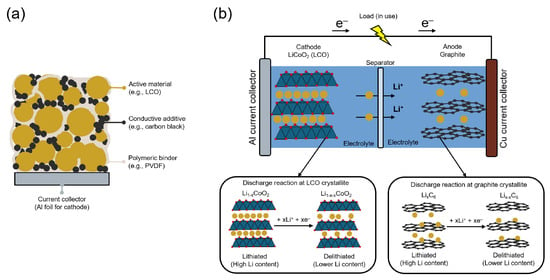
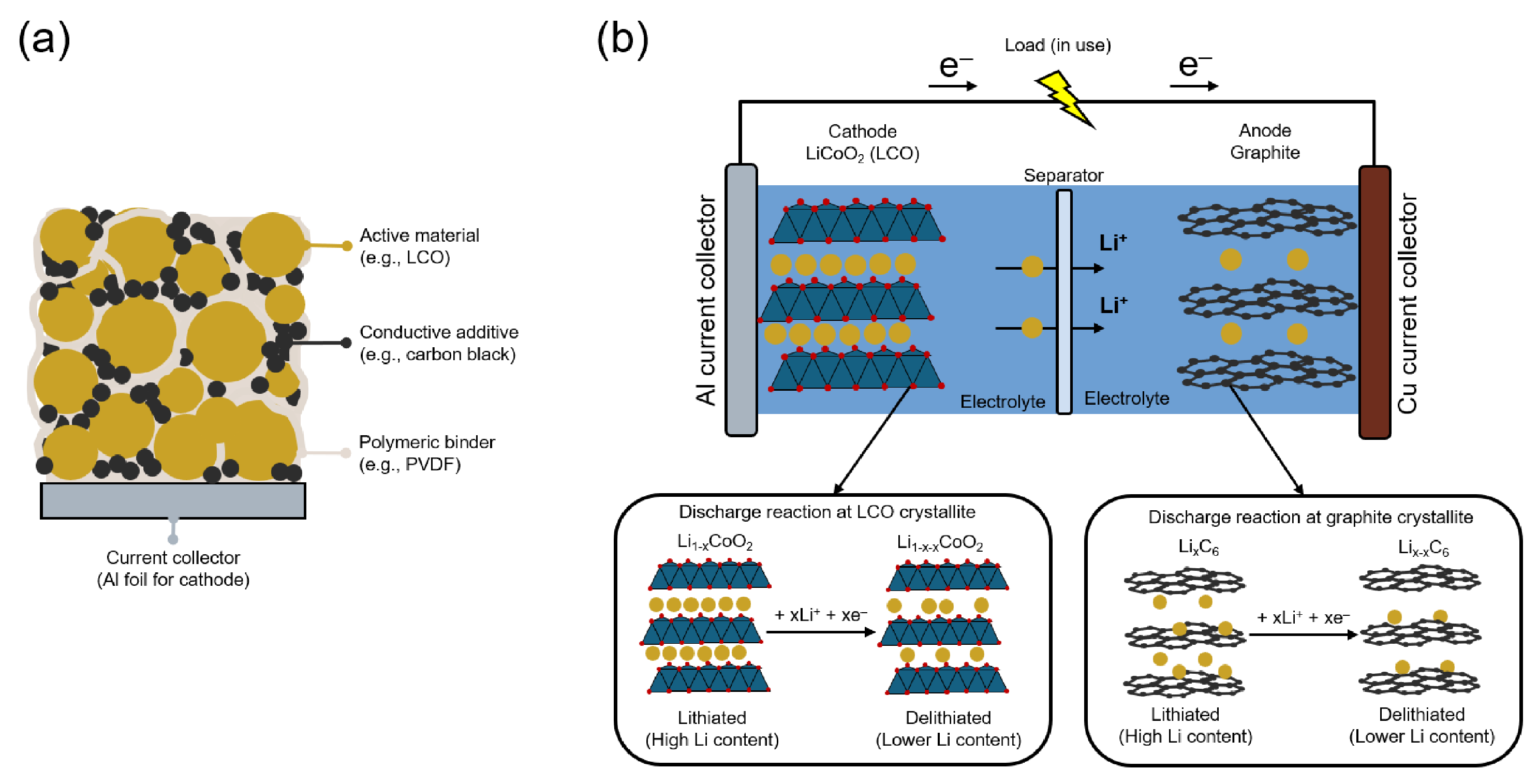
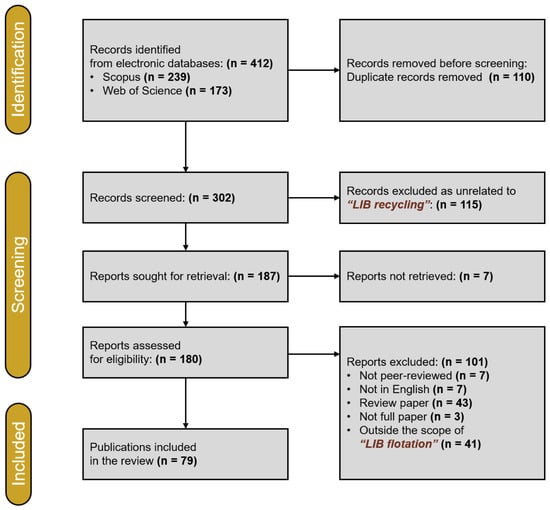
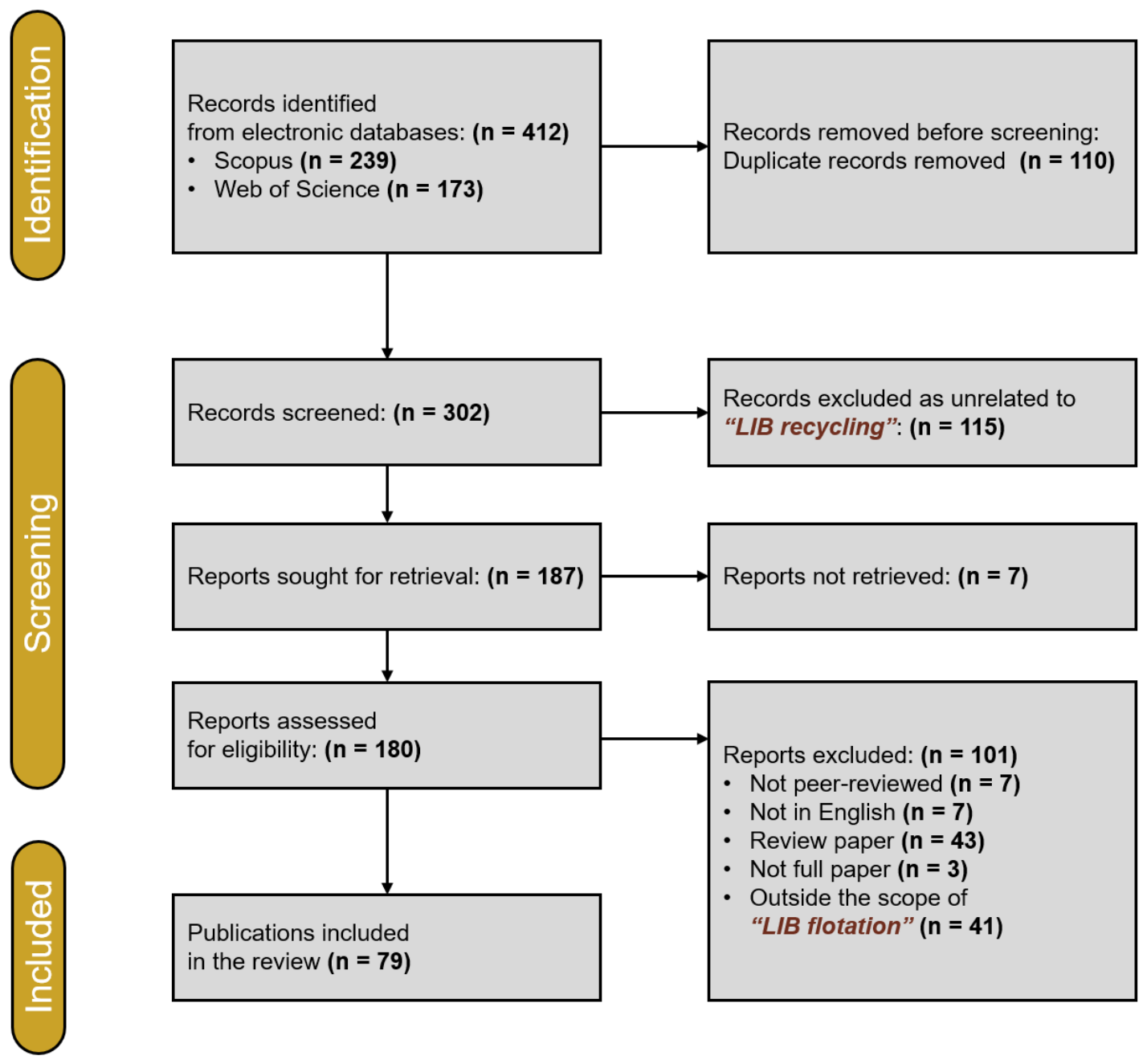
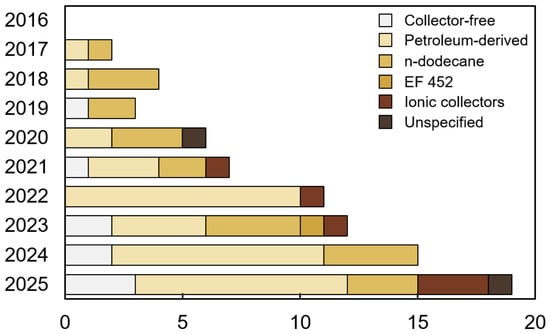
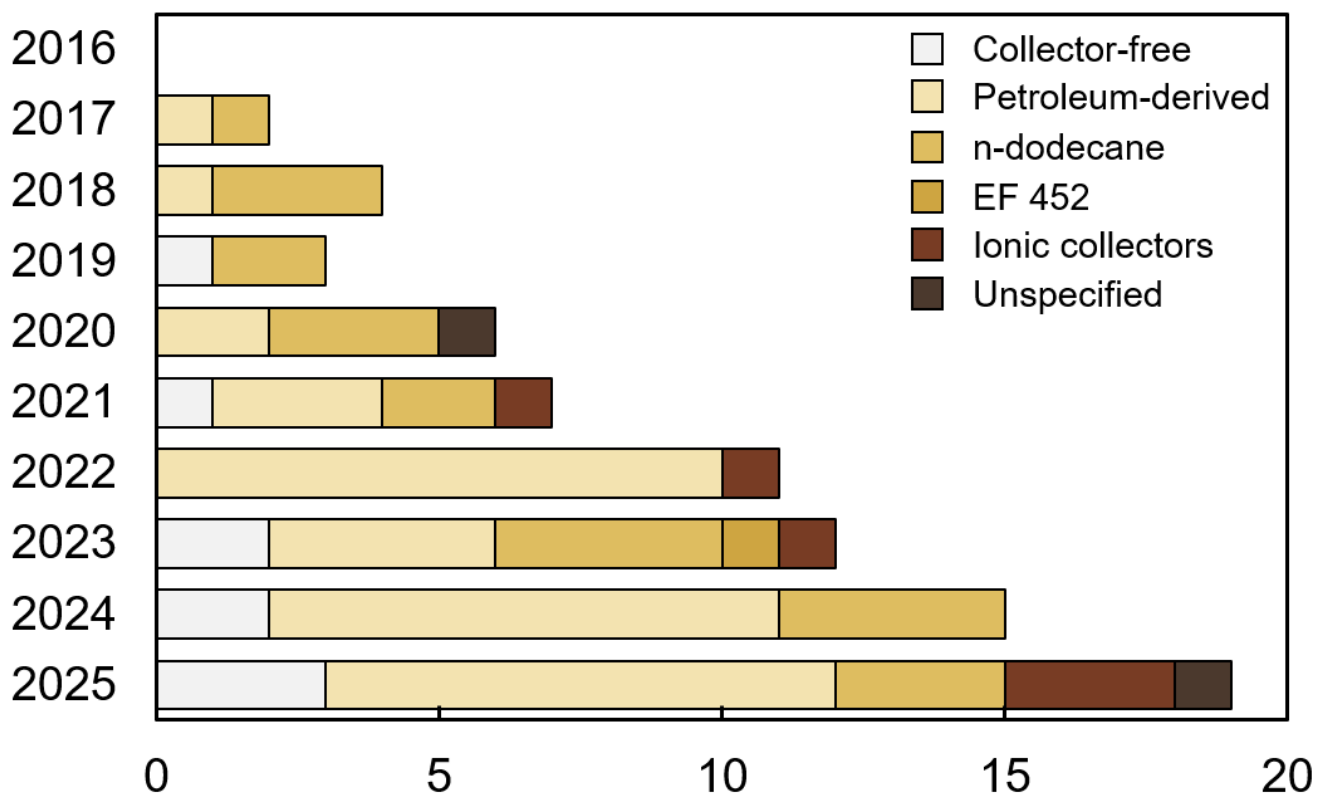
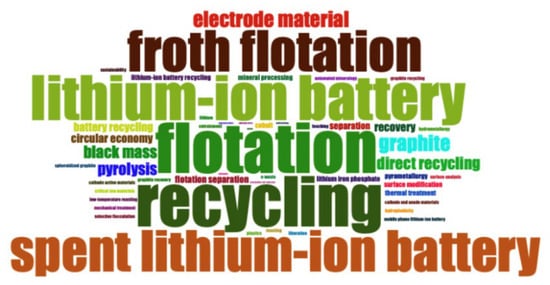
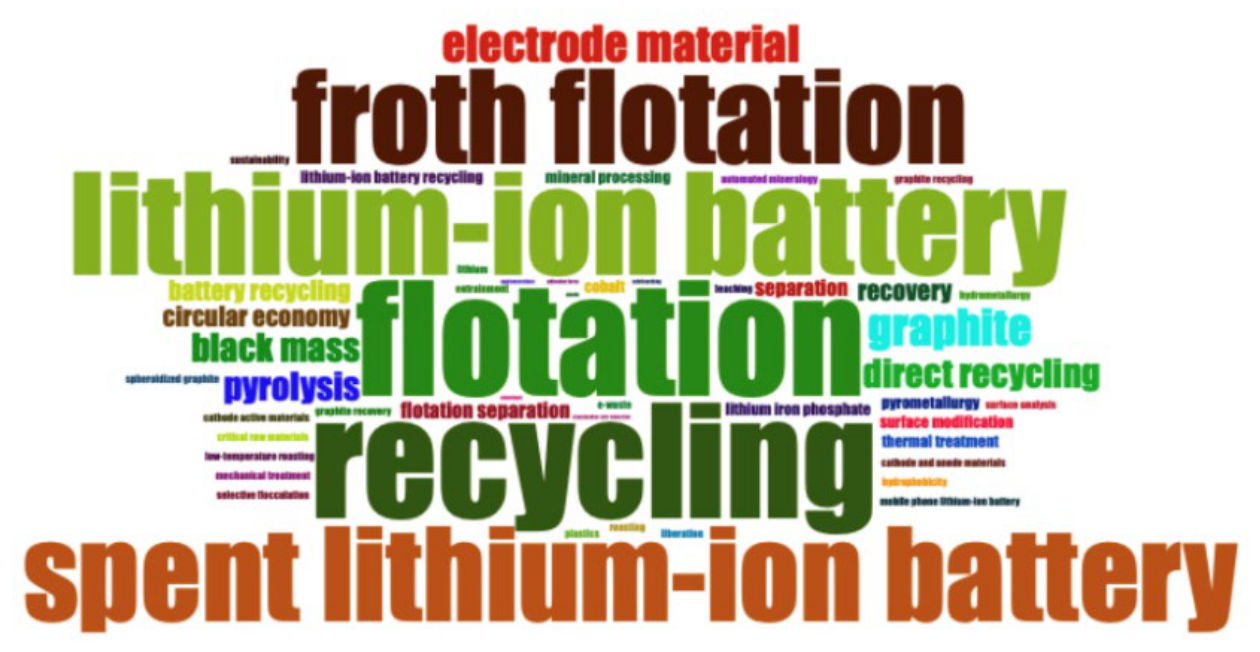
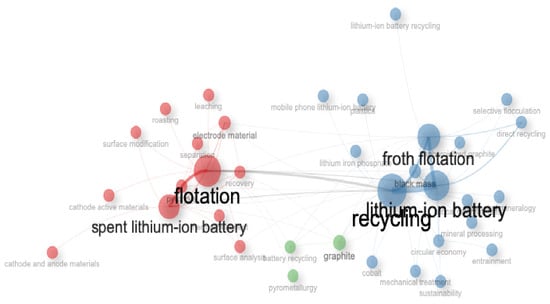
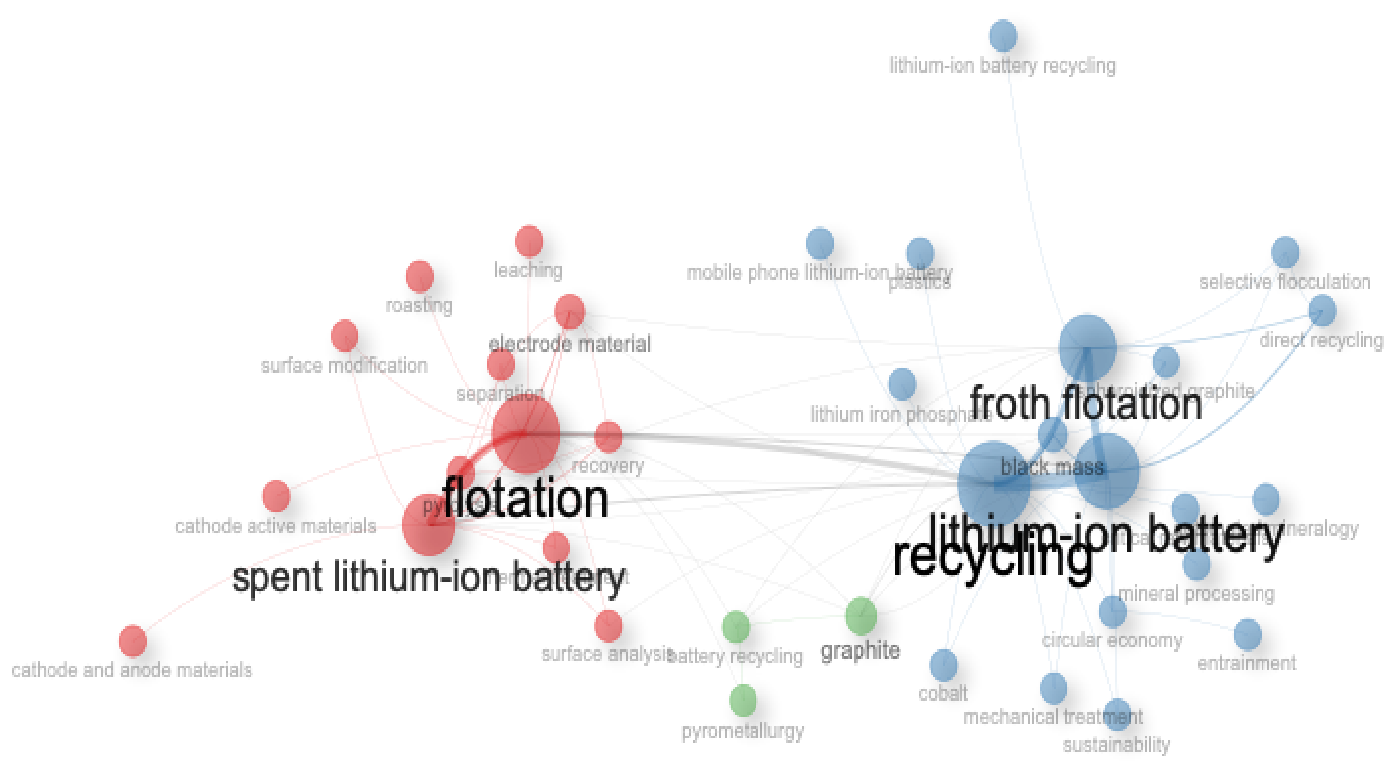

Disclaimer/Publisher’s Note: The statements, opinions and data contained in all publications are solely those of the individual author(s) and contributor(s) and not of MDPI and/or the editor(s). MDPI and/or the editor(s) disclaim responsibility for any injury to people or property resulting from any ideas, methods, instructions or products referred to in the content. |
© 2026 by the authors. Licensee MDPI, Basel, Switzerland. This article is an open access article distributed under the terms and conditions of the Creative Commons Attribution (CC BY) license.