


Abstract
Process mineralogy provides valuable information for understanding the mineralogical and textural characteristics of volcanogenic massive sulfide (VMS) deposits and their influence on mineral liberation. This study investigates the relationship between ore texture and chalcopyrite liberation in massive and stockwork/disseminated copper ore samples from a Kuroko-type VMS deposit in the Eastern Black Sea Region of Türkiye. Whole-rock mineralogy, textures, and mineral intergrowth relationships were characterized using X-ray diffraction (XRD), reflected-light ore microscopy, and field-emission scanning electron microscopy coupled with energy-dispersive X-ray spectroscopy (FE-SEM/EDS) mapping. Both ore types contain chalcopyrite, pyrite, sphalerite, and galena as the main valuable minerals, with quartz as the predominant gangue mineral. However, they show distinct textural characteristics. In the massive ore, chalcopyrite occurs as fine-grained aggregates filling fractures in cataclastic pyrite and commonly forms complex intergrowths with adjacent sulfides. In contrast, the stockwork/disseminated ore exhibits a more dispersed sulfide distribution within a quartz-rich matrix. Liberation analyses conducted across six particle size fractions, ranging from −600 + 500 to −38 µm, demonstrate that chalcopyrite liberation increases as particle size decreases. The stockwork/disseminated ore consistently exhibits higher liberation than the massive ore across all size fractions. The highest liberation values were achieved in the −38 µm fraction, reaching 98% for the stockwork/disseminated ore and 90% for the massive ore. FE-SEM/EDS mapping confirms that micron-scale sulfide intergrowths in the massive ore limit complete liberation and contribute to its lower liberation efficiency. These findings highlight the influence of ore texture on chalcopyrite liberation and provide useful geometallurgical information for optimizing the grinding and beneficiation of Kuroko-type VMS ores.
1. Introduction
Volcanogenic massive sulfide (VMS) deposits are stratiform sulfide accumulations formed by seafloor hydrothermal processes that exhibit a direct spatial, temporal, and genetic relationship with submarine volcanism [1]. These deposits mainly consist of pyrite, chalcopyrite, sphalerite, and galena and represent one of the world’s most important sources of base and precious metals [2,3]. According to their dominant metal associations, VMS deposits are commonly classified into Cu, Cu-Zn, Zn-Cu, and Zn-Pb-Cu types [4]. Kuroko-type VMS deposits are generally regarded as a polymetallic Zn–Pb–Cu-rich group of volcanogenic massive sulfide deposits and may locally contain notable Au and Ag concentrations. The Japanese term Kuroko, meaning “black ore,” was originally used for dark-colored massive sulfide ores dominated by sphalerite and galena in Japan. Investigations of these deposits contributed to the interpretation of VMS mineralization as a submarine hydrothermal–exhalative process and supported the use of Kuroko deposits as an important reference model for understanding volcanogenic massive sulfide systems [5]. Kuroko-type VMS deposits are commonly characterized by stratiform to lens-shaped massive sulfide bodies developed at the seafloor, with underlying feeder zones composed of vein, veinlet, and stockwork-style mineralization [6]. They generally form at or near submarine hydrothermal vents, where metal-bearing hydrothermal fluids precipitate sulfide minerals on or beneath the seafloor [7]. Morphologically, a typical VMS system consists of an upper massive sulfide lens underlain by a stockwork zone composed of veinlet and disseminated mineralization [8]. Despite their economic importance, VMS deposits exhibit remarkable mineralogical and textural heterogeneity. This heterogeneity can strongly influence their processing behavior and create significant challenges for mineral processing and resource utilization. Such mineralogical and textural complexity is also characteristic of VMS systems in northeastern Türkiye. In this region, the Eastern Pontide Orogenic Belt (EPOB) constitutes an important VMS-bearing metallogenic belt that hosts several polymetallic deposits and prospects, including Çayeli, Murgul, Lahanos, Kutlular, and Cerattepe [9,10,11,12,13,14]. To place the present study within this regional and global context, key features and mineralogical findings of representative VMS deposits are summarized in Table 1 [9,10,11,12,13,14,15,16,17].
Table 1.
Geological features, ore characteristics, and mineralogical findings of representative regional and global VMS deposits.
VMS deposits are characterized by pronounced mineralogical and textural variations between different ore zones. The massive sulfide lens and the underlying stockwork zone differ in mineral assemblages, alteration characteristics, ore textures, and the physicochemical conditions under which they formed [18]. These variations strongly influence the physical and metallurgical properties of the ore and consequently affect its beneficiation performance. Therefore, process mineralogy plays a crucial role in characterizing key ore properties such as modal mineralogy, particle size, particle morphology, and mineral associations. Such information provides a scientific basis for optimizing mineral processing circuits and improving plant performance [19].
Ore texture is closely related to mineral liberation and has a significant influence on beneficiation efficiency. Therefore, the combined evaluation of textural characteristics and liberation behavior is essential for understanding the metallurgical response of complex ores. This concept constitutes one of the fundamental components of particle-based geometallurgy. Geometallurgy aims to characterize the geological and metallurgical variability of ore deposits to support mine planning and process optimization [20].
Mineral liberation is one of the most critical parameters controlling flotation performance [21]. In complex sulfide ores, particle size, mineral distribution, and textural characteristics are key factors in determining the optimum grinding size and designing efficient process flowsheets [22]. However, achieving adequate liberation in mineralogically complex ores often requires very fine grinding, which substantially increases energy consumption [23]. Conversely, insufficient liberation directly reduces metal recovery. Consequently, chemical analyses alone are insufficient for evaluating such ore deposits. Instead, comprehensive process mineralogy approaches that integrate mineralogical, textural, and liberation characteristics are required [24]. Process mineralogy has become an essential tool for solving technical challenges in mineral processing and improving concentrate quality [25]. Previous studies on VMS deposits have demonstrated that mineral locking and textural heterogeneity strongly affect both grinding behavior and energy consumption [19]. Furthermore, successful geometallurgical characterization relies on the systematic collection of high-quality geological, geochemical, and mineralogical data [26]. Recent advances in mineral characterization increasingly rely on automated SEM–EDS-based systems, such as mineral liberation analyzer (MLA) and quantitative evaluation of minerals by scanning electron microscopy (QEMSCAN), together with complementary 3D X-ray microcomputed tomography and micro-X-ray fluorescence (micro-XRF) imaging. These techniques provide quantitative data on modal mineralogy, particle size, mineral associations, locking, morphology, and liberation behaviour [27,28,29]. MLA-derived data are particularly valuable for evaluating mineral liberation and optimizing Cu–Zn flotation strategies. XRD, reflected-light microscopy, and SEM/EDS provide complementary information on mineral phases, ore textures, intergrowths, replacement relationships, and fine-scale microstructures [30].
Although numerous studies have investigated the mineralogy and ore-forming processes of VMS deposits, quantitative comparisons of the mineralogical, textural, and mineral liberation characteristics of massive and stockwork/disseminated ores remain limited. In particular, such studies are scarce for VMS deposits in the Eastern Black Sea Region of Türkiye. Therefore, this study comparatively characterizes massive and stockwork/disseminated ore samples from an Eastern Black Sea VMS deposit using XRD, reflected-light microscopy, and FE-SEM/EDS analyses. The main objective of this study is to clarify how differences in ore texture and mineral intergrowth relationships influence chalcopyrite liberation during particle-size reduction. For this purpose, the liberation behavior of chalcopyrite in massive and stockwork/disseminated ores is quantitatively evaluated across different particle-size fractions, with particular emphasis on linking textural characteristics to liberation performance. The results are intended to provide mineralogical information for evaluating grinding requirements and supporting subsequent beneficiation and geometallurgical studies.
2. Materials and Methods
2.1. Sample Collection
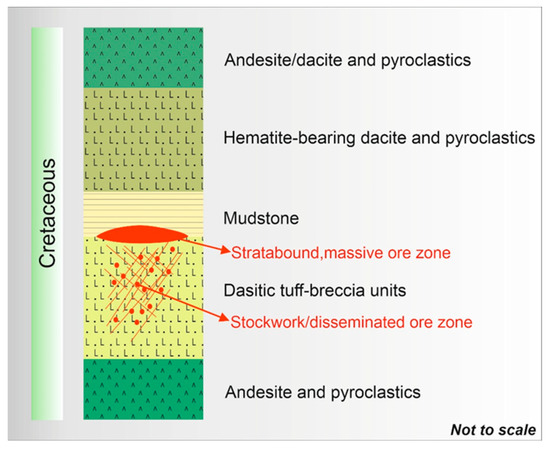
Representative ore samples were collected from a Kuroko-type VMS deposit hosted within an Upper Cretaceous volcano-sedimentary unit in the Eastern Black Sea Mountain Belt, Türkiye. The investigated deposit is genetically related to submarine volcanism and comprises two main ore types: massive and stockwork/disseminated ore. These ore types display distinct textural, structural, and spatial characteristics. The massive ore occurs mainly in the upper levels of the system as bedding-parallel and lens-shaped to stratiform massive–brecciated zones. In contrast, the stockwork/disseminated ore is observed in the lower levels as networks of veins and veinlets filling fracture systems dipping approximately 30–45° to the north.
The principal ore-bearing host rocks are intensely hydrothermally altered dacitic tuff and breccia units. The alteration assemblage in the study area is characterized by widespread silicification, clayification, chloritization, and hematitization. In the upper part of the unit, thinly bedded alternations of tuff and mudstone are present. These fine-grained sedimentary and volcaniclastic units may have acted as relatively impermeable horizons, locally controlling lateral fluid flow and the stratabound accumulation of sulfide minerals. Mineralization is particularly concentrated within the dacitic tuff–breccia units and along the mudstone–tuff contact (Figure 1).
Figure 1.
Simplified stratigraphic column of the studied mineralized area.
In this study, a total of 10 ore samples were collected from the same production area to represent different mineralization zones. Five samples were obtained from the massive ore zone, whereas the remaining five were collected from the stockwork/disseminated mineralization zone. The sampling locations were selected to capture the range of macroscopic structures, textures, and mineralogical characteristics observed in both ore types. Accordingly, approximately 15 kg macro-block samples were collected from the gallery faces using the block-sampling method. Upon arrival at the laboratory, the samples were carefully examined, macroscopically described, and photographically documented. Subsequently, the samples were crushed and ground for mineralogical–petrographic investigations and mineral liberation analyses. The resulting materials were then reduced to the particle-size fractions required for each analytical method. The prepared samples were subsequently used for detailed mineralogical characterization, including the evaluation of ore textures, mineral assemblages, intergrowth relationships, and the spatial relationships between sulfide and gangue minerals. For the liberation study, the prepared samples representing each ore type were subjected to the same crushing, grinding, sieving, and microscopic evaluation procedure. The liberation results presented in Table 2 represent the characteristic liberation behavior of the massive and stockwork/disseminated ore types, respectively.
Table 2.
Chalcopyrite liberation degrees (mean ± SD, n = 3) in massive and stockwork/disseminated ores as a function of particle size (represented by the geometric mean particle size, dg).
In addition, the liberation behavior and degree of liberation of chalcopyrite were quantitatively investigated in different grain-size fractions. Chalcopyrite is one of the principal copper-bearing minerals in many VMS deposits, and its grain size, textural association with pyrite, sphalerite, galena, and gangue minerals, and degree of liberation directly affect mineral processing efficiency and metallurgical recovery. Therefore, quantitative liberation analysis provides essential information for understanding the mineralogical characteristics of the ore and assessing its potential metallurgical response.
2.2. XRD Analysis
Sample preparation for XRD analyses was carried out in a stepwise manner. In the first stage, ore samples were reduced to a particle size of less than 4 mm using jaw and roll crushers. Subsequently, representative subsamples of the bulk material were prepared using a sample splitter. The samples prepared for analysis were then ground to a particle size of −25 µm using a ring mill. After grinding, the samples were placed in specially sealed bags to minimize exposure to air and stored under laboratory conditions. XRD analyses were subsequently performed on the resulting fine-grained ore samples.
XRD analyses were carried out using a Bruker D8 Advance X-ray diffractometer (Bruker AXS GmbH, Karlsruhe, Germany) at the Department of Geological Engineering, Istanbul Technical University. Measurements were performed with CuKα radiation under operating conditions of 40 kV and 40 mA. Diffractograms were collected over a 2θ range of 10–70° with a step size of 0.02°.
2.3. Ore Microscopy
Polished sections were prepared from representative massive and disseminated/network-textured ore samples selected on the basis of their macroscopic characteristics for ore microscopy investigations. Each specimen was individually mounted in epoxy resin and subjected to surface preparation. Grinding was first carried out using 180-grit SiC paper, followed by sequential grinding with 320, 600, 800, and 1000-grit papers on an automatic polishing machine. Final polishing was performed using 3 μm and 1 μm alumina and/or diamond suspensions to obtain smooth, scratch-free surfaces. Detailed mineralogical examinations were conducted on the polished sections. Microscopic observations and photomicrographs were obtained using a Nikon LV400Pol reflected-light ore microscope (Nikon Corp., Tokyo, Japan).
To determine the liberation degree of chalcopyrite, the ore samples were first crushed to below 4 mm. The crushed material was then ground in a rod mill and subjected to sieve analysis. Six particle size fractions were obtained: −600 + 500, −500 + 300, −300 + 150, −150 + 75, −75 + 38, and −38 μm. These size fractions were selected to represent both coarse and fine products commonly encountered in grinding circuits during mineral processing. This range also allowed the effect of particle size on mineral liberation to be evaluated over a broad interval. The selected fractions were based on standard sieve apertures widely used in mineral processing studies. Representative subsamples from each size fraction were mounted in epoxy resin and polished using standard metallographic procedures.
The polished sections were examined under the ore microscope, and approximately 650 chalcopyrite particles were evaluated for each size fraction. A chalcopyrite particle was classified as liberated when no visible contact with adjacent sulfide or gangue minerals was observed under reflected-light microscopy. Chalcopyrite grains were classified as either liberated or locked, and the liberation degree was calculated for each fraction. Locked particles were assessed using the 20-point visual estimation method. In this method, each locked particle containing chalcopyrite was visually divided into 20 equal segments, and the volumetric proportion of chalcopyrite was estimated according to its distribution within these segments. This two-dimensional visual estimation was used as an approximation of the volumetric proportion of chalcopyrite within each composite particle. Representative polished sections were examined systematically until approximately 650 chalcopyrite particles had been counted for each particle-size fraction. Liberation measurements were performed in triplicate, and the reported values represent the mean ± standard deviation. The liberation degree of chalcopyrite was then quantified for each particle size fraction.
2.4. FE-SEM/EDS Analysis
FE-SEM/EDS analyses were conducted on macro-scale massive and stockwork/disseminated ore samples prepared at approximately 1–1.5 cm in size. These analyses were used to investigate the microstructural characteristics, mineral associations, and elemental distributions of the ore in detail. In addition, supplementary analyses were performed to determine the degree of chalcopyrite liberation in the massive ore samples. For this purpose, the samples were initially crushed to below 4 mm and subsequently ground in a rod mill prior to sieve analysis. As a result of the sieving process, six particle size fractions were obtained: −600 + 500, −500 + 300, −300 + 150, −150 + 75, −75 + 38, and −38 µm. Representative subsamples from each size fraction were examined using FE-SEM/EDS, and the degree of chalcopyrite liberation at different particle sizes was assessed.
FE-SEM/EDS analyses were carried out at the Central Research Laboratory of Karadeniz Technical University. A Thermo Scientific Apreo 2S field-emission scanning electron microscope (Thermo Fisher Scientific, Waltham, MA, USA) equipped with an energy-dispersive X-ray spectroscopy system was employed for high-resolution imaging and elemental analyses.
3. Results
3.1. Evaluation of XRD Results
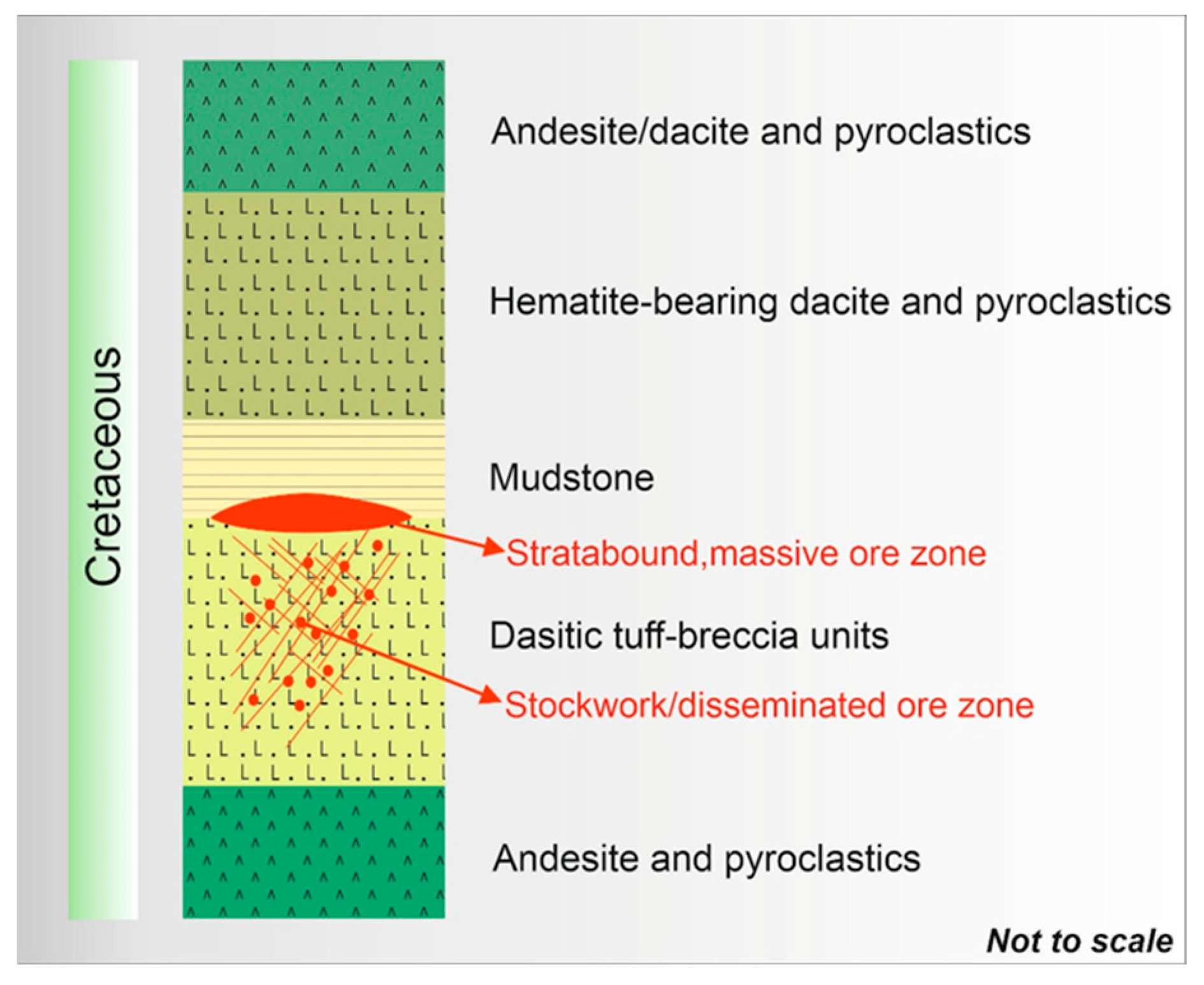
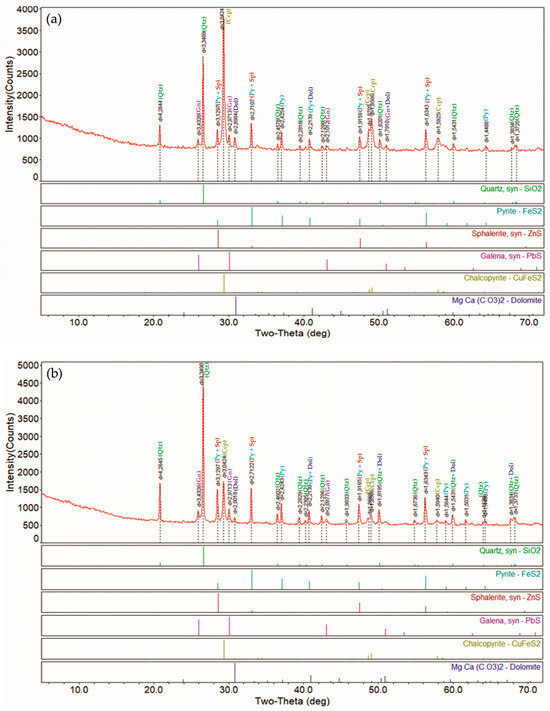
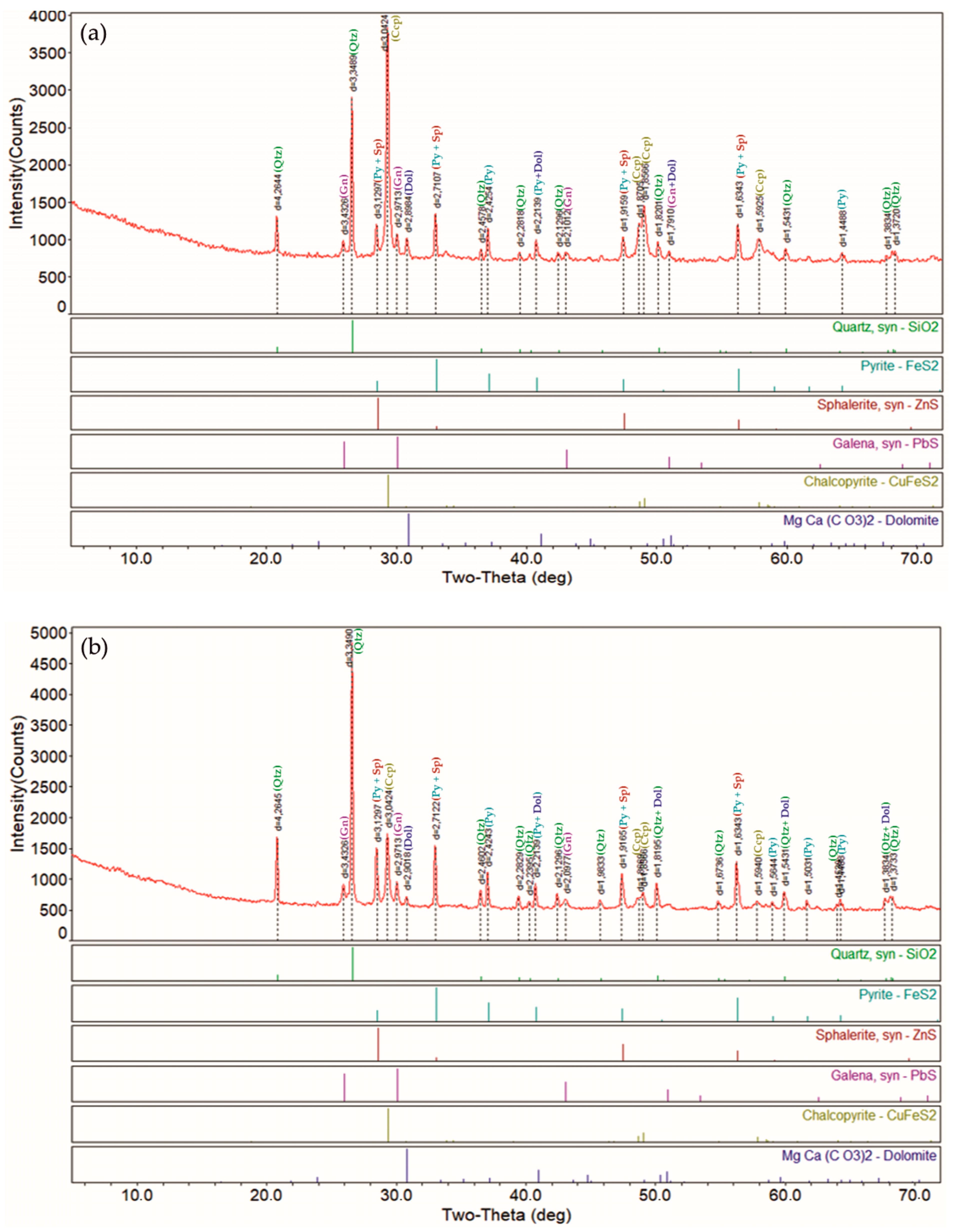
XRD patterns of the massive and stockwork/disseminated ore samples are presented in Figure 2. The XRD analyses indicate that the samples are mainly characterized by sulfide minerals, including chalcopyrite (CuFeS2), pyrite (FeS2), sphalerite (ZnS), and galena (PbS). Quartz (SiO2) was identified as the predominant gangue mineral within the ore assemblage, accompanied by subordinate amounts of dolomite (CaMg(CO3)2). This mineral association demonstrates that the mineralization is enriched in sulfide phases and that quartz represents the dominant mineral component of the gangue assemblage.
Figure 2.
XRD patterns of the massive (a) and stockwork/disseminated (b) ore samples (Standard abbreviation: Ccp = chalcopyrite, Gn = galena, Sp = sphalerite, Py = pyrite, Qtz = quartz, Dol = dolomite).
The XRD pattern of the massive ore sample presented in Figure 2a was interpreted based on the d-spacings (Å) and relative intensities (%) of the characteristic diffraction peaks. The major peaks of chalcopyrite were identified at 3.04 (100) Å, 1.87 (20) Å, and 1.59 (30) Å. Sphalerite was characterized by peaks at 3.12 (100) Å, 1.91 (51) Å, and 1.63 (30) Å. The characteristic reflections of galena were observed at 3.42 (84) Å, 2.97 (100) Å, and 2.10 (57) Å, whereas pyrite showed major peaks at 3.13 (35) Å, 2.71 (85) Å, and 1.63 (100) Å.
Among the gangue minerals, quartz was identified as the dominant phase, with characteristic peaks at 4.25 (22) Å, 3.34 (100) Å, and 2.46 (8) Å. In addition, dolomite was recognized by its major reflections at 2.89 (100) Å, 2.20 (30) Å, and 1.79 (30) Å. The XRD results indicate that the massive ore sample is characterized by a sulfide-rich mineralogical composition, with quartz representing the predominant gangue mineral. The XRD pattern of the stockwork/disseminated ore sample presented in Figure 2b similarly confirms the presence of chalcopyrite, pyrite, sphalerite, and galena. These results indicate that the stockwork/disseminated ore exhibits a mineralogical composition largely similar to that of the massive ore sample. Beyond the identification of the primary mineral phases described above, understanding their mutual textural relationships and spatial associations is crucial for evaluating subsequent liberation behavior.
3.2. Ore Mineralogy and Texture
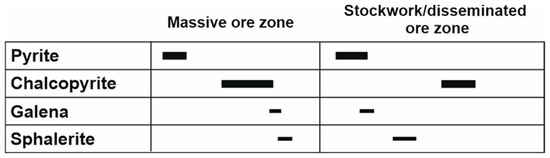
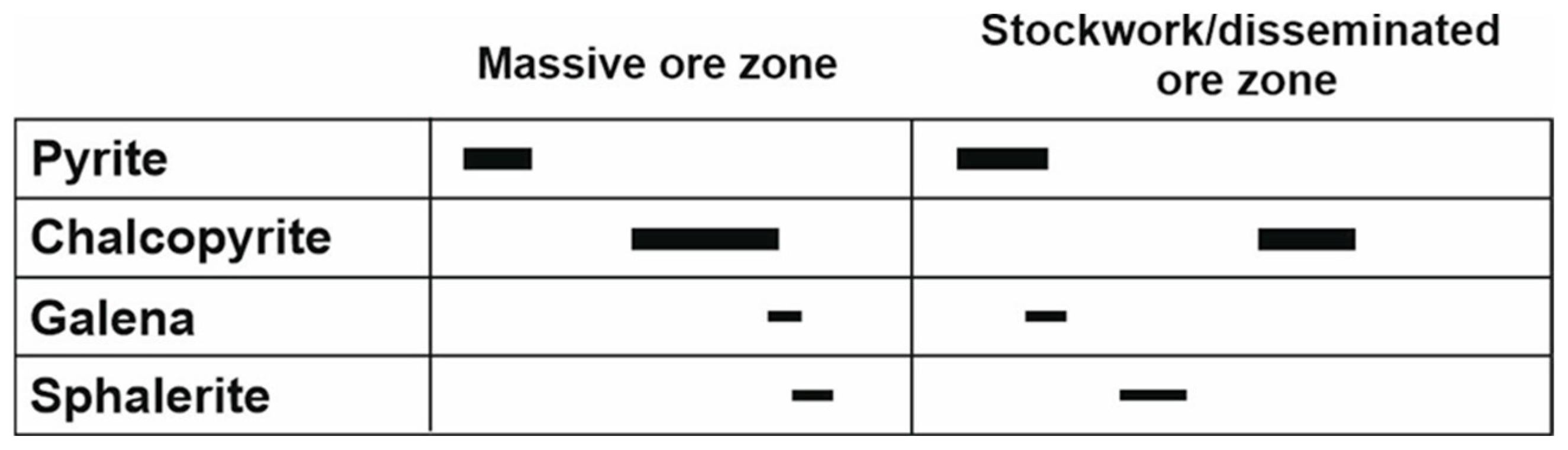
The studied VMS ore deposits comprise two distinct ore zones characterized by massive mineralization and stockwork/disseminated ore textures. The ore mineral assemblage consists mainly of pyrite, chalcopyrite, galena, and sphalerite, whereas the gangue mineralogy is dominated by quartz with minor dolomite. To characterize the mineral assemblage and textural relationships, polished sections prepared from representative ore samples were examined microscopically. Based on these observations, paragenetic schemes representing the mineralization processes in the massive and stockwork/disseminated zones were established (Figure 3). Overall, the mineralization exhibits a relatively simple mineralogical composition and micro-ore textures. The ore minerals are generally very fine-, fine-, and medium-grained, with grains only rarely exceeding 250 µm.
Figure 3.
Paragenesis and successions expressing the ore-forming process of massive and stockwork/disseminated ore zones. (Line thickness increase according to the abundance of minerals in the paragenesis).
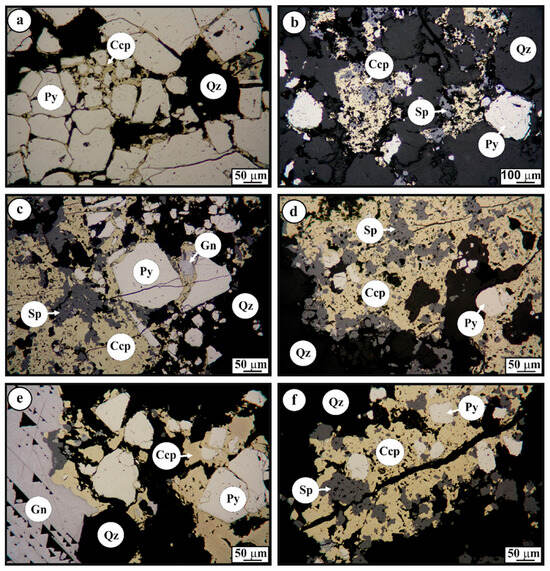
The massive ore samples contain fine-grained pyrite crystals smaller than 100 µm, together with medium-grained pyrite ranging from 100 to 500 µm (Figure 4). Fractures and microcracks within these pyrite grains are commonly infilled by economically significant ore minerals such as chalcopyrite, sphalerite, and galena, as well as gangue minerals including quartz and minor dolomite. The stockwork/disseminated ore texture is hosted by dacitic rocks that have undergone silicification and carbonatization. In some parts of the ore zone, the mineralization displays an intensely fractured and brecciated character. Elsewhere, pyrite, chalcopyrite, sphalerite, and galena occur either as aggregates within gangue minerals or as fine-grained disseminations.
Figure 4.
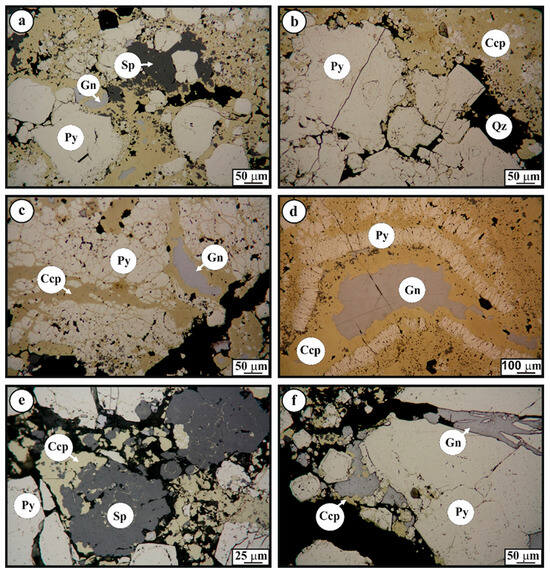
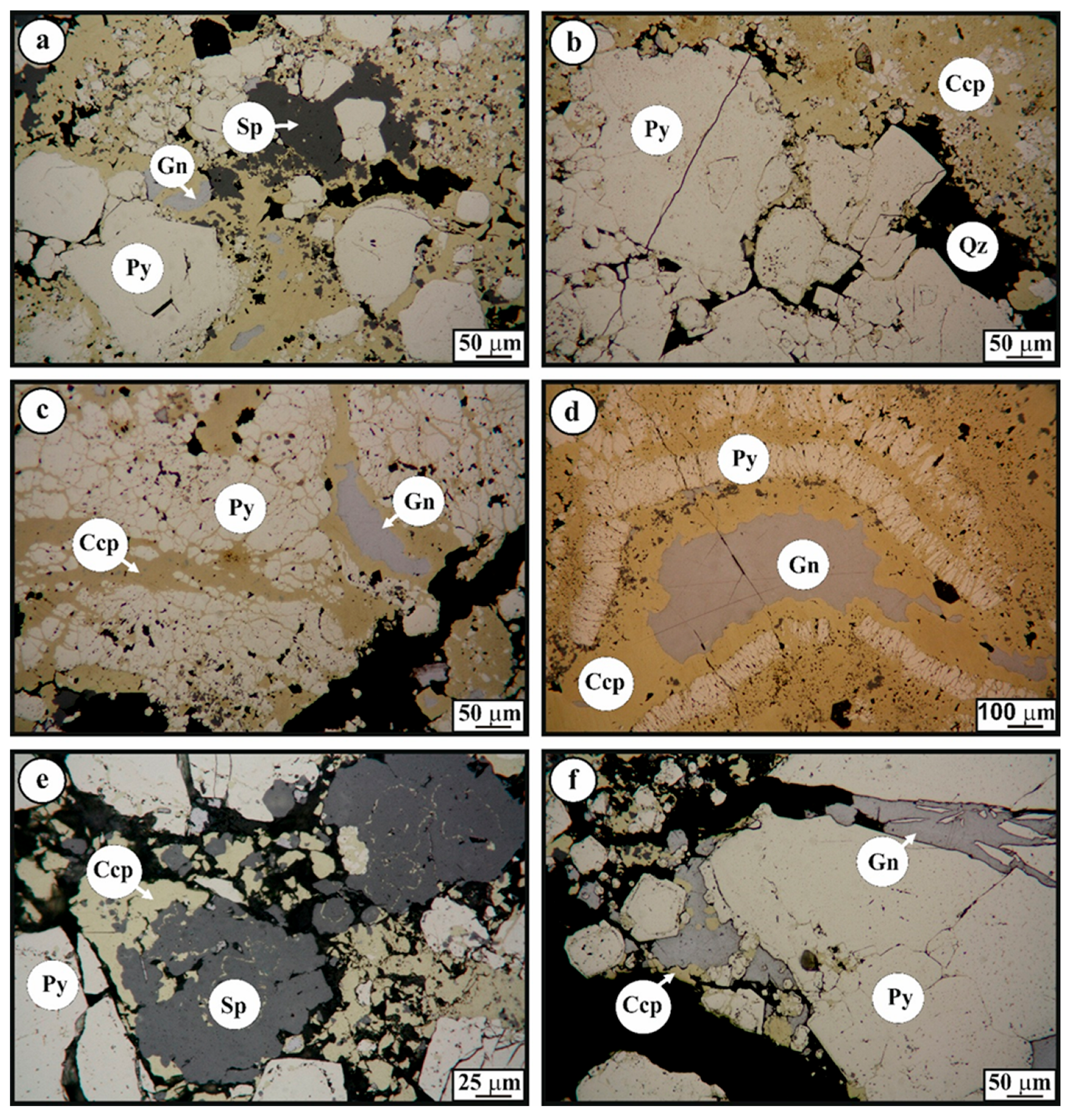
Ore microscopy textures and mineralogical characteristics of minerals in the massive ore zone. (a,b) The infilling of chalcopyrite into the interstitial spaces between cataclastically fractured euhedral and subhedral pyrite crystals. (c,d) The textural relationship between galena and chalcopyrite infilling the interstitial spaces between euhedral and subhedral pyrite crystals. (e,f) Chalcopyrite infilling the interstitial spaces between euhedral and subhedral pyrite crystals, and its replacement by sphalerite and galena minerals (Py: Pyrite, Ccp: Chalcopyrite, Sp: Sphalerite, Gn: Galena, Qz: Quartz).
Pyrite occurs in both ore zones; however, in the massive ore zone, it is predominantly represented by euhedral to subhedral crystals reaching up to approximately 350 µm (Figure 4a,b). In this zone, pyrite crystals locally form aggregates and display zoned internal textures, particularly where euhedral and subhedral grains are clustered together (Figure 4b,c). In addition, anhedral chalcopyrite, galena, and sphalerite developed between locally zoned pyrite grains and produced intergrowth textures (Figure 4a,e). Following pyrite crystallization, subsequent deformation resulted in cataclastic fracturing, giving rise to an intensely fractured and cracked texture within the pyrite grains (Figure 4c,d). Similarly, in both ore zones, anhedral chalcopyrite crystals developed along fractures and marginal zones of pyrite are clearly observed to have been replaced by galena and sphalerite (Figure 4e,f and Figure 5a,c).
Figure 5.
Ore microscopy textures and mineralogical characteristics of minerals in the stockwork/disseminated ore zone. (a) Dissemination of euhedral and subhedral pyrite and chalcopyrite within the quartz gangue mineral, and the infilling of chalcopyrite into voids and fractures in pyrite. (b) Aggregation of anhedral sphalerite and chalcopyrite minerals within the quartz gangue mineral. (c) Textural relationship between cataclastically fractured pyrite crystals and chalcopyrite and galena minerals within the quartz gangue mineral. (d–f) Occurrence of anhedral chalcopyrite and sphalerite minerals forming aggregates by replacing euhedral and subhedral pyrite crystals within the quartz gangue mineral. (Py: Pyrite, Ccp: Chalcopyrite, Sp: Sphalerite, Gn: Galena, Qz: Quartz).
Chalcopyrite occurs in both ore zones during the mineralization process and represents the most abundant sulphide mineral throughout the ore assemblage. In the massive ore zone, chalcopyrite is predominantly observed as anhedral grains, commonly localized along fractures and marginal domains of pyrite crystals (Figure 4). Within the same zone, chalcopyrite locally replaces anhedral galena and sphalerite grains ranging from 5 to 200 µm (Figure 4c–f). On the other hand, chalcopyrite is observed to replace euhedral pyrite crystals as well as anhedral galena and sphalerite grains in the stockwork/disseminated ore zone. These mineralogical relationships are closely associated with alteration minerals, particularly quartz and carbonate, developed within the host rocks (Figure 5). Compared with the massive ore zone, galena and sphalerite are more intensively developed in the stockwork/disseminated zone. Reflected-light microscopy of polished sections indicates that these minerals occur as clustered aggregates in close textural association with euhedral quartz and anhedral carbonate minerals (Figure 5b,d,f). This clustering suggests that the sulphide and gangue minerals crystallized either contemporaneously or through successive mineral-forming stages.
Sphalerite in the massive ore zone occurs as grains up to approximately 5 µm. It appears to have formed after pyrite and locally replaces pyrite and chalcopyrite along their grain margins (Figure 4a,e). In the stockwork/disseminated ore zone, sphalerite forms comparatively larger crystals, reaching approximately 100–150 µm, possibly in response to an increase in temperature (Figure 5). These sphalerite grains display exsolution textures with chalcopyrite both in their central parts and along their marginal zones (Figure 5b–d). In addition, sphalerite in both ore zones is observed to be replaced by chalcopyrite, commonly in association with galena (Figure 5c–f).
Galena is predominantly developed in the stockwork ore zone, where it commonly occurs in close association with sphalerite and reaches grains of up to 300 µm. It is characterized by its distinctive triangular prismatic cleavage and light grey to bluish-grey appearance. In the massive ore zone, galena is mainly observed along fractures within pyrite crystals (Figure 4f). Otherwise, galena is locally replaced along its margins by anhedral chalcopyrite and sphalerite grains in the stockwork ore zone (Figure 5c,e).
The observed difference in the formation sequence of chalcopyrite and galena between these zones may reflect spatial and temporal variations in the evolution of the hydrothermal system. In the massive ore zone, the formation of chalcopyrite prior to galena may indicate an early Cu-bearing sulfide stage, followed by a relatively later Pb–Zn mineralization event. Conversely, the locally later occurrence of chalcopyrite in the stockwork/disseminated zone may be attributed to hydrothermal overprinting, renewed fluid influx, or partial replacement of pre-existing sulfide assemblages. Collectively, these textural and paragenetic variations suggest localized changes in fluid pathways, host-rock permeability, and alteration conditions during the evolution of the VMS system [31].
Numerous studies have focused on the microscopic and textural characteristics of massive sulphide deposits. These studies mainly address the paragenetic relationships among ore minerals and the diversity of ore textures [3,4,15,16,32,33,34,35,36,37]. Previous investigations indicate that pyrite is the dominant sulphide phase in such deposits. It commonly occurs as euhedral to subhedral crystals and exhibits cataclastic, colloform, and framboidal textures. Consistent with the observations of the present study, chalcopyrite and sphalerite in comparable deposits are commonly observed to fill fractures within pyrite crystals. This textural relationship indicates that these minerals developed through replacement processes. Nevertheless, despite these general similarities, notable textural differences are evident among different deposits. For instance, coarse-grained, zoned, and porous pyrite has been reported from the Küre deposit [32], whereas chalcopyrite exsolution textures within sphalerite showing cataclastic and colloidal textures have been described from Madenköy [33]. In the Cerattepe deposit, pyrite has been documented in three distinct generations, accompanied by sponge-like growth zones [34].
Similarly, coarse-crystalline and fractured pyrite, with chalcopyrite extensively filling the fractures, has been identified in the Cünür deposit [35]. In the Say-Yayla deposit, brecciated pyrite aggregates and chalcopyrite–sphalerite assemblages occupying interstitial spaces have been reported [4]. Furthermore, colloform banding textures, in which framboidal pyrite is surrounded by euhedral pyrite crystals, have been observed in the Honghai deposit [36]. In the Um Samiuki deposit, chalcopyrite and galena are reported to occur in an intergrown relationship in addition to the pyrite–sphalerite association [3]. Otherwise, atoll and spongiform pyrite/arsenopyrite developed within massive sulfide lenses, banded pyrite–chalcopyrite–pyrrhotite zones, skeletal replacement of pyrite by chalcopyrite, and chalcopyrite inclusions within sphalerite in ABM deposit [15]. Similarly, the Dragset deposit displays a textural architecture shaped by intense folding and shearing, represented by stacked massive ore lenses and elongated stringer zones. In the massive ore, fine-grained pyrite, sphalerite bands, chalcopyrite–pyrrhotite stockworks, late pyrite overgrowths on earlier pyrite, and replacement of pyrite by chalcopyrite and sphalerite are common [16]. In comparison, the Baiyinchang VMS ore field in the North Qilian belt is represented by polymetallic massive sulfide lenses formed at or near the seafloor. Its textural evolution, typical of Kuroko-type/bimodal-felsic systems, is interpreted to reflect multistage ore precipitation resulting from the interaction between heated seawater and magmatic–hydrothermal fluids [37].
3.3. FE-SEM/EDS Analyses
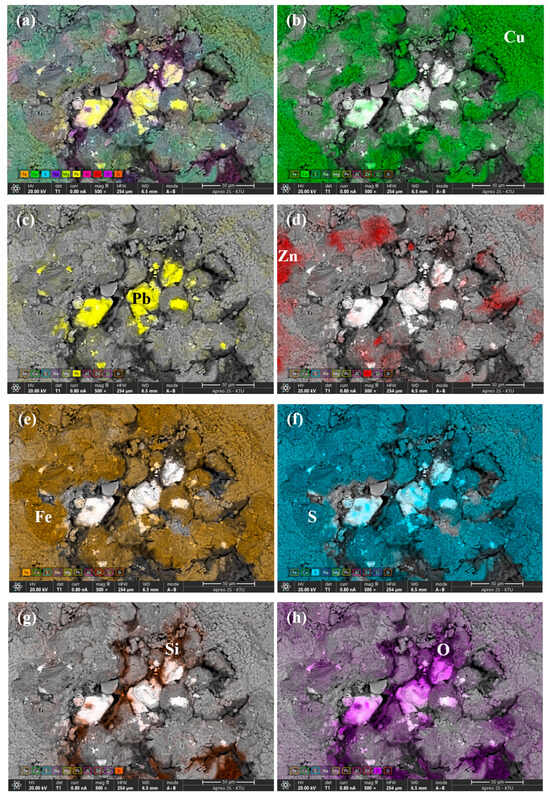
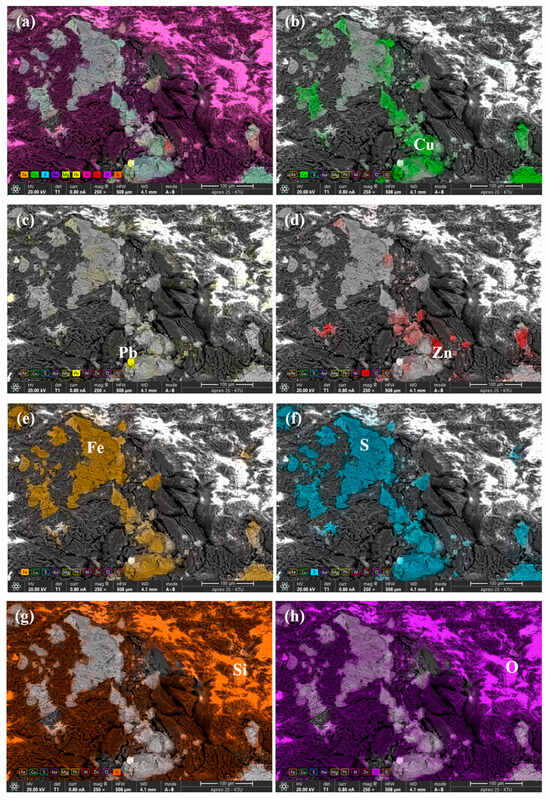
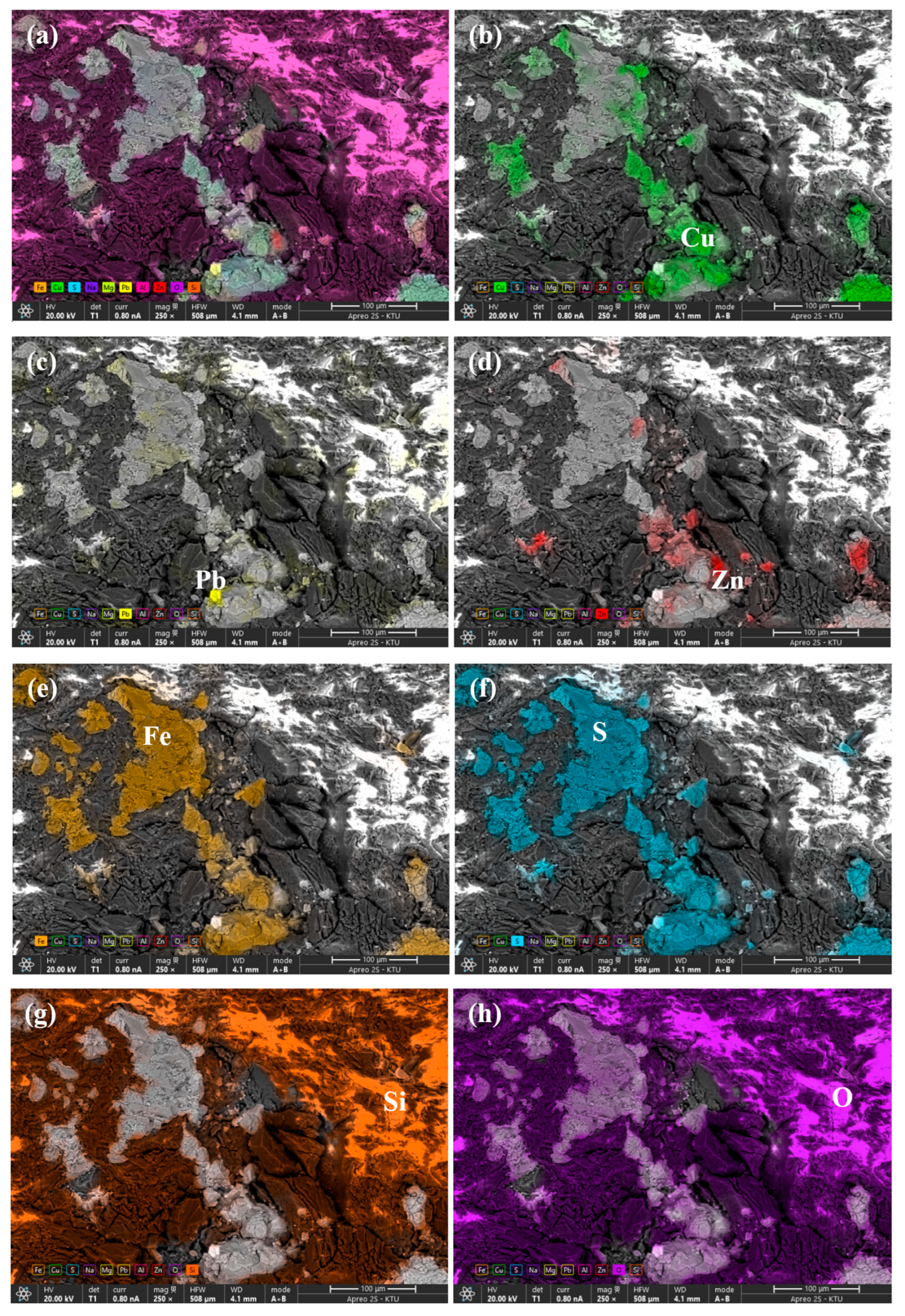
FE-SEM/EDS elemental mapping analyses of the massive ore sample provide detailed information on the microtextural characteristics and elemental distribution patterns of the constituent mineral phases (Figure 6). The elemental maps are consistent with the mineral assemblage identified by XRD and reflected-light microscopy, comprising predominantly chalcopyrite, pyrite, sphalerite, galena, and quartz.
Figure 6.
FE-SEM/EDS elemental mapping images of the massive ore sample, showing the elemental associations of sulfide minerals and silicate matrix. (a) combined elemental distribution map, (b) Cu, (c) Pb, (d) Zn, (e) Fe, (f) S, (g) Si, and (h) O distribution maps. Cu: copper, Pb: lead, Zn: zinc, Fe: iron, S: sulfur, Si: silicon, and O: oxygen.
The combined elemental distribution map (Figure 6a) illustrates the spatial relationships among the major elements and highlights the heterogeneous distribution of sulfide and gangue phases within the analyzed area. Distinct elemental enrichments observed in the individual maps allow the recognition of different mineral phases and their textural associations.
Copper enrichment is concentrated in discrete domains (Figure 6b), corresponding primarily to chalcopyrite-rich areas. The Pb distribution map (Figure 6c) reveals localized lead-rich zones attributable to galena, whereas the Zn map (Figure 6d) indicates the occurrence of sphalerite dispersed within the sulfide matrix. Iron is widely distributed throughout the sample (Figure 6e), reflecting its presence mainly in pyrite and chalcopyrite. The sulfur map (Figure 6f) demonstrates the pervasive distribution of sulfide minerals and confirms the sulfide-rich character of the ore. Silicon enrichment (Figure 6g) is associated with quartz, which occurs as gangue material surrounding and locally intergrown with sulfide phases. Oxygen concentrations identified in Figure 6h are mainly related to silicate gangue minerals and minor oxidation features.
The elemental maps further reveal an intimate intergrowth among the major sulfide minerals. Chalcopyrite, pyrite, sphalerite, and galena commonly occur in close spatial association, forming a compact sulfide matrix characterized by complex grain-boundary contacts and local interlocking textures. Quartz is distributed predominantly along grain boundaries and in the interstitial spaces between sulfide phases. These textural relationships indicate that the ore exhibits a relatively high degree of mineral association at the microscopic scale, a characteristic feature of massive sulfide mineralization. Such intergrowths are expected to influence the liberation behavior of valuable sulfide minerals during comminution and therefore represent an important factor controlling subsequent beneficiation performance.
FE-SEM/EDS elemental mapping analyses of the stockwork/disseminated ore sample provide detailed information on the spatial distribution and microtextural relationships of the constituent mineral phases (Figure 7). The elemental maps are consistent with the mineral assemblage identified by XRD and reflected-light microscopy, comprising mainly chalcopyrite, pyrite, sphalerite, galena, and quartz.
Figure 7.
FE-SEM/EDS elemental mapping images of the stockwork/disseminated ore sample, showing the elemental associations of sulfide minerals and silicate matrix. (a) combined elemental distribution map, (b) Cu, (c) Pb, (d) Zn, (e) Fe, (f) S, (g) Si, and (h) O distribution maps. Cu: copper, Pb: lead, Zn: zinc, Fe: iron, S: sulfur, Si: silicon, and O: oxygen.
The combined elemental distribution map (Figure 7a) illustrates the relative abundance and spatial relationships of the major elements within the analyzed area. The maps reveal that sulfide minerals occur as irregularly shaped and discontinuous clusters distributed within a quartz-rich gangue matrix. The heterogeneous distribution of sulfide and gangue phases reflects the characteristic texture of stockwork/disseminated mineralization.
Copper enrichment is concentrated in discrete domains (Figure 7b), corresponding mainly to chalcopyrite-bearing areas. The Pb distribution map (Figure 7c) identifies localized lead-rich zones attributed to galena, whereas Zn enrichment (Figure 7d) indicates the occurrence of sphalerite. Iron is widely distributed throughout the analyzed area (Figure 7e), reflecting its presence primarily in pyrite and, to a lesser extent, chalcopyrite. The sulfur map (Figure 7f) confirms the abundance of sulfide minerals and demonstrates a close spatial association between sulfur and the Cu-, Fe-, Zn-, and Pb-bearing phases.
The Si distribution map (Figure 7g) shows that quartz is the dominant gangue mineral and forms the host matrix surrounding the sulfide phases. Similarly, the O distribution map (Figure 7h) largely coincides with the Si-rich regions, indicating the widespread occurrence of silicate-rich gangue minerals.
The elemental maps demonstrate that sulfide minerals are distributed throughout the quartz-rich matrix and commonly occur along fractures, veinlets, and interstitial spaces. In several areas, sulfide phases exhibit close grain-boundary contacts and local intergrowth textures with gangue minerals. These microtextural relationships indicate a complex mineral association within the stockwork/disseminated ore and provide important mineralogical information for subsequent liberation and beneficiation studies.
A comparison of the FE-SEM/EDS elemental mapping results reveals significant differences in the mineralogical texture and spatial distribution of sulfide phases between the massive and stockwork/disseminated ore types, despite their broadly similar mineralogical assemblages. In the massive ore, sulfide minerals form a dense and continuous matrix characterized by extensive grain contacts and intimate intergrowths among chalcopyrite, pyrite, sphalerite, and galena. In contrast, the stockwork/disseminated ore exhibits a more heterogeneous texture, where sulfide minerals occur as discontinuous aggregates, veinlets, and isolated clusters embedded within a quartz-rich gangue matrix. The Cu, Pb, Zn, Fe, and S elemental maps demonstrate that sulfide minerals form more concentrated and continuous domains in the massive ore, whereas these phases are more dispersed within the gangue matrix in the stockwork/disseminated ore. The Si and O distribution maps further indicate a greater abundance and wider distribution of gangue minerals in the stockwork/disseminated ore. Consequently, sulfide minerals in the massive ore are predominantly associated with other sulfide phases, while those in the stockwork/disseminated ore are more commonly in contact with quartz and other gangue minerals. These textural differences suggest that the two ore types may exhibit distinct liberation characteristics during comminution. The dense sulfide intergrowths observed in the massive ore are likely to promote sulfide–sulfide locking, whereas the abundant sulfide–gangue interfaces in the stockwork/disseminated ore may facilitate liberation along sulfide–quartz boundaries. Therefore, the observed microtextural variations are expected to play a key role in controlling mineral liberation and the subsequent beneficiation performance of the ore. These observations are consistent with previous studies demonstrating that mineral texture and sulfide–gangue relationships strongly control mineral liberation and beneficiation performance [38].
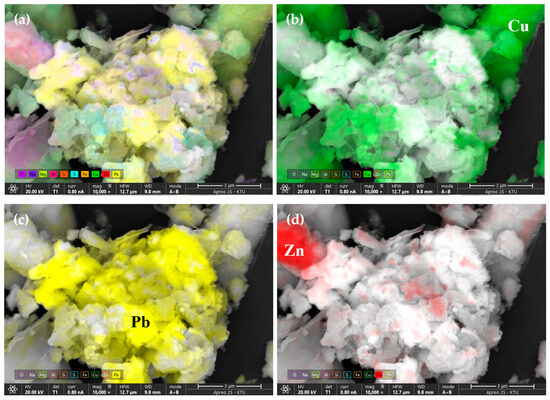
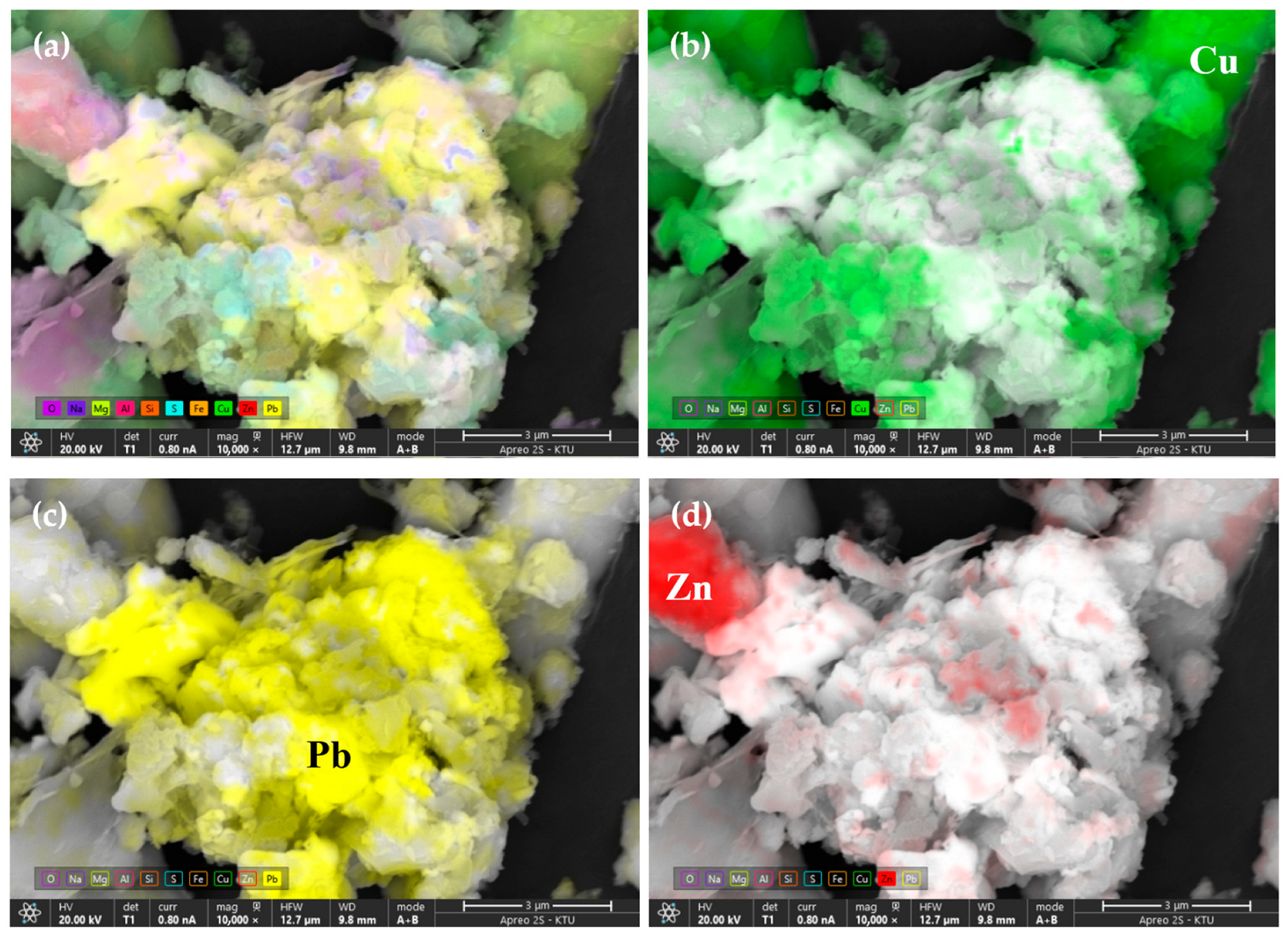
The elemental mapping results discussed above indicate that sulfide minerals in the massive ore occur as closely associated and intergrown phases. To examine these relationships at a finer scale and assess their potential impact on mineral liberation, high-resolution FE-SEM/EDS elemental mapping was conducted on selected sulfide particles from the massive ore sample (Figure 8).
Figure 8.
High-magnification FE-SEM/EDS elemental mapping images of a sulfide particle from the massive ore sample: (a) combined elemental distribution map, (b) Cu, (c) Pb, and (d) Zn distribution maps. The images highlight the fine-scale intergrowth and incomplete liberation of chalcopyrite, sphalerite, and galena at the micrometer scale. Cu: copper, Pb: lead, and Zn: zinc.
The high-resolution FE-SEM/EDS elemental maps presented in Figure 8 provide detailed insight into the fine-scale textural relationships among sulfide minerals in the massive ore sample. The images were acquired at 10,000× magnification and cover an area corresponding to a scale of approximately 3 µm. The combined elemental distribution map (Figure 8a) reveals a complex sulfide aggregate composed of closely associated Cu-, Zn-, and Pb-bearing phases. At this scale, the elemental distributions indicate intimate intergrowth textures and complex spatial relationships among the sulfide minerals.
The Pb distribution map (Figure 8c) shows that the Pb-rich phase is concentrated within the central part of the analyzed particle, whereas Cu-bearing phases identified in Figure 8b and Zn-bearing phases shown in Figure 8d occur both around and within the same mineral aggregate. The elemental maps further reveal that the distributions of Cu, Zn, and Pb are closely associated and locally overlapping, indicating the presence of extremely fine-grained sulfide intergrowths. The irregular boundaries observed between the elemental domains in Figure 8b–d suggest that chalcopyrite, sphalerite, and galena are intricately interlocked at the micrometer scale. The fine-scale intergrowths observed between chalcopyrite, sphalerite, and galena agree with previous SEM investigations showing that such textures commonly reduce liberation efficiency and require finer grinding [39], while process mineralogy studies have further demonstrated that complex mineral intergrowths strongly influence liberation behaviour and beneficiation performance [40].
Notably, FE-SEM/EDS observations reveal that intimate intergrowths among chalcopyrite, sphalerite, and galena persist at the micrometer scale (approximately 3 µm). This approximate dimension refers to the scale of the mineral intergrowths observed in the polished section rather than to the actual particle size of the comminuted material. As shown in Figure 8b–d, these sulfide phases remain attached within composite particles, demonstrating that mineral locking persists at very fine particle sizes. This observation indicates that the liberation of chalcopyrite is controlled not only by particle size reduction but also by the complex microtextural characteristics of the ore. The persistence of sulfide–sulfide intergrowths at the micrometer scale is consistent with the dense and compact sulfide matrix observed in the massive ore and provides direct evidence for the textural factors limiting mineral liberation. These findings highlight the importance of microtextural characterization for understanding the comminution behavior and beneficiation response of VMS ores.
3.4. Determination of Chalcopyrite Liberation Degree
Liberation degree is a critical parameter for flotation performance. It indicates how effectively valuable minerals are separated from gangue minerals and other sulfide phases. Poorly liberated particles generally result in lower flotation recovery, whereas highly liberated particles are recovered more readily and produce higher concentrate grades. Therefore, mineral liberation should be considered the primary criterion for determining the optimum grinding size, rather than relying solely on particle size distribution [21].
In this study, the liberation characteristics of chalcopyrite in massive and stockwork/disseminated ore samples were evaluated through microscopic investigations of different particle size fractions. Particular attention was given to the degree of chalcopyrite liberation and its associations with gangue minerals and other sulfide phases. The results provide valuable insights into the influence of ore texture on liberation behavior and, consequently, on the expected flotation performance. Liberation measurements were performed in triplicate, and the results are reported as mean ± standard deviation (n = 3). The findings are presented in Figure 9 and Figure 10 and summarized in Table 2.
Figure 9.
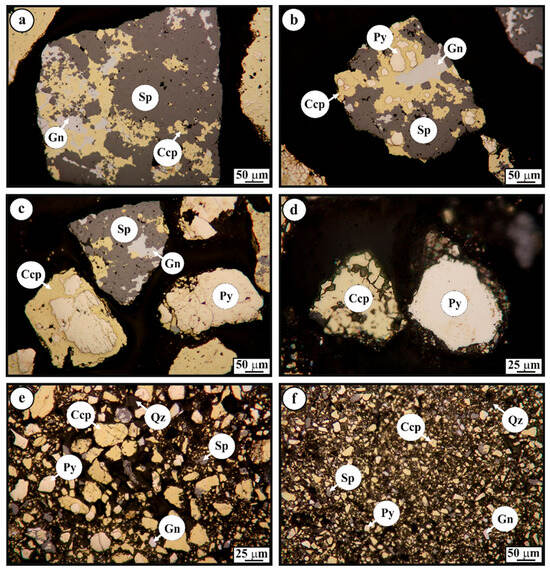
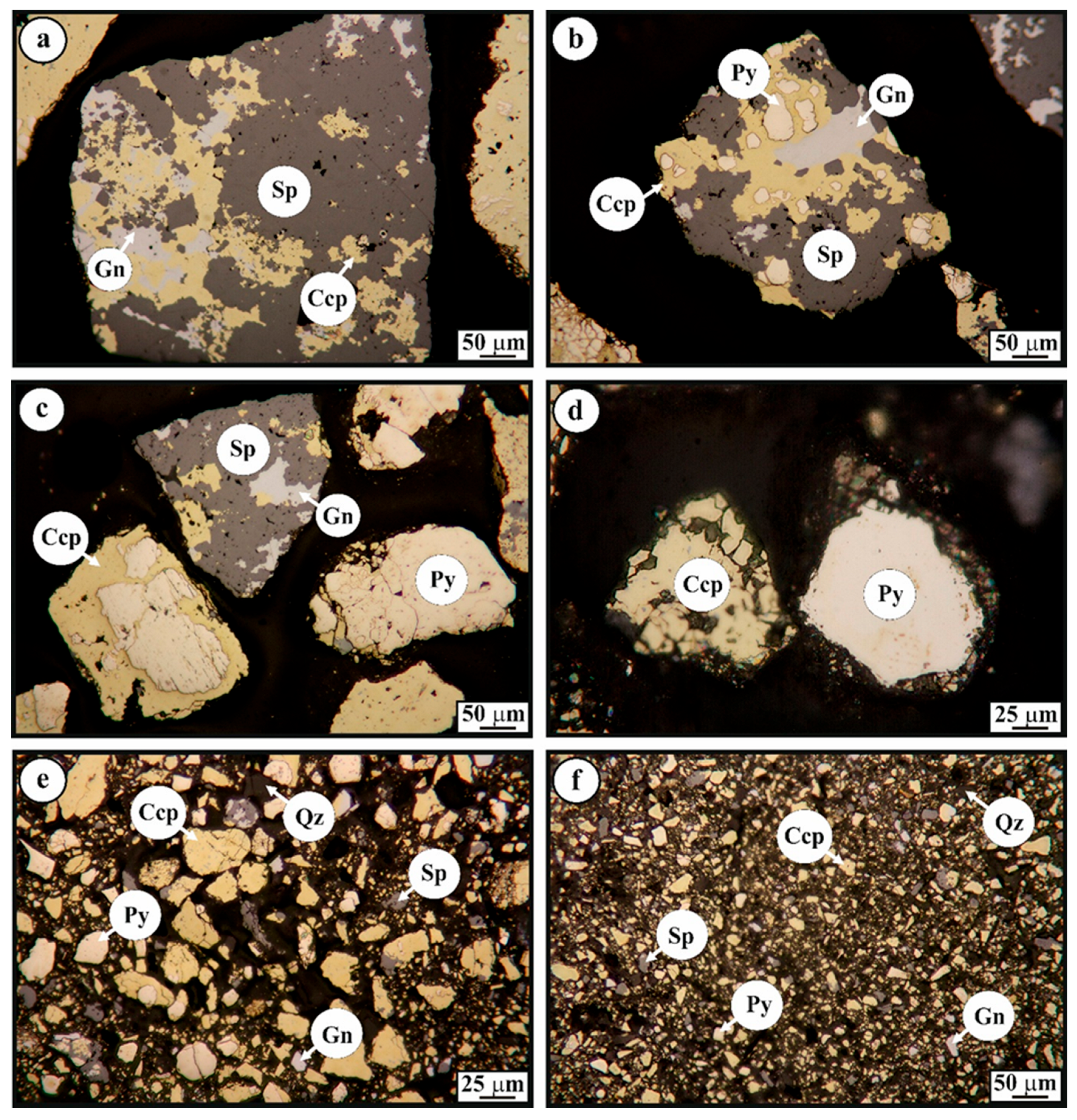
Reflected light ore microscopy images of the massive ore sample across different particle size fractions, showing the distribution of sulfide minerals and complex intergrowths. (a) −600 + 500 µm, (b) −500 + 300 µm, (c) −300 + 150 µm, (d) −150 + 75 µm, (e) −75 + 38 µm, and (f) −38 µm. (Py: Pyrite, Ccp: Chalcopyrite, Sp: Sphalerite, Gn: Galena, Qz: Quartz).
Figure 10.
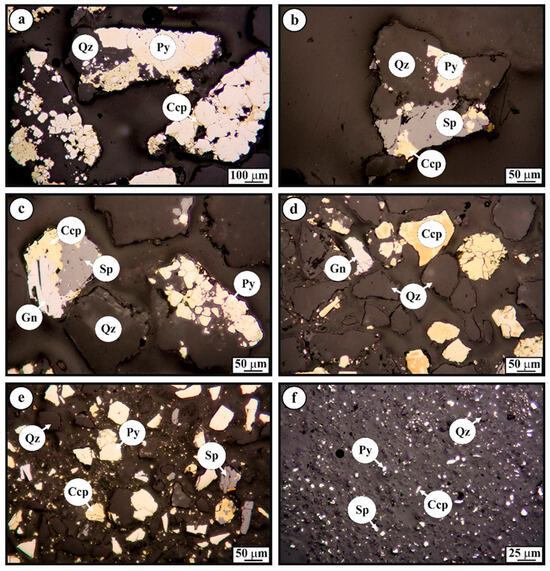
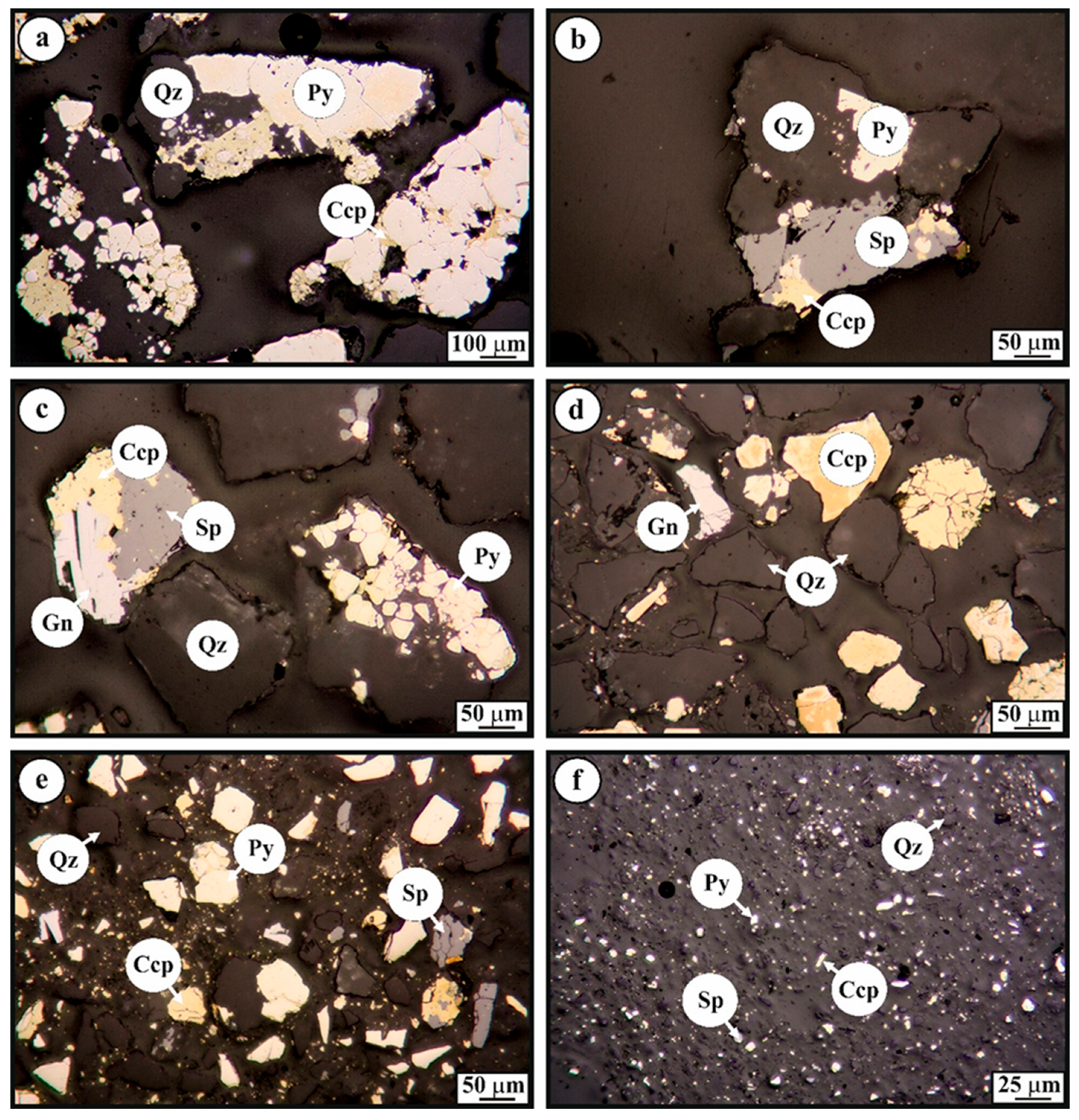
Reflected light ore microscopy images of the stockwork/disseminated ore sample across different particle size fractions, showing the distribution of sulfide minerals and complex intergrowths. (a) −600 + 500 µm, (b) −500 + 300 µm, (c) −300 + 150 µm, (d) −150 + 75 µm, (e) −75 + 38 µm, and (f) −38 µm. (Py: Pyrite, Ccp: Chalcopyrite, Sp: Sphalerite, Gn: Galena, Qz: Quartz).
The mineral associations and liberation characteristics observed in different particle size fractions of the massive ore samples are presented in Figure 9a–f, whereas the corresponding images for the stockwork/disseminated ore samples are shown in Figure 10a–f. These micrographs enable the evaluation of chalcopyrite liberation behavior as a function of decreasing particle size and illustrate its progressive separation from other sulfide minerals and gangue phases. Such observations provide valuable insight into the relationship between particle size reduction and mineral liberation, which is a key factor influencing flotation performance.
The reflected-light microscopy images of the massive ore sample (Figure 9a–f) reveal that chalcopyrite occurs predominantly in close association with sphalerite and pyrite, while associations with galena are observed to a lesser extent. In the coarse particle size fractions (−600 + 500 µm and −500 + 300 µm), chalcopyrite is mainly present as inclusions within sphalerite or as intergrown particles with other sulfide minerals, resulting in relatively low liberation degrees. Accordingly, the liberation degrees of chalcopyrite in these fractions were determined to be 5% and 12%, respectively (Table 2).
As the particle size decreases, the extent of mineral intergrowths involving chalcopyrite gradually diminishes, leading to the formation of more liberated particles. In the −300 + 150 µm fraction, the liberation degree increased to 22%, whereas a substantial increase was observed in the −150 + 75 µm fraction, where the liberation degree reached 53%. At this size range, a significant proportion of chalcopyrite had become detached from pyrite and sphalerite; however, some sulfide intergrowths were still present.
In the finer fractions (−75 + 38 µm and −38 µm), chalcopyrite particles were observed to be largely liberated, with only limited associations remaining with other sulfide minerals. These observations are consistent with the corresponding liberation degrees, which increased to 72% and 90%, respectively. Overall, the liberation degree of chalcopyrite in the massive ore sample exhibited a systematic increase with decreasing particle size. A marked improvement in liberation was achieved below 150 µm, while the highest degree of liberation was attained in the −38 µm fraction.
The reflected-light microscopy images of the stockwork/disseminated ore sample (Figure 10a–f) show that chalcopyrite occurs within a quartz-rich matrix and is mainly associated with pyrite and sphalerite, with occasional associations with galena. In the coarse particle size fractions (−600 + 500 µm and −500 + 300 µm), chalcopyrite grains are mostly in contact with quartz and other sulfide minerals. However, compared with the massive ore sample, they exhibit a more discrete and irregular distribution. This observation is consistent with the liberation degrees of 10% and 21% determined for these fractions, respectively.
With decreasing particle size, the degree of chalcopyrite separation from quartz and sulfide phases increases significantly. The liberation degree reaches 33% in the −300 + 150 µm fraction and increases further to 64% in the −150 + 75 µm fraction. Within this size range, a considerable proportion of chalcopyrite grains occur as liberated particles. However, some intergrowths with pyrite and sphalerite are still observed.
In the finer fractions (−75 + 38 µm and −38 µm), chalcopyrite is largely liberated, and its contact with other sulfide minerals is significantly reduced. The corresponding liberation degrees were determined as 83% and 98%, respectively. These results indicate that chalcopyrite in the stockwork/disseminated ore sample exhibits a clear and progressive increase in liberation with decreasing particle size.
However, the stockwork/disseminated ore exhibited higher liberation degrees than the massive ore across all particle size fractions. This difference was more pronounced in the coarse size fractions. In the −600 + 500 µm fraction, the liberation degree was 10% for the stockwork/disseminated ore compared with 5% for the massive ore. Similarly, in the −500 + 300 µm fraction, the liberation degrees were determined as 21% and 12%, respectively.
A similar trend was observed in the finer fractions. In the −150 + 75 µm fraction, the liberation degree increased from 53% in the massive ore to 64% in the stockwork/disseminated ore. In the finest fraction (−38 µm), the corresponding values reached 90% and 98%, respectively.
Microscopic observations indicate that chalcopyrite in the massive ore is more strongly interlocked with pyrite, sphalerite, and galena. In contrast, sulfide minerals in the stockwork/disseminated ore display a more dispersed and discrete distribution within the quartz matrix. These textural differences explain the higher chalcopyrite liberation degrees achieved in the stockwork/disseminated ore.
Overall, the results demonstrate that ore texture plays a significant role in controlling chalcopyrite liberation. The stockwork/disseminated ore exhibits a more favorable liberation behavior than the massive ore. From a mineral processing perspective, the liberation data indicate that a substantial improvement in chalcopyrite liberation is achieved when the particle size is reduced below approximately 150 µm. For both ore types, the liberation degree increases markedly between the −150 + 75 µm and −75 + 38 µm size fractions, indicating that this size range is particularly effective for promoting the separation of chalcopyrite from associated sulfide minerals and gangue phases. Although the highest liberation degrees were obtained in the −38 µm fraction, achieving this particle size would require additional grinding and consequently higher energy consumption. Furthermore, excessive grinding could increase the production of very fine particles, which may adversely affect downstream beneficiation processes. Therefore, based solely on the liberation characteristics, particle sizes finer than approximately 75 µm appear to provide a favorable balance between improved mineral liberation and the extent of size reduction required. However, the optimum grinding size should ultimately be established by integrating liberation data with flotation performance and grinding energy considerations.
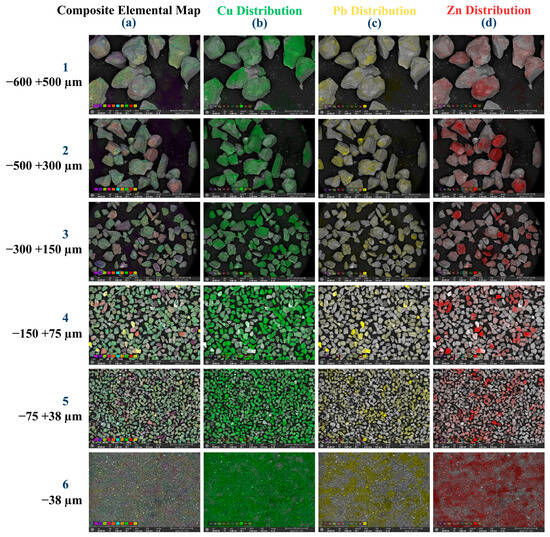
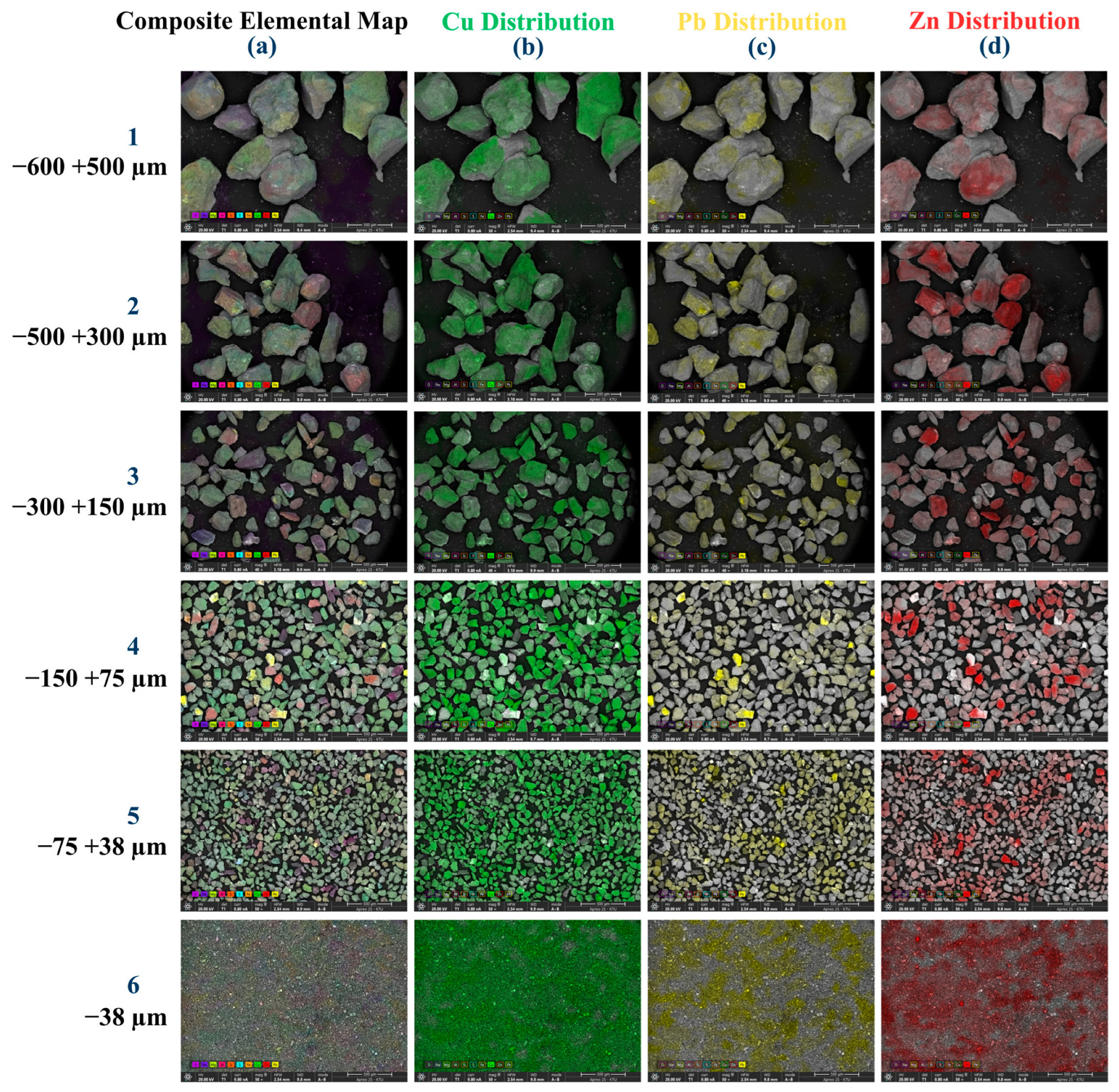
To further verify the liberation characteristics observed by reflected-light microscopy, FE-SEM/EDS elemental mapping was performed on the massive ore sample (Figure 11). The massive ore was intentionally selected for this analysis because it exhibits the most complex sulfide intergrowths and the lowest chalcopyrite liberation among the investigated ore types, making it the most representative sample for evaluating the influence of particle size reduction on mineral liberation. In addition to confirming the microscopic observations, elemental mapping provides a clearer visualization of the spatial distribution of Cu-bearing particles and their associations with other sulfide minerals across the investigated particle size fractions.
Figure 11.
FE-SEM/EDS elemental mapping images of the massive ore sample across different particle size fractions, showing the elemental distribution and liberation features of major sulfide minerals. (a) Composite elemental map showing the overall elemental distribution; (b) Cu distribution highlighting chalcopyrite-bearing particles; (c) Pb distribution; and (d) Zn distribution. Rows (1–6) correspond to the particle size fractions ranging from −600 + 500 µm to −38 µm, illustrating the progressive liberation of Cu-bearing particles with decreasing particle size.
The FE-SEM/EDS elemental mapping results are in good agreement with the liberation data obtained from reflected-light microscopy. In the coarse particle size fractions (−600 + 500 µm, and −500 + 300 µm), Cu signals are concentrated within localized regions and commonly occur together with other sulfide minerals, indicating complex mineral intergrowths. The Cu-bearing particles are closely associated with pyrite, sphalerite, and, to a lesser extent, galena, confirming the relatively low chalcopyrite liberation observed in these fractions.
As the particle size decreases to the −300 + 150 µm and particularly the −150 + 75 µm fractions, Cu-bearing particles become progressively more distinct and increasingly separated from the surrounding mineral phases. The greater abundance of discrete Cu-rich particles observed in the elemental maps is consistent with the corresponding liberation degrees of 22% and 53%, respectively. In particular, the −150 + 75 µm fraction exhibits a marked increase in liberated chalcopyrite particles, although limited intergrowths with pyrite and sphalerite are still present.
In the finest particle size fractions (−75 + 38 µm and −38 µm), Cu is distributed more uniformly throughout the image field and occurs predominantly as numerous discrete particles. These observations are consistent with the high liberation degrees of 72% and 90%, respectively. The elemental maps indicate that most chalcopyrite particles have become effectively separated from the associated sulfide minerals, demonstrating the progressive improvement in mineral liberation with decreasing particle size.
The close agreement between the reflected-light microscopy observations and the FE-SEM/EDS elemental maps demonstrates the reliability of the liberation assessment. The consistent increase in the abundance of discrete Cu-bearing particles with decreasing particle size independently confirms that progressive grinding effectively reduces mineral interlocking and enhances the liberation of chalcopyrite from associated sulfide minerals. Overall, the combined microscopic and elemental mapping results consistently demonstrate that chalcopyrite liberation increases markedly below approximately 75 µm, while the highest liberation degree was achieved in the −38 µm size fraction.
The principal mineralogical, textural, and liberation differences between the massive and stockwork/disseminated ore types are summarized in Table 3. Both ore types contain similar sulfide mineral assemblages but differ markedly in texture. The massive ore is characterized by a dense sulfide matrix and complex sulfide–sulfide intergrowths, whereas the stockwork/disseminated ore contains more dispersed sulfides within a quartz-rich matrix. As a result, the stockwork/disseminated ore exhibits consistently higher chalcopyrite liberation across all investigated particle-size fractions.
Table 3.
Summary comparison of the mineralogical characteristics, dominant textures, and chalcopyrite liberation behavior of the massive and stockwork/disseminated ores.
3.5. Relationship Between Particle Size and Chalcopyrite Liberation
Chalcopyrite liberation in the massive and stockwork/disseminated ores was evaluated as a function of particle size to quantify the effect of particle size reduction (Figure 12 and Table 2). This comparison highlights the influence of ore texture on chalcopyrite liberation during comminution.
Figure 12.
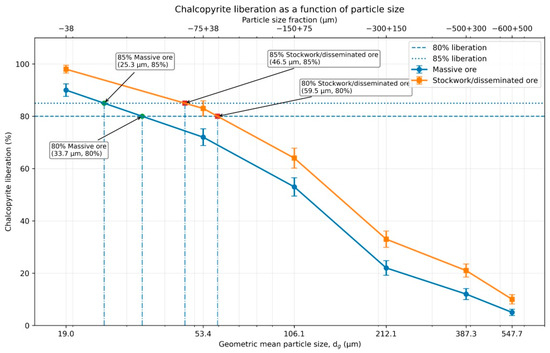
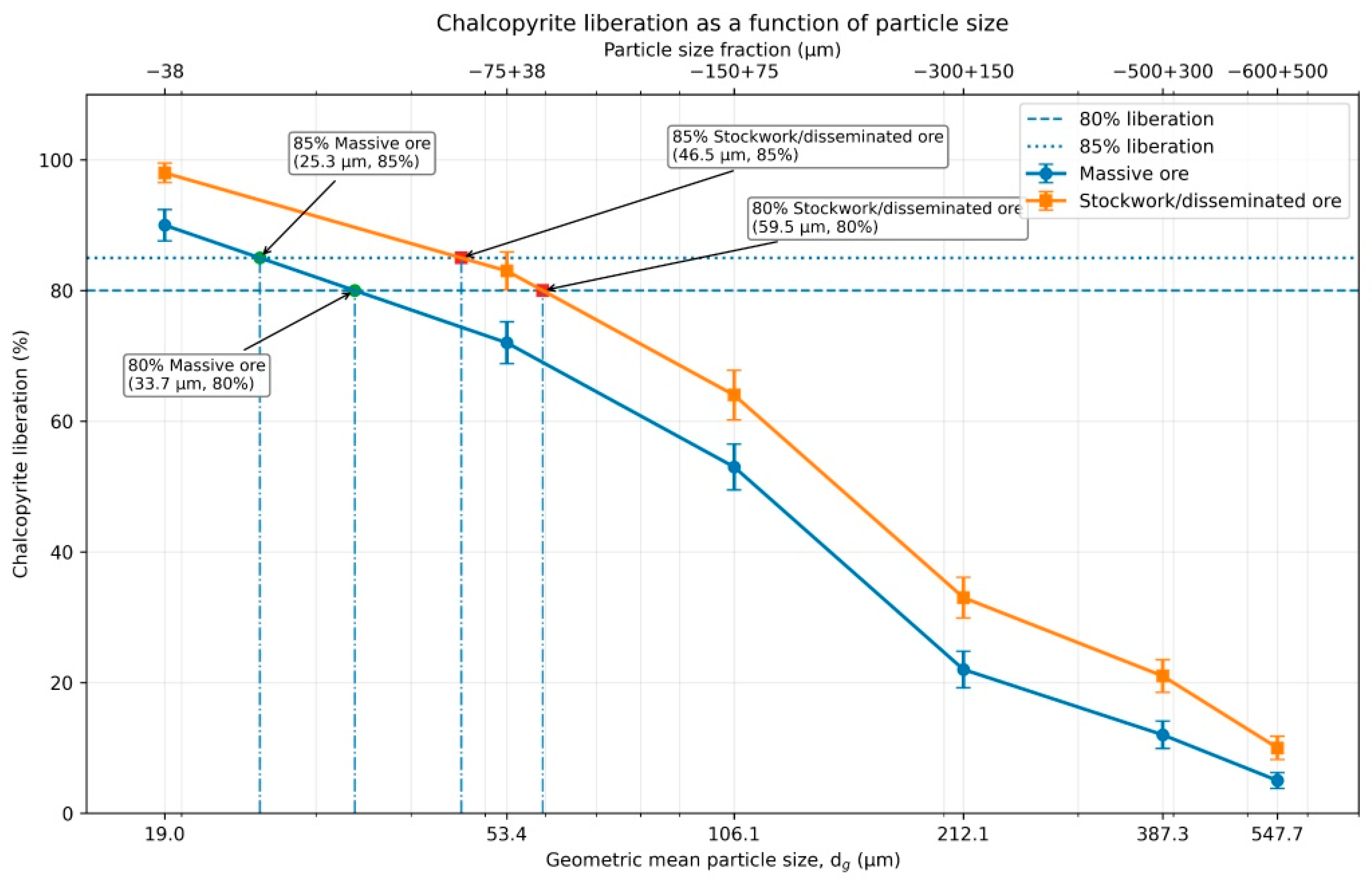
Chalcopyrite liberation as a function of geometric mean particle size (dg, µm), showing experimental standard deviations and logarithmically interpolated particle sizes corresponding to 80% and 85% liberation thresholds.
Mineral liberation is strongly influenced by the structural and textural characteristics of ores. It is well established that decreasing particle size enhances the liberation of valuable minerals from gangue, thereby improving the efficiency of flotation [41,42]. However, the optimum grinding size should maximize mineral liberation while minimizing the generation of excessive ultrafine particles.
As shown in Figure 12 and Table 2, chalcopyrite liberation increased progressively with decreasing particle size in both ore types. In the massive ore, liberation increased from 5% in the −600 + 500 µm fraction to 90% in the −38 µm fraction, whereas the stockwork/disseminated ore exhibited a corresponding increase from 10% to 98%. The most pronounced increase occurred below 150 µm, indicating that fine grinding substantially improves chalcopyrite liberation.
Pearson correlation coefficients were calculated using the representative geometric mean particle size (dg) of each sieve interval (Table 2), based on six particle-size fractions (n = 6). The stockwork/disseminated ore consistently exhibited higher liberation than the massive ore across all size fractions. Correlation analysis further confirmed a strong inverse relationship between geometric mean particle size and chalcopyrite liberation, with r = −0.913 (p = 0.011) for the massive ore and r = −0.936 (p = 0.006) for the stockwork/disseminated ore (Figure 12).
To further quantify the liberation behavior and determine liberation-based target grind sizes, chalcopyrite liberation was plotted as a function of geometric mean particle size (dg, µm) incorporating experimental standard deviations (Figure 12). In the massive ore, chalcopyrite liberation increases from 5 ± 1.2% at dg = 547.7 µm to 90 ± 2.4% at dg = 19.0 µm, whereas the stockwork/disseminated ore exhibits consistently higher liberation over the same size range, increasing from 10 ± 1.8% to 98 ± 1.5%. Logarithmic interpolation of the liberation curves indicates that 80% liberation is achieved at approximately 33.7 µm for the massive ore and 59.5 µm for the stockwork/disseminated ore, while the more conservative 85% liberation threshold corresponds to approximately 25.3 µm and 46.5 µm, respectively (Figure 12). These results indicate that the massive ore requires substantially finer grinding than the stockwork/disseminated ore to attain a comparable degree of chalcopyrite liberation, most likely reflecting differences in sulphide grain size, dissemination, and textural locking. Accordingly, when an 80% liberation criterion is considered, liberation-based target grind sizes of approximately 34 µm for the massive ore and 60 µm for the stockwork/disseminated ore may be recommended, whereas achieving ≥85% liberation would require finer target sizes of approximately 25 µm and 47 µm, respectively. These values represent target grind sizes inferred from the liberation–particle size relationships and should not be interpreted as directly measured P80 values derived from cumulative particle-size distribution curves.
However, the consistently higher liberation observed in the stockwork/disseminated ore at equivalent particle-size fractions demonstrates that ore texture and mineral intergrowths also play a significant role. This superior liberation is likely related to weaker mineral intergrowths and more favorable fracture propagation along grain boundaries. In addition, the more heterogeneous distribution of quartz and gangue minerals in the stockwork/disseminated ore promotes fracture propagation along mineral boundaries, facilitating the separation of chalcopyrite from associated sulfide minerals. In contrast, the dense and continuous sulfide matrix of the massive ore favors stronger sulfide–sulfide intergrowths, thereby requiring finer grinding to achieve comparable liberation. These findings demonstrate that ore texture, mineral associations, sulfide intergrowths, and quartz distribution should all be considered together with particle size when evaluating mineral liberation and assessing the grinding characteristics of VMS ores. Therefore, the present results indicate that particle sizes finer than approximately 75 µm represent a critical threshold at which chalcopyrite liberation increases markedly in both ore types. However, this observation is based solely on mineral liberation characteristics and should not be interpreted as an experimentally verified optimum grinding size. The optimum grinding size should ultimately be established by integrating liberation data with flotation performance, metallurgical recovery, concentrate grade, and grinding energy considerations.
4. Conclusions
This study presents a comprehensive process mineralogical evaluation of a Kuroko-type VMS deposit. A combination of XRD, reflected-light ore microscopy, FE-SEM/EDS elemental mapping, high-resolution FE-SEM/EDS observations, and quantitative chalcopyrite liberation analysis was used to characterize mineral assemblages, ore textures, mineral associations, and liberation characteristics. Based on these characterizations and liberation analyses, the following conclusions can be drawn.
Ore texture is the primary factor controlling chalcopyrite liberation. Massive ore exhibits consistently lower liberation than stockwork/disseminated ore due to its more complex mineralogical associations and finer chalcopyrite intergrowths.
Chalcopyrite liberation increased with decreasing particle size, reaching 90% in the massive ore and 98% in the stockwork/disseminated ore at −38 µm. Based on the liberation–particle size relationships, approximately 80% liberation corresponds to particle sizes of 34 µm for the massive ore and 60 µm for the stockwork/disseminated ore, while 85% liberation corresponds to approximately 25 and 47 µm, respectively. These values provide liberation-based reference sizes for subsequent grinding and beneficiation studies.
FE-SEM/EDS mapping reveals persistent fine-scale intergrowths of chalcopyrite, sphalerite, and galena down to ~3 µm. The −75 + 38 µm to −38 µm size range represents a critical threshold where chalcopyrite liberation increases markedly, although further size reduction should be considered together with grinding energy requirements.
These findings provide a mineralogical basis for the preliminary evaluation of beneficiation strategies and the selection of appropriate grinding targets. However, further flotation testing and metallurgical evaluation are required to validate a definitive beneficiation flowsheet. The integrated mineralogical approach also provides a useful basis for future geometallurgical studies.
Author Contributions
Conceptualization, K.K. and E.S.; methodology, E.S., B.A. and K.K.; validation, E.S., B.A. and K.K.; formal analysis, E.S. and B.A.; investigation, Y.I., E.S. and B.A.; resources, Y.I.; data curation, Y.I. and B.A.; writing—original draft preparation, E.S. and B.A.; writing—review and editing, K.K., E.S. and B.A.; visualization, E.S., B.A. and Y.I.; supervision, K.K. All authors have read and agreed to the published version of the manuscript.
Funding
This research received no external funding.
Data Availability Statement
The original contributions presented in this study are included in the article. Further inquiries can be directed to the corresponding author.
Conflicts of Interest
The authors declare no conflict of interest.
References
- Zhao, J.; Zhang, D.; Pu, L.; Shen, J.; Yu, X.; Wang, Y.; Xiao, B. Alteration characteristics and short wavelength infrared (SWIR) spectroscopy of the Huangtupo Cu-Zn VMS deposit, NW China: Implications for ore genesis and exploration. Ore Geol. Rev. 2025, 186, 106886. [Google Scholar] [CrossRef] [Scilit]
- Zhao, F.; Huang, F.; Chen, L.; Hou, K.; Gao, W.; Meng, L.; Liu, B. Nature and origin of primary ore-forming fluids in the highly metamorphosed Archean Hongtoushan VMS deposit, North China: Insights from in situ S isotopes and trace elements of sulfides. J. Asian Earth Sci. 2024, 260, 105956. [Google Scholar] [CrossRef] [Scilit]
- Zoheir, B.; Lohmeier, S.; Tang, Y.; Martin, A. Geochemical and geochronological studies of the Um Samiuki deposit (Eastern Desert, Egypt): Metal mobilization in a stratabound massive sulfide ore. Ore Geol. Rev. 2024, 166, 105967. [Google Scholar] [CrossRef] [Scilit]
- Günay, K.; Oyan, V.; Dönmez, C.; Çavdar, B.; Çiftçi, E.; Chugaev, A.V.; Yıldırım, N.; Parlak, O.; Yıldırım, E.; Wang, L.; et al. Au-rich bimodal-mafic type volcanogenic massive sulphide deposit associated with Jurassic arc volcanism from the Central Pontide (Kastamonu, Turkey). Ore Geol. Rev. 2022, 141, 104660. [Google Scholar] [CrossRef] [Scilit]
- Ohmoto, H. Formation of volcanogenic massive sulfide deposits: The Kuroko perspective. Ore Geol. Rev. 1996, 10, 135–177. [Google Scholar] [CrossRef] [Scilit]
- Agangi, A.; Manalo, P.C.; Takahashi, R.; Veeravinantanakul, A.; Elburg, M.A. Magmatic evolution and metal systematics of back-arc volcanic rocks of north–east Japan and implications for deposition of massive sulphide Kuroko ores. Contrib. Mineral. Petrol. 2022, 177, 115. [Google Scholar] [CrossRef] [Scilit]
- Yang, Y.; Zhang, H.; Yang, X.; Sun, C.; Ren, G.; Chen, B.; Jin, M.; Zhao, X.; Zhou, N.; Li, Y. Evolution of the Hydrothermal Ore-Forming System of Ashele VMS-Type Cu-Zn Deposit in Xinjiang, NW China: Insights from Mineralogy and Geochemistry of Sulfides. Ore Geol. Rev. 2024, 167, 105977. [Google Scholar] [CrossRef] [Scilit]
- Xiao, B.; Pan, Y.; Deng, C.; Feng, Y.; Shakouri, M.; Falkenberg, J.J.; Li, R.; Chen, H. Magmatic volatile influx promotes Cu mineralization in volcanogenic massive sulfide deposit recorded by Fe3+ -rich chlorite and Hg isotopes. Geochim. Cosmochim. Acta 2026, 420, 340–353. [Google Scholar] [CrossRef] [Scilit]
- Tüysüz, N. Geology, lithogeochemistry and genesis of the Murgul massive sulfide deposit, NE-Turkey. Chem. Erde Geochem. 2000, 60, 231–250. [Google Scholar]
- Çiftçi, E.; Hagni, R.D. Mineralogy of the Lahanos deposit: A Kuroko-type volcanogenic massive sulfide deposit from the Eastern Pontides (Giresun–NE Turkey). Geol. Bull. Turk. 2005, 48, 55–64. [Google Scholar]
- Revan, M.K. Review of Late Cretaceous volcanogenic massive sulfide mineralization in the Eastern Pontides, NE Turkey. Turk. J. Earth Sci. 2020, 29, 1125–1153. [Google Scholar] [CrossRef] [Scilit]
- Ucurum, A.; Demir, C.S.; Otlu, N.; Erturk, M.; Ekici, T.; Kirk, J.; Ruiz, J.; Mathur, R.; Arehart, G.B. Re-Os age and stable isotope (O-H-S-Cu) geochemistry of North Eastern Turkey’s Kuroko-type volcanogenic massive sulfide deposits: An example from Cerattepe-Artvin. Minerals 2021, 11, 226. [Google Scholar] [CrossRef] [Scilit]
- Akpınar, İ.; Demir, Y.; Aysal, N.; Hanilçi, N.; Deniz, K.; Kadıoğlu, Y.K.; Yates, M.; Çiftçi, E. Mineralogy, ore genesis and zircon U–Pb age characteristics of the Cerattepe Cu–Au (±Zn) deposit (Artvin, NE Turkey). Geochemistry 2024, 84, 126167. [Google Scholar] [CrossRef] [Scilit]
- Sönmez, Ş.U.; Moritz, R.; Keskin, S.; Bilir, M.E.; Turlin, F.; Ulianov, A.; Spikings, R.; Kouzmanov, K.; Putlitz, B.; Vennemann, T.; et al. Late Cretaceous magmatic controls on epithermal-porphyry and volcanogenic massive sulfide systems in the Eastern Pontides, Northeast Türkiye: Geochemical and geochronological evidence. Miner. Depos. 2026, 61, 351–382. [Google Scholar] [CrossRef] [Scilit]
- Denisová, N.; Piercey, S.J.; Wälle, M. Mineralogy and mineral chemistry of the ABM replacement-style volcanogenic massive sulfide deposit, Finlayson Lake district, Yukon, Canada. Miner. Depos. 2024, 59, 473–503. [Google Scholar] [CrossRef] [Scilit] [PubMed]
- Kiss, G.B.; Paulsen, H.-K.; Miranda, A.C.R.; Mansur, E.T. Mineral chemistry from the Dragset volcanogenic massive sulphide deposit, Norwegian Caledonides, Trondheim Nappe Complex: Genetical implications. Ore Geol. Rev. 2025, 184, 106733. [Google Scholar] [CrossRef] [Scilit]
- Nuñez, P.; Rubio, A.; Arias, D.; Fuertes-Blanco, J.; Cortés, F.; Díaz-Riopa, F.; Martin-Izard, A. Geochemical characterization of and exploration guide for the world-class mafic–siliciclastic-hosted Touro VMS Cu deposit, Northwestern Iberian Peninsula. Minerals 2024, 14, 1159. [Google Scholar] [CrossRef] [Scilit]
- Cheng, X.; Wang, Z.; Ling, M.; Geng, X.; Yang, F.; Wang, F.; Zhang, Z.; Li, N. Microstructure, Trace Element Systematics and In-Situ Sulfur Isotopes of Multistage Sulfides in the Kalatag District (East Tianshan, NW China): Implications for Formation of Arc-Hosted VMS Deposit. Ore Geol. Rev. 2024, 164, 105762. [Google Scholar] [CrossRef] [Scilit]
- Rincon, J.; Jansson, N.; Ghorbani, Y.; McElroy, I.; Thomas, H.; Brising, D.; Bolin, N.-J.; Wanhainen, C. The role of ore and host rock mineralogy in the beneficiation of a VMS deposit: Insights from Rävliden North, northern Sweden. Minerals 2026, 13, 110076. [Google Scholar] [CrossRef] [Scilit]
- Guntoro, P.I.; Ghorbani, Y.; Parian, M.; Butcher, A.R.; Kuva, J.; Rosenkranz, J. Development and experimental validation of a texture-based 3D liberation model. Miner. Eng. 2021, 164, 106828. [Google Scholar] [CrossRef] [Scilit]
- Runge, K.C.; Frausto, J.J.; Lisso, M.M.; Jokovic, V.; Yahyaei, M. Importance of considering classification and liberation when optimising comminution and flotation. Miner. Eng. 2024, 209, 108612. [Google Scholar] [CrossRef] [Scilit]
- Can, İ.B.; Ekmekçi, Z.; Can, N.M. Use of Process Mineralogy for Flotation Plant Performance Analysis (Proses Mineralojisinin Flotasyon Tesis Performans Analizinde Kullanımı). Yerbilimleri 2018, 39, 177–194. [Google Scholar]
- Štirbanović, Z.; Sokolović, J.; Marković, I.; Đorđievski, S. The Effect of Degree of Liberation on Copper Recovery from Copper-Pyrite Ore by Flotation. Sep. Sci. Technol. 2020, 55, 3260–3273. [Google Scholar] [CrossRef] [Scilit]
- Lund, C.; Lamberg, P.; Lindberg, T. Development of a geometallurgical framework to quantify mineral textures for process prediction. Miner. Eng. 2015, 82, 61–77. [Google Scholar] [CrossRef] [Scilit]
- Aasly, K. Process mineralogy of unconventional mineral deposits—Examples of applications and challenges. Miner. Eng. 2024, 209, 108649. [Google Scholar] [CrossRef] [Scilit]
- Butcher, A.R.; Dehaine, Q.; Menzies, A.H.; Michaux, S.P. Characterisation of Ore Properties for Geometallurgy. Elements 2023, 19, 352–358. [Google Scholar] [CrossRef] [Scilit]
- Tang, K.; Wang, Y.D.; Mostaghimi, P.; Knackstedt, M.; Hargrave, C.; Armstrong, R.T. Deep convolutional neural network for 3D mineral identification and liberation analysis. Miner. Eng. 2022, 183, 107592. [Google Scholar] [CrossRef] [Scilit]
- Escalante, P.; Oliva, J.; Anticoi, H.; Sampaio, C.H.; Mohanty, K. Characterization of mineralogical impurities in a carbonate-rich material using MLA. Miner. Eng. 2025, 230, 109409. [Google Scholar] [CrossRef] [Scilit]
- Viana, A.Z.; Månbro, C.; Jooshaki, M.; Parian, M. Automated ore texture classification using µ-XRF imaging and unsupervised machine learning: Correlation with surface hardness. Miner. Eng. 2025, 234, 109744. [Google Scholar] [CrossRef] [Scilit]
- Seyrankaya, A.; Yontar, U.; Canbazoğlu, M.; Özel, G.; Kabaloğlu, S. Beneficiation of Artvin-Cerattepe copper-zinc ore by flotation. Physicochem. Probl. Miner. Process. 2023, 59, 167499. [Google Scholar] [CrossRef] [Scilit]
- Denisová, N.; Piercey, S.J. Evolution of the hydrothermal system associated with the ABM replacement-style volcanogenic massive sulfide deposit, Finlayson Lake district, Yukon, Canada. Econ. Geol. 2023, 118, 1055–1083. [Google Scholar] [CrossRef] [Scilit]
- Akbulut, M.; Oyman, T.; Çiçek, M.; Selby, D.; Özgenç, İ.; Tokçaer, M. Petrography, mineral chemistry, fluid inclusion microthermometry and Re-Os geochronology of the Küre volcanogenic massive sulfide deposit (Central Pontides, Northern Turkey). Minerals 2016, 76, 1–18. [Google Scholar] [CrossRef] [Scilit]
- Bal-Akkoca, D.; Çelebi, H. The massive sulfide deposit of Siirt Madenköy, South-Eastern Turkey. J. Miner. Mater. Charact. Eng. 2018, 6, 155–178. [Google Scholar] [CrossRef][Green Version]
- Akpınar, İ.; Ciftci, E. Ore mineralogical study of Cerattepe Au-Cu (±Zn) VMS deposit (Artvin-Turkey). In Proceedings of the 14th International Congress for Applied Mineralogy (ICAM2019), Belgorod, Russia, 23–27 September 2019. [Google Scholar]
- Günay, K. Geological and geochemical characteristics of Cunur volcanogenic massive sulfide mineralization (Kastamonu, Turkey). Bull. Miner. Resour. Explor. 2021, 165, 77–96. [Google Scholar] [CrossRef] [Scilit]
- Sun, Z.; Deng, X.; Pirajno, F. Textures, trace element compositions, and sulfur isotopes of pyrite from the Honghai volcanogenic massive sulfide deposit: Implications for ore genesis and mineral exploration. Sci. China Earth Sci. 2023, 66, 738–764. [Google Scholar] [CrossRef] [Scilit]
- Xu, H.; Sun, X.; Xiao, K.; Suo, S.; Huang, X.; Liu, S.; Zheng, M. Classification of volcanogenic massive sulfide deposits in North Qilian, China: Evidenced from lithostratigraphy and geodynamic setting. Ore Geol. Rev. 2024, 173, 106228. [Google Scholar] [CrossRef] [Scilit]
- Pérez-Barnuevo, L.; Pirard, E.; Castroviejo, R. Automated Characterisation of Intergrowth Textures in Mineral Particles: A Case Study. Miner. Eng. 2013, 52, 136–142. [Google Scholar] [CrossRef] [Scilit]
- Nagase, T.; Kojima, S. An SEM Examination of the Chalcopyrite Disease Texture and Its Genetic Implications. Mineral. Mag. 1997, 61, 89–97. [Google Scholar] [CrossRef] [Scilit]
- Lotter, N.O.; Kormos, L.J.; Oliveira, J.; Fragomeni, D.; Whiteman, E. Modern Process Mineralogy: An Integrated Multi-Disciplinary Approach to Flowsheeting. Miner. Eng. 2011, 24, 1229–1237. [Google Scholar] [CrossRef] [Scilit]
- Wills, B.A.; Finch, J.A. Wills’ Mineral Processing Technology: An Introduction to the Practical Aspects of Ore Treatment and Mineral Recovery, 8th ed.; Butterworth-Heinemann: Oxford, UK, 2015. [Google Scholar] [CrossRef] [Scilit]
- Tavares, L.M. Editorial for Special Issue “Comminution in the Minerals Industry”. Minerals 2021, 11, 445. [Google Scholar] [CrossRef] [Scilit]

Disclaimer/Publisher’s Note: The statements, opinions and data contained in all publications are solely those of the individual author(s) and contributor(s) and not of MDPI and/or the editor(s). MDPI and/or the editor(s) disclaim responsibility for any injury to people or property resulting from any ideas, methods, instructions or products referred to in the content. |
© 2026 by the authors. Licensee MDPI, Basel, Switzerland. This article is an open access article distributed under the terms and conditions of the Creative Commons Attribution (CC BY) license.