


Abstract
Tungsten and tin are critical raw materials for the European Union, yet robust exploration guides for these metals remain poorly defined. The Variscan granites of the Iberian Peninsula host numerous W-Sn deposits, but the geochemical criteria that distinguish productive from barren intrusions are still debated. This study presents a comprehensive whole-rock geochemical dataset from North and Central Portugal and Castilla-León in Spain. We demonstrate that while all studied granites are peraluminous, chondrite-normalised REE patterns allow discrimination of 15 distinct geochemical groups that correlate with emplacement age and mineralisation type. Tin-specialised leucogranites (e.g., Golpejas and Enaras) are characterised by extremely low ΣREE (<40 ppm), flat patterns (La/YbN < 10), and absent to positive Eu anomalies, together with enrichments in Rb (>800 ppm) and Sn (>500 ppm), and very low K/Rb ratios (<70). In contrast, tungsten-bearing granites (e.g., Borralha, Valderrodrigo) exhibit moderate to high ΣREE (40–272 ppm), strongly fractionated patterns (La/YbN > 15), and pronounced negative Eu anomalies (Eu/Eu* < 0.4). These differences confirm that W and Sn mineralisation in NW Iberia arise from distinct magma sources and differentiation paths. This work verifies how, through their mode of occurrence and the geochemistry of rare earth elements and trace elements, potentially mineralised granites can be distinguished and how they can be used in exploration programs.
1. Introduction
Tungsten is one of the critical raw materials for the European Union [1]. Therefore, it is essential to understand its occurrence and develop new guides to prospect this element. The development of the Iberian project, POCTEP–Project Interreg 0284_ESMIMET_3_E “Development of exploitation, environmental and energy techniques in metallic mining” (https://www.esmimet.eu/pt/ accessed on 16 January 2026), dedicated to the study of tungsten (W) and tin (Sn) mineralisations in Portugal and Spain, has yielded new results, which are presented in this work.
Tungsten and tin are important strategic and critical mineral resources for Europe. In the Iberian Peninsula, their distribution is mainly concentrated in the Galicia-Tras-os-Montes Zone and the Central Iberian Zone, belonging to the Variscan orogenic belt. The known deposits of tungsten and tin are mainly concentrated in the tungsten–tin metallogenic province. There are several types of primary tin and tungsten deposits, namely, pegmatite, greisen, skarn, and quartz veins. In addition, there are also other types such as altered leucogranites and hydrothermal breccias. Tungsten–tin deposits are often not of a single genetic type, and multiple mineralisation types commonly co-exist in the same deposit. The composite granite massifs are closely related to multiple tungsten–tin mineralisations. Tungsten and tin deposits are often co-produced with mineralisation of other metals, such as Sn, W, W-(Sn), W (Mo, Cu), and Sn-Li-Rb. All of them are closely related to evolved peraluminous granites [2].
Since Roman times, the northern and central parts of Portugal and Castilla–Léon in Spain have been vitally important sources of Sn, W, and several precious metals, such as gold. The main tungsten and/or tin mineralisation occurs where the Variscan plutonic magmatism is widespread. These primary W and Sn mineralisations are classified as epigenetic and are directly or indirectly related to granites [2,3,4,5,6].
In the Northwest of the Iberian Peninsula, several granite series, with different ages and characteristics, were emplaced at distinct crustal levels. Thus, it is common that heterogeneous types of granites occur in the same region where W and/or Sn mineralisation occurs. Due to the diversity of granites, determining guides that can be used as indicators of the presence of potential mineralisation is a challenge.
In the last century, it was believed that primary deposits were exclusively of magmatic origin, with the elements’ concentration occurring in the last phases of differentiation of mafic magmas originating in the deep crust. Nowadays, it is accepted that the granites responsible for this type of deposit can also originate at different levels of the crust and therefore that the origin of the metals can be linked to the composition of different types of protoliths, and consequently, the concentration of metals results from magmatic and/or hydrothermal processes [7,8,9].
The area under study extends between North and Central Portugal and Castilla and Léon in Spain; for this region, 14 mining areas were chosen, between old and still-in-operation mines. The 14 deposits are from Portugal (Bejanca, Panasqueira, Vale das Gatas, Borralha, and Covas) and from Spain (Golpejas, La Fregeneda, Enaras, Valtreixal, Peña do Seo, Valderrodrigo, Barruecopardo, Otero de Herreros, and Los Santos).
It is known that the distribution of mineralisations of W and/or Sn is widespread in the NW of the Iberian Peninsula, particularly in the areas under study, but the occurrence of these mineralisations is marked by the presence of certain types of Variscan granites, emplaced in metasediments of different ages (Precambrian and Lower Palaeozoic). The mineralisations can occur in the contact between granite and metasediments; in the granites; or even in the metasediments when the granites are not outcropping. In the referenced areas under study, it is common for the same deposit area to find different typologies of granites and different types of mineralisation, which can prove the existence of successive intrusions, so it is a challenge to try to find guides that can point to areas with a greater probability of discovering new occurrences, namely at small depths.
In this work, we apply the geochemistry of granites, in particular the chemical analysis of rare earth elements (REEs), in selected mining areas, to define criteria allowing us to distinguish mineralised from “barren” granites and the type of mineralisation they are preferentially associated with. The lack of systematic geochemical criteria for distinguishing mineralised from barren granites has significant economic implications. Exploration companies in the region often rely on traditional geological mapping and geophysical surveys, but these methods cannot predict the metal endowment of a granite body. This study aims to fill that gap by establishing clear, quantitative criteria based on REE and trace element geochemistry and relating the results to W-Sn mineralisation, establishing patterns in the deposits previously defined. The data used in this work are part of a wider database where different lithologies from the mining areas identified previously were sampled. This work only considers the granitic lithologies and chooses the ones with the least weathering and hydrothermal alterations. The sampling and processing for chemical analysis were carried out by SIEMCALSA (Spain), one of the ESMIMET project partners.
The main objective of this work is to present the geochemical characteristics, with a primary focus on the geochemistry of REE, of the granites associated with W and Sn mineralisations in the Iberian Peninsula.
2. Geological Setting
Within the southwestern part of the Variscan belt in Europe, the Iberian Variscan massif occurs, which is divided into six geotectonic zones (Figure 1): Cantabrian zone (CZ), West Asturian-Leonese zone (WALZ), Galicia-Trás-os-Montes zone (GTMZ), Central Iberian zone (CIZ), Ossa-Morena zone (OMZ), and South Portuguese zone (SPZ). The CIZ, the GTMZ, and the OMZ correspond to the most internal parts of the Variscan Belt in the Iberian Peninsula [10,11,12,13].
Figure 1.
Localisation of the area under study. (a) Location map showing the Iberian Peninsula in the context of Europe. (b) Geotectonic zones occurring in the Iberian Variscan massif after works of Lotze, 1945; Julivert et al., 1974; Farias et al., 1987; Ribeiro et al., 1974 [10,11,12,13]. The black rectangle indicates the localisation of the Iberian Peninsula in Figure (a), and the red rectangle indicates the study area (North and Central Portugal and Castilla-León in Spain) shown in detail in (b).
The NW of the Iberian Variscan massif is characterised by a polyphase diachronous deformation, evidencing the role of the interplay of compressional and extensional tectonics, associated with the emplacement of a rootless allochthonous onto the parautochthonous in the GTMZ. The CIZ is the innermost zone of the Iberian Variscan massif and represents its relative autochthon, composed of Late Proterozoic to Palaeozoic metasediments [14]. The CIZ is divided into two domains, the small Ollo de Sapo Domain (OSD) to the north, and the large Schist–Greywacke Complex (SGC) to the south. The first is characterised by the presence of Cambro-Ordovician metavolcanic and metagranitic rocks (the Ollo de Sapo Formation). The second is characterised by the occurrence of a thick, monotonous succession of shales and sandstones, the SGC [15,16]. The SGC has been divided into two different lithostratigraphic units: the upper unit, Lower Cambrian in age (Douro supergroup-Northern CIZ), and a lower unit of Neoproterozoic (Ediacaran) and Lower Cambrian age (Beiras supergroup in the South of CIZ) [15,17].
During the Variscan orogeny, three periods of compression (C1, C2, and C3) and two periods of extension (E1 and E2) can be distinguished. The maximum thickening in the NW of the Iberian Peninsula was reached at the end of C1 and the beginning of C2, while the last compression phase, C3, marks the end of the collision process. Regarding the extensional events, E1 occurs between C2 and C3, and E2 occurs after C3 [3,14,18]. At E2, the crust was subjected to a decompression influence that implied a quick rise of the crust and, consequently, the alteration of the fusion zone to crustal levels closer to the mantle [18].
Relationship Between Granite and Mineralisations
The Variscan granites of the NW of the Iberian Peninsula (CIZ and GTMZ) can be considered distributed in two petrogenetic groups:
- The two-mica granites of mesocrustal origin (30% of the outcropping granites)—with genesis and emplacement related to the C2 and C3 deformation periods.
- The biotite granites of basicrustal origin and/or infracrustal origin and their differentiated facies with emplacement related to E1 and E2 extensional periods.
The Variscan granites can be classified in relation to the emplacement period, as shown in Table 1.
Table 1.
Classification of the Variscan granites.
The two-mica granites occur in parautochthonous or allochthonous plutons. They are two-mica peraluminous granites, with high initial ratios of 87Sr/86Sr (>0.7100), controlled in space and time by the orogenic metamorphism [27]. They occur in elongated massifs, concordant with the regional structures related to C1 and C3 and mainly emplaced in the core of C1 and C3 antiforms. They are generally accompanied by a succession of veins and masses of pegmatites, aplites, tourmalinites, greisens, and quartz veins that attest to intense pegmatitic-pneumatolytic and hydrothermal activities. In previous classifications, these granites were classified as syn-D3 [28].
In previous classifications, biotite granites, emplaced during the extensional periods E1 and E2, were classified as syn- to late-D3, late-D3, or post-D3 [23,26]. These granites present an initial 87Sr/86Sr ratio (<0.7080), and they are formed by magmatic differentiation of mantle products or by dry melting of rocks from the base of the crust mixed with basic rocks. Lithologies of this group have a wide range, from tonalites to granodiorites with hornblende and/or biotite, biotite granites, and even leucogranites. Considering the time of emplacement, it is possible to describe the members of this group as follows:
- (i)
- The early granodiorites which occur in elongated massifs, syn-E1 (335 to 330 Ma), parallel to regional ductile shear zones such as Tuy-Braga-Lamego, Borralha, and Laza-Rebordelo, among others.
- (ii)
- The younger granodiorites and granites are contemporaneous with the E2 period. The younger granodiorites include coarse-grained granodiorites or monzogranites, sometimes porphyritic, with compositions like those of early granodiorites. They occur in association with basic rocks of quartz-diorite composition and granites with two micas. These granitoids occur in a vast area that extends from Minho (NW Portugal) to Beiras (Central Portugal) and the Spanish Central System (SCS). They constitute an enormous central batholith and cut the folds of C3, as well as isograds of regional metamorphism. They emerge in massifs, generally circumscribed, which, in some cases, are zoned. These granitoids were emplaced at relatively high levels and caused contact metamorphism with the formation of hornfels. The biotite-rich granite massifs can occur associated with massifs of granites with two micas (biotite higher than muscovite (Bt > Ms), biotite equal to muscovite (Bt = Ms), and muscovite higher than biotite (Ms > Bt), as well as pegmatites [29,30,31].
- (iii)
- At the end of E2, the granite massifs were emplaced mainly along deep faults in the North of Portugal and Galicia in Spain (e.g., the Lovios-Geres massif, along the NNE-SSW fault system), and they correspond to a weakly metaluminous to peraluminous magmatism with subalkaline iron (Fe) and potassium (K) affinity [31,32,33].
The connection between the Sn and W mineralisations and the Variscan granites is undoubted. The Variscan granitic magmatism is well represented in CIZ and GTMZ, areas where the granites are abundant. It is, in fact, in these areas that the main deposits of Sn and W occur, with different sizes and types constituting the known “W-Sn metallogenic province” [7,34,35]. In the area under study, several types of Sn and W mineralisations distributed in endocontact and exocontact zones of granitic massifs, are present: Sn mineralisations in leucogranites, pegmatites, greisens and quartz veins sometimes associated with other rare metals as Ta, Nb, Be and Li; and W (Sn) mineralisations in quartz veins or only with W and skarn deposits with W (Sn) and W (Au). For a better understanding of the different types of deposits under investigation, they are summarised in Table 2.
Table 2.
Types of deposits for W and/or Sn mineralisations.
Considering the different types of W and/or Sn deposits, fourteen areas, previously explored between Portugal and Spain, were selected as explained before (Figure 2): Golpejas, La Fregeneda, Enaras, Valtreixal, Bejanca, Panasqueira, Vale das Gatas, Peña do Seo, Borralha, Valderrodrigo, Barruecopardo, Otero de Herreros, Los Santos, and Covas.
Figure 2.
Geological map with the localisation of the 14 areas in the study. 1—Golpejas, 2—La Fregeneda, 3—Enaras, 4—Valtreixal, 5—Bejanca, 6—Panasqueira, 7—Vale das Gatas, 8—Peña do Seo, 9—Borralha, 10—Valderrodrigo, 11—Barruecopardo, 12—Otero de Herreros, 13—Los Santos, 14—Covas. The “Metallogenic Map” was created using the geological map of Portugal at a scale of 1:500,000 (sheet 1) [36] and the geological map of Spain at a scale of 1:1,000,000 [37]. Further details are available in the Supplementary Files: S1_Metallogenic Map.
Most of these areas are in the CIZ, except Covas and Borralha, which occur in the GTMZ, and Peña do Seo and Valtreixal, which occur in the ALZ.
The order of presentation of the deposits was determined by the type of mineralisation as presented in Table 2, and the detailed data of location coordinates, type of deposit, samples utilised in this work, and the whole rock geochemical data can be consulted in Supplementary Material File S2: Deposits, Sampling and Geochemistry.
The samples collected are as representative as possible of the different types of granitic rocks present in each area, and the variations in lithology were considered, so the number of samples for each deposit is not equally distributed, as described in Supplementary Material File S4—Detailed results for each mining area—Section 4.
3. Methodology
From all of the sampling carried out within the scope of the ESMIMET project, only the most representative granite rock sample outcroppings in the 14 areas were chosen for these geochemical studies, not considering the results obtained for aplite-pegmatite rocks, basic rocks, and ultrabasic rocks. From the total sampling, a total of 67 samples from granitic rocks were selected, corresponding to the most representative granites from each area.
The collection and preparation of the samples for the geochemical analysis were carried out as previously mentioned by the partner of the project, SIEMCALSA (Valladolid, Spain).
All of the samples chosen and the geochemical data received from the ALS laboratory (Seville, Spain) are presented in the Supplementary Material File S2: Deposits_sampling_geochemistry. These results are from whole-rock geochemistry and are unpublished.
Analytical methods are summarised as follows: major elements (SiO2, TiO2, Al2O3, Fe2O3, FeO, MnO, MgO, CaO, Na2O, K2O, and P2O5) and selected trace elements (Ba, Sr, Rb, Zr, Y, Nb, and Th) were determined by fused bead X-ray fluorescence (XRF) using a Philips PW2400 spectrometer (Philips, Almelo, The Netherlands). Loss on ignition (LOI) was determined gravimetrically after heating at 1000 °C. Trace elements (Li, Sn, W, Zn, Cs, Ta, Cu, Pb, Zn, Ag, As, Bi, and Mo) were analysed by inductively coupled plasma-mass spectrometry (ICP-MS) after four-acid digestion. Rare earth elements (REE: La, Ce, Nd, Sm, Eu, Gd, Tb, Dy, Ho, Er, Tm, Yb, Lu) were determined by ICP-MS following lithium borate fusion and nitric acid digestion.
Quality control measures included the insertion of certified reference materials (CRMs), duplicates, and reagent blanks at a frequency of approximately 5% of the total sample run. The CRMs used included the international granite standards G-2, GSP-2, and AGV-2, as well as in-house reference materials. Precision, expressed as relative standard deviation (RSD), was better than 5% for major elements and better than 10% for trace elements and REE, based on replicate analyses of CRMs. Accuracy was monitored by comparison of CRM analytical values with certified values; all measured values were within ±5% of certified values for major elements and within ±10% for trace elements and REE.
For samples with element concentrations below the detection limit (b.d.l.), a value of half the b.d.l. was assigned for statistical calculations, as noted in the Supplementary Materials (File S2). All data are provided in the Supplementary Materials as received from the laboratory. Analytical procedures, precision values, and limits of detection are given by the ALS official page (https://www.alsglobal.com/en/geochemistry last accessed on 10 June 2026).
The geochemical data were processed following a plan that consisted of statistical treatment of the data:
- (1)
- Detailed geochemistry of major element SiO2, Na2O, K2O, Al2O3, CaO, and Fe2O3 contents, with the calculation of the B-A and P-Q parameters, and plotting the diagrams defined by Debon & Le Fort [38], where A = Al − (Na + K + 2Ca) and B = Fe + Mg + Ti, P = K − (Na + Ca) and Q = (Si/3) − (K + Na + (2Ca/3)). Parameter A indicates the amount of aluminium (Al) that is not part of the feldspar composition, and a high value implies the presence of phyllosilicates (such as muscovite); parameter B indicates the percentage of biotite (and other ferromagnesian minerals) in the sample, and whether B is < 38 allows the granite to be classified as leucogranite.The P parameter indicates the type of feldspar present; if the value is negative, it indicates that plagioclases are dominant relative to K-feldspar, and if positive, the opposite is valid. The Q parameter indicates the amount of SiO2 that does not enter the feldspar composition and, consequently, whether the rock is rich in quartz. The classification of the analysed rocks is determined using the P-Q diagram.
- (2)
- For the discrimination of peraluminous, metaluminous, and peralkaline compositions, the parameters defined by Shand [39,40] were calculated using the expressions A/NK = Al/(Na + K) and A/CNK = Al/(Ca + Na + K). The analysis of these ratios allows us to infer the aluminium saturation, using the works of Chappell & White [41], the relation between these ratios and the type of protolith associated with the granite in the analysis. Rocks with A/CNK < 1.0 are metaluminous; with A/CNK > 1.0 are peraluminous; and with A/CNK = 1.0 are weakly peraluminous, but if A/CNK > 1.1, it is common to say that they are strongly peraluminous, considering also that if A/CNK > 1.0 but A/NK < 1.0, the rock is peralkaline. This establishes that if A/CNK < 1.1, usually, the protolith is meta-igneous rock (basalt, andesite, or even tonalite), but if A/CNK > 1.1, the protolith is usually metasedimentary rock (shales or greywackes) [39,40].
- (3)
- Detailed geochemistry of minor elements, analysing the content in Rb, Sr, Ba, Li, Ta, Nb, Sn, W, and K/Rb and Rb/Sr ratios.
- (4)
- A study of the REE was carried out by analysing the contents of REE, light REE (LREE), and heavy REE (HREE), examining the REE spectra after normalization to chondrite after Evensen [42] with particular attention to differences in behaviours between LREE and HREE and evaluating the parameters, Eu anomaly (Eu*), La*/Yb* La*/Sm*, and Gd*/Yb* ratios (* normalized values).
For the diagram design, the GCDKIT program was used as explained in the work of Janoušek et al. (2006) [43].
The limited number of samples per deposit is a recognised limitation of this study. The sampling was constrained by the availability of fresh, unweathered, and unaltered granite outcrops, the logistical challenges of accessing underground workings in abandoned mines, and the inherent diversity of granite facies in each area. Future work with larger sample sets per deposit would allow for more detailed characterisation of intra-deposit variability and further testing of the classification scheme. However, the regional scope of the study and the cross-deposit grouping approach mitigate this limitation by creating geochemical populations that are statistically more robust than the individual deposit sub-sets. While the number of samples per individual deposit is small, the objective of this study was not to characterise a single deposit in detail, but to look for regional patterns. By grouping the samples based on their REE signatures, we were able to define larger, statistically more robust groups (the 15 groups presented in Section 5) which represent magmatic “events” rather than individual plutons. This mitigates the low number per deposit issue. To ensure the robustness of the classification of granites into geochemical groups, three independent REE parameters were considered: ΣREE, (La/Yb)N, and Eu/Eu*. The choice of three parameters reduces the risk of arbitrary assignment because a sample must satisfy all three criteria to be assigned to a given group. Samples were grouped by geochemical similarity across deposits, rather than by deposit, to create larger, statistically more robust populations. This cross-deposit approach ensures that the defined groups represent real geochemical populations rather than deposit-specific artefacts.
4. Results
Analysing together the data from the 67 samples chosen, the results presented have a wide range of values for each parameter, element, or ratio calculated. The detailed results for each mining area are provided in Supplementary Material File S4; a synthesis of the findings is presented below.
As regards the major elements, there is a large variation in their values: the SiO2 content for all samples is from 57.2 wt.% to 84.9 wt.%, that of Al2O3 is from 8.2 to 23.4 wt.%, CaO varies from 0.02 to 5.89 wt.%, and K2O varies from 1.82 to 7.17 wt.%. The total alkali content (Na2O + K2O) varies from 3.40 to 10.82 wt.%, and the K2O/Na2O ratio varies from 0.32 to 25.65. These values are indicative of the great lithological variety of the samples analysed.
Taking into consideration the values of the B-A and P-Q parameters, the B parameter ranges from 9.94 to 203.25, the A parameter ranges from −54.07 to 235.20, suggesting different degrees of aluminosity, the p values range from −211.27 to 96.73, and the Q parameter ranges from 18.32 to 372.34. The plot of A vs. B (Figure 3) shows the relationship between aluminous minerals (like feldspar, muscovite, and biotite). In the samples analysed, it is possible to see that most of the samples analysed belong to the leucogranites field (B < 38), and the rest of the samples are plotted in groups I, II, and III, where the major difference is the amount of muscovite (Ms) versus biotite (Bt), and the areas correspond to I—Ms < Bt; II—Ms = Bt; and III—Ms < Bt. Groups IV to VI, which represent granites with higher percentages of ferromagnesian minerals (e.g., tonalites and gabbro), are not represented in the studied samples, which are exclusively granitic to leucogranite in composition.
Figure 3.
Diagram A vs. B from Debon and Le Fort [38], where A = Al − (K + Na + 2Ca) and B = Fe + Mg + Ti, and the camps are identified as I to VI. The area with 0 < B < 38 marks the area of leucogranites, no matter the value of A. The areas defined in the diagram correspond to: I—Ms < Bt; II—Ms = Bt; and III—Ms < Bt. Groups IV to VI, which represent granites with higher percentages of ferromagnesian minerals.
The P vs. Q graph (Figure 4) allows the classification of the samples under study. Most of the analysed samples are plotted in the areas of granite, adamellite (monzogranite) and granodiorite, and only two samples are outside these areas, one corresponding to quartz-monzodiorite (Bejanca-Mosteirinhos 908) and the other in the quartz-monzonite (Borralha microgranite 877). In this graph, some samples cannot be plotted: Greisen 673 from Panasqueira, Cadafresnas 730 from Peña do Seo, La Mina 767 from Barruecopardo, and Covas leucogranite 890 from Covas. After all, their Q values exceed 250, as they are quartz-rich.
Figure 4.
Plot P vs. Q from Debon and Le Fort [38], where P = K − (Na + Ca) and Q = (Si/3) − (K + Na + 2Ca/3) and with various areas which allow one classification of the granitoid rocks: gr—granite; ad—adamellite; gd—granodiorite; to—tonalite; dq—quartz diorite; mzdq—quartz monzodiorite; mzq—quartz monzonite; sq—quartz syenite; go—gabbro/diorite; mzgo—monzogabro/monzodiorite; mz—monzonite; s—syenite. The legend of samples is the same as presented in Figure 3, where the samples are colour coded by deposit.
The identification of peraluminous vs. metaluminous character was pointed out by the plot ACNK vs. ANK (Figure 5). Considering the 67 samples, the range of values for these ratios is wide, and by using them it is possible to discriminate peraluminous, metaluminous, and peralkaline compositions. Most samples are plotted in the peraluminous group, except for two samples that are plotted in the metaluminous area, and other samples, such as Golpejas 829 and Golpejas 834 from Golpejas, Fregeneda dyke 752 from La Fregeneda, Greisen 673 from Panasqueira, Cadafresnas 735 and Cadafresnas 730 from Peña do Seo, Ruivães 925 from Borralha, La Mina 764 from Barruecopardo, and Covas Leucogranite 890 from Covas, which are not plotted in the area of the graph as they present values of A/CNK > 1.5.
Figure 5.
Plot of ACNK vs. ANK, after Shand (1943) [39,40]. Only two samples are plotted in the metaluminous area, but most of them are peraluminous. The legend of samples is the same as presented in Figure 3, where the samples are colour coded by deposit.
Considering the presented results concerning the major element contents, it is difficult to clearly separate the “fertile” granites from the “barren” ones; in other words, using only these analyses, it is difficult to define if a granite is or is not related to W (Sn) mineralisation.
For the minor elements, the Rb value ranges from 128 ppm to 1850 ppm, the Sr content ranges from 10.2 ppm to 941 ppm, the Li content ranges between 12.4 ppm and 930 ppm, Nb has values from 6.2 ppm to 162 ppm, Ta content varies from 0.6 ppm to 134 ppm, Sn amounts range from 2 ppm to 941 ppm and the W content ranges from 1 ppm to 455 ppm. Analysing the K/Rb ratio, which ranges from 16.70 to 224.40, the values indicate high heterogeneity of granites under study. The values obtained suggest differences between granites, from extremely evolved granites (low K/Rb, less than 20, e.g., Golpejas and Enaras), to highly evolved granites (low K/Rb, less than 100, e.g., El Balneario and Abravezes), to less evolved granites (high K/Rb, higher than 150, e.g., Borralha “Black Rock” and Los Santos 717), Figure 6.
Figure 6.
Plot of Rb vs. K/Rb. The legend of samples is the same as presented in Figure 3, where the samples are colour coded by deposit.
For the REEs, the values range from 0.45 ppm to 450.7 ppm. The common factor for the granite samples from all areas is that all are richer in LREEs (0.33 ppm to 430.90 ppm) than in HREEs (0.11 ppm to 26.05 ppm). The Eu anomaly ranges from 0.01 to 2.35, and the La/Yb ratio ranges from 1.41 to 74.66.
Under these circumstances, it became necessary to analyse each area individually and then, depending on the type of deposit, characterise the different granite types and attempt to establish a possible relationship with the mineralisation. To this end, we interpreted the results of the whole-rock geochemistry of the granites, paying particular attention to distinctions based on REE geochemistry; once again, the description of each deposit is available in Supplementary File S4, with presentation for each area of the REE spectra.
4.1. Groups of Granites
In the areas studied, as we verified, there is a great diversity of granitic rocks. They are classified as late-E1 to syn-C3, syn-C3 and late-C3 to syn-E2, and syn-E2 rocks are usually classified as two-mica granites and biotite granites. However, we can find granites with two micas with late muscovite related to post-magmatic alterations (muscovite II) occurring in addition to muscovite I, or only muscovite II; as a result, it is important to distinguish the geochemistry of each granite type.
It was therefore necessary to carry out a comparative study of the geochemistry of these rocks to group them according to their geochemical characteristics. We found that in terms of the geochemistry of major elements, there were several similarities, so we resorted in particular to the study of the geochemistry of REEs (rare earth elements). This allowed the study of the constitution of different groups that were diverse not only in terms of the mineralogy of the different granitic rocks but also in the relative age of their respective magmatism, allowing us to separate different periods of magmatism from pre-C3 to post-C3 and also syn-C3.
The REE contents from all studied samples from areas with W and/or Sn present differences from samples rich in REE to samples poor in REE, with values ranging from 451 ppm to 0.45 ppm. A common factor is that all of the studied samples are richer in LREEs than in HREEs. The Eu anomaly is usually negative 0.99 to 0.06, and only four samples have positive values, 1.03 to 2.35. The La/Yb ratio, which shows the degree of fractionation between LREEs and HREEs, ranges from 74.66 to 1.41, with only four samples exceeding 43.56.
To enable the distinction between different types of granites, we chose to compare the composition of all granite rocks analysed, considering their characteristics in terms of REEs, since their characteristics in terms of major elements are not sufficiently discriminating, as we have shown previously in the general analysis and in the deposit analysis. So, we analysed the behaviour of REEs, and for that we analysed the REEs while considering the following variables, ∑REE, (Eu/Eu)N, and (La/Yb)N (Supplementary File S3_Geochemical parameters_table_groups_table with groups—analysing the sheet denominated Table):
- Total rare earth (∑REE) content subdivided into five groups:
- ○
- 0 < ƩREE < 40 ppm;
- ○
- 40 ≤ ƩREE < 100 ppm;
- ○
- 100 ≤ ƩREE < 160 ppm;
- ○
- 160 ≤ ƩREE < 220 ppm;
- ○
- ƩREE ≥ 220 ppm.
- For each of the five groups, we considered five sub-groups based on the function (Eu/Eu)N:
- ○
- 0 ≤ (Eu/Eu)N < 0.2;
- ○
- 0.2 ≤ (Eu/Eu)N < 0.4;
- ○
- 0.4 ≤ (Eu/Eu)N < 0.6;
- ○
- 0.6 ≤ (Eu/Eu)N < 0.8;
- ○
- (Eu/Eu)N ≥ 0.8.
- And for each of the five sub-groups, we considered ten (Eu/Eu)N intervals based on the (La/Yb)N ratio:
- ○
- 0 ≤ (La/Yb)N < 5;
- ○
- 5 ≤ (La/Yb)N < 10;
- ○
- 10 ≤ (La/Yb)N < 15;
- ○
- 15 ≤ (La/Yb)N < 20;
- ○
- 20 ≤ (La/Yb)N < 25;
- ○
- 25 ≤ (La/Yb)N < 30;
- ○
- 30 ≤ (La/Yb)N < 35;
- ○
- 35 ≤ (La/Yb)N < 40;
- ○
- 40 ≤ (La/Yb)N < 45;
- ○
- (La/Yb)N ≥ 45.
The information about the values of the (La/Yb)N ratio, ƩREE, and the Eu anomaly of each sample is available in the Supplementary Material File S3.
Considering the values of the ƩREE, (La/Yb)N ratio, and Eu anomaly in the table (Figure 7) (available in the Supplementary Material File S3), and considering the whole-rock geochemistry from the studied areas, it was possible to define some groups of granitic rocks with similar characteristics.
Figure 7.
Extract from the correlation table between the three parameters ((La/Yb)N ratio, ƩREE, and the Eu anomaly) contained in the Supplementary File S3.
In total, we described 15 groups, which we will discuss now and show the main factors of similarity; some of these groups have sub-groups due to particularities that will be further explained.
4.1.1. Granitic Rocks Pre- to Syn-C3
Group 1 (Late-E1 to Syn-C3 Biotite-Rich Granites)
In this group, we have samples from the Borralha and Valderrodrigo areas, including the following samples:
- Borralha area: Borralha 871 and Borralha “Black Rock” 872;
- Valderrodrigo area: Valderrodrigo 783;
- Covas area: Covas 883.
The geochemistry of major elements for these rocks shows that the SiO2 content ranges from 62.6 wt.% to 71.3 wt.%, Al2O3 from 17.20 to 15.25 wt.%, CaO from 1.01 wt.% to 2.94 wt.% and K2O from 3.15 wt.% to 5.27 wt.%. The total alkali (Na2O + K2O) ranges from 7.12 wt.% to 8.41 wt.%, and the K2O/Na2O ratio ranges from 1.42 to 1.82.
The B parameter ranges from 57.38 to 135.63 (Borralha “Black Rock”), the A parameter ranges from 47.18 (Borralha 871) to 68.17 (Covas 883), P is always negative and ranges from −48.74 (B “Black Rock” 872) to −5.72 (Valderrodrigo), and the Q parameter values range from 130.63 to 167.73.
The values of the ratio of A/CNK range from 1.28 (Covas) to 1.44 (Borralha “Black Rock”), and the A/NK ratio ranges from 1.39 (Borralha) to 1.86 (Borralha “Black Rock”). All granites are peraluminous, and the K/Rb ratio varies between 110 and 181.
In the P-Q diagram, the samples are plotted in the granite area except for Borralha “Black Rock” 872, which is plotted in the adamellite area.
Using the Pearce classification (1984), the samples are syn-collisional except for Borralha “Black Rock” 872, which is VAG.
On the geochemistry of minor elements, the Rb values range from 208 ppm to 381 ppm, the Sr from 147 ppm to 359 ppm, Li between 60 ppm and 159 ppm, Nb from 9 ppm to 17 ppm, Ta from 1 ppm to 5 ppm, Sn from 2 ppm to 35 ppm (Covas) and W from 1 ppm to 172 ppm (Borralha “Black Rock”).
The samples from this group present a total content of REEs from 199 ppm to 451 ppm with the highest value in Borralha “Black Rock”. The Eu anomaly ranges from 0.48 to 0.58. “Borralha Black rock” and Borralha granite present subparallel spectra (Figure 8) to La/Yb (38 and 34) and similar Eu anomalies (0.58 and 0.48, respectively). Valderrodrigo granite has a spectrum with a high value of La/Yb = 75 and an Eu anomaly of 0.51. Covas is poor in REEs (133 ppm), but the La/Yb value is also high = 54.
Figure 8.
REE spectra for group 1, normalised to the chondrite according to Evensen (1978) [42].
This group of granitoids presents chemical characteristics of “early granodiorites and biotite-rich granites” (syn-E1) and is present in three of the areas where tungsten deposits occur, two in veins (Borralha and Saturno mines) and the other in skarn (Cerdeirinha—Covas).
4.1.2. Granitic Rocks Syn- and Syn- to Late-C3
Group 2 (Two-Mica Granites with B >> M)
In this group, we have samples from Borralha, Covas and Valderrodrigo areas, including the following samples:
- Borralha area: Ruivães 925;
- Valderrodrigo area: La Pena 905 and La Vidola 904;
- Covas area: Arga 897;
- Vale das Gatas area: Vale das Gatas Mine 856.
The geochemistry data shows that the SiO2 content ranges from 70 to 73.8 wt.%, the Al2O3 from 14 wt.% to 15.4 wt.%, the CaO from 0.23 wt.% to 0.66 wt.%, the K2O from 5.19 wt.% to 5.75 wt.%, and the K2O/Na2O from 1.87 to 4.29.
The B parameter ranges from 41.63 (Ruivães) to 53.13 (Vale das Gatas mine). The A parameter ranges from 63.42 (La Pena) to 100.88 (Ruivães). The p values range from 10.76 to 75.03 (Ruivães), and the Q parameter ranges from 178.88 (La Pena) to 241.27 (Ruivães). The P-Q diagram classifies all of the samples as granites.
Using the Pearce classification (1984), all of the samples correspond to syn-collisional granites.
The values of the A/CNK ratios range from 1.34 to 1.62 and the A/NK ratios range from 1.42 to 1.66; all samples correspond to peraluminous granites. The K/Rb ratio varies between 97 (Ruivães 825) and 123 (La Peña).
Rb ranges from 377 ppm to 493 ppm (Ruivães), Sr from 48 ppm (Ruivães) to 84 (La Peña), Li from 60 ppm (Vale das Gatas mine) to 246 ppm (Arga), Nb from 9 ppm to 17 ppm (Arga), Ta from 1 ppm to 2 ppm, Sn from 8 ppm to 80 ppm (Ruivães) and W from 1 ppm to 114 ppm. Ruivães granite is rich in Sn with 80 ppm and in W with 114 ppm.
The samples from group 2 present total contents of REEs (Figure 9) from 133 ppm to 272 ppm (Vale das Gatas mine). The Eu anomaly ranges from 0.18 to 0.32. The La/Yb ratio ranges from 39 to 65 (Vale das Gatas mine).
Figure 9.
REE spectra for group 2, normalised to the chondrite according to Evensen (1978) [42].
This group presents geochemical characteristics of two-mica granites, but is richer in biotite, occurring in the Tormes metamorphic dome (La Vidola and La Pena), in the C3 antiform (Ruivães) and in a circumscribed massif.
Group 3 (Two-Mica Granites with % of Biotite Similar to % of Muscovite)
- Valderrodrigo area: Roblemocho 902 and Fuentes de Masueco 907;
- Vale das Gatas area: Sanfins do Douro 921.
The geochemistry data shows that the SiO2 content ranges from 71 to 73 wt.%, the Al2O3 from 14.7 wt.% to 14.95 wt.%, the CaO from 0.29 wt.% to 0.57 wt.%, the K2O from 4.65 wt.% to 4.98 wt.%, and the K2O/Na2O from 1.55 to 1.72.
The B parameter ranges from 34.13 to 38.25. The A parameter ranges from 64.40 to 86.85. The p values range from −8.07 (Roblemocho) to 4.18, and for the Q parameter, the values range from 188.89 to 202.45. The P-Q diagram classifies all of the samples as granites.
Using the Pearce classification (1984), all of the samples correspond to syn-collisional granites.
The values of the A/CNK ratios range from 1.34 to 1.47 and the A/NK ratios from 1.41 to 1.51; all samples correspond to peraluminous granites. The K/Rb ratio varies between 75 and 120.
Rb ranges from 342 ppm to 514 ppm (Sanfins do Douro), Sr from 38 to 49, Li from 67 ppm to 305 ppm (Sanfins), Nb from 11 ppm to 13 ppm, Ta from 1 ppm to 3 ppm, Sn from 11 ppm to 24 ppm, and W from 2 ppm to 4 ppm.
The samples from this group present total REE content from 96 ppm to 117 ppm (Figure 10). The Eu anomaly ranges from 0.23 to 0.26. The La/Yb ratio ranges from 15 to 27.
Figure 10.
REE spectra for group 3, normalised to the chondrite according to Evensen (1978) [42].
This group presents geochemical characteristics of two-mica granites with biotite higher or equal to muscovite, occurring in C3 antiforms and in a circumscribed massif (Sanfins do Douro).
Group 4 (Two-Mica Granites with % of Muscovite > % of Biotite)
In this group, we have samples from Golpejas, La Fregeneda, Vale das Gatas, Borralha, and Barruecopardo areas, including the following samples:
- Golpejas area: Doñinos 843;
- La Fregeneda area: Lumbrales 756 and Los Arribes 754;
- Vale das Gatas area: Vale das Gatas 916 and Favaios 922;
- Borralha area: Alto de Murça 870;
- Barruecopardo area: Barruecopardo 768, Huebra 770, and Barreras 771.
The geochemistry data for this group show that SiO2 ranges from 69.4 wt.% (Barreras) to 75.0 wt.% (Los Arribes), Al2O3 from 13.15 wt.% to 15.5 wt.%, CaO from 0.26 wt.% to 0.56 wt.%, and K2O from 4.04 wt.% to 5.72 wt.%. The total alkali (Na2O + K2O) ranges from 7.23 wt.% to 8.35 wt.%, and the K2O/Na2O value ranges from 1.21 to 2.17.
The B parameter ranges from 20.63 to 74.38 (Barreras); the A parameter ranges from 51.41 to 94.90 (Favaios); p values range from −29.10 (Doñinos) to 29.20, and Q ranges from 192.59 to 213.21 (Doñinos). Classification in the P-Q diagram: all of the samples are plotted in the granite area except for Doñinos 843, which is plotted in the adamellite area. Using the Pearce classification (1984), all of the samples are syn-collisional.
The values of the ratio of A/CNK range from 1.27 (Alto de Murça) to 1.52 (Favaios), and the A/NK ratio ranges from 1.33 (Alto de Murça) to 1.58 (Favaios). All granites are peraluminous.
The K/Rb ratio varies between 67 (Favaios) and 161 (Barreras).
For the minor elements, the Rb value ranges from 223 ppm (Barreras) to 537 ppm (Favaios), Sr from 31 ppm (Favaios) to 63 ppm (Huebra), Li from 34 ppm to 480 ppm (Favaios), Nb from 11 ppm to 19 ppm, Ta from 1 ppm to 6 ppm, Sn from 12 ppm to 53 ppm (Favaios) and W from 4 ppm to 12 ppm. Favaios is the granite richer in Rb (537 ppm), Li (480 ppm) and Sn (53 ppm) and presents the lowest value of the K/Rb ratio (67), being a Sn-specialised two-mica granite.
For the REEs, the samples from this group present total contents of REEs from 46 ppm (Barreras) to 90 (Favaios). The Eu anomaly ranges from 0.20 (Doñinos) to 0.49 (Los Arribes). The La/Yb ranges from 13.97 (Alto de Murça) to 28.30 (Doñinos). The spectra of the granites (Figure 11) from this group are sub-parallel.
Figure 11.
REE spectra for group 4, normalised to the chondrite according to Evensen (1978) [42].
4.1.3. Granitic Rocks Late- to Post-C3 and Syn-E2
Group 5
In this group, we found a granitoid with a quartzmonzodiorite composition from Mosteirinhos on the east border of the Bejanca area but associated with “Mangualde granite”.
- ○
- Bejanca area: Mosteirinhos 908.
Group 6
In this group, we have presented samples from different locations, Bejanca, Enaras, Otero de Herreros, Los Santos and Borralha areas. This group corresponds to biotite porphyritic granites from the Spanish Central System and Beiras (Central Portugal) late-C3 to syn-E2 and Cambedo granite. It is composed of different types of rocks characterised by different geochemical and petrographic characteristics.
- Bejanca area: Mangualde 909;
- Enaras area: Enaras 787 (Guarda massif);
- Los Santos area: Los Santos granite (728);
- Otero de Herreros area: Otero 652, El Espinar 656, and Navalcubilla 654;
- Borralha area: Cambedo 928.
The geochemistry data shows that the SiO2 content ranges from 69.60 (Los Santos) to 73.40 wt.% (Los Santos), Al2O3 ranges from 14.00 wt.% (Enaras 787) to 15.70 (Los Santos), CaO ranges from 0.46 (Cambedo) to 2.20 (Otero), and K2O ranges from 4.40 to 4.90 wt.% (Mangualde). The K2O + Na2O ranges from 7.6 to 8.34 (Mangualde) and the K2O/Na2O ratio ranges from 1.38 to 1.55 (Enaras).
The B parameter ranges from 38.50 (Cambedo) to 75.50 (Mangualde)) and the A parameter from 9.44 (Mangualde) to 87.83 (Cambedo). The p values are all negative, ranging from −48.87 (Otero) to −10.33 (Cambedo) and the Q parameter from 154.89 (Mangualde) to 197.28 (Enaras).
Classification in the P-Q diagram puts the samples Navalcubilla 654, Enaras 787, Mangualde 909, and Borralha 928 in the granite area, and the others, El Espinar 656, Los Santos 728 and Otero 652, are plotted in the adamellite area.
Using the Pearce classification, all samples are in the limit between syn-collisional and VAG granites.
The values of the ratio of A/CNK range from 1.16 (Mangualde) to 1.47 (Cambedo) and the A/NK ratio ranges from 1.33 (Mangualde) to 1.54 (Otero 652), and all granites are peraluminous.
Rb values range from 175 ppm (Otero 652) to 399 ppm (Cambedo), Sr ranges from 66 ppm (Otero 652) to 193 ppm (Cambedo), Li content ranges between 54 ppm and 143 ppm (Cambedo), Nb has values from 11 ppm to 17 ppm, Ta content varies from 1.5 ppm to 2.5 ppm, Sn amounts range from 5 ppm to 22 ppm (Cambedo) and W ranges from 1 ppm to 16 ppm (Cambedo).
The total content of REEs ranges from 121 ppm (Navalcubilla) to 197 ppm (Mangualde). The REE spectra (Figure 12) are sub-parallel to Eu anomalies, ranging from 0.31 (Enaras 787) to 0.58 (Cambedo), and the La/Yb ratio, ranging from 7.51 (Enaras 787) to 19.54 (Cambedo).
Figure 12.
REE spectra for group 6, normalised to the chondrite according to Evensen (1978) [42].
Group 7
In this group, we have samples from the Bejanca Sn W-deposit area, including the following samples:
- Bejanca area: Abravezes 847, Bejanca 910, and Bejanca 911.
The geochemistry data from these samples show that the SiO2 content ranges from 73.5 wt.% to 74.5 wt.% and Al2O3 from 14.55 wt.% to 14.80 wt.%. The CaO content ranges from 0.34 wt.% to 0.61 wt.% (Abravezes) and K2O from 4.07 wt.% to 4.66 wt.% (Abravezes). The total alkali (Na2O + K2O) content ranges from 7.18 wt.% to 8.10 wt.% and K2O/Na2O from 1.25 to 1.35.
The B parameter ranges from 29.00 (Bejanca 910) to 32.13 (Abravezes). The A parameter ranges from 58.46 (Abravezes) to 88.30. The p values range from −24.63 (Bejanca 910) to −16.93, and for the Q parameter, the values range from 190.53 (Abravezes) to 222.91 (Bejanca 911). The P-Q diagram presents these samples in the limit between the granite and adamellite areas. Using the Pearce classification (1984), all of the samples are syn-collisional.
The values of the ratio of A/CNK range from 1.31 (Abravezes) to 1.49 (Bejanca 911), and the A/NK ratio ranges from 1.38 (Abravezes) to 1.51 (Bejanca 911), and all of the granites are peraluminous. The K/Rb ratio varies between 61 (Bejanca 910) and 79 (Abravezes).
The Rb values range from 488 ppm (Abravezes) to 555 ppm (Bejanca 910), Sr from 25 ppm (Bejanca 911) to 75 ppm, Li from 520 ppm to 930 ppm (Bejanca 911), Nb from 11 ppm to 19 ppm (Bejanca 911), Ta from 2 ppm to 6 ppm (Bejanca 911), Sn from 50 ppm to 66 ppm (Bejanca 911) and W from 6 ppm to 9 ppm (Abravezes). Bejanca granites with high contents of Rb (517 and 555 ppm), Li (650 and 930 ppm) and Sn (50 and 66 ppm) and with low values of K/Rb ratio (61 and 66) are Sn-specialised two-mica granites.
The REEs present total contents from 42 ppm (Bejanca 911) to 76 ppm. The spectra are parallel (Figure 13), with Eu anomalies ranging from 0.35 to 0.44 (Bejanca 911) and the La/Yb ratio ranging from 8.5 (Bejanca 910) to 10.
Figure 13.
REE spectra for group 7.
Group 8
In this group, we have samples from Valderrodrigo, Enaras, Los Santos, and Otero de Herreros areas, including the following samples:
- Valderrodrigo area: Saturno mine 808;
- Otero de Herreros area: Otero 651;
- Enaras area: Enaras 789;
- Los Santos area: Los Santos 713.
The geochemistry data for this group show that the SiO2 content ranges from 70.60 wt.% (Los Santos) to 74.40 wt.% (Saturno mine), Al2O3 content ranges from 14.10 wt.% (Saturno mine 808) to 15.60 wt.% (Los Santos 713), CaO content ranges from 0.56 to 1.90 wt.% (Otero), and K2O content ranges from 4.0 wt.% (Otero) to 5.14 wt.% (Enaras 789). The K2O/Na2O ratio ranges from 1.18 (Otero 651) to 1.90 (Enaras 789).
The B parameter ranges from 50 (Los Santos 713) to 61.25 (Otero 651), the A parameter ranges from 20.31 (Los Santos 713) to 81.17 (Saturno). The p values range from −58.48 (Otero 651) to 12.28 (Enaras), and the Q parameter ranges from 148.9 (Los Santos 713) to 235.54 (Saturno mine).
The P-Q diagram classifies the Saturno mine 808 sample in the granite area and the other samples in the adamellite area.
Using the Pearce classification (1984), all samples are in the limit between syn-collisional and VAG granites.
The values of the ratio of A/CNK range from 1.21 (Los Santos) to 1.52 (Saturno mine), and the A/NK ratio ranges from 1.38 (Los Santos). All of the samples correspond to peraluminous granites.
The K/Rb ratio varies between 93 (Saturno mine 808) and 195 (Otero 651).
Rb content ranges from 171 ppm (Otero) to 362 ppm (Saturno mine), Sr content ranges from 68 ppm (Saturno mine) to 189 (Enaras 789), Li content ranges between 80 (Otero 651) and 189 ppm (Enaras 789), Nb has values from 10 ppm (Otero 651), Ta content varies from 2 ppm to 11 ppm (Fregeneda dyke 752), Sn amounts range from 6 ppm (Los Santos) to 26 ppm (Saturno mine) and W content ranges from 1 ppm (Otero 651) to 455 ppm (Los Santos).
The REE content ranges from 70 ppm (Saturno mine) to 99 ppm (Los Santos). The REE spectra (Figure 14) are flat, with La/Yb ratios ranging from 5.51 (Fregeneda dyke) to 9.02 (Otero) and Eu anomalies ranging from 0.52 (Los Santos) to 0.63 (Otero).
Figure 14.
REE spectra for group 8.
This group is composed of different types of rocks characterised by similar spectra with low REE content, 70 to 99 ppm, but with different geochemical and petrographic characteristics.
The Saturno mine sample is a sample from a dyke and corresponds to microgranite. The Los Santos sample is from a medium- to fine-grain granite with %biot > %musc cutting. The Los Santos regional granite is anomalous in W (455 ppm). The Otero sample corresponds to a medium-grain porphyritic biotite granite from the core of the Otero pluton, and Enaras 789 corresponds to medium- to coarse-grain porphyritic granite with late muscovite.
4.1.4. Post-C3 or E2 Granites
Group 9
In this group, we have samples from different areas, Peña do Seo, Borralha, Otero de Herreros and Bejanca, including the following samples:
- Bejanca area: Calde 913;
- Otero de Herreros area: Navalcubilla 655;
- Peña do Seo area: Cadafresnas 730, Cadafresnas 735, and Cadafresnas 740;
- Borralha area: Penedos 927.
The geochemistry shows that the SiO2 content ranges from 74.10 wt.% (Cadafresnas 735) to 76.80 wt.% (Penedos). The Al2O3 content range of values is from 12.95 wt.% (Penedos) to 14.90 wt.% (Cadafresnas 730). The CaO content ranges from 0.10 wt.% (Penedos) to 0.50 wt.% (Navalcubilla). The K2O values range from 3.20 wt.% (Cadafresnas 730) to 5.20 wt.% (Cadafresnas 735). The total alkali (Na2O + K2O) content ranges from 3.4 wt.% (Cadafresnas 735) to 8.13 wt.% (Calde 913). The K2O/Na2O value ranges from 1.33 (Navalcubilla) to 3.47 (Cadafresnas 735).
The B parameter ranges from 24.75 (Penedos) to 43.75 (Cadafresnas 730). The A parameter ranges from 49.19 (Calde) to 214.22 (Cadafresnas 730). The p values range from −21.75 (Navalcubilla) to 56.91 (Cadafresnas 735), and the Q parameter ranges from 205.54 (Calde) to 248.64 (Cadafresnas 735).
The P-Q diagram classifies all of the samples in the granite area.
Using the Pearce classification (1984), all samples correspond to syn-collisional granites; however, they are considered syn-E2 granites.
The values of the ratio of A/CNK range from 1.26 (Calde) to 3.83 (Cadafresnas 730), and the A/NK ratio ranges from 1.31 (Calde) to 3.92 (Cadafresnas 730). All of the granites are peraluminous. The K/Rb ratio varies between 69 (Cadafresnas 730) and 162 (Navalcubilla).
For the minor elements, the Rb value ranges from 226 ppm (Navalcubilla) to 461 ppm (Penedos 827), the Sr content ranges from 15 ppm (Penedos) to 74 ppm (Cadafresnas 730), Li content ranges between 12 ppm (Cadafresnas 740) and 185 ppm (Calde), Nb has values from 10 ppm (Navalcubilla) to 35 ppm (Penedos 827), Ta content varies from 2 ppm (Cadafresnas 735) to 7 ppm (Penedos), Sn amounts range from 9 ppm (Navalcubilla) to 95 ppm (Cadafresnas 735) and W content ranges from 3 ppm (Calde) to 309 ppm (Cadafresnas 735).
The total content of REEs ranges from 43 ppm (Navalcubilla) to 99 ppm (Cadafresnas 730). The Eu anomaly ranges from 0.06 (Cadafresnas 740) to 0.09 (Cadafresnas 730). The La/Yb ratio, which shows the slope between the LREE and the HREE, ranges from 1.41 (Penedos) to 5.80 (Calde).
All of these granites have flat REE spectra (Figure 15) with a marked negative Eu anomaly (stork beak). However, two sub-groups can be distinguished: one with the most marked anomaly (Penedos and Cadafresnas 735 and 740 granites) with Eu* from 0.06 to 0.09, and another with Eu* from 0.18 to 0.20 (Calde, Navalcubilla, and Cadafresnas 730 granites).
Figure 15.
REE spectra for group 9.
4.1.5. Leucogranites with ƩREE Lower than 40 ppm
Group L1
In this group, we have samples from different areas, Panasqueira and Vale das Gatas, including the following samples:
- Panasqueira deposit: Panasqueira 686;
- Vale das Gatas deposit: Castro 915.
The geochemistry data shows that the SiO2 content ranges from 74.42 (Panasqueira) wt.% to 74.90. The Al2O3 content range of values is from 14.65 wt.%) to 14.68 wt.% (Panasqueira). The CaO content ranges from 0.26 wt.% to 0.79 wt.% (Panasqueira). The K2O values range from 2.54 wt.% (Panasqueira) to 4.4.22 wt.%. The total alkali (Na2O + K2O) content ranges from 6.48 wt.% (Panasqueira) to 7.88 wt.% (Castro). The K2O/Na2O value ranges from 0.64 (Panasqueira) to 1.15.
The B parameter ranges from 17.00 (Castro 915) to 24.56 (Panasqueira), and the A parameter ranges from 70.28 (Castro) to 78.66 (Panasqueira). The p values range from –87.15 (Panasqueira) to −32.91, and for the Q parameter, the values range from 204.73 (Castro) to 222.47 (Panasqueira). The P-Q diagram classifies these samples as granodiorite (Panasqueira 686) and adamelites (Castro 915); however, we must consider that the main feldspar is albite. Using the Pearce classification (1984), the samples correspond to syn-collisional granites.
The values of the ratio of A/CNK range from 1.35 to 1.48 (Panasqueira), and the A/NK ratio ranges from 1.38 to 1.59 (Panasqueira), and the granites are peraluminous. The K/Rb ratio varies between 41 (Panasqueira) and 79 (Castro).
For the minor elements, the Rb value ranges from 442 ppm to 519 ppm (Panasqueira), the Sr content ranges from 23 ppm (Castro) to 133 ppm (Panasqueira 686), Li content ranges between 71 ppm (Castro) and 172 ppm (Panasqueira 686), Nb has values from 10 ppm (Castro) to 27 ppm (Panasqueira 686), Ta content varies from 1 ppm (Castro 915) to 14 ppm (Panasqueira), Sn amounts range from 16 ppm (Castro 915) to 74 ppm (Panasqueira) and the W content ranges from 2 ppm (Castro) to 18 ppm (Panasqueira).
The total content of REEs varies from 4 ppm (Panasqueira 686) to 21 ppm (Castro). The Eu anomaly ranges from 0.24 (Castro 915) to 0.26. The La/Yb ratio ranges from 2.31 (Panasqueira). The spectra (Figure 16) are subparallel and have a clear Eu anomaly (0.24 to 0.34).
Figure 16.
REE spectra for group L1.
Group L2
In this group, we have presented samples from the Enaras and Los Santos areas, including the following samples:
- Valtreixal deposit: El Balneario 706;
- Los Santos deposit: Los Santos 717.
The geochemistry data show that the SiO2 content ranges from 69.100 to 69.60 wt.%. The Al2O3 content ranges from 16.10 to 17.40 wt.% (El Balneário). The CaO content ranges from 0.70 to 4.20 wt.% (Los Santos). The K2O values range from 3.30 to 3.50 wt.%. The total alkali (Na2O + K2O) content ranges from 6.40 (Los Santos) to 8.60 wt.% (El Balneário). The K2O/Na2O value ranges from 0.62 (El Balneário) to 1.31.
The B parameter ranges from 17.5 to 23.8 (leucogranites). The A parameter ranges from −2.09 to 75.20, suggesting differences in the aluminosity of each sample. The p values range from −113.25 to −94.04, and for the Q parameter, the values range from 133.97 168.27.
The P-Q diagram classifies both samples as granodiorites.
Using the Pearce classification (1984), the sample from El Balneario 706 is plotted in the syn-collisional area and the Los Santos 717 sample is plotted in the VAG area.
The values of the ratio of A/CNK range from 1.30 (Los Santos) to 1.35 (El Balneário), and the A/NK ratio ranges from 1.42 to 1.88 (Los Santos). All granites are peraluminous.
The K/Rb ratio varies between 77 (El Balneário) and 215 (Los Santos), with this one being less evolved.
For the minor elements, the Rb value ranges from 135 to 355 ppm (El Balneário), the Sr content ranges from 40 to 313 ppm (Los Santos), the Li content ranges between 25 and 65 ppm (Los Santos), Nb has values from 6 to 22 ppm, the Ta content varies from 3 to 9 ppm, the Sn amounts range from 3 to 74 ppm (El Balneário) and the W content ranges from 2 to 6 ppm (Balneario).
The samples present total contents of REEs from 14 to 19 ppm. The Eu anomaly ranges from 0.43 to 0.76 (Los Santos), and the La/Yb ratio ranges from 1.90 to 2.97 (Balneario).
The spectra (Figure 17) are subparallel and flat, with the negative of the Eu anomaly from El Balneario (0.43) being the most similar to the anomalies from the L1 group.
Figure 17.
REE spectra for group L2.
Group L3
This group only presents samples from the tin deposit of Golpejas; the samples correspond to fine-grain albite-rich deformed leucogranite, in some cases with late muscovite (sample Golpejas 834). It includes the following samples:
- Golpejas deposit: Golpejas 829, Golpejas 832, and Golpejas 834.
The geochemistry data shows that the SiO2 content ranges from 61.40 wt.% (Golpejas 832) to 73.30 wt.%. The Al2O3 content range of values is from 15.50 wt.% to 23.40 wt.% (Golpejas 832). The CaO content ranges from 0.20 wt.% to 0.53%. The K2O values range from 1.82 wt.% (Golpejas 829) to 2.64 wt.% (Golpejas 832). The total alkali (Na2O + K2O) content ranges from 6.55 wt.% (Golpejas 829) to 10.82 wt.% (Golpejas 832). The K2O/Na2O value ranges from 0.32 to 0.53 (Golpejas 834).
The B parameter ranges from 12.31 to 17.50. The A parameter ranges from 103.51 to 131.9 (Golpejas 832). The p values range from −211.28 (Golpejas 829) to −105.28 (Golpejas 834), and the Q parameter ranges from 18.32 (Golpejas 832) to 212.40 (Golpejas 829).
A P-Q diagram presents two classifications for this group: two samples in the granodiorite area and one in the monzodiorite area.
Using the Pearce classification (1984), only two samples can be plotted in the diagram: one in the syn-collisional are and the other in the WPG area.
The values of the ratio of A/CNK range from 1.42 to 1.62, and the A/NK ratio ranges from 1.43 to 1.70. The granites are peraluminous.
The K/Rb ratio varies between 17.5 and 19.0, corresponding to highly evolved leuco-granites.
For the minor elements, the Rb value ranges from 796 to 1255 ppm, the Sr content ranges from 14 to 35 ppm, Li content ranges from 80 to 170 ppm, Nb values range from 18 to 162 ppm, Ta content varies from 7 to 134 ppm, Sn ranges from 58 ppm to 824 ppm (Golpejas 834) and the W content ranges from 4 to 6 ppm.
Analysing the REEs (Figure 18), the samples present total contents of REEs from 1 ppm (Golpejas 834) to 4 ppm. The Eu anomaly ranges from 0.79 to 2.35 (Golpejas 834). The La/Yb ratio ranges from 4.50 to 9.00 (Golpejas 829).
Figure 18.
REE spectra for group L3.
Group L4
This group only comprises samples from the Covas area, including the following samples:
- Covas deposit: Cerdeirinha 900, Cerdeirinha 890, and Cerdeirinha 901.
The geochemistry data show that the SiO2 content ranges from 73.20 to 74.80 wt.%. The Al2O3 content ranges from 14.80 to 17.40 wt.%. The CaO content ranges from 0.02 to 0.51 wt.%. The K2O values range from 3.18 to 4.32 wt.%. The total alkali (Na2O + K2O) content ranges from 4.74 to 8.13 wt.%. The K2O/Na2O value ranges from 0.66 to 10.29.
The B parameter ranges from 19.88 to 33.25 (leucogranites). The A parameter ranges from 50.63 to 235.20Accepted, suggesting big differences in aluminosity. The p values range from −95.04 to 78.04 (for the Q parameter, the values range from 181.29 to 300.54), suggesting different degrees of alteration of these leucogranites.
In the P-Q diagram, one of the samples is in the limit between adamellite and granodiorite and another is in the granodiorite area; the last one has a value of Q that exceeds the limits of this diagram.
Using the Pearce classification (1984), all of the samples are in the syn-collisional area.
The values of the ratio range from 1.26 to 3.23 and the A/NK ratio ranges from 1.31 to 3.24. All granites are peraluminous. The K/Rb ratio varies between 75 and 113, the muscovite-rich leucogranite (Cerdeirinha 890) is more evolved than fine-grain leucogranites.
For the minor elements, the Rb value ranges from 272 to 478 ppm, the Sr content ranges from 18 to 77 ppm, the Li content ranges between 41 and 91 ppm, Nb has values from 10 to 28 ppm, the Ta content varies from 2 to 10 ppm, the Sn amounts range from 11 to 46 ppm (Cerdeirinha 890) and the W content ranges from 2 to 7 ppm.
The samples present total contents of REEs from 9 to 28 ppm. The Eu anomaly ranges from 0.85 to 1.05, and the La/Yb ratio ranges from 4.62 (Cerdeirinha 900) to 15.43 (Cerdeirinha 890), consequently with very different behaviour of HREEs.
The spectra (Figure 19) are subparallel but register a different behaviour of the leucogranites in terms of the geochemistry of HREEs.
Figure 19.
REE spectra for group L4.
Group L5
This group is represented by the leucogranites from the Enaras area, including the following samples:
- Enaras deposit: Enaras 800, Enaras 799, and Enaras 788.
The geochemistry data of these three leucogranite samples show very similar geochemistry of the major elements, with SiO2 content from 75.0 to 76.00 wt.%, Al2O3 from 14.25 to 14.75 wt.% (E800), CaO from 0.07 to 0.43 wt.% (Enaras 788), and K2O values of 3.39 and 4.47 wt.% (Enaras 800). The total alkali (Na2O + K2O) was from 7.87 to 8.17 wt.%, and the K2O/Na2O from 0.74 to 1.31 (Enaras 788).
The B parameter ranges from 9.94 to 22.75 (Enaras 788). The A parameter ranges from 51.73 to 67.33 (Enaras 800). The p values range from −76.54 to −22.24 (Enaras800), and for the Q parameter, the values range from 191.61 to 211.88 (Enaras 788).
The P-Q diagram shows a sample for each area from granodiorite to granite.
Using the Pearce classification (1984), two samples are in the syn-collisional area and one is in the VAG area.
The values of the ratio of A/CNK range from 1.25 to 1.32, and the A/NK ratio ranges from 1.28 to 1.37. All granites are peraluminous. The K/Rb ranges from 17 to 116, characteristic of evolved leucogranites.
For the minor elements, the Rb value ranges from 319 to 1850 ppm (leucogranite with late muscovite), the Sr content ranges from 31 to 46 ppm, the Li content ranges from 65 to 830 ppm, Nb has values from 11 to 72 ppm, the Ta content varies from 5 to 91 ppm, Sn amounts range from 24 to 941 ppm and the W content ranges from 4 to 16 ppm.
The samples present total contents of REEs from 2 to 21 ppm. The Eu anomaly ranges from 0.24 to 0.61, and the La/Yb ratio ranges from 3.37 to 5.43 (Figure 20).
Figure 20.
REE spectra for group L5.
Enaras 799 and Enaras 800 are leucogranites enriched in Sn (724 and 941 ppm), Li (830 and 710) and Rb (1850 and 1685), confirming a good positive correlation between these three elements. The low value of the K/Rb ratio (17) for these two leucogranites also provides good information about their evolution.
Group L6
This group is represented by medium- to coarse-grain muscovite-rich leucogranites hosting the mineralized quartz veins from the Barruecopardo scheelite deposit. It includes the following samples:
- Barruecopardo deposit: La Mina 767 and La Mina 763.
The geochemistry data show that the SiO2 is 75.60 and 84.90 wt.% (La Mina 763). The Al2O3 content ranges from 8.19 to 13.60 wt.% (La Mina 763). The CaO content ranges from 0.05 to 0.41 wt.% (La Mina 763). The K2O values range from 4.36 to 6.49 wt.% (La Mina 763). The total alkali (Na2O + K2O) content ranges from 4.53 to 8.49 wt.% (La Mina 763). The K2O/Na2O value ranges from 3.25 to 25.65 (La Mina 767).
The B parameter ranges from 19.38 to 26.88 (La Mina 767). The A parameter ranges from 49.57 to 60.64. The p values range from 66.27 to 86.4, and for the Q parameter, the values range from 212.07 to 372.34.
In a P-Q diagram, only one sample can be plotted, and it belongs to the granite area.
Using the Pearce classification (1984), the two samples correspond to syn-collisional granites.
The values of the ratio of A/CNK range from 1.27 to 1.62, and the A/NK ratio ranges from 1.32 to 1.64. The K/Rb ratio varies between 174 and 193.
Analysing the minor elements, Rb values range from 208 to 279 ppm, the Sr content ranges from 15 to 44 ppm, the Li content ranges between 17 and 25 ppm, Nb has values from 10 to 11 ppm, the Ta content varies from 1 to 2 ppm, the Sn content ranges from 11 to 14 ppm, and the W content ranges from 91 to 198 ppm. These samples are anomalous in W, which may be due to proximity to quartz veins mineralized in scheelite.
The samples from La Mina (W) and Golpejas (Sn) are both rich in muscovite: in the first case as a selvedge, and in the second case as a result of muscovitisation.
Analysing the behaviour of REEs, the samples present total contents of REEs of 24 and 33 ppm. As for the REE contents, the common factor is that the samples are richer in LREEs (21 and 29) than in HREEs (3 and 4 ppm). The Eu anomalies are 0.4 and 0.5, and the La/Yb ratios are 10.6 to 13.5 (marked differentiation between LREE and HREE) (Figure 21).
Figure 21.
REE spectra for group L6.
5. Discussion
Tungsten and tin are important strategic and critical mineral resources for the European Union, as well as one of the most abundant mineral resources in Spain and Portugal, and are mainly concentrated in CIZ and GTMZ in the “Iberian tungsten–tin metallogenic province” (ITTMB) [7].
The W/Sn province contains many spectacular exposures, in both the field and underground. Many occurrences and ancient mines are easily accessible, including exposures with abundant scheelite. In general, field relationships are easily seen and interpretable. The W and/or Sn deposits are distributed through an area from Galicia to Castilla (Spain) through Northern and Central Portugal.
The formation of tin and tungsten deposits spans a large period and is related to the Variscan granites.
There are several types of primary tin and tungsten deposits, namely, aplite-pegmatite (Sn), greisen (Sn), skarn (W), and quartz vein (Sn, W-Sn, W, Sn-Cu-Bi, and W-Sn-Mo). In addition, there are also other types such as altered granite and hydrothermal breccia. Tungsten and tin deposits are often not of a single genetic type, and multiple mineralisation types commonly co-exist in a deposit. W and Sn minerals, when both are present, are commonly separated in both space and time [2].
Where the W and/or Sn mineralisation occurs, we can see the presence of granite intrusions in marine sedimentary series dated from the Upper Precambrian to the Silurian [8,9,34,44,45].
The Variscan granitic magmatism (orogenic) can be subdivided into two groups: peraluminous granites or two-mica granites (muscovite is the dominant mica), and monzonitic granites and granodiorites [46]. The plutonic magmatism is represented by synorogenic granites. Based on their geological, petrographical, and geochemical characteristics, the granites are divided into two main groups. The first consists of two-mica granites, which are predominantly syn-C3 (315–310 Ma), considered to be S-type with an origin closely related to the orogenic metamorphism and resulting from the crystallization of wet peraluminous magmas originated in a mesocrustal level. The second group consists of biotite granites with ages of emplacement of dry magmas distributed over two periods, 320–310 Ma (E1 granites) and <300 Ma (E2), both considered to originate at deep crustal levels. However, we can find granites with two micas, where a late muscovite related to post-magmatic alterations (muscovite II) occurs in addition to muscovite I, or if only muscovite II is important, we can determine the geochemical distinction of each granite type. Both metals are associated with the presence of peraluminous granites present in the ITTMB.
Studies of their Sr-Nd isotope relationships indicate the existence of different genetic trends in which juvenile mantle materials are involved by different mechanisms. These relationships strongly support a pure crustal origin for the peraluminous leucogranites, derived from partial melting of crustal protoliths (S type), and a hybrid origin for the peraluminous granodiorites, the most abundant granitic rocks of the Central Iberian zone (CIZ), implying that processes of hybridization by assimilation and/or magma mixing played an important role in producing large volumes of peraluminous, hybrid granodiorites during the Late-Palaeozoic Hercynian orogeny in the Iberian massif [33].
A crust–mantle interaction can play an important role in the generation of the W-bearing granites. Nd-Hf isotope studies show that in addition to the W-bearing granites, some Sn-bearing granites also have mantle-derived contributions [4,5]. Numerous W deposits are also associated with poorly differentiated granites, whose petrogenesis and mineralisation control factors remain poorly understood, but mineralogical and geochemical studies of these examples confirm a crust–mantle mixing origin in granites associated with W [47].
Contrary to the granites occurring in association with W mineralisation, where the granite contents in W are always small (<7 ppm), the granites associated with Sn pegmatite mineralisation reveal contents of Sn that can be higher than 30 ppm. This means that magmatic differentiation and/or late or post-magmatic alteration alone cannot lead to the formation of a deposit, requiring the involvement of post-magmatic fluids to imply exploitable levels of W and/or Sn, requiring additional introduction of metal for the formation of exploitable deposits [48].
The main fluids present in these W-(Sn) Variscan geothermal systems were meteoric fluids re-equilibrated after deep circulation in the crust and then responsible for the mobilization of stock metal from the rocks. The ore bodies were deposited mainly in structural traps [44,49,50,51].
Hydrothermal granite-related Sn and W deposits typically show predominance of one metal over the other. The source of ore-forming fluids in most W and Sn deposits is closely related to magmatic and hydrothermal activity, and some deposits also have characteristics of multi-source fluids. The temperature and salinity of ore-forming fluids vary widely, and the composition of the fluid system is also complex in many cases [51,52].
Cassiterite and wolframite may occur in the same hydrothermal vein, which is in line with the traditional view that forms by magmatic fluids into which both Sn and W partition upon exsolution from a peraluminous or metaluminous granitic melt [32,53,54].
Cassiterite and wolframite are rarely contemporaneous in deposits with significant contents of both W and Sn, which may reflect that they were formed by different fluids even though they may share the same vein structures. There exists a partitioning of Sn into the melt, and strong partitioning of W into the aqueous fluid, and this contrasting fluid-melt partitioning of Sn and W implies that hydrothermal Sn and W mineralisation are rarely cogenetic [55]. For instance, at Panasqueira (Portugal), cassiterite precedes wolframite precipitation (as is commonly the case in W-Sn deposits), but there is a younger generation of cassiterite with sulphides in crosscutting veins [56].
It was demonstrated quantitatively that fluids at Panasqueira, Portugal (the main W-Sn deposit from ITTMB), provide tungsten in solution, whereas the host rock contributes the iron required to precipitate wolframite. The combination of special source conditions with specific reactive host rocks explains why major wolframite deposits are rare and confined to a few ore provinces globally, and fluid–rock interaction is decisive for the formation of tungsten minerals [57].
The geochemistry of granites, and in particular, the contents of K2O, Rb, Ba, and Sr and the K/Rb ratios, deserves special attention in the study of granites from W-Sn mineralized areas. High Rb contents, low Ba and Sr contents, and low K/Rb ratios are common in differentiated granites. Granites with high Rb/Sr ratios and low K/Rb ratios are frequent in areas with Sn or Sn > W deposits. Evolution is characterized by an increase in Rb, Cs, and Sn contents and a decrease in Ba, Sr, Zr, Zn, and Th contents. The specialization of a granite is often associated with its evolution, which is related to concentration mechanisms, such as magmatic differentiation and/or late to post-magmatic processes responsible for late alterations.
In areas with tin deposits, there are granites specialized in Sn (>30 ppm), but tungsten contents in granitic rocks from areas with W deposits are generally low, with average contents rarely exceeding 7 ppm.
Mineralisations, particularly those of Sn, are associated with leucocratic facies resulting from magmatic differentiation and/or late deuteric alterations involving metasomatism. The role of post-magmatic hydrothermal fluids is important, especially for hydrothermal vein deposits or W and W (Sn) skarns. Evolution is characterised by decreasing contents of certain elements, Ba, Sr, Zr, Zn, and Th, and increasing Rb, Cs, and Sn. Granites with two micas can have different origins, namely those classified as mesocrustal in origin (with primary muscovite) and those resulting from sub-solidus alterations from biotitic granites (with secondary muscovite). The presence of muscovite II in addition to muscovite I or only muscovite II is crucial. Muscovite II, forming in more acidic conditions, accumulates basic elements (alkaline Rb and, to a lesser extent, Sn), while acidic elements (Li and Nb) remain in biotite. Muscovitisation, developed mainly with albite alteration, leads to biotite instability with Sn concentration.
Muscovitisation begins during microclinisation and develops mainly with the alteration of albite, leading to instability of the biotite with the concentration of Sn. Acidic elements (Li and Nb) remain in biotite.
The first phase of mineralisation occurred at ca. 325–320 Ma (e.g., Santa Comba and San Nicolás in Galicia) and represents an early stage of W-Sn-(Cu-Mo-Bi) mineralisation dominated by wolframite, likely related to the onset of the thermal anomaly associated with the Variscan orogenic thickening. The main phases of mineralisation extended from ca 324 to 301 Ma and include cassiterite-bearing pegmatites and Sn-W veins directly related to the Variscan gravitational collapse. A younger mineralisation (ca. 301 Ma) already developed under brittle deformation, mainly cassiterite ± sulphide veins formed, sometimes associated with arsenopyrite mineralisation with Bi-Au [58]. The youngest mineralisations W-Sn-(Cu-Mo-Bi) ca. 296–293 Ma (e.g., Fontao, Las Sombras) are related to younger biotite granites [59,60,61].
To represent the different granite types in a “Metallogenic Map” of the North and Central regions of Portugal and Castile and León of Spain, a comparison was made in terms of macroscopic and geochemical characteristics of the granites associated with Sn and/or W mineralisation to obtain a coherent representation of the different granites and massifs.
As for the granites, there are several metallogenic events: one related to the peraluminous two-mica granites with Sn pegmatites and quartz veins with cassiterite generally associated with quartz, muscovite, and arsenopyrite; others related to peraluminous biotite granites with W, W (Sn), and W (Mo-Cu) in hydrothermal quartz-vein deposits.
For a Sn or (Sn-W) deposit, the presence of a tin-bearing granite, a highly evolved peraluminous granite, is a feature often more favourable for mineralisation. The composite granite massifs are closely related to multiple mineralisations.
Primary tin deposits are closely temporally and spatially related to a tin-bearing granite, usually exhibiting highly evolved geochemical characteristics. They exhibit compositions with higher Si and lower Ca, P, Mg, Fe, and Ti and stronger depletion in Eu, Ba, Sr, Zr, Hf, and REEs, suggesting that the tin-bearing granites were derived by magmatic differentiation and fluid exsolution of primary melts.
Peraluminous granites related to tin mineralisation from IMTTB are derived by magmatic differentiation and fluid exsolution from melts resulting from metasedimentary rocks from the “schist–greywacke complex” (SGC) (Type S granites). The extremely low K/Rb (<150) ratios of the peraluminous rocks indicate a fluid exsolution process.
Bejanca, Favaios, and La Fregeneda granites are examples of Sn-specialized two-mica granites. They are rich in Rb (517 to 555 ppm), Li (480 ppm to 930 ppm), and Sn (50 to 66 ppm) and present a low value of K/Rb ratio (61 to 67). However, the Golpejas leucogranites specialise in Sn (58 to 824 ppm), Nb (96 to 162 ppm) and Ta (95 to 134 ppm). These leucogranites present very low K/Rb values (17 to 19).
The biotite granites are well represented in the Spanish Central System (SCS) and Central Portugal, have average contents of SiO2 of 71.00%, Al2O3 = 14.40%, CaO content reaching 1.17%, and K2O of 4.86%. These granites are enriched in Rb (298 ppm), Li (172 ppm), and F (1465 ppm), and with only 7 ppm of W and 16 ppm of Sn [27,62,63].
Navalcubilla and Bejar (Los Santos) plutons represent an example of a pluton that is part of a set that appears to form a new plutonic unit within the Variscan magmatism of the SCS, important for its metallogenic importance for W mineralisations. The pluton units exhibit hydrothermal alteration, with greisens and sometimes abundant muscovite being observed, which is why those authors consider that the W-Sn mineralisation is associated with this unit, despite the porphyritic unit being more affected by late alterations [64].
Several hypotheses have been suggested regarding the origin of the biotite granites:
- (a)
- An origin related to the melting of the lower crust based on the geochemical volume and Sr-Nd-O-Pb isotopic composition of the granulitic xenoliths (e.g., [65]).
- (b)
- Hybridization of crustal melts and mantle-derived magmas (e.g., [66]);
- (c)
- Crustal assimilation by mantle-derived magmas (e.g., [33]);
- (d)
- Partial melting of metasedimentary crustal sources from mid-crustal levels (e.g., [67]).
The K/Rb ratio in granites is a differentiation indicator because the ratio decreases with magma differentiation. Rubidium (Rb) behaves incompatibly, substituting for potassium (K) in K-feldspar and biotite, but becoming more enriched than K in the melt as crystallization proceeds. Conventional granites usually display K/Rb ratios around 150 to 300 ppm, which can drop below 100 or even below 30 in rare-metal granites because they are highly differentiated. Very low K/Rb ratios (<50) are characteristic of the transition from a late magmatic stage to hydrothermal fluids, indicating intense alteration (e.g., greisenisation and albitisation).
To enable the distinction between different types of granites, we chose to compare the composition of all analysed granite rocks considering their characteristics in terms of REEs, since their characteristics in terms of major and minor elements are not sufficiently discriminating.
The ƩREE contents from all studied samples present values ranging from 0.45 ppm to 451 ppm; however, only five samples present ƩREE > 200 ppm. A common factor is that all of the samples studied are richer in LREEs than in HREEs. The Eu anomaly is usually negative, ranging from 0.06 to 0.99, and only four samples have positive values, 1.03 to 2.35. The La*/Yb* ratio, which shows the degree of fractionation between LREEs and HREEs, ranges from 1.41 to 74.66, with only four samples exceeding 43.56.
Considering the three values, ƩREE, Eu anomaly, and La*/Yb* for all analysed samples, a table was created (Supplementary File S2) where the values related to each of the analysed samples are shown. Based on the distribution of these values, it was possible to define several groups of granitic rocks that present similar characteristics with respect to the geochemistry of REEs.
The Sn deposits are mostly associated with synorogenic granites, mesocrustal in origin. The highest Sn contents (~74 ppm) occur in association with the most evolved granites, which record late muscovitisation processes. They are characterized by a wide range of K/Rb (19–195) and Rb (240–796 ppm), low Zr (<43 ppm), and low ƩREE (<32.8 ppm). The REE normalized spectra display low fractionation of LREEs relative to HREEs, with (La/Yb)N ratios ranging between 1.9 and 9. The negative Eu anomalies vary between 0.31 and 0.70.
The W deposits can occur in association with different periods of synorogenic and late- to post-orogenic basicrustal granite magmatism. The more evolved granites are characterized by K/Rb ranging between 84 and 91, high Rb (417–461 ppm), Y (21–45 ppm), and Nb (24–35 ppm), and low Zr (30–66 ppm), Ba (36–71 ppm), and Sr (14–15 ppm). They are relatively poor in REEs (ƩREE: 61.2–82.6 ppm), and the REE normalized profile shows low fractionation of LREEs in relation to HREEs, with (La/Yb)N ranging between 1.41 and 5.01. The negative Eu anomalies are very low (0.07 to 0.09).
Thus, based on this study, we were able to show that the application of geochemical data made it possible to discriminate different types of evolved granites (leucogranites) and their association with mineralisation. The geochemistry of leucogranites can be used as a clue to differentiation processes and makes it possible to distinguish Sn and W areas.
The REE geochemistry effectively characterises the magmatic source and degree of evolution of the granites. However, the transformation of a “fertile” granite into an economic deposit requires the presence and activity of an ore-forming fluid. Our REE data cannot determine the source or evolution of these mineralised fluids. A thorough study of fluid inclusions and stable isotopes (e.g., [51,67] is essential to complete the genetic model. Therefore, while REE geochemistry is a powerful tool for distinguishing potentially mineralised granites and guiding exploration programmes, it should be used in conjunction with fluid studies for a comprehensive understanding of deposit genesis [51,67].
The spatial distribution of the 15 REE-defined geochemical groups, summarised in Supplementary File S5, reveals several important patterns. Deposits in the Spanish Central Iberian Zone (e.g., Golpejas, Enaras, and Barruecopardo) typically contain multiple groups, but Sn-specialised groups (L3 and L5) are exclusively found in this region. In contrast, W-bearing groups (Groups 1, 2, and 9) occur across all tectonic zones (CIZ, GTMZ, and AWLZ), suggesting that W mineralisation is less spatially restricted than Sn mineralisation.
Inspection of the table also shows that deposits with multiple granite groups (e.g., Borralha, Valderrodrigo, and Bejanca) contain both W-bearing and Sn-bearing groups, reflecting the presence of multiple magmatic pulses in these areas. This is consistent with the field evidence for successive intrusions in these districts.
The absence of Sn-specialised groups (L3 and L5) in Portuguese deposits is notable, suggesting that the Sn-rich magmatism in the Iberian Peninsula is concentrated in the Spanish Central Iberian Zone. This spatial pattern may reflect differences in crustal composition or depth of melting between the Portuguese and Spanish sectors of the Variscan belt.
6. Conclusions
The studied granites are exclusively peraluminous (A/CNK > 1.1) and range from granodiorite to leucogranite. While mineralised granites often plot within the leucogranite field (B < 38 in the Debon & Le Fort diagram), many barren two-mica granites also share this characteristic. Consequently, major element chemistry alone cannot reliably distinguish productive intrusions.
The chondrite-normalised REE spectra connected with the (La/Yb)N ratio and ΣREE of Variscan granites allow the definition of 15 distinct geochemical groups, which correlate with emplacement age (pre- to syn-C3, syn- to late-C3, and late- to post-C3) and, crucially, with the type of mineralisation:
- Sn deposits (e.g., Golpejas and Enaras): The granites associated are characterised by extremely low ΣREE (<40 ppm, often <10 ppm), flat patterns (low LaN/YbN < 10), absent to positive Eu anomalies (Eu/Eu* up to 2.35), Rb enrichment (Rb > 800 ppm), K/Rb < 70, Li > 500 ppm (up to 930 ppm), and Sn > 500 ppm. In the geochemical groups, this type of deposit is represented by the groups L3 and L5.
- W deposits (e.g., Borralha, Valderrodrigo, and Barruecopardo (La Mina)): The granites spatially associated exhibit moderate to high ΣREE (40–272 ppm), strongly fractionated patterns (high La/YbN > 15 to 75), strongly negative Eu anomalies (Eu/Eu* < 0.4, often <0.2), high W (>50 ppm), K/Rb between 100 and 180, and moderate Rb (250–500 ppm). Granites associated with W are represented in the geochemical groups by groups 1, 2, and 9. The W enrichment is often associated with late-stage muscovitisation and sulphide-bearing greisens.
- W–Sn deposits (e.g., Panasqueira, Vale das Gatas, and Bejanca): The granites are characterised by intermediate values of REE (ΣREE < 100 ppm), medium fractionated patterns (La/YbN < 15), and strongly negative Eu anomalies (Eu/Eu* < 0.5).
- W–Sn–(Cu–Mo–Bi) deposits (e.g., Borralha (Penedos) and Peña do Seo) exhibit intermediate to low values for REE (ΣREE between 60 and 140 ppm), low fractionated patterns (La/YbN < 5), and strongly negative Eu anomalies (Eu/Eu* < 0.3).
- “Barren” two-mica granites (e.g., regional facies of Guarda, Otero, and Covas) display intermediate REE characteristics but are distinguished by K/Rb ratios > 120 and Sn contents < 15 ppm, in contrast to mineralised granites where K/Rb often falls below 100.
The diversity of REE signatures confirms that W and Sn mineralisation in the NW Iberian Peninsula is not simply differentiated from a single granite type. Instead, they arise from distinct magma sources and differentiation paths. Sn-rich systems are associated with extremely evolved, F-rich, albite-bearing leucogranites with flat REE patterns. In contrast, W-rich systems are linked to strongly fractionated, muscovite-bearing, peraluminous two-mica granites with steep REE patterns.
This work demonstrates that systematic REE geochemistry, integrated with selected trace elements (Rb, Li, K/Rb), is a powerful tool for distinguishing potentially mineralised granites and guiding future exploration programmes in the region and elsewhere.
Supplementary Materials
The following supporting information can be downloaded at https://www.mdpi.com/article/10.3390/min16080823/s1: File S1: Metallogenic map; File S2: Deposits_Sampling_Geochemistry; File S3: Geochemistry parameters_table_groups_table with groups; File S4: Detailed results for each mining area [6,7,35,37,42,44,64,68,69,70,71,72,73,74,75,76,77,78,79,80,81,82,83,84,85]. File S5: Spatial distribution groups.
Author Contributions
Conceptualization, A.M. and F.N.; methodology, A.M.; software, A.M.; validation, A.M., H.S. and F.N.; investigation, A.M., H.S., O.F. and F.N.; data curation, A.M. and O.F.; writing—original draft preparation, A.M.; writing—review and editing, A.M., F.N. and H.S.; visualization, A.M., O.F., H.S. and F.N.; supervision, F.N. and H.S.; project administration, F.N.; funding acquisition, F.N. All authors have read and agreed to the published version of the manuscript.
Funding
This research was funded by the project from the European Union, POCTEP-Interreg 0284_ESMIMET_3_E “Desarrollo de Capacidades Interregionales en torno a los Recursos Estratégicos en Minería Metálica”, and by national funds provided through both a doctoral grant with reference 2022.13757.BD to the author Alexandra Mota, by the Institute of Earth Sciences through the project number UID/04683/2025.
Data Availability Statement
The original contributions presented in this study are included in the article/Supplementary Materials. Further inquiries can be directed to the corresponding author.
Acknowledgments
The authors would like to thank the national funds (Fundação Ciência e Tecnologia—FCT) provided through both a doctoral grant with reference 2022.13757.BD and the Institute of Earth Sciences through the project number UID/04683/2025, and once more, they acknowledge the project POCTEP-Interreg 0284_ESMIMET_3_E “Desarrollo de Capacidades Interregionales en torno a los Recursos Estratégicos en Mineria Metálica”. During the preparation of this study, the author(s) used GCDkit, version 6.3.0, for drawing the geochemical plots. The authors would also like to thank the reviewers and the editor for their contributions and careful consideration.
Conflicts of Interest
The authors declare no conflicts of interest.
References
- European Commission. Study on the Critical Raw Materials for the EU 2023: Final Report; European Commission: Brussels, Belgium, 2023. [Google Scholar]
- Carr, P.A.; Ballouard, C.; Marignac, C.; Cathelineau, M.; Noronha, F.; Michaud, J.A.-S.; González, T.L.; Timón Sánchez, S.M.; Mercadier, J. Collisional Orogen Dynamics Controls the Type, Timing and Location of Critical Metal Deposits. Terra Nova 2026, 38, 27–35. [Google Scholar] [CrossRef]
- Derré, C.; Lecolle, M.; Maurel-Palacin, D.; Noronha, F.; Roger, G. Évolution granitique et minéralisations finoliennes à Sn-W dans le nord du Portugal. Chron. Rech. Minière 1987, 487, 63–74. [Google Scholar]
- Teixeira, R.J.S.; Neiva, A.M.R.; Gomes, M.E.P.; Corfu, F.; Cuesta, A.; Croudace, I.W. The Role of Fractional Crystallization in the Genesis of Early Syn-D3, Tin-Mineralized Variscan Two-Mica Granites from the Carrazeda de Ansiães Area, Northern Portugal. Lithos 2012, 153, 177–191. [Google Scholar] [CrossRef] [Scilit]
- Teixeira, R.J.S.; Neiva, A.M.R.; Gomes, M.E.P.; Corfu, F.; Cuesta, A.; Croudace, I.W. The Importance of Sequential Partial Melting and Fractional Crystallization in the Generation of Syn-D3 Variscan Two-Mica Granites from the Carrazeda de Ansiães Area, Northern Portugal. J. Iber. Geol. 2021, 47, 281–305. [Google Scholar] [CrossRef] [Scilit]
- Ballouard, C.; Carr, P.; Parisot, F.; Gloaguen, É.; Melleton, J.; Cauzid, J.; Lecomte, A.; Rouer, O.; Salsi, L.; Mercadier, J. Petrogenesis and Tectonic-Magmatic Context of Emplacement of Lepidolite and Petalite Pegmatites from the Fregeneda-Almendra Field (Variscan Central Iberian Zone): Clues from Nb-Ta-Sn Oxide U-Pb Geochronology and Mineral Geochemistry. BSGF-Earth Sci. Bull. 2024, 195, 3. [Google Scholar] [CrossRef] [Scilit]
- Neiva, J.M.C. Jazigos Portugueses de Cassiterite e de Volframite. In Comunicações Serviços Geológicos Portugal; Universidade do Porto: Porto, Portugal, 1944; Volume 25. [Google Scholar]
- Neiva, A.M.R. Geochemistry of Tin-Bearing Granitic Rocks. Chem. Geol. 1984, 43, 241–256. [Google Scholar] [CrossRef] [Scilit]
- Neiva, A.M.R. Portuguese Granites Associated with Sn-W and Au Mineralisations. Bull. Geol. Soc. Finl. 2002, 74, 79–101. [Google Scholar] [CrossRef] [Scilit]
- Lotze, F. Zur Gliederung Der Varisciden Der Iberishen Meseta. Geoteckt Forsch. 1945, 6, 78–92. [Google Scholar]
- Julivert, M.; Fontbote, J.M.; Ribeiro, A.; Conde, I. Mapa Tectónico de La Península Ibérica y Baleares. E: 1/1.000.000; Instituto Geológico y Minero de España: Madrid, Spain, 1974. [Google Scholar]
- Farias, P.; Gallastegui, G.; González-Lodeiro, F.; Marquínez, J.; Martín Parra, L.; Martínez Catalán, J.; Pablo Maciá, J.; Rodríguez Fernández, L. Aportaciones al Conocimiento de La Litoestratigrafía y Estructura de Galicia Central. In IX Reunião sobre a Geologia do Oeste Peninsular; Faculdade de Ciências da Universidade do Porto, Ed.; Fundação Calouste Gulbenkian: Porto, Portugal, 1987; Volume 1, pp. 411–431. [Google Scholar]
- Ribeiro, A. Contribution a I’etude Tectonique de Tras-Os-Montes Oriental; Serviços Geológicos de Portugal: Lisbon, Portugal, 1974. [Google Scholar]
- Martínez Catalán, J.R.; Schulmann, K.; Ghienne, J.-F. The Mid-Variscan Allochthon: Keys from Correlation, Partial Retrodeformation and Plate-Tectonic Reconstruction to Unlock the Geometry of a Non-Cylindrical Belt. Earth. Sci. Rev. 2021, 220, 103700. [Google Scholar] [CrossRef] [Scilit]
- Talavera, C.; Montero, P.; Martínez Poyatos, D.; Williams, I.S. Ediacaran to Lower Ordovician Age for Rocks Ascribed to the Schist–Graywacke Complex (Iberian Massif, Spain): Evidence from Detrital Zircon SHRIMP U–Pb Geochronology. Gondwana Res. 2012, 22, 928–942. [Google Scholar] [CrossRef] [Scilit]
- Carrington da Costa, J. Notícia Sobre a Carta Geológica Do Buçaco, de Nery Delgado; Serviços Geológicos de Portugal: Lisbon, Portugal, 1950. [Google Scholar]
- Sousa, M.B. Litoestratigrafia e Estrutura Do “Complexo Xisto-Grauváquico Ante-Ordovícico”: Grupo Do Douro (Nordeste de Portugal). Ph.D. Thesis, Universidade de Coimbra, Coimbra, Portugal, 1982. [Google Scholar]
- Hildenbrand, A.; Marques, F.O.; Quidelleur, X.; Noronha, F. Exhumation History of the Variscan Orogen in Western Iberia as Inferred from New K-Ar and 40Ar/39Ar Data on Granites from Portugal. Tectonophysics 2021, 812, 228863. [Google Scholar] [CrossRef] [Scilit]
- Capdevila, R.; Corretge, G.; Floor, P. Les Granitoides Varisques de La Meseta Iberique. Bull. Société Géologique Fr. 1973, 7, 209–228. [Google Scholar] [CrossRef] [Scilit]
- Priem, H.N.A.; den Tex, E. Tracing Crustal Evolution in the NW Iberian Peninsula through the Rb Sr and U Pb Systematics of Palaeozoic Granitoids: A Review. Phys. Earth Planet. Inter. 1984, 35, 121–130. [Google Scholar] [CrossRef] [Scilit]
- Pinto, M.; Casquet, C.; Ibarrola, E.; Corretgé, L.; Portugal Ferreiram, M. Síntese Geocronológica Dos Granitóides Do Maciço Hespérico. In Geologia de los Granitoides e Rocas Asociadas del Macizo Hespérico; Bea, F., Carnicero, A., Gonzalo, J.C., López Plaza, M., Rodriguez Alonso, M.D., Eds.; Rueda: Madrid, Spain, 1987; pp. 69–86. [Google Scholar]
- Bea, F.; Sánchez, J.G.; Serrano Pinto, M. Una Compilación Geoquimica Para Los Granitoides Del Macizo Hespérico. In Geologia de los granitoides y rocas associadas del Macizo Hespérico; Bea, F., Carnicero, A., Gonzalo, J.C., López Plaza, M., Rodriguez Alonso, M.D., Eds.; Rueda: Madrid, Spain, 1987; pp. 87–192. [Google Scholar]
- Dias, G.; Leterrier, J.; Mendes, A.; Simões, P.P.; Bertrand, J.M. U–Pb Zircon and Monazite Geochronology of Post-Collisional Hercynian Granitoids from the Central Iberian Zone (Northern Portugal). Lithos 1998, 45, 349–369. [Google Scholar] [CrossRef] [Scilit]
- Azevedo, M.; Valle Aguado, B. Origem e Instalação de Granitóides Variscos Na Zona Centro-Ibérica. In Geologia de Portugal. Volume I—Geologia Pré-Mesozóica de Portugal; Dias, R., Araújo, A., Terrinha, P., Kullberg, J.C., Eds.; Escolar Editora: Forte da Casa, Portugal, 2013; pp. 377–401. [Google Scholar]
- Ferreira, N.; Iglesias, M.; Noronha, F.; Pereira, E.; Ribeiro, M.L. Granitoides Da Zona Centro-Ibérica e Seu Enquadramento Geodinâmico. In Geología de los granitoides y rocas asociadas del Macizo Hespérico: Libro homenaje a L.C. García de Figuerola; Barredo, F.B., Gómez-Rodulfo, A.C., Corral, J.C.G., López Plaza, M., Alonso, M.D.R., Eds.; Editorial Rueda: Madrid, Spain, 1988; pp. 37–51. [Google Scholar]
- Dias, D.; Noronha, F.; Simões, P.P.; Almeida, A.; Martins, H.; Ferreira, N. Geochronology and Petrogenesis of Late-Variscan Plutonism (NW Portugal): Synthesis and Inferences on Crustal Recycling and Growth in the Central Iberian Zone. Goldschmidt Conf. Abstr. 2009 Geochim. Cosmochim. Acta 2009, 73, A288. [Google Scholar]
- Neiva, A.; Farinha-Ramos, J.M.; Teixeira, R.J.S. Petrologia e Geoquimica Das Rochas Graníticas Estaníferas Portuguesas. In Ciências Geológicas-Ensino e Investigação e sua História. Volume I: Geologia Clássica Exportar Publicação no Formato APAExportar Publicação no Formato EXCEL; Portuguese Association of Geologists/Geological Society of Portugal: Lisbon, Portugal, 2010; Volume I, pp. 237–248. [Google Scholar]
- Moyen, J.-F.; Guy, A.; Fiannacca, P.; Janoušek, V.; Villaseca, C.; Arribas, P.A. Granites and the Nature of the Variscan Crust. Elements 2025, 21, 415–421. [Google Scholar] [CrossRef] [Scilit]
- Pichavant, M.; Montel, J.-M. Petrogenesis of a Two-Mica Ignimbrite Suite: The Macusani Volcanics, SE Peru. Earth Environ. Sci. Trans. R. Soc. Edinb. 1988, 79, 197–207. [Google Scholar] [CrossRef] [Scilit]
- Clarke, D.B. The Mineralogy of Peraluminous Granites; a Review. Can. Mineral. 1981, 19, 3–170. [Google Scholar]
- Brown, M. Granite: From Genesis to Emplacement. Geol. Soc. Am. Bull. 2013, 125, 1079–1113. [Google Scholar] [CrossRef] [Scilit]
- Lehmann, B. Tin Granites, Geochemical Heritage, Magmatic Differentiation. Geol. Rundsch. 1987, 76, 177–185. [Google Scholar] [CrossRef] [Scilit]
- Castro, A.; Patiño Douce, A.E.; Corretgé, L.G.; de la Rosa, J.D.; El-Biad, M.; El-Hmidi, H. Origin of Peraluminous Granites and Granodiorites, Iberian Massif, Spain: An Experimental Test of Granite Petrogenesis. Contrib. Miner. Pet. 1999, 135, 255–276. [Google Scholar] [CrossRef] [Scilit]
- Thadeu, D. Hercynian Paragenetic Units of the Portuguese Part of the Hesperic Massif. Bol. Soc. Geológica Port. 1977, 20, 247–276. [Google Scholar]
- Thadeu, D. Le Gisement Stanno-Wolframifère de Panasqueira (Portugal). Chron. Rech. Minière 1979, 450, 35–42. [Google Scholar]
- Oliveira, J.T.; Pereira, E.; Ramalho, M.; Antunes, M.T.; Monteiro, J.H. Carta Geológica de Portugal, Escala 1:500,000; Geoportal Energia E Geolocia: Amadora, Portugal, 1992. [Google Scholar]
- Rodríguez Fernández, L.R.; López Olmedo, F.; Oliveira, J.T.; Medialdea, T.; Terrinha, P.; Matas, J.; Martín-Serrano, A.; Martín Parra, L.M.; Rubio, F.; Marín, C.; et al. Mapa Geológico de España y Portugal 1: 1000000; IGME: Madrid, Spain, 2015. [Google Scholar]
- Debon, F.; Le Fort, P.; Sabaté, P. Uma Classificação Químico-Mineralógica Das Rochas Plitônicas Comuns e Suas Associações, Método e Aplicações. Rev. Bras. Geociências 1988, 18, 122–133. [Google Scholar] [CrossRef] [Scilit]
- Shand, S.J. On the Relations between Silica, Alumina, and the Bases in Eruptive Rocks, Considered as a Means of Classification. Geol. Mag. 1927, 64, 446–449. [Google Scholar] [CrossRef] [Scilit]
- Shand, S.J. Eruptive Rocks: Their Genesis, Composition, Classification, and Their Relation to Ore-Deposits; with a Chapter on Meteorites; John Wiley & Sons, Inc.: Hoboken, NJ, USA, 1943. [Google Scholar]
- Chappell, B.W.; White, A.J. Two Contrasting Granite Types. Pac. Geol. 1974, 8, 173–174. [Google Scholar]
- Evensen, N.M.; Hamilton, P.J.; O’Nions, R.K. Rare-Earth Abundances in Chondritic Meteorites. Geochim. Cosmochim. Acta 1978, 42, 1199–1212. [Google Scholar] [CrossRef] [Scilit]
- Janoušek, V.; Farrow, C.M.; Erban, V. Interpretation of Whole-Rock Geochemical Data in Igneous Geochemistry: Introducing Geochemical Data Toolkit (GCDkit). J. Petrol. 2006, 47, 1255–1259. [Google Scholar] [CrossRef] [Scilit]
- Bussink, R.W. Geochemistry of the Panasqueira Tungsten-Tin Deposit, Portugal. Ph.D. Thesis, Instituut voor Aardwetenschappen de Rijksuniversiteit te Utrecht, Utrecht, The Netherlands, 1984. [Google Scholar]
- Ferreira, N.; Iglesias, M.; Noronha, F.; Pereira, E.; Ribeiro, A.; Ribeiro, M.L. Granitóides Da Zona Centro—Ibérica e o Seu Enquadramento Geodinâmico. In ibro Homenaje a L. C. Garcia de Figuerola. Geologia de los granitoides y rocas asociadas del Macizo Hesperico; Barredo, F.B., Gómez-Rodulfo, A.C., Corral, J.C.G., López Plaza, M., Alonso, M.D.R., de Figuerola, L.C.G., Eds.; Editorial Rueda: Madrid, Spain, 1987; pp. 37–52. [Google Scholar]
- Tao, K.; Yan, J.; Xu, L.; Weng, W.; Xie, J. Roles of Magmatic Sources and Processes for Tungsten Mineralisation: Implication from the Weakly Differentiated Ore-Bearing Xiaoyao Granite in the Jiangnan Orogenic Belt, China. Lithos 2026, 522–523, 108397. [Google Scholar] [CrossRef] [Scilit]
- Derré, C. Caracteristiques de La Distribution Des Gisements Etain et Tungstene Dans L’Ouest de L’Europe. Miner. Depos. 1982, 17, 55–77. [Google Scholar] [CrossRef] [Scilit]
- Noronha, F. Mineralizações. Geonovas 1988, 10, 37–54. [Google Scholar]
- Noronha, F. Sistemas Mineralizantes Epigenéticos na Zona Centro-Ibérica;Expressão da Estruturação Orogénica Meso-a Tardi-Varisca; Associação Portuguesa de Geólogos: Lisboa, Portugal; Sociedade Geológica de Portugal: Lisboa, Portugal, 2010. [Google Scholar]
- Noronha, F. Fluids and Variscan Metallogenesis in Granite Related Systems in Portugal. Procedia Earth Planet. Sci. 2017, 17, 1–4. [Google Scholar] [CrossRef] [Scilit]
- Noronha, F.; Vindel, E.; López, J.A.; Dória, A.; Garcia, E.; Boiron, M.C.; Cathelineau, M. Fluids Related to Tungsten Ore Deposits in Northern Portugal and Spanish Central System: A Comparative Study. Rev. Soc. Geológica Esp. 1999, 12, 397–403. [Google Scholar]
- Heinrich, C.A. The Chemistry of Hydrothermal Tin(-Tungsten) Ore Deposition. Econ. Geol. 1990, 85, 457–481. [Google Scholar] [CrossRef] [Scilit]
- Lehmann, B. Formation of Tin Ore Deposits: A Reassessment. Lithos 2021, 402–403, 105756. [Google Scholar] [CrossRef] [Scilit]
- Schmidt, C.; Romer, R.L.; Wohlgemuth-Ueberwasser, C.C.; Appelt, O. Partitioning of Sn and W between Granitic Melt and Aqueous Fluid. Ore Geol. Rev. 2020, 117, 103263. [Google Scholar] [CrossRef] [Scilit]
- Pinto, F.; Vieira, R.; Noronha, F. Different Cassiterite Generations at the Panasqueira Deposit (Portugal): Implications for the Metal Zonation Model. In Proceedings of the 13th SGA Biennial Meeting, Nancy, France, 24–27 August 2015. [Google Scholar]
- Lecumberri-Sanchez, P.; Vieira, R.; Heinrich, C.A.; Pinto, F.; Wӓlle, M. Fluid-Rock Interaction Is Decisive for the Formation of Tungsten Deposits. Geology 2017, 45, 579–582. [Google Scholar] [CrossRef] [Scilit]
- Bermejo, D.; Ortega, L.; Barrios Sánchez, S.; Tavazzani, L.; Castiñeiras, P.; Chelle-Michou, C.; Crespo, E.; dos Santos Alves, K.; Gómez-Barreiro, J. Late Variscan Tectonic Orogenic Collapse as a Trigger for Sn-W Mineralizing Systems. U-Pb Ore Geochronology across the Martinamor Gneissic Dome (Salamanca, Spain). Ore Geol. Rev. 2025, 184, 106762. [Google Scholar] [CrossRef] [Scilit]
- Borrajo, I.; Tornos, F.; Boixet, L. Porphyry-like Magmatic-Hydrothermal W-(Sn) Mineralisation: Fontao and Santa Comba Deposits (Northwestern Spain). In Proceedings of the Conference: 16th SGA Biennial Meeting 2022, Rotorua, New Zealand, 28–31 March 2022; pp. 33–36. [Google Scholar]
- Borrajo, I.; Tornos, F.; Stein, H.J. Re-Os Evidence for Diachronous W-Sn Mineralisation in Iberia (Spain and Portugal). In Proceedings of the Conference: 16th SGA Biennial Meeting 2022, Rotorua, New Zealand, 28–31 March 2022; pp. 37–40. [Google Scholar]
- Borrajo, I.; Tornos, F.; Stein, H.; Hanchar, J.M. Geochronology and Decoupling Controls of Sn-(Ta-Li) and W-(Sn) Mineralisation in the Iberian Variscan Massif, Spain and Portugal. Ore Geol. Rev. 2024, 173, 106253. [Google Scholar] [CrossRef] [Scilit]
- Neiva, A.M.R.; Ramos, J.M.F. Geochemistry of Granitic Aplite-Pegmatite Sills and Petrogenetic Links with Granites, Guarda-Belmonte Area, Central Portugal. Eur. J. Miner. 2010, 22, 837–854. [Google Scholar] [CrossRef] [Scilit]
- Ribeiro, M.L.; Castro, A.; Almeida, A.; Menéndez, L.G.; Jesus, A.; Lains, J.A.; Lopes, J.C.; Martins, H.C.B.; Mata, J.; Mateus, A.; et al. Variscan Magmatism. In The Geology of Iberia: A Geodynamic Approach, Regional Geology Reviews; Quesada, C., Oliveira, J.T., Eds.; Springer: Berlin/Heidelberg, Germany, 2019; pp. 497–526. [Google Scholar]
- Villaseca, C.; Orejana, D.; Paterson, B.A.; Billstrom, K.; Pé rez-Soba, C. Metaluminous Pyroxene-Bearing Granulite Xenoliths from the Lower Continental Crust in Central Spain: Their Role in the Genesis of Hercynian I-Type Granites. Eur. J. Mineral. 2007, 19, 463–477. [Google Scholar] [CrossRef] [Scilit]
- Tornos, F.; Casquet, C.; Caballero, J.M. La Alteración Hidrotermal Asociada al Plutón Epizonal de Navalcubilla, Sierra Del Guadarrama (Sistema Central Español). Rev. Soc. Geológica Esp. 1993, 6, 67–83. [Google Scholar]
- Moreno-Ventas, I.; Rogers, G.; Castro, A. The Role of Hybridization in the Genesis of Hercynian Granitodis in the Gredos Massif, Spain: Inferences from Sr-Nd Isotopes. Contrib. Miner. Petrol. 1995, 120, 137–149. [Google Scholar] [CrossRef]
- Bea, F.; Montero, P.; Zinger, T. The Nature, Origin, and Thermal Influence of the Granite Source Layer of Central Iberia. J. Geol. 2003, 111, 579–595. [Google Scholar] [CrossRef] [Scilit]
- Chicharro, E.; Boiron, M.-C.; López-García, J.Á.; Barfod, D.N.; Villaseca, C. Origin, Ore Forming Fluid Evolution and Timing of the Logrosán Sn–(W) Ore Deposits (Central Iberian Zone, Spain). Ore Geol. Rev. 2016, 72, 896–913. [Google Scholar] [CrossRef] [Scilit]
- Arribas, A.; Corral, F.J.G.; Iglesias, M. Génesis de Una Mineralización Asociada a Una Cúpula Granítica: El Yacimiento de Estaño de Golpejas, (Salamanca). Cad. Lab. Xeol. Laxe 1982, 3, 563–592. [Google Scholar]
- López Plaza, M.; Carnicero Gómez, A.; Gonzalo Corral, J.C. Estudio Geológico Del Campo Filoniano de La Fregeneda (Salamanca). Stud. Geol. Salmant. 1982, 17, 89–98. [Google Scholar]
- Errandonea-Martin, J.; Garate-Olave, I.; Roda-Robles, E.; Cardoso-Fernandes, J.; Lima, A.; dos Ribeiro, M.A.; Teodoro, A.C. Metasomatic Effect of Li-Bearing Aplite-Pegmatites on Psammitic and Pelitic Metasediments: Geochemical Constraints on Critical Raw Material Exploration at the Fregeneda–Almendra Pegmatite Field (Spain and Portugal). Ore Geol. Rev. 2022, 150, 105155. [Google Scholar] [CrossRef] [Scilit]
- Lima, A.; Santos, P. Spatial Analysis of Geological Structures Favorability for the Occurrence of Sn and W Mineral Deposits in Bejanca Mine (Viseu—Portugal). In European Mineralogical Conference 2012; European Mineralogical Conference: Frankfurt, Germany, 2012. [Google Scholar]
- Thadeu, D. Geologia Do Couto Mineiro Da Panasqueira. Comun. Dos Serviços Geológicos Port. 1951, 32, 5–64. [Google Scholar]
- Marignac, C.; Cuney, M.; Cathelineau, M.; Lecomte, A.; Carocci, E.; Pinto, F. The Panasqueira Rare Metal Granite Suites and Their Involvement in the Genesis of the World-Class Panasqueira W–Sn–Cu Vein Deposit: A Petrographic, Mineralogical, and Geochemical Study. Minerals 2020, 10, 562. [Google Scholar] [CrossRef] [Scilit]
- Clark, A.H. Potassium-Argon Ages and Regional Relationships of the Panasqueira Tintungsten Mineralisation. Comun. Serviços Geológicos Port. 1970, 54, 243–261. [Google Scholar]
- Gaspar, O.; Bowles, J.F.W.; Shepherd, T.J. Silver Mineralisation at the Vale Das Gatas Tungsten Mine, Portugal. Mineral. Mag. 1987, 51, 305–310. [Google Scholar] [CrossRef] [Scilit]
- Bragado, R.R.; Rodríguez, I.; Fuentes, E.J. Mineralogía de Los Filones de Cuarzo Con W-Au de Mina Saturno, Valderrodrigo, Salamanca (España); FAO AGRIS: Rome, Italy, 1999. [Google Scholar]
- Valverde-Vaquero, P.; Díez Balda, M.A.; Díez Montes, A.; Dörr, W.; Escuder Viruete, J.; González Clavijo, E.; Malusky, E.; Rodríguez Fernández, L.R.; Rubio, F.J.; Villar, P. The “Hot Orogen”: Two Separate Variscan Low-Pressure Metamorphic Events in the Central Iberian Zone. In Mechanics of Variscan Orogeny: A Modern View on Orogenic Research; SGF, BRGM, Eds.; Géologie de France: Orléans, France, 2007. [Google Scholar]
- Antona, J.F.; Garcia Sánchez, A.; Fallick, A.E. Estudio de Isotopos Estables En Las Mineralizaciones de W, as y Au de Saucelle-Barruecopardo, NW de Salamanca. Cad. Lab. Xeol. Laxe Rev. Xeol. Galega Hercínico Penins. 1992, 17, 327–340. [Google Scholar]
- Pellitero, E. Factores Geológicos y Genéticos En Los Yacimientos Wolframíferos Del Norte de La Provincia de Salamanca. Cad. Lab. Xeol. Laxe 1981, 2, 245–257. [Google Scholar]
- Álvarez, J.S.; Ayarzaguena Sanz, M.; JEsús, F. lópEz cidad El Poblado Minero-Metalúrgico de El Cerro de Los Almadenes (Otero de Herreros, Segovia). Rev. Onora 2014, 2, 149–178. [Google Scholar]
- López-Moro, F.J.; Díez-Montes, A.; Timón-Sánchez, S.M.; Llorens-González, T.; Sánchez-García, T. Peraluminous Rare Metal Granites in Iberia: Geochemical, Mineralogical, Geothermobarometric, and Petrogenetic Constraints. Minerals 2024, 14, 249. [Google Scholar] [CrossRef] [Scilit]
- Tornos, F.; Galindo, C.; Crespo, J.L.; Spiro, B.F. Geochemistry and origin of calcic tungsten-bearing skarns, los santos, central iberian zone, Spain. Can. Miner. 2008, 46, 87–109. [Google Scholar] [CrossRef] [Scilit]
- Sanchez, S.M.T.; Benito, M.C.M.; Perez, M.L.C. Mineralogical and Physiochemical Evolution of the Los Santos Scheelite Skarn, Salamanca, NW Spain. Econ. Geol. 2009, 104, 961–995. [Google Scholar] [CrossRef] [Scilit]
- Coelho, J.; Perrin, M.; Garcia, D. The Geological Setting of the Tungsten Skarn Ore from Covas, V.N. Cerveira (NW Portugal); 4o serie; Publicações Museu Laboratório Mineralógico e Geológico Faculdade de Ciências: Porto, Portugal, 1988. [Google Scholar]
- Schermerhorn, L.J.G. Framework and Evolution of Hercynian Mineralisation in the Iberian Meseta. Leidse Geol. Meded. 1981, 52, 23–56. [Google Scholar]
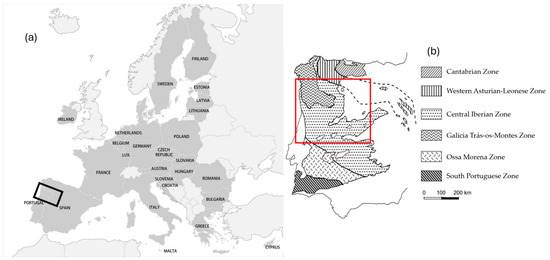
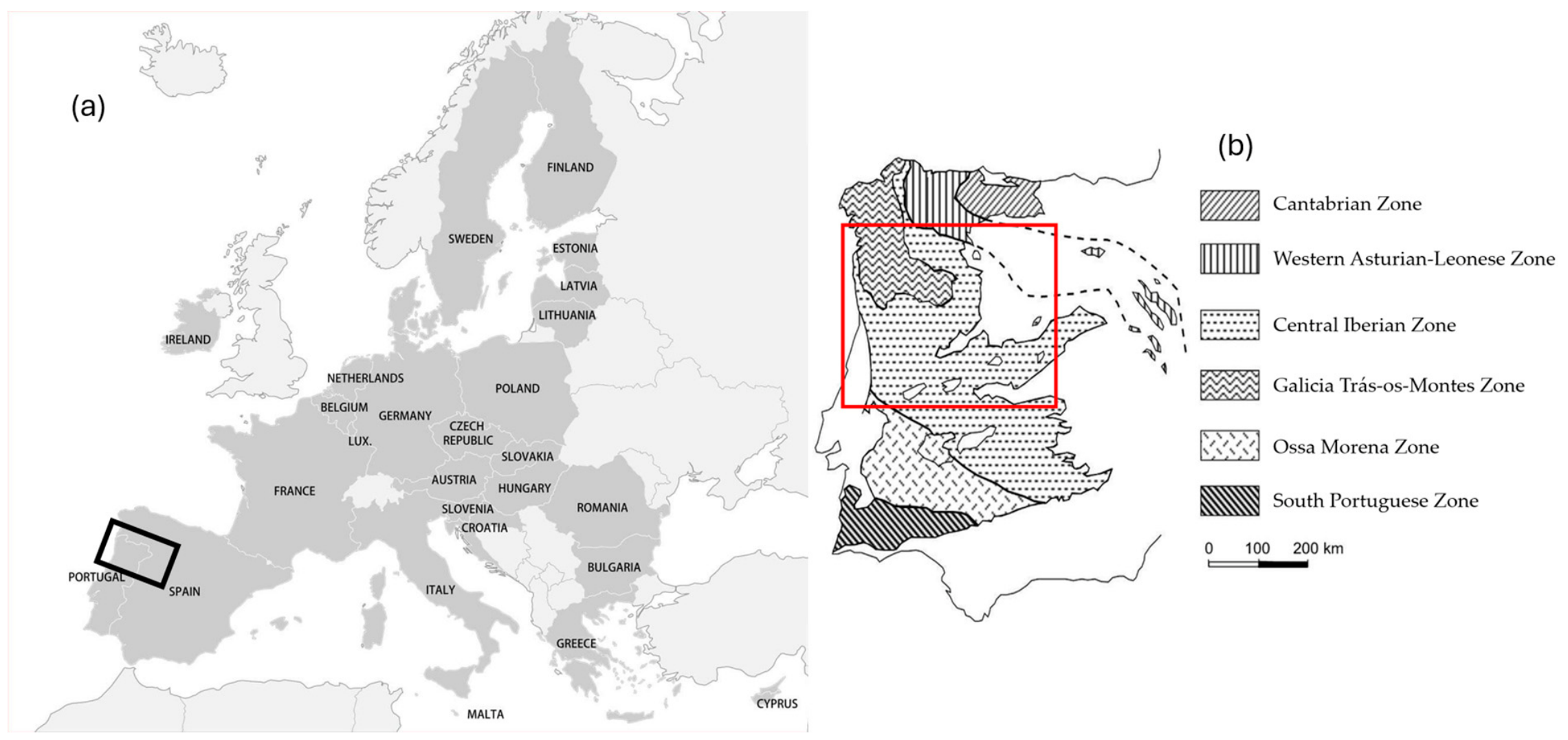
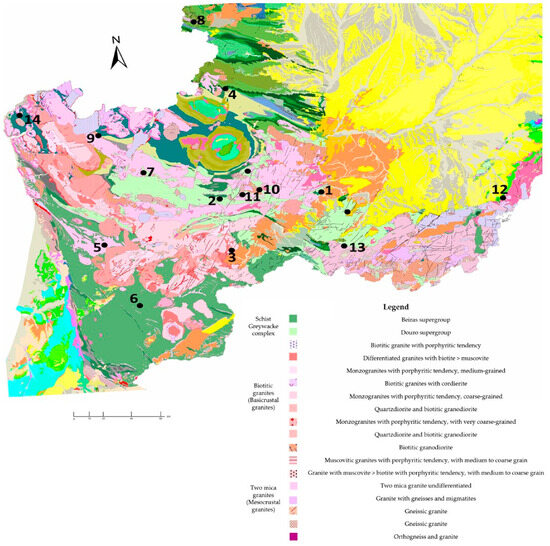
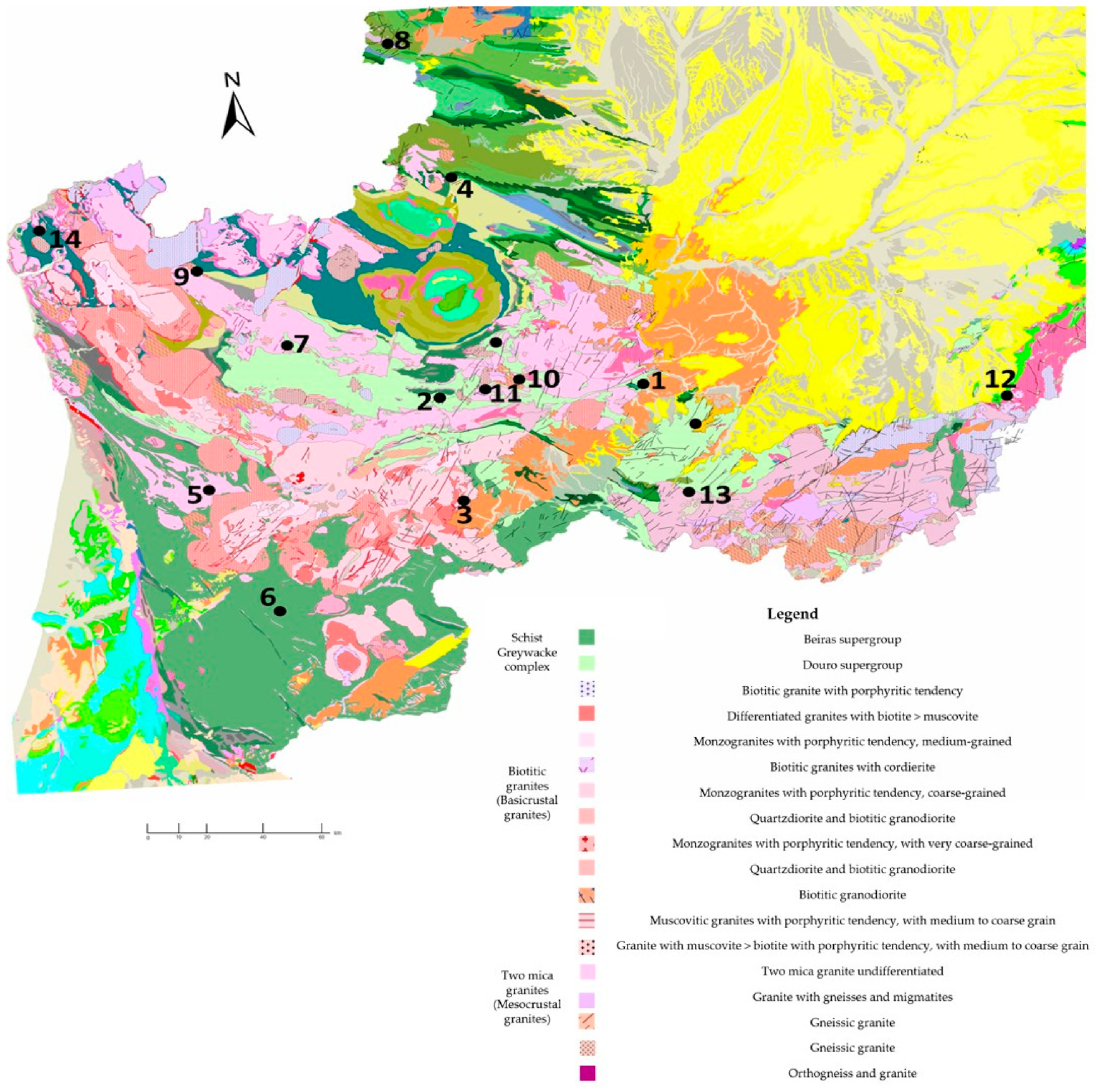
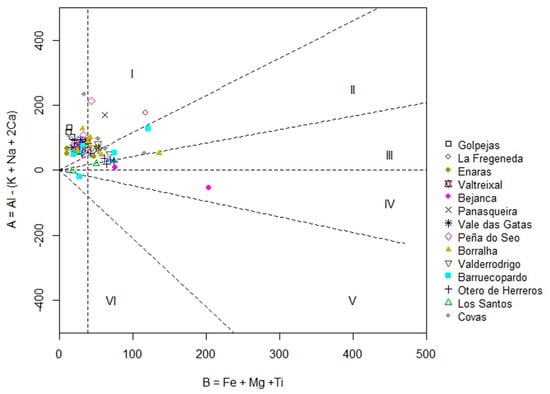
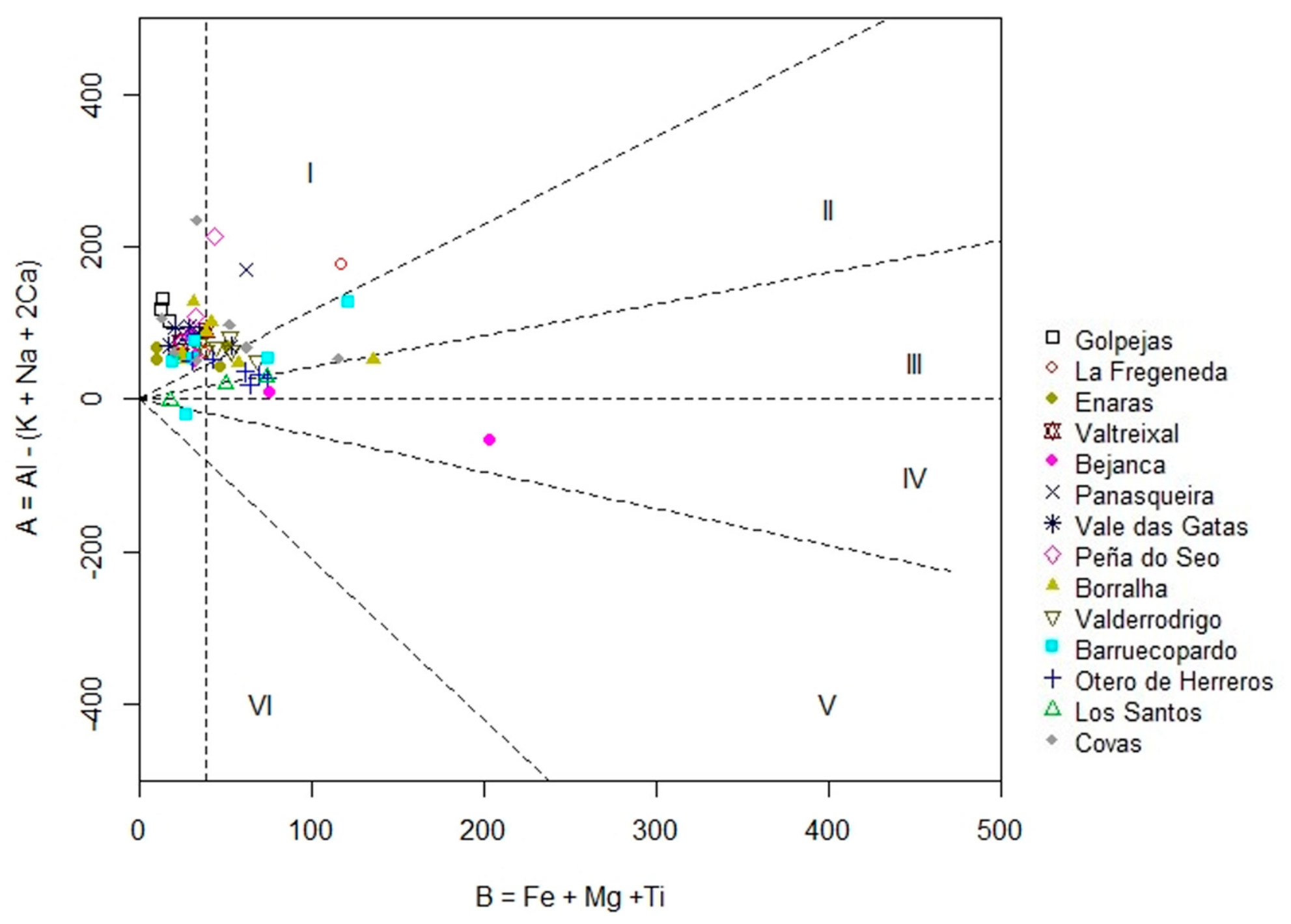
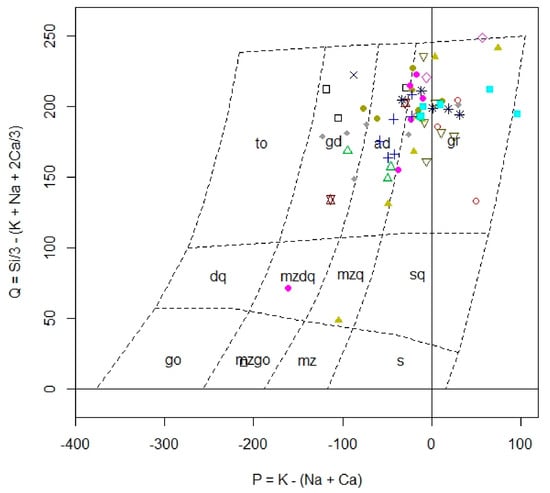
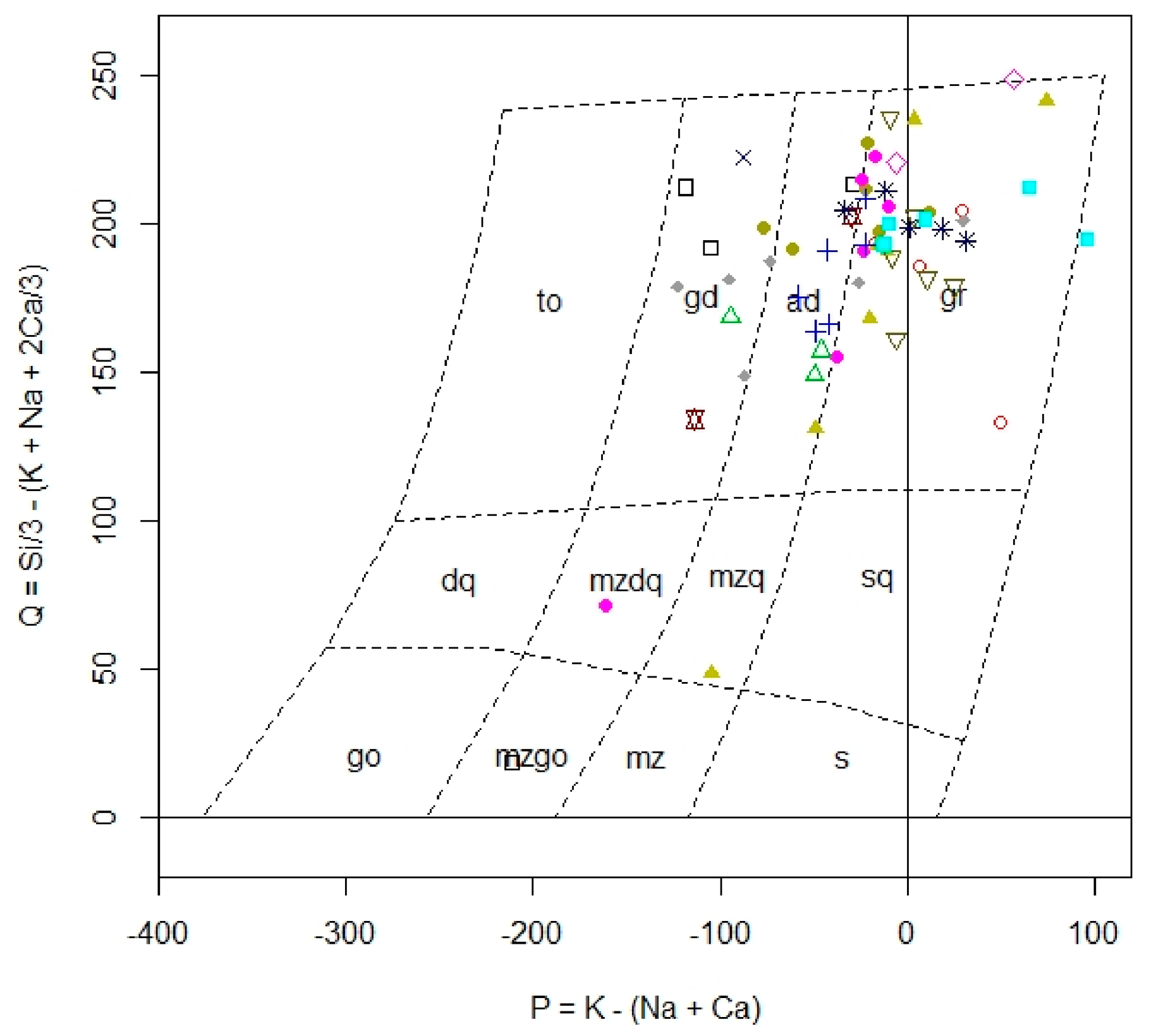
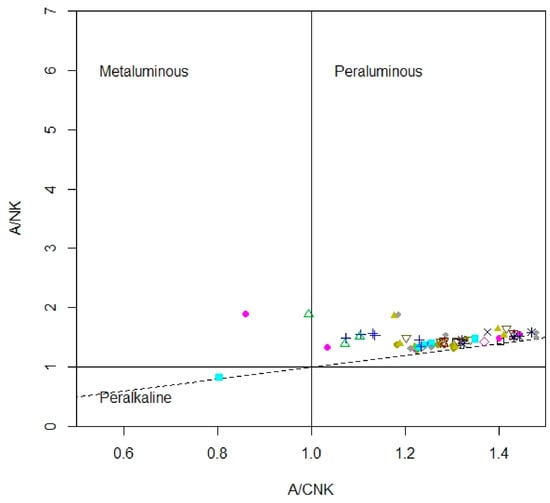
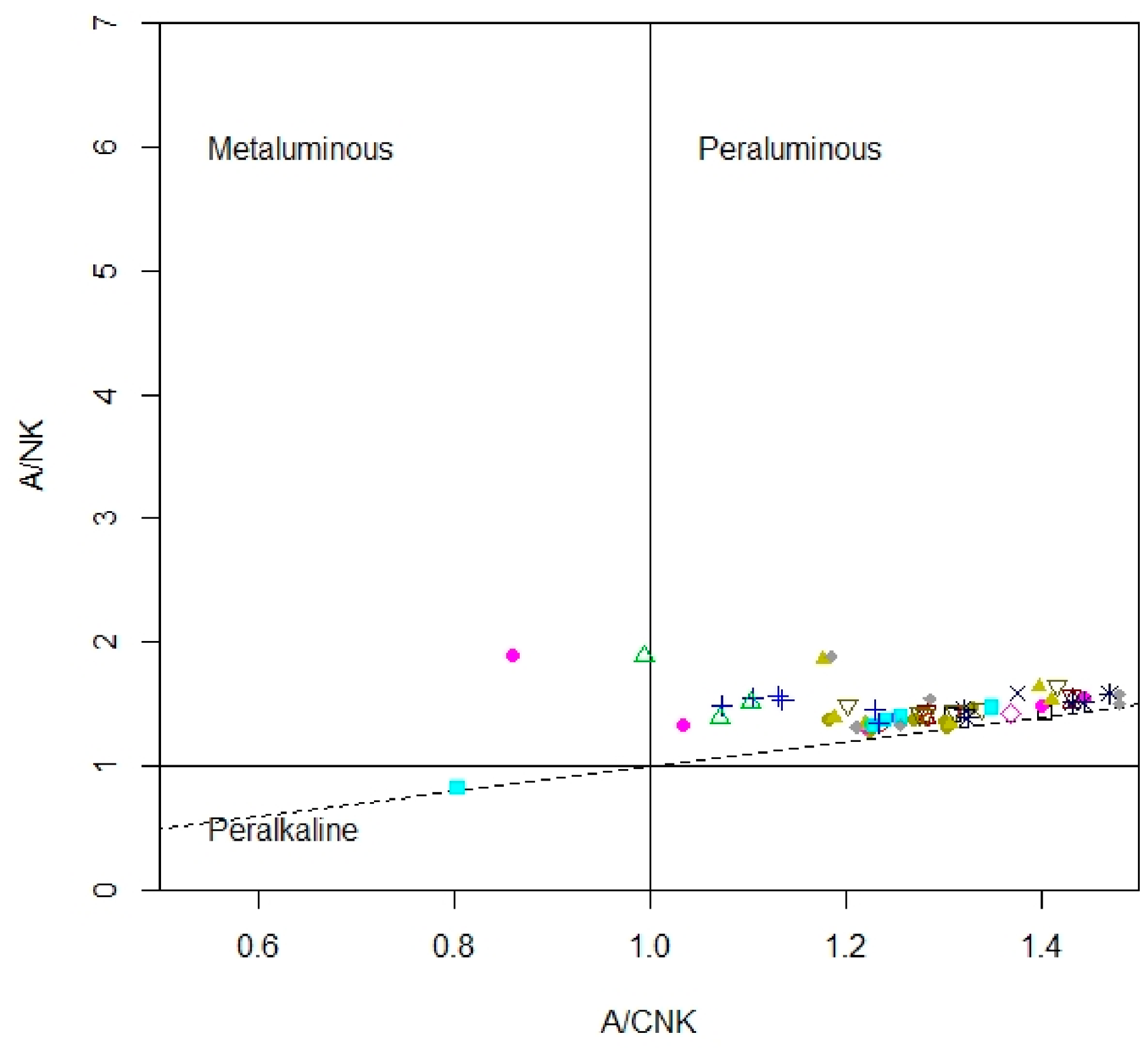
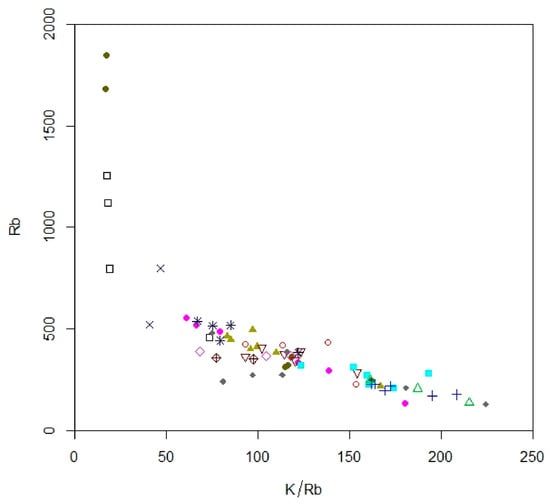
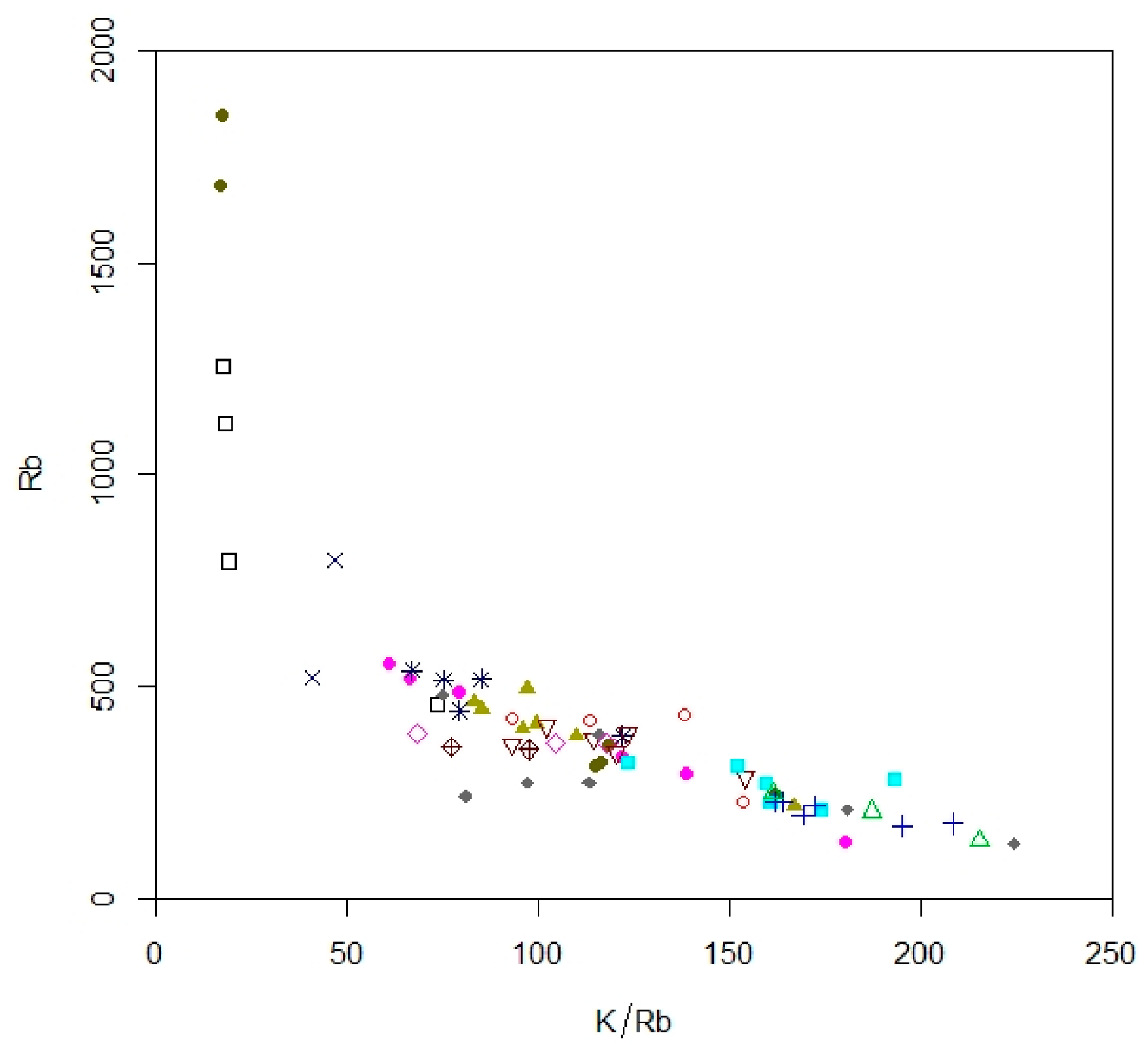
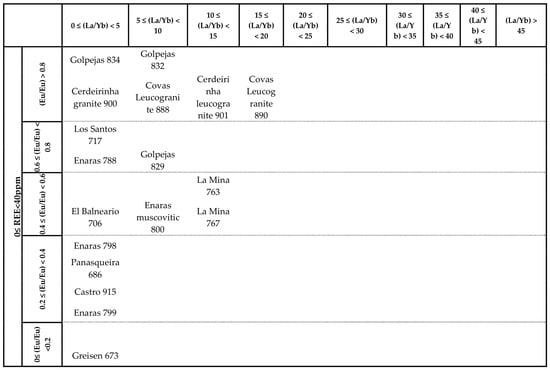
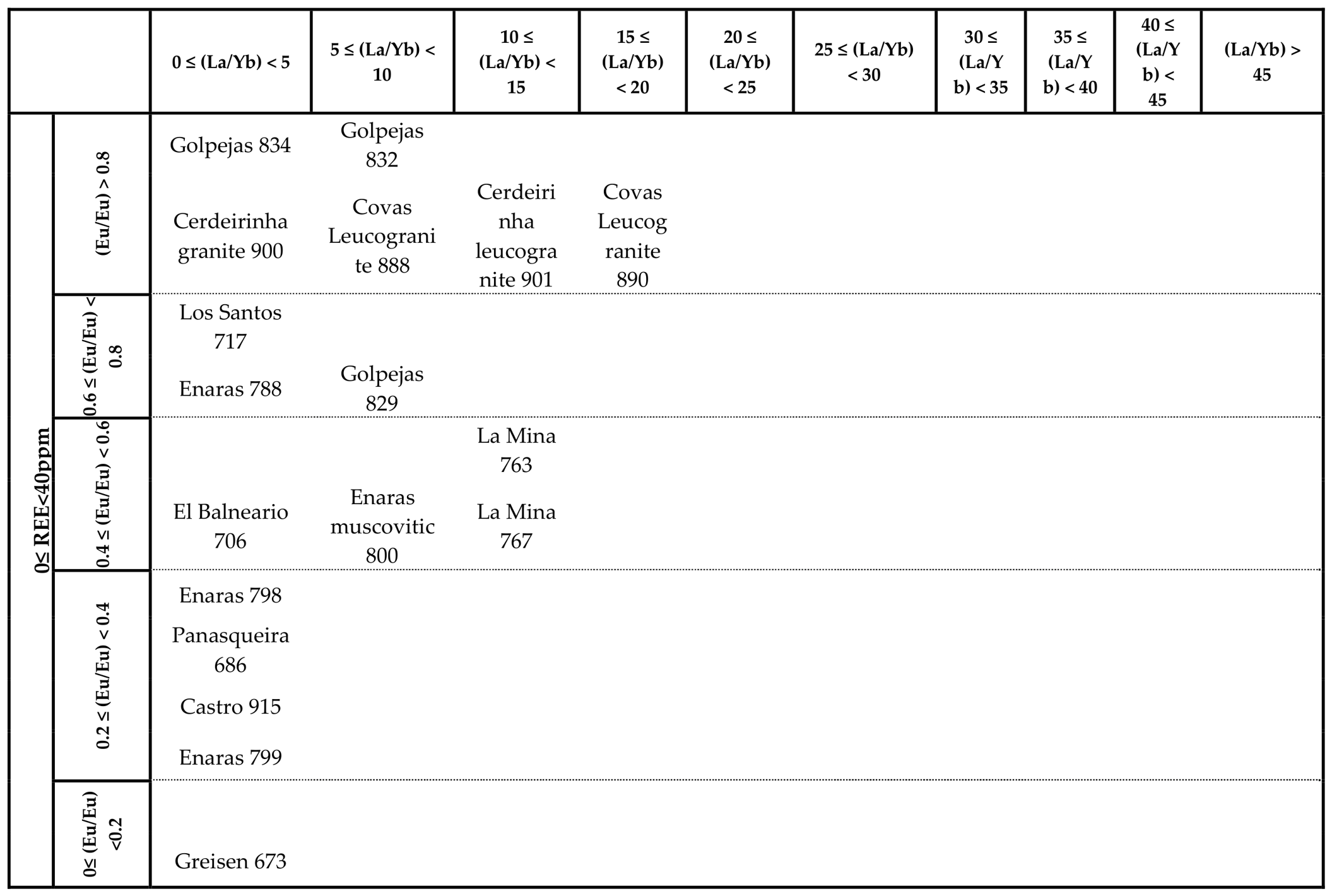
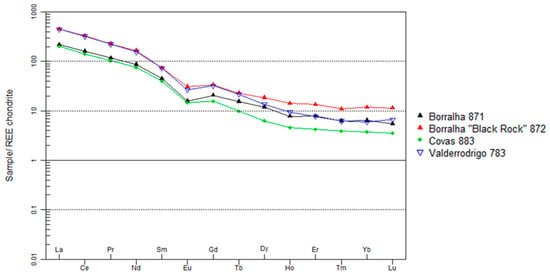
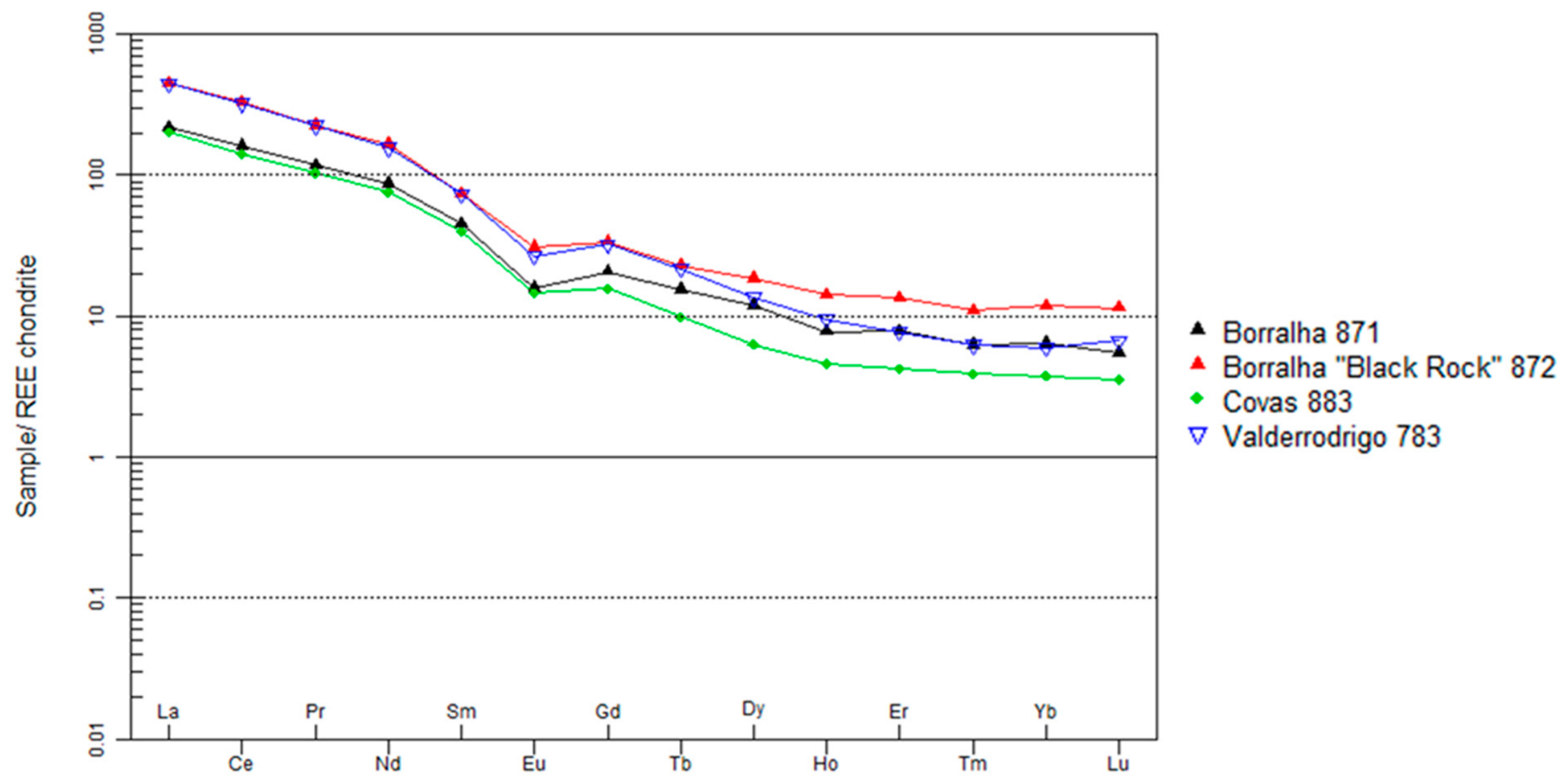
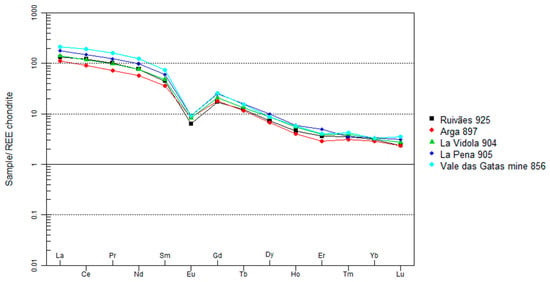
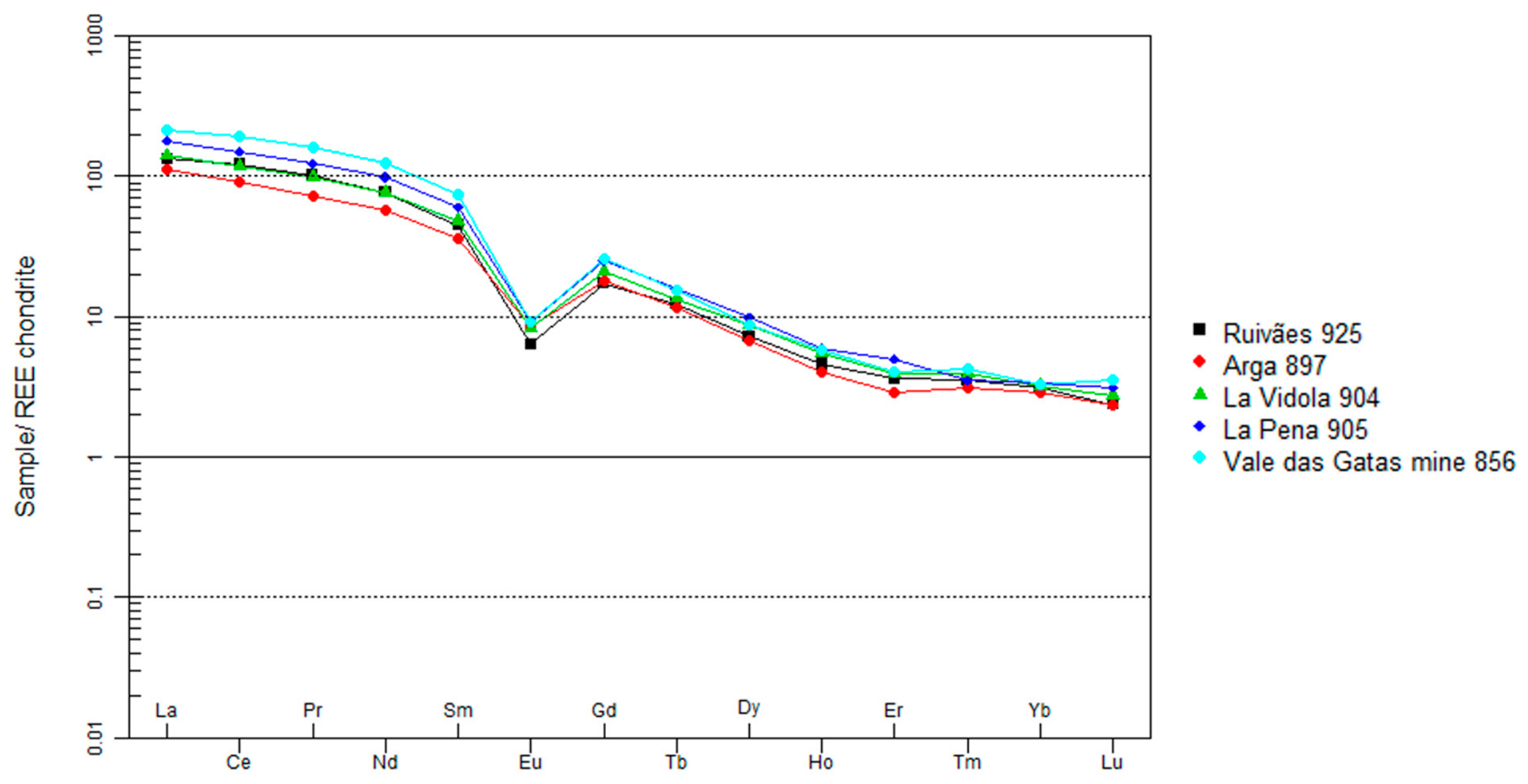
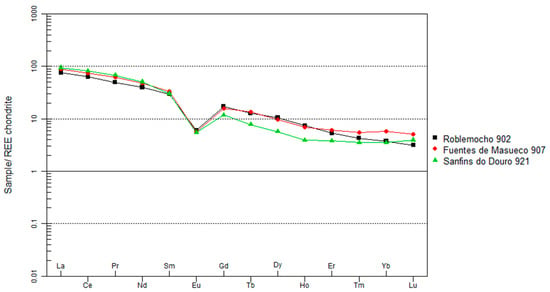
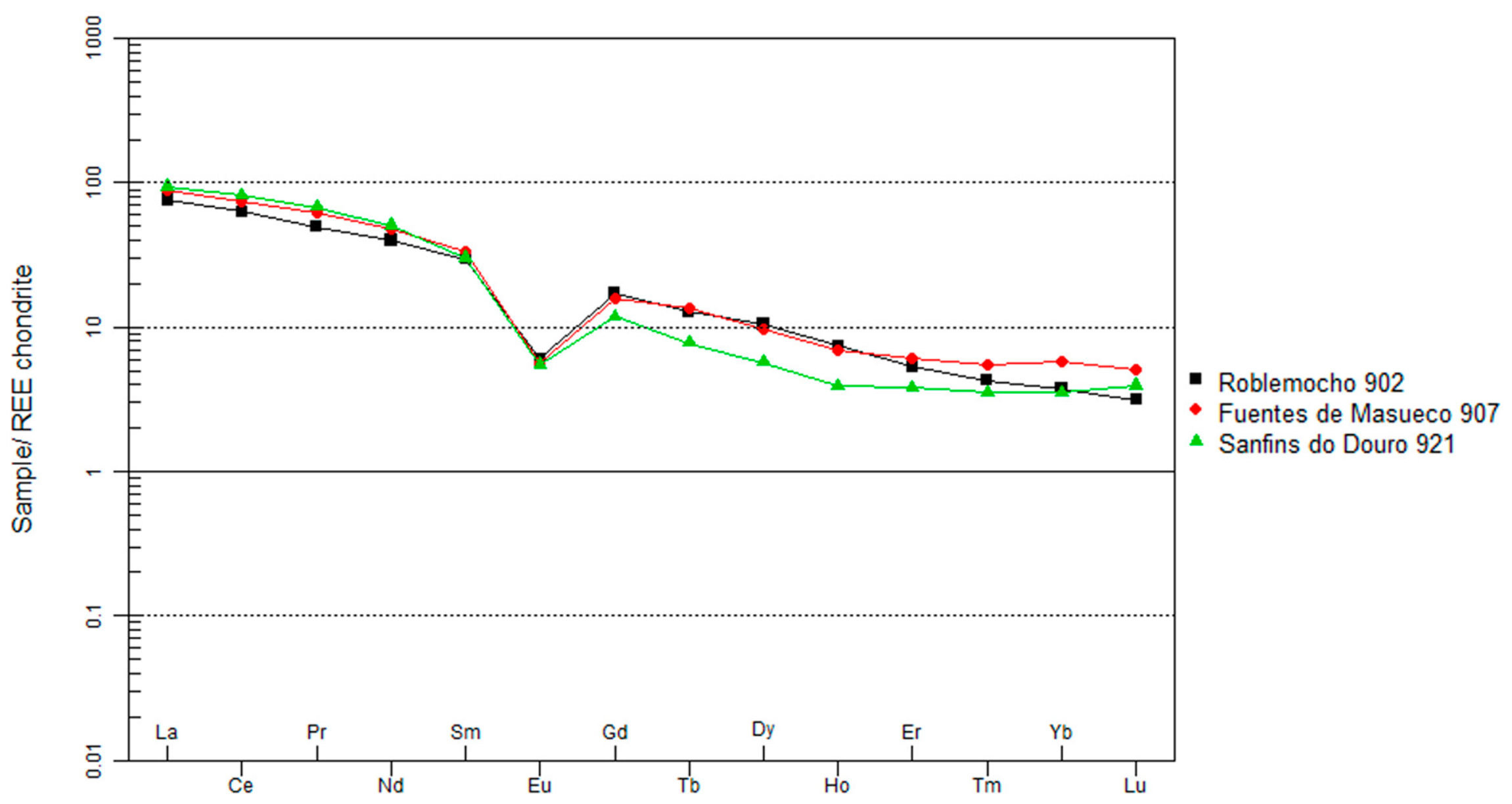
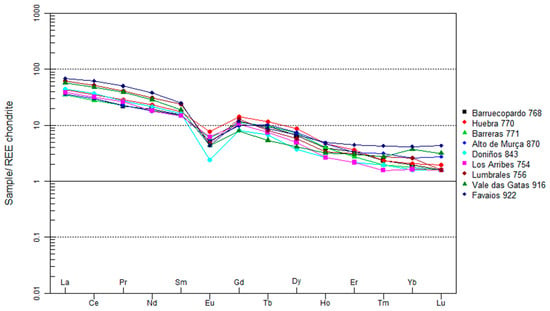
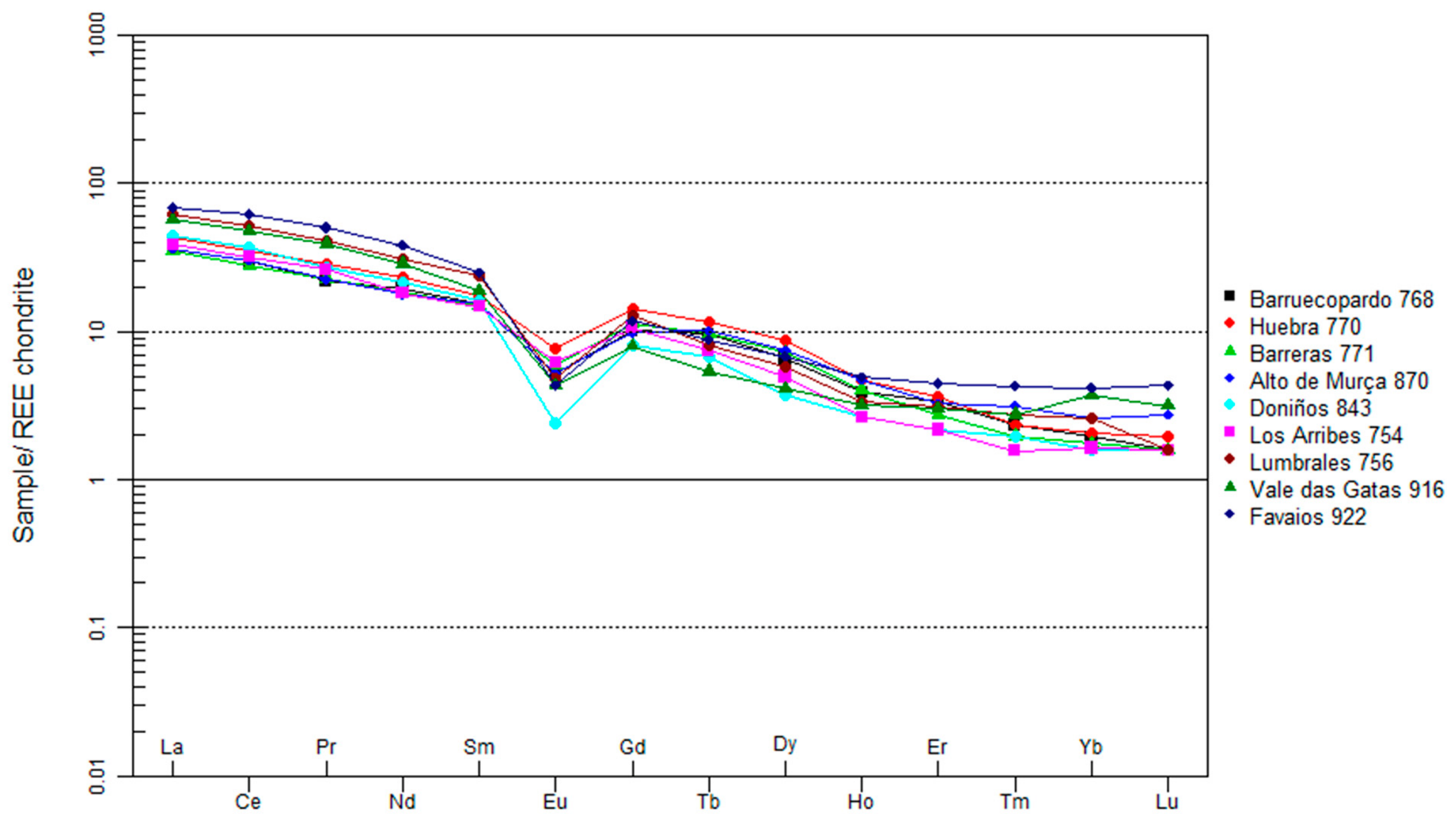
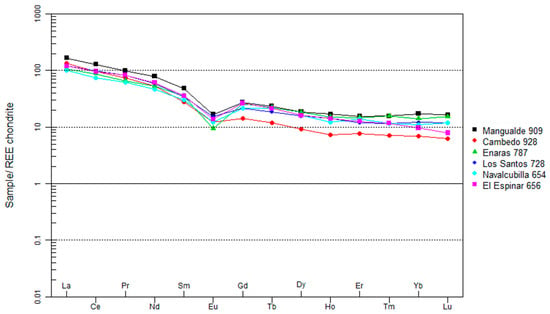
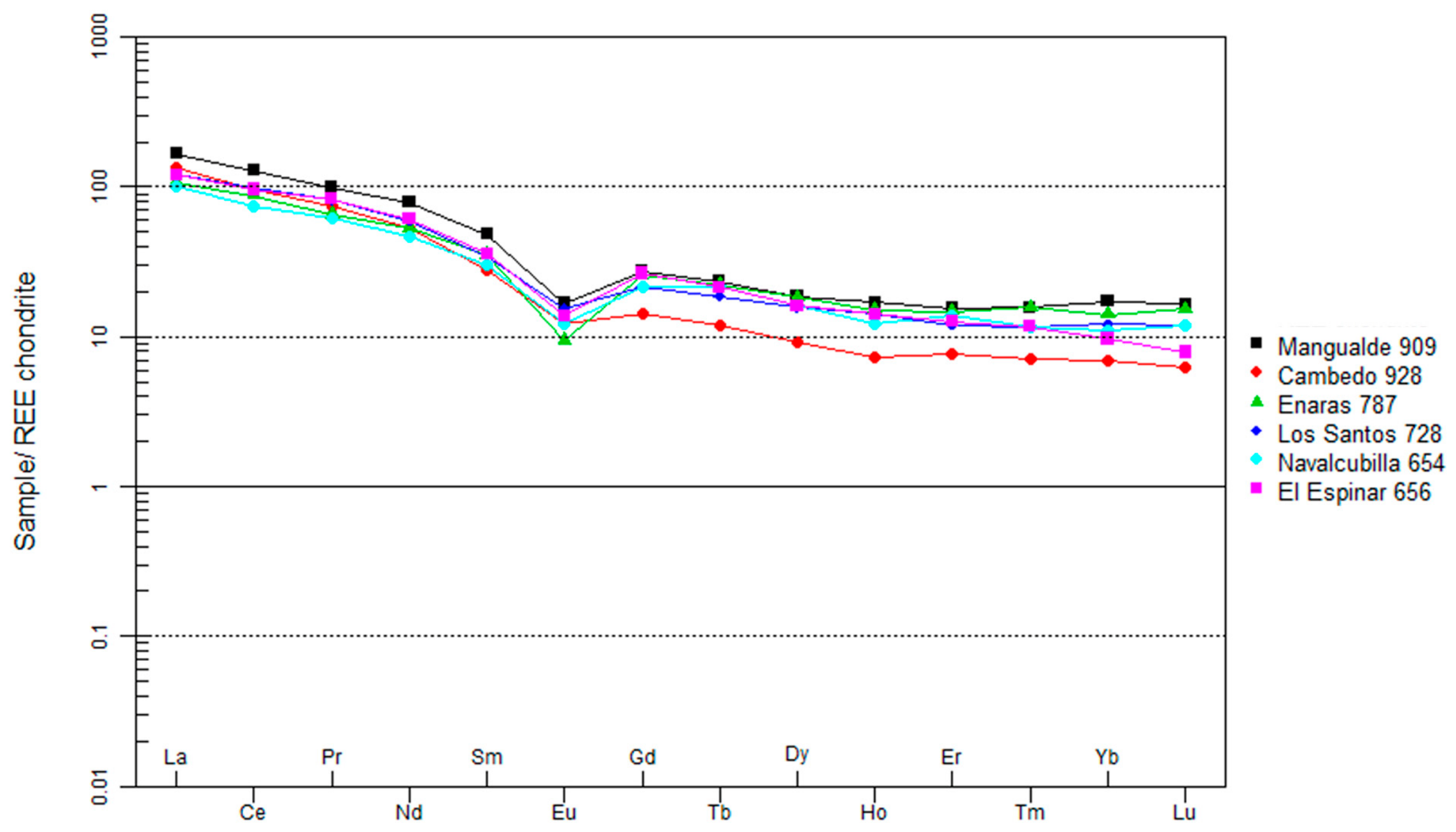
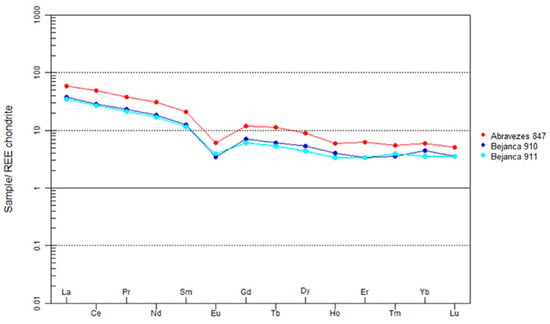
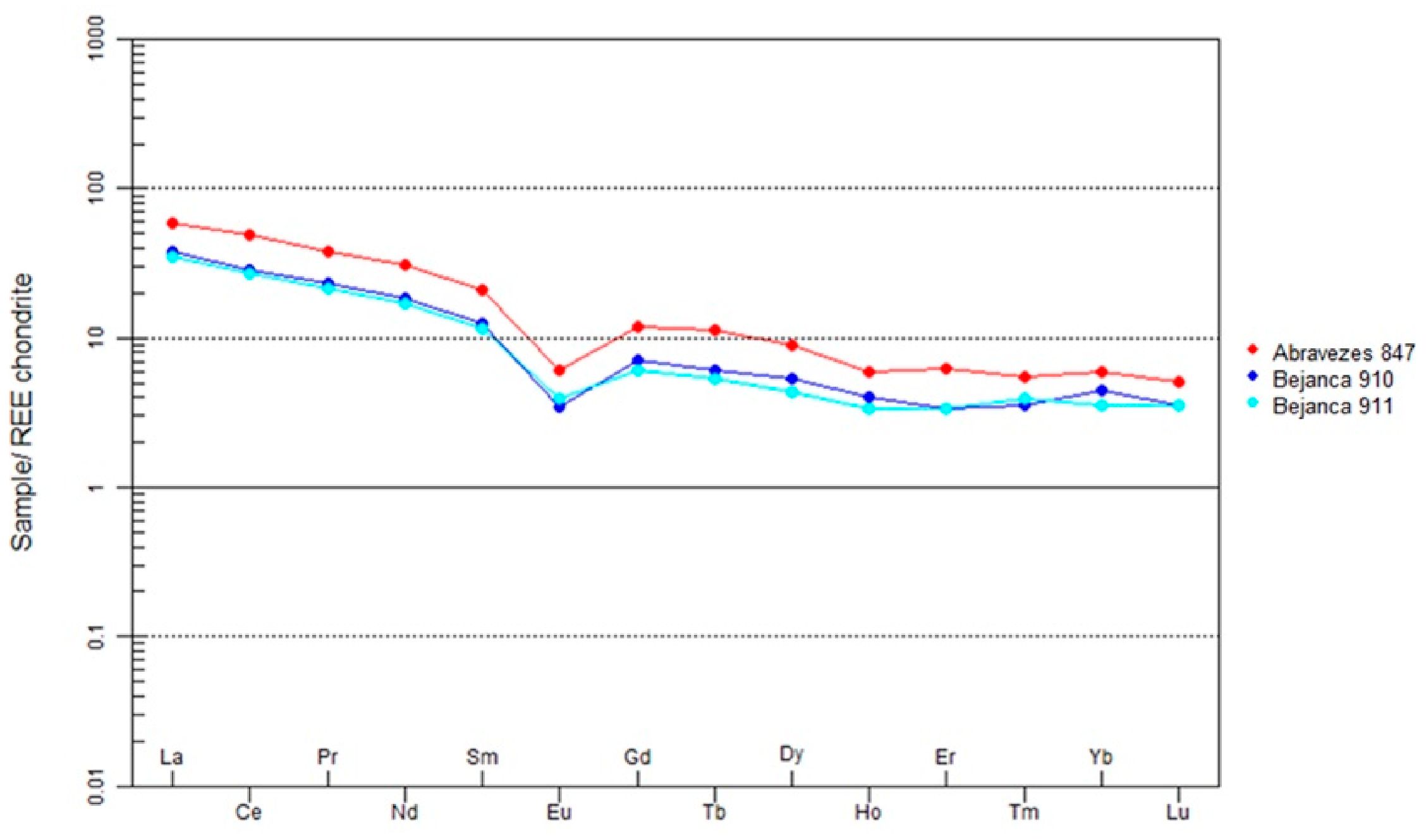
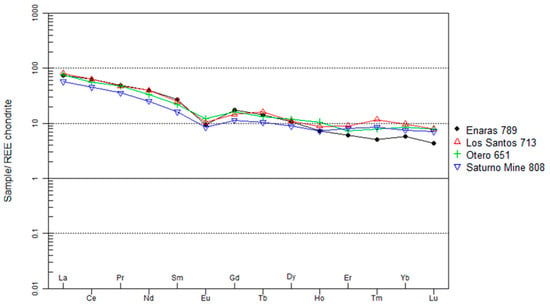
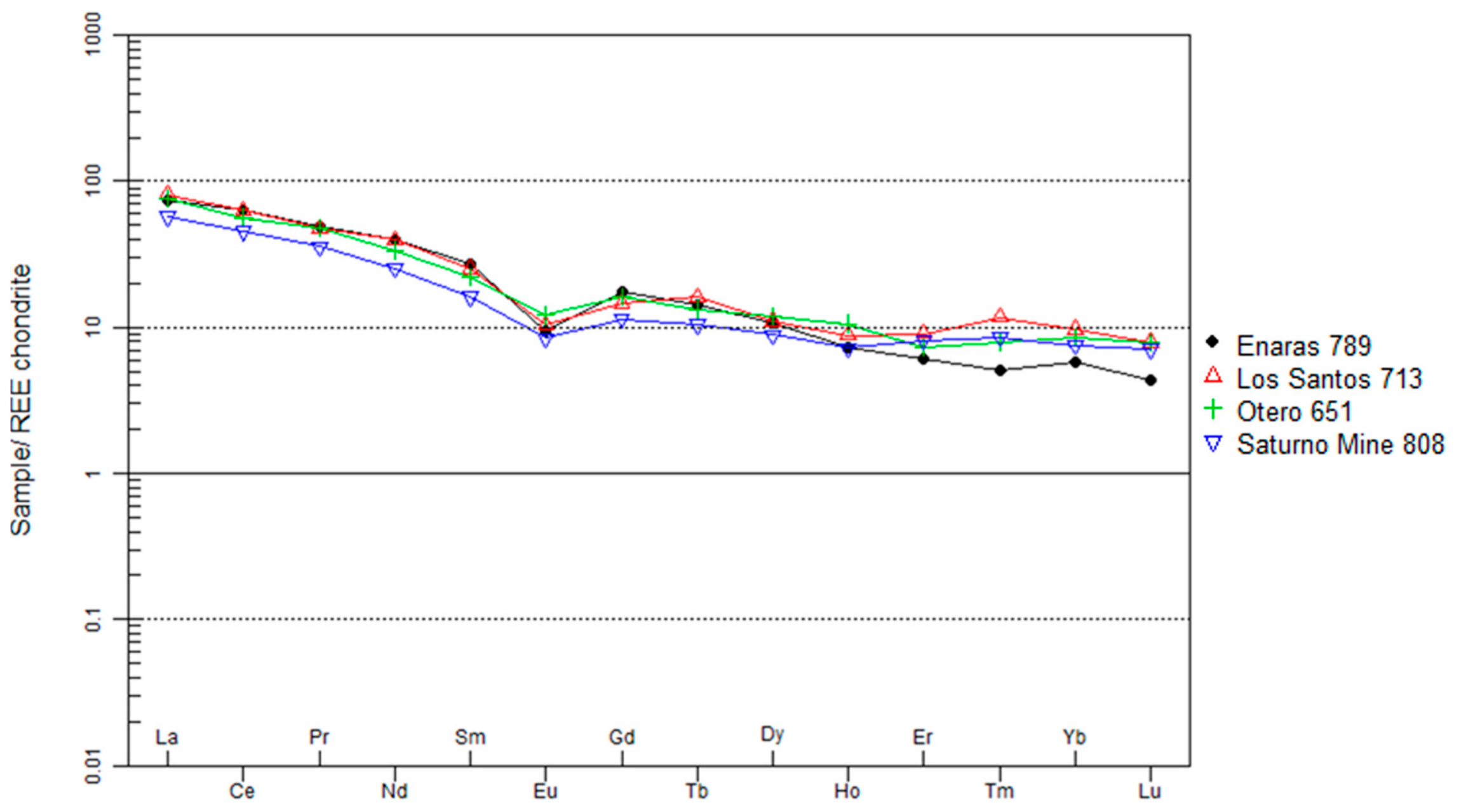
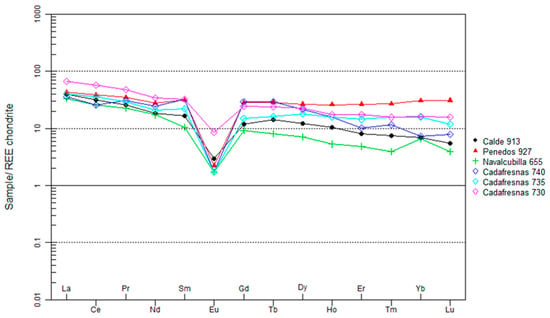
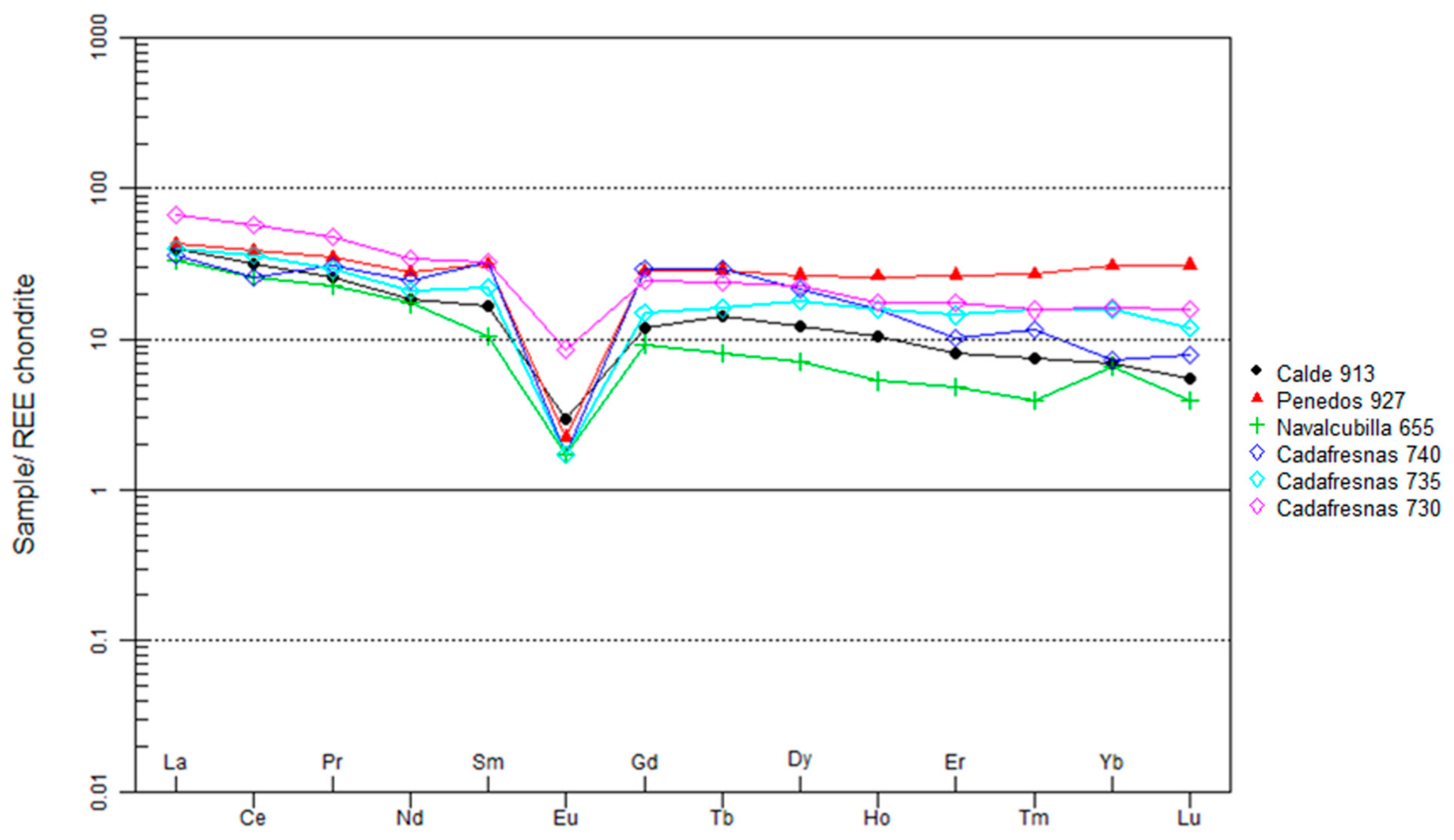
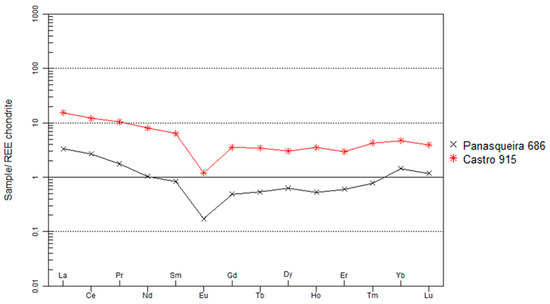
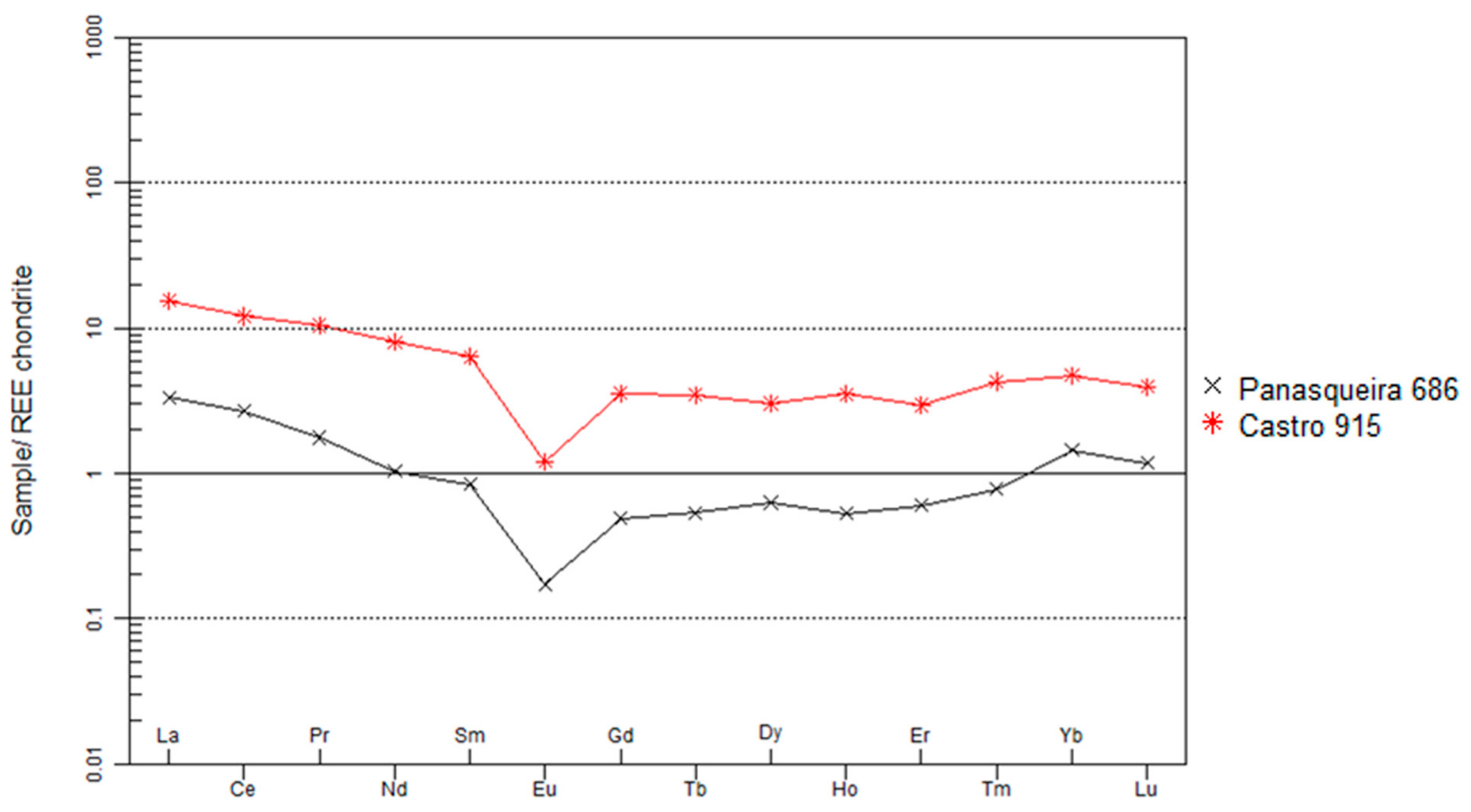
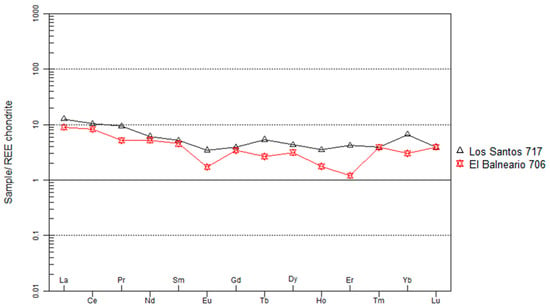
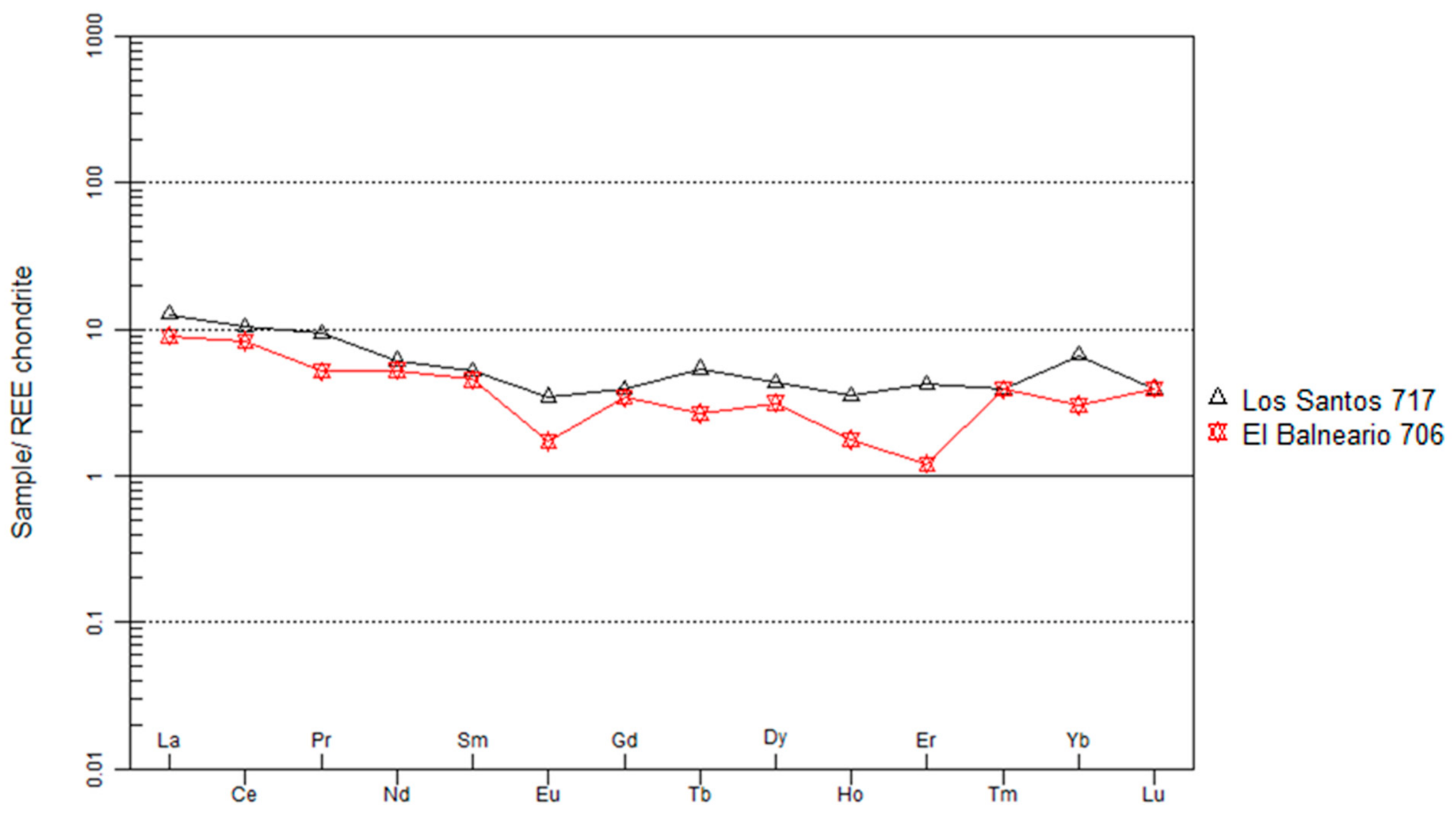
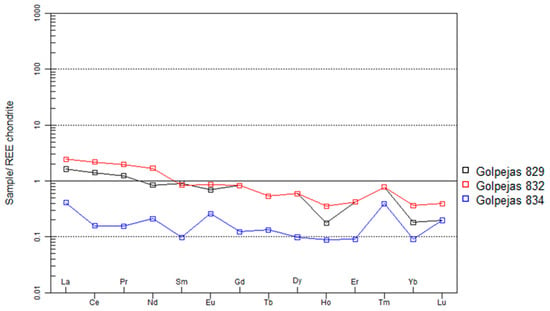
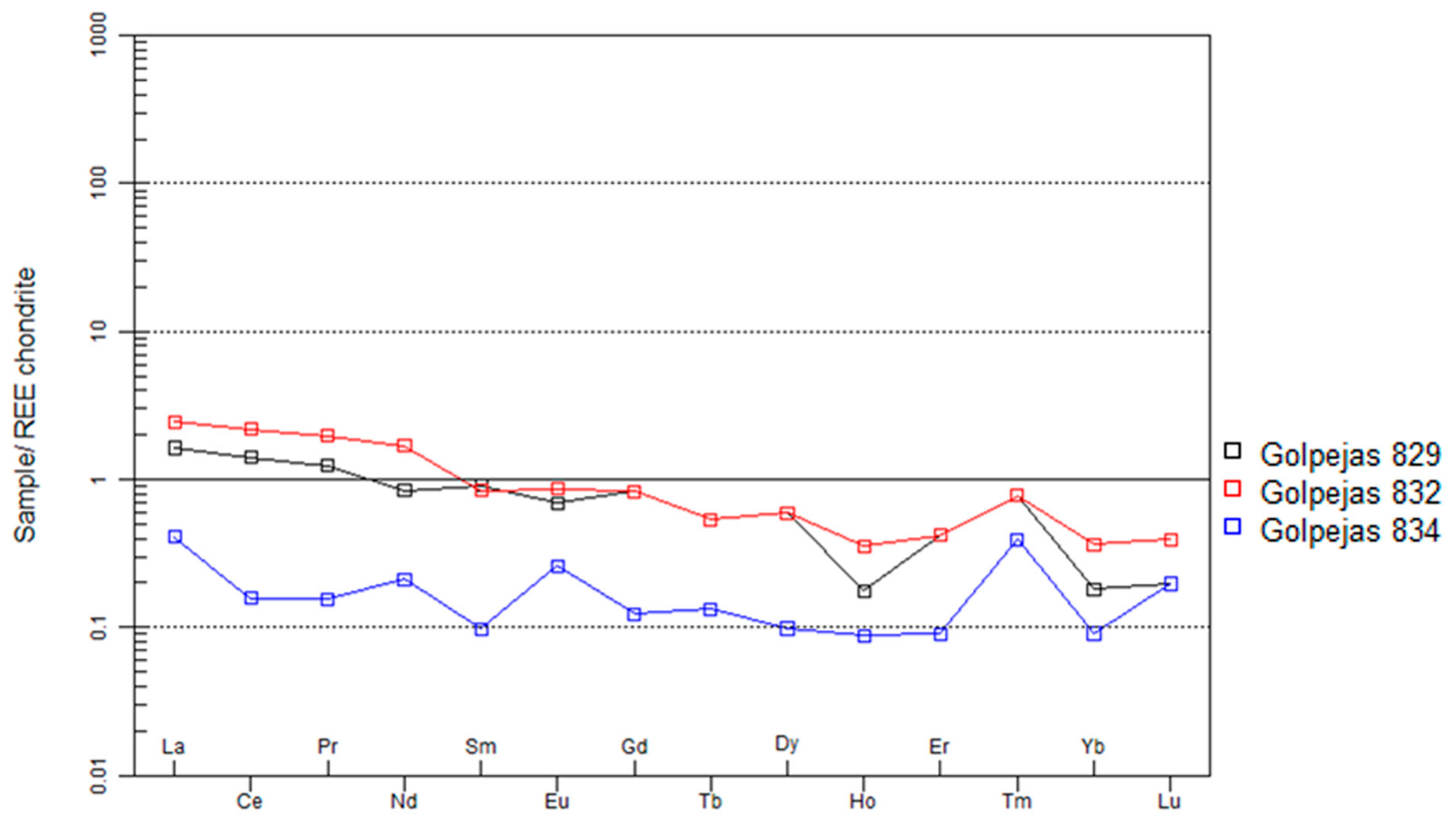
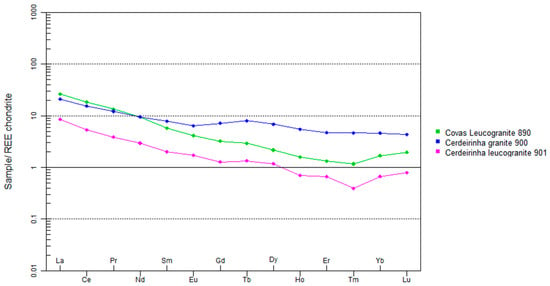
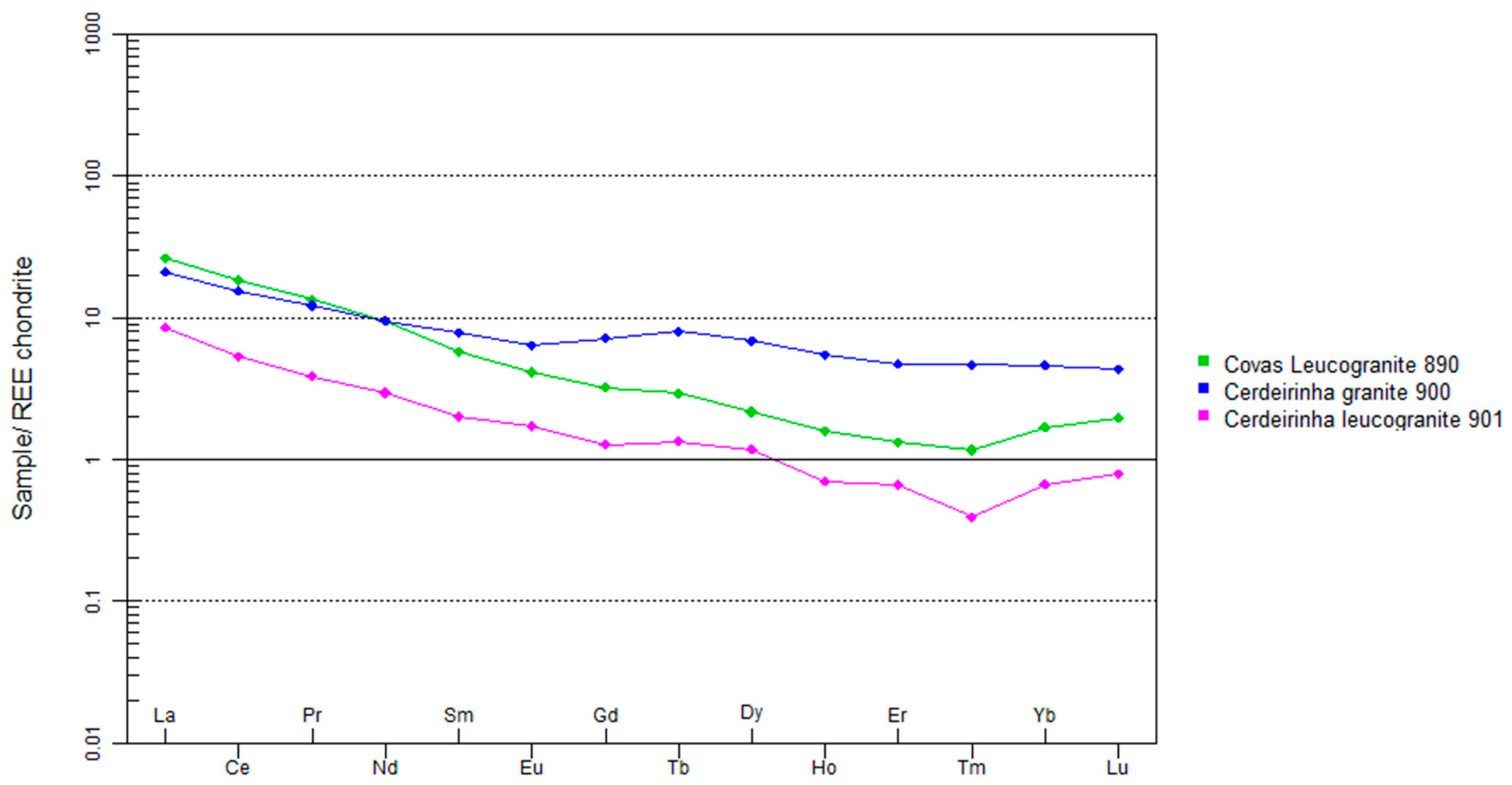
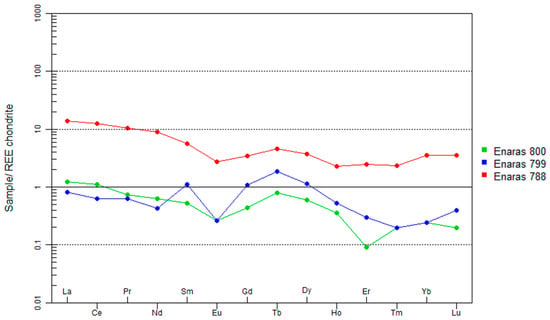
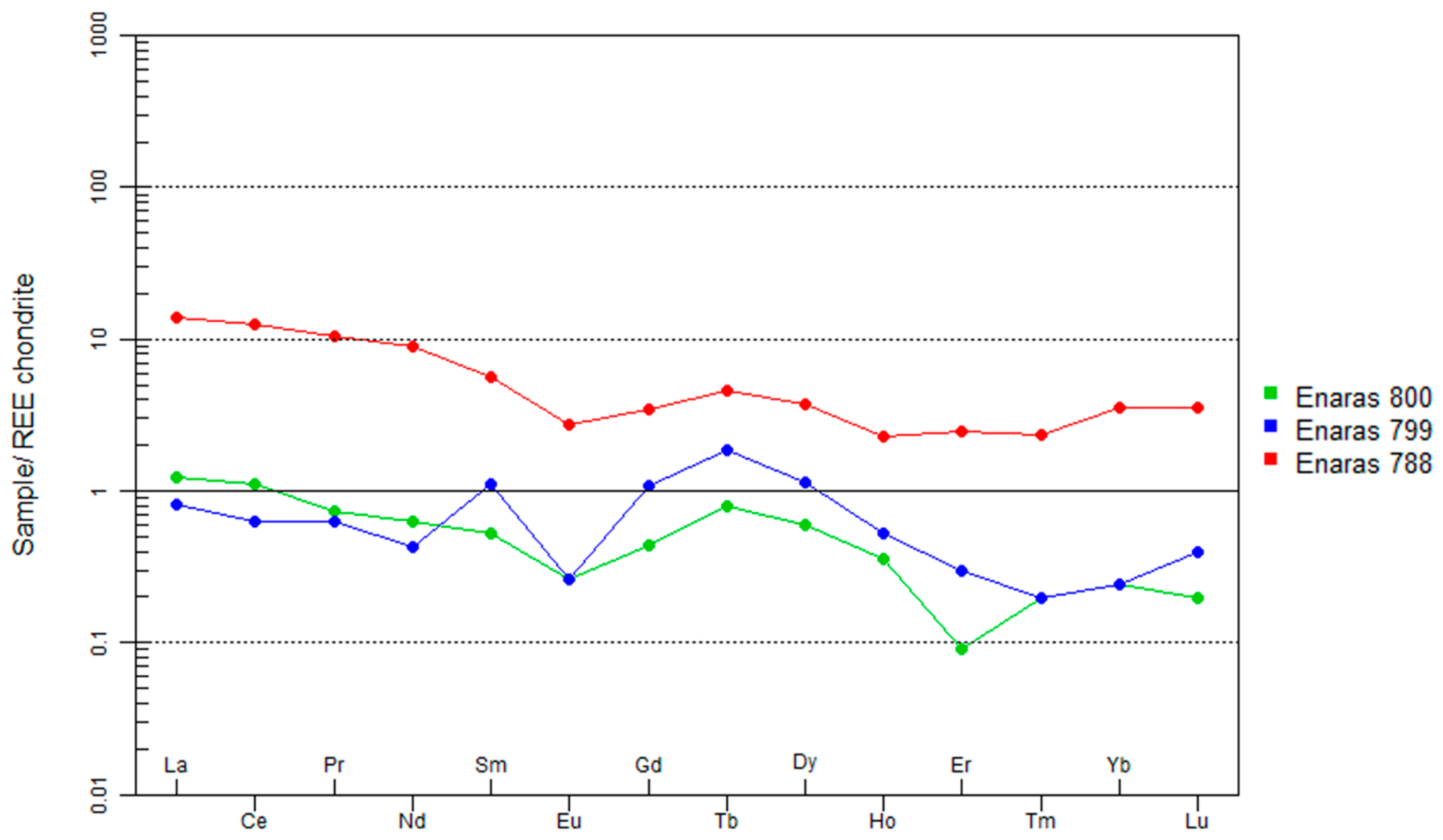
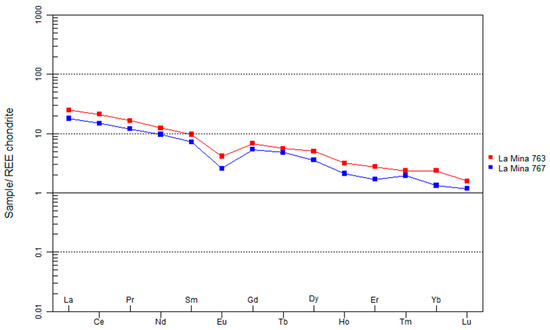
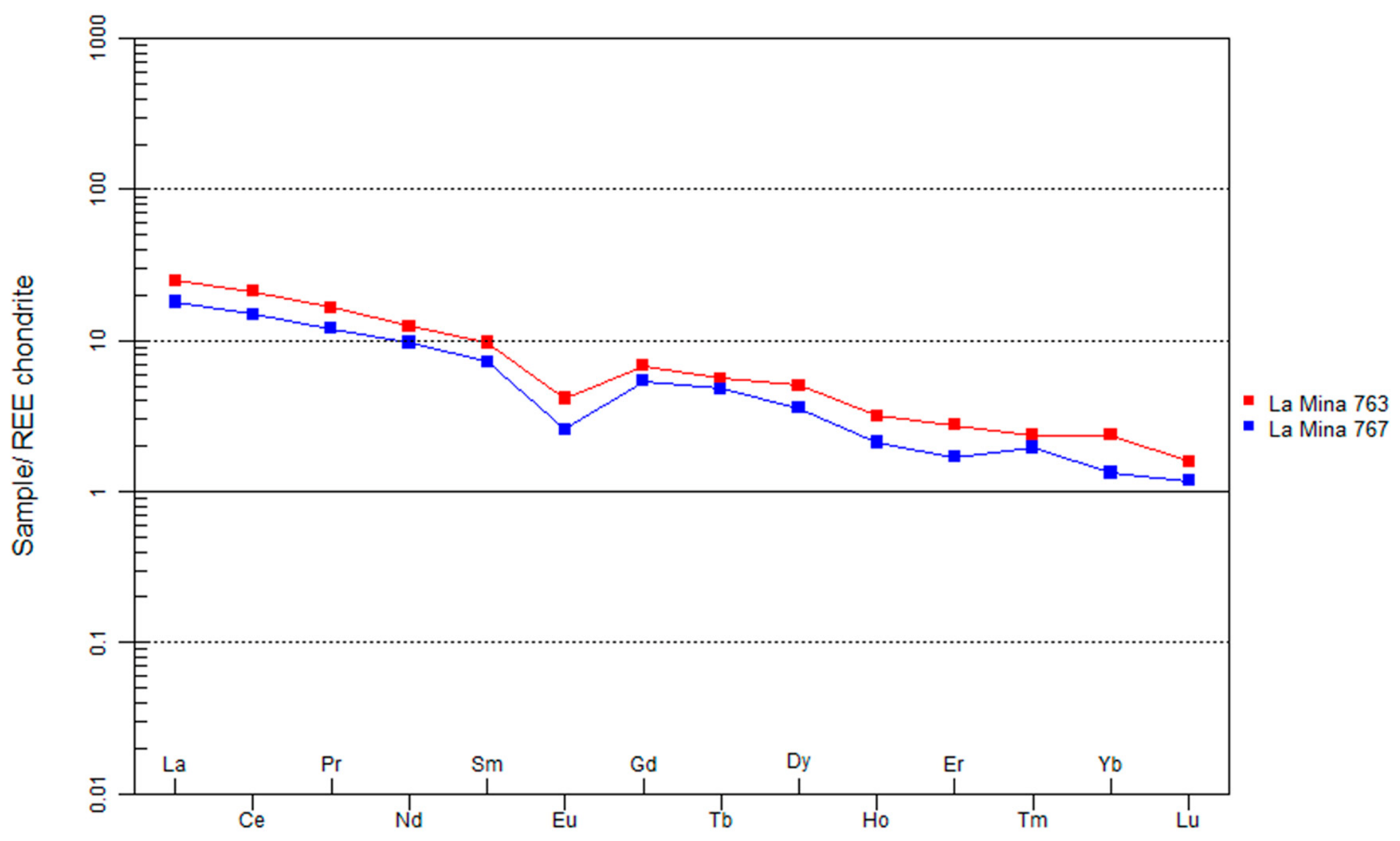

Disclaimer/Publisher’s Note: The statements, opinions and data contained in all publications are solely those of the individual author(s) and contributor(s) and not of MDPI and/or the editor(s). MDPI and/or the editor(s) disclaim responsibility for any injury to people or property resulting from any ideas, methods, instructions or products referred to in the content. |
© 2026 by the authors. Licensee MDPI, Basel, Switzerland. This article is an open access article distributed under the terms and conditions of the Creative Commons Attribution (CC BY) license.