


Abstract
This study presents the first stream-sediment geochemical survey conducted in the western Oecusse enclave (Timor-Leste), aiming to identify geochemical anomalies associated with potential metallic mineralization in a region where mineral occurrences remain poorly documented. A total of 27 stream-sediment samples were collected from first- and second-order drainage systems and analysed for a multi-element suite using ICP-MS and INAA. Robust statistical approaches, including univariate analysis, median absolute deviation (MAD), Tukey boxplot thresholds, and compositional data analysis combined with principal component analysis (CLR–PCA), were applied to identify anomalous geochemical associations. To improve statistical robustness, PCA was performed on reduced and process-oriented variable sets. The results reveal significant geochemical variability, with maximum concentrations reaching 214 mg/kg for As, 142 mg/kg for Co, 27,220 mg/kg for Cr, 437 mg/kg for Cu, 1520 mg/kg for Ni, 67 mg/kg for Pb and 267 mg/kg for Zn. Multivariate analysis distinguishes two main geochemical signatures. The first association (Co–Cr–Ni–Mg–Fe) reflects a strong ultramafic geochemical signal consistent with contributions from mafic to ultramafic lithologies documented in the region. The second association (As–Bi–Cu–Pb–S–Sb–Se–Tl–Zn) indicates polymetallic enrichment commonly observed in sulphide-related geochemical systems. The spatial distribution of these geochemical signals highlights localized drainage basins exhibiting relative enrichment patterns. These results demonstrate the effectiveness of stream-sediment geochemistry as a first-pass exploration tool and provide new geochemical constraints for geological interpretation and future mineral exploration in Timor-Leste. The approach demonstrates the value of integrated geochemical and statistical methods for mineral exploration in data-poor regions.
1. Introduction
Timor-Leste occupies a key position within the Banda Arc system of Southeast Asia, a complex tectonic region formed by the ongoing collision between the northward-moving Australian continental margin and the Banda volcanic arc [1,2,3,4]. This arc–continent collision has produced a highly heterogeneous geological framework composed of accretionary complexes, ophiolitic fragments, volcanic sequences, metamorphic units and sedimentary basins. Such tectonic environments are commonly associated with a variety of mineral deposit types, including volcanogenic massive sulphide (VMS), epithermal and porphyry systems, as well as podiform chromite deposits linked to ultramafic rocks [5,6,7,8].
Despite this favourable geological setting, the metallic mineral resources of Timor-Leste remain poorly documented. Historical geological investigations were largely limited in scope and focused mainly on regional stratigraphy and tectonic evolution [9,10,11,12], while more recent studies have improved the understanding of the regional geodynamic framework of the Banda Arc and its associated ophiolitic and volcanic sequences [12,13]. However, systematic mineral exploration studies, particularly those based on regional geochemical signatures, remain scarce.
Regional geochemical exploration using stream sediments is widely recognized as an efficient first-pass exploration tool for reconnaissance surveys, allowing the rapid identification of geochemical anomalies associated with undiscovered mineralization, particularly in areas with limited geological information or difficult access [14,15,16,17]. Interpretation of geochemical datasets commonly relies on the identification of anomalous concentrations relative to natural geochemical background levels, although the distinction between background and anomalous values remains a major challenge in exploration geochemistry [18,19]. Robust statistical approaches, including median absolute deviation (MAD) and Tukey boxplot methods, have been widely applied to define threshold values while minimizing the influence of extreme values. In addition, multivariate statistical techniques such as principal component analysis (PCA) provide powerful tools for identifying geochemical associations and understanding the processes controlling element distributions within geological environments [20].
In recent years, the application of compositional data analysis (CoDA) approaches, including centred log-ratio (CLR) transformations, has become increasingly common in geochemical studies [21,22]. These methods address the closed nature of compositional datasets and allow more reliable interpretation of geochemical relationships between elements. Recent work by Vicente et al. [23] documented the occurrence of chromite-rich ultramafic rocks in the Maquelab region, located in close proximity to the present study area, providing an important regional framework for interpreting Cr–Ni–Co geochemical anomalies in the Oecusse enclave.
The objectives of this study are to (i) identify geochemical anomalies in stream sediments from the Citrana area, (ii) evaluate their relationship with lithological sources, particularly ultramafic units, and (iii) assess their significance for mineral exploration in the Oecusse enclave. To achieve this, a regional stream-sediment geochemical survey was conducted to characterise the geochemical signature of drainage basins and to identify element associations potentially related to mineralization processes. Particular attention is given to signatures associated with ultramafic lithologies and polymetallic sulphide-related systems.
This study builds upon the regional framework established by Vicente et al. [23] by providing new geochemical data from the Citrana area, contributing to the understanding of the spatial distribution and expression of ultramafic-related geochemical signatures. The results provide new constraints for geological interpretation in the Oecusse region, where existing geological mapping remains limited, and highlight areas that may warrant further geological and mineral exploration studies.
2. Geological Setting
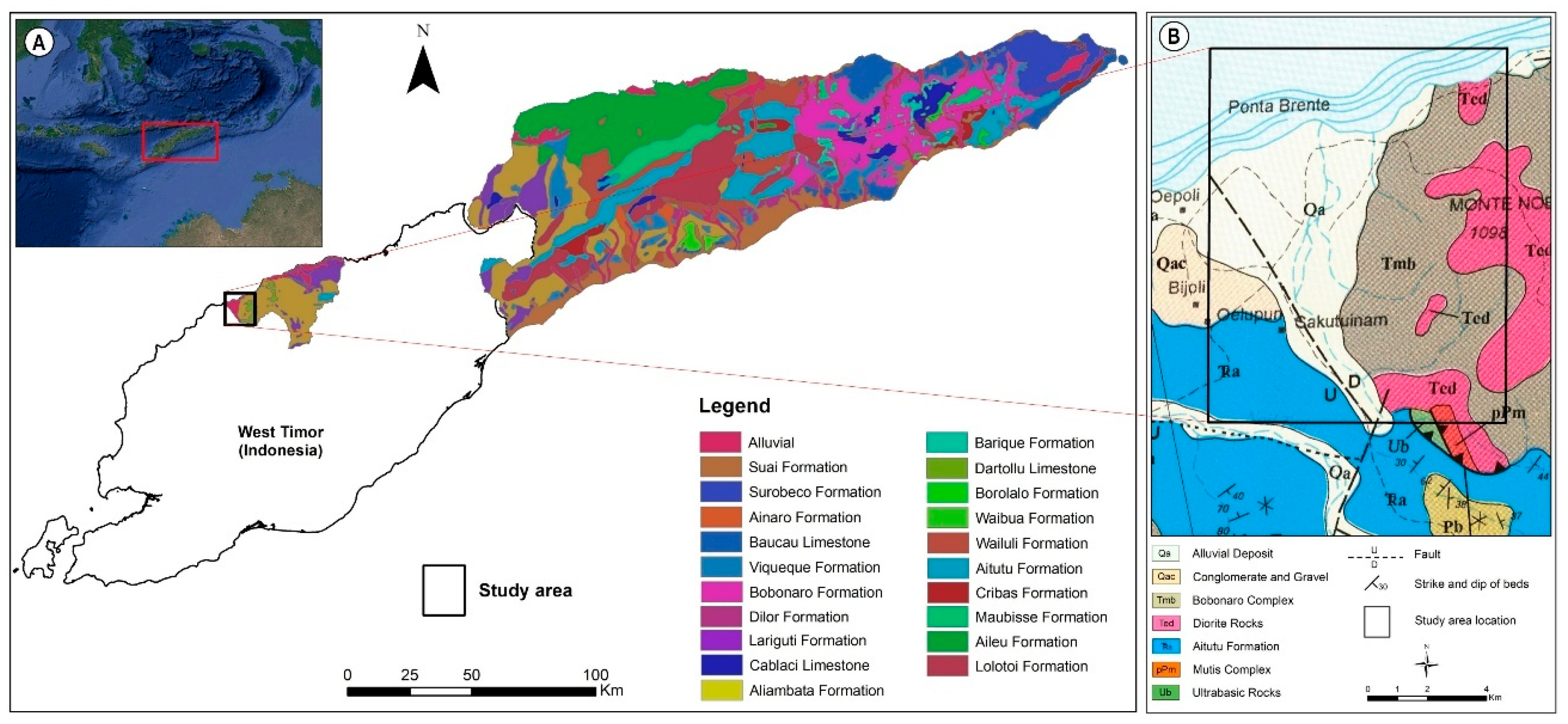
The study area is located in the northwestern sector of the Special Administrative Region of Oecusse-Ambeno, an enclave of Timor-Leste surrounded by Indonesian territory and bordered to the north by the Ombai Strait of the Savu Sea. The locality of Citrana lies approximately 60 km from the regional capital Pante Macassar and more than 300 km from Dili (Figure 1).
Figure 1.
Location of the study area in the Oecusse enclave (Timor-Leste). (A) Regional location of Timor Island within Southeast Asia. (B) Geological map of the Oecusse region showing the study area (modified from Suwitodirdjo and Tjokrosapoetro [24]. The inset highlights the detailed geological context of the Citrana area.
From a geological perspective, the region belongs to the Outer Banda Arc and represents part of the complex tectonic framework associated with the collision between the Australian continental margin and the Banda volcanic arc [1,4]. The geology of the Oecusse area has been described mainly on the basis of regional studies carried out in West Timor and neighbouring areas [25].
The most recent geological mapping of the region corresponds to the Kupang–Atambua geological sheet produced by the Indonesian Geological Agency [24]. According to this map, the study area is mainly composed of the Bobonaro Scaly Clay Complex, locally intruded by dioritic bodies and associated with units of the Mutis Complex and ultrabasic rocks.
The Bobonaro Scaly Clay Complex consists of a chaotic assemblage of blocks of different lithologies embedded within a clay-rich matrix, interpreted as a product of shale diapirism during compressional phases of the Banda Arc collision [26,27]. The ultrabasic units present in the region are largely serpentinized and are interpreted as fragments of ophiolitic sequences.
Recent work [23] documented the occurrence of chromite-rich ultramafic rocks in the nearby Maquelab region and highlighted their regional geochemical significance, particularly with respect to Cr–Ni–Co anomalies in stream sediments. These findings provide an important geological framework for interpreting ultramafic-related geochemical signatures observed in the present study.
No major active mining operations or documented mine tailings are known in the study area. Therefore, the geochemical patterns observed in stream sediments are interpreted as predominantly geogenic.
3. Materials and Methods
3.1. Stream Sediment Sampling and Preparation
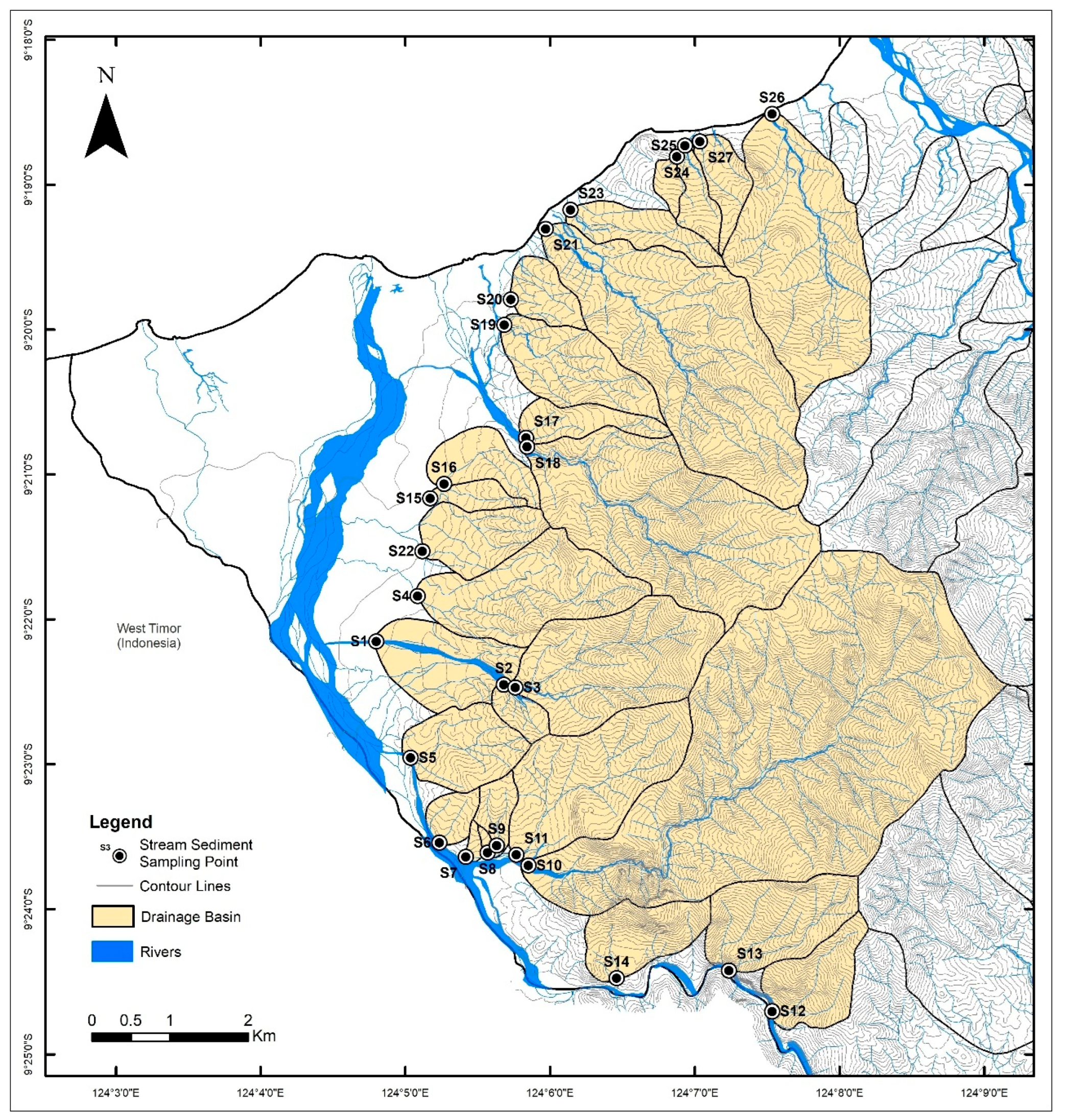
A total of 27 stream-sediment samples were collected from first- and second-order drainage systems within the Citrana area. The average sampling density was approximately one sample per 2.5 km2, although this varied locally depending on drainage patterns and accessibility (Figure 2).
Figure 2.
Drainage basin map of the Citrana area (Oecusse enclave, Timor-Leste) showing stream-sediment sampling locations (S1–S27), drainage basin boundaries, river network and topographic contours.
Sampling was conducted during the dry season to minimize the influence of seasonal variations in sediment transport and dilution effects associated with high-flow conditions during the wet season [15].
Each sample consisted of a composite of five subsamples collected within an approximate radius of 10 m around the sampling point. In the field, sediments were wet-sieved to <2 mm and air-dried at approximately 30 °C. The uppermost 10–20 cm of sediment were discarded to avoid recently deposited material.
In the laboratory, samples were oven-dried at 60 °C and sieved to obtain the <180 μm fraction (80 mesh), following standard procedures widely used in regional stream-sediment geochemical surveys [15,28]. This fine-grained fraction is generally considered to better reflect geochemical dispersion processes within drainage basins.
The prepared samples were subsequently submitted to Activation Laboratories Ltd. (Actlabs, Ancaster, ON, Canada) for chemical analysis.
3.2. Analytical Methods and Geochemical Analyses
The <180 μm sediment fraction obtained during sample preparation was analysed using the “Ultratrace 3” analytical package at Activation Laboratories Ltd. to determine multi-element concentrations.
This procedure involves a near-total four-acid digestion (HF–HClO4–HNO3–HCl), followed by analysis using Inductively Coupled Plasma Mass Spectrometry (ICP-MS), complemented by Instrumental Neutron Activation Analysis (INAA) for selected elements.
A total of 63 elements were determined. Detection limits are reported in Table S1. Only elements with more than 50% of values above detection limits were retained for statistical treatment. Gold and silver were predominantly below detection limits and were therefore excluded from further analysis, although associated pathfinder elements were retained.
The complete geochemical dataset is provided in Table S1.
Quality assurance and quality control (QA/QC) procedures were carried out by Activation Laboratories Ltd. and included the routine analysis of certified reference materials (CRMs), analytical blanks and duplicate samples. The results indicate acceptable analytical accuracy and precision for the elements considered, with uncertainties generally within ±5%–10% for trace elements at concentrations above detection limits, confirming the reliability of the analytical data used in subsequent statistical analyses. These procedures follow standard international laboratory protocols for geochemical analysis.
Chromium concentrations, including the maximum value of 27,220 mg/kg, were determined using ICP-MS following near-total four-acid digestion. Because this method does not completely dissolve refractory chromite, the reported Cr concentrations may represent minimum estimates for chromite-bearing samples. Nevertheless, the consistently high Cr values are interpreted as reflecting a strong ultramafic geochemical signature consistent with regional geological observations [23].
3.3. Statistical Data Analysis
Statistical treatment of the geochemical dataset was performed using JMP Pro 14.0 software. Variables selected for graphical representation (boxplots and PCA) were restricted to geochemically meaningful element groups to improve interpretability and reduce redundancy. Although additional elements such as S, Bi, Sb, Se and Tl were analysed, they are not systematically shown in all figures but are included in the multivariate analysis and Supplementary Dataset.
Threshold values for anomalous concentrations were estimated using robust statistical approaches. The median ± 2 MAD (Median Absolute Deviation) was used to identify anomalous concentrations while minimizing the influence of extreme values [24]. In addition, Tukey’s boxplot method was applied to identify statistical outliers based on the interquartile range (IQR).
Given the compositional nature of geochemical data, the dataset was treated according to compositional data analysis (CoDA) principles. Only variables with positive measured values were retained, and the dataset was transformed using the centred log-ratio (CLR) transformation [21,22].
To improve statistical robustness relative to the limited sample size, Principal Component Analysis (PCA) was applied to reduced, process-oriented variable sets. Two PCA models were defined: (i) an ultramafic-related model (Mg, Fe, Cr, Ni and Co), and (ii) a polymetallic model (As, Bi, Cu, Pb, S, Sb, Se, Tl and Zn). This variable selection was guided by geochemical process interpretation, allowing the identification of element associations representative of ultramafic lithologies and sulphide-related systems, while improving the case-to-variable ratio.
The suitability of the dataset for multivariate analysis was assessed using Bartlett’s test of sphericity and the Kaiser–Meyer–Olkin (KMO) measure of sampling adequacy. Bartlett’s test was statistically significant (p < 0.05), indicating that the correlation structure is appropriate for PCA. KMO values (0.61–0.68) indicate acceptable sampling adequacy for both PCA models (KMO > 0.6), confirming that the dataset is suitable for reliable factor extraction.
4. Results
4.1. Descriptive Statistics and Elemental Distribution
Univariate statistical analysis of the stream-sediment dataset reveals a wide range of concentrations for several elements within the Citrana drainage basins. Among the analysed elements, As, Bi, Co, Cr, Cu, Mg, Ni, Pb, S, Se and Zn show the highest variability and include several statistical outliers.
Maximum concentrations reach 214 mg/kg for As, 142 mg/kg for Co, 27,220 mg/kg for Cr, 437 mg/kg for Cu, 1520 mg/kg for Ni, 67 mg/kg for Pb and 267 mg/kg for Zn, indicating strong geochemical heterogeneity within the study area.
Threshold values for anomaly detection were calculated using two statistical approaches: median ± 2 MAD and Tukey’s boxplot method. Consistent with previous studies [12,13], the MAD-based approach identifies a larger number of anomalous samples compared with the Tukey method, reflecting its greater sensitivity to skewed distributions.
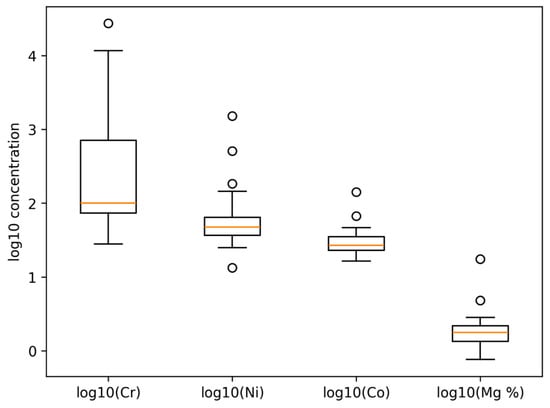
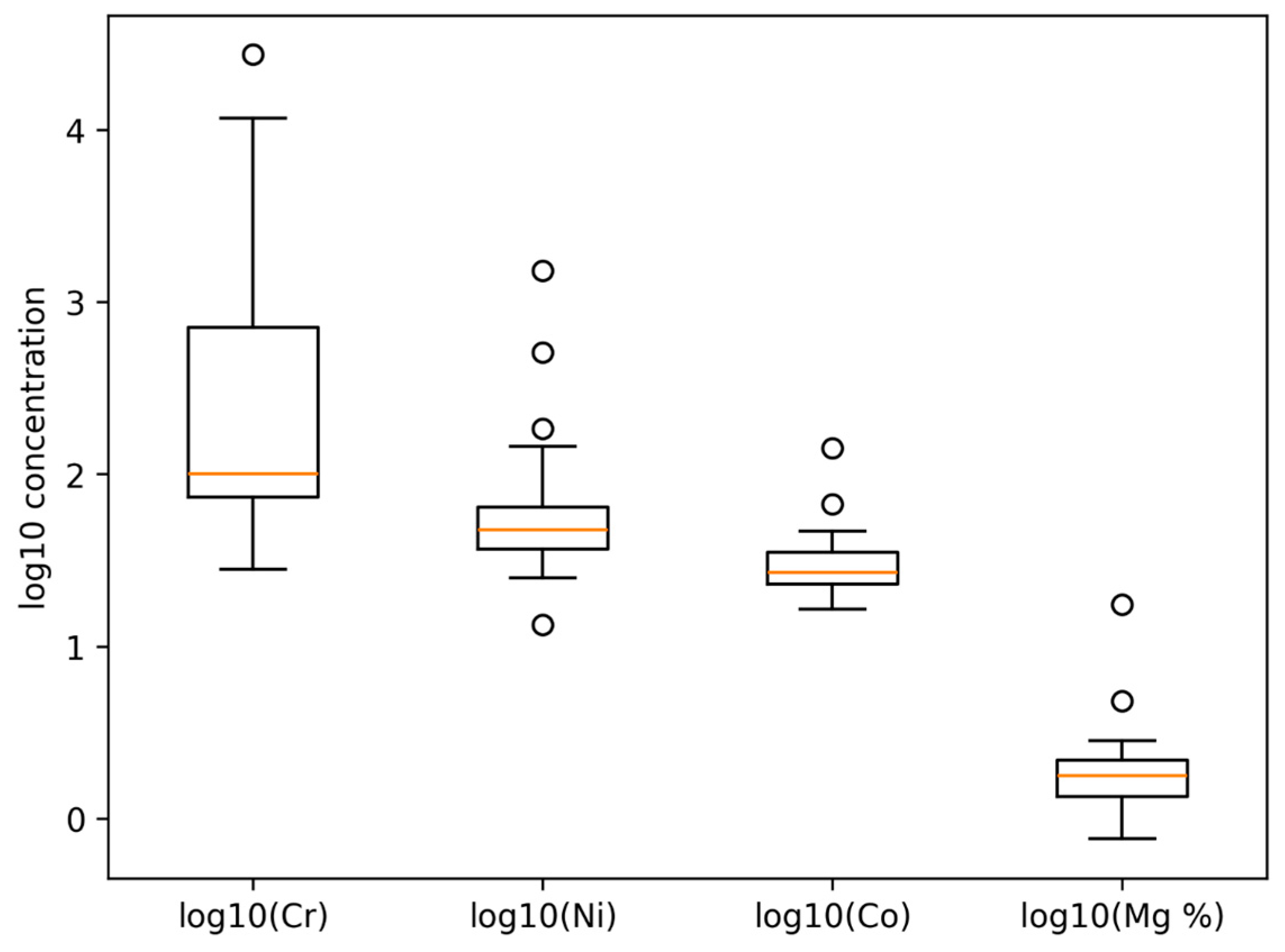
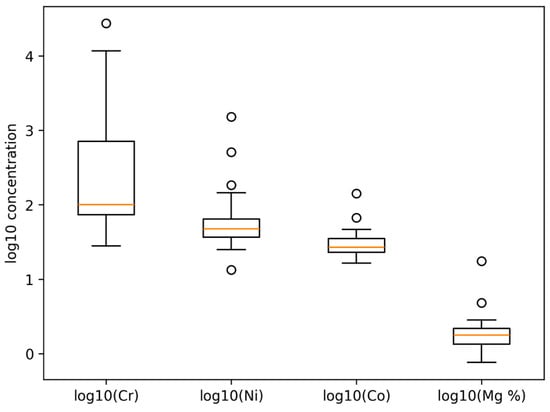
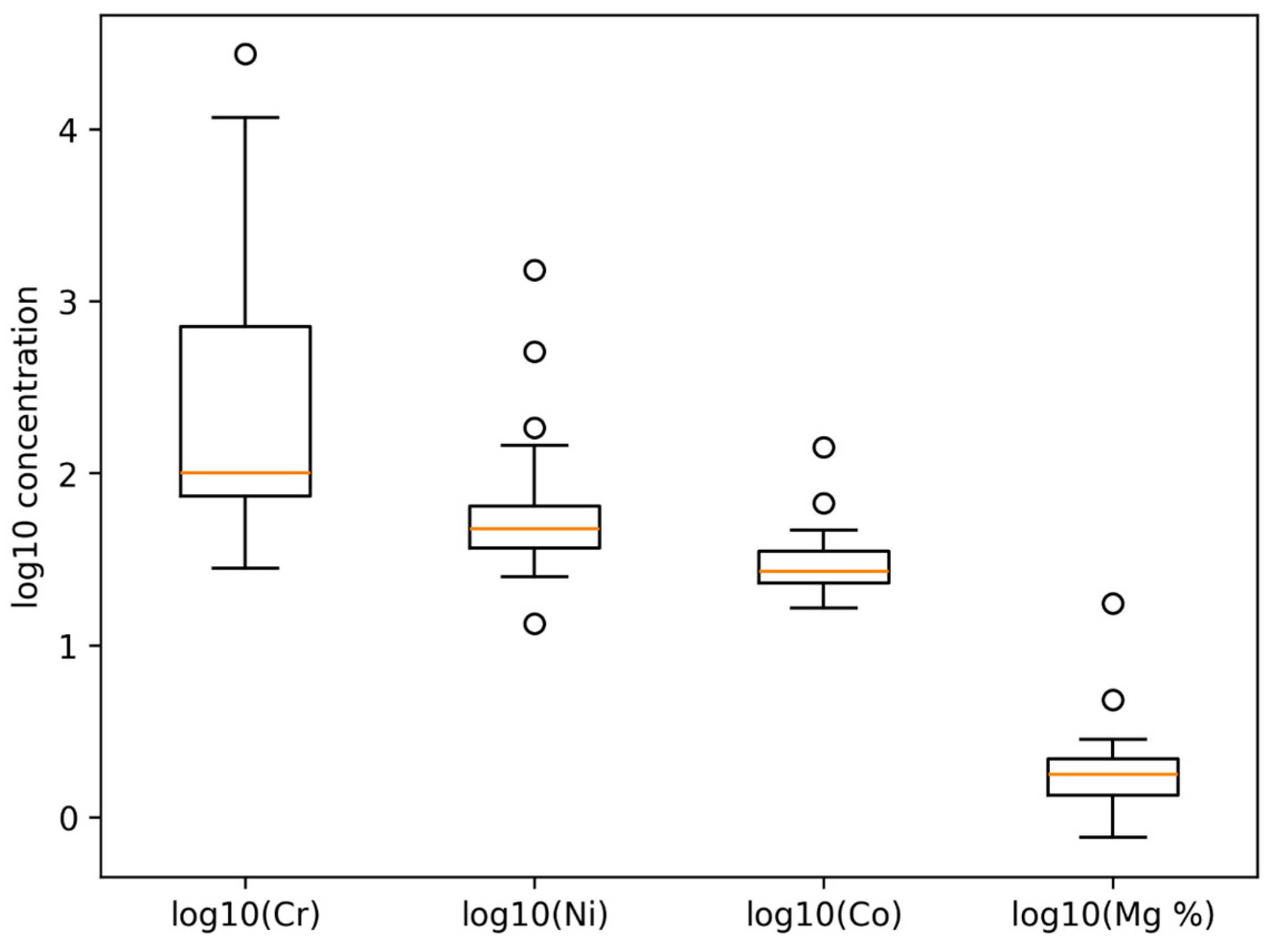
The classification of samples according to these statistical ranges is presented in Table S2. To further evaluate data distribution and the presence of extreme values, boxplots of log10-transformed concentrations were constructed for selected ultramafic-related (Cr, Ni, Co and Mg) and polymetallic (As, Cu, Pb and Zn) elements (Figure 3 and Figure 4). The boxplots reveal strongly skewed distributions and the presence of extreme outliers, particularly for Cr, Ni, As and Cu, supporting the use of robust statistical approaches for anomaly detection.
Figure 3.
Boxplots of log10-transformed concentrations for ultramafic-related elements (Cr, Ni, Co and Mg) in stream sediments from the Citrana area. The plots highlight strong positive skewness and extreme values, particularly for Cr and Ni, consistent with contributions from ultramafic lithologies.
Figure 4.
Boxplots of log10-transformed concentrations for polymetallic elements (As, Cu, Pb and Zn) in stream sediments from the Citrana area. The distributions show marked variability and the presence of outliers, especially for As and Cu, suggesting localized enrichment processes.
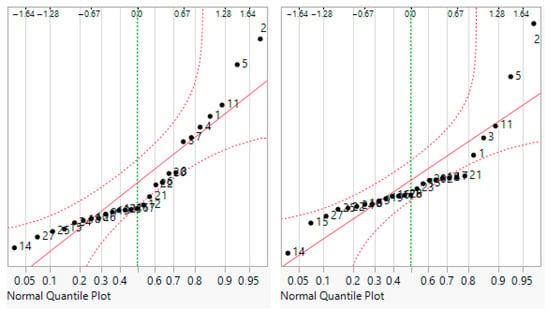
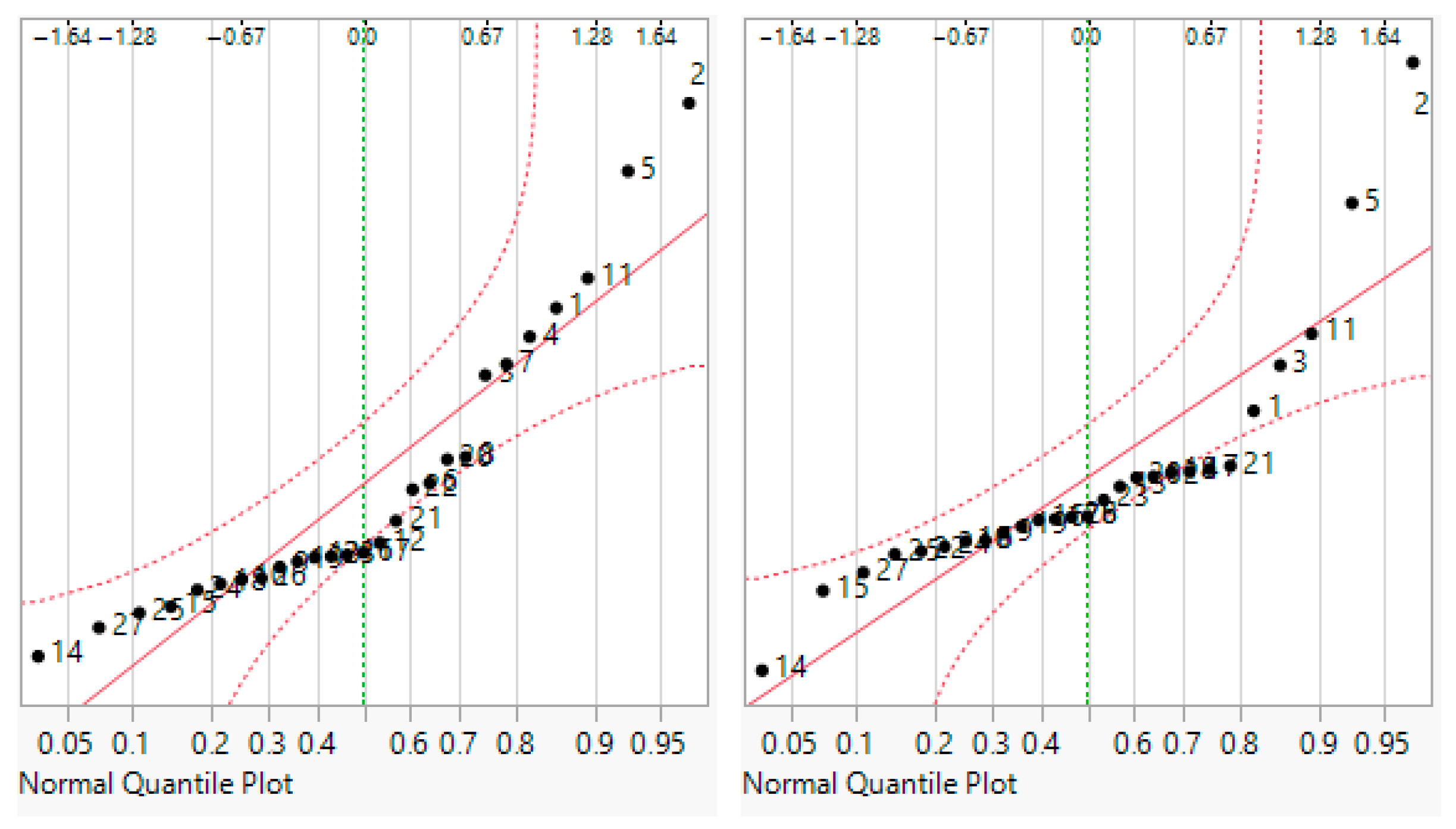
Logarithmic cumulative probability plots for selected elements, particularly Cr and Ni, show clear deviations from linearity, indicating the presence of multiple geochemical populations (Figure 5). These patterns suggest that the distribution of these elements is controlled by more than one geochemical source within the drainage basins.
Figure 5.
Logarithmic cumulative probability plots for Cr and Ni concentrations in stream sediments from the Citrana area. Deviations from linear trends indicate the presence of multiple geochemical populations and suggest contributions from distinct geological sources.
4.2. Principal Component Analysis
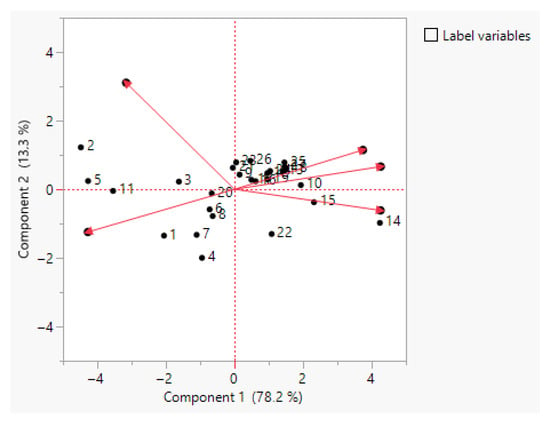
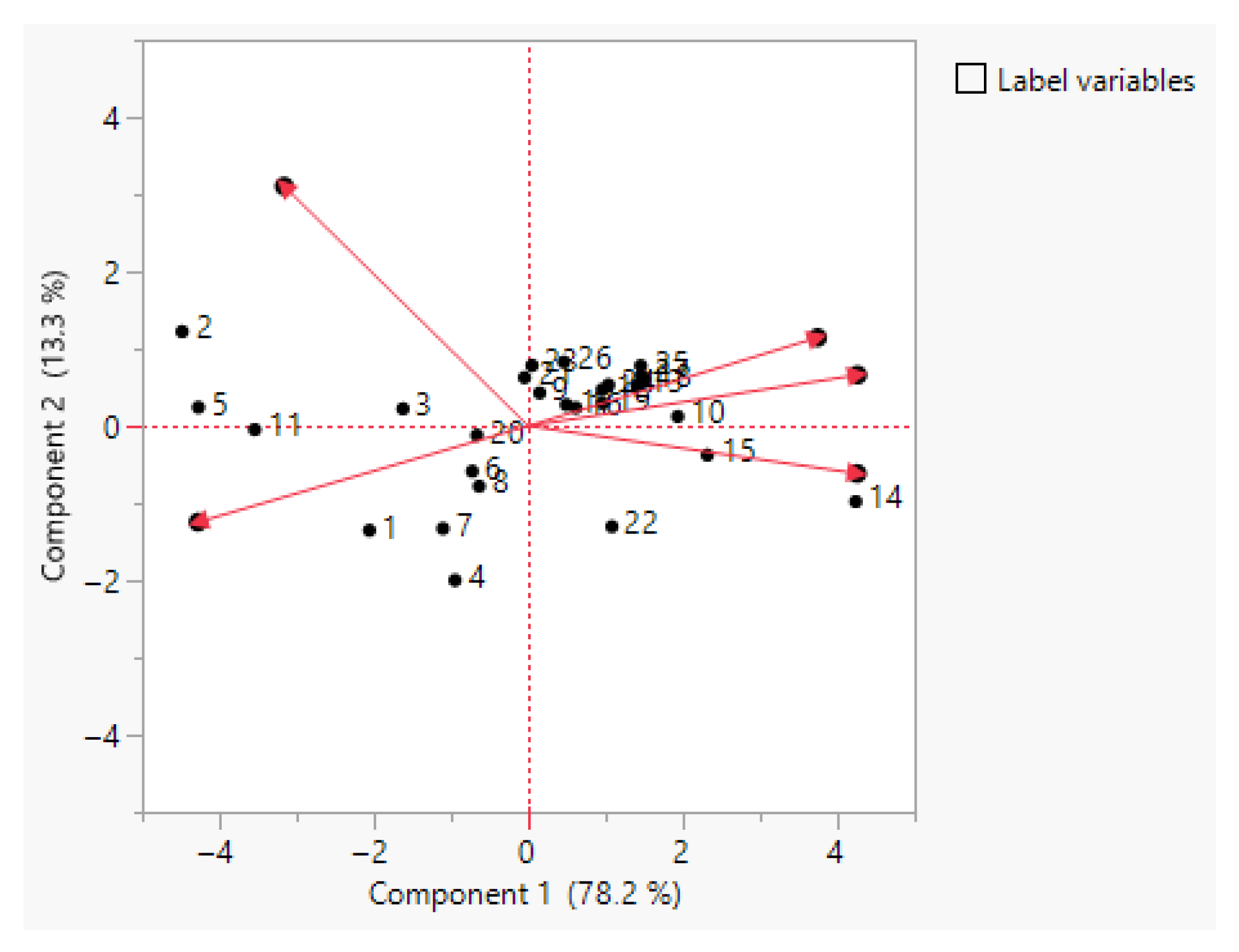
To improve statistical robustness relative to the limited sample size, PCA was performed on reduced and process-oriented variable sets using CLR-transformed compositional data [21,22]. The first PCA, focused on ultramafic-related elements (Mg, Fe, Cr, Ni and Co), identifies a strong and coherent geochemical signal. PC1 explains 78.2% of the total variance and PC2 explains 13.3%, indicating a dominant ultramafic geochemical signature (Figure 6). The loading vectors correspond to the variables Mg, Fe, Cr, Ni and Co, and their orientation defines the ultramafic geochemical association.
Figure 6.
PCA biplot for the ultramafic-related geochemical association based on CLR-transformed variables Mg, Fe, Cr, Ni and Co. PC1 explains 78.2% of the total variance and PC2 explains 13.3%. Arrows represent variable loadings (Mg, Fe, Cr, Ni and Co) and points represent stream-sediment samples.
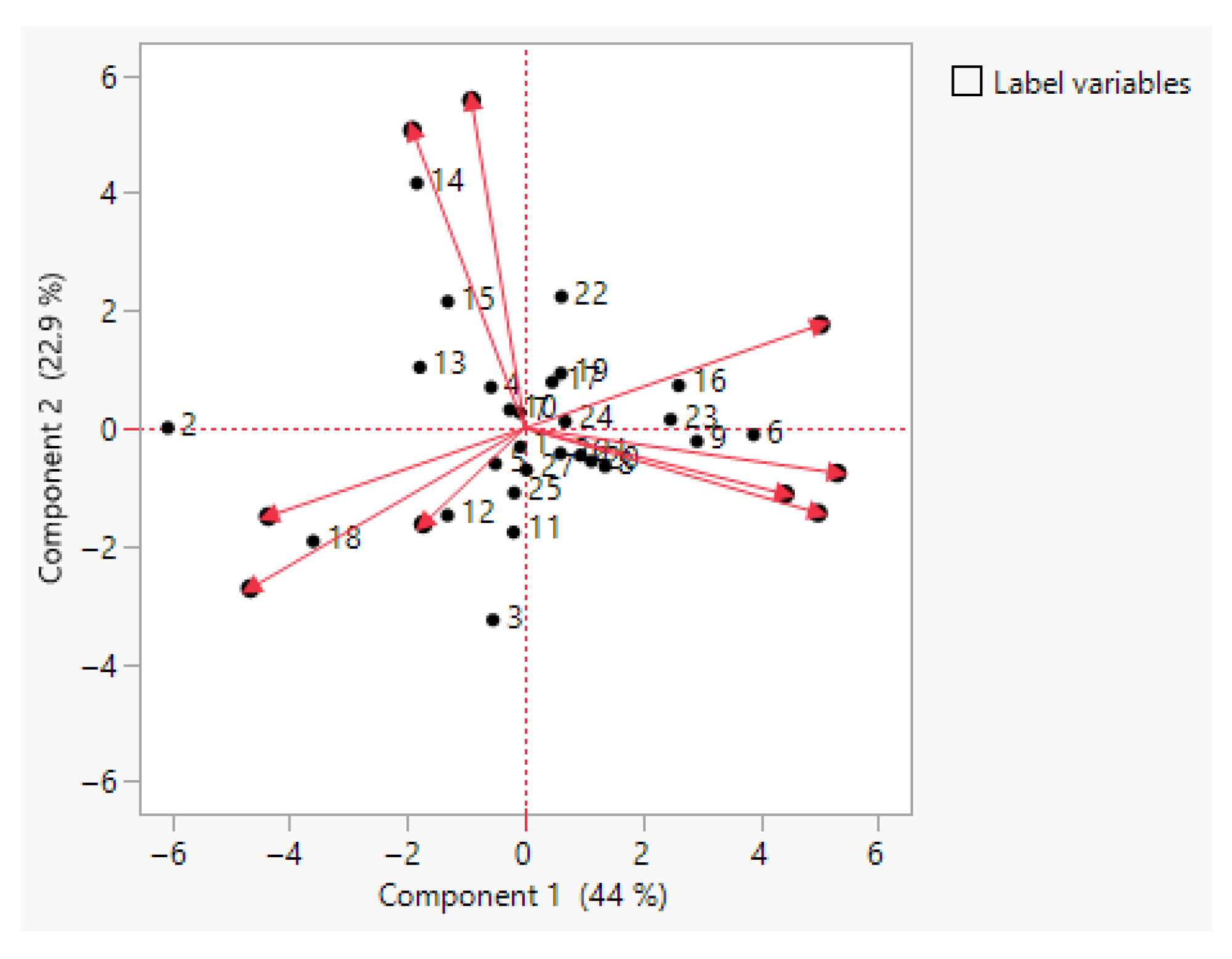
The second PCA, focused on polymetallic elements (As, Bi, Cu, Pb, S, Sb, Se, Tl and Zn), defines a distinct geochemical association. In this model, PC1 explains 44% of the total variance and PC2 explains 22.9% (Figure 7). The loading vectors correspond to the variables As, Bi, Cu, Pb, S, Sb, Se, Tl and Zn, and define the polymetallic geochemical association.
Figure 7.
PCA biplot for the polymetallic geochemical association based on CLR-transformed variables As, Bi, Cu, Pb, S, Sb, Se, Tl and Zn. PC1 explains 44% of the total variance and PC2 explains 22.9%. Arrows represent variable loadings (As, Bi, Cu, Pb, S, Sb, Se, Tl and Zn) and points represent stream-sediment samples. Detailed PCA loadings and sample scores for the ultramafic and polymetallic PCA models are provided in Tables S4–S6.
5. Discussion
5.1. Ultramafic Geochemical Signature
The geochemical patterns observed in stream sediments from the Citrana region reflect the combined influence of lithological composition, geomorphological processes and compositional constraints inherent to geochemical datasets. The ultramafic-related geochemical association defined by Mg–Fe–Cr–Ni–Co (Figure 6) represents the most coherent and statistically robust signal identified in this study. The high proportion of variance explained by PC1 indicates a dominant geochemical control consistent with contributions from ultramafic lithologies, while the strong and coherent grouping of Mg, Fe, Cr, Ni and Co supports the interpretation of a well-defined ultramafic signature. These elements are widely recognized as diagnostic indicators of ultramafic sources and their weathering products, particularly in tropical environments where chemical weathering enhances their concentration in fine-grained sediment fractions.
This ultramafic signal must be interpreted within the regional geological framework. Vicente et al. [23] documented chromite-bearing ultramafic rocks in the Maquelab region, located in close proximity to the present study area. The geochemical patterns observed in this study are therefore best interpreted as reflecting the regional continuity and geochemical influence of ultramafic lithologies already recognized in the Oecusse enclave, rather than indicating previously unrecognized ultramafic units.
The elevated concentrations of Cr and Ni recorded in several samples are consistent with contributions from serpentinitized ultrabasic rocks associated with ophiolitic complexes. Such ophiolitic fragments are widely reported throughout the Banda Arc region and are commonly associated with podiform chromite deposits [5,6]. The observed geochemical signature thus reinforces the regional importance of ultramafic lithologies as primary controls on stream-sediment composition and supports their role as key contributors to geochemical anomalies in the study area.
5.2. Polymetallic Geochemical Association
A second distinct geochemical association is defined by As–Bi–Cu–Pb–S–Sb–Se–Tl–Zn (Figure 7), representing a polymetallic signature that is commonly associated with sulphide-related mineralization processes. The coherent grouping of these elements in PCA space indicates a shared geochemical control, likely linked to sulphide-bearing mineral phases or hydrothermal systems. Several elements within this association display concentrations significantly above typical background values for sedimentary and mafic lithologies [13], supporting the interpretation of localized geochemical enrichment. The presence of S and Se further reinforces this interpretation, as these elements are commonly associated with sulphide mineralization and may reflect contributions from sulphide-bearing source lithologies within the drainage basins.
Despite this coherent geochemical signal, the interpretation of polymetallic enrichment must be considered with caution. The reconnaissance nature of the dataset and the relatively limited sampling density constrain the spatial resolution of geochemical anomalies. The observed element associations may reflect hydrothermal influence, but confirmation requires additional field observations, mineralogical characterization and petrographic analysis.
The clear separation between ultramafic-related and polymetallic associations in PCA space highlights the presence of distinct geochemical processes operating within the study area. This separation demonstrates the effectiveness of multivariate analysis applied to compositional datasets in disentangling overlapping geochemical signals and supports the use of process-oriented PCA models in complex geological environments.
The coexistence of ultramafic-related and polymetallic signatures reflects the tectonic and geological complexity of the Banda Arc region. Arc–continent collision settings are known to host a wide range of mineralization styles, including podiform chromite deposits associated with ophiolitic ultramafic sequences, as well as epithermal, porphyry and volcanogenic massive sulphide systems [8].
Although the present study represents a reconnaissance-scale exploration survey, the identified geochemical anomalies highlight specific drainage basins that may warrant further investigation through detailed geological mapping, mineralogical characterization and targeted geochemical sampling. These areas represent priority targets for follow-up exploration in the Citrana region. It is important to note that the spatial distribution of geochemical signals reflects localized conditions at sampling points rather than continuous anomaly patterns across entire drainage basins. The results should therefore be interpreted as indicators of potential source areas rather than definitive maps of mineralization.
6. Conclusions
This study presents the first stream-sediment geochemical dataset for the western sector of the Oecusse enclave (Timor-Leste) and provides new insights into the geochemical expression of lithological and mineralization-related processes within a complex arc–continent collision setting.
Stream-sediment geochemistry effectively captures lithological signatures at the drainage-basin scale. The geochemical composition of sediments reflects the influence of upstream lithologies, demonstrating the reliability of stream sediments as a proxy for geological variability in poorly mapped regions.
A robust ultramafic geochemical signature represents the dominant geochemical control in the study area. The Mg–Fe–Cr–Ni–Co association reflects contributions from ultramafic and ophiolitic lithologies, consistent with regional geological observations. This signature confirms the regional continuity and geochemical influence of chromite-bearing ultramafic rocks previously identified in the Oecusse enclave.
A distinct polymetallic geochemical association indicates potential sulphide-related processes. The As–Bi–Cu–Pb–S–Sb–Se–Tl–Zn association defines localized enrichment patterns that may be linked to hydrothermal or sulphide-related mineralization. However, this interpretation remains preliminary and requires further geological and mineralogical validation.
Multivariate statistical analysis (CLR–PCA) provides an effective framework for disentangling overlapping geochemical signals. The clear separation of ultramafic and polymetallic associations highlights the value of compositional data analysis in improving the interpretability of geochemical datasets, particularly in reconnaissance-scale studies.
The identified geochemical anomalies define priority targets for future mineral exploration. Specific drainage basins exhibiting anomalous element concentrations represent potential source areas that warrant follow-up investigation through detailed mapping, mineralogical characterization and targeted geochemical sampling.
The geochemical patterns are predominantly controlled by natural (geogenic) processes. The absence of known anthropogenic contamination sources, combined with the coherence of lithology-related geochemical signatures, supports a predominantly natural origin of the observed anomalies.
Supplementary Materials
The following supporting information can be downloaded at: https://www.mdpi.com/article/10.3390/min16050459/s1. Table S1: Geochemical dataset of stream-sediment samples (S1–S27), Western Oecusse Enclave (Timor-Leste); Table S2: Certified reference materials (CRM) results; Table S3: Descriptive statistics of selected elements in stream sediments; Table S4: PCA loadings for selected elements (PC1–PC3); Table S5: PCA scores (PC1–PC3) for stream-sediment samples (S1–S27); Table S6: Variance explained by principal components (PCA).
Author Contributions
Conceptualization, F.C.M.S., J.A.M.S.P., M.C.P. and L.E.N.C.; methodology, F.C.M.S. and J.A.M.S.P.; formal analysis, F.C.M.S. and J.A.M.S.P.; investigation, F.C.M.S., J.A.M.S.P. and V.A.S.V.; data curation, F.C.M.S.; writing—original draft preparation, F.C.M.S. and M.C.P.; writing—review and editing, M.C.P., J.A.M.S.P., V.A.S.V. and P.J.C.F.; supervision, M.C.P.; project administration, J.A.M.S.P. All authors have read and agreed to the published version of the manuscript.
Funding
This research was funded by Institute of Geosciences of Timor Leste, Ministry of Petroleum and Mineral Researches.
Data Availability Statement
The data presented in this study are available in the Supplementary Materials. Additional data may be provided by the corresponding author upon reasonable request.
Acknowledgments
The authors wish to pay a heartfelt tribute to Luís Conde, a co-author of this work, who sadly passed away during the course of this study. Conde made a significant scientific contribution to this research, and his expertise, insight, and dedication were fundamental to its development. He will be remembered for his scientific excellence, integrity, and lasting impact on the geoscientific community, as well as for his generosity, kindness, and collegial spirit as a person. The authors dedicate this work to the memory of Luís Conde, whose contribution and scientific insight were essential to this study. The authors would also like to thank the two anonymous reviewers and the Editor of Minerals for their constructive comments and valuable suggestions, which greatly improved the quality of this manuscript.
Conflicts of Interest
The authors declare no conflict of interest.
References
- Audley-Charles, M.G. Ocean trench blocked and obliterated by Banda forearc collision with Australian proximal continental slope. Tectonophysics 2004, 389, 65–79. [Google Scholar] [CrossRef] [Scilit]
- Hall, R.; Spakman, W. Subducted slabs beneath the eastern Indonesia–Tonga region: Insights from tomography. Earth Planet. Sci. Lett. 2002, 201, 321–336. [Google Scholar] [CrossRef] [Scilit]
- Hamilton, W. Tectonics of the Indonesian Region. Geol. Soc. Malays. Bull. 1979, 6, 3–10. [Google Scholar] [CrossRef] [Scilit]
- Harris, R. Geodynamic patterns of ophiolites and marginal basins in the Indonesian and New Guinea regions. Geol. Soc. Lond. Spec. Publ. 2003, 218, 481–505. [Google Scholar] [CrossRef] [Scilit]
- Lay, A.; Graham, I.; Cohen, D.; Privat, K.; González-Jiménez, J.M.; Belousova, E.; Barnes, S.J. Ophiolitic chromitites of Timor Leste: Their composition, platinum group element geochemistry, mineralogy, and evolution. Can. Mineral. 2017, 55, 875–908. [Google Scholar] [CrossRef] [Scilit]
- Mosier, D.L.; Singer, D.A.; Moring, B.C.; Galloway, J.P. Podiform Chromite Deposits—Database and Grade and Tonnage Models; U.S. Geological Survey: Reston, VA, USA, 2012.
- Sillitoe, R.H. Indonesian mineral deposits—Introductory comments, comparisons and speculations. J. Geochem. Explor. 1994, 50, 1–11. [Google Scholar] [CrossRef] [Scilit]
- Sillitoe, R.H.; Hedenquist, J.W. Epithermal systems. Soc. Econ. Geol. Spec. Publ. 2003, 10, 315–343. [Google Scholar]
- Charlton, T.R.; Barber, A.J.; Harris, R.A.; Barkham, S.T.; Bird, P.R.; Archbold, N.W.; Morris, N.J.; Nicoll, R.S.; Owen, H.G.; Owens, R.M.; et al. The Permian of Timor: Stratigraphy, palaeontology and palaeogeography. J. Asian Earth Sci. 2002, 20, 719–774. [Google Scholar] [CrossRef] [Scilit]
- Harris, R.A. Peri-collisional extension and the formation of Oman-type ophiolites in the Banda arc and Brooks Range. Geol. Soc. Spec. Publ. 1992, 60, 301–325. [Google Scholar]
- Leme, J.; Coelho, A. Geologia do encrave de Ocussi. Garcia Orta 1962, 10, 553–566. [Google Scholar]
- Keep, M.; Haig, D.W. Deformation and exhumation in Timor: Distinct stages of a young orogeny. Tectonophysics 2010, 483, 93–111. [Google Scholar] [CrossRef] [Scilit]
- Standley, C.E.; Harris, R. Tectonic evolution of forearc nappes of the active Banda arc-continent collision: Origin, age, metamorphic history and structure of the Lolotoi Complex, East Timor. Tectonophysics 2009, 479, 66–94. [Google Scholar] [CrossRef] [Scilit]
- Carranza, E.J.M. Geochemical Anomaly and Mineral Prospectivity Mapping in GIS; Elsevier: Amsterdam, The Netherlands, 2009. [Google Scholar]
- Fletcher, W.K. Stream sediment geochemistry in today’s exploration world. In Proceedings of the Exploration 97: Fourth Decennial International Conference on Mineral Exploration, Toronto, ON, Canada, 14–18 September 1997; pp. 249–260. [Google Scholar]
- Grunsky, E.C.; de Caritat, P. State-of-the-art analysis of geochemical data for mineral exploration. Geochem. Explor. Environ. Anal. 2019, 20, 217–232. [Google Scholar] [CrossRef] [Scilit]
- Hale, M.; Plant, J.A. Drainage geochemistry. In Handbook of Exploration Geochemistry; Elsevier: Amsterdam, The Netherlands, 1994. [Google Scholar]
- Matschullat, J.; Ottenstein, R.; Reimann, C. Geochemical background—Can we calculate it? Environ. Geol. 2000, 39, 990–1000. [Google Scholar] [CrossRef] [Scilit]
- Reimann, C.; Filzmoser, P.; Garrett, R.G. Background and threshold: Critical comparison of methods of determination. Sci. Total Environ. 2005, 346, 1–16. [Google Scholar] [CrossRef] [Scilit] [PubMed]
- Dempster, M.; Cooper, M.; Dunlop, P.; Scheib, A. Using soil geochemistry to investigate gold and base metal distribution and dispersal in the glaciated north of Ireland. In Geochemistry and Mineral Exploration; Royal Irish Academy: Dublin, Ireland, 2016. [Google Scholar]
- Aitchison, J. The statistical analysis of compositional data. J. R. Stat. Soc. Ser. B 1982, 44, 139–160. [Google Scholar] [CrossRef] [Scilit]
- Filzmoser, P.; Hron, K.; Reimann, C.; Garrett, R.G. Robust factor analysis for compositional data. Comput. Geosci. 2009, 35, 1854–1861. [Google Scholar] [CrossRef] [Scilit]
- Vicente, V.A.; Pratas, J.A.; Santos, F.C.; Silva, M.M.; Favas, P.J.; Conde, L.E. Geochemical anomalies from a survey of stream sediments in the Maquelab area (Oecusse, Timor-Leste) and their bearing on the identification of mafic-ultramafic chromite rich complex. Appl. Geochem. 2021, 126, 104868. [Google Scholar] [CrossRef] [Scilit]
- Suwitodirdjo, K.; Tjokrosapoetro, S. Geological Map Kupang–Atambua; Geological Agency of Indonesia: Bandung, Indonesia, 1996.
- Sawyer, R.K.; Sani, K.; Brown, S. The stratigraphy and sedimentology of West Timor, Indonesia. In Proceedings of the Indonesian Petroleum Association, 22nd Annual Convention, Jakarta, Indonesia, 1993; Available online: https://www.ipa.or.id/id/publications/the-stratigraphy-and-sedimentology-of-west-timor-indonesia (accessed on 25 April 2026).
- Barber, A.J.; Tjokrosapoetro, S.; Charlton, T.R. Mud volcanoes, shale diapirs, wrench faults, and melange in accretionary complexes, eastern Indonesia. AAPG Bull. 1986, 70, 1729–1741. [Google Scholar] [CrossRef] [Scilit]
- Harris, R.; Sawyer, R.K.; Audley-Charles, M.G. Collisional melange development: Geologic associations of active melange-forming processes with exhumed melange facies in the western Banda orogen, Indonesia. Tectonics 1998, 17, 458–479. [Google Scholar] [CrossRef] [Scilit]
- Rose, A.W.; Hawkes, H.E.; Webb, J.S. Geochemistry in Mineral Exploration; Academic Press: London, UK, 1979. [Google Scholar]
Disclaimer/Publisher’s Note: The statements, opinions and data contained in all publications are solely those of the individual author(s) and contributor(s) and not of MDPI and/or the editor(s). MDPI and/or the editor(s) disclaim responsibility for any injury to people or property resulting from any ideas, methods, instructions or products referred to in the content. |
© 2026 by the authors. Licensee MDPI, Basel, Switzerland. This article is an open access article distributed under the terms and conditions of the Creative Commons Attribution (CC BY) license.