


Abstract
Hydrothermal cobalt (Co) deposits are a significant source of Co; however, the sources of Co and hydrothermal fluids for such deposits remain poorly understood. This study addresses this issue through an investigation of the geology, mineralogy, and in situ sulfur isotopes of the Qibaoshan Co-Pb-Zn-Cu deposit, a typical hydrothermal Co deposit in South China, to constrain the occurrence of Co and the sources of Co and hydrothermal fluids. Detailed scanning electron microscopy (SEM), TESCAN Integrated Mineral Analyzer (TIMA), and electron microprobe (EPMA) mapping analyses reveal that Co in the Qibaoshan deposit occurs predominantly as Co-bearing minerals in veinlet mineralization, mainly including cobaltite, skutterudite, and smaltite. EPMA elemental mappings reveal that cobaltite grains commonly show a compositional evolution from Ni-S-rich and As-Fe-poor cores to As-Fe-rich and Ni-S-poor rims. This evolution indicates a decrease in fluid temperature and Ni content, coupled with an increase in the As/S ratio during ore-forming processes. In situ S isotope analyses of various sulfides (pyrite, chalcopyrite, sphalerite, galena, and arsenopyrite) yield a wide range of δ34SV-CDT values from 0.24‰ to 19.08‰, with two dominant clusters at 2–5‰ and 15–17‰. This suggests two end-member sources for sulfur and hydrothermal fluids in the Qibaoshan deposit: magmatic and sedimentary sources. Arsenopyrite, which is closely associated with Co minerals, yields δ34SV-CDT values ranging from 2.17‰ to 5.99‰, pointing to a magmatic origin for Co in the Qibaoshan deposit. The Pb-Zn and Cu mineralization of the deposit was also likely mainly derived from magmatic sources, with the incorporation of sedimentary sulfur and fluids during the ore-forming processes. This study demonstrates that magmatic–hydrothermal fluids derived from depth can serve as sources of Co, even in hydrothermal deposits where no magmatic rock is exposed, which provides crucial implications for the metallogenic models and mineral exploration of hydrothermal Co deposits.
1. Introduction
Cobalt (Co) is an indispensable, critical, and strategic metal for new energy and advanced manufacturing, and thus plays a vital role in the global energy transition and industrial upgrading. Cobalt rarely forms independent deposits, and is mostly produced as a by-product in various mineral deposits. Co deposits are mainly classified as follows [1,2]: (1) magmatic Ni-Cu-Co sulfide deposits, occurring in mafic–ultramafic rocks [2,3]; (2) lateritic Ni-Co deposits, formed by long-term weathering and leaching of ultramafic rocks [4]; and (3) sediment-hosted stratiform Cu-Co deposits, typified by the Central African Copper Belt, where Co is mostly enriched in sandstone or shale strata and often associated with copper, uranium and other elements [5,6]. In addition to the aforementioned three major types, there are also hydrothermal Co deposits [1,2], which mainly occur with porphyry–skarn Cu-Au-Fe, iron-oxide apatite (IOA), Mississippi Valley-type (MVT) Pb-Zn, and volcanogenic massive sulfide (VMS) deposits [1,2,7,8,9]. In hydrothermal deposits, Co is typically subordinate to other metallic mineralization, with resources generally smaller in scale than those of the aforementioned deposit types but commonly exhibiting higher ore grades [2,7].
For hydrothermal Co deposits, accurately identifying the sources of ore-forming materials and fluids is crucial for deciphering ore-forming mechanisms and guiding prospecting and exploration. However, unlike major types of Co deposits, for which the sources of Co ore-forming materials have been relatively well understood, the origins of Co in hydrothermal Co deposits remain controversial and enigmatic. On the one hand, Co is hypothesized to have a magmatic origin, with the emplacement of mafic magmas considered a primary source of Co [10]. In many hydrothermal deposits, Co polymetallic mineralization is genetically associated with dioritic porphyry intrusions [8,9,11]. On the other hand, magmatic rocks are often absent in hydrothermal Co orefields, prompting proposals of sedimentary- or basic-rock origins for Co [2,6,12]. As hydrothermal fluids migrate through Co-enriched wall rocks such as basic–ultrabasic rocks or black shales, they leach Co from the host strata via fluid–rock interaction, which is subsequently concentrated to form orebodies [12]. Additionally, another characteristic is that Co in hydrothermal deposits is typically associated with other metallic mineralization [8,9,10]. Owing to the complexity of mineralization characteristics and mineral assemblages, it remains unclear whether Co and other metallic mineralization share the same ore-forming material and fluid sources. These controversies have hindered the development of comprehensive metallogenic models for hydrothermal Co deposits, thereby impeding exploration for such deposits.
The Qibaoshan Co-Pb-Zn-Cu-Fe polymetallic deposit is located in the middle segment of the Jiangnan Orogenic Belt and represents one of the most representative hydrothermal Co deposits in South China. In this deposit, the Co polymetallic mineralization predominantly occurs as disseminated, stratiform-like or veinlet-type ores, and is concentrated near the stratigraphic unconformities under structural control, with no magmatic rock exposed [13]. Previous studies have mainly focused on the deposit geology, wall rocks, mineralization features, and Co occurrences in this deposit; however, the type and ore genesis of this deposit, particularly the source of Co, still remain controversial. Based on the stratiform-like mineralization, certain isotopic features (e.g., high sulfur isotopic features), and the occurrence of jasperite, it has been proposed to be a sedimentary-rock-hosted deposit or SEDEX deposit with possible hydrothermal superimposition [14,15,16]. However, the Co content in the regional sedimentary strata is very low, making it difficult to account for the supply of sufficient ore-forming materials; consequently, it has been suggested that concealed deep basic magmas may serve as the primary Co source [17]. In addition, the magmatic H-O (fluid inclusion–quartz) isotopic characteristics indicate that this deposit may be of magmatic–hydrothermal origin [18]. Thus, the sources of ore-forming materials and fluids for Co mineralization in the Qibaoshan deposit still remain contentious. Resolving this issue is important not only for establishing the genetic model of the Qibaoshan deposit, but also for understanding the genesis of similar hydrothermal Co deposits in South China and elsewhere. Furthermore, it remains unclear whether the Pb-Zn-Cu and Co mineralization of this deposit share the same sources of ore-forming materials and fluids. To date, isotopic constraint on the source of Co in the Qibaoshan deposit, such as S isotope, is still lacking. In addition, the mineralogical research on the Qibaoshan deposit is still inadequate, particularly concerning the occurrence of Co, the genetic relationship between Co and Pb-Zn-Cu mineralization, and the metallogenic stages and paragenetic sequence of minerals related to polymetallic mineralization. These aspects are critical for understanding the genetic model of Co and Pb-Zn-Cu mineralization in the Qibaoshan deposit.
In this study, we conducted detailed geological and mineralogical investigations on the Qibaoshan deposit to clarify its ore-forming stages, mineral paragenetic sequence, and the occurrence of Co. In addition, in situ sulfur isotope analyses were performed on major sulfide minerals (pyrite, chalcopyrite, sphalerite, galena, and arsenopyrite) to determine the sources of ore-forming materials and fluids for both Co mineralization and Pb-Zn-Cu mineralization, thereby establishing a metallogenic model for the Qibaoshan deposit.
2. Regional Geology
The Jiangnan Orogenic Belt (JOB), extending approximately 2000 km in length and 100–150 km in width, is situated between the Yangtze Block to the northwest and the Cathaysia Block to the southeast [19]. It is the suture zone formed by the collision and amalgamation of these two blocks during the Neoproterozoic, which marked the final assembly of the South China Block [20]. Neoproterozoic basement sequences are widely distributed throughout the JOB, and consist predominantly of low-grade metamorphic clastic rocks and volcanic rocks [19,21,22]. In addition, the JOB hosts sedimentary covers of various ages and lithologies, including the Early Paleozoic marine clastic rocks and carbonates, Late Paleozoic marine–continental transitional carbonates and coal-bearing clastics, Mesozoic clastics and red molasse with minor volcanic interbeds, and Cenozoic unconsolidated fluvial–lacustrine gravels, sands and clays.
The JOB, together with the Cathaysia Block and parts of the Yangtze Block, has undergone multistage tectonic evolution and large-scale magmatic activity, predominantly during the Neoproterozoic, Early Paleozoic, Triassic, and Jurassic–Cretaceous periods. Within the JOB, Neoproterozoic bimodal magmatic rocks and granites are distributed across its western, central, and eastern segments [21,23]. In contrast, Early Paleozoic and Triassic granites are largely restricted to the western–central segment, while Middle–Late Jurassic to Early Cretaceous granites are concentrated in the central–eastern segment [24].
The JOB hosts various types of hydrothermal metal deposits, primarily including W-Sn deposits, Cu deposits, Au deposits, Sb deposits, and Pb-Zn deposits, of which the first two are genetically related to felsic magmatism, whereas the others show no direct genetic link with magmatism [25,26,27,28]. In addition, a number of cobalt deposits are also present in the JOB, among which the Qibaoshan, Wubaoshan, Hengdong and Jingchong Co deposits are representative examples [7,10,12]. However, the source of cobalt in these deposits, and particularly whether their mineralization is genetically related to magmatism, remains unclear.
3. Ore Deposit Geology
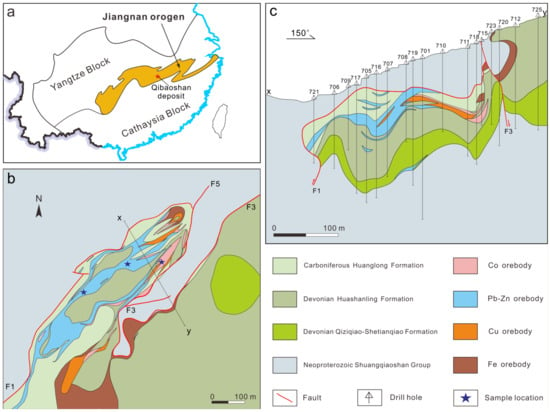
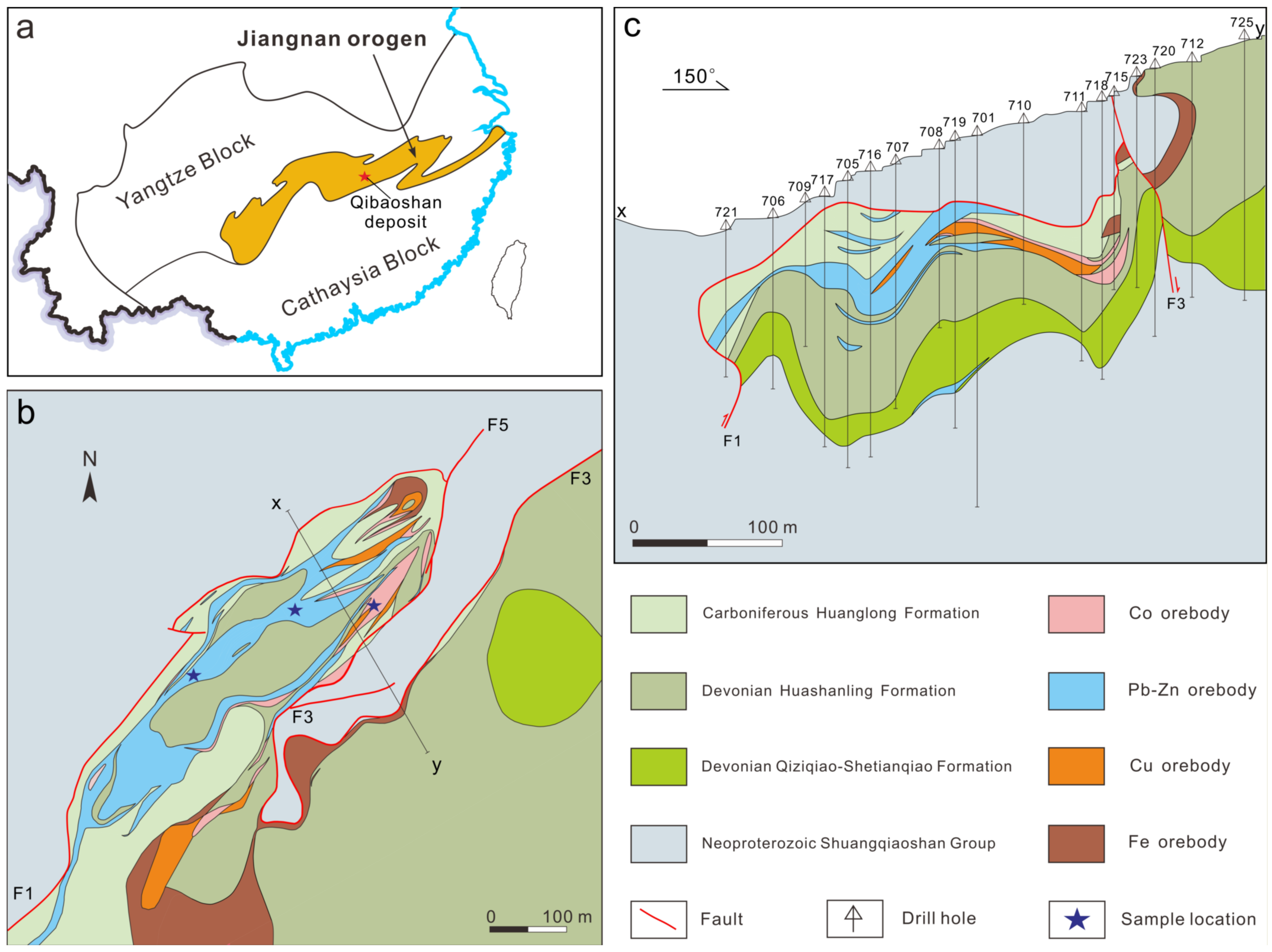
The Qibaoshan Co-Pb-Zn-Cu deposit is located in the middle segment of the JOB (Figure 1a), and hosts a Co reserve of 5200 tons (according to the 2024 resource and reserve verification report by the Jiangxi Copper Group Qibaoshan Mining Co., Ltd. (Yichun, China)). The mining district is underlain by the Neoproterozoic, Devonian, Carboniferous, and Permian strata (Figure 1b,c). Specifically, the Neoproterozoic to Paleozoic sequences are dominated by calcareous siltstone, quartz sandstone and local dolomitic limestone, whereas the Permian stratum is characterized by argillaceous limestone, siltstone and limestone (Figure 1b,c). The Devonian Huashanling Formation and the Carboniferous Huanglong Formation are the primary wall rocks for Pb-Zn-Co mineralization in this deposit (Figure 1b,c). Magmatic rock is poorly developed in the mining district, with only a few outcrops exposed in the surrounding areas approximately 8 km away.
Figure 1.
(a) Sketch map of South China showing the Yangtze Block, Cathaysia Block, Jiangnan Orogen and the location of Qibaoshan deposit; (b) Geological map of the Qibaoshan deposit; (c) Geological cross-section along Exploration Line 7 of the Qibaoshan deposit.
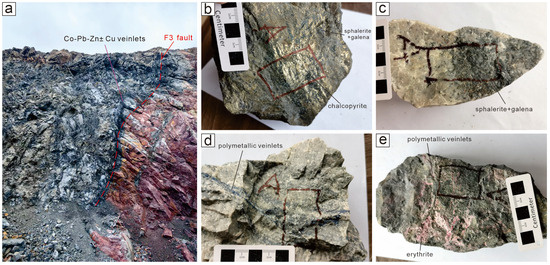
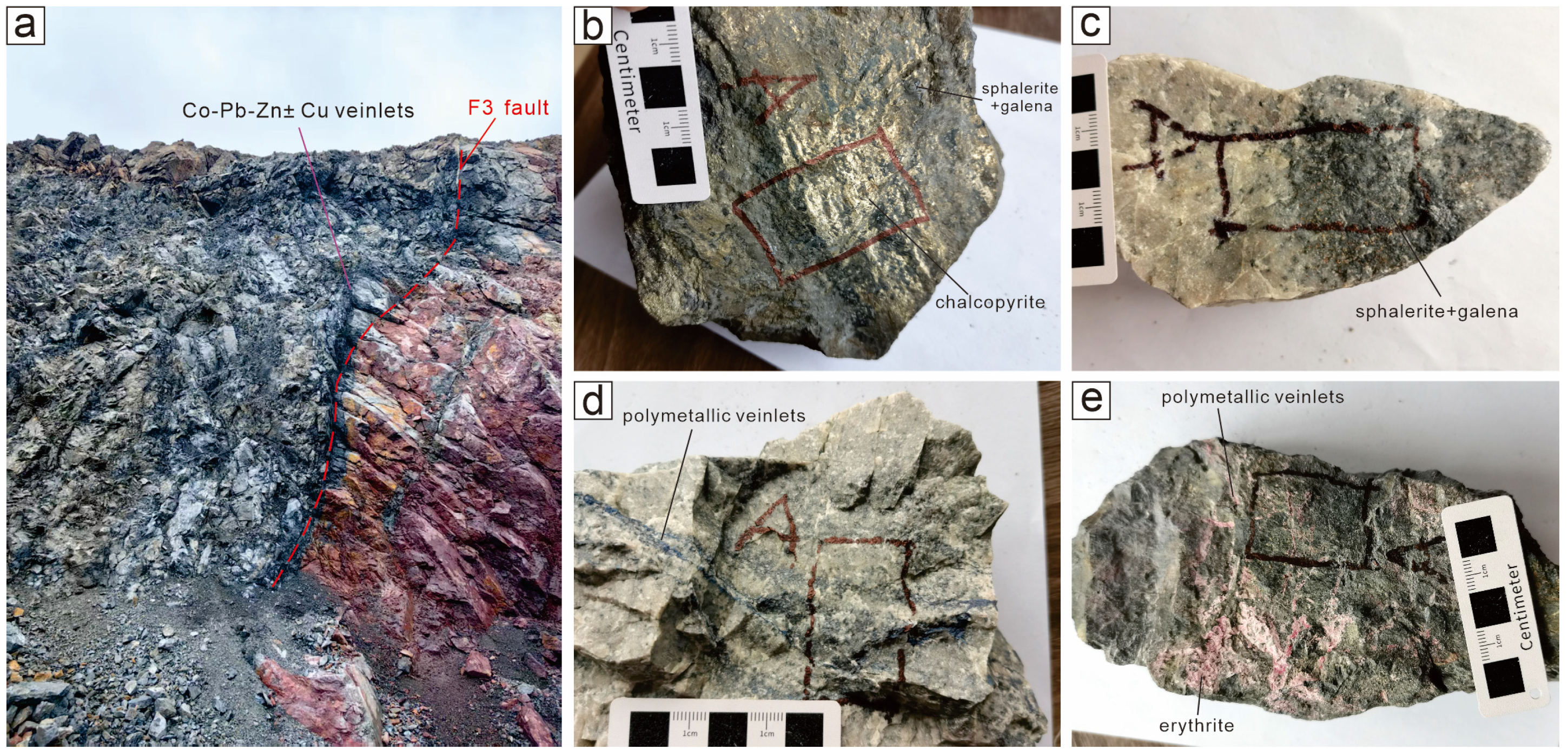
The orebodies in the Qibaoshan deposit are predominantly hosted in the footwall of the F1 reverse fault, which strikes NE and dips SE at an angle of 60–70° (Figure 1c). These orebodies are parallel or subparallel to the strata in the mining district and broadly exhibit a folded geometry as a result of the folding of the host strata (Figure 1c). Based on the parallel unconformity between the Devonian Huashanling Formation and Huanglong Formation, the ore bodies can be subdivided into upper and lower ore zones. The upper ore zone is hosted in the Huanglong Formation and dominated by Pb-Zn orebodies, whereas the lower ore zone is hosted in the Huashanling Formation and Qiqiaoqiao–Shetianqiao Formations, containing a higher proportion of Co and Cu orebodies (Figure 1b,c). Some Pb-Zn-Cu mineralization occurs as stratiform or disseminated types in the wall rocks (Figure 2b,c). However, a considerable proportion of Pb-Zn-Cu mineralization occurs as dense veinlets near structural fracture zones, extending from the faults to the strata (Figure 2a,d). The two mineralization types show no obvious temporal relationship (e.g., cross-cutting relationships) but instead coexist and exhibit spatial transition, with both generally parallel to the strata. The veinlet-type mineralization is closer to the fault zone, while the stratiform or disseminated mineralization is relatively more distal (Figure 1b,c). Notably, Co-rich mineralization occurs mainly in the veinlet form, i.e., polymetallic sulfide veinlets (Figure 2a,d), the surficial parts of which often underwent oxidation and were altered to flesh-red erythrite (Figure 2e). Hydrothermal alteration of wall rocks in this deposit is relatively simple, dominated by silicification, chloritization, carbonatization, and sericitization. Silicification is pervasively developed in the limestone of the Huanglong Formation, whereas chloritization is closely associated with the occurrence of metallic sulfide veins and represents the most important alteration proximal to ores.
Figure 2.
(a) Field photograph showing dense veinlet-type mineralization extending into strata along faults; (b) Photograph of stratiform-like mineralization sample; (c) Photograph of disseminated mineralization sample; (d) Photograph of polymetallic sulfide veinlet sample; (e) Photograph of Co-rich polymetallic veinlet sample with flesh-red erythrite on the surface.
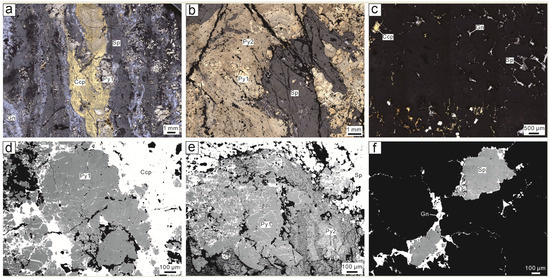
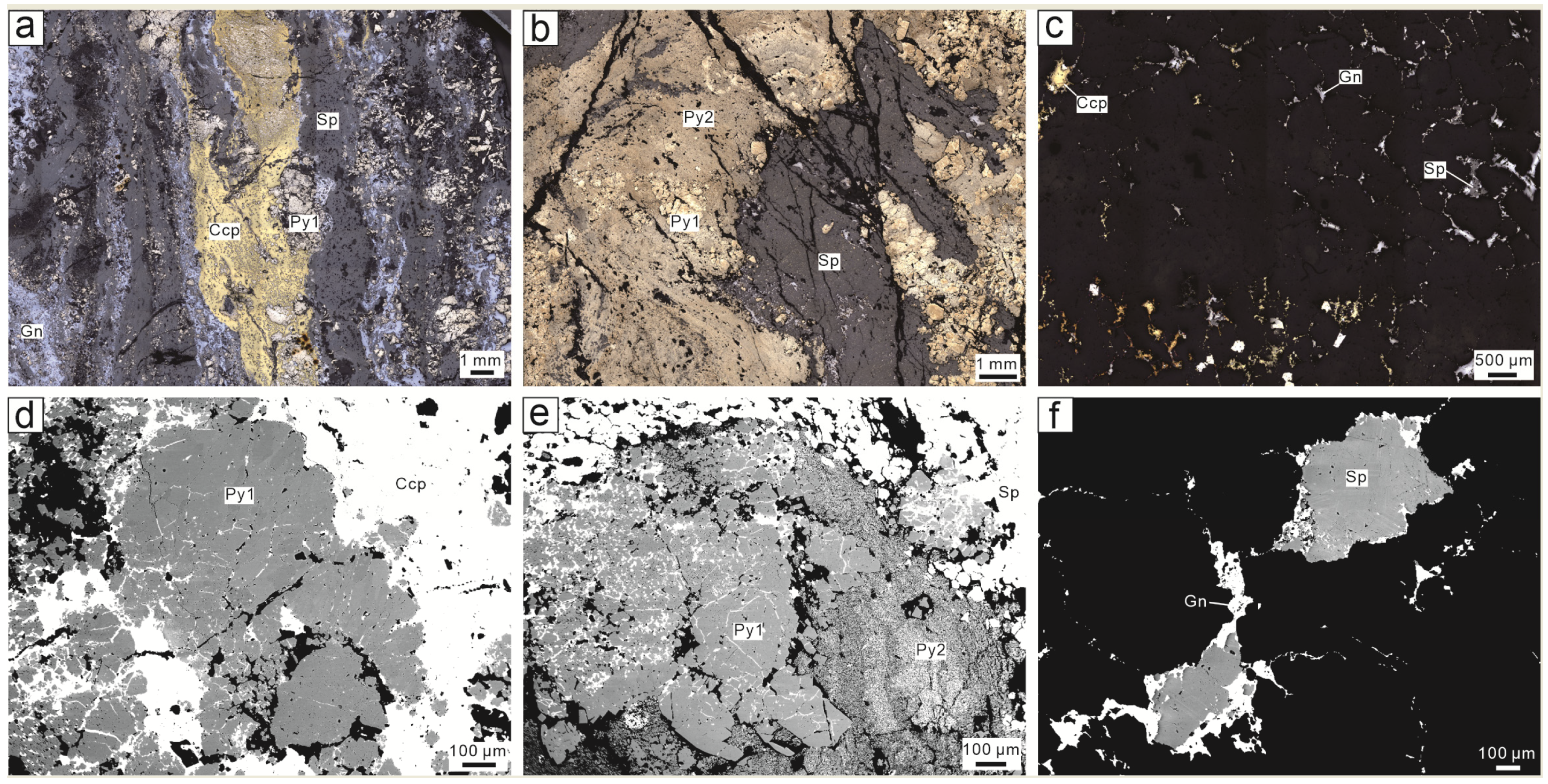
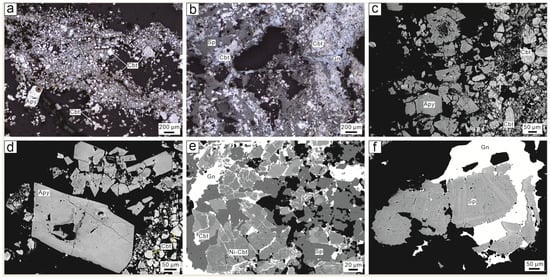
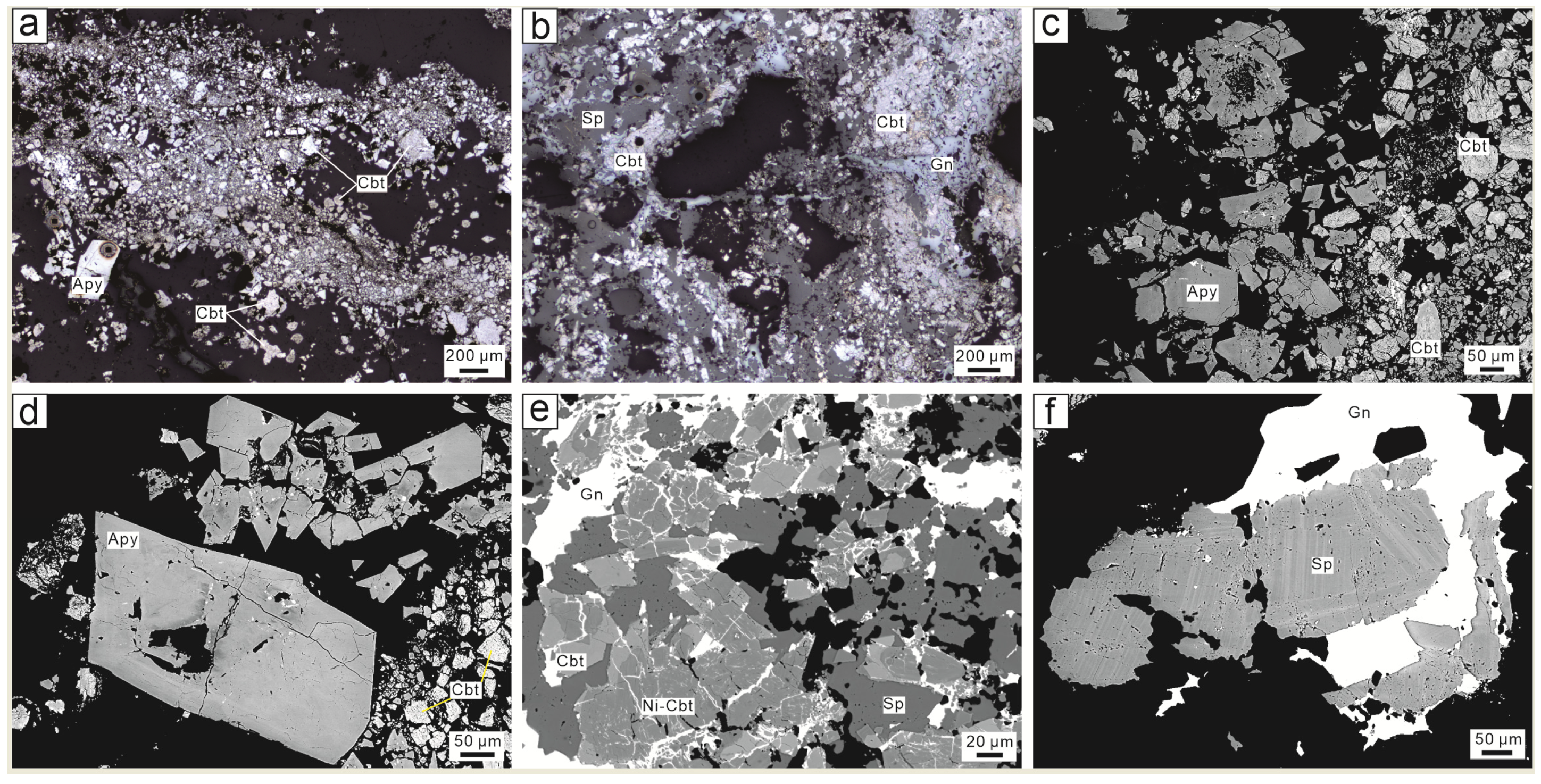
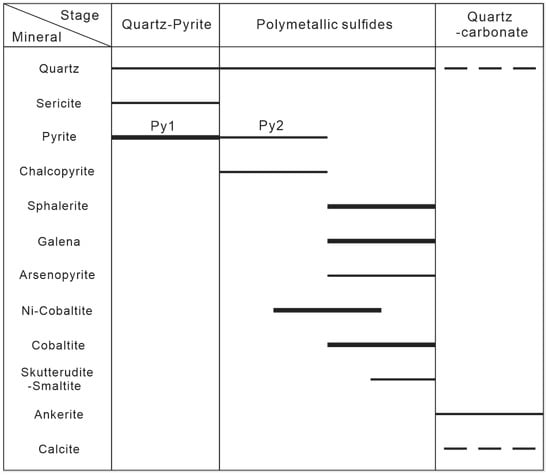
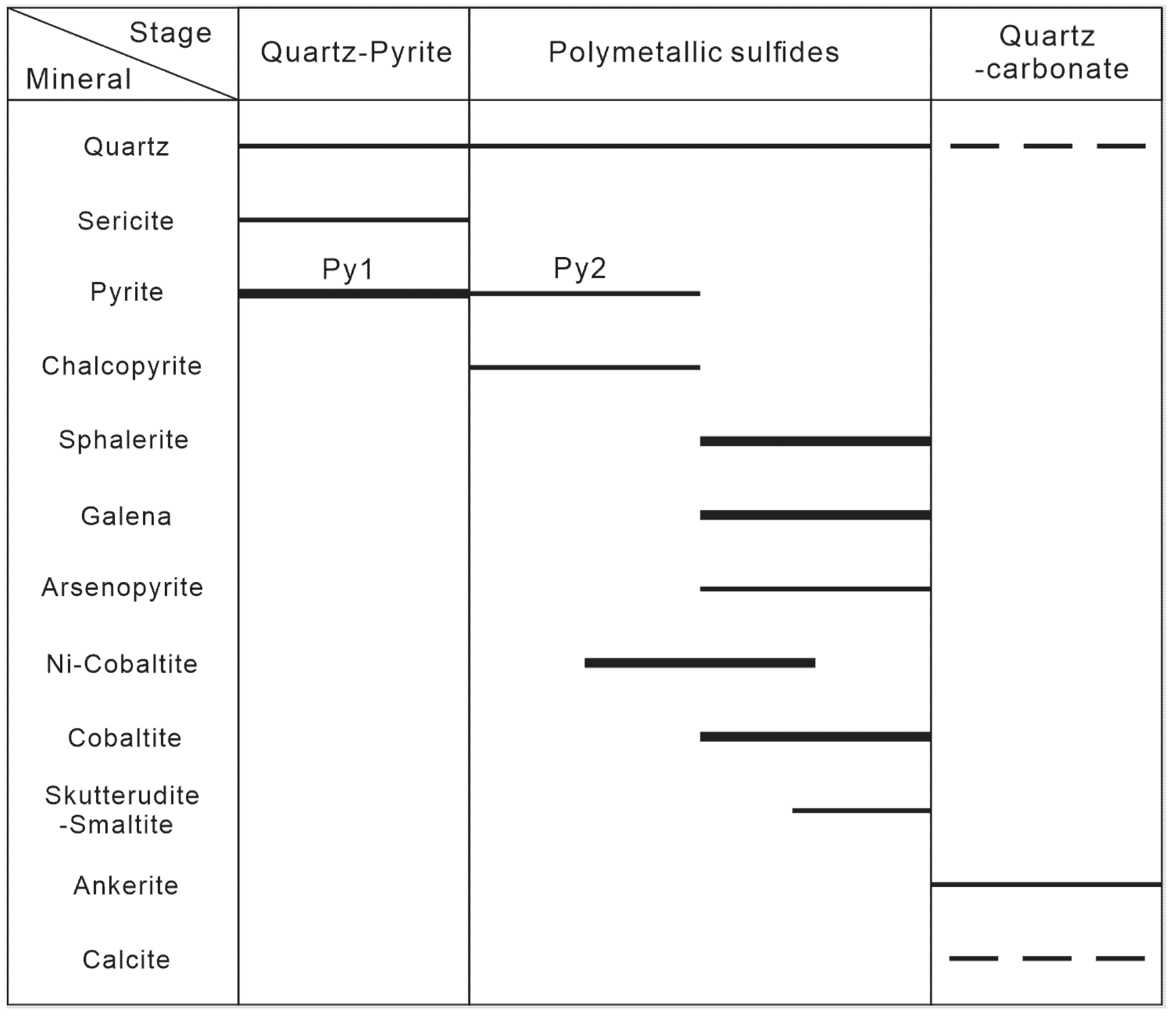
The polymetallic mineralization of the Qibaoshan deposit is characterized by three stages of primary hydrothermal mineralization. Stage 1 is the quartz–pyrite stage, dominated by quartz and coarse-grained pyrite (Figure 3a,b,d,e). The pyrite crystals are euhedral to subhedral, with grain sizes typically ranging from several hundred microns to a few millimeters, and display a homogeneous texture under backscattered electron (BSE) imaging (Figure 3a,b,d,e). Stage 2 is the polymetallic sulfide stage, distinguished by the occurrence of polymetallic sulfides (Figure 3c,f) and representing the main stage for the formation of Co-bearing minerals (Figure 4). This stage can be further subdivided into two substages. The early substage is characterized by the occurrence of fine-grained pyrite and chalcopyrite (Figure 3b,e). These fine-grained minerals occur as aggregates surrounding the coarse-grained pyrite formed in stage 1, with local fine-grained pyrite aggregates showing zoned bright–dark textures (Figure 3b,e). The late substage is defined by a sulfide assemblage consisting of sphalerite, galena and arsenopyrite. Sphalerite and galena enclose the early-formed pyrite and chalcopyrite, which generally show homogeneous or rhythmic zoned textures (Figure 3a–c,f and Figure 4b,f). Arsenopyrite primarily occurs as fine-grained euhedral crystals generally displaying homogeneous texture under BSE images, within the polysulfide veinlets (Figure 4a,c,d). The Co-bearing minerals are closely associated with sphalerite, galena, and arsenopyrite in spatial distribution (Figure 4). Stage 3 is the post-mineralization stage, dominated by quartz and carbonate minerals. In addition to the primary hydrothermal stages described above, a secondary oxidation stage is also recognized, which is characterized by the formation of limonite and erythrite (Figure 2e). The ore-forming stage and mineral paragenetic sequence are summarized in Figure 5.
Figure 3.
Photomicrographs under reflected light (a–c) and SEM-BSE images (d–f) of stratiform-like (a,b,d,e) and disseminated mineralization (c,f). (a) Py1 is enclosed by chalcopyrite and later sphalerite; (b) Py1 is surrounded by fine-grained Py2, with sphalerite occurring at the outer margin; (c) Disseminated mineralization, with sphalerite and galena occurring at the periphery of chalcopyrite; (d) Homogeneous Py1 is enclosed by chalcopyrite; (e) Homogeneous Py1 is surrounded by heterogeneous fine-grained Py2 aggregates, with sphalerite developed further outward; (f) Homogeneous sphalerite and galena in disseminated mineralization. Abbreviations: Ccp = chalcopyrite, Gn = galena, Py = pyrite, Sp = sphalerite.
Figure 4.
Photomicrographs of veinlet-type mineralization under reflected light (a,b) and BSE images (c–f). (a) Cobaltite occurs in close association with arsenopyrite; (b) Cobaltite is closely associated with sphalerite and galena; (c) Abundant cobaltite grains grow together with arsenopyrite; (d) Arsenopyrite associated with cobaltite shows a homogeneous texture; (e) Co-bearing minerals exhibit a core–rim texture, with dark cores and bright rims; (f) Sphalerite displays growth zoning. Abbreviations: Apy = arsenopyrite, Cbt = cobaltite, Gn = galena, Sp = sphalerite.
Figure 5.
Diagram of ore-forming stages and mineral paragenetic sequence in the Qibaoshan deposit. Content from high to low: thick line, thin line, dashed line.
4. Analytical Methods
Mineral compositional mapping was performed on carbon-coated thin sections using a MIRA3 scanning electron microscope (SEM) at Guangzhou Tuoyan Analytical Technology Co., Ltd. (Guangzhou, China). The analytical conditions were as follows: an acceleration voltage of 25 kV, a probe current of 8.24 nA, and a working distance of 15 mm. The pixel spacing and dot spacing were set to 3 μm and 9 μm, respectively. The beam current and backscattered electron (BSE) signal intensity were calibrated automatically with a platinum Faraday cup. In addition, the performance of the energy-dispersive X-ray spectroscopy (EDS) was validated using a manganese standard. All samples were scanned using the TIMA liberation analysis module.
Electron probe microanalysis (EPMA) mapping of cobaltite was conducted by Nanjing Hongchuang Geological Exploration Technology Service Co., Ltd. (Nanjing, China), using a JEOL JXA-iSP100 electron probe microanalyzer. The analytical conditions were as follows: an accelerating voltage of 15 kV, a beam current of 50 nA, a pixel interval of 0.2 μm, and a dwell time of 40 ms. The following characteristic X-rays and analyzing crystals were used: As (Lα, TAPH crystal), Co (Kα, LiFH crystal), Ni (Kα, LiFH crystal), Fe (Kα, LiFH crystal), Cu (Kα, LiF crystal), Zn (Kα, LiF crystal), and S (Kα, PETL crystal).
Sulfur isotope compositions of sulfide minerals were determined via laser ablation–multi-collector inductively coupled plasma–mass spectrometry (LA-MC-ICP-MS), using a Nu Plasma 1700 high-resolution multi-collector mass spectrometer (Nu Instruments, Wrexham, UK) coupled with a Resonetics M50-LR excimer ArF laser ablation system (ASI, Melbourne, Australia). All measurements were conducted at the State Key Laboratory of Continental Evolution and Early Life, Northwest University, Xi’an, Shanxi Province, China. The laser system operated with a spot size of 30–37 μm, a repetition rate of 3 Hz and an energy density of 3.6 J/cm2. The working parameters of the mass spectrometer were as follows: nebulizer gas flow rate of 0.8 mL/min, auxiliary gas flow rate of 0.86 L/min, plasma gas flow rate of 13 L/min, and carrier gas (He) flow rate of 280 mL/min. Data acquisition included a sample ablation and data integration duration of 50 s, a gas background measurement time of 30 s, and a purge time of 45 s between analyses. The analytical accuracy was calibrated against a suite of international and in-house standards, including sphalerite (NBS123, δ34SV-CDT = 17.8 ± 0.2‰, 2SD), pyrite (Py-4, δ34SV-CDT = 1.7 ± 0.3‰, 2SD), chalcopyrite (Cpy-1, δ34SV-CDT = 4.2 ± 0.3‰, 2SD), and galena (CBI-3, δ34SV-CDT = 28.5 ± 0.4‰, 2SD). For quality control, a standard-sample bracketing method was employed throughout the analytical sequence. The detailed analytical protocol followed the procedures described by [29,30,31].
5. Results
5.1. Occurrence of Co Minerals
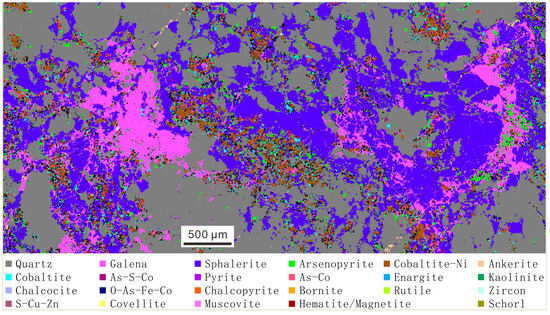
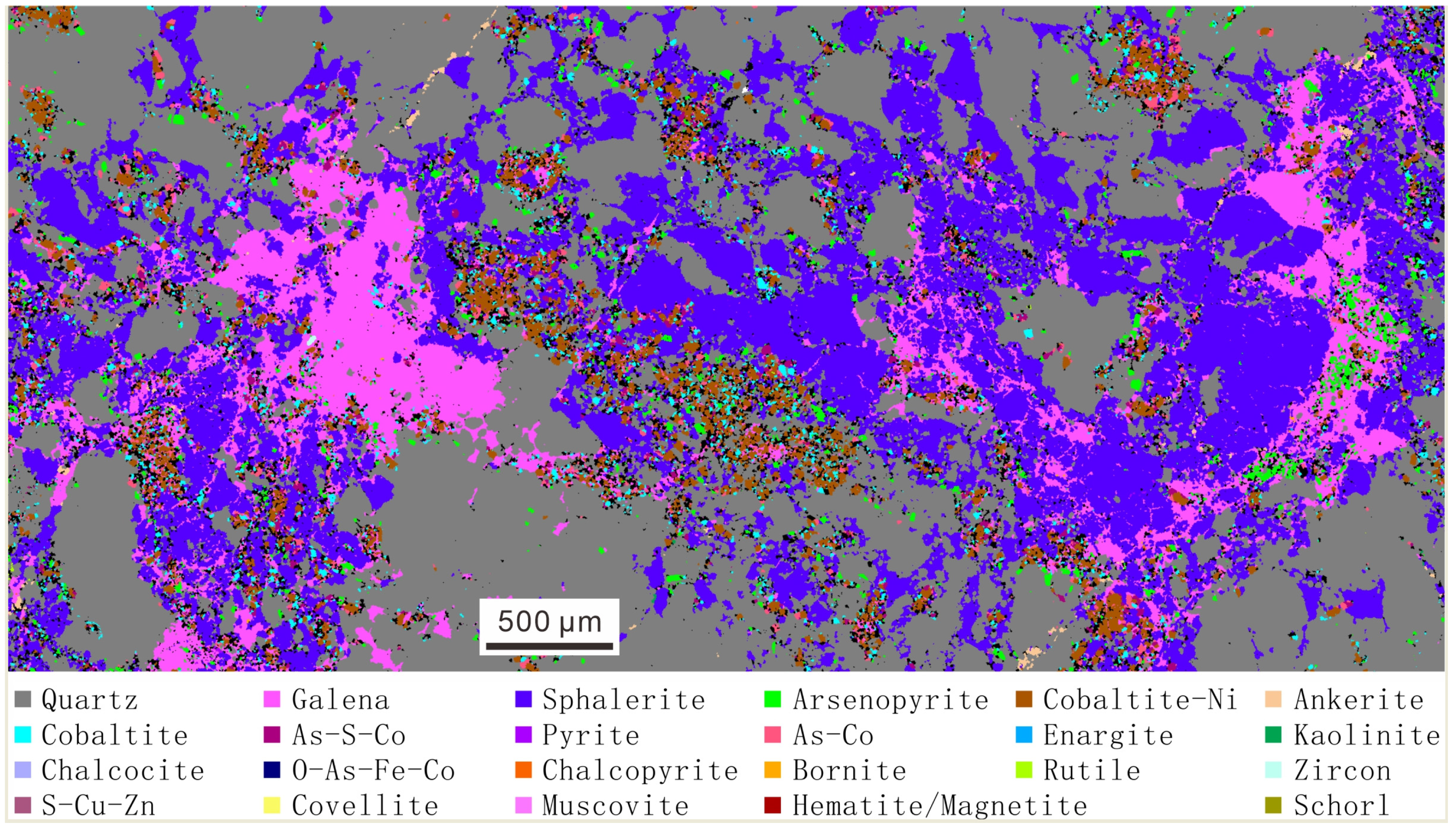
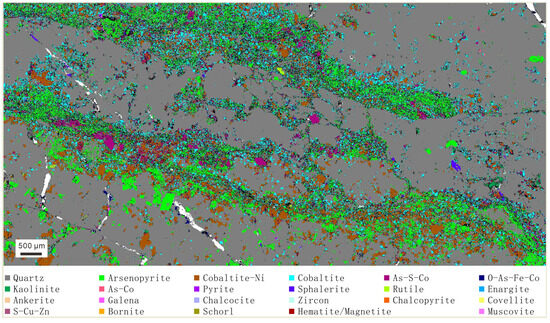
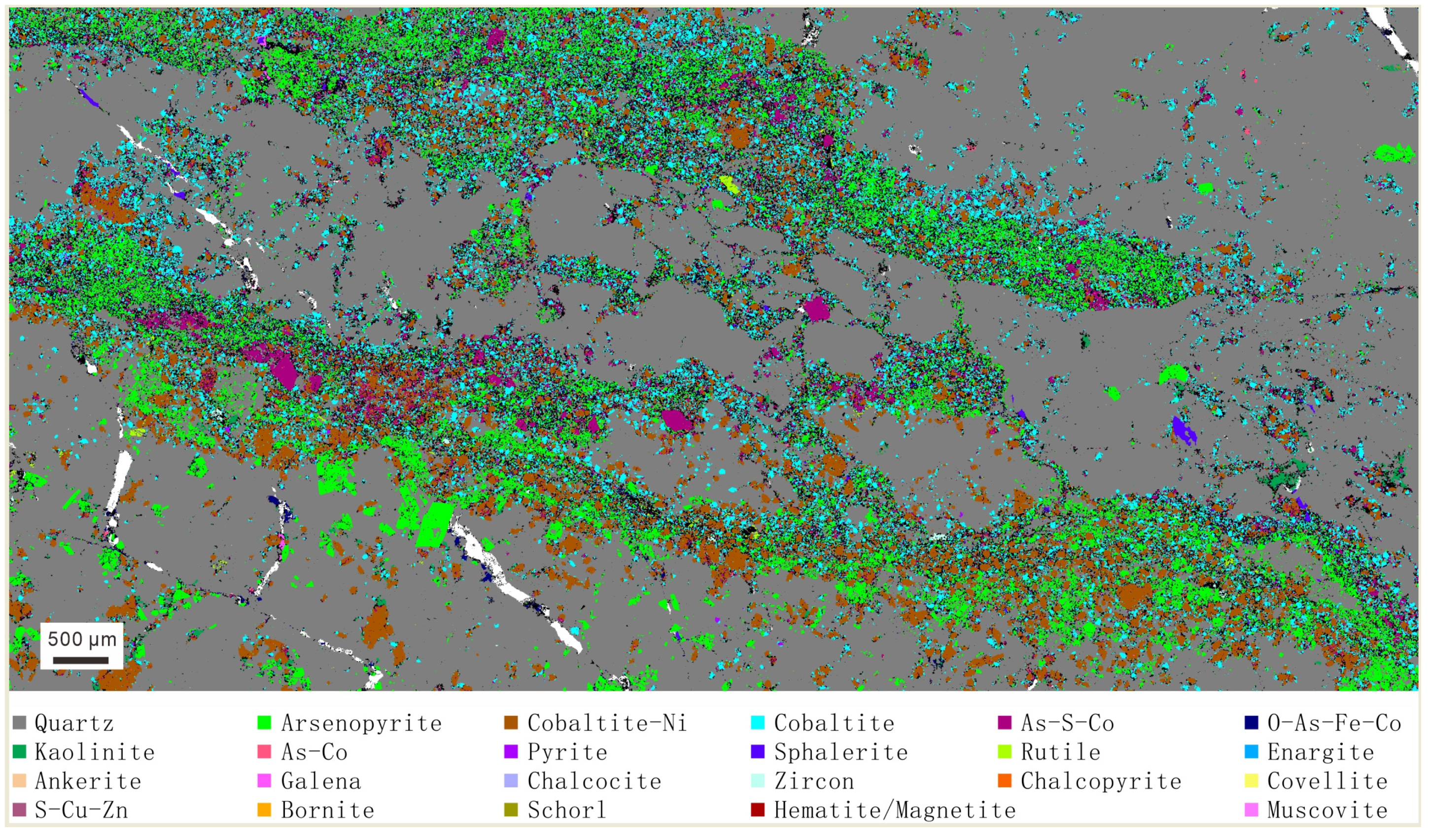
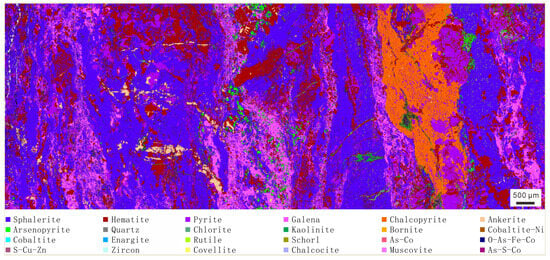
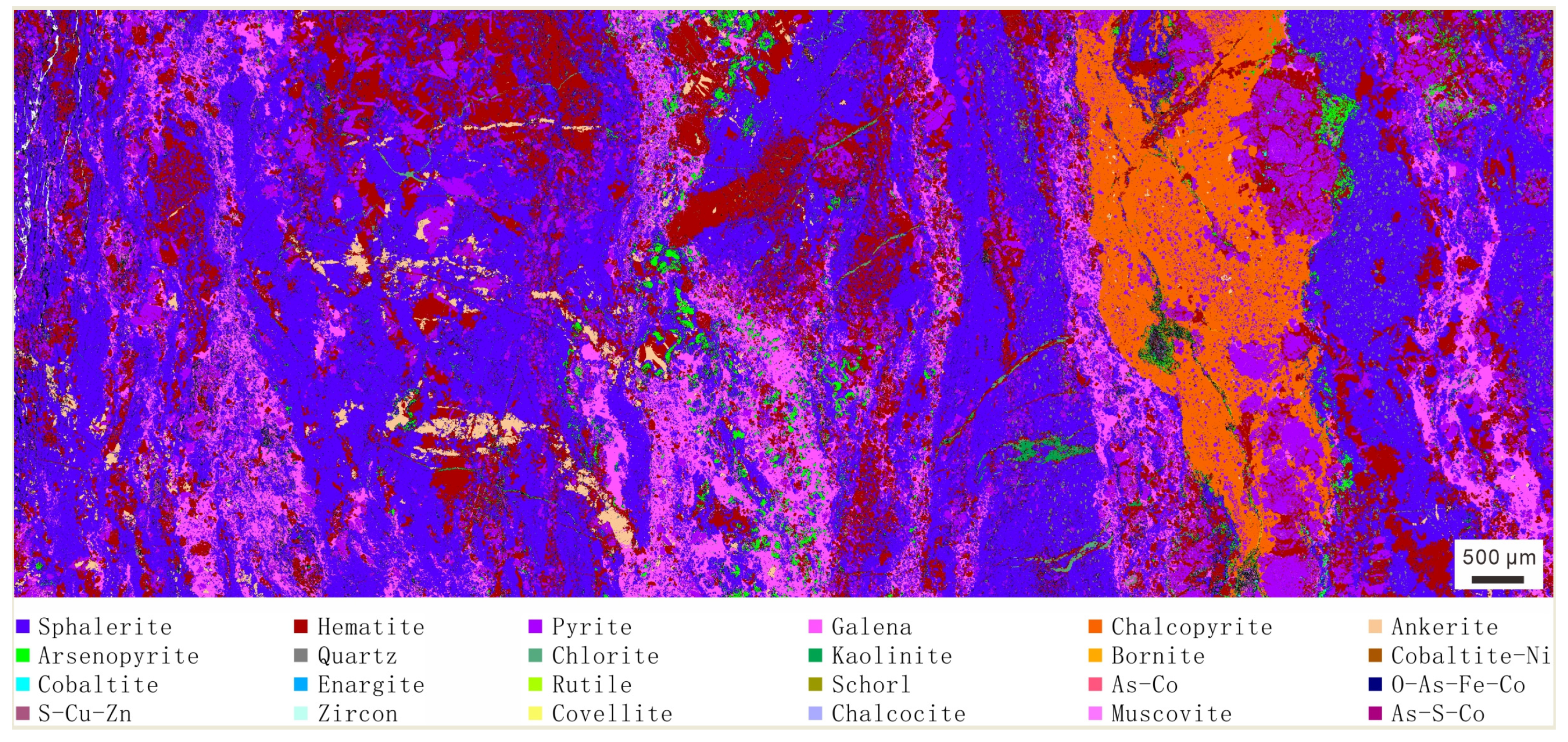
As confirmed by detailed micro-petrographic analysis and TIMA mineral mapping, Co mineralization in the Qibaoshan deposit occurs primarily as discrete Co-bearing minerals. These minerals typically occur as aggregates within polymetallic sulfide veinlets, showing a close paragenetic association with galena, sphalerite and arsenopyrite (Figure 2d,e, Figure 4, Figure 6 and Figure 7). In contrast, in the stratiform-like and disseminated Pb-Zn-Cu mineralization, Co minerals are significantly less abundant or essentially absent (Figure 2b,c, Figure 3 and Figure 8).
Figure 6.
TIMA EDS spectral phase map of typical Co-Pb-Zn-As polymetallic sulfide veinlet samples.
Figure 7.
TIMA EDS spectral phase map of typical Co-As-Pb-Zn polymetallic sulfide veinlet samples.
Figure 8.
TIMA EDS spectral phase map of typical stratiform-like mineralization sample with negligible cobalt mineralization.
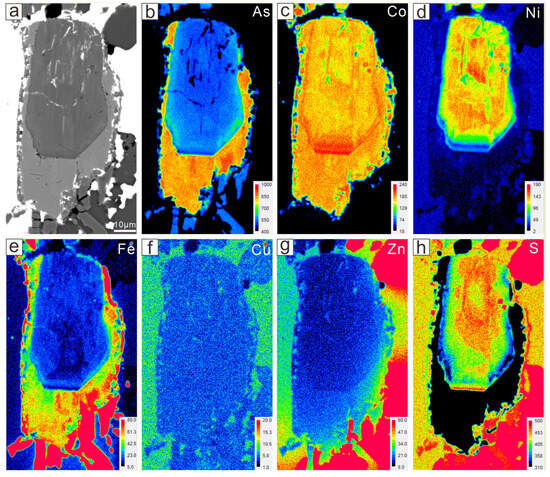
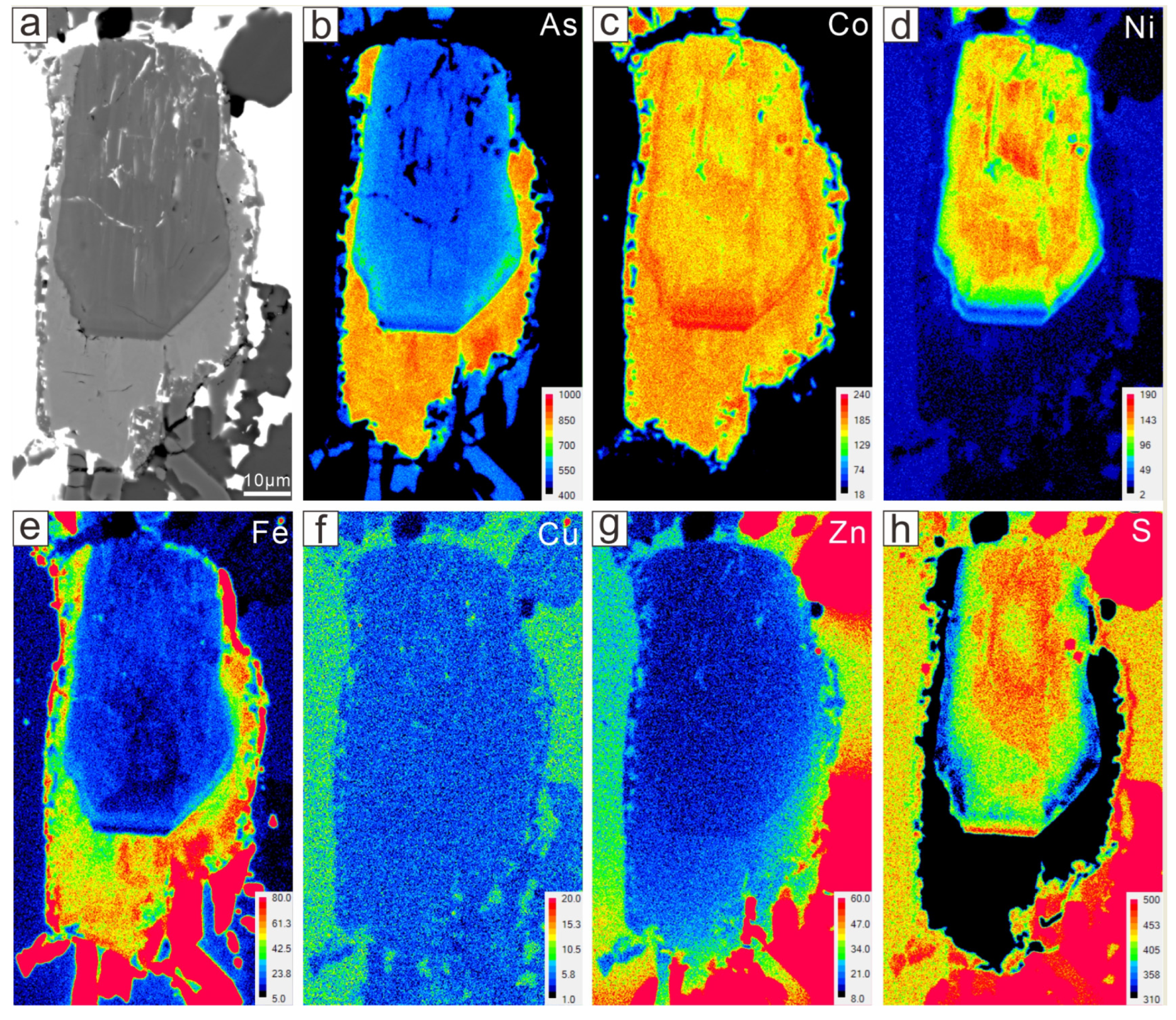
Among the discrete Co minerals in the Qibaoshan deposit, sulfarsenides are predominant (Figure 5, Figure 6 and Figure 7). These are generally Ni-rich cobaltite, although relatively Ni-poor cobaltite is also present (Figure 6 and Figure 7). Many cobaltite grains exhibit a core–rim texture, in which the core appears dark in BSE images, and the rim appears relatively bright, with a sharp boundary between them (Figure 4e). EPMA mapping of typical cobaltite grains with core–rim texture shows that the Co content varies little between the core and rim; however, the core is distinctly enriched in Ni and S but depleted in As and Fe, whereas the rim shows the opposite trend, being enriched in As and Fe but depleted in Ni and S (Figure 9). In addition, some Co arsenides, such as skutterudite and smaltite, are observed at the periphery of cobaltite.
Figure 9.
Electron probe WDS element mapping of cobaltite with core–rim texture; (a) BSE image of the mineral; (b–h) Electron probe mapping showing the spatial distribution of As, Co, Ni, Fe, Cu, Zn, and S elements, respectively.
5.2. S Isotope Composition of Sulfide Minerals
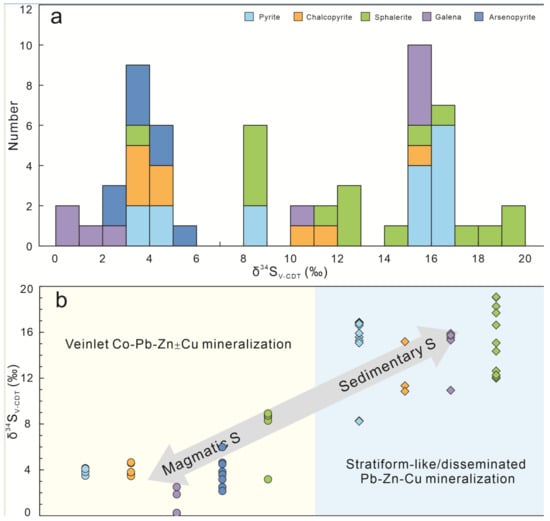
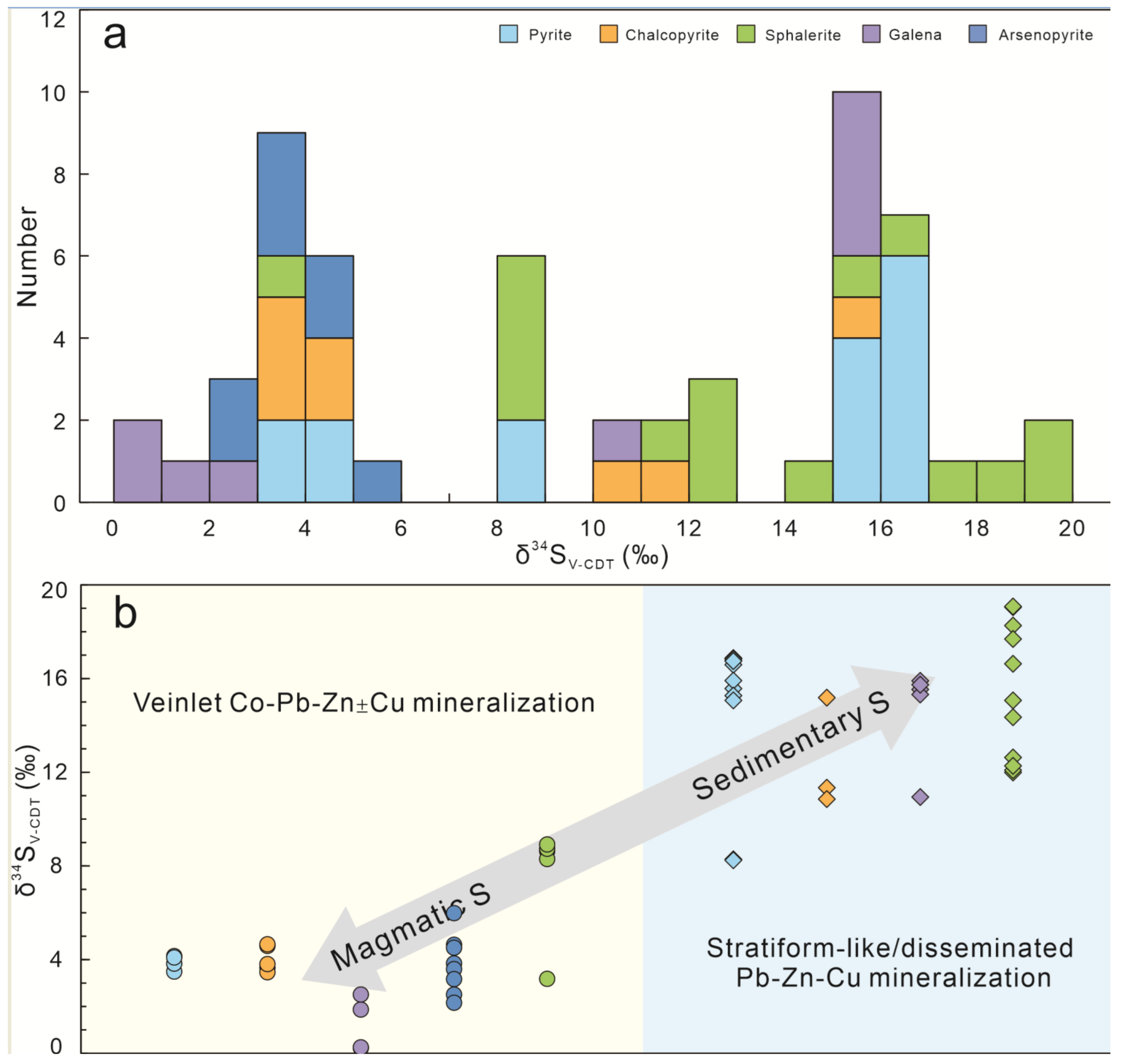
In situ LA-MC-ICP-MS sulfur isotope analysis was conducted on pyrite (Py1), chalcopyrite, sphalerite, galena, and arsenopyrite from the Qibaoshan deposit. These minerals exhibit a wide range of sulfur isotope compositions, with δ34SV-CDT values ranging from 0.24 to 19.08‰ (Figure 10a). Notably, these minerals can be generally categorized into two groups. In polymetallic sulfide veinlets, chalcopyrite (five analyses) and pyrite (four analyses), as well as galena (four analyses), sphalerite (five analyses), and arsenopyrite (eight analyses), closely associated with Co minerals, yield δ34SV-CDT values of 0.24 to 8.93‰ (Figure 10b). In contrast, in the stratiform-like and disseminated mineralization where Co mineralization is essentially absent, these minerals display significantly higher values: pyrite (12 analyses), chalcopyrite (3 analyses), sphalerite (11 analyses), and galena (5 analyses) range from 8.24 to 19.08‰ (Figure 10b). Detailed data and analytical errors are presented in Table 1.
Figure 10.
Diagrams showing S isotopic characteristics of sulfides of the Qibaoshan deposit. (a) Histogram of S isotopic values; (b) Scatter plot of S isotopic values, classified by mineralization type.
Table 1.
In situ S isotopic compositions of the sulfide minerals (pyrite, chalcopyrite, arsenopyrite, sphalerite and galena) in the Qibaoshan deposit analyzed by LA-MC-ICP-MS.
6. Discussion
6.1. Occurrence and Chemical Evolution of Cobalt
In hydrothermal systems, Co can occur as independent minerals or substitute into other minerals. In the Qibaoshan deposit, the two stages of pyrite (pyrite 1 and pyrite 2) contain 0.1 wt% and 0.46 wt% Co, respectively, and the other major sulfides of arsenopyrite (0.08 wt% Co), chalcopyrite (0.04 wt% Co), sphalerite (0.01 wt% Co) and galena (0.01 wt% Co) all have very low Co contents [13]. Although pyrite 2 has relatively high Co concentrations, it is only locally developed and accounts for a relatively small proportion, making it unlikely to supply substantial Co for the Qibaoshan deposit. Therefore, in the Qibaoshan deposit, the amount of Co incorporated into sulfides is very limited. In this study, based on detailed micro-petrographic observation and TIMA mineral mapping (Figure 3, Figure 4, Figure 6, Figure 7 and Figure 8), we confirm that Co mineralization in the Qibaoshan deposit occurs predominantly as discrete Co-bearing minerals.
The Qibaoshan deposit contains a variety of independent Co-bearing minerals, among which cobaltite predominates (Figure 6 and Figure 7). Some cobaltite grains are Ni-rich, while others are essentially Ni-free (Figure 6 and Figure 7). Notably, many grains exhibit a core–rim texture, in which the core is distinctly Ni-rich and the rim is distinctly Ni-poor (Figure 9). In hydrothermal fluids, Ni is primarily complexed with Cl [32,33], and its solubility is essentially influenced by temperature, as well as Ni and Cl concentrations in the fluid [34]. Considering the paragenetic evolution from pyrite and chalcopyrite to sphalerite and galena in the Qibaoshan deposit, the Cl concentration in the fluid likely did not change significantly because the cations of these metals are generally complexed with Cl in hydrothermal fluids [34]. Therefore, the transition from the Ni-rich core to the Ni-poor rim likely reflects a decrease in temperature and Ni concentration of the hydrothermal fluids. In addition, another significant compositional difference between the core and rim is that the core is poor in As and rich in S, whereas the rim is rich in As and poor in S (Figure 9). This may be related to variations in the As/S ratio of the hydrothermal fluid, as thermodynamic simulations have revealed that at high fluid As/S ratios, Co arsenides precipitate preferentially, whereas at low As/S ratio, Co sulfides crystallize preferentially in a sulfur-rich environment [2,35]. In the Qibaoshan deposit, the formation of pyrite and chalcopyrite in the early stage, followed by sphalerite, galena, and arsenopyrite in the late stage, reflects a decrease in sulfur fugacity (fS2) and an increase in fluid As content, i.e., an increase in the As/S ratio. Furthermore, the occurrence of abundant arsenopyrite and Co arsenides (mainly skutterudite–smaltite) at the periphery of cobaltite provides further evidence for a successive increase in the As/S ratio of the hydrothermal fluids in the Qibaoshan deposit.
6.2. Two End-Members of Hydrothermal Systems in the Qibaoshan Deposit
In this study, in situ sulfur isotope analyses were conducted on various sulfide minerals (pyrite, chalcopyrite, sphalerite, galena, and arsenopyrite) to investigate the sources of the ore-forming fluids and materials. The δ34SV-CDT values of the Qibaoshan deposit exhibit a wide range, from 0.24 to 19.08‰, with two distinct peaks at approximately 2–5‰ and 15–17‰ (Figure 10a). In hydrothermal systems, the S isotopic composition of sulfides can be influenced by multiple factors, mainly including the fluid and sulfur source, temperature, pH and oxygen fugacity of hydrothermal fluids, as well as mineral crystallization kinetics [36,37]. The potential effects of these factors are discussed below.
In the Qibaoshan deposit, the paragenetic sequence evolves from pyrite and chalcopyrite in the early stage to galena, sphalerite, and arsenopyrite in the late stage (Figure 5), likely reflecting a decrease in the temperature of the hydrothermal fluids. Under conditions of thermodynamic equilibrium fractionation, the order of sulfide δ34SV-CDT values should be pyrite > sphalerite > chalcopyrite > galena [36,37]. As temperature decreases, this order is maintained, but the isotopic differences among the sulfides become larger. However, the sulfide minerals in the Qibaoshan deposit do not follow such an order in δ34SV-CDT values (Figure 10). If the process was controlled by mineral crystallization kinetics, such as Rayleigh fractionation of pyrite, then pyrite would preferentially incorporate the heavy S isotope due to a fractionation coefficient of 0.04 between pyrite and H2S [37]. Consequently, the crystallization of pyrite would cause the residual fluid to become progressively lighter in δ34SV-CDT values, and as crystallization proceeds, subsequently formed pyrite would also exhibit lighter δ34SV-CDT values. Therefore, the overall δ34SV-CDT values of the pyrite should exhibit a unimodal distribution, which is inconsistent with the wide range and bimodal characteristics of δ34SV-CDT values in the Qibaoshan deposit (Figure 10). Thus, the observed S isotope characteristics were not caused by decreasing temperature or kinetic crystallization processes.
Variations in oxygen fugacity (fO2) can induce significant changes in S isotope compositions in hydrothermal deposits [38,39]. However, the ore minerals in the Qibaoshan deposit consist exclusively of sulfides, with no obvious mineralogical indicator of oxygen fugacity fluctuations, such as sulfate minerals, indicating that there was no significant variation in oxygen fugacity during ore formation. Moreover, a model involving oxygen fugacity variation could hardly explain the wide range of δ34SV-CDT values observed in the multiple sulfide minerals formed during different stages (Figure 10). Notably, the Qibaoshan deposit exhibits early-stage sericitization and late-stage carbonatization, reflecting an increase in pH during fluid evolution. An increase in pH would decrease the H2S/HS− ratio in the fluid, and because HS− is enriched in light S relative to H2S [37], this would lead to higher δ34SV-CDT values in both the fluid and the precipitated sulfides. However, considering the relatively small fractionation coefficient between HS− and H2S (−0.06 [37]), the increase in pH is clearly insufficient to account for the large range of δ34SV-CDT values observed in the Qibaoshan deposit.
Collectively, the large range and the bimodal distribution of sulfide δ34SV-CDT values in the Qibaoshan deposit are most likely attributable to two distinct S sources. The group ranging from 0.24 to 8.93‰, containing many values between 0 and 5‰, is characteristic of a magmatic S source [37]. In contrast, the group ranging from 8.24 to 19.08‰, including numerous values greater than 15‰, displays characteristics typical of a sedimentary S source [37]. Thus, the sulfur isotopic characteristics of sulfides indicate that the Qibaoshan deposit had a mixed source of magmatic and sedimentary sulfur and fluids.
6.3. Origin and Genetic Model of Co Mineralization
As previously noted, S isotope data indicate that the Qibaoshan deposit has both magmatic and sedimentary sources of sulfur and fluids. The unmineralized wall rocks surrounding and within the deposit (including calcareous siltstone, quartz sandstone, and dolomitic limestone) have a background cobalt content ranging primarily from 10 to 25 ppm [14]. The Qibaoshan deposit has an estimated ore volume of approximately 2.5 × 10⁻³ km3 and a cobalt metal reserve of about 5200 tons (according to the 2024 resource and reserve verification report by the Jiangxi Copper Group Qibaoshan Mining Co., Ltd. (Yichun, China)). Assuming a maximum background cobalt content of 25 ppm in the wall rocks, with a rock density of 2.7 g/cm3, and hypothetical conditions of 100% metal activation and 100% precipitation efficiency, approximately 0.08 km3 of source rock would be required to supply the observed Co reserve. This is more than 25 times the total volume of visible altered rocks surrounding the orebodies (<0.003 km3). This indicates that the existing sedimentary rocks could not provide a sufficient source of cobalt even under the most favorable conditions. Moreover, wall-rock alteration at Qibaoshan is generally weak, with only local development of silicification, chloritization, carbonatization, and sericitization, and lacking evidence of large-scale hydrothermal leaching. Collectively, these lines of evidence indicate that the material contribution of the wall-rock strata to the Co mineralization at the Qibaoshan deposit should be very limited.
The Co mineralization at the Qibaoshan deposit is characterized by an elevated As content, with Co-bearing minerals primarily consisting of sulfarsenides and arsenides (Figure 6 and Figure 7). Furthermore, these Co minerals are closely associated with arsenopyrite, occurring together within veinlet mineralization (Figure 4a,c,d, Figure 6 and Figure 7). This evidence suggests that the S isotope composition of arsenopyrite is most representative of the fluid and sulfur sources related to Co mineralization at Qibaoshan. In contrast to other sulfides, which display a bimodal sulfur isotope distribution, arsenopyrite yields consistently low δ34SV-CDT values ranging from 2.17‰ to 5.99‰ (Figure 10). In addition, the homogeneous texture of arsenopyrite in BSE images (Figure 4a,c,d) and its relatively consistent range of δ34SV-CDT values (2.17‰ to 5.99‰) indicate a single sulfur source for arsenopyrite. This indicates that the ore-forming fluid, sulfur, and metals of the Co mineralization had a magmatic source, consistent with the magmatic S isotope signature of the Jinchong Co-Cu deposit in the JOB, which also points to a magmatic origin for Co [10].
For the Cu and Pb-Zn mineralization in the Qibaoshan deposit, the δ34SV-CDT values of chalcopyrite, sphalerite and galena all display characteristics of sulfur derived from both magmatic and stratigraphic end-members (Figure 10). This implies two possibilities: (1) the Cu, Pb and Zn were all sourced from magma, with subsequent input of fluids and sulfur from the strata during fluid evolution and mineral precipitation; or (2) both magma and strata contributed ore-forming materials (Cu, Pb and Zn), fluids, and sulfur. Notably, the sulfur isotopic characteristics of different mineralization types in the Qibaoshan deposit show a transition from generally low δ34SV-CDT values in veinlet-type mineralization to high δ34SV-CDT values in stratiform-like or disseminated mineralization (Figure 10b). This likely reflects a decrease in the proportion of magmatic S and an increase in sedimentary S with enhanced water–rock interaction and the change in mineralization style, which is more consistent with the proposed first metallogenic model. Additionally, a series of Cu and Pb-Zn deposits, such as the Yinshan Cu-Pb-Zn deposit [40], Lengshuikeng Pb-Zn deposit [41], and Dexing Cu deposit [42], occur within the JOB, and are genetically related to magmatism. Meanwhile, sedimentary Cu ± Pb ± Zn deposits or MVT Pb-Zn deposits, which are unrelated to magmatic rocks, are absent in the JOB. Notably, the Lengshuikeng Pb-Zn deposit also contains stratiform-like Pb-Zn orebodies similar to those at Qibaoshan [41]. Therefore, we argue that the first model is likely more suitable for the Qibaoshan deposit, in which Cu, Pb and Zn, as well as Co, were derived from magma, with subsequent addition of sedimentary sulfur during fluid evolution and mineral precipitation, resulting in the bimodal S isotope signature observed in this study. Alternatively, it is also likely that the majority of the ore-forming materials (Cu, Pb, Zn) were provided by magma, with a minor contribution possibly derived from leaching of regional strata by hydrothermal fluids.
Magmatic rock is not exposed within the Qibaoshan deposit; instead, the mineralization-related magmatic rocks are likely deep-seated, concealed intrusions. As previously noted, magmatic rocks represent a crucial source for Co, Cu, Pb, and Zn. Among all types of magmatic rocks, ultramafic–mafic rocks are the most favorable source for Co [2,43,44,45], but are likely incapable of supplying significant quantities of Cu, Pb and Zn. However, as the magma evolves toward a felsic composition, it can provide substantial amounts of Cu, Pb and Zn, while the Co content in the magma decreases significantly [2,11,45]. Notably, numerous porphyry–skarn Cu polymetallic deposits with significant Co mineralization have been identified worldwide [11]. Meanwhile, in the Middle–Lower Yangtze River region of South China, numerous Co-Cu-Fe deposits are closely associated with diorite and quartz diorite (porphyry) [9,46], which exhibits a metal association similar to that observed at Qibaoshan and Jinchong. Furthermore, the ore-forming intrusions of the Cu and Pb-Zn deposits within the JOB are typically quartz diorite to granodiorite [41,42,43]. Therefore, it appears that intermediate magma may partially satisfy the requirements of both Co and Cu-Pb-Zn mineralization. Noticeably, multiple injections of deep ultramafic–mafic magma have been suggested to play a key role in supplying cobalt to felsic magma [11,45], which was applied to account for copper enrichment in porphyry deposits [47,48,49]. Such a magmatic system might provide not only substantial Cu, Pb and Zn, but also sufficient Co. Therefore, we propose that the concealed intrusion beneath the Qibaoshan deposit is most likely a quartz diorite–granodiorite, which was likely recharged by a deep mafic–ultramafic magma. In medium- to high-temperature hydrothermal fluids (>150 °C), Co is predominantly complexed with chlorine and shows high mobility in fluids characterized by high chlorine concentrations and high oxygen fugacity [45]. Such fluid characteristics are also comparable to those of porphyry deposits. The Co- and Cu-Pb-Zn-bearing hydrothermal fluids exsolved from the magma ascended along faults and underwent fluid–rock interactions with wall-rock strata, and as the fluids cooled, Cu, Pb-Zn and Co precipitated sequentially. During the evolution of the ore-forming fluids, decreasing temperature and composition changes (e.g., variation in Ni content, As/S ratio) of the hydrothermal fluid led to the precipitation and compositional changes of the Co-bearing minerals, respectively.
7. Conclusions
The Qibaoshan Co-Pb-Zn-Cu deposit develops three stages of mineralization: the quartz–pyrite stage, the polymetallic sulfides stage, and the quartz–carbonate stage. Cobalt mineralization in the Qibaoshan deposit occurs mostly as Co-bearing minerals formed during the polymetallic sulfides stage, mainly including Ni-bearing cobaltite, cobaltite, and skutterudite–smaltite. These Co minerals are mainly hosted in polymetallic sulfide veinlets and are closely associated with arsenopyrite, sphalerite and galena. In veinlet-type mineralization, the δ34SV-CDT values of the sulfides closely associated with Co-bearing minerals range from 0.24 to 8.93‰, indicating that Co was derived from a magmatic–hydrothermal fluid. In contrast, stratiform-like and disseminated mineralization are relatively Co-poor, with S isotopic values of polymetallic sulfides ranging from 8.24 to 19.08‰. These mineralization and S isotopic characteristics suggest that Co and Pb-Zn-Cu mineralization were most likely both sourced from magmatic–hydrothermal fluids. During the fluid–rock interaction between the ore-forming fluids and wall rocks, sedimentary sulfur was incorporated into the hydrothermal system. Subsequently, during the evolution of the ore-forming fluids, decreasing temperature and composition changes (e.g., variation in Ni content, As/S ratio) of the hydrothermal fluid led to the precipitation and compositional changes of the Co-bearing minerals, respectively.
Author Contributions
Conceptualization, F.Q. and Y.Z.; methodology, X.L.; software, Q.C. and P.S.; validation, Y.Z.; formal analysis, X.L. and Q.C.; investigation, F.Q. and R.Z.; resources, X.X.; data curation, P.S.; writing—original draft preparation, F.Q. and Y.Z.; writing—review and editing, Y.Z.; visualization, X.L.; supervision, Y.Z.; project administration, F.Q.; funding acquisition, F.Q. All authors have read and agreed to the published version of the manuscript.
Funding
This study was supported by the Deep Earth Probe and Mineral Resources Exploration-National Science and Technology Major Project (Grant No. 2024ZD1002204).
Data Availability Statement
The original contributions presented in this study are included in the article. Further inquiries can be directed to the corresponding author(s).
Acknowledgments
We are grateful to Wuji Gao (Yifeng Xinzhuang Cu-Pb-Zn Mine, Yifeng Wanguo Mining Co., Ltd., Jiangxi Province), Yun Yang (Qibaoshan Mining Co., Ltd., Jiangxi Copper Corporation), and Fanshun Li (the First Geological Brigade, Jiangxi Bureau of Geology) for their help in fieldwork.
Conflicts of Interest
Fu Quan, Yongwen Zhang, Xinxin Liu, Pengchao Shi, and Xinghai Xu are employees of Jiangxi Mineral Resources Guarantee and Service Center. Qi Chen and Runling Zeng are employees of The Tenth Geological Brigade of Jiangxi Geological Bureau. The paper reflects the views of the scientists and not the companies.
References
- Slack, J.F.; Kimball, B.E.; Shedd, K.B. Cobalt: Chapter F of Critical Mineral Resources of the United States—Economic and Environmental Geology and Prospects for Future Supply. U.S. Geological Survey professional paper; Government Printing Office: Washington, DC, USA, 2017; Volume 1802, pp. F1–F40. [Google Scholar]
- Vasyukova, O.V.; Williams-Jones, A.E. Constraints on the genesis of cobalt deposits: Part II. Applications to natural systems. Econ. Geol. 2022, 117, 529–544. [Google Scholar] [CrossRef] [Scilit]
- Qin, K.Z.; Ding, K.S.; Xu, Y.X.; Sun, H.; Xu, X.W.; Tang, D.M.; Mao, Q. Ore potential of protoliths and modes of Co-Ni occurrence in Tulargen and Baishiquan Cu-Ni-Co deposits, East Tianshan, Xinjiang. Miner. Depos. 2007, 26, 1–14, (In Chinese with English Abstract). [Google Scholar]
- Butt, C.R.M.; Cluzel, D. Nickel Laterite Ore Deposits: Weathered Serpentinites. Elements 2013, 9, 123–128. [Google Scholar] [CrossRef] [Scilit]
- Hitzman, M.W.; Kirkham, R.; Broughton, D.; Thorson, J.; Selley, D. The sediment-hosted stratiform copper ore system. Econ. Geol. 2005, 100, 609–642. [Google Scholar]
- Hitzman, M.W.; Selley, D.; Bull, S. Formation of sedimentary rock-hosted stratiform copper deposits through Earth History. Econ. Geol. 2005, 105, 627–639. [Google Scholar] [CrossRef] [Scilit]
- Zhao, J.X.; Li, G.M.; Qin, K.Z.; Tang, D.M. A review of the types and ore mechanism of the cobalt deposits. Chin. Sci. Bull. 2019, 64, 2484–2500, (In Chinese with English Abstract). [Google Scholar]
- Shi, L.; Zhou, T.F.; Fan, Y.; Zhang, Y.F.; Yan, L.; Liang, X. Evaluation on the current status and comprehensive utilization prospect of associated cobalt resources in the Middle-Lower Yangtze River Valley metallogenic belt. Acta Pet. Sin. 2023, 39, 1144–1156, (In Chinese with English Abstract). [Google Scholar]
- Zhang, S.T.; Gao, J.F.; Zhang, H.; Huang, X.W.; Li, J.P.; Li, R.C.; Xu, H. Revealing the distribution and efficient enrichment of cobalt in a Cu-Au skarn mineralization system. Ore Geol. Rev. 2025, 181, 106643. [Google Scholar] [CrossRef] [Scilit]
- Wang, Z.L.; Xu, D.R.; Chi, G.X.; Shao, Y.J.; Lai, J.Q.; Deng, T.; Guo, F.; Wang, Z.; Dong, G.J.; Ning, J.T.; et al. Mineralogical and isotopic constraints on the genesis of the Jingchong Co–Cu polymetallic ore deposit in northeastern Hunan Province, South China. Ore Geol. Rev. 2017, 88, 638–654. [Google Scholar] [CrossRef] [Scilit]
- Shan, P.F.; Cao, M.J.; Tang, D.M.; Qiu, Z.J.; Evans, N.J.; Lazanov, M.; Wang, D.C.; Hu, W.; Qin, K.Z.; Horn, I.; et al. Cobalt-rich porphyry deposits derived from multiple mafic magma injections. Geochim. Cosmochim. Acta 2025, 399, 125–143. [Google Scholar] [CrossRef] [Scilit]
- Zou, S.H.; Zou, F.H.; Ning, J.T.; Deng, T.; Yu, D.S.; Ye, T.W.; Xu, D.R.; Wang, Z.L. A stand-alone Co mineral deposit in northeastern Hunan Province, South China: Its timing, origin of ore fluids and metal Co, and geodynamic setting. Ore Geol. Rev. 2018, 92, 42–60. [Google Scholar] [CrossRef] [Scilit]
- Kuang, E.L.; Chen, Z.K.; Zhou, J.T.; Li, G.M.; Jiang, B.L.; Luo, X.C.; Li, Y.J. Occurrence of cobalt and its geological significance in the Qibaoshan Co-Pb-Zn deposit, central segment of the Jiangnan orogenic belt. Bull. Geol. Sci. Technol. 2025, 44, 61–76, (In Chinese with English Abstract). [Google Scholar]
- Wang, X.P.; Zhou, J.T.; Fan, A.C. The metallogenic model of the Qibaoshan lead and zinc iron cobalt deposit in Shanggao county, Jiangxi province. J. East China Inst. Technol. 2011, 34, 248–256, (In Chinese with English Abstract). [Google Scholar]
- Zhang, Z.K. The Ore Characteristics, Isotope and Analysis of Material Sources in Qibaoshan Co-Pb-Zn Polymetallic Deposit, Western Jiangxi. Master’s Thesis, Chengdu University of Technology, Chengdu, China, 2021; pp. 1–57, (In Chinese with English Abstract). [Google Scholar]
- Sun, J.D.; Li, H.L.; Zhang, X.H.; Lu, F.; Xu, M.C.; Lu, Z.H. The discovery of jasper rocks in the Qibaoshan cobalt-lead-zinc deposit in western Jiangxi Province and its restriction on the genesis of the deposit. Geol. Bull. China 2023, 42, 1718–1727, (In Chinese with English Abstract). [Google Scholar]
- Jiang, B.L.; Kuang, E.L.; Lai, C.J. A Study on the Mineral Sources of the Qibaoshan Lead Zinc Cobalt Iron Deposit in Shanggao County, Jiangxi Province. World Nonferr. Met. 2024, 12, 117–119, (In Chinese with English Abstract). [Google Scholar]
- Luo, X.C.; Chen, Z.K.; Zhang, X.; Li, G.M.; Kuang, E.L.; Li, Y.J. Characteristics and sources of ore-forming fluids in the Qibaoshan Co-Pb-Zn deposit, western Jiangxi Province. Geochimica 2026, 55, 42–54, (In Chinese with English Abstract). [Google Scholar]
- Yao, J.L.; Cawood, P.; Shu, L.S.; Zhao, G.C. Jiangnan Orogen, South China: A ~970–820 Ma Rodinia margin accretionary belt. Earth-Sci. Rev. 2019, 196, 102872. [Google Scholar] [CrossRef] [Scilit]
- Zhao, G.C.; Cawood, P.A. Precambrian geology of China. Precambrian Res. 2012, 222–223, 13–54. [Google Scholar] [CrossRef] [Scilit]
- Wang, X.L.; Zhou, J.C.; Griffin, W.L.; Zhao, G.C.; Yu, J.H.; Qiu, J.S.; Zhang, Y.J.; Xing, G.F. Geochemical zonation across a Neoproterozoic orogenic belt: Isotopic evidence from granitoids and metasedimentary rocks of the Jiangnan orogen, China. Precambrian Res. 2014, 242, 154–171. [Google Scholar] [CrossRef] [Scilit]
- Yu, J.H.; Cai, Y.F.; Sun, T.; Jiang, W.; Zhang, R.Q.; Griffin, W.L.; Mao, Z.Q.; Xia, L. Distribution and enrichment of rare metal elements in the basement rocks of South China: Controls on rare-metal mineralization. Ore Geol. Rev. 2023, 163, 105797. [Google Scholar] [CrossRef] [Scilit]
- Wang, X.L.; Zhou, J.C.; Wan, Y.S.; Kitajima, K.; Wang, D.; Bonamici, C.; Qiu, J.S.; Sun, T. Magmatic evolution and crustal recycling for Neoproterozoic strongly peraluminous granitoids from southern China: Hf and O isotopes in zircon. Earth Planet. Sci. Lett. 2013, 366, 71–82. [Google Scholar] [CrossRef] [Scilit]
- Zhou, X.M.; Sun, T.; Shen, W.Z.; Shu, L.S.; Niu, Y.L. Petrogenesis of Mesozoic granitoids and volcanic rocks in South China: A response to tectonic evolution. Episodes 2006, 29, 26–33. [Google Scholar] [CrossRef] [Scilit] [PubMed]
- Mao, J.W.; Ouyang, H.G.; Song, S.W.; Santosh, M.; Yuan, S.D.; Zhou, Z.H.; Zheng, W.; Liu, H.; Liu, P.; Cheng, Y.B.; et al. Geology and metallogeny of tungsten and tin deposits in China. In Mineral Deposits of China; Society of Economic Geology Special Publication: Littleton, CO, USA, 2019; pp. 411–482. [Google Scholar]
- Hu, R.Z.; Fu, S.L.; Huang, Y.; Zhou, M.F.; Fu, S.H.; Zhao, C.H.; Wang, Y.J.; Bi, X.W.; Xiao, J.F. The giant South China Mesozoic low-temperature metallogenic domain: Reviews and a new geodynamic model. J. Asian Earth Sci. 2017, 137, 9–34. [Google Scholar] [CrossRef] [Scilit]
- Xu, D.R.; Deng, T.; Chi, G.X.; Wang, Z.L.; Zou, F.H.; Zhang, J.L.; Zou, S.H. Gold mineralization in the Jiangnan Orogenic Belt of South China: Geological, geochemical and geochronological characteristics, ore deposit-type and geodynamic setting. Ore Geol. Rev. 2017, 88, 565–618. [Google Scholar] [CrossRef] [Scilit]
- Yan, J.; Fu, S.L.; Liu, S.; Wei, L.M.; Wang, T.X. Giant Sb metallogenic belt in South China: A product of Late Mesozoic flat-slab subduction of paleo-Pacific plate. Ore Geol. Rev. 2022, 142, 104697. [Google Scholar] [CrossRef] [Scilit]
- Chen, L.; Chen, K.Y.; Bao, Z.A.; Liang, P.; Sun, T.T.; Yuan, H.L. Preparation of standards for in situ sulfur isotope measurement in sulfides using femtosecond laser ablation MC-ICP-MS. J. Anal. At. Spectrom. 2017, 32, 107–116. [Google Scholar] [CrossRef] [Scilit]
- Bao, Z.A.; Chen, L.; Zong, C.L.; Yuan, H.L.; Chen, K.Y.; Dai, M.N. Development of pressed sulfide powder tablets for in situ sulfur and lead isotope measurement using LA-MC-ICP-MS. Int. J. Mass Spectrom. 2017, 421, 255–262. [Google Scholar] [CrossRef] [Scilit]
- Yuan, H.L.; Liu, X.; Chen, L.; Bao, Z.A.; Chen, K.Y.; Zong, C.L.; Li, X.C.; Qiu, W.H. Simultaneous measurement of sulfur and lead isotopes in sulfides using nanosecond laser ablation coupled with two multi-collector inductively coupled plasma mass spectrometers. J. Asian Earth Sci. 2018, 154, 386–396. [Google Scholar] [CrossRef] [Scilit]
- Liu, W.H.; Migdisov, A.; Williams-Jones, A. The stability of aqueous nickel(II) chloride complexes in hydrothermal solutions: Results of UV-visible spectroscopic experiments. Geochim. Cosmochim. Acta 2012, 94, 276–290. [Google Scholar] [CrossRef] [Scilit]
- Tian, Y.; Etschmann, B.; Liu, W.; Borg, S.; Mei, Y.; Testemale, D.; O’Neill, B.; Rae, N.; Sherman, D.M.; Ngothai, Y.; et al. Speciation of nickel (II) chloride complexes in hydrothermal fluids: In situ XAS study. Chem. Geol. 2012, 334, 345–363. [Google Scholar] [CrossRef] [Scilit]
- Brugger, J.; Liu, W.H.; Etschmann, B.; Yuan, M.; Sherman, D.M.; Testemale, D. A review of the coordination chemistry of hydrothermal systems, or do coordination changes make ore deposits? Chem. Geol. 2016, 447, 219–253. [Google Scholar] [CrossRef] [Scilit]
- Wang, H.; Zou, S.H.; Wang, Z.L.; Xu, D.R.; Zhang, Y.W.; Zhang, H.S. Textural and compositional evolution of quartz and cobalt-bearing minerals from the Wubaoshan Deposit, Jiangxi Province, South China: Implications for cobalt mineralization. Ore Geol. Rev. 2024, 170, 106150. [Google Scholar] [CrossRef] [Scilit]
- Ohmoto, H. Systematics of sulfur and carbon isotopes in hydrothermal ore deposits. Econ. Geol. 1972, 67, 551–578. [Google Scholar] [CrossRef] [Scilit]
- Seal, R.R. Sulfur isotope geochemistry of sulfide minerals. Rev. Miner. Geochem 2006, 61, 633–677. [Google Scholar] [CrossRef] [Scilit]
- Drummond, S.E.; Ohmoto, H. Chemical evolution and mineral deposition in boiling hydrothermal systems. Econ. Geol. 1985, 80, 126–147. [Google Scholar] [CrossRef] [Scilit]
- McKibben, M.A.; Eldridge, C.S. Radical sulfur isotope zonation of pyrite accompanying boiling and epithermal gold deposition: A SHRIMP study of the Valles Caldera, New Mexico. Econ. Geol. 1990, 85, 1917–1925. [Google Scholar] [CrossRef] [Scilit]
- Liu, X.; Fan, H.R.; Santosh, M.; Hu, F.F.; Yang, K.F.; Wen, B.J.; Yang, Y.H.; Liu, Y.S. Origin of the Yinshan epithermal-porphyry Cu-Au-Pb-Zn-Ag deposit, southeastern China: Insights from geochemistry, Sr-Nd and zircon U-Pb-Hf-O isotopes. Int. Geol. Rev. 2013, 55, 1835–1864. [Google Scholar] [CrossRef] [Scilit]
- Qi, Y.Q.; Hu, R.Z.; Gao, J.F.; Leng, C.B.; Gong, H.T.; Gao, W. Late Mesozoic oxidized magma for porphyry Ag mineralization: A comparative study from mineralized and barren granite porphyries in the Lengshuikeng Ag-(Pb-Zn) deposit, South China. J. Asian Earth Sci. 2020, 190, 104180. [Google Scholar] [CrossRef] [Scilit]
- Liu, X.; Fan, H.R.; Santosh, M.; Hu, F.F.; Yang, K.F.; Li, Q.L.; Yang, Y.H.; Liu, Y.S. Remelting of Neo-proterozoic relict island arcs in the Middle Jurassic: Implication for the formation of the Dexing porphyry copper deposit, southeastern China. Lithos 2012, 150, 85–100. [Google Scholar] [CrossRef] [Scilit]
- Gülaçar, O.F.; Delaloye, M. Geochemistry of nickel, cobalt and copper in alpine-type ultramafic rocks. Chem. Geol. 1976, 17, 269–280. [Google Scholar] [CrossRef] [Scilit]
- Krauskopf, K.B.; Bird, D.K. Introduction to Geochemistry, 3rd ed.; McGraw-Hill, Inc.: New York, NY, USA, 1995; p. 647. [Google Scholar]
- Williams-Jones, A.E.; Vasyukova, O.V. Constraints on the genesis of cobalt deposits: Part I. theoretical considerations. Econ. Geol. 2022, 117, 513–528. [Google Scholar] [CrossRef] [Scilit]
- Li, J.W.; Zhao, X.F.; Zhou, M.F.; Ma, C.Q.; De Souza, Z.S.; Vasconcelos, P. Late Mesozoic magmatism from the Daye region, eastern China: U-Pb ages, petrogenesis, and geodynamic implications. Contrib. Mineral. Petrol. 2009, 157, 383–409. [Google Scholar] [CrossRef] [Scilit]
- Nadeau, O.; Williams-Jones, A.E.; Stix, J. Sulphide magma as a source of metals in arc-related magmatic hydrothermal ore fluids. Nat. Geosci. 2010, 3, 501–505. [Google Scholar] [CrossRef] [Scilit]
- Blundy, J.; Mavrogenes, J.; Tattitch, B.; Sparks, S.; Gilmer, A. Generation of porphyry copper deposits by gas–brine reaction in volcanic arcs. Nat. Geosci. 2015, 8, 235–240. [Google Scholar] [CrossRef] [Scilit]
- Cao, M.J.; Hollings, P.; Cooke, D.R.; Evans, N.J.; McInnes, B.I.A.; Qin, K.Z.; Li, G.M.; Sweet, G.; Baker, M. Physicochemical processes in the magma chamber under the Black Mountain porphyry Cu-Au deposit, Philippines: Insights from mineral chemistry and implications for mineralization. Econ. Geol. 2018, 113, 63–82. [Google Scholar] [CrossRef] [Scilit]

Disclaimer/Publisher’s Note: The statements, opinions and data contained in all publications are solely those of the individual author(s) and contributor(s) and not of MDPI and/or the editor(s). MDPI and/or the editor(s) disclaim responsibility for any injury to people or property resulting from any ideas, methods, instructions or products referred to in the content. |
© 2026 by the authors. Licensee MDPI, Basel, Switzerland. This article is an open access article distributed under the terms and conditions of the Creative Commons Attribution (CC BY) license.