


Abstract
Distal, structure-controlled sulfide-type Sn mineralization is widely developed in granite-related Sn systems, but its genetic relationship with proximal intrusion-related mineralization remains poorly understood. The Xianghualing Sn deposit in the Nanling region, South China, contains both proximal skarn-type and distal sulfide-type Sn mineralization, providing an excellent opportunity to investigate their genetic linkage. Here, we combine cassiterite U–Pb geochronology and trace element geochemistry to constrain the timing, evolution, and genetic relationship of these mineralization styles. Cassiterite U–Pb dating yields ages of 154.9 ± 2.5 Ma for skarn-type Sn mineralization and 150.1 ± 1.7 Ma for sulfide-type Sn mineralization, indicating that both formed during the late-stage evolution of the Laiziling granite. Cassiterites from both ore types show comparable granite-related geochemical signatures, including elevated Fe and W contents, high Zr/Hf ratios, and depletion of Nb and Ta, suggesting derivation from evolved magmatic–hydrothermal fluids. We propose that sulfide-type Sn mineralization represents a distal expression of the same evolving granite-related magmatic–hydrothermal system responsible for proximal skarn mineralization. Interlayered fracture zones and unconformities acted as preferential pathways for hydrothermal fluid migration and cassiterite precipitation. These findings highlight the importance of structural focusing during the evolution of granite-related Sn systems and provide new insights into exploration of concealed Sn mineralization in the Nanling region.
1. Introduction
Tin (Sn) is a critical metal widely used in advanced technologies, including electronic devices, semiconductor manufacturing, and energy-related applications [1,2]. Increasing demand for Sn has highlighted the importance of understanding the geological processes responsible for the formation and concentration of Sn resources.
Most economically significant Sn deposits worldwide are genetically associated with highly evolved felsic magmatic systems [3,4]. These granite-related Sn systems commonly develop a range of mineralization styles, including greisen-, vein-, skarn-, pegmatite-, and sulfide-type ores, reflecting the progressive evolution of magmatic–hydrothermal processes [4,5].
The transition from magmatic to hydrothermal conditions plays a fundamental role in controlling Sn transport and deposition. Experimental and natural studies indicate that Sn mobility and precipitation are sensitive to temperature, salinity, redox state, fluid composition, and fluid–rock interaction [4,6,7,8]. Cooling, oxidation, fluid mixing, and wall-rock reactions can destabilize dissolved Sn complexes and promote cassiterite precipitation [9,10]. Consequently, individual granite-related Sn systems may develop pronounced spatial and mineralogical zonation from proximal intrusion-related mineralization to more distal structurally controlled hydrothermal ores [11,12]. However, the genetic relationship between these contrasting mineralization styles remains incompletely understood, particularly for cassiterite–sulfide mineralization hosted by structures distal to granitic intrusions.
The Nanling region of South China is one of the world’s most important granite-related W–Sn metallogenic bels, where widespread Jurassic magmatism generated numerous world-class W–Sn polymetallic deposits [3,13,14]. Sn mineralization occurs in diverse styles, including altered granite-type [15], pegmatite-type [16], and skarn (and greisen)-type Sn deposits [17], most of which are spatially and genetically associated with highly evolved granitic intrusions [14,17,18]. In addition, cassiterite–sulfide orebodies occur along unconformities and interlayered fracture zones at several deposits, including Xianghualing, Hehuaping, Weijia, and Furong [19,20,21,22]. Such structure-controlled mineralization represents an important target for deep and peripheral exploration in mature Sn districts.
Despite its exploration significance, the origin of structure-controlled sulfide-type Sn mineralization remains debated. One interpretation invokes derivation or remobilization of Sn from sedimentary strata, locally involving sedimentary or placer-related processes [4,20]. Alternatively, the close spatial and temporal association of these orebodies with granite-related Sn systems suggests that Sn may have been transported by magmatic–hydrothermal fluids and precipitated after migration along favorable structures [22,23]. Recent studies in the Xianghualing district increasingly support this latter interpretation. Fluid inclusion and cassiterite geochemical data from skarn ores indicate that the ore-forming fluids were predominantly derived from highly evolved granitic magma and that cooling, fluid mixing, and fluid–rock interaction contributed to cassiterite precipitation [24,25]. Tourmaline chemistry and B-isotope systematics further document the evolution from late-magmatic to hydrothermal fluids and indicate that Sn enrichment was closely linked to magmatic–hydrothermal fluid exsolution and subsequent fluid–rock interaction [26]. Fluid inclusion compositions from the Sanshiliuwan Sn–Pb–Zn–Sb deposit in the Xianghualing district also suggest derivation of successive mineralizing fluids from the same evolving granitic magma [27]. Nevertheless, whether structure-controlled sulfide-type Sn mineralization represents an independent mineralizing event or the distal evolution of the same granite-related magmatic–hydrothermal system remains unresolved.
Cassiterite provides a particularly powerful archive for resolving this issue. Its U–Pb system can directly constrain the timing of Sn mineralization, whereas variations in its trace element composition can record changes in the source and physicochemical conditions of the mineralizing system [16,28,29,30,31]. Recent zircon and cassiterite geochronology from Sn polymetallic pegmatites of the Xianghualing ore field further demonstrates that the Laiziling magmatic system experienced prolonged magmatic–hydrothermal evolution at 150 Ma and that cassiterite can preserve records of post-magmatic hydrothermal modification [22,32,33,34]. These advances provide an improved framework for evaluating temporal and genetic links among different styles of Sn mineralization within the Xianghualing system.
The Xianghualing Sn-polymetallic deposit therefore provides an excellent natural laboratory for evaluating the relationship between proximal and structure-controlled Sn mineralization. The deposit contains skarn-type Sn mineralization adjacent to the highly evolved Laiziling granite and cassiterite–sulfide orebodies hosted by unconformities and interlayered fracture zones farther from the intrusion [23,24,28,32]. Previous geochronological studies have established a prolonged Late Jurassic magmatic–hydrothermal history for the Xianghualing ore field. Zircon U–Pb dating constrains emplacement and evolution of the Laiziling granitic rocks mainly to 155–148 Ma [22,32,33,35,36,37], whereas cassiterite U–Pb and muscovite 40Ar/39Ar ages indicate broadly coeval Sn mineralization [22,23,28,34]. More recent garnet, zircon, cassiterite, monazite, molybdenite, and vesuvianite geochronological studies further reveal multiple pulses of magmatic–hydrothermal activity within the Xianghualing system [24,26,35,38,39]. However, most previous age constraints were obtained from granitic rocks, pegmatites, or individual mineralization styles, and direct chronological comparison between the proximal skarn-type and distal structure-controlled sulfide-type Sn mineralization remains limited. Consequently, whether these contrasting ore styles represent separate mineralizing events or spatially distinct expressions of the same prolonged magmatic–hydrothermal system remains unresolved.
Here, we integrate cassiterite U–Pb geochronology with major and trace element geochemistry of skarn- and sulfide-type ores from Xianghualing to constrain their timing and genetic relationship. Specifically, we aim to (1) determine whether the two mineralization styles formed during the same granite-related metallogenic event, (2) evaluate whether their cassiterite compositions record a common magmatic–hydrothermal affinity, and (3) assess the role of unconformities and interlayered fractures in focusing ore-forming fluids and promoting Sn deposition. These results provide a framework for understanding structure-controlled Sn mineralization in Xianghualing and for evaluating concealed mineralization peripheral to highly evolved granitic intrusions in Nanling region.
2. Regional Geological Setting
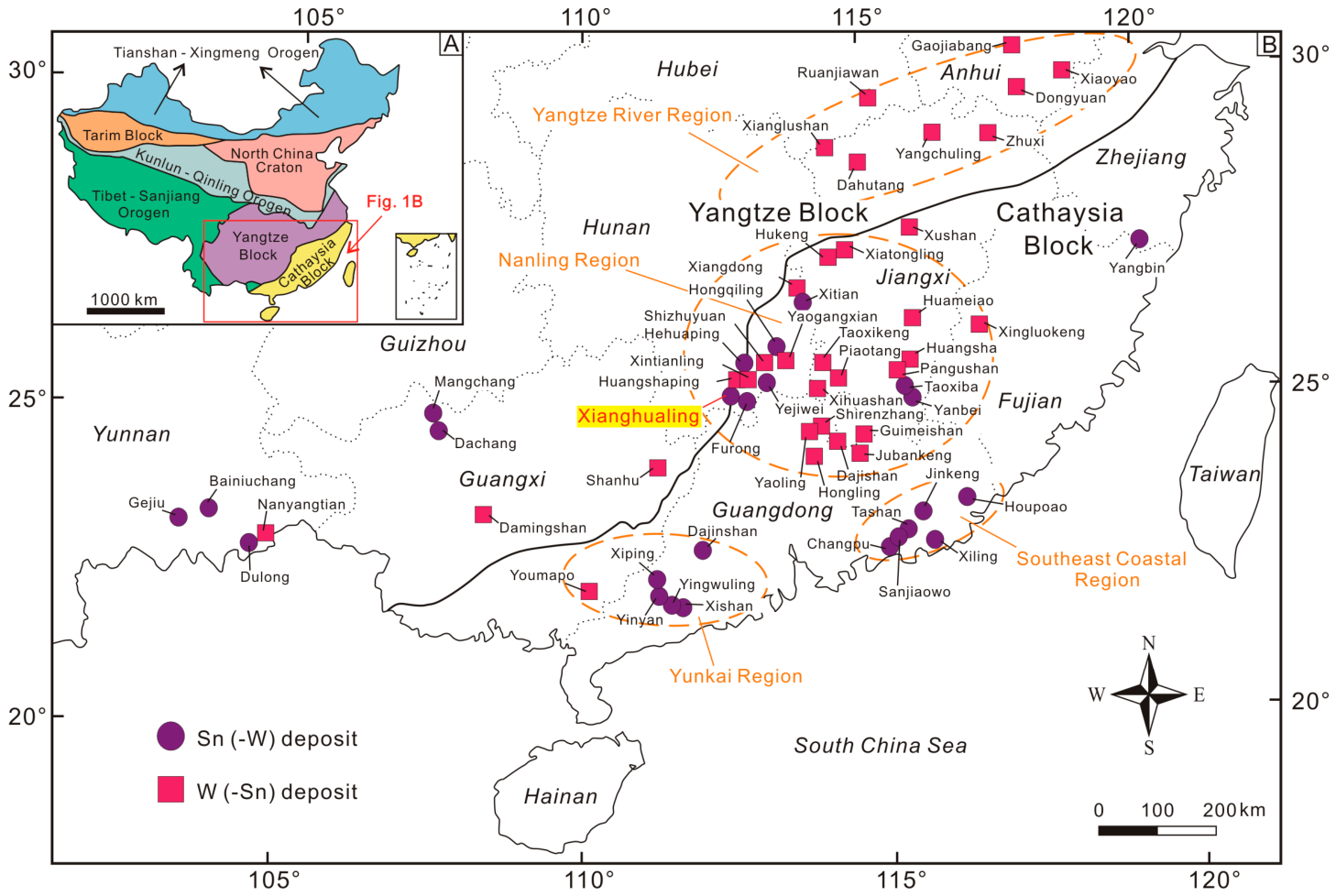
The South China Block consists principally of the Yangtze Block to the northwest and the Cathaysia Block to the southeast (Figure 1A), which were amalgamated along the Jiangnan Orogen during the Neoproterozoic [40,41]. Both blocks contain Precambrian crystalline basement overlain by Neoproterozoic to Cenozoic sedimentary successions [42,43]. South China underwent widespread tectono-magmatic reworking during the Mesozoic, producing an extensive felsic magmatic province and associated polymetallic mineralization [17,44]. Jurassic–Cretaceous magmatism and deformation have commonly been linked to the subduction and subsequent retreat of the Paleo-Pacific plate beneath eastern Asia, although the detailed geodynamic mechanisms responsible for the inland magmatism remain debated [17,45].
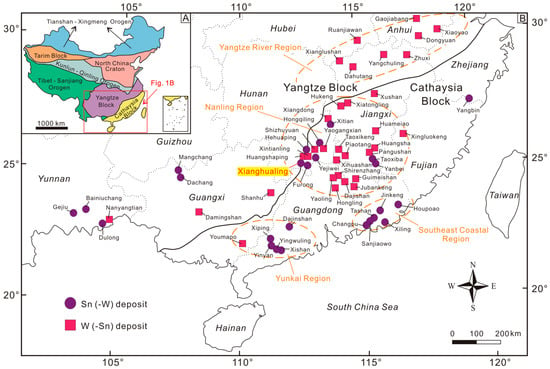
Figure 1.
(A) Sketch map of plate tectonics of China (modified after [17]), and (B) simplified map showing the distribution of the main W and Sn deposits in South China (modified after [14]).
The Nanling region (110.5–116.5° E, 23.5–26.5° N) occupies the central part of South China and represents one of the world’s most important granite-related W–Sn metallogenic belts (Figure 1B; [13,17]). The regional basement is dominated by weakly metamorphosed Neoproterozoic–lower Paleozoic sedimentary successions, which are unconformably overlain by Devonian–Carboniferous clastic and carbonate rocks and younger Mesozoic–Cenozoic sedimentary sequences [46]. Mesozoic deformation and magmatism strongly reworked these successions and produced widespread granitoid plutons, many of which are distributed along regional-scale fault systems [47,48]. Late Jurassic magmatism was particularly important, with most ore-related granites emplaced at 160–150 Ma [13]. These intrusions are commonly highly fractionated and crustally derived and are closely associated with the major W–Sn mineralization event in the Nanling region [17].
The Late Jurassic W–Sn metallogenic event developed predominantly under an intracontinental extensional regime broadly related to Paleo-Pacific plate subduction [44,48]. Progressive crustal extension and widespread felsic magmatism promoted emplacement and differentiation of evolved granitic magmas, generating numerous granite-related W–Sn polymetallic systems. Mineralization is commonly concentrated within or adjacent to highly evolved granitic intrusions and along favorable lithologic and structural interfaces, producing skarn-, greisen-, quartz vein-, altered granite-, and locally structure-controlled orebodies [3,14]. The Xianghualing Sn-polymetallic deposit is located in the central Nanling region, where Late Jurassic highly evolved granitic magmatism and regional fault systems provided the magmatic and structural framework for Sn mineralization.
3. Deposit Geology
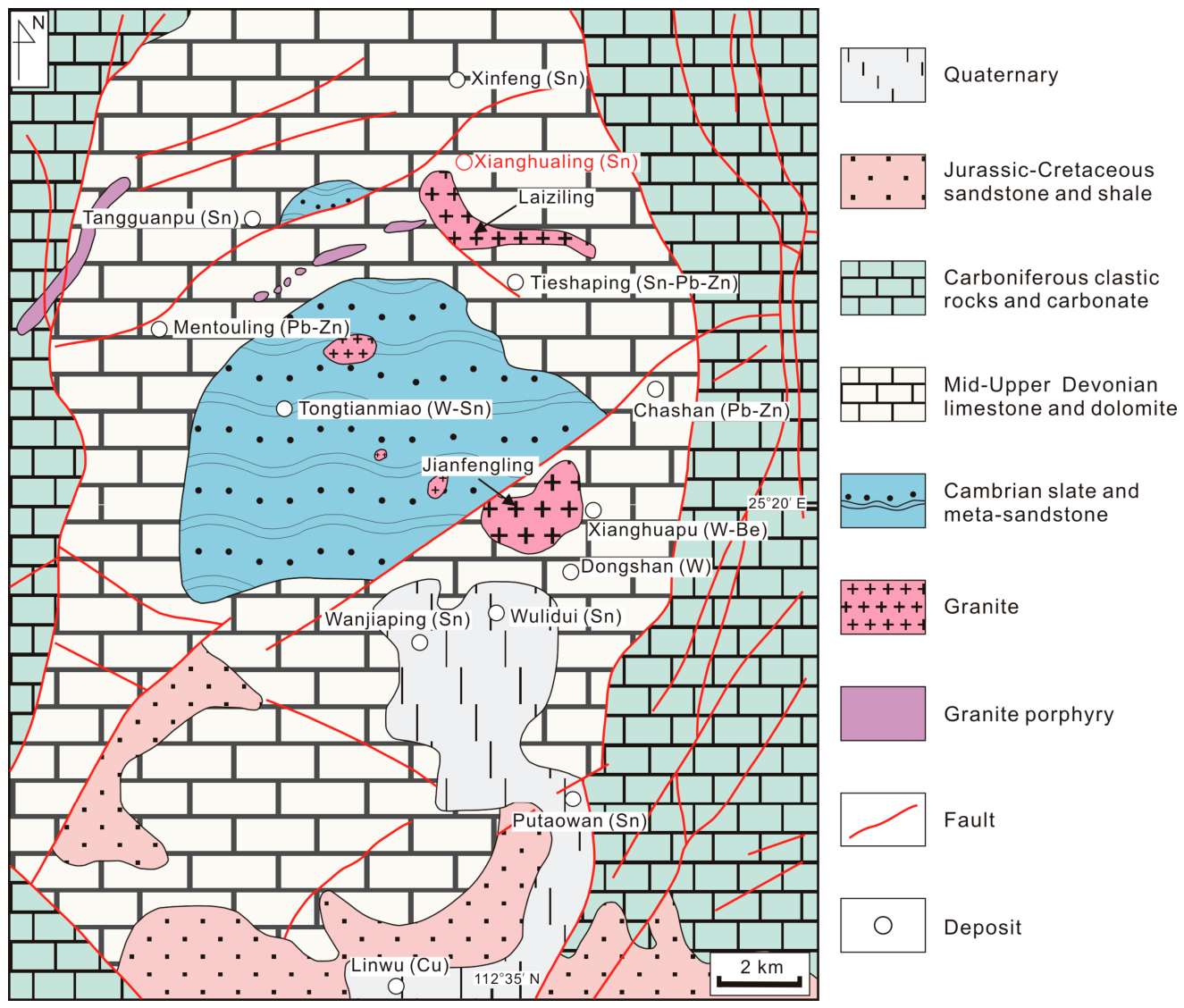
The Xianghualing Sn-polymetallic deposit is located in northern Linwu County, southern Hunan Province, in the central Nanling region (Figure 1 and Figure 2). The deposit lies near the intersection of the NE-trending Chenzhou–Linwu fault and the N–S-trending Leiyang–Linwu fault and occurs within a tectono-magmatic domal structure developed during Mesozoic magmatism and regional extension [23,28]. These regional structures, together with subsidiary faults, unconformities, and interlayered fractures, define the principal structural architecture of the Xianghualing ore field (Figure 2).
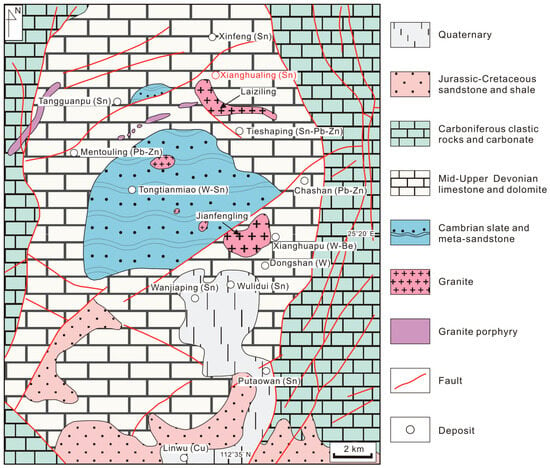
Figure 2.
Sketch map of the Xianghualing ore field (modified after [23]).
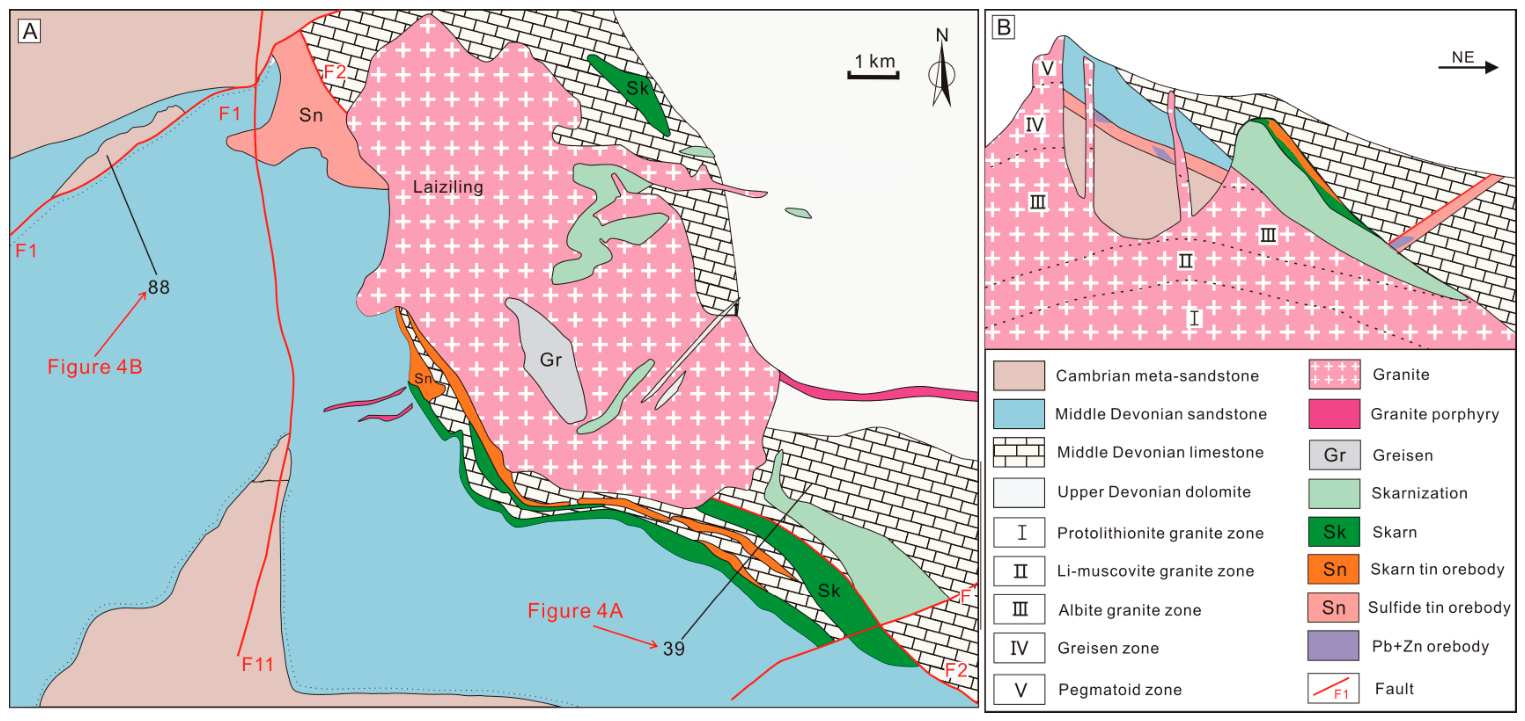
The sedimentary succession exposed in the Xianghualing ore field comprises Cambrian, Devonian, and Carboniferous strata (Figure 2). Cambrian strata consist mainly of arenaceous, argillaceous, and siliceous rocks with subordinate carbonate rocks (Figure 3A). These are unconformably overlain by Middle Devonian conglomerate, sandstone, and shale of the Tiaomajian Formation (D2t), limestone of the Qiziqiao Formation (D2q), and Upper Devonian dolomitic limestone and sandstone of the Shetianqiao Formation (D3s). Carboniferous clastic and carbonate rocks occur higher in the stratigraphic succession [49,50,51]. Contacts between the Cambrian and Devonian strata, together with bedding-parallel fractures within the sedimentary succession, locally host cassiterite-bearing sulfide mineralization (Figure 3B).
Figure 3.
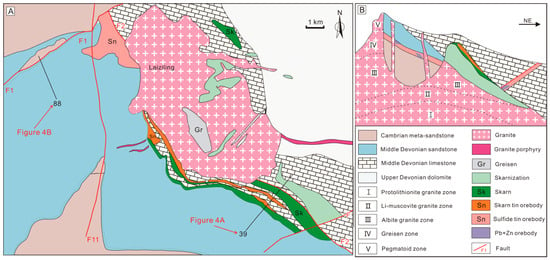
(A) Geologic sketch map of the Xianghualing Sn deposit. Exploration lines 39 and 88 indicate the locations of the geological cross-sections shown in Figure 4A and Figure 4B, respectively (modified after [20,39]). (B) Geologic schematic overview through the Xianghualing Sn deposit (modified after [20,35]).
More than 20 granitic intrusions are exposed in the Xianghualing ore field and collectively cover approximately 7.5 km2. The two largest intrusions are the Laiziling (~2.2 km2) and Jianfengling (~4.4 km2) plutons (Figure 2). Zircon U–Pb geochronology indicates emplacement ages of 155–148 Ma for the Laiziling granite and 165–154 Ma for the Jianfengling granite [32,33,35,36]. Both plutons are characterized by high SiO2 and alkali contents, enrichment in volatile components such as F, and relatively low Al, Mg, Ca, and Fe contents, broadly resembling highly evolved granites associated with W–Sn mineralization elsewhere in the Nanling region [14,18,51,52,53]. Previous studies have linked the Laiziling and Jianfengling intrusions to the Xianghualing Sn-polymetallic and the Xianghuapu W–Sn–Be mineralization, respectively [20].
The Laiziling granite displays pronounced vertical lithologic and alteration zonation. Five principal units have been recognized from depth upward: protolithionite granite, Li-muscovite granite, albite granite, greisen, and a pegmatoid zone (Figure 3B; [32,35]). This upward transition is accompanied by increasingly evolved mineralogical and geochemical characteristics and pervasive late-stage alteration in the upper part of the intrusion [35,49]. Sn mineralization is spatially concentrated in and above the uppermost parts of the Laiziling intrusion, particularly around the albite granite–greisen zone and its contacts with the surrounding sedimentary rocks.
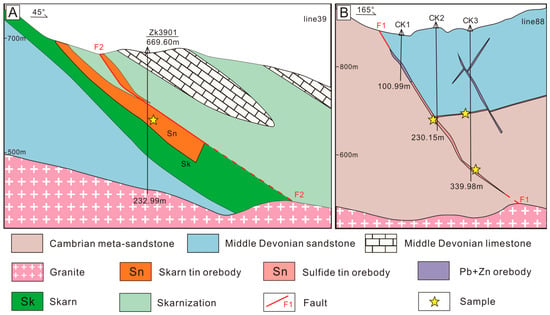
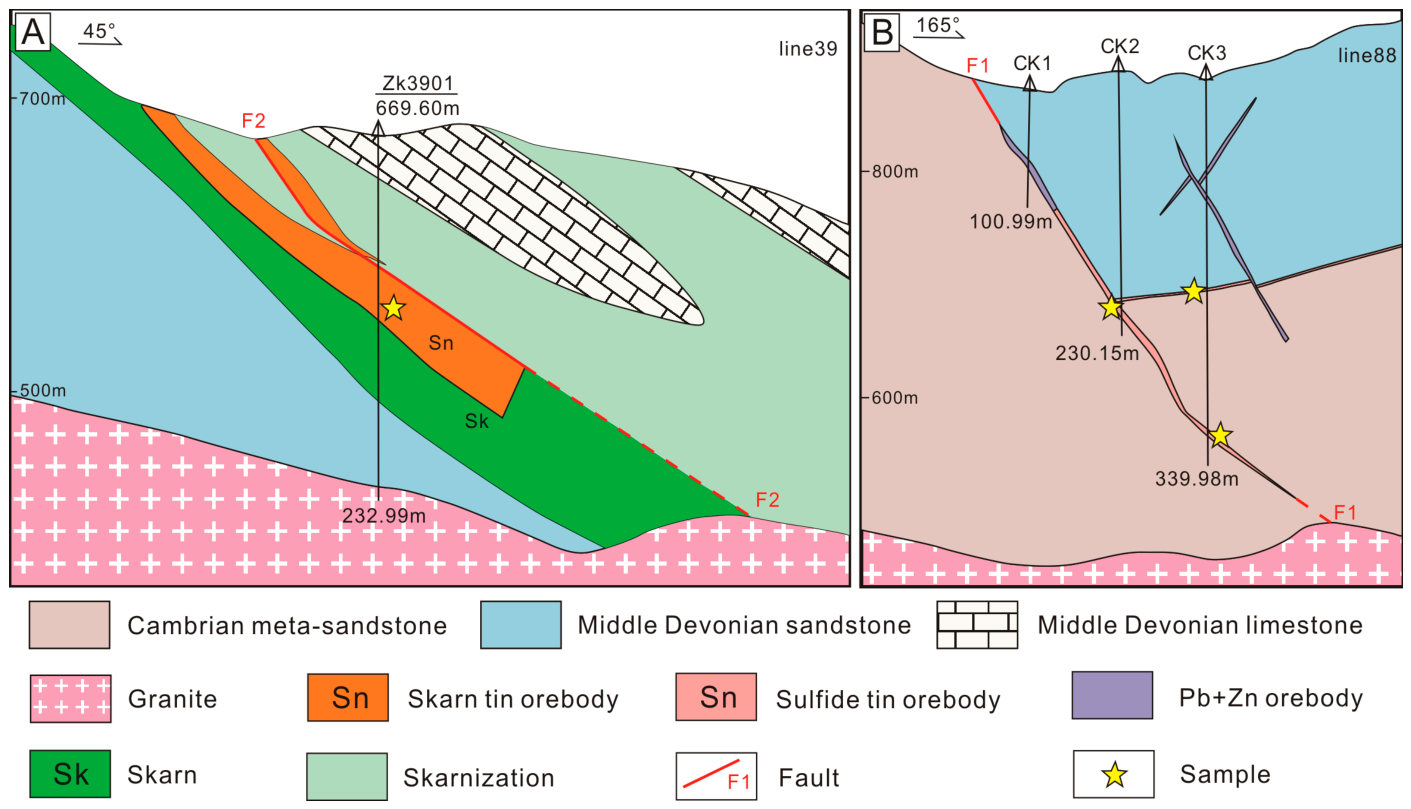
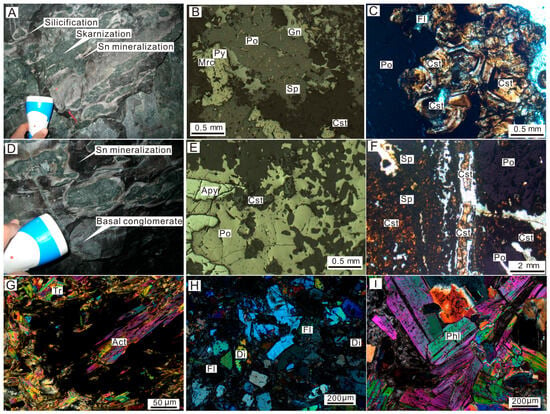
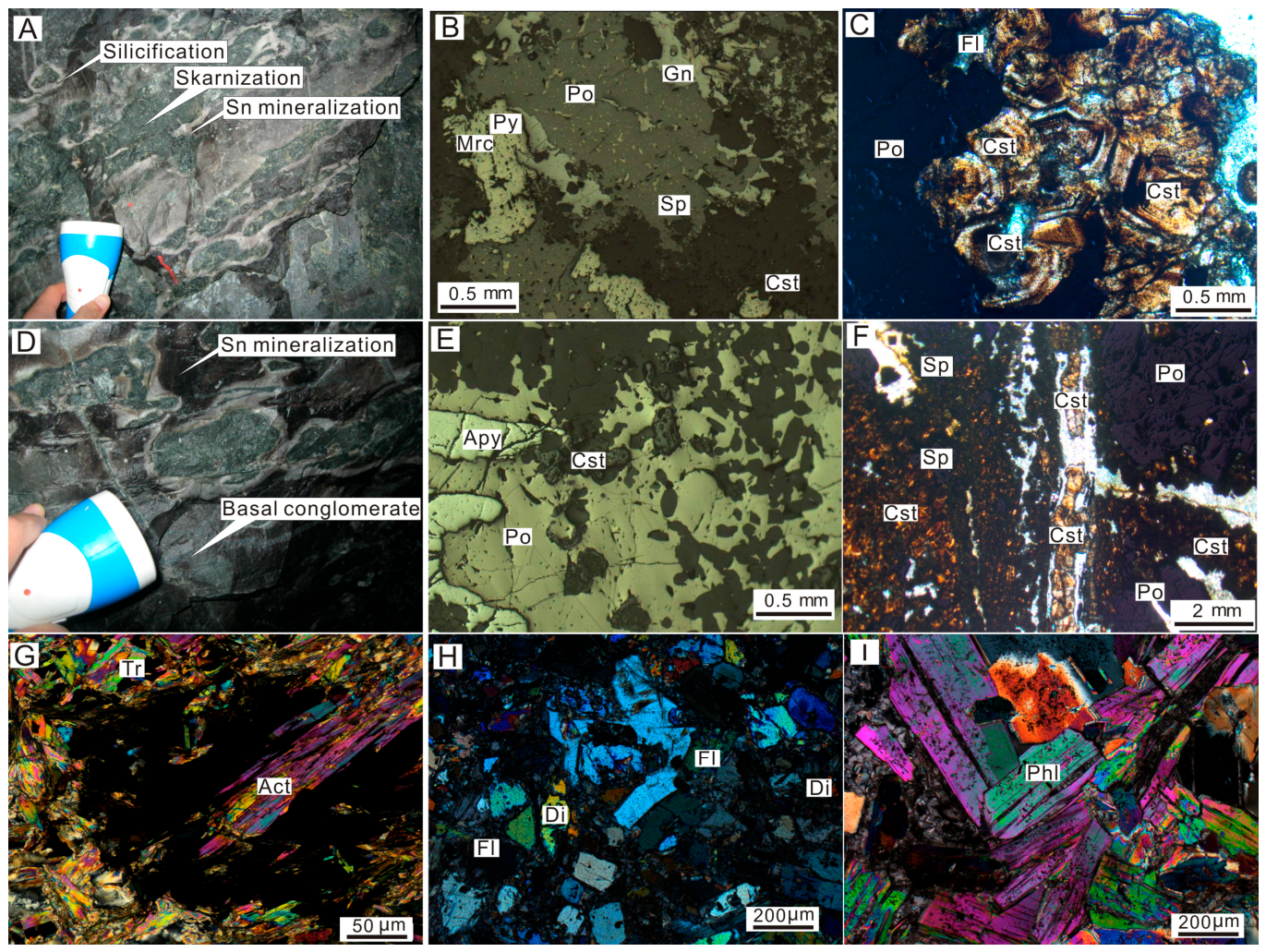
Two principal styles of Sn mineralization are investigated in this study: skarn-type and structure-controlled sulfide-type mineralization (Figure 3, Figure 4 and Figure 5). Skarn-type Sn mineralization occurs mainly within the upper part of the Laiziling granite and along contacts between the granite and carbonate-bearing wall rocks (Figure 3A and Figure 4A). The ores are characterized by cassiterite, scheelite, and fluorite, accompanied by variable amounts of pyrrhotite, galena, marcasite, and skarn minerals (Figure 4A and Figure 5A–C). Cassiterite commonly occurs as relatively coarse, euhedral to subhedral grains associated with the skarn assemblage. In contrast, sulfide-type Sn orebodies occur farther from the exposed intrusion and are preferentially hosted by the unconformity between Cambrian and Devonian strata and by interlayered fracture zones within the sedimentary sequence (Figure 3B and Figure 4B). These orebodies consist mainly of cassiterite, pyrite, pyrrhotite, sphalerite, galena, and quartz hosted by strongly altered tectonic breccias. Cassiterite is commonly associated with sulfide minerals and locally occurs as rounded or irregular grains overprinted by later sulfide mineralization (Figure 5D–F). Skarn-related silicate minerals, including tremolite, actinolite, diopside, and phlogopite, are also locally present in the sulfide-type ores (Figure 5G–I). The occurrence of cassiterite–sulfide mineralization within structurally disrupted and intensely altered rocks has led to contrasting interpretations involving either sedimentary (placer-related) processes or hydrothermal mineralization [20,49].
Figure 4.
(A) Geologic sketch map of the Xianghualing No. 39 exploration line, and (B) geologic sketch map of the Xianghualing No. 88 exploration line (modified after [20]). The locations of the cross-sections are shown in Figure 3A.
Figure 5.
Photographs of the skarn- and sulfide-type of mineralization from the Xianghualing Sn deposit. (A) Skarn-type ore. (B) Sulfide-type ore. (C,E) Mineral association of the skarn ore. (D,F) Mineral association of the sulfide ore; (G) Tremolite and actinolite in skarn ore. (H,I) Fluorite, diopside, and phlogopite in sulfide ore. Abbreviations: Gn: Galena; Po: Pyrrhotite; Py: pyrite; Mrc: Marcasite; Sp: Sphalerite; Cst: Cassiterite; Apy: Arsenopyrite; Fl: Fluorite; Tr: Tremolite; Act: Actinolite; Di: Diopside; Phl: Phlogopite.
The systematic spatial transition from intrusion-proximal skarn-type ores to structurally hosted cassiterite–sulfide ores farther from the Laiziling granite provides the geological basis for evaluating whether these contrasting mineralization styles record separate ore-forming processes or different expressions of the same granite-related mineralizing system.
4. Samples and Analytical Methods
Twenty-eight representative cassiterite-bearing ore samples were collected from the skarn-type and sulfide-type mineralization zones, respectively, for cassiterite U–Pb dating and trace element analysis. Samples of skarn-type mineralization were collected from field sample numbers XHL144 (Figure 4A and Figure 5C), whereas samples of sulfide-type mineralization were collected from field sample numbers XHL141–143 (Figure 4B and Figure 5F). Cassiterite grains were examined by transmitted- and reflected-light microscopy and cathodoluminescence (CL) imaging to characterize their internal textures and identify domains suitable for in situ U–Pb and geochemical analyses. Analytical spots were preferentially placed on inclusion-free domains lacking visible fractures or secondary overprinting.
4.1. Cassiterite Cathodoluminescence (CL) Imaging
CL images of cassiterite were obtained from carbon-coated epoxy resin mounts using a JEOL JSM5410LV scanning electron microscope (SEM; JEOL Ltd., Tokyo, Japan) fitted with a Gatan Chroma CL imaging system (Gatan, Inc., Pleasanton, CA, USA), at the National Research Center for Geoanalysis, Chinese Academy of Geological Sciences, Beijing, China. CL images were acquired at 20 kV acceleration voltages, with a current of 6 nA and a focused electron beam using the JEOL Semafore digital image acquisition software (version 4.0; JEOL Ltd., Tokyo, Japan).
4.2. Cassiterite LA-ICP-MS U-Pb Dating
In situ cassiterite U–Pb dating and trace elemental analysis were performed at the MNR Key Laboratory of Metallogeny and Mineral Assessment, Institute of Mineral Resources, Chinese Academy of Geological Sciences, using a Bruker M90 ICP-MS (Bruker, Bremen, Germany) equipped with a Resonatics Resolution S–155 (193 nm) laser ablation system. Cassiterite grains were analyzed using a laser energy density of 6 J/cm2, a laser pulse rate of 4 Hz, and a spot size of 64 µm. Helium gas carrying the ablated sample aerosol was mixed with argon (carrier gas) and nitrogen (additional di-atomic gas) to enhance sensitivity, and finally flowed into the ICP-MS instrument [30]. The reference materials NIST SRM612 were analyzed to calibrate mineral trace element contents, and the cassiterite AY-4 was tested for isotopic calibration. Cassiterite AY-4 was the most widely used laboratory standard at present, which has been well analyzed using ID-TIMS with a U–Pb age of 158.2 ± 0.4 Ma [29]. We also analyzed the zircon GJ-1 as the isotopic monitor standard. Every ten sample spots were followed by two AY-4 analyses, two NIST SRM612 analyses, and two GJ-1 analyses.
Each spot analysis incorporated a background acquisition of approximately 20s followed by 40s sample data acquisition. Prior to analysis, the system was optimized using NIST SRM612 ablated to ensure maximum signal intensity and low oxidation ratio (ThO/Th < 0.4%). Raw data reduction was performed off-line using ICPMS DataCal software (version 10.1; [54]). Tera-Wasserburg concordia diagrams and weighted mean 206Pb/238U age calculations were processed using Glitter and Isoplot programs (version 3.75; [55]). During the analytical session, repeated analyses of the AY-4 cassiterite reference material yielded a weighted mean 206Pb/238U age of 155.5 ± 2.2 Ma (2σ, MSWD = 0.98), whereas analyses of the GJ-1 zircon monitor yielded a weighted mean 206Pb/238U age of 600.5 ± 2.7 Ma (2σ, MSWD = 0.40). These results are consistent with their recommended values within analytical uncertainty [29], confirming the accuracy and reproducibility of the analytical procedure. Common Pb correction was performed using the 207Pb-based correction method. The 207Pb/206Pb ratios of common Pb used for correction were 0.869 ± 0.058 for the skarn-type cassiterite dataset and 0.861 ± 0.046 for the sulfide-type cassiterite dataset, respectively. The corrected isotopic ratios were subsequently used for calculation of the cassiterite U–Pb ages. Individual isotopic ratios are reported with 1σ uncertainties, whereas weighted mean ages are reported with 2σ uncertainties [30].
4.3. Cassiterite Major and Trace Elements Analyses
Cassiterite EMPA analyses were carried out with a JXA8230 electron microprobe (JEOL Ltd., Tokyo, Japan) also at the MNR Key Laboratory of Metallogeny and Mineral Assessment. Elements including Sn, Al, Fe, Mn, Nb, Ta, Ti, and W were analyzed during spot analysis at the settings of 25-kV accelerating voltage, 10-nA beam current, and 10-μm beam size. The lowest detection limit for the elements analyzed is 0.01%, and the relative error is ±2%.
The same cassiterites were conducted separately for LA-ICP-MS trace element analyses at the same Laboratory. Prior to LA–ICP–MS trace-element analysis, the corresponding analytical domains were characterized by EPMA to determine their majorelement compositions, including SnO2 contents. The spot-specific Sn concentrations calculated from the measured SnO2 contents of the corresponding EPMA analytical domains were used for internal-standard calibration during LA–ICP–MS data reduction. Therefore, a uniform Sn concentration was not assumed for all cassiterite analyses, and variations in Sn contents among different grains and cassiterite populations were explicitly taken into account. The analytical system is composed of a GeoLas Pro 193-nm ArFexcimer laser ablation system (Coherent, Göttingen, Germany) and an Agilent 7500 × ICP-MS instrument (Agilent Technologies, Tokyo, Japan), with a laser energy density of 8 J/cm2, a repetition of 7 Hz, and a spot size of 64 μm. Helium was used as carrier gas and was mixed with argon via a T-connector before entering the ICP-MS. Standard reference material (NIST 612) was used for cassiterite trace element calculation using Sn as internal standard. Data reduction was carried out by the ICPMSDataCal program [54].
5. Results
5.1. Cassiterite CL Textures
Representative optical and CL images of cassiterite from the two mineralization styles are shown in Figure 5 and Figure 6. For clarity, cassiterite from skarn-type ores is hereafter referred to as Cst-SK, whereas cassiterite from sulfide-type ores is referred to as Cst-SU.
Figure 6.
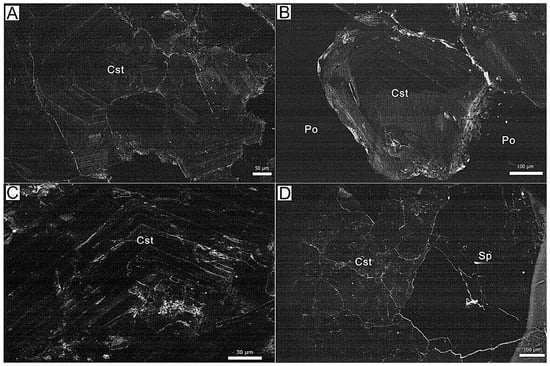
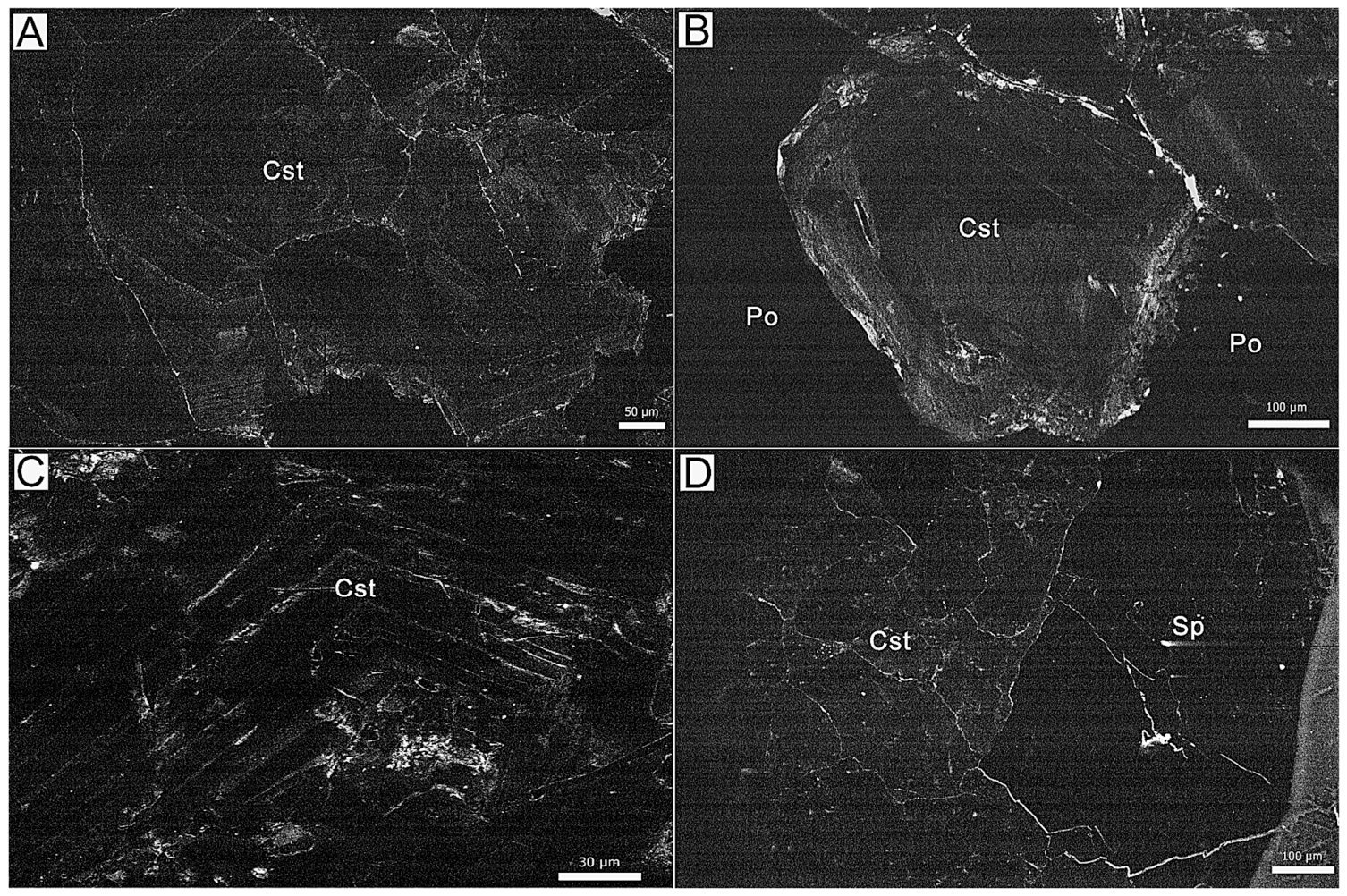
SEM-CL images of cassiterites from the Xianghualing Sn deposit. (A,B) Cassiterite from skarn ore. (C,D) Cassiterite from sulfide ore. Abbreviations: Cst: Cassiterite; Po: Pyrrhotite; Sp: Sphalerite.
Cst-SK grains are generally 100–500 μm in size and predominantly euhedral to subhedral (Figure 5C and Figure 6A,B). Many grains display well-developed oscillatory zoning under CL, although overall CL intensities are low. Some grains are fractured, with fractures locally filled by later cassiterite (Figure 6A). These fracture-filling domains commonly exhibit brighter CL responses than the surrounding primary cassiterite (Figure 6A,B).
Cst-SU grains are generally smaller, ranging from approximately 50 to 250 μm (Figure 5F and Figure 6C,D), and display greater textural variability. Two principal textural populations are recognized. The first consists of euhedral to subhedral grains with oscillatory growth zoning broadly similar to Cst-SK (Figure 6C). The second comprises relatively small, anhedral grains lacking obvious oscillatory zoning (Figure 6D). Most Cst-SU grains exhibit weak and relatively homogeneous CL responses. Some grains have rounded or irregular cores and are locally overgrown or crosscut by later sulfide minerals, particularly sphalerite (Figure 5F and Figure 6D).
5.2. Cassiterite U–Pb Geochronology
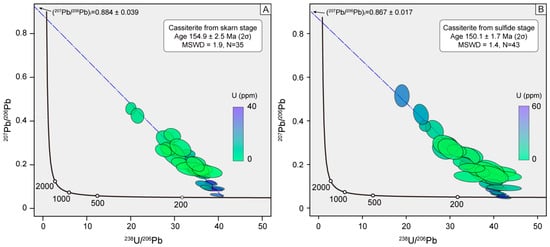
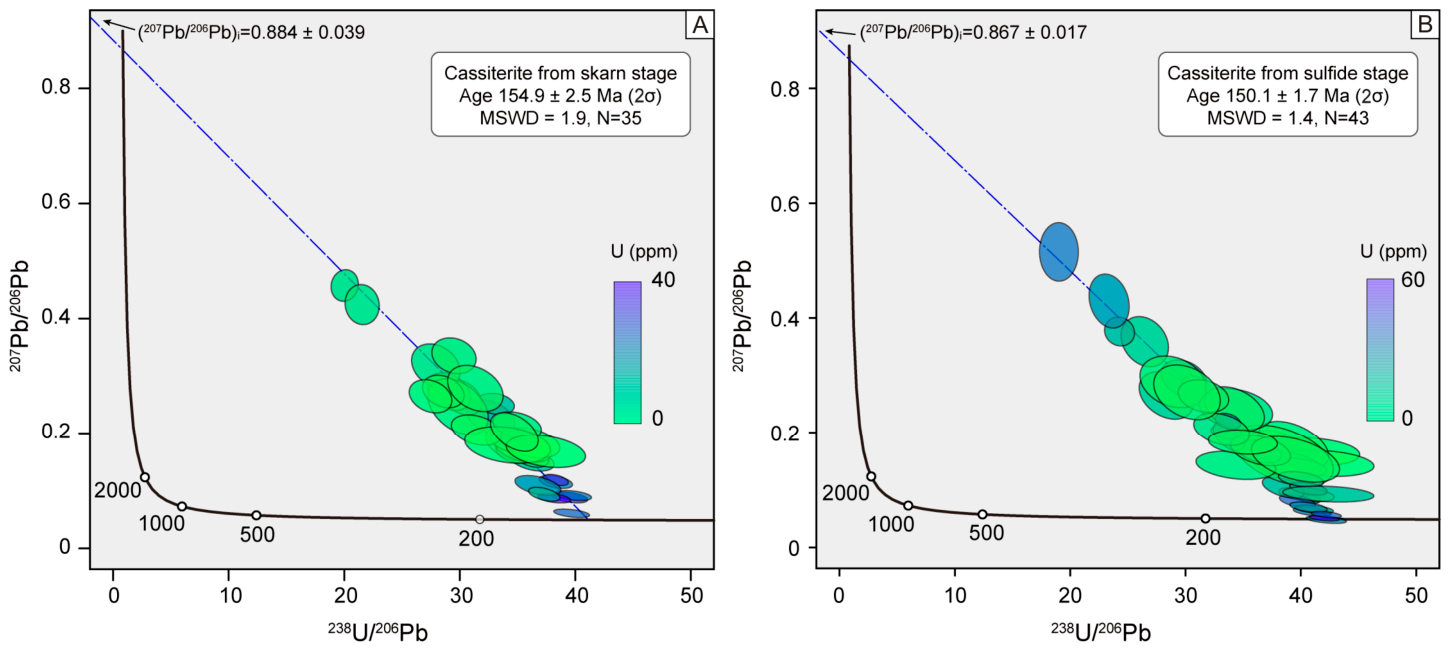
A total of 78 valid cassiterite U–Pb analyses were obtained from the skarn- and sulfide-type ores. Analytical results are reported in Table S1 and illustrated on Tera–Wasserburg concordia diagrams in Figure 7.
Figure 7.
U-Pb Tera-Wasserburg concordia plots for samples from the Xianghualing Sn deposit. (A) Cassiterite from skarn-type orebody. (B) Cassiterite from sulfide-type orebody. MSWD-mean square of weighted deviates.
For Cst-SK, 35 analyses yielded measurable Pb contents and were used for age calculation. Pb concentrations range from 0.66 to 9.96 ppm (average = 2.95 ppm), U concentrations from 5.49 to 44.6 ppm (average = 15.6 ppm), and Th concentrations are generally <0.23 ppm. These analyses define a Tera–Wasserburg lower-intercept age of 154.9 ± 2.5 Ma (2σ, n = 35, MSWD = 1.9; Figure 7A).
For Cst-SU, 43 analyses yielded measurable Pb contents and were used for age calculation. Pb concentrations range from 0.36 to 8.57 ppm (average = 2.19 ppm), U concentrations from 3.09 to 59.3 ppm (average = 17.9 ppm), and Th concentrations are generally <0.24 ppm. These analyses define a Tera–Wasserburg lower-intercept age of 150.1 ± 1.7 Ma (2σ, n = 43, MSWD = 1.4; Figure 7B).
5.3. Cassiterite Geochemistry
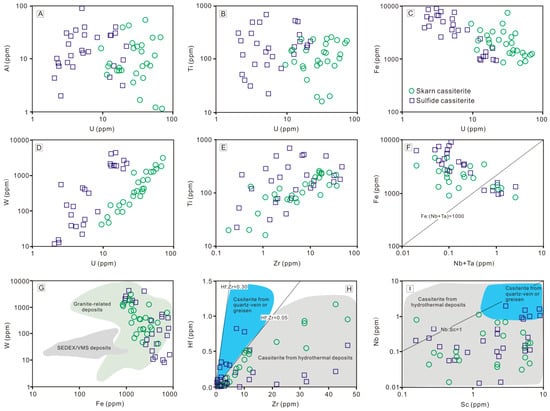
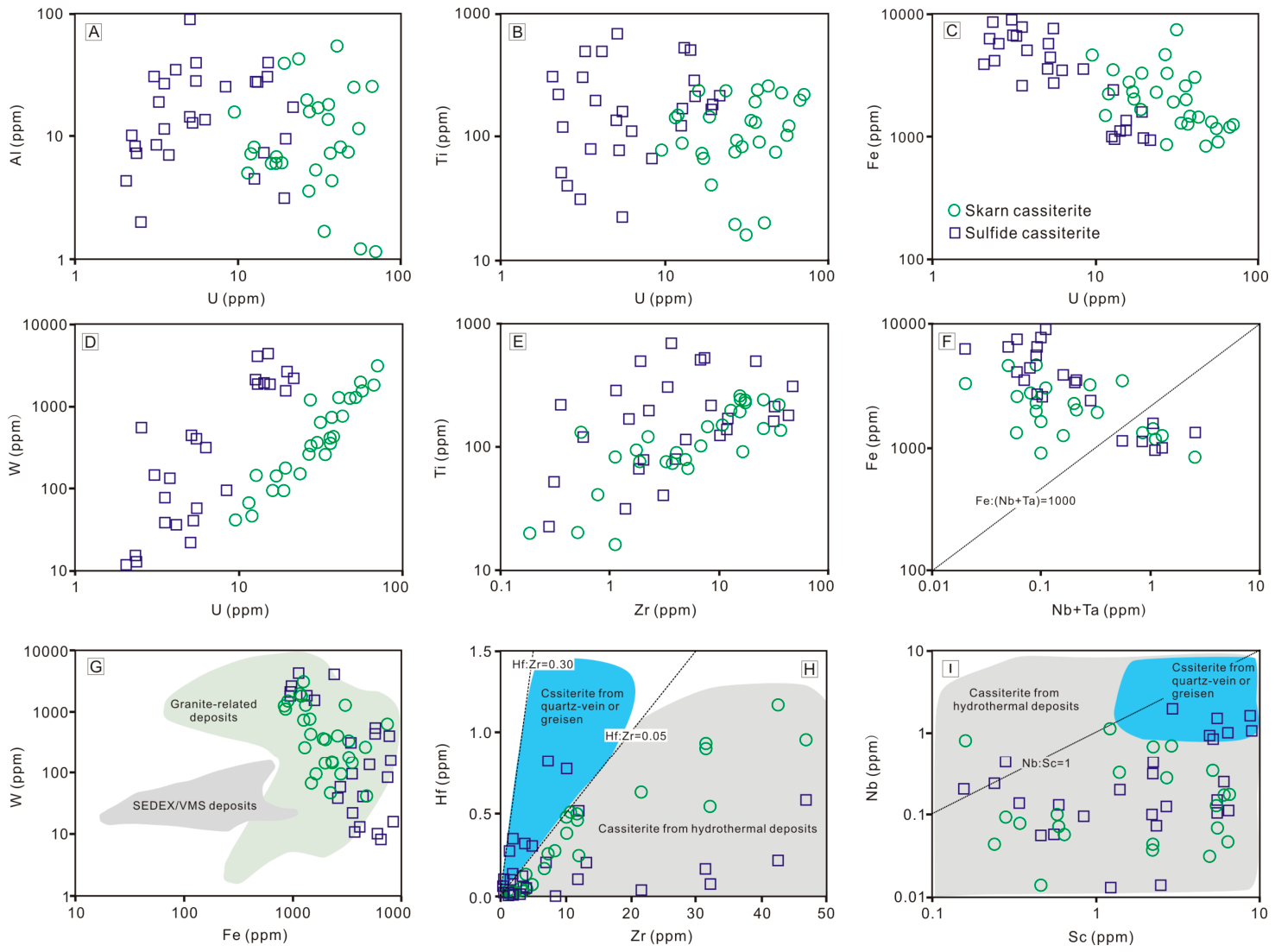
Major and trace element compositions of Cst-SK and Cst-SU are reported in Table S2 and illustrated in Figure 8.
Figure 8.
Geochemical plots of the cassiterites from the Xianghualing Sn deposit. Plot of (A) U vs. Al, (B) U vs. Ti, (C) U vs. Fe, (D) U vs. W, (E) Zr vs. Ti, (F) Fe vs. Nb + Ta, (G) Fe vs. W modified by [56], (H) Zr vs. Hf, modified by [16], and (I) Sc vs. Nb, modified by [16].
Cassiterite from both mineralization styles is dominated by SnO2, with concentrations of 99.10–100.40 wt.% in Cst-SK and 99.30–100.60 wt.% in Cst-SU. MnO, Al2O3, TiO2, Ta2O5, and Nb2O5 are generally below the EPMA detection limits. Cst-SK contains 0.02–0.26 wt.% FeO (average = 0.12 wt.%) and 0.06–0.23 wt.% WO3 (average = 0.15 wt.%).
Cst-SU displays greater compositional variability and can be divided into two compositional groups. One group contains 0.10–0.25 wt.% FeO (average = 0.17 wt.%) and 0.12–0.19 wt.% WO3 (average = 0.15 wt.%), broadly overlapping the compositions of Cst-SK. The second group has higher FeO contents of 0.29–0.71 wt.% (average = 0.44 wt.%) and lower WO3 contents of 0.01–0.03 wt.% (average = 0.01 wt.%; Table S2).
LA-ICP-MS analyses further document compositional differences within Cst-SU. One Cst-SU population contains 2.07–6.29 ppm U (average = 4.07 ppm), 8.12–547 ppm W (average = 127 ppm), 3411–11,223 ppm Fe (average = 6047 ppm), and 5.42–9.16 ppm Sc (average = 6.63 ppm). The second population contains 12.6–21.7 ppm U (average = 16.0 ppm), 1535–4278 ppm W (average = 2480 ppm), 929–1575 ppm Fe (average = 1124 ppm), and 0.16–5.10 ppm Sc (average = 1.74 ppm). The latter population overlaps Cst-SK, which contains 9.51–69.9 ppm U (average = 32.5 ppm), 41.4–3097 ppm W (average = 678 ppm), 831–7363 ppm Fe (average = 2275 ppm), and 0.35–5.22 ppm Sc (average = 1.87 ppm; Table S2; Figure 8A–D,I).
Cst-SK and Cst-SU show broadly overlapping Al and Ti concentrations. Cst-SK contains 1.14–54.3 ppm Al (average = 13.7 ppm) and 16.2–259 ppm Ti (average = 127 ppm), whereas Cst-SU contains 1.98–99.1 ppm Al (average = 20.0 ppm) and 22.5–524 ppm Ti (average = 217 ppm). Both populations are characterized by generally low concentrations of high field strength elements. Cst-SK contains 0.51–36.4 ppm Zr (average = 10.3 ppm), 0.01–1.33 ppm Hf (average = 0.30 ppm), 0.01–1.91 ppm Nb (average = 0.39 ppm), and 0.01–0.27 ppm Ta (average = 0.05 ppm). Corresponding concentrations in Cst-SU are 0.09–46.79 ppm Zr (average = 9.41 ppm), 0.01–1.17 ppm Hf (average = 0.29 ppm), 0.01–2.29 ppm Nb (average = 0.39 ppm), and 0.01–0.26 ppm Ta (average = 0.04 ppm; Table S2; Figure 8F,H,I).
6. Discussion
6.1. Temporal and Genetic Relationships Between Skarn- and Sulfide-Type Sn Mineralization
Late Jurassic magmatism in the Nanling region was accompanied by widespread W–Sn mineralization and emplacement of highly evolved granitic plutons [13,45]. At Xianghualing, previous zircon U–Pb dating constrains emplacement of the Laiziling granite to 155–148 Ma [33,35,36], whereas cassiterite U–Pb and muscovite Ar–Ar ages indicate that Sn mineralization occurred broadly between 161 and 152 Ma [22,23,28]. These data establish a close temporal association between highly evolved granitic magmatism and Sn mineralization, but the relationship between the contrasting skarn- and structure-controlled sulfide-type mineralization has remained insufficiently constrained.
Our cassiterite U–Pb data provide direct age constraints on both mineralization styles. Cassiterite from the skarn-type ores yield a lower-intercept age of 154.9 ± 2.5 Ma, whereas cassiterite from the sulfide-type ores yield an age of 150.1 ± 1.7 Ma (Figure 7). Within uncertainty, both ages overlap with the 155–148 Ma emplacement and late-stage evolution of the Laiziling granite. The skarn-type mineralization occurs within the upper part of the intrusion and along granite–wall-rock contacts, whereas the sulfide-type mineralization is hosted by unconformities and interlayered fracture zones farther from the exposed granite (Figure 3 and Figure 4). Although the weighted mean ages of the two cassiterite populations differ nominally by ~4.8 Ma, their uncertainties overlap at the 2σ level. We therefore do not interpret this apparent age difference as evidence for two discrete mineralization events. Rather, both ages are consistent with protracted mineralization during the 155–148 Ma evolution of the Laiziling magmatic–hydrothermal system [21,22,23,28,34,35,38,39]. The slightly younger central age of the sulfide-type cassiterite may be consistent with outward hydrothermal evolution, but the present geochronological resolution does not permit the duration of this process to be quantified. In addition, the 150 Ma age of the sulfide-type cassiterite is substantially younger than deposition of the Cambrian and Devonian host strata and formation of the intervening unconformity. Therefore, the present cassiterite mineralization cannot represent primary sedimentary or syngenetic placer accumulation. Rather, the older stratigraphic and structural architecture was overprinted by a Late Jurassic hydrothermal mineralizing event.
Cassiterite textures and compositions provide additional evidence for a genetic relationship between the two ore styles. Cst-SK is dominated by euhedral to subhedral grains with oscillatory zoning, whereas Cst-SU is more texturally variable. Nevertheless, part of the Cst-SU population preserves euhedral to subhedral morphologies and oscillatory zoning similar to Cst-SK (Figure 6), indicating broadly comparable hydrothermal growth conditions. The two cassiterite populations also show substantial compositional overlap. Because spot-specific Sn concentrations determined from the corresponding EPMA analyses were used for internal-standard calibration, the observed compositional differences between Cst-SK and the two Cst-SU populations are unlikely to result from analytical artifacts associated with assuming a homogeneous Sn content. Instead, they are considered to reflect genuine compositional variations among the cassiterite populations. Both Cst-SK and a major population of Cst-SU contain broadly similar U, W, Fe, Al, Ti, Sc, Zr, Hf, Nb, and Ta concentrations (Figure 8). Both are characterized by relatively high Fe and W and generally low Nb, Ta, and Hf contents, consistent with cassiterite crystallization from hydrothermal fluids associated with evolved granitic systems [16,31,57,58]. These similarities are difficult to reconcile with models in which the sulfide-type cassiterite was derived independently from the sedimentary host rocks. The compositional heterogeneity of Cst-SU deserves particular attention. Two broad compositional populations can be distinguished. One is relatively enriched in W and U (Figure 8D) and depleted in Fe and Sc (Figure 8C,I), and broadly overlaps Cst-SK, whereas the other is characterized by relatively lower W and U (Figure 8D) and higher Fe and Sc concentrations (Figure 8C,I). This compositional variability is accompanied by greater textural heterogeneity in Cst-SU, which includes both euhedral to subhedral, oscillatory-zoned grains resembling Cst-SK and smaller anhedral grains lacking obvious oscillatory zoning. These observations suggest that cassiterite in the distal sulfide ores is commonly related to changes in fluid composition and physicochemical conditions during hydrothermal evolution rather than necessarily recording independent mineralizing events [24,59,60]. Those Cst-SK-like population may preserve more directly the geochemical characteristics of the granite-derived mineralizing fluids, whereas the Fe–Sc-rich and W–U-poor population is consistent with stronger physicochemical modification of the fluids during outward migration and interaction with sedimentary wall rocks. Such modification may have involved changes in temperature, fluid composition, redox state, and fluid–rock reaction [24,59,61]. At Xianghualing, independent fluid inclusion and mineral chemical studies likewise indicate progressive evolution and cooling of granite-derived hydrothermal fluids during cassiterite precipitation [24,25,60]. These variations suggest progressive modification of the mineralizing fluid during migration away from the intrusion. Thus, the sulfide-type mineralization is better interpreted not as a simple continuation of the skarn ore, but as a distal and compositionally evolved expression of the same granite-related magmatic–hydrothermal system.
6.2. Hydrothermal Evolution and Structural Control on Distal Sn Mineralization
Sn is commonly enriched during advanced differentiation of granitic magmas and subsequently transferred into aqueous fluids during the magmatic–hydrothermal transition [4,5,26]. In hydrothermal solutions, Sn is transported predominantly as reduced Sn(II)-chloride complexes, and cassiterite precipitation can be promoted by cooling, oxidation, fluid mixing, and fluid–rock interaction [8,10,25]. These processes provide a plausible framework for the spatial transition from proximal skarn-type to distal sulfide-type mineralization at Xianghualing.
The skarn-type ores occur within the upper part of the Laiziling granite and along contacts between evolved granite and carbonate-bearing wall rocks. Their close spatial association with albite granite and greisen, together with the 155 Ma cassiterite age, indicates formation during late-stage magmatic–hydrothermal evolution of the intrusion. Interaction between granite-derived fluids and reactive carbonate wall rocks likely promoted skarn alteration and cassiterite precipitation, as commonly observed in granite-related Sn skarn systems [9,11,62,63]. Continued fluid migration along unconformities and interlayered fracture zones enabled sulfide-type Sn mineralization farther from the intrusion. Importantly, sulfide-type mineralization is not strictly restricted to areas lacking skarn alteration. In the Xianghualing deposit, skarn alteration and sulfide mineralization show a spatial transition rather than a mutually exclusive distribution [20]. Although the most developed sulfide-type Sn orebodies occur within distal sedimentary wall rocks along unconformities and interlayered fracture zones, local sulfide-bearing assemblages may also occur along fractures adjacent to or cutting skarnized rocks. This relationship indicates that structural permeability, rather than simply the presence or absence of skarn alteration, was a critical control on the distribution of sulfide-type mineralization. Similar spatial transitions between proximal skarn/greisen systems and distal vein- or structure-controlled Sn mineralization have been documented in other granite-related Sn systems, where evolving magmatic–hydrothermal fluids migrate outward along permeable structures and interact with compositionally different wall rocks [5,59,60,64]. The Cambrian sedimentary rocks at Xianghualing likely acted as mechanically favorable and chemically reactive wall rocks during outward hydrothermal migration rather than as the primary source of Sn. Fracturing and brecciation enhanced permeability, whereas fluid–rock interaction modified fluid chemistry and promoted cassiterite–sulfide precipitation. Such a transition from proximal intrusion-related mineralization to distal structure-controlled mineralization reflects progressive evolution of a single granite-related magmatic–hydrothermal system [24,25,61].
As mineralizing fluids migrated outward, their physicochemical conditions would have evolved through cooling and increasing interaction with the sedimentary wall rocks. The sulfide-type ores are characterized by abundant pyrite, pyrrhotite, sphalerite, galena, and locally arsenopyrite associated with cassiterite (Figure 5), indicating a hydrothermal environment distinct from that of the proximal skarn ores. The greater textural and compositional variability of Cst-SU is consistent with this more evolved hydrothermal setting. The localization of sulfide-type ores along the Cambrian–Devonian unconformity and interlayered fracture zones further indicate a strong structural control on fluid migration. These discontinuities juxtapose rocks with contrasting mechanical properties and are characterized by brecciation and intense hydrothermal alteration, features consistent with enhanced permeability during mineralization (Figure 5D). Rather than acting as the source of Sn, the unconformities and interlayered fractures are therefore interpreted to have provided preferential pathways and depositional sites for externally introduced hydrothermal fluids. Fluid mixing may have contributed to mineralization within these structures. Studies of granite-related Sn systems show that mixing between magmatic fluids and externally derived waters can induce cooling and changes in redox state and fluid chemistry, thereby destabilizing dissolved Sn complexes and promoting cassiterite precipitation [4,5,10,65]. Recent fluid inclusion and cassiterite studies of the Xianghualing skarn system likewise indicate that the ore-forming fluids were predominantly derived from highly evolved granitic magma and that cooling and fluid interaction were important during cassiterite deposition [24,25].
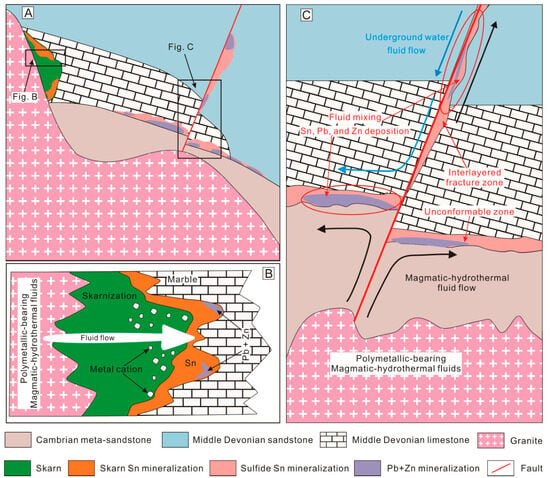
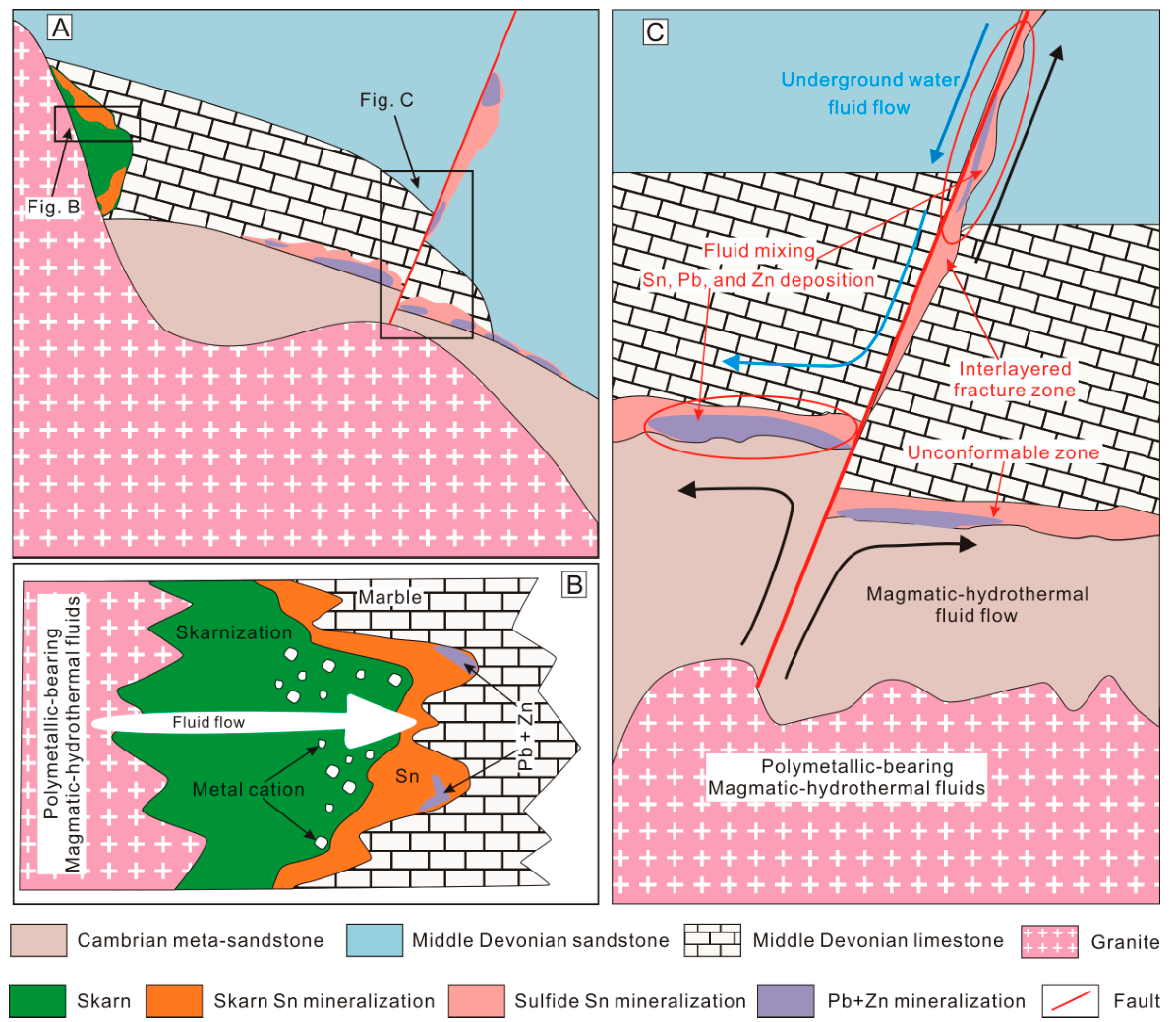
However, the present U–Pb and cassiterite trace-element dataset does not directly identify an external fluid component. Therefore, mixing between magmatic–hydrothermal fluids and meteoric water should be regarded as a plausible mechanism rather than uniquely demonstrated by this study. In addition, the absolute formation ages of the ore-controlling faults and interlayered fracture zones are not directly constrained. The Cambrian–Devonian unconformity clearly predates Late Jurassic mineralization, whereas localization of 150 Ma cassiterite–sulfide mineralization along these structures indicates that they were hydraulically active during the mineralizing event. We therefore interpret these structures as pre-existing discontinuities that were exploited, and locally reactivated, by Late Jurassic hydrothermal fluids. Therefore, the more robust interpretation is that granite-derived hydrothermal fluids migrated away from the Laiziling intrusion along high-permeability structures and experienced progressive physicochemical modification through cooling, fluid–rock reaction, and possibly fluid mixing [5,6,8,9,26,60]. The resulting architecture can be summarized as an intrusion-centered hydrothermal system. Proximal interaction between granite-derived fluids and carbonate-bearing wall rocks formed skarn-type Sn mineralization, whereas continued outward migration of evolving hydrothermal fluids along unconformities and interlayered fracture zones generated distal cassiterite–sulfide mineralization (Figure 9). This model explains the observed spatial distribution, geochronological relationship, cassiterite chemistry, and contrasting ore mineral assemblages of the two mineralization styles.
Figure 9.
Model map of the skarn- and sulfide-types of mineralization. (A) Sketch map of the skarn- and sulfide-types of mineralization. (B) Model map of the skarn-type Sn mineralization, modified by [62]. (C) Model map of the sulfide-type Sn mineralization, modified by [10,63,66].
6.3. Implications for Sn Metallogeny and Exploration in the Nanling Region
Structure-controlled cassiterite–sulfide mineralization is not restricted to Xianghualing. Comparable Sn-bearing sulfide ores occur at several deposits in the Nanling region, including Shizhuyuan [67], Hehuaping [68], Weijia [21], Huangshaping [69], and other W–Sn polymetallic systems [4]. Available geochronological constraints place much of this mineralization within the 165–150 Ma interval of widespread Jurassic W–Sn magmatism in South China [3,14]. These regional relationships suggest that structurally hosted Sn mineralization may represent a recurring distal component of granite-related hydrothermal systems rather than an independent category of sedimentary Sn mineralization.
At Xianghualing, the combined geological, geochronological, and cassiterite-geochemical evidence supports a three-stage conceptual evolution (Figure 9). First, highly evolved granitic magmas were emplaced during Late Jurassic tectono-magmatic activity and generated Sn-bearing magmatic–hydrothermal fluids. Second, interaction between these fluids and reactive wall rocks near the intrusion produced proximal skarn-type Sn mineralization. Third, residual hydrothermal fluids migrated outward along unconformities and interlayered fracture zones, where progressive cooling, fluid–rock interaction, and potentially fluid mixing promoted cassiterite and sulfide precipitation.
This model has important implications for exploration. Unconformities and interlayered fracture zones surrounding highly evolved Sn-fertile granites should not be regarded simply as passive stratigraphic boundaries. Where connected to intrusion-related hydrothermal systems, such structures can serve as high-permeability pathways and favorable positions for distal Sn mineralization [11,66,70,71]. Exploration in Nanling Sn districts should therefore extend beyond exposed granite contacts and proximal skarn–greisen zones to structurally favorable horizons and fracture networks farther from known intrusions. More broadly, the Xianghualing deposit illustrates how contrasting mineralization styles can develop within a single evolving granite-related hydrothermal system [24,60,62]. Integrating direct cassiterite U–Pb geochronology with trace-element chemistry and structural relationships provides an effective approach for distinguishing hydrothermal Sn mineralization from superficially stratiform or sediment-hosted mineralization and for reconstructing the spatial evolution of granite-related Sn systems.
7. Conclusions
The following conclusions can be drawn from the geological relationships, cassiterite U–Pb geochronology, and geochemistry of the Xianghualing Sn polymetallic deposit:
- Skarn-type and sulfide-type Sn mineralization at Xianghualing formed during the Late Jurassic evolution of the Laiziling granite, with ages of 154.9 ± 2.5 Ma and 150.1 ± 1.7 Ma, respectively. These results indicate that the two ore styles represent different spatial expressions of a prolonged granite-related magmatic–hydrothermal system.
- Cassiterite from both mineralization styles shows a common magmatic–hydrothermal origin. The sulfide-type Sn mineralization represents a distal expression of the same system, developed through hydrothermal fluid migration, fluid–rock interaction, and physicochemical evolution.
- The Xianghualing deposit highlights the critical role of structural focusing in controlling distal Sn mineralization. Unconformities and interlayered fracture zones acted as preferential pathways for hydrothermal fluids and favorable sites for cassiterite precipitation, providing important implications for exploration of concealed Sn resources in granite-related districts.
Supplementary Materials
The following supporting information can be downloaded at: https://www.mdpi.com/article/10.3390/min16100990/s1, Table S1: LA-ICP-MS U–Pb cassiterite dating results in the Xianghualing Sn deposit; Table S2: Major and trace elements data of cassiterite in the Xianghualing Sn deposit.
Author Contributions
Conceptualization and methodology, all authors; validation, J.-H.W.; investigation and resources, Z.-F.Y. and S.-H.L.; data curation, J.-H.W.; writing—original draft preparation, J.-H.W.; writing—review and editing, Z.-F.Y. and F.-H.Z.; visualization, X.Z.; project administration, J.-H.W. and X.Z.; funding acquisition, J.-H.W. All authors have read and agreed to the published version of the manuscript.
Funding
This research was funded by the Special Science and Technology Fund of National Technology Innovation Center for Efficient Development of Strategic Rare Metal Mineral Resources, grant number GC2026KJ010001.
Data Availability Statement
All data and materials supporting the findings of this study are available within the article and its Supplementary Materials.
Acknowledgments
We thank Zheng Zhao for the assistance with the field and laboratory work. We are particularly indebted to Mei-Fu Zhou for the comments on a previous version of the manuscript that helped better crystallize some ideas that were too tangled up in a mushy discussion. We sincerely appreciate the Editor and the three reviewers for their careful evaluation, constructive comments, and valuable suggestions.
Conflicts of Interest
All authors are affiliated with Minmetals Exploration and Development Co., Ltd.; The authors declare that the research was conducted in the absence of any commercial or financial relationships that could be construed as a potential conflict of interest.
Abbreviations
The following abbreviations are used in this manuscript:
| Gn | Galena |
| Po | Pyrrhotite |
| Py | pyrite |
| Mrc | Marcasite |
| Sp | Sphalerite |
| Cst | Cassiterite |
| Apy | Arsenopyrite |
| Fl | Fluorite |
| Tr | Tremolite |
| Act | Actinolite |
| Di | Diopside |
| Phl | Phlogopite |
References
- Moss, R.; Tzimas, E.; Willis, P.; Arendorf, J.; Thompson, P.; Chapman, A.; Morley, N.; Sims, E.; Bryson, R.; Peason, J. Critical Metals in the Path Towards the Decarbonisation of the EU Energy Sector. Assessing Rare Metals as Supply-Chain Bottlenecks in Low-Carbon Energy Technologies; JRC Report EUR; European Commission, Joint Research Centre: Luxembourg, 2013; pp. 1–246. [Google Scholar]
- Schulz, K.J.; DeYoung, J.H.; Seal, R.R.; Bradley, D.C. Critical Mineral Resources of the United States: Economic and Environmental Geology and Prospects for Future Supply; U.S. Geological Survey: Reston, VA, USA, 2018; pp. 1–68. [Google Scholar]
- Mao, J.W.; Ouyang, H.G.; Song, S.W.; Santosh, M.; Yuan, S.D.; Zhou, Z.H.; Zheng, W.; Liu, H.; Liu, P.; Cheng, Y.B.; et al. Geology and Metallogeny of Tungsten and Tin Deposits in China. In Mineral Deposits of China; Society of Economic Geologists: Littleton, CO, USA, 2019; pp. 411–482. [Google Scholar]
- Lehmann, B. Formation of tin ore deposits: A reassessment. Lithos 2021, 402–403, 105756. [Google Scholar] [CrossRef] [Scilit]
- Heinrich, C.A. The chemistry of hydrothermal tin(-tungsten) ore deposition. Econ. Geol. 1990, 85, 457–481. [Google Scholar] [CrossRef] [Scilit]
- Zhao, P.; Chu, X.; Williams-Jones, A.E.; Mao, J.; Yuan, S. The role of phyllosilicate partial melting in segregating tungsten and tin deposits in W-Sn metallogenic provinces. Geology 2022, 50, 121–125. [Google Scholar] [CrossRef] [Scilit]
- Taylor, J.R.; Wall, V.J. Cassiterite solubility, tin speciation, and transport in a magmatic aqueous phase. Econ. Geol. 1993, 88, 437–460. [Google Scholar] [CrossRef] [Scilit]
- Migdisov, A.A.; Williams-Jones, A.E. An experimental study of cassiterite solubility in HCl-bearing water vapour at temperatures up to 350 °C. Implications for tin ore formation. Chem. Geol. 2005, 217, 29–40. [Google Scholar] [CrossRef] [Scilit]
- Zhao, P.; Zajacz, Z.; Tsay, A.; Yuan, S. Magmatic-hydrothermal tin deposits form in response to efficient tin extraction upon magma degassing. Geochim. Cosmochim. Acta 2021, 316, 331–346. [Google Scholar] [CrossRef] [Scilit]
- Harlaux, M.; Kouzmanov, K.; Gialli, S.; Marger, K.; Bouvier, A.-S.; Baumgartner, L.P.; Rielli, A.; Dini, A.; Chauvet, A.; Kalinaj, M.; et al. Fluid mixing as primary trigger for cassiterite deposition: Evidence from in situ δ18O-δ11B analysis of tourmaline from the world-class San Rafael tin (-copper) deposit, Peru. Earth Planet. Sci. Lett. 2021, 563, 116889. [Google Scholar] [CrossRef] [Scilit]
- Zhao, P.; Yuan, S.; Mao, J.; Yuan, Y.; Zhao, H.; Zhang, D.; Shuang, Y. Constraints on the timing and genetic link of the large-scale accumulation of proximal W–Sn–Mo–Bi and distal Pb–Zn–Ag mineralization of the world-class Dongpo orefield, Nanling Range, South China. Ore Geol. Rev. 2018, 95, 1140–1160. [Google Scholar] [CrossRef] [Scilit]
- Xia, L.; Yu, J.-H.; Zhou, M.-F.; Zhang, R. The Zonal Distribution of W- and Sn-mineralized Granites in the Nanling Metallogenic Belt, South China: The Role of Magma Sources and Differentiation. Econ. Geol. 2026. [Google Scholar] [CrossRef] [Scilit]
- Mao, J.; Xie, G.; Guo, C.; Chen, Y. Large-scale tungsten-tin mineralization in the Nanling region, South China: Metallogenic ages and corresponding geodynamic processes. Acta Petrol. Sin. 2007, 23, 2329–2338, (In Chinese with English abstract). [Google Scholar]
- Yuan, S.; Williams-Jones, A.E.; Romer, R.L.; Zhao, P.; Mao, J. Protolith-Related Thermal Controls on the Decoupling of Sn and W in Sn-W Metallogenic Provinces: Insights from the Nanling Region, China. Econ. Geol. 2019, 114, 1005–1012. [Google Scholar] [CrossRef] [Scilit]
- Sun, H.; Zhao, Z.; Yan, G.; Lü, Z.; Huang, Z.; Yu, X. Geological and geochronological constraints on the formation of the Jurassic Maozaishan Sn deposit, Dayishan orefield, South China. Ore Geol. Rev. 2018, 94, 212–224. [Google Scholar] [CrossRef] [Scilit]
- Wang, C.; Zhao, K.-D.; Chen, J.; Ma, X. Examining fingerprint trace elements in cassiterite: Implications for primary tin deposit exploration. Ore Geol. Rev. 2022, 149, 105082. [Google Scholar] [CrossRef] [Scilit]
- Mao, J.; Cheng, Y.; Chen, M.; Franco, P. Major types and time–space distribution of Mesozoic ore deposits in South China and their geodynamic settings. Miner. Depos. 2013, 48, 267–294. [Google Scholar] [CrossRef] [Scilit]
- Wang, R.; Xie, L.; Lu, J.; Zhu, J.; Chen, J. Diversity of Mesozoic tin-bearing granites in the Nanling and adjacent regions, South China: Distinctive mineralogical patterns. Sci. China Earth Sci. 2017, 60, 1909–1919. [Google Scholar] [CrossRef] [Scilit]
- Zhao, K.; Jiang, S.-Y.; Jiang, Y.-H.; Wang, R.-C. Mineral chemistry of the Qitianling granitoid and the Furong tin ore deposit in Hunan Province, South China: Implication for the genesis of granite and related tin mineralization. Eur. J. Miner. 2005, 17, 635–648. [Google Scholar] [CrossRef] [Scilit]
- Lai, S.-H. Research on Mineralization of the Xianghualing Tin Polymetallic Deposit, Hunan Province, China. Ph.D. Dissertation, China University of Geosciences, Beijing, China, 2014; pp. 1–140. [Google Scholar]
- Huang, X.-D. Middle-Late Jurassic Cu-Pb-Zn-Bearing and W-Bearing Granitoids and Their Skarn Mineralization in the Nanling Range, South China: The Tongshanling and Weijia Deposits. Ph.D. Dissertation, Université d’Orléans, Orléans, France, 2018; pp. 1–223. [Google Scholar]
- Wu, J.-H.; Li, H.; Algeo, T.J.; Jiang, W.-C.; Zhou, Z.-K. Genesis of the Xianghualing Sn–Pb–Zn deposit, South China: A multi-method zircon study. Ore Geol. Rev. 2018, 102, 220–239. [Google Scholar] [CrossRef] [Scilit]
- Yuan, S.; Peng, J.; Shen, N.; Hu, R.; Dai, T. 40Ar-39Ar Isotopic Dating of the Xianghualing Sn-polymetallic Orefield in Southern Hunan, China and Its Geological Implications. Acta Geol. Sin.–Engl. Ed. 2007, 81, 278–286. [Google Scholar] [CrossRef] [Scilit]
- Chen, Y.-K.; Ni, P.; Pan, J.-Y.; Cui, J.-M.; Li, W.-S.; Fang, G.-J.; Zhao, Z.-H.; Xu, Y.-M.; Ding, J.-Y.; Han, L. Fluid evolution and metallogenic mechanism of the Xianghualing skarn-type Sn deposit, South China: Evidence from petrography, fluid inclusions and trace-element composition of cassiterite. Ore Geol. Rev. 2023, 154, 105351. [Google Scholar] [CrossRef] [Scilit]
- Li, Y.; Pan, J.-Y.; Wu, L.-G.; He, S.; Bachmann, O.; Li, X.-H. Transient tin mineralization from cooling of magmatic fluids in a long-lived system. Geology 2023, 51, 305–309. [Google Scholar] [CrossRef] [Scilit]
- Li, B.; Li, N.-X.; Yang, J.-N.; Zhang, W.-D.; Liu, J.-P. Genesis of the Xianghualing tin-polymetallic deposit in southern Hunan, South China: Constraints from chemical and boron isotopic compositions of tourmaline. Ore Geol. Rev. 2023, 154, 105303. [Google Scholar] [CrossRef] [Scilit]
- Liu, J.; Ding, T.; Fu, S.; Liu, S.; Cao, Y. Genesis of the Sanshiliuwan Sn-Pb-Zn-Sb deposit in the Xianghualing ore district (Southern Hunan, South China): Constraints from geology, fluid inclusion analyses, and geochronology. Ore Geol. Rev. 2023, 152, 105227. [Google Scholar] [CrossRef] [Scilit]
- Yuan, S.; Peng, J.; Hu, R.; Li, H.; Shen, N.; Zhang, D. A precise U–Pb age on cassiterite from the Xianghualing tin-polymetallic deposit (Hunan, South China). Miner. Depos. 2008, 43, 375–382. [Google Scholar] [CrossRef] [Scilit]
- Yuan, S.; Peng, J.; Hao, S.; Li, H.; Geng, J.; Zhang, D. In situ LA-MC-ICP-MS and ID-TIMS U–Pb geochronology of cassiterite in the giant Furong tin deposit, Hunan Province, South China: New constraints on the timing of tin–polymetallic mineralization. Ore Geol. Rev. 2011, 43, 235–242. [Google Scholar] [CrossRef] [Scilit]
- Li, C.-Y.; Zhang, R.-Q.; Ding, X.; Ling, M.-X.; Fan, W.-M.; Sun, W.-D. Dating cassiterite using laser ablation ICP-MS. Ore Geol. Rev. 2016, 72, 313–322. [Google Scholar] [CrossRef] [Scilit]
- Slack, J.F.; Neymark, L.A.; Moscati, R.J.; Lowers, H.A.; Ransom, P.W.; Hauser, R.L.; Adams, D.T. Origin of Tin Mineralization in the Sullivan Pb-Zn-Ag Deposit, British Columbia: Constraints from Textures, Geochemistry, and LA-ICP-MS U-Pb Geochronology of Cassiterite. Econ. Geol. 2020, 115, 1699–1724. [Google Scholar] [CrossRef] [Scilit]
- Li, H.; Wu, J.-H.; Evans, N.J.; Jiang, W.-C.; Zhou, Z.-K. Zircon geochronology and geochemistry of the Xianghualing A-type granitic rocks: Insights into multi-stage Sn-polymetallic mineralization in South China. Lithos 2018, 312–313, 1–20. [Google Scholar] [CrossRef] [Scilit]
- Yang, L.; Wu, X.; Cao, J.; Hu, B.; Zhang, X.; Gong, Y.; Liu, W. Geochronology, Petrology, and Genesis of Two Granitic Plutons of the Xianghualing Ore Field in South Hunan Province: Constraints from Zircon U–Pb Dating, Geochemistry, and Lu–Hf Isotopic Compositions. Minerals 2018, 8, 213. [Google Scholar] [CrossRef] [Scilit]
- Sun, W.; Li, H.; Faisal, M.; Whattam, S.A.; Zhou, J.; Hu, X.; Madayipu, N.; Luo, Z. Zircon and cassiterite geochronology of Sn-polymetallic pegmatite from the Xianghualing ore field, South China: Implications for multi-stage magmatic-hydrothermal events. Geochemistry 2024, 84, 126166. [Google Scholar] [CrossRef] [Scilit]
- Wu, Q.; Feng, C.-Y.; Mao, J.-W.; Santosh, M.; Dick, J.M.; Yu, M.; Li, B. Robust monazite U-Pb and molybdenite Re-Os ages reveal the magmatic and metallogenic history of a highly evolved granitic system in the Xianghualing deposit, South China. Ore Geol. Rev. 2022, 140, 104602. [Google Scholar] [CrossRef] [Scilit]
- Zhu, J.-C.; Wang, R.-C.; Liu, J.-J.; Zhang, H.; Zhang, W.-L.; Xie, L.; Zhang, R.-Q. Fractionation, evolution, petrogenesis and mineralization of Laiziling granite pluton, southern Hunan Province. Geol. J. China Univ. 2011, 17, 381–392, (In Chinese with English abstract). [Google Scholar]
- He, Q.; Shao, Y.; Liu, J.; Zhang, D.; Deng, J.; Wang, Z.; Liu, Z.; Yuan, L. U-Pb geochronology and metallogenetic regularities of the Tieshaping Sn-polymetallic deposit in the Xianghualing orefiled, south Hunan. Miner. Explor. 2024, 15, 1541–1554, (In Chinese with English abstract). [Google Scholar]
- Zhang, D.; Zhou, J.; Fang, R.; Xiao, D.; Hu, Z. The multi-stages Sn mineralization process in the Xianghualing orefield: Constraints from cassiterite and vesuvianite UPb geochronology. Geochemistry 2025, 85, 126360. [Google Scholar] [CrossRef] [Scilit]
- Wang, K.; Zhai, D.; Williams-Jones, A.E.; Li, D.; Liu, J. Discrete late Jurassic Sn mineralizing events in the Xianghualing Ore District, South China: Constraints from cassiterite and garnet U-Pb geochronology. Am. Miner. 2023, 108, 1384–1398. [Google Scholar] [CrossRef] [Scilit]
- Zhou, M.-F.; Yan, D.-P.; Kennedy, A.K.; Li, Y.; Ding, J. SHRIMP U–Pb zircon geochronological and geochemical evidence for Neoproterozoic arc-magmatism along the western margin of the Yangtze Block, South China. Earth Planet. Sci. Lett. 2002, 196, 51–67. [Google Scholar] [CrossRef] [Scilit]
- Zhao, J.-H.; Zhou, M.-F.; Yan, D.-P.; Zheng, J.-P.; Li, J.-W. Reappraisal of the ages of Neoproterozoic strata in South China: No connection with the Grenvillian orogeny. Geology 2011, 39, 299–302. [Google Scholar] [CrossRef] [Scilit]
- Zhou, M.-F.; Zhao, X.-F.; Chen, W.T.; Li, X.-C.; Wang, W.; Yan, D.-P.; Qiu, H.-N. Proterozoic Fe–Cu metallogeny and supercontinental cycles of the southwestern Yangtze Block, southern China and northern Vietnam. Earth-Sci. Rev. 2014, 139, 59–82. [Google Scholar] [CrossRef] [Scilit]
- Shu, L.-S.; Faure, M.; Yu, J.-H.; Jahn, B.-M. Geochronological and geochemical features of the Cathaysia block (South China): New evidence for the Neoproterozoic breakup of Rodinia. Precambrian Res. 2011, 187, 263–276. [Google Scholar] [CrossRef] [Scilit]
- Li, Z.-X.; Li, X.-H. Formation of the 1300-km-wide intracontinental orogen and postorogenic magmatic province in Mesozoic South China: A flat-slab subduction model. Geology 2007, 35, 179–182. [Google Scholar] [CrossRef] [Scilit]
- Zhou, X.; Sun, T.; Shen, W.; Shu, L.; Niu, Y. Petrogenesis of Mesozoic granitoids and volcanic rocks in South China: A response to tectonic evolution. Episodes 2006, 29, 26–33. [Google Scholar] [CrossRef] [Scilit] [PubMed]
- Yan, D.-P.; Zhou, M.-F.; Song, H.-L.; Wang, X.-W.; Malpas, J. Origin and tectonic significance of a Mesozoic multi-layer over-thrust system within the Yangtze Block (South China). Tectonophysics 2003, 361, 239–254. [Google Scholar] [CrossRef] [Scilit]
- Chen, P.; Hua, R.; Zhang, B.; Lu, J.; Fan, C. Early Yanshanian post-orogenic granitoids in the Nanling region. Sci. China Ser. D Earth Sci. 2002, 45, 755–768. [Google Scholar] [CrossRef] [Scilit]
- Li, H.; Palinkaš, L.A.; Watanabe, K.; Xi, X.-S. Petrogenesis of Jurassic A-type granites associated with Cu-Mo and W-Sn deposits in the central Nanling region, South China: Relation to mantle upwelling and intra-continental extension. Ore Geol. Rev. 2018, 92, 449–462. [Google Scholar] [CrossRef] [Scilit]
- Xie, L.; Wang, Z.; Wang, R.; Zhu, J.; Che, X.; Gao, J.; Zhao, X. Mineralogical constraints on the genesis of W–Nb–Ta mineralization in the Laiziling granite (Xianghualing district, south China). Ore Geol. Rev. 2018, 95, 695–712. [Google Scholar] [CrossRef] [Scilit]
- Huang, F.-F.; Wang, R.-C.; Xie, L.; Zhu, J.-C.; Erdmann, S.; Che, X.-D.; Zhang, R.-Q. Differentiated rare-element mineralization in an ongonite–topazite composite dike at the Xianghualing tin district, Southern China: An electron-microprobe study on the evolution from niobium–tantalum-oxides to cassiterite. Ore Geol. Rev. 2015, 65, 761–778. [Google Scholar] [CrossRef] [Scilit]
- Liu, J.; Rong, Y.; Zhang, S.; Liu, Z.; Chen, W. Indium Mineralization in the Xianghualing Sn-Polymetallic Orefield in Southern Hunan, Southern China. Minerals 2017, 7, 173. [Google Scholar] [CrossRef] [Scilit]
- Yang, Z.; Ding, K.; de Fourestier, J.; Mao, Q.; Li, H. Fe-rich Li-bearing magnesionigerite-6N6S from Xianghualing tin-polymetallic orefield, Hunan Province, P.R. China. Miner. Petrol. 2012, 107, 163–169. [Google Scholar] [CrossRef] [Scilit]
- Wu, F.; Liu, X.; Ji, W.; Wang, J.; Yang, L. Highly fractionated granites: Recognition and research. Sci. China Earth Sci. 2017, 60, 1201–1219. [Google Scholar] [CrossRef] [Scilit]
- Liu, Y.; Gao, S.; Hu, Z.; Gao, C.; Zong, K.; Wang, D. Continental and Oceanic Crust Recycling-induced Melt-Peridotite Interactions in the Trans-North China Orogen: U-Pb Dating, Hf Isotopes and Trace Elements in Zircons from Mantle Xenoliths. J. Petrol. 2010, 51, 537–571. [Google Scholar] [CrossRef] [Scilit]
- Ludwig, K.R. User’s manual for Isoplot 3.00: A geochronological toolkit for Microsoft Excel. Berkeley Geochronol. Cent. Spec. Publ. 2003, 4, 70. [Google Scholar]
- Hennigh, Q.; Hutchinson, R.W. Cassiterite at Kidd Creek: An Example of Volcanogenic Massive Sulfide-Hosted Tin Mineralization. In The Giant Kidd Creek Volcanic-Associated Massive Sulfide Deposit, Abitibi Subprovince, Canada; Society of Economic Geologists (SEG): Littleton, CO, USA, 1999; Volume 10, pp. 431–440. [Google Scholar]
- Tindle, A.G.; Breaks, F.W. Oxide minerals of the separation rapids rare-element granitic pegmatite group, northwestern Ontario. Can. Miner. 1998, 36, 609–635. [Google Scholar]
- Lerouge, C.; Gloaguen, E.; Wille, G.; Bailly, L. Distribution of In and other rare metals in cassiterite and associated minerals in Sn ± W ore deposits of the western Variscan Belt. Eur. J. Miner. 2017, 29, 739–753. [Google Scholar] [CrossRef] [Scilit]
- Cheng, Y.; Spandler, C.; Kemp, A.; Mao, J.; Rusk, B.; Hu, Y.; Blake, K. Controls on cassiterite (SnO2) crystallization: Evidence from cathodoluminescence, trace-element chemistry, and geochronology at the Gejiu Tin District. Am. Mineral. 2019, 104, 118–129. [Google Scholar] [CrossRef] [Scilit]
- Chen, Y.-K.; Ni, P.; Pan, J.-Y.; Cui, J.-M. Tracing the magmatic-hydrothermal evolution of the Xianghualing tin-polymetallic skarn deposit, South China: Insights from LA-ICP-MS analysis of fluid inclusions. Miner. Depos. 2024, 59, 1553–1578. [Google Scholar] [CrossRef] [Scilit]
- Halter, W.E.; Williams-Jones, A.E.; Kontak, D.J. Modeling fluid–rock interaction during greisenization at the East Kemptville tin deposit: Implications for mineralization. Chem. Geol. 1998, 150, 1–17. [Google Scholar] [CrossRef] [Scilit]
- Meinert, L.D.; Dipple, G.M.; Nicolescu, S. World Skarn Deposits. In One Hundredth Anniversary Volume; Society of Economic Geologists: Littleton, CO, USA, 2005; pp. 299–336. [Google Scholar]
- Chang, Z.; Shu, Q.; Meinert, L. Skarn Deposits of China. In Special Publications of the Society of Economic Geologists; Society of Economic Geologists: Littleton, CO, USA, 2019; Volume 2, pp. 189–234. [Google Scholar]
- Romer, R.L.; Kroner, U. Phanerozoic tin and tungsten mineralization—Tectonic controls on the distribution of enriched protoliths and heat sources for crustal melting. Gondwana Res. 2016, 31, 60–95. [Google Scholar] [CrossRef] [Scilit]
- Liu, X.; Yu, P.; Xiao, C. Tin transport and cassiterite precipitation from hydrothermal fluids. Geosci. Front. 2023, 14, 101624. [Google Scholar] [CrossRef] [Scilit]
- Zhang, Y.; Lin, G.; Roberts, P.; Ord, A. Numerical modelling of deformation and fluid flow in the Shuikoushan district, Hunan Province, South China. Ore Geol. Rev. 2007, 31, 261–278. [Google Scholar] [CrossRef] [Scilit]
- Mao, J.; Li, H.; Shimazaki, H.; Raimbault, L.; Guy, B. Geology and Metallogeny of the Shizhuyuan Skarn-Greisen Deposit, Hunan Province, China. Int. Geol. Rev. 1996, 38, 1020–1039. [Google Scholar] [CrossRef] [Scilit]
- Yao, Y.; Chen, J.; Lu, J.; Wang, R.; Zhang, R. Geology and genesis of the Hehuaping magnesian skarn-type cassiterite-sulfide deposit, Hunan Province, Southern China. Ore Geol. Rev. 2014, 58, 163–184. [Google Scholar] [CrossRef] [Scilit]
- Wang, J.; Zhao, L.; Li, Q.; Zhang, X.; Wang, Y.; Shao, Y.; Xiong, Y.; Lai, S.; Li, Y. Ore-forming process of the W–Sn and Cu skarn mineralization in the Huangshaping deposit (Nanling Range): Constraints from scheelite geochemistry and cassiterite U–Pb geochronology. Ore Geol. Rev. 2023, 155, 105534. [Google Scholar] [CrossRef] [Scilit]
- Li, Z.; Chi, G.; Bethune, K.M. The effects of basement faults on thermal convection and implications for the formation of unconformity-related uranium deposits in the Athabasca Basin, Canada. Geofluids 2016, 16, 729–751. [Google Scholar] [CrossRef] [Scilit]
- Li, H.; Hou, Y.; Xie, Y.; Kang, F.; Liu, B.; Faisal, M. Relationships between superimposed-type and vein-type Sn mineralization at the Xitian ore field: Implications from cassiterite geochronology and trace-element geochemistry. J. Geochem. Explor. 2026, 288, 108124. [Google Scholar] [CrossRef] [Scilit]
Disclaimer/Publisher’s Note: The statements, opinions and data contained in all publications are solely those of the individual author(s) and contributor(s) and not of MDPI and/or the editor(s). MDPI and/or the editor(s) disclaim responsibility for any injury to people or property resulting from any ideas, methods, instructions or products referred to in the content. |
© 2026 by the authors. Licensee MDPI, Basel, Switzerland. This article is an open access article distributed under the terms and conditions of the Creative Commons Attribution (CC BY) license.