


Abstract
A key genetic and exploration question is whether the variable spatial association between fluorite and polymetallic sulfide mineralization in the Nanling metallogenic belt (South China) reflects a common deep-seated magmatic–hydrothermal system or concealed intrusions. The recent discovery of significant, previously unrecognized vein-type Cu–Pb–Zn mineralization within the giant Xiben fluorite deposit (4.91 Mt @ 33.97% CaF2) in the southern Hunan district provides a unique opportunity to address this issue. This study presents an integrated investigation combining detailed petrography, sphalerite trace element geochemistry, and in situ sulfur and lead isotope analyses of galena. The Cu–Pb–Zn mineralization occurs as sulfide-bearing quartz veins exclusively associated with the final paragenetic stage (Stage VI), characterized by a pyrite-chalcopyrite-galena-sphalerite assemblage. Sphalerite is texturally homogeneous and compositionally distinct. It shows pronounced enrichment in Mn, Fe, and In (median values of 258, 15,287, and 349 ppm) and significant depletion in Ga and Ge (median values of 7.04 and 7.16 ppm). This signature is typical of magmatic–hydrothermal systems. In situ sulfur isotope analyses of galena yield δ34S values ranging from −7.76‰ to −0.10‰ (avg. −4.33‰), consistent with a magmatic sulfur source. Galena displays homogeneous lead isotope compositions that plot within the field of regional magmatic–hydrothermal deposits in all three Pb isotope ratios (206Pb/204Pb, 207Pb/204Pb, and 208Pb/204Pb), but are clearly distinct from local sedimentary strata and the adjacent Caledonian Penggongmiao batholith. The Cu–Pb–Zn mineralization is characterized by pervasive silicification without dolomitization, vein-type orebodies, and a simple sulfide assemblage. The geological, geochemical, and S–Pb isotopic fingerprints collectively indicate that the metals and sulfur were predominantly derived from a magmatic–hydrothermal source, with the likely involvement of concealed intrusions as suggested by regional gravity and aeromagnetic anomaly data. We propose that the Xiben Cu–Pb–Zn mineralization likely represents a distal expression of a buried magmatic–hydrothermal system, with sulfide precipitation driven by progressive cooling and decreasing sulfur fugacity (fS2) under moderate-temperature (215–311 °C, mean 281 °C), moderate-fS2 (log fS2 = −14.3 to −12.5). This study documents a new Cu–Pb–Zn mineralization type in the Xiben fluorite deposit, links it to a concealed magmatic–hydrothermal system, and suggests that fluorite orebodies in the region may be underlain by coeval sulfide mineralization, providing a new exploration paradigm for concealed systems in the Nanling belt and similar terrains.
1. Introduction
The spatial and genetic relationships between fluorite mineralization and associated polymetallic sulfide mineralization in the Nanling metallogenic belt of South China remain poorly understood, and the genesis of hydrothermal vein-type Cu–Pb–Zn deposits in this region has long been controversial [1,2,3,4], with divergent models advocating magmatic–hydrothermal and Mississippi Valley-type (MVT) origins [5,6,7,8]. These contrasting interpretations arise largely because different deposit types can exhibit remarkably similar mineral assemblages, host-rock lithologies, and structural settings, making their discrimination challenging without robust geochemical and isotopic constraints [9,10,11,12,13].
The Nanling metallogenic belt in South China is widely recognized as one of the most important polymetallic provinces globally, hosting a diverse array of porphyry-skarn Cu–Mo, hydrothermal vein-type Pb–Zn–Ag, and epithermal Au–Ag–(Cu) deposits [14,15,16,17,18]. As a key component of this belt, the southern Hunan district contains numerous economically Cu–Pb–Zn polymetallic deposits, including Tongshanling (2.5 Mt Cu, 3.0 Mt Pb, 2.1 Mt Zn) [19,20,21], Baoshan (23.9 kt Cu @ 1.28%, 47.1 kt Pb @ 3.82%, and 51.3 kt Zn @ 4.34%) [22,23,24], Dafang (38 kt Pb @ 1.4%, 33 kt Zn @ 1.3%, and 6.1 t Au @ 1.80 g/t) [25,26], and Kangjiawan (1.96 Mt of Pb–Zn resource at 4.70% Zn, 6.02% Pb) [27,28]. Despite decades of research, the genesis of these deposits remains inadequately constrained, largely due to the scarcity of systematic in situ geochemical and isotopic data that can effectively discriminate between competing genetic models [29,30]. Some studies have proposed magmatic–hydrothermal origins based on spatial associations with Mesozoic granitic intrusions [15,16], whereas others have invoked alternative models on the basis of stratigraphic controls and ore textures [17,30]. This uncertainty underscores the need for detailed, deposit-specific investigations employing high-resolution analytical techniques.
Recent exploration has identified significant Cu–Pb–Zn sulfide mineralization within the Xiben fluorite deposit (4.91 Mt @ 33.97% CaF2) [31], representing a newly recognized vein-type style in the southern Hunan district. Its genesis, however, particularly the temporal and genetic link to the regional magmatic–hydrothermal framework, remains poorly constrained. To address this, we present an integrated study combining petrography, laser ablation-inductively coupled plasma-mass spectrometry (LA-ICP-MS) trace element analysis of sphalerite, and in situ sulfur and lead isotope analyses of galena using laser ablation-multicollector-inductively coupled plasma-mass spectrometry (LA-MC-ICP-MS). Our objectives are threefold: (1) to document the mineralogical and geochemical characteristics of the sulfides; (2) to trace the sources of sulfur and metals; and (3) to establish a genetic model. The results are expected to inform exploration for analogous vein-type Cu–Pb–Zn mineralization elsewhere in South China.
2. Geological Setting
2.1. Regional Geology
The tectonic architecture of the South China Block (SCB) is framed by major orogenic belts and suture zones [14,32,33,34]. Its northwestern boundary is defined by the Longmenshan Fault, which separates it from the Songpan–Ganzi Terrane, while to the north, the Qinling–Dabie–Sulu Orogen marks its junction with the North China Craton [15,16]. The southwestern margin is delineated by the Ailaoshan–Songma Suture Zone, across which the SCB abuts the Indochina Terrane (Figure 1a) [35,36]. Internally, the SCB is composed of the Yangtze Block in the northwest and the Cathaysia Block in the southeast, which were sutured along the Jiangshan–Shaoxing Fault during a Neoproterozoic accretionary event (Figure 1a) [14,37]. The SCB experienced extensive Mesozoic magmatism, with granitoids emplaced in three principal pulses: the Triassic (ca. 251–205 Ma), the Middle–Late Jurassic (ca. 180–142 Ma), and the Cretaceous (ca. 140–66 Ma) (Figure 1b) [15,38]. These magmatic episodes are closely linked, both temporally and spatially, to three major metallogenic events [15,32,33,34]. Of particular significance is the Middle–Late Jurassic tectonomagmatic episode, which gave rise to numerous porphyry–skarn Cu deposits along the Qin–Hang Belt at ca. 170–160 Ma, and concurrently facilitated the extensive development of granite-related skarn Pb–Zn polymetallic deposits within the Nanling metallogenic belt, mostly between 160 and 150 Ma (Figure 1b) [32,33,34].
Figure 1.
(a) Geological map showing the location of South China in the Chinese mainland; (b) Geological map of the southern Hunan district [17].
The southern Hunan district constitutes a pivotal component of the Nanling metallogenic belt [24,31,39], where the outcropping stratigraphy is largely composed of sedimentary successions that include Devonian–Triassic carbonates and shales, Triassic–Neogene siliciclastic rocks, and Sinian–Cambrian metasedimentary units (Figure 2) [40,41,42,43]. The region records a protracted geological evolution marked by multiple episodes of tectonism and concurrent magmatism [17,30,44]. Its basement, comprising strongly metamorphosed pre-Silurian strata, was largely consolidated during and after the Caledonian orogeny (Late Silurian–Devonian), an event that imparted a pronounced structural grain characterized by EW-trending folds and a network of EW- and NE-oriented faults [31,45]. These basement rocks, which host significant mineralization in the region, are unconformably mantled by a thick sequence of Devonian–Permian carbonate platform deposits. Subsequent to the Caledonian deformation, the Indosinian orogeny (Triassic) gave rise to a series of NS-trending folds. Later, the Yanshanian orogeny (Jurassic–Cretaceous), driven by the rollback of the Paleo-Pacific slab, overprinted the existing structural framework with NNE-trending rift basins and associated fault systems [46,47]. Within the southern Hunan district, this Yanshanian tectonism was accompanied by extensive Jurassic granitic magmatism, producing a variety of intrusions—including granite and quartz porphyry—that occur as batholiths, laccoliths, stocks, and dikes (Figure 2) [44,48].
Figure 2.
Simplified geological map of the Penggongmiao area in southern Hunan district [31].
2.2. Deposit Geology
The Xiben fluorite deposit is situated along the northeastern margin of the central Nanling metallogenic belt, within the Penggongmiao area of the southern Hunan district (Figure 2) [31]. The exposed stratigraphic sequence in the mining district predominantly comprises the Middle Devonian Tiaomajian Formation and Qiziqiao Formation, with minor Quaternary eluvium (Figure 3a). The Tiaomajian Formation, distributed mainly in the central and northwestern parts of the district, strikes NE–SW and consists of conglomerate and pebbly quartz sandstone in the lower part, fine-grained quartz sandstone in the middle, and silty mudstone in the upper part (Figure 3a). This formation, approximately 268 m thick, unconformably overlies the Cambrian–Sinian slate and sandstone, and serves as the primary host unit for fluorite mineralization. It is in fault contact with the Caledonian biotite granite. The Qiziqiao Formation, exposed only in the northwestern corner of the district, is composed of shallow-marine carbonate rocks, including stromatoporoid limestone, dolomitic limestone, and dolomite in the lower section, grain-bearing micritic limestone in the middle, and bird’s-eye grain-bearing micritic limestone and sparry grainstone in the upper section, with a total thickness of about 270 m, conformably overlying the Tiaomajian Formation (Figure 3a). The Quaternary sediments, 0–65 m thick, are widely distributed in low-lying areas and consist of loose sandy clay derived from weathered granite [49].
Figure 3.
(a) Geological map and (b) Cross-section (A–A’) of the Xiben fluorite deposit [31].
Structurally, the Xiben deposit is situated at the northern end of the Jiushi-Yanglin compound syncline, with the overall structure being a monocline dipping northwest (approximately 298°) at angles of 30–50°, locally modified by small-scale folds and flexures [31]. Faulting is the dominant structural feature in the district, characterized by multiple phases of activity [31]. The F1 and F2 faults, both NNE-trending and sub-parallel, are the most significant structures controlling mineralization (Figure 3a). The F1 fault, located in the northwestern part of the district, strikes NNE, dips 125° at 65°, and extends approximately 425 m within the Tiaomajian Formation. In contrast, the F2 fault is the principal ore-controlling structure. This NE-trending regional reverse fault connects the Yaogangxian and Penggongmiao areas, dipping 125° at angles of 45–69° [31]. The fractured zone ranges from 30 to 180 m in width, being narrower in the north and wider at depth, with steeper dips in the shallow part and gentler dips at depth (Figure 3b). It is developed along the contact between the Tiaomajian Formation and the Penggongmiao granite, with the hanging wall composed of biotite granite and the footwall of sandstone and shale (Figure 3b). The fractured zone contains abundant breccias, predominantly composed of highly weathered, fractured granite, sandstone, and quartz, cemented by siliceous and argillaceous material (Figure 3b).
Igneous rocks in the district are represented by the Penggongmiao batholith, which crops out on the southeastern side of the district (Figure 2) [50,51]. This Caledonian intrusion (zircon U–Pb age: 436–435 Ma) [50], emplaced into the Sinian to Cambrian low-grade metamorphic rocks, is in fault contact with the Devonian Tiaomajian Formation in the mining area [50,51]. The rock type is medium- to coarse-grained biotite granite, grayish-white in color, with a medium- to coarse-grained granitic texture and massive structure. Accessory minerals include zircon, apatite, titanite, and allanite [51].
At Xiben, two fluorite orebodies (I and II) have been delineated within the F2 fault, both occurring as veins, lenses, or tabular bodies (Figure 3b), with their morphology, attitude, and scale controlled by the fault structure [31]. Orebody I, the principal orebody of large scale, strikes NE, dips approximately 125° at angles of 50–69°, and is controlled by underground tunnels and drill holes (Figure 3b). It extends approximately 700 m along strike and 320 m down-dip, from +180 m to +510 m elevation (Figure 3b). The orebody thickness ranges from 1.03 m to 32.21 m (avg. 6.14 m), with a coefficient of variation of 110%, indicating unstable thickness. The CaF2 grade varies from 25.29% to 45.93% (avg. 33.81%), with a coefficient of variation of 13%, indicating relatively uniform grade [31]. Orebody II is a concealed orebody, located in the hanging wall of Orebody I within the F2 fault, striking NNE with an average dip of 69° (Figure 3b). It extends approximately 110 m along strike and 85 m down-dip, from +260 m to +332 m elevation (Figure 3b). The thickness ranges from 1.42 m to 7.84 m (avg. 2.83 m), with a coefficient of variation of 240%, and the CaF2 grade varies from 33.03% to 43.75% (avg. 40.30%), with a coefficient of variation of 11% [31].
3. Paragenetic Sequence of Mineralization and Alteration
The mineralization and alteration paragenetic sequence at Xiben can be categorized into six distinct stages based on mineral assemblages and textural relationships (Figure 4 and Figure 5): (I) quartz-sericite-pyrite, (II) quartz-green fluorite, (III) quartz-light green fluorite, (IV) quartz-purple fluorite, (V) coarse quartz-calcite, and (VI) quartz-pyrite-galena-sphalerite. The Cu–Pb–Zn mineralization is exclusively associated with the final stage (Stage VI), which is the focus of this study.
Figure 4.
Paragenetic sequence of alteration and mineralization assemblages at Xiben.
Figure 5.
Representative paragenetic relationships and mineral assemblages of the Xiben deposit: (a) Stage I quartz-sericite-chlorite assemblage with disseminated pyrite. (b) Stage I pyrite within quartz-sericite matrix. (c) Stage I anhedral quartz with interstitial sericite. (d) Stage II massive green fluorite intergrown with quartz, crosscut by Stage III light green fluorite vein. (e) Stage II comb-textured quartz bands along fluorite vein margins. (f) Stage III light green fluorite infilled by later quartz, cut by Stage IV purple fluorite vein. (g) Stage IV concentric zonation around wall-rock breccia: green fluorite, quartz, purple fluorite, and quartz-lined drusy cavities. (h) Stage IV purple fluorite intergrown with fine-grained quartz. (i) Stage V coarse quartz-calcite vein with irregular margins crosscutting earlier fluorite. (j) Stage V calcite intergrown with coarse quartz. (k) Stage VI sulfides dominated by pyrite with sphalerite and galena. (l) Stage VI quartz-pyrite-galena-sphalerite vein crosscutting early-stage quartz-fluorite assemblage. (m) Stage VI pyrite with fractures filled by galena and sphalerite. (n) Stage VI sphalerite containing chalcopyrite exsolution droplets, intergrown with galena. Abbreviations: Qz = quartz; Ser = sericite; Chl = chlorite; Fl = fluorite; Cal = calcite; Py = pyrite; Sp = sphalerite; Gn = galena; Ccp = chalcopyrite.
Stage I (quartz-sericite-pyrite): This early hydrothermal stage is characterized by the development of quartz-sericite-chlorite assemblages with disseminated pyrite (Figure 5a–c). Sericite occurs as fine-grained, anhedral flakes, typically 20–100 μm in length, intergrown with anhedral quartz (Figure 5a–c). Chlorite forms subhedral plates, 50–200 μm in size, filling interstices between quartz and sericite (Figure 5a). Quartz occurs as anhedral, xenomorphic grains, ranging from 0.5 to 5 mm, with irregular grain boundaries (Figure 5a–c). Pyrite is present as disseminated euhedral to subhedral grains, 30–150 μm across (Figure 5b,c). Silicification and sericitization are the dominant alteration styles, with the latter pervasively replacing feldspar in the wall rocks (Figure 5a).
Stage II (quartz-green fluorite): This stage marks the onset of significant fluorite precipitation, dominated by massive green fluorite intergrown with quartz (Figure 5d–f). Fluorite occurs as euhedral to subhedral cubic crystals, 2–8 mm in size, exhibiting a distinctive green hue (Figure 5d–f). Quartz is present as anhedral grains, 0.2–3 mm, filling interstices between fluorite crystals and locally forming comb-textured bands along vein margins (Figure 5e). Silicification and fluoritization are the principal alteration assemblages (Figure 5d).
Stage III (quartz-light green fluorite): This middle-stage fluorite event is represented by light green fluorite veins that unequivocally crosscut Stage II green fluorite (Figure 5d). Vein widths typically range from 0.2 to 0.8 m, with moderately straight margins and localized pinch-and-swell structures (Figure 5d). The light green fluorite occurs as euhedral to subhedral crystals, 0.5–5 mm in size, forming aggregates with minor anhedral quartz (0.1–2 mm) (Figure 5d–f). Cataclastic textures are locally developed within the light green fluorite, with fragments infilled by later-stage quartz (Figure 5d–f). Silicification and fluoritization remain the dominant alteration types (Figure 5d–f).
Stage IV (quartz-purple fluorite): This stage constitutes the terminal fluorite precipitation event, characterized by purple fluorite veins that transect earlier green and light green fluorite assemblages (Figure 5f). The veins range from 3 to 15 cm in width, display relatively straight and sharp margins, and locally exhibit drusy cavities lined with quartz crystals along the vein centers (Figure 5f). Notably, a concentric textural zonation is observed surrounding wall-rock breccia clasts, progressing outward successively from colloform light green fluorite, through quartz, to purple fluorite, and finally terminated by quartz-lined drusy cavities (Figure 5g). Purple fluorite occurs as euhedral to subhedral cubic crystals, 1–8 mm in size, commonly intergrown with fine-grained anhedral quartz (0.05–1 mm) (Figure 5h). Silicification and fluoritization are the predominant alteration styles (Figure 5f,g).
Stage V (coarse quartz-calcite): This late carbonate stage is characterized by coarse-grained quartz-calcite veins that cut across all earlier fluorite-bearing assemblages (Figure 5i). The veins range from 2 to 15 cm in width, with irregular, undulating margins, and locally contain brecciated clasts of wall rock and earlier fluorite cemented by calcite (Figure 5i). Calcite occurs as subhedral to anhedral, rhombohedral crystals, 0.5–5 mm in size, intergrown with coarse euhedral to subhedral quartz, 1–8 mm (Figure 5j). Carbonatization is the diagnostic alteration style associated with this stage (Figure 5i).
Stage VI (quartz-pyrite-galena-sphalerite): This final stage represents the Cu–Pb–Zn sulfide mineralization event and is distinguished by the complete absence of fluorite (Figure 5k–n). It is characterized by quartz-pyrite-galena-sphalerite veinlets, typically 0.5–1 cm in width, with sharp, straight margins and moderate lateral continuity, which crosscut early-stage quartz-green fluorite assemblages (Stages II and III). The mineral assemblage is dominated by pyrite, with subordinate sphalerite, galena, chalcopyrite, quartz, and chlorite (Figure 5k–n). Pyrite occurs as euhedral to subhedral grains, typically 0.2–5 mm, exhibiting pervasive cataclastic textures with fractures filled by galena and sphalerite (Figure 5m,n). Pyrite grain boundaries are locally corroded and replaced by sphalerite, displaying embayed, cuspate, and irregular contacts (Figure 5m,n). Sphalerite occurs as anhedral to subhedral grains, 0.2–3 mm, intimately intergrown with galena, which forms coarse, anhedral masses, 0.5–5 mm, filling interstices and fractures (Figure 5m,n). Chalcopyrite is present as both discrete anhedral grains, 0.1–1 mm, and as numerous ellipsoidal exsolution droplets, 2–15 μm, widely distributed within sphalerite (Figure 5n). Quartz occurs as anhedral grains, 0.1–2 mm, intergrown with sulfides, while chlorite forms fine subhedral flakes, 50–300 μm, filling residual voids (Figure 5k–m). No fluorite is associated with this stage. Alteration is mainly silicification and weak chloritization (Figure 5k).
4. Sampling and Analytical Methods
4.1. Samples
A total of 29 samples were systematically collected from underground workings and drill cores at the Xiben deposit, and subsequently prepared as polished thin sections for petrographic examination. The Cu–Pb–Zn mineralization is spatially associated with the fluorite orebodies but is hosted in distinct sulfide-bearing quartz veins that crosscut the earlier fluorite assemblages. Based on detailed optical microscopy, five representative samples from the Stage VI Cu–Pb–Zn mineralization were selected for in situ geochemical analyses. Specifically, galena separates from samples XB6-2, XB7-1, ZK903-1, ZK903-2, and ZK903-4 were targeted for in situ sulfur and lead isotope measurements by LA-MC-ICP-MS, while sphalerite grains from corresponding sample sets were analyzed for trace element compositions via LA-ICP-MS. Comprehensive sample descriptions, including lithological characteristics, mineral assemblages, and spatial distributions, are summarized in Table 1.
Table 1.
Summary of samples collected from the Xiben deposit.
4.2. SEM-BSE Imaging
Prior to LA-ICP-MS analysis, all polished thin sections were carbon-coated. The internal textures of sphalerite and galena were examined using a JCM-7000 SEM (JEOL Ltd., Tokyo, Japan) at Central South University, with operating conditions of 15 kV accelerating voltage and 10 nA beam current. Backscattered electron (BSE) imaging was applied to characterize mineral habits, identify inclusion phases, and guide subsequent in situ spot selection.
4.3. Sulfur Isotope Analyses by LA-MC-ICP-MS
In situ sulfur isotope compositions of galena were determined at Guangzhou Tuoyan Analytical Technology Co. Ltd. (Guangzhou, China), using a Neptune Plus MC-ICP-MS (Thermo Fisher Scientific, Bremen, Germany) coupled with a Geolas HD ArF excimer laser (Coherent, Göttingen, Germany) ablation system. Helium served as the carrier gas for aerosol transport. Laser ablation employed spot diameters of 32–44 µm, an energy density of ~5 J/cm2, and a repetition rate of 5 Hz. Mass fractionation was corrected by the standard–sample bracketing (SSB) method. The PPP-1 standard (δ34SCDT = 5.40 ± 0.16‰) was applied for calibration, and instrumental drift was assessed by analyzing PPP-1 and SP-Po-1 (δ34SCDT = 1.4 ± 0.4‰) after every four unknown spots. The external reproducibility was better than 0.2‰ (2σ).
4.4. Lead Isotope Analyses by LA-MC-ICP-MS
In situ Pb isotopic ratios of galena were measured at Wuhan Sample Solution Analytical Technology Co. Ltd. (Wuhan, China), employing a Neptune Plus MC-ICP-MS (Thermo Fisher Scientific) connected to a Geolas HD ArF excimer laser ablation system. Helium was used as the carrier gas. Analyses were performed with spot sizes of 44–90 µm, an energy density of ~5 J/cm2, and a repetition rate of 4–10 Hz. Instrumental mass fractionation for Pb isotopes was corrected using the exponential law with 205Tl/203Tl. The optimized 205Tl/203Tl ratios, established by calibrating against MASS-1 (USGS) and in-house Sph-HYLM sphalerite standards, replaced the natural Tl isotopic composition for fractionation correction. The Sph-HYLM standard was analyzed every ten sample spots to ensure data quality. The long-term accuracy for 208Pb/204Pb, 207Pb/204Pb, and 206Pb/204Pb was better than ±0.2‰ relative to solution MC-ICP-MS values, with an external precision of 0.4‰ (2σ). Detailed analytical protocols are described elsewhere [52].
4.5. LA-ICP-MS Trace Element Analyses of Sphalerite
Trace element concentrations of sphalerite were determined in situ at Guangzhou Tuoyan Analytical Technology Co. Ltd., using an NWR 193 nm ArF excimer laser ablation system (New Wave Research, Fremont, CA, USA) coupled with an iCAP RQ ICP-MS. Prior (Thermo Fisher Scientific, Bremen, Germany) to each measurement, BSE imaging was carefully inspected to avoid mineral inclusions and secondary phases. Helium was employed as the carrier gas to enhance aerosol transport efficiency. The laser was operated with a fluence of 3.5 J/cm2, a repetition rate of 6 Hz, and a beam diameter of 30 µm. Each spot analysis comprised a time-resolved sequence of 80 s: 15 s for background acquisition, 40 s for sample ablation, and 25 s for signal washout. A total of 19 isotopes were monitored: 34S, 55Mn, 57Fe, 59Co, 60Ni, 65Cu, 66Zn 71Ga, 74Ge, 77Se, 97Mo, 107Ag, 111Cd, 115In, 118Sn, 121Sb, 126Te, 208Pb, and 209Bi. Data reduction was performed with Iolite [53], applying user-defined baseline intervals for session-wide drift correction. The analytical routine followed a sequence of two reference glasses (NIST 610 and GSE-2G) and one sulfide standard (MASS-1), interspersed with 5–8 unknowns.
5. Results
5.1. Internal Texture of Sphalerite and Galena
Backscattered electron (BSE) imaging reveals that galena from the Stage VI Cu–Pb–Zn mineralization exhibits a strictly homogeneous internal texture, devoid of zoning or replacement features (Figure 6a). Sphalerite also displays a homogeneous internal texture without discernible oscillatory zoning or replacement features (Figure 6a,b). However, numerous ellipsoidal droplets of exsolved chalcopyrite, typically 2–10 μm in size, are widely distributed within the sphalerite grains (Figure 6b). In addition, sphalerite locally replaces early-formed pyrite and chalcopyrite along grain boundaries and fractures (Figure 6a).
Figure 6.
Representative backscattered electron (BSE) images of galena and sphalerite from the Stage VI Cu–Pb–Zn mineralization in the Xiben deposit. (a) Homogeneous sphalerite and galena replace minor pyrite and chalcopyrite. (b) Homogeneous sphalerite containing numerous ellipsoidal chalcopyrite exsolution droplets, intergrown with homogeneous galena. Abbreviations: Sp = sphalerite; Gn = galena; Ccp = chalcopyrite; Qz = quartz; Cal = calcite.
5.2. Sulfur and Lead Isotope Compositions of Galena
In situ sulfur isotopic compositions of galena from the Stage VI Cu-Pb-Zn mineralization are presented in Table 2 and illustrated in Figure 7. The δ34SCDT values display a bimodal distribution: six analyses fall between −7.76‰ and −6.50‰ (Group A), and four analyses fall between −0.47‰ and −0.10‰ (Group B). The overall average δ34S value is −4.33‰. Group A galena grains appear to be hosted in massive sulfide veins and are intimately intergrown with sphalerite, whereas Group B galena grains may be associated with late-stage quartz-calcite veinlets that appear to postdate the massive sulfide assemblage, possibly suggesting a later stage of sulfide precipitation.
Table 2.
δ34S values of galena from Xiben.
Figure 7.
Box-and-whisker plot showing the distribution of δ34S values of galena from the Xiben deposit in comparison with reference ranges for different deposit types. The Xiben data (n = 10) are plotted as individual red circles. Literature data are shown as box-and-whisker plots for Shuikoushan [54], Kangjiawan [28,55,56,57], Tongshanling [58,59], Baoshan [60,61,62,63], MVT deposits [64,65,66,67], SEDEX deposits [65], mantle [68,69], meteorite [70], and magmatic–hydrothermal deposits [71,72,73]. Data were compiled from the published literature.
In situ lead isotopic compositions of galena from the Stage VI mineralization are provided in Table 3 and plotted in Figure 8. The analyses yield narrow and homogeneous ranges: 206Pb/204Pb ratios vary from 18.712 to 18.724 (avg. 18.717), 207Pb/204Pb ratios from 15.751 to 15.778 (avg. 15.765), and 208Pb/204Pb ratios from 39.136 to 39.208 (avg. 39.179).
Table 3.
Lead isotope data of galena from Xiben.
Figure 8.
(a) 206Pb/204Pb vs. 207Pb/204Pb and (b) 206Pb/204Pb vs. 208Pb/204Pb diagrams showing the Pb isotopic compositions of the Xiben galena. Data were derived from previously published sources [28,49,56,57,58,59,60,61,62,74,75,76,77,78,79,80,81]. It should be noted that the Pb isotope data for the Xiben galena and the regional magmatic–hydrothermal deposits were measured directly on galena and are present-day values without age correction, whereas the data for the sedimentary strata and the Penggongmiao batholith are age-corrected initial values.
5.3. Trace Element Geochemistry of Sphalerite
LA-ICP-MS spot analyses were performed on 30 points of sphalerite from the Stage VI Cu–Pb–Zn mineralization. Prior to each measurement, BSE imaging was carefully inspected to avoid mineral inclusions and secondary phases. In the time-resolved signal profiles, intervals with anomalously high Pb, Cu, or Fe signals, typically greater than 10 times the background host-sphalerite signal, were excluded from integration to minimize the influence of micro-inclusions. Spots with Pb greater than 10,000 ppm, Fe greater than 50,000 ppm, or Cu greater than 10,000 ppm were excluded entirely. Based on these criteria, 9 spots were excluded and 21 spots were retained for statistical analysis and thermometry. The complete dataset is presented in Table 4 and visualized in Figure 9, and the retained dataset used for thermometry and genetic interpretation is provided in Table 5. Among the analyzed elements, Mn, Fe, Co, Cu, Ga, Ag, Cd, In, Sn, Sb, and Pb were mostly above the detection limit and are visualized in Figure 9. In contrast, Ge, Se, Mo, Bi, and Te were below the detection limit in more than 90% of the analyses and are therefore not shown in Figure 9; their detection-limit statistics are provided in the note to Table 4. The retained sphalerite grains exhibit elevated concentrations of Mn (median: 313 ppm), In (median: 362 ppm), Fe (median: 18,248 ppm), and Pb (median: 3861 ppm), along with moderate abundances of Cu (median: 859 ppm), Ag (median: 88.3 ppm), Co (median: 8.82 ppm), Sn (median: 8.74 ppm), and Ga (median: 8.98 ppm).
Table 4.
Trace-element data (ppm) obtained by LA-ICP-MS for sphalerite from Xiben.
Figure 9.
Box-and-whisker plot showing trace element concentrations of sphalerite from the Xiben Cu–Pb–Zn mineralization. Only elements with sufficient data above the detection limit are shown. Ge, Se, Mo, Bi, and Te are almost entirely below the detection limit and are therefore not shown; their detection-limit statistics are provided in the note to Table 4.
6. Discussions
6.1. Constraints on Ore Metals and Sulfur Sources from S–Pb Isotopes
The analyzed galena samples yield δ34S values ranging from −7.76‰ to −0.10‰ (avg. −4.33‰; Figure 7), displaying a bimodal distribution. Although this range overlaps with those reported for various deposit types in southern Hunan, including magmatic–hydrothermal systems such as Shuikoushan [54], Kangjiawan [28,55,56,57], Tongshanling [58,59], and Baoshan [60,61,62,63] deposits, as well as MVT and SEDEX deposits [64,65,66,67], the geological attributes of the Xiben Cu–Pb–Zn mineralization appear to argue against an MVT affinity. These attributes include pervasive strong silicification (Figure 5k), vein-type orebody geometry (Figure 3), and the characteristic quartz–chalcopyrite–pyrite–galena–sphalerite paragenesis (Figure 4 and Figure 5k–n), which are inconsistent with typical MVT deposits that are commonly hosted in carbonates with dolomitization and lack extensive silicic alteration [64,65,66,67]. It should be noted that the absence of preserved sulfate minerals does not by itself demonstrate negligible mineral–fluid fractionation or exclude changes in sulfur speciation [82]. The negative δ34S values (Group A: −7.76‰ to −6.50‰) are consistent with a magmatic sulfur source (0 ± 5‰; [72]), whereas the near-zero values (Group B: −0.47‰ to −0.10‰) may reflect a later, distinct sulfur reservoir or a different stage of sulfide precipitation [83,84,85,86]. Alternatively, the bimodal distribution could possibly result from Rayleigh fractionation during fluid evolution, or from minor mixing with externally derived sulfur, although these possibilities require further testing [82]. We therefore interpret the sulfur source of the Xiben Cu–Pb–Zn mineralization as predominantly magmatic–hydrothermal in origin, while acknowledging the possibility of minor external sulfur contributions.
Lead isotope compositions are widely utilized to trace the provenance of ore-forming metals, as they remain essentially unchanged during mineral precipitation and are resistant to subsequent physical, chemical, or biological modification [12,13,68,69]. Moreover, because sulfides typically contain negligible concentrations of U and Th, their Pb isotopic signatures are governed primarily by the isotopic characteristics of the metal source [70,73]. In the 206Pb/204Pb versus 207Pb/204Pb and 206Pb/204Pb versus 208Pb/204Pb diagrams (Figure 8a,b), the galena samples from Xiben define a distinct field that is clearly offset from the adjacent Penggongmiao batholith [49] and from various sedimentary units in the southern Hunan district, including the Lengjiaxi Group siltstone [74], as well as limestones of the Dangchong, Qixia [56], Shidengzi, Zimenqiao [67,69], and Xikuangshan [80,81] formations. In contrast, the Pb isotopic compositions of the Xiben galena show a marked similarity to those of representative magmatic–hydrothermal deposits in the region (Figure 8a,b), such as Shuikoushan [82,83], Kangjiawan [28,64,84], Tongshanling [58,59], Baoshan [60,62], and Huangshaping [61,80,81]. Because the Xiben samples overlap with the magmatic–hydrothermal field in all three Pb isotope ratios (206Pb/204Pb, 207Pb/204Pb, and 208Pb/204Pb), a magmatic–hydrothermal source is considered the most likely source for the metals. However, the Pb isotope similarity alone does not uniquely identify a specific intrusion as the metal source, as different source reservoirs can exhibit overlapping Pb isotopic signatures. Furthermore, the representativeness of the comparison data for the Xiben host rocks is limited by the availability of regional Pb isotope data. Collectively, the Pb isotopic data, together with the previously discussed sulfur isotope compositions and geological evidence, suggest that the metals were possibly derived from a magmatic–hydrothermal source, although alternative sources cannot be entirely excluded.
6.2. Physicochemical Constraints on Sulfide Precipitation
Sphalerite geochemistry and internal textures are routinely utilized to decode the physicochemical evolution of hydrothermal systems [10,87,88,89,90,91]. Nevertheless, the ubiquitous presence of micro- to nano-scale inclusions in sphalerite can potentially obscure the primary geochemical signature of the host mineral [92,93,94,95,96]. It is therefore essential to evaluate the extent to which such inclusions influence the measured trace element budget [27,97,98]. Laser ablation ICP-MS time-resolved signal spectra provide a robust means of assessing the mode of element occurrence in sphalerite [99,100,101,102]. For the Xiben sphalerite, the signal spectra for Cd, Fe, Mn, In, Ga, Sb, and Sn are uniformly smooth and flat throughout ablation (Figure 10a,b), indicating that these elements are structurally bound within the sphalerite lattice rather than hosted in discrete micro-inclusions. However, the presence of outliers in box-and-whisker plots may suggest the existence of homogeneously distributed nano-inclusions that fall below the spatial resolution of LA-ICP-MS [97,103,104,105]. In the Xiben sphalerite, the elevated outlier values for Cu, Ga, Ag, Sn, and Pb (Figure 9), coupled with localized signal spikes in the time-resolved depth profiles for Pb, Cu, and Ag (Figure 10c,d), point to the occurrence of nano-scale inclusions of these elements. This interpretation is further corroborated by the wide concentration ranges of Cu and Pb in the analyzed sphalerite (Figure 9), which are typical of micro-inclusion entrapment [12,97]. It is also consistent with petrographic observations of intimate intergrowths with galena and chalcopyrite (Figure 5m,n) and the ubiquitous “chalcopyrite disease” texture (Figure 5n).
Figure 10.
Representative LA-ICP-MS time-resolved signal profiles for selected trace elements in sphalerite from the Xiben deposit. (a) Sample XB6-2; (b) Sample XB7-1; (c) Sample ZK903-1; (d) Sample ZK903-4. The smooth and flat signals for most elements indicate structural incorporation into the sphalerite lattice, whereas localized spikes for elements such as Pb, Cu, and Ag reflect micro-inclusions.
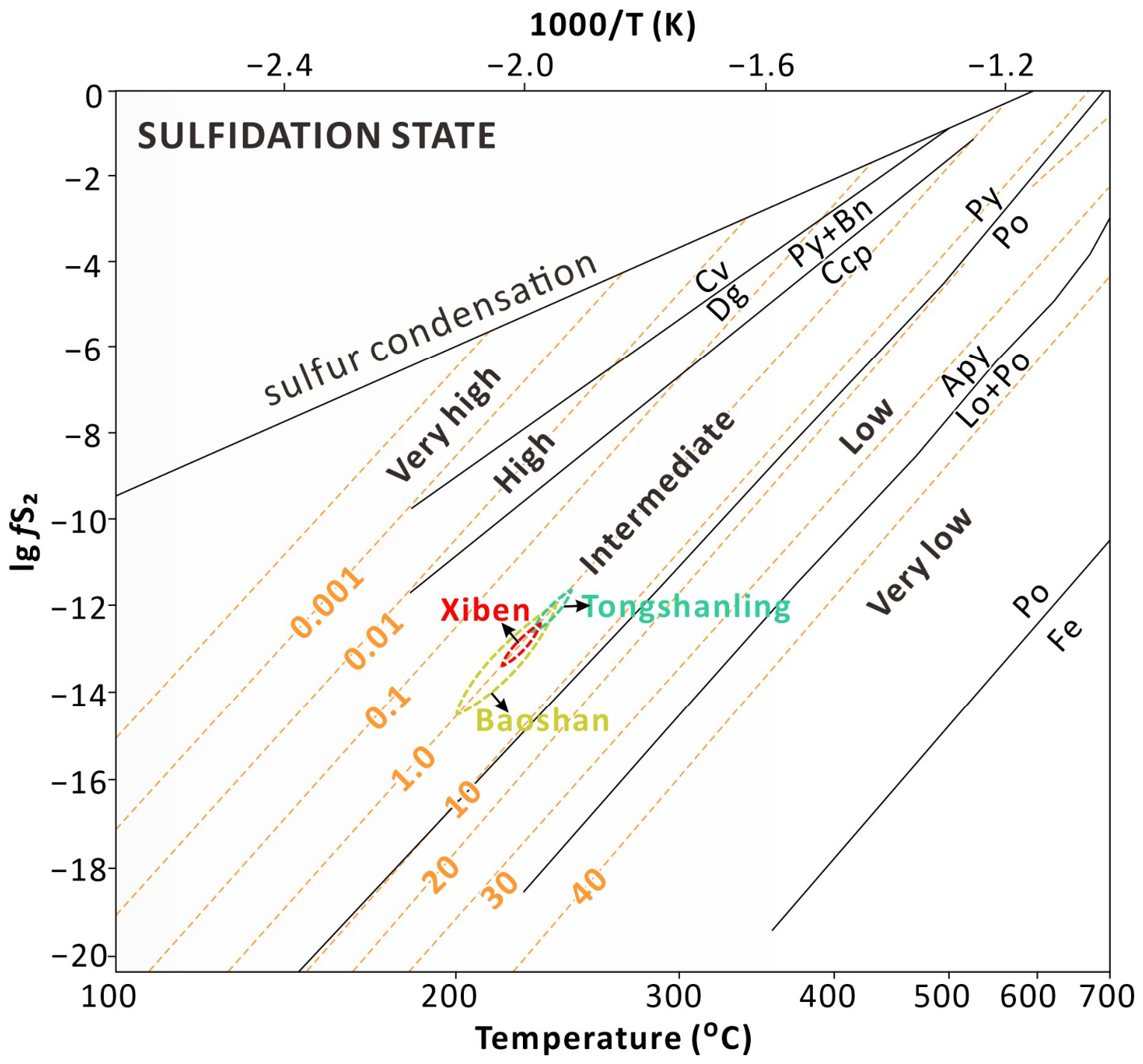
Following the exclusion of geochemical outliers to minimize the influence of heterogeneously distributed inclusions, the crystallization temperature of the Xiben sphalerite was constrained using two independent geothermometers (Table 5): the GGIMFis [106] and the SPRFT [107]. The detection limit for Ge was 0.4–21.2 ppm. In the original dataset, only two spots had Ge concentrations above this limit: 13.44 ppm in sample XB6-2 (spot 3) and 0.871 ppm in sample XB7-1 (spot 9). Spot 3 of sample XB6-2 was excluded as an outlier because its Fe concentration (250,094 ppm, approximately 25.01 wt%) indicates contamination by Fe-bearing micro-inclusions. To allow the GGIMFis thermometer to be applied to the full retained dataset, Ge values below the detection limit were replaced by the detection limit following the procedure of Frenzel et al. [1]. The recalculated GGIMFis temperatures for the 21 retained spots range from 215 to 311 °C, with a mean of 281 ± 30 °C (calibration uncertainty; [106]). This result is higher than the single-spot estimate of 238 ± 30 °C and is consistent with the elevated In contents in the Xiben sphalerite (median: 362 ppm). The SPRFT thermometer, which handles missing values through k-nearest neighbors’ imputation, yields a mean temperature of 234 ± 29 °C (prediction uncertainty of the random forest model; [107]). The recalculated GGIMFis temperatures overlap with the SPRFT results within uncertainty, and both estimates are consistent with fluid inclusion microthermometric data reported for magmatic–hydrothermal Pb–Zn mineralization in the southern Hunan district, including the Baoshan deposit (256–310 °C, avg. 282 °C) [108] and the Tongshanling deposit (236–275 °C, avg. 260 °C) [109]. Using the revised GGIMFis temperatures shifts the calculated log fS2 values slightly upward, but all values still plot within the intermediate sulfidation stability field (Figure 11). Therefore, the revised temperature does not change our interpretation of the ore-forming conditions. It should be noted that the SPRFT temperatures for 20 of the retained spots rely on imputed Ge values, and the original study recommends caution when applying the thermometer to data lacking Ge [107]. The consistency between the two methods is based on the same trace element dataset and therefore does not constitute fully independent validation. These estimates should be regarded as approximate given the limited number of spots with Ge above the detection limit.
Table 5.
Input concentrations (ppm) and temperature estimates for retained sphalerite analyses.
The incorporation of Fe into sphalerite is governed by temperature and sulfur fugacity (fS2) [106,110,111]; the latter can be estimated by combining the GGIMFis temperature with the FeS molar content of sphalerite, following the procedure of Frenzel et al. [106]. The FeS molar contents were calculated from the LA-ICP-MS Fe and Zn concentrations, and the sulfur fugacity was estimated using the equations of Frenzel et al. [106], which are based on a re-fitting of the experimental data from Scott and Barnes [110]. It should be noted that this procedure relies on the assumption that Fe contents in sphalerite are buffered by pyrite [106]. Pyrite is present and abundant in the Stage VI assemblage at Xiben, and the fluids involved in sphalerite precipitation would have been in contact with pyrite on their pathway to the site of mineralization; therefore, pyrite-buffering is a reasonable assumption in the present case. The calculated lg fS2 values for the Xiben sphalerite range from −14.3 to −12.5, with an estimated uncertainty of approximately ±0.5 to ±1.0 log units, plotting within the intermediate sulfidation stability field (Figure 11). This range is comparable to the fS2 conditions documented for the main Pb–Zn mineralization stages at regional magmatic–hydrothermal deposits such as Baoshan [108] and Tongshanling [109]. Collectively, these constraints indicate that the Xiben sphalerite precipitated under moderate-temperature and moderate-fS2 conditions, which is consistent with a distal magmatic–hydrothermal setting [27,28,111]. However, it should be emphasized that the variations within Stage VI alone do not establish a temporal trend, and progressive cooling and decreasing sulfur fugacity should be regarded as possible explanations for sulfide precipitation rather than demonstrated mechanisms.
Figure 11.
Temperature versus lg fS2 diagram [112]. The estimated crystallization temperatures of the Xiben sphalerite, calculated using the GGIMFis geothermometer [106], are plotted against the corresponding FeS contents. The red field delineates the sulfur fugacity conditions inferred for the Xiben sphalerite. Mineral abbreviations: Py = pyrite; Bn = bornite; Ccp = chalcopyrite; Cv = covellite; Dg = digenite; Po = pyrrhotite; Apy = arsenopyrite; Lo = löllingite; Fe = native iron. Data are compiled from published literature [108,109].
6.3. Genetic Model and Metallogenic Implications
Trace element compositions of sphalerite, especially Mn, Fe, Co, Ga, Ge, Cd, and In, are useful for discriminating among different ore deposit types [93,107,113,114]. In magmatic–hydrothermal systems, sphalerite is typically enriched in Mn, Fe, Co, and In but depleted in Ga and Ge [6,93,113,114,115]. In contrast, MVT sphalerite is characterized by high Cd, Ga, and Ge and low Fe, Mn, In, Sn, and Co [11,114,116,117,118]. The Xiben sphalerite exhibits a distinct geochemical signature marked by pronounced enrichment in Mn, Fe, and In and marked depletion in Ga and Ge (Table 4; Figure 9), closely resembling that of magmatic–hydrothermal sphalerite [93,113,119]. In the Mn–Fe (Figure 12a), Mn–In (Figure 12b), In–Sn (Figure 12c), and ln In–ln Ga (Figure 12d) deposit-type discrimination diagrams, the Xiben sphalerite data consistently plot within the magmatic–hydrothermal field. This genetic interpretation is further supported by the sulfur (δ34S = −7.76‰ to −0.10‰; Figure 7) and lead (Figure 8) isotopic compositions, which are consistent with a magmatic–hydrothermal origin for the Xiben Cu–Pb–Zn mineralization and argue against an MVT affiliation.
Figure 12.
Binary discrimination diagrams for the Xiben sphalerite: (a) Fe vs. Mn; (b) In vs. Mn; (c) Sn vs. In; (d) lnGa vs. lnIn. Green filled circles represent Xiben sphalerite, yellow triangles represent magmatic–hydrothermal sphalerite, and pink squares represent MVT sphalerite. The dataset was assembled from published studies [1,6,9,11,12,27,39,43,90,93,94,98,106,112,113,114,117,118,119,120,121,122,123,124,125,126,127,128,129,130,131,132,133,134,135,136,137].
More critically, geological evidence strongly reinforces this interpretation. The newly recognized Cu–Pb–Zn mineralization at Xiben is characterized by orebodies strictly confined to silicified fracture zones (Figure 3), with wall-rock alteration dominated by pervasive silicification in the complete absence of dolomitization (Figure 5). The mineral assemblage is simple and consists exclusively of quartz, pyrite, chalcopyrite, galena, and sphalerite (Figure 5k–n). In stark contrast, typical MVT deposits are predominantly hosted in dolostone and limestone, with orebodies rarely developed in siliciclastic rocks such as sandstone [64,65,66]. Moreover, MVT systems are universally characterized by extensive dolomitization and distinct mineral assemblages [64,65], neither of which is observed at Xiben. Thus, the geological attributes, geochemical signatures (S–Pb isotopes), and sphalerite trace element compositions (Fe–Mn–In enrichment and Ga–Ge depletion) are all consistent with a magmatic–hydrothermal origin for the Xiben Cu–Pb–Zn mineralization.
The newly recognized Xiben Cu–Pb–Zn mineralization is not directly affiliated with the exposed Penggongmiao batholith, as the Caledonian granitoid lacks any demonstrable spatial-temporal connection with the mineralized system. This is further supported by the marked Pb isotopic disparity between the Xiben galena (avg. 207Pb/206Pb = 0.842) and the Penggongmiao granite (avg. 207Pb/206Pb = 0.867) [49], indicating distinct source reservoirs. Nevertheless, regional gravity and aeromagnetic anomaly data suggest the possible existence of concealed intrusive bodies beneath the thick sedimentary cover [31]. These geophysical anomalies are characterized by a prominent low-gravity and high-magnetic signature beneath the Xiben area, which is spatially coincident with the F2 fault zone and the fluorite–Cu–Pb–Zn mineralized zone, and are interpreted to reflect a concealed intrusion at depth [31]. Similar geophysical anomalies have been documented in other parts of the southern Hunan district, where they are spatially associated with concealed granitic intrusions and related Pb–Zn polymetallic mineralization, such as at Kangjiawan [28], Baoshan [108], and Tongshanling [20]. This geophysical evidence, together with the widespread magmatism documented throughout the southern Hunan district [15,16,17,30], is consistent with the interpretation that both the fluorite and Cu–Pb–Zn mineralization may be genetically linked to a common concealed magmatic–hydrothermal system.
Notably, the spatial coexistence of fluorite and Cu–Pb–Zn mineralization at Xiben, together with their paragenetic sequence, suggests that both may be products of a common concealed magmatic–hydrothermal system, with fluorite forming during the earlier stages and sulfide mineralization during the terminal stage. This inference is further supported by published trace element and Sr–Nd isotopic data for the Xiben fluorite, which consistently indicate that the fluorite mineralization is genetically unrelated to the adjacent Penggongmiao batholith but instead points to a deep-seated, concealed magmatic source [31,49]. These findings are broadly consistent with our new S–Pb isotopic data for the Cu–Pb–Zn mineralization, which similarly suggest a magmatic–hydrothermal source distinct from the Penggongmiao batholith. However, it should be acknowledged that the absence of direct age constraints on both fluorite and sulfide mineralization limits our ability to definitively establish a common origin. An alternative interpretation is that the Cu–Pb–Zn mineralization may represent a later, distinct mineralizing event superimposed on the pre-existing fluorite deposit. In the absence of stronger temporal constraints, the common concealed magmatic–hydrothermal system model should be regarded as a plausible interpretation rather than a demonstrated fact. This implies that fluorite orebodies in the region may be underlain by coeval polymetallic sulfide mineralization at depth. This study not only documents a new Cu–Pb–Zn mineralization type in the Xiben fluorite deposit but also suggests a possible link to a concealed magmatic–hydrothermal system, providing a tentative exploration paradigm for concealed systems in the Nanling belt and similar terrains.
7. Conclusions
The newly recognized Cu–Pb–Zn mineralization at the Xiben fluorite deposit is exclusively hosted within the final hydrothermal stage (Stage VI), characterized by a pyrite-chalcopyrite-galena-sphalerite assemblage with pervasive silicification and no dolomitization. Sphalerite is texturally homogeneous and exhibits pronounced enrichment in Mn, Fe, and In and depletion in Ga and Ge, a signature typical of magmatic–hydrothermal systems. In situ sulfur isotope analyses of galena yield a narrow δ34S range from −7.76‰ to −0.10‰ (avg. −4.33‰). Lead isotope data for galena are homogeneous and coincide with the regional magmatic–hydrothermal field in 206Pb/204Pb, 207Pb/204Pb, and 208Pb/204Pb space, but are distinct from those of the local sedimentary strata and the adjacent Caledonian Penggongmiao batholith. The combined geological, geochemical, and S–Pb isotopic evidence indicates that the metals and sulfur were predominantly derived from a magmatic–hydrothermal source, with the likely involvement of concealed intrusions as suggested by regional gravity and aeromagnetic anomaly data. The Xiben Cu–Pb–Zn mineralization is inferred to be a distal expression of a buried magmatic–hydrothermal system. Sulfide precipitation was likely driven by progressive cooling and decreasing sulfur fugacity under moderate-temperature, moderate-sulfidation conditions. This study documents a new Cu–Pb–Zn mineralization type in the Xiben fluorite deposit, links it to a concealed magmatic–hydrothermal system, and suggests that fluorite orebodies in the region may be underlain by coeval sulfide mineralization, providing a new exploration paradigm for concealed systems in the Nanling belt and similar terrains. However, this interpretation should be regarded as a plausible model pending further geochronological constraints.
Author Contributions
Conceptualization, Z.Z., C.S. and J.C.; Data curation, C.S. and N.W.; Formal analysis, Z.Z. and C.S.; Funding acquisition, Z.Z. and C.S.; Investigation, C.S., H.S. and Y.Z.; Methodology, Z.Z. and C.S.; Project administration, C.S. and Y.Z.; Resources, C.S. and N.W.; Software, H.S. and Y.Z.; Supervision, Z.Z.; Validation, Z.Z., C.S. and N.W.; Visualization, J.C. and N.W.; Writing—original draft preparation, Z.Z. and H.S.; Writing—review and editing, Z.Z., H.S. and Y.Z. All authors have read and agreed to the published version of the manuscript.
Funding
This research was funded by the Postgraduate Research Innovation Project of Hunan Province (CX20250177).
Data Availability Statement
The original contributions presented in this study are included in the article. Further inquiries can be directed to the corresponding author.
Acknowledgments
We are grateful to Guangzhou Tuoyan Analytical Technology Co. Ltd. for conducting LA-ICP-MS trace element and in situ sulfur isotope analyses, and to Wuhan Sample Solution Analytical Technology Co. Ltd. for performing LA-MC-ICP-MS lead isotope measurements.
Conflicts of Interest
Zhibiao Zhu and Chenghua Shi are employees of Chenzhou Co., Ltd. of Hunan Mineral Resources Group. Jiabin Chen and Nanchuan Wu are employees of the Mineral Resources Survey Institute of Hunan Province. The paper reflects the views of the scientists and not the affiliated institutions or companies. The authors declare no other conflicts of interest.
References
- Frenzel, M.; Voudouris, P.; Cook, N.J.; Ciobanu, C.L.; Gilbert, S.E.; Wade, B. Evolution of a hydrothermal ore-forming system recorded by sulfide mineral chemistry: A case study from the Plaka Pb–Zn–Ag Deposit, Lavrion, Greece. Miner. Depos. 2021, 57, 417–438. [Google Scholar] [CrossRef] [Scilit]
- Zhao, H.; Bagas, L.; Yuan, S.; Zheng, W.; Yu, Z.; Guan, B. Genesis of the vein-type Gaocheng Ag-Pb-Zn deposit in the western Guangdong Province of China and its implication for regional exploration. Ore Geol. Rev. 2021, 134, 104137. [Google Scholar] [CrossRef] [Scilit]
- Xu, L.; Luo, C.; Wen, H.J.; Zhou, Z.B.; De Fourestier, J. The role of fluid mixing in the formation of vein-type Zn-Pb deposits in eastern Guizhou Province, SW China: Insights from elemental compositions and chlorine isotopes of fluid inclusions. J. Asian Earth Sci. 2022, 239, 105403. [Google Scholar] [CrossRef] [Scilit]
- Conliffe, J.; Piercey, S.J. Coeur d’Alene-type Ag-Zn-Pb vein mineralization in the Canadian Appalachians: Geological, mineral chemistry, fluid inclusion and isotopic studies of the Sail Pond occurrence, Newfoundland, Canada. Miner. Depos. 2026, in press. [Google Scholar] [CrossRef] [Scilit]
- Li, J.; Cai, W.Y.; Li, B.; Wang, K.Y.; Liu, H.L.; Konare, Y.; Qian, Y.; Lee, G.J.; Yoo, B.C. Paleoproterozoic SEDEX-type stratiform mineralization overprinted by Mesozoic vein-type mineralization in the Qingchengzi Pb-Zn deposit, Northeastern China. J. Asian Earth Sci. 2019, 184, 104009. [Google Scholar] [CrossRef] [Scilit]
- Kim, H.; Shin, D.; Im, H.; Yu, B.; Choi, S. Distribution of indium and gallium in sphalerite from skarn and hydrothermal vein deposits in the Hwanggangri mineralized district, South Korea. J. Geochem. Explor. 2024, 259, 107418. [Google Scholar] [CrossRef] [Scilit]
- Deng, H.M.; Tang, Y.Y.; Tian, Y.J.; Du, L.; Zheng, M.H.; Yan, Z.Q.; Zhou, J.X.; Ye, L. Geology, isotope geochemistry and geochronology of the quartz vein-type Pb-Zn deposits in southeastern Guizhou province, SW China. J. Asian Earth Sci. 2025, 293, 106782. [Google Scholar] [CrossRef] [Scilit]
- Bertauts, M.; Boiron, M.C.; Janots, E. Mesozoic fluid mixing and Alpine remobilization of Mississippi Valley-type (MVT) F–Ba–Pb–Zn–(Ag) veins in the Grand Châtelard district (Western Alps). Miner. Depos. 2026, in press. [Google Scholar] [CrossRef] [Scilit]
- Chen, X.; Wang, Z.K.; Yu, P.P.; Wu, Y.H.; Huang, Y.; Tan, Z.J. Physicochemical condition of the Dafang skarn Au-Ag-Zn-Pb polymetallic deposit in the Nanling Metallogenic Belt (South China), a perspective from sphalerite mineralogy and geochemistry. Ore Geol. Rev. 2024, 165, 105923. [Google Scholar] [CrossRef] [Scilit]
- Frenzel, M.; Röhner, M.; Cook, N.J.; Gilbert, S.; Ciobanu, C.L.; Güven, J.F. Mineralogy, mineral chemistry, and genesis of Cu-Ni-As-rich ores at Lisheen, Ireland. Miner. Depos. 2024, 60, 113–143. [Google Scholar] [CrossRef] [Scilit]
- Graupner, T.; Henning, S.; Goldmann, S.; Fuchs, S.; Stedingk, K.; Liessmann, W.; Birkenfeld, S. The In-Ga-Sb association of the post-Variscan Zn-Pb-Ag vein deposit at Lautenthal, Upper Harz Mountains, Germany: Sphalerite mineral chemistry. Miner. Depos. 2024, 59, 1363–1386. [Google Scholar] [CrossRef] [Scilit]
- Shen, H.J.; Zhang, Y.; Tan, H.J.; Shao, Y.J.; Wang, X.; Liang, Y.M.; Zhao, L.J. Early Cretaceous magmatic-hydrothermal Pb-Zn mineralization in the Liushutang deposit, Hengyang Basin, South China. J. Geochem. Explor. 2026, 290, 108165. [Google Scholar] [CrossRef] [Scilit]
- Shen, H.J.; Zhang, Y.; Sun, X.T.; Shao, Y.J.; Tang, Z.B. Late Devonian magmatic-hydrothermal Pb–Zn system in South China: Redefining the Paleozoic metallogenic framework. Ore Geol. Rev. 2026, 197, 107515. [Google Scholar] [CrossRef] [Scilit]
- Hu, R.Z.; Wei, W.F.; Bi, X.W.; Peng, J.T.; Qi, Y.L.; Wu, L.Y.; Chen, Y.W. Molybdenite Re–Os and muscovite 40Ar/39Ar dating of the Xihuashan tungsten deposit, central Nanling district, South China. Lithos 2012, 150, 111–118. [Google Scholar] [CrossRef] [Scilit]
- Mao, J.W.; Cheng, Y.B.; Chen, M.H.; Pirajno, F. Major types and time-space distribution of Mesozoic ore deposits in South China and their geodynamic settings. Miner. Depos. 2013, 48, 267–294. [Google Scholar] [CrossRef] [Scilit]
- Mao, J.W.; Liu, P.; Goldfarb, R.J.; Goryachev, N.A.; Pirajno, F.; Zheng, W.; Zhou, M.F.; Zhao, C.; Xie, G.Q.; Yuan, S.D.; et al. Cretaceous large-scale metal accumulation triggered by post-subductional large-scale extension, East Asia. Ore Geol. Rev. 2021, 136, 104270. [Google Scholar] [CrossRef] [Scilit]
- Zhao, L.J.; Shao, Y.J.; Zhang, Y.; Liu, L.Y.; Zhang, S.T.; Zhao, H.T.; Li, H.B. Pyrite geochemical fingerprinting on skarn ore-forming processes: A case study from the Huangshaping W–Sn–Cu–Pb–Zn deposit in the Nanling Range, South China. J. Geochem. Explor. 2024, 262, 107474. [Google Scholar] [CrossRef] [Scilit]
- Chen, T.W.; Han, S.J.; Yang, Y.C.; He, G.W.; Song, Z.Y.; Zeng, Z.J. Magmatism and mineralization of the Niuxingba Ag–Pb–Zn deposit in the eastern Nanling metallogenic belt, South China: Constraints from zircon U–Pb and sphalerite Rb–Sr dating, geochemistry and H–O–S–Pb isotope geochemistry. Ore Geol. Rev. 2025, 178, 106467. [Google Scholar] [CrossRef] [Scilit]
- Wu, J.H.; Kong, H.; Li, H.; Thomas, J.; Algeo, C.D.E.; Kotaro, Y.; Liu, B.; Wu, Q.H.; Zhu, D.P.; Jiang, H. Multiple metal sources of coupled Cu-Sn deposits: Insights from the Tongshanling polymetallic deposit in the Nanling Range, South China. Ore Geol. Rev. 2021, 139, 104521. [Google Scholar] [CrossRef] [Scilit]
- Tan, F.C.; Kong, H.; Liu, B.; Wu, Q.H.; Chen, S.F. In situ U-Pb dating and trace element analysis of garnet in the Tongshanling Cu polymetallic deposit, South China. Minerals 2023, 13, 187. [Google Scholar] [CrossRef] [Scilit]
- Tan, F.C.; Kong, H.; Liu, B.; Wu, Q.H.; Yang, Q.Z. Timing and genesis of the Tongshanling stratiform W-Mo skarn deposit in Hunan Province: Implications for exploration. Bull. Geol. Sci. Technol. 2024, 43, 123–142, (In Chinese with English abstract). [Google Scholar]
- Ding, T.; Tan, T.; Wang, J.; Ma, D.; Lu, J.; Zhang, R.; Liang, J. Trace-element composition of pyrite in the Baoshan Cu–Mo–Pb–Zn deposit, southern Hunan Province, China: Insights into the ore genesis. Ore Geol. Rev. 2022, 147, 104989. [Google Scholar] [CrossRef] [Scilit]
- Ding, T.; Tan, T.; Wang, J.; Ma, D.; Lu, J.; Zhang, R.; Liang, J.; Wu, B. Multiple sources for the Baoshan polymetallic Cu–Mo–Pb–Zn deposit, southern Hunan Province, China: Insights from in situ LA–MC–ICP–MS sulfur isotopic compositions. Ore Geol. Rev. 2022, 143, 104808. [Google Scholar] [CrossRef] [Scilit]
- Zhu, D.P.; Li, H.; Tamehe, L.S.; Jiang, W.C.; Wang, C.; Wu, K.Y. Two-stage Cu–Pb–Zn mineralization of the Baoshan deposit in southern Hunan, South China: Constraints from zircon and pyrite geochronology and geochemistry. J. Geochem. Explor. 2022, 241, 107070. [Google Scholar] [CrossRef] [Scilit]
- Wang, K.X.; Zhai, D.G.; Liu, J.J.; Wu, H. LA-ICP-MS trace element analysis of pyrite from the Dafang gold deposit, South China: Implications for ore genesis. Ore Geol. Rev. 2021, 139, 104507. [Google Scholar] [CrossRef] [Scilit]
- Wang, K.X.; Zhai, D.G.; Zhang, L.L.; Li, C.; Liu, J.J.; Wu, H. Calcite U-Pb, pyrite Re-Os geochronological and fluid inclusion and H-O isotope studies of the Dafang gold deposit, South China. Ore Geol. Rev. 2022, 150, 105183. [Google Scholar] [CrossRef] [Scilit]
- Shen, H.J.; Zhang, Y.; Zuo, C.H.; Shao, Y.J.; Zhao, L.J.; Lei, J.Z.; Shi, G.W.; Han, R.Y.; Zheng, X.Y. Ore forming process revealed by sphalerite texture and geochemistry: A case study at the Kangjiawan Pb–Zn deposit in Qin-Hang Metallogenic Belt, South China. Ore Geol. Rev. 2022, 150, 105153. [Google Scholar] [CrossRef] [Scilit]
- Shen, H.J.; Zhang, Y.; Pan, Z.; Shao, Y.J.; Brzozowski, M.J.; Zhao, L.J.; Liu, G.Q.; Liu, Q.Q.; Shi, J.; Wang, X.; et al. Newly discovered Early Cretaceous Au mineralization overprinting Late Jurassic Pb-Zn-Ag mineralization in the Qin-Hang metallogenic belt (South China). Geol. Soc. Am. Bull. 2025, 137, 1021–1036. [Google Scholar] [CrossRef] [Scilit]
- Zhang, Y.; Shao, Y.J.; Liu, Q.Q.; Chen, H.Y.; Quan, W.; Sun, A.X. Jurassic magmatism and metallogeny in the eastern Qin-Hang Metallogenic Belt, SE China: An example from the Yongping Cu deposit. J. Geochem. Explor. 2018, 186, 281–297. [Google Scholar] [CrossRef] [Scilit]
- Zhao, L.J.; Shao, Y.J.; Zhang, Y.; Li, H.B.; Shah, S.A. Differentiated enrichment of magnetite in the Jurassic W–Sn and Cu skarn deposits in the Nanling Range (South China) and their ore-forming processes: An example from the Huangshaping deposit. Ore Geol. Rev. 2022, 148, 105046. [Google Scholar] [CrossRef] [Scilit]
- Yang, Q.Z.; Wu, Q.S.; Yan, Y. Metallogenic characteristics and significance of the Xiben large fluorite deposit in the Penggongmiao area, southern Hunan Province. Land Resour. Her. 2024, 21, 56–65, (In Chinese with English abstract). [Google Scholar]
- Mao, J.W.; Xie, G.Q.; Guo, C.L.; Chen, Y.C. Large-scale tungsten-tin mineralization in the Nanling region, South China: Metallogenic ages and corresponding geodynamic processes. Acta Petrol. Sin. 2007, 23, 2329–2338, (In Chinese with English abstract). [Google Scholar]
- Mao, J.W.; Xie, G.Q.; Guo, C.L.; Yuan, S.D.; Cheng, Y.B.; Chen, Y.C. Spatial-temporal distribution of Mesozoic ore deposits in South China and their metallogenic settings. J. China Univ. Geosci. 2008, 14, 510–526, (In Chinese with English abstract). [Google Scholar]
- Mao, J.W.; Chen, M.H.; Yuan, S.D.; Guo, C.L. Geological characteristics of the Qinhang (or Shihang) Metallogenic Belt in South China and spatial-temporal distribution regularity of mineral deposits. Acta Geol. Sin. 2011, 85, 636–658, (In Chinese with English abstract). [Google Scholar]
- Yuan, S.D.; Peng, J.T.; Hao, S.; Li, H.M.; Geng, J.Z.; Zhang, D.L. In situ LA–MC–ICP–MS and ID-TIMS U-Pb geochronology of cassiterite in the giant Furong tin deposit, Hunan Province, South China: New constraints on the timing of tin-polymetallic mineralization. Ore Geol. Rev. 2011, 43, 235–242. [Google Scholar] [CrossRef] [Scilit]
- Zhao, G.C.; Cawood, P.A. Precambrian geology of China. Precambr. Res. 2012, 222–223, 13–54. [Google Scholar] [CrossRef] [Scilit]
- Zhou, M.F.; Yan, D.P.; Kennedy, A.K.; Li, Y.Q.; Ding, J. SHRIMP U-Pb zircon geochronological and geochemical evidence for Neoproterozoic arc-magmatism along the western margin of the Yangtze Block, South China. Earth Planet. Sci. Lett. 2002, 196, 51–67. [Google Scholar] [CrossRef] [Scilit]
- Zhou, X.M.; Sun, T.; Shen, W.Z.; Shu, L.S.; Niu, Y.L. Petrogenesis of Mesozoic granitoids and volcanic rocks in South China: A response to tectonic evolution. Episodes 2006, 29, 26–33. [Google Scholar] [CrossRef] [Scilit] [PubMed]
- Xiao, F.Y.; Shen, H.J.; He, Q.R.; Huang, S.H.; Liu, X.X.; Zhang, Y. The discovery of MVT-like Ga-enriched sphalerite from the Zhaojinci Area in the South Hunan District (South China). Minerals 2025, 15, 1165. [Google Scholar] [CrossRef] [Scilit]
- Li, B.; Li, N.X.; Yang, J.N.; Zhang, W.D.; Liu, J.P. Genesis of the Xianghualing tin-polymetallic deposit in southern Hunan, South China: Constraints from chemical and boron isotopic compositions of tourmaline. Ore Geol. Rev. 2023, 154, 105303. [Google Scholar] [CrossRef] [Scilit]
- Ma, X.H.; Guo, F.S.; Leng, C.B.; Li, K.X.; Gao, F.F.; Chen, S.L.; Ren, Z.; Tian, Z.D. Study on the occurrence state and enrichment patterns of indium in the Xianghualing Sn-Pb-Zn ore field in southern Hunan. Acta Petrol. Sin. 2023, 39, 3087–3106, (In Chinese with English abstract). [Google Scholar] [CrossRef] [Scilit]
- Jiang, H.; Kong, H.; Liu, B.; Tan, F.C.; Qin, Y.X.; Huang, J.G.; Zhu, Y. Garnet and zircon U-Pb geochronology and geochemistry reveal genesis of the Dafang Au-Pb-Zn-Ag Deposit, Southern Hunan. Acta Geol. Sin.-Engl. Ed. 2024, 98, 717–735. [Google Scholar] [CrossRef] [Scilit]
- Wang, W.S.; Shen, H.J.; Huang, S.H.; Shi, J.; Zhang, Y. Physicochemical constraints and fluid evolution pathways in skarn mineralization: Insights from sphalerite geochemistry at the Dafang Pb–Zn–Au–Ag deposit, South China. Front. Earth Sci. 2025, 13, 1673552. [Google Scholar] [CrossRef] [Scilit]
- Liao, J.H.; Zhang, Y.; Wang, W.S.; Zhao, L.J.; Huang, S.H.; Yuan, L.L.; Shi, J.; Shao, Y.J.; Song, S.L.; Wang, X. Mid-Late Jurassic skarn Au polymetallic mineralisation and associated magmatism in Nanling Range (South China): Constraints from the Dafang Deposit. Geol. J. 2025, 1–23, early view. [Google Scholar] [CrossRef] [Scilit]
- Ding, T.; Ma, D.S.; Lu, J.J.; Zhang, R.Q. Garnet and scheelite as indicators of multistage tungsten mineralization in the Huangshaping deposit, southern Hunan province, China. Ore Geol. Rev. 2018, 94, 193–211. [Google Scholar] [CrossRef] [Scilit]
- Hu, X.L.; Gong, Y.J.; Pi, D.H.; Zhang, Z.J.; Zeng, G.P.; Xiong, S.F.; Yao, S.Z. Jurassic magmatism related Pb-Zn-W-Mo polymetallic mineralization in the central Nanling Range, South China: Geochronologic, geochemical, and isotopic evidence from the Huangshaping deposit. Ore Geol. Rev. 2017, 91, 877–895. [Google Scholar] [CrossRef] [Scilit]
- Shu, L.S.; Zhou, X.M.; Deng, P. Geological features and tectonic evolution of Meso-Cenozoic basins in Southeastern China. Geol. Bull. China 2004, 23, 876–884, (In Chinese with English abstract). [Google Scholar]
- Li, D.F.; Tan, C.Y.; Miao, F.Y.; Liu, Q.F.; Zhang, Y.; Sun, X.M. Initiation of Zn–Pb mineralization in the Pingbao Pb–Zn skarn district, South China: Constraints from U–Pb dating of grossular-rich garnet. Ore Geol. Rev. 2019, 107, 587–599. [Google Scholar] [CrossRef] [Scilit]
- Hunan Institute of Mineral Resources Survey. Verification Report of Resource Reserves of the Xiben Fluorite Mine in the Xiben Mining Area, Zixing City, Hunan Province; Hunan Institute of Mineral Resources Survey: Changsha, China, 2024. (In Chinese) [Google Scholar]
- Zhang, W.L.; Wang, R.C.; Lei, Z.H.; Hua, R.M.; Zhu, J.C.; Lu, J.J.; Xie, L.; Che, X.D.; Zhang, R.Q.; Yao, Y.; et al. Zircon U-Pb dating confirms existence of a Caledonian scheelite-bearing aplitic vein in the Penggongmiao granite batholith, South Hunan. Chin. Sci. Bull. 2011, 56, 2031–2036. [Google Scholar] [CrossRef] [Scilit]
- Zhang, W.L.; Che, X.D.; Wang, R.C.; Zhang, R.Q.; Yang, Z. Geochronological framework of the Penggongmiao granite batholith. Acta Geol. Sin.-Engl. Ed. 2014, 88, 1041–1042. [Google Scholar] [CrossRef] [Scilit]
- Zhang, W.; Hu, Z.C.; Gunther, D.; Liu, Y.S.; Ling, W.L.; Zong, K.Q.; Chen, H.H.; Gao, S.; Xu, L. Direct lead isotope analysis in Hg-rich sulfides by LA-MC-ICP-MS with a gas exchange device and matrix-matched calibration. Anal. Chim. Acta 2016, 948, 9–18. [Google Scholar] [CrossRef] [Scilit] [PubMed]
- Paton, C.; Hellstrom, J.; Paul, B.; Woodhead, J.; Hergt, J. Iolite: Freeware for the visualization and processing of mass spectrometric data. J. Anal. At. Spectrom. 2011, 26, 2508–2518. [Google Scholar] [CrossRef] [Scilit]
- Qin, J.H.; Huang, F.; Zhong, S.H.; Wang, D.H.; Seltmann, R. Unraveling evolution histories of large hydrothermal systems via garnet U-Pb dating, sulfide trace element and isotopic analyses: A case study of Shuikoushan polymetallic ore field, South China. Ore Geol. Rev. 2022, 149, 105063. [Google Scholar] [CrossRef] [Scilit]
- Li, Y.S.; Zhang, B.L.; Gong, F.Y.; Du, Z.Z.; Zhen, S.M. Genesis of the giant Kangjiawan Pb–Zn ore deposit in Hunan Province: Evidence from fluid inclusion, H–O and S isotope. Acta Petrol. Sin. 2021, 37, 1847–1866, (In Chinese with English abstract). [Google Scholar] [CrossRef] [Scilit]
- Zhang, Z.H. Study on Geological Characteristics and Metallogenesis of Kangjiawan Lead-Zinc Deposit, Hunan. Master’s Thesis, Guilin University of Technology, Guilin, China, 2018. (In Chinese with English abstract). [Google Scholar]
- Zuo, C.H. Study of the Kangjiawan Pb–Zn Deposit Genesis and Relationship with Surrounding Magmatism in Changning city, Hunan Province. Ph.D. Thesis, Nanjing University, Nanjing, China, 2015. (In Chinese with English abstract). [Google Scholar]
- Cai, Y.X.; Tan, J.J.; Yang, H.M.; Lu, S.S.; Duan, R.C.; Qiu, X.F.; Cheng, S.B.; Yang, X.L. S, Pb, C isotopic constraints on the source of ore-forming materials in the Tongshanling Cu-polymetallic deposit, southern Hunan. Acta Geol. Sin. 2015, 89, 1792–1803, (In Chinese with English abstract). [Google Scholar]
- Tang, Z.P.; Zhao, C.F.; Tang, W.H.; Xiao, W.Z.; Xu, H.B.; Li, S.H.; Shi, K.T. Source of ore-forming materials in the Tongshanling Cu-polymetallic deposit, Hunan Province: In-situ S-Pb isotopic evidence. J. Univ. South China (Sci. Technol.) 2025, 39, 7–19. (In Chinese) [Google Scholar]
- Yao, J.M.; Hua, R.M.; Lin, J.F. REE, Pb–S isotope geochemistry, and Rb–Sr isochron age of pyrite in the Baoshan deposit, South Hunan Province, China. Acta Geol. Sin. 2006, 80, 1045–1054, (In Chinese with English abstract). [Google Scholar]
- Zhu, X.Y.; Wang, J.B.; Wang, Y.L.; Cheng, X.Y.; Fu, Q.B. Sulfur and lead isotope geochemistry of the Huangshaping W-Mo-Bi-Pb-Zn polymetallic deposit in Hunan Province. Acta Petrol. Sin. 2012, 28, 3809–3822, (In Chinese with English abstract). [Google Scholar]
- Xie, Y.C.; Lu, J.J.; Yang, P.; Ma, D.S.; Xu, Z.W.; Zhang, R.Q.; Cai, Y.; Ding, T. S, Pb, C and O isotopic characteristics and sources of metallogenic materials of Baoshan Pb–Zn deposit, southern Hunan Province. Miner. Depos. 2015, 34, 333–351, (In Chinese with English abstract). [Google Scholar]
- Zhang, J.K.; Shao, Y.J.; Chen, K.; Tan, H.J.; Tan, R.C.; Zhang, T.D.; Liu, Z.F. Evidence of fluid evolution of Baoshan Cu–Pb–Zn polymetallic deposit: Constraints from in-situ sulfur isotope and trace element compositions of pyrite. Trans. Nonferr. Met. Soc. China 2021, 31, 3530–3548. [Google Scholar] [CrossRef] [Scilit]
- Leach, D.L.; Sangster, D.F.; Kelley, K.D.; Large, R.R.; Garven, G.; Allen, C.R.; Gutzmer, J.; Walters, S. Sediment-hosted lead-zinc deposits: A global perspective. Econ. Geol. 2005, 100th Anniversary Volume, 561–607. [Google Scholar] [CrossRef] [Scilit]
- Leach, D.L.; Bradley, D.C.; Huston, D.; Pisarevsky, S.A.; Taylor, R.D.; Gardoll, S.J. Sediment-hosted lead-zinc deposits in Earth history. Econ. Geol. 2010, 105, 593–625. [Google Scholar] [CrossRef] [Scilit]
- Kyle, J.R.; Fall, A.; Nicot, J.P. Mississippi Valley-type mineralization in the Jurassic Smackover Formation, Gulf Coast Basin, USA: Controls on the origin of Zn-Pb-Ag systems in deep sedimentary basins. J. Geochem. Explor. 2025, 277, 107807. [Google Scholar] [CrossRef] [Scilit]
- Li, S.D.; Xiao, W.J.; Chen, C.; Sang, M.; Mao, Q.G.; Gao, L.L.; Xia, F.; Wang, W.; Du, X.F. Multistage genesis of the carbonate-hosted Tuokesai Pb–Zn deposit, West Tianshan, NW China: Synsedimentary strata-bound mineralization and hydrothermal remobilization. J. Geochem. Explor. 2026, 280, 107891. [Google Scholar] [CrossRef] [Scilit]
- Chaussidon, M.; Albarède, F.; Sheppard, S.M.F. Sulphur isotope variations in the mantle from ion microprobe analyses of micro-sulphide inclusions. Earth Planet. Sci. Lett. 1989, 92, 144–156. [Google Scholar] [CrossRef] [Scilit]
- Ripley, E.M.; Li, C. Sulfur isotope exchange and metal enrichment in the formation of magmatic Cu–Ni–(PGE) deposits. Econ. Geol. 2003, 98, 635–641. [Google Scholar] [CrossRef] [Scilit]
- Kaplan, I.R.; Hulston, J.R. The isotopic abundance and content of sulfur in meteorites. Geochim. Cosmochim. Acta 1966, 30, 479–496. [Google Scholar] [CrossRef] [Scilit]
- Ohmoto, H. Systematics of sulfur and carbon isotopes in hydrothermal ore deposits. Econ. Geol. 1972, 67, 551–578. [Google Scholar] [CrossRef] [Scilit]
- Ohmoto, H.; Rye, R.O. Isotopes of sulfur and carbon. In Geochemistry of Hydrothermal Ore Deposits; Barnes, H.L., Ed.; Wiley: New York, NY, USA, 1979; pp. 509–567. [Google Scholar]
- Herzig, P.M.; Hannington, M.D.; Arribas, A., Jr. Sulfur isotopic composition of hydrothermal precipitates from the Lau back-arc: Implications for magmatic contributions to seafloor hydrothermal systems. Miner. Depos. 1998, 33, 226–237. [Google Scholar] [CrossRef] [Scilit]
- Liu, H.C.; Zhu, B.Q. Study on the age of Banxi Group and Lengjiaxi Group in western Hunan. Chin. Sci. Bull. 1994, 39, 148–150, (In Chinese with English abstract). [Google Scholar]
- Yao, C.X.; Zhang, S.G.; Wang, C. Geochemistry of Fankou-type MVT Pb–Zn sulfide deposit in the northern margin of Quren Basin, Guangdong Province, China. Chin. J. Nonferrous Met. 2013, 23, 3518–3528, (In Chinese with English abstract). [Google Scholar]
- Mao, J.W. Geology and Geochemistry of the Shizhuyuan W–Sn–Mo–Bi Polymetallic Deposit, Hunan; Geological Publishing House: Beijing, China, 1998; 215p, (In Chinese with English abstract). [Google Scholar]
- Lu, R. Discussion on Geological Characteristics and Genetic Mechanism of Shuikoushan Pb-Zn Deposit in Changning City, Hunan Province. Master’s Thesis, Nanjing University, Nanjing, China, 2013. (In Chinese with English abstract). [Google Scholar]
- Huang, J.C. Geochronology and Petrogenetic-Metallogenic Mechanisms in the Shuikoushan Pb–Zn–Au Deposit, Southern Hunan, China. Ph.D. Thesis, University of Chinese Academy of Sciences, Beijing, China, 2016. (In Chinese with English abstract). [Google Scholar]
- Gong, F.Y. Discussion on the Characteristics and Genesis of Kangjiawan Pb-Zn-Au-Ag Deposit, Hunan Province. Master’s Thesis, China University of Geosciences (Beijing), Beijing, China, 2012. (In Chinese with English abstract). [Google Scholar]
- Ding, T.; Ma, D.S.; Lu, J.J.; Zhang, R.Q.; Zhang, S.T. S, Pb, and Sr isotope geochemistry and genesis of Pb–Zn mineralization in the Huangshaping polymetallic ore deposit of southern Hunan Province, China. Ore Geol. Rev. 2016, 77, 117–132. [Google Scholar] [CrossRef] [Scilit]
- Li, X.F.; Huang, C.; Wang, C.Z.; Wang, L.F. Genesis of the Huangshaping W–Mo–Cu–Pb–Zn polymetallic deposit in Southeastern Hunan Province, China: Constraints from fluid inclusions, trace elements, and isotopes. Ore Geol. Rev. 2016, 79, 1–25. [Google Scholar] [CrossRef] [Scilit]
- Hutchison, W.; Finch, A.A.; Boyce, A.J. The sulfur isotope evolution of magmatic-hydrothermal fluids: Insights into ore-forming processes. Geochim. Cosmochim. Acta 2020, 288, 176–198. [Google Scholar] [CrossRef] [Scilit]
- LaFlamme, C.; Sugiono, D.; Thébaud, N.; Caruso, S.; Fiorentini, M.; Sevaraja, V.; Jeon, H.; Voute, F.; Martin, L. Multiple sulfur isotopes monitor fluid evolution of an Archean orogenic gold deposit. Geochim. Cosmochim. Acta 2018, 222, 436–446. [Google Scholar] [CrossRef] [Scilit]
- Sugiono, D.; LaFlamme, C.; Thébaud, N.; Martin, L.; Savard, D.; Fiorentini, M. Fault-induced gold saturation of a single auriferous fluid is a key process for orogenic gold deposit formation. Econ. Geol. 2022, 117, 1405–1414. [Google Scholar] [CrossRef] [Scilit]
- Sun, P.; Wang, Q.F.; Li, H.J.; Dong, C.Y.; Deng, J. Geology and pyrite sulfur isotopes of the Suoluogou gold deposit: Implication for crustal continuum model of orogenic gold deposit in northwestern margin of Yangtze Craton, SW China. Ore Geol. Rev. 2020, 122, 103487. [Google Scholar] [CrossRef] [Scilit]
- Song, S.L.; Zhang, Y.; Creaser, R.A.; Shao, Y.J.; Zhao, L.J.; Wang, X.; Shen, H.J. Multiple isotopic constraints on the origin of the high-grade Chaxi gold deposit in the Jiangnan Orogenic Belt, South China. Econ. Geol. 2025, 120, 877–901. [Google Scholar] [CrossRef] [Scilit]
- Fontboté, L.; Kouzmanov, K.; Chiaradia, M.; Pokrovski, G.S. Sulfide minerals in hydrothermal deposits. Elements 2017, 13, 97–103. [Google Scholar] [CrossRef] [Scilit]
- Cugerone, A.; Salvi, S.; Kouzmanov, K.; Laurent, O.; Cenki, B. Tracing fluid signature and metal mobility in complex orogens: Insights from Pb-Zn mineralization in the Pyrenean Axial Zone. Miner. Depos. 2025, 60, 955–977. [Google Scholar] [CrossRef] [Scilit]
- Cugerone, A.; Oliot, E.; Muñoz, M.; Barou, F.; Motto-Ros, V.; Cenki, B. Plastic deformation and trace element mobility in sphalerite. Am. Mineral. 2024, 109, 1888–1912. [Google Scholar] [CrossRef] [Scilit]
- Erlandsson, V.B.; Foltyn, K.; Muchez, P.; Rantitsch, G.; Ellmies, R.; Melcher, F. Chalcopyrite, sphalerite, and pyrite chemistry in stratiform sediment-hosted Cu(-Co) metallogenic districts: Trace element characteristics and factors controlling polymetallic mineralization. Miner. Depos. 2024, 60, 869–894. [Google Scholar] [CrossRef] [Scilit]
- Frenzel, M.; Thiele, S.T. Deceptively critical sphalerite. Nat. Geosci. 2024, 17, 1199. [Google Scholar] [CrossRef] [Scilit]
- Cook, N.J.; Ciobanu, C.L. Bismuth tellurides and sulphosalts from the Larga hydrothermal system, Metaliferi Mts, Romania: Paragenesis and genetic significance. Mineral. Mag. 2004, 68, 301–321. [Google Scholar] [CrossRef] [Scilit]
- Cook, N.J.; Ciobanu, C.L.; Pring, A.; Skinner, W.; Shimizu, M.; Danyushevsky, L.; Saini-Eidukat, B.; Melcher, F. Trace and minor elements in sphalerite: A LA-ICPMS study. Geochim. Cosmochim. Acta 2009, 73, 4761–4791. [Google Scholar] [CrossRef] [Scilit]
- Bauer, M.E.; Burisch, M.; Ostendorf, J.; Krause, J.; Seifert, T.; Gutzmer, J. Trace element geochemistry of sphalerite in contrasting hydrothermal fluid systems of the Freiberg district, Germany: Insights from LA-ICP-MS analysis, near-infrared light microthermometry of sphalerite-hosted fluid inclusions, and sulfur isotope geochemistry. Miner. Depos. 2019, 52, 237–262. [Google Scholar] [CrossRef] [Scilit]
- Duan, H.Y.; Wang, C.M.; Hu, R.; Zhu, J.X.; Deng, J. Supernormal enrichment of cadmium in sphalerite via coupled dissolution-reprecipitation process. Commun. Earth Environ. 2023, 4, 356. [Google Scholar] [CrossRef] [Scilit]
- Luo, K.; Cugerone, A.; Fougerouse, D.; Zhou, J.X.; Xian, H.; Yang, Y.; Saxey, D.W.; Motto-Ros, V.; Sun, X.; Rickard, W.D.A.; et al. Rapid crystal growth promotes the precipitation of nanoscale fluid inclusions rich in halogens and metals in colloform sphalerite. Geochim. Cosmochim. Acta 2025, 398, 119–138. [Google Scholar] [CrossRef] [Scilit]
- Keith, M.; Haase, K.M.; Chivas, A.R.; Klemd, R. Phase separation and fluid mixing revealed by trace element signatures in pyrite from porphyry systems. Geochim. Cosmochim. Acta 2022, 329, 185–205. [Google Scholar] [CrossRef] [Scilit]
- Šoster, A.; Erlandsson, V.B.; Velojić, M.; Gopon, P. Ultraviolet-photoluminescence and trace element analyses in Ga-rich sphalerite from the Djebel Gustar Zn-Pb deposit, Algeria. Ore Geol. Rev. 2023, 157, 105474. [Google Scholar] [CrossRef] [Scilit]
- Large, R.R.; Maslennikov, V.V.; Robert, F.; Danyushevsky, L.V.; Scott, R.J.; Chang, Z. Multi-stage sedimentary and metamorphic origin of pyrite and gold in the giant Sukhoi Log deposit, Lena Goldfield, Russia. Econ. Geol. 2007, 102, 1233–1267. [Google Scholar] [CrossRef] [Scilit]
- Belousov, I.; Large, R.R.; Meffre, S.; Danyushevsky, L.V.; Steadman, J.; Beardsmore, T. Pyrite compositions from VHMS and orogenic Au deposits in the Yilgarn Craton, Western Australia: Implications for gold and copper exploration. Ore Geol. Rev. 2016, 79, 474–499. [Google Scholar] [CrossRef] [Scilit]
- Cook, N.J.; Ciobanu, C.L.; George, L.; Zhu, Z.Y.; Wade, B.; Ehrig, K. Trace element analysis of minerals in magmatic-hydrothermal ores by laser ablation inductively-coupled plasma mass spectrometry: Approaches and opportunities. Minerals 2016, 6, 111. [Google Scholar] [CrossRef] [Scilit]
- Voute, F.; Hagemann, S.G.; Evans, N.J.; Villanes, C. Sulfur isotopes, trace element, and textural analyses of pyrite, arsenopyrite and base metal sulfides associated with gold mineralization in the Pataz-Parcoy district, Peru: Implication for paragenesis, fluid source, and gold deposition mechanisms. Miner. Depos. 2019, 54, 1077–1100. [Google Scholar] [CrossRef] [Scilit]
- Belissont, R.; Boiron, M.; Luais, B.; Cathelineau, M. LA-ICP-MS analyses of minor and trace elements and bulk Ge isotopes in zoned Ge-rich sphalerites from the Noailhac-Saint-Salvy deposit (France): Insights into incorporation mechanisms and ore deposition processes. Geochim. Cosmochim. Acta 2014, 126, 518–540. [Google Scholar] [CrossRef] [Scilit]
- Keith, M.; Haase, K.M.; Schwarz-Schampera, U.; Klemd, R.; Petersen, S.; Bach, W. Effects of temperature, sulfur, and oxygen fugacity on the composition of sphalerite from submarine hydrothermal vents. Geology 2014, 42, 699–702. [Google Scholar] [CrossRef] [Scilit]
- Zhang, Y.; Chen, H.Y.; Chen, J.M.; Tian, J.; Zhang, L.J.; Olin, P. Pyrite geochemistry and its implications on Au-Cu skarn metallogeny: An example from the Jiguanzui deposit, Eastern China. Am. Mineral. 2022, 107, 1910–1925. [Google Scholar] [CrossRef] [Scilit]
- Frenzel, M.; Hirsch, T.; Gutzmer, J. Gallium, germanium, indium, and other trace and minor elements in sphalerite as a function of deposit type—A meta-analysis. Ore Geol. Rev. 2016, 76, 52–78. [Google Scholar] [CrossRef] [Scilit]
- Zhao, H.T.; Zhang, Y.; Shao, Y.J.; Liao, J.; Song, S.L.; Cao, G.S.; Tan, R.C. A new sphalerite thermometer based on machine learning with trace element geochemistry. Nat. Resour. Res. 2024, 33, 2609–2626. [Google Scholar] [CrossRef] [Scilit]
- Zhang, J.K. Petrogenesis and Metallogenesis of the Baoshan Cu-Pb-Zn Polymetallic Deposit in Hunan Province, South China. Ph.D. Thesis, Central South University, Changsha, China, 2023. (In Chinese with English abstract). [Google Scholar]
- Zhu, D.P. The Characteristics of Hydrothermal Fluids and the Origin of Metallogenic Materials in the Tongshanling Cu Polymetallic Deposit, South Hunan. Master’s Thesis, Central South University, Changsha, China, 2022. (In Chinese with English abstract). [Google Scholar]
- Scott, S.D.; Barnes, H.L. Sphalerite geothermometry and geobarometry. Econ. Geol. 1971, 66, 653–669. [Google Scholar] [CrossRef] [Scilit]
- Schaarschmidt, A.; Haase, K.M.; Klemd, R.; Keith, M.; Voudouris, P.; Alfieris, D.; Strauss, H.; Wiedenbeck, M. Boiling effects on trace element and sulfur isotope compositions of sulfides in shallow-marine hydrothermal systems: Evidence from Milos Island, Greece. Chem. Geol. 2021, 583, 120457. [Google Scholar] [CrossRef] [Scilit]
- Einaudi, M.T.; Hedenquist, J.W.; Inan, E.E. Sulfidation state of fluids in active and extinct hydrothermal systems: Transitions from porphyry to epithermal environments. Econ. Geol. 2003, 10, 285–313. [Google Scholar] [CrossRef] [Scilit]
- Ye, L.; Cook, N.J.; Ciobanu, C.L.; Yuping, L.; Zhang, Q.; Tiegeng, L.; Wei, G.; Yulong, Y.; Danyushevsky, L.V. Trace and minor elements in sphalerite from base metal deposits in South China: A LA-ICPMS study. Ore Geol. Rev. 2011, 39, 188–217. [Google Scholar] [CrossRef] [Scilit]
- Ye, L.; Li, Z.; Hu, Y.; Huang, Z.; Zhou, J.; Fan, H.; Danyushevskiy, L. Trace elements in sulfide from the Tianbaoshan Pb–Zn deposit, Sichuan Province, China: A LA-ICP-MS study. Acta Petrol. Sin. 2016, 32, 3377–3393, (In Chinese with English abstract). [Google Scholar]
- Lee, J.H.; Yoo, B.C.; Yang, Y.S.; Seo, J.H.; Kim, J.U.; Oh, J.H.; Kim, J.H. Indium and gallium enrichments in zinc orebodies in the Taebaeksan region, Korea. Episodes 2022, 45, 37–49. [Google Scholar] [CrossRef] [Scilit] [PubMed]
- Wei, C.; Ye, L.; Hu, Y.; Danyushevskiy, L.; Li, Z.; Huang, Z. Distribution and occurrence of Ge and related trace elements in sphalerite from the Lehong carbonate-hosted Zn–Pb deposit, northeastern Yunnan, China: Insights from SEM and LA–ICP–MS studies. Ore Geol. Rev. 2019, 115, 103175. [Google Scholar] [CrossRef] [Scilit]
- Liu, S.; Zhang, Y.; Ai, G.L.; Xue, X.L.; Li, H.B.; Sajjad, A.S.; Wang, N.H.; Chen, X. LA–ICP–MS trace element geochemistry of sphalerite: Metallogenic constraints on the Qingshuitang Pb–Zn deposit in the Qinhang Ore Belt, South China. Ore Geol. Rev. 2022, 141, 104659. [Google Scholar] [CrossRef] [Scilit]
- Torró, L.; Millán-Nuñez, A.J.; Benites, D.; González-Jiménez, J.M.; Laurent, O.; Tavazzani, L.; Vallance, J.; Chelle-Michou, C.; Proenza, J.A.; Flores, C.; et al. Germanium- and gallium-rich sphalerite in Mississippi Valley–type deposits: The San Vicente district and the Shalipayco deposit, Peru. Miner. Depos. 2023, 58, 853–880. [Google Scholar] [CrossRef] [Scilit]
- Zheng, Y.; Yu, P.; Li, Z.; Xiong, S.; Zhou, L.; Zhou, J.; Wang, C.; Meng, Y.; Zhang, Y.; Wang, Y.; et al. Critical metals Ga, Ge and In in the global Pb–Zn deposits: Current understanding, challenges and perspectives. J. Earth Sci. 2023, 34, 1308–1311. [Google Scholar] [CrossRef] [Scilit]
- Benites, D.; Torró, L.; Vallance, J.; Laurent, O.; Valverde, P.E.; Kouzmanov, K.; Chelle-Michou, C.; Fontboté, L. Distribution of indium, germanium, gallium and other minor and trace elements in polymetallic ores from a porphyry system: The Morococha District, Peru. Ore Geol. Rev. 2021, 136, 104236. [Google Scholar] [CrossRef] [Scilit]
- Bonnet, J.; Mosser-Ruck, R.; Caumon, M.; Rouer, O.; Andre-Mayer, A.; Cauzid, J.; Peiffert, C. Trace element distribution (Cu, Ga, Ge, Cd, and Fe) in sphalerite from the Tennessee MVT deposits, USA, by combined EMPA, LA-ICP-MS, Raman spectroscopy, and crystallography. Can. Mineral. 2016, 54, 1261–1284. [Google Scholar] [CrossRef] [Scilit]
- Cave, B.; Payten, T. Distribution of critical minerals in the Mount Evelyn Pb–Zn–Ag skarn deposit, Pine Creek Orogen, Northern Territory. Aust. J. Earth Sci. 2025, 72, 375–389. [Google Scholar] [CrossRef] [Scilit]
- Dai, H.Z. Geological and Geochemical Characteristics and Metallogenetic Mechanism of the Taiping Pb–Zn Deposit, Yunnan Province. Ph.D. Thesis, China University of Geosciences, Beijing, China, 2016. (In Chinese with English abstract). [Google Scholar]
- George, L.; Cook, N.J.; Ciobanu, C.L.; Wade, B.P. Trace and minor elements in galena: A reconnaissance LA-ICP-MS study. Am. Mineral. 2015, 100, 548–569. [Google Scholar] [CrossRef] [Scilit]
- Grammatikopoulos, T.A.; Valeyev, O.; Roth, T. Compositional variation in Hg-bearing sphalerite from the polymetallic Eskay Creek deposit, British Columbia, Canada. Geochemistry 2006, 66, 307–314. [Google Scholar] [CrossRef] [Scilit]
- Henning, S.; Graupner, T.; Krassmann, T.; Gäbler, H.E.; Goldmann, S.; Kus, J.; Onuk, P. Processes of enrichment of trace metals for high tech applications in hydrothermal veins of the Ruhr Basin and the Rhenish Massif, Germany. Can. Mineral. 2022, 60, 881–912. [Google Scholar] [CrossRef] [Scilit]
- Hu, Y.S.; Ye, L.; Wei, C.; Li, Z.L.; Huang, Z.L.; Wang, H.Y. Trace elements in sphalerite from the Dadongla Zn–Pb deposit, Western Hunan–Eastern Guizhou Zn-Pb Metallogenic Belt, South China. Acta Geol. Sin.-Engl. Ed. 2020, 94, 2152–2164. [Google Scholar] [CrossRef] [Scilit]
- Lu, R.; Miao, B.H.; Xu, Z.W.; Lu, J.J.; Wang, R.C.; Zuo, C.H.; Qu, J.B.; Zhao, Z.X. Isotopic tracer of ore-forming material source from the Qingshuitang Pb–Zn deposit, Qidong County, Hunan Province. Acta Geol. Sin. 2017, 91, 1285–1298, (In Chinese with English abstract). [Google Scholar]
- Luo, K.; Cugerone, A.; Zhou, M.F.; Zhou, J.X.; Sun, G.T.; Xu, J.; He, K.J.; Lu, M.D. Germanium enrichment in sphalerite with acicular and euhedral textures: An example from the Zhulingou carbonate-hosted Zn(-Ge) deposit, South China. Miner. Depos. 2022, 57, 1343–1365. [Google Scholar] [CrossRef] [Scilit]
- Mishra, B.P.; Pati, P.; Dora, M.L.; Baswani, T.M.; Shareef, M.; Pattanayak, R.S.; Suryavanshi, H.; Mishra, M.; Raza, M.A. Trace-element systematics and isotopic characteristics of sphalerite-pyrite from volcanogenic massive sulfide deposits of Betul belt, central Indian Tectonic Zone: Insight of ore genesis to exploration. Ore Geol. Rev. 2021, 134, 104149. [Google Scholar] [CrossRef] [Scilit]
- Niu, P.P.; Muñoz, M.; Mathon, O.; Xiong, S.F.; Jiang, S.Y. Mechanism of germanium enrichment in the world-class Huize MVT Pb–Zn deposit, southwestern China. Miner. Depos. 2024, 59, 995–1016. [Google Scholar] [CrossRef] [Scilit]
- Oyebamiji, A.; Falae, P.; Zafar, T.; Rehman, H.U.; Oguntuase, M. Genesis of the Qilinchang Pb–Zn deposit, southwestern China: Evidence from mineralogy, trace elements systematics and S–Pb isotopic characteristics of sphalerite. Appl. Geochem. 2023, 148, 105545. [Google Scholar] [CrossRef] [Scilit]
- Sundblad, K. A genetic reinterpretation of the Falun and Åmmeberg ore types, Bergslagen, Sweden. Miner. Depos. 1994, 29, 170–179. [Google Scholar] [CrossRef] [Scilit]
- Tan, Z.J.; Zheng, Y.; Yu, P.; Li, R.; Huang, Y.; Ding, W.; Wu, Y.; Chen, M.; Sun, L.; Wang, Z.; et al. Indium concentrations as a potential indicator of orebody-intrusion distance in a skarn Pb–Zn system, elucidated by the Fozichong Orefield (South China). Ore Geol. Rev. 2024, 165, 105912. [Google Scholar] [CrossRef] [Scilit]
- Yuan, B.; Zhang, C.Q.; Yu, H.J.; Yang, Y.M.; Zhao, Y.X.; Zhu, C.C.; Ding, Q.F.; Yang, J.C.; Xu, Y. Element enrichment characteristics: Insights from element geochemistry of sphalerite in Daliangzi Pb–Zn deposit, Sichuan, Southwest China. J. Geochem. Explor. 2018, 186, 187–201. [Google Scholar] [CrossRef] [Scilit]
- Zhang, J.K.; Shao, Y.J.; Liu, Z.F.; Chen, K. Sphalerite as a record of metallogenic information using multivariate statistical analysis: Constraints from trace element geochemistry. J. Geochem. Explor. 2022, 232, 106883. [Google Scholar] [CrossRef] [Scilit]
- Zhuang, L.L.; Song, Y.C.; Liu, Y.C.; Fard, M.; Hou, Z.Q. Major and trace elements and sulfur isotopes in two stages of sphalerite from the world-class Angouran Zn–Pb deposit, Iran: Implications for mineralization conditions and type. Ore Geol. Rev. 2019, 109, 184–200. [Google Scholar] [CrossRef] [Scilit]
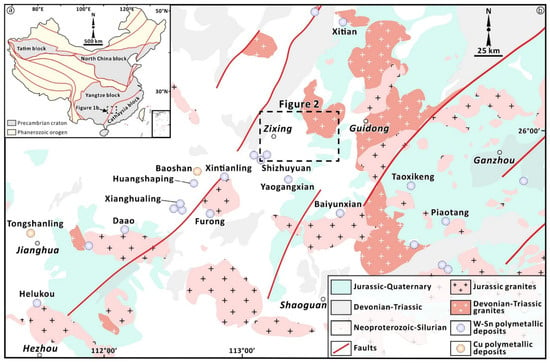
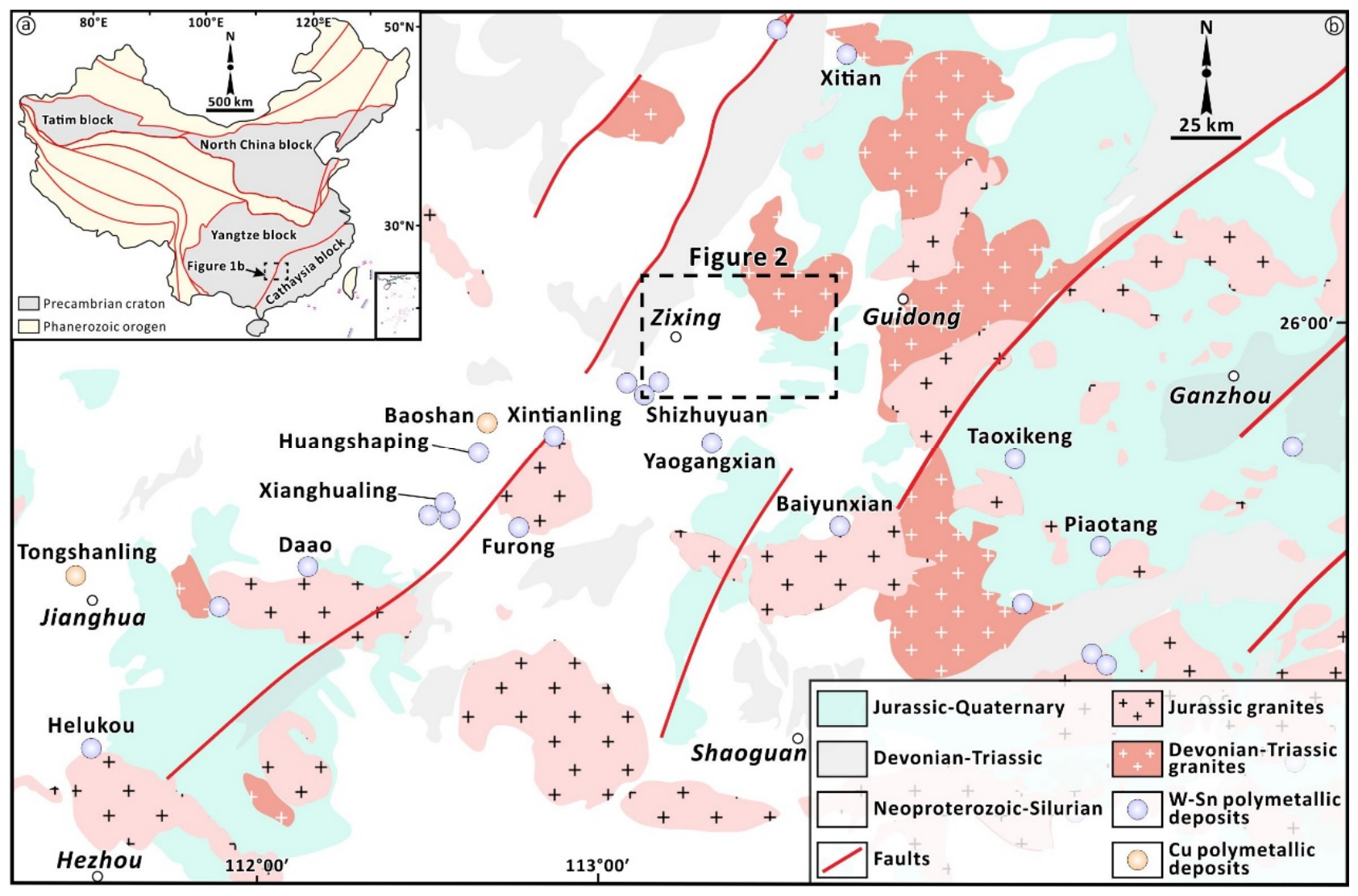
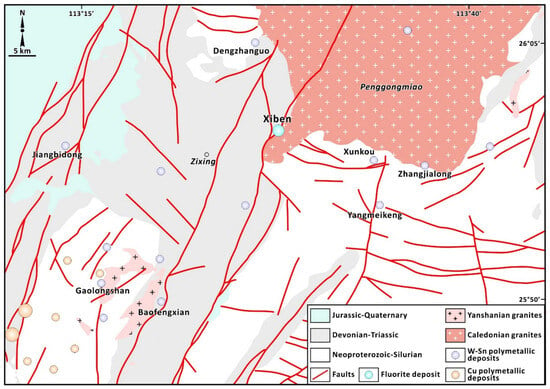
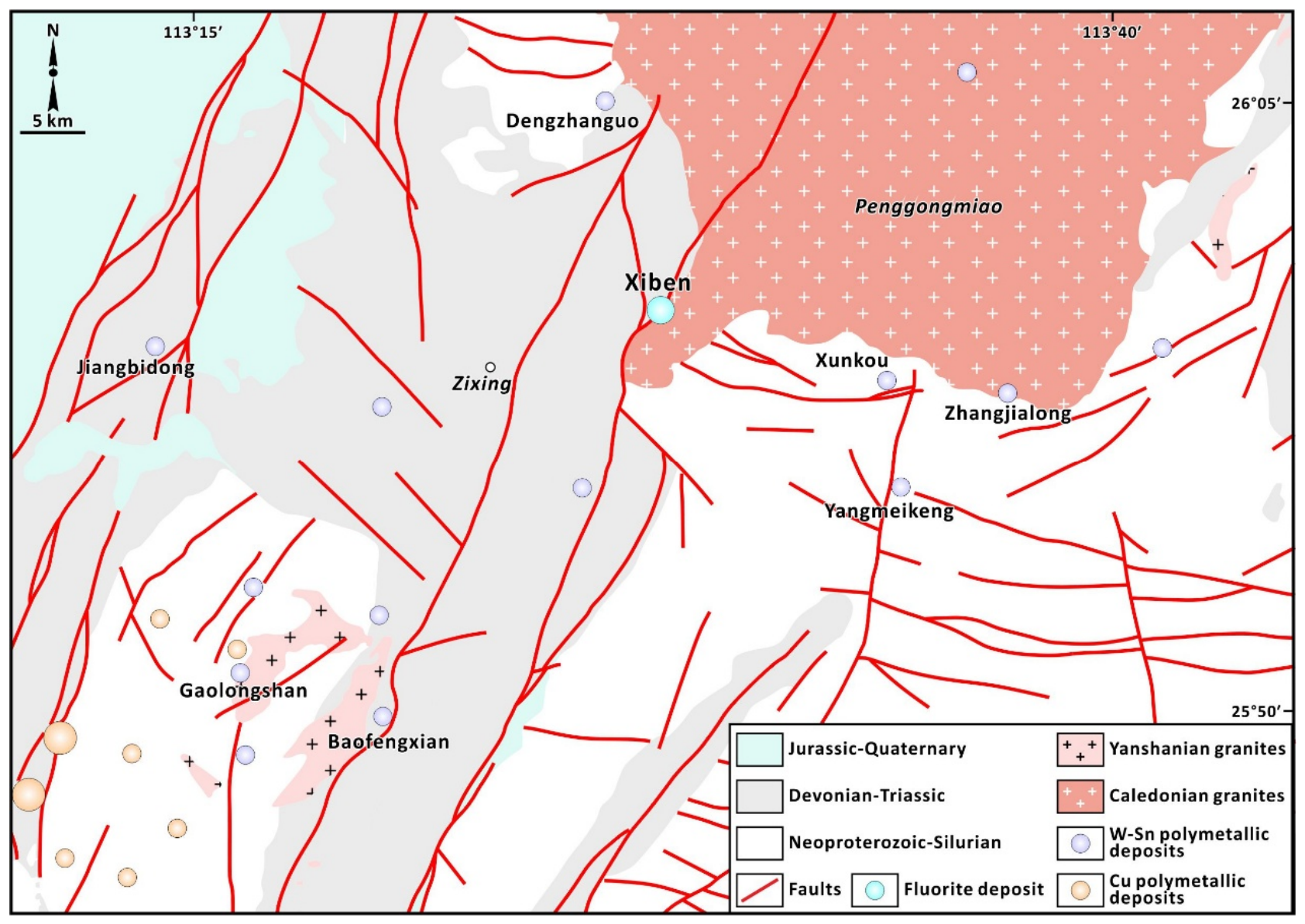
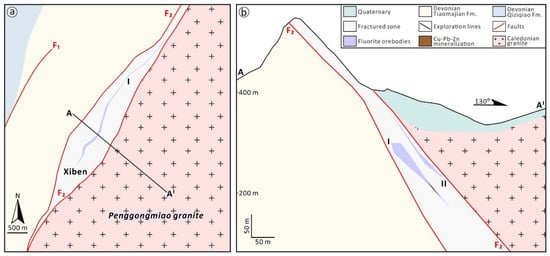
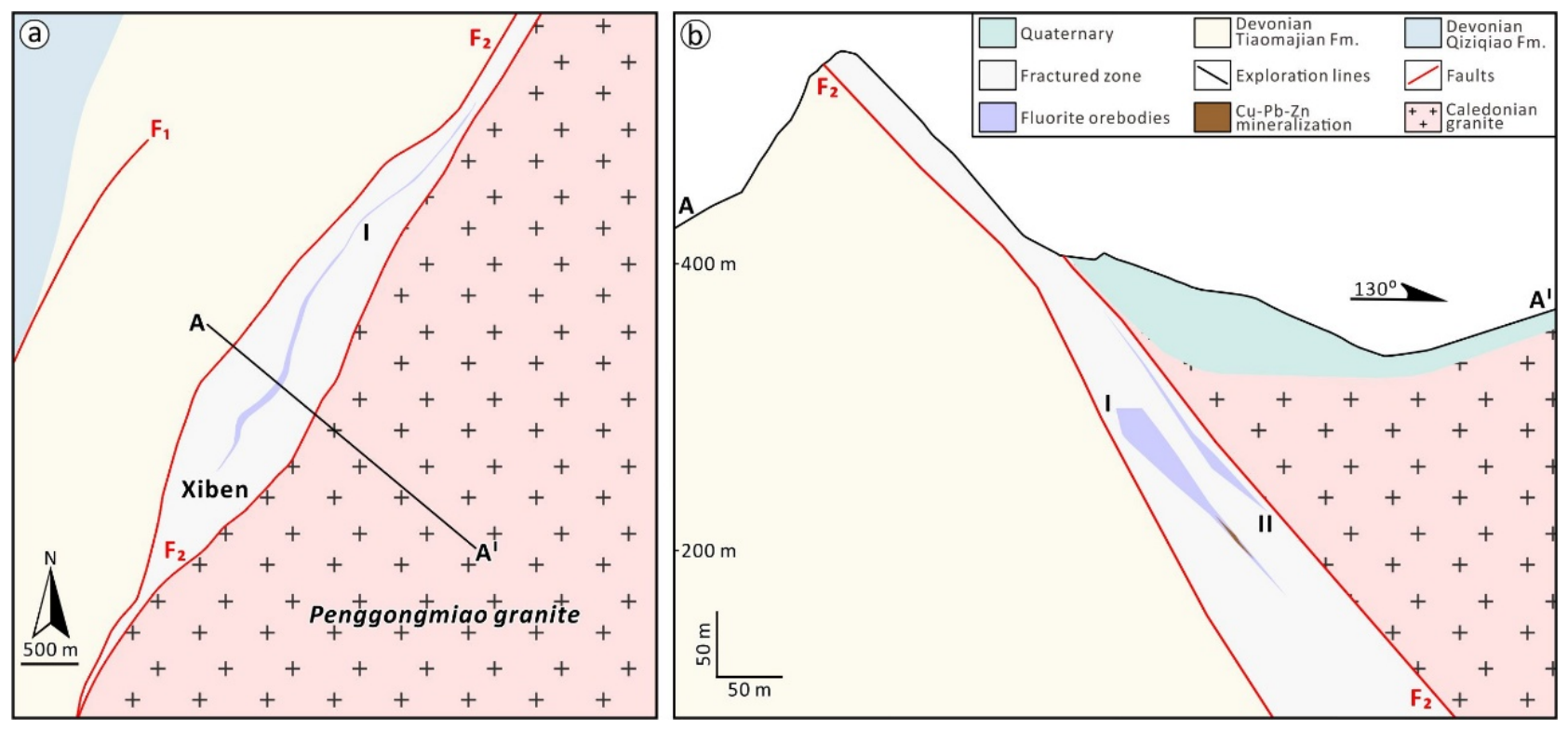
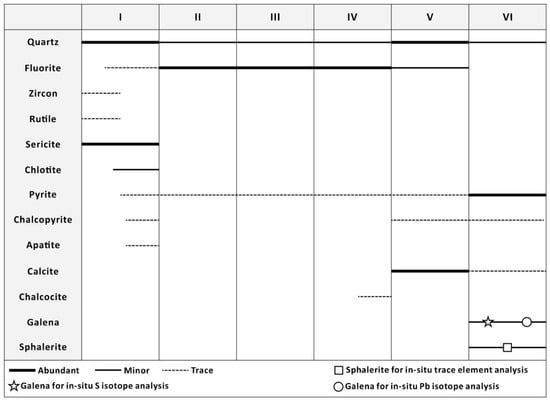
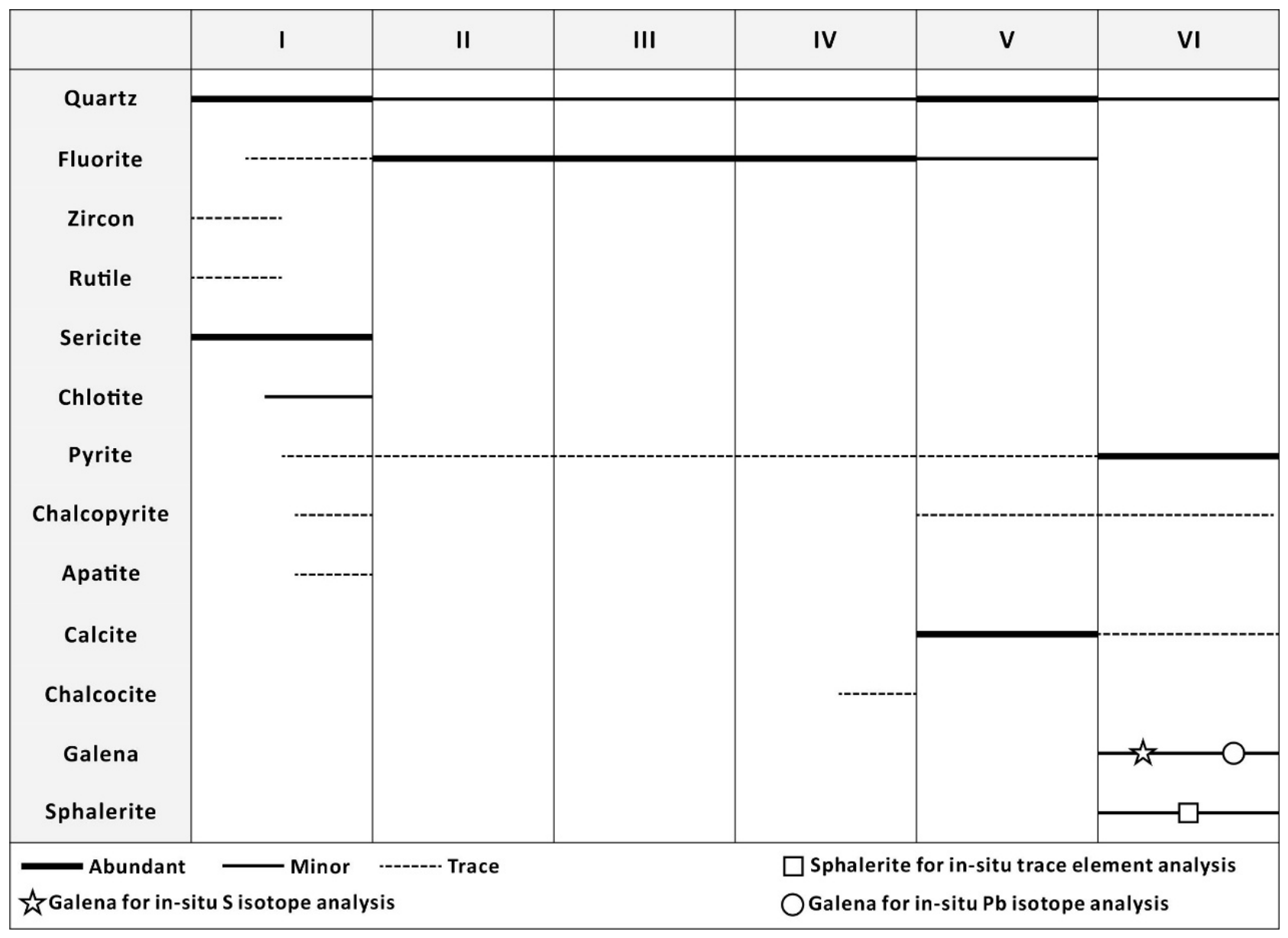
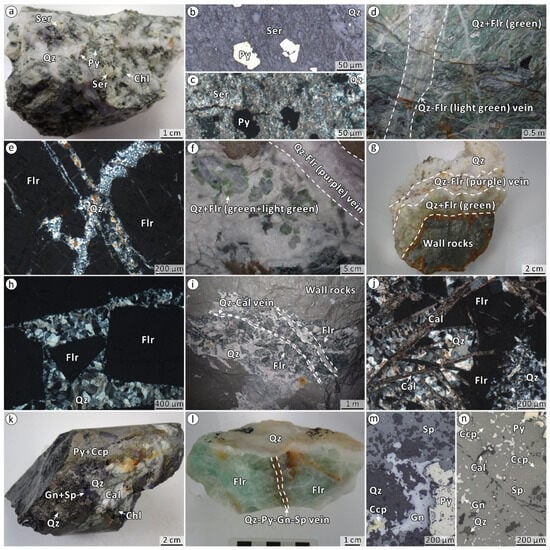
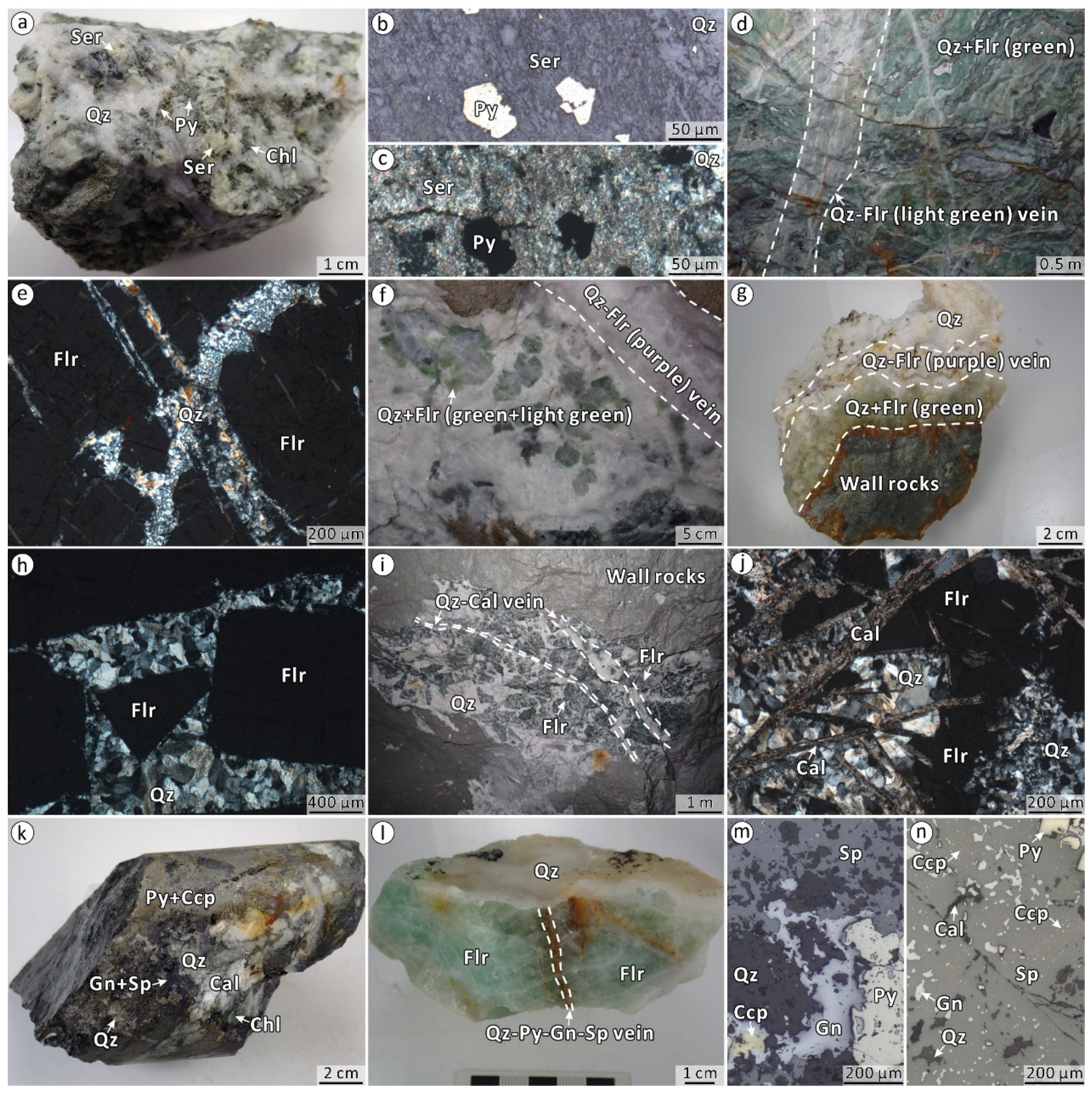
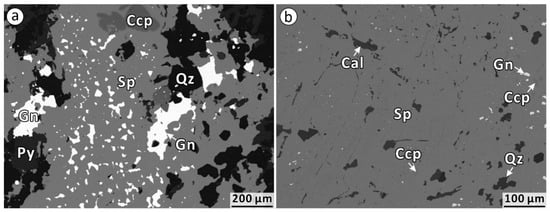
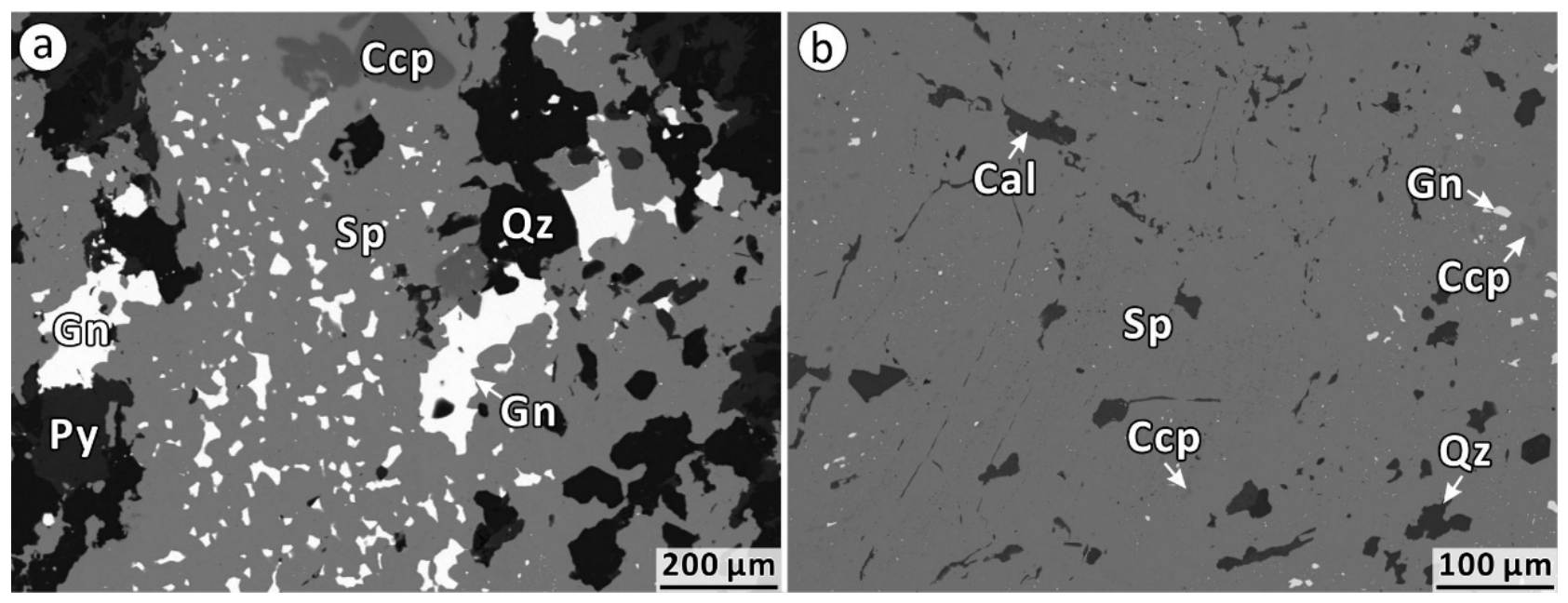
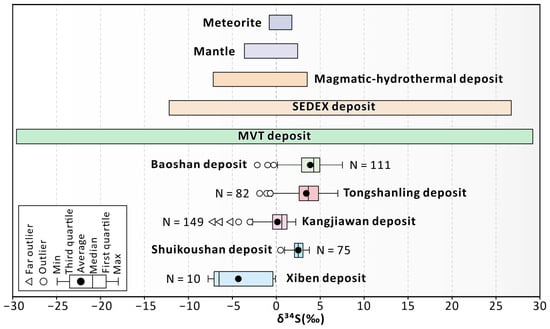
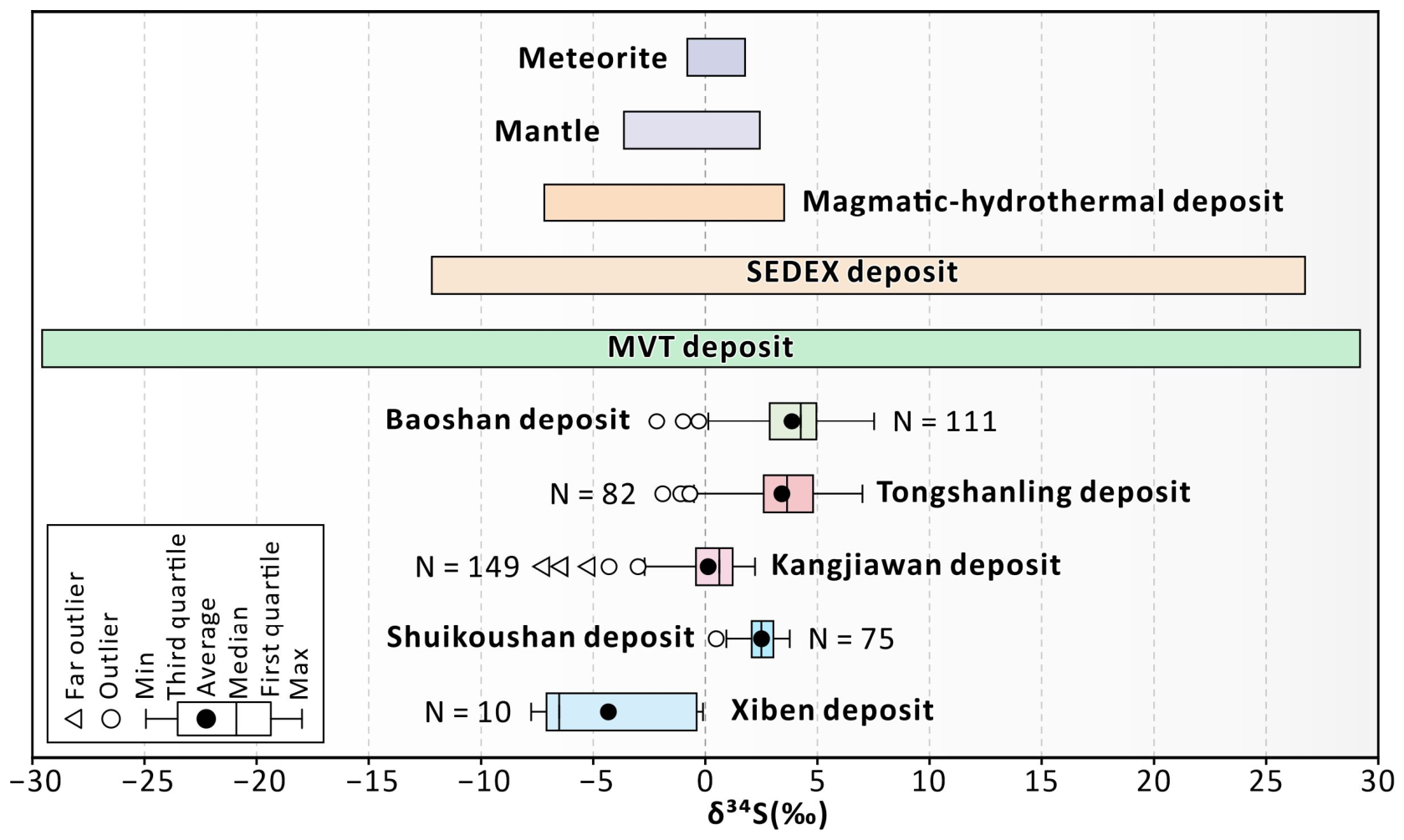
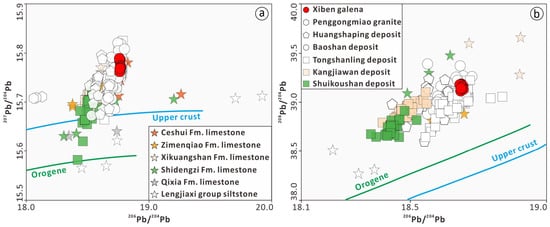
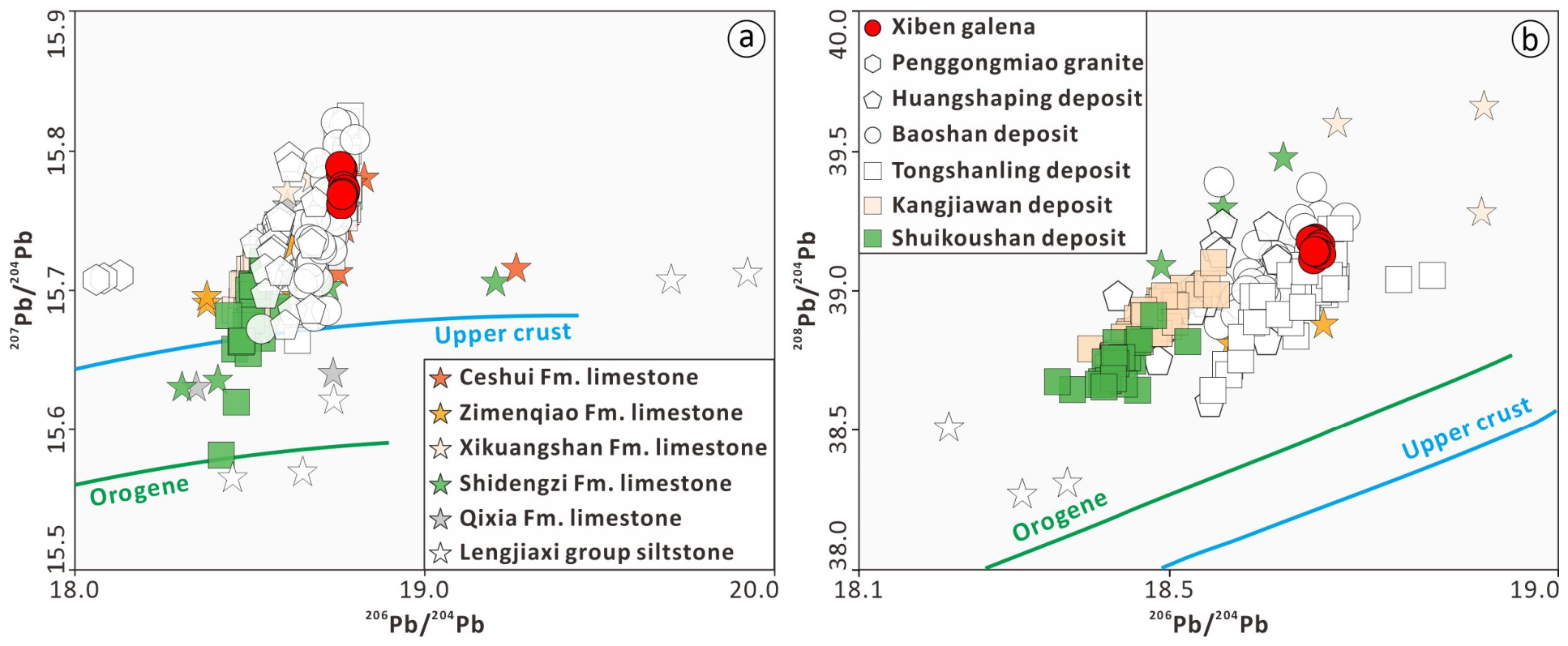
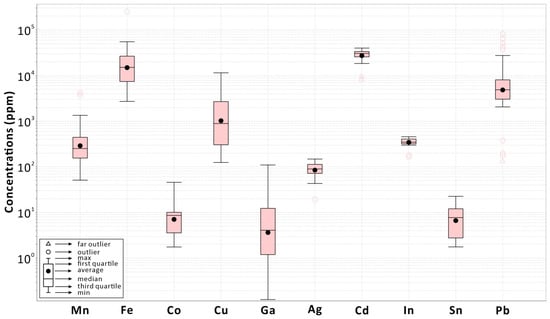
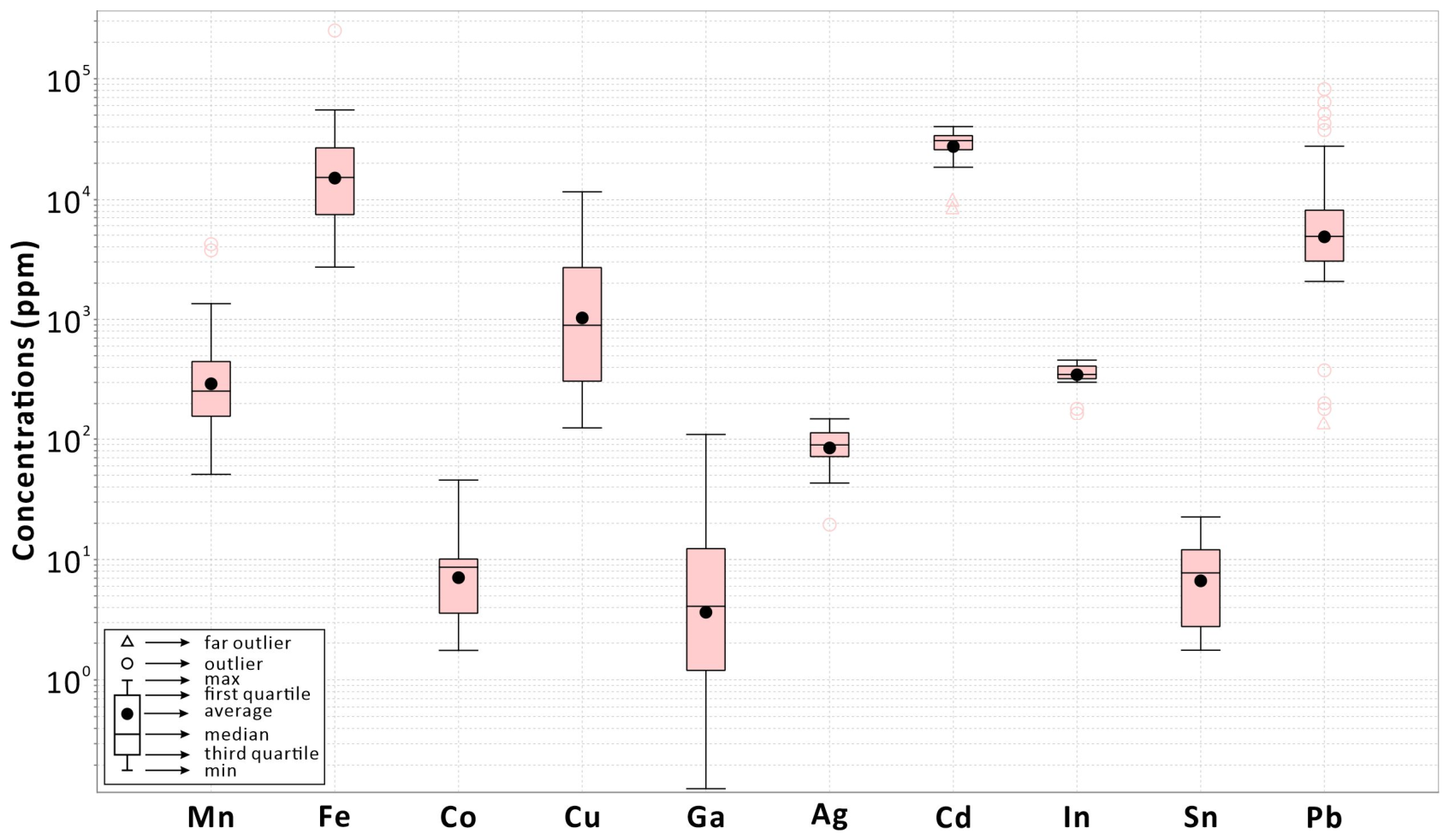
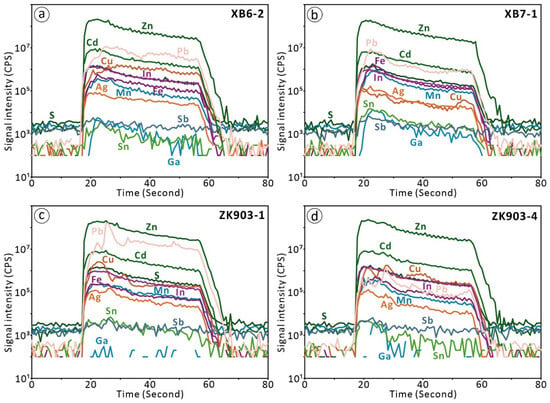
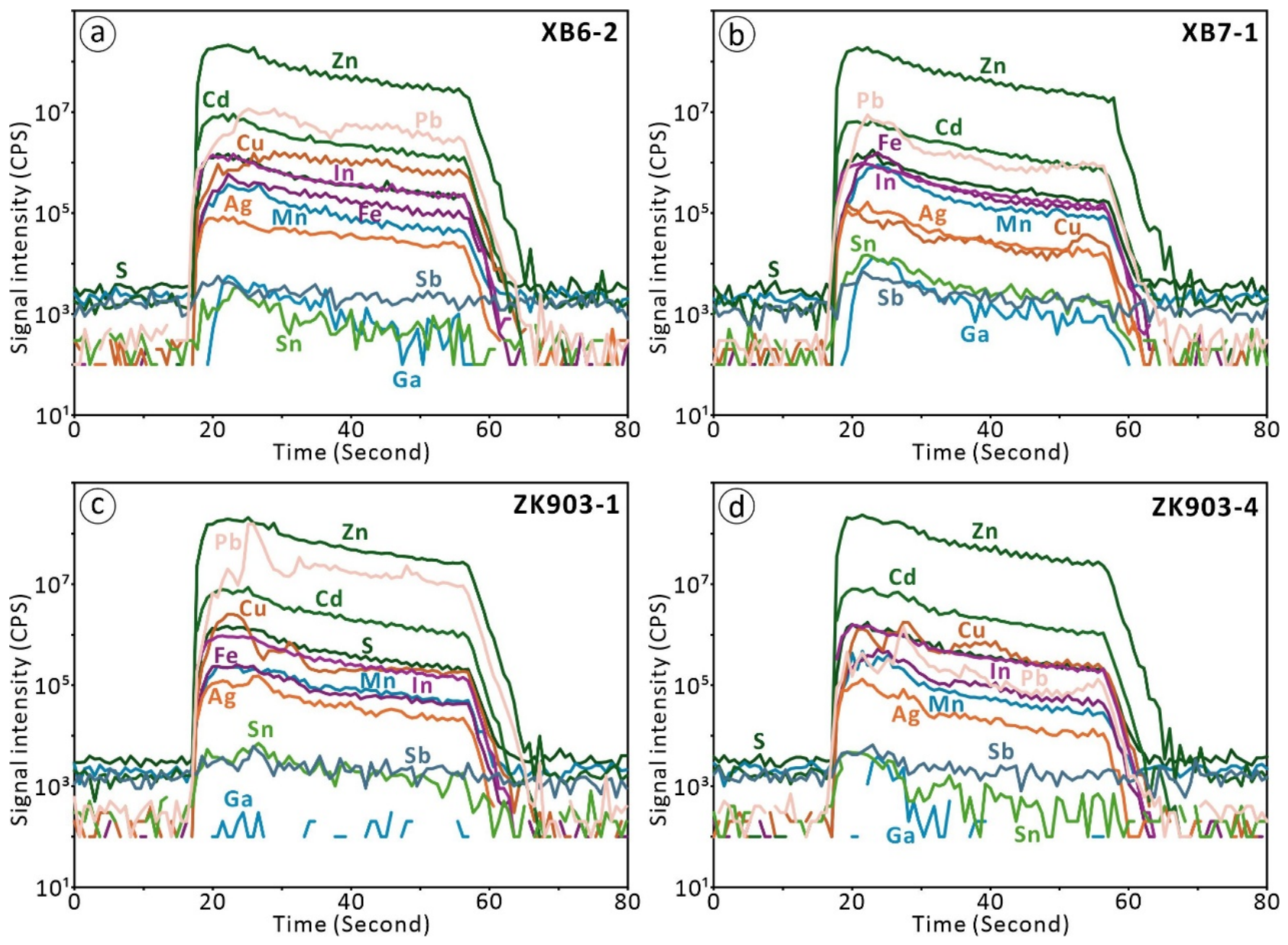
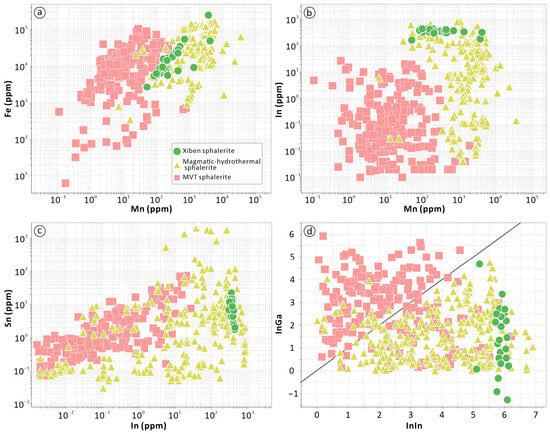
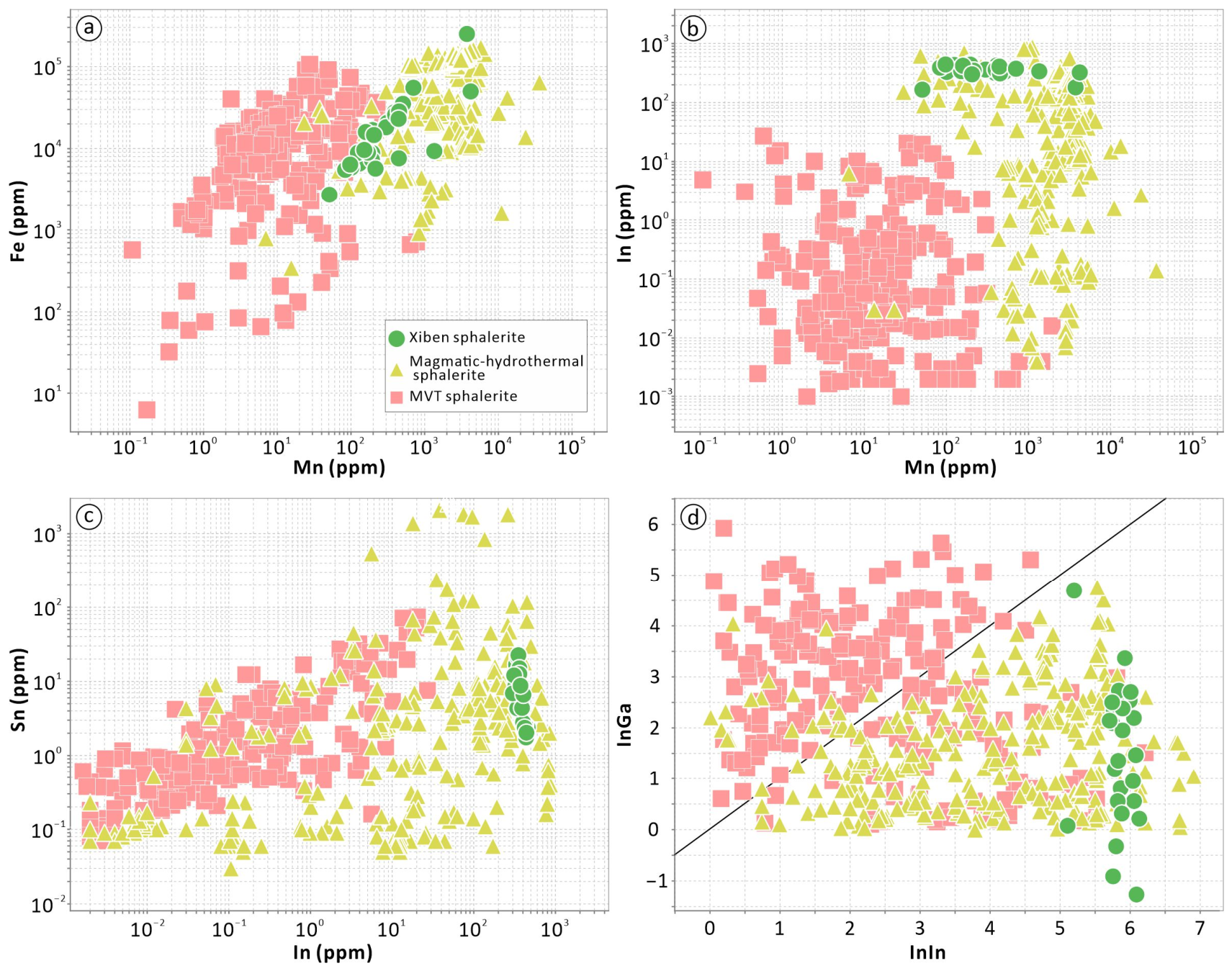

Disclaimer/Publisher’s Note: The statements, opinions and data contained in all publications are solely those of the individual author(s) and contributor(s) and not of MDPI and/or the editor(s). MDPI and/or the editor(s) disclaim responsibility for any injury to people or property resulting from any ideas, methods, instructions or products referred to in the content. |
© 2026 by the authors. Licensee MDPI, Basel, Switzerland. This article is an open access article distributed under the terms and conditions of the Creative Commons Attribution (CC BY) license.