


Abstract
Sustainable livelihoods for farmers are crucial to achieving the United Nations Sustainable Development Goals (SDGs). In particular, the sustainability of farmers’ livelihoods in plain agricultural areas is strategically important for poverty alleviation, food security, and the reduction in urban–rural disparities. Drawing on data from a sample survey of farmers and field interviews conducted in the Jianghan Plain, this study evaluates farmers’ sustainable livelihoods in plain agricultural areas. The results indicate the following: (1) In 2022, the sustainable livelihood level of farmers in the Jianghan Plain was relatively low; the average Sustainable Livelihood Index (SLI) of the sampled farmers was 0.3462, with livelihood capital and livelihood outcomes accounting for 50.58% and 49.42% of the SLI, respectively. (2) A significant bidirectional positive interaction existed between farmers’ livelihood capital and livelihood outcomes. Specifically, the coefficient of the promotion effect of livelihood capital on livelihood outcomes was 0.1312, whereas that of the feedback effect of livelihood outcomes on livelihood capital was 1.0128. (3) The coupling coordination degree between farmers’ livelihood capital and livelihood outcomes was moderately unbalanced, with livelihood capital identified as the primary obstacle to farmers’ sustainable livelihood development. The average obstacle degree of livelihood capital was 0.7305, indicating a high degree of constraint. The cumulative obstacle degree of social capital (0.2707), human capital (0.1876), and natural capital (0.1460) reached 60.43%, indicating that these three factors collectively constituted the key obstacles. These findings provide valuable insights into promoting farmers’ livelihood sustainability and rural revitalization in plain agricultural areas.
1. Introduction
Since the beginning of the 21st century, global challenges such as climate change, food security, energy crises, and social inequality have become increasingly prominent, and sustainable development has become a global consensus [1,2]. In 2015, the United Nations adopted the Sustainable Development Goals (SDGs), providing scientific guidance and an action blueprint for systematically addressing global development challenges [3]. Poverty, as one of the major challenges to global sustainable development, has long constrained global economic and social development [4,5]. The SDGs explicitly set the goal of eradicating all forms of poverty worldwide by 2030, highlighting the intrinsic relationship between poverty reduction and sustainable development. The majority of the world’s poor population is concentrated in rural areas [6,7], making the promotion of sustainable agricultural and rural development particularly critical [8,9,10].
China was once the country with the largest rural poor population in the world, attracting extensive international attention because of the diversity of poverty types, the complexity of poverty causes, and the arduous task of poverty alleviation [11,12]. The Chinese government prioritized addressing rural poverty and, through policy initiatives such as targeted poverty alleviation, successfully eradicated rural poverty under the current standard and eliminated poverty-designated counties by 2020. This achievement not only eliminated absolute poverty and overall regional poverty but also made a significant contribution to global poverty reduction [13,14,15]. However, the elimination of absolute poverty does not mean that rural development challenges have been completely resolved. When facing external shocks such as natural disasters, market fluctuations, and public health emergencies, rural households still face the risk of falling back into poverty due to insufficient resilience [16,17,18]. Therefore, consolidating the achievements of poverty alleviation and enhancing the sustainable livelihood capacities of rural households have become key issues that need to be addressed under the rural revitalization strategy.
Plain agricultural regions, characterized by abundant arable land resources and crop-dominated agricultural production, serve not only as strategic areas for safeguarding national food security [19] but also as typical regions with intensive human activities and complex human–land interactions [20,21]. From the perspective of livelihood system theory, plain agricultural regions do not simply follow traditional agricultural livelihood models. Instead, they have developed livelihood systems centered on land capital, agricultural technology, and market integration, relying on high-quality cultivated land resources and large-scale agricultural production. Compared with mountainous and pastoral regions, where livelihood vulnerability is often associated with limited resource accessibility and harsh natural environments, the vulnerability of plain agricultural regions is more closely related to structural risks arising from agricultural intensification, increasing market dependence, and urban–rural factor flows. Central plain farming areas represented by the Jianghan Plain possess advantages such as contiguous large-scale cultivation and high levels of agricultural mechanization, but they also face multiple livelihood development challenges. At the environmental level, the seasonal alternation between droughts and floods, soil salinization, and soil degradation caused by intensive cultivation have aggravated agricultural ecological vulnerability. Economically, the monoculture-based grain production structure makes household incomes highly susceptible to market fluctuations, while the contradiction between rising agricultural input costs and rigid grain prices further reduces profit margins. Socially, labor outmigration driven by urbanization has resulted in population aging and a decline in the quality of agricultural labor, while traditional management models struggle to adapt to the requirements of modern agricultural development. These challenges not only directly constrain improvements in household living standards but also pose potential threats to national food security and sustainable rural development.
The concept of “livelihood” originated from studies on poverty and gradually developed into the broader theoretical framework of “sustainable livelihoods”. Sen and Chambers initially argued that a livelihood refers to the means of making a living based on individual assets, capabilities, and activities, and that a livelihood can only be considered sustainable when it is able to effectively cope with external risks and maintain resilience [22,23]. Scoones further proposed that household livelihoods consist of assets, capabilities, and activities, and that, when facing external shocks, household livelihoods are considered sustainable if households can recover and enhance their assets, capabilities, and well-being without excessively depleting natural resources [24]. In the 1990s, Chambers and Conway clarified the connotation of sustainable livelihoods from the perspective of factor combinations, defining it as the combination of assets, capabilities, and income-generating activities possessed or accessible by individuals or households, which provides the foundation for improving long-term living conditions and means of subsistence [25]. The Sustainable Livelihoods Framework proposed by the UK Department for International Development (DFID) established a comprehensive logical chain of “vulnerability context → livelihood capitals → transforming structures and processes → livelihood strategies → livelihood outcomes”, clarifying the interrelationships among these components [26]. Among these elements, livelihood capitals represent the core resources for farmers’ sustainable development. Their allocation and structural changes influence farmers’ choices of livelihood strategies, thereby shaping corresponding livelihood outcomes. Meanwhile, livelihood outcomes can provide feedback and reshape the structure and attributes of livelihood capitals, dynamically influencing the sustainability of household livelihoods [27,28].
In recent years, research on household sustainable livelihoods has continued to deepen, generating substantial academic achievements. Existing studies have covered multiple dimensions, including climate change and livelihood vulnerability assessment [29,30,31], quantification of livelihood capitals and their influencing factors [32,33,34], interactions between livelihood capitals and livelihood strategies [32,35], livelihood strategy selection and its influencing factors [36,37], livelihood transformation and adaptability [38,39,40], and comprehensive evaluations of sustainable livelihoods [28,33,41]. The scope of research has gradually expanded from traditional regions such as impoverished mountainous areas [42], valley regions [38], plateau pastoral areas [43], coastal fishing areas [44], and small watershed regions [45] to areas including tourism development zones [46], resettlement areas [47], ecological protection zones [48], and urban fringe areas [49]. Methodologically, in addition to qualitative approaches such as questionnaires [35], semi-structured interviews [50], and participatory rural appraisal [51], quantitative methods have become increasingly prevalent, including entropy weighting methods [52], TOPSIS [33], the analytic hierarchy process (AHP) [53], improved livelihood pentagon area methods [54], and combined objective–subjective evaluation methods [55]. Furthermore, models such as Logit regression [56,57], Tobit models [43], structural equation models [58], quantile regression models [59], and boosted regression trees (BRT) [55] have been widely applied to analyze influencing factors and construct explanatory models. Moreover, livelihood outcomes, as an important component of the sustainable livelihood framework, have gradually become a key dimension for assessing household livelihood improvement and sustainable development capacity [60,61]. Existing studies have preliminarily explored the impacts of tourism development [62], information technology application [63], livelihood diversification [64], and land-use changes [65] on livelihood outcomes.
Overall, although existing academic research on farmers’ sustainable livelihoods has achieved substantial progress, studies focusing on the sustainable livelihoods of farm households in major grain-producing regions remain insufficiently representative. First, the applicability of the theoretical framework remains limited. The sustainable livelihoods theory was originally developed to address poverty. Although China has largely eliminated regional absolute poverty through poverty alleviation efforts, relative poverty still persists. Existing studies have mainly focused on impoverished households and have not sufficiently extended the framework to general farming households, limiting its applicability to the sustainable development needs of major grain-producing regions. Second, the regional coverage of existing studies remains uneven. Previous research has predominantly concentrated on special regions such as impoverished areas and ecologically vulnerable zones, while relatively limited attention has been paid to central plain agricultural regions. As agriculture-dominated areas, these regions not only serve as important agricultural production bases but also face challenges associated with large-scale agricultural transformation and the differentiation of non-agricultural employment. Therefore, case studies focusing on the sustainable livelihoods of farmers in central plain agricultural regions remain relatively scarce. Third, existing studies have limitations in analytical scope. Most studies have focused primarily on constructing livelihood capital evaluation systems, while others have used household income alone to represent livelihood outcomes. Such approaches lack comprehensive quantitative assessments that integrate livelihood capitals and livelihood outcomes. In addition, livelihood outcomes should encompass multiple dimensions, including income, well-being, and development capacity. However, limited attention has been paid to the interactions and coupling coordination characteristics between livelihood capitals and livelihood outcomes.
With the advancement of urbanization, industrialization, and marketization, rural China has experienced a series of challenges, including village hollowing, population aging, and the non-agricultural conversion of farmland. Meanwhile, rural households face multiple contradictions, such as the conflict between increasing grain production and protecting arable land ecology, as well as between large-scale agricultural production and smallholder management. Therefore, enhancing the sustainable livelihood capacity of rural households in plain agricultural regions has become an essential requirement for promoting high-quality agricultural and rural development and implementing the rural revitalization strategy. Based on the Sustainable Livelihoods Approach (SLA) proposed by the UK Department for International Development (DFID), and taking rural sustainable development as the core objective, this study selects the Jianghan Plain, a typical plain agricultural region in central China, as the study area and takes 2022 as the research year. Specifically, this study aims to address the following three questions:
- (1)
- What is the current level and development status of sustainable livelihoods among rural households in the Jianghan Plain?
- (2)
- What is the relationship between household livelihood capitals and livelihood outcomes, and what are the characteristics of this relationship?
- (3)
- What are the major obstacle factors restricting the sustainable development of household livelihoods in the Jianghan Plain?
Theoretically, this study expands the case types and theoretical propositions of sustainable livelihood theory and enriches the research perspectives and content concerning farmers’ sustainable livelihoods. Practically, the findings can provide scientific support for improving household livelihood levels in plain agricultural regions and offer a reference for formulating regional sustainable development strategies. Furthermore, this study can provide evidence and insights from the Chinese context to inform efforts to promote sustainable socioeconomic development in central China and contribute to the achievement of the United Nations Sustainable Development Goals.
2. Study Area and Methods
2.1. Study Area
The Jianghan Plain is located in the middle reaches of the Yangtze River, in the south-central part of Hubei Province, with geographic coordinates between 29°26′ N–31°37′ N and 111°14′ E–114°36′ E. This region includes 20 counties and cities, such as Xiantao (Figure 1). It is not only a major agricultural production area in China, as designated in the National Main Functional Area Plan, but also a typical traditional plain farming region in central China. In 2022, the Jianghan Plain covered an area of 42,200 km2 and had a population of 13.87 million, of whom 5.85 million lived in rural areas, accounting for 42.21%. As an important grain production base, the Jianghan Plain is of great agricultural significance: in 2022, its total economic output reached CNY 1113.11 billion, with the primary industry contributing CNY 168.36 billion, accounting for 15.12% of the total.
Figure 1.
Geographical location of case areas and distribution of sample villages in the Jianghan Plain.
With the accelerated advancement of industrialization, urbanization, and informatization, the Jianghan Plain has been presented with unprecedented development opportunities. The sustainable livelihoods of farming households are crucial to the rural revitalization strategy and national food security. First, the region is a key national production base for commercial grain, high-quality cotton, and aquatic products. The stability of farm households’ livelihoods directly affects farmers’ enthusiasm for grain production and the security of the agricultural supply chain, thereby contributing to national food security. Second, sustainable livelihoods promote the diversification of farming activities, extending beyond grain cultivation to industries such as grain processing, ecological agriculture, and rural tourism. This diversification activates rural industrial chains, attracts returning migrant labor, alleviates rural hollowing, and cultivates local talent—individuals with agricultural skills who are committed to rural life and capable of managing operations. This addresses the practical problem of “who will farm and who will revitalize the countryside?” Finally, a sustainable livelihood system oriented toward the long-term development of farm households can strengthen farmers’ confidence and sense of stability about their future lives. Households with secure livelihoods are more likely to identify with and actively participate in rural development, engage in public affairs management and grassroots governance, and promote an organic combination of self-governance, rule of law, and moral governance. This, in turn, enhances the effectiveness of rural governance and creates a favorable social environment.
To conduct an in-depth analysis of internal differences in the sustainable livelihoods of households on the Jianghan Plain, this study selected three representative county-level units with different development levels as research case units [66]. Xiantao City, located in the central-eastern part of the Jianghan Plain, is a county-level city directly administered by Hubei Province and has a relatively high level of rural development; Jingshan City, located in the northeastern part of the Jianghan Plain, is a county-level city under the jurisdiction of Jingmen City and has a medium level of rural development; Gong’an County, situated in the southwestern part of the Jianghan Plain, is a county under the jurisdiction of Jingzhou City and features a relatively low level of rural development (Figure 1, Table 1). The use of samples from these three county-level units enabled this study to delineate the basic status of sustainable livelihood development among households across the Jianghan Plain. A combination of stratified sampling and random sampling was used to select the study sample [67]. This sample was used to investigate rural households’ sustainable livelihoods and their influencing factors, and to explore policy recommendations for promoting the sustainable livelihoods of rural households on the Jianghan Plain, thereby providing a useful reference for the sustainable livelihood development of households in major food-producing regions worldwide.
Table 1.
Basic overview of the Jianghan Plain and the case areas in 2022.
2.2. Data Collection
The data for this study primarily consisted of statistical data and field survey data. The statistical data were mainly sourced from the statistical bulletins and yearbooks published in 2022 by the relevant regional government statistics departments. The field survey data were primarily derived from the National Natural Science Foundation of China project “Rural Community Spatial Reconstruction in the Jianghan Plain from the Perspective of Mobility-Complexity (42271227)”. The research team conducted field surveys and interviews in Xiantao City, Jingshan City, and Gong’an County between March and April 2023. Interviewees were rural permanent residents selected through random sampling. The basic attributes of the sample data are shown in Table 2.
Table 2.
Basic characteristics of sample households in the Jianghan Plain case study area.
The study also ensured geographic representativeness by selecting townships based on differences in economic development levels, villages based on income levels, and farm households through random sampling. In Xiantao City, 26 villages in five townships were selected: Chenchang Town, Miancheng Hui Ethnic Town, Xiliuhe Town, Shahu Town, and Huchang Town. In Jingshan City, 25 villages in five townships were chosen: Luodian Town, Yanmenkou Town, Qianchang Town, Sunqiao Town, and Caowu Town. In Gong’an County, 25 villages in five townships were selected: Maojiagang Town, Zhangzhuangpu Town, Banzhudang Town, Huangshantou Town, and Buhe Town. In total, the three county-level units covered 15 townships, 76 administrative villages, and 772 farm households. The field survey combined discussions with township- and village-level officials with face-to-face household interviews. Data on household livelihoods were collected through in-person interviews and on-site questionnaire completion. The respondents were primarily household heads. As household production and livelihood-related decisions in the study area were still predominantly made by male household heads, male respondents accounted for a relatively large proportion of the sample. It should be emphasized, however, that the core questionnaire items were designed with the household as the unit of analysis, and the data collected primarily reflect household-level livelihood characteristics rather than the individual attributes of the respondents. Therefore, the gender composition of respondents mainly reflects the identity of the household member who provided the information and does not alter the household-level analytical framework adopted in this study.
After Yihe Village in Gong’an County was excluded from the surveyed villages due to missing key data, 75 case villages were retained. A total of 772 questionnaires were administered, of which 762 were valid, yielding a valid response rate of 98.70%. Among the valid questionnaires, 271 were collected from Xiantao City (35.56%), 251 from Jingshan City (32.94%), and 240 from Gong’an County (31.50%). These data provide a solid empirical basis for the subsequent analysis and contribute to the robustness and credibility of the study findings.
2.3. Analytical Framework
This study is based on the Sustainable Livelihoods Framework proposed by the UK Department for International Development (DFID). By integrating the regional characteristics and livelihood development realities of agricultural areas in the central Chinese plain, using the Jianghan Plain as a case study, this study addresses a common limitation of previous research, namely the exclusive focus on the unidirectional role of livelihood capital. It places “livelihood outcomes” alongside “livelihood capital” as equally important core evaluation dimensions and constructs a systematic analytical framework of “comprehensive evaluation–relationship analysis–obstacle identification” (Figure 2). The core logic centers on the bidirectional interaction and coordinated development of “livelihood capital–livelihood outcomes”. Livelihood capital, as the foundational support for household livelihood sustainability, includes five sub-dimensions: natural capital, physical capital, financial capital, human capital, and social capital. Livelihood outcomes, as the direct manifestation of household livelihood sustainability, comprise five sub-dimensions: employment outcomes, housing outcomes, consumption outcomes, leisure outcomes, and travel outcomes. Both are measured through concrete, quantifiable indicators, forming a bidirectional interaction mechanism in which livelihood capital positively drives livelihood outcomes, while livelihood outcomes feed back into livelihood capital.
Figure 2.
Research framework for sustainable livelihoods of farm households in the Jianghan Plain.
Livelihood capital influences livelihood outcomes through livelihood strategies such as optimized large-scale cultivation and participation in non-farm employment, determining outcomes such as employment stability and income levels. Improvements in livelihood outcomes (e.g., increased income, skill accumulation) feed back into the accumulation and structural optimization of livelihood capital via capital conversion mechanisms, producing a cyclical evolutionary logic of “capital accumulation → outcome improvement → capital reinforcement”. The study quantifies household sustainable livelihood levels using the entropy method, verifies the interaction between livelihood capital and livelihood outcomes with a system of simultaneous equations, assesses the coupling coordination status and coordination potential using the coupling coordination degree and equilibrium entropy models, and identifies core obstacle factors using an obstacle degree model. The ultimate aim is to clarify the current livelihood status of households in the Jianghan Plain, elucidate internal mechanisms, and pinpoint constraint factors, thereby providing decision-making support for rural revitalization and the sustainable development of livelihoods in major grain-producing regions.
2.4. Research Methods
2.4.1. Comprehensive Evaluation of Farmers’ Sustainable Livelihoods
- (1)
- Indicator System
Based on the Sustainable Livelihoods Framework proposed by DFID, household livelihood capitals serve as both the core foundation and key support for households’ livelihood strategies, as well as essential indicators for measuring improvements in households’ sustainable livelihood levels. Household livelihood outcomes, representing the improvements in livelihood levels achieved after households implement specific livelihood strategies, are an even more direct manifestation of enhancements in livelihood sustainability. Existing studies often construct comprehensive evaluation index systems for household sustainable livelihoods centered on household livelihood capitals, while livelihood outcomes are frequently treated as a single component within the evaluation system [29,33,68]. Few studies independently treat household livelihood outcomes as a core evaluation dimension and construct index systems based on them to conduct comprehensive assessments of household sustainable livelihoods. Therefore, we explicitly define household livelihood capitals and livelihood outcomes as the two key dimensions for evaluating household sustainable livelihoods. On this basis, we construct a comprehensive evaluation index system to systematically assess the sustainable livelihood levels of households in the Jianghan Plain.
Livelihood capital is the foundation for the sustainable development of rural households’ livelihoods and determines their livelihood choices and outcomes. It consists of five dimensions: natural capital (NC), physical capital (PC), financial capital (FC), human capital (HC), and social capital (SC). Specifically, NC, primarily represented by arable land resources, constitutes a fundamental basis for the sustainable livelihoods of rural households. Due to limitations in data availability from the household survey, this study uses arable land area as the core proxy for natural capital, as it reflects the scale of household land resource endowments and captures the overall quantitative characteristics of natural capital, and is measured by indicator X1. PC includes the infrastructure and tools that households use for both production and living, which form the essential material basis for improving production efficiency and quality of life, and is represented by indicators X2–X3. FC refers to the financial resources that households can access for investment, consumption, and savings. The sufficiency of financial capital directly influences whether households can adopt new technologies, expand production, improve living conditions, or cope with unforeseen economic difficulties, and is represented by indicator X4. HC reflects household members’ labor capacity, health status, education level, and skills; these are critical factors that determine the effectiveness of livelihood strategies, and are represented by indicators X5–X6. SC refers to the resources households can mobilize through social networks, including family ties, neighborhood mutual assistance, community participation, trust, and cooperation, and is represented by indicators X7–X8. Specifically, X7 (satisfaction with neighborhood relations) captures informal interpersonal resources available to farming households. Given the acquaintance-based social structure in rural areas of the study region, neighborhood mutual assistance serves as an important source of daily social support, and higher satisfaction with neighborhood relations reflects stronger access to informal social networks. X8 (whether having relatives as village cadres) represents politically connected social capital. In rural grassroots governance, such connections can facilitate access to policy information, resource support, and social recognition, reflecting an important form of social capital consistent with the institutional context of the Jianghan Plain.
Livelihood outcomes refer to the ultimate effects generated by farmers’ livelihood activities and adjustments in livelihood strategies, and collectively reflect households’ capacity to utilize livelihood capital, cope with external risks, and improve their well-being. According to the Sustainable Livelihoods Framework, livelihood outcomes are not confined to a single economic dimension, such as income growth, but are inherently multidimensional, generally encompassing improvements in income and welfare, reductions in vulnerability, enhanced basic livelihood security, and strengthened capacity for livelihood development. It should be noted, however, that the Sustainable Livelihoods Framework primarily provides an overarching set of outcome objectives and an analytical logic rather than a standardized classification of livelihood outcome indicators applicable to all regions and types of rural households. Given differences in resource endowments, production patterns, institutional environments, and livelihood needs, the specific measurement of livelihood outcomes should be contextualized according to the characteristics of the study area, the research objectives, and data availability. Based on this understanding, this study does not treat employment, housing, consumption, leisure, and travel as predefined or standardized outcome dimensions within the Sustainable Livelihoods Framework. Instead, these dimensions are operationalized on the basis of the broader outcome objectives emphasized by the framework, including livelihood security, welfare improvement, vulnerability reduction, and enhanced development opportunities, while taking into account the production and living characteristics of rural households in the Jianghan Plain. As a typical agricultural production region in China, the Jianghan Plain is characterized by close interconnections among agricultural production, land use, and household daily life. Changes in land resource allocation and livelihood strategies may not only directly affect farmers’ employment patterns and income sources, but may also have broader implications for household material consumption, housing conditions, time allocation, and access to external resources and development opportunities. Accordingly, this study categorizes household livelihood outcomes into five dimensions: employment outcomes (EO), housing outcomes (HO), consumption outcomes (CO), leisure outcomes (LO), and travel outcomes (TO). Together, these dimensions capture the comprehensive effects of livelihood strategy adjustments from the perspectives of material welfare, livelihood security, and development opportunities.
Specifically, EO mainly reflects the stability, continuity, and income security of household livelihood activities, and represents an important dimension of livelihood security and resilience. Therefore, this study selects indicators such as X9–X10 to measure EO, representing household employment conditions and livelihood stability. HO reflects the improvement of households’ living environment and basic living security, including housing safety, residential comfort, and living environment quality. Improvements in housing conditions not only represent the accumulation of material wealth but also serve as an important indicator of enhanced household welfare and improved quality of life. Therefore, indicators such as X11–X12 are selected to measure improvements in household housing conditions. CO reflects households’ economic capacity, material welfare level, and ability to satisfy both basic living needs and development needs. Within the sustainable livelihood framework, consumption outcomes are not merely reflected by increased consumption levels but also represent the process through which households achieve livelihood security and welfare improvement through enhanced livelihood capacities. Food consumption reflects households’ ability to maintain stable food access and meet basic survival needs, corresponding to the food security dimension of sustainable livelihoods, while clothing consumption reflects improvements in material living standards and basic welfare conditions. Therefore, this study selects food and clothing consumption-related variables (X13–X14) as important indicators for measuring CO. LO reflects the non-material welfare achieved through livelihood improvement and represents households’ ability to pursue higher quality of life after meeting basic survival needs. Participation in leisure activities is closely associated with psychological well-being, life satisfaction, and social interaction opportunities, and also reflects the transformation toward modern lifestyles. Therefore, this study uses leisure-related indicators (X15–X16) to measure improvements in leisure opportunities and quality of life. TO reflects households’ spatial mobility capacity and accessibility to employment opportunities, public services, and social resources, representing an important dimension of livelihood accessibility and development opportunities. Improvements in transportation conditions and expansion of activity spaces can reduce spatial constraints, enhance households’ ability to access external resources, and promote diversified livelihood development. Therefore, this study uses travel and mobility-related indicators (X17–X18) to characterize the expansion of household activity spaces, improvements in living convenience, and enhancement of livelihood opportunities.
In summary, based on the actual conditions of the Jianghan Plain and drawing on existing research findings [28,69,70], we construct a novel comprehensive evaluation indicator system for farmers’ sustainable livelihood levels (Table 3). These indicators comprehensively cover various aspects of farmers’ livelihood capitals and outcomes, making the constructed evaluation system more robust and reasonable.
Table 3.
Comprehensive evaluation indicator system for the sustainable livelihood levels of households in the Jianghan Plain.
- (2)
- Entropy method
Compared with subjective scoring methods, the entropy method reduces subjectivity in indicator weighting and provides a more objective basis for weight determination. Therefore, this study uses the entropy method to calculate the indicator weights of farmers’ sustainable livelihoods and calculates the farmers’ Sustainable Livelihood Index (SLI) by linear weighted aggregation. Furthermore, to eliminate the potential influence of the weighting method on the calculation results of the core indices and verify the reliability of the entropy weighting method, the CRITIC objective weighting method is employed as an alternative approach for robustness testing. The specific formulas are shown below.
① Data standardization
This study employs the min–max normalization method to standardize the data. Indicators for which higher values have a positive effect on farmers’ livelihood capital or livelihood outcomes are classified as positive indicators and denoted by “+”. Conversely, indicators for which lower values are more favorable to farmers’ livelihood capital or livelihood outcomes are classified as negative indicators and denoted by “−”. The attributes of all indicators are presented in Table 3. The normalization formulas for positive and negative indicators are as follows:
Equations (1) and (2) are the normalization formulas for positive and negative indicators, respectively, where Xij and X’ij denote the raw data and the standardized data for the i-th (i = 1, 2, …, n) household on the j-th (j = 1, 2, …, m) indicator; max Xj and min Xj denote the maximum and minimum values of the j-th indicator, respectively.
② Calculate the weights of the indicators.
In Equation (3), Pij denotes the proportion of household i in indicator j.
③ Calculate the entropy value of the indicators.
In Equation (4), Ej denotes the entropy (i.e., information entropy) of the j-th indicator; n is the number of households, and 0 ≤ Ej ≤ 1.
④ Calculate the coefficient of variation for each indicator:
⑤ Calculate the weight of each indicator.
In Equation (6), Wj denotes the weight of the j-th indicator, where m is the number of indicators. The calculated weights of the indicators are presented in Table 4.
Table 4.
Weights of household sustainable livelihood indicators.
⑥ Calculate the comprehensive evaluation index of household sustainable livelihoods.
In Equation (7), Sj denotes the comprehensive evaluation index of the household’s sustainable livelihood. The value of Sj ranges between 0 and 1. When Sj = 1, it indicates that the household’s livelihood level is in an optimal state; when Sj = 0, it indicates that the household’s livelihood level is in a very poor state; when Sj = 0.5, it indicates that the household’s livelihood level is neither good nor bad. A larger index indicates a higher household sustainable livelihood level [29]. Drawing on related research [28], this study further subdivides the sustainable livelihood levels of households in the Jianghan Plain into five grades: low level (0 < Sj ≤ 0.2), relatively low level (0.2 < Sj ≤ 0.4), medium level (0.4 < Sj ≤ 0.6), relatively high level (0.6 < Sj ≤ 0.8), and high level (0.8 < Sj ≤ 1).
2.4.2. Coupling and Coordination Analysis of Farmers’ Sustainable Livelihoods
- (1)
- Simultaneous Equations Model
Within the sustainable livelihoods analytical framework, livelihood capitals influence livelihood outcomes through various livelihood strategies. This study posits a reciprocal relationship between livelihood capitals and livelihood outcomes, with their coupled and coordinated development promoting the sustainability of household livelihoods. When investigating the interaction between livelihood capitals and livelihood outcomes, traditional single-equation models struggle to account for potential bidirectional associations and endogeneity among variables. The simultaneous equations model (SEM), which constructs a system of multiple equations to characterize the complex interactions among variables, therefore represents an appropriate methodological choice for this study. From a theoretical perspective, livelihood capitals and livelihood outcomes exhibit a pronounced “two-way feedback” characteristic: on the one hand, the quality of natural capital, the accessibility of financial capital, and other dimensions of the five capitals influence livelihood outcomes, such as income levels and well-being, through the transformation of livelihood strategies. On the other hand, improvements in livelihood outcomes (e.g., increased savings resulting from higher income, skill accumulation resulting from enhanced development capacities) promote the expansion of the stock and structural optimization of livelihood capitals, forming a “capital–outcome” cycle. If this bidirectional reciprocal relationship is estimated using a single equation, endogeneity may lead to biased parameter estimates. The simultaneous equations model is essentially a system composed of multiple interdependent stochastic equations that describe the joint determination of endogenous variables. Accordingly, this study uses a simultaneous equations model to verify the reciprocal relationship between household livelihood capitals and livelihood outcomes. The specific formulas are as follows [71,72]:
In the equations, α0 and β0 are constant terms; ε and μ are random disturbance terms; α1, α2 and β1, β2, β3, β4 are coefficients to be estimated. LCI and LOI denote the household Livelihood Capital Index and the household Livelihood Outcomes Index, respectively. RGDP, ROI, RWI, and URRNC are control variables (to be ln-transformed), representing rural gross domestic product, rural operating income, rural wage income, and urban–rural road network connectivity, respectively.
- (2)
- Coupling Coordination Degree Model
As an effective analytical tool, the coupling coordination degree model quantifies the extent of mutual influence and coordinated development between two or more systems, thereby revealing their dynamic interrelationships. In this study, we use the coupling coordination degree model to conduct a detailed analysis of the coordinated development between household livelihood capitals and livelihood outcomes. Household livelihood capitals and livelihood outcomes are two essential components of sustainable livelihoods, and they exhibit complex interaction mechanisms. Livelihood capitals provide households with the foundational conditions for survival and development, while livelihood outcomes directly reflect the impact of these conditions on household quality of life. Through the coupling coordination degree model, we assess the degree of coupling and coordination between household livelihood capitals and livelihood outcomes, thereby clarifying how the two mutually promote or constrain each other. Specifically, the coupling coordination degree model evaluates the coordinated development level between household livelihood capitals and livelihood outcomes by calculating two key indicators: the coupling degree and the coordination index. The specific calculation formulas are as follows [73,74]:
① Calculate the degree of coupling.
② Coordination degree.
③ Coupling coordination degree.
In the formulas, C is the coupling degree between livelihood capital and livelihood outcomes, which can be used to judge the coupling coordination relationship between the two; C ∈ [0, 1]. The closer C is to 1, the higher the degree of coupling between the two; the closer C is to 0, the worse the coupling condition. U1 and U2 denote the composite indicator values of the two major systems, respectively. T is the coordination degree of the two systems, that is, the synergistic effect between livelihood capital and livelihood outcomes. α and β are the undetermined weight coefficients of the two systems, with α + β = 1. This paper considers livelihood capital and livelihood outcomes equally important and therefore assigns α = β = 0.5. D is the coupling coordination degree between livelihood capital and livelihood outcomes: the higher the value, the more the two systems are in a high-level mutually promoting relationship; the lower the value, the more the two systems are in a low-level mutually restrictive relationship. To objectively measure the coupling coordination degree between the livelihood capital system and the livelihood outcomes system, this paper, in combination with related research [73], divides the coupling coordination degree (D) of livelihood capital and livelihood outcomes into six grades: Seriously unbalanced development (0 ≤ D < 0.2), Moderately unbalanced development (0.2 ≤ D < 0.4), Slightly unbalanced development (0.4 ≤ D < 0.5), Barely balanced development (0.5 ≤ D < 0.6), Favorably balanced development (0.6 ≤ D < 0.8), and Superiorly balanced development (0.8 ≤ D ≤ 1).
- (3)
- Equilibrium Entropy Model
On the basis of examining the coupling coordination degree of farmers’ sustainable livelihood systems, this paper further uses the equilibrium entropy model to measure the relative advantage of their coordination. Drawing on the coupling coordination concept from physics, it is assumed that the higher the coupling coordination between the two subsystems of the farmers’ sustainable livelihood system, the stronger their interdependence and positive interaction, and the more balanced the farmers’ sustainable livelihood development system becomes. Accordingly, the higher the equilibrium entropy value, the greater the potential for coordinated development of the sustainable livelihood system of households in the Jianghan Plain. Compared with the conventional Gini coefficient, equilibrium entropy places greater emphasis on the balance of inter-system relationships. Its formula is given by [75]:
In the formula, EQi denotes the equilibrium entropy of livelihood sustainability for households in case village i; Di represents the coupling coordination degree of the two subsystems of household livelihood sustainability in case village i; ui is the composite score of household livelihood sustainability for case village i. When EQi > 1, it indicates that the coupling coordination among the component systems of household livelihood sustainability in the case village is superior to its overall level of household livelihood sustainability, the coupling coordination has a relative advantage, and future sustainability potential is greater; when EQi < 1, it indicates that the coupling coordination among the component systems is inferior to the overall level of household livelihood sustainability, and the imbalance among systems is relatively serious; when EQi = 1, it indicates that the coupling coordination degree is commensurate with the overall level of household livelihood sustainability, with no obvious advantage.
2.4.3. Analysis of Factors Hindering Farmers’ Sustainable Livelihoods
The obstacle degree model, as an effective analytical tool, systematically identifies and quantifies the obstructive factors and their magnitudes in the process of farmers’ livelihood sustainability. By applying this model, we can precisely reveal the key factors constraining the sustainable development of farmers’ livelihoods and provide a scientific basis for formulating targeted policies and interventions. Specifically, the obstacle degree model analyzes the primary obstacles farmers face in aligning the accumulation of livelihood capitals with the realization of livelihood outcomes, and quantitatively assesses the extent to which these obstacles impede the sustainability of farmers’ livelihoods. This provides both theoretical support and practical guidance for promoting sustainable livelihoods. Therefore, this study introduces the obstacle degree model into the analysis of influencing factors to identify the main obstacles to the sustainable development of rural households in the Jianghan Plain. The magnitude of the obstacle degree directly reflects the extent to which each factor hinders the sustainability of farmers’ livelihoods. The calculation formula is as follows [76,77]:
In Equation (14), Yj denotes the degree to which the j-th indicator constitutes an obstacle to households’ sustainable livelihoods; Xj is the value of the j-th indicator after range standardization; Wj represents the weight of the j-th indicator; n is the number of indicators.
3. Research Results
3.1. Comprehensive Evaluation of Sustainable Livelihoods of Households in the Jianghan Plain
Based on the formula presented in Section 2.4.1, the Pearson correlation coefficient between the results obtained using the entropy weighting method and those calculated by the CRITIC method was 0.696, which passed the significance test at the 1% level, confirming the robustness of the entropy weighting method. The comprehensive sustainable livelihood evaluation index of the 762 sampled farm households in the Jianghan Plain in 2022 is shown in Figure 3 and Table 5. Overall, the mean comprehensive sustainable livelihood evaluation index for the sample was 0.3462, indicating a relatively low level. This suggests that although the Jianghan Plain has made phased progress in poverty alleviation and rural revitalization, the overall sustainable livelihood level of farm households still requires considerable improvement.
Figure 3.
Comprehensive evaluation index of sustainable livelihoods of households in the Jianghan Plain and case areas. Note: The black dots in subfigure (b) represent the corresponding values for individual households.
Table 5.
Comprehensive evaluation of sustainable livelihoods of households in the Jianghan Plain and three case areas.
Specifically, in 2022, the sustainable livelihood levels of the sampled households ranged from 0.0921 to 0.8075. The proportions of households at the low, relatively low, medium, relatively high, and high levels were 13.39%, 58.40%, 20.73%, 7.35%, and 0.13%, respectively. This distribution indicates that the sustainable livelihood level of households in the case area was predominantly at a relatively low level. Furthermore, only 42.78% of households had sustainable livelihood levels above the mean, highlighting that more than half of the households were below the mean and indicating a significant disparity in the overall levels. The range between the maximum and minimum sustainable livelihood levels was 0.7154 (0.8075 versus 0.0921), suggesting that, although some households had reached a high level of sustainable livelihood, substantial gaps remained among households.
In terms of dispersion, the standard deviation and coefficient of variation were 0.1482 and 0.4281, respectively, reflecting considerable structural differences in households’ sustainable livelihood levels. Regarding contribution rates, livelihood capital accounted for 50.58% of the overall contribution to households’ sustainable livelihood levels, highlighting its central role in driving livelihood improvements. Among the components of livelihood capital, social capital had the highest contribution rate (20.94%), underscoring its critical role in information acquisition, resource sharing, and risk management. Human capital (11.03%) and physical capital (10.21%) followed, reflecting the importance of household skills and family assets in securing livelihood stability. Financial capital contributed 6.44%, indicating that its role in capital flow and risk resistance requires strengthening. Natural capital contributed the least (1.96%), suggesting a declining direct dependence on natural resources and a gradual reduction in the influence of traditional resource constraints on livelihood patterns. Conversely, livelihood outcomes contributed 49.42% to sustainable livelihood levels, roughly equivalent to livelihood capital, indicating the synergistic effect of the two components in shaping livelihood sustainability. Among the specific dimensions, consumption outcomes had the highest contribution rate (13.63%), emphasizing the central role of household consumption capacity and consumption structure optimization in improving livelihood quality. Travel outcomes (10.95%) and employment outcomes (9.68%) followed, demonstrating the fundamental importance of transportation accessibility and employment stability in sustaining household livelihoods. Housing (7.68%) and leisure (7.48%) outcomes had relatively lower contribution rates, indicating that these dimensions represent potential gaps that currently limit livelihood sustainability and should be prioritized in future policy interventions.
Due to differences in natural geographic conditions and socio-economic development, the sustainable livelihood indices of households in the three case areas of the Jianghan Plain showed significant variation. Overall, Xiantao City had the highest sustainable livelihood level, followed by Jingshan City, with Gong’an County at the lowest. In 2022, the mean comprehensive sustainable livelihood indices for the sampled households in Xiantao City, Jingshan City, and Gong’an County were 0.3563, 0.3426, and 0.3385, respectively, all of which fell within the relatively low-level interval. The proportions of sampled households with livelihood levels above the mean in the three locations were 37.64%, 39.04%, and 43.33%, respectively, further indicating that household livelihood levels were generally low and unevenly distributed. Notably, intraregional disparities were also substantial: the ranges between the maximum and minimum values in Xiantao City, Jingshan City, and Gong’an County were 0.6801, 0.6241, and 0.6307, respectively. This indicates not only significant inter-regional gaps but also prominent livelihood differentiation within each region. Even within the same county, different households exhibited noticeable imbalances in livelihood capital accumulation and livelihood outcomes.
To further explore the internal differences in household sustainable livelihood indices within the case areas, the mean sustainable livelihood index of sampled households in each village was used to represent that village’s average sustainable livelihood index. In ArcGIS 10.2 software, the livelihood capital index (LCI), livelihood outcomes index (LOI), and sustainable livelihood index (SLI) were classified using the natural breaks method into three levels—high, medium, and low—as shown in Figure 4. Xiantao City, with 26 case villages, had 34.62% of villages at the high level for LCI, 50.00% at the medium level for LOI, and 46.15% at the high level for SLI. Xiantao’s proximity to Wuhan allows it to benefit from the radiative effects of the metropolitan economy. The city’s specialized industrial clusters, such as freshwater aquaculture and non-woven fabric processing, have established large-scale industrial chains that promote the efficient accumulation of households’ material, financial, and social capital, explaining the high LCI. However, some traditional industries have low added value, and structural labor shortages have slowed immediate livelihood income growth, resulting in a medium level for LOI. The high SLI is attributed to the synergistic support provided by its industrial base and livelihood resilience. Jingshan City, with 25 case villages, had 56.00% of villages at the medium level for LCI, 48.00% at the high level for LOI, and 60.00% at the medium level for SLI. This is due to Jingshan City’s location in the transition zone between the central Hubei hills and the plains, offering superior ecological endowments. Modern agriculture, focused on high-quality rice and ecological breeding, is large-scale and highly standardized, and its agricultural products are highly competitive in the market, directly driving improvements in LOI. However, compared with Xiantao City, Jingshan’s locational accessibility and degree of industrial diversification are weaker, and the rate of household capital accumulation is more moderate, resulting in LCI at a medium level. Consequently, SLI remains at a medium level, influenced by the sustainability characteristics of modern agriculture and policy support from rural revitalization demonstration projects. Gong’an County, with 24 case villages, had 54.17% of villages at the medium level for LCI, 66.67% at the medium level for LOI, and 54.17% at the high level for SLI. This can be attributed to Gong’an’s location on the southern bank of the middle reaches of the Yangtze River, where the ecological protection policies of the Yangtze River Economic Belt play a significant role. There is strong synergy between household livelihood activities and ecological protection, with sustainable livelihood models such as green agriculture and ecological tourism driving higher SLI. However, the county’s industrial structure remains dominated by traditional crop farming with limited industrial chain extension. Ecological control measures, such as flood prevention along the Yangtze River, restricted the development of some high-capital-input industries, leading to both household capital accumulation (LCI) and immediate livelihood income (LOI) remaining at moderate levels.
Figure 4.
Comprehensive index of sustainable livelihoods of households in 75 case villages of the Jianghan Plain. Note: Village codes refer to Table A1 in Appendix A.
3.2. Coupling and Coordination Analysis of Sustainable Livelihoods of Households in the Jianghan Plain
3.2.1. Verification of the Interrelationship Between Livelihood Capitals and Livelihood Outcomes
To investigate the interaction between livelihood capitals and livelihood outcomes of farm households in the Jianghan Plain, a simultaneous equations model was specified with the Livelihood Capital Index (LCI) and the Livelihood Outcomes Index (LOI) as core endogenous variables and RGDP, ROI, RWI, and URRNC as control variables. Descriptive statistics for the variables are presented in Table 6. The variance inflation factor (VIF) for each variable was less than 10, indicating the absence of significant multicollinearity and supporting the reasonableness of the variable selection. Furthermore, the Spearman correlation analysis showed that the correlation coefficient between LCI and LOI was 0.396, which passed the significance test at the 1% level, indicating a highly significant positive correlation between livelihood capitals and livelihood outcomes. Based on the calculation formula presented in Section 2.4.2, Table 7 reports the ordinary least squares (OLS) estimation results of the baseline regression models. The R2 values of the livelihood capital and livelihood outcome equations were 0.1351 and 0.1528, respectively. To further verify the reliability of the regression results, a weighted least squares (WLS) model was employed for robustness testing. The results showed that the conclusions obtained from the OLS and WLS models were highly consistent, confirming the robustness of the model estimation. Considering the characteristics of empirical studies based on cross-sectional data, the obtained goodness-of-fit levels indicate that the models have relatively strong explanatory power for the dependent variables and exhibit satisfactory statistical fit.
Table 6.
Descriptive statistics of variables.
Table 7.
Empirical results of the interrelationship between livelihood capital and livelihood outcomes of households in the Jianghan Plain.
The empirical results revealed a statistically significant bidirectional positive interaction between livelihood capital and livelihood outcomes among households in the Jianghan Plain, with the core coefficients passing significance tests at the 1% level (p < 0.001). Specifically, the driving coefficient of livelihood capital on livelihood outcomes was 0.1312, indicating that, controlling for other variables, an accumulation of one unit of livelihood capital significantly improves livelihood outcomes by 0.1312 units. This result corroborates the core logic of the sustainable livelihoods framework—that the accumulation of natural, human, physical, financial, and social capital is fundamental for households to withstand livelihood risks, optimize livelihood strategies, and enhance livelihood quality. Increases in capital stocks provide key support for households to carry out production and management activities and access development opportunities. Simultaneously, the feedback coefficient of livelihood outcomes on livelihood capital was 1.0128, meaning that each one-unit improvement in livelihood outcomes induces a 1.0128-unit increase in livelihood capital. This highlights the strong positive feedback effect of outcomes on capital accumulation. Specifically, improvements in livelihood outcomes (such as increased income and enhanced welfare) can directly contribute to the accumulation of physical capital (e.g., the purchase of production tools and improvement of facilities), investment in human capital (e.g., skills training and children’s education), and expansion of social capital (e.g., increased influence within social networks and access to more cooperation opportunities), thereby driving continued growth in livelihood capital stocks. This bidirectional positive interaction—“livelihood capital accumulation → livelihood outcome improvement → further livelihood capital accumulation”—creates a virtuous cycle in the household livelihood system and provides precise quantitative empirical support for understanding the internal operational logic of livelihood sustainability in rural areas.
3.2.2. Coupling and Coordination Between Livelihood Capitals and Livelihood Outcomes
According to the Coupling Coordination Model results (Table 8), the coupling coordination degree between livelihood capital and livelihood outcomes for the 762 sample households in the Jianghan Plain in 2022 was generally in a state of “moderately unbalanced development”. Specifically, the coupling coordination degrees ranged from 0.0878 to 0.6282, with a mean of 0.3956, indicating that a high level of coordination between household livelihood capital and livelihood outcomes had not yet been achieved. In more detail, only 4 households (0.53%) were classified as being in a state of “seriously unbalanced development”; among these, Xiantao, Jingshan, and Gong’an accounted for 1, 2, and 1 household, respectively, representing 0.37%, 0.80%, and 0.42% of their respective samples. This indicates that a very small number of households still exhibited noticeable disharmony. A total of 424 households (55.64%) were classified as being in a state of “moderately unbalanced development”; of these, Xiantao, Jingshan, and Gong’an had 150, 142, and 132 households, respectively, representing 55.35%, 56.57%, and 55.00% of their respective samples. This suggests that most households remained in a condition where livelihood capital and livelihood outcomes were not fully aligned, although this was markedly less severe than the “seriously unbalanced” category. Meanwhile, 217 households (28.48%) were in a state of “slightly unbalanced development”, with Xiantao, Jingshan, and Gong’an accounting for 73, 69, and 75 households, respectively, representing 26.94%, 27.49%, and 31.25% of their respective samples. A further 115 households (15.09%) were classified as being in a state of “barely balanced development”, including 45 households in Xiantao (16.61%), 38 in Jingshan (15.14%), and 32 in Gong’an (13.33%). Finally, 2 households (0.26%) reached a state of “favorably balanced development”; both were located in Xiantao, accounting for 0.74% of its sample. This indicates that in areas of the Jianghan Plain with relatively higher levels of economic development, household livelihood capital and livelihood outcomes had started to achieve nearly balanced coordinated development.
Table 8.
Coupling coordination status of sustainable livelihoods of sample households in the Jianghan Plain (Unit: households).
Overall, the coupling coordination between livelihood capital and livelihood outcomes for households in the Jianghan Plain in 2022 was relatively poor. Although some households had gradually moved toward nearly balanced coordinated development, the majority remained in unbalanced coordinated development. This reflects persistent structural constraints in the accumulation of livelihood capital and its conversion into livelihood outcomes across the region, suggesting that future policy interventions and resource allocation should continue to focus on enhancing households’ capacity to effectively convert livelihood capital into stable livelihood outcomes. Furthermore, analysis of the coupling coordination status for the 75 sample villages in the Jianghan Plain (Figure 5) showed that in 2022, the overall coupling coordination degree of the sample villages primarily manifested in two states: “moderately unbalanced development (0.2 ≤ D < 0.4)” and “slightly unbalanced development (0.4 ≤ D < 0.5)”. Villages in the “moderately unbalanced development” category accounted for 57.33%, while those in the “slightly unbalanced development” category accounted for 42.67%. These data indicate that the coupling coordination level between livelihood capital and livelihood outcomes in the case villages of the Jianghan Plain was generally low. No rural village had yet achieved a high-level coupling coordination state, reflecting substantial room for improvement in the region’s capacity for the coordinated development of rural livelihood systems.
Figure 5.
Coupling coordination degree of sustainable livelihoods of farm households in the Jianghan Plain and the three case areas.
By subregion, the distribution of coupling coordination degrees among the 26 case villages in Xiantao City was relatively balanced: the numbers of villages categorized as “moderately unbalanced development” and “slightly unbalanced development” were equal, with 13 villages in each category, both accounting for 50.00%. This suggests a differentiated coupling coordination state of livelihood capital and livelihood outcomes in Xiantao City’s villages, with neither a clear cluster of high coordination nor concentrated areas of low coordination, indicating that the region was overall in the preliminary stage of balanced improvement.
In Jingshan City, 16 of the 25 case villages were in the “moderately unbalanced development” state, accounting for 64.00%, while 9 villages were in the “slightly unbalanced development” state, accounting for 36.00%. Thus, Jingshan’s case villages were predominantly characterized by “moderately unbalanced development”. More than 60% of villages exhibited deficiencies in the coordinated development of livelihood capital and outcomes, with the share of “moderately unbalanced development” villages exceeding the regional overall level, and the proportion of “slightly unbalanced development” villages remaining relatively low. This reflects a poor level of sustainable coordinated development within the region.
The coupling coordination status of the 24 case villages in Gong’an County showed a more pronounced characteristic of moderate imbalance: 14 villages were in the “moderately unbalanced development” state, accounting for 58.33%, and 10 villages were in the “slightly unbalanced development” state, accounting for 41.67%. Although this region remained dominated by the “moderately unbalanced development” state, the proportion of “slightly unbalanced development” villages was higher than in Jingshan City but lower than in Xiantao City, placing Gong’an County at an intermediate position in the region, with relatively small differences among villages in terms of the matching degree between livelihood capital and livelihood outcomes.
Overall, the coupling coordination status between livelihood capital and livelihood outcomes in the 75 case villages of the Jianghan Plain predominantly reflected unbalanced development. All three county-level units were primarily characterized by the “moderately unbalanced development” state, and none exhibited high-level coordinated villages. Among them, Jingshan City’s coupling coordination problems were the most pronounced, Xiantao City’s coordination state was relatively favorable, and Gong’an County occupied an intermediate position due to a relatively high proportion of “slightly unbalanced development” villages. Therefore, subsequent efforts should target the specific deficiencies in coordinated development across regions and formulate differentiated strategies to enhance livelihood capital, thereby promoting the synergistic optimization of rural livelihood systems.
3.2.3. Entropy Distribution of Sustainable Livelihood Equilibrium
Based on the analysis of the coupling and coordination status of rural households’ sustainable livelihood systems in the Jianghan Plain, this study further employed the equilibrium entropy model to assess the degree of coordination and development potential of these livelihood systems. Overall, among the 75 case villages in the Jianghan Plain in 2022, 43 villages (57.33% of the cases) had equilibrium entropy values exceeding 1, indicating that the majority of villages in the Jianghan Plain demonstrated relative advantages in the coordination of sustainable rural household livelihoods and possessed a certain potential for sustainable livelihood development. Combining these findings with the overall levels of household sustainable livelihoods and using the mean value of the composite evaluation level, this study classified the case villages into two categories based on whether their equilibrium entropy values were greater than 1 or less than or equal to 1 (Table 9, Figure 6). This classification allowed a more precise identification of each case village’s degree of coordination advantage.
Table 9.
Equilibrium entropy types of sustainable livelihood development of rural households in 75 case villages of Jianghan Plain.
Figure 6.
Equilibrium entropy index of coordinated development of sustainable livelihoods of rural households in 75 case villages of Jianghan Plain.
On the one hand, among the 43 case villages with equilibrium entropy > 1, only five villages—Jinghong, Tingzishan Community, Heyi, Tianjiamenlou, and Jinling—belonged to the high-level coordination-advantage category. These villages, due to their current status and potential advantages, had considerable future potential for sustainable household livelihood development. Additionally, 38 case villages, including Dingtiguai, Hongguang, Qingyanggang, Lianxing, and Fenghuang, fell into the low-level coordination-advantage category. These villages also demonstrated developmental momentum and could gradually develop coordination advantages in the sustainable development of household livelihoods.
On the other hand, among the 32 case villages with equilibrium entropy ≤ 1, 28 villages—such as Tangzui, Yinjiawan, Zijin, Guanliuzui, and Banzhudang Community—were categorized as high-level but lacking prominent coordination advantages. These villages exhibited relatively high levels of sustainable household livelihoods, but the coupling and coordination among subsystems required urgent improvement, and therefore their coordination advantages were not yet prominent. Moreover, only four case villages—Xuba, Baiquan, Baiyian, and Pengtai—fell into the low-level and coordination-disadvantaged category. These villages had low overall sustainable livelihood levels and poor coupling and linkage effects among components, and they lacked strong momentum for future development. Such villages should prioritize breakthroughs for sustainable household livelihoods so that their potential for sustainable development can be effectively realized through the integrated interaction between livelihood capitals and livelihood outcomes.
3.3. Identification of Factors Hindering Farmers’ Sustainable Livelihoods
This study used the obstacle degree model and survey data from 762 farm households in the Jianghan Plain in 2022 to systematically measure the extent to which two dimensions—livelihood capital and livelihood outcomes—constituted obstacles to the sustainable development of household livelihoods. It analyzed these obstacles across three levels: system, control, and indicator.
- (1)
- System-Level Obstacle Factors
The measurement results of system-level obstacle degrees indicated that livelihood capital was the core dominant obstacle constraining the sustainable livelihoods of households in the Jianghan Plain. In 2022, the average obstacle degree of livelihood capital among sample households in the case area was 0.7305, indicating an overall extremely high degree of constraint. In contrast, the obstacle degree for livelihood outcomes was 0.2695, much lower than that for livelihood capital. This suggests that, with the advancement of the rural revitalization strategy, households had achieved significant improvements by 2022 in livelihood outcomes such as income levels, infrastructure accessibility, and quality of life, resulting in a comparatively weak constraining effect of livelihood outcomes on livelihood sustainability. However, the capital stocks that constitute the basis for livelihoods remained relatively insufficient and structurally weak.
From a regional perspective, in 2022, the mean obstacle degrees of livelihood capital in Xiantao City, Jingshan City, and Gong’an County were 0.7246, 0.7377, and 0.7298, respectively, all falling within the high-obstacle range above 70%. The mean obstacle degrees for livelihood outcomes were 0.2754, 0.2623, and 0.2702, respectively, showing that, although improvements in livelihood outcomes exhibited strong regional parity, they remained far below the average obstacle degree of livelihood capital. Notably, the obstacle structure affecting households’ livelihood sustainability in the three areas exhibited a consistent characteristic: livelihood capital was the dominant factor constraining household livelihood sustainability. This suggests that, while rural living conditions had generally improved, the growth rate of households’ livelihood capital had failed to keep pace with the demand for sustainable development. Therefore, the accumulation and structural optimization of livelihood capital should be a key focus in the next stage of rural revitalization.
- (2)
- Control-Layer Obstacle Factors
The decomposition results of obstacle degrees in the control layer (Figure 7) showed that, in 2022, the core control-layer obstacle factors affecting the sustainability of rural household livelihoods in the Jianghan Plain were concentrated in five dimensions, ranked by obstacle degree from high to low as follows: social capital (0.2707), human capital (0.1876), natural capital (0.1460), physical capital (0.0997), and employment outcomes (0.0859). The cumulative obstacle degree of these five factors reached 0.7900, contributing 79% of the total obstacle degree, thus forming the key bottleneck combination restricting the sustainable operation of the livelihood system.
Figure 7.
Control-Layer obstacle degrees for sample households in the Jianghan Plain.
Among these, social capital was the most critical obstacle factor, indicating that village-level governance structures, community relationship networks, and social mutual-aid capacities were key factors influencing resource access and opportunity allocation. Human capital followed as another important obstacle, highlighting that farmers’ education levels and skill endowments were essential for livelihood diversification and increased market participation. Natural capital ranked third, reflecting that, as the foundational basis for household livelihoods, it still exerted an irreplaceable constraint on the stability of the livelihood system. Although agricultural mechanization and non-farm income had reduced direct dependence on land, attributes such as cultivated land quality and fragmentation still directly affected agricultural production returns and risk resistance, thereby creating critical bottlenecks. While physical capital and employment outcomes had relatively lower obstacle degrees, they also reflected that rural transportation conditions, asset structure, and labor allocation were important limiting factors.
From a regional perspective, the ordering of core control-layer obstacle factors in Xiantao City, Jingshan City, and Gong’an County was entirely consistent with the overall pattern of the Jianghan Plain, indicating strong common characteristics in the obstacle structure of livelihood systems within the region. This pattern was closely related to the similar agricultural production bases and economic development levels of the three areas. Specific regional differences included the following: Jingshan City had the highest social capital obstacle degree (0.2782), significantly above the regional mean, reflecting more pronounced constraints in the village governance and community network dimensions of social capital. Xiantao City’s human capital obstacle degree (0.1923) was the highest among the three, slightly above the regional mean, likely due to its proximity to the Wuhan metropolitan area and abundant non-farm employment opportunities demanding higher education and skills. Additionally, Xiantao had the highest employment outcome obstacle degree (0.0887), reinforcing the constraints of labor allocation and employment status in a non-farm employment environment. Jingshan City and Gong’an County, being traditional major agricultural counties, had natural capital obstacle degrees (0.1424, 0.1433) slightly below the regional mean. However, given their agricultural production-dominated county characteristics, the quality of cultivated land and agricultural ecological conditions remained key restriction points. In terms of physical capital, Jingshan City had the highest obstacle degree (0.1024), while Gong’an County (0.0987) and Xiantao City (0.0980) showed similar levels, both below the regional mean. These regional differences provided precise guidance for formulating differentiated county-level livelihood optimization strategies.
- (3)
- Indicator-Level Obstacle Factors
To accurately identify the core constraints on the sustainability of livelihoods among farm households in the Jianghan Plain in 2022, this study quantified the degree of each obstacle factor at the indicator level using the obstacle degree calculation formula. Based on the criterion that the cumulative obstacle degree of key factors should reach 70%, the top six indicators by obstacle degree for the entire Jianghan Plain, as well as for the three case county-level units—Xiantao City, Jingshan City, and Gong’an County—were identified as key obstacle factors. The specific calculation results are presented in Table 10.
Table 10.
Main obstacle factors for sample farming households in the Jianghan Plain.
Overall, in 2022, the key obstacle factors affecting the sustainability of farm households’ livelihoods, ranked from highest to lowest by obstacle degree, were:
- Social Capital (SC): Whether Having Relatives as Village Cadres (X8)
- Human Capital (HC): Household Head’s Education Level (X6)
- Natural Capital (NC): Cultivated Land Area (X1)
- Leisure Outcomes (LO): Frequency of Outbound Tourism (X16)
- Employment Outcomes (EO): Number of Employed Persons (X9)
- Physical Capital (PC): Types of Transportation Owned (X2)
The above results indicated that the presence of village cadre relatives in social capital, the education level of the household head in human capital, and the area of cultivated land in natural capital (ranked among the top three) constituted critical constraints and bottlenecks to the sustainable development of rural households’ livelihoods on the Jianghan Plain. These findings align closely with the livelihood support logic in rural China, which emphasizes the interrelationship of “relationships, capabilities, and resources”.
The primary obstacle posed by X8 highlighted the foundational role of rural social networks in resource allocation. Households maintaining close ties with village cadres (or having family members in such positions) enjoyed significant advantages in accessing policy subsidies, collective resource rights, and non-farm employment opportunities. This dynamic may reflect dependence on informal political connections in grassroots resource allocation, whereby unequal access to resources can exacerbate differences in livelihood capital among households. The high obstacle degree of X6 confirmed the decisive influence of education level on households’ capacity for livelihood transformation. Better-educated households were more likely to adopt modern agricultural technologies and adapt to non-farm employment, thereby enhancing livelihood stability and resilience through diversified income sources. This finding is consistent with He and Li [78], who emphasized the importance of human capital in sustainable household livelihood development. The third-ranking obstacle degree of X1 represented the core resource bottleneck for livelihood development on the Jianghan Plain. This finding is consistent with Zhang et al.’s [79] assertion that land factors impose structural constraints on household livelihoods. As the Jianghan Plain is a major agricultural production area, households there remained highly dependent on cultivated land. However, the issue of “many people, little land” and an imperfect land-transfer market meant that most households only possessed small-scale plots, preventing income growth from scaled-up cultivation and hindering labor mobility into non-farm sectors. X16 (frequency of outbound tourism), as a core measure of living welfare, emerged as a critical obstacle due to the imbalance between “production and life” in household livelihood transformations. Livelihood diversification reallocated household time, with the demands of non-farm employment compressing leisure time and directly limiting participation in tourism activities. Additionally, rural residents’ traditional preferences for low-cost leisure options (e.g., card games, sports, TV, or internet entertainment) already fulfilled basic needs, making tourism, which requires higher investments of time and money, a less attractive option. As a result, tourism frequency became a constraint limiting improvements in overall livelihood welfare. The inclusion of X9 (number of employed persons) and X2 (types of transportation owned) in the list of key obstacles reflected the diversified nature of obstacles within the Jianghan Plain’s rural livelihood system. The number of employed persons influenced household labor allocation efficiency, while types of transportation owned were critical for market access (e.g., agricultural product sales radius, non-farm employment commuting range). These indicators suggested that factors affecting rural livelihood sustainability extended beyond traditional capital elements to include the efficiency of factor allocation.
The comparative analysis of the three case county-level units revealed that the top three key constraints in Xiantao City, Jingshan City, and Gong’an County were highly consistent with the overall region’s characteristics: “whether having relatives as village cadres (X8)”, “household head’s education level (X6)”, and “cultivated land area (X1)”. This consistency confirmed the regional commonality in the core limiting factors for the sustainable development of farm household livelihoods in the Jianghan Plain. These common factors were closely tied to the similar physiographic conditions across the three county-level units (central Jianghan Plain with abundant arable land), their industrial base (an agricultural structure dominated by grain and cotton cultivation), and their social structure (pronounced features of a traditional acquaintance-based society). However, the fourth- to sixth-ranked key constraints exhibited clear county-level differences: in Xiantao and Jingshan, the ranking was as follows: “number of employed persons (X9) > frequency of outbound tourism (X16) > types of transportation owned (X2)”; whereas in Gong’an County, the ranking aligned with the overall region: “tourism frequency (X16) > number of employed persons (X9) > types of transportation owned (X2)”. This divergence arose from differences in economic development levels, industrial structures, and resource endowments among the three county-level units. As a more industrially developed area in the Jianghan Plain, Xiantao had clusters in textiles, food processing, and other industries that provided numerous non-farm employment opportunities, making the adaptability of the household labor allocation and employment structure a significant factor influencing livelihood incomes. This explained why X9 ranked higher in Xiantao. In Jingshan, agricultural industrialization had driven the development of specialty breeding and agricultural product processing clusters. The expansion of non-farm job supply had broadened employment opportunities, while large-scale agricultural operations simultaneously required greater labor quantity and skills, making the efficiency of labor allocation a key constraint on livelihood quality, thus placing X9 ahead of X16. In Gong’an County, the upgrading of rural consumption patterns had increased households’ demand for leisure quality. As a direct representation of leisure quality, X16 exerted a more pronounced constraining effect. Additionally, in some villages, limited transportation accessibility still hampered market access, keeping X2 at a relatively high degree of constraint.
4. Discussion
Livelihood sustainability is a key aspect of sustainable development for farm households in plain agricultural regions [41]. This study posits that sustainable livelihoods are not solely dependent on the continuous accumulation of livelihood capitals but also on the ongoing improvement of livelihood outcomes. An intrinsic link exists between livelihood capitals and livelihood outcomes: accumulation of livelihood capitals fosters improvements in livelihood outcomes, while improvements in livelihood outcomes, in turn, further enhance the accumulation of livelihood capitals. Only their coordinated development can ensure the sustainability of farm households’ livelihoods. Much of the existing literature focuses primarily on the role of livelihood capitals in household sustainability [28,29]. These studies typically reflect a one-way influence of capital accumulation on livelihood sustainability, overlooking the dynamic, reciprocal relationship through which livelihood outcomes also feed back into and enhance the accumulation of livelihood capitals. This contrasts with the cyclical logic proposed by the DFID Sustainable Livelihoods Framework—“livelihood capitals → livelihood strategies → livelihood outcomes → livelihood capitals”. Moreover, empirical studies testing the bidirectional transmission mechanism between “livelihood capitals” and “livelihood outcomes” in plain agricultural regions remain scarce, making it difficult to fully understand the sustainable development of farm household livelihoods in these areas.
4.1. Household Sustainable Livelihood Levels Under the Smallholder Agricultural Economic Model
As a typical example of a densely populated agricultural region, the Jianghan Plain’s experience in safeguarding food security, balancing ecological protection with agricultural production, and enhancing smallholders’ resilience to risks offers a valuable reference for similar regions globally. Given the increasingly significant global challenges posed by climate change and food supply chain instability, optimizing sustainable livelihood models for farmers in the Jianghan Plain not only reinforces the regional foundation of the global food security system but also provides Eastern perspectives and a Chinese approach to achieving sustainable household livelihoods in major agricultural production areas, particularly in developing countries.
This paper defines the sustainable development of farm household livelihoods as both the continuous accumulation of livelihood capitals and the sustained improvement of livelihood outcomes. Accordingly, an indicator system was constructed to comprehensively evaluate sustainable livelihood levels and accurately capture the core characteristics of livelihood sustainability in major grain-producing areas. The results indicate that in 2022, the sustainable livelihood level of sampled farm households in the Jianghan Plain was generally low and exhibited considerable inter-household heterogeneity. In 2022, the mean comprehensive Sustainable Livelihood Index (SLI) for sampled households was 0.3462, with 57.22% of households below the mean. This uneven distribution indicates the presence of a small number of relatively high-level households, but the majority remained at lower levels.
This outcome stems from various regional characteristics. First, although the Jianghan Plain is a major agricultural production area, the smallholder economy still dominates, and household resource endowments vary significantly. Some large-scale farms have achieved rapid capital accumulation through value-chain extension, while most smallholders remain constrained by limited production scale. Second, rural public service resources are unevenly distributed: households near core towns have better access to finance, technology, and other resources, while remote households are trapped in a “resource scarcity–development lag” cycle. In terms of contribution, livelihood capitals and livelihood outcomes accounted for 50.58% and 49.42% of the SLI, respectively, with livelihood capitals playing a central role in driving livelihood improvement. This aligns with the findings of Wang [80], Li [81], and Bhandari [38], confirming the foundational role of livelihood capital accumulation in livelihood improvement.
Notably, this study found that social capital was the core dimension of livelihood capital (contribution rate 20.94%). This contrasts with studies emphasizing the key role of natural capital [42,55,82] and human capital [32,78,83], but is consistent with research by Mbiba [84] and Xiong [85], who highlight the critical role of social networks in intensive agricultural regions. This finding suggests that, due to the high population density and intensive agriculture in the Jianghan Plain, households depend heavily on neighborly mutual aid and village-level organizational support for irrigation cooperation, technology sharing, and market information acquisition, making social networks a vital conduit for resource allocation. Although this study uses only arable land area to measure natural capital, the relatively homogeneous quality of cultivated land across the Jianghan Plain may, to some extent, reduce the potential bias arising from the limited representation of natural capital and support the representativeness of the results. Moreover, the significant role of consumption outcomes (contribution rate 13.63%) corroborates the findings of Chen [86] and Zhu [87], indicating that livelihood sustainability in major grain-producing areas has shifted from production security to consumption welfare, with improvements in consumption quality serving as a crucial marker of livelihood enhancement.
To address shortcomings such as the insufficient contribution of financial capital (less than 7%) and low housing and leisure outcomes, future measures should focus on strengthening financial capital by improving rural financial services, optimizing livelihood outcome structures with an emphasis on consumption upgrading, and implementing differentiated assistance strategies based on regional comparative advantages. This approach will promote a comprehensive improvement of households’ sustainable livelihood levels. These conclusions provide practical guidance for sustainable agricultural development in the Jianghan Plain and offer empirical insights for achieving coordinated improvements in livelihoods and food security in similar densely populated agricultural regions globally.
4.2. The Bidirectional Feedback Mechanism in the Sustainable Development of Farm Households’ Livelihoods
This study further reveals a significant bidirectional positive interaction between livelihood capital and livelihood outcomes among rural households in the Jianghan Plain, although their coupling coordination degree remains in a state of “moderately unbalanced development.” The empirical results derived from the Simultaneous Equations Model demonstrate that livelihood capital and livelihood outcomes mutually reinforce each other, with the core coefficients in both equations statistically significant at the 1% level. This reciprocal interaction forms a virtuous cycle characterized by “livelihood capital accumulation → livelihood outcome improvement → further livelihood capital enhancement,” which is highly consistent with the dynamic feedback mechanism and evolutionary logic emphasized in the DFID Sustainable Livelihoods Framework [27,28].
Specifically, after controlling for other factors, a one-unit increase in livelihood capital is associated with a 0.1312-unit improvement in livelihood outcomes, while a one-unit increase in livelihood outcomes contributes to a 1.0128-unit enhancement in livelihood capital. These findings provide empirical evidence that livelihood capital and livelihood outcomes are mutually reinforcing and jointly promote the sustainable development of household livelihoods. However, it should be noted that the two equations involve variables with different measurement dimensions, value ranges, and scaling characteristics. Therefore, this study primarily evaluates the existence and direction of the bidirectional relationship based on the signs and statistical significance of the estimated coefficients, rather than simply comparing the absolute magnitudes of the unstandardized coefficients to determine the relative strength of the two causal pathways. The stronger feedback coefficient of livelihood outcomes on livelihood capital should thus be interpreted with caution, as it may partly reflect differences in variable scaling rather than a substantially stronger causal effect.
However, the mean coupling coordination degree between livelihood capital and livelihood outcomes for households in the Jianghan Plain in 2022 was only 0.3956, indicating a “moderately unbalanced” state of development. Among the sample households, 55.64% were moderately unbalanced, and only 0.26% reached a “favorably balanced development” state. This indicates that farmers in China’s major grain-producing regions place greater emphasis on the accumulation of livelihood capitals while neglecting their efficient transformation into livelihood outcomes. This is typically reflected in the coexistence of high savings rates and low consumption rates, as well as an imbalance between productive investment and livelihood-oriented consumption. At the county level, Xiantao City exhibited the best prospects for coupling coordination, Jingshan City showed the most pronounced moderate imbalance, and Gong’an County occupied a medium position, reflecting the differentiated impacts of industrial bases and policy orientations at the county level.
The equilibrium entropy model analysis of 75 sample villages further reveals village-level differentiation: 57.33% of villages had coordination advantages (equilibrium entropy > 1), but only five were classified as “high-level coordination advantage” types, while 38 were “low-level coordination advantage” types. Conversely, 42.67% of villages lacked coordination advantages, with 28 categorized as “high-level but without a prominent coordination advantage” and four as “low-level with no coordination advantage.” This differentiation suggests that the coordinated development of village livelihood systems depends not only on the stock of livelihood capital but also on the efficiency of capital allocation and conversion mechanisms.
At the village scale, this study precisely identifies the micro-level obstacles to “capital → outcome” conversion. The policy implications for similar agricultural regions are as follows: a differentiated “two-way coordination” strategy should be established. For high-level coordination advantage villages, priority should be given to supporting leading industrial enterprises, establishing “enterprise + cooperative + household” linkage mechanisms, and strengthening the scale and demonstration effects of capital-to-outcome conversion. For high-level but coordination-lagging villages, targeted programs of “capital optimization + outcome orientation” should be implemented to help households balance productive and household investments and overcome the development inertia of “prioritizing accumulation over conversion”. For low-level coordination advantage villages, integrated improvements in homestead environments and rural leisure facilities should fill gaps in household service provision, directly enhancing livelihoods and welfare levels. For low-level villages with no coordination advantage, a comprehensive package of measures should be implemented—upgrading farmland infrastructure, providing specialized agricultural training, and organizing mutual-help cooperatives—to promote steady accumulation of livelihood capital. These measures should be complemented with strategies to improve livelihood outcomes: enhance industrial value through specialization, upgrade production-marketing models, and extend processing chains for agricultural products; broaden employment channels through county-level job matching and the development of village-level public positions; and alleviate development anxieties by improving village-level public services, such as healthcare, elderly care, and education, to consolidate the foundation for coordinated development.
4.3. Sustainable Development of Farm Households’ Livelihoods Under Multiple Constraining Factors
The obstacle-degree model analysis shows that livelihood capital is the core constraint on the sustainability of farm households’ livelihoods in the Jianghan Plain (mean obstacle degree 0.7305), whereas the mean obstacle degree for livelihood outcomes is only 0.2695. Although this appears to contradict the conclusions of Wang [80], Pour [35], and Sargani [88], who argue that livelihood capital plays a positive role in sustainable rural livelihoods, it actually reflects a stage-specific feature of agriculturally advanced regions. The Jianghan Plain has shifted from a stage of “capital scarcity” to one of “capital quality improvement and structural optimization”, in which insufficient capital stock and structural imbalance have replaced aggregate scarcity as the primary problems. From a regional-consistency perspective, the obstacle degrees for livelihood capital in all three case areas exceed 0.7000, while those for livelihood outcomes are all below 0.2800. These patterns corroborate the region-wide nature of livelihood-capital constraints across the Jianghan Plain and provide a unified basis for policy formulation at the regional scale.
Specifically, social capital (0.2707), human capital (0.1876), natural capital (0.1460), physical capital (0.0997), and employment outcomes (0.0859) constitute the five core obstacles, with a cumulative contribution of 79%. The primacy of social capital as an obstacle confirms the decisive role of “relational networks + village-level governance” in resource access during the rural transformation period. The prominence of human capital obstacles highlights the central importance of improving education levels and cultivating professional skills for diversifying household livelihoods and upgrading livelihood quality. As agriculture transitions from traditional cultivation to scale, standardization, and digitization, households’ educational attainment and skill endowments directly determine their capacity to adapt to new business models and participate in emerging industries, making insufficient human capital a key bottleneck to livelihood transformation. The natural-capital obstacle indicates that limited resource endowments not only directly restrict the accumulation of natural-capital stocks but also impede their efficient conversion into high-quality livelihood outcomes.
At the indicator level, the key obstacle nodes are further pinpointed: Whether Having Relatives as Village Cadres (X8), Household Head’s Education Level (X6), Cultivated Land Area (X1), Frequency of Outbound Tourism (X16), Number of Employed Persons (X9), and Types of Transportation Owned (X2) ranked as the top six indicators by obstacle degree. This ordering accurately reflects the livelihood-support logic of “relations–capacity–resources–infrastructure” in rural areas. The leading obstacle of “having relatives serving as village cadres” reveals the interaction between informal and formal institutions; “educational attainment of the household head” confirms the critical role of education in livelihood transformation; and the third-ranked obstacle, “cultivated land area”, shows that the fragmented smallholder farming model is unfavorable to the development of sustainable household livelihoods. Notably, indicators such as number of employed persons and types of transportation owned also rank highly, reflecting mismatches between supply and demand in the effective allocation of rural labor, the adaptability of infrastructure, and the needs of livelihood diversification. Constraints related to transport and asset conditions underscore hardware shortcomings in households’ ability to access markets and integrate resources amid increasing urban–rural factor flows.
These obstacle characteristics indicate that improving the sustainability of farm households’ livelihoods in the Jianghan Plain still faces multiple challenges. It is necessary to prioritize the unblocking of relational networks, the empowerment of human capital, the upgrading of infrastructure, and the optimization of resource allocation to build a targeted policy support system, thereby providing practical reference for rural revitalization and livelihood-quality improvement in agriculturally advanced regions. Specific recommendations are as follows: Regarding social capital obstacles, it is necessary to improve the transparency of village-level public resource allocation to reduce disparities arising from political connections. Meanwhile, village-level cooperatives should be established to build mutual assistance networks, promote resource sharing, and strengthen inclusive social support. For deficiencies in human capital, efforts should focus on enhancing farmers’ modern production and management skills, such as e-commerce operations, large-scale cultivation, and smart agriculture practices, in line with the development needs of agriculture in plain regions, thereby strengthening the endogenous capacity for farmers’ livelihood development. Regarding natural capital constraints, efforts should promote the orderly transfer of cultivated land, agricultural land trusteeship services, and the construction of high-standard farmland, while maintaining the livelihood resilience of smallholder farmers and improving land-use efficiency through scale-oriented agricultural management. To mitigate constraints posed by physical capital and employment outcomes, on the one hand, targeted subsidies for production inputs such as agricultural machinery and seeds should be provided to consolidate the material basis for agricultural operations, and rural consumption upgrading should be guided through measures such as issuing “rural consumption vouchers”; on the other hand, rural infrastructure upgrade projects should be implemented with emphasis on transportation, logistics, and digital infrastructure, and new rural industries such as rural tourism and agricultural-product processing should be cultivated to broaden local employment channels.
4.4. Research Limitations and Future Prospects
The dual-dimensional evaluation system constructed in this study, integrating “livelihood capital accumulation and livelihood outcome improvement”, addresses the limitation of previous studies that mainly focus on a single dimension of livelihood capitals and expands the theoretical analytical framework for evaluating household sustainable livelihoods. However, this study still has several limitations.
First, the static nature of cross-sectional data limits the ability to capture the dynamic evolution of household sustainable livelihoods. The survey data collected in 2022 comprehensively reflect the overall characteristics of livelihood capitals and livelihood outcomes among farm households in the Jianghan Plain, but they cannot fully reveal the long-term evolutionary trajectories of livelihood transformation, capital accumulation, and livelihood improvement. Future research should combine longitudinal household tracking surveys and multi-period panel data with emerging technologies such as big data analysis and artificial intelligence monitoring to construct dynamic livelihood evaluation systems and reveal the evolutionary patterns of household livelihood sustainability.
Second, this study lacks a qualitative component to complement and provide deeper interpretation of the quantitative findings. Although the indicator-based evaluation framework and econometric models can systematically measure livelihood sustainability and reveal statistical relationships among key variables, they cannot fully explain the underlying motivations, institutional contexts, and decision-making logic behind household behaviors. For example, unobserved factors such as household social networks, local historical and cultural contexts, and regional development conditions may influence household livelihood decisions but are difficult to capture through quantitative approaches alone. Future research could incorporate qualitative methods, such as in-depth interviews, to explore the deeper motivations underlying household livelihood decisions and enable triangulation between quantitative results and qualitative interpretations.
Third, the representativeness and spatial applicability of the research findings require further validation. This study covers 75 administrative villages across three county-level units in the Jianghan Plain and identifies the core characteristics of household sustainable livelihoods in typical agricultural plain regions. However, the findings may not be directly applicable to other regions with different geographical, ecological, and socioeconomic backgrounds. For example, livelihood constraints, resource endowments, and adaptation strategies may differ significantly among mountainous areas, pastoral regions, developed coastal areas, and ecologically vulnerable zones. Future research should conduct comparative studies across different geographical regions to examine whether the relationships between livelihood capitals and livelihood outcomes remain consistent under different regional contexts and explore sustainable livelihood development pathways tailored to local conditions.
Fourth, although this study establishes an interactive analytical framework between livelihood capitals and livelihood outcomes, the specific mechanisms among different livelihood capital dimensions remain insufficiently explored. The transformation from capital accumulation to livelihood improvement involves complex interactions among human, financial, social, physical, and natural capitals. For example, human capital can promote financial capital accumulation by improving employment capacity, while social capital can expand households’ access to information channels and external resources. However, this study mainly examines the overall relationship between livelihood capitals and livelihood outcomes and does not fully explore the internal interactions, threshold effects, and synergistic mechanisms among different types of capitals. Future studies could apply structural equation models, causal inference methods, or qualitative comparative analysis to further investigate these complex pathways.
Fifth, health and food security are also important outcomes of farmers’ sustainable livelihoods and constitute key dimensions of household basic well-being and livelihood security. However, owing to limitations in the scope of the survey and data availability, this study lacks sufficiently appropriate indicators to accurately capture farmers’ self-reported health status, disease burden, access to healthcare services, experiences of food insufficiency, and dietary diversity. Consequently, health and food security were not incorporated into the evaluation framework as separate dimensions of livelihood outcomes. Future research could further incorporate indicators related to health and food security into the analysis and, building on the existing dimensions of employment, housing, consumption, leisure, and travel outcomes, develop a more comprehensive evaluation framework for farmers’ sustainable livelihood outcomes that encompasses material well-being, health and well-being, food security, and development opportunities, thereby enhancing the comprehensiveness of livelihood outcome measurement.
5. Conclusions
At a critical juncture in advancing sustainable development and achieving the United Nations Sustainable Development Goals (SDGs), the sustainability of livelihoods among farm households in major grain-producing regions plays a pivotal role in consolidating poverty alleviation efforts, promoting rural revitalization, and ensuring national food security. It is also essential for narrowing the urban-rural development gap. Current academic research on household sustainable livelihoods has predominantly focused on regions such as impoverished mountainous areas and ecologically vulnerable zones, leaving a significant gap in systematic studies of plain farming areas in major grain-producing countries. Moreover, existing studies tend to focus on single dimensions of livelihood capital, often overlooking the bidirectional interaction and coupling coordination between livelihood capital and livelihood outcomes. In response, this study used a sample of 762 households in the Jianghan Plain to construct a comprehensive assessment model of household sustainable livelihoods that incorporates both livelihood capital and livelihood outcomes. Using the entropy method, a simultaneous equation model, the coupling coordination degree model, and the obstacle degree model, the study addressed three core questions: the level and characteristics of sustainable livelihoods in the Jianghan Plain; the relationship and coordination status between livelihood capital and livelihood outcomes; and the primary obstacles to sustainable livelihood development. The aim was to provide theoretical support and practical guidance for enhancing the sustainable development of household livelihoods in plain farming areas.
The study revealed that the sustainable livelihood level of households in the Jianghan Plain was generally low, with significant variation among households. Internally, livelihood capital contributed slightly more to household sustainable livelihood levels than livelihood outcomes. Within the livelihood capital dimension, social capital played a prominent role, while consumption outcomes served as the key supporting indicator in the livelihood outcomes dimension. Notably, a significant bidirectional positive relationship was found between livelihood capital and livelihood outcomes, suggesting the early formation of a virtuous cycle in which “capital accumulation drives improvements in outcomes, and improved outcomes feed back to enhance capital”. This reciprocal interaction contributed significantly to advancing the sustainable development of farmers’ livelihoods, a finding consistent with the comprehensive sustainable livelihood evaluation results. However, the coupling coordination between the two remained unbalanced overall, and an efficient coordination mechanism had not yet been established. This imbalance resulted from a mismatch between the pace of livelihood capital accumulation and the efficiency of converting capital into livelihood outcomes. At the constraint level, livelihood capital was identified as the core bottleneck limiting the sustainable development of household livelihoods. Different regions exhibited strong commonality in their obstacle structures, with social capital and human capital particularly prominent constraints. Overall, the sustainable development of household livelihoods in the Jianghan Plain was driven by the bidirectional interaction between livelihood capital accumulation and livelihood outcome improvement, with improved livelihood outcomes feeding back into further capital accumulation. Policy formulation aimed at advancing rural revitalization and household livelihood sustainability in major grain-producing regions should focus on optimizing livelihood capital, ensuring the efficient transformation of capital into livelihood outcomes, and addressing the differentiated livelihood needs of households across regions. The findings of this study provide valuable scientific guidance for policymaking aimed at fostering sustainable livelihoods in plain farming areas, underpinned by the dual objectives of ecological civilization construction and food security strategy. Additionally, the study offers China-specific practical experiences and theoretical insights that can inform the sustainable development of household livelihoods and the coordinated governance of agriculture and rural areas in major grain-producing regions globally.
Author Contributions
Conceptualization, Z.Z.; methodology, Z.Z.; software, Z.Z.; validation, Z.Z.; formal analysis, Z.Z., M.H. and X.Z.; investigation, Z.Z., M.H. and X.Z.; resources, B.Y.; data curation, M.H.; writing—original draft preparation, Z.Z.; writing—review and editing, M.H., B.Y. and L.H.; visualization, Z.Z., M.H. and X.Z.; supervision, B.Y. and L.H.; project administration, B.Y.; funding acquisition, B.Y. All authors have read and agreed to the published version of the manuscript.
Funding
This research was funded by the National Natural Science Foundation of China (Grant No. 42271227) and the 2025 Central China Normal University Outstanding Graduate Education Innovation Funding Project (Grant No. 2025CXZZ156).
Institutional Review Board Statement
This study was approved by the authors’ institutional ethics committee on 1 March 2023. All procedures involving human participants were conducted in strict accordance with the relevant guidelines and regulations, including the ethical principles outlined in the Declaration of Helsinki.
Informed Consent Statement
Written informed consent was obtained from all participants prior to their involvement in the study. The informed consent procedure included providing a detailed information letter outlining the study’s purpose, procedures, benefits, data usage, and publication plans. Participants were given ample time to review the information and ask questions before providing consent. Initially, a pilot study with 272 participants was conducted. After refining the research instrument based on the pilot study results, 500 participants were recruited for the main study. The informed consent process occurred from 5 March 2023 to 31 May 2023 and was conducted concurrently with the distribution of the questionnaires.
Data Availability Statement
The datasets generated and analyzed during this study, including raw data, survey questionnaires, and computational procedures, are available upon reasonable request from the corresponding author.
Conflicts of Interest
The authors declare no conflicts of interest.
Abbreviations
The following abbreviations are used in this manuscript:
| LCI | Livelihood Capital Index |
| LOI | Livelihood Outcomes Index |
| SLI | Sustainable Livelihood Index |
| RGDP | Rural Gross Domestic Product |
| ROI | Rural Operating Income |
| RWI | Rural Wage Income |
| URRNC | Urban–Rural Road Network Connectivity |
Appendix A
Table A1.
Sample Village Codes for 75 Villages in the Jianghan Plain.
References
- Singh, V. An impact and challenges of sustainable development in global era. J. Econ. Dev. Stud. 2014, 2, 327–337. [Google Scholar]
- Ruhana, F.; Nasution, M.S.; Susniwan; Ardieansyah; Sutiapermana, A. Combating poverty and social inequality in 2023 a global imperative for equitable development and social justice. Int. J. Sci. Soc. 2024, 6, 899–912. [Google Scholar] [CrossRef] [Scilit]
- Henderson, K.; Loreau, M. A model of Sustainable Development Goals: Challenges and opportunities in promoting human well-being and environmental sustainability. Ecol. Model. 2023, 475, 110164. [Google Scholar] [CrossRef] [Scilit]
- Haushofer, J.; Fehr, E. On the psychology of poverty. Science 2014, 344, 862–867. [Google Scholar] [CrossRef] [Scilit] [PubMed]
- Zhang, K.; Dearing, J.A.; Dawson, T.P.; Dong, X.; Yang, X.; Zhang, W. Poverty alleviation strategies in eastern China lead to critical ecological dynamics. Sci. Total Environ. 2015, 506, 164–181. [Google Scholar] [CrossRef] [Scilit] [PubMed]
- Hajdu, F.; Granlund, S.; Neves, D.; Hochfeld, T.; Amuakwa-Mensah, F.; Sandström, E. Cash transfers for sustainable rural livelihoods? Examining the long-term productive effects of the Child Support Grant in South Africa. World Dev. Perspect. 2020, 19, 100227. [Google Scholar] [CrossRef] [Scilit]
- Miani, A.M.; Dehkordi, M.K.; Siamian, N.; Lassois, L.; Tan, R.; Azadi, H. Toward sustainable rural livelihoods approach: Application of grounded theory in Ghazni province, Afghanistan. Appl. Geogr. 2023, 154, 102915. [Google Scholar] [CrossRef] [Scilit]
- Lee, B.X.; Kjaerulf, F.; Turner, S.; Cohen, L.; Donnelly, P.D.; Muggah, R.; Realini, A.; Kieselbach, B.; MacGregor, L.S.; Waller, I.; et al. Transforming our world: Implementing the 2030 agenda through sustainable development goal indicators. J. Public Health Policy 2016, 37, 13–31. [Google Scholar] [CrossRef] [Scilit] [PubMed]
- Wu, X.; Zhou, Z.; Zhu, M.; Huang, D.; Zhu, C.; Feng, Q.; Luo, W. Study on the coupling relationship between relocation for poverty alleviation and spatiotemporal evolution of rocky desertification in karst areas of Southwest China. Sustainability 2022, 14, 8037. [Google Scholar] [CrossRef] [Scilit]
- Chansanam, W.; Li, C. Scientometrics of poverty research for sustainability development: Trend analysis of the 1964–2022 data through Scopus. Sustainability 2022, 14, 5339. [Google Scholar] [CrossRef] [Scilit]
- Liu, M.; Ge, Y.; Hu, S.; Hao, H. The spatial effects of regional poverty: Spatial dependence, spatial heterogeneity and scale effects. ISPRS Int. J. Geo-Inf. 2023, 12, 501. [Google Scholar] [CrossRef] [Scilit]
- Liu, Y.; Liu, J.; Zhou, Y. Spatio-temporal patterns of rural poverty in China and targeted poverty alleviation strategies. J. Rural Stud. 2017, 52, 66–75. [Google Scholar] [CrossRef] [Scilit]
- Yang, Y.; Liu, Y. The code of targeted poverty alleviation in China: A geography perspective. Geogr. Sustain. 2021, 2, 243–253. [Google Scholar] [CrossRef] [Scilit]
- Wang, J.; Tong, J.; Fang, Z. Assessing the drivers of sustained agricultural economic development in China: Agricultural productivity and poverty reduction efficiency. Sustainability 2024, 16, 2073. [Google Scholar] [CrossRef] [Scilit]
- Guo, Y.; Zhou, Y.; Liu, Y. Targeted poverty alleviation and its practices in rural China: A case study of Fuping county, Hebei Province. J. Rural Stud. 2022, 93, 430–440. [Google Scholar] [CrossRef] [Scilit]
- Li, H.; Liu, Y.; Zhao, R.; Zhang, X.; Zhang, Z. How did the risk of poverty-stricken population return to poverty in the karst ecologically fragile areas come into Being?—Evidence from China. Land 2022, 11, 1656. [Google Scholar] [CrossRef] [Scilit]
- Zhou, Z.; Yu, Z.; Wu, H. Climate shocks, household resource allocation, and vulnerability to poverty. Agriculture 2022, 12, 971. [Google Scholar] [CrossRef] [Scilit]
- Sun, H.; Wang, Z.; Liu, X.; Liu, R. How Much Impact Does Livelihood Strategies Have on the Sustainable Livelihoods of the Households Lifted out of Poverty?: Data Analysis of 2,660 Pre-poverty Families in Poverty-stricken Areas. China Soft Sci. 2020, 2, 59–72. [Google Scholar]
- Sun, J.; Liu, Y.; Ge, D.; Lu, Y.; Niu, B. Coordinated mechanism between comprehensive land consolidation and rural transformation development in plain agricultural areas of China. Acta Geogr. Sin. 2022, 77, 1971–1986. [Google Scholar]
- Zhang, Y.; Long, H.; Chen, S.; Ma, L.; Gan, M. The development of multifunctional agriculture in farming regions of China: Convergence or divergence? Land Use Policy 2023, 127, 106576. [Google Scholar] [CrossRef] [Scilit]
- Peng, H.; Zhang, X.; Ren, W.; He, J. Spatial pattern and driving factors of cropland ecosystem services in a major grain-producing region: A production-living-ecology perspective. Ecol. Indic. 2023, 155, 111024. [Google Scholar] [CrossRef] [Scilit]
- Sen, A. Poverty and Famines: An Essay on Entitlement and Deprivation; Oxford University Press: Oxford, UK, 1982. [Google Scholar]
- Chambers, R. Sustainable Livelihoods, Environment and Development: Putting Poor Rural People First; Institute of Development Studies: London, UK, 1987. [Google Scholar]
- Scoones, I. Sustainable Rural Livelihoods: A Framework for Analysis; Institute of Development Studies: London, UK, 1998. [Google Scholar]
- Chambers, R.; Conway, G.R. Sustainable Rural Livelihoods: Practical Concepts for the 21st Century; Institute of Development Studies: Brighton, UK, 1992. [Google Scholar]
- DFID. Sustainable Livelihoods Guidance Sheets; Department for International Development: London, UK, 1999. [Google Scholar]
- Liu, Y.; Xu, Y. A geographic identification of multidimensional poverty in rural China under the framework of sustainable livelihoods analysis. Appl. Geogr. 2016, 73, 62–76. [Google Scholar] [CrossRef] [Scilit]
- Xiang, H.; He, F.; Zhou, G.; Zou, M. Evaluation of the sustainable livelihood of farming households in traditional village tourism area: A case study of four typical traditional villages in Chenzhou City, Hunan Province. Prog. Geogr. 2023, 42, 884–897. [Google Scholar] [CrossRef] [Scilit]
- Lin, Y.; He, C. Evaluation of livelihood sustainability in the context of natural forest land degradation vulnerability: A case study of five counties in China. Sustainability 2021, 13, 6580. [Google Scholar] [CrossRef] [Scilit]
- Patrick, A.; Hameed, S. Assessing the climate change impacts of cocoa growing districts in Ghana: The livelihood vulnerability index analysis. Environ. Dev. Sustain. 2020, 22, 2247–2268. [Google Scholar] [CrossRef] [Scilit]
- Hayes, W.M.; Davies, Z.G.; Chan-A-Sue, M.; Bicknell, J.E.; Robinson, J.E. Assessing the livelihood vulnerability of rural Guyanese communities due to accelerating environmental change. Reg. Environ. Change 2025, 25, 136. [Google Scholar] [CrossRef] [Scilit]
- Xu, D.; Deng, X.; Guo, S.; Liu, S. Sensitivity of livelihood strategy to livelihood capital: An empirical investigation using nationally representative survey data from rural China. Soc. Indic. Res. 2019, 144, 113–131. [Google Scholar] [CrossRef] [Scilit]
- Guo, M.; Xie, M.; Xu, G. Sustainable livelihood evaluation and influencing factors of rural households: A case study of Beijing ecological conservation areas. Sustainability 2023, 15, 10743. [Google Scholar] [CrossRef] [Scilit]
- Liu, D.; Wang, Y.; Chen, Y.; Yang, G.; Xu, H.; Ma, Y. Analysis of the Difference in Changes to Farmers’ Livelihood Capital under Different Land Transfer Modes—A Case Study of Manas County, Xinjiang, China. Land 2022, 11, 1369. [Google Scholar] [CrossRef] [Scilit]
- Pour, M.D.; Barati, A.A.; Azadi, H.; Scheffran, J. Revealing the role of livelihood assets in livelihood strategies: Towards enhancing conservation and livelihood development in the Hara Biosphere Reserve, Iran. Ecol. Indic. 2018, 94, 336–347. [Google Scholar] [CrossRef] [Scilit]
- Gecho, Y.; Ayele, G.; Lemma, T.; Alemu, D. Rural household livelihood strategies: Options and determinants in the case of Wolaita Zone, Southern Ethiopia. Soc. Sci. 2014, 3, 92–104. [Google Scholar] [CrossRef] [Scilit]
- Jiao, X.; Pouliot, M.; Walelign, S.Z. Livelihood strategies and dynamics in rural Cambodia. World Dev. 2017, 97, 266–278. [Google Scholar] [CrossRef] [Scilit]
- Bhandari, P.B. Rural livelihood change? Household capital, community resources and livelihood transition. J. Rural Stud. 2013, 32, 126–136. [Google Scholar] [CrossRef] [Scilit] [PubMed]
- Yin, S.; Yang, X.; Chen, J. Response and Adaptation of Farmers’ Livelihood Transformation under the Background of Rural Transformation: Evidence from the Qinling Mountains, China. Sustainability 2023, 15, 13004. [Google Scholar] [CrossRef] [Scilit]
- Chen, K.; Wang, Y.; Li, N.; Xu, Y.; Zheng, Y.; Zhan, X.; Li, Q. The impact of farmland use transition on rural livelihood transformation in China. Habitat Int. 2023, 135, 102784. [Google Scholar] [CrossRef] [Scilit]
- Wang, C.; Zhang, Y.; Yang, Y.; Yang, Q.; Kush, J.; Xu, Y.; Xu, L. Assessment of sustainable livelihoods of different farmers in hilly red soil erosion areas of southern China. Ecol. Indic. 2016, 64, 123–131. [Google Scholar] [CrossRef] [Scilit]
- Kemkes, R.J. The role of natural capital in sustaining livelihoods in remote mountainous regions: The case of Upper Svaneti, Republic of Georgia. Ecol. Econ. 2015, 117, 22–31. [Google Scholar] [CrossRef] [Scilit]
- Wu, J.; Peng, C.; Zhou, D.; Jiang, G. Pastoral household natural resource dependence and contributions of grassland to livelihoods: A case study from the Tibetan Plateau in China. J. Clean. Prod. 2023, 402, 136751. [Google Scholar] [CrossRef] [Scilit]
- Wu, X.; Nie, X.; Chen, Z.; Wang, H.; Kang, Q.; Lei, W. How to improve the adaptive capacity of coastal zone farm households?--explanation based on complementary and alternative relationships of livelihood capital in a sustainable livelihood framework. Ocean. Coast. Manag. 2023, 245, 106853. [Google Scholar] [CrossRef] [Scilit]
- Sun, Y.; Gan, Y.; Luo, J.; Han, T.; Wang, H.; Yang, R.; Tian, L. Farm households’ livelihood adaptive capacity under multiple pressures of small watershed management. Ecol. Indic. 2025, 178, 114035. [Google Scholar] [CrossRef] [Scilit]
- Ma, X.; Wang, R.; Dai, M.; Ou, Y. The influence of culture on the sustainable livelihoods of households in rural tourism destinations. J. Sustain. Tour. 2021, 29, 1235–1252. [Google Scholar] [CrossRef] [Scilit]
- Xu, S.; Hu, Y. Coupling coordination analysis of capital and livelihood stability of farmers—A case study of the resettlement area of Jinqiao village in Guangxi. Econ. Geogr. 2018, 38, 142–148. [Google Scholar]
- Liu, H.; Hao, H.; Hu, X.; Du, L.; Zhang, Z.; Li, Y. Livelihood diversification of farm households and its impact on cultivated land utilization in agro-pastoral ecologically-vulnerable areas in the Northern China. Chin. Geogr. Sci. 2020, 30, 279–293. [Google Scholar] [CrossRef] [Scilit]
- Liu, Z.; Liu, L. Characteristics and driving factors of rural livelihood transition in the east coastal region of China: A case study of suburban Shanghai. J. Rural Stud. 2016, 43, 145–158. [Google Scholar] [CrossRef] [Scilit]
- Iorio, M.; Corsale, A. Rural tourism and livelihood strategies in Romania. J. Rural Stud. 2010, 26, 152–162. [Google Scholar] [CrossRef] [Scilit]
- Yang, L.; Liu, M.; Lun, F.; Min, Q.; Li, W. The impacts of farmers’ livelihood capitals on planting decisions: A case study of Zhagana Agriculture-Forestry-Animal Husbandry Composite System. Land Use Policy 2019, 86, 208–217. [Google Scholar] [CrossRef] [Scilit]
- Yang, X.; Sang, Y.; Zhang, A. How livelihood capital affects farmers’ willingness to pay for farmland non-market value? Evidence from Jianghan Plain, China. Environ. Sci. Pollut. Res. 2022, 29, 51456–51468. [Google Scholar] [CrossRef] [Scilit] [PubMed]
- Liu, Z.; Chen, Q.; Xie, H. Comprehensive evaluation of farm household livelihood assets in a western mountainous area of China: A case study in Zunyi City. J. Resour. Ecol. 2018, 9, 154–163. [Google Scholar] [CrossRef] [Scilit]
- Wang, W.; Zhao, X.; Li, H. How effective is poverty alleviation relocation in enhancing farmers’ livelihoods? Insights from a livelihood system perspective. Habitat Int. 2025, 166, 103592. [Google Scholar] [CrossRef] [Scilit]
- Kuang, F.; Jin, J.; He, R.; Wan, X.; Ning, J. Influence of livelihood capital on adaptation strategies: Evidence from rural households in Wushen Banner, China. Land Use Policy 2019, 89, 104228. [Google Scholar] [CrossRef] [Scilit]
- Soltani, A.; Angelsen, A.; Eid, T.; Naieni, M.S.N.; Shamekhi, T. Poverty, sustainability, and household livelihood strategies in Zagros, Iran. Ecol. Econ. 2012, 79, 60–70. [Google Scholar] [CrossRef] [Scilit]
- Hua, X.; Yan, J.; Zhang, Y. Evaluating the role of livelihood assets in suitable livelihood strategies: Protocol for anti-poverty policy in the Eastern Tibetan Plateau, China. Ecol. Indic. 2017, 78, 62–74. [Google Scholar] [CrossRef] [Scilit]
- Cai, C.; Lim, B.F.Y.; Mansur, K. An evaluation of factors influencing sustainable livelihood of migrants: Evidence from Southwest China. Environ. Dev. Sustain. 2025, 27, 13513–13543. [Google Scholar] [CrossRef] [Scilit]
- Zhang, Y.; Zhao, W. Social capital’s role in mitigating economic vulnerability: Understanding the impact of income disparities on farmers’ livelihoods. World Dev. 2024, 177, 106515. [Google Scholar] [CrossRef] [Scilit]
- Wu, K.; Kong, D.; Yang, X. Multi-scale Influencing Factors and Interaction Effects of Farmers’ Livelihood Outcomes: A Case Study of Jiaxian County on the Loess Plateau. Hum. Geogr. 2024, 39, 109–118. [Google Scholar]
- Tuyen, T.Q.; Lim, S.; Cameron, M.P.; Huong, V.V. Farmland loss and livelihood outcomes: A microeconometric analysis of household surveys in Vietnam. J. Asia Pac. Econ. 2014, 19, 423–444. [Google Scholar] [CrossRef] [Scilit]
- Xu, S.; Zuo, Y.; Law, R.; Zhang, M. Impact of farmers’ participation in tourism on sustainable livelihood outcomes in border tourism areas. Int. Sociol. 2022, 37, 50–77. [Google Scholar] [CrossRef] [Scilit]
- Ndimbo, G.K.; Yu, L.; Buma, A.A.N. ICTs, smallholder agriculture and farmers’ livelihood improvement in developing countries: Evidence from Tanzania. Inf. Dev. 2025, 41, 368–387. [Google Scholar] [CrossRef] [Scilit]
- Roscher, M.B.; Allison, E.H.; Mills, D.J.; Eriksson, H.; Hellebrandt, D.; Andrew, N.L. Sustainable development outcomes of livelihood diversification in small-scale fisheries. Fish. Fish. 2022, 23, 910–925. [Google Scholar] [CrossRef] [Scilit]
- Lahai, M.K.; Kabba, V.T.S.; Mansaray, L.R. Impacts of land-use and land-cover change on rural livelihoods: Evidence from eastern Sierra Leone. Appl. Geogr. 2022, 147, 102784. [Google Scholar] [CrossRef] [Scilit]
- Zhuo, R.; Yu, B.; Zeng, J.; Guo, X.; Li, R. Spatio-temporal evolution of rural development capacity of Jianghan Plain from the perspective of regional major function. Econ. Geogr. 2019, 39, 171–180. [Google Scholar]
- Guo, X.; Yu, B.; Zhuo, R.; Zeng, J.; Yan, M. Change of farming households’ employment and influencing factors on the Jianghan Plain. Prog. Geogr. 2020, 39, 2094–2104. [Google Scholar] [CrossRef] [Scilit]
- Zhao, Y.; Fan, J.; Liang, B.; Zhang, L. Evaluation of sustainable livelihoods in the context of disaster vulnerability: A case study of Shenzha County in Tibet, China. Sustainability 2019, 11, 2874. [Google Scholar] [CrossRef] [Scilit]
- Liu, N.; Wu, R.; Jin, L. Coupling coordinated evaluation of sustainable livelihoods and ecological livability of farming and herding households in semi-agricultural and semi-pastoralist areas of Northern China. J. Arid Land Resour. Environ. 2023, 37, 74–81. [Google Scholar]
- Zhao, H.; Ai, X. Study on the Impact of Ecotourism on Sustainable Livelihood of Farmers in Ethnic Minority Areas—A Case of Lichuan City, Hubei Province. For. Econ. 2022, 44, 22–39. [Google Scholar]
- Sheng, K.; Wang, C.; Liu, L.; Qu, J. The interplay between knowledge network embededness and technology enterprise incubation of cities in China. Geogr. Res. 2023, 42, 34–52. [Google Scholar]
- Baklouti, N.; Boujelbene, Y. A simultaneous equation model of economic growth and shadow economy: Is there a difference between the developed and developing countries? Econ. Change Restruct. 2020, 53, 151–170. [Google Scholar] [CrossRef] [Scilit]
- Tang, Z. An integrated approach to evaluating the coupling coordination between tourism and the environment. Tour. Manag. 2015, 46, 11–19. [Google Scholar] [CrossRef] [Scilit]
- Shi, T.; Yang, S.; Zhang, W.; Zhou, Q. Coupling coordination degree measurement and spatiotemporal heterogeneity between economic development and ecological environment—Empirical evidence from tropical and subtropical regions of China. J. Clean. Prod. 2020, 244, 118739. [Google Scholar] [CrossRef] [Scilit]
- Liu, Q.; Yang, D.; Yang, Z.; Song, J.; Chen, D. Evaluation of coupling coordination and identification of obstacle factors of human ecosystem in qinghai-tibet plateau national park cluster. Acta Geogr. Sin. 2023, 78, 1119–1135. [Google Scholar]
- Chen, Y.; Zhu, M.; Lu, J.; Zhou, Q.; Ma, W. Evaluation of ecological city and analysis of obstacle factors under the background of high-quality development: Taking cities in the Yellow River Basin as examples. Ecol. Indic. 2020, 118, 106771. [Google Scholar] [CrossRef] [Scilit]
- Wu, K.; Liu, Q.; Zhang, J.; Yang, X. Farmers’ livelihood vulnerability and adaptation model in Minqin Oasis under the arid environment stress. Econ. Geogr. 2019, 39, 157–167. [Google Scholar]
- He, Y.; Li, W. The impact of livelihood capital on sustainable livelihood capacity of farmers: Evidence from Yunnan Province, China. Appl. Econ. Lett. 2025, 32, 2077–2082. [Google Scholar] [CrossRef] [Scilit]
- Zhang, J.; Mishra, A.K.; Zhu, P. Identifying livelihood strategies and transitions in rural China: Is land holding an obstacle? Land Use Policy 2019, 80, 107–117. [Google Scholar] [CrossRef] [Scilit]
- Wang, W.; Lan, Y.; Wang, X. Impact of livelihood capital endowment on poverty alleviation of households under rural land consolidation. Land Use Policy 2021, 109, 105608. [Google Scholar] [CrossRef] [Scilit]
- Li, M.; Huo, X.; Peng, C.; Qiu, H.; Shangguan, Z.; Chang, C.; Huai, J. Complementary livelihood capital as a means to enhance adaptive capacity: A case of the Loess Plateau, China. Glob. Environ. Change 2017, 47, 143–152. [Google Scholar] [CrossRef] [Scilit]
- Aazami, M.; Shanazi, K. Tourism wetlands and rural sustainable livelihood: The case from Iran. J. Outdoor Recreat. Tour. 2020, 30, 100284. [Google Scholar] [CrossRef] [Scilit]
- Wu, J.; Chen, S.; Zhou, K.; Chen, X. Influence of livelihood capital of rural reservoir resettled households on the choice of livelihood strategies in China. Water 2022, 14, 4055. [Google Scholar] [CrossRef] [Scilit]
- Mbiba, M.; Collinson, M.; Hunter, L.; Twine, W. Social capital is subordinate to natural capital in buffering rural livelihoods from negative shocks: Insights from rural South Africa. J. Rural Stud. 2019, 65, 12–21. [Google Scholar] [CrossRef] [Scilit]
- Xiong, F.; Zhu, S.; Xiao, H.; Kang, X.; Xie, F. Does social capital benefit the improvement of rural households’ sustainable livelihood ability? Based on the survey data of Jiangxi Province, China. Sustainability 2021, 13, 10995. [Google Scholar] [CrossRef] [Scilit]
- Chen, W.; Li, J. Digital finance, rural E-commerce development and consumption upgrading. Int. Rev. Financ. Anal. 2025, 104, 104351. [Google Scholar] [CrossRef] [Scilit]
- Zhu, Z.; Ma, W.; Leng, C.; Nie, P. The relationship between happiness and consumption expenditure: Evidence from rural China. Appl. Res. Qual. Life 2021, 16, 1587–1611.s. [Google Scholar] [CrossRef] [Scilit]
- Sargani, G.R.; Jiang, Y.; Chandio, A.A.; Shen, Y.; Ding, Z.; Ali, A. Impacts of livelihood assets on adaptation strategies in response to climate change: Evidence from Pakistan. Environ. Dev. Sustain. 2023, 25, 6117–6140. [Google Scholar] [CrossRef] [Scilit]
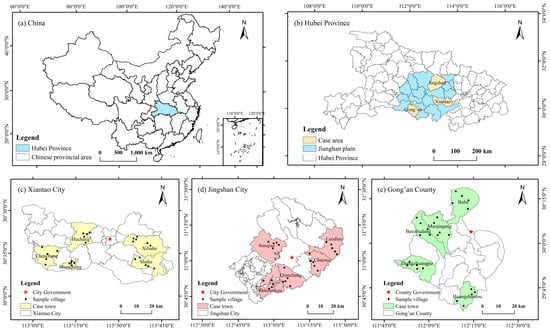
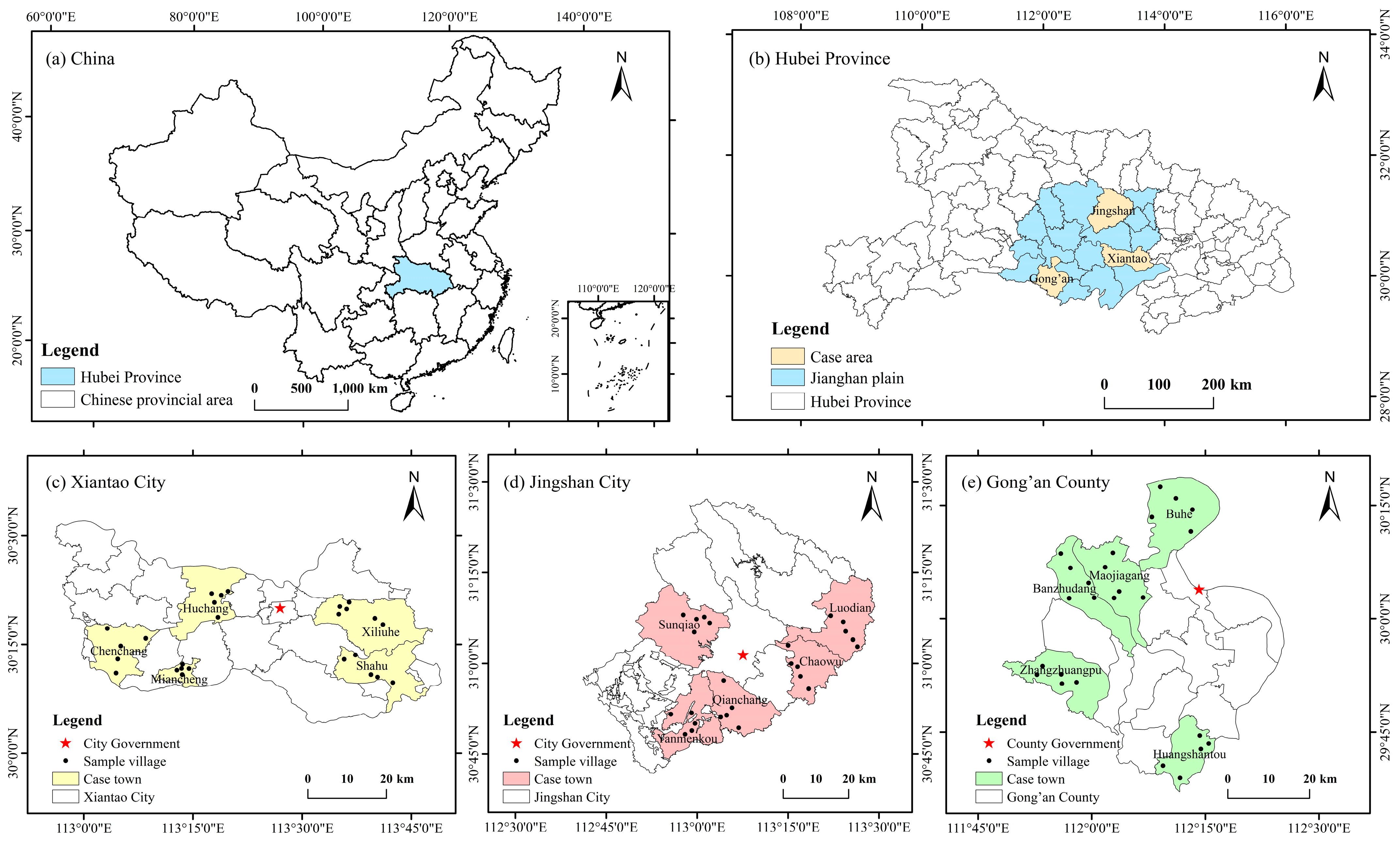
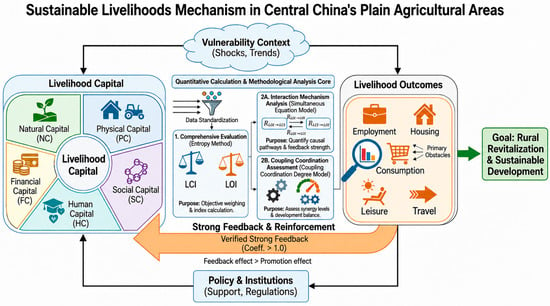
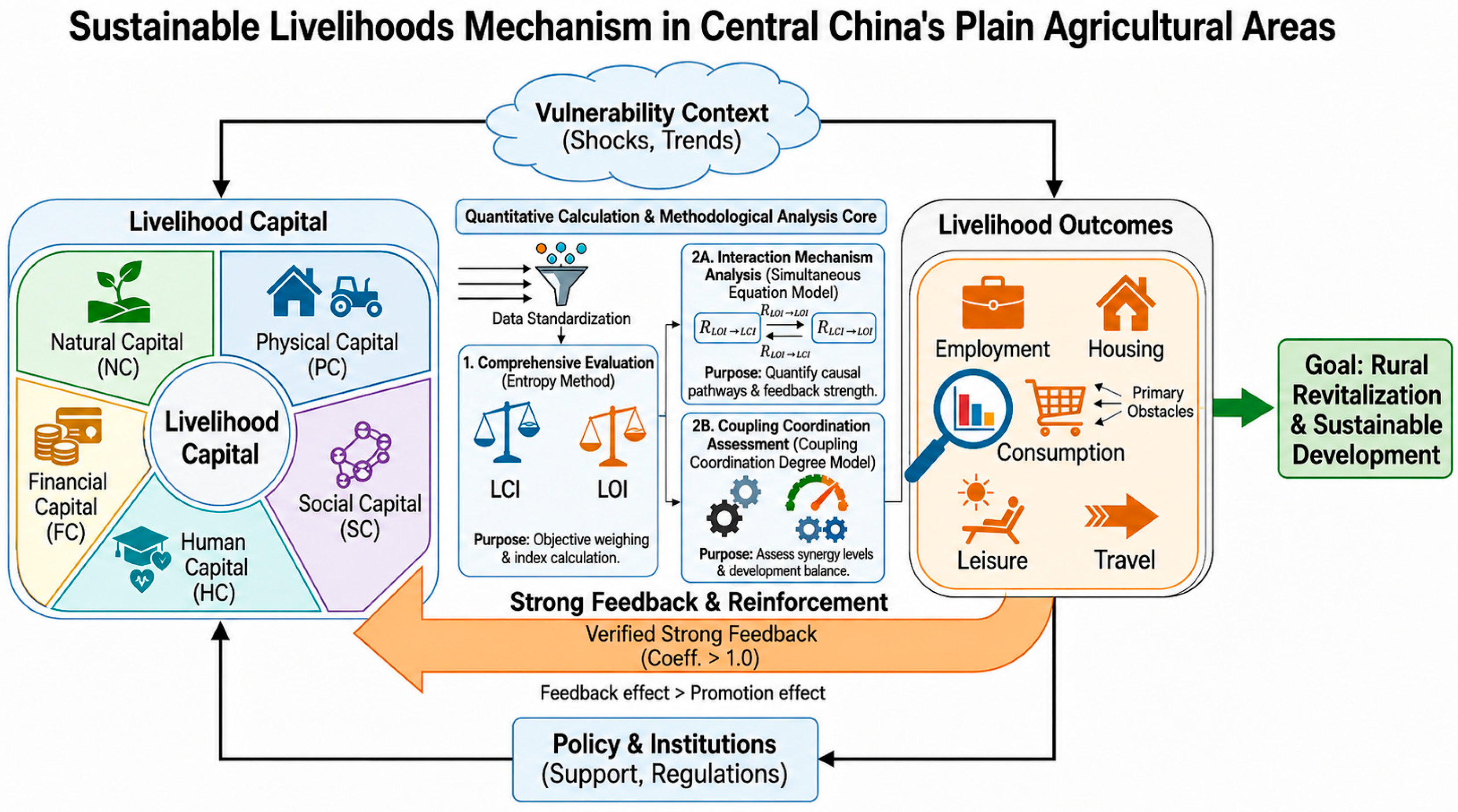
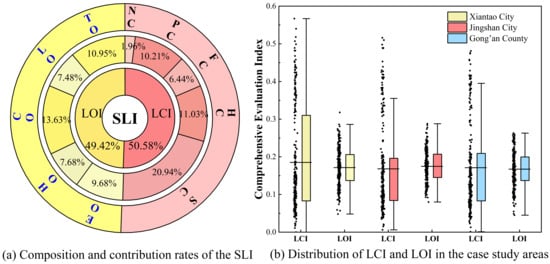
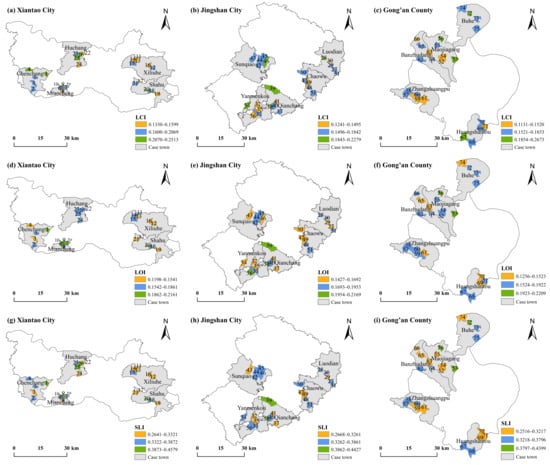
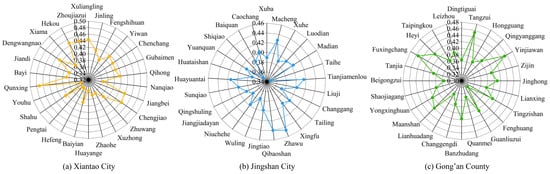
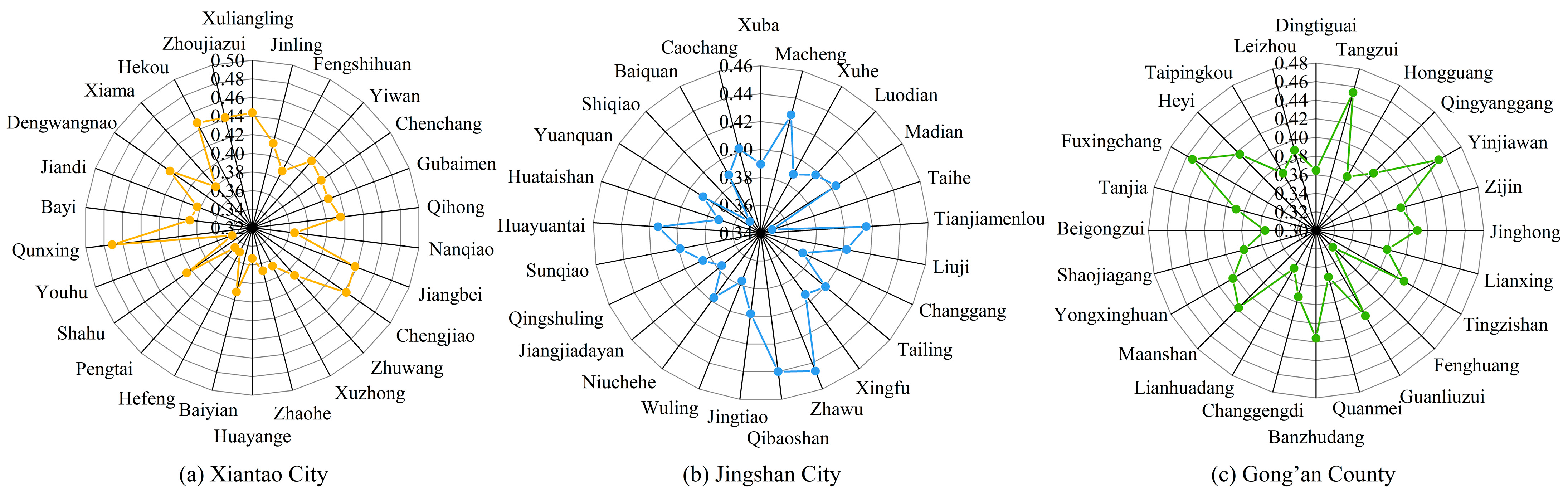
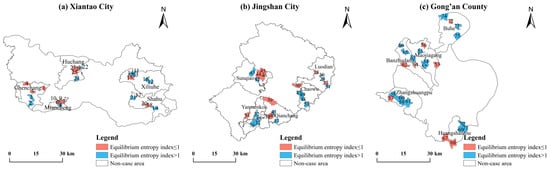
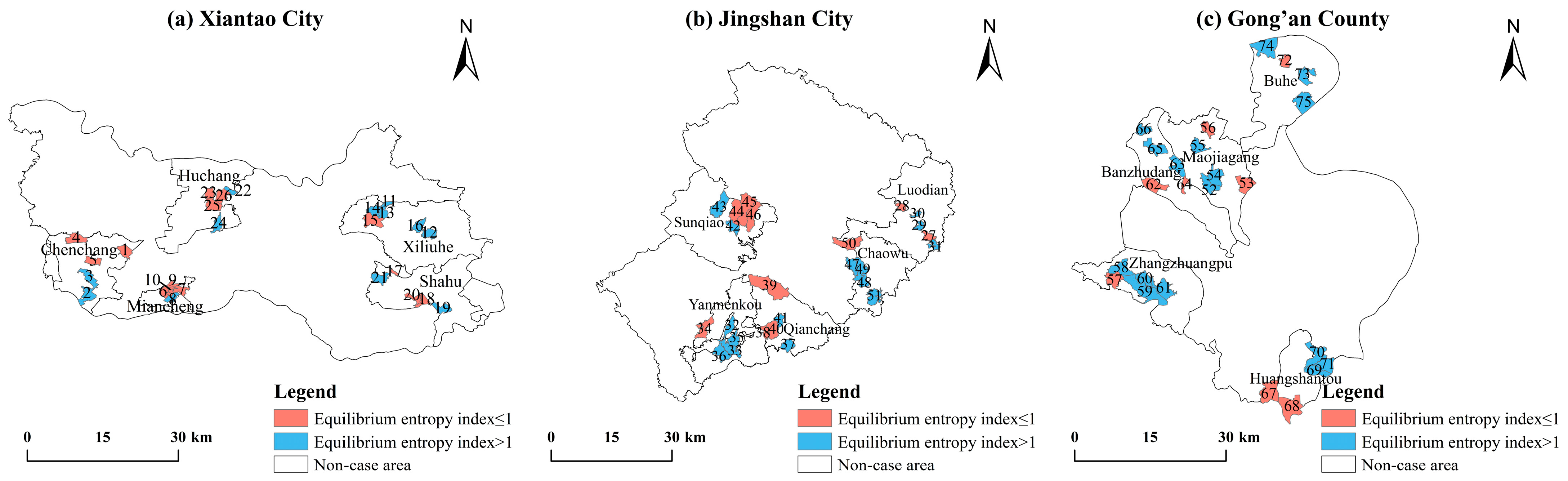
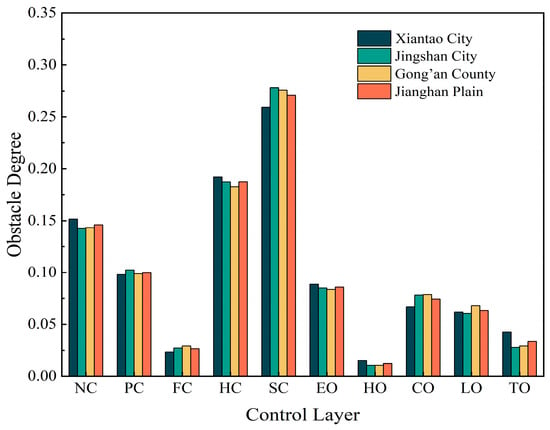
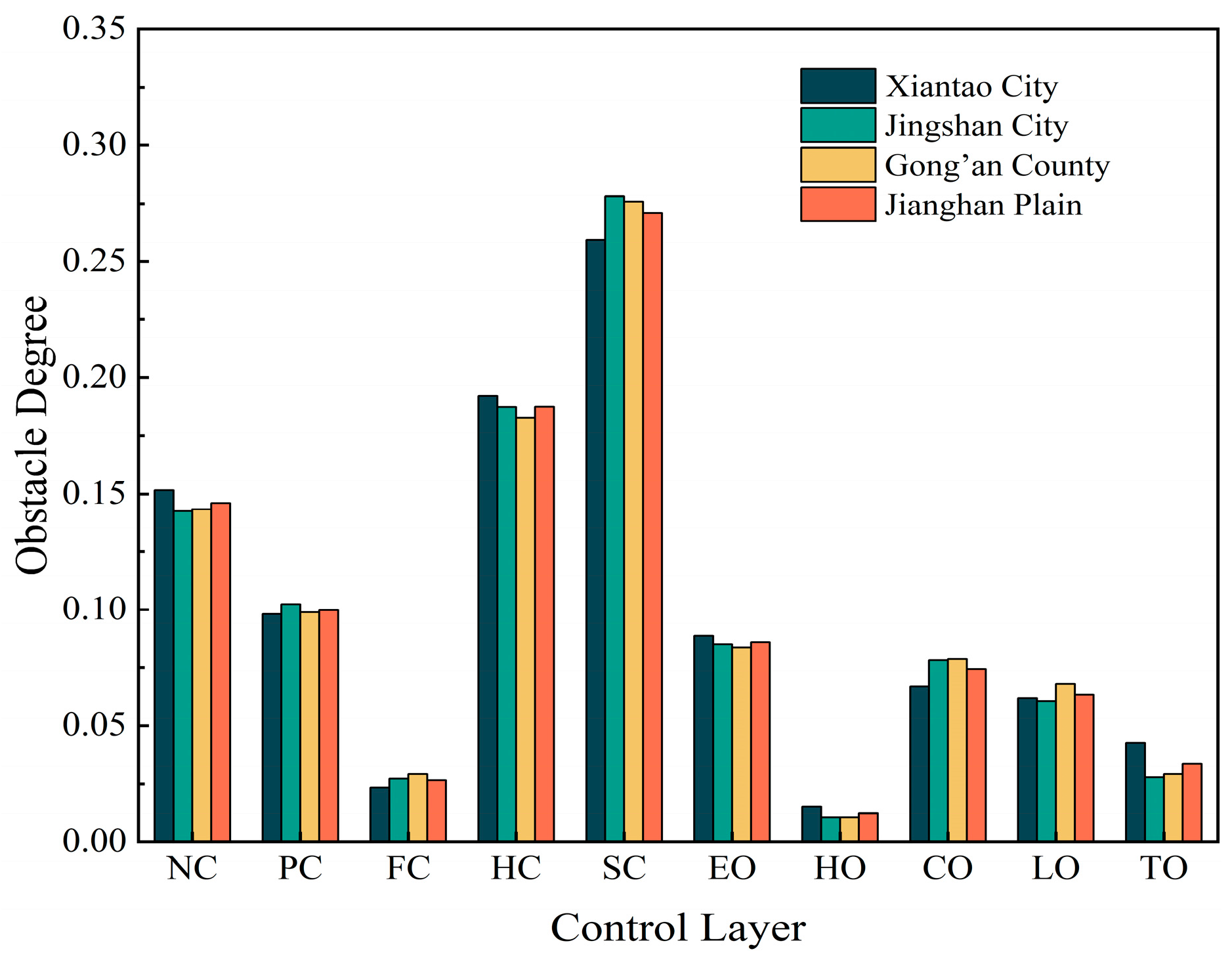

Disclaimer/Publisher’s Note: The statements, opinions and data contained in all publications are solely those of the individual author(s) and contributor(s) and not of MDPI and/or the editor(s). MDPI and/or the editor(s) disclaim responsibility for any injury to people or property resulting from any ideas, methods, instructions or products referred to in the content. |
© 2026 by the authors. Licensee MDPI, Basel, Switzerland. This article is an open access article distributed under the terms and conditions of the Creative Commons Attribution (CC BY) license.