


Abstract
Amid the growing convergence of leisure mobility, tourism, and rural development, second homes have emerged as a significant spatial phenomenon reshaping community structures in tourism-oriented rural areas. This study examines how second-home leisure practices contribute to place-making and community identity formation through land-use transformation and everyday spatial experience. Using the Mayangxi Ecotourism Area in Fujian Province, China, as a case study, this study develops a “space–sense of home–place identity” analytical framework grounded in Lefebvre’s theory of the production of space. A mixed-methods design integrating fieldwork, interviews, questionnaire surveys, and structural equation modeling is adopted. The results indicate that perceptions of physical, social, and cultural space significantly enhance second-home users’ sense of home. Physical and social spaces exert strong direct effects on place identity, with social interaction emerging as the most influential factor. Although sense of home positively mediates the relationship between spatial perception and place identity, this mediation is conditional rather than automatic. These findings suggest that second homes should be understood not merely as outcomes of land development, but as negotiated everyday spaces through which land-use transformation, social interaction, and emotional attachment collectively shape community reconstruction in tourism-oriented rural areas.
1. Introduction
In contemporary societies, the boundaries between everyday life and tourism are increasingly blurred, giving rise to new forms of leisure mobility and reconfigured spatiotemporal relations [1,2]. Second-home tourism—characterized by property ownership or long-term rental for leisure purposes and recurrent temporary residence—has become a prominent manifestation of domestic tourism mobility [3,4,5]. In China, the integration of tourism development and real estate has been institutionally reinforced through national strategies such as the 14th Five-Year Plan for Tourism Development [6]. This policy context has accelerated the expansion of second-home development, raising critical questions about how second-home leisure spaces are produced and how they reshape community structures in tourism-oriented rural areas [7].
The concept of “home” (Heimat) transcends the notion of physical shelter to encompass emotional attachment, lived experience, and symbolic meaning [8,9]. In the Chinese context, home has long been conceptualized as a socially embedded construct grounded in land-based livelihoods, everyday practices, and interpersonal relations, rather than as a purely private or residential unit [10]. Under conditions of intensified mobility and urbanization, home increasingly operates as a relational and processual construct rather than a territorially fixed location [11,12,13]. Within second-home contexts, leisure-oriented dwelling enables individuals to cultivate emotional attachment, social ties, and a sense of belonging that extends beyond their primary residence [14,15]. Although Western scholarship has extensively examined second homes as sites of place attachment—particularly in contexts such as Finland and Canada [16,17]—the mechanisms through which second-home leisure practices in China shape place identity and community restructuring remain insufficiently explored [18].
Home-making is intrinsically linked to community formation, with place attachment playing a central role in identity construction within tourism settings [19,20]. In China, although community building has been widely examined in both urban and rural contexts, the dynamic intersection of mobility, second-home development, and leisure-based home-making remains theoretically and empirically underexplored [7,18]. In this study, “second-home residents/users” refer to property owners and long-stay leisure visitors who engage in recurrent stays and everyday practices at the destination, distinguishing them from short-term tourists [21]. This conceptualization aligns with international research on second homes and residential tourism, while recognizing that distance-based statistical thresholds may inadequately capture recurrent short-distance leisure mobility in domestic contexts [22]. Similar definitional ambiguities have been identified in Southern European debates on residential tourism and lifestyle migration, where the “non-definition of the situation” has been associated with emerging social and governance challenges in host communities [23].
To address this gap, this study investigates the Mayangxi Ecotourism Area in Fujian Province, China, as an empirical case of second-home development. Drawing on a “space–sense of home–place identity” framework grounded in Lefebvre’s theory of the production of space [24], the study analyzes how perceptions of physical, social, and cultural spaces are transformed into a sense of home and place identity through everyday leisure practices. Through a mixed-methods approach, the study identifies key mechanisms of place-making and proposes a three-stage pathway of “space-making–community identification–community reconstruction.” The findings advance the international literature on second-home tourism by clarifying the relational pathways linking spatial production, emotional attachment, and identity formation, while also offering practical implications for community governance and sustainable rural development in tourism-oriented rural areas. In doing so, the study engages with broader debates on tourism transition in peripheral rural areas, highlighting governance challenges, identity reconstruction, and the pursuit of sustainability beyond growth-oriented development models [25].
2. Materials and Methods
2.1. Conceptual Background and Research Framework
2.1.1. The Mobile Home: Spatial Mobility and Second Home
“Home” can be understood as a socio-spatial construct integrating physical dwelling, daily practices, and social relations [9,11,12,13]. Rather than a fixed location, contemporary scholarship increasingly conceptualizes home as a relational and processual phenomenon shaped by mobility and lived experience [11,12]. This perspective is particularly relevant in the context of second-home tourism, where leisure-oriented mobility enables individuals to extend everyday life across multiple places.
From a mobility perspective, space is no longer viewed as an abstract container but as a dynamic outcome of social practices and movements [26]. Mobility restructures spatial relations by connecting people, dwellings, and activities through recurrent circulation between places [4,11]. Second homes epitomize this condition of leisure-oriented mobility: through repeated stays and multi-sited practices, they allow individuals to construct a sense of home beyond their primary residence [3,15]. In this process, second homes function not merely as accommodation facilities, but as socio-spatial nodes that mediate rural–urban linkages and facilitate the reproduction of everyday life in tourism-oriented rural areas [7,21].
Classical social theory further illuminates this transformation. Tönnies conceptualized home as the foundation of Gemeinschaft, rooted in emotional bonds and shared everyday life rather than instrumental rationality [27]. Lefebvre’s theory of the production of space emphasizes that social space is continuously produced through spatial practices and lived meanings, rather than existing as a neutral backdrop [24]. From a mobility perspective, recent empirical studies have further shown how spatial practices contribute to the affective reconstruction of “home” under conditions of repeated movement and temporary dwelling [28]. Accordingly, second-home leisure can be conceptualized as a form of temporary yet recurrent dwelling, through which everyday practices transform produced space into lived space. This understanding provides the theoretical basis for the analytical framework adopted in this study, linking spatial perceptions, sense of home, and place identity.
2.1.2. Recasting Community: Place-Making and Emotional Identification
Place has long been understood in human geography as a meaningful and experiential construct rather than an abstract spatial container. Early geographical thought emphasized place as a region imbued with subjectivity and imagination [29], while later scholars conceptualized place as emerging through dwelling, social interaction, and emotional engagement [19,25]. From this perspective, place is a socially constructed arena in which material settings and lived experiences are inseparably intertwined, providing the foundation for emotional attachment and identity formation [30].
Building on this understanding, the concept of place-making highlights the active role of social actors in producing meaningful places. Originating from urban planning debates in the 1970s, place-making emphasizes how values, memories, and cultural practices are embedded in spatial settings, transforming ordinary landscapes into sites of collective significance [31,32,33]. In tourism contexts, place-making is not solely a top-down design process, but a negotiated outcome shaped by the daily practices of multiple stakeholders, including visitors, residents, and institutions [34,35]. Through repeated engagement with space via leisure activities and social interaction, tourism-related practices contribute to the symbolic differentiation of places and the emergence of place-based identities.
From an everyday-life perspective, community identity is not simply a function of territorial proximity, but a relational outcome of shared practices and emotional identification. Classical social theory conceptualized community (Gemeinschaft) as rooted in shared land and everyday life, fostering belonging and mutual dependence [27]. Under conditions of mobility, however, community formation increasingly extends beyond permanent residence. Recurrent yet temporary forms of dwelling—such as second-home leisure—enable individuals to develop place-based attachments through repeated participation in local everyday life, even in the absence of long-term settlement [4,29]. Through collective participation, familiarity, and shared emotional experiences, individuals gradually cultivate community identity grounded in trust, reciprocity, and symbolic cohesion [36,37,38]. This perspective provides the theoretical basis for understanding how leisure-based daily practices associated with second-home use contribute to place-making and community identity formation in tourism-oriented rural areas.
2.1.3. A Theoretical Framework Based on the “Space–Agency” Co-Construction Perspective
Building on Lefebvre’s theory of the production of space, spatial transformation is conceptualized as a dynamic and relational process shaped by the interplay between structural conditions and human agency [24]. It is therefore not treated as a linear or purely material outcome [39]. In tourism-oriented rural areas, space is not a fixed container but is continuously produced and reproduced through interactions among multiple actors, including government institutions, market capital, local residents, and mobile leisure users. Operating at different scales and through different forms of agency, these actors jointly influence spatial configurations, social relations, and symbolic meanings.
In the context of second-home leisure, space–agency co-construction unfolds through processes of negotiation embedded in recurrent daily practices. Government-led planning and policy frameworks establish institutional conditions, while capital investment reshapes the material landscape and residential functions. At the same time, local residents and second-home users engage with space through routine leisure activities, social interaction, and emotional investment, gradually appropriating and reinterpreting produced space as lived place [28,35]. Although second-home residence is temporary and intermittent, repeated participation in everyday practices enables second-home users to develop familiarity, attachment, and a practical sense of belonging. These daily practices therefore constitute observable and analyzable mechanisms through which abstract processes of spatial production become empirically accessible in second-home destinations.
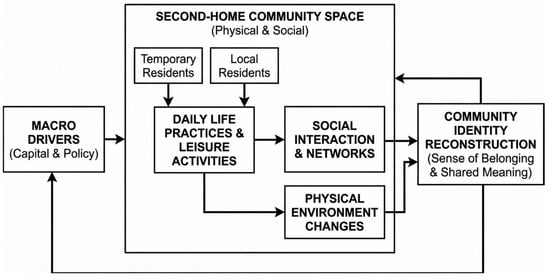
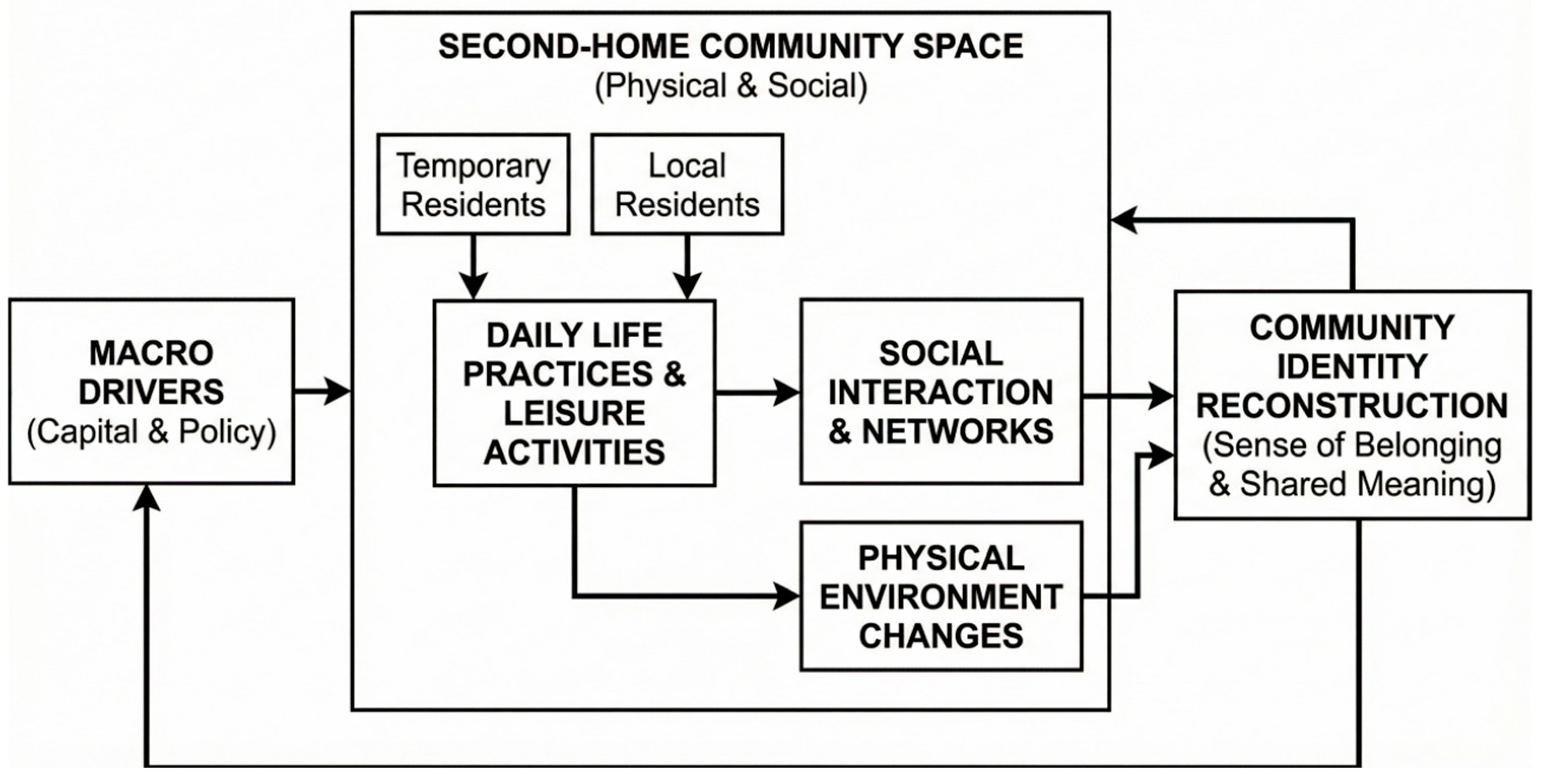
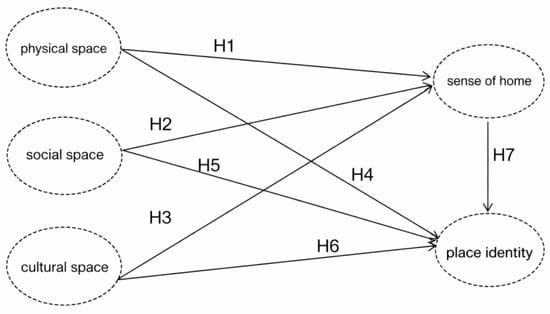
Based on this understanding, this study proposes a theoretical framework of “space–agency” co-construction to explain community identity formation in second-home destinations (Figure 1). Rather than treating space as a singular or abstract entity, the framework operationalizes spatial production through second-home users’ perceptions and practices across three interrelated dimensions: physical space, social space, and cultural space. These dimensions capture how space is encountered, negotiated, and endowed with meaning in everyday leisure life. By linking these spatial dimensions to a sense of home and place identity, the framework directly informs the empirical analysis of the Mayangxi case, guiding both the qualitative interpretation of daily practices and the quantitative modeling of place identity formation.
Figure 1.
Theoretical framework of second-home community identity reconstruction (Source: Drawn by authors).
2.2. Research Design
2.2.1. Overview of the Case Study Area
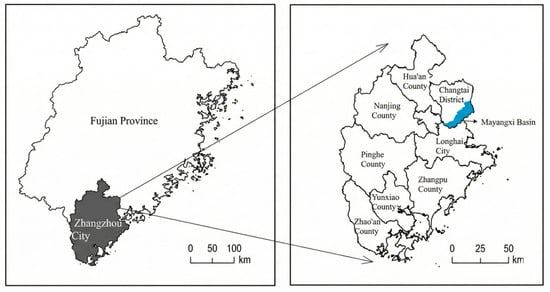
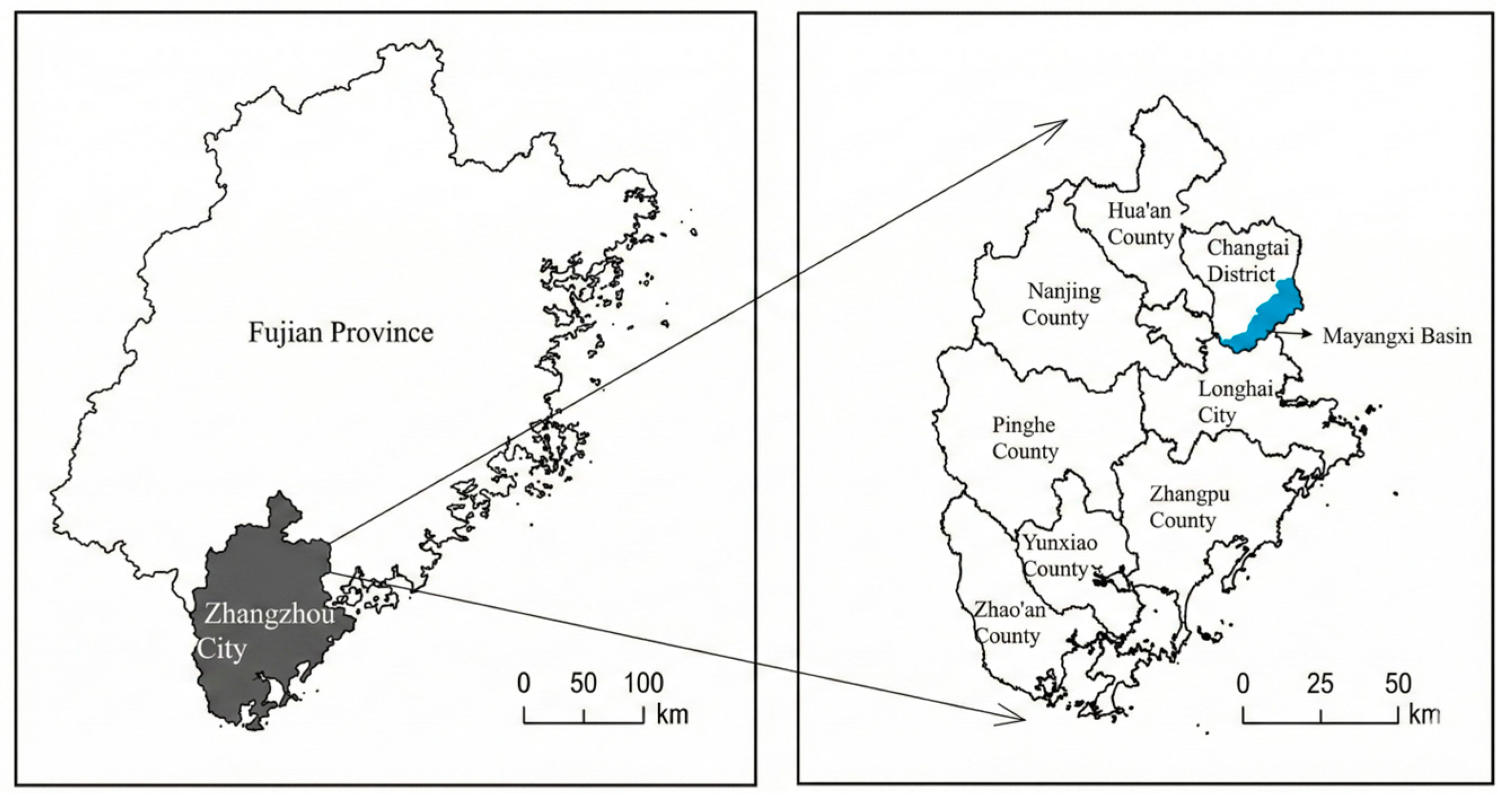
The Mayangxi Ecotourism Area, officially established in 2004, is located in Changtai District, Zhangzhou City, Fujian Province (Figure 2). Situated within the Minnan “Golden Triangle,” it lies 28 km from downtown Zhangzhou, 41 km from Xiamen, and 110 km from Quanzhou. Covering 138 km2 with a population of approximately 12,000, the area comprises four villages (Shili, Wangting, Shanzhong, Houfang), the Lin’guo Agricultural Farm, and the Tiancheng Community. Its mild subtropical marine monsoon climate, low-mountain and hilly terrain, and high forest coverage (78.8%) provide favorable ecological conditions for leisure-oriented residential development.
Figure 2.
Location map of the Mayangxi Ecotourism Area (Source: Compiled by the authors based on Google Earth imagery (2024)).
As a tourism–residential destination, Mayangxi exhibits a hybrid pattern of second-home development that combines coastal-oriented retirement migration with rural-oriented lifestyle mobility. Its proximity to major coastal cities and amenable climate attracts retirees from northern China seeking seasonal or long-term stays, while ongoing urbanization and rural revitalization policies have encouraged urban residents to construct or purchase second homes in rural settings in pursuit of ecological amenities and improved living environments. These characteristics make Mayangxi particularly suitable for examining second-home leisure as a form of recurrent, non-permanent dwelling within rural–urban linkages.
By 2024, Mayangxi hosted 15 tourism real estate projects (Table 1), six of which were fully sold out, while most of the remaining projects achieved high sales absorption rates exceeding 80%. The scale and intensity of second-home development have substantially reshaped local land use, population composition, and everyday social interactions, intensifying encounters between local residents, developers, and second-home users. This transformation provides a representative empirical context for analyzing how second-home place-making contributes to community restructuring and identity formation in tourism-oriented rural areas.
Table 1.
Tourism Real Estate Project Statistics (Source: Compiled by the authors based on local government statistics and field survey (2024)).
2.2.2. Data Collection and Analysis
This study adopts a longitudinal mixed-methods research design, combining qualitative and quantitative approaches to examine second-home place-making and community identity formation in Mayangxi. Data collection was conducted through repeated fieldwork, semi-structured interviews, participant observation, document analysis, and questionnaire surveys, allowing for triangulation across sources and over time.
Fieldwork was carried out in three phases. Phase I (2014–2016) involved annual visits of approximately 10 days, focusing on collecting secondary materials (government documents, development plans, and enterprise reports) and conducting preliminary observations of local residents’ everyday life and perceptions of tourism development. Phase II (2017–2019) consisted of annual visits lasting 7–10 days, during which updates on government planning, tourism real estate development, and second-home owners’ living practices were documented, alongside continued observation of resident–visitor interactions. Phase III (2020–2024) captured more recent dynamics in second-home use and community relations. Due to COVID-19 restrictions in 2020, online interviews were conducted with second-home owners. From 2021 to 2023, on-site fieldwork resumed, and in 2024, during the 20th anniversary of the tourism area, a structured questionnaire survey was administered across four villages and one community to systematically assess place-making practices and community identity among second-home users.
Qualitative data were collected through semi-structured interviews and participant observation. In total, 34 interviews were conducted with key stakeholders, including government officials, tourism managers, enterprise representatives, second-home owners, and local residents, generating approximately 63,600 words of transcribed material. Interviews were coded using a thematic analysis approach, focusing on perceptions of space, daily practices, social interaction, emotional attachment, and community identification. Interviewees were anonymized and coded by category and sequence (e.g., G for government officials, L for second-home owners, E for enterprise representatives, and R for local residents). Secondary sources, such as local gazetteers, news reports, and investment records, were analyzed to contextualize qualitative findings and support data triangulation (Table 2).
Table 2.
Summary of key informant interview materials (Source: Compiled by the authors based on field interviews (2014–2024)).
Quantitative data were collected through a questionnaire survey targeting second-home residents and long-stay leisure users. A total of 240 questionnaires were distributed both online and offline, of which 221 were valid. The survey measured respondents’ perceptions of physical, social, and emotional space, as well as their sense of home and community identity. Questionnaire items were informed by the conceptual framework and insights derived from the qualitative phase. Descriptive statistics and multivariate analyses were employed to examine relationships between place-making practices and community identity, complementing the qualitative findings and enhancing the robustness of the analysis.
2.3. Quantitative Model and Measurement
To operationalize the conceptual framework proposed in Section 2.1, this study constructs a structural equation model (SEM) to examine the relationships among spatial perception, sense of home, and place identity in a second-home context. Drawing on humanistic geography and place identity research, spatial perception is conceptualized as a multidimensional construct encompassing physical [19], social [25], and cultural space [31]. In second-home tourism, individuals’ perceptions of these spatial dimensions shape their sense of home, which in turn influences place identity and community identification.
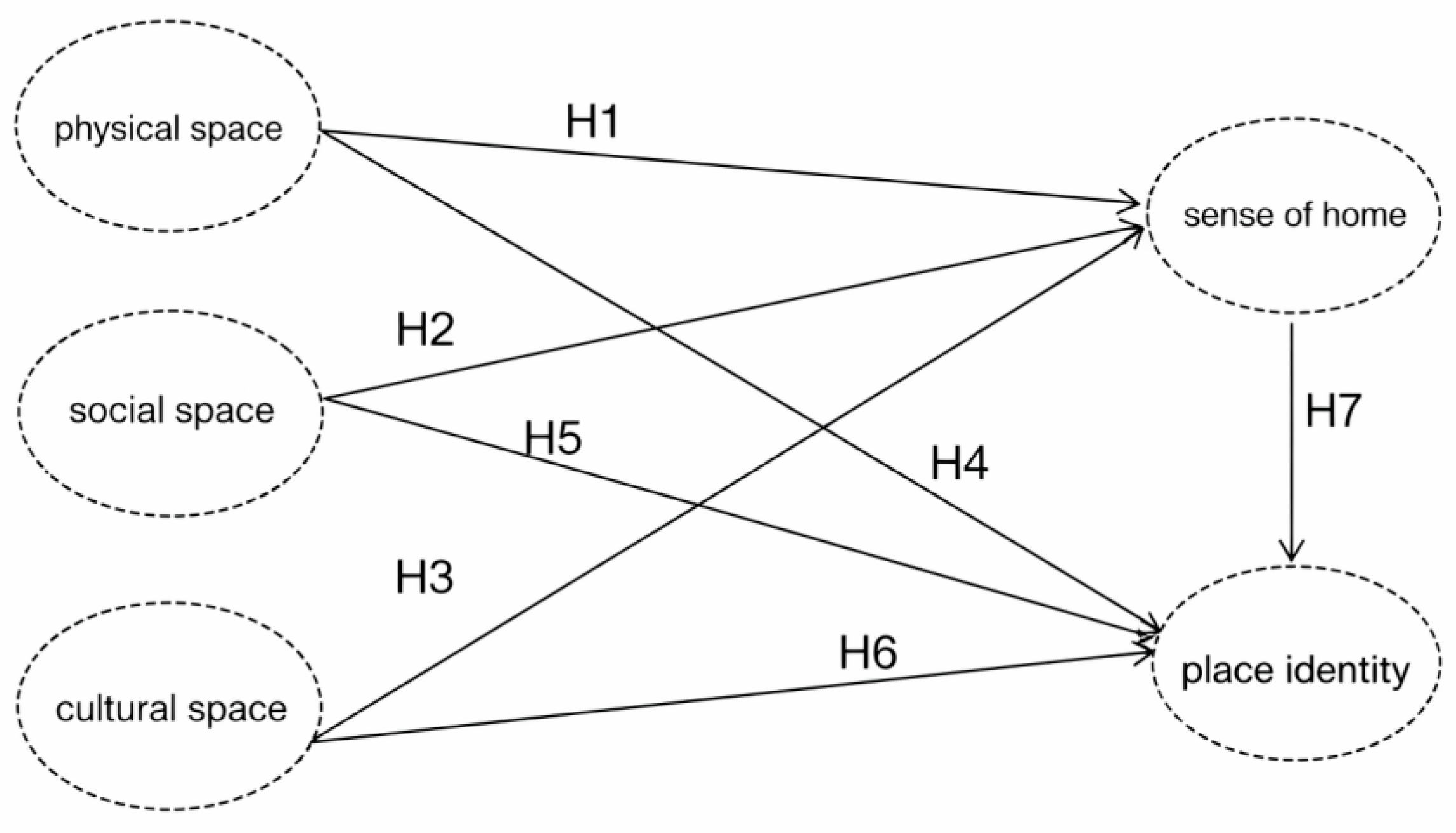
Based on this theoretical logic, the following hypotheses are proposed:
H1.
Perceptions of physical space positively influence sense of home.
H2.
Perceptions of social space positively influence sense of home.
H3.
Perceptions of cultural space positively influence sense of home.
H4.
Perceptions of physical space positively influence place identity.
H5.
Perceptions of social space positively influence place identity.
H6.
Perceptions of cultural space positively influence place identity.
H7.
Sense of home positively influences place identity.
Accordingly, a structural equation model is developed to examine both the direct effects of spatial perception on place identity and the mediating role of sense of home (Figure 3). This model enables an integrated analysis of how second-home users translate everyday spatial experiences into emotional attachment and place-based identification.
Figure 3.
Conceptual Model Diagram (Source: Drawn by authors).
Questionnaire data were collected between 2022 and 2024 through multiple field visits to the Mayangxi Ecotourism Area. The survey instrument consisted of three sections: (1) demographic characteristics of respondents; (2) perceptions of physical, social, and cultural space; and (3) evaluations of sense of home and place identity. Measurement items were adapted from established scales in place and identity research, and modified to reflect the local context and characteristics of second-home leisure. A total of 22 items were measured using a five-point Likert scale (1 = strongly disagree; 5 = strongly agree).
Table 3 presents the measurement dimensions and corresponding items. Physical space captures perceptions of environmental quality and infrastructure; social space reflects neighborhood relations, social interaction, and community participation; cultural space measures engagement with local traditions, cultural activities, and symbolic landscapes. Sense of home and place identity capture respondents’ emotional attachment, belonging, and identification with the destination. This measurement design allows for empirical testing of the proposed framework linking spatial perception, sense of home, and place identity among second-home residents.
Table 3.
Survey Items for Place Identity Perception (Source: Compiled by the authors based on adapted scales from previous studies.).
3. Results
3.1. Constructing Second Homes from a Spatial Perspective
Empirical evidence from the Mayangxi Ecotourism Area suggests that second-home development is closely associated with multiple spatial dimensions experienced in everyday life. Field observations, interview materials, and survey results indicate that physical conditions, social interactions, and cultural practices together shape how second-home users perceive and engage with the destination during recurrent stays. Rather than functioning solely as a temporary accommodation space, Mayangxi is experienced through a combination of material environments, interpersonal relations, and culturally embedded practices that structure second-home living in different ways.
3.1.1. Shaping a Leisure Landscape Through Physical Space
At the macro scale, second-home landscapes in the Mayangxi Ecotourism Area have developed through the interaction of government-led spatial planning and capital investment. Land acquisition, village relocation, and tourism-oriented zoning provided the institutional framework, while real estate development translated planning objectives into residential and leisure facilities. Within this process, local residents and second-home users engaged with the transformed environment through daily practices, becoming participants in the ongoing production of physical space.
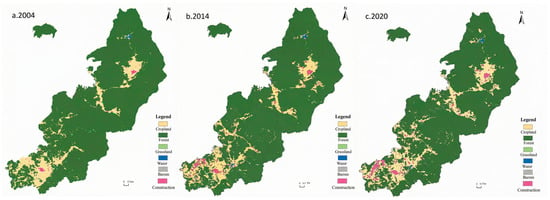
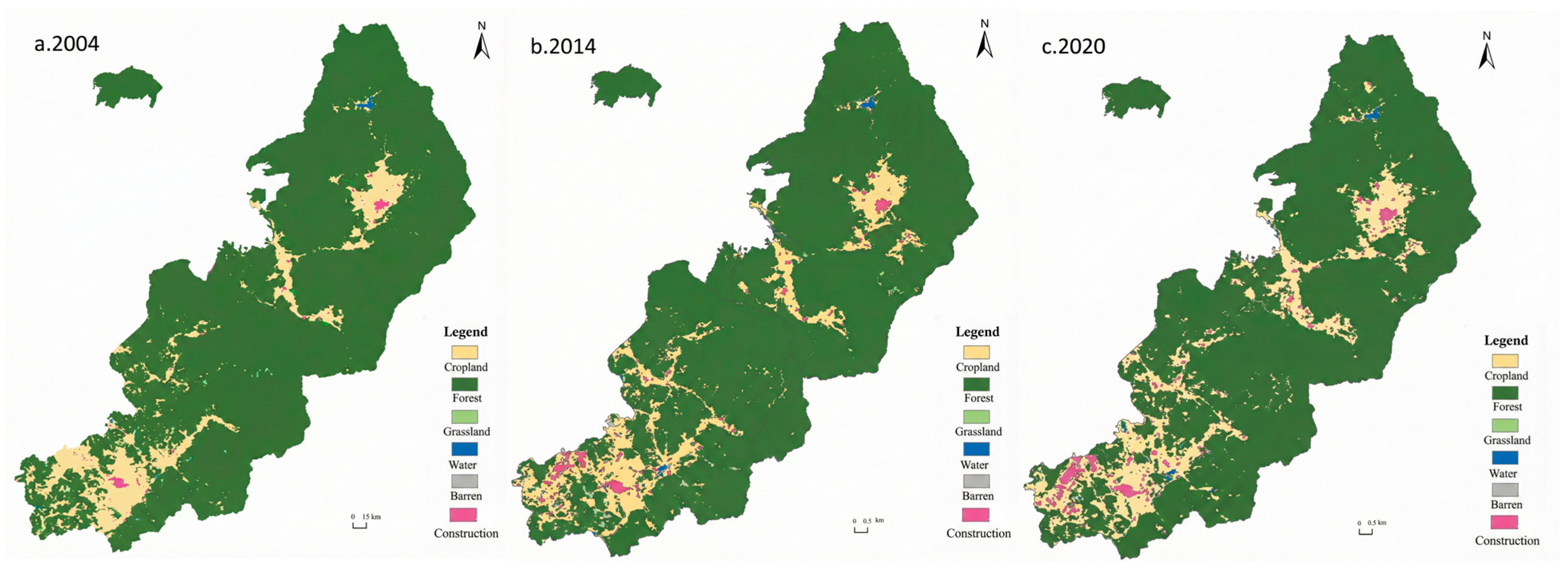
Land-use analysis based on high-resolution satellite imagery and ArcGIS 10.8 (Esri, Redlands, CA, USA) revealed substantial landscape transformation between 2004 and 2020 (Figure 4). Prior to the establishment of the ecotourism area, built-up land covered only 0.5643 km2, and agricultural use dominated the landscape. Between 2004 and 2014, tourism development accelerated, with portions of forest land converted into tourism-related construction land (1.46 km2), including eco-walkways, flower fields, and wetland landscapes. After 2014, leisure and sightseeing facilities expanded further, and construction land increased to 2.08 km2. These changes were accompanied by ecological restoration measures such as afforestation, wetland rehabilitation, and river regulation.
Figure 4.
Land use changes in Mayangxi Ecotourism Area, in 2004, 2014 and 2020 (Source: Captured by authors from Google Earth (2024)).
Interview materials indicate that environmental quality and landscape accessibility played an important role in shaping second-home experiences. Respondents frequently associated the improved ecological environment with comfort, relaxation, and longer stays. As one second-home resident noted: “It feels like life slows down here. I can truly immerse myself in the natural surroundings, and it helps ease my tense nerves” (L3). These accounts indicate that ecological improvement was closely associated with respondents’ perceptions of comfort and leisure-oriented living.
In addition to ecological conditions, architectural form emerged as a salient feature of the physical environment. Residential developments in Mayangxi combine traditional Chinese architectural elements with Mediterranean-style forms and classical motifs, producing a visually distinctive townscape. Interviewees often emphasized the experiential quality of this built environment, noting that walking through residential areas offered a sense of visual diversity and aesthetic enjoyment. As one resident explained: “The architectural style here really attracts me. Just walking around the neighborhood, I can feel the beauty of different styles at once” (L7).
These architectural landscapes functioned not only as residential infrastructure but also as settings for everyday leisure activities such as walking, socializing, and informal recreation. Compared with dense urban environments, respondents described Mayangxi as offering a quieter and more visually open setting that supported slower-paced routines. The physical configuration of landscapes and buildings thus structured how second-home users engaged with space during recurrent stays.
3.1.2. Social Space Linking Interpersonal Interaction and Community
Field observations and interview data indicate that second-home living in the Mayangxi Ecotourism Area is closely associated with everyday social interaction extending beyond private dwellings into shared public spaces. Second-home residents, many of whom originate from coastal metropolitan areas in eastern China, often engage in leisure-oriented activities centered on familiarity, comfort, and social interaction. Facilities such as equestrian clubs, golf courses, and wellness-oriented tourism projects provide common settings for recurrent encounters, supported by convenient transportation connections with nearby cities.
Interview materials suggest that routine leisure activities play an important role in shaping social experience during second-home stays. Respondents frequently mentioned informal practices such as dancing in public squares, playing chess, shared meals, and casual gatherings as part of daily life. As one interviewee noted: “Mayangxi is an ideal place for recuperation and leisure. Since retirement, I often go to the square to dance or play chess with my friends” (L7). Through repeated participation in such activities, public spaces were increasingly perceived as familiar environments during recurrent stays. Another resident explained: “I feel completely at ease here. Without pressing obligations, I can follow my own pace—sometimes meeting friends at the open camp nearby for coffee, picnics, or simply to chat” (L4).
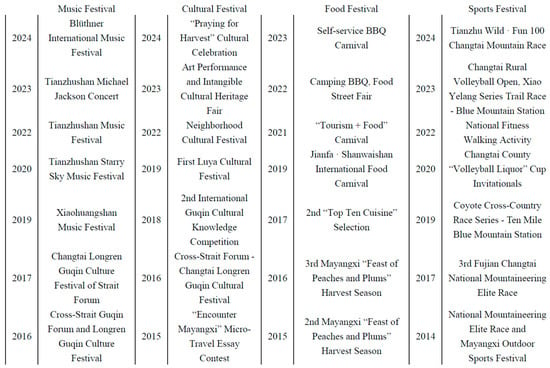
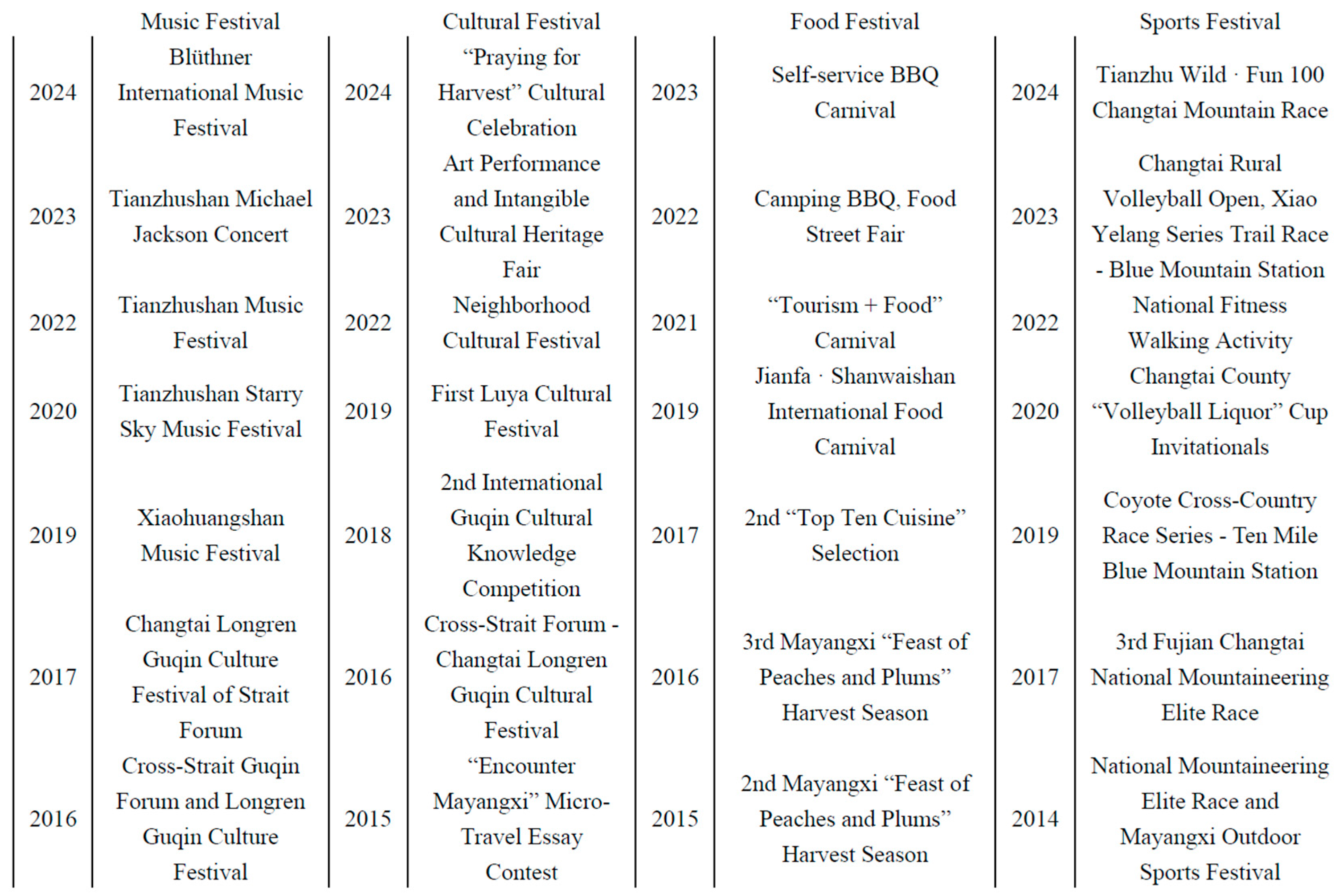
In addition to spontaneous leisure practices, organized entertainment and festival activities contributed to the expansion of social interaction. Events such as hiking festivals, local food fairs, music performances, and agricultural harvest celebrations (Figure 5) provided regular opportunities for collective participation. Interviewees often described these activities as occasions through which they became acquainted with other residents and second-home users. As one participant reflected: “When I first came here, I wasn’t very familiar with other residents, but these community events have given us more opportunities to interact” (L2). Such events were commonly organized through collaboration between local government and tourism enterprises, creating recurrent opportunities for interaction between second-home residents and local villagers.
Figure 5.
Summary of selected recreational activities in Mayangxi (Source: Drawn by authors).
Overall, the empirical materials indicate that social space in Mayangxi is characterized by frequent, low-intensity interactions embedded in everyday leisure routines. Through recurrent use of shared spaces and participation in organized activities, second-home residents gradually expanded their social networks and became more socially embedded during their stays.
3.1.3. Cultural Space and Everyday Cultural Practices
Empirical materials indicate that cultural practices constitute an important dimension of second-home experience in the Mayangxi Ecotourism Area. Clan traditions, intangible cultural heritage (ICH) initiatives, and folk festivals were frequently mentioned by both local residents and second-home users as recurring elements of everyday life during residential stays. These practices provided recognizable cultural contexts through which residents and newcomers engaged with local life beyond leisure consumption.
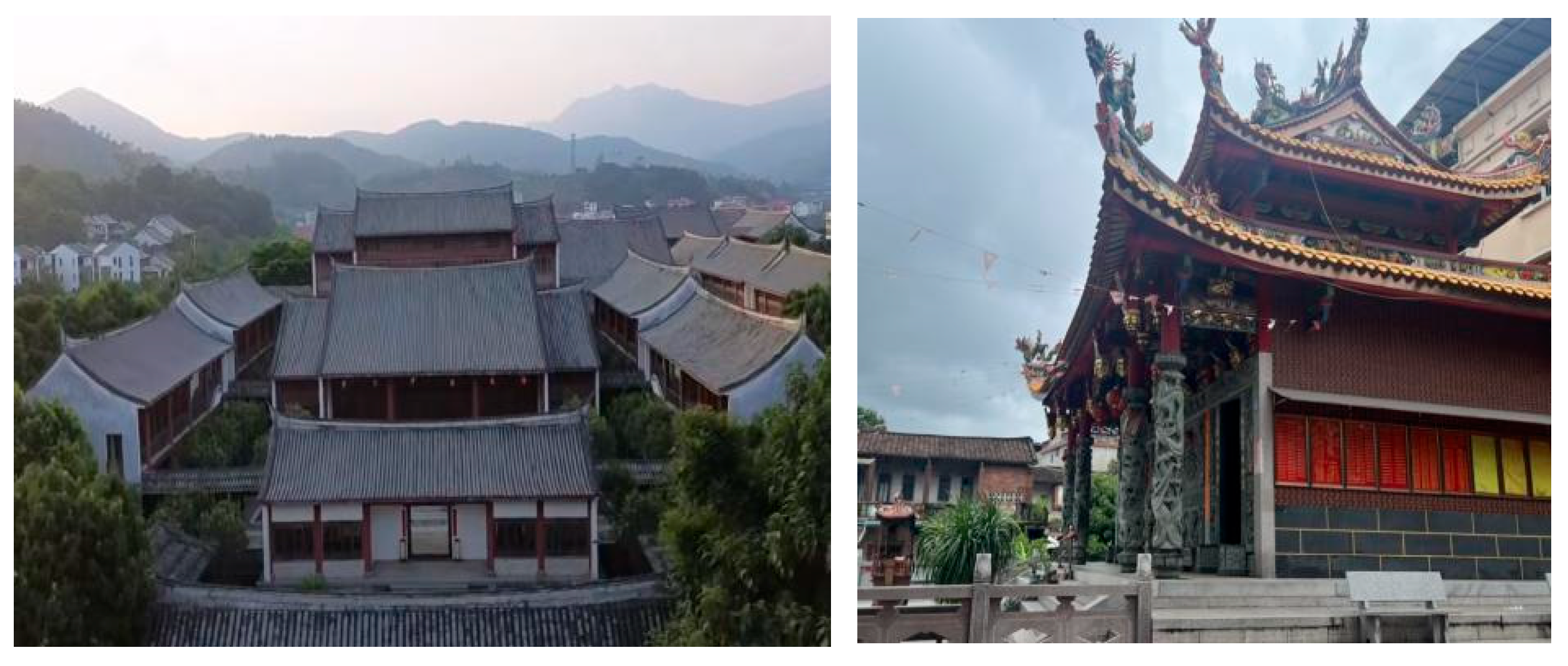
Field observations and interviews suggest that cultural familiarity played a role in shaping everyday interaction. Many second-home residents originate from culturally proximate areas such as Xiamen and Zhangzhou, sharing linguistic, culinary, and social customs associated with Minnan culture. Interviewees often described this cultural proximity as facilitating communication and participation in local activities. As one resident observed: “The clan culture in this village is very strong. For example, the Xue clan’s ‘God Procession’ event—I once saw it, and it was quite lively” (L8). In villages such as Shanchong, designated as a traditional ancient village, architectural forms, clan rituals, and seasonal ceremonies remained visible components of daily life (Figure 6).
Figure 6.
Village cultural space (Source: Photographed by authors during fieldwork (2024)).
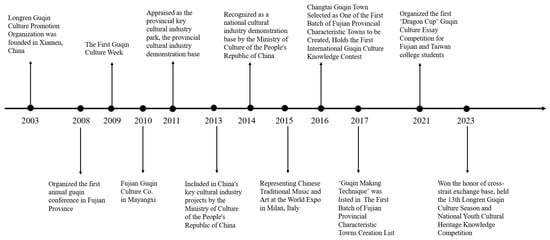
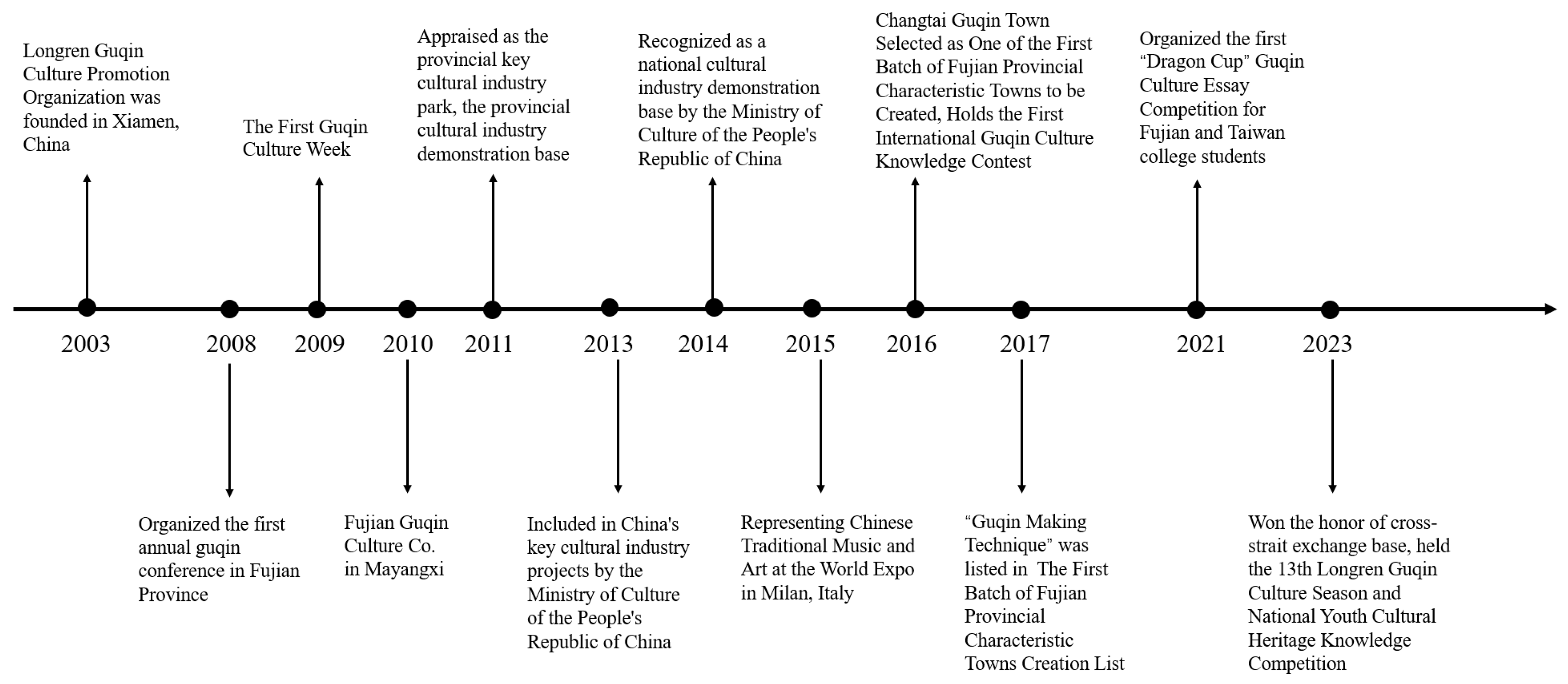
Intangible cultural heritage projects also formed part of the cultural environment encountered by second-home residents. The Longren Guqin Cultural Village represents a case where traditional music practices were integrated into tourism-oriented activities through craftsmanship workshops and performance events (Figure 7). Interviewees described these experiences as immersive encounters with traditional culture rather than passive observation. One second-home resident remarked: “I went to experience their craftsmanship, and the artistic performance in the ancient musical realm made me feel like I had traveled back to ancient times” (L3). Such activities created regular opportunities for engagement with cultural practices during second-home stays.
Figure 7.
Longren Guqin Cultural Village Development Chronology Timeline (Source: Drawn by authors).
Folk festivals further expanded opportunities for cultural participation. More than thirty traditional activities are held annually in the Mayangxi area, including the Shanchong Pig Racing Festival and Guitang sacrificial rituals. Participation allowed second-home residents to move from observation to involvement in ritualized practices. As one interviewee noted: “At first, I didn’t know much about these folk customs. I saw them on Douyin and realized these activities were happening where I live. After experiencing them in person, I found them very interesting” (L2). Festival-related content circulated through social media platforms such as Douyin, Weibo, and Xiaohongshu, increasing the visibility of these practices among second-home residents.
Overall, the empirical findings suggest that cultural space in Mayangxi is characterized by repeated exposure to, and participation in, local cultural practices during second-home stays. These practices formed part of the everyday environment through which second-home residents engaged with the destination beyond physical residence.
3.2. The Logic of Home Construction Through Multi-Stakeholder Negotiation
Empirical materials from the Mayangxi Ecotourism Area indicate that the construction of second homes involves ongoing interaction among multiple stakeholders, including government institutions, market actors, local residents, and long-term visitors. These actors participated in planning, development, operation, and everyday use of space through different forms of engagement. Field observations, interviews, and documentary materials reveal how institutional arrangements, investment activities, and daily practices intersected during the development of second-home tourism, shaping the conditions under which second homes were produced and used.
3.2.1. Government Involvement in Rural Tourism Development
Empirical materials indicate that government involvement in the Mayangxi Ecotourism Area focused on planning coordination, institutional regulation, and organizational support for tourism-oriented development. Policy documents, interviews, and field observations show that government actions provided the formal conditions under which second-home tourism and related community activities unfolded.
At the institutional level, the establishment of the Mayangxi Ecological Tourism Area in 2004, together with the Overall Plan for Changtai County, created a formal planning framework for tourism development. Interviewees frequently referred to the adoption of a “district-led village” model as facilitating coordination among villages in terms of tourism routes, resource allocation, and destination branding. Following the 2011 Metropolitan Integration Development Plan for Xiamen, Zhangzhou, and Quanzhou, Mayangxi was incorporated into the metropolitan development structure, which influenced infrastructure investment and the positioning of the area within broader urban–rural linkages. In addition, policy measures such as the 2013 Tourism and homestay Support Measures and homestay classification standards provided guidelines for the conversion of rural housing into tourism-related accommodation.
At the grassroots level, organizational arrangements were observed to support inter-village collaboration and participation in tourism activities. The establishment of bodies such as the Tourism homestay Association and the Cultural Tourism and Health Integration Party Committee (founded in 2023) provided platforms for coordination among government agencies, enterprises, village committees, and residents. Initiatives implemented under the “Government + Company + Village Committee + Farmers” arrangement included projects such as the Shanchong Rapeseed Flower Viewing Belt, which combined agricultural production with tourism use. Interview data suggest that these initiatives were associated with changes in local livelihood practices. As one resident noted: “In the past, we just stuck to those few acres of land, but now it’s different. Many locals have opened their own agritourism businesses, cleaned up their homes, and offered food and accommodation to tourists. The income has increased significantly” (G3).
Overall, the empirical evidence shows that government actions shaped the institutional and organizational context within which second-home tourism developed, influencing land use, infrastructure provision, and the forms of participation available to local residents. Similar processes have been identified in Southern European contexts, where tourism-led modernization and residential tourism development are socially legitimized through institutional narratives and governance arrangements that normalize new residential and leisure functions within rural communities [43].
3.2.2. Capital Involvement in Residential Space and Community Operation
Field evidence indicates that capital investment played a central role in shaping both the material form of second-home landscapes and the organizational structure of tourism-related communities in Mayangxi. Through real estate development, leisure facility construction, and the establishment of operational platforms, capital influenced everyday living environments as well as patterns of social interaction.
Based on government planning frameworks, real estate enterprises such as Jianfa and Lianfa developed ecological tourism–oriented residential projects that integrated housing with natural scenery and leisure amenities. These developments provided the physical basis for second-home use, embedding green spaces, walkable landscapes, and scenic elements into daily living environments. Interview data suggest that residents perceived these environments primarily in terms of comfort and livability rather than short-term tourism use. As one second-home resident stated: “The housing complex where I live has a unique style and a good environment. It’s very comfortable to go out for a walk in the afternoon, and there are some small scenic spots nearby” (L3).
Capital investment also extended beyond housing into leisure and wellness facilities, including equestrian clubs, golf courses, hot spring centers, and agricultural experience projects. These facilities diversified local leisure options and supported longer stays by second-home users. Wellness-oriented projects, such as the Anuo Health Town, combined ecological tourism with health and lifestyle services, contributing to the functional transformation of rural space from agriculture toward leisure-oriented living and long-term residence.
In addition to material construction, capital was involved in organizing community operations. The development of homestays illustrates this process. Since the opening of the first homestay, Shuiyunjian, in 2013, homestay businesses gradually formed a clustered development pattern (Table 4). The establishment of the Changtai Tourism homestay Association in 2021 provided an organizational platform for coordination, resource sharing, and collective negotiation. According to one informant: “In the past, homestay owners were scattered and operated independently. After the association was established, it became a platform for exchanging ideas and solving problems together, including negotiations with developers” (G2). This organizational arrangement was associated with improvements in service quality, reuse of idle housing, and a more unified rural tourism image.
Table 4.
Statistics of representative lodges in tourist areas (Source: Field survey conducted by the authors (2024)).
At the village level, new social organizations also emerged alongside tourism development. For example, the “Hometown Virtue” Association founded in Wangting Village in 2023 brought together members from different professional backgrounds to support activities such as investment attraction, talent recruitment, and public welfare initiatives. Field observations suggest that these organizations contributed to new forms of local coordination and participation, linking economic activities with community management practices.
Overall, the empirical materials show that capital influenced second-home development in Mayangxi not only through physical construction, but also through organizational arrangements that reshaped how residential tourism spaces were operated and managed.
3.2.3. Integration of Local Residents and Long-Term Visitors in Daily Practices
Fieldwork indicates that interactions between local residents and long-term visitors in Mayangxi were primarily embedded in daily practices associated with homestay operation, leisure activities, and community participation. These interactions were observed to take place not only at the level of individual host–guest encounters, but also through repeated engagement in shared spaces and activities.
Under government guidelines for homestay and short-term rental management, local residents collaborated with homestay operators to develop diversified business forms that combined accommodation with agriculture, handicrafts, and wellness activities. Field observations show that these practices created opportunities for sustained interaction between hosts and visitors. For example, ceramic workshops operated by local households allowed visiting families to participate in pottery-making activities, during which hosts assisted with firing and delivery of finished products. As one resident described: “Most of my guests are families with children. Parents and children make pottery, and I help them fire and mail the pieces” (R5). Such activities enabled repeated contact and informal exchange, allowing visitors to engage with local skills and routines beyond accommodation use.
In addition to activity-based interaction, spatial aesthetics were also used as a medium of engagement. Some homestay operators retained the original structure and materials of Minnan-style ancestral houses during renovation, emphasizing continuity with local architectural traditions. Interviewees reported that these spaces prompted conversations about family history, craftsmanship, and local customs. One operator noted: “The first thing you see is the stone house, with its original outer walls still intact… We invited local craftsmen to restore it, because this is exactly how our old family home looked when we were children” (E2). Field notes suggest that such settings facilitated emotional responses among visitors and supported informal cultural exchange during their stay.
Beyond individual homestays, interactions between long-term visitors and residents also extended to community-level participation. Through involvement in leisure events, village activities, and shared public spaces, second-home users and locals gradually became familiar with one another. Observations indicate that physical spaces provided settings for repeated encounters, social spaces enabled cooperation and interaction, and cultural spaces offered shared references that supported communication and mutual recognition. These overlapping forms of engagement contributed to the relatively of stable interaction patterns between local residents and long-term visitors.
Overall, the empirical evidence shows that second-home tourism in Mayangxi involved multiple forms of integration between residents and long-term visitors, ranging from everyday host–guest practices to broader community participation. These interactions were closely linked to material spaces, routine activities, and cultural references, shaping how second-home users experienced everyday life and developed attachments to the locality (Figure 8).
Figure 8.
Observed Forms of Interaction in Second-Home Development (Source: Drawn by authors).
3.3. Place Identity of Second-Home Residents
Place identity refers to individuals’ sense of belonging and orientation toward a place, emerging through cognitive evaluations, emotional attachment, and value judgments. Building on the qualitative findings on everyday leisure practices, spatial production, and multi-actor negotiation, this section introduces a quantitative analysis based on a questionnaire survey. It examines how perceptions of physical, social, and cultural space—experienced through recurrent second-home use—affect place identity via the mediating role of a sense of home. By doing so, this analysis provides an empirical test of the proposed framework and assesses its applicability to second-home residents in a tourism-oriented rural context.
3.3.1. Descriptive Statistics and Measurement Validation
- (1)
- Descriptive Statistical Analysis
The questionnaire survey was conducted from 20 July to 2 August 2024, in the four villages and one community of the Mayangxi Ecological Tourism Area. A total of 240 questionnaires were distributed, of which 221 were valid after excluding incomplete or repeated responses, yielding a response rate of 92.08% (Table 5). The sample shows a relatively balanced gender distribution and is dominated by middle-aged and older respondents, most of whom have resided in Mayangxi for more than three years, providing sufficient experiential grounding for the assessment of place identity.
Table 5.
Basic Information of Survey Sample on Place Identity of Second-Home Residents (Source: Questionnaire survey conducted by the authors (2024)).
The internal consistency of the measurement scale was tested using SPSS 25.0. Cronbach’s alpha coefficients for all dimensions exceeded 0.85, with an overall value of 0.91, indicating high internal consistency. (Table 6) The scale was adapted from established studies and refined through fieldwork, expert review, and pilot testing, ensuring satisfactory content validity and contextual appropriateness.
Table 6.
Reliability Test Results of the Scale (Source: Authors’ calculations based on questionnaire data (2024)).
Exploratory factor analysis with varimax rotation was then conducted to examine the underlying structure of the variables. Five factors—physical space, social space, cultural space, sense of home, and place identity—were extracted, explaining 63.867% of the total variance (Table 7 and Table 8). All factor loadings exceeded 0.60, supporting the factorial structure of the measurement model.
Table 7.
Principal Component Analysis and Explained Variance (Source: Authors’ calculations based on questionnaire data (2024)).
Table 8.
Exploratory Factor Analysis (Source: Authors’ calculations based on questionnaire data (2024)).
Based on these results, structural equation modeling was applied to examine the hypothesized relationships. The model demonstrated an overall good fit to the data (χ2/df = 1.984, RMSEA = 0.079, CFI = 0.942), meeting commonly accepted evaluation criteria. Path analysis indicates that perceptions of physical, social, and cultural space positively influence the sense of home, supporting H1–H3. In addition, physical and social spatial perceptions exert direct positive effects on place identity, confirming H4 and H5.
Although the effects of cultural space and sense of home on place identity are relatively weaker compared to those of physical and social space, both pathways remain positive and meaningful within the overall structural model, supporting H6 and H7. Taken together, these findings suggest that place identity among second-home residents is shaped through multiple spatial pathways, with social and material dimensions playing a more prominent role, while the sense of home contributes as an important emotional link connecting spatial perception and identity formation (Table 9).
Table 9.
Results of Hypothesis Testing (Source: Authors’ calculations based on questionnaire data (2024)).
3.3.2. Structural Model Results and Hypothesis Testing
Confirmatory factor analysis using AMOS (maximum likelihood estimation) indicates satisfactory measurement quality. Standardized factor loadings range from 0.583 to 0.947, while composite reliability values exceed 0.70 and average variance extracted values are above 0.50, confirming good convergent validity and overall structural robustness of the model.
Structural equation modeling shows that perceptions of physical, social, and cultural space all exert positive influences on the sense of home, indicating that everyday spatial experiences consistently contribute to residents’ emotional comfort and homelike feelings. These results support the view that second-home environments are actively transformed into lived spaces through repeated spatial engagement.
With respect to place identity, physical and social spatial perceptions demonstrate stronger direct effects, highlighting the importance of material conditions and social interaction in shaping identity-based attachment. Although the effects of cultural space and sense of home on place identity are comparatively weaker, both pathways remain positive and meaningful within the overall model, suggesting that cultural experience and emotional attachment operate more subtly in the identity formation process.
Taken together, these findings indicate that place identity among second-home residents emerges through the combined influence of material environments, social engagement, and emotional experience. Social interaction and perceived inclusion play a particularly prominent role, while the sense of home functions as an affective bridge that supports the gradual translation of spatial familiarity into place-based identification.
4. Discussion
4.1. Theoretical Framework
This study contributes to ongoing debates on home, mobility, and place identity by conceptualizing second-home tourism as a process of spatial production and negotiated belonging rather than a fixed residential condition. Drawing on Lefebvre’s theory of the production of space, the findings demonstrate that home is continuously produced through the interaction of physical settings, social relations, and cultural meanings [24], rather than being exclusively anchored to a stable dwelling or a singular place [44]. In this sense, second-home destinations function as dynamic arenas where mobile individuals translate everyday spatial experiences into differentiated forms of attachment and identification, echoing relational perspectives that view place as open, networked, and constituted through connections beyond its boundaries [45].
This study advances a process-oriented understanding of home as a multidimensional and relational outcome of embodied practices, routine engagement, and socio-cultural interaction. Unlike traditional perspectives that equate home with permanence or nostalgia [43], the findings show that homelike feelings can emerge under conditions of temporary yet recurrent dwelling. This finding resonates with and provides empirical support for recent scholarship emphasizing mobility, repetition [46], and everyday practice as central to contemporary home-making [5], particularly within tourism-oriented rural contexts.
Beyond redefining home, the results challenge and refine existing models of place identity by revealing the uneven effects of spatial dimensions. While physical and cultural spaces provide necessary material and symbolic foundations, social space—manifested through neighborhood interaction, collective activities, and everyday encounters—exerts a comparatively stronger influence on place identity formation. This finding resonates with classical sociological conceptions of community as grounded in shared practices and social embeddedness rather than territorial proximity alone [27]. At the same time, the relatively weak direct effects of cultural space suggest that symbolic resources require active social mediation to become meaningful for mobile residents [30], consistent with evidence from Italian inner areas where rural identity and “authenticity” are negotiated within sustainability-oriented development trajectories rather than simply inherited or displayed [47].
Importantly, the study offers a nuanced interpretation of the “space–emotion–identity” pathway. Although spatial perceptions consistently enhance the sense of home, emotional attachment does not automatically translate into place identity. This suggests that sense of home does not operate as a universal or automatic mediator. Rather, it functions as a conditional and transitional mechanism whose influence depends on broader processes of social integration and community negotiation. By integrating quantitative modeling with qualitative narratives, the study demonstrates how emotional experiences, social participation, and institutional arrangements jointly shape identity formation in second-home settings [48,49].
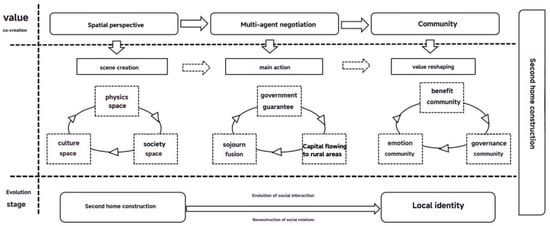
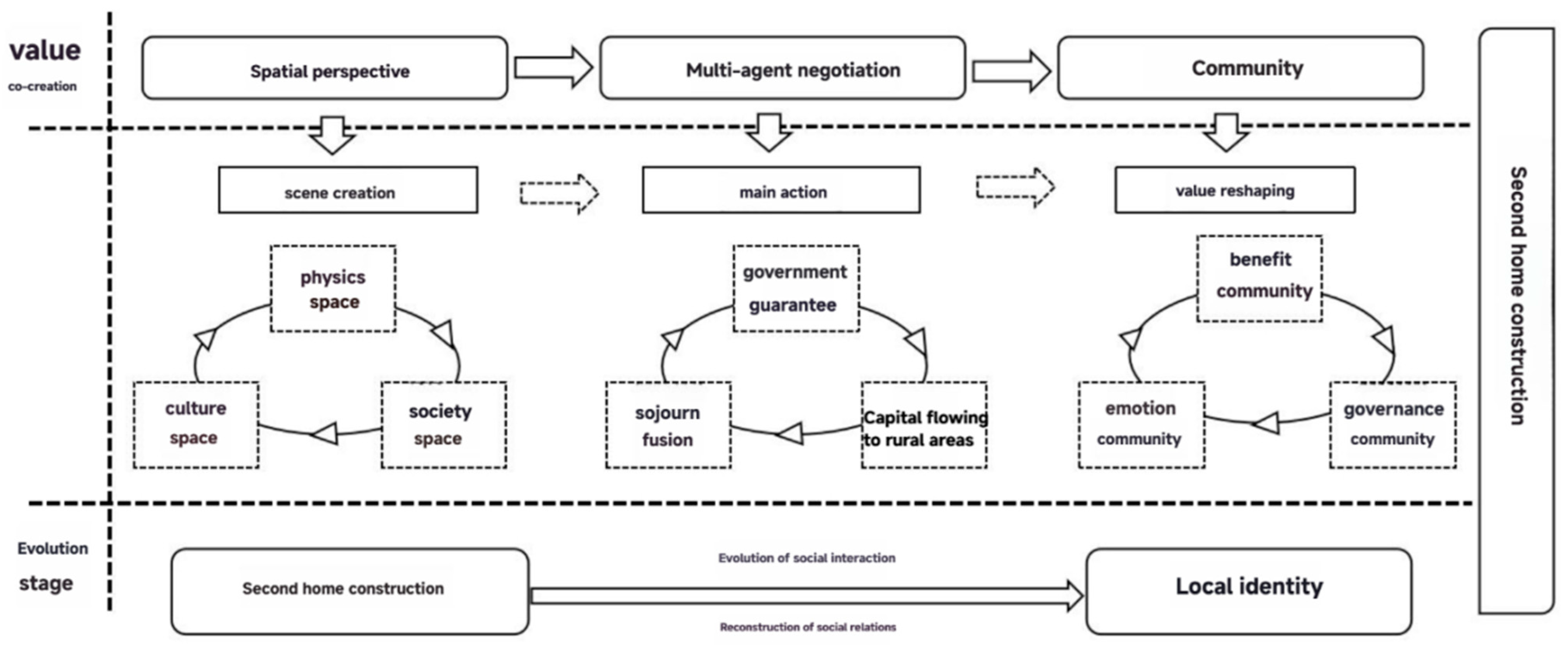
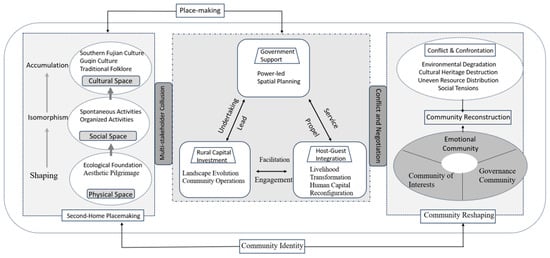
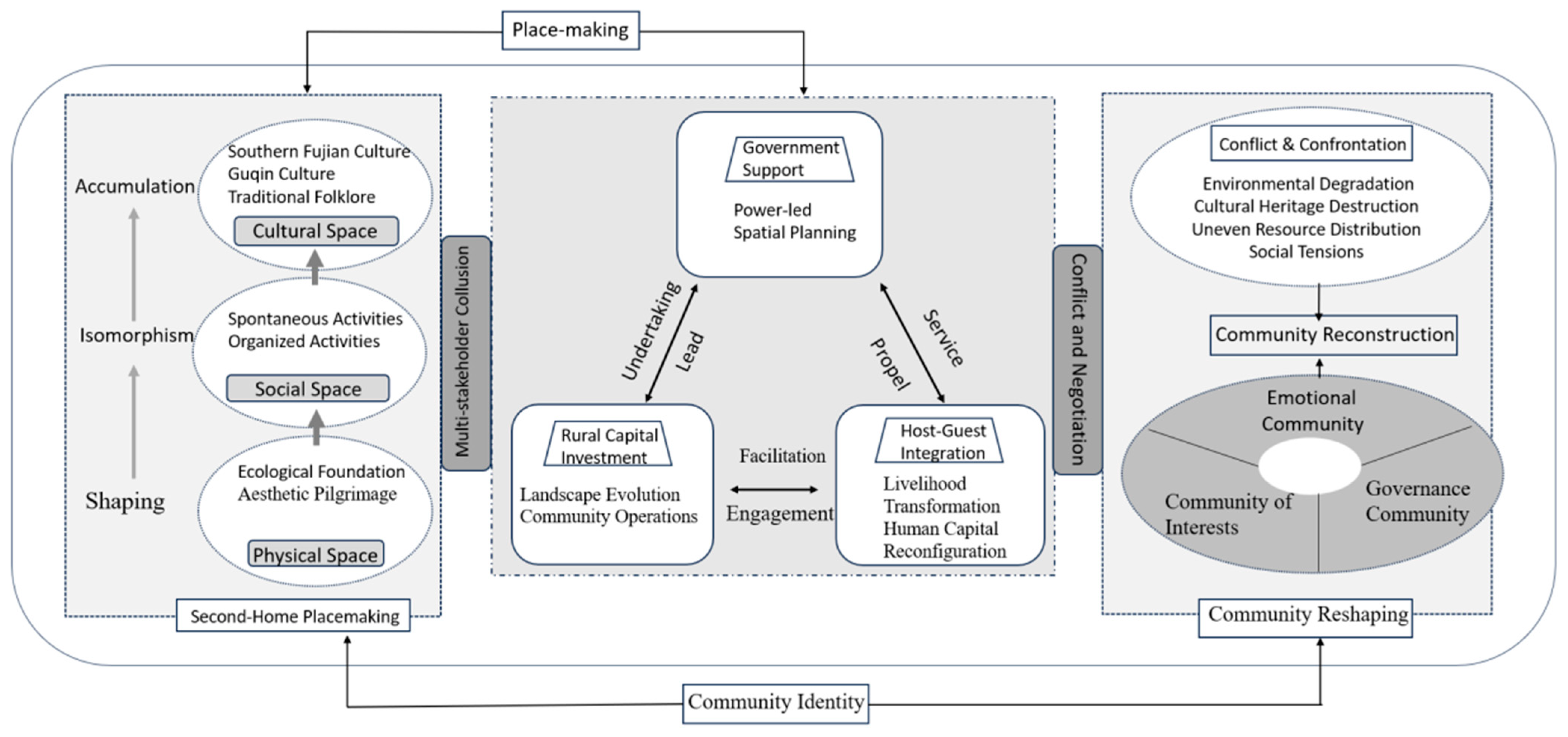
Synthesizing these insights, Figure 9 presents an integrated theoretical framework illustrating how second-home place-making unfolds through multi-stakeholder negotiation across physical, social, and cultural spaces, ultimately leading to community reshaping and differentiated forms of identity. By foregrounding mobility, negotiation, and emotional mediation, this framework repositions second-home destinations as sites of dynamic identity production rather than peripheral leisure enclaves, offering a transferable lens for understanding community transformation in tourism-driven rural regions.
Figure 9.
Framework for the construction of the second home and the reshaping of the community (Source: Drawn by authors).
4.2. Policy Implications
Second-home tourism in Mayangxi reflects a global shift where leisure mobility and rural everyday life increasingly overlap, suggesting a shift from growth-oriented real estate expansion toward integration-oriented community governance. The results suggest that enhancing the adaptive capacity of rural communities requires a multi-level governance logic where physical, social, and cultural dimensions are continuously negotiated among diverse actors. This approach aligns with broader strategies in sustainable tourism that prioritize everyday livability and social cohesion over mere economic expansion, positioning rural destinations as complex laboratories for socio-spatial transformation.
At the foundational level, public policy must prioritize inclusive infrastructure and basic services to support both permanent residents and long-stay visitors. This is crucial to prevent functional segregation and the formation of “parallel societies” often observed in Mediterranean residential tourism, where seasonal enclaves remain disconnected from the host community [26]. Empirical findings indicate that physical spatial perception—particularly environmental quality and public services—is a prerequisite for cultivating a sense of home. Integrating second-home development into broader rural service systems, following the “Inner Areas” strategy used in Italy, can help mitigate socio-spatial marginalization and improve daily living standards for all residents [25].
The governance of social space is equally critical, as social interaction and neighborhood relations play a decisive role in place identity formation. Policies should transition from top-down administration to participatory and negotiated governance, supporting community organizations and inclusive decision-making platforms to bridge the social distance between locals and mobile newcomers. By fostering emotional communities and shared communities of interest through collective leisure practices, rural destinations can build trust and long-term social cohesion. Such mechanisms are consistent with international best practices that treat social integration as a core component of rural resilience [43].
Finally, cultural policy should serve as a supportive catalyst, focusing on the regeneration of traditions as grounded everyday practices rather than excessive commodification. While engagement with local culture fosters emotional attachment, the findings indicate that cultural space alone does not automatically translate into stable place identity without the mediation of active social engagement. Policymakers should therefore emphasize the “authenticity” of rural identity to strengthen symbolic ties between people and place [47]. Ultimately, the multi-level governance logic identified in this study offers a transferable governance perspective for planners in other tourism-oriented rural communities facing similar pressures of global mobility and transformation.
4.3. Limitations and Future Research
This study is based on a single case in southeastern China, where institutional arrangements, cultural traditions, and mobility patterns are highly context-specific. While this enables an in-depth understanding of second-home place-making, the findings should be interpreted as analytically transferable rather than universally generalizable. Future research could adopt comparative and multi-sited designs across diverse regional and governance contexts to further test, extend, and refine the proposed framework.
In addition, this study relies primarily on cross-sectional survey data and self-reported perceptions. Given the dynamic and evolving nature of sense of home and place identity, longitudinal and multi-method approaches—such as repeated surveys, ethnographic follow-up, or digital-trace data (e.g., social media activity, mobility records)—would help capture temporal change more effectively. Extending the framework to examine digitalization, environmental risk, and demographic change may also deepen understanding of second-home communities under conditions of increasing mobility.
5. Conclusions
This study examined how second-home tourism reshapes community identity in a tourism-oriented rural area by focusing on the roles of spatial perception and emotional experience. Drawing on Lefebvre’s theory of the production of space and empirical evidence from Mayangxi, the study developed and tested a “space–emotion–identity” framework explaining how physical, social, and cultural spaces are negotiated through everyday leisure practices.
The findings show that spatial perception plays a decisive role in shaping both the sense of home and place identity among second-home residents, although the pathways differ across dimensions. Physical and cultural spaces provide essential environmental and symbolic foundations, primarily influencing residents’ emotional comfort and homelike feelings. In contrast, social space—manifested through neighborhood interaction, shared activities, and perceived inclusion—exerts the strongest and most direct influence on place identity. This suggests that place identity in second-home contexts is shaped less by emotional comfort alone than by opportunities for sustained social engagement and everyday participation.
Importantly, while repeated spatial experiences consistently enhance the sense of home, emotional attachment does not automatically translate into stable place identity. Rather than functioning as a universal mediator, sense of home emerges as an affective outcome of spatial perception whose influence on identity formation is conditional on broader processes of social integration. This finding nuances existing assumptions that emotional attachment necessarily precedes identity, particularly under conditions of mobility and temporary dwelling.
At the community level, second-home tourism gives rise to hybrid forms of home that are neither purely urban nor traditionally rural. These forms are produced through continuous negotiation among governments, developers, local residents, and long-term visitors. While such interactions contribute to community reconstruction and new identities, they also generate governance challenges related to environmental pressure, uneven resource allocation, and cultural sustainability. Addressing these tensions requires governance approaches that prioritize everyday livability, inclusive participation, and socially embedded place-making.
Overall, second homes should be understood not merely as leisure dwellings, but as socio-spatial processes of negotiated belonging through which mobility, everyday practice, and community restructuring intersect. By clarifying the differentiated roles of space, emotion, and social engagement, this study offers both theoretical insight and practical guidance for the sustainable governance of tourism-oriented rural communities in China and beyond.
Author Contributions
Conceptualization, L.W. and H.T.; methodology, L.W. and F.L.; software, F.L. and J.X.; validation, L.W., F.L., J.X. and H.T.; formal analysis, F.L. and J.X.; investigation, L.W., F.L. and J.X.; resources, H.T.; data curation, F.L. and J.X.; writing—original draft preparation, L.W. and F.L.; writing—review and editing, H.T.; visualization, F.L. and J.X.; supervision, H.T.; project administration, H.T.; funding acquisition, H.T. All authors have read and agreed to the published version of the manuscript.
Funding
This research was funded by the National Natural Science Foundation of China through the grant No. 42571305, and the National Social Science Foundation of China through the grant No. 23BSH070.
Data Availability Statement
The raw data supporting the conclusions of this article will be made available by the authors on request.
Acknowledgments
The authors would like to acknowledge the helpful support received from the respondents in the field data collection.
Conflicts of Interest
The authors declare no conflicts of interest.
References
- Sun, J.X.; Zhou, S.Y.; Wang, N.; Zhu, H.; Zhou, D.M.; Zhen, F.; Liu, X.J.; Yang, J.J.; Chen, J.F.; Yang, X.H. A New Field of Interdisciplinary Focus: Time, Space and Society of Mobility. Geogr. Res. 2016, 35, 1801–1818. (In Chinese) [Google Scholar]
- Ma, L.; Sun, J.; Zhu, H. Mobility, tourism and postmodernity-A research perspective and a spiritual turn. Hum. Geogr. 2017, 32, 146–151. (In Chinese) [Google Scholar]
- Jaakson, R. Second home domestic tourism. Ann. Tour. Res. 1986, 13, 367–391. [Google Scholar] [CrossRef] [Scilit]
- Wu, Y.; Xu, H. A review of second home tourism research based on mobility perspective. Adv. Geogr. 2012, 31, 799–807. (In Chinese) [Google Scholar]
- Halfacree, K.; Ellingsen, W. Second homes in eastern Norway. From Marginal Land to Commodity. Nor. Geogr. Tidsskr.-Nor. J. Geogr. 2010, 64, 124–136. [Google Scholar] [CrossRef] [Scilit]
- CPC Central Committee; State Council. Tourism Development Plan for the 14th Five-Year Plan. Gov.cn. 2022. Available online: http://www.gov.cn/zhengce/content/2022-01/20/content_5669468.htm (accessed on 23 April 2022). (In Chinese)
- Wang, J.; Su, Q. Social interaction processes and mechanisms between second-home travelers and local residents—The case of Sanya city. Geogr. Res. 2021, 40, 462–476. (In Chinese) [Google Scholar]
- Morley, D.; Robins, K. No place like Heimat: Images of home (land) in European culture. In The Cultural Geography Reader; Routledge: London, UK, 2008; pp. 308–316. [Google Scholar]
- Blunt, A. Cultural geography: Cultural geographies of home. Prog. Hum. Geogr. 2005, 29, 505–515. [Google Scholar] [CrossRef] [Scilit]
- Fei, X.T. From the Soil: The Foundations of Chinese Society (Native China); Shanghai People’s Publishing House: Shanghai, China, 2008; pp. 16–20. (In Chinese) [Google Scholar]
- Buckle, C. Residential mobility and moving home. Geogr. Compass 2017, 11, e12314. [Google Scholar] [CrossRef] [Scilit]
- Heller, A. Where are we at home? Thesis Elev. 1995, 41, 1–18. [Google Scholar] [CrossRef] [Scilit]
- Berger, P.; Berger, B.; Kellner, H. The Homeless Mind; Random House: New York, NY, USA, 1973; p. 138. [Google Scholar]
- Jorgensen, B.S.; Stedman, R.C. Stress and coping in a second home context: A case study of Lake Hawea, New Zealand. J. Environ. Psychol. 2001, 21, 17–29. [Google Scholar]
- Stedman, R.C. Understanding place attachment among second home owners. Am. Behav. Sci. 2006, 50, 187–205. [Google Scholar] [CrossRef] [Scilit]
- Kati, P. Second-home landscape: The meaning(s) of landscape for second-home tourism in Finnish lakeland. Tour. Geogr. 2008, 10, 169–192. [Google Scholar]
- Clout, H. Second homes in the Auvergne. Geogr. Rev. 1971, 61, 530–553. [Google Scholar] [CrossRef] [Scilit]
- Duan, S.; Su, Q.; Zhang, L.; Wang, J.L.; Wu, X.X. Study on the perception and identity of “Home” by second-home residents. Hum. Geogr. 2020, 35, 55–62. (In Chinese) [Google Scholar]
- Tuan, Y.F. Space and Place: The Perspective of Experience; University of Minnesota Press: Minneapolis, MN, USA, 1977; pp. 1–47. [Google Scholar]
- Breakwell, G.M. The Psychology of Geographic Identity: A Social Psychological Perspective; Routledge: London, UK, 1992. [Google Scholar]
- Wang, J.L.; Su, Q.; Wu, X.X.; Duan, S.K. A study of second home sojourn from the perspective of tourism geography. Hum. Geogr. 2019, 34, 90–98. (In Chinese) [Google Scholar]
- UNWTO. Tourism and Rural Development: A Policy Perspective; UNWTO: Madrid, Spain, 2023. [Google Scholar]
- Huete, R.; Mantecón, A. Residential tourism or lifestyle migration: Social problems linked to the non-definition of the situation. In Controversies in Tourism; Moufakkir, O., Burns, P.M., Eds.; CABI: Wallingford, UK, 2011; pp. 160–173. [Google Scholar]
- Lefebvre, H. The Production of Space; Blackwell: London, UK, 1991; pp. 1–2, 30–31, 129. [Google Scholar]
- Salvatore, R.; Chiodo, E.; Fantini, A. Tourism transition in peripheral rural areas: Theories, issues and strategies. World Leis. J. 2018, 60, 182–205. [Google Scholar] [CrossRef] [Scilit]
- Cresswell, T. Place: A Short Introduction; Socio Publishing Co.: London, UK, 2006; pp. 1–25. [Google Scholar]
- Tönnies, F. Community and Civil Society; Cambridge University Press: Cambridge, UK, 2001; pp. 15–66. [Google Scholar]
- Tao, W.; Cai, S.Y.; Yu, X.C. Spatial practices and affective reconstruction of mobile families under the perspective of mobility. J. Geogr. 2019, 74, 1252–1266. (In Chinese) [Google Scholar]
- Wright, J.K. Terrae Incognitae: The place of the imagination in geography. Ann. Assoc. Am. Geogr. 1947, 37, 1–15. [Google Scholar] [CrossRef]
- Relph, E. Place and Placelessness; Pion: London, UK, 1976; pp. 11–56. [Google Scholar]
- Othman, S.; Nishimura, Y.; Kubota, A. Memory association in place making: A review. Procedia-Soc. Behav. Sci. 2013, 85, 554–563. [Google Scholar] [CrossRef] [Scilit]
- Gao, Q.; Qian, J. Reconstruction of locality under the perspective of “emotional turn”: The case of Hunde Village in Guangzhou. Hum. Geogr. 2016, 31, 33–41. (In Chinese) [Google Scholar]
- Bao, J.; Yang, Y. On the local residents’ changes of place attachment against the background of tourism commercialization: Cases from Yangshuo West Street. J. Guangxi Univ. Natl. (Philos. Soc. Sci. Ed.) 2012, 34, 49–54. (In Chinese) [Google Scholar]
- Urry, J. The Tourist Gaze; Sage: London, UK, 2002; pp. 128–145. [Google Scholar]
- Li, J.; Huang, R.; Feng, A. Urban Community Heterogeneity and Neighborhood Social Capital. Fudan J. (Soc. Sci. Ed.) 2007, 5, 67–73. (In Chinese) [Google Scholar]
- Yuan, L.; Sun, Q. A study of group paths of community identity. Soc. Sci. Res. 2016, 2, 111–115. (In Chinese) [Google Scholar]
- Magan, I.M.; Padgett, D.K. Home Is Where Your Root Is: Place Making, Belonging, and Community Building among Somalis in Chicago. Soc. Work 2021, 66, 101–110. [Google Scholar] [CrossRef] [Scilit] [PubMed]
- Jessop, B.; Brenner, N.; Jones, M. Theorizing sociospatial relations. Environ. Plan. D 2008, 26, 389–401. [Google Scholar] [CrossRef] [Scilit]
- Halfacree, K. Rural space: Constructing a three-fold architecture. Handb. Rural Stud. 2006, 44, 62. [Google Scholar]
- Hong, X.T. A study on place attachment and residential satisfaction of migratory elderly. Sci. Geogr. Sin. 2021, 41, 785–794. (In Chinese) [Google Scholar]
- Wang, X.N.; Feng, J.; Zhang, Z.H. A study on place attachment, travelers’ perception and tourism experience. Tour. Sci. 2020, 34, 22–31. (In Chinese) [Google Scholar]
- Tang, W.Y.; Zhong, X.L.; Li, B.H. A study on tourists’ sense of place in ethnic cultural tourism destinations. Tour. Trib. 2011, 26, 42–47. (In Chinese) [Google Scholar]
- Mantecón, A. Tourist modernisation and social legitimation in Spain. Int. J. Tour. Res. 2010, 12, 617–626. [Google Scholar] [CrossRef] [Scilit]
- Blunt, A.; Dowling, R. Home; Routledge: London, UK, 2006; pp. 1–20. [Google Scholar]
- Massey, D. A Global Sense of Place. Marx. Today 1991, 38, 24–29. [Google Scholar]
- Sheller, M.; Urry, J. The New Mobilities Paradigm. Environ. Plan. A 2006, 38, 207–226. [Google Scholar] [CrossRef] [Scilit]
- Salvatore, R.; Chiodo, E.; Fantini, A.; Corsini, L. Rural identity, authenticity, and sustainability in Italian inner areas. Sustainability 2020, 12, 1272. [Google Scholar] [CrossRef] [Scilit]
- Scannell, L.; Gifford, R. Defining Place Attachment: A Tripartite Organizing Framework. J. Environ. Psychol. 2010, 30, 1–10. [Google Scholar] [CrossRef] [Scilit]
- Bernardo, F.; Palma-Oliveira, J.M. Place Identity, Place Attachment and the Scale of Place: The Impact of Place Salience. Psyecology 2013, 4, 167–173. [Google Scholar] [CrossRef] [Scilit]

Disclaimer/Publisher’s Note: The statements, opinions and data contained in all publications are solely those of the individual author(s) and contributor(s) and not of MDPI and/or the editor(s). MDPI and/or the editor(s) disclaim responsibility for any injury to people or property resulting from any ideas, methods, instructions or products referred to in the content. |
© 2026 by the authors. Licensee MDPI, Basel, Switzerland. This article is an open access article distributed under the terms and conditions of the Creative Commons Attribution (CC BY) license.