Article

From Health Risks to Environmental Actions: Research on the Pathway of Guiding Citizens to Participate in Pocket-Park Governance

1
College of Management Science, Chengdu University of Technology, Chengdu 610059, China
2
Chengdu Park City Demonstration Zone Construction Research Center, Chengdu 610059, China
3
School of Management, Sichuan University of Science & Engineering, Yibin 644000, China
*
Author to whom correspondence should be addressed.
Land 2024, 13(10), 1612; https://doi.org/10.3390/land13101612
Submission received: 4 September 2024 / Revised: 2 October 2024 / Accepted: 3 October 2024 / Published: 4 October 2024

Abstract

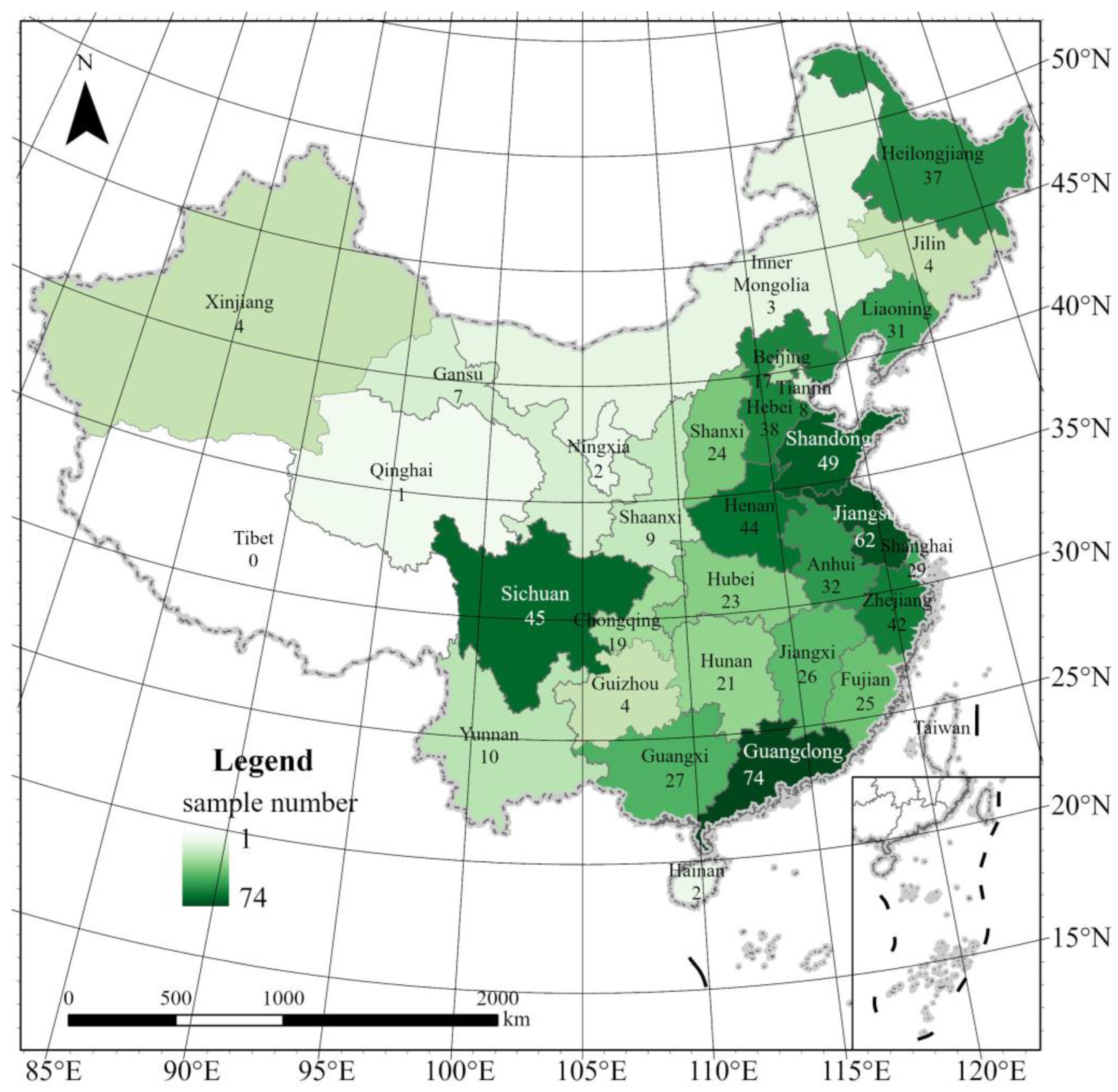
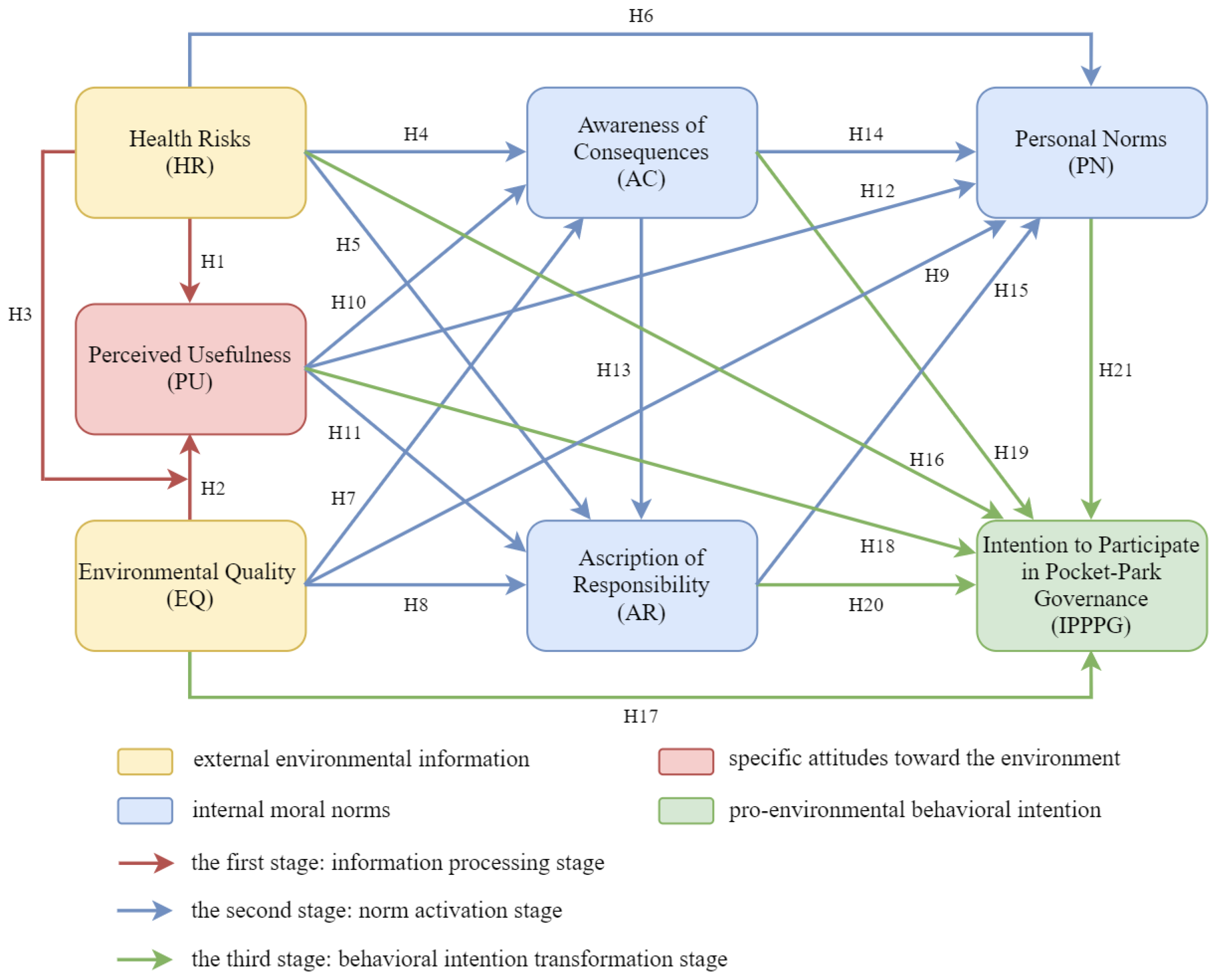
The COVID-19 pandemic has heightened the demand for urban pocket parks near residential areas, posing new challenges for environmental governance. However, there is a lack of research on how to engage citizens in pocket-park governance to address both potential and unforeseen risks. This study combines social information processing theory with a norm activation model to develop a framework that identifies the shaping stages and influencing factors of citizens’ intentions to participate in pocket-park governance. Using partial least squares structural equation modeling, this research analyzed the relationships among external factors, attitudes, moral norms, and intentions to participate based on 719 responses from an online survey targeting Chinese citizens in November and December 2023. Results indicate that health risks and pocket-park environmental quality positively affect perceived usefulness. Attitudes and moral norms are indeed important factors mediating the positive effect of the external environment on the intention to participate. The pathway of guiding citizens to participate in pocket-park governance is clarified, which helps bolster the resilience of urban green spaces and improve the quality of life of residents after public crises.
Keywords: citizen participation; pocket parks; sustainable governance; norm activation model; social information processing theory; pro-environmental behavior; health risks citizen participation; pocket parks; sustainable governance; norm activation model; social information processing theory; pro-environmental behavior; health risks