


Abstract
Based on the survey dataset of 879 farm households in China’s three northeastern provinces, this study adopts an integrated empirical framework that incorporates the ordinary least squares (OLS) model, quantile regression, and mediation effect models to examine the impact of digital agricultural technology adoption on farmers’ grain income and unravel its underlying mechanism. The results indicate that: (1) Digital agricultural technologies adoption has a significant positive effect on farmers’ grain income, and this impact gradually increases with farmers’ income levels. Meanwhile, the income-increasing effect of digital agricultural technologies exhibits a threshold effect: when farmers adopt two types of digital agricultural technologies, they can achieve growth in grain income. (2) Heterogeneity analysis reveals that, in terms of operational scale, the income-enhancing effect of digital agricultural technologies adoption is significantly stronger for medium-scale farmers than for small-scale and large-scale farmers; in terms of regional distribution, the positive effect is strongest in Jilin Province, followed by Liaoning Province, and weakest in Heilongjiang Province; in terms of crop types, the positive effect is more substantial for rice growers than for maize farmers. (3) Mechanism analysis indicates that operational scale and plot scale play mediating roles in the impact of digital agricultural technologies on farmers’ grain income, with their mediating effects of approximately 5.52% and 9.66% respectively, which further clarifies that the adoption of digital agricultural technologies expands operational scale and plot scale, enables large-scale production, and thus boosts farmers’ grain income. These findings offer empirical insights into integrating smallholder farming systems with digital agriculture and provide evidence-based support for policies aimed at promoting scaled operation and facilitating the digital transformation of grain production systems.
1. Introduction
Chinese President Xi Jinping has emphasized that increasing farmers’ income should be regarded as the central task for addressing issues concerning agriculture, rural areas, and farmers, and as a key measure to expand avenues for farmers to achieve prosperity. Since the 18th National Congress of the Communist Party of China, farmers’ income levels have maintained a steady upward trend; however, the growth rate has declined notably, falling from 10.7% in 2012 to 6.3% in 2024. This downward trend is particularly pronounced among households engaged in grain production and operations, whose income growth rate has dropped from 8.7% in 2012 to 5.6% in 2024. In 2023, the average output value per mu for the three staple grains was 1360.1 yuan, which was merely higher than that of soybeans and rapeseed but significantly lower than the output value of other cash crops. In the process of occupational and income differentiation among farmers, grain farmers are confronted with arduous labor while securing relatively meager returns [1]. Farmers’ grain income has become a key bottleneck hindering the growth of rural residents’ income [2]. Consequently, against the current backdrop of safeguarding national food security, how to effectively boost farmers’ grain income has emerged as a critical issue that urgently requires resolution.
In recent years, digital technologies represented by big data, artificial intelligence, the Internet of Things (IoT), and sensing technologies have been driving the digital advancement of diverse sectors [3]. To accelerate development in agriculture, rural areas, and for farmers, China has issued a series of policy documents, such as the “Outline of the Digital Rural Development Strategy” and the “Digital Agriculture and Rural Development Plan (2019–2025)”. These policies have effectively facilitated the integration of rural resources and the flow of production factors, serving as a breakthrough point for driving rural development [4]. Meanwhile, the widespread and in-depth application of digital agricultural technologies (DAT) in rural areas has created new opportunities for farmers to upgrade their production techniques [5]. In rural China, farmers usually access and adopt DAT by purchasing socialized services, rather than investing in expensive digital equipment on their own. This approach substantially reduces farmers’ upfront costs and technical barriers. In the grain production sector, the adoption of DAT holds significant potential to alleviate key constraints, such as labor shortages, outdated production techniques, and inefficient farm equipment, and the adoption of these technologies could strengthen the resilience of the grain supply chain and advance the high-quality development of grain production [6]. This research focuses on these critical questions: Does the current DAT adoption actually increase the farmers’ grain income? Does this effect exhibit heterogeneity across different scales, different regions and different crop types? Furthermore, through what mechanisms does it promote this impact? Answering these questions are essential for clarifying the impact mechanism of DAT on farmers’ grain income, promoting its wider adoption, and ultimately enhancing the profitability of grain cultivation. This study conducts an empirical analysis at the micro level, based on survey data from farmers in the China’s three northeastern provinces.
2. Literature Review
Scholars’ research on DAT has primarily concentrated on three key areas: studies on its conceptual definition, the evaluation of adoption levels and analysis of influencing factors. Regarding its definition, scholars have conceptualized this construct from diverse analytical perspectives. Xiao et al. [7] characterize DAT as derived from geographic information systems (GIS), led by mobile communication networks, and composed of technologies including the Internet of Things (IoT), big data, sensors, and blockchain. Pan et al. [8] characterize DAT as the integrated application of remote sensing, sensor, and IoT technologies, which manifests in application forms such as smart irrigation, UAV patrols, and smart agricultural machinery. Based on technological maturity and application status in agriculture, Fan and Zhu [9] categorize DAT into types, including agricultural drones, automated water-saving drip irrigation systems, soil testing-based precision fertilization, and agricultural e-commerce platforms. A broader perspective is provided by Daniel et al. [10], who define DAT as the integration of a suite of digital technologies, including drones, precision agricultural machinery, big data platforms, and sensors. In terms of measuring adoption levels, researchers have employed diverse methodologies. Zhang et al. [11] constructed an index system based on the application intensity of IoT, big data, and artificial intelligence in production processes to evaluate the agricultural production digitization rate across 12 provinces in China, measuring the digital development of livestock, crop, and fishery sectors. Xie et al. [12] assessed the digital transformation level of agricultural enterprises by analyzing their integration of big data, cloud computing, analytics, and their use of mobile and social media platforms. Concerning factors influencing the adoption of DAT, studies highlight both external support and internal capabilities. Zhou et al. [13] found that adoption is significantly affected by organizational support, government subsidies, and training availability. Simultaneously, internal factors such as farmers’ technical awareness, absorptive capacity, and information literacy are critical determinants of whether they adopt DAT [13,14].
Farmers’ income has long been a central focus within “agriculture, rural areas, and farmers” research. For decades, scholars have conducted extensive research on farmers’ income from both theoretical and empirical perspectives, land tenure [15], labor mobility [16], and the adoption of advanced production technologies directly drive farmers’ agricultural operating income [17,18,19]. Among internal factors, farmers’ information literacy, financial literacy, and digital literacy play crucial roles; externally, government policy support can effectively alleviate the constraints faced by farmers, facilitating the adoption of advanced technologies and production models, thereby improving quality and efficiency and indirectly boosting agricultural income [20,21,22]. With the development of the digital economy, through the integrated application of digital technologies, the digital economy empowers agricultural production by leveraging IoT, big data, and sensors. DAT extends the agricultural industry and value chains, promotes industrial upgrading, and enhances production efficiency [23], ultimately increasing agricultural income [24]. From a resource allocation perspective, DAT can mitigate the misallocation of labor and capital factors, optimizing resource allocation efficiency [25]. It boosts agricultural productivity and efficiency by acquiring agricultural production data [26], mitigating information asymmetry, and reducing transaction and service costs [27]; it can also create more non-farm employment opportunities [28], expand sales channels [29], and diversify farmers’ income sources. By innovating production methods, DAT enables precision, large-scale, and specialized production, reduces labor intensity, cuts down on the use of pesticides and chemical fertilizers, and conserves production inputs [30]. Meanwhile, it can improve the quality and productivity of agricultural products, increase their added value, boost the economic returns from agriculture, and drive agricultural income growth.
In summary, while research on DAT and farmers’ income is expanding, several gaps remain in the existing literature. First, existing definitions of DAT are often insufficiently precise, with many studies conflating the concept with broader digital technology. Second, current research on the DAT adoption predominantly examines its impact on total household income, with less focus on income specifically derived from grain production, and the pathways to income increase are frequently centered on boosting non-farm income rather than farm-based earnings. Third, few studies have investigated the heterogeneous effects of adopting DAT on the grain income of farmers with different characteristics. Therefore, this study aims to address these gaps by conducting a systematic and in-depth analysis using micro-level survey data from farmers in China’s three northeastern provinces and to provide a comprehensive understanding of how the adoption of DAT by smallholder farmers affects their income from grain cultivation.
3. Theoretical Analysis and Research Hypotheses
DAT features efficient operation and precise input. Autonomous agricultural machinery reduces reliance on labor and operational waste, thereby cutting production and coordination costs. Unmanned aerial vehicle plant protection (UAVPP) technology saves pesticides, water, and labor, while mitigating production losses. Soil testing and formulated fertilization (STFF) optimize fertilizer input and reduce ineffective expenditure. Intelligent integrated water–fertilizer technology (IIWT) decreases water and fertilizer consumption and stabilizes production returns. These technologies directly raise farmers’ grain income by saving operational and production costs, reducing ineffective inputs, and mitigating production losses. They further amplify income growth by promoting the expansion of operational scale and the consolidation of farmland plots. Meanwhile, the effects differ across operational scales, regions, and crop types. Accordingly, cost reduction, efficiency improvement, loss mitigation, and quality enhancement enable DAT to increase farmers’ grain income gains, while land scale expansion and optimized factor allocation represent important transmission pathways for such income growth. It should be noted that DAT primarily influences farmers’ net income by enhancing production efficiency and output levels. However, net income may also be affected by external market factors such as product prices and production costs. This study distinguishes between these factors in subsequent empirical analyses.
3.1. Direct Effects of DAT Adoption on Farmers’ Grain Income
With the development of the digital economy, DAT takes data as the core production factor and integrates various next-generation digital technologies into agricultural production. These include network communication, geographic information systems, global navigation satellite systems, sensors, unmanned aerial vehicles, big data, and the IoT. Through its application across all production links, it strengthens the control of input factors and guides the efficient and rational allocation of resources. In grain production specifically, it facilitates rapid and timely collection, processing, and analysis of crop growth and environmental data, thereby supporting scientific and precise production decision-making, which reduces resource waste and mitigates inefficient production practices. More specifically, the application of DAT manifests in the following ways: First, it enables standardized and intelligent crop cultivation and field management by ensuring optimal crop spacing and sufficient seedling emergence. It supports the accurate monitoring of crop growth, soil moisture, pests and diseases. Through STFF, fertilizers and pesticides are applied precisely and timely based on real-time monitoring data, which reduces ineffective input of agrochemicals and crop yield losses caused by disasters, thereby increasing crop production [30]. Second, the precision cultivation and management enabled by DAT can effectively control the input of production materials and reduce input costs such as seeds, pesticides, and chemical fertilizers. Furthermore, DAT, such as UAVPP and autonomous driving agricultural machinery (ADAM), can effectively substitute for manual labor, easing the difficulty and high cost of hiring workers during busy farming periods and lowering labor costs [25]. Third, facilitated by DAT, precise production and management improve crop growth conditions and enhance grain quality. Higher-quality produce meets premium quality standards in the grain sales process, enabling farmers to command better prices and ultimately increase total revenue from grain sales.
Hypothesis 1.
DAT adoption can boost farmers’ grain income.
3.2. Heterogeneity Analysis by Operational Scale
Farmers’ operational scale is a crucial factor affecting the effectiveness of technology adoption and the efficiency of resource allocation. Farmers with different operational scales exhibit significant differences in production factor endowments, risk-bearing capacity, technology application costs, and expected returns, which in turn lead to notable heterogeneity in the impact of DAT adoption on their production and operation. From a theoretical perspective, small-scale farmers are typically constrained by limited cultivated land and scattered production inputs, in the adoption of DAT, they face constraints such as high unit costs and insufficient space for integrated technology application; even if they increase the intensity of technology adoption, it is difficult to achieve economies of scale and synergy effects, resulting in relatively limited marginal returns from technology empowerment. In contrast, medium-scale farmers possess a moderate area of cultivated land and more complete production conditions, with stronger capital investment capacity; they can fully coordinate and utilize multiple DAT during production. As the intensity of technology adoption increases, they are more likely to achieve synergistic growth, making the positive impact of DAT more pronounced. However, large-scale farmers operate on an extensive scale of cultivated land, the technical costs of adopting DAT in production are enormous, and a standardized management model cannot match the precision-based production of DAT. Moreover, when the operation scale exceeds the boundary of optimal scale, diseconomies of scale emerge; the incremental benefits from increased technology adoption cannot offset the additional costs, leading to diminishing marginal returns and a dilution or even elimination of the dividends from technology adoption. Accordingly, differences in farmers’ operational scale generate distinct effects on the impact of DAT adoption. Compared with small-scale and large-scale farmers, DAT exerts a stronger positive effect on medium-scale farmers.
Hypothesis 2.
The impact of DAT adoption on farmers’ grain income exhibits operational scale heterogeneity, with the positive effect being more significant among medium-scale farmers.
3.3. DAT Adoption, Operational Scale and Farmers’ Grain Income
Most DAT adopted by farmers are services provided by socialized service organizations, featuring on-demand procurement, pay-per-use, and low-cost access. Farmers can adopt these technologies without relying on large-scale operations; thus, scale is no longer a decisive threshold for farmers’ technology adoption, and ordinary farmers can also conveniently adopt corresponding DAT according to their production needs. In actual production decisions, farmers usually first try one or two technologies and expand their operational scale only when such technologies help achieve cost reduction and efficiency improvement, rather than rashly expanding scale through land transfer. By adopting DAT, farmers can substitute traditional labor factors, conduct standardized, intelligent, and precise production, and drive the scaling of grain cultivation. From one perspective, through the integrated application of digital technologies in agriculture—such as ADAM and UAVPP—a specialized division of labor can be implemented across stages, including farmland preparation, plowing, sowing, field management, and harvesting. This effectively reduces labor intensity, eases labor constraints, and significantly improves labor productivity, enabling farmers to cultivate a larger scale of farmland. From another perspective, STFF, as well as IIWT, support intelligent and precise monitoring and operation in field management throughout fertilization and irrigation, the management model shifts from “experience-driven” to “data-driven”, reducing errors caused by manual operations and excessive input of production materials, this saves production costs and allows farmers to cultivate a larger scale of farmland with the same capital input [31]. Therefore, DAT adoption can contribute to an expansion of the operational scale of farmland under management.
Additionally, the adoption of DAT in agricultural production often relies heavily on “hardware,” including agricultural machinery and equipment. Once deployed on farmland, such equipment tends to exhibit “economies of scale”. On large-scale farmland, first, DAT leverages its inherent strengths of extensive coverage and high operational efficiency, effectively displacing traditional labor, reducing labor intensity, increasing total agricultural output, and ultimately boosting farmers’ grain income [32]. Second, it can drive down the costs of DAT adoption. Farmers with a certain scale of operation can spread input costs across a larger cultivated area. Even when the farmland scale reaches a specific threshold, the per-unit-area cost of adopting DAT can be significantly lower than that of traditional production methods, which in turn boosts farmers’ grain income. Third, the adoption of DAT can improve farmers’ specialized production level. Small-scale farmers usually lack knowledge of advanced technologies and professional production skills, making them unable to adapt to DAT. In contrast, farmers with a larger operation scale have a deeper understanding of advanced production technologies and a higher level of specialization, which helps improve production and field management, enhance grain production capacity, and increase farmers’ grain income. Therefore, the adoption of DAT can promote large-scale operation among farmers. According to the theory of economies of scale, it can release scale effects, increase total output, reduce production costs, and improve production efficiency and profit margins. The expansion of cultivated farmland operational scale can effectively increase the net agricultural income of rural households [33].
Hypothesis 3.
DAT adoption boosts farmers’ grain income by facilitating the expansion of farmland operational scale.
3.4. DAT Adoption, Plot Scale and Farmers’ Grain Income
The advancement of large-scale farmland operations through DAT adoption can be realized not only by expanding the total operational area but also by consolidating surrounding land resources through transfers—whether by acquiring or releasing land—to expand the scale of plots [34]. DAT adoption overcomes the constraints related to land fragmentation and dispersion by leveraging geographic information systems. Scattered and fragmented plots can be mapped, registered, and digitally monitored, which provides data support and planning design for land transfer and contiguous land consolidation, thus driving down the costs of integrating fragmented land resources. Meanwhile, for farmers who adopt DAT, such as ADAM and UAVPP, these tools can significantly enhance the standardization and precision of their production operations, as well as the efficiency of their field operations. This, in turn, can significantly improve their agricultural production capacity, shifting the marginal revenue curve to the right and raising the threshold of farmers’ optimal operational scale. Under the premise that external conditions such as land transfer costs, property rights institutions, capital constraints, social security, and policy support remain relatively stable, this can effectively incentivize farmers to rent land, thereby realizing large-scale operation [35]. Thus, farmers can proactively adjust their operated plots by consolidating adjacent smaller, fragmented plots into larger, contiguous ones, while transferring out more distant or inconveniently located fragmented parcels. Through such “land assembly” strategies involving both land acquisition and transfer, farmers can achieve centralized and contiguous operation, expand plot scale and realize plot-scale. The expansion of plot scale can further unleash scale effects in several ways. First, this scale expansion reduces the loss of production efficiency caused by frequent relocation and repositioning of agricultural machinery and equipment; it also mitigates issues such as data redundancy or monitoring blind spots resulting from overly dense sensor deployment in confined spaces, which could lead to decision-making errors or additional production losses. Second, expanding plot scale reduces expenditures on field management and service purchases, thereby effectively lowering the average input cost of grain production. Third, increasing the sown area contributes to higher total grain output.
Hypothesis 4.
DAT adoption boosts farmers’ grain income by facilitating the expansion of plot scale.
Based on the above theoretical analysis, a solid theoretical framework is constructed, and the influence mechanism of how DAT adoption impacts grain farmers’ income is clarified and established, as illustrated in Figure 1.
Figure 1.
Mechanism of the impact of DAT adoption on grain farmers’ income.
4. Materials and Methods
4.1. Data Sources
China’s three northeastern provinces are China’s major grain-producing regions and strategic grain reserve bases. In 2024, the total grain-sown area of the three northeastern provinces accounted for 20.27% of the national total, and their total grain output accounted for 20.91% of the national total. They are also typical representatives of major agricultural provinces and are facing population shrinkage [36,37]. Examining DAT adoption in the three northeastern provinces carries important practical significance, and it is crucial to investigate the relationship between the DAT adoption and farmers’ grain income in this region. This study selected Liaoning, Jilin, and Heilongjiang provinces as research sample areas, to account for intra-regional differences in natural resource endowments and in accordance with the random sampling principle, one prefecture-level city was selected from the eastern, central, and western regions of each province; two counties or districts were chosen from each prefecture-level city; one township was selected from each county or district; and three to four administrative villages were surveyed from each township. Ultimately, 879 valid questionnaires were collected, including 264 from Liaoning Province, 336 from Jilin Province, and 279 from Heilongjiang Province. The distribution of survey regions is shown in Figure 2. And the sample size ratios for each region are presented in Table A2.
Figure 2.
Distribution of surveyed regions.
4.2. Definition of Variables
1. Explained Variable. Farmers’ grain income. This study focuses on the improvement of grain production and operation and the increase in grain net income brought about by DAT, rather than total household income or non-agricultural income. Therefore, farmers’ grain income is selected as the core dependent variable, which can more accurately identify the real impact of digital technology on grain production and avoid confounding factors such as non-agricultural income and off-farm employment. Drawing on existing findings [38], this study measures the indicator as the ratio of net revenue from grain cultivation to total revenue and total cost of the crop in its planting year to the total sown area, where net revenue is defined as total annual revenue minus total cost. Total revenue refers to income from grain sales; total cost includes land rent, agricultural input costs, water, electricity and fuel expenses, hired labor costs, and socialized service fees during the grain production process. It should be noted that net income indicators are susceptible to external market factors such as product prices and factor costs. This study focuses on distinguishing between the impact of technological advancements and the interference caused by market fluctuations in its analysis.
2. Explanatory Variable. DAT adoption. Considering the practical application of the technologies and drawing on existing research findings on DAT [9,39,40], farmers’ DAT adoption is measured by the total number of specific technologies adopted by sample farmers in 2024 grain production, including STFF, ADAM, UAVPP, and IIWT. The assignment rule is defined as follows: 0 if no DAT is adopted; 1 if one technology is adopted; 2 if two technologies are adopted; 3 if three technologies are adopted; and 4 if all four technologies are adopted. In this study, DAT mainly refers to the adoption of various technology services provided by professional service organizations, including STFF, ADAM, UAVPP, and IIWT services. Farmers’ adoption of DAT mainly takes the form of purchasing socialized services, while only a small share of large-scale operators own relevant equipment independently. For most farmers, differences in technology adoption primarily lie in service content, operational stages, and application scenarios, rather than variations in fixed asset investment costs. Therefore, measuring DAT adoption by the number of technology types used is practically reasonable.
As shown in Table 1, UAVPP is the most frequently adopted technology among sampled households, with an adoption rate of 36.63%; it is followed by STFF and ADAM, with adoption rates of 15.24% and 8.08%, respectively. The least adopted technology is IIWT, at only 1.25%. In terms of adoption intensity, 510 households (58.02% of the total sample) did not adopt any DAT. The proportions of households adopting one, two, three, and four technologies are 26.17%, 11.60%, 3.19%, and 1.02%, respectively.
Table 1.
DAT adoption among sample households.
3. Mechanism variables. From the perspective of the “two-scale” of farmland, this study selects two mechanism variables: total operating scale and plot scale. These variables are operationally measured as follows: total operational scale is proxied by the total sown area of grain crops (unit: mu), and plot scale is proxied by the size of the largest cultivated plot for grain production (unit: mu).
4. Identifying Variable: Considering that farmers’ DAT adoption cannot be treated as strictly exogenous due to potential “self-selection “and sample selection bias, this study draws on existing research findings [41], an identifying variable is constructed based on the following survey question: “To what extent do other farmers in your village adopt DAT in grain production in 2024?”, with the ordinal assignment rule as follows: 1 for very little; 2 for relatively little; 3 for moderate; 4 for relatively high; and 5 for very high, it acts as an identifying variable for whether farmers adopt DAT. This variable serves as the identifying variable for farmers’ DAT adoption; it is employed to address potential endogeneity in the model and ensure the model’s identifiability.
5. Control variables: This study classifies the variables into four categories: farmers’ personal characteristics, household characteristics, production and operation characteristics, and external environmental characteristics of the sample farmers. Personal characteristics encompass the respondent’s gender, age, health status, education level, type of farming employment, and years of experience in grain production. Household characteristics include whether a household has a Communist Party member, whether a household has a village cadre, membership in a cooperative organization and risk preference. Production and operation characteristics cover the number of agricultural laborers, the degree of land fragmentation, access to high-standard farmland, participation in agricultural technical training, and agricultural machinery ownership. External environmental characteristics involve the occurrence of agricultural disasters and topographical conditions. Additionally, to account for potential regional policy differences, provincial dummy variables are included as controls; the definitions and descriptive statistics of the relevant variables are presented in Table 2. It is necessary to clarify the distinction between the number of parcels and the plot scale. The number of parcels reflects the degree of land fragmentation, while plot scale, measured by the area of the largest plot, captures the scale of continuous and integrated operation. The former focuses on fragmentation, whereas the latter emphasizes the scale effect of continuous cultivation.
Table 2.
Variable selection and descriptive statistics.
4.3. Model Setting
In examining the impact of DAT adoption on farmers’ grain income, and drawing on the approach of Krueger [42], the following regression model is thus specified:
In Equation (1), represents the grain net income for farmer ; denotes the level of DAT adoption by farmer ; indicates the set of control variables, which includes the respondent’s gender, age, health status, education level, type of farming employment, years grain production experience, whether a household has a Communist Party member, whether a household has a village cadre, membership in a cooperative organization, risk preference, number of agricultural laborers, degree of farmland fragmentation, availability of high-standard farmland, participation in agricultural technical training, agricultural machinery ownership, agricultural disaster occurrence, and topographical conditions; is the constant term; and are parameters to be estimated; and is the random error term.
To comprehensively examine the impact of the explanatory variable across the entire conditional distribution and to provide a more complete description of the conditional distribution of the explained variable, a quantile regression model is introduced [43]. It is used to explore the effects of DAT adoption on grain cultivation income among farmers at different income levels. The quantile regression model is specified as follows:
In Equation (2), denotes the net of grain income for sample farmer denotes the quantile of net income; indicates the degree of DAT adoption by farmer ; refers to the set of control variables; is the random error term; is the constant term; while and are the regression coefficients corresponding to the respective variables.
To identify the threshold value at the level of DAT adoption that promotes farmers’ grain income, a threshold effect model is introduced for analysis.
Here, represents the threshold variable—DAT adoption; denotes the set of control variables; is the unknown threshold value; and is the indicator function, equalling 1 if the condition in parentheses holds and 0 otherwise. Based on this specification, sample households are partitioned according to the estimated threshold to assess how the DAT adoption on farmers’ grain income varies across different levels of DAT adoption.
To clarify the transmission channels through which DAT adoption affects farmers’ grain income at the micro level, this study draws on the mediating effect model specification proposed by Wen and Ye [44]. Using a stepwise regression approach based on the OLS estimation, the following mediating effect model is constructed:
In Equations (4)–(6), stands for the mediating variables, which in this study refers to the operational scale of farmland and the plot scale of farmland; , , and are the constant terms; , , and represent error terms. , , , and are the estimated coefficients of the corresponding variables. The remaining variables are consistent with those mentioned earlier.
5. Results
5.1. Benchmark Model Regression Results
Before empirical analysis, to enhance the accuracy of research findings, we use the variable correlation and variance inflation factor test, the result is shown in Table A1. This study uses net income as the core dependent variable. However, net income is susceptible to external market factors such as product prices and input costs. Therefore, when interpreting changes in net income, the focus is on distinguishing the impact of technology from the interference of external price fluctuations, prioritizing the identification of the genuine effects of the technology itself. As shown in Table 2, the results in columns (1) and (2) indicate that R2 increases from 0.2172 to 0.3194 after incorporating control variables, suggesting enhanced explanatory power and a more reasonable model specification. The adoption of DAT is significantly and positively correlated with grain-growing income at the 1% level, showing strong statistical robustness that is unaffected by regression methods or the inclusion of control variables. Although the coefficient decreases to 0.0145 after adding control variables, its statistical significance remains unchanged, which confirms that the adoption of DAT can promote an increase in farmers’ grain income. Each additional unit of DAT adopted can increase grain-growing income by 0.0145 units, which verifies that Hypothesis H1 is supported. According to the regression results of the quantile regression (QR) model, the regression coefficient of DAT adoption increases continuously with the rise of quantiles. This indicates that the impact of DAT adoption on farmers’ grain-growing income gradually intensifies as farmers’ income levels rise. The reasons for such heterogeneity are as follows: First, high-income farmers generally possess better resource endowments, enabling DAT to better integrate with existing resources and generate scale effects. Second, high-income farmers have more adequate technical learning capacity and financial reserves, allowing them to adopt DAT more rapidly and improve input-output efficiency. Third, high-income farmers have stronger risk-coping capabilities and are more willing to bear the initial costs and uncertainties associated with technological investment, thus leading to a more significant income-increasing effect of such technologies.
The results in column (2) further indicate that among the control variables, education level, years of grain production experience, agricultural technical training, and agricultural machinery ownership all exert a significantly positive impact on grain income. This suggests that farmers can enhance their technical knowledge and skills through education and training, thus actively upgrading traditional production methods. Longer farming experience enables farmers to accumulate practical knowledge, which, combined with advanced technologies, improves production efficiency. Farmers with agricultural machinery ownership also tend to prioritize agricultural production and are more willing to invest in agricultural mechanization and large-scale farming, which further contributes to higher grain income. In contrast, farmers’ employment types and topographic conditions exert significant negative effects on farmers’ grain income; this indicates that households engaged in specialized farming can allocate more labor and financial resources to agricultural production, thereby facilitating the adoption of advanced agricultural technologies and improving grain income. In terms of topographic conditions, relatively flat farmland is more conducive to the operation of technical equipment; thus, flat cultivated land helps enhance farmers’ grain income through the application of advanced agricultural machinery and equipment.
To further identify heterogeneous effects across income groups, quantile regression was applied to the full sample. The estimation results from columns (3) to (5) indicate that gender, education level, years of grain production experience, risk preference, the degree of land fragmentation, construction of high-standard farmland, agricultural technical training, and machinery ownership all exert a significantly positive impact on farmers’ grain income. The results indicate that male labor input plays a more prominent role in agricultural production among high-income households. The coefficient of education level peaks at the 50th quantile. Farmers with middle-income levels are in a period of rising income, relying more on education converted into production skills to improve their production income. Land fragmentation has a significantly positive impact on grain income at the 50th percentile at the 5% significance level, which is attributed to the moderate resource endowments of middle-income farmers. These farmers can adjust their technology adoption and production and operation decisions according to the degree of land fragmentation, thereby reducing losses from production and operation risks and ensuring an increase in grain income. The construction of high-standard farmland contributes to an increase in farmers’ income when implemented among farmers at the 25th percentile of income level. However, as farmers’ income rises, the income-increasing effect of high-standard farmland construction becomes insignificant. This indicates that optimizing the construction of farmland infrastructure for low-income farmer groups can play an important role in boosting their income. The coefficient of agricultural technology training gradually decreases from the low percentile to the high percentile. The reason lies in the fact that low-income farmers have weaker agricultural production technology capabilities; thus, agricultural technology training exerts a more obvious effect on them, leading to a greater increase in their grain income. The ownership of agricultural machinery has a significantly positive impact on grain income at the 1% significance level at the 25th and 75th percentiles, and at the 5% significance level at the 50th percentile. This is because low-income farmers are more constrained by production technology, while high-income farmers are more dependent on advanced production technology and equipment; thus, changes in technology have a more significant impact on the income of both groups. In contrast, middle-income farmers have a moderate production scale and are less constrained by production technology and tools, resulting in a relatively smaller impact of technological equipment on their grain income. Age, health status, farmers’ employment type, the number of agricultural laborers, and topographical conditions all have a significantly negative impact on farmers’ grain income. Specifically, topographical conditions have a significantly negative impact on grain income at the 5% significance level at the 25th percentile, and at the 1% significance level at the 50th and 75th percentiles, with the largest coefficient at the 50th percentile. This is because low-income farmers generally have insufficient resource endowments and low dependence on mechanical equipment, so they are relatively less affected by topography. High-income farmers, on the other hand, have the ability to improve cultivated land or adjust planting structures, making the impact of topographical conditions relatively limited. In contrast, middle-income farmers have a relatively high dependence on mechanical equipment but limited ability to adjust and optimize land, hence suffering the most significant constraints from topographical conditions.
To compare the extent to which various DATs impact farmers’ grain incomes, we incorporated each DAT adoption into the regression analysis; the results are shown in Table 3 (6). The estimated coefficients for adoption of STFF, adoption of ADAM, adoption of UAVPP, and adoption of IIWT are 0.0120, 0.0103, and 0.0198, respectively. Only the adoption of IIWT failed to pass the significance test. Combining with Table 3, we conclude that the DAT adoption significantly enhances farmers’ grain income, and this enhancement is closely tied to the rate of DAT adoption among farmers. According to the Scale Economy Theory, the greater the number of farmers adopting these DAT, the more pronounced the effect of increasing farmers’ grain income becomes. At present, governments and organizations at all levels must intensify efforts to promote cognition and adoption of DAT among farmers, thereby bridging the gap between smallholder farmers and digital technologies in their operations.
Table 3.
Benchmark regression results.
Building upon this foundation, a threshold effect analysis is conducted to further examine the effect of increasing farmers’ grain income at the varying levels of DAT adoption. Based on the results of the threshold effect test (the sample trimming ratio is 15%, and the number of bootstrap samples is 500), the LM test value for DAT adoption as a threshold variable is 37.3287, with a Bootstrap p-value of 0.0025, indicating the presence of a threshold in the sample data. Furthermore, according to Figure 3, when the threshold value for DAT adoption is set to 2, the gamma likelihood ratio equals zero and falls below the 95% critical value, indicating that DAT adoption exhibits a single threshold. There exists a structural breakpoint in the impact of the number of DAT adopted on farmers’ grain income. Specifically, the income-increasing effect changes significantly when farmers adopt at least two such technologies.
Figure 3.
Confidence interval construction for the threshold.
We further conducted grouped regressions by adopting two types of DAT as the cutoff point to quantify the changes in effects around the threshold. The results are presented in Table 4. When the number of DAT adopted is no more than two, their adoption shows a significantly positive impact on farmers’ grain income. When the number exceeds two, the regression coefficient increases numerically to 0.0430, but the impact on farmers’ grain income becomes statistically insignificant. These findings indicate that most farmers currently adopt only 1–2 types of DAT, with which farmers can achieve significant grain income growth. When three or more technologies are adopted, the coefficient increases numerically, but the result is not statistically significant, which provides no empirical support for the claim of a stronger income-increasing effect. This implies that there exists a moderate threshold for the contribution of DAT adoption to farmers’ grain income in our sample. Meanwhile, the share of households adopting three or more technologies remains quite small at present, reflecting the relatively insufficient adoption and diffusion of DAT among rural households.
Table 4.
Comparison of regression results of the threshold model.
5.2. Endogeneity Test
To ensure the accuracy and reliability of the estimation results, we introduce an instrumental variable, selecting the mean adoption rate of DAT among other farmers in the same village, excluding the household itself, as the instrumental variable for farmers’ DAT adoption. Technology adoption exhibits a significant peer effect and neighborhood imitation, and the use of a specific technology by other farmers in the same village directly affects individual adoption decisions, which satisfies the relevance condition of instrumental variables. Notably, there are no unified subsidies or special demonstration policies for DAT in the surveyed areas, nor are there designated demonstration villages for DAT. Although some villages may be classified as digital rural demonstration villages, digital rural construction mainly focuses on network infrastructure, public services, and digital governance, rather than directly targeting farmers’ adoption decisions regarding DAT in the production process. Therefore, the average adoption rate of other farmers in the village affects individual technology adoption mainly through social learning and neighborhood demonstrations, a mechanism that satisfies the exclusion restriction of instrumental variables. We employ a two-stage least squares (2SLS) regression model, and the results are presented in Table 5. The first-stage F-statistic is 36.05, exceeding the conventional threshold of 10, indicating a strong correlation between the instrumental variable and the endogenous regressor. The results of the Underidentification Test indicate that the Anderson canon. corr. LM statistic is 34.331 with a p-value of 0.000, rejecting the null hypothesis of underidentification at the 1% significance level. The Cragg–Donald Wald F statistic for weak instrument testing is 36.050, which is greater than the 10% maximal IV size critical value of 16.38, suggesting no evidence of weak instruments. These diagnostics confirm the validity of the chosen instrumental variable. The estimation results show that the adoption of DAT remains positively and statistically significantly associated with farmers’ grain income, which further supports the conclusion that, after accounting for potential endogeneity bias, the adoption of DAT significantly boosts farmers’ grain income.
Table 5.
Endogeneity test results.
5.3. Robustness Test
To verify the robustness of our findings, three approaches were used to test the robustness of the baseline regression results regarding the impact of DAT adoption and farmers’ grain income: winsorizing the core explanatory variable, adding additional control variables, and switching the estimation model. First, the measure of DAT adoption was winsorized at the 5% level in both tails to mitigate the influence of outliers. Second, two additional control variables were included in the baseline regression: the agricultural subsidies received by the household in the current year, and the logarithm of the total crop sown area (log-transformed for dimensional unification). These specifications were estimated via OLS regression. Third, the baseline model was re-estimated using a Tobit specification to account for potential censoring in the income variable. The robustness check results are presented in Table 6. Across all specifications, the estimated coefficient of DAT adoption remains positive and statistically significant at the 1% level. These results confirm that our conclusion—that DAT adoption directly boosts farmers’ grain income and exerts a promotive effect—is robust to different model assumptions and variable definitions.
Table 6.
Robustness test results.
5.4. Heterogeneity Test
1. Heterogeneity in Operational Scale. Following the research of Luo et al. [45], this study incorporates farmers’ grain sown area into the model as a tertile-ordered variable; farmers are then classified into small-scale, medium-scale, and large-scale groups for separate regressions. As shown in the test results in Table 7, DAT adoption passes the significance test at the 1% level for all three groups, with coefficients of 0.0117, 0.0186, and 0.0127, respectively. This indicates that DAT adoption exerts a significant positive effect on grain income across all operational scales, and the income-increasing effect is strongest for medium-scale farmers and significantly higher than that for small-scale and large-scale farmers. This indicates that moderate-scale farmers achieve a better balance among factor allocation, production management costs, and coordinated technology adoption, thereby effectively enhancing the income effect of DAT adoption. Small-scale farmers face scattered production inputs and relatively high unit costs in technology adoption, so their marginal returns from technology adoption are limited. For large-scale farmers, an overly large operational scale leads to imbalanced factor allocation and rising production costs, which causes diseconomies of scale and dilutes the marginal benefits brought by technology adoption. Thus, Hypothesis H2 is verified.
Table 7.
Impact of DAT adoption on farmers’ grain income by operational scale.
2. Regional Heterogeneity Analysis. The impact of DAT adoption on farmers’ grain income exhibits regional heterogeneity. According to the analysis based on field survey data (see Table 8), DAT adoption has a significant positive effect on farmers’ grain income at the 1% level in Jilin and Heilongjiang Provinces, and at the 5% level in Liaoning Province, with coefficients of 0.0144, 0.0085, and 0.0108, respectively. This indicates that DAT adoption generates a significant positive impact on farmers’ grain income across the three northeastern provinces, with the strongest effect in Jilin Province, followed by Liaoning Province, and the weakest effect in Heilongjiang Province. These results are highly consistent with the resource endowments, planting structures, and cost characteristics of the three provinces. The China Statistical Yearbook shows that in 2024, the sown areas of the three main grain crops in Heilongjiang, Jilin, and Liaoning accounted for 9.94%, 5.41%, and 3.37% of the national total, respectively, while their outputs accounted for 10.85%, 6.38%, and 3.75% of the national total, respectively. In terms of grain sown area and output, the order from largest to smallest is Heilongjiang, Jilin, and Liaoning. Meanwhile, Jilin Province features highly contiguous farmland, good plot flatness, and extensive coverage of agricultural digital infrastructure, which provides good compatibility with DAT and thus results in the most significant income-increasing effect. Liaoning Province has relatively limited resource endowments and infrastructure, as well as small-scale planting. However, it has a diversified planting structure, low production costs (such as farmland rent and production materials), and high subsidies for maize and rice. Therefore, DAT inputs can be effectively transformed into income, exerting a prominent impact on farmers’ grain income. In contrast, Heilongjiang Province mainly plants maize and soybeans with a relatively single planting structure; meanwhile, subsidies and market prices for maize and soybeans are relatively low, and costs, including farmland rent, agricultural materials, and labor, are significantly higher than those in Jilin and Liaoning. Such high costs further dilute the income-increasing effect of DAT adoption, leading to the weakest improvement in grain income for ordinary farmers. In summary, the impact of DAT adoption on farmers’ grain income shows obvious regional heterogeneity, and its magnitude is closely related to regional resource endowments, planting structures, and cost characteristics. This conclusion is based on field survey data and is consistent with the theoretical mechanism analysis.
Table 8.
Impact of DAT adoption on farmers’ grain income in different regions.
3. Crop-Specific Heterogeneity Analysis. The impact of DAT adoption on farmers’ grain income differs by crop variety. As shown in Table 9, DAT adoption has a significant positive effect on grain income for rice farmers at the 1% level and for maize farmers at the 5% level, with coefficients of 0.0153 and 0.0051, respectively. This indicates that DAT adoption significantly promotes grain income for both rice and maize farmers, and the promotional effect is stronger for rice farmers. This empirical result is highly consistent with the production characteristics of the two crops: rice production involves more operational procedures such as seedling raising, transplanting, and water–fertilizer management, which require relatively large labor inputs. The adoption of DAT can effectively replace traditional labor inputs and optimize production management, thus exhibiting a stronger income-increasing effect. In contrast, maize production involves simpler procedures with lower labor intensity, so the effect of DAT adoption on substituting traditional production factors and the space for production optimization are relatively limited, resulting in a weaker income-increasing effect. In summary, DAT can play a more effective role in improving production efficiency and reducing production costs for crops with more production procedures and greater labor demand, thereby making a greater marginal contribution to farmers’ grain income. This conclusion is supported by field survey data and consistent with the theoretical mechanism analysis.
Table 9.
Impact of DAT adoption on farmers’ grain income in different crops.
5.5. Mechanism Test
As shown in Table 10, column (1) presents the baseline regression results for the impact of DAT adoption on farmers’ grain income. The estimated coefficient of DAT adoption is 0.0145, which is significantly positive at the 1% statistical level. This finding indicates that DAT adoption exerts a significantly positive boosting effect on farmers’ grain income: each one-unit increase in technology adoption increases farmers’ grain income by 0.0145 units. Column (2) reports the regression results for the impact of DAT adoption on operational scale. The estimated coefficient is 0.3370 and significantly positive at the 1% statistic level, indicating that DAT adoption expands farmers’ operational scale significantly: each one-unit increase in DAT adoption raises farmers’ operational scale by 0.3370 units. In column (3), the estimated coefficients of DAT adoption and operational scale are statistically significant at the 1% and 10% levels, respectively. The Z-statistic of the Sobel test is 2.0100, which significantly rejects the null hypothesis, confirming that operational scale plays a mediating role in the process through which DAT adoption boosts farmers’ grain income. In addition, the mediating effect accounts for 0.0552 of the total effect, meaning that approximately 5.52% of the promotional effect of DAT adoption on farmers’ grain income is realized indirectly through operational scale. Column (4) reports the regression results for the impact of DAT adoption on plot scale. The estimated coefficient is 0.2833 and significantly positive at the 1% statistical level, indicating that DAT adoption exerts a significantly positive effect on plot scale: each one-unit increase in DAT adoption raises farmers’ plot scale by 0.2833 units. In column (5), the estimated coefficients of DAT adoption and plot scale are both statistically significant at the 1% level. The Z-statistic of the Sobel test is 3.1660, which significantly rejects the null hypothesis, verifying that plot scale acts as a mediating variable in the process by which DAT adoption boosts farmers’ grain income. Moreover, the mediating effect accounts for 0.0966 of the total effect, meaning that approximately 9.66% of the promotional effect of DAT adoption on farmers’ grain income is achieved indirectly through plot scale expansion. Accordingly, operational scale and plot scale both play important mediating roles in the impact of DAT adoption on farmers’ grain income, serving as effective pathways to increase farmers’ grain income and thus supporting Hypotheses 3 and 4. The heterogeneous effects of DAT across different operational scales and plot scales can be explained as follows. Small-scale farmers are characterized by scattered production and fragmented plots, making it difficult to fully exploit the efficiency advantages of technology adoption. In contrast, farmers with medium and above operation scales possess relatively regular and concentrated plots, which enable them to more easily achieve precision farming, cost savings, and efficiency improvements through DAT, thus leading to more pronounced effects. Smaller plot sizes are more likely to incur problems such as boundary overlaps and operational inconveniences, which further diminish the performance of the technology application. To some extent, the above results reflect the differentiated effectiveness of technologies under different production and management conditions.
Table 10.
Regression results of mediating effects of operational scale and plot scale.
6. Discussion
This study conducts an in-depth analysis of the impact of DAT adoption on farmers’ grain income and its underlying mechanisms, extending existing research findings in several important dimensions.
Firstly, this study offers a more precise conceptualization of DAT. The existing literature has often conflated it with the broader notion of digital technology, resulting in imprecise conceptual delineations [39]. Grounded in the context of digital agricultural development and the practical application of specific technologies and machinery equipment in agricultural production, this research conceptualizes DAT adoption based on the integrated application scenarios of digital technologies in agricultural production. The concept clarified to render the findings more targeted and practical, and this also provides a solid theoretical basis for promoting the dissemination and adoption of DAT.
Secondly, this study analyzes the heterogeneous characteristics of DAT adoption on farmers’ grain income. Consistent with the earlier tertile-based grouping analysis of operational scale, the results show that DAT adoption exerts the strongest effect on medium-scale farmers (classified by the tertile of grain sown area). Regionally, the effect is the strongest in Jilin Province; in terms of crop varieties, the effect is more significant for rice farmers. Thus, it shows that the adoption of DAT can help achieve cost savings and efficiency improvements for appropriately scaled farms, particularly for crops with more production procedures and greater labor demand. Compared to the existing literature, most previous studies emphasize the impact of technology adoption on large-scale operation entities [46]. In contrast, the heterogeneity analysis of this study further confirms that DAT can still effectively improve the grain income of farmers through socialized services, even in regions where smallholders account for a large proportion. Meanwhile, the differentiated effects of technology across operational scales, provinces, and crops suggest that future DAT promotion policies should pay more attention to accuracy and differentiation. This study further verifies the above effects of DAT at the micro level, which helps promote the digital transformation of farmers’ grain production and is of far-reaching significance for the high-quality development of the grain industry.
Thirdly, this study systematically analyzes the impact mechanism of DAT adoption on farmers’ grain income. Existing studies on the mechanism by which DAT adoption affects farmers’ income mostly focus on theoretical exploration. Some studies have investigated the mechanisms affecting farmers’ household income [47], but relatively few have examined the impact mechanism on farmers’ grain income. Some studies argue that DAT may create a “digital divide” and widen the income gap among farmers [23]. This study, however, reveals that actual income distribution exhibits a more complex pattern, deviating from the simplistic “large-scale farmers benefit while small-scale farmers suffer” model. Small-scale farmers, constrained by fragmented plots and dispersed operations, struggle to fully leverage the synergistic advantages of DAT. Traditional large-scale farmers, having already achieved economies of scale through land consolidation and mechanization, experience relatively limited marginal gains from DAT. In contrast, medium-scale farmers possess both sufficient operational area and management capacity while being most sensitive to cost savings and efficiency improvements. By purchasing socialized services, they can access DAT at relatively low cost, achieving leapfrog improvements in efficiency and income. This finding corrects simplistic perceptions of the traditional digital divide: DAT do not necessarily reinforce a Matthew Effect where “the strong get stronger and the weak get weaker.” Instead, they may create new growth poles for moderate-scale operators, shifting the drivers of farmer income from “scale dominance” to a tripartite model driven by “technology + scale + service accessibility.” These findings enrich research on the income-generating effects of DAT and offer significant policy implications for integrating farmers into modern agricultural systems.
Nevertheless, the study has the following limitations. First, due to data availability constraints, this study only uses survey data from grain farmers in the three northeastern provinces. Furthermore, this study only adopts one year of cross-sectional data, which may not fully reflect the long-term effects of DAT adoption. Second, this study only focuses on the impact of DAT adoption on farmers’ grain income, with a relatively narrow research perspective. In subsequent research, we will address the aforementioned limitations. On the one hand, we will construct panel data through follow-up surveys of farming households to conduct empirical analysis, thereby clarifying the dynamic impact of DAT adoption on farmers’ grain income. On the other hand, we will enhance the practical value of this study by strengthening the mechanism analysis. For example, we will introduce mechanisms such as grain production efficiency and factor allocation.
7. Conclusions and Policy Recommendations
Using micro-level survey data and applying ordinary least squares, quantile regression, and mediation effect models, this study examines the impact of DAT adoption on farmers’ grain income, with the main findings as follows: First, the adoption of DAT can significantly increase farmers’ grain income, as farmers’ income levels rise, the impact of DAT adoption on their grain income gradually intensifies. Meanwhile, at this stage, the income-increasing effect of DAT is not a simple linear increase; farmers need to adopt two types of technologies to achieve a significant income growth. Second, the adoption of DAT exerts a significant positive impact on farmers’ grain income, but such an impact exhibits obvious heterogeneity. In terms of operational scale heterogeneity, the effect is the strongest on medium-scale farmers. In terms of regional heterogeneity, the impact is most prominent on farmers in Jilin Province, followed by those in Liaoning Province, and the weakest in Heilongjiang Province. In terms of crop variety heterogeneity, the promotion effect is more significant among rice-growing farmers than among those growing other grain crops. Third, the adoption of DAT can improve farmers’ grain income by expanding their operational scale and plot scale. Specifically, 5.52% of this income-increasing effect is achieved by promoting operational scale, whereas 9.66% is realized by boosting plot scale.
Based on these conclusions, the following policy recommendations are proposed:
- Strengthening digital infrastructure and technical service support. Accelerate the deployment of 5G networks, IoT base stations, and big data centers in major grain-producing areas. Designated DAT service teams should be established to provide on-site machinery equipment debugging, operational guidance, and technical training to help farmers master relevant technologies. Additionally, promote the synergistic application of two supporting technologies in the grain production sector; provide financial support in the form of machinery equipment purchase subsidies, service procurement subsidies, machinery equipment maintenance subsidies, and skill training subsidies, to ensure that technology adoption does not unduly increase production costs.
- Promoting an integrated model of “DAT + appropriately scaled operation”. Establish a standardized, transparent, and user-friendly farmland transfer platform to facilitate efficient land consolidation among grain farmers; provide incentives and subsidies to farmers who engage in contiguous, large-scale operations and adopt DAT in production. Encourage family farms, cooperatives, and other large-scale operators to upgrade their agricultural machinery and equipment, and provide such technological services to farmers.
- Implementing targeted policies for specific regions and crops to enhance the income-enhancing efficacy of DAT. Formulate specific strategies to mitigate local constraints in grain production, overcome barriers to such technologies, and enhance the adaptability of technologies to local conditions. For different crop varieties, promote well-adapted digital solutions and establish full-process digital management systems. Leverage the specialized, intelligent, and precision advantages of DAT to maximize marginal returns, unlock technological dividends, and ultimately boost farmers’ grain income.
Author Contributions
Conceptualization, J.L.; Methodology, J.C.; Formal analysis, G.W.; Writing—review and editing, J.L. All authors have read and agreed to the published version of the manuscript.
Funding
This work was supported by the Philosophy and Social Science Foundation of China (Grant No. 20BJY041) and Jilin Provincial Department of Education Scientific Research Project (Grant No. JJKH20250608BS).
Institutional Review Board Statement
Not applicable.
Informed Consent Statement
Not applicable.
Data Availability Statement
The data presented in the study can be directed to the corresponding author.
Conflicts of Interest
The authors declare no conflicts of interest.
Abbreviations
The following abbreviations are used in this manuscript:
| DAT | Digital Agricultural Technologies |
| IoT | Internet of Things |
| STFF | Soil Testing and Formulated Fertilization |
| ADAM | Autonomous Driving Agricultural Machinery |
| UAVPP | Unmanned Aerial Vehicle Plant Protection |
| IIWT | Intelligent Integrated Water–Fertilizer Technology |
Appendix A
Appendix A.1
The maximum correlation coefficient among independent variables is 2.09, with VIF values averaging 1.41—below 10. This indicates that no multicollinearity exists among the selected variables.
Table A1.
VIF collinearity test.
Appendix A.2
This study selected Liaoning, Jilin, and Heilongjiang provinces as research sample areas, to account for intra-regional differences in natural resource endowments and in accordance with the random sampling principle, one prefecture-level city was selected from the eastern, central, and western regions of each province; two counties or districts were chosen from each prefecture-level city; one township was selected from each county or district.
Table A2.
Regional distribution of survey samples.
Appendix A.3
After sorting the planting scale data of the sampled households, the proportion of farmers in each scale group is presented in Table A3. Specifically, 60.65% of farmers had a planting scale of less than 30 mu; 27.87% were between 30 and 50 mu, and 11.49% were more than 50 mu. This indicates that small-scale farmers constitute the main body of the sample, which is consistent with the reality that smallholders account for a large share in Northeast China. The relatively small number of farmers with moderate-scale and large-scale operations is in line with the results of random sampling.
Table A3.
Distribution of planting scale among sampled farmers.
References
- Xiao, T.; Chen, Q.; Zhou, P. Divided Farmers and Their Willingness to Grow Food—A field Study in Shipai Village. Soc. Sci. Hunan 2017, 1, 88–95. [Google Scholar]
- Huang, J. Facilitating Farmer’s Income Growth and Common Prosperity through Accelerating Rural Economic Transformation. Issues Agric. Econ. 2022, 7, 4–15. [Google Scholar] [CrossRef]
- Urbinati, A.; Bogers, M.; Chiesa, V.; Frattini, F. Creating and Capturing Value from Big Data: A Multiple-Case Study Analysis of Provider Companies. Technovation 2019, 84–85, 21–36. [Google Scholar] [CrossRef] [Scilit]
- Huang, Y.; Gong, S.J.; Zou, C.; Jia, L.; Xu, Z. Digital Economy, Factor Allocation Efficiency, and Integrated Urban-Rural Development. China Popul. Resour. Environ. 2022, 32, 77–87. [Google Scholar]
- Li, W.; Zhou, S. Reform of Agricultural Production Mode in China under the Background of Digital Economy: Mechanism, Contradiction and Solution. J. Xi’an Jiaotong Univ. (Soc. Sci.) 2023, 43, 65–73. [Google Scholar] [CrossRef]
- Chang, J.; Jiang, H. Spatio-Temporal Differentiations and Influence Factors in China’s Grain Supply Chain Resilience. Sustainability 2023, 15, 8074. [Google Scholar] [CrossRef] [Scilit]
- Xiao, Y.; Xu, X.; Sun, Q. Construction and Measurement of Evaluation Index System for High-quality Development of Digital Agriculture. Rural Econ. 2022, 11, 19–26. [Google Scholar] [CrossRef]
- Pan, C.; Sun, M.; Wang, M. Application of Digital Agriculture Technology in Rural Economy. J. Shanxi Univ. Financ. Econ. 2025, 47, 68–70. [Google Scholar]
- Fan, J.; Zhu, Y. The Impact of Population Aging on the Adoption of Digital Agricultural Technology: Based on Micro Survey Data of 1476 Farmers. J. Northwest AF Univ. (Soc. Sci. Ed.) 2025, 25, 114–126. [Google Scholar] [CrossRef]
- Daniel, L.; Groeger, L.; Hölzle, K. Unpacking Smart Farming Innovation: A Systematic Literature Review on Technological Change in Agriculture. J. Eng. Technol. Manag. 2025, 77, 101898. [Google Scholar] [CrossRef] [Scilit]
- Zhang, Y.; Li, D. Measurement Method and Empirical Research of Agricultural Production Digitization Rate. Shandong Agric. Sci. 2021, 53, 143–149. [Google Scholar] [CrossRef]
- Xie, Y.; Chen, Z.; Boadu, F.; Tang, H. How Does Digital Transformation Affect Agricultural Enterprises’ pro-Land Behavior: The Role of Environmental Protection Cognition and Cross-Border Search. Technol. Soc. 2022, 70, 101991. [Google Scholar] [CrossRef] [Scilit]
- Zhou, N.; Ji, L.; Shu, S.; Yang, F. The Mechanism of Digital Agricultural Technology Adoption in Family Farms Based on ISM-MICMAC Model Analysis. Sci. Technol. Manag. Res. 2024, 44, 117–123. [Google Scholar]
- Yang, C.; Zheng, S.; Yang, N. The Impact of Information Literacy and Green Prevention-Control Technology Adoption Behavior on Farmer Household Income. Chin. J. Eco-Agric. 2020, 28, 1823–1834. [Google Scholar] [CrossRef]
- Xu, C.; Yu, J. The Income Effect of Land Transfer under the Background of “Division of Three Rights”—Based on the Survey of Farmers in 10 Counties of 3 Major Grain-producing Provinces. J. Huazhong Agric. Univ. (Soc. Sci. Ed.) 2020, 1, 18–27+162. [Google Scholar] [CrossRef]
- Zhan, S.; Huan, M. Study on Farmer Income Effects of Agricultural Socialized Services under the Background of Labor Outflow. Contemp. Econ. Manag. 2024, 46, 38–47. [Google Scholar] [CrossRef]
- Santoso, A.B.; Ulina, E.S.; Batubara, S.F.; Chairuman, N.; Sudarmaji; Indrasari, S.D.; Pustika, A.B.; Sutrisna, N.; Surdianto, Y.; Rahmini; et al. Are Indonesian Rice Farmers Ready to Adopt Precision Agricultural Technologies? Precis. Agric. 2024, 25, 2113–2139. [Google Scholar] [CrossRef] [Scilit]
- Li, S.; You, Y.; Zhao, D. Research on the Relationship between Digital Technology Adoption, Social Network Expansion and Farmers’ Income Growth. Price Theory Pract. 2023, 7, 195–199+212. [Google Scholar] [CrossRef]
- Ding, S.; Meriluoto, L.; Reed, W.R.; Tao, D.; Wu, H. The Impact of Agricultural Technology Adoption on Income Inequality in Rural China: Evidence from Southern Yunnan Province. China Econ. Rev. 2011, 22, 344–356. [Google Scholar] [CrossRef] [Scilit]
- Li, Z.; Xing, T.; Liu, Q. The impact of Financial Literacy on Income Inequality of Farm Households under the Goal of Common Prosperity. Stat. Decis. 2022, 38, 69–73. [Google Scholar] [CrossRef]
- Shan, D.; Zhang, Y.; Wang, Y. Farmers’ Digital Literacy Property Income and Common Prosperity. J. Minzu Univ. China (Philos. Soc. Sci.) 2022, 49, 143–153. [Google Scholar] [CrossRef]
- Fang, F.; Zhang, L.; Zhao, J. Multiple Paths of Agricultural Green Total Factor Productivity Improvement from the Perspective of Institutional Grouping: A Panel Data Analysis Based on Dynamic QCA. Chin. Rural Econ. 2024, 2, 44–66. [Google Scholar] [CrossRef]
- Zhang, J.; Han, K. Study on the Impact of Digital Economy Development on Farmers’ Income in the Yellow River. Basin J. Northwest AF Univ. (Soc. Sci. Ed.). 2025, 25, 119–127. [Google Scholar] [CrossRef]
- Guo, X.; Wang, L.; Wang, Y. The Mechanism and Practical Path of Digital Agriculture Development to Narrow the Income Gap between Urban and Rural Residents. Tax. Econ. 2024, 4, 83–90. [Google Scholar]
- Su, Z.; Liu, C. How Does the Digital Economy Promote Farmers’ Affluence and Abundanc. Rural Econ. 2025, 3, 105–114. [Google Scholar] [CrossRef]
- Liu, Y. Research on the Efficiency, Problems and Countermeasures of Agricultural Digital Transformation in China. Econ. Rev. J. 2020, 7, 106–113. [Google Scholar] [CrossRef]
- Jia, X. Digital Economy, Factor Allocation, and Sustainable Agricultural Development: The Perspective of Labor and Capital Misallocation. Sustainability 2023, 15, 4418. [Google Scholar] [CrossRef] [Scilit]
- Ding, K.; Ma, Z.; Wang, T. Impact of Rural Digital Economy on Farmers’ Income and Its Spatial Heterogeneity. J. Arid. Land. Resour. Environ. 2024, 38, 90–99. [Google Scholar] [CrossRef]
- Qin, F.; Wang, J.; Xu, Q. How Does the Digital Economy Affect Farmers’ Income?—Evidence from the Development of Rural E-commerce in China. China Econ. Q. 2022, 22, 591–612. [Google Scholar] [CrossRef]
- Du, J.; Xu, X.; Yang, Y. Analysis of the Mechanism of Digital Agriculture to Promote High-Quality Development. Guizhou Soc. Sci. 2023, 6, 160–168. [Google Scholar] [CrossRef]
- Zhang, H.; Zhu, H. The Impact of Agricultural Digitization on Land Productivity: An Empirical Test Based on Micro Panel Data. Land 2025, 14, 187. [Google Scholar] [CrossRef] [Scilit]
- Ping, W.; Zhang, B.; Wang, J.; Li, W. Income-increasing Effect of Farmers’ Scale Operation: Internal Mechanism and Empirical Test. J. Manag. 2025, 38, 63–81. [Google Scholar] [CrossRef]
- Huang, S.; Zhang, Y.; Hou, S.; Du, G. Effect of Farmland Operation Scale on Farmer’s Agricultural Income in Northeast China. J. Arid. Land Resour. Environ. 2016, 30, 36–40. [Google Scholar] [CrossRef]
- Xu, Z.; Zhang, D.; Cheng, B. The Logic of Large-scale Farming for Ensuring China’s Food Security: Based on the Perspectives of Scale Economies of Household and Plot. J. Manag. World 2024, 40, 106–122. [Google Scholar] [CrossRef]
- Cao, B.; Zhao, C.; Li, J.; Fan, B. Current status, Challenges and Prospects of Smart Agriculture Technology Development in China. Trans. Chin. Soc. Agric. Eng. 2025, 41, 1–10. [Google Scholar]
- Liu, J.; Wang, G.; Chang, J. Construction Level of Strong Agricultural Provinces, Its Spatiotemporal Pattern and Influencing Factors. Stat. Decis. 2025, 41, 71–76. [Google Scholar] [CrossRef]
- Luo, Y.; Fang, S.; Xu, F. Coordinated Development of Urbanization and Habitat Quality between Growing and Shrinking Cities in Context of Population Shrinkage: Evidence from Three Provinces of Northeast China. Geogr. Sci. 2025, 45, 2468–2480. [Google Scholar] [CrossRef]
- Liu, C.; Lv, J.; Fu, R. A Study on the Articulation Mode and Performance of Smallholders Embedded in Modern Agriculture. Rural Econ. 2021, 10, 119–126. [Google Scholar] [CrossRef]
- Ma, C.; Liu, W.; Fang, Y. Theoretical Mechanisms and Empirical Tests of Digital Technology Enabling Farm Households to Increase Income: Based on CRRS 2022 Farm Household Survey Data. China Soft Sci. 2024, 7, 69–78. [Google Scholar]
- Xiong, F.; You, C.; Zhu, S. Effect of Digital Technology Application on Grain Grower’s Behavior of Green Production Technology Adoption. Chin. J. Agric. Resour. Reg. Plan. 2025, 46, 62–72. [Google Scholar]
- Zhang, H.; Li, J.; Zhu, Z. Impact Effects and Mechanisms of Digital Technology Adoption on Reducing Chemical Fertilizer Use in Grain Production. Rural Econ. 2023, 11, 25–34. [Google Scholar] [CrossRef]
- Krueger, A.B. How Computers Have Changed the Wage Structure: Evidence from Microdata, 1984–1989. Q. J. Econ. 1993, 108, 33–60. [Google Scholar] [CrossRef] [Scilit]
- Shao, X.; Wang, B. The Impact of Land Transfer on Intra-Rural Income Gap: An Empirical Analysis Based on China Family Panel Studies (CFPS) Data. Macroeconomics 2023, 8, 78–91+104. [Google Scholar] [CrossRef]
- Wen, Z.; Ye, B. Analyses of Mediating Effects: The Development of Methods and Models. Adv. Psychol. Sci. 2014, 22, 731–745. [Google Scholar] [CrossRef] [Scilit]
- Luo, D.; Li, W.; Chen, J. Optimal Scale in Grain Production and Management: A Two-Dimensional Perspective of Output and Efficiency. J. Manag. World 2017, 1, 78–88. [Google Scholar] [CrossRef]
- Zhang, J.; Yang, K.; Gong, Y. Application of Agricultural Digital Technology and Income Growth of Relatively Poor Farmers: Micro Evidence from the “Thousand-villages Survey” in 2023. J. Shanghai Univ. Financ. Econ. 2025, 27, 79–92. [Google Scholar] [CrossRef]
- Zhu, H.; Song, C. The Impact of Internet Use on the Allocation of Labor Resources in Family Farm. J. Agrotech. Econ. 2020, 40–53. [Google Scholar]
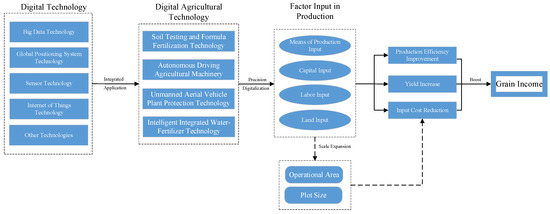
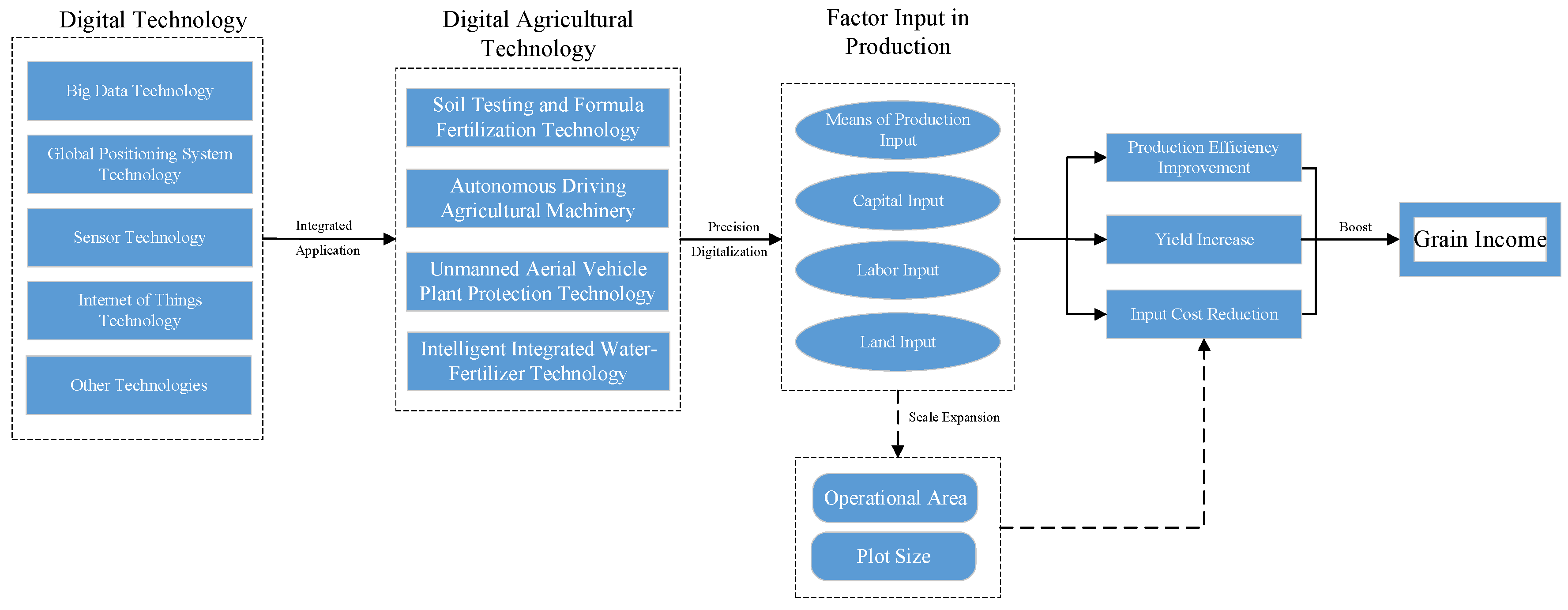
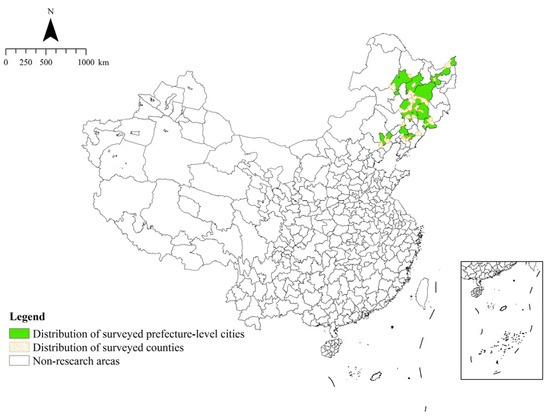
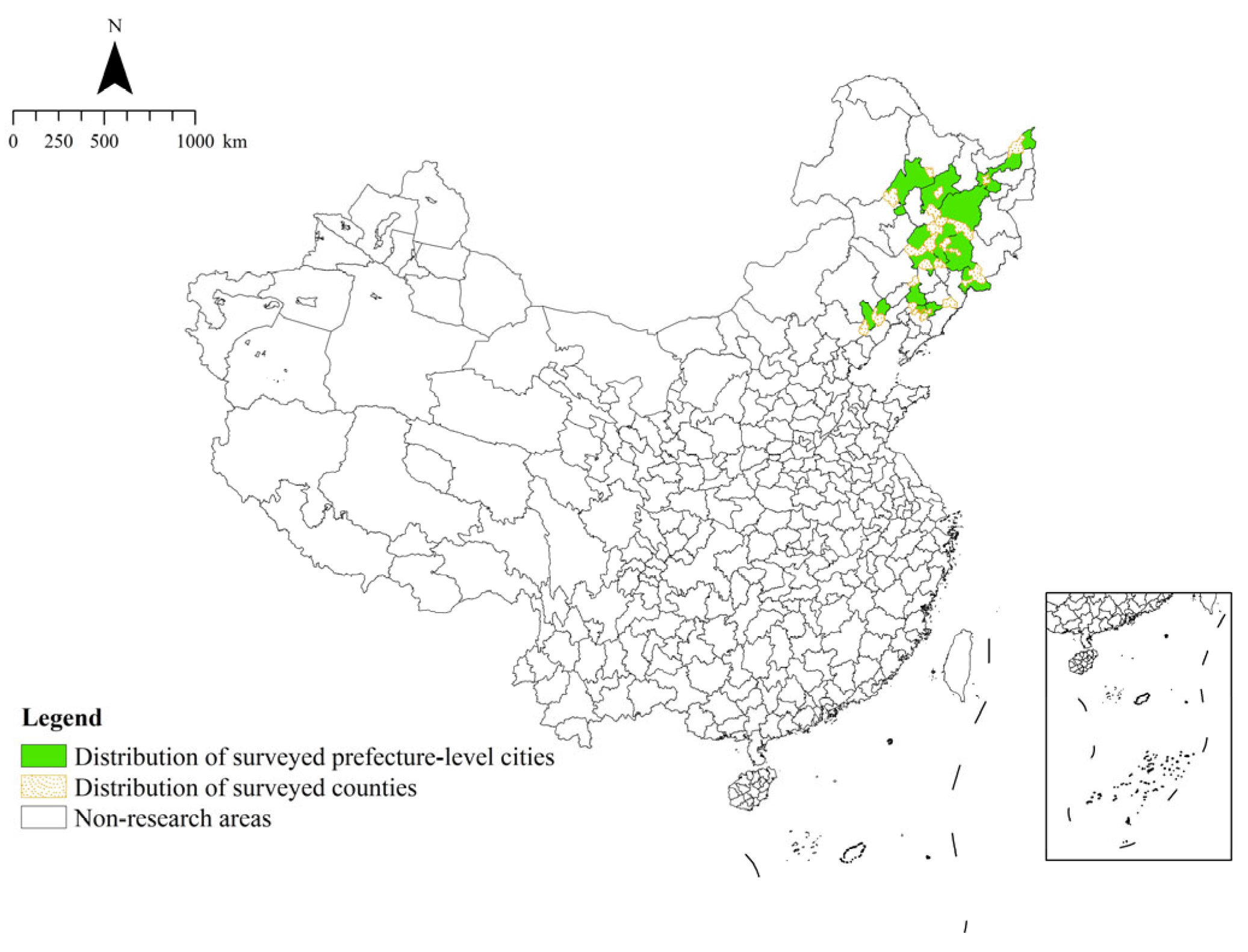
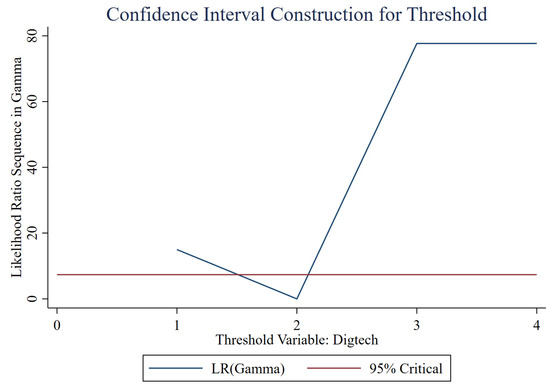

Disclaimer/Publisher’s Note: The statements, opinions and data contained in all publications are solely those of the individual author(s) and contributor(s) and not of MDPI and/or the editor(s). MDPI and/or the editor(s) disclaim responsibility for any injury to people or property resulting from any ideas, methods, instructions or products referred to in the content. |
© 2026 by the authors. Licensee MDPI, Basel, Switzerland. This article is an open access article distributed under the terms and conditions of the Creative Commons Attribution (CC BY) license.