Skip to Content
LandLand
  • Article
  • Open Access

24 January 2026

Raising Soil Awareness in Primary and Secondary Schools Through Indoor Workshops—Designs and Lessons Learned

and
Faculty of Environmental Protection, Trg Mladosti 7, 3320 Velenje, Slovenia
*
Author to whom correspondence should be addressed.

Abstract

Soils, although fundamental to life on Earth through their provision of essential ecosystem services, remain underrepresented in global environmental education at primary and secondary levels. To address this gap, we developed two versions of an interactive soil awareness workshop for primary and secondary education. The shorter ‘Soil-Hour’ format includes an introductory lesson on soil and a quiz, while the ‘Soil-Day’ format incorporates a lesson, a brief soil sample investigation, a quiz, and a creative art activity. Both formats were designed around seven keywords: new, unusual, interesting, entertaining, competitive, digital, and rewarding. Assigning multiple roles to students encourages active participation. Implemented 16 times in various schools with a total of 361 participants, the workshops have been successful in sparking curiosity about soil, improving understanding of soils, and enhancing appreciation of the fundamental role of soils in the environment. Feedback from students and teachers was positive. Students’ responses largely confirmed expectations that they would be amazed by soil sounds, surprised by the range of soil ecosystem services, and intrigued by soil biodiversity. Initial findings support further development and refinement of these soil teaching and awareness-raising approaches at the primary and secondary levels to promote greater engagement with soil science in school curricula.

1. Introduction

Soil is the fundamental natural body that enables life in terrestrial ecosystems, no more, no less. It provides crucial ecosystem services [1] that were for a long time taken for granted by the general public. Even in soil science they were studied and discussed relatively late [2,3,4,5,6,7,8], and were widely and clearly communicated [9,10] only recently. Given this fact, it is not surprising that soil has been overlooked for so long by all those who discuss, act, manage, and decide about the environment. We live in a time when soil degradation is a global problem [11,12], yet soil continues to be largely disregarded [13]. Soil needs to be managed sustainably and protected in all sectors, not just agriculture. New and complex legislation on soil protection is emerging not only at national but also at international levels [14]. In order to properly manage and protect soils, it is important to increase the general knowledge [15,16] and appreciation of soils among current, but especially future generations of decision-makers [17,18].
Despite the importance of soil and the many threats it faces, it has received limited attention in the past from scientists in other disciplines, the general public, and especially within education systems [19]. Sustainable development, environmental protection, food security, and climate change mitigation require citizens, voters, and decision-makers to be aware of the importance of the ecosystem services that soil provides on dry land [17], to have a caring and respectful attitude towards soil [20], and to possess basic but accurate knowledge of it. However, they must first be educated. It is important to address soils early in school curricula, teach their importance, and raise awareness. This is not easy in a world saturated with media and information competing for young people’s attention. Imparting soil knowledge and raising awareness can be more successful if teaching strategies and methods adapted to the younger generation are used.

1.1. Soil Literacy, Education and Awareness Raising

Soil is a complex topic to learn [21,22] as it involves a range of physical, chemical, and biological properties that often confuse those who do not yet have sufficient knowledge of soils. In several countries, soil remains a complex and largely marginal subject in the curriculum [23]. Research shows that soil is generally not adequately represented in the curricula of primary, secondary, and higher education institutions [24,25,26,27,28,29]. Soil science concepts are largely integrated into geography or environmental science curricula, while access to soil-related knowledge is often additionally provided through extracurricular activities and educational events [28]. Another obstacle is the general lack of soil science knowledge among teachers, most of whom have not studied the subject at university level [22,28], very likely because in the past, soil science education was primarily part of agricultural, forestry, environmental and soil and water science studies [30]. Recently, however, it has expanded to other science disciplines, such as geological, biological, ecological, and urban sciences [25]. A comprehensive teaching of soils and their role in the environment requires an interdisciplinary approach, as soil science integrates knowledge from many scientific disciplines, primarily including lithology, chemistry, physics, biology, hydrology, and ecology. The role of soils in the environment and human society can also be addressed in engineering, medicine, sociology, anthropology, economics, and even art [31]. Being so multidisciplinary and diverse, soil often becomes an interesting subject. According to survey results on trends in soil science education and employment, the more courses students took in soil science, or the more time they spent studying it, the more likely they were to continue their education and eventually find employment related to soils or in the field of soil science [32].
Nevertheless, raising awareness about soil generally remains a challenge. This is largely because, for many people, soil is not seen as visually appealing or engaging. Its predominantly brown colour cannot compete with more striking natural elements such as blue water or green vegetation, while most soil biota remain hidden from direct observation, being located below ground and often too small to detect without specialised equipment. Moreover, most people would find soil organisms strange, if not simply unattractive. Unlike forests and oceans, soil seems not to have iconic animals like pandas or dolphins to inspire the average person.

1.2. Indoor and Outdoor Learning About Soils

As with most other subjects, soil science is usually taught in the classroom using a traditional, lecture-based format in which students often play a largely passive role [25]. In Canada introductory soil science courses are usually conducted as traditional lectures, often involving laboratory sessions and, less frequently, field trips [33]. In the United States introductory soil courses are delivered as traditional lectures; however, a substantial proportion of classroom time (44%) is allocated to various forms of active learning approaches [34]. A European study indicated that traditional lectures remain the predominant teaching format in soil science education. However, educational programmes are increasingly incorporating a wider range of active learning methodologies [35]. In general, soil science courses typically consist of lectures, sometimes combined with an optional, separate laboratory component, where students follow predetermined steps to explore basic soil morphological features (such as soil colour, structure, texture, etc.) or perform simple soil analyses (for example, measuring soil acidity).
Outdoor learning about soils is usually omitted. As a result, students have fewer opportunities to learn about the diversity and distribution of different soil types in landscapes and to recognise the important relationships between soils, topography, land use, diverse soil qualities, and their connections to aboveground biodiversity and land productivity. The traditional indoor teaching method, without acknowledging the role of soil in the environment and its importance for human well-being, can even affect students’ employment prospects. According to Brown et al. [23] and Brevik et al. [31], employers are concerned about the lack of field experience that indoor teaching does not provide, poor communication skills, and the inability to think critically and holistically about soil from an environmental perspective.
Ideally, soil teaching should combine indoor, laboratory, and outdoor methods. Learning about soils in both indoor and outdoor settings broadens the range of active learning experiences, inspires students’ imagination and creativity, and stimulates curiosity. A survey in Australia [36], which asked students about the most effective learning activities, found that only 8% considered classroom lectures most effective. The majority selected fieldwork (43%) and laboratories (36%) as the most effective methods. These results indicate that traditional classroom methods often fail to engage students’ curiosity about soil, as they lack student involvement and hands-on interaction with soil as an interesting matrix. The outdoor teaching approach offers a wider range of activities. In addition to the diversity of soil types, environmental settings, and relationships already mentioned, it also provides many engaging sensory learning experiences, as students can see, observe, touch, and feel soil in its natural state [37].
Unfortunately, in the traditional school environment, several important factors limit, if not prohibit, laboratory and especially outdoor soil learning. Taking students to the field, conducting meaningful lessons, and returning in time for the next class is time-consuming. For safety reasons, teachers often require additional assistance, and transporting school supplies and food adds complexity. Not all students have suitable outdoor equipment, and poor weather can hamper teaching and make the experience uncomfortable. Communication and learning may be hindered by wind or sunlight, making it difficult for students to hear or see. Keeping students focused can also be challenging outdoors, as increased freedom may lead to distraction. Additionally, unfamiliar environments may intimidate some students, and fear of animals can further affect their engagement [38].

1.3. Upgrading Indoor Soil Teaching with Outdoor Approaches and Sensory Soil Experiences

The previously mentioned limitations and the low feasibility of comprehensive outdoor soil learning, combined with the aim to improve the effectiveness of traditional classroom teaching and increase soil awareness, highlight the need to introduce new approaches and methods for soil education in primary and secondary schools. These approaches should offer a more engaging means to promote soil knowledge, spark curiosity, and enhance soil awareness, compensating for the lack of outdoor teaching through active student participation, simulations, discussions, and hands-on learning in a controlled classroom environment. They can also enable the rarely practised sensory experience of soil by allowing students to touch, hear, and even taste it. Conducted indoors, these new methods are feasible, can be more easily integrated into the curriculum, offer greater control over student engagement and safety, minimise external distractions, and are not affected by weather. This makes them a reliable option for consistent and focused learning.

1.4. Research Orientation and Aims of the Paper

The primary aim of the research was to develop two forms of soil workshop that could be conducted in primary and secondary schools to raise soil awareness among students and teachers. The main challenge in the design was how to format the workshops to fit into a typical school day and how to structure them for practical application and effective introduction of the soil topic. The intention was to demonstrate how interesting the subject of soil can be when presented in an unusual, competitive, surprising, and entertaining way. In particular, we were interested in students’ feedback and comments after the workshop to gain insight into whether their attitude towards soil had changed.
This paper presents and discusses two types of indoor workshops that were developed and tested to promote soil literacy, spark curiosity about soil, and raise soil awareness among primary and secondary school students. It explains the workshop approach based on seven keywords, as well as the structure, content, and implementation of the workshops, and summarises and discusses the results, including students’ feedback on the workshops and soils.

2. Materials, Methods and Organisation

2.1. Workshop Organisers

The workshop is led by two or three individuals familiar with soil science, such as a local soil expert, scientist, science teacher, and a representative teacher from the participating school. Assigning active roles in the workshop encourages teachers’ engagement and increases their knowledge of soil through active participation.

2.2. Organising a Series of Workshops for Several Schools

In the context of workshop organisation, two main options can be identified, differing primarily in the role of the leading actor. In the first option, a soil science expert with extensive knowledge and practical field experience designs and delivers the introductory lecture and workshop. The second option involves schoolteachers who, following a structured set of guidelines, lead the workshop while also enhancing their own understanding of soil science. Regardless of the organisational option chosen, collaboration with soil science professionals is strongly encouraged to ensure scientific accuracy and educational relevance. In our case, the workshops were organised by soil experts from the Faculty of Environmental Protection, Velenje, and conducted either at our faculty or at the participating schools.

2.3. Organisation, Format, and Nesting of Workshops in the Programme for Individual Schools

After receiving an initial expression of interest from a school, a more detailed presentation of the programme and workshop objectives for that school is provided, followed by an online or in-person meeting to clarify expectations and logistics. Workshop facilitators (soil experts or teachers) and the school then agree on the appropriate format for workshop implementation, depending on the time the school can allocate. If only one school period (hour) is available, the shorter workshop format is offered. If the school requires activities suitable for a science-focused day, the extended format is recommended. A fixed date for implementation is then scheduled, along with the selection of participating class(es). At this stage, any necessary adjustments based on the school’s curriculum are discussed, as well as the specific abilities or limitations of the student group.

2.4. Spatial and Technical Conditions and Equipment

The workshop is designed as an indoor activity, independent of weather conditions, and requires minimal spatial and technical resources. The school organisers are responsible for providing the necessary equipment, materials, and suitable facilities for the workshop.
For optimal and uninterrupted implementation, it is advisable to hold the workshop in large, open spaces such as lecture theatres, gymnasiums, or school foyers. Sufficient space is important for practical activities such as laboratory exercises at stations and for artistic creativity. A single, spacious area also increases safety by enabling centralised supervision of participants and reducing unnecessary movement or transitions between rooms.
The following equipment is recommended for effective delivery of the workshop, organised by activity:
  • Introductory lecture on soils: A computer and a high-resolution, bright projector are essential for displaying high-quality field images and illustrating subtle variations in soil profiles and other characteristic features.
  • Soil quiz: A computer with a reliable internet connection is required to conduct the quiz on digital platforms. If internet access is unavailable, the quiz can be conducted using a projector and answer cards.
  • Laboratory analysis of soil: Fresh soil samples from various locations are required, along with standard laboratory materials (e.g., stands, test tubes, pH strips, deionised water, hydrochloric acid solution, Petri dishes, soil tape) and basic laboratory equipment such as stereoscopes and microscopes.
  • Soil art: Dried and sieved soil samples in various colours are required to produce fine soil powders. Each group of participants will also need large white canvases, brushes of various sizes, paper glue, and other art supplies.

3. Development of Teaching Strategies in Workshop Design—The Seven Soil Teaching Keywords

The core concept of the workshops is based on seven soil keywords, each representing a teaching strategy: new, unusual, interesting, entertaining, competitive, digital, and rewarding. Each keyword contributes to the common goal: of enabling engaging and effective indoor introductory learning about soil and raising soil awareness among pupils, students, and teachers. All keywords are designed to spark initial curiosity and provide a clear idea of what students can expect:
  • New: There is a wide range of new techniques, methods, and pedagogical approaches have been developed to educate the new generation of soil scientists [39]. The existing curriculum is enriched by introducing a new or rarely addressed topic. The initial educational focus is placed on developing learners’ general understanding of soils, with the aim of increasing awareness of the fundamental roles soils play in everyday life. This is achieved through an open and holistic approach that emphasizes broad soil literacy and societal relevance, rather than detailed instruction in soil science as a specialized discipline [22].
  • Unusual: The workshop features soil soundscapes as an innovative educational element [40,41]. For example, rarely heard audio recordings reveal the hidden life in soil through acoustic recordings of the communication, movements, and feeding behaviour of soil fauna—evidence of living soil that remains largely unknown to the public.
  • Interesting: Participants explore generally less familiar and scientifically rich aspects of soil as a natural body, including its morphological properties, structure, biodiversity, ecological functions, and ecosystem services.
  • Entertaining: The workshop employs playful learning activities to enhance engagement and knowledge acquisition, drawing on study results, showing that serious-game-based instructional approaches can outperform traditional instructional methods in terms of learning outcomes [42]. Gamification of the learning process has been shown to improve student motivation and knowledge retention in science education [43,44].
  • Competitive: The workshop includes a quiz where teams compete in their soil knowledge and skills, encouraging motivation and teamwork. Incorporating competitive elements into the learning process can enhance engagement with soil-related topics while promoting deeper conceptual understanding of soil description and interpretation, while in addition, team-based competition supports the development of collaboration skills, including teamwork and collective problem-solving [22].
  • Digital: A web-based application (e.g., Kahoot) is used to enable real-time participation in the quiz, electronic voting, and tracking of answers via mobile phones—the ultimate tool in the hands of students. Studies have shown that the integration of Kahoot may positively influence learning outcomes, enhance classroom dynamics, and improve student and teacher attitudes toward the learning process [45].
  • Rewarding: The winning team receives a practical prize designed to support ongoing engagement in soil-related research and learning, thereby reinforcing soil-related competences. Studies indicate that rewards play a crucial role in facilitating learning and eliciting specific behavioural responses [46]. When appropriately designed, rewards function as positive reinforcers that enhance motivation and evoke positive emotional responses [47].
This keyword-based approach is an innovative educational strategy to raise soil awareness, particularly in primary and secondary schools, where soil education is often underrepresented. By focusing each workshop component on a specific pedagogical goal—curiosity, engagement, interactivity, and reward—this workshop design goes beyond traditional didactic teaching methods through the integration of multisensory learning (such as soil sounds), gamification (through competitive quizzes), and digital technology. By combining scientific content with engaging, student-centred activities, this teaching strategy offers a flexible and adaptable way to embed soil literacy into formal education systems and helps address growing global concerns about the public’s limited understanding of soil functions.

4. Description, Structure and Implementation of Soil Workshop Formats

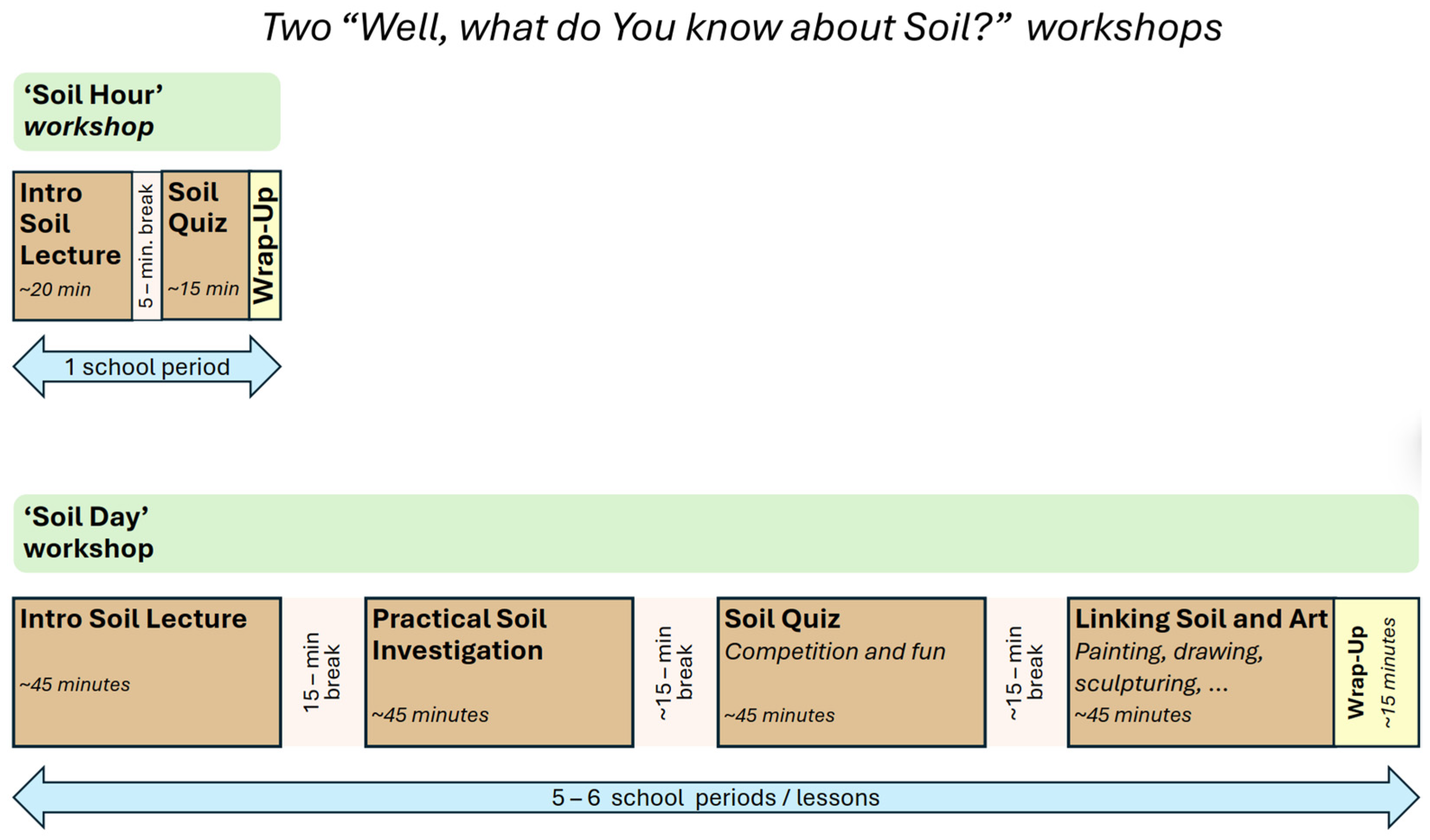
Two workshop formats were developed under the same name, “Well, what do you know about soil?” (Figure 1).
Figure 1. Duration and structure of 1-h intro soil workshop and 1-day soil awareness workshop.
  • The first is a short, one-hour introduction to soil and soil science, suitable as a stand-alone soil awareness lesson or as enrichment to regular school lessons. It can serve as an initial introduction to the topic of soil and raising soil awareness, and is easy to incorporate into the curriculum. No pre-workshop activities are required for the “one-hour” soil workshop.
  • The second is a full science school day event focused on soil. It provides more information on soil genesis, properties, and ecosystem services, and offers engaging sensorial experiences with soils.
These two formats can be run individually or, if there is greater interest at the participating school, both can be delivered within a three- to four-month period or over two consecutive school years. The first serves as an initial, short soil awareness-raising event, while the second is a continuation with a stronger teaching component.

4.1. The “Soil Hour” Introductory Workshop

Not all schools have the capacity or flexibility to allocate much time to extra-curricular activities. The “Soil Hour” workshop was developed primarily to raise initial awareness of soil among students and teachers, drawing first attention to soils. This brief soil education event was intentionally designed for easy integration into existing curricula, while still providing meaningful educational value and enhancing soil awareness. Through a twenty-minute introductory presentation on soil and a short fifteen-minute quiz, the workshop introduces participants to interesting, lesser-known aspects of soil, aiming to stimulate curiosity and highlight the general lack of knowledge about soil.
When introducing students to soil and its properties, it is strongly recommended to involve a soil science expert. Alternatively, a university professor specialising in soil science should be invited to share their expertise.
Before the lecture begins, a short discussion with the students is held to assess their existing knowledge about soil and its role in the environment. They are asked what soil means to them and why they think it is important, if at all. In our experience, most students view soil primarily as a physical substrate that supports terrestrial life. Some students also recognise its role in food production. However, beyond these basic understandings, many students demonstrate limited awareness of the broader ecological functions and services provided by soil.

4.1.1. Introductory Lecture About Soil (Part 1)

The official workshop programme begins with a short introductory lecture on soil and soil science. As students come from various elementary schools and have different motivations and interests, they do not all have the same level of prior knowledge about soil. Therefore, an introductory lecture on soil and its role in the environment is essential. It ensures that all participants start the quiz with the same foundation. The lecture is delivered in an informal and interactive manner to encourage student engagement. Students are invited to ask questions freely, tailoring the learning experience to their interests and facilitating their initial understanding of soils.
As the lecture lasts about 20 min, it cannot cover details but instead presents basic, interesting, and not widely known facts about soil. The lecture introduces students to several key concepts, including soil formation (pedogenesis), various soil types, soil profile structure, and soil biota diversity. In addition, participants are presented with a selection of the eleven key soil ecosystem services identified as particularly important for human well-being. These include the provision of sufficient and safe food, support of forest ecosystems, carbon sequestration, nutrient cycling, water filtration and recharge, surface water regulation, soil as natural heritage, and spiritual and recreational soil services. Overall, the introductory lecture gives students an impression of soil as a vital natural body. It emphasises the crucial role that soil plays in the preservation of terrestrial life and ecosystems, thus justifying the need to protect it.

4.1.2. The Soil Quiz (Part 2)

The workshop resumes after a short break, during which the materials and classroom are prepared if necessary. Before the quiz, the whole group, typically a school class, is divided into two or three groups, depending on the total number of participants. The classroom may be rearranged, with desks moved into separate corners to create defined group spaces and minimise the potential for overhearing. To save time, each group is given printed cards bearing a letter representing their multiple-choice answer. Alternatively, the Kahoot app may be used if time and school equipment allow. Each group is then asked to choose a team name related to soil.
First, the quiz rules are explained. Students are informed of the total number of multiple-choice questions, all directly related to soil and covered in the introductory lecture. For each question, the groups have up to one minute to discuss and decide on their final answer. At the signal from the quiz leader, all groups show their answer simultaneously by holding up the card with the letter indicating their choice. To ensure fairness, answers may not be changed once displayed. The correct answer is then announced and explained, and each group with the correct answer is awarded one point. The score is kept on a visible board throughout the quiz so all participants can follow the progress of the competition. To encourage healthy competition among classmates, participants are informed that the winning group will receive a practical prize. In this way, the quiz not only introduces an element of enjoyment but also promotes motivation and enthusiasm for the workshop activities.

4.1.3. Rewards and Workshop Wrap-Up

To further encourage enthusiastic participation and foster a positive learning environment, each member of the winning group receives a symbolic reward. This gesture is intended to reinforce motivation and enthusiasm while recognising their commitment and contributions. Given the shorter format of the workshop, the content and value of the prizes are adjusted accordingly. The rewards should be small and modest items. For example, a pen, a field notebook (e.g., for soil observation in the field), or soil-themed stickers will suffice. With sufficient funding or a targeted campaign, customised T-shirts featuring the logo of a particular soil science project, or, even better, soil-related slogans, would be an excellent gift that promotes soil awareness beyond the school.
The workshop concludes with a fond farewell and an invitation for students to join the soil care community or initiative. If appropriate, students and teachers will later be asked about their interest in organising a second “Soil-day” science workshop, aiming to deepen their knowledge of soil in greater detail.

4.2. The “Soil Day” Awareness-Raising Workshop

The extended workshop format was developed to deepen soil education, as it allows for greater enhancement, diversification, and a longer duration of activities. Participating schools dedicate an entire school day (a science day) to this workshop. The “Soil Day” workshop format combines both traditional and unconventional approaches, some of which are entirely new to both students and teachers.
The main objective of this workshop is to provide students with an engaging, scientific, enjoyable, and artistic educational experience on the topic of soil. It aims to raise awareness of the importance of soil for ecosystems and human well-being, and to encourage curiosity about soil and related topics.

4.2.1. Pre-“Soil Day” Workshop Activities

Before the workshop, the number of participants is discussed individually with the school to ensure safety and optimise learning outcomes. For logistical and pedagogical reasons, we recommend the participation of two classes (approximately 50 students) or up to three classes (approximately 75 students) in total. Based on the final number of participants, a sufficient number of supervisors—school teachers—must be included to ensure safety and the efficient running of the workshop.

4.2.2. Participants and Their Role

  • Soil Science Ambassadors are volunteer students who receive initial preparatory training from soil experts (see Section 4.2.3 for further details). They either learn through self-study using curated materials and resources or attend in-person, one-day training at a suitable facility one to two weeks before the workshop. As Soil Science Ambassadors, they are responsible for guiding their group during the quiz and short soil sample investigation activities.
  • Roles during the soil quiz:
    • Competing groups: Participating students are divided into two larger teams if only one class is present. Ideally, two classes compete against each other, or even three if there is greater interest and the school’s facilities allow. The groups formed at the start are maintained throughout the workshop.
    • Group representatives: If no soil science ambassadors are available, each group selects two or three students to formulate, improve, or adapt the knowledge mediators’ messages and provide the final answer to the questions on behalf of the group.
    • The whisperers: Up to two students per group are assigned the important role of assisting their group representatives by passing on the knowledge mediators’ answers to the representatives through verbal suggestions or written messages.
    • Knowledge mediators: The remaining group members (audience) support the representatives by jointly formulating the correct answers during the quiz and passing on their suggestions via the designated whisperers.

4.2.3. The Role of the Soil Science Ambassadors in More Detail

If the school’s interest and timetable permit, the soil science ambassadors may receive advance training to deepen their understanding of soil science before the workshop. This preparation enables them to lead the workshop activities more confidently and competently, particularly the laboratory investigations of soil samples, and to encourage engagement from the entire competing group.
Student volunteers are selected for the soil ambassadors group based on their demonstrated interest in science, especially soils, and their desire to expand their knowledge. With the school’s approval, up to two ambassadors may be excused from regular classes one to two weeks before the workshop for a one-day visit to a recognised soil research institution, where they can receive a short, practical training programme. The programme may include a detailed overview of the workshop materials, guidance on analysing soil samples and, if possible, excavating and describing a soil profile to familiarise themselves with what soil actually is. In recognition of their participation and commitment, trained volunteers receive a certificate and the title “Soil Science Ambassador” and are expected to act, contribute and lead accordingly.

4.2.4. The “Soil Day” Workshop Programme

This workshop format also begins with an introductory lecture on soil and its role in the environment, similar in structure and content to the shorter version, but longer and covering the topic in greater detail.
In the second activity, students conduct brief, laboratory-style investigations of soil samples from different soil horizons provided by soil experts or workshop organisers. Using pre-prepared simple soil description forms, they make observations and carry out basic chemical analyses to investigate the properties of the horizons. This practical part enables students to apply theoretical knowledge in a laboratory-like environment and consolidate their learning through active experimentation.
The third activity is a quiz focusing on soil ecosystem services and lesser-known but interesting facts about soil. The quiz is enhanced by the active participation of competing groups and the specific roles assigned to some students.
The workshop concludes with a fourth activity, a creative and somewhat unexpected experience, where students are encouraged to connect soil with art and express themselves using soil materials. Participants use different types of soil as natural pigments to create paintings. In doing so, they experience soil not only as a scientific subject, but also as a medium for aesthetic and emotional exploration.

4.2.5. Content of the Main Four Activities of the “Soil Day” Workshop

Activity 1: “What is soil?”—Lecture on basic information about soils and their properties.
The lecture provides students with fundamental information about soil as a natural body, what soil actually is, and, most importantly, the role of soil in the environment. It begins with a visual question: what would life be like on dry land without soil, just bare rock? No plants, no animals, no people. Desert. This somewhat exaggerated and striking introduction captures the students’ attention and paves the way for the main topics of the soil lecture that follow:
  • Soil as a natural body—an overview of soil formation processes and the current major threats to soil.
  • Soil morphology—introduction to the soil profile, its primary horizons, and the main morphological characteristics such as texture, structure, colour, and porosity.
  • Physical and chemical properties of soil horizons—characterisation of acidity, nutrients, clays, etc.
  • Soil quality and degradation—identifying characteristics that distinguish high-quality soils from degraded soils.
  • Soil life—basic facts on soil biodiversity, focusing on micro- and macrofauna and their role in maintaining above-ground ecosystems.
  • Soil ecosystem services—discussion of important, often underestimated services provided by soil, including food production, forest productivity, water filtration and recharge, carbon sequestration, nutrient cycling, and sociocultural functions.
The lecture takes place in a classroom setting and is designed to be informal and interactive. The presentation includes numerous photographs of soil profiles and soil landscapes, and highlights common soil types from different regions of the world to illustrate global soil diversity, soil functions, and soil ecosystem services. The intended message, and hopefully the students’ conclusion, is that soil is not just “boring brown stuff” or “dirt”, but an interesting, diverse, and important natural formation and habitat essential for life in terrestrial ecosystems.
Activity 2: “Let us take a closer look at the soil!”—Introduction to the morphological and chemical analysis of soil in the improvised laboratory.
This activity is a practical, laboratory-style session in which students learn about basic soil properties through direct observation of soil samples. Students take part in short, station-based exercises where they analyse a range of fresh soil samples (e.g., humus-accumulating A or Ap, cambic B, and gleyic G horizons). This enables students to connect the theoretical information from the introductory lecture to the physical properties of soil.
The session is organised in a circular format, with participants moving in small groups of six to eight between stations, each dedicated to a particular soil property. The number of stations is adjusted according to the time available (approximately 45 min). The workshop organisers provide soil samples with different morphological characteristics (e.g., colour, texture, structure) and the necessary equipment for analysis. The proposed stations can address various soil properties, for example:
  • Soil structure—identification and categorisation of aggregate types [48].
  • Soil texture—determination of texture by tactile and visual examination [49].
  • Stability of soil aggregates—testing the structural integrity of aggregates in water.
  • Soil acidity—measurement of soil pH in H2O and CaCl2 using soil pH test strips [50] or a soil pH test kit [51].
  • Soil colour—classification of soil samples using the Munsell colour chart [52].
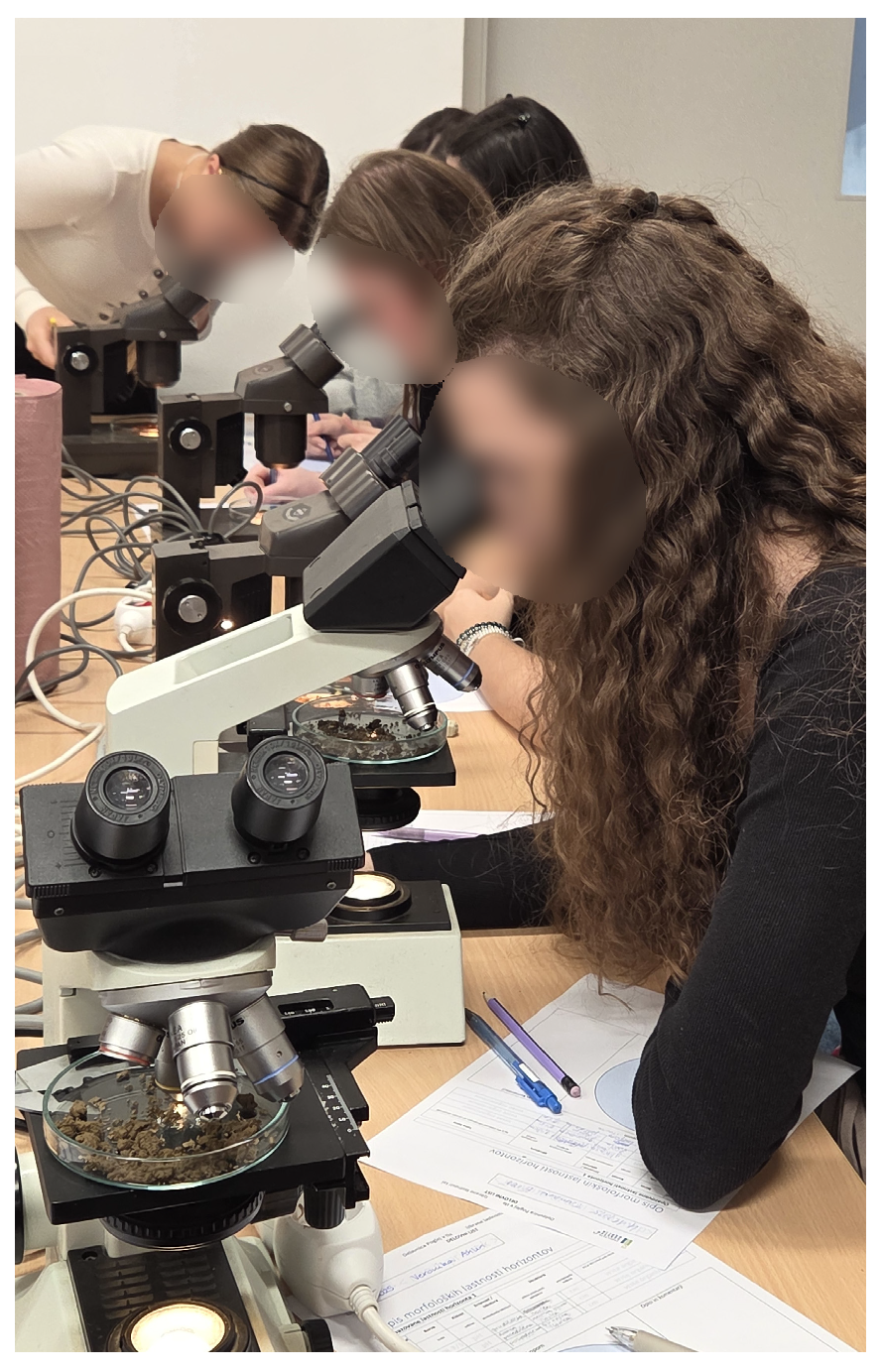
  • Soil biota—observation of soil microorganisms under a microscope to assess biodiversity (Figure 2).
    Figure 2. Observation of soil texture under the microscope.
At each station, the activity is led and supervised by students—either soil science ambassadors or group representatives.
Each working group receives a worksheet in advance outlining the tasks, the purpose of the investigation, hands-on procedures, and safety requirements at each station. After testing the soil sample at each station, the soil properties are summarised on the worksheet and, once completed, submitted via a QR-coded Kahoot platform.
The difficulty level at each station is adapted to the students’ educational level and takes into account previous laboratory experience, manual dexterity, safety awareness, and familiarity with the equipment.
Adaptation of soil observation activities for primary and secondary school levels
At the primary school level, activities at the stations are adapted to suit younger learners. One activity involves describing the colour of the soil using everyday language. This can be extended, with supervisors’ assistance, by using the Munsell soil colour chart to identify colour codes. Pupils can also investigate soil structure stability by observing, after a demonstration, whether the aggregates disintegrate or remain intact after immersion in water. Soil acidity can be explored by mixing soil with distilled water and using pH test strips to measure active acidity. Supervisors must assist pupils during the inspection.
At the secondary school level, students can undertake more advanced soil analyses. They can use microscopes to examine soil aggregates and identify soil fauna with identification keys. They can analyse soil acidity in greater detail by measuring both active and potential pH values. Students can also determine soil nutrient content using NPK test kits.
Activity 3: “Soil quiz”—Soil in the environment and soil ecosystem services.
The quiz questions promote understanding of key soil ecosystem services through active, team-based learning in a competitive format. To enhance the multi-sensory experience, the quiz may include questions on unusual or rare topics, such as audio recordings that reveal the hidden biodiversity of soil [40]. The quiz consists of approximately 10 main questions with 2–3 reserve questions, designed to fit within a standard 45-min school lesson and to allow time for group discussion of each question. It is advisable to run the quiz on a web-based platform (e.g., Kahoot). Participants access the quiz via a QR code, and answers are automatically recorded and analysed.
Activity 4: “Art and Associations”—Linking Soil Science and Art.
Soil has long been used for artistic purposes. Clay is used for sculptures, and different coloured soil samples serve as natural pigments for painting. To explore this interdisciplinary potential, this activity encourages students to express themselves artistically using natural soil materials.
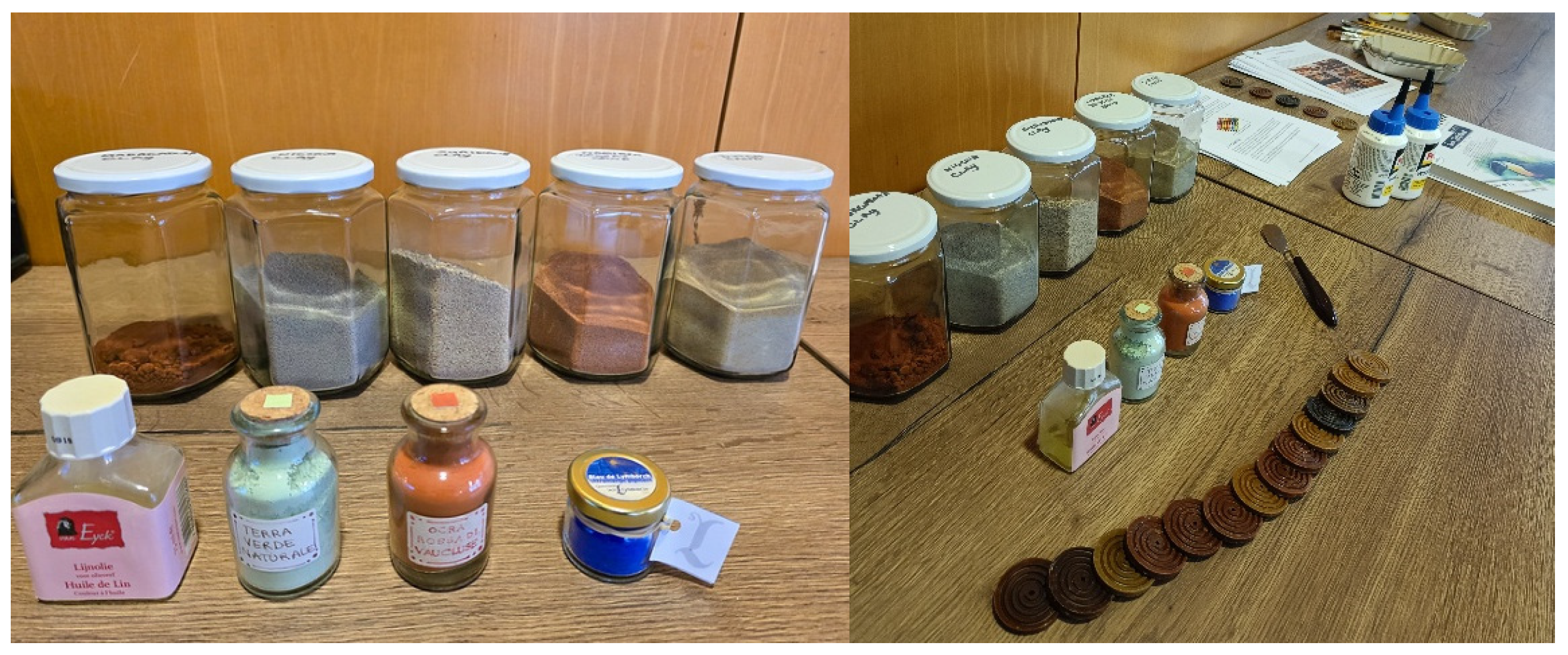
The workshop organisers prepare dried and sieved soil samples in various colours, ready-made DIY soil crayons, and standard art materials (canvas, brushes, white glue, water, cups, markers, paper towels, and protective sleeves) [53], as shown in Figure 3.
Figure 3. Working material for art activity.
The classroom has two art stations, each with a shared canvas. The 45-min lesson begins with a brief overview of the materials and painting methods. Students then have time for independent, expressive work, supported by teachers who avoid giving direct artistic guidance.
Activities combining art techniques and spiritual thinking related to soil may include:
  • Handprints: mixing water and soil to create soil paint for handprints or fingerprints
  • Brush painting: mixing soil with white glue to create soil paint and applying it evenly
  • Detail work: using pencils and markers to refine shapes and symbols
  • Associations: asking students to visually represent their associations with soil, such as tools, organisms, or other soil science concepts
  • Expressive descriptions: including sensory reflections on the experience of working with soil materials.
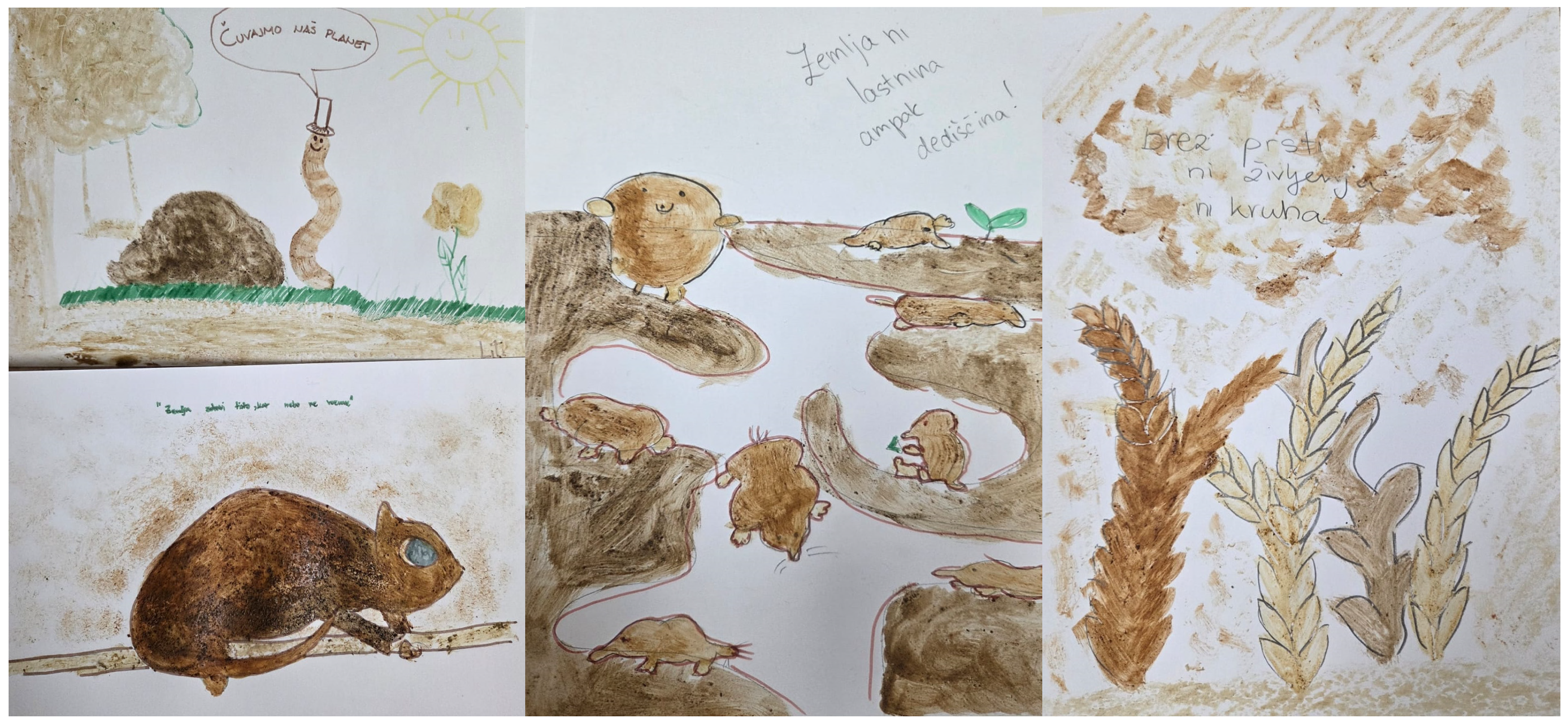
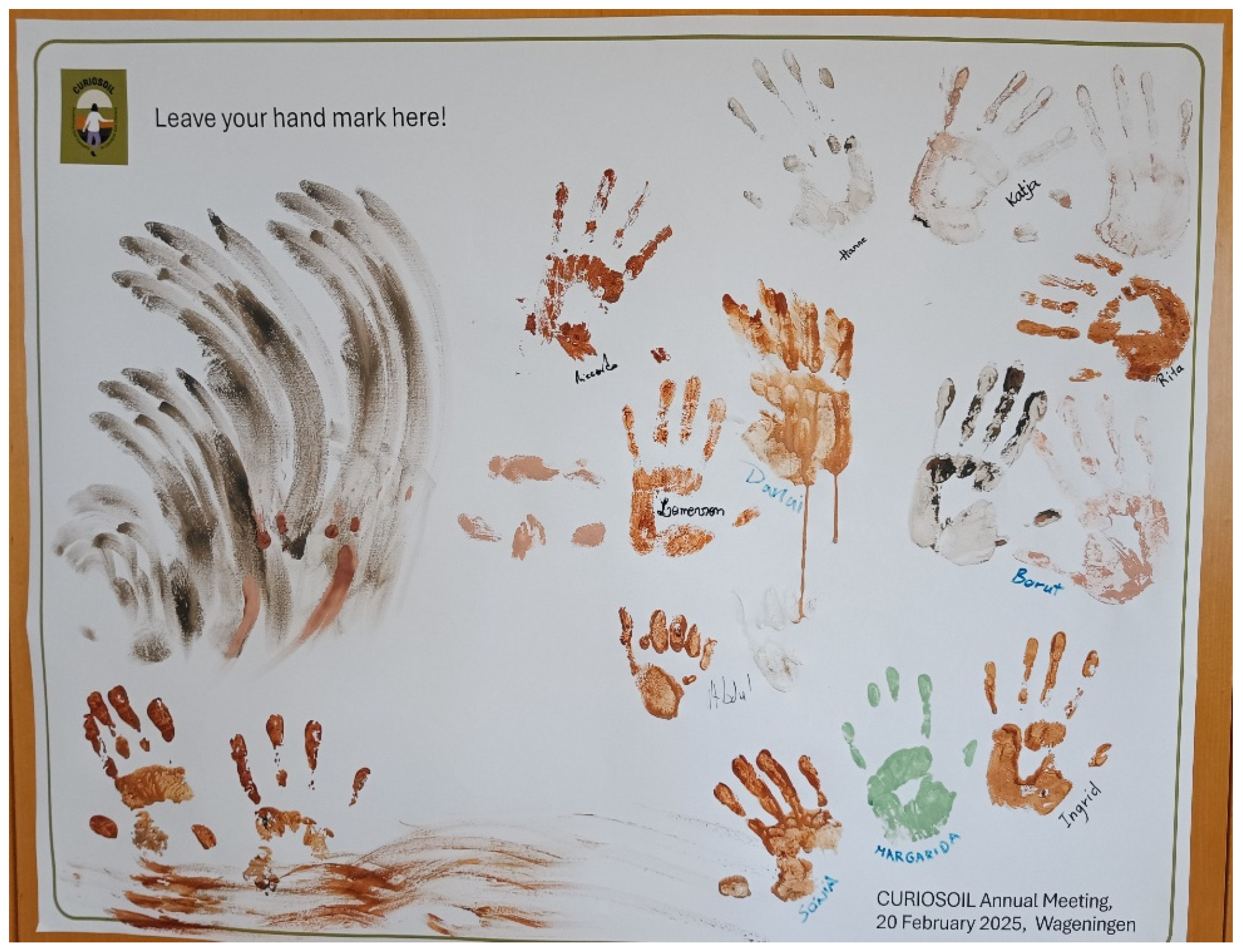
Students are encouraged to approach the activity with innovation, creativity, and openness. They are invited to produce a unique artistic piece (Figure 4) and to “sign” their work by imprinting a hand mark using soil mud. This activity was first implemented during a workshop at Wageningen University and Research Campus (the Netherlands) at ISRIC–World Soil Information (Figure 5), where participants contributed their handprints as a symbolic signature. The activity reinforces knowledge of soil and encourages creativity, collaboration, and personal engagement with environmental issues. At the end of the session, students are asked to help clean the classroom.
Figure 4. Soil Art created by students from Rudolf Maister Grammar and Secondary School Kamnik. English translations of the students’ statements included in the drawings: “Let us take care of our planet!” (left, top), “Soil heals what the sky cannot understand” (left, bottom), “Soil is not property but heritage!” (center), and “Without soil, there is no life, no bread” (right).
Figure 5. Hand marks covered in soil (CURIOSOIL project, Multisensorial soil workshop, ISRIC, Wageningen Campus, the Netherlands).

4.2.6. Prize for the Winner and Wrap-Up of the Workshop

The aim of the prize is to inspire both students and teachers to integrate soil science into their curriculum, enable future soil investigations, and encourage long-term engagement with soil-related topics. The prize should be soil-focused and practical. For example, a suitable prize could be an outdoor soil research kit containing tools for basic soil analyses. If a kit is not available, the workshop organisers can assemble a practical set including items such as a soil measuring tape, a “hori hori” knife for sampling, pH test strips suitable for soil (e.g., pH 2–9), a hand shovel, various brushes, pH test tubes with a stand, a carrying case, and other related tools. Such a prize would enable students to conduct future soil examinations, such as opening, analysing, and describing soil profiles outdoors or carrying out indoor investigations of soil samples.
Additionally, the winning group may receive a certificate or plaque in recognition of their achievement and active participation in the workshop.

5. Results and Discussion

The workshops were designed and tested at six Slovenian primary and secondary schools, conducted eleven times during the 2024/2025 school year and four times so far in the 2025/2026 school year. This has provided initial feedback and conclusions on how to further improve teaching about soils through workshop-style events. However, as this workshop format is newly developed and its implementation began at the end of the previous academic year and the start of the current one, the conclusions are limited to short-term responses collected after the workshops. An overview of the timing of workshop implementation and participant characteristics is provided in Table 1.
Table 1. Data related to workshop implementation and participant characteristics (number of students per event and mean age).

5.1. Workshop Outcomes, Student and Teacher Feedback, and Lessons Learned

During the workshops, we observed students’ behaviour and body language to collect non-verbal indicators of their interest and attitude towards soil science. These observations provided valuable insights for refining future workshops, particularly in tailoring content to specific age groups, adapting vocabulary for clarity, and identifying the topics most effective at stimulating curiosity.

5.1.1. Non-Verbal Reactions and Lessons Learnt

During the introductory lecture, the students initially showed some reticence and even resistance, which is typical for this age group. There was a general perception that extracurricular activities without formal assessment or grading held limited value for them. Consequently, some students approached the session with little interest. However, this gradually changed when they were asked short, open-ended questions about soil and the environment. This approach made them realise their unfamiliarity with the topic, leading to a noticeable increase in curiosity and attention.
To reduce the initial distance between lecturer and students, we made our language more accessible and easier to understand. This helped create a more open learning atmosphere. The highest level of engagement occurred during the discussion on soil ecosystem services, especially when students began to realise how much human well-being depends on healthy soils. By the end of the lecture, most students showed greater interest and curiosity and expressed a willingness to explore the topic further.
At the start of the quizzes, some students appeared hesitant to participate. However, as points accumulated and the competitive atmosphere became more evident, their enthusiasm and engagement increased noticeably. A clear sense of rivalry developed among classmates, along with a desire to demonstrate their soil knowledge and outperform their peers. After the winning group was announced and prizes were distributed, the group members visibly displayed pride and satisfaction. In contrast, members of the groups that did not win showed slight envy and wished they had paid more attention to the soil lecture and answered questions better earlier in the activity.

5.1.2. Feedback from Students and Teachers on the Workshop

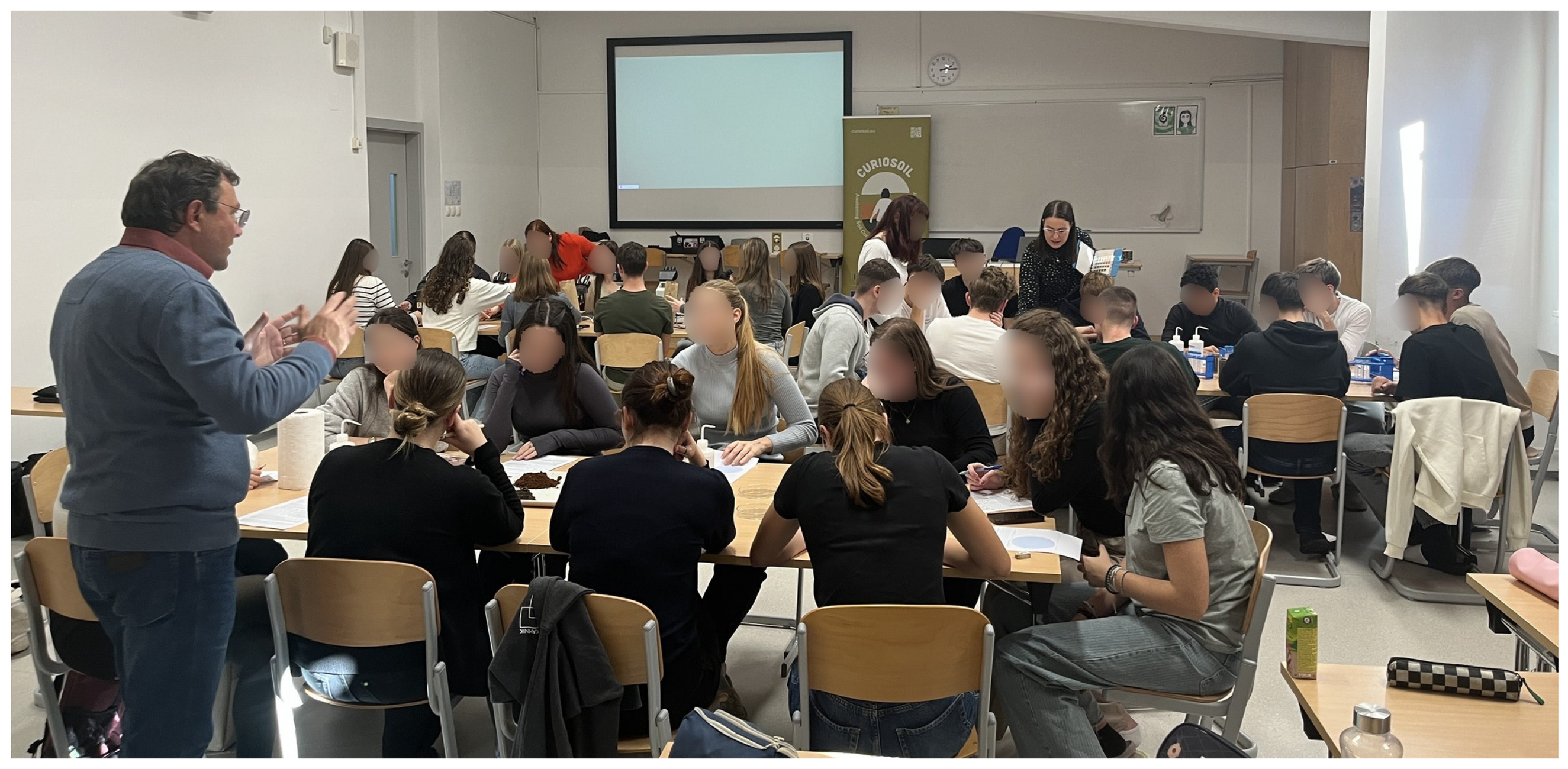
At the end of each workshop, we held a brief evaluation discussion with both students and accompanying teachers. We asked them to reflect on the content, whether they had gained new knowledge, which aspects they enjoyed most, and whether the workshop had changed their perception of soil. The workshop in Kamnik (Figure 6), which involved secondary school students, produced the most structured and informative feedback. Final student feedback collected in Kamnik was systematically categorised into nine thematic groups. Table 2 shows the number of responses per category and the corresponding percentage distribution.
Figure 6. Soil Day Workshop in Rudolf Maister Grammar and Secondary School Kamnik.
Table 2. Distribution of students’ responses across feedback categories.
The feedback was varied: some students gave brief, general comments, while others provided more detailed reflections. Several students expressed a new appreciation for soil, with some indicating a desire to create their own gardens to further explore and care for soil, demonstrating the development of a personal connection. Students repeatedly acknowledged that they had previously been unaware of soil or how little attention it receives despite its importance. In general, they were amazed by how many organisms can be found in a teaspoon of soil. However, most participants were most enthusiastic about the sounds in the soil, as this was their first opportunity to listen to them. Soil biota was interesting because of the sounds and the high-quality pictures shown during the lecture. As expected, soil ecosystem services were also of interest, since students did not expect soil to play such an important role in the environment and in human well-being. The quiz was generally preferred to the lecture, likely due to its interactive nature. Nevertheless, the introductory lecture is considered equally important, as it provides the necessary foundation for further engagement. Some also remembered lesser-known facts about soil from the lecture, indicating that they listened attentively.
We also interpreted the meaning behind the students’ feedback, which reflected their newly gained appreciation and interest in soils. Through their word choices, accompanying smiley faces, and interjections, we observed varying levels of enthusiasm, ranging from indifferent, playful, and superficial to interested and highly interested. The results of our interpretation are presented in Table 3.
Table 3. Interpretation of students’ newly developed interest in soil based on their final feedback.
Feedback from teachers was generally positive. Many appreciated the opportunity to introduce students to a topic rarely covered in the standard curriculum but extremely important in everyday life. They also acknowledged their limited knowledge of this subject and noted that participation in such a workshop gave them the chance to gain new knowledge themselves. They emphasised the importance of incorporating more practical, hands-on activities into science lessons.

5.1.3. Media and Public Relations Strategy

Raising awareness of soil generally relies on the media; therefore, reporting on soil workshops adds value and is important for broader soil promotion. We recommend a multi-channel communication strategy to publicise and disseminate information about the workshop and its results. Workshops can be announced in advance and described after they have taken place.
  • School newsletter: Participating students may contribute written reflections, activity summaries, and photographs for the school’s internal newsletter, providing a student-led perspective.
  • School press release: A press release summarising the objectives, activities, and outcomes may be produced at the end of the workshop. It should highlight the organisers, name the participating classes and individuals, include quotes from participants, and feature selected photographs illustrating the activities. The press release may be published on the school’s digital platforms, including the project website and social media (Facebook, LinkedIn, Instagram, Bluesky, X, etc.), and, where applicable, forwarded to local media.
  • Local and regional media: A media representative (journalist) may be invited to document the event through photographs and interviews with students, teachers, and organisers.
  • Radio and TV programmes: The organisers may invite journalists from local or regional radio or TV stations to attend the soil event, record it, and prepare a segment to raise awareness of soil in a science programme on soil and the environment. The organisers may assist journalists in compiling audio and video content, such as interviews and recorded reflections, to promote soil and soil awareness.

6. Conclusions

Soils are the foundation of terrestrial life, yet they are often overlooked in formal education, especially at the primary and secondary levels. The need to adapt soil education is increasingly evident, as traditional lecture-based methods do not sufficiently stimulate active engagement, arouse curiosity, or raise soil awareness among today’s students. To address this gap, educators should develop creative, interactive approaches that present soil not merely as a theoretical, technical, or overly scientific subject, but as what it truly is: a complex, dynamic, interesting, and living system directly linked to the health of our planet and the future of coming generations. Compared to air, water, or rocks, soil reveals surprising processes, diversity, capabilities, hidden components, and unexpected facts. With some adaptation of teaching strategies, it is not difficult to present the wonders of soil to students.
Introducing soil through engaging workshops, hands-on activities, sensorial experiences, and direct contact can stimulate curiosity, increase awareness, and foster appreciation for better soil protection. Early exposure to soil knowledge in school curricula also increases the likelihood that students will value soil and, although rare, may pursue it in their academic or professional careers. This is significant, as soil experts will be needed in the future due to growing interest in, and especially legislation on, sustainable soil management, soil protection, and climate change mitigation.
However, integrating new teaching strategies and additional activities is often challenging within the rigid structure of many primary and secondary school curricula. When curricula are expanded, new content is frequently added to existing subjects and topics without re-evaluating what could be removed. As a result, students and teachers are burdened with extra workload and divided attention. Teachers must compete for student engagement in subjects with which they may not be fully familiar, highlighting the need for more compelling and relevant pedagogical approaches.
Teaching soils through more diverse and engaging methods benefits soil science and reflects broader changes in science education. Approaches that increase awareness of soil and the wider environment, and encourage holistic thinking, are essential for promoting environmental protection. If students understand the crucial role of soils in sustaining life, they are more likely to appreciate their value and work to protect them.
Incorporating engaging and varied teaching methods into lessons about soil is essential for raising awareness and fostering a deeper understanding of soils among young learners—the future voters and decision-makers. Given the ecological importance of soils and the growing environmental challenges we face nationally and globally, educators must make soil science education accessible and engaging. By moving beyond traditional lectures and adopting interactive approaches, we can better empower future generations to appreciate and care for this vital natural resource. Ultimately, sustainable soil management and protection begin in primary and secondary schools with inspired and well-informed students.

Author Contributions

Conceptualization, B.V. and K.Č.; methodology, B.V. and K.Č.; investigation, B.V. and K.Č.; writing—original draft preparation, K.Č.; writing—review and editing, B.V.; K.Č., visualization, K.Č. and B.V., supervision, B.V. All authors have read and agreed to the published version of the manuscript.

Funding

This research was funded by CURIOSOIL Awakening Soil Curiosity to Catalyse Soil Literacy project, funded by the European Union, project ID number: 101112875.

Institutional Review Board Statement

The study was conducted in accordance with the Declaration of Helsinki, and the protocol was approved by the Commission for Equality, Equal Opportunities and Bioethics of Faculty of Environmental Protection on 5 February 2025.

Data Availability Statement

No new data were created or analysed in this study. Data sharing does not apply to this article.

Acknowledgments

We would like to thank Milena Pintar from Primary School Antona Aškerca Velenje, Tatjana Perc Nekrep from Secondary School of Construction and Gymnasium Maribor, Karmen Leskošek from Secondary School for Construction, Geodesy, Environmental Protection and Professional Gymnasium Ljubljana, Teja Sterže from Secondary School Slovenj Gradec and Muta, Špela Vičič from Secondary School of Health and Chemistry Novo mesto, and Renata Capuder Mermal, Rafaela Kožlakar, and Gabi Dernulovec from Rudolf Maister Grammar and Secondary School Kamnik for their assistance in organising and conducting the workshops. We also thank Stephan Mantel for organising the CURIOSOIL project Multisensorial Workshop: Seeing, Feeling, Smelling and Hearing Soil at University of Wageningen Campus (Netherlands), as well as the workshop participants. Last but not least, we thank Lea Komerički Kotnik, Faculty of Environmental Protection, Velenje, for assisting with the implementation of the workshop intended for primary schools. During the preparation of this manuscript, the authors used ChatGPT (version GPT-4-turbo), DeepL (free version), InstaText (One Premium), and Deepseek (version 3.2) to summarise article texts, cluster descriptions of workshop formats, correct grammar and spelling mistakes, perform superficial text editing, and generate section opening paragraphs. The authors have reviewed and edited the output and take full responsibility for the content of this publication.

Conflicts of Interest

The authors declare no conflicts of interest.

References

  1. Dominati, E.; Patterson, M.; Mackay, A. A Framework for Classifying and Quantifying the Natural Capital and Ecosystem Services of Soils. Ecol. Econ. 2010, 69, 1858–1868. [Google Scholar] [CrossRef]
  2. Adhikari, K.; Hartemink, A.E. Linking Soils to Ecosystem Services—A Global Review. Geoderma 2016, 262, 101–111. [Google Scholar] [CrossRef]
  3. Pereira, P.; Bogunovic, I.; Muñoz-Rojas, M.; Brevik, E.C. Soil Ecosystem Services, Sustainability, Valuation and Management. Curr. Opin. Environ. Sci. Health 2018, 5, 7–13. [Google Scholar] [CrossRef]
  4. Evangelista, S.; Field, D.; McBratney, A.; Minasny, B.; Ng, W.; Padarian, J.; Román Dobarco, M.; Wadoux, A. A Proposal for the Assessment of Soil Security: Soil Functions, Soil Services and Threats To Soil. SSRN Electron. J. 2022, 10, 100086. [Google Scholar] [CrossRef]
  5. Dominati, E.J.; Mackay, A.D.; Bouma, J.; Green, S. An Ecosystems Approach to Quantify Soil Performance for Multiple Outcomes: The Future of Land Evaluation? Soil Sci. Soc. Am. J. 2016, 80, 438–449. [Google Scholar] [CrossRef]
  6. Stromberger, M.; Comerford, N.; Lindbo, D. (Eds.) Soil Ecosystems Services, 1st ed.; ASA, CSSA, and SSSA Books; Wiley: Hoboken, NJ, USA, 2020; ISBN 978-0-89118-965-7. [Google Scholar]
  7. McBratney, A.; Field, D.J.; Koch, A. The Dimensions of Soil Security. Geoderma 2014, 213, 203–213. [Google Scholar] [CrossRef]
  8. Murphy, B.; Fogarty, P. Application of the Soil Security Concept to Two Contrasting Soil Landscape Systems—Implications for Soil Capability and Sustainable Land Management. Sustainability 2019, 11, 5706. [Google Scholar] [CrossRef]
  9. Soil Infographics|Global Soil Partnership|Food and Agriculture Organization of the United Nations. Available online: https://www.fao.org/global-soil-partnership/resources/news/presentations-gsb23/en/c/284443/ (accessed on 14 January 2026).
  10. Soil Science Society of America (SSSA). Soil Policy Office Soils Support Ecosystem Services. Available online: https://www.soils.org/files/science-policy/issues/reports/sssa-soils-eco-serv.pdf (accessed on 14 January 2026).
  11. Degradation/Restoration|FAO SOILS PORTAL|Food and Agriculture Organization of the United Nations. Available online: https://www.fao.org/soils-portal/soil-degradation-restoration/en/ (accessed on 5 August 2025).
  12. Müller, K.; Oliver, M.A.; Siebe, C. Overview Chapter on Soil Degradation. In Encyclopedia of Soils in the Environment, 2nd ed.; Goss, M.J., Oliver, M., Eds.; Academic Press: Oxford, UK, 2023; pp. 165–171. ISBN 978-0-323-95133-3. [Google Scholar]
  13. Bridges, E.M.; Catizzone, M. Soil Science in a Holistic Framework: Discussion of an Improved Integrated Approach. Geoderma 1996, 71, 275–287. [Google Scholar] [CrossRef]
  14. Thematic Strategy for Soil Protection|EUR-Lex. Available online: https://eur-lex.europa.eu/EN/legal-content/summary/thematic-strategy-for-soil-protection.html (accessed on 5 August 2025).
  15. Roca Vallejo, R.; Krzywoszynska, A.; Katikas, L.; Naciph Mora, K.; Husseini, M.; Rodrigues, S.M.; van de Logt, R.; Johnson, K.; Vrščaj, B.; Ramezzano, C.; et al. Assessment of Knowledge Gaps Related to Soil Literacy. Land 2025, 14, 1372. [Google Scholar] [CrossRef]
  16. Roca Vallejo, R.; Krzywoszynska, A.; Katikas, L.; Naciph Mora, K.; Husseini, M.; Morais Rodrigues, S.; Van De Logt, R.; Johnson, K.; Vrščaj, B.; Ramezzano, C.; et al. Outlook on the Knowledge Gaps Related to Soil Literacy. Soils Eur. 2025, 1, e149268. [Google Scholar] [CrossRef]
  17. Geitner, C.; Freppaz, M.; Lesjak, J.; Schaber, E.; Stanchi, S.; D’Amico, M.; Vrščaj, B. Soil Ecosystem Services in the Alps. An Introduction for Decision-Makers; Vrščaj, B., Ed.; Links4Soil Project Reports and Publications; Kmetijski inštitut Slovenije [Agricultural Institute of Slovenia]: Ljubljana, Slovenia, 2019; Volume 2019. [Google Scholar]
  18. Breure, A.; De Deyn, G.; Dominati, E.; Eglin, T.; Hedlund, K.; Van Orshoven, J.; Posthuma, L. Ecosystem Services: A Useful Concept for Soil Policy Making! Curr. Opin. Environ. Sustain. 2012, 4, 578–585. [Google Scholar] [CrossRef]
  19. Hayhoe, D. Surprising Facts About Soils, Students and Teachers! A Survey of Educational Research and Resources. In Sustainable Agriculture Reviews: Volume 12; Lichtfouse, E., Ed.; Springer: Dordrecht, The Netherlands, 2013; pp. 1–40. ISBN 978-94-007-5961-9. [Google Scholar]
  20. Geitner, C.; Freppaz, M. Soil Etiquette; Links4Soils Project Reports; EU Interreg Alpine Space; Links4Soils Project: Ljubljana, Slovenia; Innsbruck, Austria; Turin, Italy; Grenoble, France, 2019; p. 20. [Google Scholar]
  21. Turner, B.L. Soil as an Archetype of Complexity: A Systems Approach to Improve Insights, Learning, and Management of Coupled Biogeochemical Processes and Environmental Externalities. Soil Syst. 2021, 5, 39. [Google Scholar] [CrossRef]
  22. Brevik, E.C.; Hannam, J.; Krzic, M.; Muggler, C.; Uchida, Y. The Importance of Soil Education to Connectivity as a Dimension of Soil Security. Soil Secur. 2022, 7, 100066. [Google Scholar] [CrossRef]
  23. Brown, S.; Fu, G.; White, L.W. Complementary Teaching Approaches Facilitating Interdisciplinary Soil Science Education. Can. J. Soil Sci. 2022, 102, 433–443. [Google Scholar] [CrossRef]
  24. Aran, D. Helping Future Schoolteachers Discover and Teach Soil: An Example of Project-Based Learning. Span. J. Soil Sci. 2024, 14, 12280. [Google Scholar] [CrossRef]
  25. Brevik, E.C.; Krzic, M.; Muggler, C.; Field, D.; Hannam, J.; Uchida, Y. Soil Science Education: A Multinational Look at Current Perspectives. Nat. Sci. Educ. 2022, 51, e20077. [Google Scholar] [CrossRef]
  26. Tseng, W.-Y.; Lai, H.-Y. The Feasibility of Implementing a Soil Education Framework in Compulsory Schools: A Case Study in Taiwan. Soil Secur. 2025, 20, 100195. [Google Scholar] [CrossRef]
  27. Hartemink, A.E.; McBratney, A.; Minasny, B. Trends in Soil Science Education: Looking beyond the Number of Students. J. Soil Water Conserv. 2008, 63, 76A–83A. [Google Scholar] [CrossRef]
  28. Charzyński, P.; Urbańska, M.; Franco Capra, G.; Ganga, A.; Holmes, P.; Szulczewski, M.; Baatar, U.-O.; Boularbah, A.; Bresilla, B.; Cacovean, H.; et al. A Global Perspective on Soil Science Education at Third Educational Level; Knowledge, Practice, Skills and Challenges. Geoderma 2022, 425, 116053. [Google Scholar] [CrossRef]
  29. Margenot, A.J.; Alldritt, K.; Southard, S.; O’Geen, A. Integrating Soil Science into Primary School Curricula: Students Promote Soil Science Education with Dig It! The Secrets of Soil. Soil Sci. Soc. Am. J. 2016, 80, 831–838. [Google Scholar] [CrossRef]
  30. Brevik, E.C.; Dolliver, H.; Edinger-Marshall, S.; Itkin, D.; Johnson-Maynard, J.; Liles, G.; Mbila, M.; Moorberg, C.; Sanchez-de Leon, Y.; Steffan, J.J.; et al. Undergraduate Degrees That Train Students for Soil Science Careers at Universities in the USA and Its Territories. Soil Sci. Soc. Am. J. 2020, 84, 1797–1807. [Google Scholar] [CrossRef]
  31. Brevik, E.C.; Cerdà, A.; Mataix-Solera, J.; Pereg, L.; Quinton, J.N.; Six, J.; Van Oost, K. The Interdisciplinary Nature of SOIL. SOIL 2015, 1, 117–129. [Google Scholar] [CrossRef]
  32. Havlin, J.; Balster, N.; Chapman, S.; Ferris, D.; Thompson, T.; Smith, T. Trends in Soil Science Education and Employment. Soil Sci. Soc. Am. J. 2010, 74, 1429–1432. [Google Scholar] [CrossRef]
  33. Krzic, M.; Yates, T.T.; Basiliko, N.; Pare, M.C.; Diochon, A.; Swallow, M. Introductory Soil Courses: A Frontier of Soil Science Education in Canada. Can. J. Soil Sci. 2018, 98, 343–356. [Google Scholar] [CrossRef]
  34. Jelinski, N.A.; Moorberg, C.J.; Ransom, M.D.; Bell, J.C. A Survey of Introductory Soil Science Courses and Curricula in the United States. Nat. Sci. Educ. 2019, 48, 180019. [Google Scholar] [CrossRef]
  35. Villa Solis, A. DRAFT Synthesis Report on Soil Science in European Higher Education; Department of Soil and Environment, Swedish University of Agricultural Sciences: Uppsala, Sweden, 2021; ISBN 978-91-576-9840-7. [Google Scholar]
  36. Field, D.J.; Koppi, A.J.; Jarrett, L.E.; Abbott, L.K.; Cattle, S.R.; Grant, C.D.; McBratney, A.B.; Menzies, N.W.; Weatherley, A.J. Soil Science Teaching Principles. Geoderma 2011, 167–168, 9–14. [Google Scholar] [CrossRef]
  37. Dhanapal, S.; Lim, C.C.Y. A Comparative Study of the Impacts and Students’ Perceptions of Indoor and Outdoor Learning in the Science Classroom. Asia-Pac. Forum Sci. Learn. Teach. 2013, 14, 1. [Google Scholar]
  38. Ståhlberg, J. Outdoor Education: Opportunities, Challenges & Teacher Competencies—A Perspective on How to Teach in Nature; Linnaeus University: Växjö, Sweden, 2022; p. 39. [Google Scholar]
  39. Hartemink, A.E.; McBratney, A. A Soil Science Renaissance. Geoderma 2008, 148, 123–129. [Google Scholar] [CrossRef]
  40. Maeder, M.; Gossner, M.M.; Keller, A.; Neukom, M. Sounding Soil: An Acoustic, Ecological & Artistic Investigation of Soil Life. Acoust. Ecol. Rev. 2019, 18, 5–14. [Google Scholar] [CrossRef]
  41. Maeder, M. Sounding Soil; ETH: Zürich, Switzerland, 2023. [Google Scholar]
  42. Wouters, P.; van Nimwegen, C.; van Oostendorp, H.; van der Spek, E.D. A Meta-Analysis of the Cognitive and Motivational Effects of Serious Games. J. Educ. Psychol. 2013, 105, 249–265. [Google Scholar] [CrossRef]
  43. Gee, J.P. Good Video Games and Good Learning; Peter Lang: New York, NY, USA, 2007; ISBN 978-1-4331-5023-4. [Google Scholar]
  44. Huang, R.H.; Liu, D.J.; Yang, J.F.; Wang, H.H. Handbook on Facilitating Flexible Learning During Educational Disruption: The Chinese Experience in Maintaining Undisrupted Learning in COVID-19 Outbreak; Smart Learning Institute of Beijing Normal Universit: Beijing, China, 2020. [Google Scholar]
  45. Wang, A.I.; Tahir, R. The Effect of Using Kahoot! For Learning—A Literature Review. Comput. Educ. 2020, 149, 103818. [Google Scholar] [CrossRef]
  46. Schultz, W. Neuronal Reward and Decision Signals: From Theories to Data. Physiol. Rev. 2015, 95, 853–951. [Google Scholar] [CrossRef]
  47. Bardach, L.; Murayama, K. The Role of Rewards in Motivation—Beyond Dichotomies. Learn. Instr. 2025, 96, 102056. [Google Scholar] [CrossRef]
  48. Anderson, A. Soil Structure. 2023. Available online: https://iastate.pressbooks.pub/introsoilscience/chapter/soilstructure/ (accessed on 2 December 2025).
  49. Anderson, A. Soil Texture. 2023. Available online: https://iastate.pressbooks.pub/introsoilscience/chapter/soil-texture/ (accessed on 2 December 2025).
  50. Merck Non-Bleeding, Colorimetric, pH Range 2.0–9.0, Graduations and Accuracy: 0.5 pH Unit, MQuant®|Sigma-Aldrich. Available online: https://www.sigmaaldrich.com/SI/en/product/mm/109584 (accessed on 2 December 2025).
  51. Soil pH Testing Kit—Gardening Accessories. Gard. Health. Available online: https://www.gardenhealth.com/soil-ph-testing-ki (accessed on 2 December 2025).
  52. Soil Color Charts Book Includes Over 10 Munsell Soil Color Charts|Munsell Color System; Color Matching from Munsell Color Company. Available online: https://munsell.com/color-products/color-communications-products/environmental-color-communication/munsell-soil-color-charts/ (accessed on 2 December 2025).
  53. Mantel, S. Report Multisensorial Workshop; EU Horizon CURIOSOIL Project Research Report; Wageningen University and Research: Wageninghen, The Netherlands, 2025; p. 37. [Google Scholar]
Disclaimer/Publisher’s Note: The statements, opinions and data contained in all publications are solely those of the individual author(s) and contributor(s) and not of MDPI and/or the editor(s). MDPI and/or the editor(s) disclaim responsibility for any injury to people or property resulting from any ideas, methods, instructions or products referred to in the content.

Article Metrics

Citations

Article Access Statistics

Multiple requests from the same IP address are counted as one view.