


Abstract
Understanding the emergence and evolution of ecotourism opportunities is important for sustainable tourism development, particularly in rapidly transforming destinations. However, limited research has examined how multiple dimensions of ecotourism opportunities interact within an interconnected destination system from a Complex Adaptive Systems (CAS) perspective. This study therefore examines how ecological, socio-cultural, sustainability, educational, and tourism-related dimensions are interconnected in AlUla, Saudi Arabia, and interprets their documented relationships through the concepts of complexity and adaptive tendencies. A qualitative documentary research design was employed using a purposively selected corpus of 20 academic and institutional documents. The evidence was analyzed through structured thematic coding against an established framework comprising five dimensions and thirteen criteria, followed by exploratory system mapping of the documented relationships. The study applied an established framework comprising five ecotourism dimensions and thirteen criteria and developed system diagrams to map relationships identified through qualitative documentary analysis. The documentary evidence suggests that ecotourism opportunities in AlUla are shaped by interrelationships among ecological, socio-cultural, sustainability, educational, and tourism-related components, rather than by isolated development initiatives. The research shows how national policy reforms, conservation efforts, historical preservation initiatives, and tourism investments collectively shape ecotourism prospects. This study contributes by applying an established ecotourism opportunity framework to the AlUla context and interpreting relationships among its dimensions through a CAS perspective and system diagrams. This application provides a structured basis for examining how interconnected ecological, socio-cultural, sustainability, educational, and tourism-related factors shape ecotourism development within a rapidly transforming destination. The study offer actionable insights for tourism planners, regulators, and conservation authorities seeking to reconcile tourism expansion, environmental preservation, and community interests in rapidly changing tourism locales.
1. Introduction
Sustainable tourism seeks to balance tourism development with environmental protection, socio-economic benefits, and the needs of host communities and visitors [1,2,3]. Within this broader agenda, ecotourism integrates nature-based experiences with conservation, learning, ethical management, and local participation and benefits [4]. Ecotourism opportunities may therefore arise from natural and cultural resources, community engagement, tourism infrastructure, and governance arrangements [4,5,6,7]. However, their development involves multiple interconnected ecological, socio-cultural, institutional, and economic processes, making it difficult to understand through isolated or linear approaches.
These interconnected processes require a systems perspective capable of examining how multiple components interact and influence one another over time. Understanding these interactions requires a systems perspective that explains how multiple components influence one another over time. For instance, the interconnected and dynamic interactions between ecological systems (flora, fauna, and environmental characteristics) and social systems (local communities, cultural practices, economic activities, and so on) in tourism destinations need perspectives on how they work together and highlight the importance of studying them together as a single unit [8,9]. Such interdependencies generate nonlinear behaviors, feedback loops, and evolving patterns that cannot be adequately captured through traditional linear approaches [8,10,11,12].
Furthermore, ecotourism systems are highly sensitive to external disturbances that can reshape development trajectories. Events such as global crises, market fluctuations, and geopolitical shifts can significantly alter tourism demand, resource management, and stakeholder behavior. Such conditions further highlight the need for analytical approaches that capture dynamic interactions and documented policy and institutional responses within ecotourism systems.
Consequently, examining the process of ecotourism opportunity development is a difficult task. It necessitates an in-depth understanding of the interconnected web of these opportunities and their adaptive capacity to adjust to the ongoing changes that shape them. This complexity highlights the need for a robust, adaptable methodology that can account for interactions among multiple contributing factors and the ever-changing environment involved in the ecotourism opportunity development process. To do this, it is also essential to examine the potential for feedback relationships among system components and to explore how their documented interactions may contribute to dynamic and adaptive development processes. Within this study, these relationships are interpreted conceptually through documentary evidence rather than directly measured as system behaviors [13,14]. In this regard, Complex Adaptive Systems (CAS) theory provides a robust theoretical lens for understanding such dynamics. CAS conceptualizes tourism systems as networks of interacting agents that continuously adapt, self-organize, and evolve in response to internal interactions and external stimuli. This perspective enables a deeper understanding of how ecotourism opportunities emerge, stabilize, or transform over time through feedback mechanisms and adaptive processes. It reveals the interactions between local biodiversity, visitor activities, socioeconomic factors, and environmental conditions in each ecotourism destination [8]. Local communities, government agencies, tourism enterprises, and non-profit groups can use this information to better understand tourism dynamics and make more informed planning and management decisions. Accordingly, CAS provides an appropriate theoretical lens for examining ecotourism opportunities as components of an evolving destination system in which ecological, socio-cultural, institutional, and tourism-related processes interact under changing conditions. In this study, it goes beyond simply recognizing interconnectedness. Systems thinking provides a holistic perspective on relationships among system components, whereas CAS also highlights nonlinearity, emergence, adaptation, and responses to changing internal and external conditions [10,13,14]. This distinction is particularly relevant to AlUla, where conservation initiatives, institutional reforms, heritage management, tourism investment, and sustainability priorities are developing concurrently. CAS is therefore used here as an interpretive lens for examining documented interdependencies and adaptive tendencies. In contrast, the study does not employ causal-loop modeling or system dynamics, which require more explicit specification of causal relationships, feedback polarity, relationship strength, and temporal behaviour. The system diagrams used here are therefore exploratory representations of documented relationships rather than simulated dynamic models or empirically validated causal loops.
However, researchers have used numerous analytical methods to examine the development of ecotourism opportunities. For instance, Trofimenko and Djafarova [15] investigate the development of ecotourism in Russia using a theoretical framework due to the limited available literature. They focus on sustainability, evaluating the environmental effects of ecotourism and its management. Findings indicate considerable potential for ecotourism expansion, promoting better stewardship and raising awareness. The study by Eshun and Tagoe-Darko [16] employs detailed interviews with ecotourism stakeholders in Ghana to examine the development of ecotourism in forestry and wildlife conservation from a postcolonial perspective, highlighting issues such as marginalization and reliance on external influences. Ecotourism development in Southern Ethiopia was examined through interviews with stakeholders and focus groups, emphasizing the lack of effective collaboration. This approach showed the decline of environmental resources and the isolation of communities [17]. Lai and Nepal [18] examine potential ecotourism development through face-to-face questionnaire interviews conducted in two indigenous communities within Taiwan’s Tawushan Nature Reserve to measure attitudes and intentions. Their research found that while the community holds positive views, these beliefs do not always translate into supportive actions due to socio-economic and environmental influences, indicating discrepancies between attitudes and intentions. Makian and Hanifezadeh [19] examined the progress of ecotourism in Iran through a literature review and identified governance and infrastructure issues as major obstacles. Structural equation modeling was employed to evaluate the impact of community involvement on sustainable development in Malaysian marine protected areas via ecotourism. The results emphasize positive impacts, such as improved natural resource management, economic growth through employment opportunities, and increased social welfare [20].
Complexity-based approaches are already established within tourism research. Previous studies have conceptualized tourism destinations as complex systems characterized by interdependence, nonlinearity, emergence, and adaptation [8,10,13,14]. Baggio [10], for example, examined symptoms of complexity within tourism systems, while Stevenson et al. [11] applied complexity thinking to tourism policy and emphasized the limitations of linear interpretations of policy processes. Baggio et al. [12] extended this perspective to destination governance, highlighting the importance of interconnected actors and relationships in managing tourism destinations. Other applications have examined destination responses to crises and changing conditions [9], demonstrating the value of complexity perspectives for understanding tourism systems under uncertainty. Collectively, these studies have moved tourism research beyond purely linear interpretations by emphasizing interactions, adaptation, governance, and evolving destination processes.
Nevertheless, an important gap remains at the intersection of complexity research and ecotourism opportunity development. Existing CAS-oriented tourism studies have largely examined destinations, governance structures, policy processes, crises, or adaptive capacity at the broader tourism-system level [8,9,10,11,12,13,14], whereas ecotourism studies have more commonly investigated specific issues such as environmental sustainability, stakeholder collaboration, community participation, attitudes, and governance [15,16,17,18,19,20]. Consequently, less attention has been given to how multiple dimensions of ecotourism opportunities—ecological, educational, sustainability, socio-cultural, and visitor-related—are interconnected within a single analytical structure and how their documented relationships can be interpreted through a CAS perspective. The unresolved issue is therefore not whether tourism can be understood as a complex system, but how complexity thinking can be applied specifically to organize and interpret the interconnected development of ecotourism opportunities.
To address this gap, the present study applies the ecotourism opportunity framework previously identified by Sahahiri et al. [21,22] to AlUla and interprets the relationships among its five dimensions and thirteen criteria through selected CAS concepts, particularly complexity and adaptive tendencies. System diagrams are used to synthesize relationships identified through documentary analysis, providing an exploratory representation of how ecotourism opportunities are interconnected within a rapidly transforming destination.
Accordingly, this study does not present the theoretical framework as a new contribution. Rather, the contribution lies in its contextual application to AlUla and in the development of system diagrams that organize documentary evidence on the relationships among ecotourism dimensions, criteria, and their influencing factors. This approach enables the study to examine AlUla’s ongoing tourism transformation as an interconnected process in which national policy, conservation, heritage management, infrastructure development, and tourism planning interact across multiple dimensions. Within this context, Saudi Vision 2030 is treated as an important policy and institutional influence on AlUla’s tourism development, as reflected in the establishment of the Royal Commission for AlUla and subsequent tourism, conservation, and heritage initiatives [23,24,25,26].
Accordingly, the study addresses two research questions: (1) How are the five dimensions and thirteen criteria of ecotourism opportunities interconnected within the documentary evidence on AlUla? (2) How can these documented interrelationships be understood through the CAS concepts of complexity and adaptive tendencies?
2. Materials and Methods
This study employed a qualitative documentary case-study design, with AlUla purposively selected as an analytically informative case for examining ecotourism opportunities through a CAS perspective. AlUla is particularly suitable because its ongoing tourism transformation involves the simultaneous interaction of heritage conservation, ecological protection, institutional reform, infrastructure development, tourism investment, and national policy under Saudi Vision 2030 [23,25,27,28,29]. These concurrent processes provide a context in which interdependencies and documented responses to changing development priorities can be examined across multiple dimensions, making AlUla analytically relevant to the study of complexity and adaptive tendencies rather than merely an example of an emerging tourism destination. Documentary analysis was selected because these processes are extensively represented in policy documents, strategic plans, conservation reports, institutional publications, and academic studies. This design enables systematic comparison of documented relationships across ecological, socio-cultural, institutional, sustainability, and tourism-related components without treating them as empirically observed causal relationships or stakeholder behaviours. The documentary evidence was analysed through a structured thematic framework comprising five ecotourism dimensions and thirteen criteria, after which the identified relationships were interpreted through the CAS concepts of complexity and adaptive tendencies and represented through exploratory system diagrams.
Figure 1 summarizes the overall research process adopted in this study. The investigation began with a literature review to establish the conceptual foundation of ecotourism and CAS. This informed the development of the analytical framework, followed by documentary data collection, thematic analysis of the framework, and interpretation of the findings using the selected CAS concepts. The resulting conceptual system diagram synthesizes the relationships identified during the analysis and provides a structured representation of ecotourism opportunities development.
Figure 1.
Overall Research Methodology.
2.1. Study Area
AlUla is located in Medina Province in northwestern Saudi Arabia and comprises five major heritage districts: Old Town AlUla, Dadan, Jabal Ikmah, Nabataean, and Hegra. These districts contain internationally significant archaeological sites that reflect successive civilizations and cultural landscapes. Hegra, Saudi Arabia’s first UNESCO World Heritage Site, represents the region’s exceptional archaeological and heritage value [22,23,24,25]. AlUla possesses diverse natural ecosystems characterized by a semi-arid climate, seasonal valleys, unique geological landscapes, and rich biodiversity. The region supports a variety of native plant communities and wildlife, including several species of conservation significance, providing an important ecological foundation for ecotourism development [24,26]. The combination of internationally significant heritage resources, biodiversity conservation initiatives, institutional reforms, and large-scale tourism investment provides a suitable context for examining ecotourism development from a conceptual CAS perspective.
Despite these assets, AlUla has been neglected as a tourist destination for years due to its remoteness from major towns, strict immigration requirements, religious restrictions, and insufficient tourism infrastructure [24,27]. Saudi Arabia launched “Saudi Vision 2030” in 2016 to move its economic objectives from oil-centric to more sustainable and reliable industries [24,28,29,30]. The Royal Commission for AlUla (RCU) was established by this Vision to promote tourism in AlUla while protecting the environment, supporting local residents, and developing ecotourism interpretation and education [24,26]. These characteristics make AlUla an appropriate illustrative case for examining how ecological conservation, heritage management, tourism development, and institutional governance interact within an evolving ecotourism system.
2.2. Conceptual Framework to Examine the Development of Ecotourism Opportunities
Given the multidimensional nature of ecotourism, this study adopts rather than develops the five-dimensional ecotourism opportunity framework established by Sahahiri et al. (2023) [21]. The five dimensions provide the organizing structure, while the thirteen criteria, derived from the ecotourism, sustainability, and tourism-systems literature [31,32,33,34,35,36,37], operationalize the principal ecological, educational, sustainability, socio-cultural, and tourism-experience components of ecotourism opportunities. Accordingly, the present study does not claim the five dimensions or the thirteen criteria as original contributions. The new analytical contribution adds a CAS interpretive layer to this established structure. Specifically, the criteria and dimensions are treated as interconnected system components rather than independent assessment categories; documentary evidence is used to identify relationships within and across dimensions; these relationships are interpreted through complexity and documented adaptive tendencies; and exploratory system diagrams represent the resulting interdependencies. Thus, the original framework provides the analytical categories, while the CAS perspective provides the relational interpretation introduced in this study.
The dimensional structure and allocation of the thirteen criteria were retained from the established framework to preserve conceptual consistency with the original study [21]. Their placement should therefore be understood as an analytical classification rather than an assertion that each criterion exclusively or directly measures its corresponding dimension. This distinction is particularly important for the Tourists’ Satisfaction dimension (D5). The present study does not treat low-impact/non-consumptive tourism (C9), benefits to local residents (C10), accessibility (C11), adventure (C12), and enjoyment/appreciation (C13) as direct measures of visitor satisfaction. Rather, they represent interconnected conditions and outcomes associated with the broader visitor experience and sustainable provision of ecotourism opportunities. From a CAS perspective, such conceptual overlap is expected because individual criteria may interact with, and contribute to, more than one dimension. The study therefore retains the dimensional allocation for analytical continuity, while the system diagrams explicitly examine relationships that extend across these predefined boundaries.
This study collected data from multiple secondary sources, including peer-reviewed academic literature, government reports, policy documents, and official tourism development publications related to AlUla. Documents were selected based on three criteria: (1) direct relevance to ecotourism development in AlUla, (2) substantive information related to environmental conservation, tourism planning, cultural heritage, sustainability, or governance, and (3) publication by peer-reviewed sources or recognized institutions. The final dataset included policy documents, strategic plans, governmental reports, environmental assessments, UNESCO publications, and peer-reviewed academic studies that collectively informed the documentary analysis.
Document identification followed a purposive search strategy focused on AlUla-specific academic and institutional sources. Searches combined the geographical term “AlUla” with terms corresponding to the analytical framework, including “ecotourism”, “conservation”, “environmental education”, “sustainability”, “cultural heritage”, “local community”, “tourism development”, “accessibility”, and “visitor experience”. We considered peer-reviewed publications and publicly available documents from relevant governmental, tourism, conservation, and international organizations. We identified relevant academic publications through Google Scholar and searches of scholarly journal websites, and obtained institutional documents from official websites, including those of the RCU, UNESCO, and Saudi Vision 2030. The search followed a purposive approach without a predefined search period, focusing on sources relevant to AlUla and for substantive coverage of at least one of the five dimensions or thirteen criteria. The study excluded duplicate records, sources lacking substantive AlUla-specific information, and documents unrelated to the analytical framework. The initial documentary pool comprised 32 sources reviewed during the initial screening. After a more focused screening against the study’s inclusion criteria, we excluded 12 sources because they did not meet the requirements for the final AlUla-specific documentary analysis. Consequently, we retained 20 documents as the final analytical corpus, as detailed in Table 1.
Table 1.
Documentary corpus included in the qualitative analysis (n = 20).
The use of secondary documentary sources is consistent with the objective of this research, which is to apply an established ecotourism opportunity framework through a CAS perspective rather than to measure stakeholder behavior directly. Policy documents, strategic plans, institutional reports, environmental assessments, and peer-reviewed studies collectively capture the governance context, planning priorities, and institutional relationships that shape ecotourism development in AlUla. Analyzing these complementary documentary sources enables the identification of recurring patterns and interactions across multiple governance levels while providing an appropriate evidence base for conceptual system interpretation. Particular attention was given to identifying documented interactions among system components and interpreting these relationships in relation to CAS concepts such as complexity and adaptive tendencies. Potential feedback relationships and documented adaptive tendencies were therefore examined as conceptual interpretations of the documentary evidence rather than as directly observed system behaviours. The qualitative approach is particularly appropriate for this type of study, as it allows exploration of complex, context-dependent phenomena that cannot be adequately captured by quantitative methods [8].
The documentary material was analyzed using a structured thematic coding procedure combining descriptive coding with deductive classification against the predefined analytical framework. The analysis proceeded through four sequential stages. First, all selected documents were read in full, and text segments describing ecotourism initiatives, policies, institutional actions, environmental measures, heritage interventions, infrastructure development, community-related activities, and visitor-oriented developments in AlUla were extracted. Second, the extracted text segments were assigned descriptive codes reflecting their substantive content, including governance actions, environmental conservation, tourism planning, socio-cultural development, infrastructure, education, and visitor experience. These codes were then deductively classified against the relevant dimensions (D1–D5) and criteria (C1–C13) of the predefined analytical framework. A text segment could be associated with more than one criterion where the documentary evidence explicitly connected multiple components. Third, we compared coded segments across documents to identify relationships between system components. We retained a relationship when documentary evidence explicitly described, or consistently indicated across multiple sources, that an initiative, policy, or change associated with one component influenced, supported, constrained, or was connected to another component. These documented relationships formed the evidence base for the directional connections represented in Figure 2, Figure 3, Figure 4, Figure 5, Figure 6 and Figure 7. Fourth, the retained relationships were interpreted through the CAS concepts of complexity and Adaptive tendencies. Interdependencies were identified where a documented relationship connected two or more criteria or dimensions, while potential feedback relationships were identified where the documentary synthesis indicated reciprocal or recurring influence among connected components. Accordingly, the analysis does not operationalize feedback in the system-dynamics sense through loop polarity, quantitative relationship strength, or temporal simulation. Throughout the analysis, the coding, classification, and mapped relationships were iteratively compared with the source documents to maintain consistency between the documentary evidence and the system diagrams.
Figure 2.
Complexity diagram for Nature dimension (D1). Note: Arrows indicate the direction of influence and interconnection among influencing factors, dimensions, and criteria.
Figure 3.
Complexity diagram for environmental education/protection dimension (D2).
Figure 4.
Complexity diagram for “Sustainability” dimension (D3).
Figure 5.
Complexity diagram for “Socio-cultural benefits” dimension (D4).
Figure 6.
Complexity diagram for “tourists’ satisfaction” dimension (D5).
Figure 7.
Exploratory concept map of relationships among ecotourism opportunity dimensions.
Coding was conducted manually without dedicated qualitative analysis software. The coding and interpretive classification were undertaken by the lead researcher and iteratively checked against the original documentary sources and predefined framework; consequently, no formal intercoder reliability statistic was calculated (Table 2).
Table 2.
Illustrative analytical audit trail from documentary evidence to CAS interpretation.
The relationships represented in the system diagrams were not inferred from a single source. Where available, relationships were examined across academic studies, governmental strategies, tourism planning reports, environmental assessments, and institutional documents to determine whether similar interactions were documented from different perspectives. This source triangulation strengthened the basis for retaining relationships within the diagrams while reducing reliance on isolated statements. Nevertheless, the diagrams remain interpretive representations of documentary evidence rather than empirically validated causal models. They therefore indicate documented and conceptually inferred interdependencies within AlUla’s ecotourism system, while the strength, temporal sequence, and causal effects of these relationships require further investigation using longitudinal, participatory, or quantitative methods (Table 3).
Table 3.
A structured framework to examine the development of ecotourism opportunities in a CAS.
Although the five dimensions and thirteen criteria were initially derived from the literature on ecotourism sustainability and CAS, the framework was further refined through iterative engagement with AlUla-specific case materials, including tourism development reports, policy strategies, environmental assessments, and regional planning documents. This process enabled the contextual interpretation and adjustment of the framework to better reflect the ecological, socio-cultural, governance, and economic characteristics of AlUla. No additional dimensions were introduced; however, several criteria were refined in context to better reflect AlUla’s ecological, socio-cultural, governance, and tourism characteristics.
Within CAS, tourism systems have been interpreted through concepts such as sensitivity to initial conditions, edge of chaos, bifurcation, and emergent patterns. These concepts provide a theoretical foundation for understanding the dynamic and evolving nature of tourism systems [8,11,14]. However, for this research, the focus will be on two fundamental symptoms of CAS: complexity and adaptive tendencies:
- •
- Complexity refers to the dynamic and nonlinear interactions among system components that give rise to emergent patterns and unpredictable outcomes within tourism systems. These interactions can result in unpredictable and nonlinear outcomes, making the system highly sensitive to even minor changes [8,51].
- •
- Adaptive tendencies refer in this study to documented policy, planning, and institutional responses that indicate an orientation toward adjustment as tourism development evolves. These tendencies are identified through policy reforms, tourism diversification initiatives, sustainability strategies, and institutional changes documented in AlUla. They should not be interpreted as empirical evidence of system-level adaptive tendencies, which would require longitudinal observation of how the system reorganizes in response to change or disturbance.
In this study, complexity is operationalized conservatively through documented patterns of interdependence that extend across multiple ecotourism dimensions and connect ecological, socio-cultural, institutional, sustainability, and tourism-related components. Interconnectedness alone is not treated as sufficient evidence of a complex adaptive system. Rather, the analysis examines whether documented relationships form cross-dimensional configurations in which individual components are simultaneously associated with multiple parts of the ecotourism system and where changes or interventions in one domain are documented as having implications for others. These patterns provide a documentary basis for interpreting systemic complexity beyond the simple coexistence of multiple dimensions. However, the available documentary evidence does not permit empirical demonstration of stronger dynamic CAS properties, including nonlinearity, emergence, sensitivity to initial conditions, self-organization, or unpredictable system outcomes. These properties are therefore retained as theoretical characteristics of CAS rather than reported as empirical findings of the present study.
In this study, adaptive tendencies refer specifically to documented institutional adaptive responses, including policy reforms, planning adjustments, management initiatives, and institutional changes undertaken in response to evolving tourism, conservation, and development priorities. These responses are treated as potential adaptive characteristics of AlUla’s ecotourism development rather than evidence that the tourism system itself has adapted. Demonstrating system-level adaptation would require longitudinal evidence showing how system components reorganized in response to change or disturbance. The study does not claim to measure system-level adaptive tendencies, which would require longitudinal or other empirical approaches capable of tracing system reorganization over time.
Accordingly, this study is positioned as a conceptual and documentary CAS analysis rather than an empirical measurement of complex adaptive system behaviour. Complexity is interpreted from documented interdependencies among ecotourism dimensions, criteria, and influencing factors, while adaptive tendencies are identified from documented policy, planning, and institutional responses to changing development priorities. The analysis does not empirically measure adaptation, emergence, self-organization, nonlinearity, or feedback dynamics over time. References to these CAS properties therefore represent interpretive propositions grounded in documentary evidence rather than observed system-level behaviours. Empirical validation of such dynamics would require longitudinal observations, stakeholder-based evidence, or quantitative and participatory system-modelling approaches.
2.3. System Diagram
A system diagram was used as a visual analytical tool to represent the relationships identified through the documentary analysis among ecotourism dimensions, criteria, and influencing factors [41,42]. Diagram construction followed the analytical sequence described above rather than being developed independently of the documentary evidence. Each dimension and criterion provided an initial system component, while additional influencing factors were included when they appeared consistently in the reviewed documents as relevant to the development or management of ecotourism opportunities in AlUla. A directional arrow was added when the documentary analysis indicated that an action, policy, initiative, or condition associated with one component was explicitly associated with, supported, constrained, or connected to another component. Connections supported only by general theoretical assumptions, without corresponding evidence in the reviewed AlUla documents, were not treated as case-derived relationships.
Figure 2, Figure 3, Figure 4, Figure 5 and Figure 6 represent relationships identified within and around each of the five dimensions, whereas Figure 7 synthesizes the principal cross-dimensional relationships into an integrated representation of the ecotourism opportunity system. Reciprocal or recurring connections were interpreted as potential feedback relationships only where the documentary synthesis supported influence in more than one direction or indicated that an outcome could subsequently affect another component in the connected sequence. Because the study relies on documentary evidence rather than longitudinal observation or system-dynamics modelling, the arrows indicate the interpreted direction of documented influence and do not quantify causal strength, polarity, or temporal effects. Likewise, the feedback relationships should be understood as conceptual representations requiring future empirical validation.
3. Results
The results provide an exploratory mapping of documented policy, planning, and institutional interventions across the five ecotourism dimensions. These interventions are interpreted as indicating potential adaptive tendencies rather than observed adaptive behavior, as the documentary evidence does not permit longitudinal assessment of system adjustment following disturbance or change.
The results are organized around the five ecotourism opportunity dimensions (D1–D5) and their thirteen criteria, with each dimension examined in relation to complexity and adaptive tendencies. The documentary analysis identified relationships within and across these dimensions that form the basis of Figure 2, Figure 3, Figure 4, Figure 5, Figure 6 and Figure 7. The results therefore distinguish between relationships documented in the reviewed sources and their subsequent interpretation through the CAS perspective. Potential feedback relationships and documented adaptive tendencies are presented as conceptual interpretations of these documentary interdependencies rather than as empirically verified system dynamics:
3.1. Nature Dimension (D1)
3.1.1. Complexity
The Nature dimension (D1) is characterized by strong interdependence among Natural Attractions (C1), Environmentally Sensitive Areas (C2), and Conservation of Natural Resources (C3) (Figure 1). Documentary evidence indicates that AlUla’s natural landscapes, including deserts, oases, sandstone mountains, and valleys, provide the ecological foundation for ecotourism, while protected heritage landscapes such as Hegra, Dadan, Jabal Ikmah, and Old Town AlUla require coordinated conservation and visitor management [22,39,40,41]. Conservation initiatives implemented under C3, including the expansion of protected areas and biodiversity restoration programs, directly influence the management of environmentally sensitive areas (C2) and contribute to maintaining the quality of natural attractions (C1). These relationships extend beyond D1, as conservation outcomes affect visitor experiences (D5) and support the long-term sustainability of ecotourism (D3). Rather than representing isolated management activities, the documentary evidence suggests a network of interdependent relationships in which changes to one criterion may influence multiple dimensions of the ecotourism system.
3.1.2. Documented Interventions and Adaptive Tendencies
The findings indicate that conservation initiatives and institutional partnerships have expanded the governance mechanisms supporting the Nature dimension (D1), particularly through Conservation of Natural Resources (C3) and the management of Environmentally Sensitive Areas (C2). For example, the establishment of Sharaan Nature Reserve, the Arabian Leopard Global Fund, species reintroduction programs, and collaboration with the International Union for Conservation of Nature (IUCN) illustrate institutional efforts to strengthen biodiversity conservation and ecosystem management [39,40,42,43]. These initiatives also influence other dimensions of the framework. Improved conservation management under D1 supports the Sustainability dimension (D3) by reinforcing long-term ecosystem protection, while safeguarding archaeological landscapes such as Hegra, Dadan, and Jabal Ikmah contributes to the Socio-Cultural Benefits dimension (D4) by preserving heritage assets that underpin ecotourism development. From a CAS perspective, these interactions suggest that changes in conservation governance within D1 may influence multiple interconnected dimensions rather than operating in isolation. However, the reviewed documents primarily report planned actions and institutional commitments, providing limited empirical evidence regarding the long-term effectiveness of these initiatives or their capacity to balance increasing visitor demand with biodiversity conservation. Therefore, the documented adaptive tendencies identified in this study should be interpreted as conceptual relationships derived from documentary evidence rather than confirmed system-level adaptation.
3.2. Environmental Education/Protection Dimension (D2)
3.2.1. Complexity
The Environmental Education/Protection dimension (D2) (Figure 2) illustrates how Education and Study (C4) and Managing Ecotourism Opportunities (C5) interact to influence ecotourism development beyond knowledge dissemination alone. The evidence indicates that initiatives such as the Sharaan Nature Reserve integrate biodiversity education with visitor management by linking environmental awareness to the regulation of tourism activities in environmentally sensitive areas. Similarly, the AlUla Scholarships Program and the Hammayah Program connect educational activities with practical heritage conservation and community participation, strengthening the relationship between C4 and C5 [41,44,45,46]. These interactions extend beyond D2, as environmental education supports Conservation Measures (C3) within the Nature dimension (D1), contributes to environmentally responsible visitor behaviour associated with Low-impact Tourism (C9) in the Tourists’ Satisfaction dimension (D5), and reinforces local participation within the Socio-cultural Benefits dimension (D4). From a CAS perspective, the documentary evidence suggests that educational initiatives influence multiple interconnected dimensions through knowledge transfer and governance rather than functioning as isolated programmes.
3.2.2. Documented Interventions and Adaptive Tendencies
The documentary evidence identifies institutional initiatives within D2 that may reflect adaptive tendencies, particularly efforts to align environmental education programs and management practices with changing conservation priorities and tourism development strategies. For example, the Journey Through Time Masterplan, Tour Operators Workshops, and collaborations with international conservation organisations introduced new educational content while adapting visitor management approaches to support conservation objectives [26,40,47]. These initiatives primarily strengthen Education and Study (C4) and Managing Ecotourism Opportunities (C5), while also supporting Ecological Sustainability (C6) within D3 and Conservation Measures (C3) within D1. However, the reviewed documents provide limited evidence regarding how educational programs influence long-term behavioral change among visitors or local communities. Consequently, the documented adaptive tendencies identified here should be interpreted as institutional and governance responses documented in policy and planning sources rather than empirically verified changes in environmental behavior.
The documentary analysis also identifies governance challenges within D2. Expanding educational programs requires sustained institutional coordination, financial resources, and community participation. Although planning documents emphasize capacity building and environmental awareness, limited evidence is available regarding the long-term effectiveness of these programs or their ability to address differences in stakeholder priorities. These uncertainties suggest that environmental education should be viewed as an ongoing adaptive process rather than a completed policy outcome.
3.3. Sustainability Dimension (D3)
3.3.1. Complexity
The Sustainability dimension (D3) is structured around Ecological Sustainability (C6) and Economic Sustainability (C7), which interact continuously throughout AlUla’s tourism development (Figure 4). Documentary evidence indicates that initiatives such as the Saudi Green Initiative, renewable energy programmes, sustainable water management systems, and environmentally oriented tourism investments seek to integrate environmental protection with economic diversification [40,48]. These initiatives connect C6 with C7, while simultaneously influencing Conservation Measures (C3) in D1, supporting environmental management in D2, and creating employment opportunities associated with Benefits to Local Residents (C10) within D5. Rather than representing independent sustainability actions, these relationships indicate that ecological and economic objectives are mutually dependent and require continuous coordination across multiple governance sectors.
3.3.2. Documented Interventions and Adaptive Tendencies
The documents indicate that adaptive characteristics within D3 are reflected through policy reforms that integrate environmental management with economic development. Examples include renewable energy initiatives, sustainable tourism investments, water conservation programmes, and tourism diversification strategies implemented under Saudi Vision 2030 [21,24]. These initiatives strengthen Ecological Sustainability (C6) while supporting Economic Sustainability (C7) through tourism-related employment and investment. They also influence Accessibility (C11) and Benefits to Local Residents (C10) in D5 by improving infrastructure and expanding tourism opportunities. However, the reviewed documents provide limited empirical evidence on the long-term balance between environmental protection and economic growth, or on the effectiveness of these initiatives in mitigating ecological pressures associated with increasing tourism demand.
The Sustainability dimension also reveals important trade-offs. While tourism investment contributes to economic diversification and employment, expanding infrastructure and visitor facilities may increase pressure on natural resources, water availability, and heritage landscapes. Documentary sources recognise these competing priorities but provide limited evaluation of how such trade-offs are monitored or resolved over time. Within the CAS perspective, these tensions represent continuing governance challenges requiring adaptive management rather than fixed sustainability outcomes.
3.4. Socio-Cultural Benefits Dimension (D4)
3.4.1. Complexity
The Socio-cultural Benefits dimension (D4) (Figure 4) is represented through Culture and Traditions (C8) and demonstrates how heritage conservation, community participation, and cultural revitalisation interact within AlUla’s tourism system. Documentary evidence indicates that initiatives including the Old Town AlUla revitalisation, Nabataean heritage conservation, cultural festivals, and heritage interpretation programmes strengthen cultural identity while supporting tourism development [40,42]. These activities influence Enjoyment and Appreciation (C13) within D5, reinforce Education and Study (C4) within D2, and depend upon Conservation Measures (C3) within D1 for the protection of cultural landscapes. These interactions suggest that cultural heritage functions as a connecting component across multiple dimensions rather than operating independently.
3.4.2. Documented Interventions and Adaptive Tendencies
Documented adaptive tendencies within D4 are reflected through institutional efforts to integrate heritage conservation with contemporary tourism development. Documentary evidence highlights projects such as the Journey Through Time Masterplan, heritage restoration programmes, and cultural events that seek to maintain cultural identity while responding to changing tourism demand [38,50]. These initiatives primarily strengthen Culture and Traditions (C8) but also contribute to Enjoyment and Appreciation (C13) and Benefits to Local Residents (C10). However, the reviewed documents provide limited evidence regarding how tourism growth may influence traditional lifestyles, community identity, or cultural authenticity over the long term. Therefore, the adaptive relationships identified represent institutional responses rather than empirically validated socio-cultural outcomes.
The documentary analysis also suggests potential socio-cultural tensions. Increasing tourism activity may generate economic opportunities while simultaneously creating pressures related to commercialisation, changing community expectations, and the management of cultural authenticity. Although planning documents acknowledge community participation, limited documentary evidence evaluates how local residents experience these potential tensions. These issues represent important areas for future empirical investigation.
3.5. Tourists’ Satisfaction Dimension (D5)
3.5.1. Complexity
The Tourists’ Satisfaction dimension (D5) integrates Low-impact Tourism (C9), Benefits to Local Residents (C10), Accessibility (C11), Adventure (C12), and Enjoyment and Appreciation (C13). Documentary evidence indicates that visitor experiences are shaped by the interaction of environmental quality, infrastructure, heritage conservation, and recreational opportunities rather than by any single factor. Examples include improvements to AlUla Airport, development of hiking trails, heritage attractions, and cultural initiatives such as the Maraya Concert Hall and the Journey Through Time Masterplan, which collectively influence visitor accessibility, recreational opportunities, and cultural appreciation [24,26]. These criteria also connect to ecological conservation within D1, environmental management within D2, and sustainable infrastructure development within D3, suggesting that the conditions shaping visitor experiences are interconnected with other dimensions of ecotourism development.
3.5.2. Documented Interventions and Adaptive Tendencies
The documentary evidence identifies a series of institutional and planning responses intended to address evolving visitor expectations, including improvements in infrastructure, heritage interpretation, accessibility, and outdoor recreation. These initiatives strengthen Accessibility (C11), expand Adventure Opportunities (C12), and support Enjoyment and Appreciation (C13) while encouraging Low-impact Tourism (C9) and local economic participation through Benefits to Local Residents (C10) (Figure 5). However, the reviewed documents provide limited empirical evidence regarding visitor perceptions, satisfaction levels, or behavioural responses. Accordingly, the documented adaptive tendencies identified reflect planned institutional responses documented in policy and planning sources rather than measured visitor outcomes.
Potential trade-offs are also evident within D5. Expanding visitor numbers may enhance economic opportunities for local communities while simultaneously increasing pressure on infrastructure, heritage sites, and environmentally sensitive areas. The documentary sources recognise these competing objectives but provide limited assessment of visitor carrying capacity, resident perceptions, or the long-term implications of tourism growth. From a CAS perspective, these relationships suggest that improving visitor experience conditions requires coordinated consideration of multiple ecotourism dimensions rather than isolated improvements in tourism services. However, this study did not measure actual visitor satisfaction.
3.6. Ecotourism Opportunities Dimensions
The integration of the five dimensions (D1–D5) indicates that ecotourism opportunities in AlUla emerge through interactions among ecological, socio-cultural, educational, sustainability, and tourism-related components rather than through isolated interventions. Documentary evidence suggests that relationships among the thirteen criteria (C1–C13) extend across dimensions, where changes affecting one criterion may influence multiple components of the broader ecotourism system. Within the scope of this study, these interdependencies are interpreted conceptually through the CAS framework rather than as directly observed system dynamics.
3.6.1. Complexity
The complexity of the five ecotourism opportunity dimensions is reflected in the documented interactions among their criteria and the way these interactions conceptually connect multiple dimensions of the framework (Figure 7). Within the Nature dimension (D1), Conservation Measures (C3), including the establishment of the Sharaan Nature Reserve and the protection of Hegra, interact with Environmentally Sensitive Areas (C2) and Natural Attractions (C1). Documentary evidence indicates that these conservation initiatives also support Education and Study (C4) and Managing Ecotourism Opportunities (C5) within the Environmental Education/Protection dimension (D2) through programmes such as Hammayah, illustrating how conservation governance extends beyond ecological management to influence educational and community-based activities.
Within the Sustainability dimension (D3), Ecological Sustainability (C6) and Economic Sustainability (C7) are linked through initiatives such as sustainable water management, renewable energy programmes, and tourism investment strategies. Documentary evidence suggests that these initiatives aim to reduce environmental pressures while supporting economic diversification. These interactions also influence Culture and Traditions (C8) within the Socio-cultural Benefits dimension (D4) by supporting the conservation and continued use of heritage landscapes, including the Old Town AlUla revitalization. However, the reviewed documents provide limited evidence regarding the long-term effectiveness of these initiatives in balancing economic growth with ecological conservation.
Within the Tourists’ Satisfaction dimension (D5), Accessibility (C11), Adventure (C12), and Enjoyment and Appreciation (C13) are influenced by infrastructure development, heritage interpretation, and recreational opportunities. Documentary evidence indicates that projects such as AlUla Airport, the Maraya Concert Hall, and visitor facilities were intended to improve accessibility and diversify visitor experiences. These initiatives also depend upon ecological conservation (D1), environmental management (D2), and sustainable infrastructure planning (D3), suggesting that visitor experiences emerge from interactions across multiple dimensions rather than from infrastructure development alone.
The reviewed documents further suggest that tourism-related investment and institutional funding may support Conservation Measures (C3), including biodiversity initiatives such as the Arabian Leopard conservation program [24,26]. Within the CAS perspective adopted in this study, these relationships indicate potential interdependencies between visitor-related activities (D5) and conservation and environmental management (D1). Their direction, strength, and potential feedback structure require empirical investigation.
3.6.2. Documented Interventions and Adaptive Tendencies
Documentary evidence suggests that national policies and broader sustainability priorities have shaped institutional and planning responses to ecotourism development in AlUla. In particular, Saudi Vision 2030 and changing global sustainability priorities provide a context for interpreting these responses as potential adaptive tendencies rather than evidence of system-level adaptation (Figure 7). Saudi Vision 2030 guided comprehensive tourism development in Alula, promoting eco-friendly tourism that honored both natural and cultural environments. This support ensured sustainable and inclusive growth, creating jobs and supporting local tourism-related businesses. Additionally, the changing Global attitude towards energy, emphasizing sustainability and reduced carbon footprints, influenced the development of eco-friendly adventure opportunities, such as hiking paths and zip lines, designed to have minimal environmental impact while providing strong connections to Alula’s natural and historical elements [21,24].
Documentary evidence indicates that Saudi Vision 2030 provides the principal strategic context shaping interactions across all five dimensions (D1–D5). Rather than influencing each dimension independently, the reviewed policy documents suggest that national planning priorities have encouraged concurrent developments in biodiversity conservation (C3), environmental education (C4–C5), ecological and economic sustainability (C6–C7), cultural heritage management (C8), and visitor experiences (C9–C13). From a CAS perspective, these coordinated policy interventions may be interpreted as governance mechanisms that facilitate adaptation across multiple components of the ecotourism system rather than isolated sectoral initiatives.
The changing global attitudes about energy and sustainability further impacted Alula’s tourism potential. As Saudi Arabia sought to diversify its energy portfolio, AlUla mirrored this shift in its tourism development, joining the broader sustainability campaign. This trend influenced dimensions like environmental education/protection (D2) and sustainability (D3), initiating long-ranging projects to support sustainable economic growth (C7) and create employment opportunities. For instance, the RCU promoted sustainable tourism through the development of accommodations (such as Sharaan Resort and Habitas AlUla), improved air connectivity (including flynas and Saudia services to AlUla), and the development of AlUla International Airport [24,26]. Overall, the findings suggest that continuous interactions among multiple system components influence ecotourism development in AlUla and can be interpreted through a CAS perspective.
The integrated analysis also reveals several governance challenges that extend across multiple dimensions. Expanding tourism infrastructure to improve Accessibility (C11) and visitor experiences (C13) may increase pressure on environmentally sensitive areas (C2), biodiversity conservation (C3), and cultural heritage resources (C8). Similarly, achieving Economic Sustainability (C7) alongside Ecological Sustainability (C6) requires continuous coordination among tourism authorities, conservation agencies, and local communities. These competing objectives suggest that future adaptation may depend on continued negotiation and coordination among stakeholders, although the documentary evidence does not establish whether such processes have produced system-level adaptation.
Figure 7 presents an exploratory concept map that synthesizes the principal relationships identified through the documentary analysis. It does not constitute a causal loop or system dynamics model because the polarity, strength, and temporal behavior of these relationships were not empirically tested, and reinforcing or balancing loops were not formally identified. The map therefore provides a structured representation of documented and conceptually interpreted interdependencies among the ecotourism dimensions. Future research using participatory causal loop modelling, longitudinal analysis, or system dynamics simulation could empirically examine these relationships and identify feedback structures and leverage points.
4. Discussion
This study examined the emergence and evolution of ecotourism opportunities through the lens of CAS, using AlUla as an illustrative case. The findings suggest that ecotourism development is shaped by interactions among multiple dimensions and criteria rather than by isolated factors. The analysis highlights patterns of interdependence and documented policy and institutional responses that are interpreted as adaptive tendencies within the CAS perspective adopted in this study.
The theoretical contribution of this study is deliberately exploratory. Rather than advancing CAS theory or proposing a new theoretical framework, the study develops a CAS-informed analytical approach for organizing documentary evidence on ecotourism development. The established five-dimensional ecotourism opportunity framework provides the analytical structure, while selected CAS concepts are used to interpret documented interdependencies and institutional adaptive responses across its dimensions and criteria. The resulting system maps therefore provide a structured representation of how ecological, socio-cultural, sustainability, educational, institutional, and visitor-related components are connected within the AlUla case.
The present approach differs from, rather than supersedes, previous applications of complexity thinking in tourism. Earlier studies have used complexity perspectives to examine tourism policy processes, destination governance, stakeholder relationships, crisis responses, and broader destination dynamics [8,9,10,11,12,13,14]. These studies establish the relevance of CAS thinking for understanding interactions among tourism actors and institutions. Ecotourism research, meanwhile, has extensively examined environmental sustainability, conservation, community participation, stakeholder collaboration, and governance [15,16,17,18,19,20]. The present study contributes at the intersection of these two bodies of research: it organizes ecological, educational, sustainability, socio-cultural, and visitor-related components within an established ecotourism opportunity framework and then uses a CAS-informed perspective to examine documented relationships within and across these dimensions. Thus, the added value is not a claim that previous approaches are inherently static or reductionist, but the provision of an exploratory structure for making cross-dimensional relationships in ecotourism development more explicit.
The analysis further shows how specific mechanisms, such as policy interventions, infrastructure development, and environmental management, drive system behavior. By mapping these interactions, the study demonstrates how external influences, including national strategies such as Saudi Vision 2030, can trigger cascading effects across multiple dimensions. This suggests that external policy and planning interventions may influence multiple dimensions of ecotourism development, consistent with the CAS perspective adopted in this study. For example, documentary evidence indicates that improvements in accessibility and infrastructure are associated with enhanced visitor experiences, economic activity, and conservation initiatives. These relationships suggest potential interdependencies among policy, infrastructure, visitor experience, economic activity, and conservation; however, the causal direction, strength, and feedback structure remain empirically unestablished. Figure 7 illustrates how Saudi Vision 2030, as an external policy driver, is associated with the development of low-impact tourism infrastructure (C9), accessibility (C11), and visitor experiences (C13), contributing to broader sustainability objectives within AlUla. These interrelationships highlight the interconnected nature of ecotourism development and how one dimension can influence another [13,14].
Although AlUla’s tourism transformation is strongly guided by Saudi Vision 2030 and the RCU, this centralized governance structure has implications for adaptation. Institutional direction can facilitate coordination, conservation, investment, and infrastructure development, but may also limit bottom-up self-organization where local participation operates mainly within predefined institutional structures. From a CAS perspective, greater interaction between institutional coordination and locally initiated responses may strengthen adaptive capacity. However, the documentary evidence does not permit direct assessment of bottom-up self-organization, which requires stakeholder-based and longitudinal investigation.
The practical implications follow directly from the relationships identified in the documentary analysis. The documented connections between environmentally sensitive areas (C2), conservation measures (C3), and visitor-related development (D5) suggest that conservation and visitor-management decisions should be considered jointly. Similarly, the interaction between ecological sustainability (C6) and economic sustainability (C7) indicates that tourism investment should be assessed alongside resource protection and longer-term economic objectives. The connections between socio-cultural benefits (D4), benefits to local residents (C10), and visitor-related development further highlight the importance of considering community interests in tourism and heritage planning. Finally, the relationships involving accessibility (C11), adventure opportunities (C12), and environmentally sensitive areas (C2) suggest that infrastructure and recreational development should be evaluated in relation to environmental protection and visitor management. These recommendations are derived from the documented interdependencies identified in the study rather than from empirically tested causal effects.
Consider these interpretations within the evidential boundaries of the documentary design. The relationships identified across the five dimensions represent patterns reported or inferred from policy documents, institutional reports, and academic sources; they do not constitute direct observations of system behaviour. Consequently, cross-dimensional connections indicate documented interdependence, while institutional and planning changes indicate potential adaptive responses rather than demonstrated system-level adaptation. Similarly, the system maps should not be interpreted as evidence of causal strength, nonlinear behaviour, empirically verified feedback loops, or emergent outcomes. The discussion therefore uses CAS as an interpretive lens for organizing and examining documentary relationships, while stronger claims regarding system dynamics require longitudinal, stakeholder-based, or modelling evidence.
It also emphasizes the need to recognize complex ecotourism opportunity systems for stakeholders, highlighting the numerous dimensions that support destination development. For instance, in the nature dimension, initiatives such as Sharaan Nature Reserve and Hegra conservation not only protect ecological and archaeological sites but also support the environmental education/protection dimension through the Hammayah program [24,26]. The Saudi Green Initiative promotes sustainability by integrating sustainable water management systems that enhance community livelihoods and cultural heritage through projects such as the Old Town AlUla revitalization, which encourages socio-cultural benefits. Cultural enhancements, such as the AlUla cultural district and the Nabataean theatre, enrich tourist experiences and support the tourist satisfaction dimension, while improved accessibility and adventure tourism facilities, supported by the development of AlUla Airport and eco-friendly adventure parks, ensure a holistic and satisfying visitor experience that feeds back into conservation efforts in the nature dimension and educational initiatives in the environmental education/protection dimension.
Thus, mutual interaction among these ecotourism opportunity dimensions fosters cultural collaboration among local stakeholders, highlighting that damage to one dimension can lead to losses in others. For example, if stakeholders neglect sustainable practices in the sustainability dimension, it could cause environmental degradation that diminishes Alula’s natural beauty and cultural heritage, reducing its appeal to the tourist satisfaction dimension and undermining the socio-cultural benefits dimension.
Furthermore, the findings demonstrate that ecotourism systems operate within broader socio-economic and political contexts and are influenced by both internal dynamics and external forces. Strategic initiatives such as Saudi Vision 2030 play a critical role in shaping development trajectories by aligning economic, environmental, and cultural objectives. This reinforces the idea that ecotourism systems are embedded within larger systems and cannot be understood in isolation. While strategic initiatives such as Saudi Vision 2030 create significant opportunities for tourism growth, they also require continuous balancing between economic development, environmental conservation, and community interests to avoid unintended consequences that may undermine long-term sustainability. This complex structure, comprising several interrelated dimensions, suggests that every sustainable initiative implemented by stakeholders will have consequences throughout the destination [8,10]. For instance, Saudi Vision 2030 has significantly influenced tourism development in AlUla by shaping policy priorities, investment strategies, and destination planning processes. It has promoted eco-friendly tourism that respects both the natural and cultural environments [24,26].
While these initiatives have created opportunities for tourism growth and economic diversification, they also require continuous attention to environmental conservation, heritage protection, stakeholder participation, and equitable distribution of benefits to local communities. A notable example of this is the development of the Sharaan Nature Reserve, which was influenced by the vision’s emphasis on sustainability and minimal environmental impact.
Additionally, the vision has also encouraged the creation of eco-friendly adventure amenities such as hiking paths and zip lines. All stakeholders need to understand and adapt to these external influences, as failing to do so can have severe consequences. Failure to adhere to the principles of Saudi Vision 2030 and the continuation of unsustainable tourism practices could lead to environmental degradation, which would diminish the natural and cultural appeal of AlUla. This, in turn, would negatively impact tourist satisfaction, reduce economic benefits for residents, and ultimately undermine the region’s sustainable development goals.
Consequently, stakeholders must recognize the complexity of ecotourism and acknowledge the mutually beneficial relationship between responsible tourist practices and sustainable development to ensure the destination’s long-term sustainability and preservation. Overall, the study confirms that adopting a CAS perspective provides a more comprehensive and realistic understanding of ecotourism development, capturing its dynamic, interconnected, and evolving nature.
5. Conclusions
This study examined documented interrelationships among ecotourism opportunities in AlUla using an established framework of five dimensions and thirteen criteria interpreted through a CAS-informed perspective. The documentary analysis identified cross-dimensional relationships among ecological, educational, sustainability, socio-cultural, and visitor-related components, while the exploratory system maps provided a structured representation of these interdependencies. The study therefore contributes not by advancing CAS theory or empirically demonstrating complex adaptive behaviour, but by showing how a CAS-informed analytical approach can organize and interpret documentary evidence on interconnected ecotourism development.
The findings also identify several planning considerations arising from these documented interdependencies. In particular, conservation and visitor management, ecological and economic sustainability, community benefits, accessibility, and tourism infrastructure should be considered in relation to one another rather than as independent planning concerns. However, because the analysis relies on secondary documentary evidence, interpret the identified relationships as conceptual and documentary associations rather than empirically established causal relationships, feedback processes, or system-level adaptation.
Future research could also extend the exploratory system maps developed in this study into empirically testable models. Multi-agent simulation offers one potential approach for examining how interactions among the thirteen criteria may generate feedback processes and emergent outcomes under changing policy, environmental, and tourism conditions, as demonstrated by Pan et al. [52] in modelling interactions between individual decision-making and urban systems. Such an approach could help test which relationships identified in the present framework develop into reinforcing or balancing processes over time. In addition, the distributional implications of ecotourism development require greater attention. In particular, Accessibility (C11) and Benefits to Local Residents (C10) could be examined through spatial accessibility and equity measures to determine whether improvements associated with tourism development are distributed equitably among host communities. The spatial accessibility and autocorrelation approach applied by Cheng et al. [53] in the heritage and pilgrimage context of Lhasa provides a useful methodological direction for such analysis. These extensions would move beyond the exploratory mapping undertaken here by empirically examining both the dynamic behavior and spatial equity of ecotourism development.
Overall, the study highlights the value of adopting a systems-oriented perspective when examining ecotourism development. Recognizing the interconnected nature of tourism systems can help researchers, planners, and decision-makers develop more resilient, balanced, and sustainable approaches to ecotourism planning and management.
Author Contributions
Methodology, R.M.S. and A.M.; Validation, A.M., A.M.G. and F.M.; Formal analysis, R.M.S., A.A. (Abdullah Alattas), F.M. and A.A. (Ayman Alitany); Resources, A.A. (Abdullah Alattas) and A.M.G.; Data curation, A.A. (Abdullah Alattas) and A.A. (Ayman Alitany); Writing—original draft, R.M.S.; Writing—review & editing, R.M.S.; Supervision, A.F.; Project administration, A.F.; Funding acquisition, A.F. All authors have read and agreed to the published version of the manuscript.
Funding
This research received no external funding.
Data Availability Statement
The original contributions presented in this study are included in the article. Further inquiries can be directed to the corresponding author.
Acknowledgments
The authors acknowledge with thanks WAQF and the Deanship of Scientific Research (DSR) for technical and financial support. The authors also acknowledge the use of artificial intelligence-based language tools to assist with improving the clarity, readability, and linguistic quality of the paper. The AI tools, such as ChatGPT (OpenAI’s GPT-6 model), were utilized primarily for language enhancement and editing support. All conceptual formulations, methodological designs, data analyses, interpretations of results, and final scientific judgments remain the sole responsibility of the authors.
Conflicts of Interest
The authors declare no conflicts of interest.
References
- UNWTO. Sustainable Development. Available online: https://www.unwto.org/sustainable-development (accessed on 18 December 2022).[Green Version]
- Hardy, A.; Beeton, R.J.; Pearson, L. Sustainable tourism: An overview of the concept and its position in relation to conceptualisations of tourism. J. Sustain. Tour. 2002, 10, 475–496. [Google Scholar] [CrossRef] [Scilit]
- Hunter, C. Sustainable tourism as an adaptive paradigm. Ann. Tour. Res. 1997, 24, 850–867. [Google Scholar] [CrossRef] [Scilit]
- Fennell, D.A. Routledge Handbook of Ecotourism, 5th ed.; Routledge: Abingdon, UK, 2021. [Google Scholar]
- Ghorbani, A.; Raufirad, V.; Rafiaani, P.; Azadi, H. Ecotourism sustainable development strategies using SWOT and QSPM model: A case study of Kaji Namakzar Wetland, South Khorasan Province, Iran. Tour. Manag. Perspect. 2015, 16, 290–297. [Google Scholar] [CrossRef] [Scilit]
- Baral, N.; Stern, M.J.; Hammett, A. Developing a scale for evaluating ecotourism by visitors: A study in the Annapurna Conservation Area, Nepal. J. Sustain. Tour. 2012, 20, 975–989. [Google Scholar] [CrossRef] [Scilit]
- Deng, J.; King, B.; Bauer, T. Evaluating natural attractions for tourism. Ann. Tour. Res. 2002, 29, 422–438. [Google Scholar] [CrossRef] [Scilit]
- Wattanacharoensil, W.; Stettler, J. Complexity theory in tourism: The case of Mount Rigi, Switzerland. In Delivering Tourism Intelligence: From Analysis to Action; Emerald Publishing Limited: Leeds, UK, 2019; pp. 31–48. [Google Scholar]
- Speakman, M.; Sharpley, R. A chaos theory perspective on destination crisis management: Evidence from Mexico. J. Destin. Mark. Manag. 2012, 1, 67–77. [Google Scholar] [CrossRef] [Scilit]
- Baggio, R. Symptoms of complexity in a tourism system. Tour. Anal. 2008, 13, 1–20. [Google Scholar] [CrossRef] [Scilit]
- Stevenson, N.; Airey, D.; Miller, G. Complexity theory and tourism policy research. Int. J. Tour. Policy 2009, 2, 206–220. [Google Scholar] [CrossRef] [Scilit]
- Baggio, R.; Scott, N.; Cooper, C. Improving tourism destination governance: A complexity science approach. Tour. Rev. 2010, 65, 51–60. [Google Scholar] [CrossRef] [Scilit]
- Holland, J.H. Complex adaptive systems. Daedalus 1992, 121, 17–30. [Google Scholar]
- Zahra, A.; Ryan, C. Complexity in tourism structures—The embedded system of New Zealand’s regional tourism organisation. Int. J. Tour. Sci. 2005, 5, 1–17. [Google Scholar] [CrossRef] [Scilit]
- Trofimenko, O.; Djafarova, E. Development and opportunities for ecotourism in Russia. Tour.South East Eur. 2011, 3, 339–350. [Google Scholar]
- Eshun, G.; Tagoe-Darko, E. Ecotourism development in Ghana: A postcolonial analysis. Dev. S. Afr. 2015, 32, 392–406. [Google Scholar] [CrossRef] [Scilit]
- Wondirad, A.; Tolkach, D.; King, B. Stakeholder collaboration as a major factor for sustainable ecotourism development in developing countries. Tour. Manag. 2020, 78, 104024. [Google Scholar] [CrossRef] [Scilit]
- Lai, P.-H.; Nepal, S.K. Local perspectives of ecotourism development in Tawushan Nature Reserve, Taiwan. Tour. Manag. 2006, 27, 1117–1129. [Google Scholar] [CrossRef] [Scilit]
- Makian, S.; Hanifezadeh, F. Current challenges facing ecotourism development in Iran. J. Tour. 2021, 7, 123–140. [Google Scholar] [CrossRef] [Scilit]
- Mallick, S.K.; Rudra, S.; Samanta, R. Sustainable ecotourism development using SWOT and QSPM approach: A study on Rameswaram, Tamil Nadu. Int. J. Geoheritage Parks 2020, 8, 185–193. [Google Scholar] [CrossRef] [Scilit]
- Sahahiri, R.M.; Griffin, A.L.; Sun, Q. Investigating Ecotourism Opportunities Measurements in a Complex Adaptive System: A Systematic Literature Review. Sustainability 2023, 15, 2678. [Google Scholar] [CrossRef] [Scilit]
- UNESCO. Hegra archaeological site (Al-Hijr/Madā͐ in Ṣāliḥ). Available online: https://whc.unesco.org/en/list/1293 (accessed on 6 June 2025).
- Gros-Balthazard, M.; Battesti, V.; Flowers, J.M.; Ferrand, S.; Breil, M.; Ivorra, S.; Terral, J.F.; Purugganan, M.D.; Wing, R.A.; Mohammed, N. What lies behind a fruit crop variety name? A case study of the barnī date palm from al-‘Ulā oasis, Saudi Arabia. Plants People Planet 2023, 5, 82–97. [Google Scholar] [CrossRef] [Scilit]
- Royal Commission for Alula. About Alula. Available online: https://www.rcu.gov.sa/en/about-us/about-alula/ (accessed on 14 May 2025).
- Repper, R.; Kennedy, M.; McMahon, J.; Boyer, D.; Dalton, M.; Thomas, H.; Kennedy, D. Kites of AlUla County and the Ḥarrat ʿUwayriḍ, Saudi Arabia. Arab. Archaeol. Epigr. 2022, 33, 3–22. [Google Scholar] [CrossRef] [Scilit]
- Experiencealula. Adventure Trail in Alula. Available online: https://www.experiencealula.com/en/plan-your-trip/what-to-do/adventure-trail (accessed on 28 November 2021).
- Gallego, J.; Margottini, C.; Spizzichino, D.; Boldini, D.; Abul, J. Geomorphological processes and rock slope instabilities affecting the AlUla archaeological region. In Geotechnical Engineering for the Preservation of Monuments and Historic Sites III; Renato Lancellotta, C.V., Flora, A., de Silva, F., Mele, L., Eds.; CRC Press: London, UK, 2022; pp. 456–466. [Google Scholar]
- Moshashai, D.; Leber, A.M.; Savage, J.D. Saudi Arabia plans for its economic future: Vision 2030, the National Transformation Plan and Saudi fiscal reform. Br. J. Middle East. Stud. 2020, 47, 381–401. [Google Scholar] [CrossRef] [Scilit]
- Sahahiri, R.; Arrowsmith, C.; Alitany, A.A. Mapping the historical places: A case study of promoting tourism in Jeddah, the Kingdom of Saudi Arabia. Cogent Arts Humanit. 2019, 6, 1691315. [Google Scholar] [CrossRef] [Scilit]
- Saudi Commission for Tourism & Antiquities. Saudi Vision 2030. Available online: https://www.scega.gov.sa/en/pages/aboutscta.aspx (accessed on 16 March 2020).
- The International Ecotourism Society. What Is Ecotourism? Available online: https://ecotourism.org/what-is-ecotourism/ (accessed on 23 July 2023).
- Weaver, D.B. The Encyclopedia of Ecotourism; CABI: New York, NY, USA, 2001. [Google Scholar]
- Wearing, S.; Neil, J. Ecotourism; Routledge: Abingdon, UK, 2009. [Google Scholar]
- Scheyvens, R. Ecotourism and the empowerment of local communities. Tour. Manag. 1999, 20, 245–249. [Google Scholar] [CrossRef] [Scilit]
- Honey, M. Ecotourism and Sustainable Development: Who Owns Paradise? Island Press: Washington, DC, USA, 1999. [Google Scholar]
- Gössling, S. Ecotourism: A means to safeguard biodiversity and ecosystem functions? Ecol. Econ. 1999, 29, 303–320. [Google Scholar] [CrossRef] [Scilit]
- Buckley, R. Evaluating the net effects of ecotourism on the environment: A framework, first assessment and future research. J. Sustain. Tour. 2009, 17, 643–672. [Google Scholar] [CrossRef] [Scilit]
- Vision 2030. Saudi Vision 2030. Available online: https://www.vision2030.gov.sa/v2030/overview/ (accessed on 26 December 2023).
- Alatawi, A.S. Conservation action in Saudi Arabia: Challenges and opportunities. Saudi J. Biol. Sci. 2022, 29, 3466–3472. [Google Scholar] [CrossRef] [Scilit]
- Royal Commission for Alula. Initiatives; Gallimard: Bergamo, Italy, 2023. [Google Scholar]
- Abid, M.B.; Elawady, A.; Shamim, R. Exploring AlUla, Saudi Arabia: A journey through history, heritage, resources, and tourism. GeoJournal 2025, 90, 172. [Google Scholar] [CrossRef] [Scilit]
- Pavan, A. A conceptual investigation of the transformation of AlUla into a global tourism destination: Saudi Arabia rediscovers its pre-Islamic heritage and bets on cultural diplomacy. J. Tour. Manag. Res. 2023, 8, 1152–1168. [Google Scholar]
- Alula, R.C.F. Alula: A Year-Round Destination; Royal Commission for AlUla: Riyadh, Saudi Arabia, 2024.
- Savolainen, A. AlUla, the Pearl of the Saudi Desert. Available online: https://courier.unesco.org/en/articles/alula-pearl-saudi-desert (accessed on 25 June 2026).
- Royal Commission for Alula. Annual Report 2023; Royal Commission for AlUla: Medina, Saudi Arabia, 2023.
- RCU. The Cultural Manifesto of Alula; Royal Commission for AlUla: Medina, Saudi Arabia, 2019.
- Dunford, C.E.; Faure, J.P.B.; Ross, M.D.; Spalton, J.A.; Drouilly, M.; Pryce-Fitchen, K.J.; de Bruin, R.; Botha, A.E.; Alshehri, A.; le Roex, N. Searching for spots: A comprehensive survey for the Arabian leopard Panthera pardus nimr in Saudi Arabia. Oryx 2023, 58, 351–362. [Google Scholar] [CrossRef] [Scilit]
- Filippi, L.D.; Mazzetto, S. Comparing AlUla and The Red Sea Saudi Arabia’s Giga Projects on Tourism towards a Sustainable Change in Destination Development. Sustainability 2024, 16, 2117. [Google Scholar] [CrossRef] [Scilit]
- Saudi Vision 2030. Investing in AlUla. Available online: https://vision2030.ai/investment/zones/alula/ (accessed on 6 May 2026).
- Grand, S.; Wolff, K. Assessing Saudi Vision 2030: A 2020 Review; Atlantic Council: Washington, DC, USA, 2020. [Google Scholar]
- McKercher, B. A chaos approach to tourism. Tour. Manag. 1999, 20, 425–434. [Google Scholar] [CrossRef] [Scilit]
- Pan, L.; Yang, F.; Lu, F.; Qin, S.; Yan, H.; Peng, R. Multi-agent simulation of safe livability and sustainable development in cities. Sustainability 2020, 12, 2070. [Google Scholar] [CrossRef] [Scilit]
- Cheng, G.; Guo, L.; Zhang, T. Spatial equity assessment of bus travel behavior for pilgrimage: Evidence from Lhasa, Tibet, China. Sustainability 2022, 14, 10486. [Google Scholar] [CrossRef] [Scilit]
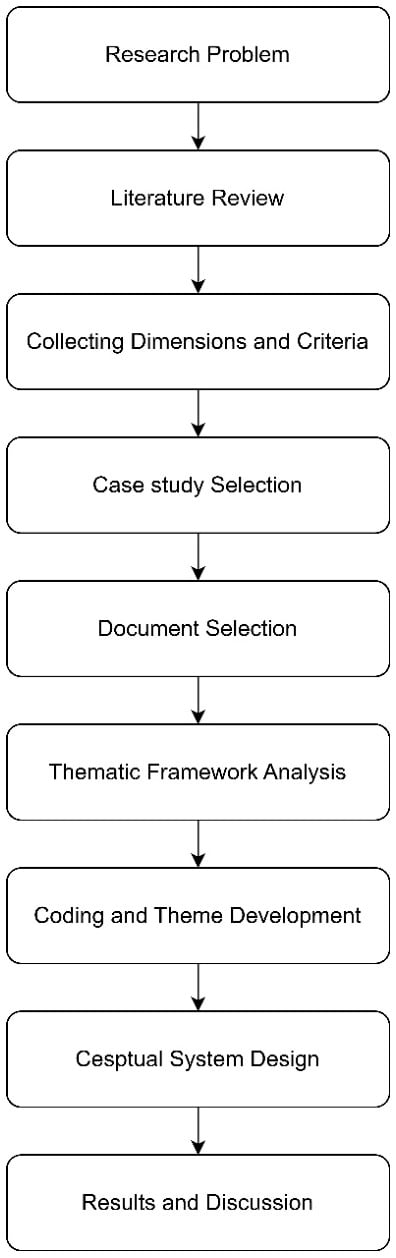
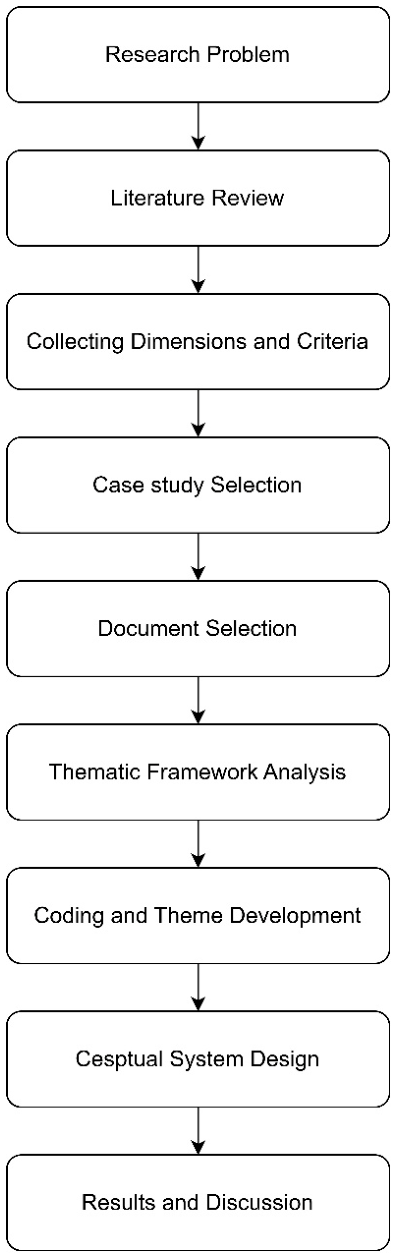
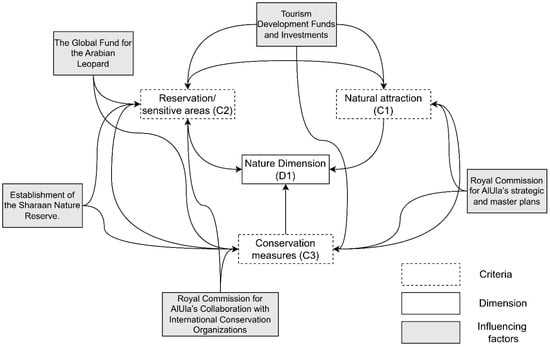
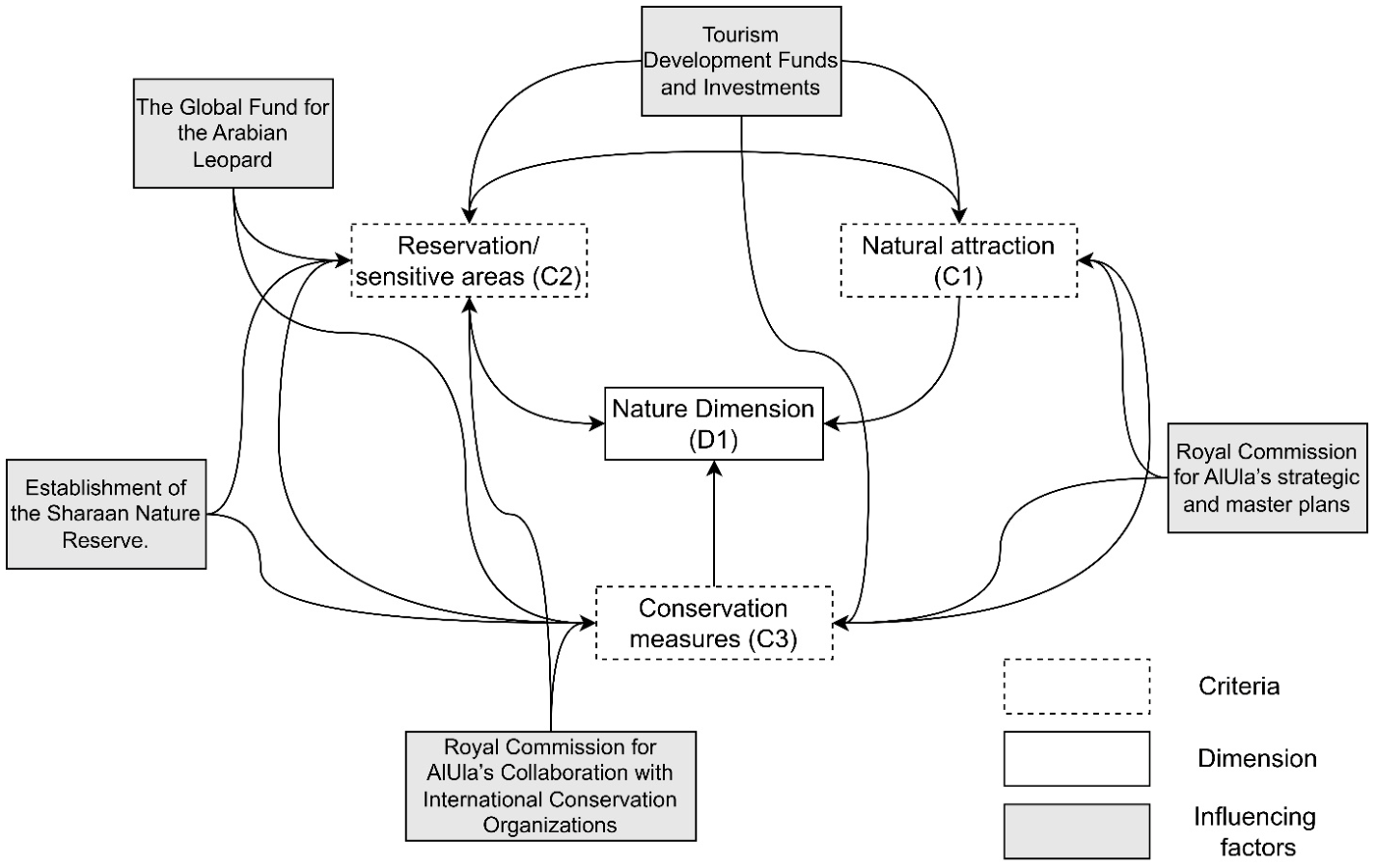
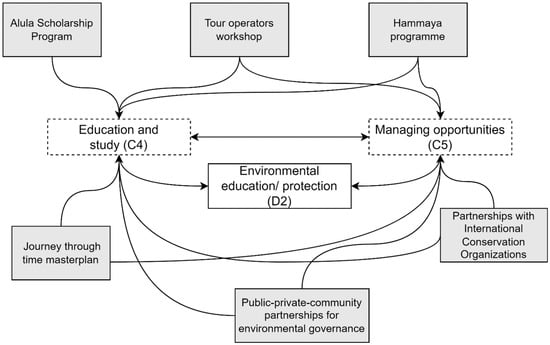
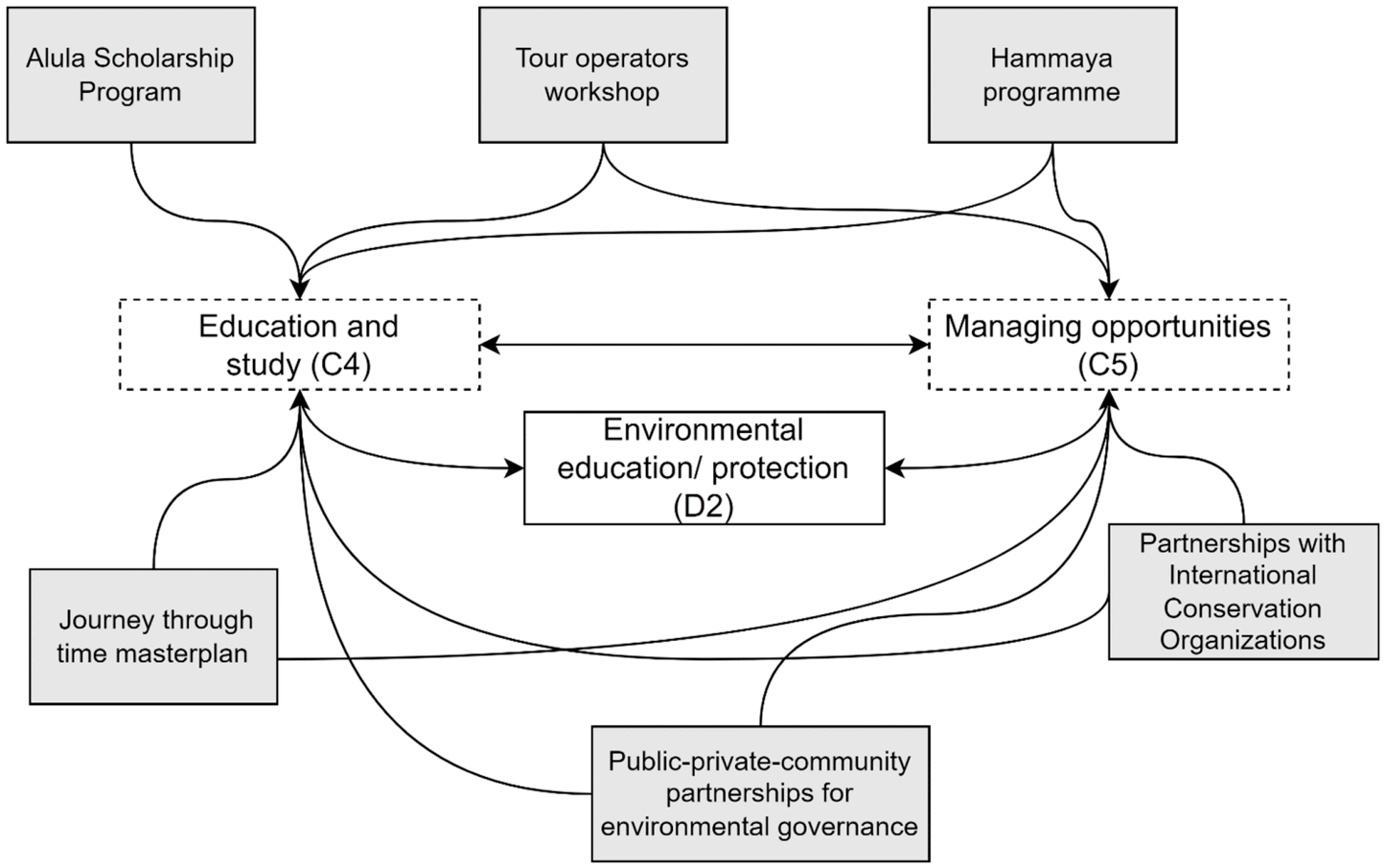
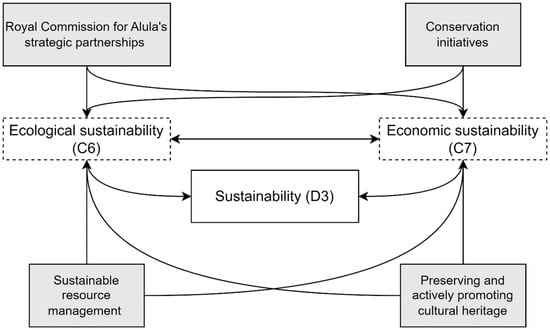
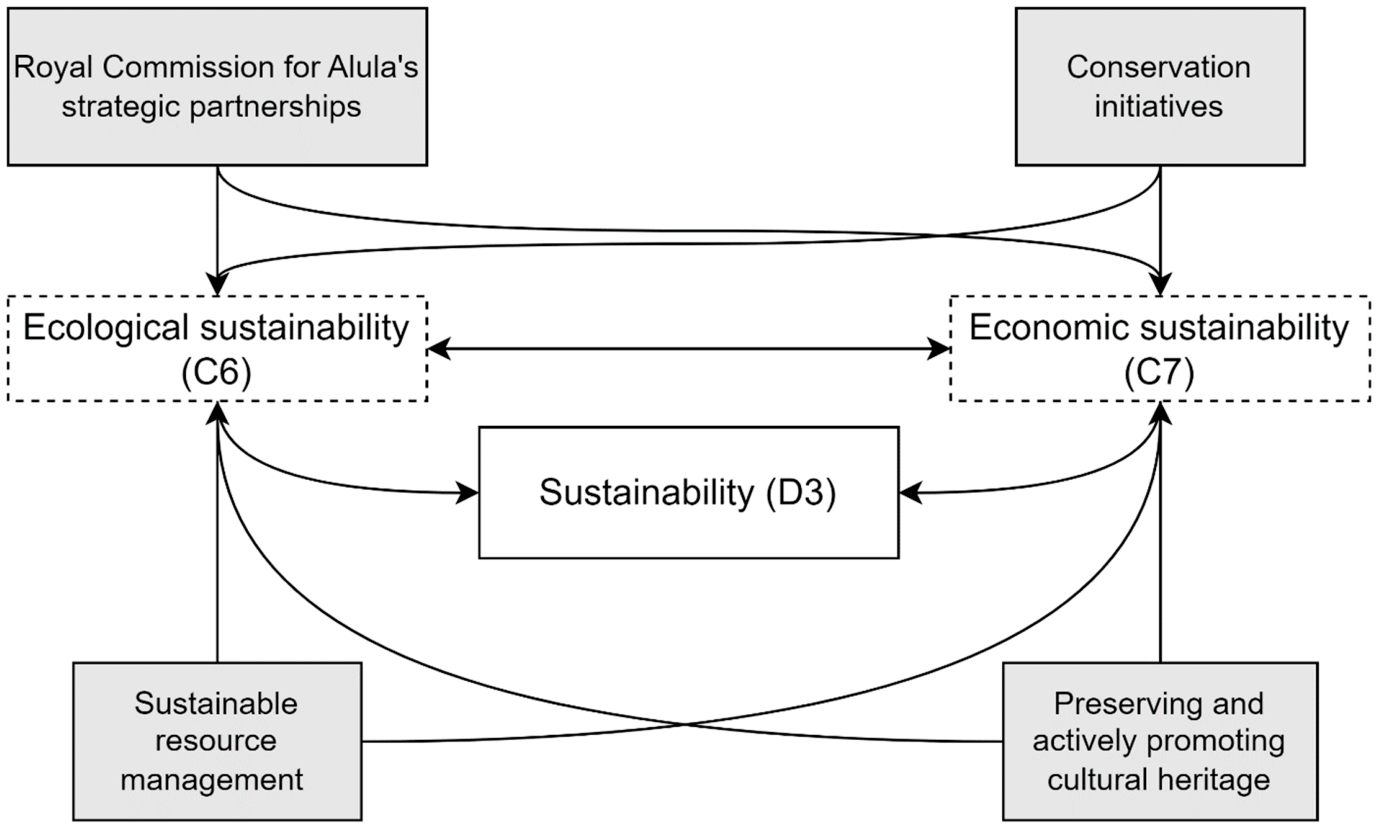
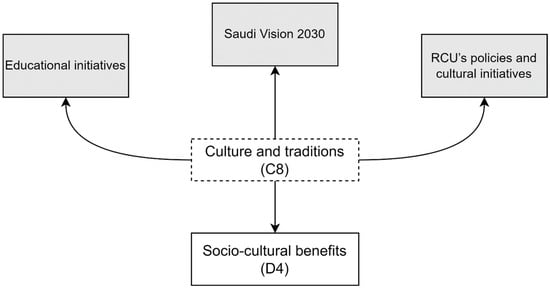
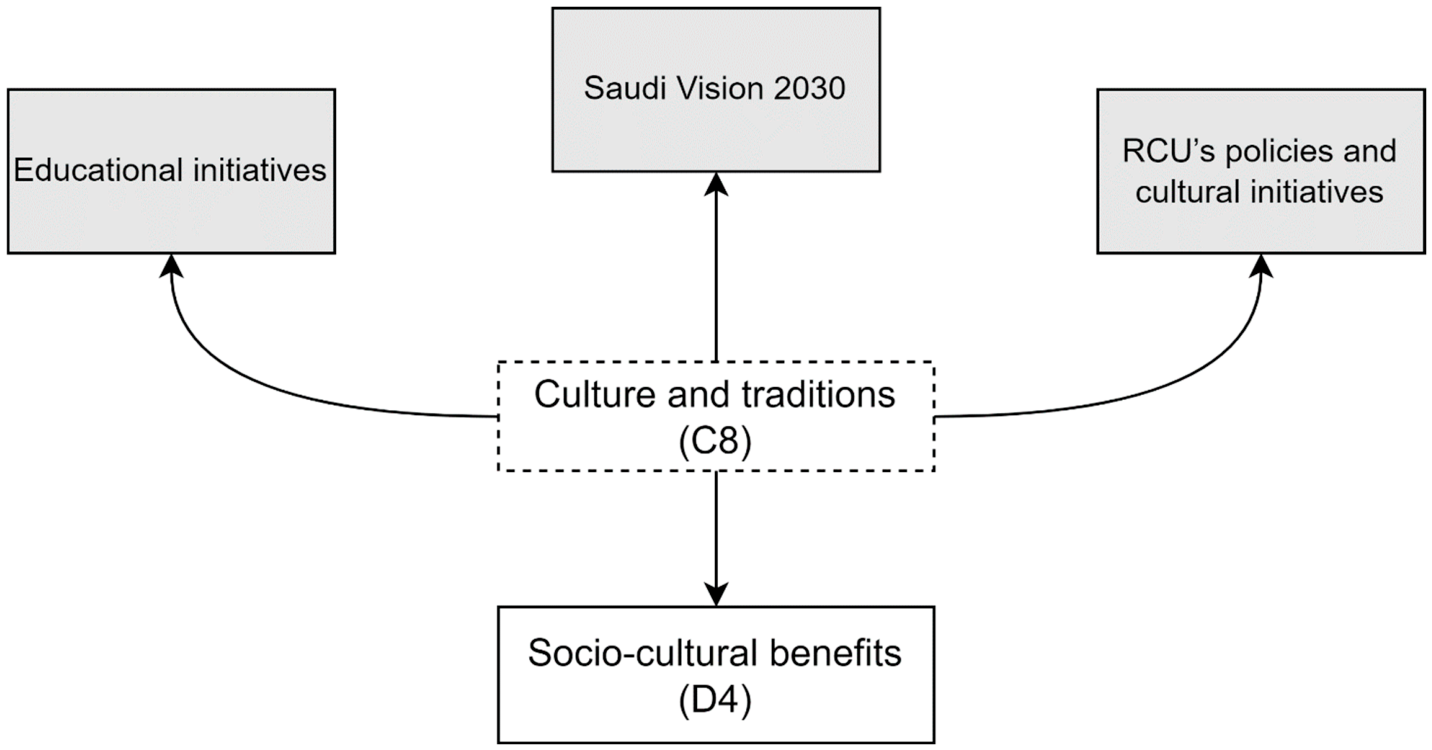
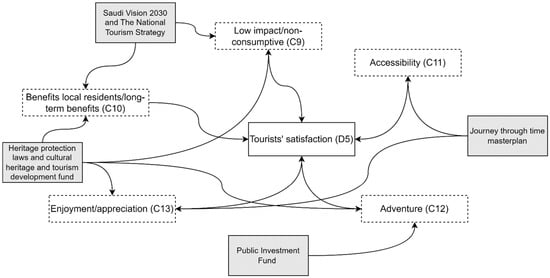
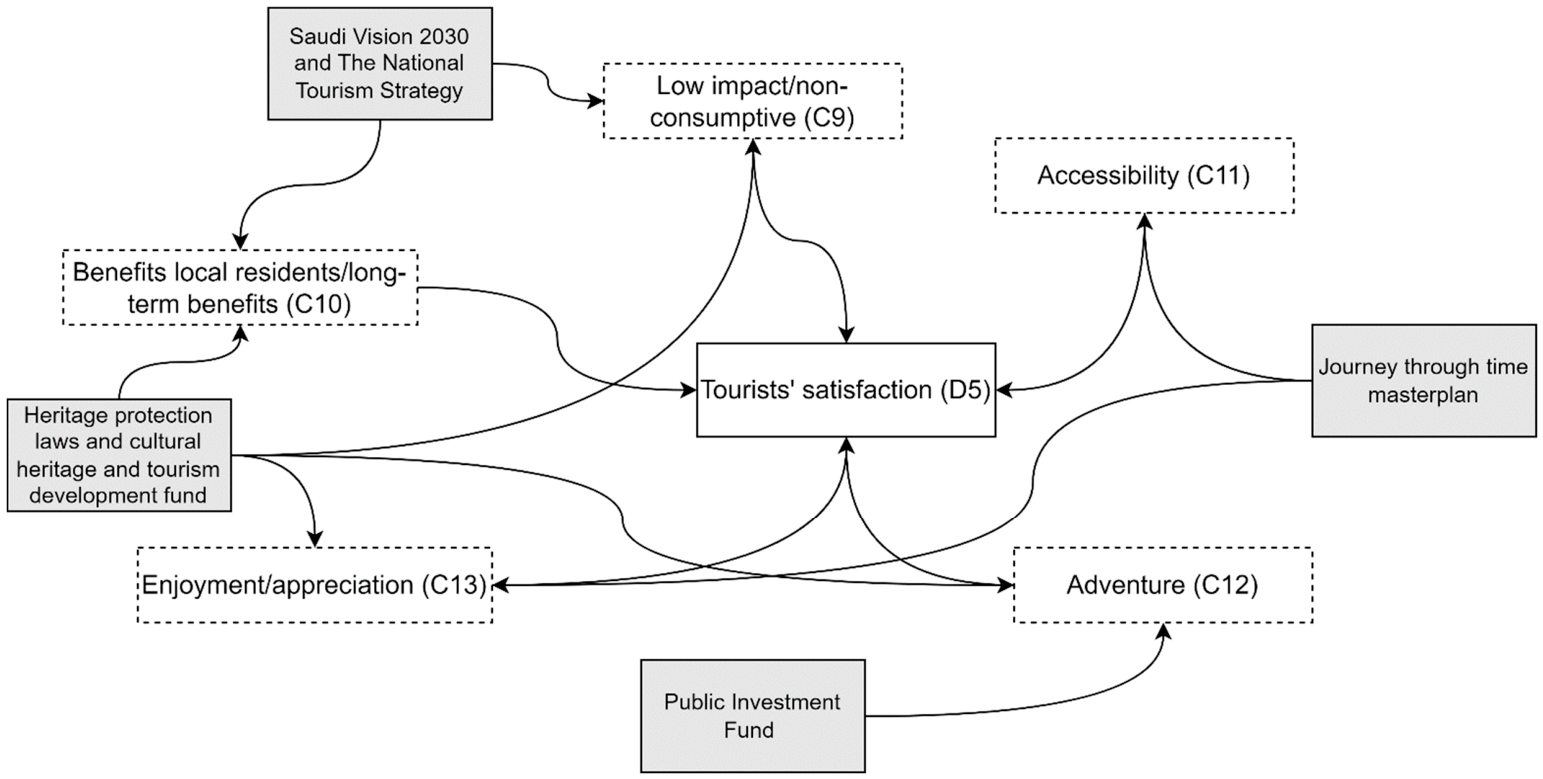
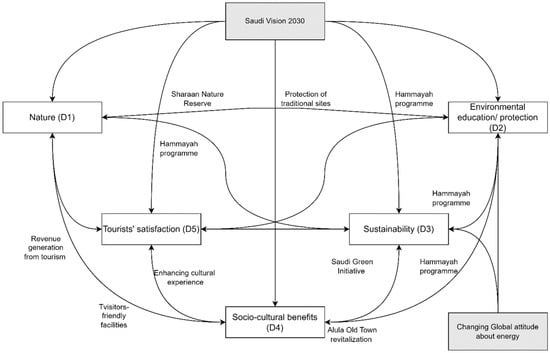
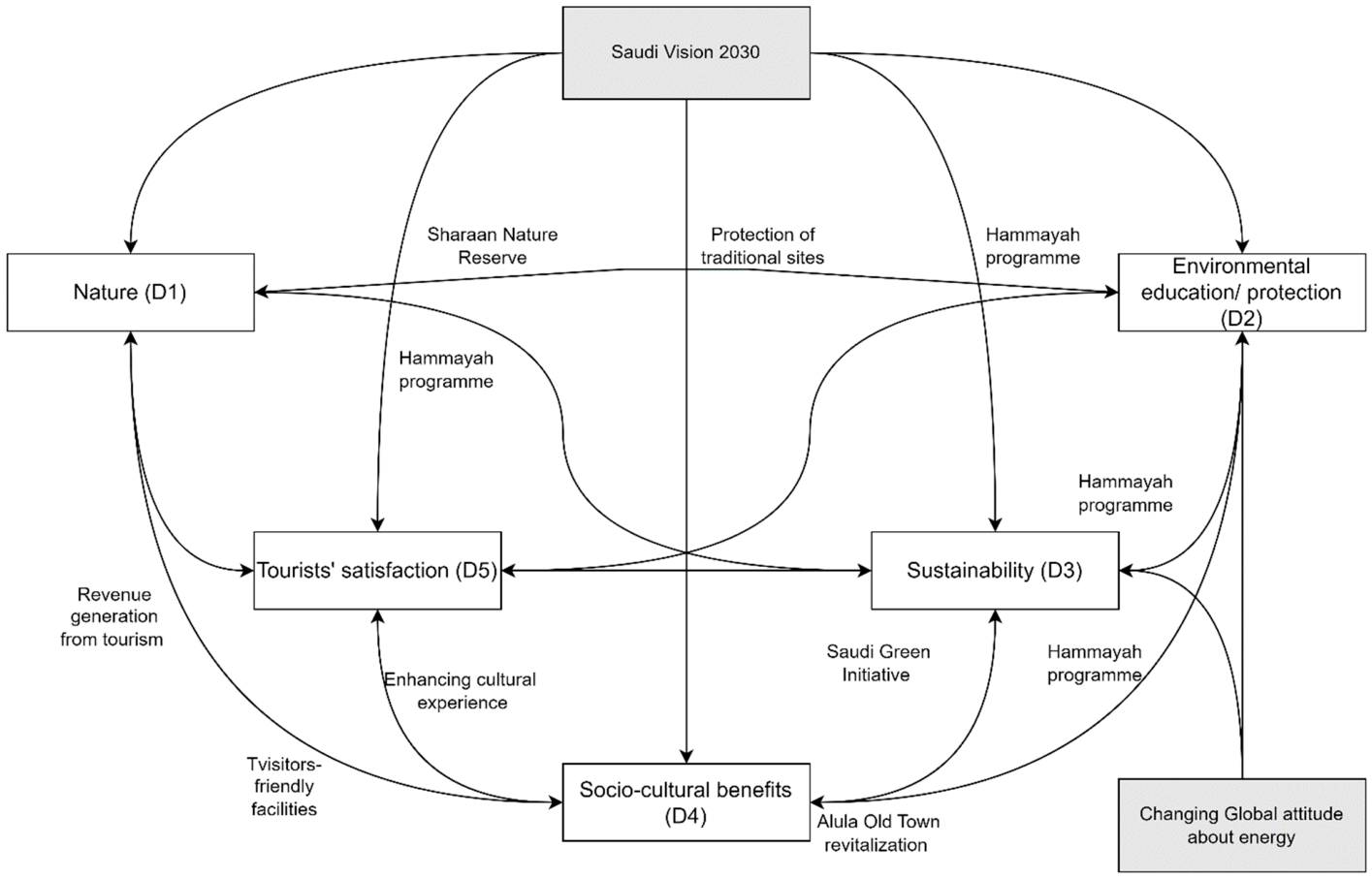

Disclaimer/Publisher’s Note: The statements, opinions and data contained in all publications are solely those of the individual author(s) and contributor(s) and not of MDPI and/or the editor(s). MDPI and/or the editor(s) disclaim responsibility for any injury to people or property resulting from any ideas, methods, instructions or products referred to in the content. |
© 2026 by the authors. Licensee MDPI, Basel, Switzerland. This article is an open access article distributed under the terms and conditions of the Creative Commons Attribution (CC BY) license.