


Abstract
Crop residue return is widely used to improve soil conditions in rainfed croplands, but its effects may differ among soil properties and cropping systems. This study evaluated the field performance of crop residue return with three-year consecutive observations in rainfed Northeast China. The field treatments included crop residue removal (R0) and crop residue return (RR) for maize monoculture, fixed maize–soybean strip intercropping, and rotational maize–soybean strip intercropping. The results show that RR significantly decreased soil pH (p < 0.001) and increased available potassium (p < 0.01), particularly in the 0–20 cm soil layer, where mean pH decreased from 8.05 under R0 to 7.59 under RR and available potassium increased from 98.6 to 109.1 mg kg−1. In contrast, bulk density, soil water content, soil organic carbon, total nitrogen, and the C:N ratio showed weaker or less consistent responses across soil depths, cropping systems, and sampling years. Crop yield responses differed between crops. RR significantly increased maize yield overall, whereas no significant overall effect was detected for soybean yield. Overall, crop residue return primarily affected surface-soil pH and potassium availability during the three-year experiment, while its yield effect differed between maize and soybean.
1. Introduction
Rainfed crops are strongly constrained by seasonal precipitation and soil water storage [1], leading to low water-use efficiency [2]. Surface residue return (RR) has been widely reported to improve the near-surface soil environment by increasing infiltration, protecting soil aggregates, and reducing evaporative water loss [3,4,5]. Additionally, RR was also proved to enhance soil organic carbon (SOC) due to organic inputs to cropland soils [6,7]. In dryland systems, RR can increase precipitation storage and support crop production under water-limited conditions [8]. In practice, RR has been widely adopted to regulate near-surface soil conditions in rainfed croplands with limited water and nutrient availability [9,10].
In Northeast China, maintaining crop production is particularly challenging under rainfed conditions, where climate-related yield losses are concentrated and maize and soybean production is strongly influenced by regional soil and climatic conditions [11,12]. At the global scale, evidence further shows that the effects of crop residue retention on soil properties and crop productivity are strongly context-dependent, with their magnitude regulated by soil conditions, climate, nutrient management, and cropping practices [13,14]. The effects of crop residue return vary with residue-management practices, residue input, fertilization regime, soil and climatic conditions, and treatment duration [15,16,17]. Long-term residue return can gradually increase SOC stocks and soil nutrient availability, although the magnitude of these cumulative responses depends on annual carbon inputs, initial soil conditions, and nutrient management [18,19]. During the initial years of residue return, responses are more likely to emerge in dynamic surface-soil properties associated with residue decomposition, nutrient release, microbial turnover, and soil-water regulation, whereas detectable changes in bulk SOC, TN, and crop yield may remain limited or variable [20,21]. Initial responses to residue return are therefore expected to occur primarily in topsoil processes associated with residue decomposition, nutrient release, and microbial activity [22,23]. These processes can rapidly alter labile carbon pools, microbial biomass, available nutrients, and soil water conditions [24,25,26]. Among these responses, soil P availability is particularly sensitive to RR because straw decomposition can release P and accelerate microbial P turnover [27,28,29]. Residue return can also redistribute P among inorganic and organic fractions, thereby altering both immediate P availability and potential P-supply capacity [30,31]. Soil pH may also respond during the initial period of residue return, although the direction and magnitude of this response depend on initial soil pH, buffering capacity, residue chemistry, and nutrient management [32,33]. In comparison with these rapid responses, detectable changes in bulk SOC and TN generally require sustained residue inputs and are strongly regulated by return duration, fertilization regime, and regional soil conditions [34,35,36]. Crop yield responses may also develop at different rates and vary with crop species, residue input, placement method, treatment duration, and background nutrient management [37,38,39]. Therefore, whether short-term crop residue return produces consistent surface-soil responses across contrasting cropping systems, and which soil properties respond most rapidly to residue inputs, remains to be clarified.
Diversified cropping systems have been recommended globally to regulate soil quality and productivity through changes in plant inputs, nutrient acquisition, and belowground biological activity [40,41,42]. Cereal–legume multiple systems (i.e., rotation or intercropping) have been demonstrated to enhance resource use, rhizosphere interactions, and modify soil nutrient availability, pH, and microbial processes [43,44,45]. Determining how diversified cropping systems influence the decomposition and nutrient release of returned crop residues is essential for understanding soil nutrient cycling and optimizing field management [46,47,48]. However, most studies have evaluated residue return within a single cropping system or have focused on long-term changes in soil carbon and crop yield. Consequently, it remains unclear whether early RR responses represent general, reproducible changes in sensitive topsoil indicators or responses that depend on cropping-system context. Comparing maize monoculture, fixed maize–soybean strip intercropping, and rotational maize–soybean strip intercropping therefore provides an opportunity to distinguish common short-term RR responses from responses that depend on cropping-system context.
A three-year field experiment was conducted in rainfed Northeast China to evaluate the effects of RR on soil properties and crop yield across contrasting maize-based cropping systems. Univariate, multivariate, and correlation analyses were combined to identify initial RR responses that recurred across cropping systems and years, along with responses that remained context-dependent. We hypothesized that short-term RR would produce stronger changes in dynamic surface-soil chemical and available nutrient properties than in slower-changing bulk soil properties, while the magnitude of these early responses would vary among cropping systems. This study aimed to determine whether RR produced consistent changes in surface-soil chemical conditions, available nutrient status, soil-property associations, and crop yield during the initial three years under contrasting maize-based cropping systems.
2. Materials and Methods
2.1. Site Description
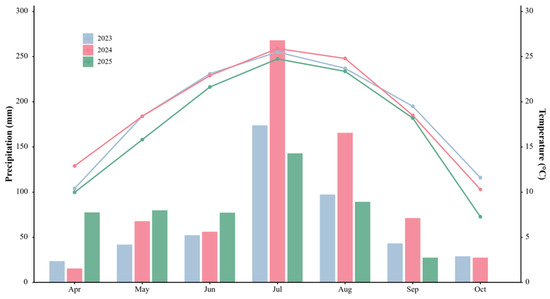
A field experiment was conducted from spring 2023 to autumn 2025 at Taoli Village (42°07′39″ N, 121°43′49″ E), Fuxin Mongol Autonomous County, northwest Liaoning Province, China, within the National Observation and Research Station for Agricultural Environment. Residue-return treatments had been initiated before planting in 2023, using crop residues produced during the 2022 growing season. The region has a temperate continental monsoon climate, with hot summers and cold, dry winters. The mean annual temperature is 7–8 °C, and the mean annual precipitation is 391 mm. Rainfall is unevenly distributed and is mainly concentrated in the middle and late stages of crop growth. Monthly precipitation and mean air temperature during the 2023–2025 growing seasons are shown in Figure 1.
Figure 1.
Monthly precipitation and mean air temperature at the experimental site in Fuxin, Northeast China, during the 2023–2025 growing seasons.
The soil at the experimental site is a cinnamon soil, classified as a Cambisol according to the World Reference Base for Soil Resources (WRB). Baseline soil characterization of the 0–20 cm cultivated layer was based on samples collected from multiple locations across the experimental field. Initial soil properties in the 0–20 cm layer included 14.4 g kg−1 soil organic matter, 0.78 g kg−1 total nitrogen, 45.2 mg kg−1 available nitrogen, 17.4 mg kg−1 available phosphorus, 69.5 mg kg−1 available potassium, and a pH of 7.83. Before establishment of the experiment, the field had been continuously cropped with maize.
2.2. Experimental Design and Crop Management
The experiment was arranged as a randomized complete block design with four spatial blocks, with the six treatment combinations randomly allocated within each block. The three cropping systems were maize monoculture (M), fixed maize–soybean strip intercropping (MS), and rotational maize–soybean strip intercropping (MSR). The two residue-management regimes were residue removal (R0) and crop residue return (RR). This resulted in six treatment combinations: M-R0, M-RR, MS-R0, MS-RR, MSR-R0, and MSR-RR. Each plot measured 7 m × 12 m (84 m2) and contained 24 ridges. The field layout and treatment allocation within the four blocks are shown in Supplementary Figure S1.
The maize–soybean intercropping systems were arranged as alternating 6:6 row strips, with six maize rows and six soybean rows in each strip unit. Row spacing was 50 cm for both crops. In the MS system, the positions of maize and soybean strips remained unchanged across years. In the MSR system, maize and soybean strip positions were rotated annually; strips planted with maize in one year were planted with soybean in the following year, and vice versa.
Crop varieties and planting densities were kept consistent across the corresponding cropping systems. Maize cultivar ‘Dongdan 1331’ was planted at a density of 60,000 plants ha−1, with 50 cm between rows and 33.3 cm between plants. Soybean cultivar ‘Liaodou 32’ was planted at a density of 180,000 plants ha−1, with two plants per hill, 50 cm between rows, and 22.2 cm between hills.
A compound fertilizer containing 17% N, 17% P2O5, and 17% K2O was applied at 675 kg ha−1, providing 114.8 kg N ha−1, 114.8 kg P2O5 ha−1, and 114.8 kg K2O ha−1 on a total land-area basis across all treatments. The fertilizer was band-applied in furrows before planting, and no topdressing fertilizer was applied during the growing seasons. No irrigation was applied from 2023 to 2025, and crop production relied on natural rainfall.
For residue management, all aboveground crop residues were removed after harvest in the R0 treatment. In the RR treatment, only maize residues were returned, whereas soybean residues were removed. To maintain approximately equivalent residue inputs on a plot-area basis across the three cropping systems, additional maize residue was supplied to the MS and MSR plots as needed to compensate for the absence of soybean residue return and to match the residue input used in maize monoculture. Before planting, the maize residues were chopped and spread uniformly over the soil surface as mulch. In each year, residue application and planting were conducted in mid- to late April. Soil sampling was conducted at crop physiological maturity in late September, followed by harvest at the end of September. The returned maize residue contained 42.15% C, 1.52% N, and 1.74 g kg−1 total P, with a C:N ratio of approximately 27.75.
At physiological maturity, border rows were excluded, and several internal rows were randomly selected in each plot, from which 3–5 plants per row were harvested for yield determination. Maize and soybean grains were threshed, and grain yields were expressed on an area basis according to the corresponding planting arrangement. In the intercropping treatments, maize and soybean yields were determined separately according to the area occupied by each crop.
2.3. Soil Sampling and Laboratory Analysis
At crop maturity in each year, soil samples were collected from four depth intervals: 0–10, 10–20, 20–30, and 30–50 cm. The upper 30 cm was sampled at 10 cm intervals to capture near-surface variation associated with residue return, whereas 30–50 cm was sampled as a broader interval to characterize deeper-soil responses. In maize monoculture plots, five soil cores were collected from randomly selected positions within each plot and composited for each depth × plot combination. In maize–soybean intercropping plots, seven soil cores were collected across both maize and soybean strips and composited for each depth × plot combination. Fresh soil samples were passed through a 2 mm sieve and divided into subsamples for soil physicochemical analyses.
Soil water content (SWC) was determined gravimetrically by oven drying fresh soil at 105 °C to constant mass [49]. Bulk density (BD) was determined using the core method [50]. Soil pH was measured in a 2.5:1 water to soil suspension [51]. Soil organic carbon (SOC) was determined by dichromate oxidation and titration [52]. Total nitrogen (TN) was determined by Kjeldahl digestion [53]. Available potassium (AK) was extracted with 1.0 M NH4OAc and measured by flame photometry [54]. Available phosphorus (AP) was extracted with 0.5 M NaHCO3 (pH 8.5) and determined colorimetrically using the molybdenum blue method [55].
2.4. Statistical Analysis
All statistical analyses were conducted in R v4.4.3 using the lme4, lmerTest, emmeans, and vegan packages. Linear mixed-effects models were used to test the effects of cropping system, residue-return treatment, sampling year, soil layer, and their interactions on soil physicochemical properties. Cropping system, residue-return treatment, sampling year, soil layer, and their two- and three-way interactions were treated as fixed effects, while block and plot identity were included as random effects. Fixed effects were assessed using Type III analysis of variance.
Residue-return responses were further quantified within each cropping system, sampling year, and aggregated soil layer using standardized RR–R0 mean differences. For graphical presentation, the original four soil layers were combined into 0–20 and 20–50 cm using depth-weighted averages. Within each block, the RR–R0 difference was calculated, and the mean paired difference across the four blocks was standardized by a common reference SD calculated from all observations of the same indicator within the same aggregated soil layer. The 95% confidence interval was calculated from the block-level paired differences using Student’s t distribution (df = 3) and standardized by the same reference SD. Effects were considered significant when the 95% confidence interval did not overlap zero.
Crop yield was analyzed separately for maize and soybean using linear mixed-effects models. The maize yield model included M, MS, and MSR, whereas the soybean yield model included MS and MSR. Residue-return treatment, sampling year, cropping system, and all two- and three-way interactions were included as fixed effects, with plot identity as a random effect. Estimated marginal means were calculated across years for graphical presentation, and RR–R0 contrasts were estimated within each cropping system from the same mixed-effects model.
Principal component analysis and partial redundancy analysis were performed using standardized soil physicochemical indicators from the 0–20 cm soil layer. For RDA, cropping system, residue treatment, and their interaction were included as constraining variables, with block as a conditioning variable; significance was assessed using 9999 permutations restricted within blocks. Spearman correlation analysis was conducted separately for R0 and RR treatments using three-year-averaged plot-level observations from the 0–20 cm soil layer (n = 12 per treatment) to descriptively examine associations among soil physicochemical properties.
3. Results
3.1. Overall Soil Responses to Residue Return
In the first three years of RR, obvious responses to RR occurred for pH and AK (Table 1). Averaged across cropping systems, years, and soil layers, RR decreased soil pH (F = 179.73, p < 0.001) and increased AK (F = 13.71, p < 0.01), compared to R0. No significant overall effect of RR was detected for BD, SWC, SOC, TN, the C:N ratio, or AP (Table 1). The magnitude of these short-term RR effects varied with year, soil depth, and cropping system.
Table 1.
Linear mixed effects model results for soil physicochemical properties under residue return and residue removal.
Significant R × Y interactions were detected for pH (F = 78.83, p < 0.001), AK (F = 5.40, p < 0.01), and AP (F = 14.23, p < 0.001; Table 1). The strongest annual variation was observed for pH (F = 78.83, p < 0.001), followed by AP (F = 14.23, p < 0.001) and AK (F = 5.40, p < 0.01). Significant R × D interactions were detected for BD (F = 4.05, p < 0.01), SOC (F = 8.09, p < 0.001), TN (F = 12.83, p < 0.001), and AP (F = 24.19, p < 0.001). Significant S × R interactions were detected for pH (F = 4.38, p < 0.05) and TN (F = 3.74, p < 0.05), indicating that their responses to RR differed among cropping systems. Significant S × R × Y interactions were detected for pH (F = 7.60, p < 0.001), AK (F = 7.57, p < 0.001), and AP (F = 2.76, p < 0.05), indicating that annual RR responses differed among cropping systems. The RR response of SWC depended jointly on sampling year and soil depth, as indicated by a significant R × Y × D interaction (F = 3.44, p < 0.01). By contrast, neither the overall RR effect nor any interaction involving RR was significant for the C:N ratio (Table 1).
3.2. Responses of Soil Properties to Residue Return Across Soil Depths
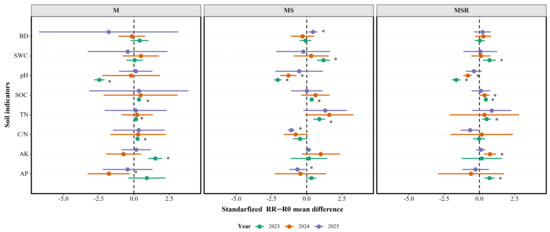
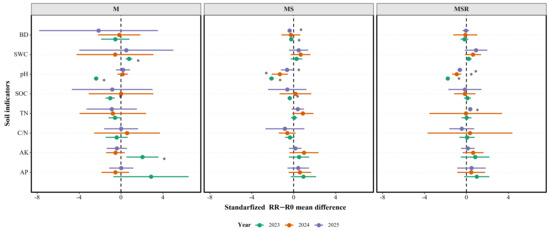
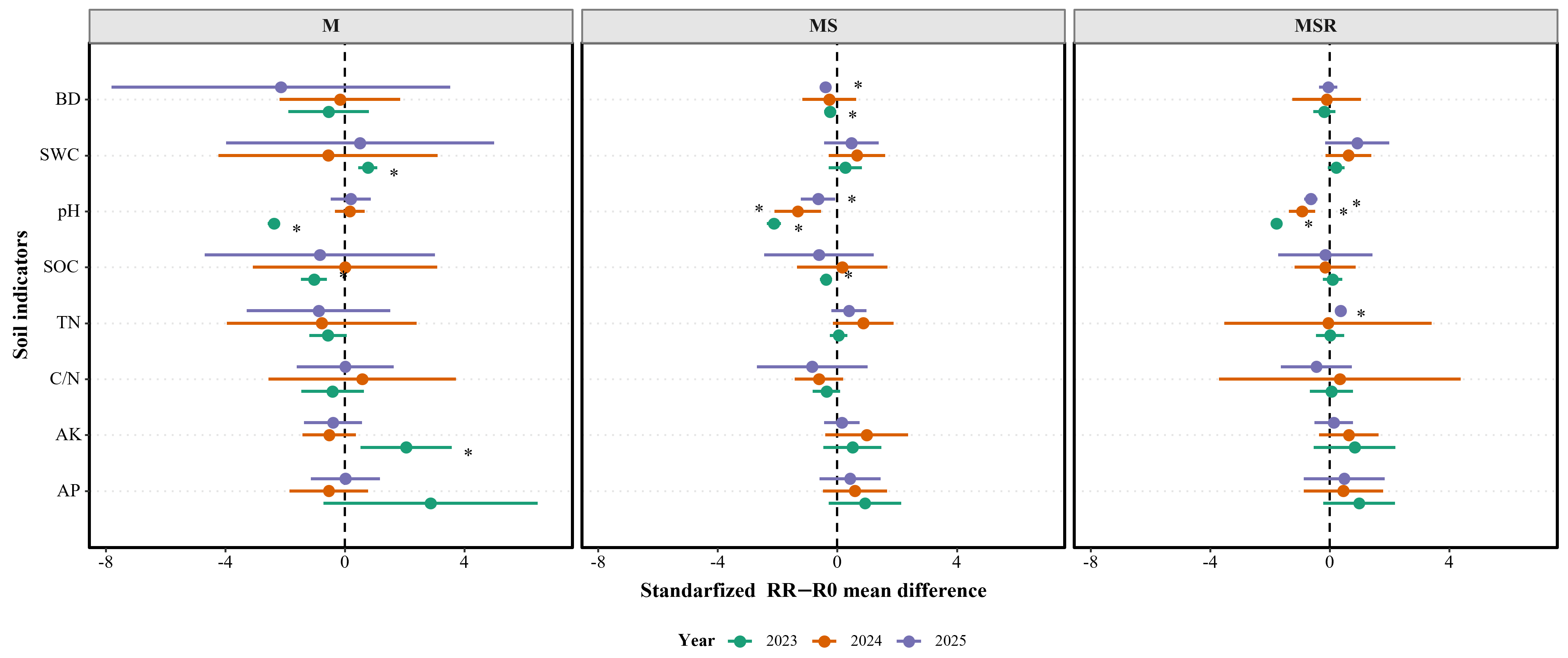
In the 0–20 cm soil layer, the most consistent RR responses were detected for pH, AK, and AP, as indicated by the directions and 95% confidence intervals of their standardized effect sizes (Figure 2). RR generally decreased pH and increased AK and AP across cropping systems and years, although the magnitudes and statistical significance of these effects varied among individual combinations. RR also increased SWC and TN in several intercropping treatments, but these positive effects did not recur across all years. The effect sizes of BD, SOC, and the C:N ratio varied in direction among cropping systems and years, and no consistent response to RR was detected across the 0–20 cm soil layer (Figure 2).
Figure 2.
Standardized changes of soil physicochemical properties responding to residue return compared to residue removed in the 0–20 cm soil layer. Note: Points represent standardized block-paired RR–R0 mean differences, and horizontal bars indicate 95% confidence intervals based on Student’s t distribution. Positive values indicate higher values under residue return than under residue removal, whereas negative values indicate lower values under residue return. Asterisks indicate estimates whose 95% confidence intervals did not overlap zero. R0, residue removal; RR, residue return; M, maize monoculture; MS, maize–soybean intercropping; MSR, rotational maize–soybean intercropping.
Below 20 cm, the effects of RR were generally weaker and less directionally consistent (Figure 3). Significant positive effect sizes for SWC were detected in specific maize-monoculture and rotational maize–soybean intercropping combinations (Figure 3). Significant negative effect sizes for pH were detected in several maize-monoculture and fixed-intercropping combinations, whereas significant positive effect sizes for AP were detected in several cropping-system × year combinations (Figure 3). The effect sizes of BD, SOC, TN, and the C:N ratio varied in direction among years and cropping systems, and no recurrent response was detected across the 20–50 cm soil layer (Figure 3).
Figure 3.
Standardized changes of soil physicochemical properties responding to residue return compared to residue removed in the 20–50 cm soil layer. Note: Points represent standardized block-paired RR–R0 mean differences, and horizontal bars indicate 95% confidence intervals based on Student’s t distribution. Positive values indicate higher values under residue return than under residue removal, whereas negative values indicate lower values under residue return. Asterisks indicate estimates whose 95% confidence intervals did not overlap zero. R0, residue removal; RR, residue return; M, maize monoculture; MS, maize–soybean intercropping; MSR, rotational maize–soybean intercropping.
3.3. Associations Among Soil Properties Under Residue Return
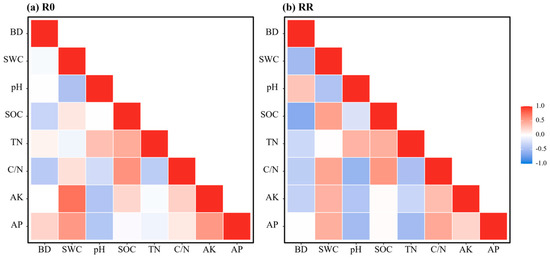
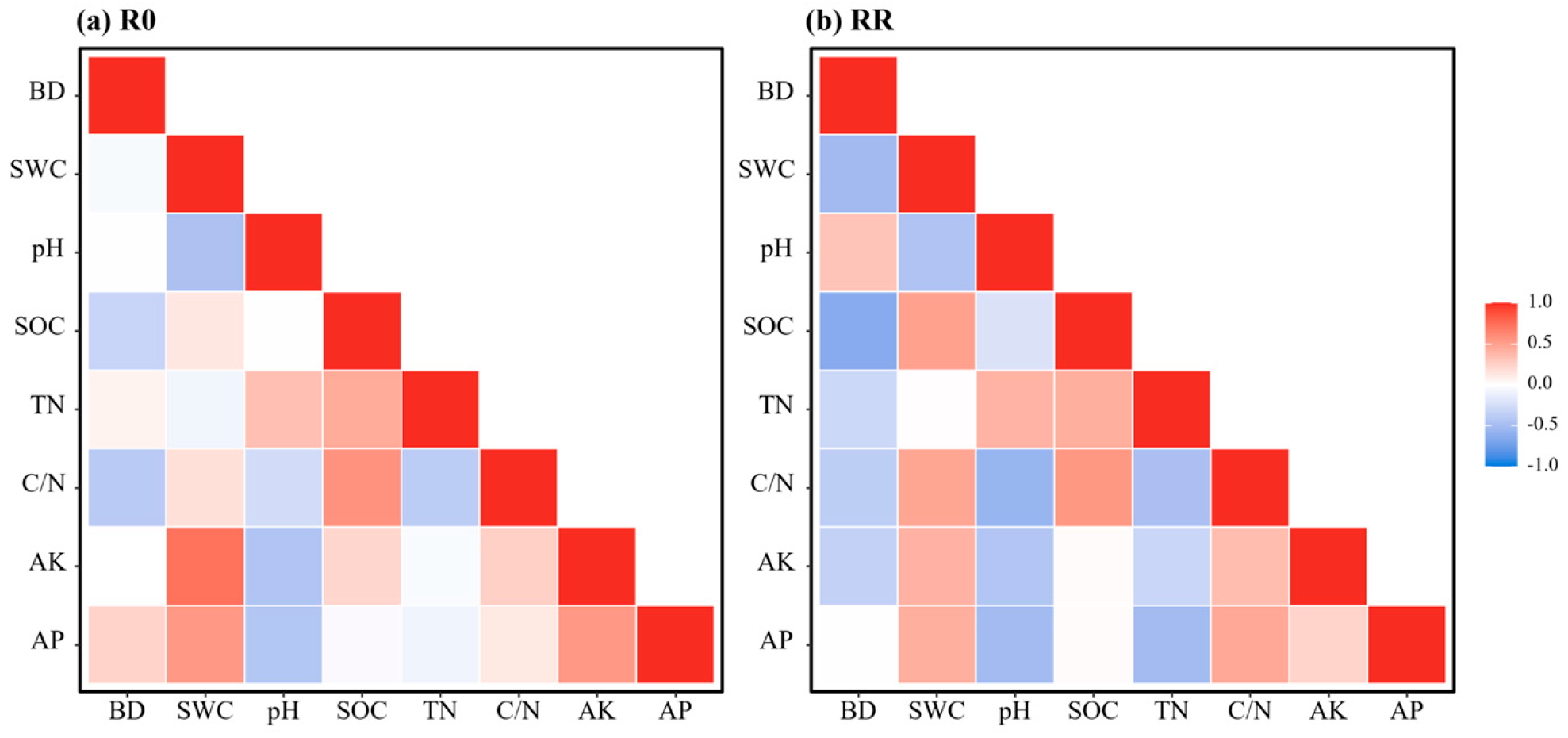
Spearman correlation analysis based on three-year-averaged plot-level observations showed positive and negative associations among soil physicochemical properties under both R0 and RR in the 0–20 cm soil layer (Figure 4). Under R0, associations were mainly observed among TN, AK, AP, pH, SOC, and BD. Under RR, relatively strong associations were observed among BD, SOC, TN, and AK. These correlations were used descriptively and were not interpreted as evidence of differences in correlation structure between R0 and RR.
Figure 4.
Spearman correlations among soil physicochemical properties under residue-removal and residue-return treatments in the 0–20 cm soil layer. Note: Spearman correlation analysis was performed separately for the residue-removal treatment (R0) and residue-return treatment (RR) using three-year-averaged plot-level observations from the 0–20 cm soil layer (n = 12 per treatment). (a) R0 treatment; (b) RR treatment. Colors indicate Spearman’s correlation coefficients, with red indicating positive correlations and blue indicating negative correlations. R0, residue removal; RR, residue return; BD, bulk density; SWC, soil water content; SOC, soil organic carbon; TN, total nitrogen; C:N, carbon-to-nitrogen ratio; AK, available potassium; AP, available phosphorus.
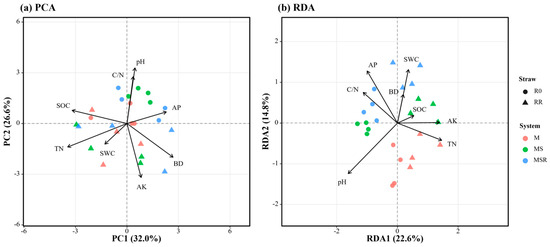
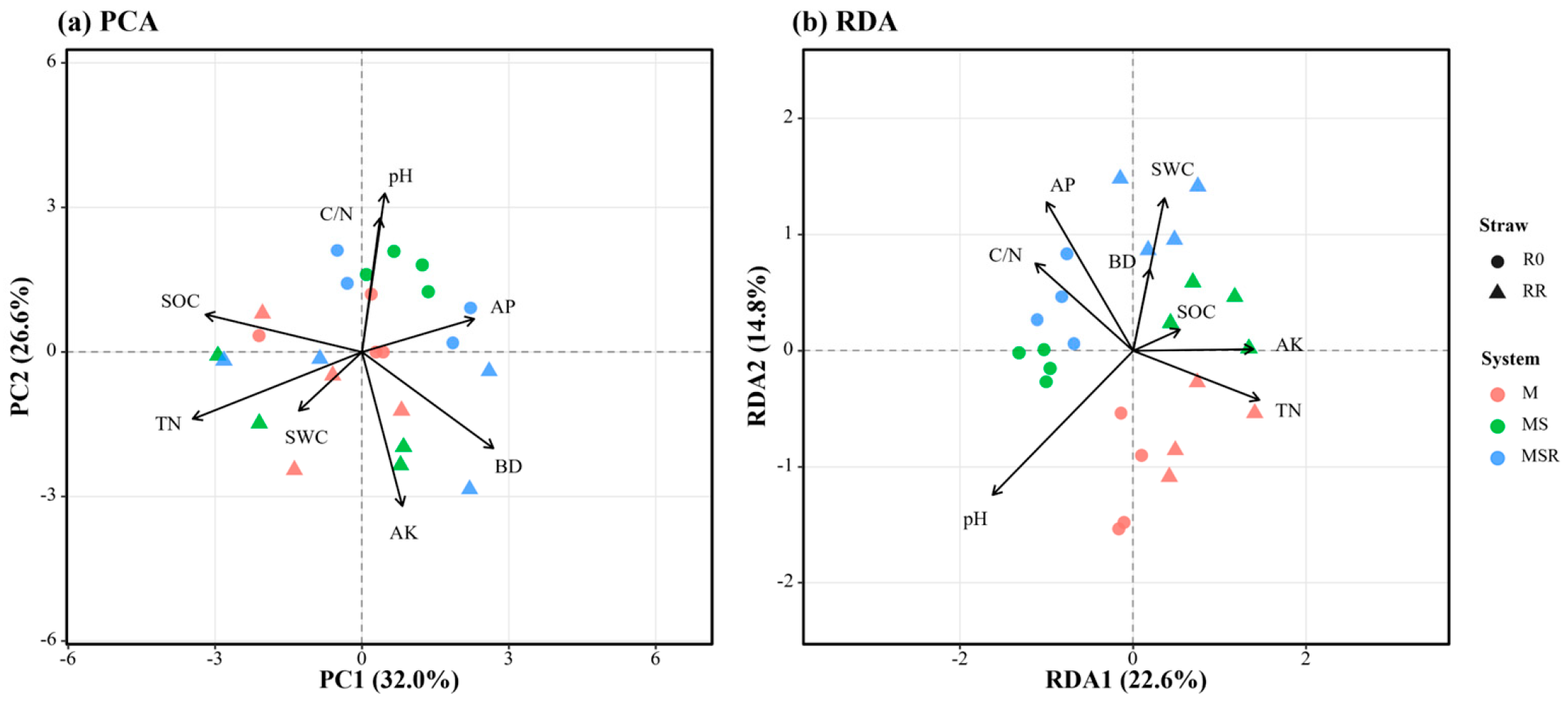
Principal component analysis was used to evaluate whether residue return altered the overall profile of soil physicochemical properties in the 0–20 cm layer (Figure 5a). The first two principal components explained 58.6% of the total variation, with PC1 and PC2 accounting for 32.0% and 26.6%, respectively. Along PC1, pH and BD were mainly separated from SWC, C:N ratio, AK, and AP. Along PC2, SOC and TN were mainly separated from AP. These loading patterns indicated that variation in surface-soil properties was mainly associated with gradients of pH, BD, SWC, available nutrients, SOC, and TN.
Figure 5.
Multivariate analysis of soil physicochemical properties in the 0–20 cm soil layer based on PCA and RDA. Note: Principal component analysis (PCA) and redundancy analysis (RDA) were performed using standardized soil physicochemical indicators from the 0–20 cm soil layer. (a) PCA ordination showing the variation in soil physicochemical properties in the 0–20 cm soil layer. PC1 and PC2 explained 32.0% and 26.6% of the total variation, respectively. (b) Partial RDA ordination. RDA1 and RDA2 explained 22.6% and 14.8% of the total variation, respectively. Points represent three-year-averaged plot-level observations, colors indicate cropping systems, and shapes indicate residue treatments. Arrows indicate the loading directions of soil physicochemical indicators. R0, residue removal; RR, residue return; BD, bulk density; SWC, soil water content; SOC, soil organic carbon; TN, total nitrogen; C:N, carbon-to-nitrogen ratio; AK, available potassium; AP, available phosphorus.
The PCA ordination showed partial overlap between R0 and RR samples, indicating that residue return did not lead to a complete separation of the overall soil physicochemical profile. However, the distribution of samples and variable loadings was broadly consistent with the single-indicator results, in which residue-return responses were mainly associated with pH, AK, AP, and related soil-property gradients. Therefore, the effect of residue return was reflected more clearly in specific chemical and nutrient-related properties than in a complete shift of the overall soil-property assemblage.
Redundancy analysis further supported this pattern (Figure 5b). The partial RDA model was significant (F = 3.44, p < 0.001), with RDA1 and RDA2 explaining 22.6% and 14.8% of the total variation, respectively. The main variable directions in the RDA ordination were broadly consistent with those in the PCA, with pH and BD oriented away from SWC, AK, AP, SOC, and C:N ratio. Variation in soil physicochemical properties was structured mainly along gradients associated with pH, BD, SWC, and available nutrients, consistent with the patterns observed in the PCA (Figure 5).
3.4. Crop Yield Responses to Residue Return Across Cropping Systems
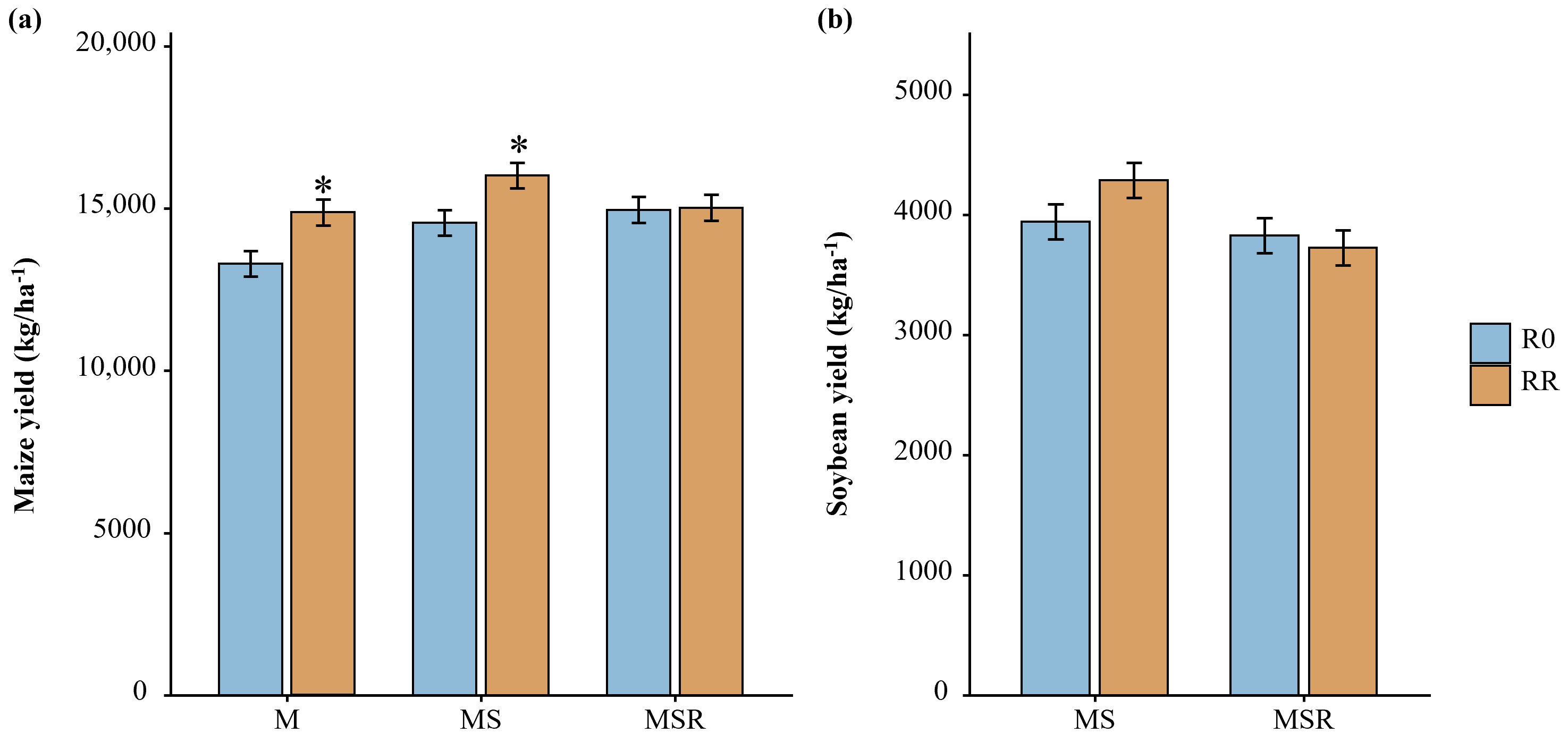
Maize yield was significantly affected by RR (F = 10.19, p = 0.002), year (F = 53.45, p < 0.001), and cropping system (F = 4.96, p = 0.010; Table 2). The interaction between year and cropping system was also significant (F = 6.80, p < 0.001), whereas the interactions involving RR were not significant. Soybean yield was significantly affected by year (F = 60.32, p < 0.001) and cropping system (F = 5.32, p = 0.040), while no significant overall effect of RR was detected (F = 0.70, p = 0.419).
Table 2.
Effects of residue return, year, and cropping system on maize and soybean yields based on linear mixed-effects models.
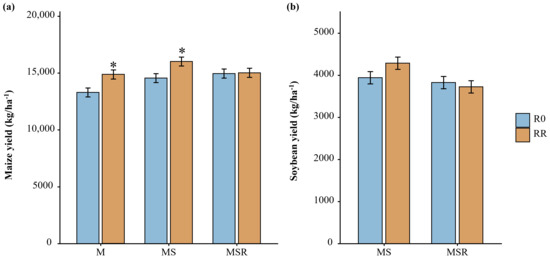
Across the three experimental years, maize yield was generally higher under RR than under R0 (Figure 6a), consistent with the significant overall effect of RR on maize yield (F = 10.19, p = 0.002; Table 2). In contrast, no significant overall effect of RR was detected for soybean yield (F = 0.70, p = 0.419; Table 2; Figure 6b).
Figure 6.
Crop yield under residue-removal and residue-return treatments in maize monoculture and maize–soybean intercropping systems. Note: (a) Maize yield in maize monoculture (M), fixed maize–soybean strip intercropping (MS), and rotational maize–soybean strip intercropping (MSR). (b) Soybean yield in MS and MSR. Bars represent estimated marginal means across the three experimental years, and error bars indicate standard errors. Asterisks indicate significant RR–R0 contrasts within the same cropping system based on estimated marginal means averaged across the three experimental years (* p < 0.05). R0, residue removal; RR, residue return.
4. Discussion
4.1. Short-Term Effects on Soil Chemical and Nutrient of Residue Return
The early influence of RR was concentrated in soil chemical conditions and available nutrient pools, indicating that surface-applied straw initially affected rapidly cycling processes rather than slowly accumulating soil stocks. Straw decomposition can release soluble compounds and readily available nutrients and may stimulate microbial processes involved in nutrient transformation [22,24]. These relatively rapid processes may help explain why early RR responses were more clearly expressed in pH and available nutrients than in bulk soil carbon and nitrogen pools [18,34,35].
Soil pH showed the clearest early response to RR in the present study. Residue inputs can alter soil proton balance through the release of organic compounds and base cations, while their interaction with fertilizer nitrogen further affects acid production and neutralization during decomposition [56]. The direction and persistence of these changes depend on the initial soil acidity, buffering capacity, residue chemistry, and the surrounding nutrient environment [57]. The predominance of negative pH responses therefore identifies soil acidity regulation as one of the earliest and most sensitive expressions of RR under the present field conditions.
The relatively clear AK response and the more variable AP may reflect fundamental differences in the release and transformation of K and P after residue return. Potassium in crop residues is readily released during decomposition and can subsequently enter exchangeable soil pools, although its retention also depends on adsorption, leaching, and aggregate associated organic matter [58,59]. Phosphorus availability is more strongly regulated by biological and geochemical transformations during residue decomposition [60,61,62]. These differences in nutrient-release pathways may help explain the relatively clear AK response and the greater variability of AP responses to RR. The significant year-dependent responses of pH, AK, and AP may also partly reflect interannual differences in rainfall distribution, particularly the higher precipitation during July–September in 2024 (Figure 1).
4.2. Cropping Systems Independent Changes in Soil Properties Under RR
Across the three cropping systems examined, residue return generated a shared early soil signal, with a general decrease in pH and increases in AK and AP; comparable changes in soil acidity have been observed at soil straw interfaces and after sustained straw incorporation [63,64]. The positive AK response is also consistent with the redistribution of residue-derived K among soil pools, although straw inputs may not fully offset K removal by crops under all field conditions [65,66]. Increases in AP under residue return have similarly been associated with alleviated microbial P limitation and enhanced transformation of organic and mineral associated P forms [67,68]. Evidence from different soil and fertilization backgrounds therefore supports the conclusion that cropping systems can regulate the magnitude of soil responses while retaining the common direction of early nutrient changes following residue return [69,70].
The variation in response magnitude among the three cropping systems may reflect differences in crop composition and the soil environment in which the returned maize residues decomposed [71,72]. Initial soil fertility can further modify these responses by altering microbial resource allocation and the turnover and retention of residue-derived C [73,74]. Crop identity also shapes rhizosphere microbial communities and their contribution to residue mineralization, creating distinct biological environments for nutrient transformation after residue return [75,76]. Variation in crop composition and soil biological context can therefore change the strength of soil responses while preserving their general direction across the three cropping systems [77,78].
4.3. Holistic Changes Induced by Short-Term Crop Residue Return
In the present study, the ordination analyses indicated variation in the multivariate patterns of surface-soil properties among treatments, whereas overlap between residue treatments was still evident (Figure 5). Similar changes in soil multifunctionality and interactions among soil properties have been reported following residue inputs, particularly when residue return modifies microbial functions and nutrient cycling processes [79,80]. The strong contributions of pH, AK, and AP indicate that changes in the soil chemical environment and available nutrient pools formed the main axis of this reorganization [81,82]. Residue decomposition simultaneously modifies physicochemical conditions and microbial functions at the soil straw interface, thereby connecting nutrient availability with broader carbon and nutrient transformation processes [83,84]. These linked responses can produce a clear multivariate signal even when several individual soil properties show weak or variable changes [85,86].
In the present study, SOC, TN, and BD showed weak or inconsistent responses to residue return across years and cropping systems (Table 1; Figure 2). Previous studies indicate that detectable changes in SOC, TN, and BD generally require sustained residue inputs because carbon and nitrogen accumulation and soil structural adjustment develop gradually over time [87,88,89,90]. This may explain their relatively weak or inconsistent responses during the first three years of RR. These processes may therefore alter relationships among soil properties before clear changes emerge in bulk C and N pools or soil structural indicators [91,92].
4.4. Crop Yield Responses to Residue Return
In the present study, RR had a significant overall positive effect on maize yield, whereas no significant overall response was detected for soybean yield (Table 2; Figure 6). Long-term field evidence shows that yield benefits become clearer when repeated residue inputs improve soil quality and multifunctionality, although their magnitude continues to vary with soil conditions and return practices [93,94]. Residue nutrients can contribute to crop production after decomposition and plant uptake, making the synchronization between nutrient release and crop demand important for the formation of yield benefits [95,96]. In rainfed systems, soil water storage further regulates crop access to these nutrients and can strengthen or constrain yield responses to surface straw management [97]. The significant maize yield response indicates that the agronomic effects of RR emerged within the three-year experiment, although the absence of a soybean response suggests that these effects differed between crops [98,99].
This three-year field study provides field-based evidence of the short-term responses of soil properties and crop yield to residue return across contrasting maize-based cropping systems under rainfed conditions. However, the single-site design limits the broader extrapolation of the present findings, while the absence of biological measurements constrains mechanistic interpretation. Future studies across multiple sites, with continued long-term observations, quantified residue inputs, and integrated biological measurements, are needed to determine whether these response patterns persist across rainfed cropping systems.
5. Conclusions
The short-term effects of residue return were concentrated in surface-soil chemical conditions and available nutrient status. Across maize monoculture and maize–soybean intercropping systems, the most consistent soil responses to RR were observed for pH and AK, particularly in the 0–20 cm soil layer. Multivariate analyses further showed that these responses were associated with coordinated variation in pH, available nutrients, soil water status, and soil physical properties. The contrasting yield responses of maize and soybean suggest that the agronomic benefits of residue return may depend on crop type. Overall, the stronger responses of surface-soil chemical properties and available nutrients indicate that these relatively dynamic soil processes may respond earlier than bulk soil properties during the initial stage of residue return.
Supplementary Materials
The following supporting information can be downloaded at https://www.mdpi.com/article/10.3390/land15101873/s1. Figure S1: Schematic representation of the randomized complete block design and treatment allocation; Table S1: Soil physicochemical properties under residue removal across cropping systems, years, and soil depths; Table S2: Soil physicochemical properties under residue return across cropping systems, years, and soil depths.
Author Contributions
Conceptualization, Y.-X.C.; methodology, Y.-X.C. and X.-W.J.; formal analysis, Y.-X.C.; investigation, Y.-X.C. and J.M.; writing—original draft preparation, Y.-X.C.; writing—review and editing, J.M. and X.Z.; visualization, Y.-X.C.; supervision, X.Z. All authors have read and agreed to the published version of the manuscript.
Funding
This work was supported by the National Key R & D Program of China (2023YFD1501500).
Data Availability Statement
The raw data supporting the conclusions of this article will be made available by the authors on request.
Conflicts of Interest
The authors declare no conflicts of interest.
References
- Hatfield, J.L.; Dold, C. Water-Use Efficiency: Advances and Challenges in a Changing Climate. Front. Plant Sci. 2019, 10, 103. [Google Scholar] [CrossRef] [Scilit] [PubMed]
- Plaza-Bonilla, D.; Arrúe, J.L.; Cantero-Martínez, C.; Fanlo, R.; Iglesias, A.; Álvaro-Fuentes, J. Carbon Management in Dryland Agricultural Systems. A Review. Agron. Sustain. Dev. 2015, 35, 1319–1334. [Google Scholar] [CrossRef] [Scilit]
- Blanco-Canqui, H.; Ruis, S.J. No-Tillage and Soil Physical Environment. Geoderma 2018, 326, 164–200. [Google Scholar] [CrossRef] [Scilit]
- Liao, Y.; Cao, H.X.; Liu, X.; Li, H.T.; Hu, Q.Y.; Xue, W.-K. By Increasing Infiltration and Reducing Evaporation, Mulching Can Improve the Soil Water Environment and Apple Yield of Orchards in Semiarid Areas. Agric. Water Manag. 2021, 253, 106936. [Google Scholar] [CrossRef] [Scilit]
- Fan, D.; Jia, G.; Wang, Y.; Yu, X. The Effectiveness of Mulching Practices on Water Erosion Control: A Global Meta-Analysis. Geoderma 2023, 438, 116643. [Google Scholar] [CrossRef] [Scilit]
- Lal, R. Soil Carbon Sequestration Impacts on Global Climate Change and Food Security. Science 2004, 304, 1623–1627. [Google Scholar] [CrossRef] [Scilit] [PubMed]
- Zhao, X.; Dai, L.-L.; Xu, Z.-Y. Enhancing the Returning and Utilizations of Crop Straw towards Sustainable Agriculture. Farming Syst. 2026, 4, 100197. [Google Scholar] [CrossRef] [Scilit]
- Wang, J.; Ghimire, R.; Fu, X.; Sainju, U.M.; Liu, W. Straw Mulching Increases Precipitation Storage Rather than Water Use Efficiency and Dryland Winter Wheat Yield. Agric. Water Manag. 2018, 206, 95–101. [Google Scholar] [CrossRef] [Scilit]
- Qin, W.; Hu, C.; Oenema, O. Soil Mulching Significantly Enhances Yields and Water and Nitrogen Use Efficiencies of Maize and Wheat: A Meta-Analysis. Sci. Rep. 2015, 5, 16210. [Google Scholar] [CrossRef] [Scilit] [PubMed]
- Gao, H.; Yan, C.; Liu, Q.; Li, Z.; Yang, X.; Qi, R. Exploring Optimal Soil Mulching to Enhance Yield and Water Use Efficiency in Maize Cropping in China: A Meta-Analysis. Agric. Water Manag. 2019, 225, 105741. [Google Scholar] [CrossRef] [Scilit]
- Li, J.; Xu, X.; Liu, L.; Deng, X.; Wang, S. Impact of Irrigation on Cropland Yield Potential and Scenario-Based Optimization in Northeast China. Agric. Water Manag. 2025, 314, 109522. [Google Scholar] [CrossRef] [Scilit]
- Liang, W.; Gao, M.; Zhang, N.; Chen, X.; Lu, X.; Yan, J.; Han, X.; Zhu, Y.; Zou, W. Effects of Soil Management Strategies on Maize and Soybean Yields in Northeast China: A Meta-Analysis. Field Crops Res. 2025, 333, 110116. [Google Scholar] [CrossRef] [Scilit]
- Liu, J.; Qiu, T.; Peñuelas, J.; Sardans, J.; Tan, W.; Wei, X.; Cui, Y.; Cui, Q.; Wu, C.; Liu, L.; et al. Crop Residue Return Sustains Global Soil Ecological Stoichiometry Balance. Glob. Change Biol. 2023, 29, 2203–2226. [Google Scholar] [CrossRef] [Scilit] [PubMed]
- Zhang, W.; Fang, L.; Zhang, W.; Wang, C.; Qiu, T.; Li, X.; Huang, M.; Li, B.; Xia, L.; Peng, L.; et al. Global Potential and Trade-Offs of Conservation Tillage for Crop Productivity and Ecosystem Services. Glob. Change Biol. 2026, 32, e70825. [Google Scholar] [CrossRef] [Scilit] [PubMed]
- Cui, H.; Luo, Y.; Chen, J.; Jin, M.; Li, Y.; Wang, Z. Straw Return Strategies to Improve Soil Properties and Crop Productivity in a Winter Wheat-Summer Maize Cropping System. Eur. J. Agron. 2022, 133, 126436. [Google Scholar] [CrossRef] [Scilit]
- Han, X.; Xu, C.; Dungait, J.A.J.; Bol, R.; Wang, X.; Wu, W.; Meng, F. Straw Incorporation Increases Crop Yield and Soil Organic Carbon Sequestration but Varies under Different Natural Conditions and Farming Practices in China: A System Analysis. Biogeosciences 2018, 15, 1933–1946. [Google Scholar] [CrossRef] [Scilit]
- Xia, L.; Lam, S.K.; Wolf, B.; Kiese, R.; Chen, D.; Butterbach-Bahl, K. Trade-Offs between Soil Carbon Sequestration and Reactive Nitrogen Losses under Straw Return in Global Agroecosystems. Glob. Change Biol. 2018, 24, 5919–5932. [Google Scholar] [CrossRef] [Scilit] [PubMed]
- Li, B.; Liang, F.; Wang, Y.; Cao, W.; Song, H.; Chen, J.; Guo, J. Magnitude and Efficiency of Straw Return in Building up Soil Organic Carbon: A Global Synthesis Integrating the Impacts of Agricultural Managements and Environmental Conditions. Sci. Total Environ. 2023, 875, 162670. [Google Scholar] [CrossRef] [Scilit] [PubMed]
- Yin, Y.; Chen, Z.; Gong, H.; He, K.; Miao, Q.; Tian, X.; Wang, Z.; Wang, Y.; Zheng, H.; Cui, Z. Soil Organic Carbon Formation Efficiency from Straw/Stover and Manure Input and Its Drivers: Estimates from Long-Term Data in Global Croplands. Glob. Change Biol. 2024, 30, e17460. [Google Scholar] [CrossRef] [Scilit] [PubMed]
- He, K.; Ma, B.-L.; Wei, X.; Guo, S.; Feng, C.; Liu, C.; Ma, Y.; Li, P. Straw Return Impacts on Crop Yield and Yield Variability: A Meta-Analysis. Soil Tillage Res. 2025, 254, 106712. [Google Scholar] [CrossRef] [Scilit]
- Huang, T.; Yang, N.; Lu, C.; Qin, X.; Siddique, K.H.M. Soil Organic Carbon, Total Nitrogen, Available Nutrients, and Yield under Different Straw Returning Methods. Soil Tillage Res. 2021, 214, 105171. [Google Scholar] [CrossRef] [Scilit]
- Chen, L.; Sun, S.; Yao, B.; Peng, Y.; Gao, C.; Qin, T.; Zhou, Y.; Sun, C.; Quan, W. Effects of Straw Return and Straw Biochar on Soil Properties and Crop Growth: A Review. Front. Plant Sci. 2022, 13, 986763. [Google Scholar] [CrossRef] [Scilit] [PubMed]
- Gao, Y.; Wang, L.; Li, M.; Qiu, Y.; Song, Q.; Ji, T.; Gong, Z.; Ma, C.; Yan, C. Straw Return Facilitates the Availability of Soil Nitrogen by Altering the Metabolic Distribution and Nitrogen Cycling Processes. Farming Syst. 2026, 4, 100192. [Google Scholar] [CrossRef] [Scilit]
- Chen, Z.; Wang, H.; Liu, X.; Zhao, X.; Lu, D.; Zhou, J.; Li, C. Changes in Soil Microbial Community and Organic Carbon Fractions under Short-Term Straw Return in a Rice–Wheat Cropping System. Soil Tillage Res. 2017, 165, 121–127. [Google Scholar] [CrossRef] [Scilit]
- Liu, S.; Wang, L.; Chang, L.; Khan, I.; Nadeem, F.; Rehman, A.; Suo, R. Evaluating the Influence of Straw Mulching and Intercropping on Nitrogen Uptake, Crop Growth, and Yield Performance in Maize and Soybean. Front. Plant Sci. 2023, 14, 1280382. [Google Scholar] [CrossRef] [Scilit] [PubMed]
- Zhao, X.; Liu, B.; Liu, S.; Qi, J.; Wang, X.; Pu, C.; Li, S.; Zhang, X.; Yang, X.; Lal, R.; et al. Sustaining Crop Production in China’s Cropland by Crop Residue Retention: A Meta-Analysis. Land Degrad. Dev. 2020, 31, 694–709. [Google Scholar] [CrossRef] [Scilit]
- Cao, N.; Zhi, M.; Zhao, W.; Pang, J.; Hu, W.; Zhou, Z.; Meng, Y. Straw Retention Combined with Phosphorus Fertilizer Promotes Soil Phosphorus Availability by Enhancing Soil P-Related Enzymes and the Abundance of phoC and phoD Genes. Soil Tillage Res. 2022, 220, 105390. [Google Scholar] [CrossRef] [Scilit]
- Xiang, Y.; Song, Y.; Cao, M.; Jiang, S.; Jin, C.; Tang, F.; Xin, G.; He, C. Crop Residue Decomposition Contributes to Soil Phosphorus Availability by Promoting Microbial Phosphorus Transformation. Geoderma 2026, 468, 117771. [Google Scholar] [CrossRef] [Scilit]
- Xu, H.; Sun, J.; Zhao, Z.; Gao, Y.; Tian, L.; Wei, X. Long-Term Straw Return Promotes Soil Phosphorus Cycling by Enhancing Soil Microbial Functional Genes Responsible for Phosphorus Mobilization in the Rice Rhizosphere. Agric. Ecosyst. Environ. 2025, 381, 109422. [Google Scholar] [CrossRef] [Scilit]
- Jantamenchai, M.; Sukitprapanon, T.-S.; Tulaphitak, D.; Mekboonsonglarp, W.; Vityakon, P. Organic Phosphorus Forms in a Tropical Sandy Soil after Application of Organic Residues of Different Quality. Geoderma 2022, 405, 115462. [Google Scholar] [CrossRef] [Scilit]
- Pu, J.; Jiang, N.; Zhang, Y.; Guo, L.; Huang, W.; Chen, L. Effects of Various Straw Incorporation Strategies on Soil Phosphorus Fractions and Transformations. GCB Bioenergy 2023, 15, 88–98. [Google Scholar] [CrossRef] [Scilit]
- Guo, Y.; Zhang, Z.; Liang, F.; Cao, W.; Wang, Y.; Chen, J.; Guo, J. Meta-Analysis Reveals That Returning Crop Straw to Arable Land Causes Soil Acidification at the Global Scale. Eur. J. Agron. 2025, 164, 127511. [Google Scholar] [CrossRef] [Scilit]
- Liang, F.; Li, B.; Vogt, R.D.; Mulder, J.; Song, H.; Chen, J.; Guo, J. Straw Return Exacerbates Soil Acidification in Major Chinese Croplands. Resour. Conserv. Recycl. 2023, 198, 107176. [Google Scholar] [CrossRef] [Scilit]
- Berhane, M.; Xu, M.; Liang, Z.; Shi, J.; Wei, G.; Tian, X. Effects of Long-Term Straw Return on Soil Organic Carbon Storage and Sequestration Rate in North China Upland Crops: A Meta-Analysis. Glob. Change Biol. 2020, 26, 2686–2701. [Google Scholar] [CrossRef] [Scilit] [PubMed]
- Duan, Y.; Chen, L.; Li, Y.; Wang, Q.; Zhang, C.; Ma, D.; Li, J.; Zhang, J. N, P and Straw Return Influence the Accrual of Organic Carbon Fractions and Microbial Traits in a Mollisol. Geoderma 2021, 403, 115373. [Google Scholar] [CrossRef] [Scilit]
- Tang, W.; Yu, G.; Fu, Q.; Zhou, S.; Hao, Y.; Xiao, M.; Lv, G.; Chen, C. Optimal Straw Return Strategies for Enhancing SOC, Crop Yield, and Mitigating CO2 Emissions in Chinese Wheat and Maize Systems. Agric. Water Manag. 2025, 322, 109982. [Google Scholar] [CrossRef] [Scilit]
- Islam, M.U.; Guo, Z.; Jiang, F.; Peng, X. Does Straw Return Increase Crop Yield in the Wheat-Maize Cropping System in China? A Meta-Analysis. Field Crops Res. 2022, 279, 108447. [Google Scholar] [CrossRef] [Scilit]
- Song, Y.; Gao, M.; Li, Z. Impacts of Straw Return Methods on Crop Yield, Soil Organic Matter, and Salinity in Saline-Alkali Land in North China. Field Crops Res. 2025, 322, 109752. [Google Scholar] [CrossRef] [Scilit]
- Zhang, R.; Yu, H.; Zhang, W.; Li, W.; Su, H.; Wu, S.; Xu, Q.; Li, Y.; Yao, H. Straw Return Enhances Grain Yield and Qual-ity of Three Main Crops: Evidence from a Meta-Analysis. Front. Plant Sci. 2024, 15. [Google Scholar] [CrossRef] [Scilit]
- McDaniel, M.D.; Tiemann, L.K.; Grandy, A.S. Does Agricultural Crop Diversity Enhance Soil Microbial Biomass and Organic Matter Dynamics? A Meta-Analysis. Ecol. Appl. 2014, 24, 560–570. [Google Scholar] [CrossRef] [Scilit] [PubMed]
- Cong, W.; Hoffland, E.; Li, L.; Six, J.; Sun, J.; Bao, X.; Zhang, F.; van der Werf, W. Intercropping Enhances Soil Carbon and Nitrogen. Glob. Change Biol. 2015, 21, 1715–1726. [Google Scholar] [CrossRef] [Scilit] [PubMed]
- Tiemann, L.K.; Grandy, A.S.; Atkinson, E.E.; Marin-Spiotta, E.; McDaniel, M.D. Crop Rotational Diversity Enhances Belowground Communities and Functions in an Agroecosystem. Ecol. Lett. 2015, 18, 761–771. [Google Scholar] [CrossRef] [Scilit] [PubMed]
- Bedoussac, L.; Journet, E.-P.; Hauggaard-Nielsen, H.; Naudin, C.; Corre-Hellou, G.; Jensen, E.S.; Prieur, L.; Justes, E. Ecological Principles Underlying the Increase of Productivity Achieved by Cereal-Grain Legume Intercrops in Organic Farming. A Review. Agron. Sustain. Dev. 2015, 35, 911–935. [Google Scholar] [CrossRef] [Scilit]
- Liu, J.; Li, Y.; Han, C.; Yang, D.; Yang, J.; Cade-Menun, B.J.; Chen, Y.; Sui, P. Maize-Soybean Intercropping Facilitates Chemical and Microbial Transformations of Phosphorus Fractions in a Calcareous Soil. Front. Microbiol. 2022, 13, 1028969. [Google Scholar] [CrossRef] [Scilit] [PubMed]
- Lu, M.; Zhao, J.; Lu, Z.; Li, M.; Yang, J.; Fullen, M.; Li, Y.; Fan, M. Maize–Soybean Intercropping Increases Soil Nutrient Availability and Aggregate Stability. Plant Soil 2025, 506, 441–456. [Google Scholar] [CrossRef] [Scilit]
- McDaniel, M.D.; Grandy, A.S.; Tiemann, L.K.; Weintraub, M.N. Crop Rotation Complexity Regulates the Decomposition of High and Low Quality Residues. Soil Biol. Biochem. 2014, 78, 243–254. [Google Scholar] [CrossRef] [Scilit]
- Curtright, A.J.; Tiemann, L.K. Intercropping Increases Soil Extracellular Enzyme Activity: A Meta-Analysis. Agric. Ecosyst. Environ. 2021, 319, 107489. [Google Scholar] [CrossRef] [Scilit]
- Yang, Z.; Hu, J.; Chen, X.; Zhang, Y.; Wang, Y.; Peng, J.; Fei, J.; Luo, G.; Liao, C. Intercropping-Driven Effects on Soil Organic Carbon Mineralization and Its Temperature Sensitivity Are Associated with Soil C-N-P Stoichiometry and Carbon-Acquiring Microorganisms and Enzymes. Geoderma 2025, 460, 117411. [Google Scholar] [CrossRef] [Scilit]
- Clarke Topp, G.; Ferré, P.A. 3.1 Water Content. In Methods of Soil Analysis: Part 4 Physical Methods; SSSA Book Series; Dane, J.H., Topp, G.C., Eds.; Soil Science Society of America: Madison, WI, USA, 2002; pp. 417–545. [Google Scholar] [CrossRef] [Scilit]
- Grossman, R.B.; Reinsch, T.G. 2.1 Bulk Density and Linear Extensibility. In Methods of Soil Analysis: Part 4 Physical Methods; Dane, J.H., Topp, G.C., Eds.; Soil Science Society of America: Madison, WI, USA, 2002; pp. 201–228. [Google Scholar] [CrossRef] [Scilit]
- Thomas, G.W. Soil pH and Soil Acidity. In Methods of Soil Analysis: Part 3 Chemical Methods; Sparks, D.L., Page, A.L., Helmke, P.A., Loeppert, R.H., Soltanpour, P.N., Tabatabai, M.A., Johnston, C.T., Sumner, M.E., Eds.; Soil Science Society of America: Madison, WI, USA, 1996; pp. 475–490. [Google Scholar] [CrossRef] [Scilit]
- Nelson, D.W.; Sommers, L.E. Total Carbon, Organic Carbon, and Organic Matter. In Methods of Soil Analysis: Part 3 Chemical Methods; Sparks, D.L., Page, A.L., Helmke, P.A., Loeppert, R.H., Soltanpour, P.N., Tabatabai, M.A., Johnston, C.T., Sumner, M.E., Eds.; Soil Science Society of America: Madison, WI, USA, 1996; pp. 961–1010. [Google Scholar] [CrossRef] [Scilit]
- Bremner, J.M. Nitrogen-Total. In Methods of Soil Analysis: Part 3 Chemical Methods; Sparks, D.L., Page, A.L., Helmke, P.A., Loeppert, R.H., Soltanpour, P.N., Tabatabai, M.A., Johnston, C.T., Sumner, M.E., Eds.; Soil Science Society of America: Madison, WI, USA, 1996; pp. 1085–1121. [Google Scholar] [CrossRef] [Scilit]
- Helmke, P.A.; Sparks, D.L. Lithium, Sodium, Potassium, Rubidium, and Cesium. In Methods of Soil Analysis: Part 3 Chemical Methods; Sparks, D.L., Page, A.L., Helmke, P.A., Loeppert, R.H., Soltanpour, P.N., Tabatabai, M.A., Johnston, C.T., Sumner, M.E., Eds.; Soil Science Society of America: Madison, WI, USA, 1996; pp. 551–574. [Google Scholar] [CrossRef] [Scilit]
- Kuo, S. Phosphorus. In Methods of Soil Analysis: Part 3 Chemical Methods; Sparks, D.L., Page, A.L., Helmke, P.A., Loeppert, R.H., Soltanpour, P.N., Tabatabai, M.A., Johnston, C.T., Sumner, M.E., Eds.; Soil Science Society of America: Madison, WI, USA, 1996; pp. 869–919. [Google Scholar] [CrossRef] [Scilit]
- Cheng, J.; Yang, C.-Z.; Zhang, L.; Lin, Z.-J.; Dang, Y.P.; Zhao, X.; Zhang, H.-L. The Competitive Effects of Crop Straw Return and Nitrogen Fertilization on Soil Acidification. Agric. Ecosyst. Environ. 2025, 388, 109638. [Google Scholar] [CrossRef] [Scilit]
- Zhang, S.; Zhu, Q.; de Vries, W.; Ros, G.H.; Chen, X.; Muneer, M.A.; Zhang, F.; Wu, L. Effects of Soil Amendments on Soil Acidity and Crop Yields in Acidic Soils: A World-Wide Meta-Analysis. J. Environ. Manag. 2023, 345, 118531. [Google Scholar] [CrossRef] [Scilit] [PubMed]
- Zhu, D.; Cong, R.; Ren, T.; Lu, Z.; Lu, J.; Li, X. Straw Incorporation Improved the Adsorption of Potassium by Increasing the Soil Humic Acid in Macroaggregates. J. Environ. Manag. 2022, 310, 114665. [Google Scholar] [CrossRef] [Scilit] [PubMed]
- Xiong, Z.; Zhu, D.; Lu, Y.; Lu, J.; Liao, Y.; Ren, T.; Li, X. Continuous Potassium Fertilization Combined with Straw Return Increased Soil Potassium Availability and Risk of Potassium Loss in Rice-Upland Rotation Systems. Chemosphere 2023, 344, 140390. [Google Scholar] [CrossRef] [Scilit] [PubMed]
- Yang, C.; Lu, S. Straw and Straw Biochar Differently Affect Phosphorus Availability, Enzyme Activity and Microbial Functional Genes in an Ultisol. Sci. Total Environ. 2022, 805, 150325. [Google Scholar] [CrossRef] [Scilit] [PubMed]
- Fei, C.; Zhang, S.; Zhang, L.; Ding, X. Straw Is More Effective than Biochar in Mobilizing Soil Organic Phosphorus Mineralization in Saline-Alkali Paddy Soil. Appl. Soil Ecol. 2023, 186, 104848. [Google Scholar] [CrossRef] [Scilit]
- Liu, Y.; Liu, R.; Ghimire, R.; Zhang, N.; Zhou, S.; Zhao, F.; Wang, J. Linking Soil Phosphorus Fractions to Associated Microbial Functional Profiles under Crop Rotation on the Loess Plateau of China. Soil Tillage Res. 2023, 233, 105809. [Google Scholar] [CrossRef] [Scilit]
- Zhang, W.; Lu, Y.; Sommer, S.; Wang, Y.; Liu, Y.; Wang, G.; Zhu, K. Mapping Microscale pH Dynamics at Soil–Straw Interfaces Under Fluctuating Moisture Conditions. Eur. J. Soil Sci. 2025, 76, e70223. [Google Scholar] [CrossRef] [Scilit]
- Li, X.; Wu, N.; Mao, M.; Liu, W.; Peng, D.; Deng, O.; Liu, J.; Gao, X.; Li, B.; Wang, C.; et al. Straw-Induced Soil pH Decreased Drives Aluminum Speciation Shift and Enhances Soil Organic Carbon Stability: A 12-Year Paddy Experiment. Environ. Technol. Innov. 2026, 41, 104802. [Google Scholar] [CrossRef] [Scilit]
- Wang, X.; Mi, X.; Sun, L.; He, G.; Wang, Z. Straw Return Cannot Prevent Soil Potassium Depletion in Wheat Fields of Drylands. Eur. J. Agron. 2023, 143, 126728. [Google Scholar] [CrossRef] [Scilit]
- Xiong, Z.; Gao, Z.; Lu, J.; Zhang, Y.; Li, X. Straw Return Combined with Potassium Fertilization Improves Potassium Stocks in Large-Macroaggregates by Increasing Complex Iron Oxide under Rice–Oilseed Rape Rotation System. Soil Tillage Res. 2025, 248, 106404. [Google Scholar] [CrossRef] [Scilit]
- Yang, X.; He, P.; Zhang, Z.; You, M.; Wu, X.; Li, L.-J. Straw Return, Rather than Warming, Alleviates Microbial Phosphorus Limitation in a Cultivated Mollisol. Appl. Soil Ecol. 2023, 186, 104821. [Google Scholar] [CrossRef] [Scilit]
- Xiao, J.; Zhang, J.; Li, P.; Tang, Y.; Lu, Y.; Liao, Y.; Nie, J. Enhancing Phosphorus Transformation in Typical Reddish Paddy Soil from China: Insights on Long-Term Straw Return and Pig Manure Application via Microbial Mechanisms. Sci. Total Environ. 2024, 940, 173513. [Google Scholar] [CrossRef] [Scilit] [PubMed]
- Song, J.; Song, J.; Haider, S.; Bai, J.; Yang, G.; Ren, G.; Wang, X.; Feng, Y. Straw Return and Nitrogen-Phosphorus Fertilization Coordinates Crop Yields, Soil Nutrient Function and Carbon Emissions. J. Environ. Manag. 2025, 393, 126950. [Google Scholar] [CrossRef] [Scilit] [PubMed]
- Wang, X.; Ji, X.; Long, A.; Yang, J.; Chang, L.; Gong, X.; Jiang, Y.; Qi, H. Response of Soil Phosphorus Fractions and Microbial Community Network to Straw Returning: Insights from Microbial Phosphorus Limitation. Soil Tillage Res. 2025, 253, 106698. [Google Scholar] [CrossRef] [Scilit]
- Ji, D.; Ding, F.; Dijkstra, F.A.; Jia, Z.; Li, S.; Wang, J. Crop Residue Decomposition and Nutrient Release Are Independently Affected by Nitrogen Fertilization, Plastic Film Mulching, and Residue Type. Eur. J. Agron. 2022, 138, 126535. [Google Scholar] [CrossRef] [Scilit]
- Adhikari, A.D.; Shrestha, P.; Ghimire, R.; Liu, Z.; Pollock, D.A.; Acharya, P.; Aryal, D.R. Cover Crop Residue Quality Regulates Litter Decomposition Dynamics and Soil Carbon Mineralization Kinetics in Semi-Arid Cropping Systems. Appl. Soil Ecol. 2024, 193, 105160. [Google Scholar] [CrossRef] [Scilit]
- Zhang, X.; Xin, X.; Yang, W.; Zhu, A.; Ding, S. Short-Term Decomposition, Turnover and Retention of Residue-Derived Carbon Are Influenced by the Fertility Level in a Sandy Loam Soil. Geoderma 2019, 349, 68–78. [Google Scholar] [CrossRef] [Scilit]
- Bao, Y.; Dolfing, J.; Chen, R.; Li, Z.; Lin, X.; Feng, Y. Trade-off between Microbial Ecophysiological Features Regulated by Soil Fertility Governs Plant Residue Decomposition. Soil Tillage Res. 2023, 229, 105679. [Google Scholar] [CrossRef] [Scilit]
- Nevins, C.J.; Nakatsu, C.; Armstrong, S. Characterization of Microbial Community Response to Cover Crop Residue Decomposition. Soil Biol. Biochem. 2018, 127, 39–49. [Google Scholar] [CrossRef] [Scilit]
- Xie, Z.; Yu, Z.; Li, Y.; Wang, G.; Tang, C.; Mathesius, U.; Liu, X.; Liu, J.; Liu, J.; Chen, Y.; et al. Rhizosphere-Induced Shift in the Composition of Bacterial Community Favors Mineralization of Crop Residue Nitrogen. Plant Soil 2024, 502, 135–148. [Google Scholar] [CrossRef] [Scilit]
- Jongen, R.; Hannula, S.E.; De Long, J.R.; Heinen, R.; Huberty, M.; Steinauer, K.; Bezemer, T.M. Plant Community Legacy Effects on Nutrient Cycling, Fungal Decomposer Communities and Decomposition in a Temperate Grassland. Soil Biol. Biochem. 2021, 163, 108450. [Google Scholar] [CrossRef] [Scilit]
- Sun, Y.; Yang, X.; Nan, T.; Du, T.; Kang, S.; Siddique, K.H.M.; Butterbach-Bahl, K. Distinct Soil Nutrient Availability Drives Variation in the Microbial Community and Functions in Wheat and Maize Rhizosphere under Diversified Crop Rotations. Plant Soil 2025, 517, 1889–1912. [Google Scholar] [CrossRef] [Scilit]
- Duan, Y.; Cao, M.; Zhong, W.; Wang, Y.; Ni, Z.; Zhang, M.; Li, J.; Li, Y.; Meng, X.; Wu, L. Moderate N Fertilizer Reduction with Straw Return Modulates Cropland Functions and Microbial Traits in a Meadow Soil. SOIL 2024, 10, 779–794. [Google Scholar] [CrossRef] [Scilit]
- Yan, W.; Xia, M.; Liu, J.; Han, Z.; Li, Z.; Rensing, C.; Alwathnani, H.A.; Chen, B.; Wu, W.; Wu, H. Straw Return Improves Soil Multifunctionality by Altering Functional Microbial Diversity and Abundance. Agric. Ecosyst. Environ. 2026, 396, 110015. [Google Scholar] [CrossRef] [Scilit]
- Zhao, S.; Qiu, S.; Xu, X.; Ciampitti, I.A.; Zhang, S.; He, P. Change in Straw Decomposition Rate and Soil Microbial Community Composition after Straw Addition in Different Long-Term Fertilization Soils. Appl. Soil Ecol. 2019, 138, 123–133. [Google Scholar] [CrossRef] [Scilit]
- Zhu, Y.; Yang, W.; Qu, J.; Jiang, Y.; Zhao, Y.; Wu, Z.; Su, J.; Han, X.; Zou, W. Straw Return Strategies for Soil Microbial Quotient Enhancement: Insights from DOM Vertical Distribution Characteristics. Agric. Ecosyst. Environ. 2025, 393, 109840. [Google Scholar] [CrossRef] [Scilit]
- Yang, H.; Xu, M.; Li, Y.; Xu, C.; Zhai, S.; Liu, J. The Impacts of Ditch-Buried Straw Layers on the Interface Soil Physicochemical and Microbial Properties in a Rice-Wheat Rotation System. Soil Tillage Res. 2020, 202, 104656. [Google Scholar] [CrossRef] [Scilit]
- Yang, H.; Fang, C.; Meng, Y.; Dai, Y.; Liu, J. Long-Term Ditch-Buried Straw Return Increases Functionality of Soil Microbial Communities. CATENA 2021, 202, 105316. [Google Scholar] [CrossRef] [Scilit]
- Li, Y.; Abalos, D.; Arthur, E.; Feng, H.; Siddique, K.H.M.; Chen, J. Different Straw Return Methods Have Divergent Effects on Winter Wheat Yield, Yield Stability, and Soil Structural Properties. Soil Tillage Res. 2024, 238, 105992. [Google Scholar] [CrossRef] [Scilit]
- Ahmad, A.; Arif, M.S.; Shahzad, S.M.; Yasmeen, T.; Shakoor, A.; Iqbal, S.; Riaz, A.; Zahid, A.; Chapman, S.J. Long-Term Raw Crop Residue but Not Burned Residue Incorporation Improved Soil Multifunctionality in Semi-Arid Agroecosystems. Soil Tillage Res. 2024, 240, 106073. [Google Scholar] [CrossRef] [Scilit]
- Lin, Z.; Lu, X.; Xu, Y.; Sun, W.; Yu, Y.; Zhang, W.; Mishra, U.; Kuzyakov, Y.; Wang, G.; Qin, Z. Increased Straw Return Promoted Soil Organic Carbon Accumulation in China’s Croplands over the Past 40 Years. Sci. Total Environ. 2024, 945, 173903. [Google Scholar] [CrossRef] [Scilit] [PubMed]
- Zhang, J.; Zhang, F.; Yang, L. Differences in Straw Derived Hydrophilic and Hydrophobic Carbon Incorporation into Soil Microbial Necromass. Soil Biol. Biochem. 2025, 209, 109901. [Google Scholar] [CrossRef] [Scilit]
- Tao, J.; Liu, X.; Zhang, Z.; Peng, X. Straw Return Reshapes Soil Organic Carbon Stability: A Global Meta-Analysis. J. Environ. Manag. 2026, 410, 130103. [Google Scholar] [CrossRef] [Scilit] [PubMed]
- Fan, H.; Jia, S.; Yu, M.; Chen, X.; Shen, A.; Su, Y. Long-Term Straw Return Increases Biological Nitrogen Fixation by Increasing Soil Organic Carbon and Decreasing Available Nitrogen in Rice–Rape Rotation. Plant Soil 2022, 479, 267–279. [Google Scholar] [CrossRef] [Scilit]
- Yang, N.; Zhang, M.; Pan, X.; Dang, P.; Wang, S.; Han, X.; Wang, X.; Zhang, C.; Meng, M.; Wang, W.; et al. Characteristics of Changes to POC and MAOC After Straw Returning in China: A Meta-Analysis. Land Degrad. Dev. 2025, 36, 5199–5211. [Google Scholar] [CrossRef] [Scilit]
- Yu, X.; Wang, L.; Wang, Q.; Zhou, G.; Sun, H.; Guggenberger, G.; Li, Y.; Yakov, K.; Luo, Y.; Fu, Y. Faster Soil Organic Carbon Turnover in MAOM versus POM: Straw Input Causes Larger Microbial Driven Soil Organic Carbon Decomposition but Higher Straw Accumulation in MAOM. Soil Tillage Res. 2025, 251, 106549. [Google Scholar] [CrossRef] [Scilit]
- Huo, R.; Wang, J.; Wang, K.; Zhang, Y.; Ren, T.; Li, X.; Cong, R.; Lu, J. Long-Term Straw Return Enhanced Crop Yield by Improving Ecosystem Multifunctionality and Soil Quality under Triple Rotation System: An Evidence from a 15 Years Study. Field Crops Res. 2024, 312, 109395. [Google Scholar] [CrossRef] [Scilit]
- Xing, S.; Zhang, G.; Zhang, Y.; Zhang, Y. Appropriate Straw Return Approaches Can Improve Soil Properties and Crop Yield of Mollisol Farmlands with Various Degradation Degrees. Agric. Ecosyst. Environ. 2026, 400, 110248. [Google Scholar] [CrossRef] [Scilit]
- Guan, X.-K.; Wei, L.; Turner, N.C.; Ma, S.-C.; Yang, M.-D.; Wang, T.-C. Improved Straw Management Practices Promote in Situ Straw Decomposition and Nutrient Release, and Increase Crop Production. J. Clean. Prod. 2020, 250, 119514. [Google Scholar] [CrossRef] [Scilit]
- Wang, Y.; Liu, X.; Zheng, Y.; Zheng, C.; Cao, C.; Li, K.; Yang, X.; Batyrbek, M.; Liu, D.; Zhang, J.; et al. Maize Straw Return with Optimized Nitrogen Enhances Yield, Nutrient Uptake, and Economic Benefit in Wheat-Maize Rotation System. Eur. J. Agron. 2026, 178, 128140. [Google Scholar]
- Qin, W.; Niu, L.; You, Y.; Cui, S.; Chen, C.; Li, Z. Effects of Conservation Tillage and Straw Mulching on Crop Yield, Water Use Efficiency, Carbon Sequestration and Economic Benefits in the Loess Plateau Region of China: A Meta-Analysis. Soil Tillage Res. 2024, 238, 106025. [Google Scholar]
- Li, Y.; Feng, H.; Dong, Q.; Xia, L.; Li, J.; Li, C.; Zang, H.; Andersen, M.N.; Olesen, J.E.; Jørgensen, U.; et al. Ammoniated Straw Incorporation Increases Wheat Yield, Yield Stability, Soil Organic Carbon and Soil Total Nitrogen Content. Field Crops Res. 2022, 284, 108558. [Google Scholar]
- Cui, Y.; Yang, M.; Yang, X.; Wang, R.; Guo, S. Trade-Offs between Crop Yield and Soil Organic Carbon Sequestration under Straw Return across Cropping Systems. Field Crops Res. 2026, 342, 110476. [Google Scholar]

Disclaimer/Publisher’s Note: The statements, opinions and data contained in all publications are solely those of the individual author(s) and contributor(s) and not of MDPI and/or the editor(s). MDPI and/or the editor(s) disclaim responsibility for any injury to people or property resulting from any ideas, methods, instructions or products referred to in the content. |
© 2026 by the authors. Licensee MDPI, Basel, Switzerland. This article is an open access article distributed under the terms and conditions of the Creative Commons Attribution (CC BY) license.