


Abstract
The coastal zone consists of diverse littoral habitats, which we categorize into two primary types: linear and areal. Investigating linear littoral habitats is crucial for resolving the ‘coastal squeeze’ phenomenon in coastal and marine protected areas and in seaside resorts. Our research aims to identify the critical conditions for the conversion of defunct seaside military training areas as brownfields into coastal protected areas and small-scale seaside resorts and their sustainable planning and management. The development of seaside tourism facilities is taking place both on the coast and in the hinterland, but the coast is used for tourism much more intensively than the hinterland. It is challenging to ‘pull’ tourists away from the linear beach to the areal hinterland. We argue that the distinctiveness of the resource use conflicts in coastal and hinterland tourism lies in an essential difference between the system’s linear and areal littoral habitats, as 78% of summer visitors in Pajūris Regional Park in Lithuania come for active leisure in nature. The results of our study show that combining the GIS interpretation algorithms, supported by the innovative conjoining of DPSIR and Delphi analytical tools, ensures site-tailored integrated management of the linear waterfront and the areal hinterland.
1. Introduction
We distinguish two primary types of littoral habitats: linear and areal [1]. The framework for understanding linear littoral habitats, initially proposed by Robles-Diaz-de-León and Nava-Tudela [2] and further advanced by the research team at Klaipeda University, Lithuania [3,4,5,6], has been employed by coastal researchers worldwide, addressing various aspects of coastal management, including coastal forest preservation [7], dune conservation [8], and fishery management [9]. A comprehensive understanding of linear littoral habitats is essential for addressing critical issues, such as coastal squeeze [10] causing the loss of narrow sandy beaches [11,12]. This threat is rising with climate change, underscoring the need for effective management [13,14,15,16,17,18,19].
The ever-increasing threat of coastal squeeze raises the need to assess the relationships between the seaside tourist destinations and their hinterland, considering the essential differences between linear and areal littoral habitats. Therefore, the overall aim of this study is to analyze how a coastal and marine protected area (CMPA), established instead of a defunct military training ground, can, together with an adjacent seaside resort, serve as a sustainable tourist destination and cater to diverse tourist needs by integrating the linear waterfront and its areal hinterland. Lithuanian regional parks fall into Category V and enjoy management regimes allowing sustainable tourism [20,21,22].
Small-scale seaside resorts in CMPAs cater to multiple interests of miscellaneous tourist ‘tribes’ [23,24,25]. Hence, the challenge is to keep robust linear littoral habitats while simultaneously offering seaside aficionados “places to play and places in play” [26]. The coast is used for tourism much more intensively than the hinterland. It is challenging to ‘pull’ tourists away from the beach to the hinterland [27]. The demand for the coast as a tourism amenity is especially acute in countries with a short coastline, like Lithuania where the conflict between urban sprawl and nature conservation stands out regarding future uses of a defunct military training area, a military brownfield located on the coast.
A few studies, mainly from former Eastern Europe [28,29,30], but also from the Pacific rim [31], showcase how former Cold War military areas on the coast—from shipyards to training grounds—can be converted into brownfields for sustainable tourism and recreation. These sites were necessary during the Cold War in their own way and currently provide an asset for civil use, mainly related to seaside tourism and habitation. For instance, urban planners reimagine the former military shipyards as creative places for community engagement and ‘slow’ tourism [29,30].
However, repurposing the former Cold War military areas on the coast with proper consideration of the former land ownership restitution was a challenging task, as the studies from the South Baltic seacoast to the Ryukyu Archipelago proved [31]. Due to its position on the western frontier of the Soviet Union, the Lithuanian Baltic seacoast was heavily militarized by the Soviet army. On a 10 km-wide strip along the 90 km-long Lithuanian Baltic seacoast, there were 77 military bases [32]. The conversion to civil use was challenging since military activities destroyed 42% of the recreational potential of these coastal areas, according to estimates from 1993 [32].
After the military use ended, the management of the converted coastal areas shifted from a prescriptive approach to a negotiation one, which emphasizes consensus-building with local stakeholders [33]. Local people started feeling a sense of ownership over the land and tourism, contrasting with the military management. However, multiple challenges remain. Hence, the central issue of the article is to identify the critical conditions for ensuring the competitiveness and sustainability of tourism in a former coastal military area converted to a CMPA. We argue that the main challenges in coastal and hinterland tourism stem from the differences between the system’s linear and areal littoral habitats.
2. Materials and Methods
2.1. Study Area
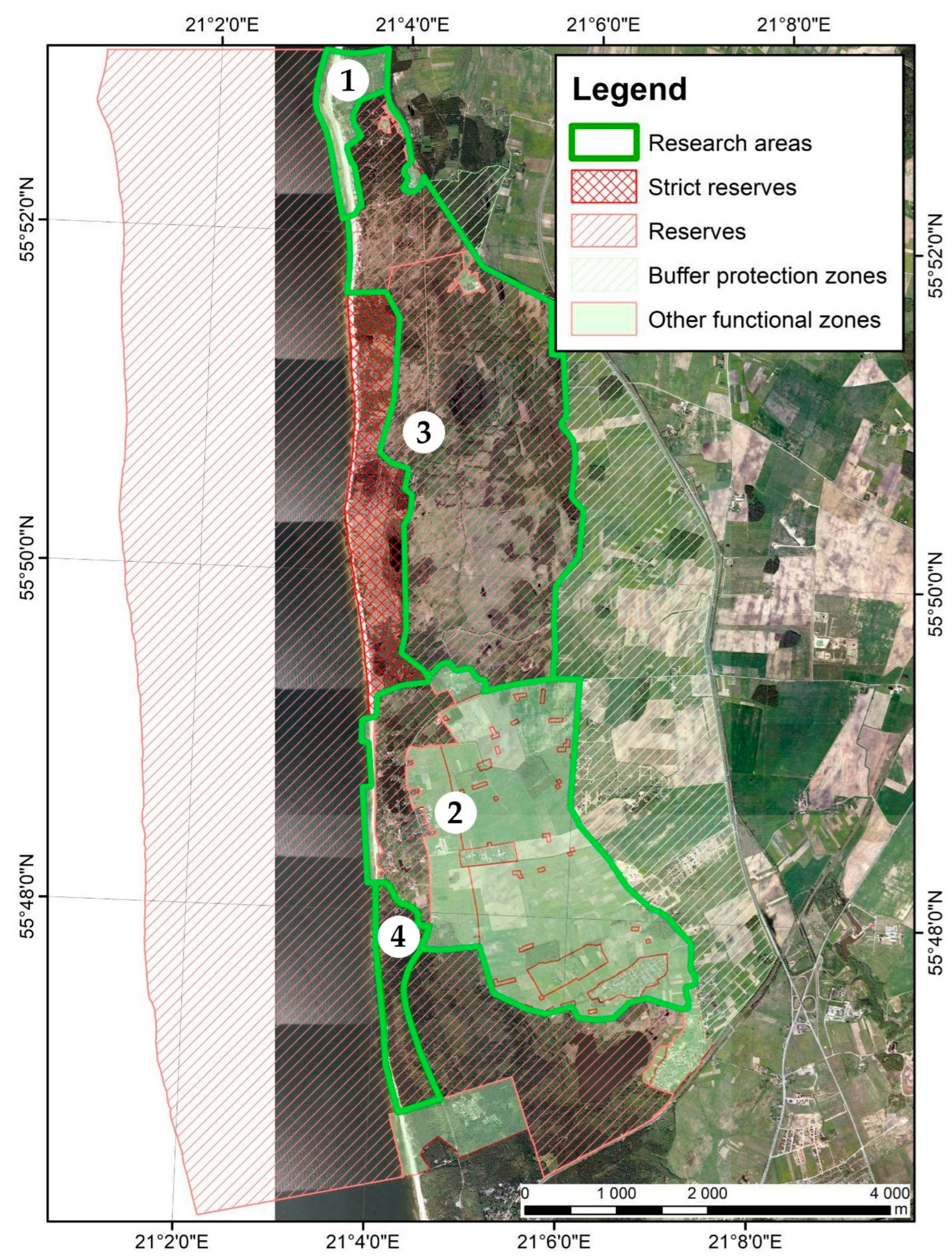
Our analysis focuses on Pajūris Regional Park (a Category V CMPA), a former military training ground converted to a Baltic Sea marine protected area (Figure 1). It is in the Baltic Sea coastal subregion of the Southeast Baltic Graded Coast [34]. A graded coast is a type of seacoast where the erosion of a promontory and eroded sediment deposition in adjacent bays tends to grade the shape of the coast [35,36].
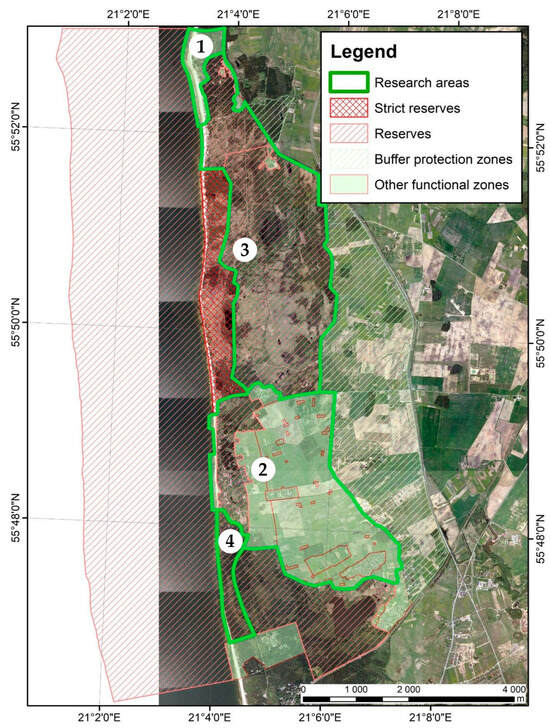
Figure 1.
Pajūris Regional Park. The confines of two seaside resorts and two hinterland areas are marked in green. Numbers: 1—Nemirseta (Palanga), 2—Karklė, 3—Šaipiai, 4—Olandų Kepurė.
The four target areas within Pajūris Regional Park include two leisure priority core areas (Karklė and Palanga) and two conservation priority hinterland areas (Šaipiai and Olandų Kepurė managed landscape reserves). Palanga is Lithuania’s largest spa town [37] where holidaymakers relish in refreshing seawater, bask in the sun, and breathe fresh seaside air [38]. In this study, we focus on Nemirseta, Palanga’s southernmost part, which is within the confines of Pajūris Regional Park (No. 1 in Figure 1). Karklė is an ethnocultural managed reserve with a buffer zone (No. 2 in Figure 1) with fishing farmers’ homesteads converted to villas, B&Bs, and camping sites, and a visitor center [21].
Šaipiai landscape reserve (No. 3 in Figure 1) is a hinterland of Nemirseta (Palanga) and Karklė seaside resorts. In the context of Pajūris Regional Park, we consider a touristic hinterland an area adjacent to seaside tourist destinations visited by seaside holidaymakers and city dwellers on day visits [39,40]. The local community in Šaipiai faces challenges in developing viable economic activities because it has limited possibilities to use the land under natural conservation as it would like [41], hence our interest in this area.
Olandų Kepurė landscape reserve with a sea cliff (No. 4 in Figure 1) is a hinterland of Klaipėda City and Karklė seaside resort. The landscape reserve includes the sea cliff and an ecosystem of mature Scots’ pine forests of an Eastern Baltic race (Pinus sylvestris var. rigensis Loudon), which has been preserved despite the military usage of the area for fifty years. Also, mature, century-old Norway spruce (Picea abies) stands and solitary mature English oak (Quercus robur) trees are found sporadically in the reserve, enhancing its ecosystem value and tourist appeal [42].
Pajūris Regional Park is one of 30 regional parks in Lithuania’s IUCN category V protected areas. The park area covers 50.3 sq·km on land and 30 sq.km in the sea. It became protected in 1992 after being a brownfield, a military training ground with barracks, in the Cold War era between 1945 and 1991. Today, the park enjoys a pristine seascape with parabolic dunes, grasslands, and a 25 m high sea cliff. The parabolic dunes and grasslands are protected as NATURA 2000 sites.
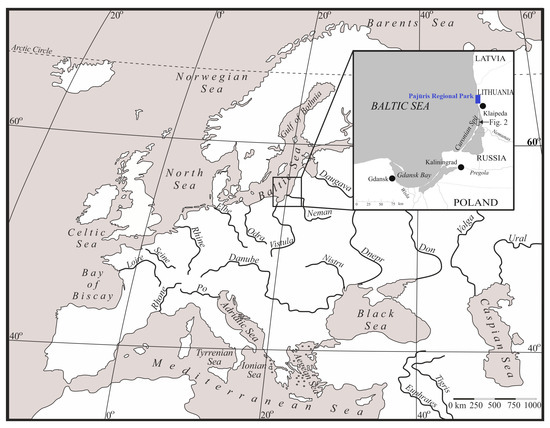
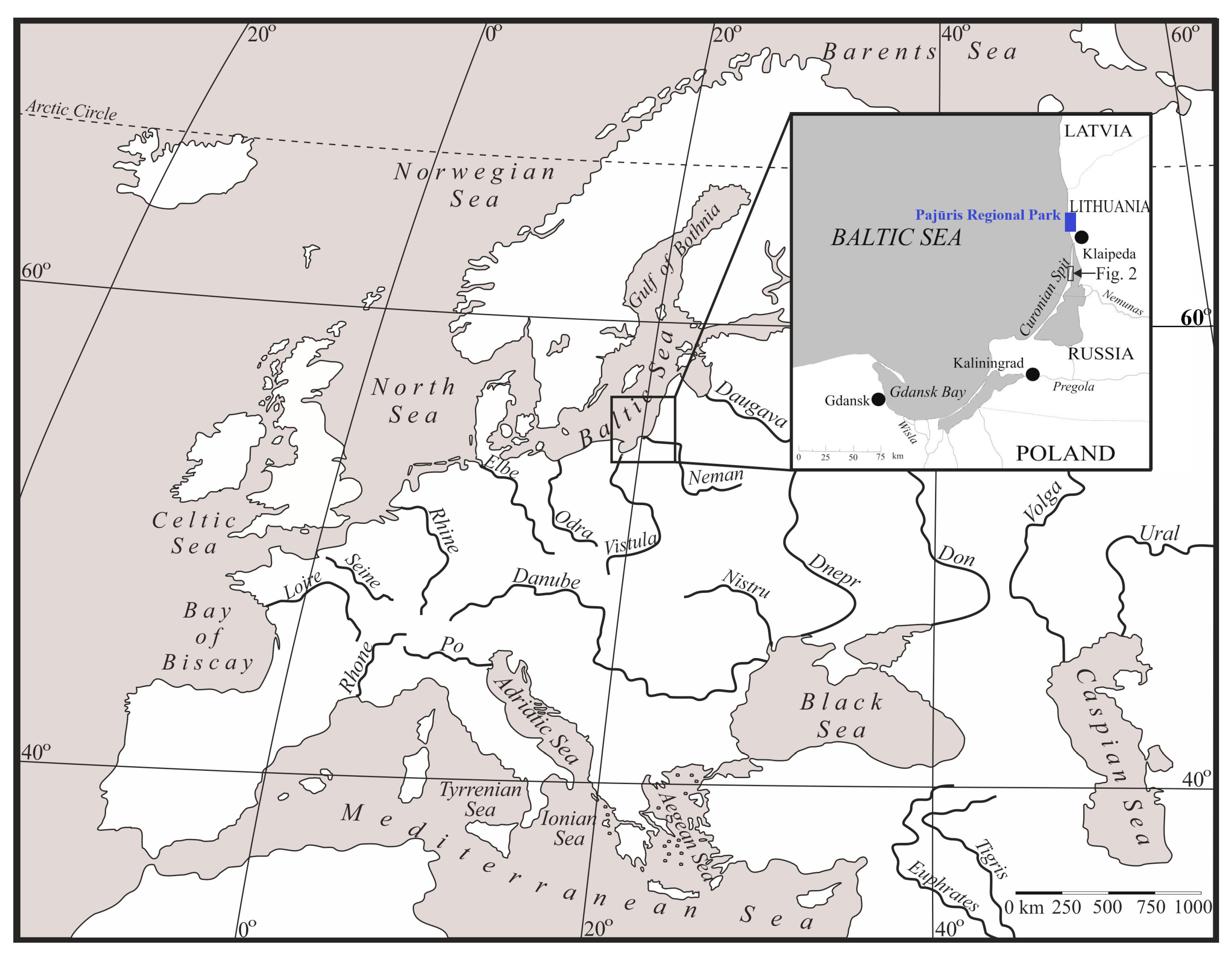
The park’s climate features are typical for a coastal temperate Atlantic climate due to the park’s position in Europe (Figure 2), with mild winters, more frequent sunny days, and thunderstorms [43]. The annual sunny days vary from 98 to 267, with 100 occurring from May to September. The average annual precipitation rate is 696 mm, 63% falling in the warm season (April–October). Our research focuses on the calm season with the probability of wind speed over 20 m/s below 10% [44] and weather conditions shaped by breeze circulation [45]. In the Southeast Baltic Coastal Region, the calm season is typically between April and August [46].
Figure 2.
Southeast Baltic Graded Coast in Europe. Pajūris Regional Park is marked in blue.
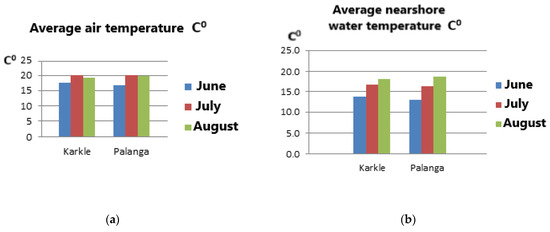
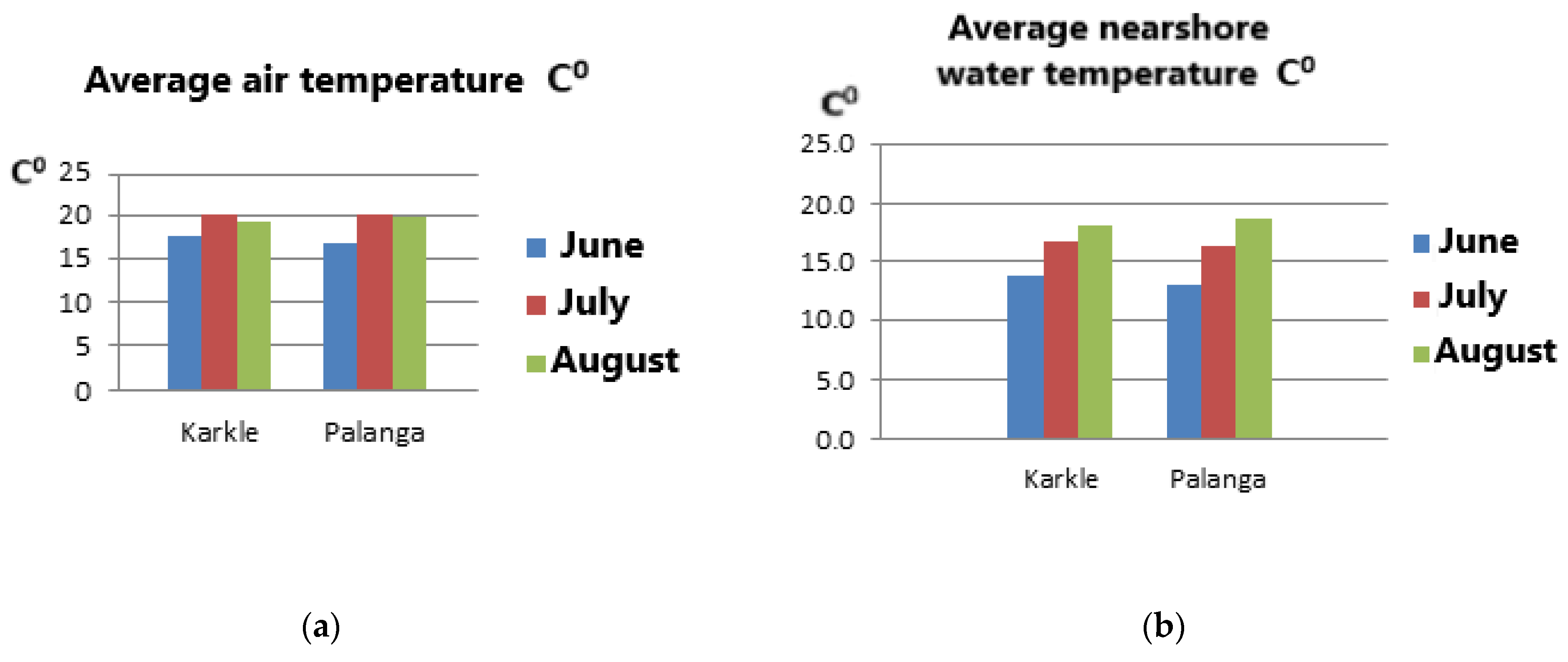
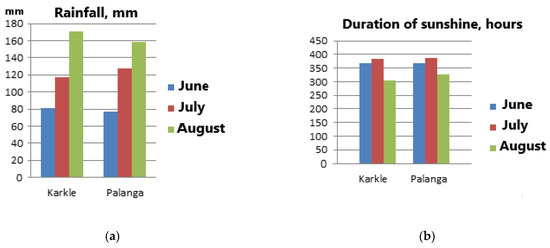
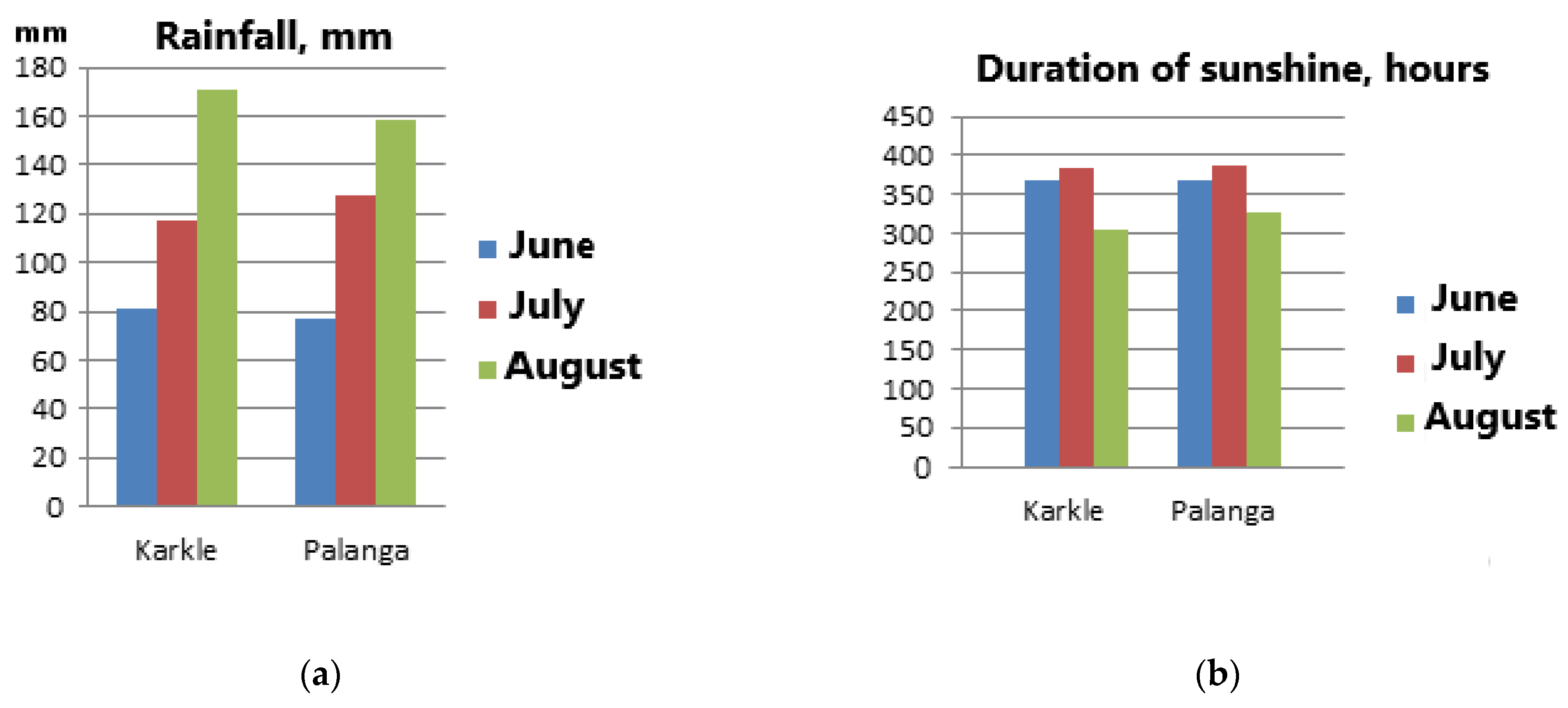
The annual average air temperature range shows that July and August have the most appealing climatic leisure amenities for seaside tourism (Figure 3a), and the dynamics of holidaymakers during the peak season ‘follow the sun’. Both Nemirseta (Palanga) and Karklė have tepid average monthly water temperatures in July (18 °C) and August (19 °C) (Figure 3b). The summer sunshine duration is substantial (Figure 4a), and the rainfall level is moderate (Figure 4b), making Pajūris Regional Park quite appealing to domestic and overseas tourists from Nordic and two other Baltic countries (Latvia and Estonia).
Figure 3.
Average climatic leisure amenities in Karklė and Palanga in June to August from 2010 to 2020: (a) Monthly air temperature (°C); (b) water temperature (°C).
Figure 4.
Average climatic leisure amenities in Karklė and Palanga in June to August from 2010 to 2020: (a) Monthly rainfall (mm); (b) duration of sunshine (hours).
2.2. Data Collection and Processing
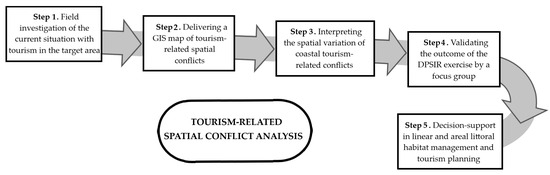
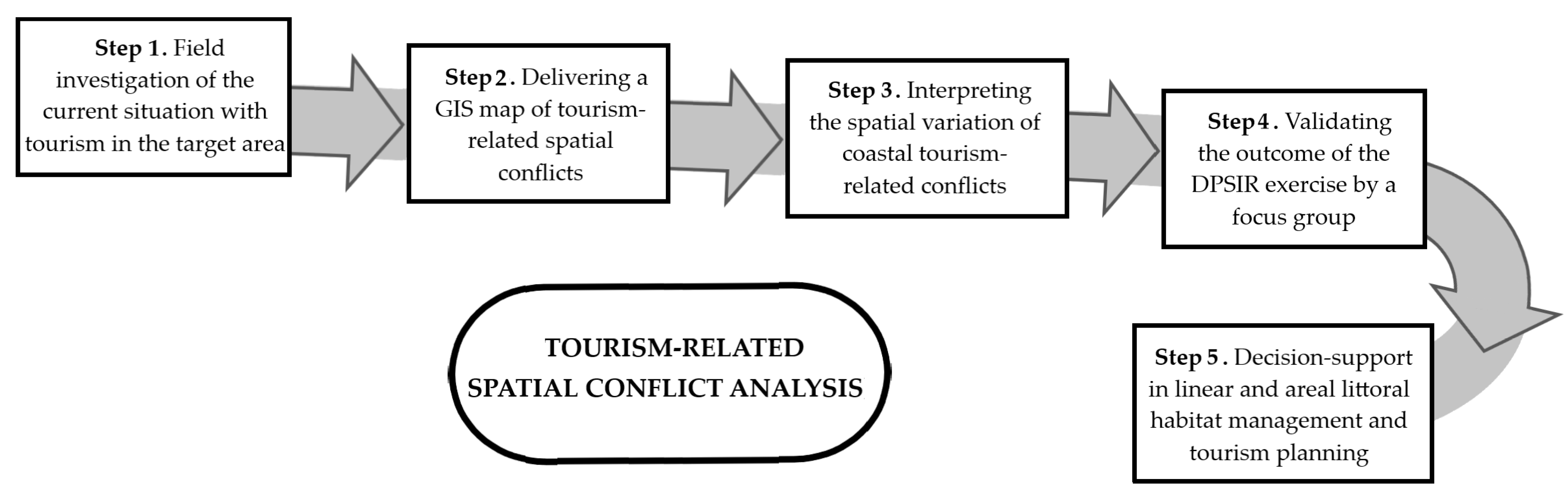
The overall methodological framework of our study relies on three interrelated tenets: (1) Highlighting the essential differences in sustainable tourism development and nature conservation between the linear habitats (beaches and other waterfront types) and the areal habitats (natural and semi-natural hinterland); (2) conjoining application of DPSIR and Delphi tools to elicit the key manifestations of these essential differences in the management of Pajūris Regional Park; and (3) interpreting the results of the analysis of tourism-related conflicts in linear and areal habitats of Pajūris Regional Park by applying GIS. Hence, the data collection and interpretation comprised five steps (Figure 5).
Figure 5.
The flowchart of the research steps.
2.2.1. Step 1 Field Investigation of the Current Situation with Tourism in the Target Area
Pyro Evo automatic counters have been installed at the four target areas—Nemirseta (Palanga), Karklė, Šaipiai, and Olandų Kepurė to monitor pedestrian and cyclist traffic using infrared technology. These devices, housed in durable wooden poles, began counting on 1 January 2023. Until 2023, we have conducted counts manually four times a year. Still, automated counters provide more accurate data, showing that automated figures can be 1.5 to 2 times higher than manual extrapolations, particularly notable in Nemirseta (Palanga). The automatically collected data were supplemented by an on-site poll of visitors’ opinions using a questionnaire.
We collected the field data in July and August 2024 using a ten-question-long questionnaire designed to learn about visitors’ preferences and satisfaction with tourism amenities available to the visitors of the four target areas—Karklė and Nemirseta (Palanga), Šaipiai and Olandų Kepurė—following the field research methodology developed by the Swedish Environmental Protection Agency [47]. The questionnaire had a limit of ten questions. We kept this questionnaire short enough to reduce the questioning time and avert the respondent’s mental fatigue and attention loss, as it could influence the results [48,49].
To validate the questionnaire, we accomplished pilot testing before using it to collect visitor data. Following the survey methodology [47], we had the initial form read by a small group of 20 people—ten professional tourism experts and ten frequent visitors—who know Pajūris Regional Park well. During the pilot testing onsite, we also asked people for feedback on the form and the survey contents. As a result of the pilot testing, we found the questions presented in the questionnaire functional.
To make the conclusions based on the sample as reliable as possible, we tried to take the most representative sample of the visitors in the four areas and choose them independently of the data collectors and other visitors. We ensured independence using the random sampling method since there was no crowding. All individuals who came past the survey points were selected as they arrived, i.e., as the data collector finished with the preceding respondent. Some visitors passed the survey points without being picked for the sample, while the data collectors dealt with other visitors.
Altogether, we interviewed 700 respondents at four survey points: 200 people at the Olandų Kepurė cliff and the entrance to the seaside beaches of Nemirseta (Palanga) and Karklė, and 100 people in Šaipiai. We safeguarded the sample’s representativeness regarding age, sex, nationality, and motivation for the visit. We invited each 20th respondent for a semi-structured interview about their overall satisfaction with visiting Pajūris Regional Park. Thus, we sampled the opinions of 35 interviewees, reaching the saturation of the opinions [50,51].
2.2.2. Step 2 Delivering a GIS Map of Tourism-Related Spatial Conflicts
GIS analysis of the landscape structure and features is indispensable in conserving and managing landscapes and habitats of high aesthetic quality [52,53]. Xu et al. [54] analyzed 92 studies of European cultural and ecological landscape corridors, published between 1990 and 2018, focusing on planning and management. They realized that GIS analysis was the most popular approach (82% of the studies) for managing and planning landscape corridors. Further, Urbis et al. [55] created a GIS algorithm that reliably assesses the scenic appeal of CMPAs of high aesthetic quality in statistical terms.
To develop a GIS map of tourism-related conflicts in Pajūris Regional Park, we applied ArcGIS software (Esri, V10.1, Redlands, CA, USA). The target territory covered the terrestrial part of the park. For this purpose, we used an ArcGIS cartographic platform of the State Agency of Protected Areas of Lithuania. As a background, we used the ArcGIS layers of natural resources, tourism amenities, activities, and functional zoning of Pajūris Regional Park created earlier [21]. The ArcGIS technology has provided the possibility to elicit spatial clusters of tourism amenities and identify tourism hotspots by integrating qualitative and quantitative data from various sources [56,57,58,59].
2.2.3. Step 3 Interpreting the Spatial Variation of Coastal Tourism-Related Conflicts
In our interpretation, essential differences exist between the coastal tourism amenities and activities in linear habitats, such as beaches or cliff bases, and areal habitats, such as seaside resorts and hinterlands. We analyzed conflicts between coastal tourism development and the conservation of CMPAs by conjoining the Driver-Pressure-State-Impact-Response (DPSIR) framework with the Delphi as a heuristic tool to comprehensively analyze the quantitative data and qualitative information collected by different methods. DPSIR is suitable for conceptualizing and discussing sustainable tourism development issues in CMPAs [60,61,62].
In DPSIR, socioeconomic agents act as drivers (D), which raise or dampen pressures (P) on the environment [63]. The pressures lead to changes in the state of the environment (S) and result in impacts (I) on the “triple bottom line” of sustainability—society, economy, and environment [62]. These must lead to active management responses (R) to the corresponding drivers, pressures, state of the environment, or impacts. Owing to its multidisciplinary systematic scope, the DPSIR approach is popular for assessing and managing the impact of human actions on coastal and marine habitats and tourism-related problems [60,61,62,63,64,65,66,67,68,69,70,71,72].
However, the purpose of DPSIR applications has usually been limited to conceptual stocktaking or qualitative tracing of impact chains [73]. Another point of criticism is that while the educational clarity offered by the framework is appealing, its seeming simplicity can be misleading, overlooking the potential for synergistic interactions among the DPSIR categories [69]. The analysts of the DPSIR framework also note recurring confusion between components. To address these criticisms, Elliott et al. [74] proposed an enhancement of the DPSIR framework, which they termed DAPSI(W)R(M).
In the DAPSI(W)R(M) framework, drivers are the fundamental human necessities that prompt activities, which in turn create pressures that act as mechanisms leading to changes in the state of the natural system. These changes impact human welfare, necessitating responses in the form of measures [71]. Still, applying the DPSIR methodology has certain advantages compared to DAPSI(W)R(M). We summarized the comparison of both methodologies in Table 1 based on the extensive analysis of the latest studies from different parts of the world [75,76,77,78,79,80].
Table 1.
Comparison of the DPSIR and DAPSI(W)R(M) analytical frameworks.
Despite criticism of DPSIR, it is more straightforward and has proved its robustness in various coastal management contexts [69,73]. Therefore, we applied the original DPSIR framework instead of DAPSI(W)R(M). Like with any other socioeconomic analysis of environmentally sensitive issues, the picture’s validity largely depends on the alertness of the researcher [81]. To compensate for its perceived limitations, we have combined the DPSIR analysis with the Delphi technique, which was the novelty of our analysis and has never been applied before, judging from the information extracted from Scholar Google.
DPSIR is an instrument for professionals [69]. Therefore, a group of five professionals accomplished the Delphi study. Their selection criteria relied on their disciplinary backgrounds and qualifications:
- Associate professor in tourism geography (18 years of expertise in the field);
- Practitioner (nature conservationist) with 13 years of expertise in integrated coastal planning and conservation;
- Leader of a local tourism association (11 years in the sector);
- Local forest ranger (27 years of expertise);
- Elder of the local eldership (22 years of administrative career).
All five professionals have good knowledge of Pajūris Regional Park, and none interacted directly with each other to achieve a consensus.
Scholars disagree about an optimal panelist number in Delphi studies [82]. In a comprehensive overview, Boulkedid et al. [83] found that there should be at least three Delphi panelists, with heterogeneity essential in eliciting reliable responses. First, the facilitator introduced experts to the DPSIR analytical framework since DPSIR requires adopting unanimously accepted definitions in each category. Then, the facilitator asked each expert to identify three priority drivers, pressures, states, impacts and responses for each of the four target areas: Karklė and Nemirseta (Palanga) seaside resorts as well as Šaipiai and Olandų Kepurė hinterland.
For each target area, experts had to identify and prioritize each coastal tourism resource’s environmental goods and services based on the legal framework that affects each resource [84]. For this research, the panelists accomplished three judgment rounds utilizing a method inspired by prior Delphi studies in landscape management documented in existing literature [85,86,87,88,89,90,91,92]. The Delphi study occurred from November to December 2024, with communication facilitated through e-mail. After the third round, the respondents reached a 100% consensus, eliciting two consensus judgments for each DPSIR component in each target area.
2.2.4. Step 4 Validating the Outcome of the DPSIR Exercise by a Focus Group
We conducted the focus group in January 2025 to discuss the tourism-related conflicts and the results of the DPSIR study following the methodology proposed by Gundumogula [93]. We collected the data from an informal discussion with eight practitioners and experts in a focus group comprised of people with first-hand knowledge of the sector, including a municipal worker, a B&B owner, a planner, an environmentalist, and other local stakeholders. We asked these experts to informally discuss various aspects of coastal tourism-related drivers, pressures, states, impacts, and necessary measures. The focus group aimed to relate coastal tourism planning and the DPSIR study results.
2.2.5. Step 5 Decision-Support in Littoral Habitat Management and Tourism Planning
A key advantage of the DPSIR framework lies in its capacity to connect scientific research, mainly through assessing the “state” with policy-oriented “responses.” This model integrates natural and social sciences while fostering connections between researchers, practitioners, and decision-makers [94,95,96,97]. Within the DPSIR framework, responses are societal reactions or strategized actions and policies based on a comprehensive analysis of the available information and its interpretation. For instance, the tourist and resident ratios reveal the importance of tourism for communities [98], as well as the psychological carrying capacity of the territory as a tourist destination.
However, the broad array of categories may cause confusion and misinterpretations, especially when it is pertinent to determining the responses. For example, the resulting communication gap would be evident if the term’ response’ is interpreted as ecosystem and societal responses [69]. Therefore, following Ahtiainen et al. [73], we made a compromise between DPSIR and DAPSI(W)R(M) and interpreted responses as measures signifying environmental policies and actions. For that purpose, we made efforts to identify the best policy measures for improving the coastal amenities of sustainable tourism in the target territory keeping in mind the differences between linear and areal littoral habitats.
3. Results
3.1. Coastal Tourism Patterns in Pajūris Regional Park
Pajūris Regional Park is an important destination for domestic and overseas tourists. Its management plan from 2016 is the key document for leisure management in its territory. Given the park’s proximity to major cities like Klaipeda and Palanga, and its accessibility via the Seaside Cycle Route, day-trippers and vacationists staying at other Lithuanian Baltic seaside resorts, mainly Palanga, favor the park. However, regarding coastal tourism and recreation, the amenities available at Karklė and Nemirseta are still meager.
Recently, the Lithuanian State Service for Protected Areas (LSSPA) has implemented measures to monitor visitor numbers in protected areas. In 2023, the LSSPA installed visitor counters at Lithuania’s most popular protected areas, including Pajūris Regional Park. Comprehensive annual data from the visitor counters for 2023 and 2024 are in Table 2. This information is instrumental in managing visitor flows, ensuring the preservation of natural habitats, and enhancing the overall visitor experience in Karklė and Nemirseta seaside resorts, but also in the hinterland nature reserves of Šaipiai and Olandų Kepurė.
Table 2.
Data from visitor counters at different spots of Pajūris Regional Park for 2023 and 2024.
Based on the data from the visitor counters, the statistics of visitors staying at hotels, B&B, camping sites, and other accommodation establishments, as well as from our visitor polls conducted in the summer of 2024, we made educated insights into tourist numbers and distribution in the four target areas in 2024 (Table 3). The data are collected and cross-tabulated from various sources; therefore, its reliability is high. It was further validated by the members of the focus group and approbated by the State Agency of Protected Areas of Lithuania.
Table 3.
Tourist numbers and distribution in the four target areas in 2024.
Our estimates show that annually, ca. 1.1 million visitors visit Pajūris Regional Park with an average stay of 1.37 days. The beaches at Nemirseta and Karklė attract significant summer visitors, but the natural hinterland is also important. According to the polling results, in the summer of 2024, 78% (N = 546) of all interviewed visitors indicated active leisure in nature as their primary purpose for visiting Pajūris Regional Park during the outdoor weekends and their vacation in Palanga. They also indicated that Pajūris Regional Park is their preferred outdoor destination for active leisure on the continental Lithuanian Baltic coast.
3.2. Results of the DPSIR/Delphi Analysis
Due to the increasing tourist numbers and the demand for coastal tourism amenities and facilities, Pajūris Regional Park faces multiple tourism-related conflicts driven by human activities. We applied the DPSIR framework as a structured approach to analyze the primary drivers of environmental and socio-cultural pressures, their repercussions on the urbanized and natural environment, and the management measures to address these issues across the target areas: Nemirseta (Palanga) and Karklė seaside resorts as well as Šaipiai and Olandų Kepurė nature reserves as their hinterland. Table 4 summarizes the main findings from the analysis.
Table 4.
Results of DPSIR/Delphi analysis.
The DPSIR analysis reveals recurring urban expansion issues, unregulated visitor flows, climate change, and habitat degradation. Increasing visitor numbers and infrastructure development stress natural ecosystems and cultural heritage. Rising coastal erosion causes the coastal squeeze threat. Urban sprawl from the north, i.e., from the Palanga seaside mega-resort, encroaches on Nemirseta, leading to natural habitat loss. Meanwhile, Karklė faces the dual challenge of modern development eroding cultural heritage and climate change exacerbating coastal erosion. However, the main conflicts are concentrated in the linear littoral habitats, i.e., along the coastline, whereas the vast areal semi-natural hinterlands are void of urban sprawl.
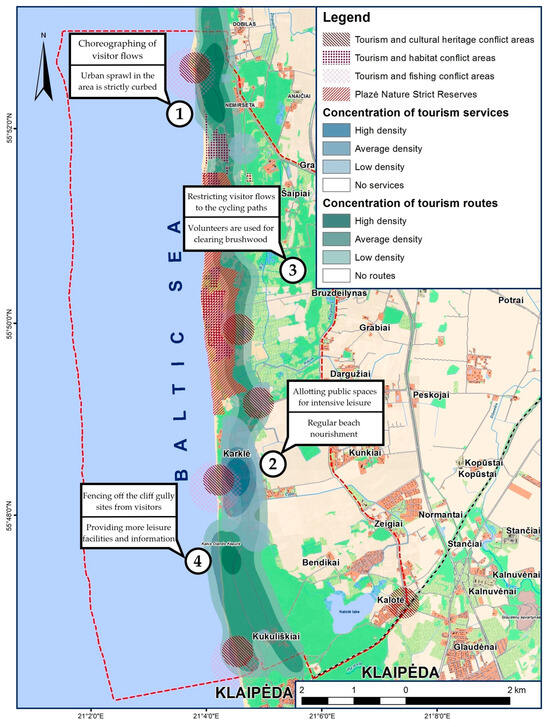
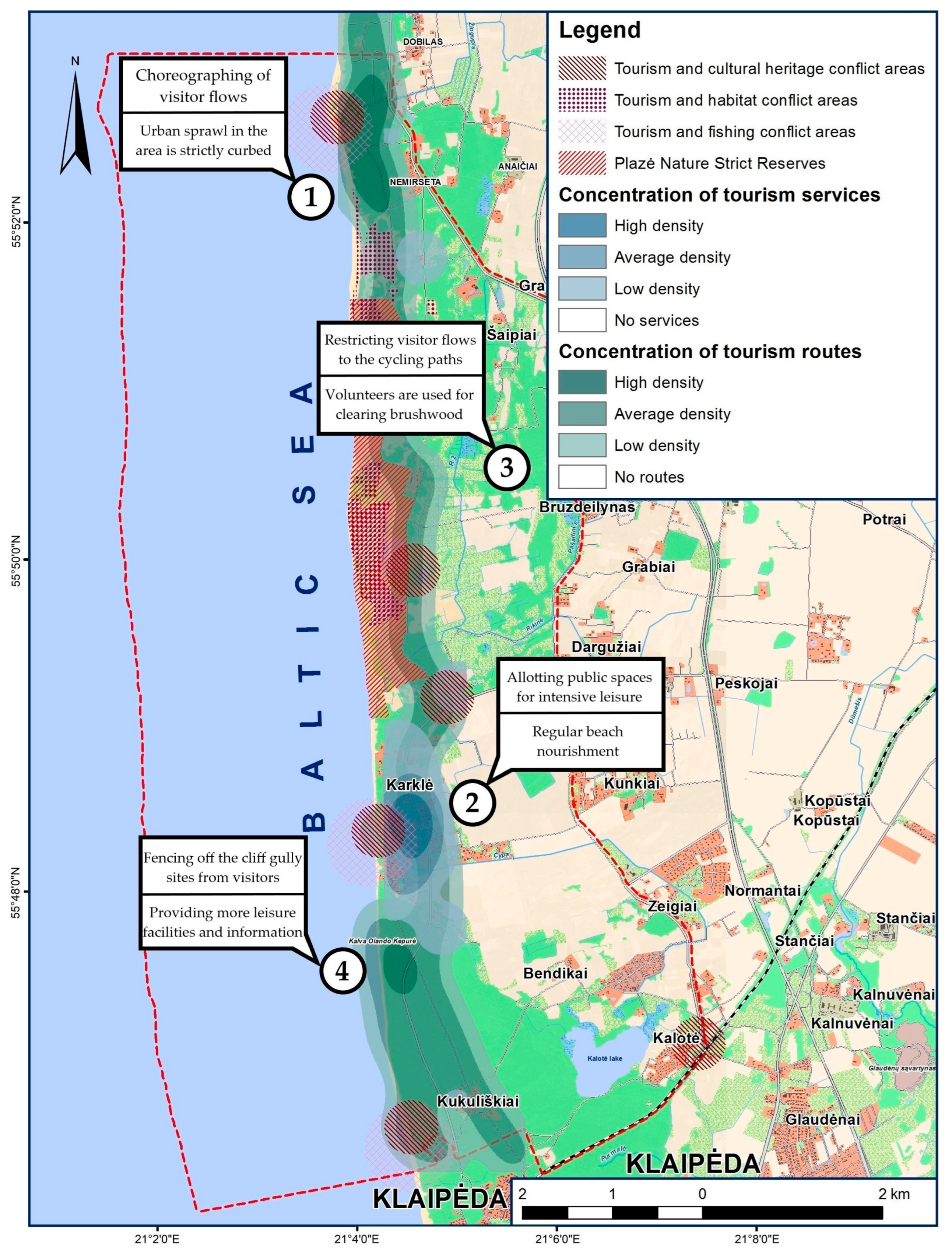
Figure 6 displays the coastal tourism-related conflicts in Pajūris Regional Park in geographical terms. We used the ArcGIS software and generated layers (land use patterns, biodiversity, and habitat values, conservation regime, concentration of tourism services and tourist routes, visitor distribution) to elicit layers displaying overlapping areas (indicative of coastal tourism-related conflicts). The beaches, the Olandų Kepurė cliff base, and other sites for the ‘linear littoral tourism’ interested us the most since they attract the most significant attention from the side of the leisure facility developers and are prone to coastal squeeze.
Figure 6.
Tourism-related conflicts and proposed responses in Pajūris Regional Park.
Figure 6 also shows that the starkest and most multifaceted tourism-related conflicts occur in Nemirseta (1) and Karklė (2) seaside resorts, where the concentration of visitors and the highest demand for tourism facilities. These two seaside resorts are prone to the most acute risk of coastal squeeze. Also, the highest concentration of tourist flows passing across Pajūris Regional Park occurs in Karklė and Nemirseta. Since access to Plazė Strict Nature Reserve for lay visitors is restricted to the bike path, the choreography of tourist flows in the park becomes complicated and requires special skills and dedication.
The spatial information in Figure 6 also shows the diversity of identified conflicts and possible solutions in the hinterland. These areas represent different geographical, natural, ecological, economic, and socio-demographic circumstances, and the related tourism conflicts. In the Šaipiai (3) area, the central conflict is the inappropriate distribution of tourist flows, hampering the maintenance and restoration of rare, protected grassland habitats and increasing the area’s tourist and aesthetic value. At the Olandų Kepurė cliff (4), the conflict between intensive daily visitor flows and the stability of the coastal zone enhances the digression of the area.
The analysis of the gathered information and the GIS data layers created by superimposing various elements and combined with the DPSIR analysis and the insights from the focus group show that tourism-related conflicts in linear littoral habitats also raise public concern. Therefore, the challenge lies in limiting the urban sprawl in Nemirseta and Karklė and properly choreographing day visitors in the hinterland. As a result, the coastal conflict analysis insights inform the modification of land-use, conservation, and tourism management strategies in Pajūris Regional Park. Hence, this GIS-centered analysis supports comprehensive management efforts by examining the evolving relationship between coastal tourism and nature conservation from multiple viewpoints.
3.3. Differences Between Littoral and Areal Tourism Zones
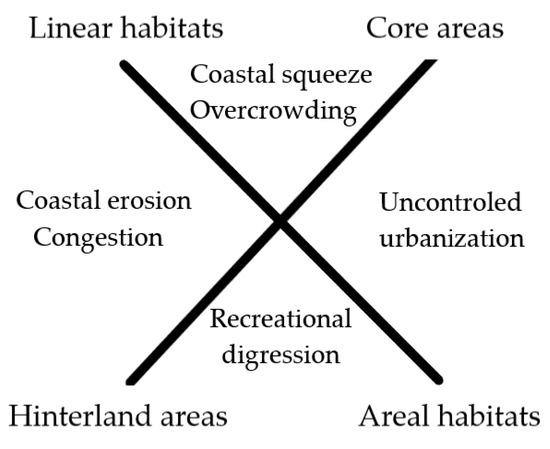
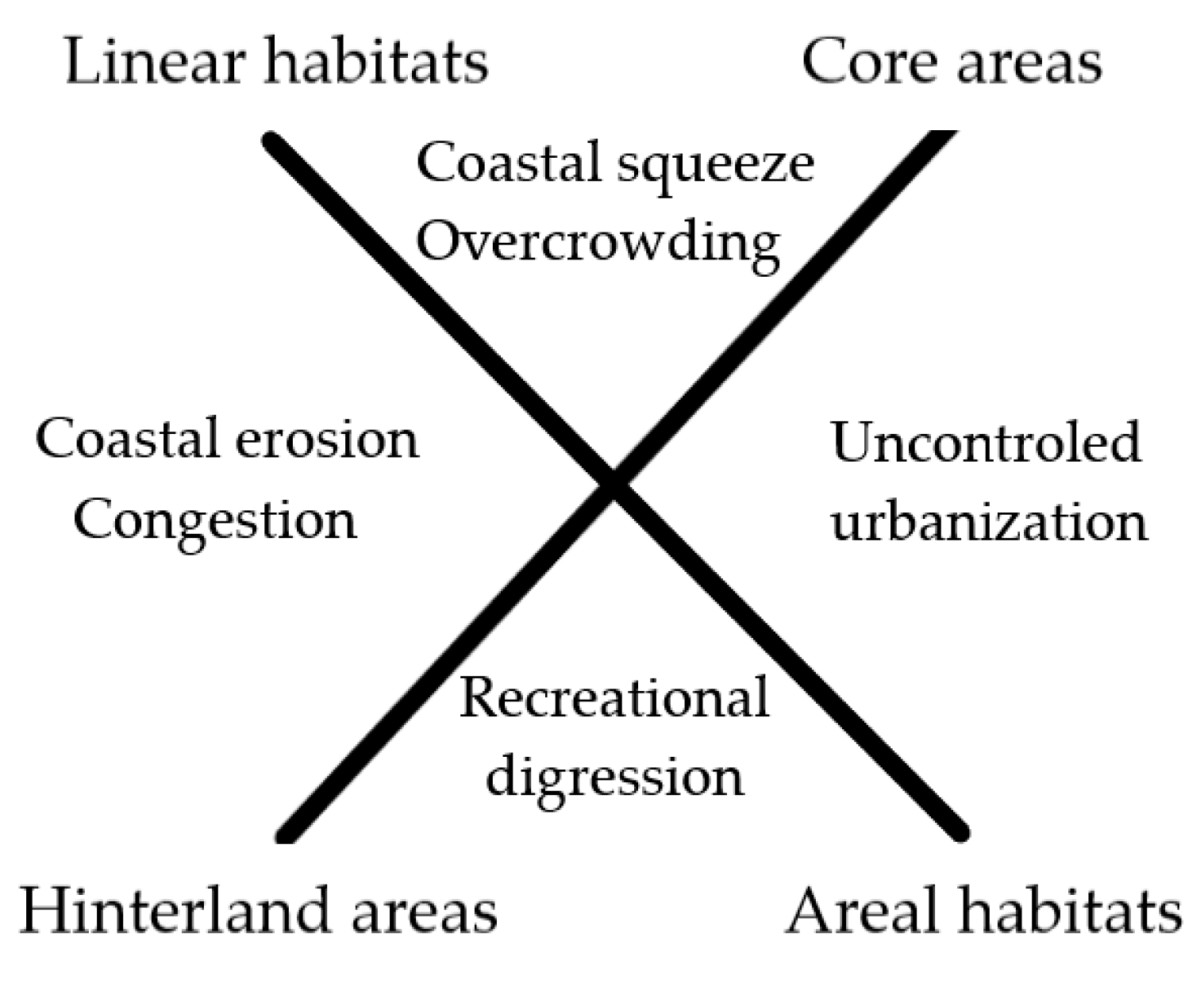
A conceptual framework known as the “semiotic square” illustrates the complex situation of Pajūris Regional Park, highlighting a range of issues expressed within combined semiotic oppositions [21,81]. In the context of Pajūris Regional Park, we identify diverse problems related to tourism conflicts through a series of opposing relationships: littoral habitats vs. areal habitats and core areas vs. hinterland areas (Figure 7). This perspective allows us to identify and interpret four main categories of issues or potential sources of management tensions in Pajūris Regional Park: (1) Littoral habitats of core areas; (2) littoral habitats of coastal hinterland; (3) areal habitats of core areas; (4) areal habitats of coastal hinterland (Table 5).
Figure 7.
A ‘semiotic square’ of semiotic oppositions illustrating the relationships of linear and areal littoral habitats and seaside resorts with their hinterland.
Table 5.
A ‘semiotic square’ of oppositions illustrating the relationships of linear and areal littoral habitats and seaside resorts with their hinterland.
Summarizing the results of our study, we should clarify that of the three main results achieved, the elicited visitor numbers and spatial distribution patterns, as well as visit duration and motivations in Pajūris Regional Park derived from the comprehensive visitor field surveys conducted instrumentally in 2023 and 2024 and manually in 2024. Meanwhile, the primary drivers of environmental and socio-cultural pressures, their repercussions on the urbanized and natural environment, and the management responses result from the conjoined DPSIR/Delphi process, whilst the eliciting of spatial distribution patterns of the tourism-related conflicts originates from the GIS interpretation.
4. Discussion
CMPAs and tourism share a longstanding relationship [62]. The DPSIR framework assists in analyzing and evaluating environmental issues, bringing together various scientific fields, environmental managers, and stakeholders while also facilitating resolutions to conflicts in tourism. To date, it has proven effective in its objectives [69]. The DPSIR approach can reliably assess the tourism ecosystem’s operational health, as it offers comprehensive insights and robust reasoning. It effectively illustrates the interactions among tourists, travel destinations, and the surrounding environment [62].
Implementing the DPSIR model allows for identifying the central pressures, an outcome essential for proposing measures to develop sustainable tourism activities [84]. The DPSIR framework facilitates an integrated approach that allows for the interconnection of internal and external drivers affecting CMPAs ultimately leading to proposed system responses [62]. Following the DPSIR analysis, a focus group was instrumental in identifying key criteria that contributed to establishing Pajūris Regional Park as a coastal tourism hub from a brownfield military area.
An innovative approach to the sustainability and competitiveness of coastal tourism in Pajūris Regional Park and other converted military brownfields with nature conservation as a priority is necessary. Hansen notes [99], p. 125: “Central to nature-based tourism is the experience of nature as wild, pristine, and untouched. In other words, the experienced nature must be ‘healthy’, that is, in good environmental condition”. The results of our study show that former seaside military training areas are particularly suitable for preserving ‘pristine, untouched, and healthy’ coastal nature.
The originality of our research findings stems from an extensive conceptual analysis and interpretation of the coastline as a hybrid system comprising linear and areal littoral habitats [6]. The linear littoral habitats found in Pajūris Regional Park act as a dynamic interface between aquatic and terrestrial ecosystems. Our research demonstrated the effectiveness of viewing coastlines as 1-D linear entities when examining coastal behavior. This perspective, for example, proves beneficial in modeling the promontory-cum-bay littoral cell boundaries [100].
The concrete suggestions for how the local communities could participate in future management pivot to their role in the improvement of the Management Plan for Pajūris Regional Park relying on the results of this study. The current version of the Management Plan is approved until 2035 but must be revised in the coming years. The local community should contribute directly to the development of new long-term conservation and management responses on how to manage sustainably the littoral habitats in the park to mitigate adverse coastal squeeze effects [101,102,103,104,105].
Jamal and Higham [106] emphasize that the planning and policies related to tourism are frequently influenced by political factors, showcasing disputes among various stakeholders regarding autonomy, representation, and governance of tourism initiatives. In Pajūris Regional Park, most visitors are visiting it as their priority destination to experience coastal nature, and tourism must find its place in nature conservation planning. Tourism management must therefore foster a conducive setting for sustainability and ensure an equitable distribution of tourism-related benefits [107].
Mitigating overtourism and urban sprawl, particularly in brownfield CMPAs like Pajūris Regional Park, necessitates a thorough understanding of essential differences between linear and areal habitats. A prime example of it is the ‘coastal squeeze’ phenomenon. Hence, the practical side of our research based on the linear littoral habitat concept is dealing with coastal squeeze as a management challenge [6] and placing the coastal management strategies for mitigating coastal squeeze within the linear littoral habitat analysis framework to achieve a balance between natural processes and human demands in the coastal zone.
More specifically, we have identified the following concrete management/policy suggestions to address the coastal squeeze problem: (1) Extend the application of the 1-D GIS algorithm designed for Olandų Kepurė to Nemirseta and Karklė as a spatial planning decision support tool to facilitate multi-use zoning in linear littoral habitats of Pajūris Regional Park; (2) Enforce setback regulations to Nemirseta and Karklė that restrict construction near the shoreline and consider managed adaptive realignment measures; (3) Facilitate participatory governance by establishing a coastal advisory council in Pajūris Regional Park to ensure inclusive decision-making regarding the urban sprawl and coastal squeeze challenges.
Like most other DPSIR-based studies, the presented study is prone to various limitations and biases. Furthermore, integrating DPSIR and Delphi methods, a novel combined research approach is subject to several specific biases and limitations that may affect its validity and applicability. More specifically, the list of potential biases and limitations in the conjoined application of DPSIR and Delphi for coastal tourism management analysis in Pajūris Regional Park could have included:
- Overrepresentation of specific stakeholders and homogeneous expert groups could have led to echo-chamber effects, limiting innovative or alternative viewpoints;
- Subjectivity in Delphi responses and DPSIR classification required qualitative judgment, which could have introduced subjectivity;
- Confirmation and anchoring bias may have led to unconscious prioritizing of certain decision-making pathways;
- Limited adaptability to dynamic coastal systems, particularly considering the inherent dynamism of linear littoral habitats and coastal squeeze against the static nature of Delphi consensus-building and DPSIR’s linear framework failing to capture these complexities fully.
To mitigate these biases and limitations, we took the following steps highlighted in the Section 2 (it is also a recommendation for future studies keen to follow the novel approach of conjoining DPSIR and Delphi analytical tools for coastal research):
- Diversified the expert panel to include the optimal range of stakeholders;
- Used mixed methods, incorporating quantitative data to complement expert opinions;
- Ensured an iterative feedback mechanism through the additional step of the focus group to challenge dominant assumptions and foster critical engagement.
5. Conclusions
Summing up the results of the presented study, we may conclude that, indeed, the dynamism of littoral habitats and their temporal and spatial multiplicity imply huge issues in protecting and managing Pajūris Regional Park as an IUCN Category V CMPA with a complex combination of linear and areal littoral habitats spread across the core tourism development areas (seaside resorts) and their natural hinterland. Suppose that a littoral linear habitat is a beach that occurs in simultaneous urban sprawl, storm surge rise, and resulting coastal squeeze. Then, the managers risk a ‘perfect storm’ situation. Pajūris Regional Park is far from this ‘perfect storm’, but menaces augment.
The concrete implications for the stakeholders and policy recommendations of the accomplished study (summarized as DPSIR responses, see Table 4) are as follows:
- For the Pajūris Regional Park conservation authorities: (i) regulate visitor flows in the park; (ii) restrict visitor flows to the cycling paths; (iii) strictly curb the urban sprawl in Nemirseta and Karklė seaside resorts; iv) fence off the Olandų Kepurė cliff gully sites from visitors.
- For citizens (local communities and tourism associations) in Pajūris Regional Park: (i) participate actively in the updating of the National Baltic Coastal Zone Management Program of Lithuania for 2021–2030 to continue beach nourishment in Karklė; (ii) allow public spaces for more intensive leisure in Karklė; (iii) volunteer for clearing brushwood in Šaipiai; (iv) establish more leisure facilities and provide more information for visitors in the hinterland.
To fulfill these recommendations, broader use of GIS technologies for mapping and conservation of CMPAs is necessary. Our study’s results show that integrating the ArcGIS interpretation algorithms with the DPSIR framework can effectively address a wide array of conflicts. The study findings prove that it ensures a seaside tourism destination’s sustainability and competitiveness. ArcGIS is a suitable tool for littoral habitat analysis and is readily available at state coastal conservation authorities.
Several research directions stem from the presented project: (i) developing and applying predictive GIS-based models to assess future coastal squeeze scenarios under climate change and tourism growth in Pajūris Regional Park and other South Baltic CMPAs and their seaside resorts; (ii) enhancing GIS interpretation to analyze long-term changes in the CMPA linear and areal coastal habitats; (iii) analyzing visitor distribution patterns using GIS-based cluster analysis to choreograph and optimize tourism dispersal in the CMPAs; (iv) investigating the resilience of linear littoral habitats under intense tourism pressure to storm surges and other adverse impacts of climate change.
Author Contributions
Conceptualization, E.J. and R.P.; methodology, E.J. and A.U.; software, E.J.; validation, A.U. and J.T.; formal analysis, E.J.; investigation, E.J. and A.U.; resources, E.J.; data curation, E.J.; writing—original draft preparation, E.J.; writing—review and editing, R.P.; visualization, E.J.; supervision, J.T.; project administration, E.J.; funding acquisition, E.J. All authors have read and agreed to the published version of the manuscript.
Funding
This research was funded by the Administration of Lithuania Minor Protected Areas from its statutory coastal monitoring budget.
Data Availability Statement
The original contributions presented in the study are included in the article, further inquiries can be directed to the corresponding author.
Acknowledgments
The authors would like to thank Erlandas Paplauskis and other personnel of the Administration of Lithuania Minor Protected Areas for their help during the data collection.
Conflicts of Interest
The authors declare no conflicts of interest. The funders had no role in the design of the study; in the collection, analyses, or interpretation of data; in the writing of the manuscript; nor in the decision to publish the results.
References
- Povilanskas, R.; Armaitienė, A.; Breber, P.; Razinkovas-Baziukas, A.; Taminskas, J. The Integrity of Linear Littoral Habitats of Lesina and Curonian Lagoons. Hydrobiologia 2012, 699, 99–110. [Google Scholar] [CrossRef] [Scilit]
- Robles-Diaz-de-León, L.F.; Nava-Tudela, A. Playing with Asimina triloba (pawpaw): A species to consider when enhancing riparian forest buffer systems with non-timber products. Ecol. Model. 1998, 112, 169–193. [Google Scholar] [CrossRef] [Scilit]
- Povilanskas, R.; Chubarenko, B.V. Interaction between the drifting dunes of the Curonian Barrier Spit and the Curonian Lagoon. Baltica 2000, 13, 8–14. [Google Scholar]
- Povilanskas, R.; Riepšas, E.; Armaitienė, A.; Dučinskas, K.; Taminskas, J. Shifting Dune Types of the Curonian Spit and Factors of Their Development. Balt. For. 2011, 17, 215–226. [Google Scholar]
- Povilanskas, R. Landscape Management on the Curonian Spit: A Cross-Border Perspective; EUCC Publishers: Klaipeda, Lithuania, 2004; 242p. [Google Scholar]
- Jurkus, E.; Taminskas, J.; Povilanskas, R.; Urbis, A.; Mėžinė, J.; Urbis, D. Joining application of unmanned aerial vehicle imagery with GIS for monitoring of soft cliff linear habitats. J. Mar. Sci. Eng. 2025, 13, 80. [Google Scholar] [CrossRef] [Scilit]
- Zhu, E.; Gao, H.; Chen, L.; Yao, J.; Liu, T.; Sha, M. Interactions between coastal protection forest ecosystems and human activities: Quality, service and resilience. Ocean Coast. Manag. 2024, 254, 107190. [Google Scholar] [CrossRef] [Scilit]
- Šimanauskienė, R.; Linkevičienė, R.; Povilanskas, R.; Satkūnas, J.; Veteikis, D.; Baubinienė, A.; Taminskas, J. Curonian Spit coastal dunes landscape: Climate driven change calls for the management optimization. Land 2022, 11, 877. [Google Scholar] [CrossRef] [Scilit]
- Danial, H.; Syahrul, S.S.; Muhammad, Y. A Model of Fish Marketing at Paotere Fishing Ports for Increasing Fishermen’s Income. Int. J. Dev. Res. 2018, 8, 20013–20018. [Google Scholar]
- Doody, J.P. Sand Dune Conservation, Management and Restoration; Springer: Dordrecht, The Netherlands, 2013; 304p. [Google Scholar]
- Jordan, P.; Fröhle, P. Bridging the gap between coastal engineering and nature conservation? A review of coastal ecosystems as nature-based solutions for coastal protection. J. Coast. Conserv. 2022, 26, 4. [Google Scholar] [CrossRef] [Scilit]
- Pörtner, H.O.; Roberts, D.C.; Masson-Delmotte, V. The Ocean and Cryosphere in a Changing Climate: Special Report of the Intergovernmental Panel on Climate Change; Cambridge University Press: Cambridge, UK, 2022; 756p. [Google Scholar]
- Pontee, N. Defining coastal squeeze: A discussion. Ocean Coast. Manag. 2013, 84, 204–207. [Google Scholar] [CrossRef] [Scilit]
- Luijendijk, A.; Hagenaars, G.; Ranasinghe, R.; Baart, F.; Donchyts, G.; Aarninkhof, S. The state of the world’s beaches. Sci. Rep. 2018, 8, 6641. [Google Scholar] [CrossRef] [Scilit] [PubMed]
- Er-Ramy, N.; Nachite, D.; Anfuso, G.; Williams, A.T. Coastal scenic quality assessment of Moroccan Mediterranean beaches: A tool for proper management. Water 2022, 14, 1837. [Google Scholar] [CrossRef] [Scilit]
- Yasmeen, A.; Pumijumnong, N.; Arungrat, N.; Punwong, P.; Sereenonchai, S.; Chareonwong, U. Nature-based solutions for coastal erosion protection in a changing climate: A cutting-edge analysis of contexts and prospects of the muddy coasts. Estuar. Coast. Shelf Sci. 2024, 298, 108632. [Google Scholar] [CrossRef] [Scilit]
- Lithgow, D.; Martínez, M.L.; Gallego-Fernández, J.B.; Silva, R.; Ramírez-Vargas, D.L. Exploring the co-occurrence between coastal squeeze and coastal tourism in a changing climate and its consequences. Tour. Manag. 2019, 74, 43–54. [Google Scholar] [CrossRef] [Scilit]
- Doody, J.P. ‘Coastal squeeze’—An historical perspective. J. Coast. Conserv. 2004, 10, 129–138. [Google Scholar] [CrossRef]
- Silva, R.; Martínez, M.L.; van Tussenbroek, B.I.; Guzmán-Rodríguez, L.O.; Mendoza, E.; López-Portillo, J. A framework to manage coastal squeeze. Sustainability 2020, 12, 10610. [Google Scholar] [CrossRef] [Scilit]
- Jurkus, E.; Povilanskas, R.; Taminskas, J. Current Trends and Issues in Research on Biodiversity Conservation and Tourism Sustainability. Sustainability 2022, 14, 3342. [Google Scholar] [CrossRef] [Scilit]
- Jurkus, E.; Taminskas, J.; Povilanskas, R.; Kontautienė, V.; Baltranaitė, E.; Dailidė, R.; Urbis, A. Delivering tourism sustainability and competitiveness in seaside and marine resorts with GIS. J. Mar. Sci. Eng. 2021, 9, 312. [Google Scholar] [CrossRef] [Scilit]
- Povilanskas, R.; Razinkovas-Baziukas, A.; Jurkus, E. Integrated environmental management of transboundary transitional waters: Curonian Lagoon case study. Ocean Coast. Manag. 2014, 101, 14–23. [Google Scholar] [CrossRef] [Scilit]
- Liu, P.; Sun, J. Marketing strategy of marine resort: An exploratory study. J. Coast. Res. 2020, 106, 42–44. [Google Scholar] [CrossRef] [Scilit]
- Povilanskas, R.; Armaitienė, A. Marketing of coastal barrier spits as liminal spaces of creativity. Procedia Soc. Behav. Sci. 2014, 148, 397–403. [Google Scholar] [CrossRef] [Scilit]
- Tribe, J. Tribes, territories and networks in the tourism academy. Ann. Tour. Res. 2010, 37, 7–33. [Google Scholar] [CrossRef] [Scilit]
- Sheller, M.; Urry, J. Places to play, places in play. In Tourism Mobilities: Places to Play, Places in Play; Sheller, M., Urry, J., Eds.; Routledge: London, UK; New York, NY, USA, 2004; pp. 1–10. [Google Scholar]
- Travel Weekly. Available online: https://travelweekly.co.uk/articles/309479/visit-cornwall-chief-urges-visitors-to-stay-away-from-countys-beaches (accessed on 10 December 2024).
- Klusáček, P.; Martinát, S.; Krejčí, T.; Bartke, S. Re-development of a former military training area—The case of Brdy told from a local actors’ perspective. Land Use Policy 2019, 82, 147–157. [Google Scholar] [CrossRef] [Scilit]
- Martinović, K. Tivat’s urban regeneration-from arsenal to Porto Montenegro. Bull. Serb. Geogr. Soc. 2024, 104, 405–416. [Google Scholar] [CrossRef] [Scilit]
- Seits, I. Noblessner District in Tallinn: Recycling the Pasts to Discover the Futures. J. Eurasian Stud. 2024, 15, 213–226. [Google Scholar] [CrossRef] [Scilit]
- Iwama, D. Tides of Dispossession: Property in Militarized Land and the Coloniality of Military Base Conversion in Okinawa. Okinawan J. Isl. Stud. 2021, 2, 93–114. [Google Scholar]
- Baubinas, R.; Taminskas, J. Military Digression in the Lithuanian Coastal Region. In Proceedings of the EUCC–WWF Conference Coastal Conservation and Management in the Baltic Region, Klaipėda, Lithuania, 2–8 May 1994. [Google Scholar]
- Povilanskas, R.; Armaitienė, A.; Dyack, B.; Jurkus, E. Islands of prescription and islands of negotiation. J. Destin. Mark. Manag. 2016, 5, 260–274. [Google Scholar] [CrossRef] [Scilit]
- Baltranaitė, E.; Jurkus, E.; Povilanskas, R. Impact of Physical Geographical Factors on Sustainable Planning of South Baltic Seaside Resorts. Baltica 2017, 30, 119–131. [Google Scholar] [CrossRef] [Scilit]
- Gelumbauskaitė, L.Ž. On the morphogenesis and morphodynamics of the shallow zone off the Kuršių Nerija (Curonian Spit). Baltica 2003, 16, 37–42. [Google Scholar]
- Komar, P.D. Computer models of shoreline configuration: Headland erosion and the graded beach revisited. In Models in Geomorphology, 2nd ed.; Woldenberg, M.J., Ed.; Routledge: Abington, UK; New York, NY, USA, 2020; pp. 155–170. [Google Scholar]
- Povilanskas, R.; Armaitienė, A. Seaside Resort-Hinterland Nexus: Palanga, Lithuania. Ann. Tour. Res. 2011, 38, 1156–1177. [Google Scholar] [CrossRef] [Scilit]
- Baltranaite, E.; Povilanskas, R. Quantitative content analysis of the influence of natural factors on the competitiveness of South Baltic seaside resorts using the KH Coder 2.0 method. Geophys. Res. Abstr. 2019, 21, 17–20. [Google Scholar]
- Carson, D.A.; Carson, D.B.; Argent, N. Cities, hinterlands and disconnected urban-rural development: Perspectives from sparsely populated areas. J. Rural Stud. 2022, 93, 104–111. [Google Scholar] [CrossRef] [Scilit]
- Florido-Benítez, L. Málaga Costa del Sol airport and its new conceptualization of hinterland. Tour. Crit. Pract. Theory 2021, 2, 195–221. [Google Scholar] [CrossRef] [Scilit]
- Armaitienė, A.; Povilanskas, R.; Jones, E. Lithuania: Sustainable Rural Tourism Development in the Baltic Coastal Region. In Tourism in the New Europe: The Challenges and Opportunities of EU Enlargement; Hall, D., Smith, M., Marciszewska, B., Eds.; CABI Publishers: Wallingford, UK; Cambridge, MA, USA, 2006; pp. 183–198. [Google Scholar]
- Povilanskas, R.; Urbis, A. National ICZM strategy and initiatives in Lithuania. Coastline Rep. 2004, 2, 9–15. [Google Scholar]
- Climate. Ranger’s Office of Pajūris Regional Park. Available online: https://www.pajuris.info/ (accessed on 19 December 2024). (In Lithuanian)
- Masoodian, S.A. Sistan’s 120 Days Wind. J. Appl. Climatol. 2014, 1, 37–46. (In Lithuanian) [Google Scholar]
- Dailidė, R.; Dailidė, G.; Razbadauskaitė-Venskė, I.; Povilanskas, R.; Dailidienė, I. Sea-breeze front research based on remote sensing methods in coastal Baltic Sea climate: Case of Lithuania. J. Mar. Sci. Eng. 2022, 10, 1779. [Google Scholar] [CrossRef] [Scilit]
- Soomere, T.; Weisse, R.; Behrens, A. Wave climatology in the Arkona Basin, the Baltic Sea. Ocean Sci. Discuss. 2011, 8, 2237–2270. [Google Scholar]
- Kajala, L.; Almik, A.; Dahl, R.; Dikšaitė, L.; Erkkonen, J.; Fredman, P.; Jensen, F.; Sødergaard, K.K.; Sievãnen, T.; Skov-Petersen, H.; et al. Visitor Monitoring in Nature Areas—A Manual Based on Experiences from Nordic and Baltic Countries; Swedish Environmental Protection Agency: Stockholm, Sweden, 2007. [Google Scholar]
- Huang, S.-C.L. Visitor responses to the changing character of the visual landscape as an agrarian area becomes a tourist destination: Yilan County, Taiwan. J. Sustain. Tour. 2013, 21, 154–171. [Google Scholar] [CrossRef] [Scilit]
- Urbis, A.; Povilanskas, R.; Newton, A. Valuation of aesthetic ecosystem services of protected coastal dunes and forests. Ocean Coast. Manag. 2019, 179, 104832. [Google Scholar] [CrossRef] [Scilit]
- Adeoye-Olatunde, O.A.; Olenik, N.L. Research and scholarly methods: Semi-structured interviews. J. Am. Coll. Clin. Pharm. 2021, 4, 1358–1367. [Google Scholar] [CrossRef] [Scilit]
- Hennink, M.M.; Kaiser, B.N.; Marconi, V.C. Code saturation versus meaning saturation: How many interviews are enough? Qual. Health Res. 2017, 27, 591–608. [Google Scholar] [CrossRef] [Scilit] [PubMed]
- Kang, N.; Liu, C. Towards landscape visual quality evaluation: Methodologies, technologies, and recommendations. Ecol. Indic. 2022, 142, 109174. [Google Scholar] [CrossRef] [Scilit]
- Serrano Giné, D.; Pérez Albert, M.J.; Palacio Buendía, A.V. Aesthetic assessment of the landscape using psychophysical and psychological models: Comparative analysis in a protected natural area. Landsc. Urban Plan. 2021, 214, 104197. [Google Scholar] [CrossRef] [Scilit]
- Xu, H.; Plieninger, T.; Primdahl, J. A Systematic Comparison of Cultural and Ecological Landscape Corridors in Europe. Land 2019, 8, 41. [Google Scholar] [CrossRef] [Scilit]
- Urbis, A.; Povilanskas, R.; Jurkus, E.; Taminskas, J.; Urbis, D. GIS-based aesthetic appraisal of short-range viewsheds of coastal dune and forest landscapes. Forests 2021, 12, 1534. [Google Scholar] [CrossRef] [Scilit]
- Iamtrakul, P.; Chayphong, S.; Seo, D.; Trinh, T.A. Geo-spatial analysis of transit planning for sustainable tourism development in Bangkok, Thailand. J. Asian Archit. Build. Eng. 2024, 24. [Google Scholar] [CrossRef] [Scilit]
- Povilanskas, R.; Armaitienė, A.; Jones, E.; Valtas, G.; Jurkus, E. Third-Country Tourists on the Ferries linking Germany with Lithuania. Scand. J. Hosp. Tour. 2015, 15, 327–340. [Google Scholar] [CrossRef] [Scilit]
- Sadeghi, H.; Jafarpour Ghalehteimouri, K.; Seidiy, S.S. Assessment of tourism development services in peri-urban villages using the VIKOR model and spatial statistics algorithms in GIS for mapping spatial interactions. SN Soc. Sci. 2024, 4, 222. [Google Scholar] [CrossRef] [Scilit]
- Zhu, H.; Yan, X. Temporal and Spatial Evolution and Factors Influencing Tourist Resorts in China. Complexity 2024, 1, 6632478. [Google Scholar] [CrossRef] [Scilit]
- Baltranaitė, E.; Povilanskas, R.; Dučinskas, K.; Ernšteins, R.; Tõnesson, H. Systems approach to Eastern Baltic coastal zone management. Water 2020, 12, 3102. [Google Scholar] [CrossRef] [Scilit]
- Takyi, R.; El Mahrad, B.; Addo, C.; Essandoh, J.; ElHadary, M.; Adade, R.; Buadi, E.J.; Botwe, B.O.; Nunoo, F.K.E. Assessment of coastal and marine ecosystems in West Africa: The case of Ghana. Mar. Poll. Bull. 2023, 197, 115735. [Google Scholar] [CrossRef] [Scilit] [PubMed]
- Mandić, A. Structuring challenges of sustainable tourism development in protected natural areas with Driving force–Pressure–State–Impact–Response (DPSIR) framework. Environ. Syst. Decis. 2020, 40, 560–576. [Google Scholar] [CrossRef] [Scilit]
- Takyi, R.; El Mahrad, B.; Nunoo, F.K.E.; Adade, R.; ElHadary, M.; Essandoh, J. Adaptive management of environmental challenges in West African coastal lagoons. Sci. Total Environ. 2022, 838, 156234. [Google Scholar] [CrossRef] [Scilit]
- OECD. OECD Core Set of Indicators for Environmental Performance Reviews; OECD: Paris, France, 1994. [Google Scholar]
- Yang, X.; Yang, Z.; Quan, L.; Xue, B. Pursuing Urban Sustainability in Dynamic Balance Based on the DPSIR Framework: Evidence from Six Chinese Cities. Land 2024, 13, 1334. [Google Scholar] [CrossRef] [Scilit]
- EEA. Europe’s Environment: The Dobřiš Assessment; Report No 1/1995; European Environmental Agency: Copenhagen, Denmark, 1995. [Google Scholar]
- Bruno, M.F.; Sapponieri, A.; Molfetta, G.; Damiani, L. The DPSIR Approach for Coastal Risk Assessment under Climate Change at Regional Scale: The Case of Apulian Coast (Italy). J. Mar. Sci. Eng. 2020, 8, 531. [Google Scholar] [CrossRef] [Scilit]
- Federigi, I.; Balestri, E.; Castelli, A.; De Battisti, D.; Maltagliati, F.; Menicagli, V.; Verani, M.; Lardicci, C.; Carducci, A. Beach pollution from marine litter: Analysis with the DPSIR framework (driver, pressure, state, impact, response) in Tuscany, Italy. Ecol. Indic. 2022, 143, 109395. [Google Scholar] [CrossRef] [Scilit]
- Gari, S.R.; Newton, A.; Icely, J.D. A review of the application and evolution of the DPSIR framework with an emphasis on coastal social-ecological systems. Ocean Coast. Manag. 2015, 103, 63–77. [Google Scholar] [CrossRef] [Scilit]
- Quevedo, J.M.D.; Uchiyama, Y.; Kohsaka, R. A blue carbon ecosystems qualitative assessment applying the DPSIR framework: Local perspective of global benefits and contributions. Mar. Policy 2021, 128, 104462. [Google Scholar] [CrossRef] [Scilit]
- Molina, R.; Di Paola, G.; Manno, G.; Panicciari, A.; Anfuso, G.; Cooper, A. A DAPSI (W) R (M) framework approach to characterization of environmental issues in touristic coastal systems. An example from Southern Spain. Ocean Coast. Manag. 2023, 244, 106797. [Google Scholar] [CrossRef] [Scilit]
- Sobhani, P.; Esmaeilzadeh, H.; Wolf, I.D.; Deljouei, A.; Marcu, M.V.; Sadeghi, S.M.M. Evaluating the ecological security of ecotourism in protected area based on the DPSIR model. Ecol. Indic. 2023, 155, 110957. [Google Scholar] [CrossRef] [Scilit]
- Ahtiainen, H.; Dodd, L.F.; Korpinen, S.; Pakalniete, K.; Saikkonen, L. Quantifying effectiveness and sufficiency of measures—An application of the DPSIR framework for the marine environment. Mar. Policy 2025, 172, 106480. [Google Scholar] [CrossRef] [Scilit]
- Elliott, M.; Burdon, D.; Atkins, J.P.; Borja, A.; Cormier, R.; De Jonge, V.N.; Turner, R.K. “And DPSIR begat DAPSI(W)R(M)!”—A unifying framework for marine environmental management. Mar. Pollut. Bull. 2017, 118, 27–40. [Google Scholar] [CrossRef] [Scilit] [PubMed]
- Chen, M.H.; Chen, F.; Tang, C.J.; Lu, Y.; Feng, Y.X. Integration of DPSIR framework and TOPSIS model reveals insight into the coastal zone ecosystem health. Ocean Coast. Manag. 2022, 226, 106285. [Google Scholar] [CrossRef] [Scilit]
- Davies-Vollum, K.S.; Koomson, D.; Raha, D. Coastal lagoons of West Africa: A scoping study of environmental status and management challenges. Anthr. Coasts 2024, 7, 7. [Google Scholar] [CrossRef] [Scilit]
- El Behja, H.; El M’rini, A.; Nachite, D.; Bouchkara, M.; El Khalidi, K.; Zourarah, B.; Galal Uddin, M.; Abioui, M. Evaluating coastal lagoon sustainability through the driver-pressure-state-impact-response approach: A study of Khenifiss Lagoon, southern Morocco. Front. Earth Sci. 2024, 12, 1322749. [Google Scholar] [CrossRef] [Scilit]
- Jorge-Romero, G.; Elliott, M.; Defeo, O. The cross-ecosystem dimension of managing sandy beach social-ecological systems. Ocean Coast. Manag. 2025, 262, 107551. [Google Scholar] [CrossRef] [Scilit]
- Oenoto, M.; Leach, A.W.; Kell, L.T.; Mumford, J. Exending the Driver-Pressure-State-Impact-Response Causal Chain Framework to Include Human Activities, Welfare and Management. Collect. Vol. Sci. Pap. ICCAT 2023, 80, 117–130. [Google Scholar]
- Semeraro, A.; Dupont, R.; Stratigaki, V.; Sterckx, T.; Van Hoey, G. DAPSI (W) R (M) put into practice for a nature-based solution: Framework applied to the coastbusters approach. Nat. Based Solut. 2024, 6, 100147. [Google Scholar] [CrossRef] [Scilit]
- Roepstorff, A.; Povilanskas, R. On the concepts of nature protection and sustainable use of natural resources: A case study from the Curonian lagoon. In Proceedings of the EUCC–WWF Conference Coastal Conservation and Management in the Baltic Region, Klaipėda, Lithuania, 2–8 May 1994. [Google Scholar]
- Taylor, E. We agree, don’t we? The Delphi method for health environments research. HERD Health Environ. Res. Des. J. 2020, 13, 11–23. [Google Scholar] [CrossRef] [Scilit]
- Boulkedid, R.; Abdoul, H.; Loustau, M.; Sibony, O.; Alberti, C. Using and reporting the Delphi method for selecting healthcare quality indicators: A systematic review. PLoS ONE 2011, 6, e20476. [Google Scholar] [CrossRef] [Scilit]
- Hernández-López, J.; Cervantes, O.; Olivos-Ortiz, A.; Guzmán-Reyna, R.R. DSPIR framework as planning and management tools for the La Boquita Coastal System, Manzanillo, Mexico. J. Mar. Sci. Eng. 2020, 8, 615. [Google Scholar] [CrossRef] [Scilit]
- Garrod, B.; Fyall, A. Managing Heritage Tourism. Ann. Tour. Res. 2000, 27, 682–708. [Google Scholar] [CrossRef] [Scilit]
- Hsu, C.C.; Sandford, B.A. The Delphi technique: Making sense of consensus. Pract. Assess. Res. Eval. 2007, 12, 10. [Google Scholar]
- Gobster, P.H.; Schneider, I.E.; Floress, K.M.; Haines, A.L.; Arnberger, A.; Dockry, M.J.; Benton, C. Understanding the key characteristics and challenges of pine barrens restoration: Insights from a Delphi survey of forest land managers and researchers. Restor. Ecol. 2021, 29, 13273. [Google Scholar] [CrossRef] [Scilit]
- La Sala, P.; Conto, F.; Conte, A.; Fiore, M. Cultural Heritage in Mediterranean Countries: The Case of an IPA Adriatic Cross Border Cooperation Project. Int. J. Eur. Med. Stud. 2016, 9, 31–50. [Google Scholar]
- Lupp, G.; Konold, W.; Bastian, O. Landscape management and landscape changes towards more naturalness and wilderness: Effects on scenic qualities—The case of the Muritz National Park in Germany. J. Nat. Conserv. 2013, 21, 10–21. [Google Scholar] [CrossRef] [Scilit]
- Monavari, S.M.; Khorasani, N.; Mirsaeed, S.S.G. Delphi-based Strategic Planning for Tourism Management–A Case Study. Pol. J. Environ. Stud. 2013, 22, 465–473. [Google Scholar]
- Olszewska, A.A.; Marques, P.F.; Ryan, R.L.; Barbosa, F. What makes a landscape contemplative? Environ. Plan. B Urban Anal. City Sci. 2018, 45, 7–25. [Google Scholar] [CrossRef] [Scilit]
- Tan, W.J.; Yang, C.F.; Château, P.A.; Lee, M.T.; Chang, Y.C. Integrated coastal-zone management for sustainable tourism using a decision support system based on system dynamics: A case study of Cijin, Kaohsiung, Taiwan. Ocean Coast. Manag. 2018, 153, 131–139. [Google Scholar] [CrossRef] [Scilit]
- Gundumogula, M. Importance of Focus Groups in Qualitative Research. Int. J. Humanit. Soc. Sci. 2020, 8, 299–302. [Google Scholar] [CrossRef] [Scilit]
- Tscherning, K.; Helming, K.; Krippner, B.; Sieber, S.; y Paloma, S.G. Does research applying the DPSIR framework support decision making? Land Use Policy 2012, 29, 102–110. [Google Scholar] [CrossRef] [Scilit]
- Kohsaka, R. Developing biodiversity indicators for cities: Applying the DPSIR model to Nagoya and integrating social and ecological aspects. Ecol. Res. 2010, 25, 925–936. [Google Scholar] [CrossRef] [Scilit]
- Lewison, R.L.; Rudd, M.A.; Al-Hayek, W.; Baldwin, C.; Beger, M.; Lieske, S.N.; Jones, C.; Satumanatpan, S.; Junchompoo, C.; Hines, E. How the DPSIR framework can be used for structuring problems and facilitating empirical research in coastal systems. Environ. Sci. Policy 2016, 56, 110–119. [Google Scholar] [CrossRef] [Scilit]
- Quevedo, J.M.D.; Lukman, K.M.; Ulumuddin, Y.I.; Uchiyama, Y.; Kohsaka, R. Applying the DPSIR framework to qualitatively assess the globally important mangrove ecosystems of Indonesia: A review towards evidence-based policymaking approaches. Mar. Policy 2023, 147, 105354. [Google Scholar] [CrossRef] [Scilit]
- Povilanskas, R.; Jurkienė, A.; Dailidienė, I.; Ernšteins, R.; Newton, A.; Leyva Ollivier, M.E. Circles of Coastal Sustainability and Emerald Growth Perspectives for Transitional Waters Under Human Stress. Sustainability 2024, 16, 2544. [Google Scholar] [CrossRef] [Scilit]
- Hansen, A.S. The Visitor: Connecting Health, Wellbeing and the Natural Environment. In Tourism, Health, Wellbeing and Protected Areas; Azara, I., Michopoulou, E., Niccolini, F., Taff, B.D., Clarke, A., Eds.; CABI: Wallingford, UK; Boston, MA, USA, 2018; pp. 125–138. [Google Scholar]
- Susilowati, Y.; Nur, W.H.; Sulaiman, A.; Kumoro, Y. Study of dynamics of coastal sediment cell boundary in Cirebon coastal area based on integrated shoreline Montecarlo model and remote sensing data. Reg. Stud. Mar. Sci. 2022, 52, 102268. [Google Scholar] [CrossRef] [Scilit]
- Alarcon Ferrari, C.; Jönsson, M.; Gebreyohannis Gebrehiwot, S.; Chiwona-Karltun, L.; Mark-Herbert, C.; Manuschevich, D.; Powell, N.; Do, T.; Bishop, K.; Hilding-Rydevik, T. Citizen science as democratic innovation that renews environmental monitoring and assessment for the sustainable development goals in rural areas. Sustainability 2021, 13, 2762. [Google Scholar] [CrossRef] [Scilit]
- Chen, V.Y.; Lu, D.J.; Han, Y.S. Hybrid intelligence for marine biodiversity: Integrating citizen science with AI for enhanced intertidal conservation efforts at Cape Santiago, Taiwan. Sustainability 2024, 16, 454. [Google Scholar] [CrossRef] [Scilit]
- Omstedt, A.; Dailidienė, I.; von Storch, H.; Grønfeldt Winther, R. Philosophical views of Baltic Basin climate and environmental sciences. Oceanologia 2024, 66, 66407. [Google Scholar] [CrossRef] [Scilit]
- Sinha, R.K.; Kumar, R.; Phartyal, S.S.; Sharma, P. Interventions of citizen science for mitigation and management of plastic pollution: Understanding sustainable development goals, policies, and regulations. Sci. Total Environ. 2024, 955, 176621. [Google Scholar] [CrossRef] [Scilit]
- Soriano-González, J.; Sánchez-García, E.; González-Villanueva, R. From a citizen science programme to a coastline monitoring system: Achievements and lessons learnt from the Spanish CoastSnap network. Ocean Coast. Manag. 2024, 256, 107280. [Google Scholar] [CrossRef] [Scilit]
- Jamal, T.; Higham, J. Justice and ethics: Towards a new platform for tourism and sustainability. J. Sustain. Tour. 2021, 29, 143–157. [Google Scholar] [CrossRef] [Scilit]
- Macdonald, C.; Wester, J. Public understanding of wildlife tourism: Defining terms, harms, and benefits. J. Ecotour. 2021, 20, 198–209. [Google Scholar] [CrossRef] [Scilit]

Disclaimer/Publisher’s Note: The statements, opinions and data contained in all publications are solely those of the individual author(s) and contributor(s) and not of MDPI and/or the editor(s). MDPI and/or the editor(s) disclaim responsibility for any injury to people or property resulting from any ideas, methods, instructions or products referred to in the content. |
© 2025 by the authors. Licensee MDPI, Basel, Switzerland. This article is an open access article distributed under the terms and conditions of the Creative Commons Attribution (CC BY) license (https://creativecommons.org/licenses/by/4.0/).