Research on the Construction and Application of a SVM-Based Quantification Model for Streetscape Visual Complexity



Abstract
1. Introduction
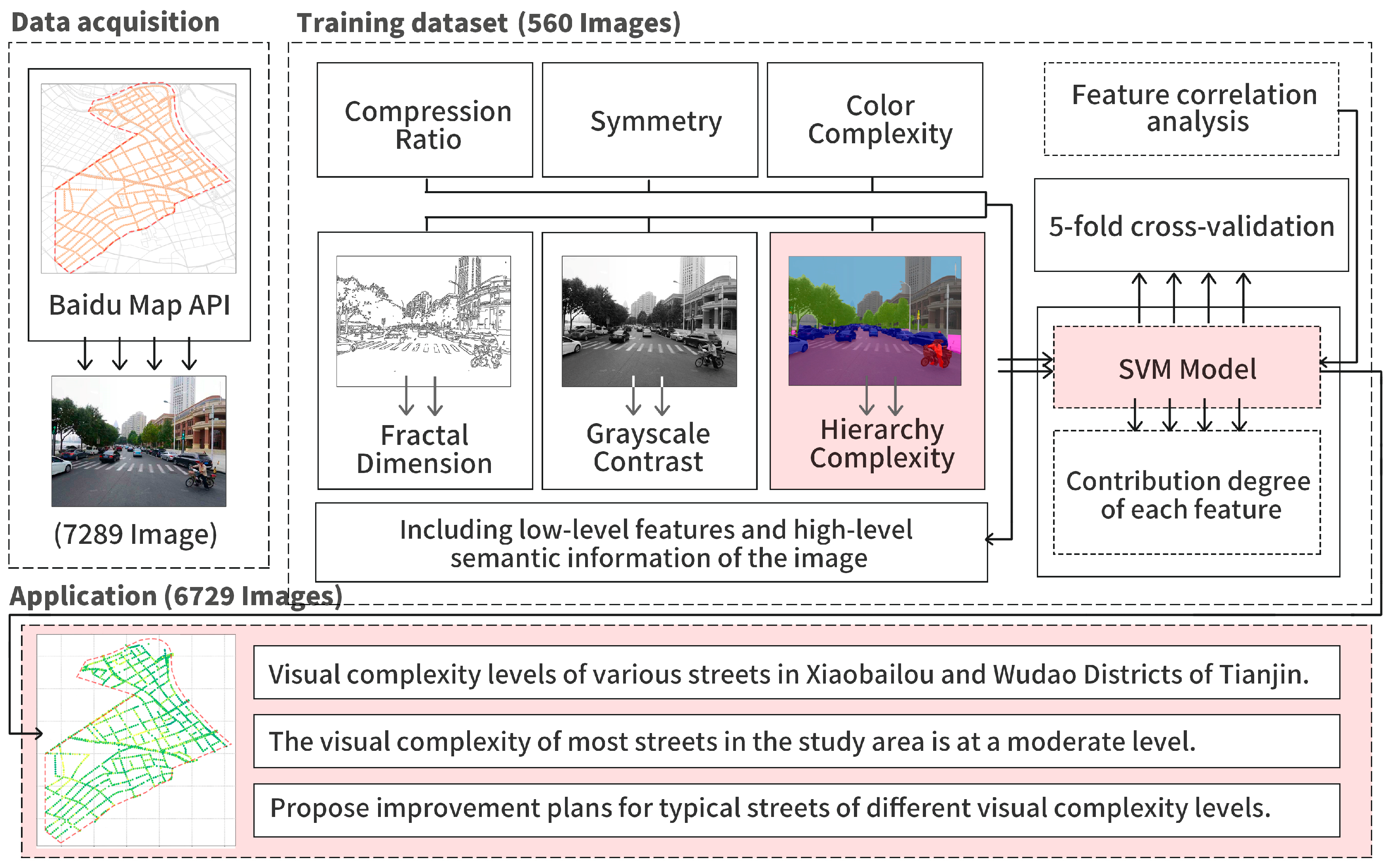
- Introduction of a new measurement dimension: The study proposes hierarchical complexity as an advanced image feature to more accurately capture the intricacies of street scenes while bridging semantic gaps and validating its effectiveness.
- Development of a quantitative model: A quantitative model for streetscape visual complexity is constructed, with an analysis of the contributions of various indicators.
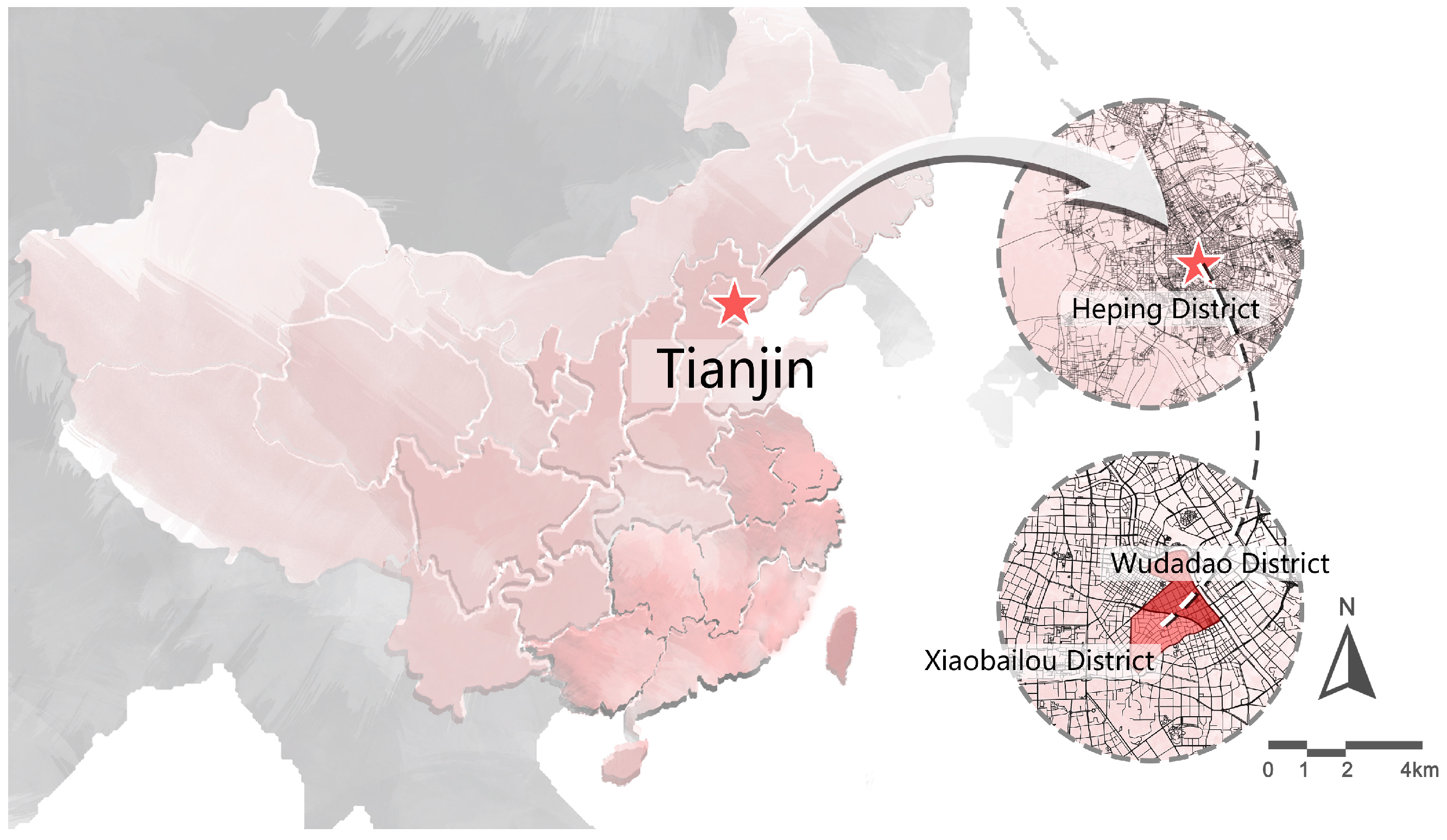
- Empirical validation and geographic analysis: The quantitative model is empirically validated, and an in-depth analysis of the geographic distribution of visual complexity is conducted within Tianjin’s Xiaobailou and Wudadao Districts.
2. Materials and Methods
2.1. Data Acquisition
2.2. Identification of Complexity Quantification Features
2.2.1. Compression Ratio
2.2.2. Symmetry
2.2.3. Fractal Dimension
2.2.4. Color Complexity
2.2.5. Grayscale Contrast
2.2.6. Hierarchical Complexity
2.3. SVM-Trained Model
2.3.1. Model Training Label
2.3.2. Building the SVM-Trained Model
2.3.3. Model Validation
3. Results
3.1. Contribution of Features in the SVM Classification Model
3.2. Practical Application of the SVM Classification Model
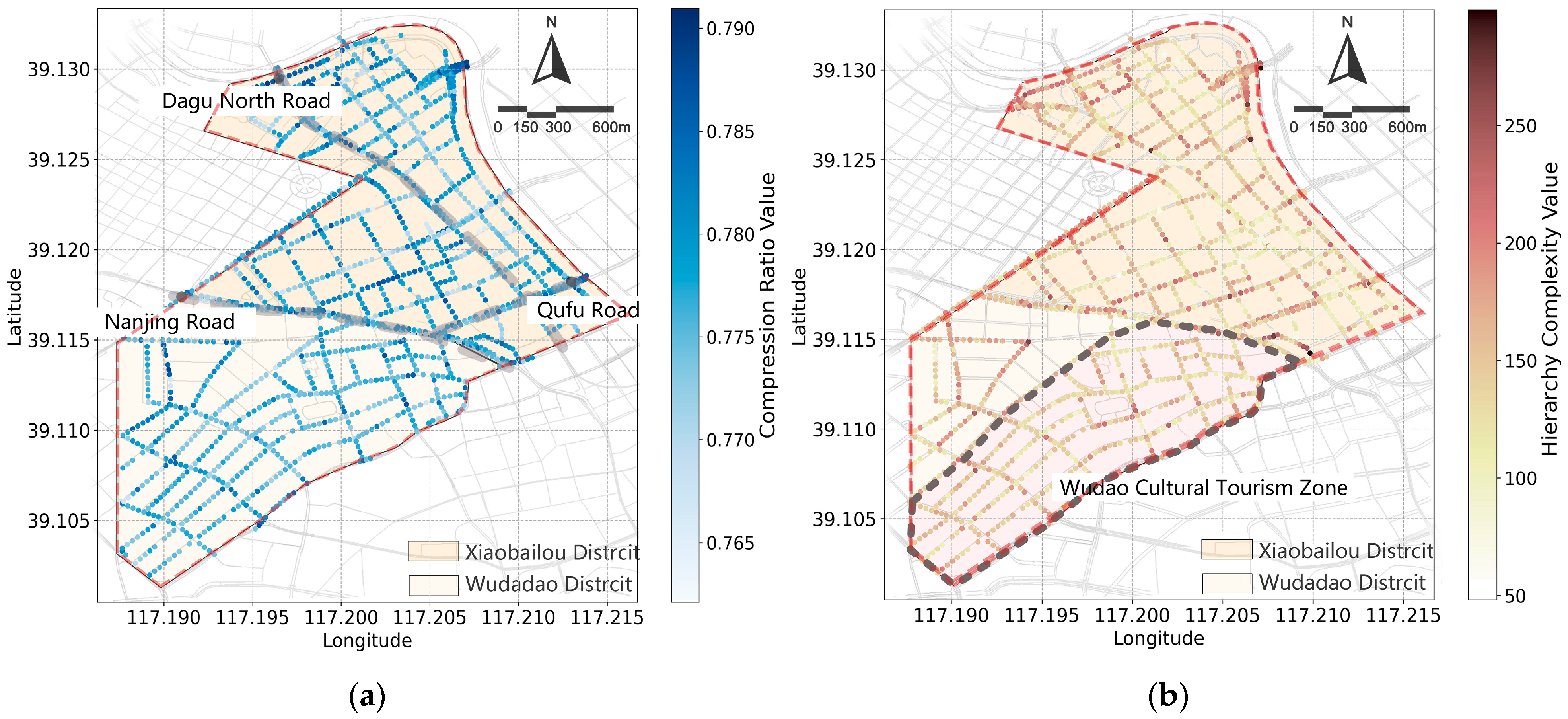
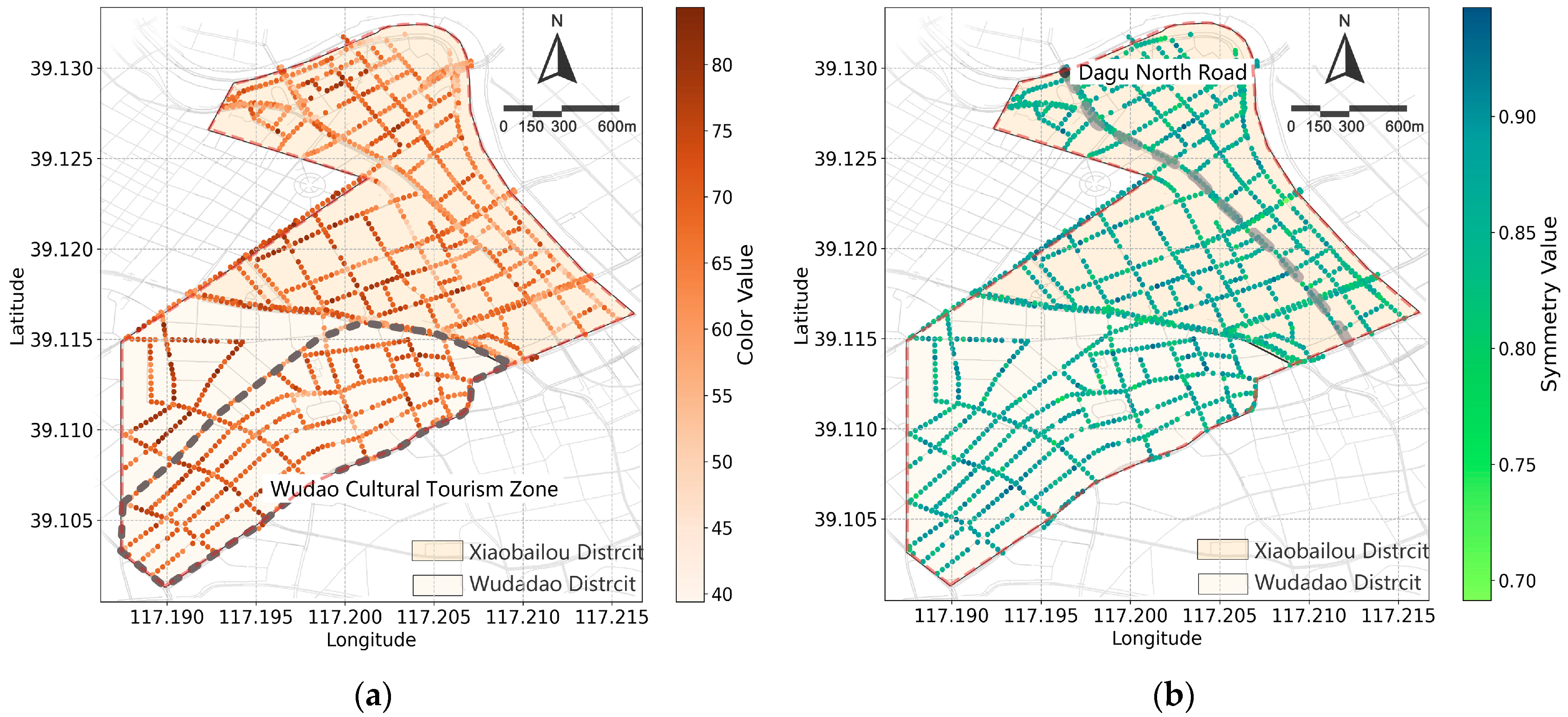
3.3. Distribution of Image Features in the Study Area
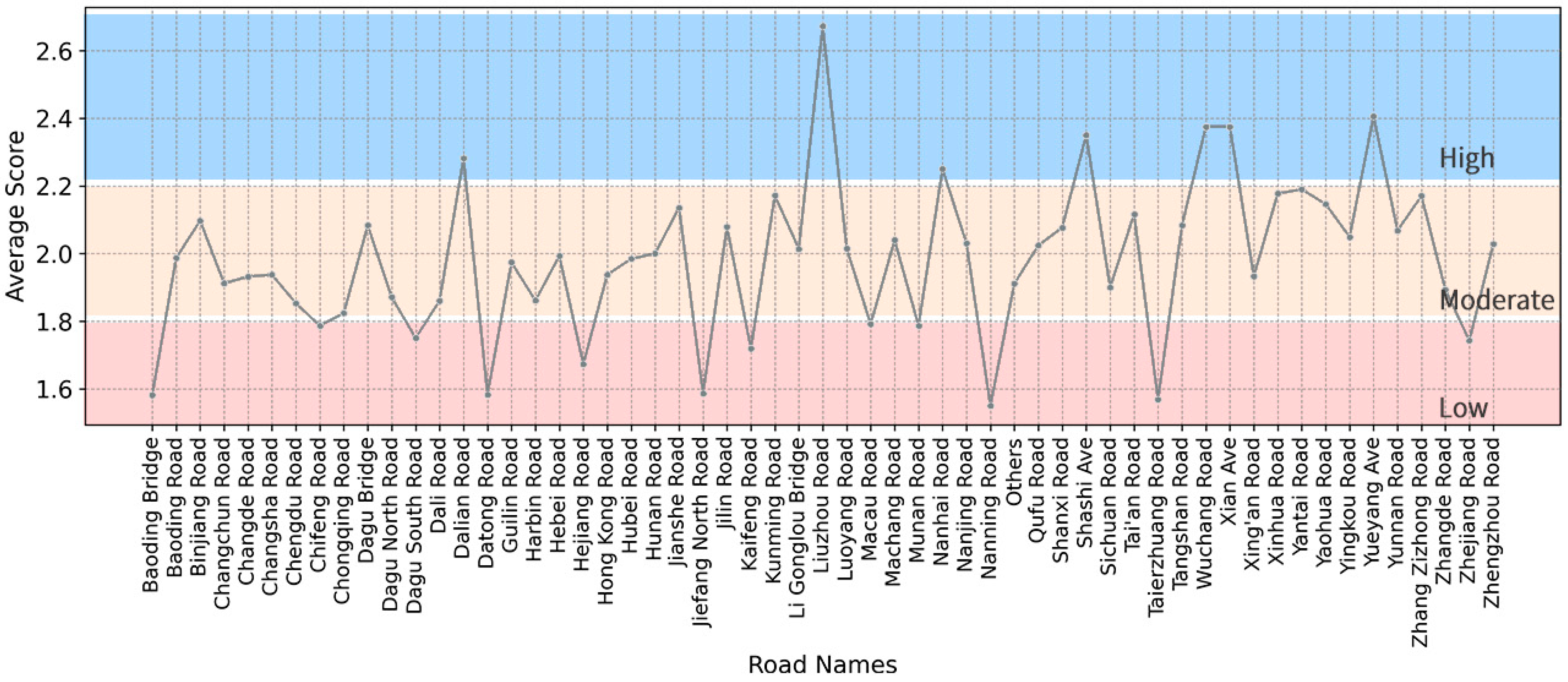
3.4. Complexity Scores and Typical Streets in the Study Area
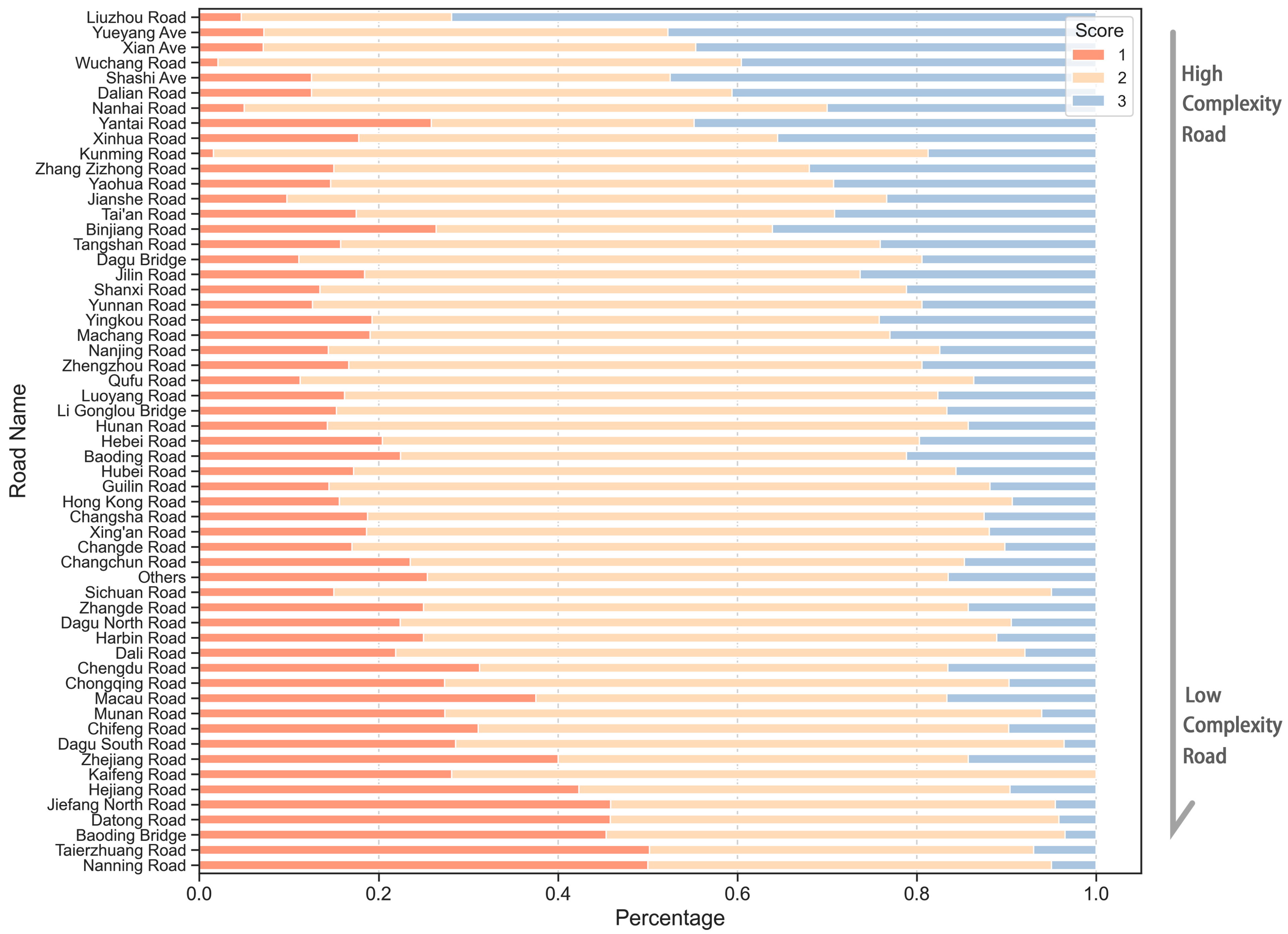
3.4.1. Complexity Scores of Streetscapes
3.4.2. Moderate Complexity Streets
3.4.3. High-Complexity Streets
3.4.4. Low-Complexity Streets
4. Discussion
4.1. SVM Quantification Model
4.2. Analysis of Streetscape Complexity Features
4.3. Strategies for Optimizing Street Visuals
4.4. Limitations and Future Directions
5. Conclusions
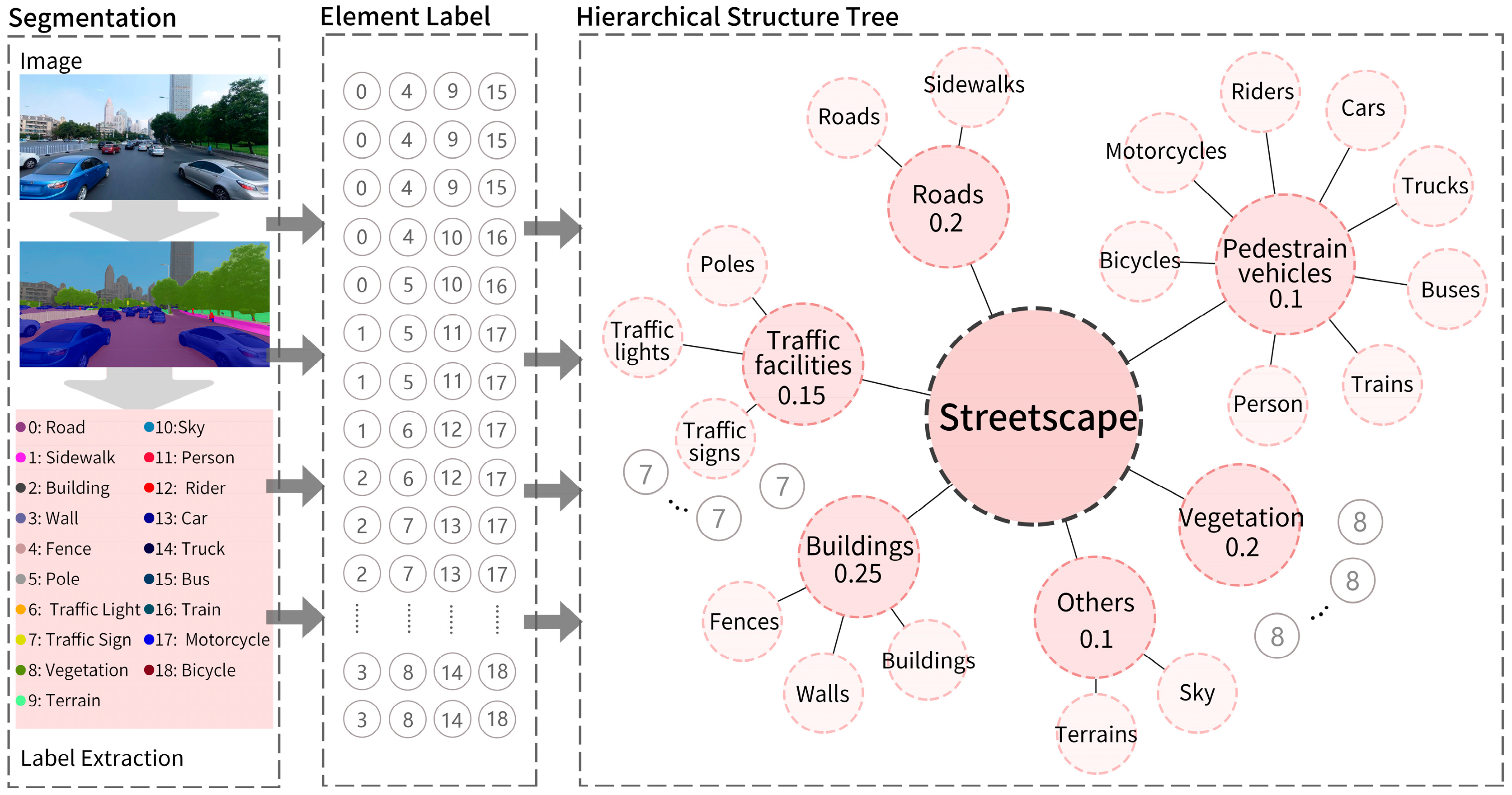
- This study introduces an innovative dimension for measuring visual complexity—hierarchical complexity. This dimension serves as a tool designed specifically for assessing landscape visual complexity and bridges the gap between low-level semantic features in streetscape images and high-level human semantic cognition. Hierarchical complexity is based on high-level semantic information from images, allowing for a more comprehensive capture of visual complexity in streetscapes and reflecting the richness of streetscape elements. The DeepLabv3+ model was utilized for precise semantic segmentation of streetscape images, marking the smallest environment elements and creating corresponding nodes in the image’s semantic tree structure. By analyzing the inclusion relationships between these nodes, a hierarchical semantic tree was constructed, with the number of nodes in the hierarchy serving as an indicator of hierarchical complexity.
- This study developed a SVM-based model for quantifying streetscape visual complexity, achieving an average accuracy rate of 84.05%. This model can automate the processing of large volumes of image data, significantly improving efficiency and reducing the influence of subjective factors, thereby ensuring consistency and objectivity in measurements. The SVM model incorporates six input features across multiple dimensions, encompassing both low-level image features and high-level semantic information. The contribution of these features, ranked from highest to lowest, is as follows: compression ratio, grayscale contrast, hierarchical structural complexity, fractal dimension, color complexity, and symmetry. Among these, compression ratio, grayscale contrast, hierarchical structural complexity, and fractal dimension are the key factors influencing visual complexity. This ranking facilitates a more precise identification and understanding of each feature’s role in streetscape visual complexity. This, in turn, allows urban planners and environmental designers to tailor street designs and optimize visual complexity, thereby improving both the aesthetic appeal and functional quality of urban spaces.
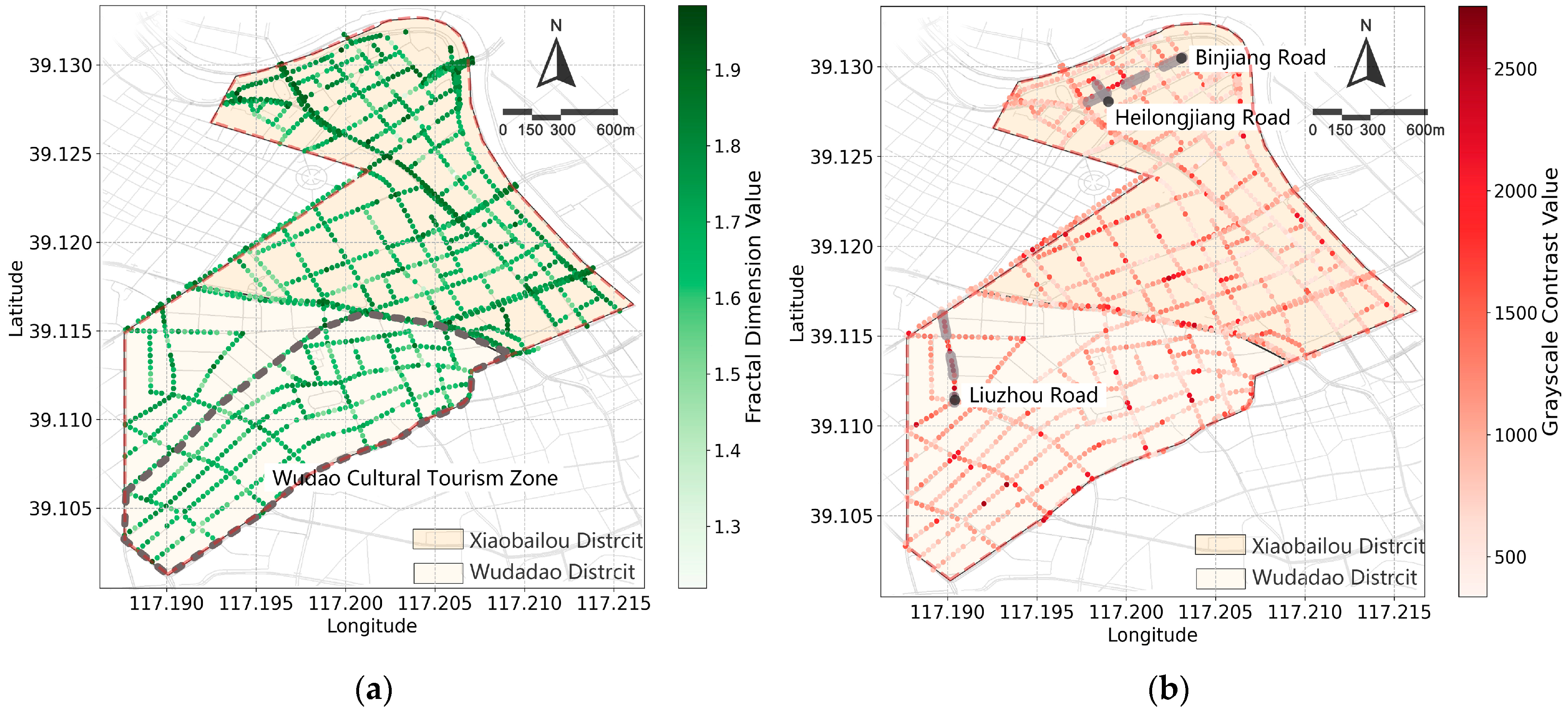
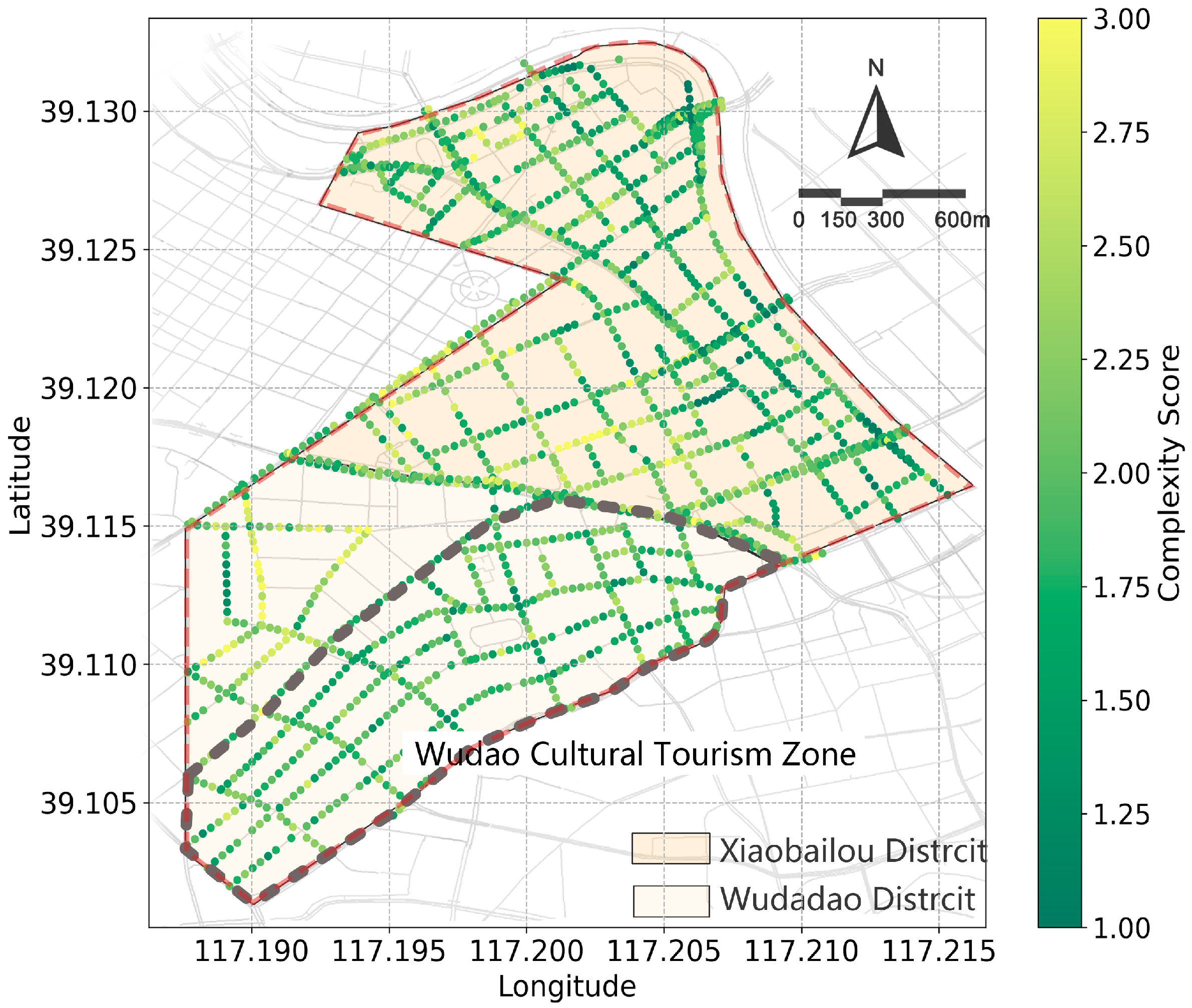
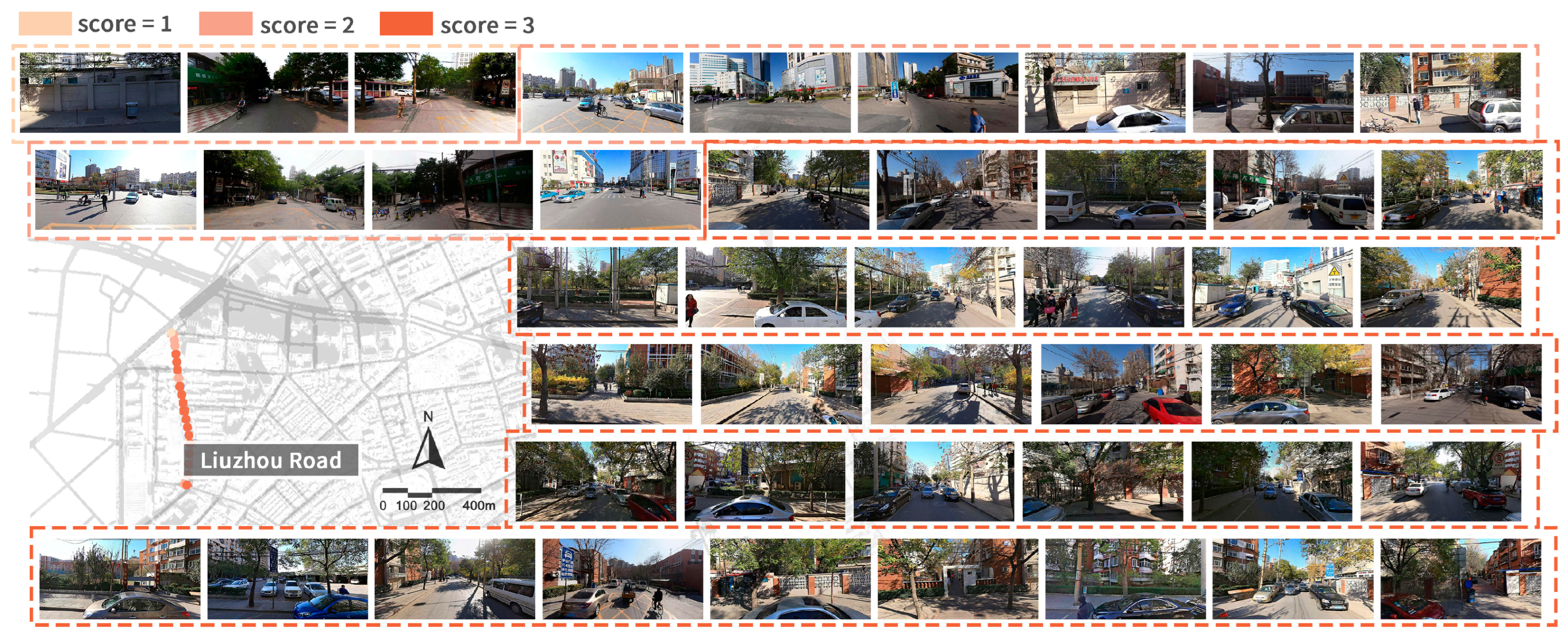
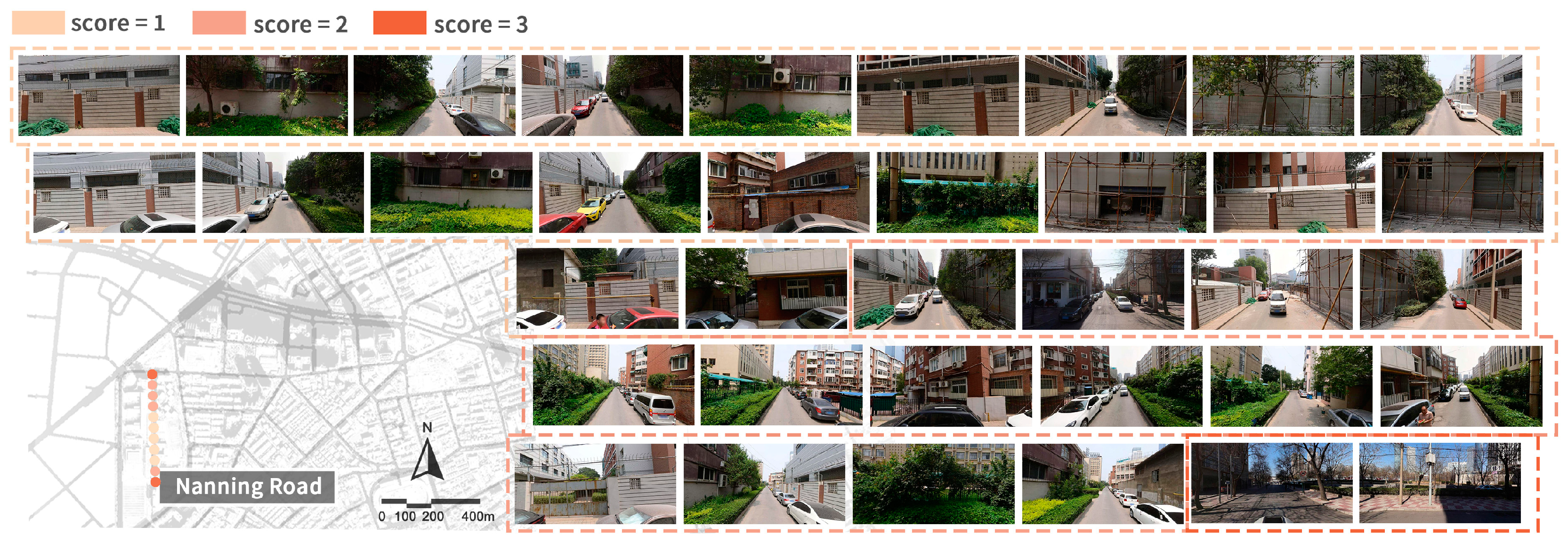
- The quantification model for streetscape visual complexity was applied to the Xiaobailou and Wudadao Districts in Tianjin. Detailed statistical and analytical evaluations were conducted for each street within the study area. Most streets exhibited moderate levels of visual complexity, with fewer streets falling into low- or high-complexity categories. High-complexity streetscapes typically featured diverse building types, rich vegetation, and high foot and vehicle traffic, such as in Yueyang Ave, Yantai Road, Xi’an Ave, Shashi Road, Liuzhou Road, and Dalian Road. Conversely, low-complexity street views often had uniform landscape elements and large blank areas, as seen in Taierzhuang Road, Nanning Road, Jiefang North Road, Hejiang Road, Datong Road, and Baoding Bridge. Based on the typical streets of different complexity levels, corresponding improvement recommendations have been proposed.
Author Contributions
Funding
Data Availability Statement
Conflicts of Interest
References
- Lee, M.; Kim, S.; Kim, H.; Hwang, S. Pedestrian visual satisfaction and dissatisfaction toward physical components of the walking environment based on types, characteristics, and combinations. Build. Environ. 2023, 244, e110776. [Google Scholar] [CrossRef] [Scilit]
- Yang, Y.Z.; Ma, Y.Y.; Jiao, H.Z. Exploring the Correlation between Block Vitality and Block Environment Based on Multisource Big Data: Taking Wuhan City as an Example. Land 2021, 10, 984. [Google Scholar] [CrossRef] [Scilit]
- Ye, Y.; Huang, R.; Zhang, L. Human-oriented Urban Design with Support of Multi-source Data and DeepLearning: A Case Study on Urban Greenway Planning of Suzhou Creek, Shanghai. Landsc. Archit. 2021, 28, 39–45. [Google Scholar] [CrossRef]
- Liu, J.Y.; Li, Y.B.; Xu, Y.H.; Zhuang, C.C.; Hu, Y.; Yu, Y. Impacts of Built Environment on Urban Vitality in Cultural Districts: A Case Study of Haikou and Suzhou. Land 2024, 13, 840. [Google Scholar] [CrossRef] [Scilit]
- Nath, S.S.; Brändle, F.; Schulz, E.; Dayan, P.; Brielmann, A.A. Relating Objective Complexity, Subjective Complexity and Beauty. 2023. Available online: https://osf.io/preprints/psyarxiv/nuep7 (accessed on 20 June 2024). [CrossRef] [Scilit]
- Sun, Z.; Firestone, C. Curious objects: How visual complexity guides attention and engagement. Cogn. Sci. 2021, 45, e12933. [Google Scholar] [CrossRef] [Scilit] [PubMed]
- Pazhouhanfar, M.; Kamal, M. Effect of predictors of visual preference as characteristics of urban natural landscapes in increasing perceived restorative potential. Urban For. Urban Green. 2014, 13, 145–151. [Google Scholar] [CrossRef] [Scilit]
- Zhou, H.; He, S.; Cai, Y.; Wang, M.; Su, S. Social inequalities in neighborhood visual walkability: Using street view imagery and deep learning technologies to facilitate healthy city planning. Sustain. Cities Soc. 2019, 50, e101605. [Google Scholar] [CrossRef] [Scilit]
- Ciocca, G.; Corchs, S.; Gasparini, F.; Bricolo, E.; Tebano, R. Does color influence image complexity perception? In Proceedings of the Computational Color Imaging: 5th International Workshop, Saint Etienne, France, 24–26 March 2015. [Google Scholar] [CrossRef] [Scilit]
- Papia, E.-M.; Kondi, A.; Constantoudis, V. Entropy and complexity analysis of AI-generated and human-made paintings. Chaos Solitons Fractals 2023, 170, e113385. [Google Scholar] [CrossRef] [Scilit]
- Sigaki, H.Y.; Perc, M.; Ribeiro, H.V. History of art paintings through the lens of entropy and complexity. Proc. Natl. Acad. Sci. USA 2018, 115, e8585–e8594. [Google Scholar] [CrossRef] [Scilit]
- Kang, N.; Liu, C. Towards landscape visual quality evaluation: Methodologies, technologies, and recommendations. Ecol. Indic. 2022, 142, e109174. [Google Scholar] [CrossRef] [Scilit]
- Wartmann, F.M.; Frick, J.; Kienast, F.; Hunziker, M. Factors influencing visual landscape quality perceived by the public. Results from a national survey. Landsc. Urban Plan. 2021, 208, e104024. [Google Scholar] [CrossRef] [Scilit]
- Liu, M.; Han, L.; Xiong, S.; Qing, L.; Ji, H.; Peng, Y. Large-Scale Street Space Quality Evaluation Based on Deep Learning Over Street View Image. In Proceedings of the 10th International Conference on Image and Graphics (ICIG), Beijing, China, 23–25 August 2019. [Google Scholar] [CrossRef] [Scilit]
- Chen, C.; Li, H.; Luo, W.; Xie, J.; Yao, J.; Wu, L.; Xia, Y. Predicting the effect of street environment on residents’ mood states in large urban areas using machine learning and street view images. Sci. Total Environ. 2022, 816, 151605. [Google Scholar] [CrossRef] [Scilit] [PubMed]
- Berlyne, D.E.; Ogilvie, J.C.; Parham, L.C. The dimensionality of visual complexity, interestingness, and pleasingness. Can. J. Psychol./Rev. Can. De Psychol. 1968, 22, 376. [Google Scholar] [CrossRef] [Scilit] [PubMed]
- Kreitler, S.; Zigler, E.; Kreitler, H. The complexity of complexity. Hum. Dev. 1974, 17, 54–73. [Google Scholar] [CrossRef] [Scilit]
- Cavalcante, A.; Mansouri, A.; Kacha, L.; Barros, A.K.; Takeuchi, Y.; Matsumoto, N.; Ohnishi, N. Measuring streetscape complexity based on the statistics of local contrast and spatial frequency. PLoS ONE 2014, 9, e87097. [Google Scholar] [CrossRef] [Scilit]
- Liang, X.C.; Chang, J.H.; Gao, S.; Zhao, T.H.; Biljecki, F. Evaluating human perception of building exteriors using street view imagery. Build. Environ. 2024, 263, 19. [Google Scholar] [CrossRef] [Scilit]
- Ma, L.; Guo, Z.; Lu, M.; He, S.; Wang, M. Developing an urban streetscape indexing based on visual complexity and self-organizing map. Build. Environ. 2023, 242, e110549. [Google Scholar] [CrossRef] [Scilit]
- Wohlwill, J.F. Amount of stimulus exploration and preference as differential functions of stimulus complexity. Percept. Psychophys. 1968, 4, 307–312. [Google Scholar] [CrossRef] [Scilit]
- Mehrabian, A.; Russell, J.A. A measure of arousal seeking tendency. Environ. Behav. 1973, 5, 315. [Google Scholar] [CrossRef] [Scilit]
- Kaplan, R.; Kaplan, S. The Experience of Nature: A Psychological Perspective; Cambridge University Press: Cambridge, UK, 1989. [Google Scholar]
- Kaplan, S. Aesthetics, affect, and cognition: Environmental preference from an evolutionary perspective. Environ. Behav. 1987, 19, 3–32. [Google Scholar] [CrossRef] [Scilit]
- Tveit, M.; Ode, Å.; Fry, G. Key concepts in a framework for analysing visual landscape character. Landsc. Res. 2006, 31, 229–255. [Google Scholar] [CrossRef] [Scilit]
- Ewing, R.; Handy, S.; Brownson, R.C.; Clemente, O.; Winston, E. Identifying and measuring urban design qualities related to walkability. J. Phys. Act. Health 2006, 3, 223–240. [Google Scholar] [CrossRef] [Scilit] [PubMed]
- Ode, A.; Miller, D. Analysing the relationship between indicators of landscape complexity and preference. Environ. Plan. B-Plan. Des. 2011, 38, 24–40. [Google Scholar] [CrossRef] [Scilit]
- Massaro, D.; Savazzi, F.; Di Dio, C.; Freedberg, D.; Gallese, V.; Gilli, G.; Marchetti, A. When art moves the eyes: A behavioral and eye-tracking study. PLoS ONE 2012, 7, e37285. [Google Scholar] [CrossRef] [Scilit]
- Huang, A.S.-H.; Lin, Y.-J. The effect of landscape colour, complexity and preference on viewing behavior. Landsc. Res. 2020, 45, 214–227. [Google Scholar] [CrossRef] [Scilit]
- Nagai, M.; Oyana-Higa, M.; Miao, T. Relationship between image gaze location and fractal dimension. In Proceedings of the 2007 IEEE International Conference on Systems, Man and Cybernetics, Montréal, QC, Canada, 7–10 October 2007. [Google Scholar] [CrossRef] [Scilit]
- Fan, J.; Gao, Y.; Luo, H.; Jain, R. Mining multilevel image semantics via hierarchical classification. IEEE Trans. Multimed. 2008, 10, 167–187. [Google Scholar] [CrossRef] [Scilit]
- Tao, Y.L.; Wang, Y.; Wang, X.Y.; Tian, G.H.; Zhang, S.M. Measuring the Correlation between Human Activity Density and Streetscape Perceptions: An Analysis Based on Baidu Street View Images in Zhengzhou, China. Land 2022, 11, 400. [Google Scholar] [CrossRef] [Scilit]
- Zhao, J.; Guo, Q. Intelligent assessment for visual quality of streets: Exploration based on machine learning and large-scale street view data. Sustainability 2022, 14, 8166. [Google Scholar] [CrossRef] [Scilit]
- Wijnands, J.S.; Nice, K.A.; Thompson, J.; Zhao, H.; Stevenson, M. Streetscape augmentation using generative adversarial networks: Insights related to health and wellbeing. Sustain. Cities Soc. 2019, 49, e101602. [Google Scholar] [CrossRef] [Scilit]
- Han, J.; Lee, S. Verification of Immersive Virtual Reality as a Streetscape Evaluation Method in Urban Residential Areas. Land 2023, 12, 345. [Google Scholar] [CrossRef] [Scilit]
- Donderi, D.C.; McFadden, S. Compressed file length predicts search time and errors on visual displays. Displays 2005, 26, 71–78. [Google Scholar] [CrossRef] [Scilit]
- Cheng, X.; Li, Z. Predicting the lossless compression ratio of remote sensing images with configurational entropy. IEEE J. Sel. Top. Appl. Earth Obs. Remote Sens. 2021, 14, e11936–e11953. [Google Scholar] [CrossRef] [Scilit]
- Ciocca, G.; Corchs, S.; Gasparini, F. Complexity perception of texture images. In Proceedings of the New Trends in Image Analysis and Processing—ICIAP 2015 Workshops: ICIAP 2015 International Workshops, Genoa, Italy, 7–8 September 2015. [Google Scholar] [CrossRef] [Scilit]
- al-Rifaie, M.M.; Ursyn, A.; Zimmer, R.; Javid, M.A.J. On symmetry, aesthetics and quantifying symmetrical complexity. In Proceedings of the Computational Intelligence in Music, Sound, Art and Design: 6th International Conference, Amsterdam, The Netherlands, 19–21 April 2017. [Google Scholar] [CrossRef] [Scilit]
- Bigoin-Gagnan, A.; Lacoste-Badie, S. Symmetry influences packaging aesthetic evaluation and purchase intention. Int. J. Retail Distrib. Manag. 2018, 46, e1026–e1040. [Google Scholar] [CrossRef] [Scilit]
- Tinio, P.P.; Leder, H. Just how stable are stable aesthetic features? Symmetry, complexity, and the jaws of massive familiarization. Acta Psychol. 2009, 130, 241–250. [Google Scholar] [CrossRef] [Scilit]
- Chen, C.-C.; Wu, J.-H.; Wu, C.-C. Reduction of image complexity explains aesthetic preference for symmetry. Symmetry 2011, 3, e443–e456. [Google Scholar] [CrossRef] [Scilit]
- Ma, L.; Zhang, H.; Lu, M. Building’s fractal dimension trend and its application in visual complexity map. Build. Environ. 2020, 178, e106925. [Google Scholar] [CrossRef] [Scilit]
- Sun, K.X.; Li, Z.F.; Zheng, S.Y.; Qu, H.Y. Quantifying environmental characteristics on psychophysiological restorative benefits of campus window views. Build. Environ. 2024, 262, 16. [Google Scholar] [CrossRef] [Scilit]
- Van den Berg, A.E.; Joye, Y.; Koole, S.L. Why viewing nature is more fascinating and restorative than viewing buildings: A closer look at perceived complexity. Urban For. Urban Green. 2016, 20, 397–401. [Google Scholar] [CrossRef] [Scilit]
- Vaughan, J.; Ostwald, M.J. Using fractal analysis to compare the characteristic complexity of nature and architecture: Re-examining the evidence. Archit. Sci. Rev. 2010, 53, 323–332. [Google Scholar] [CrossRef] [Scilit]
- Tsutsui, A.; Ohmi, G. Complexity scale and aesthetic judgments of color combinations. Empir. Stud. Arts 2011, 29, 1–15. [Google Scholar] [CrossRef] [Scilit]
- Wang, H.; Li, Z.; Li, Y.; Gupta, B.B.; Choi, C. Visual saliency guided complex image retrieval. Pattern Recognit. Lett. 2020, 130, 64–72. [Google Scholar] [CrossRef] [Scilit]
- Zhou, B.; Xu, S.; Yang, X.-X. Computing the color complexity of images. In Proceedings of the 2015 12th International Conference on Fuzzy Systems and Knowledge Discovery (FSKD), Zhangjiajie, China, 15–17 August 2015. [Google Scholar] [CrossRef] [Scilit]
- Chen, W.; Shi, Y.Q.; Xuan, G. Identifying computer graphics using HSV color model and statistical moments of characteristic functions. In Proceedings of the IEEE International Conference on Multimedia and Expo (ICME 2007), Beijing, China, 2–5 July 2007. [Google Scholar] [CrossRef] [Scilit]
- Tamura, H.; Mori, S.; Yamawaki, T. Textural features corresponding to visual perception. IEEE Trans. Syst. Man Cybern. 1978, 8, e460–e473. [Google Scholar] [CrossRef] [Scilit]
- Barbalho, J.M.; Duarte, A.; Neto, D.; Costa, J.A.F.; Netto, M.L.A. Hierarchical SOM applied to image compression. In Proceedings of the IJCNN’01. International Joint Conference on Neural Networks, Washington, DC, USA, 15–19 July 2001. [Google Scholar] [CrossRef] [Scilit]
- Park, Y.; Garcia, M. Pedestrian safety perception and urban street settings. Int. J. Sustain. Transp. 2020, 14, e860–e871. [Google Scholar] [CrossRef] [Scilit]
- Rezvanipour, S.; Hassan, N.; Ghaffarianhoseini, A.; Danaee, M. Why does the perception of street matter? A dimensional analysis of multisensory social and physical attributes shaping the perception of streets. Archit. Sci. Rev. 2021, 64, 359–373. [Google Scholar] [CrossRef] [Scilit]
- Lyu, H.; Wu, T.; Komori, N.; Wu, X. Human-centric computing for inequality energy classification in smart cities: Who gets left to margins while improving quality of life through advanced approaches? Sustain. Cities Soc. 2024, 107, e105423. [Google Scholar] [CrossRef] [Scilit]
- Liu, Z.J.; Huang, Z.Z.; Chu, J.Q.; Li, H.C.; He, J.Z.; Lin, C.F.; Jiang, C.; Yao, G.P.; Fan, S.H. A novel approach for predicting the concentration of exhaled aerosols exposure among healthcare workers in the operating room. Build. Environ. 2023, 245, 11. [Google Scholar] [CrossRef] [Scilit]
- Zhao, J.; Cao, Y. Review of Artificial Intelligence Methods in Landscape Architecture. Chin. Landsc. Archit. 2020, 36, 82–87. [Google Scholar] [CrossRef]
- Fernandez-Lozano, C.; Carballal, A.; Machado, P.; Santos, A.; Romero, J. Visual complexity modelling based on image features fusion of multiple kernels. PeerJ 2019, 7, e7075. [Google Scholar] [CrossRef] [Scilit] [PubMed]
- Guo, X.; Qian, Y.; Li, L.; Asano, A. Assessment model for perceived visual complexity of painting images. Knowl.-Based Syst. 2018, 159, 110–119. [Google Scholar] [CrossRef] [Scilit]
- Lang, C.; Nguyen, T.V.; Katti, H.; Yadati, K.; Kankanhalli, M.; Yan, S. Depth matters: Influence of depth cues on visual saliency. In Proceedings of the Computer Vision–ECCV 2012: 12th European Conference on Computer Vision, Florence, Italy, 7–13 October 2012. [Google Scholar] [CrossRef] [Scilit]
- Ewing, R.; Handy, S. Measuring the unmeasurable: Urban design qualities related to walkability. J. Urban Des. 2009, 14, 65–84. [Google Scholar] [CrossRef] [Scilit]
- Hands, D.E.; Brown, R.D. Enhancing visual preference of ecological rehabilitation sites. Landsc. Urban Plan. 2002, 58, 57–70. [Google Scholar] [CrossRef] [Scilit]
- Rui, L. Sustainable Development and ArchitecturaHeritage Preservation: A Case of the Creative Transformation and Planning of the Fifth Avenue in the British Concession of Tianjin. Huazhong Archit. 2023, 41, 110–114. [Google Scholar] [CrossRef]
- Lei, C.; Dongqi, Z.; Yi, C. The Green Life Cycle Model on Historical District Regeneration-A Case Study of theAnshanli and Baoshanli Block in Tianjin. J. Tianjin Univ. (Soc. Sci.) 2017, 19, e530–e535. [Google Scholar]
- Day, H. Evaluations of subjective complexity, pleasingness and interestingness for a series of random polygons varying in complexity. Percept. Psychophys. 1967, 2, 281–286. [Google Scholar] [CrossRef] [Scilit]
- Zhang, G.; Yang, J.; Jin, J. Assessing relations among landscape preference, informational variables, and visual attributes. J. Environ. Eng. Landsc. Manag. 2021, 29, 294–304. [Google Scholar] [CrossRef] [Scilit]
- Alpak, E.M.; Özkan, D.G.; Mumcu, S.; Özbilen, A. Complexity, historicity and coherence: Preference and quality of the changes in the urban scene. Anthropologist 2016, 24, e762–e777. [Google Scholar] [CrossRef] [Scilit]
- People’s Government Office of Heping District, Government Work Report of Heping District, Tianjin in 2023. 2023. Available online: https://www.tjhp.gov.cn/zw/gzbg/202301/t20230117_6080994.html (accessed on 17 January 2023).
- Berlyne, D.E. Ends and means of experimental aesthetics. Can. J. Psychol./Rev. Can. De Psychol. 1972, 26, 303. [Google Scholar] [CrossRef] [Scilit]
- Zhang, G.; Yang, J.; Wu, G.; Hu, X. Exploring the interactive influence on landscape preference from multiple visual attributes: Openness, richness, order, and depth. Urban For. Urban Green. 2021, 65, e127363. [Google Scholar] [CrossRef] [Scilit]








| Compression Ratio | Symmetry | Color Complexity | Grayscale Contrast | Fractal Dimension | Hierarchy Complexity |
|---|---|---|---|---|---|
| 29.02% | 2.53% | 6.65% | 26.69% | 14.27% | 20.84% |
Disclaimer/Publisher’s Note: The statements, opinions and data contained in all publications are solely those of the individual author(s) and contributor(s) and not of MDPI and/or the editor(s). MDPI and/or the editor(s) disclaim responsibility for any injury to people or property resulting from any ideas, methods, instructions or products referred to in the content. |
© 2024 by the authors. Licensee MDPI, Basel, Switzerland. This article is an open access article distributed under the terms and conditions of the Creative Commons Attribution (CC BY) license (https://creativecommons.org/licenses/by/4.0/).
Share and Cite
Zhao, J.; Suo, W. Research on the Construction and Application of a SVM-Based Quantification Model for Streetscape Visual Complexity. Land 2024, 13, 1953. https://doi.org/10.3390/land13111953
Zhao J, Suo W. Research on the Construction and Application of a SVM-Based Quantification Model for Streetscape Visual Complexity. Land. 2024; 13(11):1953. https://doi.org/10.3390/land13111953
Chicago/Turabian StyleZhao, Jing, and Wanyue Suo. 2024. "Research on the Construction and Application of a SVM-Based Quantification Model for Streetscape Visual Complexity" Land 13, no. 11: 1953. https://doi.org/10.3390/land13111953
APA StyleZhao, J., & Suo, W. (2024). Research on the Construction and Application of a SVM-Based Quantification Model for Streetscape Visual Complexity. Land, 13(11), 1953. https://doi.org/10.3390/land13111953