


Abstract
Water reuse is increasingly recognized as a key strategy for sustainable water management in semi-arid regions, where drinking water treatment plants generate significant volumes of filter backwash water with limited reuse. This study evaluates the effectiveness of assisted clarification for enhancing backwash water recovery under full-scale operational conditions in a semi-arid Moroccan treatment facility. Settling experiments were conducted with and without coagulant addition, and clarification performance was monitored through physicochemical parameters and statistical analysis. Coagulant addition markedly accelerated sedimentation kinetics, enabling clarified water recovery exceeding 90% within 20 min compared with substantially lower recovery in the control condition. A two-way ANOVA confirmed a significant treatment effect and a strong interaction between coagulant addition and settling time. These findings demonstrate that coagulant-assisted clarification can substantially improve backwash water recovery under real operating conditions. The results highlight the potential of this approach as a practical and scalable option for promoting circular water reuse in water-stressed environments while maintaining operational simplicity.
1. Introduction
Water scarcity has become a critical global challenge, particularly in semi-arid regions where increasing population growth, urbanization, and climate variability place significant pressure on limited freshwater resources [1,2,3]. In this context, improving water reuse strategies within drinking water treatment plants represents an important approach to enhance resource efficiency and promote circular water management [4,5]. Recent global assessments have highlighted that treated wastewater and residual water streams from treatment facilities represent valuable resources for water, nutrient, and energy recovery [1,2].
Among the residual streams generated in drinking water treatment plants, filter backwash water represents a substantial volume that is often discharged or only partially reused [6]. If not properly managed, these residual streams can increase operational costs and contribute to environmental concerns related to sludge generation and water loss [7]. This water typically contains suspended solids, colloidal particles, residual coagulants, and organic matter accumulated during filtration processes [8]. Therefore, the recovery and reuse of filter backwash water have become important strategies for improving the sustainability of drinking water treatment systems [8].
Various treatment approaches have been proposed for the recovery of filter backwash water, including sedimentation, dissolved air flotation, membrane filtration, and coagulation–flocculation processes [8,9,10,11,12,13]. Sedimentation-based systems are widely used due to their simplicity and relatively low operational costs; however, they often require large hydraulic retention times and can generate significant sludge volumes [8].
In this context, coagulation–flocculation processes have been widely investigated as effective methods to enhance particle aggregation and facilitate solid–liquid separation [11,12,13,14,15,16,17,18]. Membrane filtration technologies provide higher separation efficiency but are associated with high operational costs and membrane fouling issues [15].
Coagulants and flocculants play a key role in water and wastewater treatment by promoting particle aggregation through mechanisms such as charge neutralization and polymer bridging [17,18,19]. Synthetic and natural flocculants, including polyacrylamides, chitosan, and starch-based materials, have demonstrated high efficiency in removing suspended solids and turbidity, thereby improving overall treatment performance [5,12,20]. These processes enhance floc formation and sedimentation efficiency, making them particularly suitable for the treatment of highly turbid residual streams such as filter backwash water [8].
Despite these advances, the application of coagulant-enhanced recovery processes for filter backwash water reuse under real operating conditions, particularly in semi-arid regions, remains insufficiently explored [8,14]. Most existing studies have been conducted at laboratory scale or have primarily focused on conventional clarification performance, with limited attention to circular reuse integration within full-scale treatment systems [8]. In addition, the long-term performance and operational implications of such recovery strategies remain poorly documented [8].
Therefore, this study provides a novel contribution by investigating the performance of a coagulant-enhanced recovery process applied to real filter backwash water generated in a drinking water treatment plant operating under semi-arid conditions. Unlike previous studies, this work evaluates the process using real operational data and focuses on its integration within a circular water management approach.
The aim of this study was to evaluate the efficiency of the coagulant-assisted recovery process in improving key physicochemical water quality parameters and to assess its potential contribution to circular water reuse in drinking water treatment systems.
2. Materials and Methods
2.1. Backwash Water Generation
The backwash water investigated in this study was generated during the routine washing of rapid sand filters operated in the drinking water treatment plant. The washing procedure consisted of two successive phases: a declogging phase followed by a rinsing phase. During declogging, a flow rate of 725 m3/h was applied for 7 min, corresponding to half of the nominal flow rate of the washing pump unit (1450 m3/h). This was followed by a rinsing phase carried out at the full pump flow rate of 1450 m3/h for 10 min.
The water volume used for washing one filter was calculated as follows:
For one treatment line composed of six filters, the total volume of water used for washing was therefore 1956 m3. Considering a filtration cycle of 48 h and a nominal filtration flow rate of 800 L/s, the corresponding filtered water production was 138,240 m3, leading to a washing water loss rate of approximately 1.4%. For the second treatment line, operating at 900 L/s, the filtered water production was 155,520 m3, corresponding to a loss rate of approximately 1.3%. When the 12 filters of the two treatment lines were considered together under average demand conditions of 900 L/s, the overall water loss due to filter washing reached approximately 2.5%.
These backwash water volumes constitute the residual stream targeted in the present recovery study.
2.2. Analytical Methods
The methodology consisted of complementary investigations designed to assess baseline water quality and evaluate the feasibility of filter backwash water reuse under real operational conditions.
The obtained results were assessed against international reuse guidelines, particularly WHO and FAO standards [7].
The filtration units F4, F5 and F6, correspond to rapid sand filtration units operating in parallel within the drinking water treatment plant. Each filtration unit consists of a multilayer filtration media composed of silica sand and gravel support layers designed to remove suspended solids and residual flocs generated during the coagulation–flocculation process.
The filtration media used in the studied treatment plant consist of a multilayer filtration system composed of silica sand (effective size 0.8–1.2 mm) supported by graded gravel layers (2–20 mm). These filtration materials ensure efficient removal of suspended particles and flocs formed during coagulation–flocculation processes.
The coagulant used in this study was aluminum sulfate (Al2(SO4)3·14–18H2O), a synthetic aluminum-based coagulant commonly used in drinking water treatment processes. The product was supplied by HİCRİ ERCİLİ Kimyevi Mad. San. ve Tic. Ltd. Şti. (Bandırma, Turkey). According to the manufacturer’s technical specifications, the product contains a minimum Al2O3 content of approximately 17%. Aluminum sulfate promotes coagulation through hydrolysis reactions forming aluminum hydroxide flocs, which destabilize suspended particles and enhance their removal through aggregation and sedimentation.
The coagulant dosage range investigated in the jar-test experiments (10–60 mg/L) was selected based on preliminary screening tests and typical operational practices reported in drinking water treatment plants. Initial exploratory tests indicated that dosages below 10 mg/L were insufficient to achieve effective particle destabilization, while dosages above 60 mg/L did not significantly improve clarification efficiency. Therefore, the selected range was considered appropriate for evaluating the performance of coagulant-assisted clarification for filter backwash water treatment.
The physicochemical parameters of the water samples were determined using standard analytical methods commonly applied in water quality monitoring. Parameters including pH, electrical conductivity, turbidity, suspended solids (TSS), chemical oxygen demand (COD), and biological oxygen demand (BOD5) were measured using standard laboratory procedures. The analytical methods and corresponding instruments used in this study are summarized in Table 1.
Table 1.
Analytical methods and instruments used for water quality characterization.
Physicochemical parameters (pH, turbidity, and conductivity) were measured using HACH instruments (Hach Co., Loveland, CO, USA). Samples were processed using BIOBASE (Biobase Group, Jinan, China) and Memmert (Memmert GmbH, Schwabach, Germany) incubators. Heavy metal concentrations were determined via Atomic Absorption Spectroscopy (AAS) using Varian (Varian Inc., Palo Alto, CA, USA) and Inductively Coupled Plasma (ICP) using Thermo Fisher Scientific (Waltham, MA, USA) systems. Data processing, curve fitting, and image editing were performed using Microsoft Excel (version 2021; Microsoft Corp., Redmond, WA, USA). For all instruments and software, manufacturer specifications and official web documentation were followed to ensure reproducibility.
The coagulation–flocculation experiments were conducted in laboratory-scale reactors containing a working volume of water samples. The coagulant was added to the reactor and rapid mixing was first applied to ensure proper dispersion of the chemical product, followed by slower mixing to promote floc formation. Mechanical stirring was used to maintain homogeneous mixing conditions during the experiments. All experiments were conducted under ambient laboratory temperature conditions.
2.3. Baseline Water Quality Monitoring
Raw and treated water were monitored at the drinking water treatment plant to establish a reference quality framework. Physicochemical parameters included turbidity, mineralization, oxidizability, ammonium, nitrate and nitrite concentrations, and selected metals. Organoleptic characteristics were also evaluated to ensure compliance with operational standards. These analyses provided baseline data for interpreting treatment efficiency and reuse potential.
2.4. Experimental Study on Backwash Water Reuse
An experimental investigation was conducted to evaluate the reuse potential of filter backwash water collected from three filtration units (F4, F5, and F6). Coagulation–flocculation tests were performed using six different coagulant dosages (samples 1–6) applied under controlled settling conditions.
The following parameters were monitored to assess treatment performance: turbidity and pH evolution, residual aluminium (Al3+), ammonium (NH4+), and total alkalimetric title (TAC). Clarification efficiency and water recovery were evaluated by comparing treated backwash water quality across the tested conditions. The obtained results were assessed against international reuse guidelines, particularly WHO and FAO standards for irrigation water quality.
2.5. Jar Test Procedure
Jar-test experiments were carried out to evaluate the efficiency of coagulant-assisted clarification of filter backwash water. The experiments consisted of two successive mixing stages: a rapid mixing stage followed by a slow mixing stage. Rapid mixing was performed at approximately 200 rpm for 1 min in order to ensure uniform dispersion of the coagulant within the suspension. This was followed by slow mixing at approximately 40 rpm for 15 min, allowing floc formation and particle aggregation.
After the flocculation phase, the suspension was allowed to settle for 20 min to evaluate clarification efficiency. Floc formation was visually monitored during the slow mixing stage. The delay in floc appearance ranged between 7 and 15 s, depending on the coagulant dosage applied. Floc characteristics and sedimentation behaviour were qualitatively evaluated based on floc structure and sedimentation velocity (classified as slow (L), medium (M), or rapid (R)).
Intermediate coagulant dosages produced larger and more compact flocs with improved sedimentation behaviour.
Six beakers were filled with representative backwash water samples and subjected to increasing coagulant dosages (10, 20, 30, 40, 50, and 60 mg/L). Each beaker underwent rapid mixing to ensure homogeneous coagulant dispersion (coagulation phase), followed by slow mixing to promote particle aggregation and floc formation (flocculation phase). The suspensions were then allowed to settle for 15–30 min before supernatant analysis.
Treatment performance was evaluated based on turbidity reduction, suspended solids removal, and residual metal concentrations, including aluminium (Al3+), iron (Fe), and manganese (Mn). The optimal coagulant dose was defined as the condition yielding the lowest residual turbidity while maintaining metal concentrations within acceptable limits. This optimal dosage was subsequently used to guide treatment conditions for improving backwash water quality and assessing its suitability for reuse.
2.6. Statistical Analysis
Statistical evaluation of treatment performance was conducted using two-way analysis of variance (ANOVA) to assess the effects of coagulant dosage and settling time on clarification efficiency. Statistical significance was considered at p < 0.05.
Statistical evaluation of treatment performance was conducted using two-way analysis of variance (ANOVA) [21].
3. Results
3.1. Physicochemical Quality of Raw and Treated Water
3.1.1. Turbidity Assessment
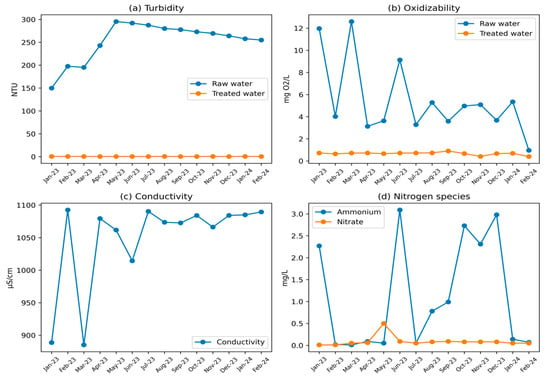
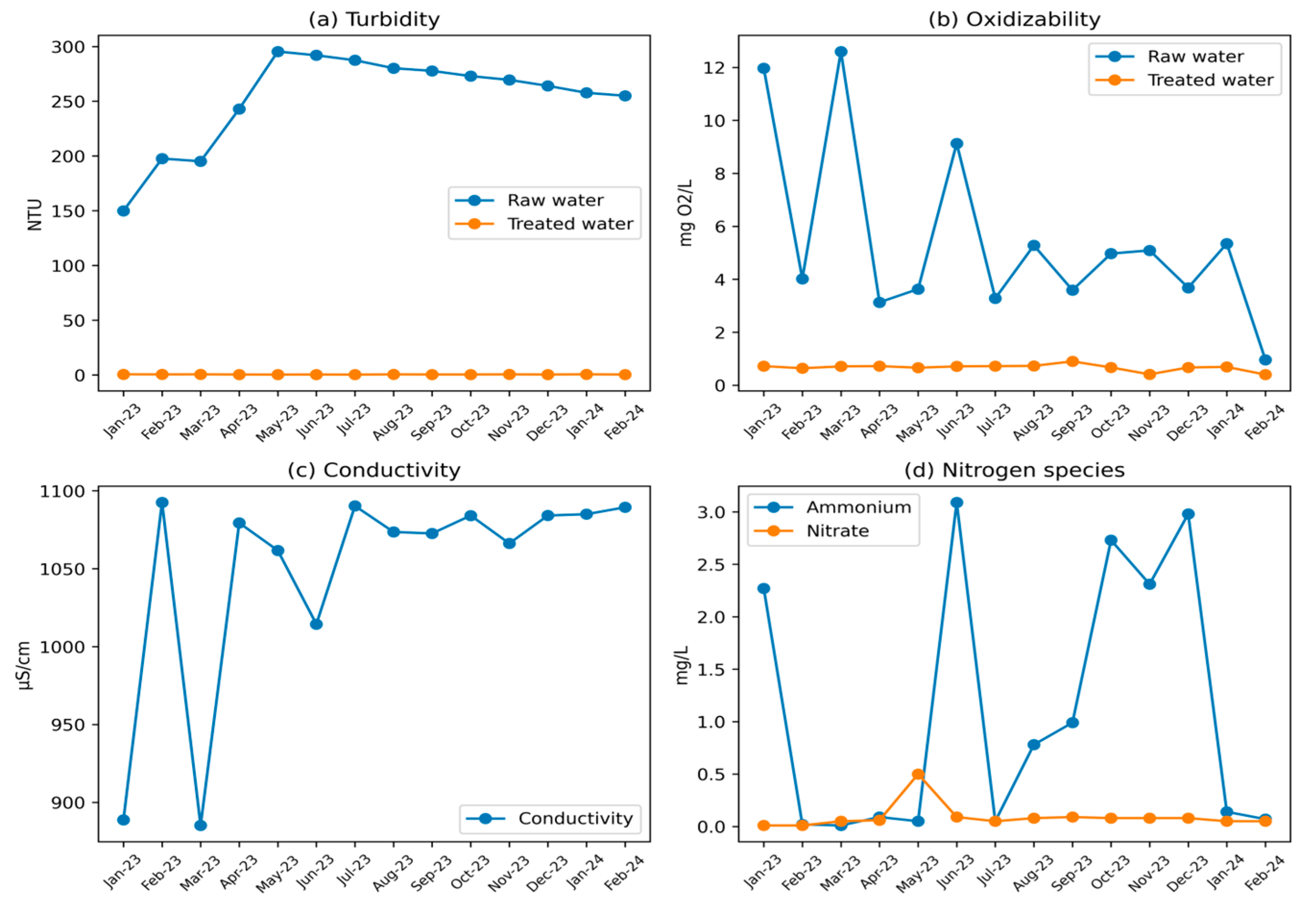
Turbidity dynamics showed a pronounced difference between raw and treated water, as depicted in Figure 1 and statistically summarized in Table 2. Treated water turbidity consistently complied with the regulatory threshold (0.5 NTU), with a mean value of 0.44 NTU (n = 425), confirming robust clarification performance. Conversely, raw water turbidity displayed substantial variability, ranging from 138 to 4000 NTU (mean: 383.10 NTU; n = 427), highlighting the high particulate load and seasonal fluctuations characteristic of the source water.
Figure 1.
Temporal evolution of key water quality parameters during the monitoring period. (a) Turbidity values for raw and treated water showing a substantial reduction after treatment. (b) Oxidizability indicating a strong decrease in organic matter after treatment. (c) Electrical conductivity remaining relatively stable during the monitoring period. (d) Nitrogen species showing variations in ammonium while nitrate concentrations remained relatively low.
Table 2.
Turbidity values (NTU) measured in raw and treated water samples under different operating conditions.
3.1.2. Nitrogen Species (Ammonium and Nitrate)
Nitrogen species dynamics, illustrated in Figure 1 and detailed in Table 3, reveal contrasting behavior between ammonium and nitrite. Ammonium concentrations showed marked variability (0.0022–5.02 mg/L; n = 61), occasionally exceeding the recommended guideline value (0.5 mg/L), suggesting episodic nitrogen enrichment. Conversely, nitrite levels remained consistently low (mean: 0.06 mg/L; max: 0.14 mg/L), well below the regulatory limit. These findings confirm effective nitrite control while emphasizing the importance of monitoring ammonium fluctuations to maintain water quality stability.
Table 3.
Ammonium and nitrite concentrations (mg/L) measured in treated water samples.
Elevated ammonium concentrations observed in certain samples may be associated with episodic contamination of the river upstream of the raw water intake. Field observations suggest that these exceedances may be linked to occasional discharges of landfill leachate originating from a nearby municipal waste disposal site. Landfill leachate typically contains high concentrations of ammonium due to the biodegradation of organic waste. Under specific hydrological conditions, this contamination may temporarily increase ammonium levels in the source water. However, coagulation–flocculation processes primarily target suspended solids and turbidity rather than dissolved nitrogen species. Consequently, although these exceedances reflect external environmental pressures on the watershed, they do not directly affect the efficiency of coagulant-assisted clarification for backwash water recovery.
3.1.3. Oxidizability
Organic matter oxidizability, presented in Figure 1 and detailed in Table 4, remained consistently low throughout the monitoring period. Values ranged from 0.24 to 1.07 mg/L (n = 122), with a mean concentration of 0.67 mg/L, remaining substantially below the recommended threshold of 5 mg/L. This indicates efficient removal of oxidizable organic compounds and stable treatment performance.
Table 4.
Oxidizability values (mg O2/L) measured in treated water samples.
Overall, the low oxidizability levels reflect good organic matter control and confirm the chemical stability of the treated water.
3.1.4. Electrical Conductivity
Electrical conductivity, presented in Table 5, reflects the mineralization level of the treated water. Values ranged from 794.18 to 1129.95 µS/cm (n = 61), with a mean conductivity of 1046.56 µS/cm. All measurements remained substantially below the recommended threshold of 2700 µS/cm, indicating moderate dissolved solids content and stable ionic composition.
Table 5.
Electrical conductivity values (µS/cm) measured in treated water samples.
These findings confirm the chemical stability of the treated water and suggest favorable salinity conditions for both potable use and potential reuse applications.
3.1.5. Residual Metals: Iron, Manganese, and Aluminium
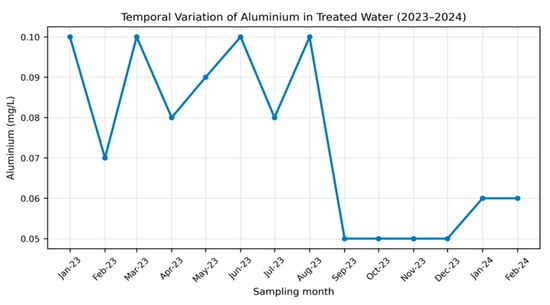
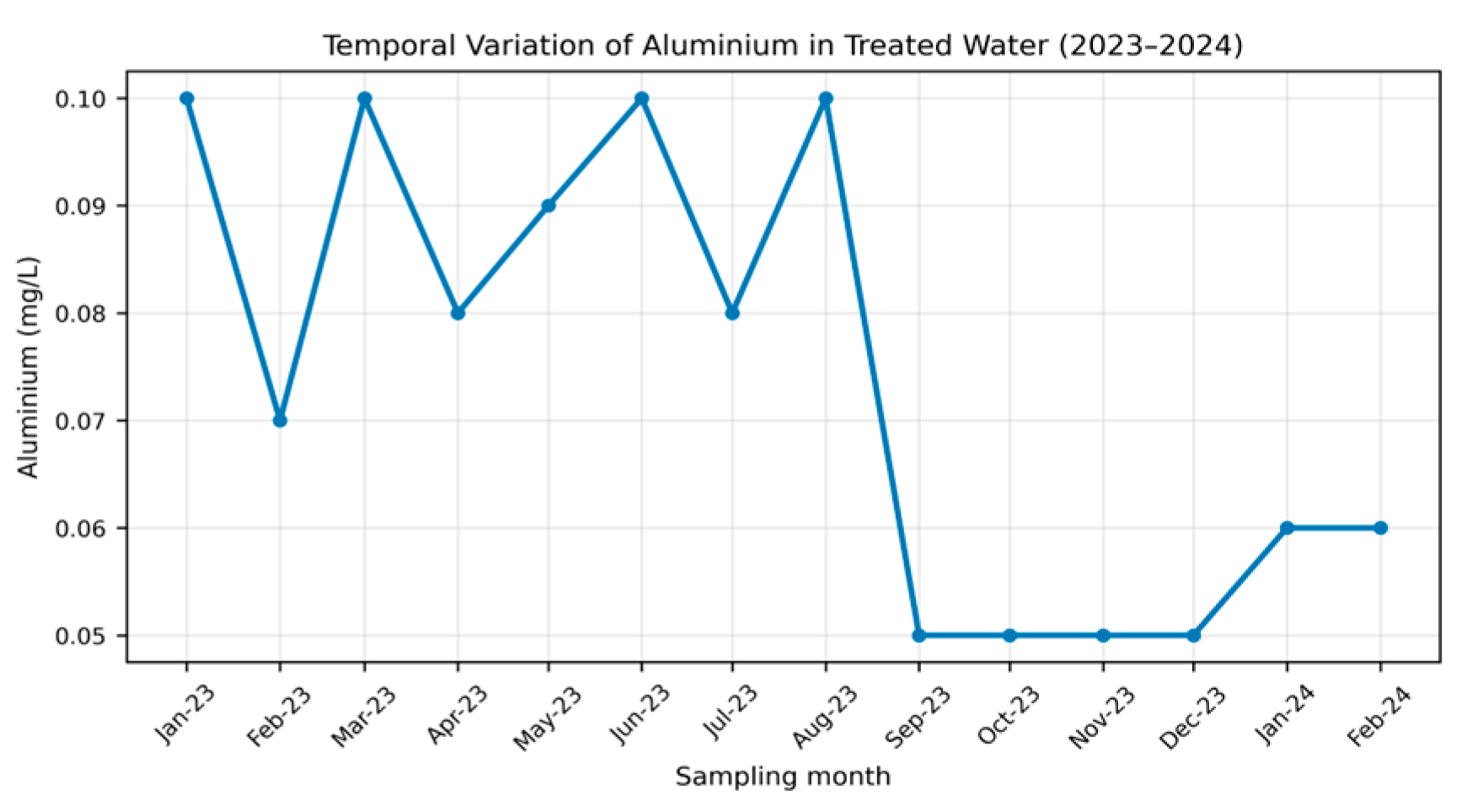
The monitoring results showed that iron and manganese concentrations remained negligible throughout the study period, with recorded values consistently close to zero. In contrast, aluminium exhibited measurable temporal variation. Higher aluminium concentrations were observed during the first part of the monitoring period, generally ranging between 0.07 and 0.13 mg/L, followed by a noticeable decrease from September 2023 onward, when concentrations were mostly between 0.03 and 0.07 mg/L. This trend suggests an improvement in the removal or control of residual aluminium in treated water during the later monitoring period.
Residual metal concentrations in treated water, illustrated in Figure 2 and detailed in Table 6, indicate effective control of metallic contaminants. Aluminium concentrations ranged between 0.03 and 0.13 mg/L (mean: 0.07 mg/L; n = 426), remaining well below the regulatory threshold of 0.2 mg/L. Iron and manganese were consistently detected at negligible levels, suggesting efficient removal during the treatment process.
Figure 2.
Temporal variation in aluminium concentration in treated water.
Table 6.
Residual metal concentrations (Fe, Mn, and Al) in treated water samples.
These results highlight the robustness of the treatment system in limiting residual metal concentrations and maintaining compliance with drinking water standards, thereby ensuring the chemical stability and safety of the produced water.
3.2. Backwash Water Treatment Experiments
3.2.1. Comparison Between Raw Water and Filter Backwash Water
As shown in Table 7, backwash water exhibited distinct physicochemical characteristics compared to raw water. While pH and temperature remained stable, turbidity and suspended solids increased significantly in backwash samples, reflecting particle release during filter cleaning. Oxidizability values remained relatively consistent, suggesting comparable organic matter content.
Table 7.
Comparison of physicochemical parameters in raw water and filter backwash water.
A marked increase in aluminium concentration was observed in backwash water, likely associated with residual coagulants mobilized during backwashing. Manganese levels showed moderate elevation but remained comparatively low. These findings confirm that backwash water is primarily characterized by elevated particulate matter and residual treatment by-products, emphasizing the importance of clarification prior to reuse or discharge.
3.2.2. Compliance of Backwash Water with Moroccan Standards
As shown in Table 8, most evaluated parameters complied with regulatory limits for both effluent discharge and irrigation reuse. Temperature, pH, and electrical conductivity values indicate stable physicochemical conditions and moderate salinity. Trace metals were detected at low concentrations, remaining well below regulatory thresholds. Aluminium and manganese exhibited comparatively higher values relative to irrigation guidelines, suggesting the need for targeted removal or monitoring.
Table 8.
Comparison of backwash water quality with discharge and irrigation standards/guidelines.
Total suspended solids exceeded discharge standards but remained within irrigation limits, highlighting the particulate-rich nature of backwash water. Oils and grease concentrations were negligible. These findings suggest that while additional polishing treatment may be required for discharge compliance, the water demonstrates strong suitability for reuse in irrigation and green space applications.
3.2.3. Chlorine Breakpoint Determination (Break Point)
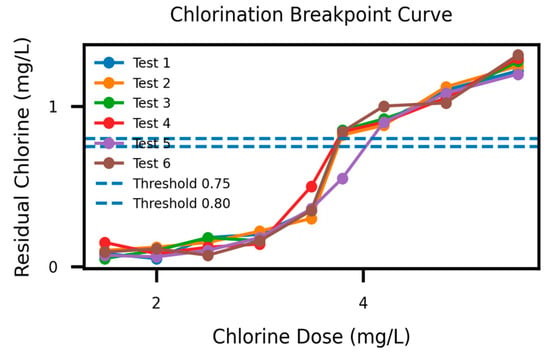
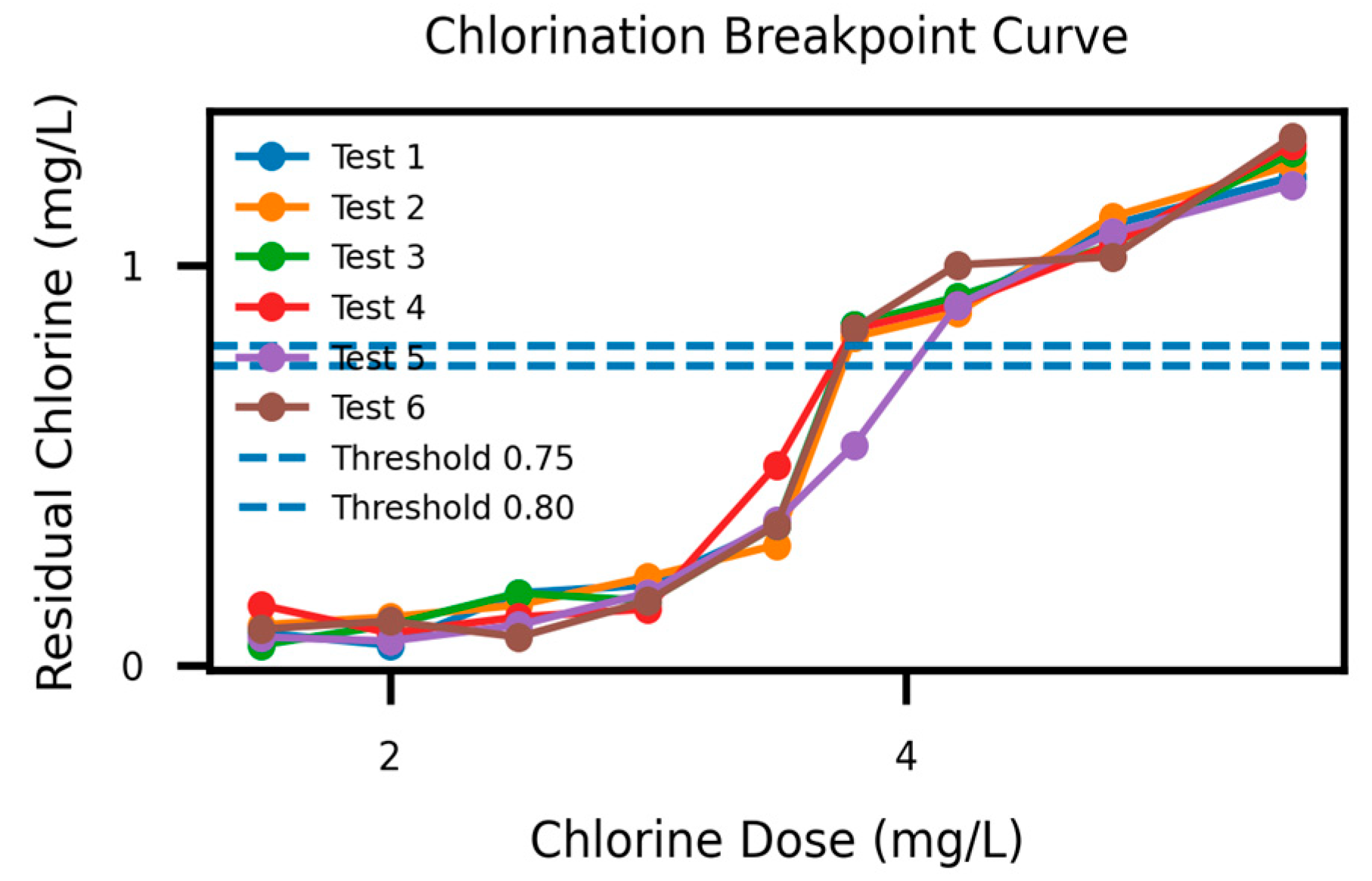
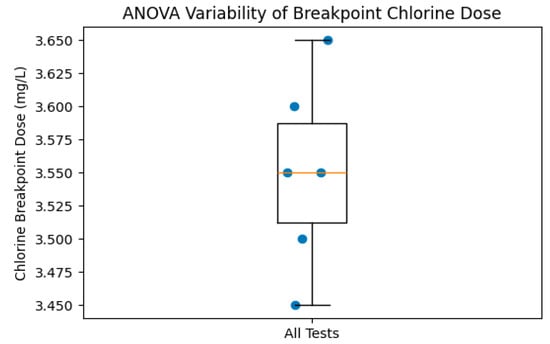
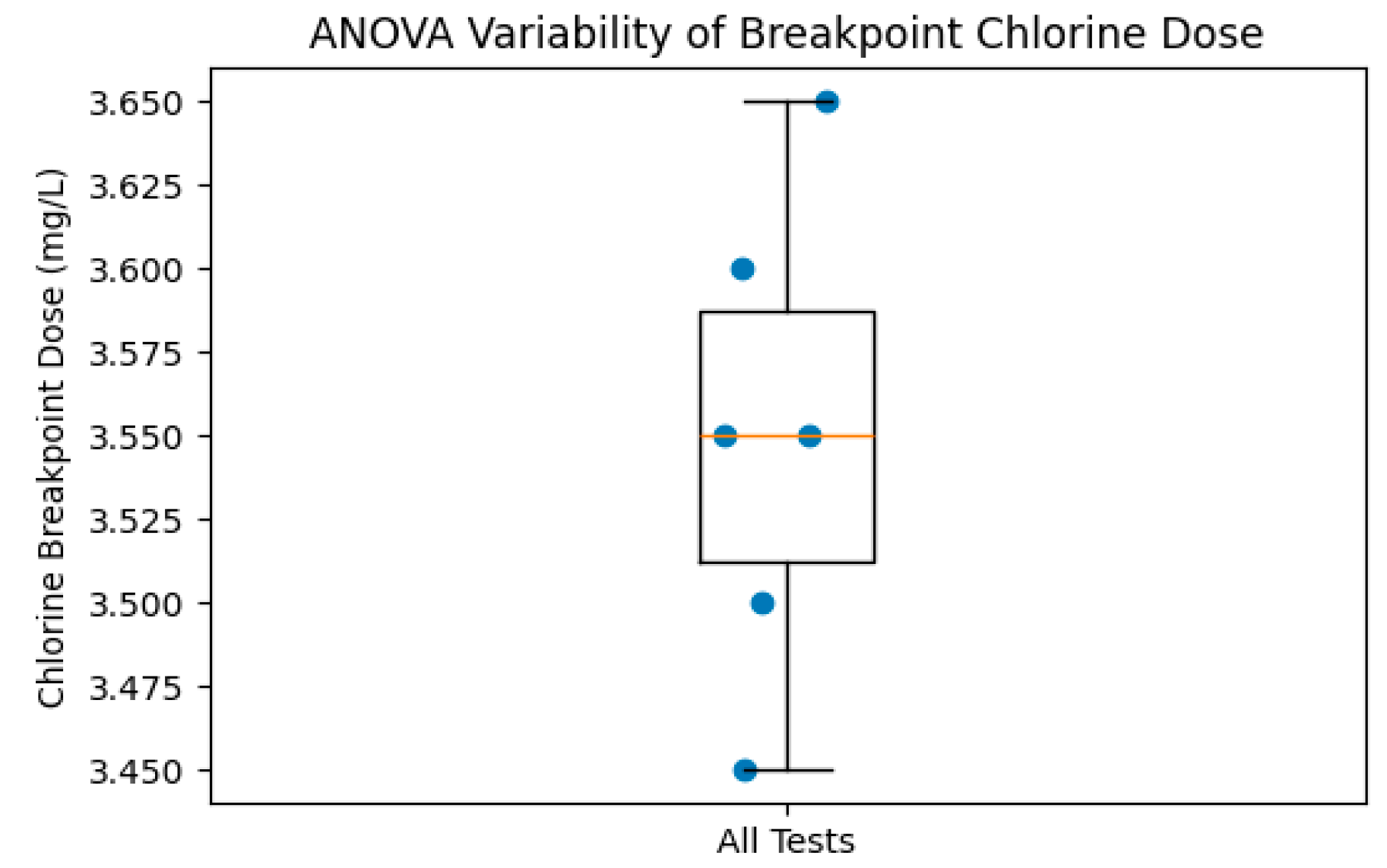
As shown in Table 9 and Figure 3 and Figure 4, breakpoint chlorination exhibited strong reproducibility across all experimental series. ANOVA results confirmed the absence of significant differences between tests (p > 0.05), indicating stable chlorine demand and homogeneous water characteristics. The narrow dose distribution observed in Figure 4 further supports the statistical findings, highlighting minimal variability among replicates.
Table 9.
Determination of chlorine breakpoint values.
Figure 3.
Chlorine Breakpoint Determination.
Figure 4.
ANOVA results.
Breakpoint curves presented in Figure 3 display consistent residual chlorine formation patterns, reflecting predictable chlorine consumption and residual buildup. The convergence of statistical and graphical evidence confirms the robustness of breakpoint determination and supports the reliability of chlorine dosing optimization under full-scale conditions.
3.2.4. Jar-Test Optimization
As summarized in Table 10, a coagulant dose of 40 mg/L (Test 4) provided the best balance between turbidity removal, residual aluminium reduction, and process stability across all filters.
Table 10.
Jar test optimization results for determining the optimal coagulant dose (40 mg/L).
3.2.5. Effect of Coagulant Addition
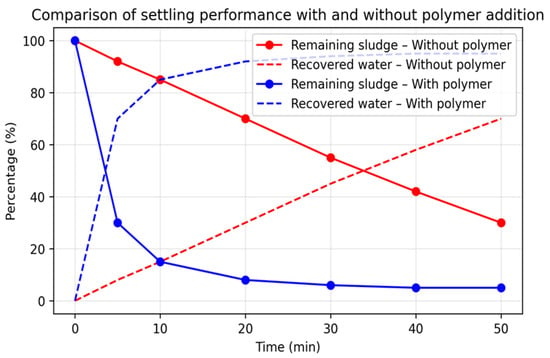
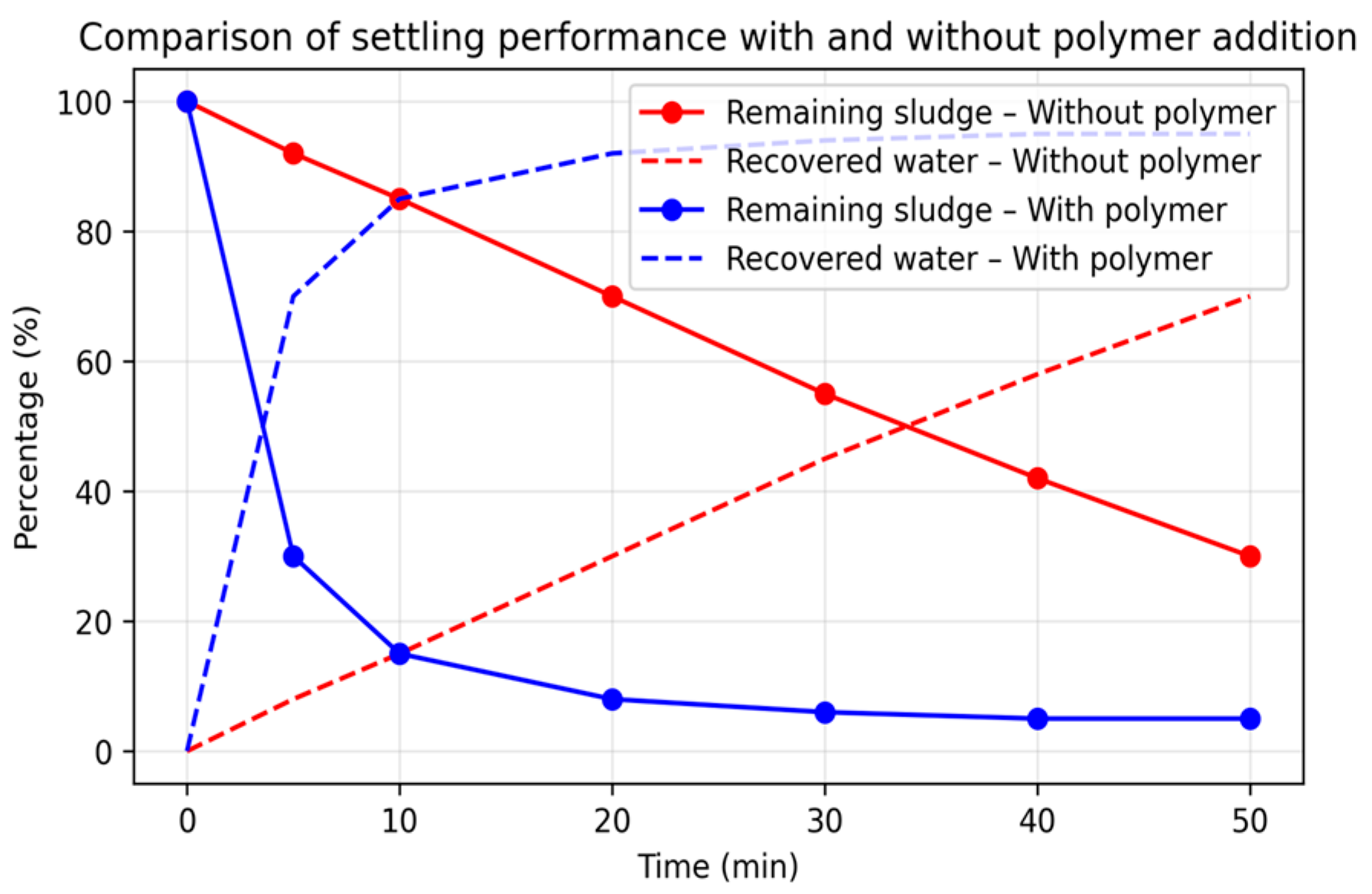
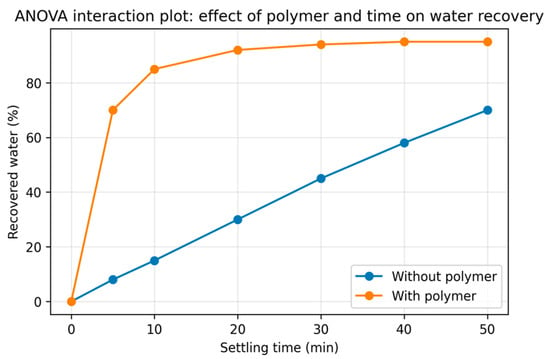
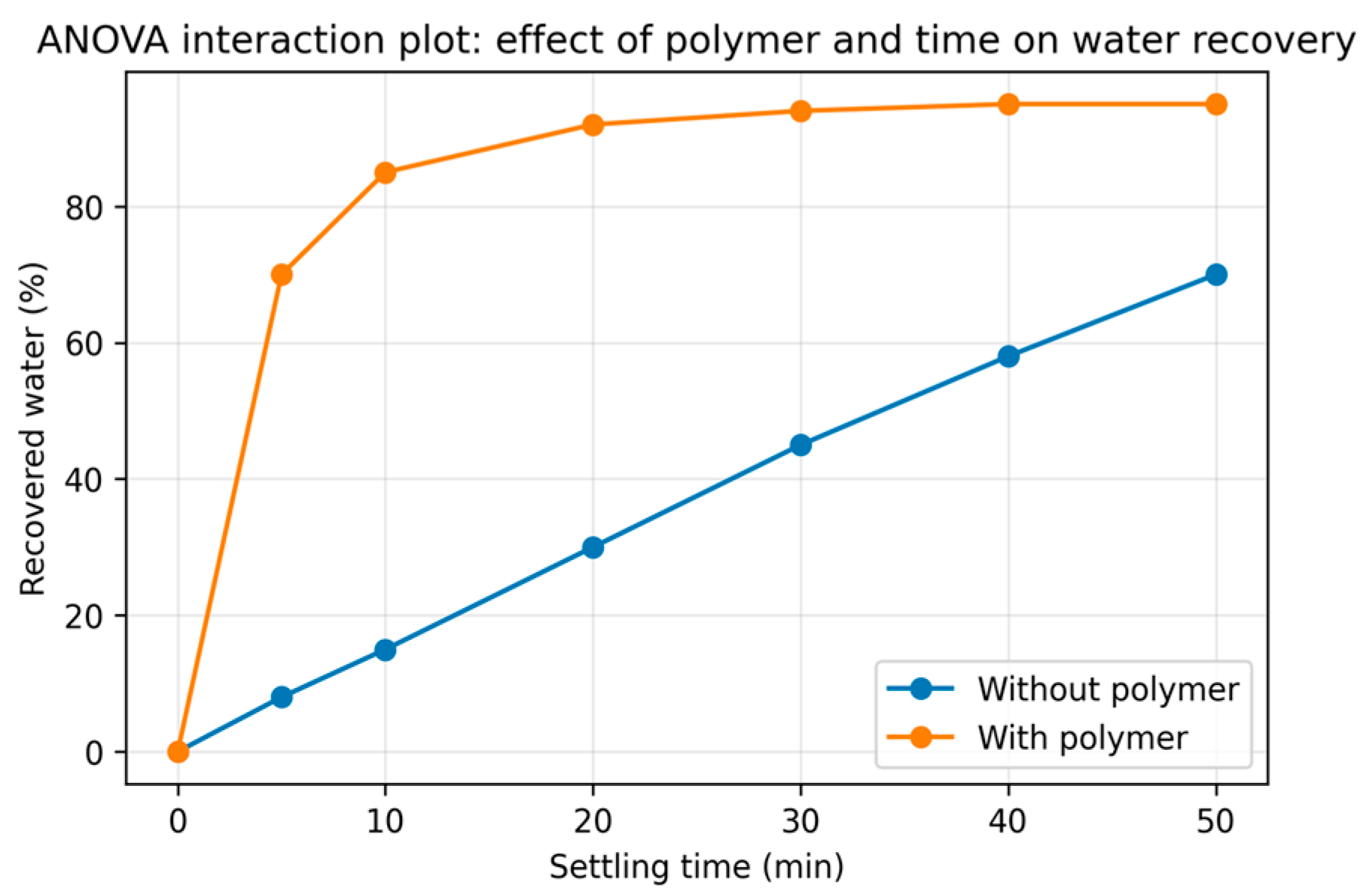
As shown in Table 11 and Figure 5 and Figure 6, coagulant addition significantly altered sedimentation behavior. Without coagulant, settling remained slow and inefficient, with nearly 30% residual sludge after 50 min and limited water recovery (~70%). Conversely, coagulant-assisted sedimentation exhibited rapid clarification, achieving >85% water recovery within 10 min and reducing residual sludge below 10%.
Table 11.
Effect of coagulant addition on selected physicochemical water quality parameters.
Figure 5.
Coagulant effect.
Figure 6.
ANOVA interaction.
ANOVA analysis confirmed the statistical significance of coagulant effects on sedimentation performance (p < 0.05), highlighting the dominant role of coagulant-induced flocculation in accelerating settling kinetics. These findings demonstrate that coagulant-assisted clarification markedly improves sedimentation efficiency and enhances water recovery potential in backwash treatment systems.
The recovery mechanism is mainly based on coagulant-induced flocculation. The addition of coagulant enhances particle aggregation through charge neutralization and coagulant bridging mechanisms. These mechanisms promote the formation of larger and denser flocs, facilitating their separation through sedimentation or filtration. Consequently, suspended particles and colloidal matter present in filter backwash water can be efficiently recovered, improving the overall water reuse potential.
4. Discussion
4.1. Performance of Coagulant-Assisted Recovery
The performance of the coagulant-assisted recovery process applied to filter backwash water is strongly influenced by physicochemical interactions between suspended particles, colloidal matter, and coagulant polymers introduced into the system [11,18]. The significant reduction in turbidity observed in this study confirms the effectiveness of coagulation–flocculation mechanisms in destabilizing fine particles and enhancing their removal [11,12,13,18]. Similar trends have been reported in previous studies, where coagulant addition significantly improved suspended solids removal and clarification efficiency in water treatment systems [5,6,19,20].
Filter backwash water contains a complex mixture of suspended solids, colloidal particles, residual coagulants, and organic matter. Due to their small size and electrostatic stability, these particles are difficult to remove by simple sedimentation [16,18]. In the present study, the marked improvement in clarification performance following coagulant addition demonstrates the key role of particle destabilization mechanisms in enhancing treatment efficiency.
4.2. Mechanism of Coagulant-Assisted Clarification
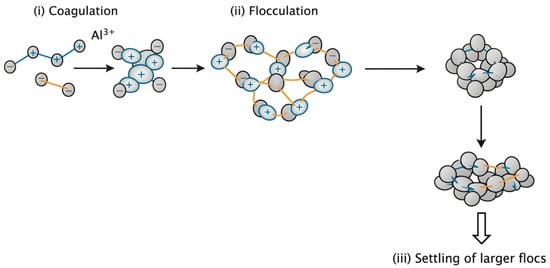
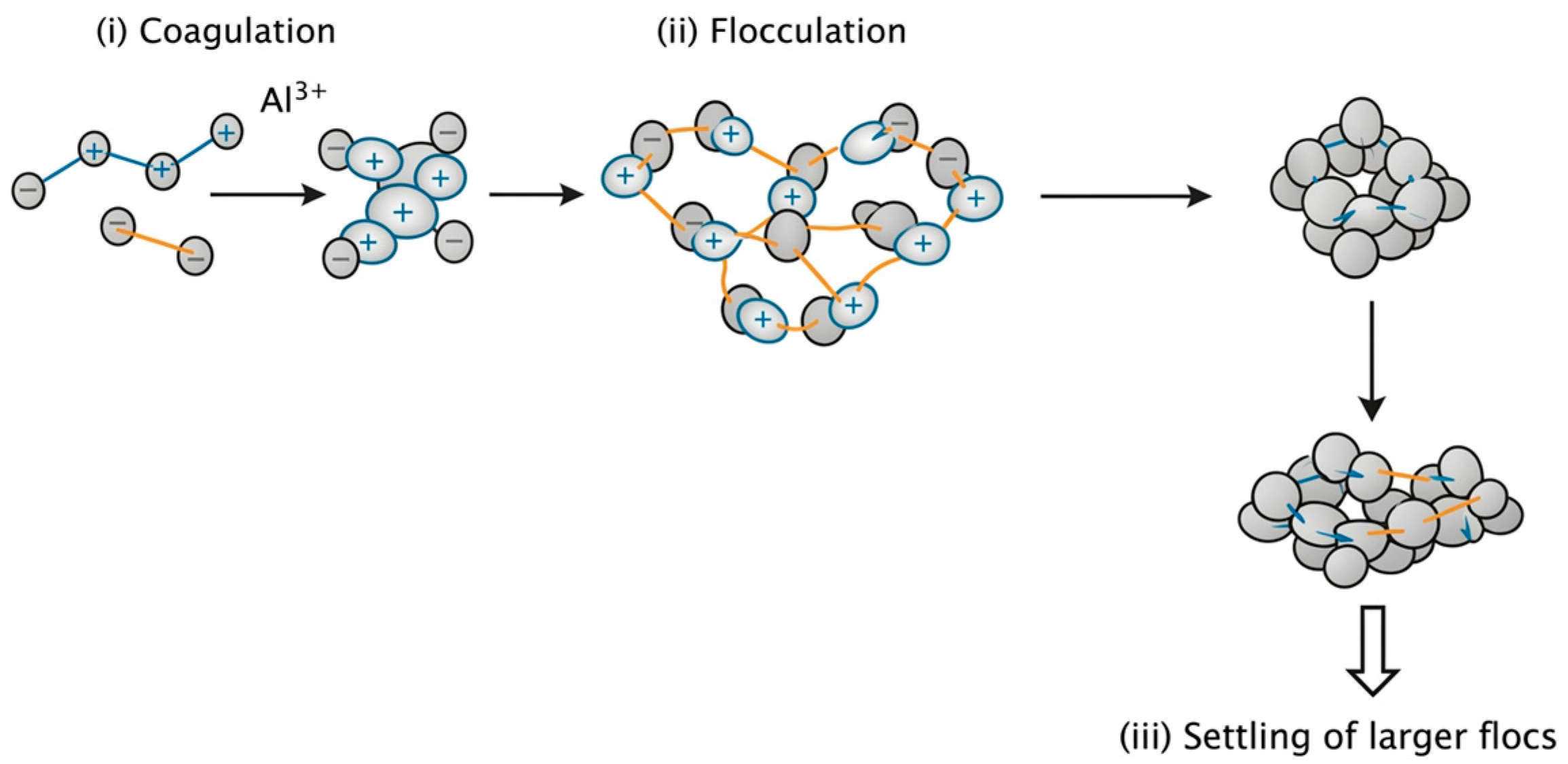
The observed improvement in water quality parameters can be explained by several well-established coagulation–flocculation mechanisms. As shown in Figure 7, the addition of coagulant flocculants enhanced particle aggregation and facilitated solid–liquid separation.
Figure 7.
Schematic representation of the coagulation–flocculation process: (i) charge neutralization of colloidal particles by aluminum-based coagulants (Al3+), (ii) polymer bridging and floc formation, and (iii) settling of larger flocs.
Coagulant bridging is one of the dominant mechanisms contributing to floc formation. Long-chain polymer molecules adsorb onto particle surfaces and create bridges between adjacent particles, leading to the formation of larger and denser flocs [12,19]. This mechanism explains the rapid decrease in turbidity observed in this study, as larger flocs exhibit higher settling velocities. Similar observations have been reported by Teh et al. (2014), who demonstrated the effectiveness of polymer-assisted flocculation in improving aggregation and sedimentation efficiency [12].
Charge neutralization also plays a critical role in particle destabilization [13,18]. Colloidal particles typically carry negative surface charges, which prevent aggregation due to electrostatic repulsion. The addition of coagulants reduces these repulsive forces, enabling particle aggregation. The combined effect of charge neutralization and polymer bridging leads to the formation of compact flocs with improved settling properties, as widely reported in coagulation–flocculation studies [13].
Floc densification and restructuring further enhance sedimentation efficiency [12,13] by producing more stable aggregates that are less sensitive to hydraulic shear. This contributes to improved clarification performance and supports the efficient recovery of filter backwash water.
Coagulation was primarily achieved using aluminum-based coagulants (Al3+), while the added polymer acted as a flocculation aid to enhance floc formation and sedimentation efficiency.
4.3. Comparison with Previous Studies and Process Implications
The results obtained in this study are consistent with previous findings highlighting the effectiveness of coagulant-assisted clarification processes for improving suspended solids removal. However, unlike many previous studies conducted at laboratory scale, this work provides full-scale evidence under real operating conditions in a semi-arid region.
The observed turbidity reduction and improved sedimentation kinetics are in agreement with studies reporting enhanced floc formation and aggregation efficiency through polymer-assisted coagulation [5,6,19,20]. In addition, the use of real operational data strengthens the practical relevance of the findings and demonstrates the applicability of this approach in existing treatment infrastructures.
Compared with advanced treatment technologies such as membrane filtration, which are often associated with high energy consumption and fouling issues, coagulant-assisted clarification represents a cost-effective and operationally simple alternative [4]. This makes it particularly suitable for implementation in water-stressed regions where resource optimization is critical.
The statistical analysis further supports the robustness of the results. The significant interaction between coagulant dosage and settling time identified by ANOVA highlights the importance of optimizing operational parameters to maximize clarification efficiency. Similar relationships have been reported in studies investigating coagulation kinetics and floc formation dynamics [5,6].
4.4. Sustainability and Circular Water Management
From a sustainability perspective, the recovery and reuse of filter backwash water contribute directly to circular water management strategies. The results of this study demonstrate that coagulant-assisted clarification can significantly reduce water losses and improve resource efficiency within drinking water treatment plants.
These findings are consistent with recent studies emphasizing the importance of water reuse strategies in semi-arid regions facing increasing water scarcity due to climate variability and population growth [1,2]. By enabling the reintegration of treated backwash water into the treatment process, the approach investigated in this study supports the transition toward more sustainable and resilient water management systems.
4.5. Limitations and Future Perspectives
Despite the promising results, some limitations should be acknowledged. The study was conducted under site-specific conditions, and treatment performance may vary depending on raw water quality and seasonal fluctuations. In addition, the long-term effects of repeated reuse cycles and the potential accumulation of residual coagulant compounds were not assessed.
Future research should focus on long-term monitoring of reuse systems, optimization of coagulant types and dosages, and integration with complementary treatment technologies. Comparative studies between synthetic and natural coagulants may provide further insights into improving both treatment efficiency and environmental sustainability. Furthermore, techno-economic analyses and life-cycle assessments would help quantify the broader benefits of implementing coagulant-assisted recovery processes at larger scales [4,8].
Overall, the findings of this study support the growing body of literature promoting circular water reuse as a key component of sustainable water management in semi-arid environments [1].
5. Conclusions
This study demonstrates a dual benefit. Continuous monitoring of raw and treated water ensures compliance with drinking water standards, while the reuse of treated filter backwash water offers a sustainable solution for water conservation and discharge reduction. Physicochemical and microbiological analyses indicate that most parameters comply with reuse guidelines, although elevated suspended solids and residual metals require targeted treatment. Jar-test experiments identified optimal coagulation conditions, confirming that clarification significantly improves water quality. With appropriate treatment and regular monitoring, backwash water can be safely reused for irrigation and green space applications. Overall, the results support the feasibility of integrating backwash water reuse into sustainable water management strategies, contributing to resource efficiency and circular water practices in water-stressed regions.
Despite the widespread use of coagulation–flocculation processes in drinking water treatment, the recovery and reuse of filter backwash water remains a significant operational and environmental challenge, particularly in water-scarce regions. While several studies have investigated coagulation processes for water clarification, limited research has focused on the optimization of polymer-assisted coagulation for the recovery of backwash water generated in drinking water treatment plants operating under semi-arid conditions. In this context, the present study aims to evaluate the efficiency of polymer-enhanced coagulation for the treatment and recovery of filter backwash water in a semi-arid drinking water treatment system. The novelty of this work lies in the integration of polymer-assisted treatment with circular water management strategies, enabling the reuse of treated backwash water and contributing to improved sustainability of drinking water production systems.
Author Contributions
Conceptualization, H.Z.; methodology, H.Z. and S.E.H.; data collection, H.Z.; data analysis, H.Z. and N.L.; writing—original draft preparation, H.Z.; writing—review and editing, S.E.H. and N.L.; supervision, S.E.H. All authors have read and agreed to the published version of the manuscript.
Funding
This research received no external funding.
Data Availability Statement
The data supporting the findings of this study are available from the authors upon reasonable request due to institutional and operational restrictions related to drinking water treatment plant data.
Acknowledgments
During the preparation of this manuscript, the authors used ChatGPT (OpenAI, GPT-5.3) for language editing purposes. All outputs were reviewed and validated by the authors, who take full responsibility for the content.
Conflicts of Interest
The authors declare no conflicts of interest.
Abbreviations
The following abbreviations are used in this manuscript:
| ANOVA | Analysis of Variance |
| Al3+ | Aluminium ion |
| BWW | Backwash Water |
| CI | Confidence Interval |
| Cl2 | Chlorine |
| COD | Chemical Oxygen Demand |
| EB | Raw Water (Eau Brute) |
| ET | Treated Water (Eau Traitée) |
| F4, F5, F6 | Filter Units 4, 5 and 6 |
| IC95% | 95% Confidence Interval |
| Jar-test | Coagulation–Flocculation Bench Test |
| NH4+ | Ammonium ion |
| NO2− | Nitrite |
| NTU | Nephelometric Turbidity Unit |
| ODD | Sustainable Development Goals (Objectifs de Développement Durable) |
| BDL | Below Detection Limit |
| NA | Note Applicable |
| pH | Potential of Hydrogen |
| TAC | Total Alkalimetric Title |
| TDS | Total Dissolved Solids |
| TSS | Total Suspended Solids |
| WHO | World Health Organization |
| FAO | Food and Agriculture Organization |
References
- Qadir, M.; Drechsel, P.; Jiménez Cisneros, B.; Kim, Y.; Pramanik, A.; Mehta, P.; Olaniyan, O. Global and regional potential of wastewater as a water, nutrient and energy source. Nat. Resour. Forum 2020, 44, 40–51. [Google Scholar] [CrossRef] [Scilit]
- UNESCO. United Nations World Water Development Report 2023: Partnerships and Cooperation for Water; UNESCO: Paris, France, 2023. [Google Scholar]
- Li, Y.; Li, W.; Jarvis, P.; Zhou, W.; Zhang, J.; Chen, J.; Tan, Q.; Tian, Y. Occurrence, removal and potential threats associated with microplastics in drinking water sources. J. Environ. Chem. Eng. 2020, 8, 104527. [Google Scholar] [CrossRef] [Scilit]
- Keeley, J.; Jarvis, P.; Judd, S.J. Coagulant recovery from water treatment residuals: A review of applicable technologies. Crit. Rev. Environ. Sci. Technol. 2014, 44, 2675–2719. [Google Scholar] [CrossRef] [Scilit] [PubMed]
- Moud, A.A. Polymer-based flocculants: Review of water purification applications. J. Water Process Eng. 2022, 48, 102938. [Google Scholar] [CrossRef] [Scilit]
- Khedher, M.; Awad, J.; Donner, E.; Drigo, B.; Fabris, R.; Harris, M.; Braun, K.; Chow, C.W.K. The potential reuse of drinking water treatment sludge for organics removal and disinfection by-products formation control. J. Environ. Chem. Eng. 2022, 10, 108001. [Google Scholar] [CrossRef] [Scilit]
- World Health Organization. Guidelines for the Safe Use of Wastewater, Excreta and Greywater. Volume 2: Wastewater Use in Agriculture; WHO: Geneva, Switzerland, 2006. [Google Scholar]
- Akyol, A.; Can, O.T.; Bayramoglu, M. Treatment of hydroquinone by photochemical oxidation and electrocoagulation combined process. J. Water Process Eng. 2015, 8, 45–54. [Google Scholar] [CrossRef] [Scilit]
- Ahmad, A.L.; Sumathi, S.; Hameed, B.H. Coagulation of residue oil and suspended solid in palm oil mill effluent by chitosan, alum and PAC. Chem. Eng. J. 2006, 118, 99–105. [Google Scholar] [CrossRef] [Scilit]
- Zhang, J.; Li, L.; Liu, J. Temporal variation of microbial population in a thermophilic biofilter for SO2 removal. J. Environ. Sci. 2016, 39, 4–12. [Google Scholar] [CrossRef] [Scilit] [PubMed]
- Matilainen, A.; Vepsäläinen, M.; Sillanpää, M. Natural organic matter removal by coagulation during drinking water treatment: A review. Adv. Colloid Interface Sci. 2010, 159, 189–197. [Google Scholar] [CrossRef] [Scilit] [PubMed]
- Teh, C.Y.; Wu, T.Y.; Juan, J.C. Potential use of rice starch in coagulation–flocculation process of agro-industrial wastewater: Treatment performance and flocs characterization. Ecol. Eng. 2014, 71, 509–519. [Google Scholar] [CrossRef] [Scilit]
- Lee, C.S.; Robinson, J.; Chong, M.F. A review on application of flocculants in wastewater treatment. Process Saf. Environ. Prot. 2014, 92, 489–508. [Google Scholar] [CrossRef] [Scilit]
- Shannon, M.A.; Bohn, P.W.; Elimelech, M.; Georgiadis, J.G.; Marinas, B.J.; Mayes, A.M. Science and technology for water purification in the coming decades. Nature 2008, 452, 301–310. [Google Scholar] [CrossRef] [Scilit] [PubMed]
- Elimelech, M.; Phillip, W.A. The future of seawater desalination: Energy, technology, and the environment. Science 2011, 333, 712–717. [Google Scholar] [CrossRef] [Scilit] [PubMed]
- Edzwald, J.K. Coagulation in drinking water treatment: Particles, organics and coagulants. Water Sci. Technol. 1993, 27, 21–35. [Google Scholar] [CrossRef] [Scilit]
- Bratby, J. Coagulation and Flocculation in Water and Wastewater Treatment; IWA Publishing: London, UK, 2016. [Google Scholar]
- Duan, J.; Gregory, J. Coagulation by hydrolysing metal salts. Adv. Colloid Interface Sci. 2003, 100–102, 475–502. [Google Scholar] [CrossRef] [Scilit]
- Bolto, B.; Gregory, J. Organic polyelectrolytes in water treatment. Water Res. 2007, 41, 2301–2324. [Google Scholar] [CrossRef] [Scilit] [PubMed]
- Jiang, X.; Li, Y.; Tang, X.; Jiang, J.; He, Q.; Xiong, Z.; Zheng, H. Biopolymer-based flocculants: A review of recent technologies. Environ. Sci. Pollut. Res. 2021, 28, 46934–46963. [Google Scholar] [CrossRef] [Scilit] [PubMed]
- Montgomery, D.C. Design and Analysis of Experiments, 9th ed.; Wiley: Hoboken, NJ, USA, 2020. [Google Scholar]

Disclaimer/Publisher’s Note: The statements, opinions and data contained in all publications are solely those of the individual author(s) and contributor(s) and not of MDPI and/or the editor(s). MDPI and/or the editor(s) disclaim responsibility for any injury to people or property resulting from any ideas, methods, instructions or products referred to in the content. |
© 2026 by the authors. Licensee MDPI, Basel, Switzerland. This article is an open access article distributed under the terms and conditions of the Creative Commons Attribution (CC BY) license.