


Abstract
This study fabricated a silver-based composite photocatalytic material (Ag/AgVO3/g-C3N4) for antibiotic degradation driven by visible light. The composite was prepared using the water bath method, and its morphology, structure and optical properties were characterized by X-ray diffraction, scanning electron microscopy, X-ray photoelectron spectroscopy and Ultraviolet-Visible (UV-vis) diffuse reflection spectroscopy. The photocatalytic activity of the composite was evaluated within 240 min under visible-light irradiation, and its degradation effect was quantified using tetracycline hydrochloride as the target pollutant, applying different conditions of composite proportions and dosage, initial concentration of the contaminant, and pH. The experimental results demonstrated that the composite doped with Ag+ had a higher degradation effect on tetracycline hydrochloride. The highest degradation rate of tetracycline hydrochloride (reaching 86.64%) was achieved at a composite ratio of Ag/AgVO3/5g-C3N4, dosage of 0.8 g·L−1, and initial concentration of tetracycline hydrochloride of 10mg·L−1. This rate is approximately 1.4 times and 1.7 times those of the pure-phase g-C3N4 and AgVO3, and the degradation rate remains stable at 81.52% after 4 cycles of experiments. The favorable stability of the photocatalyst was also verified through a stability test.
1. Introduction
Since the onset of the 21st century, antibiotics have been extensively utilized in healthcare, animal husbandry, aquaculture, and other industries [1,2]. Notably, tetracycline antibiotics represent one of the most widely used classes of antibiotics, in terms of both application scope and quantity. Driven by their high efficiency and cost-effectiveness, they are primarily utilized for disease prevention and treatment as well as promoting organism growth. They play a crucial role in the prevention and treatment of animal diseases, enhancement of production efficiency, and improvement of livestock and poultry product quality [2,3]. However, due to their overuse and incomplete metabolism, tetracycline residues have been frequently detected in wastewater, surface water, sediments and agricultural soils, raising concerns regarding ecological toxicity, antibiotic-resistance selection and human health risks [4,5].
Currently, methods for removing antibiotics from the environment encompass biological treatment, chemical precipitation, adsorption, membrane separation technology, advanced oxidation processes and other approaches [6,7,8]. Conventional wastewater treatment processes, such as biological treatment and chemical precipitation, can realize the migration or partial transformation of pollutants between different phases but cannot ensure complete removal of antibiotics from water. Adsorption and membrane separation technologies impose high requirements on materials and may generate concentrated waste streams that require further treatment [6,7]. Photocatalytic technology, as an emerging method for degrading antibiotics in recent years, has garnered significant attention owing to its low energy consumption, high efficiency, environmental friendliness, and lack of secondary pollution when properly designed [8,9,10].
In photocatalytic technology, photocatalytic materials are employed to drive chemical reactions under light irradiation. Photocatalytic technology can be applied to the treatment of contaminated water, air and soil, water-based hydrogen production, sterilization, and other relevant areas. Regarding pollutant control, this technology can be adopted to decompose pollutants into less toxic or more biodegradable substances [9,10,11]. Essentially, photocatalytic reaction lies in the fact that, under irradiation of a semiconductor photocatalyst by a solar light source, when the energy of the incident light is greater than or equal to the band gap width, electrons in the valence band of the semiconductor are excited and promoted to the conduction band, leaving corresponding holes in the valence band. As a result, electron (e−) and hole (h+) pairs form within the semiconductor [10,11]. Therefore, photocatalytic efficiency can be effectively improved only by inhibiting the recombination of photogenerated electrons and photogenerated holes.
Silver-based semiconductors show great potential in the field of photocatalysis because the unique photosensitivity and surface plasmon resonance effect of Ag can improve visible-light harvesting and interfacial charge transfer [12,13]. However, Ag-containing photocatalyst materials may suffer from photocorrosion or phase instability under light exposure. Therefore, silver-based photocatalyst materials are often combined with other semiconductor materials to improve photocatalytic activity, enhance stability and reduce use cost, thus promoting the practical application of silver-based materials in energy generation and environmental purification [13,14,15]. Among silver-based semiconductors, silver vanadate series compounds are commonly used owing to their favorable visible light response and stability [16,17]. Considering the photosensitive characteristics of silver-based semiconductors and the unique electron-rich structure and stability of g-C3N4, constructing silver-based/g-C3N4 composite materials is an effective strategy to improve photocatalytic performance [18,19,20]. Zhao et al. reported that Ag/AgVO3/g-C3N4 ternary photocatalysts exhibited significantly higher degradation performance than single-component photocatalysts for dye degradation [21]. Nevertheless, their research mainly focused on material synthesis and dye removal, and the photocatalytic activity of Ag/AgVO3/g-C3N4 toward tetracycline hydrochloride, a typical antibiotic pollutant, still requires further evaluation.
This study aimed to systematically explore the performance and mechanism of tetracycline hydrochloride degradation by Ag/AgVO3/g-C3N4 under visible light and determine the best degradation conditions by optimizing the proportion and dosage of Ag/AgVO3/g-C3N4 composites, initial concentration of the pollutant, and pH of the solution. To this end, g-C3N4 was prepared using the thermal condensation method and subsequently modified by doping with AgVO3 and reducing Ag nanoparticles to enhance photocatalytic efficiency and activity. The morphology, structure and optical properties of the prepared materials were characterized using X-ray diffraction (XRD), scanning electron microscopy (SEM), X-ray photoelectron spectroscopy (XPS), ultraviolet–visible diffuse reflectance spectroscopy (UV-vis DRS), photoluminescence spectroscopy (PL), and Fourier transform infrared spectroscopy (FT-IR).
2. Materials and Methods
2.1. Chemicals and Materials
Silver nitrate (analytical reagent, AR) was supplied by the Shanghai Institute of Fine Chemical Materials (Shanghai, China); ammonium metavanadate (AR) and urea (AR) were supplied by Sinopharm Chemical Reagent Co., Ltd. (Shanghai, China); tetracycline hydrochloride (guaranteed reagent, GR) was obtained from Dalian Meilun Biotechnology Co., Ltd. (Dalian, China); hydrochloric acid (GR) was supplied by Beijing Chemical Plant Co., Ltd. (Beijing, China); and sodium hydroxide (GR) was obtained from Tianjin Kemiou Chemical Reagent Co., Ltd. (Tianjin, China).
2.2. Synthesis of Nanomaterials
2.2.1. Synthesis of g-C3N4
For the preparation of g-C3N4, 10 g of urea was weighed into a covered crucible, placed in a muffle furnace, and heated to 550 °C at a heating rate of 2 °C/min. A light-yellow powder was obtained after calcination for 3 h. Thereafter, the powder was ground and stored in a sealed bottle for further use.
2.2.2. Synthesis of AgVO3/g-C3N4
For AgVO3/g-C3N4, 0.0184 g of g-C3N4 powder was weighed and dissolved in 40 mL of deionized water. The solution was subjected to ultrasonic treatment for 15 min, then 0.0136 g of AgNO3 was added, and the mixture was stirred for 30 min. Subsequently, 0.094 g of NH4VO3 was weighed and dissolved in 12 mL of deionized water. The resulting solution was added dropwise to the previous mixture under continuous stirring for 2 h. After the reaction was complete, the sample was washed, filtered, and dried under vacuum at 70 °C for 2 h, and the product was finally ground and stored in a sealed bottle for further use.
2.2.3. Synthesis of Ag/AgVO3/g-C3N4
Various proportions of the binary catalytic material were weighed (0.02 g) into the catalytic tube, 30 mL of deionized water was added, and the mixture was subjected to ultrasonic treatment for 15 min. Subsequently, the mixture was placed in the photocatalytic instrument and irradiated under filtered visible light for 2 h, during which the solution changed in color from light yellow to light green. After filtration and washing, the sample was dried under vacuum at 70 °C for 2 h. Finally, Ag/AgVO3/g-C3N4 was obtained in the form of a green powder, ground and stored in a sealed bottle for further use.
2.3. Batch Degradation Experiments
For the degradation experiments, 0.02 g of the photocatalyst powder was weighed and dispersed in 50 mL of a 10 mg·L−1 tetracycline hydrochloride solution. The mixture was subjected to ultrasonic treatment for 15 min and transferred to a photocatalytic instrument. The solution was stirred under dark conditions for 30 min to achieve adsorption–desorption equilibrium and an initial sample was collected. Subsequently, the degradation experiment was conducted under light irradiation using a 500 W xenon lamp with a UV-cutoff filter (λ > 420 nm), collecting samples at fixed intervals. The samples were centrifuged at 10,000 rpm for 10 min, after which the supernatant was collected and filtered. The absorbance of the supernatant was measured at the maximum absorption wavelength of 358 nm using a UV–visible spectrophotometer (PERSEE, Beijing, China), and the degradation rate of TC-HCl was subsequently calculated.
Referring to the relevant literature, the wavelength of the UV–visible spectrophotometer was set to 358 nm. A TC-HCl standard solution with a concentration of 100 mg·L−1 was prepared. Subsequently, 2.5, 5.0, 10.0, 20.0, and 30.0 mL aliquots of the tetracycline hydrochloride standard solution were transferred into 50 mL colorimetric tubes and diluted to volume with deionized water. The solutions were then shaken and allowed to stand for 30 min. After the instrument was corrected using the blank solution, the absorbance of the solutions was measured in ascending order of concentration, and the standard curve for TC-HCl was subsequently constructed.
The removal rate () for the degradation of TC-HCl by the Ag/AgVO3/g-C3N4 system was calculated using Equation (1).
where η is the degradation rate, c is the concentration of TC-HCl in the degraded solution (mg·L−1), and c0 is the concentration of TC-HCl in the solution before degradation (mg·L−1).
2.4. Characterization
The instruments used in this study included an electric blast dryer (PV-213, Shanghai Yiheng Scientific Instrument Co., Ltd., Shanghai, China), multi-head magnetic stirrer (HJ-4A, Jiangsu Keyi Instrument Co., Ltd., Wuxi, China), high-speed refrigerated centrifuge (TGR-20M, Changsha Xiangzhi Centrifuge Instrument Co., Ltd., Changsha, China), electronic balance (FA-224, Shanghai Shunyu Science and Technology Instrument Co., Ltd., Shanghai, China), temperature-programmed muffle furnace (KSL-1200X, Hefei Kejing Materials Technology Co., Ltd., Hefei, China), UV–visible spectrophotometer (T6, Beijing Puyang General Instrument Co., Ltd., Beijing, China), CNC ultrasonic cleaner (KQ5200DB, Kunlun Ultrasonic Instrument Co., Ltd., Kunlun, China), suction filter pump (AP-9950, Tianjin Aoxenes Instrument Co., Ltd., Tianjin, China), vacuum drying oven (DZF-6020, Shanghai Yiheng Scientific Instrument Co., Ltd., Shanghai, China), and pH meter (PHS-3C, Shanghai Yizheng Scientific Instrument Co., Ltd., Shanghai, China). The XRD patterns were obtained using an X’Pert 3 Powder diffractometer (PANalytical, Almelo, The Netherlands) under Cu Kα radiation (λ = 0.15406 nm). FTIR spectra were acquired on a NEXUS spectrometer (Madison, WI, USA) with KBr pellets over 500–4000 cm−1. Morphological observations were performed via field emission SEM (ZEISS, Oberkochen, Germany). XPS data were recorded on an ESCALA 260Xi system (WI, USA)employing a monochromatic Al Kα X-ray source. Diffuse reflectance (light absorption) spectra were measured with a UV-1050 UV–vis–NIR spectrometer (Techcomp, Shanghai, China). PL spectra were collected on a Hitachi F-4600 fluorometer (Naka, Japan) using a Xe lamp-920 (Edinburgh Instruments, Livingston, Scotland, UK) at an excitation wavelength of 368 nm.
3. Results and Discussion
3.1. Structural Characterization of Materials
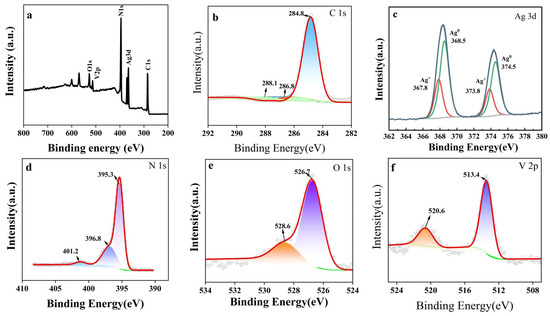
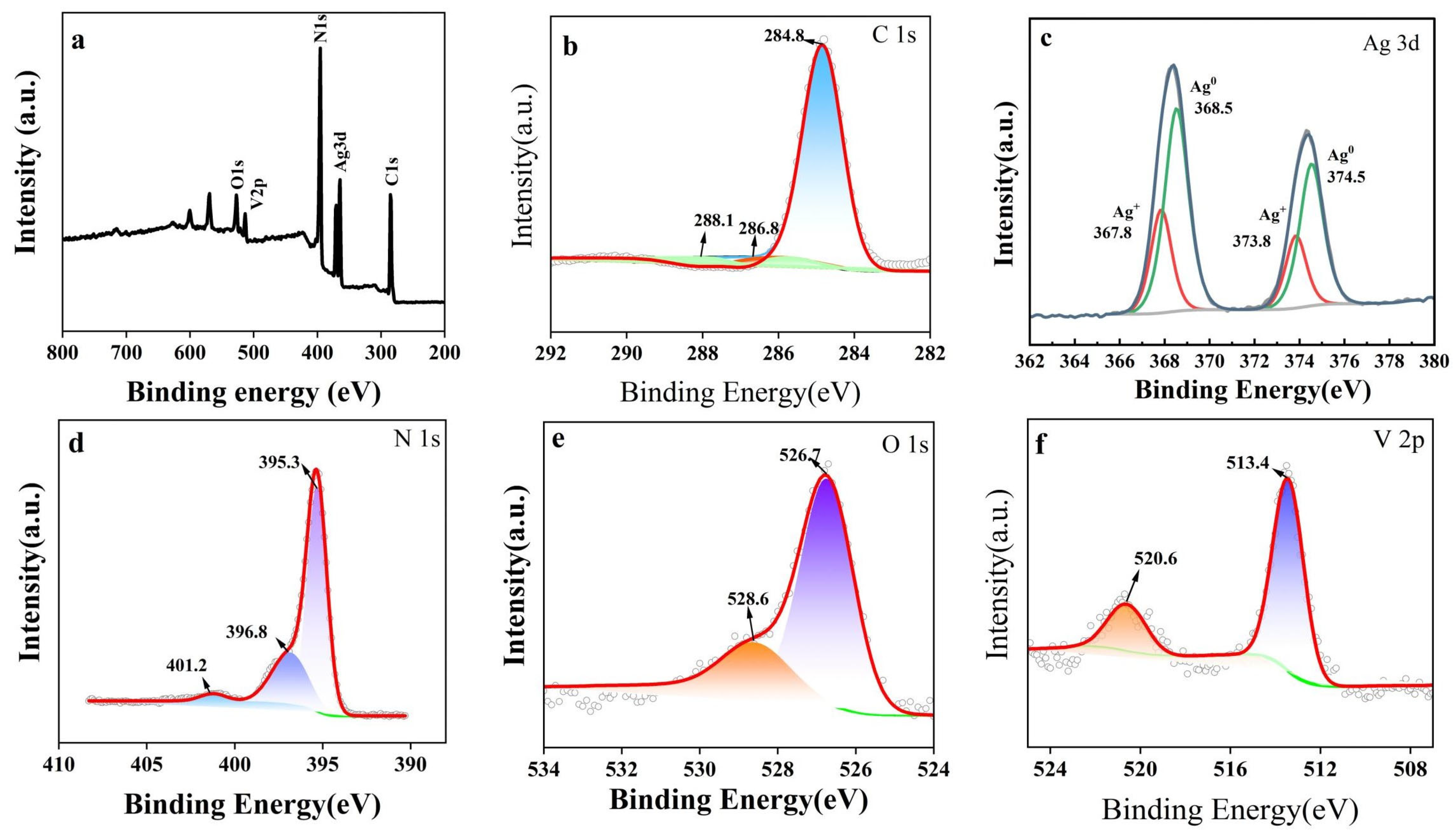
The elemental composition and occurrence state of the composite material were determined through XPS analysis (Figure 1). The C 1s peak of adventitious carbon at 284.8 eV was used as the internal binding-energy reference for all spectra. As shown in Figure 1a, the material contains five elements: C, Ag, N, O and V. In Figure 1b, the absorption peaks at the electron binding energies of 288.1 eV, 286.8 eV and 284.8 eV correspond to the N–C=N bond, C=O bond, and C–C bond, respectively [18,22]. Figure 1c shows the high-resolution distribution spectrum of Ag 3d. The doublet located at 368.5 eV and 374.5 eV is assigned to the Ag 3d5/2 and Ag 3d3/2 core levels of Ag0, respectively, with a spin–orbit splitting of 6.0 eV, which is characteristic of elemental silver. In addition, a second doublet component at 367.8 eV and its corresponding higher-binding-energy counterpart are attributed to Ag+ species associated with AgVO3, in good agreement with previously reported values for silver vanadates [17,23]. The characteristic peaks at 401.2 eV, 396.8 eV and 395.3 eV in Figure 1d correspond to the sub-peaks of N–C3, amino N, and C=N–C in the graphitic carbon nitride structure, respectively [18,22]. In Figure 1e, the characteristic peak at 526.7 eV corresponds to the lattice oxygen of AgVO3, while the peak at 528.6 eV may be attributed to surface-adsorbed hydroxyl groups or oxygen in water molecules absorbed from the air [24]. The characteristic peaks at 520.6 eV and 513.4 eV in Figure 1f correspond to V 2p1/2 and V 2p3/2, respectively [25].
Figure 1.
XPS spectra of Ag/AgVO3/g-C3N4.
Compared with previously reported AgVO3- or g-C3N4-based heterojunctions, the coexistence of Ag, AgVO3 and g-C3N4 observed in this study indicates that the presence of the corresponding elements/chemical species in each component of the Ag/AgVO3/g-C3N4 has been confirmed. Similar interfacial Ag-related species have been reported to promote visible-light utilization and charge separation in Ag3PO4/AgVO3 and Ag/BiVO4/rGO photocatalysts [17,24]. Therefore, the XPS results support the subsequent photocatalytic performance results, in which the ternary Ag/AgVO3/5g-C3N4 sample exhibits higher TC-HCl removal than the single components.
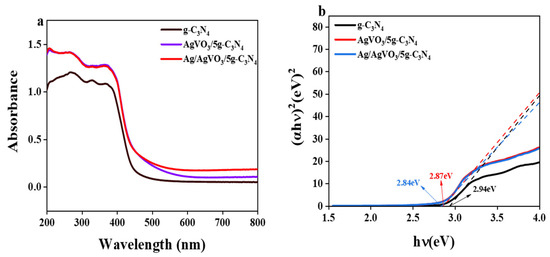
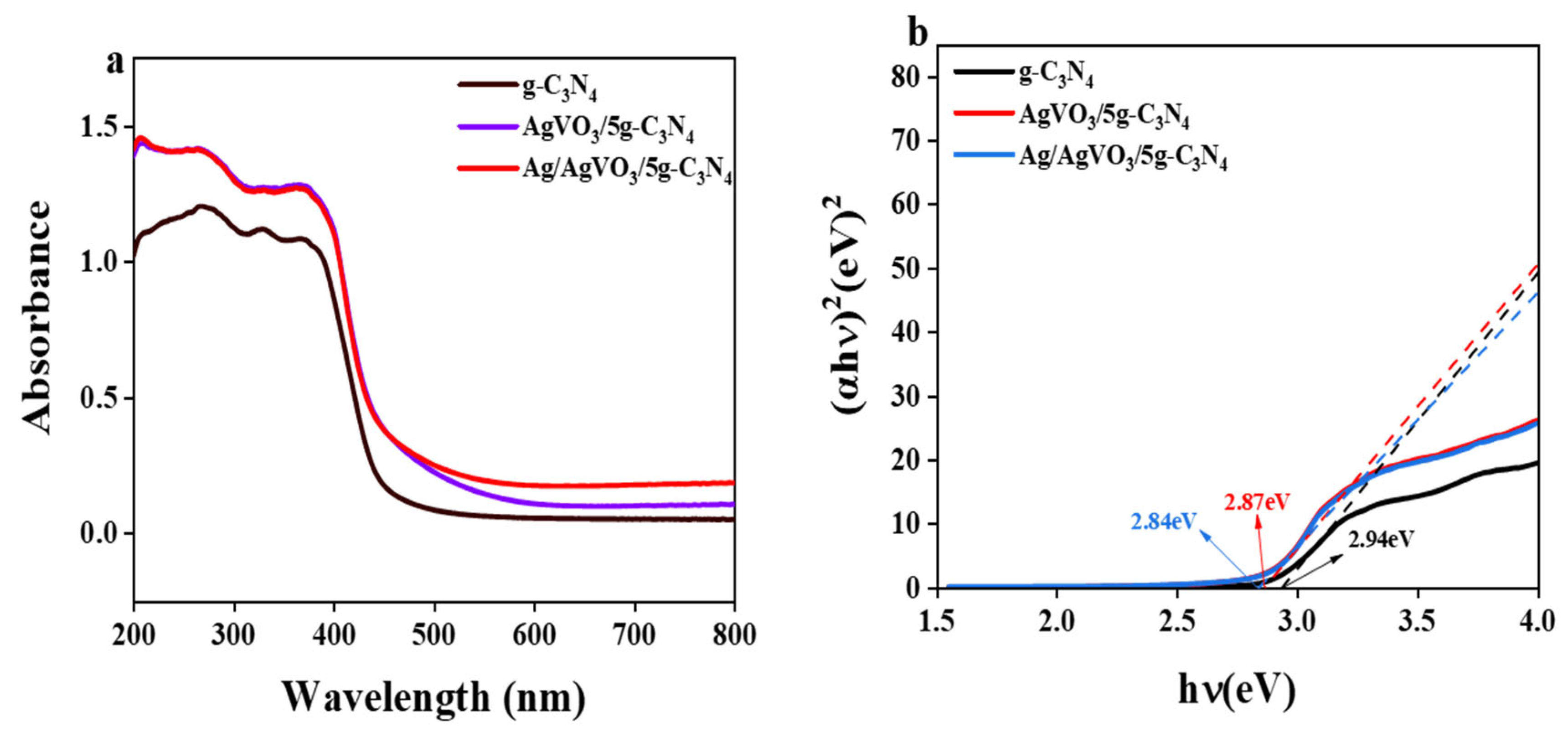
To characterize the composites, the absorption capacity of g-C3N4, AgVO3/5g-C3N4 and Ag/AgVO3/5g-C3N4 to visible light was studied using ultraviolet–visible diffuse reflectance spectroscopy (UV-vis DRS), and the results are shown in Figure 2. All the samples were responsive to visible light (Figure 2a), with Ag/AgVO3/5g-C3N4 exhibiting stronger absorption. Therefore, the doping of g-C3N4 with Ag and AgVO3 can enhance its absorption capacity in the visible light region and improve its photocatalytic activity. The band gap E was calculated according to the Kubelka–Munk formula. As shown in Figure 2b, the band gap values of g-C3N4, AgVO3/5g-C3N4 and Ag/AgVO3/5g-C3N4 are 2.94 eV, 2.87 eV and 2.84 eV, respectively. Therefore, the addition of AgVO3 can lead to a narrower band gap, which can excite more electron–hole pairs, reduce the energy required for the reaction, and improve the degradation performance of the catalyst [26,27].
Figure 2.
(a) UV-vis DRS spectrum of the sample; (b) band gap spectra of the sample.
The band-gap narrowing observed here is moderate, which is consistent with other g-C3N4-based visible-light photocatalysts where activity enhancement is usually attributed not only to a reduced band gap but also to improved interfacial charge migration and inhibited recombination [18,19,20]. For example, Ag/BiOI/g-C3N4 and WO3/g-C3N4 systems have shown that heterojunction construction can extend the visible-light response while simultaneously strengthening charge separation [20,28]. Therefore, the improved light absorption of Ag/AgVO3/5g-C3N4 provides an optical basis for its enhanced TC-HCl degradation performance, but it should be interpreted together with PL and active-species experiments rather than as the sole cause.
where α is the absorption coefficient, h is the Planck constant, ν is the frequency, A is the proportionality constant, Eg is the semiconductor bandgap width, and n is the exponent (n = 1/2).
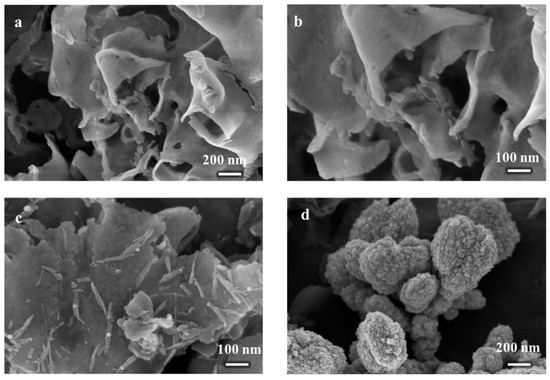
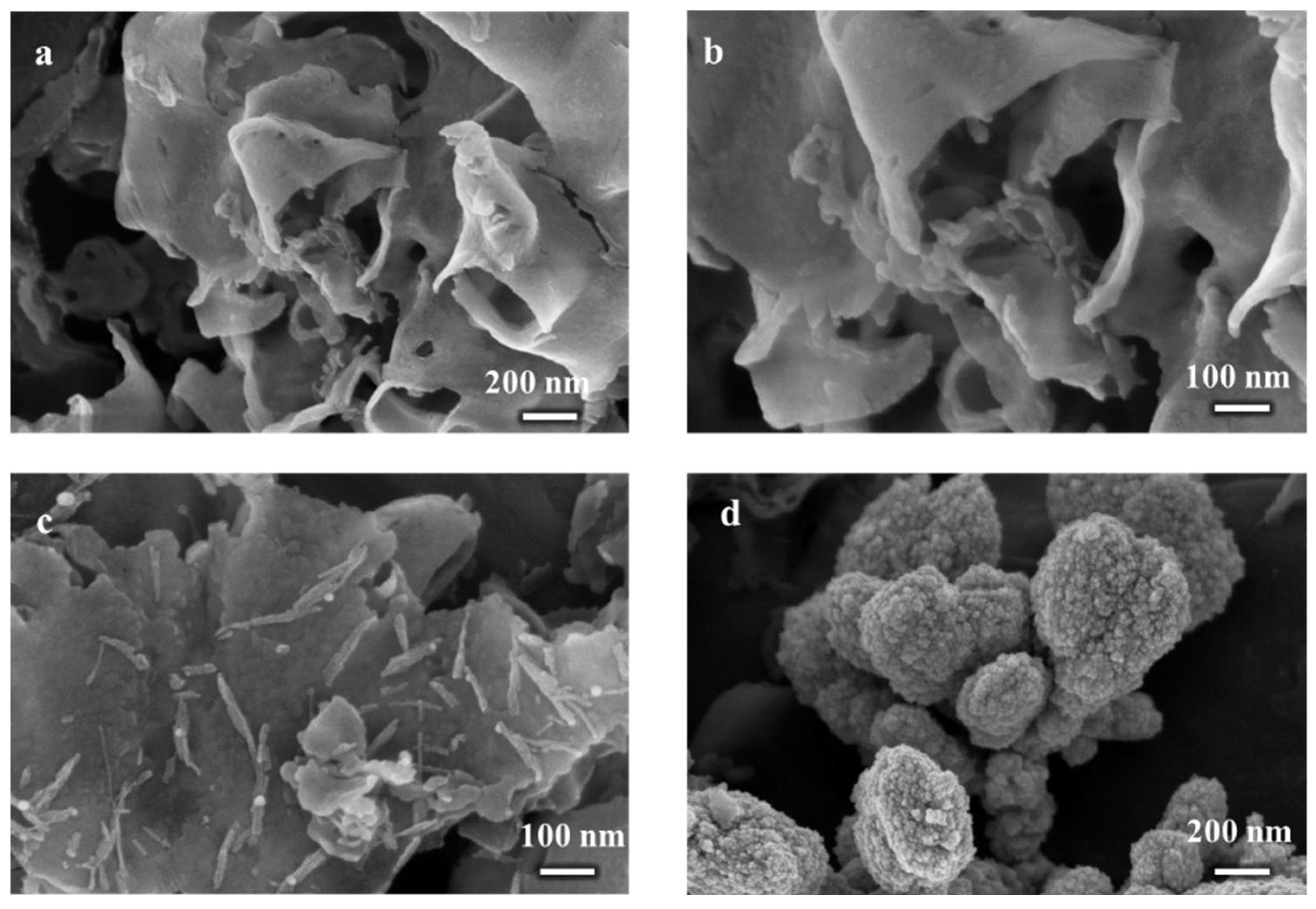
SEM images of g-C3N4 are shown in Figure 3a,b. As shown in the figure, the pure-phase g-C3N4 exhibits a lamellar structure formed by the stacking of nano-sheets. Figure 3c illustrates g-C3N4 doped with AgVO3, which appears as well-distributed rod-like structures on the surface of g-C3N4. The SEM image of composite Ag/AgVO3/g-C3N4 is presented in Figure 3d. The morphology of this composite shows significant changes from rod-like structures to granular structures, presumably attributed to the influence of visible light irradiation during the preparation process.
Figure 3.
SEM images of (a,b) g-C3N4, (c) AgVO3/g-C3N4, (d) Ag/AgVO3/g-C3N4.
The intimate contact between rod-like AgVO3 species and lamellar g-C3N4 is beneficial for constructing interfacial charge-transfer channels. Similar morphology-dependent enhancement has been discussed in AgVO3/g-C3N4 and Ag-containing bismuth-based photocatalysts, where well-dispersed Ag species or Ag-based semiconductors on a two-dimensional support can provide more accessible active sites and shorten the migration distance of photogenerated carriers [21,24,29]. In this study, the observed granular structure after photoreduction suggests the generation of Ag nanoparticles, which may further contribute to light harvesting through the surface plasmon resonance effect.
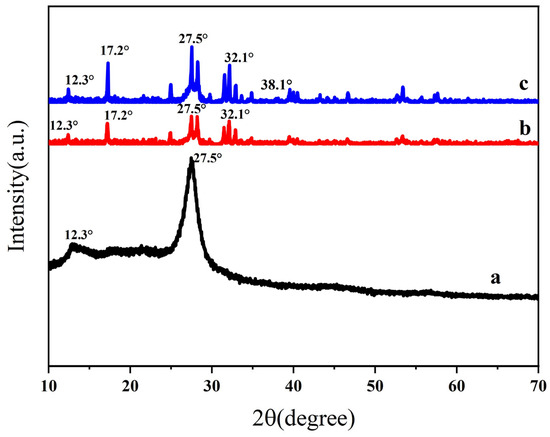
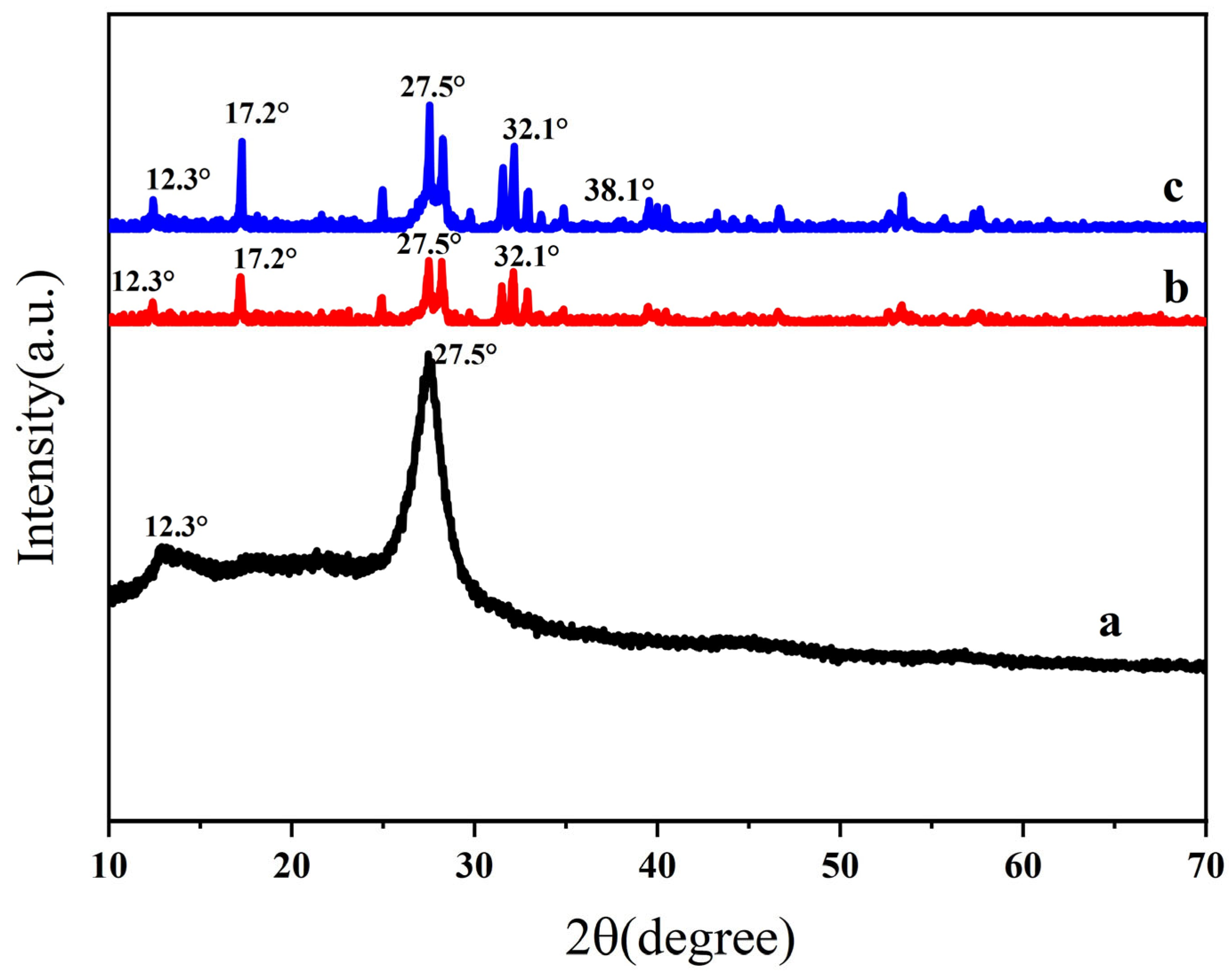
The crystal structure and composition of g-C3N4, AgVO3/g-C3N4 and Ag/AgVO3/g-C3N4 were characterized by X-ray diffraction (XRD). As shown in Figure 4, the diffraction peaks of AgVO3/g-C3N4 and Ag/AgVO3/g-C3N4 are similar, and the characteristic peaks of g-C3N4 and AgVO3/g-C3N4 can be observed in the diffraction peak spectrum of Ag/AgVO3/g-C3N4, indicating the coexistence of Ag, AgVO3 and g-C3N4 in the composite. Specifically, we have now performed a complete phase identification by indexing all diffraction peaks against standard JCPDS/ICSD reference cards. The characteristic peaks of g-C3N4 at 2θ = 12.3° and 27.5° correspond to the (100) and (002) planes, respectively, which are consistent with the typical interlayer stacking of heptazine-based graphitic carbon nitride (JCPDS No. 87-1526 [30]). The diffraction peaks of AgVO3 at 2θ = 17.2°, 19.6°, 25.1°, 30.5°, 32.1°, 34.3°, 38.6°, and 45.8° are in good agreement with the monoclinic phase of AgVO3 (JCPDS No. 29-1154 [31]). Regarding metallic Ag0, we have now clearly identified its characteristic reflection at 2θ = 38.1° corresponding to the (111) plane (JCPDS No. 04-0783 [32]), which was previously overlooked. Additionally, the peaks at 44.3° and 64.5° correspond to the (200) and (220) planes of metallic Ag, respectively. The presence of these Ag0 peaks confirms the successful photoreduction of Ag+ to Ag0 during the visible-light irradiation step in the synthesis process, which is consistent with the composite nomenclature “Ag/AgVO3/g-C3N4”.
Figure 4.
XRD patterns of g-C3N4 (a), AgVO3/g-C3N4 (b), Ag/AgVO3/g-C3N4 (c).
Furthermore, the relatively broad diffraction peaks observed for g-C3N4 indicate its low degree of crystallinity, which is typical for polymeric carbon nitride materials prepared by thermal condensation. In contrast, the sharper and more intense peaks of AgVO3/g-C3N4 suggest its well-developed crystalline structure. Notably, in the ternary composite, the diffraction peaks of both g-C3N4 and AgVO3 are well preserved, with no additional impurity peaks detected, confirming that the composite formation does not alter the intrinsic crystal structures of the individual components. The slightly reduced intensity of the g-C3N4 (002) peak in the composite can be attributed to the surface coverage by AgVO3 nanorods and Ag nanoparticles.
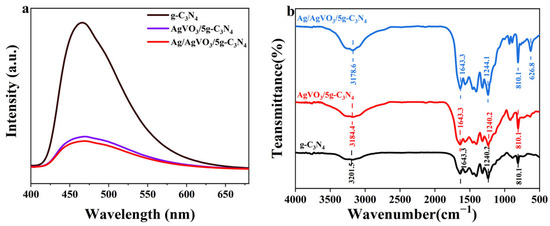
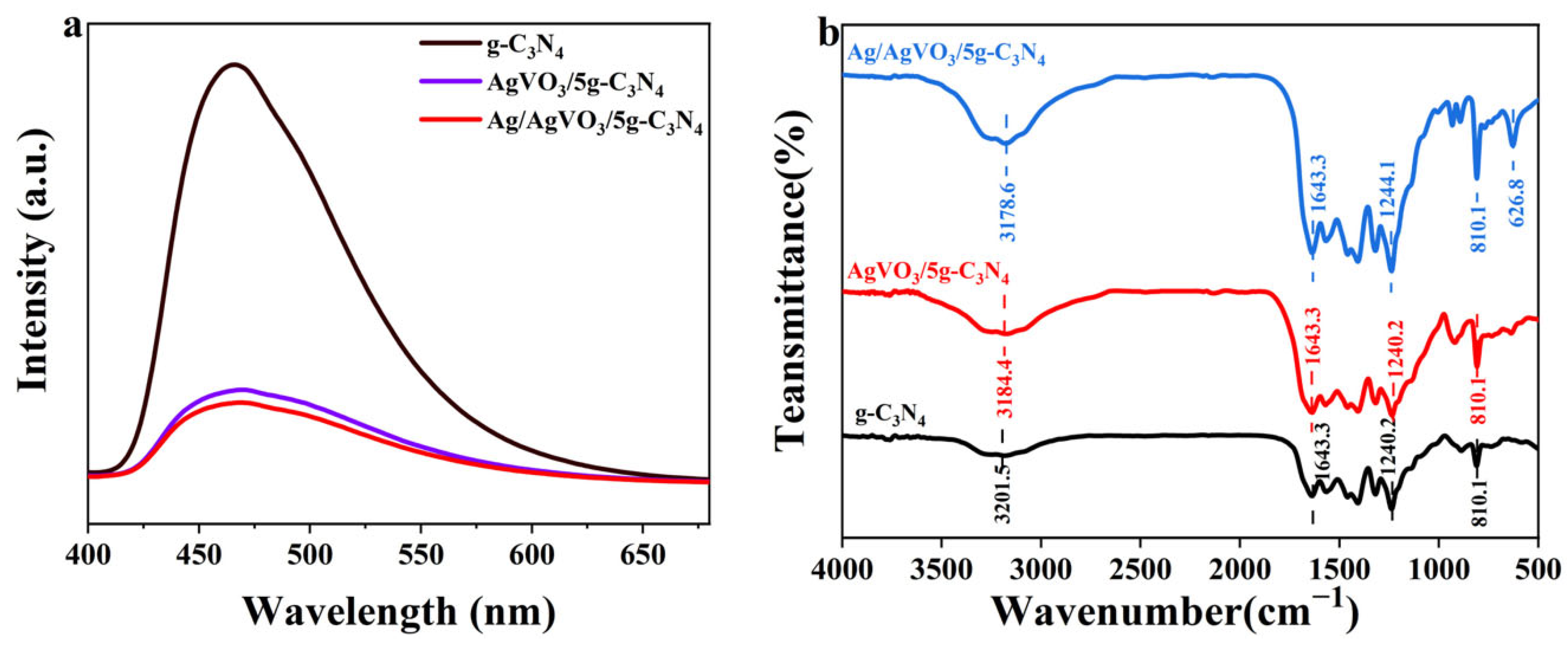
Fluorescence intensity can be used to analyze the separation of photogenerated electron–hole pairs. As shown in Figure 5a, the order of the peak signal intensities of the three materials is g-C3N4 > AgVO3/5g-C3N4 > Ag/AgVO3/5g-C3N4, with stronger fluorescence signal intensities indicating easier recombination of the photogenerated electron–hole pairs, which leads to lower photodegradation efficiency. It is concluded that the utilization rate of photogenerated carriers has been improved by doping Ag and AgVO3, thus improving the photodegradation performance. Figure 5b shows the FT-IR spectra of three samples, with g-C3N4, AgVO3/g-C3N4 and Ag/AgVO3/g-C3N4 all exhibiting vibrations at 3100 cm−1. The vibrations at 3100 cm−1 are presumably attributable to surface N–H or O–H stretching and adsorbed water, whereas the vibrations in the range of 1000–1643 cm−1 may be attributed to C–N stretching [18,22].
Figure 5.
(a) Photoemission spectrogram of the sample; (b) FT-IR spectra of the sample.
3.2. Degradation of Ag/AgVO3/g-C3N4 on TC-HCl
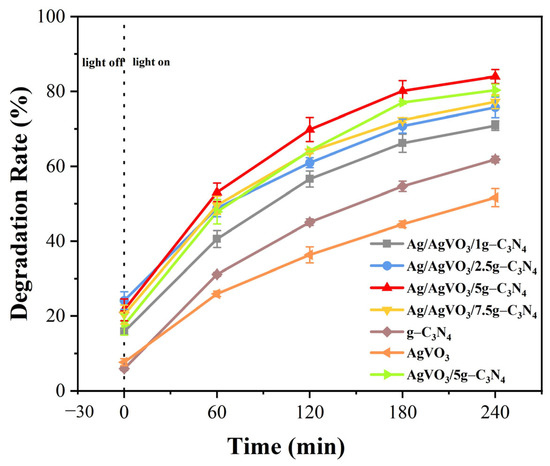
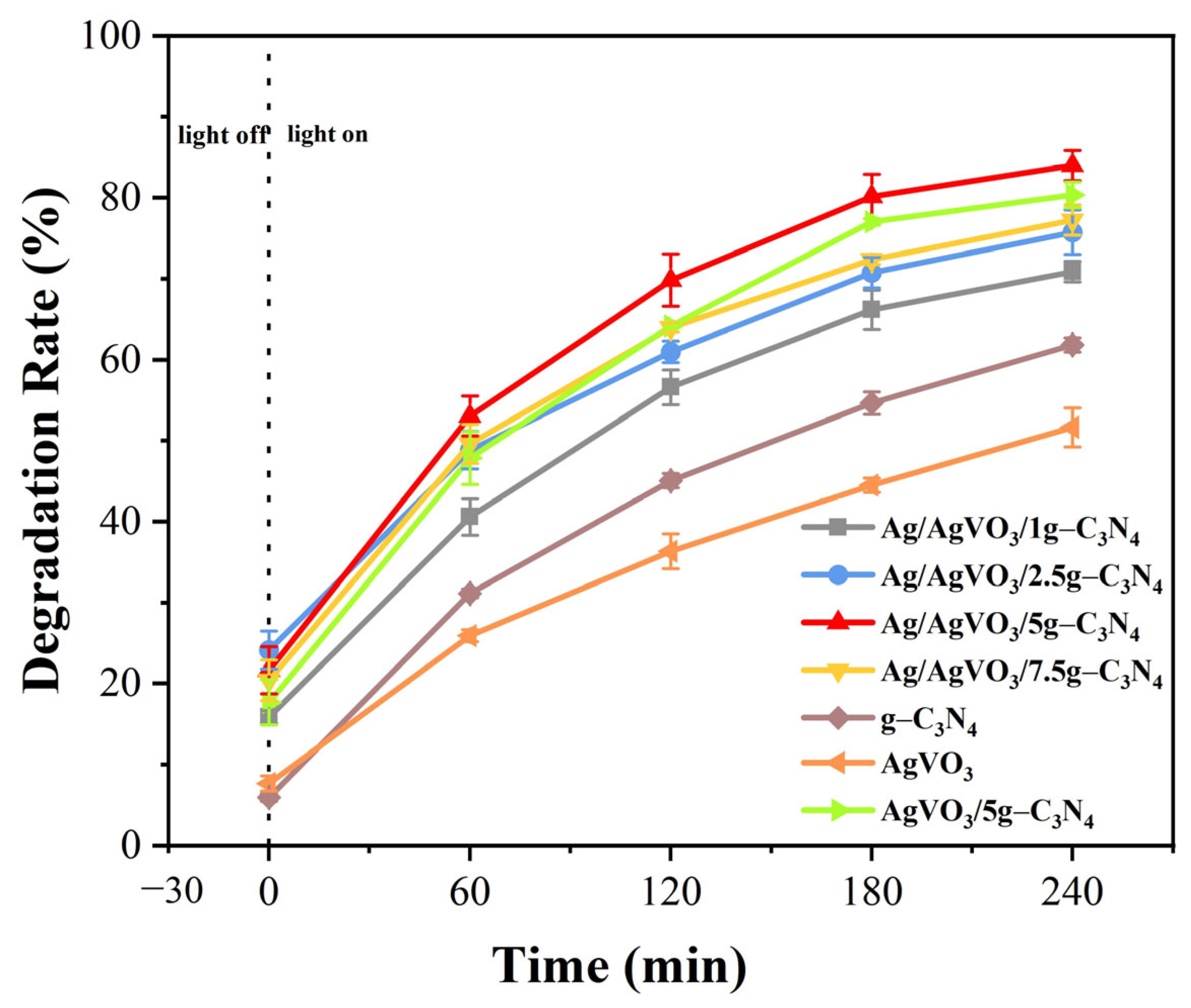
The ability of materials to remove pollutants is key to evaluating their catalytic activity. In this study, the effect of preparation conditions on the reducing activity of Ag/AgVO3/g-C3N4 was investigated with TC-HCl as the contaminant. Because the experiment quantified residual TC-HCl concentration using UV-vis absorbance, the term “degradation rate” in this paper refers to the apparent removal of TC-HCl rather than complete mineralization [33,34]. The effects of degradation rate of as-prepared photocatalysts on the tetracycline hydrochloride were explored under the conditions (pH = 4.7, 0.02 g material dose, and 20 mg/L initial concentration of TC). As depicted in Figure S1, to ascertain the adsorption–desorption characteristics of the synthesized materials, a dark reaction was conducted for 240 min. The removal rate of Ag/AgVO3/g-C3N4 heterojunction remained essentially unchanged at both 30 min and 240 min; hence, 30 min was chosen as the adsorption–desorption equilibrium point for this experiment. The control experiment indicated that TC-HCl hardly degraded under visible light irradiation without the addition of a catalyst, suggesting that TC-HCl was relatively stable. As shown in Figure 6, the degradation rate of pure-phase g-C3N4 and AgVO3 reached 61.81% and 51.63%, respectively, after 240 min of irradiation. The degradation rate of AgVO3 was the lowest due to the fact that AgVO3 alone as a catalyst has low response to visible light, whereas pure-phase g-C3N4 can compensate for the shortcomings of Ag+ and enhance its response to visible light. Therefore, Ag/AgVO3/5g-C3N4 exhibits the strongest degradation effect, with the degradation rate reaching 86.64%, which is 1.4 times that of ordinary g-C3N4. The reason is that after doping with Ag+, the recombination of photo-generated electron–hole pairs can be effectively reduced, the ability to respond to visible light can be improved, and the energy required for the reaction can be reduced, thus enhancing the degradation efficiency of TC-HCl. However, when excessive g-C3N4 participates in the reaction, the active sites of the composite will be reduced, the mobility of photogenerated carriers will decrease, and thus the degradation rate of TC-HCl will be reduced [20,21]. Compared with these systems, the present Ag/AgVO3/5g-C3N4 sample reaches 83.98% TC-HCl removal under the tested conditions, indicating that the composite design is effective for tetracycline-type antibiotic removal. However, the reaction time and pollutant concentration differ among studies, so the comparison should be interpreted as qualitative rather than directly ranking catalyst superiority.
Figure 6.
The effects of different ratios.
3.2.1. Effect of Material Dosage
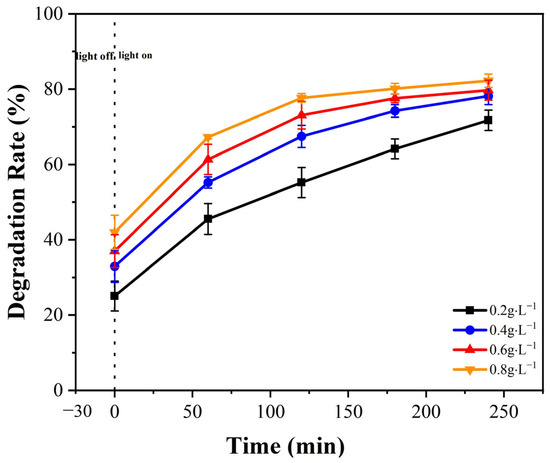
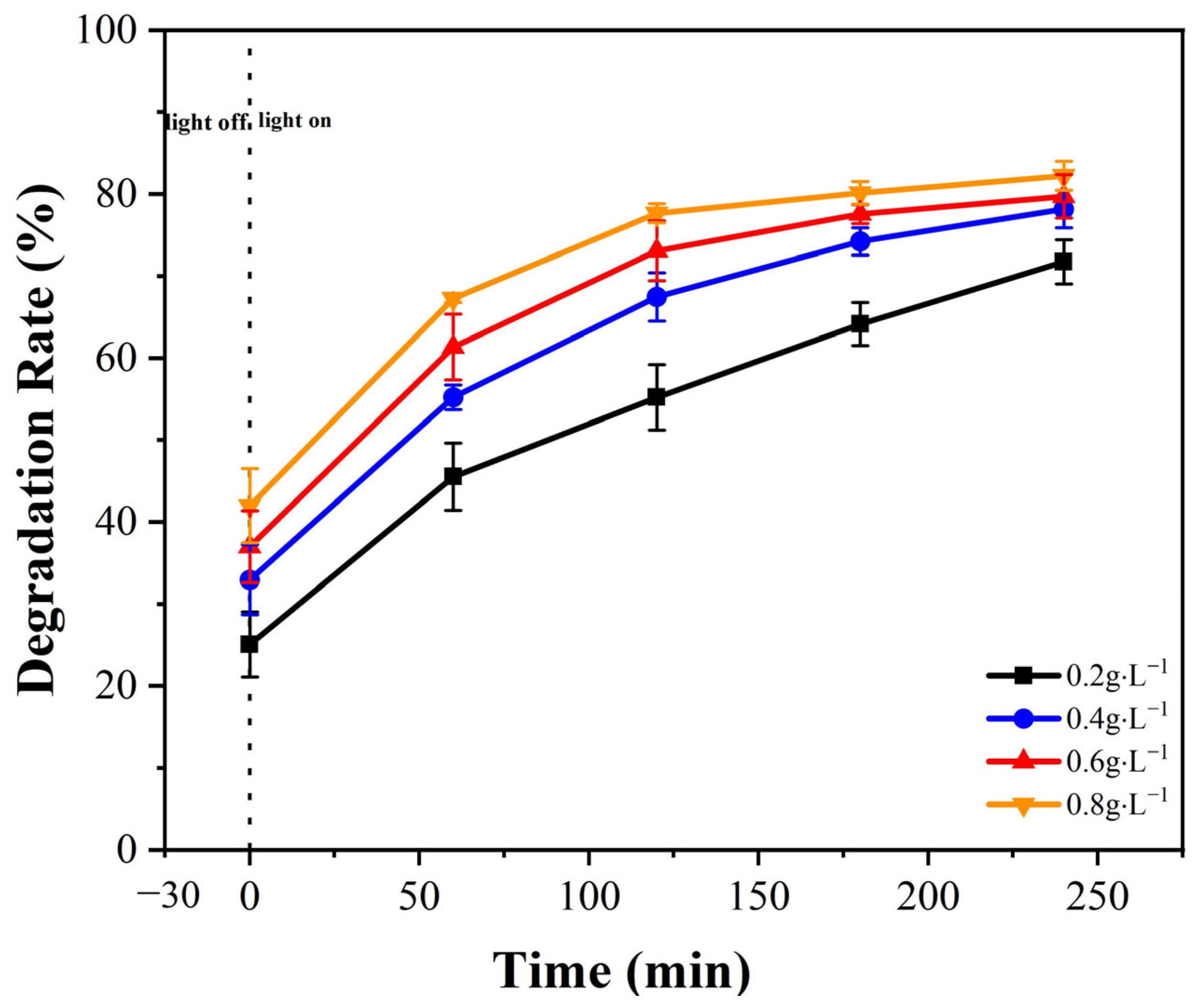
The degradation effects of different doses (0.2 g·L−1, 0.4 g·L−1, 0.6 g·L−1, and 0.8 g·L−1) of Ag/AgVO3/5g-C3N4 on tetracycline hydrochloride were explored at 4.7 initial pH and 10 mg/L initial concentration of tetracycline hydrochloride. The experimental results are shown in Figure 7. After 240 min of light catalysis, the degradation rates were 71.72%, 78.16%, 79.72%, and 82.22%, respectively. The degradation efficiency of tetracycline hydrochloride increased with increasing dosage. The reason is that at constant TC-HCl concentration, the increase in the dosage of composite materials increases the active sites available for the reaction and enhances the photocatalytic efficiency of the reaction, thereby increasing the degradation efficiency of TC-HCl. However, the gap in degradation rate between different dosages becomes narrow over time. Considering the cost issue in practical applications, the recommended maximum dosage is 0.8 g·L−1 in this study.
Figure 7.
The effect of different dosage.
A similar dosage-dependent trend has been widely reported in photocatalytic antibiotic degradation: increasing catalyst dosage can initially increase active sites and photon absorption, but excessive dosage may cause light scattering, particle aggregation and shielding effects [29,35]. In the present study, no decline was observed up to 0.8 g·L−1, but the incremental improvement became smaller from 0.6 to 0.8 g·L−1. This suggests that the reaction may gradually shift from active-site limitation to photon-transfer or mass-transfer limitation at higher catalyst loadings. Therefore, 0.8 g·L−1 is reasonable for the present laboratory system, while economic and hydraulic factors should be further considered in scale-up applications.
3.2.2. Effect of Initial TC-HCl Concentration
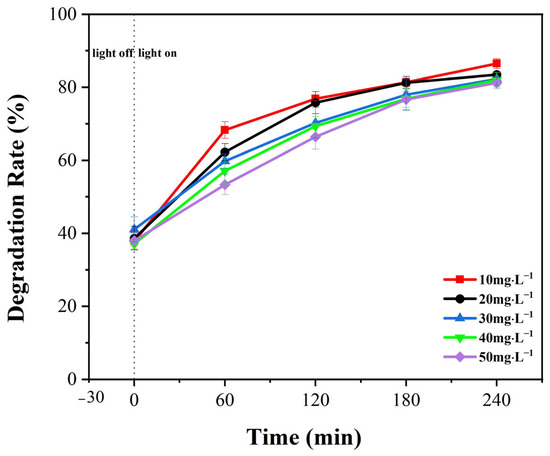
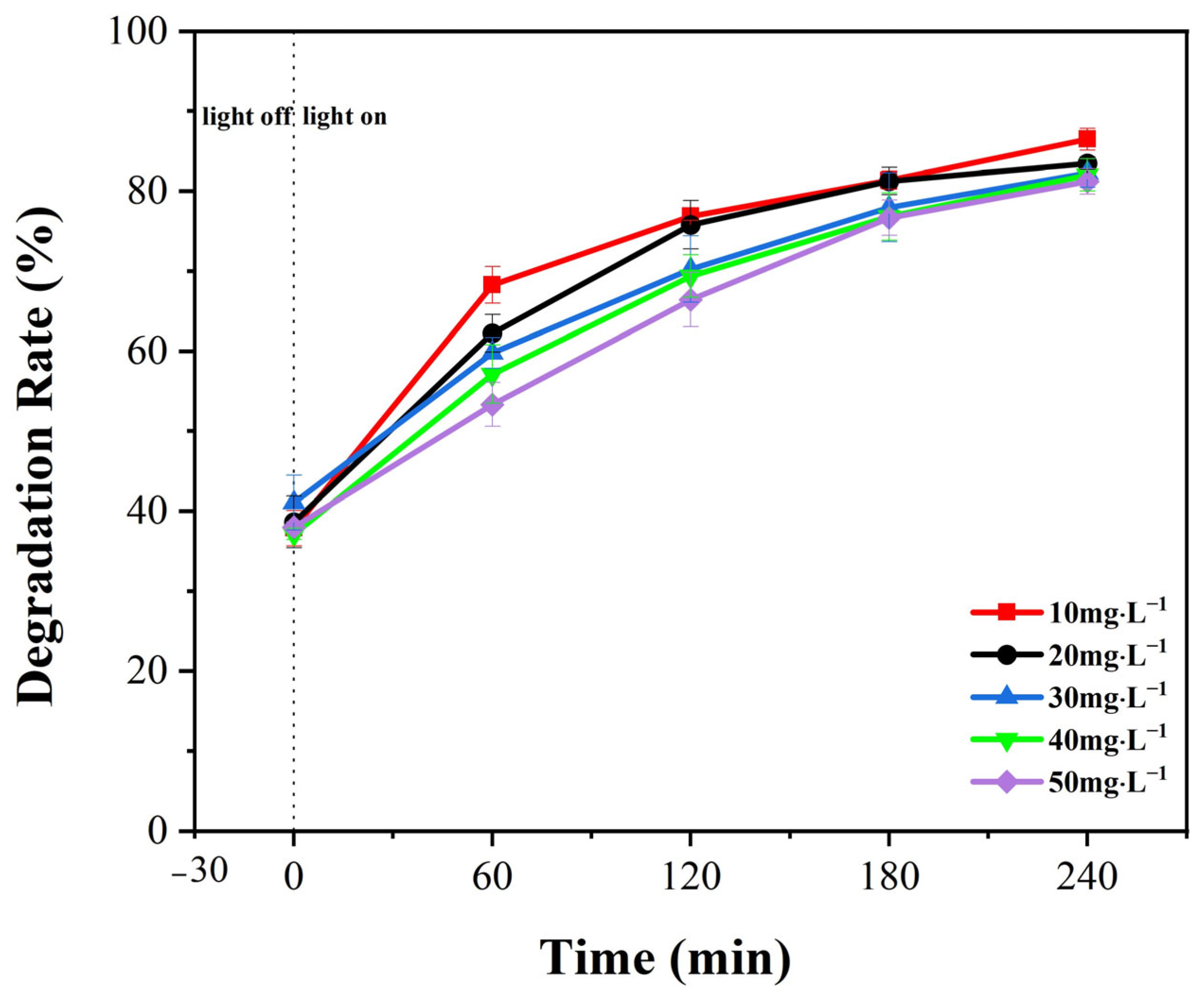
The degradation rates of tetracycline hydrochloride with initial concentrations of 10 mg·L−1, 20 mg·L−1, 30 mg·L−1, 40 mg·L−1, and 50 mg·L−1 with Ag/AgVO3/5g-C3N4 were explored under an initial pH of 4.7 and Ag/AgVO3/5g-C3N4 dose of 0.8 g·L−1. The experimental results are shown in Figure 8. With increasing initial concentration of tetracycline hydrochloride, the degradation rates of tetracycline hydrochloride were 86.46%, 83.44%, 82.25%, 82.01%, and 81.19%, respectively. The degradation effect was the strongest at the initial concentration of 10 mg·L−1. The reason may be that at a constant dose, on the one hand, the degradation ability of the catalyst itself is limited; on the other hand, the active sites provided by the catalyst are limited and cannot meet the degradation requirements of pollutants [28,33]. Therefore, the photocatalytic effect of the material is stronger at lower initial concentration of pollutants [34,35].
Figure 8.
The effect of different initial concentrations.
3.2.3. Effect of Initial pH
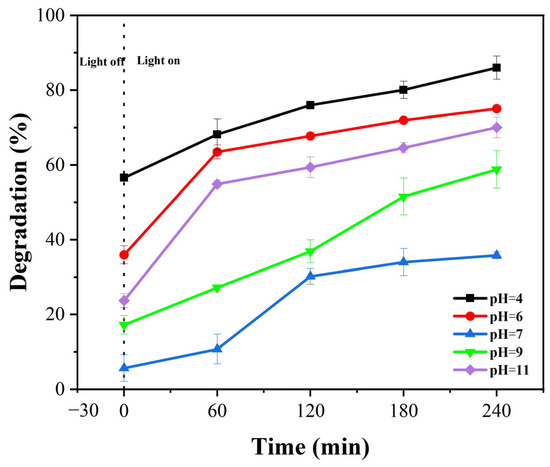
The degradation of tetracycline hydrochloride was explored at pH values of 4, 6, 7, 9, and 11 under the conditions of 0.8 g·L−1 dosage of Ag/AgVO3/5g-C3N4 and 10 mg·L−1 initial concentration of tetracycline hydrochloride. At pH values of 4, 6, 7, 9, and 11, the degradation rates reached 85.99%, 75.03%, 68.61%, 69.04%, and 70.04%, respectively. The experimental results are shown in Figure 9. The best degradation effect of antibiotics at pH = 4 (approximately 4.7) presumably occurred because pH influences the existing form of pollutants in the solution and the adsorption characteristics of the photocatalyst surface. Under acidic conditions, the TC-HCl solution primarily exists in a positively charged or zwitterionic form, which is more likely to interact with the catalyst surface and reactive species, facilitating the degradation of pollutants. Under alkaline conditions, the pH of the solution may promote the formation of ·OH within a certain range, thereby affecting the reaction rate [36,37]. Under neutral conditions, pollutants exist mainly as neutral or zwitterionic species; therefore, the catalytic degradation effect is not significant. Under highly acidic or alkaline conditions, ions are easily adsorbed on the surface of the catalyst, which blocks the absorption of visible light by materials and increases the coverage of active sites, thus limiting the migration ability of photogenerated carriers and reducing photocatalytic efficiency. Moreover, the degradation rate is higher under alkaline conditions than under neutral conditions. As the initial pH of the solution was 4.7, which is close to the optimal pH, the pH of the solution was not specially adjusted in the remaining experiments.
Figure 9.
The effect of different initial pH.
The pH-dependent behavior is also consistent with the amphoteric nature of tetracycline molecules, which possess multiple acid dissociation constants and may occur as cationic, zwitterionic or anionic species depending on solution pH [38]. Previous studies have shown that the optimal pH for tetracycline photocatalytic degradation varies with catalyst surface charge, adsorption affinity and dominant active species [39,40]. The stronger performance under acidic conditions in this study suggests that adsorption between TC-HCl species and Ag/AgVO3/5g-C3N4 is favorable near the natural pH of the solution. This is advantageous because additional pH adjustment may not be necessary for weakly acidic antibiotic wastewater, reducing chemical consumption.
3.3. Stability of Ag/AgVO3/5g-C3N4
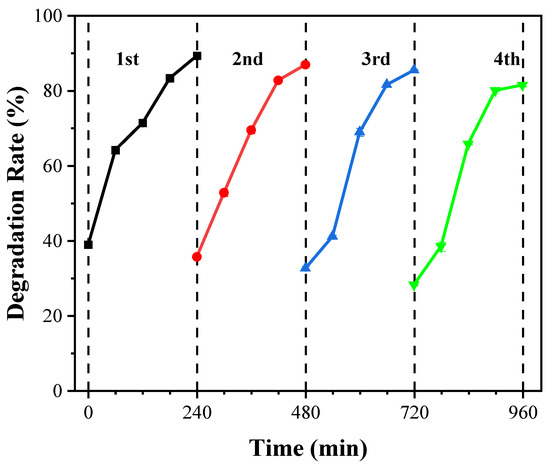
In order to explore the stability of Ag/AgVO3/5g-C3N4, a stability test experiment was carried out. Under the conditions of 4.7 pH and 10 mg·L−1 concentration of hydrochloric acid, 0.8 g·L−1 of the composite material was weighed, fully dissolved, and placed in a photocatalytic instrument. The mixture was tested four times, and the degradation rates in each test were 89.34%, 86.95%, 85.52%, and 81.52%, respectively. As shown in Figure 10, the degradation rate of TC-HCl decreased from 89.34% to 81.52% after four cycles, proving that the photocatalyst had relatively stable performance.
Figure 10.
Cyclic experiment.
The 7.82% decrease after four cycles may be associated with partial surface coverage by intermediates, unavoidable catalyst loss during recovery, and possible photocorrosion of Ag-containing species. Similar stability issues have been reported for silver-based photocatalysts, where coupling with g-C3N4 or other semiconductors can mitigate but not completely eliminate activity loss [13,15,41]. Compared with many Ag-based systems, the present material retains more than 90% of its initial removal capacity after four cycles, indicating acceptable reusability. Nevertheless, for water submission, it should be noted that XRD/XPS after cycling and Ag leaching analysis would further strengthen the claim of structural stability and environmental safety.
3.4. Photocatalytic Mechanism
To investigate the photocatalytic reaction mechanism of Ag/AgVO3/5g-C3N4, active species capture experiments were conducted. Isopropanol (IPA), disodium ethylenediaminetetraacetic acid (EDTA-2Na), and p-benzoquinone (BQ) were used to capture •OH, h+, and ·O2−, respectively, with a dosage of 2 mmol for all three capture agents, as shown in Figure S2. After adding EDTA-2Na, the degradation rate of TC-HCl decreased from 86.64% to 9.59%, and the degradation was significantly inhibited. After adding BQ, the degradation rate decreased to 46.78%, and the degradation performance of the catalyst was greatly affected. However, after adding IPA, the degradation rate only decreased by 7.54%, and there was basically no effect. Therefore, ·O2− and h+ are the main active species in the degradation process.
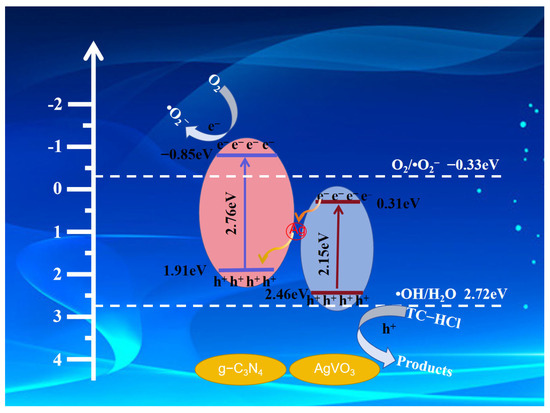
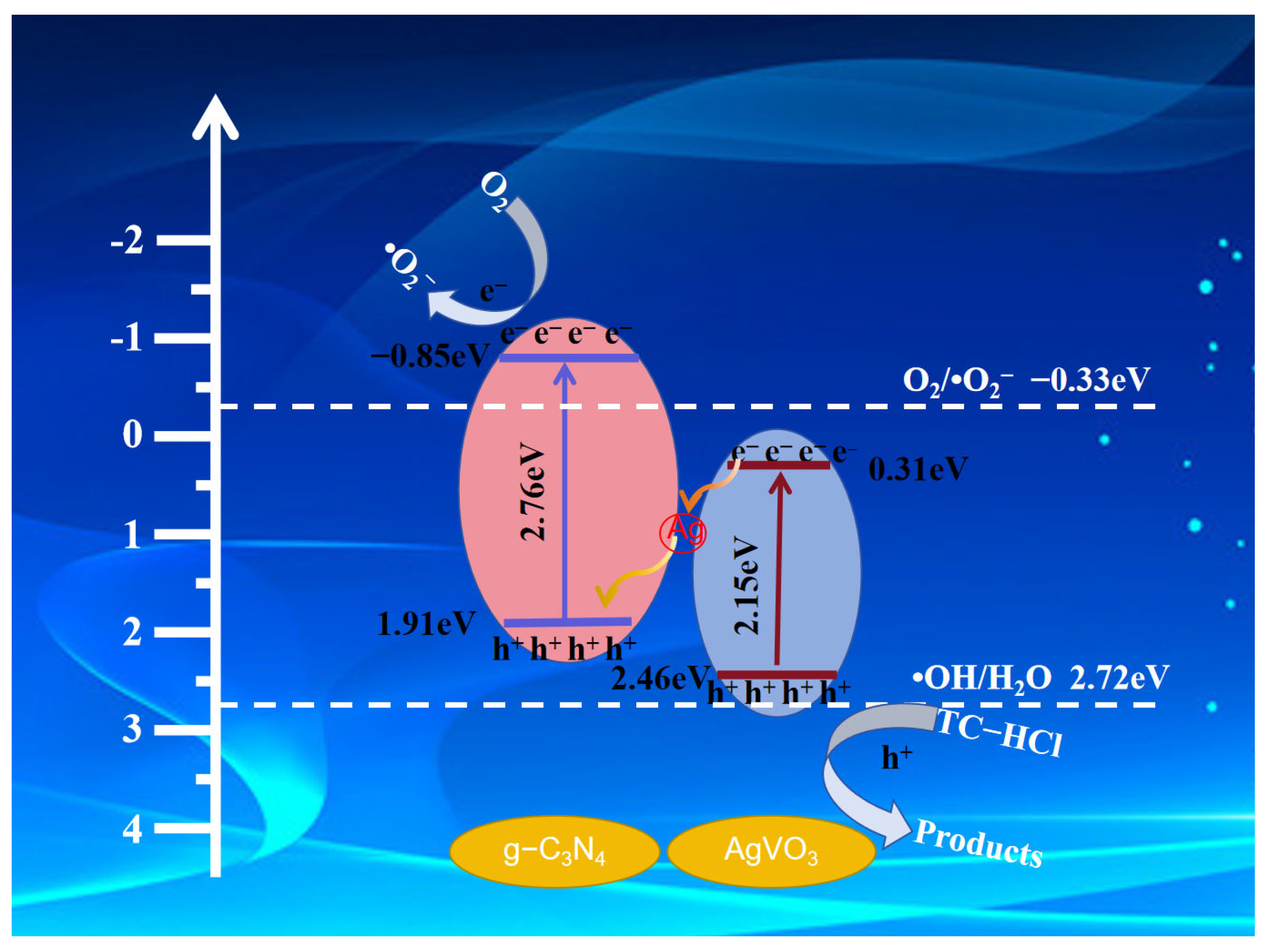
Based on the collective evidence from scavenger tests, optical characterization, photocatalytic performance, and literature-reported band edge positions, a possible Ag-mediated Z-scheme-type charge-transfer pathway for the Ag/AgVO3/5g-C3N4 heterojunction is proposed. As illustrated in Figure 11, under visible-light excitation, photogenerated electrons are promoted to the conduction band (CB), while holes remain in the valence band (VB). The electrons in the CB of AgVO3 can transfer to the surface of Ag. Concurrently, holes in the VB of g-C3N4 can migrate to the surface of Ag, thereby facilitating efficient separation of photogenerated electron–hole pairs. Literature reports indicate that the VB potential of AgVO3 is close to or slightly lower than the standard redox potential of H2O/·OH (+2.72 eV vs. NHE), depending on the synthesis route and measurement method [21,25]. Therefore, these holes may mainly directly oxidize organic contaminants rather than efficiently oxidize water to generate ·OH radicals. On the other hand, the CB potential of g-C3N4 is generally more negative than the O2/·O2− redox potential (−0.33 eV vs. NHE) [18,39]. Consequently, the photogenerated electrons can reduce O2 to superoxide radicals (·O2−), which can directly participate in photocatalytic oxidation or undergo further reactions to produce other oxidative species for pollutant degradation. Moreover, the surface plasmon resonance effect of Ag broadens the light absorption range and enhances visible-light utilization [42,43]. The synergistic interaction between the Ag/AgVO3/5g-C3N4 heterojunction and Ag nanoparticles contributes to the improved photocatalytic activity.
Figure 11.
Proposed photocatalytic mechanism scheme of Z-scheme Ag/AgVO3/g-C3N4.
4. Conclusions
In this study, Ag/AgVO3/5g-C3N4 was prepared using the water bath method. The crystal phase of the prepared catalyst was analyzed via XRD, the microstructure and morphology of the catalyst were observed via SEM, the elements and molecular structure of the catalyst were analyzed via XPS and FT-IR, and the separation of the photogenerated electron–hole pairs in the prepared catalyst was studied via UV-vis DRS and PL. In addition, the photodegradation performance of the prepared photocatalyst was explored, and the optimum conditions for the degradation of tetracycline hydrochloride were explored by changing the ratio of samples, dosage, initial concentration, and pH. The following main conclusions can be drawn:
As a matrix, g-C3N4 was doped with Ag and AgVO3, which enhanced its ability to degrade tetracycline hydrochloride.
The introduction of Ag and AgVO3 broadens the visible light response, inhibits the recombination of photogenerated electron–hole pairs, and effectively improves the photocatalytic performance of g-C3N4.
Ag/AgVO3/g-C3N4 exhibits higher photocatalytic performance than AgVO3/g-C3N4 and g-C3N4. However, an excessive amount of g-C3N4 will negatively affect the degradation of TC-HCl, mainly because excessive g-C3N4 reduces the number of active sites available in the composite. In this study, the optimal ratio of Ag, AgVO3 and g-C3N4 for antibiotic degradation was found to be 1:1:5.
pH can affect the adsorption performance of photocatalyst surfaces. In general, the degradation effect is stronger under acidic conditions than under alkaline and neutral conditions. The composite achieves the strongest degradation effect, reaching 86.64%, at room temperature of 25 °C, pH of 4.7, initial tetracycline hydrochloride concentration of 10 mg·L−1, and photocatalyst dosage of 0.8 g·L−1.
Supplementary Materials
The following supporting information can be downloaded at: https://www.mdpi.com/article/10.3390/w18172097/s1. Figure S1. Degradation efficiencies of HCl-TC in normal, no light and no catalysts. Figure S2. (a,b) Degradation rate of TC-HCl under different capture agents.
Author Contributions
Conceptualization, F.L., L.W., Z.J., Y.L. and X.W.; Methodology, F.L. and X.H.; Validation, F.L. and X.H.; Formal Analysis, X.H. and X.W.; Investigation, Y.Z., Y.L. and Z.J.; Data Curation, F.L., Y.Z., Y.L. and X.W.; Writing—Original Draft Preparation, F.L., L.W., Z.J. and X.W.; Writing—Review and Editing, F.L., L.W., P.Z. and X.H.; Supervision, F.L. and X.H.; Project Administration, F.L., X.H. and Z.J.; Funding Acquisition, F.L., P.Z. and Z.J. All authors have read and agreed to the published version of the manuscript.
Funding
Financial support was provided by the Joint Fund for Provincial Science and Technology R&D Program of Henan Province (252103810062) and the funds of Henan University of Urban Construction (KQ2023019, KH2025220, KH2025274, KH2026055, KX2026257, and KX2026258).
Data Availability Statement
The raw simulation data generated in this study are not publicly available at present, because the dataset forms an important part of our ongoing follow-up research projects. Meanwhile, this study does not involve any ethical issues. The authors can provide relevant data upon reasonable request to the corresponding author.
Conflicts of Interest
The authors declare no conflicts of interest.
References
- Chen, H.; Fang, Y.; Duan, P.; Zhang, X.; Zhang, K. Visible-light-driven photocatalytic degradation of antibiotics by newly molding g-C3N4/graphitized biochar composites. ChemistrySelect 2023, 8, e202300658. [Google Scholar] [CrossRef] [Scilit]
- Li, N.; Jiang, T.; Qi, Y.; Ma, R.; Xie, H.; Zhao, Y. One-step synthesis of phosphorus-doped g-C3N5 for the photocatalytic degradation of tetracycline hydrochloride. ChemistrySelect 2025, 10, e202404343. [Google Scholar] [CrossRef] [Scilit]
- Kümmerer, K. Antibiotics in the aquatic environment—A review—Part I. Chemosphere 2009, 75, 417–434. [Google Scholar] [CrossRef] [Scilit]
- Daghrir, R.; Drogui, P. Tetracycline antibiotics in the environment: A review. Environ. Chem. Lett. 2013, 11, 209–227. [Google Scholar] [CrossRef] [Scilit]
- Liu, X.; Steele, J.C.; Meng, X.Z. Usage, residue, and human health risk of antibiotics in Chinese aquaculture: A review. Environ. Pollut. 2017, 223, 161–169. [Google Scholar] [CrossRef] [Scilit]
- Battak, N.; Kamin, Z.; Bahrun, M.H.V.; Chiam, C.K.; Peter, E.; Bono, A. Removal of trace plant antibiotics from water systems by adsorption: A review. Chem. Eng. Technol. 2022, 45, 1721–1730. [Google Scholar] [CrossRef] [Scilit]
- Al-Jubouri, S.M.; Al-Batty, S.; Al-Hamd, R.K.S.; Sims, R.; Hakami, M.W.; Sk, M.H. Sustainable environment through using porous materials: A review on wastewater treatment. Asia-Pac. J. Chem. Eng. 2023, 18, e2941. [Google Scholar] [CrossRef] [Scilit]
- Yu, J.; Yu, J.; Liu, J.; Wu, Z. Photocatalytic removal of antibiotics from water. Prog. Chem. 2024, 36, 95–105. [Google Scholar] [CrossRef]
- Liu, Z.; Yu, X.; Wang, K.; Yang, F.; Zhang, J.; Zhao, N.; Wang, T.; Niu, J. Solvothermal synthesis of Fe3+-doped Cu2O photocatalyst for norfloxacin removal from water. ChemistrySelect 2023, 8, e202302991. [Google Scholar] [CrossRef] [Scilit]
- Islam, M.; Kumar, S.; Saxena, N.; Nafees, A. Photocatalytic degradation of dyes present in industrial effluents: A review. ChemistrySelect 2023, 8, e202301048. [Google Scholar] [CrossRef] [Scilit]
- Ghosh, I.; Khamrai, J.; Savateev, A.; Shlapakov, N.; Antonietti, M.; König, B. Organic semiconductor photocatalyst can bifunctionalize arenes and heteroarenes. Science 2019, 365, 360–366. [Google Scholar] [CrossRef] [Scilit]
- Wang, P.; Huang, B.; Zhang, X.; Qin, X.; Dai, Y.; Wang, Z.; Lou, Z. Highly efficient visible light plasmonic photocatalysts Ag@Ag(Cl,Br) and Ag@AgCl-AgI. ChemCatChem 2011, 3, 360–364. [Google Scholar] [CrossRef] [Scilit]
- Bi, Y.; Ouyang, S.; Cao, J.; Ye, J. Facile synthesis of rhombic dodecahedral AgX/Ag3PO4 (X = Cl, Br, I) heterocrystals with enhanced photocatalytic properties and stabilities. Phys. Chem. Chem. Phys. 2011, 13, 10071–10075. [Google Scholar] [CrossRef] [Scilit]
- Yu, C.; Li, G.; Kumar, S.; Yang, K.; Jin, R. Phase transformation synthesis of novel Ag2O/Ag2CO3 heterostructures with high visible light efficiency in photocatalytic degradation of pollutants. Adv. Mater. 2014, 26, 892–898. [Google Scholar] [CrossRef] [Scilit]
- Tang, J.; Meng, R.; Xue, Y.; Deng, X.; Li, Q. Enhanced photocatalytic degradation of tetracycline hydrochloride by Ag/AgI/WO3·H2O composites. Asia-Pac. J. Chem. Eng. 2022, 17, e2756. [Google Scholar] [CrossRef] [Scilit]
- Dong, J.; Chen, F.; Xu, L.; Yan, P.; Qian, J.; Chen, Y.; Yang, M.; Li, H. Fabrication of sensitive photoelectrochemical aptasensor using Ag nanoparticles sensitized bismuth oxyiodide for determination of chloramphenicol. Microchem. J. 2022, 178, 107317. [Google Scholar] [CrossRef] [Scilit]
- Lin, X.; Guo, X.; Shi, W.; Guo, F.; Zhai, H.; Yan, Y.; Wang, Q. Ag3PO4 quantum dots sensitized AgVO3 nanowires: A novel Ag3PO4/AgVO3 nanojunction with enhanced visible-light photocatalytic activity. Catal. Commun. 2015, 66, 67–72. [Google Scholar] [CrossRef] [Scilit]
- Jiménez-Salcedo, M.; Monge, M.; Tena, M.T. The photocatalytic degradation of naproxen with g-C3N4 and visible light: Identification of primary by-products and mechanism in tap water and ultrapure water. J. Environ. Chem. Eng. 2022, 10, 106964. [Google Scholar] [CrossRef] [Scilit]
- Wang, X.; Maeda, K.; Thomas, A.; Takanabe, K.; Xin, G.; Carlsson, J.M.; Domen, K.; Antonietti, M. A metal-free polymeric photocatalyst for hydrogen production from water under visible light. Nat. Mater. 2009, 8, 76–80. [Google Scholar] [CrossRef] [Scilit]
- Li, T.; Ma, M.; Wang, J.; Li, Q.; Yu, Y.; Zou, Q.; Li, X.; Wei, X.; Yan, T.; Tang, Y. Enhanced photocatalytic degradation of antibiotics by Ag/BiOI/g-C3N4 composites. Phys. Status Solidi A 2023, 220, 2300261. [Google Scholar] [CrossRef] [Scilit]
- Zhao, W.; Guo, Y.; Wang, S.; He, H.; Sun, C.; Yang, S. A novel ternary plasmonic photocatalyst: Ultrathin g-C3N4 nanosheet hybrided by Ag/AgVO3 nanoribbons with enhanced visible-light photocatalytic performance. Appl. Catal. B Environ. 2015, 165, 335–343. [Google Scholar] [CrossRef] [Scilit]
- Wu, T.; Gu, J.; Peng, C.; Wu, S.; Chen, H.; Jiang, F. Study on photocatalytic degradation of bisphenol A in water by graphite phase carbon nitride homojunction. China Environ. Sci. 2021, 41, 3255–3265. [Google Scholar]
- Martin, D.J.; Liu, G.; Moniz, S.J.A.; Bi, Y.; Beale, A.M.; Ye, J.; Tang, J. Efficient visible driven photocatalyst, silver phosphate: Performance, understanding and perspective. Chem. Soc. Rev. 2015, 44, 7808–7828. [Google Scholar] [CrossRef] [Scilit]
- Li, M.; Xu, G.; Guan, Z.; Wang, Y.; Yu, H.; Yu, Y. Synthesis of Ag/BiVO4/rGO composite with enhanced photocatalytic degradation of triclosan. Sci. Total Environ. 2019, 664, 230–239. [Google Scholar] [CrossRef] [Scilit]
- Sun, H.; Qin, P.; Wu, Z.; Liao, C.; Guo, J.; Luo, S.; Chai, Y. Visible light-driven photocatalytic degradation of organic pollutants by a novel Ag3VO4/Ag2CO3 p–n heterojunction photocatalyst: Mechanistic insight and degradation pathways. J. Alloys Compd. 2020, 834, 155211. [Google Scholar] [CrossRef] [Scilit]
- Zheng, L.; Han, S.; Liu, H.; Yu, P.; Fang, X. Hierarchical MoS2 nanosheet@TiO2 nanotube array composites with enhanced photocatalytic and photocurrent performances. Small 2016, 12, 1527–1536. [Google Scholar] [CrossRef] [Scilit]
- Tauc, J.; Grigorovici, R.; Vancu, A. Optical properties and electronic structure of amorphous germanium. Phys. Status Solidi B 1966, 15, 627–637. [Google Scholar] [CrossRef] [Scilit]
- Meng, J.; Wang, X.; Liu, Y.; Ren, M.; Zhang, X.; Ding, X.; Guo, Y.; Yang, Y. Acid-induced molecule self-assembly synthesis of Z-scheme WO3/g-C3N4 heterojunctions for robust photocatalysis against phenolic pollutants. Chem. Eng. J. 2021, 403, 126354. [Google Scholar] [CrossRef] [Scilit]
- Ong, W.J.; Tan, L.L.; Ng, Y.H.; Yong, S.T.; Chai, S.P. Graphitic carbon nitride (g-C3N4)-based photocatalysts for artificial photosynthesis and environmental remediation: Are we a step closer to achieving sustainability? Chem. Rev. 2016, 116, 7159–7329. [Google Scholar] [CrossRef] [Scilit]
- JCPDS No. 87-1526; Powder Diffraction File. International Centre for Diffraction Data: Newtown Square, PA, USA, 1995.
- JCPDS No. 29-1154; Powder Diffraction File. International Centre for Diffraction Data: Newtown Square, PA, USA, 1995.
- JCPDS No. 04-0783; Powder Diffraction File. International Centre for Diffraction Data: Newtown Square, PA, USA, 1995.
- Song, J.; Wang, X.; Ma, J.; Wang, X.; Wang, J.; Xia, S.; Zhao, J. Photocatalytic degradation of tetracycline hydrochloride with g-C3N4/Ag/AgBr under visible light irradiation. Environ. Sci. Pollut. Res. 2022, 29, 80787–80800. [Google Scholar]
- Liu, R.; Li, M.; Chen, J.; Yin, Y.; Zhang, X. Enhanced Photocatalytic Degradation of Tetracycline by Mag-netically Separable g-C3N4-Doped Magnetite@Titanium Dioxide Heterostructured Photocatalyst. Water 2024, 16, 1372. [Google Scholar] [CrossRef] [Scilit]
- Herrmann, J.M. Heterogeneous photocatalysis: Fundamentals and applications to the removal of various types of aqueous pollutants. Catal. Today 1999, 53, 115–129. [Google Scholar] [CrossRef] [Scilit]
- Wang, H.; Li, X.; Zhao, X.; Li, C.; Song, X.; Zhang, P.; Huo, P.; Li, X. A review on heterogeneous photocatalysis for environmental remediation: From semiconductors to modification strategies. Chin. J. Catal. 2020, 41, 1359–1374. [Google Scholar]
- Wang, Y.J.; Jia, D.A.; Sun, R.J.; Zhu, H.W.; Zhou, D.M. Adsorption and cosorption of tetracycline and copper(II) on montmorillonite as affected by solution pH. Environ. Sci. Technol. 2008, 42, 3254–3259. [Google Scholar] [CrossRef] [Scilit]
- Figueroa, R.A.; Leonard, A.; MacKay, A.A. Modeling tetracycline antibiotic sorption to clays. Environ. Sci. Technol. 2004, 38, 476–483. [Google Scholar] [CrossRef] [Scilit]
- Low, J.; Jiang, C.; Cheng, B.; Wageh, S.; Al-Ghamdi, A.A.; Yu, J. A review of direct Z-scheme photocatalysts. Small Methods 2017, 1, 1700080. [Google Scholar] [CrossRef] [Scilit]
- John, K.I.; Issa, T.B.; Ho, G.; Nikoloski, A.N.; Li, D. Enhanced Visible-Light-Assisted Photocatalytic Removal of Tetracycline Using Co/La@g-C3N4 Ternary Nanocomposite and Underlying Reaction Mechanisms. Water 2024, 16, 2563. [Google Scholar] [CrossRef] [Scilit]
- Li, X.; Yu, J.; Jaroniec, M.; Chen, X. Cocatalysts for selective photoreduction of CO2 into solar fuels. Chem. Rev. 2019, 119, 3962–4179. [Google Scholar] [CrossRef] [Scilit] [PubMed]
- Fresno, F.; Portela, R.; Suárez, S.; Coronado, J.M. Photocatalytic materials: Recent achievements and near future trends. J. Mater. Chem. A 2014, 2, 2863–2884. [Google Scholar] [CrossRef] [Scilit]
- Chen, X.; Mao, S.S. Titanium dioxide nanomaterials: Synthesis, properties, modifications, and applications. Chem. Rev. 2007, 107, 2891–2959. [Google Scholar] [CrossRef] [Scilit]
Disclaimer/Publisher’s Note: The statements, opinions and data contained in all publications are solely those of the individual author(s) and contributor(s) and not of MDPI and/or the editor(s). MDPI and/or the editor(s) disclaim responsibility for any injury to people or property resulting from any ideas, methods, instructions or products referred to in the content. |
© 2026 by the authors. Licensee MDPI, Basel, Switzerland. This article is an open access article distributed under the terms and conditions of the Creative Commons Attribution (CC BY) license.