


Abstract
Implementation of real-scale systems for rainwater harvesting, treatment and reuse of greywater in residential areas is challenging because several factors should be considered for full adoption and satisfaction of decision-makers, urban developers and users. Technological, construction, operational, social (acceptance), impact on water resources, regulatory, and economic factors are involved. This study presents the implementation of a full-scale hybrid system for rainwater harvesting, treatment and reuse of greywater in a residential building located in Monterrey, Nuevo León, Mexico. The study included intervening in the hydraulic infrastructure of an already constructed residential building for collecting greywater, harvesting and collecting rainwater, designing and constructing an 80 m2 controlled natural soil treatment system (CNSTS) and a 65 m3 storage tank for treating and storing rain and greywater. Furthermore, the full-scale hybrid system was monitored under real operating conditions for a two-month period to assess its performance. Results showed that the CNSTS has the potential to replace up to 2835 m3 year−1 of potable water, equivalent to 65% of the building’s annual water consumption. The CNSTS achieved removal efficiencies of up to ~90% for Chemical Oxygen Demand, 90% for surfactants, and 50% for total nitrogen. Most of the measured parameters complied with the corresponding limits established by the Mexican standards NOM-003-SEMARNAT-1997 for non-potable water reuse, NOM-001-SEMARNAT-2021 for wastewater discharges, and NOM-127-SSA1-2021 for potable water with the exception of methylene blue active substances (surfactants), which exceeded the permissible limit during the initial monitoring stage, highlighting the need for further optimization of the system’s vegetative cover. Based on these findings, conceptual designs and preliminary evaluations were conducted for additional buildings, resulting in potable water substitution rates above 90% with investment payback periods of 2 to 5 years, depending on the water demand and the water catchment potential.
1. Introduction
In recent decades, the overexploitation and pollution of freshwater resources, combined with the impacts of climate change, have caused water scarcity and water stress to reach unprecedented levels worldwide [1,2]. These problems are particularly acute in developing countries, where rapid population growth, industrial expansion, and intensive agricultural activities exert immense pressure on already limited water supplies [3]. Mexico is one of the countries where this situation is especially critical. Its growing urban population, strong industrialization, and reliance on agriculture for both domestic and export markets have intensified demand for aquifers and surface water resources. The northeastern region of the country is particularly affected, since it is a major hub of demographic, industrial, and economic development at the national level. At the same time, its semi-arid climatic conditions and irregular rainfall patterns make it highly vulnerable to water scarcity. Over the past decade, northeastern Mexico has faced increasingly frequent and severe drought events, which have exacerbated structural deficits in water supply and increased the competition between different sectors for limited water resources [4,5,6].
To address these growing challenges, potential alternatives and strategies for water supply have been proposed, among which rainwater harvesting (RWH) systems are considered one of the most promising because of their relative simplicity, versatility, and cost-effectiveness [2,7,8,9]. RWH systems can be implemented at various scales, ranging from household installations to community or institutional systems, using low-cost technologies that are easy to install and maintain. Their adaptability makes them accessible to a wide range of users, from urban households to rural communities, and their modular nature allows them to be replicated, relocated, or expanded as demand changes. In addition to reducing the dependence on centralized water distribution systems, RWH systems generate economic benefits for users by decreasing potable water bills, while also relieving pressure on aquifers and surface water sources, which are often overexploited [10]. Despite these clear advantages, many studies around the world have highlighted that RWH systems are not a universal solution. Their effectiveness depends strongly on local rainfall patterns, roof catchment areas, storage capacity, and water demand. Although research has demonstrated significant benefits in diverse regions [11,12,13], RWH presents important limitations in semi-arid regions such as northeastern Mexico, where rainfall is scarce, irregular, and unevenly distributed throughout the year. Under these conditions, harvested rainwater alone is often insufficient to satisfy water demand, limiting the effectiveness of RWH as a stand-alone [1,10].
Given the limitations of RWH, increasing attention has been directed toward greywater reuse (GWR), particularly in arid and semi-arid regions of developing economies, where freshwater scarcity, accelerated urban growth, and industrial development place growing stress on available water sources [14,15,16]. GWR consists of collecting, treating, and reusing domestic wastewater streams generated from showers, sinks, laundry, and other household appliances, excluding toilet discharges. This wastewater fraction typically represents more than 70% of the total household wastewater volume in Mexico and in many other Latin American countries [17]. Its reuse has significant potential to offset potable water demand, especially for non-potable uses such as toilet flushing, landscape irrigation, and cleaning, where potable water is not strictly necessary. Studies have demonstrated that GWR can reduce household water consumption by up to 50% or more [18,19,20,21,22], which makes it an attractive complement to conventional water supplies. International experiences illustrate the growing relevance of GWR, with countries such as Australia, the United States, Japan, Spain, Korea, and China developing regulations, state programs, and subsidies to promote its adoption [16,23,24]. Treatment technologies for GWR include physical, chemical, and biological processes that can be selected according to the intended reuse application. These technologies enable the safe reuse of greywater while reducing potable water demand and mitigating environmental impacts associated with freshwater extraction and wastewater discharge [23,25,26].
The integration of RWH and GWR systems has emerged as a particularly attractive alternative for enhancing water resource efficiency. Studies have shown that the combined use of both technologies can reduce potable water consumption by 36% in single-family households and by up to 42% in multi-story buildings [27,28]. This dual approach not only addresses the intermittency of rainfall inherent to RWH but also ensures a more reliable supply by incorporating GWR, which is generated continuously in occupied buildings. However, research also points out that RWH-GWR integration is generally less cost-effective in single-family dwellings, where the long payback periods (greater than 17 years) make adoption difficult. In contrast, in multi-story residential or institutional buildings, the economies of scale significantly improve economic feasibility, with reported payback periods of fewer than eight years [27,28]. Beyond water savings, integrated systems also play a key role in wastewater minimization. By reducing the volume of wastewater discharged into sewer systems, they decrease sludge production, reduce the energy required for pumping and treatment, and lower environmental and health risks associated with untreated effluents [9,29,30,31]. Consequently, integrated RWH-GWR schemes are recognized as reliable, cost-effective, and environmentally sustainable alternatives that simultaneously address water scarcity and wastewater management challenges [30,32].
Recent studies have continued to advance decentralized water reuse technologies through the evaluation of treatment alternatives and engineering solutions under practical operating conditions. For example, Nourredine and Barjenbruch [33] compared membrane bioreactor (MBR), moving bed biofilm reactor (MBBR), and sequencing batch reactor (SBR) technologies for decentralized greywater reuse applications using engineering assessments supported by operational data from an existing full-scale treatment facility. Their results showed specific energy demands ranging from 0.241 to 0.609 kWh m−3 depending on the selected technology while highlighting the trade-offs among effluent quality, operational complexity, and energy consumption. Similarly, Rodríguez et al. [34] evaluated decentralized pilot-scale greywater reuse systems installed in nine rural schools in Chile. The proposed treatment systems achieved turbidity removal efficiencies above 90%, complied with Chilean regulations for irrigation reuse, and reduced potable water consumption by 840 to 26,000 L month−1 depending on the size of each facility. Together, these studies demonstrate the growing interest in validating decentralized water reuse technologies under practical conditions while providing valuable information for future engineering applications.
In this context, López-Zavala et al. [9] evaluated the pre-feasibility of integrated RWH-GWR systems at the Monterrey Institute of Technology, Monterrey Campus. Their study calculated design parameters and conducted an economic evaluation of alternative configurations, reporting potential reductions of 48% in potable water consumption and 59% in wastewater generation. The economic assessment showed that investments could be amortized within six years, with a net present value (NPV) of approximately US $50,483.2, an internal rate of return (IRR) of 4.6%, and a benefit–cost ratio (B/C) of 1.7. These results indicated that integrated systems were not only more effective than stand-alone RWH but also economically viable. However, despite the promising projections, the study identified several limitations related to system logistics, technical constraints, and community acceptance, highlighting the need to validate the proposed system through engineering implementation, operational monitoring, and performance evaluation under real operating conditions.
Although previous studies have analyzed the engineering design of RWH and GWR systems, evaluated treatment technologies, or assessed their technical and economic feasibility [35,36], most have focused on technology assessment, pilot-scale validation, or simulation-based analyses. While these approaches provide valuable guidance for system design, they cannot fully evaluate the engineering, hydraulic, operational, regulatory, and economic challenges associated with implementing integrated RWH-GWR systems in existing buildings under real operating conditions. In particular, aspects such as the adaptation of existing hydraulic infrastructure, integration of treatment units within occupied buildings, long-term operational performance, regulatory compliance, and economic validation based on measured operational data remain insufficiently documented. Consequently, an important gap remains between feasibility analyses and the demonstration of integrated RWH-GWR systems under real operating conditions. Comprehensive studies describing the engineering implementation, operational monitoring, and full-scale validation of integrated RWH-GWR systems remain scarce, particularly in semi-arid urban regions where climatic variability, infrastructure constraints, and water demand strongly influence system performance.
Therefore, this study presents the engineering implementation and monitoring of a full-scale hybrid rainwater harvesting (RWH) and greywater reuse (GWR) system in an existing residential building located at the Monterrey Campus of Tecnológico de Monterrey. The implemented system was evaluated through the intervention of the existing hydraulic infrastructure, construction and commissioning of the hybrid system, operational monitoring under real operating conditions, evaluation of hydraulic performance and treatment efficiency, assessment of compliance with Mexican water quality standards, and economic validation based on measured operational data. By integrating these engineering, operational, regulatory, and economic aspects into a single full-scale implementation, this work provides practical evidence of the feasibility of integrated RWH-GWR systems and demonstrates their potential as a replicable alternative for urban residential buildings.
2. Methodology
2.1. Study Site, Potential Rainwater Harvesting and Graywater Generation
The selection of the site for implementing the RWH-GWR system was based on technical criteria related to infrastructure and feasibility of implementation. Key aspects included the possibility of separating wastewater streams, the availability of accessible areas for rainwater catchment, and the potential to minimize building modifications and associated costs. These considerations ensured that the site was suitable for the integration of both RWH-GWR processes.
To estimate the potentially harvestable volume of rainwater, a statistical analysis of long-term precipitation data was conducted. Historical daily precipitation records covering the period 1988–2018 were obtained from two meteorological stations located in Monterrey (IDs: 19052 and 19049), as reported by the national meteorological service. Daily precipitation records were aggregated into monthly precipitation totals for each year, resulting in one monthly precipitation value per year for each calendar month. Outliers were identified using Dixon’s r22 test at a 95% confidence level (α = 0.05), which is appropriate for detecting isolated outliers in relatively small datasets, such as the monthly precipitation records analyzed in this study. Monthly precipitation medians were then calculated. The median was selected instead of the arithmetic mean because the objective was to obtain representative monthly precipitation values for estimating the potential harvestable rainwater volume. Once the effective catchment area of the selected building was defined, the potential annual rainwater volume was estimated using Equation (1).
where Vp is the potential annual harvestable volume (m3), P is the annual precipitation (m), Ac is the catchment area (m2), and C is the runoff coefficient determined by the type of surface. This approach provided a representative estimate of the maximum harvestable volume under the local climatic conditions.
In parallel, potable water consumption and greywater generation were estimated to establish the building’s water balance. Annual potable water consumption data were obtained from institutional records and disaggregated into monthly values. Wastewater generation was assumed to represent 80% of the potable water consumption, while greywater was considered to account for 70% of the total wastewater generated, following the technical guidelines established in the Manual de Agua Potable, Alcantarillado y Saneamiento (MAPAS) published by CONAGUA [37]. This estimation enabled the quantification of greywater flows potentially available for reuse and the relationship between potable water demand, wastewater generation, and rainwater supply.
On the other hand, the net amount of water needed for irrigating green areas was estimated using Equation (2):
where IR is the net irrigation requirement, ET is the evapotranspiration calculated by using the Blaney-Criddle method, and Pe is the effective rainfall.
IR = ET − Pe
2.2. Rainwater and Greywater Characterization and Treatment Requirements
Although rainwater is often regarded as relatively clean, it may contain contaminants introduced through atmospheric deposition, including SOx, NOx, suspended particles such as PM10 and PM2.5, and microorganisms such as viruses and bacteria depending on local conditions. Greywater, in contrast, is generally more polluted, containing substances derived from domestic activities such as soaps, detergents, shampoos, oils, fats, and various chemical compounds. Among these, detergents are considered the most significant source of contamination. In addition, greywater can contain bacteria, parasites, and viruses introduced through showers, sinks, and kitchen discharges [38]. These characteristics highlight the necessity of characterizing both rainwater and greywater before defining treatment requirements.
To assess water quality, rainwater samples were collected from the stormwater conveyance system of the selected building, while greywater samples were taken from manholes where discharges from bathroom sinks, showers, and kitchen sinks converge. Rainwater and greywater conveyance pipes and sampling points are indicated in Figure 1. Sampling was conducted over a 3-week period (from 3 to 26 June 2024), covering the final exam period and extended student occupancy, which coincided with the rainy season. A total of 6 sampling campaigns were carried out twice a week. In each campaign, grab samples were collected from each source (rainwater, kitchen greywater, and shower/lavatory greywater) in triplicate to ensure analytical representativeness. All samples were preserved and transported to the laboratory following the corresponding analytical protocols. This sampling design ensured that the characterization captured the inherent variability of the sources while maintaining consistency for treatment design purposes.
Figure 1.
Rainwater and greywater conveyance pipes and sampling points in the dormitory building XV.
After collection, samples underwent a preliminary characterization to determine their physical, chemical, and microbiological quality. The analysis included parameters such as chemical oxygen demand (COD), total nitrogen (TN), surfactants, oils and fats, turbidity, and microbiological indicators (e.g., total and fecal coliforms). The aim was to define the treatment needs required for the safe use of rainwater and greywater in non-potable applications. Analytical procedures followed the protocols described in Standard Methods for the Examination of Water and Wastewater and the relevant Mexican Official Standards (NOM) [39,40,41].
Characterization of samples was conducted based on parameters included in three Mexican standards: NOM-127-SSA1-2021 [39], which establishes potable water quality criteria; NOM-001-SEMARNAT-2021 [40], which regulates wastewater discharges; and NOM-003-SEMARNAT-1997 [41], which specifies water quality requirements for non-potable water reuse. Among these, NOM-003-SEMARNAT-1997 is the primary standard for this study, as the treated effluent is intended for non-potable reuse applications. NOM-001-SEMARNAT-2021 is included as a reference because any excess effluent not reused would be discharged to the municipal sewer system, and NOM-127-SSA1-2021 is included solely as a comparative reference to highlight the quality of the treated effluent, although it is not a mandatory requirement for non-potable reuse.
2.3. Selection and Design of the Rainwater and Greywater Treatment Process
Configuration of the treatment system was selected based on the physicochemical and microbiological characterization of both rainwater and greywater, which considered the parameters described in Section 2.2.
The criteria guiding the selection of the treatment process included contaminant removal efficiency, operational robustness, ease of maintenance, capital and operational costs, hydraulic adaptability, and long-term sustainability. Among the evaluated alternatives, the controlled natural soil treatment system (CNSTS) was selected due to its capacity to integrate natural attenuation mechanisms with engineered control components. As described by López Zavala et al. (2016) [9], the CNSTS comprises rainwater and greywater collection units, a subsurface distribution network designed to ensure uniform hydraulic loading, soil and granular media where biological, chemical and physical processes occur, confined by an impermeable geomembrane, and a vegetative cover that enhances nutrient uptake. Additional components include an inspection manhole for influent and effluent monitoring, a treated-water storage tank, and a pumping system for effluent redistribution. This configuration provides a compact and modular design suitable for urban buildings. Since the CNSTS design equations are based on hydraulic and water quality input parameters rather than on the origin of the wastewater, a preliminary physicochemical characterization of the influent is required for the proper design of the treatment system. Accordingly, the input parameters required for the CNSTS design equations were obtained from the physicochemical characterization of the combined rainwater-greywater influent used in this study. The CNSTS was designed following the methodology proposed by López Zavala et al. [42] and the design was conducted regarding three criteria: limits imposed by soil layer permeability, nitrogen concentration and organic load. Taking in consideration the first criterion, the hydraulic load applied (cm·d−1) was calculated according to the hydraulic balance:
where represents the evapotranspiration (cm·month−1), estimated using the Blaney-Criddle method, corresponds to the precipitation over the system surface (cm·month−1), and is the design percolation rate (cm·month−1). The percolation rate was defined as:
where is the hydraulic conductivity of the soil layer (cm·h−1) and is a dimensionless adjustment factor. The adjustment factor was calculated as:
where is the daily operating time of the system (h) and 24 is the length of a day (h). The permeability was not calculated in this study, as it was previously determined and reported.
The hydraulic load limited by nitrogen was estimated using the nitrogen mass balance, as expressed in Equation (6):
where is the nitrogen load (kg·ha−1·year−1), is the vegetation nitrogen uptake rate (kg·ha−1·year−1), is a dimensionless factor to consider the nitrogen losses by denitrification, volatilization and soil storage, is a units conversion factor, is the permissible nitrogen concentration in the percolate (10 mg·L−1), and is the annual percolation rate (cm·year−1). Solving for the percolation term yields:
The relationship between nitrogen mass loading and the nitrogen-controlled hydraulic load (cm·year−1) is given by:
where is the nitrogen concentration in the influent (mg·L−1). Substituting terms, the expression for the hydraulic load controlled by nitrogen is:
Negative values of Lwn and Lwn values where Cn is lower than Cp were neglected. Thus, the hydraulic load used for designing the CNSTS was the lowest between Lw and Lwn. Then, the required surface area of the CNSTS was calculated using Equation (10):
where is the treatment area required (m2), is the total inflow to the system (m3·d−1), including greywater and harvested rainwater, is the hydraulic load for the design (cm·d−1) and 100 is a unit’s conversion factor.
On the other hand, the limit imposed by the organic load on the CNSTS design was revised taking into consideration the influent COD load and the surface area determined by Equation (10), ensuring that the organic load was lower than 20.0 gCOD·m−2·d−1).
The design of storage tanks was conducted as the final step of the CNSTS design to ensure system stability and operational continuity. Tank sizing was determined according to the flow rates to be treated in the CNSTS and the variability in water demand of the building. Monthly water balance calculations were performed, where inflows were integrated from harvested rainwater and generated greywater, while outflows corresponded to the building’s non-potable water demand. Monthly precipitation values were obtained from the 1988–2018 historical record. In addition to the monthly mean precipitation, 95% confidence intervals were calculated to quantify the uncertainty associated with the historical monthly precipitation data. To provide a conservative design criterion, the upper limit of the 95% confidence interval for monthly precipitation was adopted in the storage tank sizing procedure, thereby reducing the underestimation of the required storage capacity associated with uncertainty in the historical rainfall record. The storage balance was simulated using the following expression [43]:
where is the storage volume in the tank at the end of the month (m3), is the storage volume at the beginning of the month (m3), is the monthly inflow (m3), is the monthly water demand (m3), and is the active storage capacity of the tank (m3). The water balance was evaluated using a monthly time step. When the calculated storage exceeded the tank capacity (), the excess volume was treated as overflow and removed from the system, while the storage was reset to the maximum capacity (). Consequently, overflow volumes were not considered available for subsequent reuse, ensuring a conservative estimation of the effective water supply. Several operational scenarios were simulated to evaluate the sensitivity of the storage capacity to fluctuations in rainfall, inflow quality, and consumption patterns, allowing the definition of an optimized design that maximized water reuse and minimized construction costs.
2.4. Hybrid System Implementation, Evaluation and Monitoring
Based on the design conducted in Section 2.3, the hybrid RWH-GWR system was implemented through a sequence of structured stages. The first stage consisted of a comprehensive assessment of the existing hydraulic network, which included on-site inspections and detailed review of architectural and hydraulic plans of the building. This step aimed to identify and characterize greywater and rainwater conveyance pipes that could be feasibly integrated into the hybrid system, prioritizing those with representative flow rates, accessibility, and compatibility with the CNSTS design. In the second stage, rainwater and greywater conveyance pipes were interconnected and ended in a conveyance pipe that fed the CNSTS. The conveyance network included inspection manholes, check valves, control valves and hydraulic overflow outlets. The hydraulic design of the conveyance pipe prioritized continuous flow driven by gravity, thereby optimizing energy efficiency and operational simplicity. The third stage consisted of the technical selection of the CNSTS construction site, based on criteria such as land availability, soil stability, accessibility for operation and maintenance, compatibility with surrounding land use, and proximity to the water conveyance network and the sites where treated water will be reused. The final stage involved the preparation of construction drawings and technical specifications for the civil works required by the CNSTS implementation, including the inlet and outlet hydraulic connections, stratified arrangement of soil and granular media layers, and the establishment and management of the vegetative cover, in accordance with the design and operational parameters defined for the hybrid system.
Once the construction of the hybrid RWH-GWR system was completed, a protocol of evaluation and monitoring was implemented to verify its performance, validate projected water and economic savings, and establish guidelines for future replication. The monitoring framework included two main phases: the initial operational evaluation and long-term performance monitoring. During the first two months of operation, periodic measurements were conducted for key water quality parameters including turbidity, pH, conductivity, COD, total nitrogen, hardness, total dissolved solids (TDS), and coliforms. For each sampling event, samples were collected in triplicate, and all analytical procedures followed the quality assurance protocols described in the applicable NOM standards. These analyses verified the effectiveness of the CNSTS in contaminant removal and confirmed compliance with the quality criteria required for non-potable water reuse. In parallel, hydraulic performance was monitored through measurements of treated volumes, tank overflow frequency, retention times, and pumping efficiency, enabling the identification of necessary operational adjustments. After this initial evaluation, long-term monitoring was conducted through an automated scheme consisting of flow and level sensors, complemented with periodic laboratory analyses. This framework allowed detection of variations in the system performance associated with climatic fluctuations, pollutant load variability, and changes in building water use patterns. The data collected was used to update water balance models, refine the CNSTS operational strategy, and project optimized scenarios for replication. This continuous monitoring is critical to ensure the medium- and long-term sustainability of the system and provides the foundation for developing standardized operational protocols to support expansion in other institutional or urban facilities. The methodological framework for implementation, evaluation, and monitoring of the hybrid RWH-GWR system is summarized in Figure 2. This flowchart illustrates the sequential stages of the process, beginning with the building hydraulic network assessment and integration of conveyance pipes, followed by the technical selection and construction of the CNSTS, and concluding with the initial operational evaluation and long-term monitoring. The framework highlights the continuity between engineering design, field implementation, and performance assessment, ensuring replicability of the approach in other institutional or urban contexts.
Figure 2.
Framework for the implementation, evaluation, and monitoring of the hybrid RWH-GWR system, including hydraulic survey, integration of conveyance pipes, CNSTS construction, operational evaluation, and long-term monitoring.
2.5. Economic Analysis of the RWH-GWR System
Based on the design, the investment required for the implementation of the hybrid system was estimated. The analysis included the costs of equipment acquisition, construction, and system implementation, as well as the projected operational and maintenance (O&M) costs. Economic benefits were calculated from the savings generated by substituting potable water supplied from the municipal network with treated water from the hybrid system, quantified by multiplying the substituted volume by the corresponding water tariff established by Servicios de Agua y Drenaje de Monterrey for the applicable domestic service category. A project lifetime of 20 years was considered for the economic evaluation. Net cash flows were determined based on the initial investment, annual O&M costs and calculated annual benefits. No equipment replacement costs were included in the analysis, and a residual value of zero was assumed at the end of the project lifetime. The economic feasibility was assessed using three standard financial indicators: net present value (NPV), internal rate of return (IRR), and the benefit–cost ratio (B/C). The minimum acceptable rate of return (MARR) was estimated as the sum of the inflation rate and the risk associated, as expressed in Equation (12):
The inflation rate was set at 3.77%, based on data from the Bank of Mexico and the National Institute of Statistics and Geography [44,45], while the risk was fixed at 3%, given the low-risk nature of this type of infrastructure project [44]. The NPV was estimated using Equation (13):
where I0 is the initial investment, NCF is the net cash flow of the year n, corresponding to net post-tax benefits, and i is the reference interest rate, established as the MARR [46]. The IRR was defined as the discount rate that makes the NPV equal to zero, as shown in Equation (14):
In addition to the economic evaluation of the implemented system, a preliminary economic assessment for the system replication was conducted to explore the financial potential of extending the hybrid RWH–GWR scheme to other buildings with different consumption profiles. This assessment was based on extrapolating the investment, O&M costs, and expected potable water savings according to building-specific water demands, using the same financial indicators and economic assumptions defined for the implemented hybrid system. These financial indicators provided a quantitative framework for evaluating the economic viability of the system and for comparing alternative scenarios of implementation and replication in urban buildings under water-stressing conditions.
3. Results
3.1. Potential Rainwater Harvesting and Water Balance
The rainfall regime in the study area exhibits high interannual and seasonal variability, characteristic of semi-arid regions. Before analyzing the precipitation series, Dixon’s r22 test was applied to identify isolated outliers. Only two observations (0.54% of the dataset) were identified as outliers in the entire historical record, corresponding to the exceptional precipitation associated with Hurricanes Gilbert (1988) and Alex (2010) [47]. The analysis of the long-term precipitation series revealed a distinct temporal concentration of rainfall between September and November (Table S1, Supplementary Material), accounting for more than two-thirds of the total. The calculated mean annual precipitation for the study area was 531.3 mm, which is below the national average annual precipitation of approximately 760 mm reported for Mexico by the National Water Commission of Mexico CONAGUA [3]. This pronounced seasonality represents a critical constraint for water resource management and directly influences the potential for RWH and storage capacity planning. The pattern obtained is consistent with the climatological behavior previously reported for the region [9], confirming the predominance of late-season rainfall events characteristic of northeastern Mexico. The effective roof catchment area was determined as 868.6 m2, and a runoff coefficient of 0.85 was applied considering the asphalt surface characteristics [48]. Under these conditions, the potential annual harvestable rainwater volume was estimated as 392.3 m3, corresponding to the total volume of rainwater available for subsequent treatment and non-potable reuse. These results highlight the limited but significant contribution of rainfall as a complementary water source in semi-arid regions and provide a quantitative basis for evaluating system feasibility and integration with greywater reuse strategies.
Historical water-consumption data from the building were analyzed and standardized to determine the monthly demand distribution. Table S2 presents the detailed breakdown of total annual water consumption and estimated greywater generation. The total annual demand was 4362 m3, divided into two main contributors. The first corresponds to the cooling tower located on the rooftop, with an annual consumption of 1613 m3 (≈37% of total demand). The remaining 63%, equivalent to 2749 m3 year−1, corresponds to internal services such as kitchens, showers, washbasins, toilets, urinals, and laundry devices. Based on these data, the annual generation of greywater was estimated as 2443 m3 (56% of annual demand). When this volume is combined with the potential harvestable rainwater volume of 392 m3, the water balance projects a total non-potable water supply of 2835 m3 year−1, equivalent to 65% of the building’s annual water demand.
The projected potable water replacement of 65% is higher than the 42.5% potable water savings reported by Gómez-Monsalve et al. [49] for a hybrid system implemented in a high water-consumption household in Colombia. Similarly, Ferreira et al. [50] reported effectiveness values ranging from 42.8% to 65.6% for hybrid decentralized systems in service buildings, indicating that the projected potable water replacement in the present study falls within the upper range reported for comparable hybrid systems. These findings suggest that the proposed system has a water-saving potential consistent with that reported for full-scale hybrid RWH-GWR systems, while indicating its potential applicability under the semi-arid conditions of northeastern Mexico.
On the other hand, the irrigation demand for the surrounding green areas was estimated at 1360 m3 year−1. Considering the projected annual treated water availability of 2835 m3, it would be possible to fully satisfy the irrigation requirements and reactivate the landscaped areas without increasing potable water demand. These projections demonstrate the significant potential of integrating RWH-GWR to achieve partial self-sufficiency and enhance water-use efficiency in urban buildings located in water-stressed regions.
3.2. Characterization of Rainwater and Greywater, and Determination of Treatment Requirements
To characterize the collected water samples, the following parameters specified in the Official Mexican Standards mentioned in Section 2.2 were considered. Table S3 shows the maximum permissible limits according to the applicable standard and the Mexican standard (NMX) that describes the analytical technique used for each parameter. Characterization of rainwater and greywater from kitchen, lavatory and shower discharges was conducted based on pH, electrical conductivity (µS/cm), and chemical oxygen demand (COD, mg O2L−1). Table 1 presents characterization results alongside a comparison with the limits set by NOM-001-SEMARNAT-2021 and NOM-127-SSA1-2021. Subsequently, key parameters required for sizing the CNSTS were calculated.
Table 1.
Characterization of rainwater and greywater.
The parameters presented in Table 1 (pH, electrical conductivity, COD, and total nitrogen) correspond to the initial characterization phase and were selected because they constitute the critical inputs for the CNSTS design, specifically, COD defines the organic load, and total nitrogen defines the nitrogen-controlled hydraulic load. The remaining parameters, including total phosphorus, methylene blue active substances, metals, and microbiological indicators, were analyzed during the operational monitoring phase to evaluate the system’s treatment performance and compliance with regulatory standards; these results are fully reported in Table S4 of the Supplementary Material.
The characterization results revealed clear differences in water quality among the three sources evaluated. First, rainwater presented the lowest concentrations of organic matter and nutrients (COD of 88.9 ± 0.2 mg L−1 and total nitrogen of 3.7 ± 0.1 mg L−1), which was expected given its nature, although not exempt from atmospheric influence. The pH of 6.2 observed was slightly lower than that reported by Ramírez Lara et al. [51], which was 6.58 for the city of Monterrey, and notably lower than the pH documented by Loya-González et al. [52] of 7.2 ± 0.3 for rainfall in the Monterrey Metropolitan Area. This difference could be attributed to the sampling periods, since initial rainfall events tend to present higher concentrations of atmospheric pollutants due to the washout effect of the atmosphere. The electrical conductivity of rainwater (537.0 µS cm−1) was considerably higher than the 177.8 µS cm−1 reported by Loya-González et al. [52]. This increase suggests a greater influence of local emission sources, associated with vehicles or industries during the sampling period, and the washout of particles accumulated during the preceding dry season. In general terms, rainwater collected in urban areas, as long as it is not heavily polluted, can be considered a source of good quality for non-potable uses [53].
On the other hand, greywater from lavatories and showers showed the highest organic load (COD of 537.0 ± 0.4 mg L−1), with moderate nitrogen levels (10.2 ± 0.2 mg L−1). This is similar to that reported by Filali et al. [54], who recorded COD values for greywater ranging from 96 to 2000 mg L−1, depending on the source and user habits. He et al. [55] also document that greywater from showers and lavatories typically has COD between 48 and 800 mg L−1, and total nitrogen between 4 and 74 mg L−1. The value obtained in this study, 537 mg L−1, falls comfortably within this spectrum. This difference probably reflects the particular composition of greywater in a student dormitory, where the use of personal care products and cosmetics is intensive, increasing the load of surfactants and organic matter, consistent with the anionic surfactant concentration of 22 ± 4 mg L−1 reported in synthetic greywater studies [56].
The kitchen, in turn, recorded COD values of 83.7 ± 0.2 mg L−1 but with the highest nitrogen concentration (30.7 ± 0.3 mg L−1), which is associated with food residues and cleaning agents. This nitrogen level falls within the range reported by Filali et al. [53] for kitchen greywater. This difference is relevant because nitrogen is a limiting factor in the design of soil-based treatment systems, such as the CNSTS, since its concentration directly influences the allowable hydraulic load [9]. In fact, the nitrogen-controlled hydraulic load calculated in this study using Equation (9) turned out to be negative, indicating that nitrogen is not the limiting factor under the evaluated design conditions, due to the high assimilation capacity of the selected vegetative cover. The variability between sources is not an isolated finding. In a study conducted in Ghana, Dwumfour-Asare et al. [57] found that greywater from bathrooms, kitchens, and laundries presented COD between 690 and 740 mg L−1, with specific pollutant loads comparable to those reported in other studies. This variability reinforces the need to design robust treatment systems capable of absorbing fluctuations in influent quality. From this perspective, the integration of rainwater with greywater is particularly attractive, because the former acts as a diluent and helps to moderate pollution peaks, improving process stability.
Regarding microbiological contamination, the results (presented in Table S4) showed the presence of total and fecal coliforms in all greywater samples, confirming the need to include a disinfection step in the treatment train to comply with NOM-003-SEMARNAT-1997, whenever direct or indirect contact with the water is intended. Although greywater is less contaminated than domestic wastewater, it still contains elevated levels of indicator organisms, such as E. coli, which require removal or inactivation before reuse [53].
A critical finding from the analysis of greywater was that the chemical oxygen demand (COD) in the shower and lavatory greywater samples substantially exceeded the limit established by NOM-001-SEMARNAT-2021. This notable deviation is likely attributed to a high inherent load of organic matter, common in this type of effluent due to the presence of personal care products, cosmetics, and skin residues [58].
3.3. Selection and Design of the Rainwater and Greywater Treatment System
The CNSTS was selected to treat the rainwater and greywater. This system comprises several integrated subsystems, including the collection network for greywater and rainwater, a subsurface distribution system, a soil layer, a granular material layer, a vegetative cover, an impermeable geomembrane that confines the soil and granular material layers, an inspection manhole, a treated-water storage tank, and a pumping unit. The vegetative cover plays a key role in nutrient removal from the influent; therefore, Bermuda grass (Cynodon dactylon) was selected due to its adaptability and nutrient uptake efficiency. The nitrogen uptake rate considered for this grass was 400 kg ha−1 year−1 [42]. This value was used to estimate the nutrient assimilation capacity and to support the balanced mass transfer within the treatment bed.
The CNSTS was designed following the guidelines proposed by López Zavala et al. [42] to promote the removal of organic matter, nitrogen, surfactants, suspended solids, and pathogenic microorganisms from the greywater generated in the dormitory building. Previous studies have reported removal efficiencies of up to 98% for chemical oxygen demand (COD) and 95% for total nitrogen (TN) in similar systems and under comparable operating conditions [2,29,42]. The greywater collection and subsurface distribution systems were designed for gravity-driven operation to ensure uniform flow across the soil layer and to minimize energy demand.
Hydraulic design calculations were carried out considering three limiting factors for the hydraulic load: soil permeability, nitrogen concentration and organic load of the influent. Table S5 summarizes the calculation of the hydraulic load limited by soil permeability.
On the other hand, for calculating the hydraulic load limited by nitrogen, the nitrogen concentration of greywater was determined as Cn = 10.2 mg/L because kitchen greywater was not treated in the system; thus:
The calculated Lwn was negative, indicating that nitrogen is not the limiting factor for the hydraulic loading rate under the evaluated design conditions. A negative value indicates that the nitrogen removal capacity of the system exceeds the applied nitrogen load, preventing nitrogen from becoming the controlling design constraint. Consequently, the hydraulic loading rate is governed by soil permeability rather than by nitrogen loading. This result was expected because the influent nitrogen concentration was close to the design concentration of 10 mg L−1 commonly adopted for soil-based treatment systems. Under the design assumption that 47% of the nitrogen is removed through denitrification, volatilization, and soil storage, the remaining nitrogen can be effectively assimilated by the vegetative cover and transformed within the soil matrix. These processes are recognized as the principal nitrogen attenuation mechanisms in soil-based treatment systems and constructed wetlands [59,60], preventing nitrogen accumulation in the treatment bed.
Based on these results, the area required by the CNSTS was estimated by Equation (3) regarding three design scenarios, each defined by the flow rate to be treated and the intended effluent application. The first scenario considered the treatment and use of rainwater alone (392.3 m3 year−1), the second involved the treatment and reuse of greywater generated within the building (2442.7 m3 year−1), and the third considered the mixture and treatment and reuse of both water sources (2835.0 m3 year−1). Thus, the calculated areas required for the CNSTS for each scenario were 11.0, 69.0 and 80.0 m2, respectively.
The aim of the project was to collect and recover as much water as possible in a way that consumption from the public network can be reduced significantly and wastewater generation can be minimized; therefore, the CNSTS was dimensioned for the highest flow rate, 2835.0 m3/year. Then, the effective treatment area of the CNSTS resulted as 80 m2, as mentioned before, with a hydraulic loading rate of approximately 0.1 m3 m−2 day−1. This value falls within the operational ranges reported for subsurface soil-based treatment systems and constructed wetlands, supporting stable operation and sustained pollutant removal performance under semi-arid conditions [61,62,63]. Accordingly, the estimated area represents the maximum surface required to ensure effluent quality under different inflow scenarios.
On the other hand, sizing of the storage containers for the treated effluent is a key task for the CNSTS design because storage infrastructure represents the greatest fraction of the system investment and therefore its capacity must be optimized. To determine the optimal storage capacity, an optimization process was conducted using Equation (11); seven operational scenarios were defined to represent different combinations of water sources and reuse applications within the building. Scenario A evaluated the exclusive use of harvested rainwater for supplying the building’s internal services, while Scenario B considered the exclusive use of rainwater for supplying the cooling tower. Scenarios C through G incorporated both greywater and rainwater as input streams. In Scenario C, the combined sources were used exclusively to meet the cooling tower demand, where partial treatment was sufficient due to lower water-quality requirements. Scenario D evaluated the reuse of treated water for internal building services such as toilets and urinals. Scenario E extended this approach to the entire building, prioritizing the cooling tower as the main consumer. Finally, Scenarios F and G integrated irrigation application, assessing the feasibility of using treated water for green-area irrigation combined with internal services, and for irrigation coupled with cooling tower operation, respectively.
Table 2 presents the calculated storage-tank capacity for each evaluated scenario. The analysis indicates that total demand coverage varied primarily as a function of available rainwater and greywater volumes and the intended reuse configuration. Scenarios integrating both sources consistently projected higher potable water substitution levels, particularly when treated effluent was allocated to high-demand uses such as the cooling tower. In contrast, scenarios relying exclusively on rainwater harvesting exhibited limited projected coverage due to the temporal variability of precipitation in the studied region. These results emphasize that storage requirements are governed by the balance between inflow availability and demand magnitude, highlighting the importance of inputs and outputs balance and the temporal variability of water sources.
Table 2.
Storage tank capacity for different reuse scenarios.
Additionally, Table S6 presents the monthly water balance used to calculate the required storage volume under the scenario with the highest projected hydraulic load. The comparative assessment of water-supply scenarios developed for the dormitory building enables evaluation of hydraulic efficiency based on the relationship between total available water volume, annual demand coverage, and required storage capacity.
As observed, the scenarios with the highest available water volumes, particularly the configurations identified as Scenario E, Scenario F and Scenario G, which integrate greywater reuse with RWH, achieve coverage levels exceeding 60% of the building’s total annual demand. These outcomes are obtained with storage tanks ranging from 50 to 65 m3, demonstrating high hydraulic efficiency by maximizing the utilization of available sources without requiring disproportionate increases in infrastructure. In contrast, the scenarios that consider only RWH, such as Scenario A, exhibit coverage levels below 10% with tank volumes of approximately 45 m3. This configuration does not represent an optimal technical or economic alternative, since the low hydraulic performance does not justify investment in relatively large tanks. The comparison indicates that Scenarios E, F, and G are the most suitable from both technical, operational and economic perspectives. These configurations combine significant water resource utilization with reasonable storage requirements, ensuring robust and consistent coverage aligned with the non-potable water needs of the building.
The comparative assessment of the seven evaluated scenarios highlights pronounced differences in hydraulic performance, demand coverage and storage requirements. As shown in Table 2, the configurations that rely exclusively on rainwater (Scenarios A and B) exhibit marginal performance, with total coverage below 10%, confirming their limited technical feasibility. Scenario C achieves full supply of the cooling tower but remains constrained at 37% of the total coverage, indicating an imbalance between available volume and diversified demand. Scenario D presents a more effective distribution, with complete supply of sanitary services and integrated coverage exceeding sixty percent, demonstrating a more rational use of the available volume.
The configurations that utilize the full treatment capacity of the system, namely Scenarios E, F and G, achieve the highest overall performance, with total coverage above 65% and full substitution of the major non-potable demands. Although Scenario E offers the highest theoretical substitution potential, it requires more extensive structural integration, which may increase capital costs. Scenarios F and G achieve comparable hydraulic benefits with fewer interventions, which strengthen their technical and economic feasibility. Overall, the results demonstrate that optimal configurations can maximize treatment capacity while minimizing infrastructure demands, emphasizing the need for designs that balance hydraulic efficiency with investment requirements.
Tank capacity emerged as a critical design variable influencing overall hybrid system performance. Oversized tanks increase capital and construction costs without proportionally improving hydraulic efficiency, while undersized tanks constrain coverage potential. This consideration is particularly relevant given that storage infrastructure commonly represents between 50% and 70% of total project costs [2,64]. For this reason, the selection of optimal sizing must prioritize scenarios such as E, F, and G, which achieve high substitution rates with technically feasible and economically justified storage capacity.
The water distribution network was designed according to conventional hydraulic procedures and the International Plumbing Code [65]. Pump selection was based on the required flowrate, total dynamic head, and power demand. A design flowrate of 19.8 m3 day−1 and a total dynamic head of 18 m resulted in the selection of an Evans Pro SD410ME0100GI 745.7 W (1 HP) submersible pump, coupled with an Evans EMCCD1.0F-P control box for automatic operation and connected to a 32 mm discharge pipe. The gravity conveyance network consisted of 4 in PVC pipes for the individual greywater and rainwater collection lines and a 6 in PVC pipe for the combined conveyance line leading to the treatment system. In accordance with the International Plumbing Code, a minimum longitudinal slope of 1% was maintained throughout the gravity conveyance network to ensure adequate drainage. The detailed piping layout is presented in the Supplementary Material (Figure S1). In addition, the rainwater conveyance line incorporates an emergency overflow system to safely discharge excess runoff during extreme rainfall events, preventing hydraulic overloading of the hybrid RWH-GWR system. Man-access points were incorporated into each treatment unit to facilitate routine inspection and maintenance of the system.
3.4. System Implementation, Evaluation and Monitoring
Implementation of the CNSTS in the selected dormitory constituted a critical step for validating the technical feasibility of integrating decentralized RWH-GWR schemes within medium-scale buildings. The system was designed to treat an annual volume of 2835 m3, corresponding to approximately eight cubic meters per day, which represents the projected non-potable water demand under representative operating conditions. From a hydraulic standpoint, the collection network was configured through the intervention of five greywater and three rainwater conveyance pipes. These conduits were routed into two independent lines that converge at a unified inspection manhole downstream. This configuration maximizes flow availability for treatment and provides operational flexibility for directing the combined streams toward the CNSTS.
Four hydraulic inspection manholes were incorporated as strategic elements of the hybrid system layout. The first manhole includes an overflow drain for extreme rainfalls that discharges over the street, preventing system overload. In the second manhole, an overflow drain for greywater is installed to prevent CNSTS overload. It discharges into the sewage pipe. The third manhole includes control valves for rainwater and greywater pipes, enabling sectorization and facilitating preventive and corrective maintenance; also, a check valve in the greywater pipe is included to avoid backflow. The fourth manhole receives the treated effluent from the CNSTS, and it is used to retain settleable solids that escape from the CNSTS and for chlorine dosing required to ensure compliance with the quality standards for non-potable water reuse established in NOM-003-SEMARNAT-1997 [41]. The storage container consisted of a flexible storage tank with 65 m3 capacity embedded and protected by brick walls and a concrete slab with an access port for internal maintenance, as well as a pumping sump where the pumping equipment is located. The pump is connected to a distribution pipe network for conveying the treated water to the disposal and use sites within the building, cooling tower and green areas. Figure 3 presents the isometric layout of the hydraulic network.
Figure 3.
Isometric diagram of the CNSTS hydraulic network.
The construction of the CNSTS was completed over approximately five months by a specialized contractor following the engineering design specifications. During installation, no major construction issues were encountered; however, careful coordination with the existing hydraulic infrastructure was required to ensure proper integration of the RWH-GWR systems without interrupting the normal operation of the dormitory. Following construction, the system underwent a commissioning phase that included inspection of hydraulic connections, verification of water flow through the collection and treatment network, operational testing of the pumping equipment and overflow structures, and an initial monitoring period to confirm stable operation prior to the performance evaluation presented in the following sections.
The implementation also provided practical insights for future applications of decentralized water reuse systems. In particular, the use of an encased flexible storage tank instead of a conventional reinforced concrete cistern significantly reduced storage infrastructure costs while maintaining the required storage capacity and allowing safe access for inspection and maintenance. The implemented solution required an investment of approximately USD 12,875, whereas an equivalent reinforced concrete cistern was estimated to cost approximately USD 42,499, representing a cost reduction of nearly 70%. These results suggest that alternative storage configurations can substantially improve the economic feasibility of decentralized water reuse systems without compromising operational requirements. In addition to the economic benefits, the use of flexible geomembrane-based storage systems offers practical advantages during construction, including lower material requirements, reduced labor demand, and simplified installation compared with conventional reinforced concrete cisterns. Such characteristics make this storage alternative particularly suitable for decentralized water reuse systems implemented in existing buildings, where construction costs, installation logistics, and space availability are often limiting factors. Consequently, the adoption of flexible storage systems may facilitate the replication of similar decentralized water reuse schemes in institutional, commercial, and residential buildings.
Beyond the practical and economic benefits of the implemented system, the initial operational period also provided valuable information to assess the design assumptions adopted for system sizing. Actual system performance may vary due to temporal changes in rainfall, building occupancy, and water consumption patterns. During the first three weeks of operation, the implemented system supplied approximately 175 m3 of reclaimed water, corresponding to an average of 8.3 m3 day−1. Extrapolation of the observed short-term performance indicates an estimated annual water supply of approximately 3041.7 m3, representing a difference of about 7% compared with the value predicted by the water balance based on the CONAGUA design assumptions. This initial comparison indicates reasonable agreement between the predicted and observed water supply under the evaluated conditions. However, this extrapolation should be interpreted with caution, as occupancy in university dormitories varies throughout the year due to academic calendars, vacation periods, and fluctuations in resident numbers. These variations directly affect greywater generation and non-potable water demand, introducing uncertainty in the estimation of the annual water balance and, consequently, the optimal sizing of decentralized RWH-GWR systems. Therefore, long-term operational monitoring, together with sensitivity and uncertainty analyses, would be valuable for refining future system designs under different operational scenarios.
The implementation of decentralized RWH-GWR systems has been increasingly recognized as an effective strategy for improving urban water resilience and reducing dependence on centralized potable water supplies. Recent reviews have emphasized that decentralized water reuse technologies are particularly suitable for water-stressed urban areas because they can be progressively implemented according to local water demand, available infrastructure, and climatic conditions, facilitating their integration into broader urban water management strategies [66]. Likewise, the methodology proposed in the present study is based on site-specific design parameters such as local rainfall, rooftop catchment area, greywater generation, and building water demand. Therefore, it can be adapted to institutional, commercial, and residential buildings with different operational characteristics. Consequently, the proposed framework provides a practical basis for the progressive implementation of decentralized water reuse systems across the city of Monterrey and the state of Nuevo León, contributing to water-sensitive urban planning, improved water security, and greater resilience to future water scarcity.
3.5. Treated Effluent Monitoring
The monitoring of the CNSTS effluent was conducted over a 2-month period (from 13 March to 16 June 2025), encompassing the startup and early stabilization phases of the system. A total of 6 sampling campaigns were carried out at irregular intervals designed to capture the evolution of the treatment performance during this critical period. In each campaign, grab samples of the effluent were collected in triplicate (n = 3) from the inspection manhole downstream of the CNSTS. Laboratory quality assurance included the use of certified reference materials, calibration curves with known standards, and replicate analyses to ensure precision and accuracy. The treatment performance of the CNSTS was evaluated according to the maximum permissible limits established in the Mexican Standards listed in Table S3. This monitoring stage included the measurement of turbidity (NTU), pH, electrical conductivity (µS cm−1), total nitrogen (mg N L−1), total hardness (mg CaCO3 L−1), total dissolved solids (mg L−1) and chemical oxygen demand (mg L−1), and the results are presented in Table 3.
Table 3.
CNSTS effluent monitoring.
The physicochemical characterization of the raw greywater established a critical baseline, identifying a significant organic load and suspended solids content. Key parameters such as chemical oxygen demand (COD) and turbidity initially exceeded the limits of NOM-001-SEMARNAT-2021, which sets the maximum permissible levels of pollutants in wastewater discharged into receiving water bodies. This initial profile clearly defined the primary treatment objectives: the effective removal of organic matter and the clarification of the effluent.
The subsequent monitoring of the system’s effluent revealed a dynamic and informative adaptation period, which is characteristic of the start-up phase in biologically active systems. The initial fluctuations observed, particularly the transient peak in turbidity, should not be interpreted as a system failure, but rather as a clear biomarker of the microbial community’s acclimation process [67]. Studies on filtration systems that incorporate vegetation have reported that insufficient or irregular hydraulic retention times can cause resuspension of fine solids, thus reducing sedimentation efficiency and increasing turbidity levels [68]. Therefore, maintaining continuous water flow conditions is recommended to prevent increases in turbidity.
During this critical phase, a specialized consortium of microorganisms undergoes selection and enrichment, progressively developing the specific enzymatic pathways necessary to metabolize contaminants present in the greywater, such as lipids, surfactants, and nitrogenous compounds [69]. This period of biological maturation is essential for establishing a robust and resilient biomass capable of efficient degradation. The system’s successful transition from acclimation to stable operation is conclusively demonstrated by the subsequent and consistent reduction in critical pollution indicators. It should be noted that turbidity is not an evaluable parameter either in NOM-001-SEMARNAT-2021 and in NOM-003-SEMARNAT-1997 for treated wastewater discharged to receiving bodies or intended for non-potable reuse.
Regarding the Langelier Saturation Index, the highest value recorded was 0.59, slightly above the optimal interval (−0.5 to 0.5) for water quality needed in cooling towers [70]. This index reflects the tendency of the water to promote incrustation, and deviations from the recommended range may lead to operational challenges in recirculating systems. Therefore, continued monitoring is necessary until stabilization within the required range is achieved.
Concerning nutrient removal, total nitrogen decreased from 30.7 mg L−1 to approximately 15 mg L−1, which aligns with the limits established by Mexican regulations. This observed reduction is characteristic of a system employing vegetation for water treatment, where nitrogen removal typically occurs through vegetative cover uptake, nitrification in oxygenated zones and denitrification in anoxic regions near the roots [71]. The performance observed in the CNSTS is therefore consistent with these biological pathways.
Also, COD decreased from 202 mg L−1 to 24 mg L−1, corresponding to a removal efficiency of approximately 88%. This is comparable to the 70–90% removal efficiencies reported for similar systems [72]. Figure 4 presents the temporal evolution of COD and total nitrogen concentrations in the CNSTS effluent. Each point corresponds to the mean of triplicate measurements, and the error bars indicate the standard deviation. The magnitude of the deviations correlates with the startup dynamics described above; the wider dispersion observed during the initial sampling events progressively narrowed as the system approached hydraulic and biological equilibrium, confirming the stabilization of treatment performance [71].
Figure 4.
COD and total nitrogen removal in the CNSTS.
To further evaluate the stability of the treatment performance over the monitoring period, the coefficients of variation were calculated for the effluent COD and total nitrogen concentrations based on the six sampling events. The coefficients of variation, calculated as the ratio of the standard deviation to the mean, were 51.97% for COD and 23.62% for total nitrogen. The higher variability observed for COD reflects the initial fluctuations during the startup phase, which are characteristic of the microbial acclimation period. In contrast, the lower coefficient of variation for total nitrogen indicates that nitrogen removal was more stable throughout the monitoring period [73,74]. These values, together with the progressive narrowing of the standard deviations observed in Figure 4, confirm that the CNSTS achieved consistent treatment performance within the regulatory limits as the system approached stabilization.
It is important to note that the influent characterization (n = 6) was conducted during the design phase (June 2024), while the effluent monitoring (n = 6) was conducted during the operational phase (March–June 2025). These datasets are therefore not paired and do not meet the assumptions for formal hypothesis testing (e.g., t-test or ANOVA). However, given the implementation-focused nature of this study, the primary evidence of system effectiveness is the consistency of the results and compliance with regulatory standards. In this regard, all measured parameters in the effluent consistently met the applicable limits across multiple sampling dates, and the progressive narrowing of the standard deviations observed in Figure 4 confirms that the system achieved stable performance as the microbial community matured. The calculated removal efficiencies (up to 88% for COD and 51% for total nitrogen) further support the treatment capacity of the CNSTS under real operating conditions.
COD removal in the CNSTS occurs primarily through aerobic degradation, mediated by the microbial consortium established in the rhizosphere. As the system matures, the progressive development of specific enzymatic pathways enables the degradation of complex organic compounds present in greywater, including lipids, proteins, and surfactants [59,60]. This mineralization process converts organic matter into carbon dioxide, water, and microbial biomass, thereby reducing the effluent COD. Additionally, the CNSTS filter medium, composed of soil and granular material, contributes to the physical retention of suspended solids and particulate organic matter through filtration and adsorption mechanisms, which complement the biological action and improve the overall system efficiency. In soil-based treatment systems, it has been documented that the combination of these processes (filtration, adsorption, and biodegradation) results in COD removal efficiencies that can exceed 90% once the system has reached biological maturity [67].
Nitrogen removal in the CNSTS occurs through a combination of biological and physicochemical processes. The main removal mechanism is assimilation by the vegetative cover (Bermuda grass), which absorbs available inorganic nitrogen (ammonium and nitrates) for growth and incorporates it into its biomass [9]. Additionally, in oxygenated zones of the soil, nitrifying bacteria oxidize ammonium to nitrites and subsequently to nitrates (nitrification). In anoxic microzones that form near the root zone and in areas with lower oxygen availability, nitrates are reduced to nitrogen gas (N2) through denitrification, thus completing the cycle and removing nitrogen from the system [74,75]. This combination of processes (plant assimilation, nitrification, and denitrification) is characteristic of soil-based treatment systems and constructed wetlands and explains the relative stability in nitrogen removal [75] observed during the monitoring period (CV = 23.62%). The stability of the denitrification process depends on the availability of biodegradable organic matter as a carbon source for denitrifying microorganisms and adequate redox conditions in the filter medium. In the CNSTS, the organic matter present in the greywater itself, together with the exudation of organic compounds by the Bermuda grass roots, provides the necessary substrate to maintain active populations of denitrifying bacteria [9].
Regarding surfactants (methylene blue active substances), their removal in the CNSTS is expected to occur primarily through aerobic biodegradation, since surfactants are organic compounds that can be metabolized by microorganisms under aerobic conditions [76,77]. The presence of a diverse and active microbial community in the rhizosphere is essential for the degradation of these compounds, which can be used as a carbon and energy source [78]. However, the exceedance of the permissible limit observed during the initial monitoring stage (1.36 mg L−1 vs. 0.5 mg L−1) suggests that the degradative capacity was not fully developed in the early stages of operation. This behavior can be attributed to various factors: (i) limited root depth (<30 cm) during the first weeks of operation, which reduces the zone of active biological influence; (ii) still immature microbial stratification within the treatment bed, which had not yet reached its maximum functional diversity; and (iii) possible initial adsorption of surfactants to soil particles, which may delay their availability for biodegradation until the system reaches equilibrium [79]. Previous studies have documented that surfactant removal efficiency in soil-based treatment systems improves significantly over time, as a specialized microbial community becomes established and the vegetative cover develops a deeper and more extensive root system [9]. This observation underscores the importance of allowing sufficient time for the establishment of a mature rhizosphere microbiome, capable of achieving consistent removal of surfactants and other complex organic contaminants. Likewise, periodic pruning of the Bermuda grass and proper management of the vegetative cover can help maintain high microbial activity in the rhizosphere, favoring the continuous degradation of surfactants and other organic compounds.
The effective and sustained removal of COD, along with the stabilization and reduction in total nitrogen concentrations, provides direct evidence that the microbial community successfully colonized the system and reached a metabolically active state. Consequently, this implementation underscores that a fundamental requirement for decentralized greywater management, when relying on biological processes, is not only the initial design and engineering but, crucially, the allocation of a sufficient acclimation period. This allows for the natural selection and proliferation of a specialized microbial consortium, which is the main engine for transforming pollutants into harmless end products, ensuring long-term treatment efficacy and compliance [80].
In a second monitoring stage, additional parameters were analyzed, including methylene blue active substances (mg L−1), total phosphorus (mg L−1), fecal coliforms (NMP 100−1 mL−1), E. coli (NMP 100−1 mL−1) and metals, specifically Cr, Hg, Zn, Ni, As, Cd, Pb and Cu (mg L−1). The results (Table S4) show that all metals and microbiological indicators complied with the corresponding regulatory limits, which is consistent with soil-based treatment systems where removal occurs through adsorption, precipitation, and bioaccumulation [81]. However, methylene blue active substances exceeded the maximum permissible limit of 0.5 mg L−1, reaching a value of 1.36 mg L−1. According to Tubon-Usca [82], this behavior may be attributed to the insufficient development of degradative capacity associated with shallow vegetative root systems, typically less than 30 cm, and limited microbial stratification in the early stages of the operation. Continued monitoring of this parameter is therefore recommended, as it may also serve as an indirect indicator of vegetation health within the CNTSS.
3.6. Economic Analysis of the RWH-GWR System
To determine the financial feasibility of implementing the hybrid RWH-GWR system in the selected residential building, an economic analysis was conducted that incorporated the investment costs, operating and maintenance expenditures and the economic benefits associated with the reduction in potable water consumption and the corresponding decrease in wastewater generation.
3.6.1. Cost Determination
The investment required for the implementation of the hybrid RWH-GWR system was estimated using real costs obtained directly from the suppliers involved in the installation/construction of the system, complemented with market prices and unit cost references from the hydraulic construction sector. This approach ensures that the values used in the economic assessment are representative of prevailing local economic conditions, in line with methodologies commonly applied in economic evaluations of decentralized RWH-GWR systems [83]. The cost associated with the CNSTS was determined by considering excavation activities, installation of the high-density polyethylene geomembrane, preparation of the soil layer, gravel drainage layer and the establishment of the vegetative cover using Bermuda grass. These values were obtained from direct costs provided by the providers of these materials and services, complemented with unit prices published by the Mexican Chamber of the Construction Industry. The cost of the storage tank and inspection chambers was estimated using real costs issued by local construction firms, which included civil works, foundation structures, reinforced concrete elements and the required hydraulic connections. For the pumping system, cost estimates were based on information provided by the equipment supplier, considering the maximum operational flow of 19.8 m3 day−1 and the total hydraulic head of 18 m. The cost of the distribution network was calculated using the hydraulic drawings developed for the project and applying unit prices for installation, excavation and soil replacement from official construction cost catalogs. Table 4 presents a summary of all cost components used in the analysis. Similar costing approaches have been applied in recent feasibility studies of RWH-GWR systems in multifamily buildings, where investment, operation and maintenance costs are combined with potable water savings to estimate economic viability [84].
Table 4.
Estimated Investment and Operating Costs.
Table 4 shows that the total initial investment totaled US$ 55,715.0, of which the CNSTS represented 4.5%, the storage tank and associated civil works accounted for 82.3%, and the pumping system, pipelines, and accessories comprised 13.2% of the total investment. As observed, the storage tank and its associated civil infrastructure constitute the dominant cost component, which is consistent with findings reported in the literature, where storage-related infrastructure typically represents 50–70% of the total investment in RWH systems [2,63].
Regarding operation and maintenance costs, the assessment considered energy consumption associated with pumping, preventive maintenance of CNSTS components, maintenance of the vegetative cover, and routine water-quality analyses. Energy consumption was estimated based on the installed pump power, average daily operating hours, and the electricity tariff established by the electricity company Comisión Federal de Electricidad (CFE), the national electricity utility of Mexico, equivalent to 0.11 USD m−3 of treated water. The total annual O&M cost was estimated at 1412.00 USD, corresponding to approximately 2.5% of the initial investment, which aligns with values commonly reported for decentralized treatment and reuse systems.
3.6.2. Economic Indicators Analysis
Economic viability of the hybrid system was evaluated using the cash flows obtained from the integration of the initial investment, the annual costs of operation and maintenance and the savings generated by the replacement of potable water. These savings were calculated using the official 2025 tariff established by the Water Agency of Monterrey City (Servicios de Agua y Drenaje de Monterrey) for potable water with sewerage service. This ensures that the projected economic benefits reflect actual tariff conditions applicable. Table S7 presents the detailed cash flow calculations used to estimate the net present value, the internal rate of return, the benefit-to-investment ratio and the payback period.
Based on these calculations, the net present value reaches approximately US$ 175,256 for a ten-year evaluation horizon under a discount rate of 6.8%. The internal rate of return attains 61.9%, while the benefit–investment ratio is 6.2, indicating a highly favorable relationship between economic benefits and capital expenditure. The estimated investment payback period is only 2 years, reflecting rapid capital recovery. Collectively, these economic indicators confirm the economic viability of the proposed system under the current conditions of Monterrey city, where relatively high potable water tariffs, increasing hydrological stress, and institutional sustainability objectives provide a favorable context for the adoption of decentralized and integrated water resource management strategies.
The payback period obtained in this study can be attributed to the combined effect of several design and site-specific factors. First, the storage capacity was optimized using the integrated sizing methodology proposed in this work, which reduced the required storage volume while maintaining the target water demand coverage. Previous studies have demonstrated that storage tank sizing is one of the most influential variables governing the economic performance of RWH systems [30]. As shown in Table 4, storage infrastructure represented the largest fraction of the initial investment; therefore, reducing the required storage volume had a direct impact on lowering the total capital cost. Furthermore, the storage optimization enabled the replacement of a conventional reinforced concrete tank with a flexible storage tank, substantially reducing construction and installation costs while maintaining the required storage capacity [85]. Finally, the relatively high potable water tariffs currently applied in Monterrey further increased the economic value of the recovered water, accelerating investment recovery. These combined factors explain why the estimated payback period was shorter than that reported in many previous integrated RWH–GWR studies, highlighting the importance of storage optimization and technology selection in improving the economic performance of decentralized water reuse systems.
Although previous studies have generally reported longer payback periods, the economic trends observed in the present study are consistent with the literature regarding the main factors governing system feasibility. Lani et al. [86] and Ward et al. [87] reported payback periods ranging from 2 to 10 years depending on system scale, rainfall variability and local tariff regimes. Domènech and Saurí [88] found that storage infrastructure commonly constitutes the dominant component of total investment in decentralized harvesting systems and that economic viability increases substantially in regions with high potable water prices or recurrent shortages. Rahman et al. [89] similarly reported favorable values of net present value and reduced payback periods in urban environments with severe water scarcity or strong dependence on high-cost potable water supply. The alignment of these findings with the values obtained in this study reinforces the conclusion that hybrid systems of RWH-GWR represent a technically feasible and economically advantageous solution in semi-arid regions.
In addition, several international studies emphasize that economic evaluations restricted to direct monetary flows tend to underestimate broader environmental and social co-benefits. These benefits include increased resilience in the local water supply, reduced wastewater generation, strengthened environmental awareness among users and improved landscape conditions. Incorporating these co-benefits into extended cost–benefit assessments provides a more comprehensive understanding of the strategic value of decentralized water reuse systems, particularly in university campuses where long-term sustainability objectives are a central institutional priority.
3.6.3. Economic Assessment of Hybrid RWH-GWR System Replication
The implementation of the hybrid RWH–GWR system validated the technical feasibility of the proposed decentralized water management model and established the operational and methodological basis for its replication across additional buildings of the university campus. Building upon the economic performance demonstrated for the installed system, a progressive replication strategy was formulated to evaluate the potential extension of the hybrid RWH–GWR scheme to other campus buildings, with the objective of consolidating an integrated institutional water management framework. This preliminary assessment focused on evaluating the technical compatibility and expected economic performance of the system when applied to additional buildings with different water demand profiles. Using the same methodological framework described in Section 2.5, five additional buildings were evaluated considering their historical potable water consumption, estimated greywater generation, potential rainwater capture based on available roof areas, and preliminary hydraulic conditions for system integration. This approach ensured methodological consistency and enabled a comparative evaluation of system performance across buildings of varying scale and function.
Results presented in Table S7 serve as a reference case for estimating the expected economic behavior of future implementations. Rather than reiterating the economic indicators discussed previously, this reference scenario is used to establish benchmark values for investment magnitude, operational costs, and potential savings associated with decentralized reuse systems under local tariff conditions.
The hydraulic performance and water-saving potential associated with the replication of the hybrid RWH–GWR system across the additional evaluated buildings are summarized in Table 5. This table presents key indicators related to total water consumption, estimated greywater generation, potential RWH, total volume of water to be treated, and overall demand coverage. The results highlight substantial variability among buildings, primarily driven by differences in demand magnitude and available catchment area. Buildings with a favorable balance between greywater generation and RWH potential achieve demand coverage levels ranging from 77% to 100%, confirming that configurations integrating both water sources consistently outperform partial reuse schemes.
Table 5.
Water recovery and demand coverage projected in other Campus buildings with hybrid RWH-GWR systems.
While Table 5 focuses on the hydraulic and water-saving performance of the proposed replication scenarios, Table 6 consolidates the required CNSTS treatment area, storage tank capacity, estimated investment, payback period, and annual savings for each evaluated building, enabling a direct comparison of economic viability across different configurations.
Table 6.
Economic assessment of RWH-GWR system replication.
The results presented in Table 6 indicate that investment requirements are strongly influenced by storage capacity and associated civil works, which constitute the dominant cost component across all scenarios. Buildings requiring relatively small storage capacity exhibit shorter amortization periods, in some cases close to one year, despite moderate treatment area requirements. Conversely, buildings with higher water demand require larger storage capacities and treatment areas, resulting in higher initial investments and longer payback periods of up to four years. Nevertheless, these values remain within economically acceptable ranges for institutional-scale water infrastructure.
Importantly, the analysis shows that higher annual savings are achieved not solely as a function of total water demand, but through an optimized balance between demand coverage and infrastructure sizing. Buildings achieving high coverage with moderate storage capacity present the most favorable economic assessment, reinforcing the importance of careful storage design in decentralized reuse systems.
Overall, the combined analysis presented in Table 5 and Table 6 confirms that the proposed hybrid RWH–GWR scheme is technically replicable and economically viable across multiple campus buildings. The results support the adoption of a modular and phased implementation strategy, in which buildings that match higher water saving and shorter payback periods can be prioritized during early replication stages. This approach facilitates optimized institutional investment planning while progressively advancing toward an integrated water management framework.
Previous studies have reported that institutional-scale RWH-GWR systems can achieve potable water savings ranging from 30% to 80%, depending on building typology, rainfall regime, and end-use distribution [90,91]. The progressive deployment strategy adopted in this study aligns with recommendations in the literature for large campuses and urban complexes, where incremental implementation enables operational learning, reduces uncertainty, and improves cost efficiency over successive projects [92,93]. Additionally, decentralized reuse systems have been identified as key contributors to urban water resilience, offering enhanced flexibility and adaptive capacity under conditions of increasing water scarcity and demand variability [94]. Collectively, these results reinforce the proposed replication strategy and position the system as a scalable and replicable model for institutional environments seeking resilient and sustainable water management solutions.
4. Conclusions
This study provides integrated technical, economic, and planning evidence supporting the implementation of decentralized RWH–GWR systems in water-stressed urban environments. It demonstrates the feasibility of integrating rainwater harvesting, greywater reuse, and nature-based treatment systems to reduce potable water demand under semi-arid conditions through the design, implementation, monitoring, and economic evaluation of a full-scale system, together with a preliminary assessment of its replication potential.
At the building scale, the water balance indicated that integrating greywater reuse with rainwater harvesting could replace approximately 65% of the annual potable water demand, thereby increasing the contribution of alternative water sources compared with rainwater harvesting alone. Under the evaluated operating conditions, the implemented CNSTS produced treated water that met the quality requirements established for non-potable water reuse in the applicable Mexican regulations for most parameters, with the exception of surfactants during the initial monitoring stage, supporting its use for the intended applications within the building. These findings demonstrate that integrating RWH, GWR, and nature-based treatment systems can provide an effective decentralized approach for reducing potable water demand in institutional buildings under semi-arid conditions while complying with water reuse requirements.
The economic assessment indicated that the proposed hybrid RWH–GWR system is economically feasible under the evaluated conditions, with an estimated investment payback period of approximately two years. The analysis also identified storage infrastructure as the main contributor to the total investment, whereas the treatment unit represented a comparatively small fraction of the capital cost, highlighting the importance of optimizing storage capacity during system design. However, the economic evaluation was based on the operating conditions and tariff structure considered in this study and did not include sensitivity analyses addressing potential variations in water tariffs, inflation, operation and maintenance costs, or rainfall variability. Future studies incorporating these factors would provide a more comprehensive assessment of the long-term economic robustness of the proposed system.
Beyond the implemented system, a preliminary conceptual assessment was conducted to explore the potential replication of the proposed hybrid RWH–GWR system in additional campus buildings. The assessment indicated that the proposed methodology can be applied to evaluate the technical and economic feasibility of hybrid RWH–GWR systems in buildings with different water demand profiles, greywater generation rates, rainwater harvesting potential, and storage requirements. Scenario-based evaluations indicated potential potable water replacement levels ranging from 77% to 100%, with estimated payback periods between 1 and 4 years, depending primarily on water demand, available catchment area, and storage capacity. These findings demonstrate that building-specific characteristics strongly influence both the technical and economic performance of hybrid RWH–GWR systems, while providing a quantitative basis for comparing implementation scenarios and prioritizing future investments. Although these results were derived from a conceptual assessment, future studies should validate the proposed methodology under different climatic, operational, and institutional conditions to assess its broader applicability and support its adoption in a wider range of institutional settings.
Despite the promising performance observed under the evaluated conditions, additional research is needed to further strengthen the proposed methodology. Long-term monitoring is required to assess the operational stability, treatment performance, and maintenance requirements of the integrated system under seasonal variations and changing operating conditions. Further work should also investigate the sensitivity of the CNSTS design to site-specific hydraulic and environmental parameters, while incorporating probabilistic uncertainty analyses to evaluate the influence of rainfall variability and water demand on storage tank sizing and overall system performance. Furthermore, the proposed framework should be validated through full-scale implementation in different institutional and urban settings. Addressing these aspects will improve the robustness and transferability of the methodology, facilitating its adaptation to a broader range of water-stressed urban environments.
Supplementary Materials
The following supporting information can be downloaded at https://www.mdpi.com/article/10.3390/w18161938/s1: Table S1: Potential harvestable rain in the roof of the dormitory XV., Table S2: Greywater generation at the dormitory XV, Table S3: Parameters, maximum permissible limits, and analytical methods of Mexican Standards, Table S4: Maximum permissible limits of metals and microbiological parameters in Mexican Standards and effluent characterization results, Table S5: Estimation of the hydraulic load limited by soil permeability, Table S6: Water balance for storage tank sizing, Table S7: Cash flow for implementing the RWH-GTR system in the dormitory XV building. Figure S1: Piping layout.
Author Contributions
J.D.A.-B.: Writing—original draft, project execution, methodology, data curation, results analysis. M.Á.L.Z. Project conceptualization, funding acquisition, methodology, data curation, results analysis, project supervision, project administration, writing—review and editing. E.A.F.-S.: writing—draft, project execution, experimental analysis, data curation, results analysis. All authors have read and agreed to the published version of the manuscript.
Funding
This research was funded by Tecnologico de Monterrey: Ruta Azul-CBRP 2023.
Data Availability Statement
The original contributions presented in this study are included in the article. Further inquiries can be directed to the corresponding author.
Acknowledgments
This research was funded by the Ruta Azul Applied Research and Innovation Fund—2023 Call, for the project “Implementation of Rainwater Harvesting and Greywater Reuse (RWH-GWR) System for Water Consumption Reduction and Wastewater Minimization at the Tecnológico de Monterrey Campus”.
Conflicts of Interest
The authors declare no conflicts of interest.
References
- Kolavani, N.J.; Kolavani, N.J. Technical feasibility analysis of rainwater harvesting system implementation for domestic use. Sustain. Cities Soc. 2020, 62, 102340. [Google Scholar] [CrossRef]
- López-Zavala, M.Á.; Cruz Prieto, M.J.; Rojas Rojas, C.A. Rainwater harvesting as an alternative for water supply in regions with high water stress. Water Sci. Technol. Water Supply 2018, 18, 1946–1955. [Google Scholar] [CrossRef]
- CONAGUA. Estadísticas del Agua en México; Comisión Nacional del Agua: Mexico City, Mexico, 2021. (In Spanish)
- de León-Gómez, H.; del Campo-Delgado, M.A.M.; Esteller-Alberich, M.V.; García-González, S.; Cruz-López, A.; de León-Rodríguez, H.D.; Pérez-Martínez, M.; Guerra-Cobián, V.H. Estimation and validation of groundwater vulnerability of an urban aquifer using GIS and DRASTIC: City of Monterrey, Mexico. Environ. Earth Sci. 2021, 80, 1–21. [Google Scholar] [CrossRef]
- Pacheco-Treviño, S.; Manzano-Camarillo, M.G.F. Review of water scarcity assessments: Highlights of Mexico’s water situation. Wiley Interdiscip. Rev. Water 2024, 11, e1721. [Google Scholar] [CrossRef]
- Bigurra-Alzati, C.A.; Ortiz-Gómez, R.; Vázquez-Rodríguez, G.A.; López-León, L.D.; Lizárraga-Mendiola, L. Water conservation and green infrastructure adaptations to reduce water scarcity for residential areas with semi-arid climate: Mineral de la reforma, Mexico. Water 2021, 13, 45. [Google Scholar] [CrossRef]
- Imteaz, M.A.; Rahman, A.; Ahsan, A. Reliability analysis of rainwater tanks: A comparison between South-East and Central Melbourne. Resour. Conserv. Recycl. 2012, 66, 1–7. [Google Scholar] [CrossRef]
- Liuzzo, L.; Notaro, V.; Freni, G. A reliability analysis of a rainfall harvesting system in Southern Italy. Water 2016, 8, 18. [Google Scholar] [CrossRef]
- López-Zavala, M.Á.; Vega, R.C.; Miranda, R.A.L. Potential of rainwater harvesting and greywater reuse for water consumption reduction and wastewater minimization. Water 2016, 8, 264. [Google Scholar] [CrossRef]
- de Sá Silva, A.C.R.; Bimbato, A.M.; Balestieri, J.A.P.; Vilanova, M.R.N. Exploring environmental, economic and social aspects of rainwater harvesting systems: A review. Sustain. Cities Soc. 2022, 76, 103475. [Google Scholar] [CrossRef]
- López-Felices, B.; Aznar-Sánchez, J.A.; Velasco-Muñoz, J.F.; Mesa-Vázquez, E. Farmers’ profiles and attitudes towards the implementation of rainwater harvesting systems in intensive agriculture. Int. J. Agric. Sustain. 2023, 21, 2189402. [Google Scholar] [CrossRef]
- Ali, S.; Sang, Y.F. Implementing rainwater harvesting systems as a novel approach for saving water and energy in flat urban areas. Sustain. Cities Soc. 2023, 89, 104304. [Google Scholar] [CrossRef]
- Rahman, A.; Snook, C.; Haque, M.M.; Hajani, E. Use of design curves in the implementation of a rainwater harvesting system. J. Clean. Prod. 2020, 261, 121292. [Google Scholar] [CrossRef]
- Wu, B. Membrane-based technology in greywater reclamation: A review. Sci. Total Environ. 2019, 656, 184–200. [Google Scholar] [CrossRef] [PubMed]
- Dhiman, V.K.; Singh, J.; Kanoungo, A.; Goyal, A.; Singh, Y. Reuse of grey water generated from high rise educational building. Mater. Today Proc. 2022, 69, 372–377. [Google Scholar] [CrossRef]
- Pinto, G.O.; da Silva Junior, L.C.S.; Assad, D.B.N.; Pereira, S.H.; de Brito Mello, L.C.B. Trends in global greywater reuse: A bibliometric analysis. Water Sci. Technol. 2021, 84, 3257–3276. [Google Scholar] [CrossRef] [PubMed]
- López-Zavala, M.Á.; Pérez, L.B.S.; Reynoso-Cuevas, L.; Funamizu, N. Pre-filtration for enhancing direct membrane filtration of graywater from washing machine discharges. Ecol. Eng. 2014, 64, 116–119. [Google Scholar] [CrossRef]
- Van de Walle, A.; Kim, M.; Alam, M.K.; Wang, X.; Wu, D.; Dash, S.R.; Rabaey, K.; Kim, J. Greywater reuse as a key enabler for improving urban wastewater management. Environ. Sci. Ecotechnology 2023, 16, 100277. [Google Scholar] [CrossRef] [PubMed]
- Yoonus, H.; Al-Ghamdi, S.G. Environmental performance of building integrated grey water reuse systems based on Life-Cycle Assessment: A systematic and bibliographic analysis. Sci. Total Environ. 2020, 712, 136535. [Google Scholar] [CrossRef] [PubMed]
- Shanableh, A.; Khalil, M.A.; Mustafa, A.; Abdallah, M.; Idris, A.E.; Yilmaz, A.; Merabtene, T.; Siddique, M.; Al-Ruzouq, R.; Imteaz, M.A.; et al. Greywater reuse experience in Sharjah, United Arab Emirates: Feasibility, challenges and opportunities. Desalin. Water Treat. 2020, 179, 211–222. [Google Scholar] [CrossRef]
- Winward, G.P.; Avery, L.M.; Frazer-Williams, R.; Pidou, M.; Jeffrey, P.; Stephenson, T.; Jefferson, B. A study of the microbial quality of grey water and an evaluation of treatment technologies for reuse. Ecol. Eng. 2008, 32, 187–197. [Google Scholar] [CrossRef]
- Eriksson, E.; Andersen, H.R.; Madsen, T.S.; Ledin, A. Greywater pollution variability and loadings. Ecol. Eng. 2009, 35, 661–669. [Google Scholar] [CrossRef]
- Radingoana, M.P.; Dube, T.; Mazvimavi, D. Progress in greywater reuse for home gardening: Opportunities, perceptions and challenges. Phys. Chem. Earth 2020, 116, 102853. [Google Scholar] [CrossRef]
- Oron, G.; Adel, M.; Agmon, V.; Friedler, E.; Halperin, R.; Leshem, E.; Weinberg, D. Greywater use in Israel and worldwide: Standards and prospects. Water Res. 2014, 58, 92–101. [Google Scholar] [CrossRef] [PubMed]
- Al Arni, S.; Elwaheidi, M.; Salih, A.A.M.; Ghernaout, D.; Matouq, M. Greywater reuse: An assessment of the Jordanian experience in rural communities. Water Sci. Technol. 2022, 85, 1952–1963. [Google Scholar] [CrossRef] [PubMed]
- Ghisi, E.; Mengotti de Oliveira, S. Potential for potable water savings by combining the use of rainwater and greywater in houses in southern Brazil. Build. Environ. 2007, 42, 1731–1742. [Google Scholar] [CrossRef]
- Rodrigues, A.M.; Formiga, K.T.M.; Milograna, J. Integrated systems for rainwater harvesting and greywater reuse: A systematic review of urban water management strategies. Water Supply 2023, 23, 4112–4125. [Google Scholar] [CrossRef]
- Malinowski, P.A.; Stillwell, A.S.; Wu, J.S.; Schwarz, P.M. Energy-Water Nexus: Potential Energy Savings and Implications for Sustainable Integrated Water Management in Urban Areas from Rainwater Harvesting and Gray-Water Reuse. J. Water Resour. Plan. Manag. 2015, 141, A4015003. [Google Scholar] [CrossRef]
- López-Zavala, M.Á. Treatment of lower load graywater by using a controlled soil natural treatment system. Water Sci. Technol. 2007, 55, 39–45. [Google Scholar] [CrossRef] [PubMed]
- Zhang, L.; Njepu, A.; Xia, X. Minimum cost solution to residential energy-water nexus through rainwater harvesting and greywater recycling. J. Clean. Prod. 2021, 298, 126742. [Google Scholar] [CrossRef]
- Penn, R.; Friedler, E.; Ostfeld, A. Multi-objective evolutionary optimization for greywater reuse in municipal sewer systems. Water Res. 2013, 47, 5911–5920. [Google Scholar] [CrossRef] [PubMed]
- Teh, X.Y.; Poh, P.E.; Gouwanda, D.; Chong, M.N. Decentralized light greywater treatment using aerobic digestion and hydrogen peroxide disinfection for non-potable reuse. J. Clean. Prod. 2015, 99, 305–311. [Google Scholar] [CrossRef]
- Nourredine, H.; Barjenbruch, M. Comparative Evaluation of Graywater Treatment Technologies for Hammam Water Reuse in Urban Areas. Water 2026, 18, 1199. [Google Scholar] [CrossRef]
- Rodríguez, C.; Carrasco, F.; Sánchez, R.; Rebolledo, N.; Schneider, N.; Serrano, J.; Leiva, E. Performance and treatment assessment of a pilot-scale decentralized greywater reuse system in rural schools of north-central Chile. Ecol. Eng. 2022, 174, 106460. [Google Scholar] [CrossRef]
- Chen, L.; Chen, Z.; Liu, Y.; Lichtfouse, E.; Jiang, Y.; Hua, J.; Osman, A.I.; Farghali, M.; Huang, L.; Zhang, Y.; et al. Benefits and limitations of recycled water systems in the building sector: A review. Environ. Chem. Lett. 2024, 22, 785–814. [Google Scholar] [CrossRef]
- Wartalska, K.; Grzegorzek, M.; Bełcik, M.; Wdowikowski, M.; Kolanek, A.; Niemierka, E.; Jadwiszczak, P.; Kaźmierczak, B. The Potential of RainWater Harvesting Systems in Europe—Current State of Art and Future Perspectives. Water Resour. Manag. 2024, 38, 4657–4683. [Google Scholar] [CrossRef]
- CONAGUA. Manual de Agua Potable, Alcantarillado y Saneamiento; Comisión Nacional del Agua: Mexico City, Mexico, 2024. Available online: www.conagua.gob.mx (accessed on 20 January 2024). (In Spanish)
- Nuñez, L.; Molinari, C.; Paz, M.; Tornello, C.; Mantovano, J.; Moretton, J. Análisis de riesgo sanitario en aguas grises de la provincia de Buenos Aires, Argentina. Rev. Int. Contam. Ambient. 2014, 30, 341–350. [Google Scholar]
- COFEPRIS. NOM-127-SSA1-1994, México. 2021. Available online: https://www.dof.gob.mx/nota_detalle_popup.php?codigo=5650705 (accessed on 18 February 2024). (In Spanish)
- SEMARNAT. NOM-001-SEMARNAT-1996, Mexico. 2021. Available online: https://www.profepa.gob.mx/innovaportal/file/3290/1/nom-001-semarnat-1996.pdf (accessed on 18 February 2024). (In Spanish)
- SEMARNAT. NOM-003-SEMARNAT-1997. 2021. Available online: https://diariooficial.gob.mx/nota_detalle.php?codigo=4863357&fecha=14/01/1998&print=true (accessed on 18 February 2024). (In Spanish)
- López-Zavala, M.Á. Sistema Suelo de Tratamiento Natural Controlado SISTNAC. Manual Para la Implementación del SISTNAC en Viviendas Urbanas; Fondo Mixto Guanajuato-CONACYT: Guanajuato, Mexico, 2008. (In Spanish) [Google Scholar]
- Khastagir, A.; Jayasuriya, N. Optimal sizing of rainwater tanks for domestic water conservation. J. Hydrol. 2010, 381, 181–188. [Google Scholar] [CrossRef]
- Banxico. Expectativas de Inflación Annual; Banco de México: Mexico City, Mexico, 2025. (In Spanish) [Google Scholar]
- INEGI. Índice Nacional de Precios Al Consumidor; Instituto Nacional de Estadística, Geografía e Informática: Aguascalientes, Mexico, 2025. (In Spanish)
- Park, C.S. Fundamentals of Engineering Economics, 4th ed.; Pearson Education Limited: Harlow, UK, 2020. [Google Scholar]
- Aguilar-Barajas, I.; Ramirez, A.I. Recovering of the Monterrey Metropolitan Area, Mexico, After Hurricane Alex (2010): The Role of the Nuevo Leon State Reconstruction Council. Front. Environ. Sci. 2019, 7, 163. [Google Scholar] [CrossRef]
- Li, Z.; Wu, L.; Zhu, W.; Hou, M.; Yang, Y.; Zheng, J. A new method for urban storm flood inundation simulation with fine CD-TIN surface. Water 2014, 6, 1151–1171. [Google Scholar] [CrossRef]
- Gómez-Monsalve, M.; Domínguez, I.C.; Yan, X.; Ward, S.; Oviedo-Ocaña, E.R. Environmental performance of a hybrid rainwater harvesting and greywater reuse system: A case study on a high water consumption household in Colombia. J. Clean. Prod. 2022, 345, 131125. [Google Scholar] [CrossRef]
- Ferreira, A.; Santos, C.; Imteaz, M.A.; Matos, C. Hybrid Decentralized Systems of Non-potable Water Supply: Performance and Effectiveness Analysis. Water Resour. Manag. 2023, 37, 3897–3919. [Google Scholar] [CrossRef]
- Ramírez Lara, E.; Miranda Guardiola, R.; Gracia Vásquez, Y.; Balderas Rentería, I.; Bravo Álvarez, H.; Sosa Echeverría, R.; Kahl, J. Chemical composition of rainwater in northeastern México. Atmósfera 2010, 23, 213–224. [Google Scholar]
- Loya-González, D.; López-Serna, D.; Alfaro-Barbosa, J.M.; López-Reyes, A.; González-Rodríguez, H.; Cantú-Silva, I. Chemical composition of bulk precipitation and its toxicity potential index in the metropolitan area of Monterrey, Northeastern Mexico. Environments 2020, 7, 106. [Google Scholar] [CrossRef]
- Martínez-Castrejón, M.; Flores-Munguía, E.J.; Talavera-Mendoza, O.; Rodríguez-Herrera, A.L.; Solorza-Feria, O.; Alcaraz-Morales, O.; López-Díaz, J.; Hernández-Flores, G. Water efficiency households retrofit proposal based on rainwater quality in Acapulco, Mexico. Water 2022, 14, 2927. [Google Scholar] [CrossRef]
- Filali, H.; Barsan, N.; Souguir, D.; Nedeff, V.; Tomozei, C.; Hachicha, M. Greywater as an alternative solution for a sustainable management of water resources—A review. Sustainability 2022, 14, 665. [Google Scholar] [CrossRef]
- He, Z.; Li, Y.; Qi, B. Recent insights into greywater treatment: A comprehensive review on characteristics, treatment technologies, and pollutant removal mechanisms. Environ. Sci. Pollut. Res. 2022, 29, 54025–54044. [Google Scholar] [CrossRef] [PubMed]
- Chaabane, S.; Riahi, K.; Anibi, S.; Thayer, B.B. Investigation of mechanisms of an upflow-downflow siliceous sand filtration system for surfactants bathroom grey water treatment. Water Sci. Technol. 2022, 86, 3181–3194. [Google Scholar] [CrossRef] [PubMed]
- Dwumfour-Asare, B.; Nyarko, K.B.; Essandoh, H.M.; Awuah, E. Domestic greywater flows and pollutant loads: A neighbourhood study within a university campus in Ghana. Sci. Afr. 2020, 9, e00489. [Google Scholar] [CrossRef]
- Rozman, U.; Kalčíková, G. The first comprehensive study evaluating the ecotoxicity and biodegradability of water-soluble polymers used in personal care products and cosmetics. Ecotoxicol. Environ. Saf. 2021, 228, 113016. [Google Scholar] [CrossRef] [PubMed]
- Vymazal, J. Removal of nutrients in various types of constructed wetlands. Sci. Total Environ. 2007, 380, 48–65. [Google Scholar] [CrossRef] [PubMed]
- Wu, H.; Zhang, J.; Wei, R.; Liang, S.; Li, C.; Xie, H. Nitrogen transformations and balance in constructed wetlands for slightly polluted river water treatment using different macrophytes. Environ. Sci. Pollut. Res. 2013, 20, 443–451. [Google Scholar] [CrossRef] [PubMed]
- Boano, F.; Caruso, A.; Costamagna, E.; Ridolfi, L.; Fiore, S.; Demichelis, F.; Galvão, A.; Pisoeiro, J.; Rizzo, A.; Masi, F. A review of nature-based solutions for greywater treatment: Applications, hydraulic design, and environmental benefits. Sci. Total Environ. 2020, 711, 134731. [Google Scholar] [CrossRef] [PubMed]
- Fernandez-Fernandez, M.I.; de la Vega, P.T.M.; Jaramillo-Morán, M.A.; Garrido, M. Hybrid constructed wetland to improve organic matter and nutrient removal. Water 2020, 12, 2023. [Google Scholar] [CrossRef]
- Nguyen, X.C.; Chang, S.W.; Nguyen, T.L.; Ngo, H.H.; Kumar, G.; Banu, J.R.; Vu, M.C.; Le, H.S.; Nguyen, D.D. A hybrid constructed wetland for organic-material and nutrient removal from sewage: Process performance and multi-kinetic models. J. Environ. Manag. 2018, 222, 378–384. [Google Scholar] [CrossRef] [PubMed]
- Li, Z.; Boyle, F.; Reynolds, A. Rainwater harvesting and greywater treatment systems for domestic application in Ireland. Desalination 2010, 260, 1–8. [Google Scholar] [CrossRef]
- Council, I.P. International Plumbing Code (IPC); ICC: Country Club Hills, IL, USA, 2012. [Google Scholar]
- Maniam, G.; Zakaria, N.A.; Leo, C.P.; Vassilev, V.; Blay, K.B.; Behzadian, K.; Poh, P.E. An assessment of technological development and applications of decentralized water reuse: A critical review and conceptual framework. Wiley Interdiscip. Rev. Water 2022, 9, e1588. [Google Scholar] [CrossRef]
- Salinas, E.A.F. Estudio Sobre la Producción de Luteína Por El Consorcio de Microalgas Floculantes BR-UANL-01 Asociada a la Remoción de NO3- Y PO43- En Efluentes Secundarios. 2023. Available online: http://eprints.uanl.mx/id/eprint/26461 (accessed on 21 October 2025).
- Giordani, A.; Bicelli, L.G.; Augusto, M.R.; Okada, D.Y.; Brucha, G.; de Moura, R.B.; Contrera, R.C.; de Souza, T.S.O. Metabolic pathways and microbial interactions in simultaneous removal of carbon, nitrogen and sulfur in anaerobic sequencing batch reactors (ASBRs) under high nitrite concentration. J. Water Process Eng. 2025, 69, 106823. [Google Scholar] [CrossRef]
- Su, H.; Li, W.; Okumura, S.; Ishiguro, Y.; Wei, Y.; Li, F. Factors affecting the performance of on-site aerated fluidized-biofilm carrier reactors treating individual household wastewater. J. Water Process Eng. 2023, 56, 104340. [Google Scholar] [CrossRef]
- HANNA Instruments. Equilibrio Del Agua. Índice de Langelier. Available online: https://www.hannainst.es/blog/790/equilibrio-del-agua-indice-de-langelier (accessed on 22 June 2025).
- Gogoi, J.K.; Mutnuri, S. Removal of nitrogen and phosphorous from blackwater via an integrated nature-based system: Hybrid-vertical flow constructed wetland, upflow anaerobic fixed biofilm reactor, and granular activated charcoal column along with in situ electrochlorination disinfection. J. Water Sanit. Hyg. Dev. 2024, 14, 1–14. [Google Scholar] [CrossRef]
- Tsamoutsoglou, K.; Katzourakis, V.E.; Chrysikopoulos, C.V.; Gikas, P. Performance evaluation and parameter estimation of the advanced primary filtration (APF) process in wastewater treatment plants. Sep. Purif. Technol. 2024, 344, 127106. [Google Scholar] [CrossRef]
- Saumya, S.; Akansha, S.; Rinaldo, J.; Jayasri, M.A.; Suthindhiran, K. Construction and evaluation of prototype subsurface flow wetland planted with Heliconia angusta for the treatment of synthetic greywater. J. Clean. Prod. 2015, 91, 235–240. [Google Scholar] [CrossRef]
- Zhang, S.J.; Lu, H.Q.; Yang, L.; Wang, L.D.; Zhang, B.H.; Deng, C.W.; Lan, J.; Ren, Y.X. Promoting aerobic denitrification in the rhizosphere by vertical spatial stress: A strategy to enhance nitrogen conversion efficiency in constructed wetlands. Environ. Res. 2025, 289, 123359. [Google Scholar] [CrossRef] [PubMed]
- Cheng, H.; He, J.; Zhang, X.; Huang, Y.; Jiang, W. Comparative Study on Nitrogen and Phosphorus Removal Efficiency and Rhizosphere Microbial Mechanisms of Six Wetland Plants in Eutrophic Water. Plants 2026, 15, 1346. [Google Scholar] [CrossRef] [PubMed]
- Borah, S.J.; Ram, R.; Kumar, V.; Dubey, K.K. Leakage of surfactants in greywater: Environmental impact, mitigation, and their circular economy. J. Environ. Chem. Eng. 2023, 11, 110715. [Google Scholar] [CrossRef]
- Mascoli Junior, R.; Passoni, C.M.; Santos, F.M.; Bernardes, F.S.; Magalhães Filho, F.J.C.; Paulo, P.L. Assessment of surfactant removal capacity and microbial community diversity in a greywater-treating constructed wetland. Resources 2023, 12, 38. [Google Scholar] [CrossRef]
- Weber, K.P.; Legge, R.L. Method for the detachment of culturable bacteria from wetland gravel. J. Microbiol. Methods 2010, 80, 242–250. [Google Scholar] [CrossRef] [PubMed]
- Nwajuaku, A.I.; Ekenta, O.E.; Nwaiwu, N.E. Analytical study and performance evaluation of a lab-scale greywater treatment plant. Eur. Sci. J. 2015, 11, 287–301. [Google Scholar]
- Tripathy, S.; Kar, O.P.; Pradhan, A. Challenges and Innovations in Industrial Wastewater Treatment: Safeguarding Water Resources and Promoting Sustainable Practices. Water Air Soil Pollut. 2025, 236, 1–14. [Google Scholar] [CrossRef]
- Lekshmi, S.; Lekshmi, A.A.; Achuthavarier, D.; Chandran, S.S. Critical analysis of sustainable ways of removing insidious pollutants from the environment through phytoremediation techniques. Chem. Ecol. 2024, 40, 892–917. [Google Scholar] [CrossRef]
- Tubon-Usca, G.; Centeno, C.; Pomasqui, S.; Beneduci, A.; Arias, F.A. Enhanced Adsorption of Methylene Blue in Wastewater Using Natural Zeolite Impregnated with Graphene Oxide. Appl. Sci. 2025, 15, 2824. [Google Scholar] [CrossRef]
- Ghisi, E.; Freitas, D.A. Economic Feasibility of Rainwater Harvesting and Greywater Reuse in a Multifamily Building. Water 2024, 16, 1580. [Google Scholar] [CrossRef]
- Rodríguez, C.; Sánchez, R.; Rebolledo, N.; Schneider, N.; Serrano, J.; Leiva, E. Cost–benefit evaluation of decentralized greywater reuse systems in rural public schools in Chile. Water 2020, 12, 3468. [Google Scholar] [CrossRef]
- Lani, N.H.M.; Yusop, Z.; Syafiuddin, A. A review of rainwater harvesting in Malaysia: Prospects and challenges. Water 2018, 10, 506. [Google Scholar] [CrossRef]
- González, P.S.; Lazo, R.S.; Carrera, C.V.; Torres, Ó.F.; Bustos-Espinoza, L.; Córdova, A.I.; Ingram, B. Rainwater Harvesting for Well Recharge and Agricultural Irrigation: An Adaptation Strategy to Climate Change in Central Chile. Sustainability 2025, 17, 3549. [Google Scholar] [CrossRef]
- Ward, S.; Memon, F.A.; Butler, D. Performance of a large building rainwater harvesting system. Water Res. 2012, 46, 5127–5134. [Google Scholar] [CrossRef] [PubMed]
- Domènech, L.; Saurí, D. A comparative appraisal of the use of rainwater harvesting in single and multi-family buildings of the Metropolitan Area of Barcelona (Spain): Social experience, drinking water savings and economic costs. J. Clean. Prod. 2011, 19, 598–608. [Google Scholar] [CrossRef]
- Rahman, A.; Keane, J.; Imteaz, M.A. Rainwater harvesting in Greater Sydney: Water savings, reliability and economic benefits. Resour. Conserv. Recycl. 2012, 61, 16–21. [Google Scholar] [CrossRef]
- Campisano, A.; Butler, D.; Ward, S.; Burns, M.J.; Friedler, E.; DeBusk, K.; Fisher-Jeffes, L.N.; Ghisi, E.; Rahman, A.; Furumai, H.; et al. Urban rainwater harvesting systems: Research, implementation and future perspectives. Water Res. 2017, 115, 195–209. [Google Scholar] [CrossRef] [PubMed]
- Palla, A.; Gnecco, I.; Lanza, L.G.; La Barbera, P. Performance analysis of domestic rainwater harvesting systems under various European climate zones. Resour. Conserv. Recycl. 2012, 62, 71–80. [Google Scholar] [CrossRef]
- Campisano, A.; Modica, C. Optimal sizing of storage tanks for domestic rainwater harvesting in Sicily. Resour. Conserv. Recycl. 2012, 63, 9–16. [Google Scholar] [CrossRef]
- Morales-Pinzón, T.; Lurueña, R.; Rieradevall, J.; Gasol, C.M.; Gabarrell, X. Financial feasibility and environmental analysis of potential rainwater harvesting systems: A case study in Spain. Resour. Conserv. Recycl. 2012, 69, 130–140. [Google Scholar] [CrossRef]
- Mitchell, V.G.; Mein, R.G.; McMahon, T.A. Modelling the urban water cycle. Environ. Model. Softw. 2001, 16, 615–629. [Google Scholar] [CrossRef]
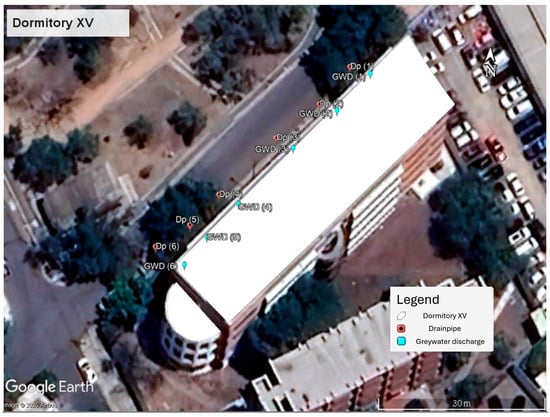
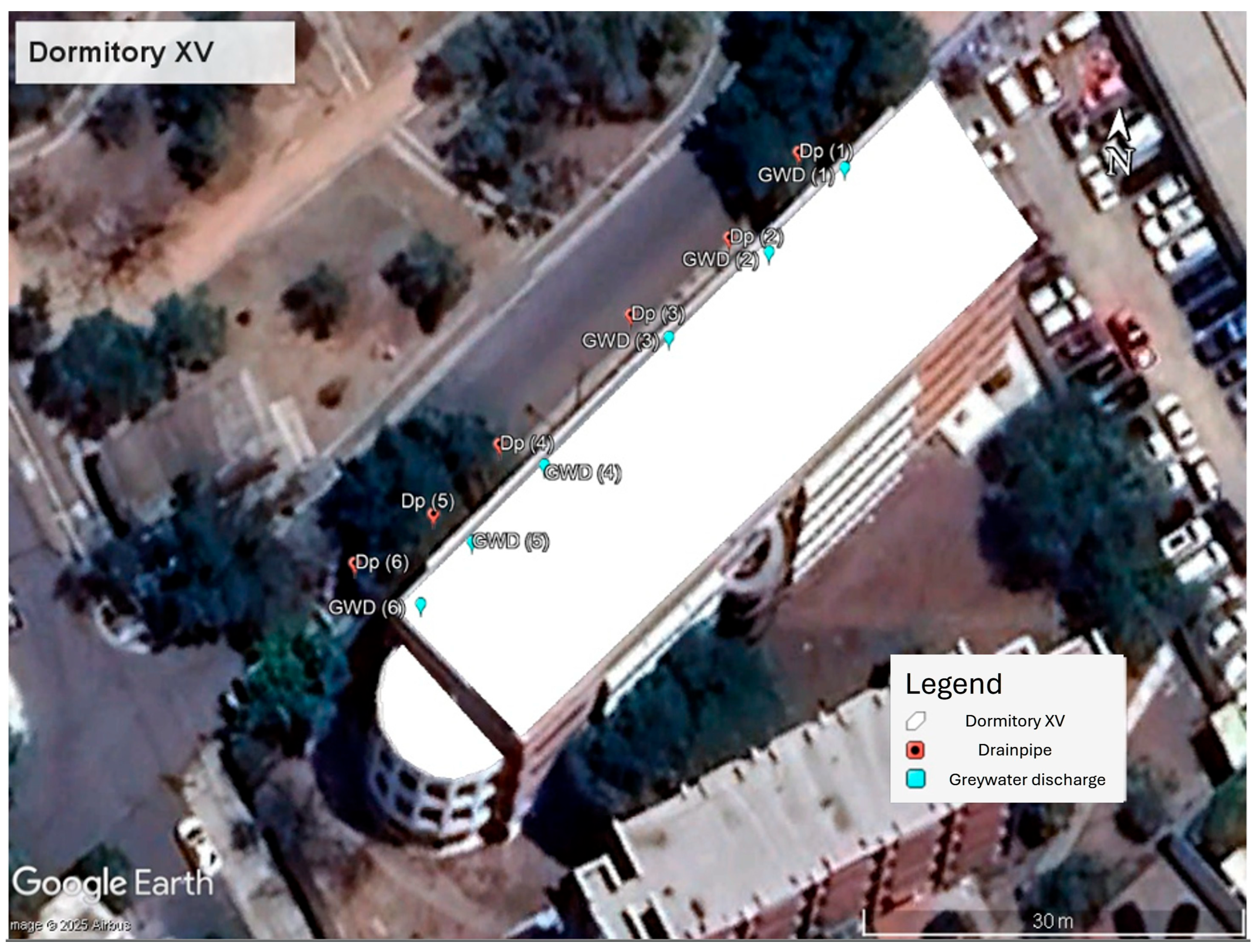
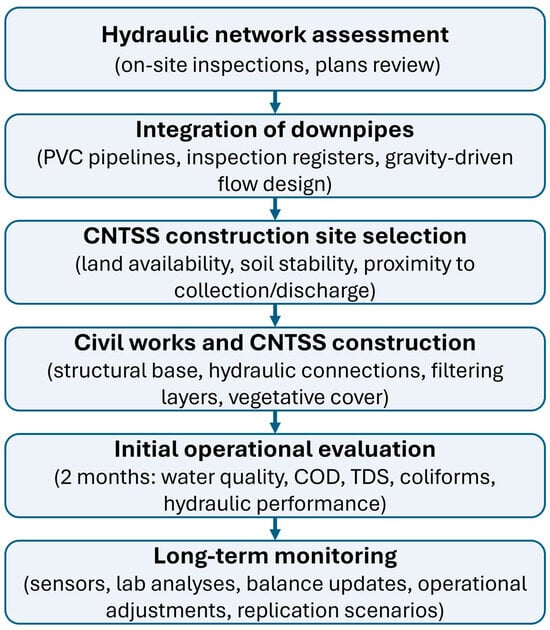
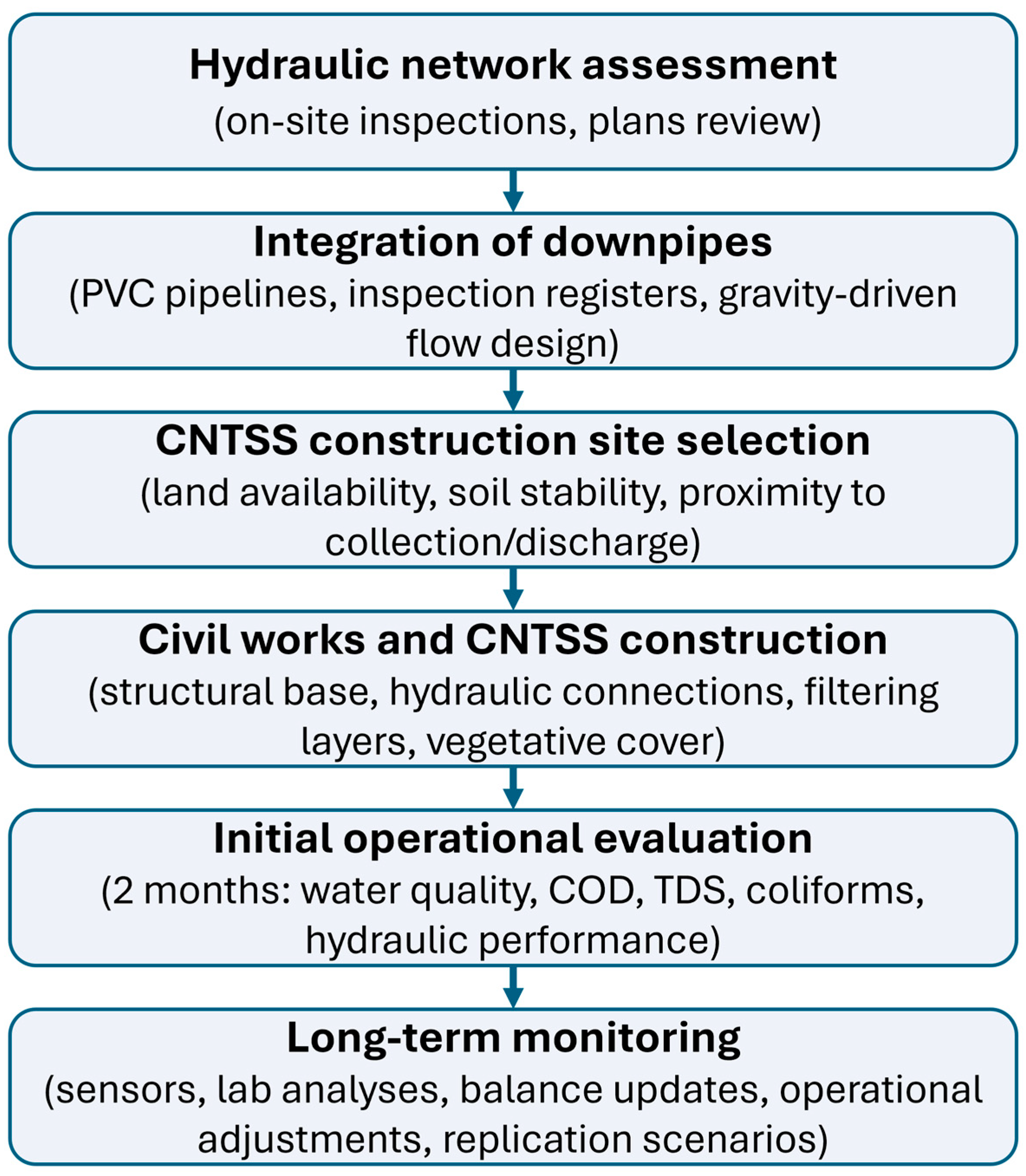
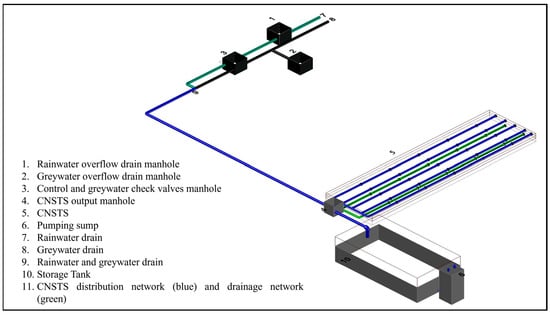
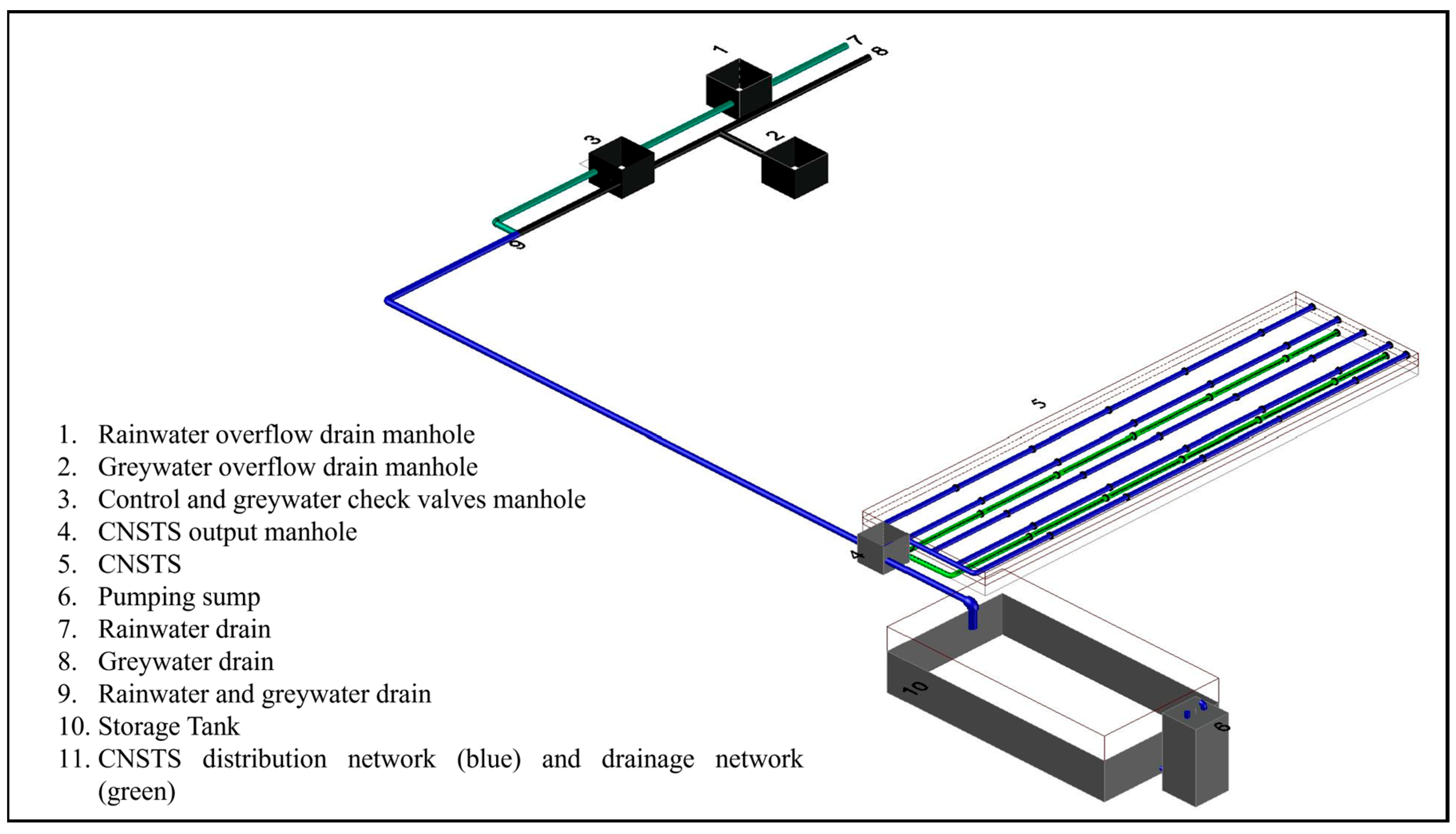
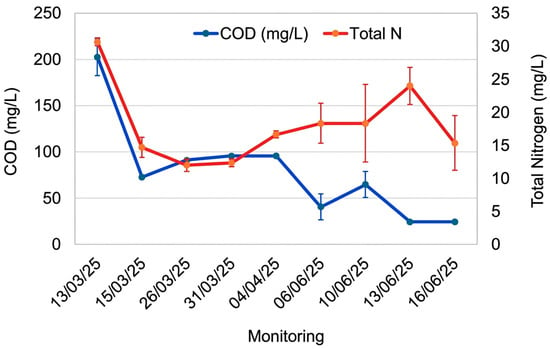
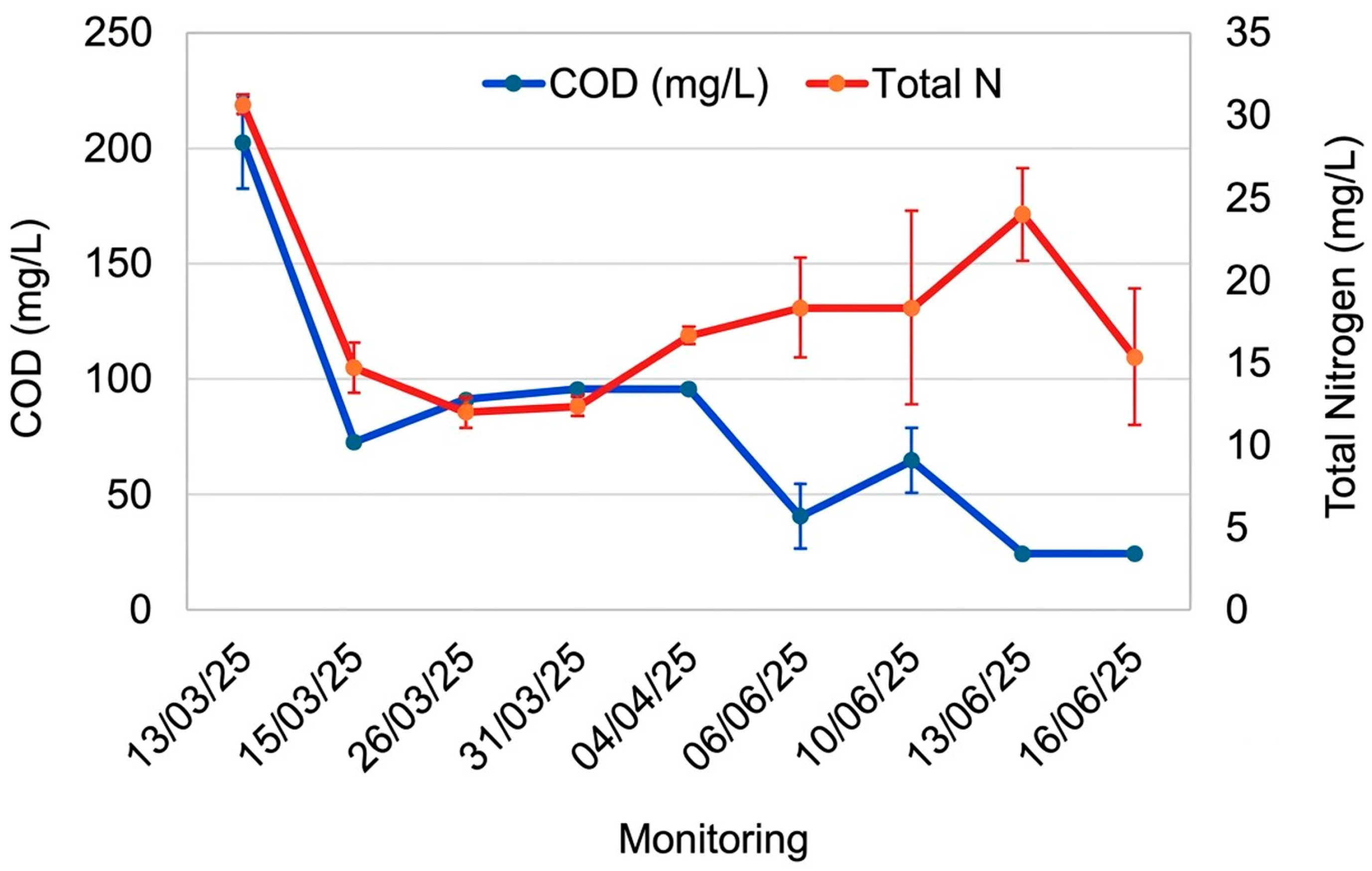

Disclaimer/Publisher’s Note: The statements, opinions and data contained in all publications are solely those of the individual author(s) and contributor(s) and not of MDPI and/or the editor(s). MDPI and/or the editor(s) disclaim responsibility for any injury to people or property resulting from any ideas, methods, instructions or products referred to in the content. |
© 2026 by the authors. Licensee MDPI, Basel, Switzerland. This article is an open access article distributed under the terms and conditions of the Creative Commons Attribution (CC BY) license.